
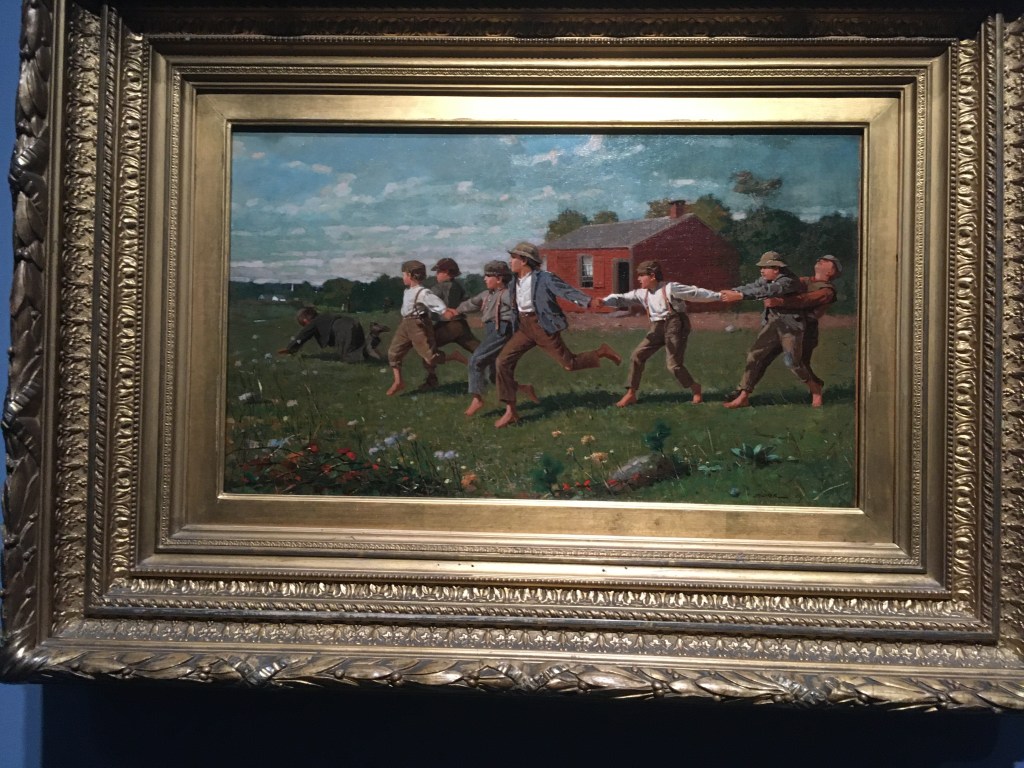
Winslow Homer, Force of Nature. Well, this turned out to be a real treat. I was unfamiliar with the artist Winslow Homer but keen to find out more at the press view at the National Gallery. Homer was an American artist who never had a formal training but began his career as a printmaker and journalist. He was active for newspapers during the American Civil War, getting himself ’embedded’ in both sides of the war recording the conflict between the Union Army – wanting to abolish slavery – and the Confederates who were desperate to preserve the status quo in Southern States. In the early 1860s photography existed but newspapers still needed artists to create plates for the presses to publish. Clearly Homer was a very talented draughtsman who could draw from life, from models and from photographs. He later used his newspaper illustrations as source material for studio-made oil paintings depicting the Civil War and its aftermath and began his career as a fine artist.

This painting of The Veteran in a New Field (1865) shows a farmer who had spent time as a Unionist soldier casting down his old army jacket and getting back to work scything his field.
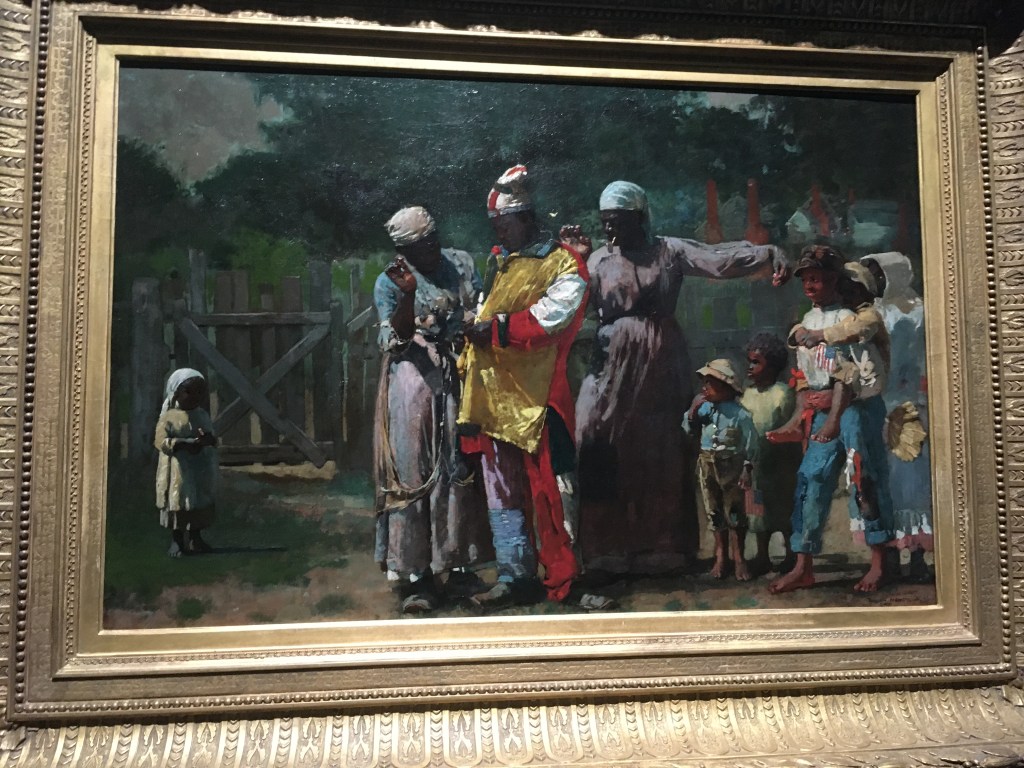
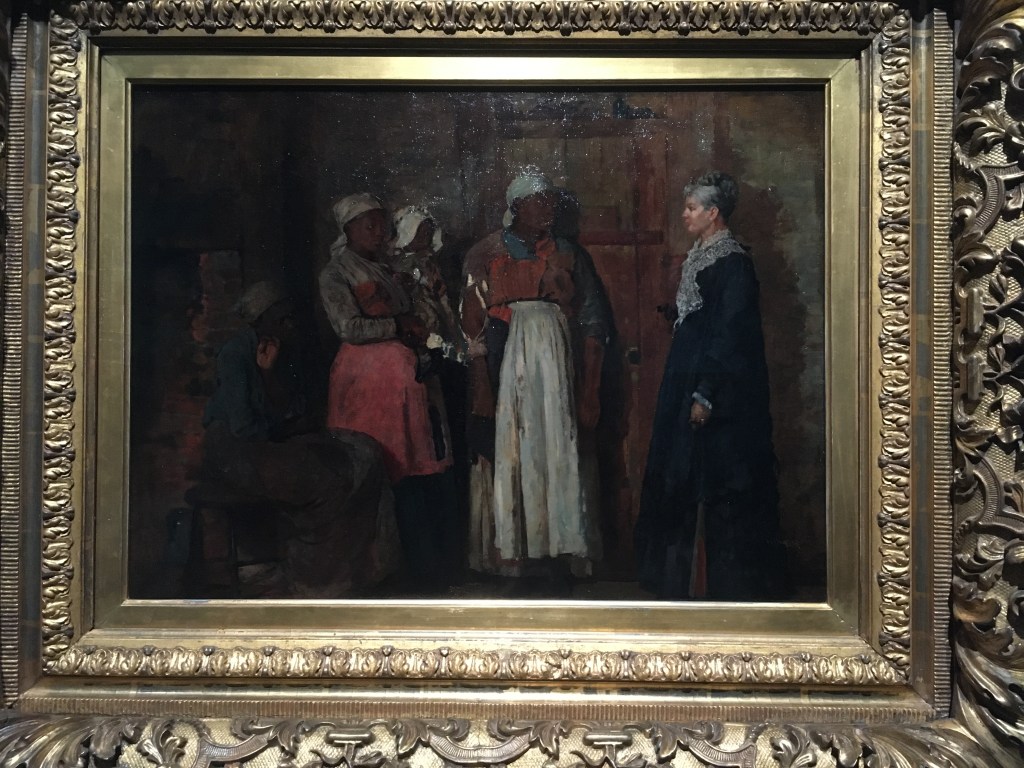
Homer was keen to represent the status of Black Americans following the Civil War and the end of their enslaved status. The painting on the left is called Dressing for the Carnival (1877) when Independence Day celebrations became a commemoration of Black liberation. On the right is A Visit from The Old Mistress. This depicts three freedwoman and a child as they meet an elderly woman – presumably their onetime enslaver who now pays for their labour.
Winslow Homer visited England 1881 and to spend a year and a half at a small fishing village of Cullercoats near Newcastle. The curators suggest there was an artists’ colony established there. This painting depicts a fisherwoman on the seafront, battered by gales and the lash of the sea but stalwart against the elements.

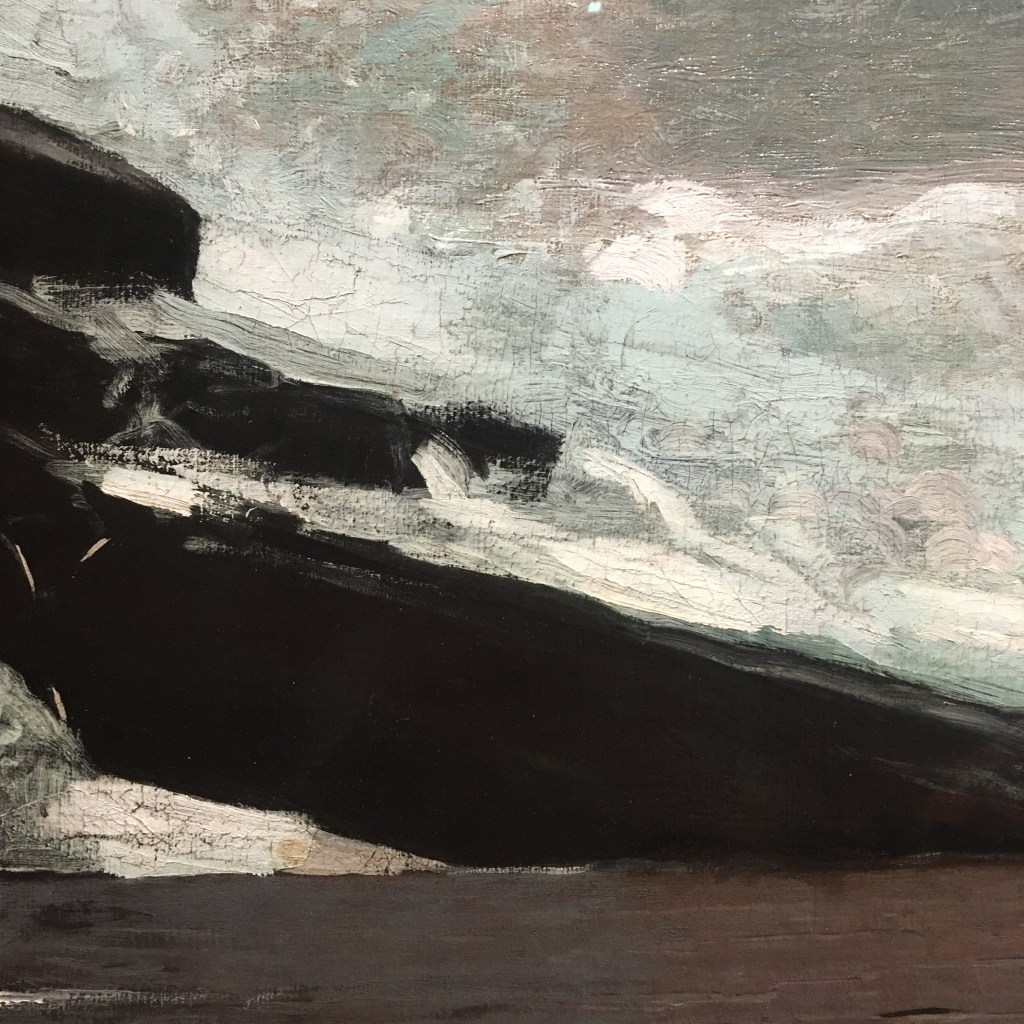
I’ve added a detail from the painting of the woman showing the freely painted rocks and the crash of the sea presented with great vigour. Apparently the painting was originally made with the Watch House on the left but it was criticised when exhibited so he painted over the building and made the woman and her child the focus of the composition.
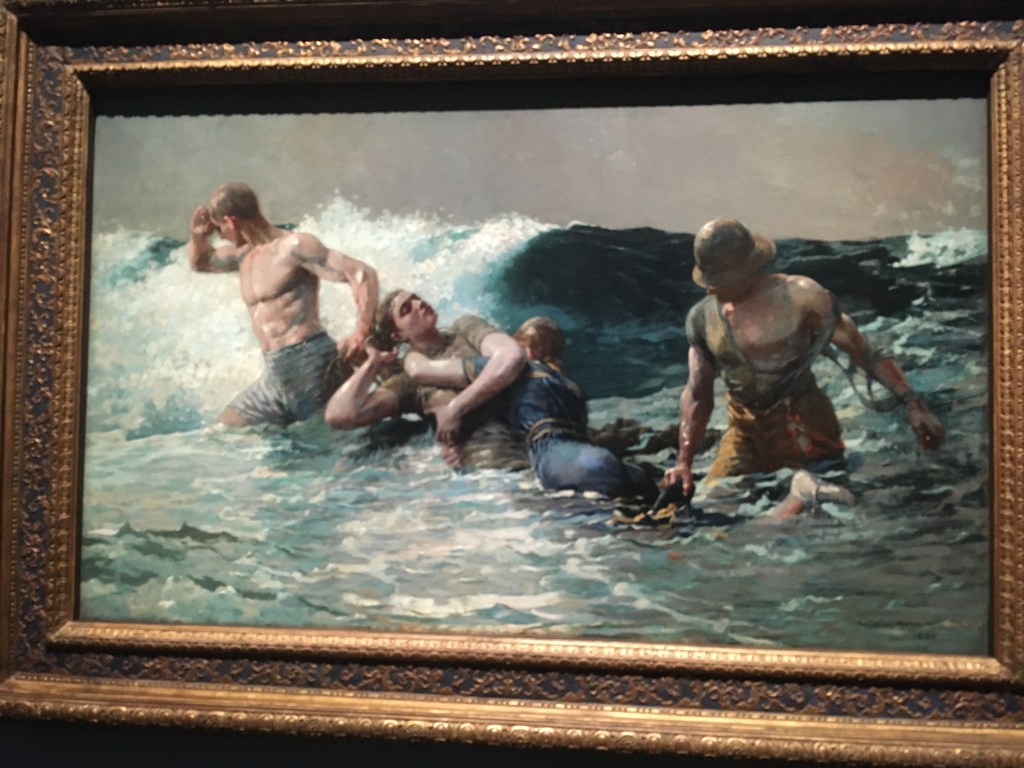

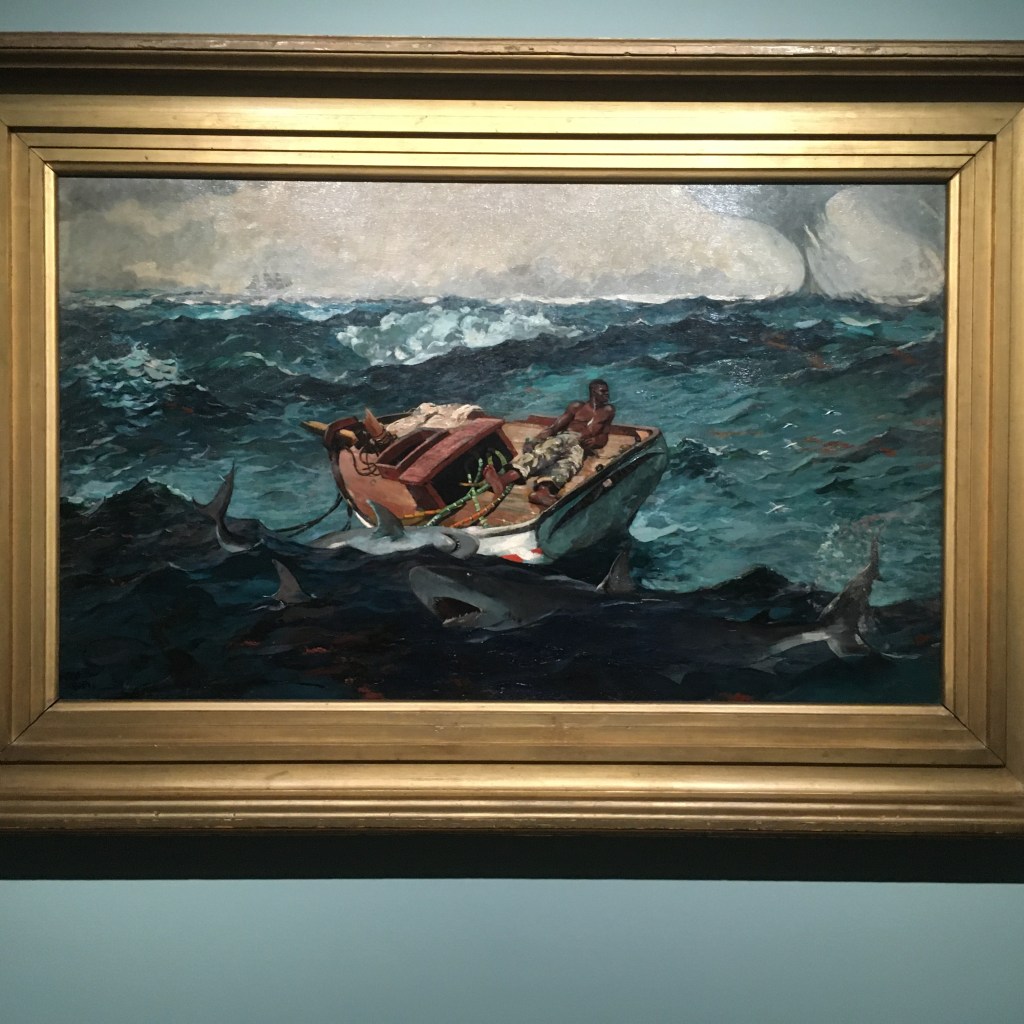
His paintings are inheritors of the ‘genre’ paintings of the 18th century in that he is telling stories but leaving many of the narrative elements unfinished. The painting entitled The Gulf Stream is filled with drama and threat. Will the lone Black sailor meet his death in the shark infested sea, be drowned by the encroaching storm or perhaps be rescued by the sailing ship on the horizon? It’s a very moving image.
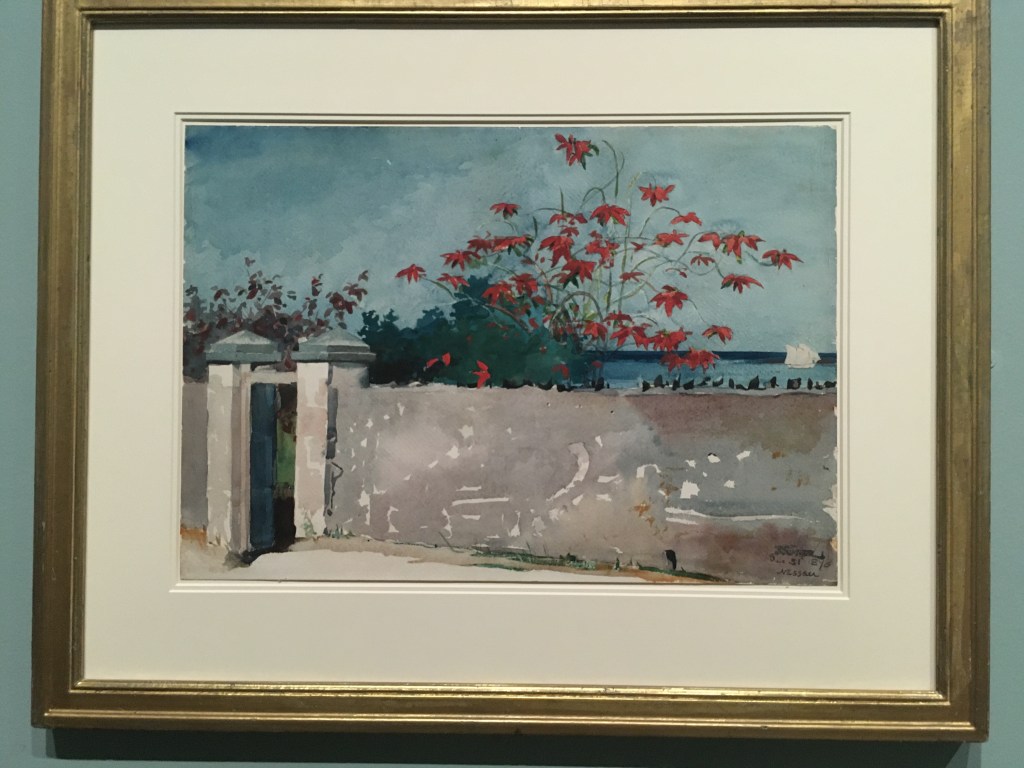

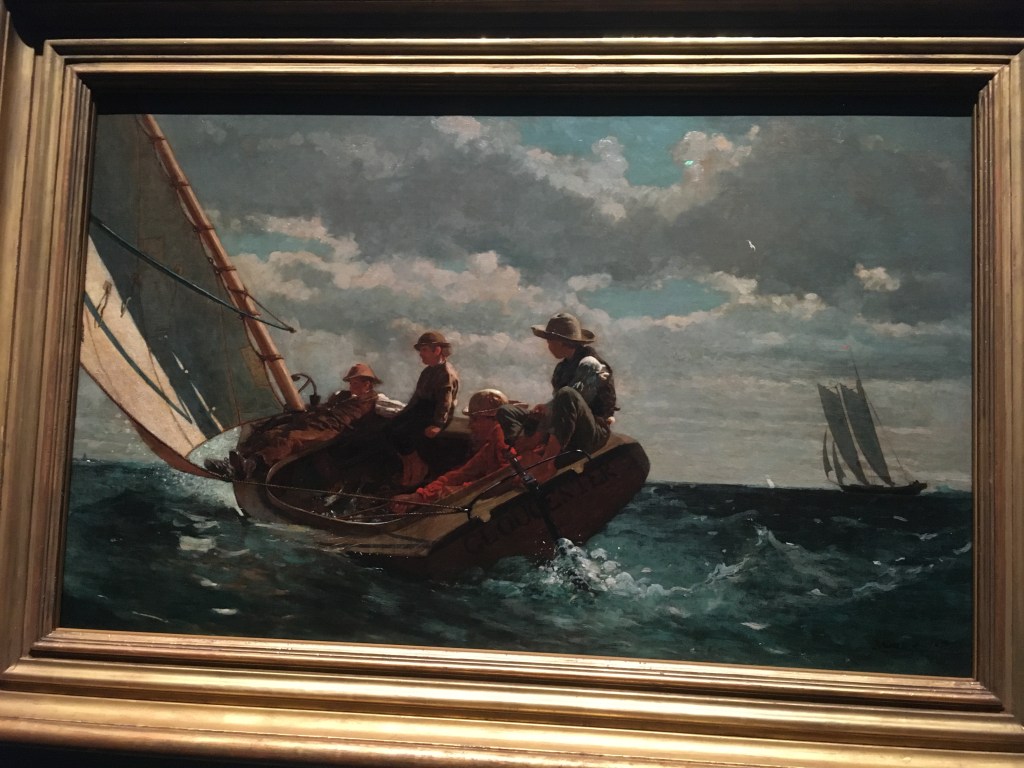
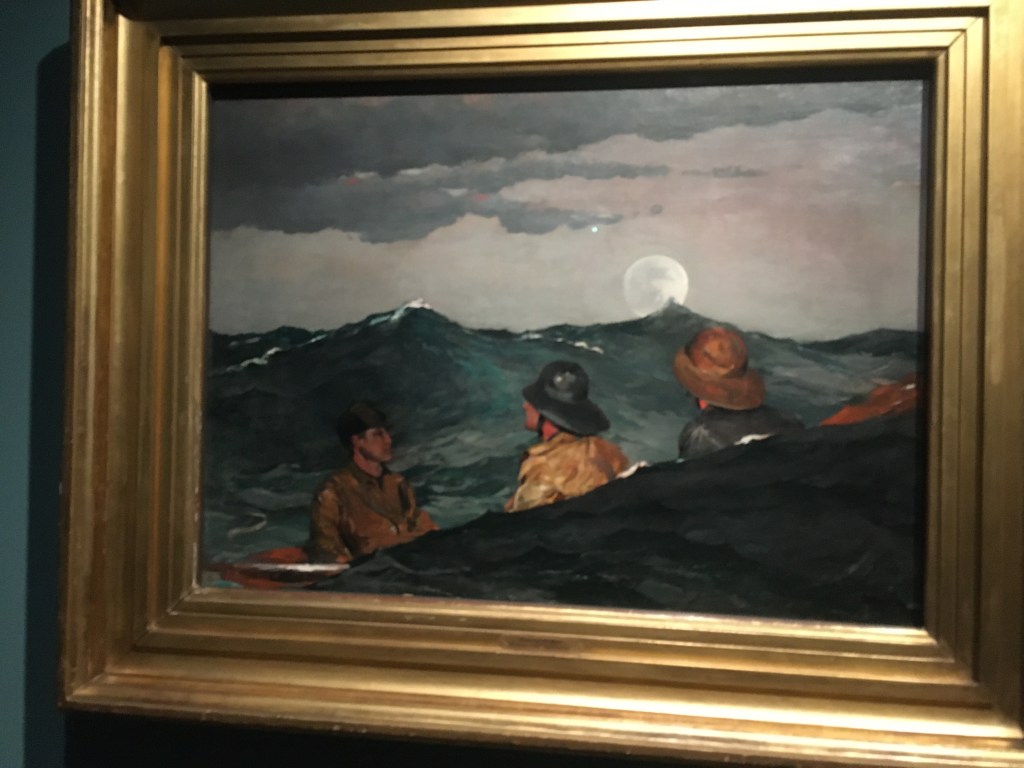
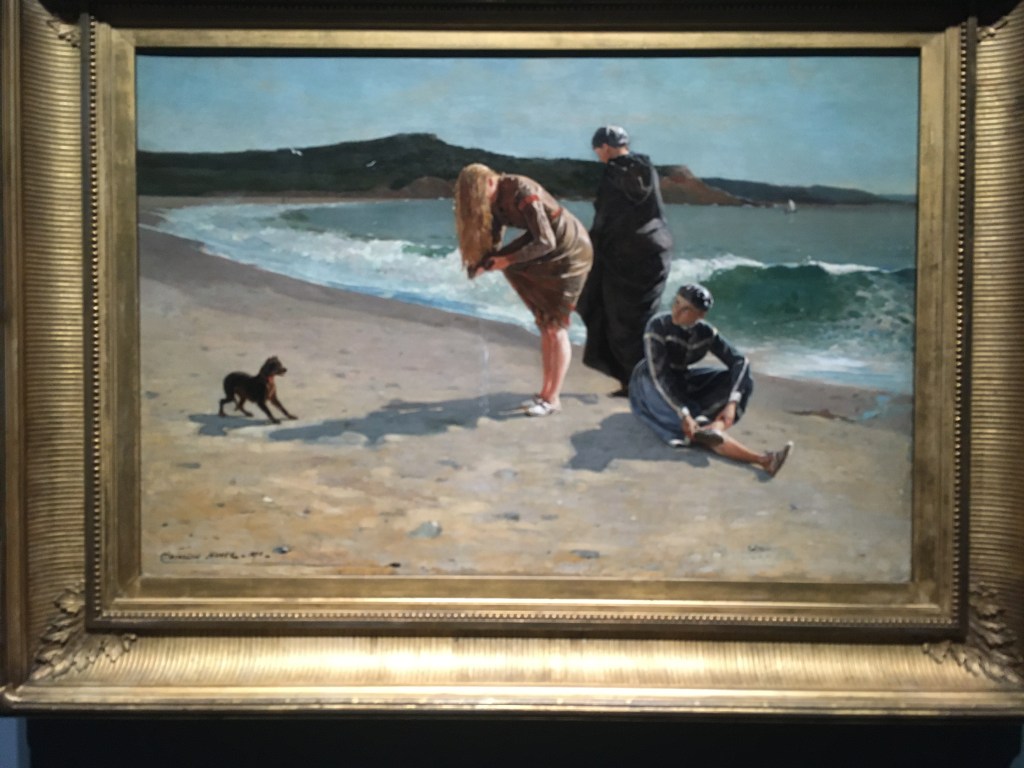
What a great show. It’s on at the National Gallery until 8 January 2023 and well worth seeing.
 Paper Places