
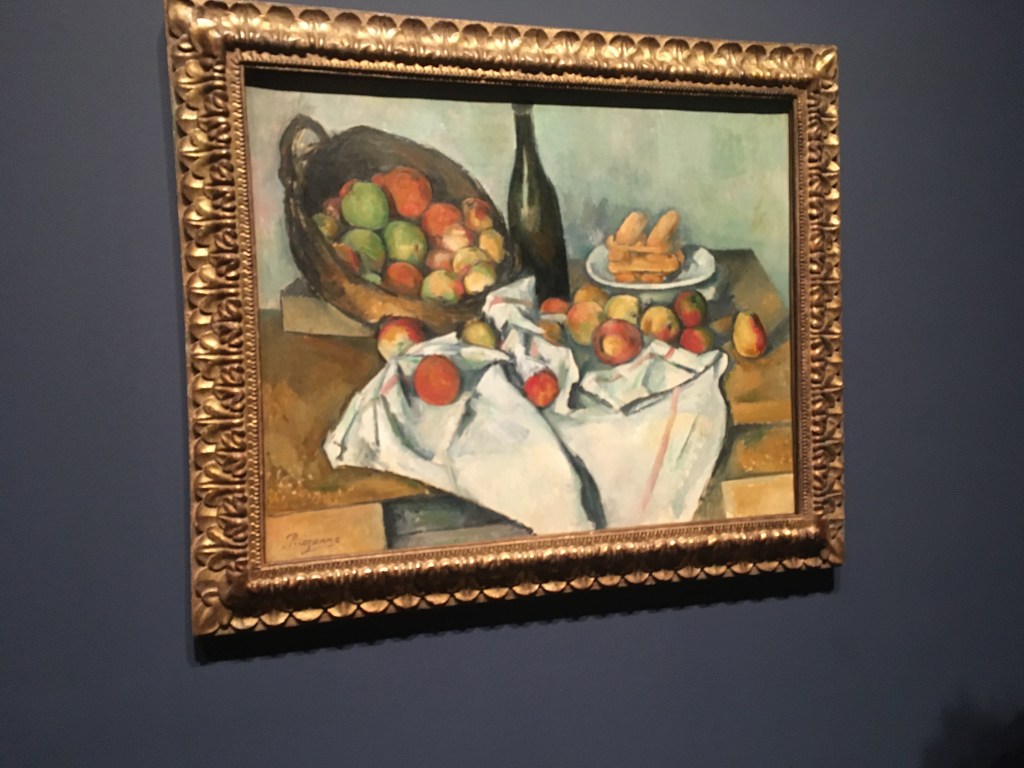
Think of Paul Cezanne (1839-1906) and you may well think of a still life and all those rosy red and green apples assembled with household objects in studio set ups. Oh, but there’s so much more to Cezanne and this exhibition takes you on a biographical journey from his early days as an artist developing his style right through to late paintings which revisit places and subjects which fascinated and challenged him during his life.
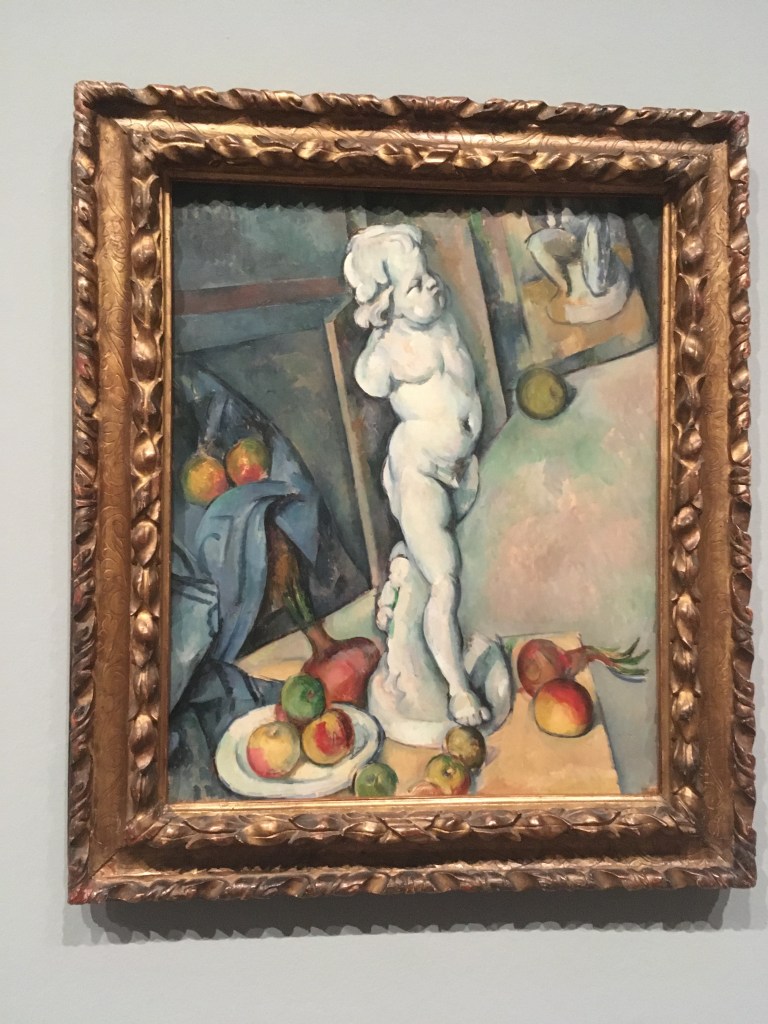
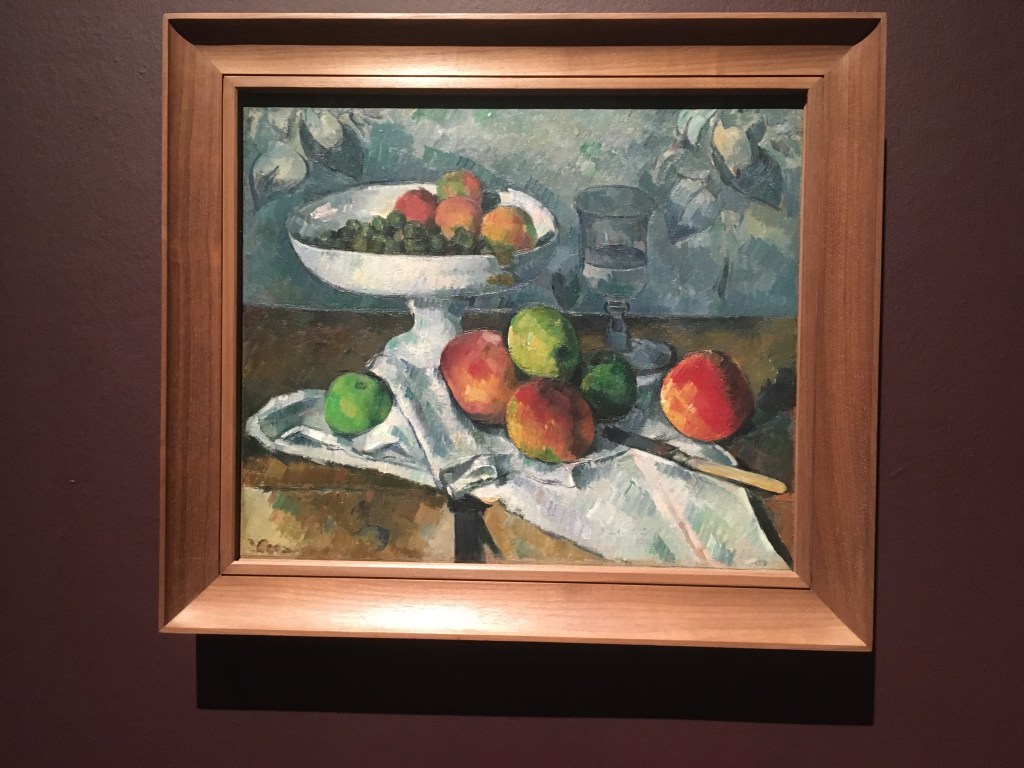
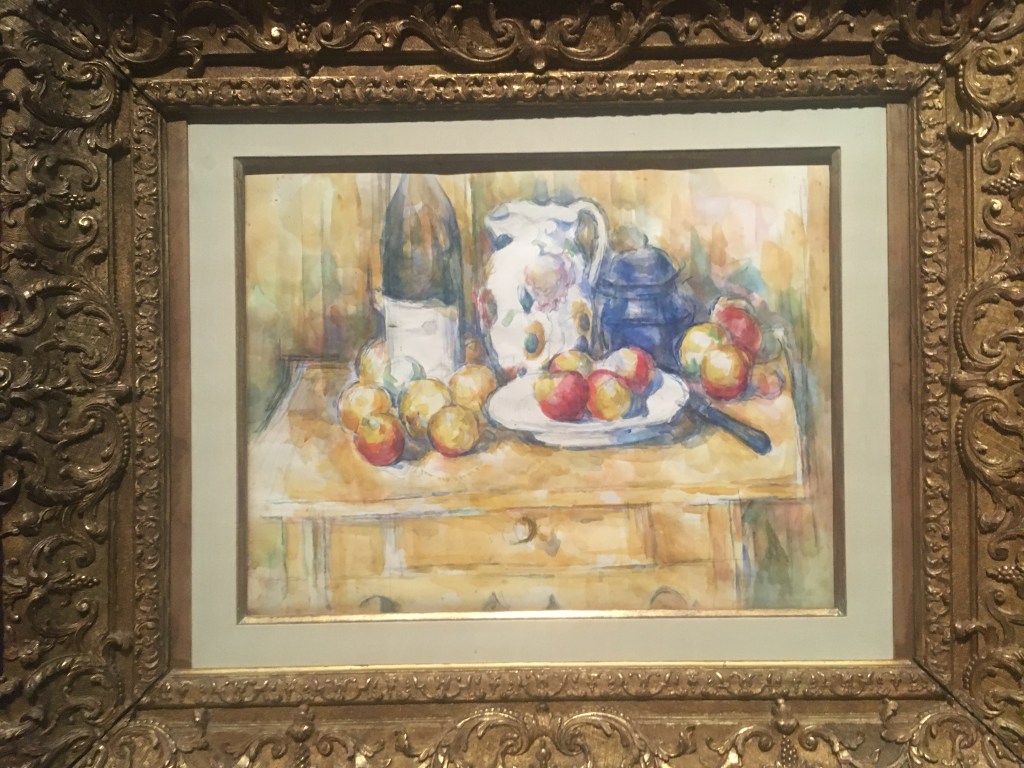
I couldn’t resist this line-up of still life paintings. They’re just a selection of the many on show. What’s so striking is the very considered and original composition and use of perspective. There’s really bold brushwork too. You can see that he’s playing with the conventions of perception, observing the objects from more than one angle and incorporating surprising viewpoints and colour combinations.

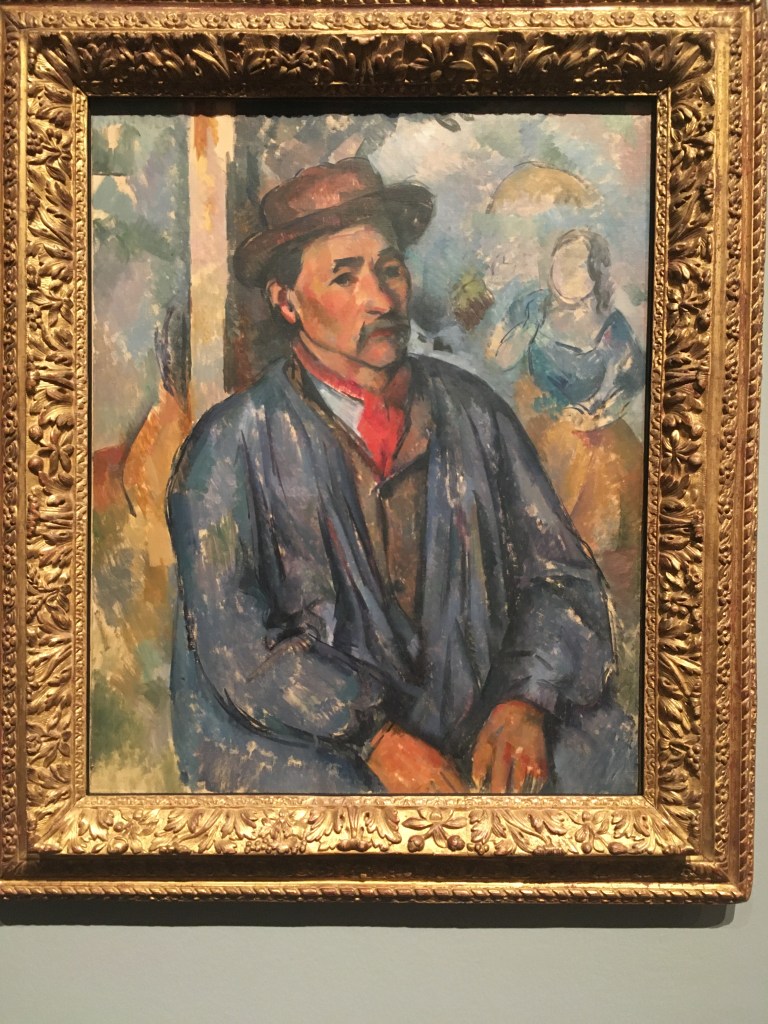
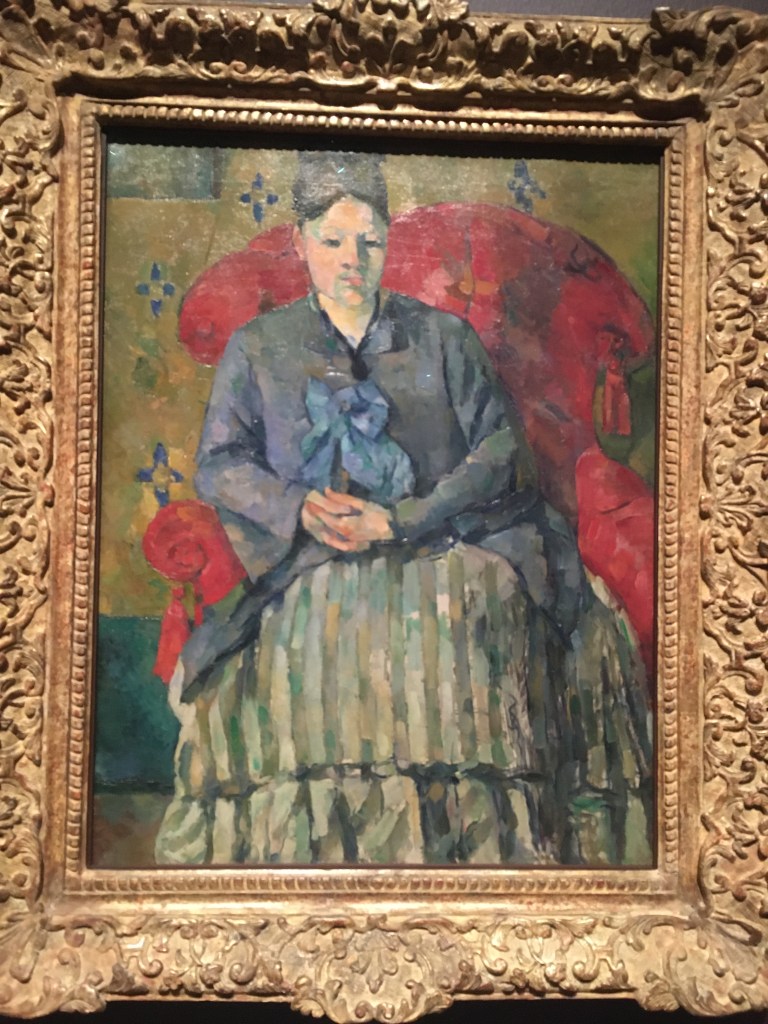
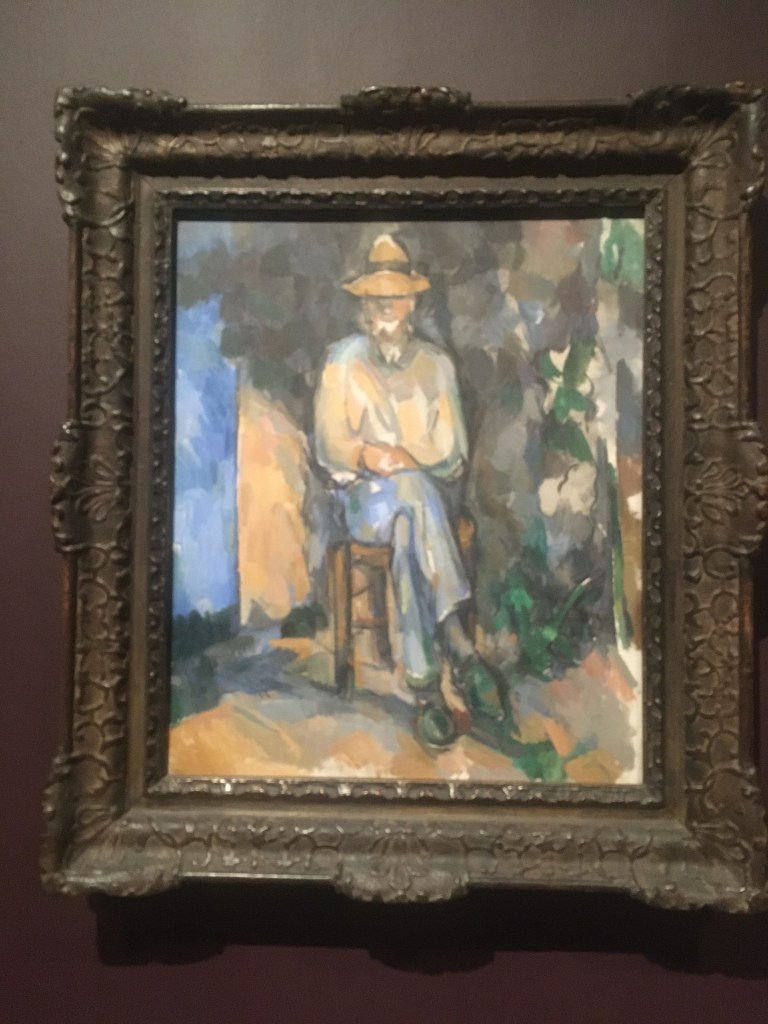
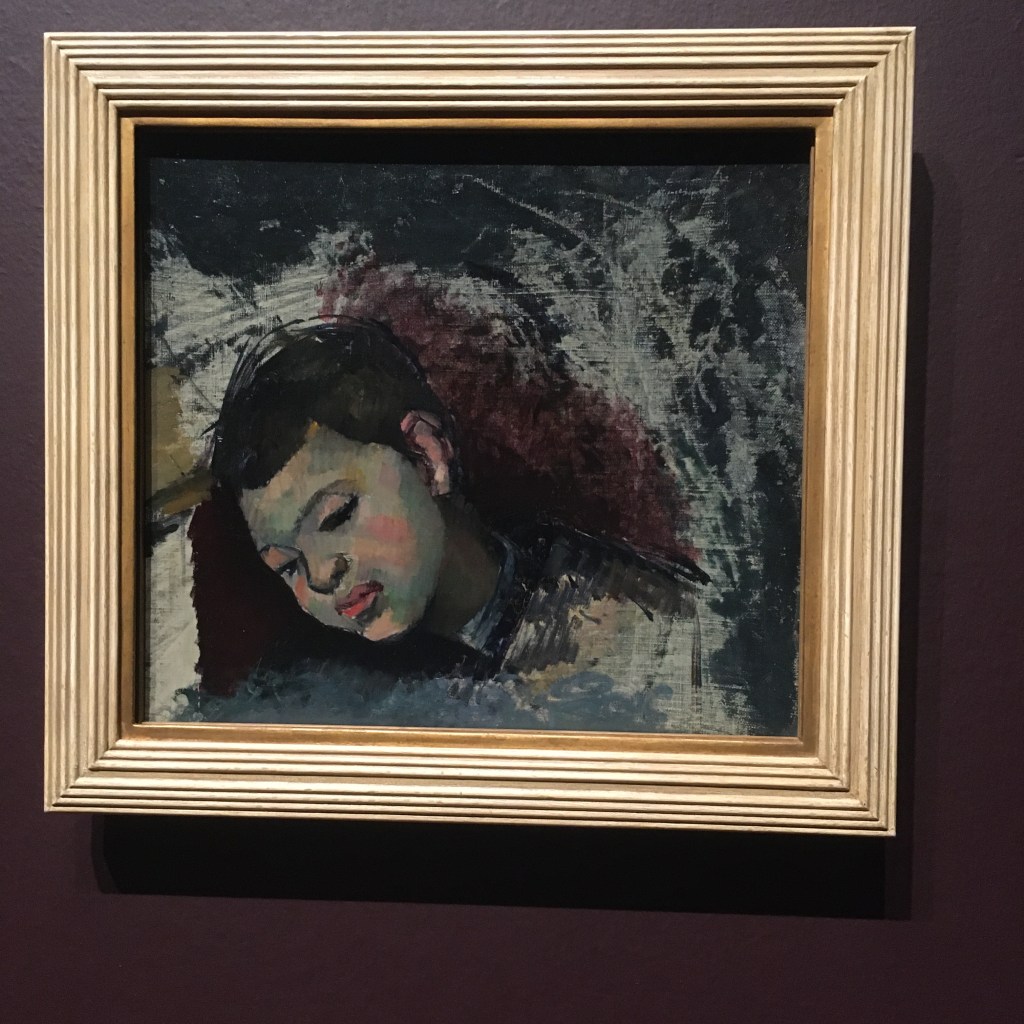
I’m so pleased that many of Cezanne’s portraits have been assembled for this show. There’s a real variety but they are all astonishing to view. I’ve been fond of the easy-looking, relaxed portrait of The Gardener Vallier (bottom left in the gallery above) for years. I feel it must have been painted very quickly on a sunny afternoon and both men enjoyed a conversation while the painting was made. Bottom right is an unfinished portrait of Paul, his son, which shows how Cezanne was experimenting with colour to create the child’s skin tones and, again, working against the clock to capture an impression of the sleeping child.
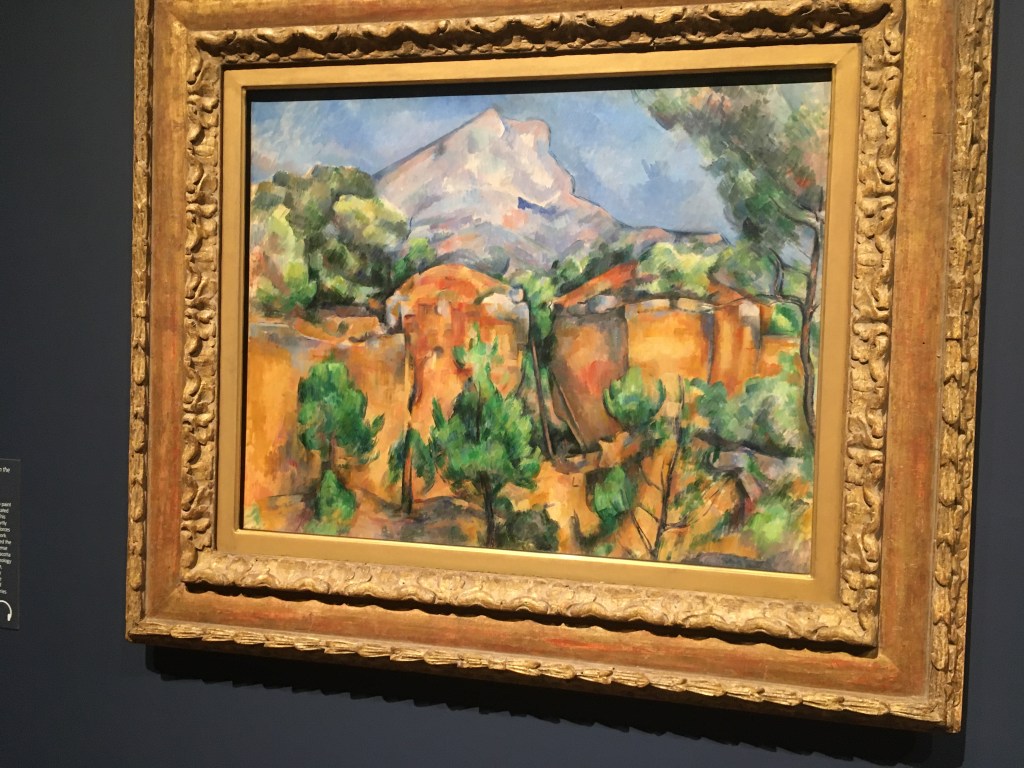
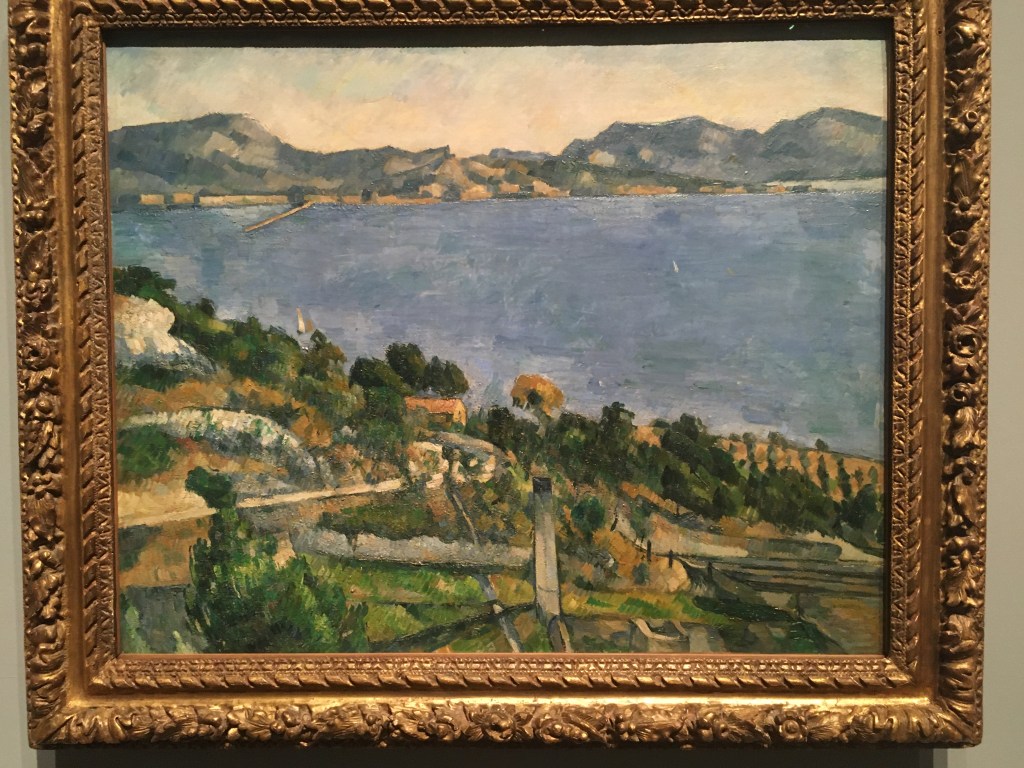
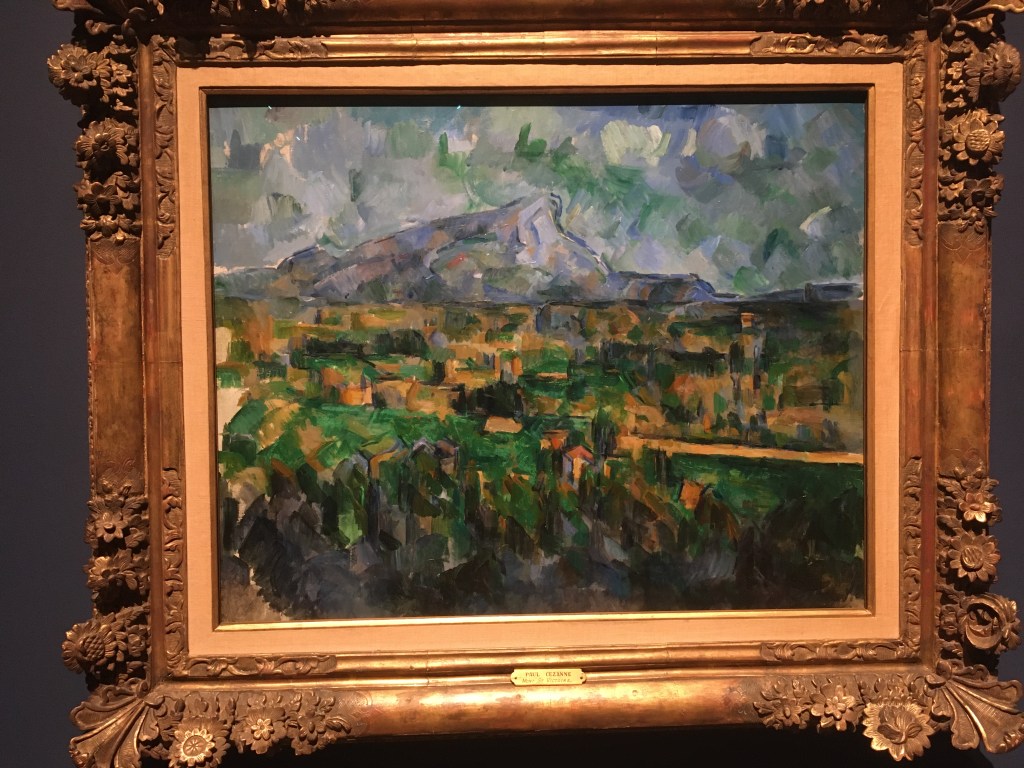
The paintings of Monte Sainte-Victoire (right and left) represented a real departure for Cezanne. His aim was to capture a moment in time, the way the sun illuminated the distant mountain and how shadows create depth and emphasise the terrain in front of him. It’s very telling that many of the paintings on show were owned by fellow artists such as Monet, Pissaro, Gaugin and Picasso. Clearly Cezanne’s originality and bravery in having the confidence to depict the world in a new way inspired contemporary painters who loved observing these works and letting the ideas seep into their own work.
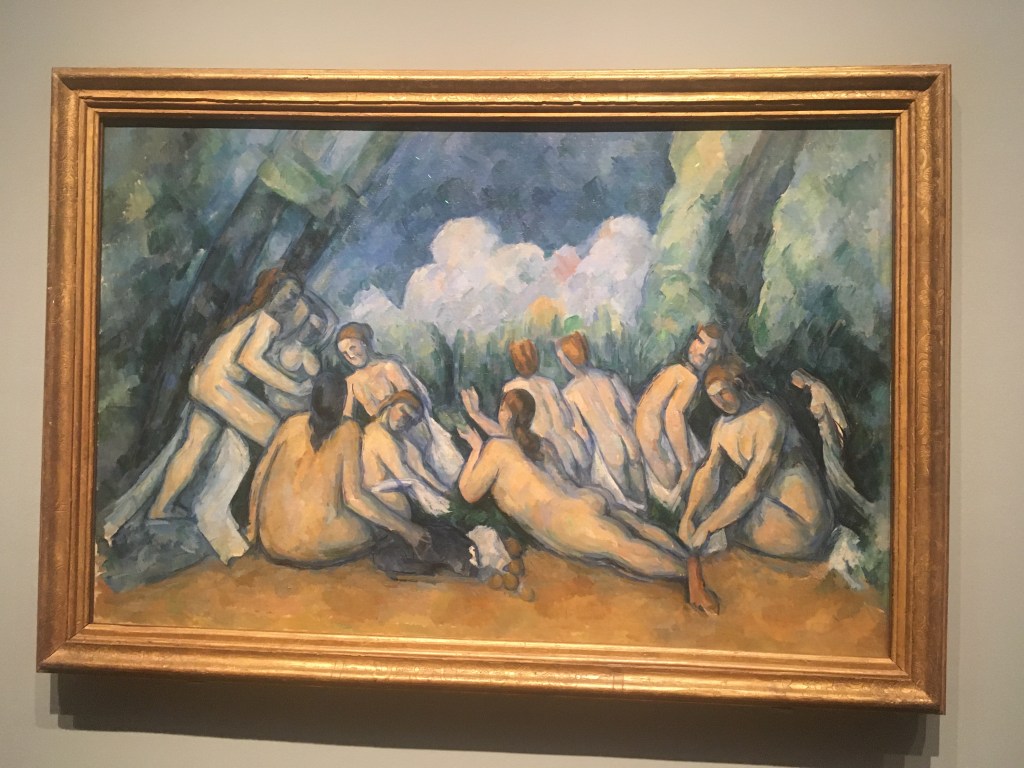
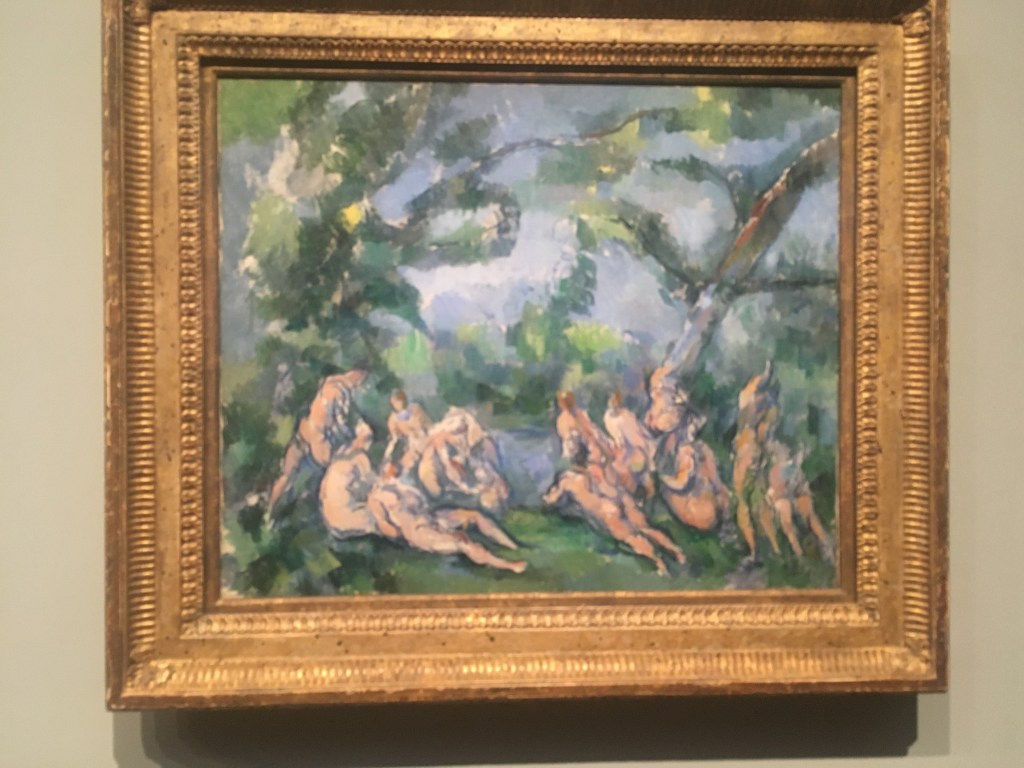
Cezanne’s figures have a sculptural and monumental feeling about them. Apparently he was loath to make drawings and paintings from life-models but clearly he has worked collaboratively with a model to achieve the composition of these groups of bathers. The use of paint in the oil version (left) gives the scene a rather threatening feel. Are those storm clouds in the distance? It’s so interesting to see the contrast with the watercolour version (right).
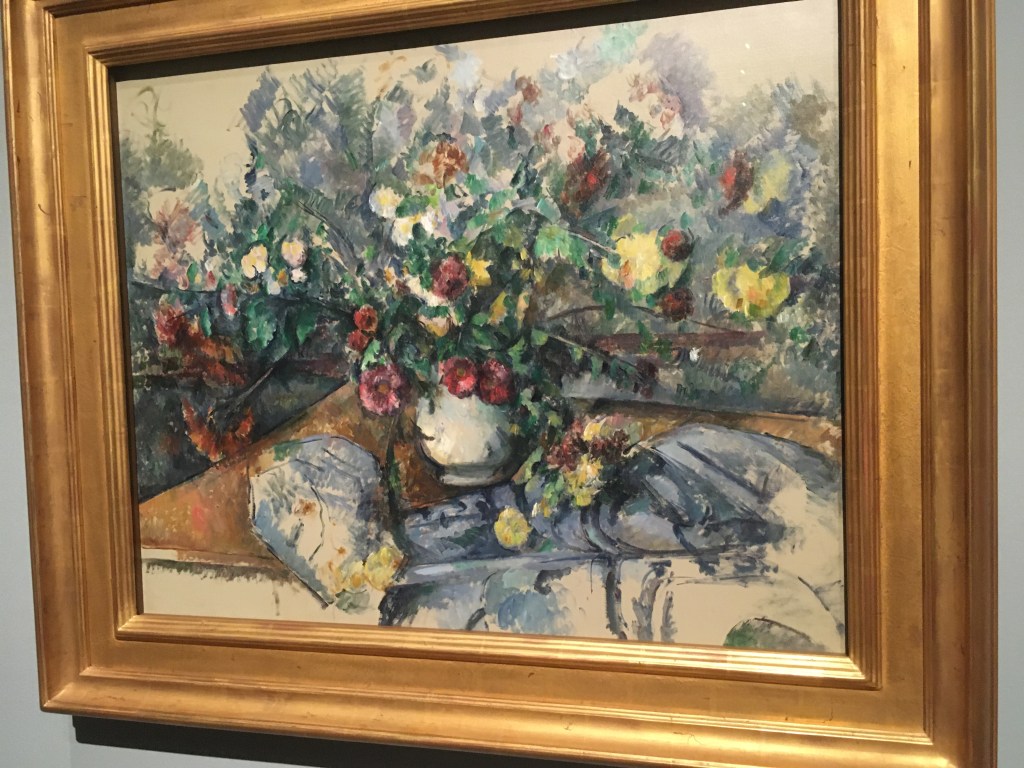
I’ll end this very brief assessment of a hugely enjoyable show, with this large oil painting of a big bouquet of flowers. It’s described as ‘unfinished’ but then that’s what gives the painting its freshness and energy. It’s so different from the highly wrought and polished floral still life paintings made by Dutch artists a century earlier. Seeing the bare, unpainted canvas and the rapidly scrubbed brush marks brings the whole image to life in such a satisfying and energetic way.
This is a wonderful show. It’s on at Tate Modern until 12th March 2023 and is a rare treat indeed.
 Paper Places