

So this is the famous engraving of King Charles I immediately after he has been beheaded. We see cheering, jeering and also weeping. It seems that executions were the main opportunity people had to express their emotions in public and, dare I say it, to ‘enjoy’ the spectacle.
The Museum of London has assembled quantities of artefacts relating to executions: beheadings, burnings, hangings and all the other horrible things that man felt it was acceptable to do unto man in the name of punishment. And, for centuries, there were around 200 crimes which attracted the death penalty. Without a police force or strong justice system you could argue that deterrent was the best way of keeping men and women away from crime. But it didn’t work that way and, as we see from some of the sad letters written by prisoners on death row in the 1700s, they might protest their innocence to the end but were sent to the gallows anyway.
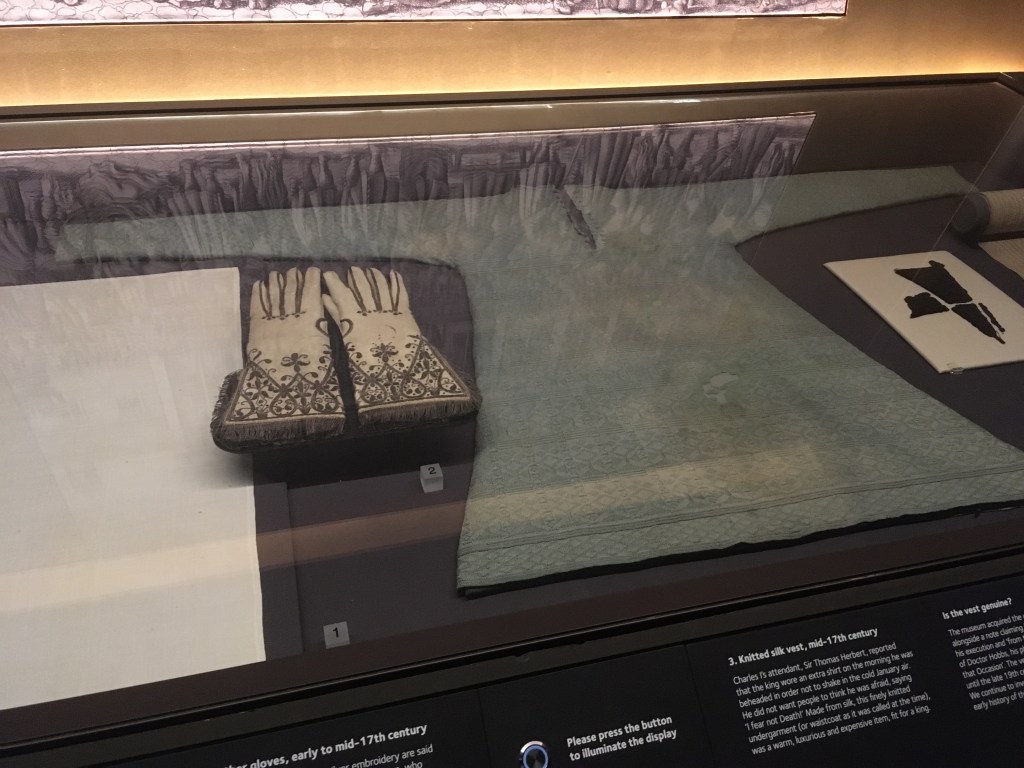
Below is my photo of the blue shift which is said to have been worn by Charles I on the day of his execution. I’ve also added a tiny token painted with his image which was kept by a supporter after his death. Holding onto items like this would have been extremely dangerous, if discovered, and it’s remarkable that these objects have come through careful curating to the Museum.

The exhibition takes you on a tour of all the hideous ways of putting people to death. One does feel a bit queasy afterwards but also very enlightened about the history of ‘justice’ and the bravery of people who endured these public endings whether they deserved it or not.
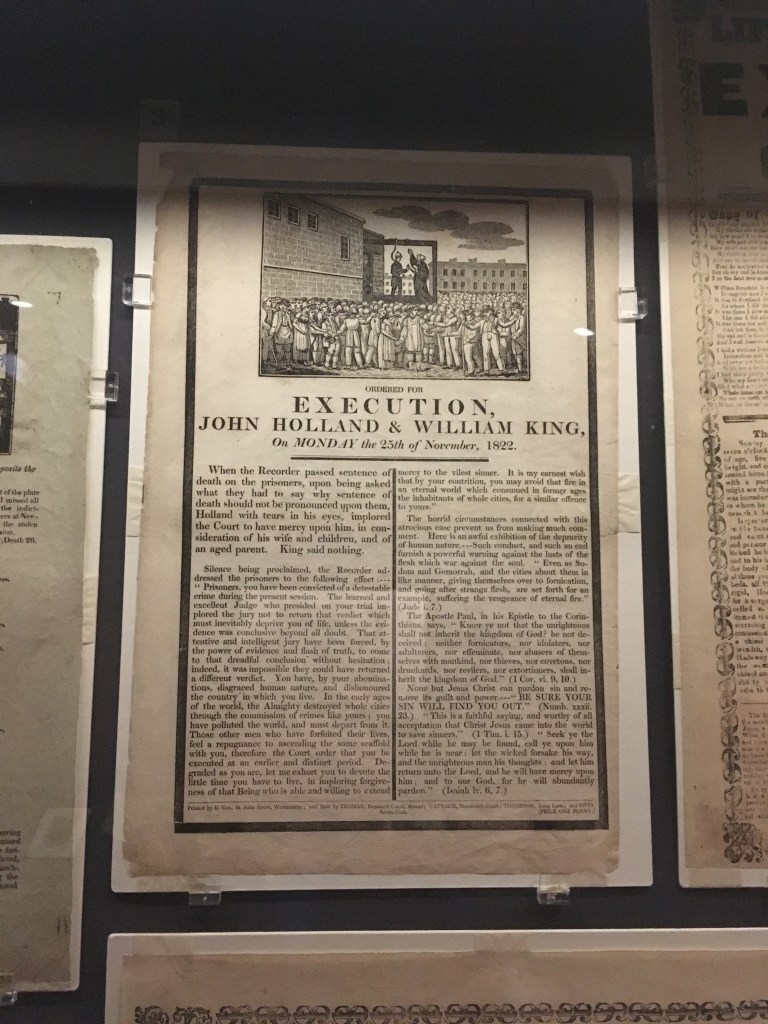
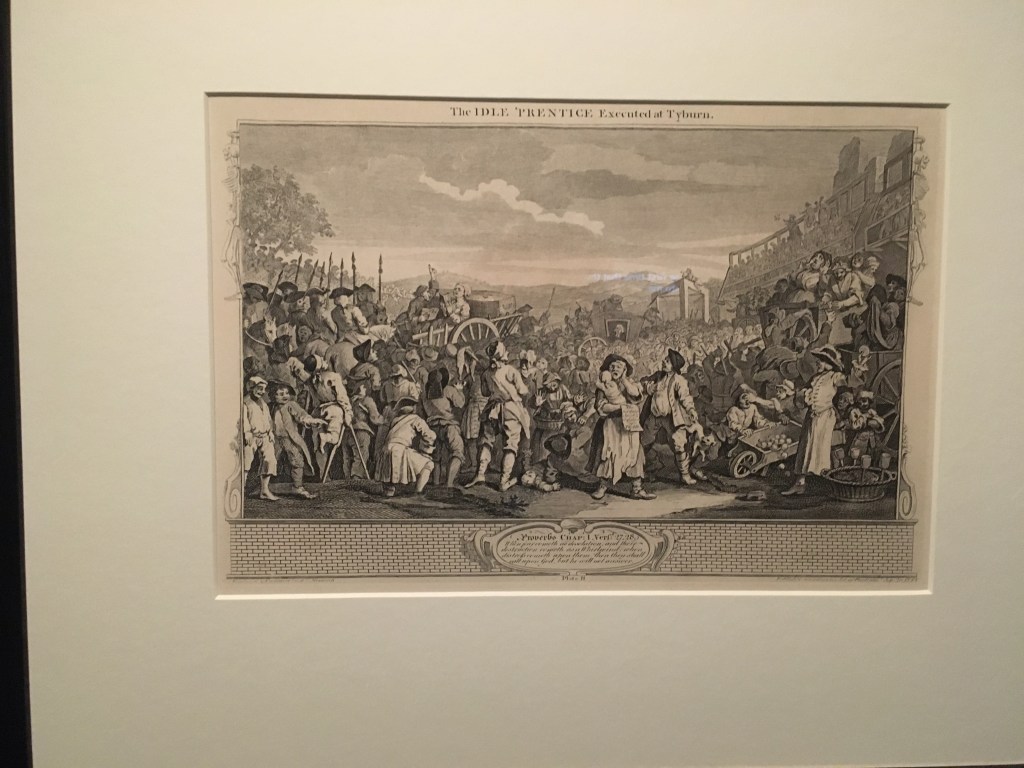
There was certainly a ‘business’ to these events. The paintings of criminals or executions would be made into the prints and sold to the benefit of the artists. You could buy a broadsheet on the day of a hanging and find out about the crimes committed and the history of the miscreant.
The exhibition is on at the Museum of London in Docklands until 16th April 2023. It’s not for the fainthearted and the overwhelming feeling of cruelty is something you carry away with you. But this was life as it was lived for many centuries. It’s amazing to think that the death sentence in the UK was ended in the 1960s – in my lifetime! We have moved on in terms of our understanding of human nature, of crime and of ways of either rehabilitating people who’ve committed crimes or being ready to lock them up away from our society for ever.
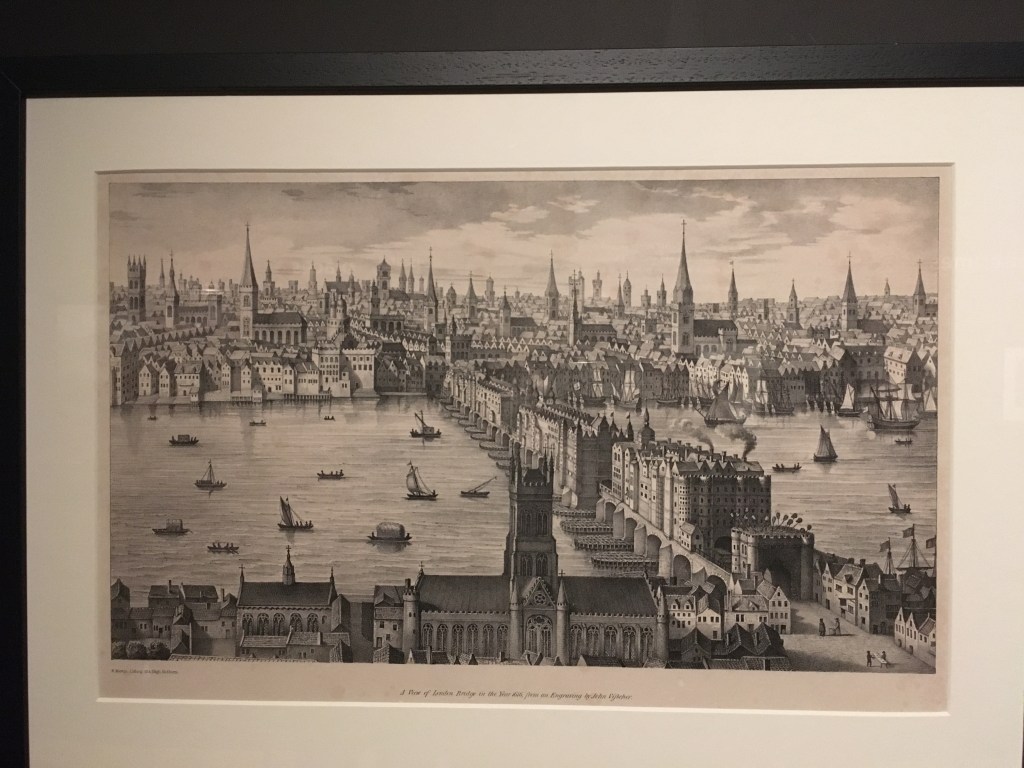
Below, check out the heads on spikes at the entrance to old London Bridge.
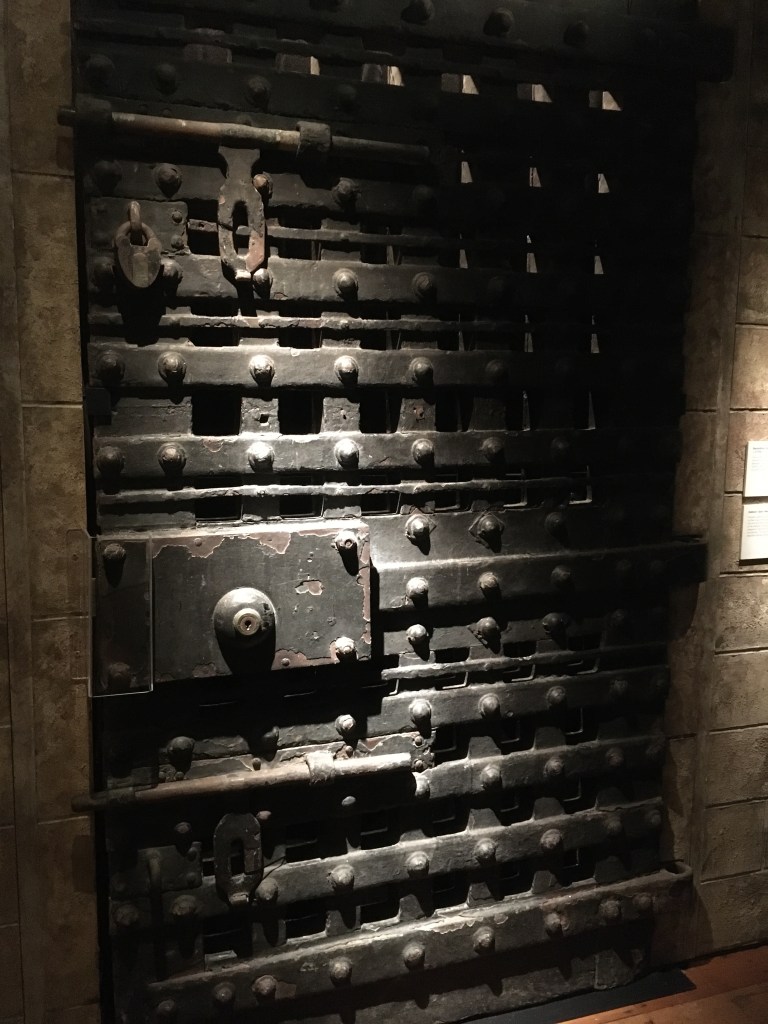
Above, the door from Newgate Prison through which the condemned prisoner would have walked to the gallows. Makes me shiver to look at it.
 Paper Places