
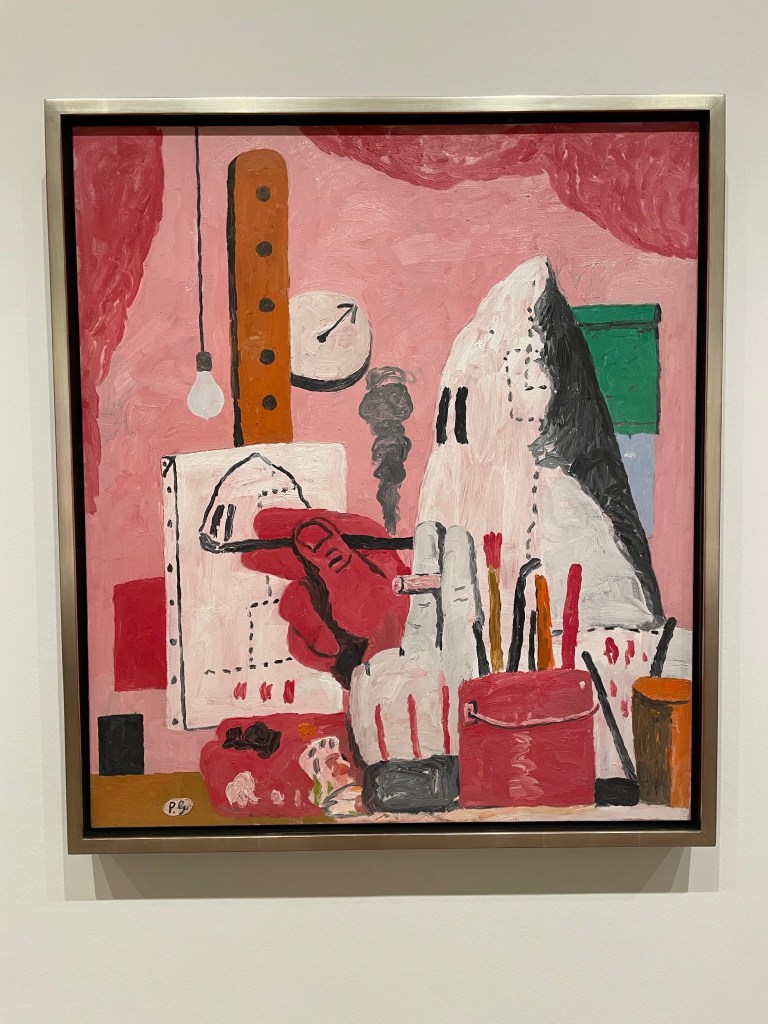
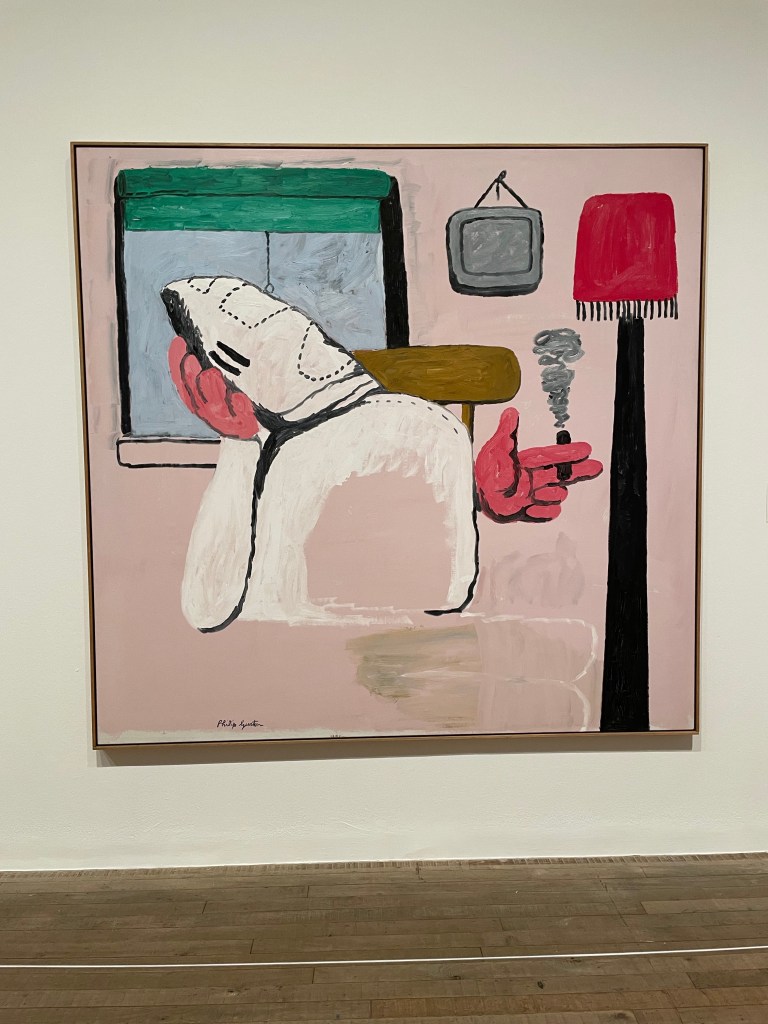
Mention the name Philip Guston and this kind of image, above, springs to mind. He really took to the colour red, cadmium red, and used it liberally in his later art. The cigarette, the over-sized limbs, the rivets, the Klu Klux Klan headress…. all these images fed into his later work.
At the show it was fascinating to see that he created a kind of heioglyph alphabet of images which he began to use in the 1960s. On the wall of one gallery we have many of his images on small canvases. These runic symbols appear over and over again.
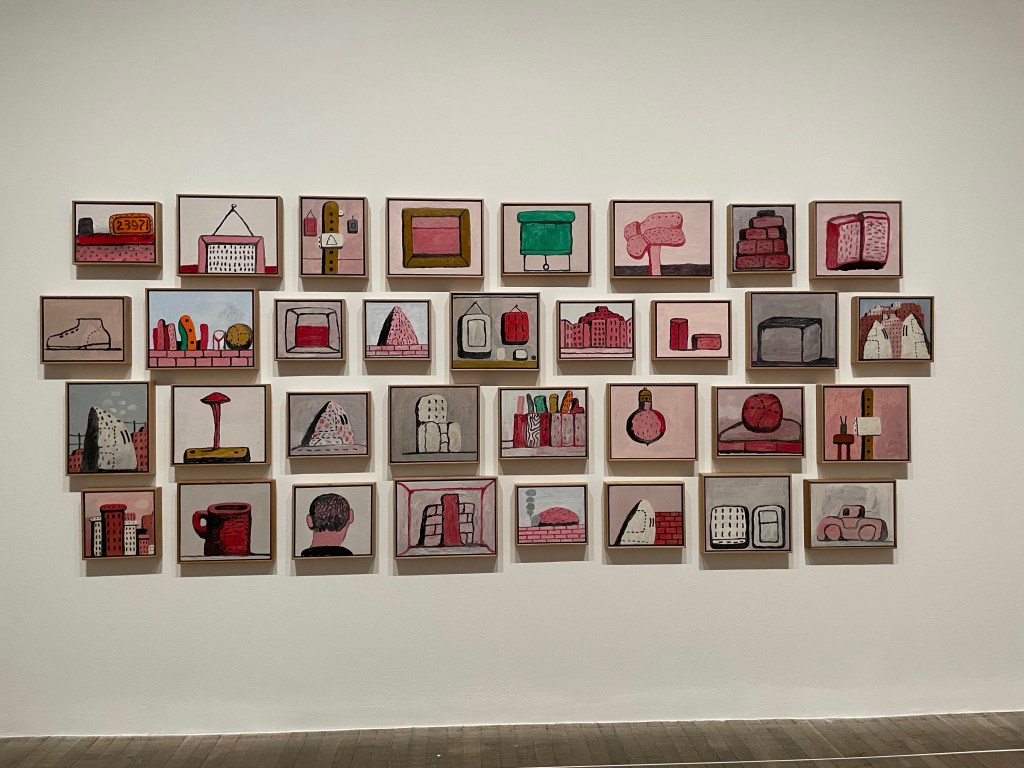
Once he’d established this visual language there was no end to the use. The images represented his concerns with injustice, racism, war and oppression.

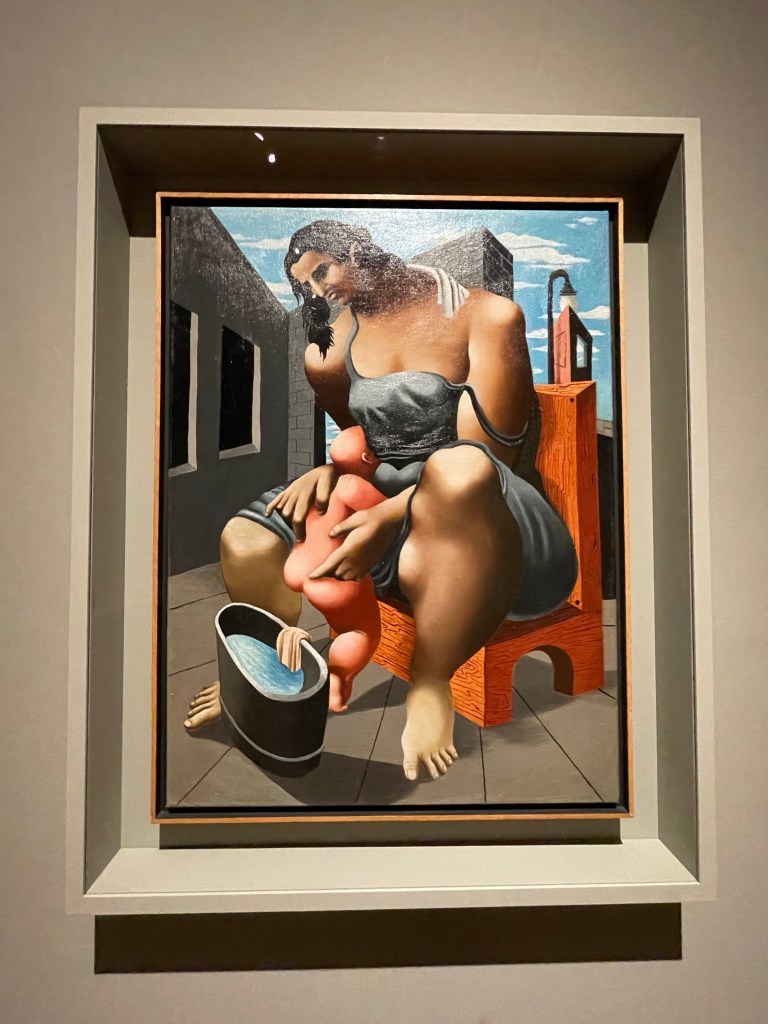
But the thing that fascinates me most about this exhibition is the chance to see Philip Guston’s early work. He was a self-taught artist. He spent time poring over books and studying the work of Italian Renaissance painters. He copied, interpreted and repeated their styles. His early works show his interest in artists such as Giorgio de Chirico. Below is a painting he made when he was just 17 years old. It ‘s called Mother and Child and incorporates images he found in books in Los Angeles libraries.
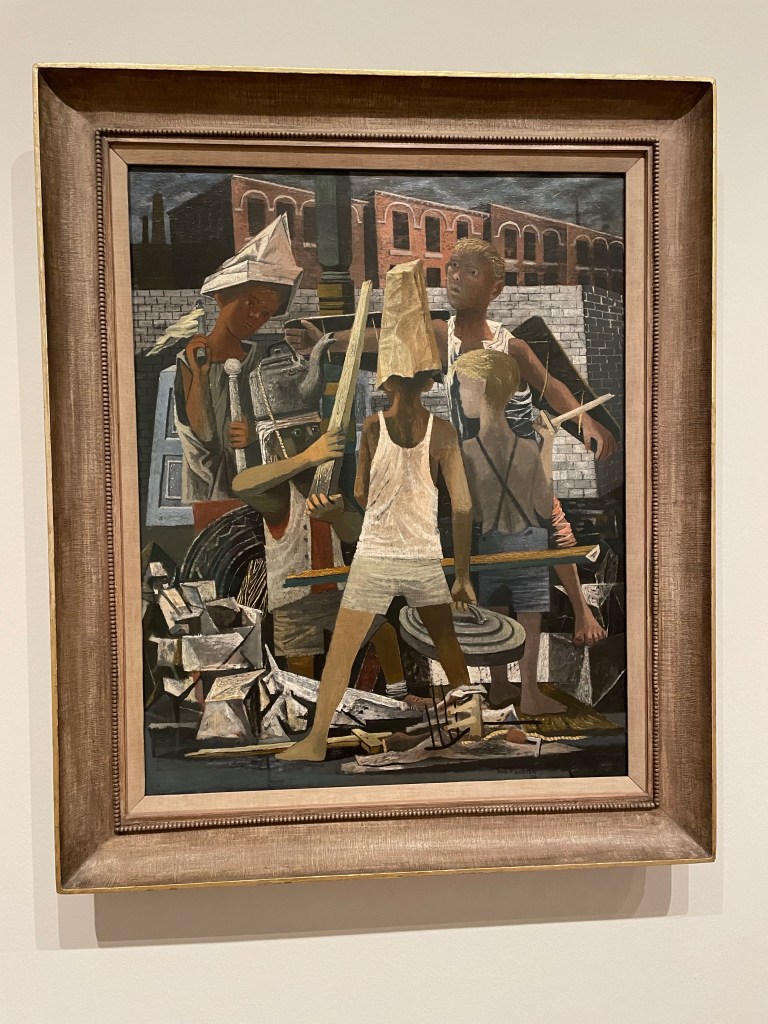
I really loved this painting, below, of children wielding sticks and domestic objects. They’re street kids making games out of any stuff they can use to create weapons or armour. The paper hats look very like fore-runners of the the KKK headwear which appeared later in his work. But the energy is so engaging.
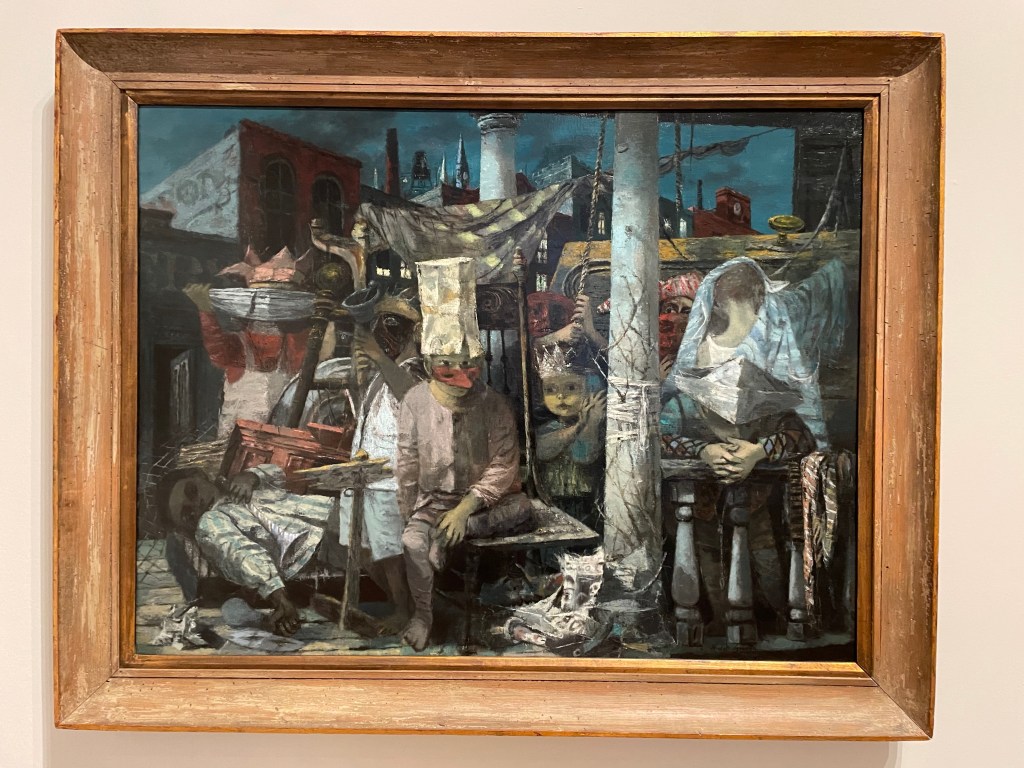
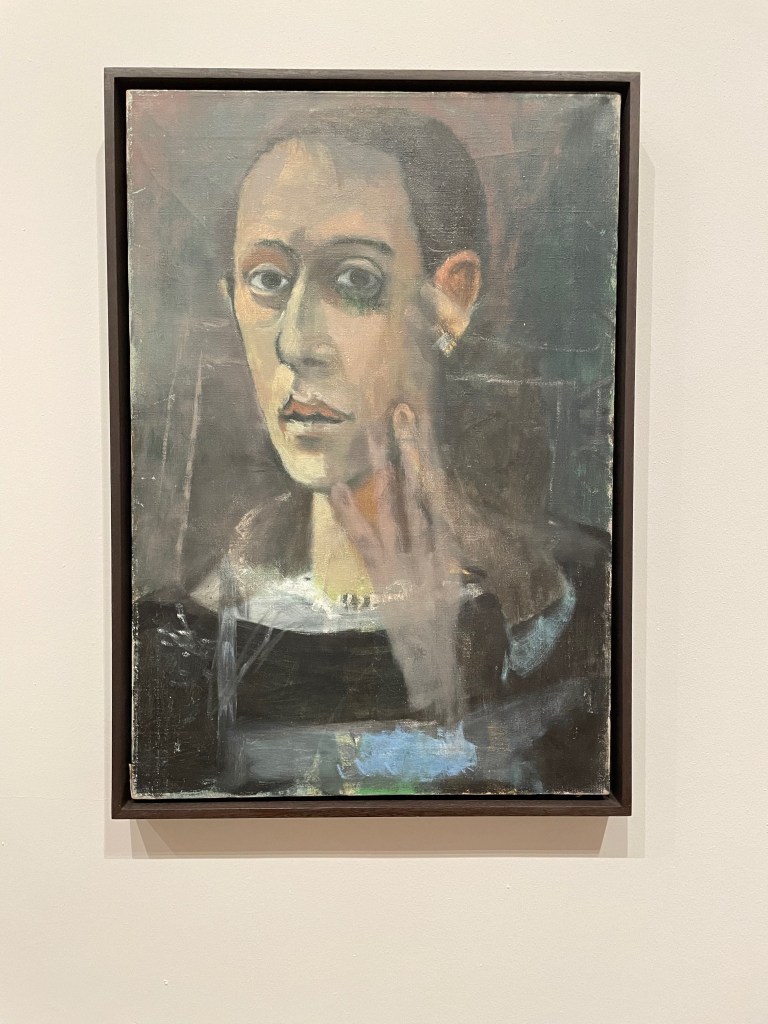
And I’m showing a few other early paintings which really impressed me. You can see the influence of Picasso and Braque and the cubists. There’s also an Edward Burra feel to them too. They really represent the world Guston saw around him.
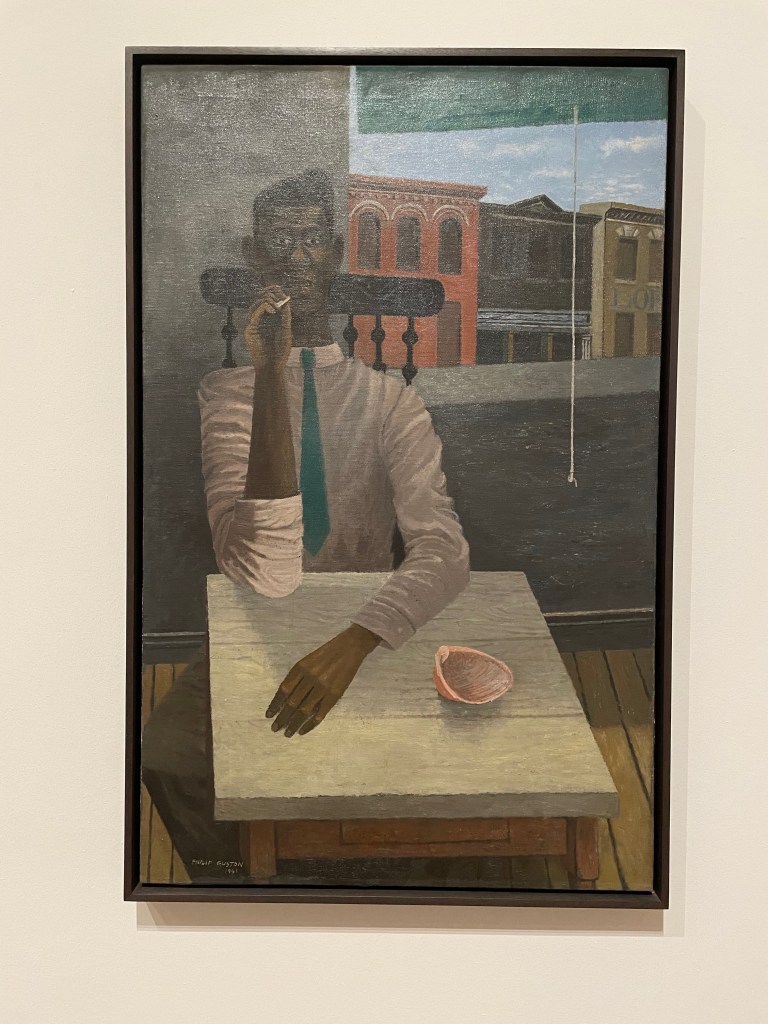
This show is surprising and satisfying. And it sheds new light on a painter who is both familiar and mysterious. Definitely worth seeing. It’s on at Tate Modern until 25th February 2024.
 Paper Places