
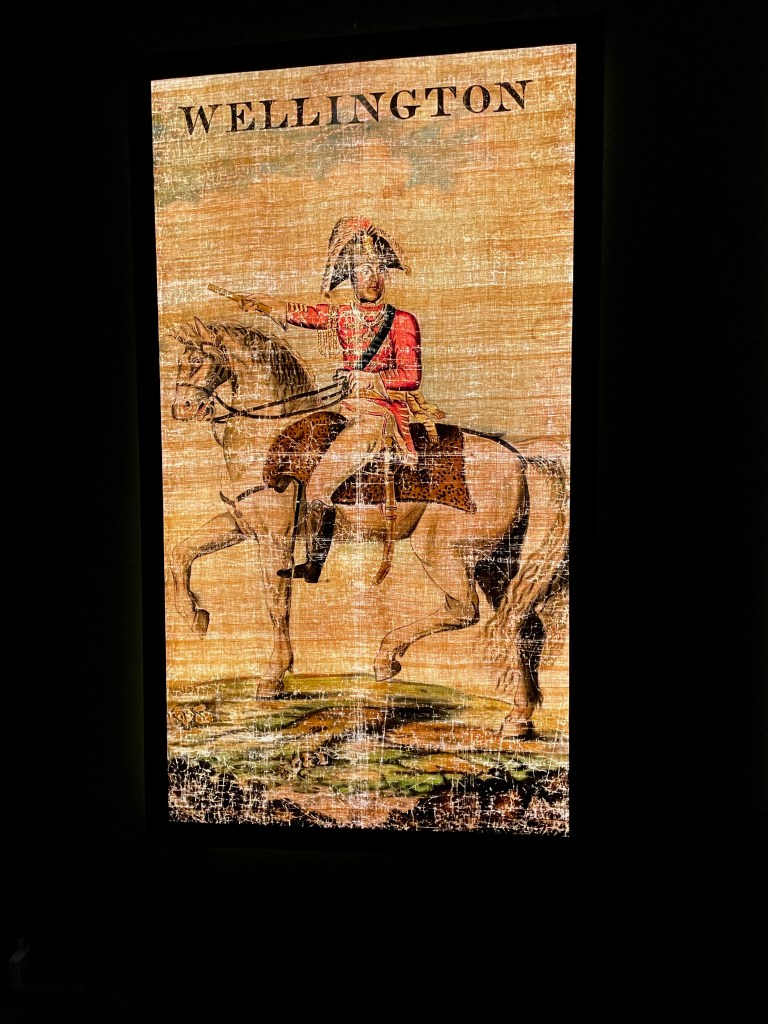
Above is a banner depicting the great national hero, Wellington. This image is a rare survivor of the kind of showy offy decorations which a fine house might use in their windows. The banner would be draped onto the inside casement and the room made bright with candles. The idea was that everyone on the street would see the bright decoration and acknowledge the loyalty of the inhabitants.
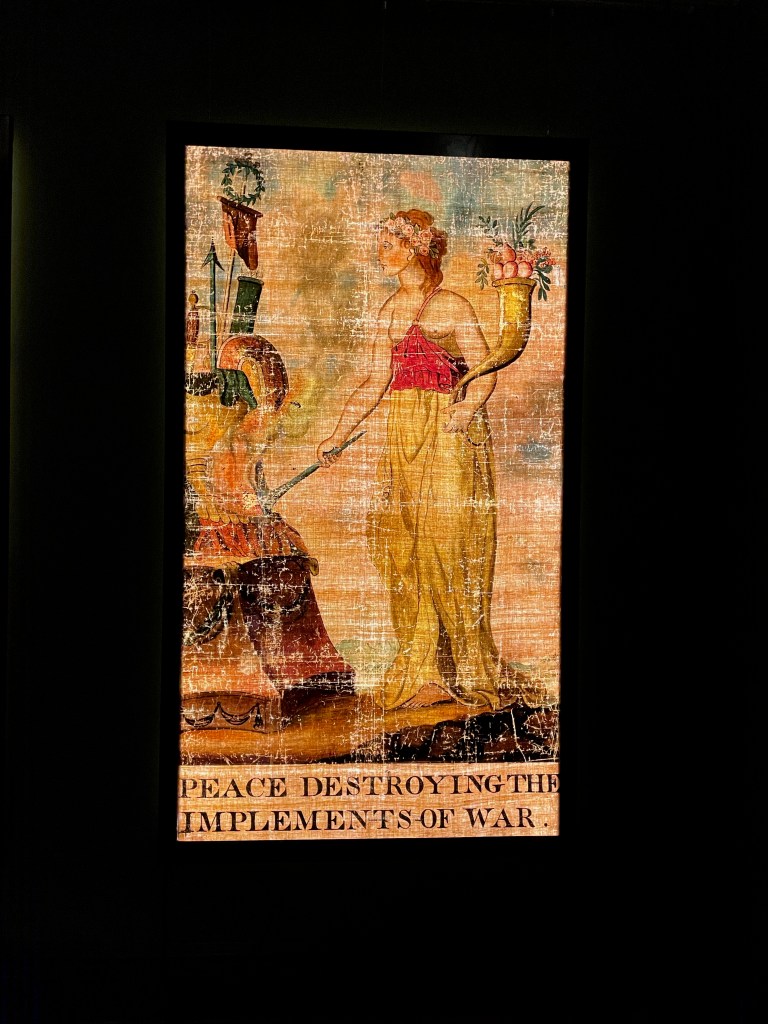
These banners also displayed worthy messages to be read by observers – assuming they could read. These banners were found in the attic of a home having been folded up and stuffed away about 200 years ago. They are fascinating survivors.
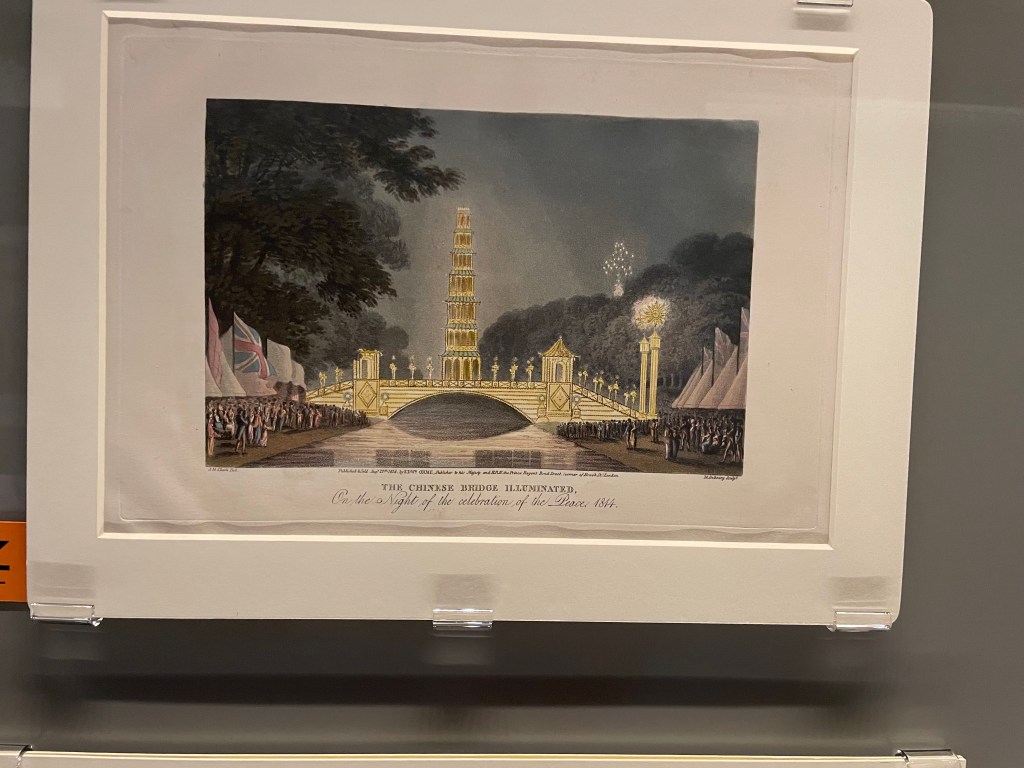
Below is a print depicting the Chinese Bridge illuminated on 1st August 1814. This was part of the huge celebrations in St James’s Park. The Prince Regent commissioned his favourite architect John Nash to build a colourful bridge. It was illuminated by new-fangled gas lighting. Alas, after two hours of impressive illumination the structure caught fire killing the lamplighter trapped on the top and a bystander
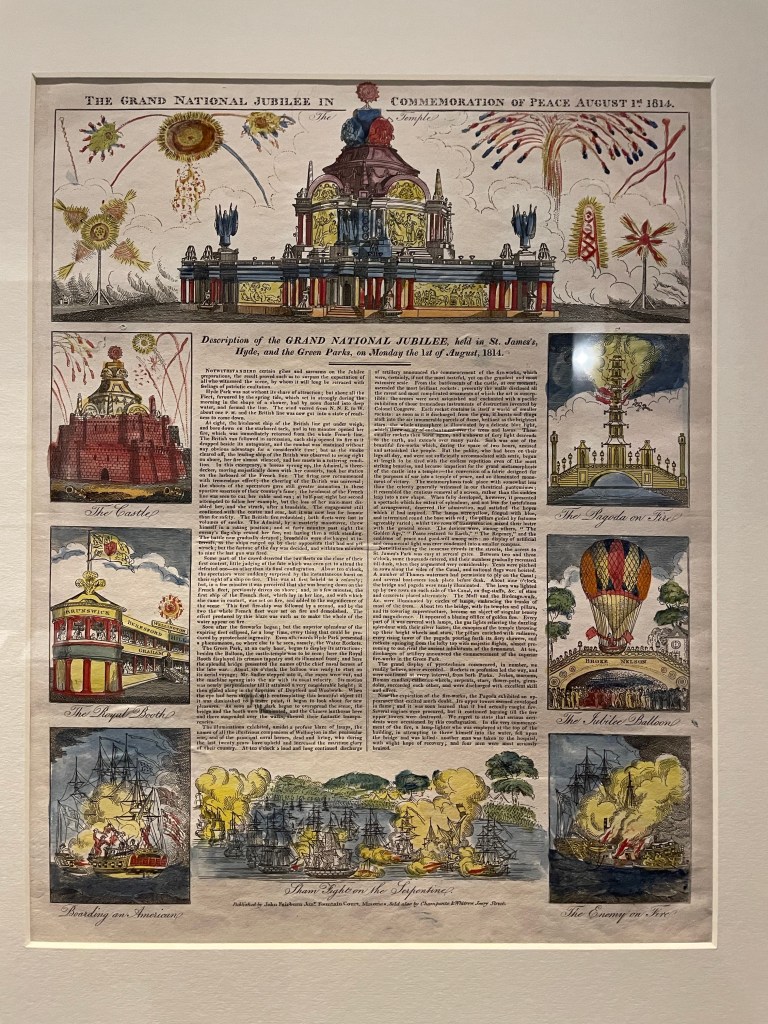
You can see the disaster of the burning bridge depicted in this page of dramatic celebrations. August 1st must have been a noisy night filled with pyrotechnics and partying.
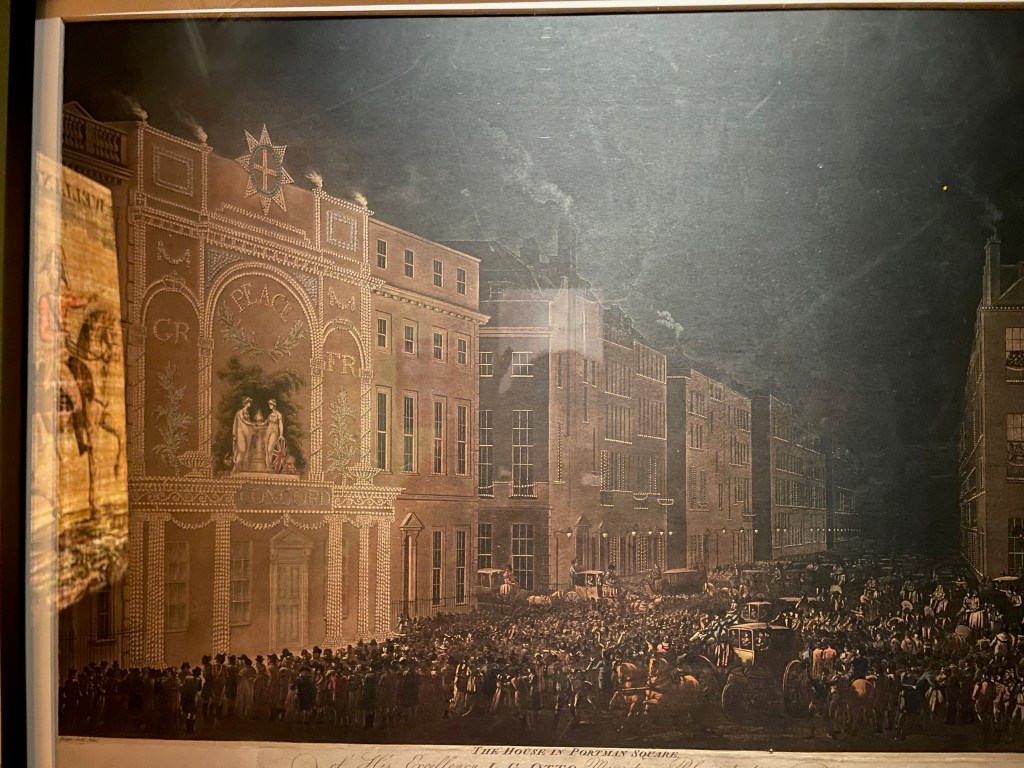
Above is an impression of a fine building in Portman Square. How did they create those lights which dangle, like today’s fairy lights down the facade of the fine house? And what a crowd assembled outside to marvel at the spectacle.
The exhibition is filled with other images of fun and festivities in Georgian London. One never tires of seeing images of the famous pleasure gardens at Vauxhall and along the banks of the Thames where people of all classes could assemble, mingle and enjoy music, dancing and excessive eating.
It’s great to have a glimpse of this world from the early 1800s and always a pleasure to visit the Sir John Soane Museum. The Museum is free to visit (open Wednesdays to Sundays) this show, Georgian Illuminations, is there until 7th January 2024.
 Paper Places