
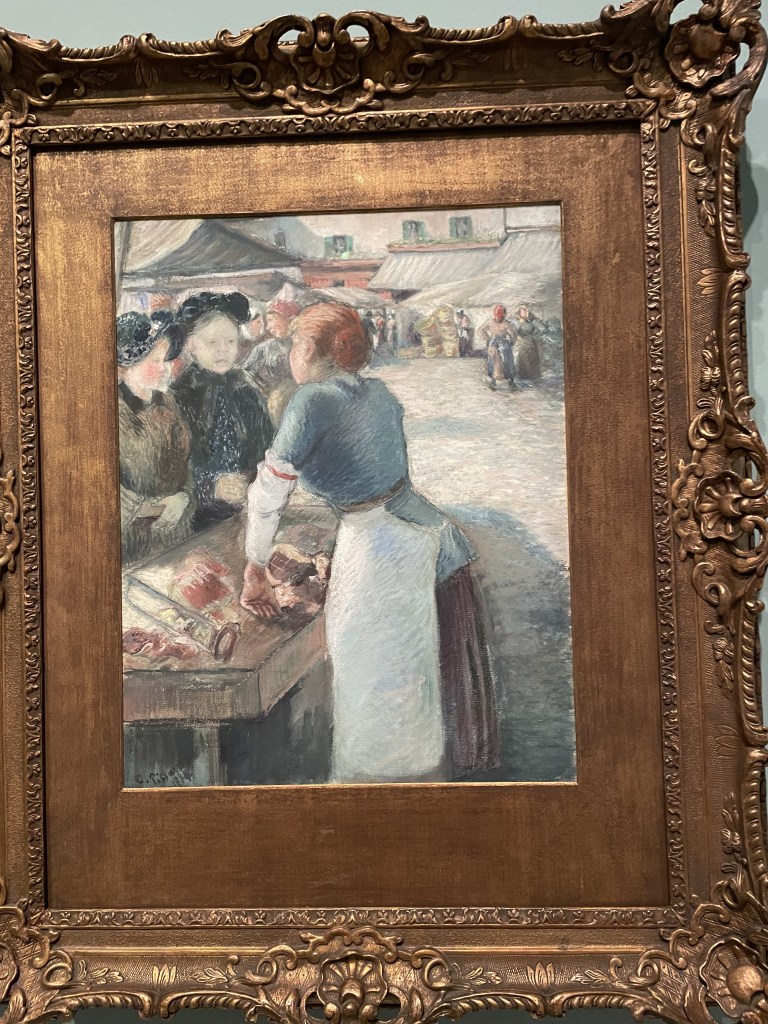

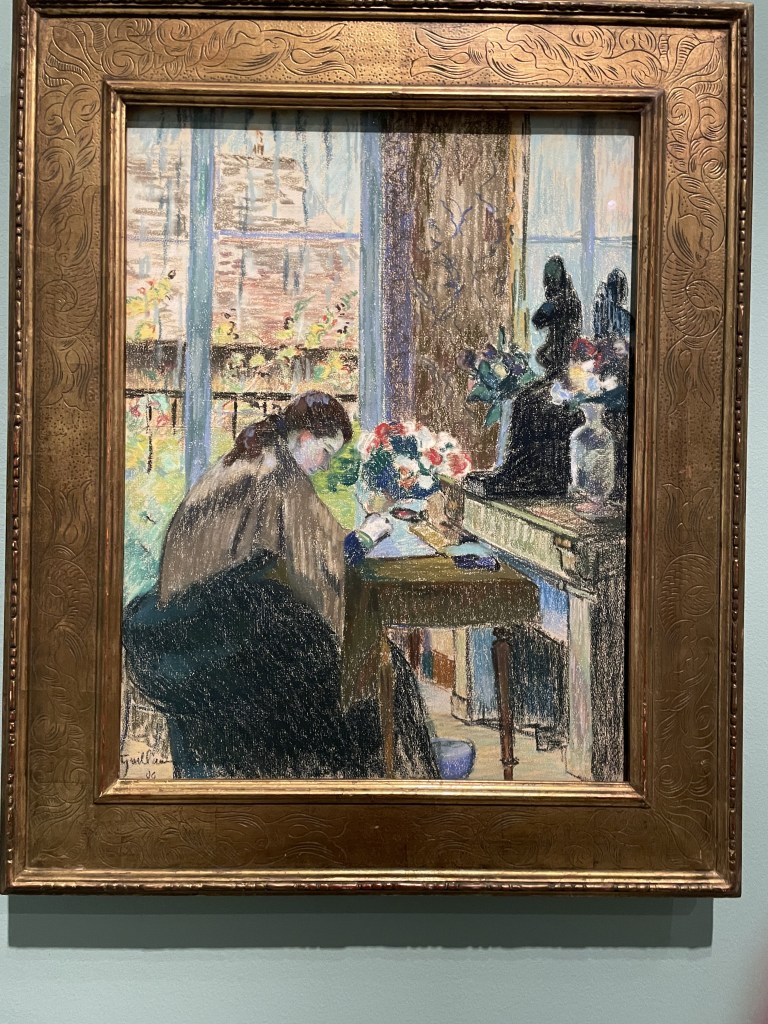
Some of the works on on show are ‘old friends’. We’ve seen Degas’ After the Bath (centre) done in pastel but I really enjoyed seeing The Market Stall by Pissaro (left) and a work by Armand Guillaumin – whom I was unfamiliar with – and his freely drawn Interior (right). All these three works are relatively polished and probably provided reference for larger scale oil paintings. But it’s the immediacy of these works which are so striking. You really get the sense of the artist’s gaze and feel that you, the viewer, are also in that space observing the same thing.
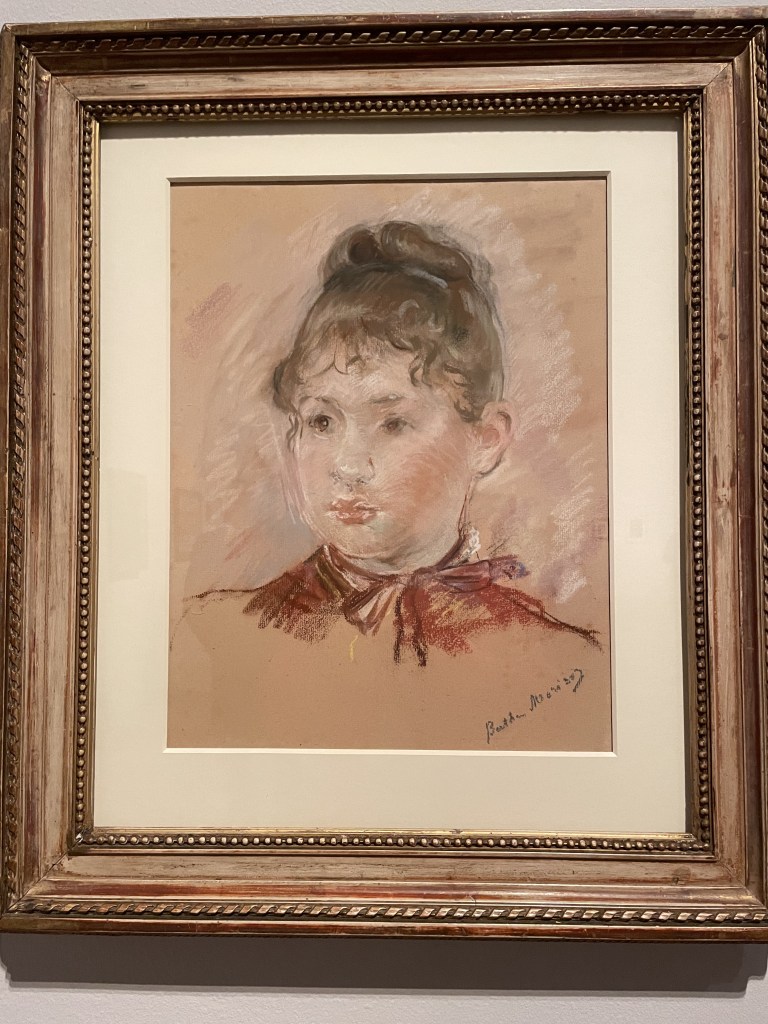


Three portraits, above. Two of them have clearly been made with the subject’s consent. On the left is a portrait of Isabelle Lambert in 1885 by Berthe Morisot. Centre is Woman with a Black Boa, done with diluted oil paint by Henri de Toulouse-Lautrec and, on the right is a rather fascinating charcoal sketch by Giusseppe de Nittis called In the Cab, circa 1880-83. With this one you can see that there’s the semblance of a photo in the ‘snapping’ of this moment done in charcoal. The two women in the carriage are unaware of the artist’s gaze. Apparently De Nittis bought his own carriage and turned it into a mobile studio and trundled around Paris making fleeting impressions of life on the move.
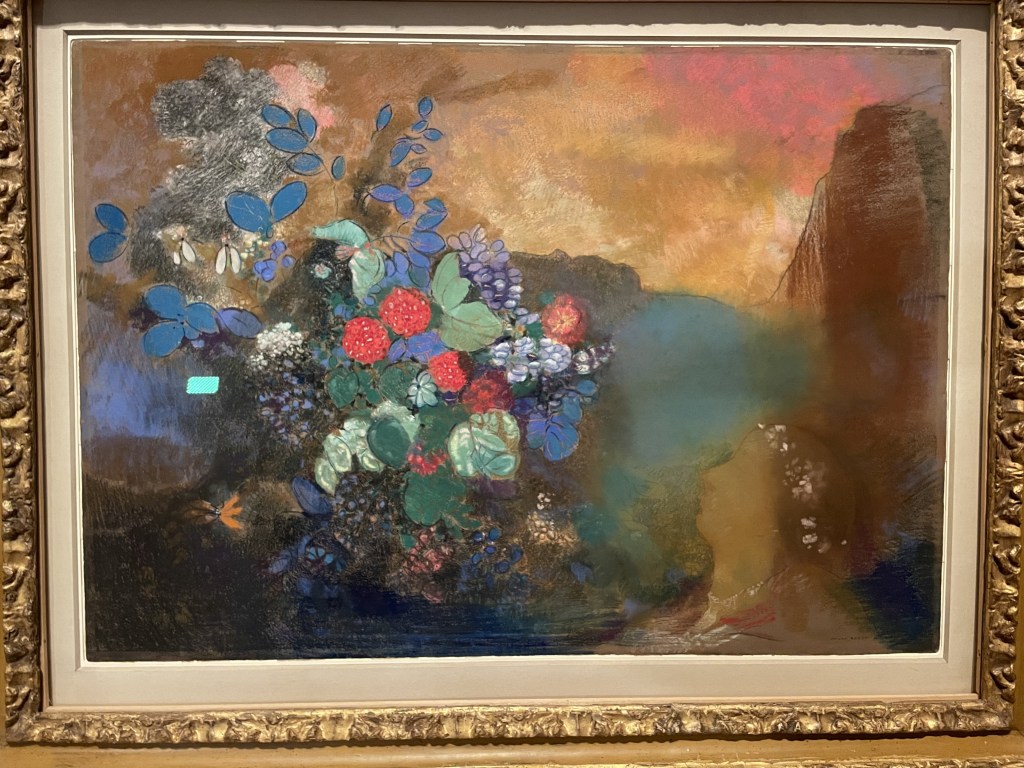
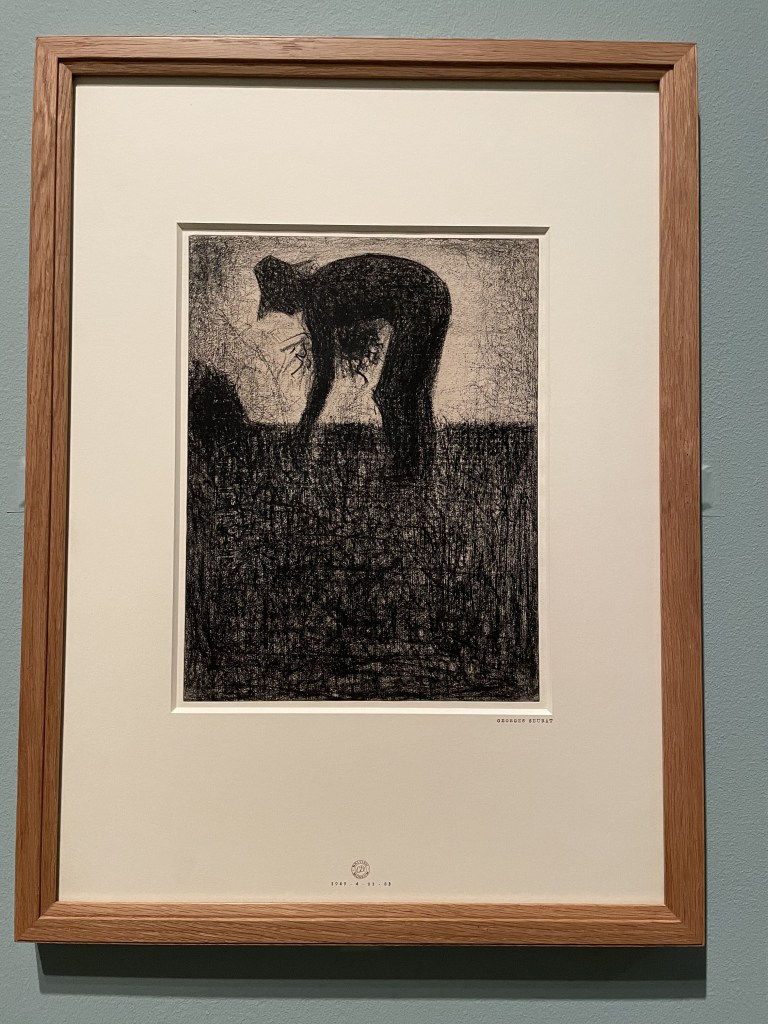
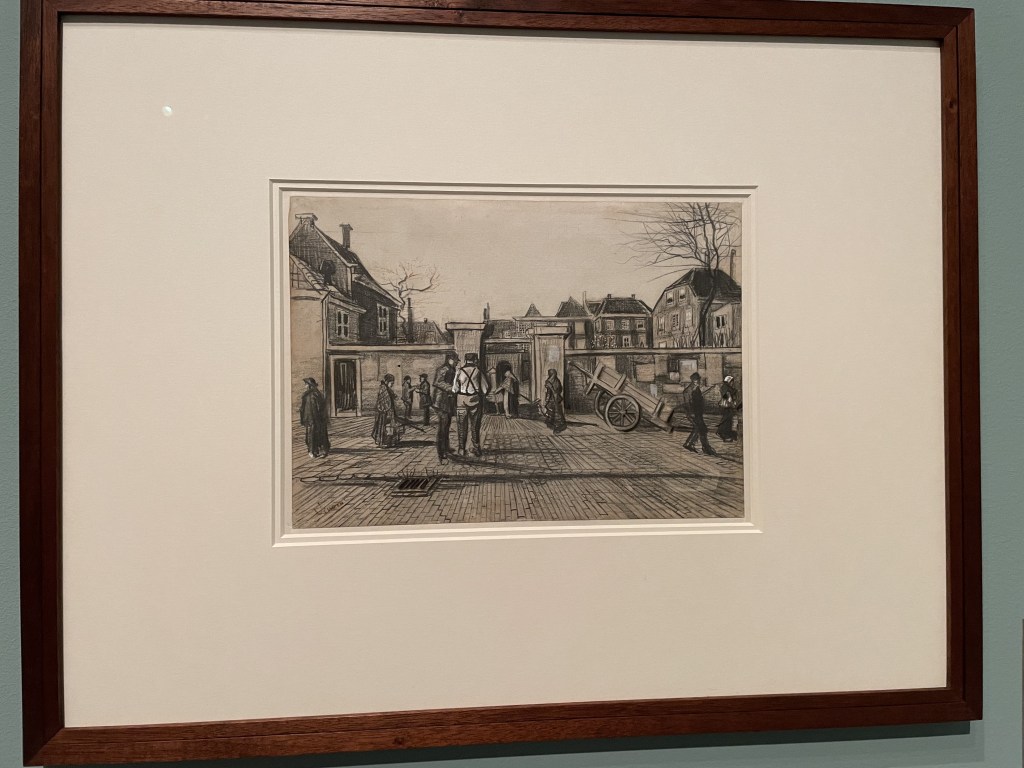
I was very drawn to the bright colours in pastel in this stylised scene on paper by Odilon Redon. It’s called Ophelia Among the Flowers, 1905-08. It is a very luscious example of pastel on paper and the strong colours this medium can produce. In the middle is a sketch by Georges Seurat called The Gleaner, c. 1882. He’s used black conte crayon in a very ‘printerly’ way – it could almost be a lithograph. Then there’s this intriguing scene on the right by Vincent van Gogh called The Entrance to the Pawn Bank, The Hague 1882. Why did he choose this subject, one wonders? It’s a mix of narrative scene and architectural landscape but so confidently drawn and very atmospheric.
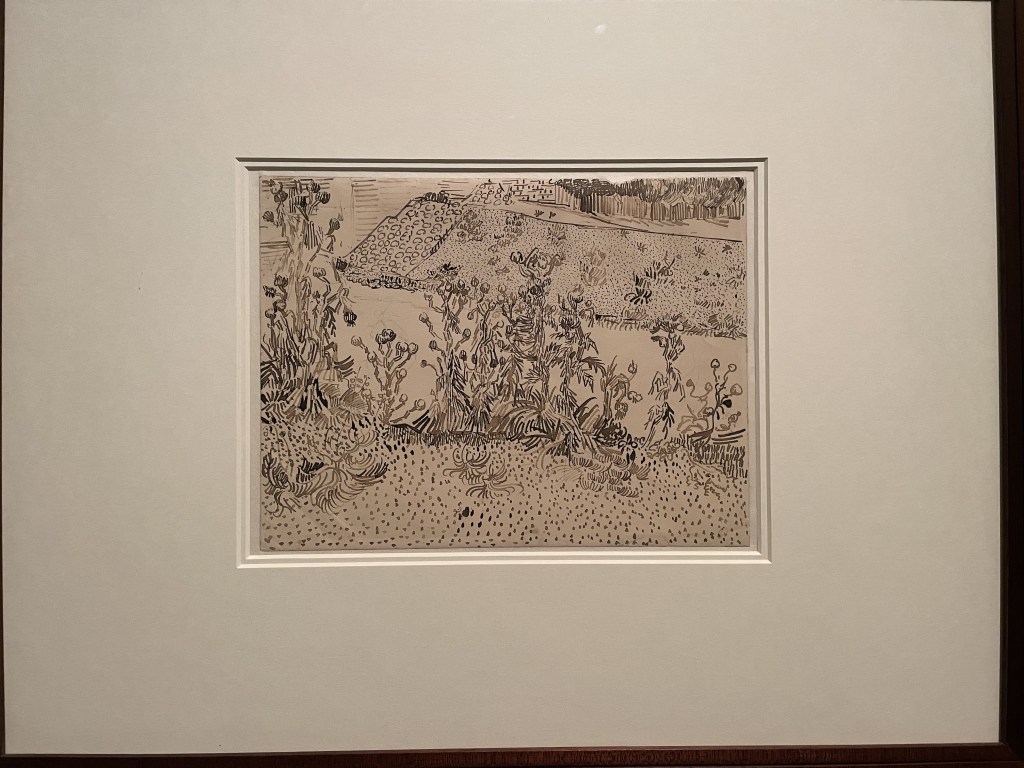
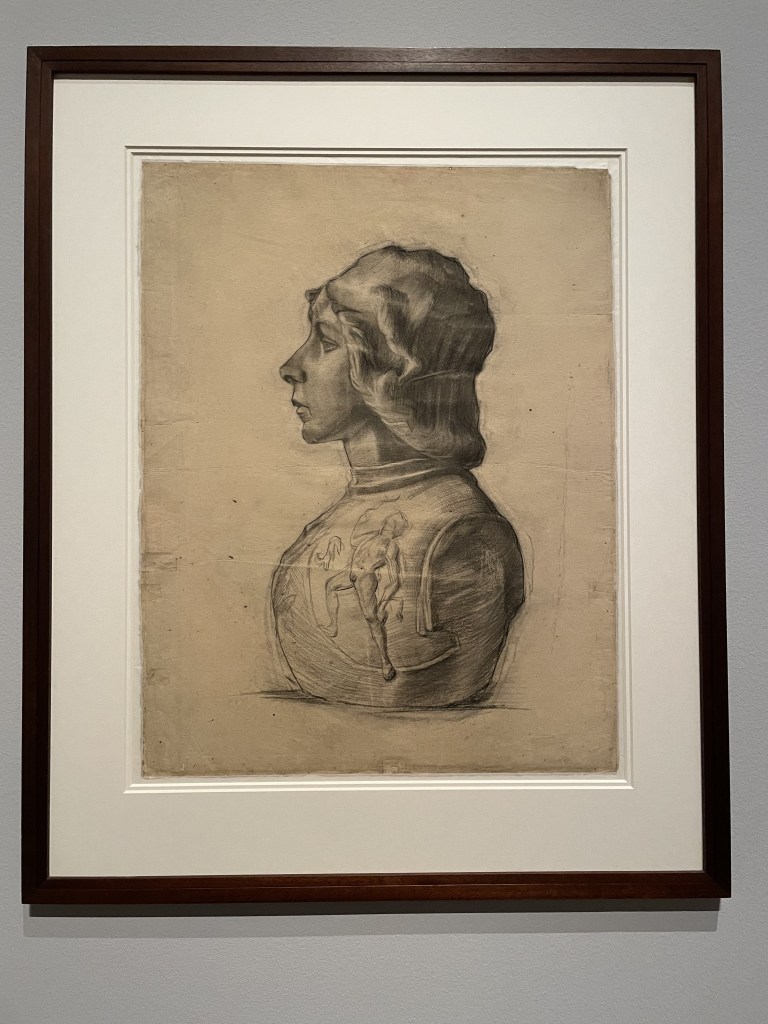

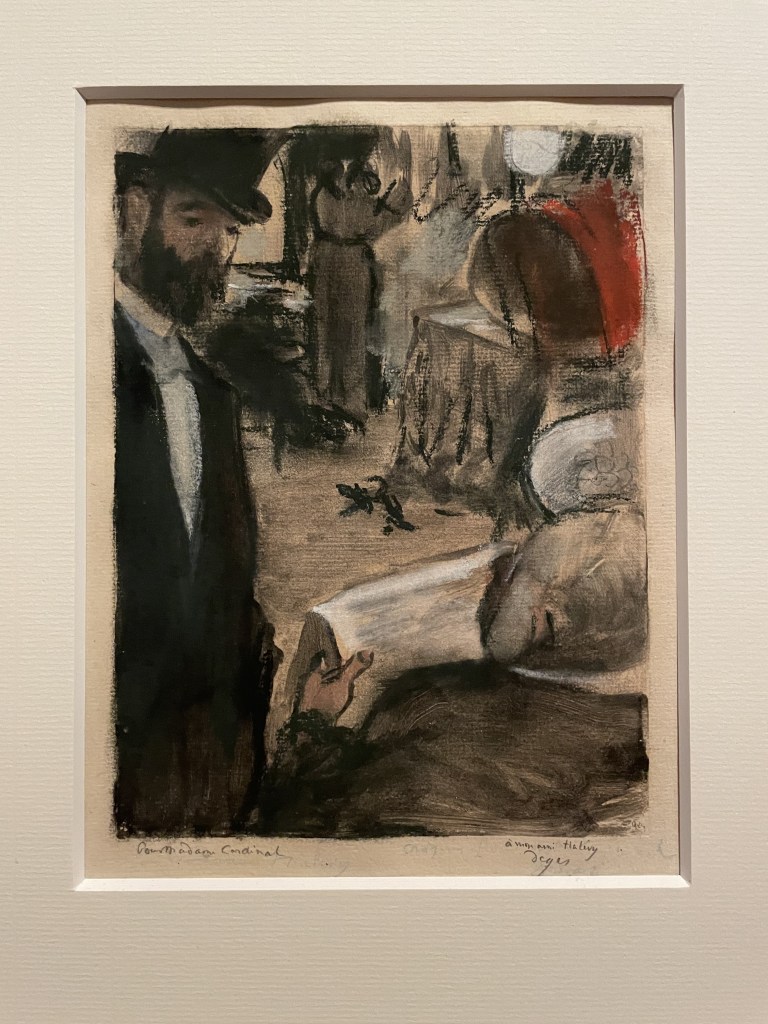
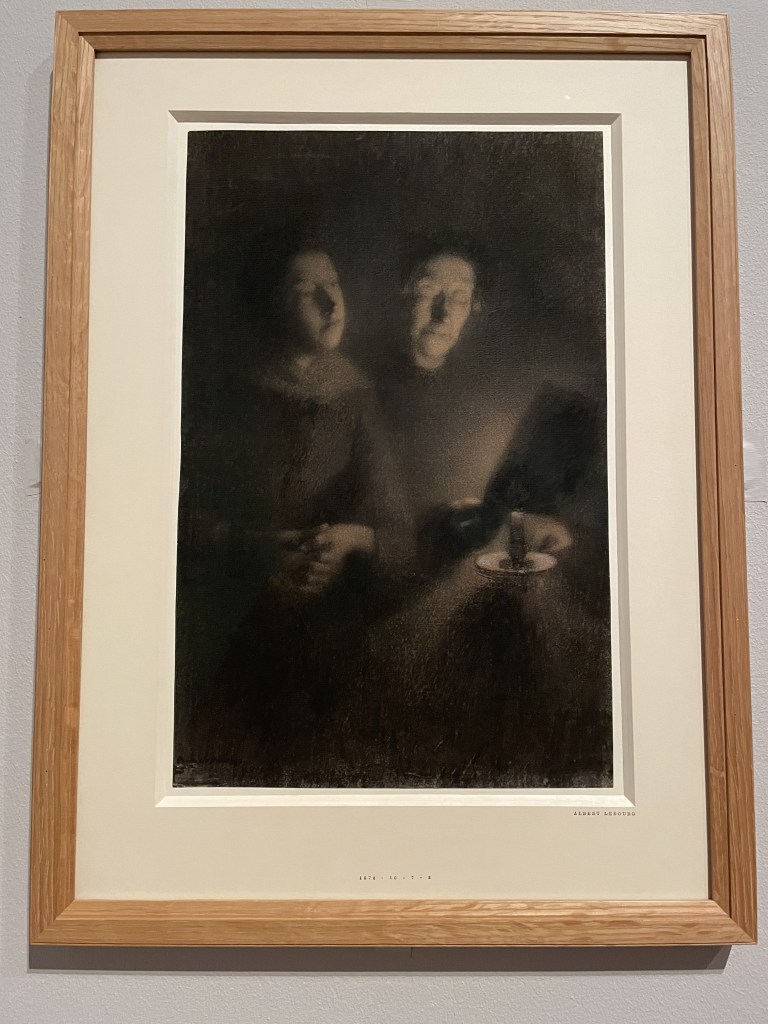
And finally, here’s a mini gallery of other sketches and drawings which caught my eye. There’s so much to see in this show and it’s easy to spend a long time just gazing at the works and enjoying seeing the artist’s hand at work, the smudges, the smoothing, the clear, crisp lines and the atmosphere of the subjects they are capturing. Yes, we’ve all got cameras these days but I don’t think artists will ever stop enjoying the power of the quick sketch. These are a joy to view.
The show is on in the Gabrielle Jungels-Winkler Galleries until 10 March 2024.
 Paper Places