
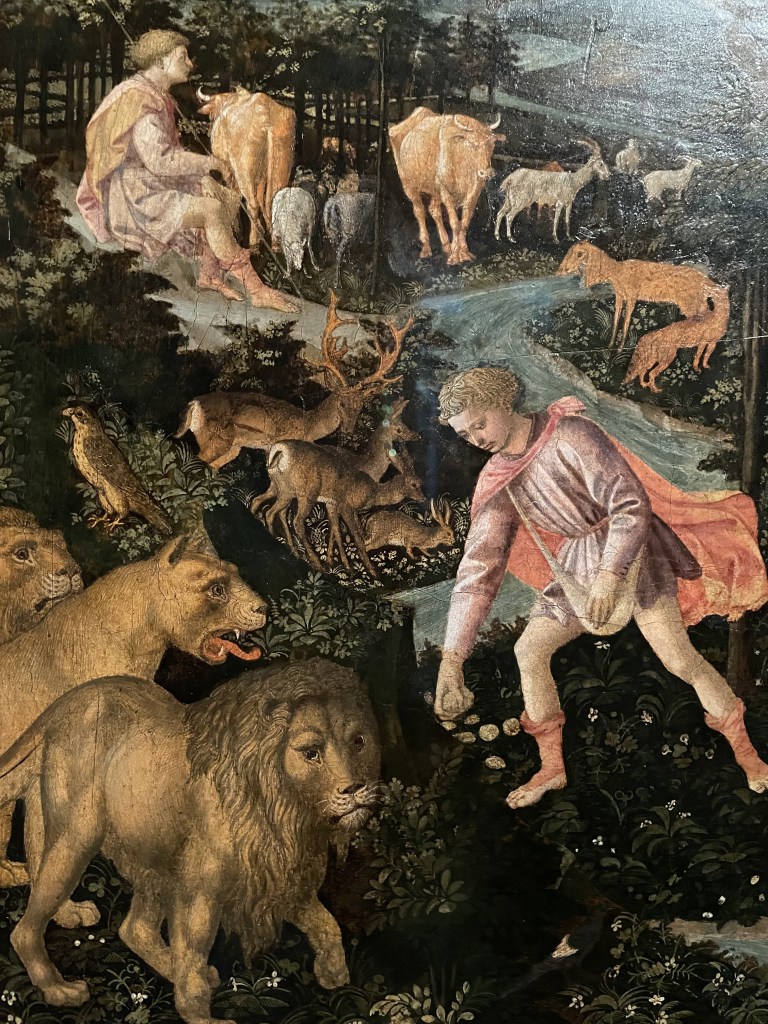
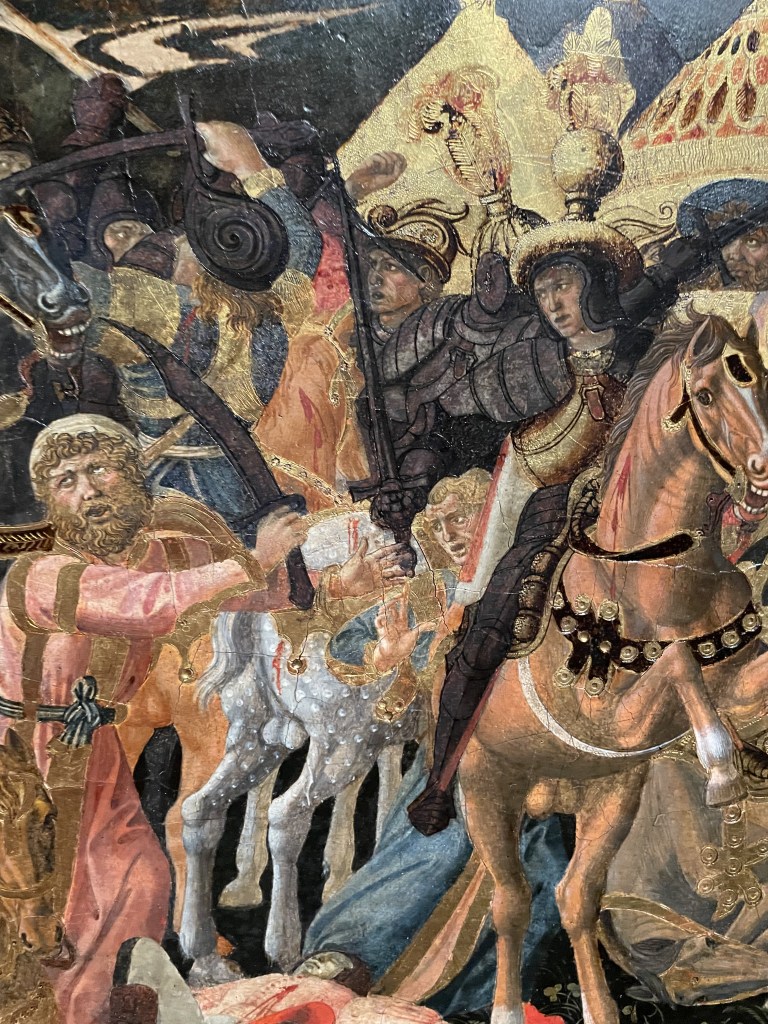
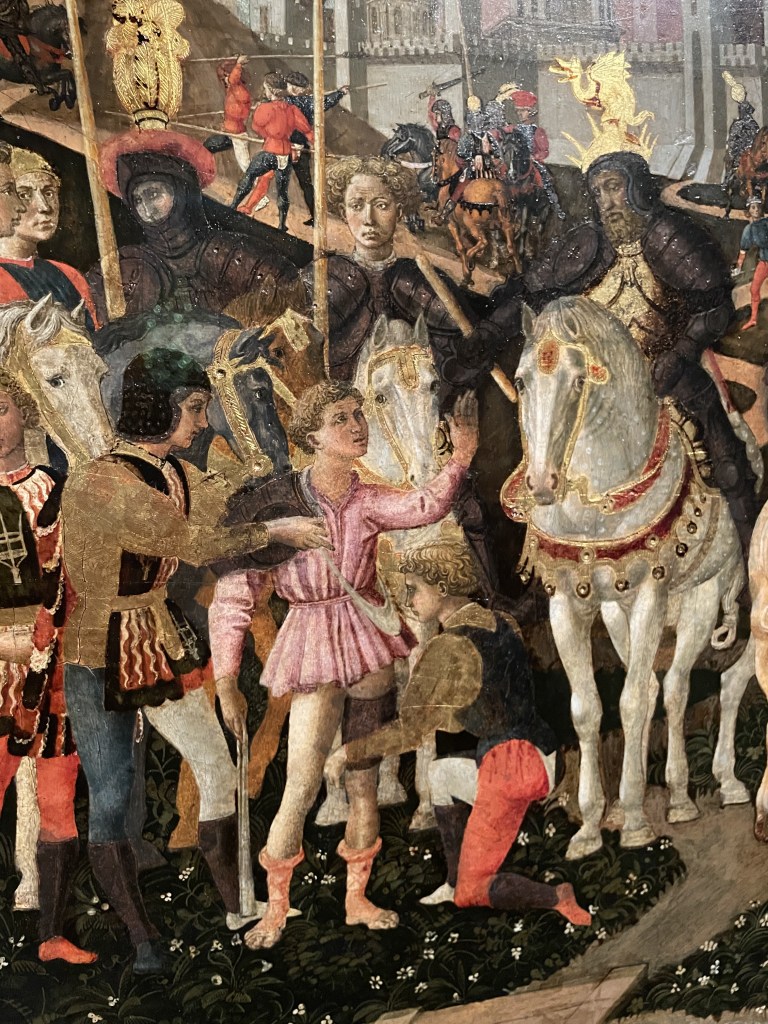
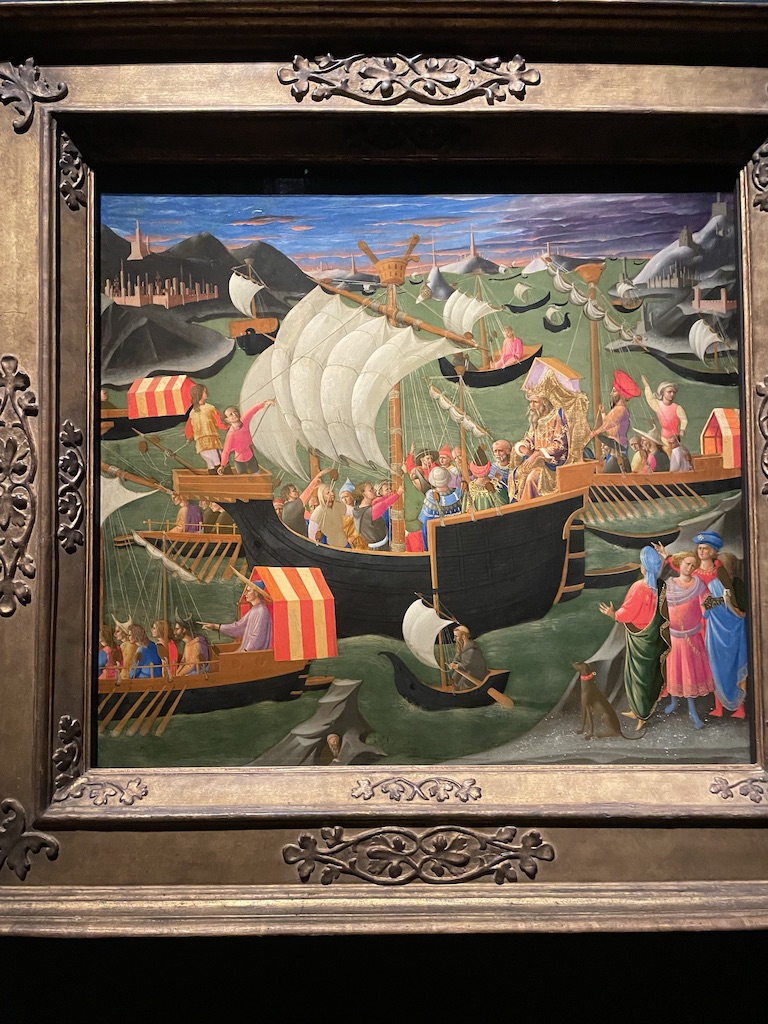
Above are a few details from one of the remarkable narrative paintings which once adorned the side of a strong box or container for a bride’s trousseau. It tells the story of David and Goliath and the long panels are just packed with fascinating images. You can’t really see the scale from these pictures but they are tiny and there is so much going on. You have to use a magnifying glass to really absorb the delicacy and detail.


As you scan these works you pick up more and more information. It’s like looking at a Breugel painting from the Renaissance world of a hundred years earlier. You get a real sense of clothing, the interiors, the layout of the towns and landscape. Then there are the animals.
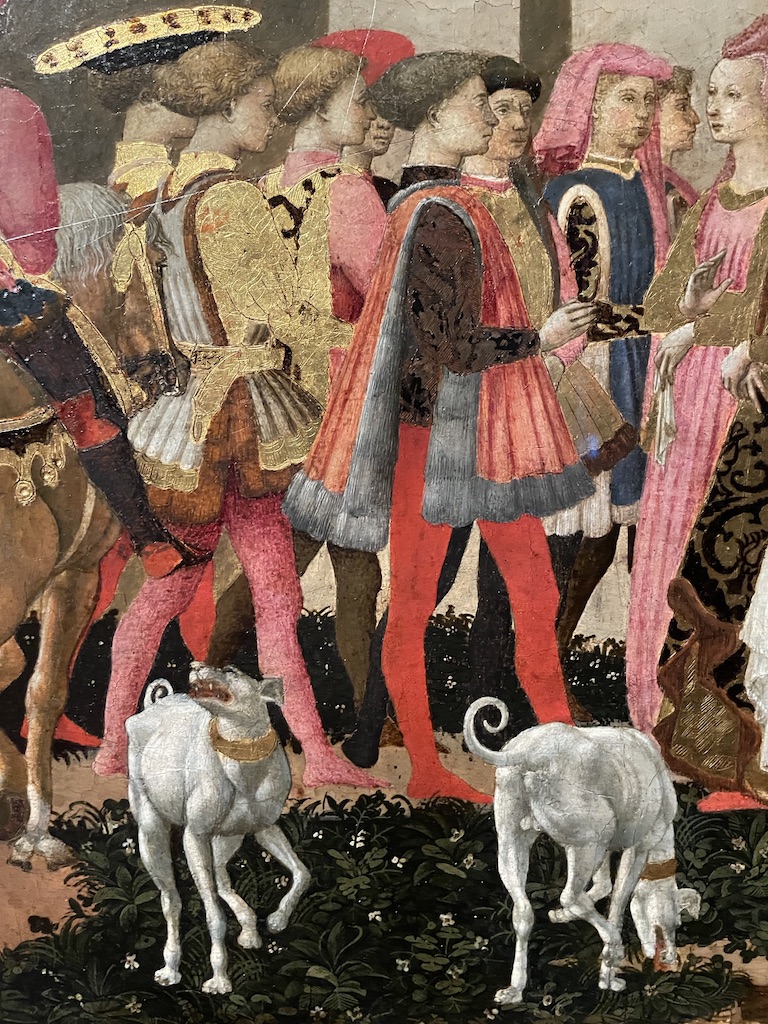
The expressions and actions really tell a story. Here’s David holding the severed head of Goliath, below.
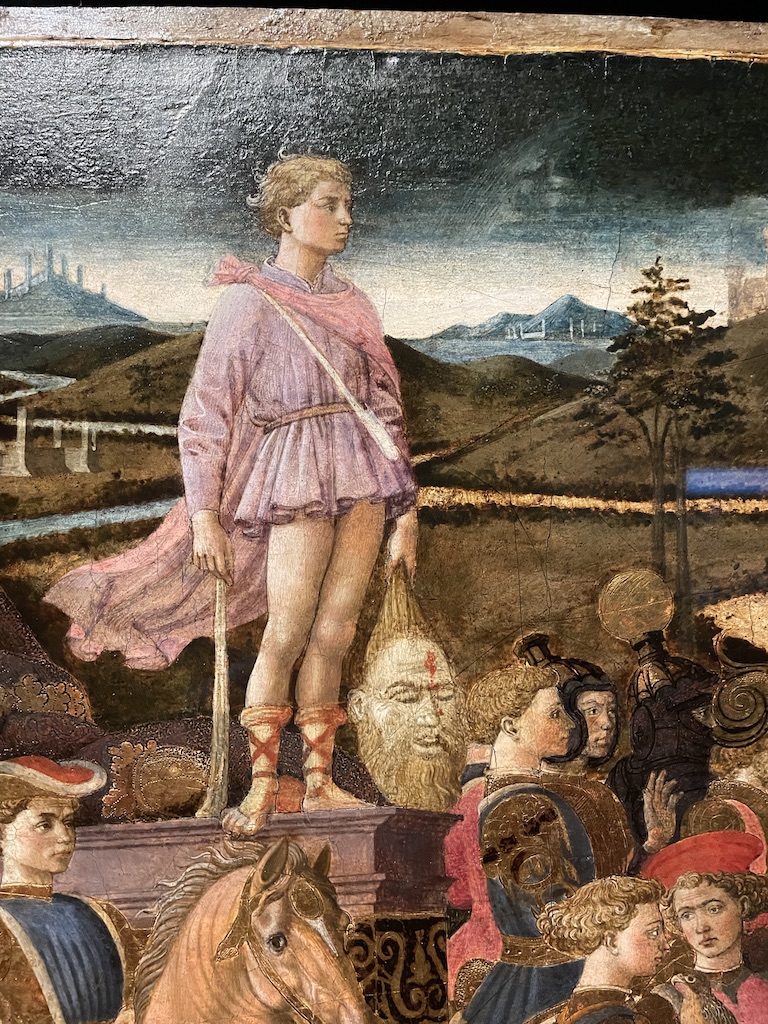
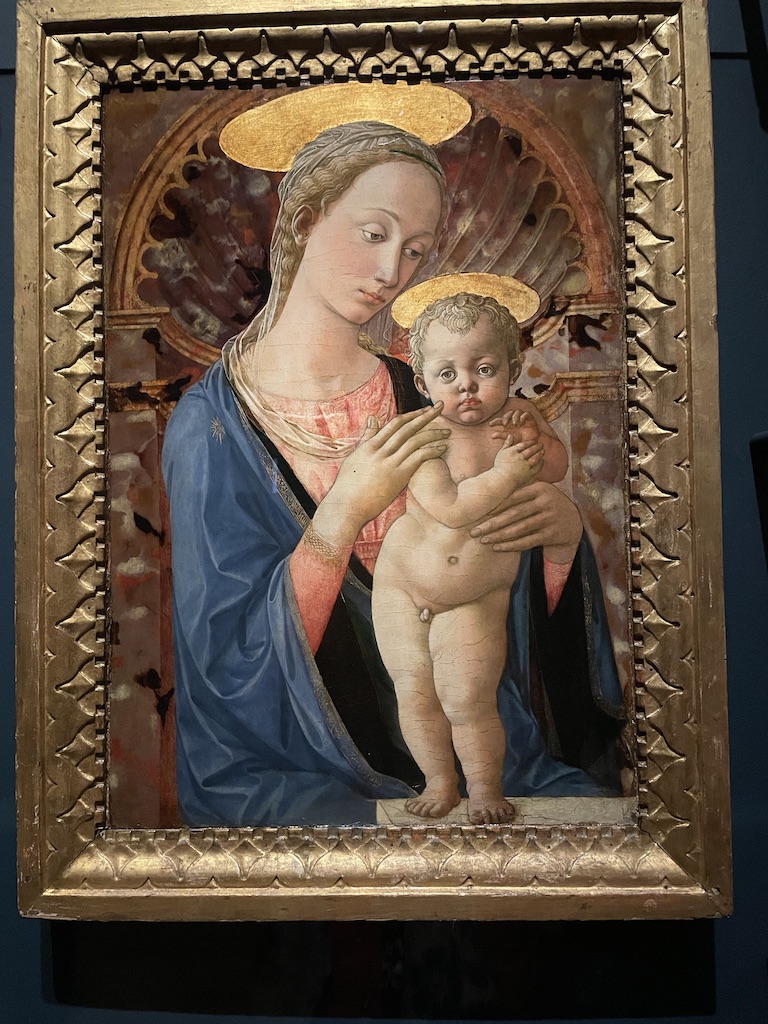
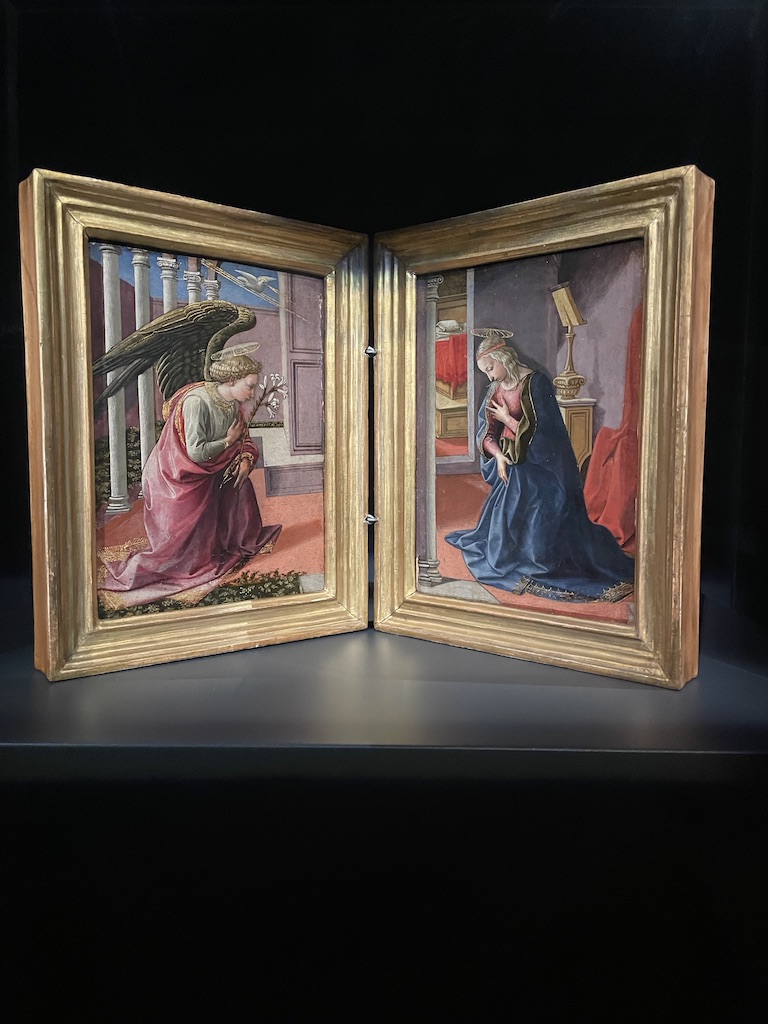
These pieces must have taken a very long time to paint. It’s astounding to think that they were fixed onto boxes which, most probably, were commissioned by the Medici family in Florence and used to store everyday goods. Pesellino was a favourite with the illustrious family and used this connection to gain more commissions to make altar pieces and religious paintings.
What a tragedy that he caught the plague in 1457 at the tender age of 35 and died. Vasari, who wrote about the lives of the artists of the period, rated Pesellino’s work and speculated on what he might have achieved if only he had lived. It’s a rare treat to see this charming exhibition at the National Gallery.

 Paper Places