

We’ve all heard of Yoko Ono. My earliest awareness of her was as a schoolgirl and Beatles fan. We would see pictures of her, sitting quietly in the recording studio while her husband, John Lennon, composed, rehearsed and recorded songs with The Beatles. We resented her. We blamed her for breaking up our favourite pop group. We never gave her artistic life or creative contribution to the world a second thought. But, by the time she met John, she had already established herself as a leading light in conceptual and performative art. Connecting herself with one of the most famous humans on the planet could be construed as an extension of her art.
Well, now we have the chance to see exactly what she had been up to prior to her Beatles ‘coupling’ and much of the work she did subsequently. Yoko Ono was at the vanguard of conceptual and participatory and performance art. I’m impressed that she embraced the thought-processes of this difficult form of art when she was so young. It takes tremendous confidence and sense of self-worth to bravely set up events in major world cities, become friends with fellow artists and carve a very individual niche in the contemporary art world.
It was fascinating to see her early work. The exhibition opens with her film entitled Match when she films the striking of a match close up and watches it burn down. I think we all share in the fascnation of this little task but few think to record it in such a serious way. She presents the film as an indication of how time passes.

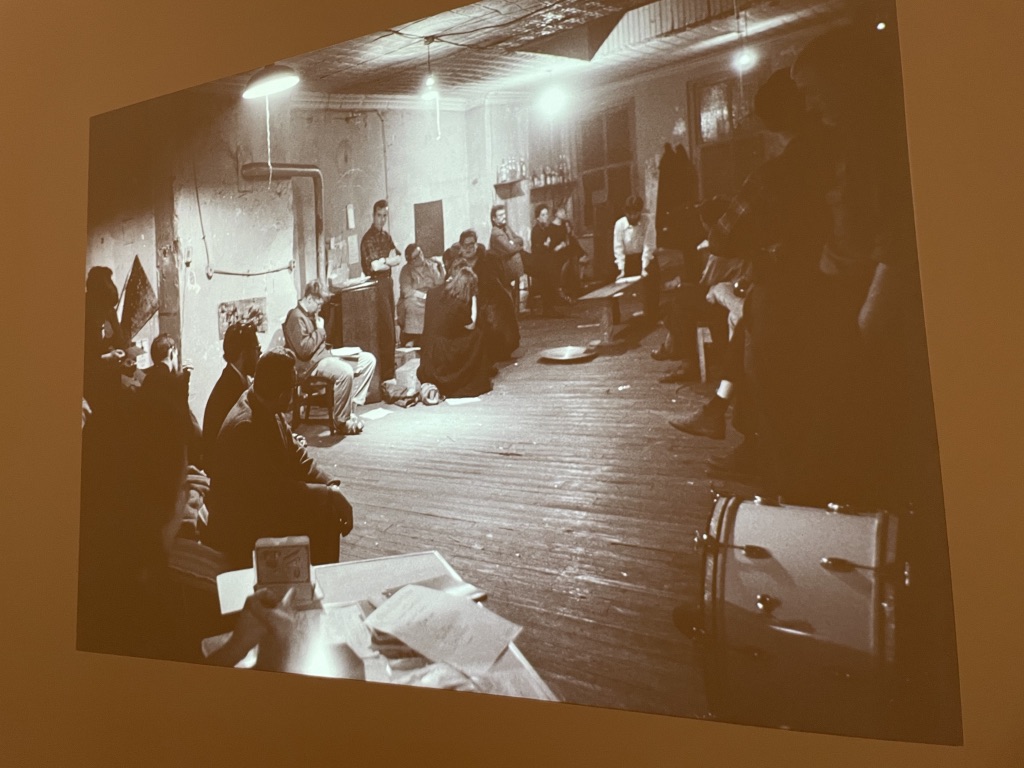
Below, is a photo of gathering of contemporary artists in a tatty-looking loft in New York where she initiated artistic ‘happenings’. She was in her early twenties when she navigated her way into that art world and established herself as a powerful practitioner.
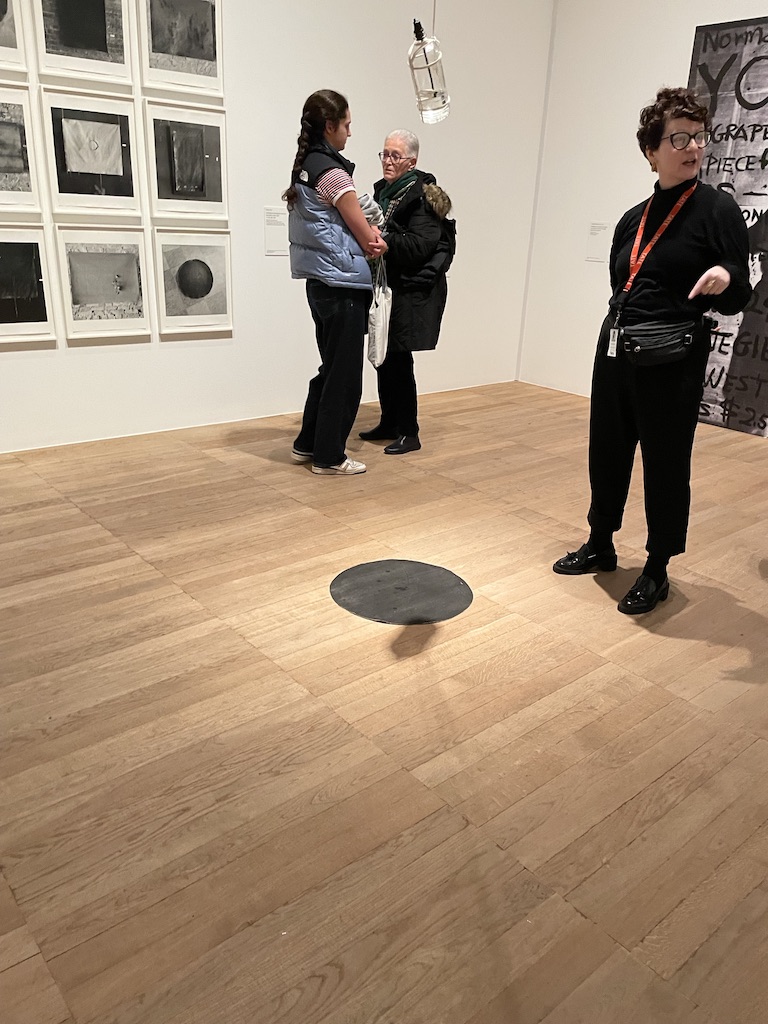

I was unfamiliar with her work full of ‘instructions’. She invites the viewer to become the artist rather than a passive observer of someone else’s work. Above is my photo of an artwork on the floor. Yes, you might observe, but that’s just a painted circle. It is, yet a bottle of water has been positioned above it and every now and then a little drip falls onto the painted circle creating dots and changing its character. It is an artwork. But it’s taken several decades of conceptual art for something as abstract as this to be understood.

Yoko Ono’s film called Bottoms was the film which both enhanced her reputation as an artist and caused a shudder through the spines of the establishment. No one could be quite sure whether she was being rude and subversive or genuinely celebrating the human figure. The British Board of Film Censors banned Film No 4 (BOTTOMS). In protest, Ono staged a protest with this poster, above, and gave reporters daffodils.
Of course, it’s her relationship with John Lennon, who was clearly captivated by her creativity and energy, which still fascinates us most. There are films of the famous ‘Bed Ins’ and their peace campaigning. This exhibition is entertaining, thought-provoking and strangely moving too. As Yoko Ono enters her 90th decade it’s absolutely right that she should be celebrated at one of our major galleries.
The show is on at Tate Modern until 1st September.
 Paper Places