

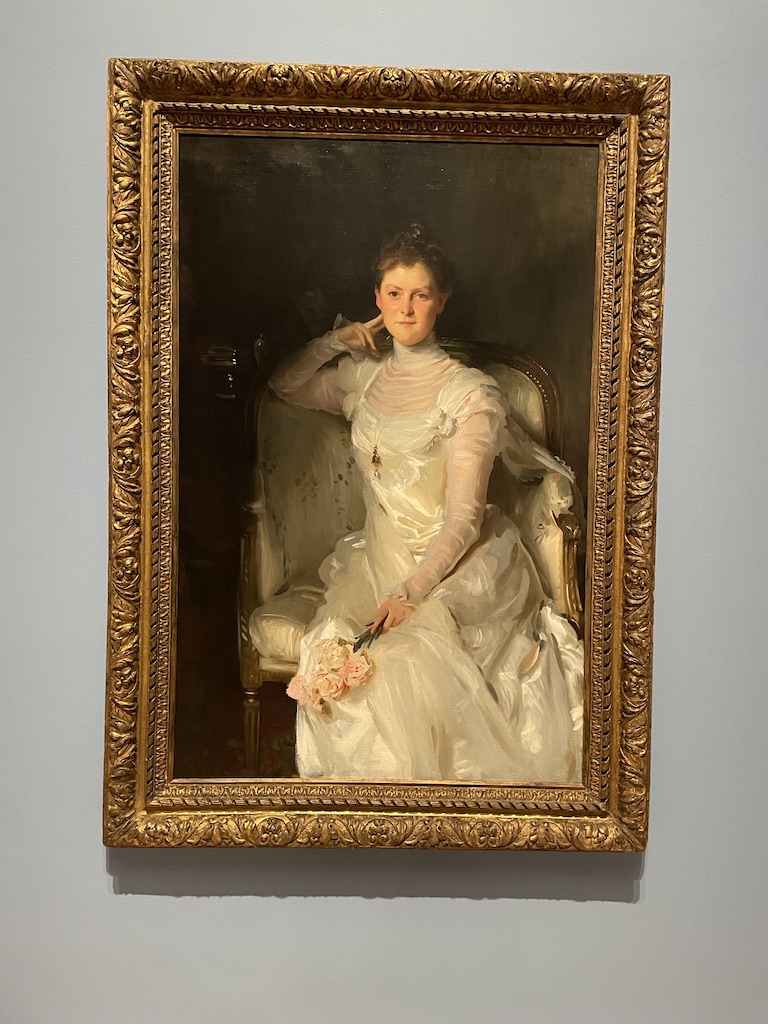
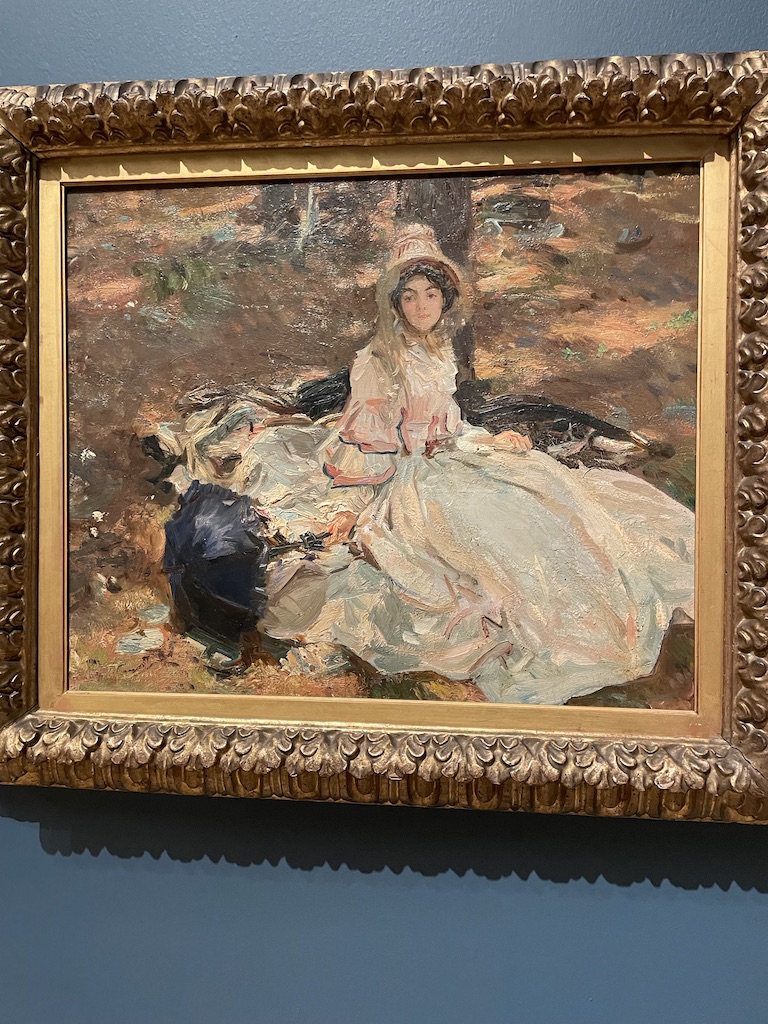
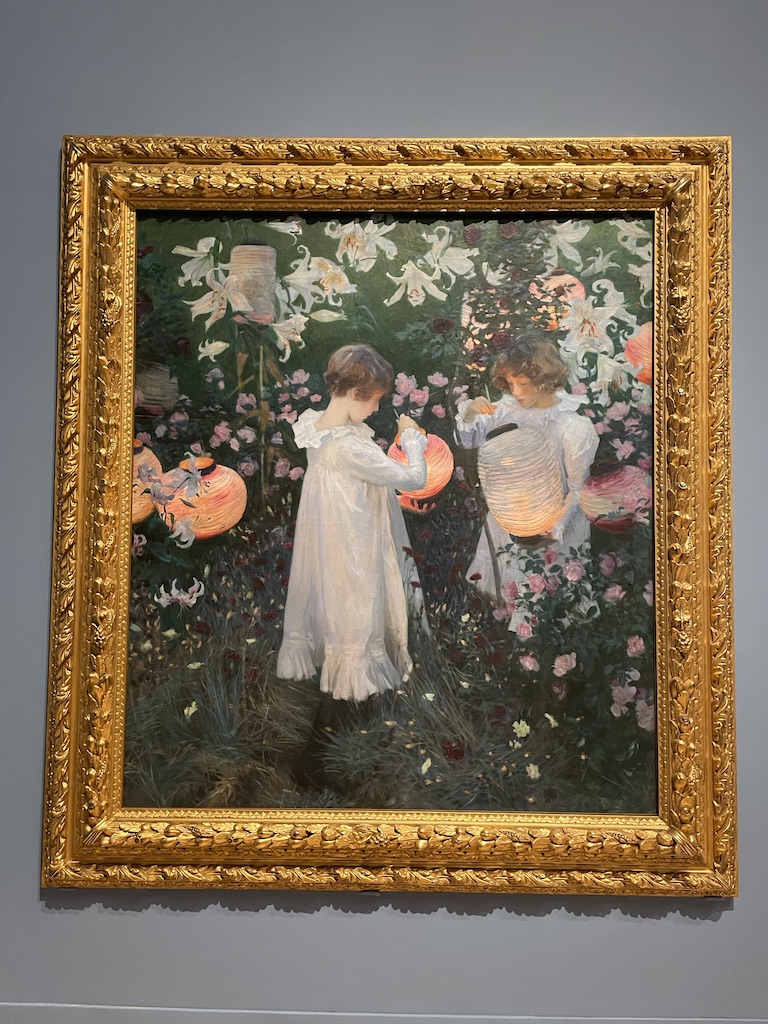
This portrait of Dame Ellen Terry as Lady Macbeth is quite a showstopper. But then the whole show is full sensational portraits by John Singer Sargent and I adored them all. Sargent clearly had an eye for the theatrical and this really comes through in his approach to clothing, styling and presenting his subjects. He was not remotely squeamish about clothes. He would not be bullied by any of his sitters and, in some cases, insisted that they pose for their portrait in clothes of his choice rather than the fancy gowns they might have had in mind.


Above is a double portrait of Mrs Fiske Warren and her daughter Rachel, 1903. Apparently Mrs Fiske Warren presented herself to Sargent in a green gown. He immediately asked her to source a white frock. So she borrowed a dress from her sister in law which didn’t really fit. And her daughter is draped in some kind of pink cloth. Sargent painted the portraits in their home which was full of dark and lustrous objects. He wanted the subjects of the painting to glow in that environment and show off their complexions. He was more interested in getting the right effect for the painting than pleasing the vanity of the sitter. The result is glorious. Interestingly, there are some photographs of the painting process next to the picture which shows just how cluttered and intense the background was.


Sargent was a master of expression. Yes, his subjects look beautiful but he can cleverly convey character and personality. Although they are wearing sumptuous dresses, the pose gives us an immediate connection with their lives and environment. On the left is Madame Ramon Subercaseaux who played the piano and on the right is Mrs Edward Darley Boit whose lively personality is very apparent.

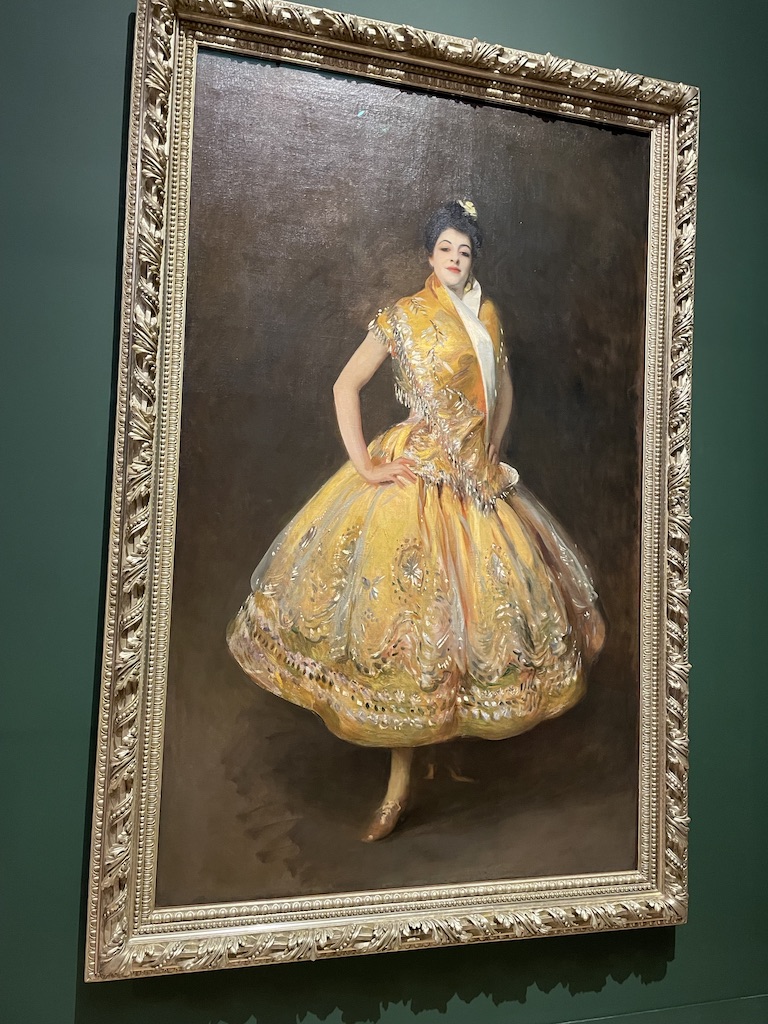
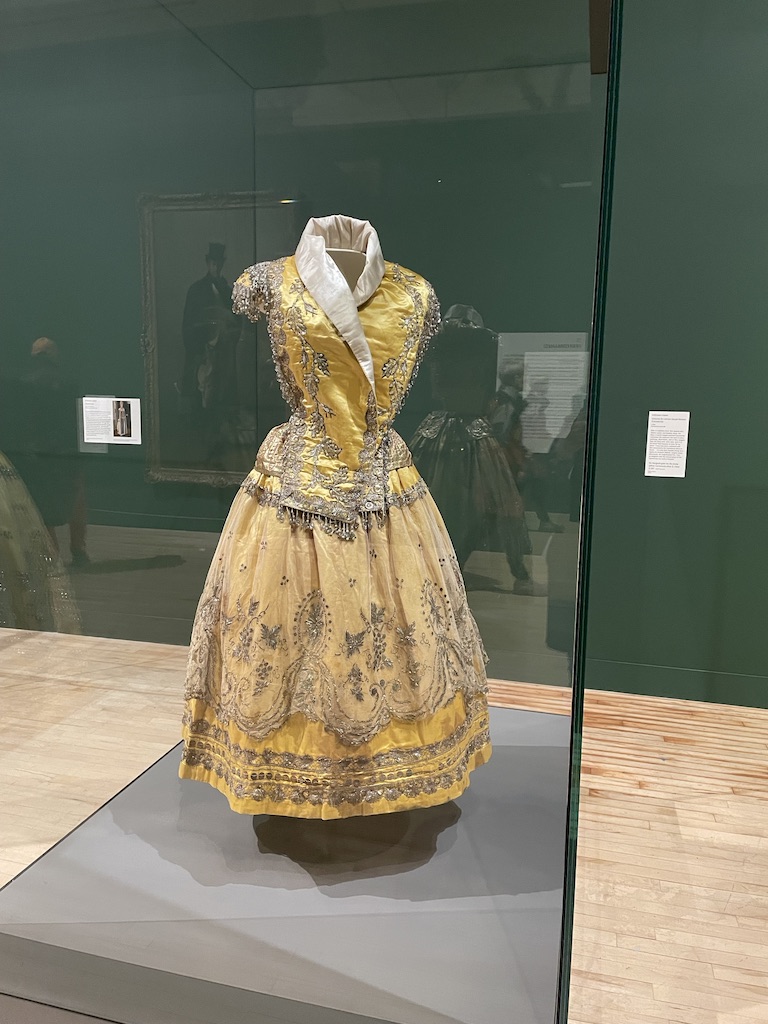
What’s especially fabulous about this show is that the curators have managed to display many of the actual dresses and costumes which feature in the paintings. It was great to see the magnificent portrait of La Carmencita (Carmen Dauset Moreno) an acclaimed dancer in the 1890s and the magnificent costume she danced in. Sargent saw her perform in New York and managed to paint her in a very statuesque pose while the swirly brushwork on the costume leaves us in no doubt that she has just finished whirling around in her routine.
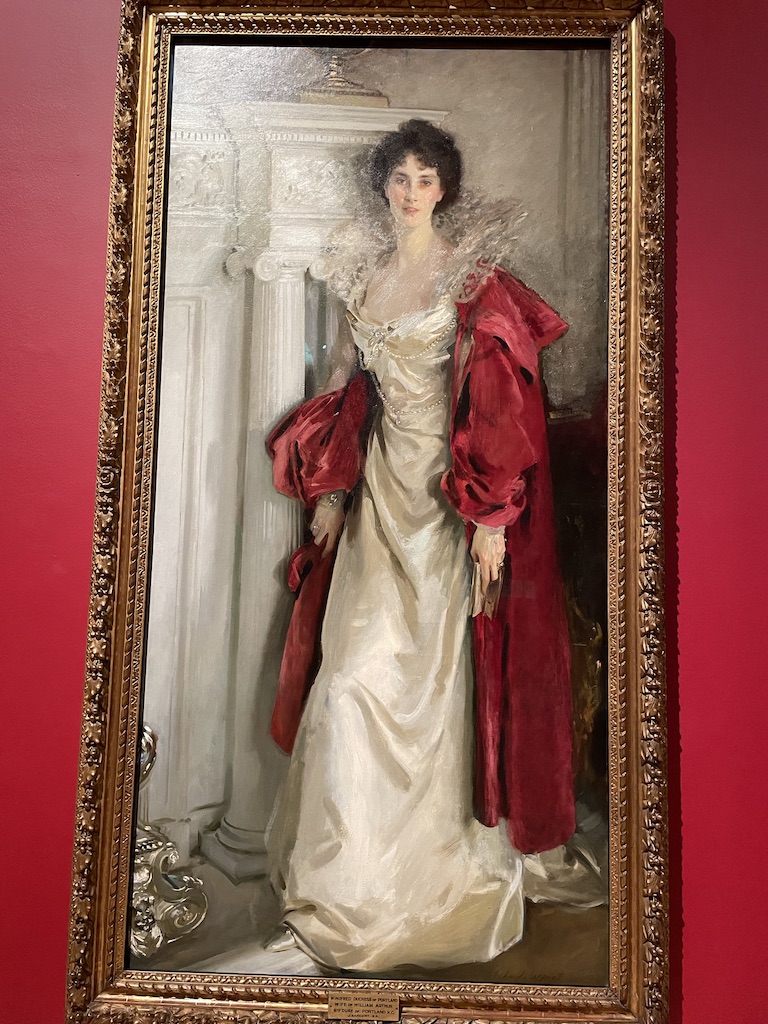
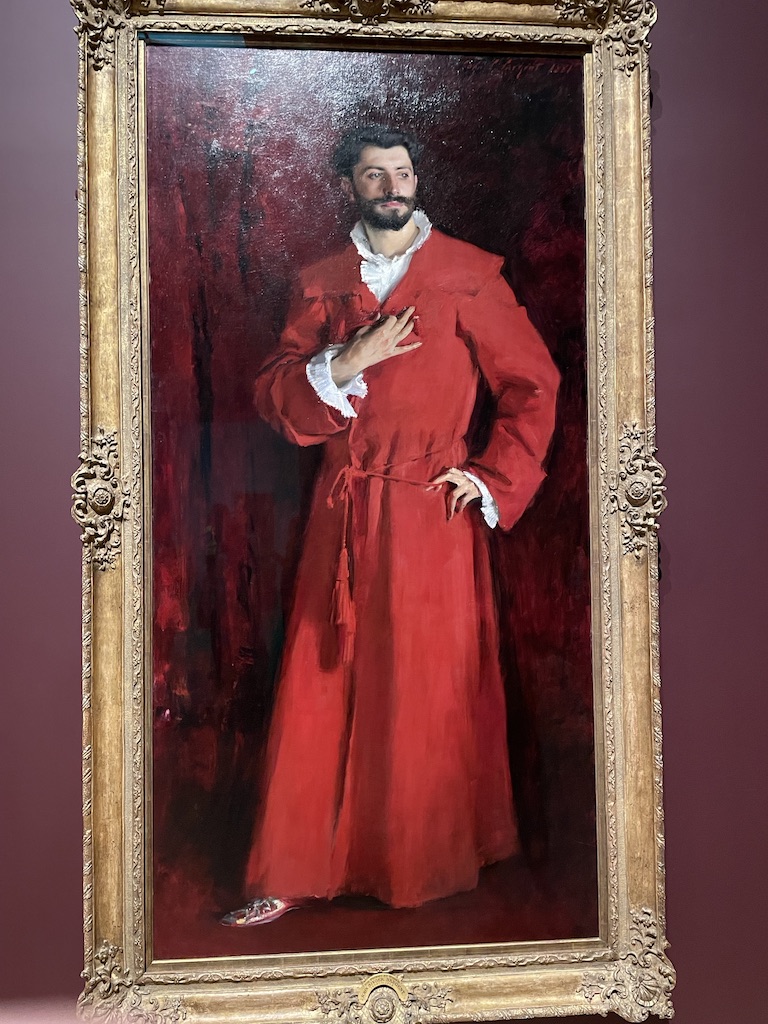

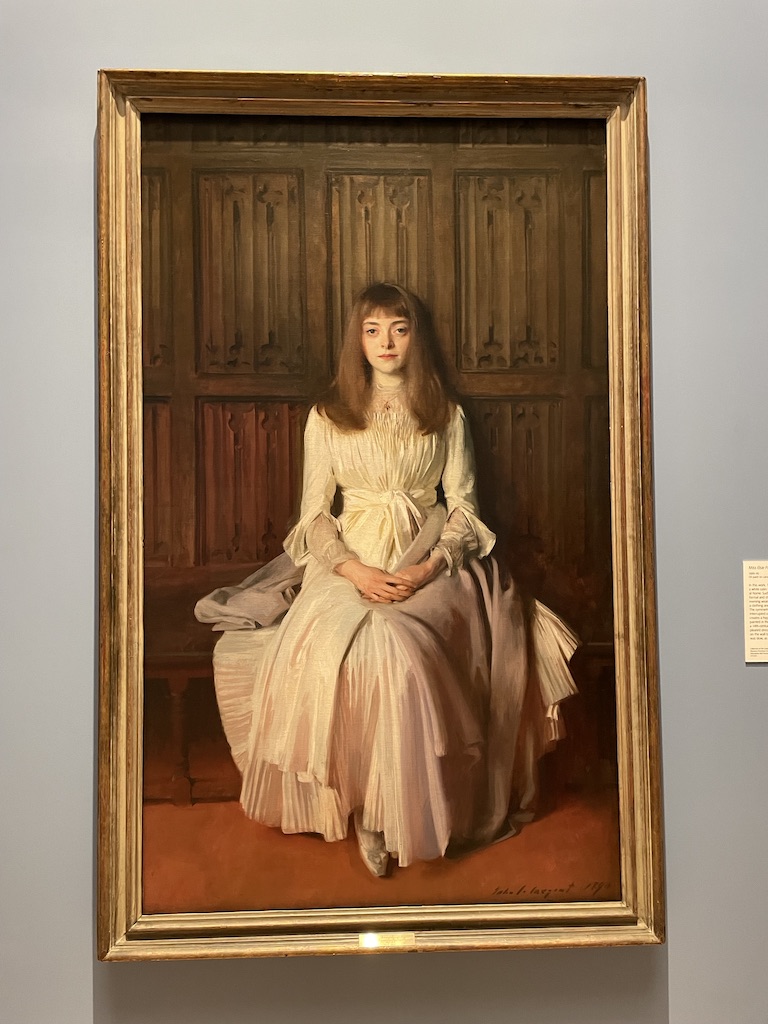

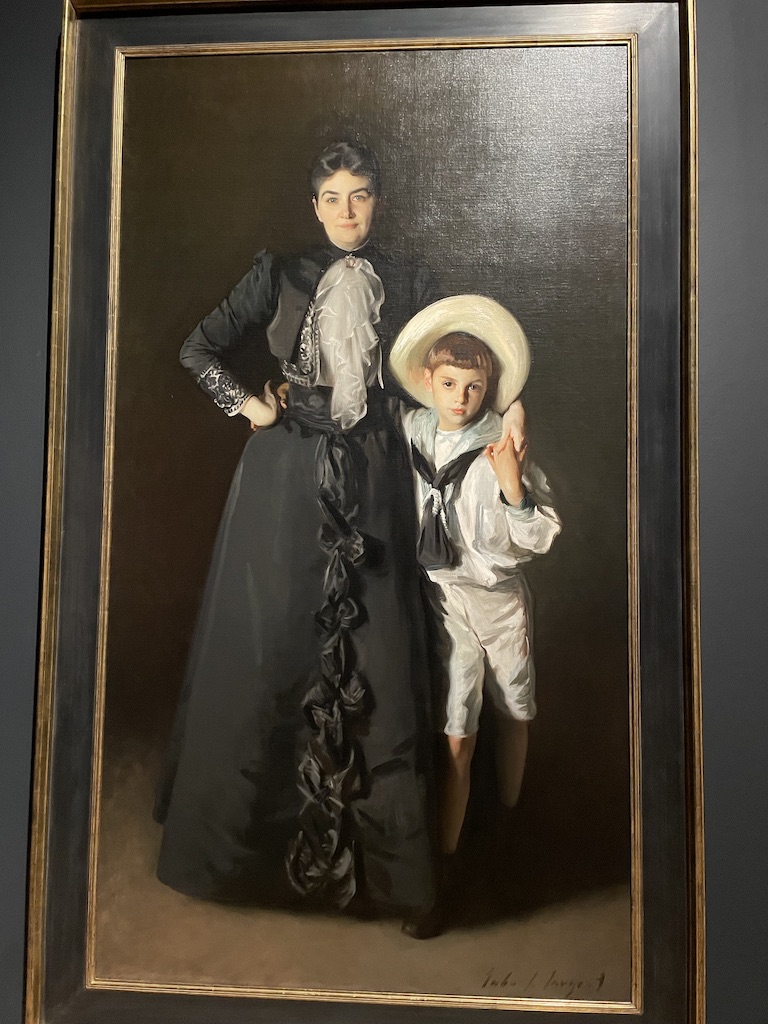
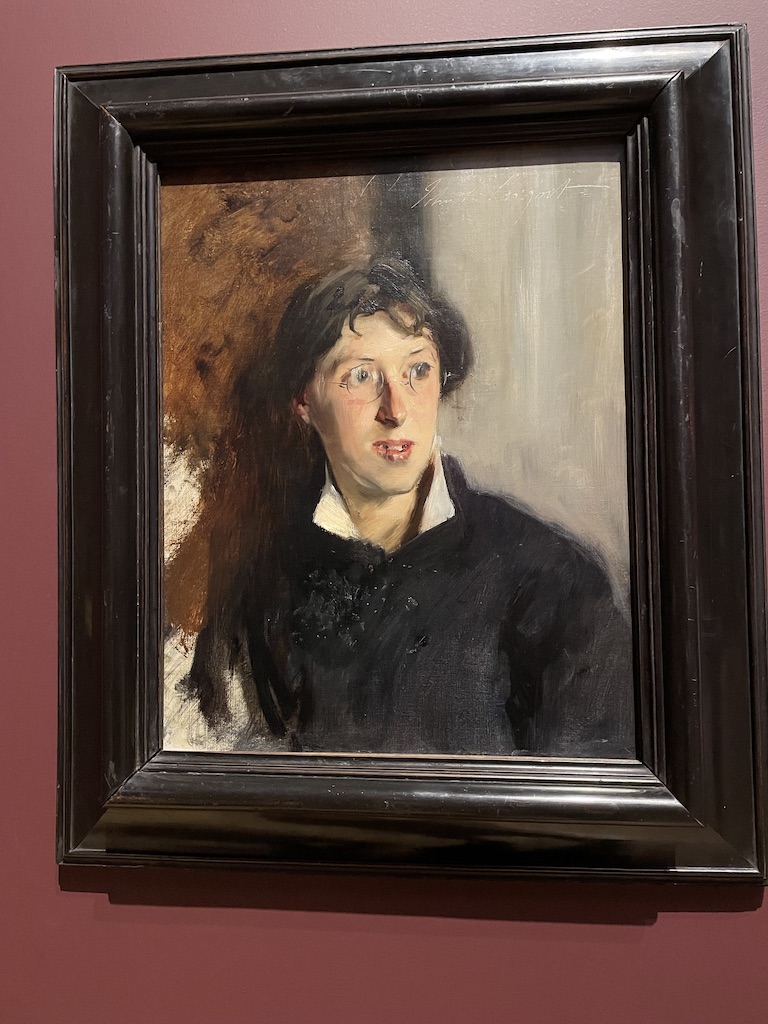
Many of the subjects of the portraits talk about the length of time it took Sargent to complete the painting. He was meticulous and very assured in his technique for achieving impressions of texture, light on fabric, fine, filigree lacework and solid, woollen fitted suits. However, there’s one portrait he made which, we are told, took less than an hour. Below, is his portrait of Vernon Lee, 1881. Born Violet Paget, Vernon Lee chose to give herself a genderless name. Apparently she was satisfied with the swift and accurate depiction which Sargent achieved.
This impressive and extensive show – many of the paintings come directly from the Tate’s own collection as well as the Museum of Fine Arts in Boston – really captures Sargent’s ability to direct his subjects and choose fitting outfits. He also made no concessions to any self-conscious demands of the subjects and painted works which are both accurate in likeness and painterly in style. The show is on until 7th July 2024. Wonderful.


 Paper Places