

I’m so enjoying the series of small, but perfectly formed, exhibitions which are being shown at the National Gallery in Room 46. These jewel-like shows are only on for a few weeks but are FREE to view and utterly enchanting. So, from 8th August until 27th October 2024, it is the turn of The Baptism of Christ by Piero della Francesca (1415 – 1492) to feature, flanked by two paintings by our greatest living artist David Hockney.
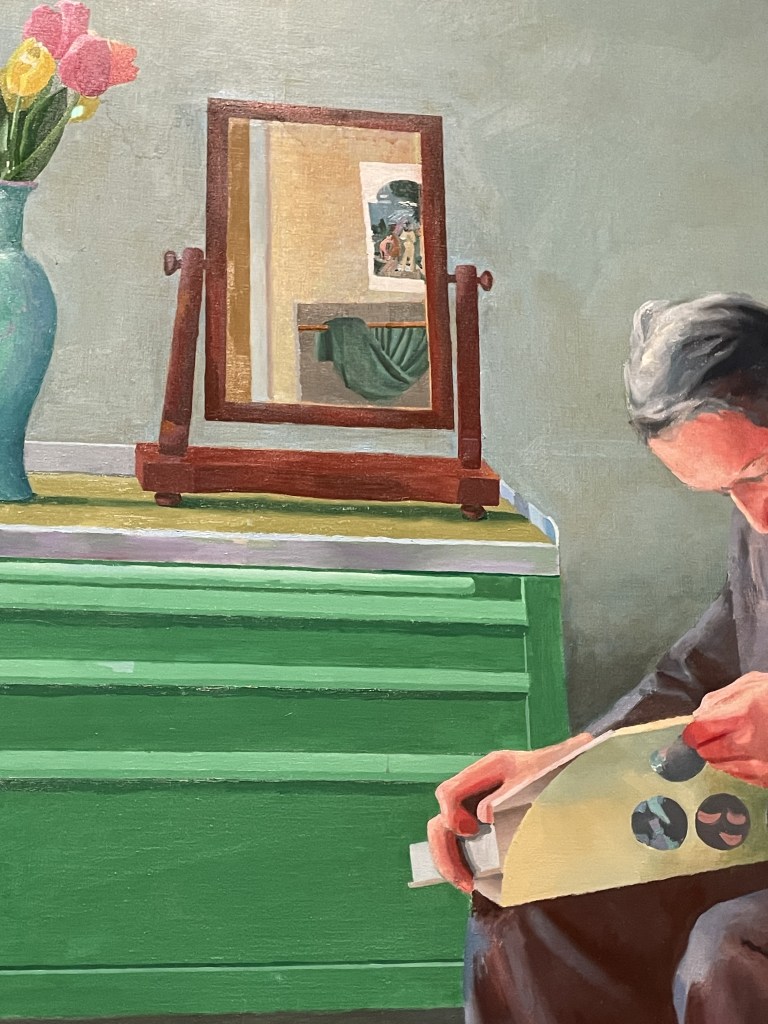
What you can see on either side of the fabulous Piero painting, made using egg tempera, are two portraits made by Hockney in 1977. On the left is a portrait of Henry Geldzahler, Belgian-born American curator of 20th-century art (and a close friend of Hockney’s) taking a long close look at four paintings including the Piero painting. On the right is Hockney’s lovingly crafted portrait of his parents, Laura and Kenneth Hockney (usually in Tate Britain) and in the mirror on the chest between the two figures you can see a depiction of the Piero, based on a postcard.
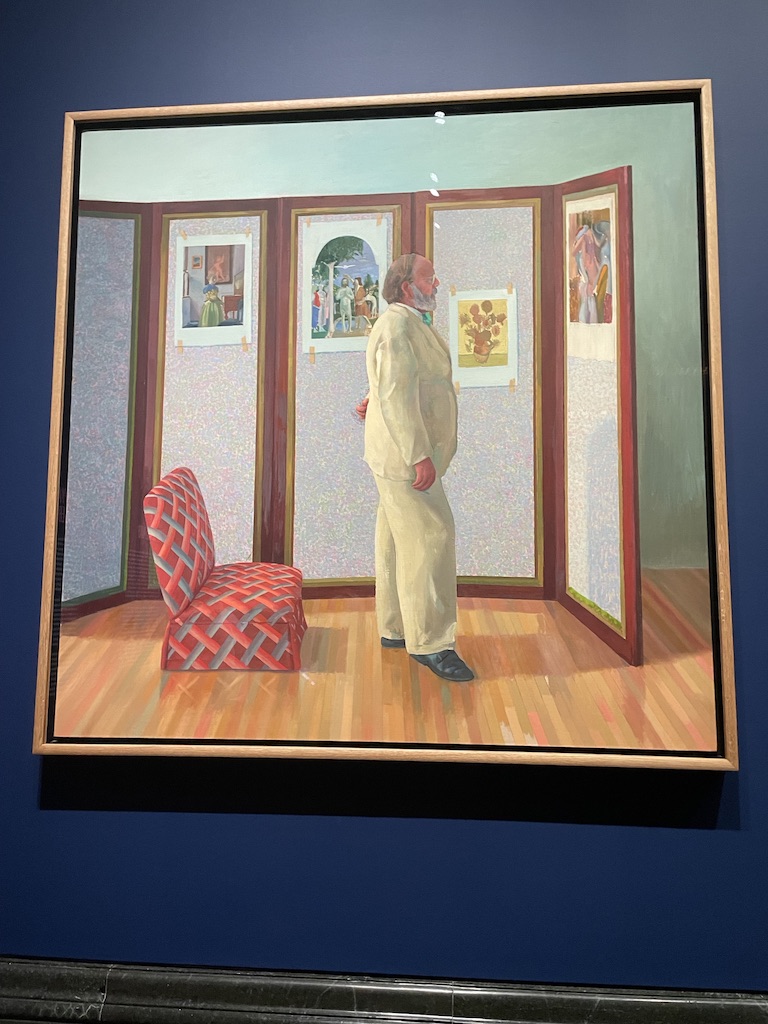
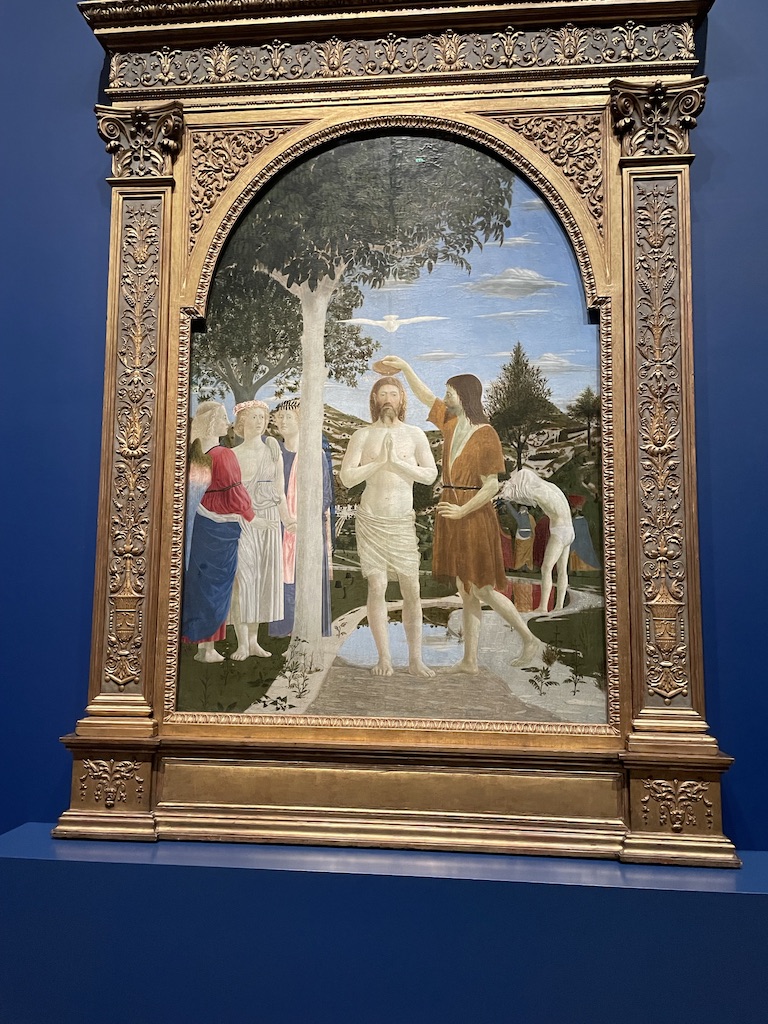
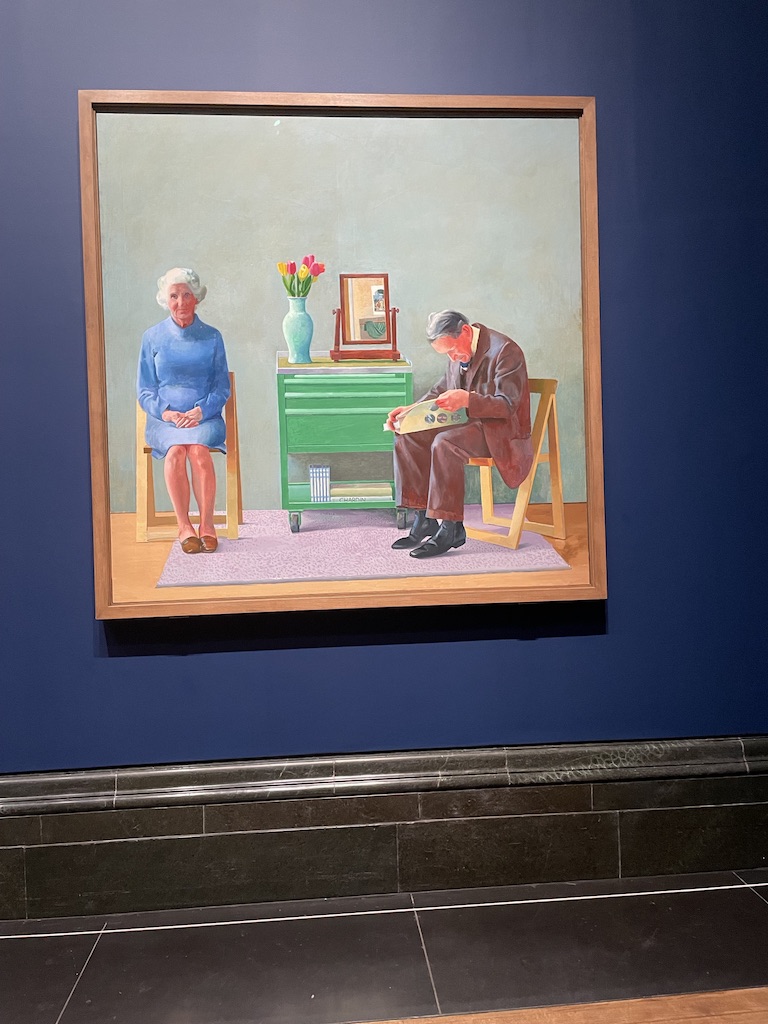
Hockney has long been a huge admirer of the National Gallery. Apparently, he first came to the gallery aged 18 and, as he put it, has never tired of ‘this gem’ the Piero painting which drew him in. In the two paintings he had clearly referenced the Piero, using the same horizontal and vertical lines in the composition as well as the style of the poses. In the Piero, the figure of Christ is centre stage with St John the Baptist in profile as he pours holy water over the young man. There’s also a wonderful glimpse of a man peeling off his shirt in readiness for baptism, giving it a realistic and personal feel. In the portrait of his parents, Hockney has depicted his mother lookind directly at him while his father is in profile, immersed in the study of a book. And in the painting of Geldzahler, the central figure is depicted in white, centre stage with strong verticals.
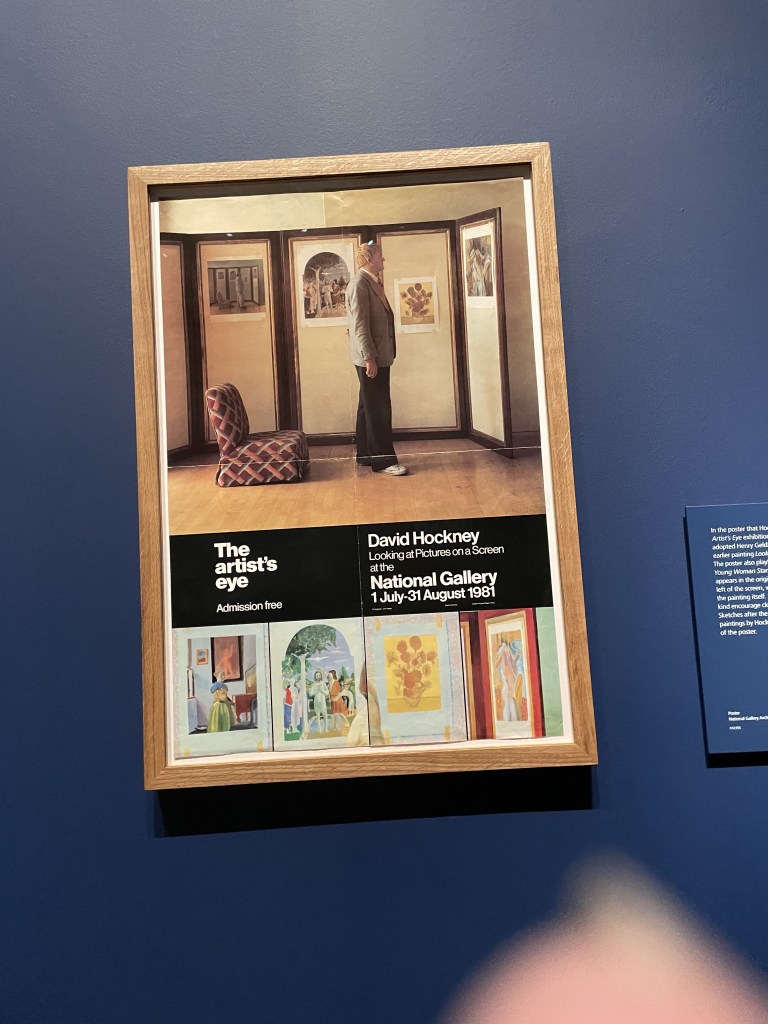
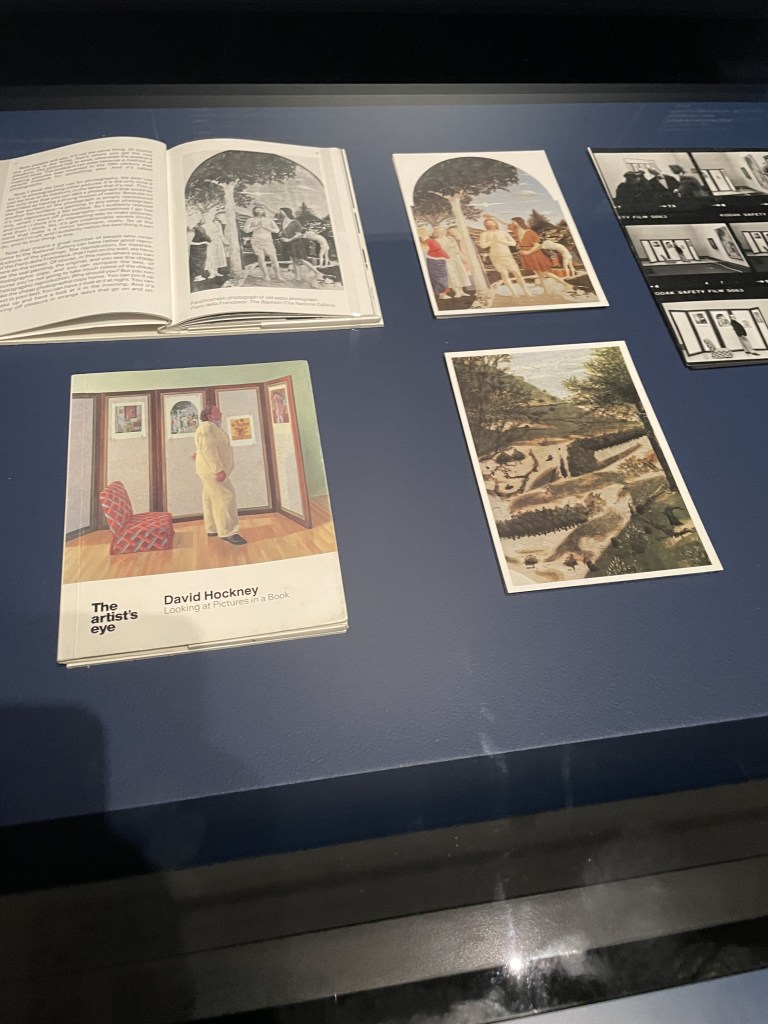
Hockney reminds us that even though an artist has died, their art lives on. And there can be relationship between artists across the ages, simply by ‘eyeballing’ art and absorbing the special atmosphere of a painting, allowing its power to be absorbed and interpreted in contemporary work.
Before the advent of phones with cameras, the Gallery was not in favour of visitors taking photographs of works. The view was that a painting should be admired and recalled in memory. Hockney disagreed. He argued that artists and viewers would benefit from taking home some impression or reminder of the work, whether it’s a photo, a postcard or poster. Apparently he keeps a postcard of The Baptism of Christ by his bed and enjoys looking at it every night.
The National Gallery is celebrating its 200th birthday this year. What a marvellous example this is of the way exhibitions can bring artists together across the centuries in a most satisfying and creative way.
The Exhibition is FREE.
 Paper Places