
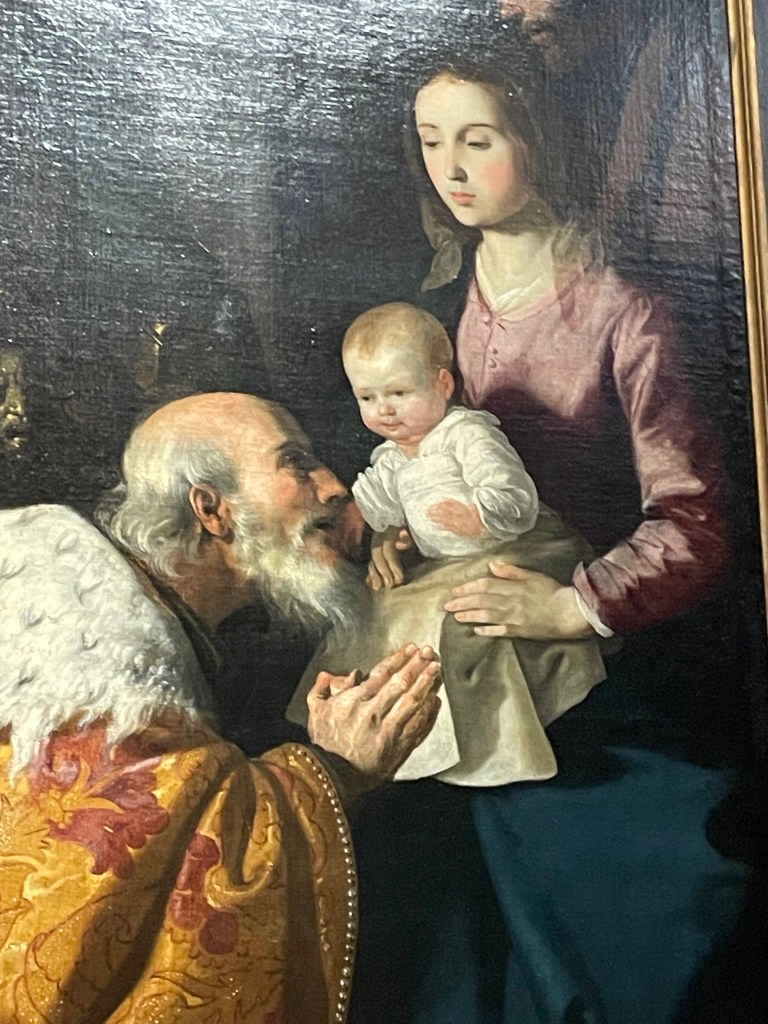
I confess I was unaware of Francisco de Zubarán (1598-1664) but now I can see why he’s regarded as one of Spain’s most accomplished renaissance artists. His prodigious talent was apparent in his youth and he trained within Seville’s exacting standards of painting, sculpture and gilding before moving to Madrid for royal commissions. And he went on to demonstrate his remarkable skills and vivid imagination in wonderful paintings for religious houses, churches and wealthy patrons.
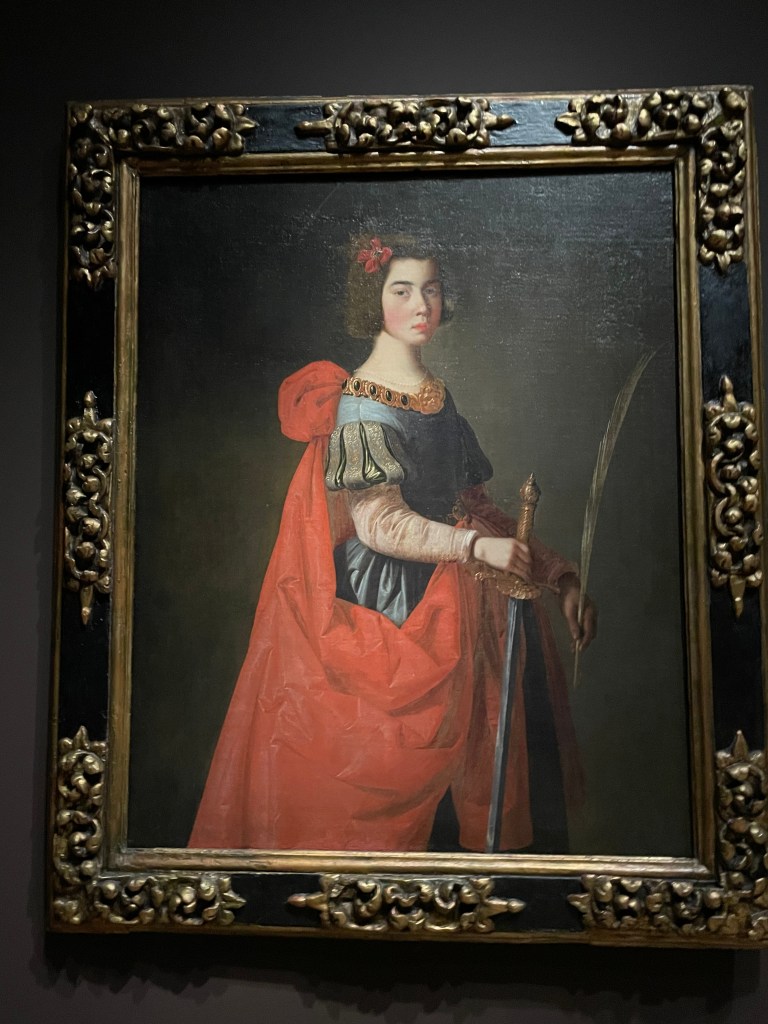
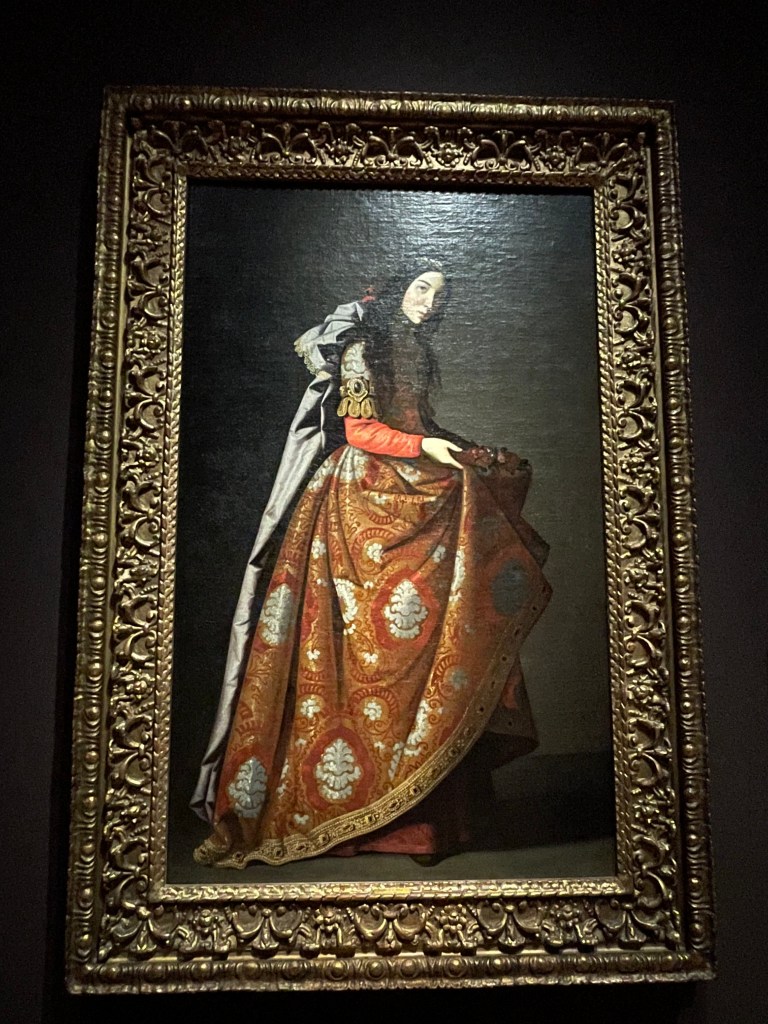
He’s clearly an artist with a remarkable understanding of fabric and depicts the richest of cloths with great elan. I really liked the room with portraits of saints – presumably using real people as models – but they capture the story behind the saint depicted as well as a great record of the women who modelled the costumes. Above left is Saint Catherine of Alexandria – who was martyred by the Romans and on the rights is Saint Casilda who was a Muslim princess who smuggled bread to Christian prisoners. When confronted, the bread she was carrying turned to roses. You can just about see her carrying them. But the cloth of her dress is amazing.
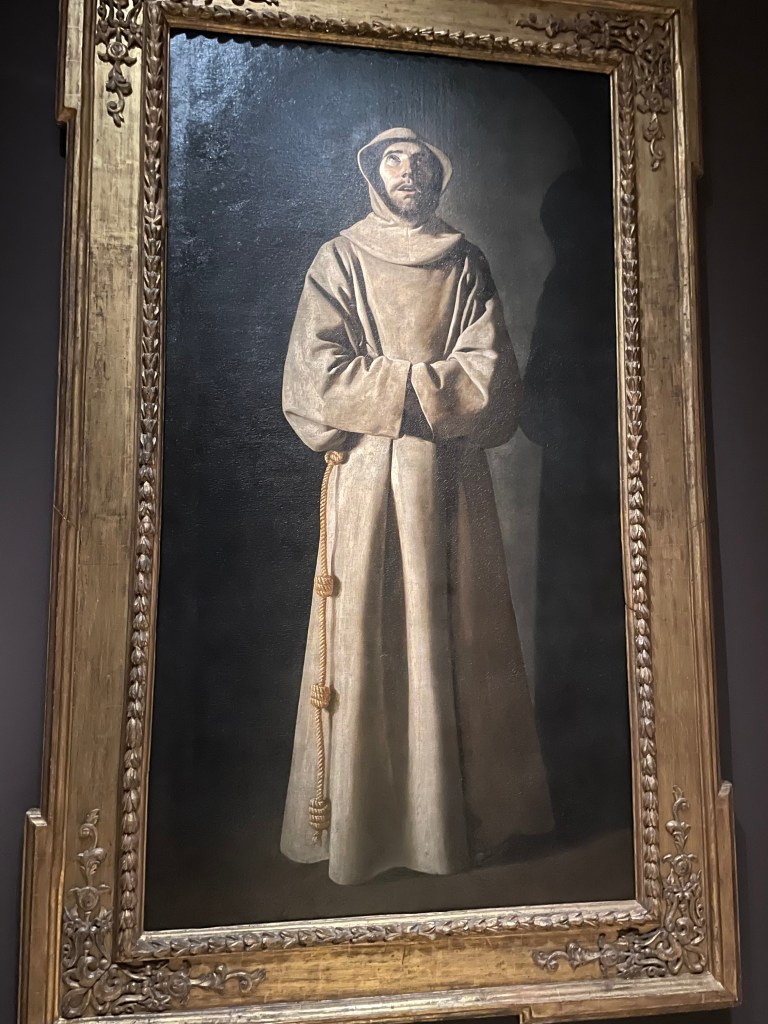
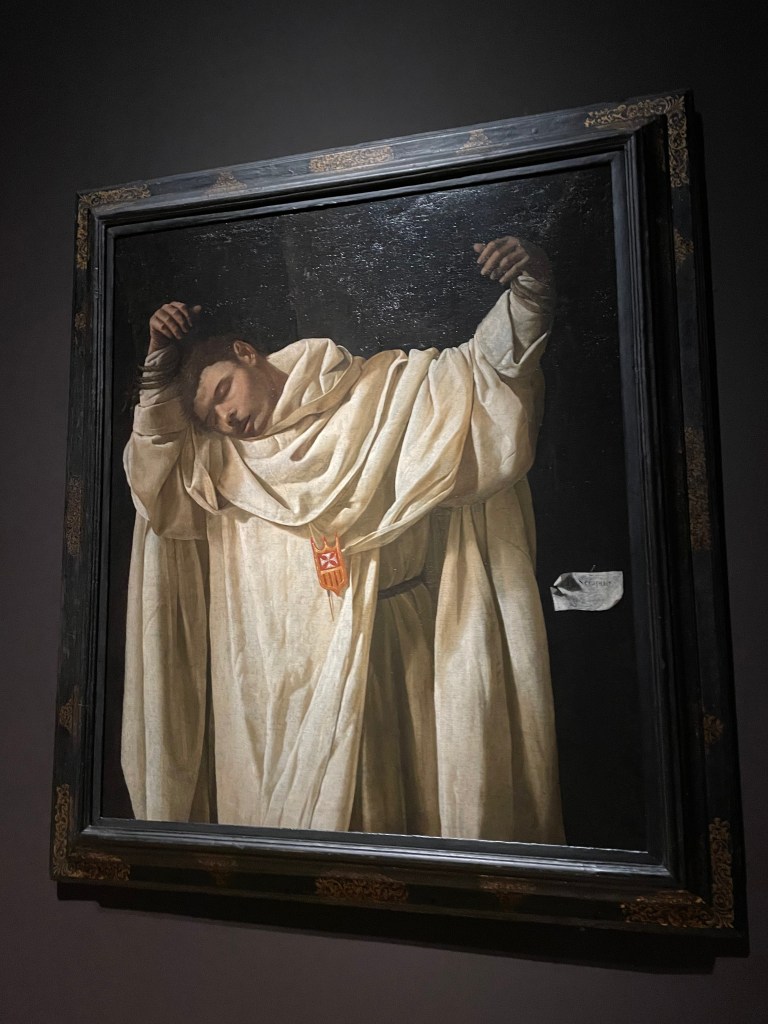
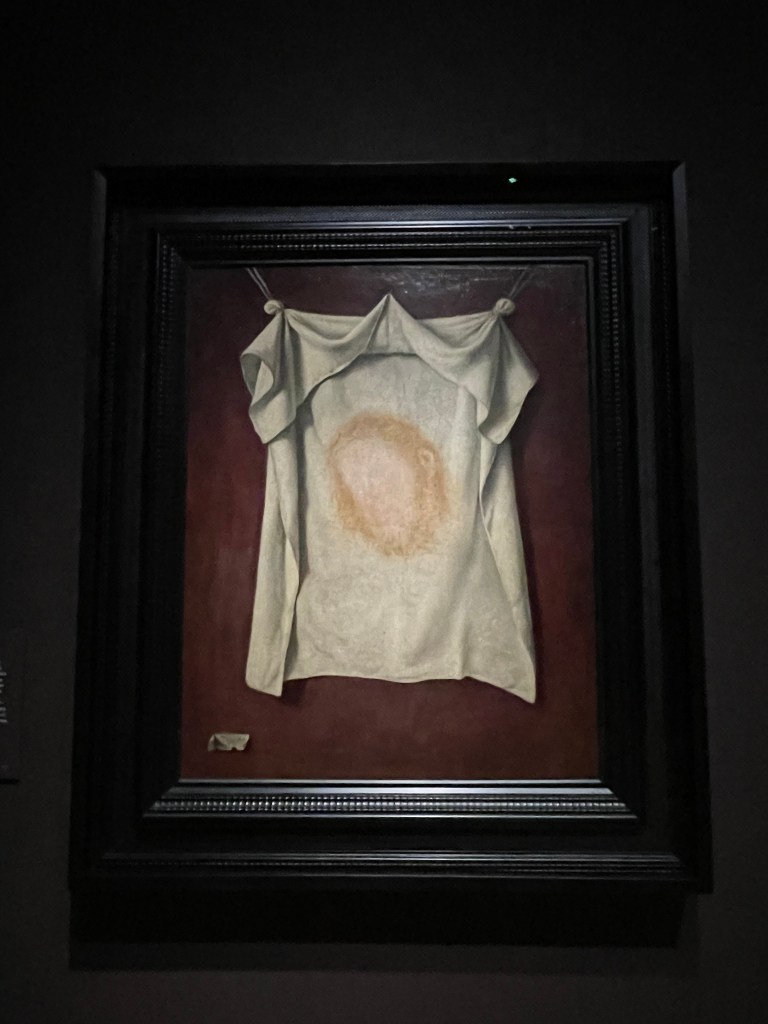
He has a very confident way of depicting pale fabric, brightly lit against very dark backgrounds. On the left is St Francis of Assisi, in the centre is Saint Serapion, a 13th century British friar who freed Christian captives in Algiers before being horribly tortured and beaten to death. On the right is a strange painting, quite a work of photo-realism, of a veil which Saint Veronica used to wipe Christ’s head as he carried the cross and subsequently revealed an impression of his face.
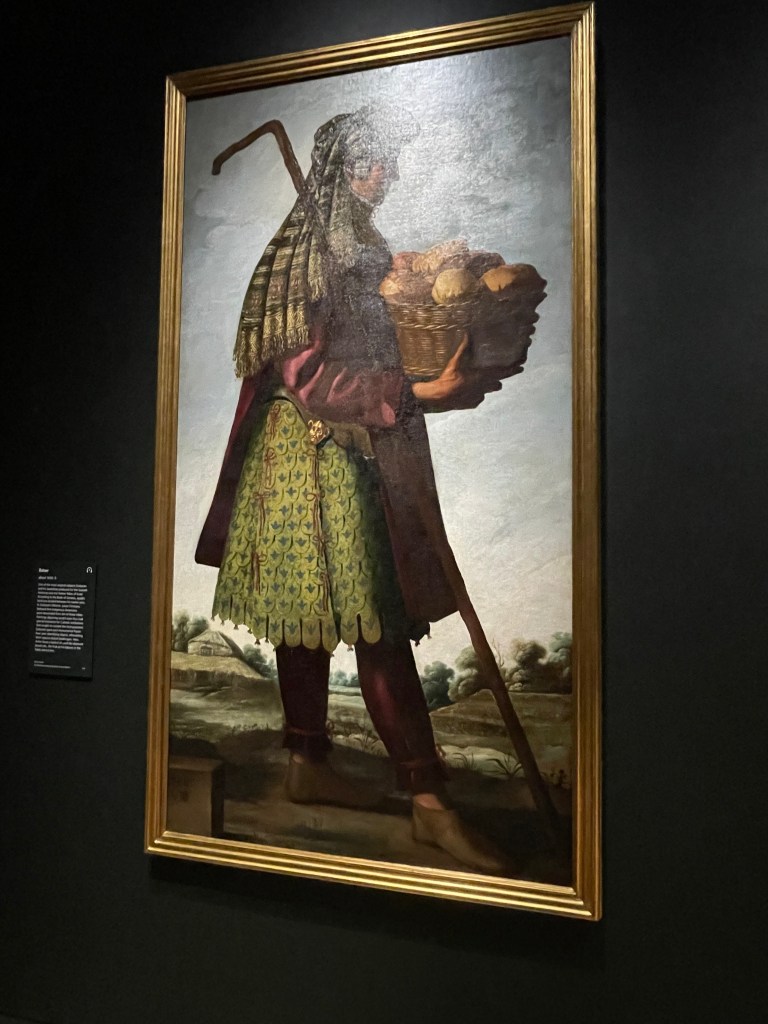
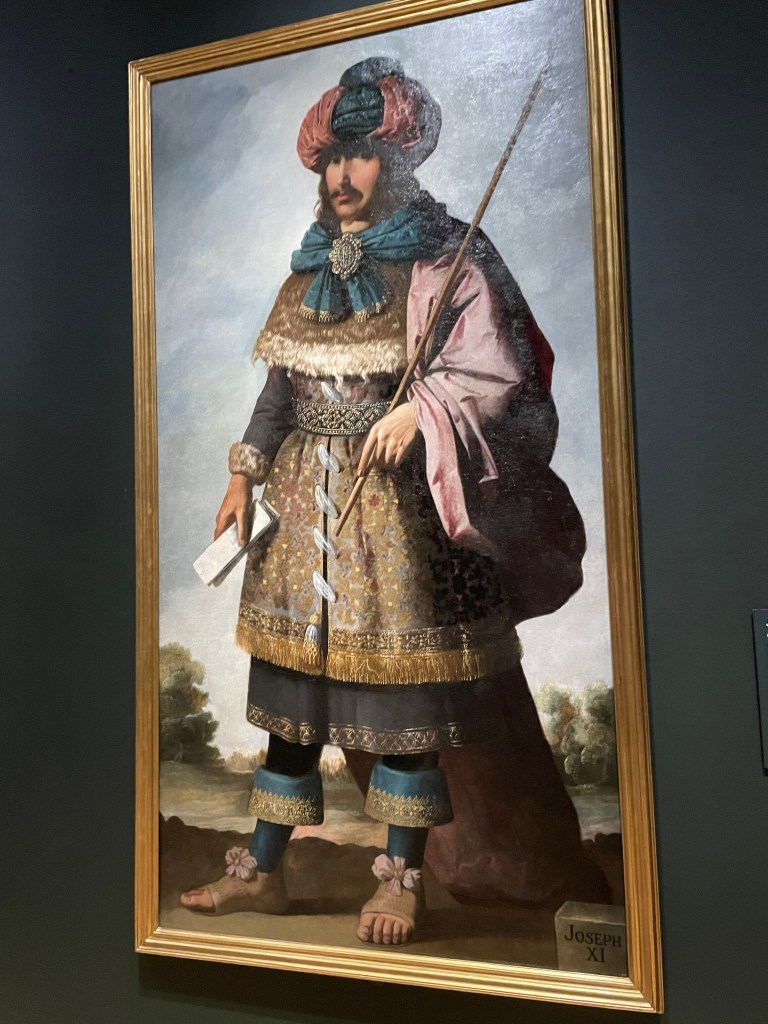
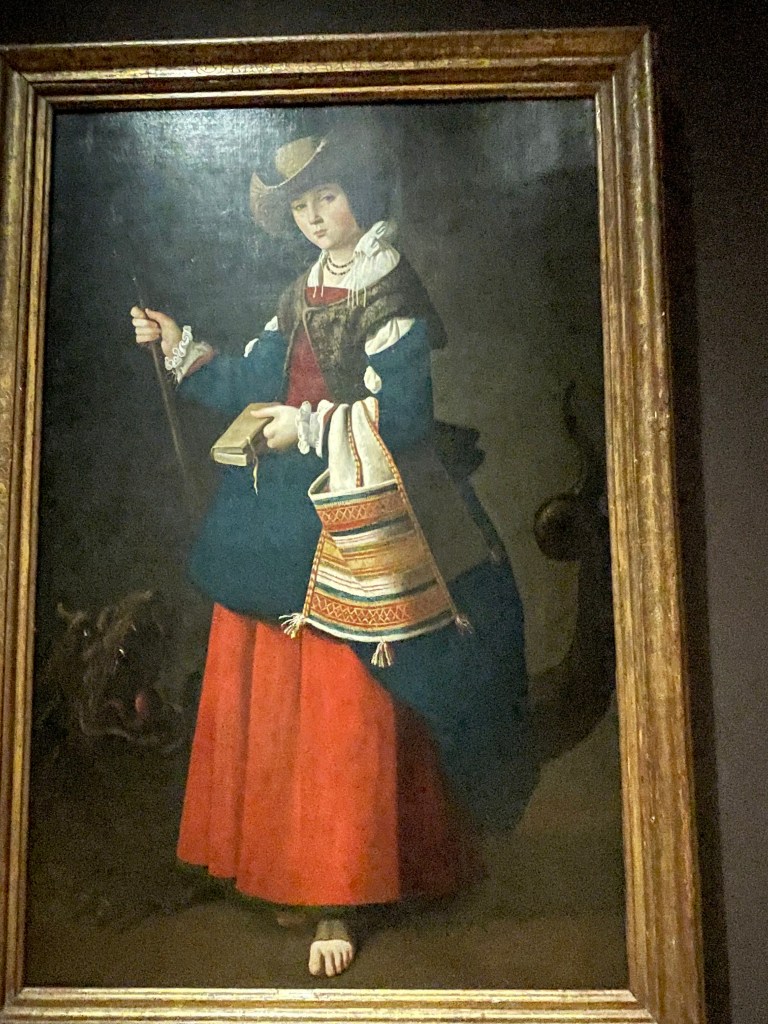
I loved these paintings of figures and you can spend ages studying the fabric and unusual clothing. On the left, holding the bread basket, is Asher, representing one of the Twelve Tribes of Israel, and centre is Joseph from the same series. And on the right is St Margaret of Antioch who, apparently, emerged unscathed after being swallowed by a dragon. I love the woven bag she’s holding.
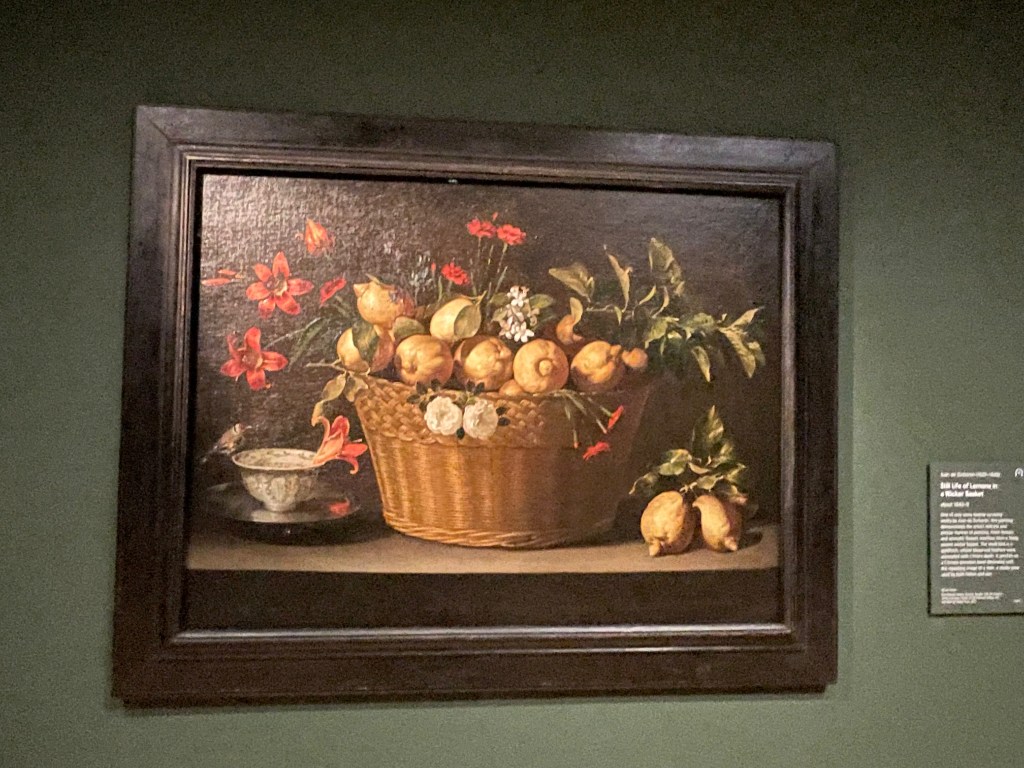
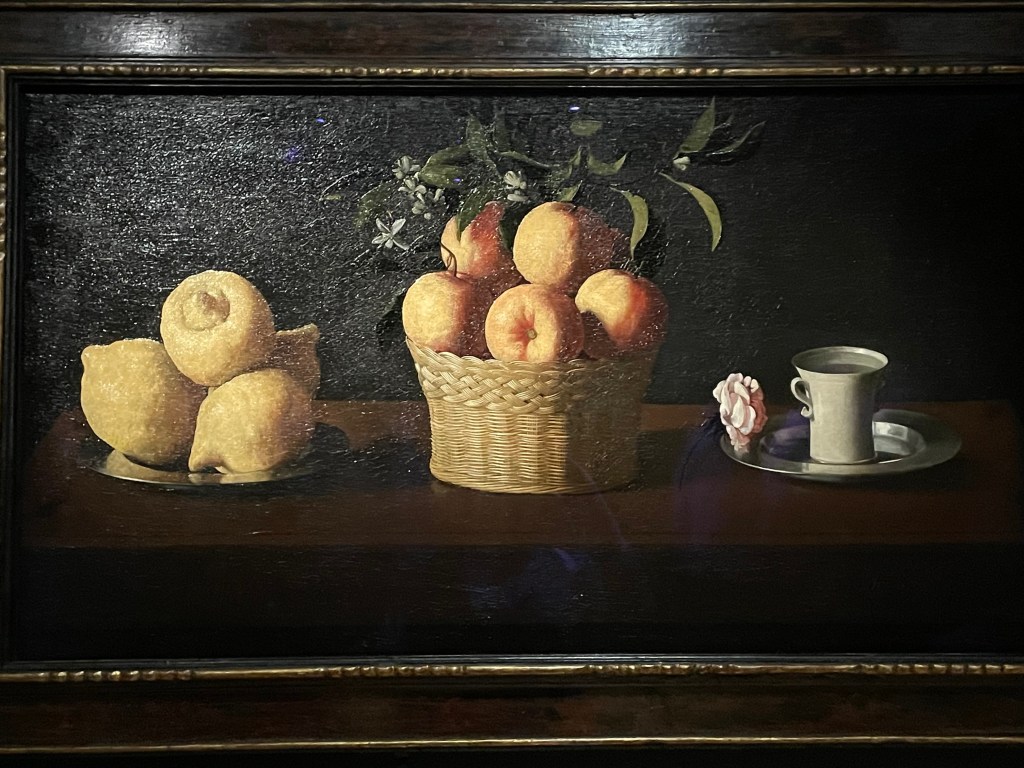
It wasn’t just people that he could paint. One room is filled with very expertly done still life works which are breathtaking in their perfection. Actually, the still life on the left was painted by Zurbarán’s son, Juan de Zurbarán, who died when he was just 29, having shown the same talent as his father. And the still life with the lemons the peaches and the cup on a silver salver shows how clever he was at creating texture.
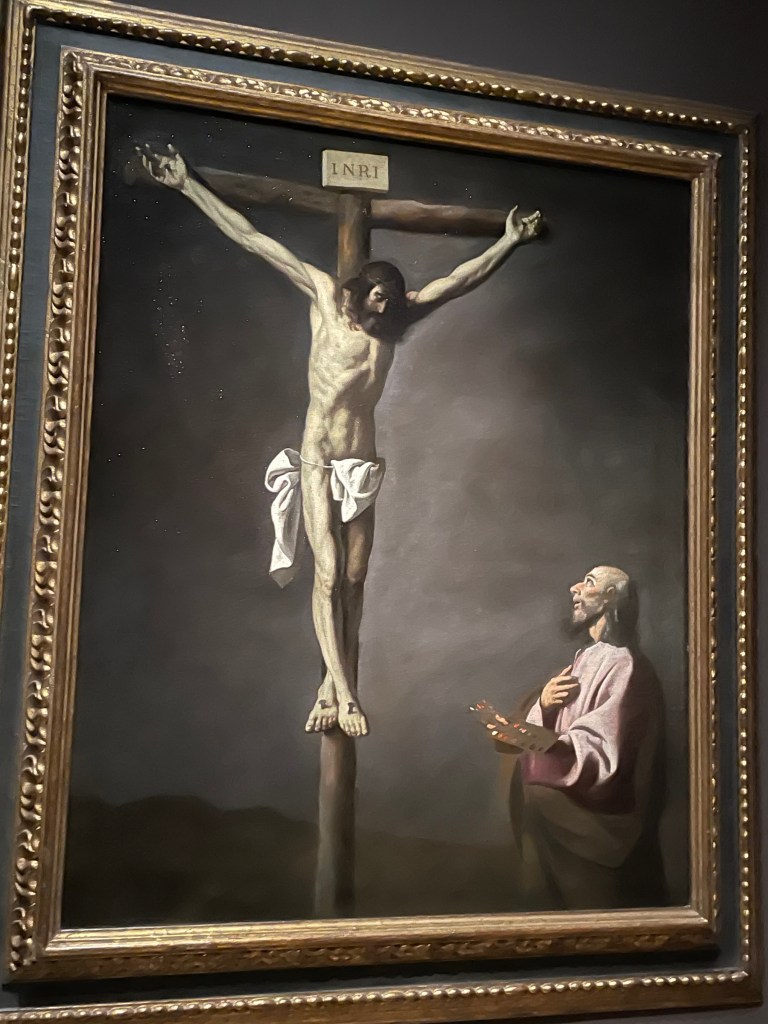
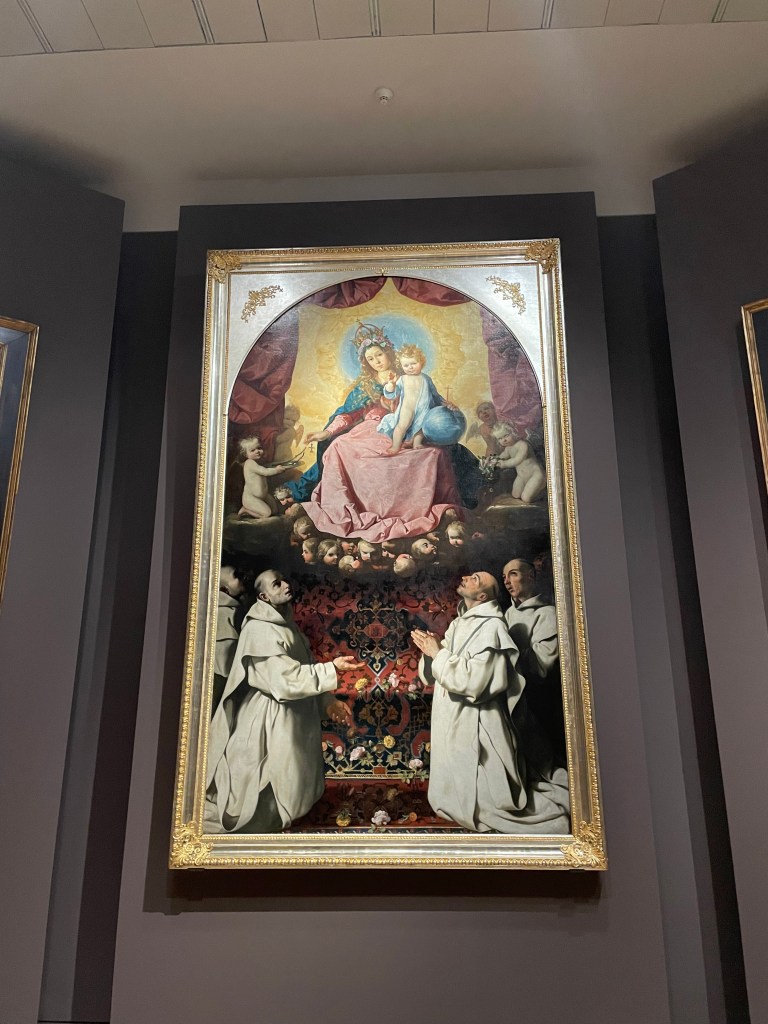
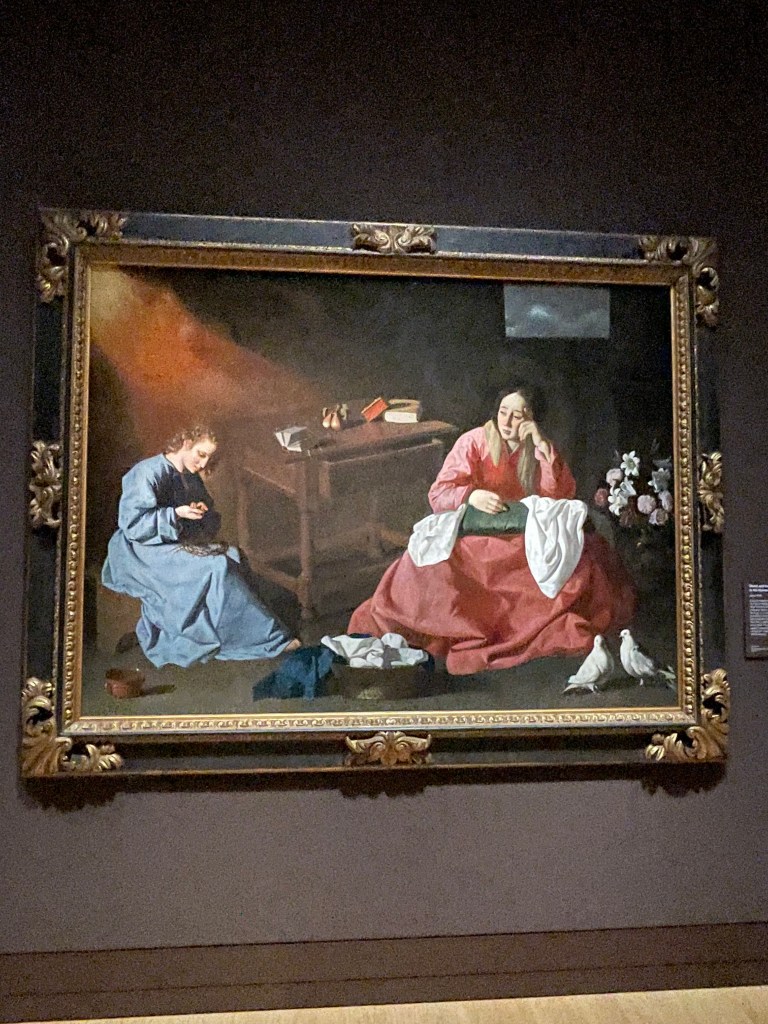
But it’s the spectacular religious works that Zurbarán made which stay with you for a long time. This is a show well worth making time to see.
 Paper Places