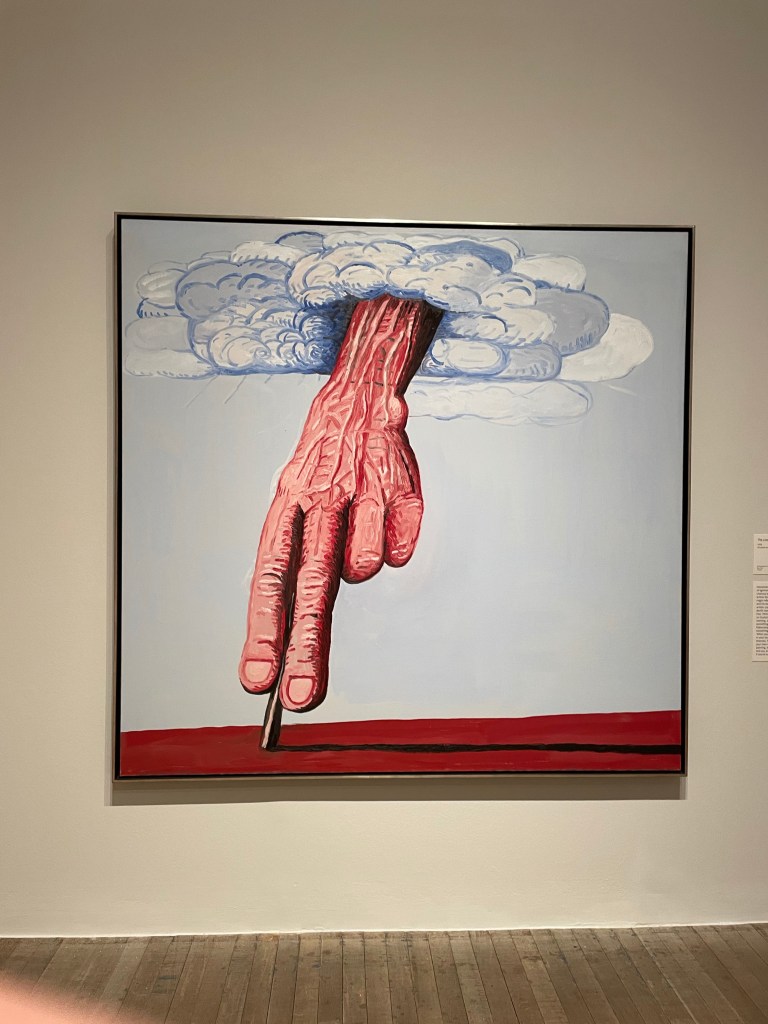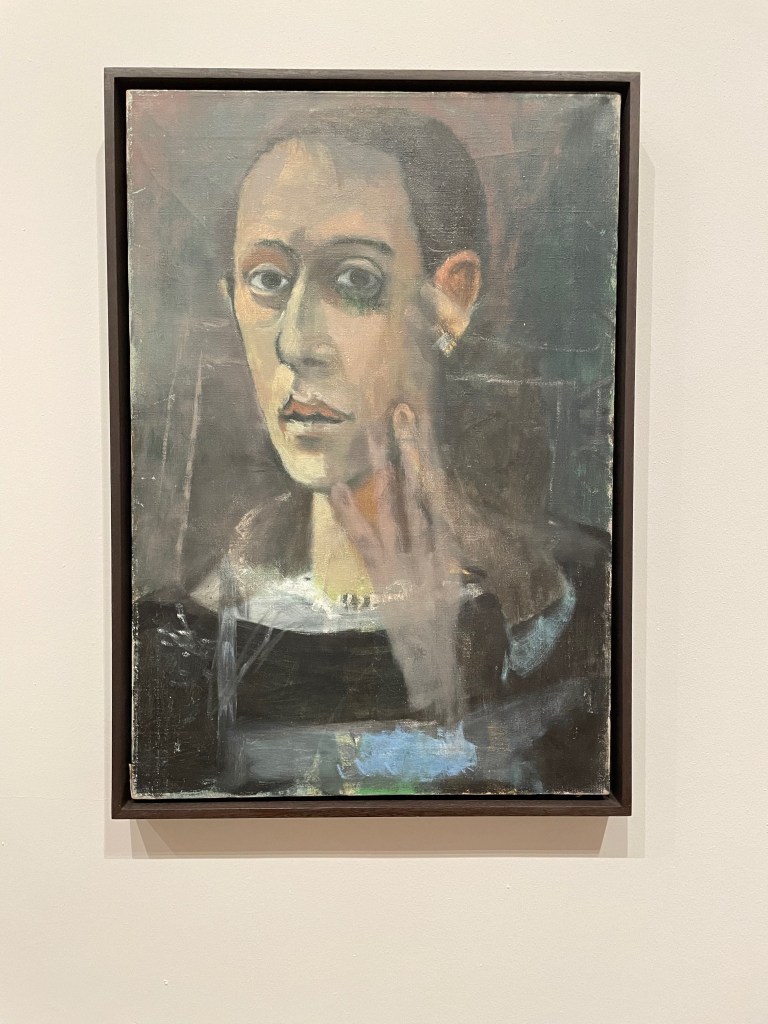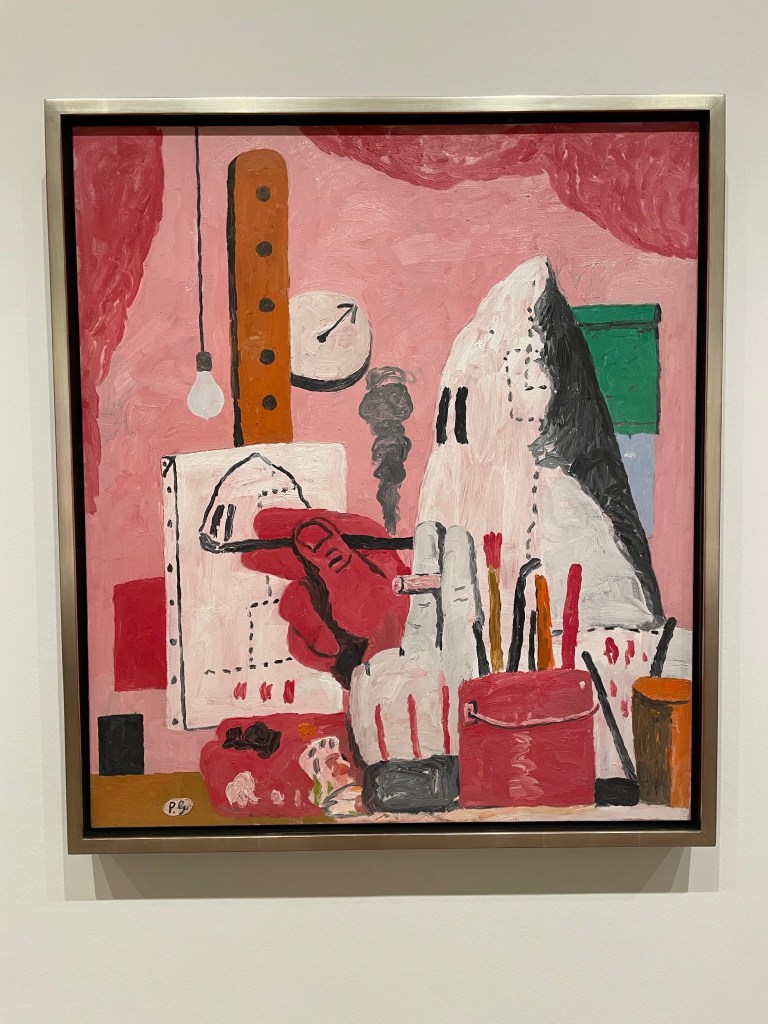
There’s a major show of work by Philip Guston at Tate Modern opening this week. I’ve always been intrigued by this American artist but it was a revelation to see his early work in this show. He made the move from figurative art to abstract and then back to figurative. But storytelling is at the heart of his work. Fascinating stuff.

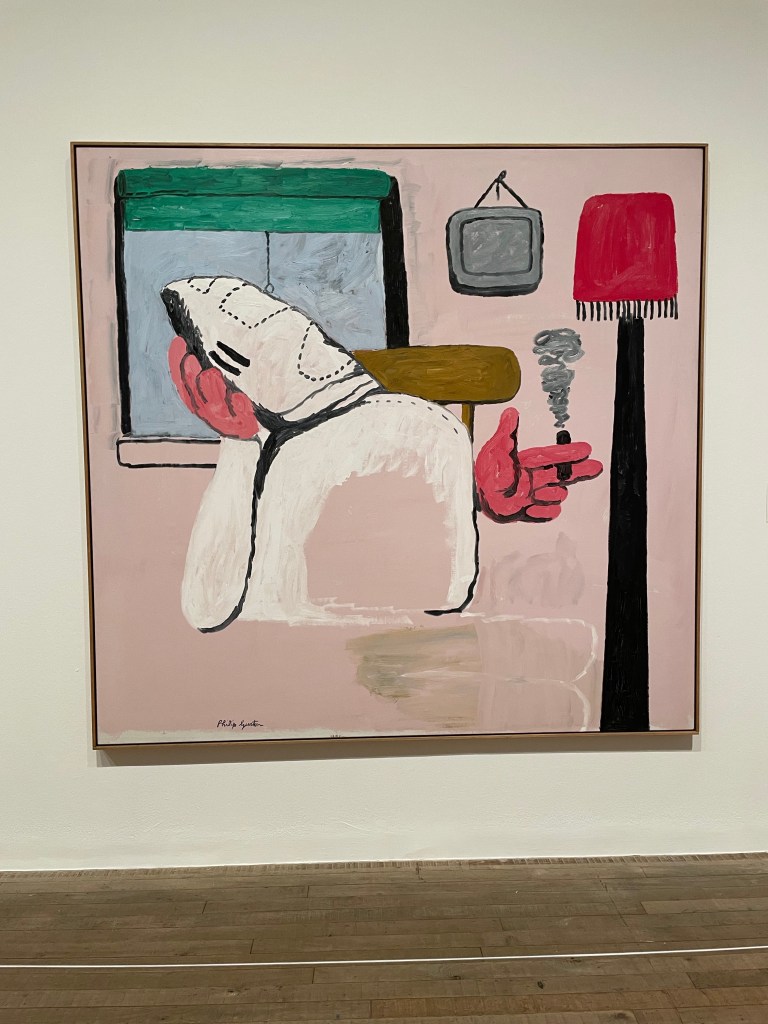
Mention the name Philip Guston and this kind of image, above, springs to mind. He really took to the colour red, cadmium red, and used it liberally in his later art. The cigarette, the over-sized limbs, the rivets, the Klu Klux Klan headress…. all these images fed into his later work.

At the show it was fascinating to see that he created a kind of heioglyph alphabet of images which he began to use in the 1960s. On the wall of one gallery we have many of his images on small canvases. These runic symbols appear over and over again.
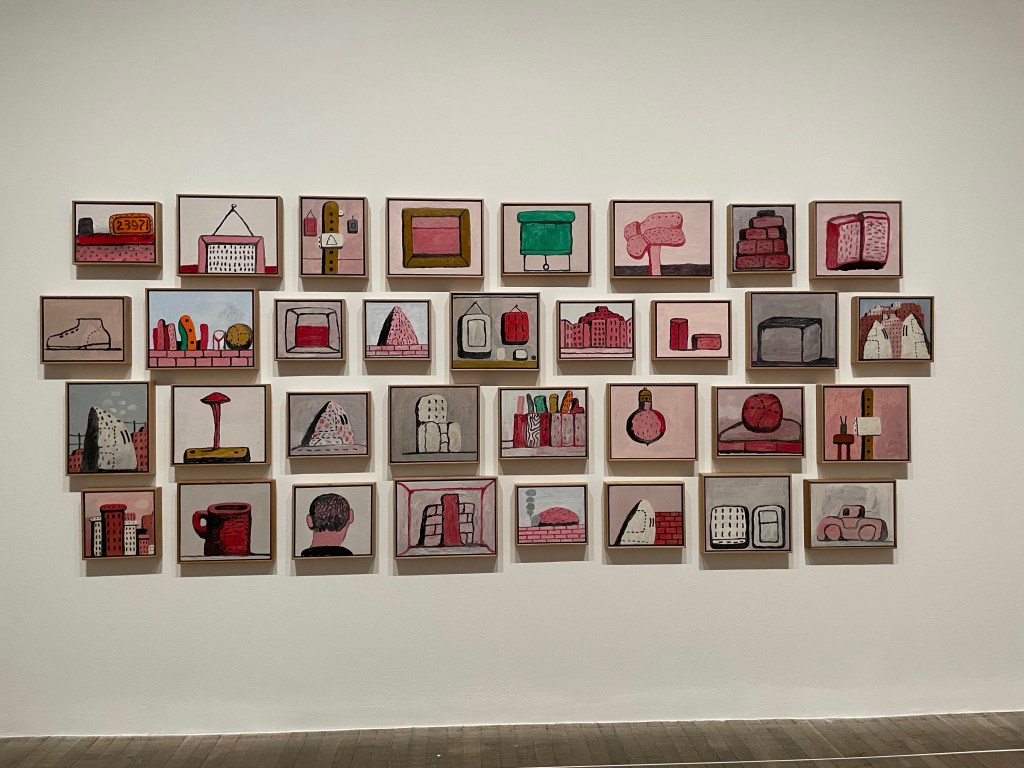
Once he’d established this visual language there was no end to the use. The images represented his concerns with injustice, racism, war and oppression.
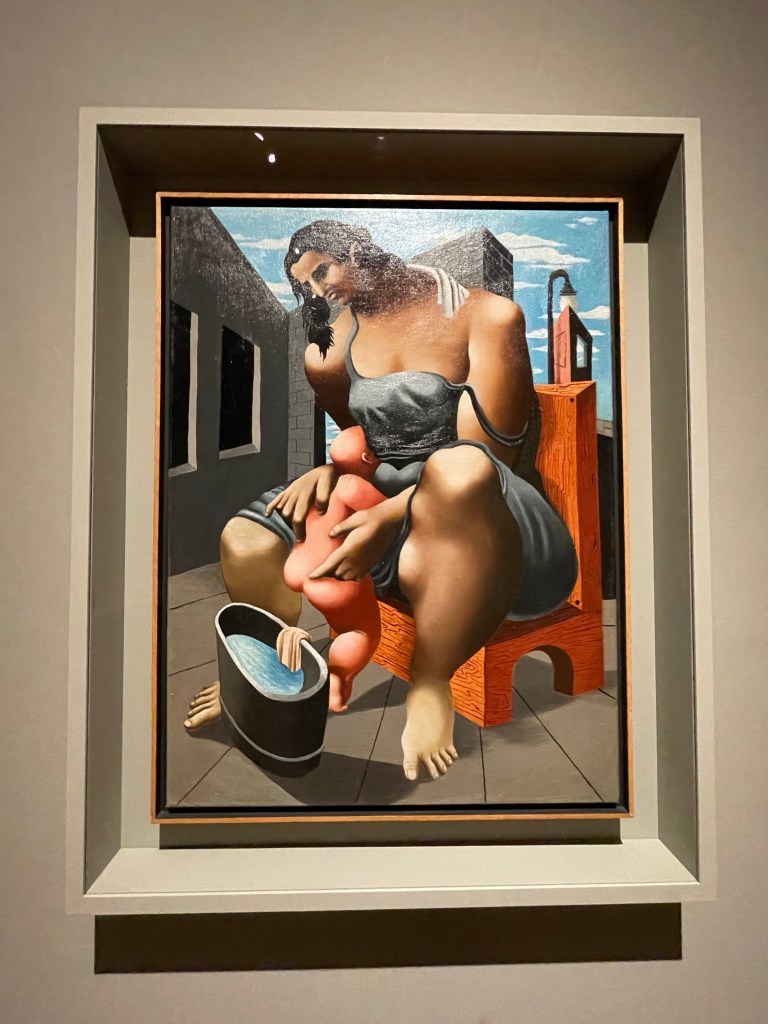
But the thing that fascinates me most about this exhibition is the chance to see Philip Guston’s early work. He was a self-taught artist. He spent time poring over books and studying the work of Italian Renaissance painters. He copied, interpreted and repeated their styles. His early works show his interest in artists such as Giorgio de Chirico. Below is a painting he made when he was just 17 years old. It ‘s called Mother and Child and incorporates images he found in books in Los Angeles libraries.
I really loved this painting, below, of children wielding sticks and domestic objects. They’re street kids making games out of any stuff they can use to create weapons or armour. The paper hats look very like fore-runners of the the KKK headwear which appeared later in his work. But the energy is so engaging.
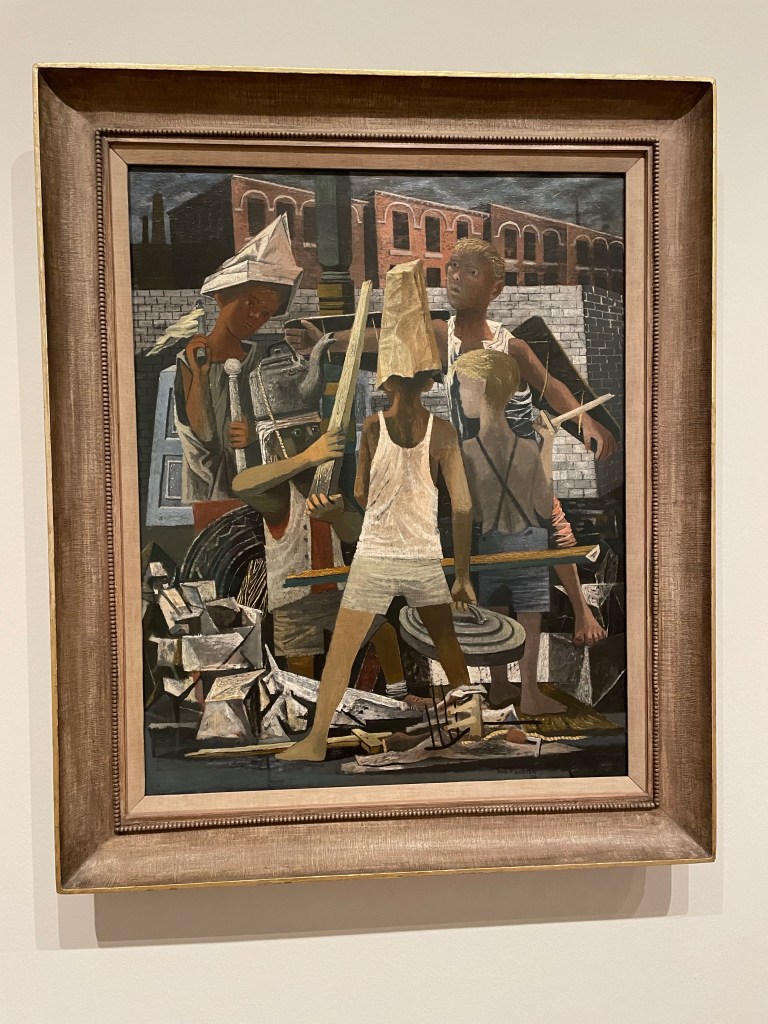
And I’m showing a few other early paintings which really impressed me. You can see the influence of Picasso and Braque and the cubists. There’s also an Edward Burra feel to them too. They really represent the world Guston saw around him.
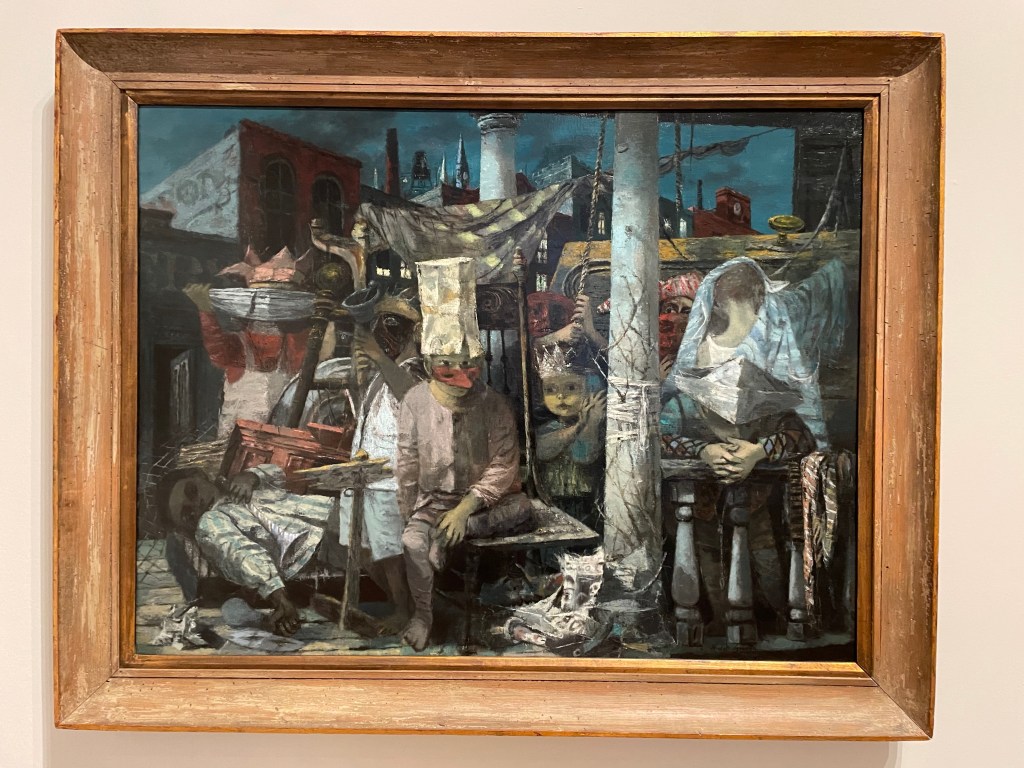
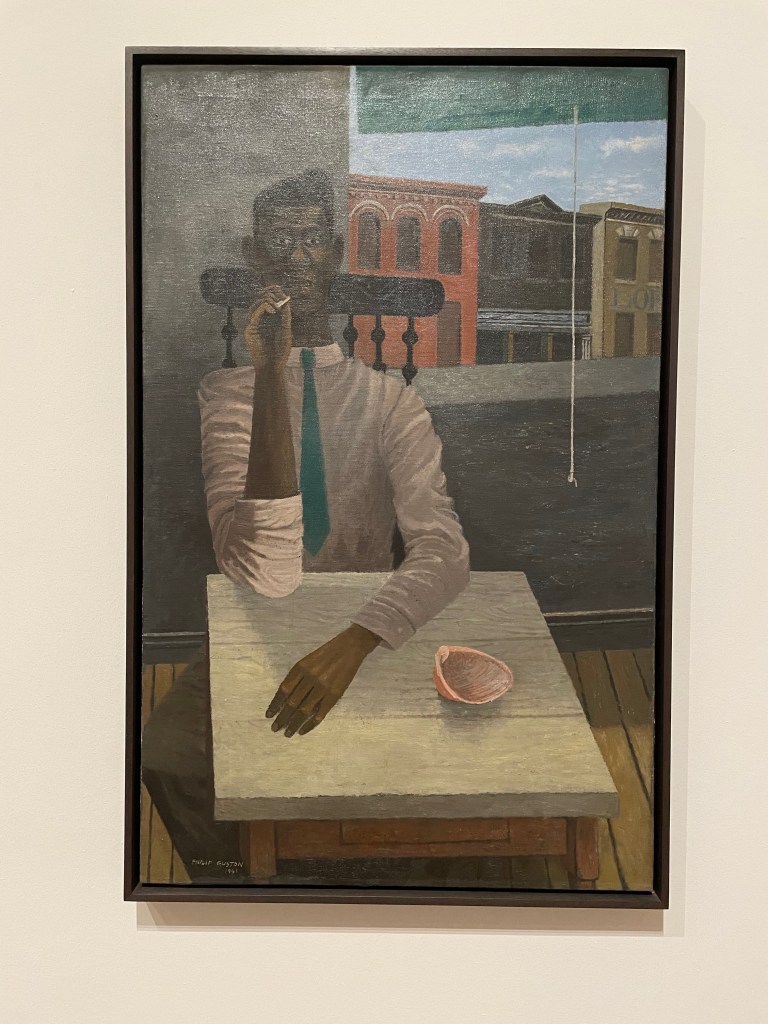
This show is surprising and satisfying. And it sheds new light on a painter who is both familiar and mysterious. Definitely worth seeing. It’s on at Tate Modern until 25th February 2024.

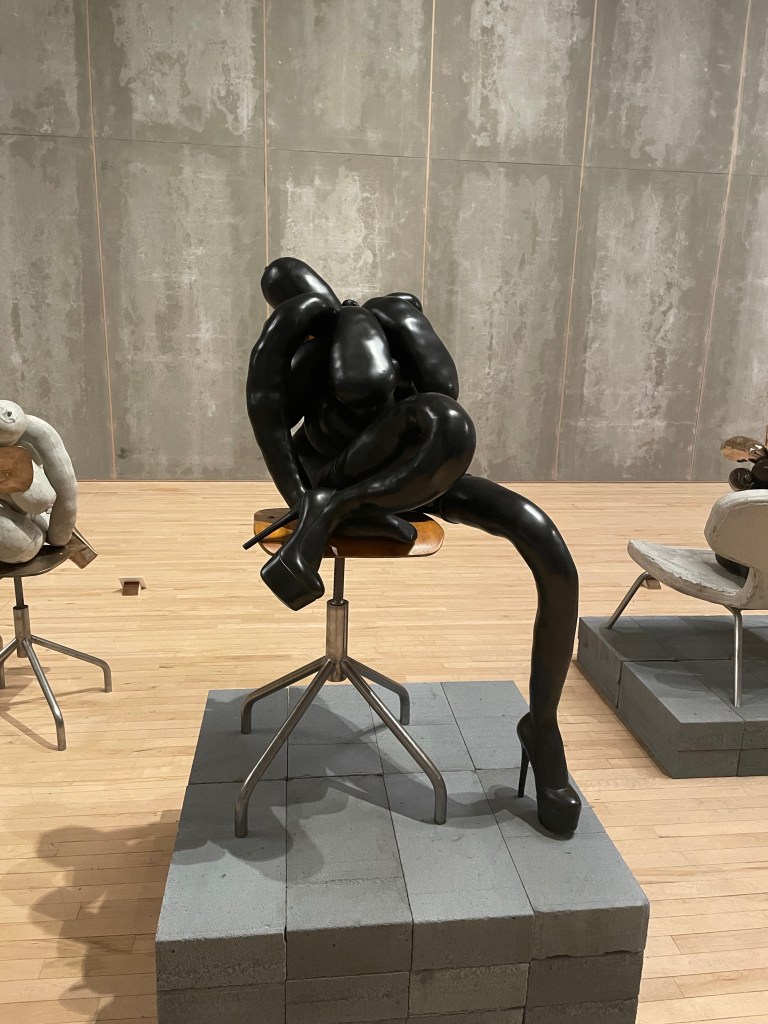
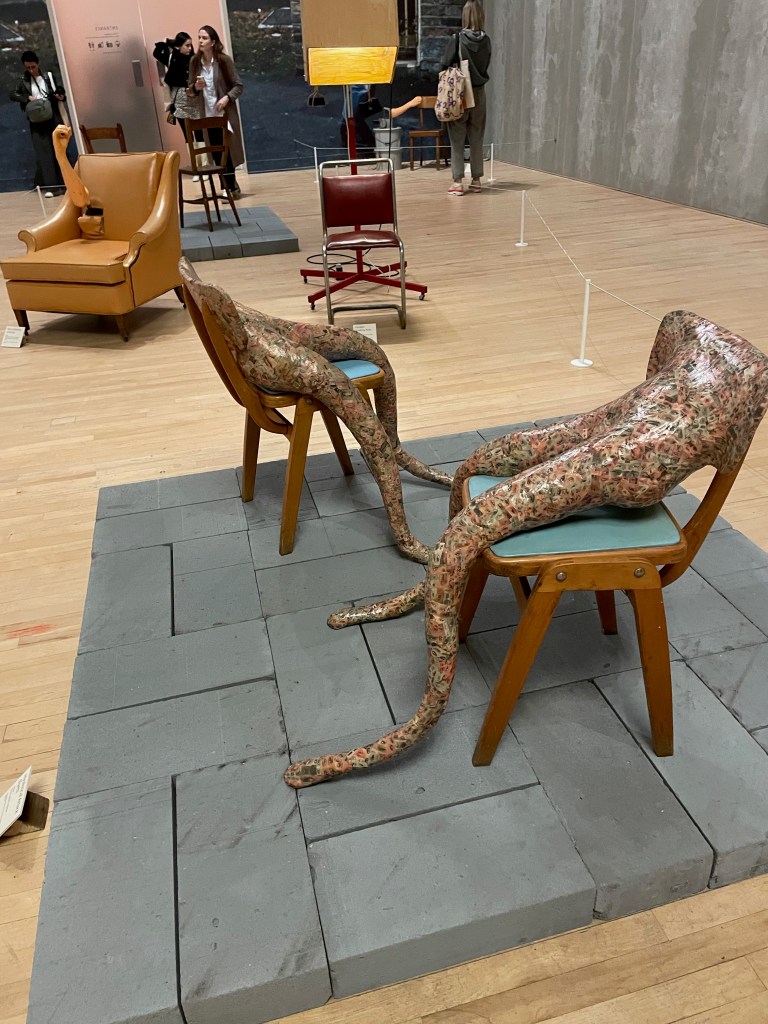
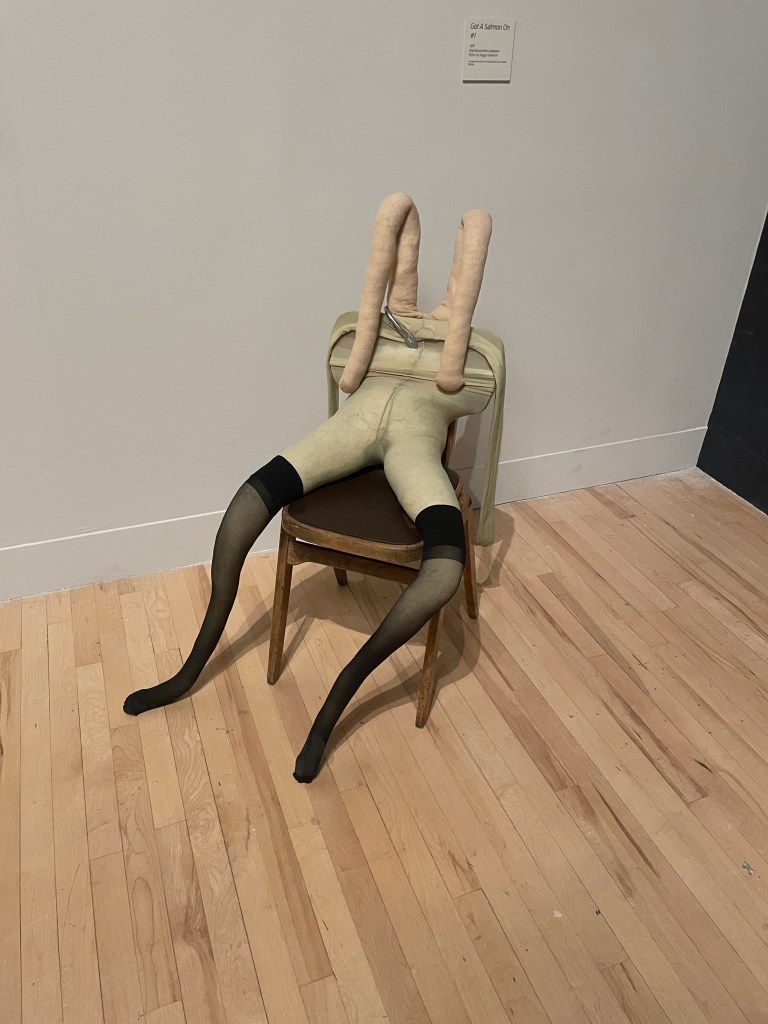
Sarah Lucas, renowned YBA from the early 1990s, has a major show at Tate Britain. She seems as interested as ever in gender, sex, naughty bits and things that wobble. Her famous leggy figures made from fabrics now find form in concrete and metal. The pieces are witty and thought-provoking.

It’s always interesting to see how contemporary artists evolve. Sarah Lucas shows us that she’s still concerned with the same subjects but has updated her interpretation. Back in the ’90s she made the use of old, battered material cool. She reduced gender identities to simple interpretations of genitalia presenting the sculptures with confidence and wit.

Yes, there are still a great many sculptures made from bits of fabric but they’ve also been reinterpreted in shiny metal and dowdy concrete. The results are beguiling.

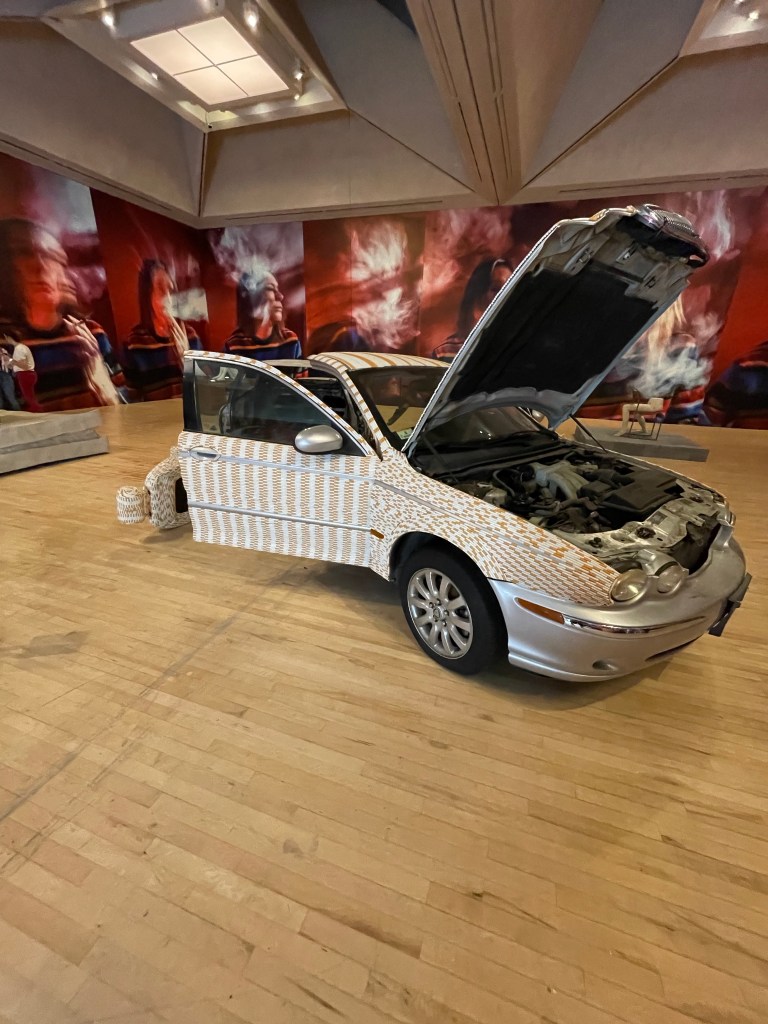
Those pesky cigarettes are everywhere too. In fact, the car (half) looks rather smart with the neatly ranged fags over the bodywork. And yes, there are cigarette shaped breasts and male bits for good measure.

The piece I liked best was the concrete sculpture of a giant marrow (grown by the artist’s mother) and various other huge veg.

The show is on at Tate Britian until 14th January 2024.
Postponed by the pandemic it’s great that the long-awaited exhibition of work by Marina Abramović has opened at the Royal Academy in London. She is such an original and interesting artist. I was lucky enough to attend the press preview and hear her talk about her work.

Abramavić is fearless. She told a packed lecture hall at the Royal Academy that, right at the start of her career as an artist, she decided to make her body her medium. She wanted to explore the human condition and challenge herself to experience extremes and represent emotions and experience.

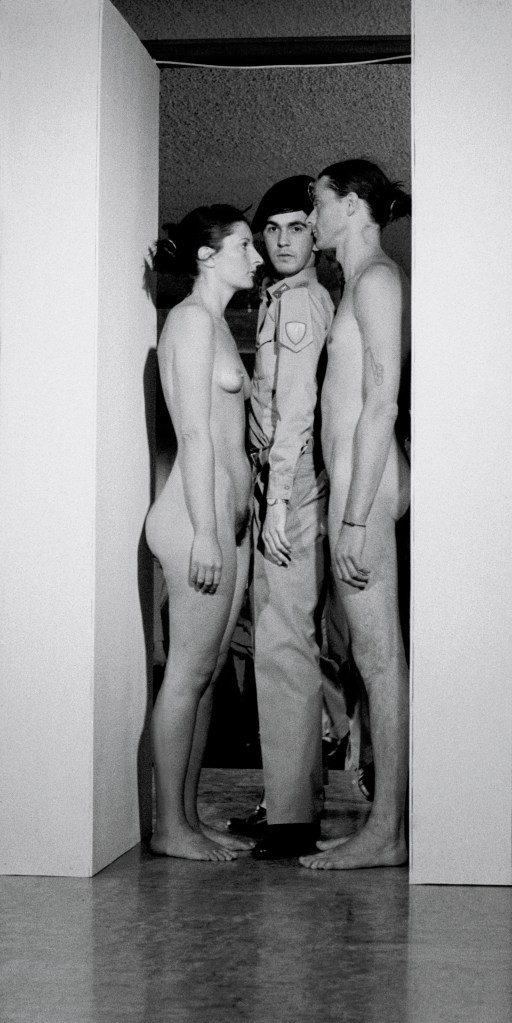
Above is a still from Imponderabilia. With Frank Uwe Laysiepen (1943-2020) who is known as Ulay. They presented themselves as a ‘living door’. This was reproduced at the Royal Academy with two models who stood sentry in the same way while people squeezed between the two naked bodies.

I do a lot of life drawing and contact with the model’s naked body is not something anyone would ever contemplate in a class. She invites the audience to have an uneasy ‘close encounter’ with another person’s nakedness and it is unsettling for clothed viewers.

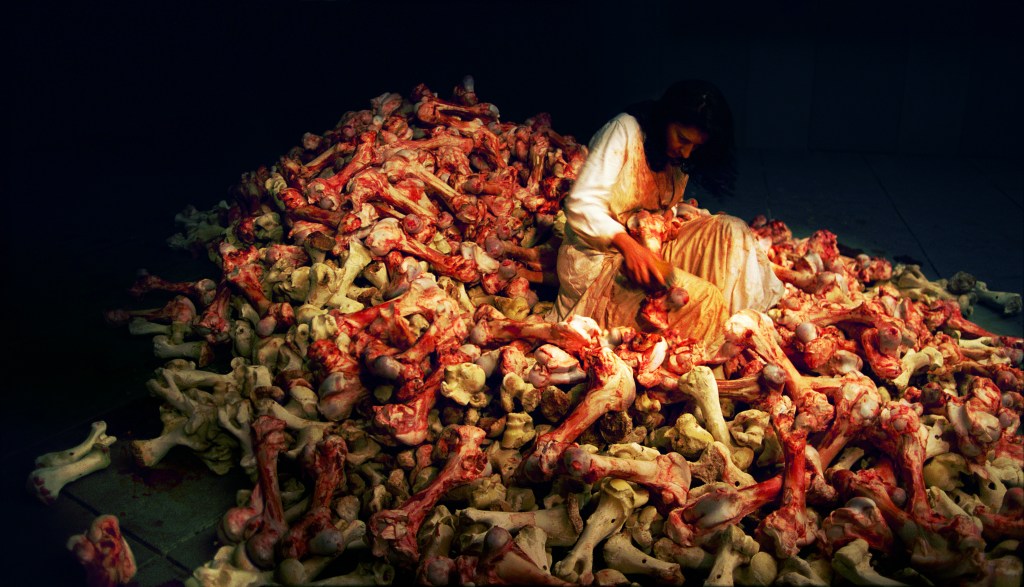
Another artwork which was reproduced for this exhibition was the performance in a box with a skeleton. A live model was placed above the video of Marina, also nude beneath a skeleton, and it’s a very beguiling sight. Marina told us that she had been fascinated and exercised by thoughts of mortality and death. Life imitated art for her when, earlier this year, she became dangerously ill with a pulmonary embolism and very nearly died. Now, she told us at the press conference, she has changed her view on life. She’s now so pleased to have survived that she has stopped feeling fearful and wants to embrace the pleasures of life and enjoy everything.

Much of her performance art has been recorded on video. She has trained herself to be able to sit or stand for long periods. She can deny herself food or the company of other people. This is all part of her exploration of pain and what it can do to a body, and a mind.

Marina has recruited a group of artists who are prepared to recreate some of her works. They spend time training themselves to endure pain, discomfort, exposure and denial in order to re-perform the pieces as authentically as possible.

This is quite a hard show to describe. It’s very immersive, an assault on the senses and presents uncomfortable situations which can make you wince. Her partnership with Ulay led to some very interesting collaborations. It’s moving to see the film of them as they each walked 90 days along the Great Wall of China to a central point where, it was planned, they would marry. But, by the time they met, the relationship was over.

The exhibition is on at the Royal Academy in the main galleries until 1 January 2024. Then it will tour other galleries in Europe.

Capturing the Moment. It’s what we do with our phone cameras all the time. Tate Modern has just opened an exhibition which explores the way photography has influenced artists using media on a surface and the way artists have inspired photographers to record images in a painterly way.

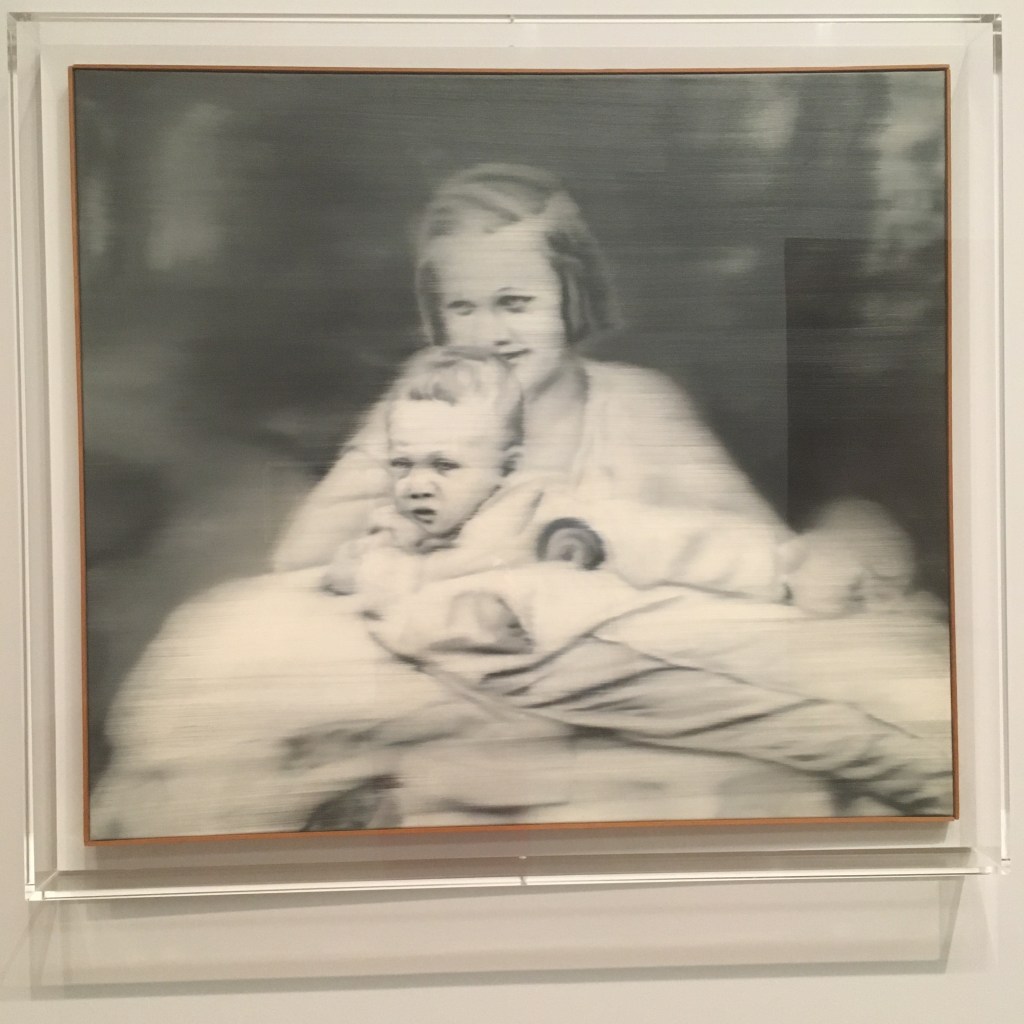
Above is a painting by the renowned German painter Gerhard Richter. He challenged himself to use paint to create a work which has a photographic quality and he’s been very successful in creating those strong contrasts and shadows which you find in photography. It’s called Barn and was painted in 1984. I also liked his painting based on a snapshot of himself as a baby in 1932 with his aunt Marianne, who was not much older than him. He painted it in 1965 and it’s a very touching way to represent the familiar black and white family snapshots which we all have in drawers and frames. But it’s dreadful to learn that young Marianne was murdered by the Nazi eugenics programme in Dresden during the second world war. So, while we glance at a snapshot of two children the hinterland of the image takes on greater significance when you look at the hazy painting which captures such a serious moment in time.

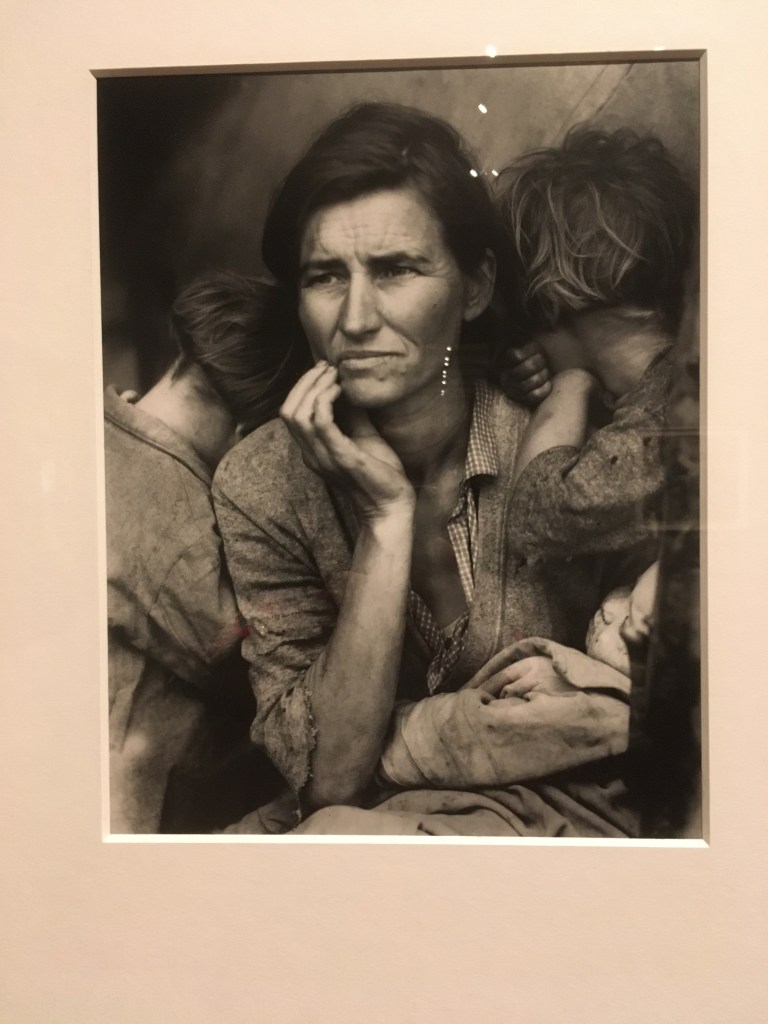
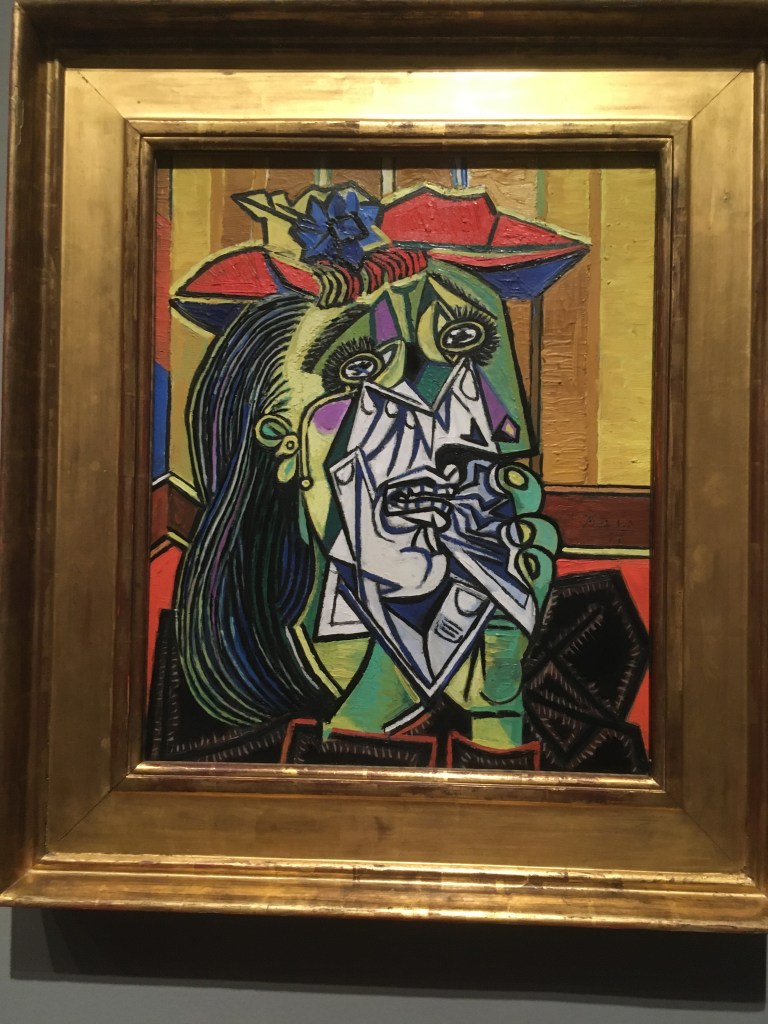
Once photography had been developed it was a boon to artists. At last there was a way to record a subject, a scene, a situation with accuracy. So, it’s no surprise to see examples of how artists used the immediacy and intensity of a photograph as a starting point for their work. To illustrate this, the show included the famous photograph of the Migrant Mother in California in 1936. It was taken by Dorothea Lange who was recording the work of the Resettlement Administration to raise support for impoverished farm workers during the Great Depression. Picasso also used references from the conflict in Guernica to paint Weeping Woman in 1937. However, the model for the painting was Dora Maar who denies it looks anything like her, referring to the portraits of her as “Picasso’ portraits, not one is Dora Maar.”

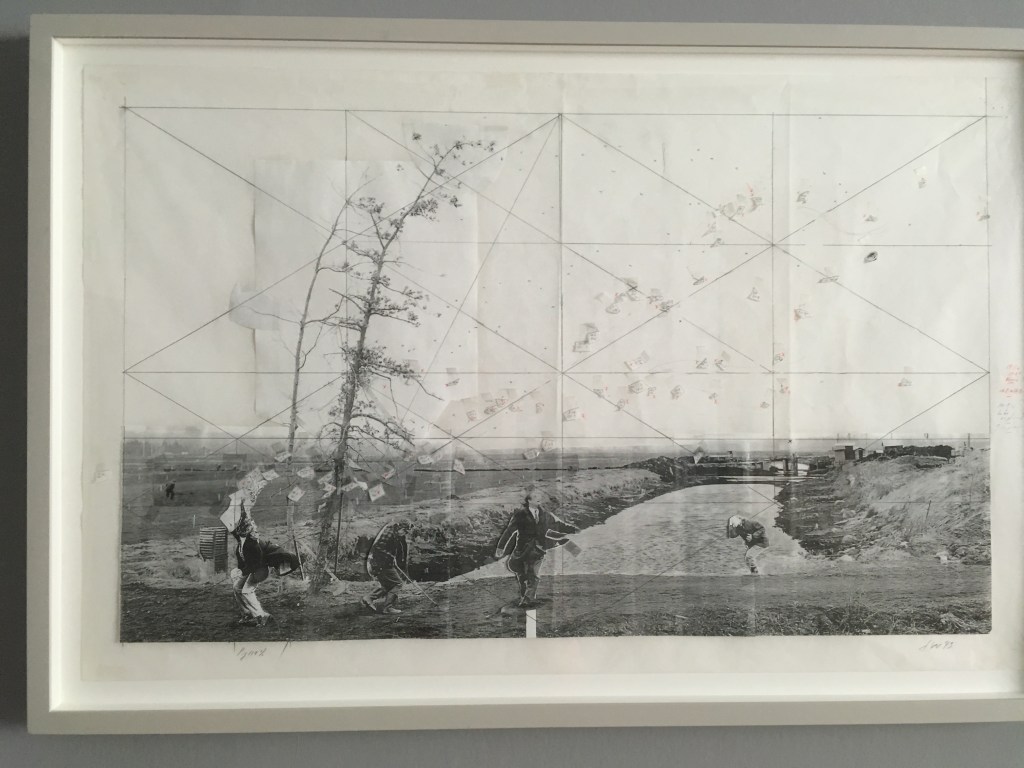
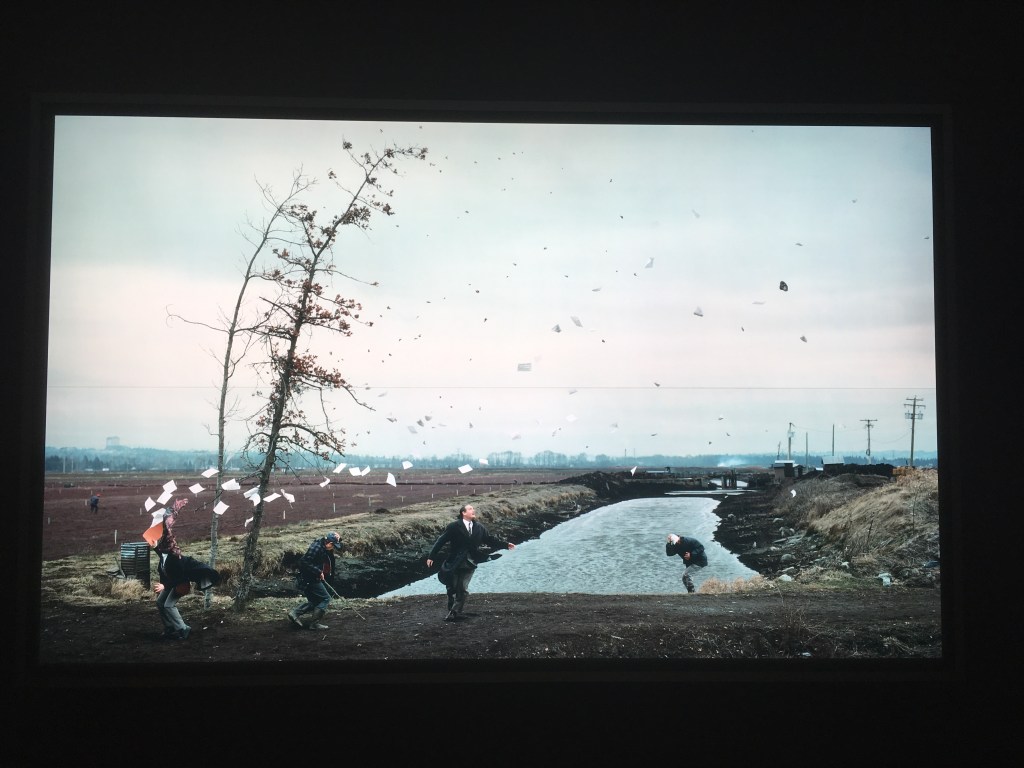
I was also fascinated to see a large collaged photograph which gave the impression of being a moment in time but it turns out it was wholly contrived. Jeff Wall’s large photograph entitled A Sudden Gust of Wind was inspired by a woodcut by Hokusai. Nearby is the paper layout of the photograph with all the players in place and the position of the fluttering pieces of paper. So, it’s looks like a photograph but was carefully constructed using a variety of images. Fascinating.

This exhibition has been realised in collaboration with the YAGEO Foundation in Taiwan. The collection possesses many photographs and the Tate curators have found a clever way to use works within their collection to match with these new pieces.

Below are just a few of the other images which caught my eye. Photography was the source for the paintings and painted art the source for the photographs.

The show is on until 28th January 2024.
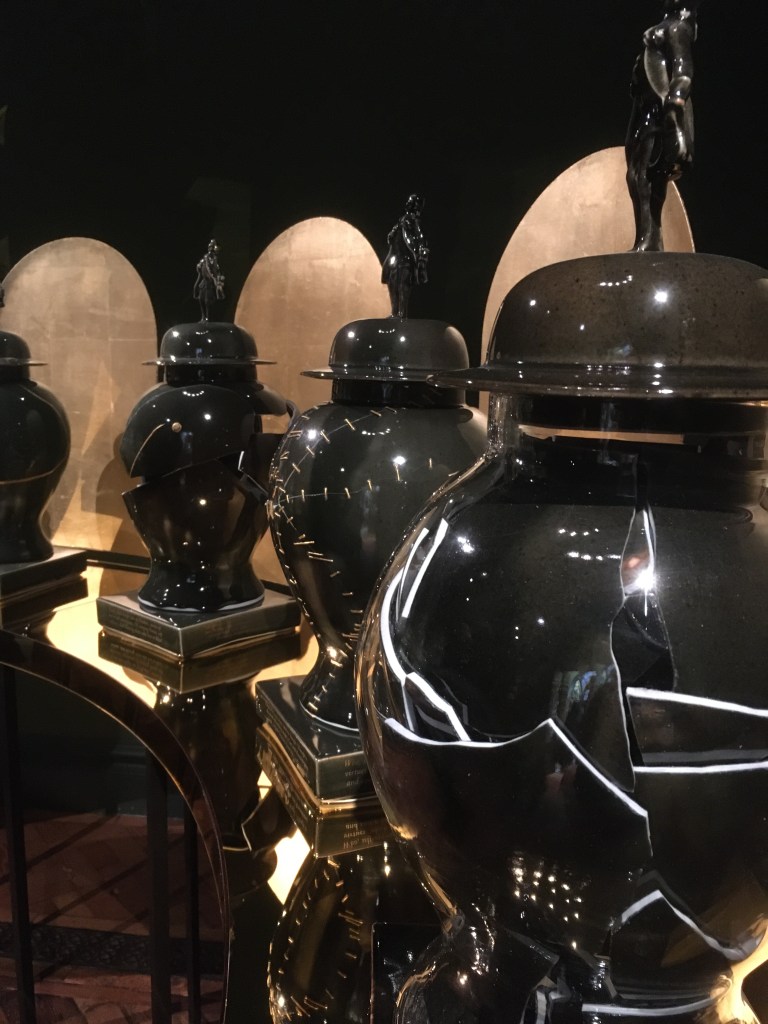
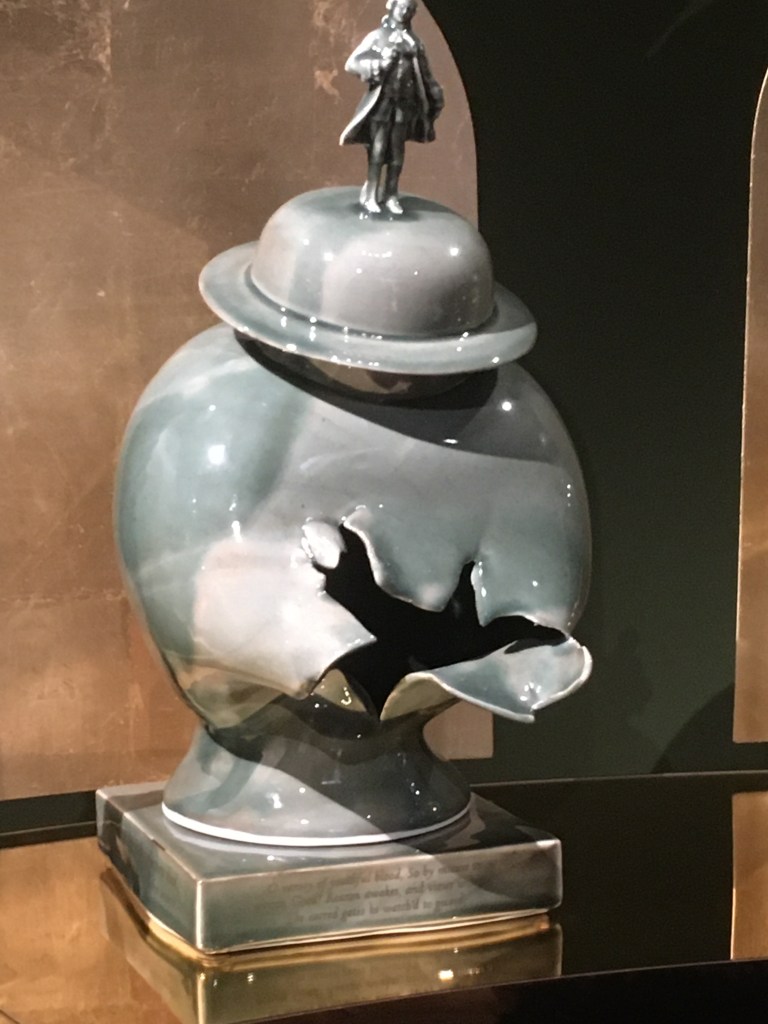
Visions in Porcelain: A Rake’s Progress. Inspired by Hogarth’s compelling, entertaining and cautionary tale, this fascinating set of eight porcelain vessels made by Bouke de Vries cleverly matches the eight canvases depicting Tom Rakewell’s descent from wealthy young man about town to a victim of greed, debauchery, self-destruction and madness. They’re a delight to see within the glorious surroundings of the Sir John Soane Museum in Lincoln’s Inn.
It’s always a joy to visit the Sir John Soane Museum but right now, if you pick your way through the small rooms filled with sculptures, artefacts and artworks from the ancient world, you will find the Picture Room nestling at the back of this crowded house. The small gallery is hosting a very intriguing exhibition by Dutch artist Bouke de Vries. He has found a clever way to reference the famous Hogarth paintings which can be seen (at specific times) in the gallery which was specially built by Sir John Soane to house his wonderful pictures. The Rake’s Progress is a set of eight canvases which chart the decline of its eponymous hero. And it doesn’t end well. De Vries takes the eight stages of his decline and represents them in porcelain pots which resemble apothecary’s vessels of the eighteenth century. Each vessel is uniform in the beginning but the dissolution is represented by cracks, breaks, ‘exploding’ clay, mending, repairs, and, ultimately ends with a vessel which contains the broken shards of other pots, all cracked and in a state of collapse. Each pot is topped by a charming figure representing the foolish young Tom Rakewell. The pots are made with celadon glazes.

Upstairs in the architecture gallery is a very appealing exhibition on the work of London architects and the houses they’ve designed and built for themselves. You could argue that creating your own home is both the ultimate act of self-expression and also an impressive platform for your work and a statement of self-belief. Very interesting to see the plans for The Red House by William Morris and Philip Webb, the plans and photographs of 2 Willow Road built by Erno Goldfinger, Michael and Patty Hopkins’ House in Hampstead which is an audacious glass and steel structure, the Cosmic house conceived by Charles Jencks and Maggie Keswick Jencks with Terry Farrell which involved completely rebuilding a Victorian terrace house and 9-10 Stock Orchard Street which was created for the family of Sarah Wigglesworth and Jeremy Till.

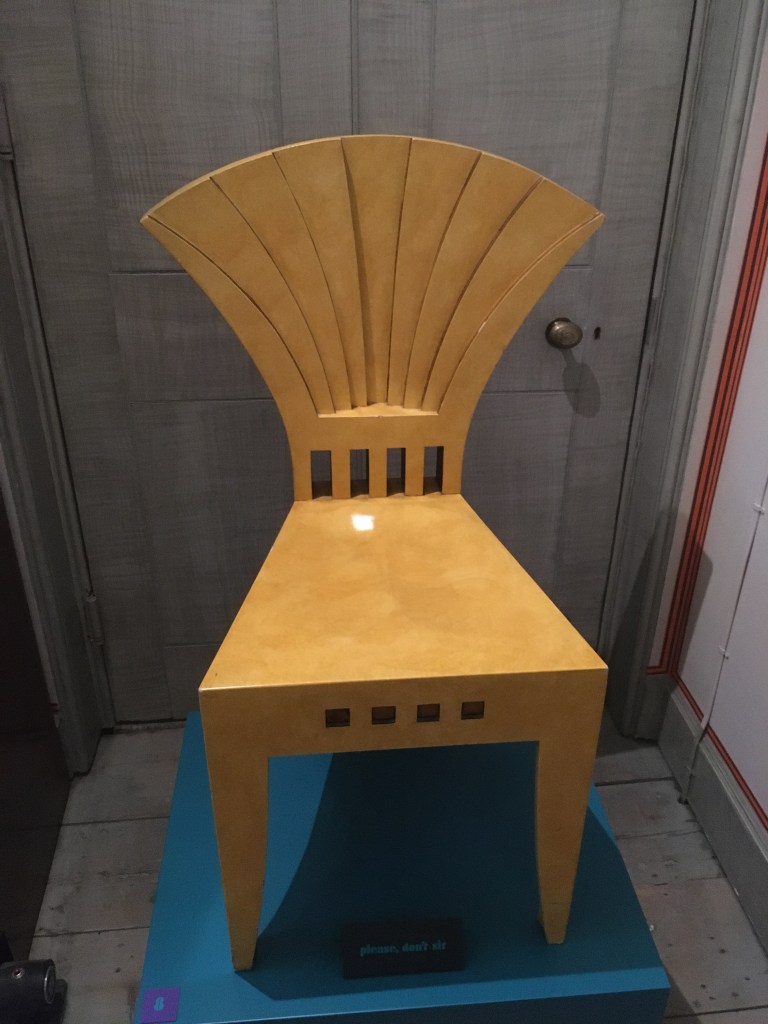
Above: Shot of the interior of 9-10 Orchard Street, a chair specifically designed for Charles and Maggie Jencks’ Cosmic House and a design for a mosaic made for them by Eduardo Paolozzi.

The Soane Museum organised these exhibitions to tie in with the London Festival of Architecture. Entry is free. http://www.soane.org.

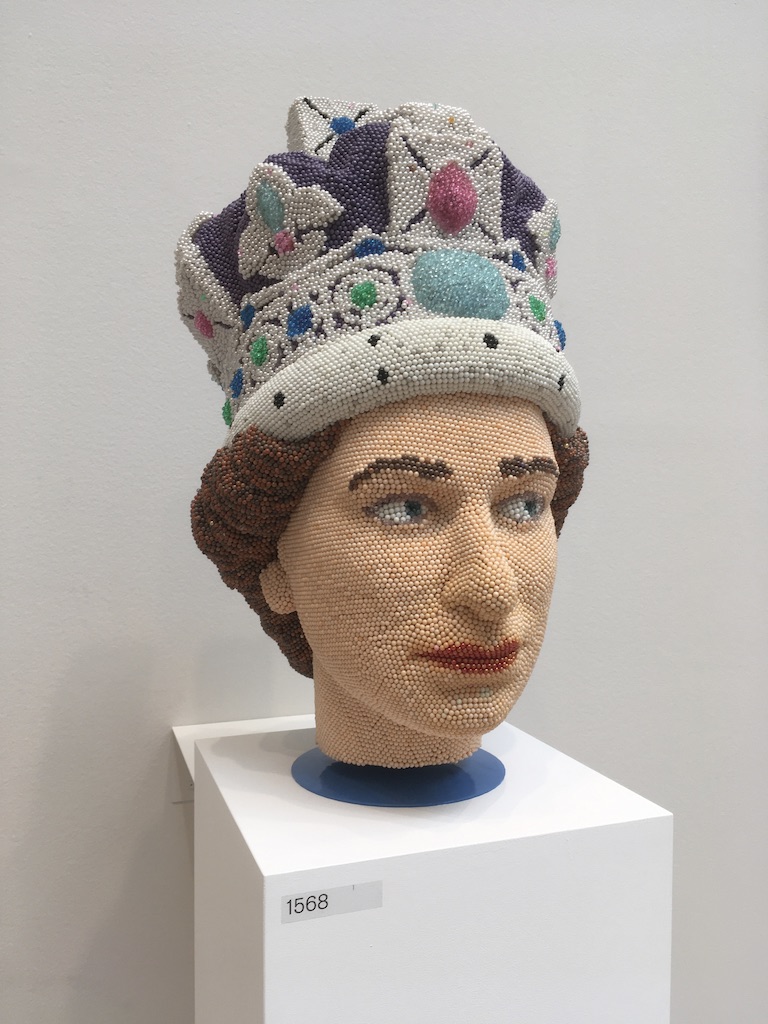
It’s that time of year again. Yes, the Summer Exhibition is back at the Royal Academy and there are more works of art on show than ever before. The lively hang, co-ordinated by artist David Remfry MBE RA, takes as its them the quote “only connect” (Howards End by E.M. Forster). The sense of the quote is loosely and entertainingly interpreted through the huge variety of work on show.

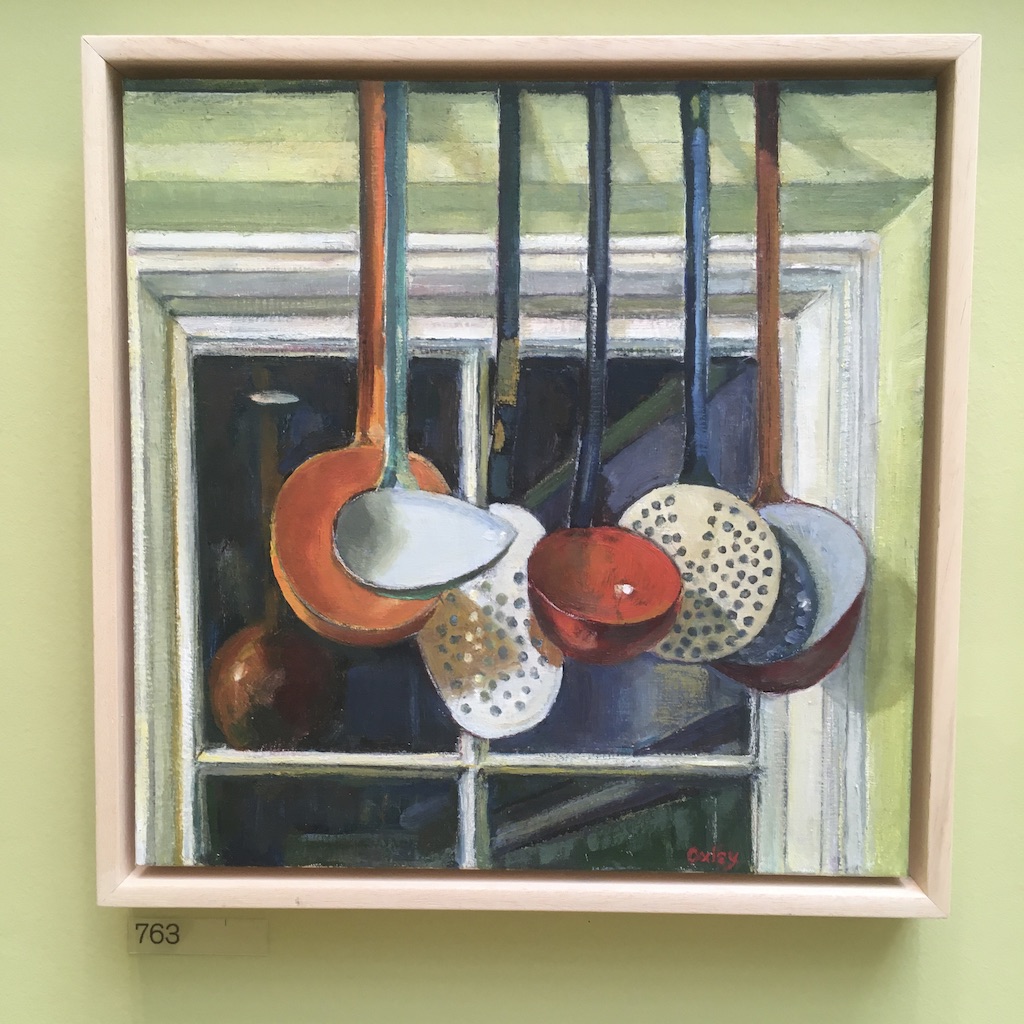
Above: French Connection by Brian Oxley

As usual, there’s just so much to see and this hang has been a DENSE hang! There are 1600 works on show. And it’s simply fun to cruise the galleries, gaze, ponder and generally peer at the work. Some pieces jump out, others fit well with the subtle background colour. There are themes of faces, places, people, issues, monochrome, great colour, animals, vegetables…. and lots of abstract. I really enjoy seeing the rich mix of styles and subjects on offer.

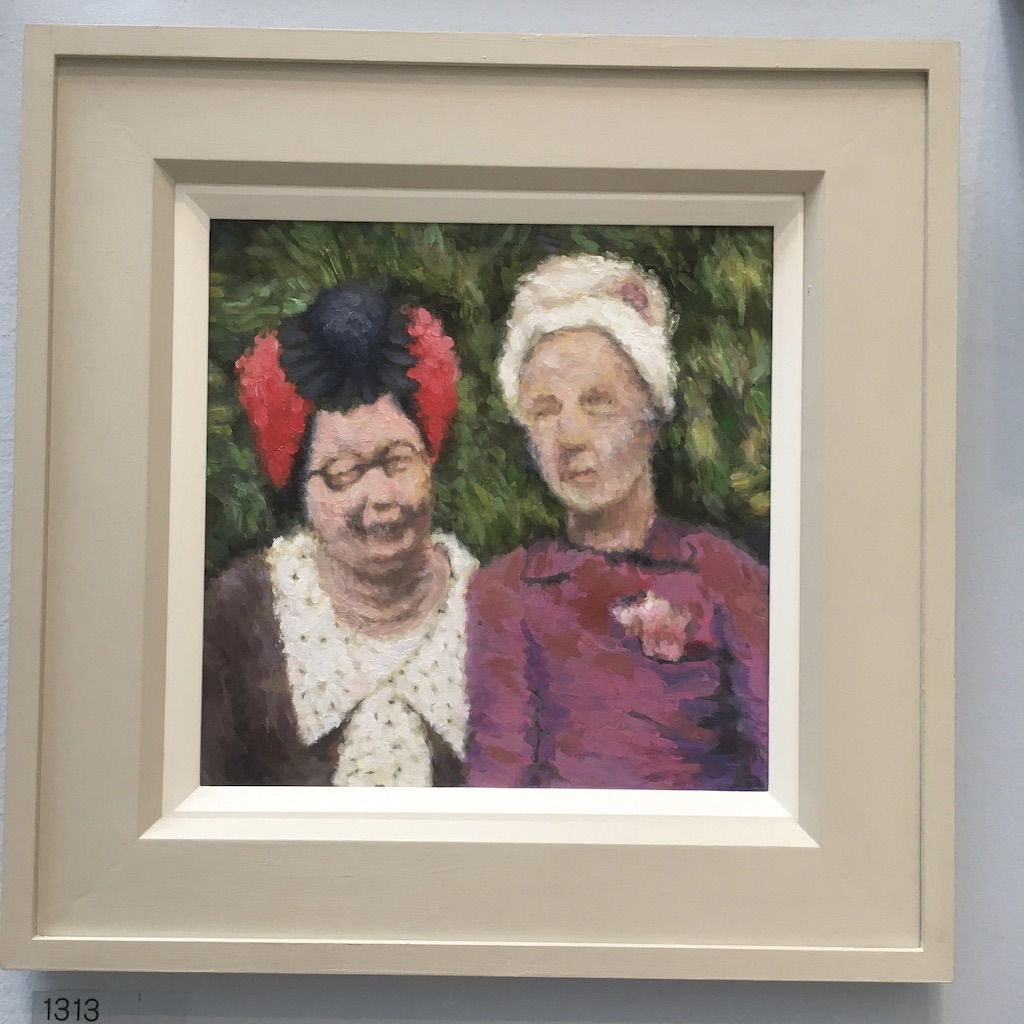
Above: Sisters Maud and Mabel by Elaine Preece Stanley Anarchy in the UK push pins wood and foam by David Mach RA and

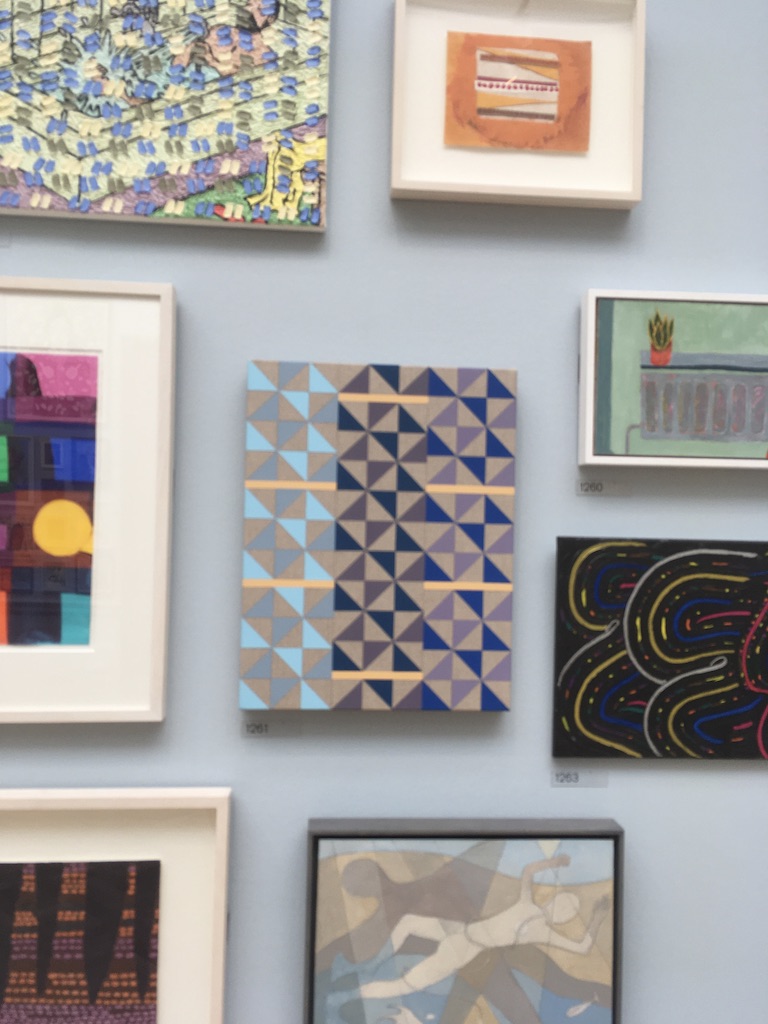
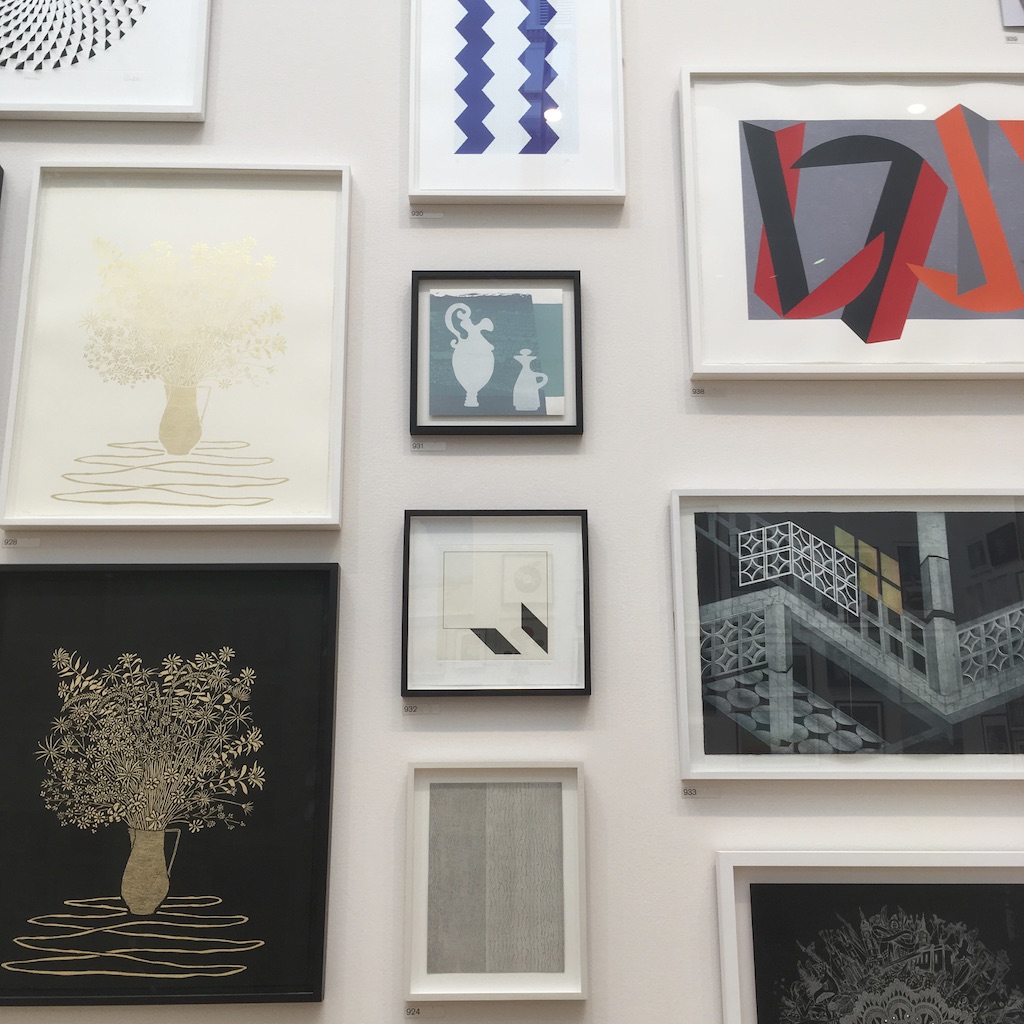
It’s always great to see the work of friends on the walls and this year I was thrilled to see familiar names listed in the catalogue and see their work looking splendid amongst other pieces. Here are a couple of the ones I spotted. The excellent abstract is by Francesca Simon and the charming print with two vases is by Jacki Baxter.

Above, centre: Check 8 Francesca Simon and The Discussion by Jacki Baxter

I approved of the way the works had been chosen to create a really cohesive hang. It’s eye-catching to see the the different styles of work really sing against a well-considered wall colour. Royal Academicians are always well represented and some have large expanses of wall to show work but many can be found nestling in amongst works by unknown artists and they really complement each other.

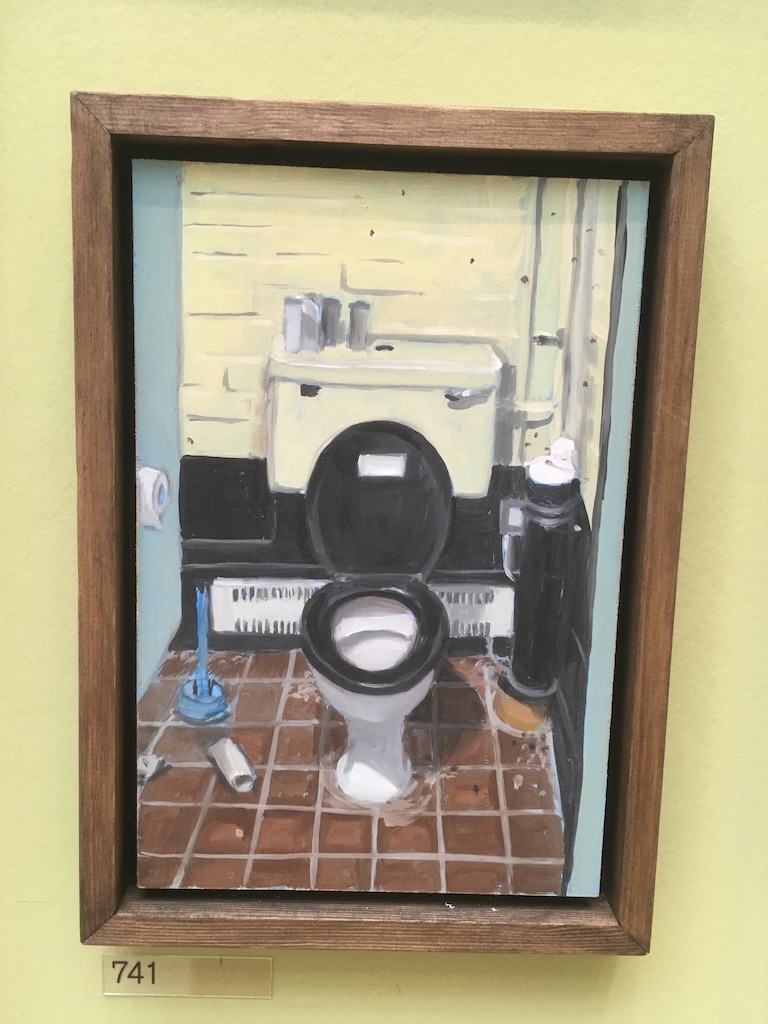
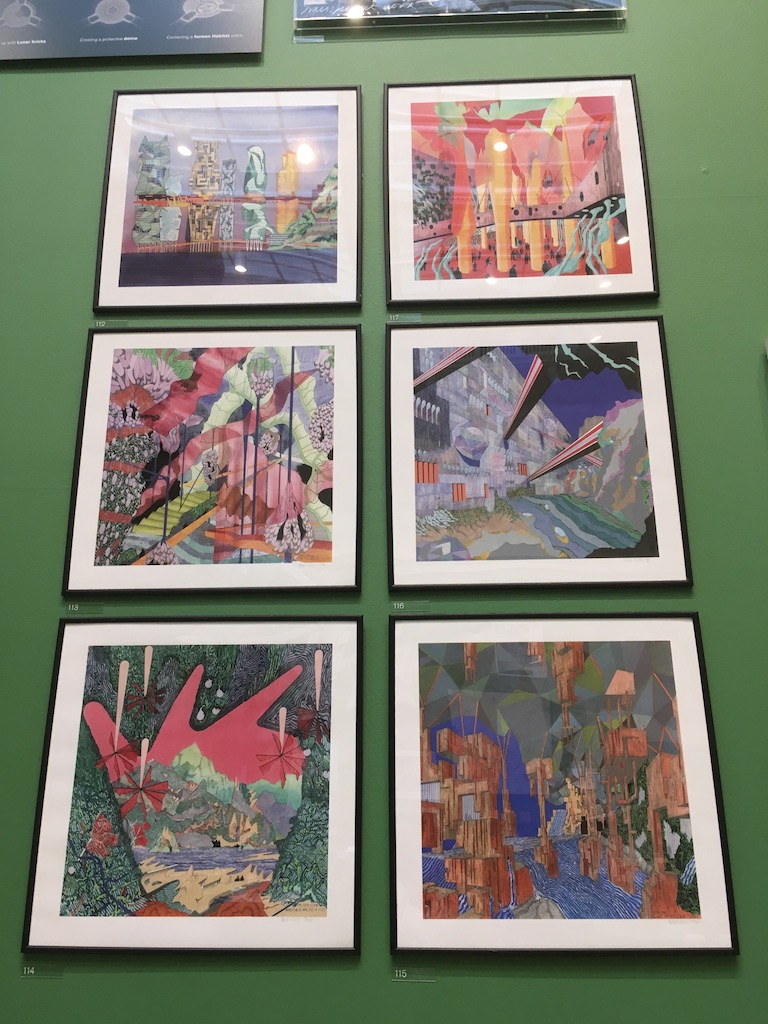
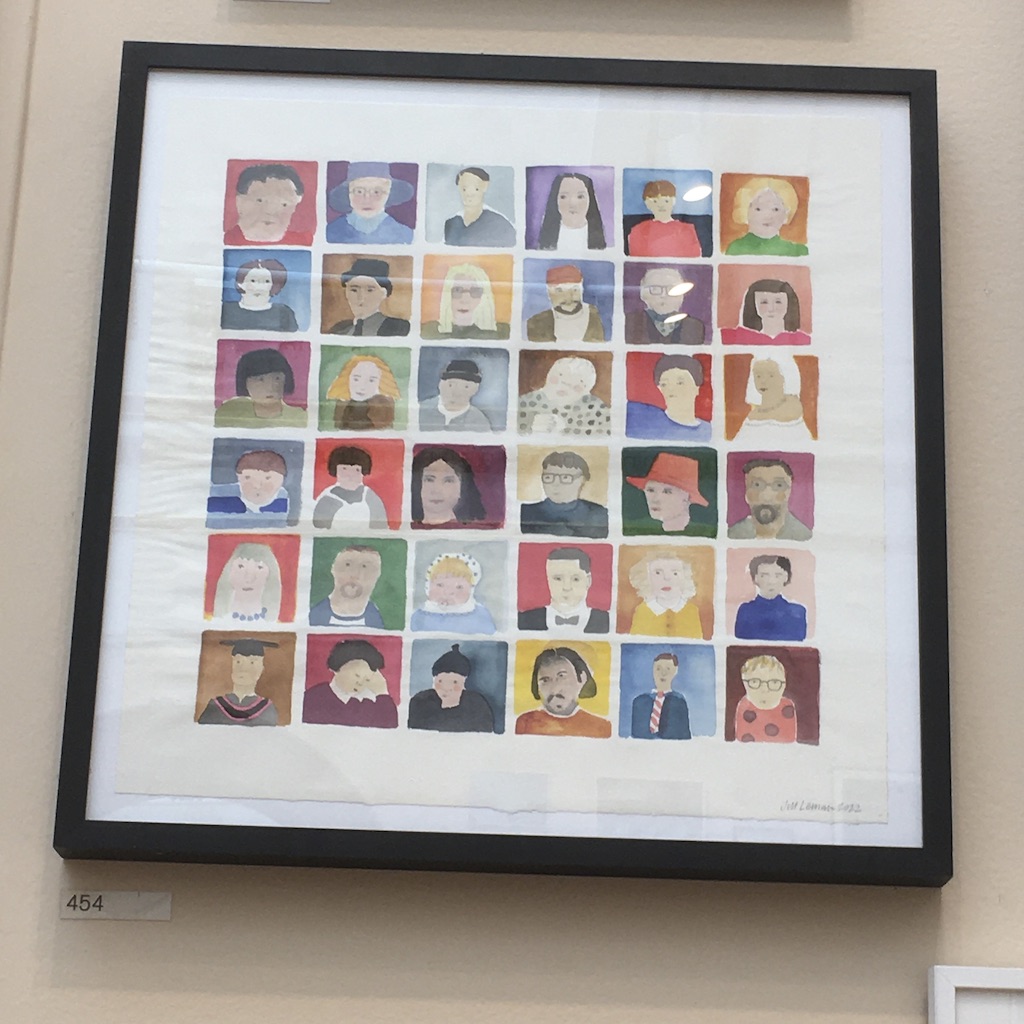
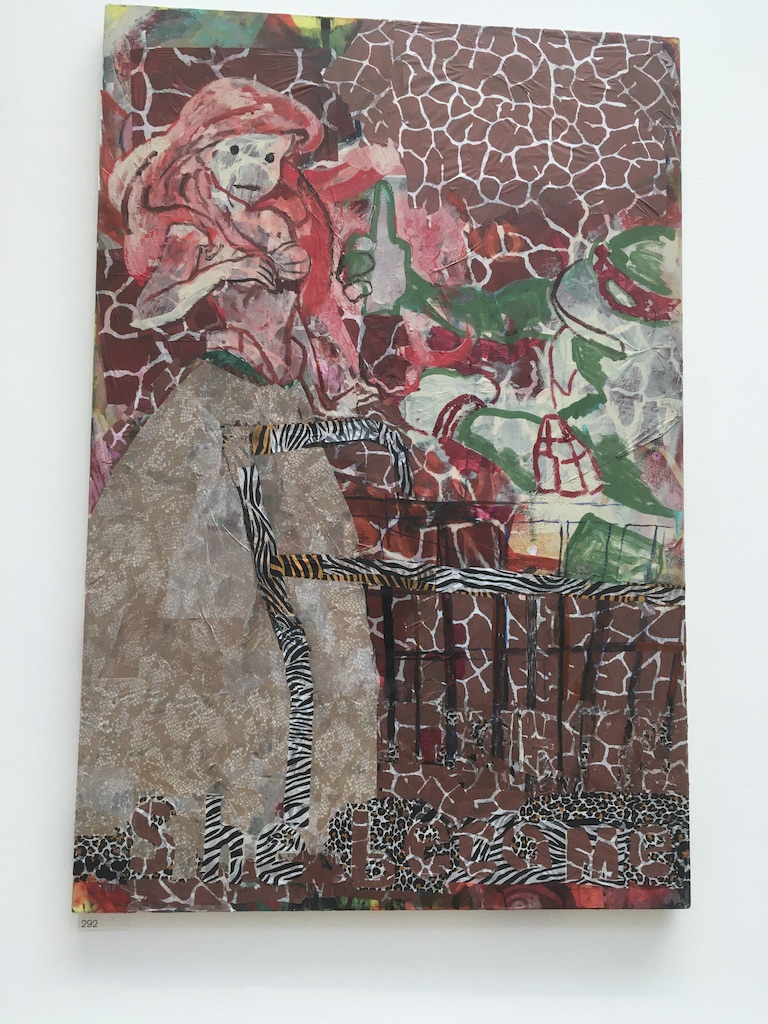
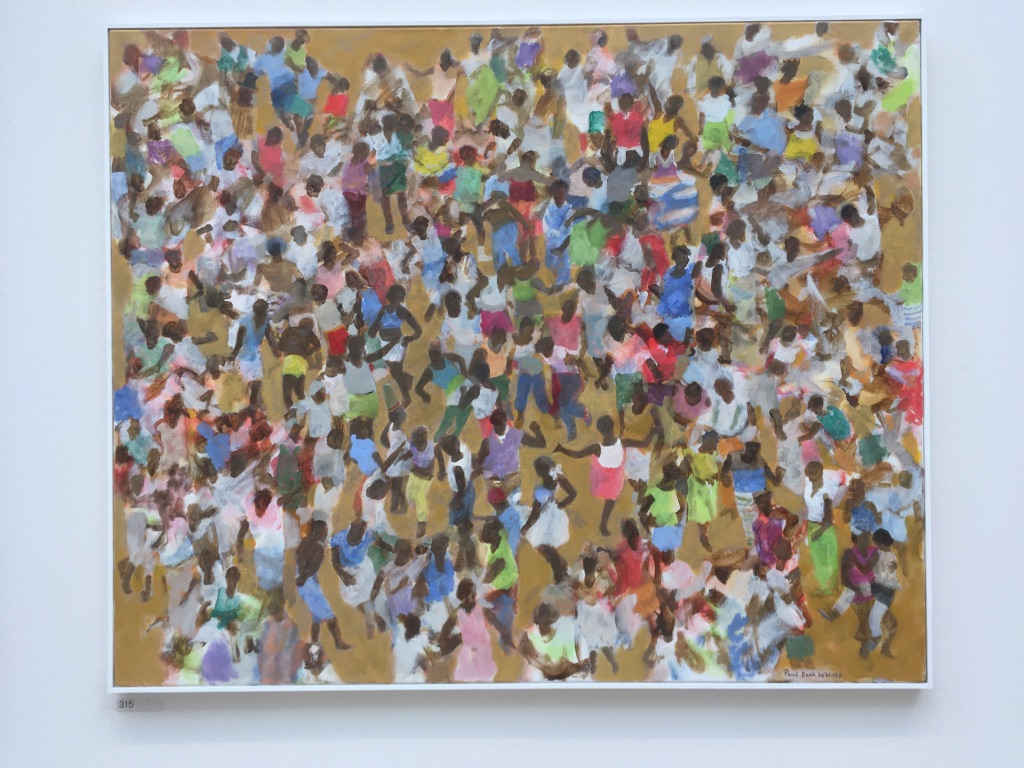
Above: Studio Toilet, Right Cubical by A. Lincoln Taber, Selection of prints by Sir Peter Cook RA, Family by Jill Leman, She Became by Sabrina Shah, Bacchanal by Paul Dash and The Punic Emojis in Glass, 2,3 and 1 by Stephen Farthing RA I was taken by the narrative element of many of these works. There’s nothing like seeing a story within a picture.

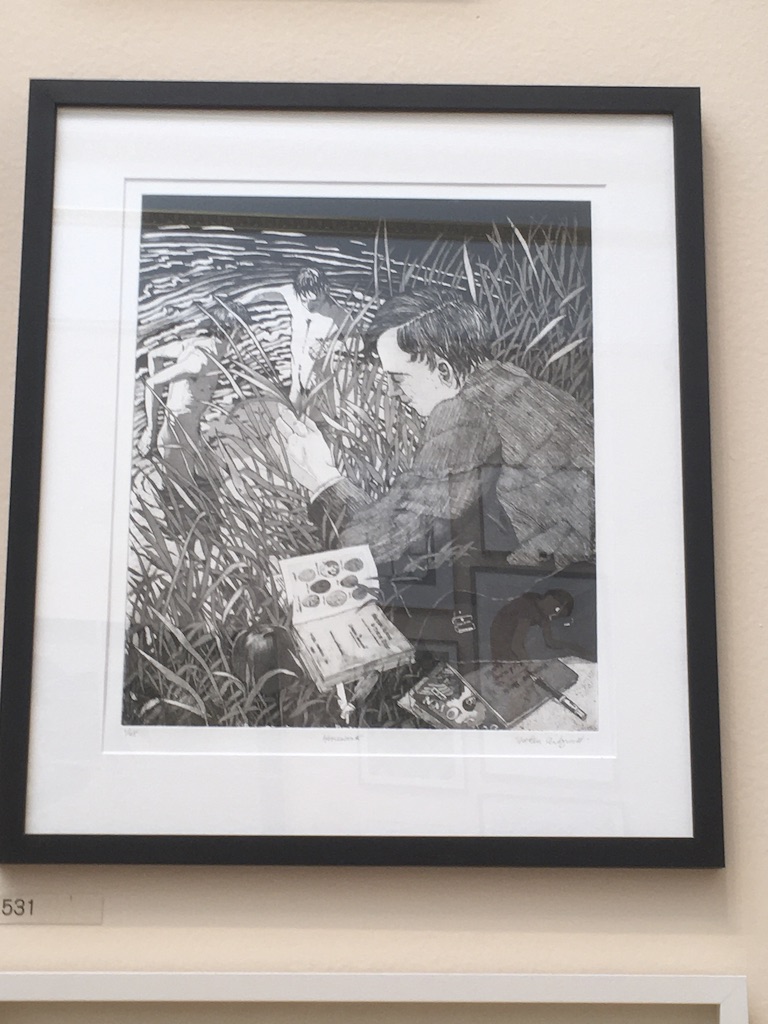
Above: Went to see the Gypsy by Jill Eisele, Interval 1 by Sheila Wallis, Homework by Martin Ridgwell

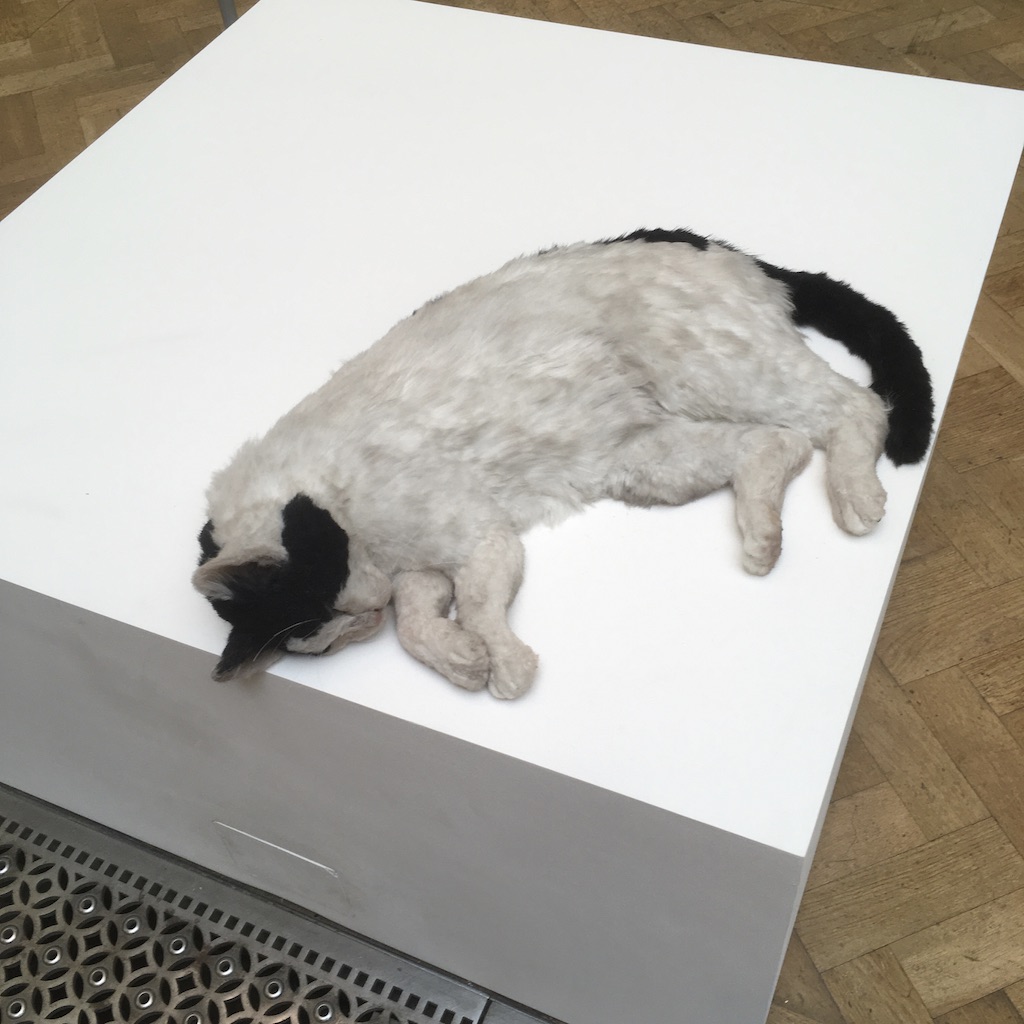
And this was an odd one. It’s a sculpture of a cat, a rather battered cat can be seen to breathe and sort of twitch. A bit unsettling at first and then you rather warm to the poor creature and want to stroke it. It has the title: Rest in Pieces, or the Squatters (Charlie meet Hammons’ untitled (Night Train) (1989) made of wood, latex, resin, synthetic fur, paint and animatronics by Ryan Gander RA. Yours for £66,000!

The 2023 Summer Exhibition opens on 13th June and runs until 20th August at the Royal Academy, Piccadilly, London #SummerExhibition #royalacademyarts

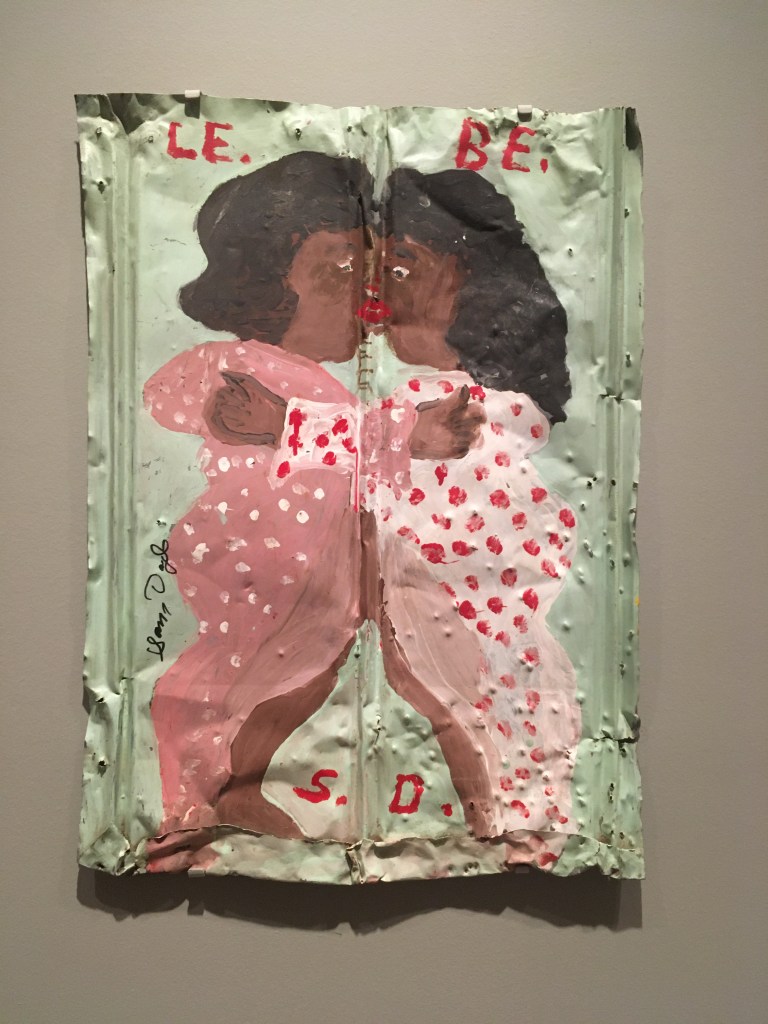
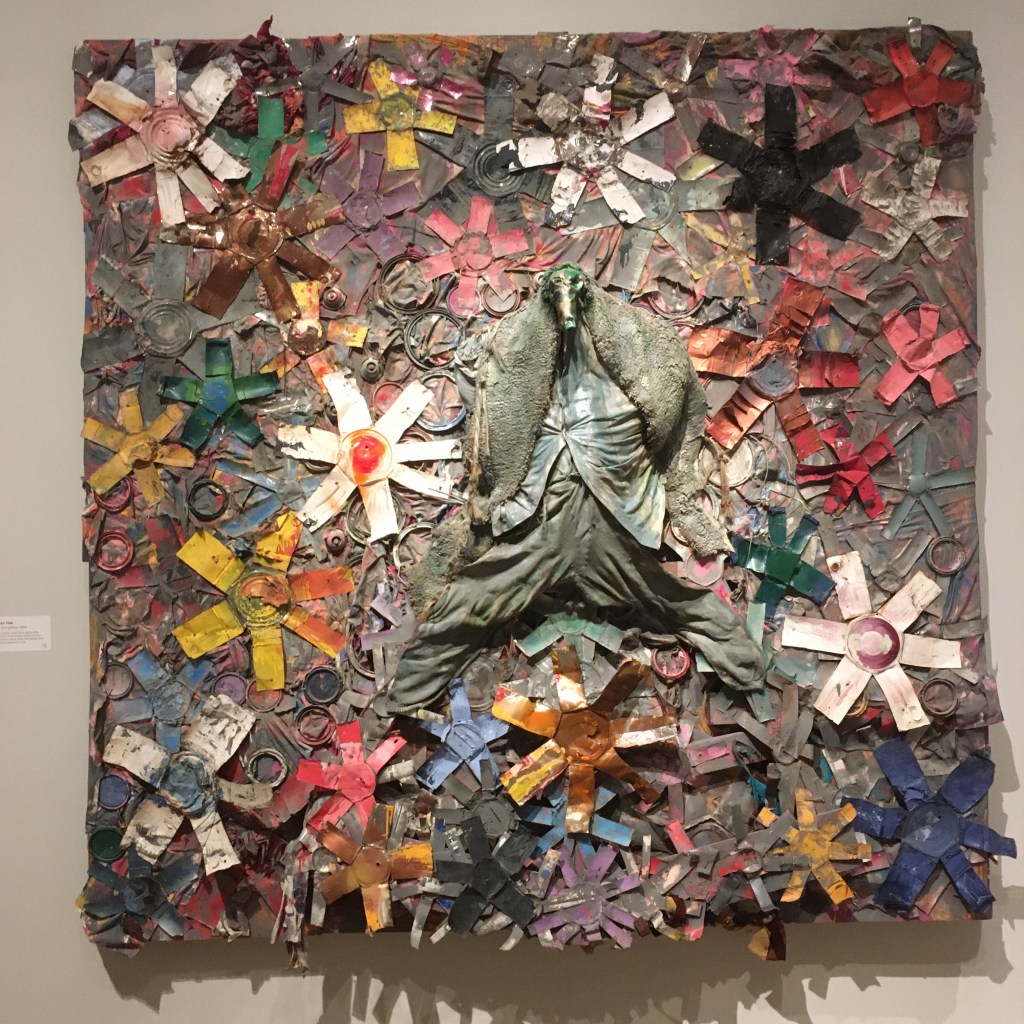
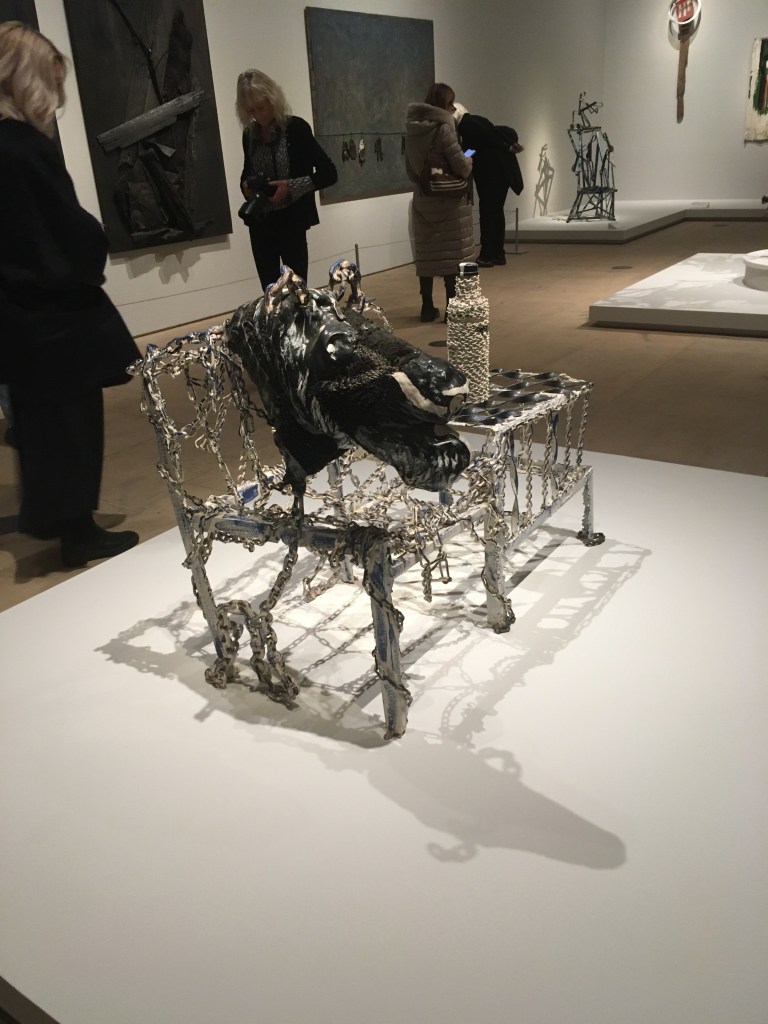
Intriguing work from Black artists living in the Southern states of America is on show at the Royal Academy in London. ‘Souls Grown Deep like the Rivers’ features work collected by William Arnett who set up a foundation to celebrate the work of artists who used found and recycled materials to create their work.

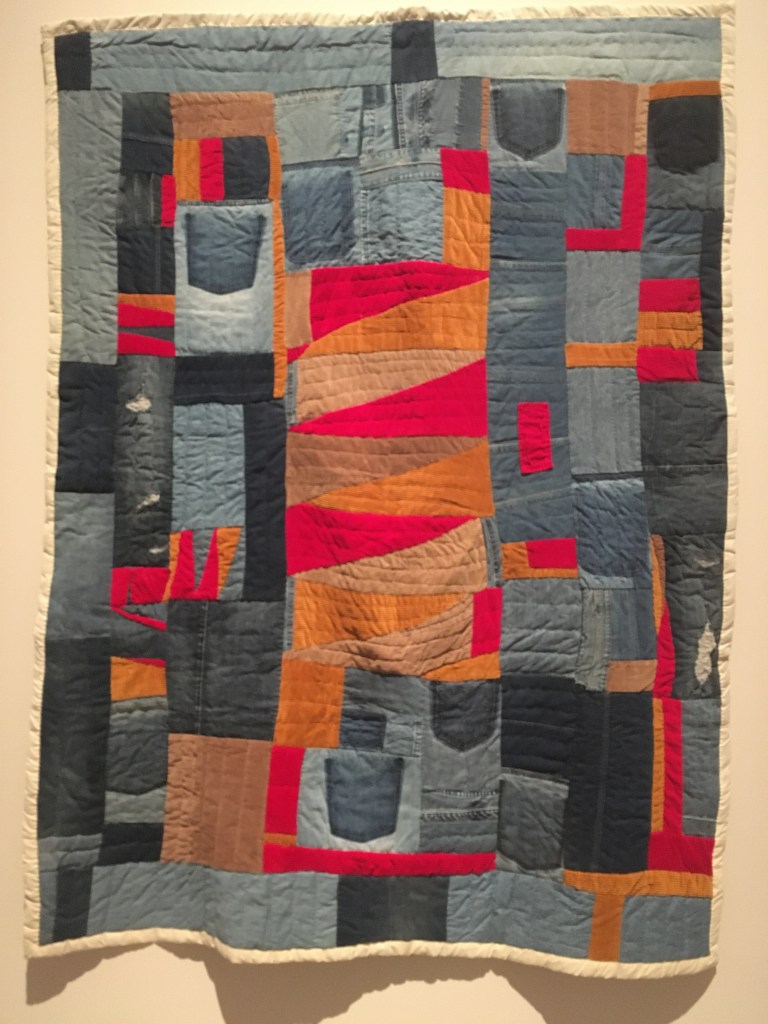
It’s always interesting to see what artists can do with recycled and found materials. This is very apparent at the newly opened show at Royal Academy called Souls Grown Deep like the Rivers. It features a collection of work which has (mostly) been collected by William Arnett (1939-2020) who set up the Souls Grown Deep Foundation.

The work on show was all made by Black artists from the Southern states of America born between 1887 and 1965. These artists had little opportunity for conventional art training; they lived in close-knit neighbourhoods and created their work from bits and pieces they found lying around and could be used to create sculptures and wall art as well as installations. It felt quite ‘outsider art’ in many ways but rather than a solo artist evolving in isolation this is a movement. Many of the artists are descended from enslaved people in communities in South Caroline down to the Mississippi River.

The works are imaginative and heartfelt. I particularly liked the Gee’s Bend quilts – quilting is such a tradition of early America and these were made with every spare scrap of material.

The materials used include clay and sand, bits of old machinery, twigs, paper and old tin cans. I admire the way the creative mind will see seemingly disposable or obsolete objects and turn them into an artwork.

The show is on at the Royal Academy from 17th March until 18th June 2023

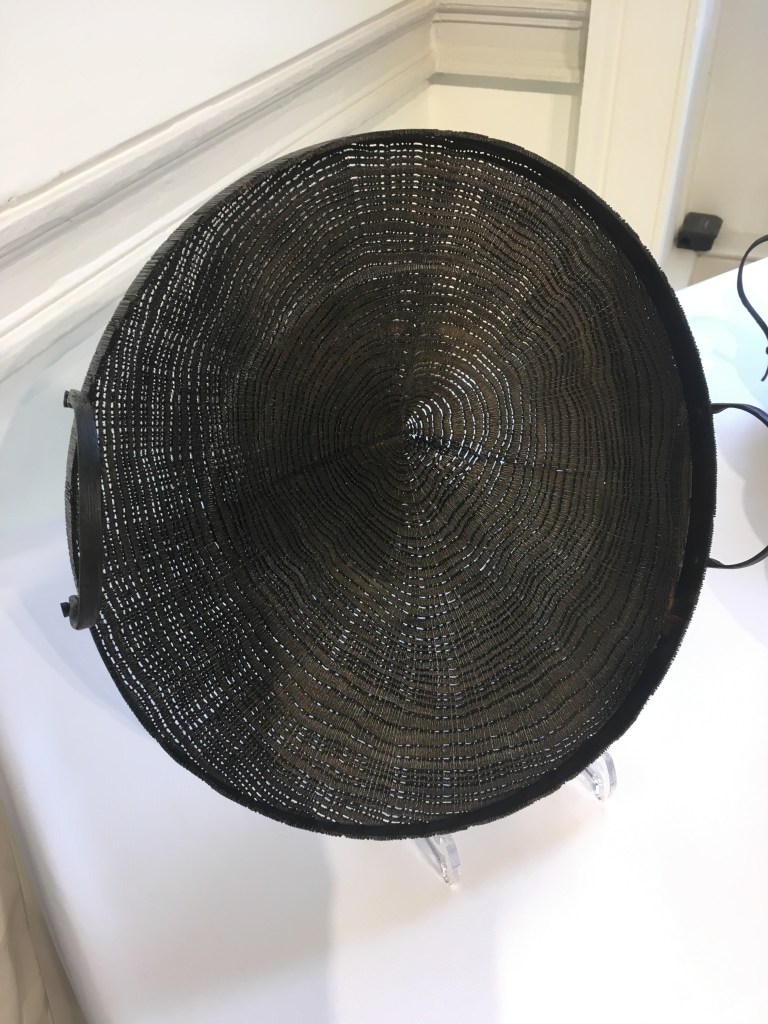
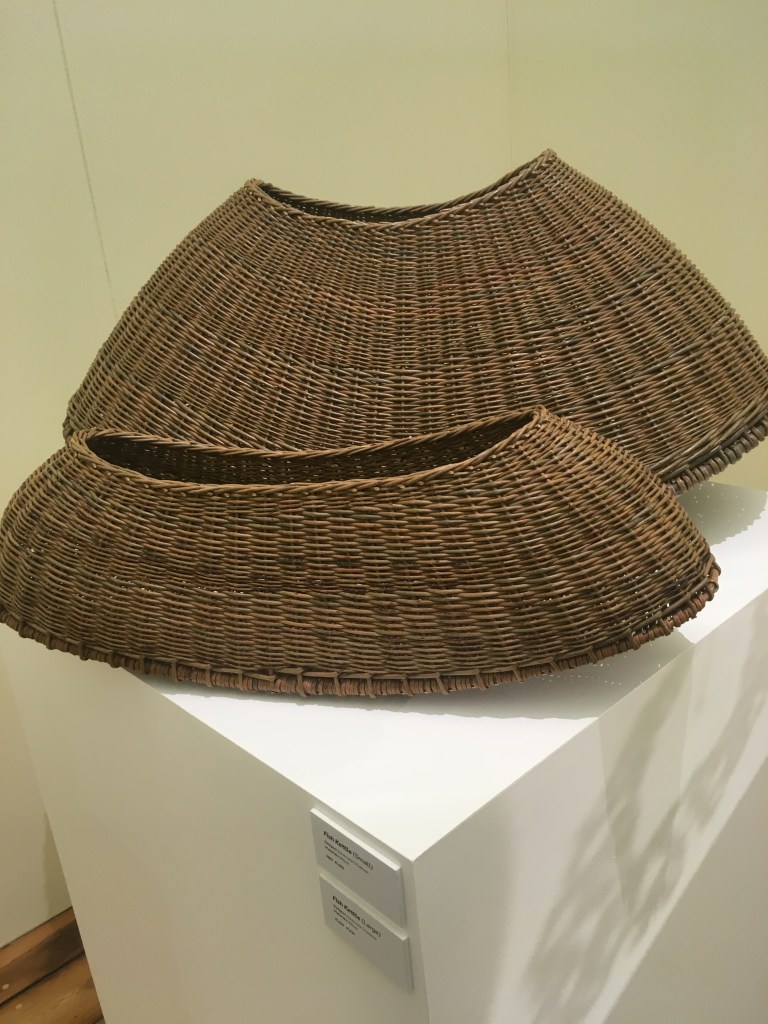
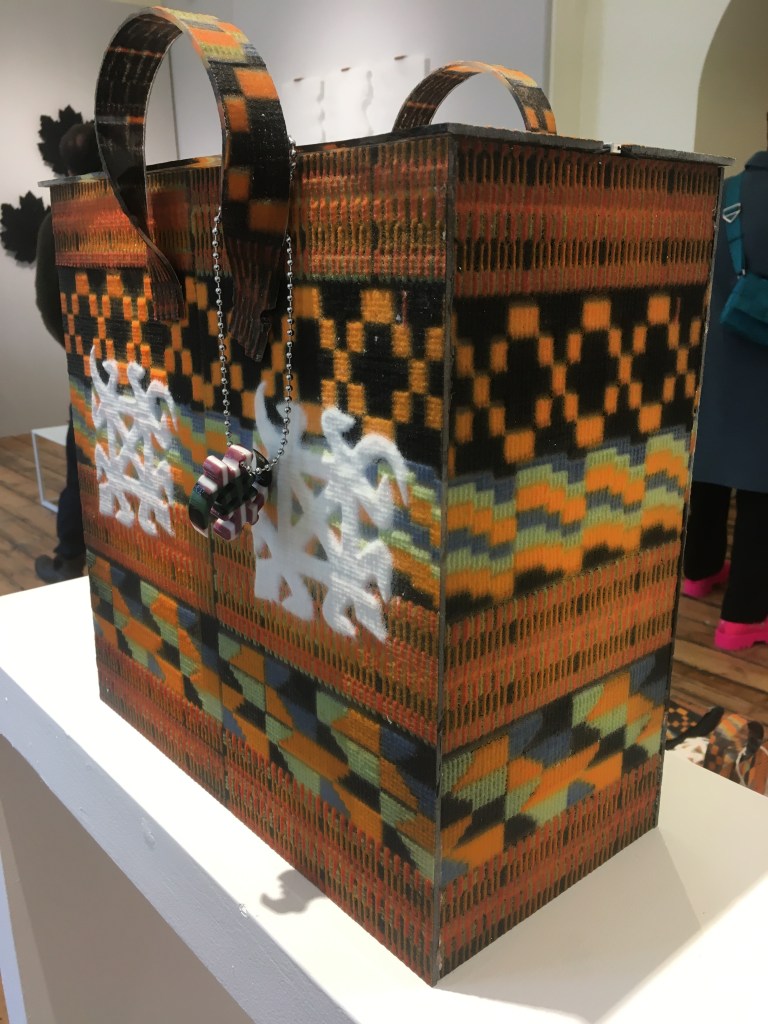
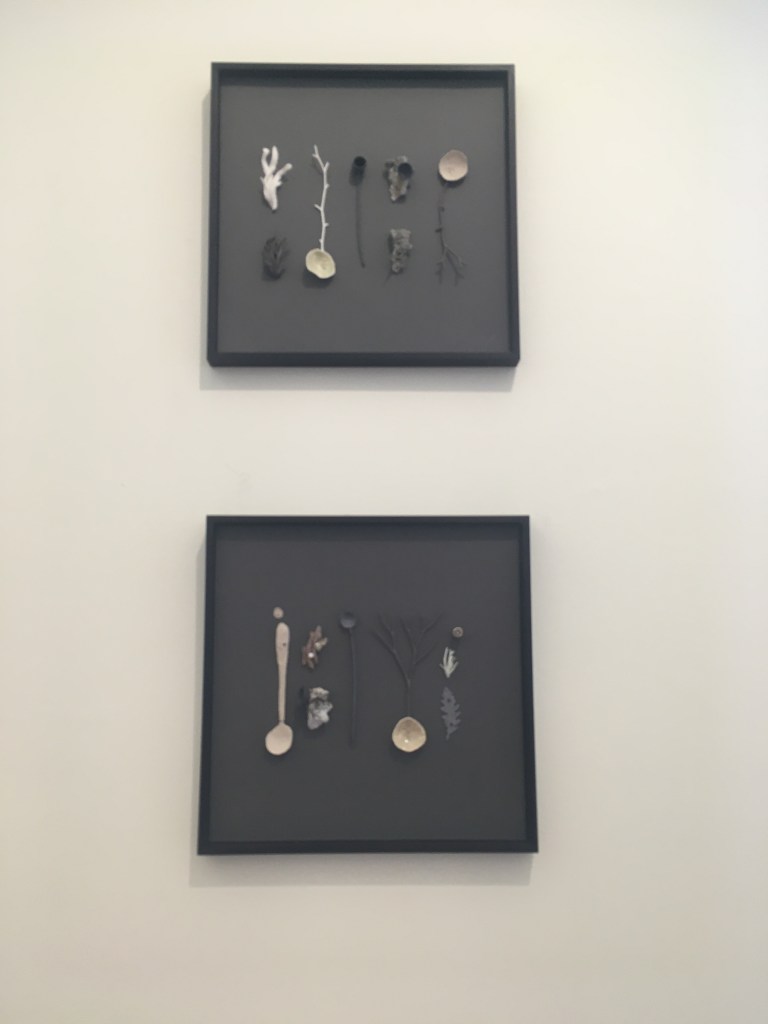
There are glorious things to be seen at Collect 2023 at Somerset House. Pieces on show at Collect are at that tipping point between art and craft but at such a high level. Artist show how many materials can be used with cleverness and ingenuity to create work of sublime beauty.

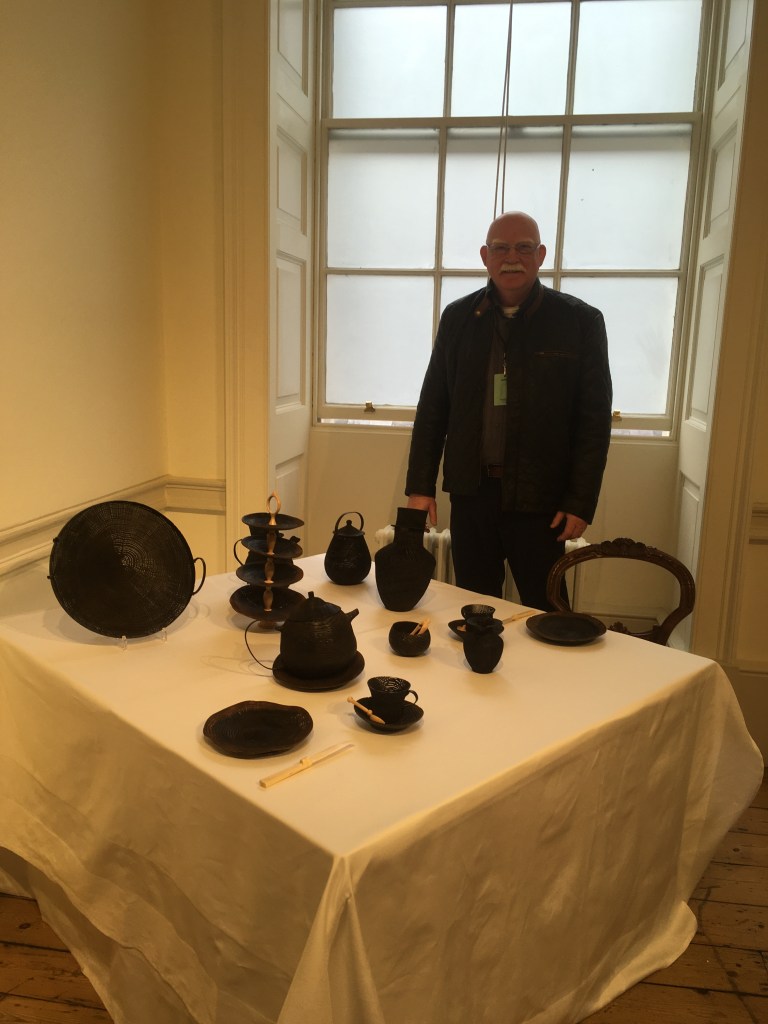
It’s always a joy to visit Collect. The show now seems really comfortable at its new home at Somerset House. Touring the corridors and dipping into the different rooms is like a magical mystery tour. You never know what you’re going to encounter. And I was lucky enough to go to the Press Preview and meet some of the creators of the pieces. That’s always a bonus.

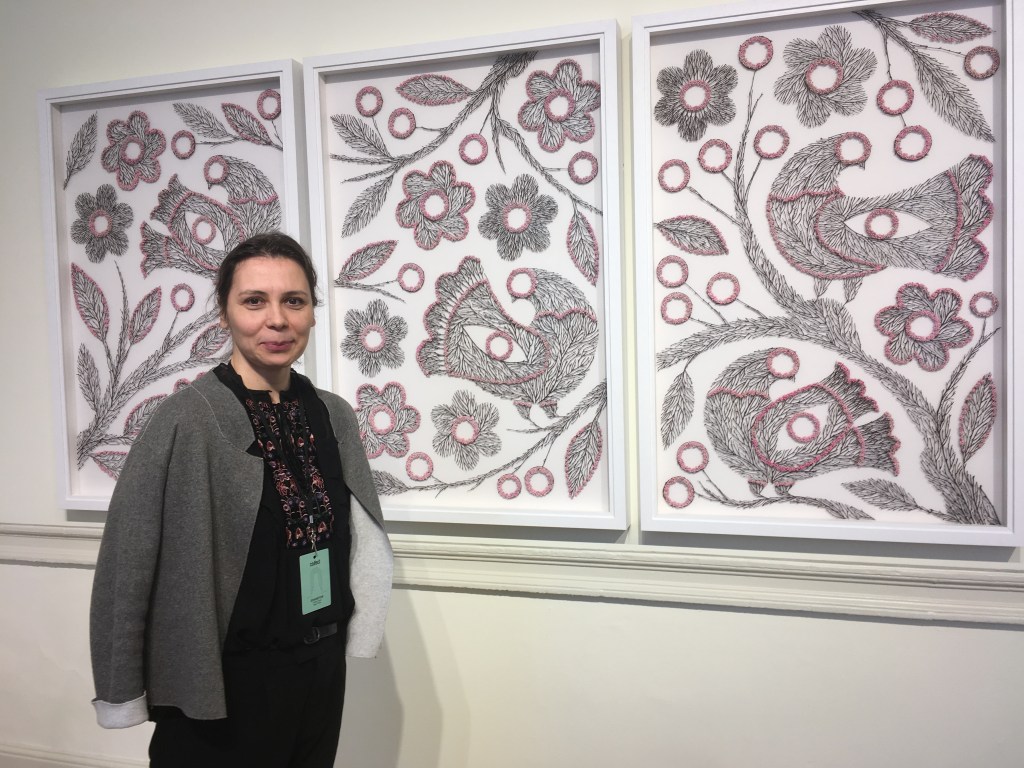
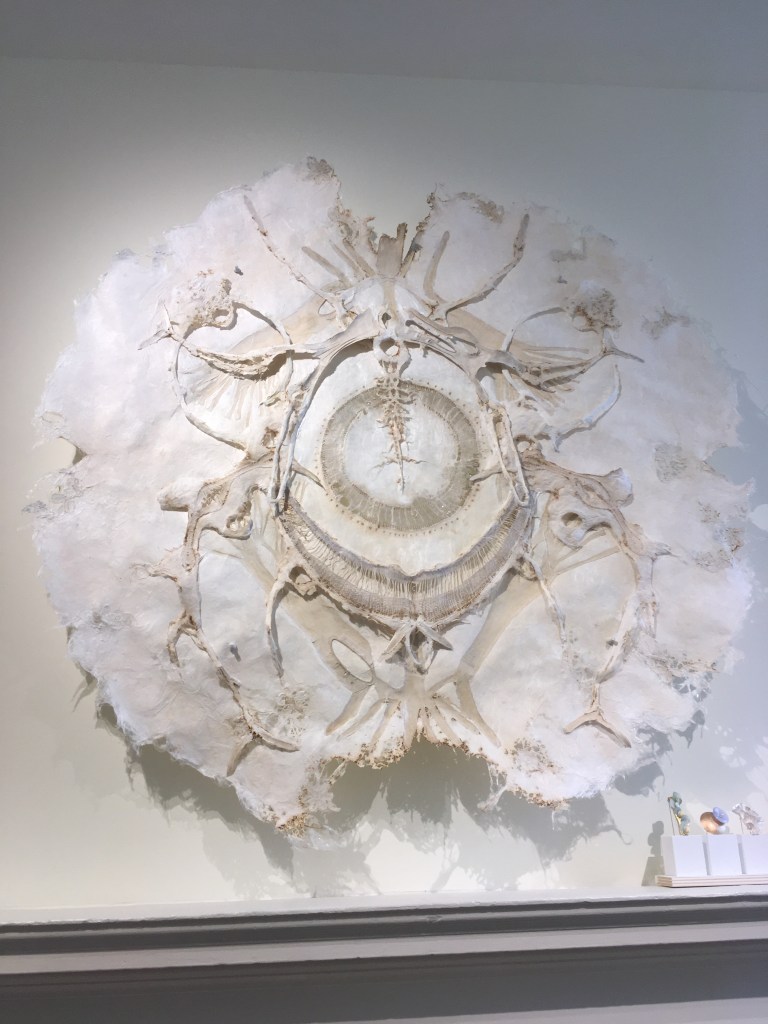
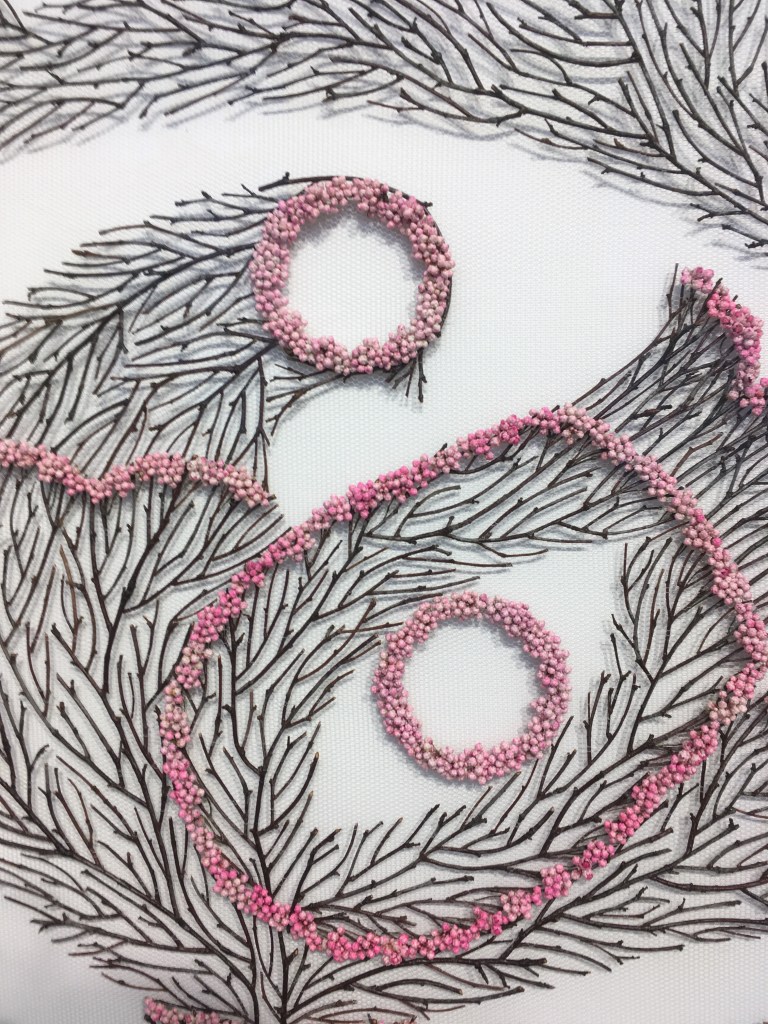
This is Olga Prinku, an artist who uses dried flowers and twigs to create her art. These pieces are beguilingly beautiful. Pleasing from a distance they are fascinating to look at close up. The twigs are from birch trees in her garden. She says she’s always pleased when there’s a big wind because it means her material is easy to gather.

This is Greg Kent who does astonishing things with oak. The pieces are finely sliced and then sandblasted to take out the new growth revealing a natural filigree pattern.

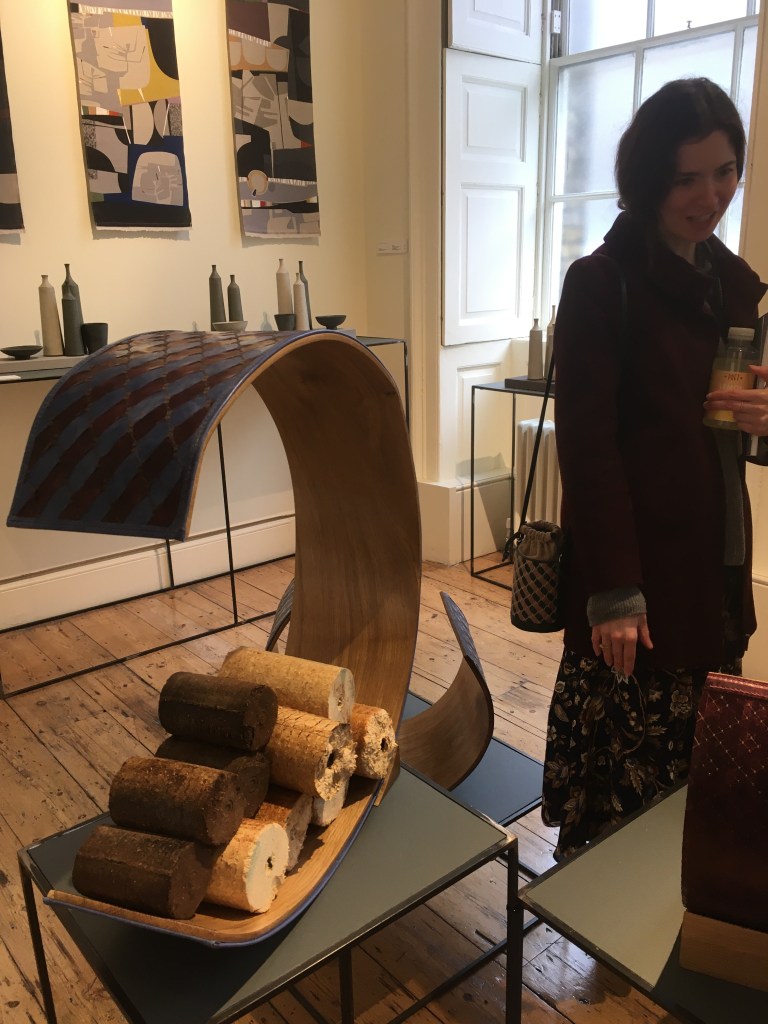
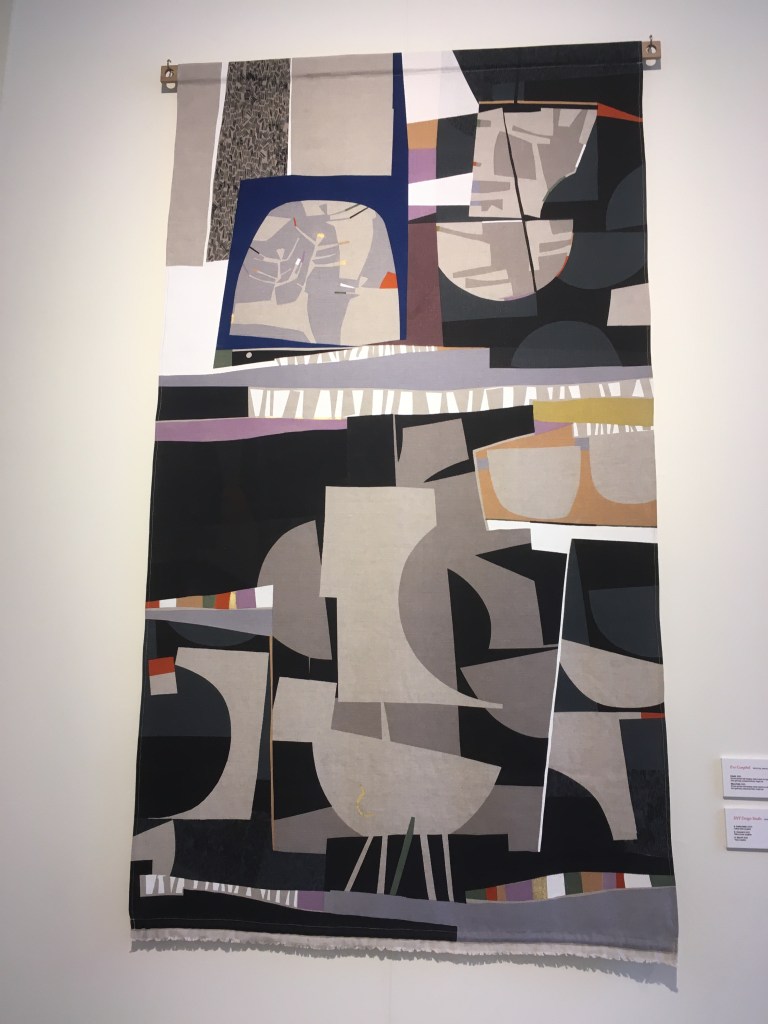
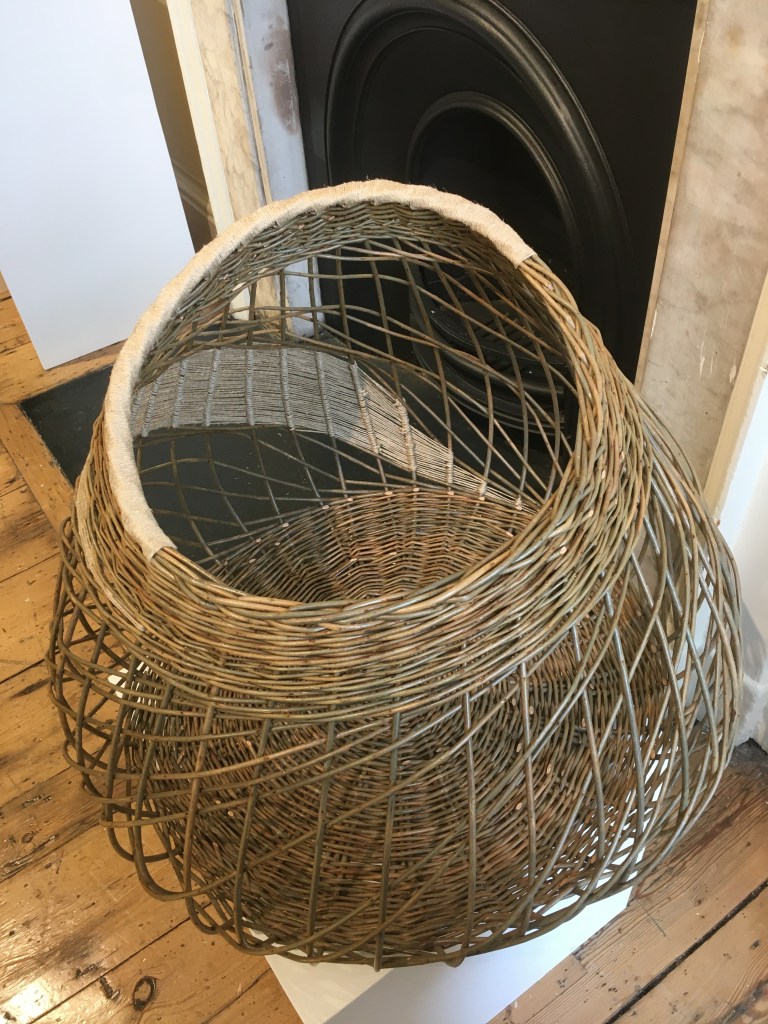
This is Iseabal Hendry with one of her leather and wood log baskets. Really, too beautiful to used in such a prosaic way when all you want to do is admire way she has formed the shapes using boat-building skills. She is on show at the Craft Scotland stand along with gorgeous hangings by Eve Campbell.

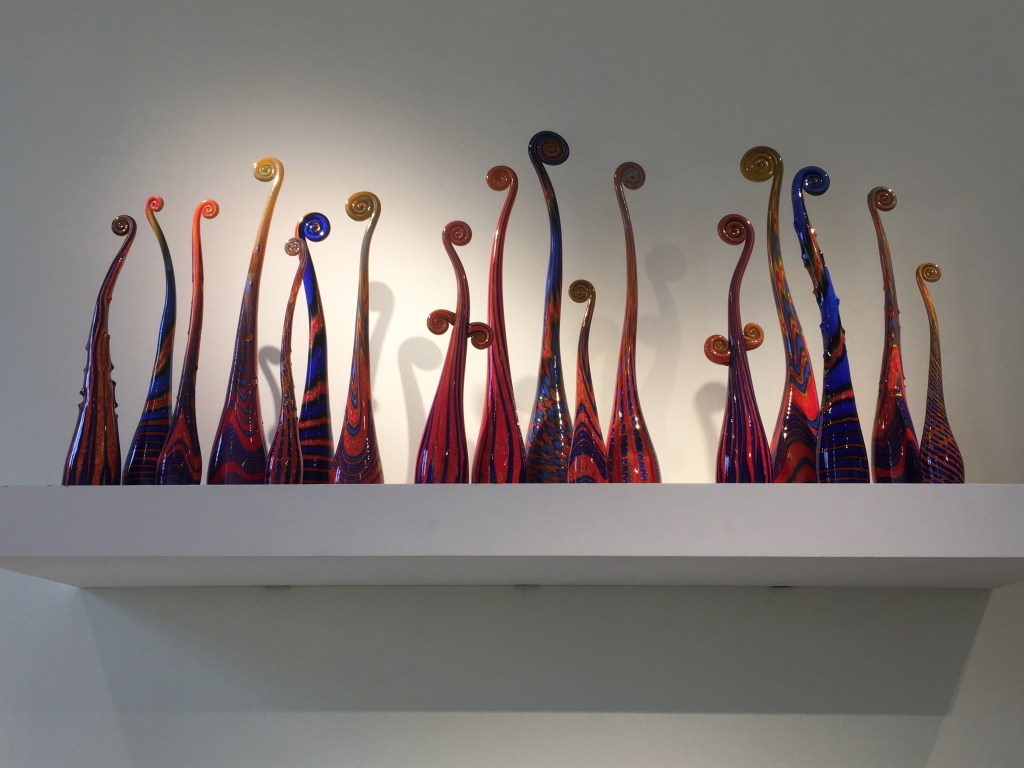
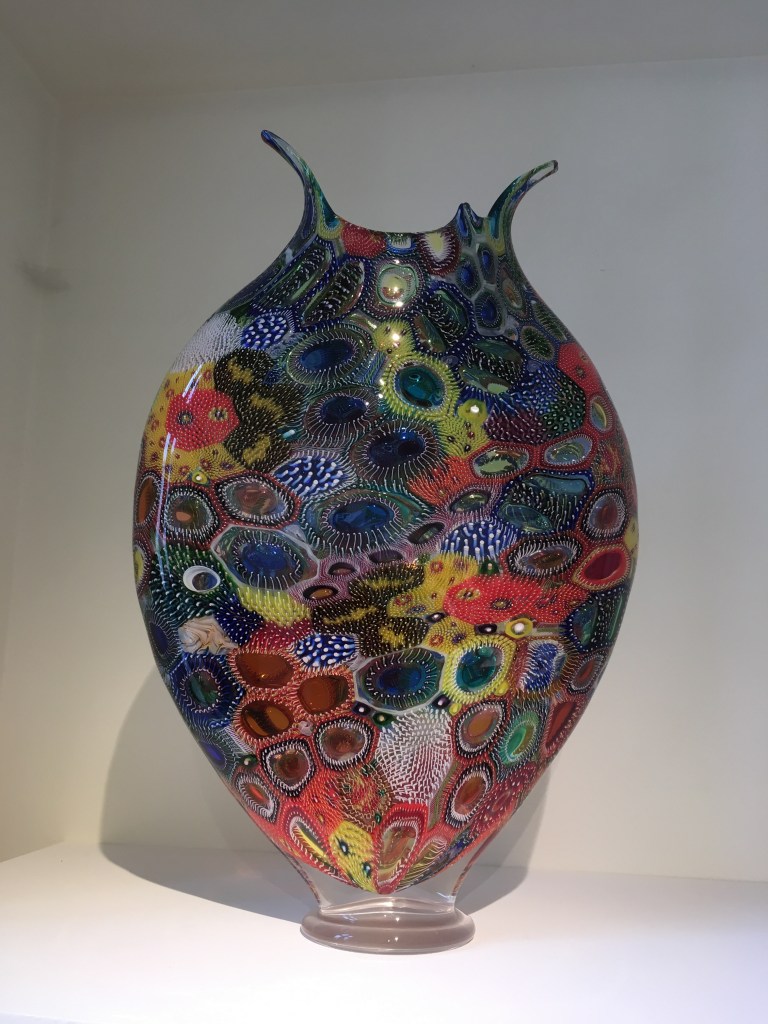
Always amazing to see what can be done with glass. This dazzling piece is on show in the Peter Layton London Glassblowing room.

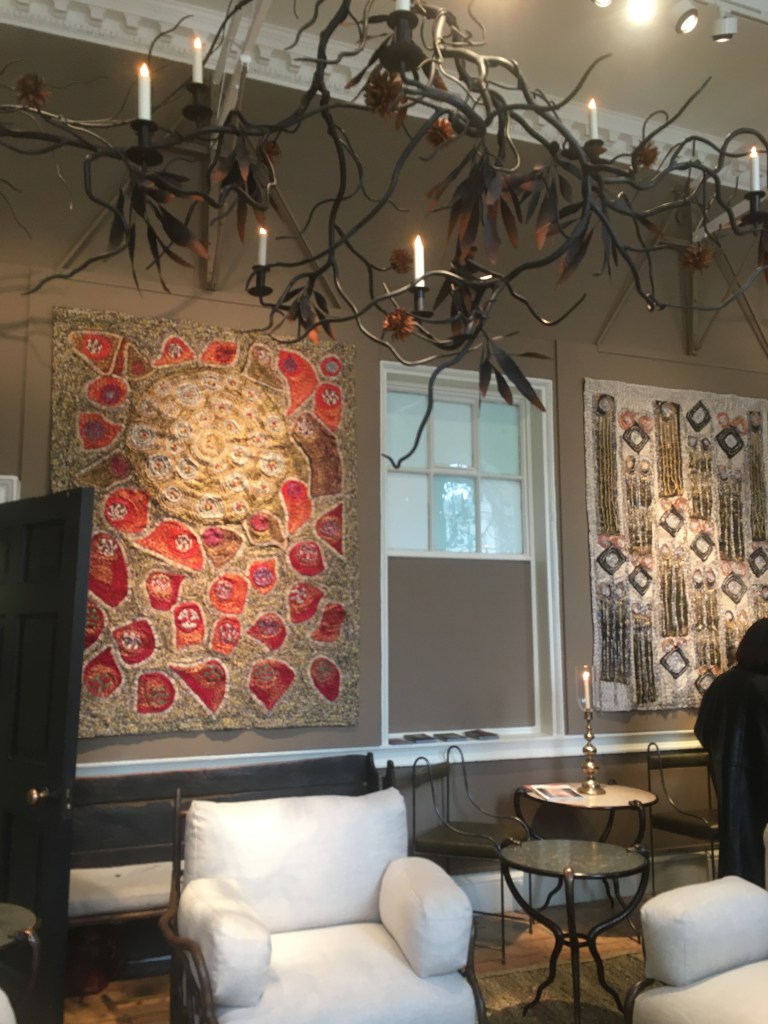
Just look at this magnificence! It’s the VIP room at Somerset House which was designed and furnished by Cox London. A very comfy place to hang out and meet friends!

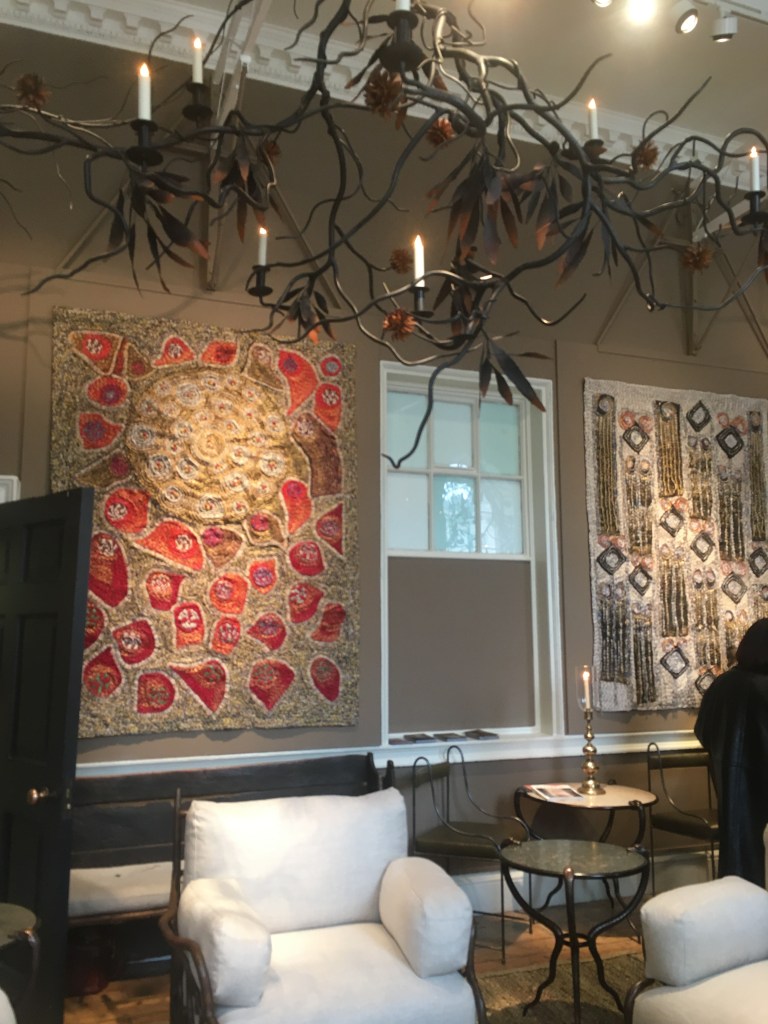
I’m just going to finish with a pick and mix of photos I took of things which caught my eye. Collect 2023 is on until 5th March and well worth a visit.

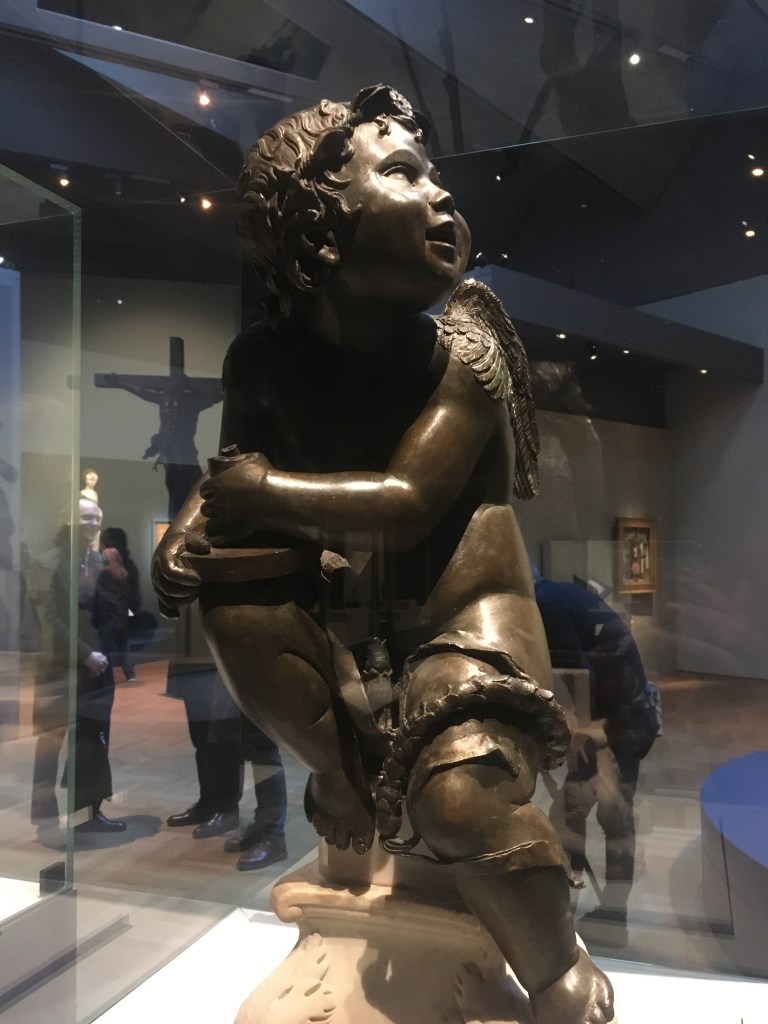
Donatello: Sculpting the Renaissance at the Victoria and Albert Museum. What a joy to get acquainted with the master sculptor Donatello (1386-1466) whose sensational work captured personality, emotion and a sense of history. Whether working in terracotta, marble, wax or wood he brings an authenticity to the people depicted or the religious scenes he was commissioned to depict. What a knockout show.

I’ve never really spent time up close and personal with Donatello before but it was a real treat to see the work on display at the V&A. We’re having something of a Donatello Fest at the moment with great shows to be see in Berlin and Florence. He was a very productive artist. Clearly patrons kept him permanently busy and it must have been thrilling to take delivery of one of his sculptures or paintings to put on display in your private chapel.

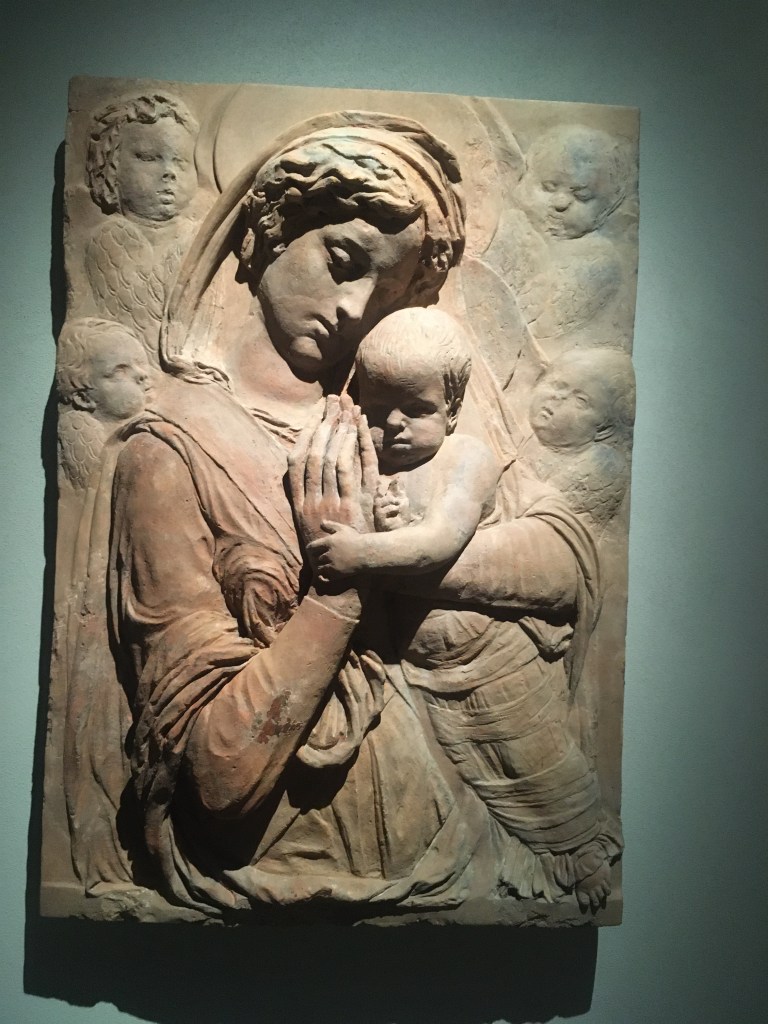
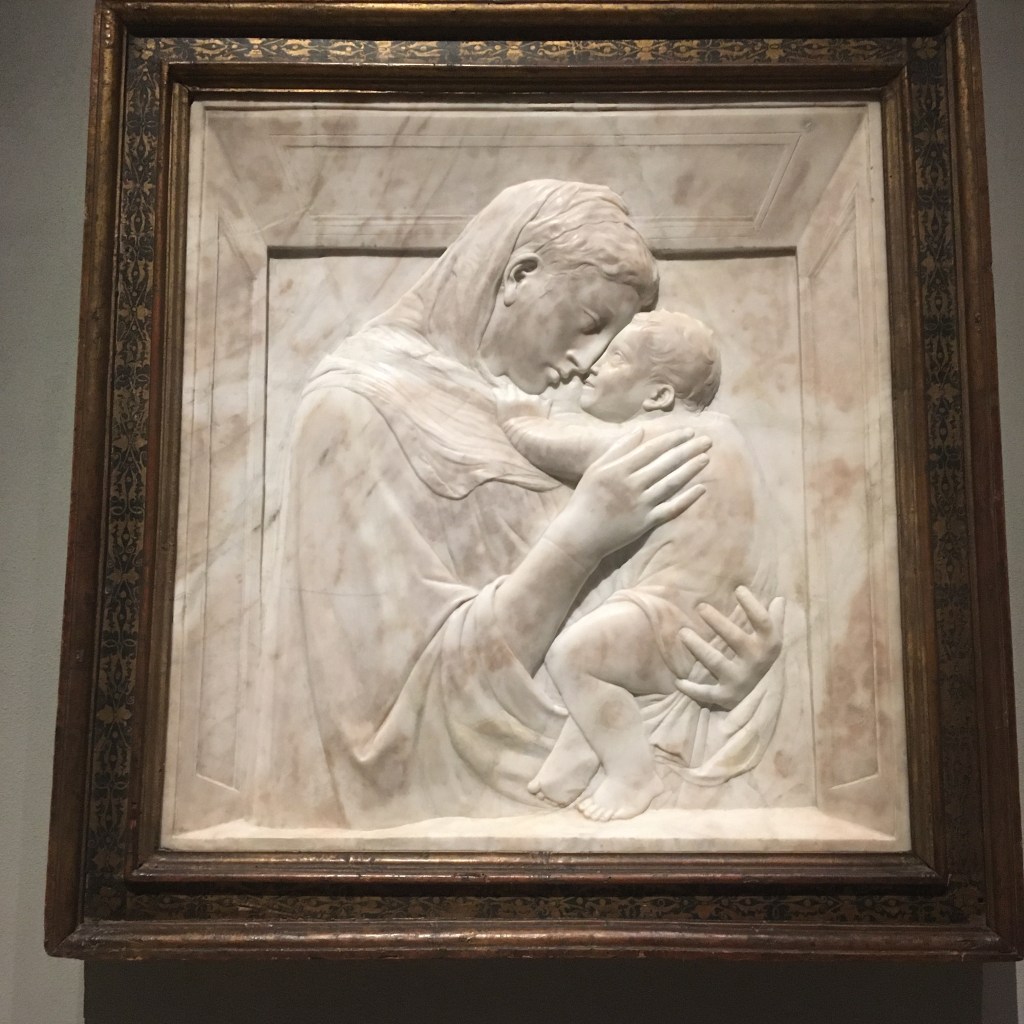
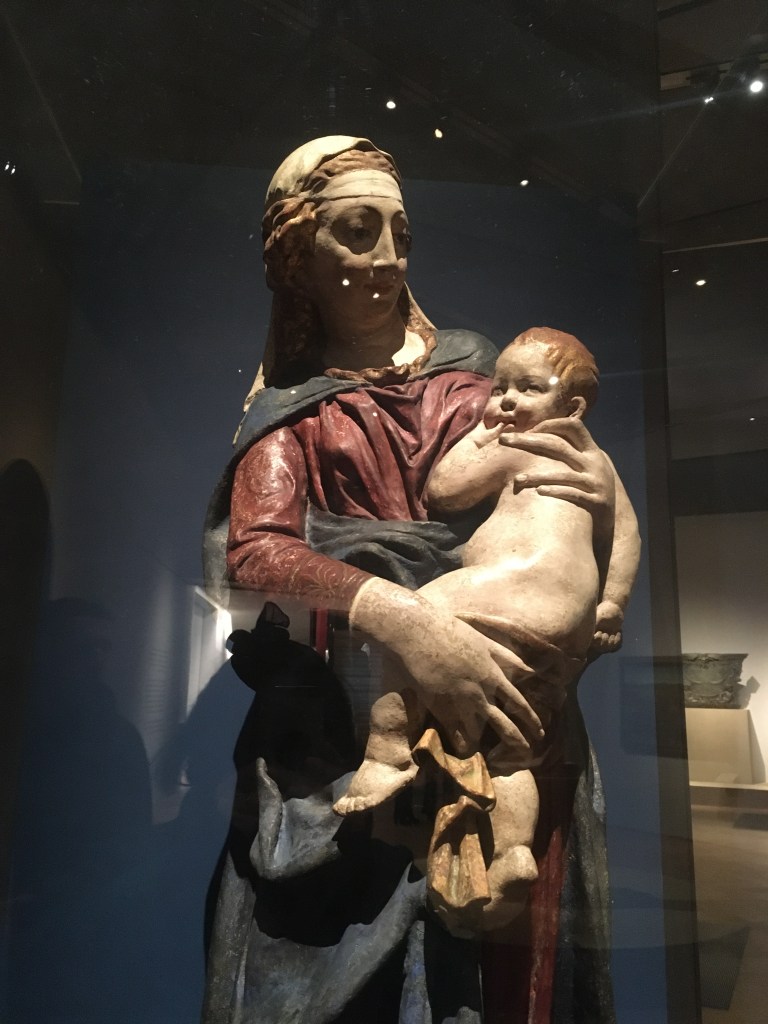
Donatello brings such emotion into his work; you absolutely feel the intensity of the relationship between the Madonna and child.The one on the right feels so stylised and modern but the bond is so strong.

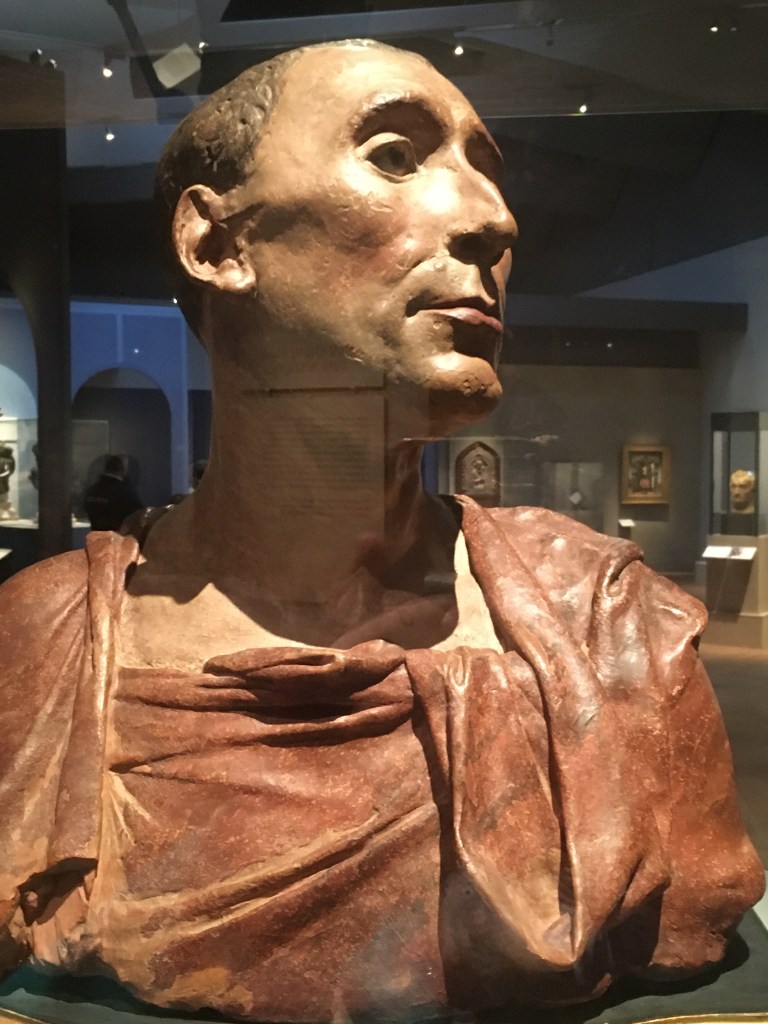
It was difficult to get a good shot of this bust but it is so impressive to see in the round. He’s created a portrait of a living person, one imagines with his head in a familiar pose. The painting of the terracotta brings a dynamic feel to the piece. Apparently it’s of the Lord Mayor of Florence, made around 1455-60.

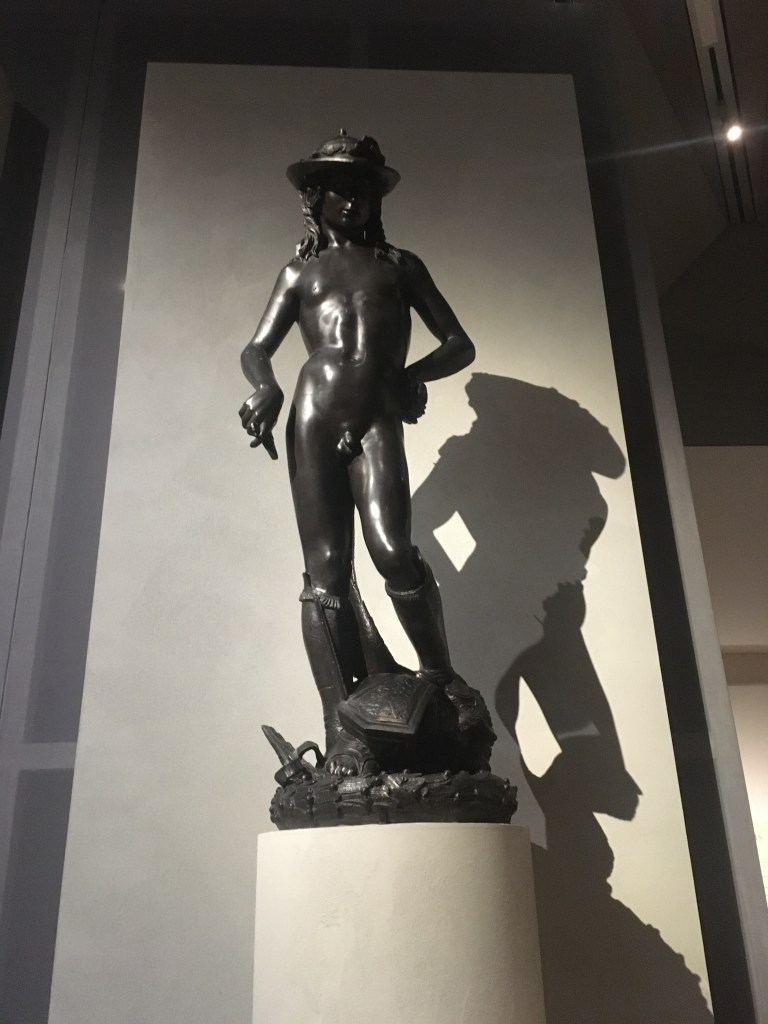
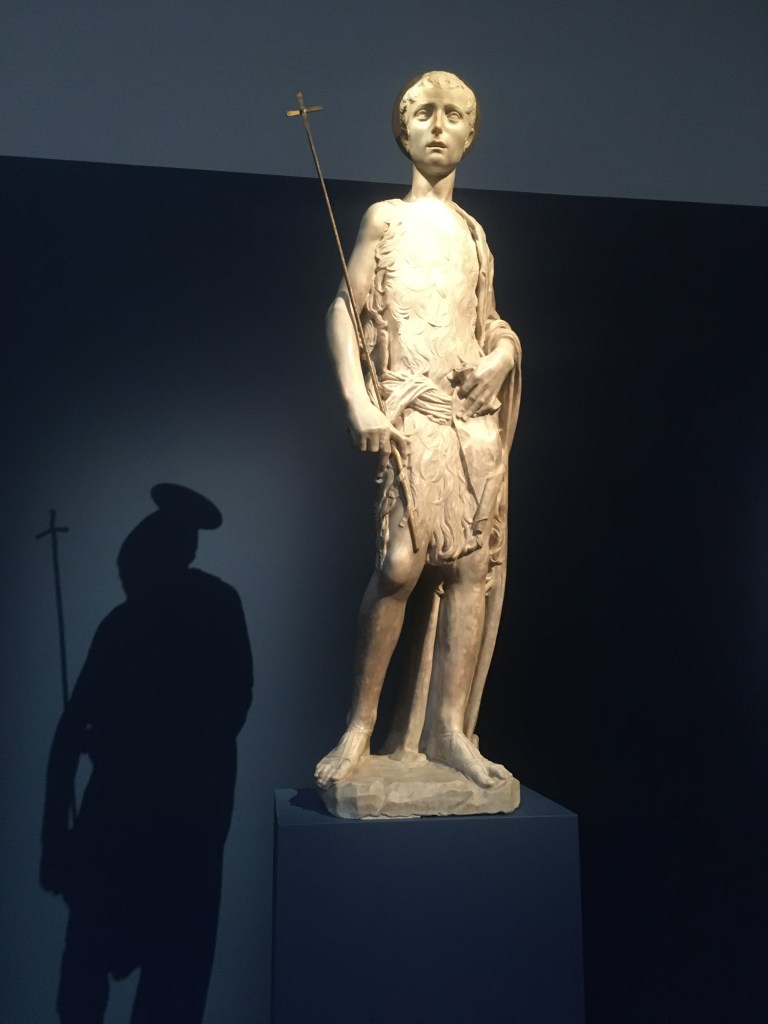
The full size statues are so impressive, whether in bronze or marble. On the left is a painted cast of Donatello’s David, made in 1885 from the original made in about 1386-1466. And the marble sculpture on the right is St John the Baptist. The delicate carving of the tunic is breathtaking.

Such tenderness to be seen in these Madonna and Child sculptures.You feel he’s really studied the expression of infants and the way a baby boy will chew on a finger or instinctively wrap his arms around his mother’s neck.

Faces are so well crafted in Donatello’s hands. Some of them are stylised and representative but some are most definitely of real people. The eyebrows and details of features are modelled so sensitively.

This great show is on at the Victoria and Albert Museum until 11 June 2023. Supported by Rocco Forte Hotels.

Spain and the Hispanic World. At the Royal Academy, there’s an impressive collection of works from the Ancient World through to the evolution of Spanish culture as it shifted to South America.

It’s quite an audacious thing to create an exhibition which purports to represent a nation – and a world culture too. At the Royal Academy a new exhibition fills the main galleries with a vast sweep of Spanish and Hispanic art gathered from Spain, South America and around the world. The collection was built up in New York by members of the Hispanic Society who made it their role in life to buy and preserved examples of quality Spanish and Hispanic Art.

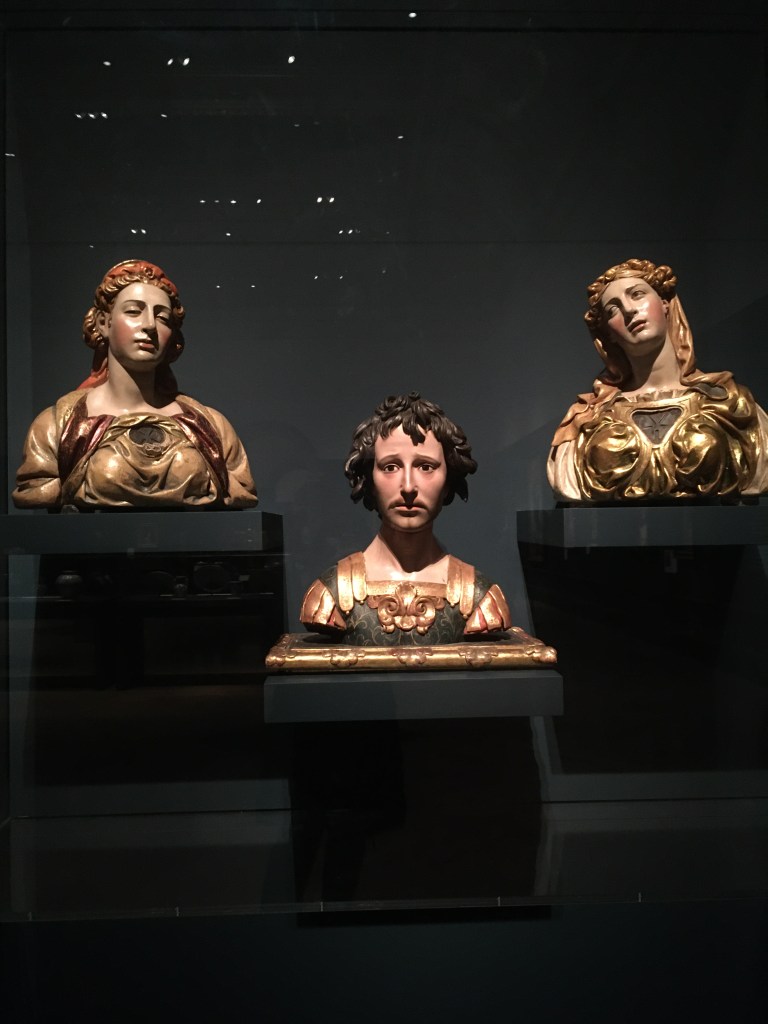
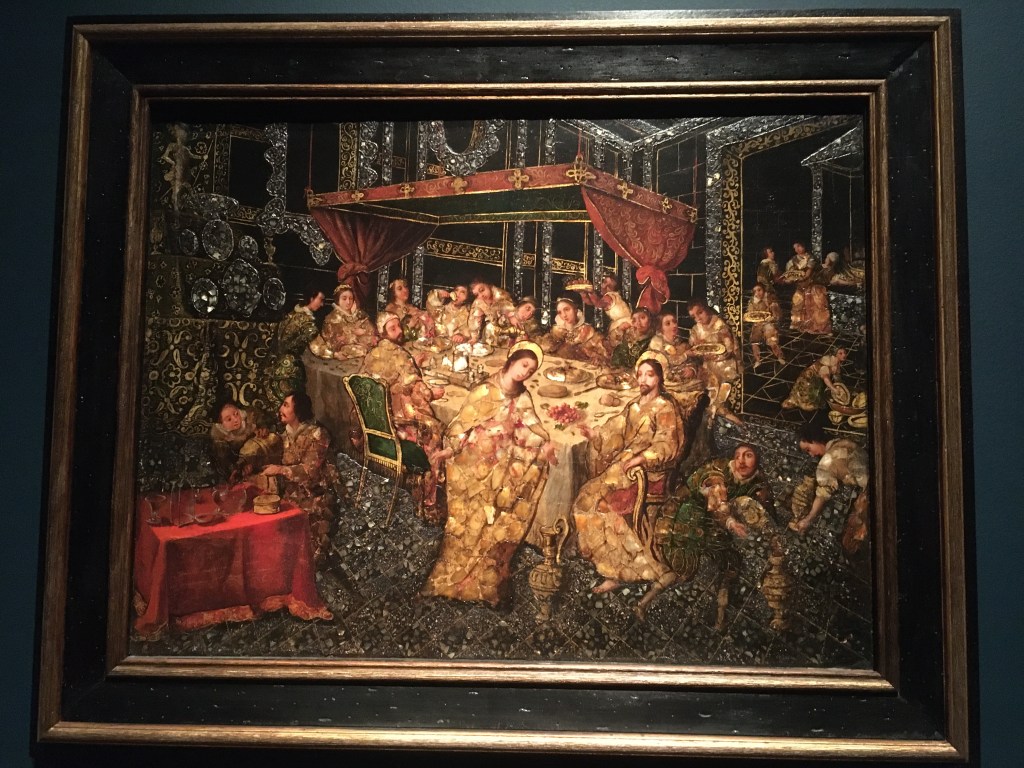
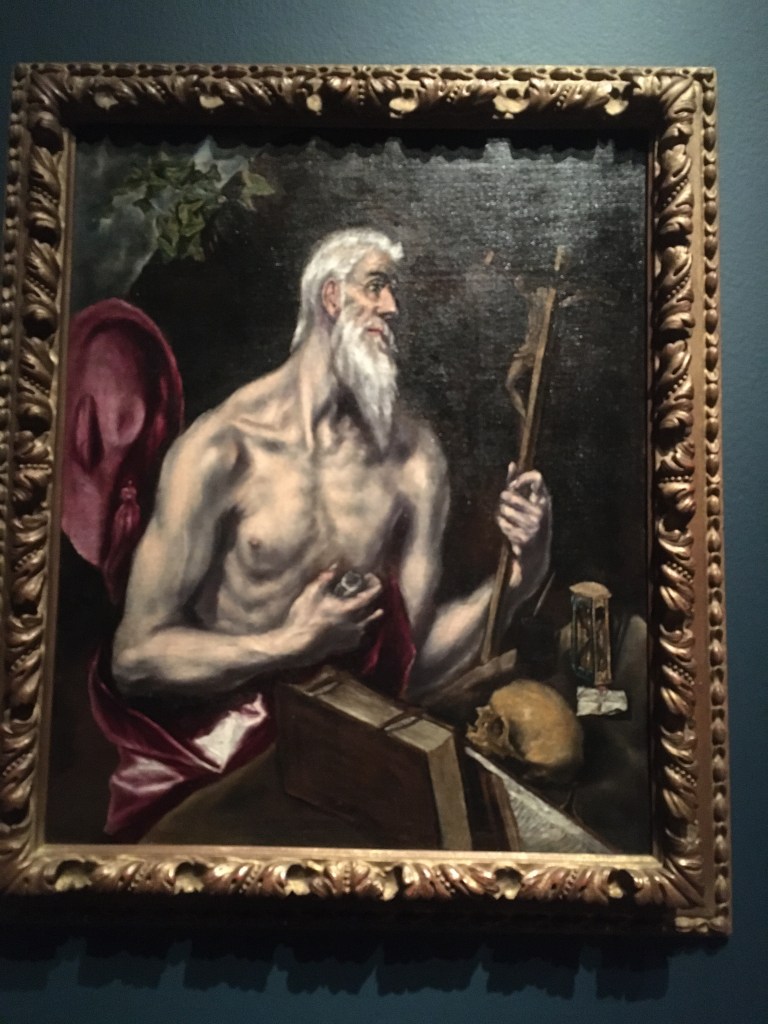
There are many unusual artworks created for the church included in the collection. I was very drawn to the carved wooden busts, the truly weird mixed media impression of the Wedding at Cana made with mother of pearl and the curious proportions of El Greco’s St Jerome.

I did like the little sketches by Goya. One is of a woman with her small children – clearly a loving maternal portrait – and the the other one is of a girl checking her clothes for fleas. I feel sure there’s quite a back story to that picture!

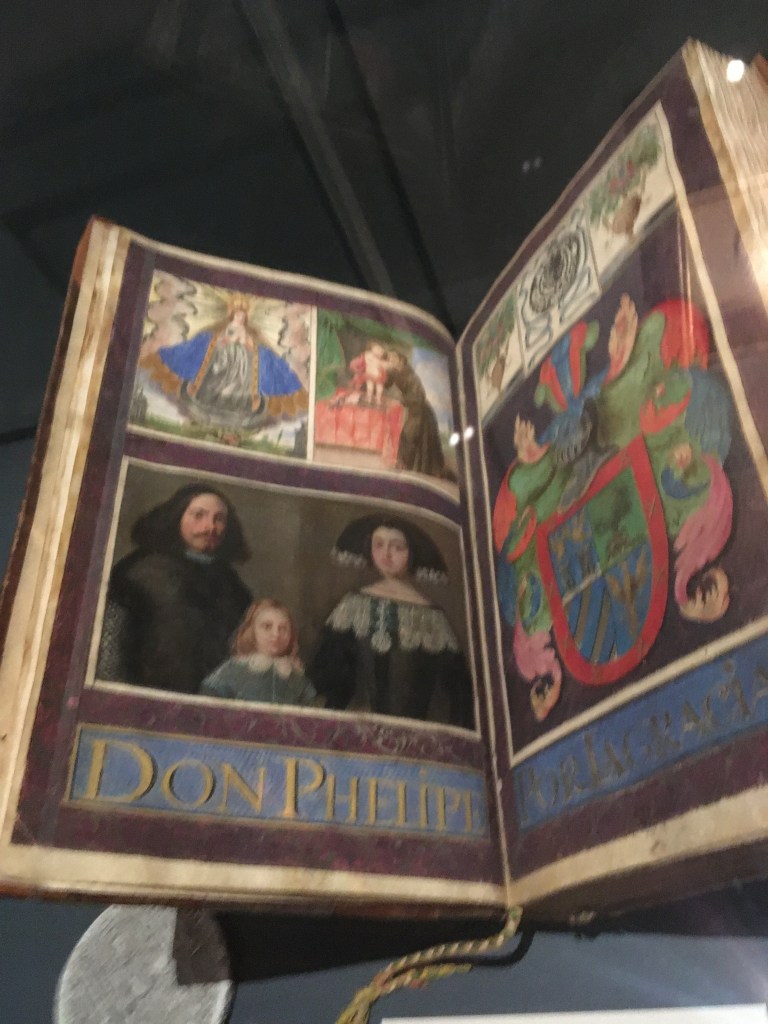
This portrait of a family in a very lusciously illustrated manuscript really impressed me. Apologies for the rather out of focus photo. But the couple and the child look so remarkably good that they must have been painted from life.

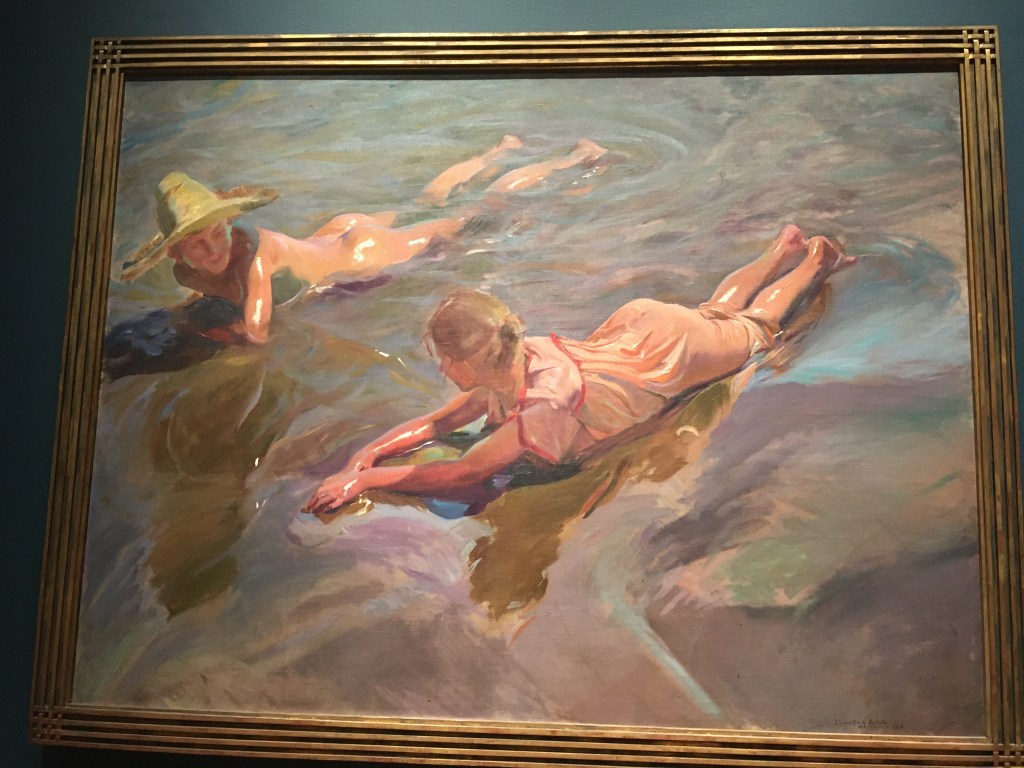
Into the 20th century and the art becomes freer and more expressive. I really liked this painting of children wallowing in the shallows by Joaquin Sorolla from 1908. The composition is wonderful and the impression of wet bodies and small waves is so cleverly created.

Two group paintings caught my eye. On the left is The Family of the Gypsy Bullfighter by Ignacio Zuloaga from 1903 and on the right is Girls of Burriana from 1910 by Hermenegildo Anglada Camarasa. The delight in the relationships and the sumptuous clothing make them a pleasure to view.

The show is on at the Royal Academy from 21st January to 10 April 2023.