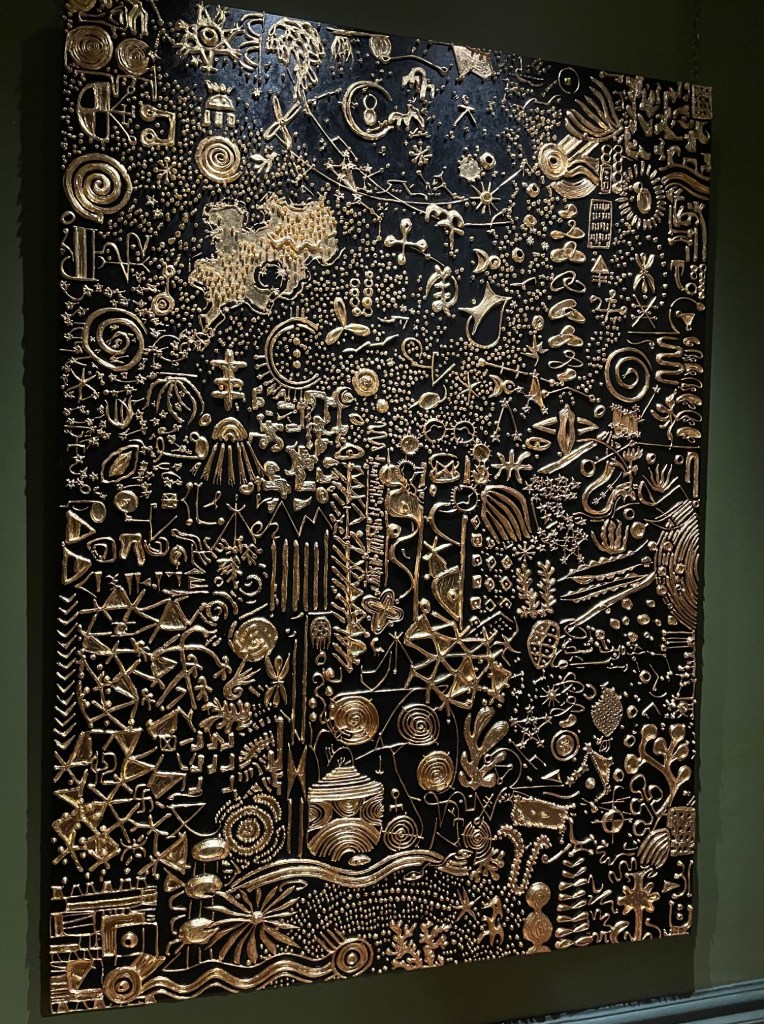
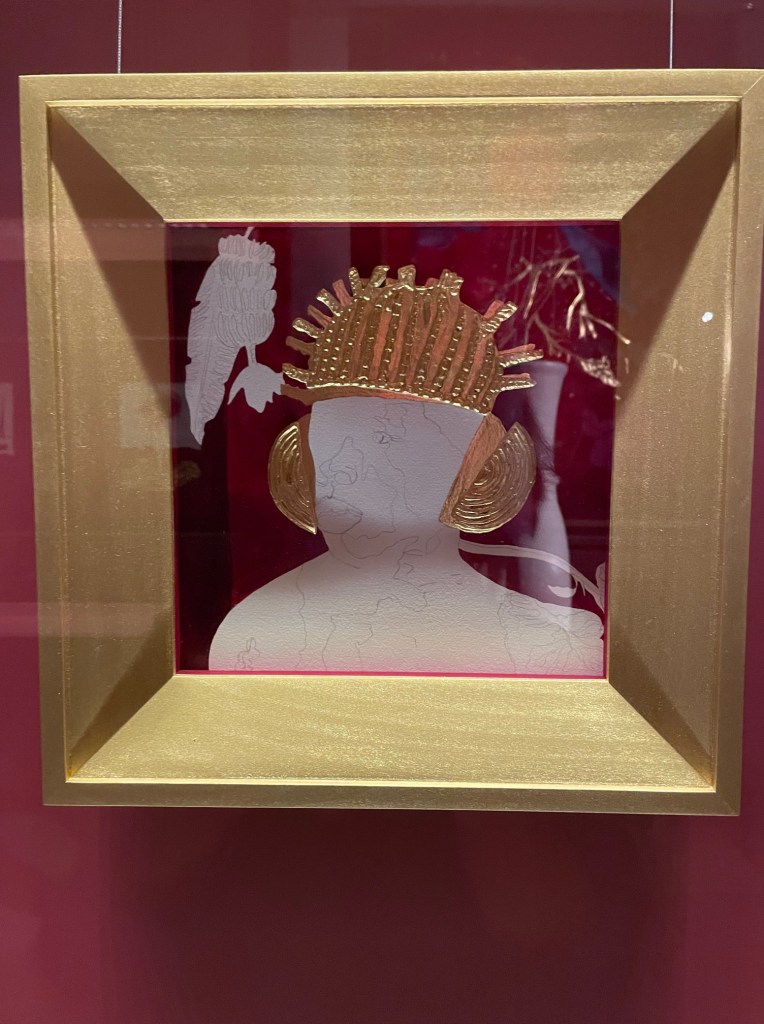
Mythic Time / Tens of Thousands of Rememberings by Lina Iris Victor. And what a fascinating exhibition at the Sir John Soane’s Museum this is. A celebration of African culture, mingled with inspiration from the astonishing collection of ancient artefacts assembled by Sir John Soane and housed in his idiosyncratic home in Lincoln’s Inn Field, London.

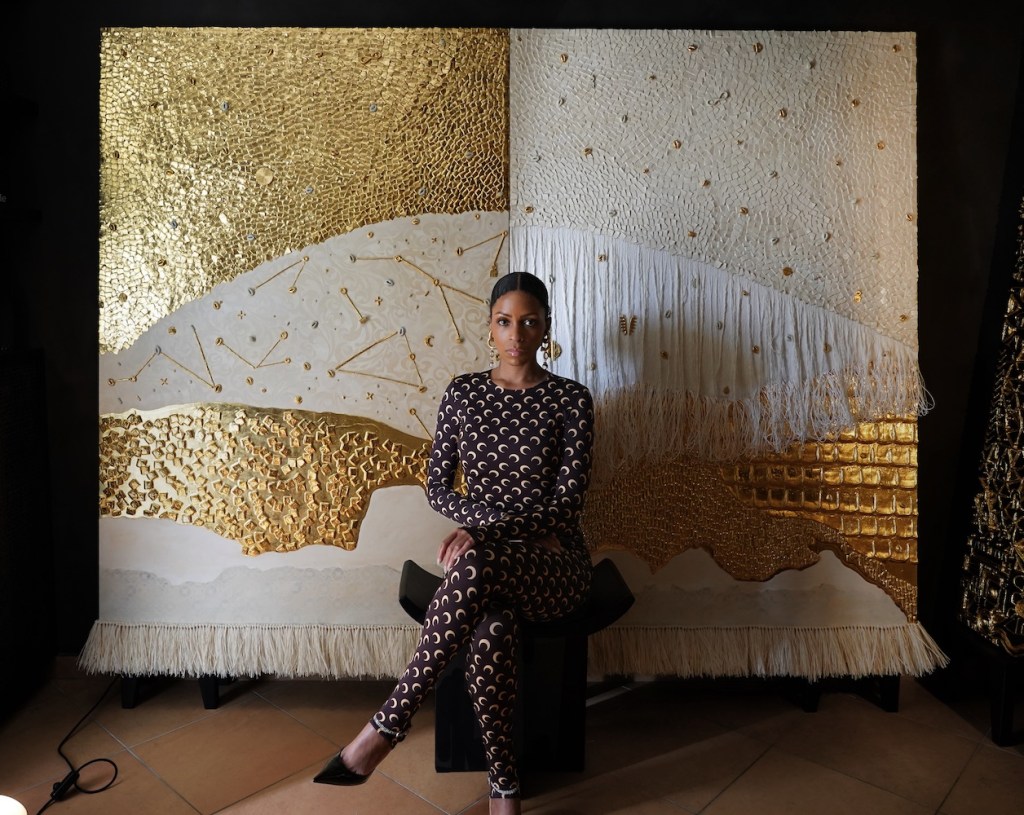
Visiting the Sir John Soane’s Museum is always a pleasure. It’s a treasure-trove of cultural history which is open to the public, free, from Wednesdays to Sundays, and well worth a trip. Every now and then the museum collaborates with a contemporary artist. This year Lina Iris Victor, a Liberian/British multidisciplinary artist who lives and works between Italy and the UK, has taken on the challenge of creating works which reflect and complement the collection. Her African heritage really comes through in these pieces. She combines all manner of materials, most fascinatingly, she uses empty silkworm cases, fragments of woven fabric and weaves them in amonsgt acrylic forms gilded with gold.
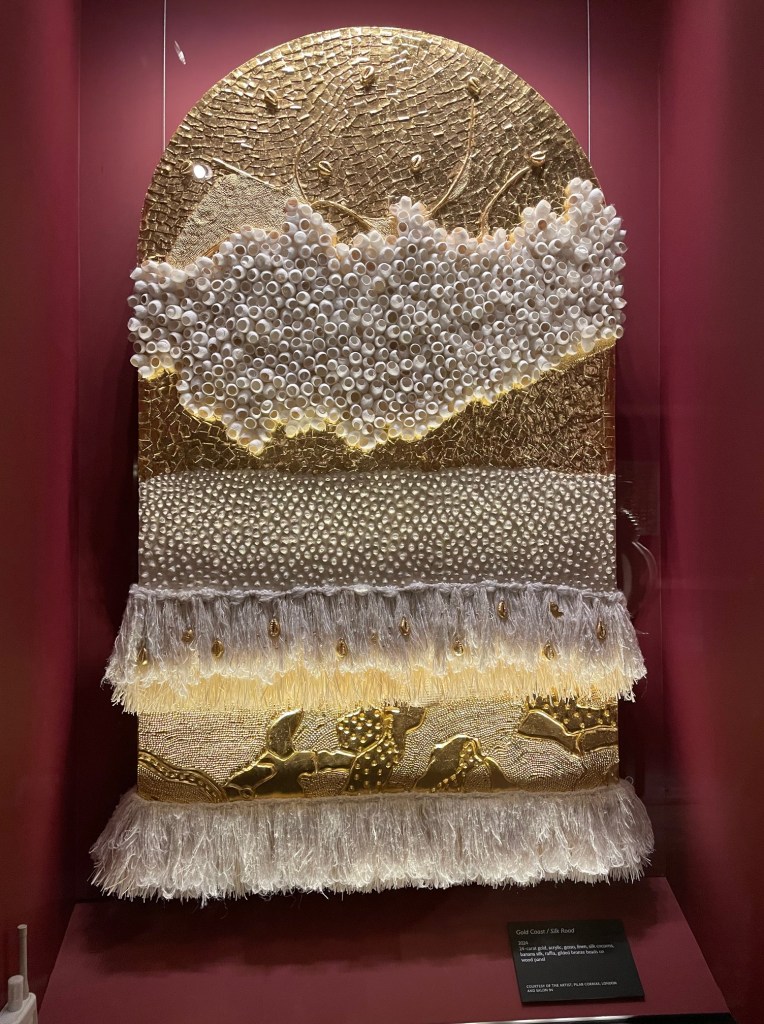
Many of the works are on paper – sturdy paper, because these pieces are heavy – and there’s an impressive gutsy-ness to the pieces.
I was really taken by the large scale colourful work which combined gold with red on paper. Red Ornamental (series of four works) mixed media on paper.
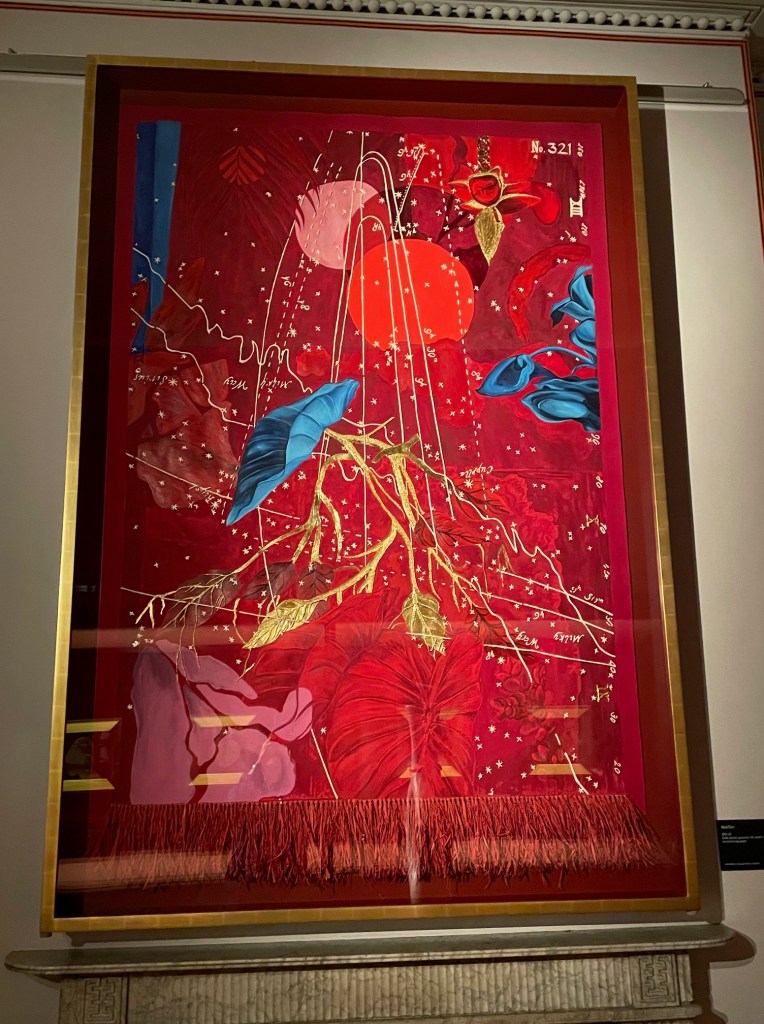
I liked the array of portraits too which combine the gold element with strongly pigmented paint and drawing on paper.

It’s very interesting to see such original art in such a spectacular setting. The amalgam of contemporary and ancient really blends well. Down in the crypt are two ‘Ritual Thrones’ and an extraordinary sculpture entitled Nbiru which goes rather well with the Greek and Roman statues collected by Soane.

The exhibition opens on 10th July and will be there until 19th January 2025. Free

Tropical Modernism – a new show at the Victoria and Albert Museum – puts the spotlight on an architectural style which emerged in the late 1940s. British architects Jane Drew and Maxwell Fry were commissioned to design and build developments which were inspired by very different aesthetics from their work in the UK. Creating buildings in hot and humid locations demanded progressive ideas which were enthusiastically adopted by leaders in Ghana and India but have not all stood the test of time.

If you’re going to build a new nation following freedom from colonialism then you want to commission buildings which are symbolic of new independence. The Indian prime minister Jawaharlal Nehru and Ghanaian prime minister Kwame Nkrumah both commissioned the British architects Drew and Fry to come up with ground-breaking buildings which would define their countrys’ post-colonial status and celebrate new freedom.

In Chandigarh, India an audacious plan was conceived to create the first Modernist city in the world to be built from scratch. Nehru wanted the city to be ‘unfettered by the traditions of the past … an expression of the nation’s faith in the future”. The city was created on a strict grid with a river running through it and the city plan was based on a design by Le Corbusier.

What’s so interesting is that where architects aim to enforce order, artists create interventions and counter that order. In 1957 Nek Chand was a road inspector in Chandigarh. He began collecting discarded material from the construction and turned it into a secret kingdom of over 2000 sculptures hidden in a forest near the Capitol Complex. This very personal creation countered the order of Le Corbusier’s vision in a wonderfully subversive way. It remained hidden from view until 1973. Now his ‘vast ruin’ intrigues visitors to the city.

Edward Lutyens designed the new colonial capital in India as if he were rebuilding ancient Rome, enforcing an expression of Britain’s power in the country. This playful bust of Lutyens, below, has a mocking feel about it.

There are blueprints, sketches, photographs and a really interesting film about the movement which lasts about half an hour and is well worth watching. Very intriguing and thought-provoking exhibition which brings to life the history of a fascinating architectural movement. It’s on at the V&A until 22 September 2024