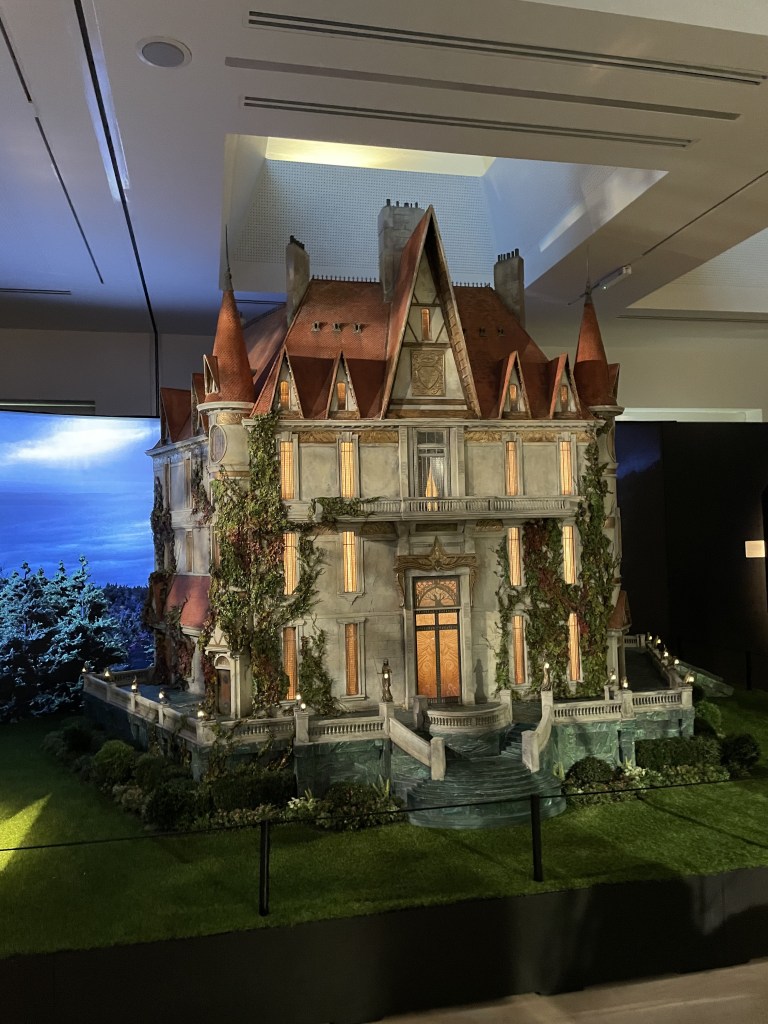
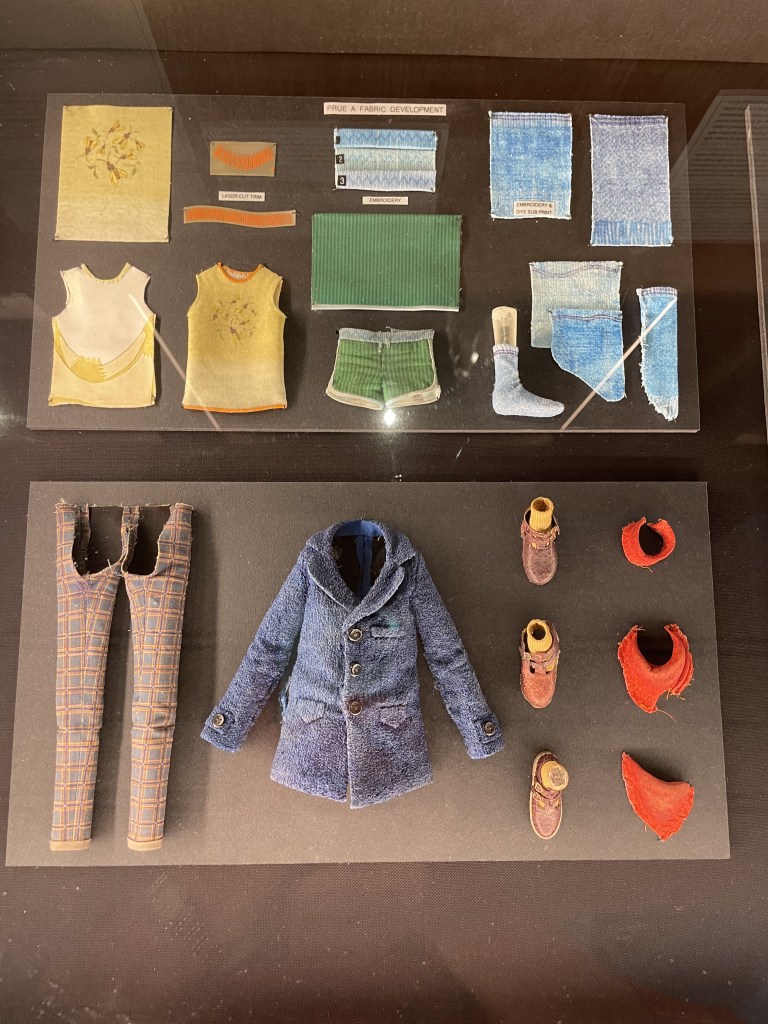
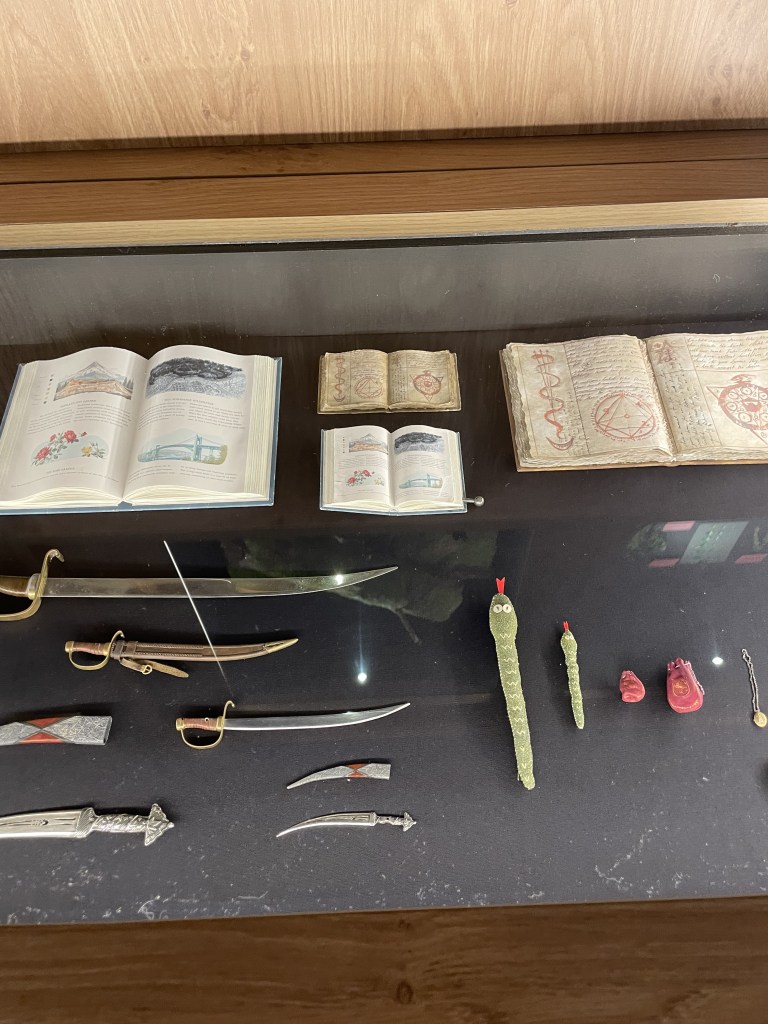
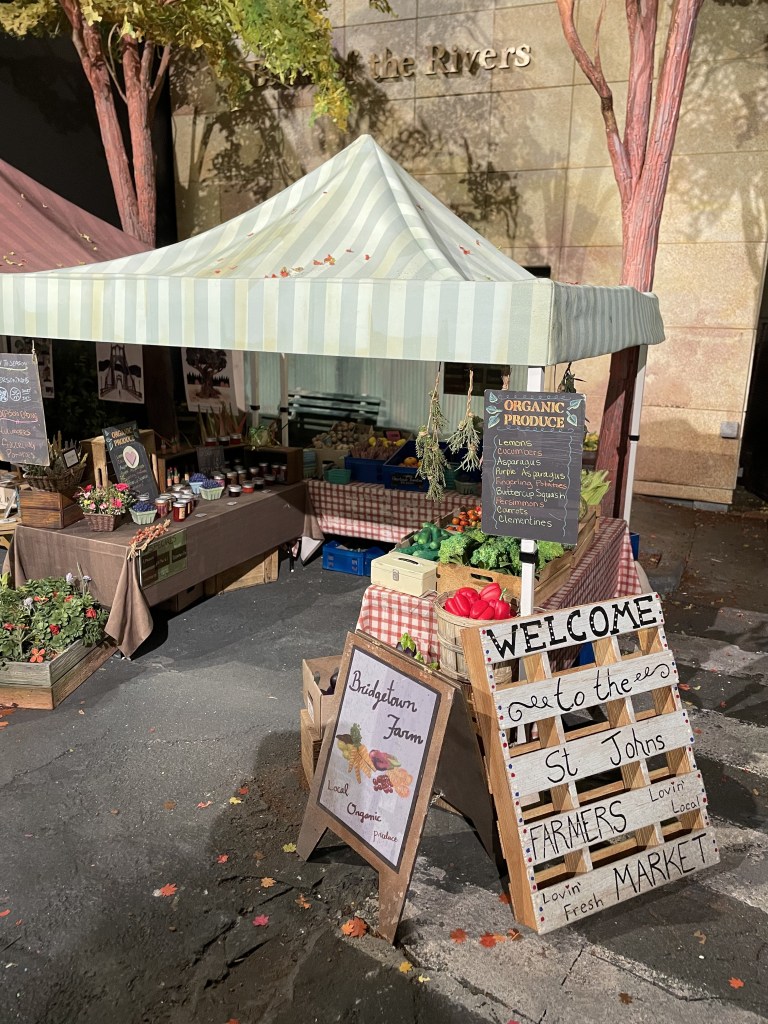
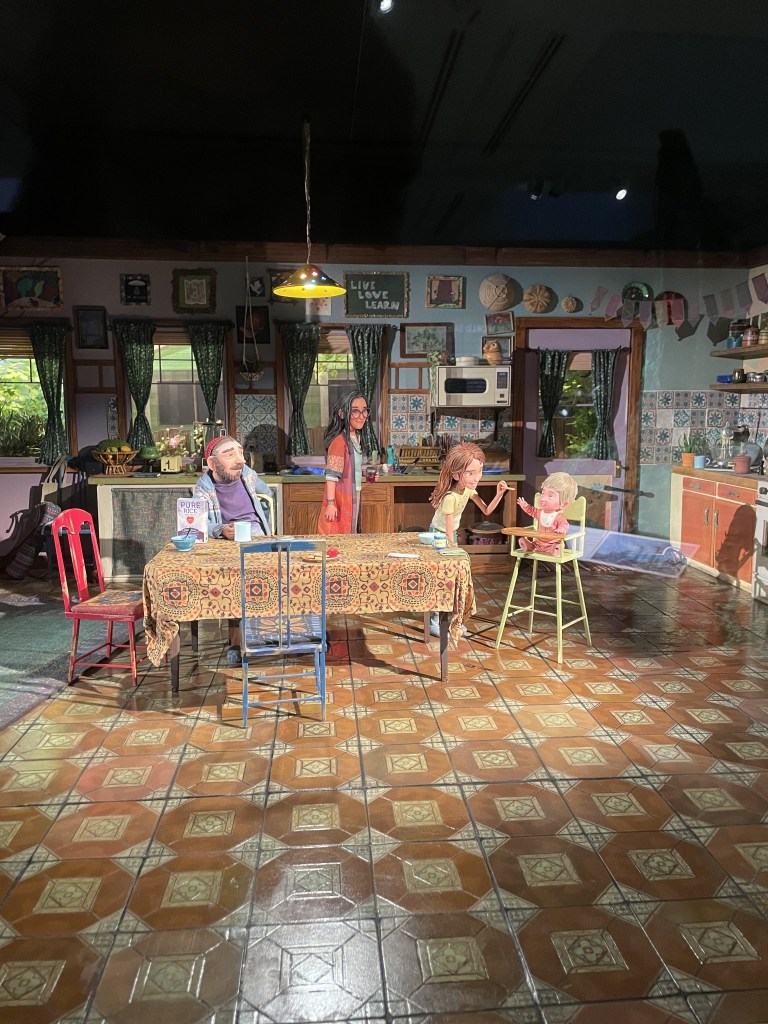
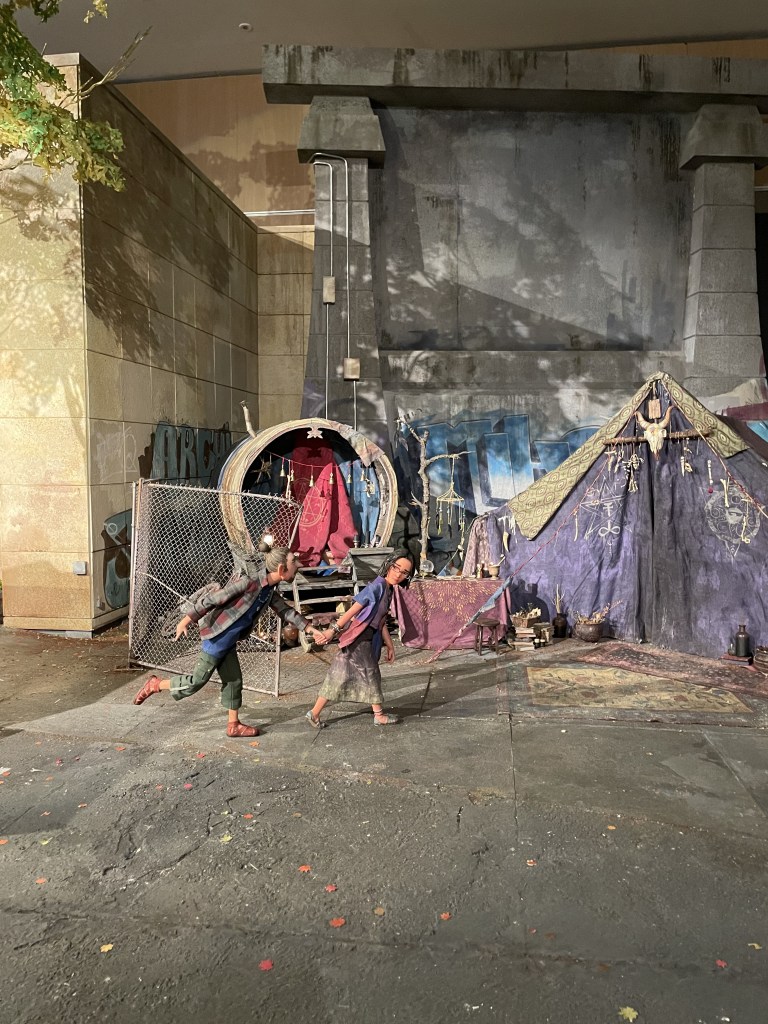
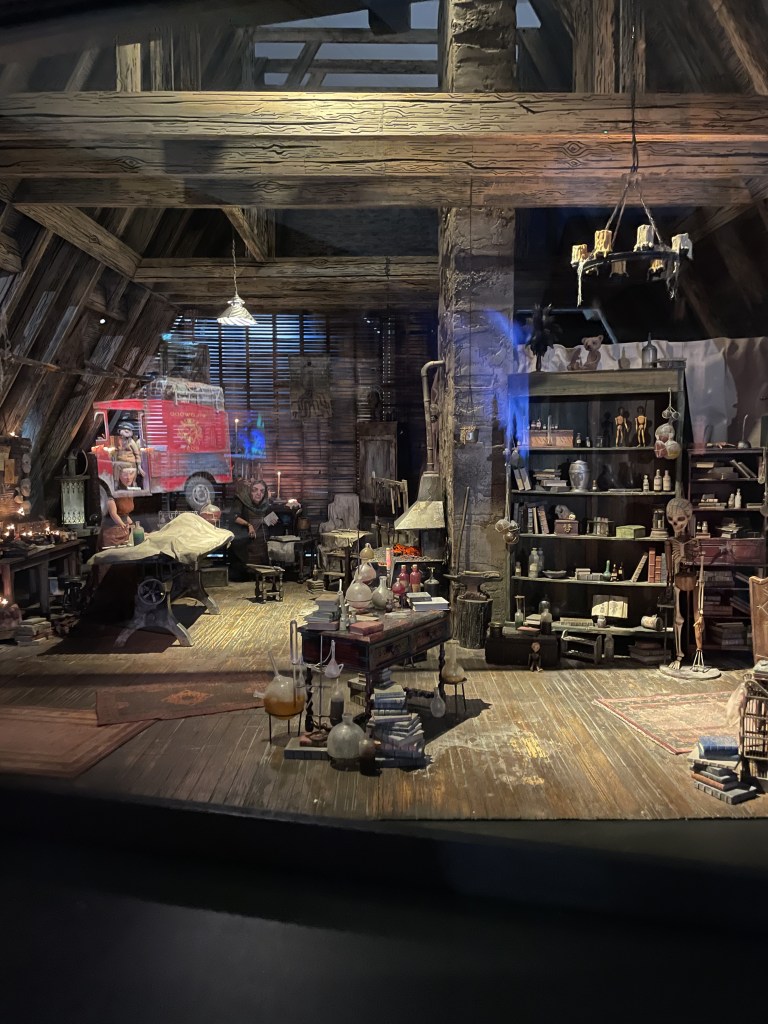
If ever an exhibition at a museum whetted the appetite to see a film, then this new show at the Design Museum in Kensington definitely does. I did not know what to expect when climbing the stairs to the second floor of the museum but, I promise you, there is a treat in store.
The new stop-motion, animated film, Wildwood, will be released in the UK next week. And I can’t wait to see it. I’m sure I’ll be swept away by the story and the amazing visual effects but now, because I’ve been to this exhibition at the Design Museum, I’ll understand a little of the incredible amount of hard work and detailed planning which went into the creation of the film.
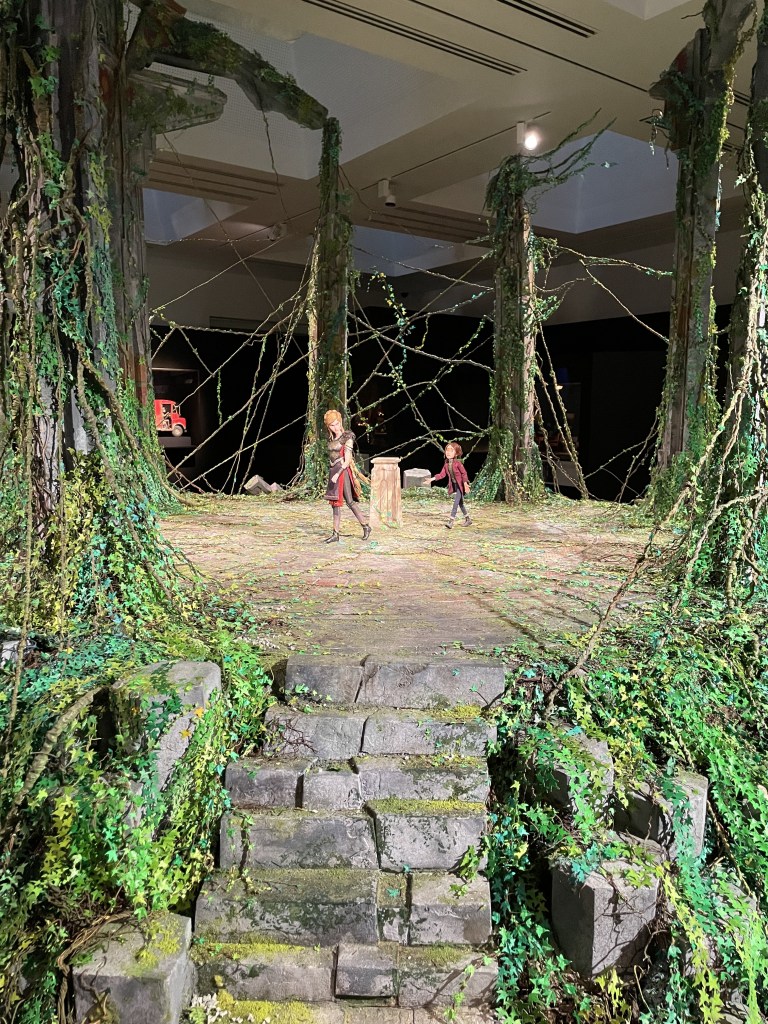
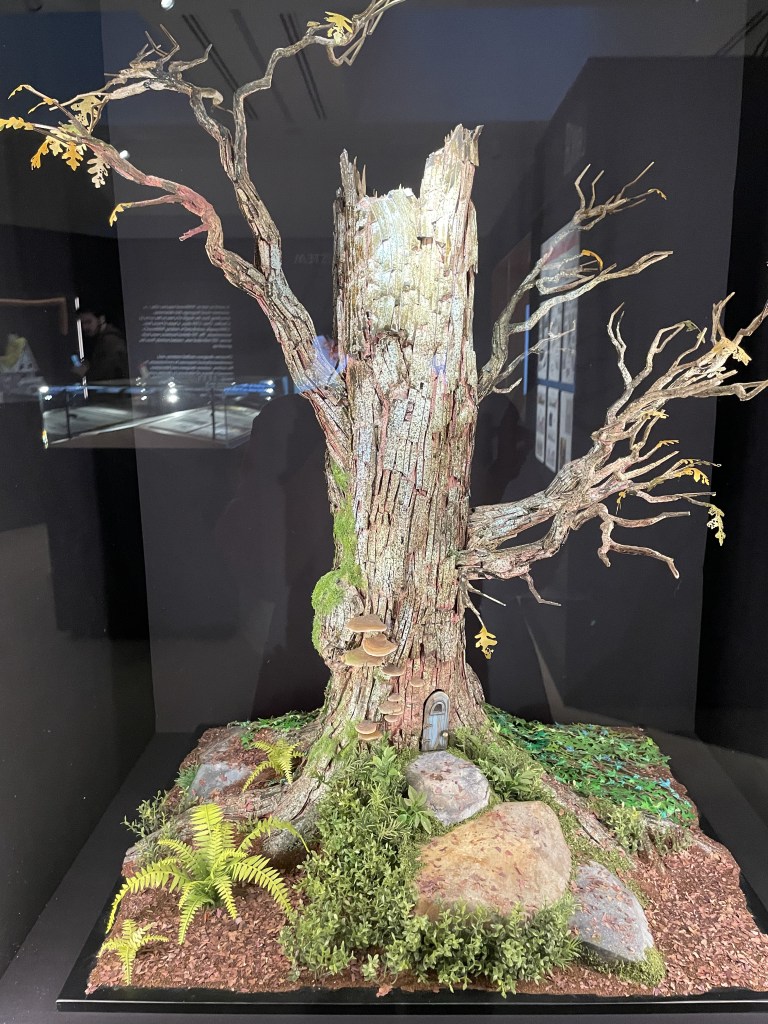
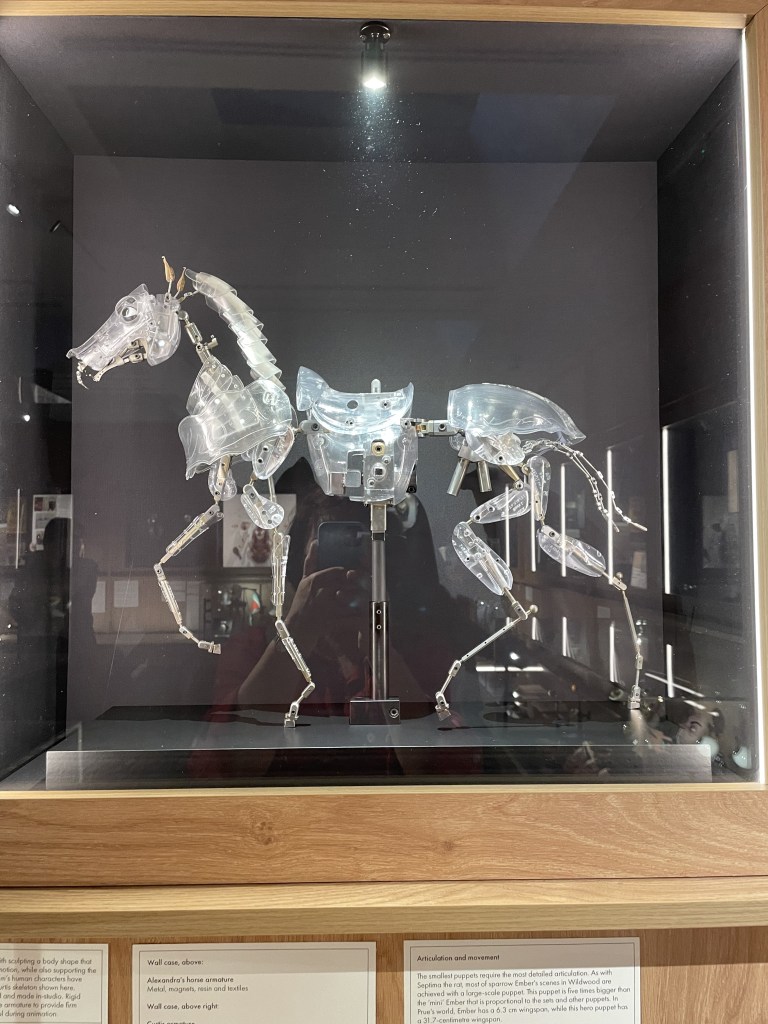
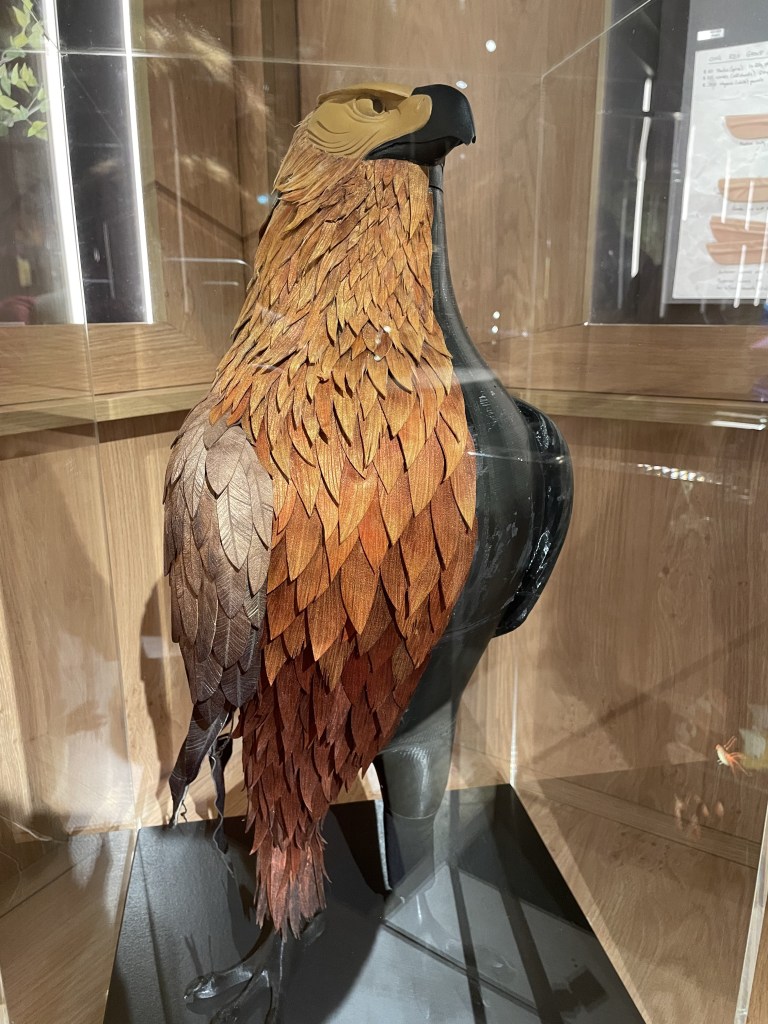
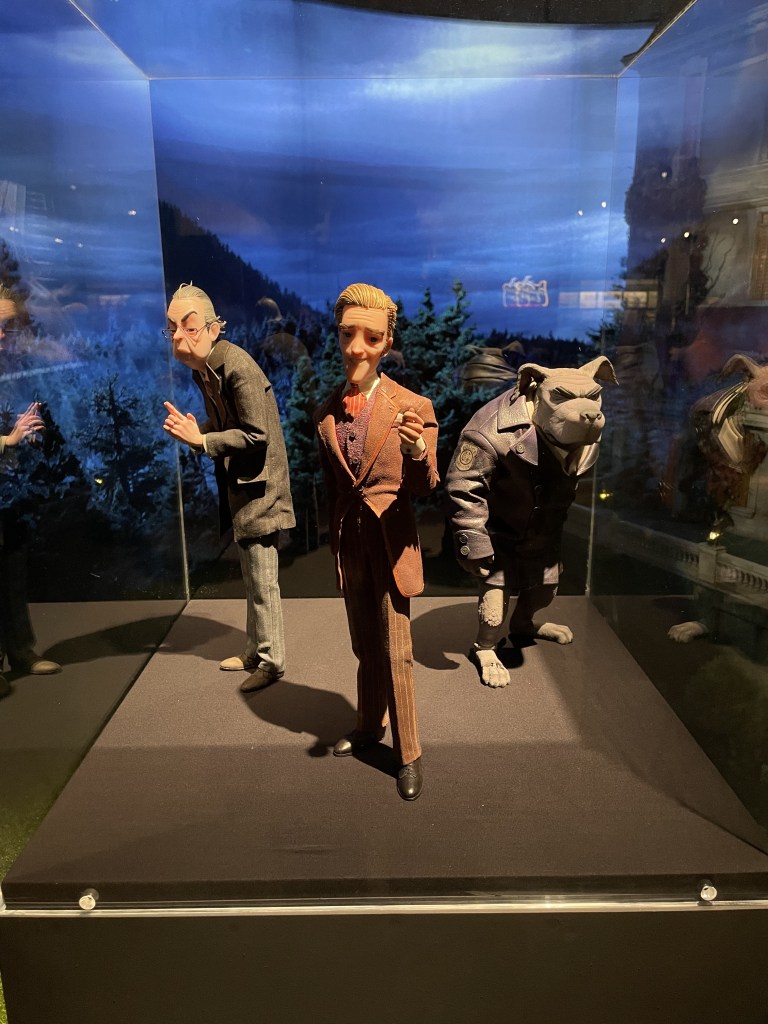
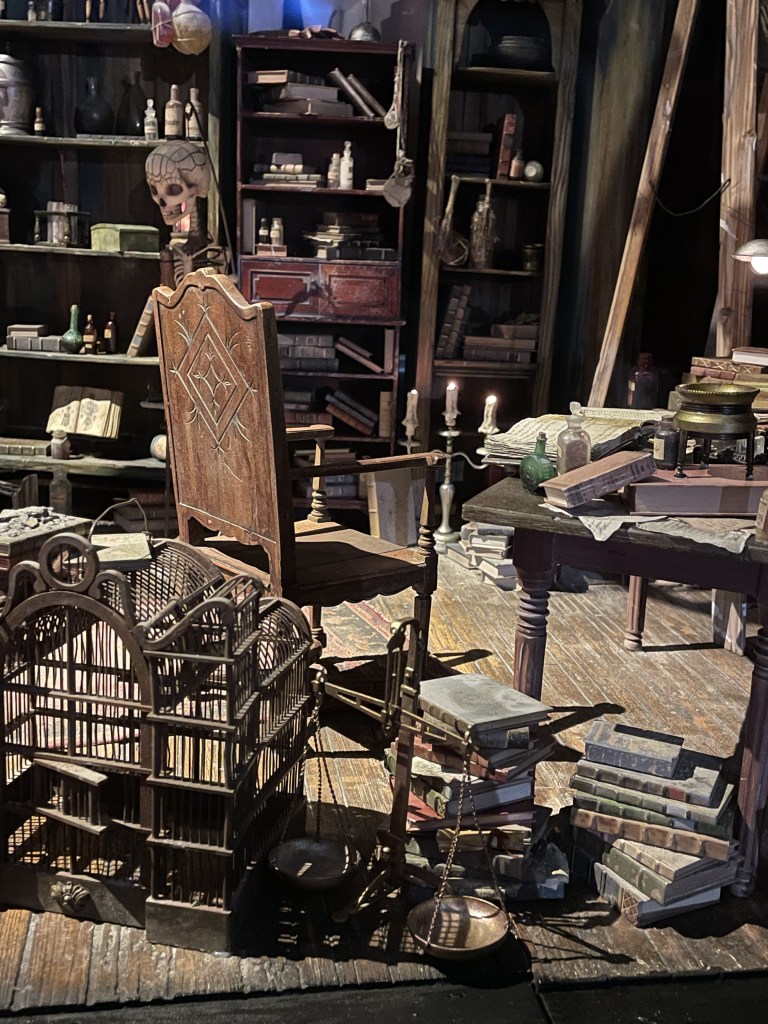
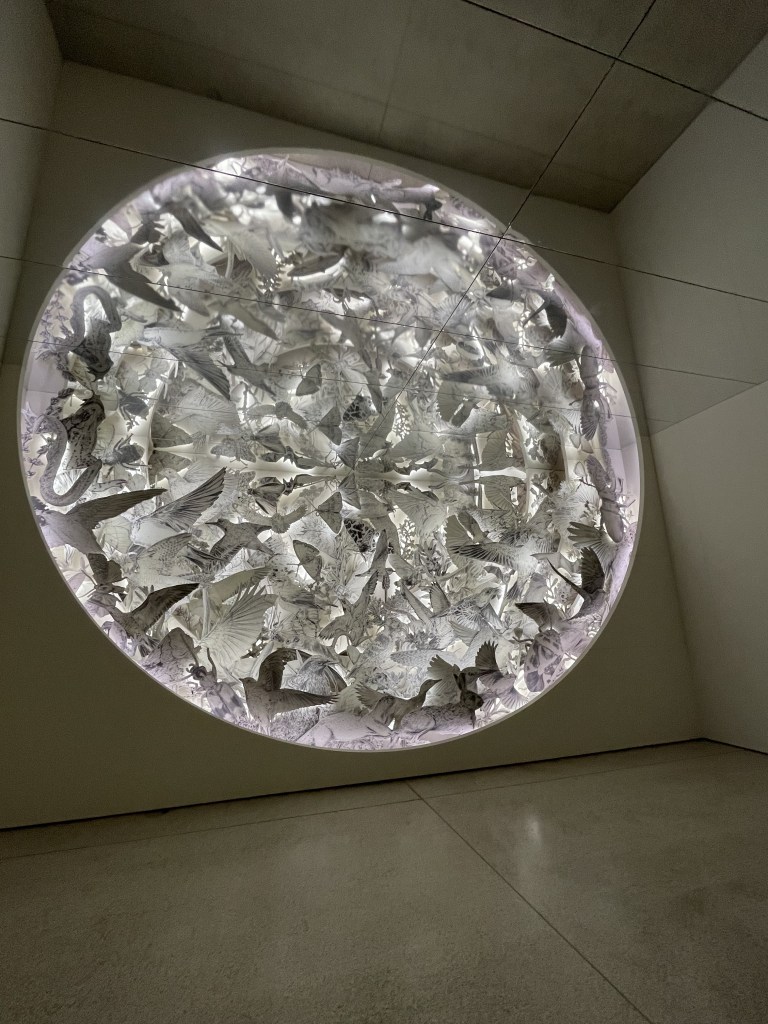
Looking at these pictures you don’t really get a sense of the scale but I can tell you, the objects are tiny! Each little prop has been carefully crafted from a huge variety of materials. The film, well, what I’ve seen of it in the clips, has a naturalistic yet stylised feel. You have the idea you are stepping into a real world but it is magical, where everything is heightned and filled with fantastical creatures.
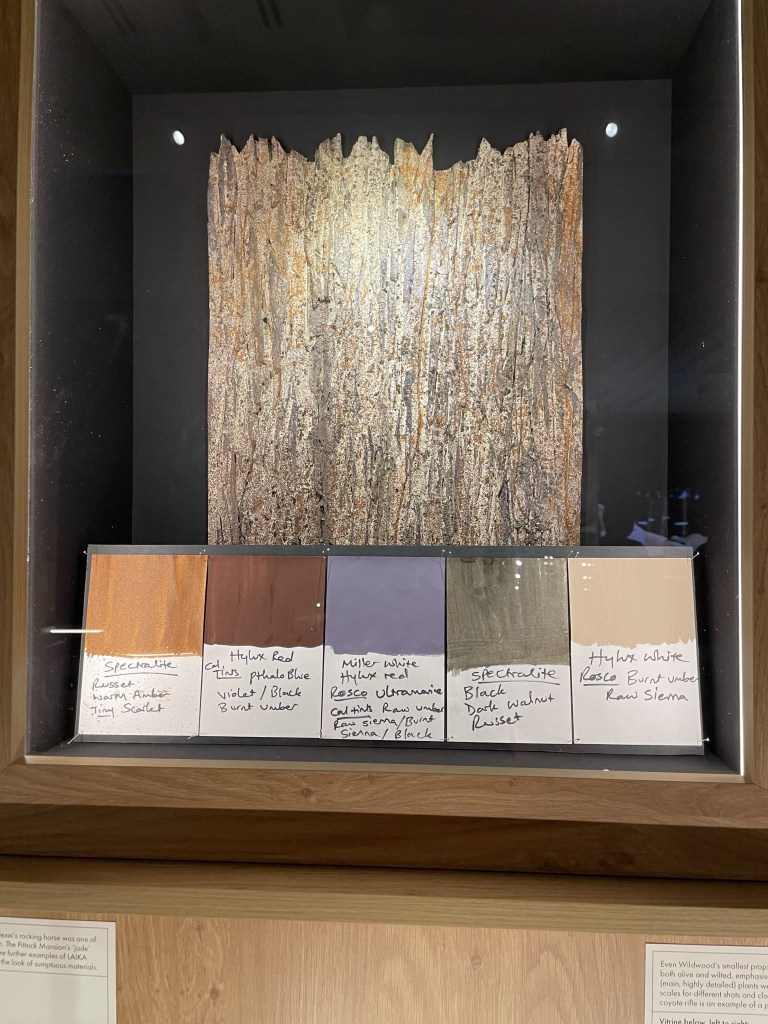
The sets are very intricate and filled with carefully made details such as ivy leaves of all sizes, plants at different stages of decay and bark painted with many different colours.
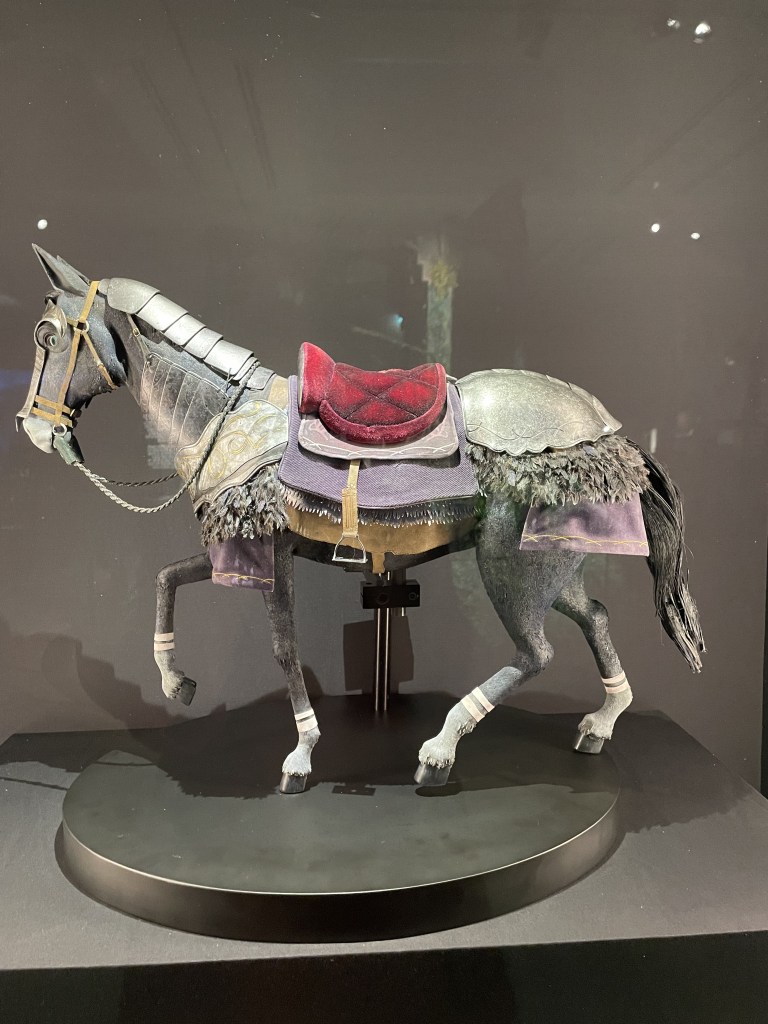
Amazing to see the inner workings of ‘characters’ such as the horse and you can see the engineering ‘skeleton’ which operates the puppet.
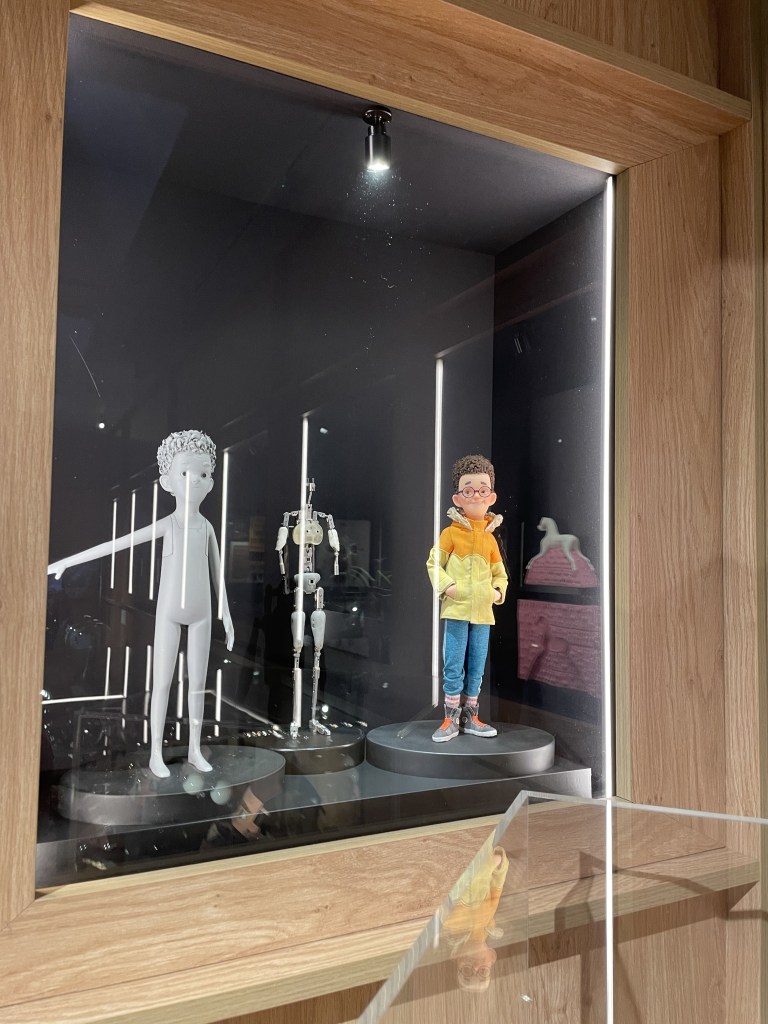
Some close-ups of the characters – and, centre, another display showing the mechanics and body of the puppet.
The details you can see in each interior are amazing. Every tiny prop was crafted and painted to create that feeling of antiquity and usage. Well, as you can gather, I was impressed by this exhibition and delighted to see the work close up. Now I want to see the film!
LAIKA presents WILDWOOD: The Exhibition at the Design Museum runs until 10th January 2027.
For me, the 1990s is remembered through a haze of babies and young children. I must be a good decade too old to have enjoyed or even been part of the huge cultural movements and artistic changes going on. That’s not to say I wasn’t aware of it, but with tiny children to look after, I was not one of the bright young things of the day dancing the night away at nightclubs, wearing weird clothing, seeking out raves or sampling the latest mood-enhancing drugs.
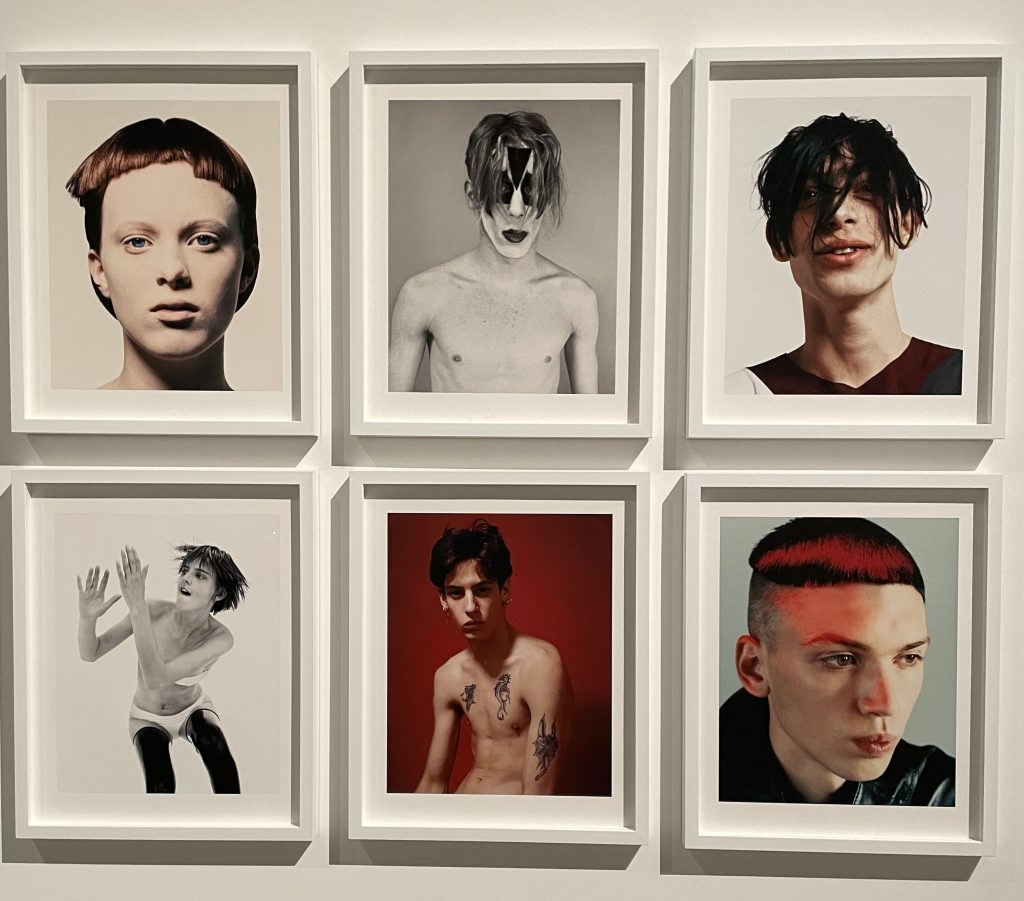
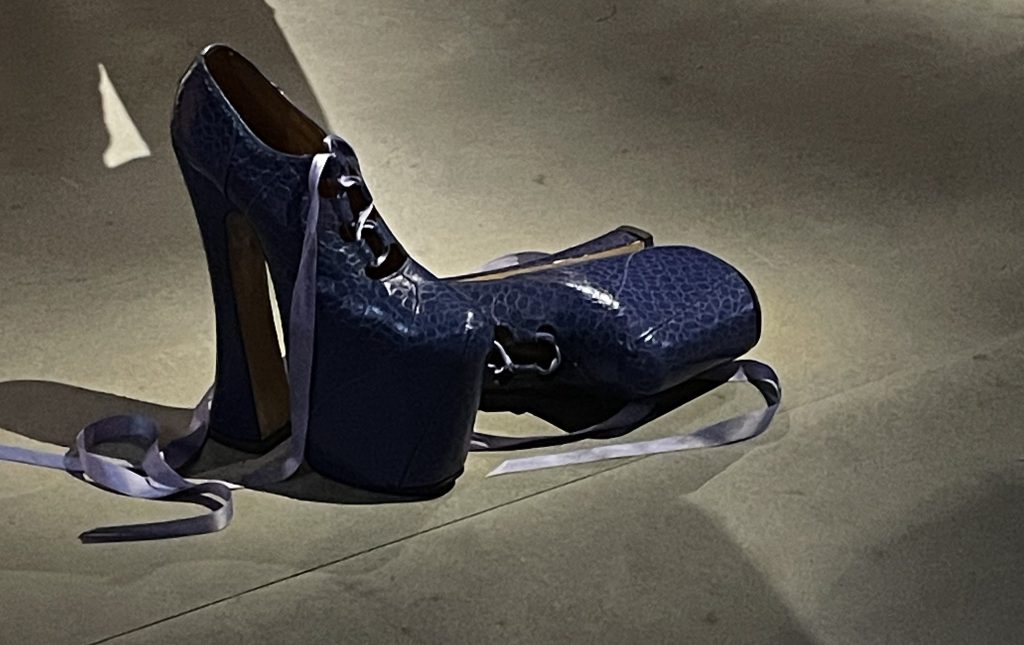
Nor was I avidly reading all the magazines: The Face and i-D to stay abreast of the latest fashions created by people we now revere such as Dame Vivienne Westwood, Alexander McQueen and Hussein Chalayan. But I did pick up on their work from the more mainstream media such as the Sunday papers. Above is a selection of portraits of ‘contemporary models taken by David Sims for magazines and advertising. They absolutely capture the look of the time, a strange post-punk confidence and distance too.
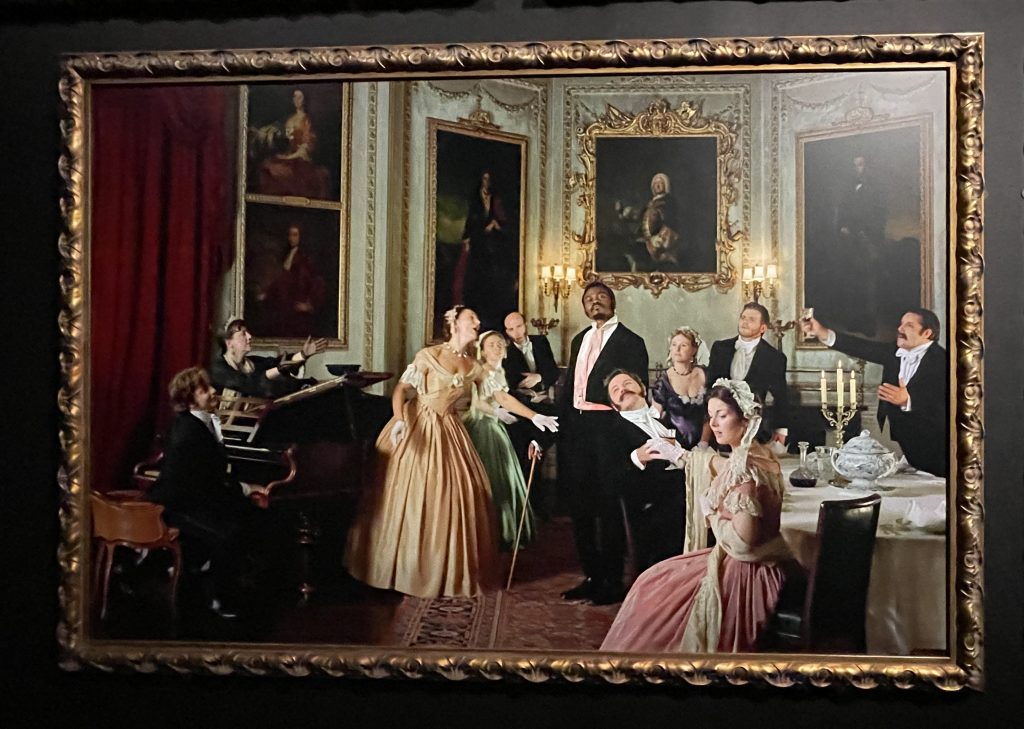
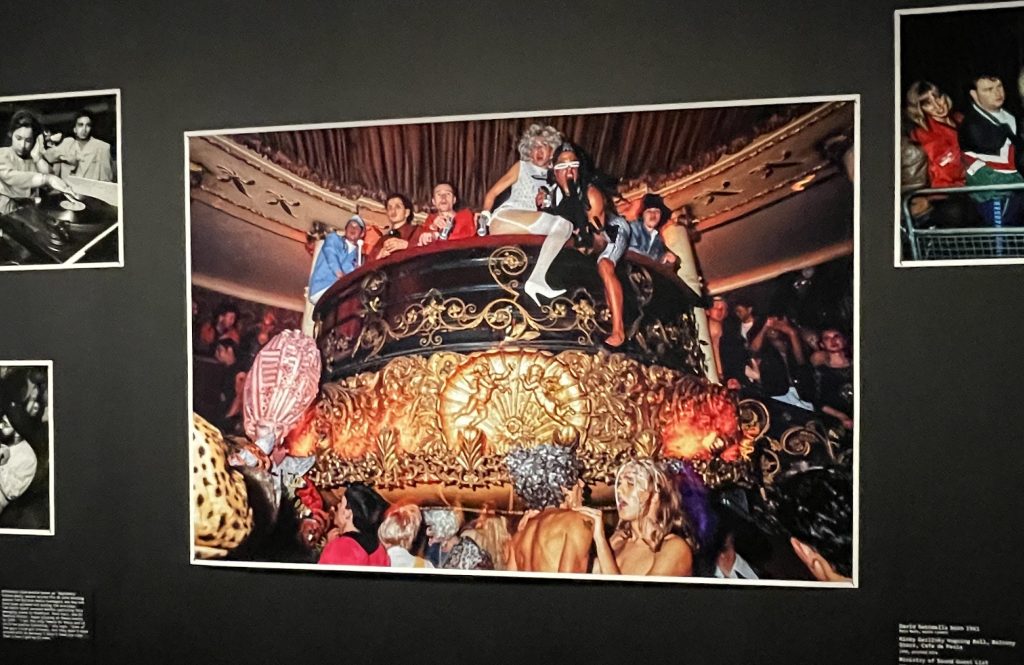
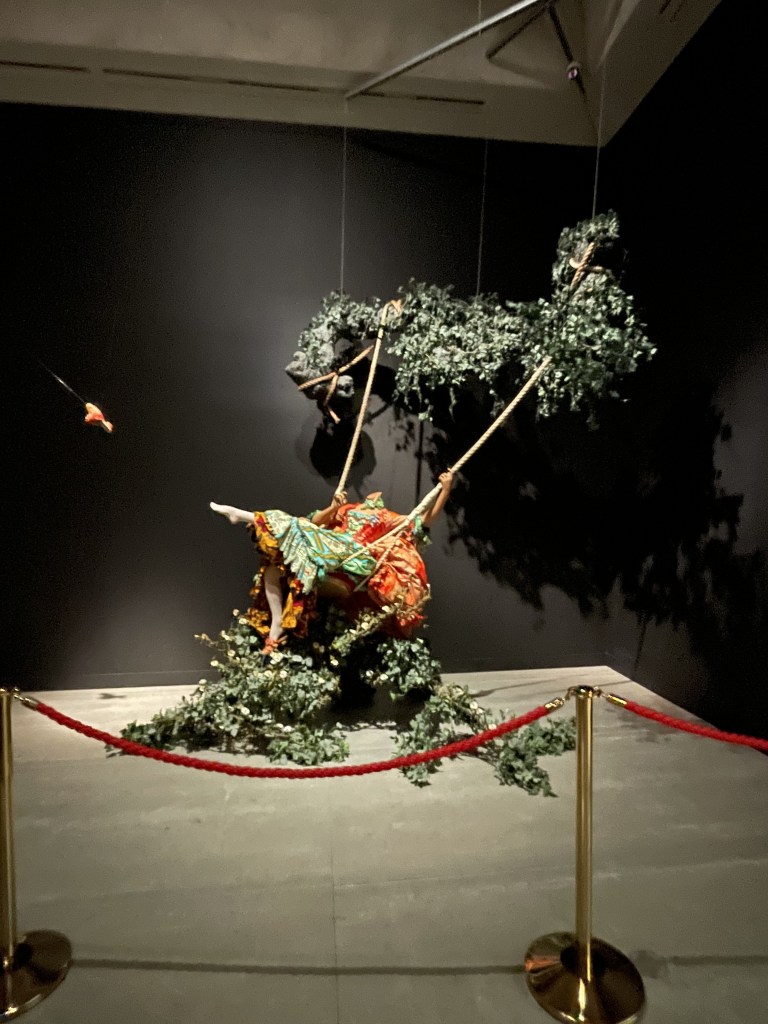
There was a hedonistic aspect to the late nineties, the time of New Labour and ‘cool Britannia’ combined with a huge relief that the strangle-hold of Tory rule might give way to something more sympathetic and socially kinder. Well, it was a nice idea… and then we got into the noughties, financial meltdowns, wars and everything got a bit serious. Above is a rather fun ‘take’ on Hogarth’s cautionary tale of the price of excess nicely posed by Yinka Shonibare in his Diary of a Victorian Dandy. And on the right is a picture from The Ministry of Sound taken by David Swindells. At the press preview I stood in front of the picture with people who looked wistfully at the image recalling hectic nights at the place, the dressing up, the music…. the drugs. Well, I’m afraid all that passed me by in a haze of baby wrangling.
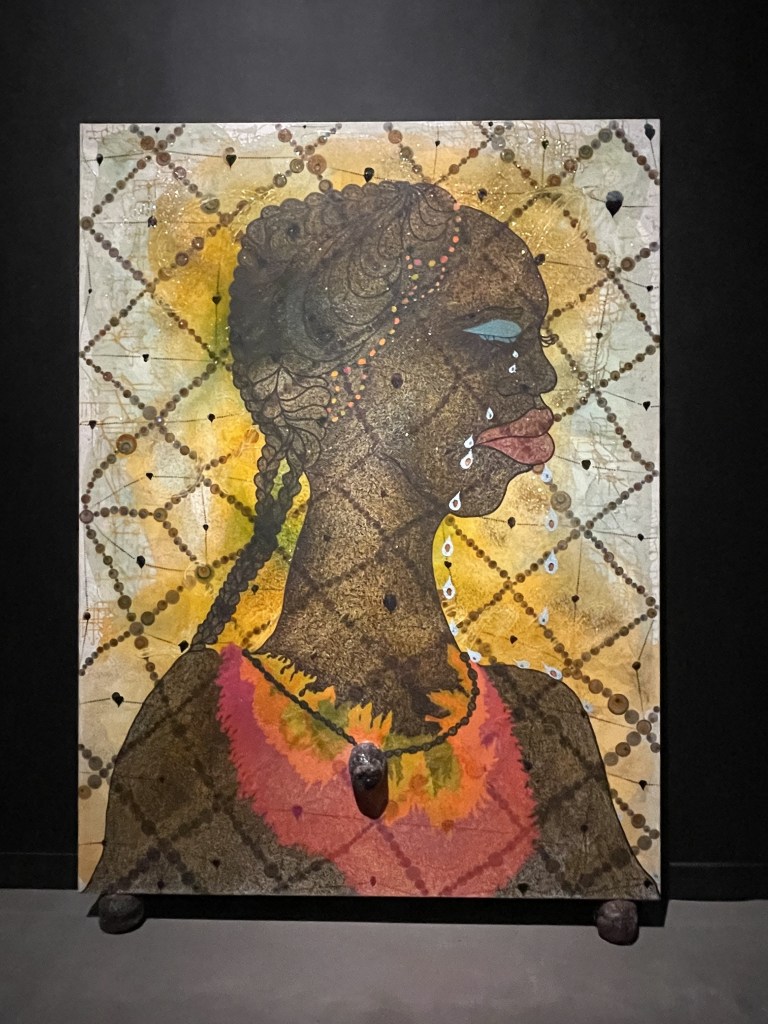
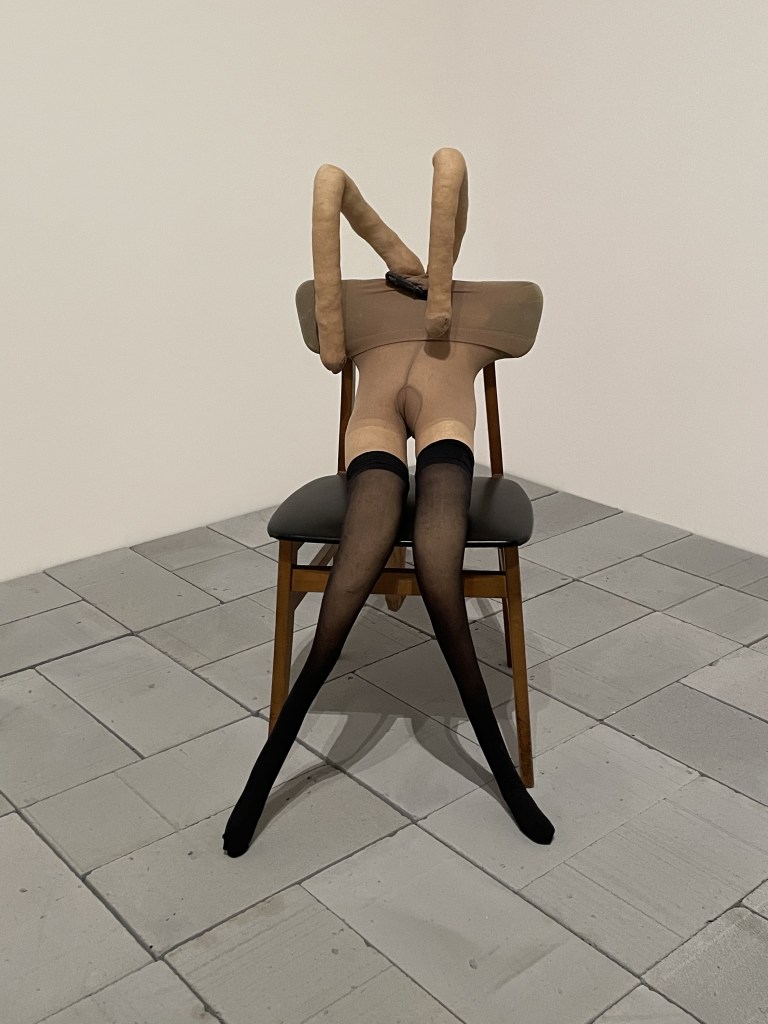
But I do remember the art and the impact of the YBAs bursting onto the art scene in a blaze of cleverness and originality. They definitely made us sit up and think about art in a different way. Fun to see the huge portrait by Chris Ofili, complete with elephant dung, the famous Pauline Bunny by Sarah Lucas, made of stuffed tights, representing the distasteful male gaze of the girls made to wear those awful costumes at ‘gentlemen’s’ clubs, and then there’s the fun of Yinka Shonibare’s take on The Swing (after Fragonard), reimagining the 18th century painting in his own gorgeous fabric. Yes, there was a lot going on, but I think it was really only felt by people in their twenties, living in London, students or working in the world of art and media who created a ‘feel’ of the time which is quite alien to anyone outside that age group and probably to anyone living elsewhere in the UK.
But it’s fun to see these things celebrated because the nineties is still with us, in some respects in our desire to live life to the full, if possible in a time without conflicts and wars wrecking our lives and expectations. But, with the state the world is in right now, it’s hard for things to be quite such fun.
The show is on at Tate Britain until 14th February 2027.
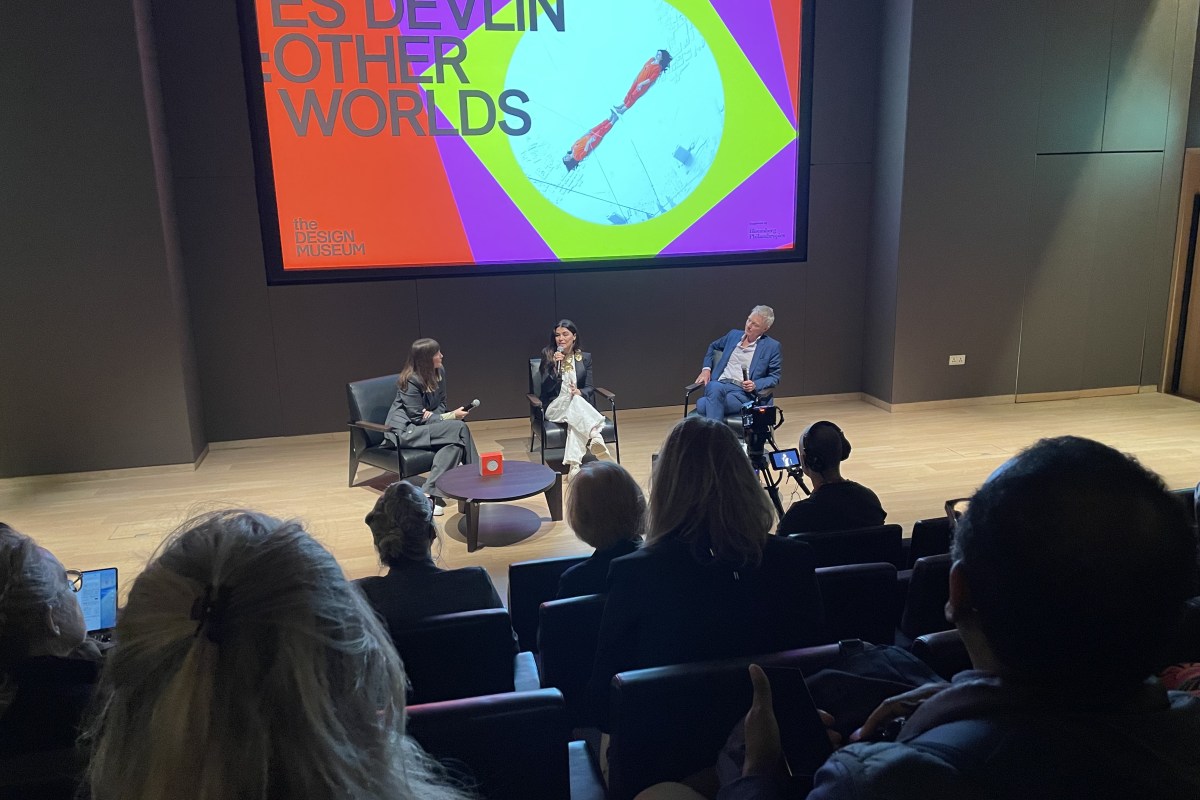
I’ve followed Es Devlin’s work for some time. Her designs for theatre, opera, huge pop concerts, installations and public art are always eye-catching, imaginative and thought-provoking. She may be best known to many as the designer of the closing ceremony of the London 2012 Olympics.
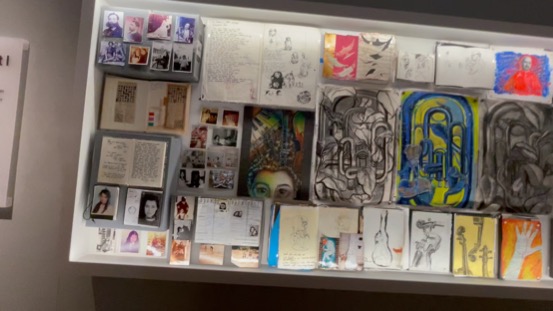
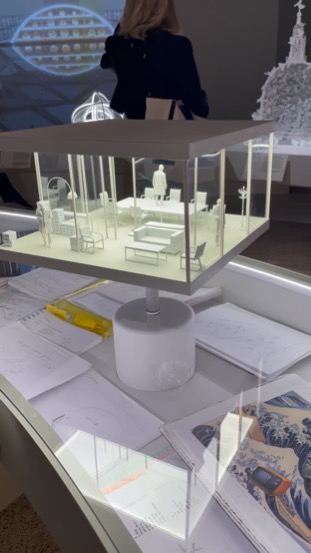
The exhibition starts off in a space which is a reproduction of Es Devlin’s south London studio space. It’s fascinating to see all the books, drawings, objects and bits and pieces which both inspire and take ideas to the next stage. Then, after hearing Es telling us a little of her early life and family, the wall of the studio magically opens and visitors are invited to come into the exhibition space to view the thousands of papers and plans which were kept in her archive and tell the story of the projects she has worked on.
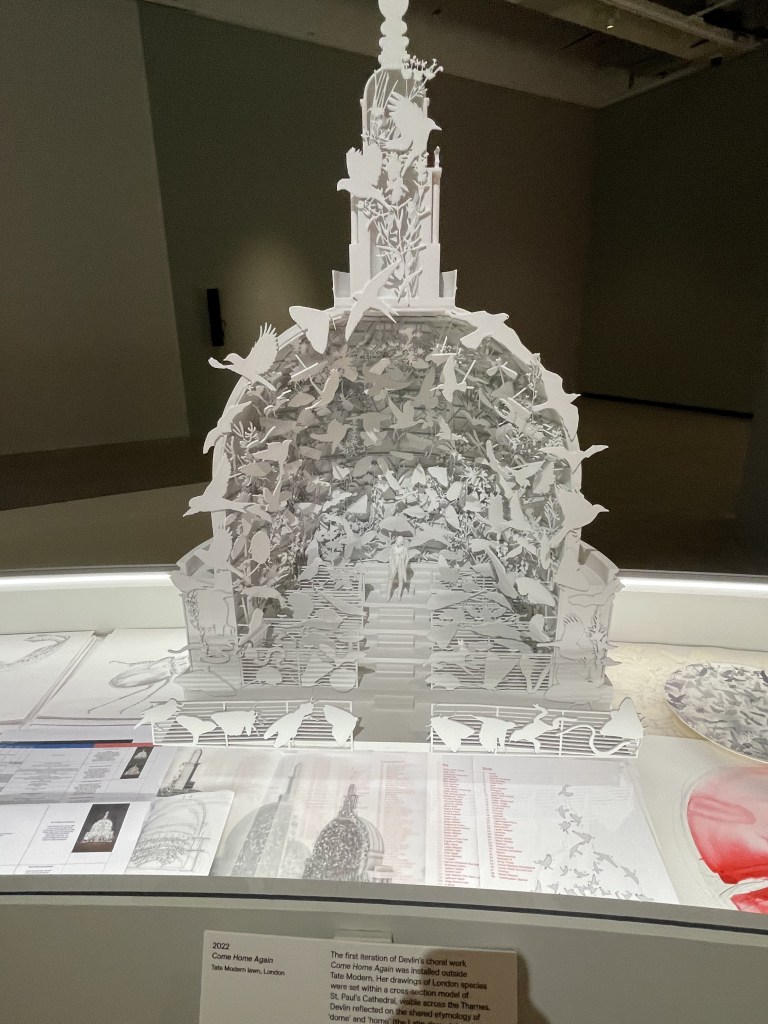
It’s very difficult to convey, in a blog such as this without film, the extent and depth of all the ideas and items on show. What’s fascinating in a 45 minute film of Es talking about the projects she’s worked on while handing the initial drawings and musing on the challenges and pleasures of each one. Everything, she says, starts with pencil and paper and this is the way she develops her ideas. Then, her talented team of specialists take the ideas and play around with them suggesting different materials, scales and uses.
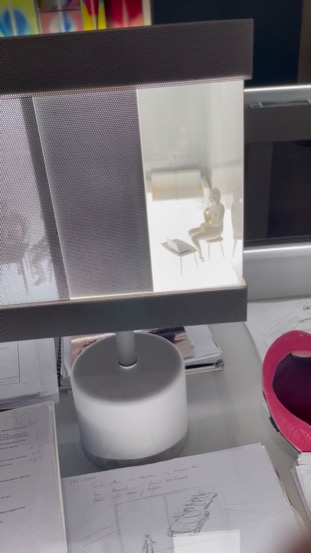
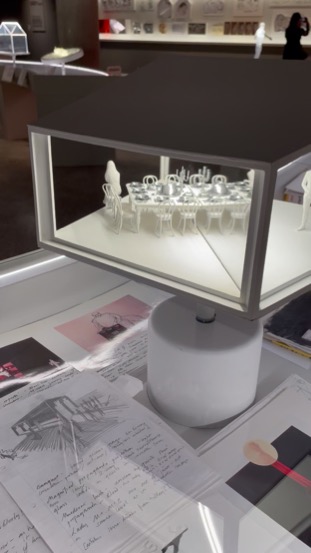
I loved the boxes of theatre sets. A recurring theme for Es is use of the revolving cube and circles. These seem to be universal shapes which she is drawn to. I would imagine that theatre producers both love and are challenged by her ideas. So often they involve complex engineering, revolves, clever lighting and illusions.
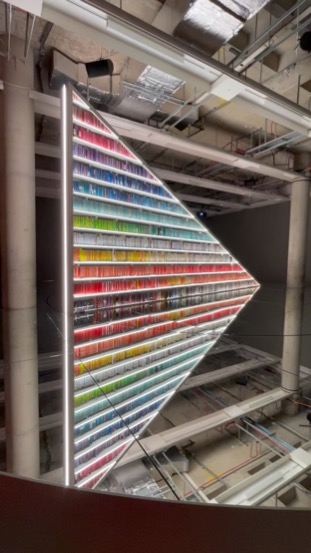
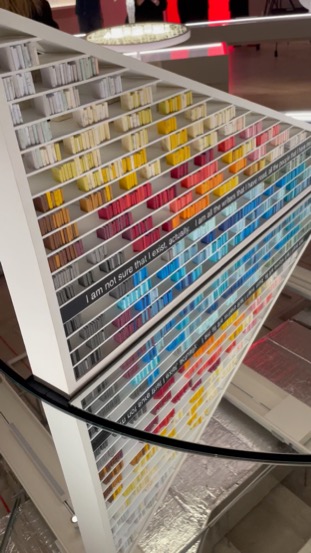
In a second space we are treated to a new installation entitled An Infinite Library, a kinetic sculpture featuring over 2,000 books that have informed Devlin’s worldview. The triangle of books revolves over a mirrored floor, visually doubling its size. Viewers can walk around this huge piece and are invited to view books open on low plinths and read passages which have been especially meaningful to Es Devlin.
The show is spectacular and it’s on at the Design Museum until 4th April 2027.
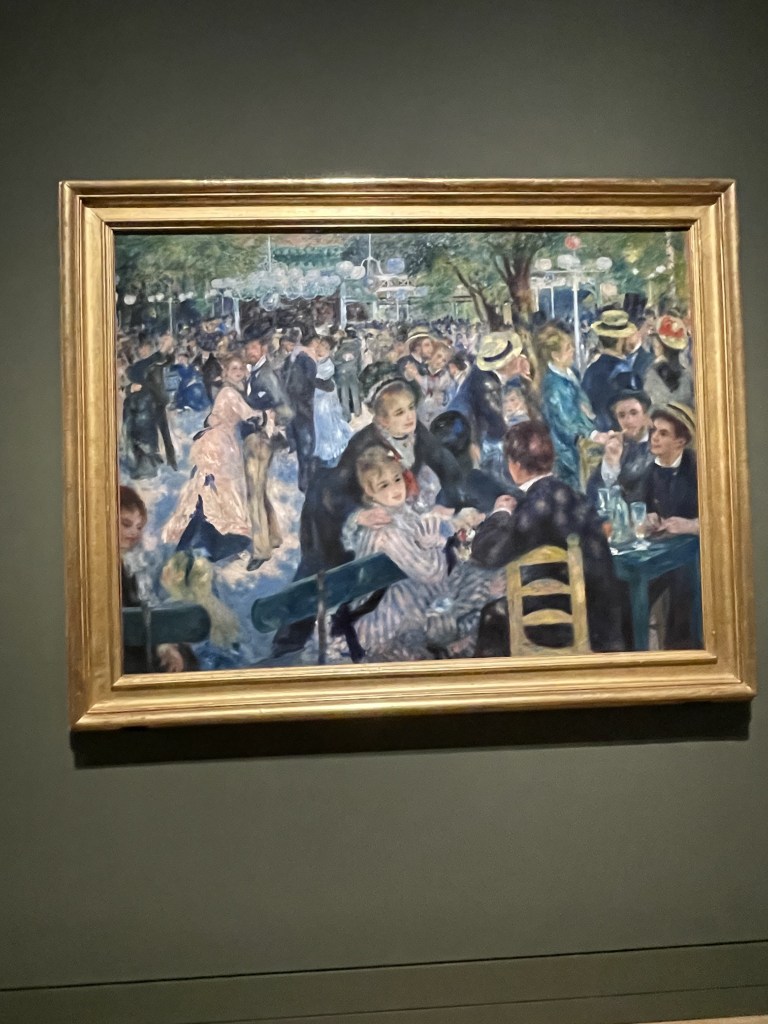
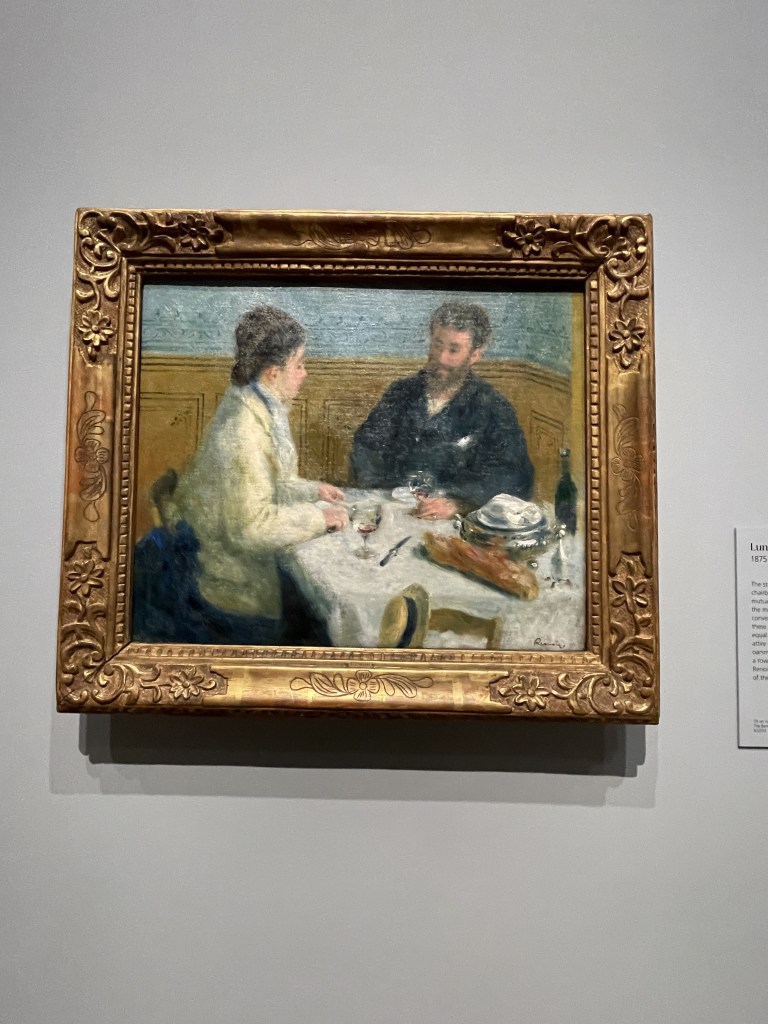
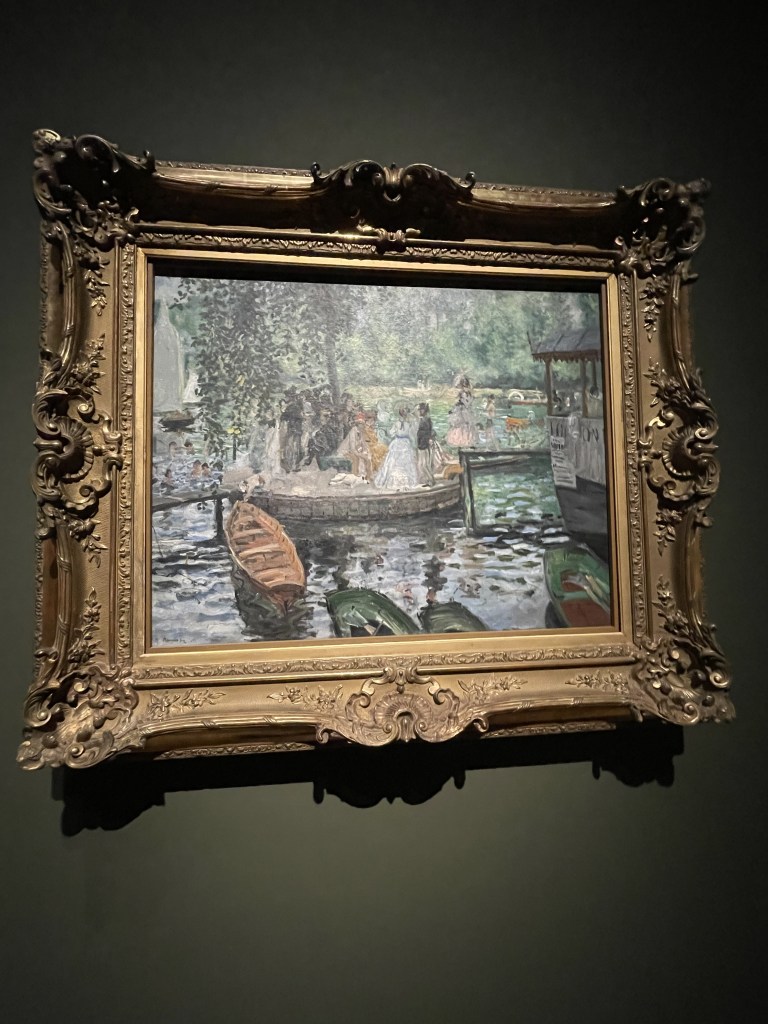
Such a joy to see familiar works such as Dance at the Moulin de la Galette (1876) which is here in London from Paris for the first time, alongside lesser known works which show people engaging with one another. These paintings invite the viewer to provide the likely conversation or situation. Middle shows: Luncheon, 1875, from the Barnes Foundation in Philadelphia. The couple have just finished their meal and are clearly discussing something fascinating. You long to join them at the table. And on the right is La Grenouillere, 1869 which depicts a popular bathing spot on the River Seine, known as the camembert, for its round shape, where people gathered to party. This painting came from the National Museum of Stockholm.
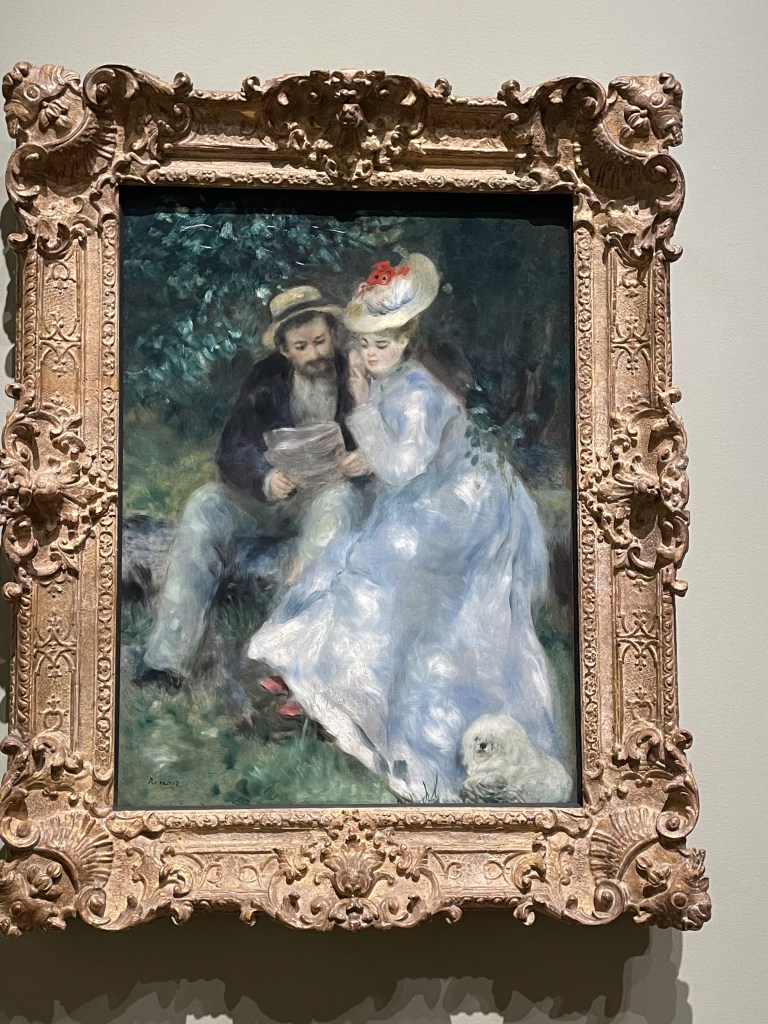
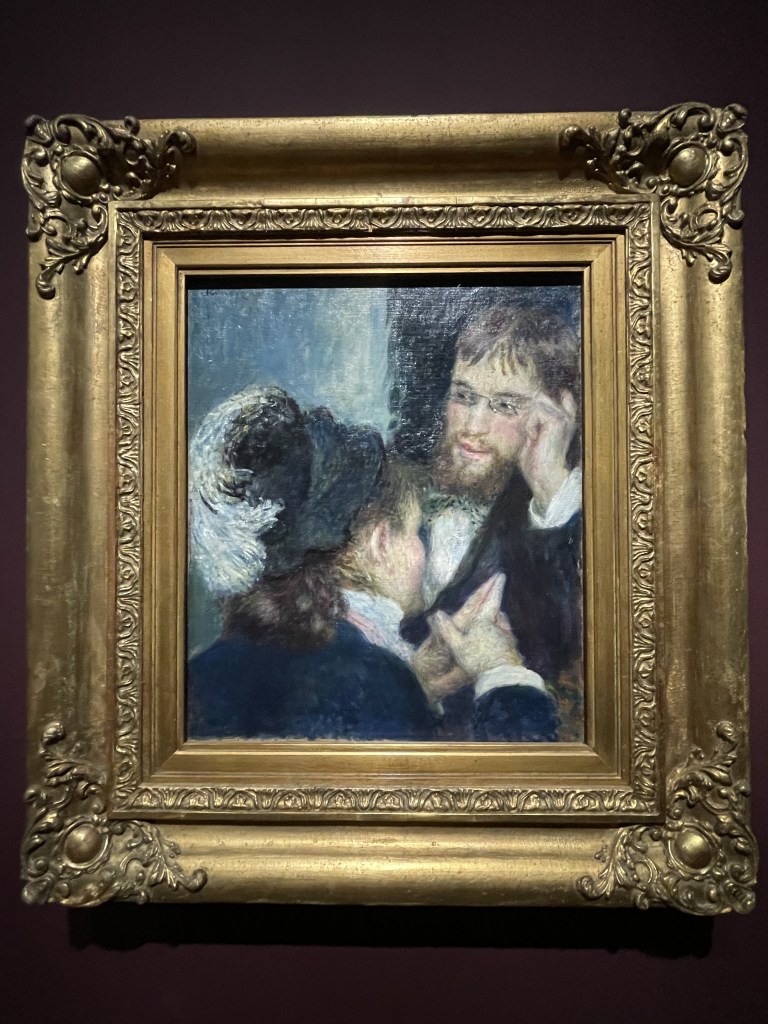
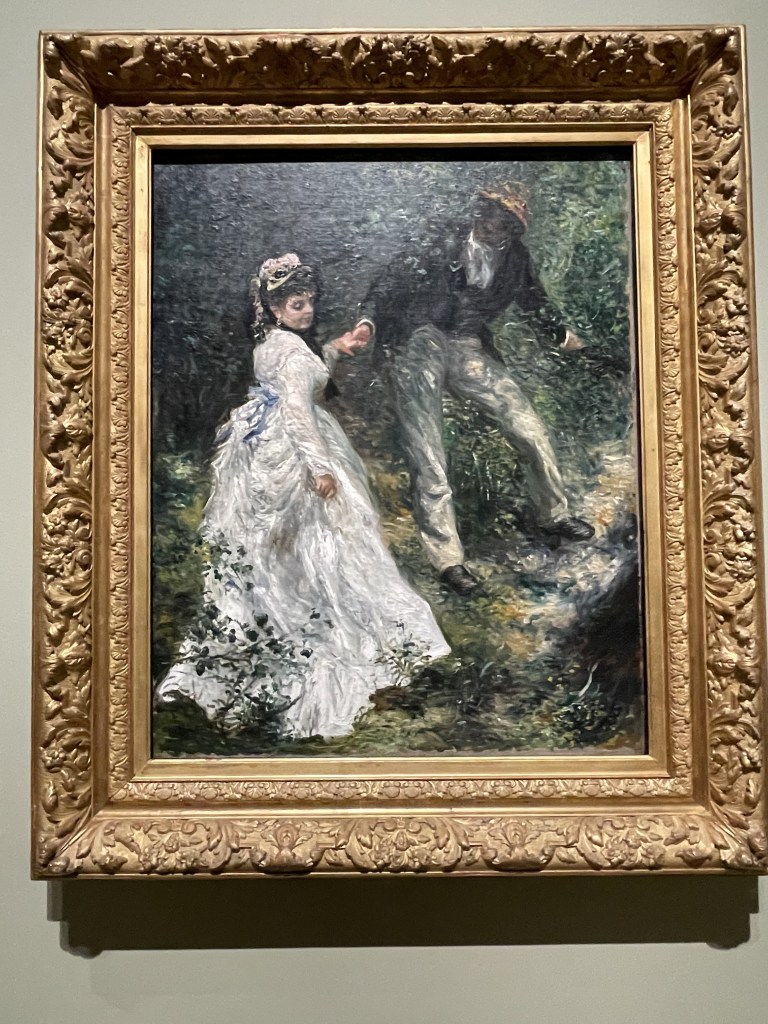
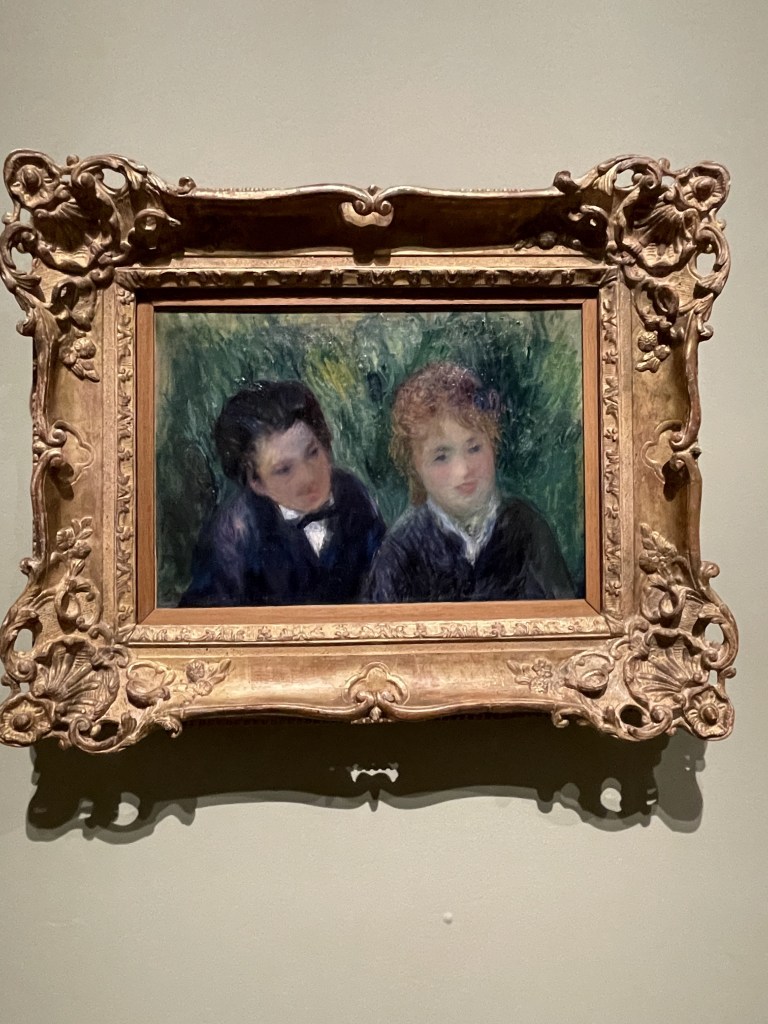
Encounters between men and women are a frequent subject. This is where Renoir is such a great narrative painter. We can fill the ‘gaps’ with our own contribution and wonder just where that relationship in the painting might be heading. On the left is Secrets (1875) a couple sit close together poring over a newspaper. I can’t help thinking the appearance of the dog by her skirt was something of an afterthought! Middle is Conversation(1876) again, we are dropping in on a couple who’ve reached a very important stage in their exchange. And on the right is The Promenade (1870) and the couple (not really suitably dressed for a riverbank excursion) are navigating a steep bank and about to disappear into the shady trees.
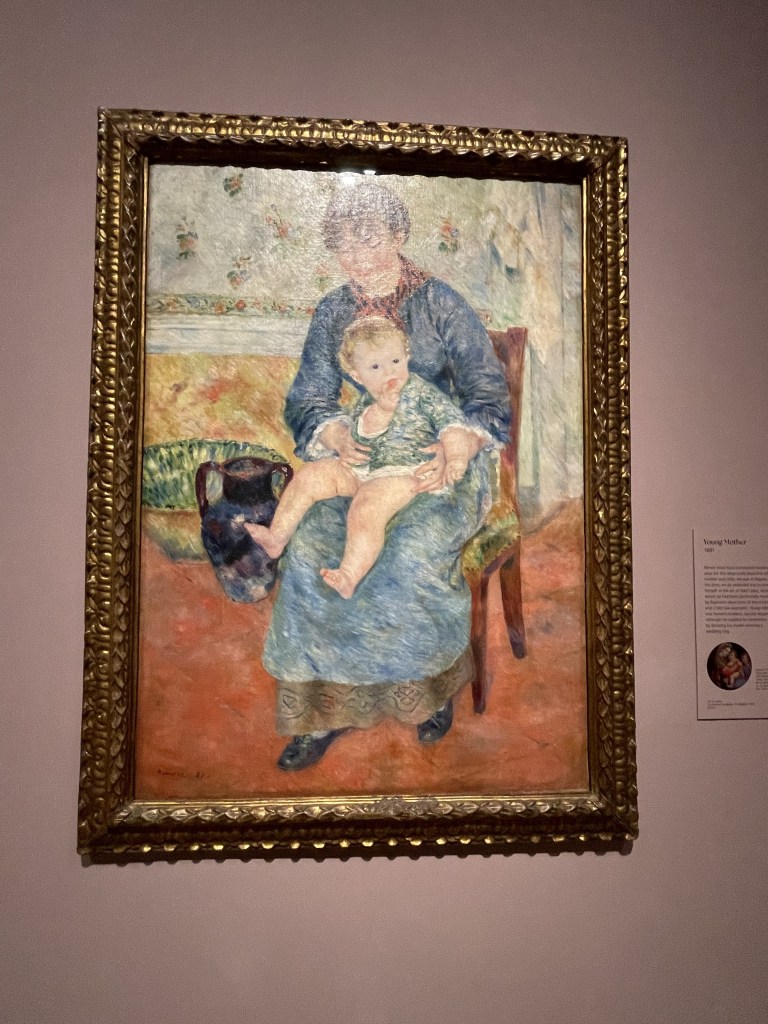
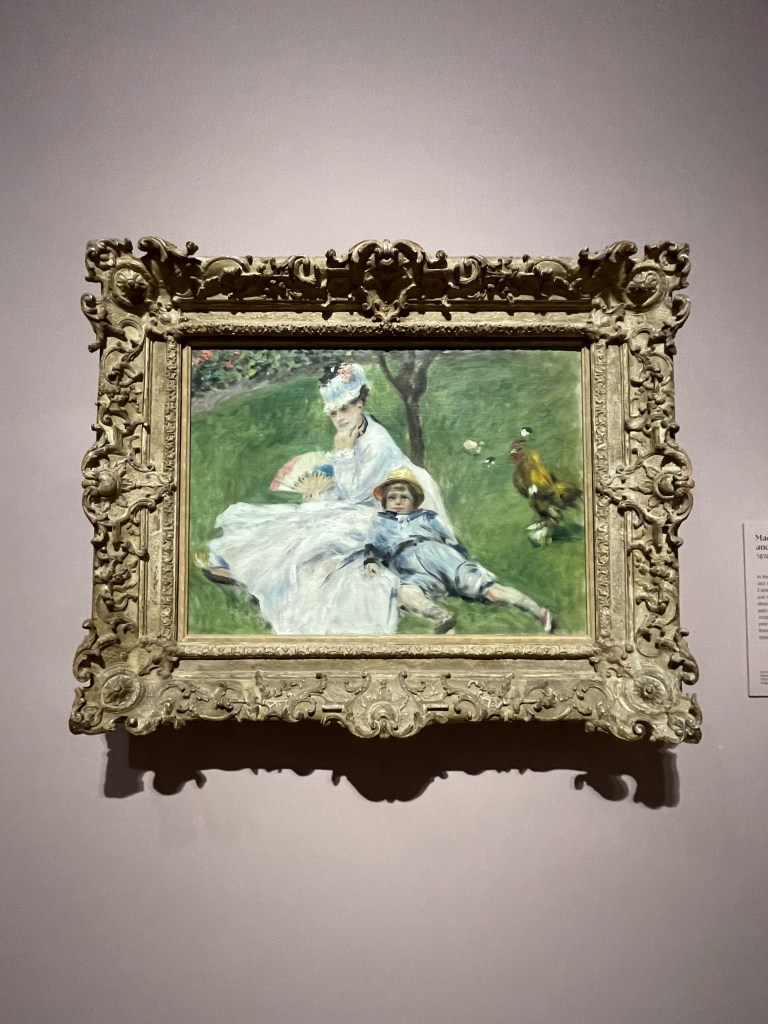
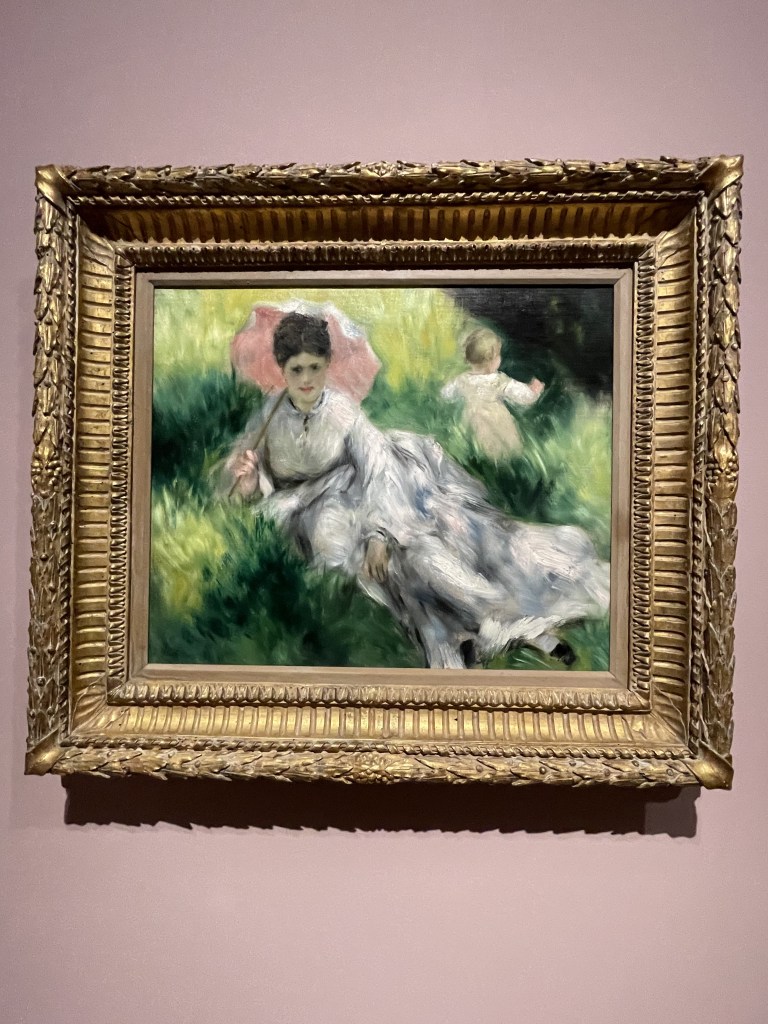
Family provided very touching subjects for Renoir too. The sketching must have been done on the spot but I’m assuming that the paintings were completed in his studio and, to some extent, posed. But they do capture that easy closeness between parent and child. Top left is Young Mother, (1881) which echoes traditional mother and child paintings of the 16th century, Middle top is Madame Monet and her son, (1874) showing the artist’s seven year old son in a comfortable sprawl with his mother, then Woman with a Parasol and small child on a sunlit hillside (1874-6) shows his wife with a toddler.
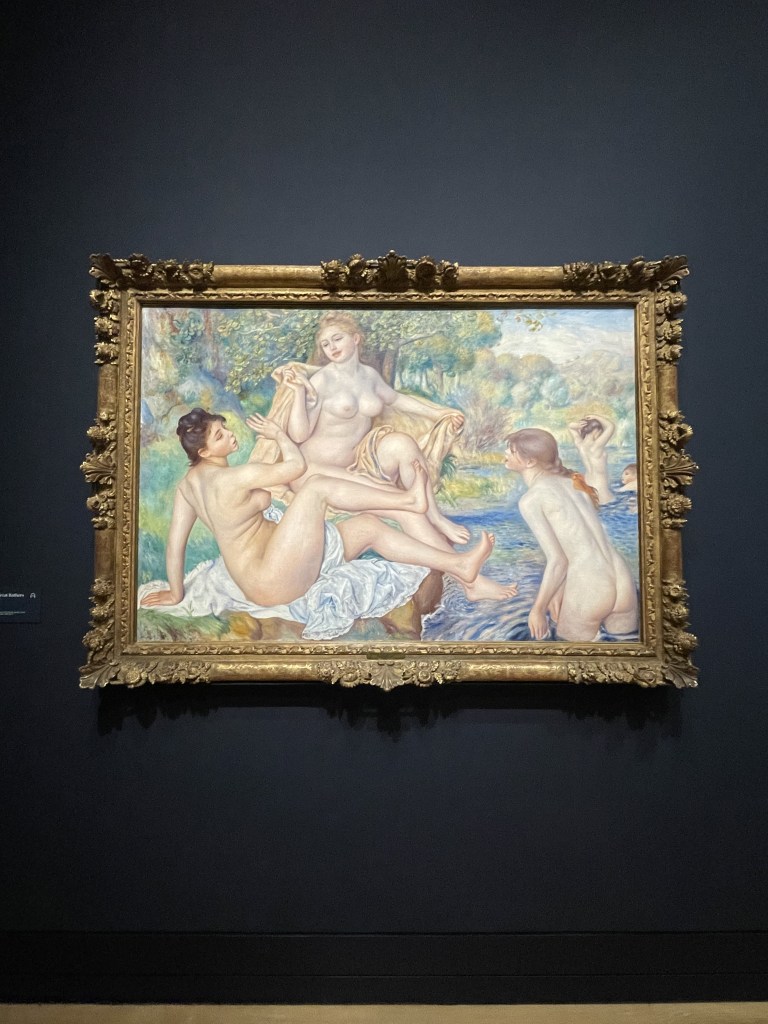
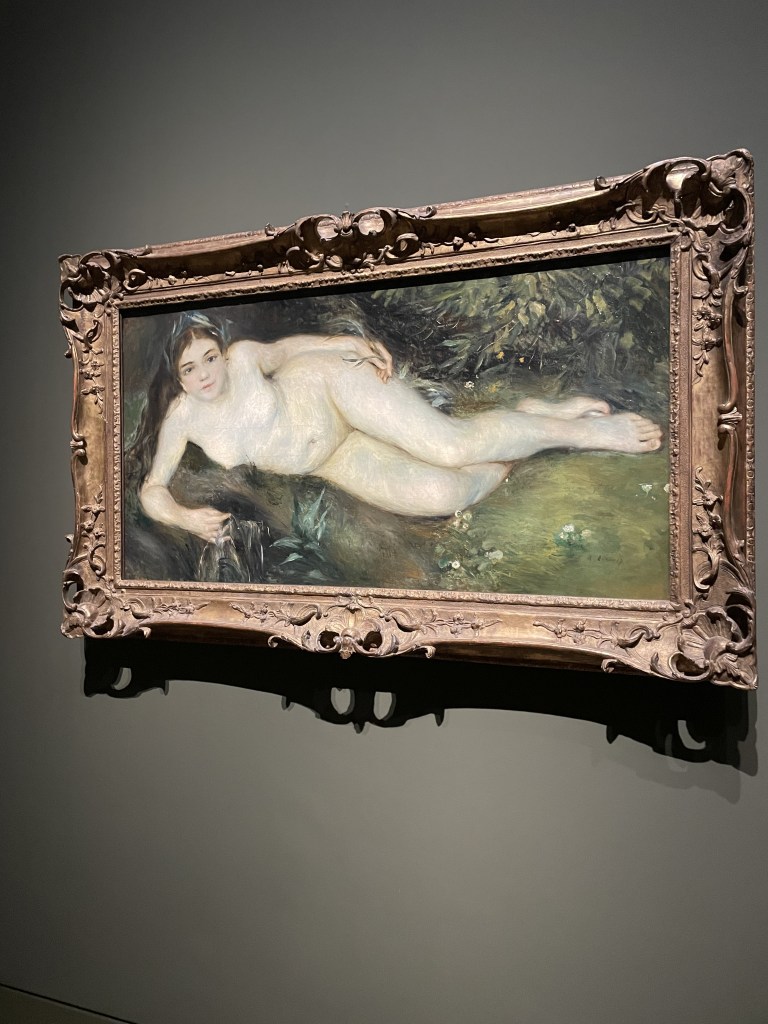
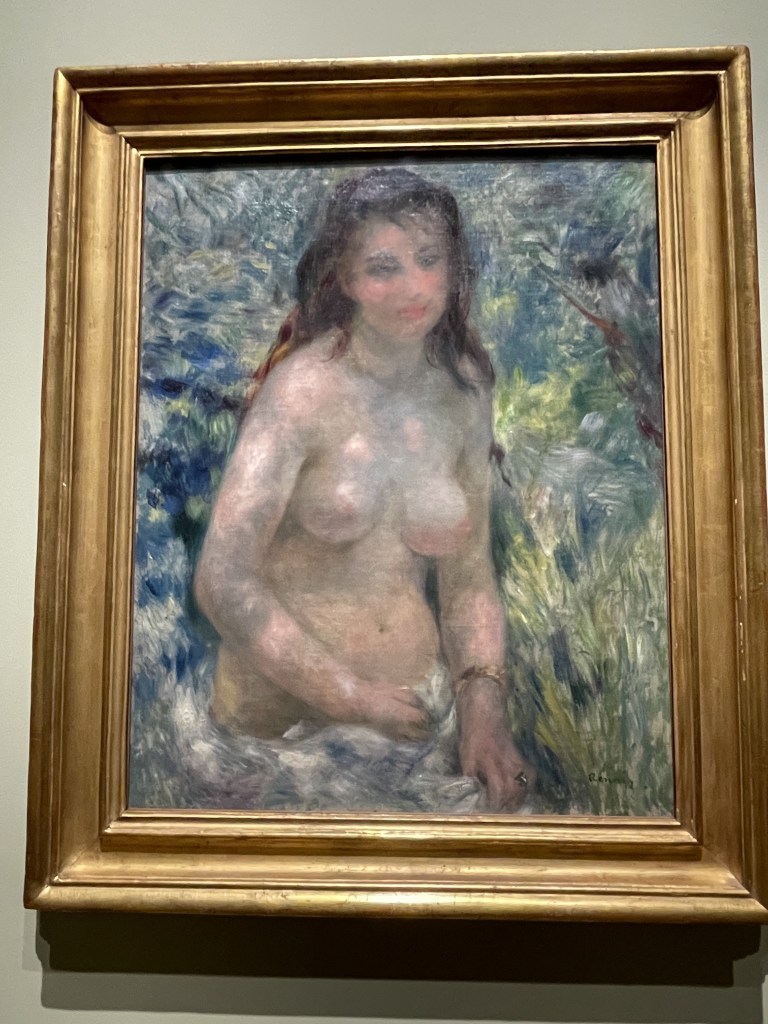
And Renoir was famous for his nudes too. This trio shows the differing styles he adopted. On the left the figures are smoothly painted in The Great Bathers: A New Arcadia (1880s), Renoir called this painting a ‘decorative’ work. Centre is A Nymph by a Stream (1869-70) it’s an interesting combination of the ‘smooth’ and blended brushwork he moved into combined with the much freer brushwork of the earlier paintings. And on the right is Study torso, sunlight effect (1875) which is a glorious celebration of brush strokes and daubs of paint to capture the dappled light on ample flesh.
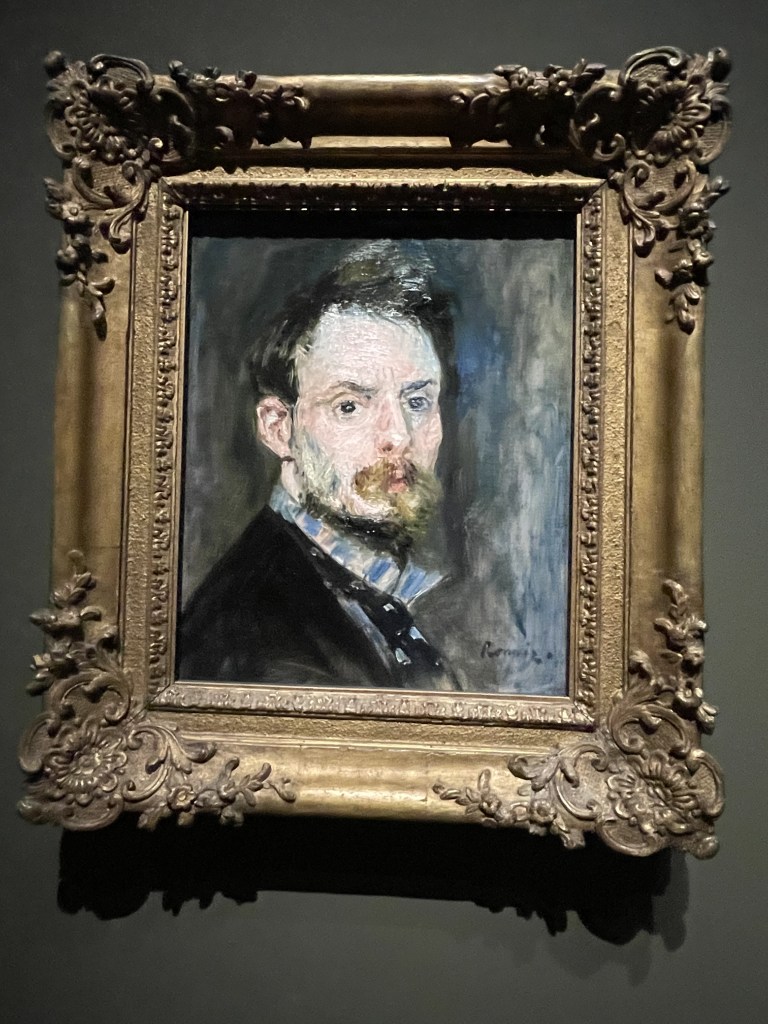
So, I’ll end with this dynamically strong self-portrait from 1875. It shows the energy which clearly pulsed within Renoir. He was described by friends as a ‘man with a hurried gait, a serious expression and distracted air’. And you can see from the vigorous brush strokes on this painting and many of his other works that he must have stabbed at the canvas, swished paint at high speed and was always eager to finish the piece he was working on and crack on with the next.
Renoir and Love is such a great show and will be hugely popular. It’s on at the National Gallery, the Sainsbury Wing, until 15th January 2027.
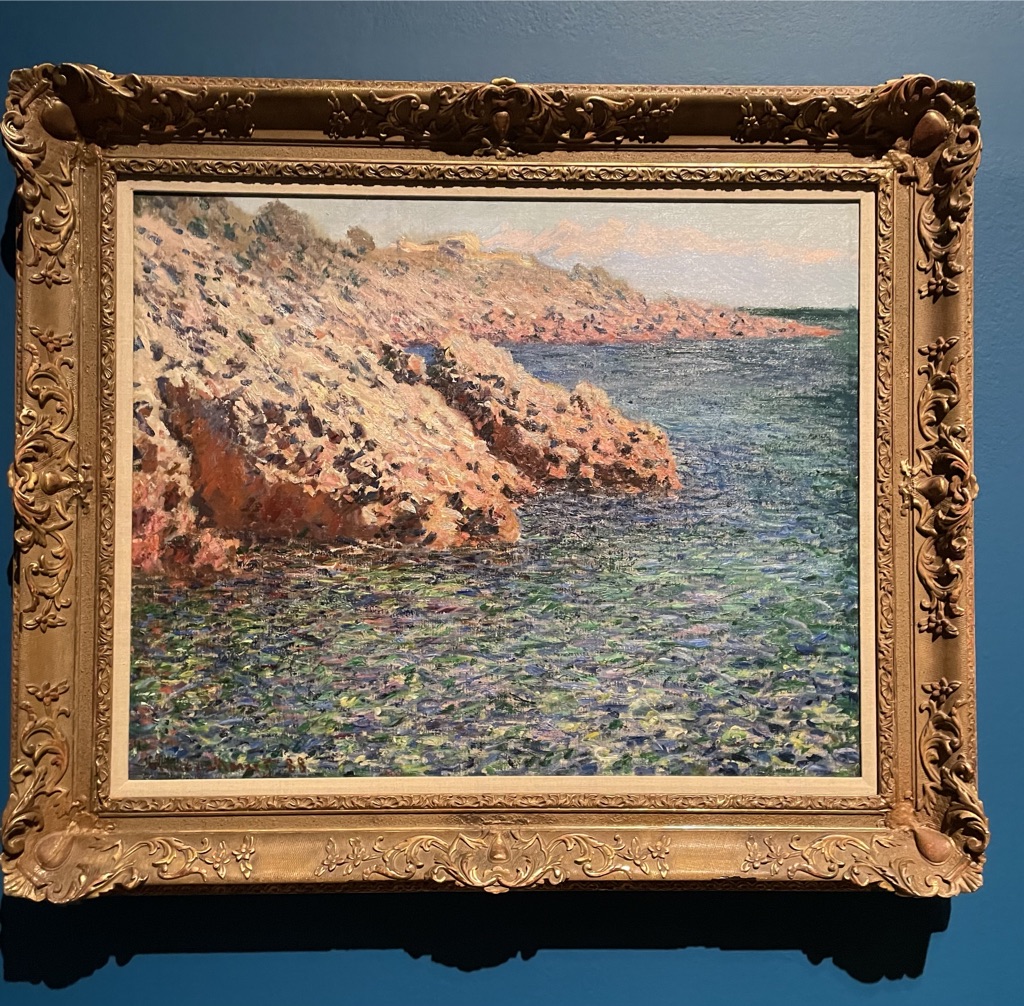
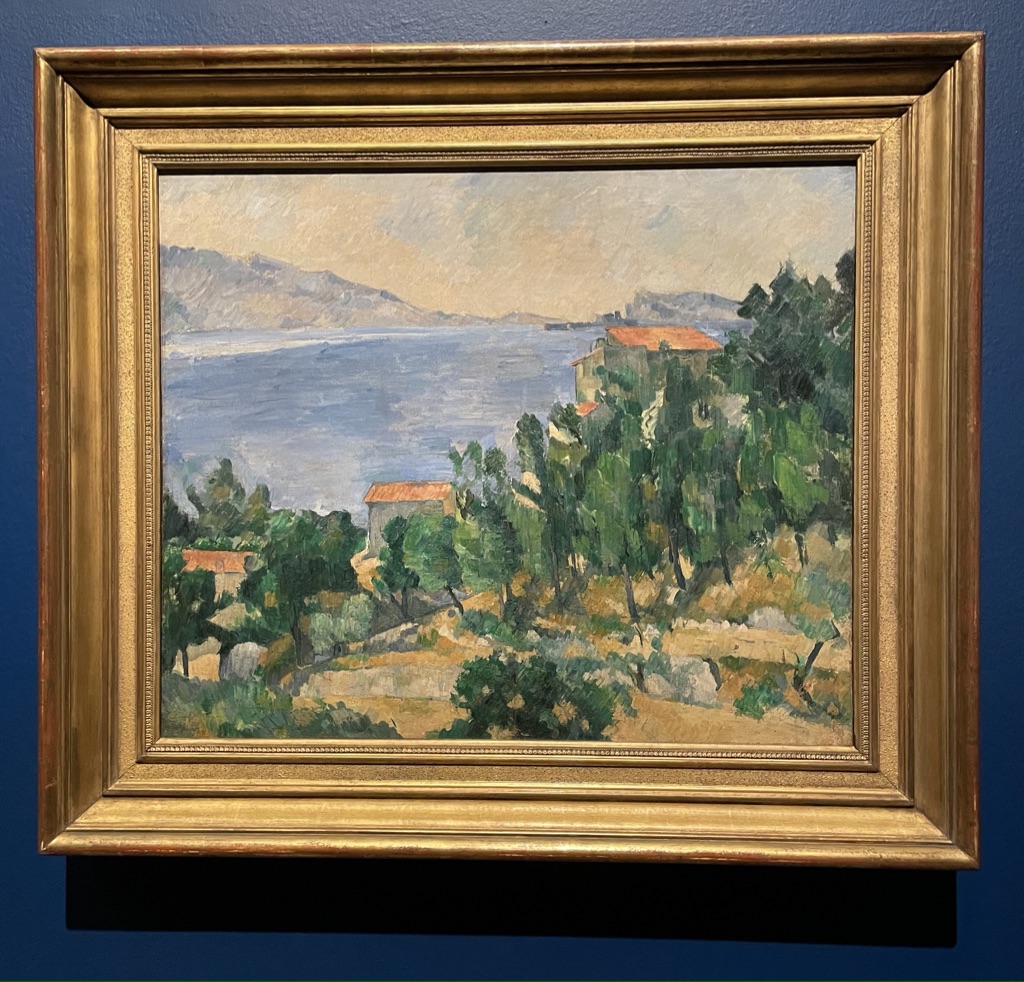
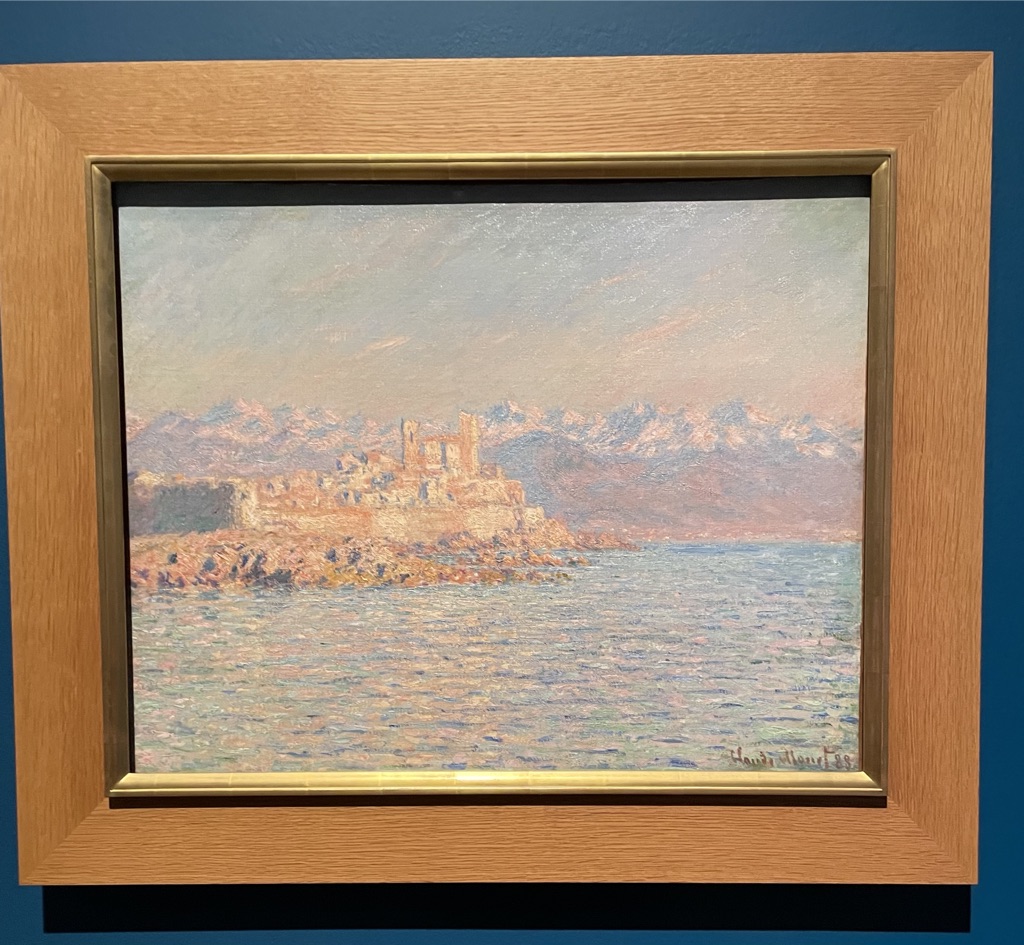
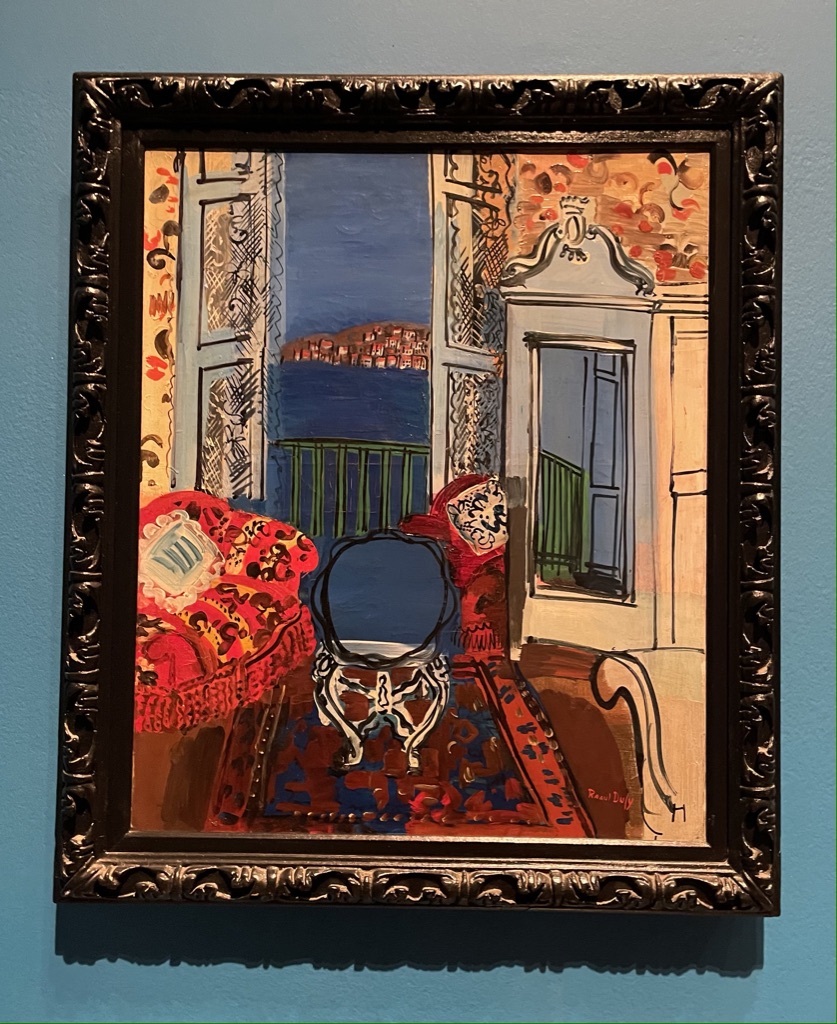
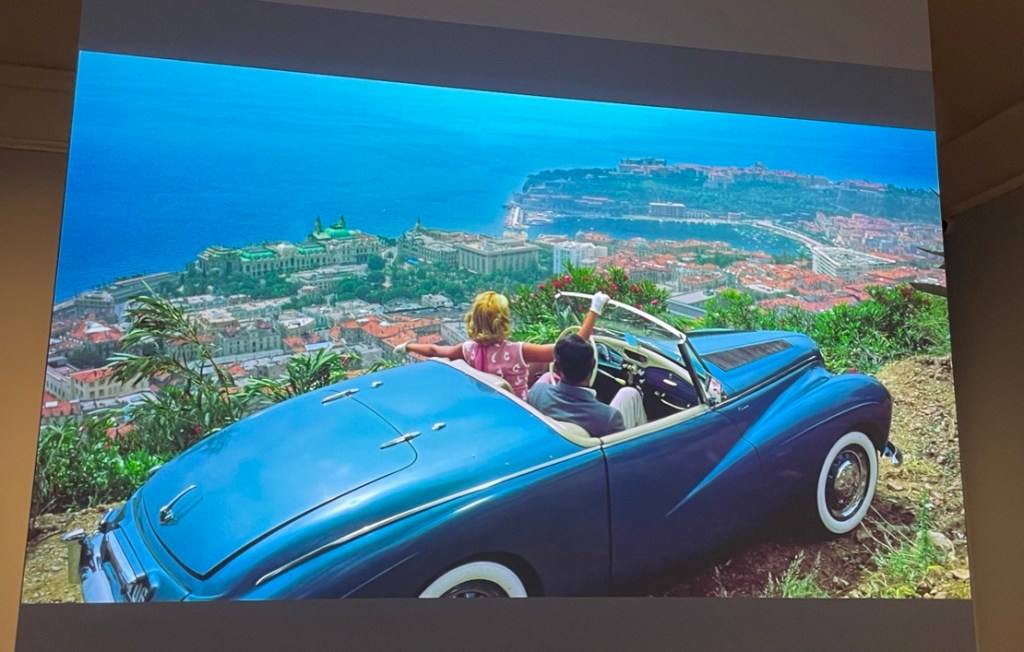
In the 1870s, artists who’d been busy working in Paris and the cities of northern France started gravitating towards the little-known coastal towns along the Mediterranean coast. Dazzled by the clear light and abundant sunshine, this area inspired an entirely new art movement. Suddenly, colour became light and light became colour.
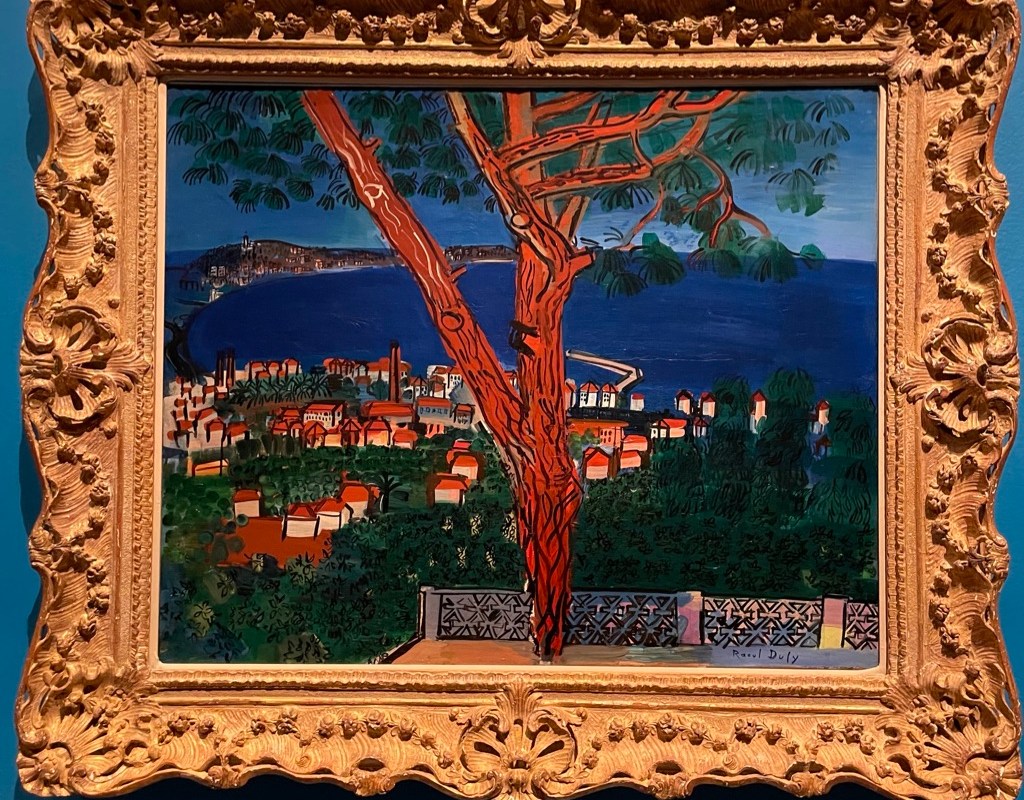
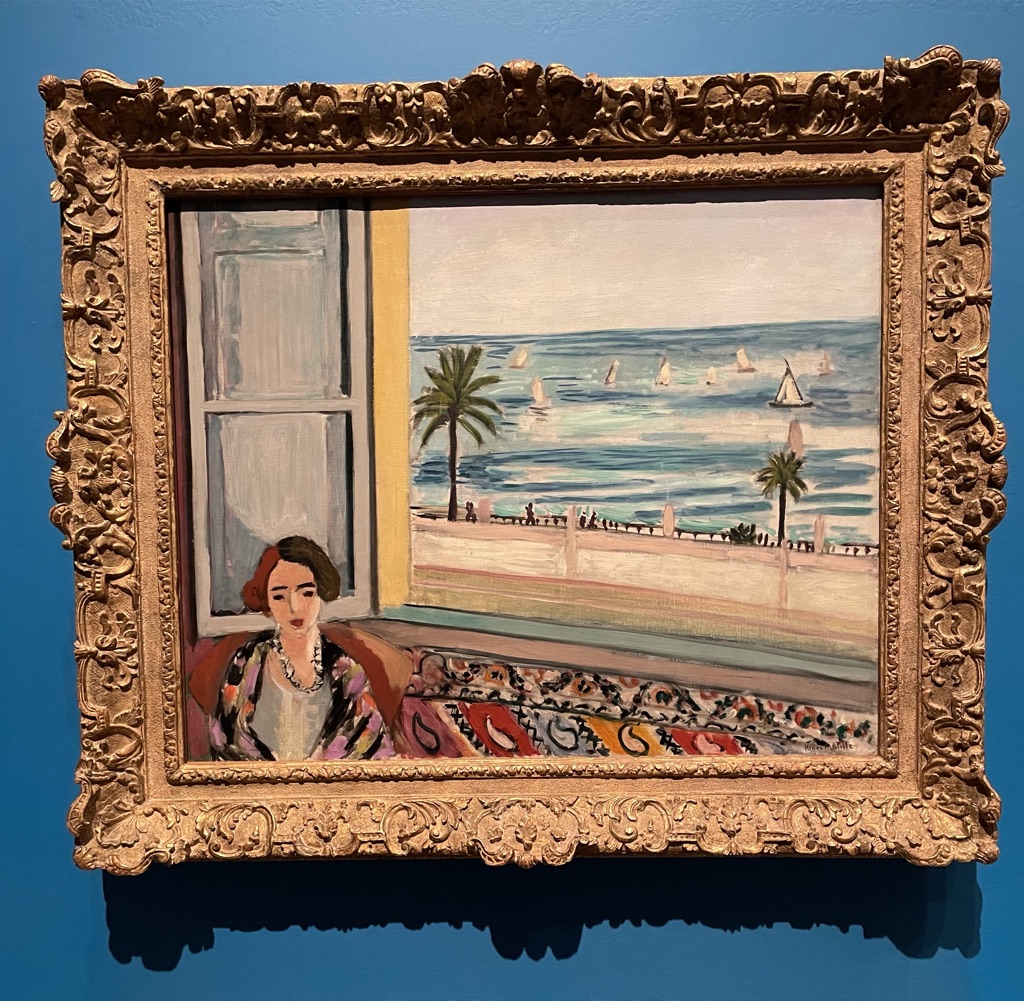
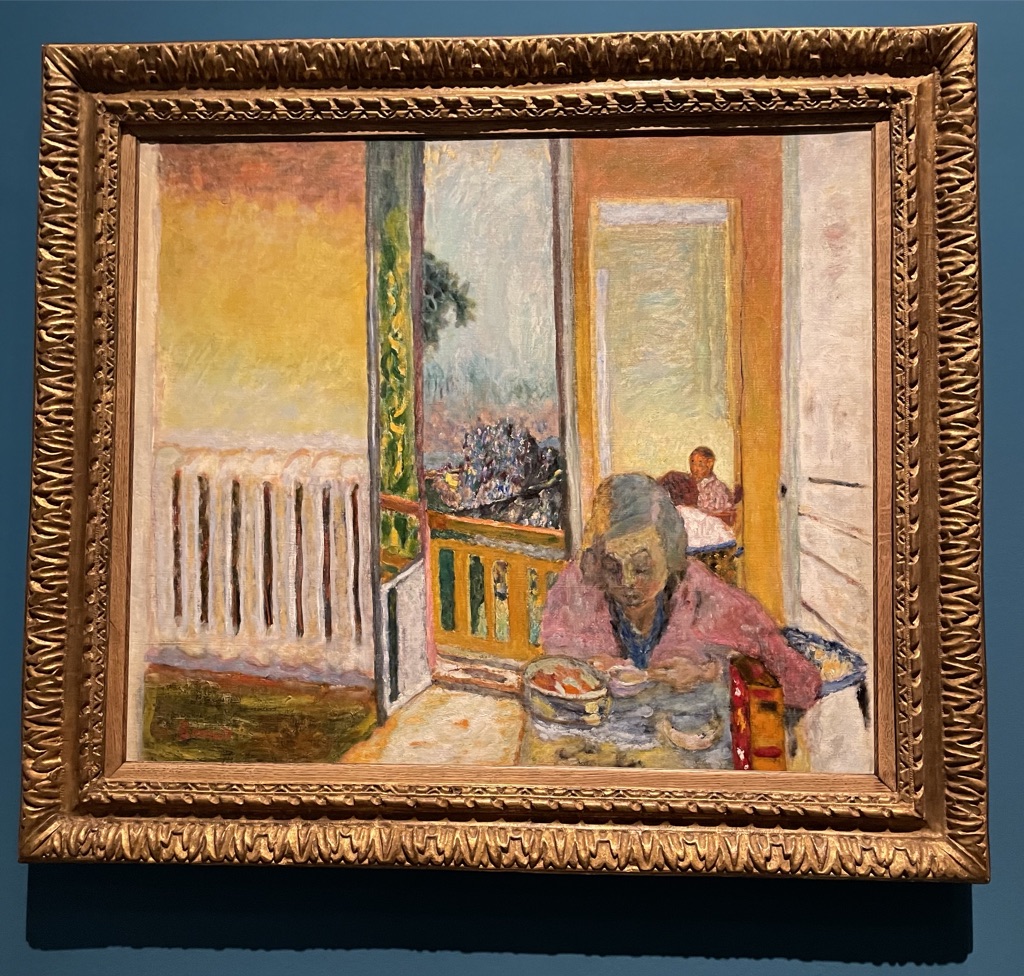
Sometimes painting from their apartments overlooking the sea, artists including Monet, Renoir, Matisse, Cezanne, Bonnard and Dufy were inspired to capture the views and contrast them with domestic interiors. Above, left to right: Henri Matisse, Seated Woman, Back turned to the Open Window 1922, Pierre Bonnard, Breakfast at Le Cannet 1930, Raoul Dufy, Open Window, Nice 1928
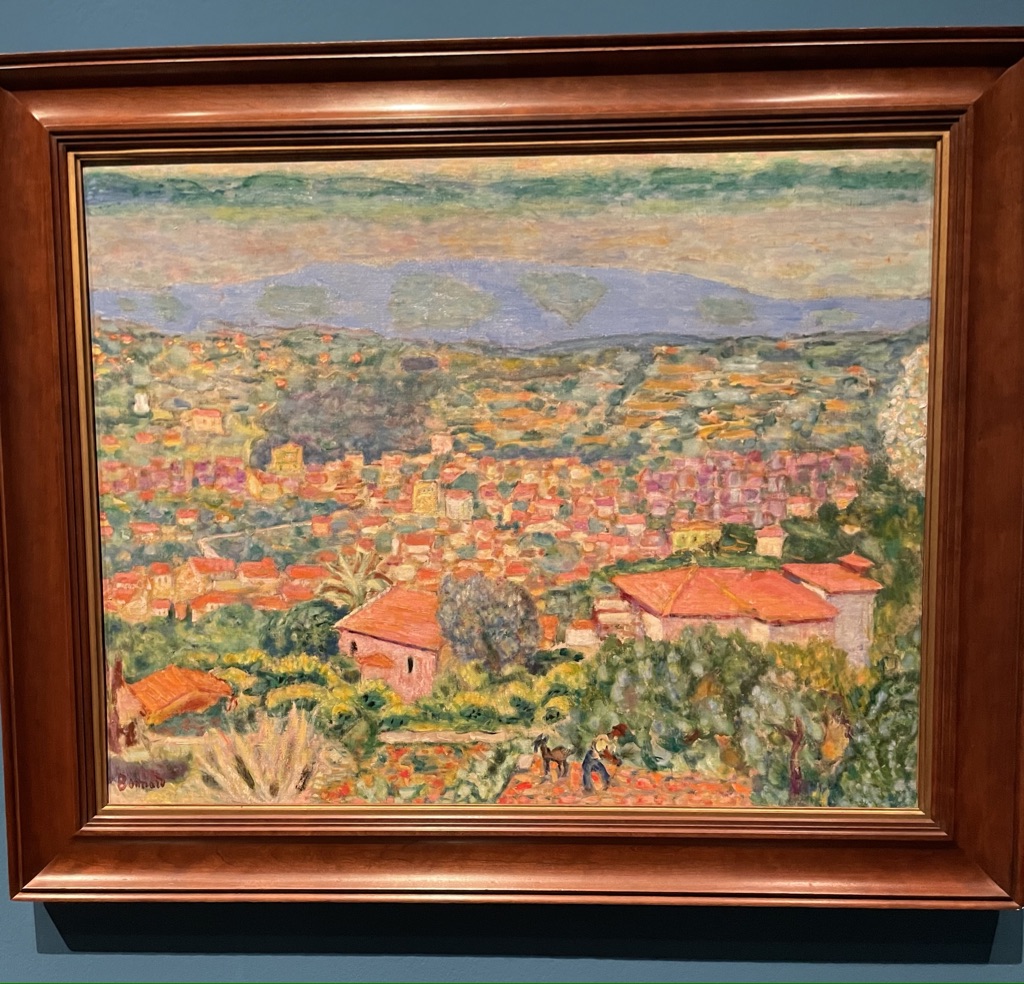
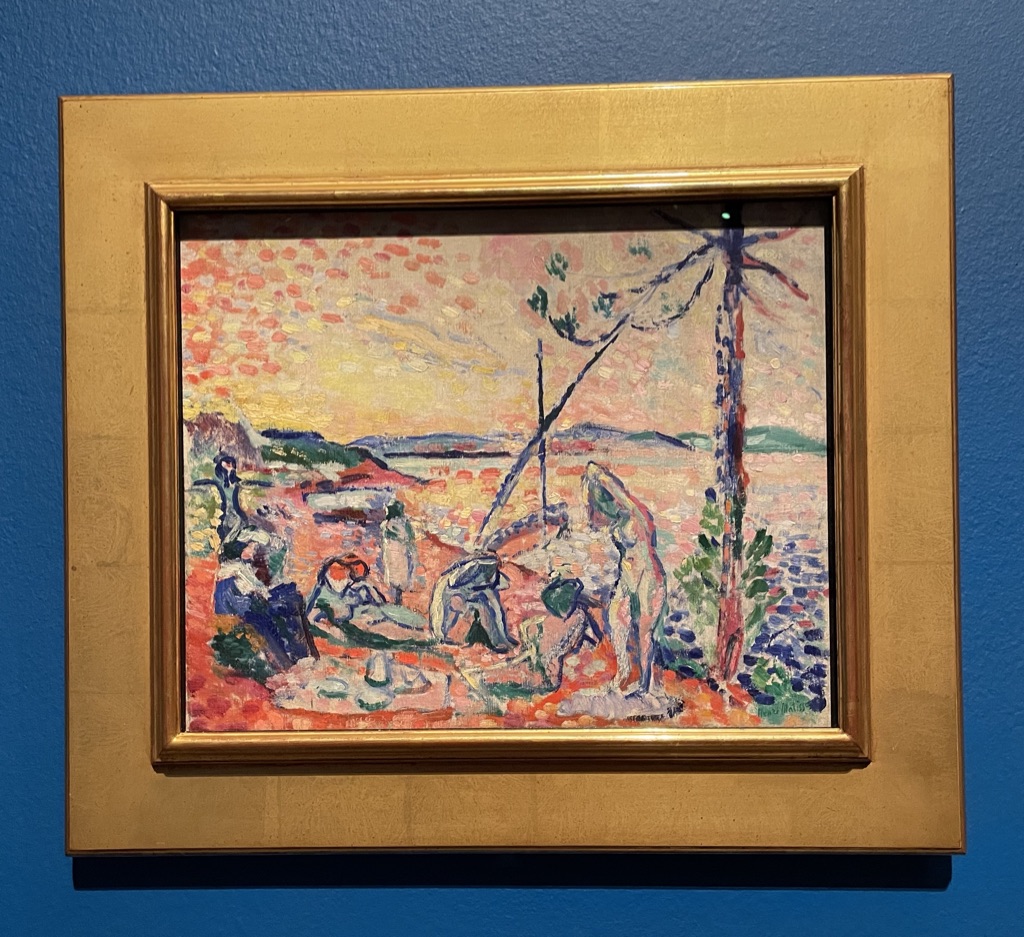
Above: Pierre Bonnard, Panoramic vista of Le Cannet, Henri Matisse, Study for “Luxe, Calme et volupté” 1904 What’s so striking about the paintings is the artists’ desire to capture what they felt about the view rather than producing literal impressions of the view.
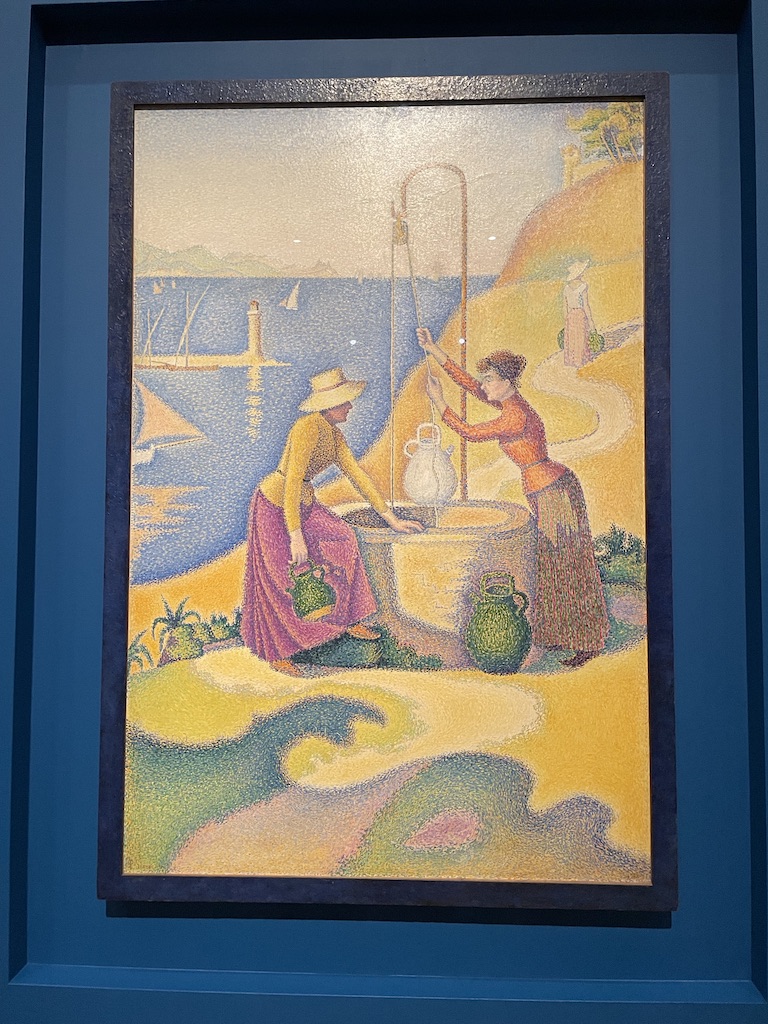
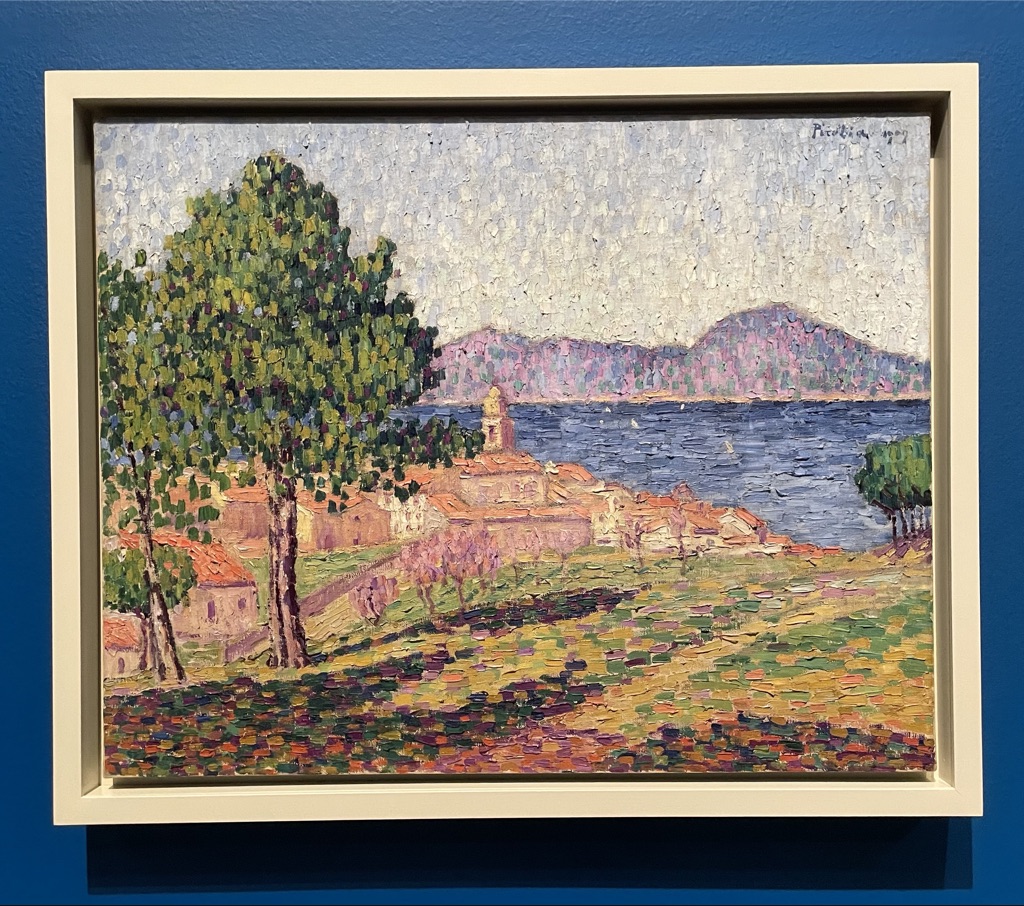
And it was the Riviera which helped bring the ‘pointillist’ style to the fore. Great to see this painting by Paul Signac, Women at the Well from 1892. Complementary colours placed side by side heighten one another’s effect. And on the right is Francis Picabia Saint Tropez, View of the Citadel 1909.
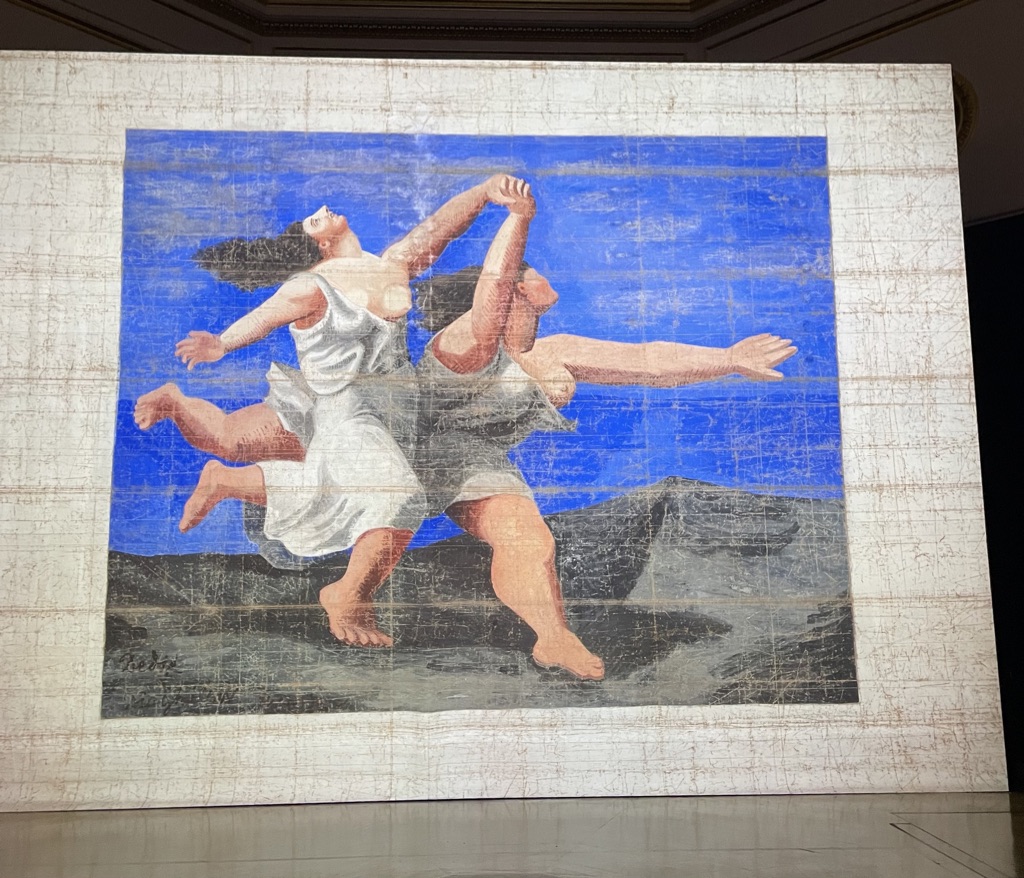
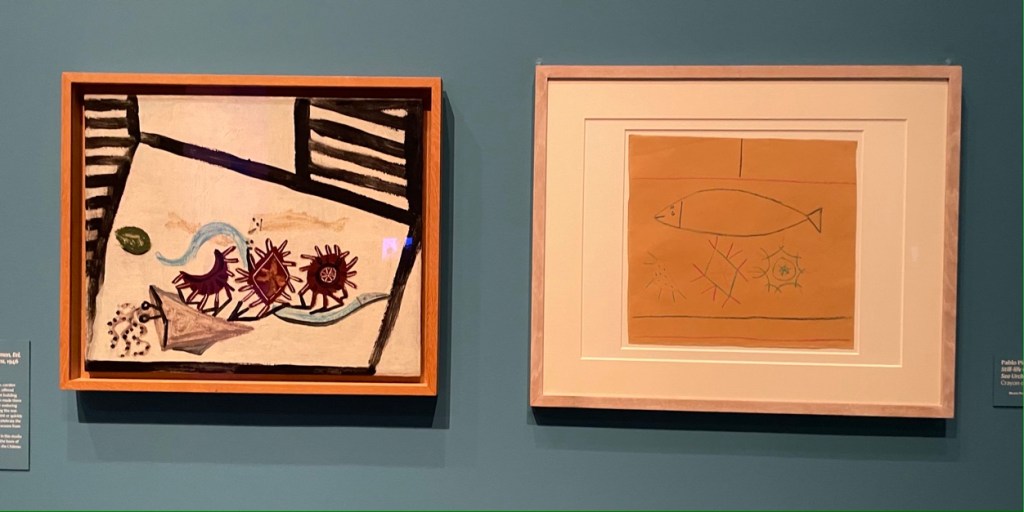
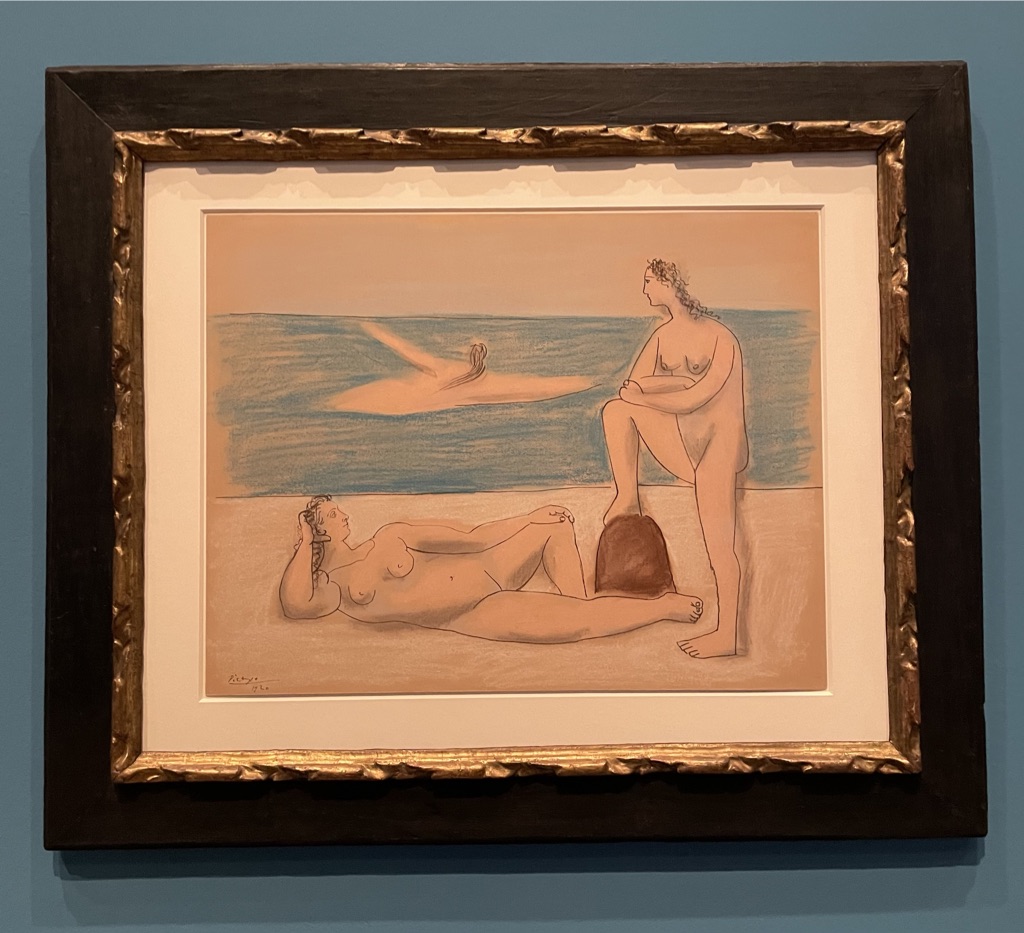
Then, along comes Picasso. He was familiar with the bright Mediterranean light but, after years holed up in Paris during the occupation this was a great ‘release’ for him. And he captures the spirit and freedom of this seaside place as it became a hedonistic retreat for pleasure seekers.
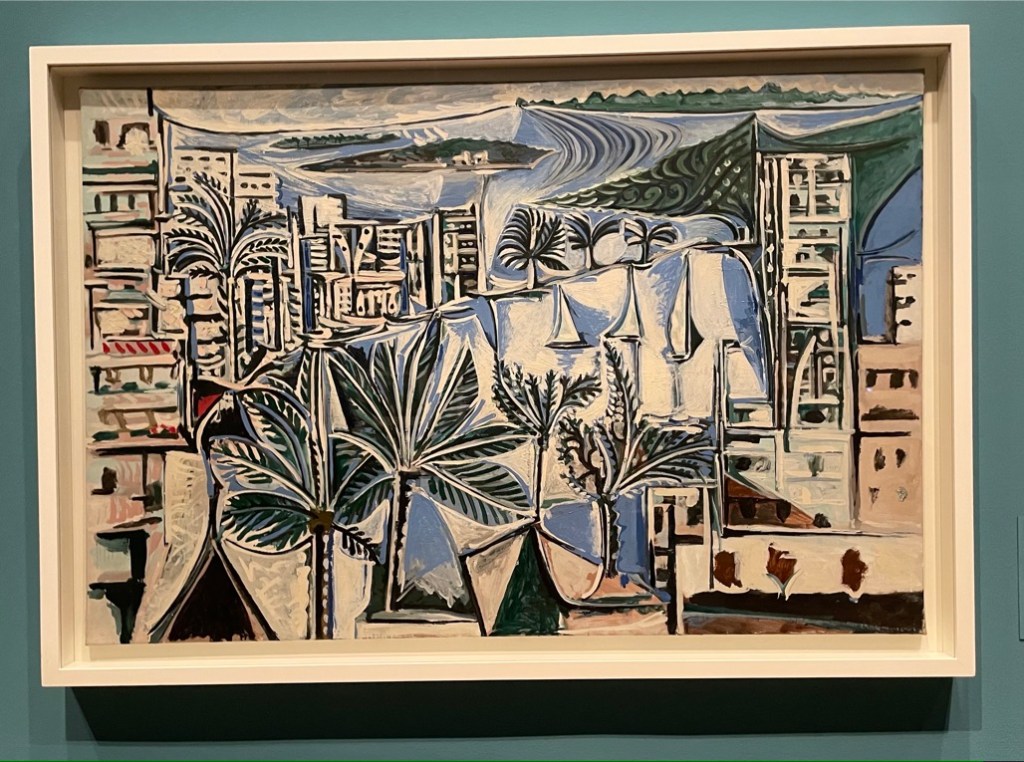
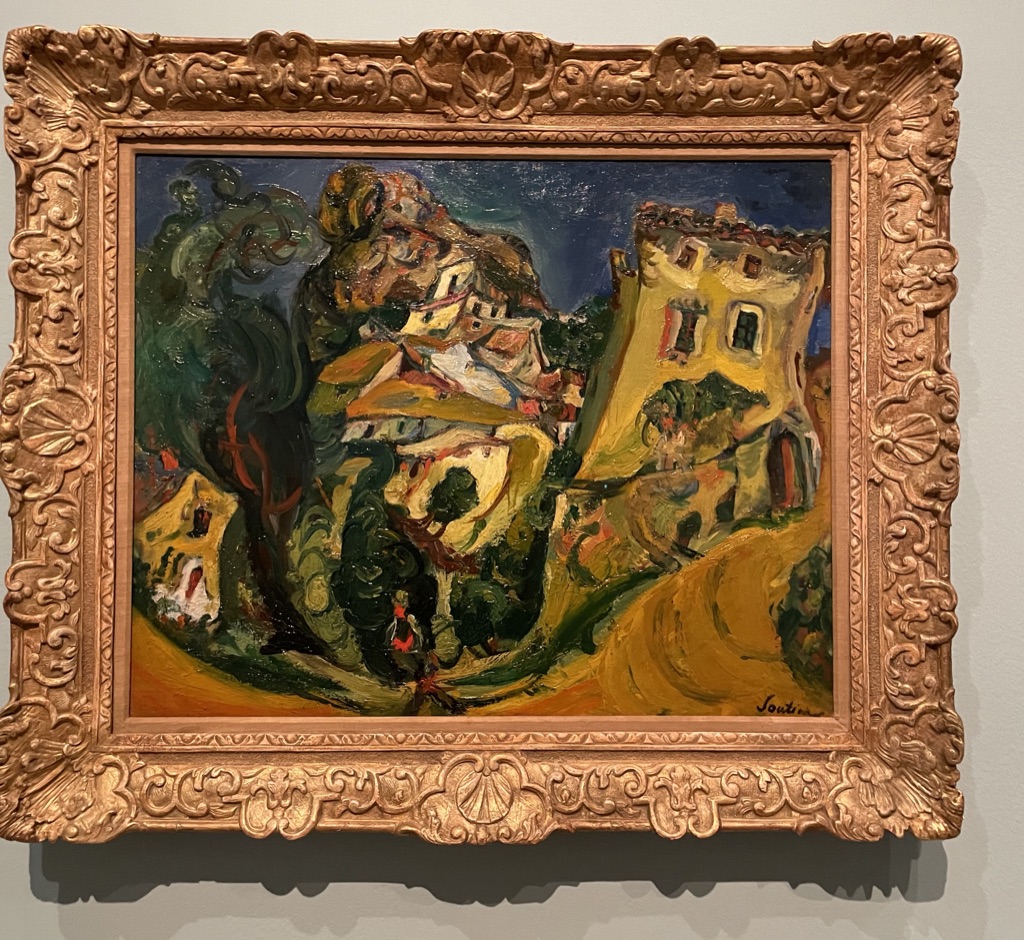
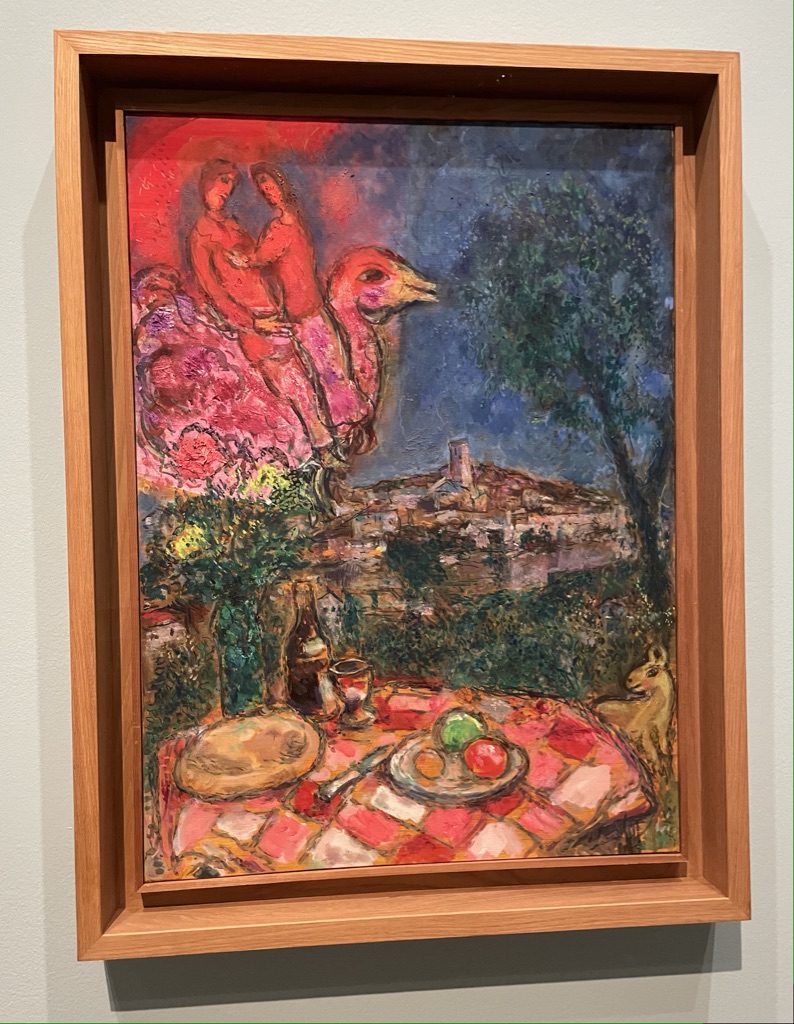
The modernists present very different but dynamic impressions of the same views. From left to right: Picasso, Bay of Cannes 1958, Chaim Soutine, Landscape at Cagnes, 1923, and Marc Chagall, Table before the Village, 1968.
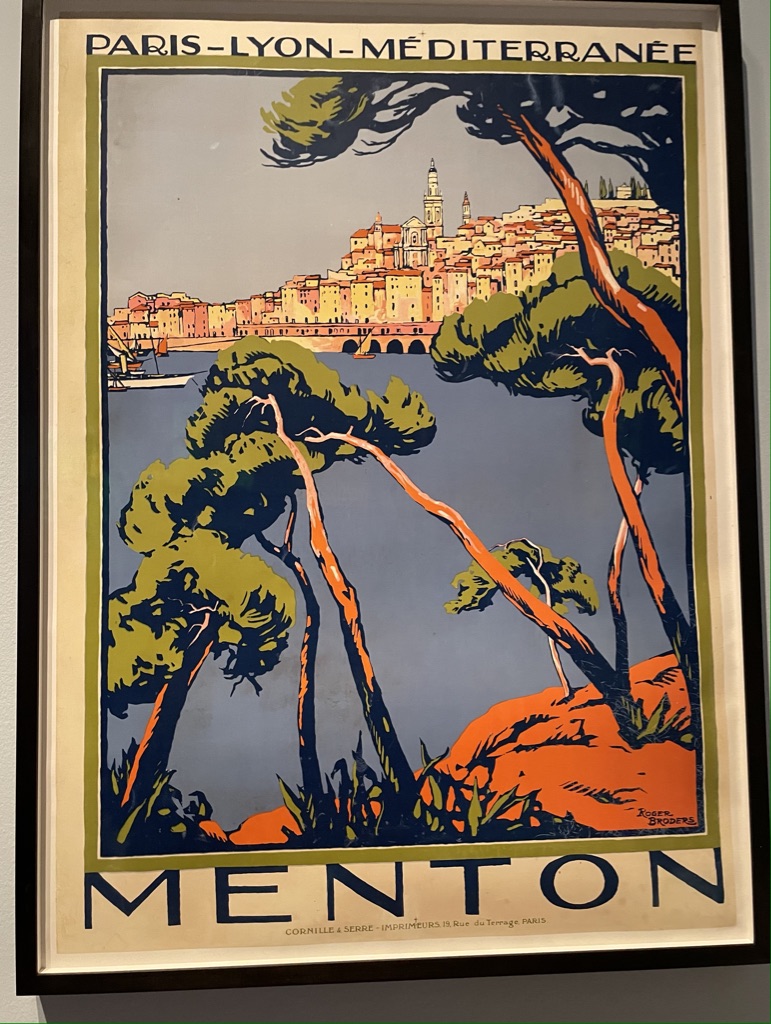
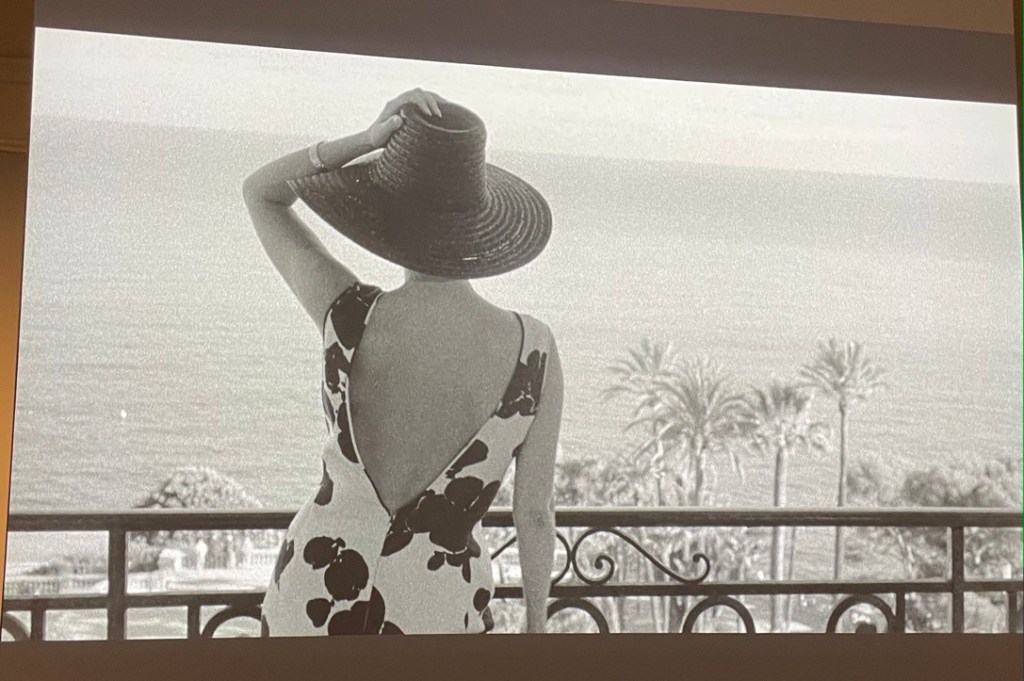
There’s a lovely display of posters advertising the joys of the Riviera and clips from films celebrating the beautiful views. Middle is a shot of Alfred Hitchcock’s To Catch a Thief with Grace Kelly and Carey Grant and the back view of Jeanne Moreau on a hotel balcony in the film Baie des Anges.
Basically, I want to go to Riviera right now! The show is on at the Royal Academy of Art until 31 January 2027.
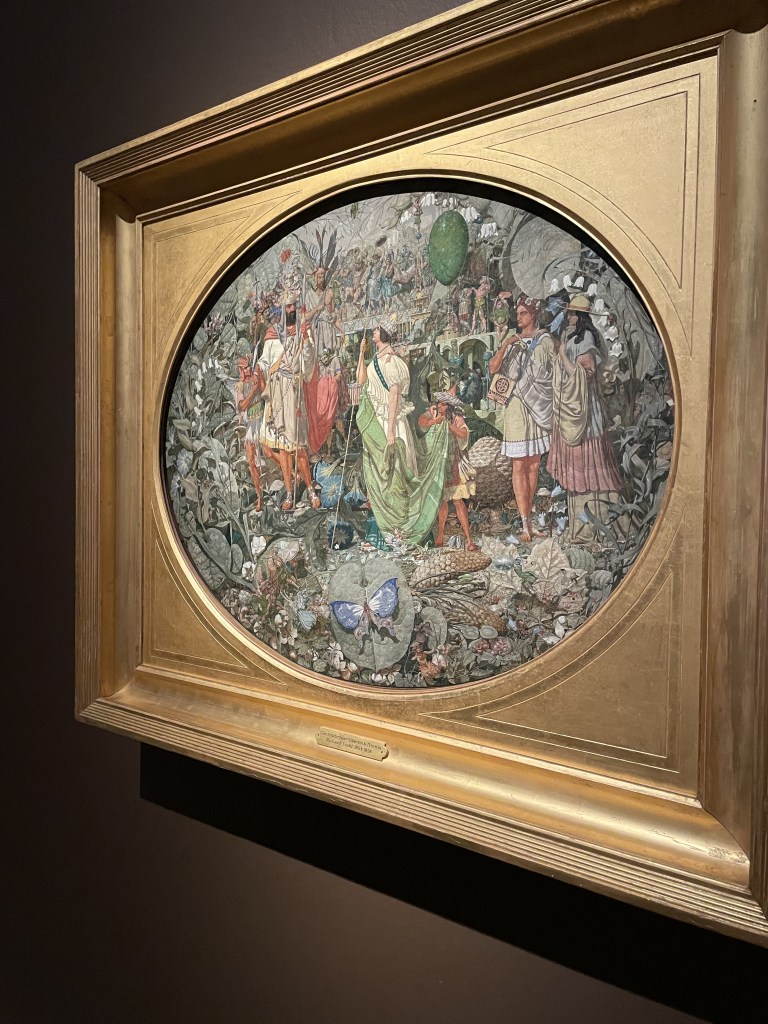
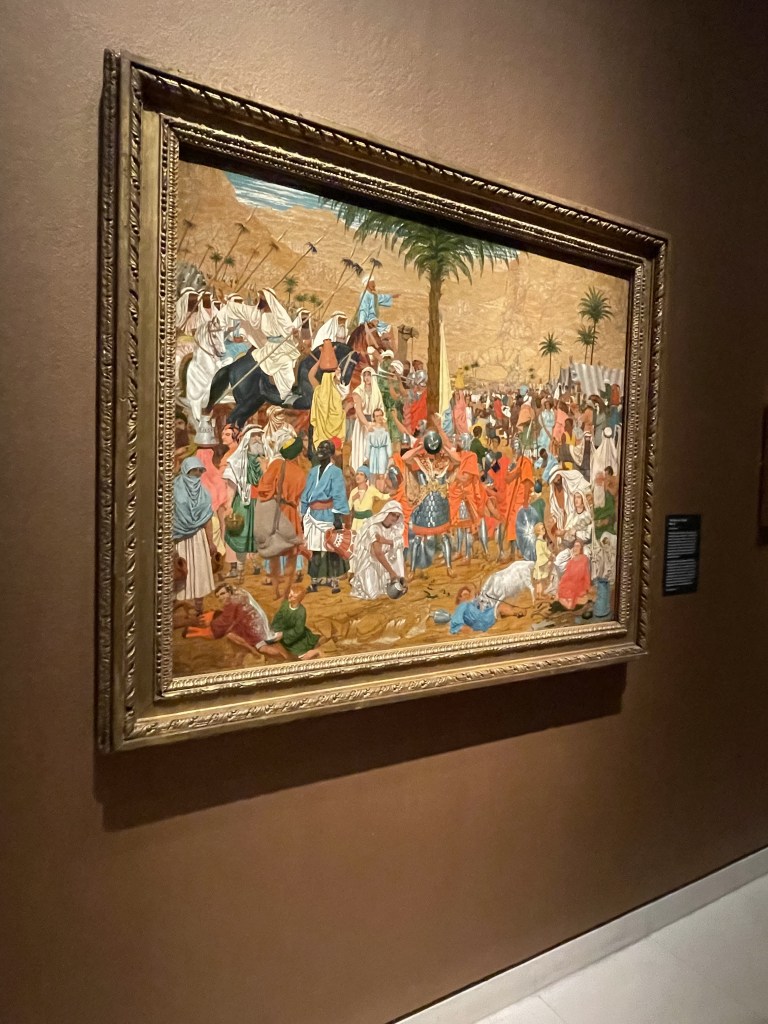
Above is an amazing painting called Contradiction. Oberon and Titania (1854-58). It’s based on events in Shakespeare’s play A Midsummer Night’s Dream and feature’s the couple’s argument over who should adopt the ‘little changeling boy’. I’m not allowed to photograph close ups but you can see some of the detail in the picture.
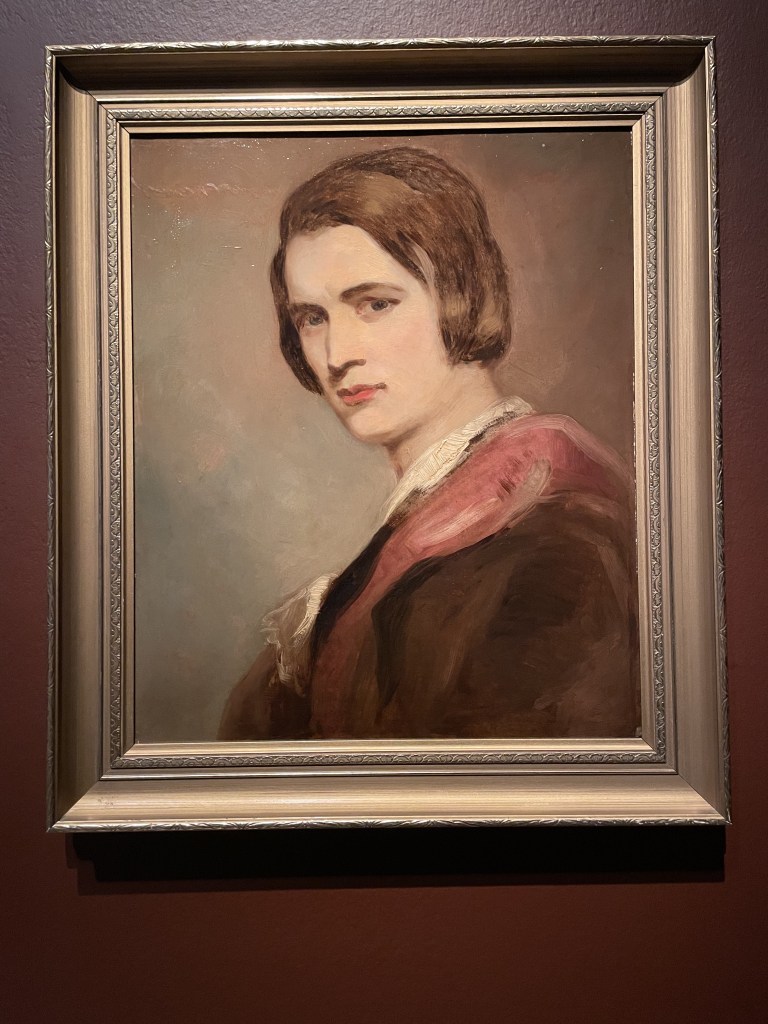
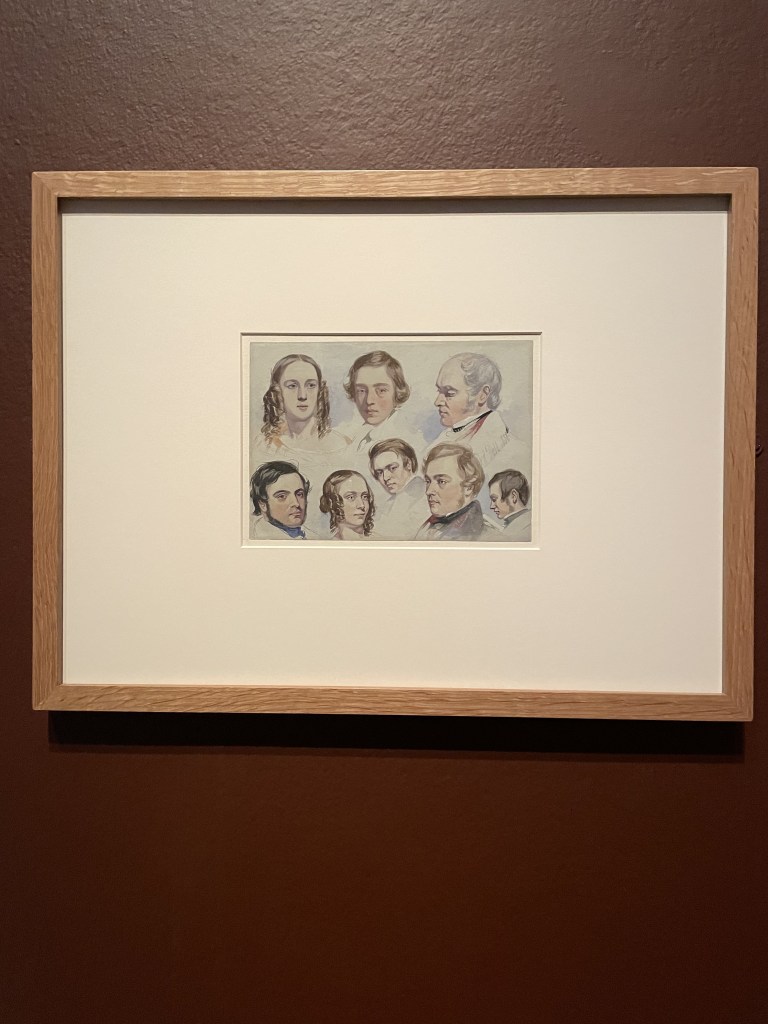
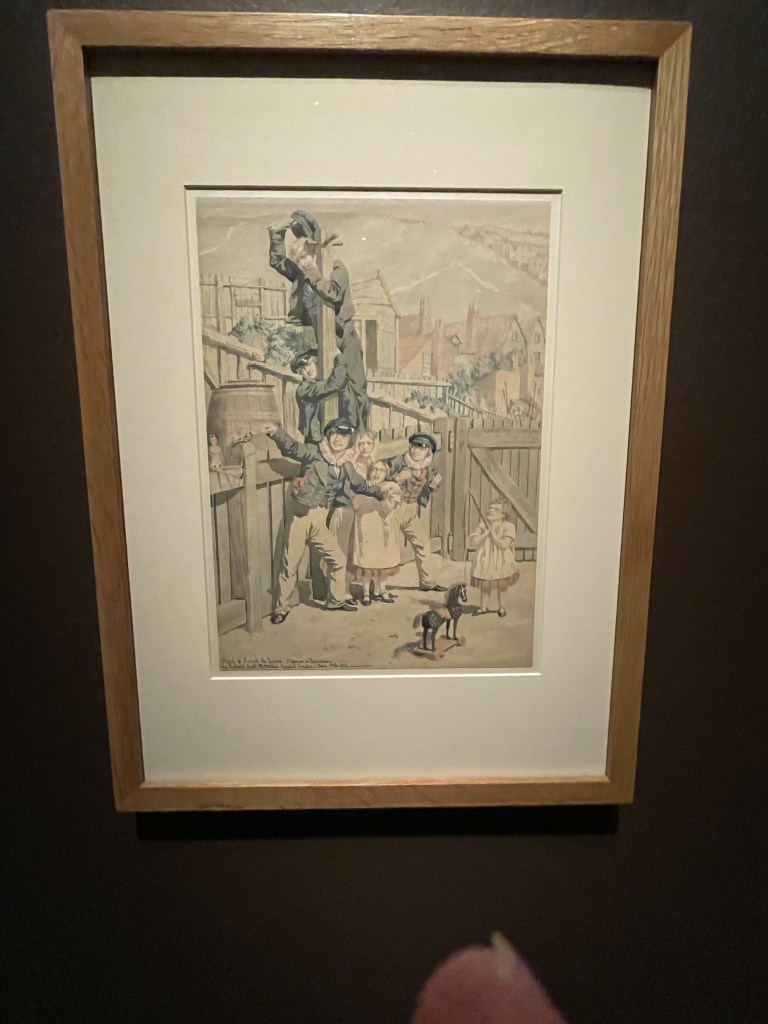
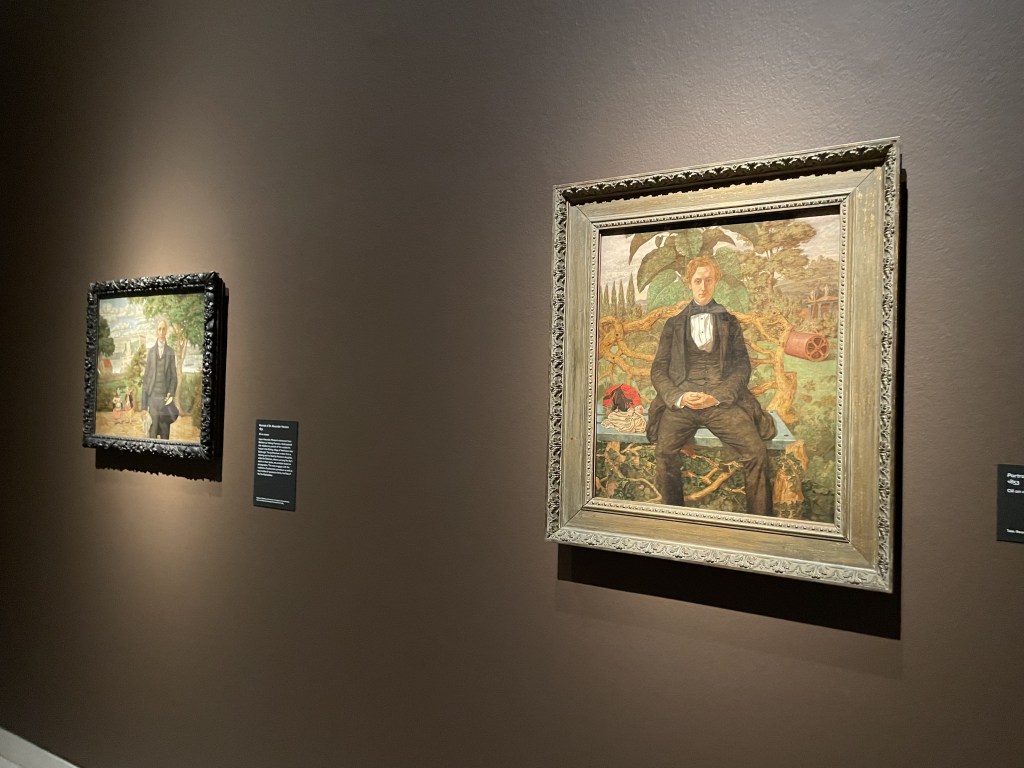
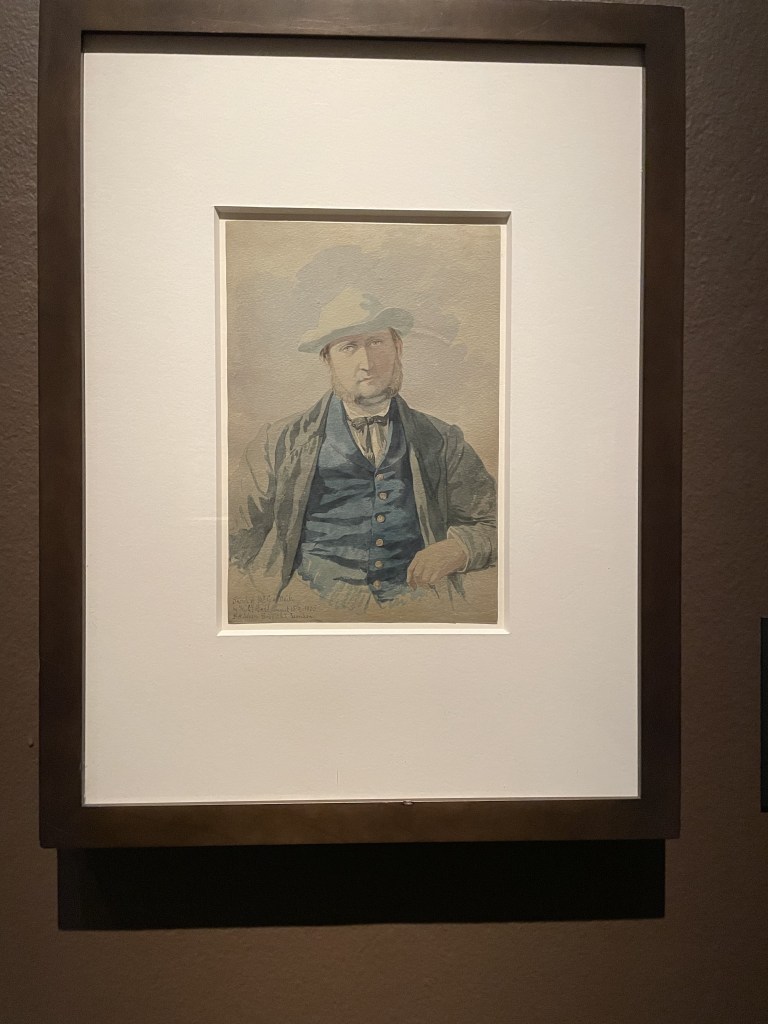
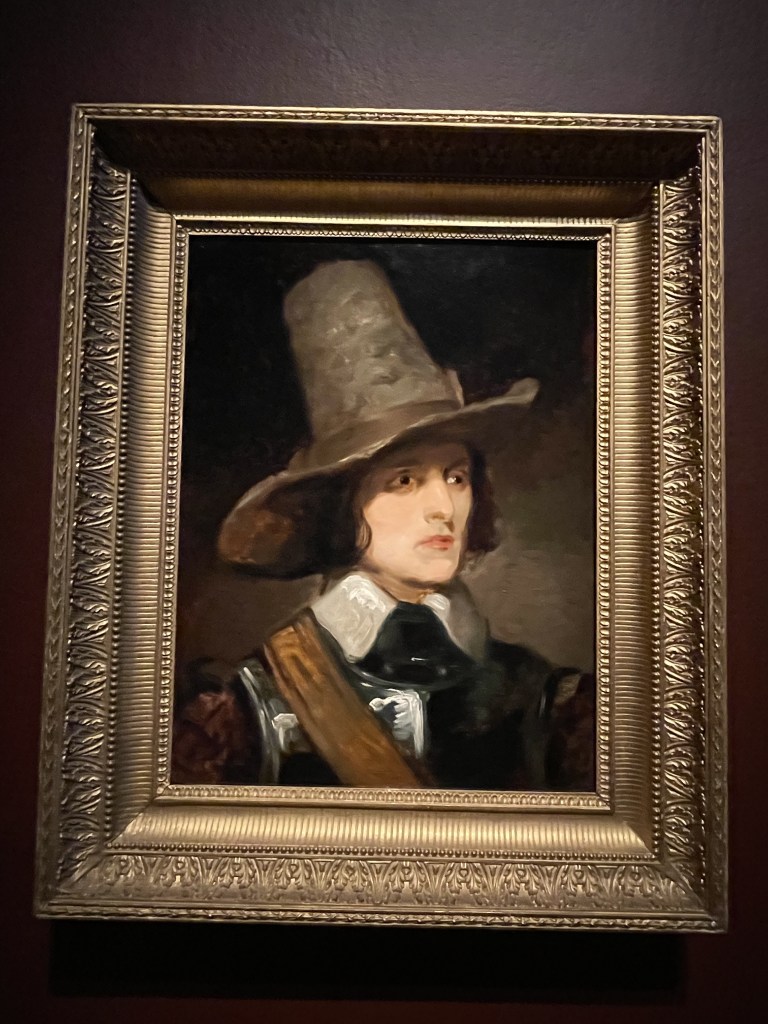
Richard Dadd was a precociosly talented artist from a young age. Above is a self-portrait in oils along with studies of his family done in watercolour in 1838 when he was 21 – Dadd is top row centre. His father is top right. Having been taken on a ‘grand tour’ around eastern Europe and Egypt as a new graduate of the Royal College of Art, he started having ‘delusions’, believing himself to be the son of the Egyptian god, Osiris. On his return he murdered his father and attacked another man. Despite escaping to France he was arrested and sent back to England. First of all he stayed in the security of Bethlam – known as Bedlam – in Lambeth and then to Broadmoor, a newly established hospital for the insane.
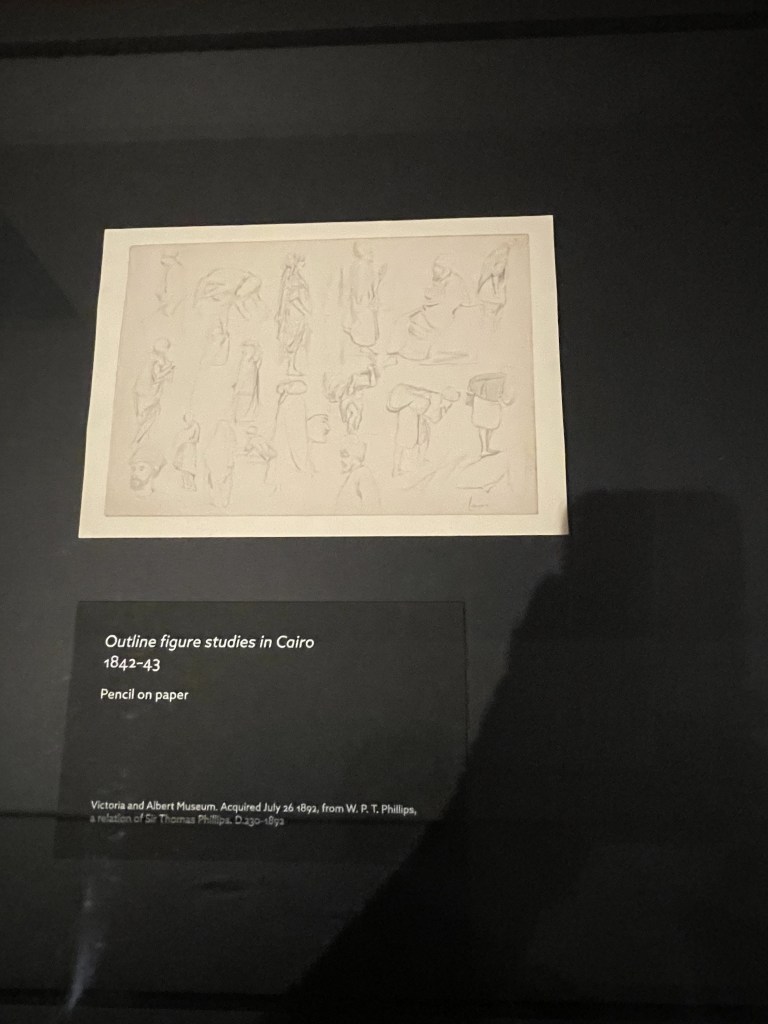
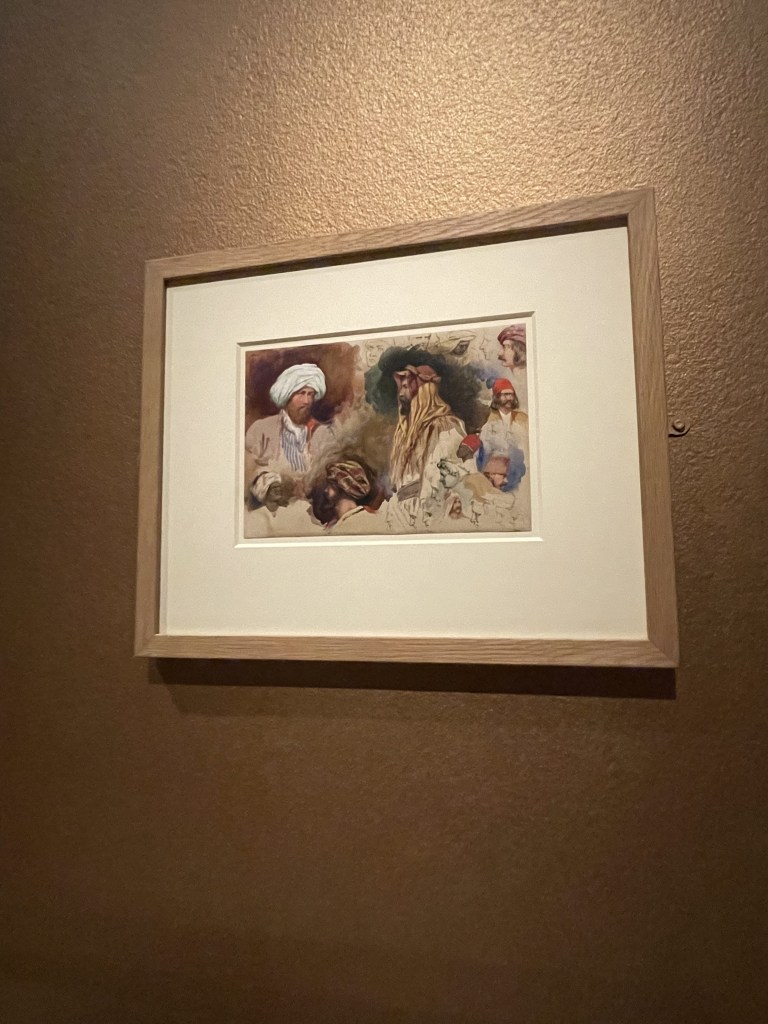
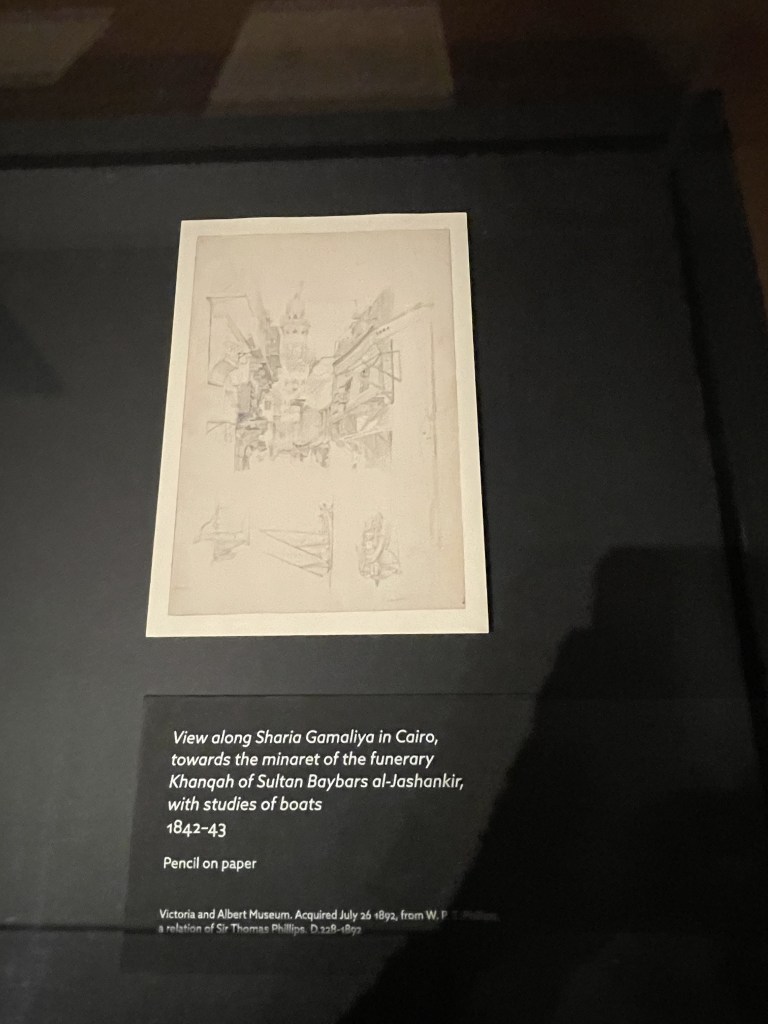
Whilst at Broadmoor Dadd used his sketchbooks from his travels and his vivid memory to create extraordinary paintings which conjure the romance of his travels and stories from history in Egypt.
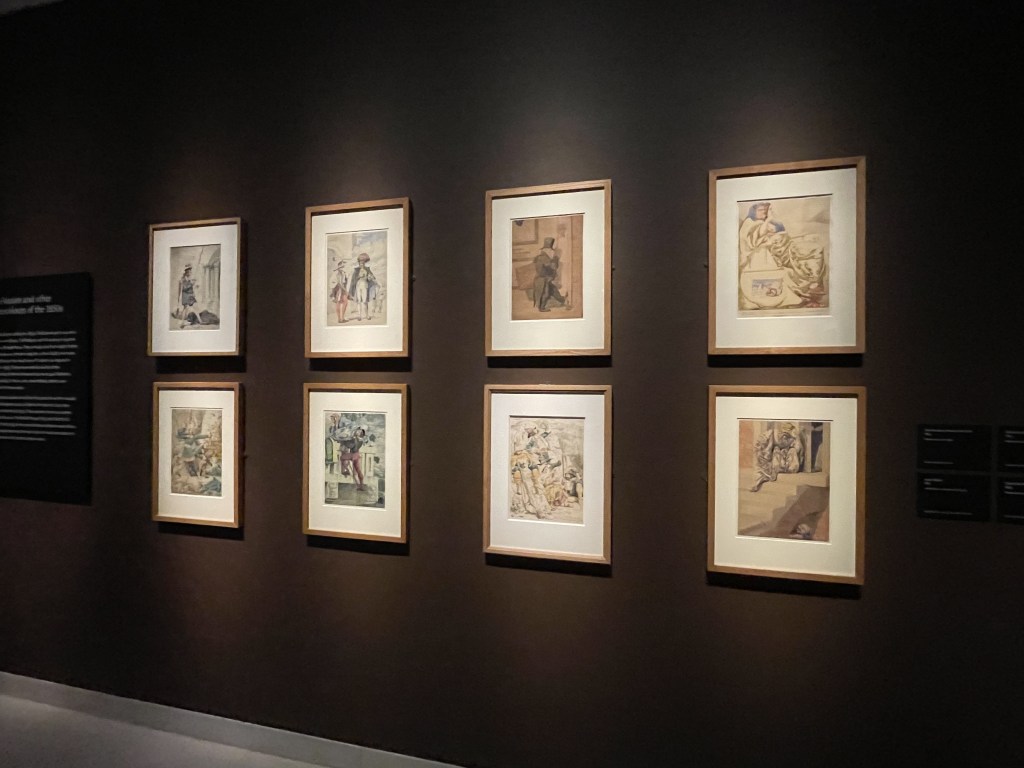
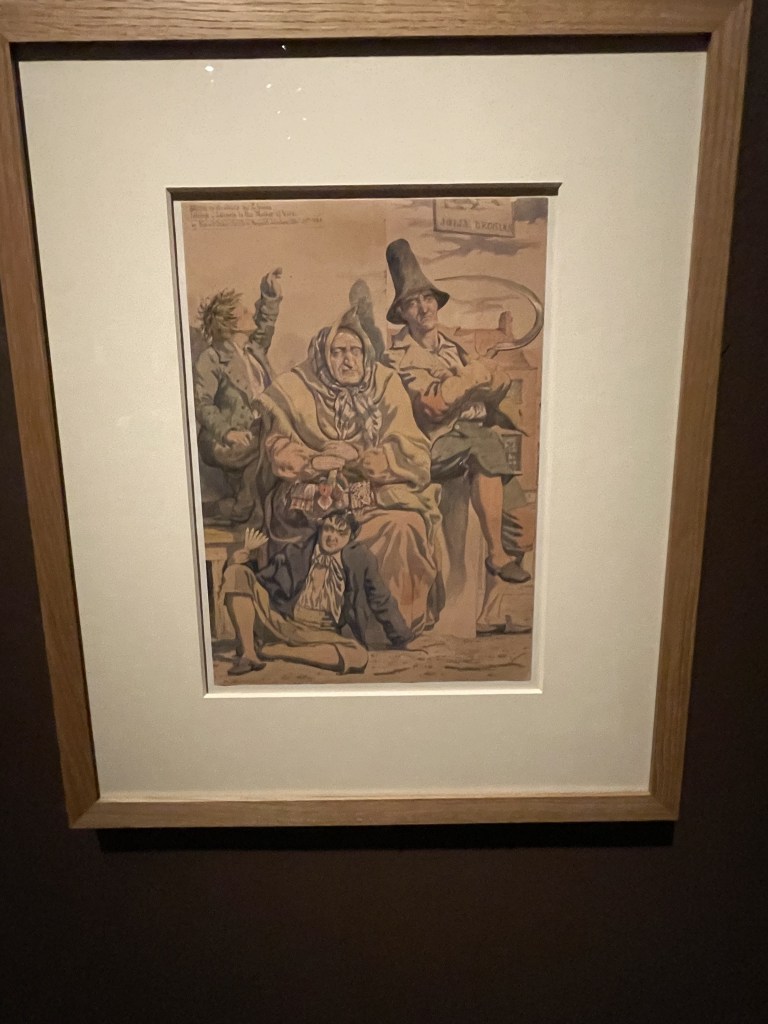
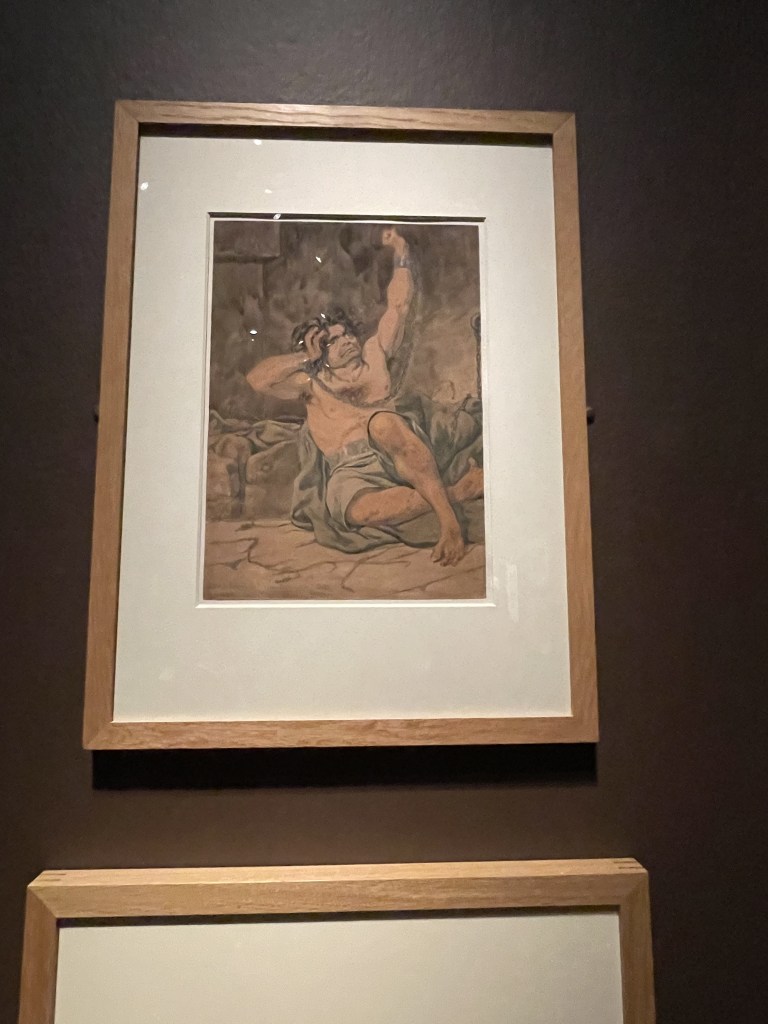
Dadd created a series entitled ‘The Passions’, depicting extremes of emotion and human motivation .
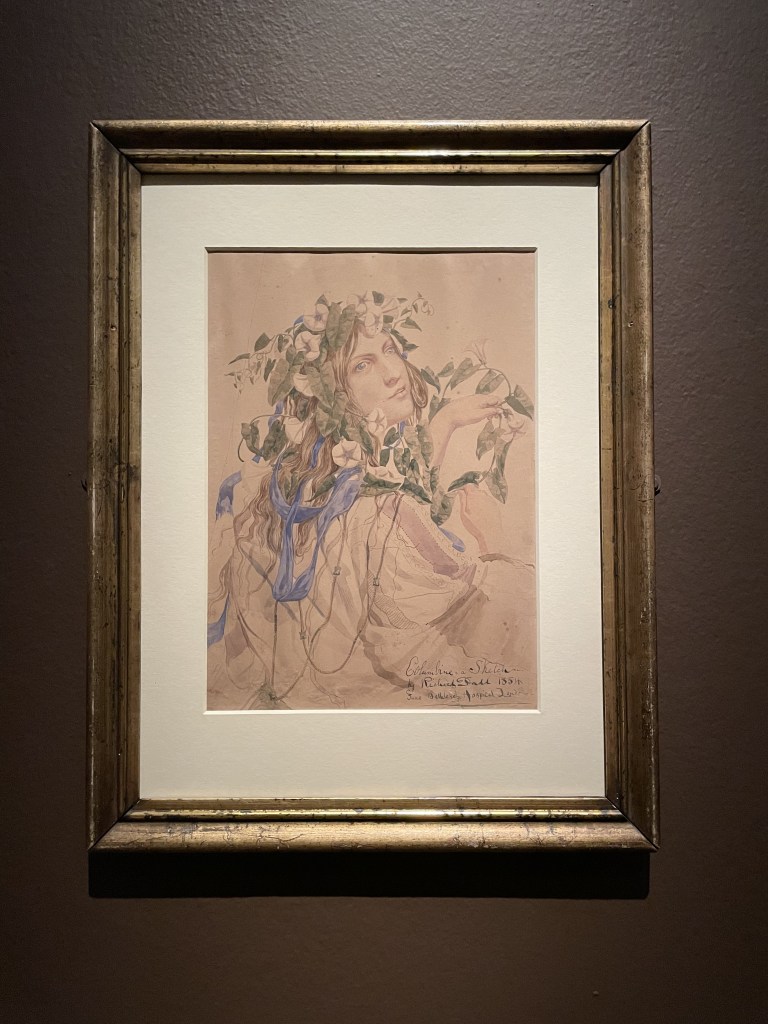
The watercolours are full of narrative detail and strange emotion. Above is a very sensitive portrait entitled Celandine which shows how delicate and carefully composed his imaginative paintings were.
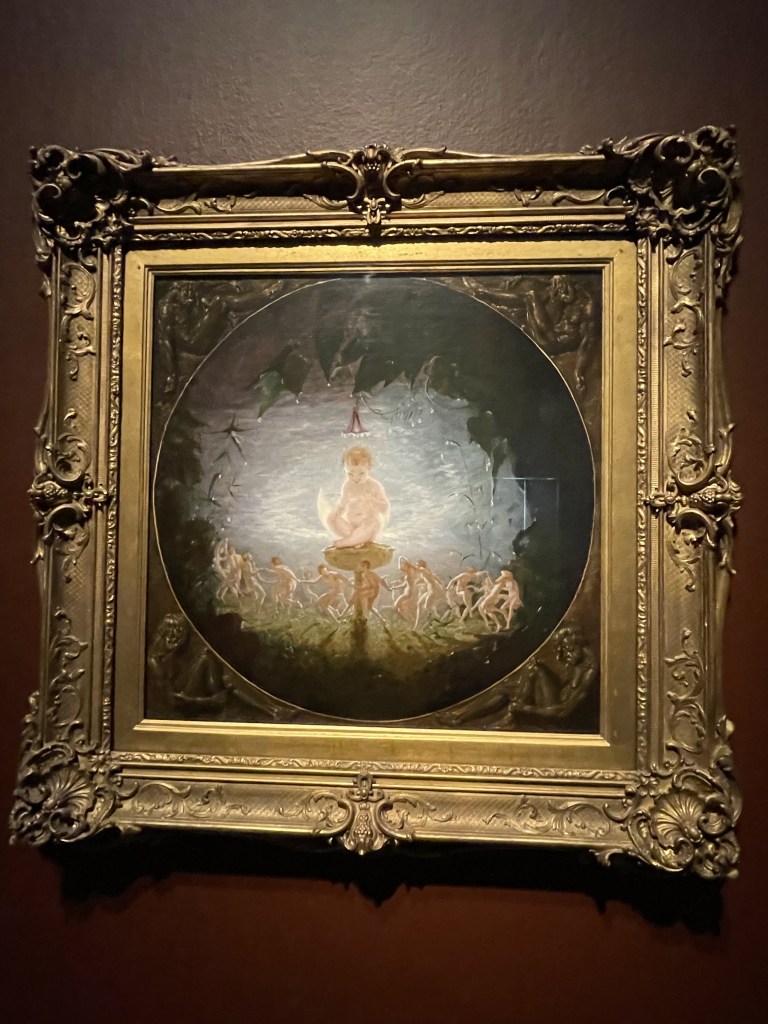
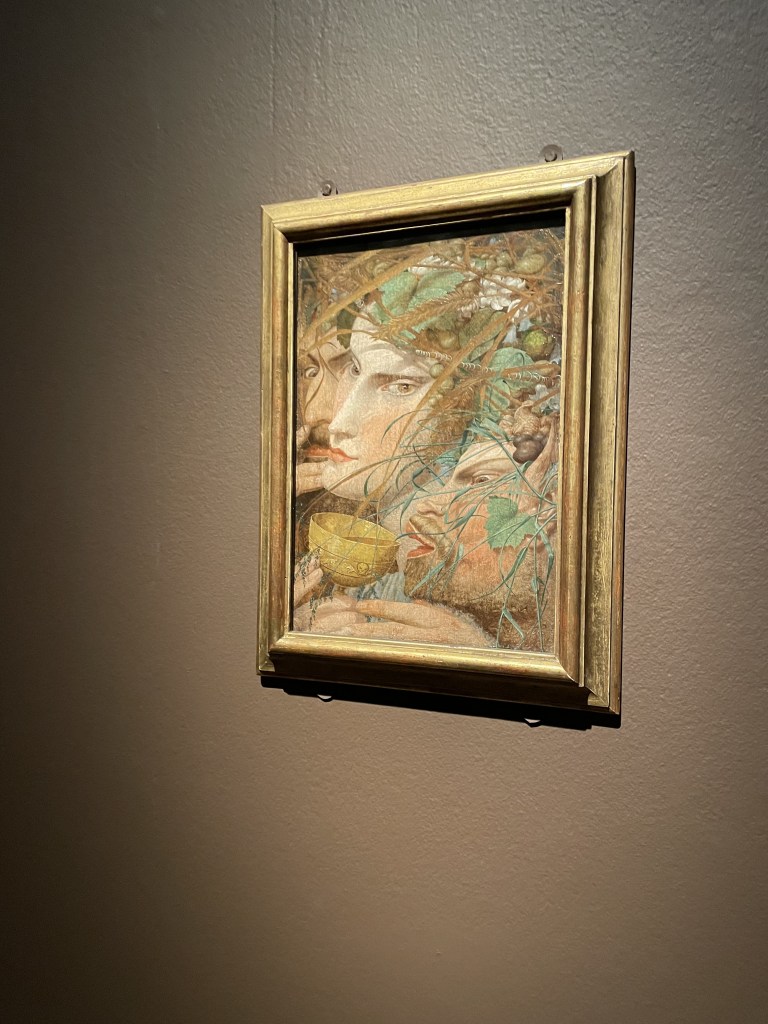
On the left is Dadd’s early work depicting fairies. This one is entitled ‘Puck’, the mischievous fairy from Shakespeare’s A Midsummer Night’s dream surrounded by dancing fairies. This picture, along with other impressions of an uncanny, magical world, attracted positive attention and launched the young artist. After his travels, the disastrous mania, the murder of his father and life in a secure prison, Dadd returned to these themes in later life and painted fabulously detailed fantasy scenes .
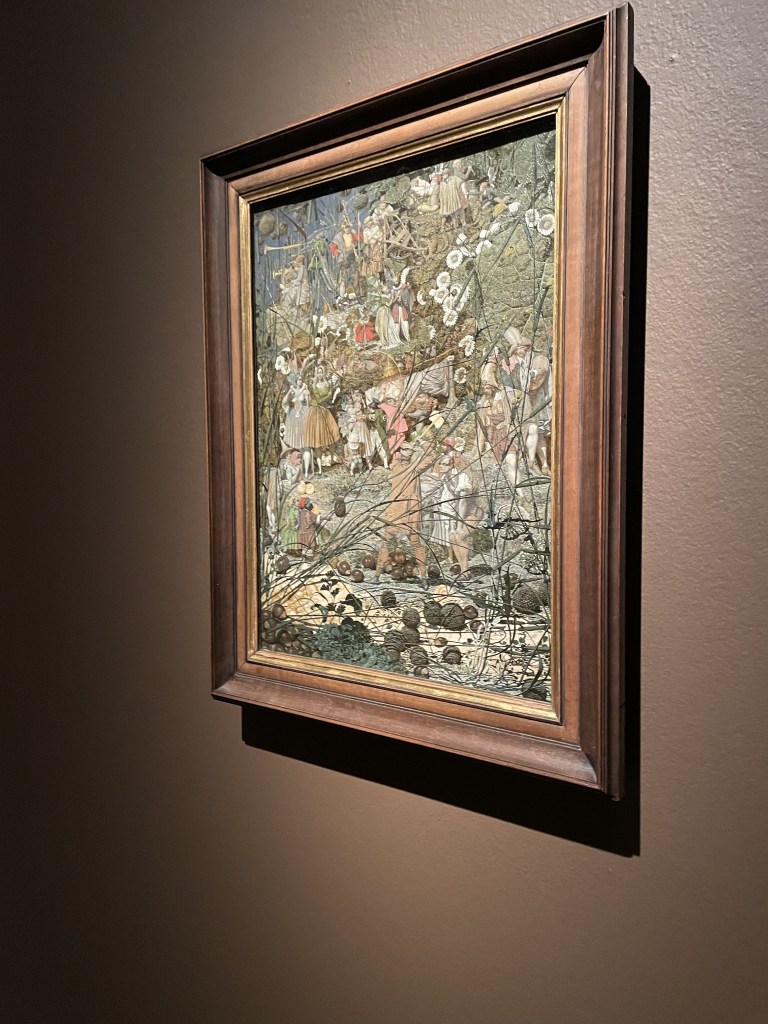
This work, above, The Fairy Feller’s Master Stroke took ten years to paint. You can stare at it for ages and keep seeing new faces, figures and forms appearing in the textured paint.
A truly enchanting show which rightfully celebrates an extraordinary artist who, one could argue, benefitted from incarceration because it gave him time to explore his own wild imagination and he was encouraged in his art by the doctors who ‘managed’ him during his 43 years of incarceration, offering him materials and portrait commissions.
The show is on at the Jillian and Arthur M Sackler Wing at the Royal Academy of Arts on Piccadilly until 25th October 2026.
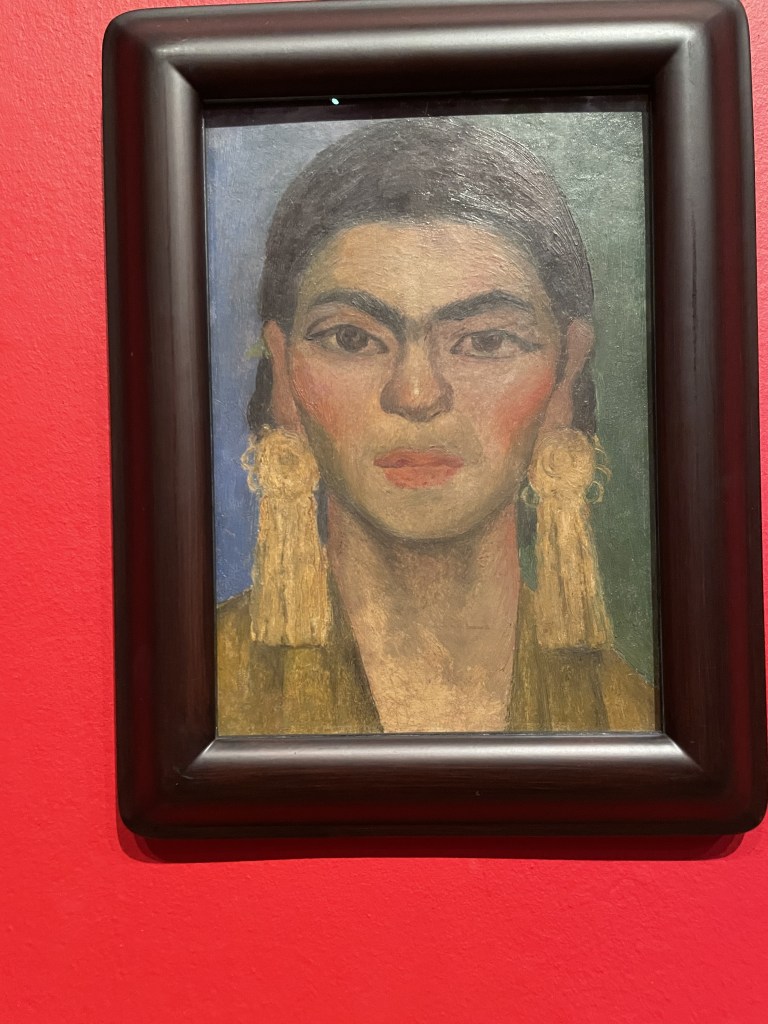
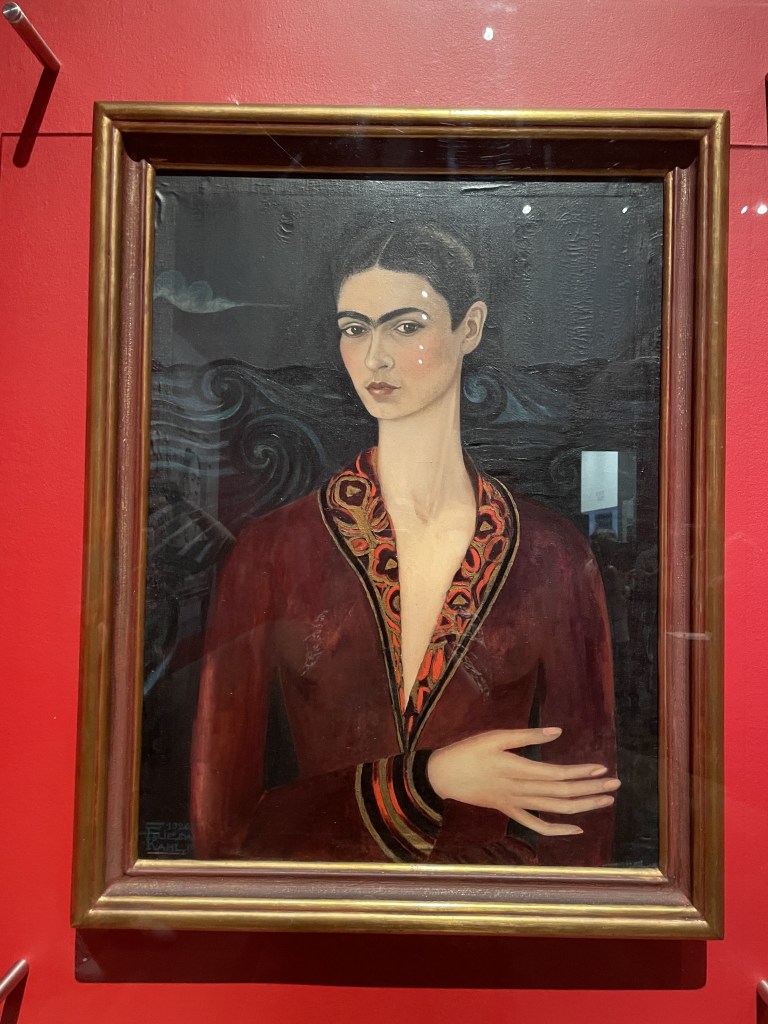
I’ve always admired Frida Kahlo. Her art is so compelling, so confronting and often full of pain, sadness and honesty. When you combine these powerful images with what we know of her life story then you have someone with true ‘iconic’ quality (a much over-used description for so many) and a reputation which has endured and grown since her death in 1954.
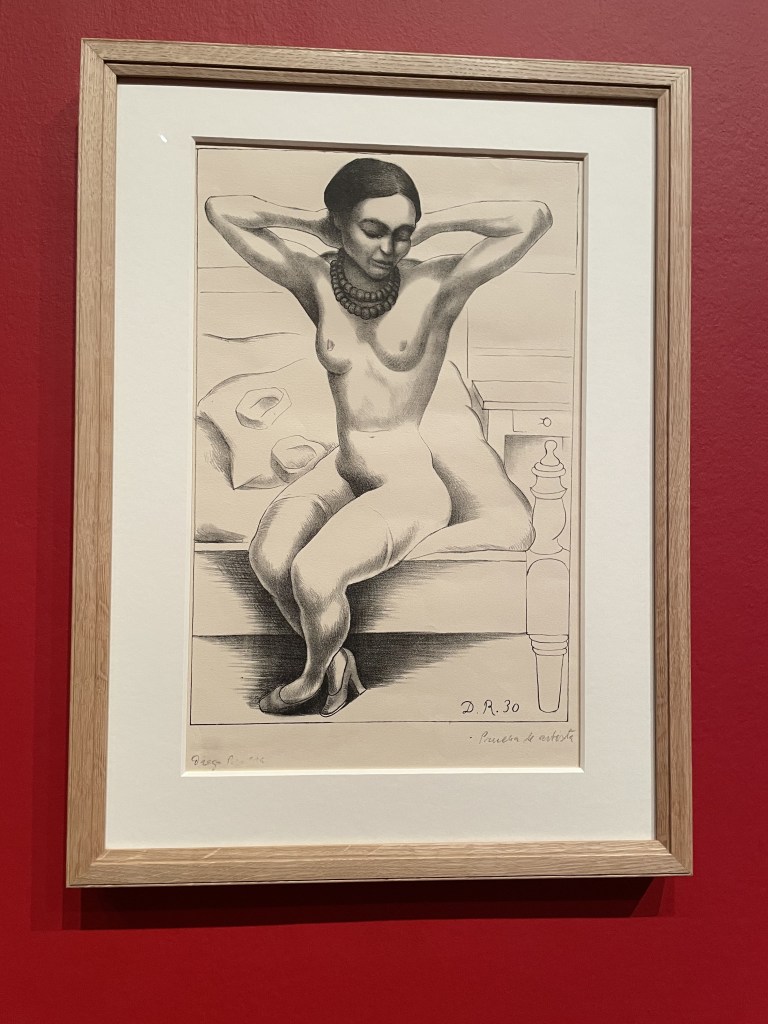
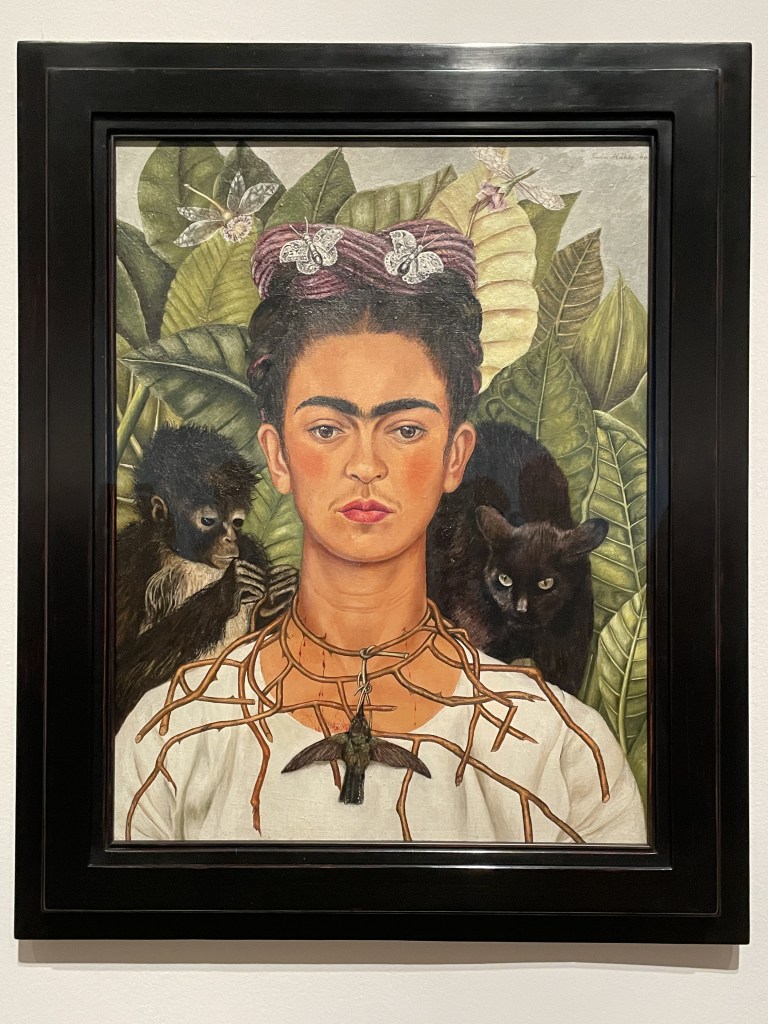
Above: portrait of Frida by Diego Rivera and her first self-portrait (In a Velvet Dress) from 1926.
This exhibition looks at Kahlo’s work – with an impressive collection of rarely-seen works – and then examines how she has influenced other artists who have been inspired to interpret, copy, imitate and express her work and elements of her life.
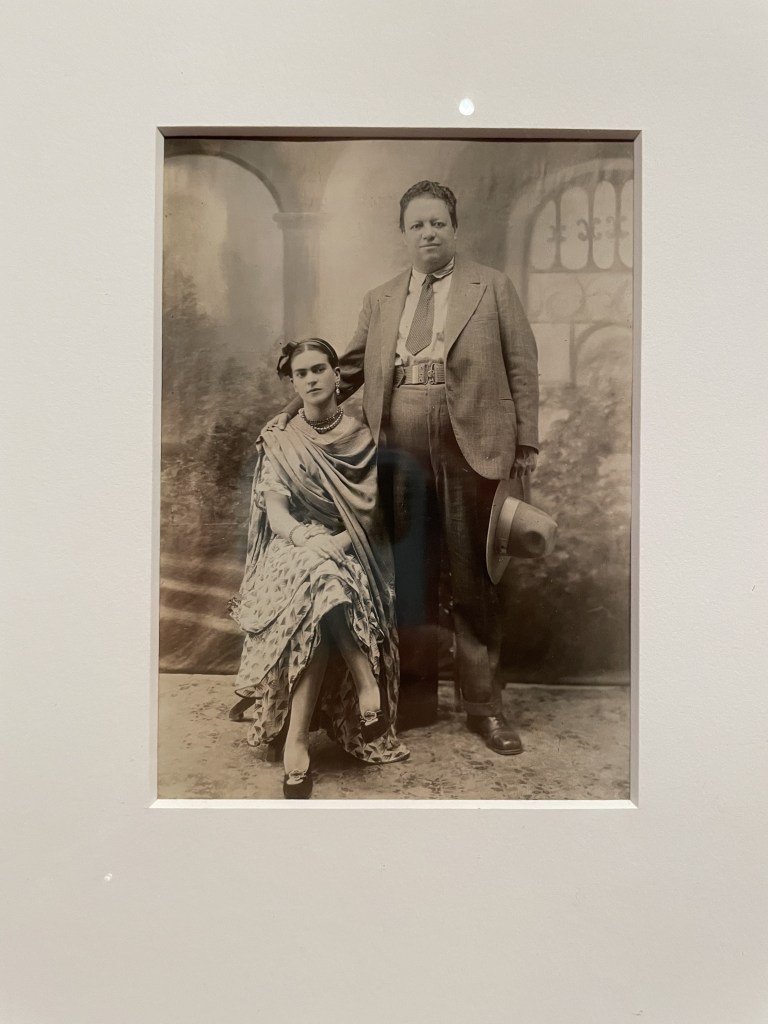
To begin with, Kahlo was known as the wife of Mexican artist Diego Rivera, ‘who also painted’. It’s clear that he considered himself the better artist yet, when you see his work in the same gallery as hers, it’s clear that she was superior. However, she coupled herself to him, and took a secondary role in their relationship. But, where his international flame has waned, hers has burned brightly, gaining momentum in the 1980s and 90s.
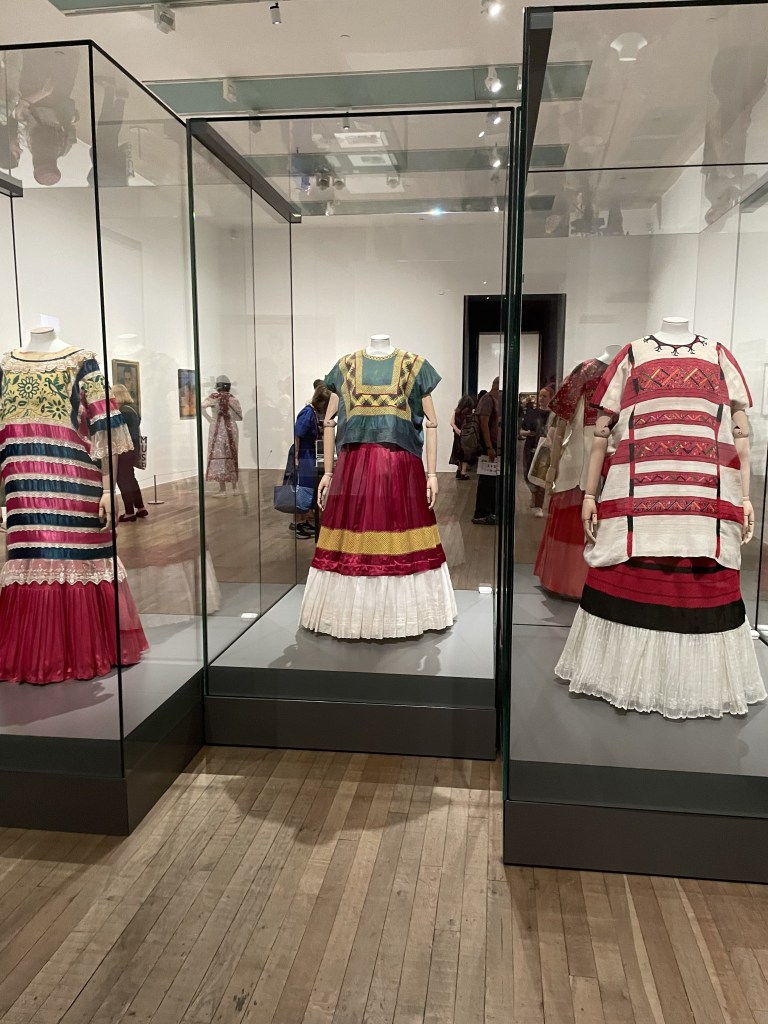
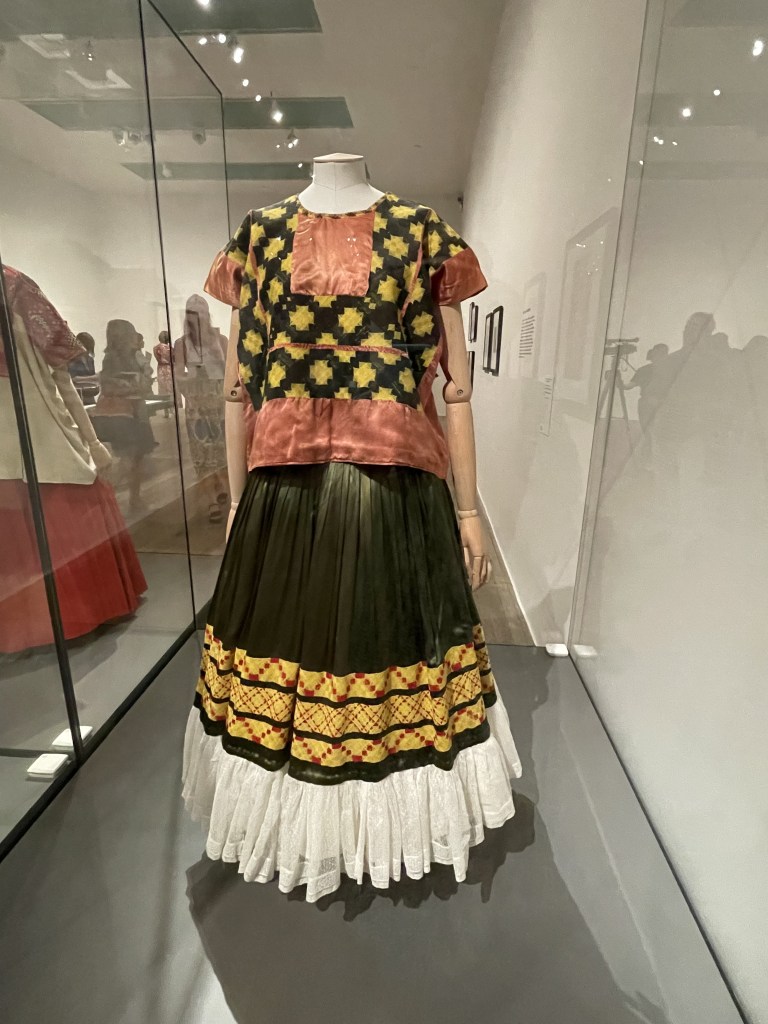
Proud of her Mexican heritage, Kahlo was always seen wearing traditional outfits, tehuana dresses, and four of them are presented here.
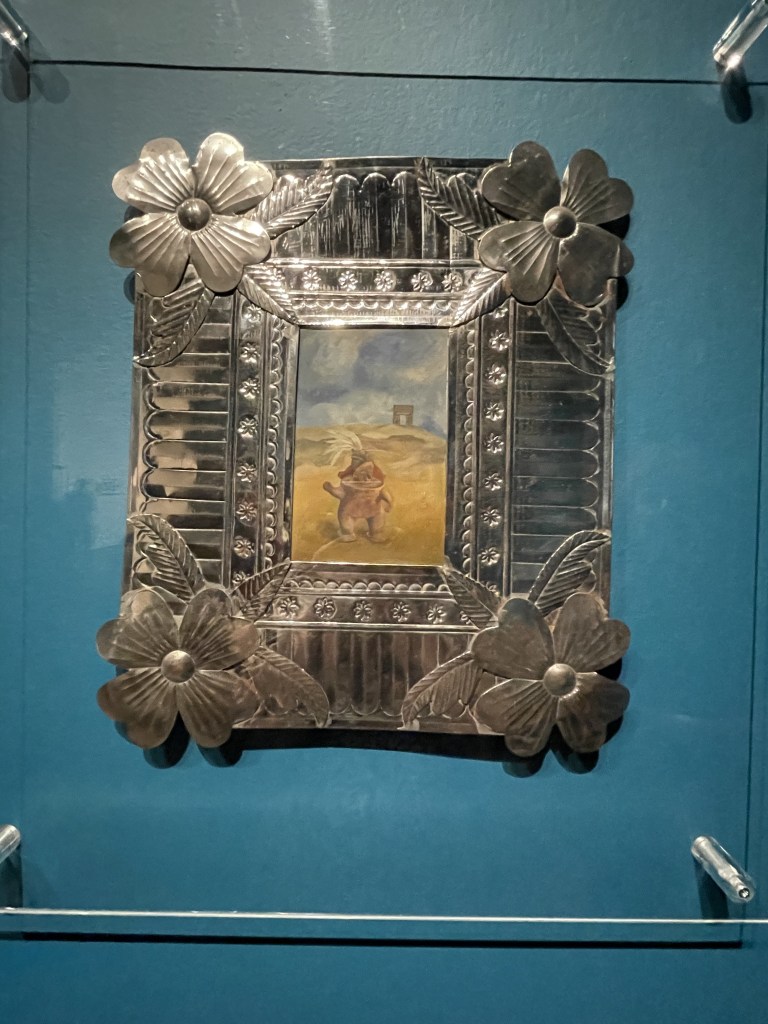
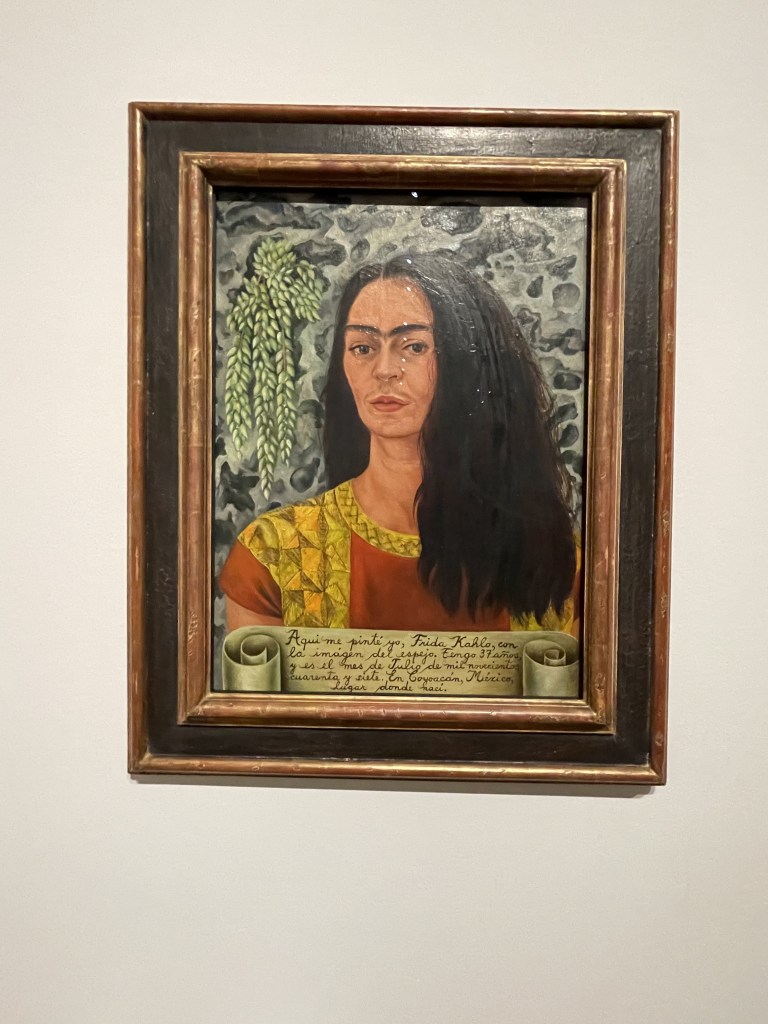
I enjoyed having the chance to view Kahlo’s self-portrait with loose hair (1947) which references traditional devotional paintings. I also, really liked this tiny painting of a ceramic sculpture of a warrior, originally found in a burial site in Coima, Mexico. She also created Oaxacan tin frame which is astounding.
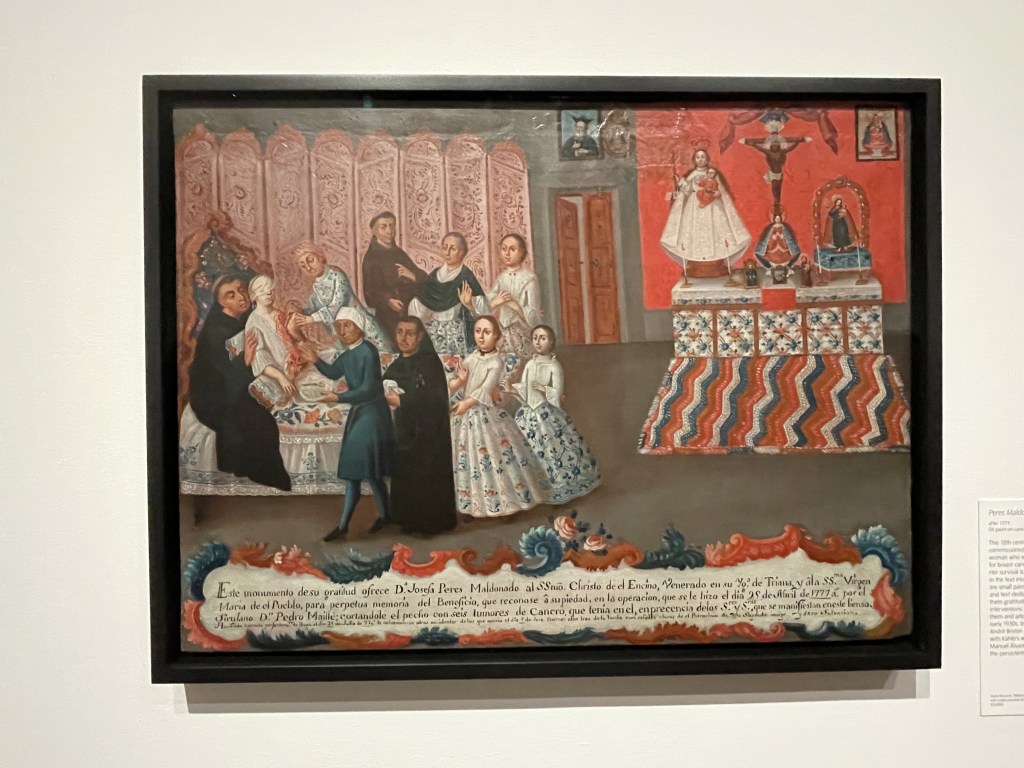
This painting is quite gruesome. It’s by Peres Maldonado (after 1777) and illustrates a woman’s breast being surgically removed. She looks remarkably serene given the ghastly operation to remove cancer. This painting has been included in the exhibition because, apparently, it influenced Kahlo in the way she started presenting her self-portraits and other painted works, using text and a very graphic, illustrative style.
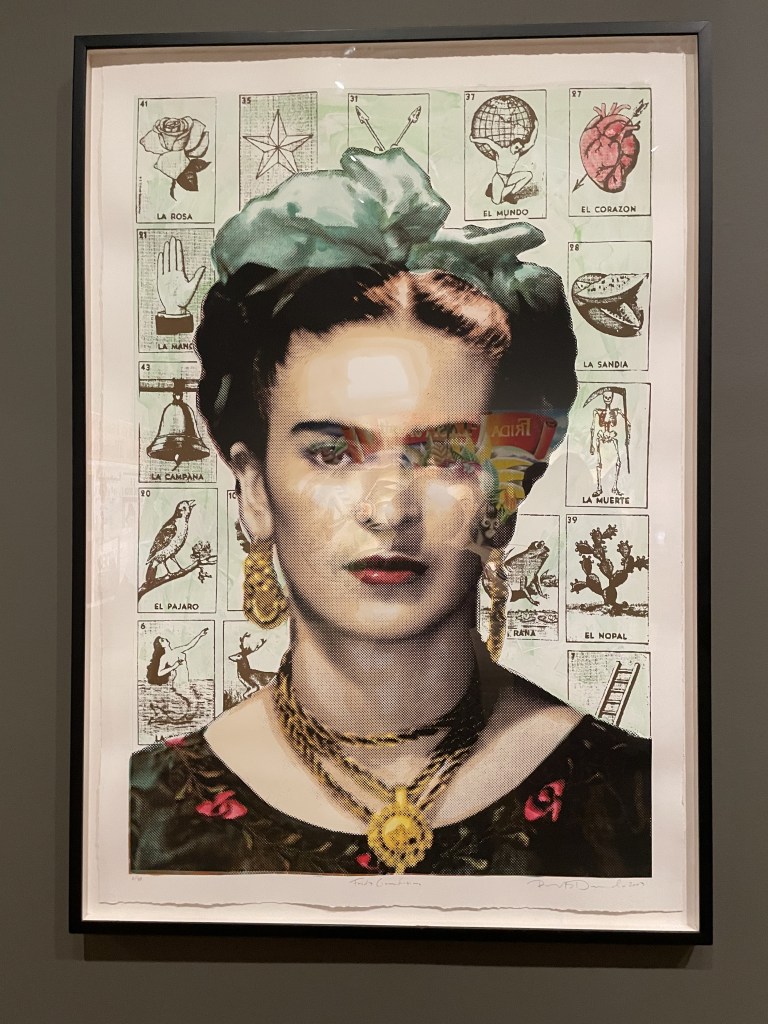
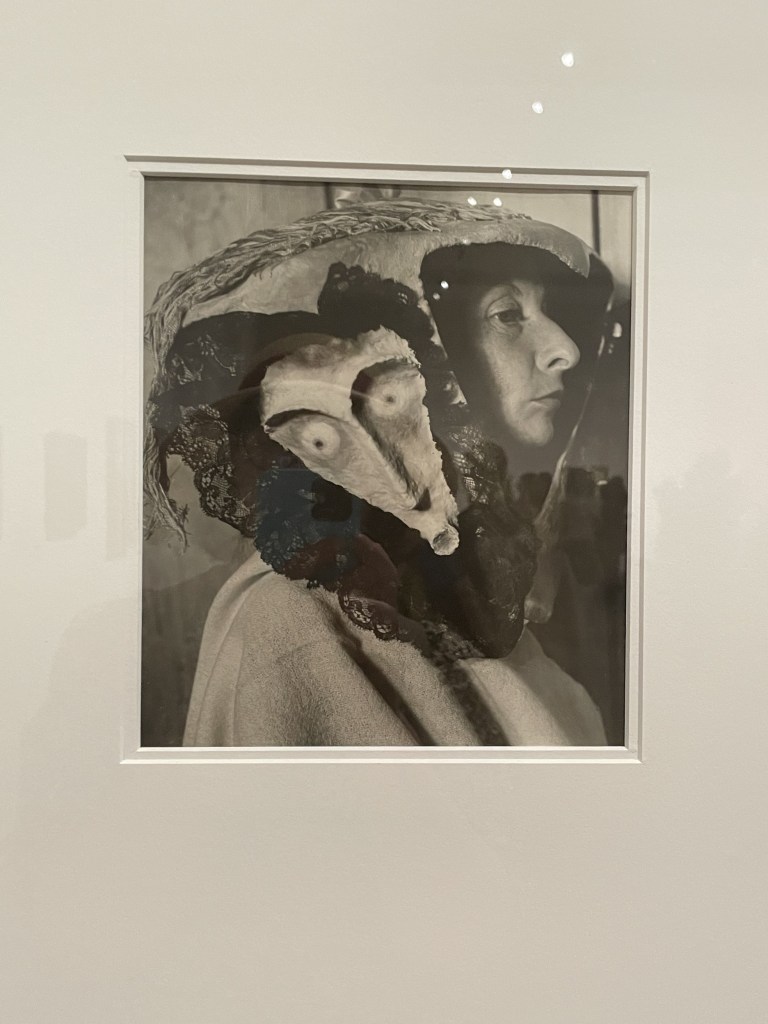
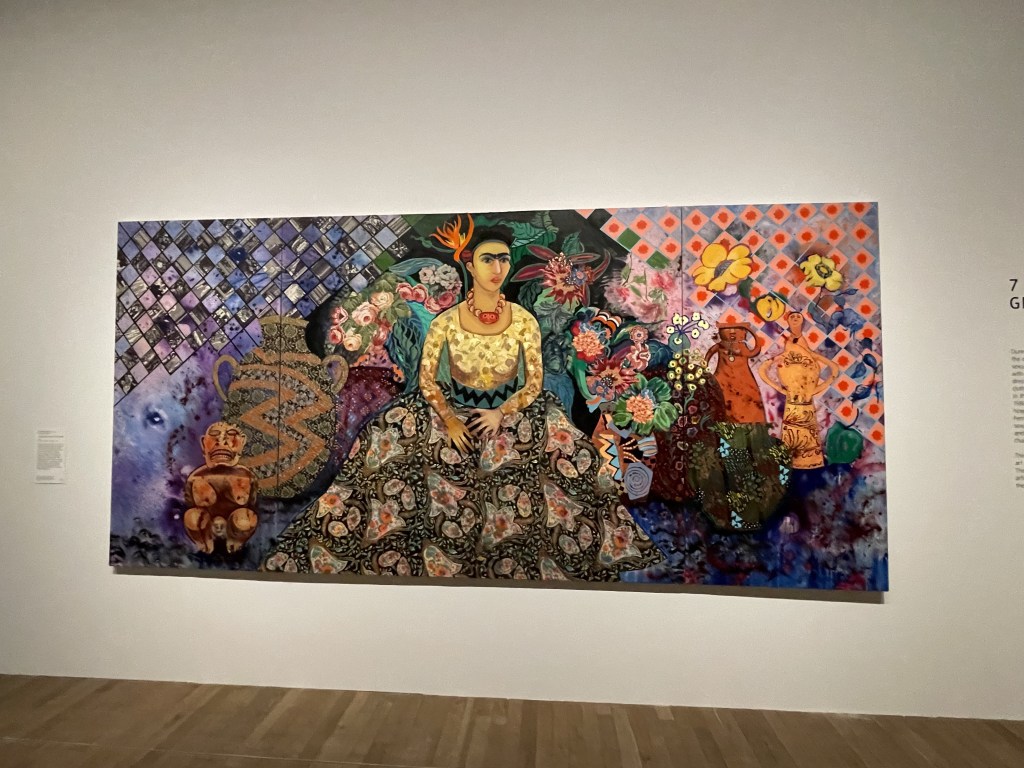
Having examined Kahlo’s life and work the exhibition then moves into the many ways in which her image has been interpreted and used by other artists. So, on the left is a screenprint by Richard Duardo, a mask worn by Leonora Carrington (a European friend of Frida Kahlo ) and a huge portrait of Kahlo by Mriam Schapiro using acrylic paint and collage on canvas. The collage side of this is a mix of paper and fabric. Very spectacular.
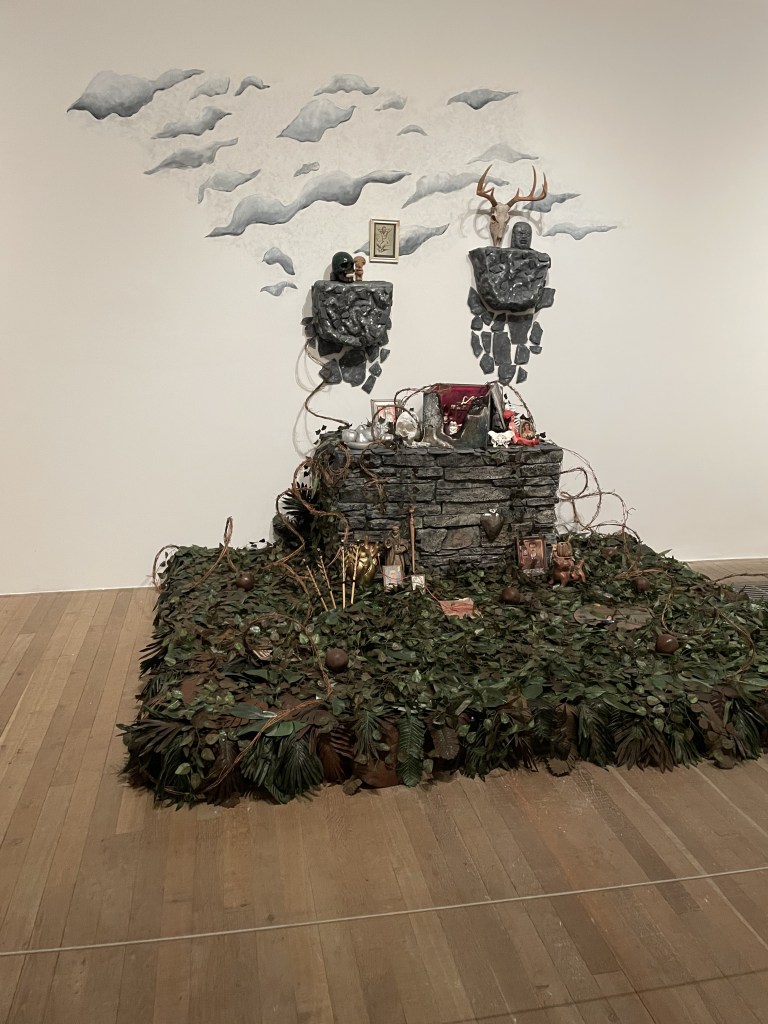
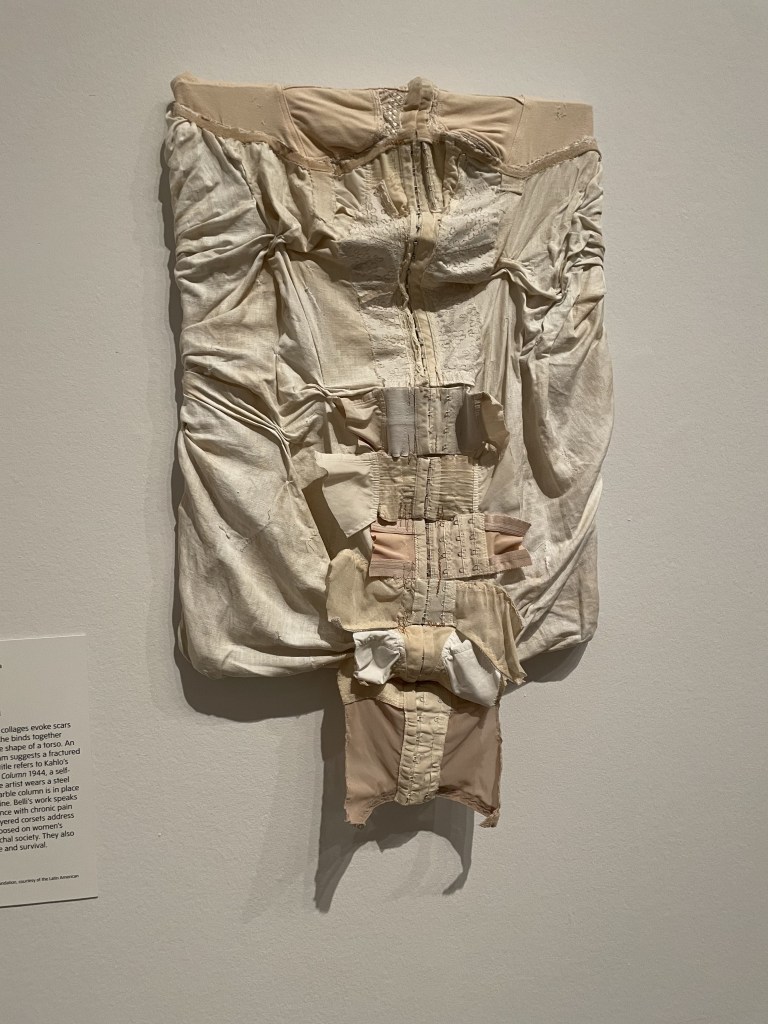
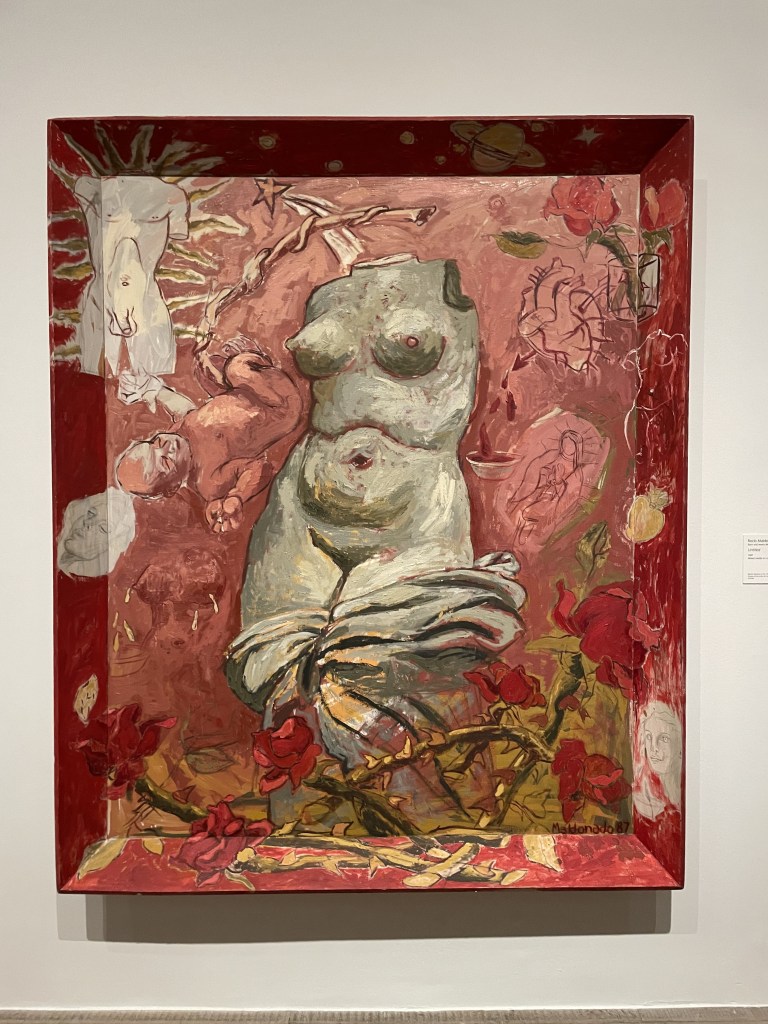
Some more ‘homages’ to Kahlo. We have an installation (left) by Amalia Mesa-Bains, using grapevines and the traditional Mexican altar dedicated to female deities; middle is Patricia Bell’s Broken Column who has bound together several corsets in the shame of a torso with an irregular vertical seam to channel a fractured spinal column. And on the right is Rocio Maldonado’s work – a female figure painted on canvas with painted wood frame.
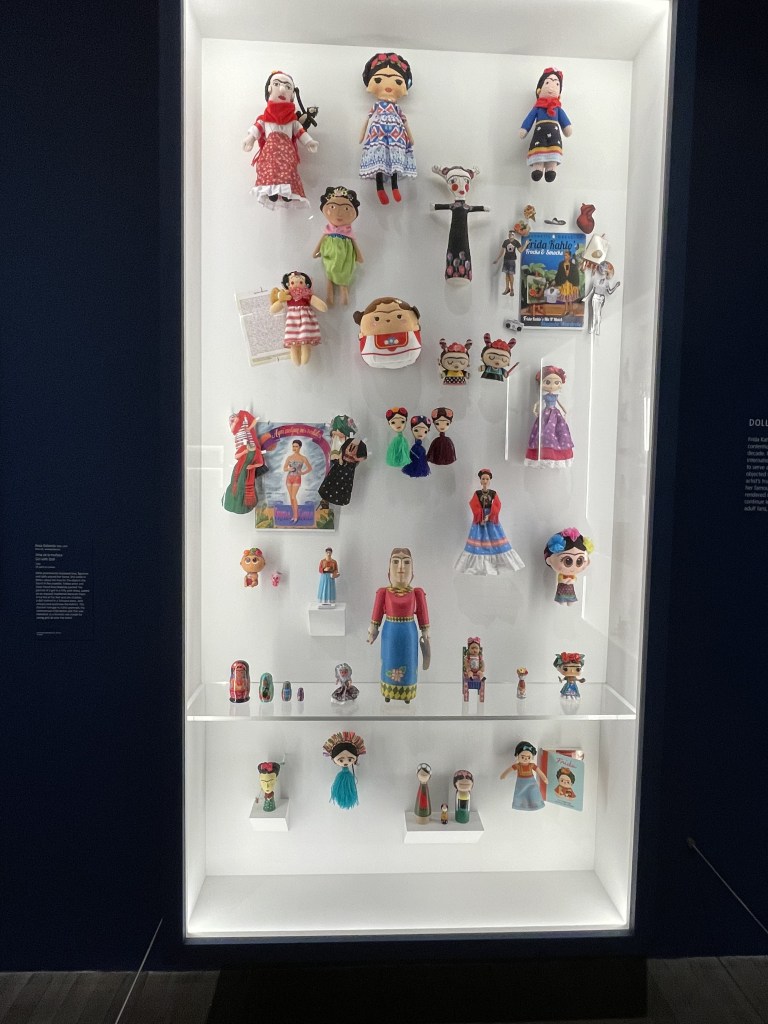
And in the last room of the exhibition we see the way the Frida Kahlo image has been commercialised. We see her image on so many items for sale, objects to revere, admire and play with. And here is a selection of dolls representing her. There’s even a Barbie doll but she has distinctly Western features.
Would Frida Kahlo be happy with her legacy? Well, I’m sure she’ll be happy for the recognition of her work but I do wonder about the quantity of ‘pretenders’ who claim to harness her style and story for their own advancement. She was so unique and achieved so much in her short life. She reminds me of Marilyn Monroe – whose show at the National Portrait Gallery tells us a rather similar story. How quick we are to copy something striking and beautiful when really, artists will ‘borrow’ and ‘steal’ from each other but what we should really value is originality.
The show is on at Tate Modern until 3rd January 2027. Well worth a visit.
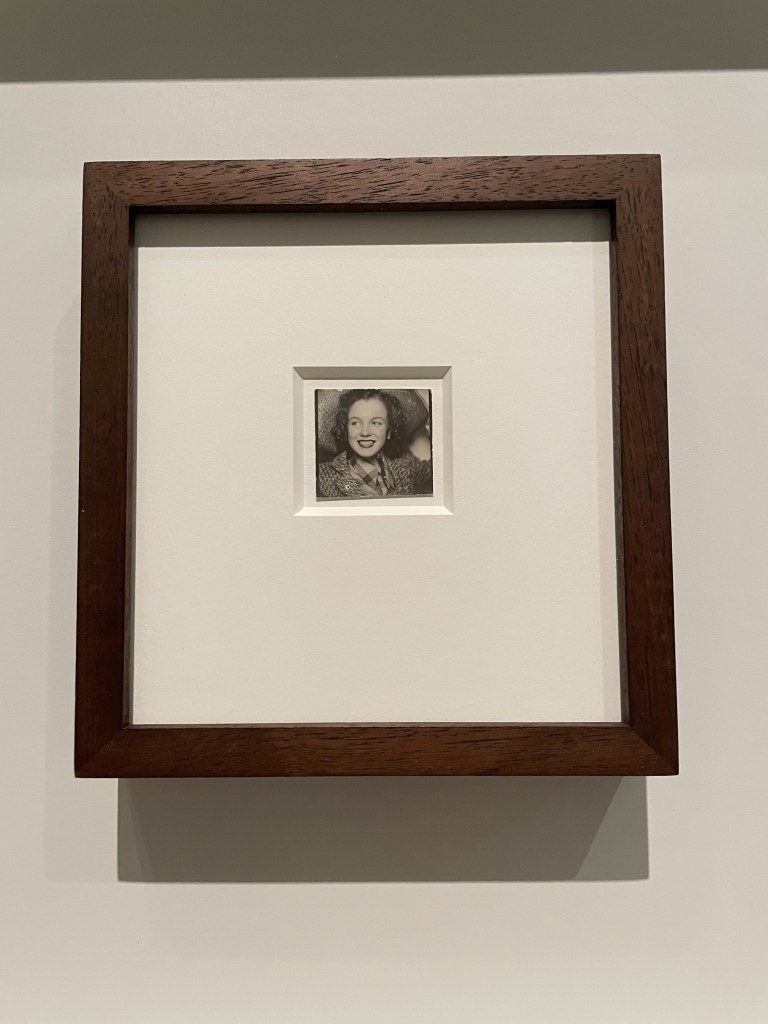
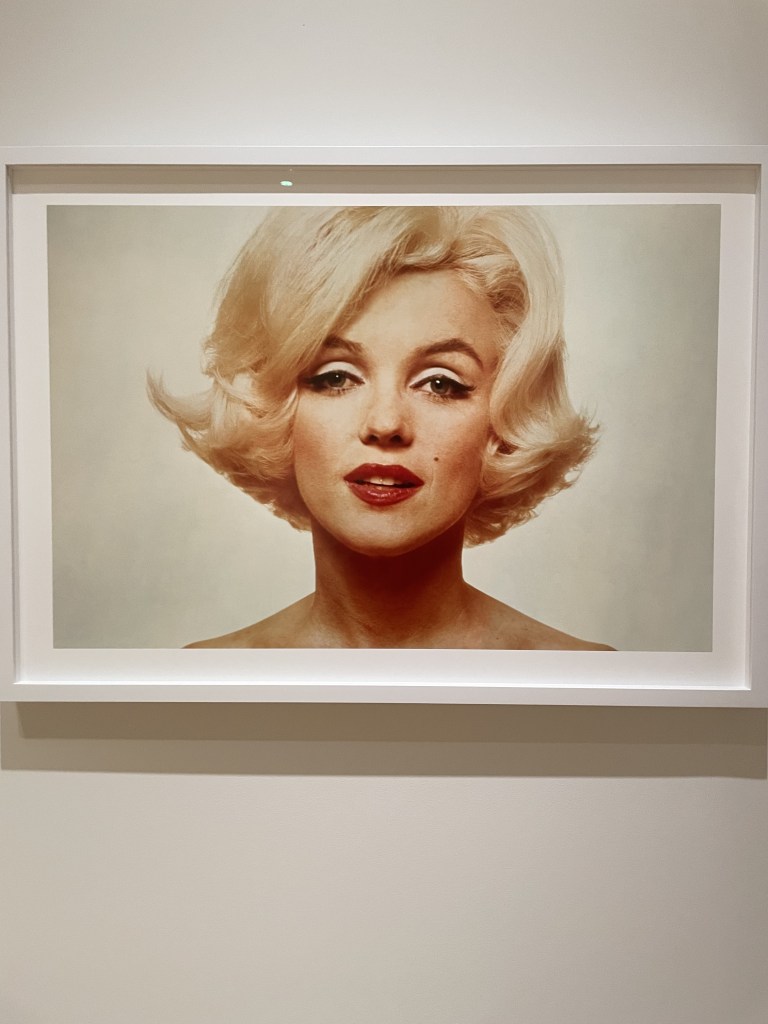
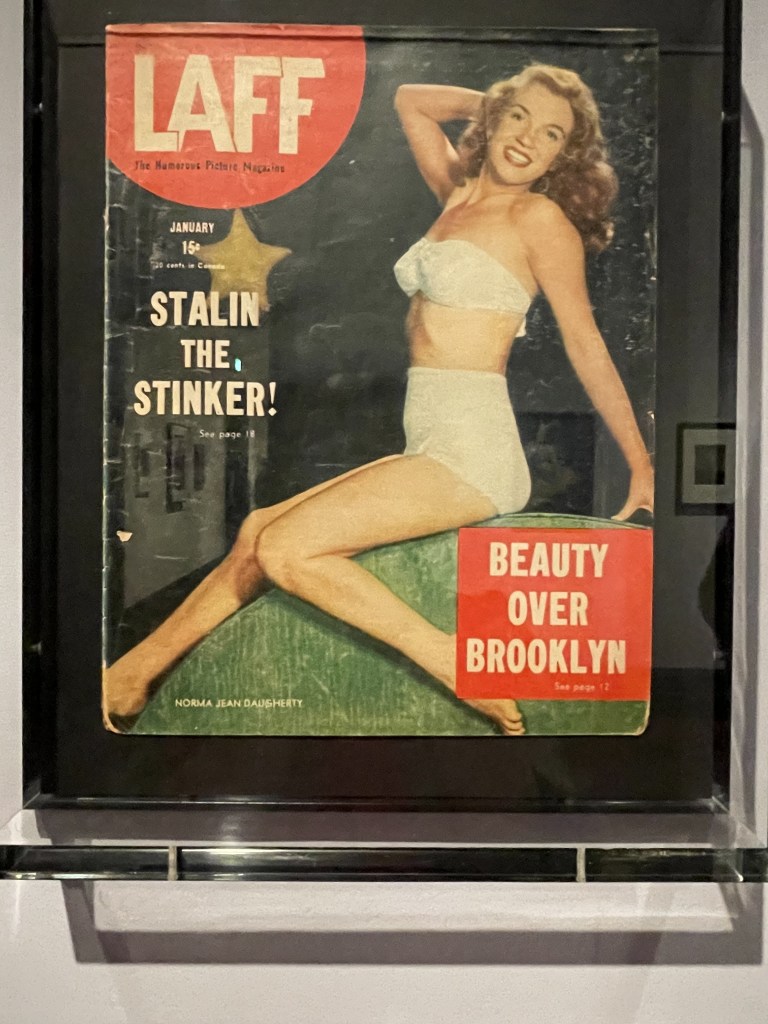
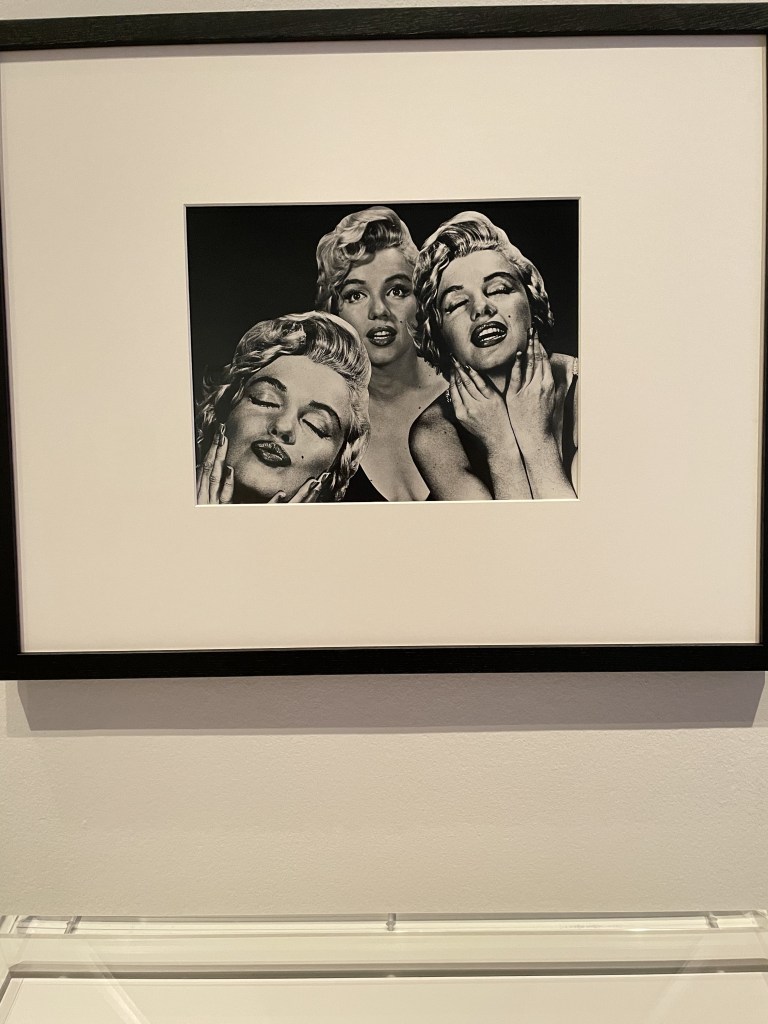
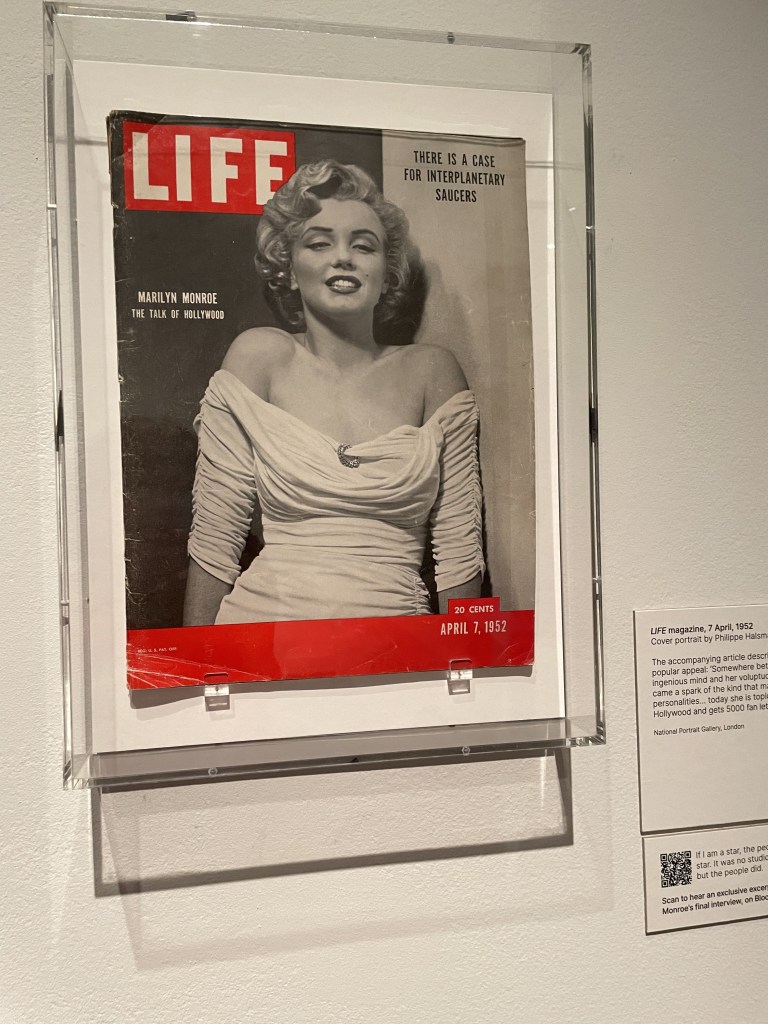
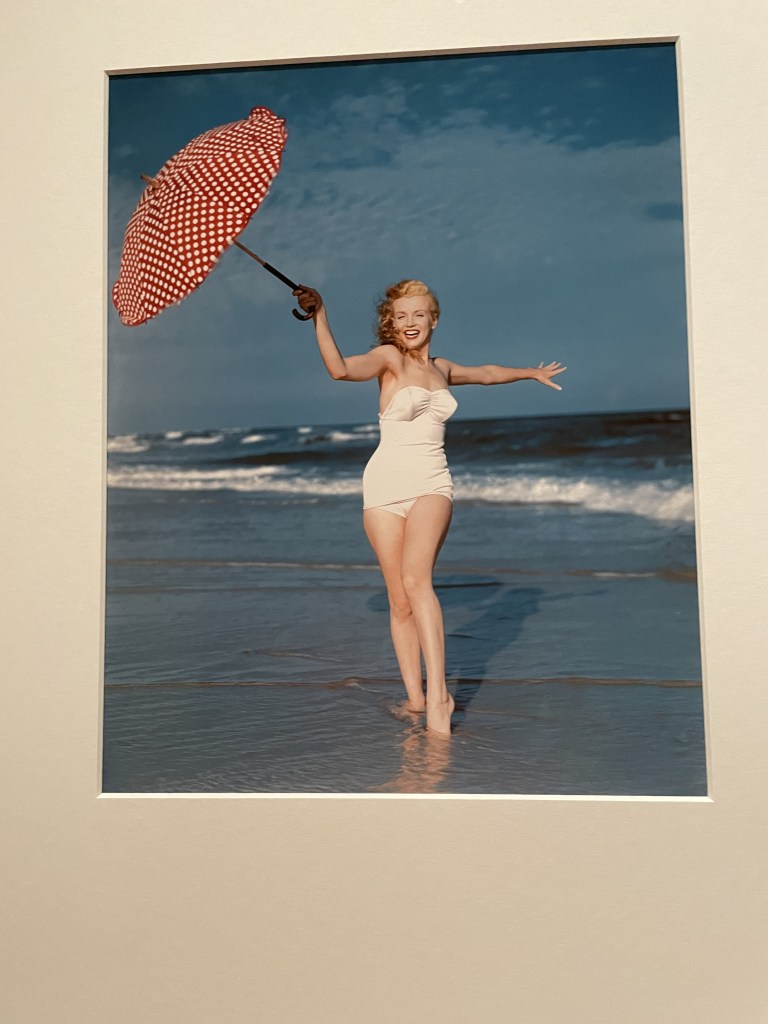
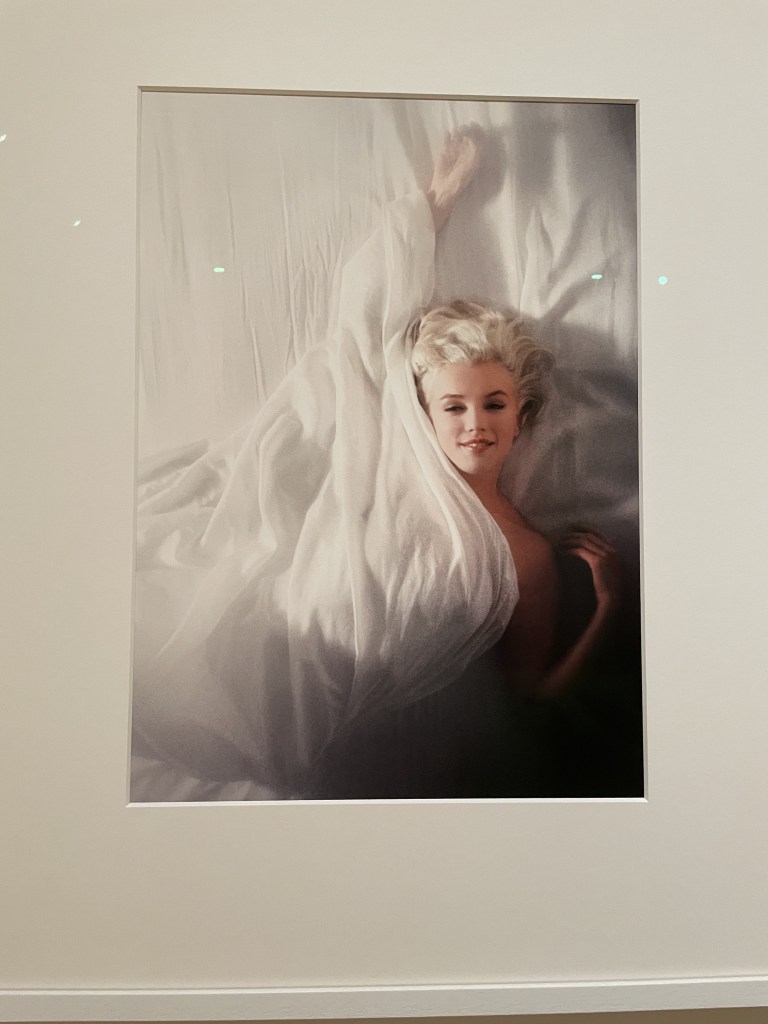
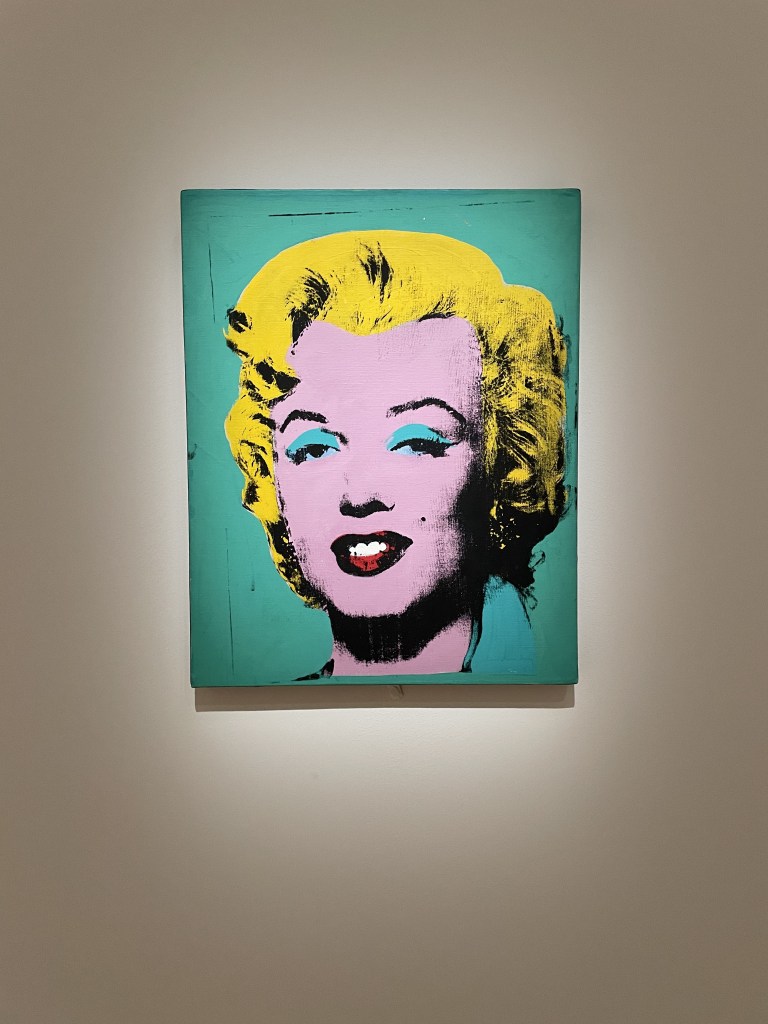
This enchanting exhibition at the National Portrait Gallery is really very moving. The first image we see is this tiny photograph, above left, of 15 year old Norma Jeane taken in a photobooth in New York. Still with her natural dark hair, the smile and the clever use of eyes is there to see. And later on, we see the image, some 20 years later, which Marilyn wanted to project as a professional star, bright blonde hair, red, red lipstick, elongated eyeliner and false lashes and the beauty spot. She was lovely looking and it’s such a tragedy that she died at the tender age of 36. However, the result is, it turns out, immortality. Marilyn will always be thought of as a beautiful talented young woman .
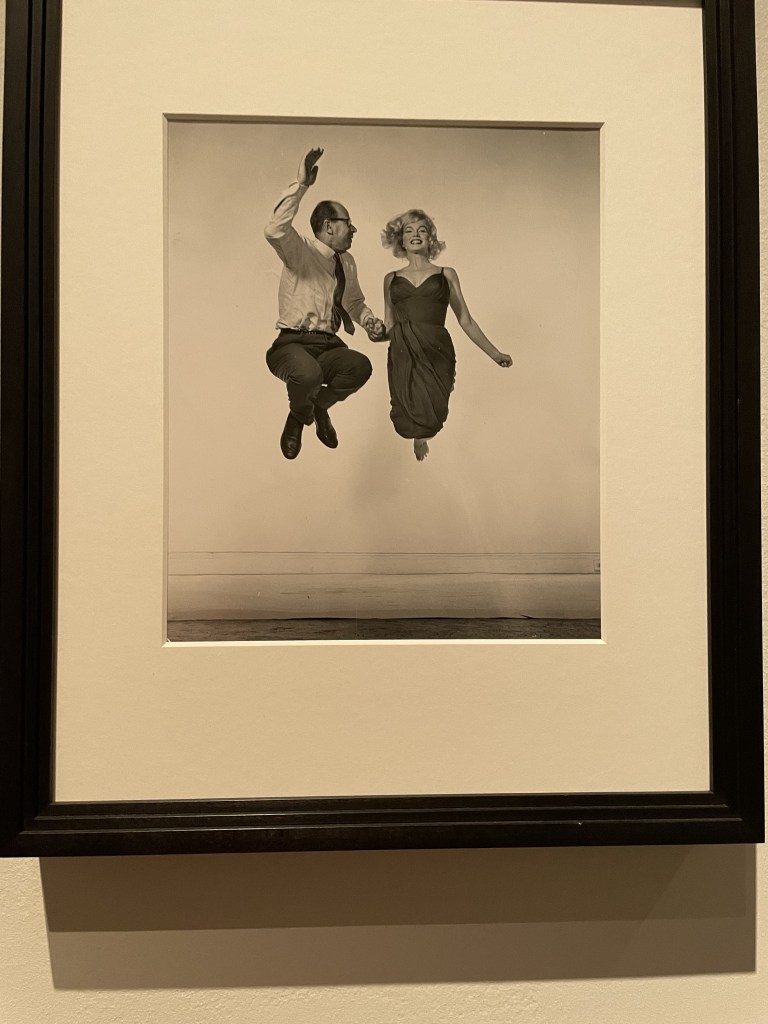
The ultimate cover girl, photographers found her inspiring and clamoured to invite her to be photographed. She clearly developed close relationships with many of the photographers and quickly established a degree of control of usage of the images – studying the pictures and only allowing those she approved of to be used in print. Above, you can see her jumping with the photographer Philippe Halsman.
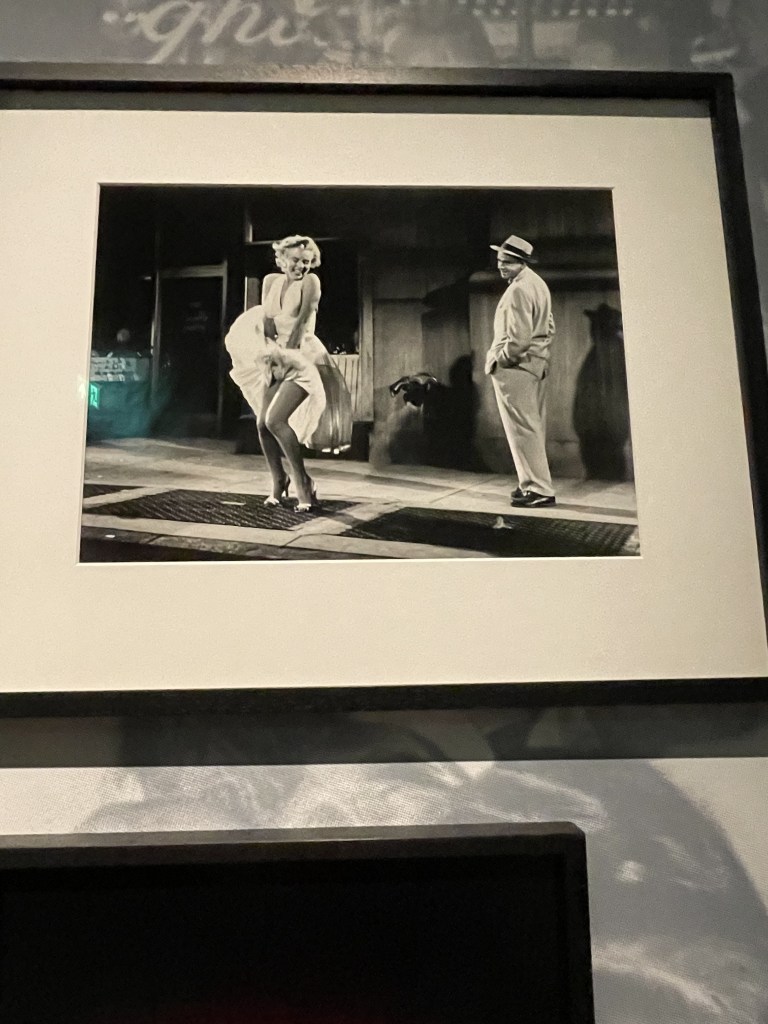
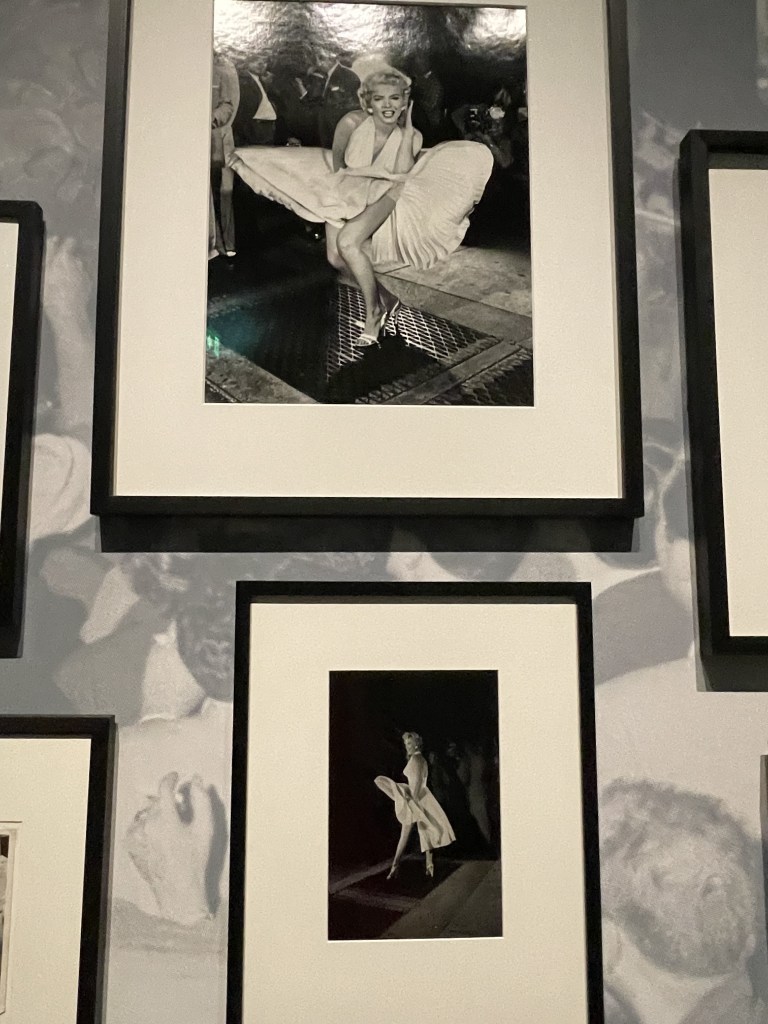
After a career as a photographic model she gravitated to Hollywood and some great roles. She turned out to be a brilliant actress, dancer and singer. But being in front of a movie camera, and sharing a scene with other people, came with issues for her. Difficult to stay in total control of the finished image. Oh, but how enchanting she looks in her white dress as wind from the subway blows up her skirt revealing her legs and underwear. She knew exactly how powerful that image would be. The exhibition shows a montage of her best films and give us a glimpse of how luminous she looked on screen.
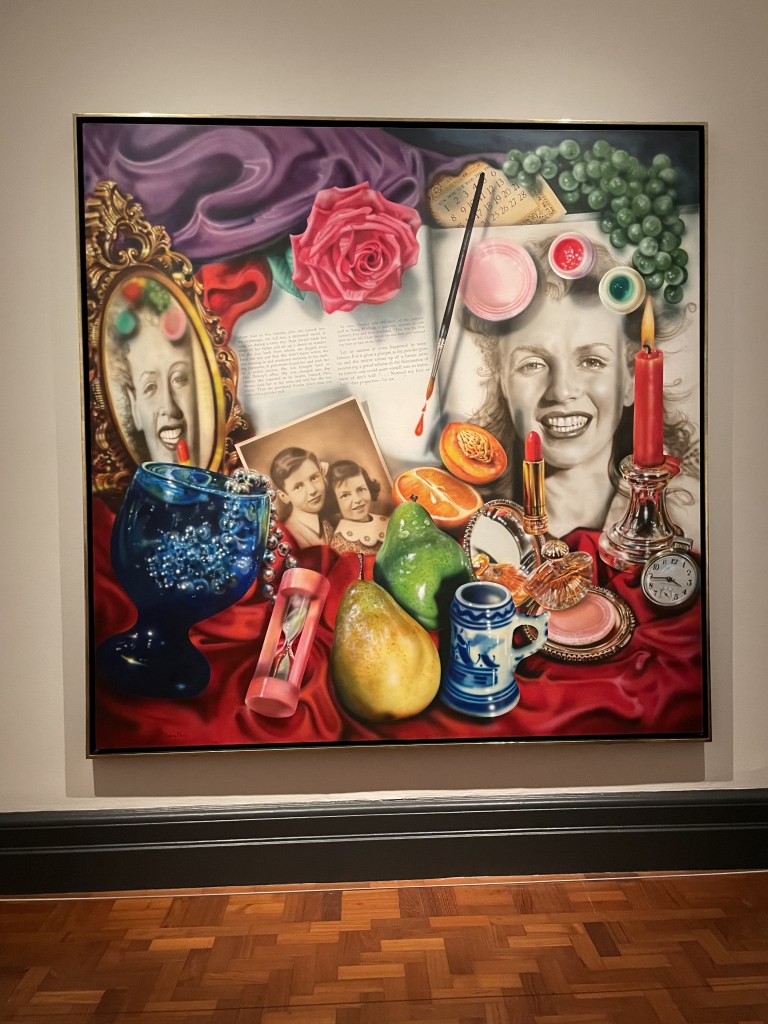
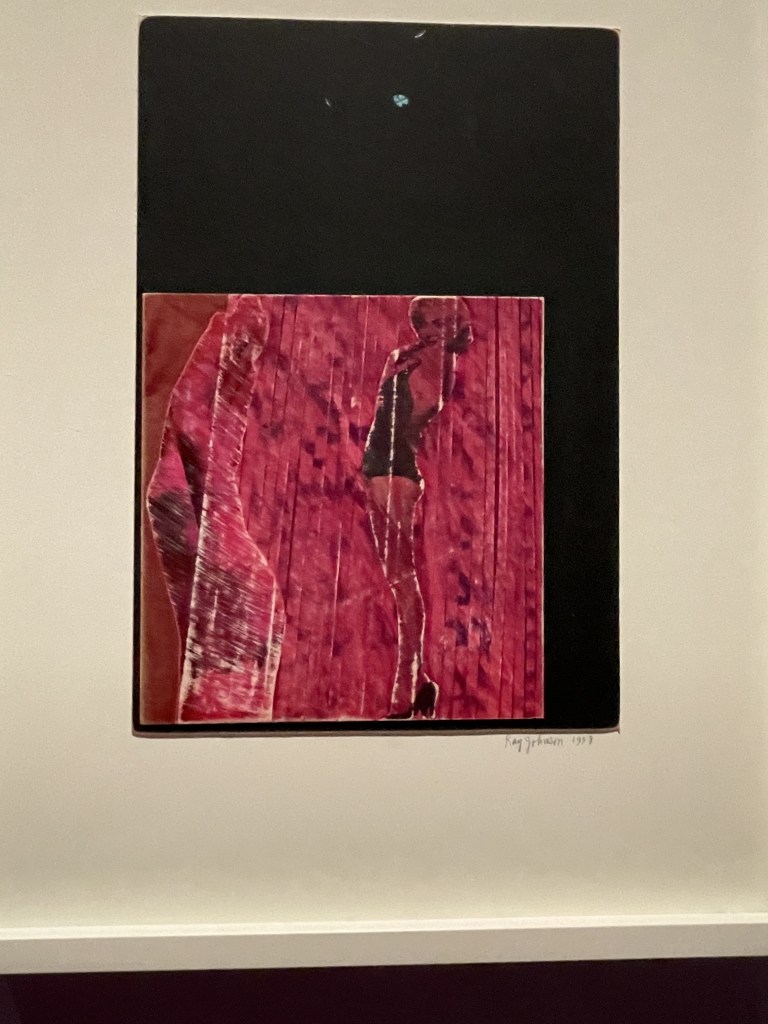
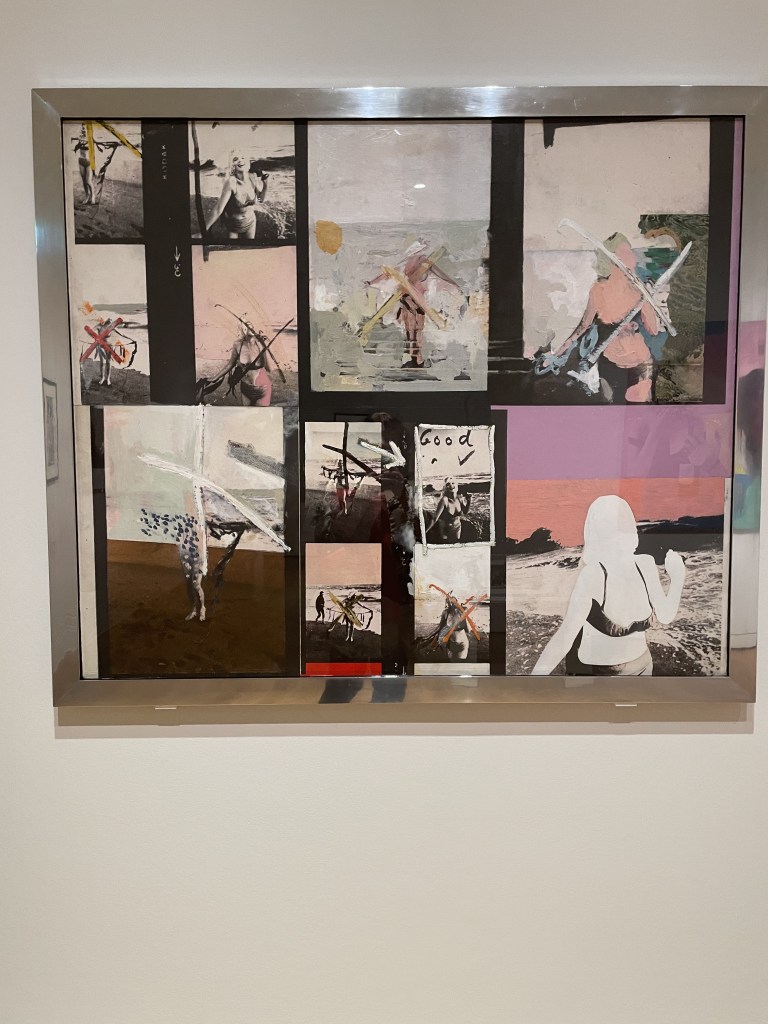
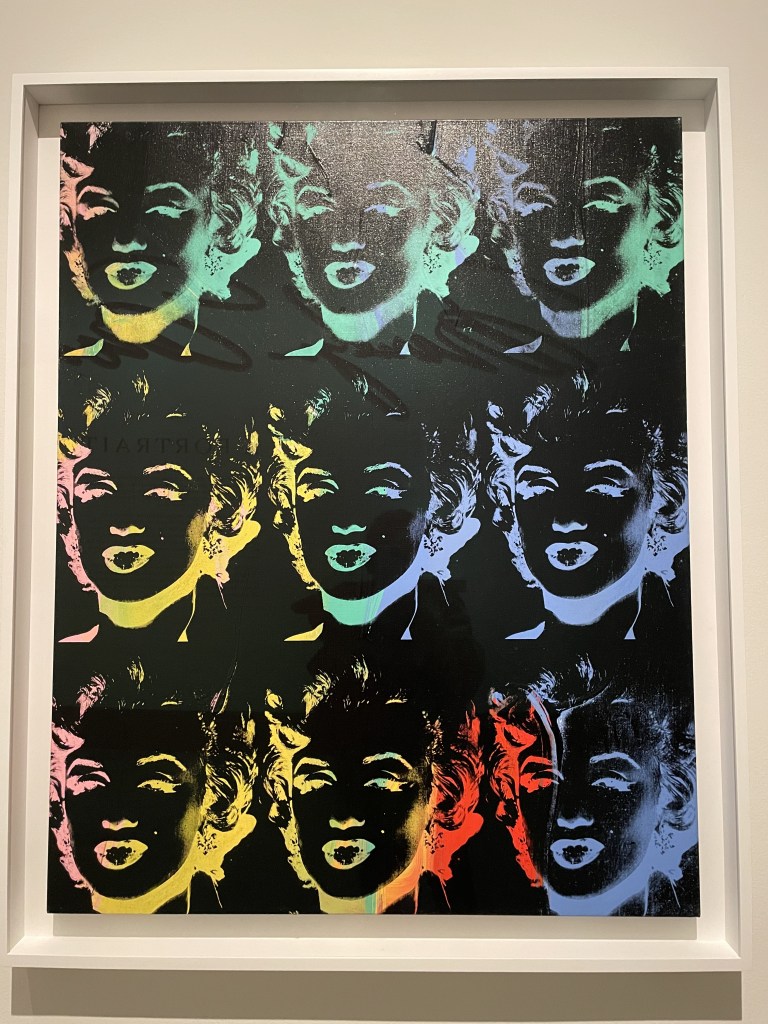
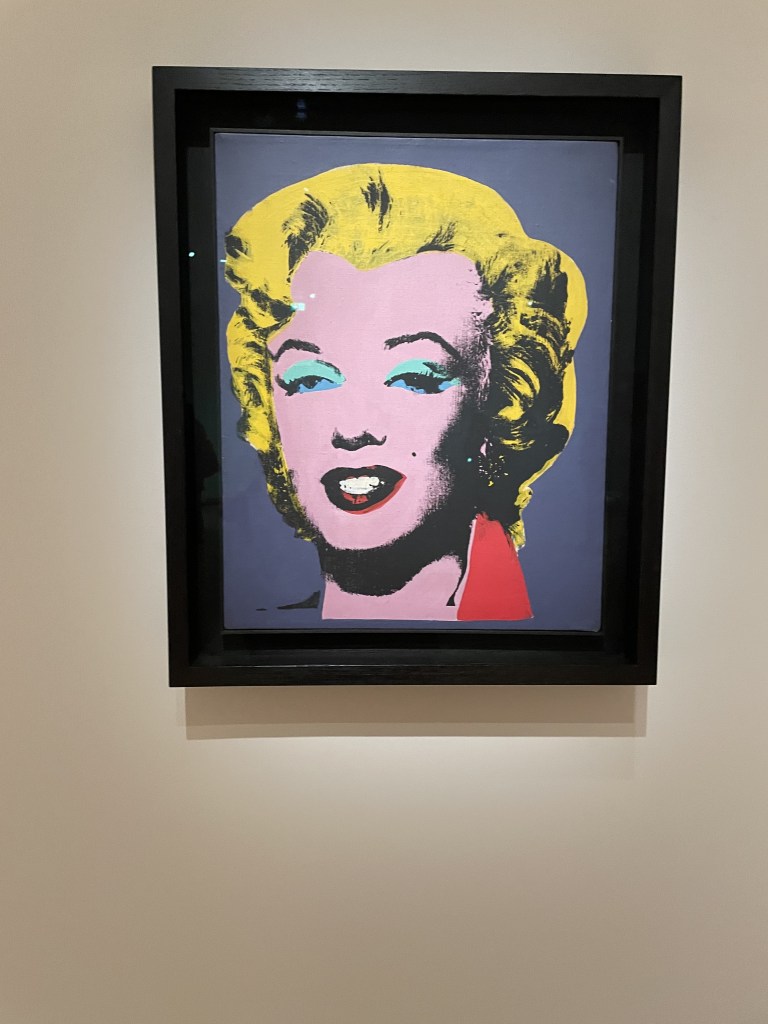
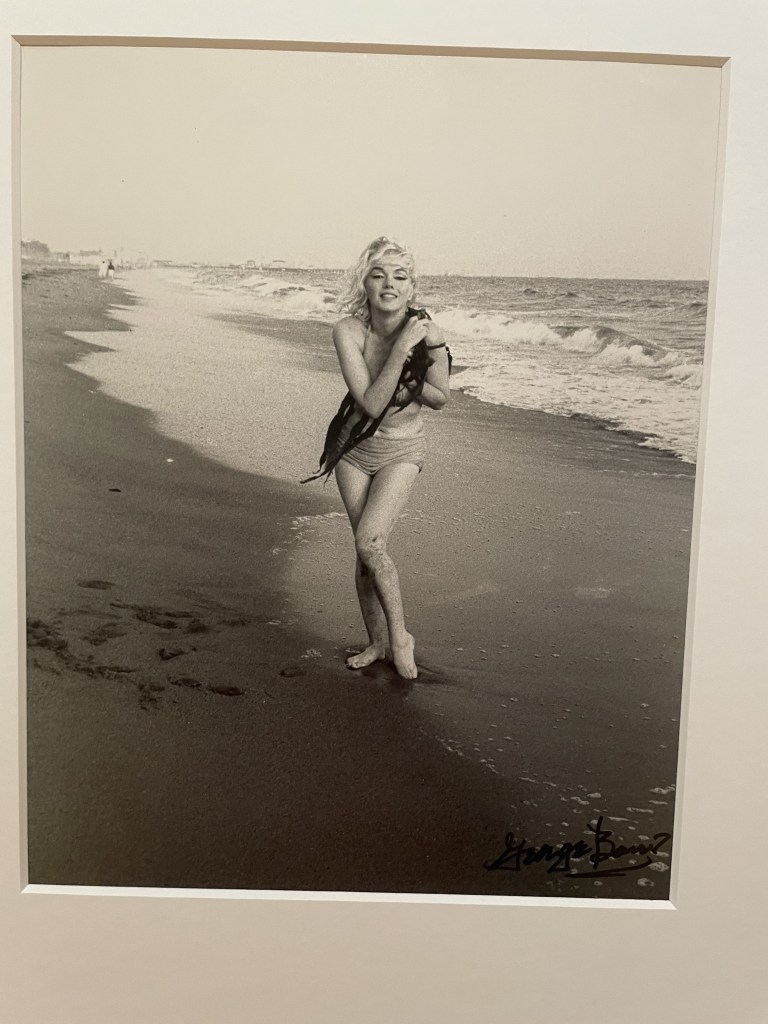
Marilyn Monroe’s image inspired artists before and after her death. We are all familiar with those Warhol prints (there are three of them in this show). And I was impressed to see the painting by Richard Hamilton, top right, based on photographs taken by George Barris, shortly before she died. He paints directly onto the images as contact sheets, showing the ones she approved and blotting the ones she rejected. Above middle is Ray Johnson’s collage of a pin up and on the left is a huge ‘vanitas’ by Audrey Flack painted after her death showing images of her life and the transience of her beauty.
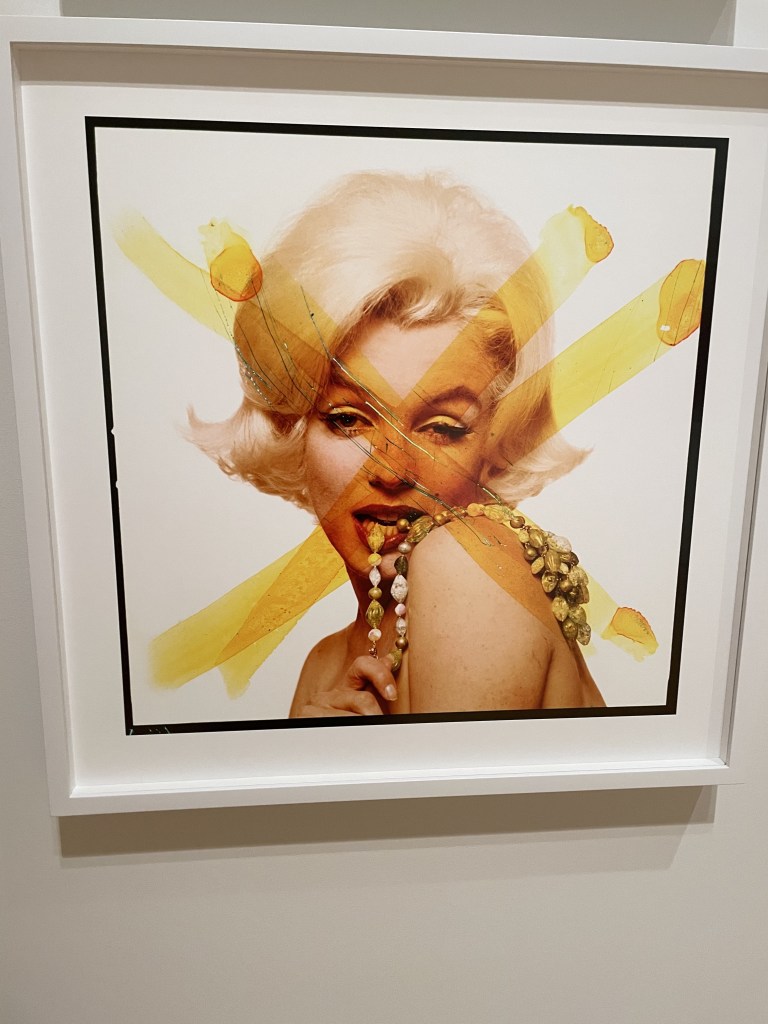
Final shots from the George Barris shoot of Marilyn on the beach at Santa Monica. And the Last Sitting photograph by Bert Stern in 1962. She drew an x on the rejected images and took a hair pin to the colour transparencies. One is left with a sense of such sadness that all that talent was over too soon. But in its place is this remarkable immortality – she is forever young and beautiful.
The show is on at the National Portrait Gallery until 6th September 2026.
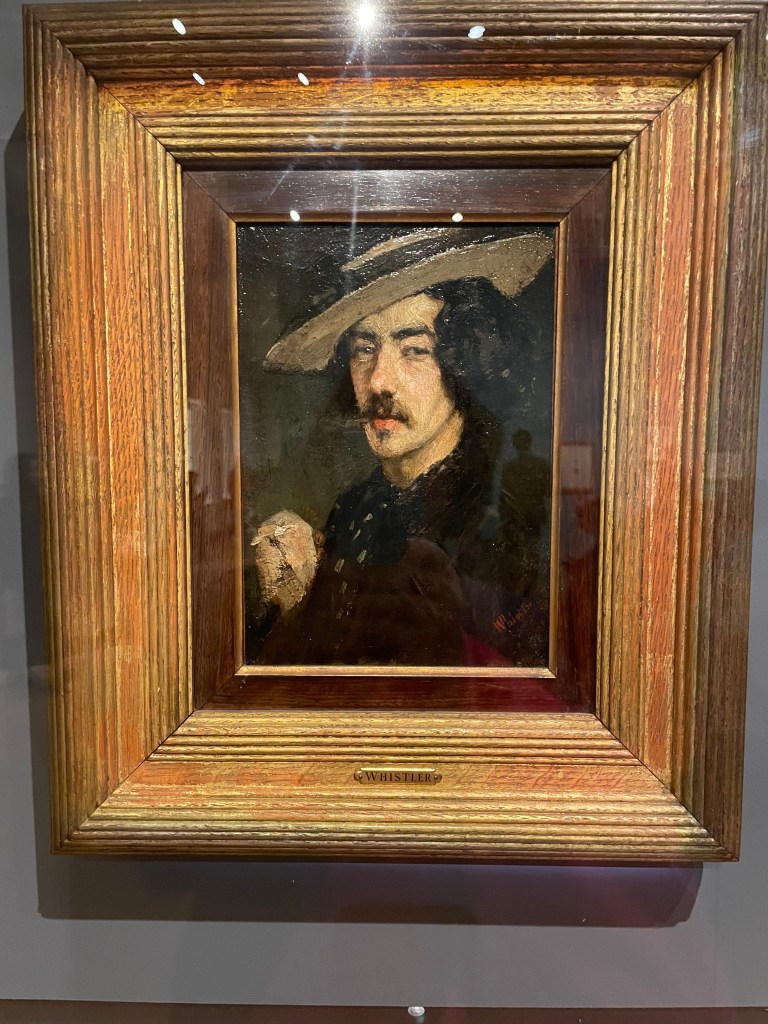
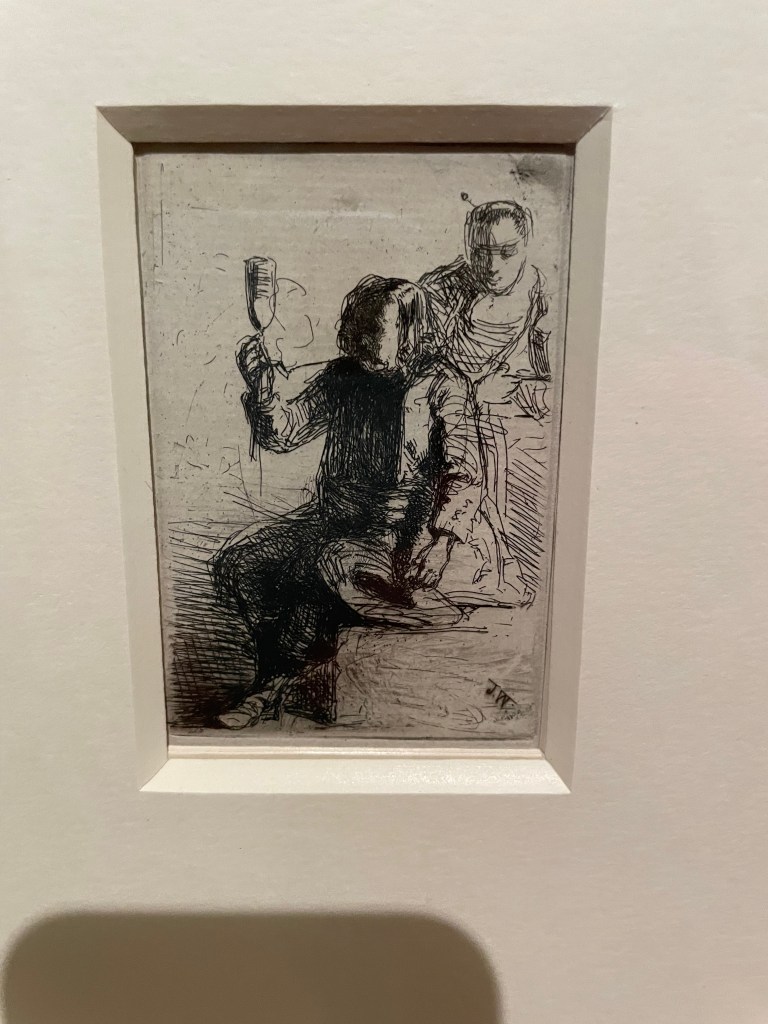
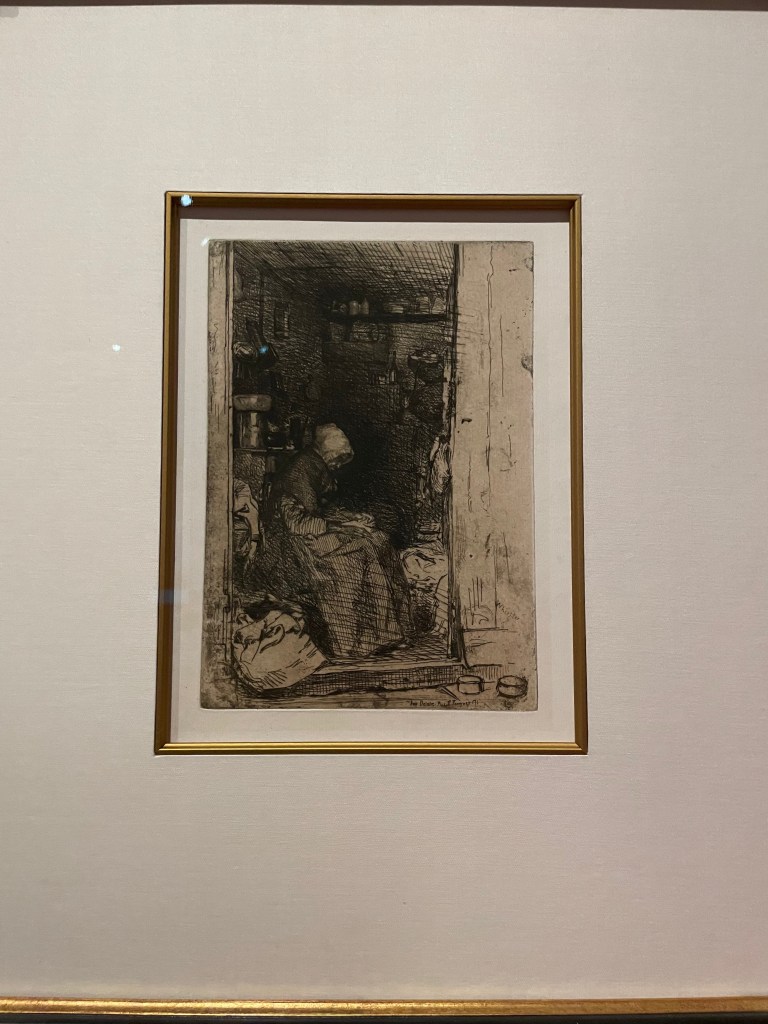
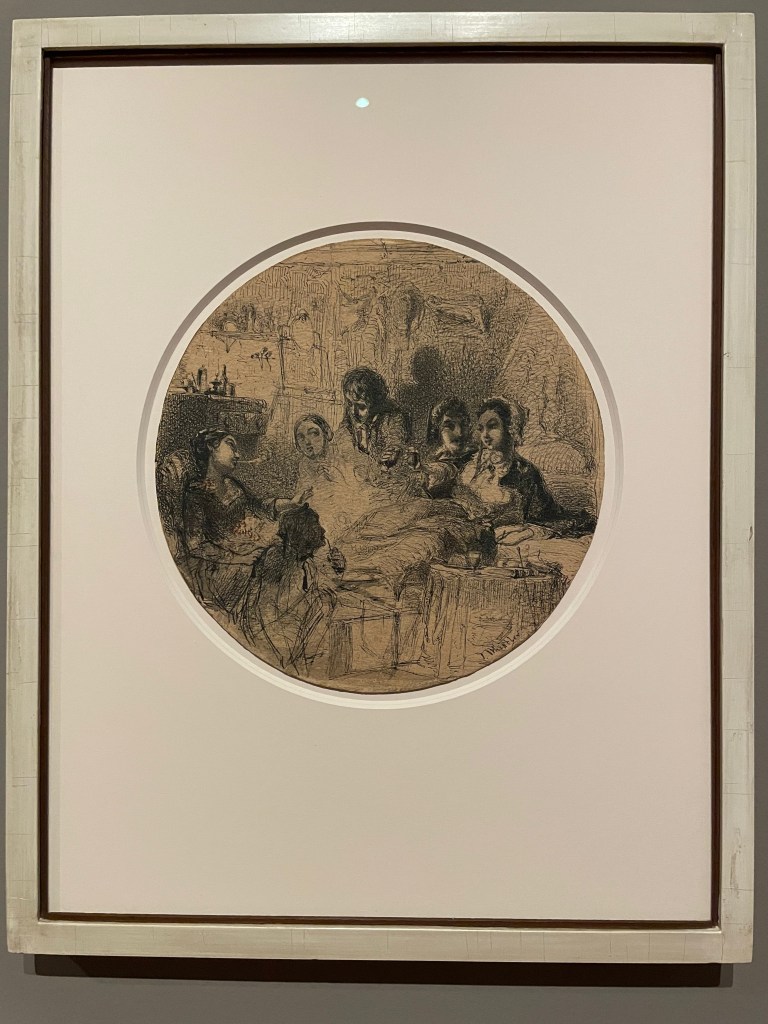
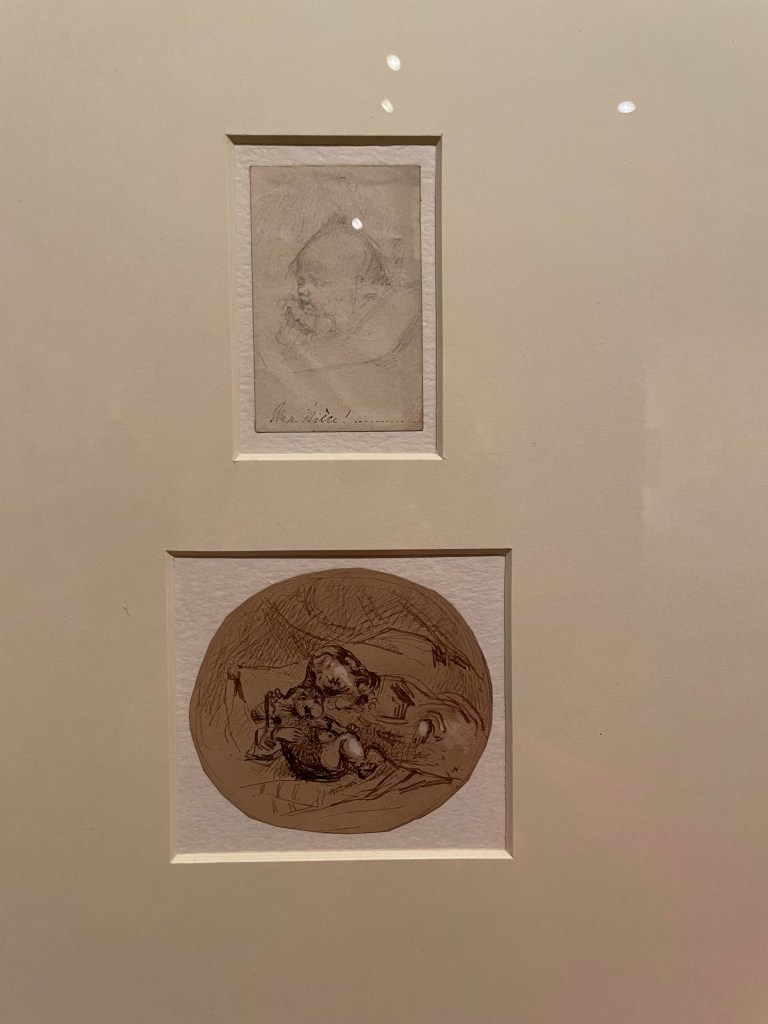
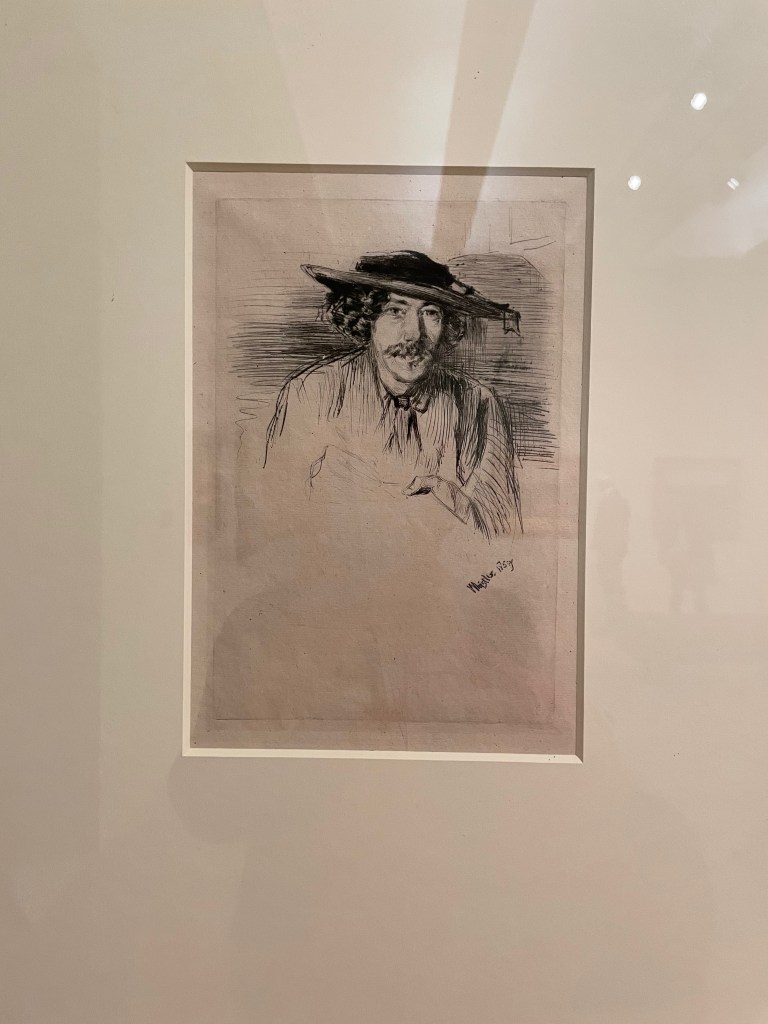
Loved this self-portrait of James McNeill Whistler. He’s looking quite louche and pleased with himself – blowing that little puff of cigarette smoke from his mouth and looking out at us with supreme confidence. And he was a confident painter. Interesting to learn that, having been born into a military family, he attended West Point and was expected to lead the life of a soldier but he was clearly far too free-thinking and disobedient for that world. And, as we see in the exhibition at Tate Britain, he spent every spare moment making drawings. He wanted to be an artist.
So, in his twenties he moved to Paris to live the Bohemian life as a painter, made friends with contemporary artists such as Degas and started drawing, painting and etching. Looking at his etchings it’s clear to see the influence of earlier artists such as Rembrandt. He also had a great sense of story-telling and obviously relished portrait painting.
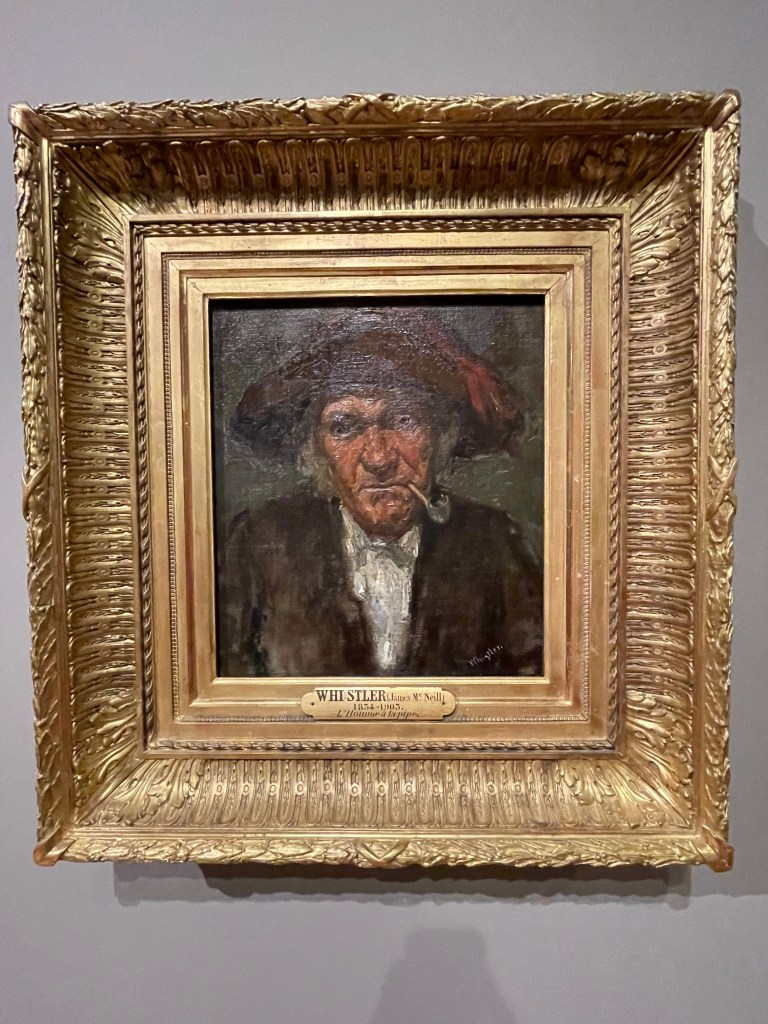
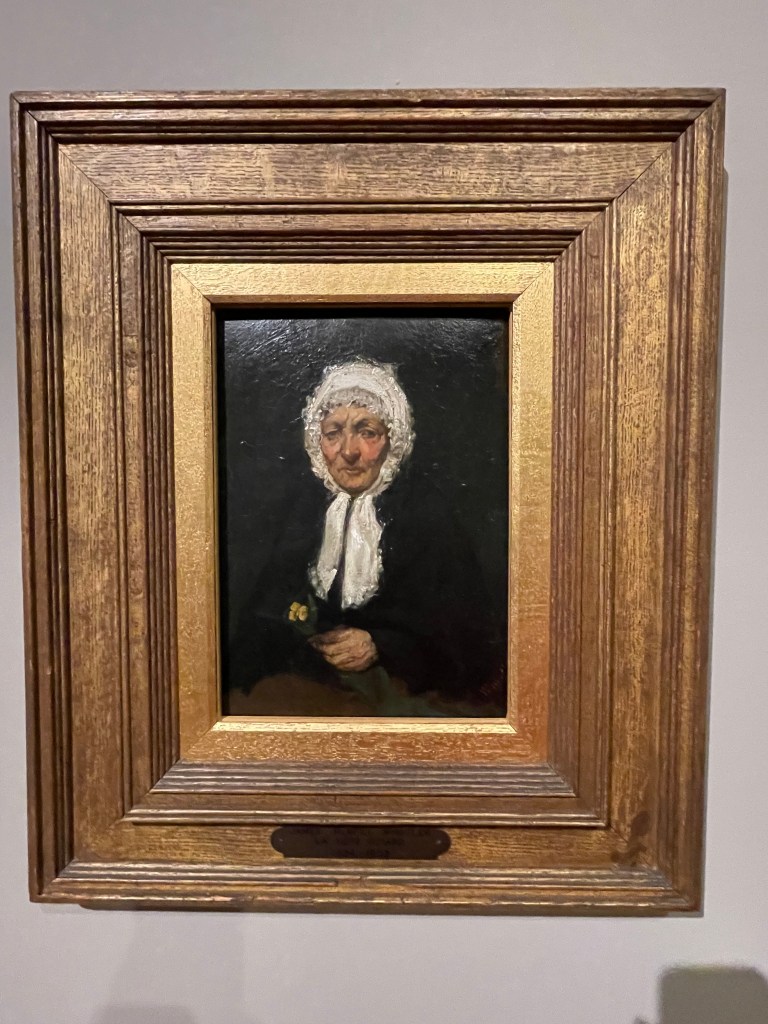
These two portraits made in France in1859 are great examples of how he managed to capture likeness, character and the interior world of his subjects. You can see the influence of Rembrandt too.
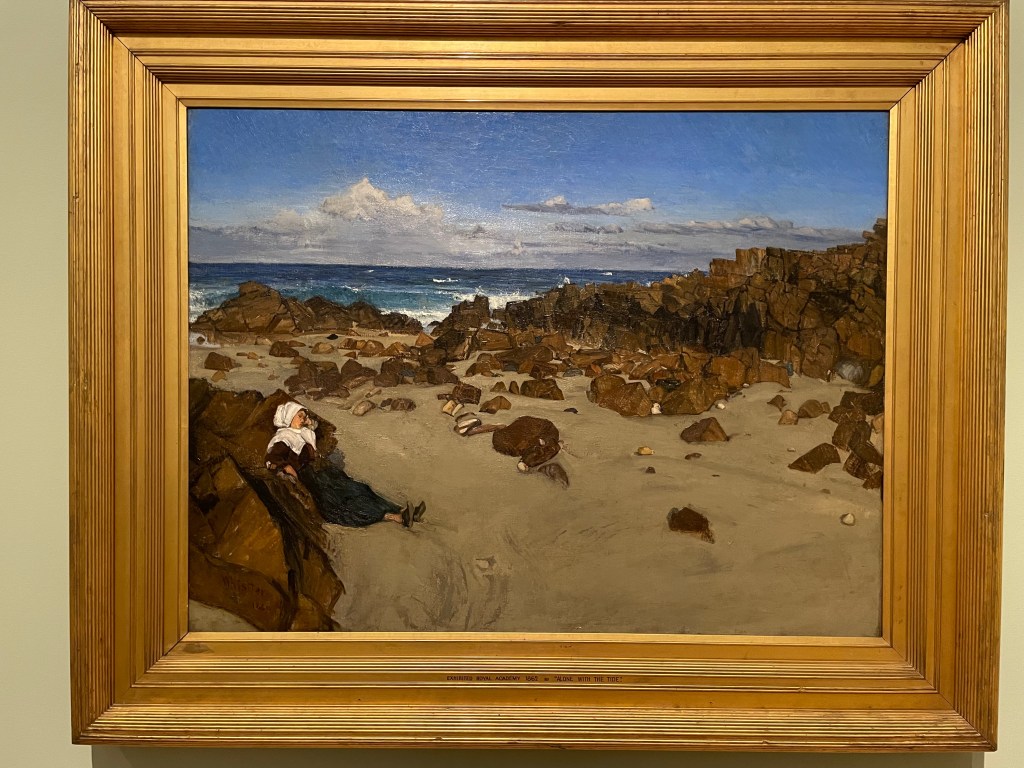
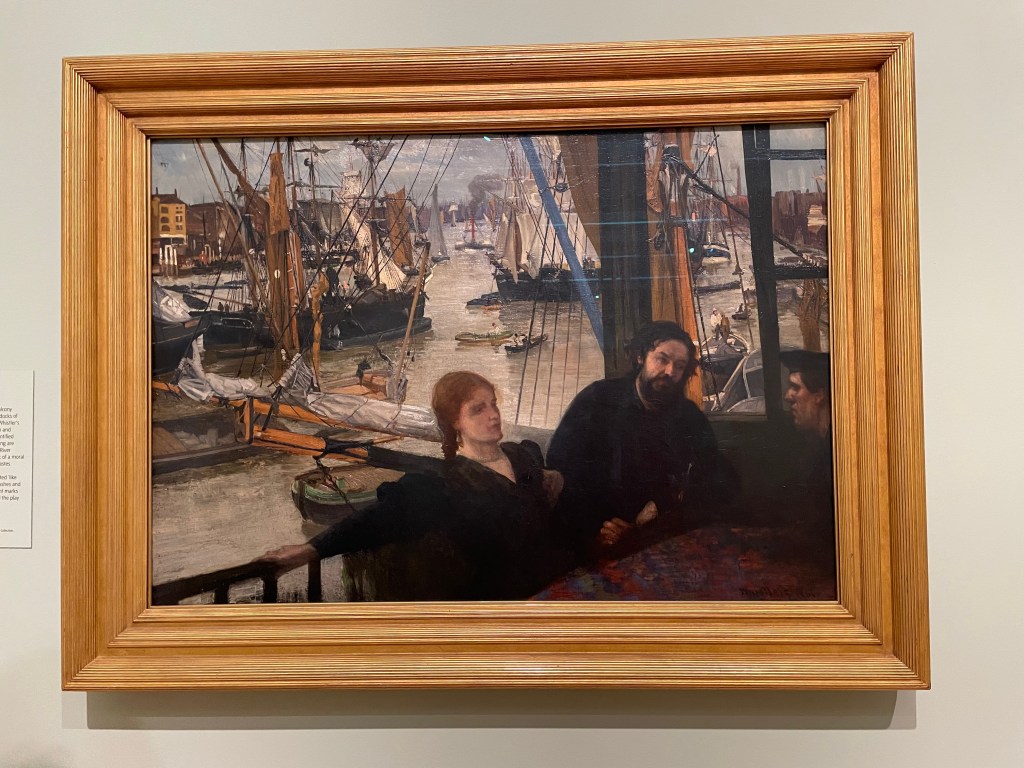
These are BIG oil paintings. On the left is a scene set on the Coast of Brittany (Alone with the Tide) from 1861painted in the open air and full of atmosphere. The texture of the paint is impressive and really worth getting up close to this one to see how he captures the approaching waves. And on the right is a painting I really love, Wapping, which was created from a series of drawings made in the busy port on the River Thames and very much a studio piece in its complexity. The viewer’s eye is so cleverly drawn from the foreground scene of drinkers (models) in a disreputable pub on the waterfront and the jumble of ships, boats, buildings and the great metropolis in the background. You just want to sit down at that table, smell the beer and the filthy river and dream of trade and travel to far flung places.
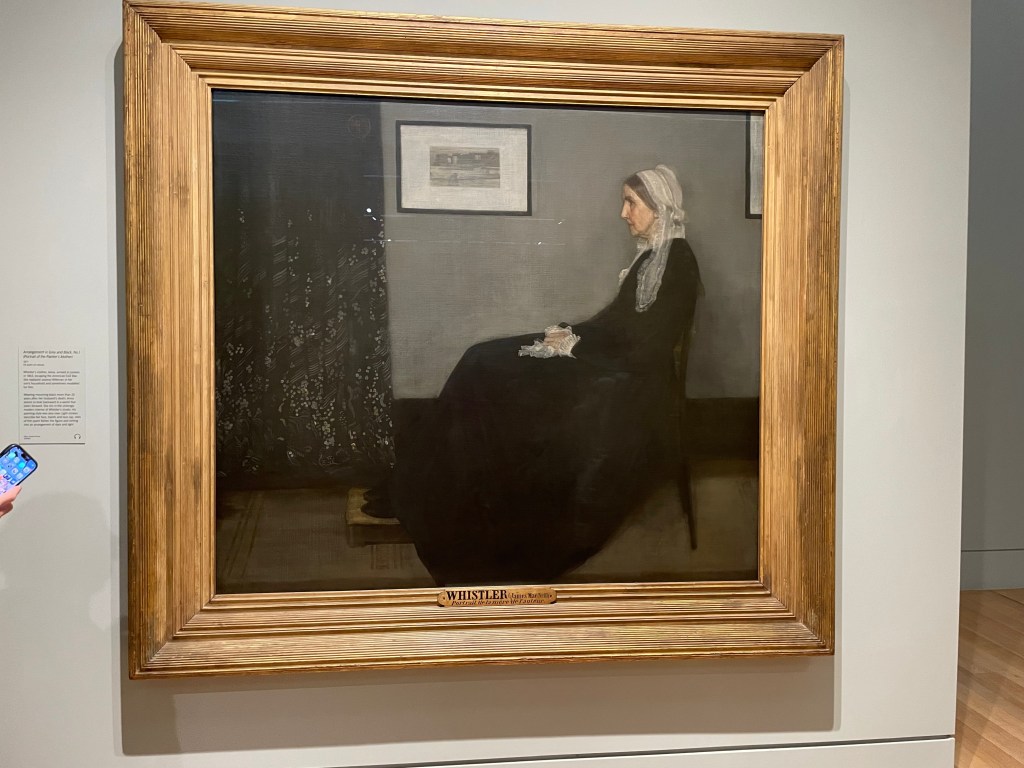
And here she is, Whistler’s mother. How still she looks in this austere setting with an oriental fabric drape to the side, a single print on the wall behind her (the print itself is also in the exhibition) and the woman seated, solemnly, staring at something. It’s unusual to see a portrait in such severe profile and the colours are very subdued. Having enjoyed colour in his earlier work, Whistler make a point of reducing the colour to subtle tones and allows the monochrome, or grey, of his palette to dominate. It’s a large painting with a tremendous draw to it.
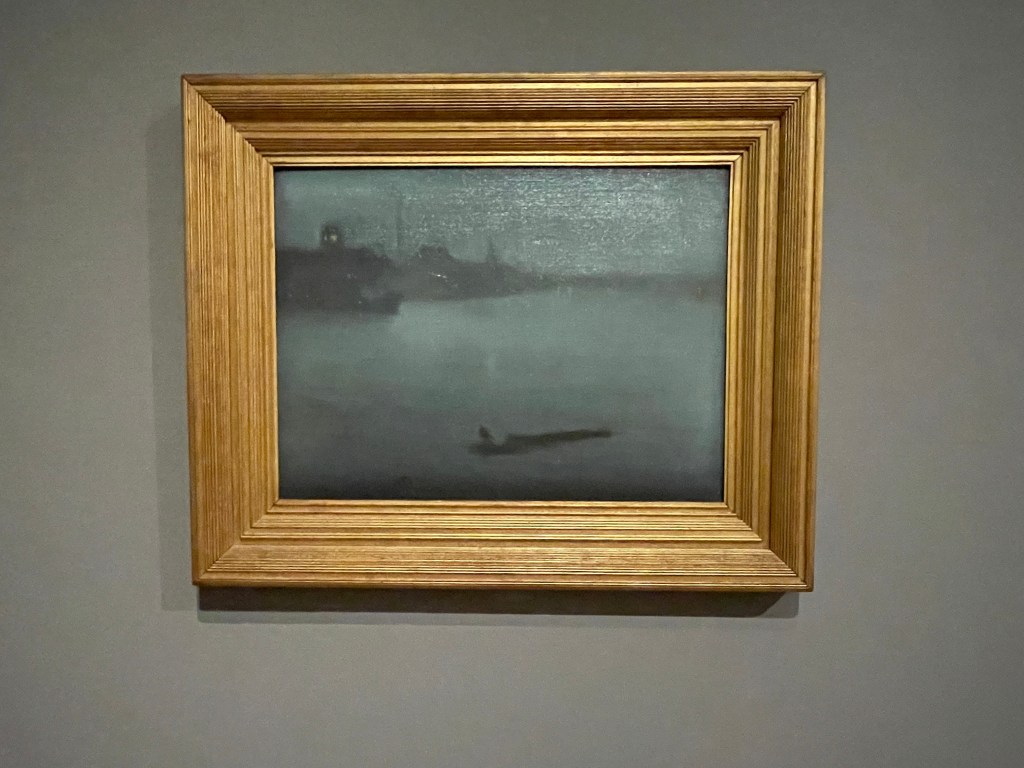
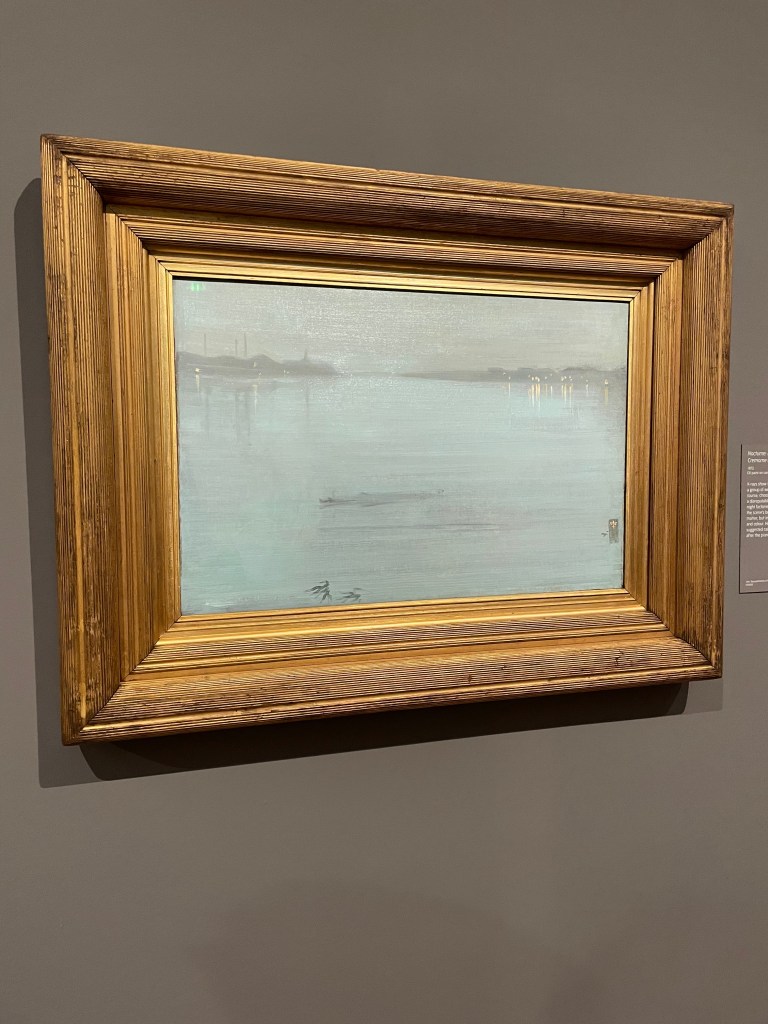
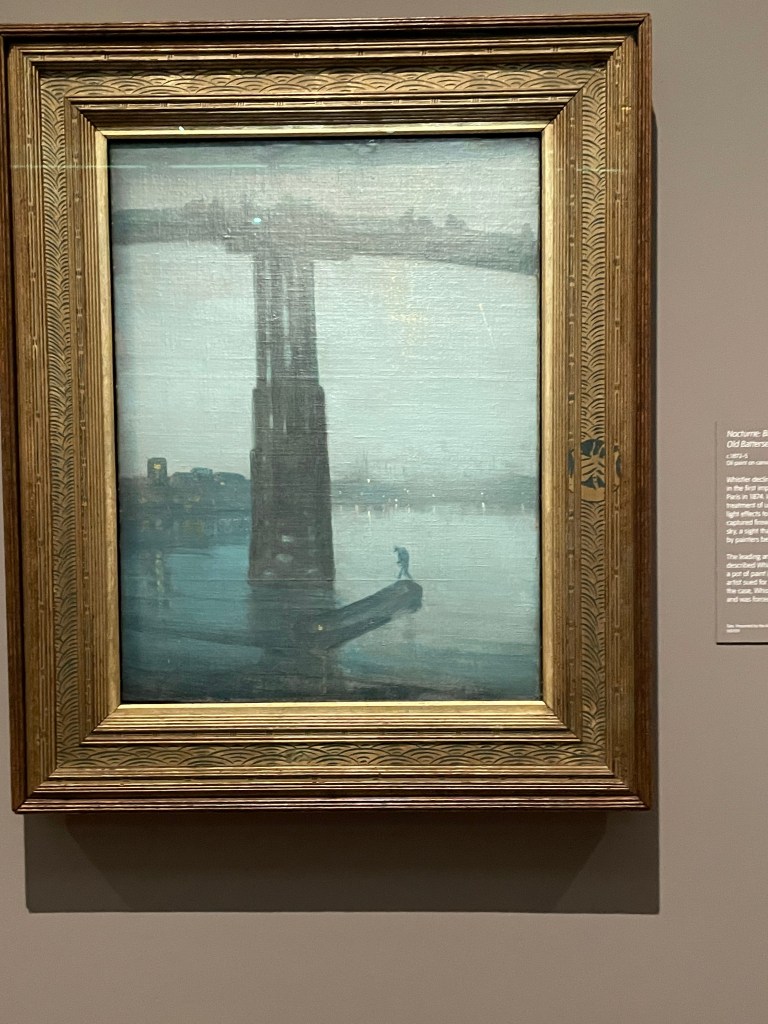
And here are some of the ‘Nocturnes’ the later paintings he made which capture watery scenes at dusk or by moonlight. I think there must be a warm, orangey ground underneath all those cool blues and greys because there’s a hidden warmth to the pictures. They are dreamy and compelling.
What a great show. It’s on at Tate Britain until 27th September. Well worth a visit.
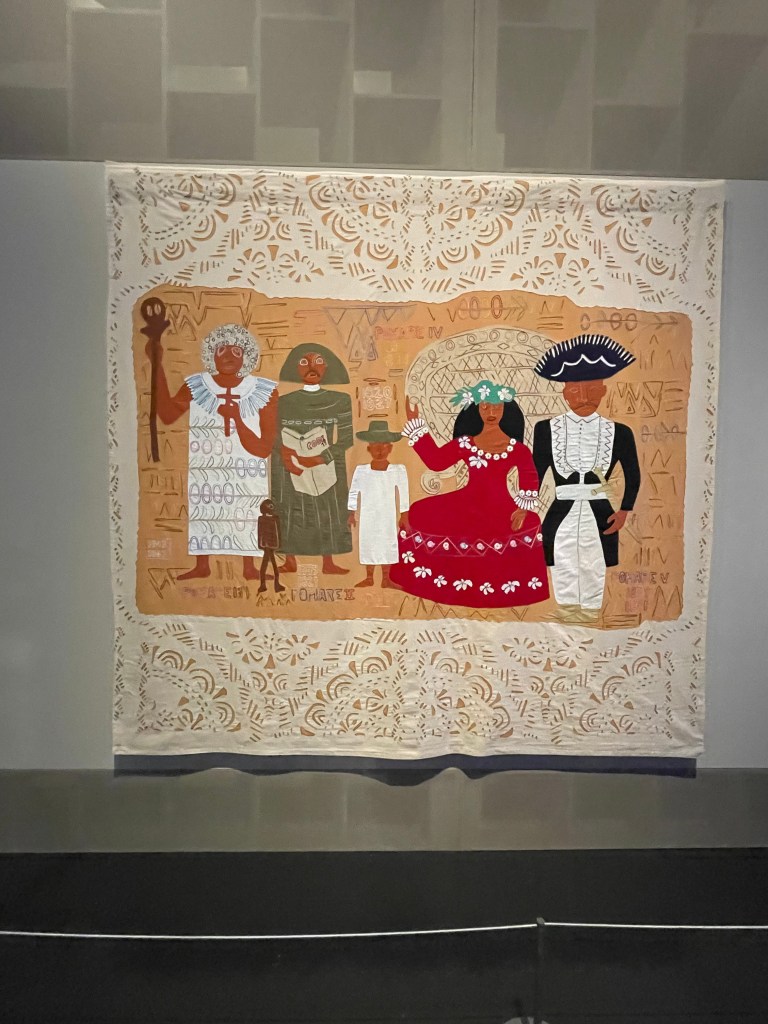
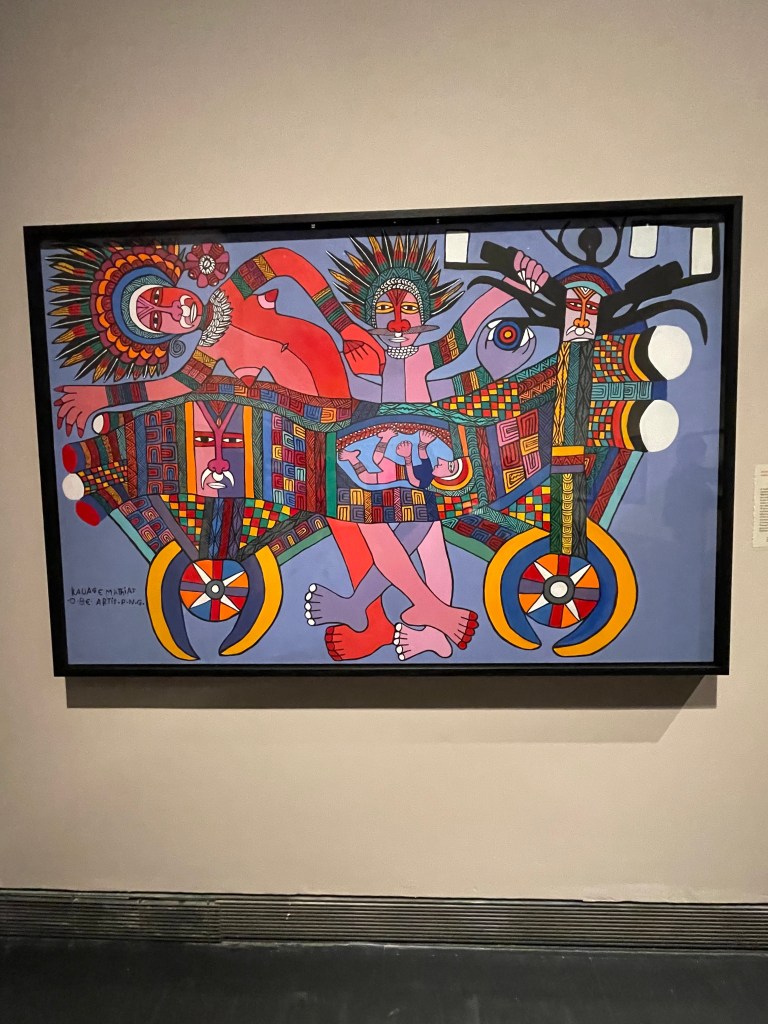
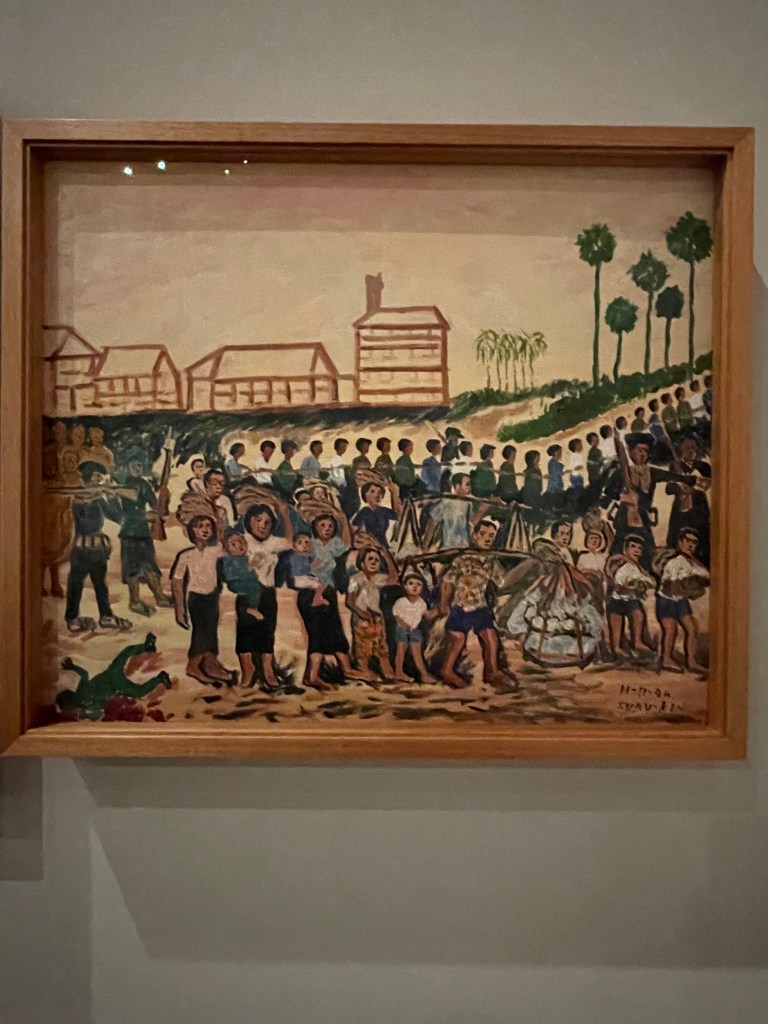
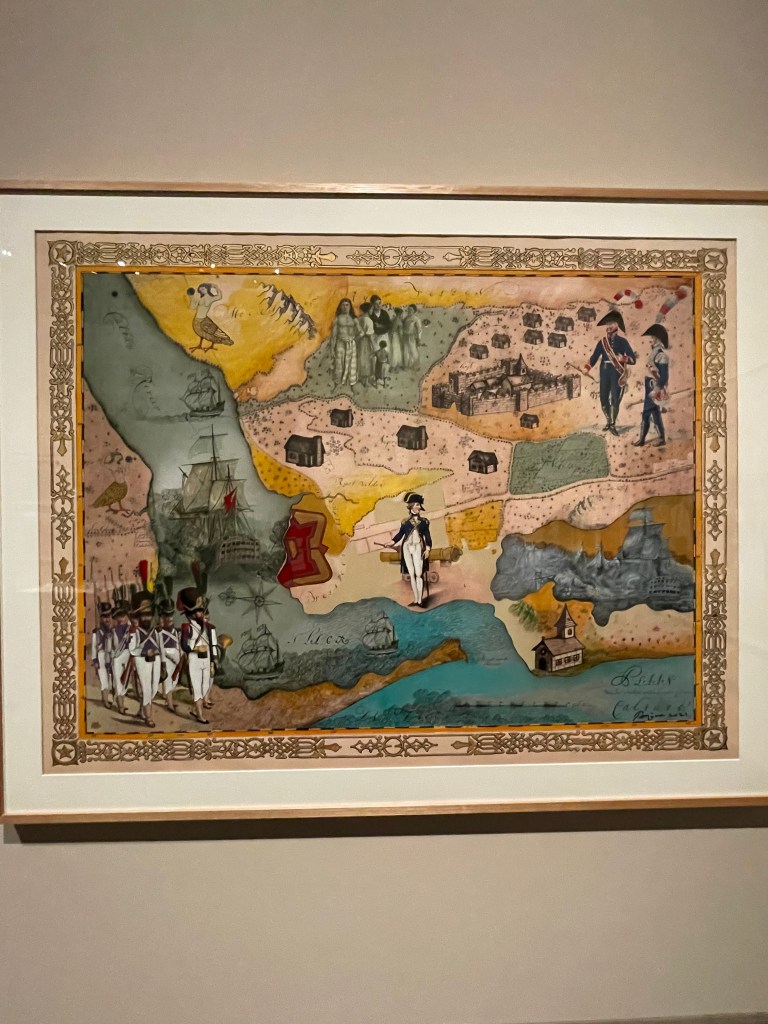
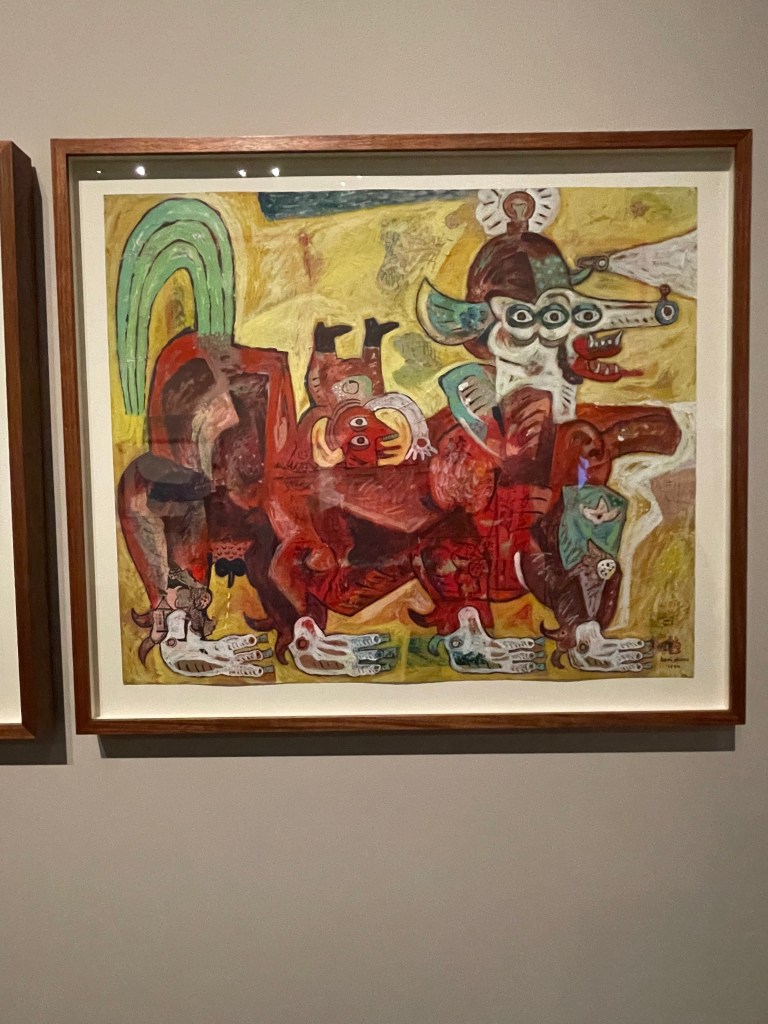
It’s quite hard to describe what, exactly, you are seeing at this show, but it was interesting and engaging to see the work of so many contemporary artists from places as diverse as Hawaii, Cambodia, India, Australia, New Zealand, the Philippines… what a great sweep of the world to try and represent!
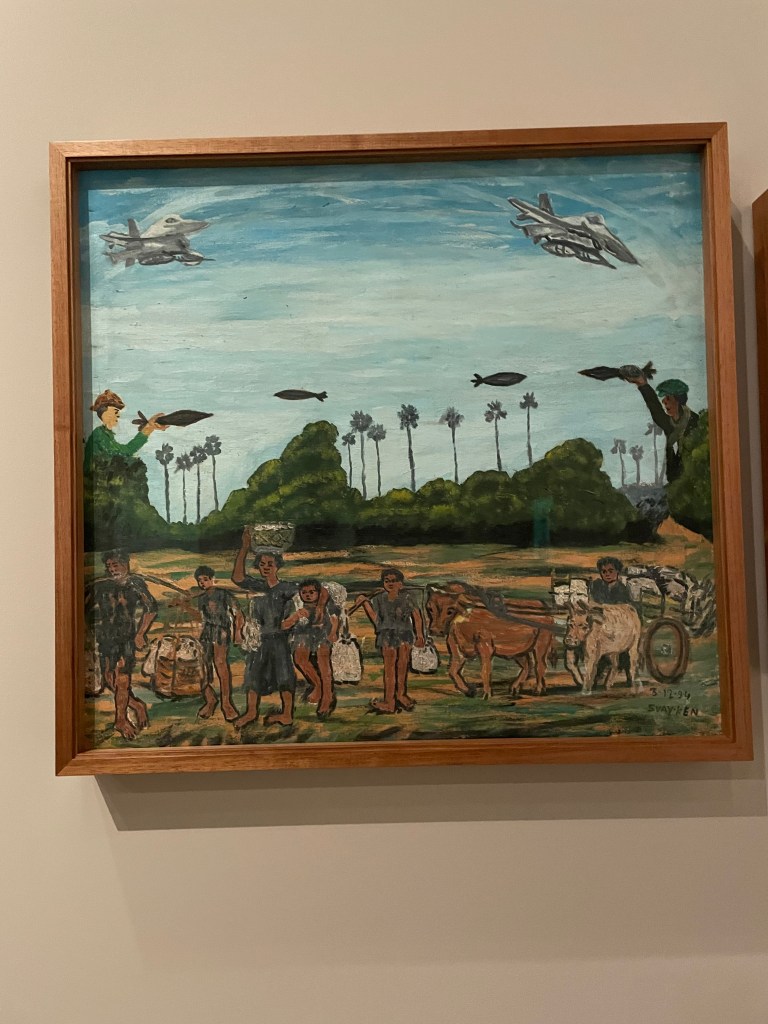
The works, above, caught my eye because they represented people and events: La Famillle Pomare by Aline Amaru from Tahiti, Independence Celebration by Mathias Kauge from Papua New Guinea and Svay Ken’s depiction of People on 18th April 1975 when the Khmer Rouge took power in Cambodia
What’s striking is that so many of the images referenced violence, domination and occupation. These regions have been buffeted by so many of the greedy countries of the West for whom faraway lands represented an opportunity to take by force, own and exploit. So there’s a lot of that on show.
Above you can see: Pala Pothupitiye’s Kaulara Fort which gives an impression of the colonial experience in Sri Lanka, showing a fort first built by the Portuguese, captured by the Dutch and then taken over by the British. Middle is Heri Dini’s Eating Bullets, a rather ‘Guernica-like’ expression of invasion and fury and on the right is a depiction of Vietnamese planes and Pol Pot Soldiers in battle.
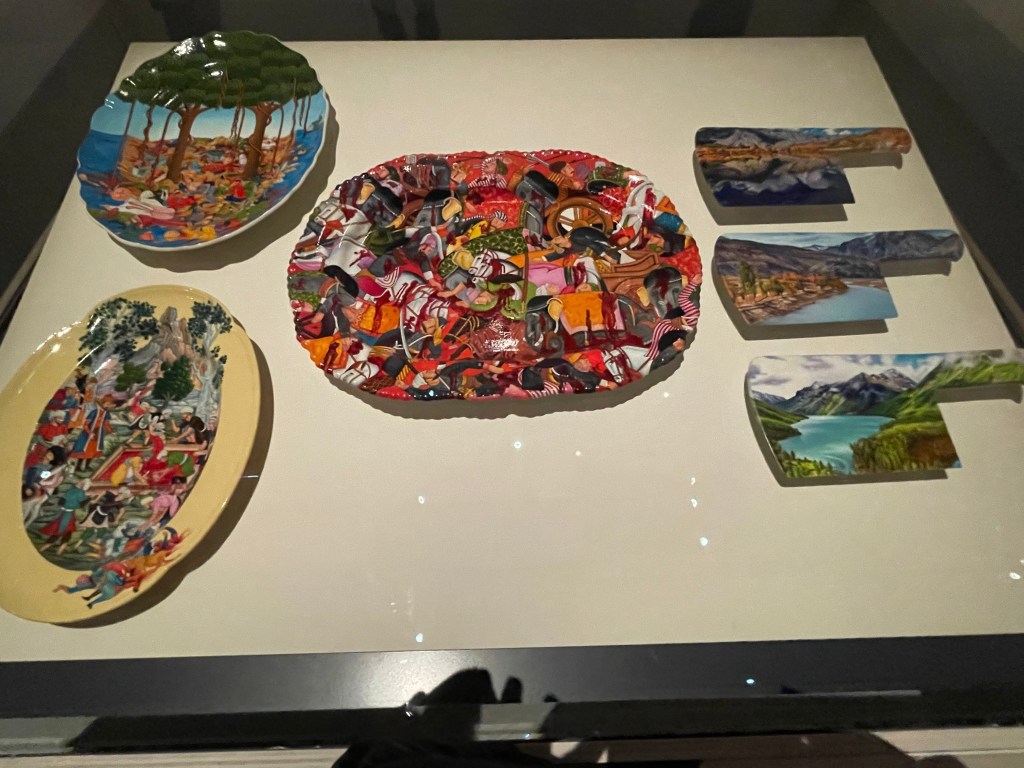
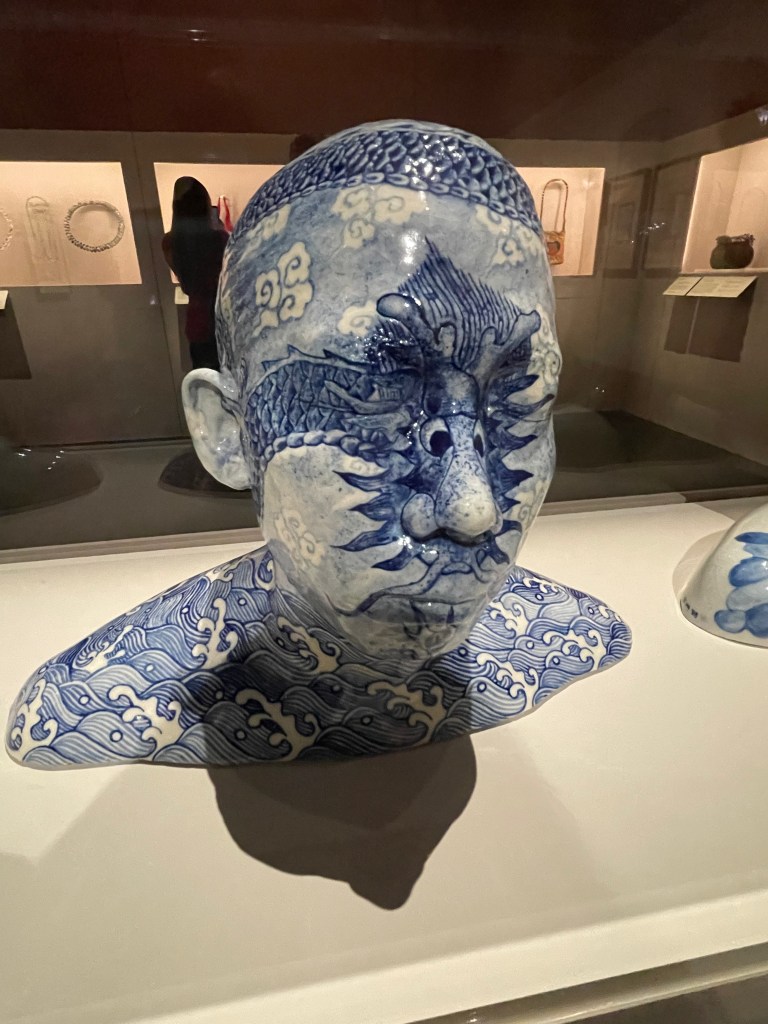
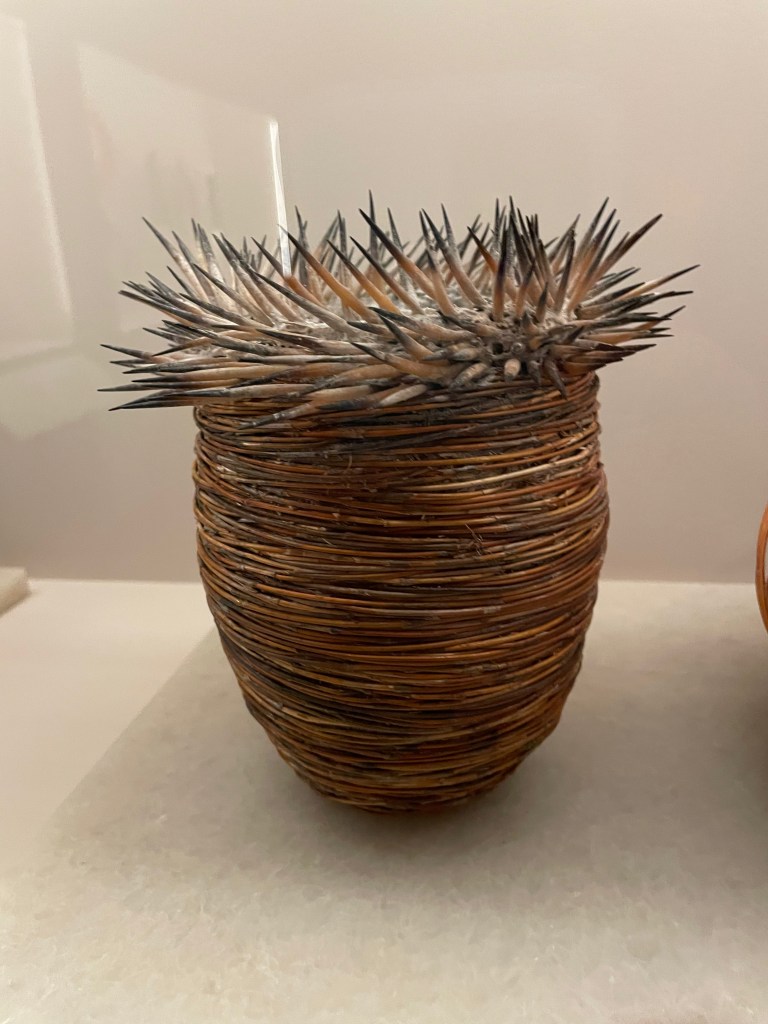
Good to see a variety of sculptures and crafts too. I was impressed by these three, painted dishes and everyday objects, a ceramic bust by Ah Xian from China who works in Australia, and Spikey One by Shirley Macnamara from Queensland, Australia who uses spinifex, emu features, ashes, porcupine quills and polymer.
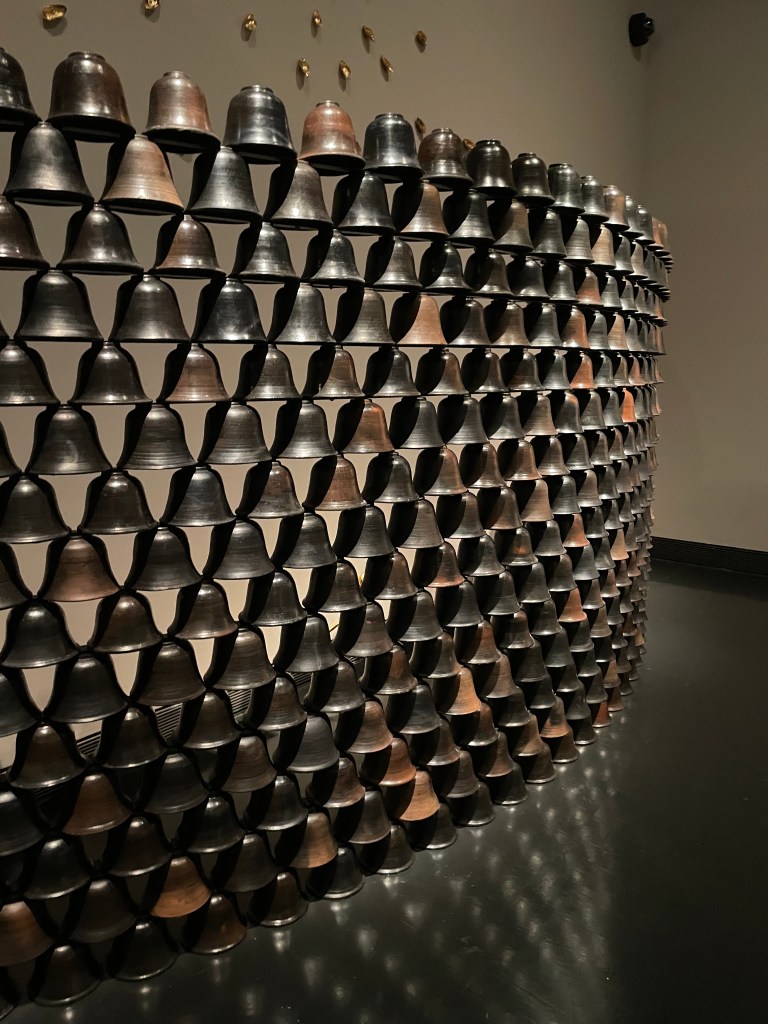
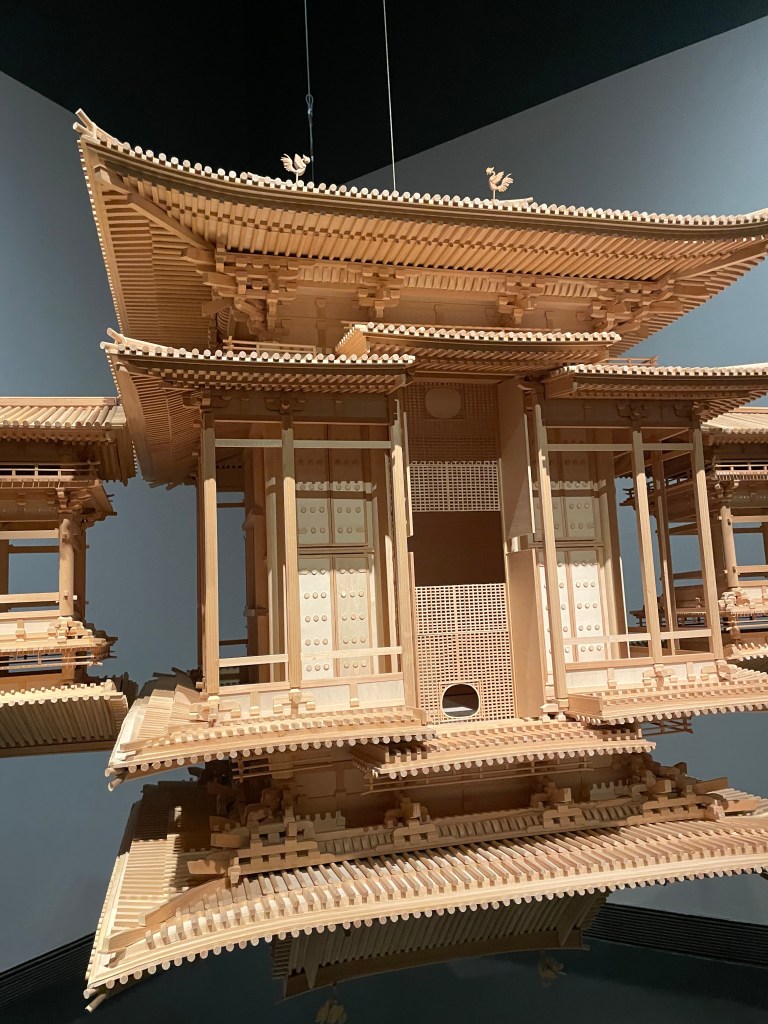
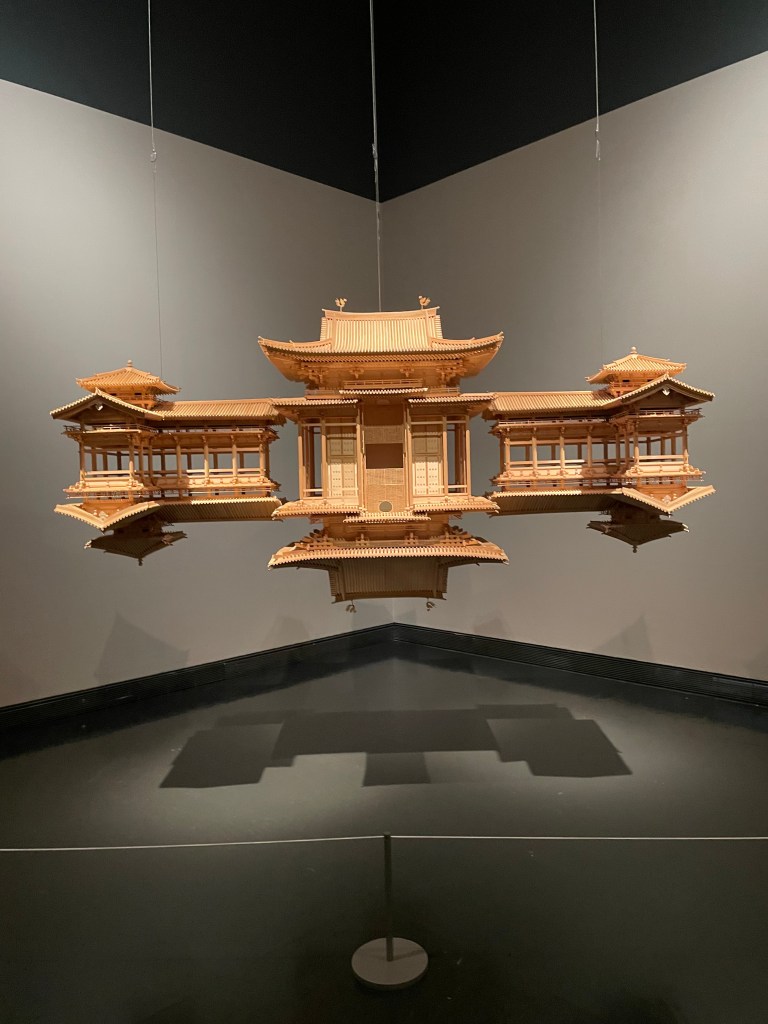
The exhibition ends with a spectacular sculpture depicting the Phoenix Pavilion which is part of Kyoto’s Byodo-in temple complex. Made from Japanese cypress he building appears to float on water with a reflection created to mirror the building. And Montein Boonma from Thailand has created Lotus Sound, made from terracotta ‘bells’ which is very beguiling.
The exhibition is on show near the main entrance to the Victoria and Albert Museum until 10th January 2027