
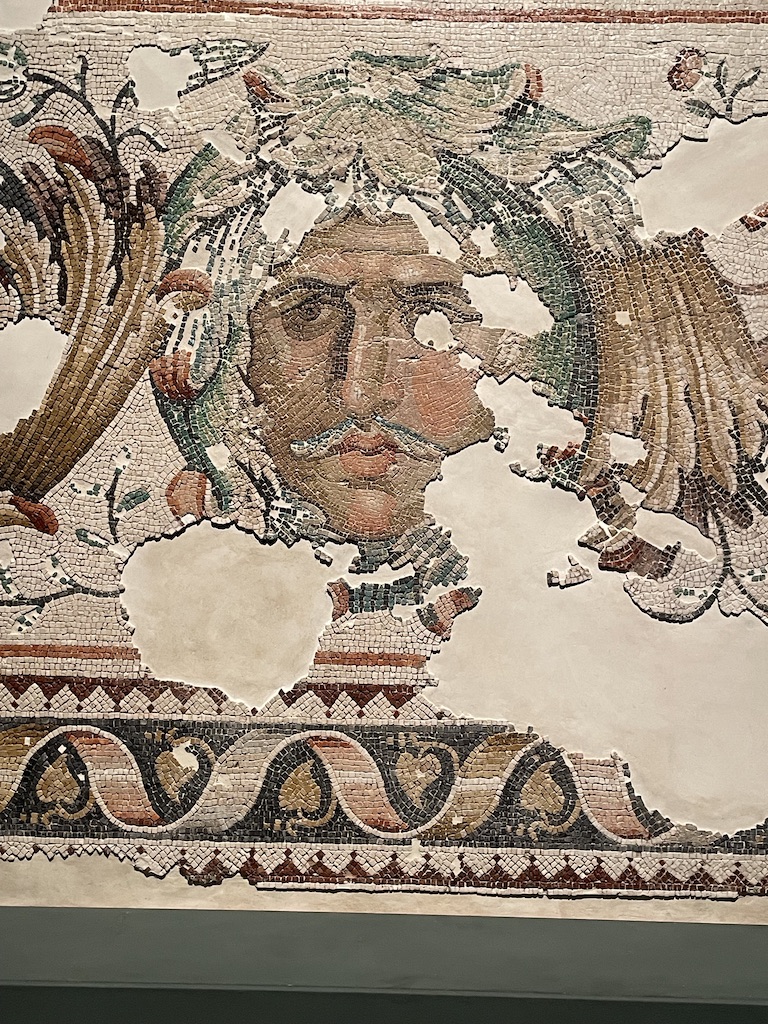
The exhibition begins with the Romans who developed this dry, barely inhabited town so strategically placed and began by piping water into the centre to make life sustainable. And what they left behind – apart from the irrigation system still in use – was artwork, sculptures and mosaics. I loved this mosaic portrait which is so lifelike and cleverly created using thousands of tiny tessera.
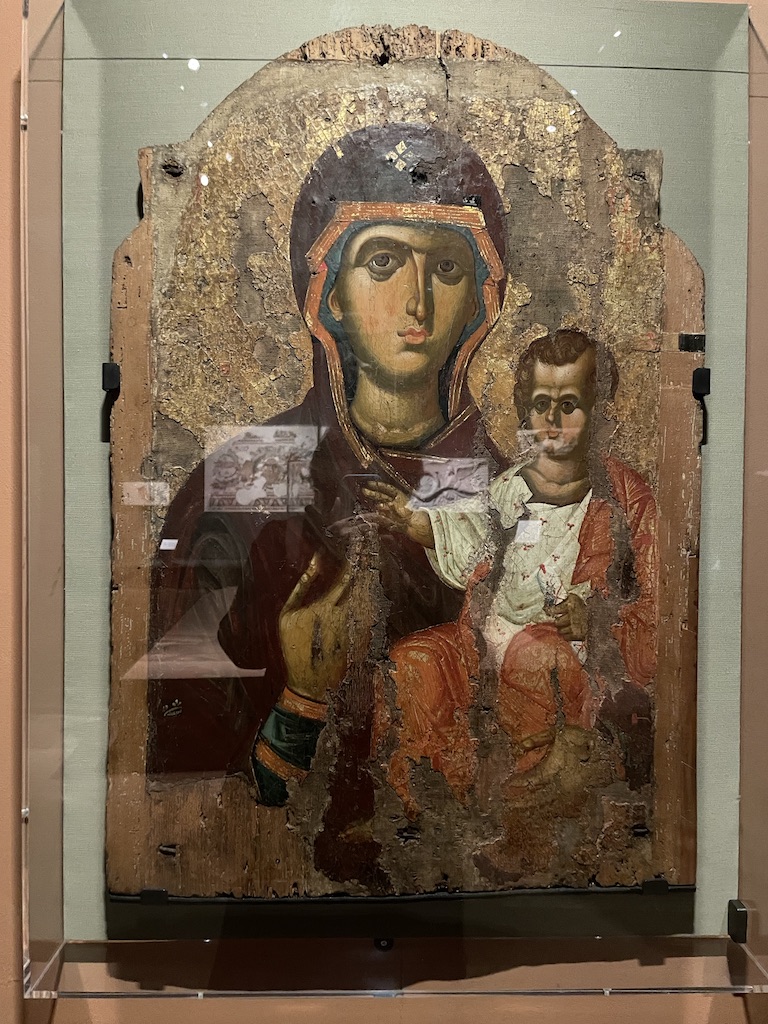
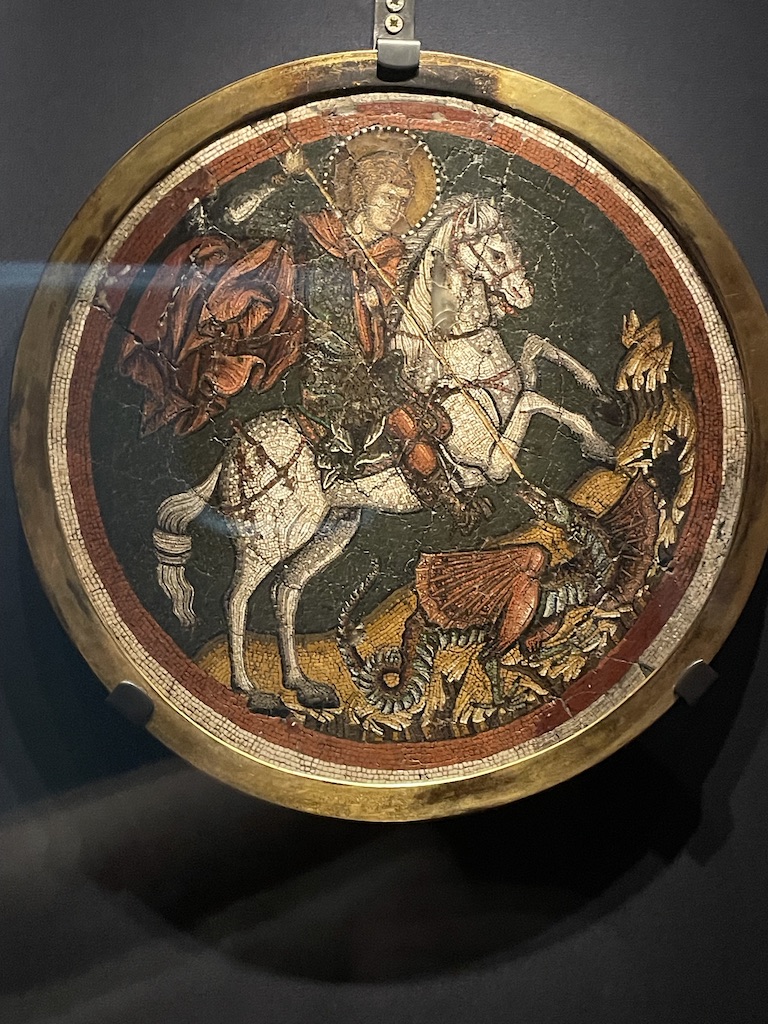
As Christianity expanded across the region the Roman art gave way to fabulous Byzantine pieces revering Christ and the Virgin Mary along with favoured saints. There is also a very bloodthirsty embroidery (not pictured) showing various tortures and suffering of saints. It must have been a very hectic time but the surviving icons, or copies of the most revered icons are just gorgeous and, I’ve added a picture of St George slaying the dragon made using the tiniest of mosaic tiles.
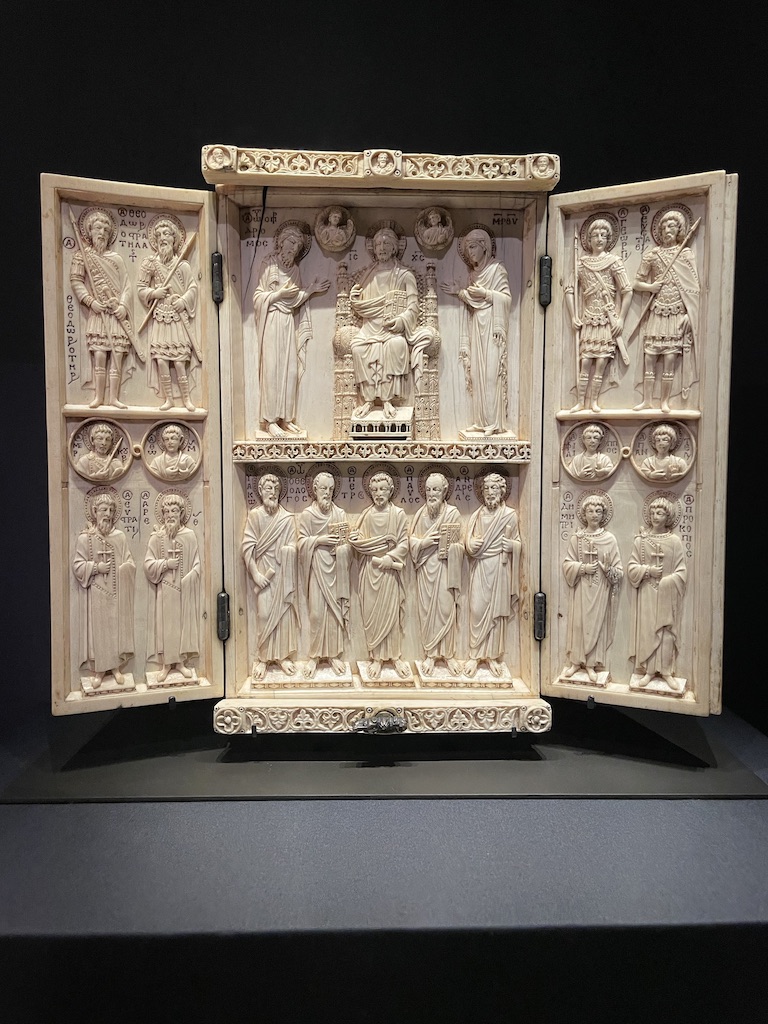
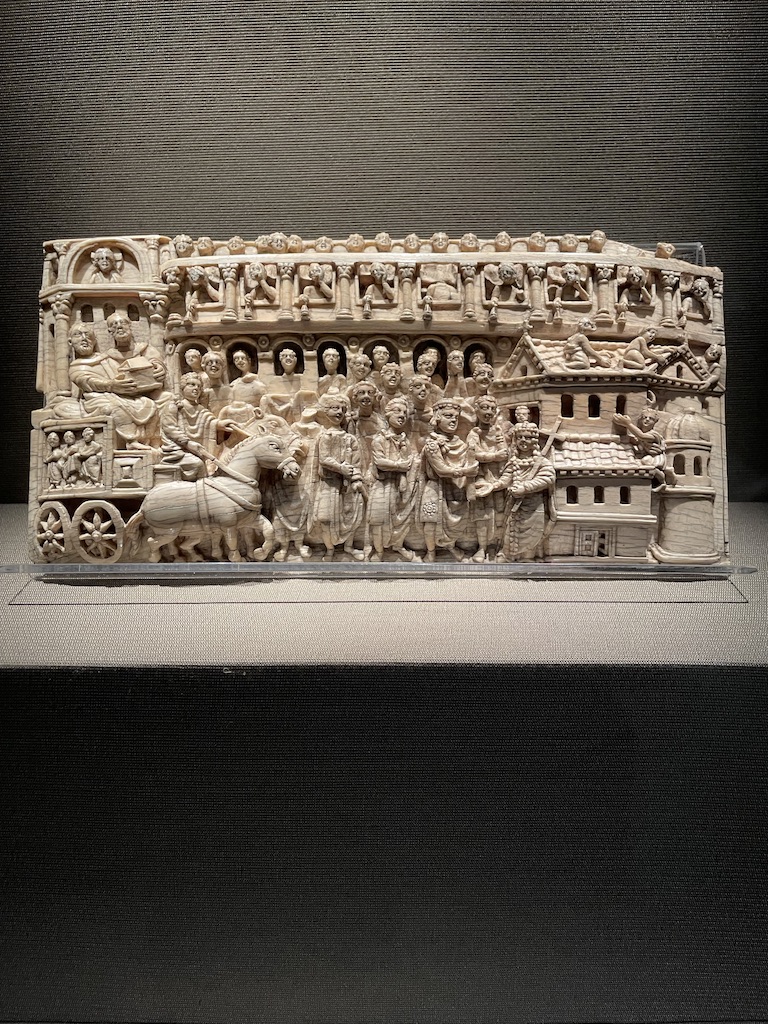
The ivory carvings are just breathtaking too. Apparently there was a law against statuary and large 3D pieces so artists found a way to create a 3D effect by carving these miniature scenes which are packed with detail. On the left is the Habaville Triptych from around 950-1100 showing Christ on an elaborate throne, flanked by Saint John the Baptist and the Virgin Mary with apostles, saints and martyrs arranged around him. And on the right is The Trier Adventus, a scene depicting the arrival of St Stephen’s relics in Constantinople in 421. There’s so much going on just outside the Great Palace in this tiny piece.
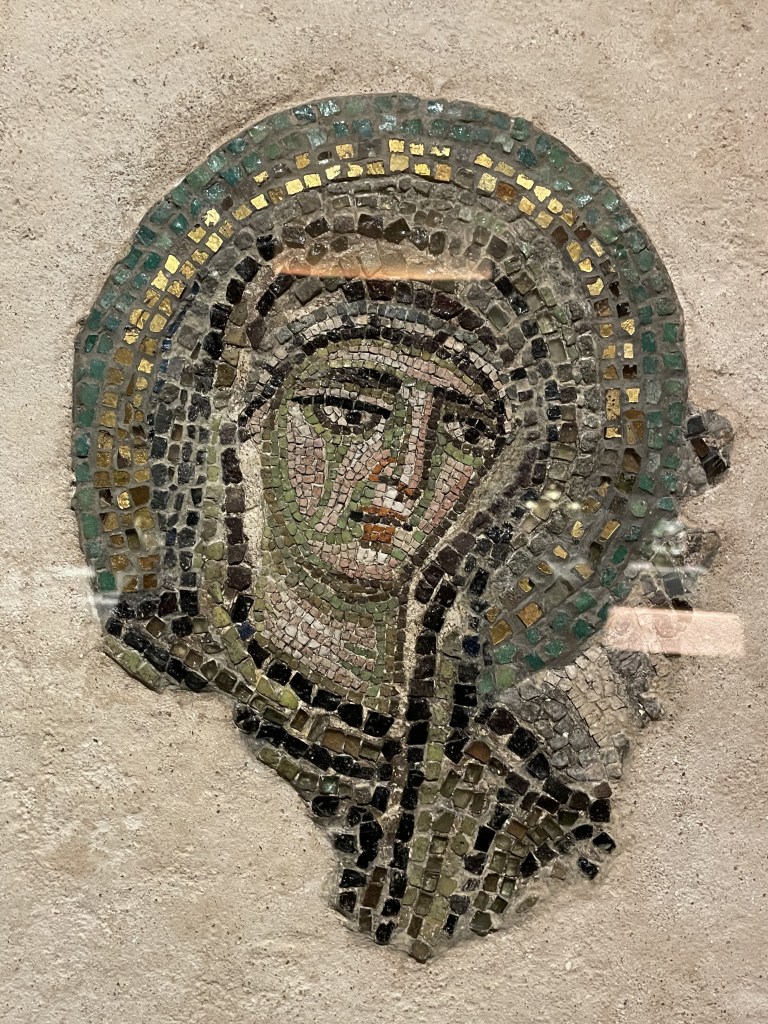
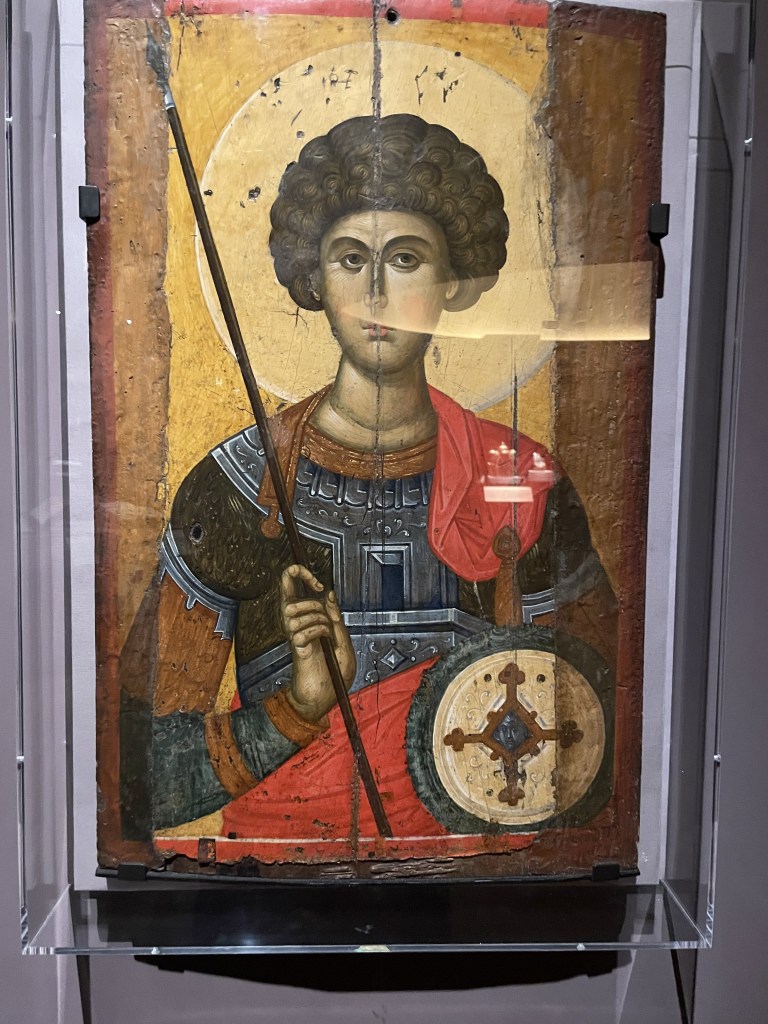
On the left, above is a rare fragment of a mosaic of the Virgin from a 5th century monastery and on the right is an icon of St George, painted in tempera on wood – gazing at us across the centuries, continuing his role as a divine protector.
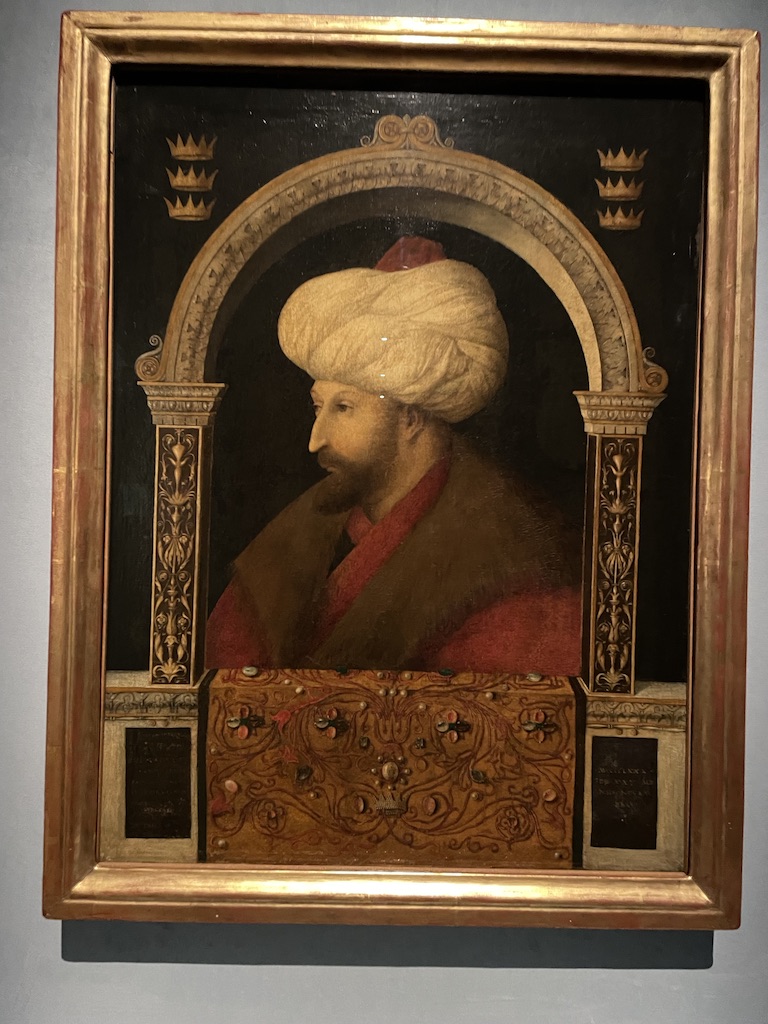
I was very impressed by this portrait of Sultan Mehmed II by Gentile Bellini. Made in 1480 it’s a very early example of an artist creating a real likeness of the subject using the newly developed technique of oil paint on wood.
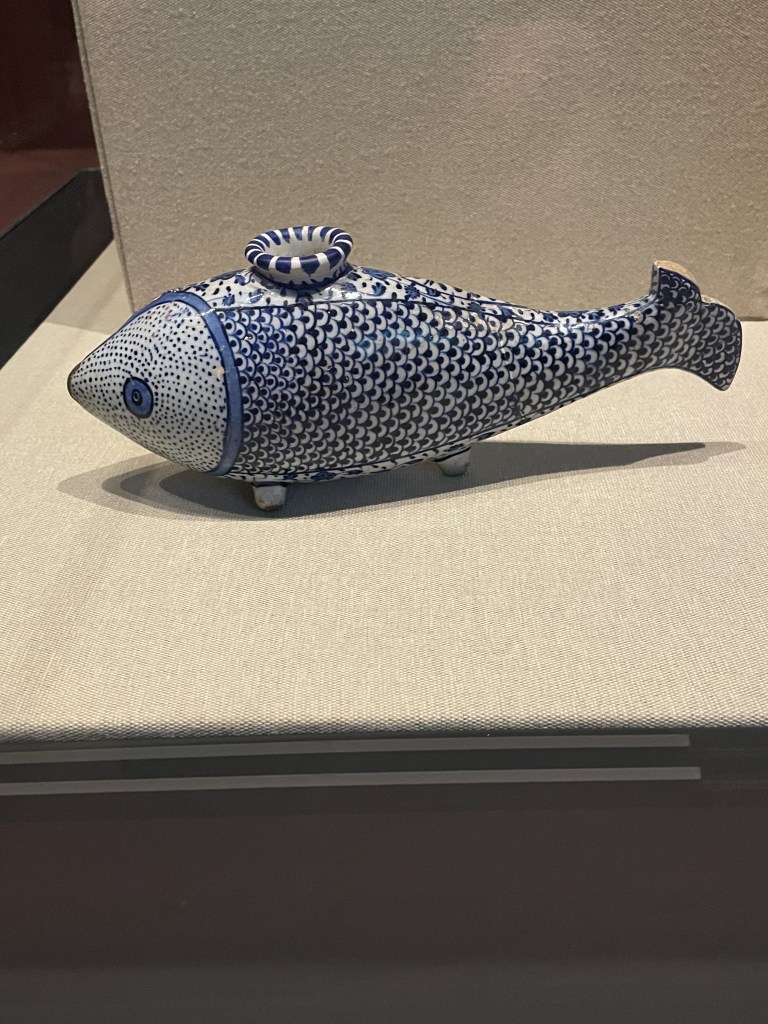
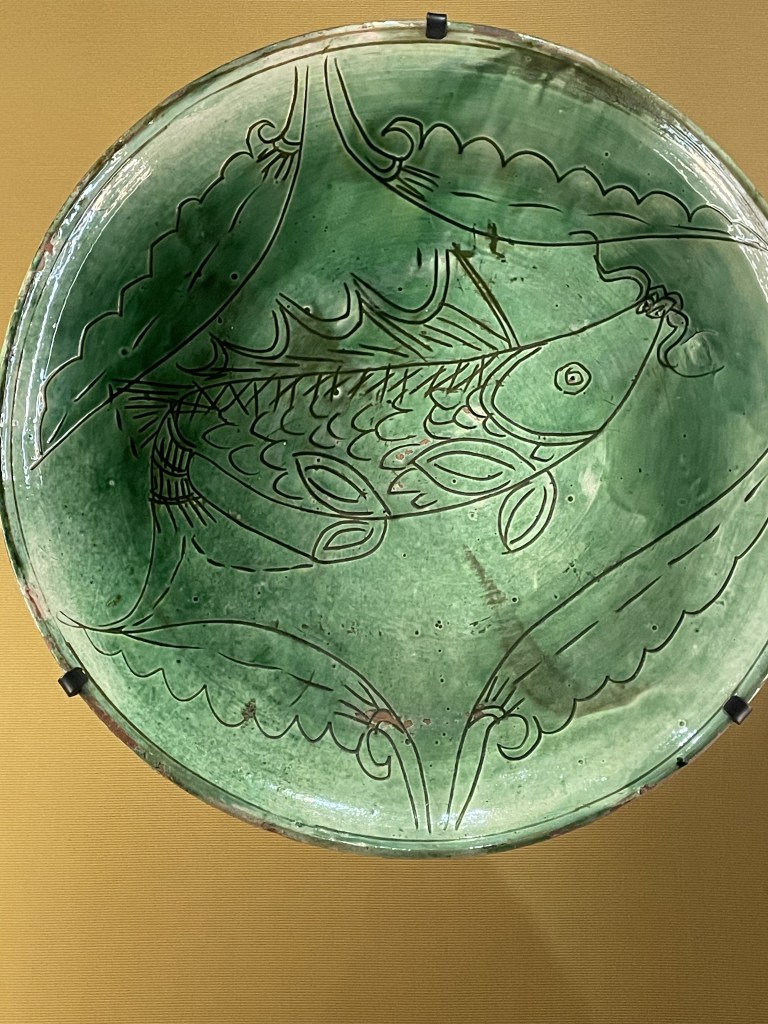
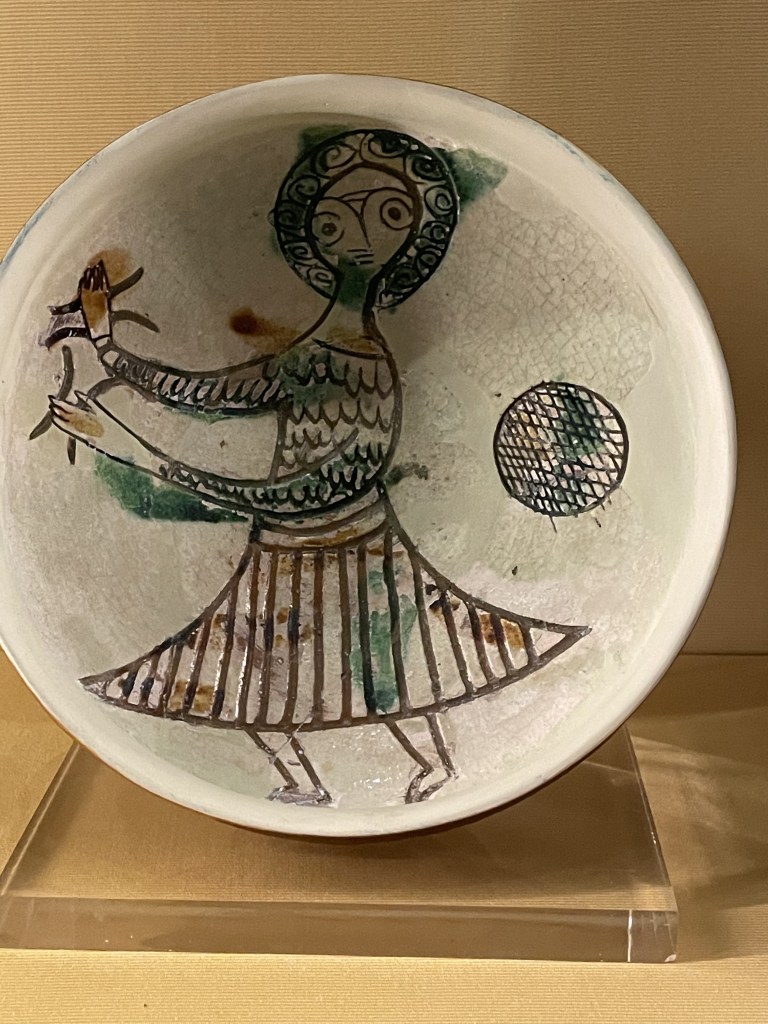
It was a thrill to see so much Byzantine earthenware too made for Constantinople’s dwellers. Simple designs but so striking. With the dish on the right, you can’t help wondering if Picasso might have seen a dish like that and gained a few ideas?
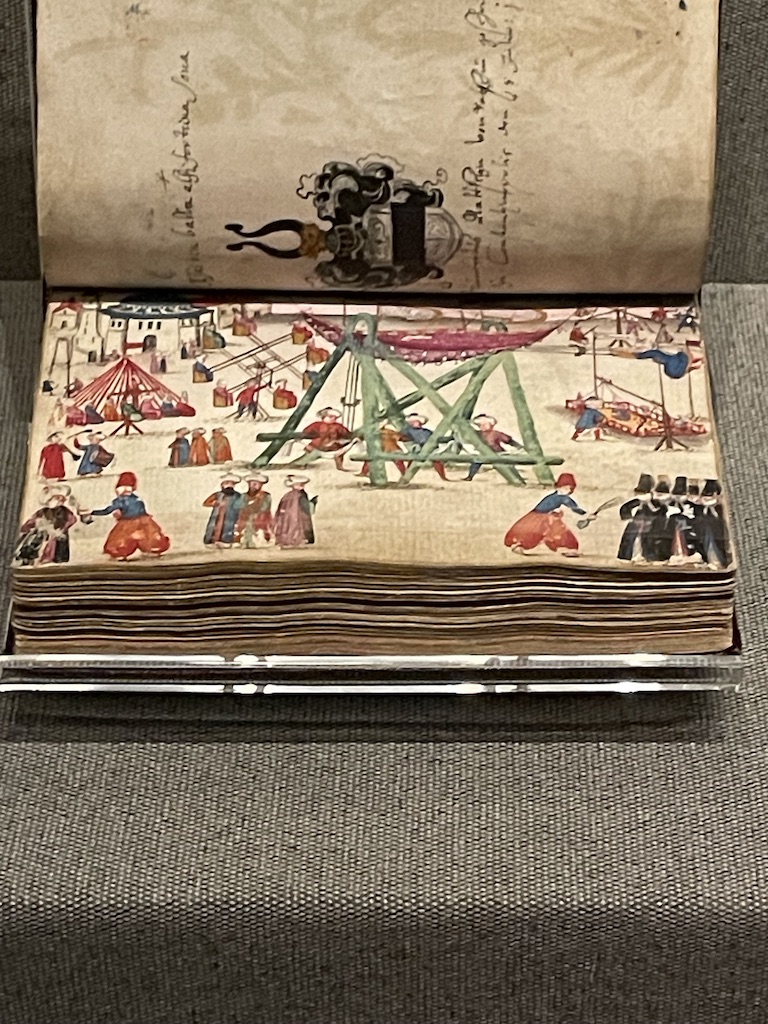
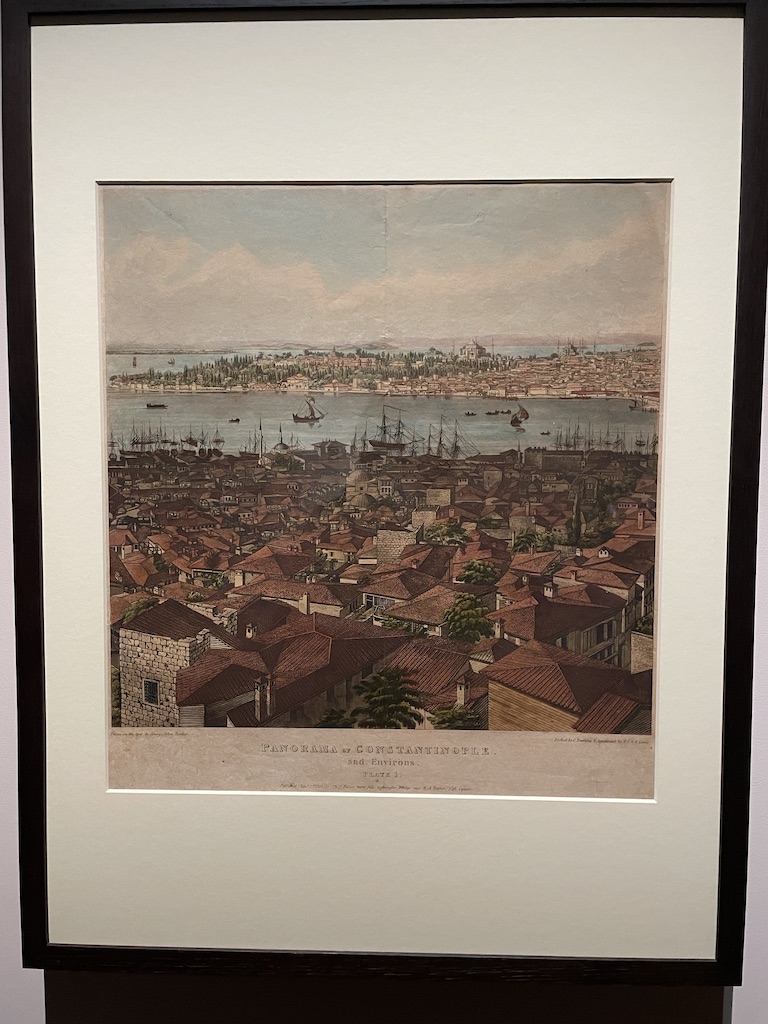
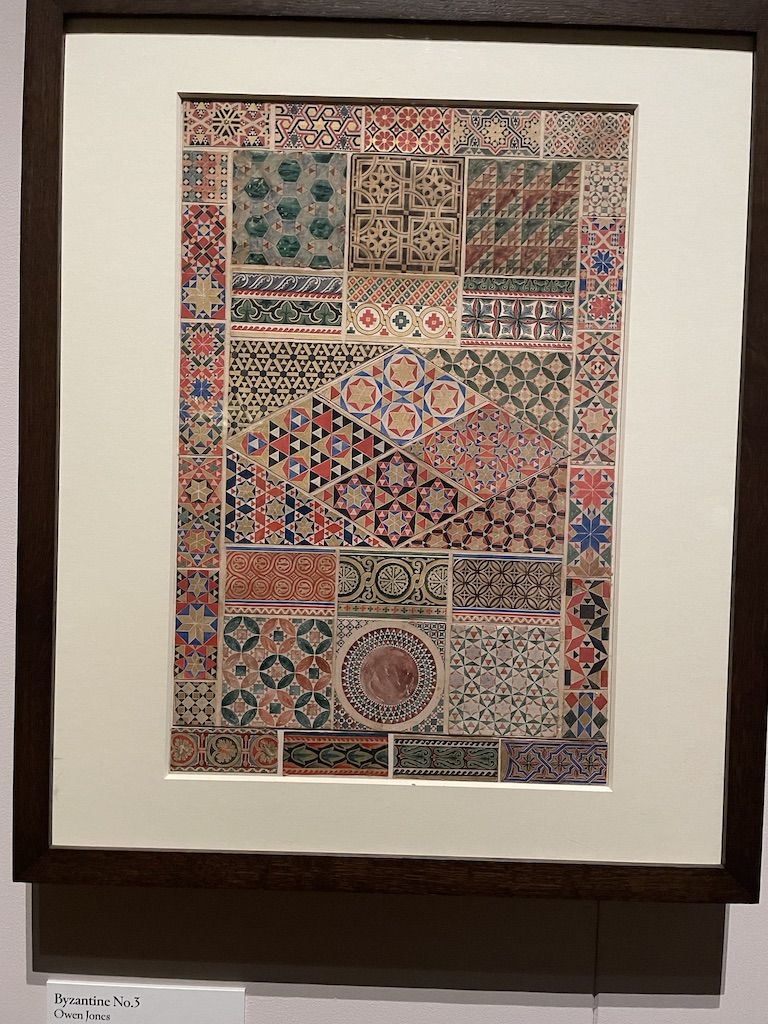
Plenty of works on paper too. I really loved this picture of a funfair with swingboats and rides. Clearly Constantinople was a fun place to live. In the centre is the first of a set of very elaborate drawings made ‘on the spot’ as it says on the print by Henry Aston Barker in 1813 and turned into prints by G. Tomkins (etching) and F.C. and G. Lewis (aquatint). You can see an amazing panorama of the city. And on the right is a series of designs by Owen Jones who assembled decorative traditions from the Byzantine and Ottoman designs he found during a visit to Istanbul in 1833.
The spirit and art of this great place and period of civilisation is still with us – bathroom tiles and fluffy towels originated there! Really worth seeing this show. It’s on until 9th May 2027.

