
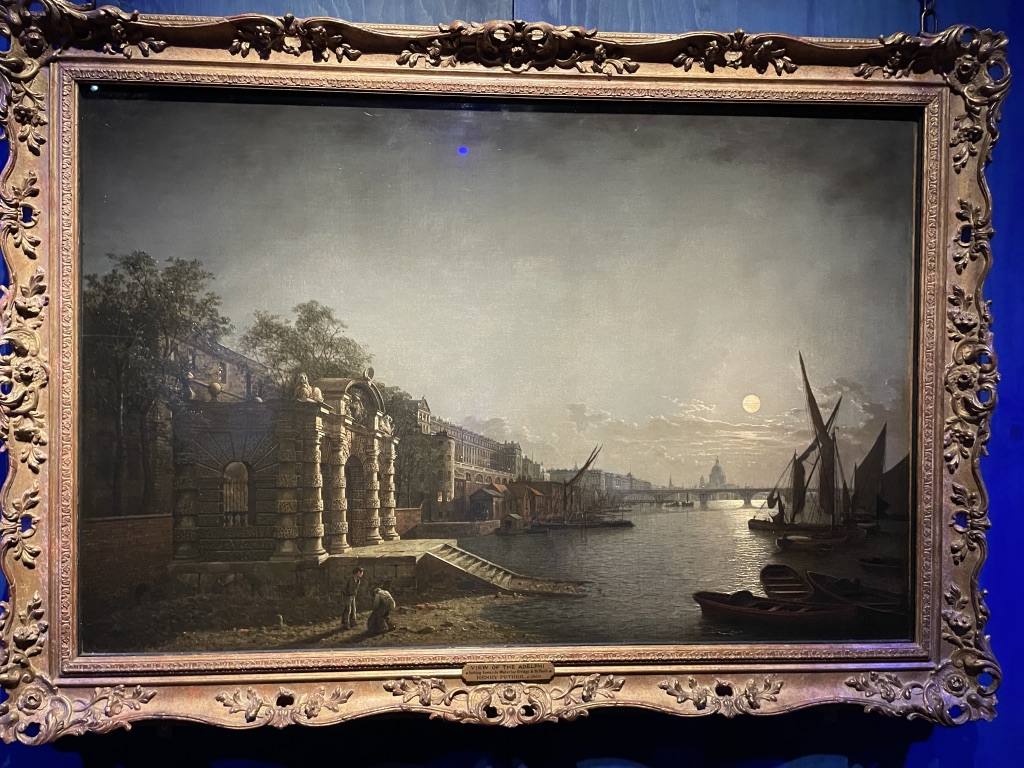
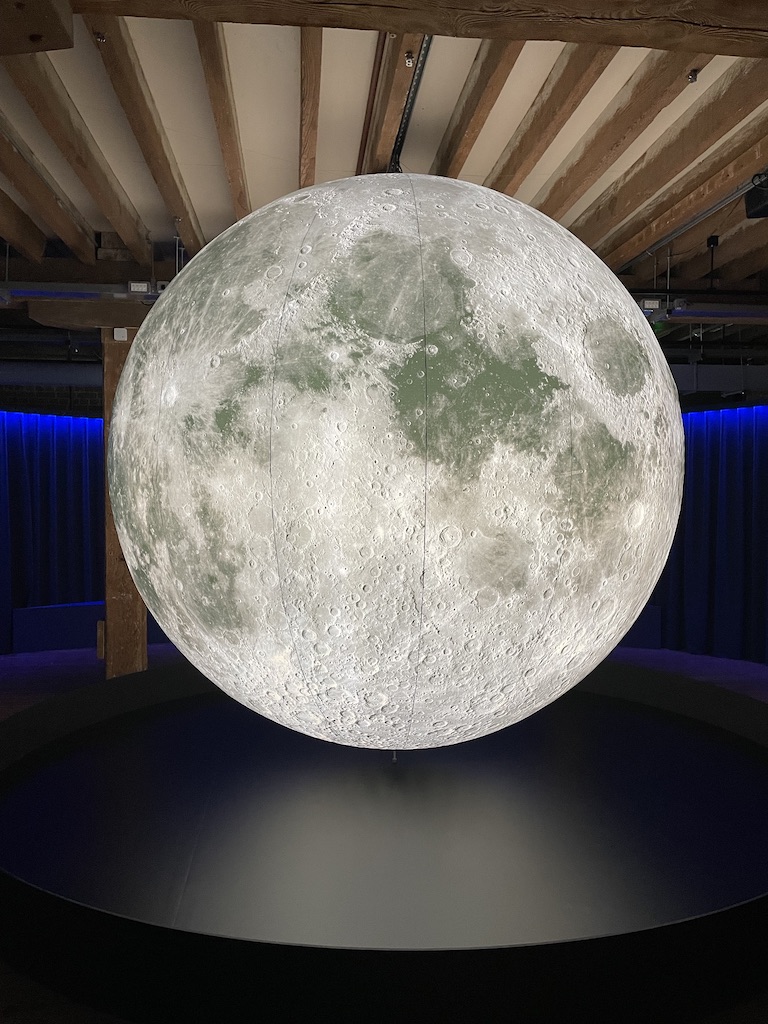
The exhibition opens with this spectacular painting by Henry Pether (around 1850) featuring mudlarkers searching the foreshore near York Water Gate, the Strand, by moonlight. Anyone living near the river will be aware of the constant rise and fall of the tide which is ordained by the moon. And there’s a fabulous sculpture of The Moon which you can circle, and peer at the extraordinary pitted surface.
You need a licence to be a mudlarker, along with sturdy shoes, waterproof clothes and a beady eye to spot potential treasure with in the mud of the river. It’s astonishing that every low tide will reveal items dropped, lost or hidden in the Thames. These pieces vary from the really ancient, pre-historic tools and items, jewels and coins, up to contemporary objects thought lost for ever.

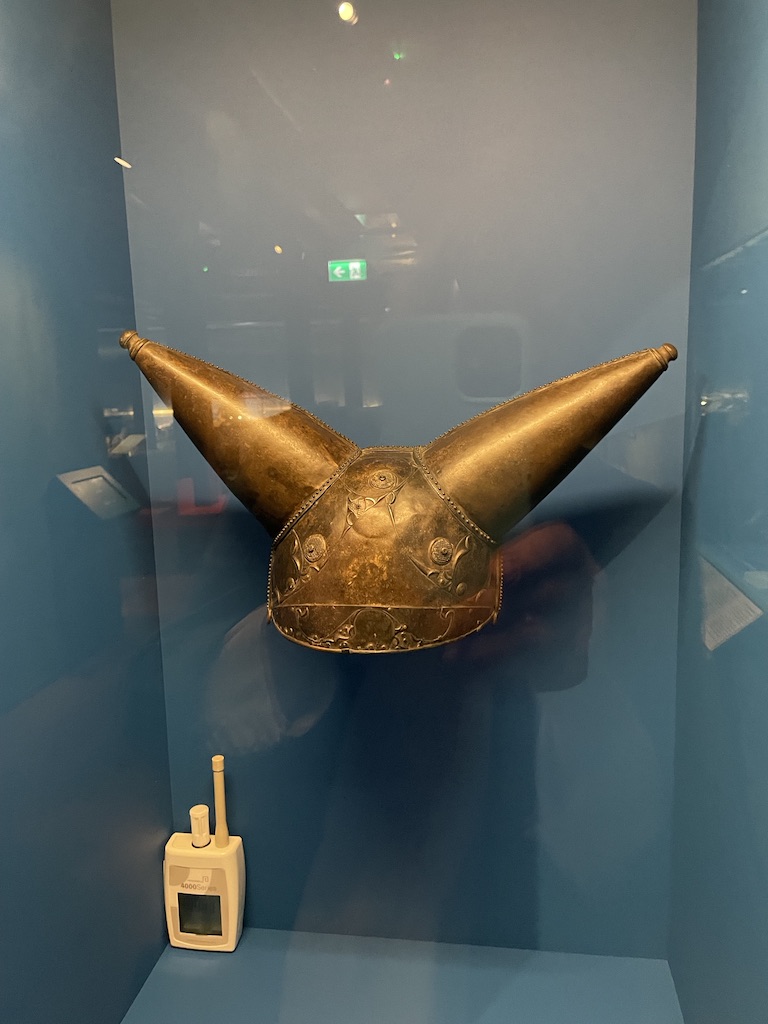
Above is a selection of figurines showing different gods and godesses from Roman times. They might have been offerings – the Romans revered water – or accidentally dropped into the river. And on the right is The Waterloo Helmet from 150 BCE. It’s the only Iron Age helmet found in southern England and the only one with horns ever found in Europe.
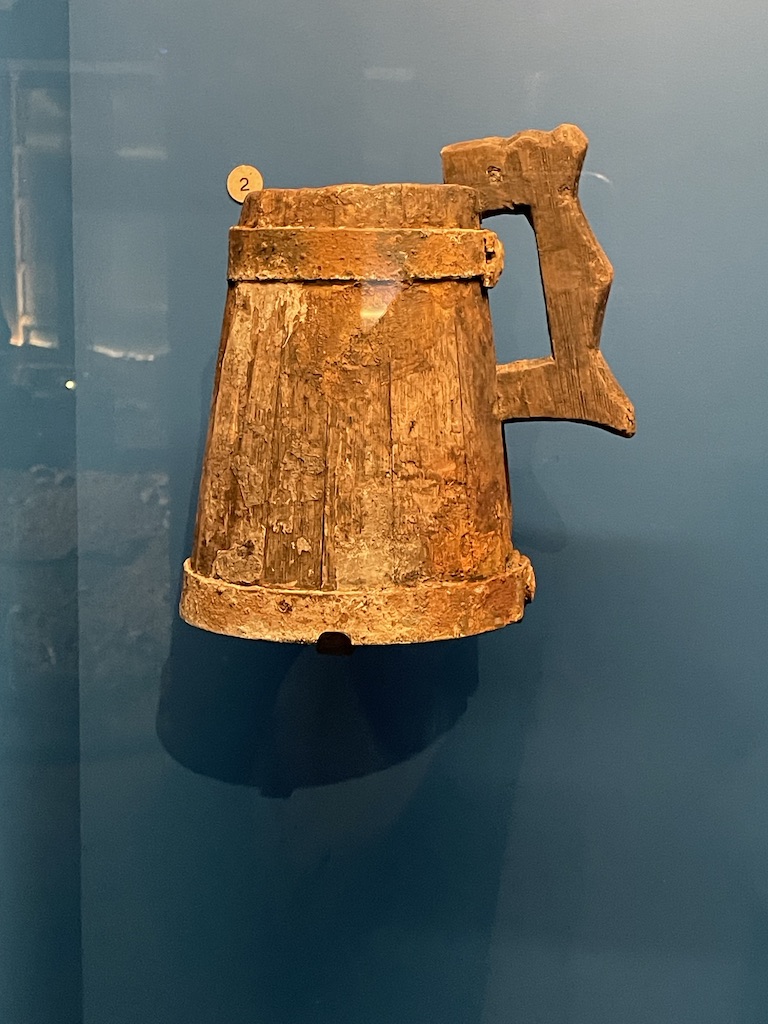
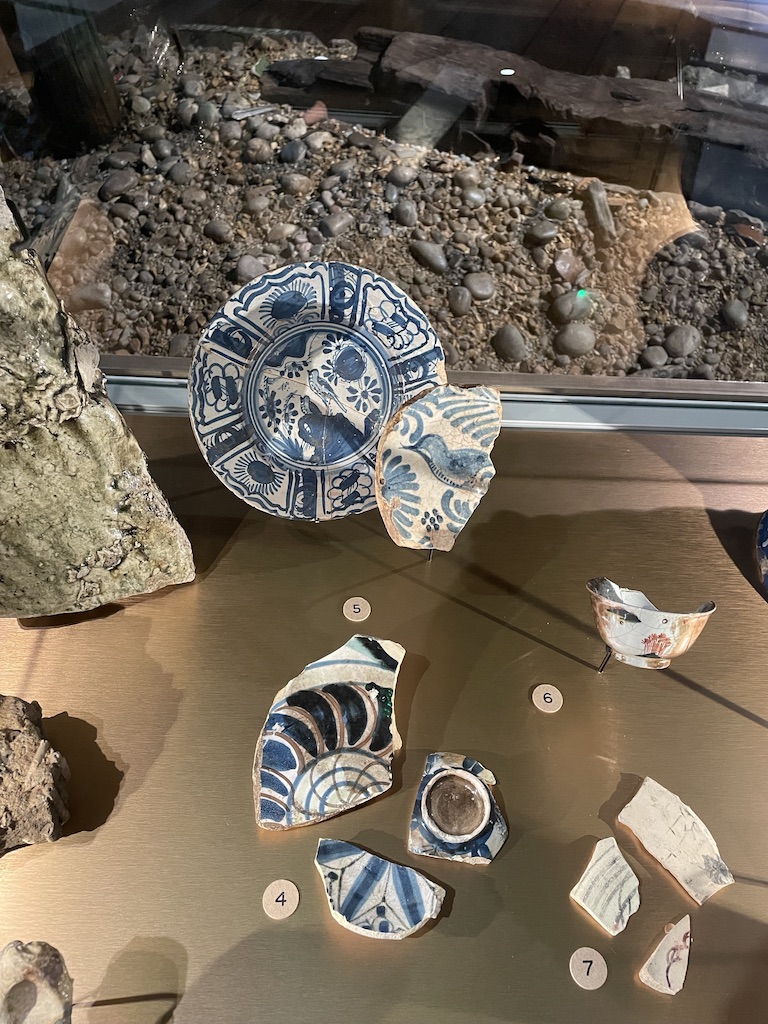
I do love seeing the everyday items which have been fished out. This wooden tankard must have been a thrilling find. It holds three pints – great for a very thirsty person, most likely a sailor. And it’s great to see these Delftware pots and dishes, even in fragments, giving you an idea of the household crockery in use from the mid 1500s to the 1800s.
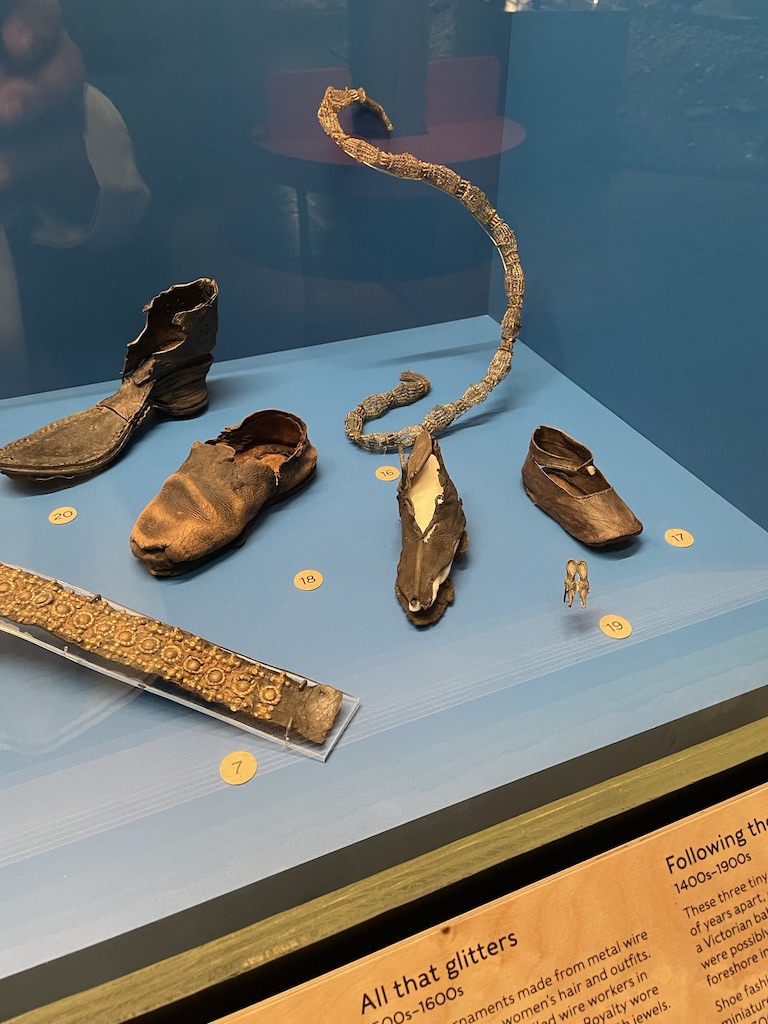
There’s something very touching about seeing children’s shoes. They have survived the centuries because the mud of the Thames is ‘anaerobic’ meaning it preserves the material from oxygen and it does not decay.

Mudlarking has been going on for centuries. For many early mudlarkers it was the coal and wood which they wanted, rather than the ‘treasure’.


The layout of the exhibition is fascinating. A very eye-catching recreation of the Thames foreshore has been recreated throughout, giving viewers an idea of how complicated it can be to sift through the detritus of the river and use just your eyes and experience to spot and uncover something exciting.
It’s a very stimulating and moving show. And impressive that so many of the items were discovered by dedicated mudlarkers and donated to the Museum of London so that they can be viewed and admired but visitors.
The exhibition at the London Museum Docklands is on until 1st March 2026. Well worth adding to your ‘must-see’ list!

