
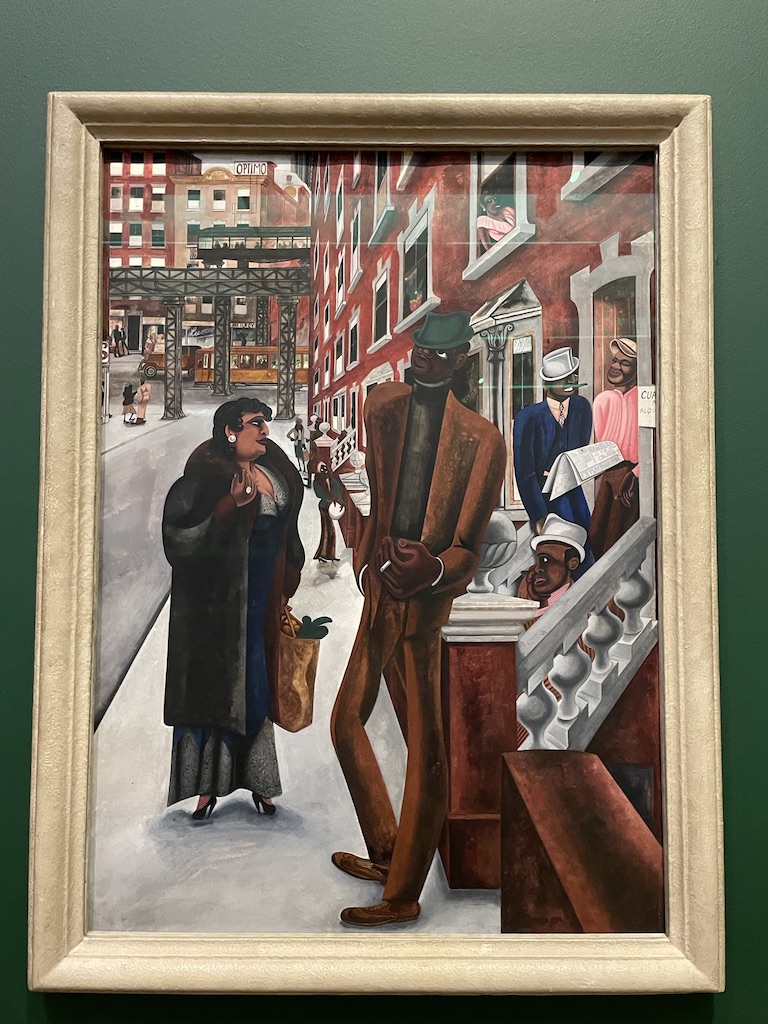
Oh, my delight at finally seeing Edward Burra’s amazing painting, Harlem, within the epic retrospective show which is on at Tate Britain.
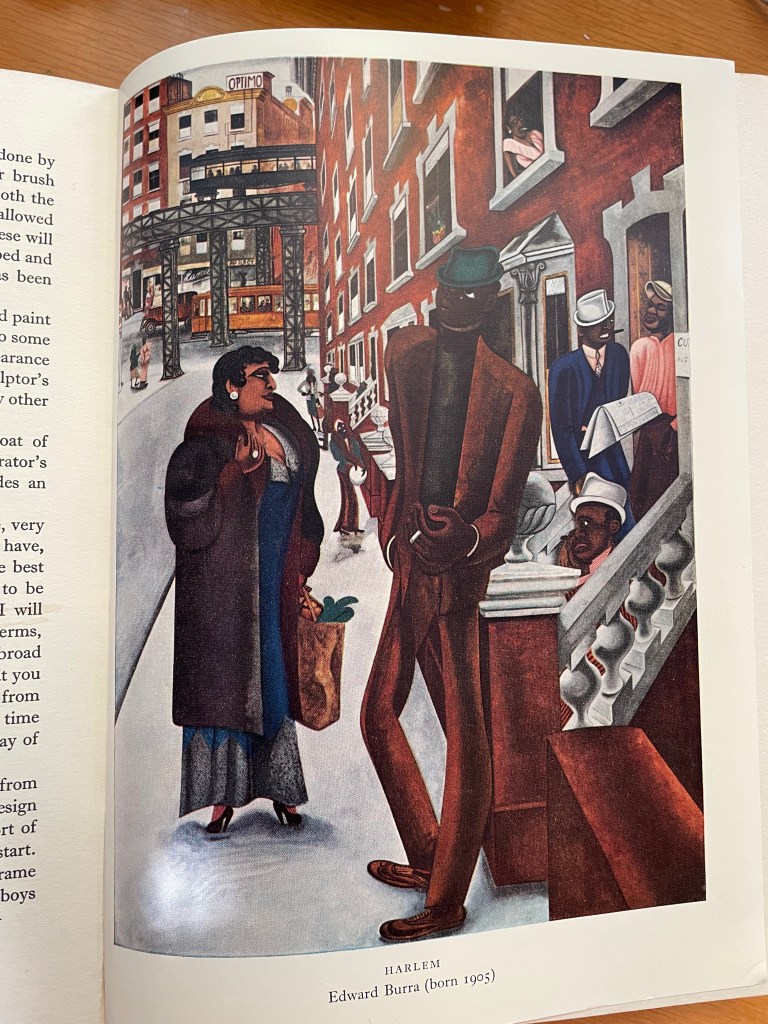
As a child I used to pore over my copy of Drawing & Painting for Young People by Mervyn Levy which contained this picture. I was very drawn to the narrative feel of the picture and puzzled by the environment of which I had no understanding. The figures looked alien but intriguing and I used to wonder how the painting was made. Well, what a joy it was to see the image for real and to marvel, like a child, at the astonishing use of watercolour, the detailed drawing and amazing atmosphere.

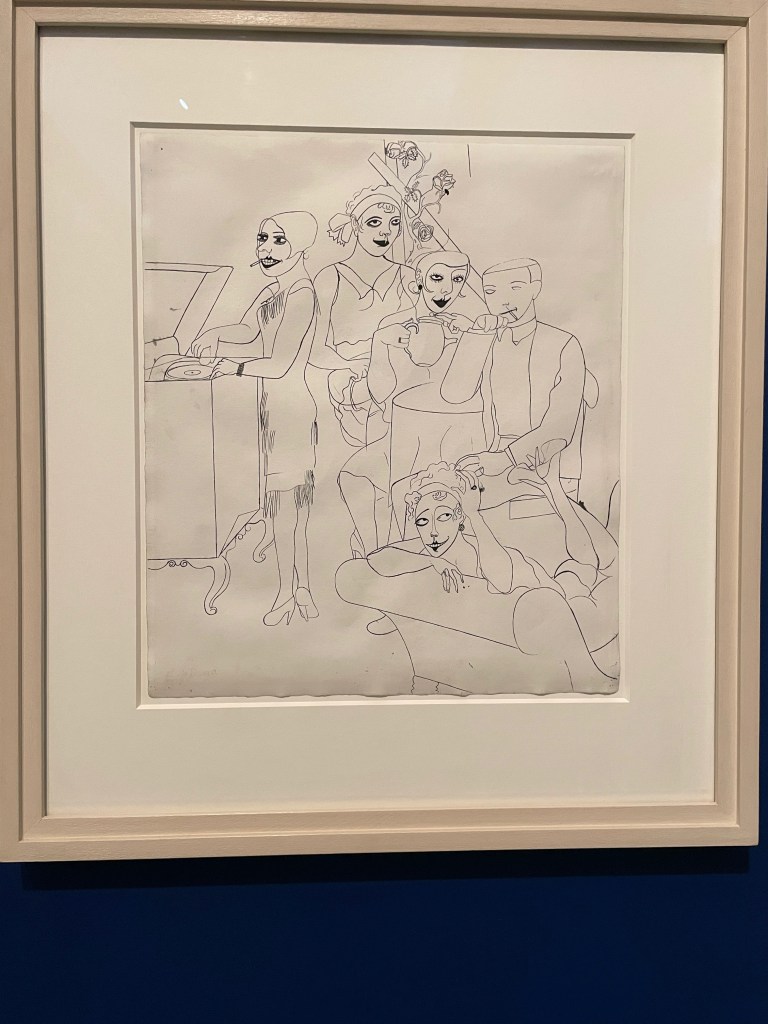
Edward Burra suffered from rheumatoid arthritis and was in constant pain. He became an artist, and rather than using oils to paint at an easel, he made his work on paper while seated at a table. Born in 1905, the young Burra was drawn to London during the hectic 1920s, loved jazz clubs, gin joints, nightclubs and seedy pubs. He recorded the bohemian life in Paris, the Black area of Harlem in New York where he adored the jazz clubs. He loved the sailors in Toulon and Marseille, flamenco dancers and toreadors in Spain.
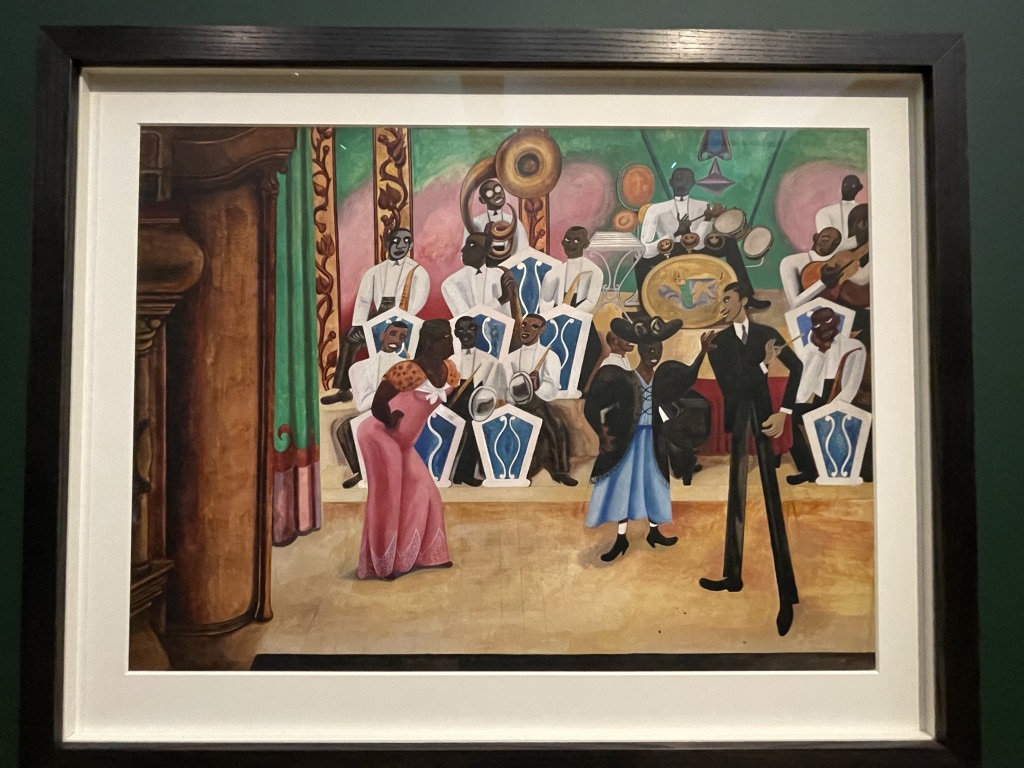

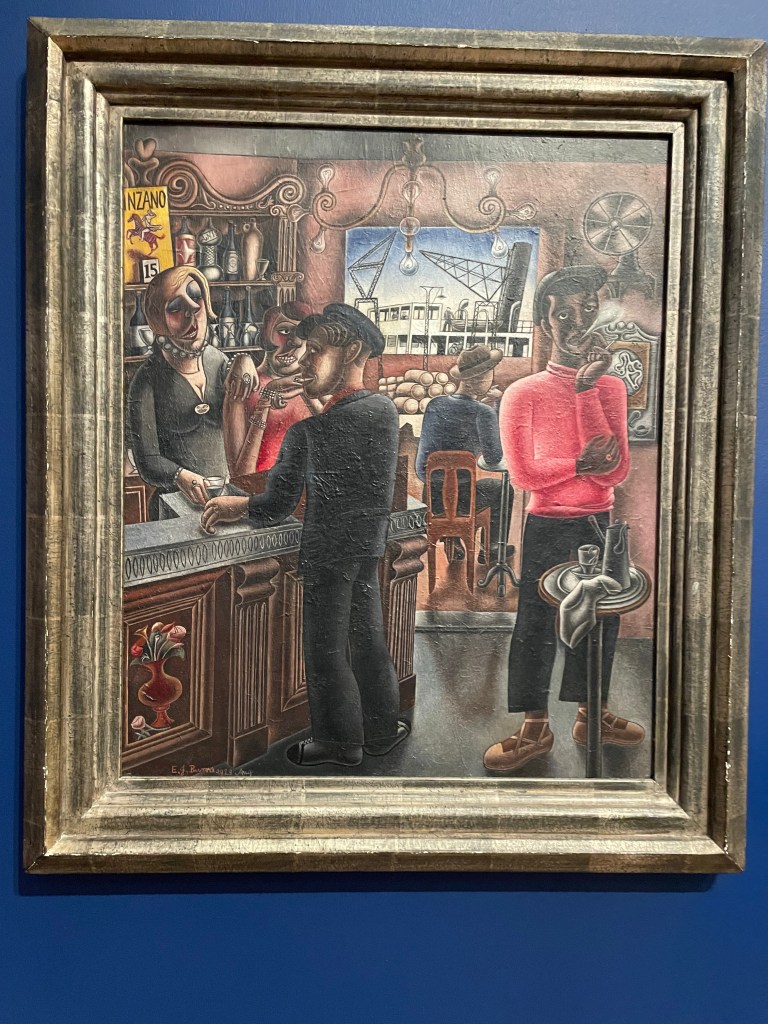
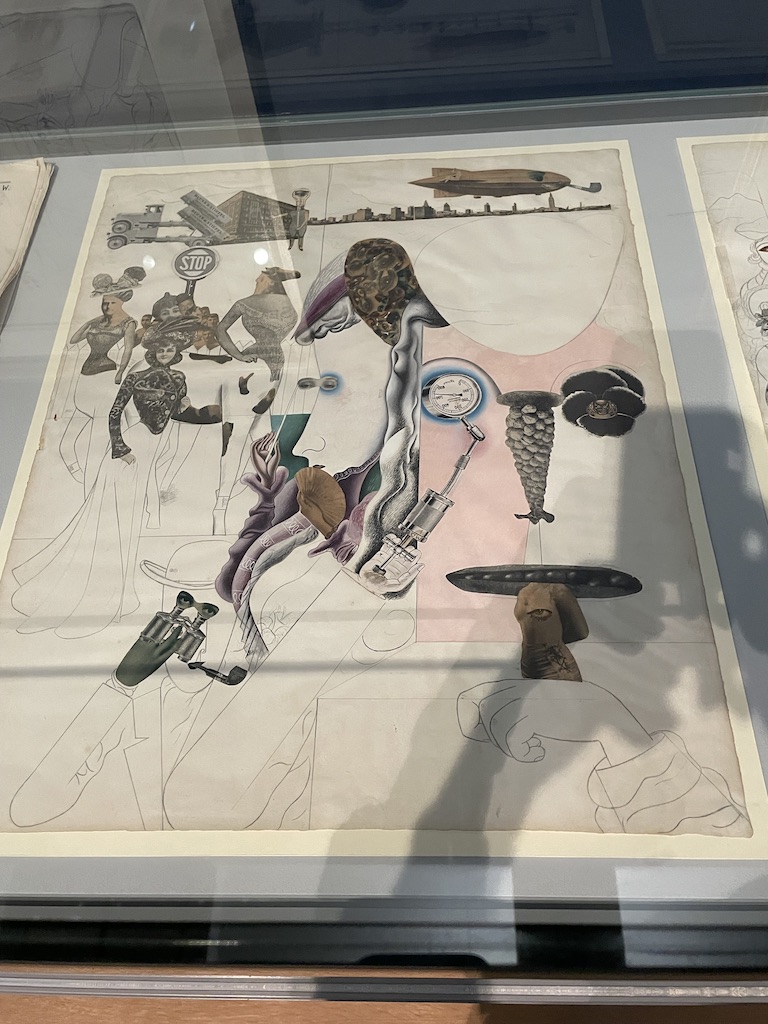
It’s fascinating to see his work close up and understand the detailed work that went into the creation of his pieces. Clearly he used magazines and photographs as reference and tended to collage images together to compose his paintings.


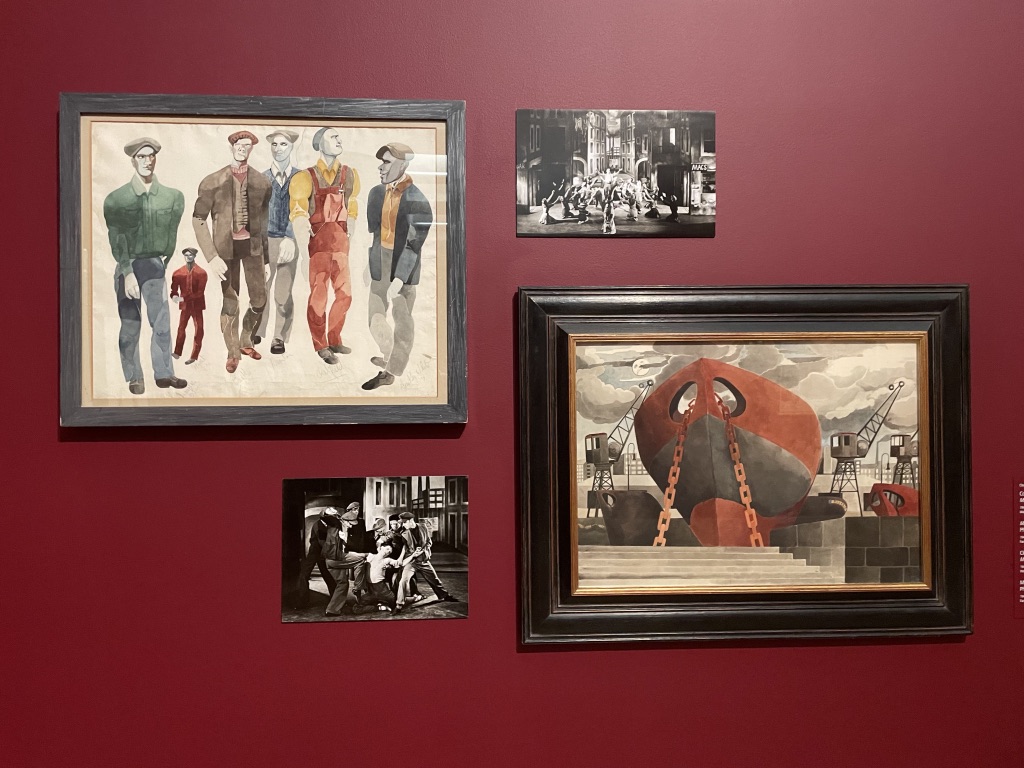

His enjoyment of ballet and theatre found form in commissions to create costumes.
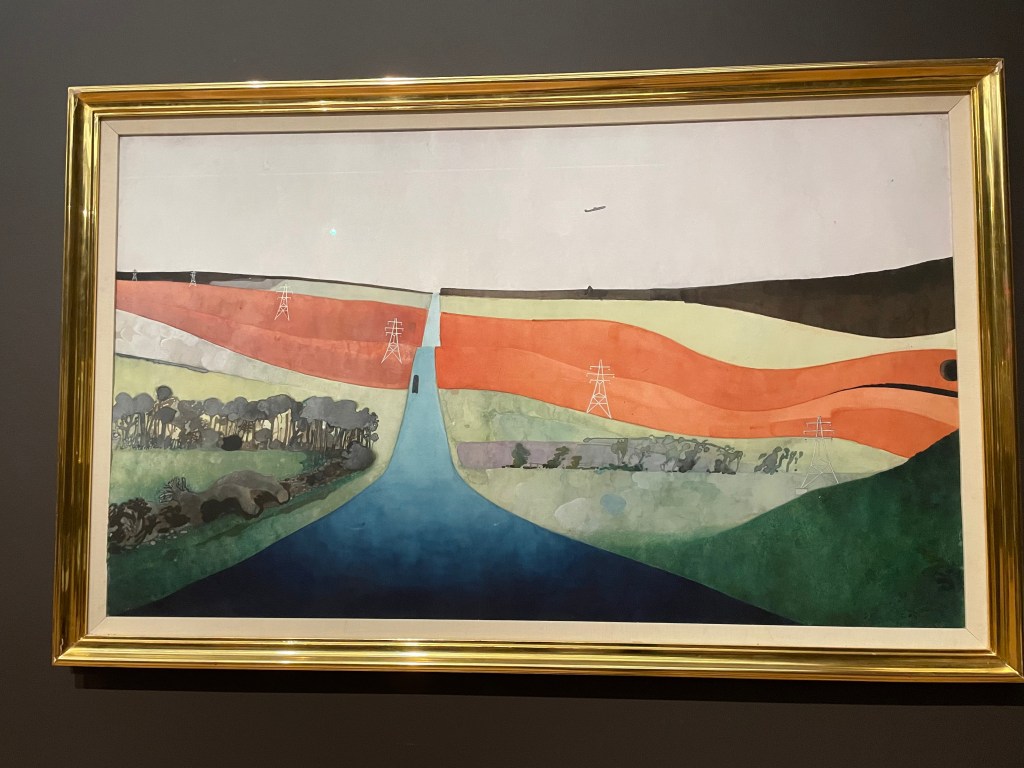
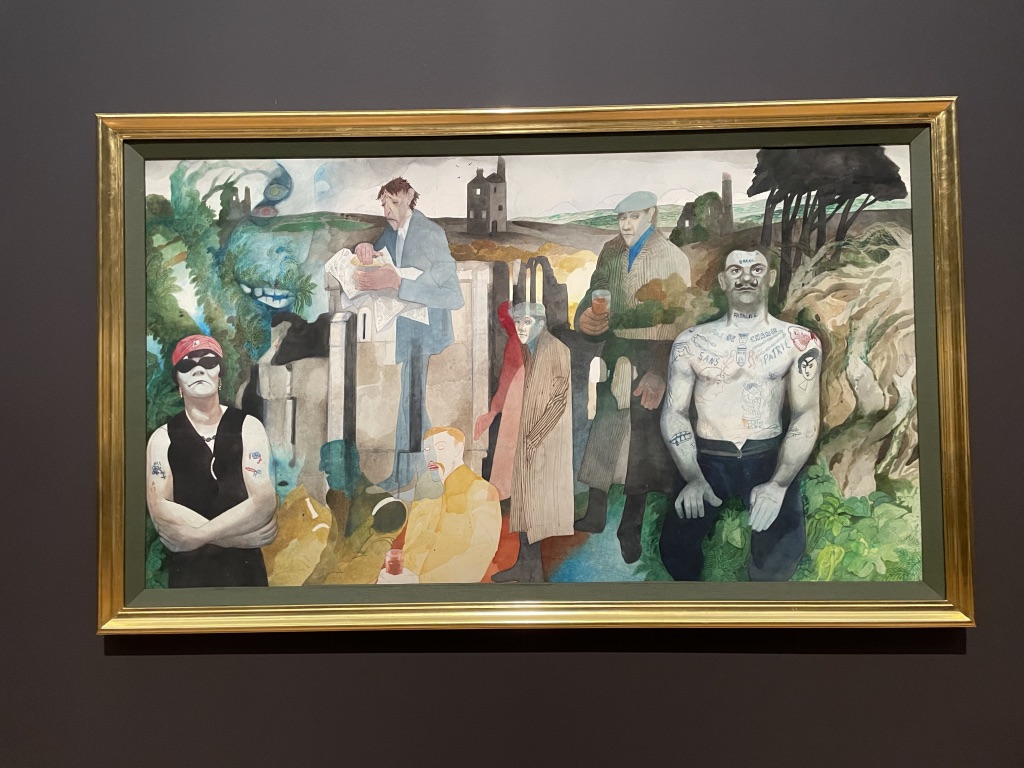
Towards the end of his life (he died in 1976 in Hastings) he concentrated more on impressions of the countryside and English life. His work became much larger, with pieces of A2 size paper pasted together.

In one of his final works he places himself in the centre of the picture, eating a pasty, surrounded by people from the now disused tin mines in Cornwall. There are ‘ghostly’ figures whose images seem to ‘bleed’ through the contemporary figures.
This show offers a rare chance to review the work of a highly original and clever artist. I guess you’ll be right in thinking I admire Edward Burra! It’s on at Tate Britain until 19th October.
 Paper Places