
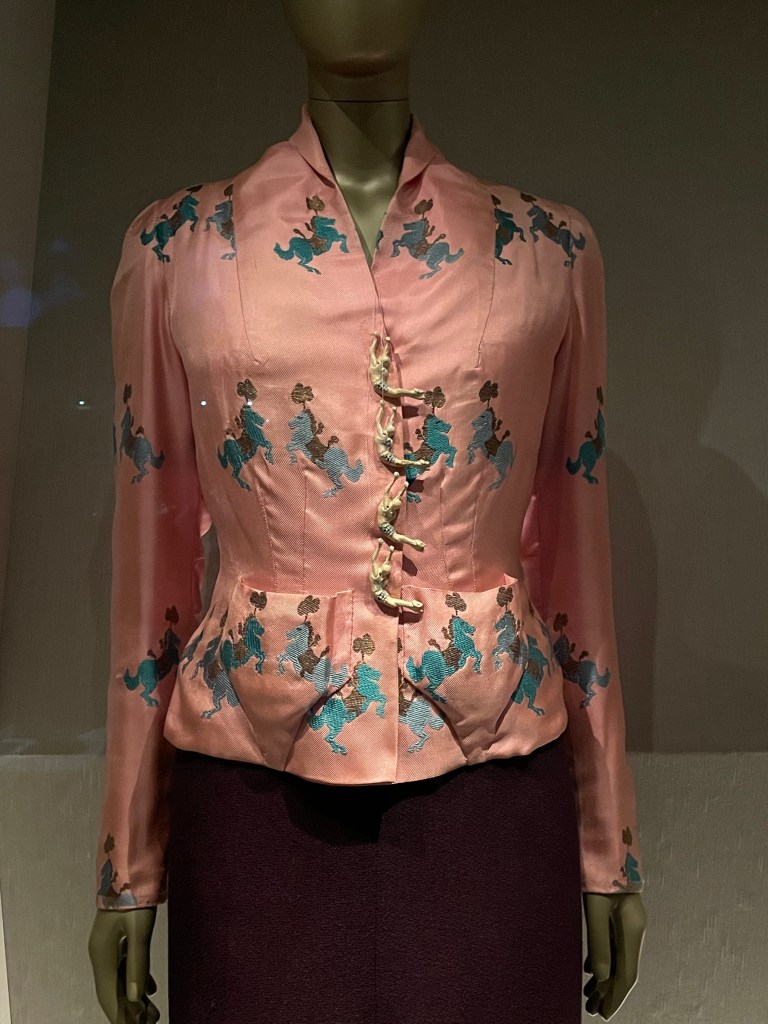
Above is just one example of Schiaparelli’s imaginative and playful approach to clothing. This jacket from 1938 features prancing circus horses printed on silk twill and the ‘buttons’ are enchanting little acrobats. Just brilliant. And the sort of thing any of us would love to wear today.
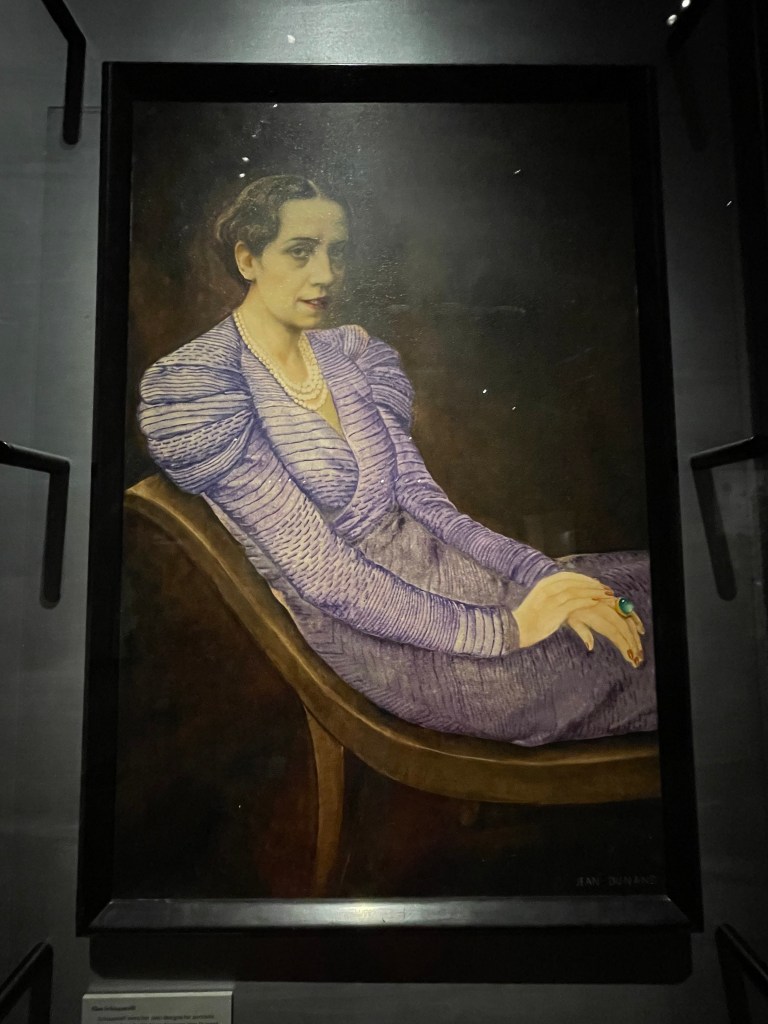
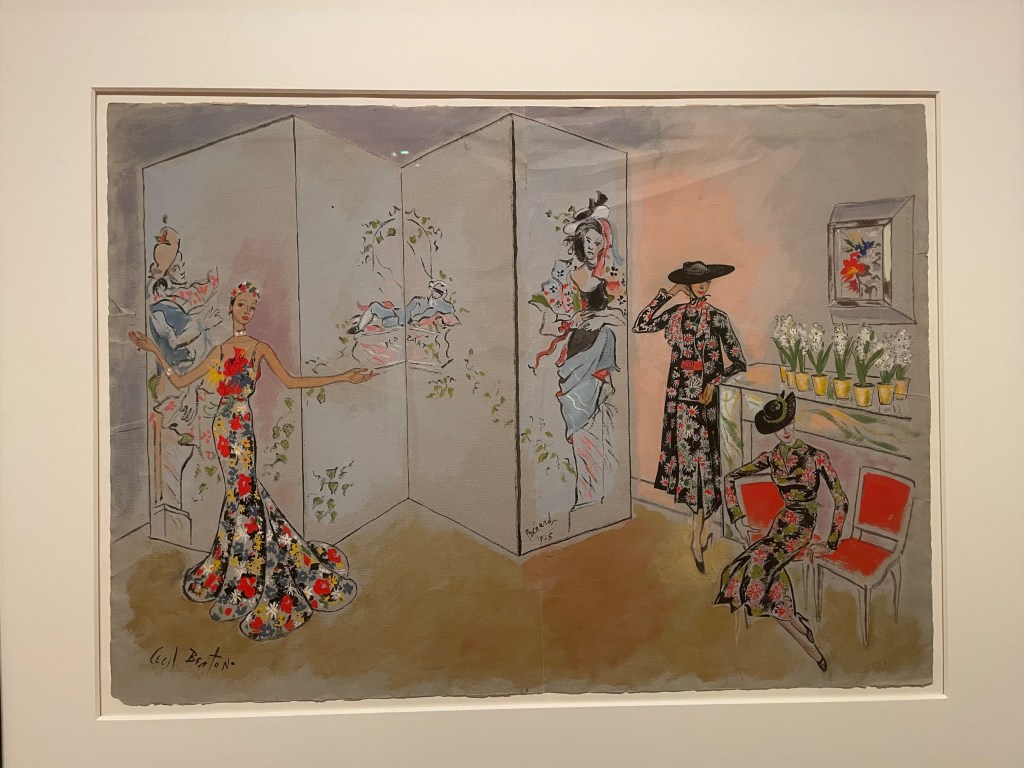
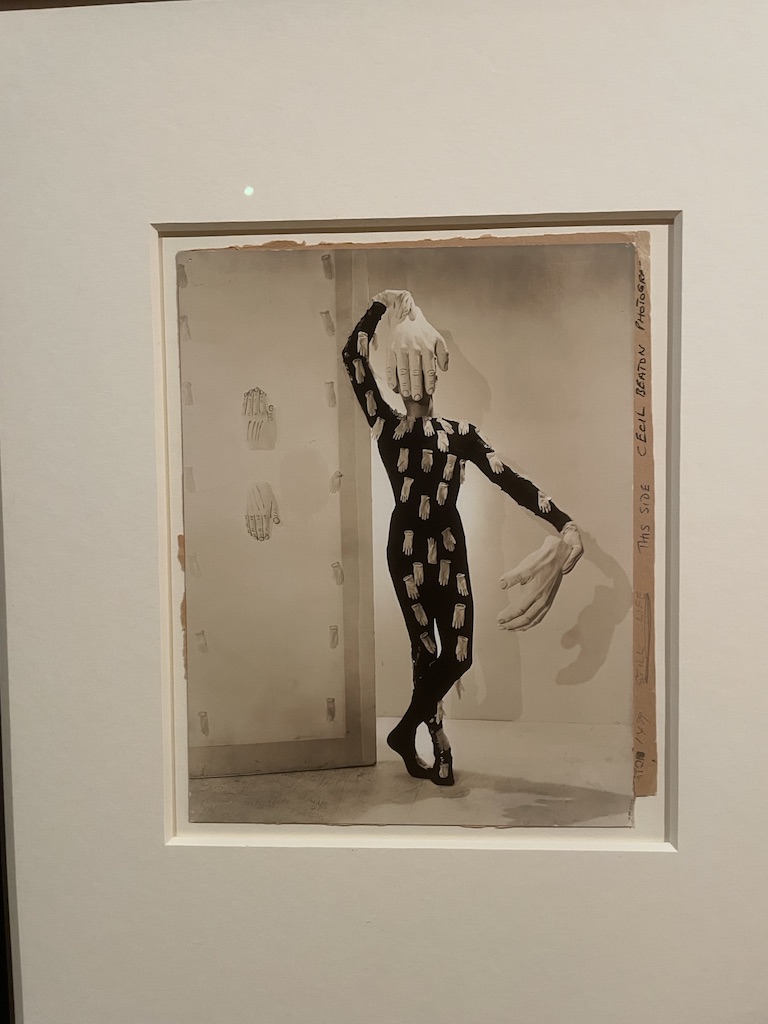
Here’s a portrait of Elsa wearing one of her own designs and looking so very elegant in 1930s chic. She was primarily an artist and knew many of the important artists of the day – Dali, Picasso and Jean Cocteau, Man Ray and Cecil Beaton.
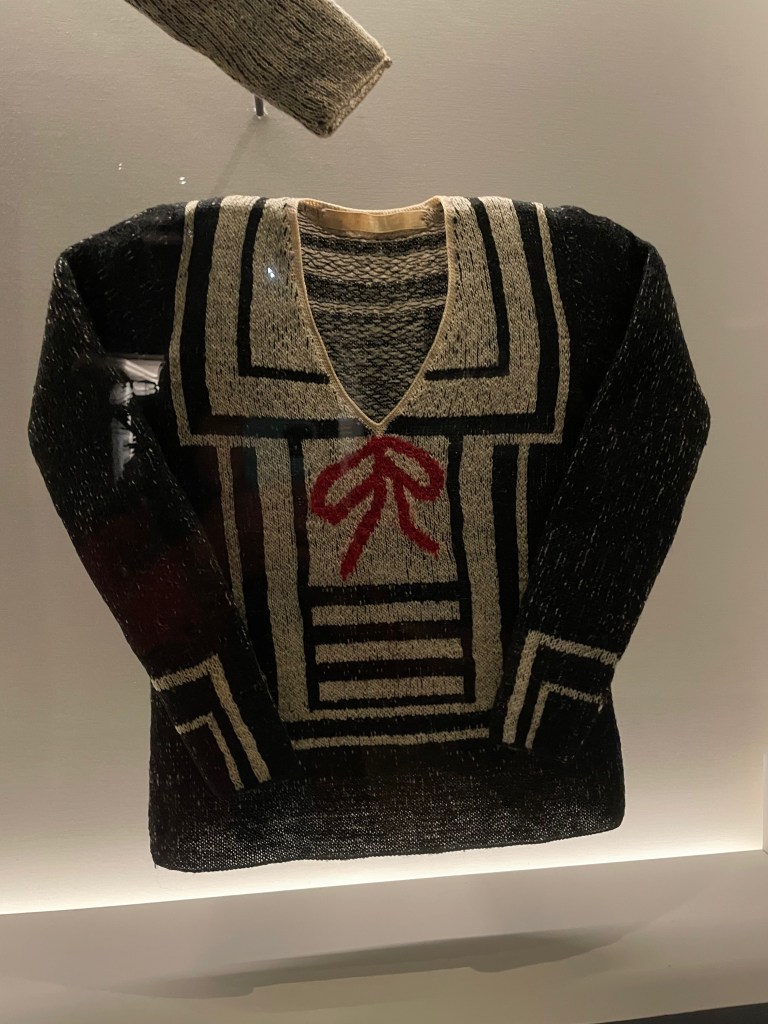
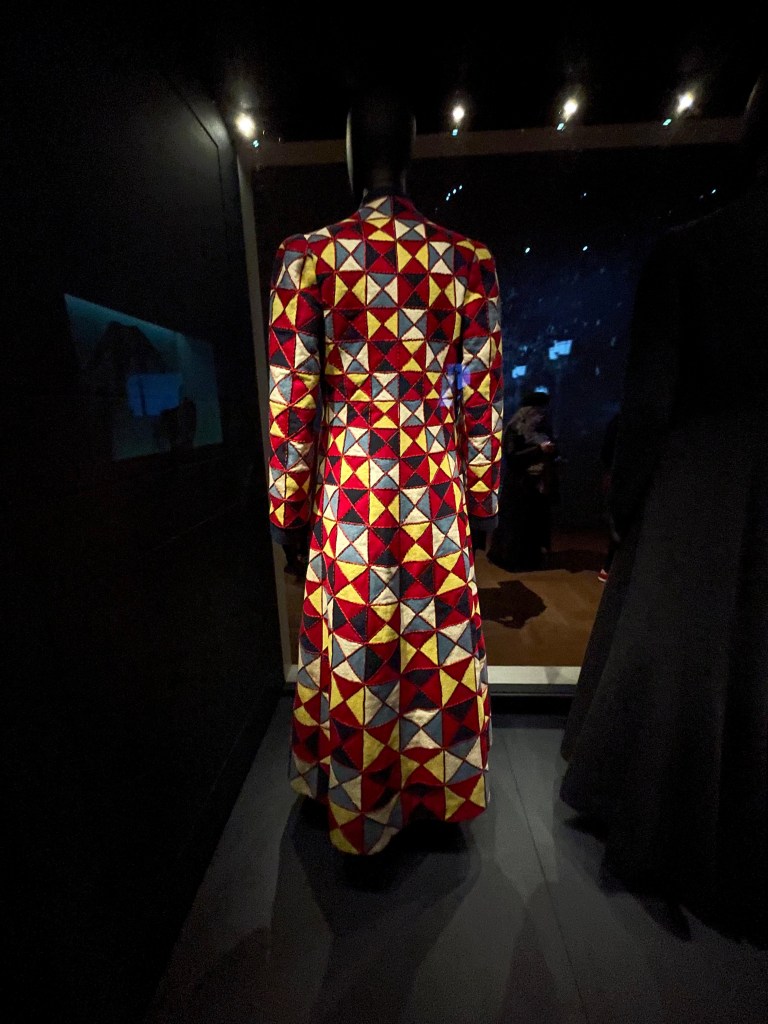
Above is an early foray into clothing where Schiaparelli created a knitted sweater with the design incorporated into the knit – revolutionary at the time. And on the right is an extraordinary coat made in patchwork style with so much hand-stitching. Must have been glorious to wear.
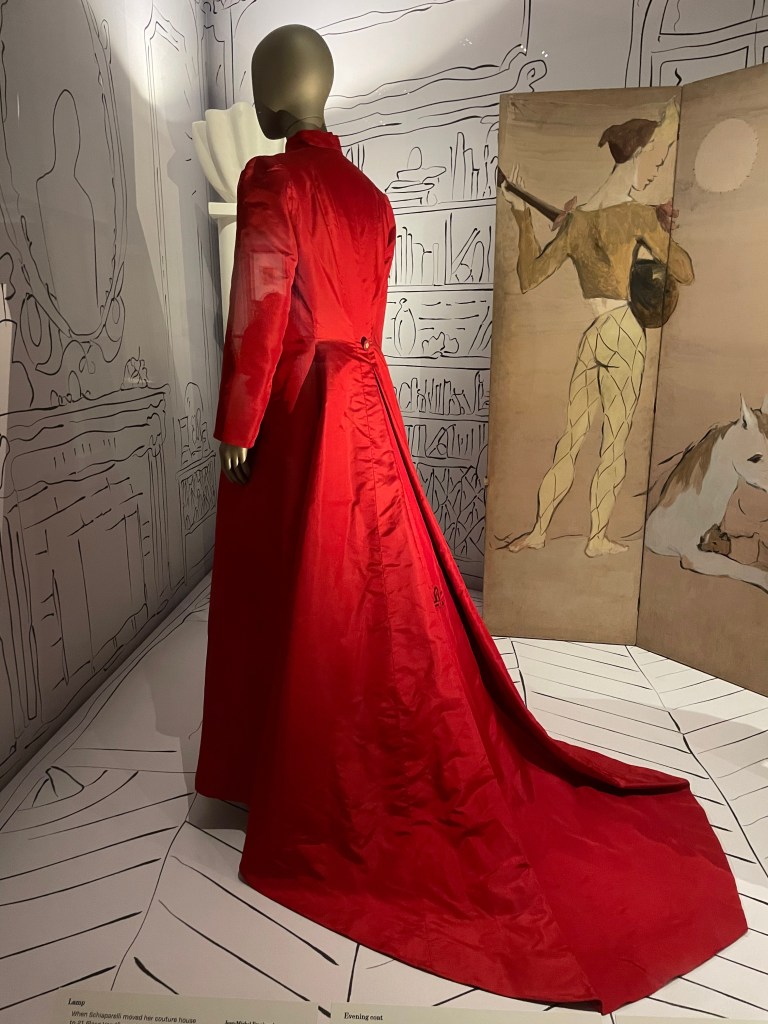
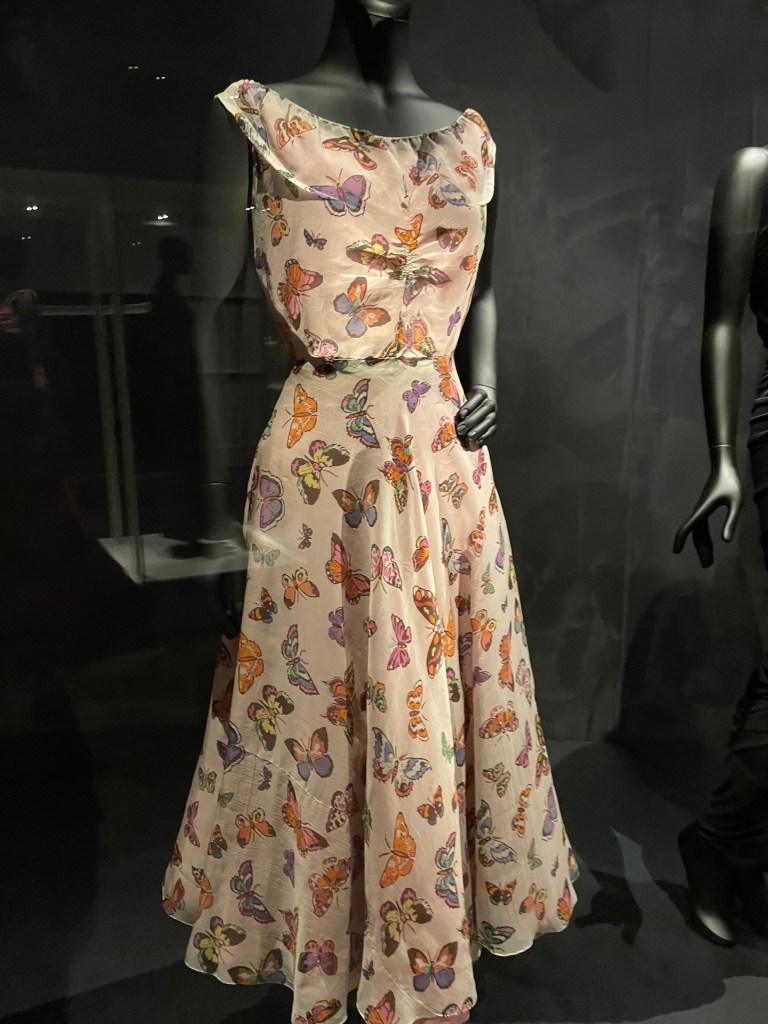
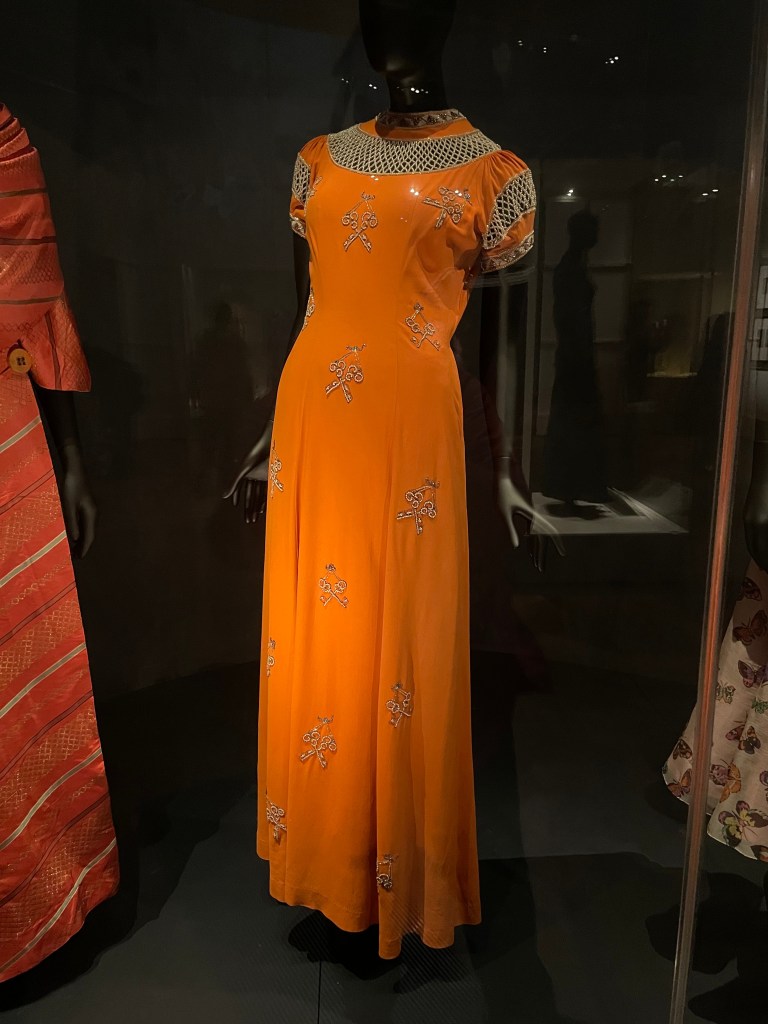
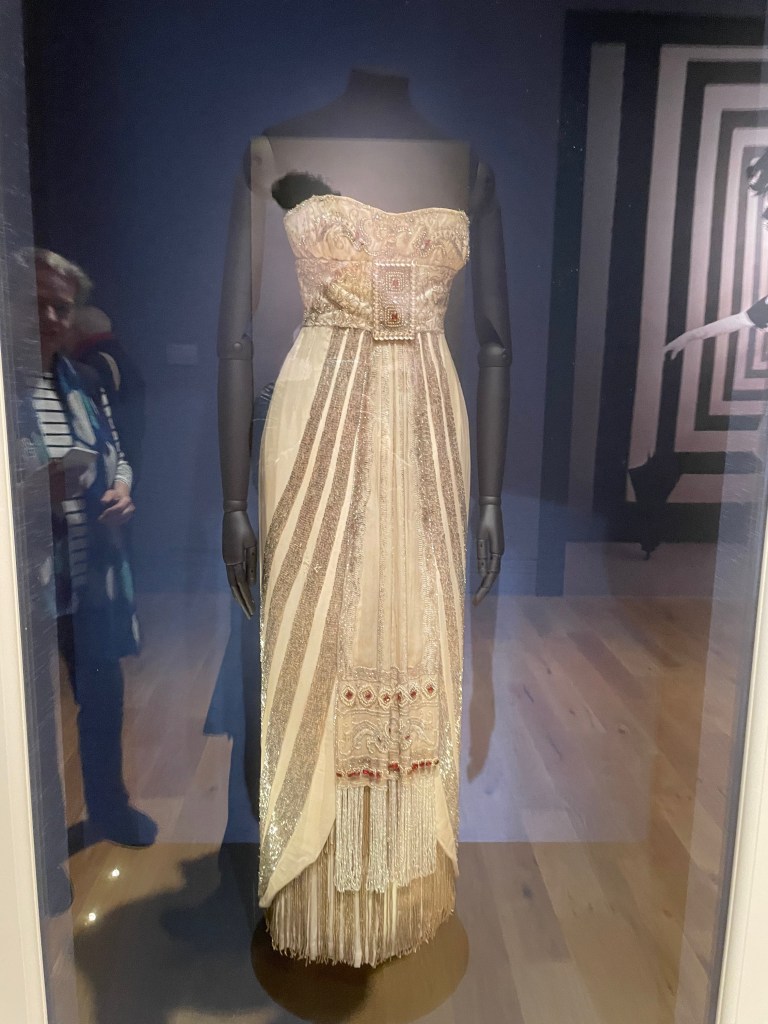
Lovely dresses and a very glamorous evening coat. I first encountered the name of Schiaparelli when I read The Girls of Slender Means by Muriel Spark when I was a teenager. I really related to the giddy girls in their London boarding house who had little money but plenty of ambition. And, for important dates, they took turns to wear the precious Schiaparelli dress to impress their would-be boyfriends.
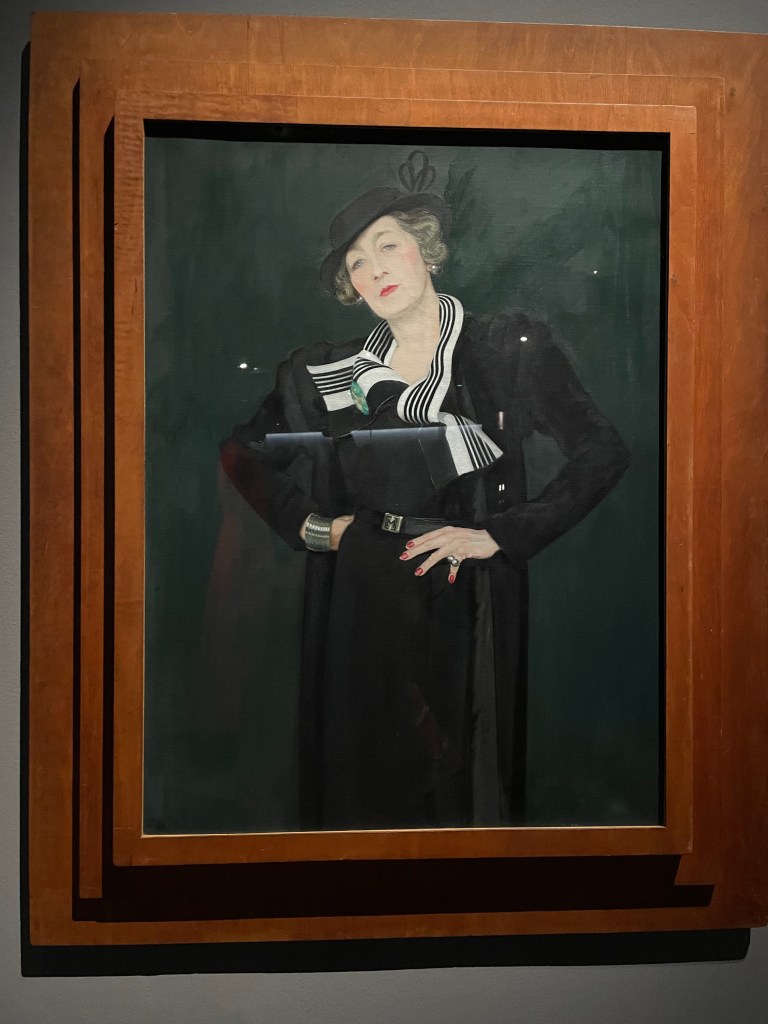
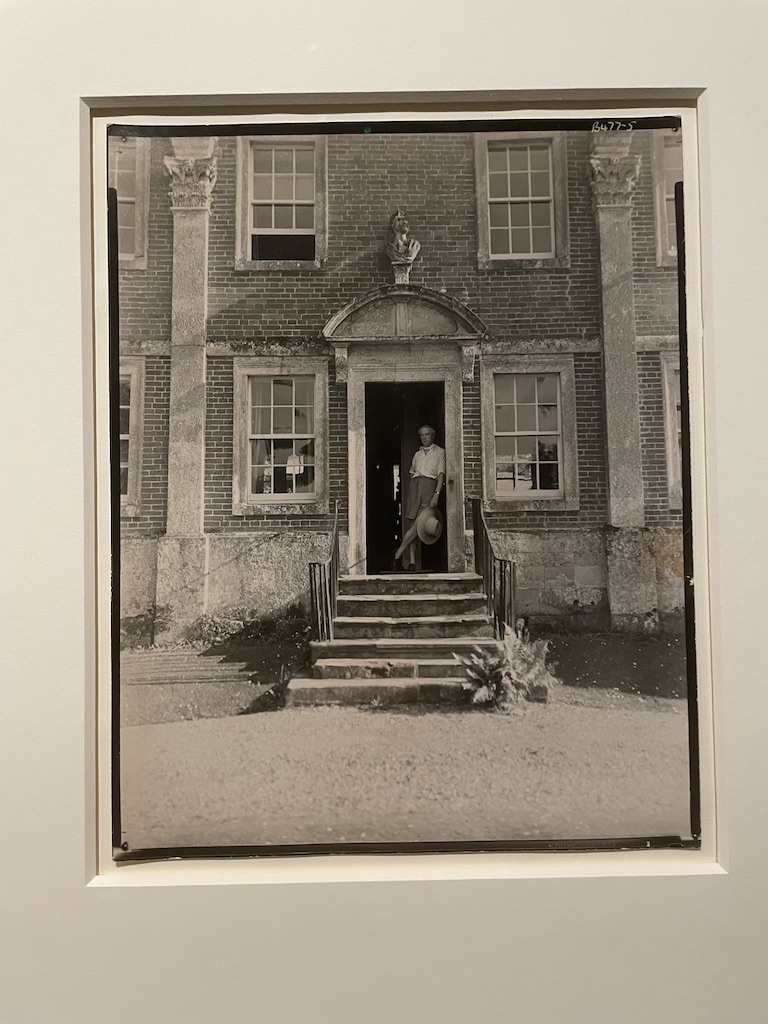
I love this portrait of Lady Mount Temple painted by Gluck. You would not mess with her when she’s wearing that suit.
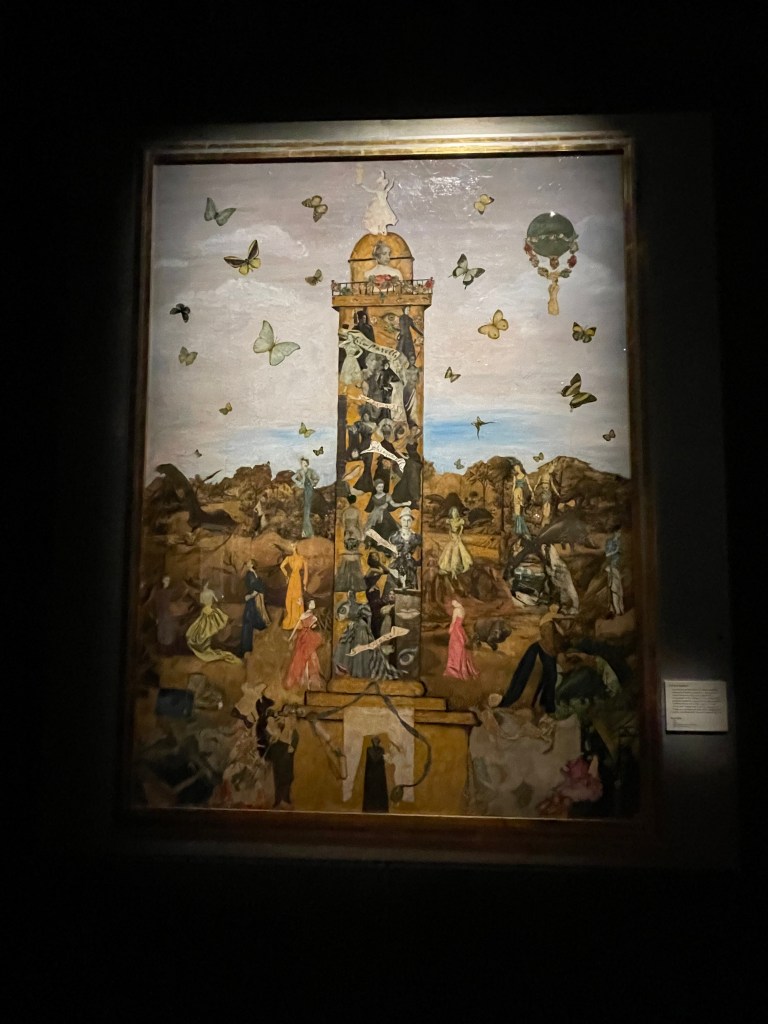
This picture is quite hard to read because the lighting is very dark in this exhibition but it’s a huge collage of images of the dresses created in a gloriously playful way. And of course it always interests me to see an artwork involving paper in a show!
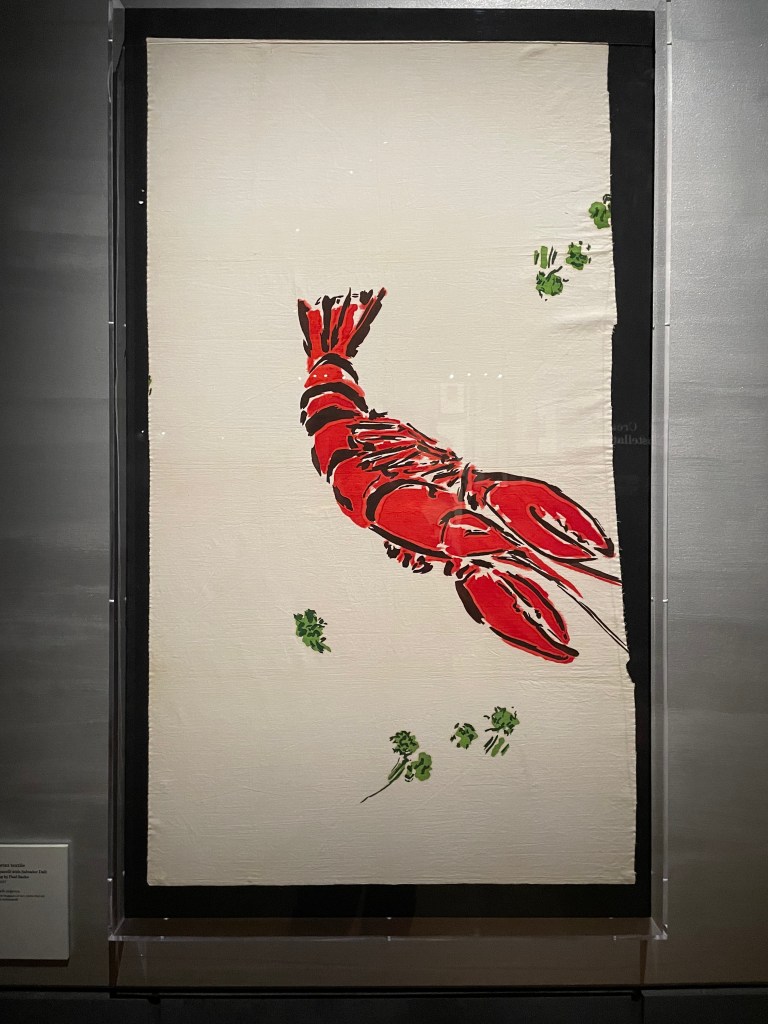
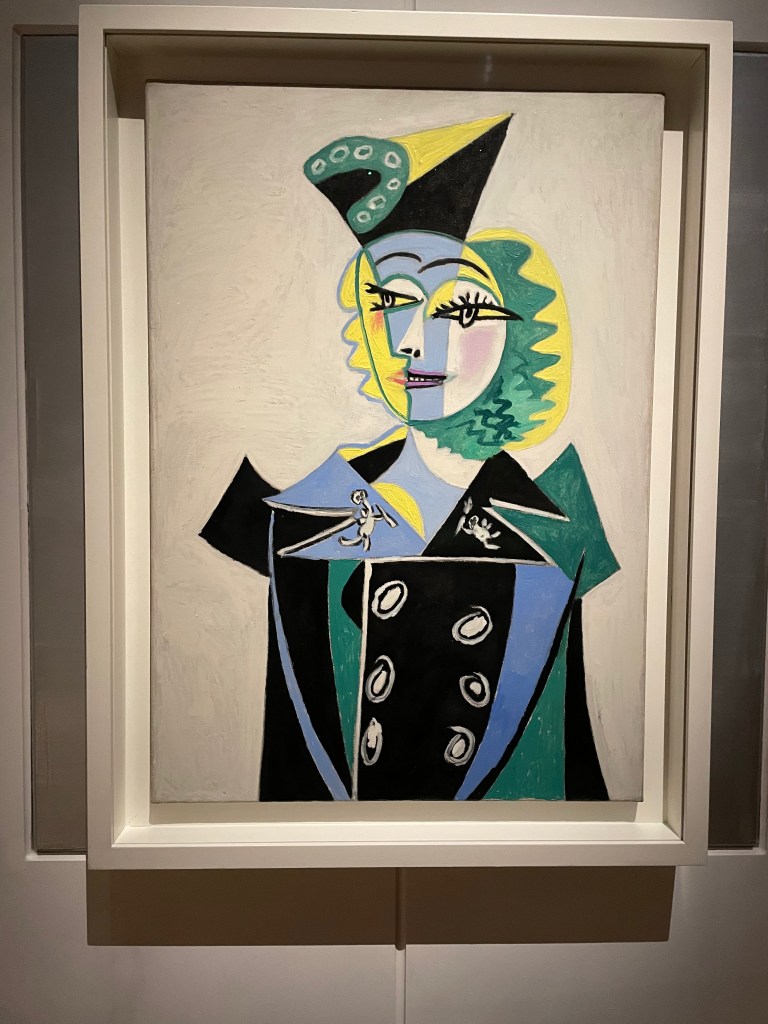
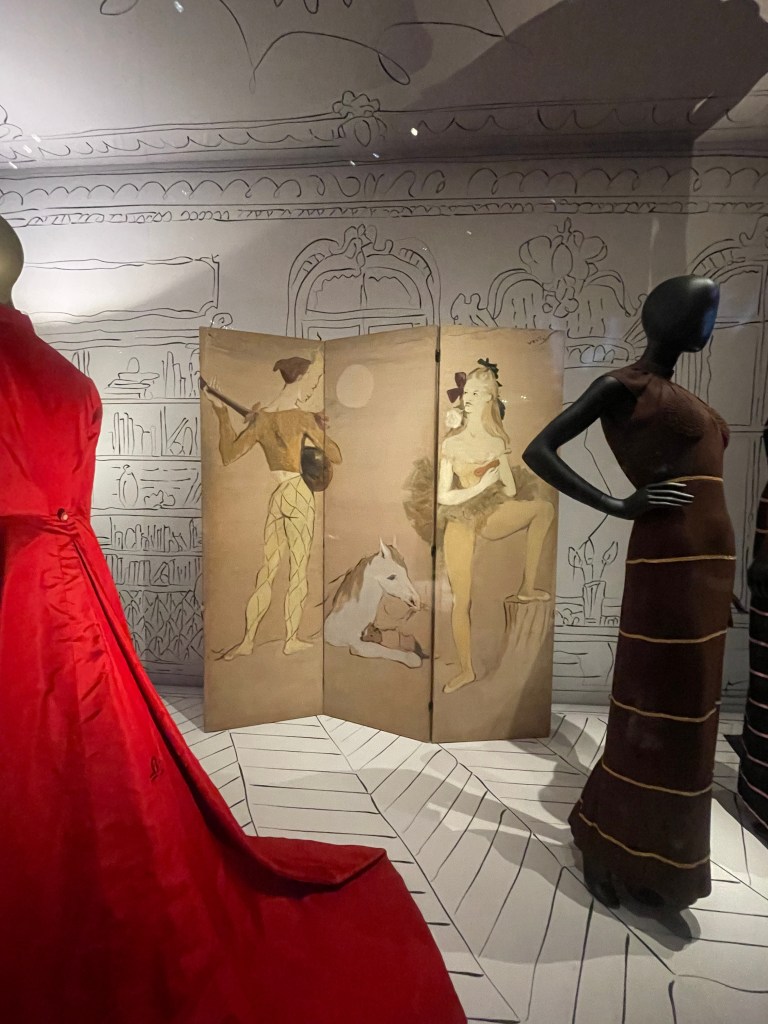
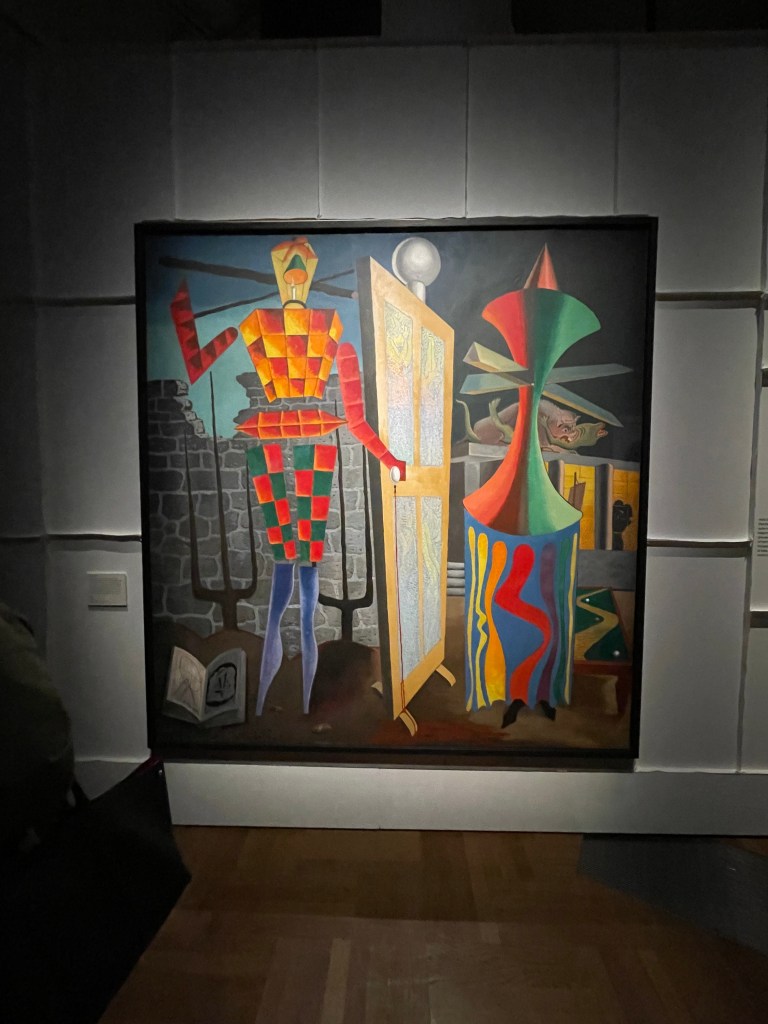
There’s a lot of art in the show too. At the top is a lobster print textile created with Salvador Dali from 1937, there’s a Picasso portrait and I loved the painted screen created with artist Marcel Vertès which depicts Commedia dell’arte characters. And below is painting by Man Ray called Fair Weather featuring a mannequin with a colourful diamond pattern, painted in 1939, just as war was approaching.
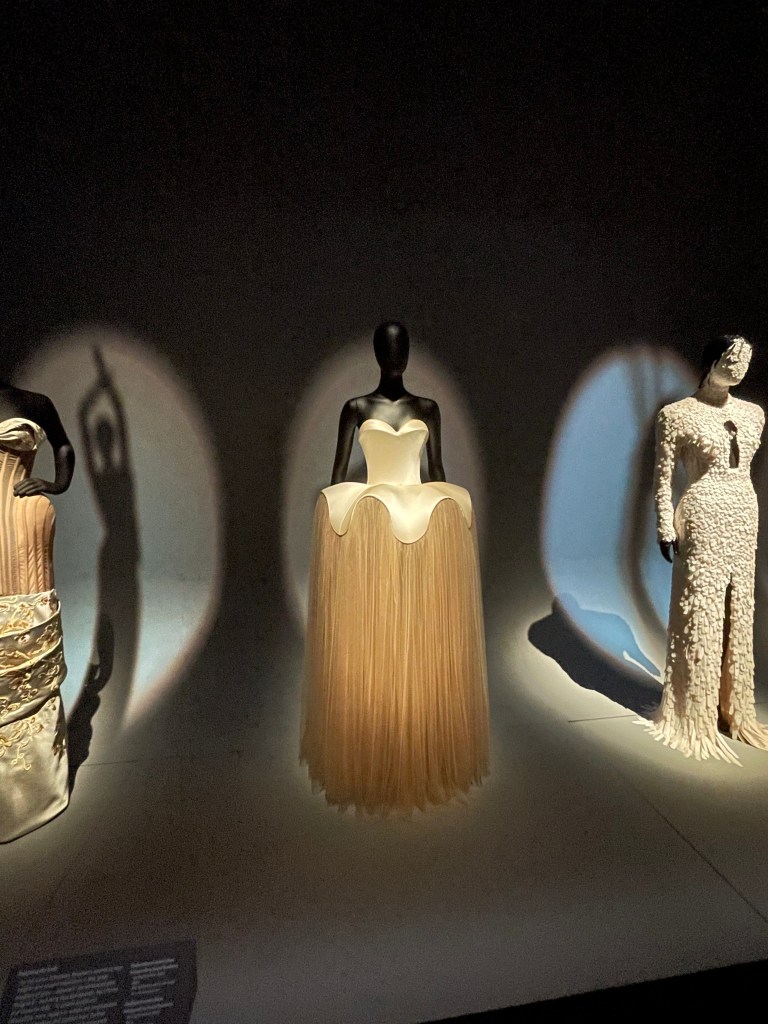
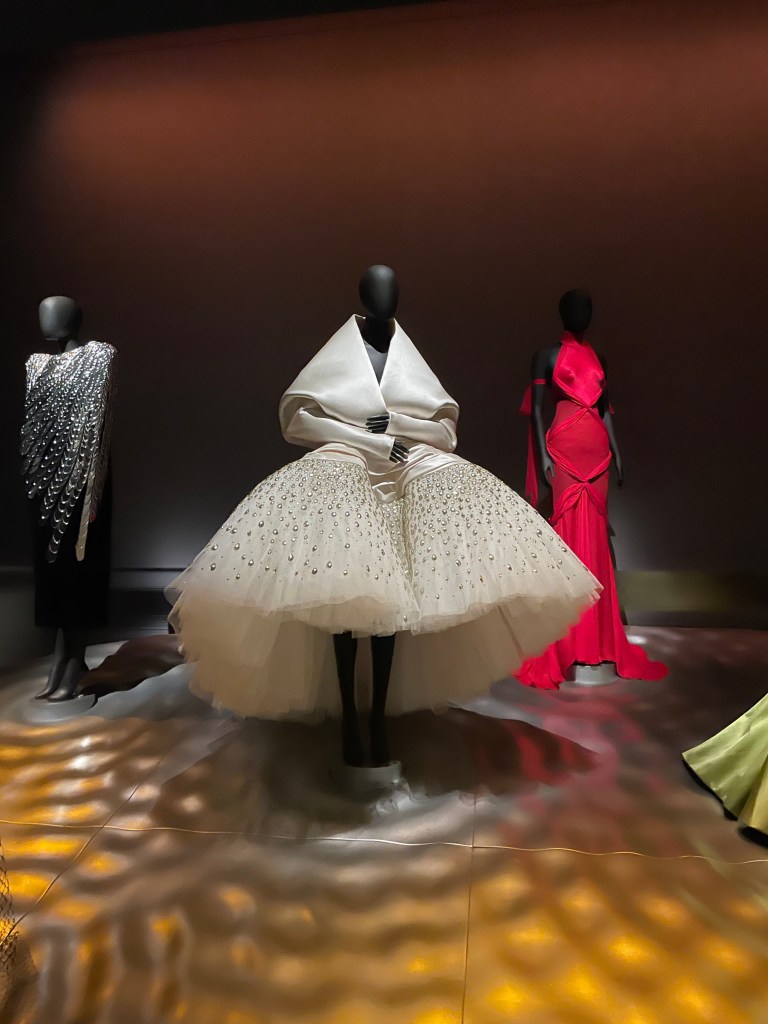
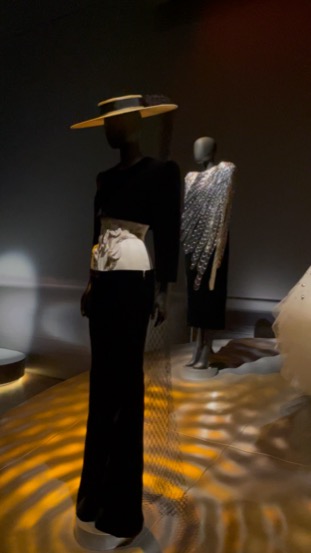
And although Elsa Schiaparelli died in 1973 her name and design house lives on under the direction of Daniel Roseberry who has been creative director Maison Schiaparelli since 2019. If you want to cut a dash on the red carpet or at a spectacular ball then this is the place to go for your outfit!
The show is on until 8th November 2026.








 Paper Places