Maria Antoinette Style at the Victoria and Albert Museum is a triumph. The curators have assembled many surviving objects which were worn or used by France’s last Queen and sensitively chart the life of the child bride who evolved into a fashion icon but ended her days as a derided aristocrat executed by the guillotine at the height of the French Revolution.

Immortalised in many art forms and still celebrated in fashion and style, Queen Marie Antoinette’s influence is legendary. Mention her names and the words, ‘let them eat cake’ spring to mind, but it’s likely that she simply had no idea of the poverty of the French people in the 1780s which precipitated the country into revolution while she lived a life of palatial splendour with royal funds to indulge her interest in fashion.

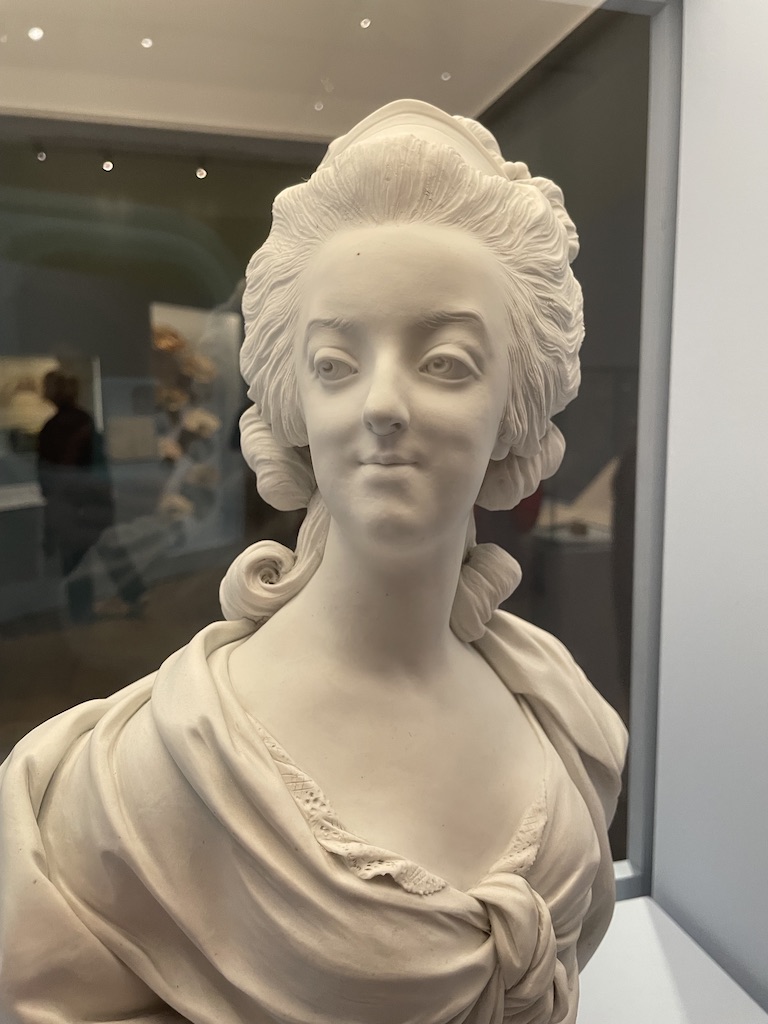
She was an attractive woman who clearly understood the power of image. Judging from the number of portraits and sculptures on show at this brilliant exhibition, she was always eager to pose for artists. And artists clearly responded to her interest in fashion, eagerly capturing the details of her outfits.
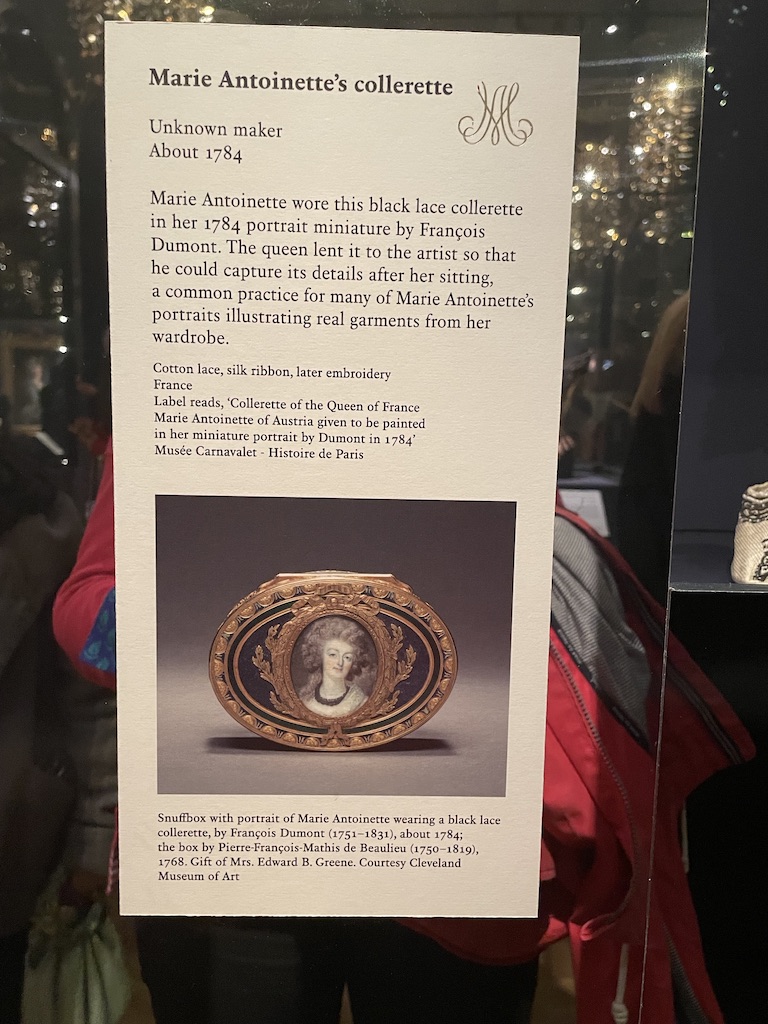
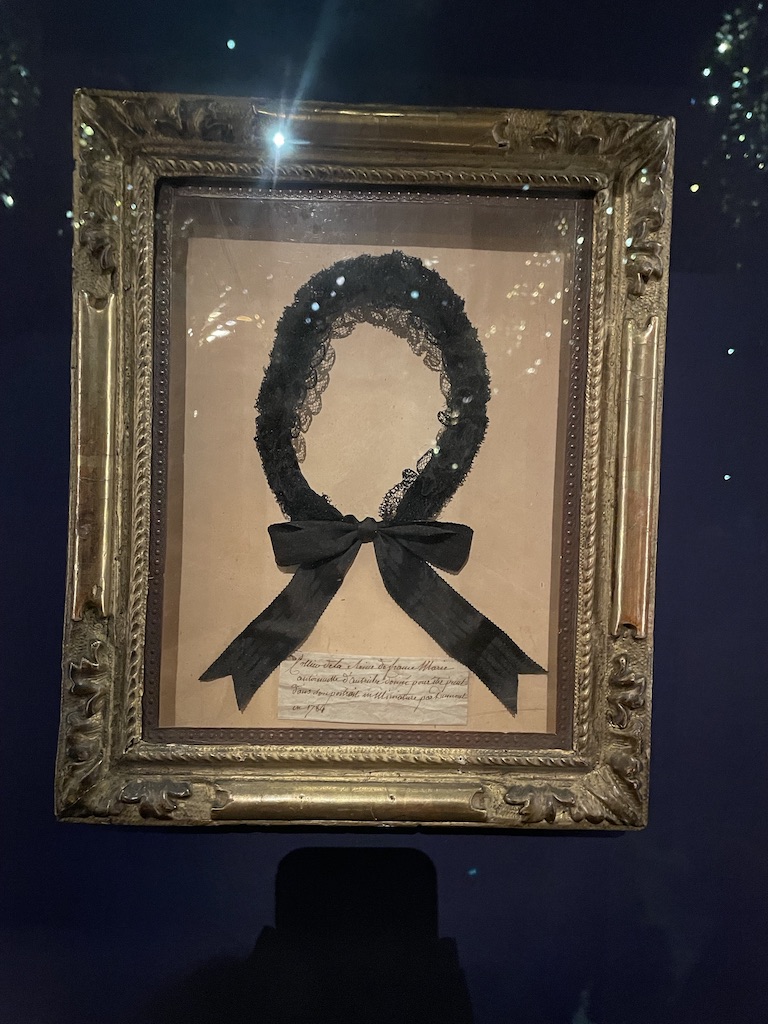
it’s fascinating to see the black lace ‘collerette’ which featured in a portrait miniature by Francois Dumont – and was lent to the artist so that he could capture the details.
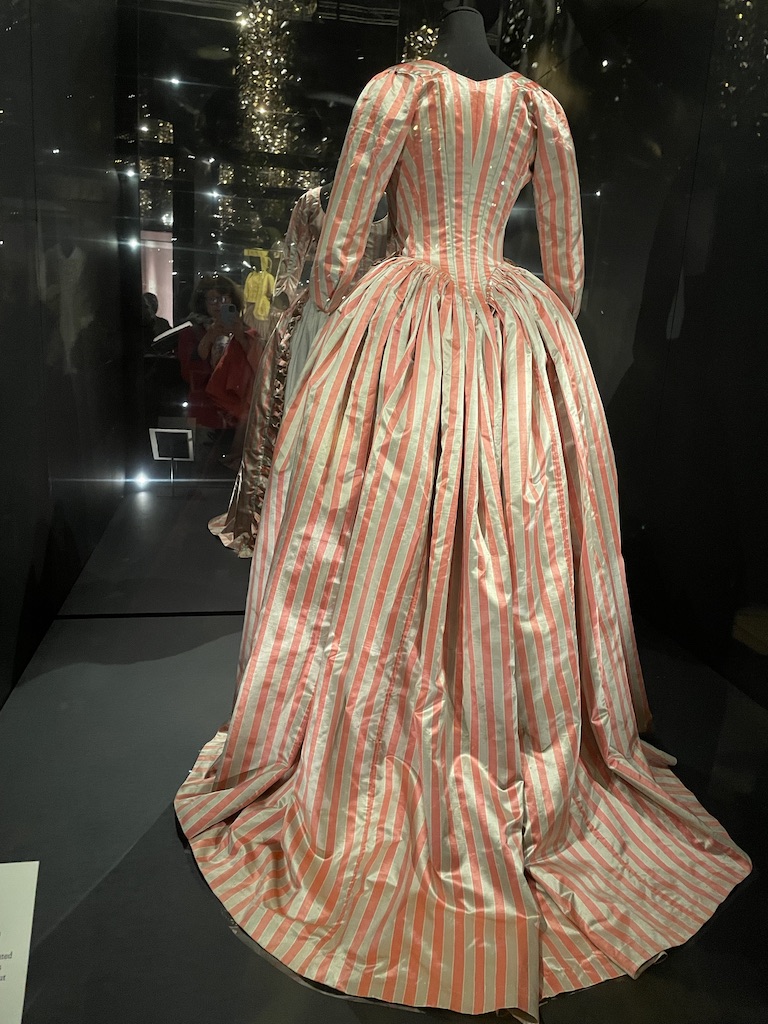
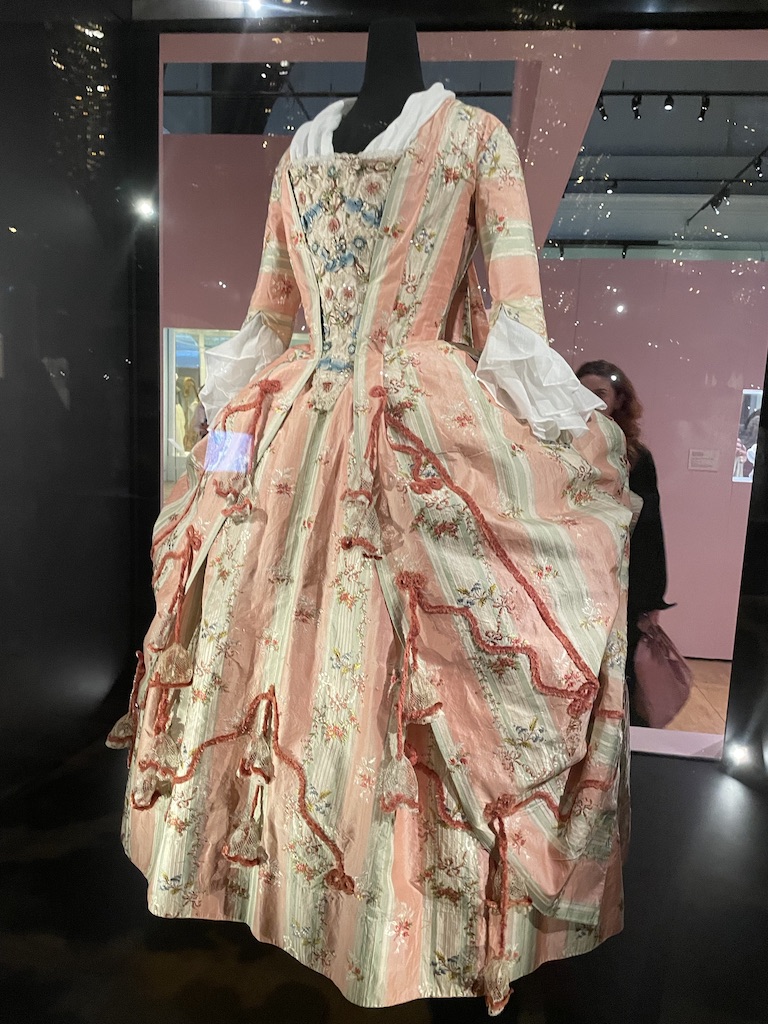
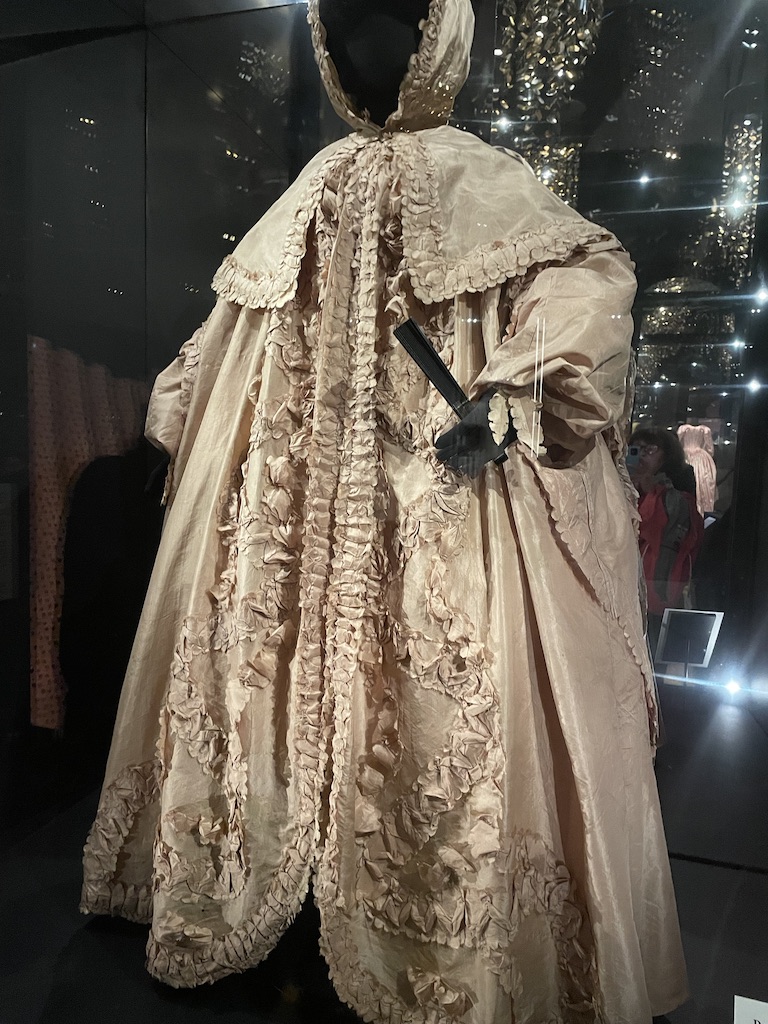
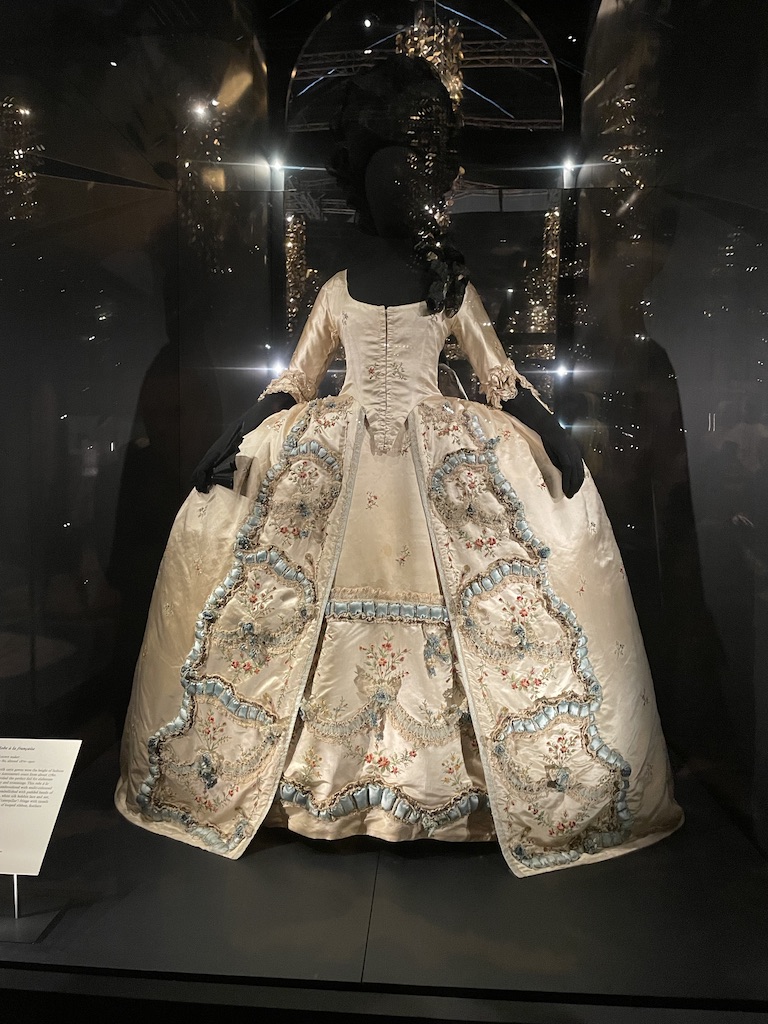
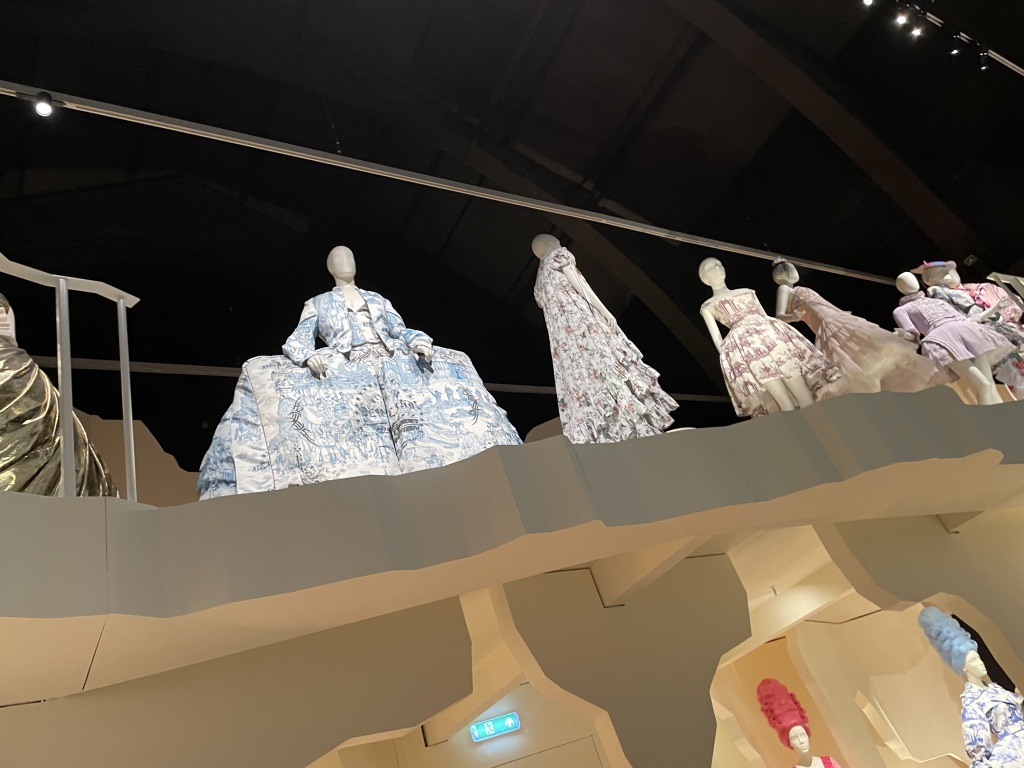
Oh, the costumes! There’s an amazing collection of gowns – not necessarily worn by Marie Antoinette but come from the 1780s and 90s and are very similar to many of the dresses and clothing featured in the portraits. It’s astounding to see the detail in the couture and opulence of these dresses.

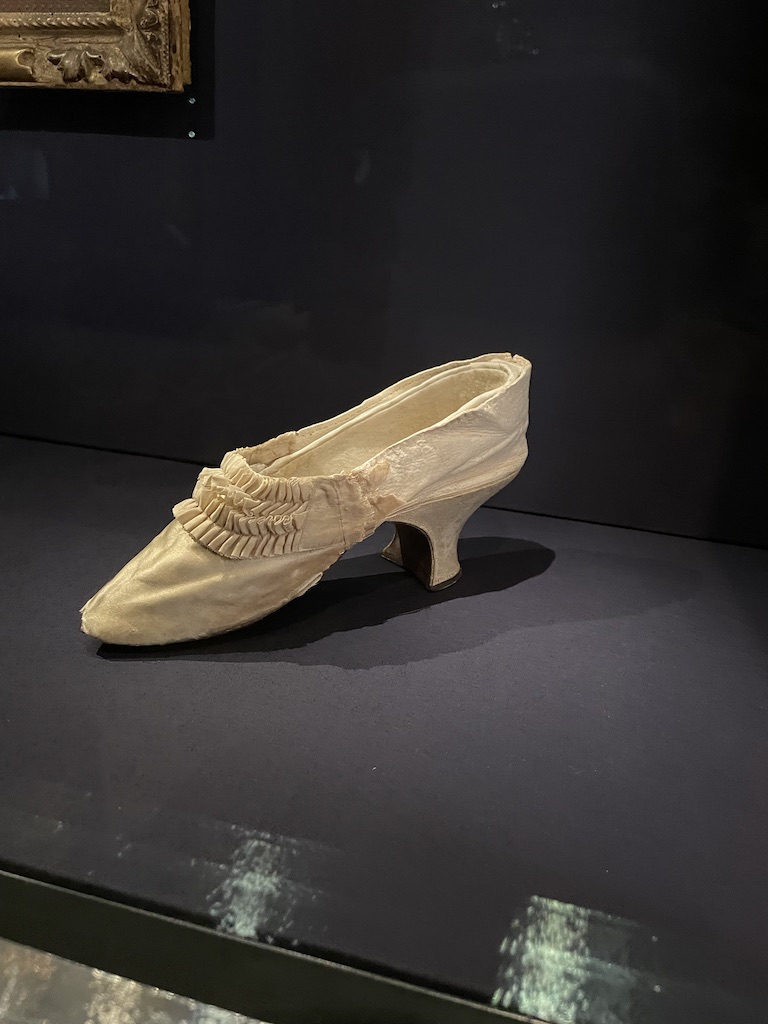
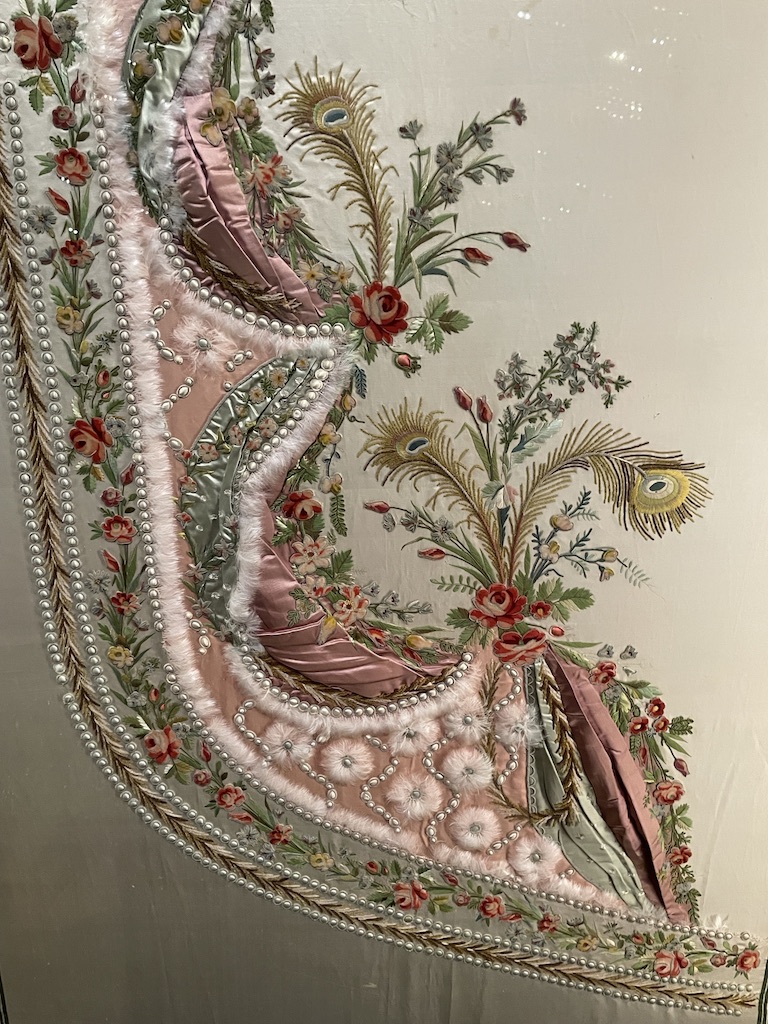
The jewels and the shoe (above) were known to have been worn by Marie Antoinette and the embroidery was, apparently, a sample of an over-dress which a couturier would have presented to her for a potential gown. It’s very fitting that this show has been sponsored by Manolo Blahnik.

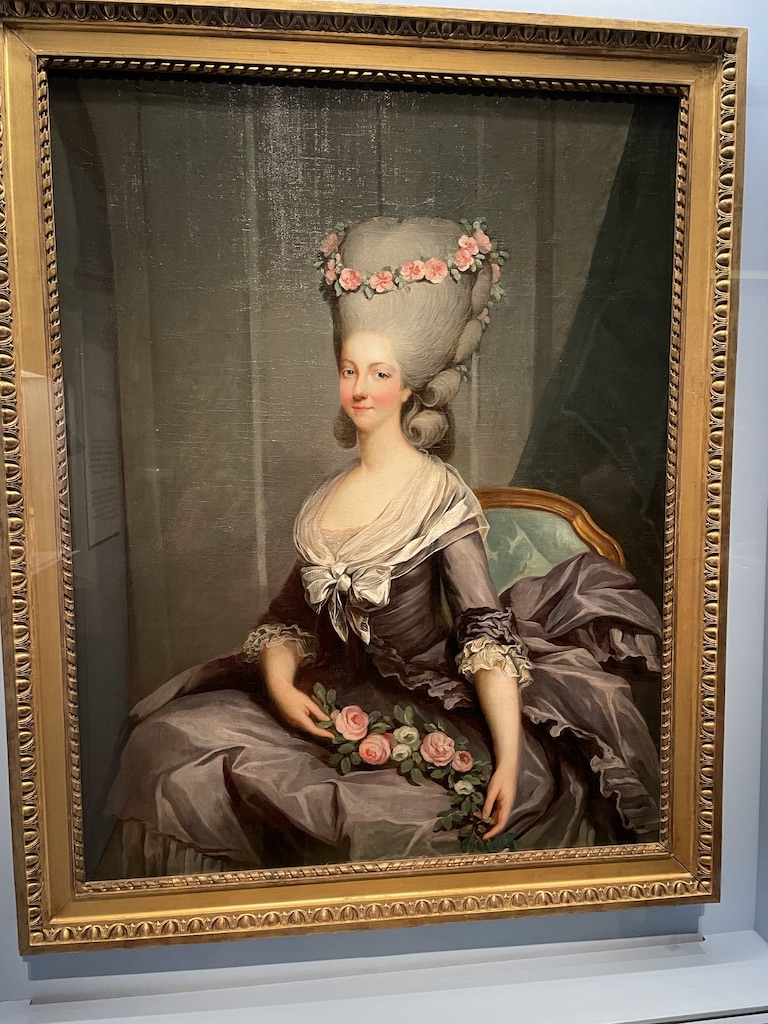
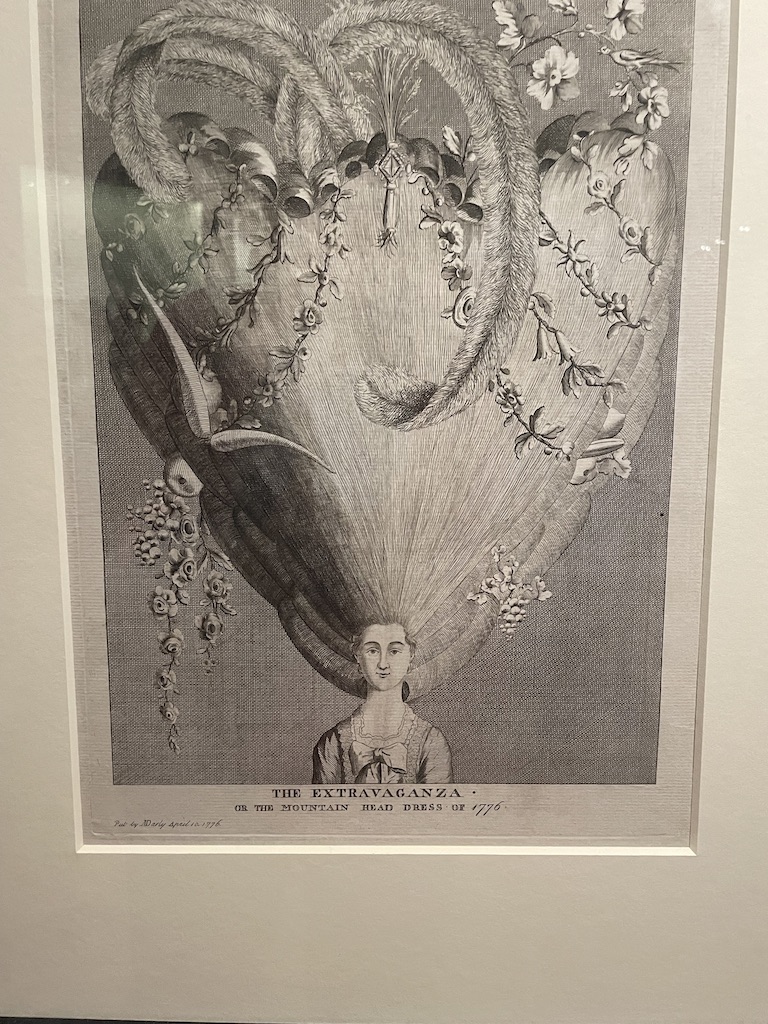
Anyone who watched Bridgerton – the total fantasy version of Regency Britain – will recognise the extreme wigs and hair dos. Clearly things reach heights (literally) of fantasy in the court of Marie Antoinette as hair was teased ever upwards and adorned with fantastical decoration.
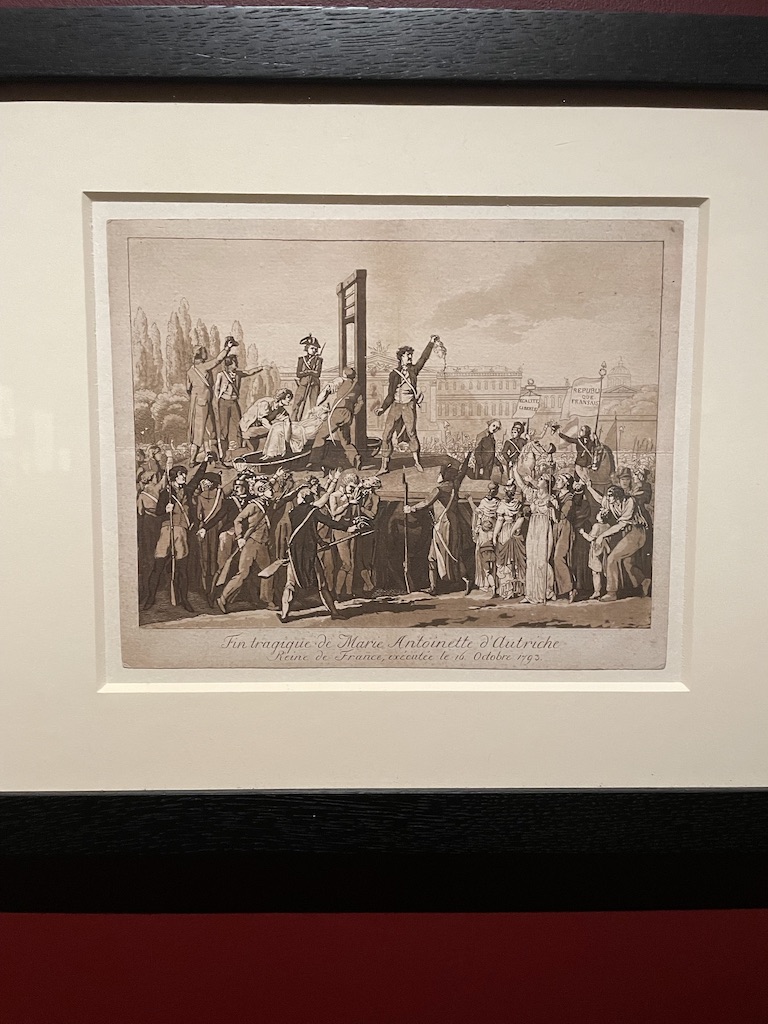
Queen Marie Antoinette’s reign ended badly with the brutal blow of the guillotine in 1793. There’s this very graphic drawing of the crowd cheering as the decapitated queen’s head is held aloft by the executioner. And the death mask, we are told, was taken soon after her death by Madame Tussaud. It’s all such a brutal end and she was certainly not guilty of any crime other than representing an overblown, indulged and superfluous monarchy.
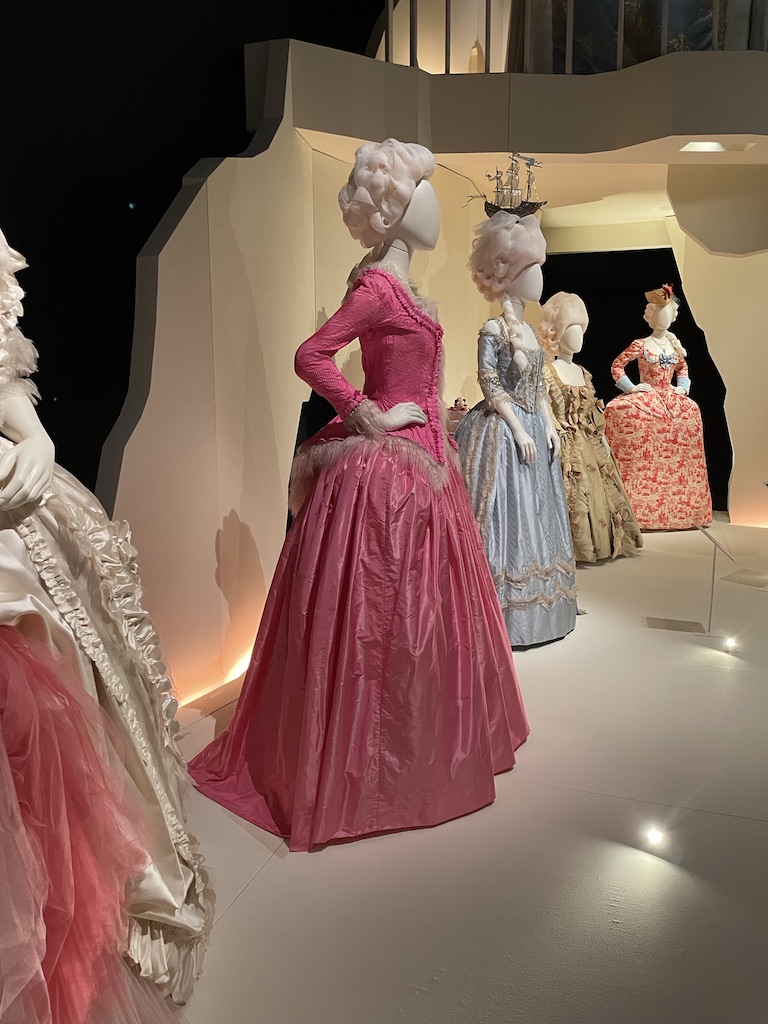
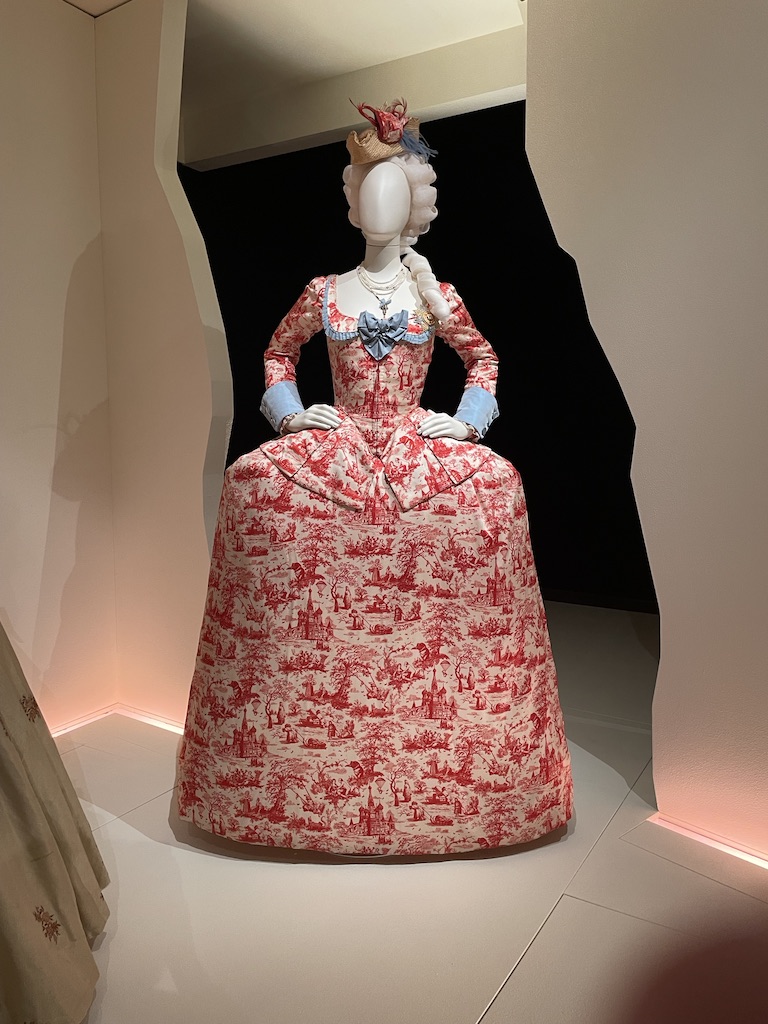
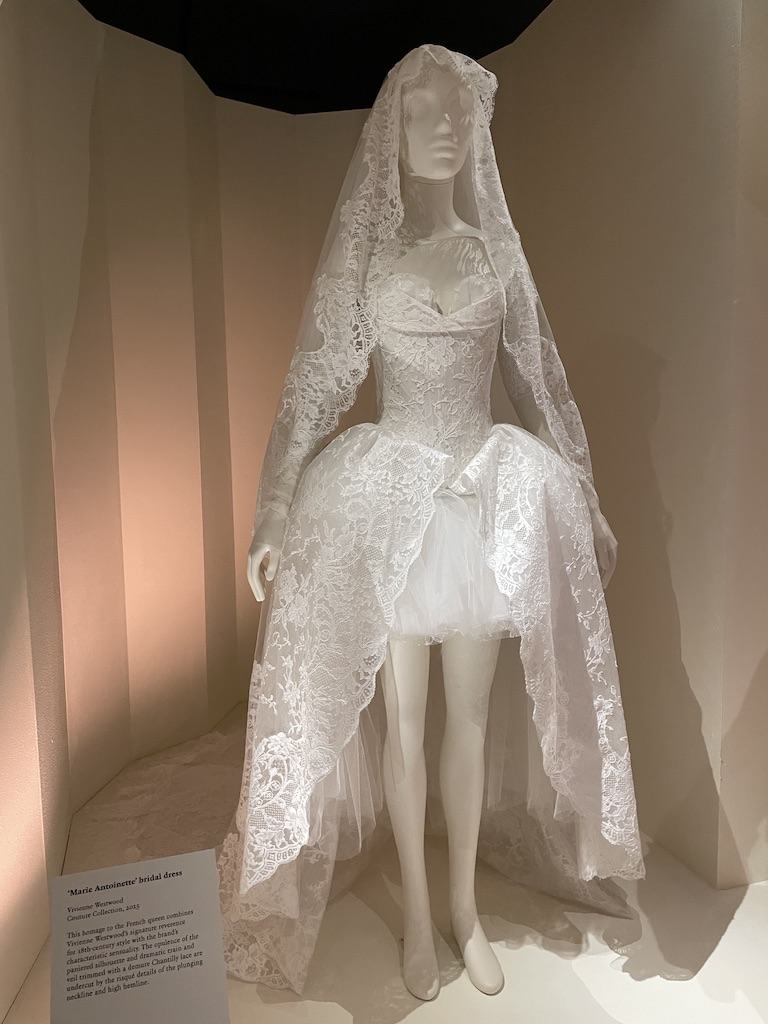
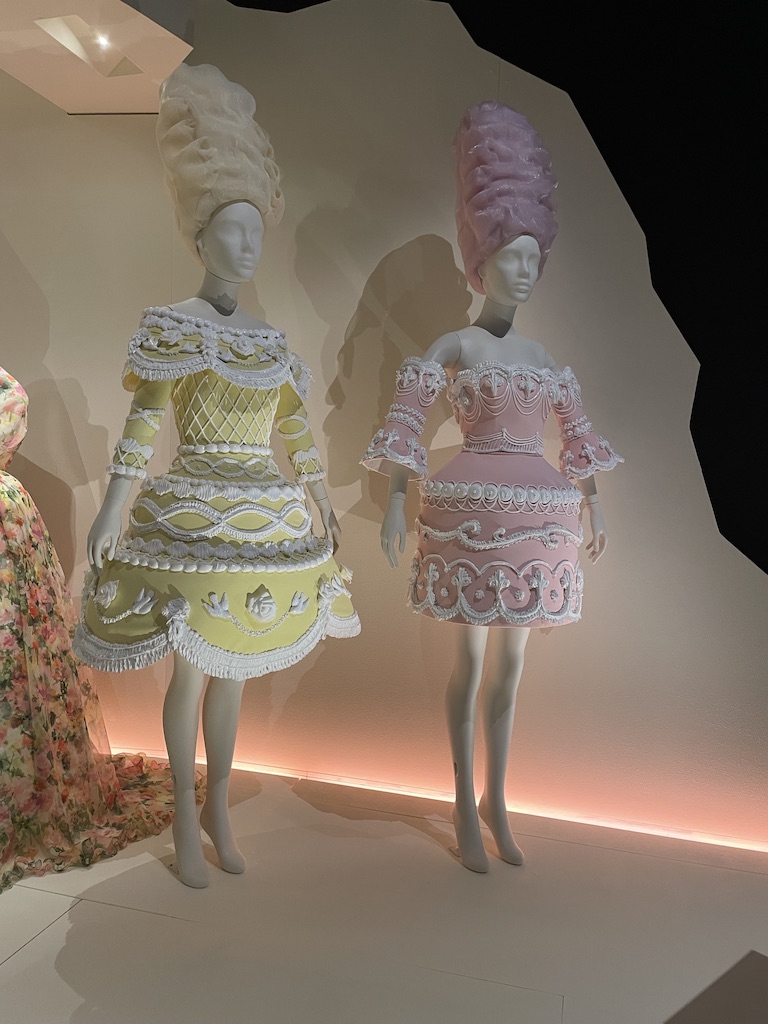
But her style lives on. It’s great to see how contemporary designers, in the years since her death, have found ways to represent her style using modern materials. I did love the Moschino wedding cake dresses designed by Jeremy Scott and Vivienne Westwood’s Marie Antoinette bridal dress.

The show is at the V&A until 22 March 2026.

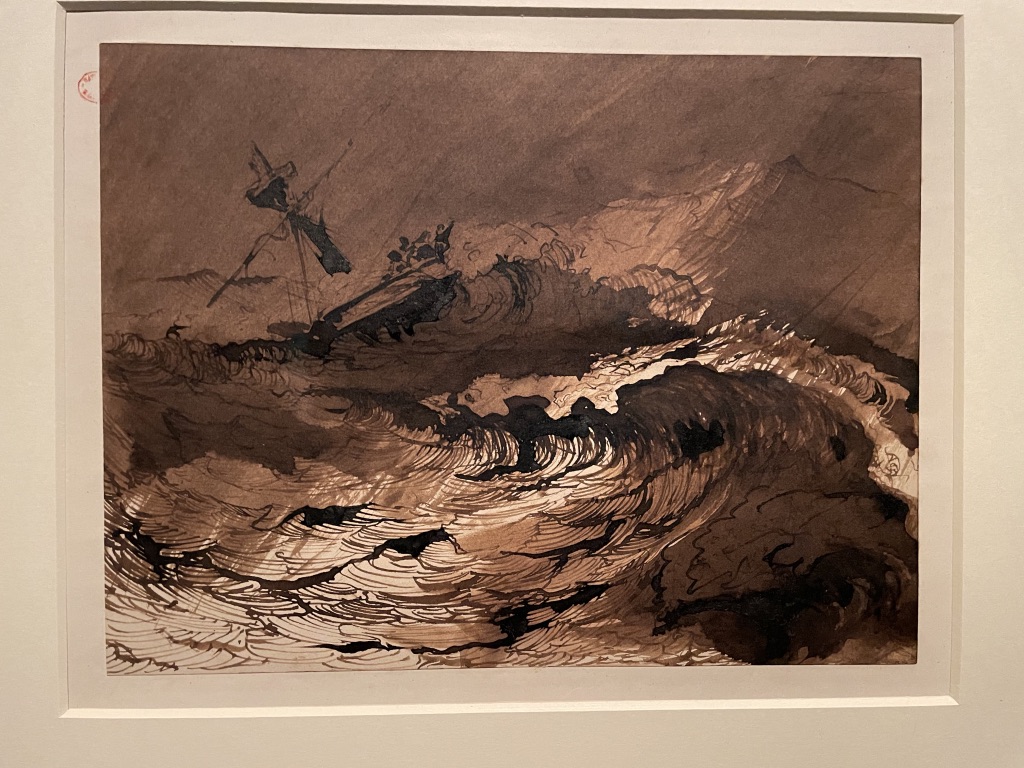
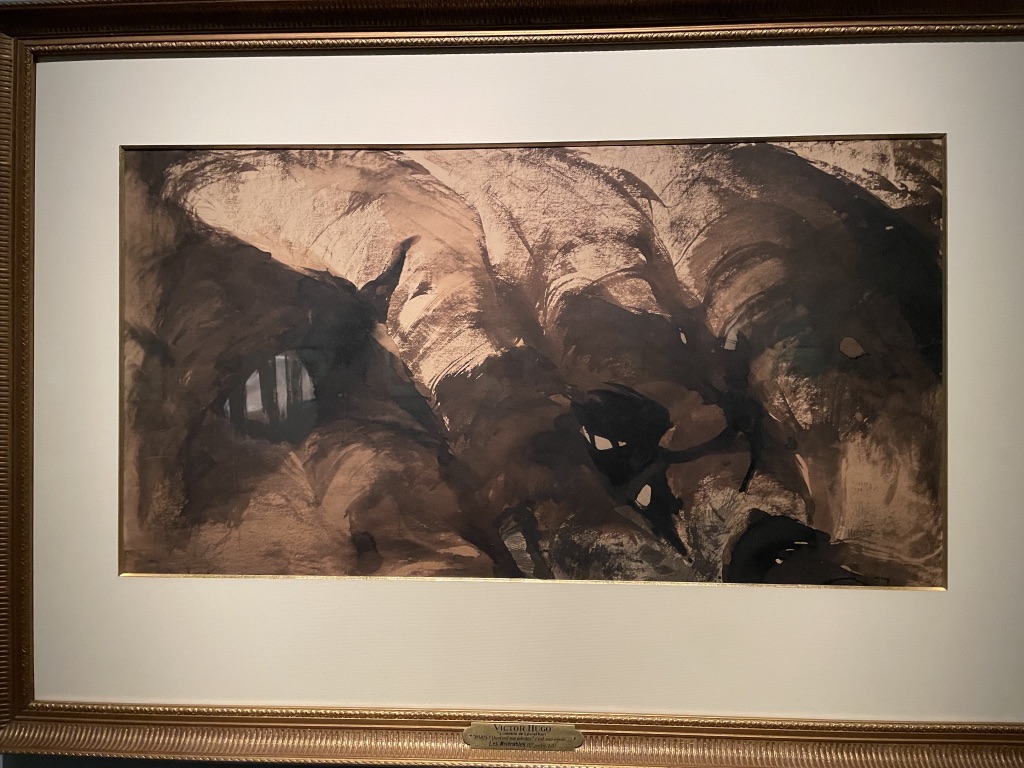
The drawings and ink sketches of French 19th century novelist, Victor Hugo, really are ‘Astonishing Things’ and it was fascinating to see a selection of the thousands he produced on show at the Royal Academy. They’re pretty dark, slightly creepy and give insight to a creative mind and a complex man.

There’s a feeling of vigorous movement to Hugo’s art. These landscapes were inspired by the coastline of his Channel Island homes – in Jersey and Guernsey. They are full of energy, foreboding and danger. I’d say they were created very swiftly using brushes loaded with ink, combined with the swishes of a feather. Very dramatic. I wonder if he had seen some of JMW Turner’s work – such as the very atmospheric impression of a storm?

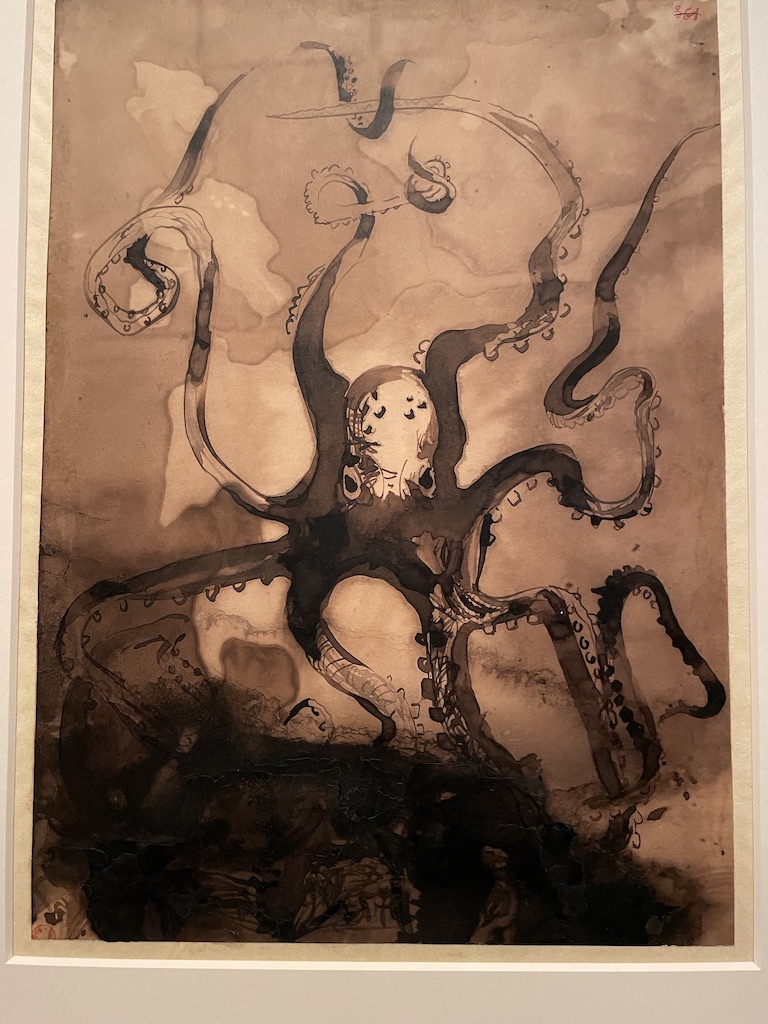
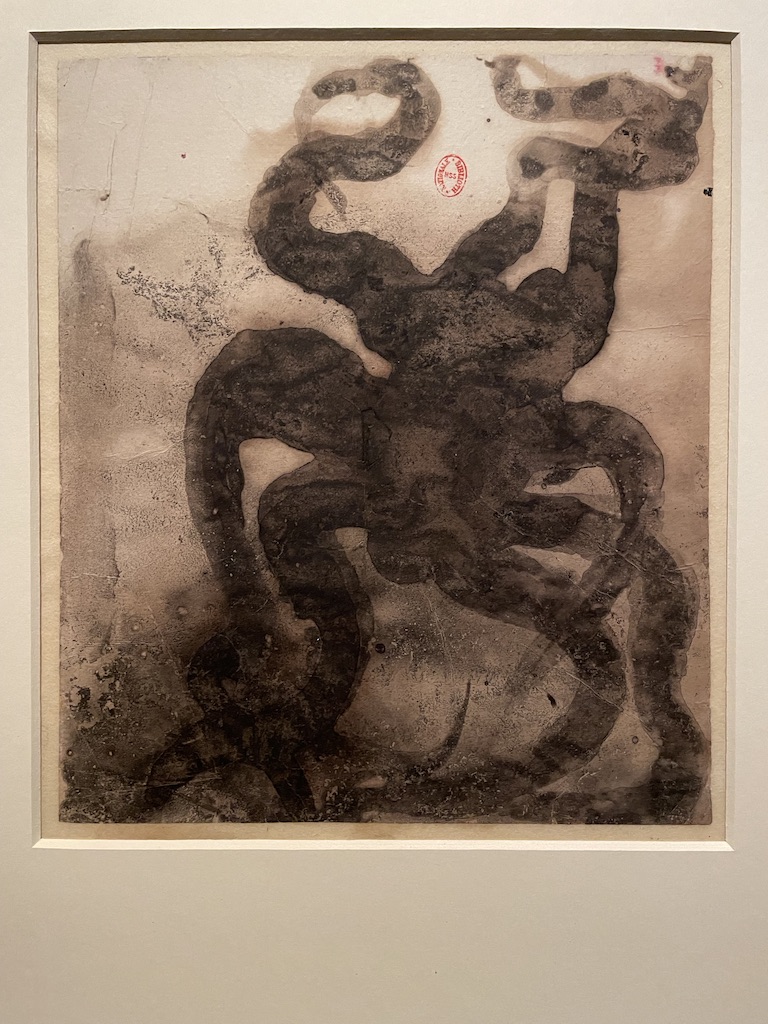
Victor Hugo is probably best known for his novel, Les Miserables. However, another bestseller in his lifetime was the Toilers of the Sea, (and also The Hunchback of Notre Dame). Toilers is a very compelling novel which involves a ship being attacked by a giant octopus. Judging from these drawings he clearly studied the forms of these sea creatures and, when the book was published in 1882, it included his own drawings.

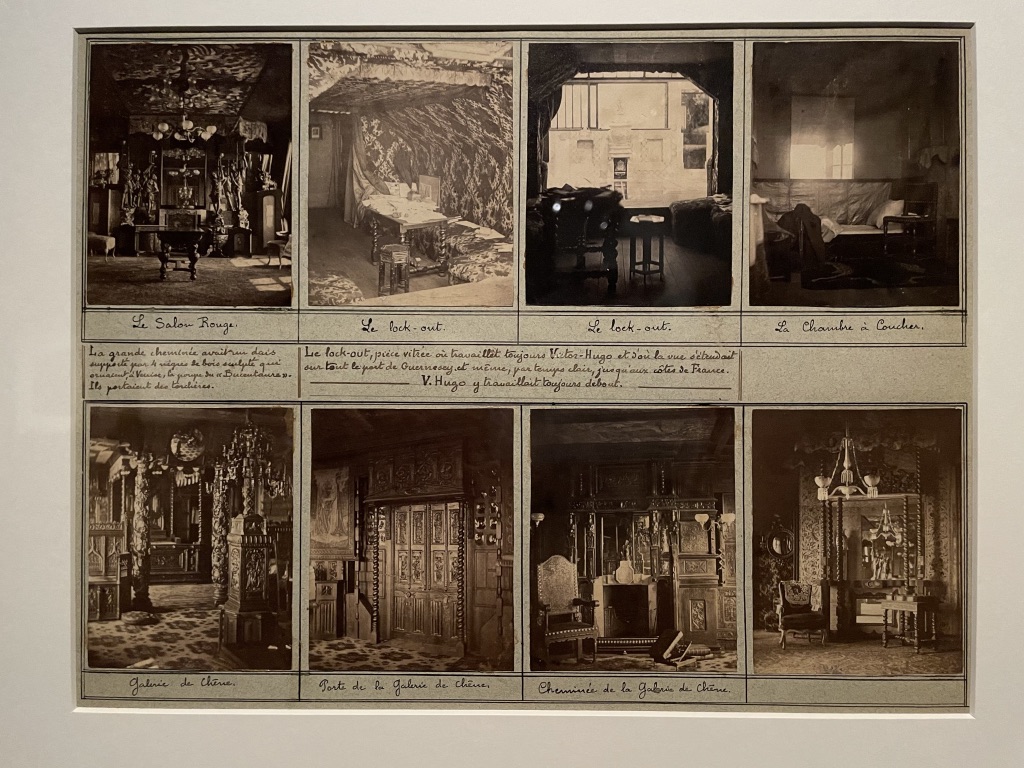
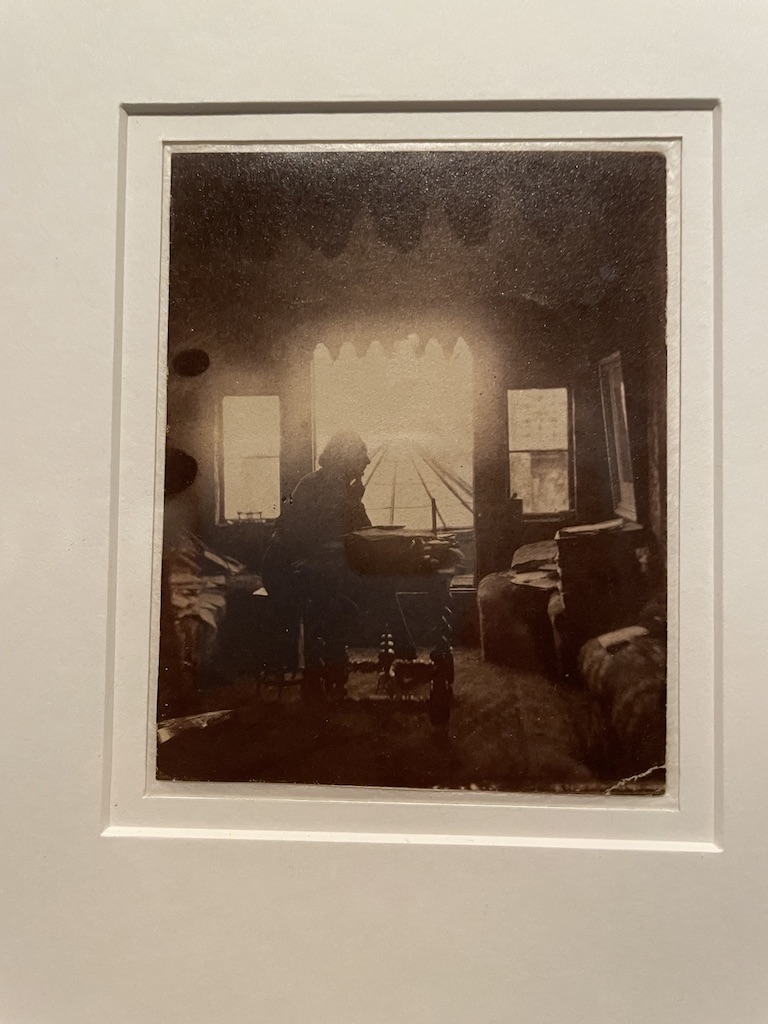
Above are photographs of his home in St Peter Port, Guernsey. Hautville House is a large town house and Hugo added ‘Le Lookout’ at the top of the building where he would stand at a high desk to write while looking out over the bobbing boats in the harbour. I visited Hautville House years ago and was struck by the very oppressive atmosphere of the place. I’m not sure I would like to have been a guest at the place. Apparently Victor Hugo rigged up gas burners in the spare rooms which he would make flare up at night and terrify the occupants. He also arranged mirrors strategically up the stairs so that he could see into all the room from his Lookout and know who was approaching.

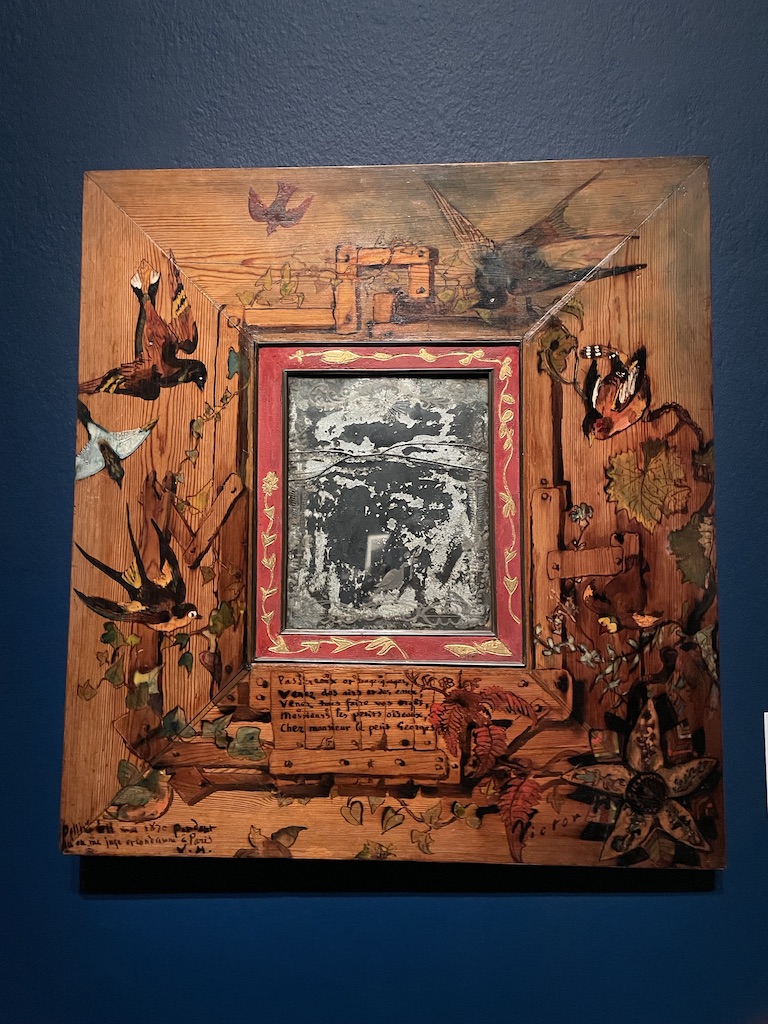
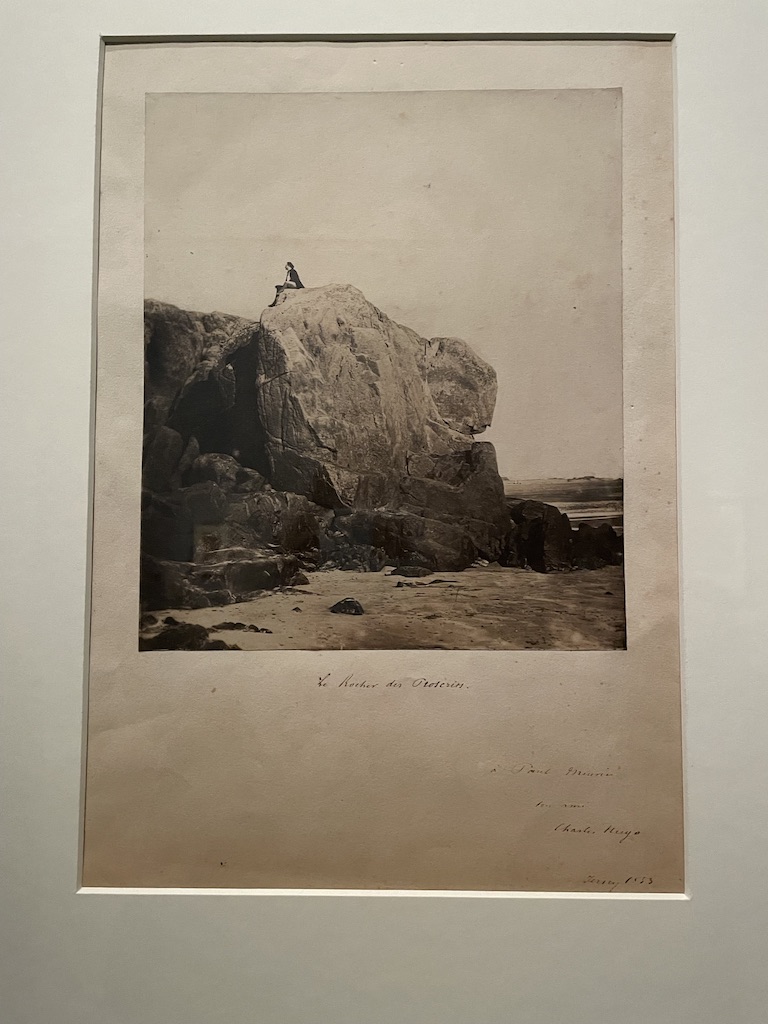
He took control of the decoration of his house (I think his wife must have been very long-suffering to put up with his heavy and rather ‘gothic’ taste.) He even created some of the furniture such as this mirror with a painted surround. Apparently he would walk up to ‘Exile’s Rock’ in Jersey and sit alone upon it thinking and writing before retiring to his study in the Lookout and write his books, poetry, plays and political treatise.

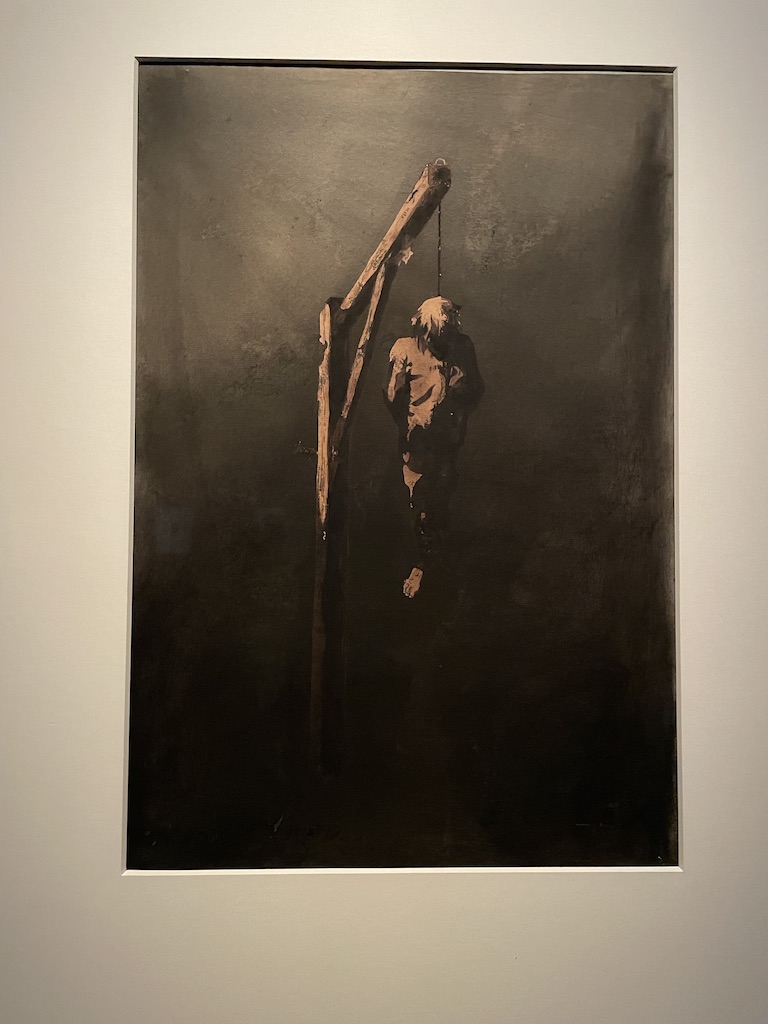
I was impressed to learn about his strongly-held political views. He was fiercely anti-slavery and appalled when John Brown, an American abolitionist was executed in Virgina after being accused of inciting a slave rebellion. Victor Hugo made this image in protest.

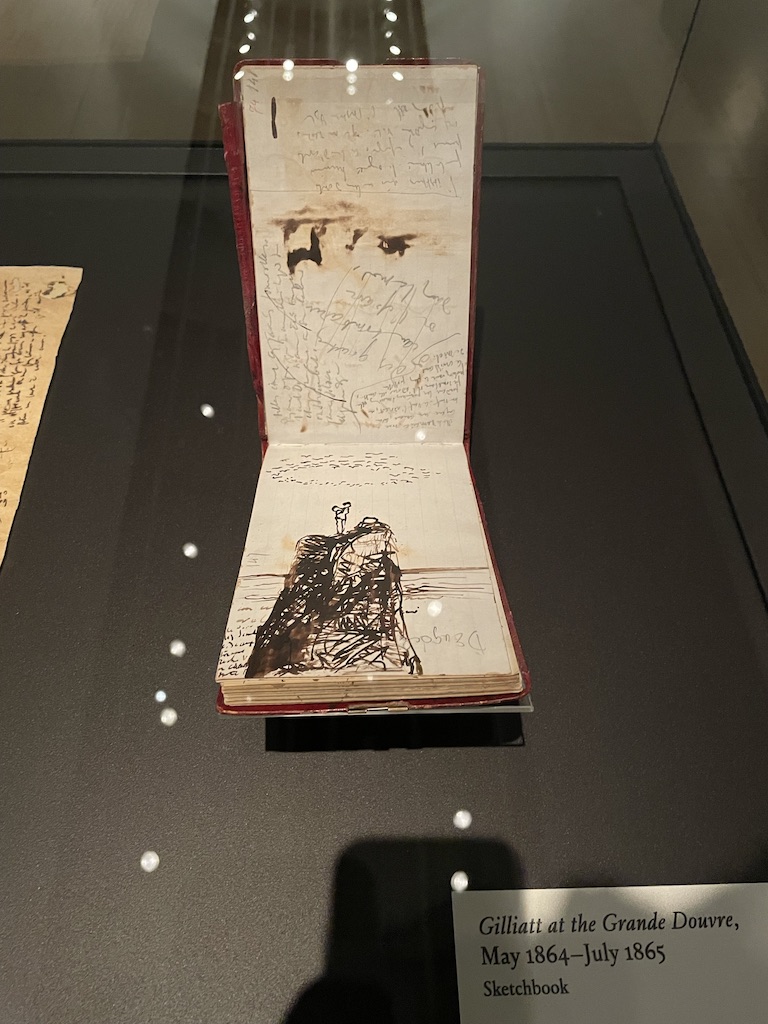
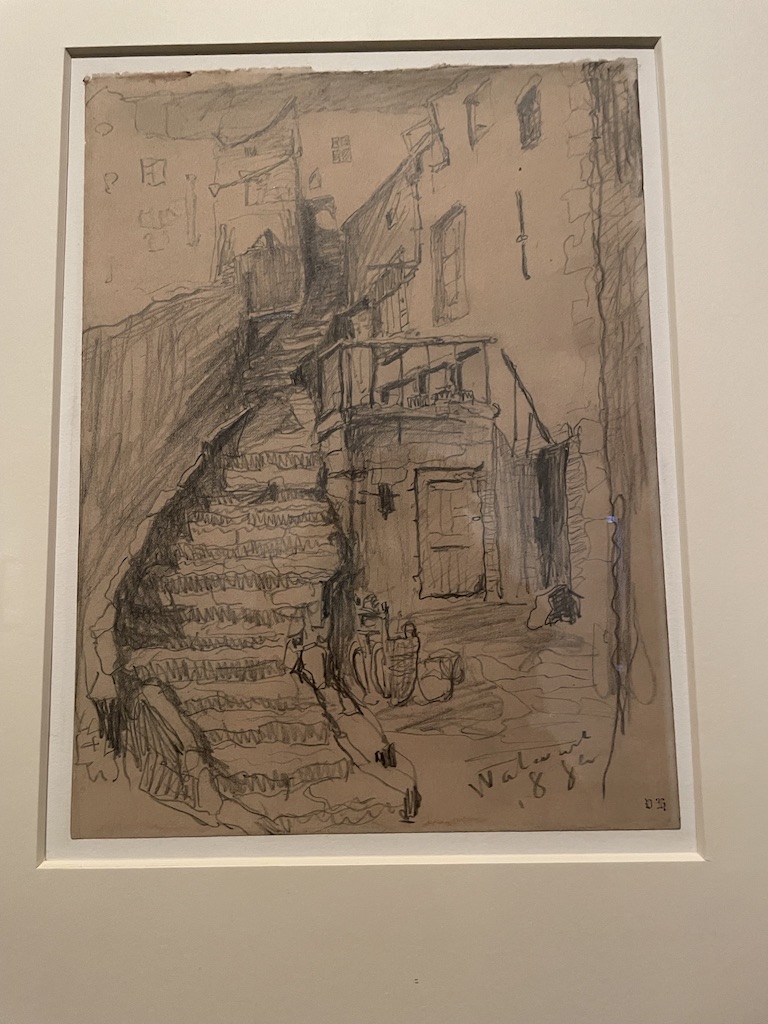
He spent a great deal of time travelling around Europe (avoiding France) with his sketchbook, noting scenes and recording landscapes and buildings. He didn’t seem to be so interested in drawing people.

It’s a very interesting show which provides a welcome view of this revered 19th century novelist whose books are still popular. And it’s treat to see his drawings which rarely leave France. The show is on at the Royal Academy until 29th June 2025.