
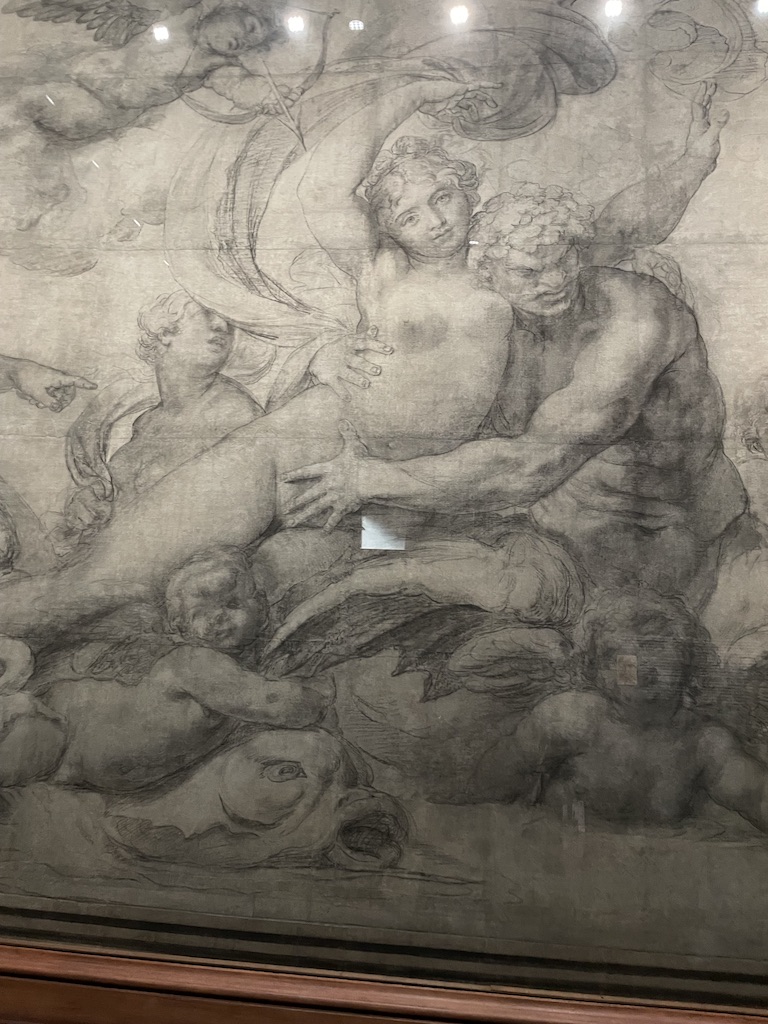
It was a thrill to enter the darkened space of Room 1 at the National Gallery and behold two massive, landscape-sized charcoal drawings by the artistic double act of the early 1600s, Annibale and Agostino Carracci. These huge cartoons were the preparatory works for two of the large paintings which adorned the spectacular gallery ceiling of the Palazzo Farnese in Rome. The work was commissioned by Alessandro Farnese who became Pope Paul III. The building is now the French Embassy so it’s not easy to see the amazing works.
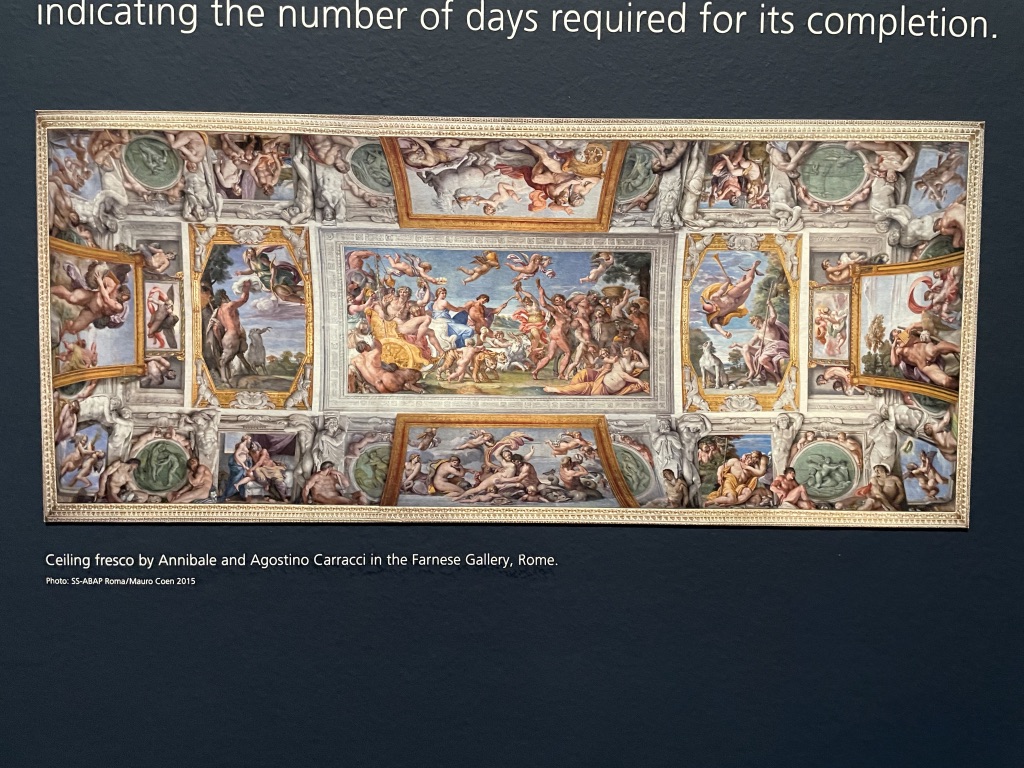
The two cartoons on show are the centre top and bottom images in the gilded fame. It’s spectacular to see these works close up. You can see the cuts, tears, reps and pin marks in the fragile paper. These cartoons were working documents, used to lay out the design, develop the artwork and then placed against the damp plaster of the ceiling surface to have the image pricked (pounced) and and traced onto the surface. Then the artists would labour at ceiling height on a scaffold to complete the frescoes.
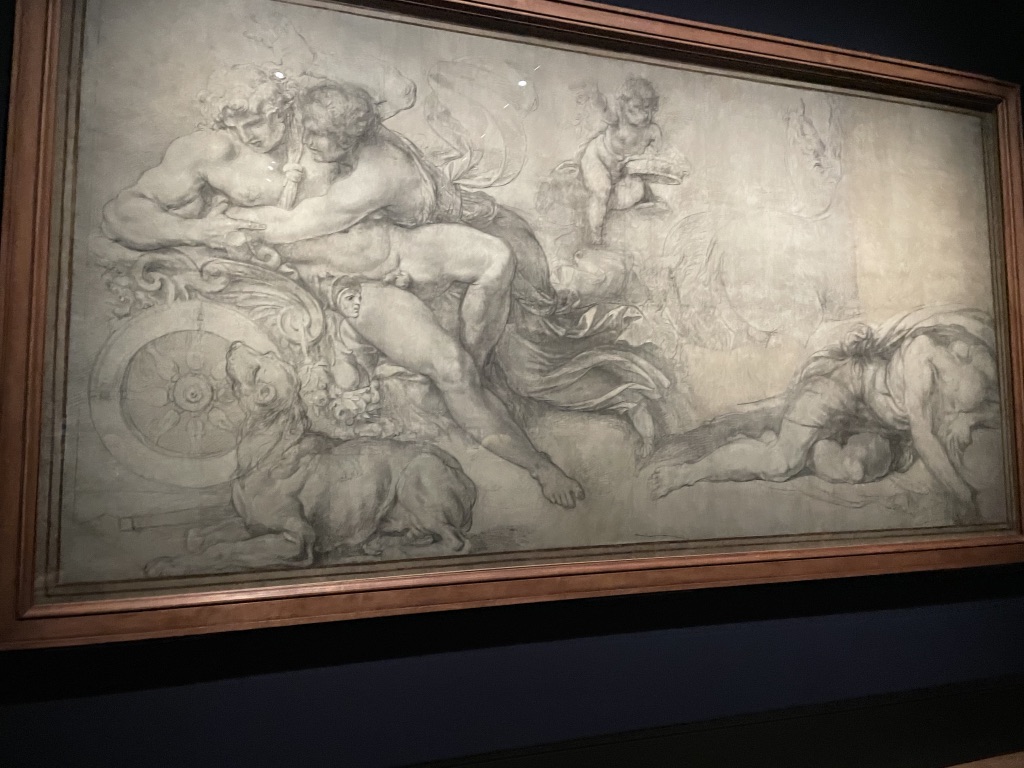
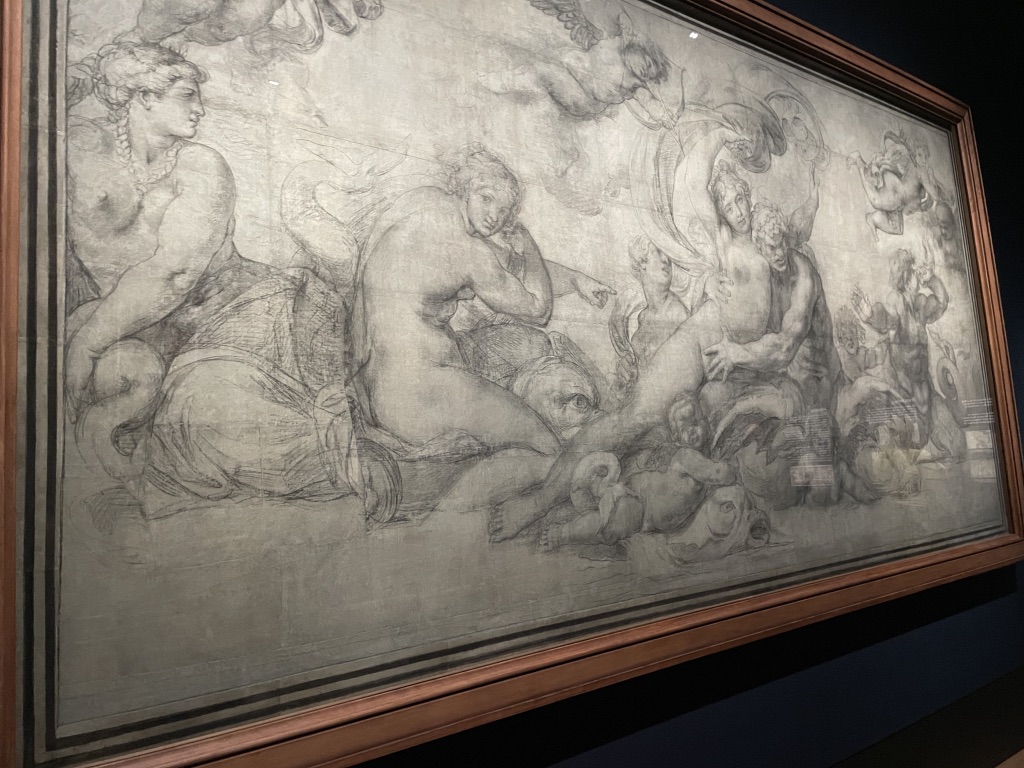
It’s impressive to see these works close up and follow the lines and scratches made by artists over four centuries ago. It’s rare for these working documents to survive but, apparently, they were carefully pieced together again after the transfer process and kept safely. Maybe the idea was to reuse elements of them on future commissions.

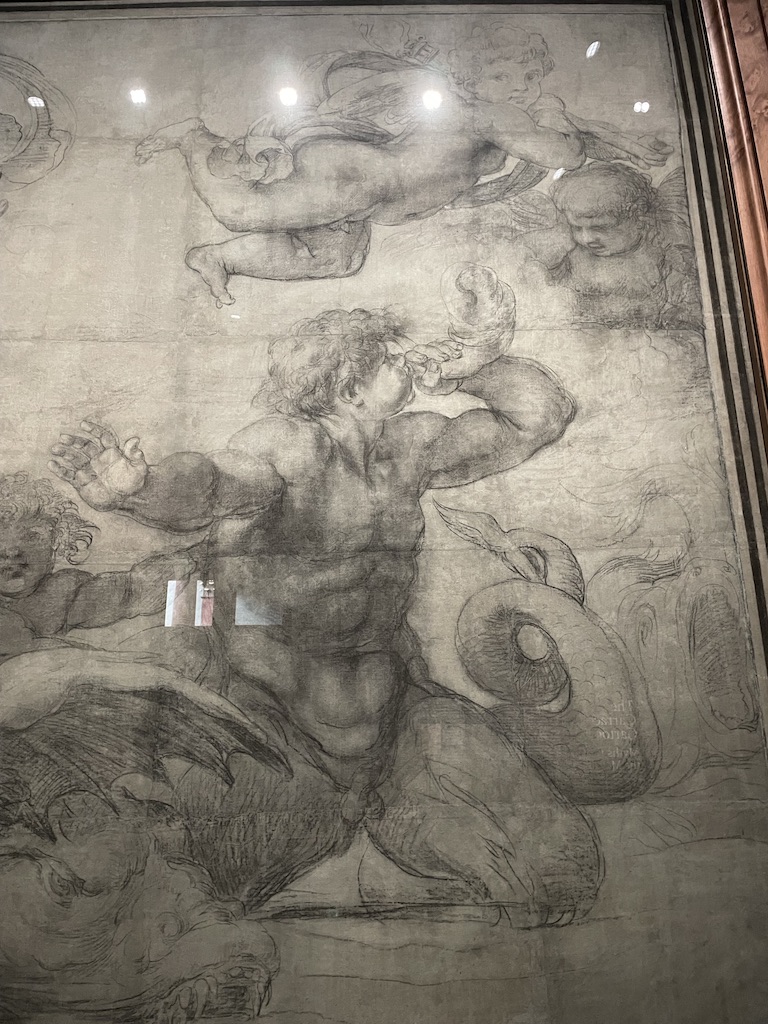
There’s such vitality to the drawing and the clever composition There’s humour too. On the right, you can see a putti blowing a shell in the face of another putti who is covering his ears!

Above is a view of the gallery made by Francesco Panini, who appears in the bottom left of the gallery sketching the view.
 Paper Places