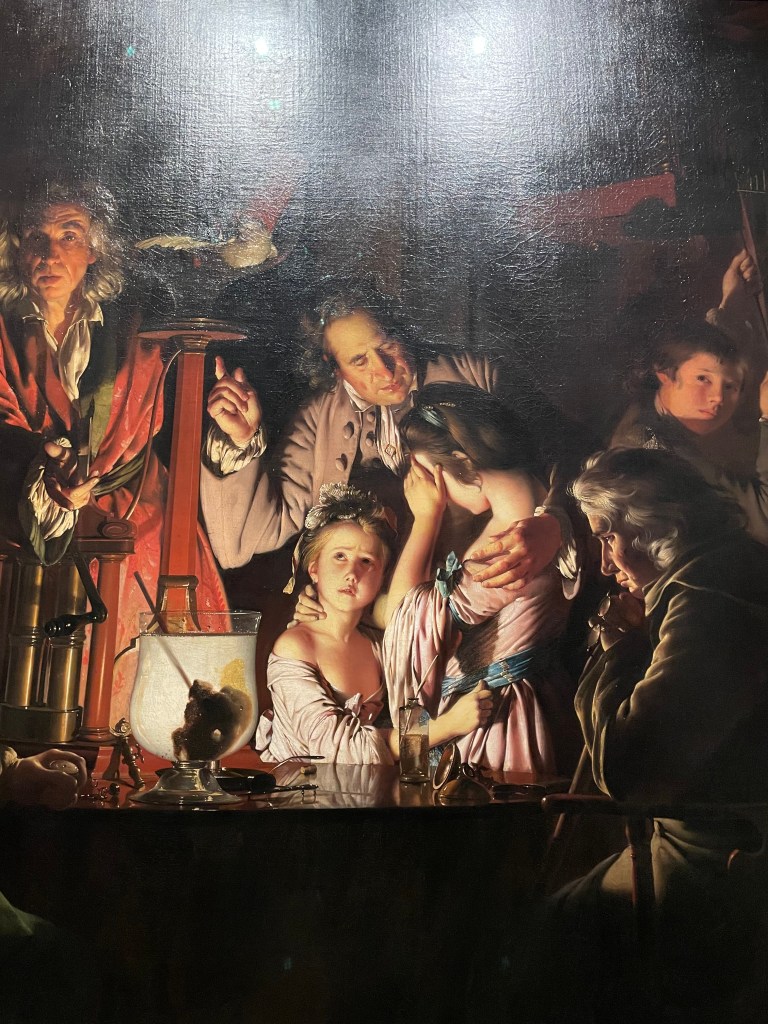
Wright of Derby: From the Shadows. What a terrific show at the National Gallery, London. I’ve long been an admirer of Joseph Wright’s ‘candlelight’ paintings which capture moments of interior drama, both literally and psychologically. Wonderful to see the artist’s work from 1765 – 1773 at the height of his powers.

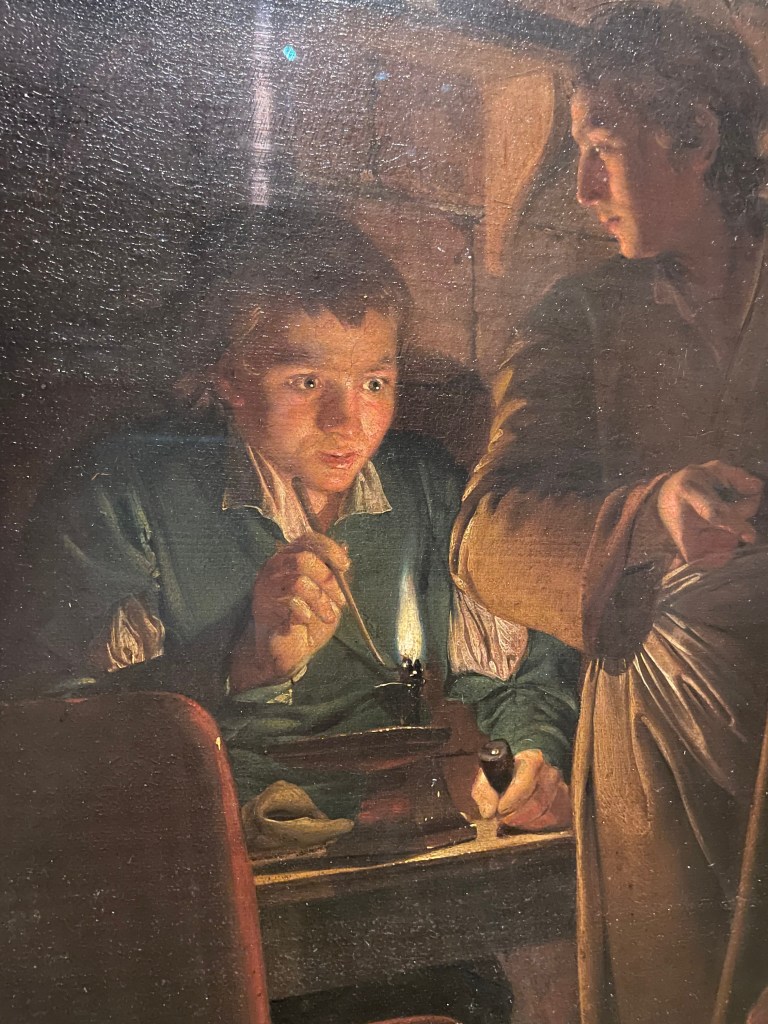
Above is a detail from probably the most famous painting by Joseph Wright, known as Wright of Derby – the town where he was born and worked. The Air Pump shows an audience watching a scientific demonstration. The air is being pumped out of a glass flask and the bird inside is about to suffocate. The girls are clearly distressed, the adults fascinated and the scientist resembles a wizard, in a loose gown, playing God over the life of the hapless bird. There is so much going on in this compelling picture which gives you so many perspectives. But the most striking element is Wright’s ability to capture the lighting of the scene. A single candle, hidden behind a large goblet containing a skull, illuminates the faces and highlights the reactions.
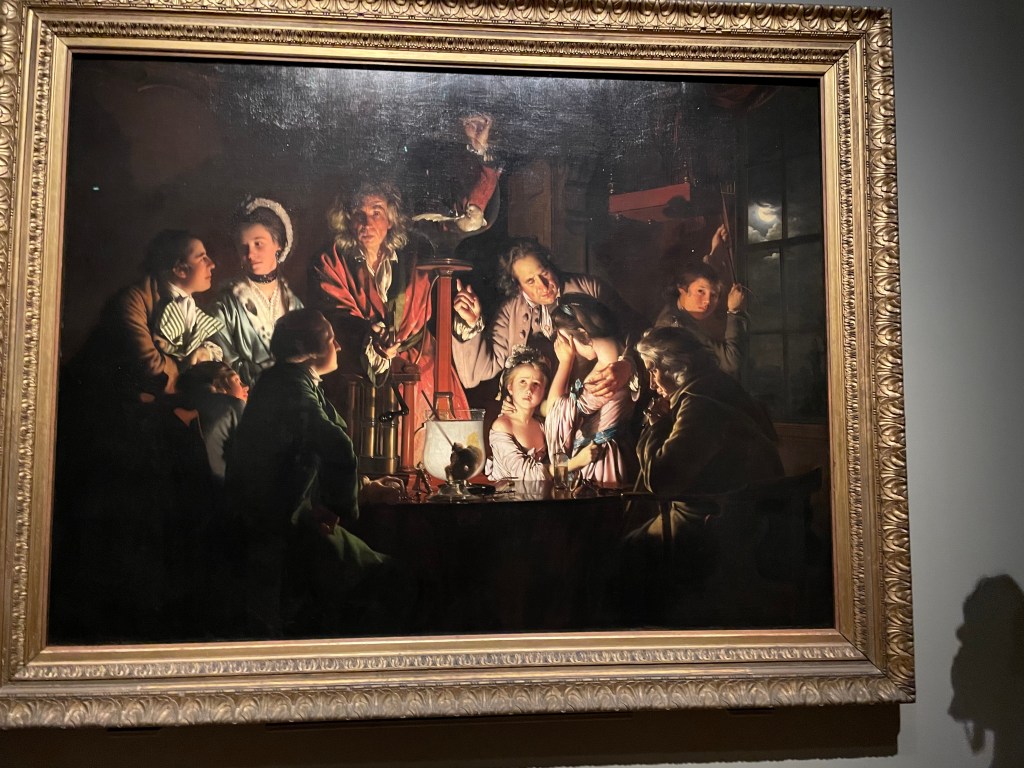
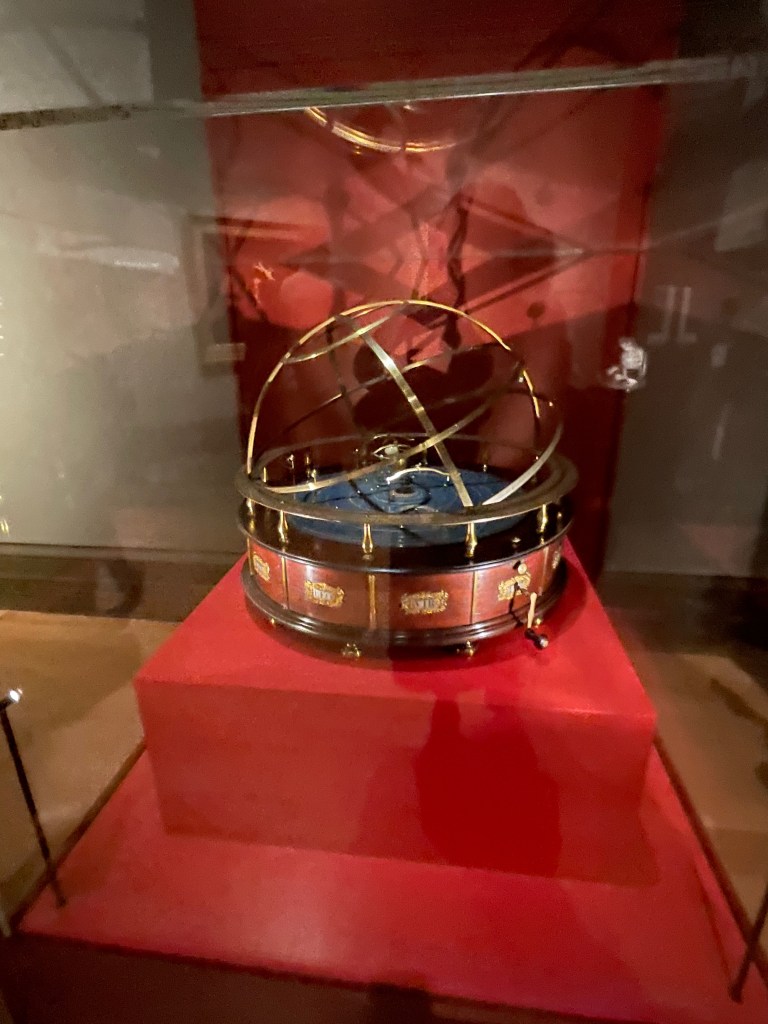
This wonderful exhibition not only brings the best of Joseph Wright’s paintings from the 1760s-70s but also assembles some of the instruments and props which feature in the pictures. For example, below, we see a painting entitled The Orrery which was an extraordinary teaching instrument for demonstrating the movement of the planets and the earth’s place in the heavens. The two boys are transfixed by the tiny orbs which are shown to move around each other.

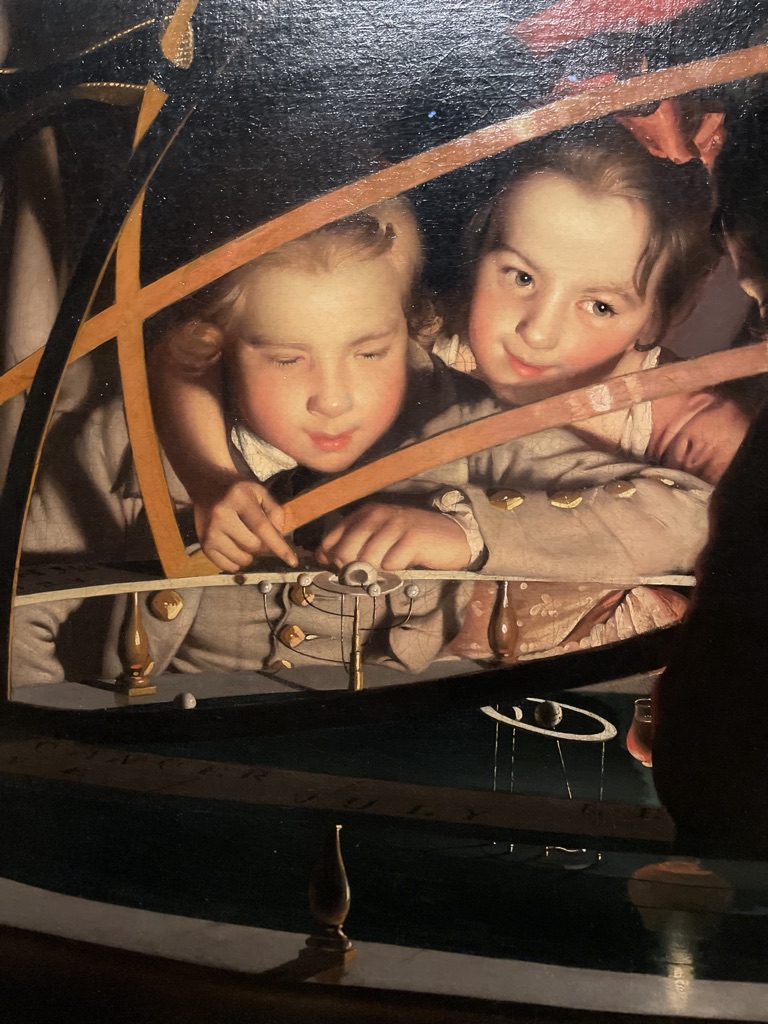
Tenebrism is the word given to the style of painting associated by Italian artist Caravaggio and describes the use of an extreme form of ‘chiaroscuro’ (meaning light and dark). The drama derived from seeing, and not seeing, objects is brilliantly conveyed in these picture. As a viewer you are drawn to the illuminated faces and the expressions responding to the action but then you wonder what is happening in the shadows? Each picture contains so many questions and invites you to puzzle over the subject as you scan the painting absorbing the story.
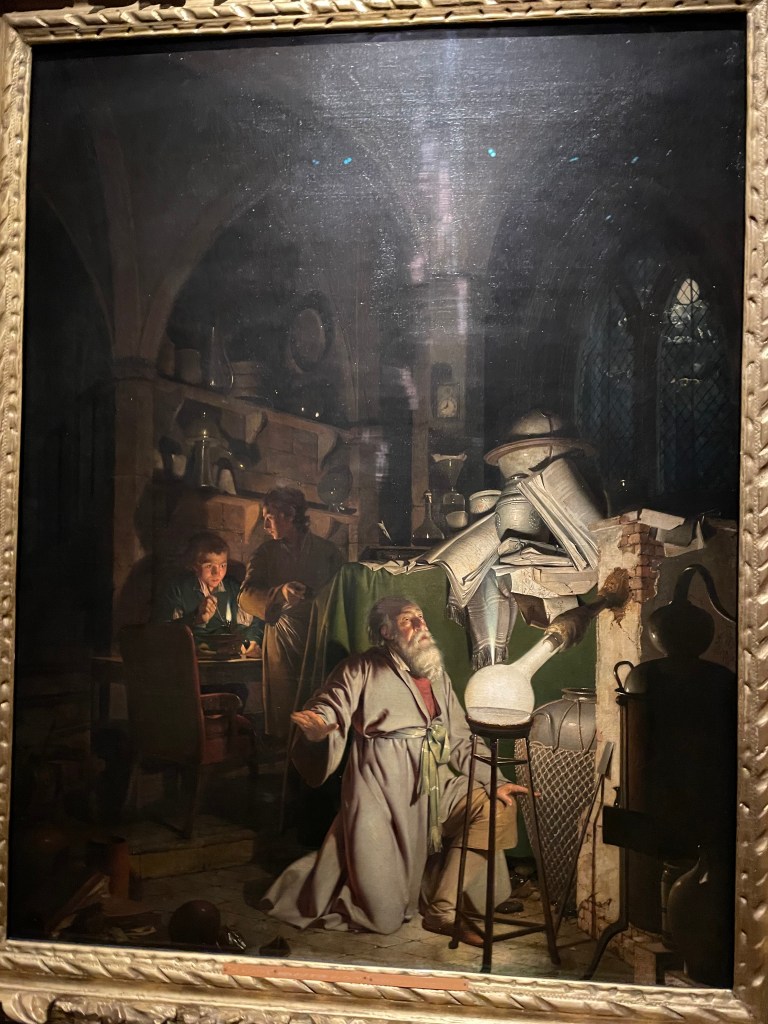
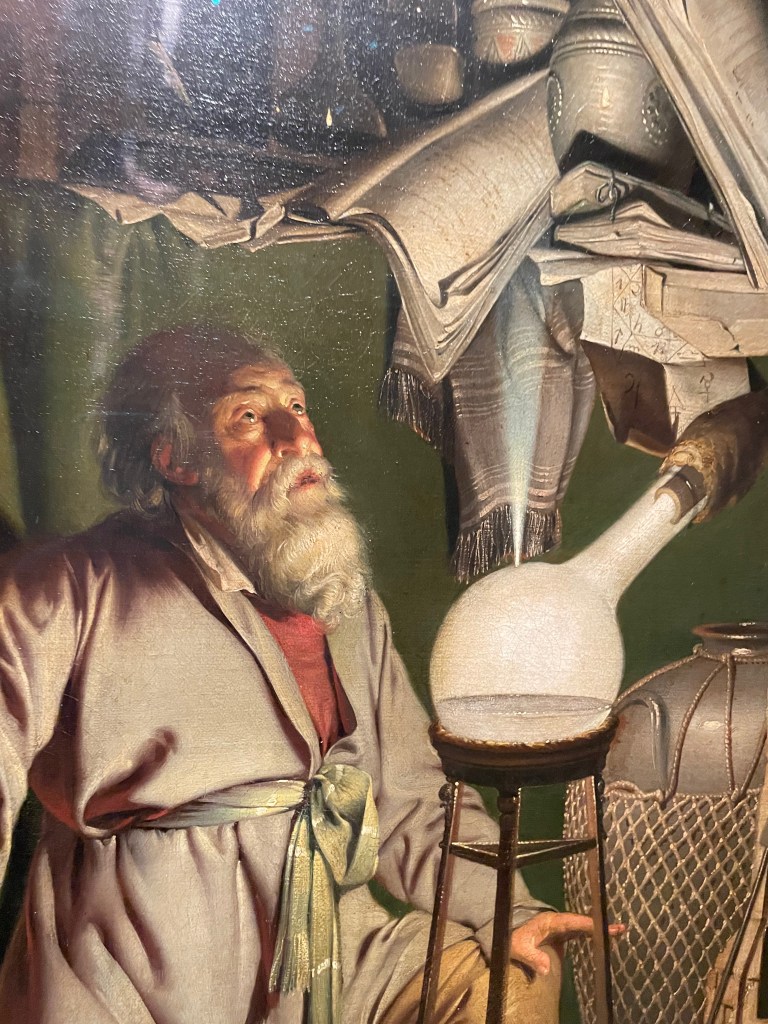
Above is The Alchymist in Search of the Philosopher’s Stone, Discovers Phosphorus, and Prays for the Successful Conclusion of his Operation, as was the Custom of the Ancient Chymical Astrologers. Wow! Quite a title, but what a picture, there’s so much going on. Amazement on the face of the alchemist and bewildered fascination by his helper making notes at the desk by candlelight. And capturing the bright light of phosphorus must have been a huge challenge.

I love this painting of the girl reading the letter. You can’t see the candle but it’s behind the paper, making it transparent, but for the shadowy fold. And is the man leaning over her shoulder about to grab the paper away? What was she reading? Oh, so many questions. This painting is up there with works by Vermeer but with a more rosey hue and earthy atmosphere.
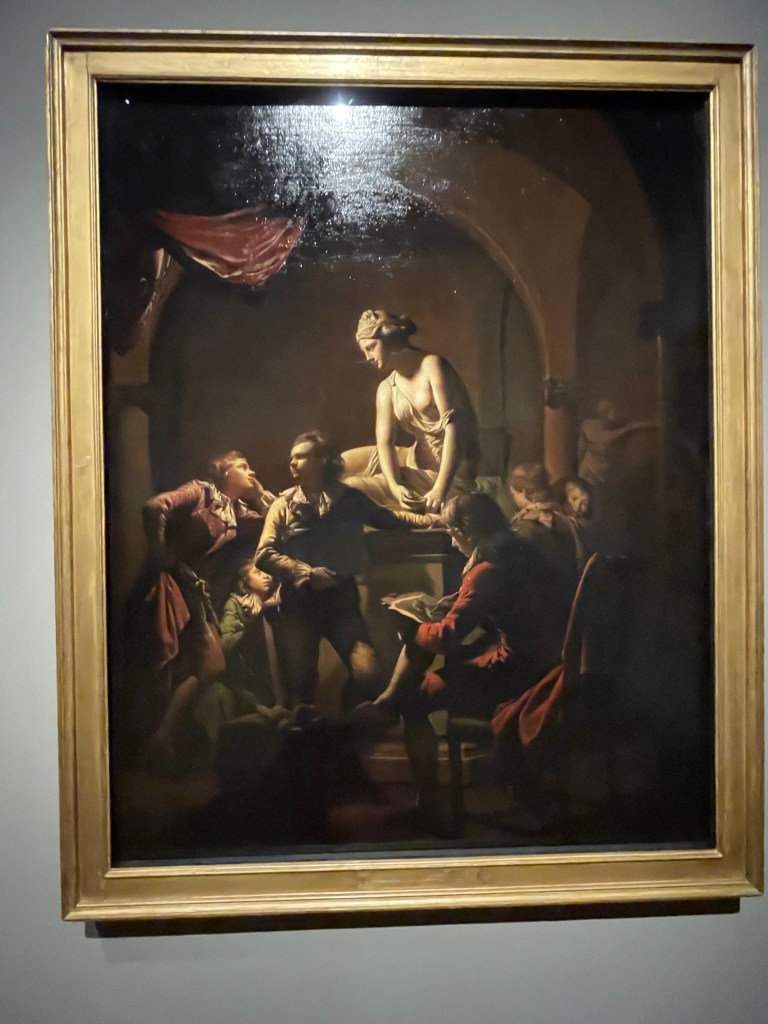
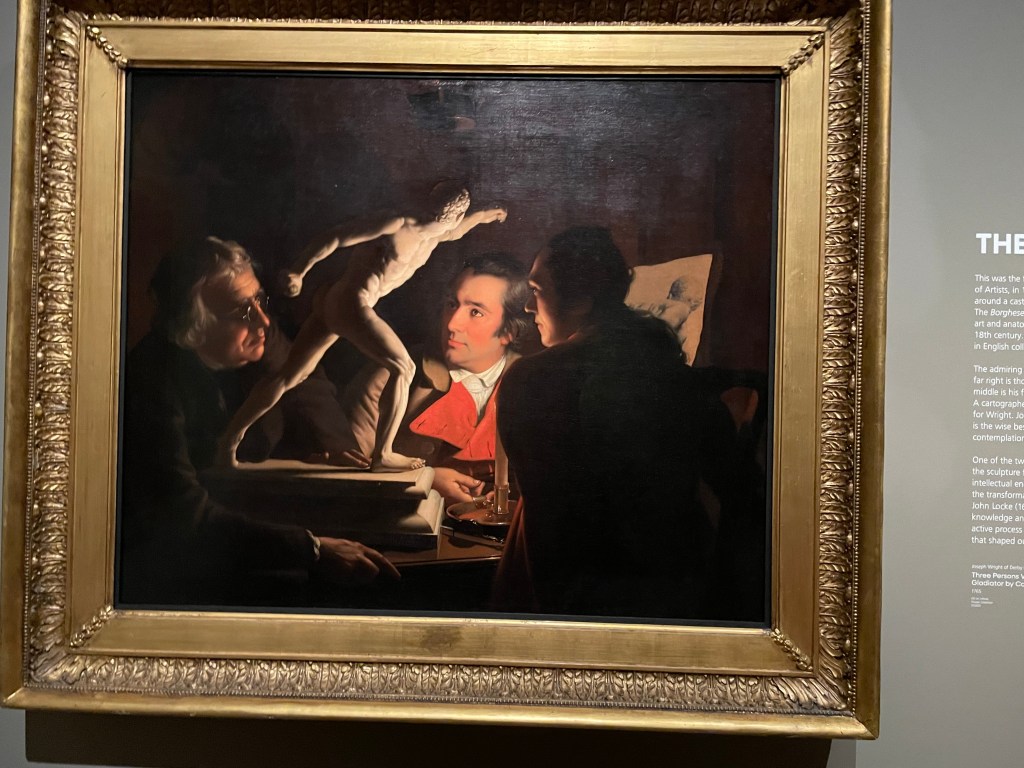
Above are a couple of great examples of ‘tenebrism’ showing not only Wright’s skill at capturing light but depicting the enduring artistic quest to capture form by using light and shadow in the context of the art class.
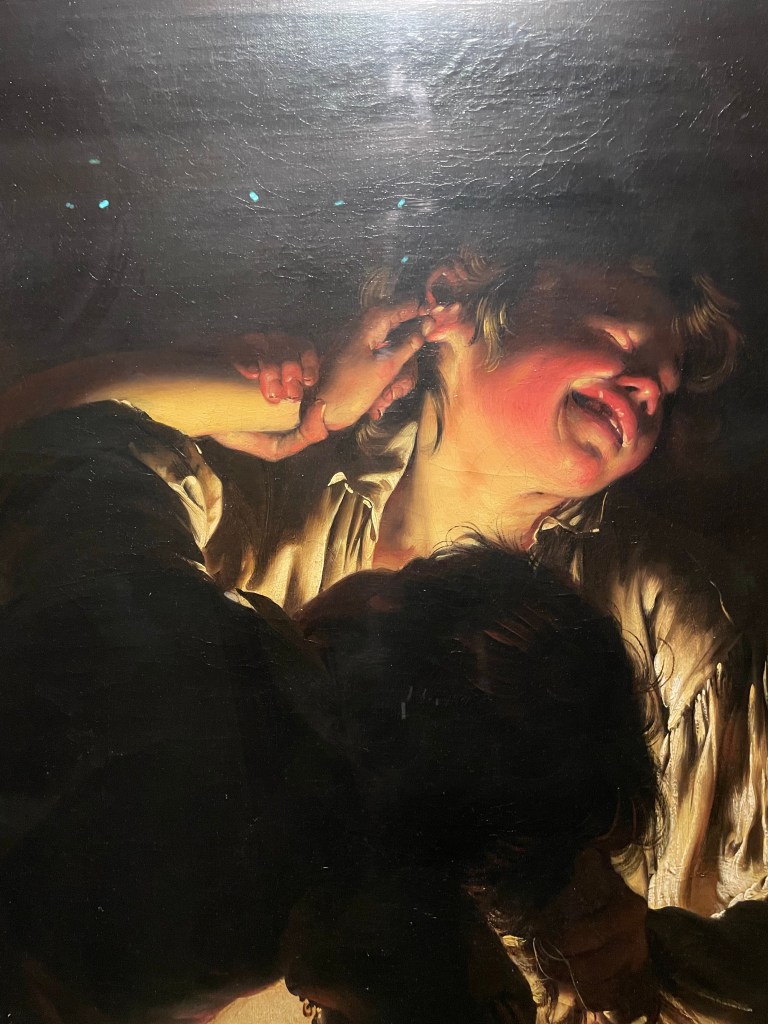
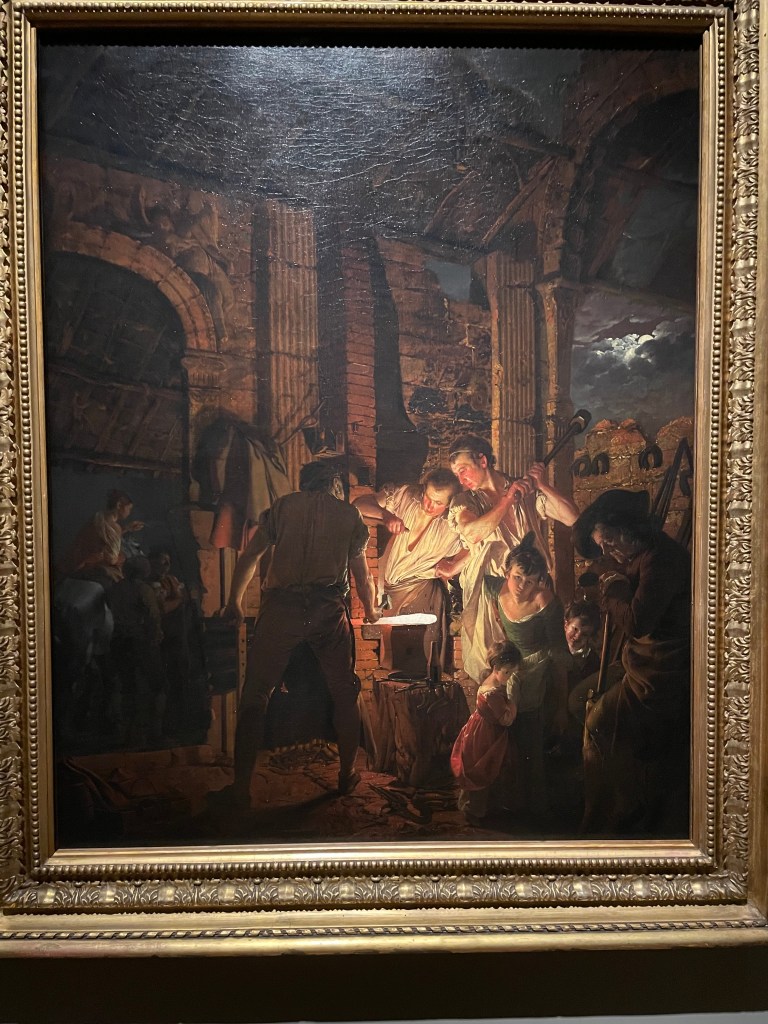
And above is a detail from a painting of two boys fighting. You can see that things are turning violent as one boy’s ear is grabbed and pinched with his assailant in the foreground represented in shadow. And I loved the picture on the right of A Blacksmith’s Shop. Nighttime work, with the moon beyond the clouds and all eyes focused on the action on the anvil. Wonderful.
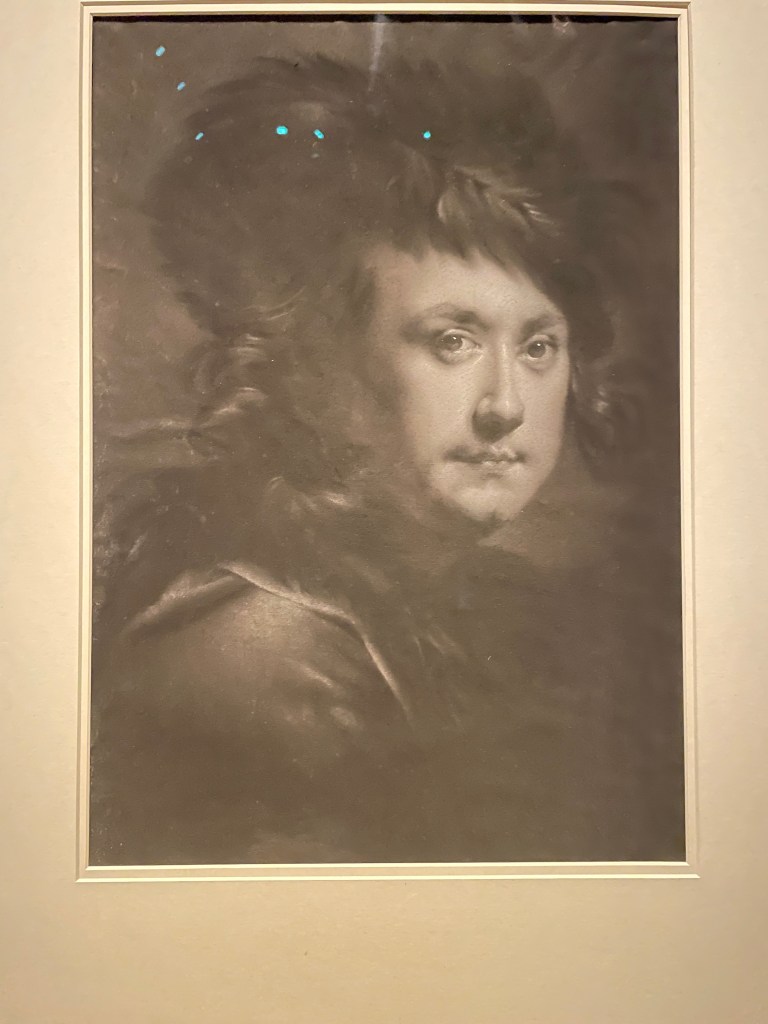
Above is a self-portrait by Joseph Wright of Derby done with pastels early on his career. Clearly he was perfecting his ‘tenebrist’ skills but, quite playfully, representing himself in the style of an ‘Old Master’. What a master of his craft he was. This is a great show. It’s on at the National Gallery until 10th May 2026.

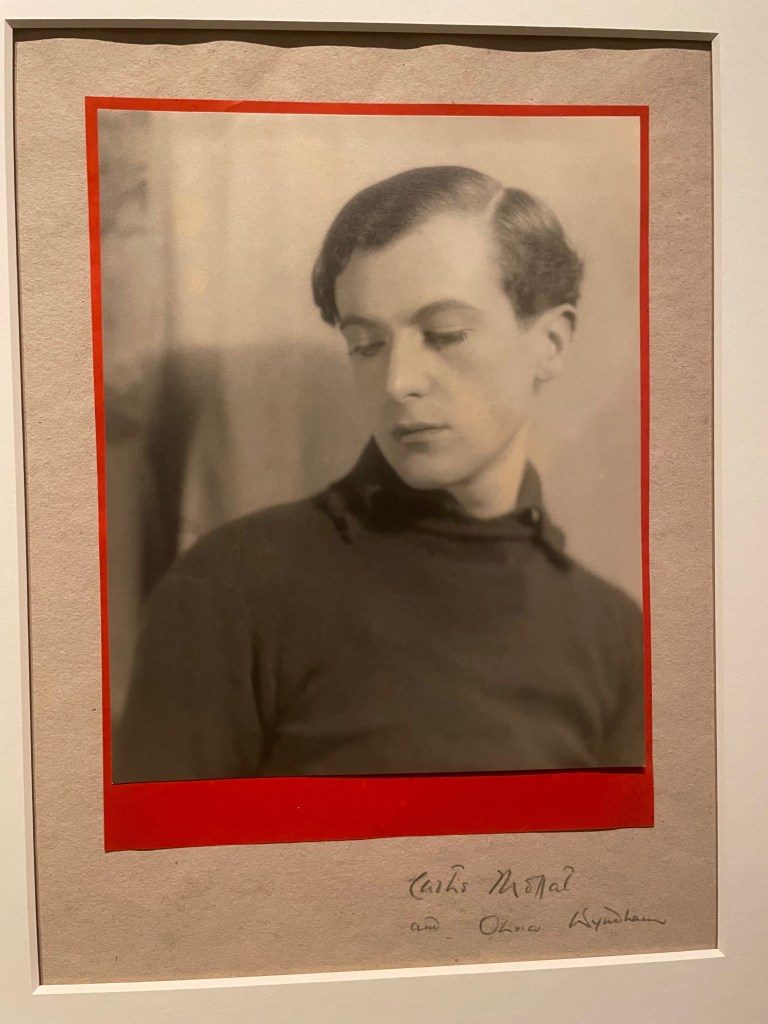
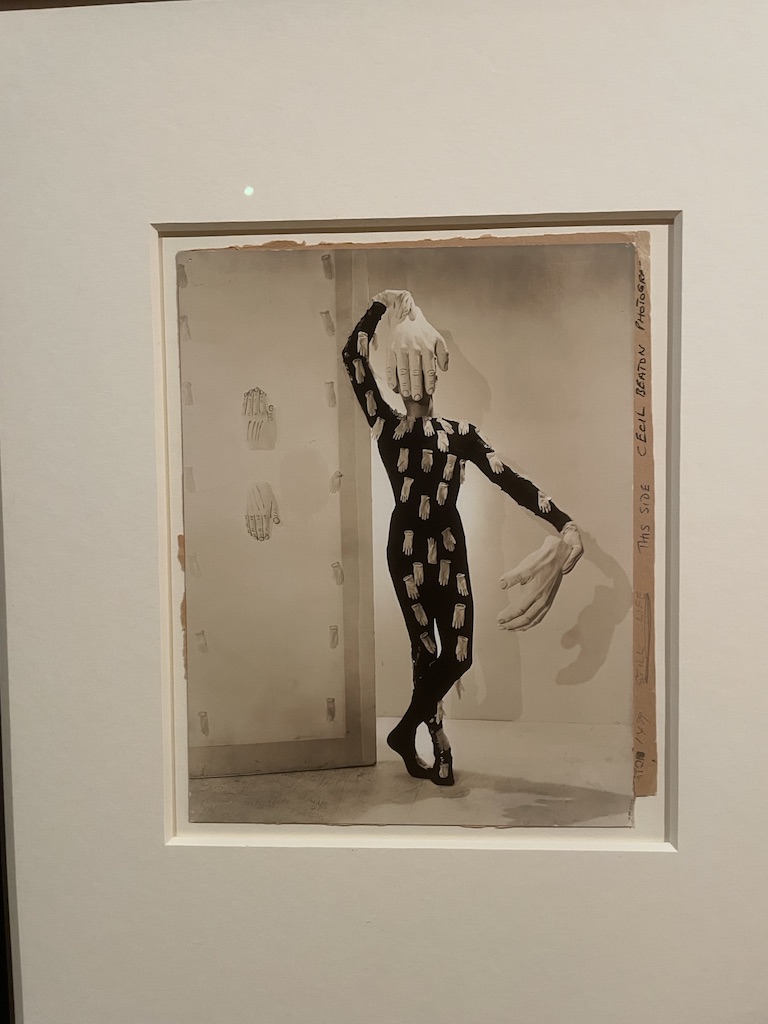
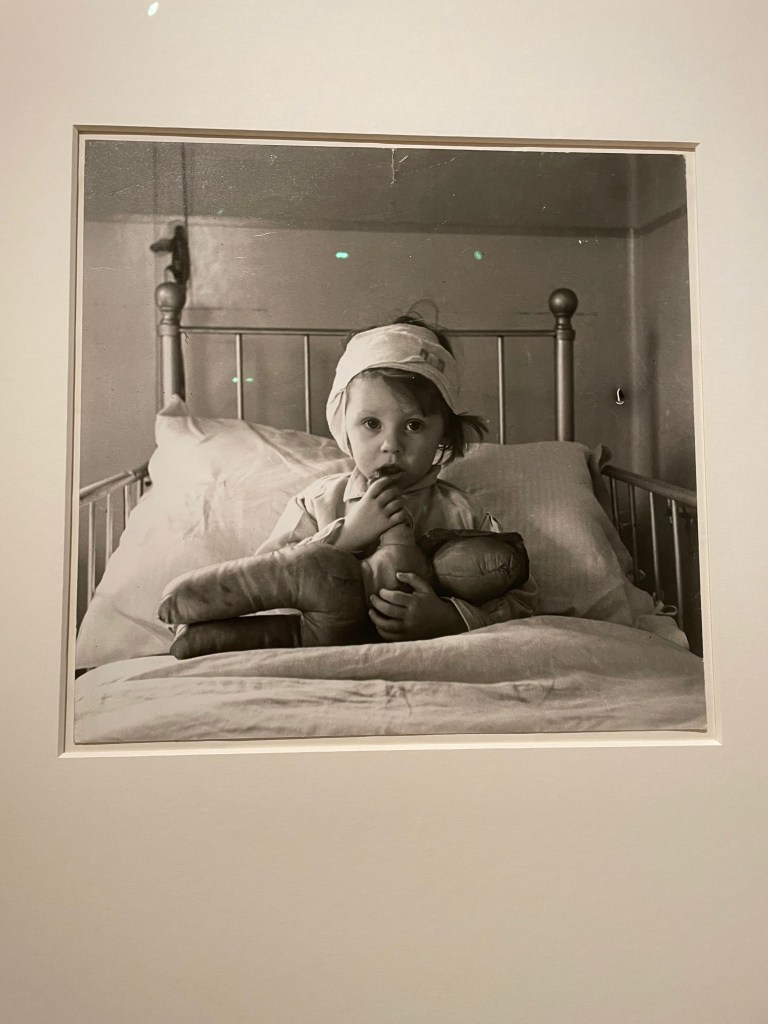
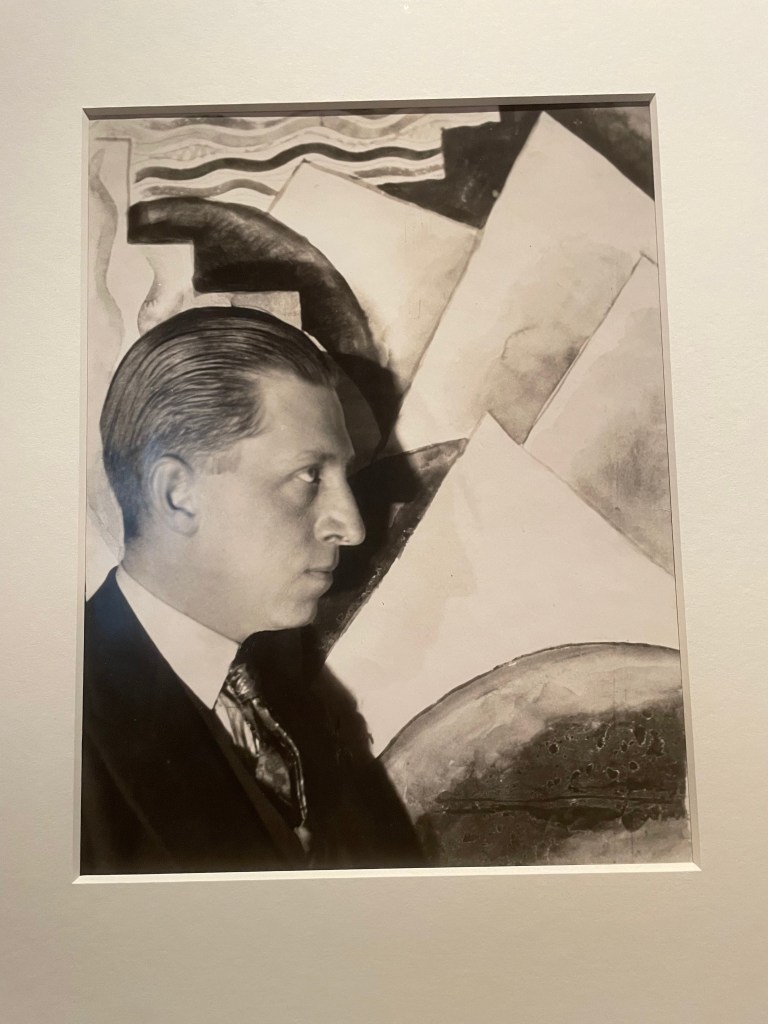
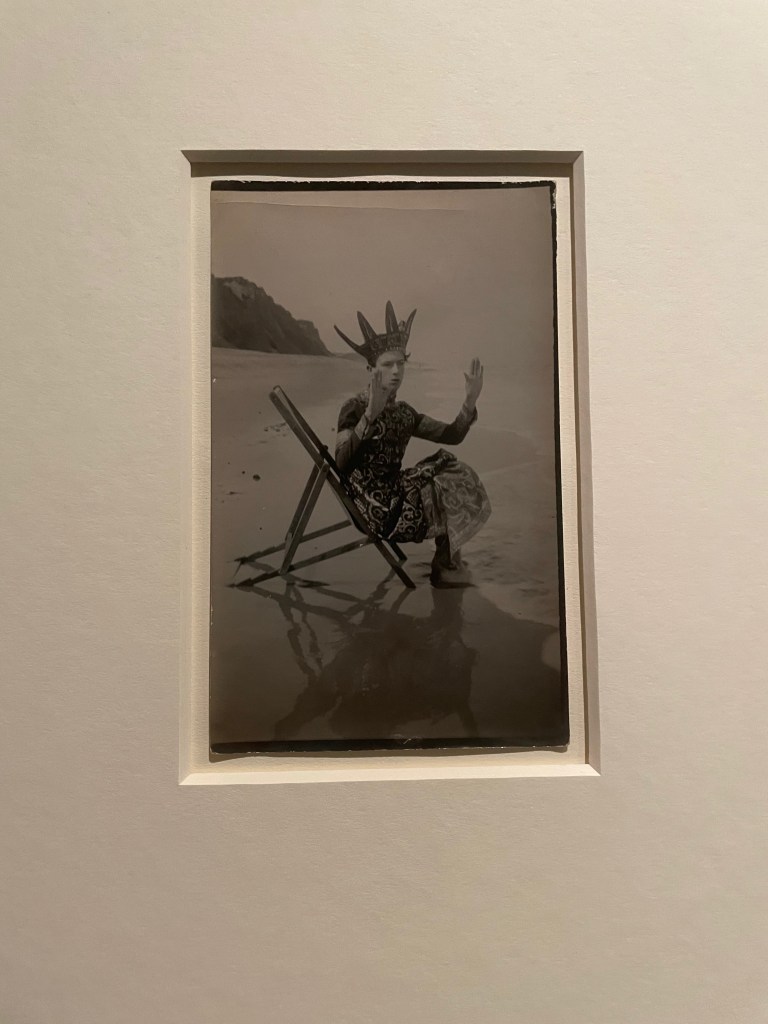
Cecil Beaton’s Fashionable World – well, there is so much more to this show at the National Portrait Gallery than fashion. Glorious to see so many photographs, drawings, illustrations, sketches and creative ideas which demostrate the breadth of this remarkable man’s abilities.

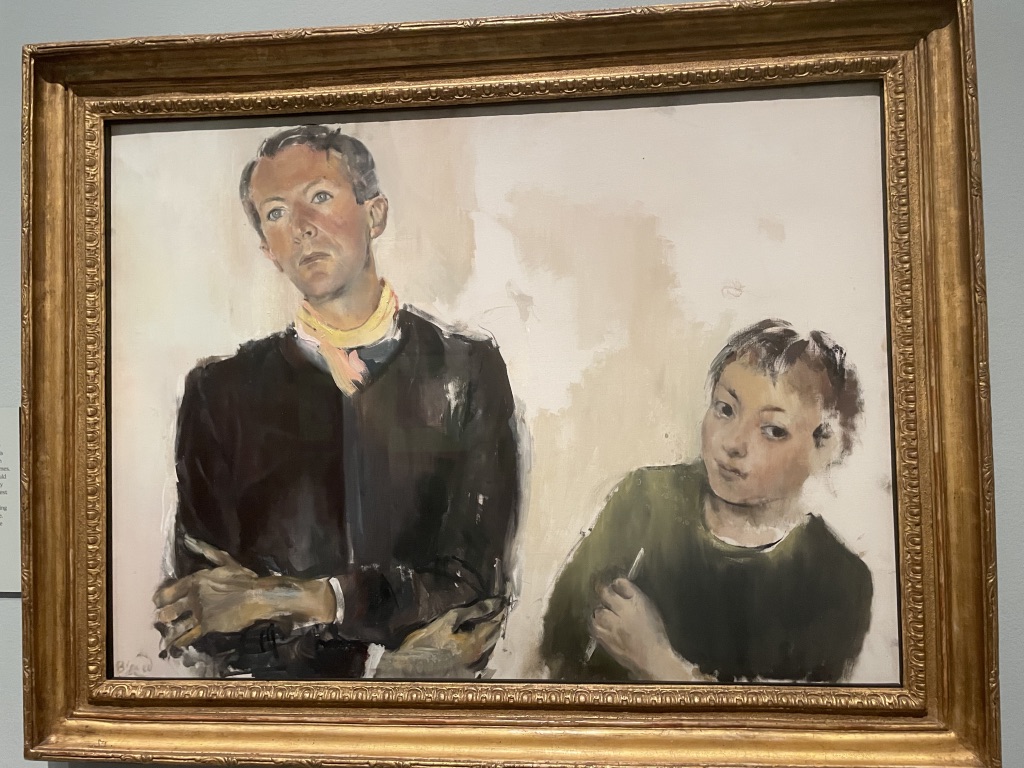
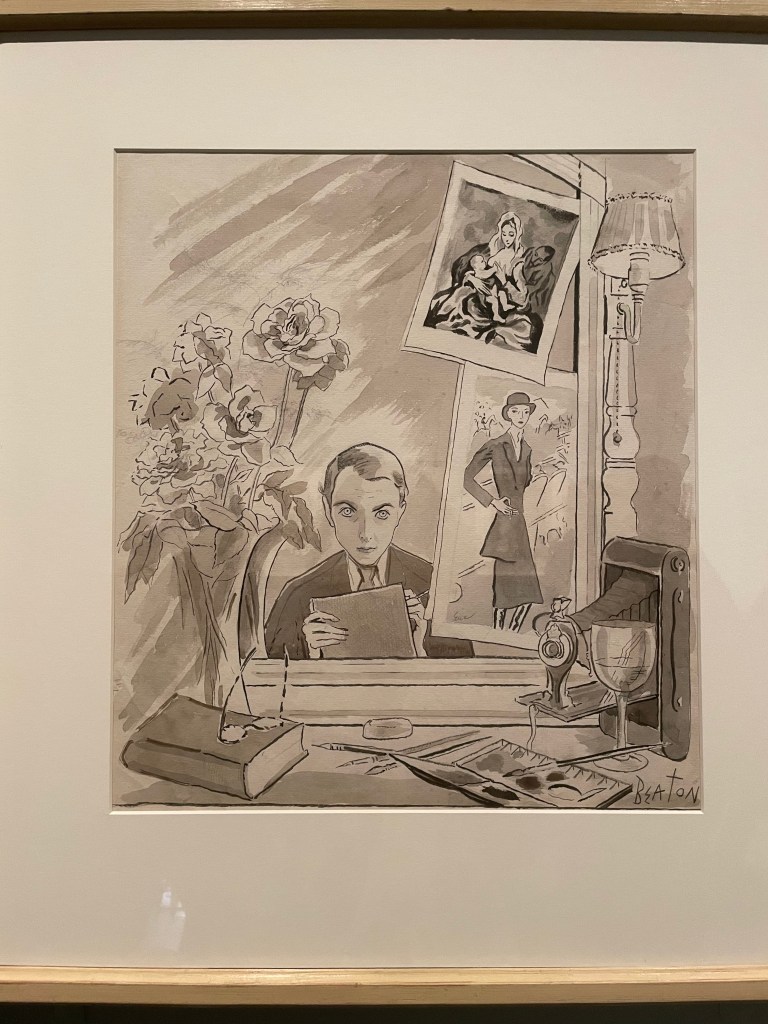
Above are three portraits of Cecil Beaton. On the left is a very posed photograph showing his youthful beauty, in the centre is an impressive oil painting by Christian Bérard, which shows a kind of wistful self-confidence and on the right is a self-portrait in pen, ink, wash and pencil made in a New York hotel room in 1928 – a young man with a focus on his career, complete with camera on the right, behind the wine glass, framed by fashion photos and sketches.

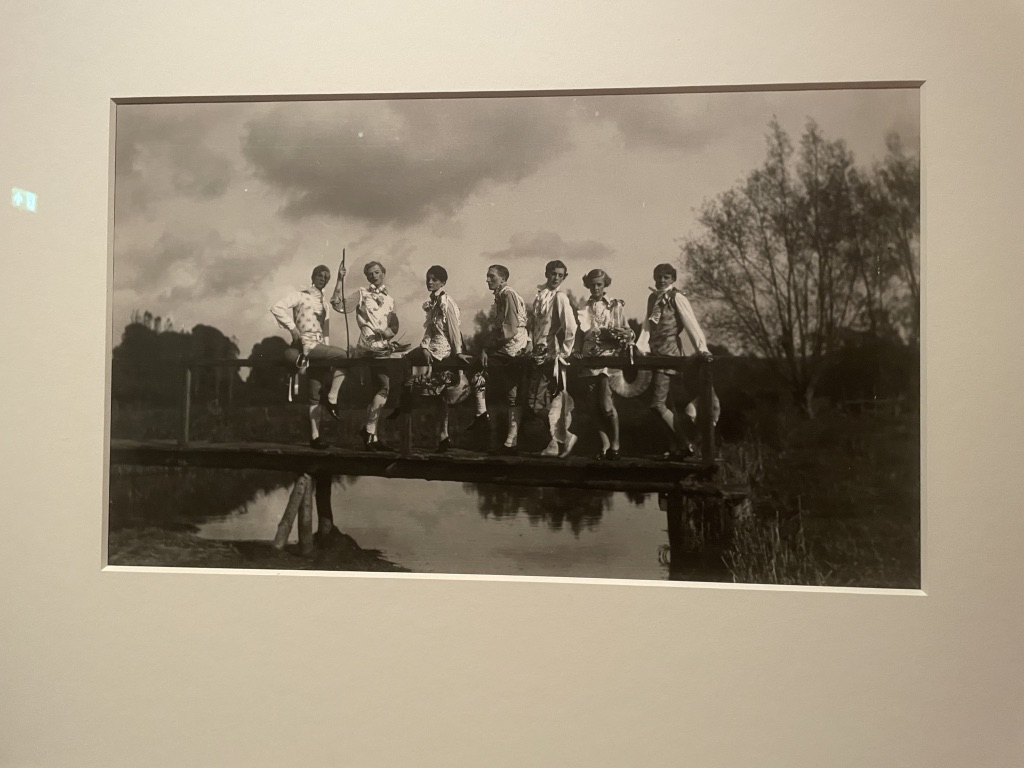
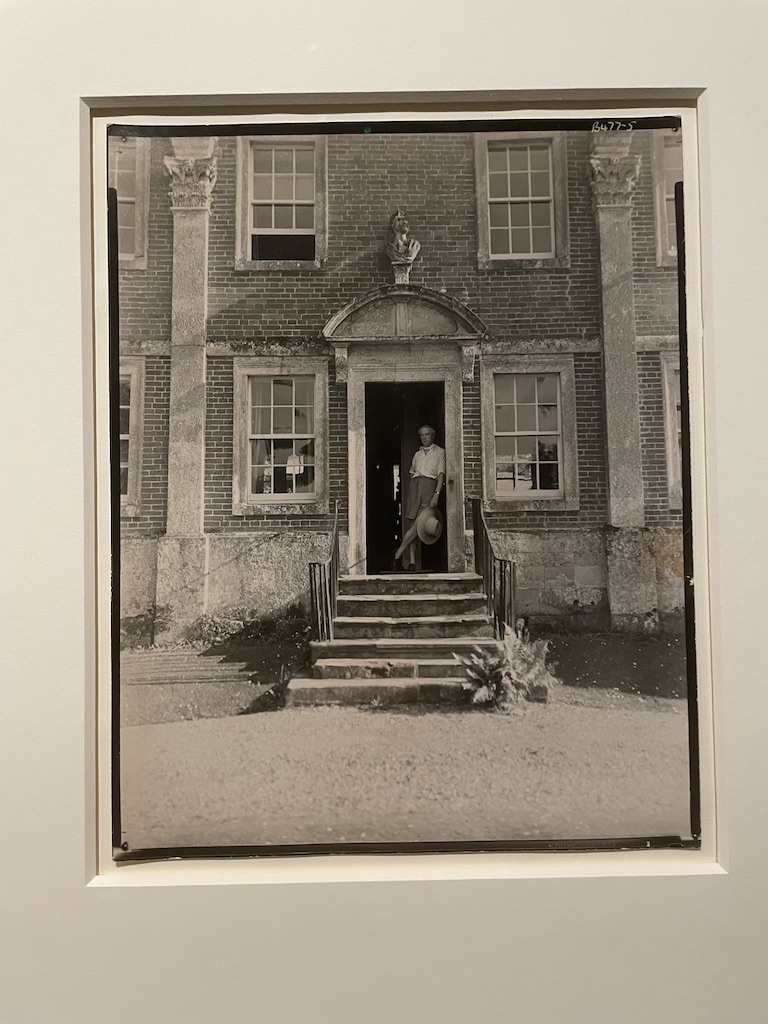
Cecil Beaton was born at just the right time. Coming of age in the early 1920s he was fortunate enough to fall in with a crowd of creative, free-living and very wealthy young people who lived in fine houses and threw wild parties. They look extremely pleased with themselves in the photo above but they are having fun; and, after the horrors of the First World War, which they were too young to take part in but were no doubt affected by, you can see how that whoosh of expressive freedom must have captured these Bright Young Things and propelled them into a creatively brave new world.

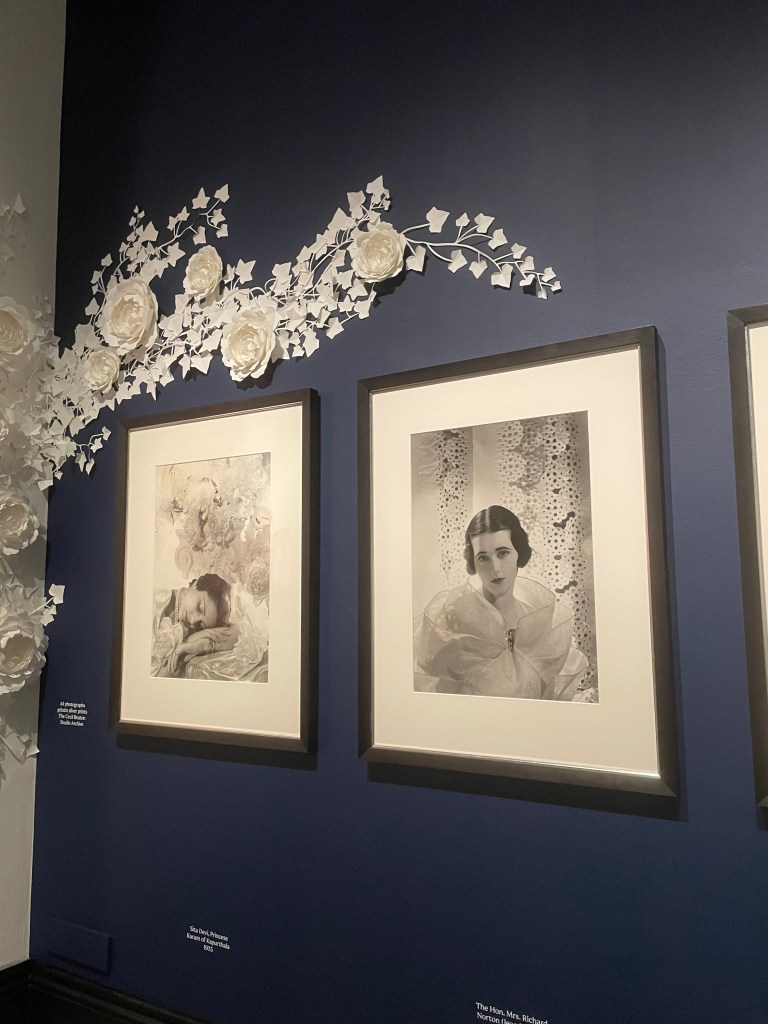
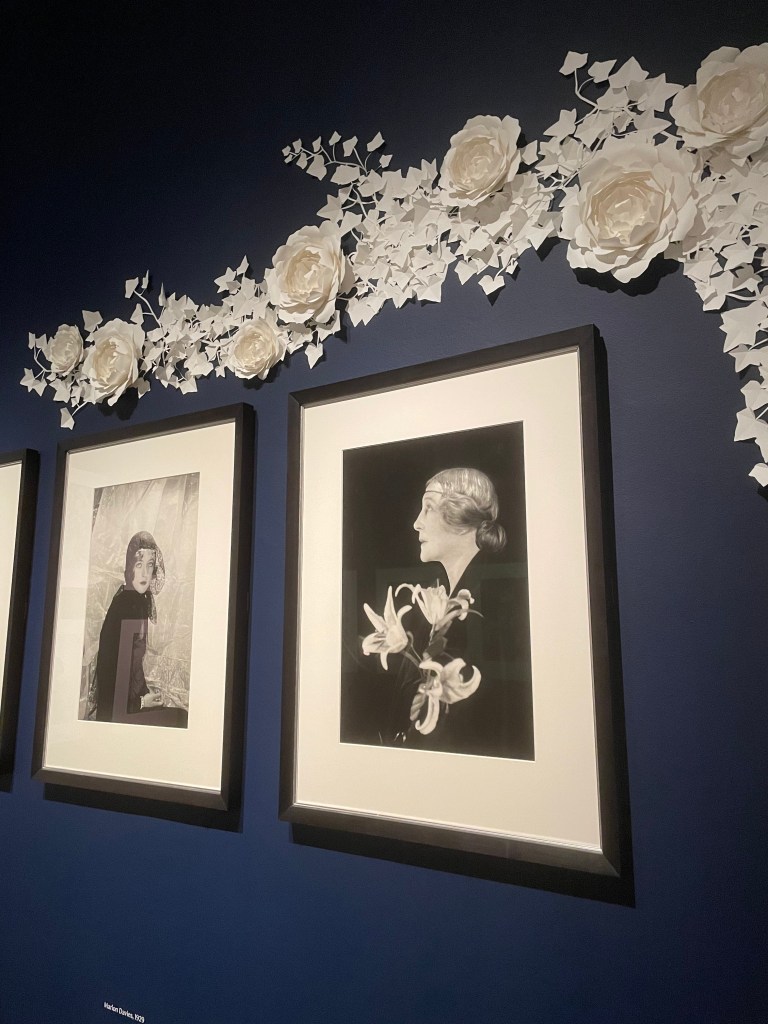
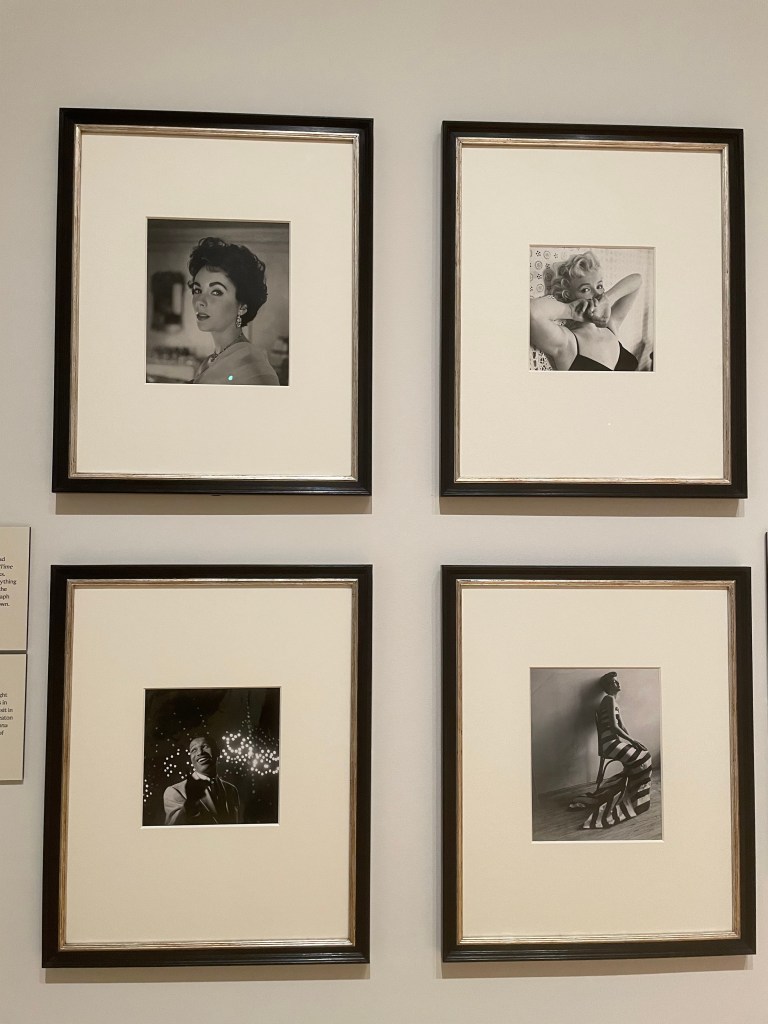
The show begins with Cecil Beaton’s gorgeous photographs of lovely society ladies and celebrities. Who wouldn’t want to have been photographed in a sumptuous gown, surrounded by flowers, frills and frou-frou? What a wonderful record of beautiful youth.

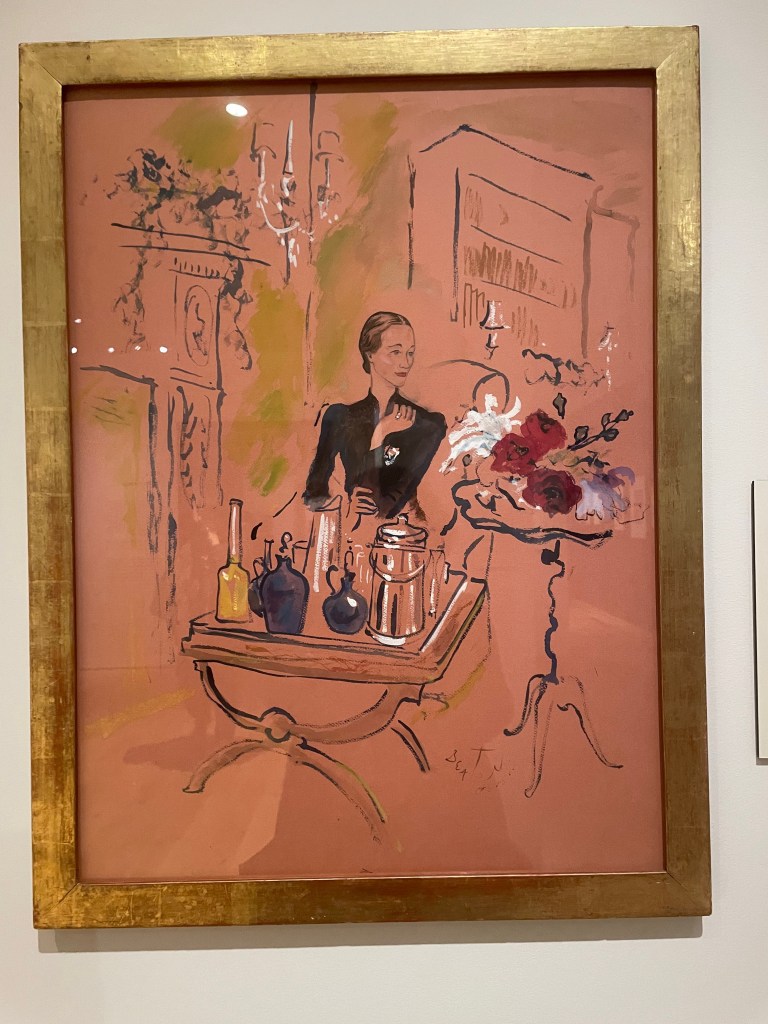
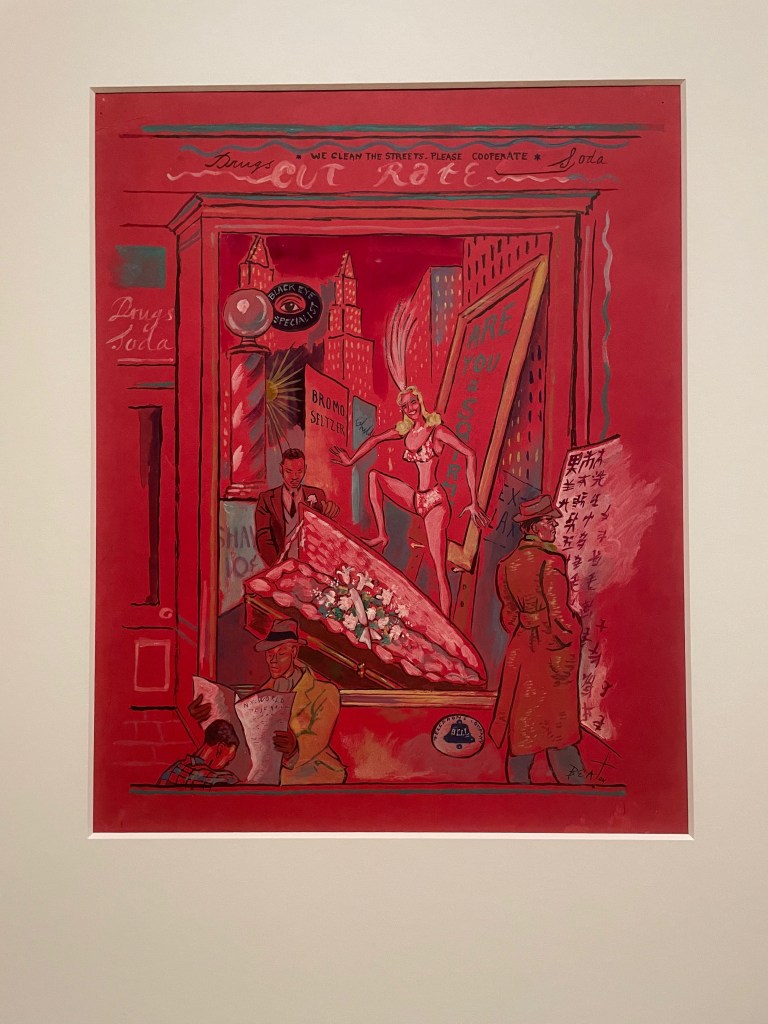
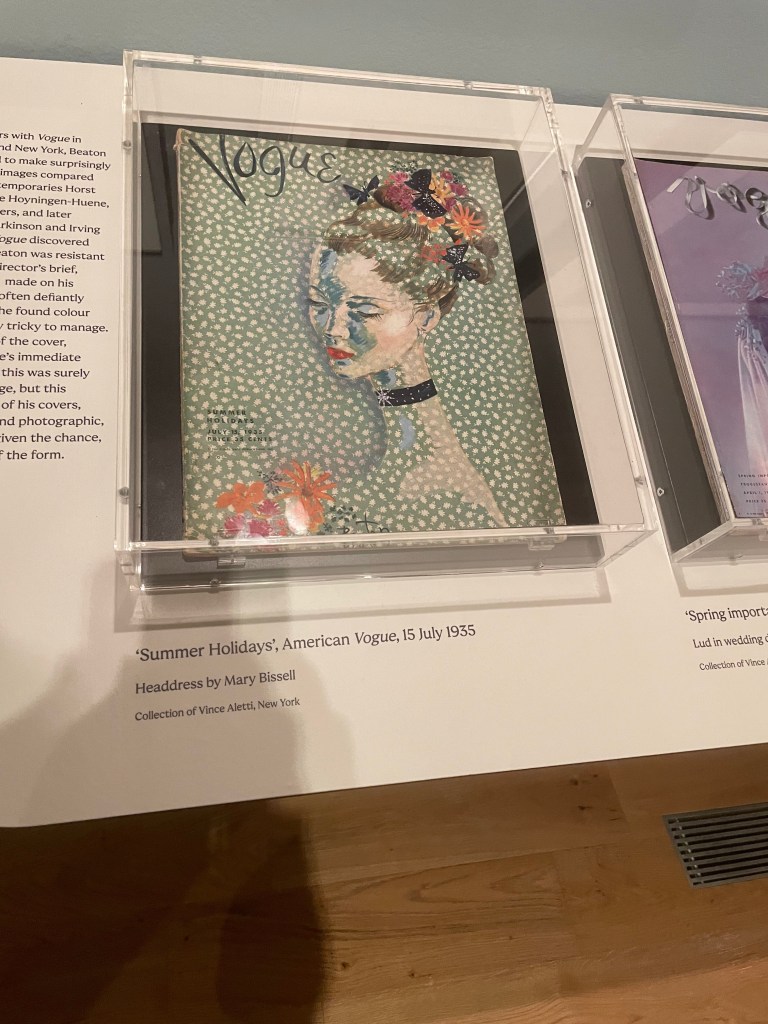
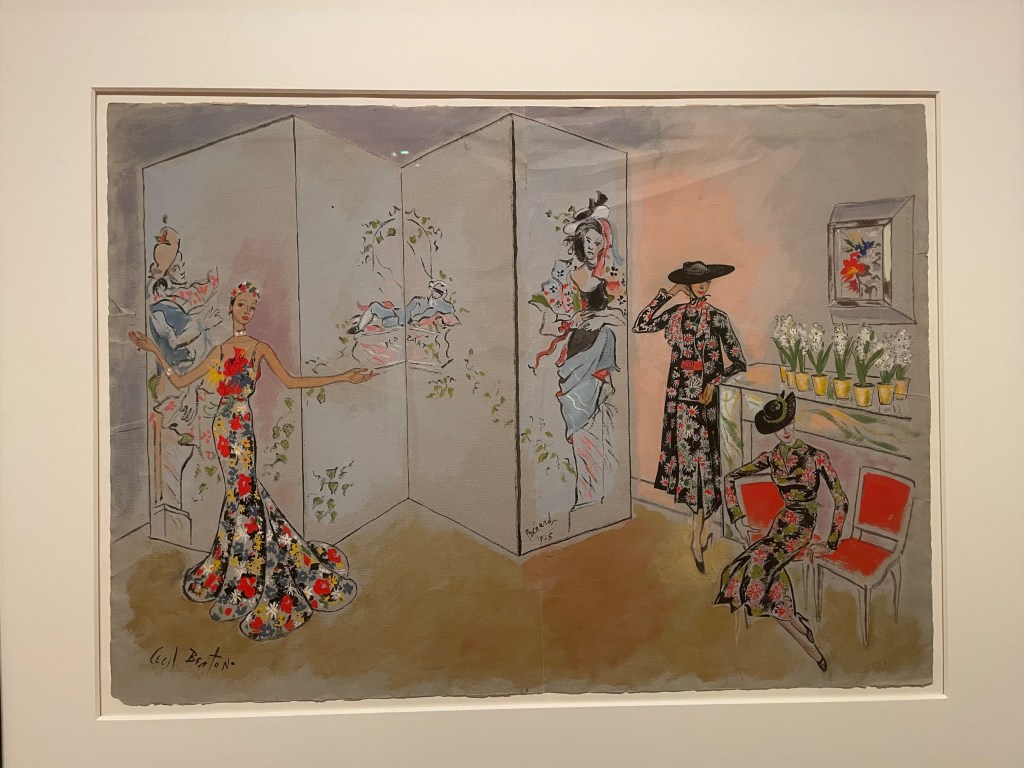
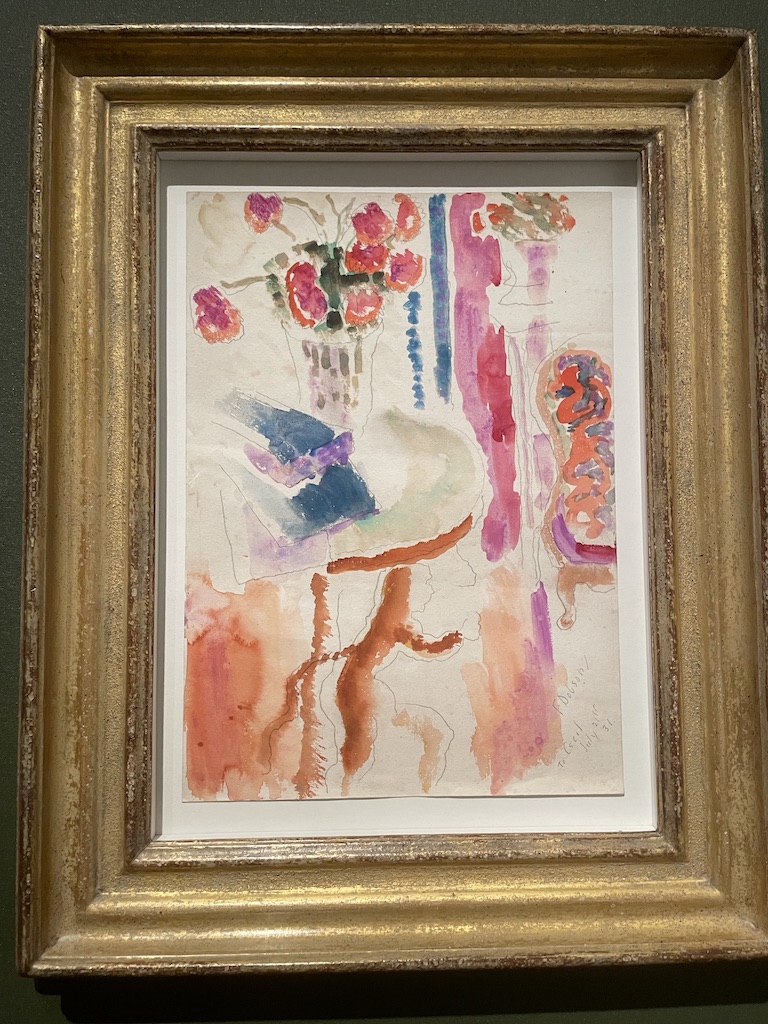
Cecil Beaton was far more than a photographer. He was an artist, designer and fashion designer. I rather liked the swift watercolour sketch he made for Vogue (on the left) of Wallis Simpson. He didn’t like her at first but was impressed by her transformation into ‘all that is elegant’. And on the right is his frontispiece to Cecil Beaton’s New York in 1938. He adored New York and he was a stalwart photographer and front cover designer for Vogue magazine.

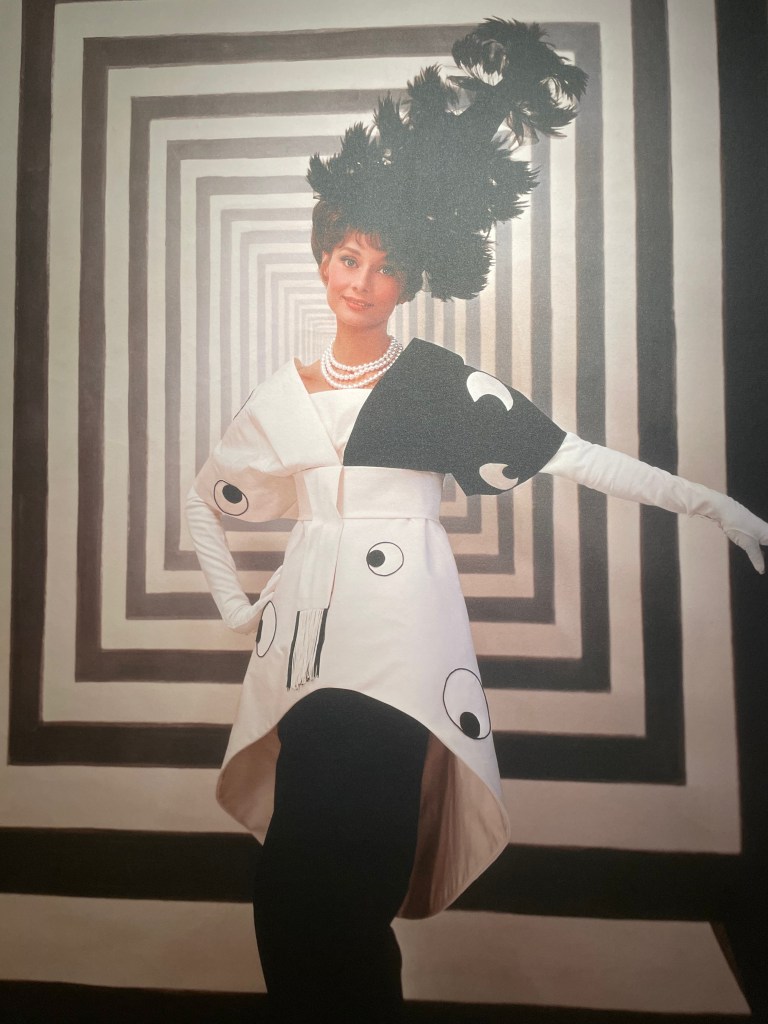
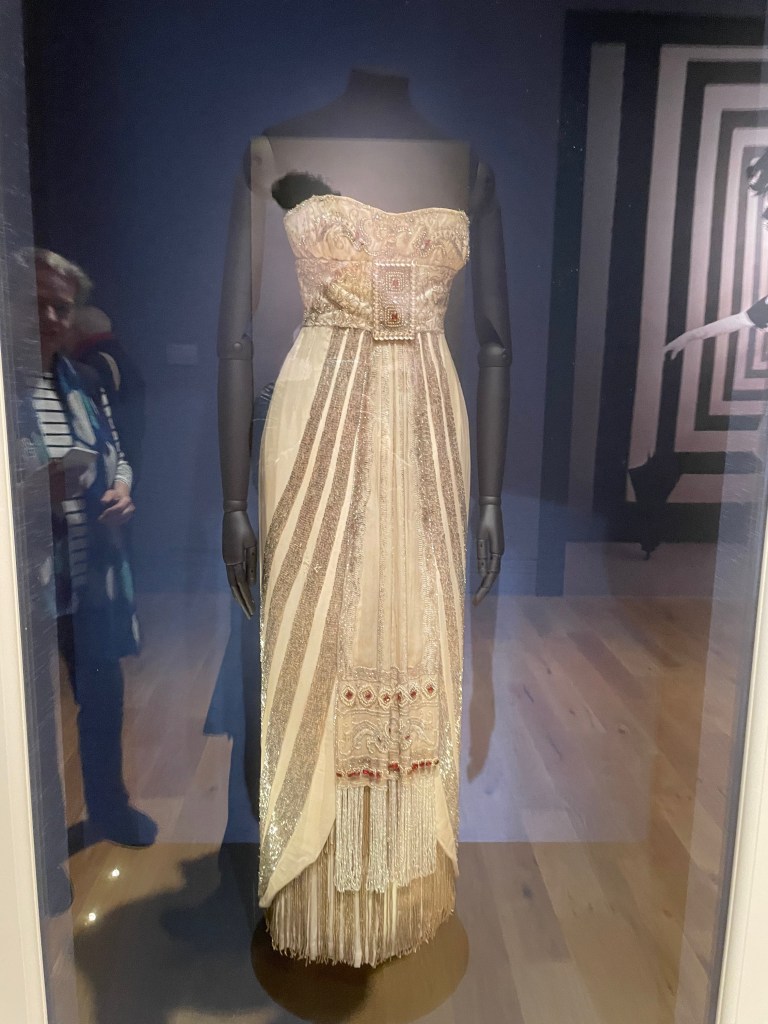
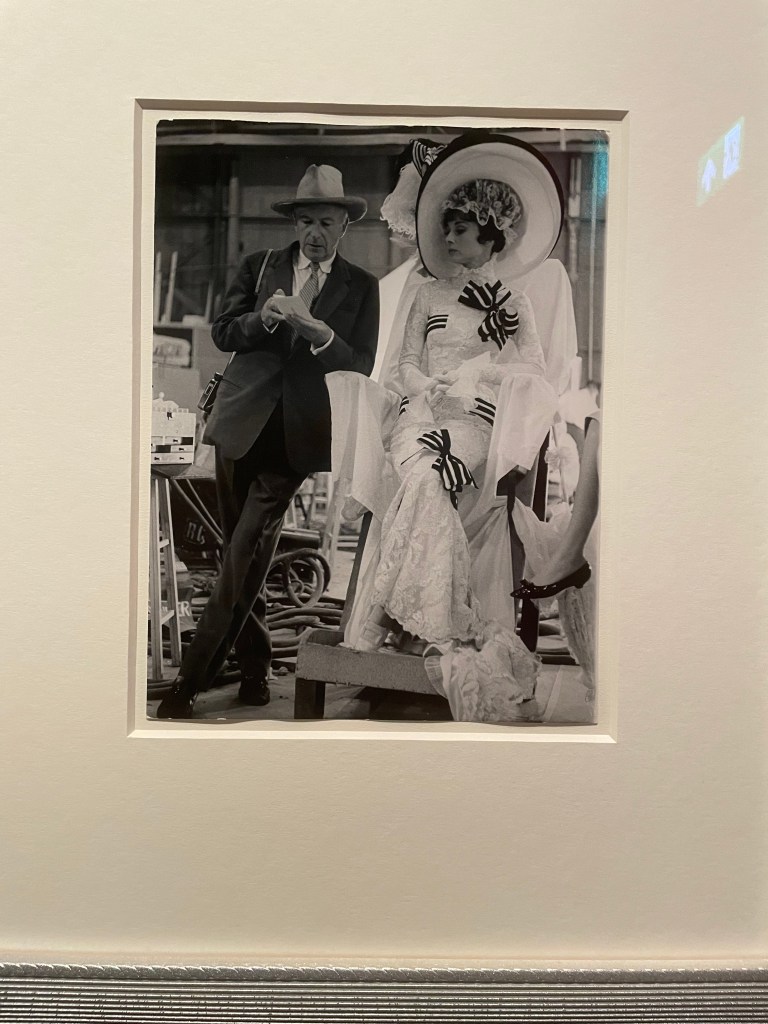
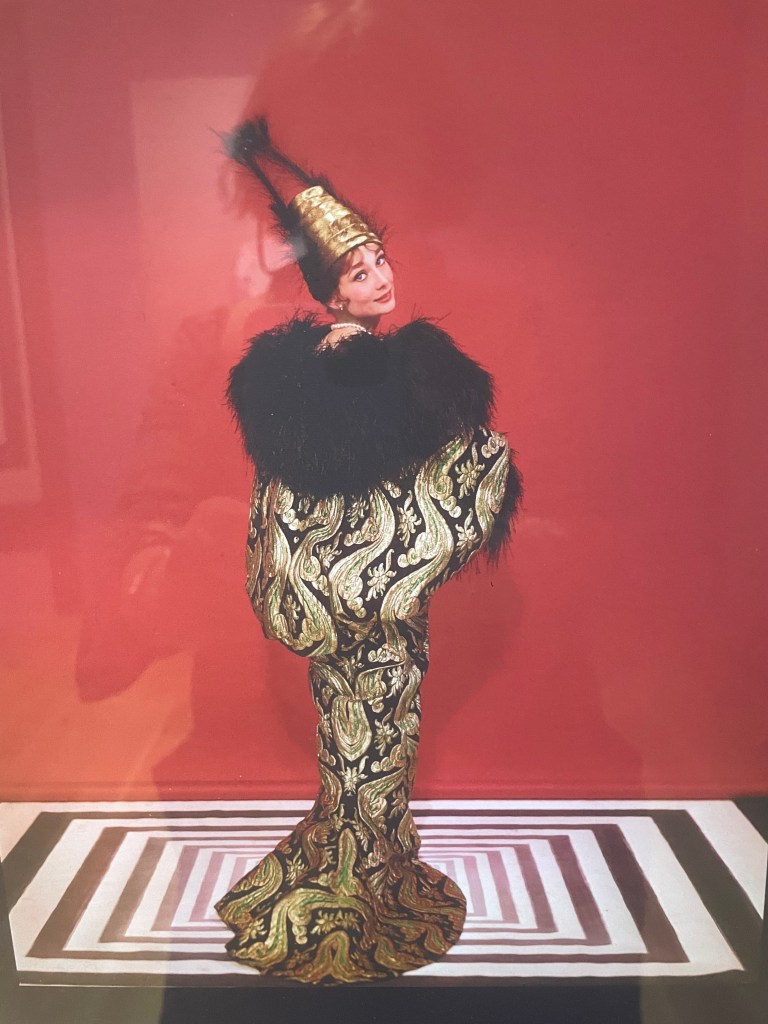
Of course the highlight of Cecil Beaton’s career was his work on the staged musical My Fair Lady. He created all the costumes and set designs for the theatre and, when the musical was filmed in Hollywood in the early 1960s, he won two Oscars for his work. The magnificent evening dress worn by Audrey Hepburn is on display.

And here he is in a photograph on the set of the film with Audrey Hepburn.

Well, this is a charming exhibition which transports you back to a world of late Edwardian opulence, manners and mores of ‘flapper days’ and the celebration of flattering fashion when women (more than men) could truly dress up for important events. Cecil Beaton’s naturally theatrical style fuelled ‘dressing up’ in its purest sense. What a fun time, and what a fun show.

It’s on at the National Portrait Gallery until 11th January 2026

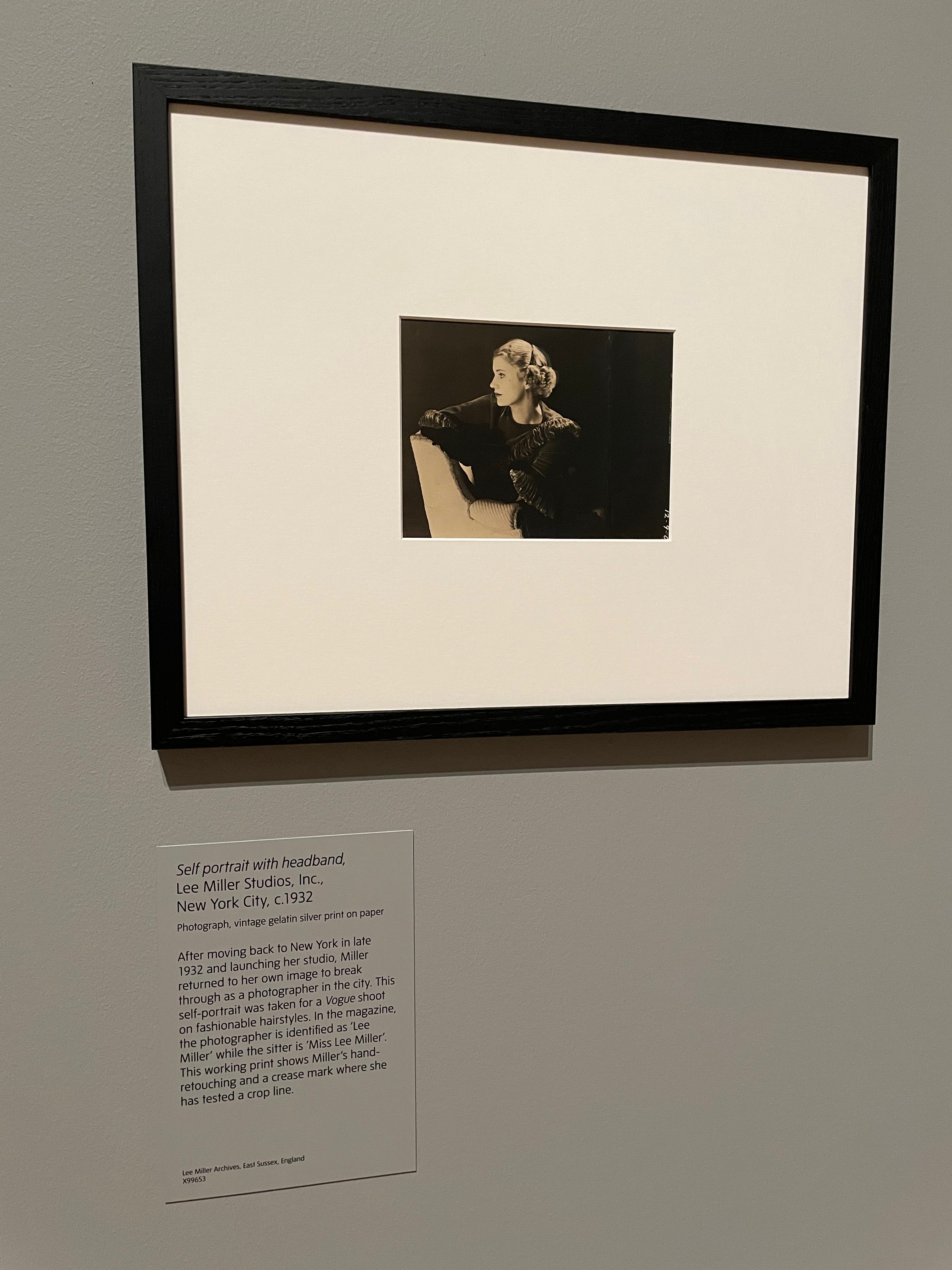
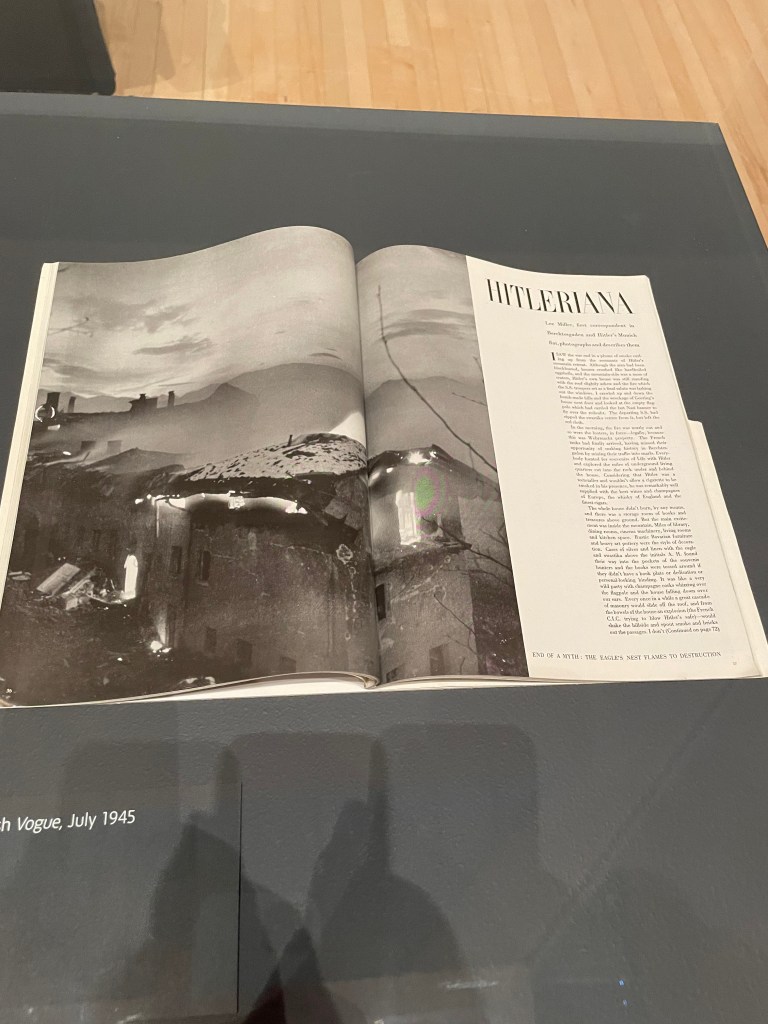
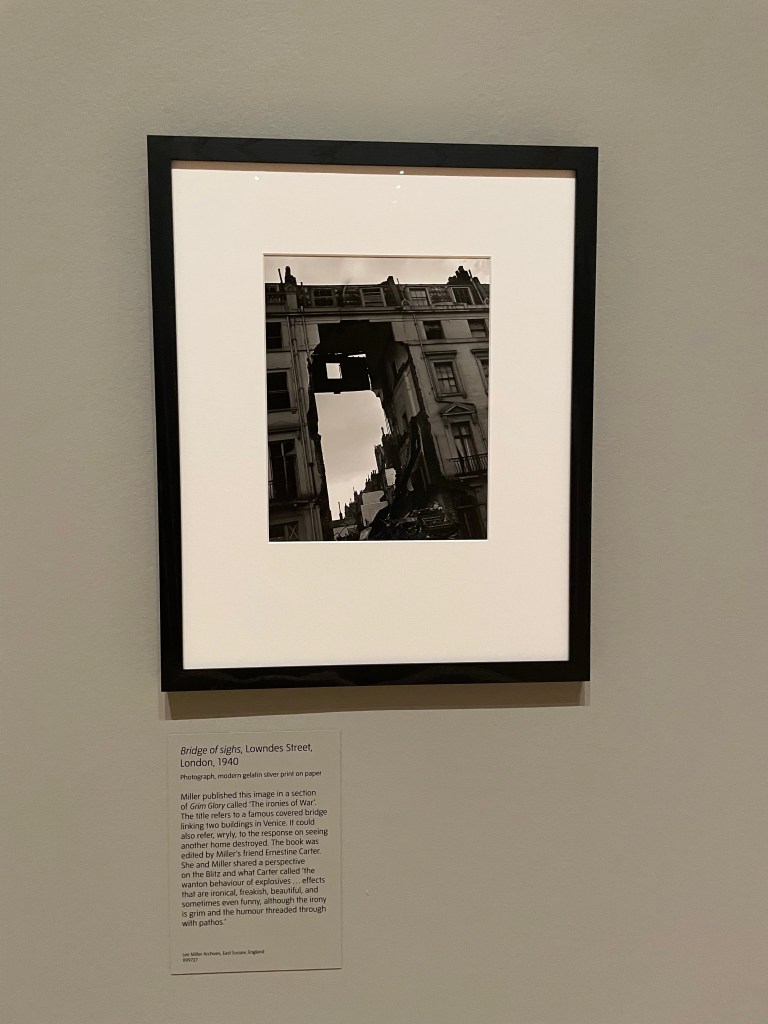
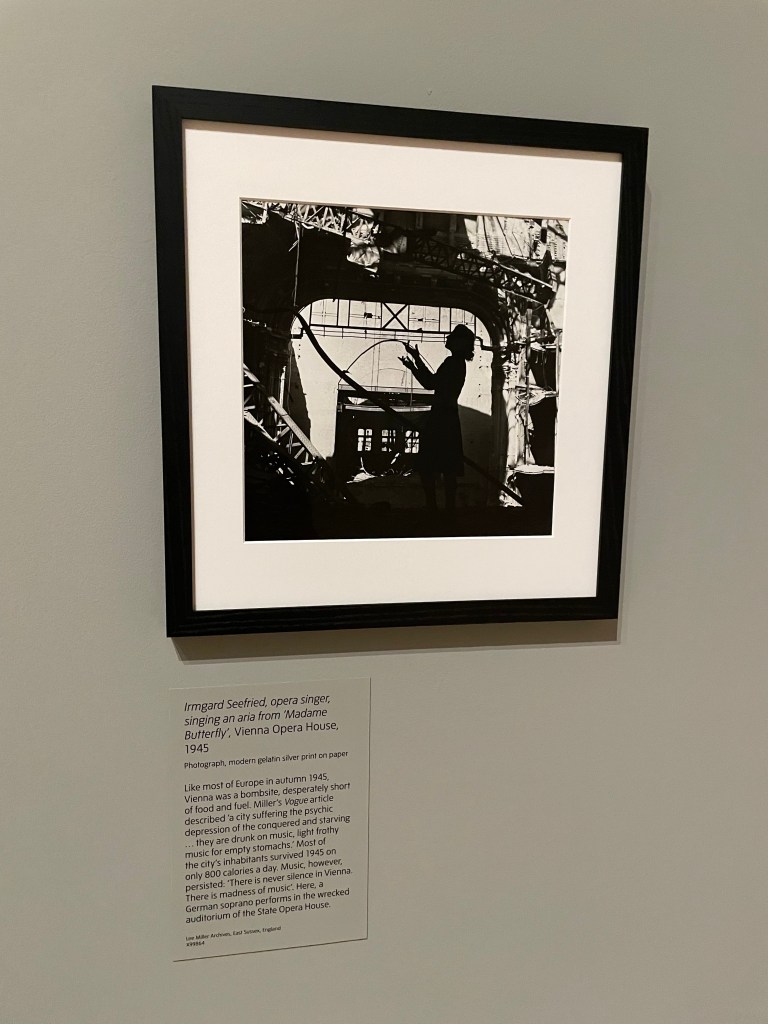
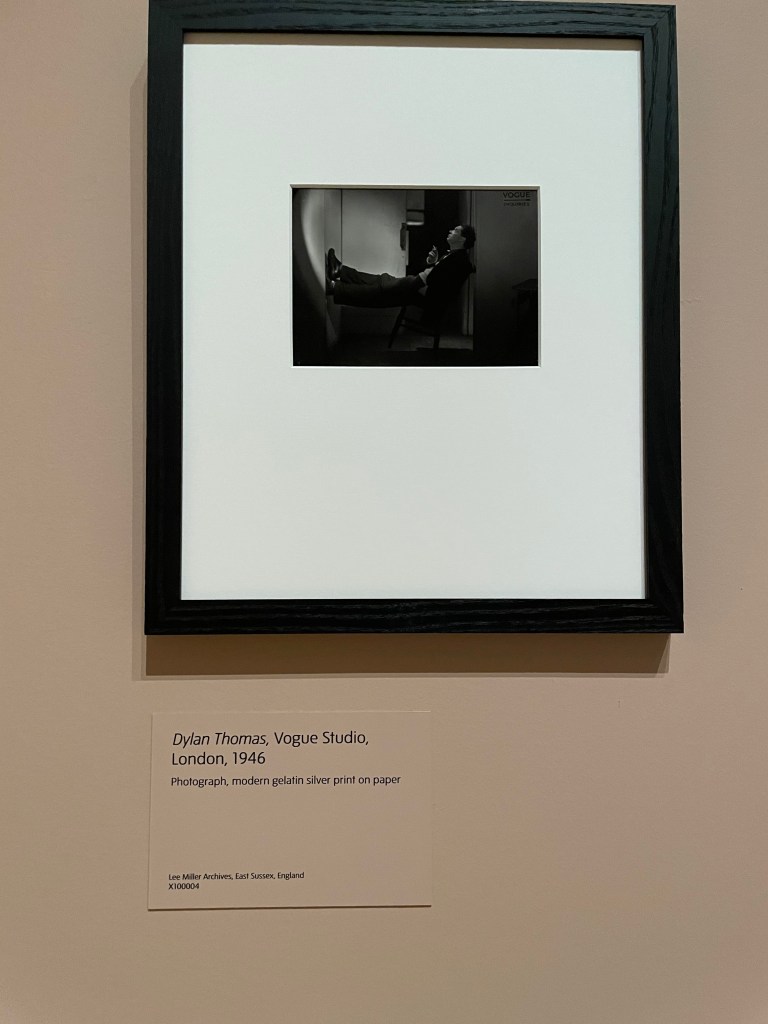
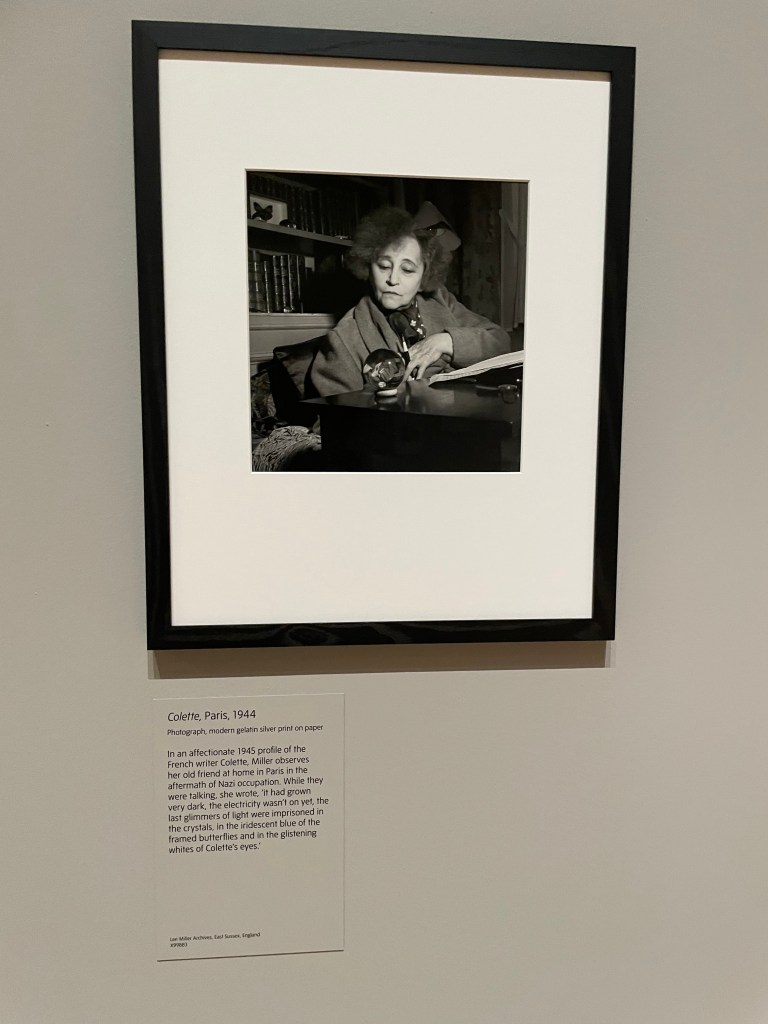
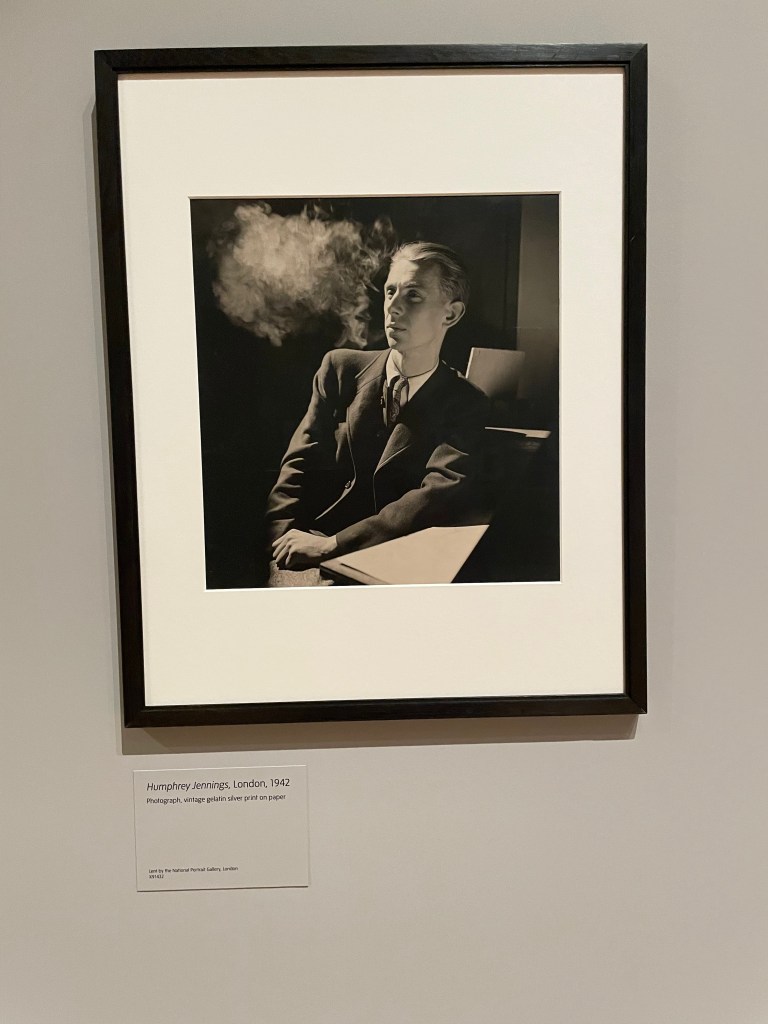
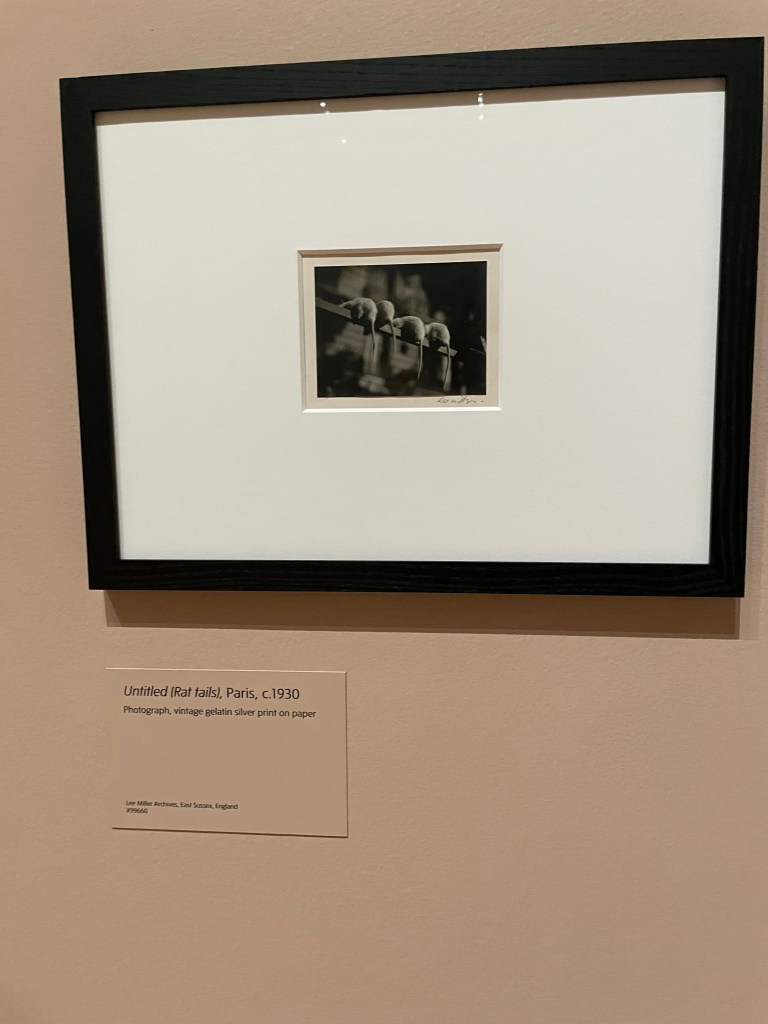
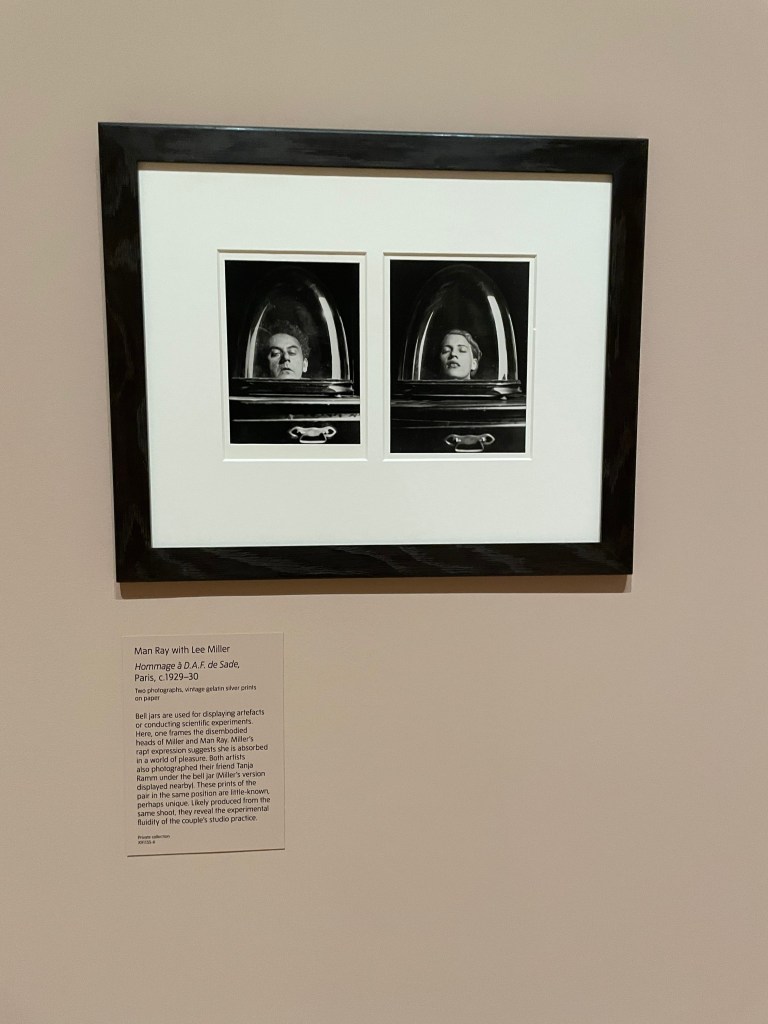
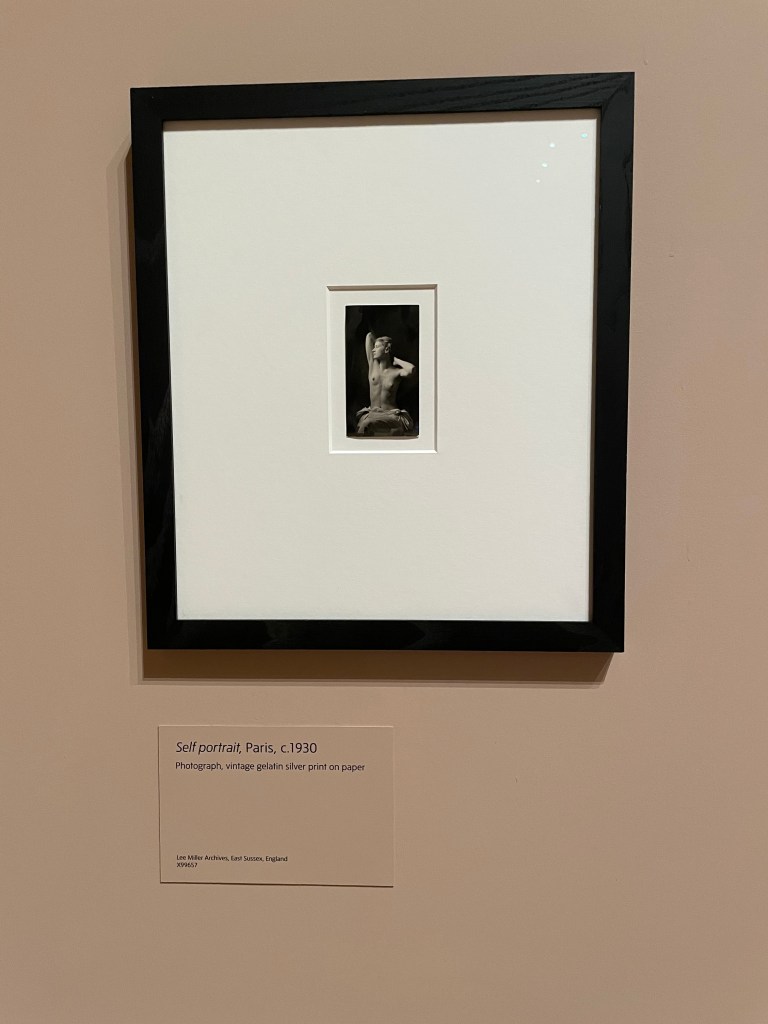
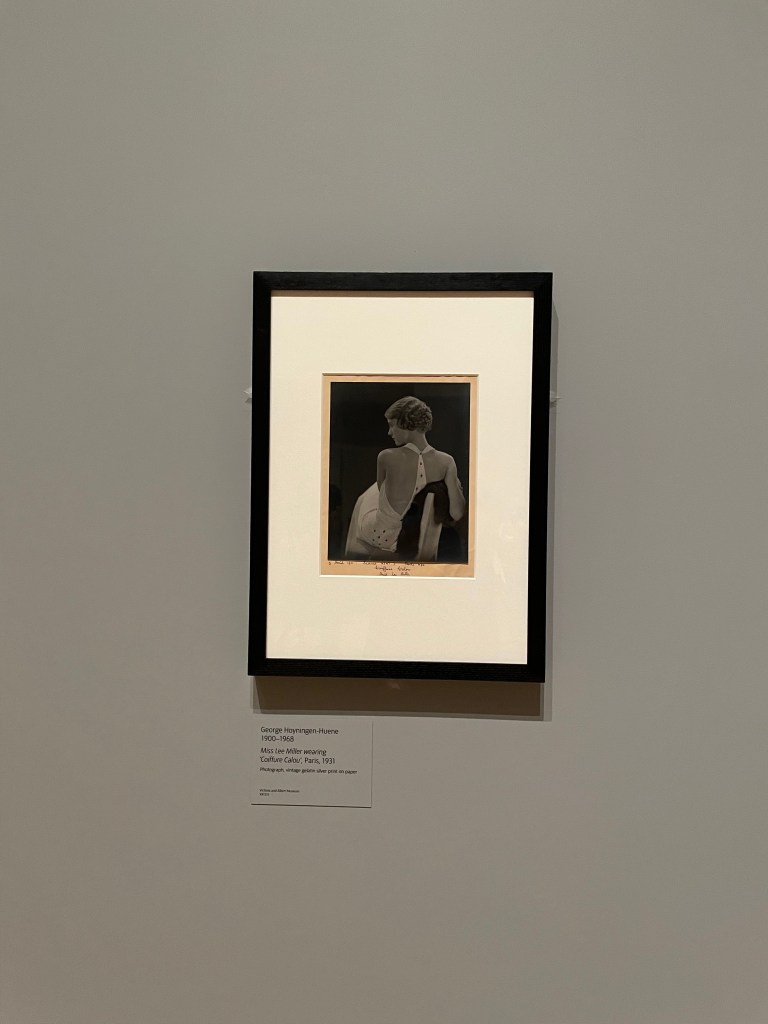
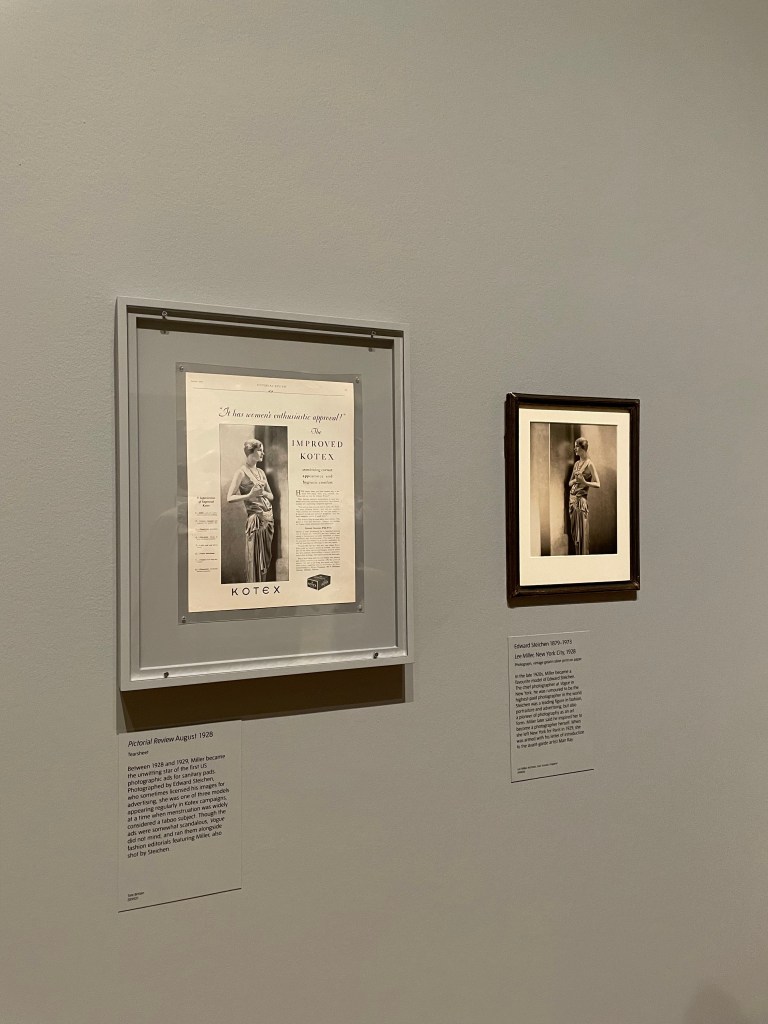
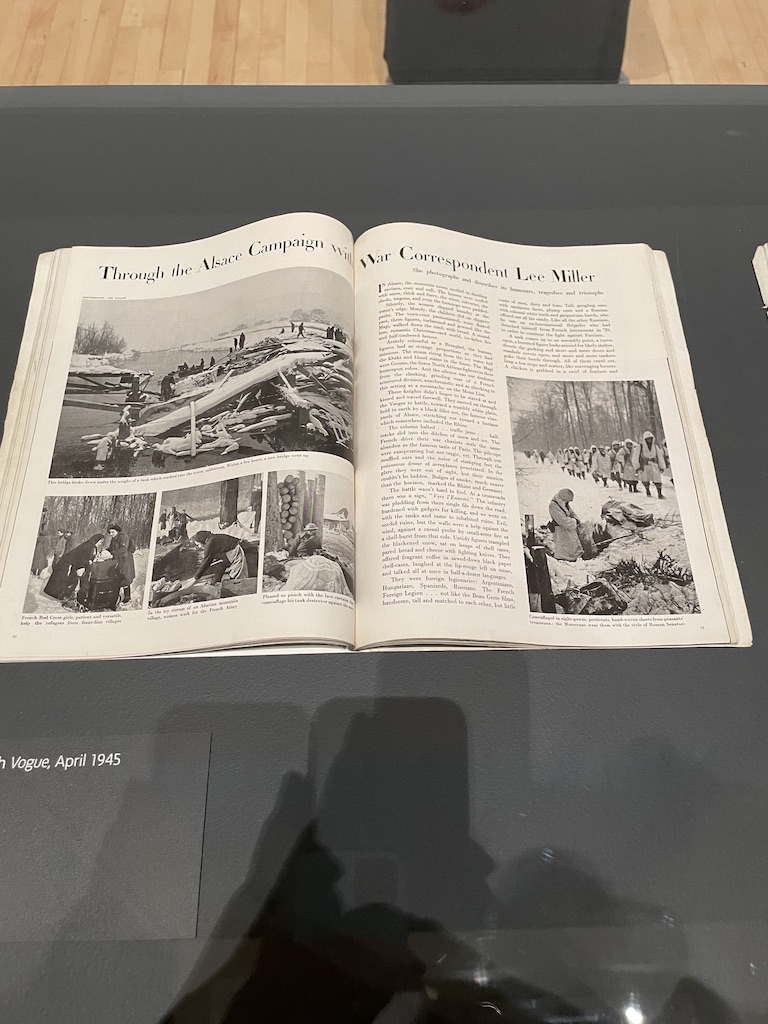
Throught the eyes of Lee Miller – a sensational new retrospective at Tate Britain displays this remarkable woman’s talents as a photographer and chronicler of her time.

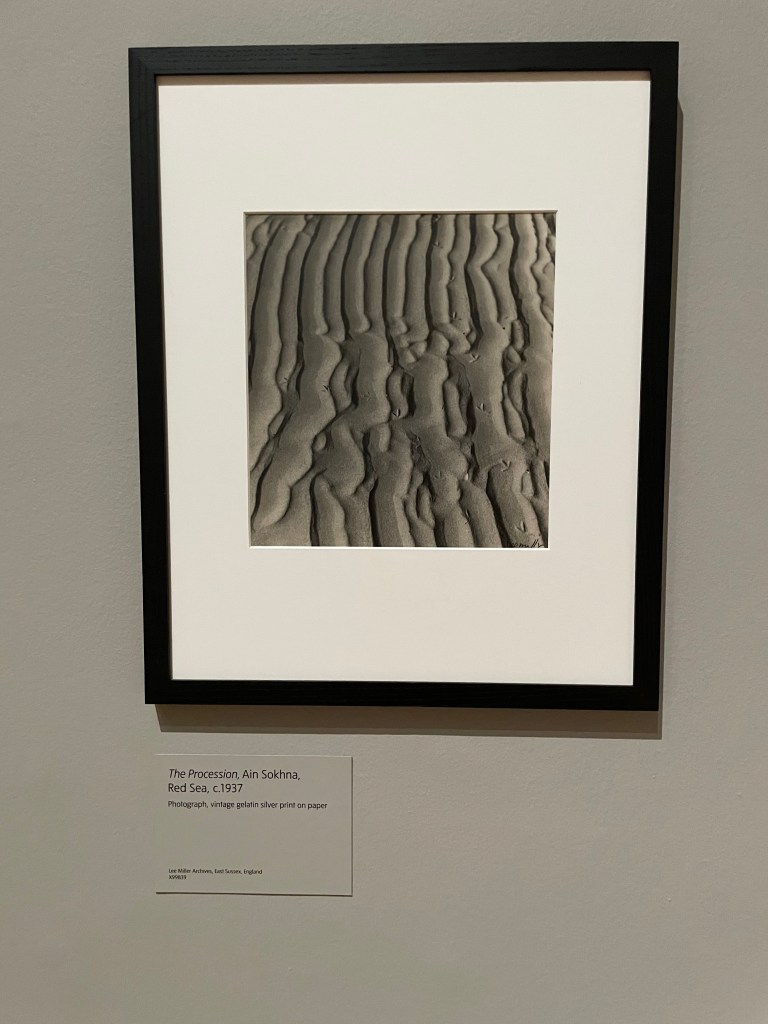
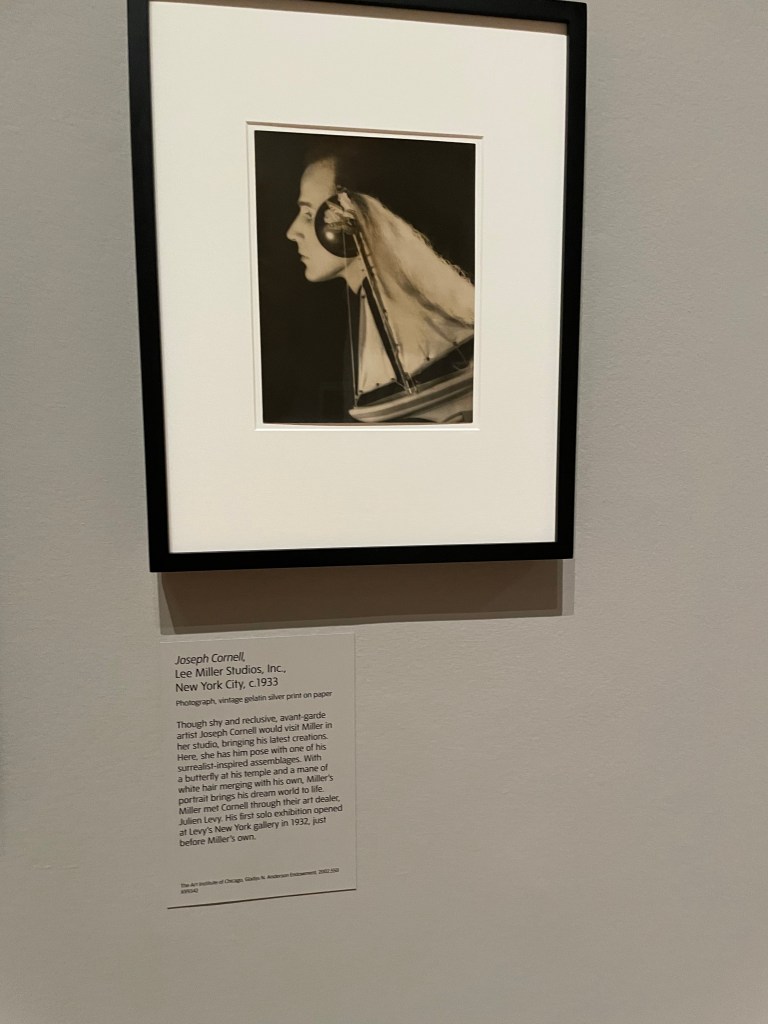
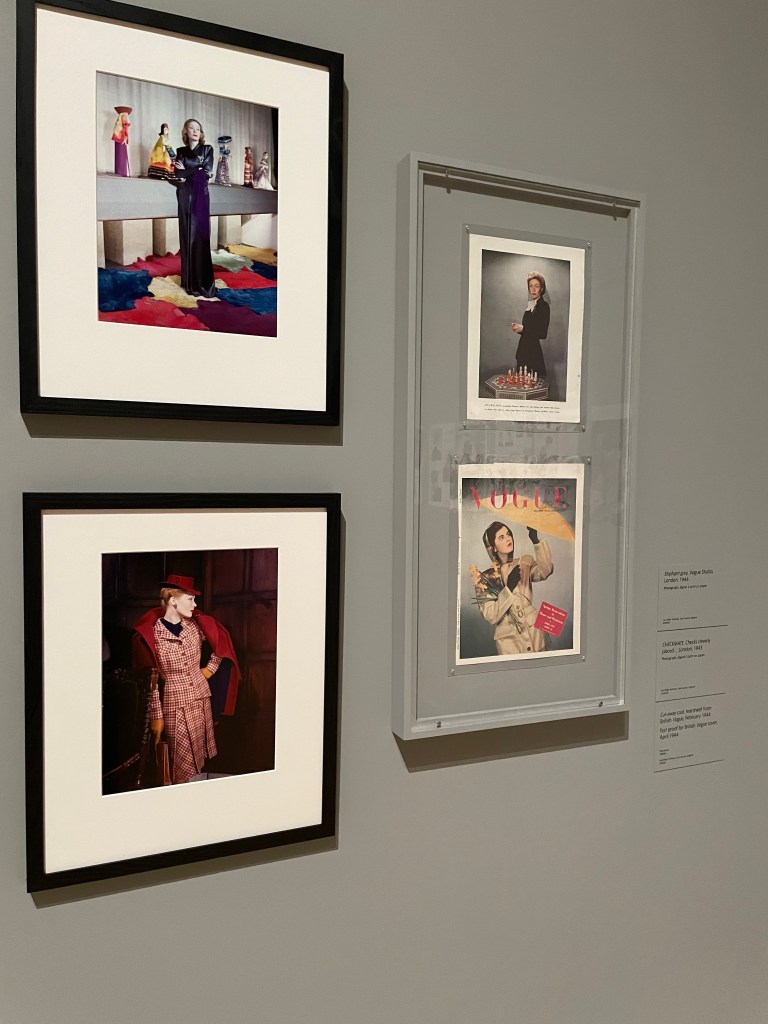
Lee Miller was a very beautiful woman. This sensational retrospective begins with images of her as a model in her early twenties and she is gloriously photogenic. But it didn’t take long for her to grow weary of being the focus of images and to start taking her own photographs.

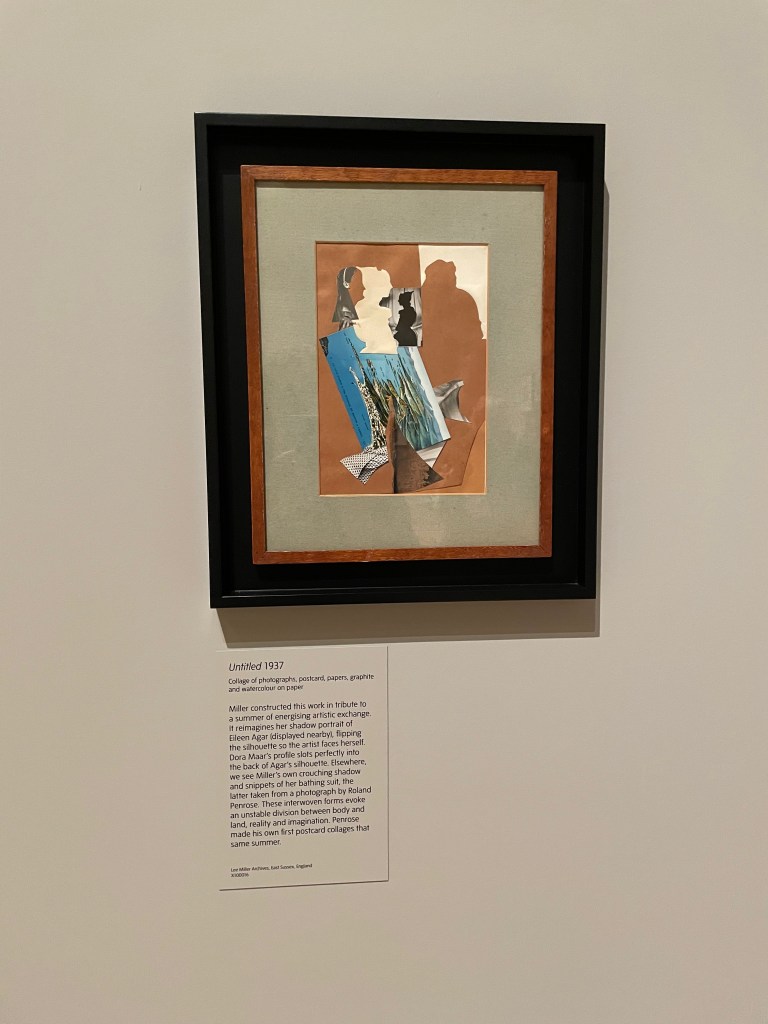
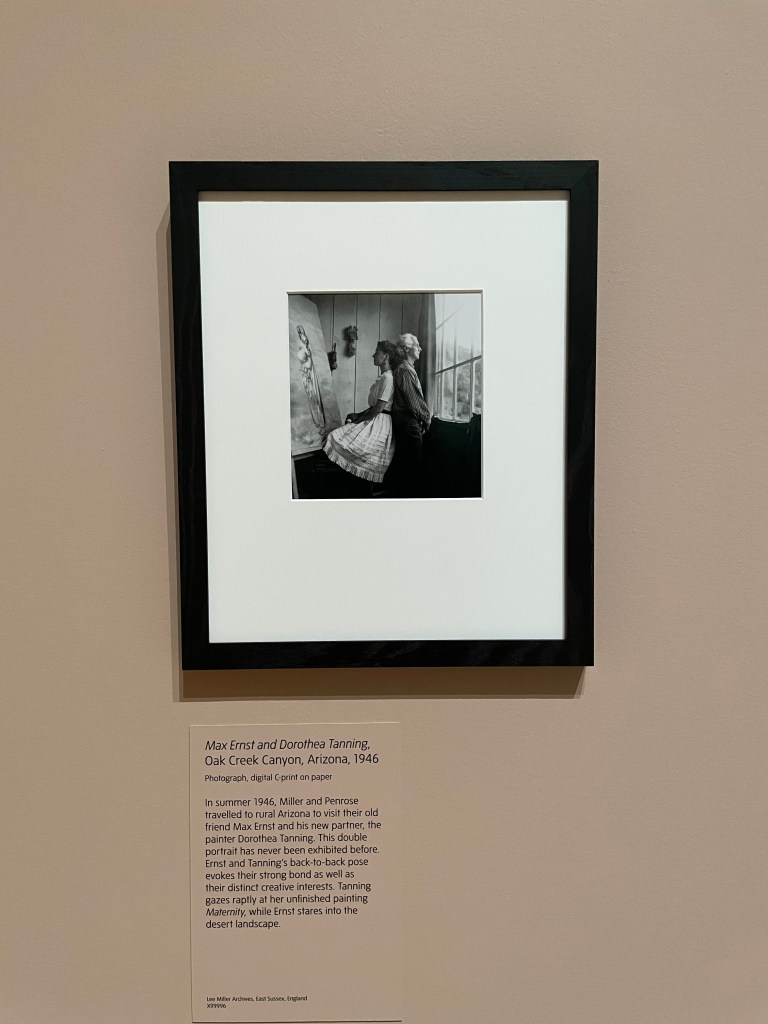
I’m always drawn to a collage, of course! And this work, centre, is fabulous mingling of cutout paper and photographs featuring the surrealist painter Eileen Agar. Lee Miller became friends with many of the surrealist painters, spending time with them in Paris and the South of France.

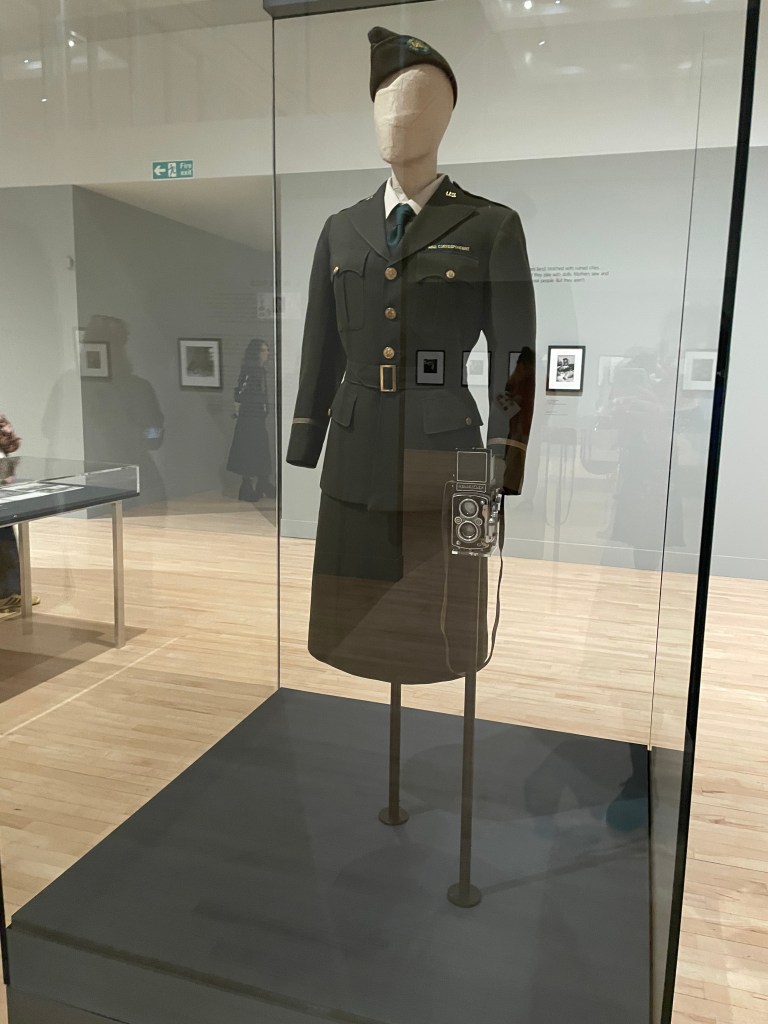
But it’s her work as a War Correspondent in Europe during the Second World War which is so very moving and affecting. She bravely picked her way through war-torn streets, capturing the images of displaced people, injured fighters, hungry children and ruined buildings. She sent her photographs back to Vogue magazine (for whom she worked) but they found many of her images too brutal to publish.

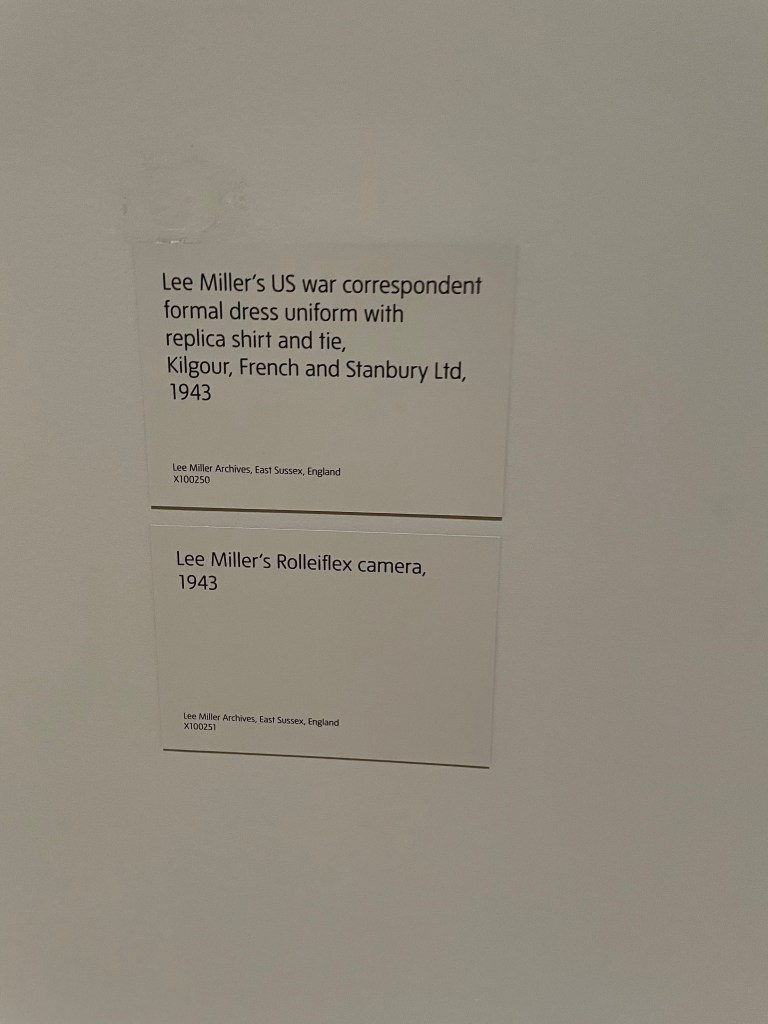
Here’s the uniform she wore and her camera.

The images we were not allowed to photograph at the press preview include the famous shot of Lee Miller in Hitler’s bath in his former apartment in Munich. With her associate, David E. Sherman, they entered his private bathroom after taking pictures of the horrors of Dachau.

So many of the photographs emit a palpable atmosphere which speaks of the time the pictures were taken but also convey Lee Miller’s barely-bottled anger at the places she was seeing, the people she met and the dreadful cruelty that had been inflicted on victims from the concentration camps.

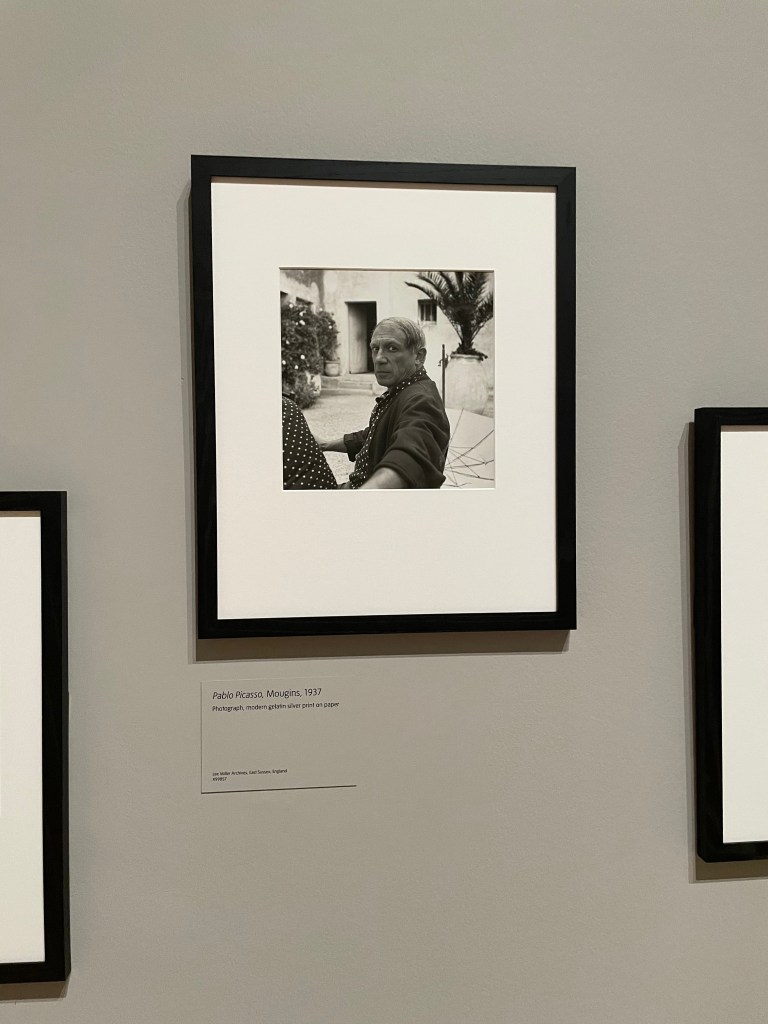
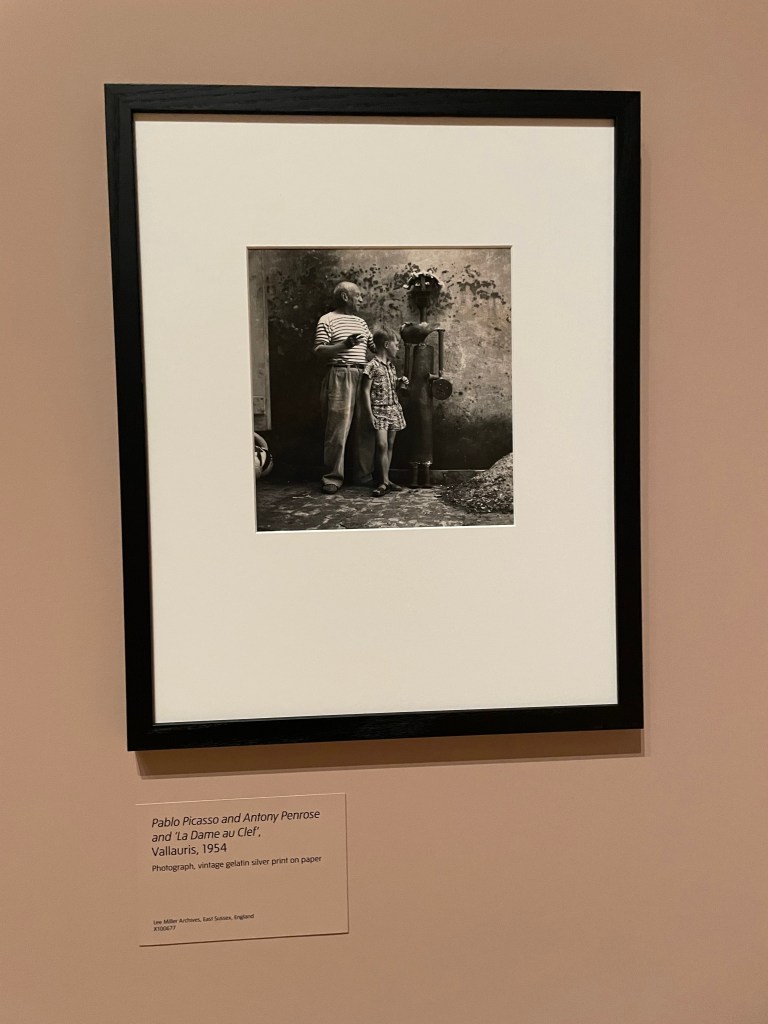
Above is a photograph of Lee Miller’s son, Antony Penrose and Pablo Picasso. Antony knew very little of his mother’s extraordinary past. After her death he uncovered huge boxes of photographs stuffed into the attic of the family home at Farley Farm in Sussex. It is this astonishing archive we are able to see at the exhibition.

The show is on at Tate Britain until 15th February 2026.
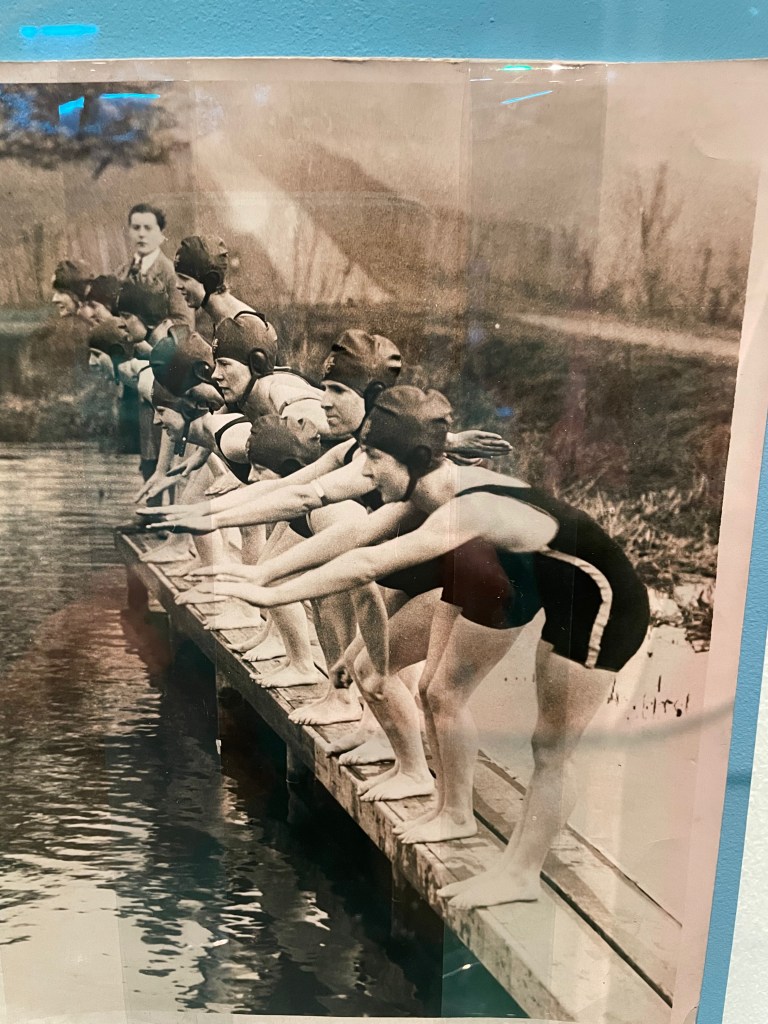
Splash! A century of swimming and style. This exhibition at the Design Museum is a celebration of fashion, technology and politics of water, swimming and messing around in ponds, rivers, pools and the sea.
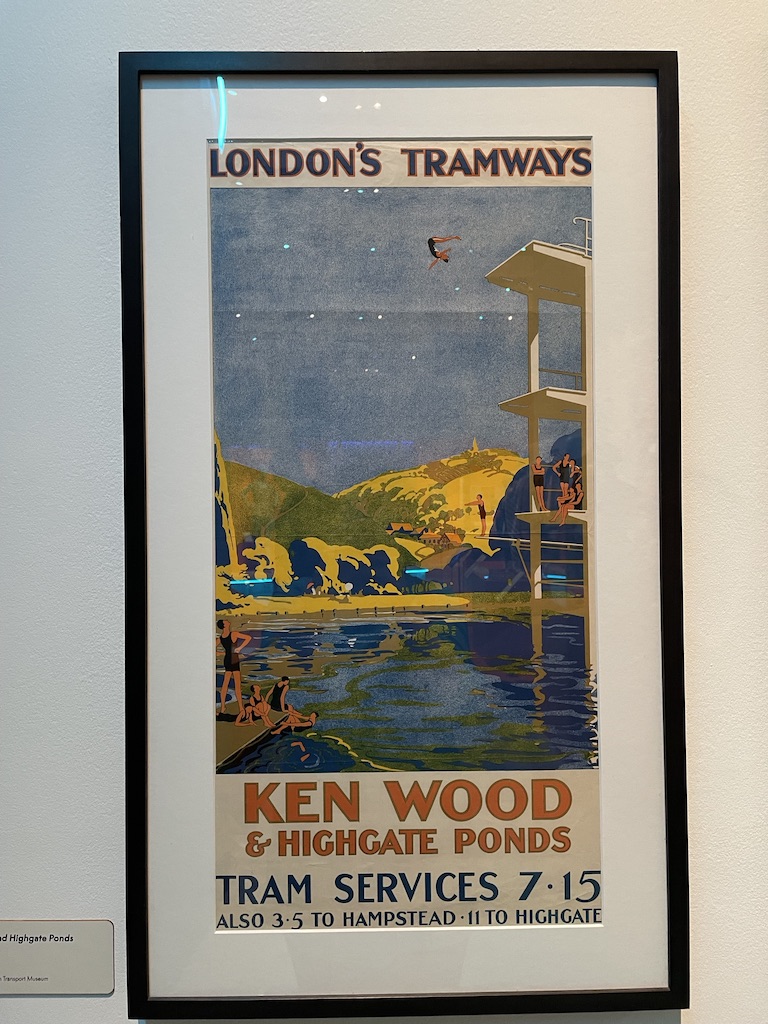
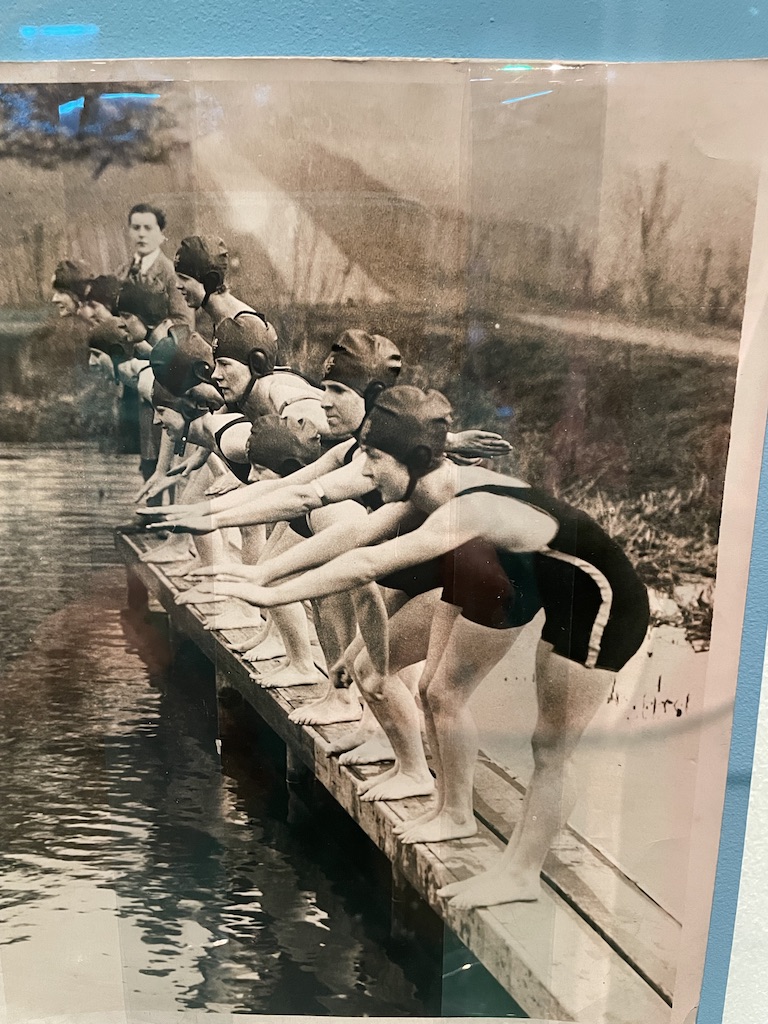
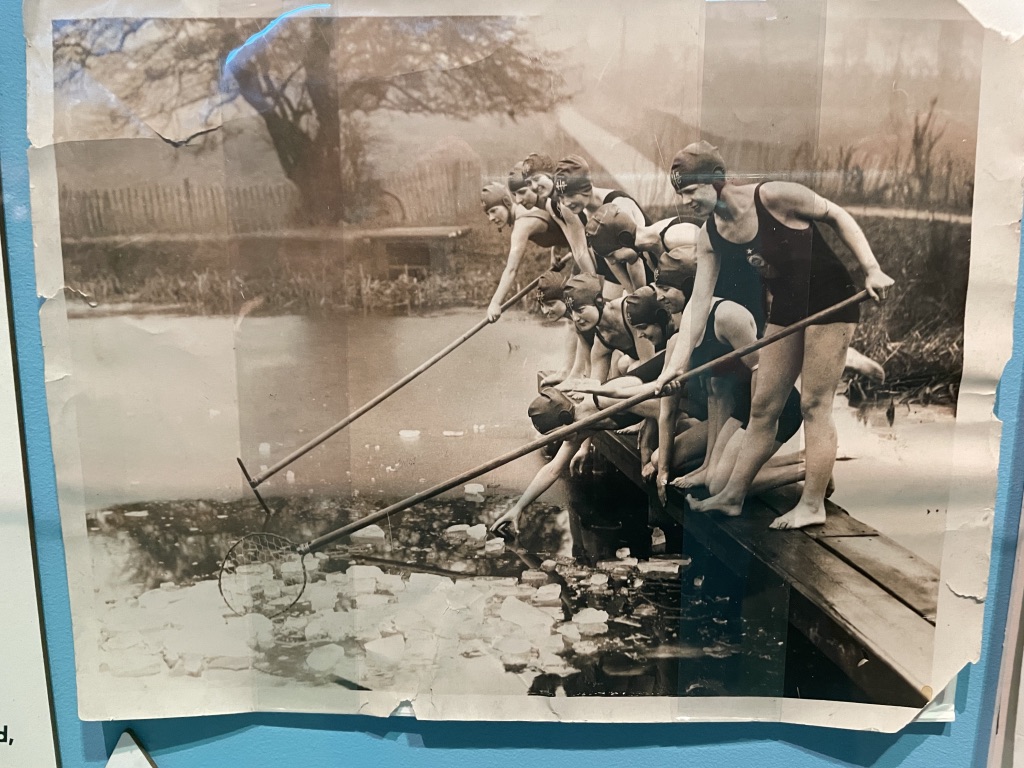
As a keen ‘pond dipper’ I was intrigued by this show and very pleased to see a reference to the Women’s Pond at Kenwood, a place I find very addictive during the summer months, but only once the water has inched its way towards at least 15 degrees and even better when it reaches a balmy 20 degrees. The poster showing Ken Wood suggests the pond nestles beneath high mountains. Hampstead Heath is not that high but I did like romance of the image.

There are a great many swimming costumes on show. I remember my mother describing the indignity of wearing a woollen swimsuit when she was a child in the 1930s. The thing just spread out in the water before slapping back against her body, dragging down to her knees when she emerged from the water covered in embarassment.

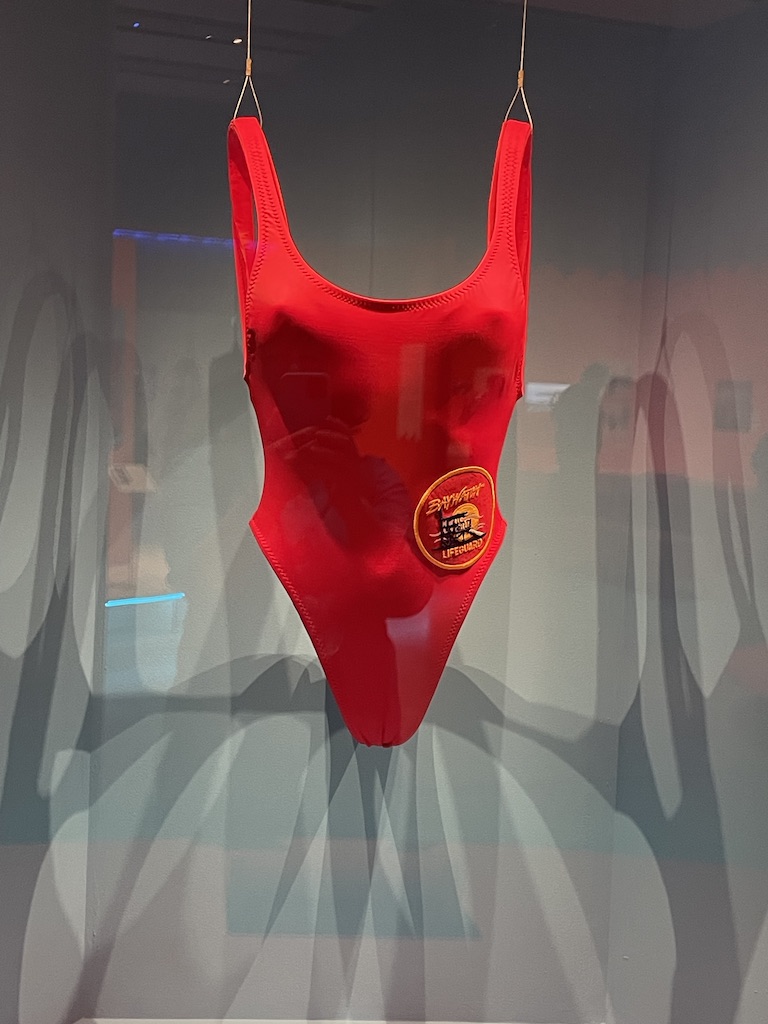
But what I’d really hoped to see was the type of swimming costume I wore as a child – blue nylon, ruched by criss-crossed elastic. I have such a strong memory of my swimsuit and the way the little triangles of fabric would fill with water, swell and then gradually empty on emerging from water. Alas, this curious garment was not represented. Instead the star of the show was the red swimsuit worn by Pamela Anderson in Baywatch.

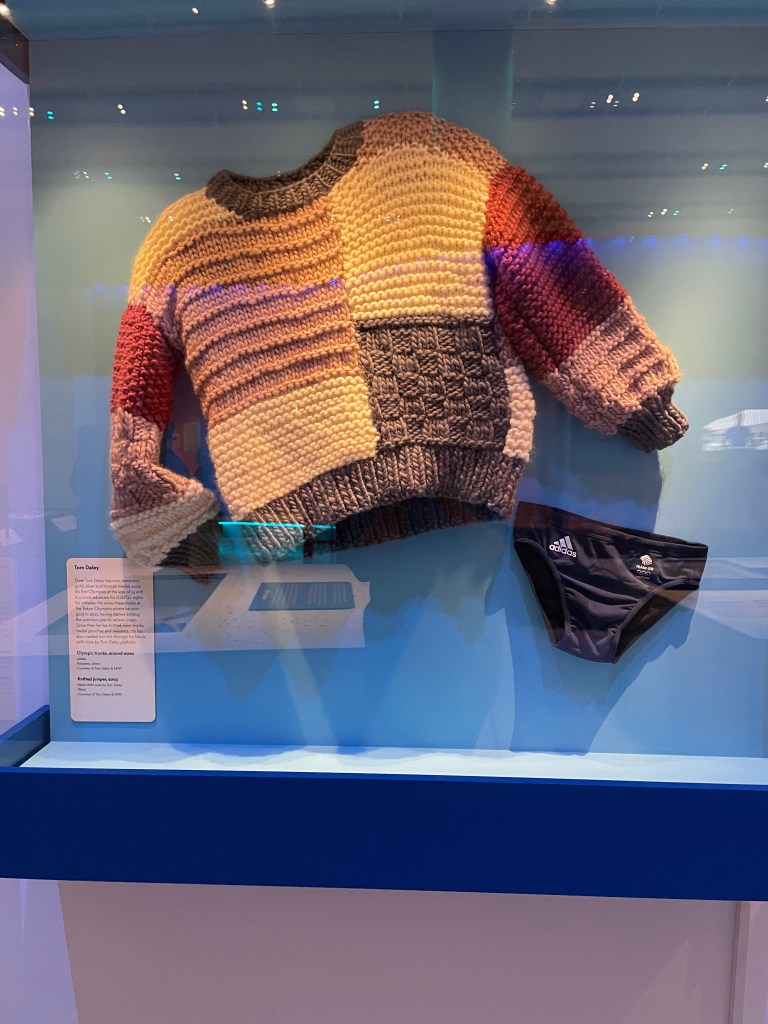
Fun to see the Gold Medal winning diver, Tom Daely’s scanty trunks and also the chunky sweater he knitted to occupy himself waiting for his moment at the Olympics.

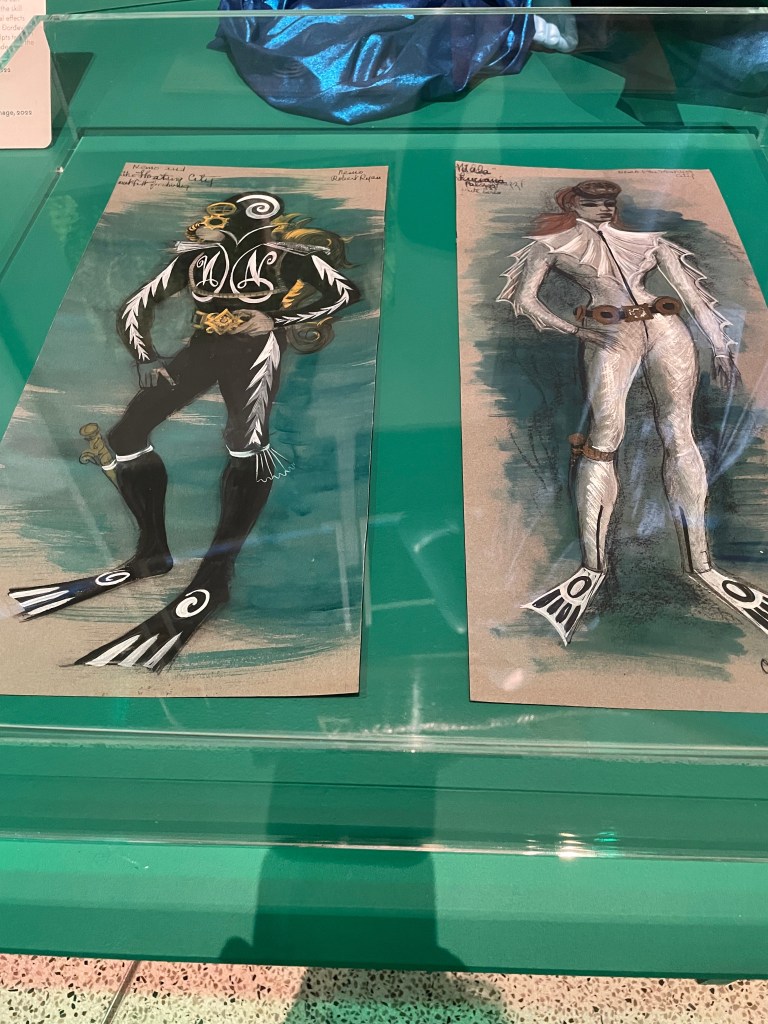
Good to see the costume designs for Captain Nemo and the Underwater City. They wouldn’t look out of place in a ballet.

My takeaway from the exhibition was that something had been missed. Because it was so much about the design of objects used in or near water we didn’t get a feel for the spiritual nature of water and the very human, primal desire to be close to the sea, rivers, ponds or expanses of water. We both fear and revere water. There’s a desire to be near it but not for it to come too close, univited and offend us by flooding our homes or disturbing our travel with dangerous high tides or inundated roads. Perhaps that’s something for a different show.

Splash! is on at the Design Museum until 17th August.

Love for the elderly, sensitive family situations and tender images of relationships dominate this year’s selection of Taylor Wessing photo portraits on show at the National Portrait, and I approve the choice of prize winners for 2024.

Above is Celia and Shay, a very tender photograph taken by Megan Taylor which I found enchanting.

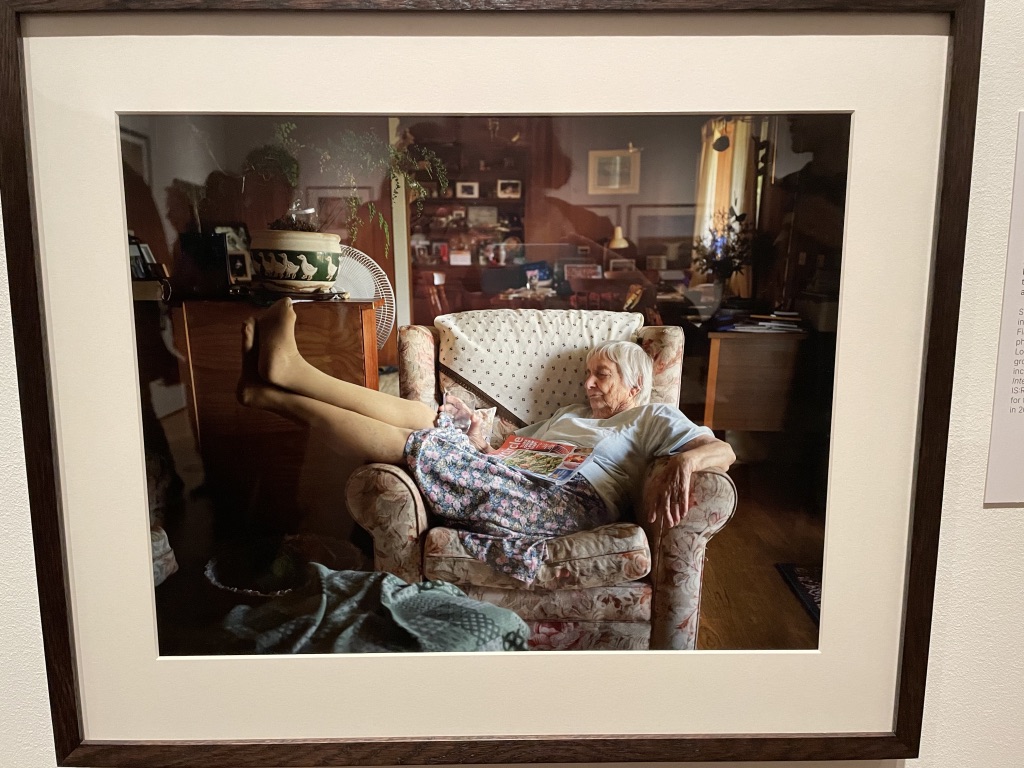
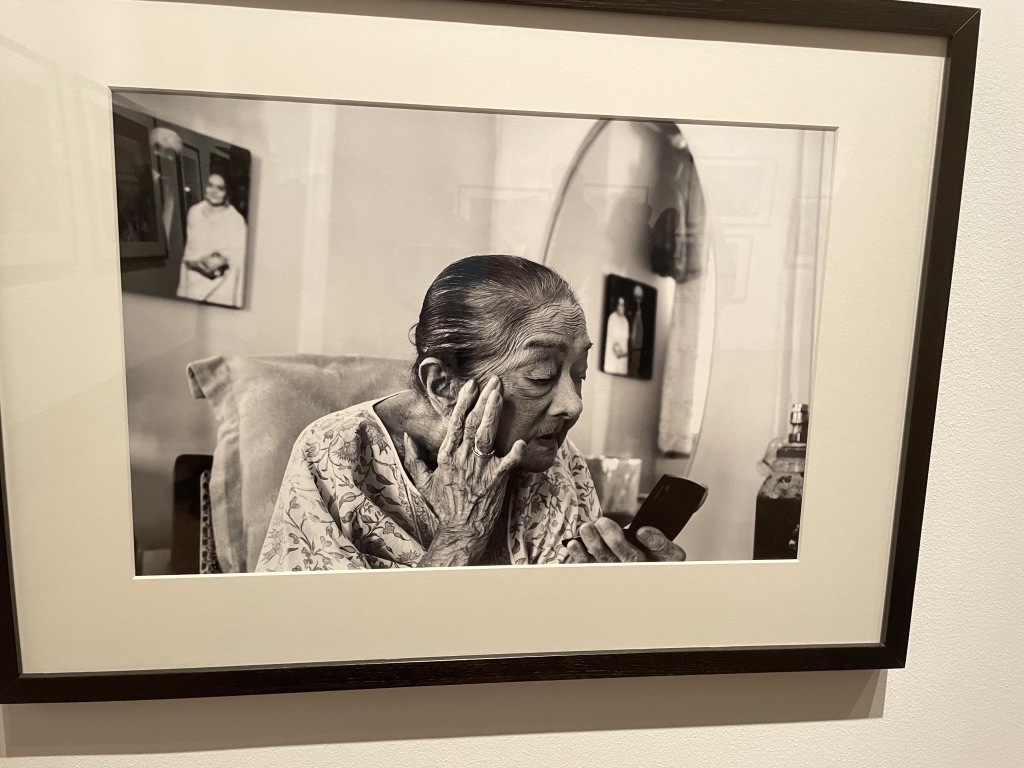
There was a great emphasis on images of much-loved elderly relatives in this year’s collection. These two caught my eye. On the left is Ageing Gracefully by Madeleine Waller of her mother at home in Australia. On the right is Inderjit Kaur by Jasmeen Patheja of her grandmother.

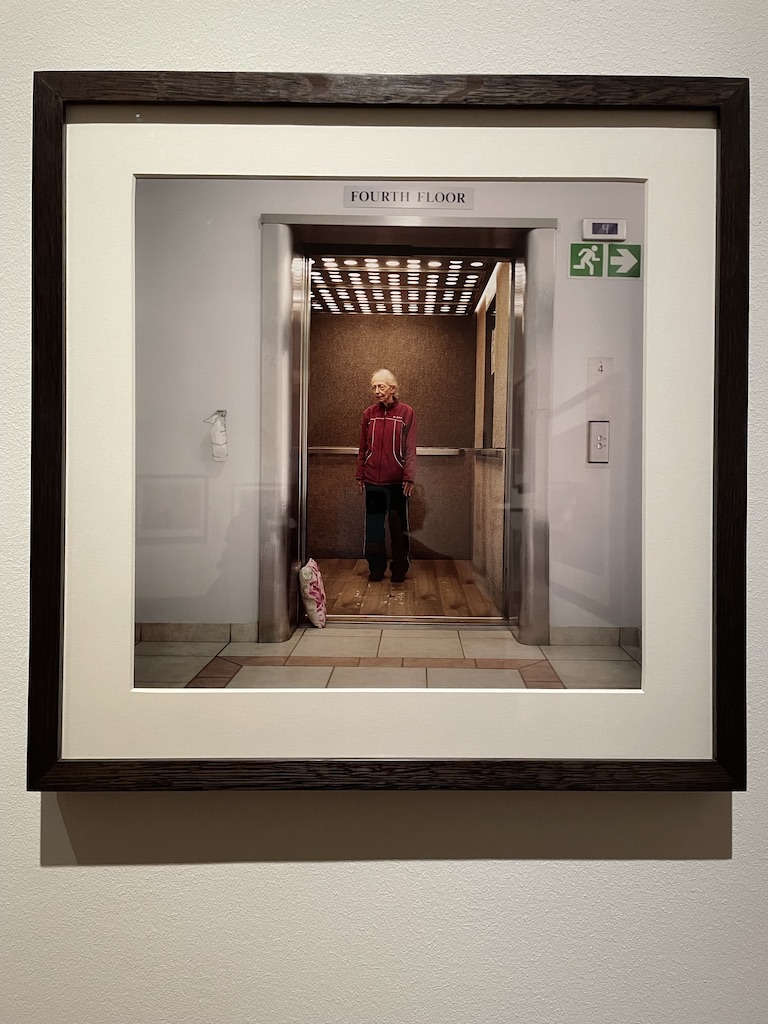
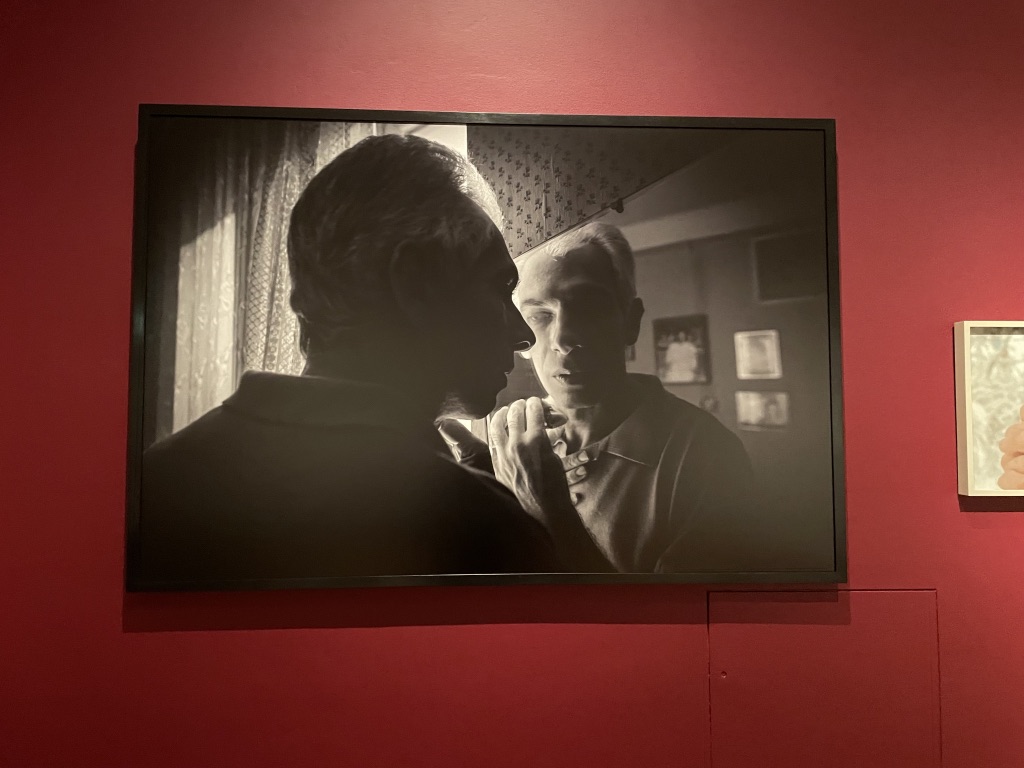
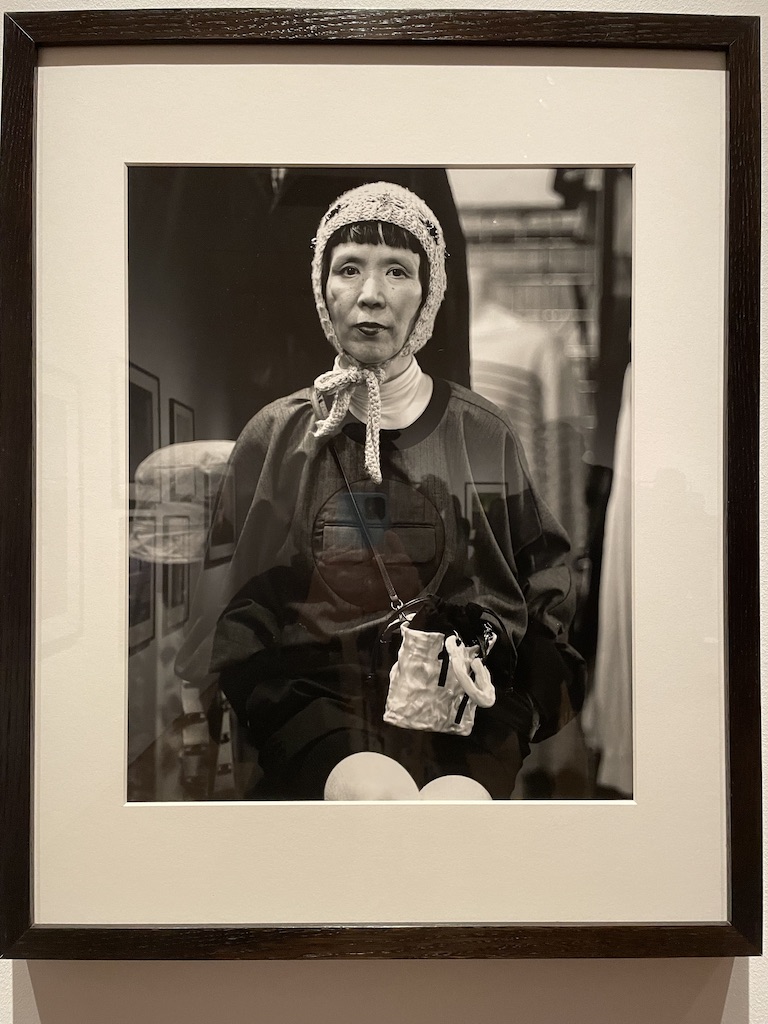
Here’s another trio of images of parents or images which capture older models. On the left is Mom, I’ll follow you still by Jesse Navarre Vos and shows his grandmother standing in the lift of the care home where she moved after they stopped living together. Vos wanted to capture the sense of separation and knowledge that he could no longer be with her into her new surroundings. In the centre is My Father’s Reflection by Diana Markosian and on the right is a portrait of Chicko, a clothes seller in London taken by Toks Majek using a 60 year old lens.

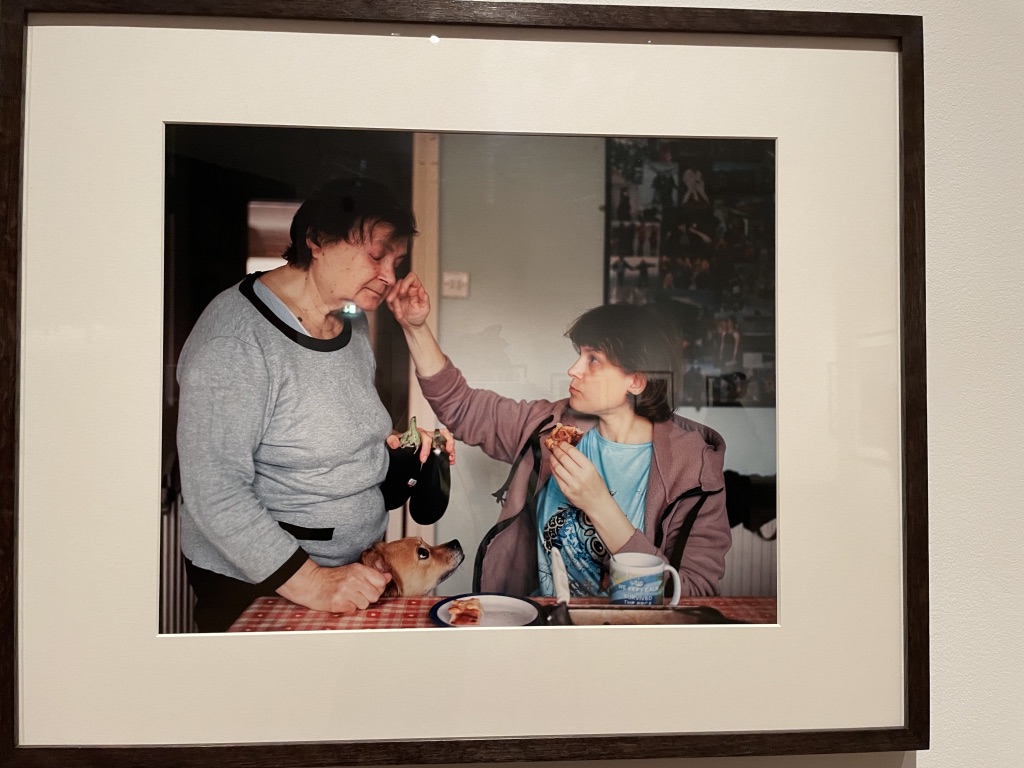
This photograph looked very spontaneous. Entitled Kitchen Embrace it shows the photographer’s daughter tenderly touching her grandmother’s cheek. The dog peeps up at the young girl and the two aubergines the woman is holding take centre stage.

And this, above, is the image which won first prize. It’s a very beguiling photograph taken by Steph Wilson of Sonam with her newborn baby. Sonam is a wigmaker and she is wearing a replica of her father’s moustache.

It’s a very interesting show this year and is situated on the upper floor of the gallery so you have the fun of walking through faces of the past to see these, the gallery’s most contemporary images. The Taylor Wessing Photo Portrait exhibition is on until 16th February 2025.

Tropical Modernism – a new show at the Victoria and Albert Museum – puts the spotlight on an architectural style which emerged in the late 1940s. British architects Jane Drew and Maxwell Fry were commissioned to design and build developments which were inspired by very different aesthetics from their work in the UK. Creating buildings in hot and humid locations demanded progressive ideas which were enthusiastically adopted by leaders in Ghana and India but have not all stood the test of time.

If you’re going to build a new nation following freedom from colonialism then you want to commission buildings which are symbolic of new independence. The Indian prime minister Jawaharlal Nehru and Ghanaian prime minister Kwame Nkrumah both commissioned the British architects Drew and Fry to come up with ground-breaking buildings which would define their countrys’ post-colonial status and celebrate new freedom.

In Chandigarh, India an audacious plan was conceived to create the first Modernist city in the world to be built from scratch. Nehru wanted the city to be ‘unfettered by the traditions of the past … an expression of the nation’s faith in the future”. The city was created on a strict grid with a river running through it and the city plan was based on a design by Le Corbusier.

What’s so interesting is that where architects aim to enforce order, artists create interventions and counter that order. In 1957 Nek Chand was a road inspector in Chandigarh. He began collecting discarded material from the construction and turned it into a secret kingdom of over 2000 sculptures hidden in a forest near the Capitol Complex. This very personal creation countered the order of Le Corbusier’s vision in a wonderfully subversive way. It remained hidden from view until 1973. Now his ‘vast ruin’ intrigues visitors to the city.

Edward Lutyens designed the new colonial capital in India as if he were rebuilding ancient Rome, enforcing an expression of Britain’s power in the country. This playful bust of Lutyens, below, has a mocking feel about it.

There are blueprints, sketches, photographs and a really interesting film about the movement which lasts about half an hour and is well worth watching. Very intriguing and thought-provoking exhibition which brings to life the history of a fascinating architectural movement. It’s on at the V&A until 22 September 2024