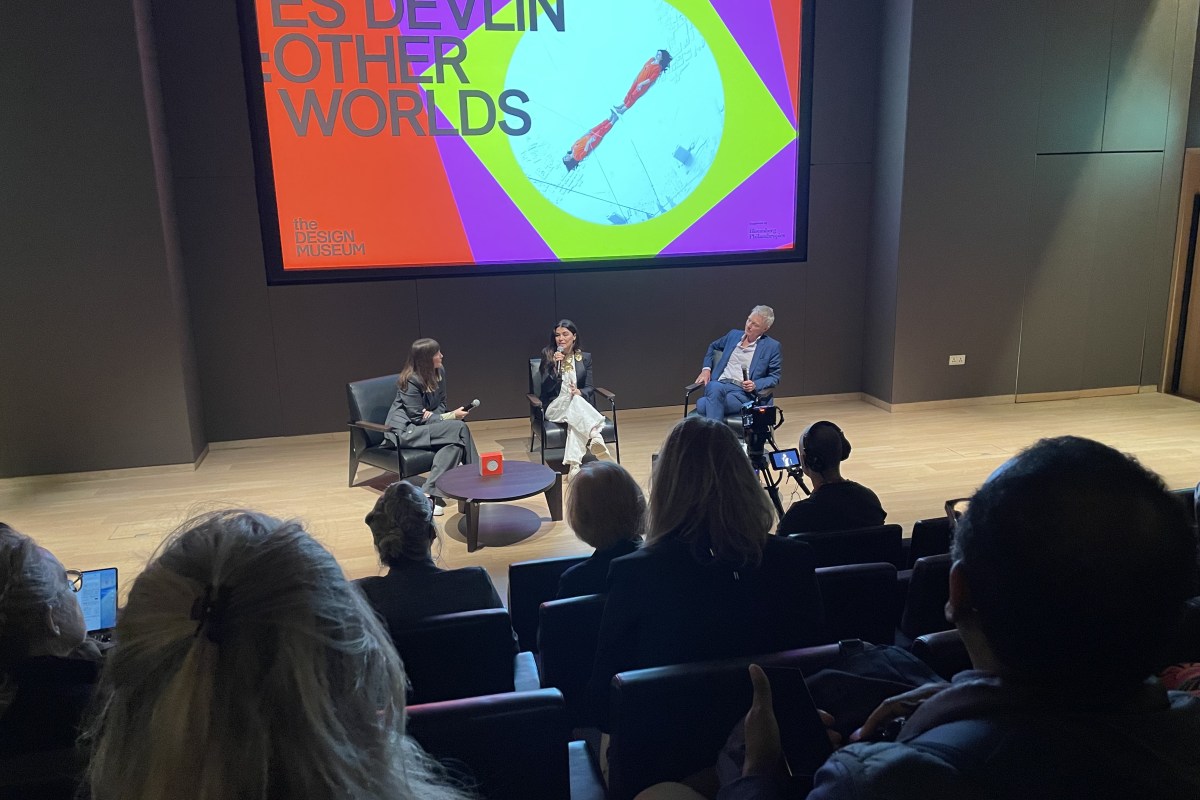
What a treat to hear superstar designer Es Devlin in conversation with Tim Marlow (Director of the Design Museum) and Johanna Agerman Ross who has curated a spectacular retrospective entitled Es Devlin: Other Worlds featuring her massive archive of work she’s undertaken over the past 30 years. It’s on show at the Design Museum in Kensington.

I’ve followed Es Devlin’s work for some time. Her designs for theatre, opera, huge pop concerts, installations and public art are always eye-catching, imaginative and thought-provoking. She may be best known to many as the designer of the closing ceremony of the London 2012 Olympics.
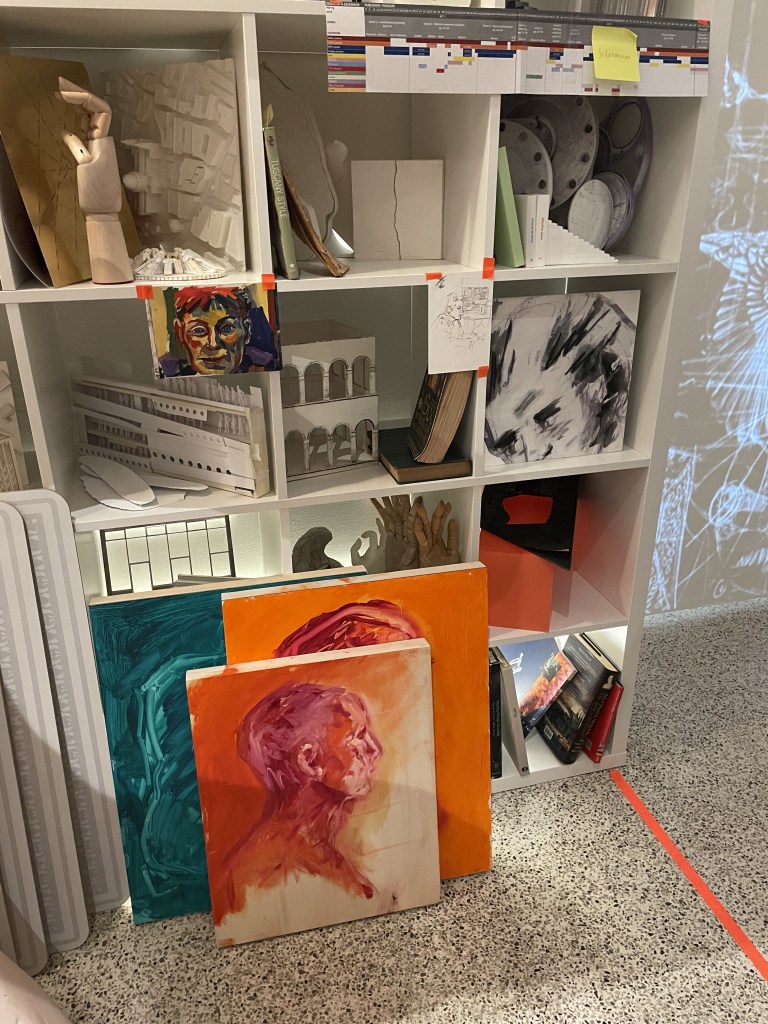
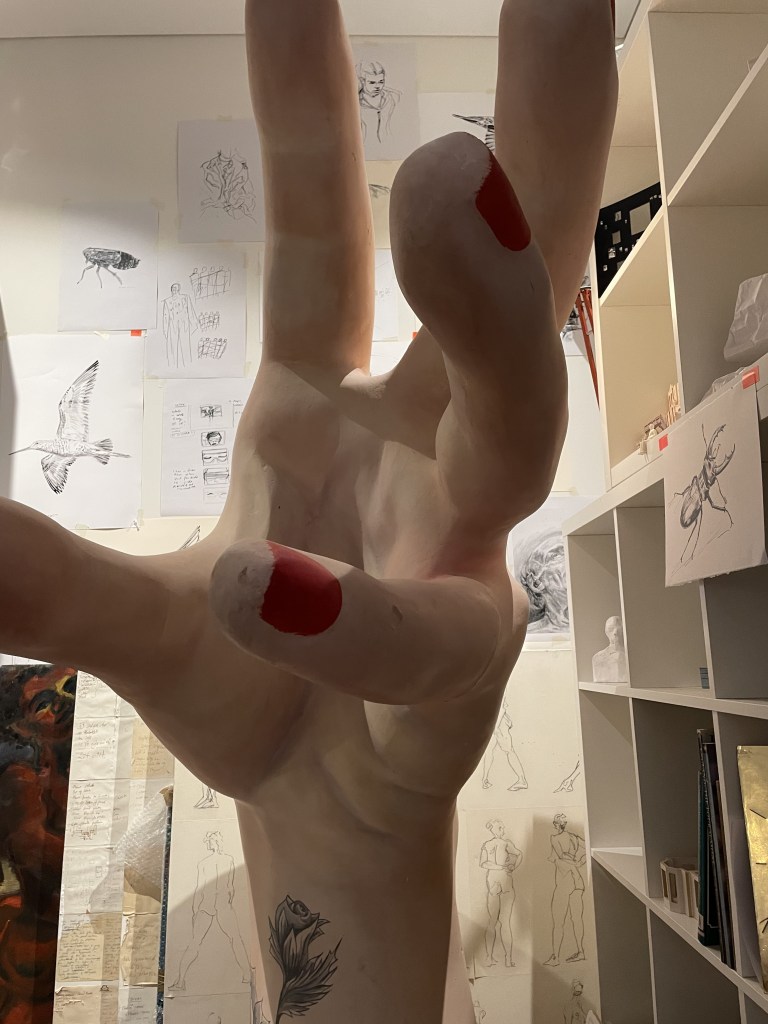
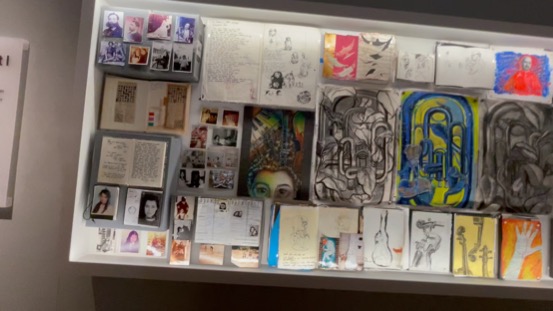
The exhibition starts off in a space which is a reproduction of Es Devlin’s south London studio space. It’s fascinating to see all the books, drawings, objects and bits and pieces which both inspire and take ideas to the next stage. Then, after hearing Es telling us a little of her early life and family, the wall of the studio magically opens and visitors are invited to come into the exhibition space to view the thousands of papers and plans which were kept in her archive and tell the story of the projects she has worked on.
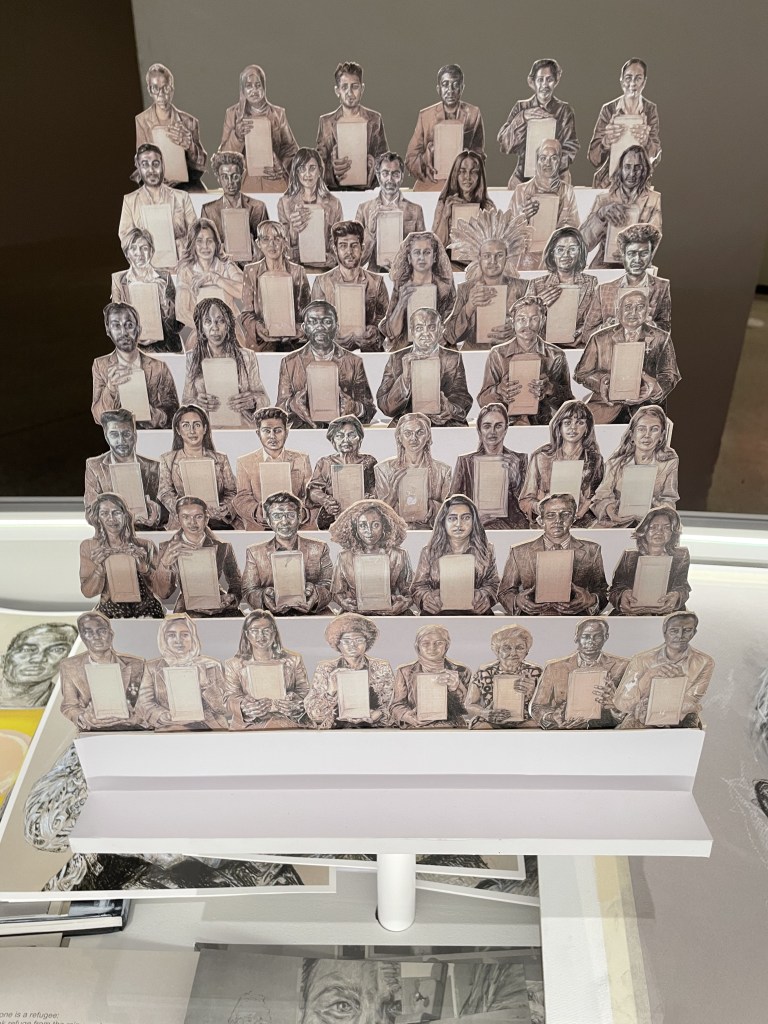
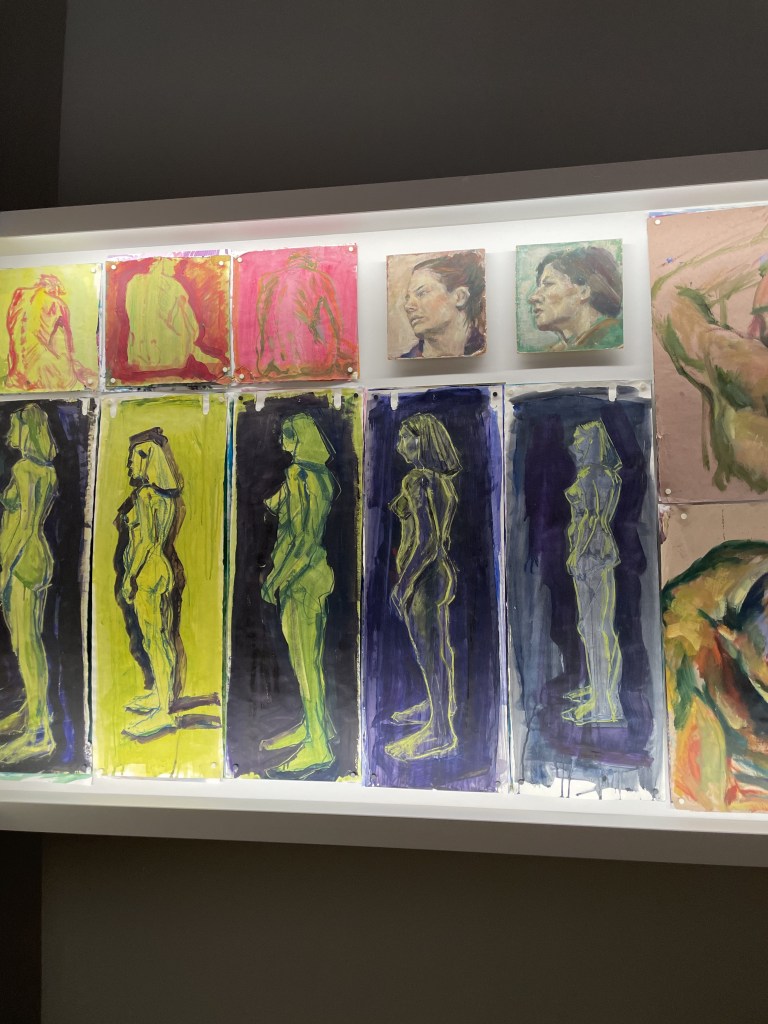
It’s very difficult to convey, in a blog such as this without film, the extent and depth of all the ideas and items on show. What’s fascinating in a 45 minute film of Es talking about the projects she’s worked on while handing the initial drawings and musing on the challenges and pleasures of each one. Everything, she says, starts with pencil and paper and this is the way she develops her ideas. Then, her talented team of specialists take the ideas and play around with them suggesting different materials, scales and uses.
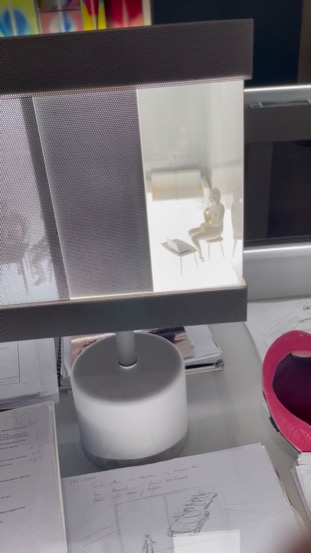
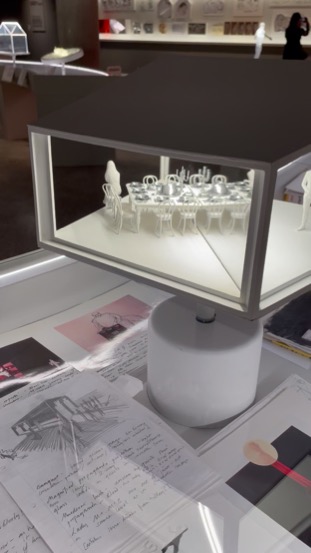
I loved the boxes of theatre sets. A recurring theme for Es is use of the revolving cube and circles. These seem to be universal shapes which she is drawn to. I would imagine that theatre producers both love and are challenged by her ideas. So often they involve complex engineering, revolves, clever lighting and illusions.
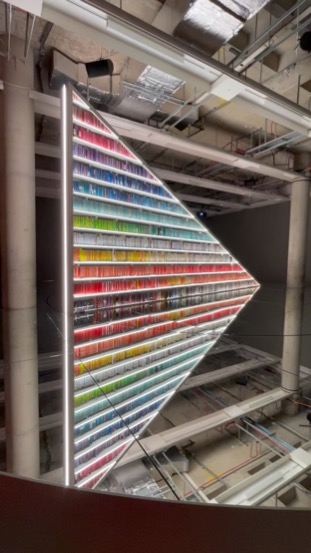
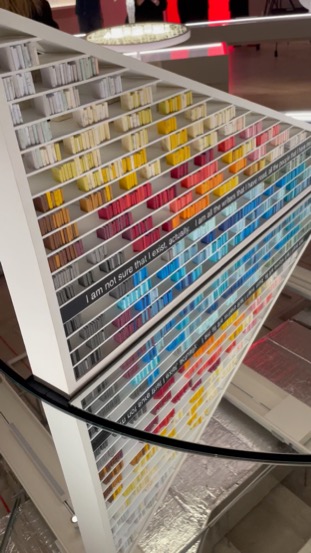
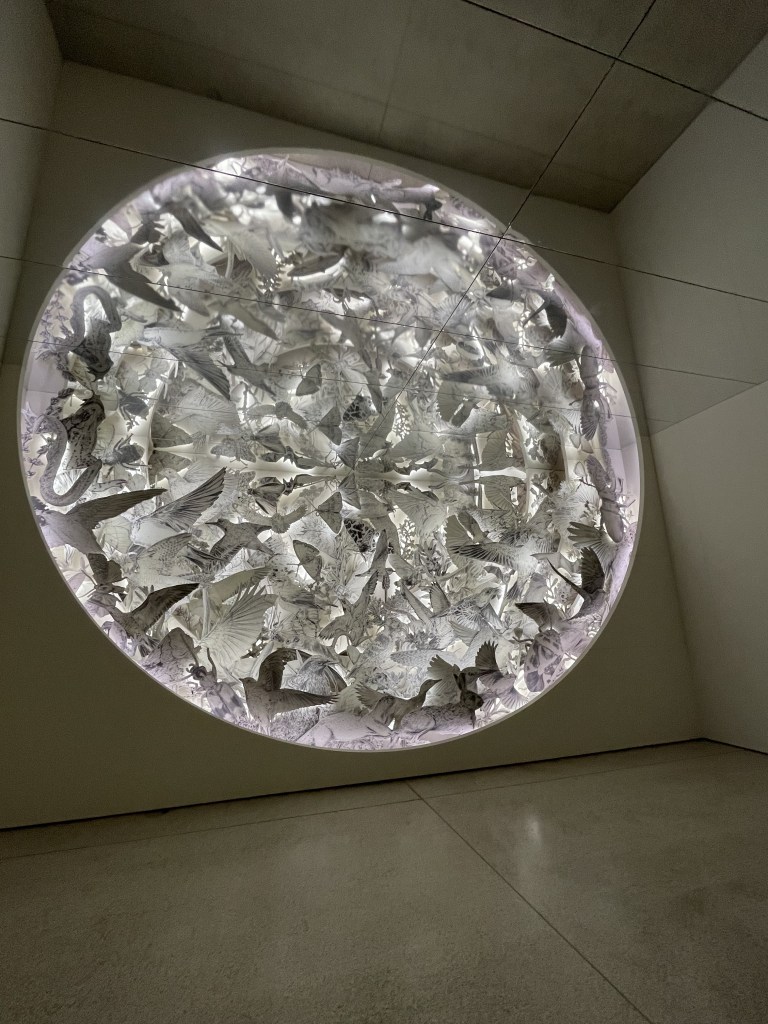
In a second space we are treated to a new installation entitled An Infinite Library, a kinetic sculpture featuring over 2,000 books that have informed Devlin’s worldview. The triangle of books revolves over a mirrored floor, visually doubling its size. Viewers can walk around this huge piece and are invited to view books open on low plinths and read passages which have been especially meaningful to Es Devlin.
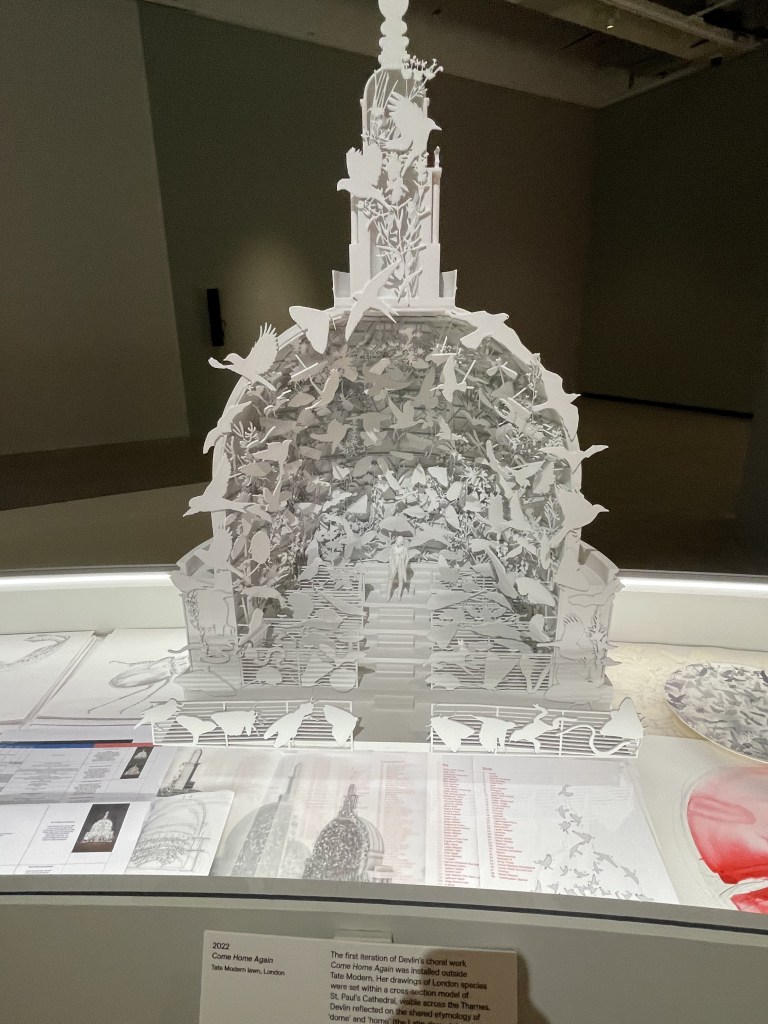
The show is spectacular and it’s on at the Design Museum until 4th April 2027.

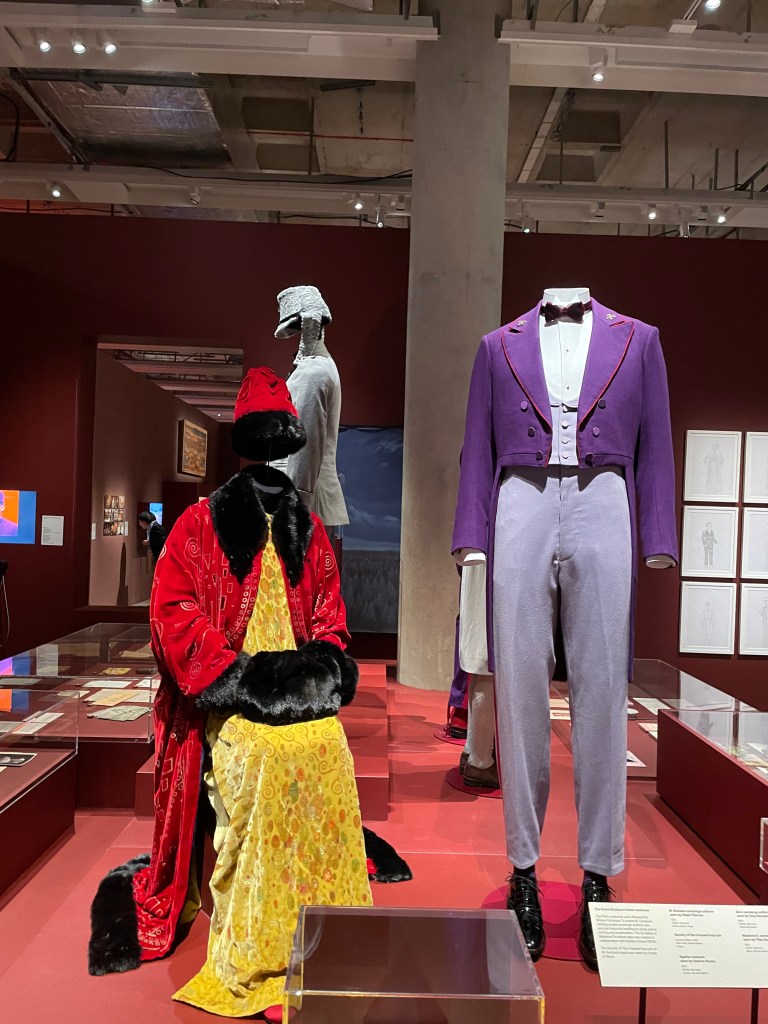
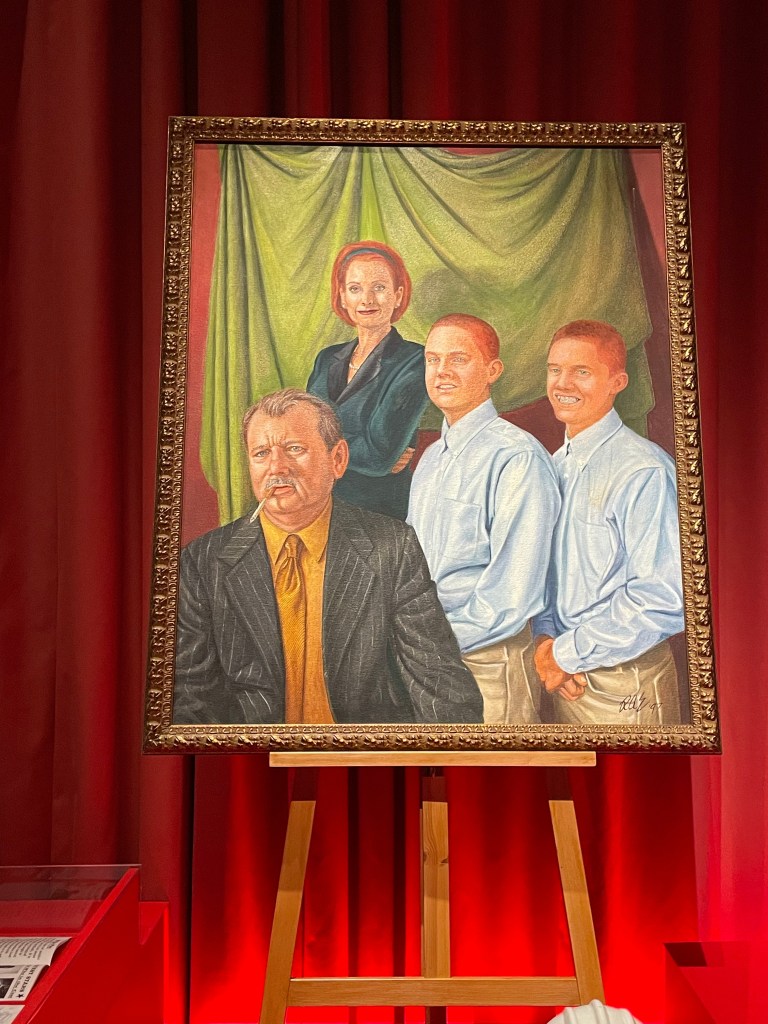
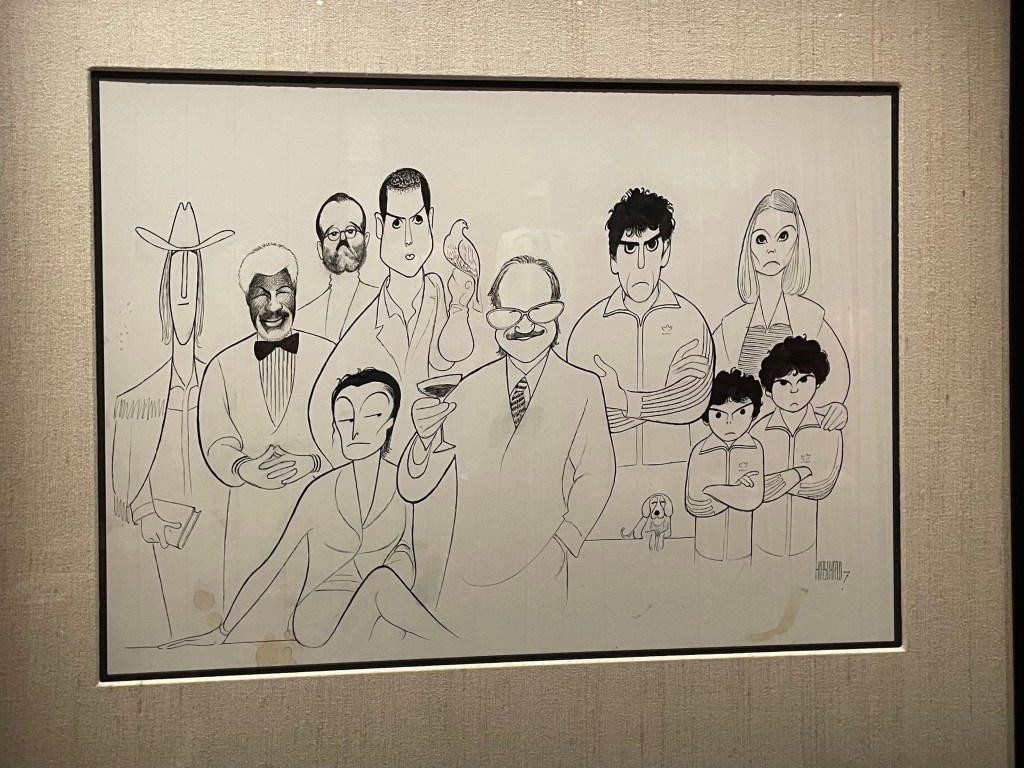
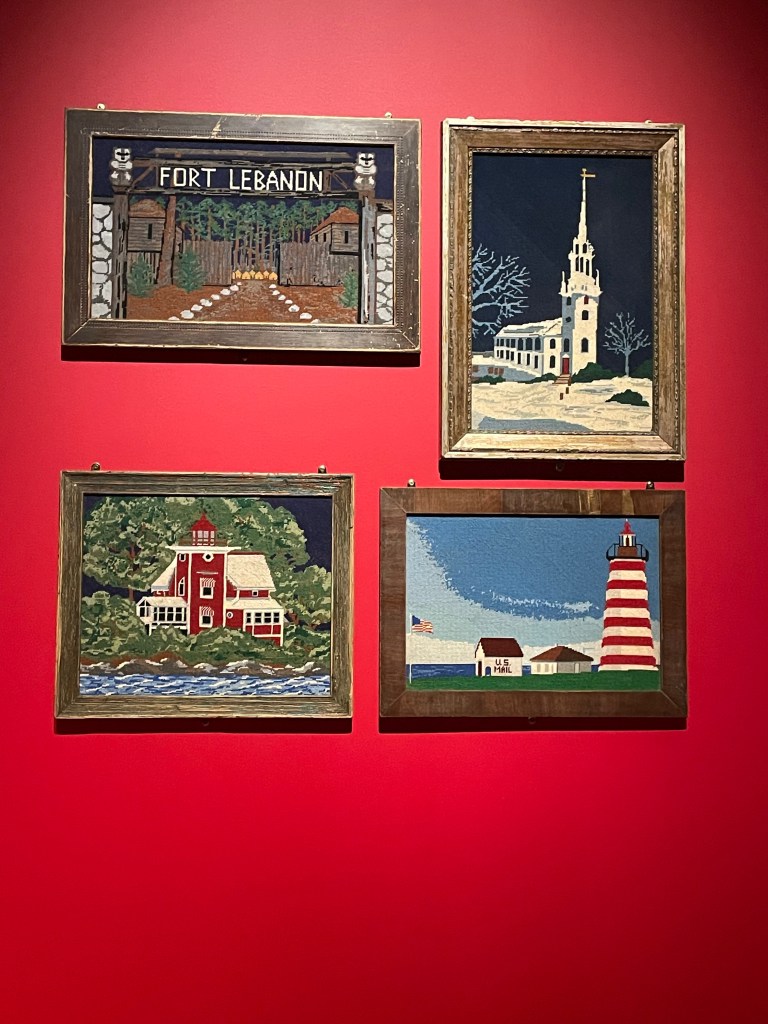
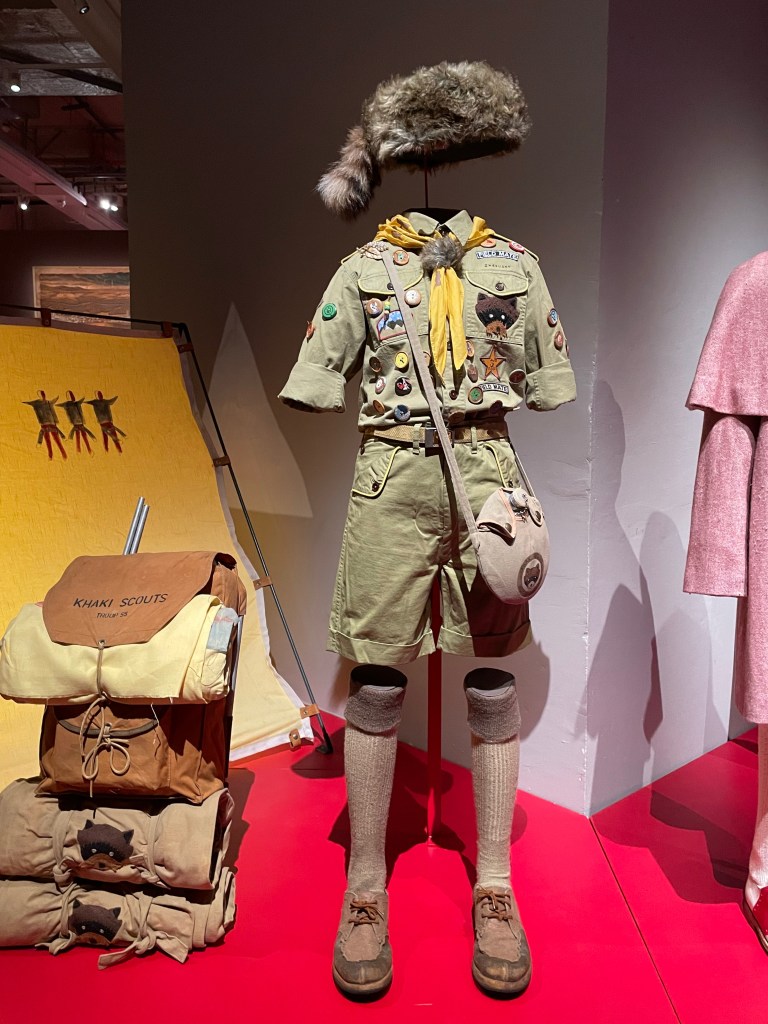
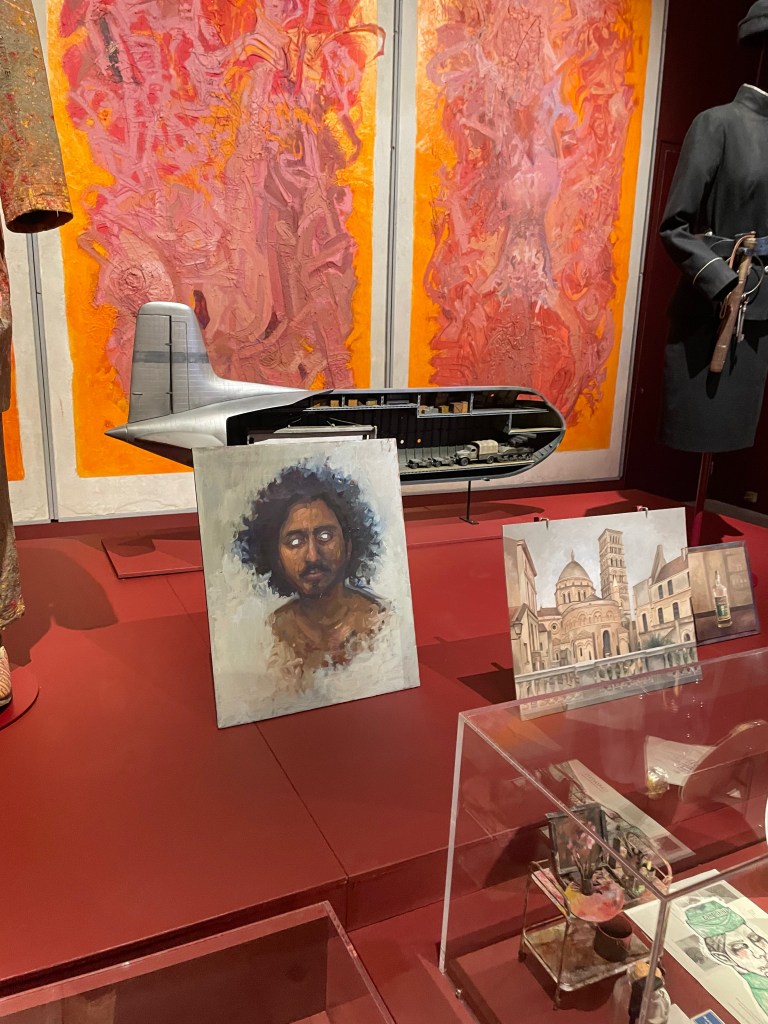
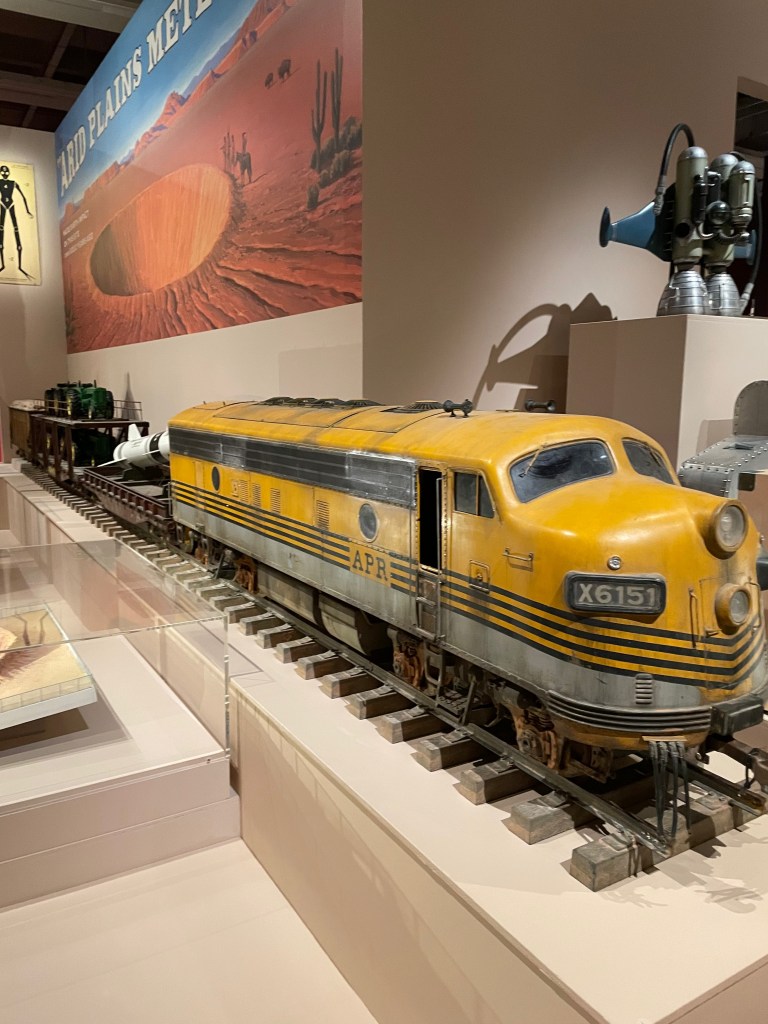
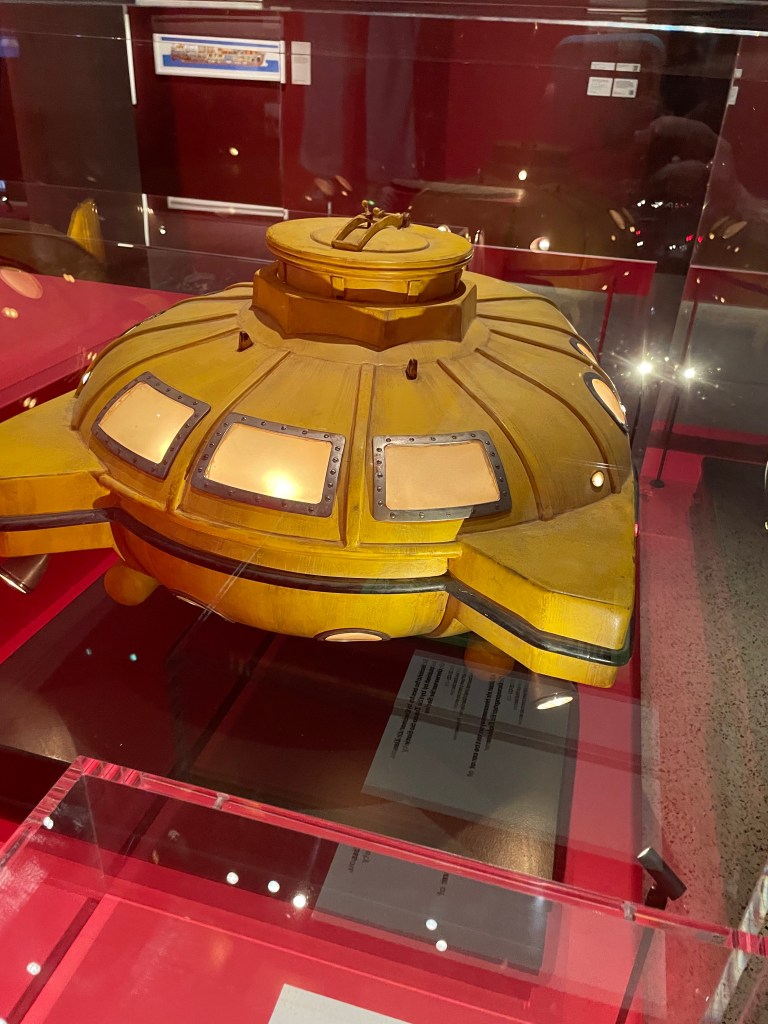
If you’re a fan of Wes Anderson’s films then a trip to the Design Museum in Kensington is a ‘must do’ as a festive treat or a New Year resolution. This retrospective is a cracker of a show – filled with props, costumes, photographs, scripts and fragments of creativity which have gone into his 30-year career making memorable films.

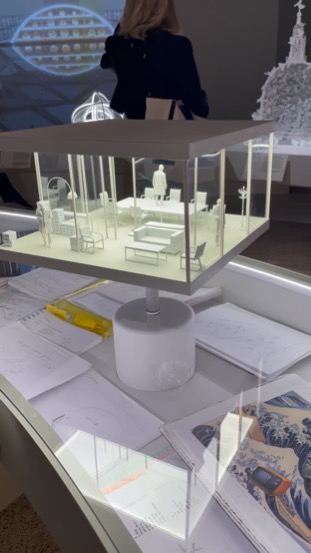
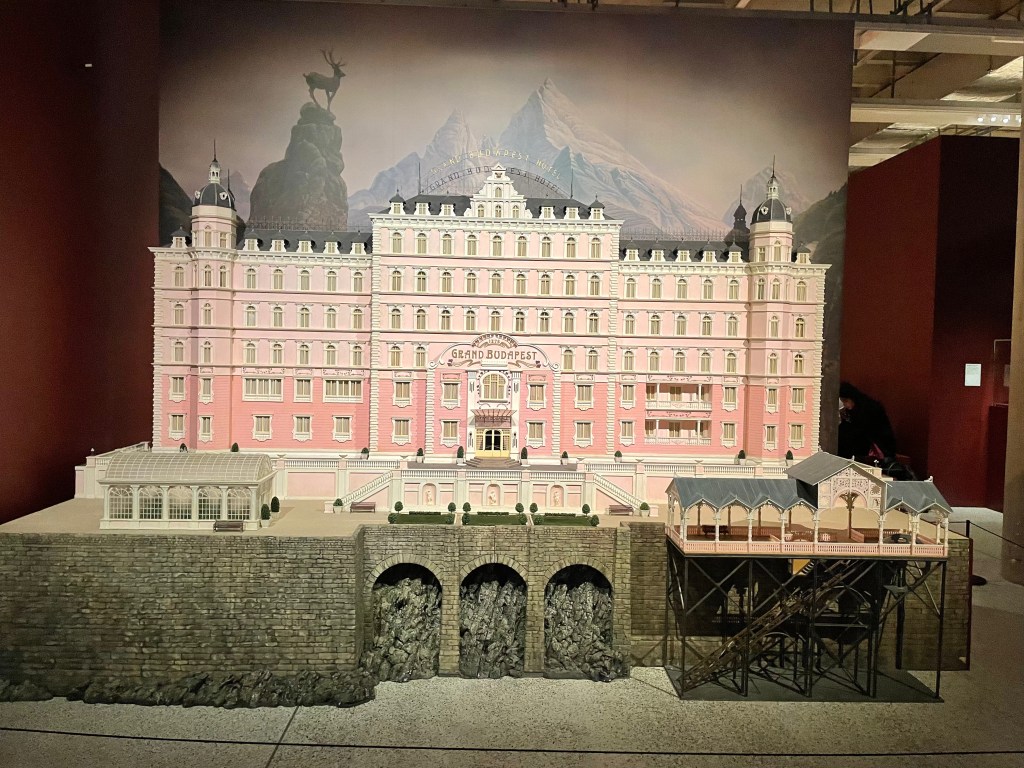
I confess I’ve not seen ALL of Wes Anderson’s films but can attest that the ones I have seen were filled with amazing images and situations which linger in the memory long after the credits have rolled and it’s time to leave the cinema. Above is the spectacular model for the Grand Budapest Hotel which was a gloriously witty, stylised (and Oscar-winning) film.

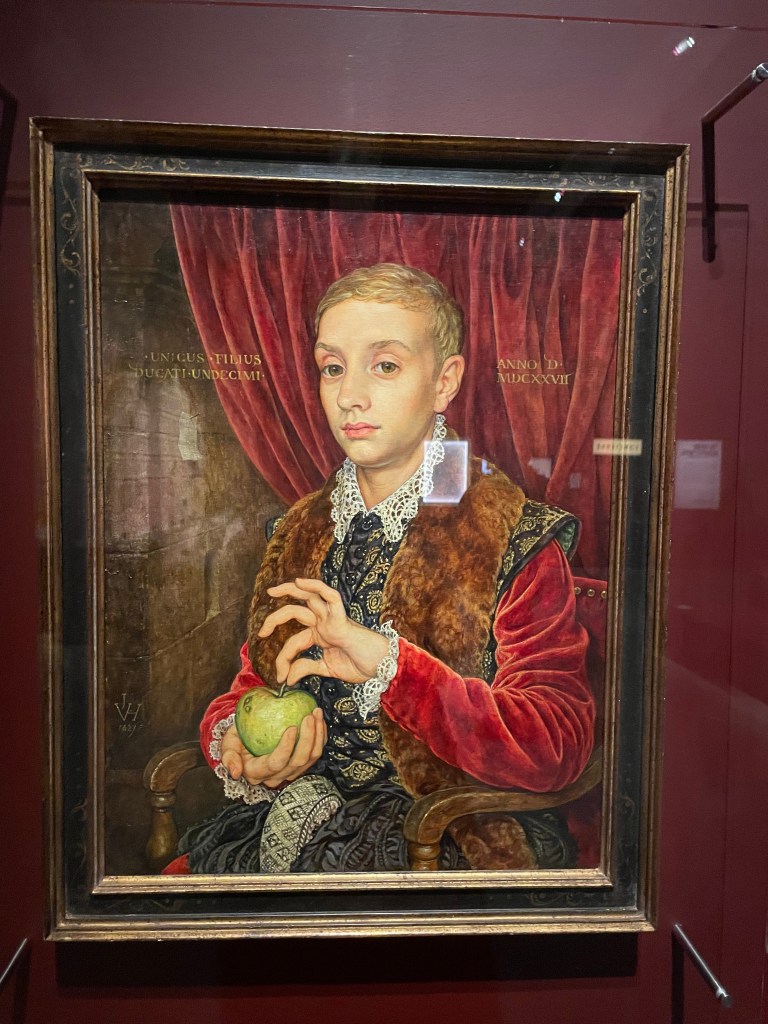
Wes Anderson has hung onto everything. Above is the spectacular painting ‘Boy with Apple’ which channels the best renaissance painting but was created by British artist Michael Taylor specially for the Grand Budapest Hotel.

From his very first short film, The Bottle Rocket, (when he discovered that the production company has rights over all the props and costumes) he understood the importance of keeping control over items created for films; and ever since he has kept storyboards, costumes, props and memorabilia from his films. Nearly thirty years’ worth of items have been stored in a vast space in Kent and now they have been removed from boxes and displayed for all to see. The curators of the show have done a great job in presenting everything and clips from films are shown on screens too, giving context to the objects.

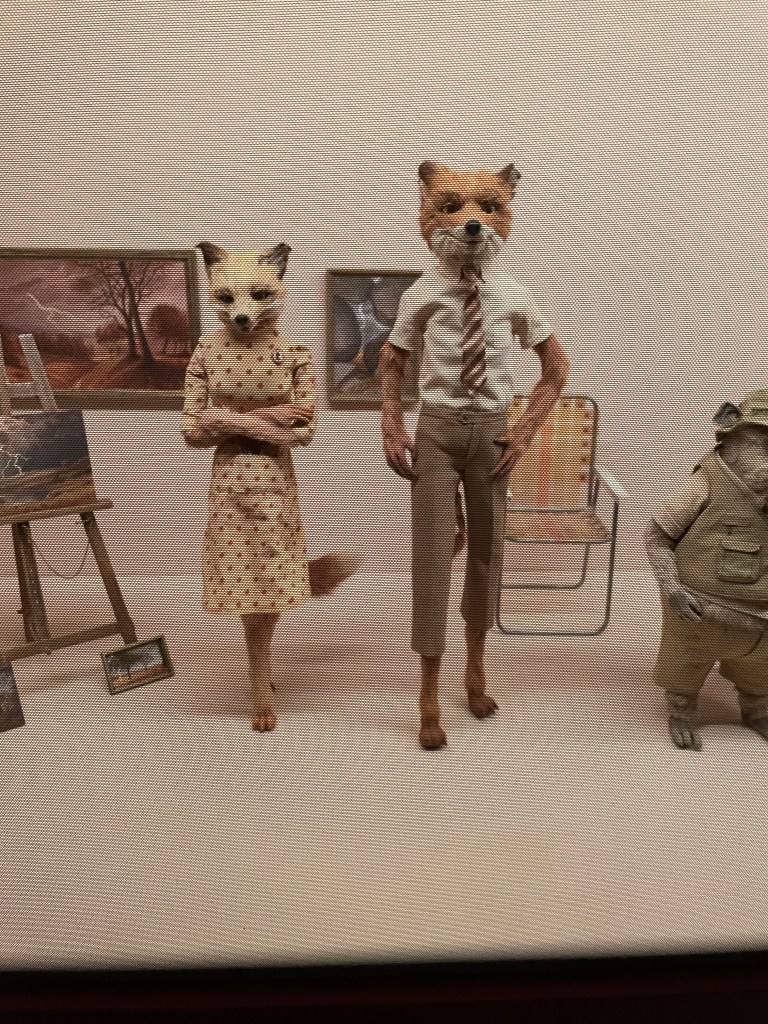
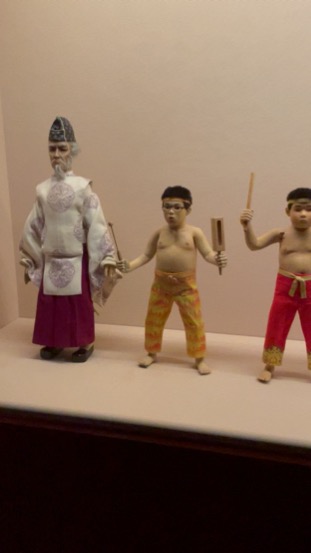
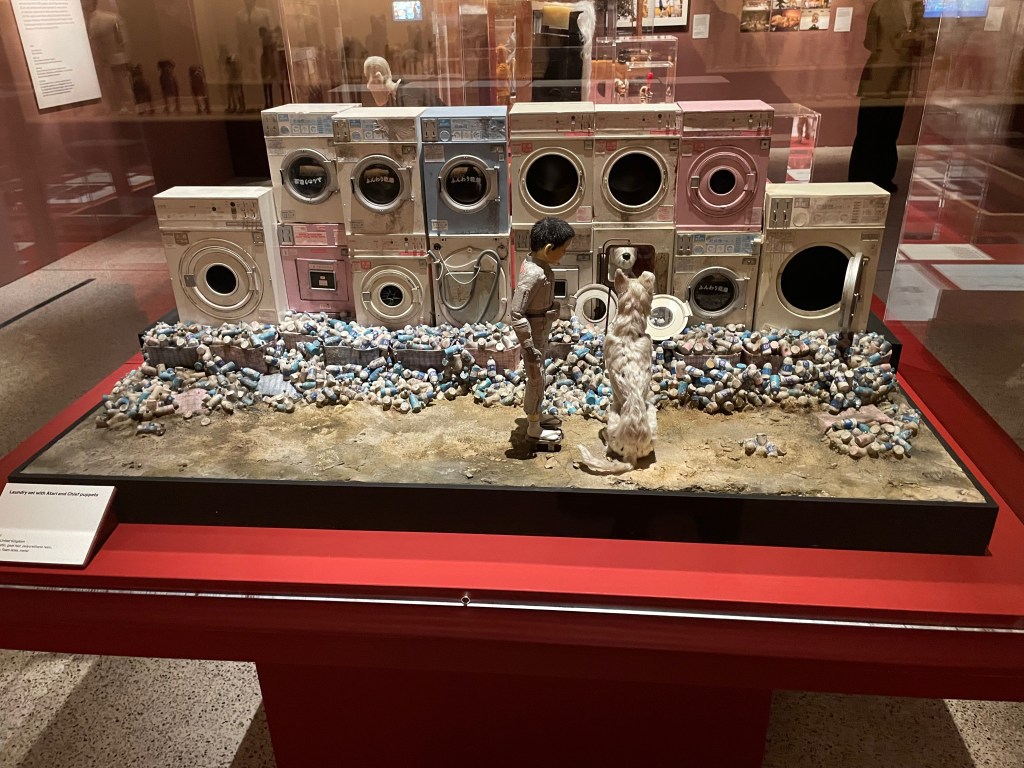
The little puppets and models for his epic stop-motion films, Fantastic Mr Fox (2009) and Isle of Dogs (2018) are glorious to view. Apparently it was the talented puppet makers and craftsmen of the UK which drew Wes to the UK to make these films.

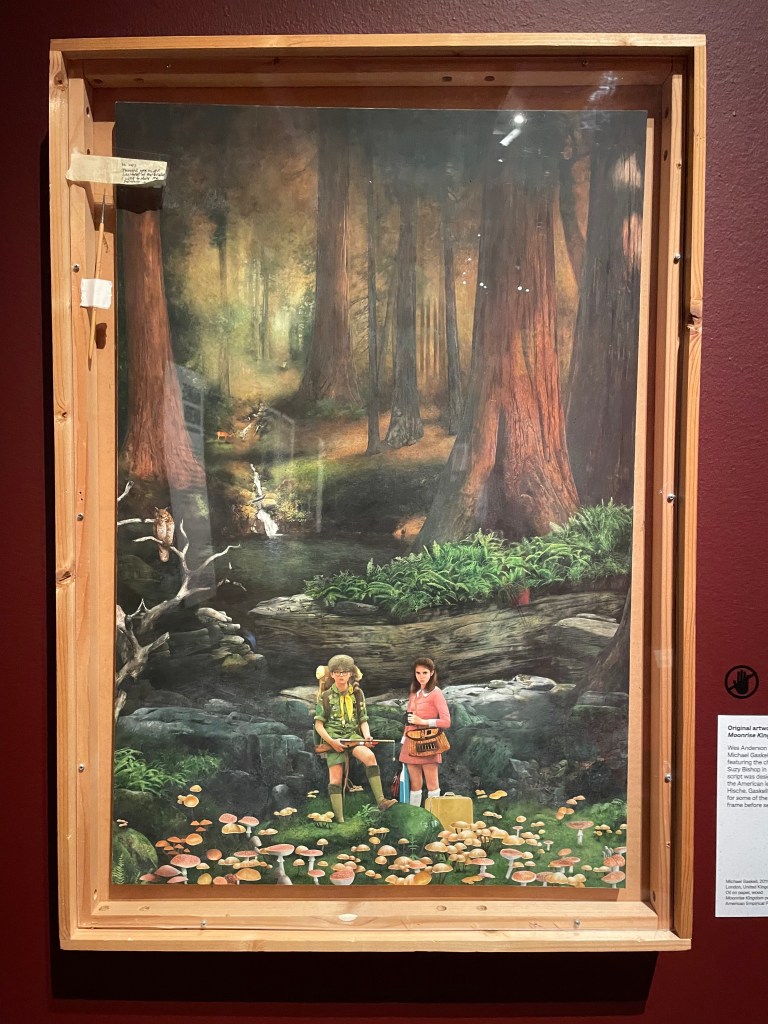
You might recognise, above, the Royal Tenenbaum props and costumes, or artwork from Moonrise Kingdom.

So, my resolution for 2026 is to watch all the Wes Anderson films I’ve not seen and revisit the ones I have. I think, having seen this show, my experience of the films will be all the richer.

The show is on at the Design Museum until 26th July 2026.