
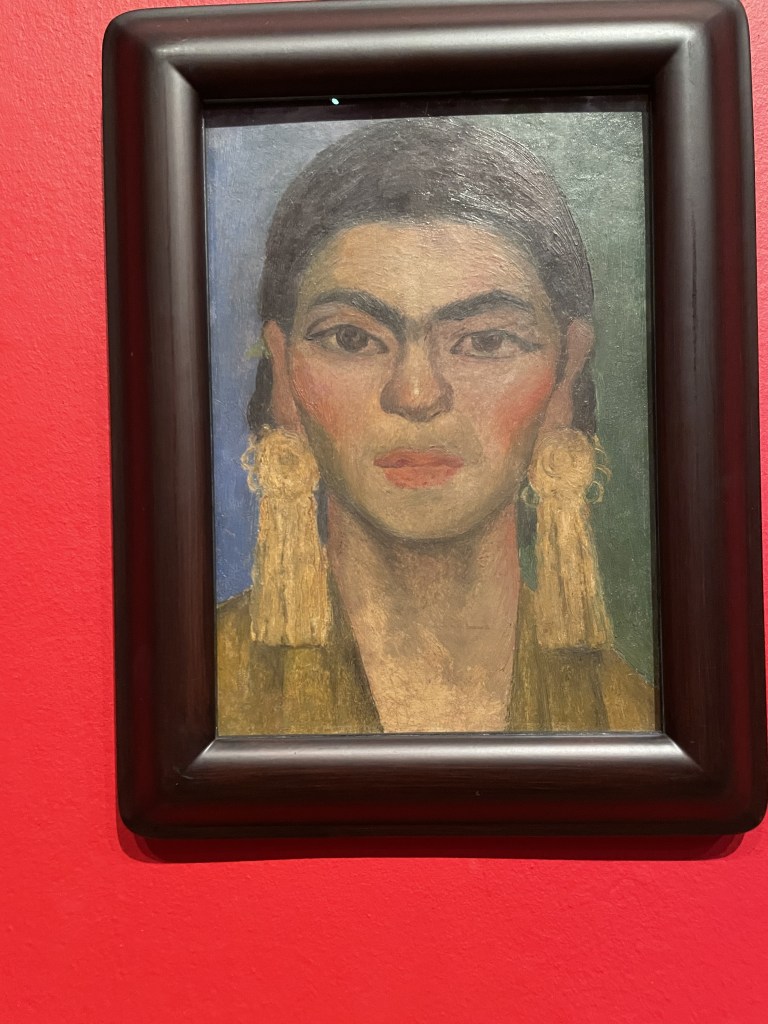
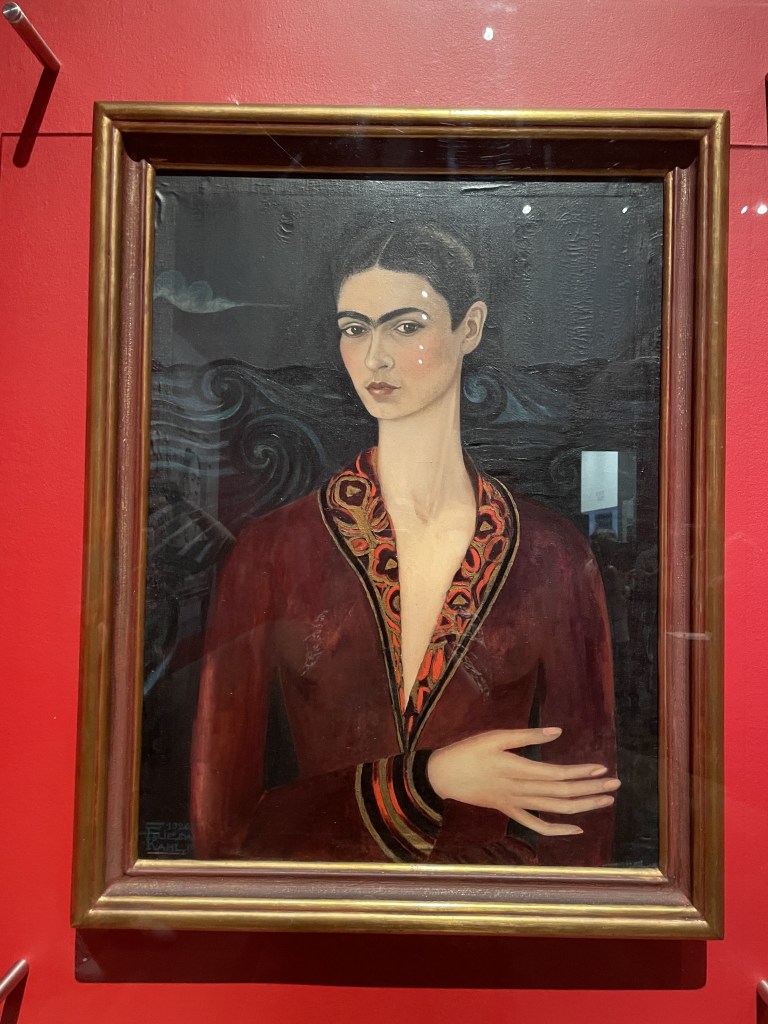
I’ve always admired Frida Kahlo. Her art is so compelling, so confronting and often full of pain, sadness and honesty. When you combine these powerful images with what we know of her life story then you have someone with true ‘iconic’ quality (a much over-used description for so many) and a reputation which has endured and grown since her death in 1954.
Above: portrait of Frida by Diego Rivera and her first self-portrait (In a Velvet Dress) from 1926.
This exhibition looks at Kahlo’s work – with an impressive collection of rarely-seen works – and then examines how she has influenced other artists who have been inspired to interpret, copy, imitate and express her work and elements of her life.
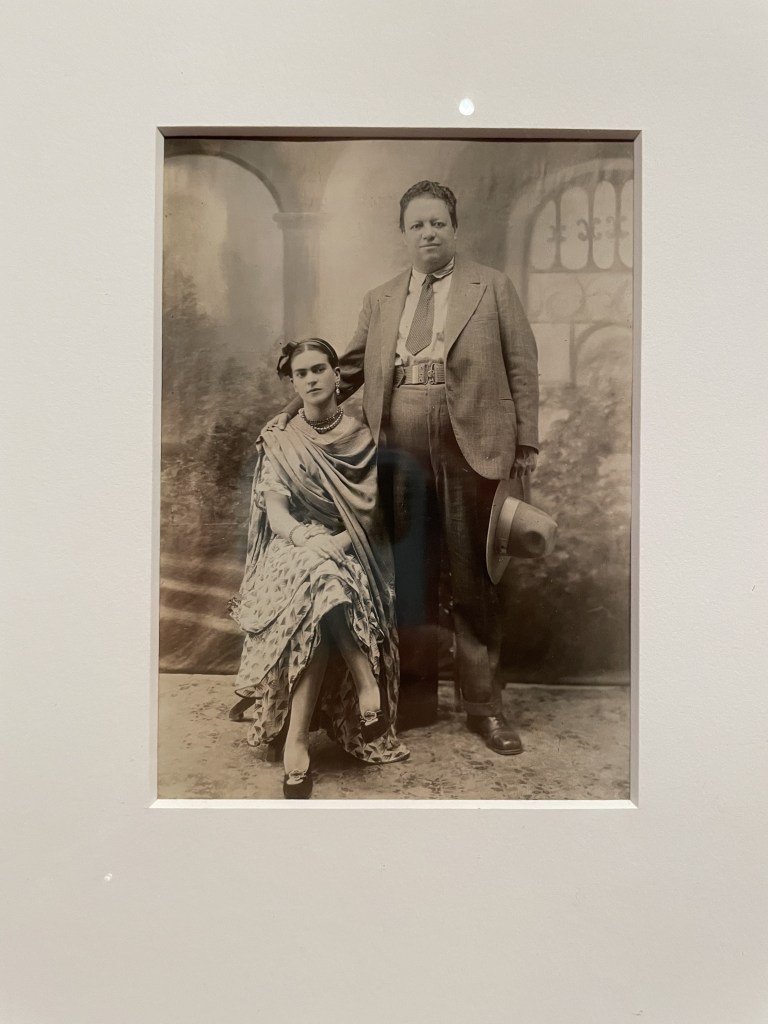
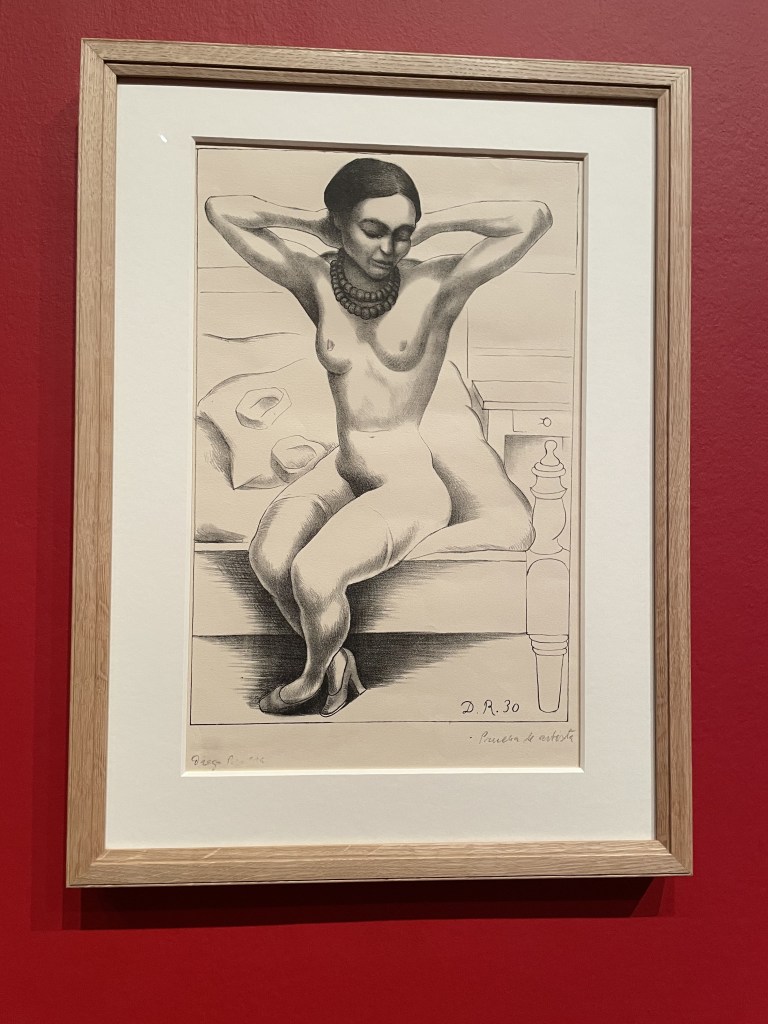
To begin with, Kahlo was known as the wife of Mexican artist Diego Rivera, ‘who also painted’. It’s clear that he considered himself the better artist yet, when you see his work in the same gallery as hers, it’s clear that she was superior. However, she coupled herself to him, and took a secondary role in their relationship. But, where his international flame has waned, hers has burned brightly, gaining momentum in the 1980s and 90s.
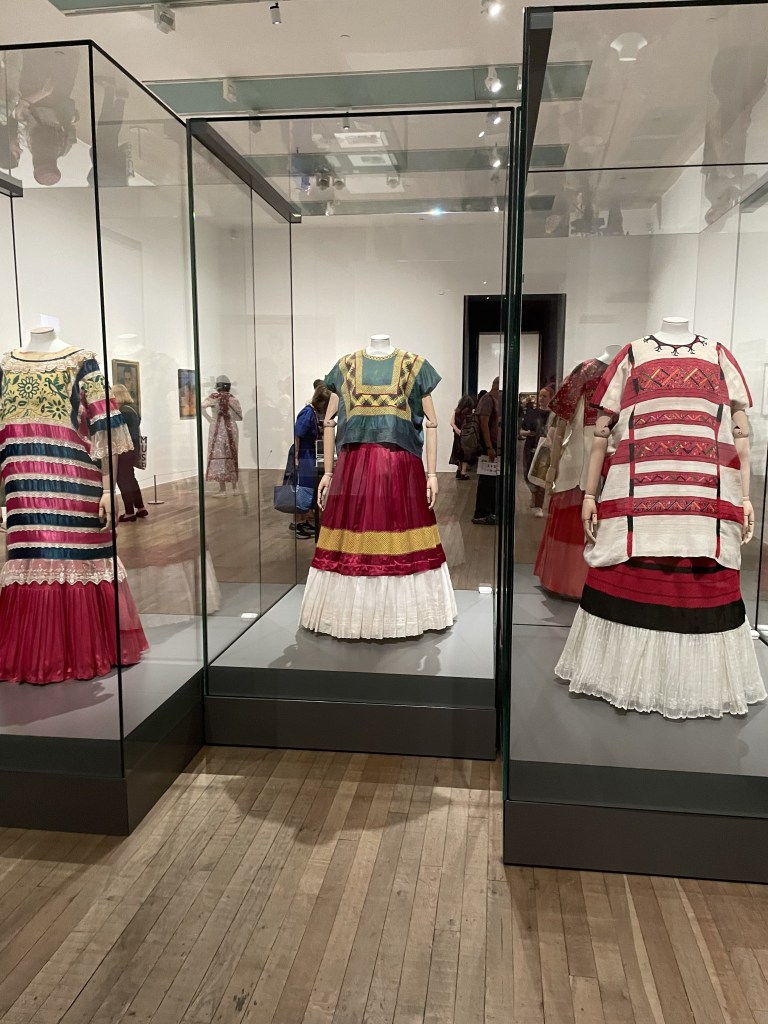
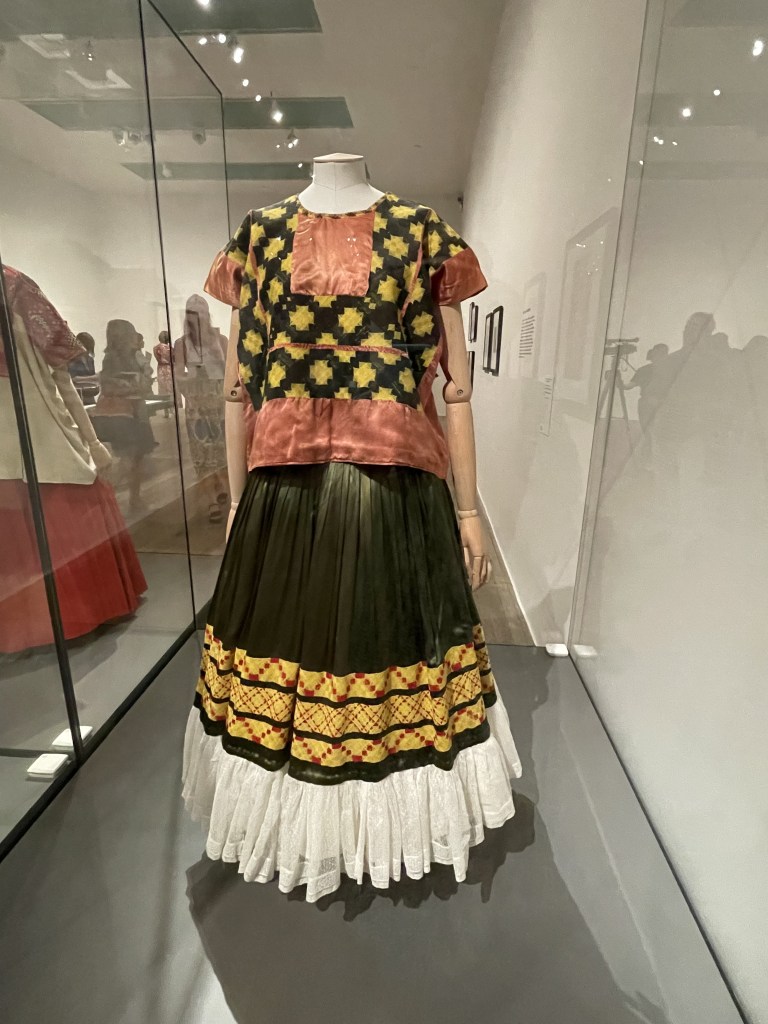
Proud of her Mexican heritage, Kahlo was always seen wearing traditional outfits, tehuana dresses, and four of them are presented here.
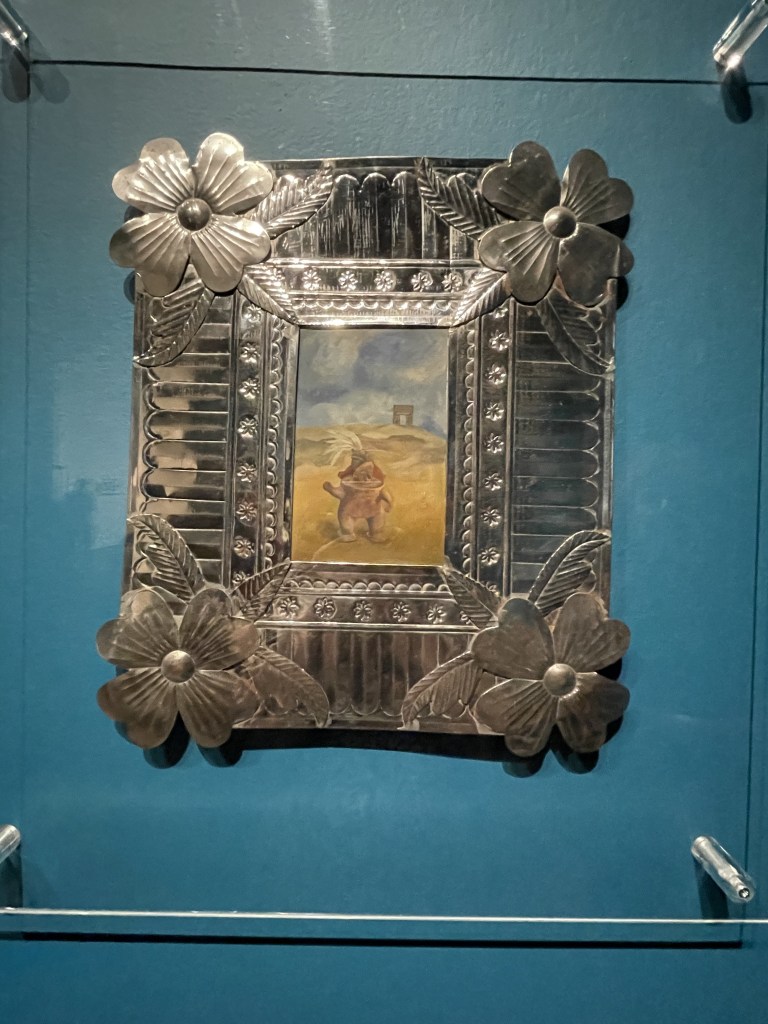
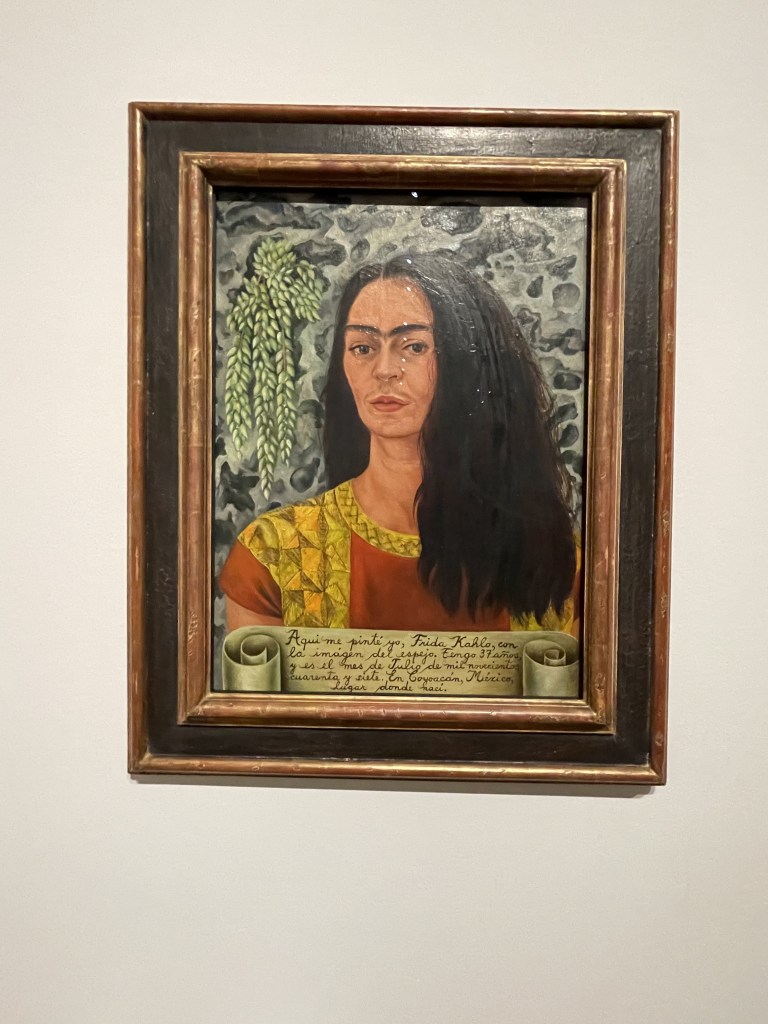
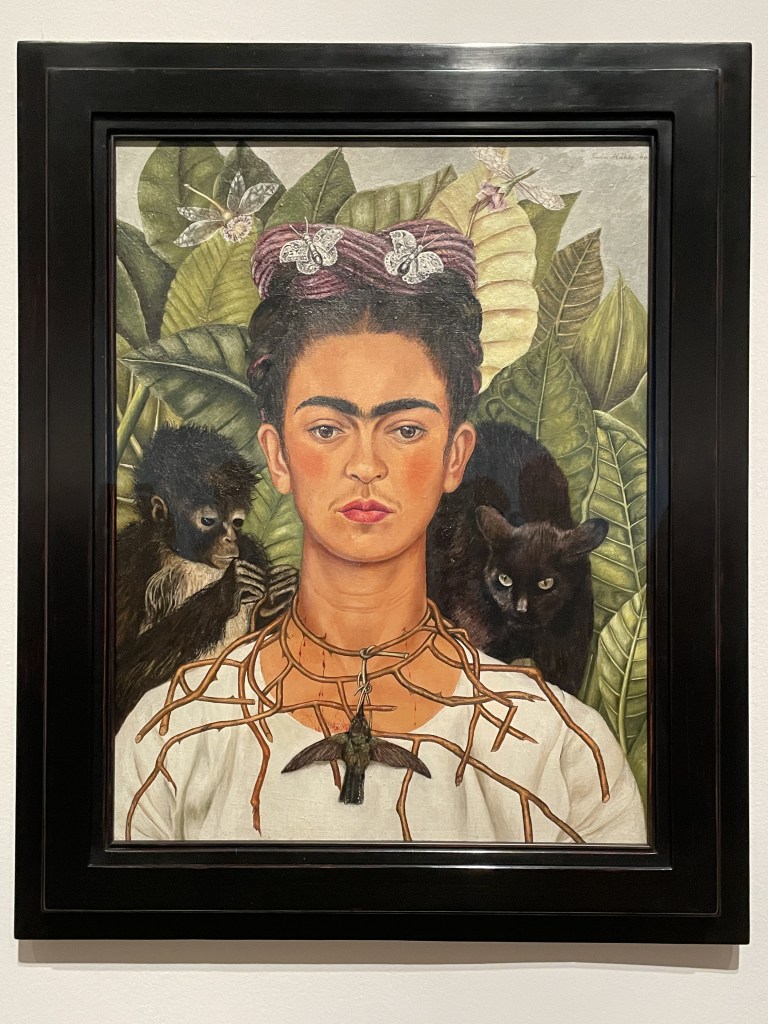
I enjoyed having the chance to view Kahlo’s self-portrait with loose hair (1947) which references traditional devotional paintings. I also, really liked this tiny painting of a ceramic sculpture of a warrior, originally found in a burial site in Coima, Mexico. She also created Oaxacan tin frame which is astounding.
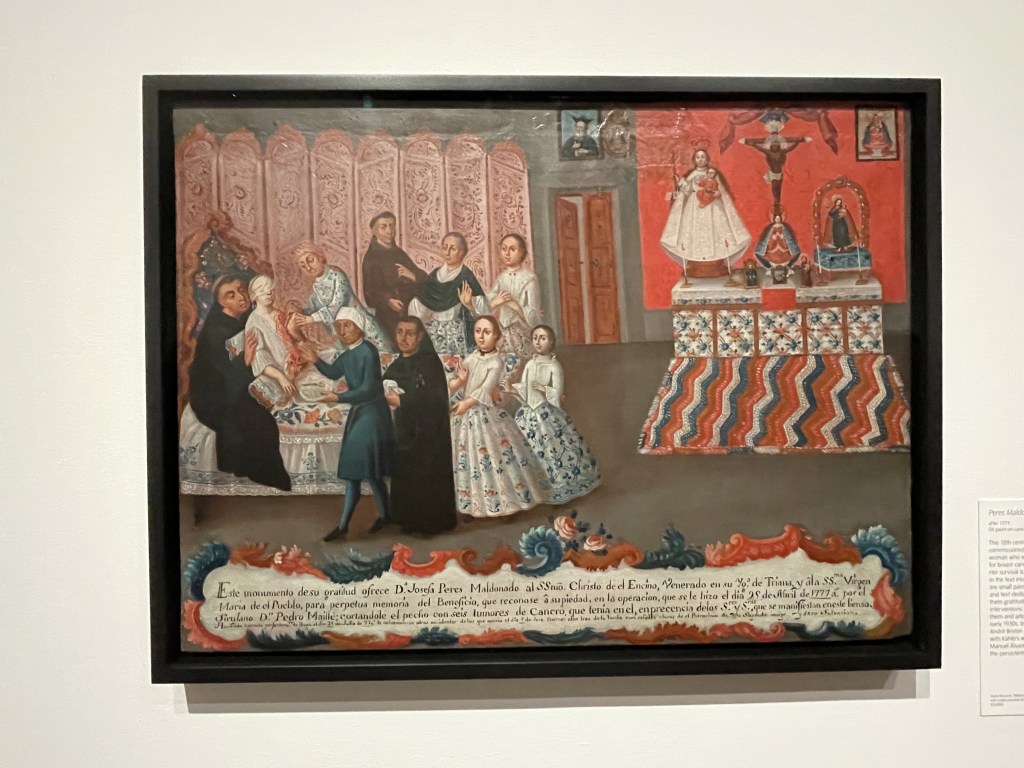
This painting is quite gruesome. It’s by Peres Maldonado (after 1777) and illustrates a woman’s breast being surgically removed. She looks remarkably serene given the ghastly operation to remove cancer. This painting has been included in the exhibition because, apparently, it influenced Kahlo in the way she started presenting her self-portraits and other painted works, using text and a very graphic, illustrative style.
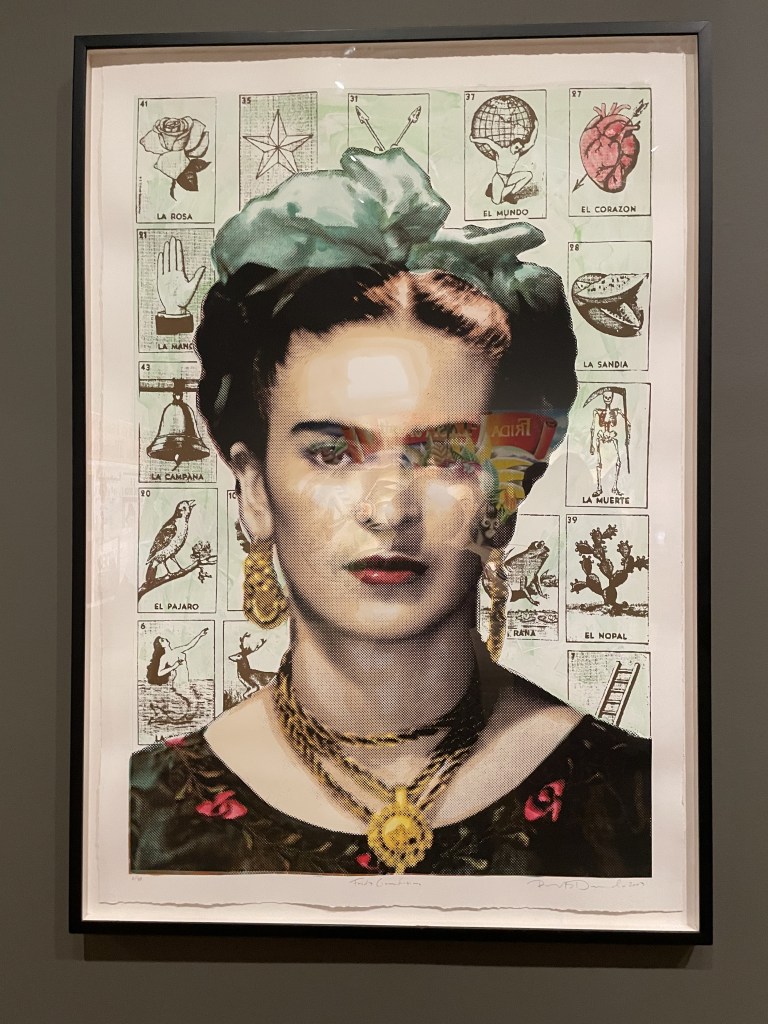
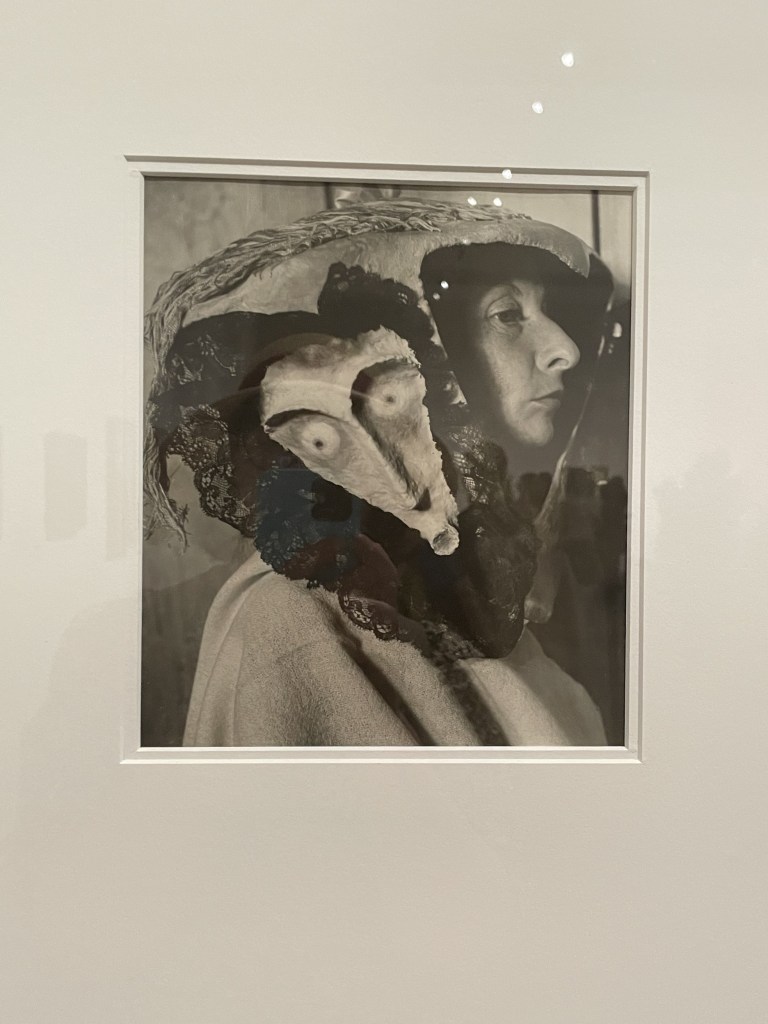
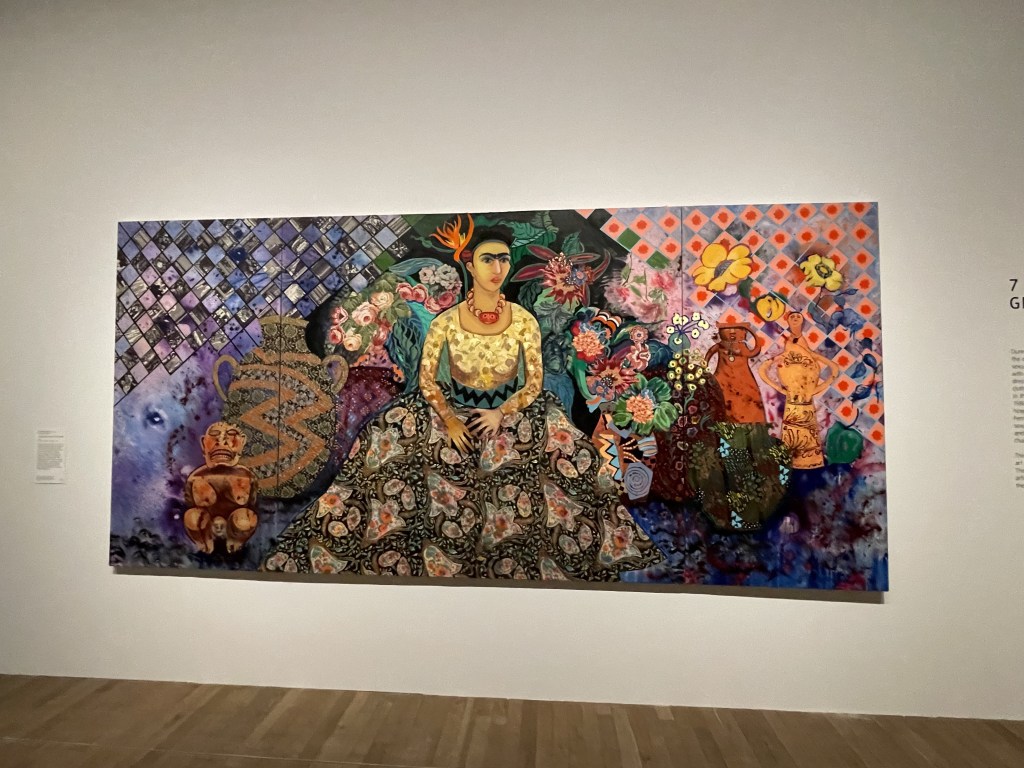
Having examined Kahlo’s life and work the exhibition then moves into the many ways in which her image has been interpreted and used by other artists. So, on the left is a screenprint by Richard Duardo, a mask worn by Leonora Carrington (a European friend of Frida Kahlo ) and a huge portrait of Kahlo by Mriam Schapiro using acrylic paint and collage on canvas. The collage side of this is a mix of paper and fabric. Very spectacular.
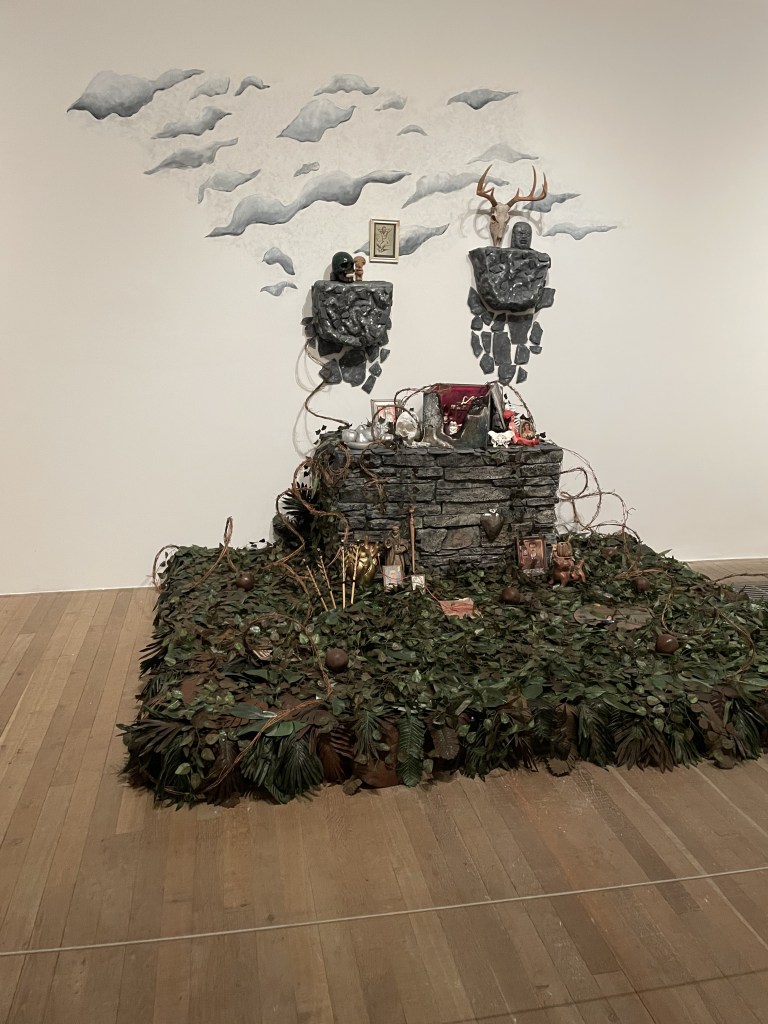
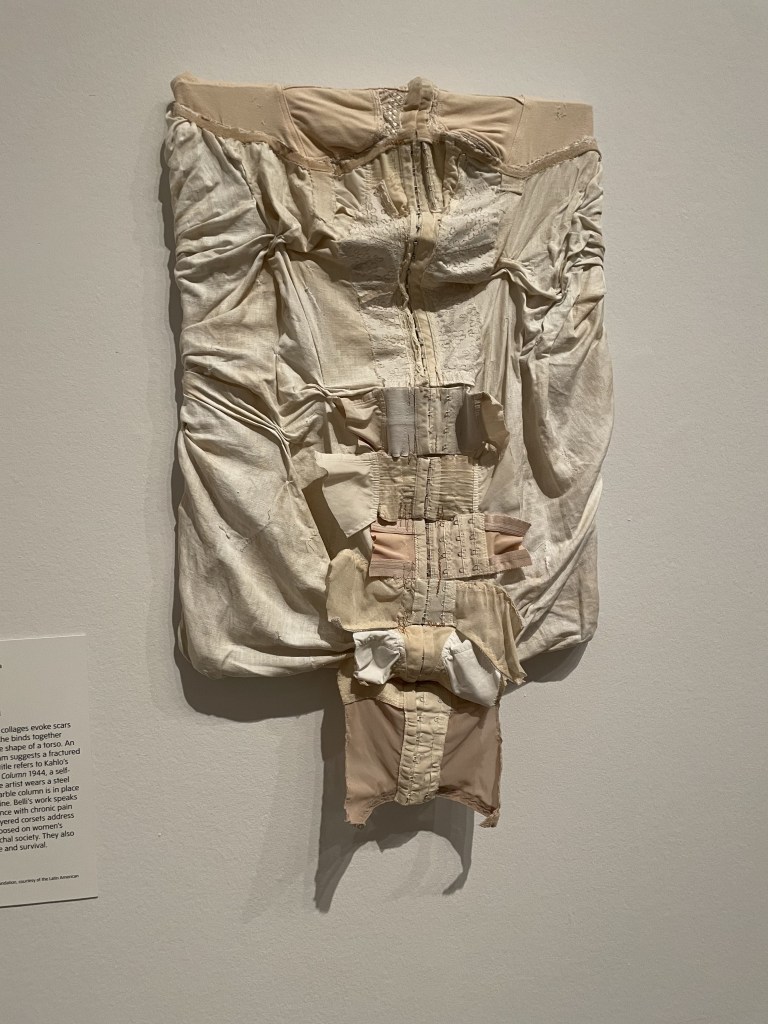
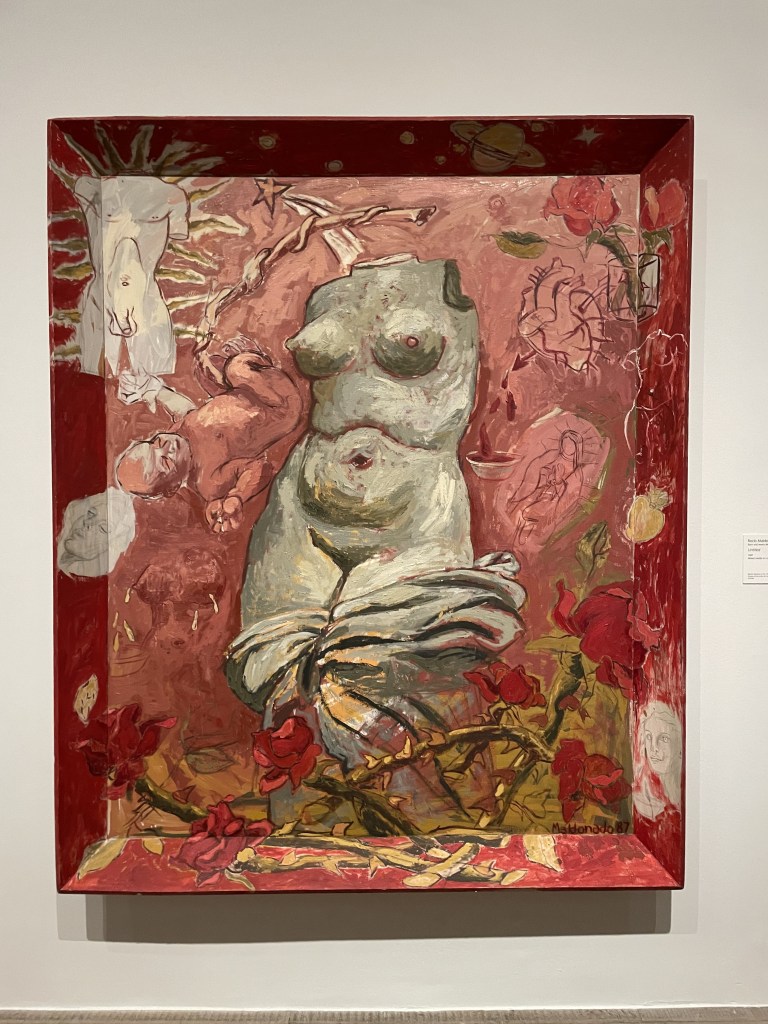
Some more ‘homages’ to Kahlo. We have an installation (left) by Amalia Mesa-Bains, using grapevines and the traditional Mexican altar dedicated to female deities; middle is Patricia Bell’s Broken Column who has bound together several corsets in the shame of a torso with an irregular vertical seam to channel a fractured spinal column. And on the right is Rocio Maldonado’s work – a female figure painted on canvas with painted wood frame.
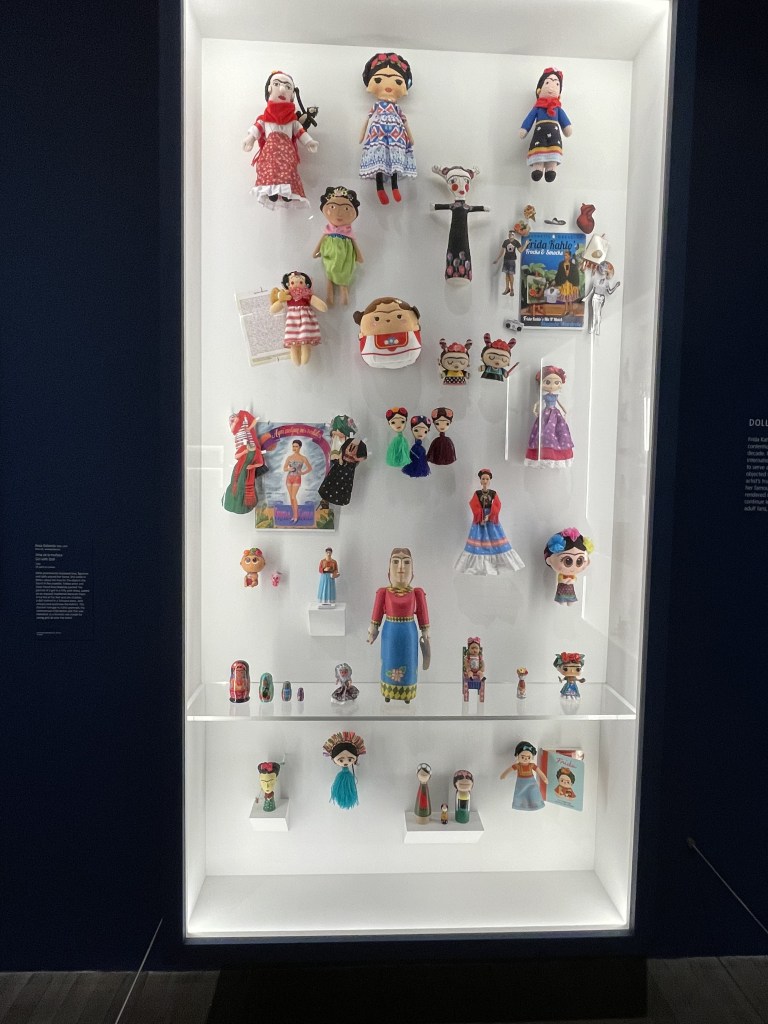
And in the last room of the exhibition we see the way the Frida Kahlo image has been commercialised. We see her image on so many items for sale, objects to revere, admire and play with. And here is a selection of dolls representing her. There’s even a Barbie doll but she has distinctly Western features.
Would Frida Kahlo be happy with her legacy? Well, I’m sure she’ll be happy for the recognition of her work but I do wonder about the quantity of ‘pretenders’ who claim to harness her style and story for their own advancement. She was so unique and achieved so much in her short life. She reminds me of Marilyn Monroe – whose show at the National Portrait Gallery tells us a rather similar story. How quick we are to copy something striking and beautiful when really, artists will ‘borrow’ and ‘steal’ from each other but what we should really value is originality.
The show is on at Tate Modern until 3rd January 2027. Well worth a visit.

