Collect 2019, the Craft Council’s annual show of art, craft and design excellence is on show at the Saatchi Gallery – a feast of imagination, ingenuity and creativity.

I do enjoy the annual festival of contemporary craft which is Collect, organised by The Crafts Council.  Galleries from all over the world present a fascinating range of artists’ work and, since I was lucky enough to go to the VIP preview, you can talk to the artists and craftsmen and women about their work.

Collect fills the vast Saatchi Gallery from top to bottom in a well laid out exhibition which gives plentiful space to show off the pieces.  So many objects, imaginatively made from a wide range of materials can be viewed, pored over and even handled.  I am always drawn to things which are colourful, having interesting textures and appear in multiples where everything is slightly different.  There were some great examples that fitted that tick list.


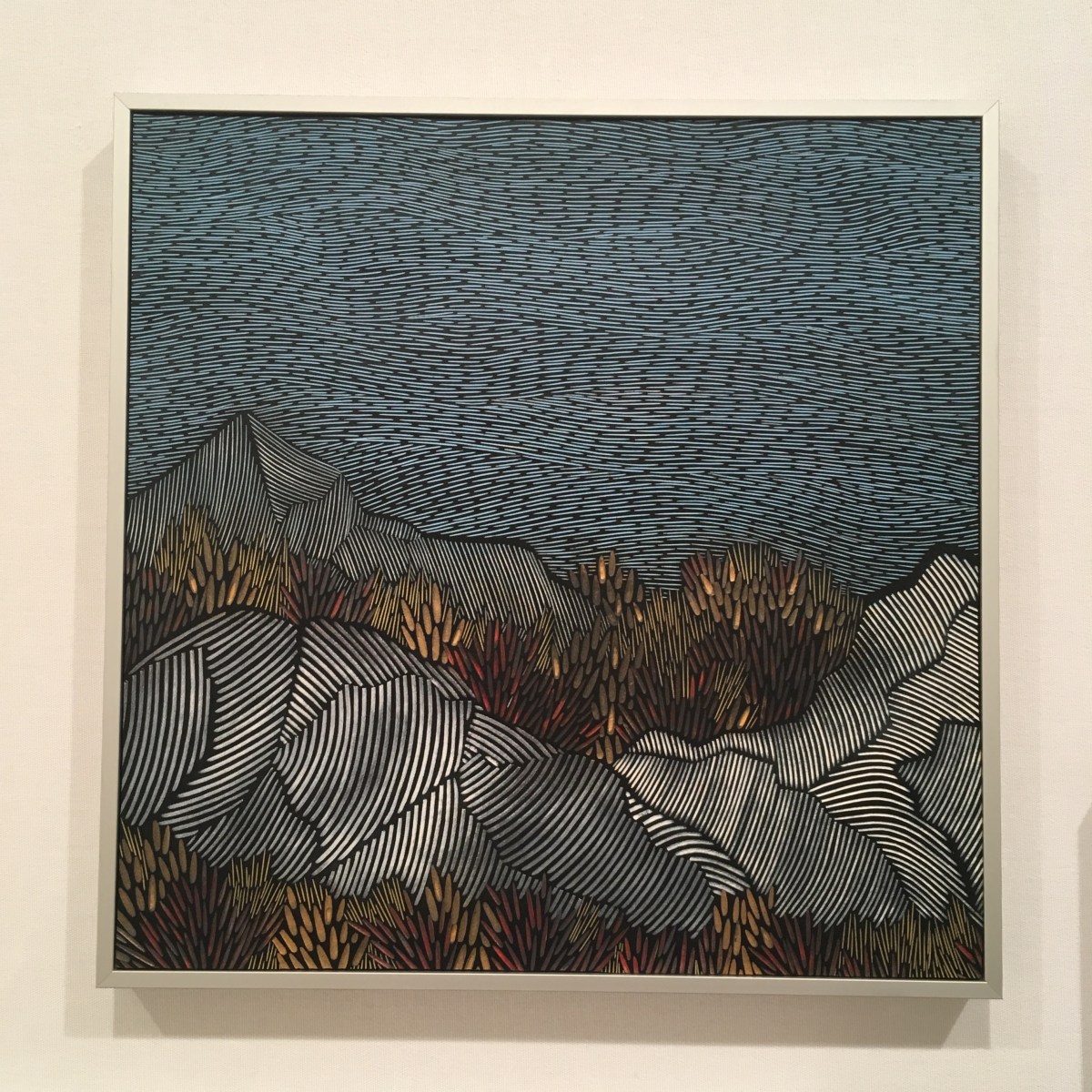
Glass, ceramics, plastics, leather, wood, terracotta, resin….. there are no limits to the clever use of materials on display.  I enjoyed chatting to Janine Partington who has created artworks using leather which she works with lino cut tools.  When some paint accidentally dropped onto plain leather an idea popped into her brain and she with it. I like that sort of serendipity in creativity.

IMG_5564

In the VIP lounge I was very impressed by the stunning chandelier by Cox London.  Inspired by those polypore fungi which grow around the base of forest trees it incorporates over 5000 tiny glass leaves which were painstakingly added to the frame by a jeweller. A labour of love!

IMG_5537


Collect is on at the Saatchi Gallery until Sunday 3rd March

The Renaissance Nude at London’s Royal Academy sheds light on the fascinating role of the unclothed human figure in art history and how the evolution of the nude, between 1400 – 1530, sets up the bedrock of western art for centuries to come.

This is my kind of show.  I’ve been fascinated by the challenge of life-drawing for years. These days I make paper collages directly from life models but the process of looking, understanding, decoding and depicting is the same, whatever the medium used.


The Renaissance painters were obsessed with the unclothed human figure. The situation could be religious, naturalistic, spiritual, domestic or maybe even a bit gratuitous.  The key element was the training needed in order to teach yourself how to really LOOK.  And there’s nothing better to concentrate the brain than spending day after day making hundreds of drawings of the figure, ideally on the move or in active poses. That’s what a studio apprentice would have had to do.  After putting in those hours of scanning a body an artist could accurately reproduce the proportions and movements of the human body, drawing from memory if a real model were not available. This aspect of art history was eloquently explained at the press preview by Thomas Kren, Senior curator from the J. Paul Getty Museum, Los Angeles which has partnered with the Royal Academy to put on this show.

In the 1400s the technology of print making really took off which must have been a boon for artists able to work on woodcuts or create engravings which would provide a wider and cheaper distribution of their images.  It was a truly democratising aspect of art history meaning that ordinary people, not just the wealthy patrons who could commission work from artists studio, could have the chance to enjoy these images of the unclothed human.

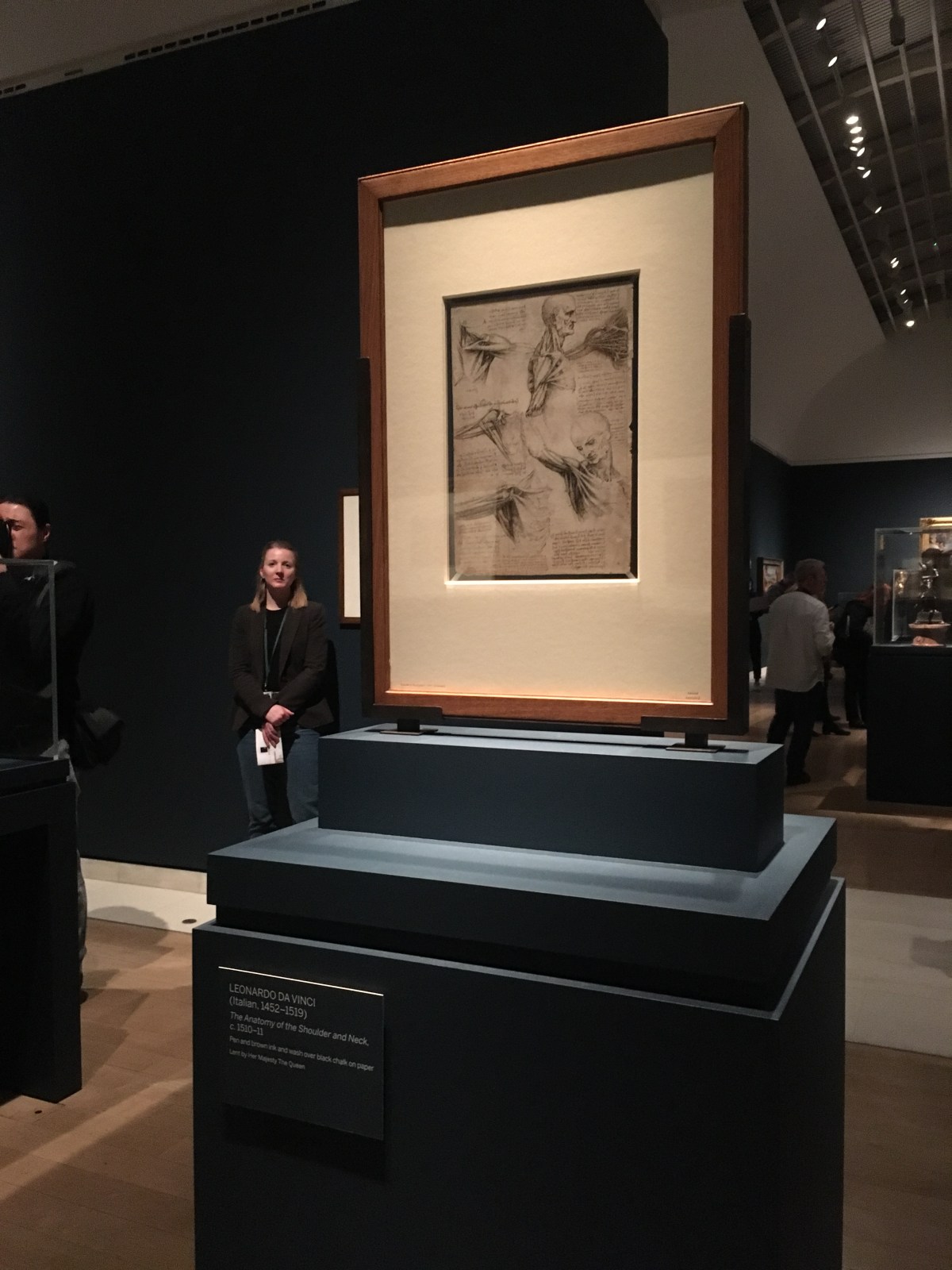
There’s an equal balance of male and female nudes in this show.  Some make the figure the main focus and some present the nude within a landscape or depicting scenes from Christian history. There are also some fascinating ‘close ups’ for examples, you can see Leonardo da Vinci’s painstaking study of the shoulder of a dissected corpse.

IMG_5576

The Renaissance Nude is on show until 2 June 2019 in the Sackler Wing of the Royal Academy.

Elizabethan Treasures: Miniatures by Hilliard and Oliver. A rare opportunity to gaze, close up and personal, at faces from 400 years ago and glory in the delicate features and clever characterisation which those remarkable portrait artists achieved.

There’s something utterly enchanting and beguiling about seeing life in miniature.  You marvel at the sheer challenge of creating a piece of art which is just… so, so tiny.

This new show at the National Portrait gallery is a jewellery box of visual delights. You can borrow magnifying glasses to enlarge the tiny portraits, often oval or round and hidden away in beautiful boxes or pouches. It’s helpful that there’s a selection of materials on show which show how pigments were mixed in mussel shells, how the finest sable brushes were used to create the smallest details and how mini blobs of resin mixed with colour could resemble rubies and priceless gems.

Most of the miniatures on show are in remarkably good condition, perhaps bearing testament to the fact that these portraits were private; they were not displayed on walls or public places but kept in pockets, in carefully crafted frames or boxes, protected and gazed at by the owners at their discretion, maybe in secret. There’s something intensely personal about the faces we can gaze at.   Yes, we have the ‘famous faces’ – royalty, aristocrats, masters of derring-do of the day such as Sir Walter Raleigh and Sir Francis Drake.  And of course there are several of Queen Elizabeth I.

What they all have in common is a certain intensity.  Clearly drawn from life and then painstakingly painted, you feel the strong connection between artist and subject. The delicacy and detail demanded for the creation of a good likeness is matched by a fascination for clothing and jewellery and all the accoutrements of high fashion of the day.

I took a few photos of miniatures which particularly impressed me but really, they were ALL beautiful and I spent my time at the gallery in a kind of swoon of beauty as my eyes alighted upon each little marvel.


The exhibition majors on a ‘compare and contrast’ with the two miniature ‘giants’ of their day: Nicolas Hilliard and Isaac Oliver.  Both artists were contemporaries and reached the heady heights of royal patronage and were clearly much sought after by those able to afford their skills.  Hilliard was English, and trained as a goldsmith, before becoming a ‘limner’ – a miniature painter – while Oliver came from France and moved to England as a Huguenot refugee.  Hilliard seems to engage more closely with his subjects but Oliver makes them look gorgeous, using a particularly ‘soft-focus’ deftness with the brush.  These two pictures, above, are of sisters. They’ve been dressed similarly and you can see the family resemblance but each one’s character and personality is clear to see.

These two, above, by Hilliard are examples of gorgeous observation – on the top left we have Queen Elizabeth the First’s ‘favourite’ Dudley, Earl of Leicester, and then there’s the beautifully painted portrait of Henry, Prince of Wales.

I loved this portrait of an unknown man against a background of flames (representing burning, passionate love) by Hilliard and also this one of Venetia Stanley, who became Lady Digby, a renowned beauty of her day.

Portraits made from IKEA catalogues. A huge project for me and my www.paperface.co.uk venture. Live portraits made at speed and exhibited at Stephen Lawrence Gallery, within University of Greenwich, later shown within gallery space at the new IKEA store opening at Greenwich North on 7th February 2019!

The last few months have been super busy for me.  IKEA, is opening a new store at Greenwich North in February and, because this one is going to be very green and sustainable, they decided to find an imaginative way to use old IKEA catalogues  to express this and, yes, could they find an artist who can create portraits of Greenwich people made entirely from catalogue paper?

The clever people at Mother London, a whizzy advertising agency, were tasked with finding the artist who could do this. They asked The Mall Galleries who knew about me.  And, voila, the question was put: ‘Would I care to make some large format portraits of Greenwich celebrities, past and present, and also create ‘live portraits’ of locals in a Greenwich gallery?’  Of course I said yes to everything.  I love tearing up paper but I’ve never used catalogue paper like that – I generally use the pages of art, architecture or design magazines which are printed on high quality paper and are covered with gorgeous colours, textures and patterns.  However, I have learned to love my IKEA catalogues.  And I’m full of praise for the stylists who have found ingenious ways to incorporate all manner of products in the photography and I clever little motifs which pop up right through the publication – a spotty blouse a striped towel, jazzy mugs.  The pages of the catalogues are very cohesive and pleasing to browse. I now have my favourite, go-to pages for tearing up!

Before and after Christmas I was hard at work on some large, and very detailed portraits.  I made 10 in total and four were selected for the main display. The ones which made the walls of the Stephen Lawrence Gallery, which is part of the University of Greenwich, were Boy George (local lad) , Sir John Flamsteed (first Astronomer Royal), Queen Elizabeth I (born in Greenwich Palace) and Admiral Lord Nelson (based at the Admiralty in Greenwich).

Last weekend I was based in the gallery space with piles of catalogues, glue, scissors and pens and worked my way through a series of ‘live portraits’ of people who perched upon a very uncomfortable stool in front of my easel and allowed me to scrutinise their face, rip up bits of paper and create a very immediate, and extremely quick, paper portrait.  The results have been really fun and everyone seems delighted with them.

There will be another weekend of live portraits at the Stephen Lawrence Gallery which will fill the space with around 48 paper portraits. The ultimate solo show!  As soon as each portrait is finished and the varnish is dry, they are popped into IKEA frames and hung on wall.  It’s been exhausting but exhilarating and I so enjoy the privilege of gazing at people’s faces, listening to their stories and recording a moment of their life, in paper.

The lucky subjects will be able to come to the new store in Greenwich North and see the final collection on display at the opening and, in due course, will be able to take their portrait home.


An enlightened show on Anglo-Saxon Kingdoms at the British Library shows that the ‘Dark Ages’ were far from gloomy but actually a time of extraordinary cultural flowering; you can see rare examples of beautiful objects which date from the departure of the Romans to the invasion of William the Conqueror, early English literature, manuscripts, art and artefacts which have survived the centuries.

I was blown away by this show.  OK, I confess I have a bit of a ‘thing’ about Anglo-Saxon history and an obsession with art and artefacts from the period which spans the departure of the Romans and the arrival of the Normans. We’re looking at the years from  around 500 to 1066 so it’s big chunk of time. For years this period has been regarded by historians as the ‘dark ages’, simply because it’s a big ask to find objects which have survived from those years but the things that we can see show that life in the Anglo-Saxon lands were far from dark and definitely not boring.

At the press preview for this new show at the British Library I loved the enthusiasm of the curator, Dr Claire Breay and her team who have spent years preparing this show. They’ve assembled items from the Library’s own impressive collection of books, manuscripts and documents and mingled them with sensational loans from museums, galleries, cathedrals and collection from elsewhere in the British Isles and further afield.  What you come away with is a sense of the rich creativity, inventiveness and skills of the people of Anglo-Saxon Kingdoms.  Yes, there were wars and invasions and lots of local skirmishes.  It’s clear that this period must have been pretty tumultuous to live through – and being a woman would have been challenging.  However, you soon discover that it was time of intense evolution, innovation and excitement and clearly set down the foundations for the interesting and multi-faceted island race which we remain today.

I’ve long been an admirer of King Alfred, not just because his story was one of my favourite Ladybird books as a child.  His reign, (871- 99) was a vastly important time in terms of unifying the warring factions within Anglo-Saxon England, establishing the idea of education for children, establishing that English rather than Latin should be used for administration and developing international links, trade and shared knowledge.

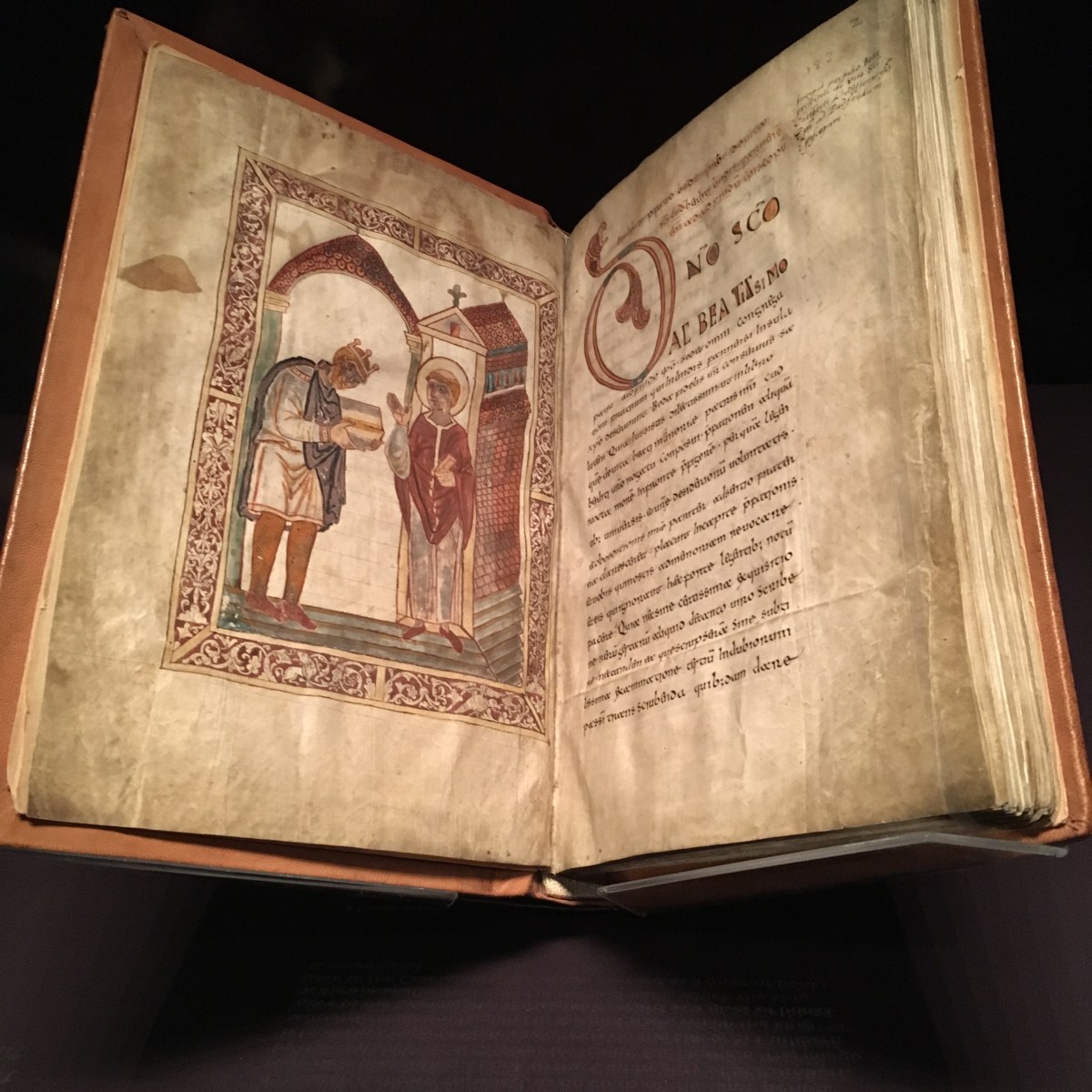
Always on the hunt for portraits, I was impressed to see that King Aethelstan (924 – 39), grandson of Alfred, features in the earliest known contemporary image of a king within a manuscript.  Here he is shown presenting a book to the Community of St Cuthbert, established at Chester-le-Street, Co Durham.   Aethelstan was prodigious giver of books and promoter of education;  we have lot to thank him for.
IMG_3839

It’s a joy to peruse the glorious illuminated bibles and manuscripts and revel in the fabulous colours of the paint and the gleaming gold.

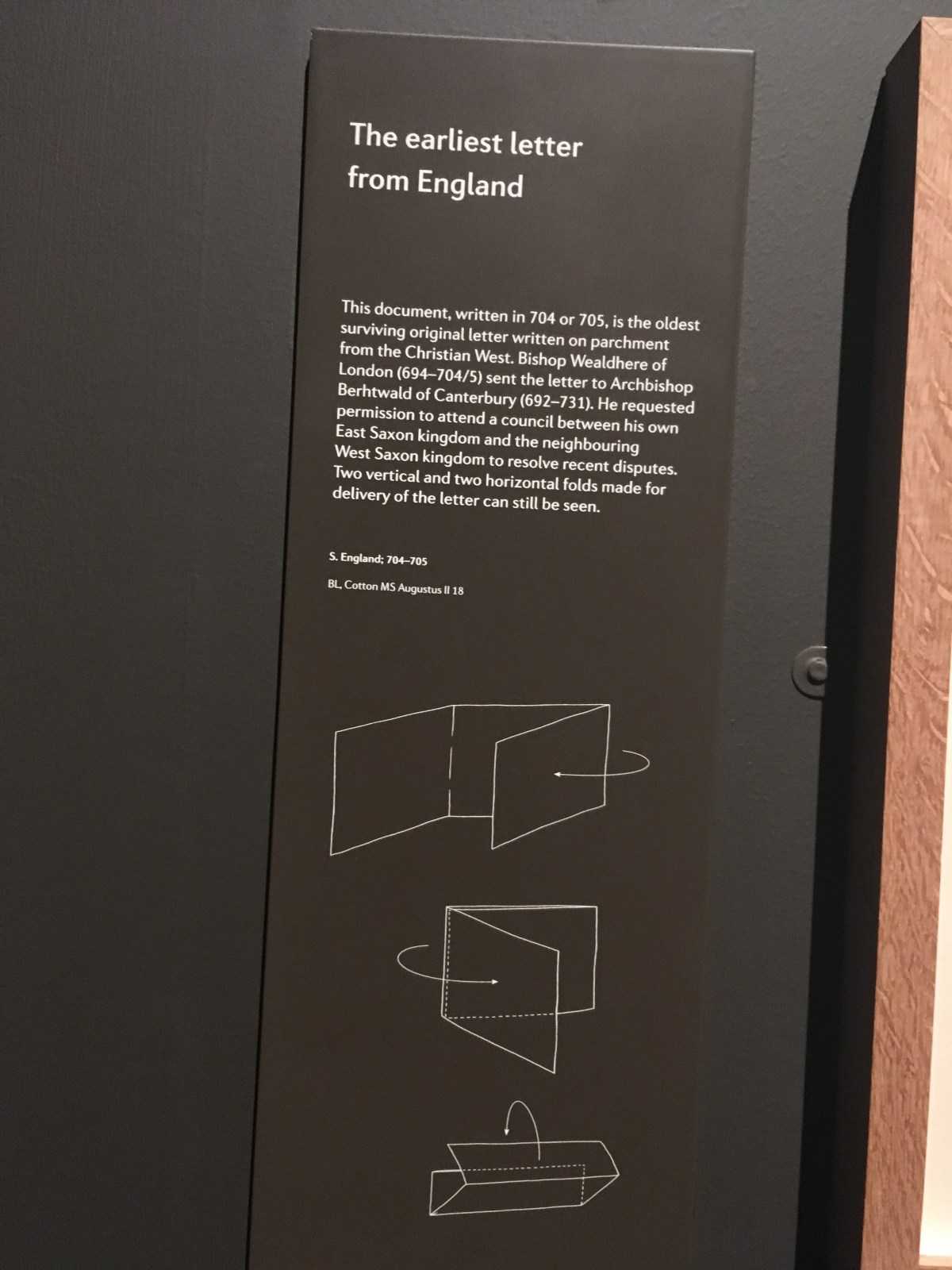
I liked an example of the first ever letter – you can tell is was a letter because it was folded up a special way.

IMG_3794

IMG_3795

I absolutely adored the Lichfield Angel. This sculpture (thought to date from the 660s) was excavated from beneath the nave of Lichfield Cathedral in 2003.  If you didn’t know it was so old you might possibly imagine it had been made by one of last century’s sculptors such as Eric Gill or Jacob Epstein – it is sensational.

IMG_3847

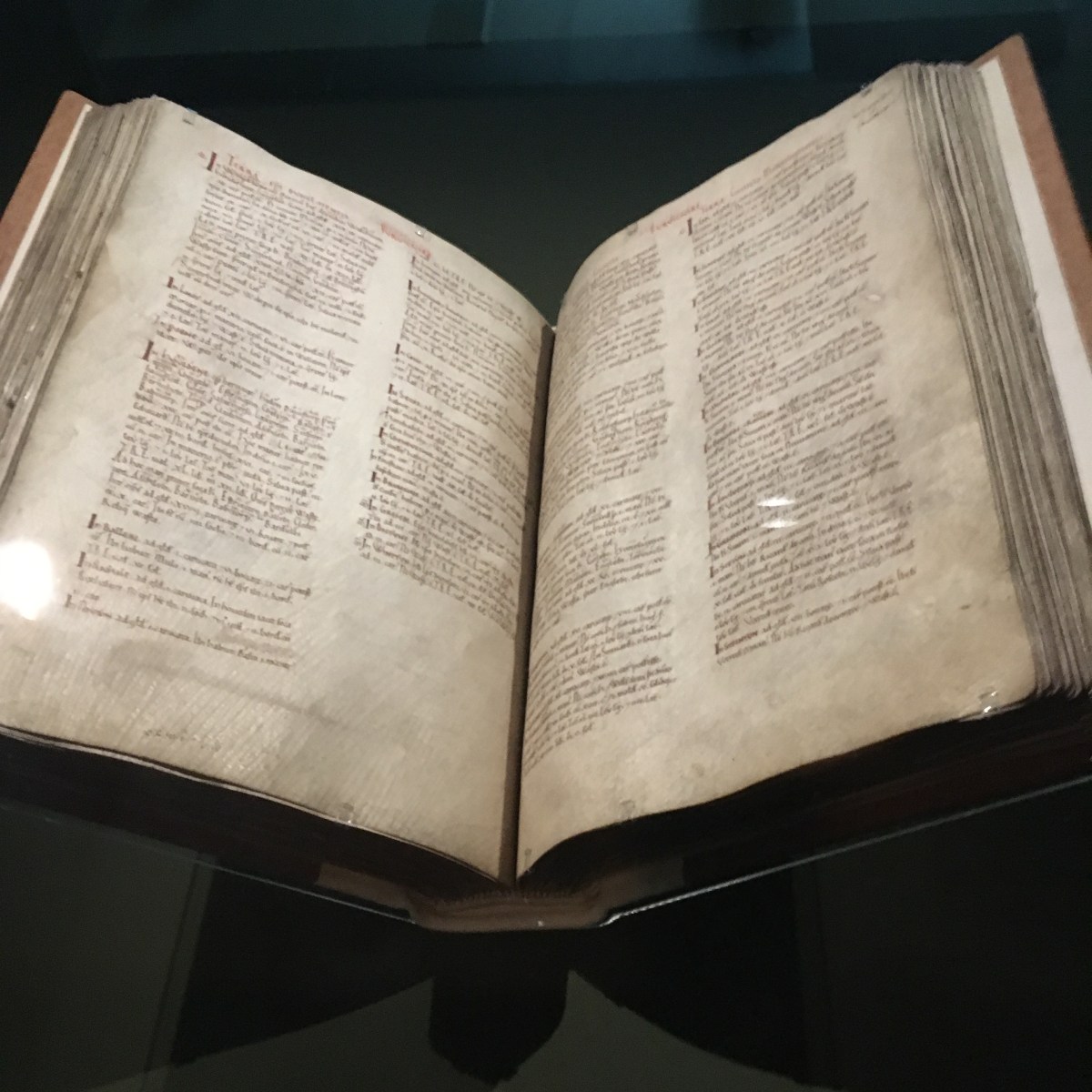
If you’ve never seen the Doomsday book, then here it is, in all it’s weighty glory, on loan from the National Archives in Kew – the most comprehensive glimpse of life in an organised, wealthy and very desirable country.  It’s also remarkable to learn that William the Conqueror commissioned this great record on Christmas Day 1085 and it was completed by 1st August 1086 – extraordinary.
IMG_3797

This is very much a ‘once in a generation’ opportunity to see so many treasures from this period in one place and beautifully displayed. The show is open until 19 February 2019 and well worth visiting.

http://www.bl.uk

The 2018 Taylor Wessing Photographic Portrait Prize at the National Portrait Gallery presents a fascinating collection of portraits from around the world with a mix of studio and street photography capturing spontaneous and carefully crafted pictures.

I’m gradually getting to understand photography.  As an artist I’m more familiar with the process of ‘eyeballing’ (as David Hockney described it) with a pencil, brush or bit of paper in my hand, rather than peering through a lens. However, when you visit a show like the Taylor Wessing Photographic Portrait Prize you come away with a feeling of huge admiration for the work of the photographers who have been fortunate enough to be selected for this prestigious prize.

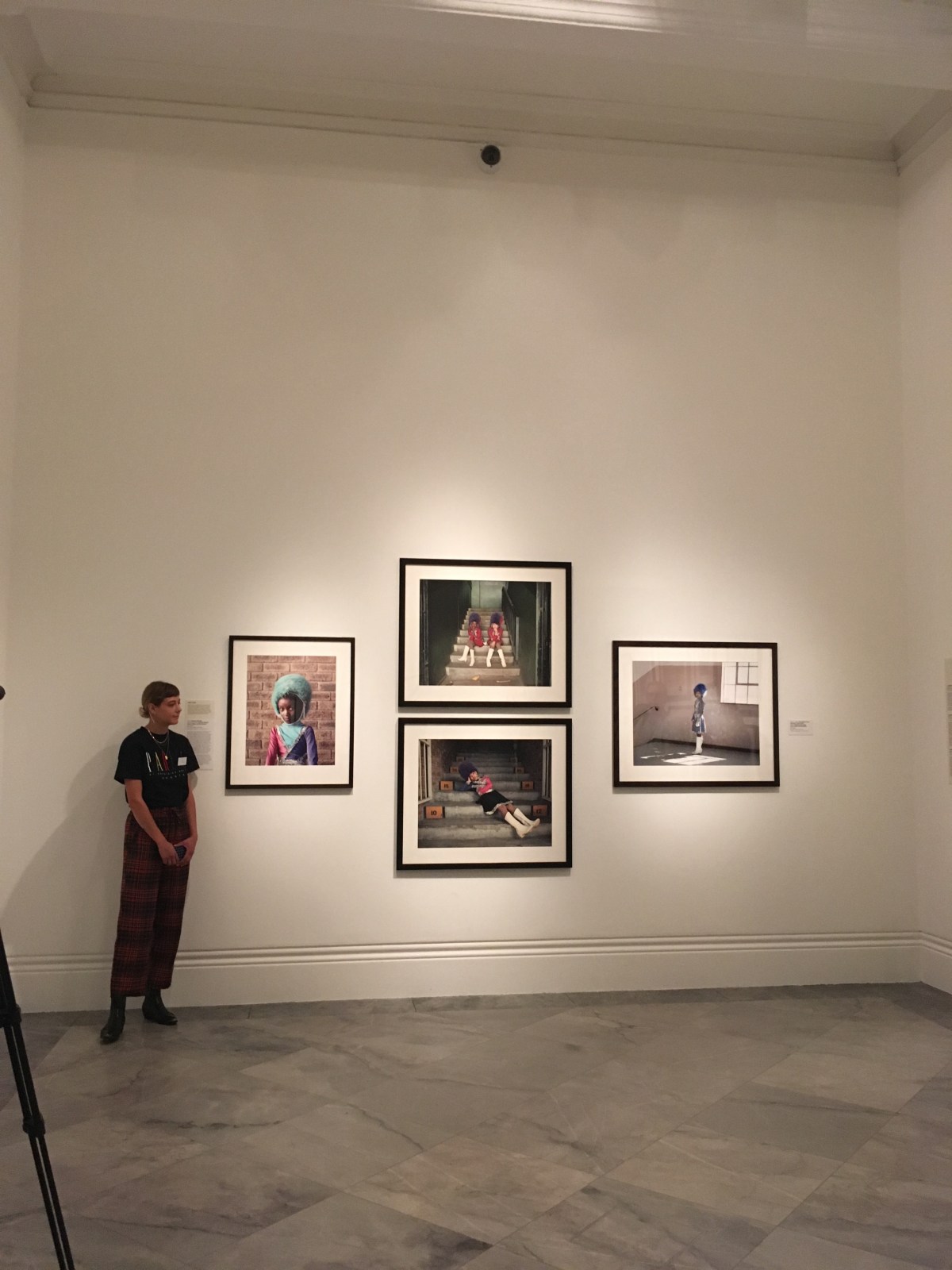
I think the universal element to the success of these portraits is the ability to focus on that gaze, the way a subject will look directly at the photographer and allow something very exclusive and internal to be captured.  It’s probably a mixture of trust and good fortune. The winning pictures came from a series of photographs of ‘Drummies‘, young girls in Cape Town, South Africa, who clearly felt at ease with Alice Mann and allowed her to take informal photographs of them dressed in their wonderful majorette outfits in spaces which are familiar to them.

IMG_3767

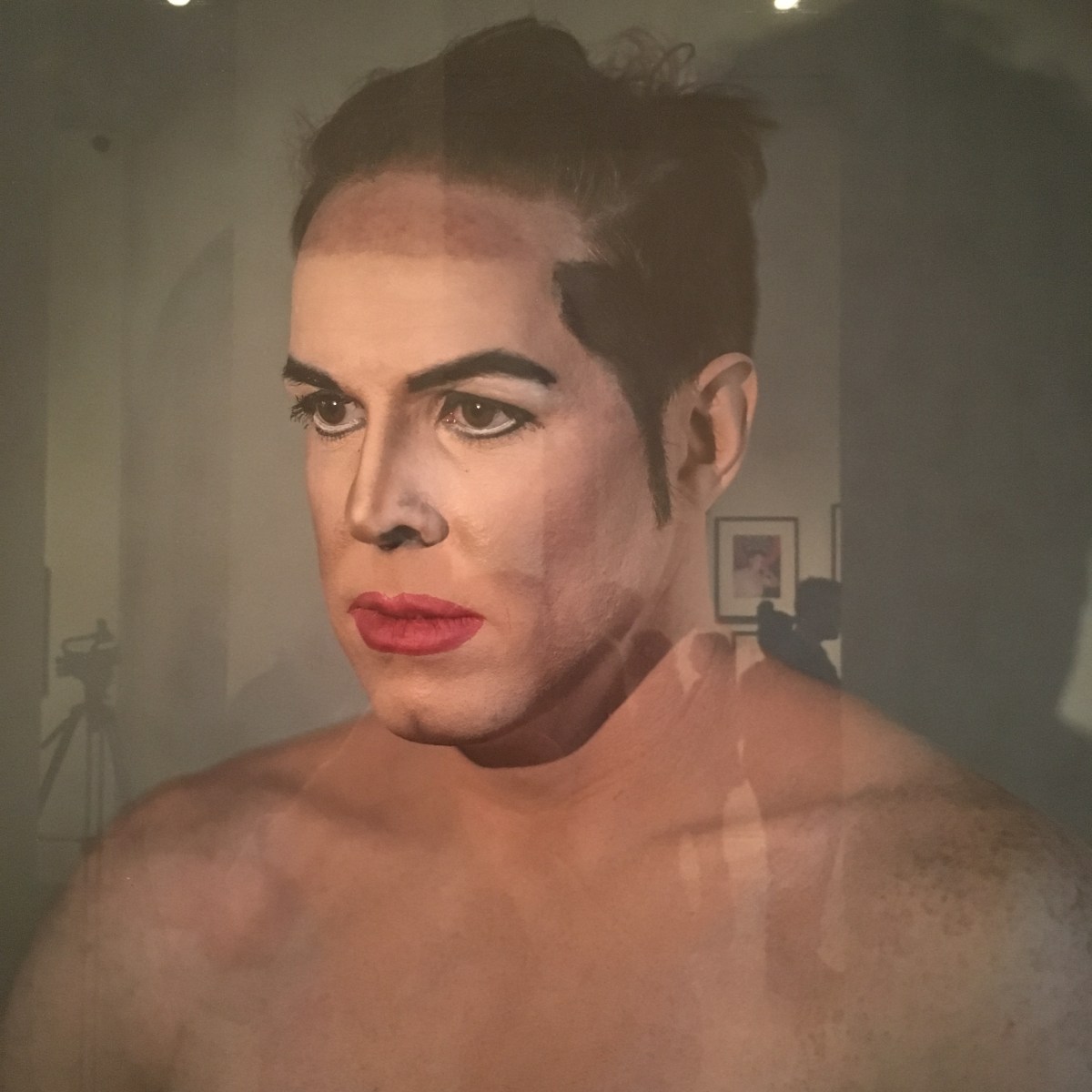
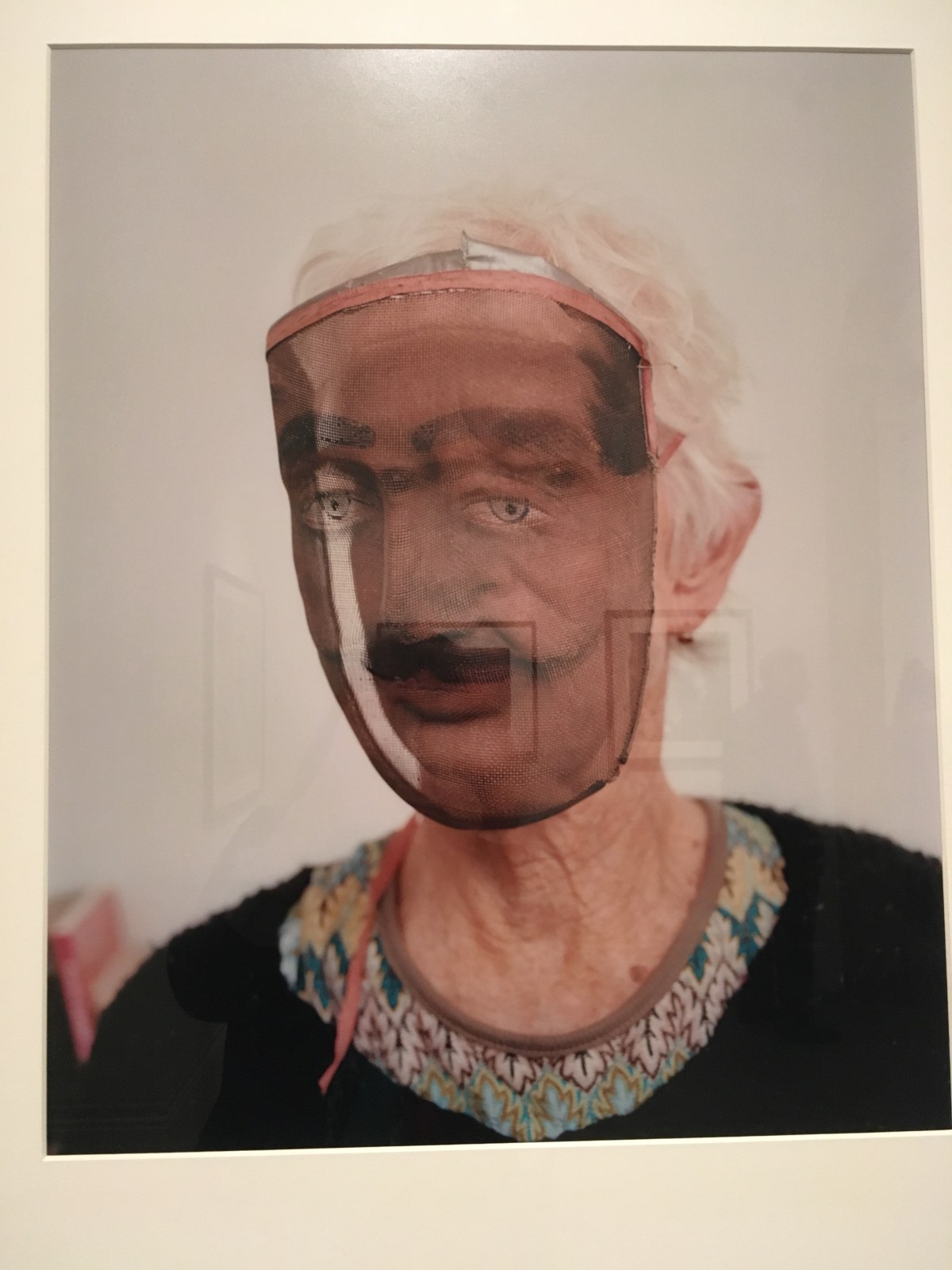
I’m always drawn to curious portraits and a couple of them stood out.  I liked Eddie Mulholland‘s portrait of Robin Parsons as he transforms himself into Michael Jackson for a tribute act.  And I liked Toby Coulson’s portrait of Joan Jonas – you can sort of see the woman but she’s behind a curious mask and the effect is very beguiling.

IMG_3765

IMG_3763

I was also very struck by Alice Zoo’s portrait of Woman in a Blue Cap. The subject is close to my heart, it’s of one of those intrepid women who brave the freezing waters of the Women’s Pond at Hampstead and I have enormous respect for them. (I’m a fair weather swimmer so I won’t be back in the pond until the warm days of next year’s early summer.)

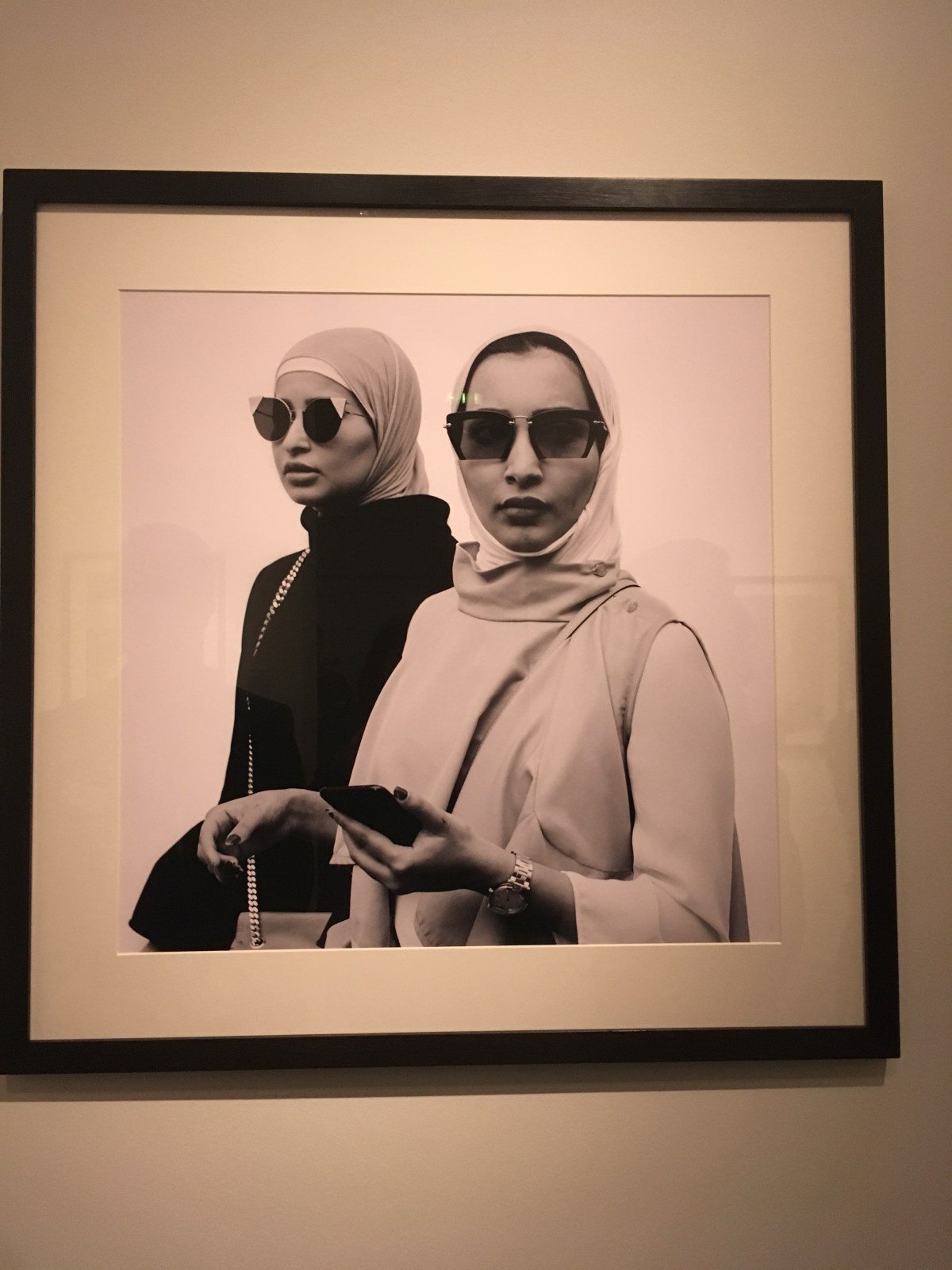
And I did like the very cool photograph by Max Barstow from his Londoners series – this was joint second prize winner – and captured two very chic women in Regent Street who agreed to pause from their purposeful shopping just long enough to be perfectly framed.

IMG_3770

The show is on at the National Portrait Gallery until 27th January 2019.

IMG_3753

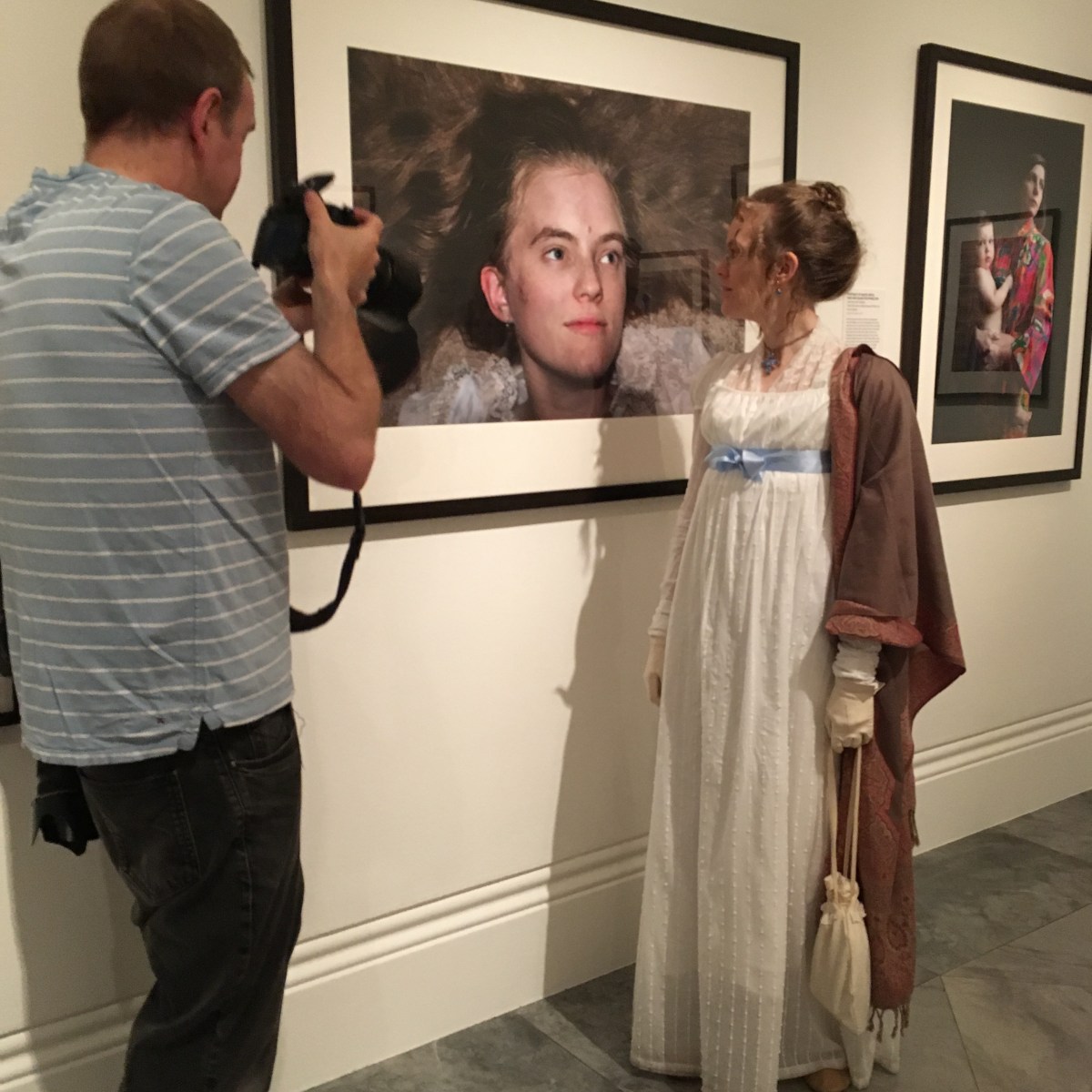
Above: Charlotte, a member of the Jane Austen Pineapple Appreciation Society being photography by Guy Bell next to a portrait of her taken by Alejandra Carles-Tolra.

http://www.npg.org.uk

Two centuries of photography is celebrated with the new Photography Centre at the V&A which offers a panoramic take on the evolution of the medium from glimpses of the earliest pictures to the arrival of a dynamic new art form and the work of contemporary practitioners.

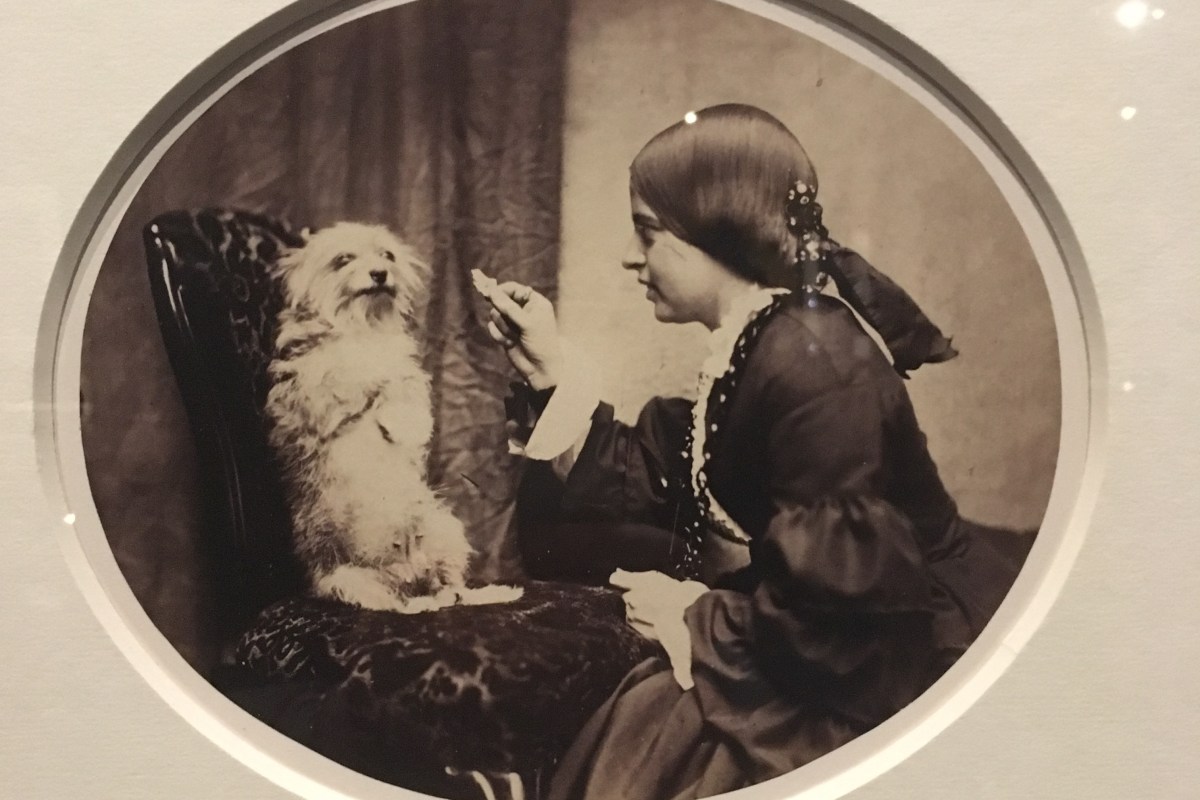
It’s amazing to think that photography has been recording human life for 200 years.  It must have been thrilling for the early inventors to come up with a system for capturing pictures of people and places, even if it took an age for the image to develop.  And then, it’s just as remarkable to see how quickly new media is adopted by practitioners with an artist’s eye. Almost immediately, early photographers started using the lens in an inventive way and exploring the potential for capturing surprising sights, recording people and staging poses.  To begin with, the process would not have been vastly different from asking a model to pose for an artist to draw or paint them.  The picture above, taken by W.G.Campbell in 1856, of the girl feeding the dog, demanded that both subjects had to stay still for at least seven seconds (good performance by the dog!).

For anyone who loves the evolving technology of photography there are serried rows of early cameras and the paraphernalia of photography to peruse.  I was intrigued to see how quickly photographer learned to use this medium to tell stories.  For example, these shots recreate the story of Little Red Riding Hood. They’re by Henry Peach Robinson from 1858 and show how illustrations and illusion could be created – apparently some reviewers were offended that the images seemed to ‘real’ for a fairy tale!


The ability to capture human expression must have been thrilling. For centuries artists have been capturing faces in all manner of grimace, smile, howl or smirk.  All of a sudden, you could do this in less than a minute. What a breakthrough! A great exponent of this was Ernst Schulz who, in 1967, dressed himself for a whole series of ‘selfies’ acting out a range of emotions. They’re wonderful.

Daguerre established early studios for portraits and this became hugely popular. The human desire for a recording of a loved-one is such a strong desire.  And the results, Daguerreotypes on glass, look so charming in their little velvet frames. These ones were taken by Antoine Claudet, a pupil of Daguerre, who set up a studio in London.

Moving into the last century there are great examples of photographers who found pleasure in incidental images and the chance to capture them. I’ve seen these before, but the ‘faces’ photographed by Brassai in Paris are witty and compelling.

Now these images of Spomeniks are something I’ve never seen before and knew nothing about. They were taken by Jan Kempenaers in 2006-7 and they’re of monuments built in former Yugoslavia on the sites of Second World War battles and concentration camps.  They just look weird.

Mary McCartney has donated some shots from her imaged entitled Off Pointe along with family photographs taken by her mother, Linda McCartney.


And in a separate gallery there is a collection of digitally created images by artist Thomas Ruff. He has created a series inspired by Linnaeus Tripe‘s 1850s paper negatives of India and Burma, held in the V&A’s collection.  Taking images which are 160 years old he has created a series of haunting images which carry the patina of age and atmosphere of the date of the original prints through the enhancing of small details and fogging of focus. The contemporary pieces by Ruff have the feeling of lithographs; they are beautiful.


The Photography Centre opens on 12th October 2018. (Free)  The Spotlight Exhibitions of contemporary photography will change regularly.

www.vam.ac.uk 


Frieze Art Fair fills Regents Park with a wealth of artistic variety and contemporary creativity while Frieze Masters brings mouthwatering examples of masterpieces from the ancient world to 20th century modernism.

Each year there’s a huge buzz in the art world as galleries, collectors, artists and enthusiasts make a bee line for the huge temporary exhibition tents in Regents Park to see a vast range of art on offer – as long as you have a big budget and wall or room space to show off some of the astonishing pieces.  (Above is Yayoi Kusama‘s The Season Came with Tears at Victoria Miro Stand)

As a humble artist and writer I confess I don’t have pockets deep enough to carry away any of these treasures but I can certainly feel enriched by what I see. And this year, Frieze Art Fair, and its younger sibling, Frieze Masters both offer a feast for the eyes and the chance to see just what’s fashionable, and what is likely to sell.

Of course I find myself drawn to works which involve paper, collage or mixed media and I wasn’t disappointed by examples on offer.  There was a satisfying amount of paint on canvas too.  There have been years when I’ve wondered if artists would ever pick up a brush and splash paint onto a surface but this year we are definitely seeing that the painted picture is alive and well and amply represented at this show.

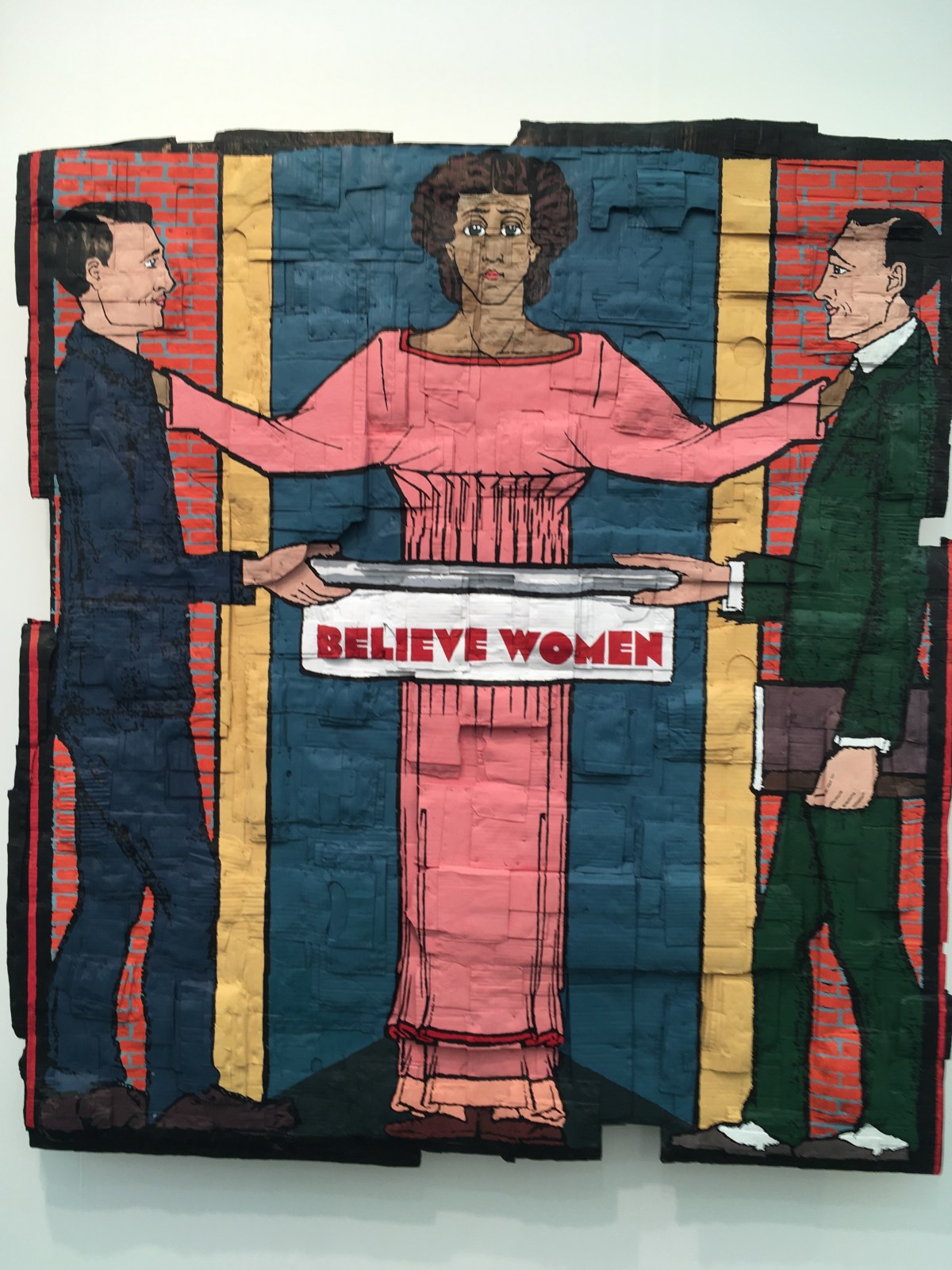
There was a pleasing number of witty artworks on show, but often with a message – there is very much a move to include as many female artists as possible and to promote the #MeToo. The piece entitled Believe Women by Andrea Bowers on the Andrew Kreps Gallery stand illustrates this nicely.

IMG_3591

I liked Urs Fischer‘s sculpture entitled Francesco – a real mix of materials – featuring a head you’d expect to see in a museum of Greek sculptures, but done in a kind of wax and staring at at mobile phone. It was on the Sadie Coles stand.

IMG_3561

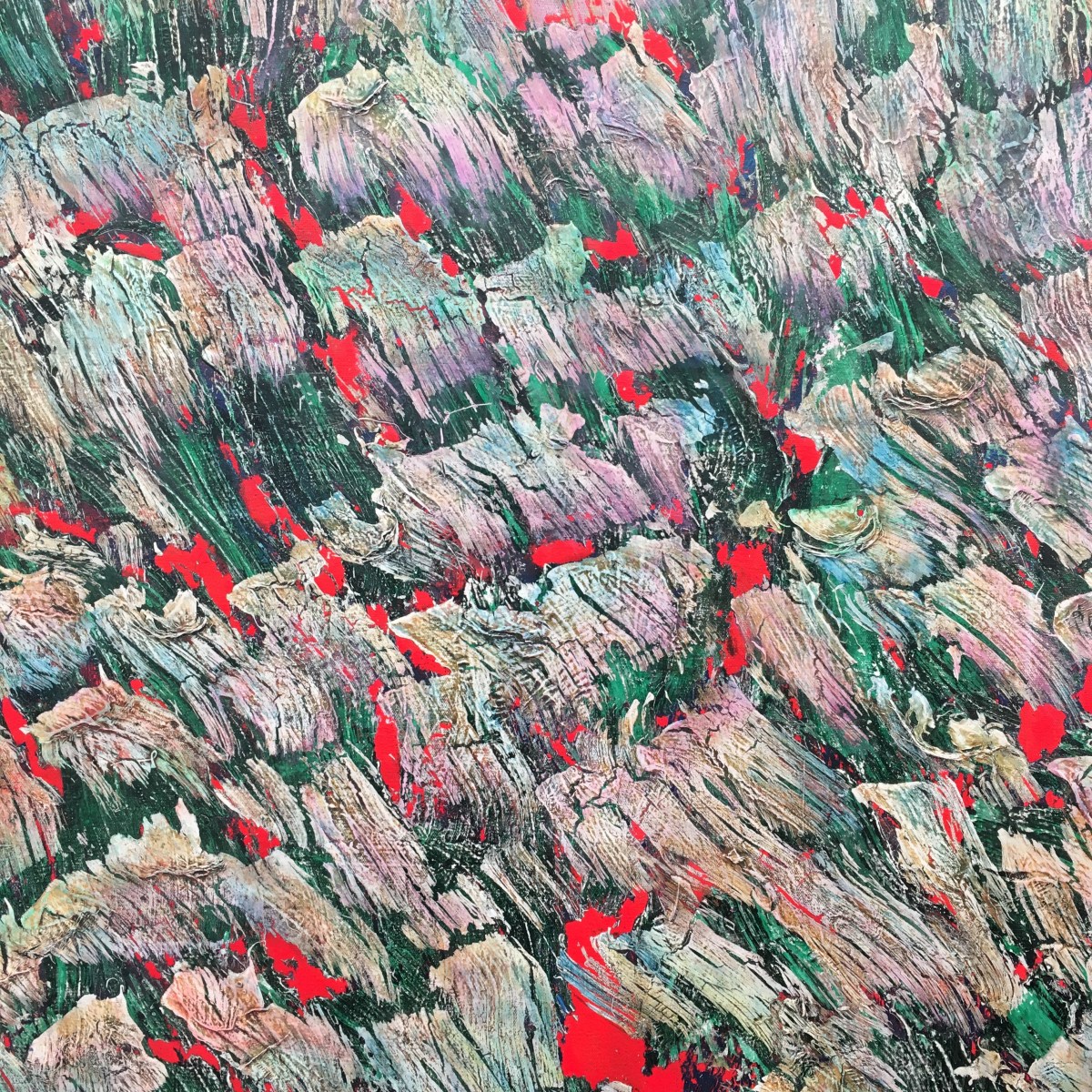
I liked Moshekwa Langa‘s Stranger’s Homes done with mixed media on paper on the Blain Southern stand.  And Lisa Alvarado’s ‘Traditional Object 23’ is a joyous creation of texture on acrylic, fabric and wood. It was on the Mary Mary stand.

IMG_3568

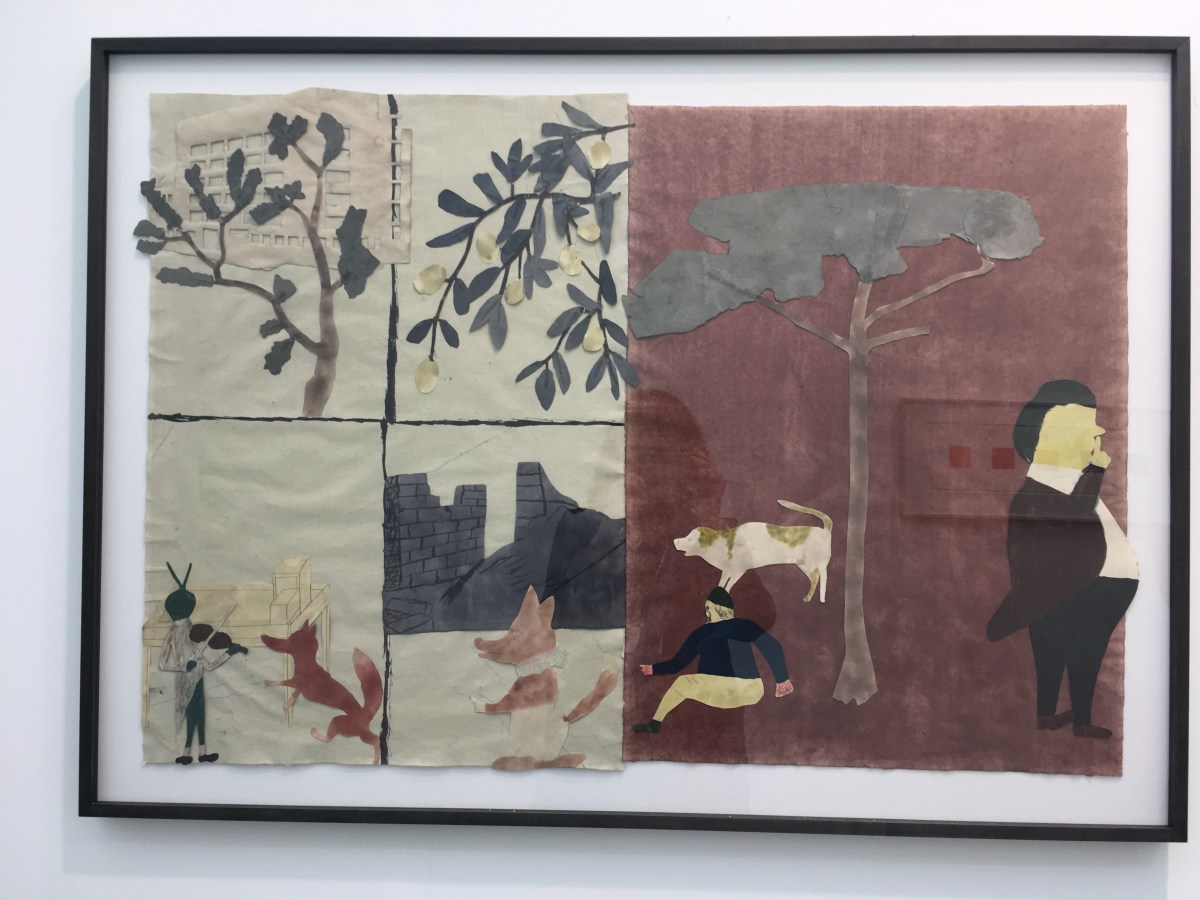
There was something really pleasing about Jockum Nordström‘s Valentine’s Day II which is collage, watercolour and graphite on paper.  It’s on the ZENO X Gallery from Antwerp.

IMG_3572

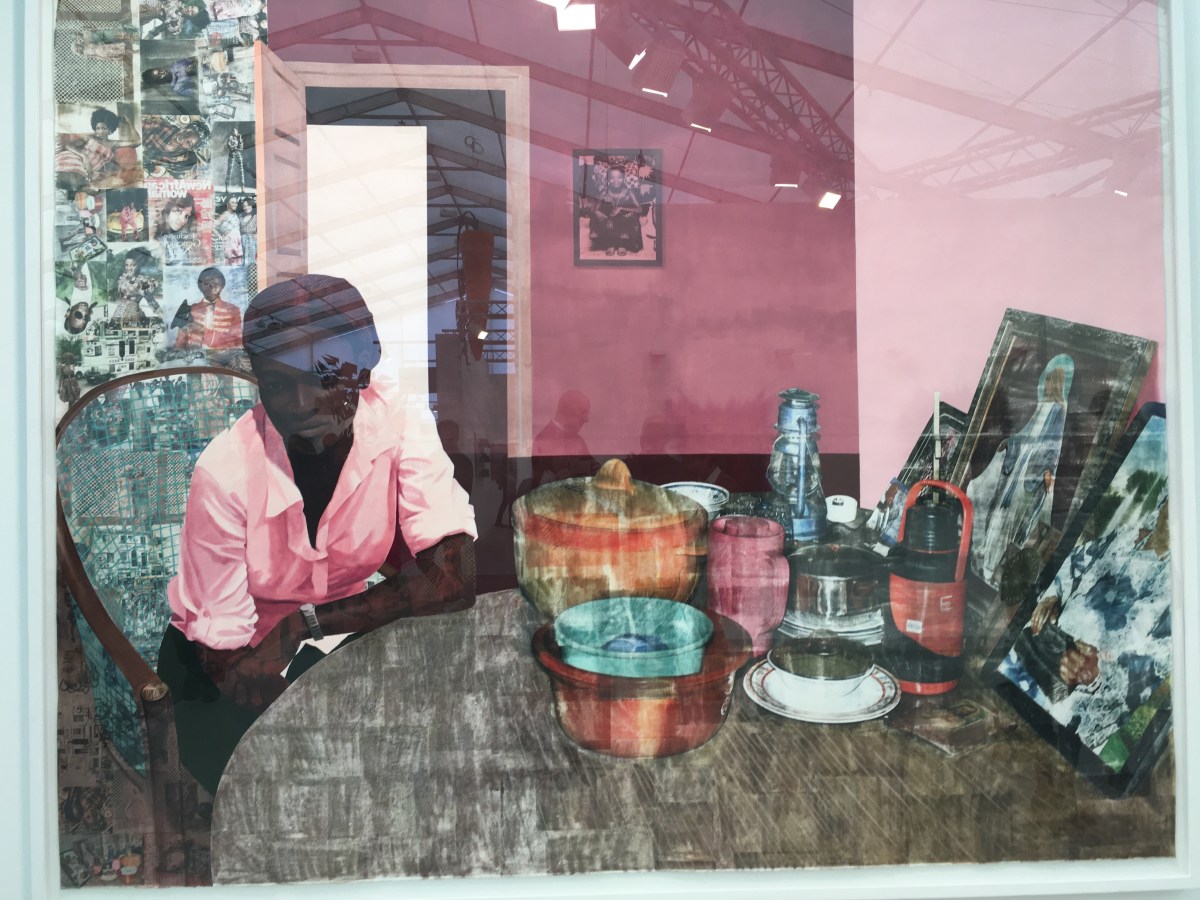
And on the Victoria Miro stand was Mama, Mummy and Mamma (Predecesors 2)  by Njideka Akunyili Crosby done with acrylic, colour pencils, charcoal and transfers on paper.

IMG_3576


Over at Frieze Masters, a brisk walk north through the autumnal pleasures of Regents Park, there was a calmer, more restrained feel. But the art on the walls was fabulous. Going round that show is like hoovering up some of highlights of the world’s best galleries and museums, there are such treasures on show.  I’m always drawn to the Medieval Dutch painters.  Loved the painting entitled The Wedding Dance by Marten Van Cleve the elder (painted circa 1570)  and also the Peter Breughel the Younger painting, The Adoration of the Magi in the Snow which is more winter wonderland than religious picture. The camels have nice cosy blankets on them!

IMG_3614

IMG_3609

Frieze and Frieze Masters are only on for three hectic days in October. It’s open to the public from Friday5th – Sunday 7th October and well worth a visit.

http://www.frieze.com


Compare and contrast. The lives of Mantegna and Bellini were entwined through rivalry, friendship, creative confederacy and also as brothers-in-law. Their shared talents brought innovation to their world and inspiration to the Renaissance painters who followed them and paved the way for the development of modern art. A fabulous new show at the National Gallery in London celebrates this astonishing artistic relationship with a stunning collection of paintings many of which have never been seen in the UK before.

Five hundred years ago the art scene in Italy was pretty thrilling.  A concentration of fabulously talented artists flocked to the key cities – Venice, Florence, Padua, Mantua and others – in search of patronage, experience, studio space and the opportunity to really push their art.  Part of the excitement of the period had been the recent development of oil paints which allowed works to be painted on canvas or linen rather than wooden panels or directly onto walls – frescoes.

Below is the astonishingly beautiful and tender Virgin and Child (Simon Madonna) by Mantegna which captures maternal love in such a simple and convincing way.

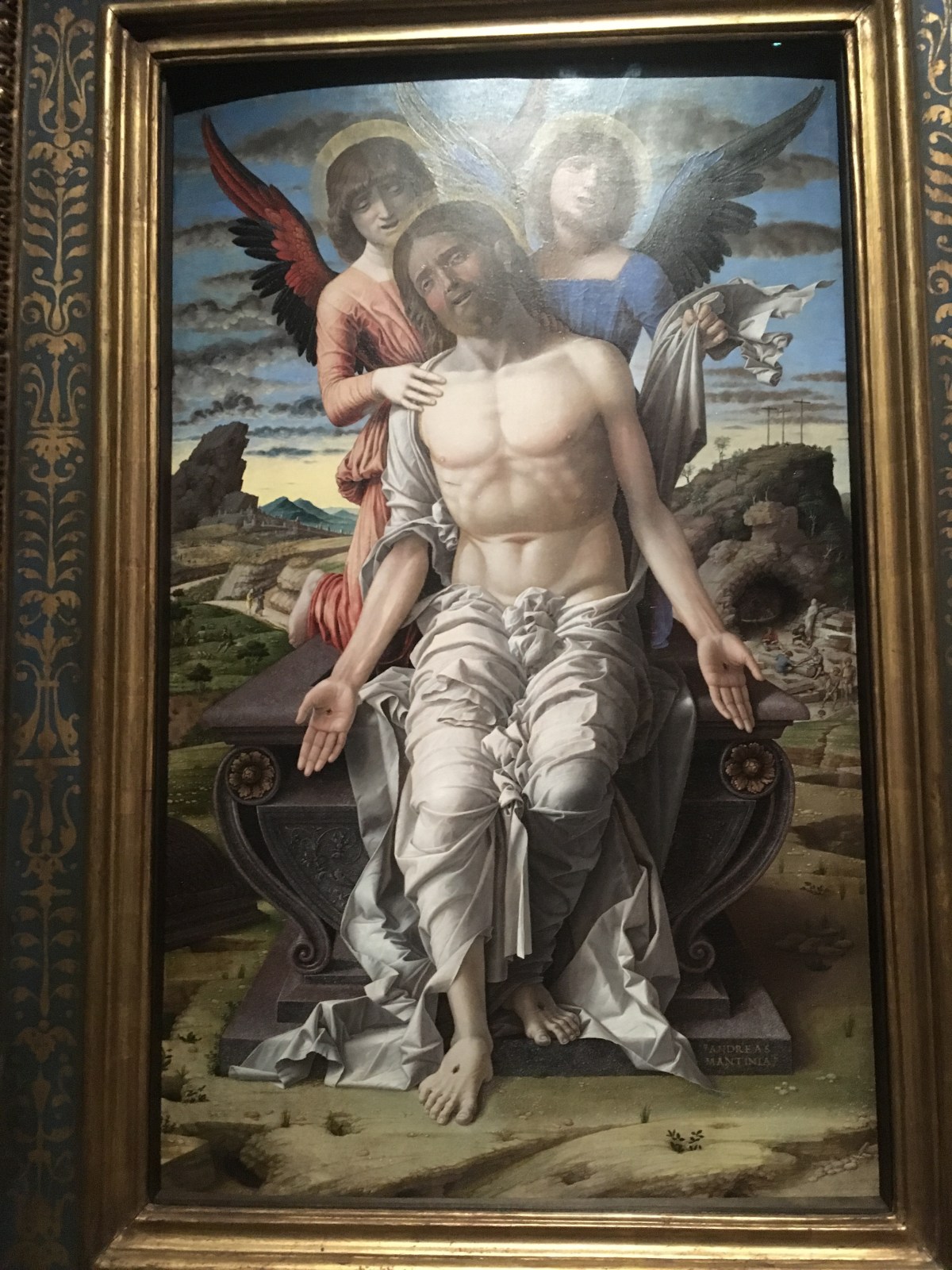
Into this world came Mantegna, the son of a carpenter whose prodigious talent spurred him on to the highest echelons of Italian society and he died a wealthy and highly respected man.  Part of his success can be attributed to a very fortunate marriage. He married Nicolosia, the half-sister of Giovanni Bellini. We’ve no idea how the marriage came about but a happy result was that the two brothers-in-law became firm friends, great rivals and, despite ideological and stylistic differences share a fascinating with the logistics of art, the properties of the paint and pushed the exploration of relatively new concepts such as perspective, foreshortening and the use of colour to depict emotion to new levels. For eight years their studios were entwined and they worked closely together.

This show at the National Gallery has gathered together masterpieces by these two painters from museums, galleries and private collections from all over the world.  It’s fascinating to see pictures by both painters side by side for the ultimate ‘compare and contrast’.  Yes, it seems that they shared the same compositions and sketches -whether this is through a desire for artistic one-upmanship or a respectful nod to the other’s talents it’s hard to know.  We all know that artists ‘steal’ from one another, but these two took that idea even more seriously.  However, it is thrilling to stand in front of the two paintings depicting the Christ Child in the Temple, or the Agony in the Garden which are both telling the same story using very similar elements but oh, how they contrast.  Where Mantegna’s version is tightly composed with a rocky mound as the centrepiece, Bellini’s version embraces a panorama of desert and hills and a sublime dawn sky representing resurrection.

Bellini was a master at capturing youthful faces – these are details of the angels surrounding the Dead Christ.

Likewise, he captured this proud, powerful yet vulnerable Doge Leonardo Loredan. Painted in around 1501. (below)

IMG_3494


Both artists were highly skilled draftsmen, using drawing as a starting point for all their work, setting up models in the studio to compose pictures and incorporating the most astonishing detail of everyday life into the background and incidental scenes within epic pictures.  Below are details from Mantegna’s The Dead Christ Supported by Two Angels (egg tempera on panel) which has the most astonishing activity going on in the back ground.

IMG_3504

This show offers a rare opportunity to feel thoroughly immersed in the world of late 14th and early 15th century art and is an absolutely joy to explore.

Mantegna and Bellini is on show in the Sainsbury Wing at the National Gallery from 1 October to 27 January 2019.  Don’t miss it!

It’s a joy to see some of the jewels of the Courtauld Collection on show at the National Gallery – like stumbling into a party full of ‘old friends’ from the world of Impressionist and Post-impressionist art.

The Courtauld Collection is closing for two years and the glorious collections need temporary homes. Step up the National Gallery, the august gallery which Samuel Courtauld enjoyed and supported in his lifetime, which has offered to house some of the best examples of impressionist and post-impressionist art from the collection.

For anyone who has been to the Courtauld’s glamorous home within Somerset House, these paintings will be very familiar.  This exhibition, occupying three rooms within the National Gallery is all about the French impressionist painters who were at the vanguard of this new, and enduring style of painting. We have favourites such as Manet‘s A Bar at the Folies-Bergère – you can stare at that model’s face for hours while moving around the canvas to see the crowded nightclub and the astounding still life painting in the foreground.

IMG_3246

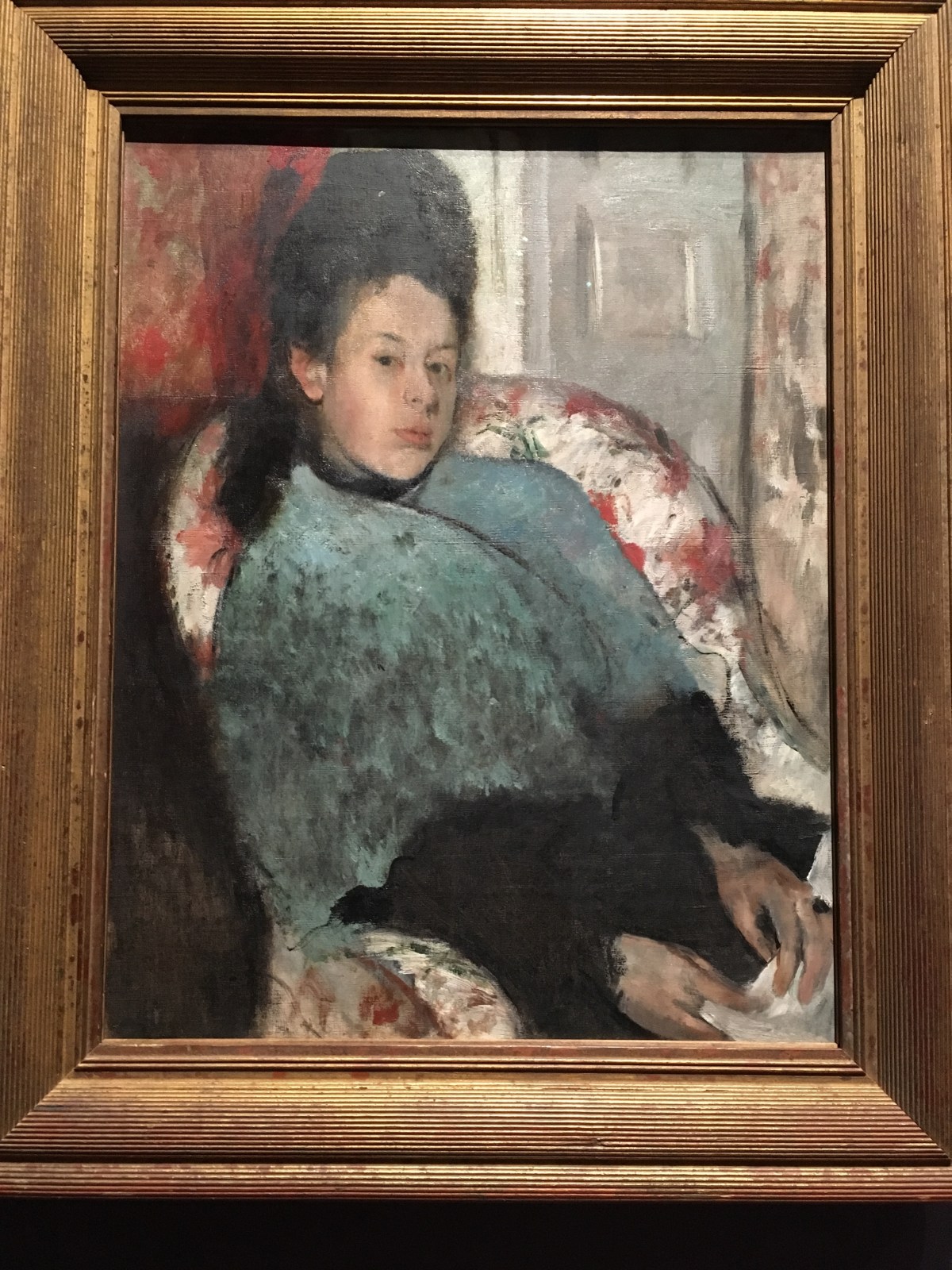
I liked Degas‘ portrait of his cousin, Elena Carafa – her slightly quizzical and disdainful expression really captures her character and you can imagine the pair chatting while the painting was made.

IMG_3247

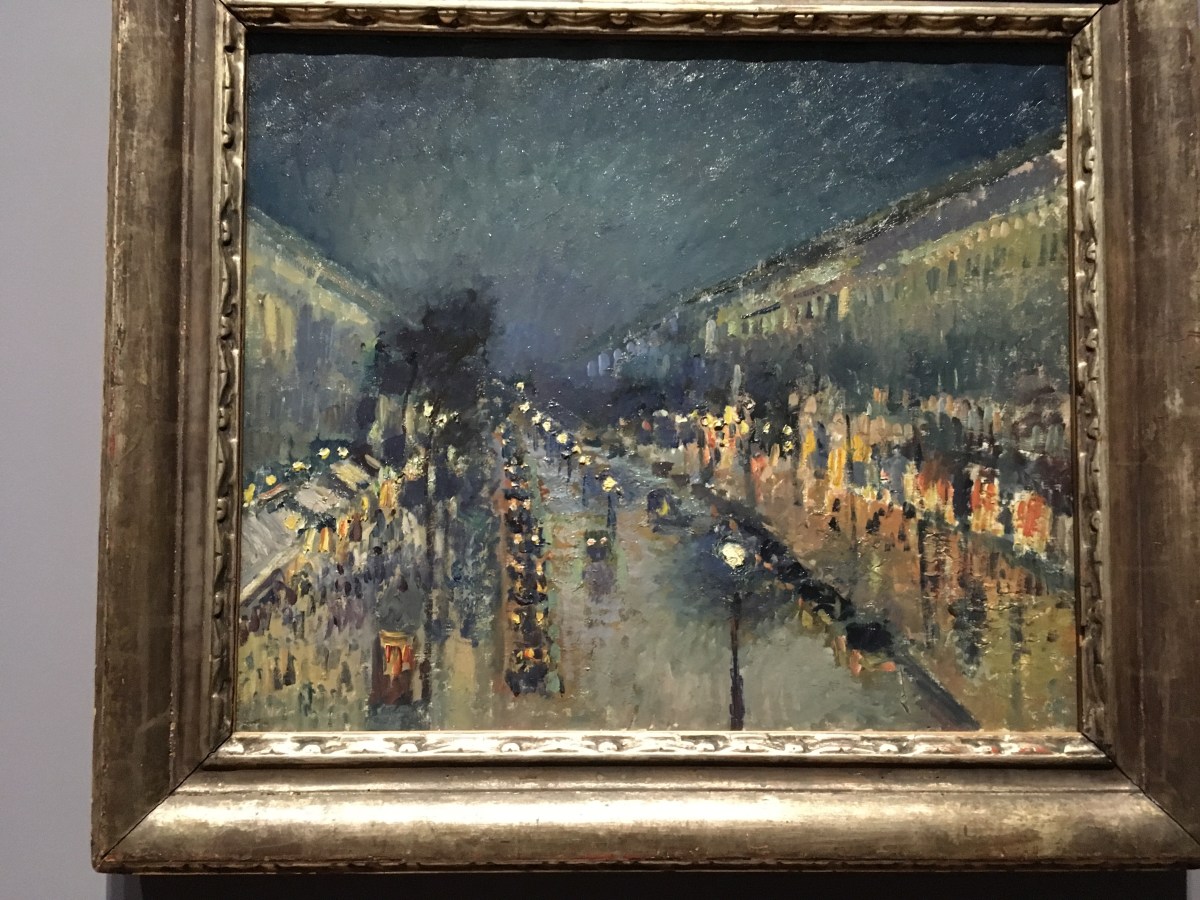
It’s always good to see Pissarro‘s paintings close up and The Boulevarde Montmartre at Night is a painterly treat where you can see the rich layers applied to the canvas to create street lights on a busy street in a steady drizzle.

IMG_3249

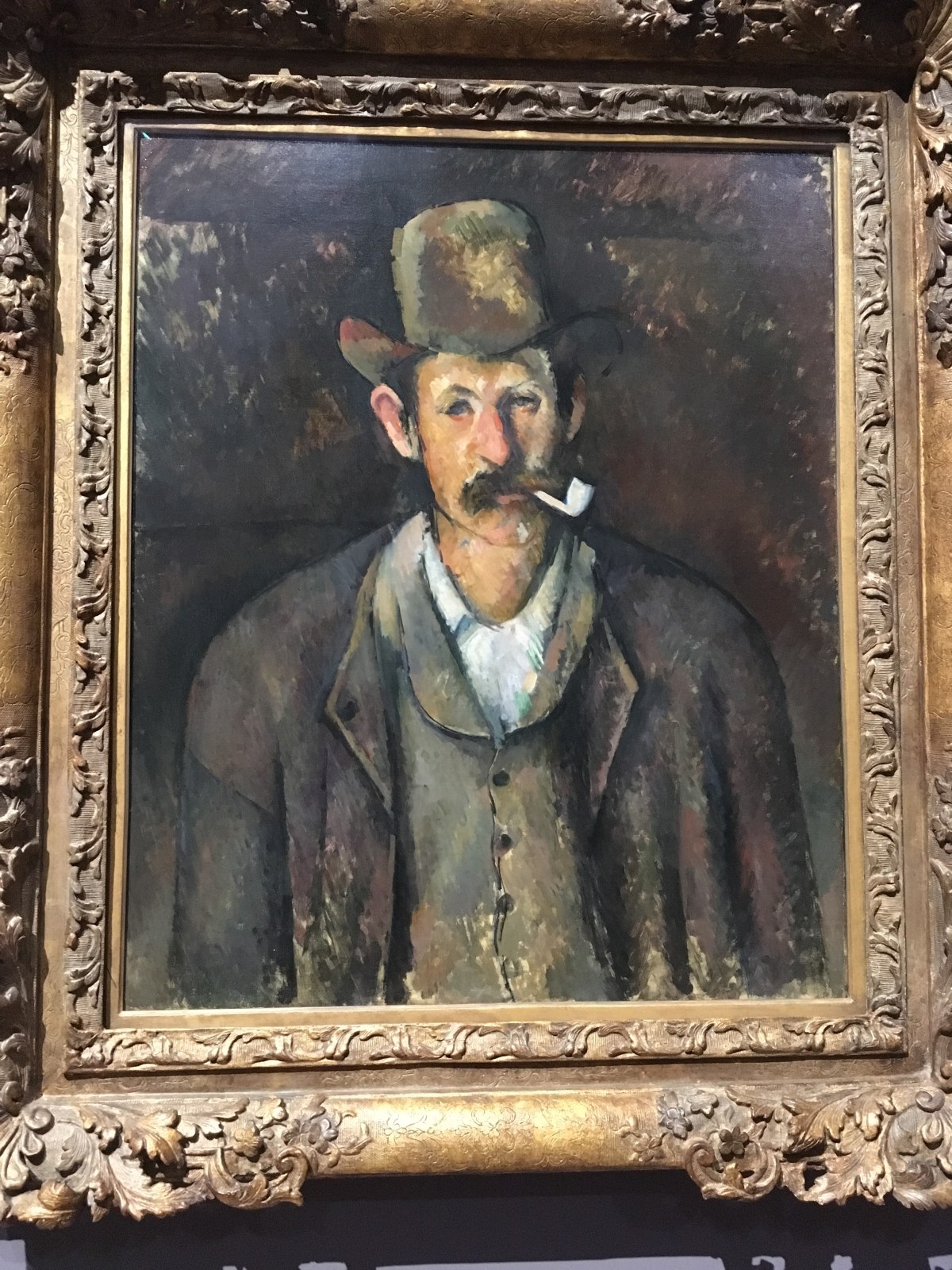
Samuel Courtauld was a very shrewd collector of art.  He also believed that the arts, and understanding them, was a vital part of not just education but of people’s happiness and the general health of society.  As a successful industrialist and businessman, he navigated his family textile business to heady success – his family, of Huguenot origins, settled in London at the end of the 17th century as part of a community of French silk weavers. Success brought him the opportunity to indulge in serious philanthropy and appreciation of art. He developed a fascination for the work of Cézanne – first seeing a painting by him in 1922 – and resolved to collect his art. I share his delight in these paintings and The Card Players must be one of my favourite paintings. It’s lovely to know that it will be on show in a safe place until January 20th 2019.

IMG_3261

IMG_3264

So, it’s good to know that, while the Courtauld is undergoing essential refurbishments, the fabulous collection will be on show elsewhere.  They look very comfortable indeed in their new/temporary home at the National Gallery.

Above: Georges Seurat, Young Woman Powdering Herself; Henri Toulouse Lautrec, Woman Seated in a Garden; Pierre Auguste-Renoir. La Loge; Pierre Bonnard, The Table.


Courtauld IMPRESSIONISTS from Manet to Cézanne, The Wohl Galleryies  17th September 2018 – 20th January 2019