Thousands of little faces gaze out of group photos of Year 3 Classes and fill the main hall at Tate Britain with glorious smiles, pulled faces, quizzical expressions and the promise of all their futures. Artist Steve McQueen has initiated a wonderful project with Tate, Artangel and A New Direction to capture some 76,146 of London’s seven and eight year olds. It’s fabulous.

As a parent I have a bottom drawer filled with these kinds of photos – a class of children (one of them is mine, obviously) arranged on benches, chairs and sitting cross-legged on the floor, flanking their teacher and gazing at a photographer. Or not! The glory of these photographs is that how ever uniform you try to make them there’s always one, or several, who are looking the wrong way, scratching their nose, poking a fellow student or just not opening their eyes.


Steve McQueen has elevated these familiar groupings of seven year old children into the realms of art.  The very enormity of this project is breathtaking.  Walk into Tate Britain’s main hall way and you see thousands of small faces staring at you.

Error
This video doesn’t exist


He sent an army of photographers to two thirds of all the primary schools in London to capture these small portraits.  What’s not to like – there’s something so enchanting about children at this age. Their little characters are well developed, their features are all there and the adult is just waiting to emerge.  And you can work out relationships between the children by the closeness or the shared jokes or stifled giggles.
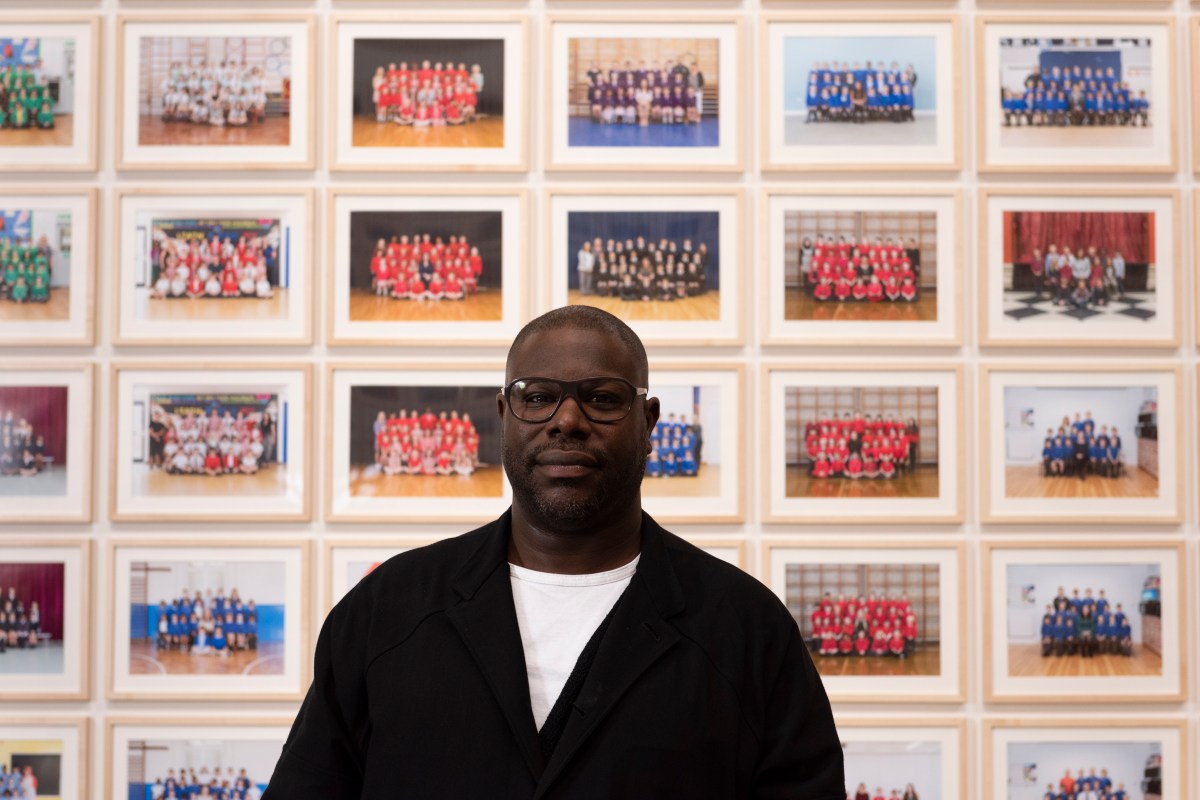
Portrait of Steve McQueen in Year 3 at Tate Britain (1) ©Tate. Photo Jessica McDermott


The show will be in place until 3 May 2020 so there’s plenty of time to see this show along with a visit to other art at the gallery.  And look out for the huge posters on billboards all around London. They’re just such fun.
IMG_9210

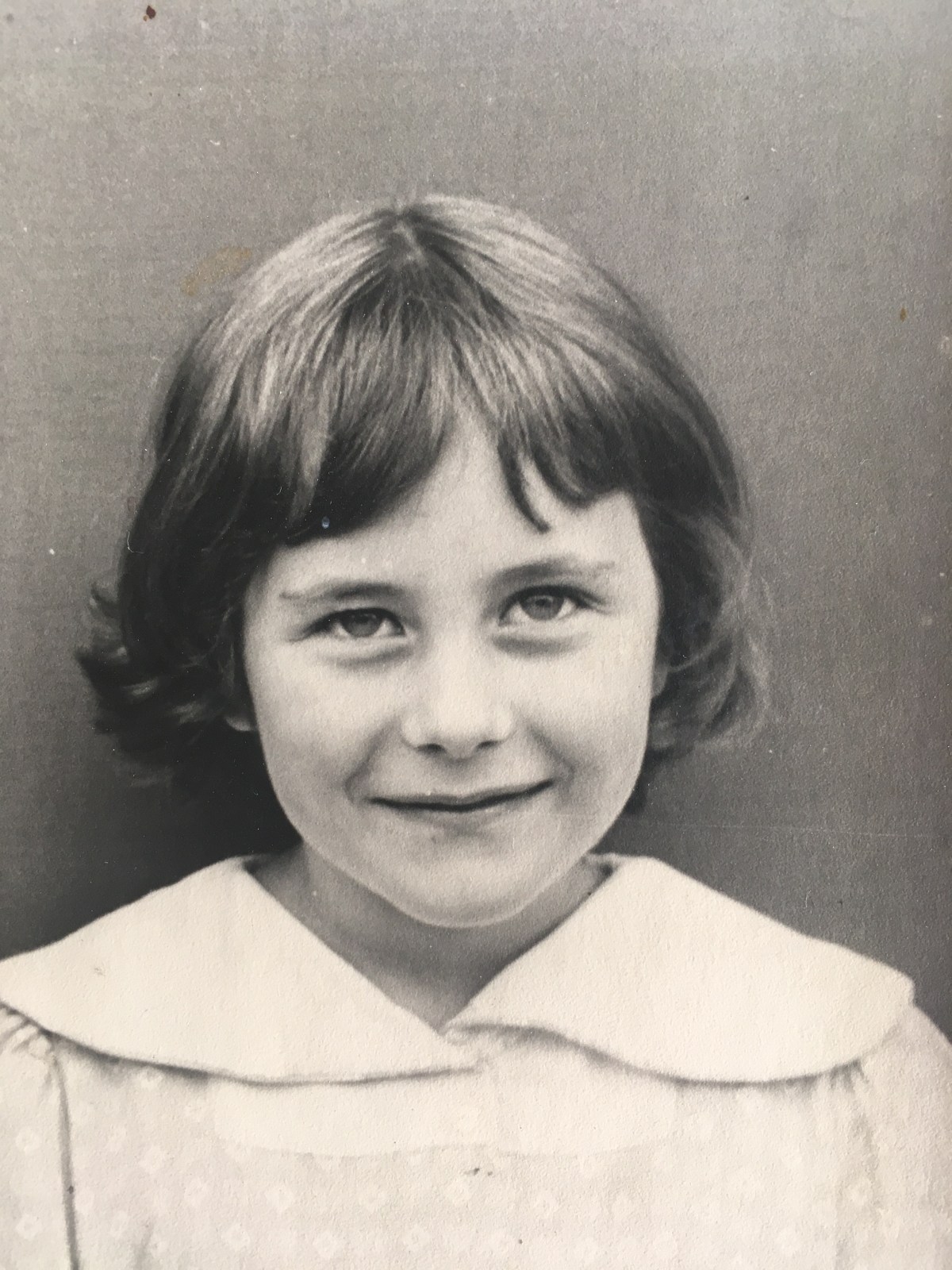
And finally. I thought I’d add a photo of me at the age of seven.  There was no class picture taken, that I remember, but just a solo picture against the blackboard in our class room at the old village school in North Hinksey, Oxford.  But I can see so much of myself in that young face and really don’t feel much older, despite the many decades which have passed since that photo was taken!

@Tate @ Artangel @A_New_Direction   Year3Project

LEONARDO – experience a masterpiece – is a very clever and beguiling guide to the creation of Leonardo da Vinci’s Virgin of the Rocks. The painting took 25 years to create and this ‘experience’ draws you into Leonardo’s studio, the light he might have used to illuminate models, the composition, materials, early use of oil paint and the fabulous atmosphere of this extraordinary painting which is on show at London’s National Gallery.

I think we’re all a bit nervous about the idea of an ‘immersive’ event. It could be like sitting in the front row at a comedy show and finding you’re the one being picked on for entertainment.  So, it was with some trepidation that I entered this unusual exhibition at the National Gallery to be faced with large images of mountainous Italian countryside and shiny metal reflective boxes filled with mirror writing. Ah, we all said out loud as the penny dropped, we have to look inside the box and see the reflection so you can read the words.  And then it becomes rather fun.

In a darkened room we are shown set piece, studio scenes – sketch books, pots of pigment and brushes, all the materials the artist might have used 500 years ago.  59 Productions, who’ve collaborated with the curators and historians on this project, have used digital imaging to recreate the imagined making of the Virgin of the Rocks.  And it’s fascinating to see that, using x-rays and clever forensic research, the original drawings are revealed and the way the work was rearranged, over painted, moulded, changed and gradually developed is made apparent.

In another room we are invited to see how Leonardo used directional light upon his models to create that astonishingly 3D effect which is apparent in the finished work.  Sketchbooks reveal that he worked hard on lighting his models, experimenting with the way shadows can be used to mould and form the figures and background. This short film is of a plaster head behind glass and there were small levers you could move to  manipulate the light and choose the shadows.

Error
This video doesn’t exist

And finally we get to the room with the actual painting.  This was where I almost didn’t want the add on of the digital artwork around the piece but it was great to see it for real.

This is a rich and strange experience but a very good way to celebrate the 500 years since Leonardo died in 5019 and a fascinating way to see how modern technology can enhance understanding and enjoyment of such an important and fabulous masterpiece which we are lucky to have on show in London.


Error
This video doesn’t exist
Error
This video doesn’t exist

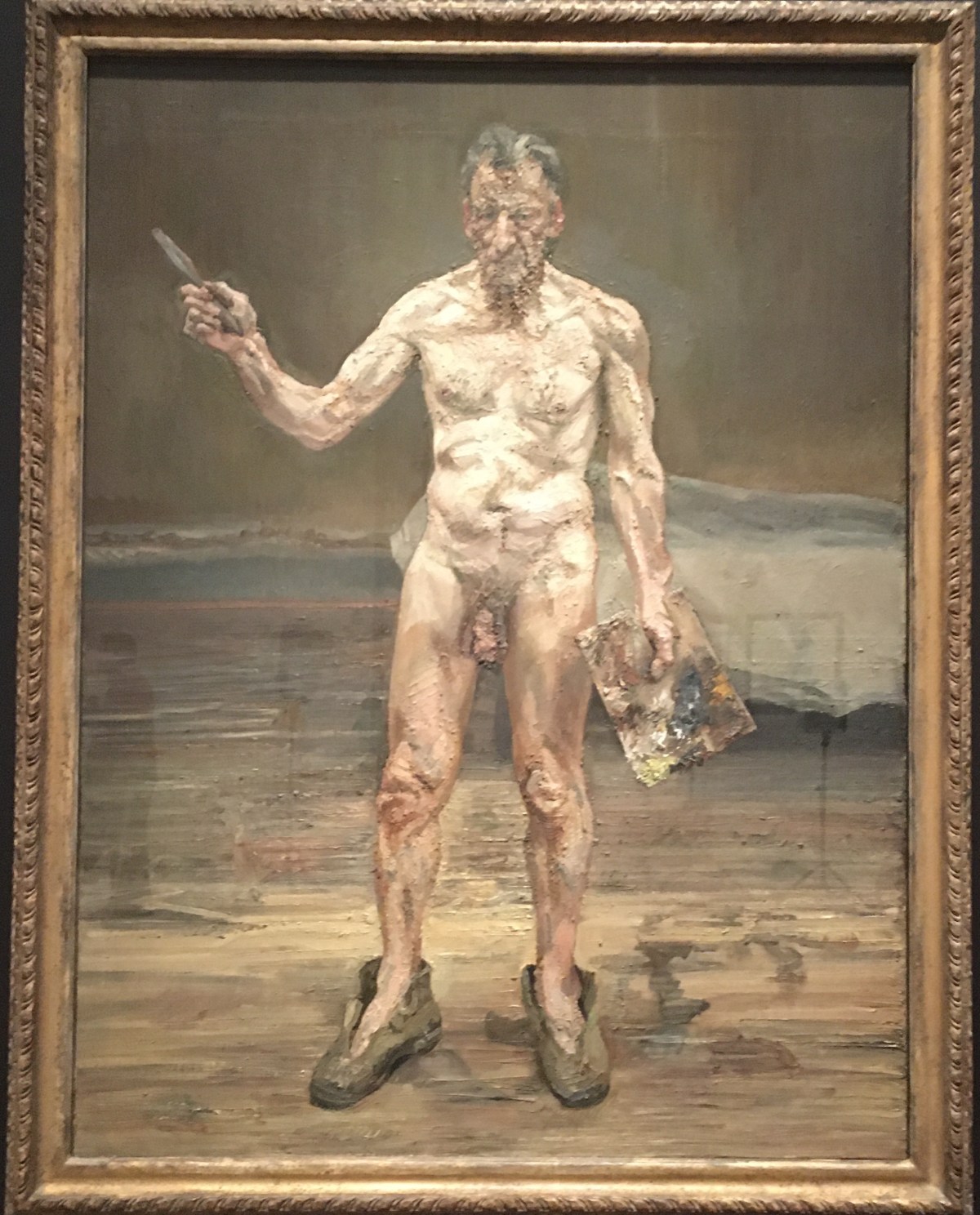
A focus on Freud. Lucian Freud recorded his own face and body throughout his artistic career. A fascinating show at the Royal Academy, London, collates some of the best – from early pencil sketches made in his confident youth to reflective soul-bearing and the impasto features of a very private artist, striving to understand what he sees, made right at the end of his life.

It’s always fascinating to see an artist’s self-portraits and this terrific new show, Lucian Freud: The Self-portraits, at the Royal Academy, is a huge treat.  It assembles 56 works including some very early self-portraits which I’ve never seen before. In the beginning the young Freud was keen to capture a sense of himself but was also in thrall to Expressionist styles and gave his appearance a rather mannered, illustrative appearance.

IMG_8964
Self portrait with Hyacinth Pot 1947-48

Over the years all of that changed and it’s fascinating to see the evolution of his art through the way he scrutinised his own face and also how the materials and style of painting changed.  The pencil, inks, fine lines and careful, flat paint gradually give way to watercolour and gouache before Freud alighted upon the big bristle brush which can be loaded with paint and used with abandon.  This became his signature style. You can almost pin point the moment when he ‘let go’ and began adapting his careful eye to provide a detailed impression which captures not only likeness but intellectual intensity and emotion.

With all of those later portraits you feel Freud’s gaze – his own as he scrutanised his own face and body – and, as a viewer, you can really sense all that he was seeing and experiencing while making the work.  No artist can resist a mirror and he used them so originally, creating strange angles as he peers down upon his foreshortened face reflected from the floor near his feet, or peers at one beneath his elbow.

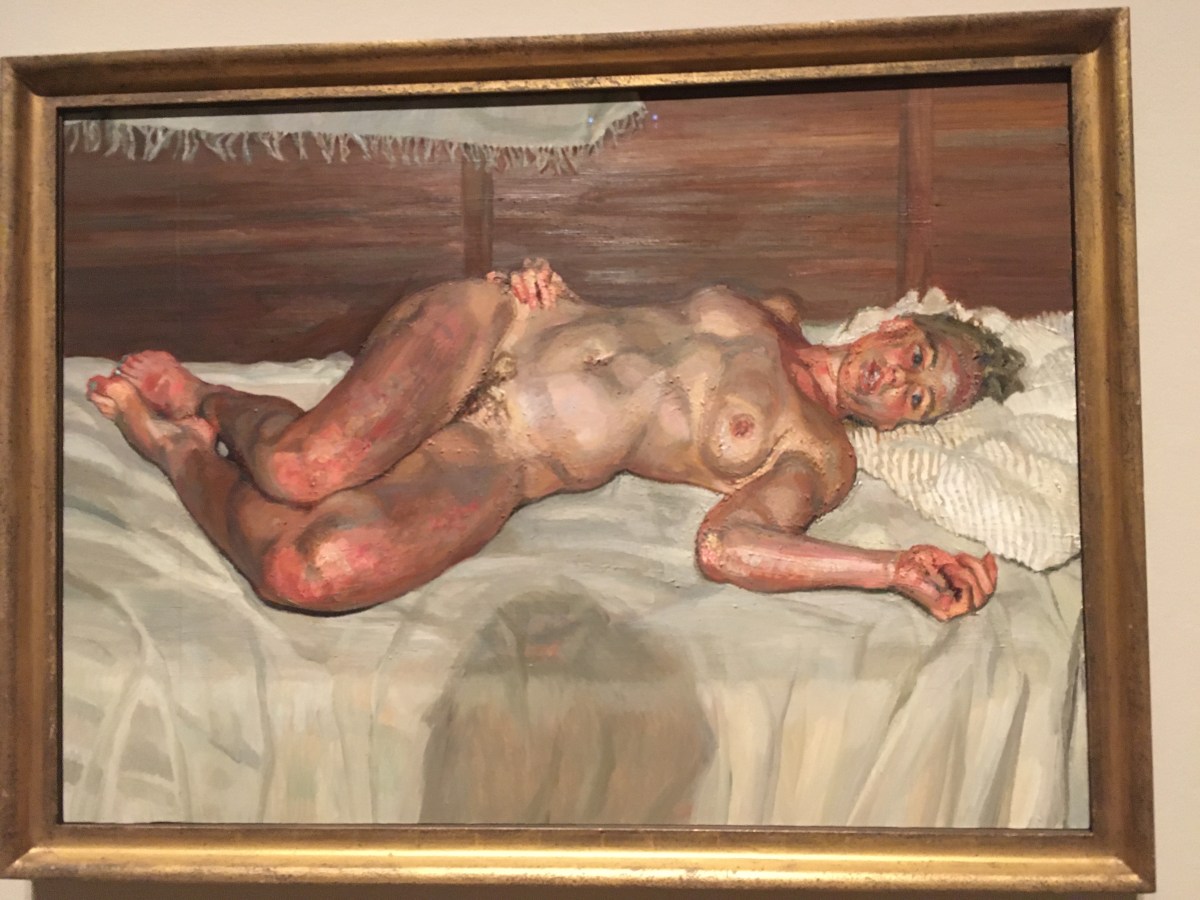
The incidental portraits were interesting to see too.  It’s quite possible to miss the miniature self-portraits inserted into larger paintings of subjects.  Most mysterious of all his his shadow which can be seen on the body of the nude – Floral with Blue toenails.

IMG_8978
Floral with blue toenails 2000-1
IMG_8976
My photo is not in focus but you can just about make out the two self portraits propped up on the floor below the window.

Six decades of life are recorded. Freud was famously private and remote and yet, in his portraits he lays himself bare, literally, and provides us viewers with a disarming glimpse of his inner light, his soul, his passion and his power.

IMG_8984


Freud: The Self-portraits is on show at the Royal Academy until 26th January 2020.

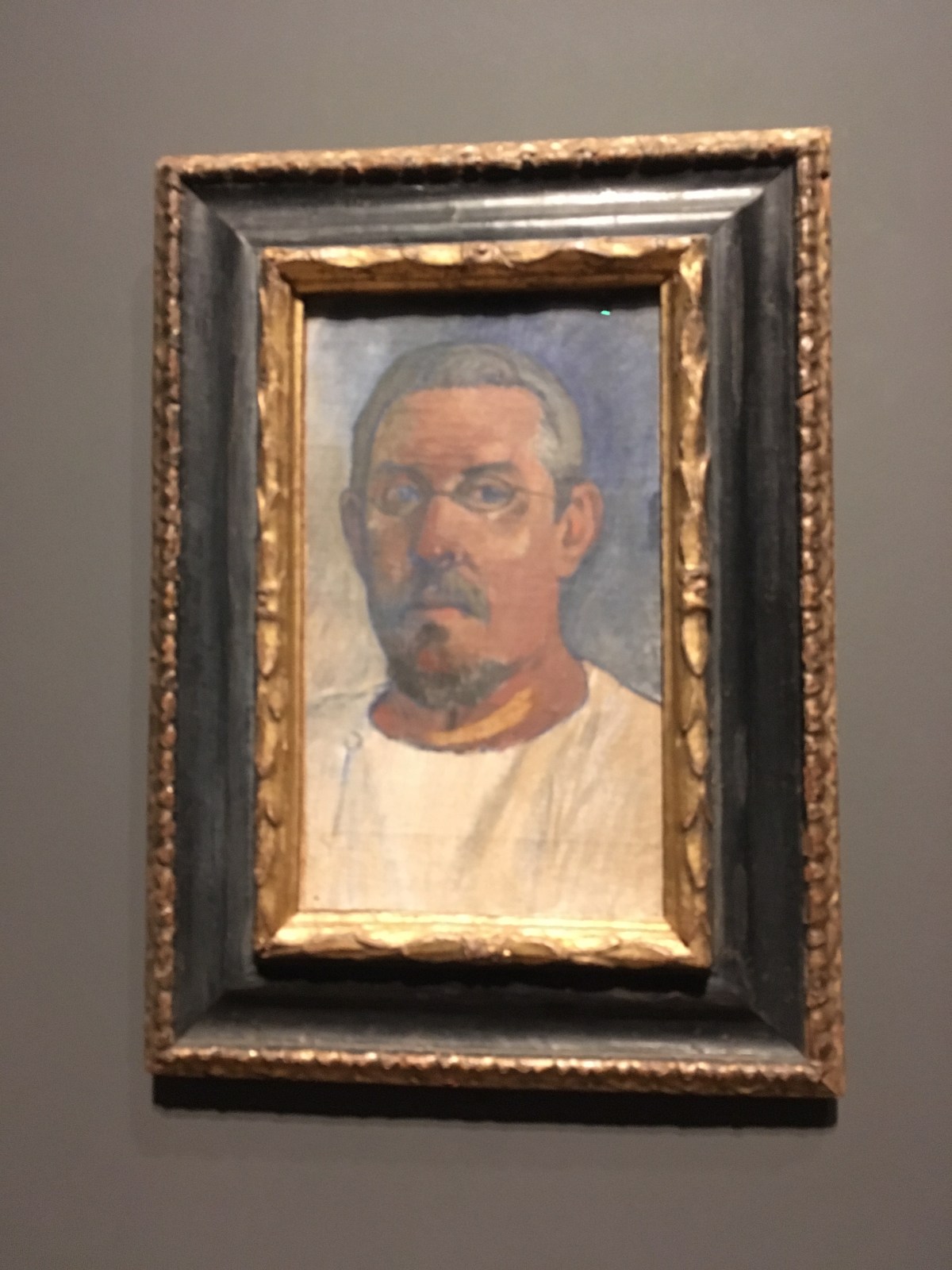
Gauguin portraits at the National Gallery – a fabulous show which assembles sensitive self-portraits and psychological impressions of sitters – offers a fascinating chronology of the artist’s work.

I really enjoyed this show of Gauguin‘s portraits at the National Gallery.  Self-obsessed, self-promoting, self-centred…. yes, Gauguin was all those things and, as we were told by the show’s excellent curators, Cornelia Homburg and Christopher Riopelle, once he accepted he was an artist everything and everyone else in his life took second place.

Gauguin started off conventionally enough – he was a great admirer of the Impressionist painters whom he got to know in Paris and, when he made money as a stockbroker, he was quite their patron.  But he ached to be an artist too and spent all his spare time making art and was tutored by Pissarro.  Some of the early paintings in the show demonstrate his absorption of Impressionism but it wasn’t long before he started pushing away from those conventions and entering a new arena of style which was entirely his own.

What strikes me about the majority of the paintings in the show is that he tended to use pure colour rather than mix pigment with white. He painted relatively thinly onto coarse canvas and used strong outlines to define features. He liked strong hues, untempered by much mixing.

For Gauguin, painting a self-portrait seems not just to have been an exercise or a form of ‘limbering up’. He uses his portraits to express his own feelings about art. It’s so interesting to look at a portrait, stare into the subject’s eyes and have the sense that you are really ‘seeing’ what the artist saw and how he or she has endeavoured to control what the viewer should see.

There are some utterly beautiful works on display.  His fascination with Canary Yellow is clear to see in so many of the portraits which zing with clear colour, heat and the sense of the sitter.

It’s wonderful to see so many other artworks which he created – wood carving, ceramics and stone.  Some of these objects have been placed next to paintings which feature them.

The bust of fellow artist Meijer de Haan is astonishing.

IMG_8769

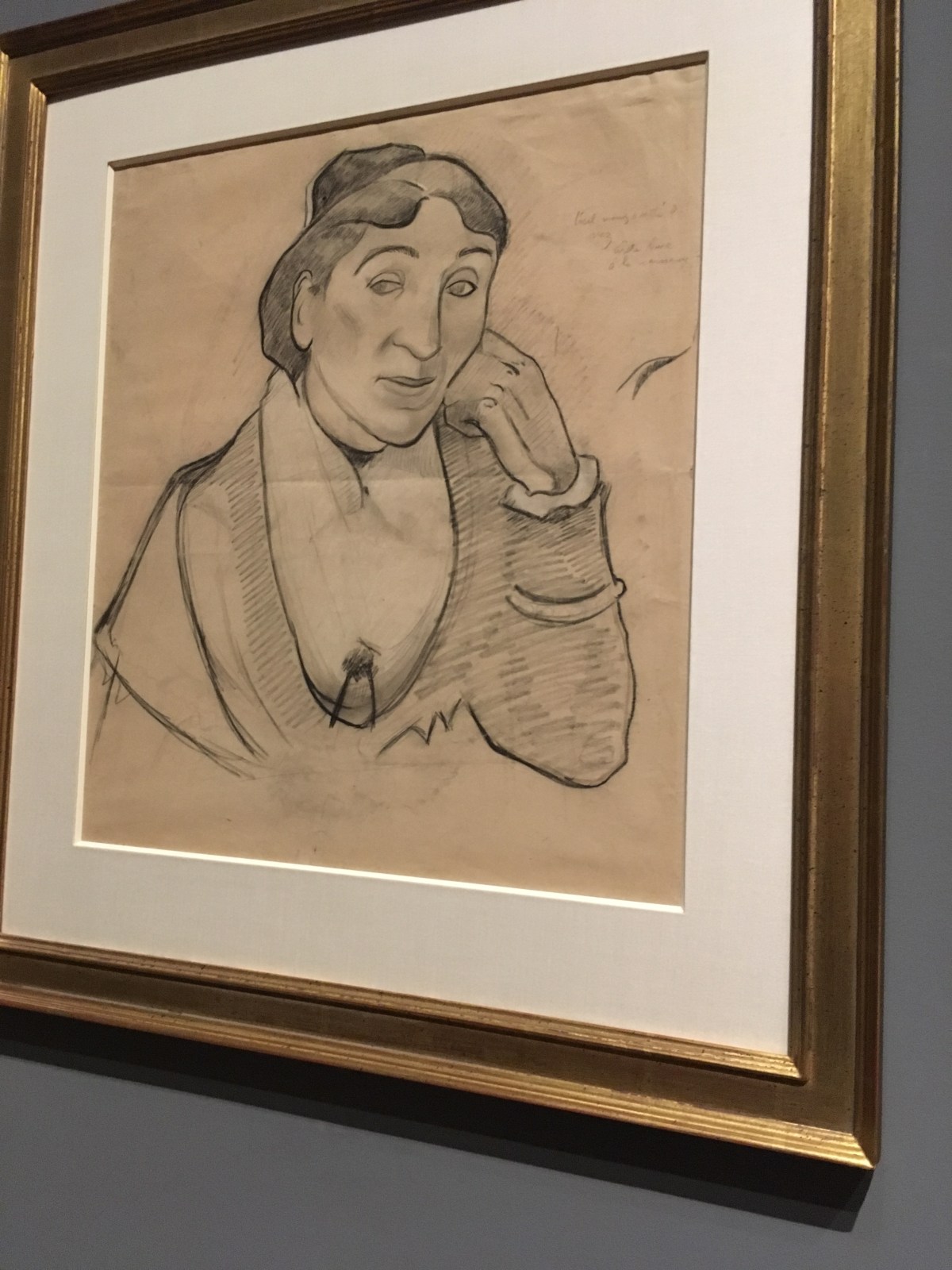
We also learned more about his relationships with fellow artists – famously his rift with Van Gogh.  I was intrigued to see a drawing which he made of Madame Ginoux (who ran the cafe the artists frequented in Arles) and gave it to Van Gogh who used it as reference for his own paintings. Quite a gift.

IMG_8770

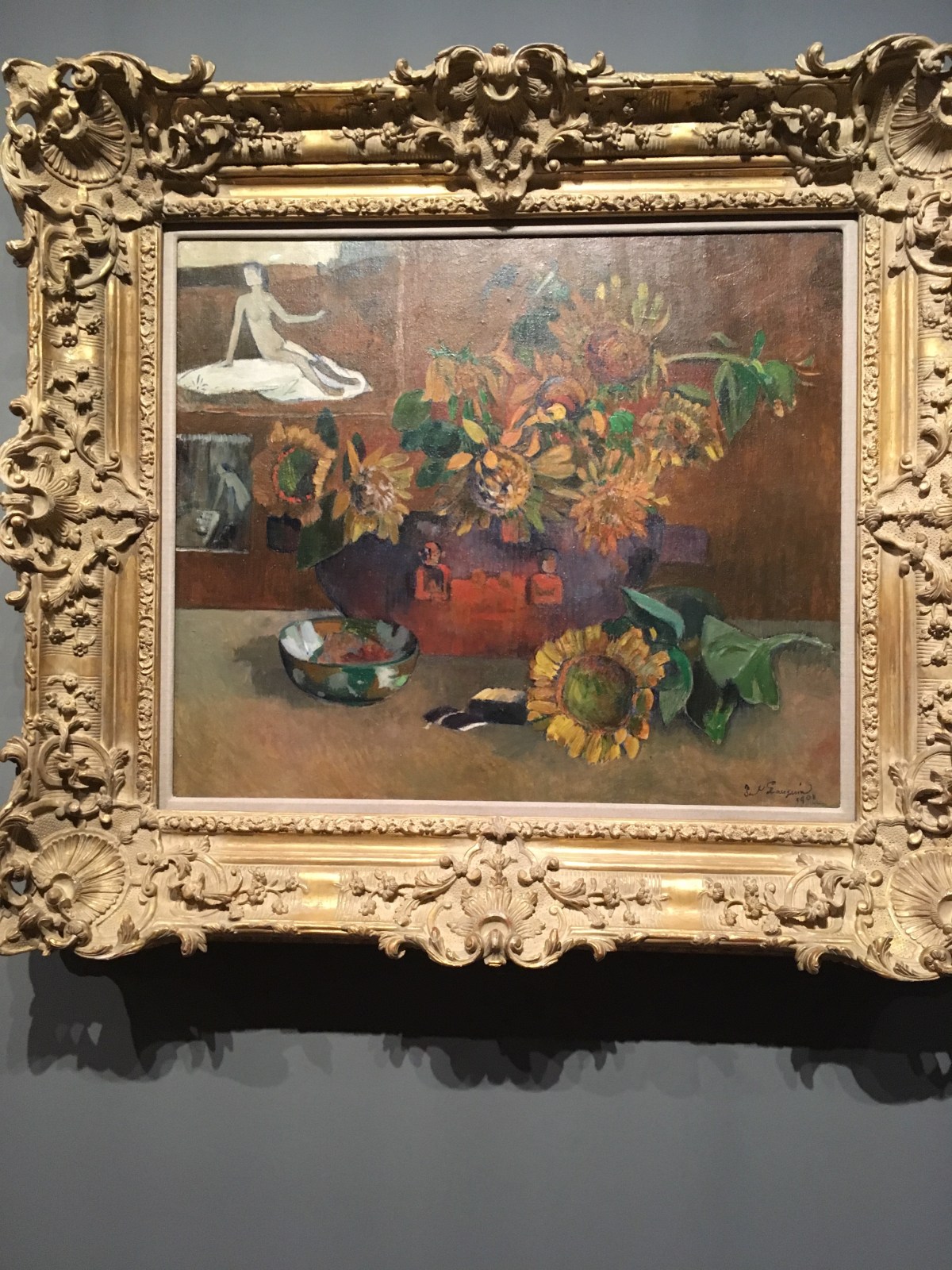
Later in life, when Gauguin was living in Tahiti, he became nostalgic for the time he spent with his Van Gogh in Arles and sent for sunflower seeds to plant. The flowers grew well and, according to the curators, this still life of sunflowers is a ‘surrogate’ portrait of his old confederate.

IMG_8772

There is much to enjoy in this show which has been really well thought through and beautifully curated.

Gauguin died in 1903 at the age of 55. This is his last self-portrait.  I think it says it all.

IMG_8762


Gauguin portraits at The National Gallery, Sainsbury Wing. 7th October until 26th January 2020.

Elizabeth Peyton: Aire and Angels – a major exhibition of her portraits has opened at the National Portrait Gallery. Paintings made in the last ten years have been distributed amongst the permanent collection provoking interesting opportunities to compare and contrast.

I like the speedy look to Elizabeth Peyton‘s work.  Brisk brushstrokes of liquid oil paint are energetically dashed onto wooden boards which have been painstakingly prepped with sanded and polished layers of gesso.  The materials really suit her style for bold, sketchy drawing and, very often, whole areas of the surface are left plain.  Many of the paintings on show are very personal to her – a mix of portraits of friends, family and people and painters she admires. The use of photographs is very apparent; for example she made portraits of David Bowie in life and after he had died.


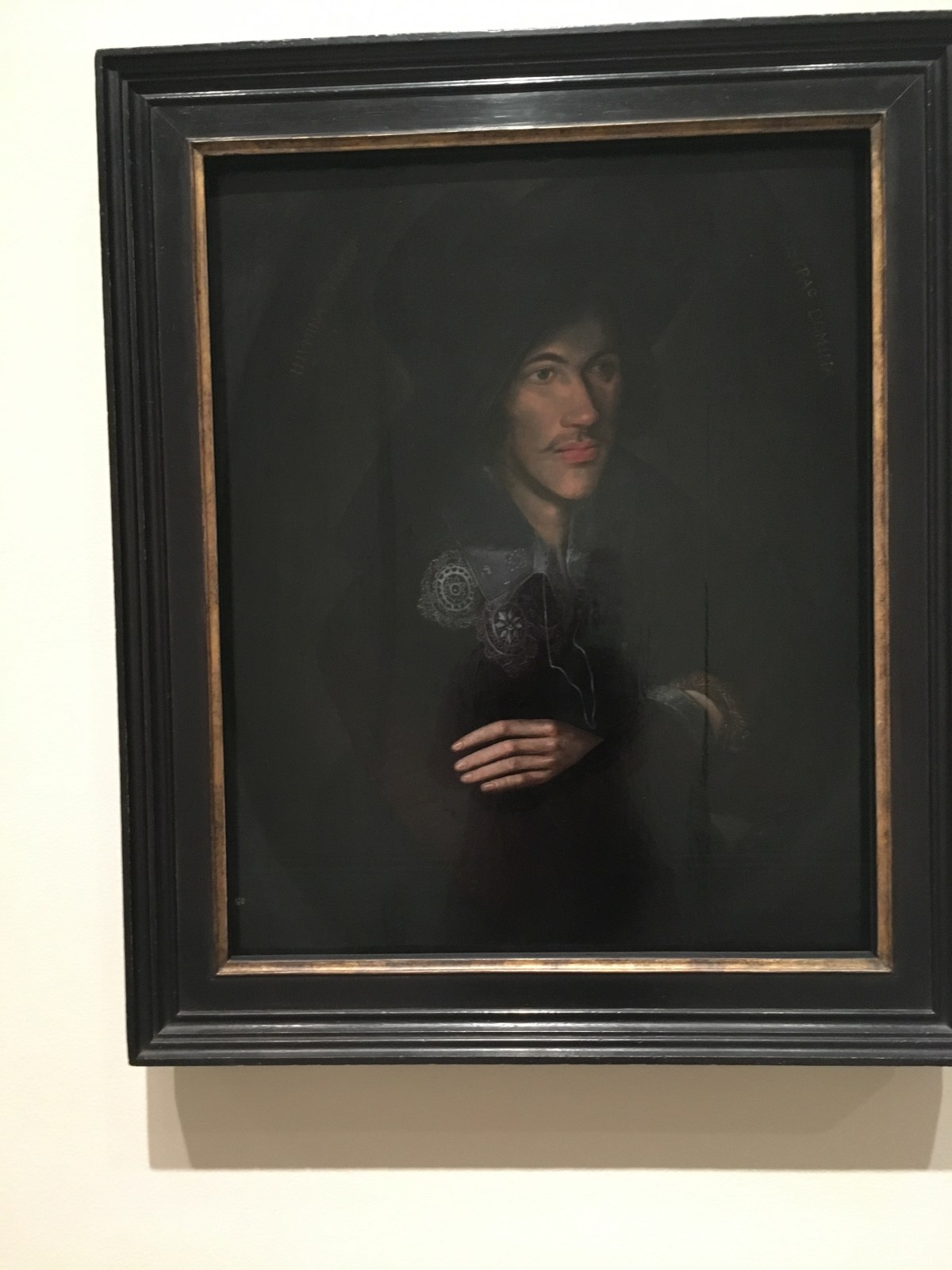
This show is entitled Aire and Angels in reference to a John Donne poem. When the exhibition was planned she chose, as her starting point, the portrait of the metaphysical poet circa 1595.  Apparently she liked the notional manipulation of his image, which encouraged the artist to produce a dark and brooding portrait of romantic young man full of sensuous thoughts and a mysterious mind.

IMG_8717

Peyton likes the idea of the portrait artist as collaborator in promoting an image. She paints from life but, more frequently, it seems, uses stills from films, photographs and magazine images as her reference material.  And this can sometimes be problematic. What you see is a replica of a familiar scene from a film or an already famous image.  There’s an almost cartoonish feel to many of the pieces, as if somehow received, repeated, reformed.

However, it’s always a joy to tour the gallery and it’s certainly not difficult to spot the Peyton paintings inserted amongst the Tudor grandees or Victorian literary masters. It felt a little odd seeing celebrities such as Liam Gallagher, Jarvis Cocker and Keith Richards in amongst the regal portraits of kings, queens, lords and ladies.  I wasn’t always entirely sure of the thinking behind these placements.  But I do enjoy seeing a contemporary artist who has trumpeted the joy of paint throughout her career given such a prestigious platform.

Above: portrait of Angela, Self-portrait, portrait of Napoleon

The Show is on until 5th January 2020. FREE

Pushing Paper: contemporary drawing from 1970 to now and a fabulous show of prints by Käthe Kollwitz make a trip to the British Museum (Room 90) a must for anyone who is as fascinated as I am by the potential of paper and the power of drawing.

The British Museum presents wonderful shows which are often tucked away at the back of the building. So I urge anyone in London to climb those steps around the old reading room, battle their way through the hoards of noisy children swarming around the tombs of mummys and keep going until you get to Room 90 on the 4th floor. Here all is calm and quiet and the content is superb.

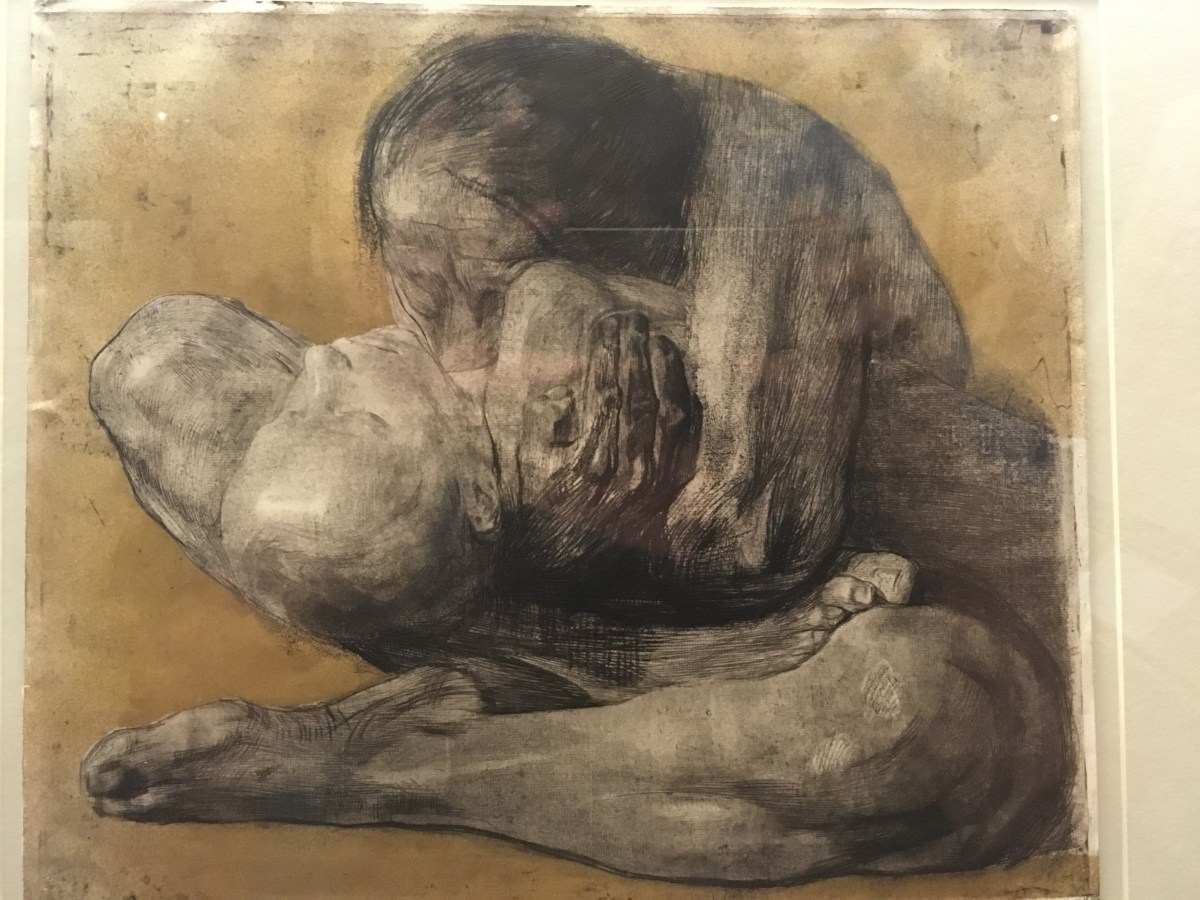
First you’ll encounter a collection of prints and drawings by the German artist Käthe Kollwitz (1867 – 1945). These works have been travelling around the country and will be in place until 12th January. Anyone who stands in front of these visceral, powerful images will be moved. They tear at the heart-strings.  There is such sadness and fury in many of them which will make you cry.  One of the most extraordinary images is a self-portrait she made representing a mother’s grief. She drew herself holding her seven year old son, hugging him to her breast, almost devouring him.  And it was a miserably prescient image because her adored son Peter died at the age of 18, as the First World War began.

IMG_8338

Living in Berlin with her husband, a doctor tending some of the city’s most impoverished people, she made it her artistic challenge to depict the struggles of women – struggles which so often included dreadful poverty, hardship and loss.

IMG_8344

I love her self portraits too. They are so well observed and honest – there is no artifice.

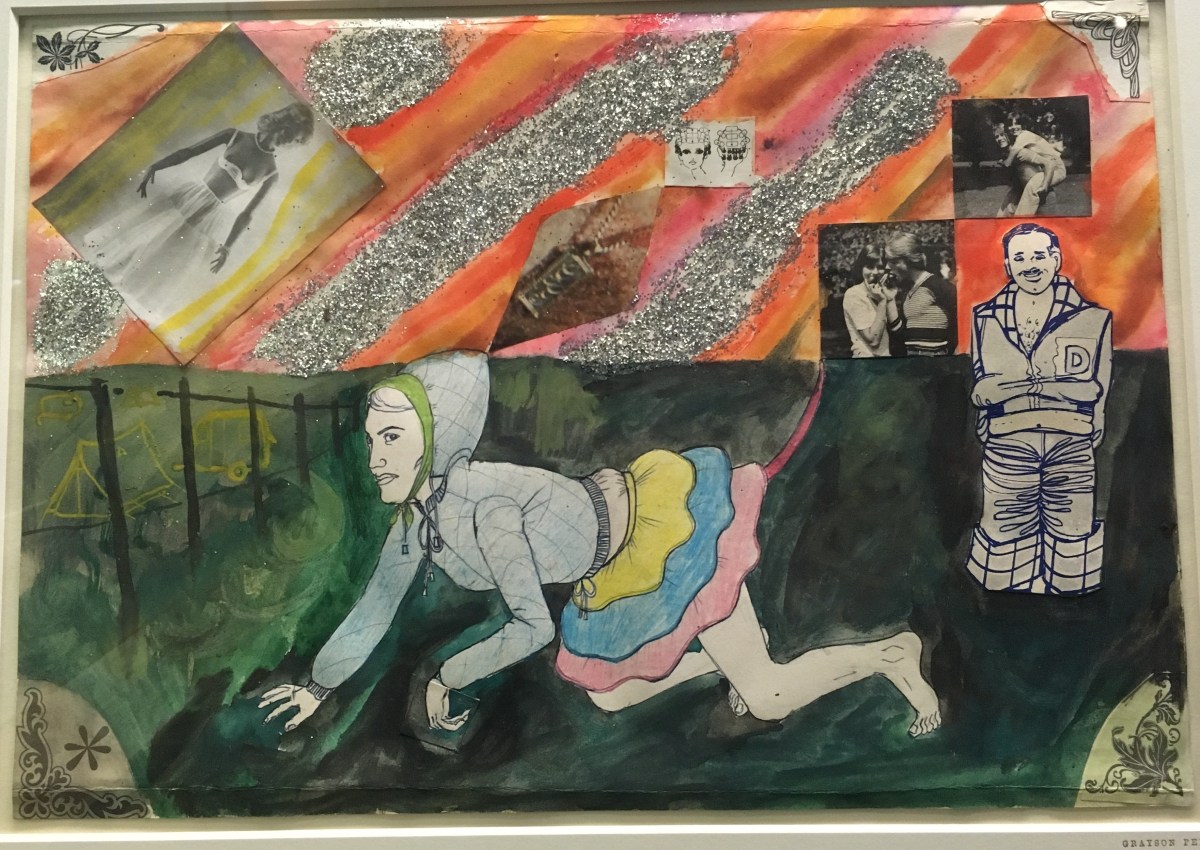
And in the room next to this exhibition is Pushing Paper.  It’s wonderful to see such variety of art on paper. The glory of paper is that is comes in so many shapes, sizes and textures and can be used with charcoal, pencil, paint, print and, of course, more paper in the shape of collage. I find this sort of show very satisfying and loved seeing work by a roll call of contemporary artists such as Grayson Perry, David Hockney, Tracy Emin, Richard Hamilton, Peter Doig and Judy Chicago.

IMG_8365
Grayson Perry c. 1984 coloured crayons, watercolour, gouache, pen and kin with collage of photographs, magazine illustrations and silver glitter.

The works are grouped into themes such as place and space, time and memory, but it’s not really necessary to feel the works mapped out. It’s just a joy to see so much work done with pure joy on paper.

IMG_8374
Richard Hamilton (1922 – 2011) In Horne’s House – study 111 1981 Graphite and wash with collaged piece of black paper.
IMG_8386
Peter Doig

So, brave the crowds at the British Museum and breathe in the excellence of art on paper. As I mentioned, you’ve got until 12th January 2020 to enjoy them.

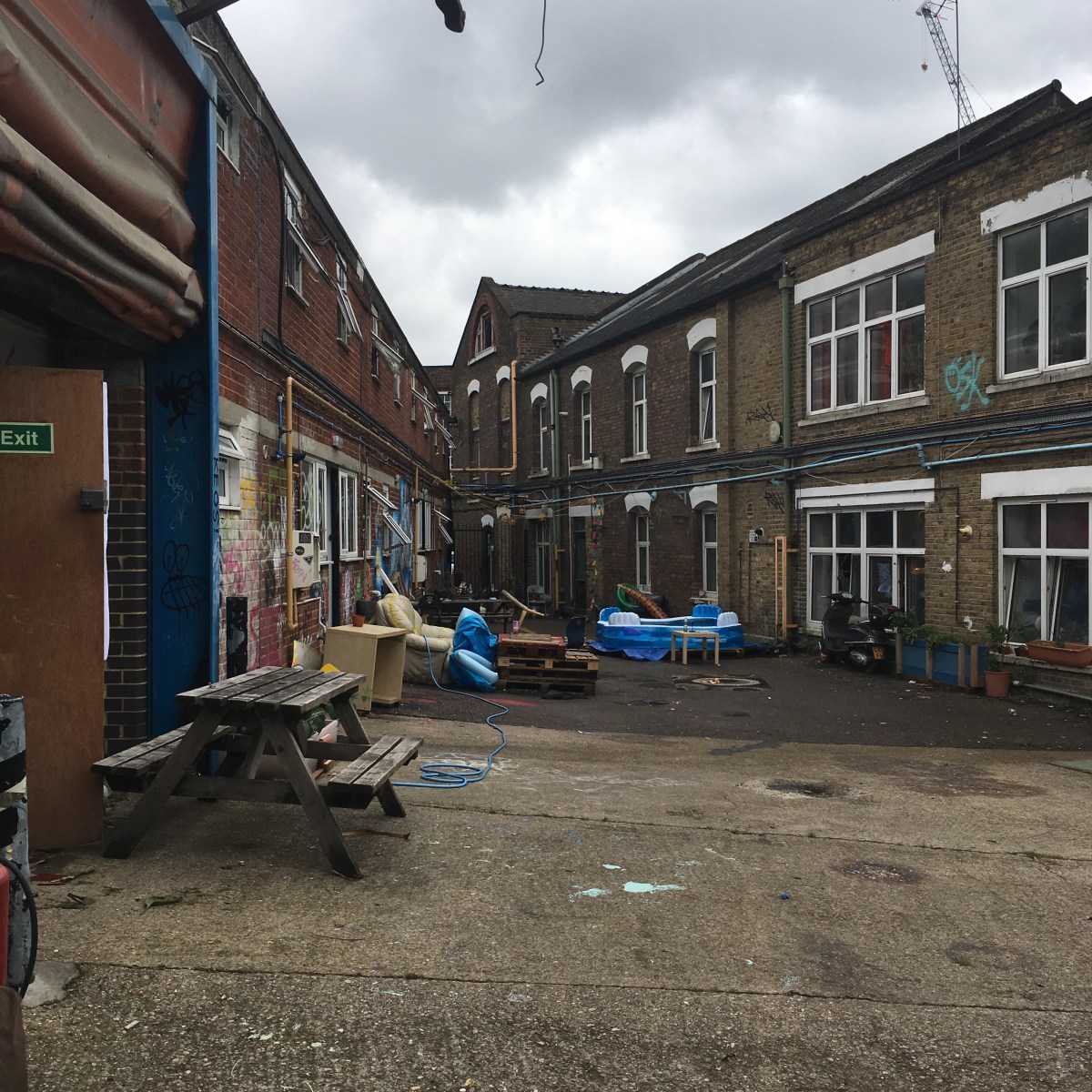
Hackney Wicked lives up to its name with a wicked summer arts festival which takes place in the shadow of the Olympic Park and offers a chance for artists occupying studio space in crumbling warehouses to fling open their doors and allow us to survey, review and delight in the creativity that blooms in east London.

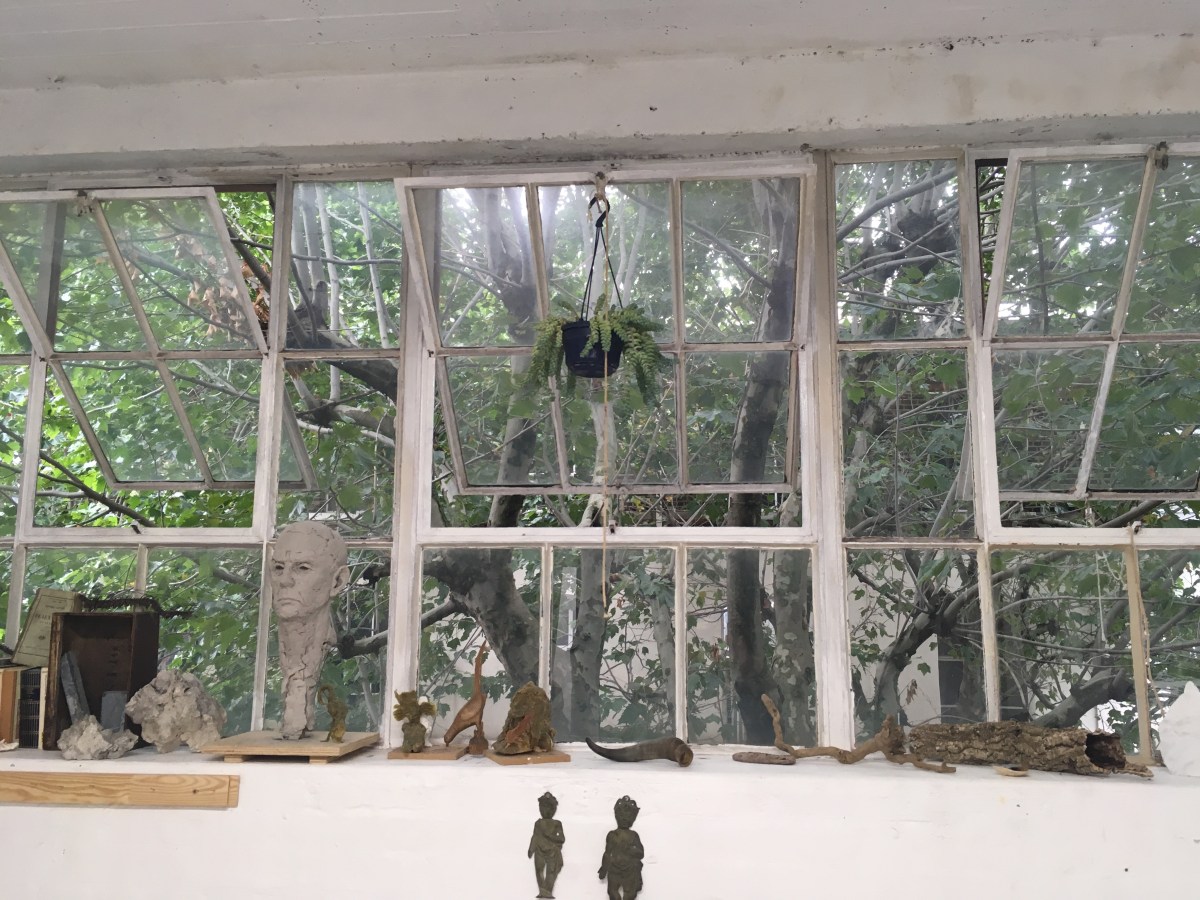
I love open studio days. There’s nothing better than poking your nose around the door of an artist’s studio and being welcomed into their world with a cheery wave and the opportunity to hear, at close hand, the background, inspiration and process involved with their art. I’ve yet to meet an artist who doesn’t like talking about their work – is eager to indicate a piece and describing the narrative of its creation. (If anyone stumbles into MY studio it’s exactly the same – and for the artist it’s as though you are seeing your work for the first time too.)

IMG_7871

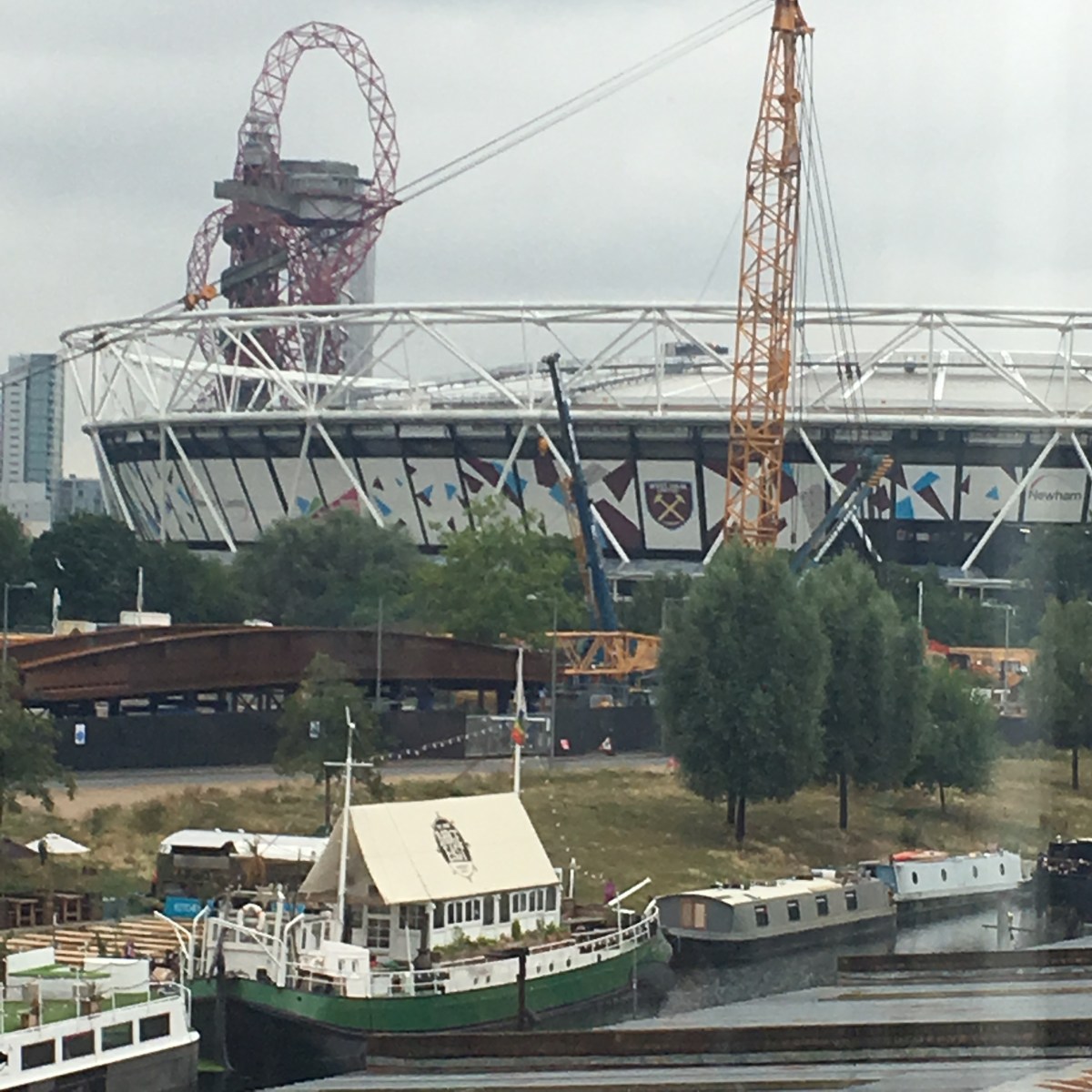
So, I just love the annual Hackney Wicked Weekend.  It started just before the London Olympics when this rough and tumble area of east London found itself, literally, in the shadow of the fabulous stadium and all the whizzy, shiny buildings which appeared for that glorious summer of 2012.

IMG_7852
Olympic Park

Of course the price artists ultimately pay for colonising an area where the buildings are ramshackle and the rents are cheap is that the developers start circling pretty soon.  And you can see that’s exactly what’s happened in Hackney Wick. Where ten years ago we might have meandered along cobbled streets next to ancient brick walls encasing crumbling warehouses and industrial spaces, there are now shiny new apartment blocks and artfully paved communal spaces. Hey, ho, I suppose it’s progress but it is still a delight to know that there is a patch of London where artists can work (and live!) and produce their work in good sized spaces which are boiling in summer and freezing in winter and know that they can concentrate on whatever creative endeavour needs pursuing without minding whether paint splashes on the floor or noxious fumes emanate from the windows.

IMG_7865

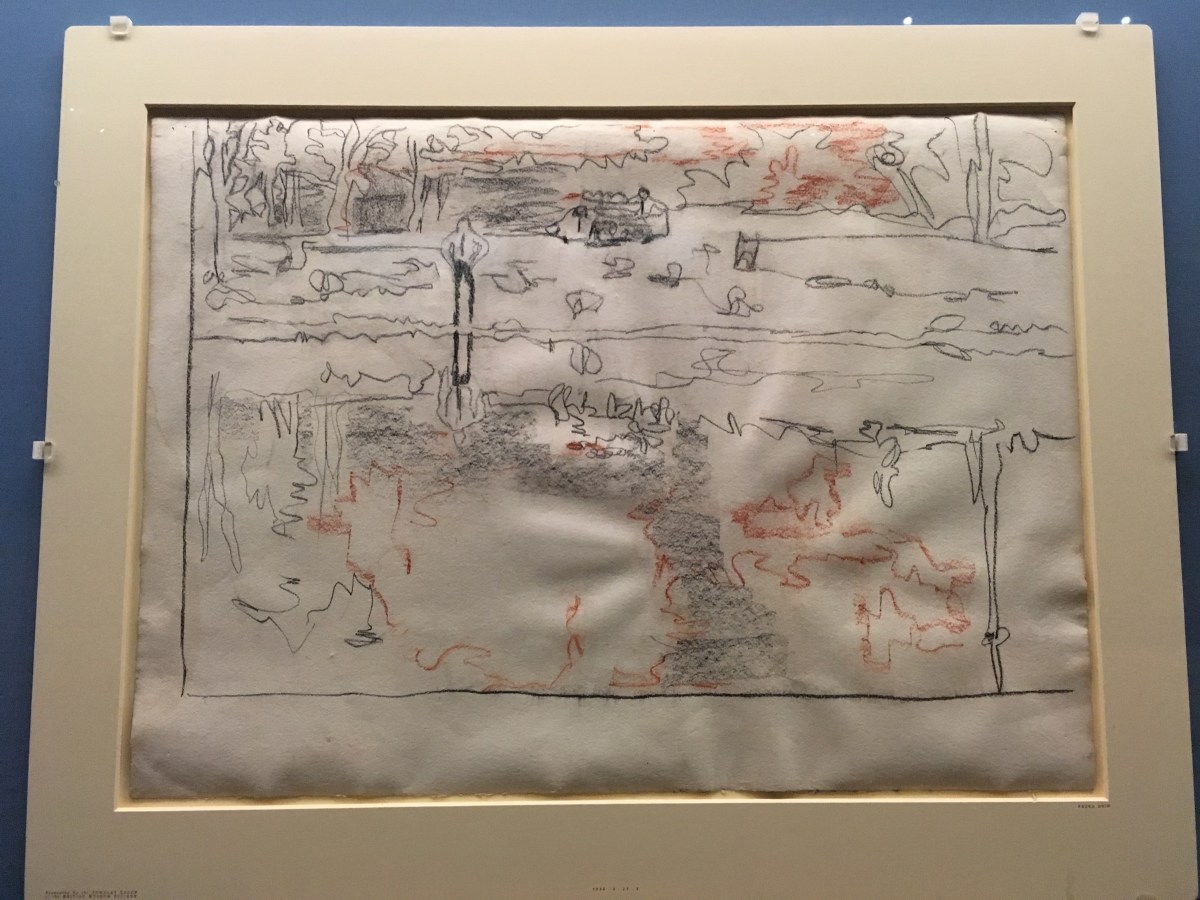
Getting off the Overground at Hackney Wick there’s not much to tell you what goes on inside these buildings. Yes, there’s a lot of graffiti and a bit of signage but the trick is to just march in, penetrate those corridors, heedless of the peeling paint and damp patches, and look for an open door to a studio space.  I only saw a fraction of what was on show but it was fascinating. There is such a variety of work going on and some serious talent on show. So here’s a little gallery of my own which I have created for your delectation.

Above: portraits by Beau Gabriel   and Julian Perry, who is concerned with coastal erosion.

IMG_7876
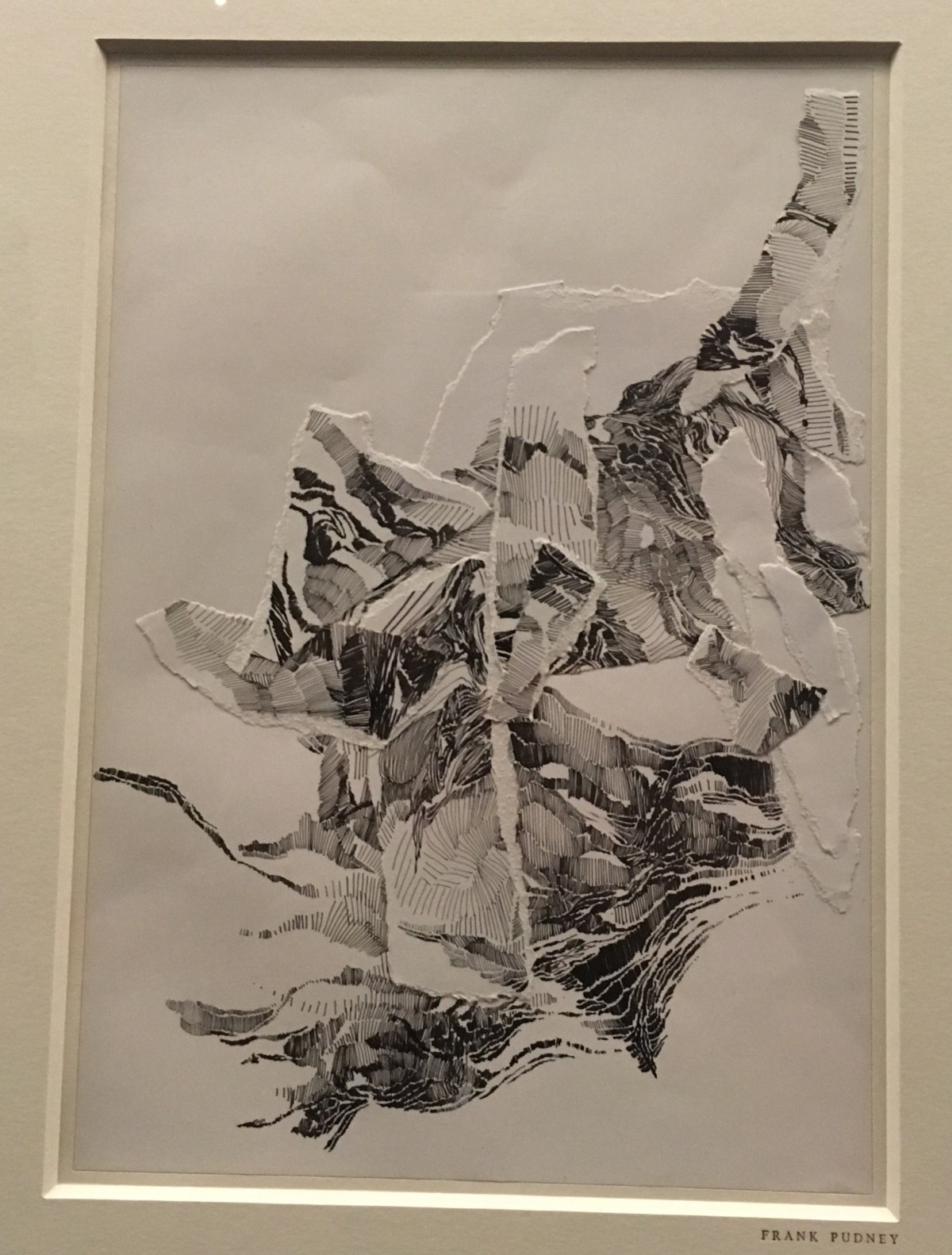
Paul Dash

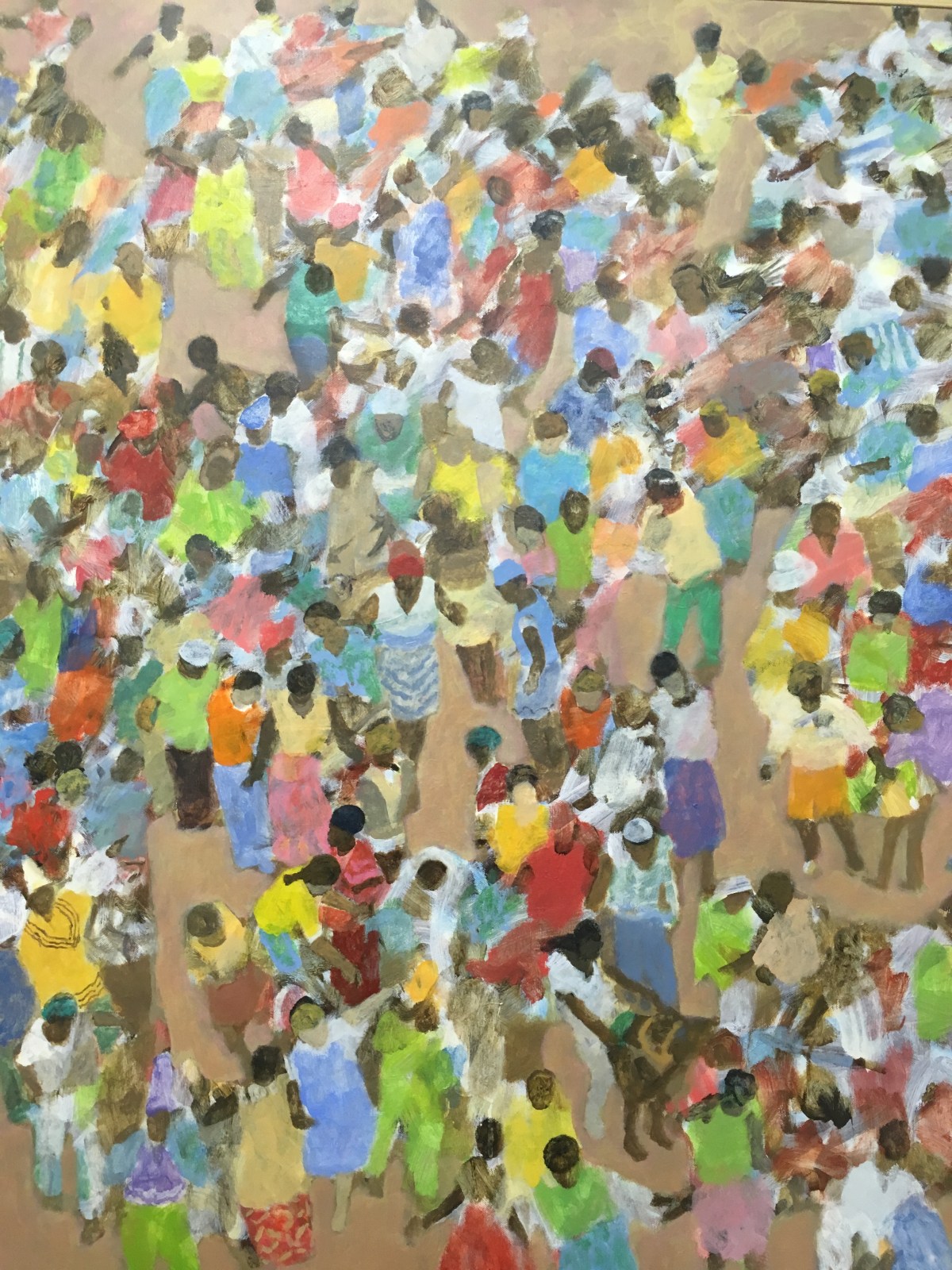
Fabulous impression of a market in Barbados by Paul Dash

IMG_7870
Anastasia Beltyukova

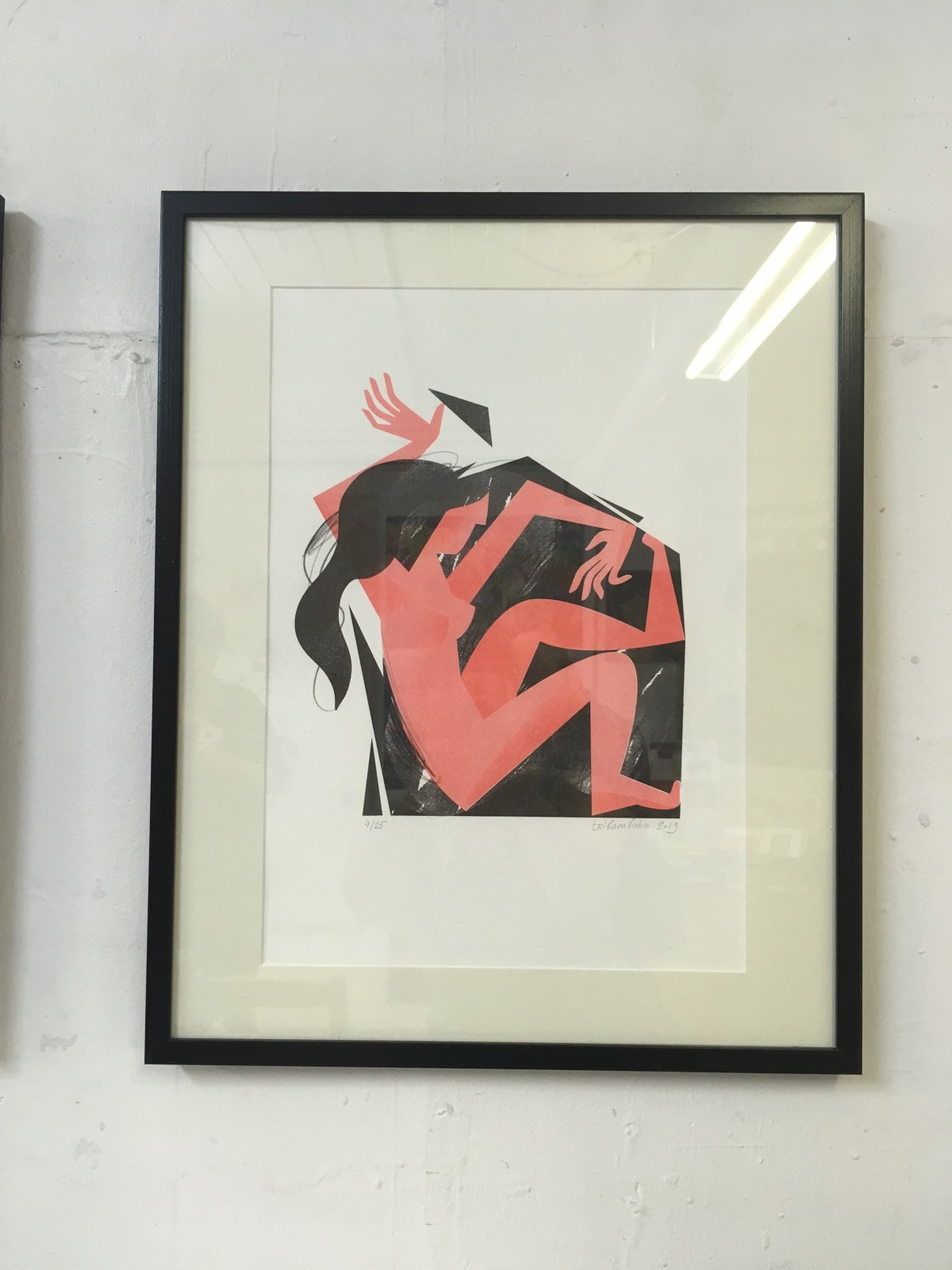
Great to meet Anastasia Beltyukova whose strong red and black print was chosen as a main image to promote the festival.


Above: detail of work by Rikki Turner,  and print by Tessa Horrocks


Above: portraits of toys and stuffed animals by Peter Jones – toys thrown out of prams and collected by him.


IMG_7874
Gethin Evans


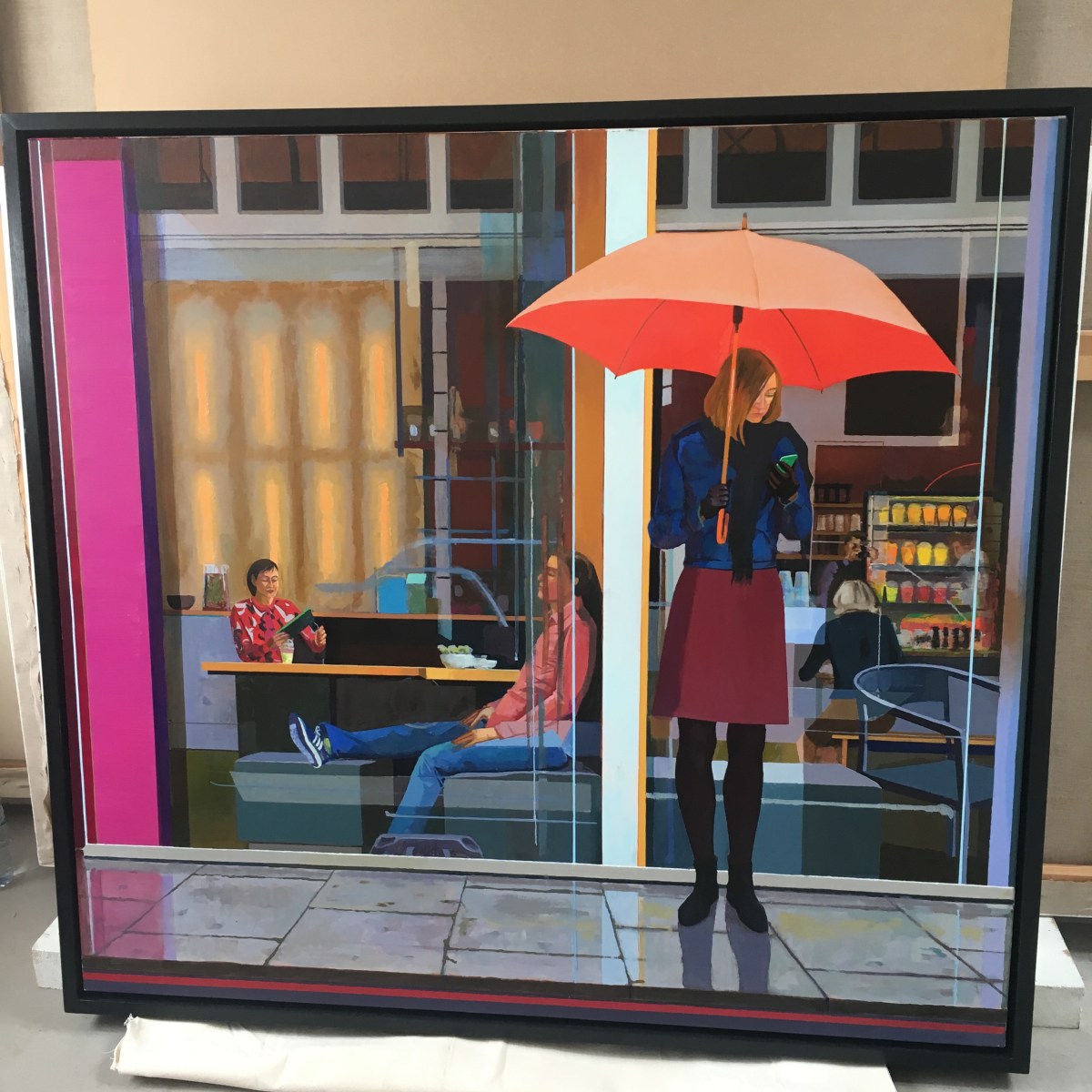
Rainy cafe scene by Gethin Evans.


Félix Vallotton: Painter of Disquiet is the subject of a major exhibition at the Royal Academy of Art. This curious artist was Swiss by birth and Parisian by nature; he evolved from a precise, conventional painter into a witty and original observer of his adopted city’s life, paying special attention to the naughtiness of the 5.00pm assignations between men and their mistresses and capturing the hurly burly of human life in a series of fabulous, spare, black and white wood blocks which made his name.

It was quite a revelation to walk around this intriguing exhibition of work at the Royal Academy and realise that the real Vallotton was a witty, very clever, modernist painter who absorbed the spare narratives of Japanese art and applied it to depictions of hectic city life in Paris. He started out as a prodigiously clever artist with a great feel for oil paint and observation.  His early portrait shows a serious young man with no hint of the humour which clearly lay within.IMG_7386

He was a great admirer of the French painter, Ingres, renowned for his precision and detail but this aspect of his work was soon abandoned when he discovered Japanese art, and the impact that can be achieved using wood block prints. His prints of Parisian life are utterly wonderful.  They were primarily illustrations so the need for narrative is obvious but they are so full of action, character and caricature.  I’d not seen those before.

And then we get the rather more saucy series of prints depicting the habits of the roués and cads about town who would be sure to call by their mistress’s home at around 5.00pm – on the way home from work.  Did this really happen?  Well, I guess it must have, but what fun for Valletton to poke fun at these uneasy relationships in a series of prints which depict the ups and downs, stresses and strains of these affaires.

Error
This video doesn’t exist
Error
This video doesn’t exist

Valletton’s life changed dramatically when he married Gabrielle, a wealthy widow with children.  He returned to painting – interestingly his support of choice was cardboard for many of his works – and captured domestic life with uneasy accuracy.  Just how happy was family life, one wonders.

This exhibition provides an intriguing glimpse into his life. I hadn’t thought of Valletton as a stand-alone artist – he’s usually lumped together with Vuillard and Bonnard who were great friends and concerned with similar themes. But I’m so pleased to have seen those woodcut prints, they are really something.

The exhibition is on at the Royal Academy until 29th September.

Just who is Cindy Sherman and how does she manage to become so many fictional people? She convincingly portrays imagined histories of invented characters created by the clever use of make-up, wigs, prosthetics, props and costumes. The UK’s first retrospective of her work is now on show at the National Portrait Gallery. It presents a fascinating array of oddness, wit, manipulation, playfulness and unsettling impressions of imagined ‘selves’.

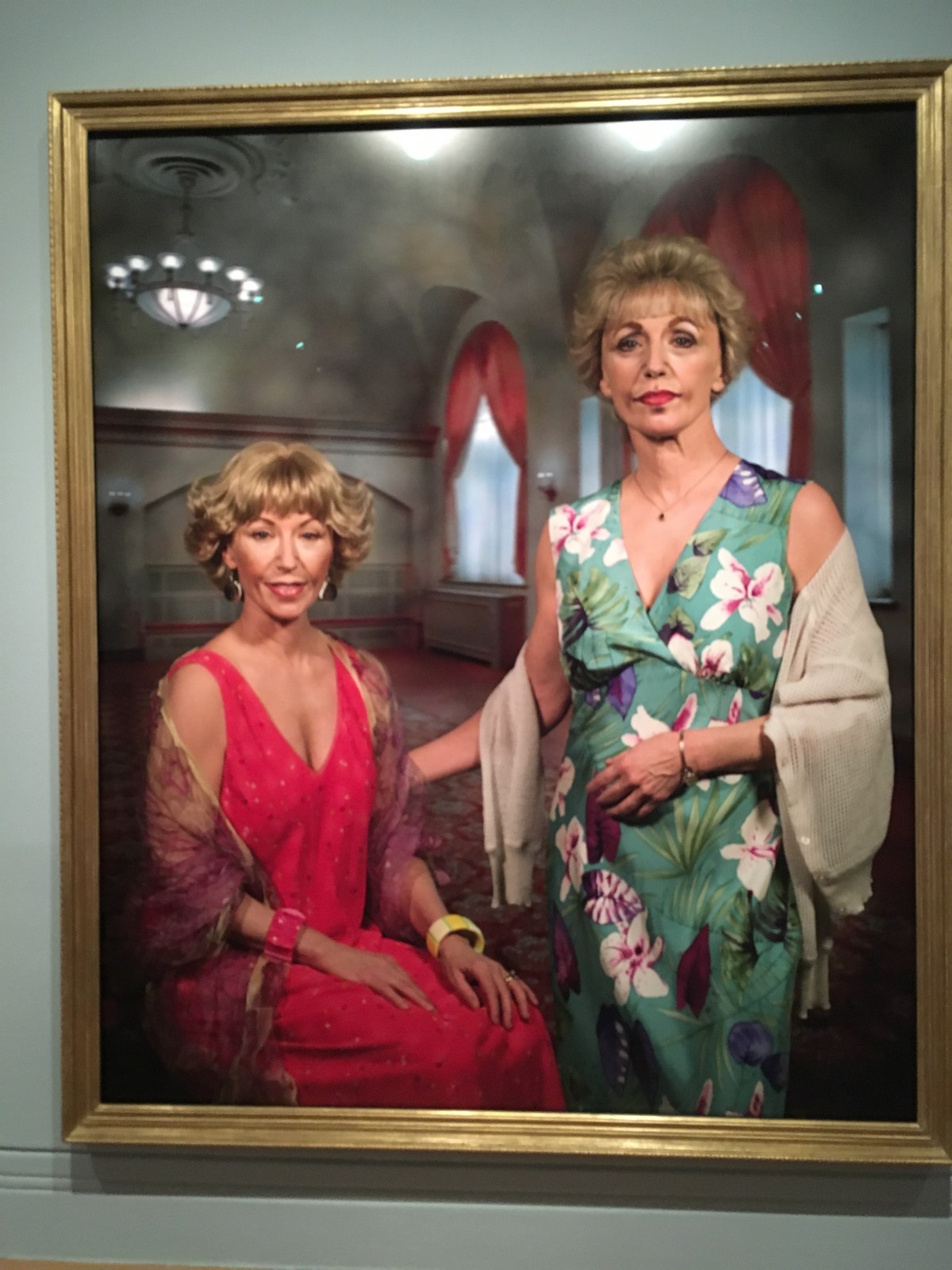
This exhibition of photographs by and of Cindy Sherman is quite unsettling.  You know that the person in the image is just one person but, goodness, the variety of faces and expressions which are captured is breathtaking.  Cindy Sherman is a human chameleon; she uses make-up, prosthetics, props, clothing, wigs, false teeth and her own remarkable acting ability to conjure hundreds of different people in her photographs.  Old, young, female, male…. the pictures all convey impressions of fictional people with believable settings and expressions which conjure back stories of misery, abuse, abandonment or just an imagined idea of ‘normal’.

Her approach to portraiture is unconventional, original and hugely compelling. After ploughing a very distinctive groove for 40 years, she is an internationally renowned artistic superstar.

IMG_7352

I liked the early photographs made soon after she graduated from the State University College in Buffalo, especially these ones which show the evolution of the look she is trying to achieve.  But what made her first stare at her face in the mirror, explore ways of painting it and decide to set it in poses….? We don’t really get an answer; and why should we? I guess she’d be the first person to say that it’s just ‘what she does’.  And this way of doing and seeing has taken her art in some fascinating directions.

For example, she corrupts the idea of the magazine cover with great aplomb. These images make you smile, chuckle a little and also feel uneasy. How extraordinary that she has managed to transform her face so that it so closely resembles the blandly smiling models and then ‘goofs them up’.


No portrait image, selfie or accidental shot of a face is safe from Cindy Sherman’s scrutiny or corruption.  It seems that the more difficult the challenge the more she relishes it.  I did like the series of photographs she made of fictional ‘society ladies’.  These images are of imagined women who display their wealth and status through their expensive clothes, their opulent surroundings and their manufactured faces.  These women believe that they look young and desirable but what the viewer really sees is a painted  mask on an ageing face which conveys confidence but hides a vulnerability and fear of losing that notion of power and beauty.

IMG_7380

I loved her interpretation of the fabulous portrait by Ingres of  Madame Moitessier  and conjured a similar woman but in contemporary clothing, seated in the same pose.

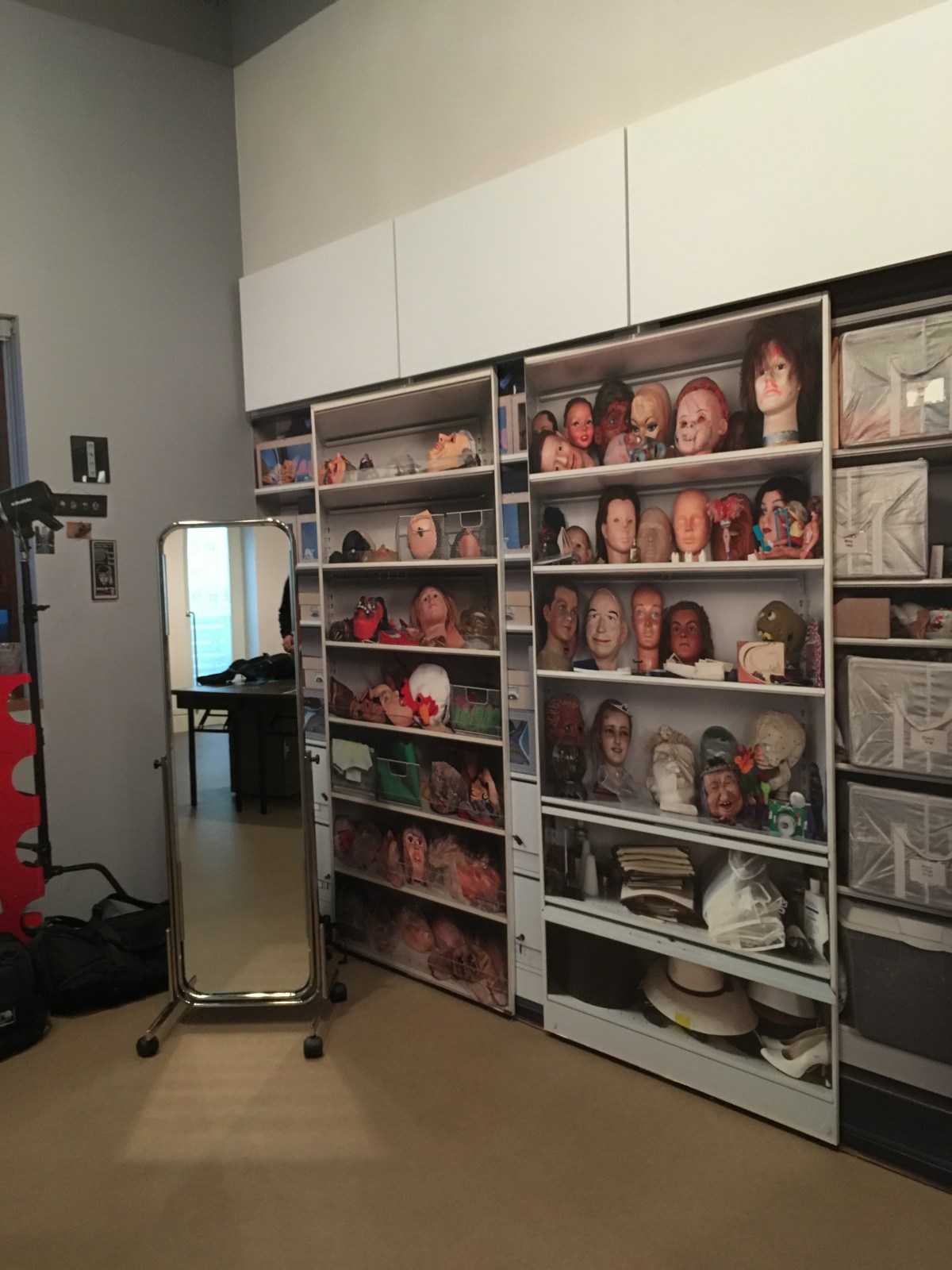
The exhibition incorporates an impression of Cindy Sherman’s studio in Greenwich Village, New York, where she has assembled a vast array of props, clothes, wigs and make-up and spends her time painting, adorning and adapting her face and body to make it into anyone she wants.

IMG_7379


I’ve seen her work but I’m still not sure I’ve seen the REAL Cindy Sherman.

The exhibition is at the National Portrait Gallery until 15th September 2019.


The BP Portrait Award at the National Portrait Gallery opens with a heartening abundance of painterly portraits which celebrate the true art of painting – brush strokes, smudges are clear to see and gladden my heart.

Call me old-fashioned but I’ve always believed that a painting should look like a painting, not a glossy, photorealistic copy of a polaroid or photograph which has been cleverly reproduced using paint.  I love the sensation of art which is full of daubs and dashes, colour and clashes and the sense that a human hand has flourished its style upon a piece of canvas or board and used this humble material in a vigorous and lively way to capture a likeness.  OK, so I use paper in my own art, but a fragment of paper is like a blob of paint on a brush and that is the style I have created.

So, I’m always interested to see what the judges of the BP Portrait Award have chosen and this year I’m very pleased to say that there is an abundance of splashy, plashy portraits which absolutely use the viscous nature of oil or acrylic.

IMG_7231

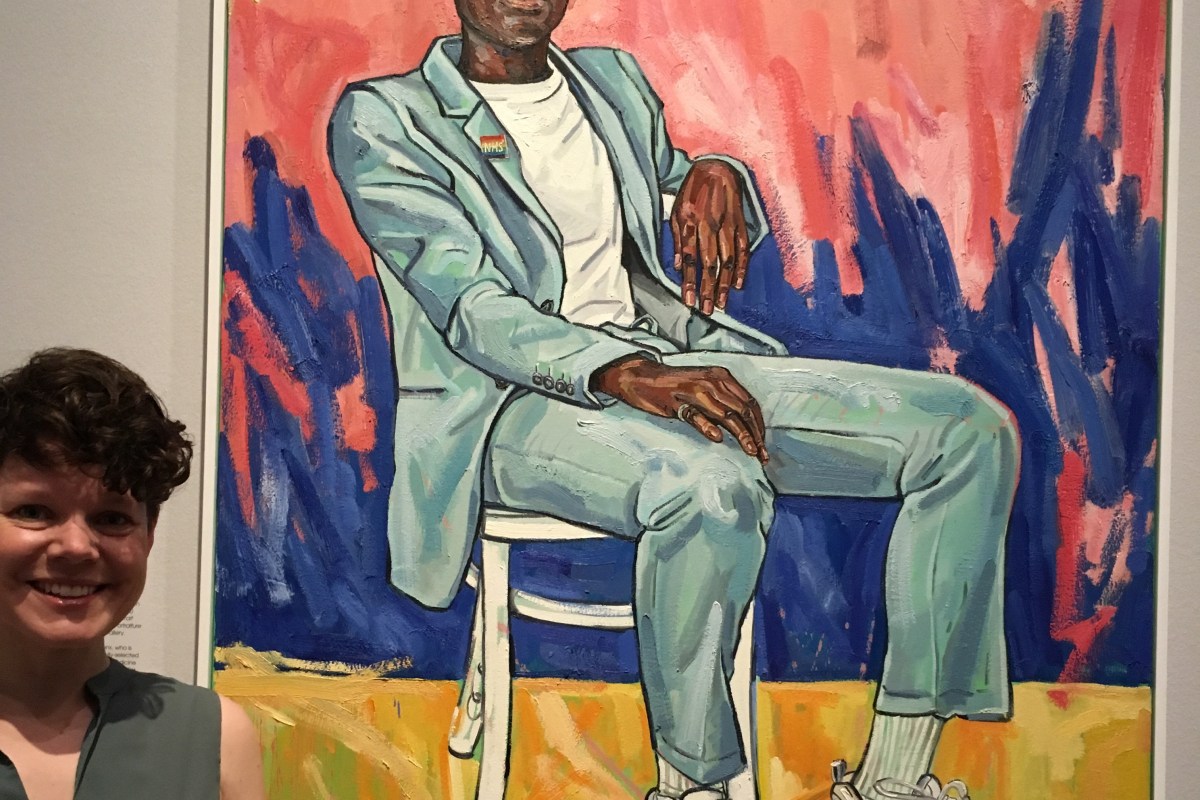
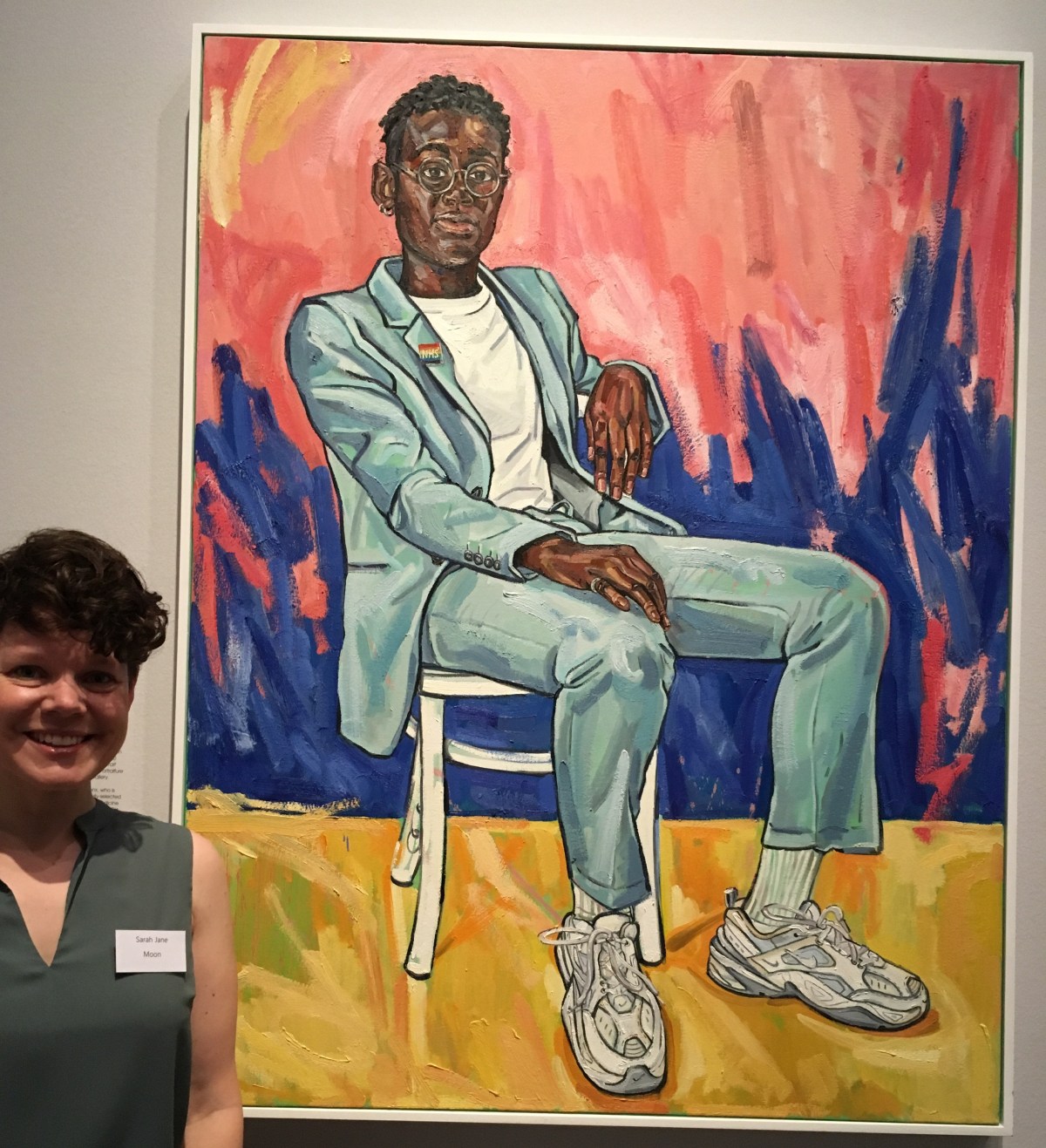
I was delighted to meet Sarah Jane Moon by her excellent portrait of Dr Ronx.  Deliberately ambiguous, this portrait of a woman is beguiling – the stance and gaze is quite male but her features are feminine – but it was the joyful use of paint which attracted me. Paint was applied with enthusiasm, colour contrasts working well and the pale green ground, which comes through in the suit, breaks through the layers of strong colour.

IMG_7245

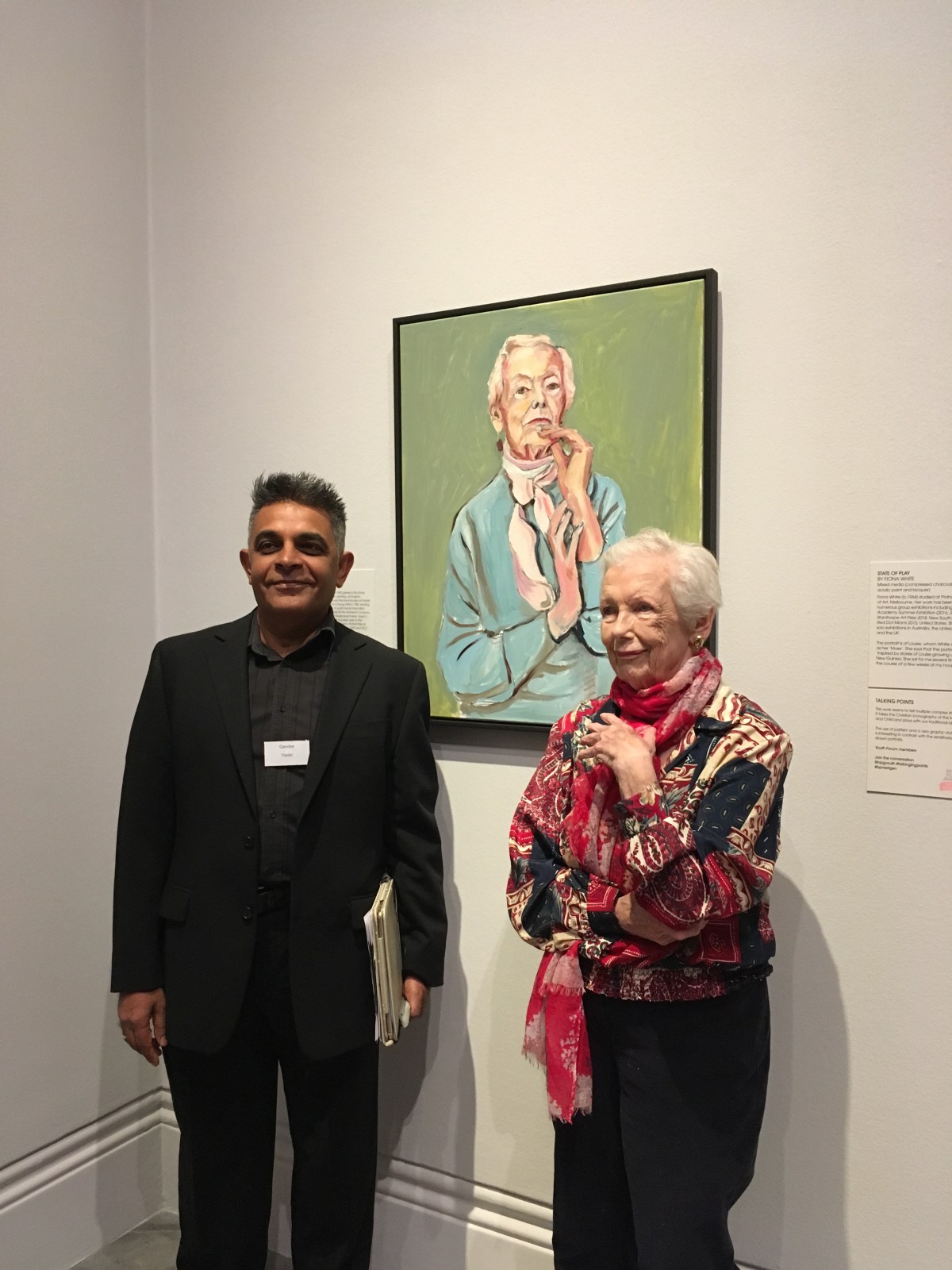
Likewise, I loved Gandee Vasan’s Aunty Therese.  It was a joy to chat to both artist and subject in front of the portrait.  The use of paint is clear to see, the gaze of the subject and the nod of her head fixes you – she judges us, the viewer, as much as we judge her.  Apparently it was painted in an eight hour sitting and the artist wanted to capture his Irish/Canadian aunt’s ‘indomitable spirit’.

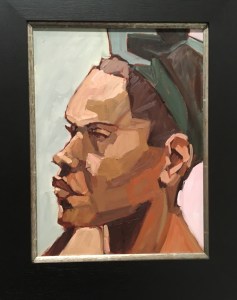
Bridget Cox’s Chinese Cloth is reminiscent of Matisse with the busy, painterly background and the delightfully ruddy cheeks and nose of the subject. I liked Dieja by Scott Lancashire. Apparently it was done in a two-hour sitting. I like a bit of speedy painting.

And the full size nude of Marcus by Vanessa Garwood was a great depiction of a professional life model comfortable posing within a mix of fabrics all painted with big, broad brushstrokes.


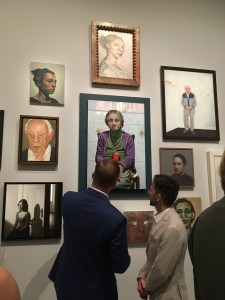
I’ll just add in a few more photos I took of paintings which particularly caught my eye.

The exhibition at the National Portrait Gallery is on until 20th October.