Top Drawer – a trade fair for gifts, crafts and stationery which is full of good things, including lots of wonderful paper!

Top Drawer is the ultimate place to go to seek out the newest, whizziest and most innovative gifts, crafts and stationery.  Walking up and down the aisles of this show at Olympia I was dazzled by the variety of new and beautifully designed objects on show and the quantity of makers and suppliers who just adore what they do.

Of course I was particularly keen to see what new paper is around and I was not disappointed.  It’s very heartening to see that artists and designers have taken the plunge and found a way to turn their creations and artwork into wrapping paper and stationery.   I did the rounds and chatted to a few stand holders – again, it was that gleam in the eye of total delight which impressed me.

So, all I can do is include a few shots of some of the papers which really grabbed me and I hope that the fair went really well for the makers.

Loved the work of Cambridge Imprint and the wonderful hand-blocked papers in beautiful colours.


I liked the cheerful designs by Emily Brooks

And hats off to Natasha Jade for finding a way to turn her art into really lively wrapping paper and cards.

Glorious work on show at the London Art Fair in Islington with a satisfying amount of paper collage art on display: 17 – 21 January 2018.

The London Art Fair is celebrating its 30th year and the show runs from 17 – 21 January at the Business Design Centre in Islington.  I’ve been going to this show for years.  It’s not to large and not too small….just right for a couple of happy hours scouring stands from some of the world’s top galleries and having the chance to see what’s new, what’s current and what’s fashionable. 

There’s a reassuringly high proportion of contemporary art on show but clearly a strong showing from ‘mid-century’ artists such as John Piper, Matthew Smith, Jacob Epstein, Eileen Agar et al. 

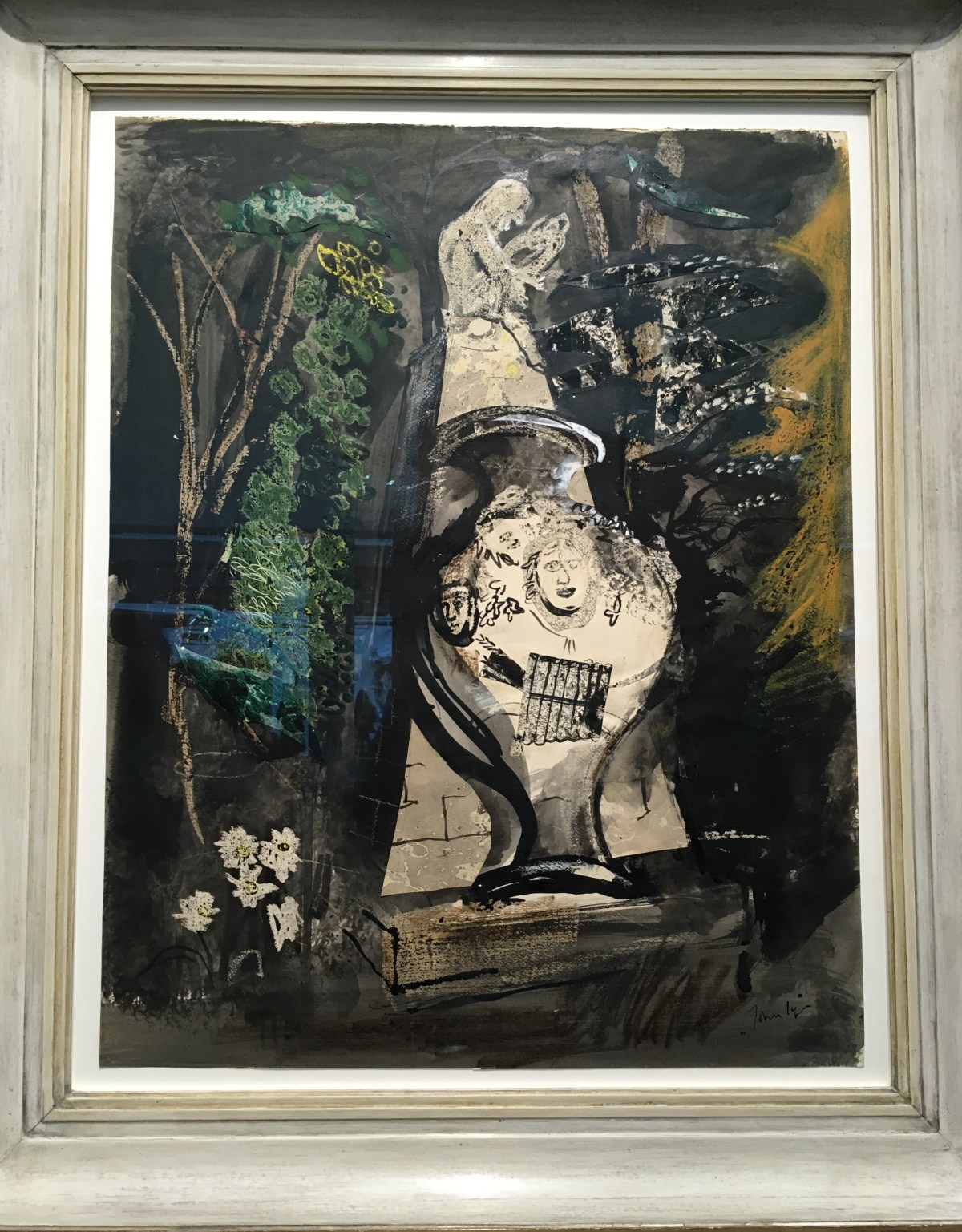
Being a paper artist myself I’m always helplessly drawn to works which have been made by fellow paper enthusiasts. So I’ve included photos of some of my favourite finds at this year’s fair.  On balance, I think the standard and quality of work was very high.  For example, if there’s a John Piper in the room I’ll make a bee-line for it.  I love his energetic collage work mingled with pen and ink and a variety of media.  You can see he’s used wax as ‘resist’, bits of paper stuck on top of the drawing giving it the collage credentials plus a mix of ink, wash and gouache. I rather think it must have been done at high speed too.  This was at the Christopher Kingzett stand.
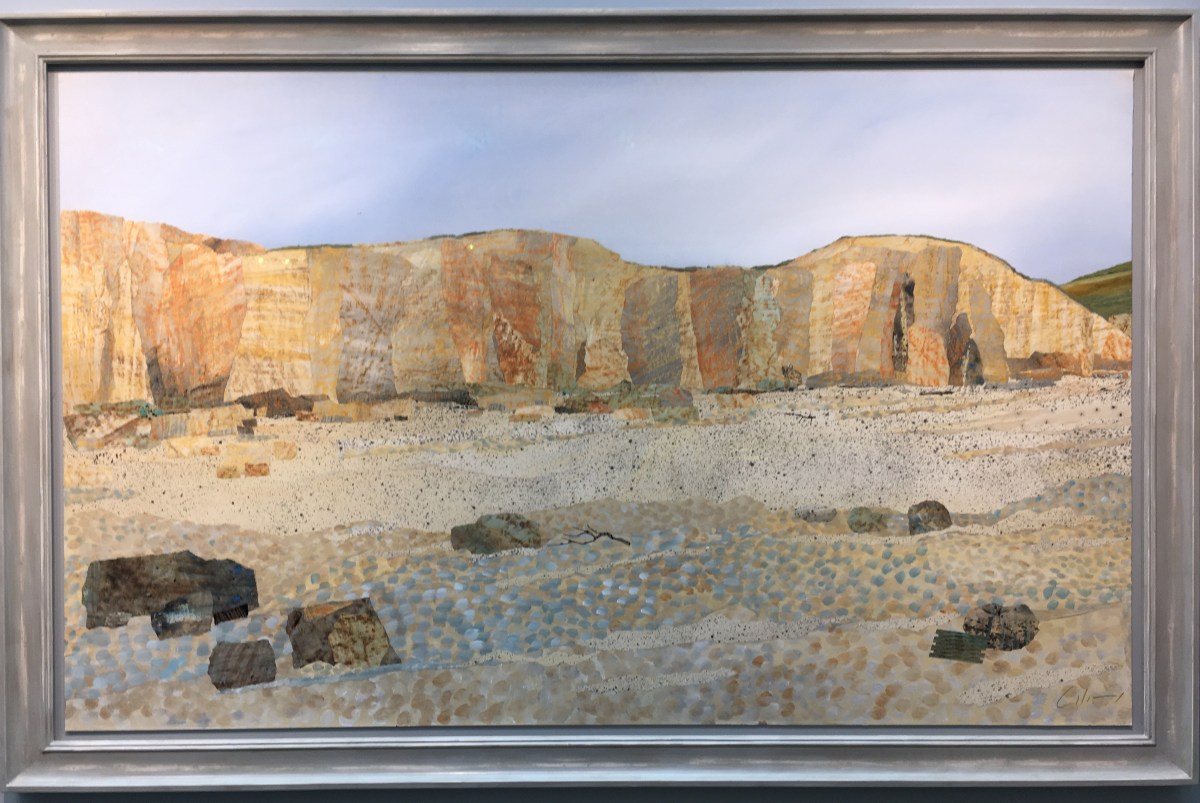
IMG_9013 (2)I was really fascinated and impressed by the work of Marzia Colonna. She is a real collage artist working on a grand scale. This collage of West Bay (of Broadchurch fame!) is 44 x 71 inches – pretty massive – and wonderfully painterly, from a distance.  I took a close up of the work too to see that she’s used a variety of pre-prepped paper. Very inspiring.  This was at The Portland Gallery stand.
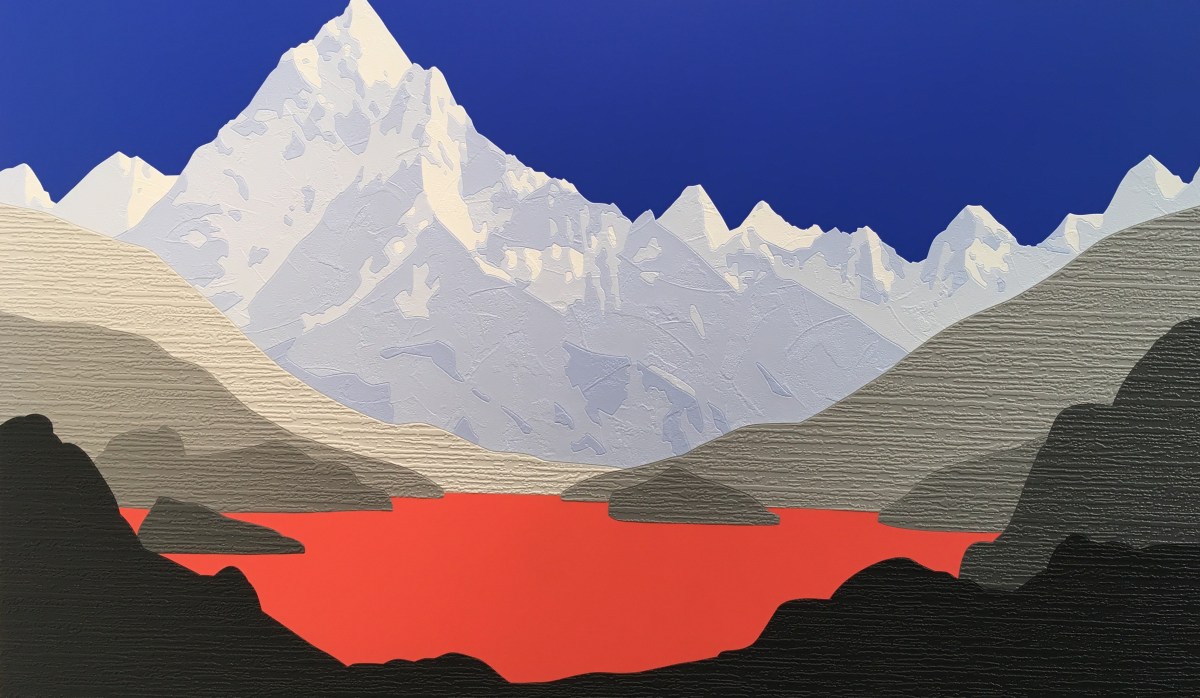
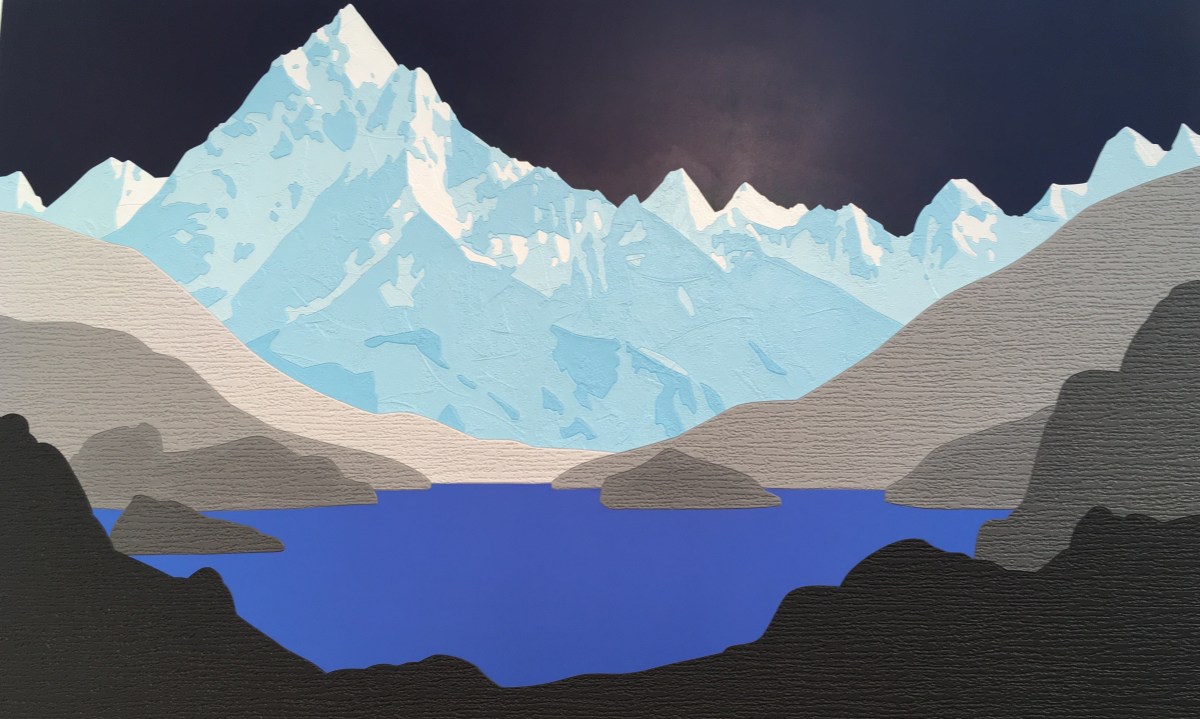
IMG_9024 (2)IMG_9026 (2)I was very intrigued by the work of David Wightman.  I know about these textured wallpapers which can be used in so many ways. (I use them too, but in a more random way). He’s used them with great precision cutting to get a very impressive effect which incorporates great colour and tone to cleverly create a sense of perspective.  These pieces were on show at the Long & Ryle.
IMG_9036 (1)IMG_9035 (1) And finally, there’s Peter Clark, a stalwart collage artist who makes wonderfully entertaining and variety-packed works.  This year we’re seeing fish, and what jolly things they are.  I took a photo of the Blue Smoked Fish and Smoked Salmon at the Portland Gallery. Who says art has to be serious!

So, I’ll be ripping up my paper with renewed confidence and pleasure safe in the knowledge that I am not alone in having a passion for paper!

The London Art Fair  http://www.londonartfair.co.uk  17 – 21 January 2018, Business Design Centre, Upper Street, Islington, London N1

From Life – drawing the human body has always been a challenge for artists. The Royal Academy presents a brief history of life-drawing, with examples of work by contemporary artists and also a ‘virtual’ body of work…

I’ve been grappling with life drawing for years – it is the most difficult thing. You’d think that we humans have a pretty good idea about the shape, form and proportion of the human body yet it’s a constant battle to overcome the brain’s perception of what is seen and find a way to translate what is seen in front of you to something drawn on paper, card, canvas or in sculpture.

It fascinates me that an interest in portraiture and life drawing started with the Renaissance artists who were inspired by sculpture from the classical world. Seriously, did nobody do any life drawing or portraiture in the intervening 1500 years?  Were these skills ‘lost’, can this be true.  I’m intrigued by the remarkable Fayum portraits (Mummy portraits), painted over 2000 years ago, which were clearly made from life as a real likeness of the subject and then buried with the mummy, placed over their face as a lasting memorial of that person’s appearance.  The Greeks and Romans really LOOKED at humans and made the most sensational art based on what they saw. Then, for some reason, artists stopped representing what was in front of them and started making art which represented what the people were, or how they lived, or how they would like to be represented.  Anyway,  thank goodness for life-drawing.  It’s the ultimate discipline for training the eye to really SEE what is there and make a bold attempt to capture it.  Life Drawing has been the bedrock of artistic training for centuries and so it should continue, I believe.

The new show at the Royal Academy takes us from the early life-drawing classes established with the RA Schools in 1768 up to the work of contemporary artists and into the new arena 3D virtual reality.  I enjoyed the paintings by Zoffany and (attributed) to Hogarth of eager students peering at plaster models.  Then there’s a mix of life drawings of Iggy Pop before examples of work by Antony Gormly, Chantal Joffe, Jonathan Yeo, Gillian Wearing, Jenny Saville and many more.

I was blown away by the virtual reality experience created by Yinka Shonibare RA in a separate space where, encased in a head set, you find yourself transported in front of and then walk THROUGH a neo-classical painting he has produced and beyond into a wonderful, paradise of classical idealism. I could quite happily have stayed in that virtual space for some time but it was probably a couple of minutes before I had to give it up and return to the grey light of Piccadilly on a December morning. Hey ho.

Above: Self-portrait with hand on hip by Chantal Joffe, Sculpture and painting, GThe Preserving Machine by Jonathan Yeo

Images from favourite childhood books seen up close and personal at the V&A. The wonderful world of Winnie-the-Pooh – illustrations and texts on show in an enchanting exhibition.

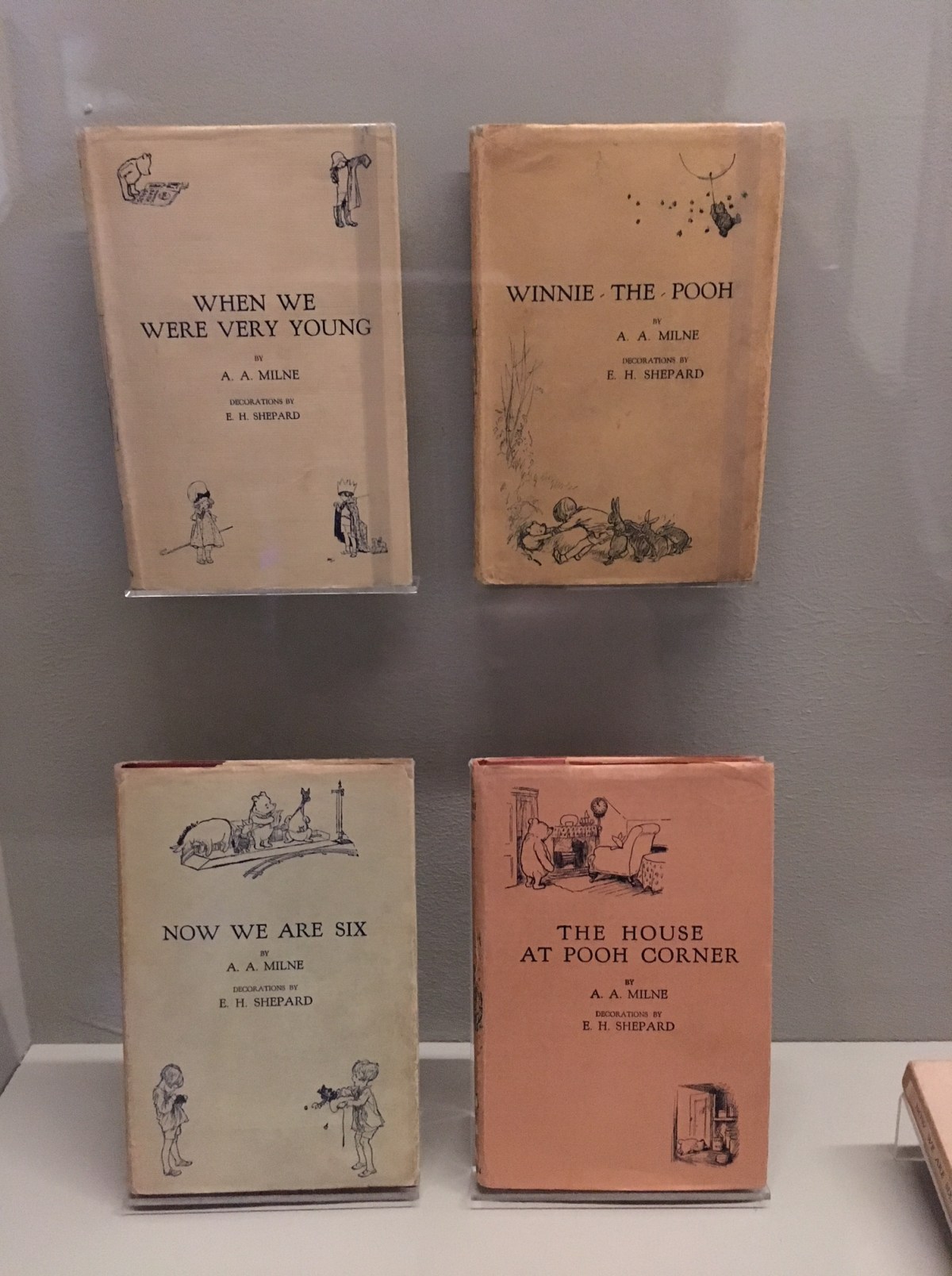
I know not everyone enjoyed the stories of Winnie-the-Pooh or the poetry of A.A. Milne, but I did.  I can recite great tracts of verse from When we were Very Young or Now we are Six. Don’t get me started on James, James, Morrison, Morrison… you will regret it because I know the WHOLE thing!  But I could also tell you the basic story line for most of Christopher Robin’s adventures and I must have spent many an hour of bedtime reading poring over the maps of the Five Hundred Acre Wood and fixing in my mind just where everything is.  I’ve always had a thing about maps and it could well stem from that early exposure to sketched out paths, copses, streams, bridges and the homes of key characters.

IMG_8348

I also really loved the drawings as a child without having any notion of how they were made, why they felt so relevant and how true to the characters they were.  The exhibition at the Victoria and Albert Museum on Winnie-the-Pooh: Exploring a Classic will be wonderful fun for any Pooh enthusiast like me or for a younger who might just be getting to grips with the world of young Christopher Robin and his friends.

Much of the exhibition is nicely laid out at child height and there are some great interactive elements such as a Pooh-Sticks bridge with a constant flow of (digital) twigs and bits and pieces flowing under it.  On press preview day there were several children obligingly ‘throwing’ sticks and clutching red balloons (a very useful object for Pooh when honey hunting) while adults peered with fascination at the more historical exhibits higher up on the wall.

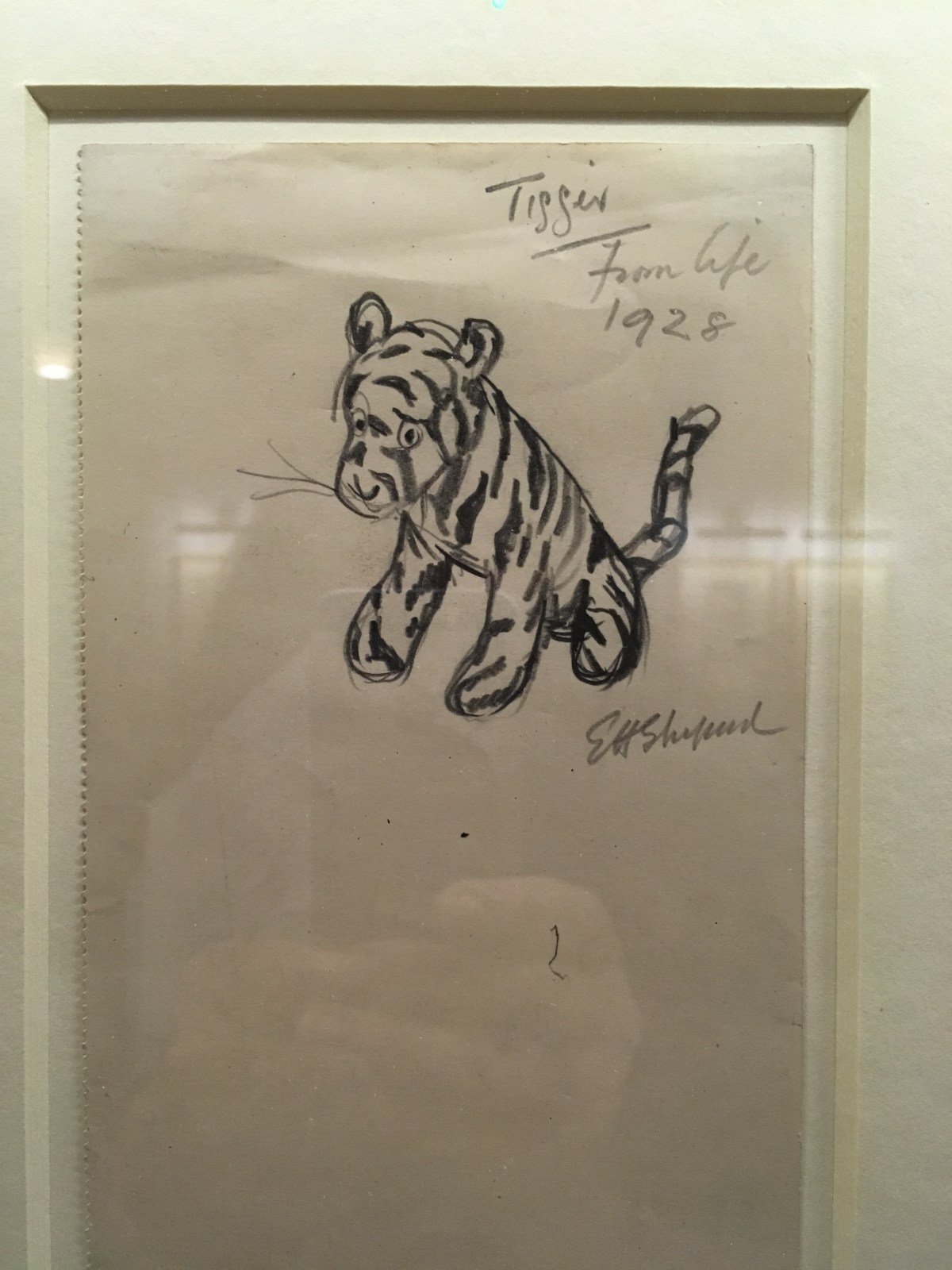
I really enjoyed seeing E.H. Shephard‘s initial doodles and drawings. You can really see the way he used pencil sketches to feel his understanding of the character before creating the finished illustration in pen and ink.  It was also great to see how imaginative the publisher and book designers had been in using elements of the illustrations in a non-obvious way, taking details and placing them elsewhere on the page.

IMG_8347

Of course there were exhibition spaces filled with the stuffed toys like the ones owned by Christopher Robin who triggered thoughts of Tigger and Piglet along with the quantity of merchandise soft toys, games and films which followed.  But for me, I think the most exciting part of the show was to see the earliest and most experimental of illustration ideas and how the author and illustrator almost melded into one combined being, both sharing and expressing the idea in complementary ways.  A true meeting of minds.  An enchanting show.  9 December 2017 – 8 April 2018

IMG_8357

The Taylor Wessing Photographic Portrait Prize 2017 assembles a fascinating collection of photographic portraits from around the world; some shedding light on unsettling realities of our time.

The featured image is a photo of President Trump taken as he left a room in the White House.  The photographer, Benjamin Rasmussen was with Time magazine reporters invited to the White House for a tour with the President.  Apparently Trump refused to take direction and walked away. Rasmussen captured this image of him as he walked away into his private living room.  His face is reflected in the glossy wood to the right, while on the left there’s a silhouette of his features cast by the evening light.

The annual Taylor Wessing Portrait Prize exhibition at the National Portrait Gallery showcases new work which has been submitted by contemporary photographers from around the world.  There’s always a very varied selection of in this show (which has been going for 10 years) – from studio portraits to reportage to images captured on the hoof or in a split second or maybe just incidental scenes of human life which have been cleverly shot to present intriguing narratives.

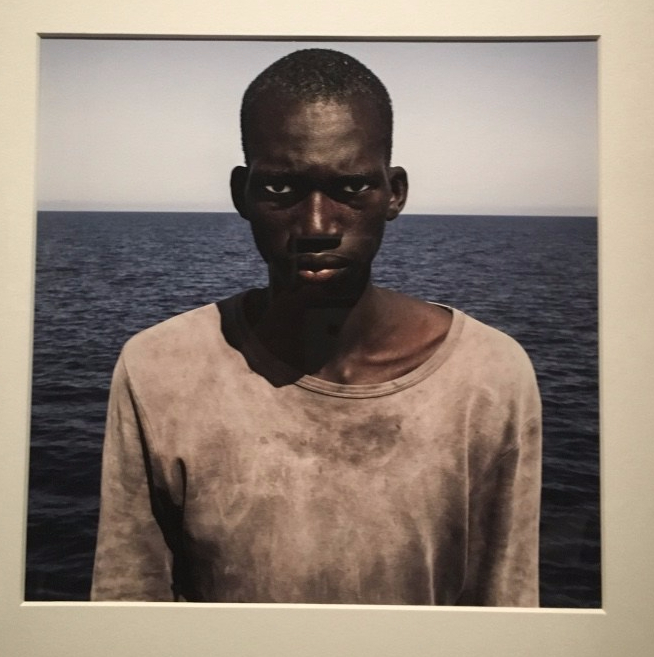
The winning portrait was of Amadou Sumaila taken by Cesar Dezfuli.  Sumaila is a sixteen-year-old from Mali who travelled across the Mediterranean from Libya and was was rescued by an Italian NGO vessel.  The portrait captures his hopes, fears, difficulties and concern about his future in a new country.

thumb_IMG_8091_1024

It was the more incidental portraits which I particularly liked.  On the day of the press preview several photographers had brought their subjects. I enjoyed meeting the gang of little boys who’d been captured playing Minecraft on a computer while a woman in the kitchen beyond is busy creating food.  Taken by Hania Farrell, the photo was taken on holiday in Mykonos, Greece and captures both sets of characters unawares, absorbed with their activities.


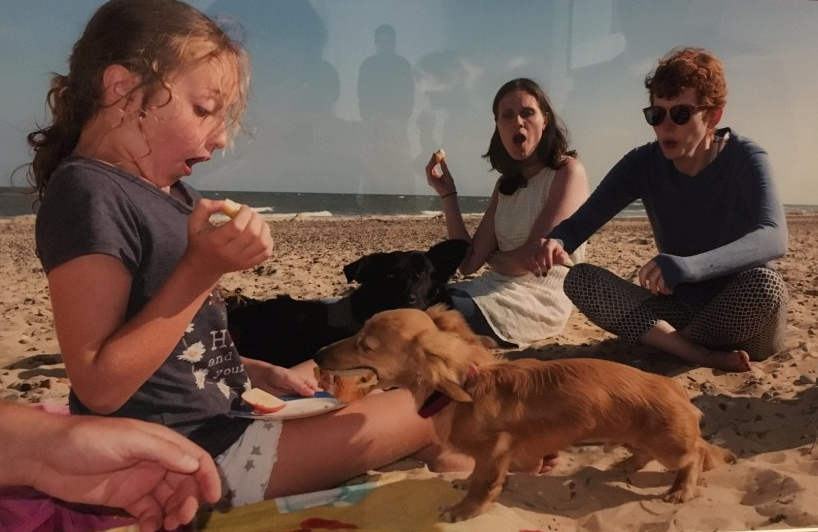
Also loved the snap of a family having a picnic on a beach when Laurence Cartwright captures the moment the dog steals a sandwich.  Apparently the scene is Southwold in Suffolk and the cheeky dachshund called Bingo stole his niece’s sandwich from her picnic plate.  Note the shock and alarm on the faces of the group and jealous eye of the black dog behind.

thumb_IMG_8084_1024I was also impressed by a portrait of the painter Jack Vettriano by Ian McIlgorm.  Both photographer and subject were at the event and I managed to snap them both. Not a good photo by me, I’m afraid.

The EY Exhibition: Impressionists in London, French Artists in Exile (1870-1904) at Tate Britain – a fabulous collection of works by artists who found refuge in the capital and became captivated by both the city and British culture.

The London fog – it never looked more beautiful or provided greater inspiration than for Claude Monet when he decamped to London to escape the political violence of his home city, Paris in the 1970s.  The most famous of the collection – and there are six of them together in this show – were painted over three consecutive winters at the turn of the 20th century and were completed in his studio in 1904.  For Monet, the swirling mists which rose from the Thames and engulfed the riverside buildings and bridges provided the perfect subject for his fascination with the effects of light and atmosphere.

But Monet was just one of many artists who decamped to London during the final quarter of the 19th century.  For illustration of why they left, the first gallery in this excellent show provides grisly and graphic evidence. James Tissot gives us some very strong and visceral clues to the murderous days following the Prussian invasion of Paris in 1870 and the Siege of Paris which caused appalling famine. This was followed by a popular uprising by the ‘communards’ – Parisians who felt furious with the behaviour of the Government – who were cruelly rounded up and executed.  There’s a very graphic watercolour by Tissot of crumpled bodies at the bottom of a high wall while further victims rain down upon them.

London provided a safe haven and the ex-pat community of painters appear to have become close friends and looked out for one another.  The sights of the city became a focus for their artwork. Some, like  Alfred Sisley and Camille Pissarro enjoyed the look and feel of the suburbs where they lived. I’ve always adored the picture of Fox Hill in Upper Norwood and the railway station at Lordship Lane. It was a surprise and delight to see paintings by Pissarro of Kew Gardens, a cricket match on Kew Green as well as impressions of the centre such as the bright lights of Leicester Square by Monet and a chilly winter scene in Piccadilly by Guiseppe de Nittis

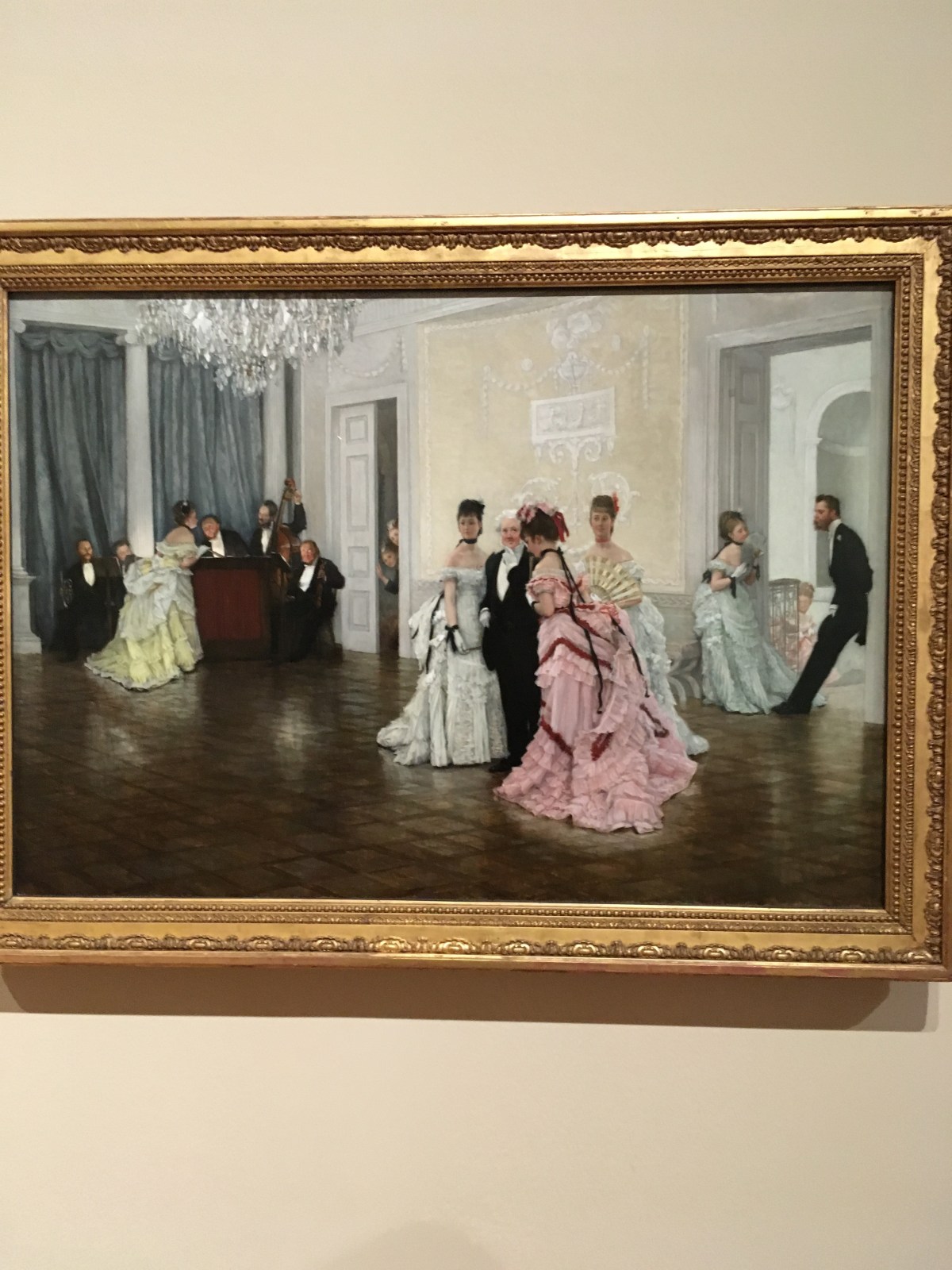
Tissot seems to have swiftly recreated his successful lifestyle in London establishing himself as a society portrait painter but also a recorder of aristocratic soirees and depicting wealthy people enjoying the finer things of life. But I was amused by a painting he made called Too Early, showing the blushes of the enthusiastic guests who have arrived FAR too early for a posh ball at a smart town house.

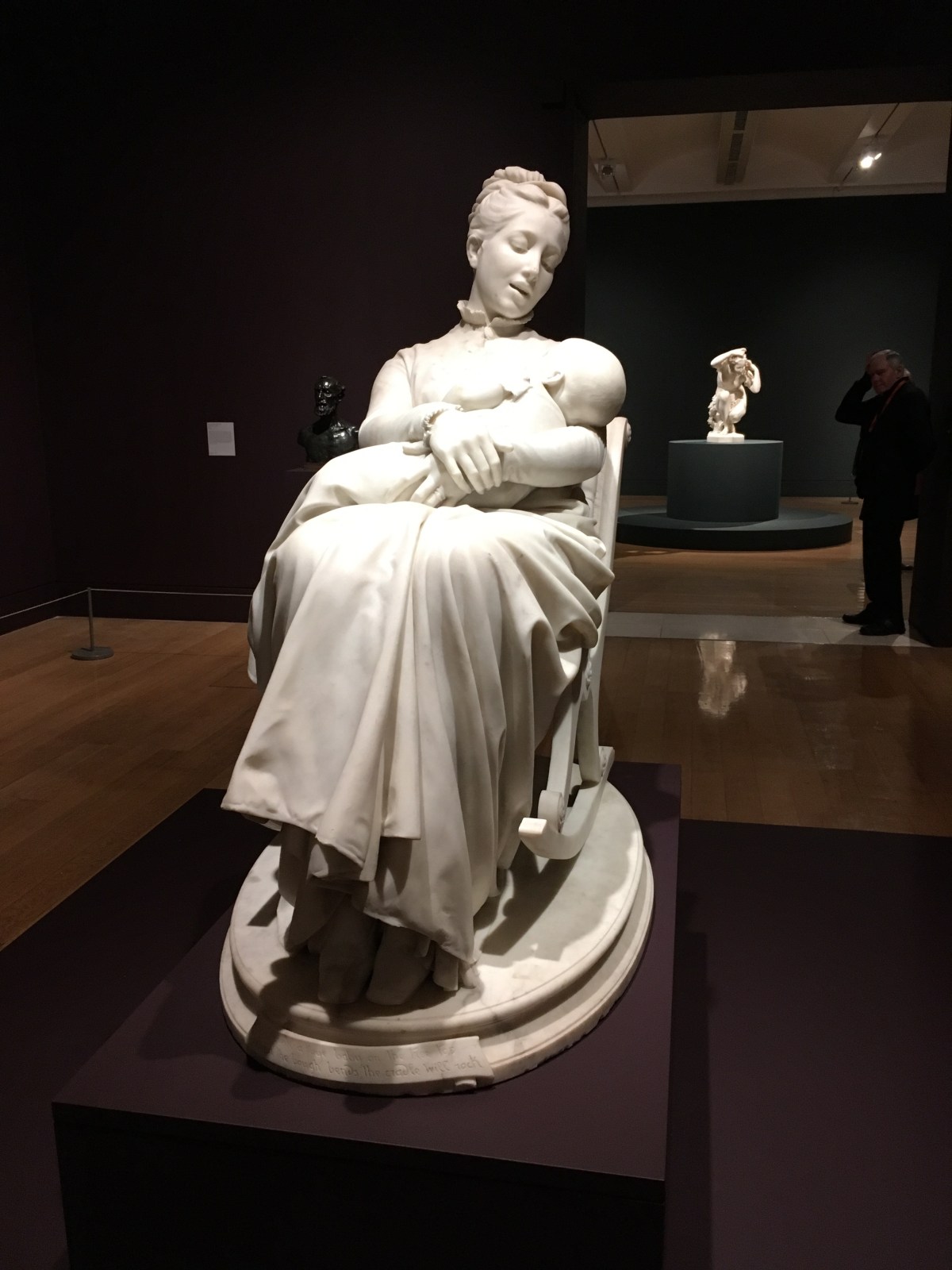
IMG_7916The exhibition introduced me to artists I confess I was unfamiliar with too: Alphonse Legros, Jean-Baptiste Carpeaux and Jules Dalou are all spectacular sculptors.  This marble sculpture of a mother with her baby, entitled La Berceuse (the Rocking Chair) by Dalou is intensely moving and a joy to walk round.
IMG_7922 (2)The exhibition concludes with three works by Andre Derain.  Much younger than the established Impressionists, and arriving more for professional advancement than apparent flight from persecution, he brings a refreshing sense of colour and abandonment to his depictions of London. I really love the brightly coloured riverscapes which fill the final room. It’s a splendid send off from a show which is not only a visual joy but thought-provoking and historically fascinating.

The EY Exhibition: Impressionists in London runs from 2 November 2017 to 22 April 2018.  http://www.tate.org.uk

Cézanne Portraits – a magnificent exhibition of portraits and self-portraits at the National Portrait Gallery

It’s always a pleasure to see exhibitions of work by Cézanne and the exhibition of portraits which has opened at the National Portrait Gallery delivers on many counts.  When a show includes several portraits we’re familiar with from permanent collections in London galleries it’s a bit like encountering an old friend at a party:  “Oh, good morning M. Cézanne, good to see you again, I recognise you from your portrait at the Courtauld Gallery, but, goodness me, there’s a similar one right next to it which has quite a different feel and atmosphere.”

He produced 25 self-portraits and a good selection are on show here. It’s always fascinating seeing the progression of face, the ageing process and the gradual setting of features.  The notes on the wall claim that Cézanne was only interested in representation – enough of a likeness to make a person recognisable but that he wasn’t bothered with the psychological side of painting or in demonstrating a subject’s work or interests.  I think there definitely several exceptions to that claim.   The most frequently painted subject was Hortense, his wife.  We see her change from modest young woman to weary wife to rather vacant-looking older lady.  He was clearly fascinated by her face and captured her innate stillness very well.

There’s a chronology to the show – we shift from his early days in Aix-en-Provence to Paris and the world of the post-impressionists, of which he was a leading light, and then back to Aix and portraits of the ‘peasants’, the country folk he lived amongst.  I have to say, I really like those pictures. I could stare at his quick oil sketch of The Gardener Vallier for hours, revelling in the beguilingly simple strokes which capture the man’s figure and the sensation of dappled sunlight as he poses for the artist.  Then there’s the portrait of the farm worker with the pipe and the hat – who worked on the estate of Jas de Bouffan – and he features in the glorious card players pictures.

It’s fascinating to have the chance to look close up at the techniques he used.  The early whoosh of brush strokes gives way to the palette knife and thick smears of paint on canvas before he moves onto the development of smaller, more urgent brush strokes in a downward or diagonal direction which build up layers of colour and tone.

This show is an absolute joy for anyone interested in Cézanne, in portraiture, post-impressionism or simply the evolution of one of the most influential painters of the late 19th century.

It’s on at the National Portrait Gallery until 11 February 2018.


“Something Resembling Truth” – a retrospective of Jasper Johns at London’s Royal Academy of Art. At 87, he is regarded as America’s leading contemporary artist and one of the most influential artists of the twentieth century.

The flag, the flag…  It’s such a familiar symbol to all Americans, seen fluttering outside homes and hanging at the front of every school classroom for children to ‘pledge allegiance’.  And how clever of Jasper Johns to take the stars and the stripes and turn the symbol into a piece of abstract art which also celebrates the surface texture of encaustic (a mix of molten wax with pigment) and mingles it with bits of newspaper collage to create a beguiling and mesmerising artwork.  His aim was to jolt the viewer out of the stupor of familiarity and make the image into a piece which must be really looked at.

He did the same with numbers and letters, creating hundreds of canvases which took the familiar symbols and layered and subverted them into further abstract shapes.  I really enjoyed seeing examples of this early work. Most of these pictures were made in the 1950s and 60s when he was living and working in New York.  He continued to revisit the motif of the flag throughout his career.

His longevity is demonstrated by the vast amount of work from every decade which fills the Main Galleries at the Royal Academy of Art. Always interested in texture and gesture the canvases convey an artist of great energy eager to explore just how far he can manipulate and test the medium of oil, encaustic, charcoal, print and, rather later, introduce objects into his works. Once he finds a style he seems to run with it until it is quite exhausted. Throughout the exhibition there is a feeling of recycling, repetition and revisiting of early ideas. He absorbs and interprets the work of other artists, too. The later works don’t carry the ‘kick’ of the early paintings but it’s still fascinating to see the evolution of an innovative artist who has been one of the great artistic influences of the twentieth century.


Anyone with a passion for paper should check out the House of Wallpaper in Soho which is part of the London Design Festival

If you’ve ever wondered how wallpaper is designed and made, how the colours are mixed and the patterns matched….. well, you can find out if you pop down to 19 Greek Street in London’s Soho and explore the many floors of the ‘House of Wallpaper’. This beautifully papered dwelling has been taken over by Graham & Brown, the UK’s leading wallpaper manufacturer. They’re based in Blackburn and have made a special journey south to be part of this year’s London Design Festival.

From the decoration of the walls to the narrow staircase, wallpaper has been creatively used to show how much fun papering a parlour can be and how cool the result can look.

I loved watching a wallpaper designer in action and having the chance to see some of the vintage designs which brightened up the country’s homes after the Second World War when paper was hard to come by but the stalwart paper makers, Mr Graham and Mr Brown, were not deterred and invested in an eight-colour surface print and an embossing machine.

The rest is history.  Graham & Brown have become the country’s wallpaper design gurus, creating a ‘cool brand’ and collaborating with some of the world’s leading designers.

IMG_7329


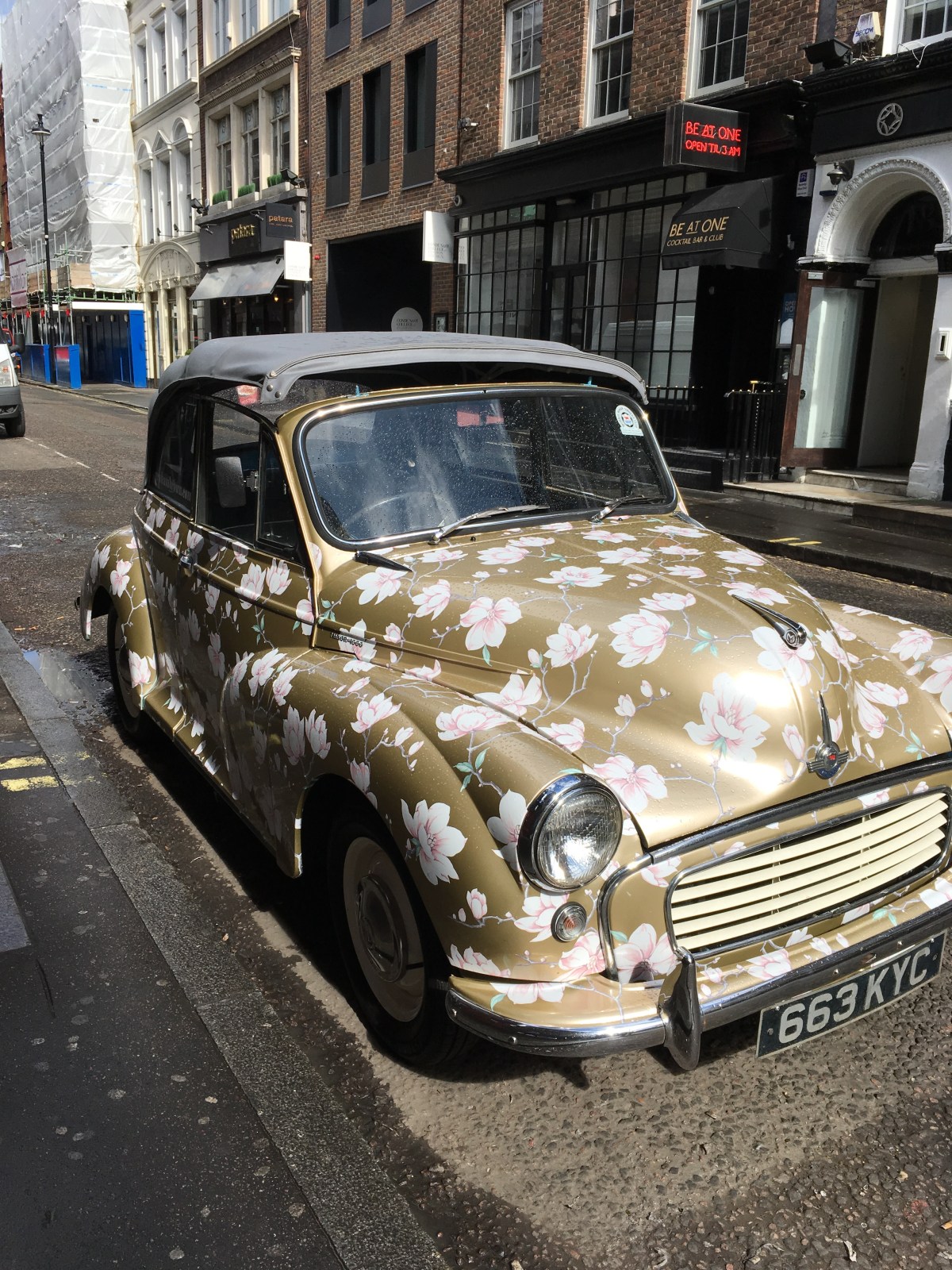
To tempt visitors to this excellent show a natty little car, perfectly papered in the trendy ‘Pierre’ wallpaper of the year, is parked outside 19 Greek Street.

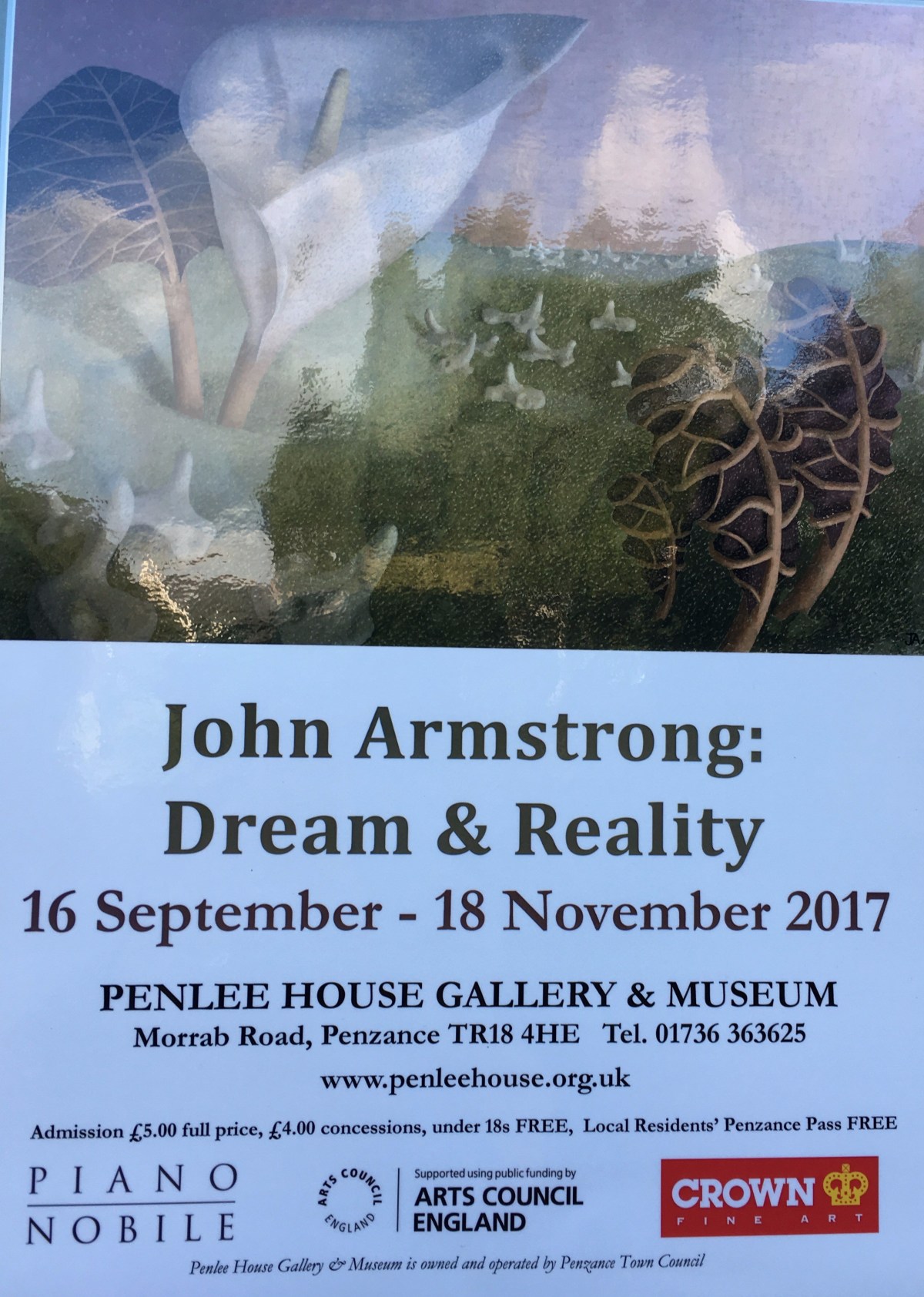
John Armstrong: Dream and Reality – a fabulous retrospective of this enigmatic artist on show at the Penlee House Gallery in Penzance until 18 November.

The Penlee Gallery in Penzance feels like a long way away if you don’t live in Cornwall but it’s well worth the visit to the tip of England to see a rare and wonderful show of works by the remarkable artist, John Armstrong.   A contemporary of Paul Nash and Eileen Agar, his artistic career embraces  range of styles and he was clearly a painter who never ‘stood still’. Always pushing, always enquiring, his work represents the fragility of the human condition and contains a palpable sense of yearning for a world where violence and threat does not define us.

IMG_7269

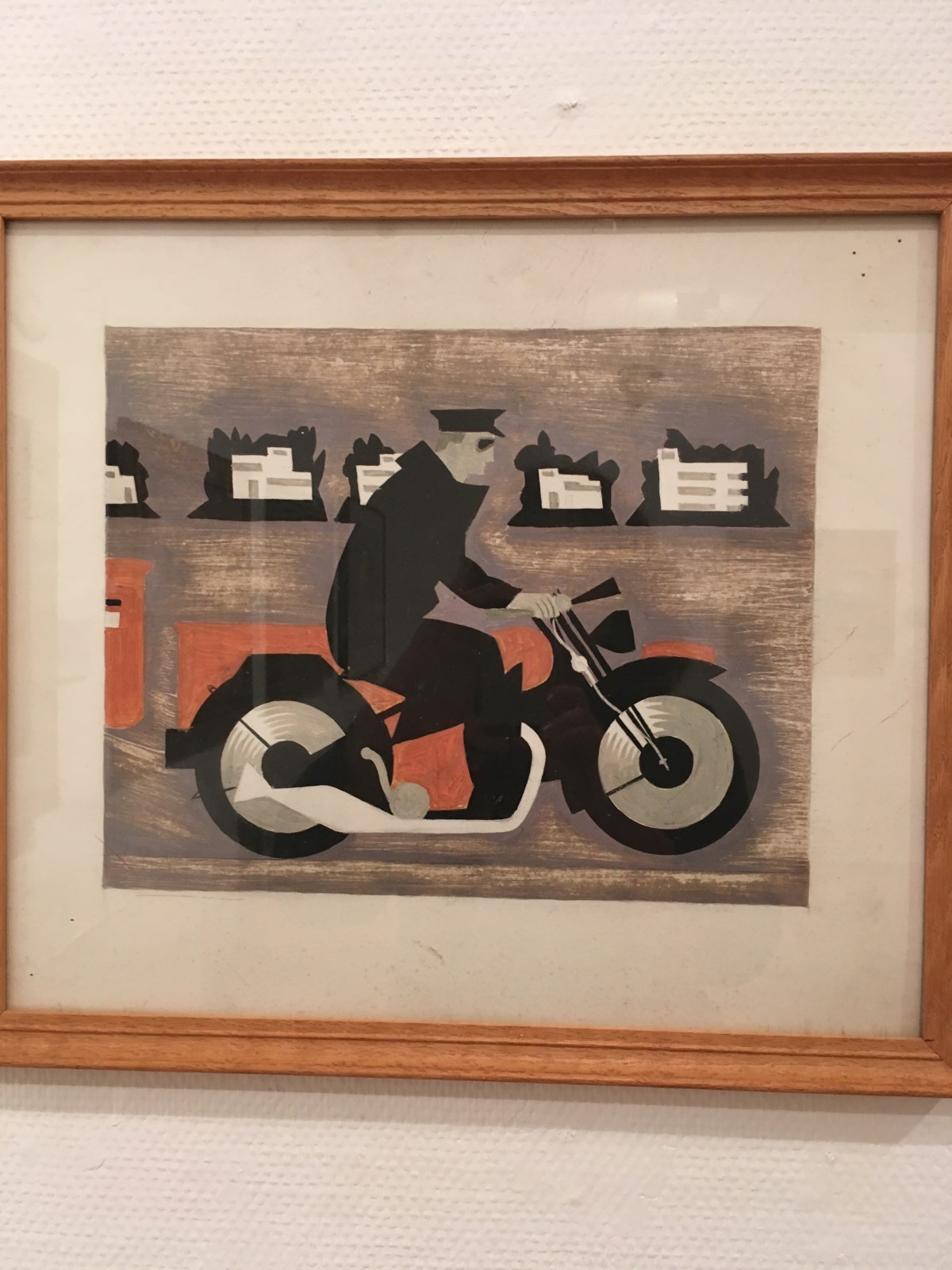
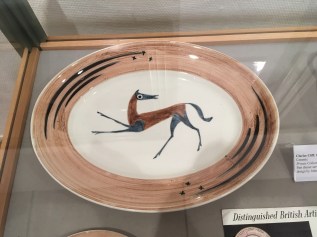
Armstrong was an intellectual painter, anxious to express his ideas, fears and beliefs in pictures but he was also a successful commercial artist.  He was one of several artists of the first quarter of the 20th Century to be commissioned by Shell to create posters representing forms of travel, before and after petrol revolutionised the way we get around.  He was also a favourite designer of film maker Alexander Korda with whom he worked on costume and set design for films with Charles Laughton such as Rembrandt, The Private Life of Henry VIII and I, Claudius.

IMG_7268

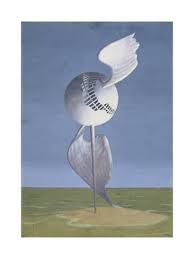
This exhibition gives a very comprehensive view of his artistic career as it moved from clever, stylised and figurative work to thoughtful surrealist works, notably the Icarus pictures which depict the ambitious young man who created wings yet flew too close to the sun and crashed to the ground.  A metaphor for human ambition. He was also keenly moved by the destruction of the First and Second World Wars.

downloadIMG_7267

Coggeshall Church, Essex 1940 by John Armstrong 1893-1973


I particularly liked the picture of the daffodil farmer, the featured image, which captures a location in Cornwall where Armstrong lived for 10 years. There’s a Breugel-like feel to this vertiginous picture showing the farmer labouring on the steep hills below dramatic rock formations and the churning sea below.

As I said, it’s a long way to go but well worth the journey.  The show is on until 18 November 2017 at Penlee House Gallery & Museum, Morrab Road, Penzance TR 18 4HE   http://www.penleehouse.org.uk

img_7260.jpg