Monet & Architecture at the National Gallery; a fascinating exhibition of paintings which shows how Monet was drawn to the built environment – from the picturesque to the modern.

I’ve always imagined I was pretty familiar with the work of Claude Monet. There can’t be many people who haven’t seen an image of his waterlilies on a biscuit tin or those famous chilly winter scenes on a Christmas card.  When approaching this exhibition at the National Gallery I rather expected to see a lot of ‘old friends’ hung together for maximum impact, one of those shows which focus on glorious repetition of images. Not a bit of it.  This show is full of surprises. The surprises are not just in the subjects which Monet chose to paint – he was remarkably proficient by his early 20s and his style was clear to read – but in the imaginative curation of the show and juxtaposition of pictures you wouldn’t normally have thought would go together. And we are also treated to the chance to see paintings from galleries and private collections from around the world – a rare treat.

The room full of early years paintings was a revelation.  Monet clearly had a very acute eye for colour and form.  Apparently he wasn’t that keen on the formal training of art school and struck out on his own artistic journey in his mid 20s.  I really enjoyed seeing the paintings of places which resonated with him and landscapes which incorporated a compelling mix of wild nature and examples of architecture.  One forgets that the notion of the ‘picturesque’ was an English style which the French painters duly adopted; the seeking out of ancient places and buildings and the creating of composition which incorporated romantically ruined or old structures set in natural but stylised settings – a bit Claude Lorraine.
IMG_0878

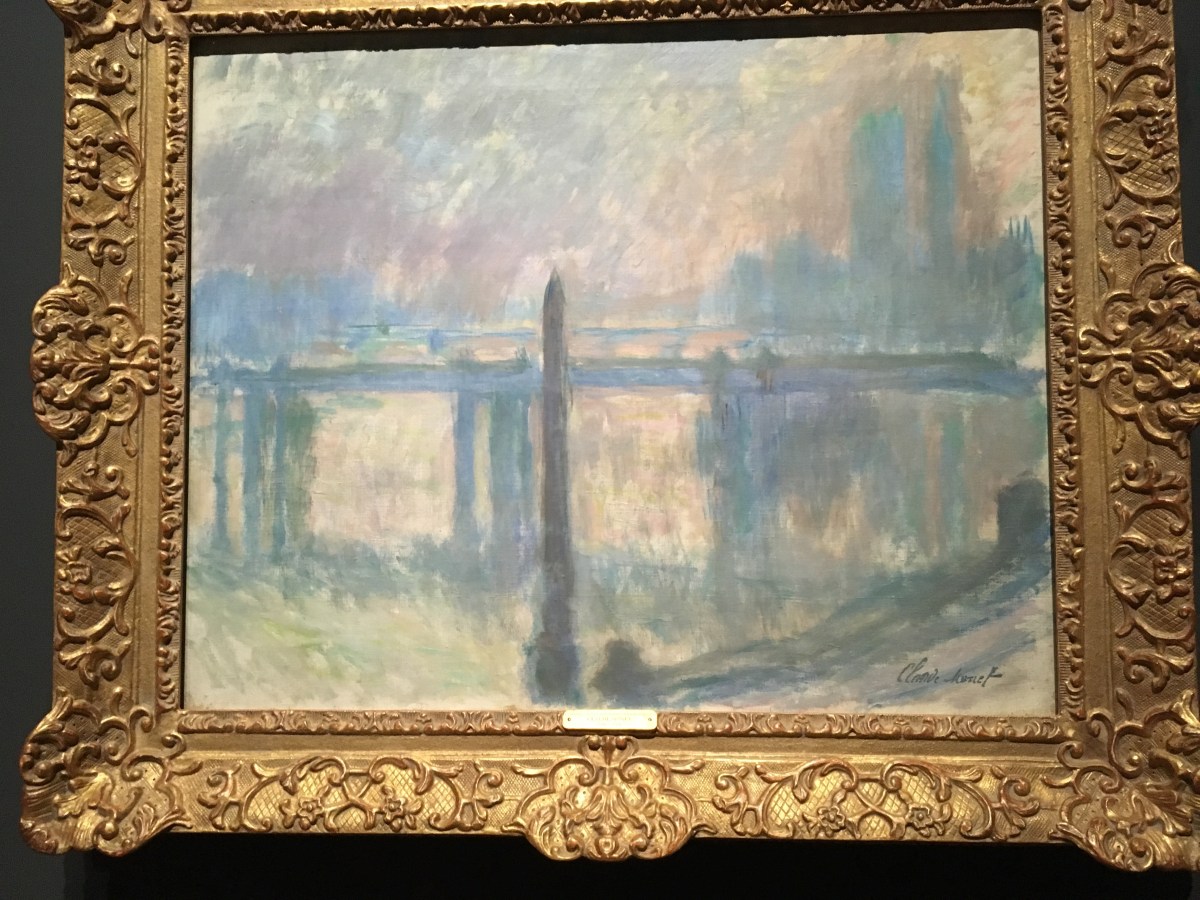
Above: Cleopatra’s Needles and Charing Cross Bridge about 1899

Some of the paintings appear to be unfinished.  Given that many of the works started life ‘en plein air’ one can only guess at the reasons why they never quite got the final treatment – did it start to rain, was there a cup of coffee to be drunk or did someone distract him with conversation?  We understand that many of the paintings begun outside were then taken indoors to his studio to be ‘worked up’.  This makes me love the wild and incomplete ones even more.  You get a real sense of place with these swift pictures which sketch in the basics and use large, gestural brush strokes to indicate skies, water and outline structures.  Having said that, these more finished pictures are gorgeous.  I understand Monet’s desire to paint not just the shape of buildings but the nature and atmosphere of the light which surrounds them.  Hence the repetition and the constant return to buildings or scenes such as Rouen Cathedral or views of London’s Thames, the bridges and newly completed Houses of Parliament.

IMG_0877

As the curator, Monet scholar, Richard Thompson, points out, Monet was attracted to the newness of buildings, the way architecture creeps across the landscape and how dynamically buildings can contrast with the curves and organic shapes of nature. I loved the city paintings too, often painted several at a go from a strategically placed window so that he could have around eight canvases on the go at any time and move seamlessly from one to the other and the day progressed and the light and atmosphere changed.

Above: The Thames below Westminster and Quai de Louvre

This show is an absolute joy and I’m rather tempted to go back again, very soon.

National Gallery, Sainsbury Wing, London .  9th April – 29th July 2018. Sponsored by Credit Suisse.

Immersed in Merce at the mercy of the projector! Visitors can find themselves in the picture at the Landscape, Portrait, Still Life shows at the National Portrait Gallery, the National Gallery and, coming soon, the Royal Academy. Tacita Dean is having a mega-moment across three galleries with a retrospective of work as well as new, previously unseen, film portraits.

Whether you are the subject of an exhibition or a curator it’s hard work.  For Tacita Dean, her workload has been exceptional – she’s not only the subject but also curator of THREE exhibition across major London galleries.

IMG_0461

LANDSCAPE, PORTRAIT, STILL LIFE  is a major undertaking. I went to the press preview for PORTRAIT AND STILL LIFE – which are at the National Portrait Gallery and National Gallery.  The third element, LANDSCAPE, will open at the Royal Academy in May and will be the first exhibition to be held in the new Jungels-Winkler Galleries after years of redevelopment.

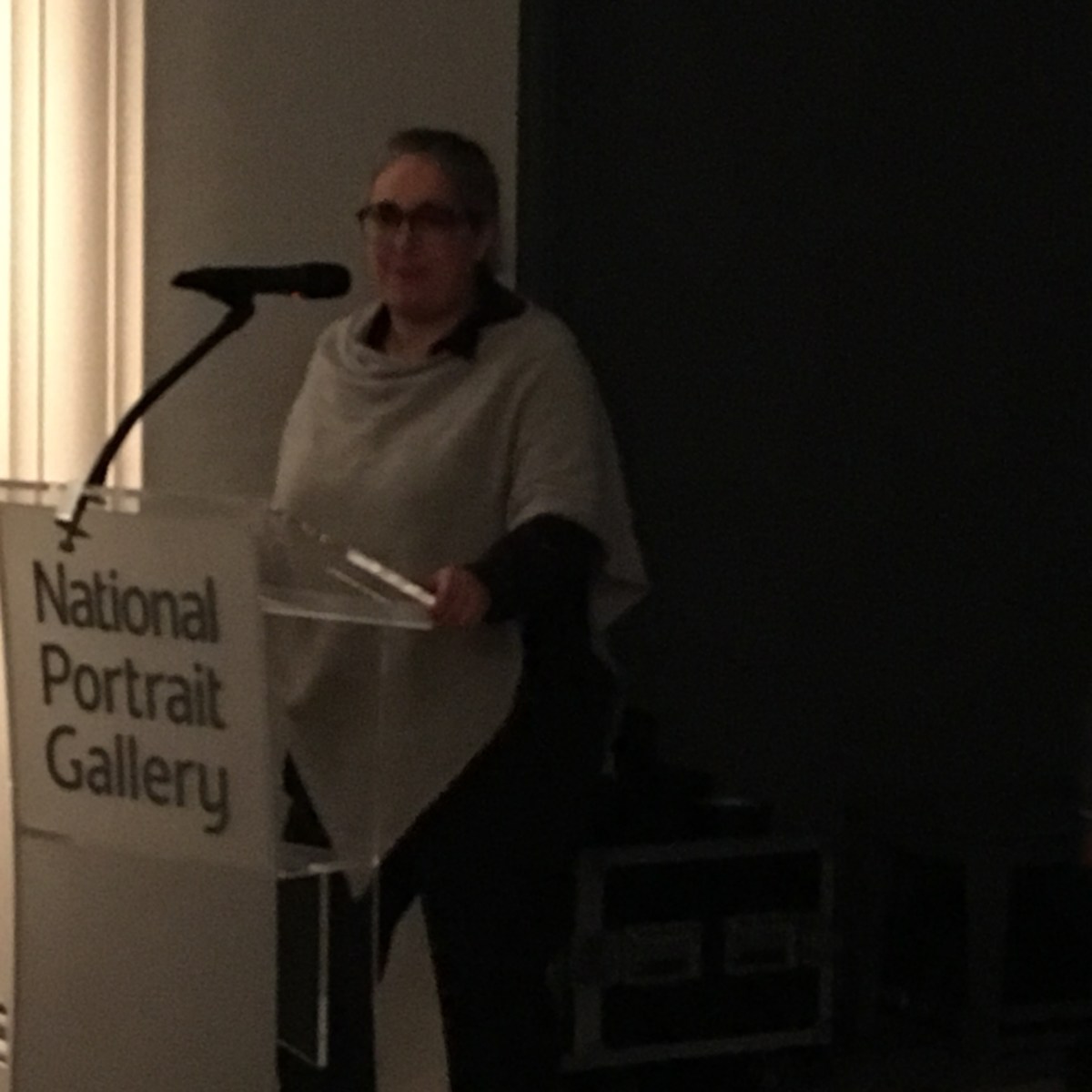
The thing about the exhibitions I saw is that they do need a bit of explanation.  I was lucky enough to hear Tacita Dean talk about her work and outline the technical challenges and the difficulties in getting her subjects to cooperate and capture the elements she was after.  I think, without that direct input from the artist it might be quite hard for viewers to comprehend what they are seeing and how to understand it.


I admire Tacita Dean’s faithful use of film, real film, the tactile stuff which you can hear running through a camera, see developed and then experience again through the whirr of the projector as the finished image on celluloid is thrown onto a vast screen.  But I do find it hard when you creep into a totally black space to watch some very long shots of …. well, leaves rustling, for example.  I know you have to invest in this kind of art, it’s not designed to be easy or a quick fix, but it does demand time and concentration of the viewer and sometimes it’s inclined to feel a bit, well, boring.

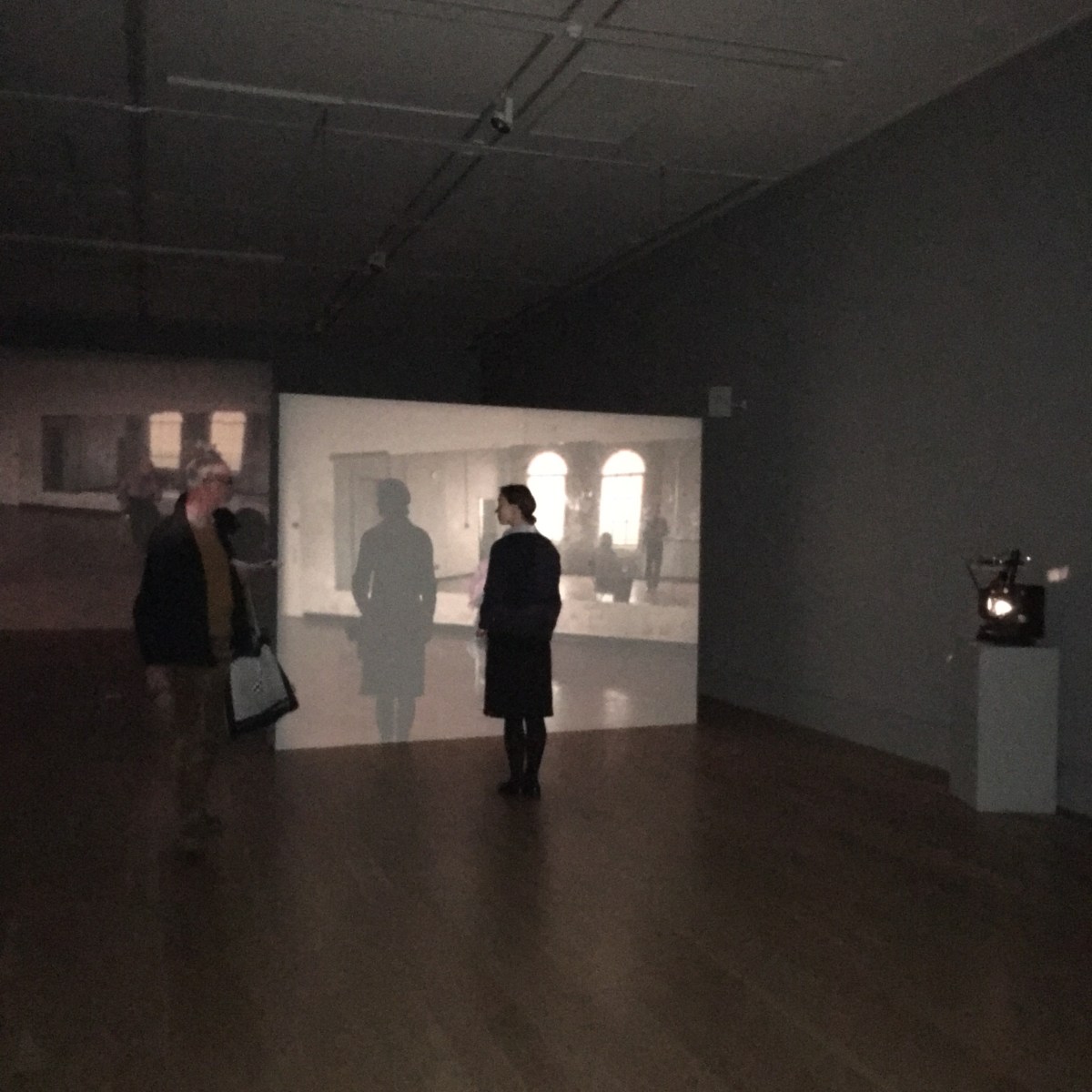
Anyway, I was very beguiled by the large gallery space which was filled with screens showing projected portraits of the American choreographer Merce Cunningham.  The filmed portrait is of a performance called STILLNESS and it’s that famous piece by John Cage: 4minutes 33seconds where no music is played but the ambient sound of the environment becomes the ‘music’.  But stand in front of the projector, your own shape enters the space in a rather surprising way.

IMG_0460

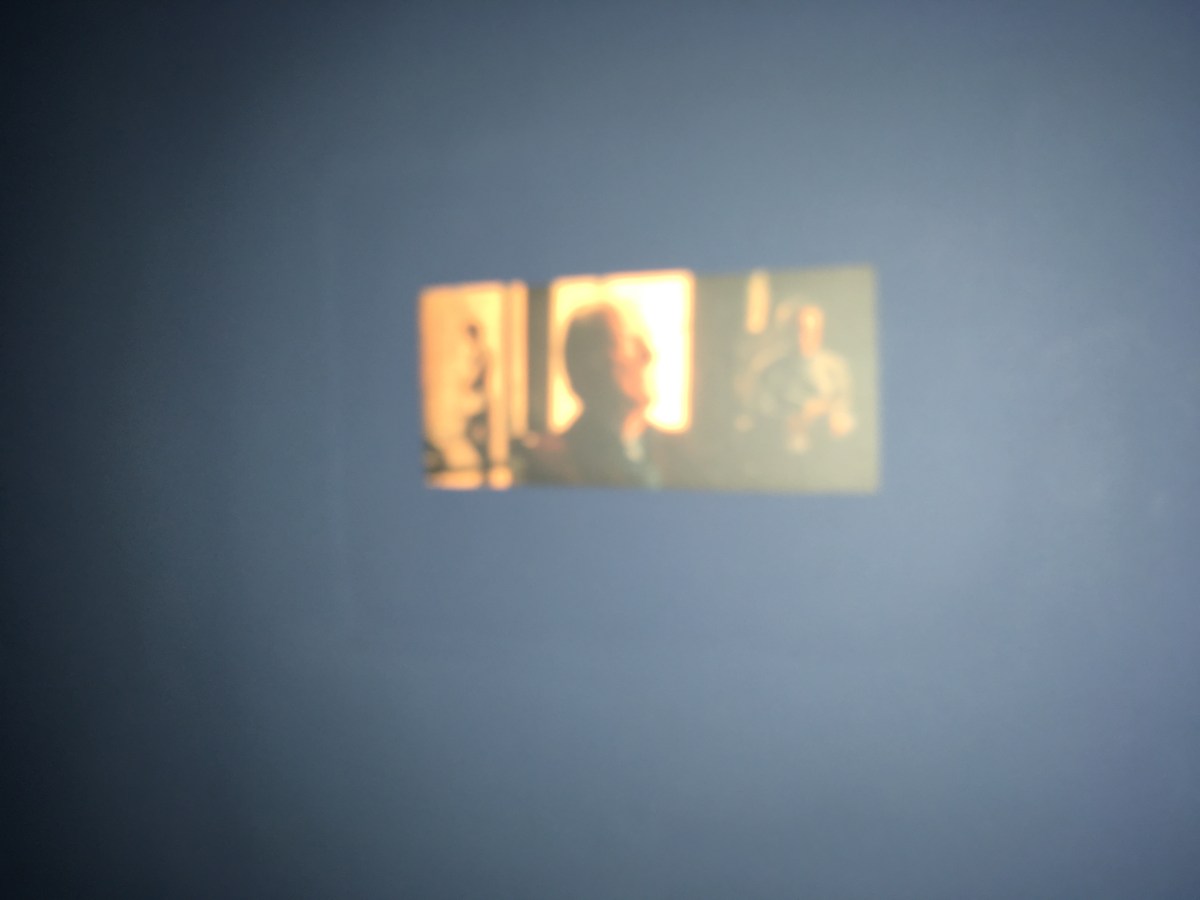
I was very taken by the tiny portraits of three actors who have played Hamlet: David Warner, Ben Whishaw and Stephen Dillane. Called His Picture in Little, 2017, the title is  a quote from the play. These tiny portraits, arranged as a split screen triptych amongst collections of miniatures from the gallery’s collection of 16th and 17th miniature portraits, is very intriguing and impressive.  Each actor was filmed on their own but, when seen in the three screens, you vaguely make out a kind of ‘synergy’ between the three.

IMG_0464

Over at the National Gallery there’s an exhibition curated by Tacita Dean which throws up questions about the nature of the Still Life and the Landscape. Are they part of the same way of looking?  Dean’s own work is subtly introduced within the collection. I almost missed her contribution of ‘Bird on a Wire’ chirruping away on a projected screen above images of birds – alive, stuffed, dead.


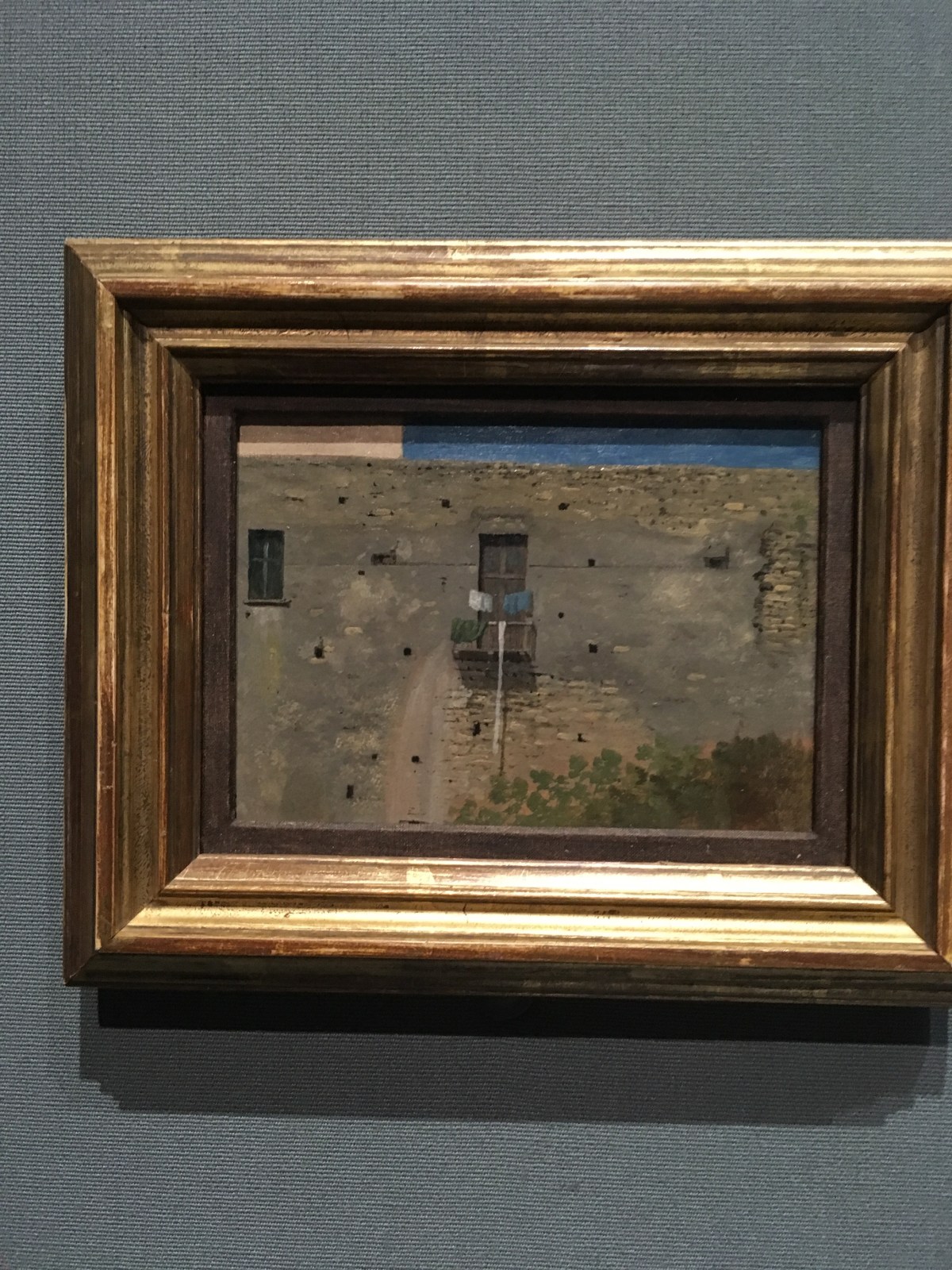
And I completely agree with her assertion that the  painting by Thomas Jones of A Wall In Naples  (about 1782) is magnificent.  You can read it as a landscape, a still life and also as an abstract piece of art.

IMG_0472

I look forward to the third element of this show when it opens at the Royal Academy on 19th May. Otherwise, I suggest that the exhibition should be seen, discussed and that each visitor makes up their own mind.


Tacita Dean: LANDSCAPE, PORTRAIT, STILL LIFE    http://www.npg.org.uk/tacitadean   www.nationalgallery.org  http://www.royalacademy.org.uk

15th March – 28 May 2018 at National Portrait Gallery and National Gallery    Royal Academy 19 May – 13 August 2018

Tacita Dean: PORTRAIT costs £14

Tacita Dean: STILL LIFE is free

Victorian Giants: The Birth of Art Photography – a dazzling exhibition at the National Portrait Gallery which shows how the artists of the mid 19th century took the new-fangled camera to their hearts and used the lens to capture a fascinating range of portraiture and adventurous images.

The development of the camera in the mid 1800s must have created a thrilling time for artists as they explored and played with the potential of this new, accurate way to record images .  Before the evolution of the printed photographic image any painter aiming to create a likeness, an effective portrait, would have had to rely on their training and skill in ‘eyeballing’ the subject to capture the features and personality for a larger work.

The arrival of the camera changed all that. What a marvellous thing it must have been for a studio artist to be able to refer to pictures taken rather than make the subject sit still for hours on end filling sketch books with endless drawings.  But, more than using the camera and photos as a tool, a group of artists discovered that the camera was a brilliant way to create portraits, to stage-manage and compose image, control lighting and manipulate the various stages of production to produce artistic results.

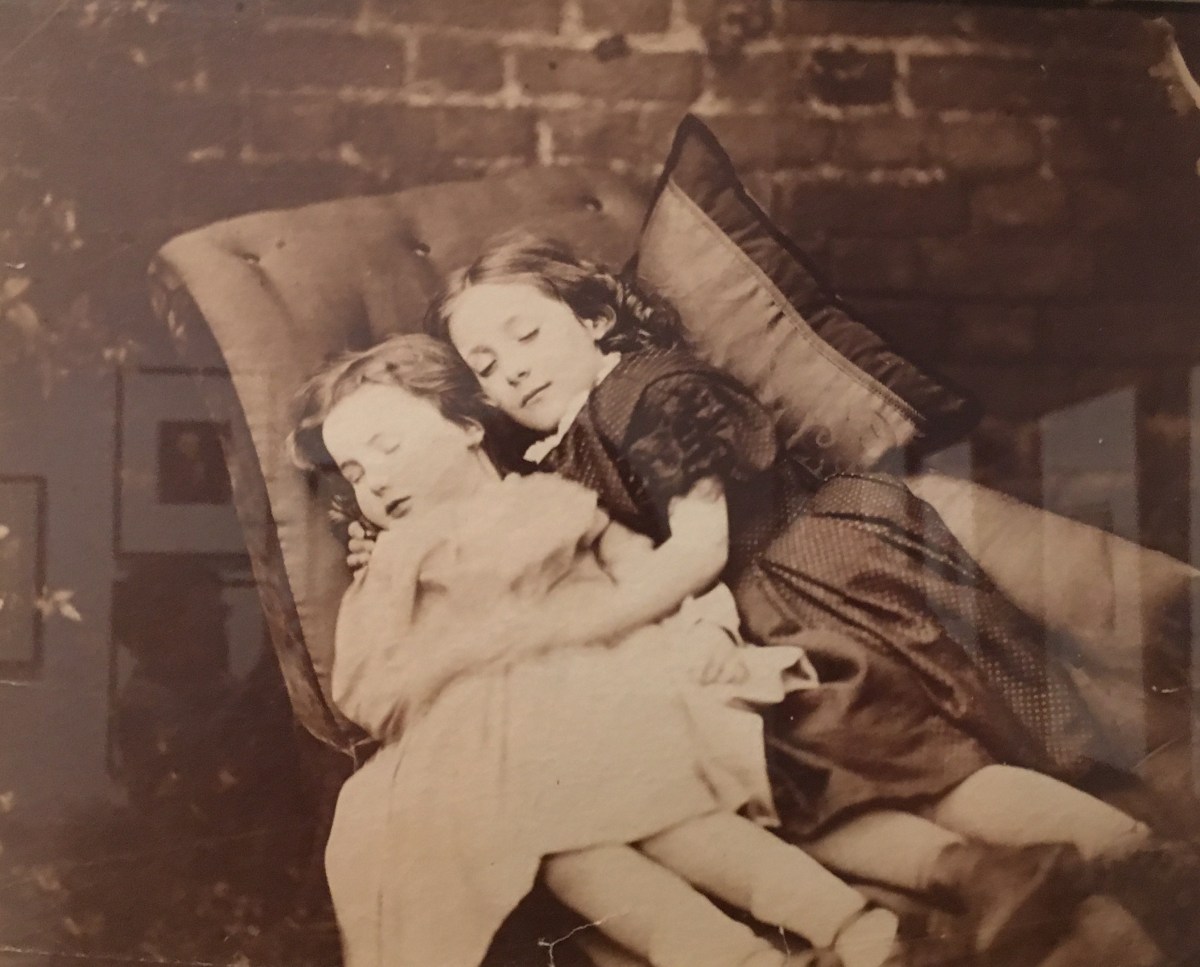
Below: Agnes and Amy Hughes asleep on a couch 12 October 1863 taken by Lewis Carroll

img_0129.jpg

The leader of a small group of artists who embraced the artistic potential of the camera was Oscar Rejlander (1813 – 75).  I confess I was unaware of him before going to the charming exhibition which has just opened at the National Portrait Gallery.  Rejlander was a Swedish emigre with ‘a mysterious past’, we are told. Judging from the self-portraits on show and a wonderful selection of expressive ‘selfies’ on show, he must have been quite a mercurial character.  He attracted artists from various disciplines like moths to a flame and it sounds as though he was generous with his understanding of this new art form and encouraged artist/photographers to develop their expertise.

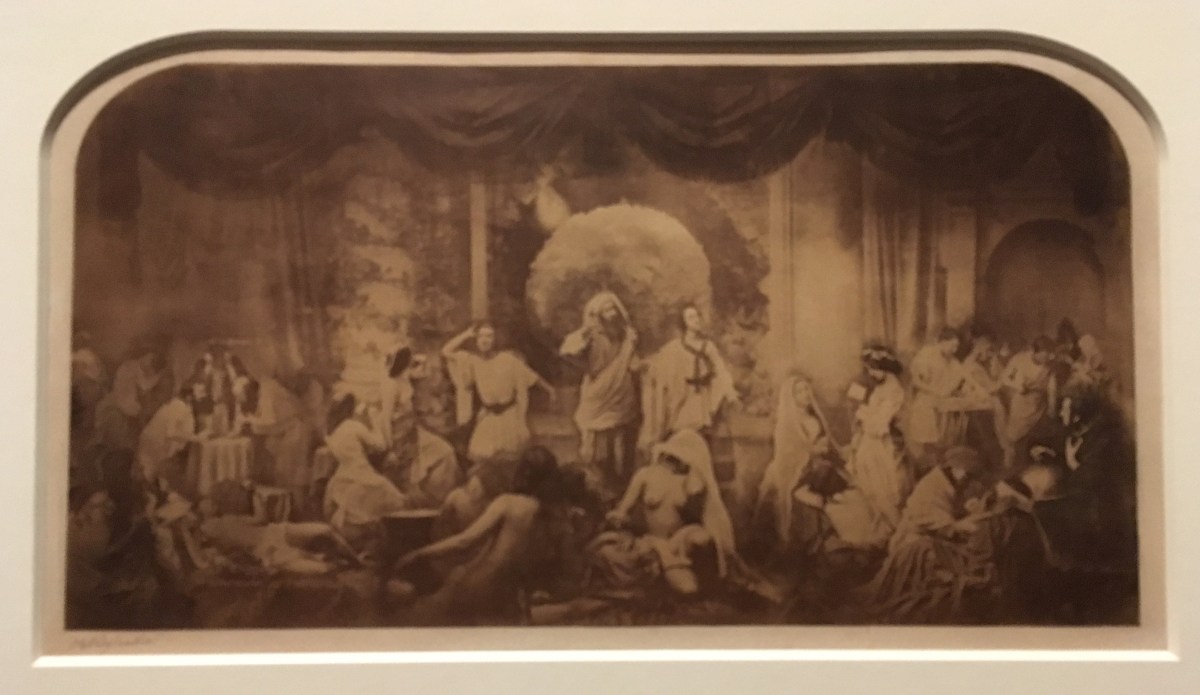
He was a pioneer is the idea of the photo montage and created a ‘collage’ of images for his famous compilations scene called Two Ways of Life made from some 32 separate negatives. Apparently Queen Victoria and Prince Albert loved this picture and bought three prints.

img_0148.jpg


IMG_0137

Above: Rejlander posing for a photographs which capture emotion.


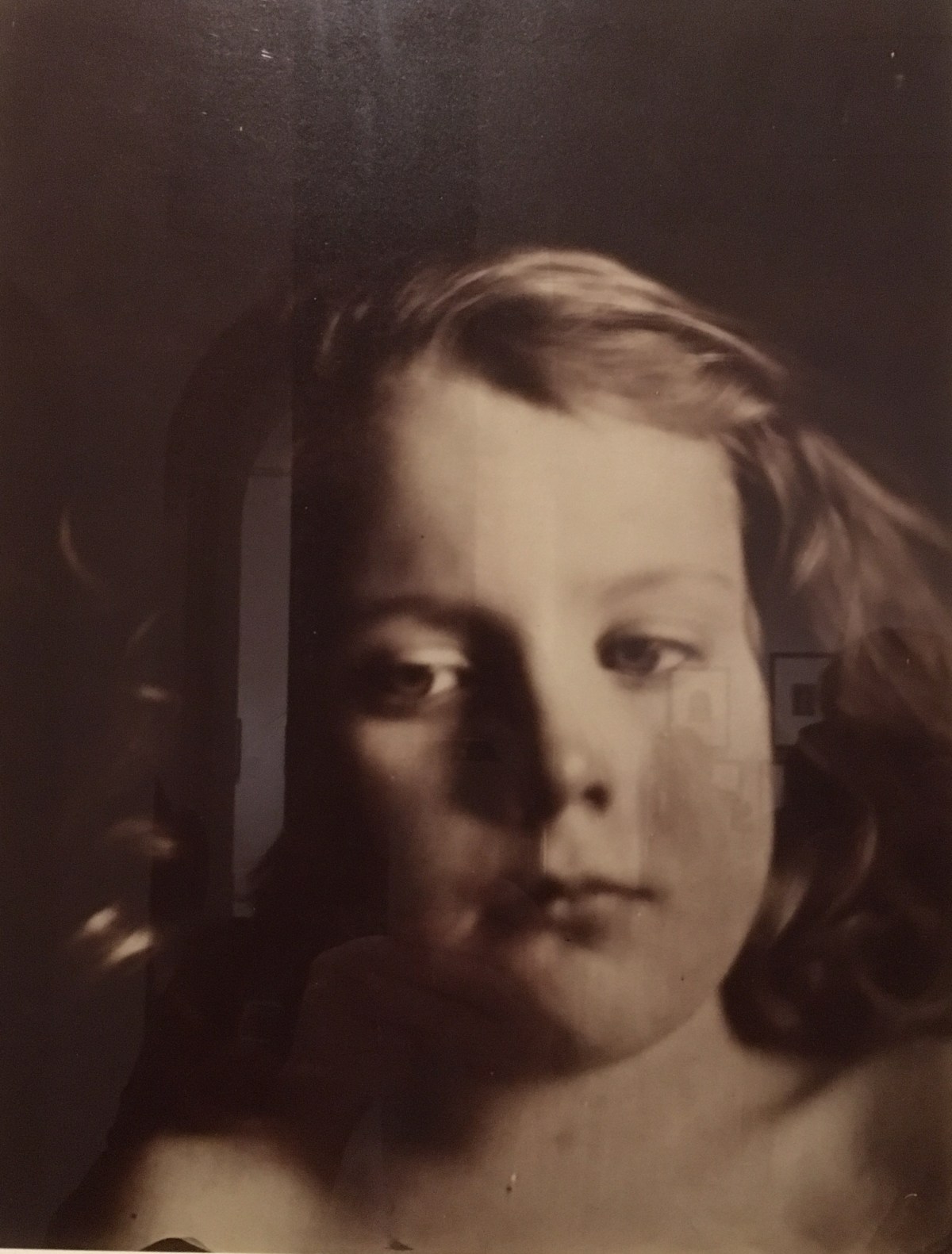
The show features the work of Julia Margaret Cameron (1815 -79), Lewis Carroll (1832-98) and Lady Clementina Hawarden (1822 – 65).  We’re all pretty familiar with Julia Margaret Cameron‘s work – those wonderful soft focus portraits. Below is her portrait of Freddy Gould taken in 1866 when he was five.

IMG_0121

Below are portraits by Rejlander of children reproducing those famous putti by Raphael’s putti at the Sistine Chapel.

Lewis Carroll is best known as the author of Alice in Wonderland and Alice Through the Looking Glass and his (possibly questionable) relationship with the children of the Liddell family whom he photographed hundreds of times.  It’s fascinating to see the images of young Alice, who modelled for him in various dressed up set pieces, and  intriguing to see a later photo of the 18 year old Alice, all innocence gone from her features and the emerging of a thoughtful young woman.

Below: Photograph of the Liddell children: Alice, Ina, Harry and Edith at their home in Oxford and, to the right,  Alice, aged 18 taken by Lewis Carroll.

Lady Clementina came from a well-to-do Scottish family and was closely associated with the pre-Raphaelite Brotherhood (who, apparently, used photography as source material for their detailed paintings)

All four photographers really did set the bar for the artistic use of photography, the careful lighting, composition and the medium’s potential for capturing emotion.  I loved this show.

It’s on at the National Portrait Gallery until 20th May and will then to go the Millennium Gallery, Sheffield from June 30 – September 21 2018


Matthew Day Jackson creates fascinating collage reinterpretations of flower paintings from the 16th and 17th century made with artificial, manufactured and contemporary materials on show at Hauser & Wirth.

I like collages and I’ve always admired those fabulous still life flower paintings by Jan Breughel (Elder and Younger) and major Dutch artists. It’s great to see that American artist Matthew Day Jackson has looked closely at those detailed works and created lively  reinterpretations of those classic compositions using a variety of contemporary materials.

IMG_0114

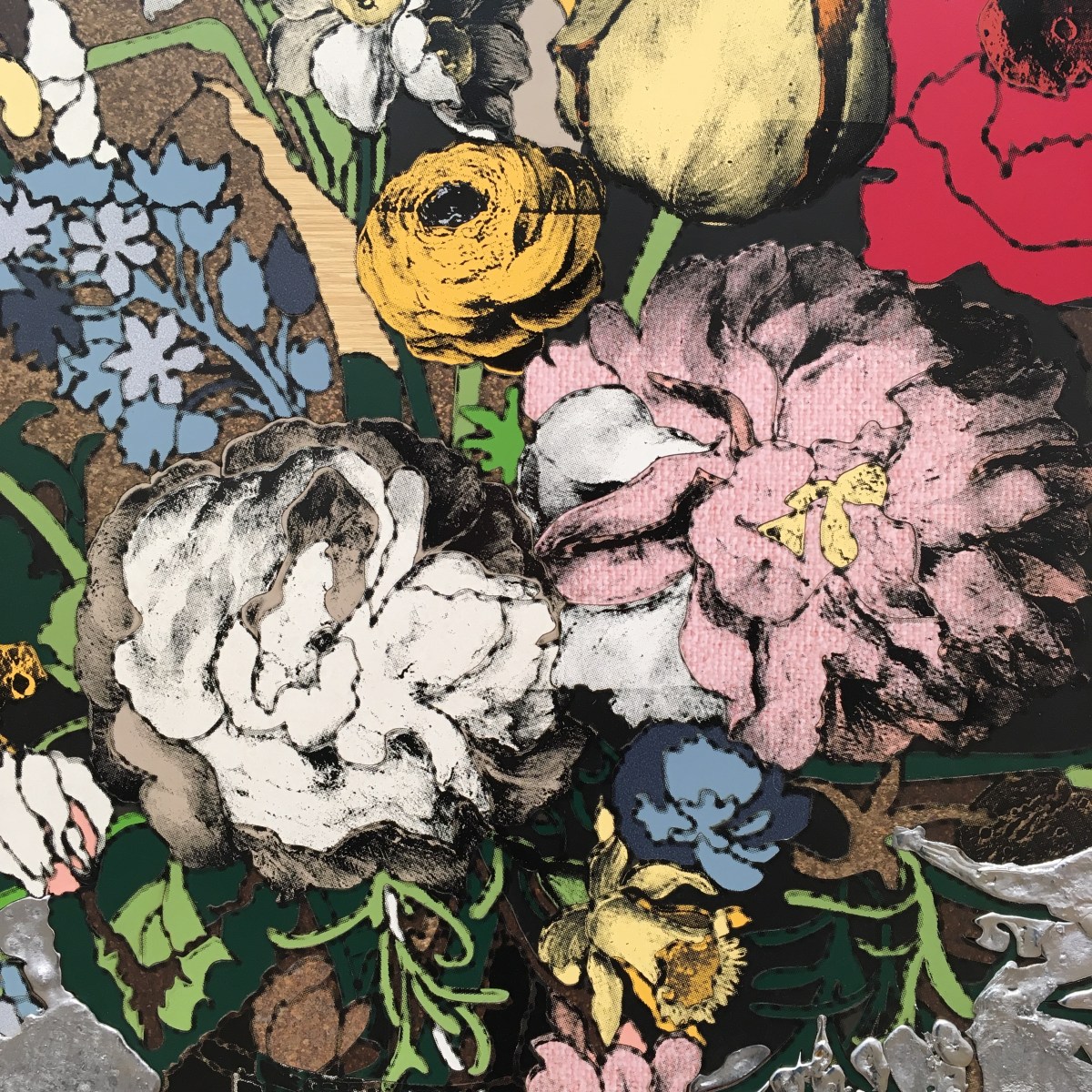
Using formica, acrylic paint, epoxy resin, scorched wood and metal, Jackson has cleverly created contrast and harmony between the delicate fronds of flowers and the texture of leaves, foliage, vases and gritty backgrounds. The colours are lively and the silk screen printing captures the detail of petals and delicate flora.

The show is on at Hauser & Wirth in Savile Row, London. Also on show were  Jackson’s ‘reclining nudes’. These sculptures are in bronze but look as though they’ve been formed from charred logs, twigs and thistles and a variety of forest floor bits and pieces.  I was intrigued but definitely more drawn to the art on the wall.

Hauser & Wirth, Matthew Day Jackson, Still Life and the Reclining Nude

1 March – 28 April 2018

All Too Human – Bacon, Freud and a Century of Painting Life. New show at Tate Britain which traces 100 years of life painting and shows the evolution of artists’ fascination with the human figure and the way it is depicted.

I’ve been drawing from life for years.  Every Monday I spend two hours scrutinising an obliging model who braves the chill air of the art room to try and override the brain’s assumptions about shape and proportion and really try to capture, and make sense of, the figure in front of me.  Of course I make my version out of paper collage, rather than pencil or paint!

This level of scrutiny of the human form has fascinated artists for centuries.  It never gets any easier but it does evolve. This show puts the focus on the last 100 years of life painting and majors on the post-war artists – Bacon, Freud et al – to assemble an intriguing collection of paintings. These works represent the human form and portrait in many different styles – though it also includes a few surprising landscapes and cityscapes which vaguely reference the human element but do jar a bit.

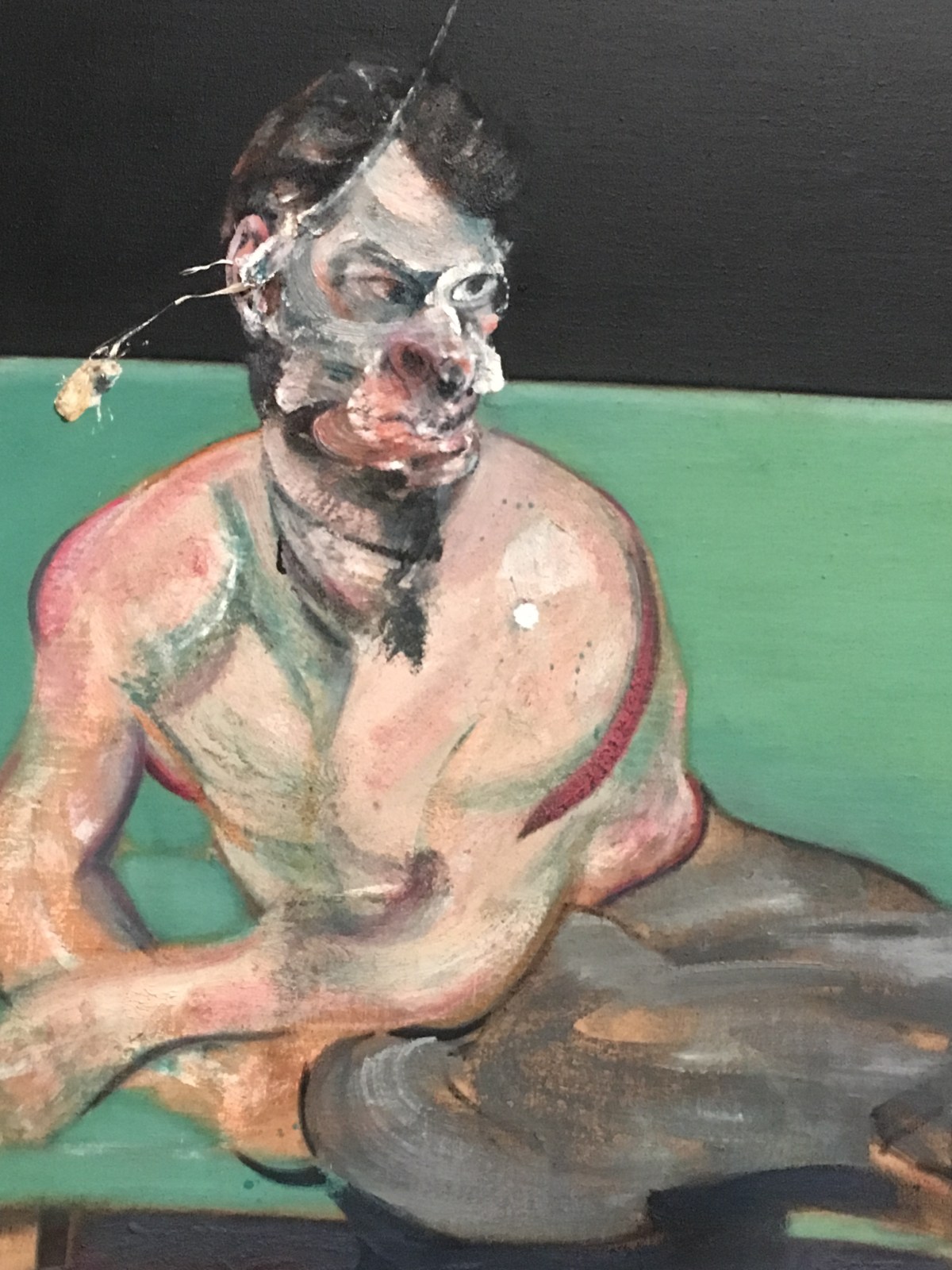
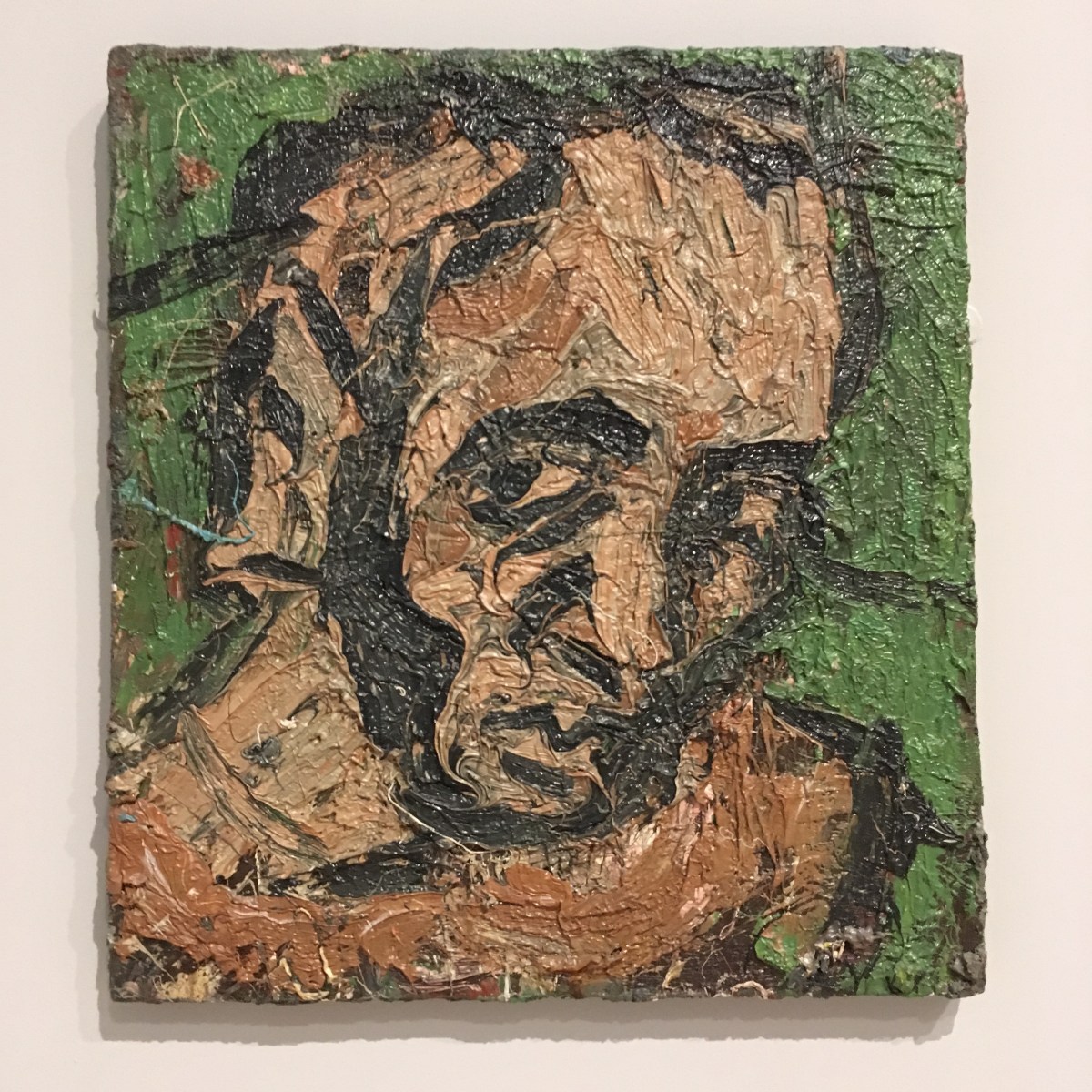
The Tate has an impressive collection of life paintings already, always a good starting point for a curator, and about a third of the pictures on show come from the gallery’s collection.  However, the show has acquired an interesting selection of pictures I have never seen before.  For example, there’s portrait of Lucien Freud by Francis Bacon (a detail is below).  I also liked the self-portrait by Leon Kossoff, below the detail from the Bacon.

IMG_0066


IMG_0056


It’s good to see Paula Rego given an entire gallery. I’ve always loved her edgy work which tackles some unappealing elements of the human condition – weakness, abuse, bullying, cruelty.  Here are my photos of her epic triptych, The Betrothal: Lessons: The Shipwreck all done on paper with pastel and inspired by Marriage a la Mode by Hogarth.

I’m not sure I was told anything especially new by this exhibition – the layout is fairly clunky in the sense that it features specific artists in their own gallery space. Perhaps if they’d been mixed up a bit more I might have made more of a double take when looking at the works.  A room full Freud paintings is just that – and we did see a lot of them at the major Freud retrospective a few years ago.

I also wish that the background walls had not been so grey. There’s something about that colour which tends to drain the energy from pictures rather than enhance them.  When you have paintings full of skin tones I feel it’s helpful to have a stronger background colour, perhaps an opposite in green or blue.  But that’s just my view.

Below: David Bomberg self-portrait, Stanley Spencer portrait of Patricia Preece, Ewan Uglow, Georgia and Michael Andrews, Melanie and Me Swimming.

However, it’s always a joy to see a collection of great figurative art and life-painting.  For years the idea of ‘eye-balling’ the human figure was abandoned by art classes and steamrollered by the hefty abstract and conceptual movement.  But real artists can’t help looking at things and the human form will always be a challenge. It’s very heartening to have a show at a major gallery like Tate Britain which celebrates this important artistic legacy.

As a finale, they presented  a gallery full of contemporary works by female artists: Below: Celia Paul‘s portrait of her mother, Lynette Yiadom-Boakye, Coterie of Questions and Jenny Saville‘s Reverse.


All Too Human at Tate Britain runs from 28 Feb – 27 Aug 2018. #AllTooHuman @Tate


Sensational works of art can be seen at Collect, the Craft Council’s annual showcase of the UK’s best artist/makers at the Saatchi Gallery – until Sunday 25th March (so hurry down to the King’s Road!)

Collect is the Crafts Council‘s major art fair for contemporary objects and it’s on at the Saatchi Gallery for another day (on from 22nd – 25th March 2018).  I always love this show and marvel at the creativity on show across all floors of the gallery.

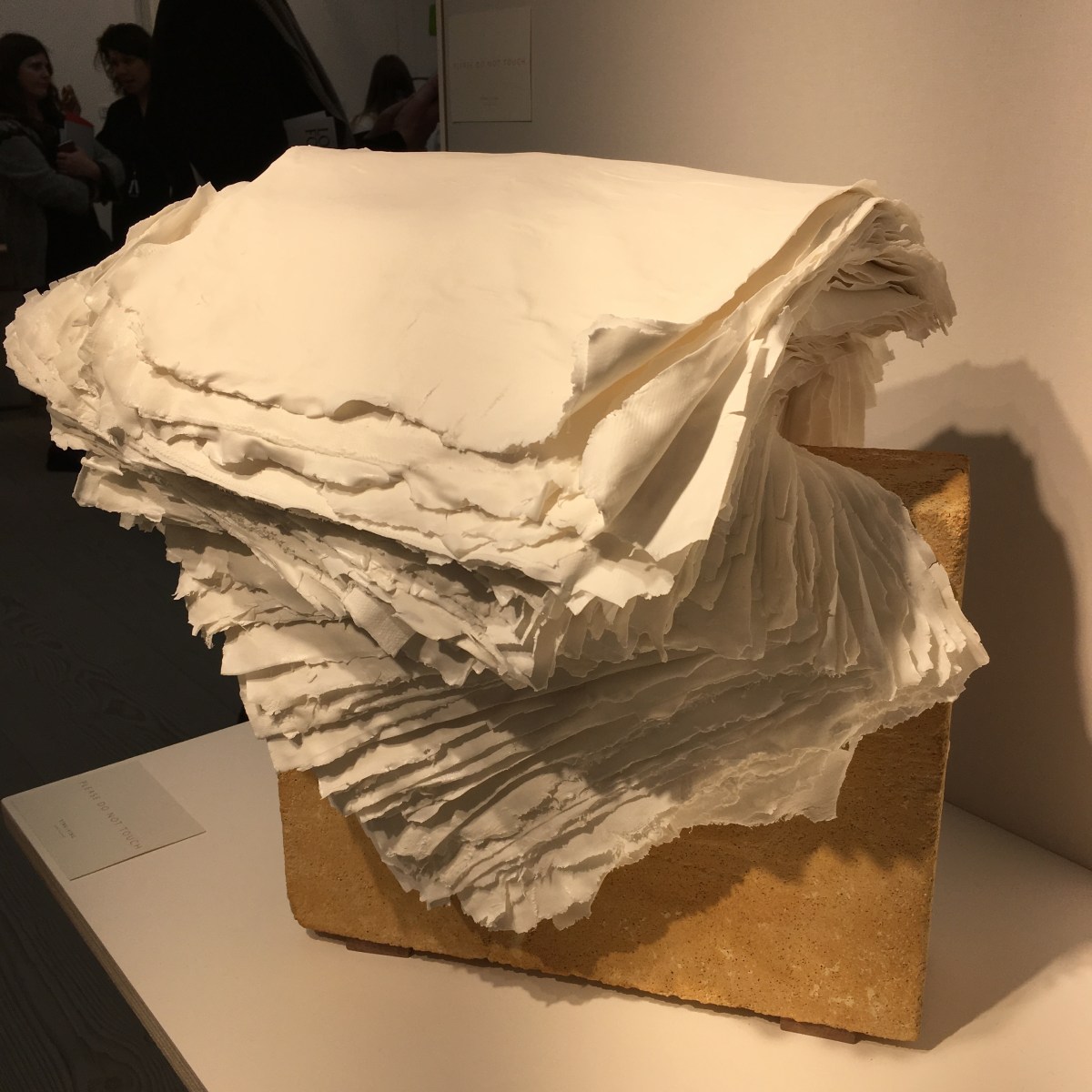
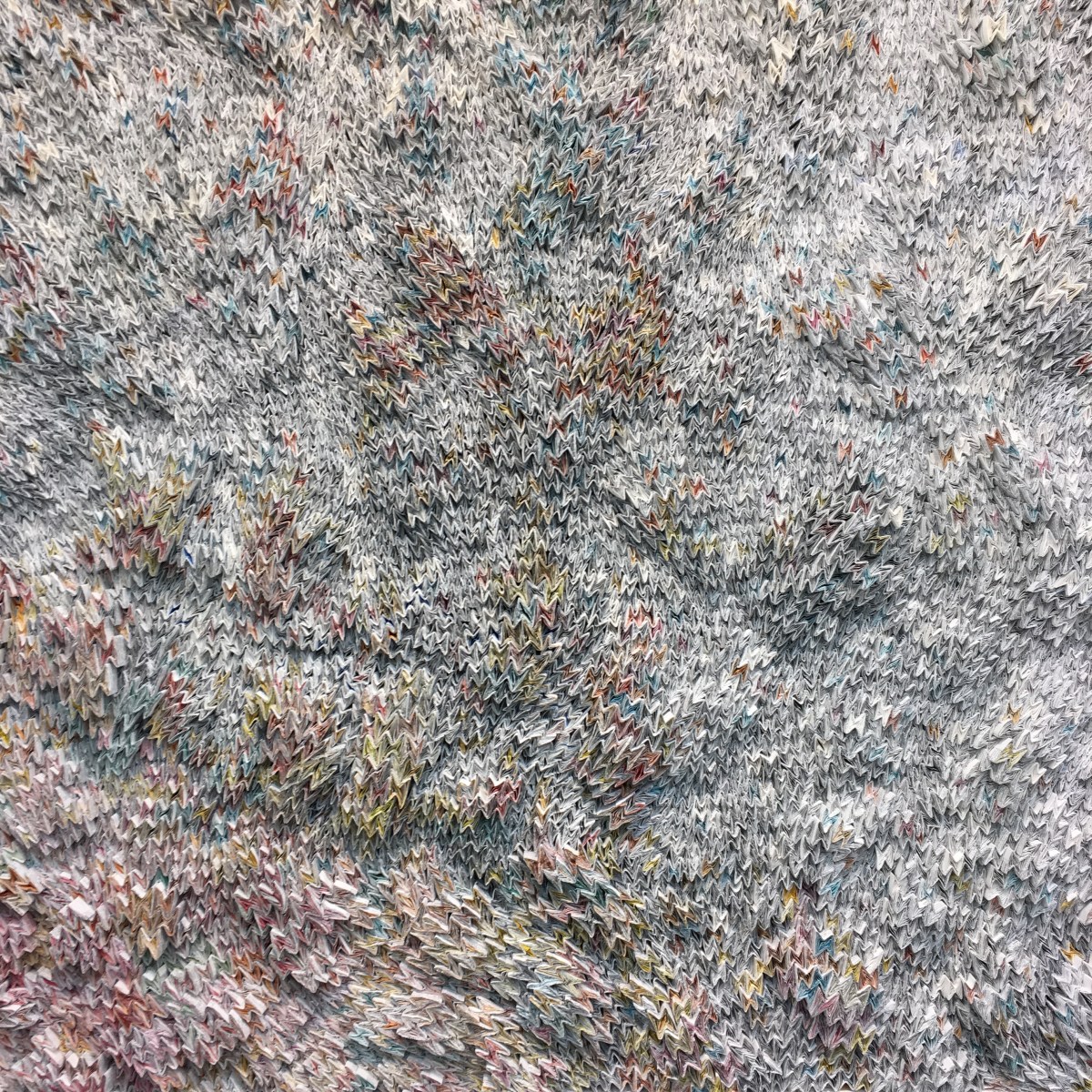
Craft is often made to feel inferior to fine art but there’s no justification for this, as magnificent shows like this attest.  In fact, the originality on show quite eclipses the work you can see in many contemporary art galleries.  And the variety of materials makes you long to touch and feel, because they are used so beguilingly.  For example, this amazing sculpture which likes like a pile of thin paper pages is actually ceramics. There’s a big Do Not Touch sign next to this one, for obvious reasons! It’s by Su Xianzhong at the Ting & Ying stand.

IMG_9985So many pieces caught my eye for their colour, texture and sheer originality.  It’s also great that the artists are there at the show too, eager to talk about their work and their creations and it’s fascinating to engage with them and discover the back story to their practice.

I find it so heartening that people develop passions for materials such as glass, ceramics, wood and sometimes a joyous mash up of things which leave you gazing in awe at the way pieces were put together.

Here are a few examples of very original ceramics.  You could argue that some are functional but, really, they are there just for the joy of admiration and a pleasure to own.

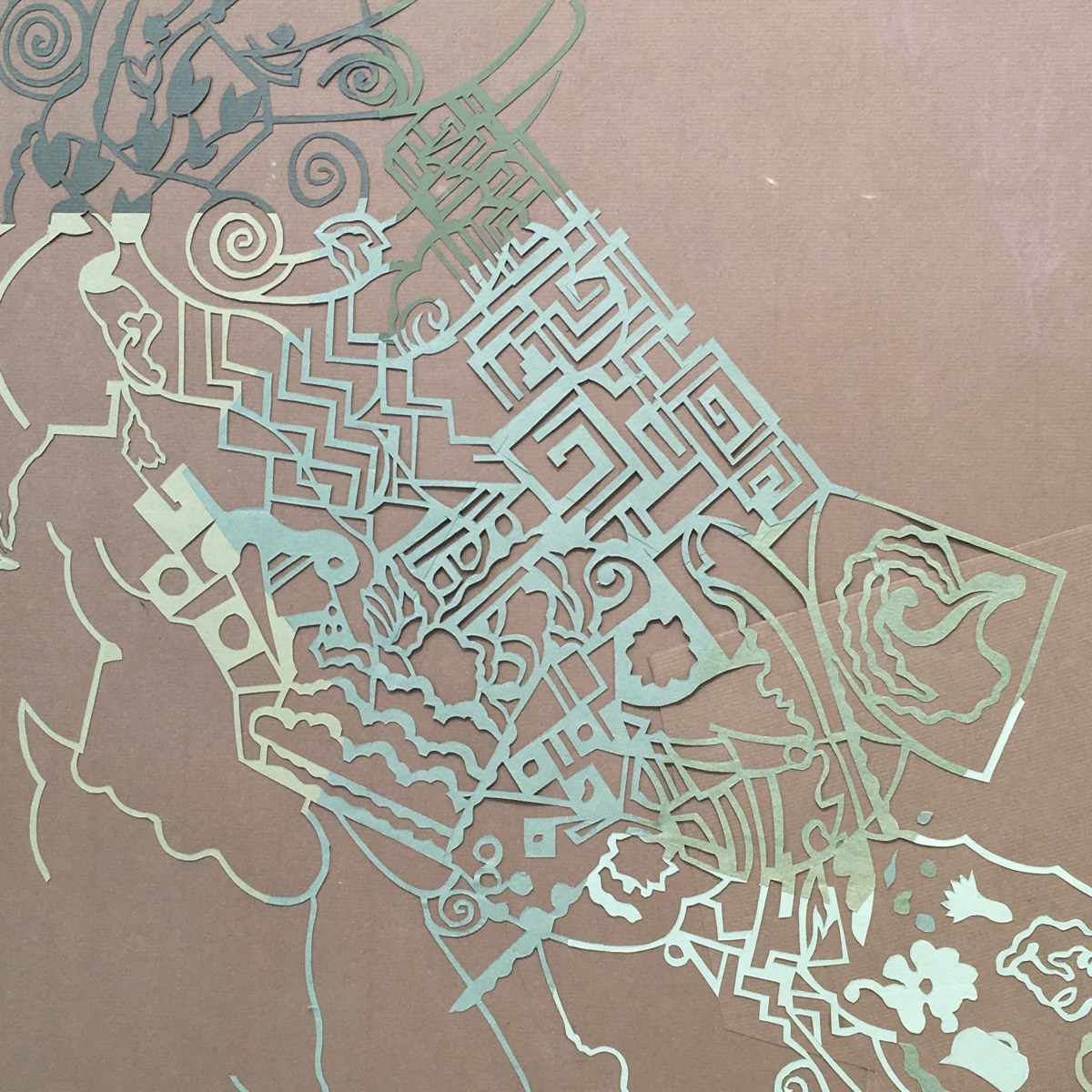
Of course I can’t help being drawn to works made using paper and was not disappointed.  I loved the Paper cut artworks by Charlotte Hodes at the Jagged Art stand.  And the amazing works by Ferri Garcès uses paper in such an intricate way with thousands of tiny printed pages being folded and fixed together within a frame. It’s on the Collection Ateliers D’art de France stand. Stunning.

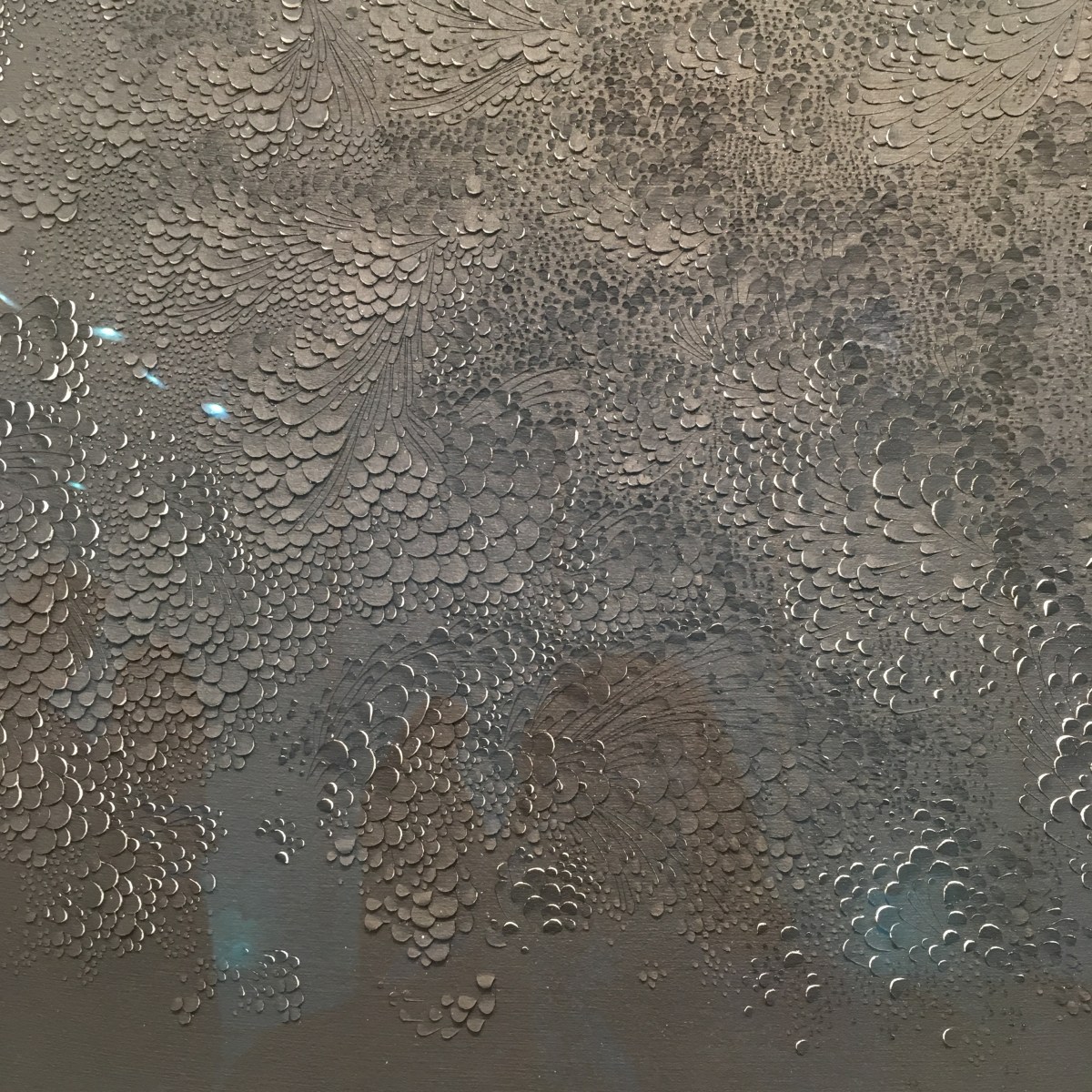
IMG_9998IMG_9990Other paper pieces which fascinated me were the works by Lauren Collin on the Galerie Dutko stand.   She takes the thickest cartridge paper and cuts intricate little shapes which have the style of a delicate Japanese print where the paper is lifted, oh so slightly, to reveal different colours and tone beneath. Inspired.
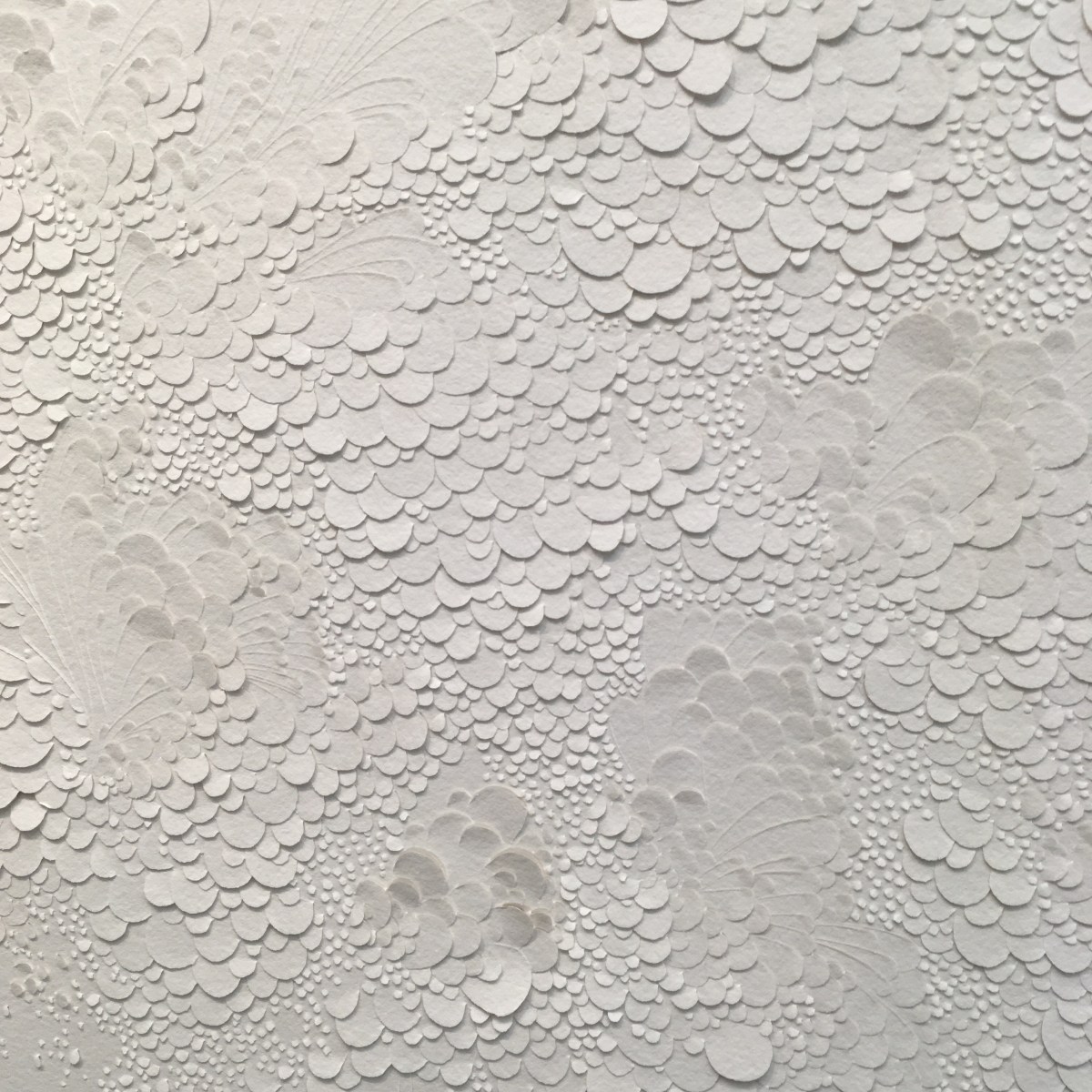
IMG_0004IMG_0002Collect is full of stunning pieces and well worth a visit.  There’s another day left – get down to the Saatchi Gallery if you can!

Collect, 22 – 25 March 2018    collect2018.org.uk  Thanks to the excellent Zettler PR for their support.

Experience Days has made a film of Papershades Workshops! Check it out here… https://www.experiencedays.co.uk/paper-lampshade-making-experience-london

One of the unexpected but very rewarding aspects of running workshops is the discovery that I’m not alone. No, there are organisations out there which also love putting people in touch with their creativity or adventurous side. One of them is Experience Days.  Two of their team, lovely Blossom and Rebecca, came to a recent Papershades workshop and, not only did they each create a beautiful Papershade, but they managed to film and photograph it at the same time.

The result can be seen on Experience Days‘ website. And you can check out Papershades too and see another film about workshops.

There’s a calendar of suggested dates on the website. I usually run them towards the end of the week in the morning, 10am – 1pm and on Sundays from 2 – 5pm.  But I’m very flexible and I love it when people suggest dates which suit them and a group of friends.

Here are just a few photos of recent Papershades workshops.  I have to say, a key feature of these events is the cake. About half way through the creative process I find everyone develops a fierce hunger along with a thirst for tea and coffee.  I make a point of being prepared!  Come along and try one!

The life on the ocean wave… oh how glamorous it once was. The glory days of trans-Atlantic liners and luxurious cruising (plus a reality check in the engine room) is on show at the Victoria and Albert Museum. Ocean Liners: Speed and Style brings together the design, art, engineering and architecture of ocean-going vessels and how much we love them.

Oh, how I wish I could have crossed the Atlantic in the heyday of the ocean liner – as long as I had been fabulously wealthy, had a first-class cabin, a pile of luggage which would fill the average family home, and could have spent four days luxuriating in beautifully decorated interiors, taking in the sea air from a comfortable deckchair and danced through the evening in my finest gowns in a glittering ballroom.

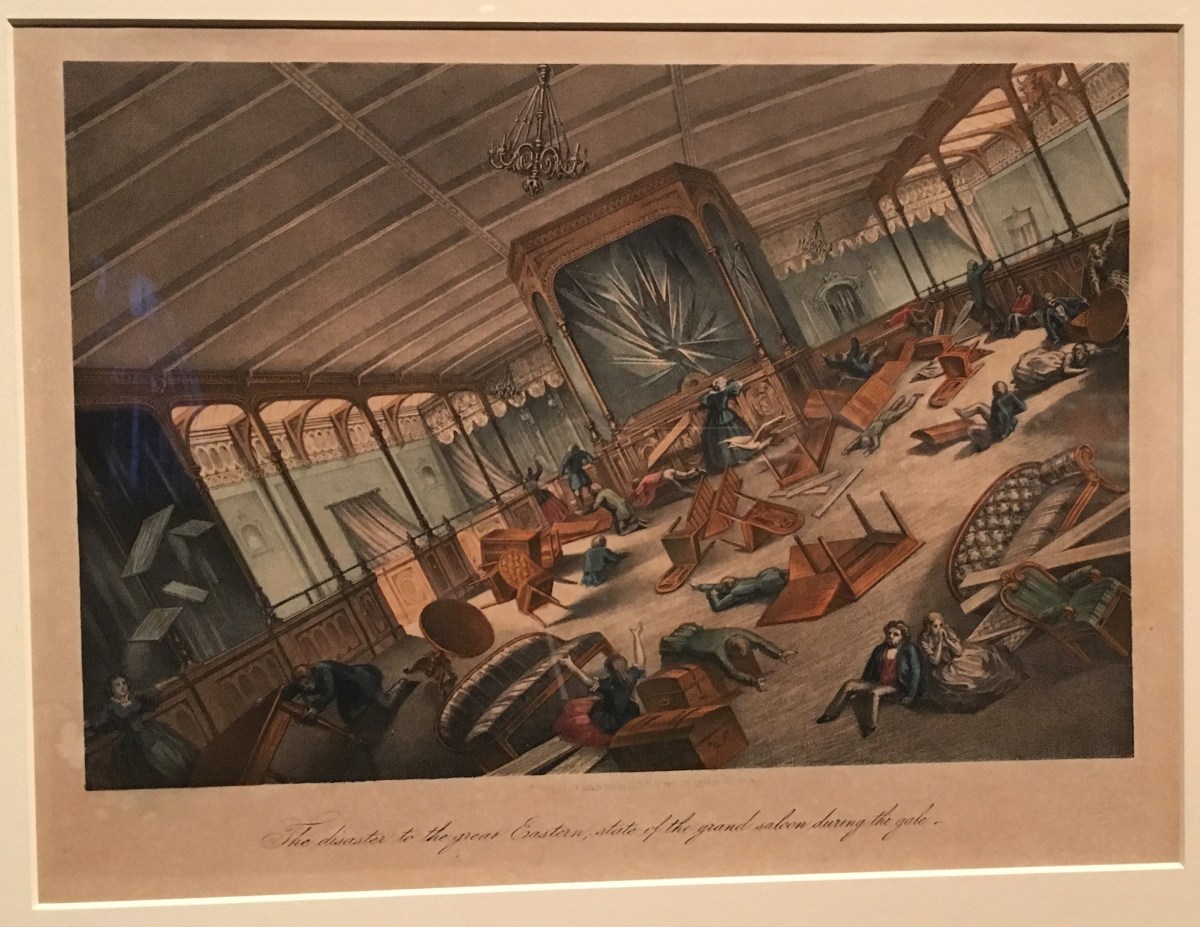
Of course, most people had rather a different experience of sea crossings – certainly in the early days of ocean travel. I rather liked the painting by Louis Rochefort from about 1881, of stormy mayhem on the Great Eastern when the rudder broke and passengers endured three days of rolling the waves. It must have been a relief to step on dry land after that voyage.

img_9354.jpg

This show, Ocean Liners: Speed and Style at the Victoria and Albert Museum concentrates more on the fabulous opportunities for designers which these floating palaces offered.  The inter-war years of the 1920s and 30s saw a huge expansion of travel from Europe to America and all over the world.  Clearly there was competition between the shipping companies to create the largest, the fastest, the most fabulous vessel. The poster’s of the day celebrate the sleek lines, the fantasy of calm, untroubled waters, the abundance of food, drink and entertainment. What a way to travel!

I loved seeing the art which is on abundant show in this exhibition. For example, Stanley Spencer was commissioned to record industries involved in World War Two. Spencer visited the Clyde shipyards and sketched the different activities – hammering, riveting, lifting, pushing – and created a stunning panorama of the workplace.


It was also a joy to see a mural by Edward Bawden, commissioned for the first-class lounge of The Oronsay, which depicts the joys of the English pub. Wonderfully witty.

There’s a frisson of fear to be felt when viewing two items from the ill-fated Titanic. There’s a deckchair, found floating in the sea after the ship had gone down, and also a carved wooden panel which had once adorned the first-class lounge, which must have bobbed to the surface after the ship broke up. Both pieces convey a chill atmosphere of the disaster and a sharp reminder of the risks involved in ocean travel. This is the first time either of them has been back to their country of origin.


Then there’s  fashion, the luggage, the gaiety and the fabulous marketing posters. It’s all  on glorious display to offer the fantasy voyage.


And I loved the furniture – there are so many examples of chairs, from the ones which are helpfully nailed to the floor, to the comfortable cabin armchairs and stylish seats in elegant lounges.


And finally, I can add my own, personal postscript to all this. When I was 10 years old, my family sailed from New York to Southampton in the Queen Elizabeth.  It was not a particularly rough journey but it was foggy for most of the four days at sea and the horizon seemed to tilt a lot. But, for a child, it was very heaven. Wall to wall food and drink, plenty of play areas, films to watch, shows to see, a whole ship to explore.  It was thrilling.  And I was delighted to see a vast model of the stalwart liner right at the entrance of the show. My brother, who has a forensic memory of the journey, informs me that our cabin was on F deck a the back of the ship, just above the water line. That might explain why there was nothing to see out of the porthole!


Ocean Liners: Speed and Style is on show at the Victoria and Albert Museum from 3rd February to 17th June 2018.

vam.ac.uk  Sponsored by Viking Cruises  


Who’s King? Charles I demonstrated his cultural credentials by amassing an astounding collection of art, which was scattered to the wind in the ultimate yard sale after his head was chopped off and Cromwell took over Britain. The Royal Academy of Arts’s new show, Charles I: King and Collector fills all the gallery space with sensational paintings reunited for first time since the 17th century.

Charles I was an art collector on an epic scale and, though this remarkable exhibition at the Royal Academy fills every corner of the gallery with glorious art, it by no means represents the full collection which once graced the walls of royal residences in the early 1600s.

Charles I was educated, spoilt and phenomenally vain. He loved a portrait and was lucky enough to meet, and become friends with Anthony van Dyck, a super-talented painter who made countless images of the mighty monarch.  In terms of image manufacturing van Dyck

was an essential and supremely confident confederate for Charles.  In rooms devoted entirely to images of a king who, ultimately, lost touch with reality, as well as his head, we are left in no doubt as to how he would have looked and how he wanted to be seen.  Drooping eyebrows, disdainful eyes, full and sensuous lips framed by a twirled moustache and neat pointy beard, the king’s image  must have been easy to describe and it’s no wonder that he was recognised and captured after losing the civil war to Oliver Cromwell and the Puritans.  Cornered in the Isle of Wight (after some thrilling escapes, clever outwitting of Parliamentarians and the fierce loyalty of aristocratic families and landowners who hid him) the end was brutal – a public execution on Whitehall before a baying crowd in 1649.

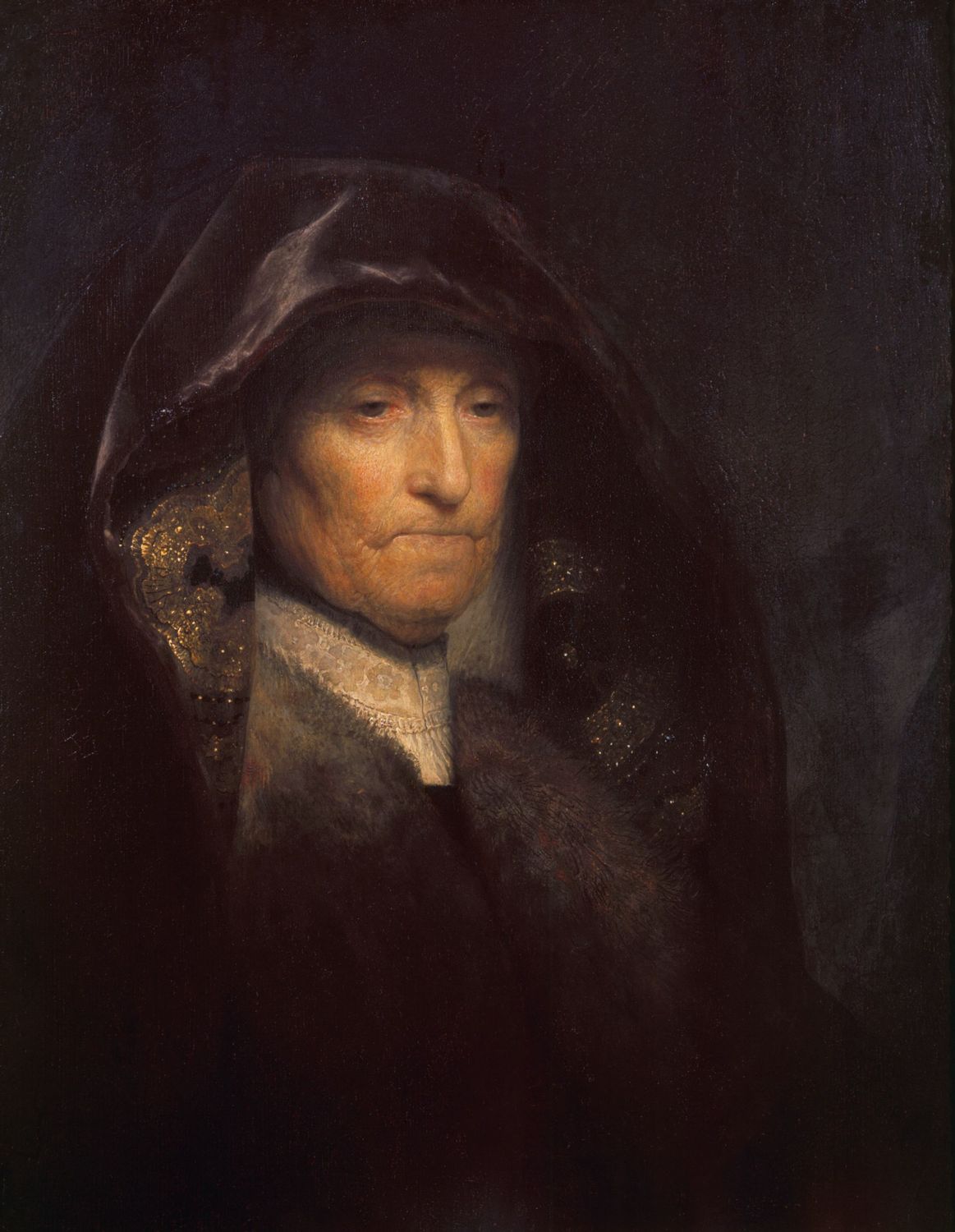
The Commonwealth Sale of the Royal Collection (to recoup money after the ruinous war) got underway at Somerset House soon after the king’s death   This show, Charles I: King and Collector reunites 140 of the most important works which have not graced the same walls since the seventeenth century.  The information cards next to each painting often included the price gained for a painting.  Some major works by leading Renaissance painters, such as Rubens or Titian might have made over £100 but some went for peanuts –  there’s a magnificent portrait by Rembrandt of his mother which went for a mere £4. The mind boggles!

255800-1330621692

The variety and quality of the paintings is breathtaking.  For me, the stars of the show were a series of portraits by Holbein the Younger, most of which are now in the Royal Collection, which show the extraordinary ability of the artist to really ‘eyeball’ his subjects and capture spirit, character and personality through the sparest amount of pencil marks or strokes of the paintbrush.

The show is on until 15th April and is bound to be very popular but I do recommend catching this one if you can, not only for the glorious works on show, but for the insight into an unrivalled collection of art in the history of English cultural investment.  Sponsored by BNY Mellon, in partnership with the Royal Collection Trust.

http://www.royalacademy.org.uk @royalacademy @royalacadmyarts

Rhythm & Reaction: The Age of Jazz in Britain – a foot-tapplingly wonderful show which traces the arrival of Jazz 100 years ago and the influence it’s had on culture, art and ordinary life.

For an immersion in the world of jazz, and a chance to learn more about its evolution, I recommend you hop or jive down to Two Temple Place to see a really lovely exhibition called Rhythm & Reaction, the Age of Jazz in Britain.

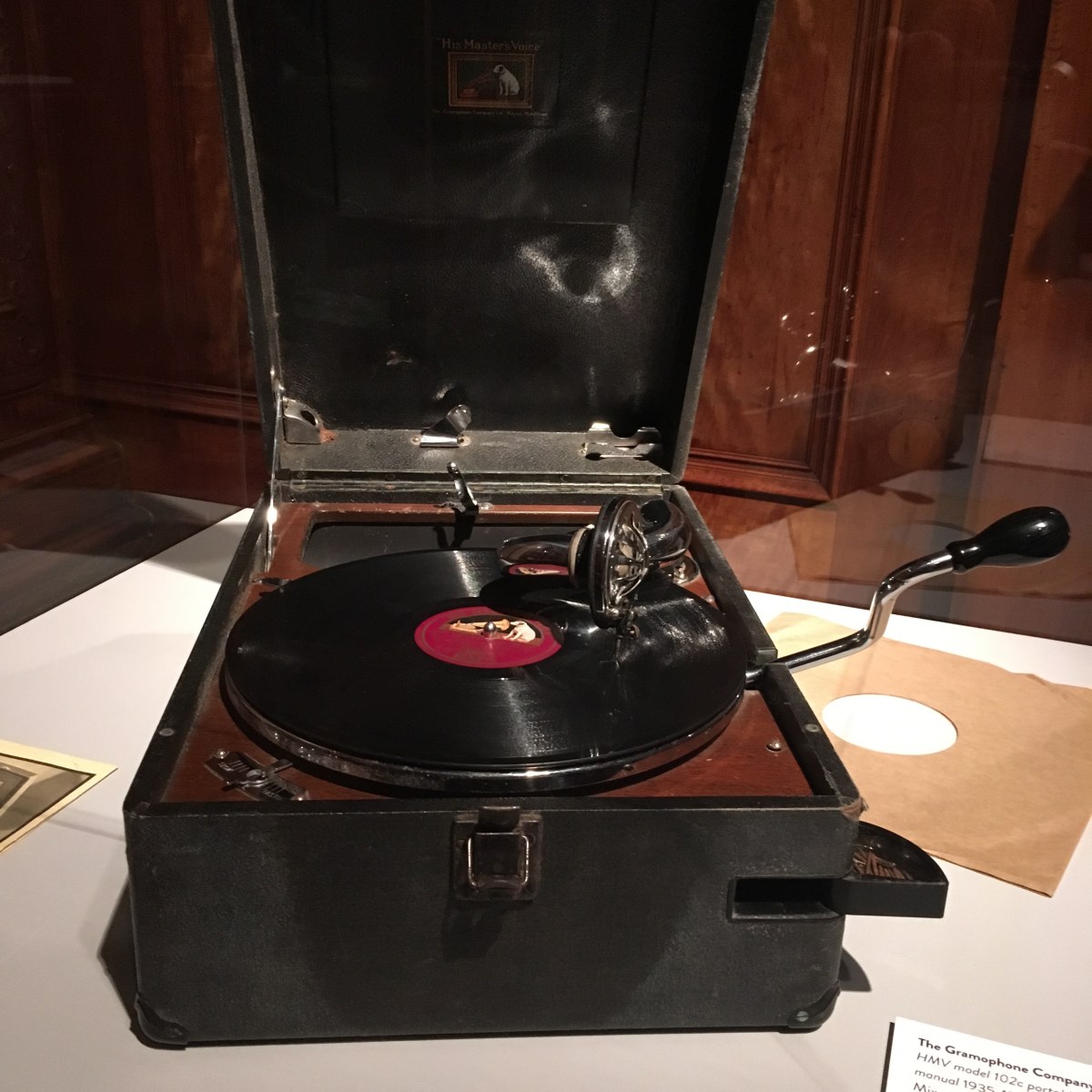
It’s 100 years since the first Dixieland Jazz band arrived in London and caused a sensation but, according to Catherine Tackley, Head and Professor of Music at Liverpool University, the curator of this show, the word and the concept had already arrived.  The argument of this show is that jazz is a concept, not just a description for music  influenced by African American culture.  Jazz infiltrated and infected all kinds of art from film to dance to design and in the way we could listen to music – encouraging everyone to buy records and play them at home!

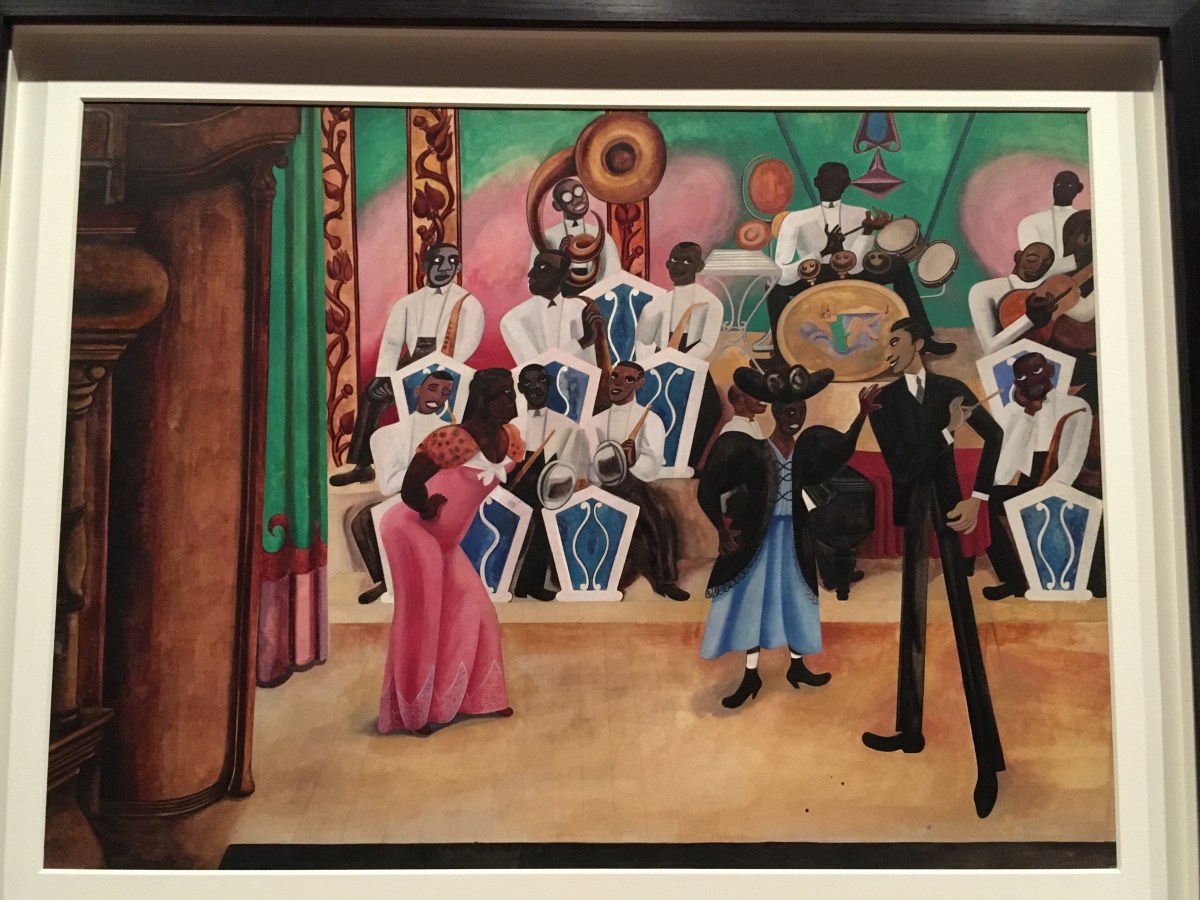
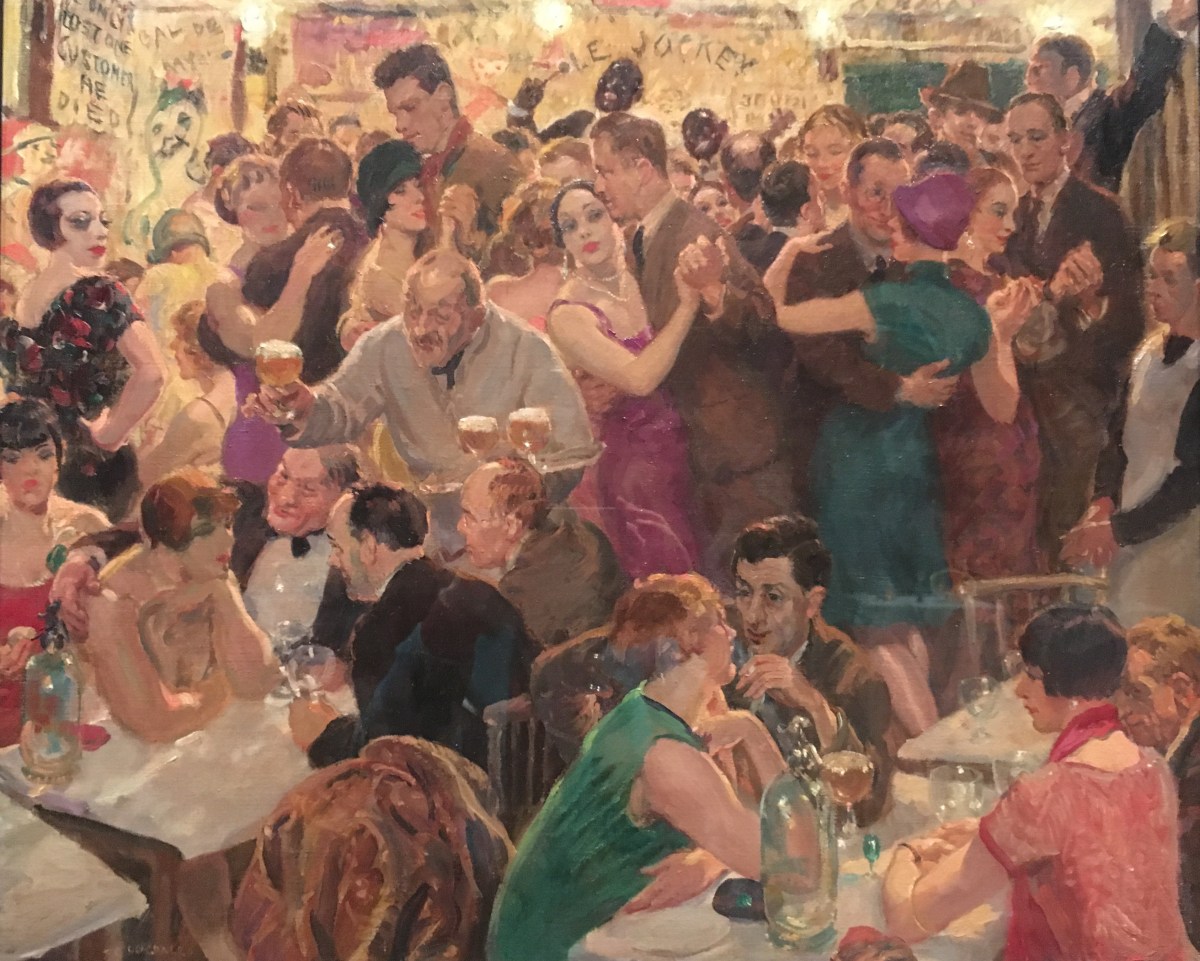
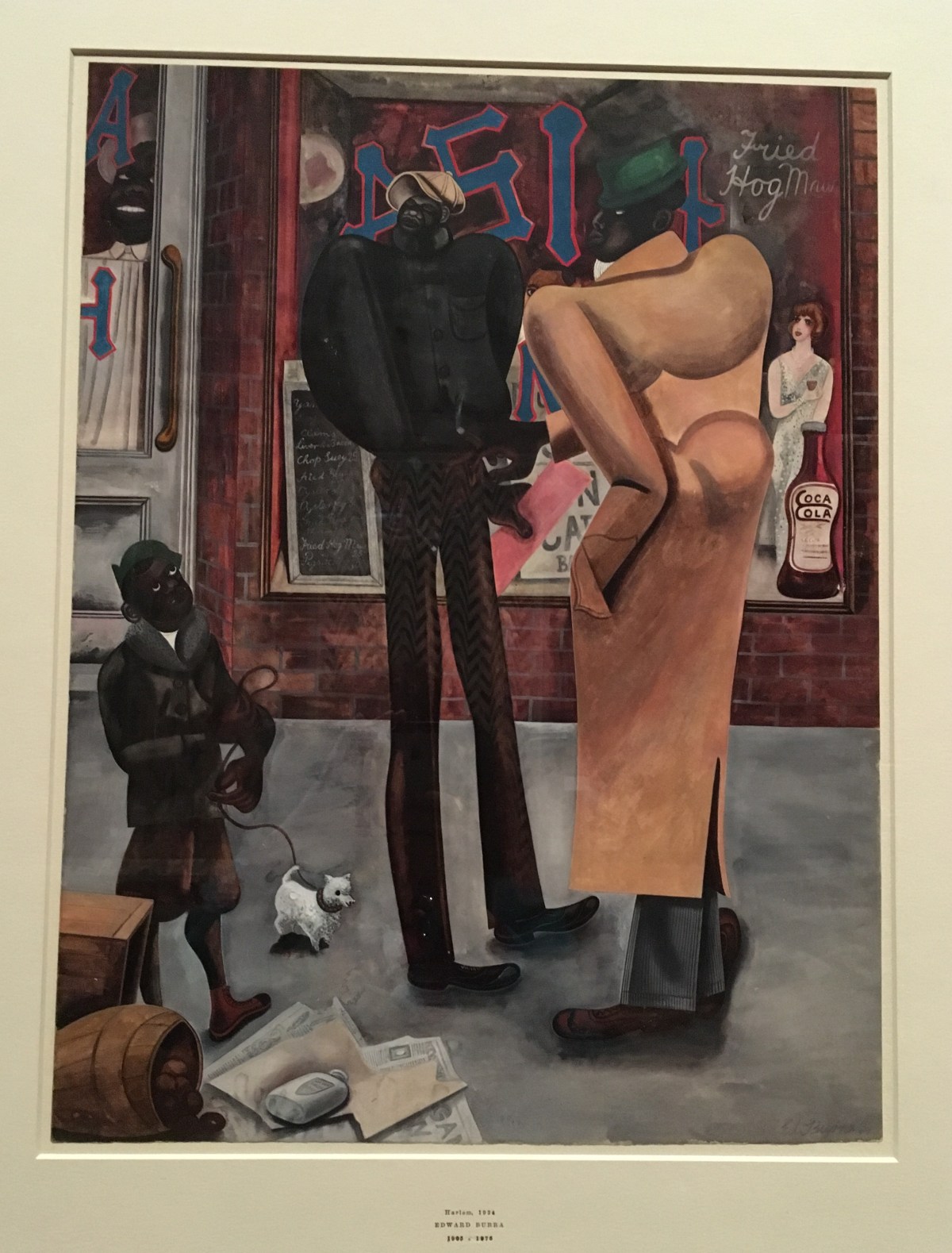
IMG_9244British jazz emerged and was embrace pretty quickly and it’s great to see evidence of its far reaching influence through the assembly of so many objects.  I particularly enjoyed some of the art which has been collected showing crowded dance halls, nightclubs, impromptu dancing on streets and some wonderfully stylised paintings.  I’ve featured a trio of works here –  two by Edward Burra and one by Thomas Cantrell Dugdale.
IMG_9253
Edward Burra, Harlem, 1934 Watercolour
IMG_9255
Edward Burra, The Band, 1934, Watercolour
IMG_9259
Thomas Cantrell Dugdale, Night, 1926 – a small nightclub with barely room to move


IMG_9249

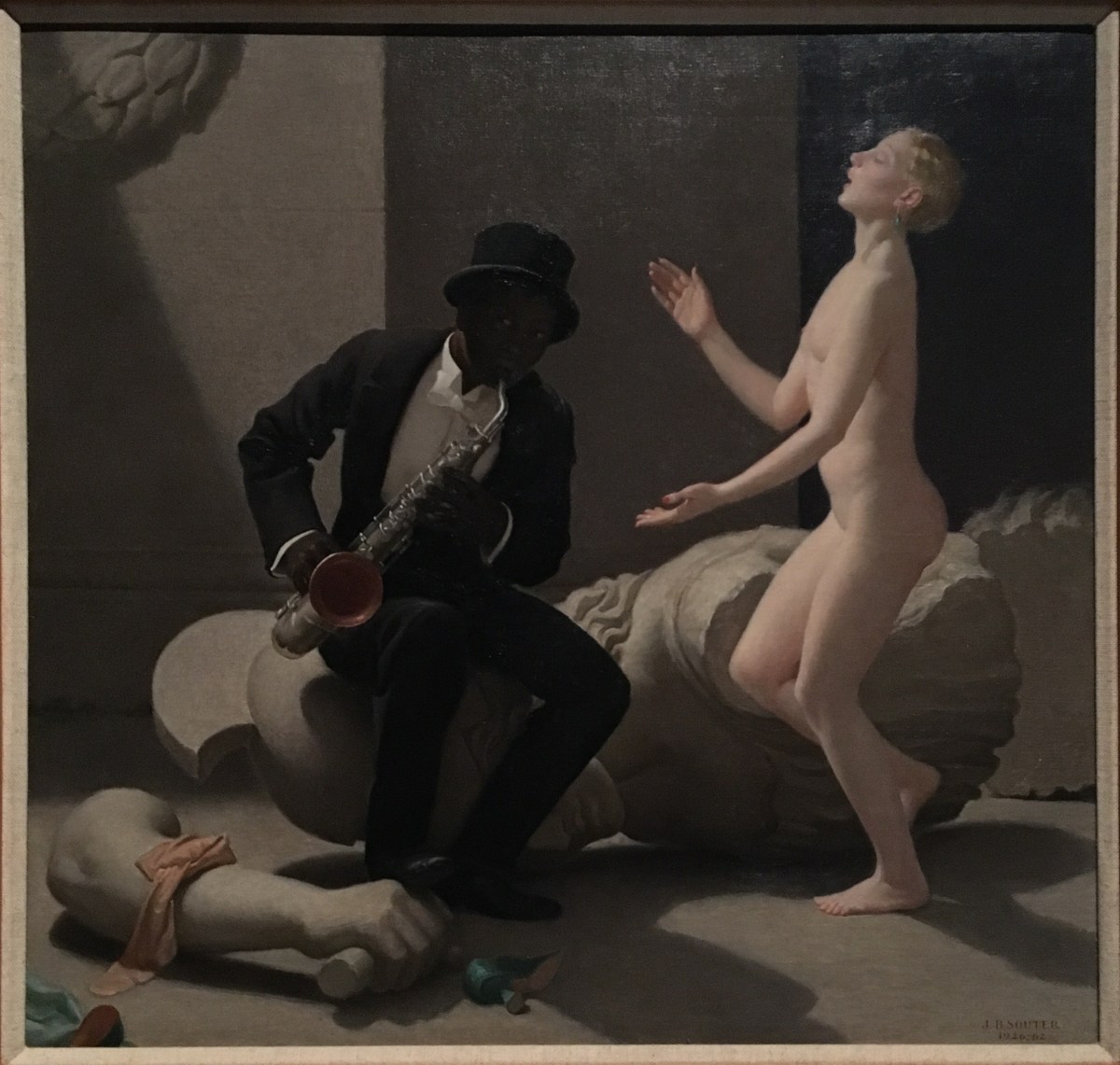
And this extraordinary work by John Bulloch Souter called The Breakdown 1962, brings a surrealist element to the depiction of jazz and highlights the inevitable racist element which existed in early jazz, performed mainly by black artists.

There’s a great collection of instruments too which make you long to hear them being played. And some surviving shoes which bear the scars of energetic dancing.


This show is great just to roam around, soaking up the atmosphere of jazz, from the black and white films of performers to the constant background playing of great music. It’s fun to see the jazz effect on ceramics, wallpaper and sculpture.


And it’s always a treat to have the chance to explore Two Temple Place which is an astonishing Neo Gothic Mansion built by William Waldorf Astor in 1895 which is full of sensational carving, stained glass and fabulous friezes which adorn the gracious rooms.

This show is on until 22nd April 2018.  http://www.twotempleplace.org