Wright of Derby: From the Shadows. What a terrific show at the National Gallery, London. I’ve long been an admirer of Joseph Wright’s ‘candlelight’ paintings which capture moments of interior drama, both literally and psychologically. Wonderful to see the artist’s work from 1765 – 1773 at the height of his powers.

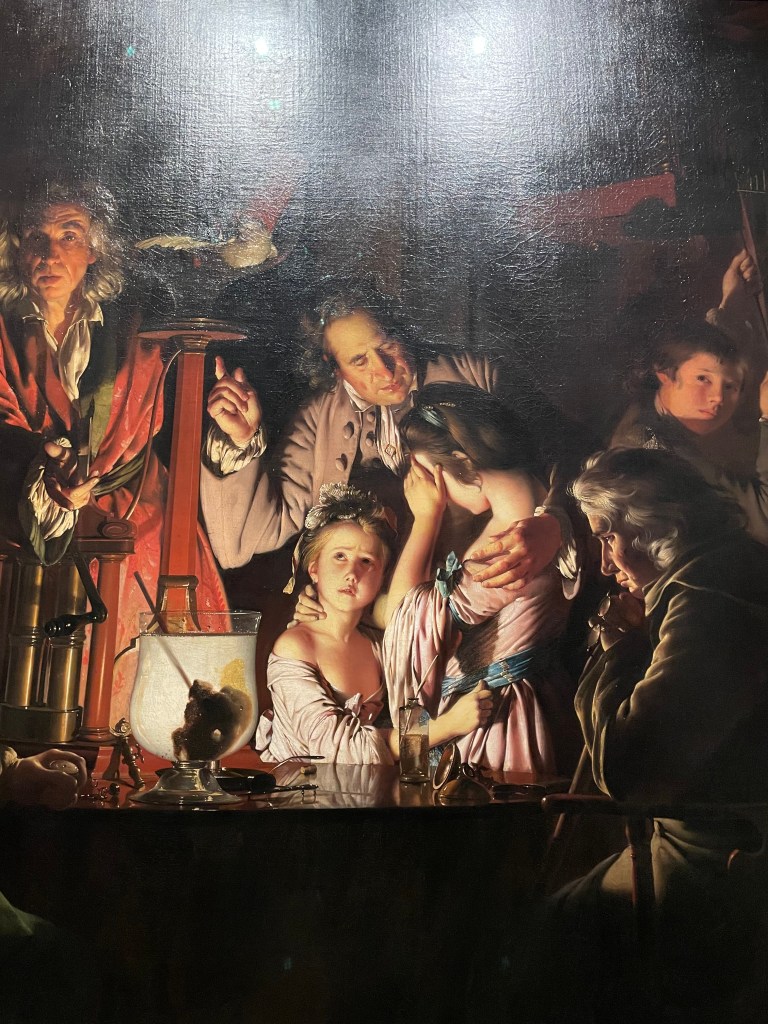
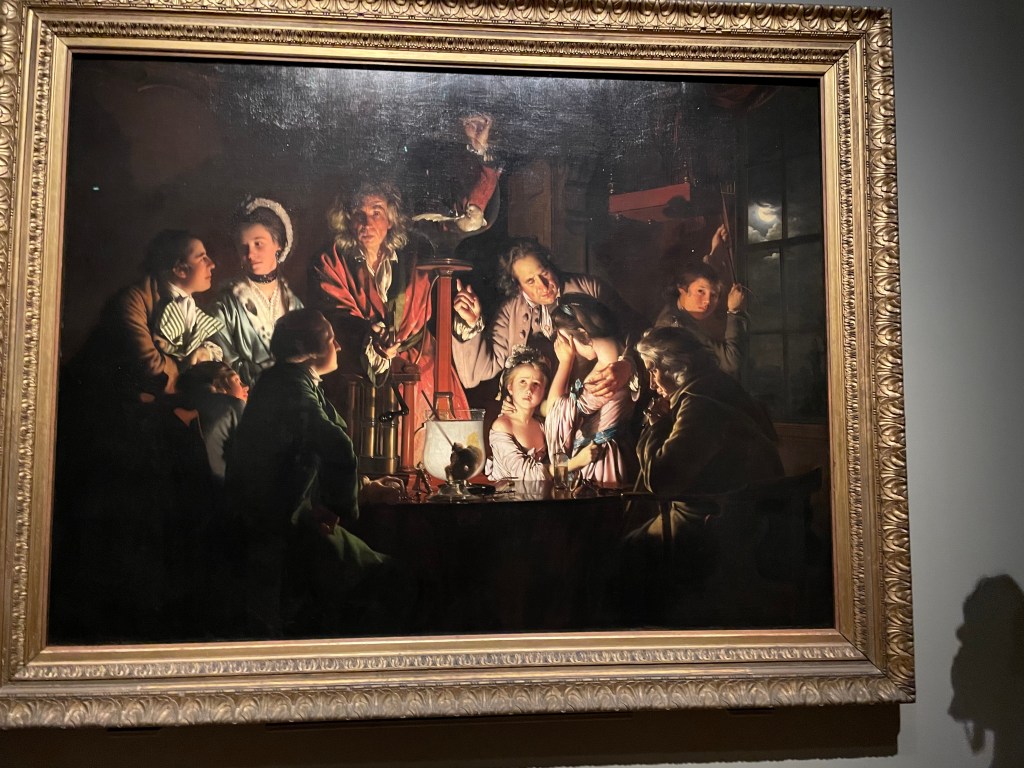
Above is a detail from probably the most famous painting by Joseph Wright, known as Wright of Derby – the town where he was born and worked. The Air Pump shows an audience watching a scientific demonstration. The air is being pumped out of a glass flask and the bird inside is about to suffocate. The girls are clearly distressed, the adults fascinated and the scientist resembles a wizard, in a loose gown, playing God over the life of the hapless bird. There is so much going on in this compelling picture which gives you so many perspectives. But the most striking element is Wright’s ability to capture the lighting of the scene. A single candle, hidden behind a large goblet containing a skull, illuminates the faces and highlights the reactions.
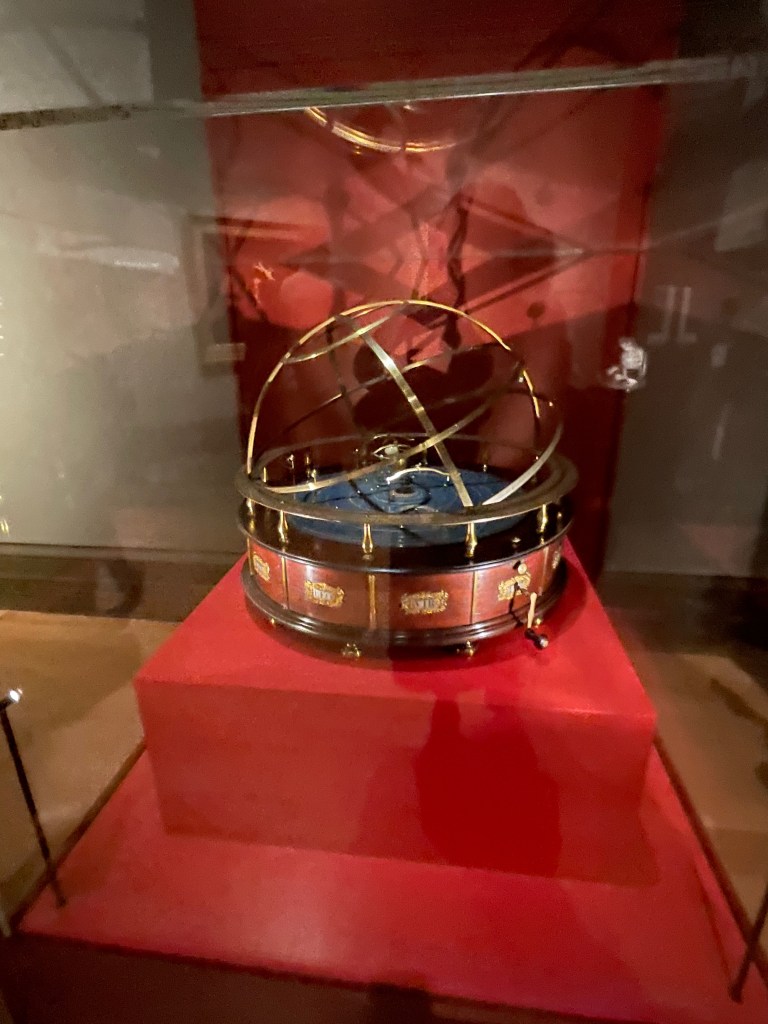
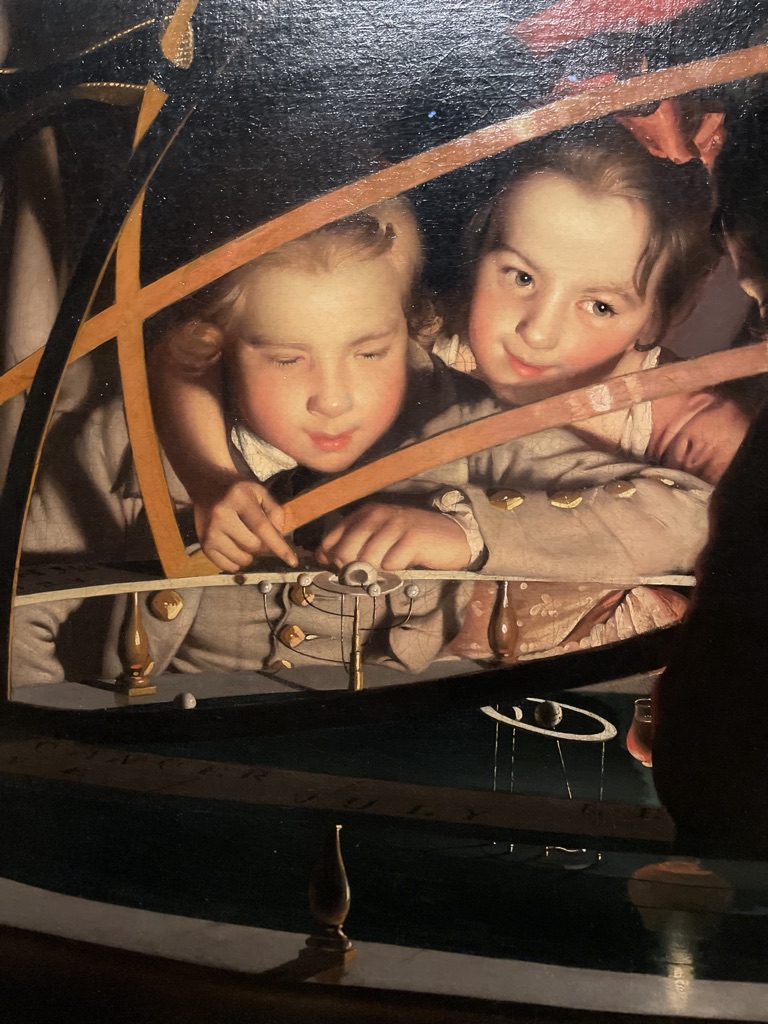
This wonderful exhibition not only brings the best of Joseph Wright’s paintings from the 1760s-70s but also assembles some of the instruments and props which feature in the pictures. For example, below, we see a painting entitled The Orrery which was an extraordinary teaching instrument for demonstrating the movement of the planets and the earth’s place in the heavens. The two boys are transfixed by the tiny orbs which are shown to move around each other.

Tenebrism is the word given to the style of painting associated by Italian artist Caravaggio and describes the use of an extreme form of ‘chiaroscuro’ (meaning light and dark). The drama derived from seeing, and not seeing, objects is brilliantly conveyed in these picture. As a viewer you are drawn to the illuminated faces and the expressions responding to the action but then you wonder what is happening in the shadows? Each picture contains so many questions and invites you to puzzle over the subject as you scan the painting absorbing the story.
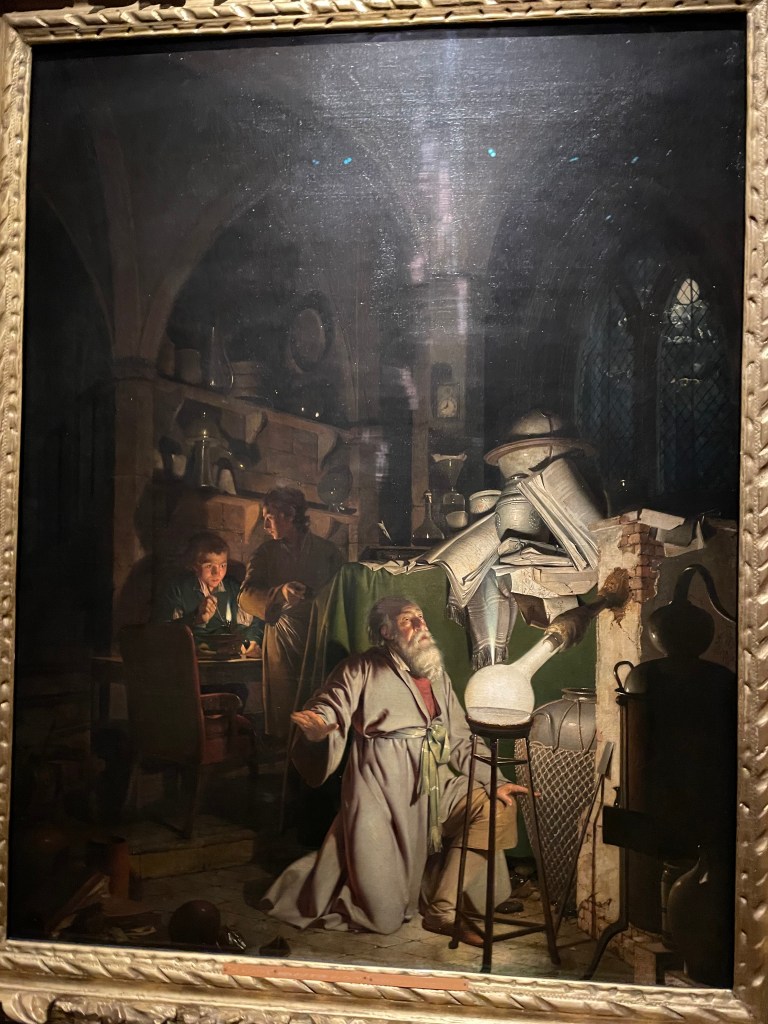
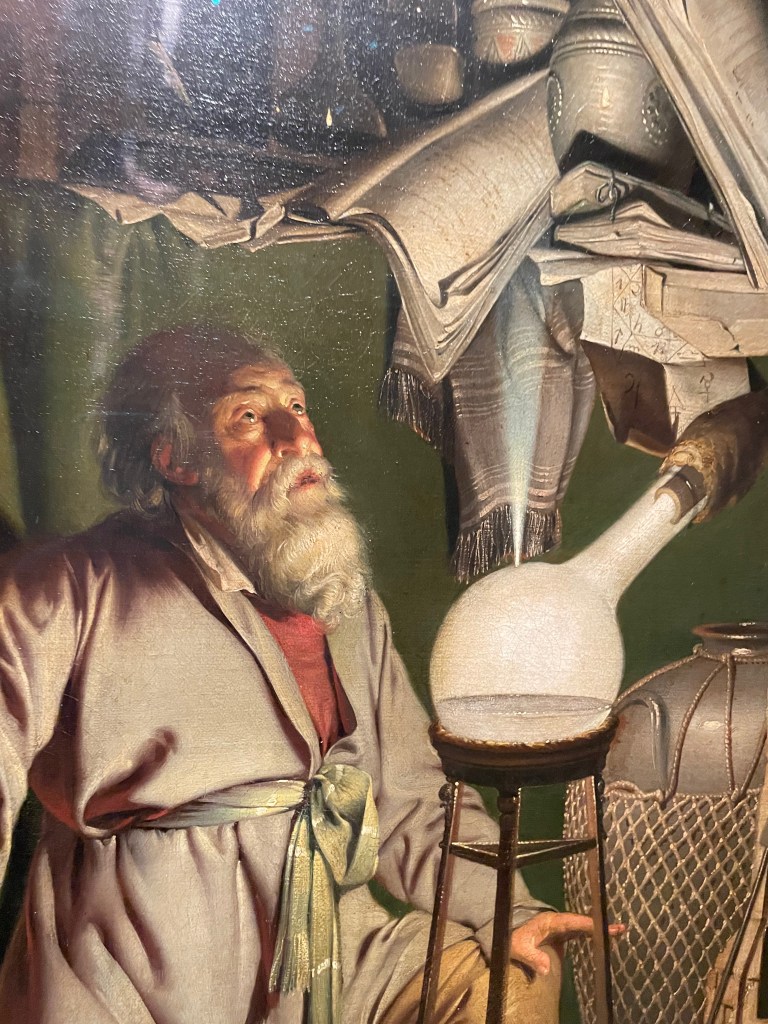
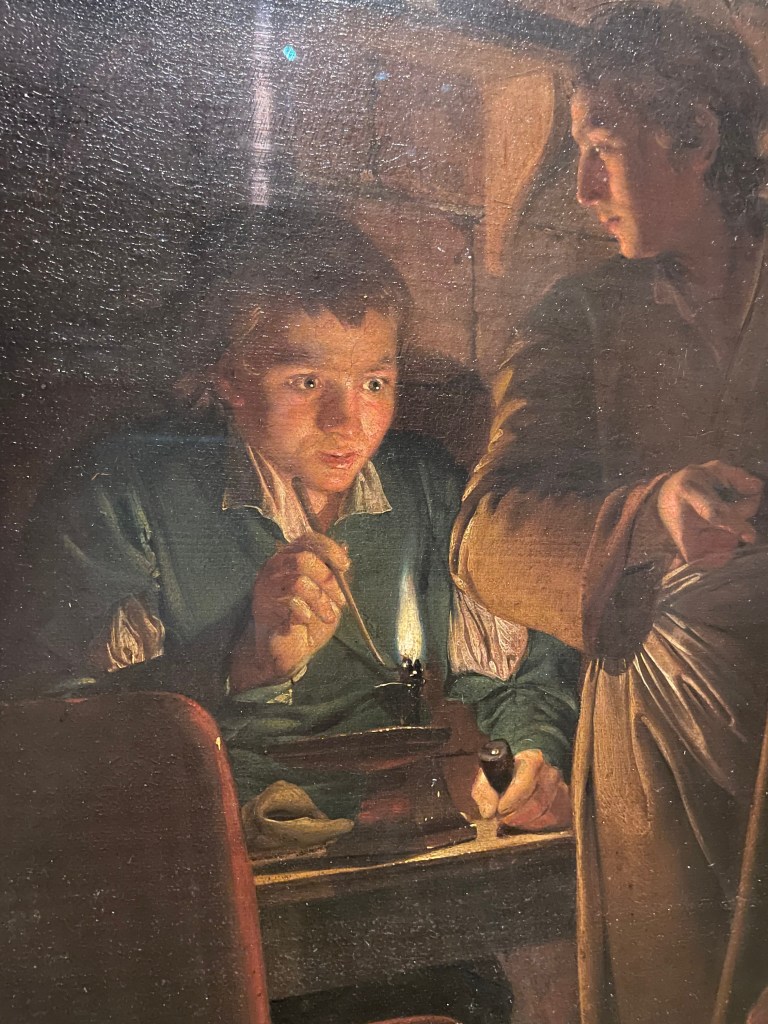
Above is The Alchymist in Search of the Philosopher’s Stone, Discovers Phosphorus, and Prays for the Successful Conclusion of his Operation, as was the Custom of the Ancient Chymical Astrologers. Wow! Quite a title, but what a picture, there’s so much going on. Amazement on the face of the alchemist and bewildered fascination by his helper making notes at the desk by candlelight. And capturing the bright light of phosphorus must have been a huge challenge.

I love this painting of the girl reading the letter. You can’t see the candle but it’s behind the paper, making it transparent, but for the shadowy fold. And is the man leaning over her shoulder about to grab the paper away? What was she reading? Oh, so many questions. This painting is up there with works by Vermeer but with a more rosey hue and earthy atmosphere.
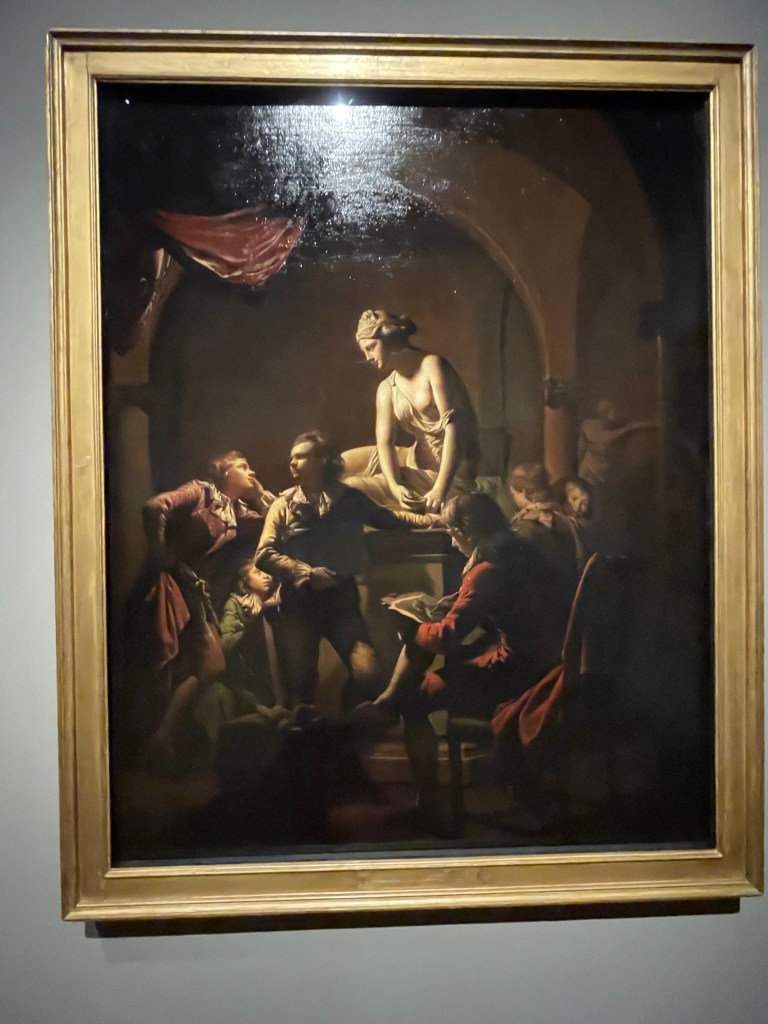
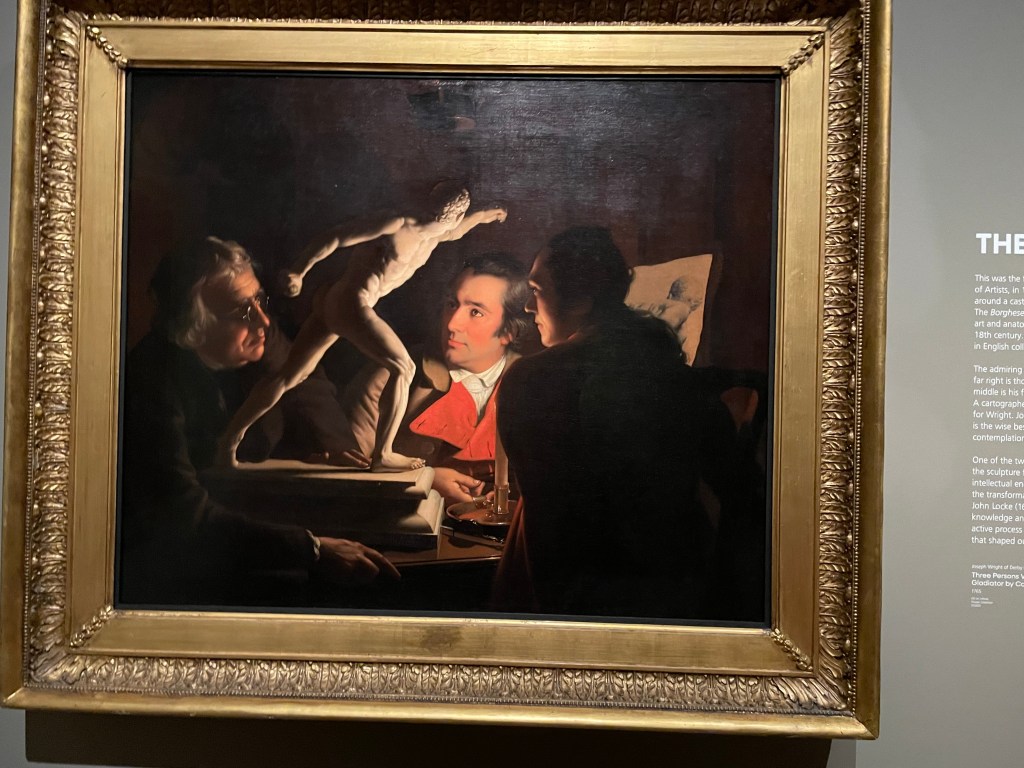
Above are a couple of great examples of ‘tenebrism’ showing not only Wright’s skill at capturing light but depicting the enduring artistic quest to capture form by using light and shadow in the context of the art class.
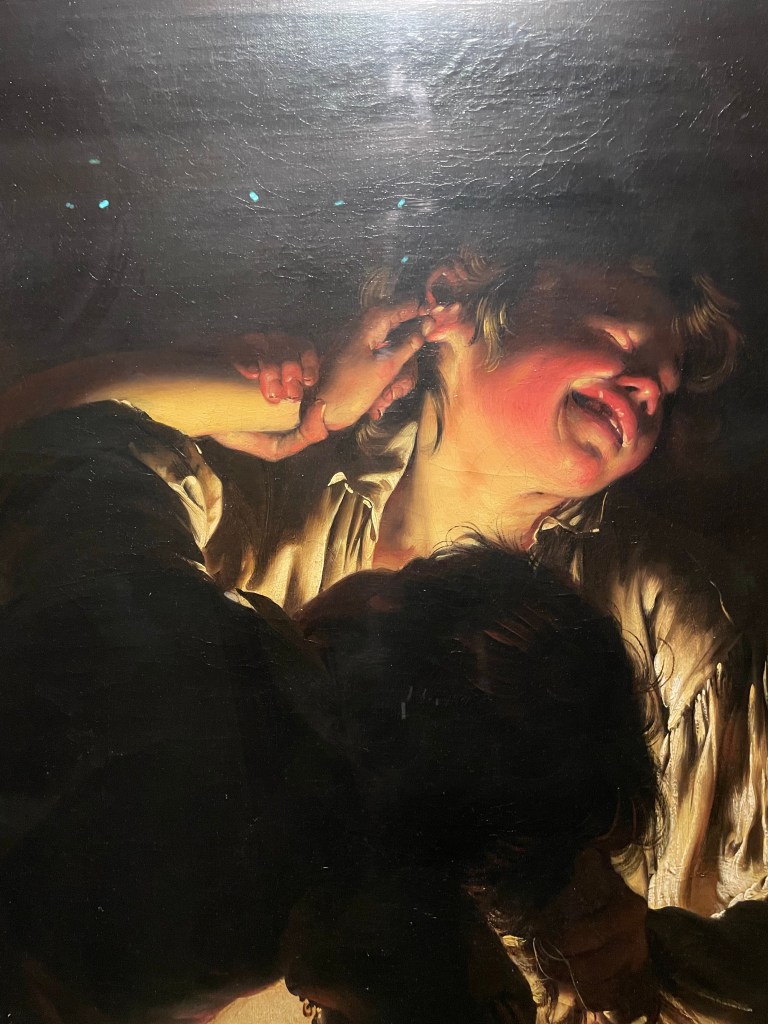
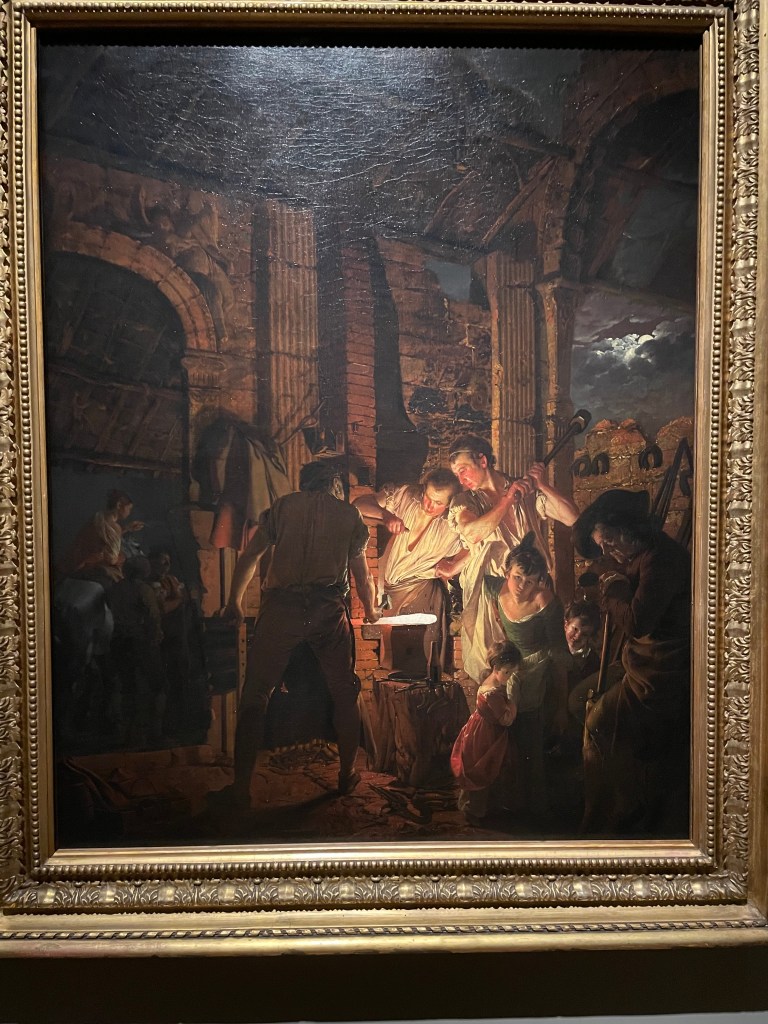
And above is a detail from a painting of two boys fighting. You can see that things are turning violent as one boy’s ear is grabbed and pinched with his assailant in the foreground represented in shadow. And I loved the picture on the right of A Blacksmith’s Shop. Nighttime work, with the moon beyond the clouds and all eyes focused on the action on the anvil. Wonderful.
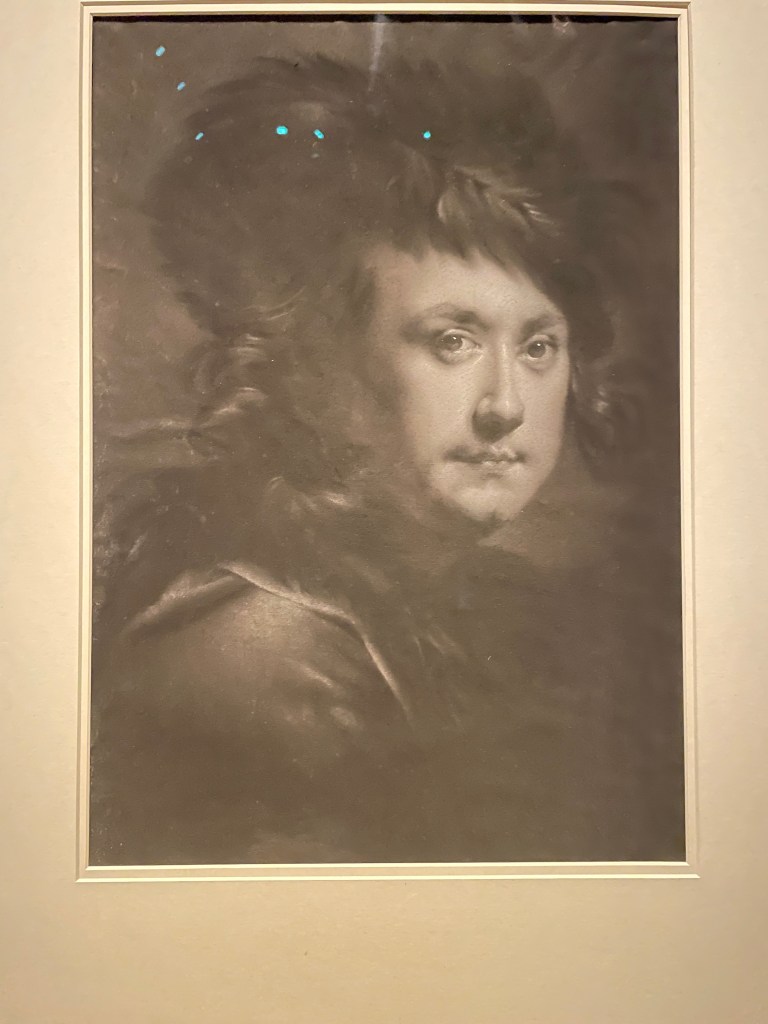
Above is a self-portrait by Joseph Wright of Derby done with pastels early on his career. Clearly he was perfecting his ‘tenebrist’ skills but, quite playfully, representing himself in the style of an ‘Old Master’. What a master of his craft he was. This is a great show. It’s on at the National Gallery until 10th May 2026.

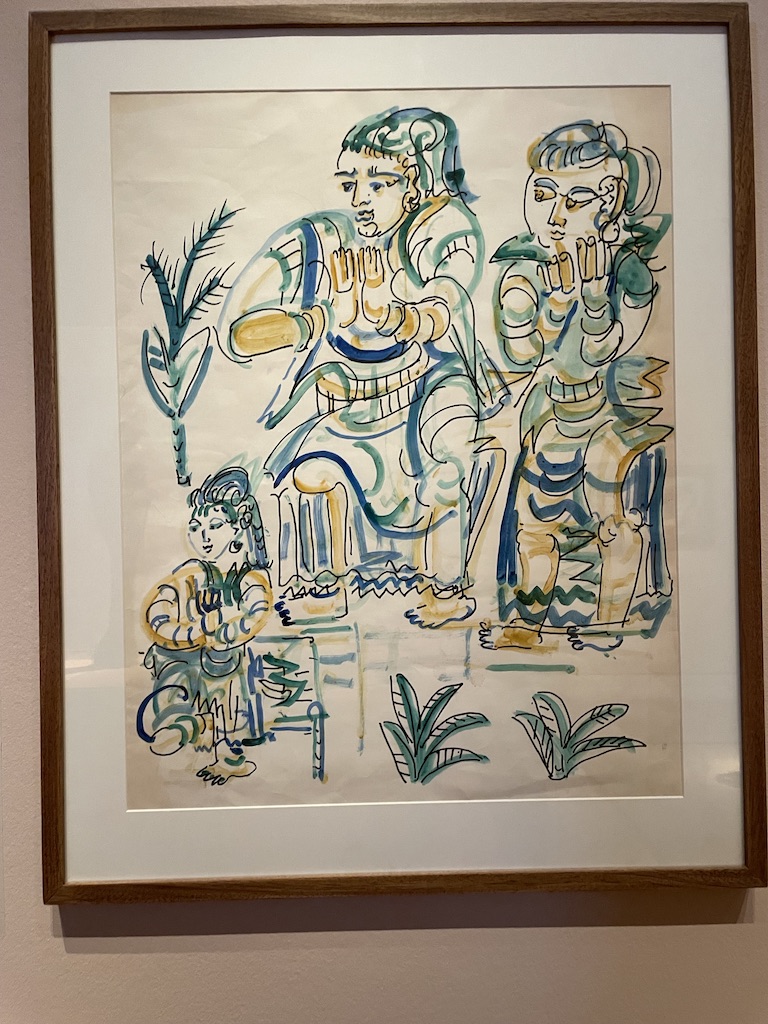
The Story of South Asian Art at the Royal Academy shines a light on the artist Mrinalini Mucherjee, her family and fellow artists. Their work spans the the second half of the twentieth century and shows how Western art was stylistically absorbed into traditional Indian art.

I had no idea what to expect when I attended the press preview for this show. My knowledge of Indian history is scant. For this exhibition we were introduced to the work generated by Benode Behari Mukherjee, his wife, Leela, daughter Mirnalini and students who lived and work an an idyllic-sounding art school established in Santiniketan in 1919. This was a time when Indian artists might look to the West for influence but were determined that their work would be definitively Indian, and reflect their deep-rooted culture.

I was impressed by the variety of work and, at times the visceral nature of the imagery. Above is a water colour sketch on paper by Leela Mukherjee demonstrating the influence of Matisse through bold, vigorous brush strokes.

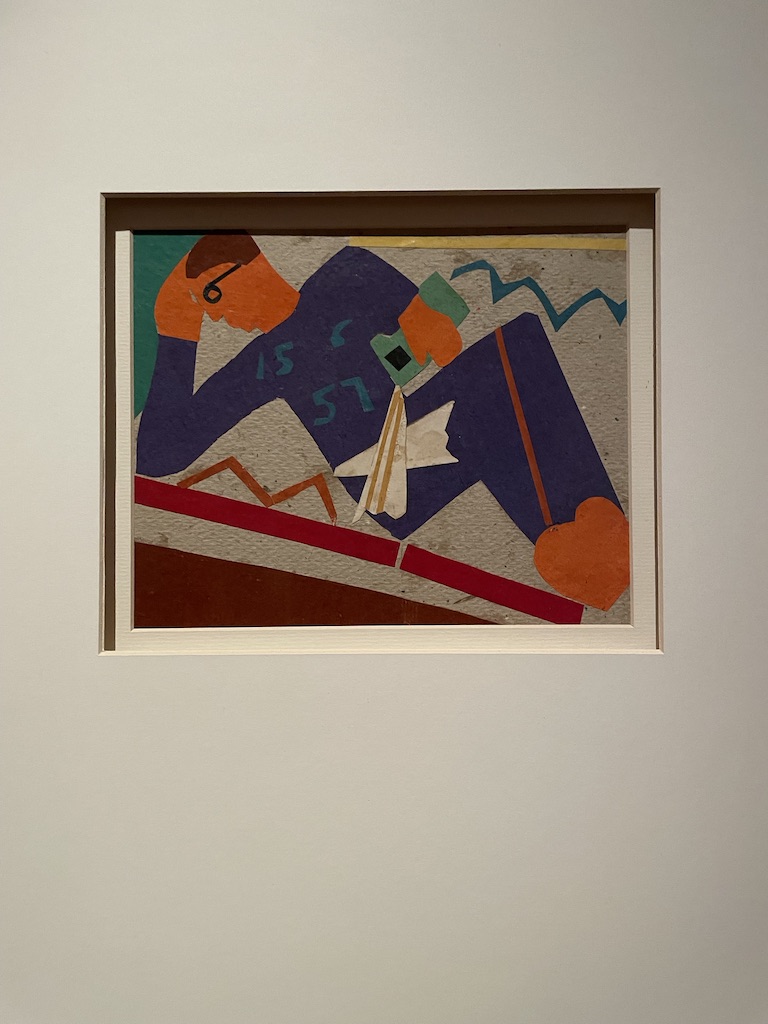
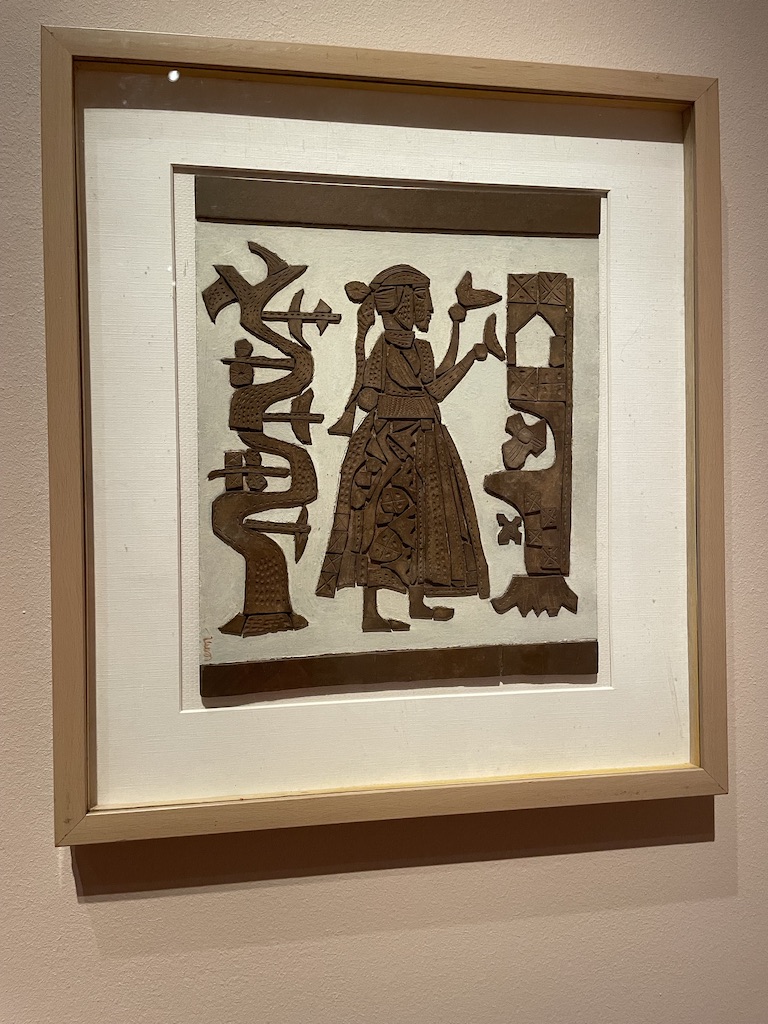
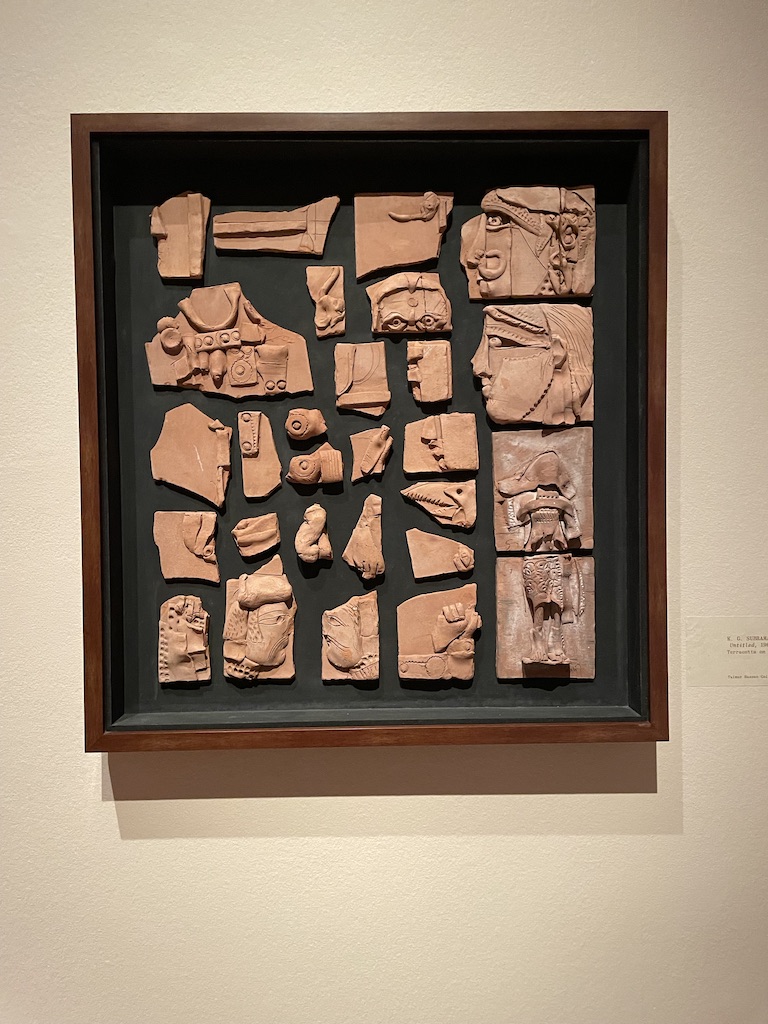
I really liked this trio of work. On the left is a paper collage made with cut outs by Benode Mukherjee. He became blind in his 50s but continued working and teaching. His daughter, Leela, worked closely with him, describing what she could see around them and helping him interpret his art by preparing and cutting up paper for him to collage. He would then, intuitively, ‘feet’ his way into these later works. In the centre is a carved wood mosaic by K G Buramanyan (a student) which relates to a monumental mural commissioned in 1962. The mural stretches some 25 metre and used 13,000 terracotta tiles – examples are shown on the right.

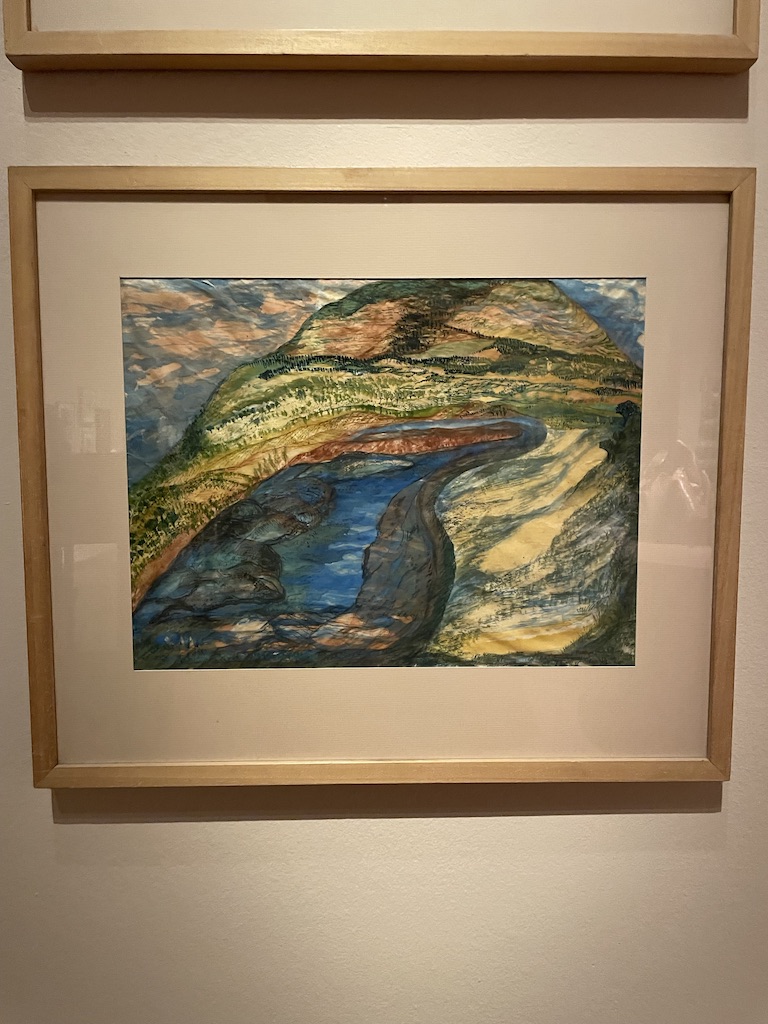
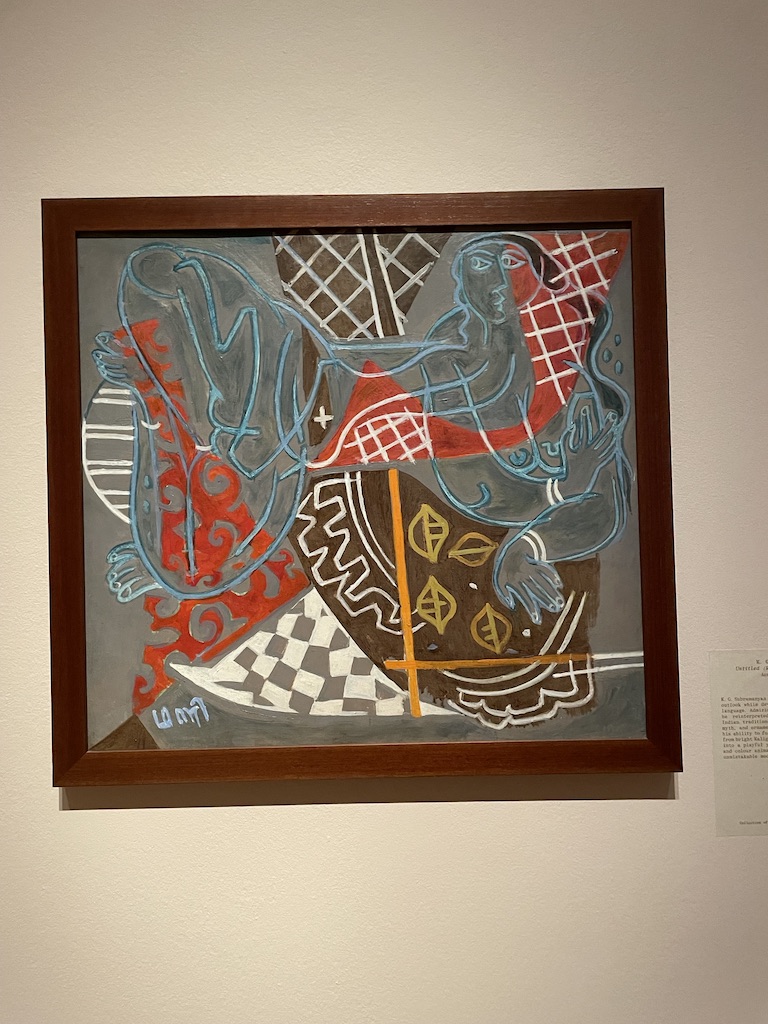
These two paintings caught my eye. On the left is a watercolour by Mrinalini Mukherjee which is like an abstract landscape using great colours. And on the right is a very Matisse and Picasso-inspired ‘Reclining Woman’ by K G Subramanyan.

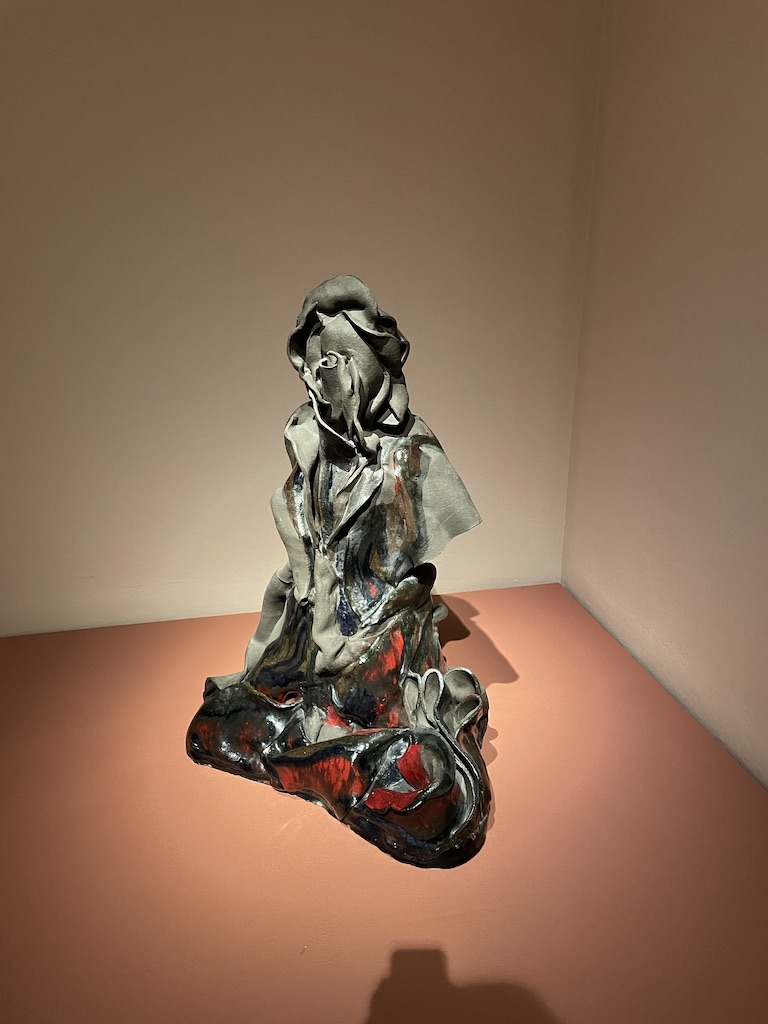
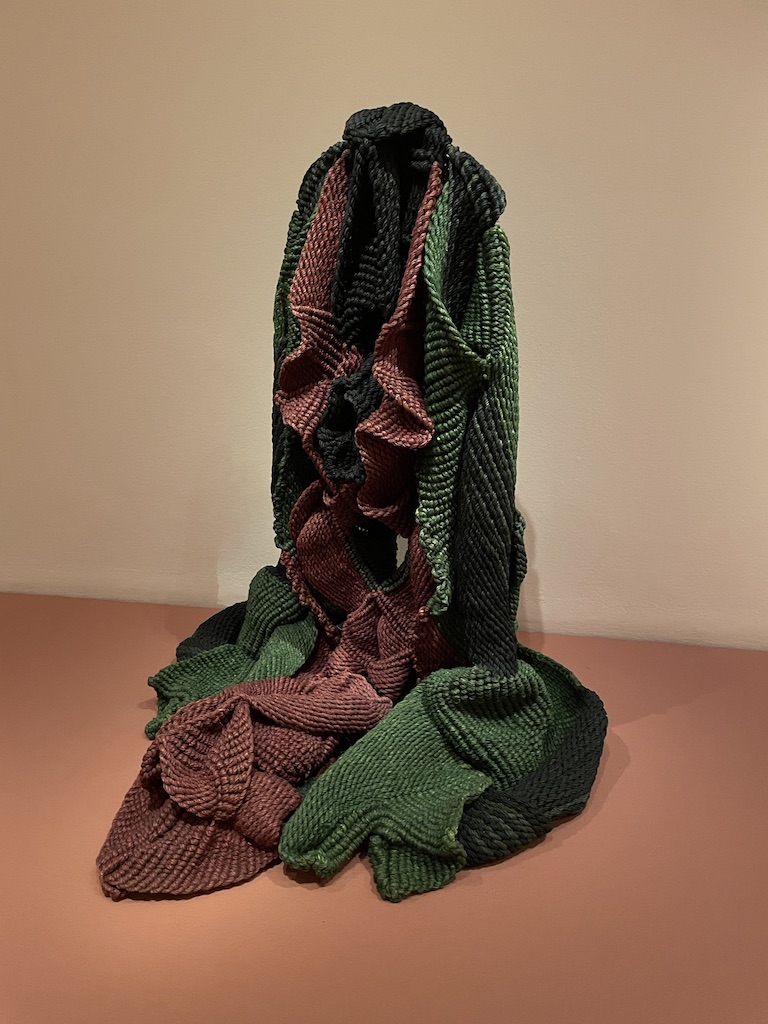
The sculptures are interesting. On the left is Night Bloom II by Mrinalini Mukherjee, a partly-glazed ceramic made with folds of clay which convey the idea of a woman seated in the lotus position. They clay bears impressions of textiles. And on the right is her intriguing sculpture named Jauba, from 2000 made with hemp and steel.

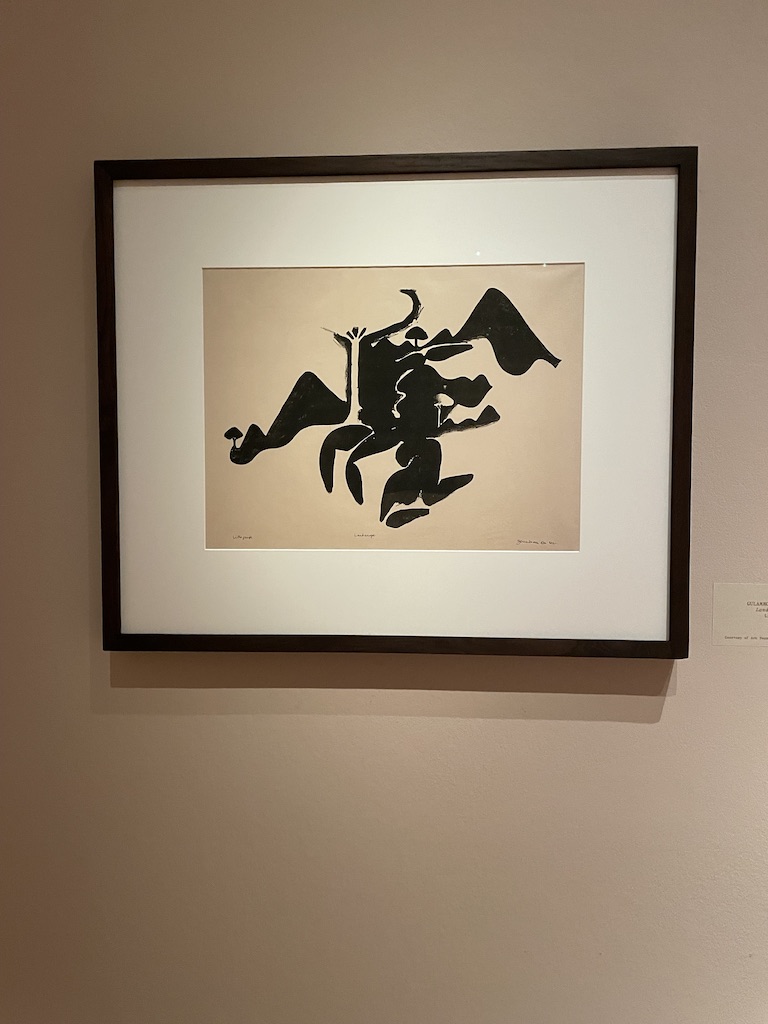
I found this lithograph, Landscape 1968, by Gulammohammed Sheikh quite threatening with intimations of unsettling goings on. And on the right is an etching entitled Riot from 1871 where the violence is evident.

A very intriguing show. It’s on at the Royal Academy until 24 February 2026.
Brasil! Brasil! A glimpse of the artistic heritage of this lively country is on show at the Royal Academy and it’s fascinating to see how a mix of European and indigenous artists have combined to create a distinctive Brasilian aesthetic.

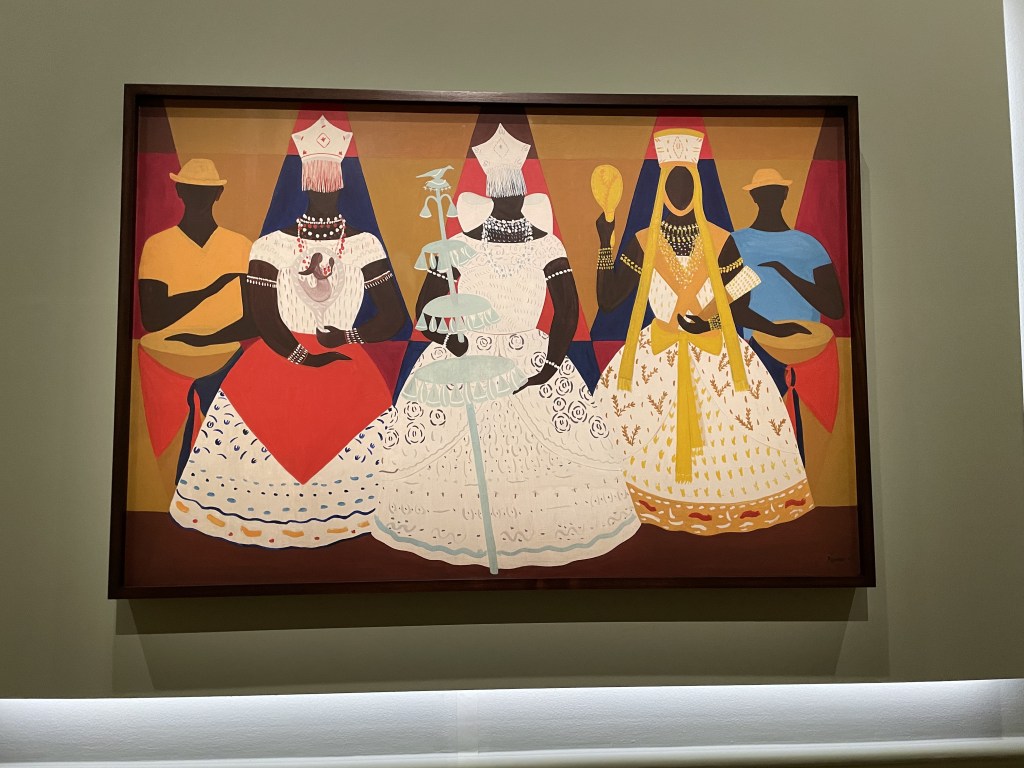
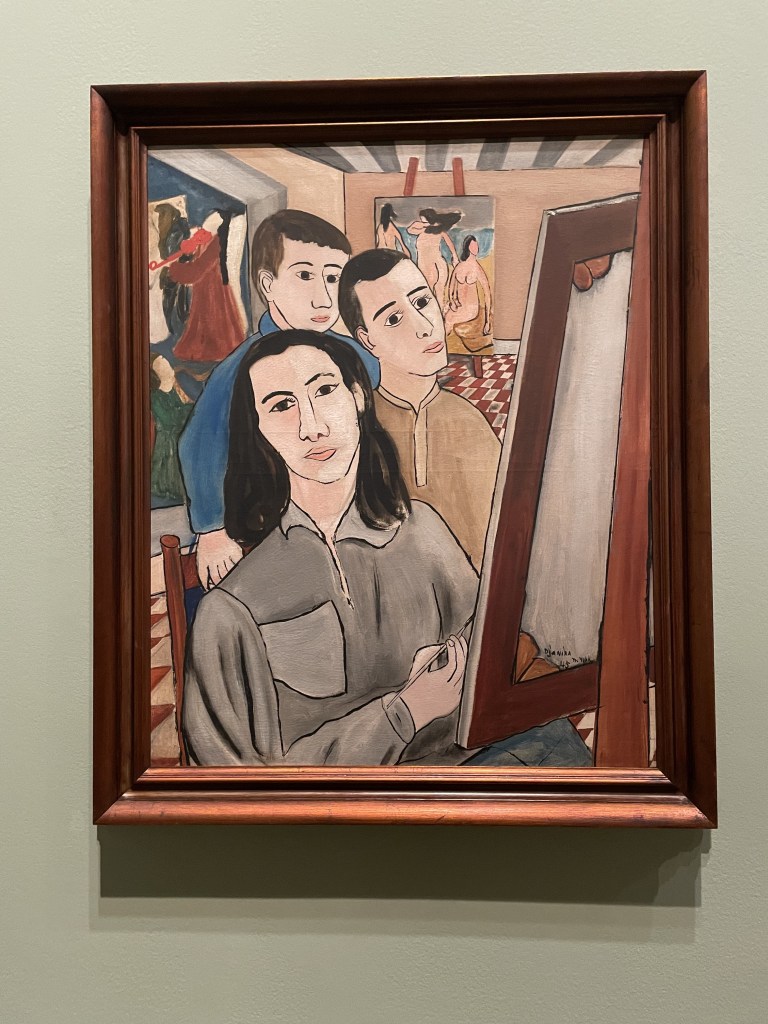
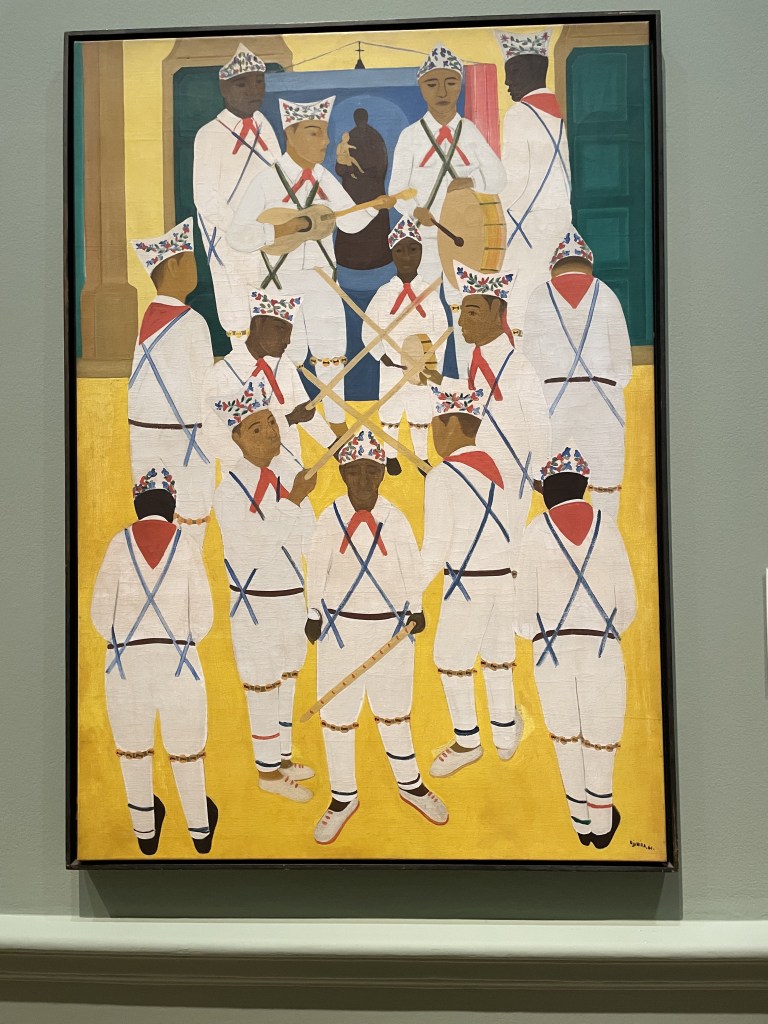
This image, entitled Three Orishas, was painted by Djanira da Motta e Silva in 1966. It’s an example of the ‘newer’ art in a show which exhibits the art of Brasil from the 1920-70s. The bright colours, stylised look and clear mingling of cultural languages captures, for me the true spirit of this young South American country.
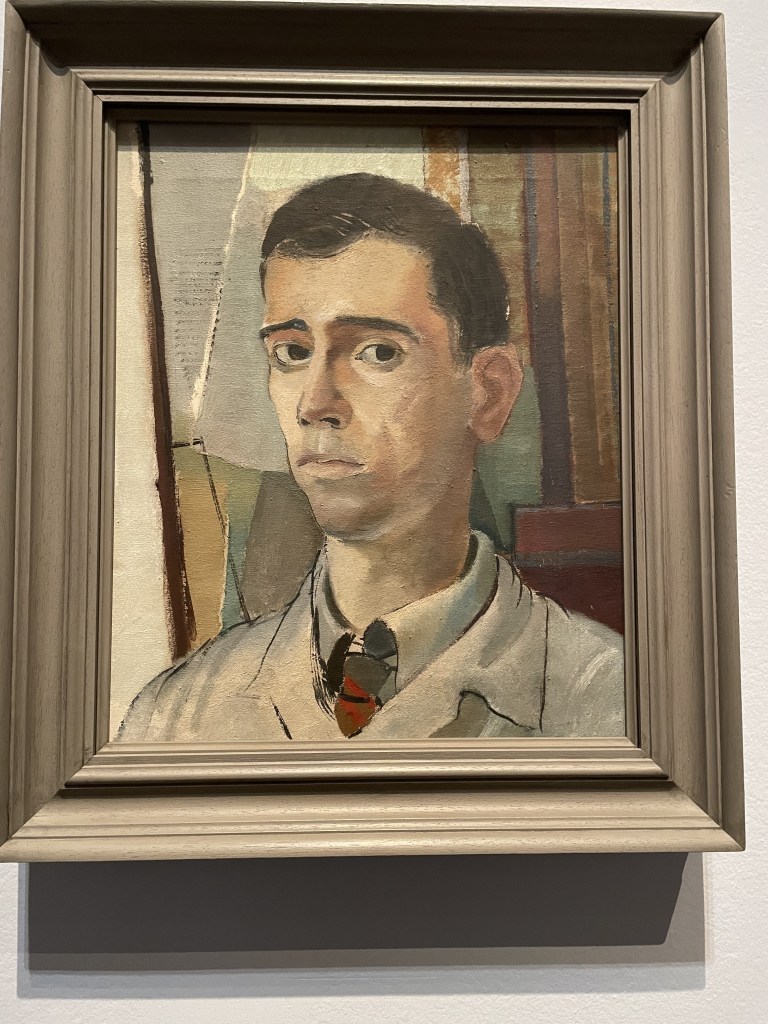
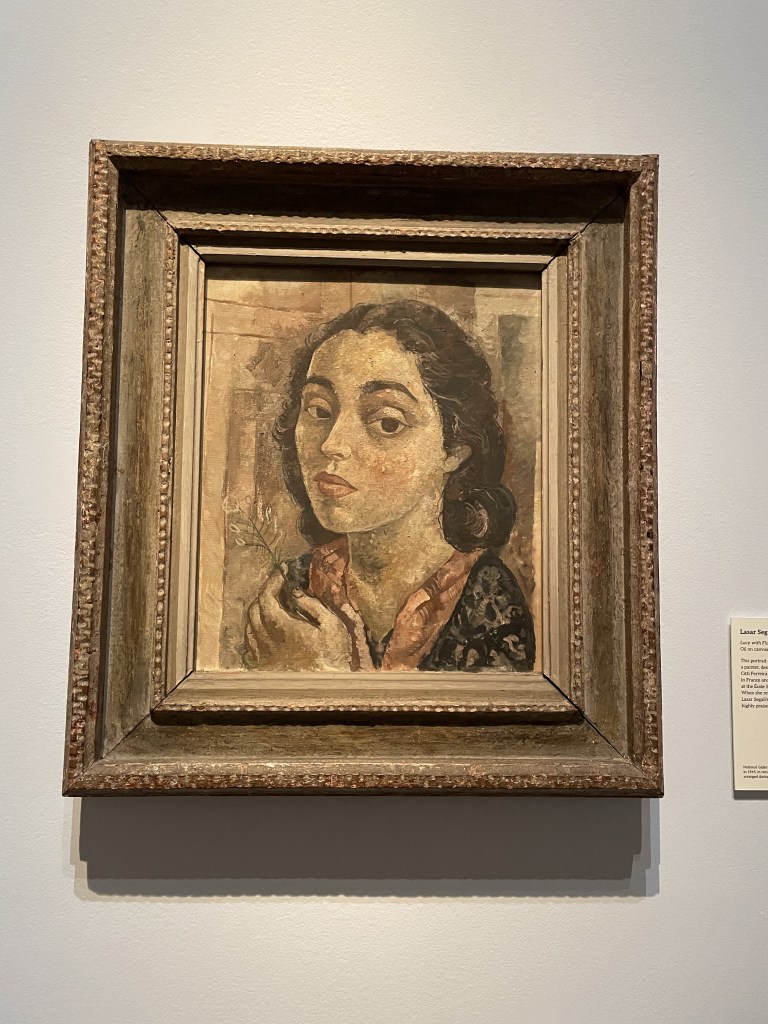
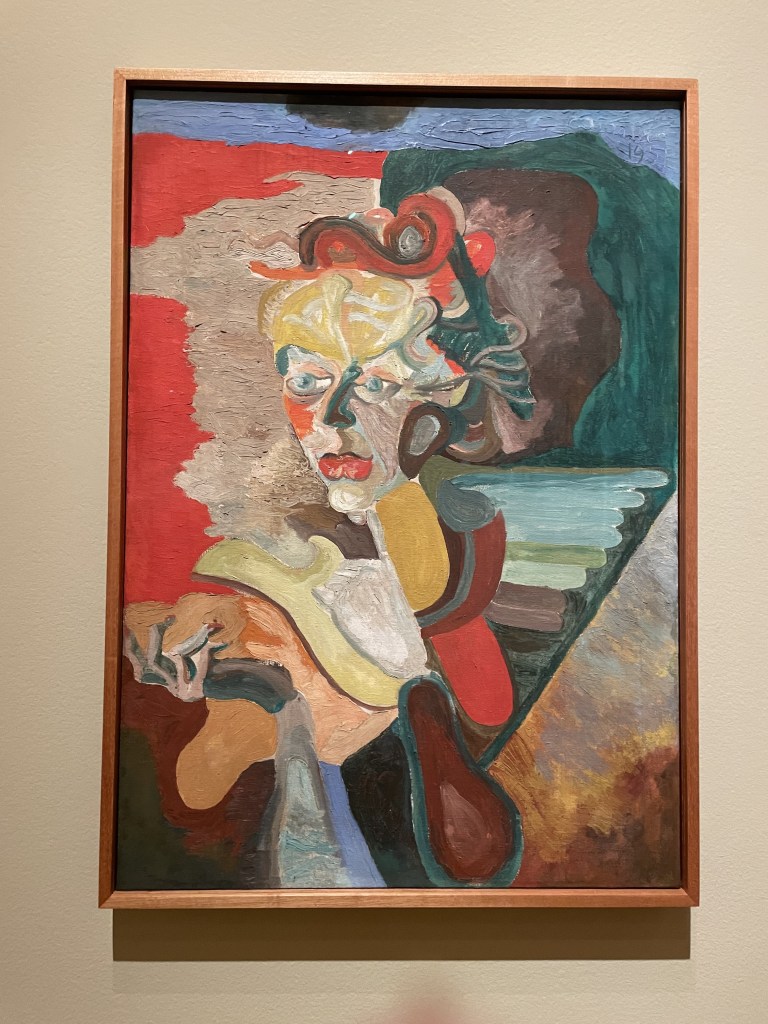
I’m always drawn to portraits and there are some very interesting examples. The muted colours betray the period of the painting and the inheritance of German expressionism. Left: Self-portrait with Orange Dress 1921 by Tarsila do Amaral, Portrait of a Young Man 1943 by Roberto Burle Marx and Lucy with Flower by Lasar Segall painted in 1939-42.

You can see the influence of expressionism and abstraction here with Djanira da Motta e Silva’s self-portrait from 1945, Flavio de Carvalho’s Portrait of Ivone Levi from 1951.

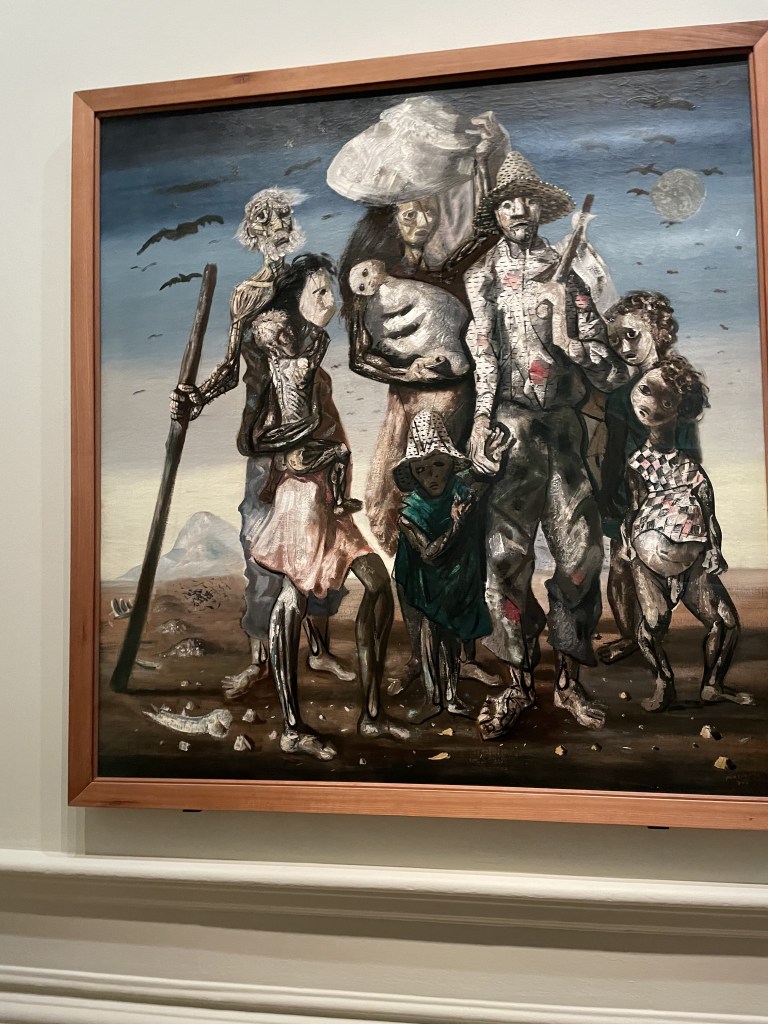
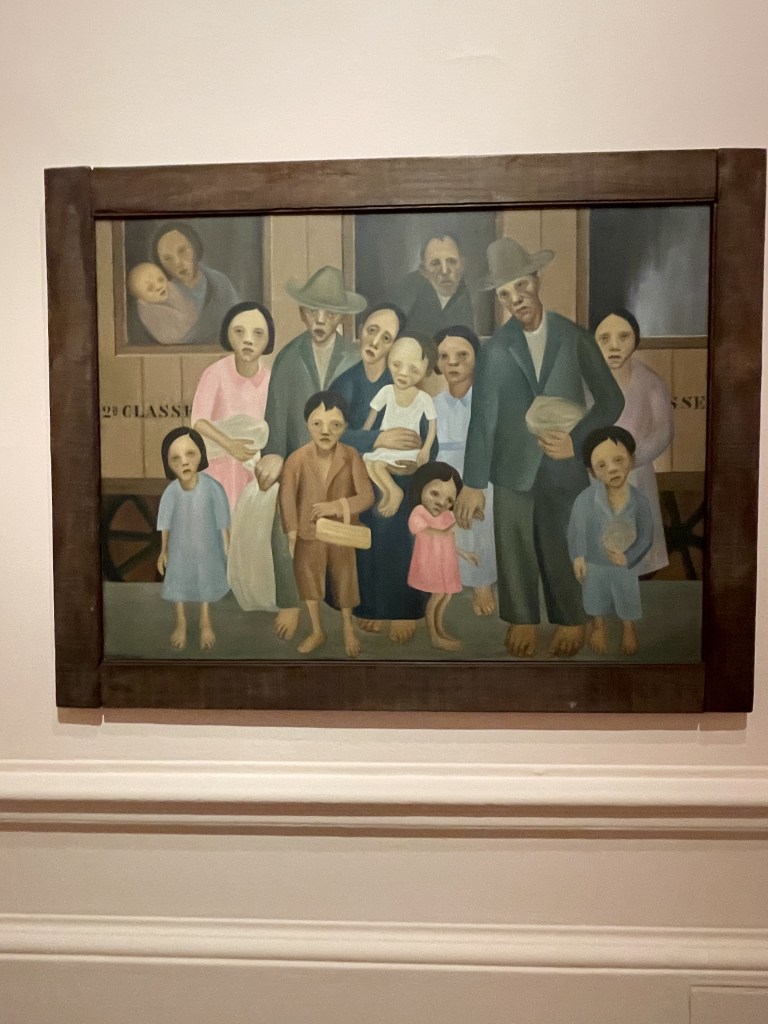
Interesting examples of social commentary with these two paintings. The rather sinister Migrants by Candido Portinari from 1944 represents the migration of northeastern rural communities who were forced to move to other part of the country in search of work. And Tarsila do Amaral’s ‘Second Class’ from 1933 illustrates the awful poverty resulting from the economic crash of 1929.

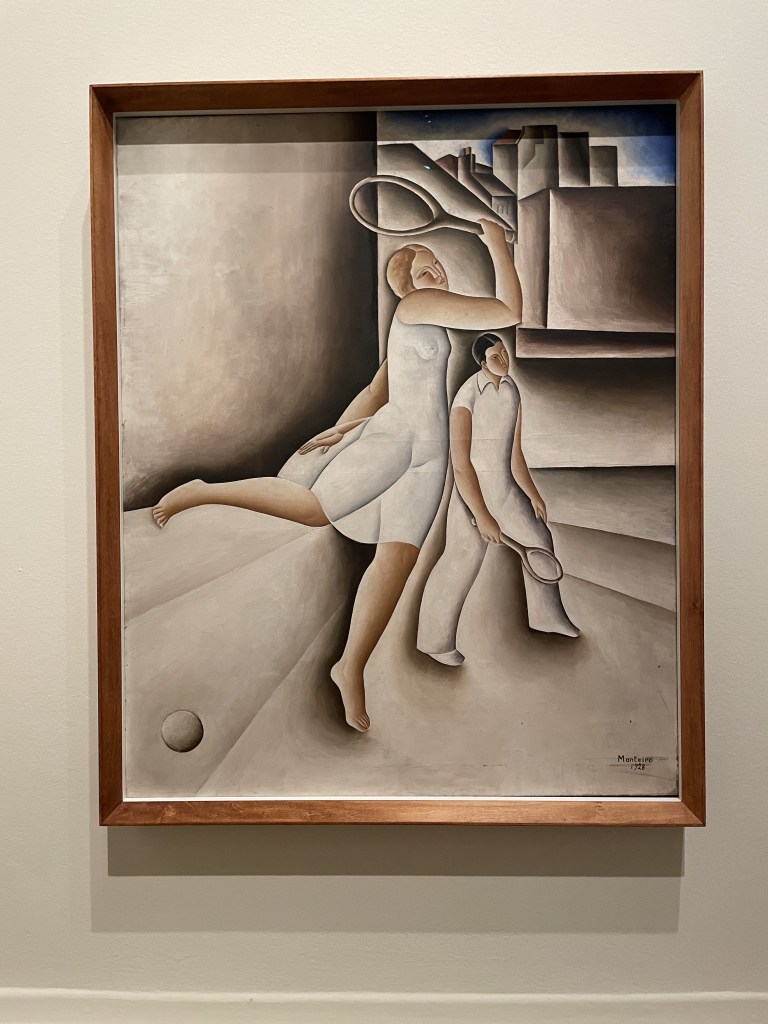
I liked the stylised tennis player in Vincente deo Rego Monteiro’s limited palette painting from 1928. And I really liked the Marrapaia Dance, Pariti painted by Djanira da Motta e Silva in 1961. Such a striking resemblance to the UK’s Morris dancers with strings of bells tied to the performers’ knees!

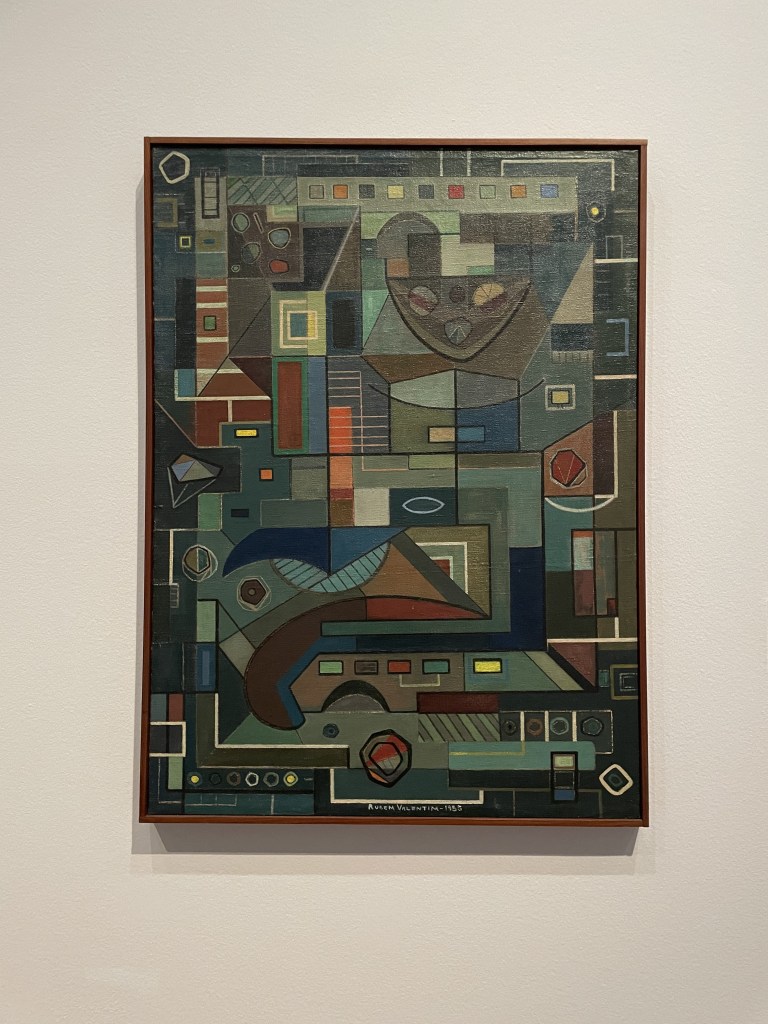
And here’s a pick and mix of abstracts and figurative work which show the evolution of Brasilian art.

The show is on at the Royal Academy until 21st April 2025

NOW YOU SEE US: Women artists in Britain 1520-1920. What a fabulous show this is at Tate Britain. We all know that, for centuries, women were not accepted as professional artists, but there were a few exceptions who earned their livings through art. It’s great to see the work of many unfamiliar female artists on show. The talent is breathtaking.

We take it for granted these days that men and women can forge equally successful careers in art. Four hundred years ago it was a different story. But women still studied art, became proficient at their skill and even earned a living. The curators of this excellent show have found examples of work by over 100 female artists working in Britain from 1520 – 1920 and it’s the most uplifting exhibition.

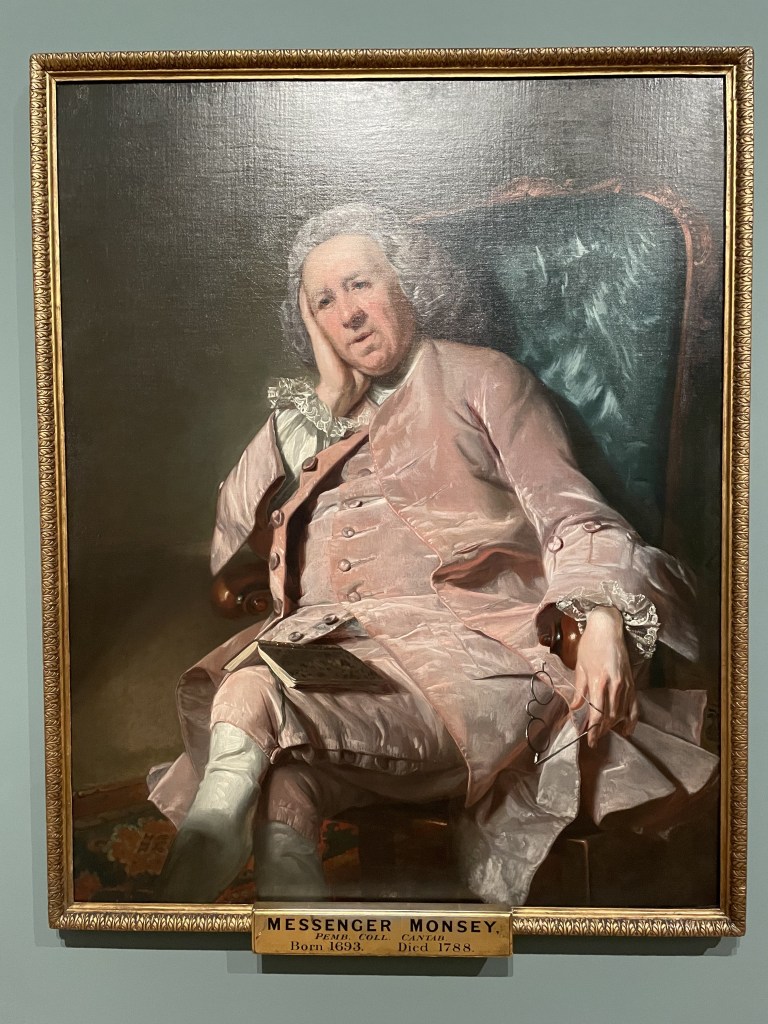
I really liked this portrait of Messenger Monsey by Mary Black,1737-1814. This is her only known oil painting and it’s so full of character and technical skill. Apparently, Black expected Monsey to pay her £25 for the portrait but her subject objected and suggested that she should not be paid at all for her work, claiming it would damage her reputation and that she might be regarded as a ‘slut’, if she sold her skills. Dear, dear.

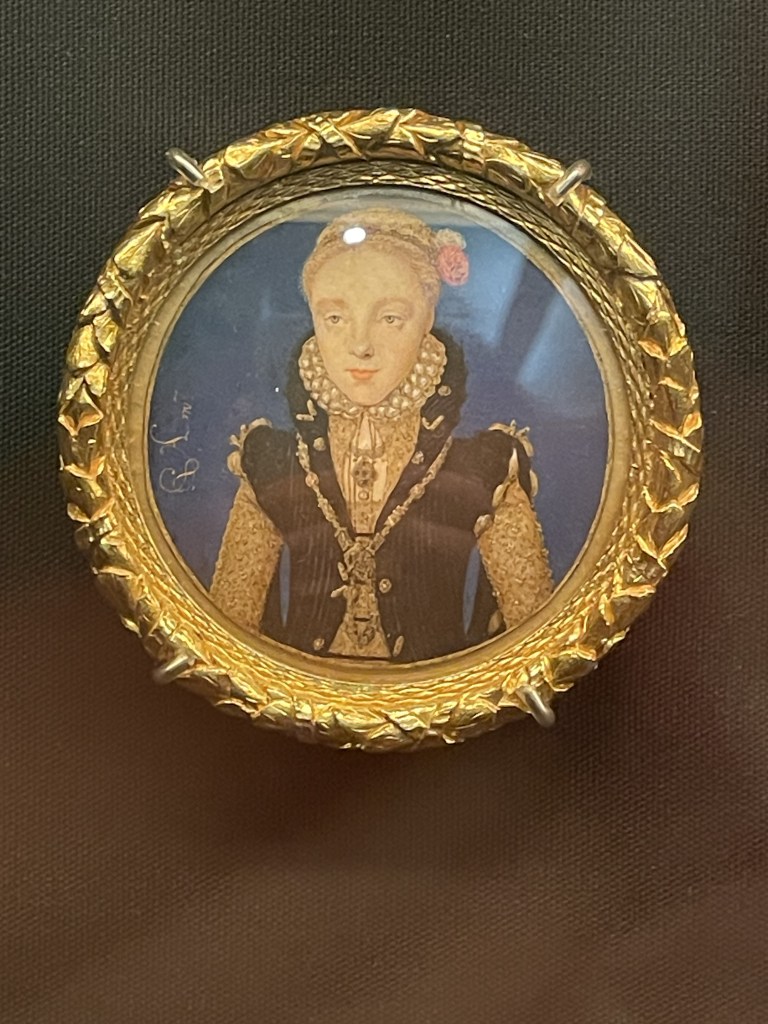
This is a tiny self-portrait by Sarah Biffin (1784-1850) who was born without arms or legs. Yet she taught herself to paint, sew and write using her mouth and shoulder. She specialised in portrait miniatures and often signed her work, ‘painted by Miss Biffin Without Hands’.

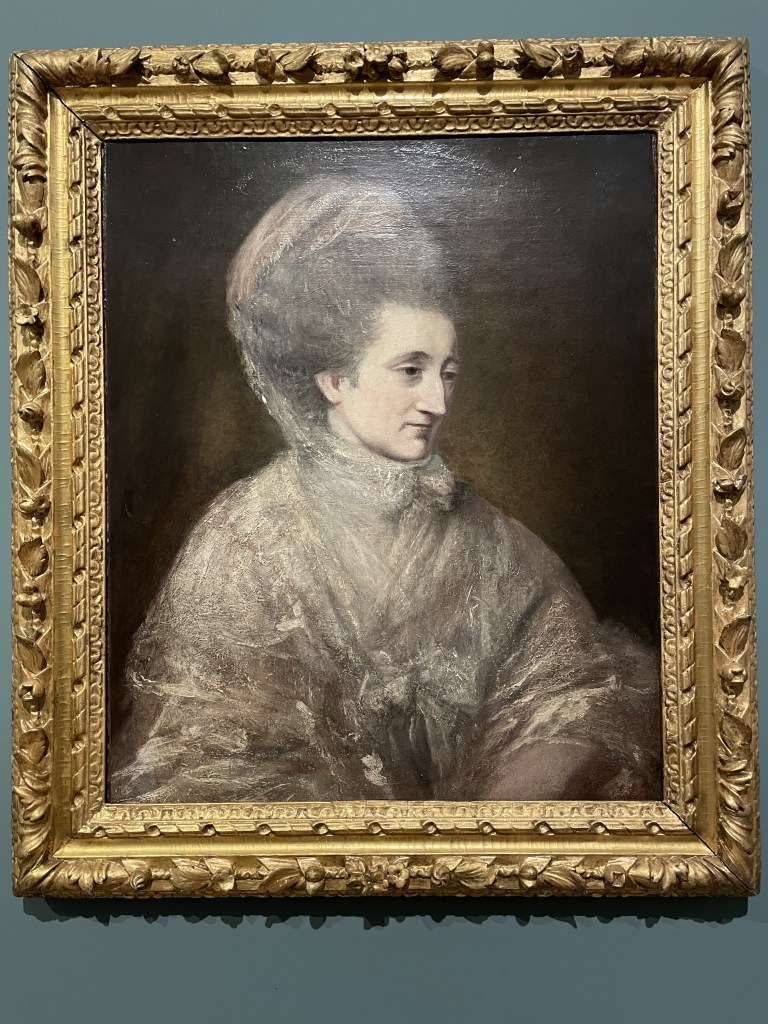
This is a portrait of Elizabeth Montagu by Frances Reynolds, sister of Joshua Reynolds, President of the Royal Academy. Frances was denied the opportunities of her brother and kept house for him in London and learned to paint by making copies of his work. She was a member of the Bluestocking Circle, a group of women writers, artists and intellectuals who met at the house of philanthropist Elizabeth Montagu, the subject of this wonderful painting.

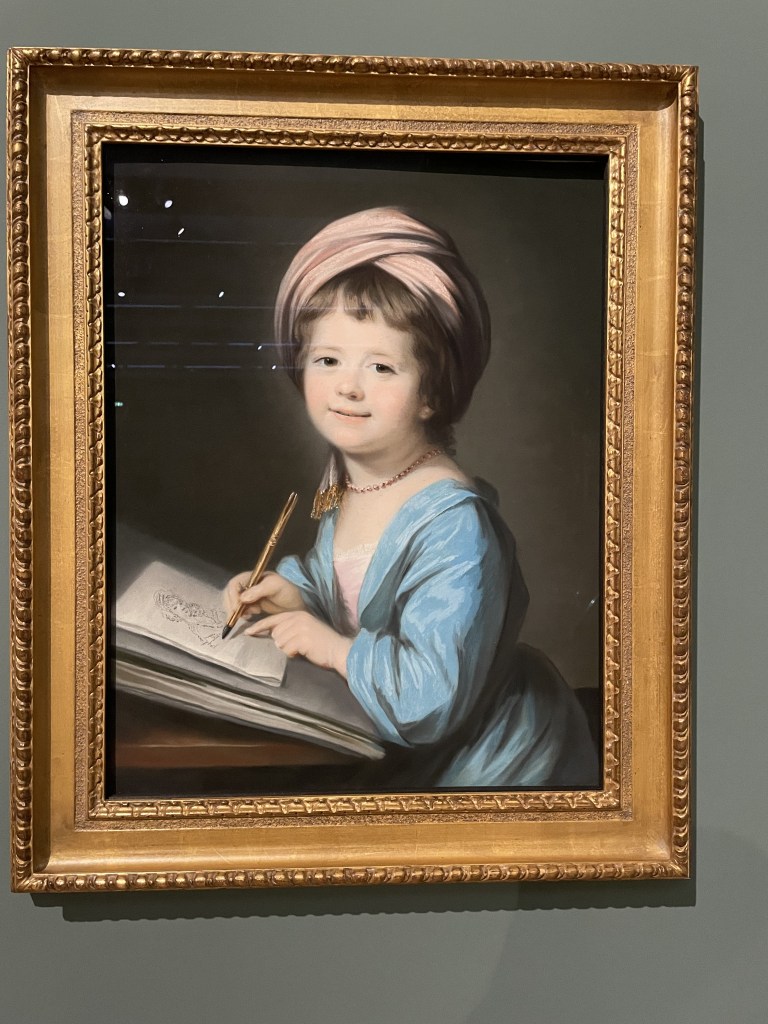
A charming portrait of Miss Helena Beatson made using pastel on paper by Katherine Read 1723-1778, her aunt. Pastels were not rated by the oil painting men of the period but they were easier to obtain and use by women. The young child in the portrait turned out to be a prodigy and was exhibiting at the Society of Artists at the age of eight.

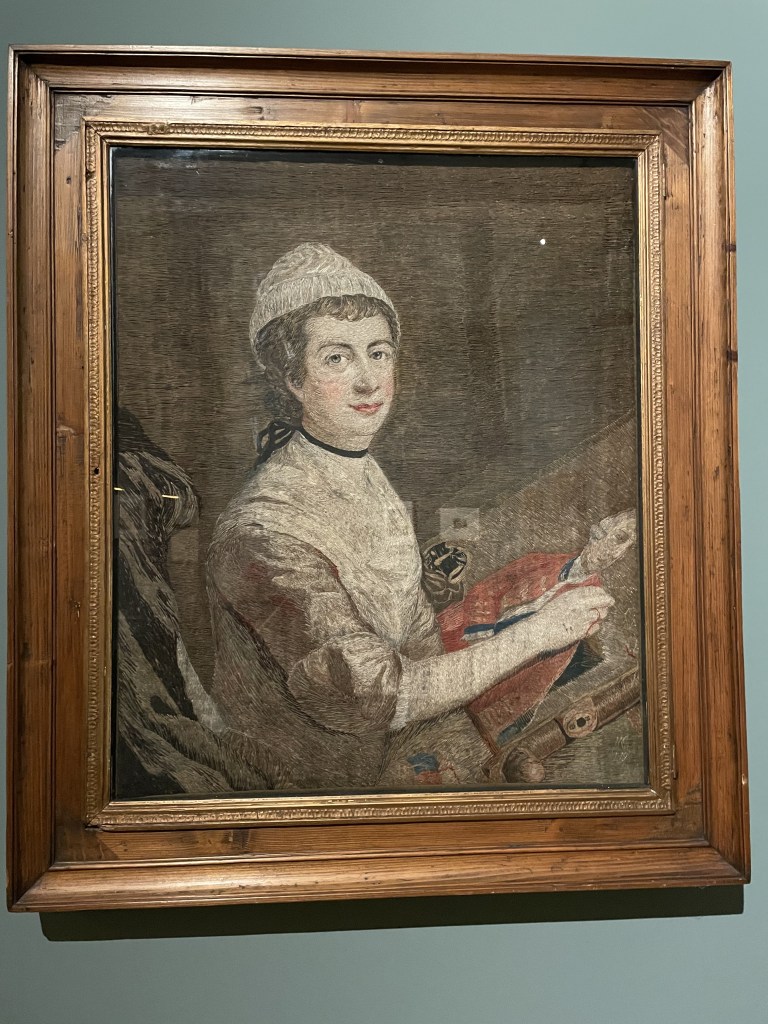
This fascinated me. It’s a self-portrait made entirely from embroidery by Mary Knowles 1733-1807. Queen Charlotte commissioned her to make a portrait of her husband, King George III, you can see she’s working on it. The clever way she uses silks to create the moulding and lively look of the picture is amazing.

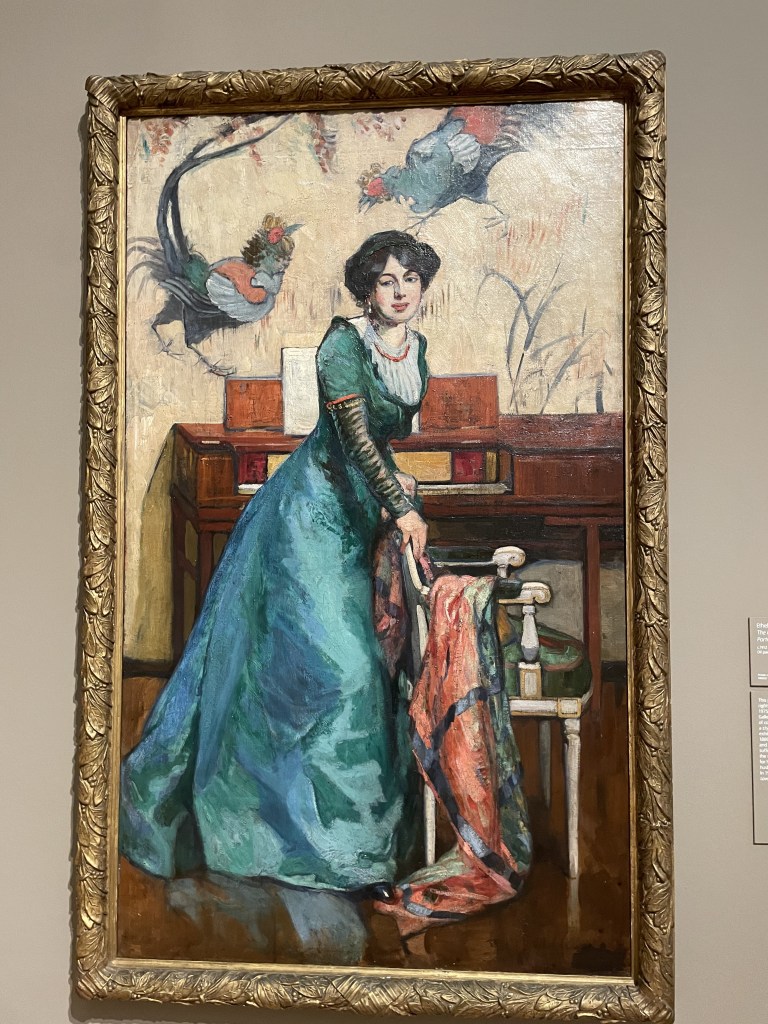
Loved the strength of this and the painterly confidence. It’s by Ethel Wright 1855-1939 and a portrait of Una Dugdale Duval who is famous for refusing to promise to obey her husband during their marriage vows in 1913.

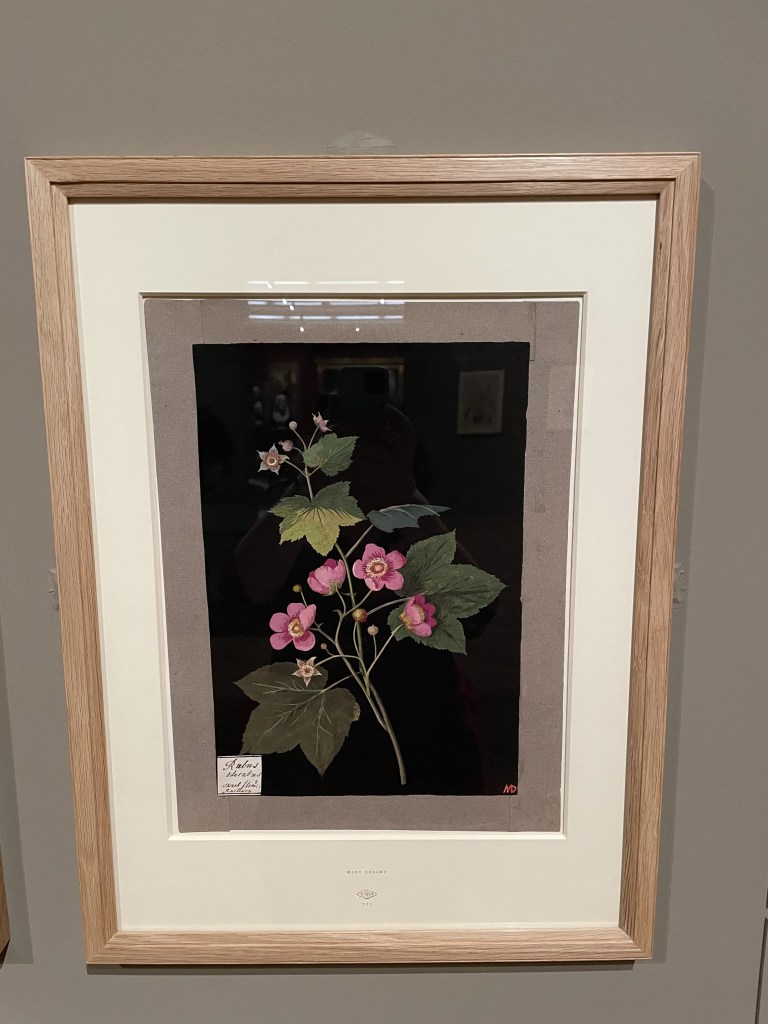
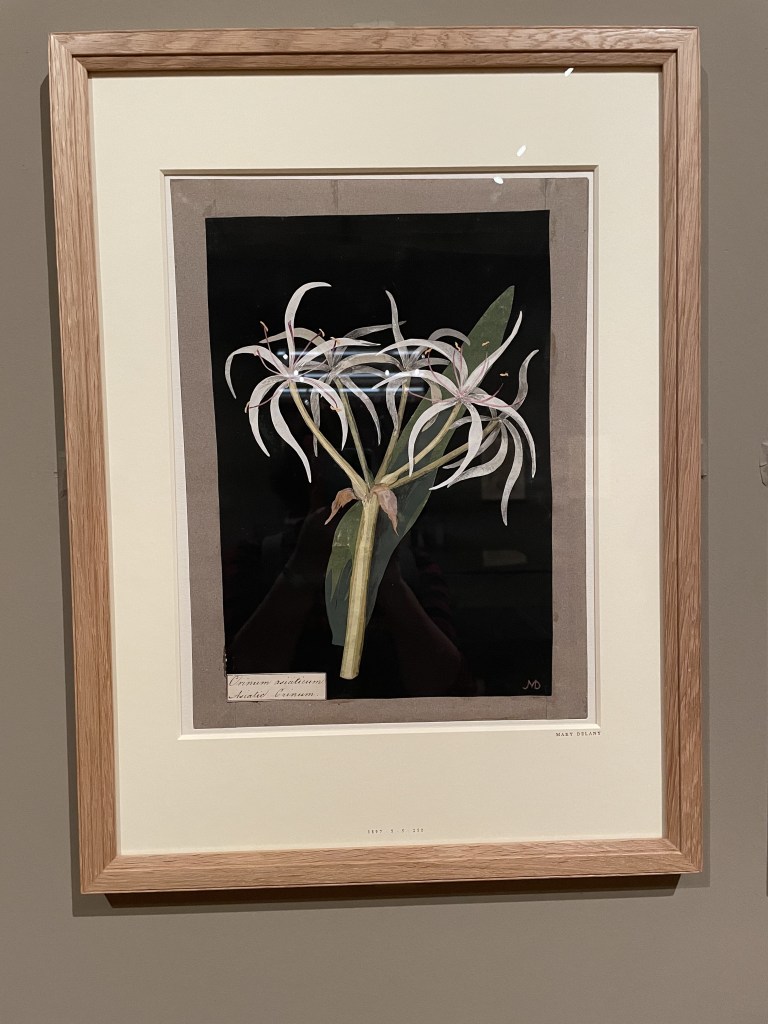
These are two paper cutouts, mosaics created by Mrs Delaney 1700-1782, who used collage, based on the Dutch art known as knipkunst, and used fragments of cut paper to depict, with amazing accuracy, examples of plants and flowers. Mrs Delaney was a favourite in the court of King George III and was given an apartment to live in at Windsor Castle.

Here are just a few more of the pictures which caught my eye. A really, really great show. it’s on until 13th October 2024 at Tate Britain.

Expressionists and the artists who formed the Blue Rider movement in Germany in the early 1900s are having a moment at Tate Modern with a thrilling new exhibition of works by Kandinsky, Münter, Mark Klee and many others.

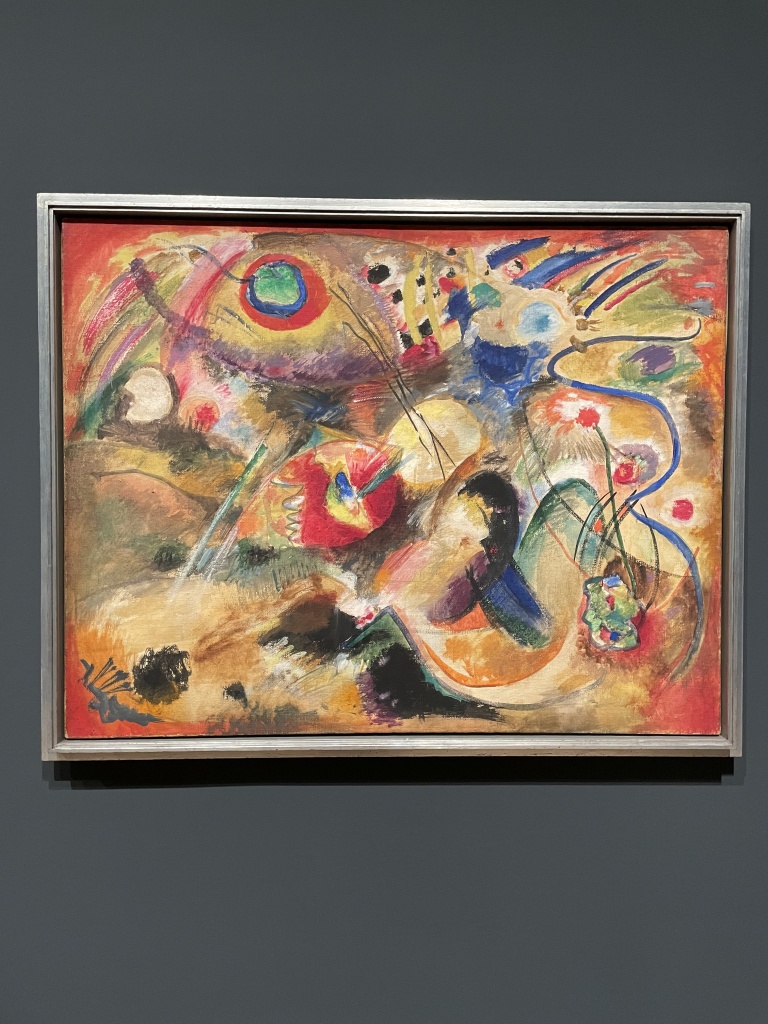
Above: Wassily Kandinsky, On the Theme of the Deluge 1913-14

If you like colour and bold ideas then this is a great exhibition to view. It’s amazing that each art movement seems to be built out a collection of artists who meet, encourage and feed off each other’s skills. In Munich in the early 1900s, a group of like-minded artists found each other and shared an interest in expressing their personal and spiritual ideas through bold, colourful painting. They called themselves The Blue Rider.

Above: top row: Gabriele Münter, portrait of Olga von Hartmann, Gabriele Munter, Portrait of Marianne von Werefkin, Elisabeth Epstein, self portrait, Bottom row: Marianne Werefkin, The Dancer, a portrait of Alexander Sacharoff (in drag!)

Just looking at these portraits, above, you get an idea of how radical and brave they were in the way they portrayed themselves and recorded each other. You could argue that the advent of photography had removed the need for accurate painted portraiture. What these images do is convey a sense of the person, the real personality and style, rather than bothering with an careful likeness. I love these pictures.

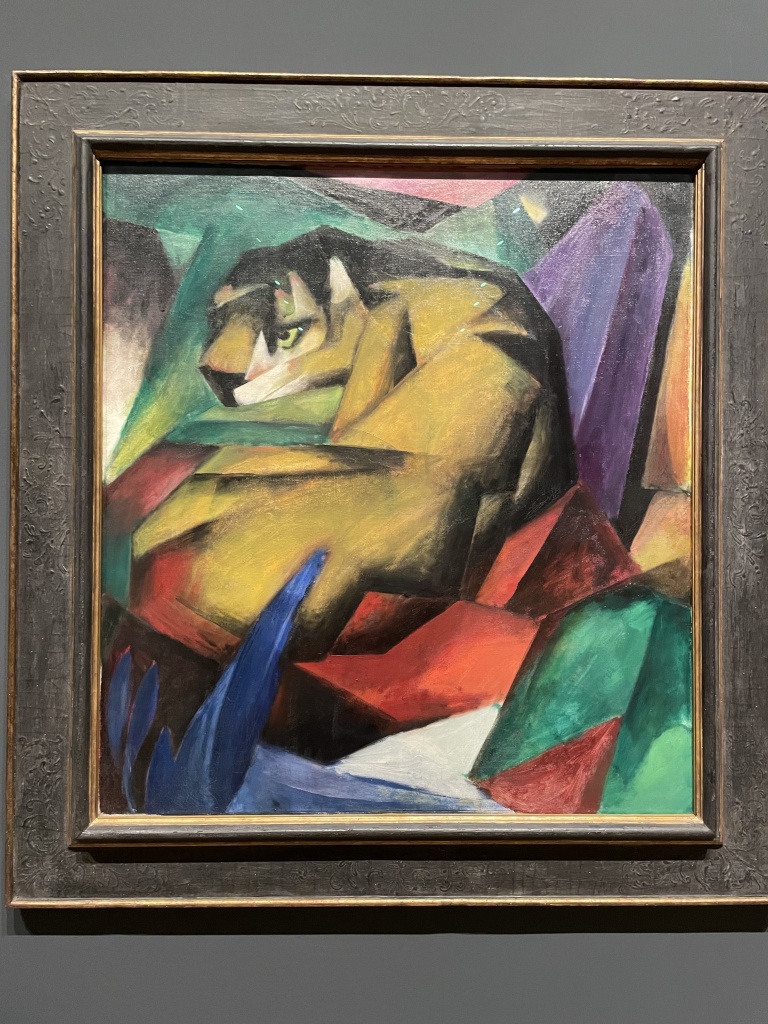
Above: a very fantastical Tiger by Franz Marc, 1912

This group, which formed members of the Blue Rider, were a mixture of married couples and free-thinking single men and women. It’s very satisfying to see that so many of the women in the group are given space for their works upon the walls and also celebrates their contribution to the collective.

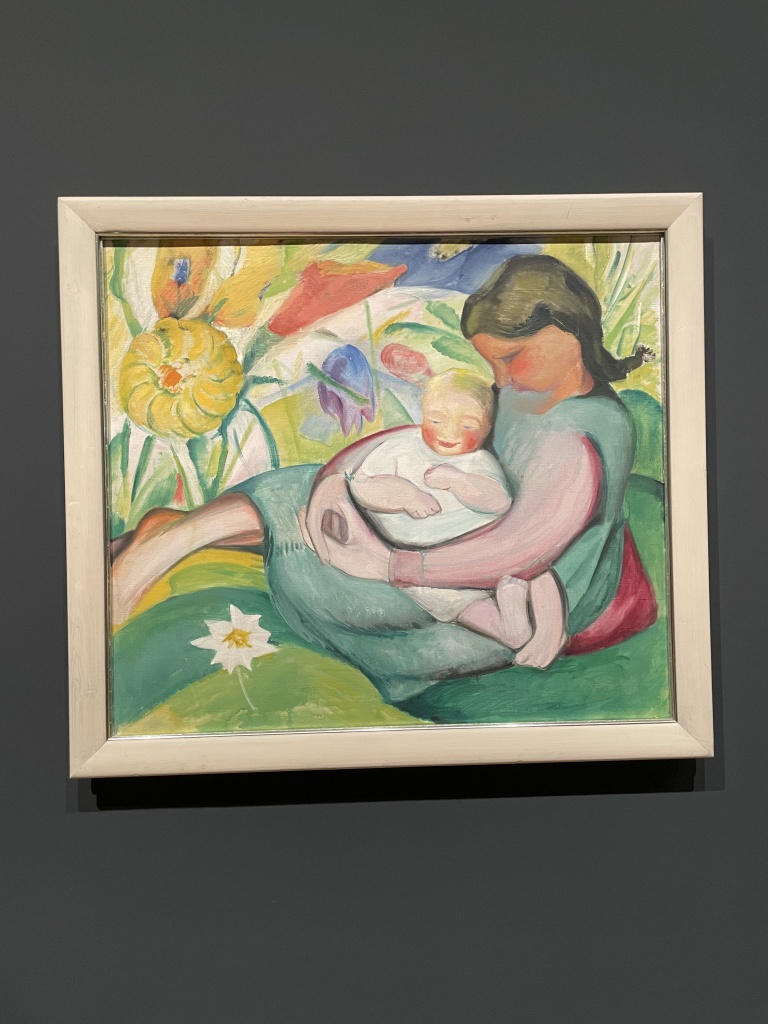
Above are three examples of women’s work. Left to right: Maria Frank-Mark, Girl with Toddler 1913, Gabriele Münter, Portrait of Marianne von Werefkin (also one of the female artists in the group) and Marianne von Werefkin’s Self-portrait from 1910

The colours are wonderful. I really liked this interior painting. My Dining Room, by Wassily Kandinsky, 1909. It looks as though it was done at high speed with black drawing with a brush and then flooded with bright colours. The atmosphere of the room is terrific.

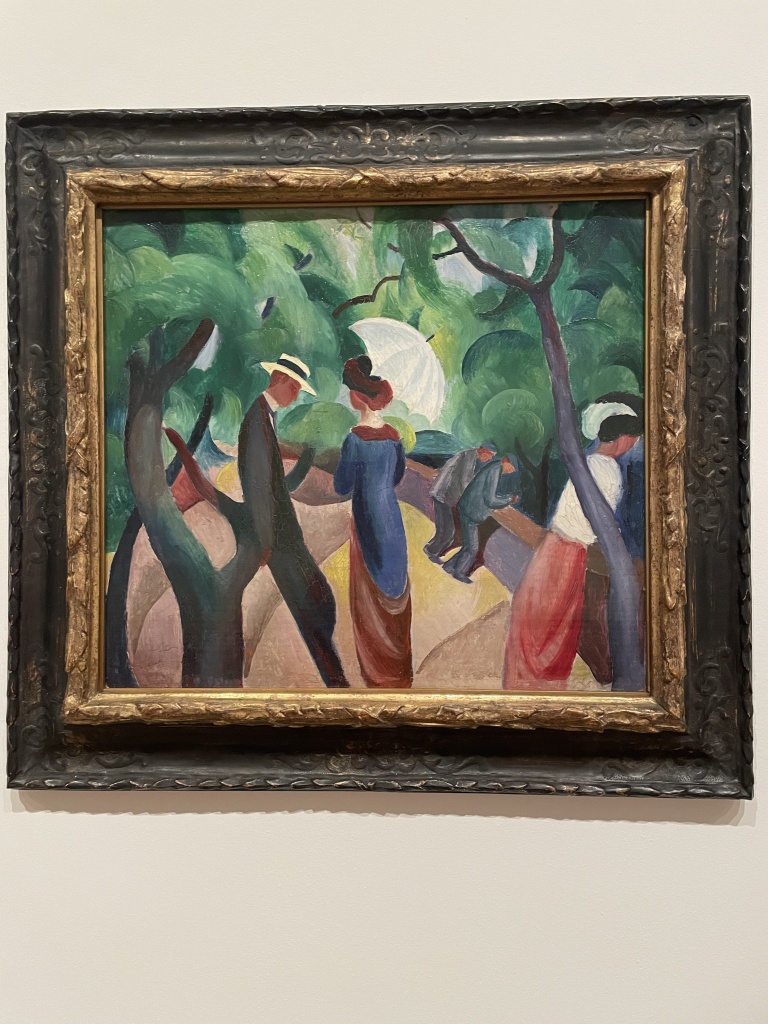
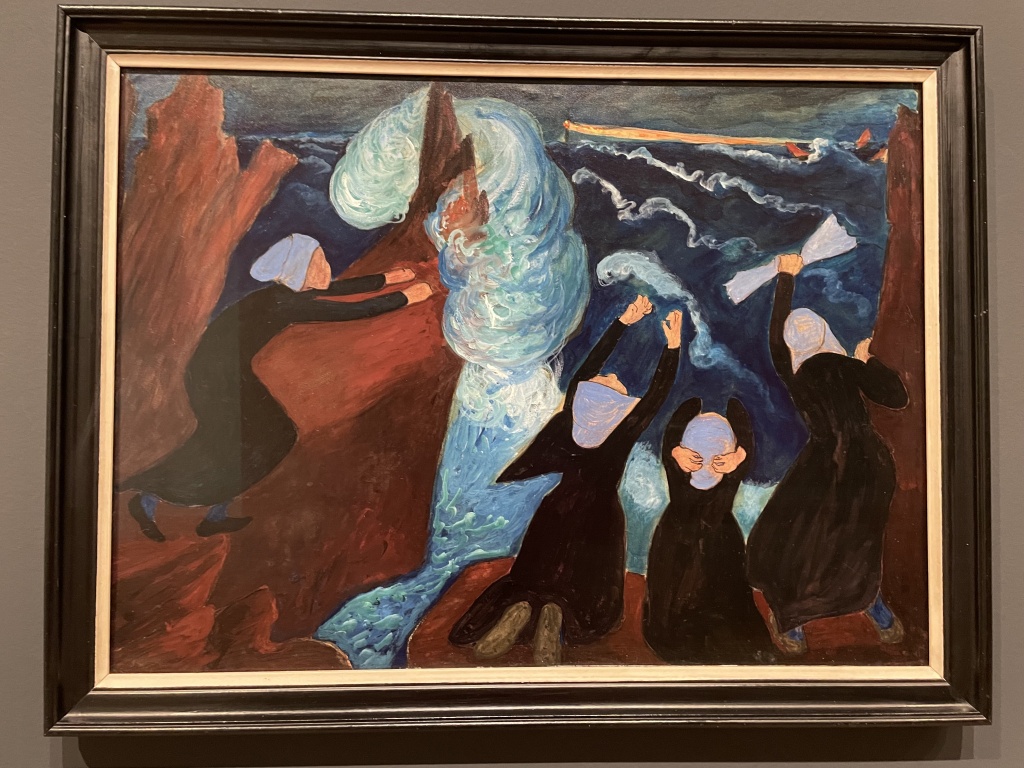
Above, the dark painting of The Skaters, is by Marianne Werefkin from 1911. Centre, Promenade by August Macke from 1913 and on the right is another by Marianne Werefking entitled The Storm. She was brilliant at conveying mysterious settings and threatening atmospheres.

And I’m going to give the last slot to Gabriele Münter and this portrait she painted of Marianne Werefkin. We have Münter to thank for the survival of so many of these works. During the Second World War, when so many of the artists were regarded as ‘degenerates’ and were also Jewish, Munter stored many of the paintings in her cellar and kept them safely hidden from Nazi threat until it was safe to reveal them and she donated them to the Städtische Galerie in the Lenbachhaus in Munich.

The exhibition is on until 20th October 2024.