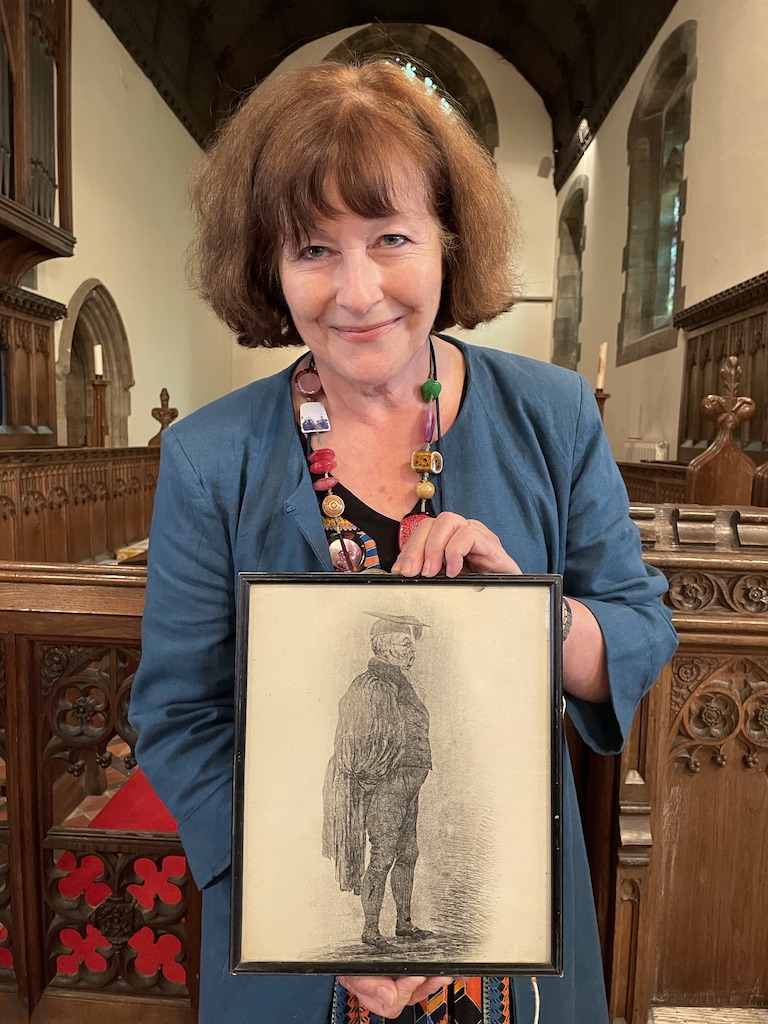
Whilst visiting Kirby Misperton in Yorkshire I was surprised and delighted to discover a picture depicting Frederick Blomberg who is a key character in my historical novel, Prince George & Master Frederick. My book is fiction but it is based on the story of real people and the relationship between two half-brothers – Prince George, the future regent and monarch and Frederick Blomberg who, as an infant, was adopted by King George III and Queen Charlotte and brought up as a prince.

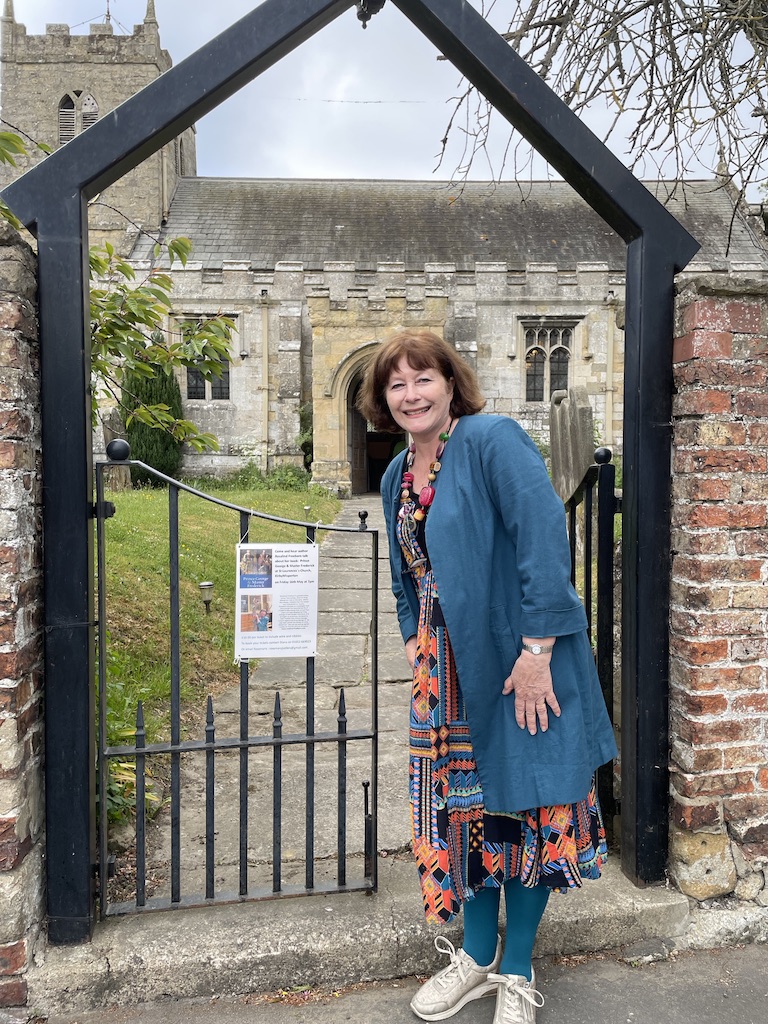
Having published my debut novel, Prince George & Master Frederick on 30th January with Alliance Publishing Press this year I’ve enjoyed a whirlwind of radio interviews, features in papers and magazines and history blogs. But, best of all, I’ve been invited to give talks to interested audiences. Possibly the most interested audience I could hope for, gathered in St Laurence’s Church in the village of Kirby Misperton, north Yorkshire on 16th May to hear my talk about the book.
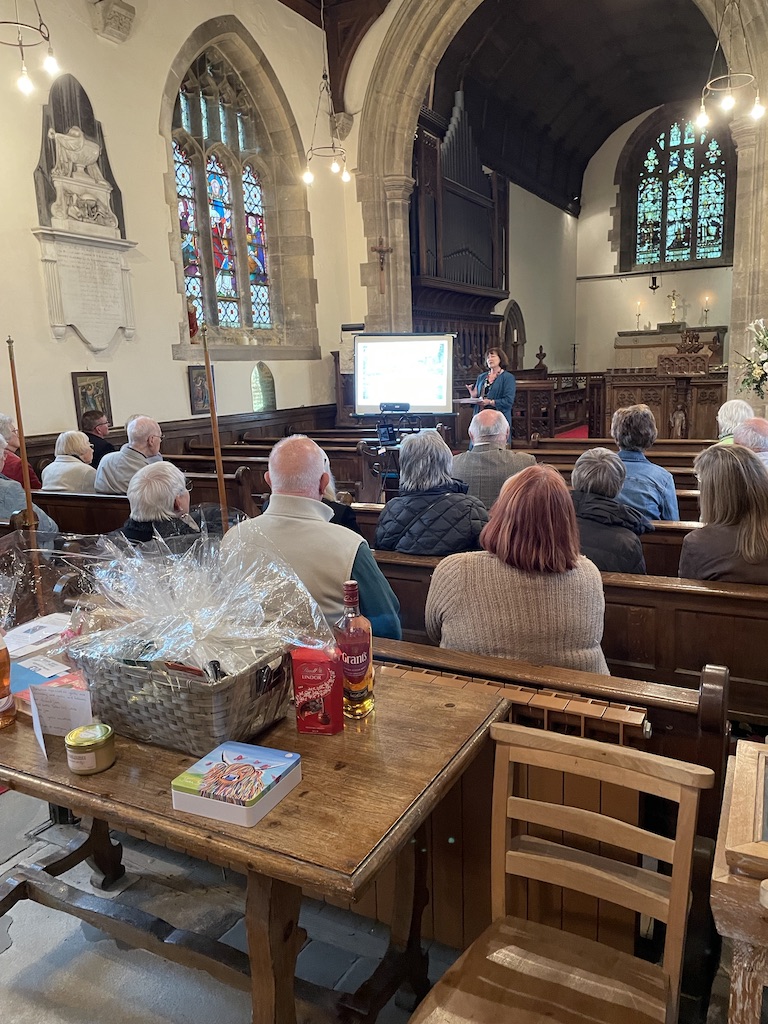
Kirby Misperton is a particularly important location for me, personally, and in relation to the book. My grandmother, Verna Twentyman, grew up in the Hall at Kirby Misperton. As a child I listened to her story about our family’s supposed royal connection. She told me: “King George III loved the countryside, and when he was a young man he came upon a farm in Kent, fell in love with a beautiful farmer’s daughter and there was a baby. To prevent a scandal for the young monarch, the king’s best friend and equerry, Major William Blomberg, married the mother and gave the baby a name.”

It was a very slender story but enough to pique my interest and it stayed with me long after she had died. I was about to tell my own grandchildren her story when I paused and decided to research her claim. Well, it turns out it was all true. The ‘accidental’ child of King George III was indeed called Frederick Blomberg. His mother died and his father was killed in action. When word of his orphaned state reached King George III and Queen Charlotte they decided to adopt Frederick. They already had two small sons and a third on the way. So, from the age of four Frederick was brought up within the royal household at Richmond Lodge and became best friends with his half-brother, Prince George, the future regent and King George IV.

I was so intrigued by the story that I felt compelled to write this novel: Prince George & Master Frederick

I was thrilled when the local paper, the Malton Gazette and Herald, gave it a front cover mention and double page spread in anticipation of my visit.
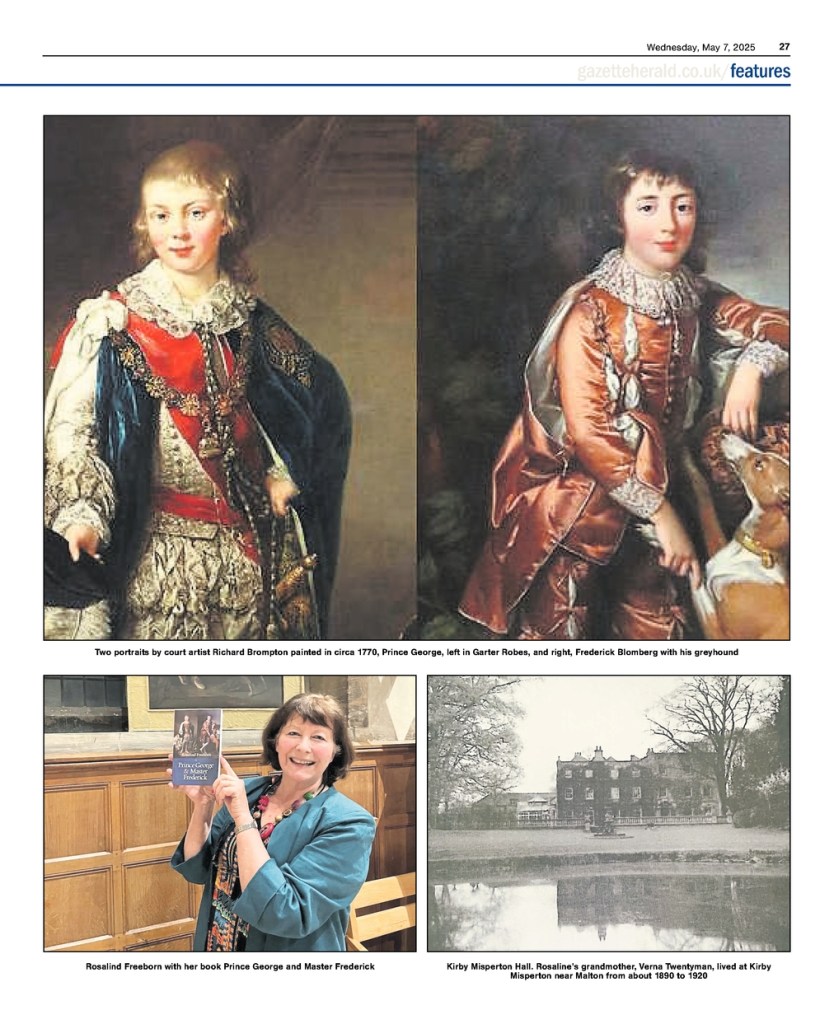
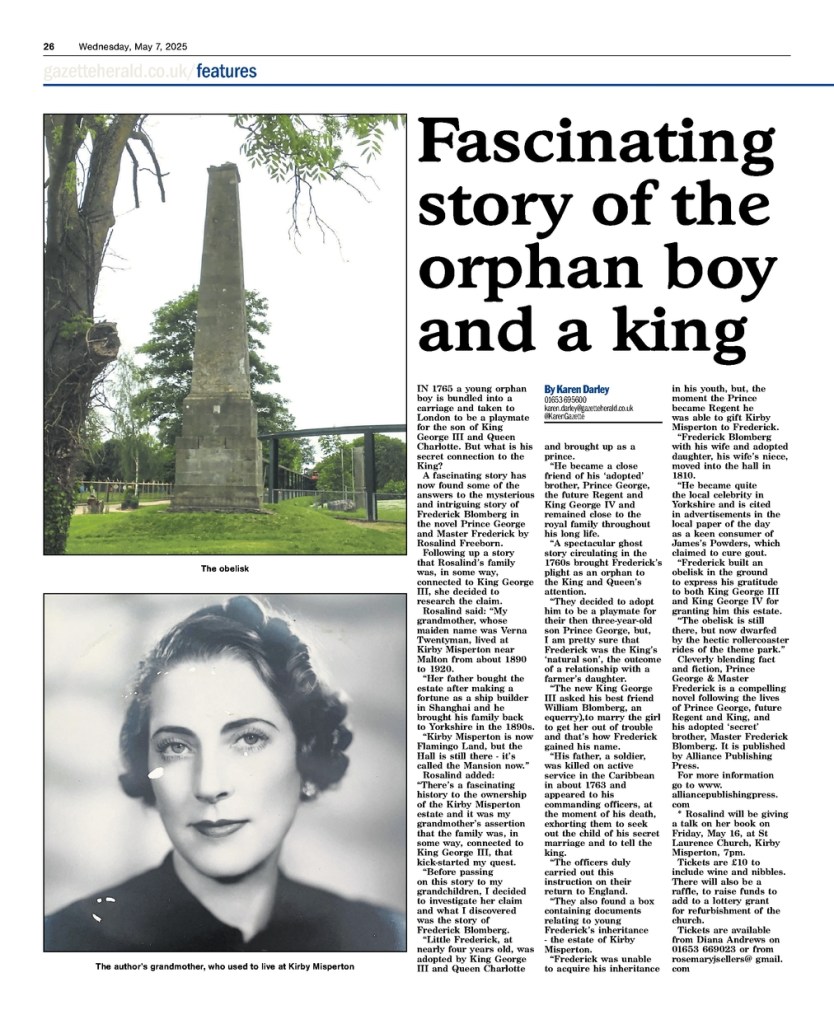
There was a great turnout for the talk on 16th May but, for me, the most exciting part of the evening was being shown a picture of Frederick Blomberg as an adult. Apparently this image had been hanging on the vestry wall for years and no body knew who it was or had taken it down to examine the back. On the reverse of the rather witty depiction of an academic in gown and mortarboard was an account of Frederick Blomberg’s life and a copy of his signature.
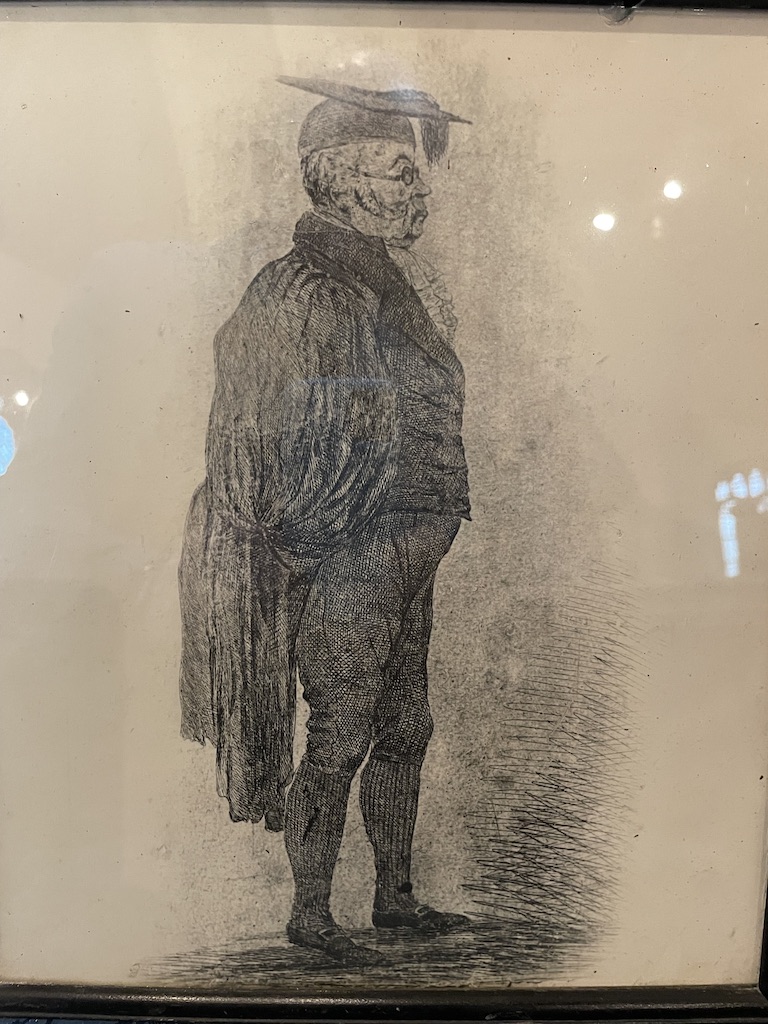
It’s quite a caricature image of the illustrious clergyman who had lived at Kirby Misperton. All through his youth Frederick had hoped to inherit this estate in Yorkshire but proving his claim was very hard for him.

As he grew up, it became clear that Frederick needed a profession. So King George III sent him to Cambridge University to study Divinity, he was ordained and became a clergyman. The king then granted him several lucrative livings (parishes where he could gain an income and have a rectory or vicarage to live in). However, he had to wait until his half-brother, Prince George, became Prince Regent in 1810 and was able to finally grant him the Kirby Misperton estate. So, in 1811, Frederick Blomberg became the owner of the estate and was known as Baron Blomberg. He also took services in St Laurence’s Church and became quite the local celebrity. He built an obelisk in the grounds with a plaque which says ‘Thank you’ to King George III and Prince George, the Prince Regent, for granting him this land, ‘long estranged’.

While researching the book I had seen images of Frederick as a child, but never as an adult. Imagine my excitement at finally seeing a sketch of him, albeit dressed in academic robes rather than depicted as a clergyman.
You can read more about Prince George & Master Frederick in my novel. It’s available in print form, via Amazon, on Kindle and on Audible. Or you can order it through your local bookshop. Please do let me know if you enjoy reading my book. Or order a signed copy directly from my author website And if, you are interested in inviting me to give a talk about my book please do get in touch. May 2025

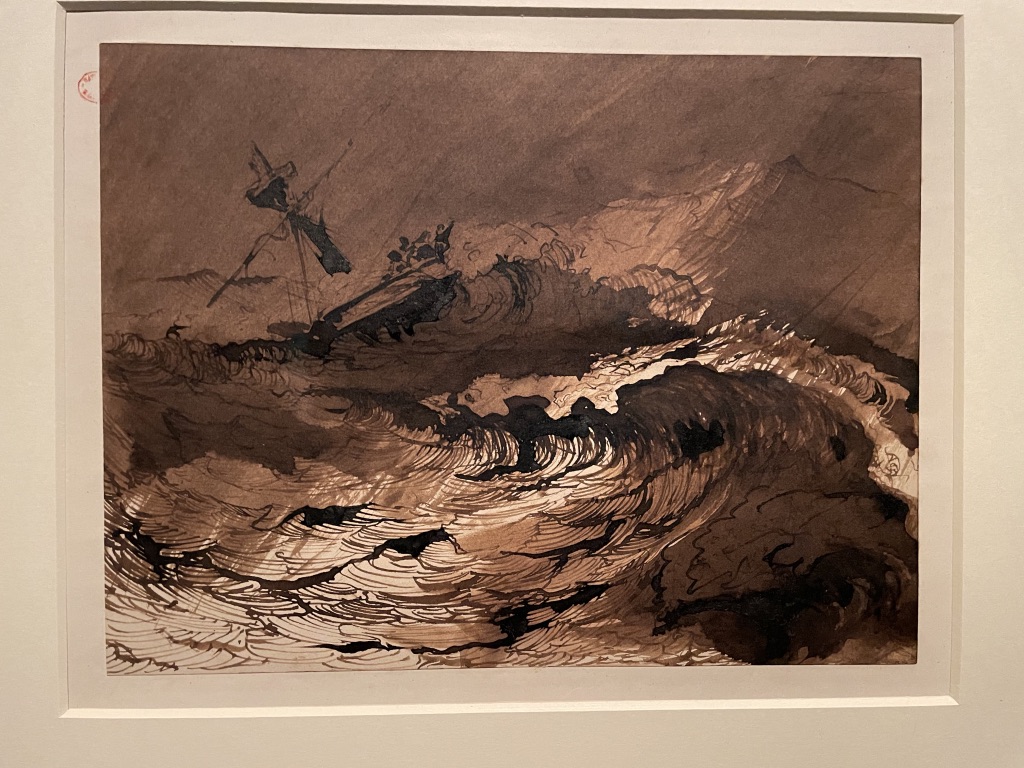
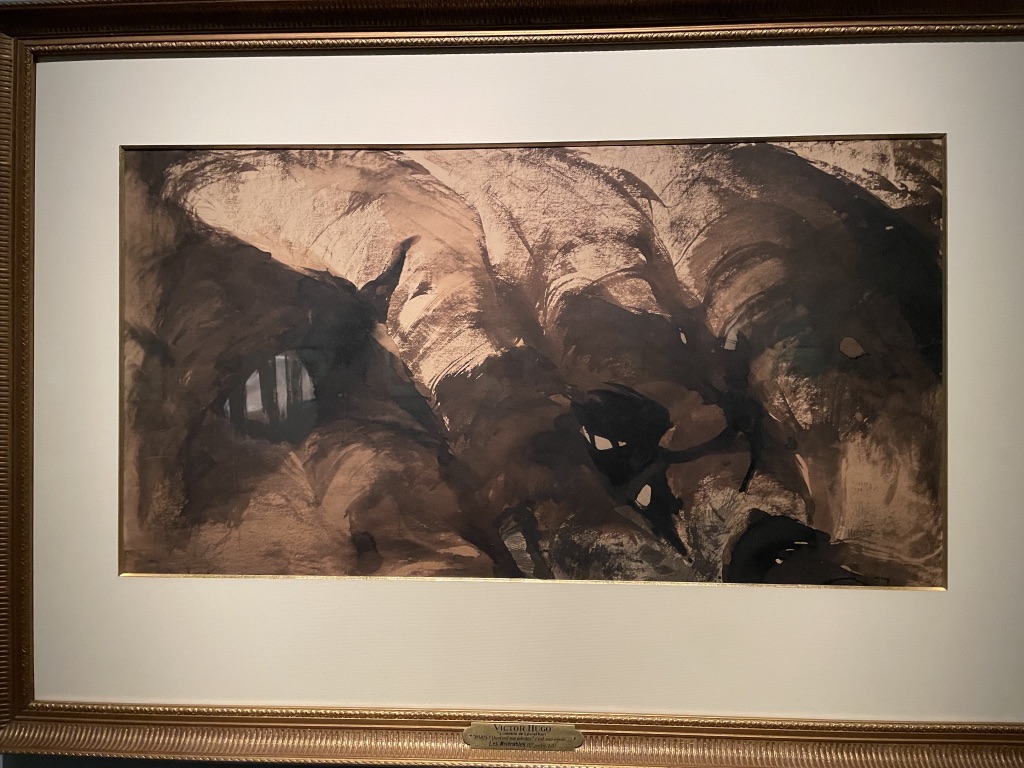
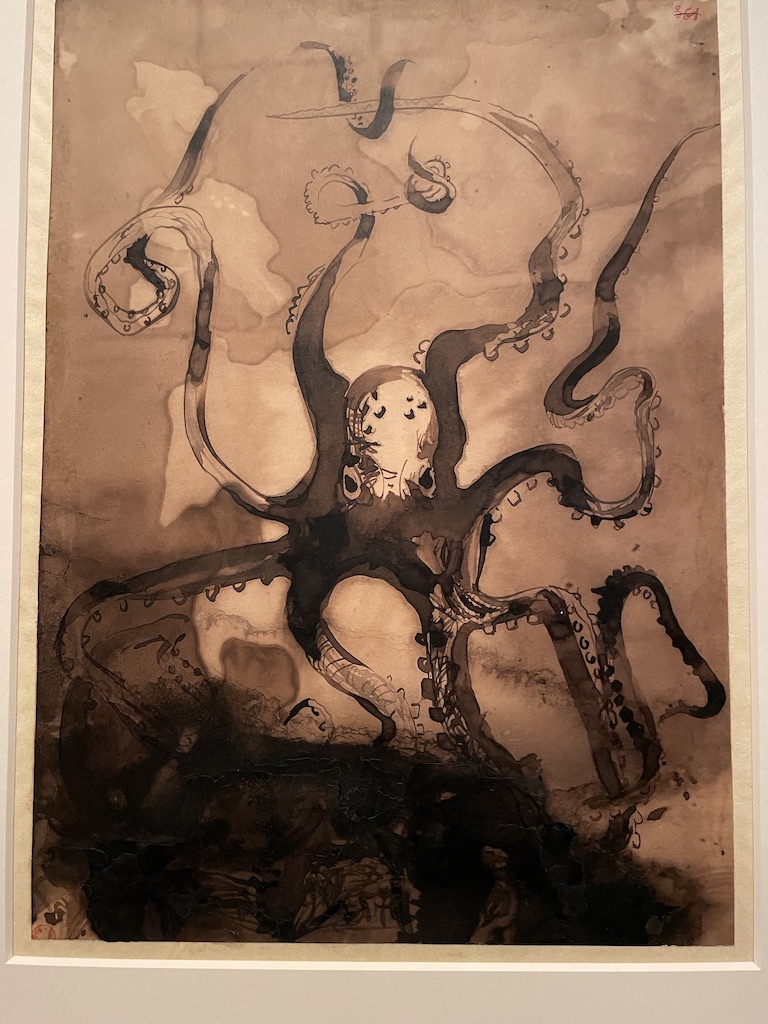
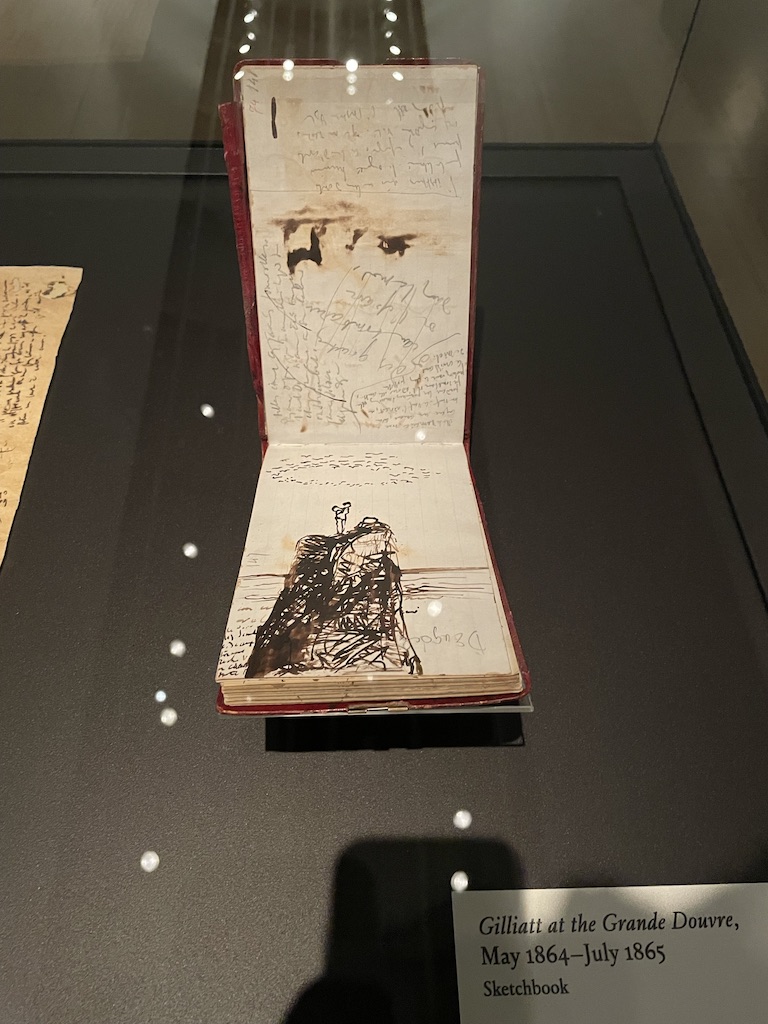
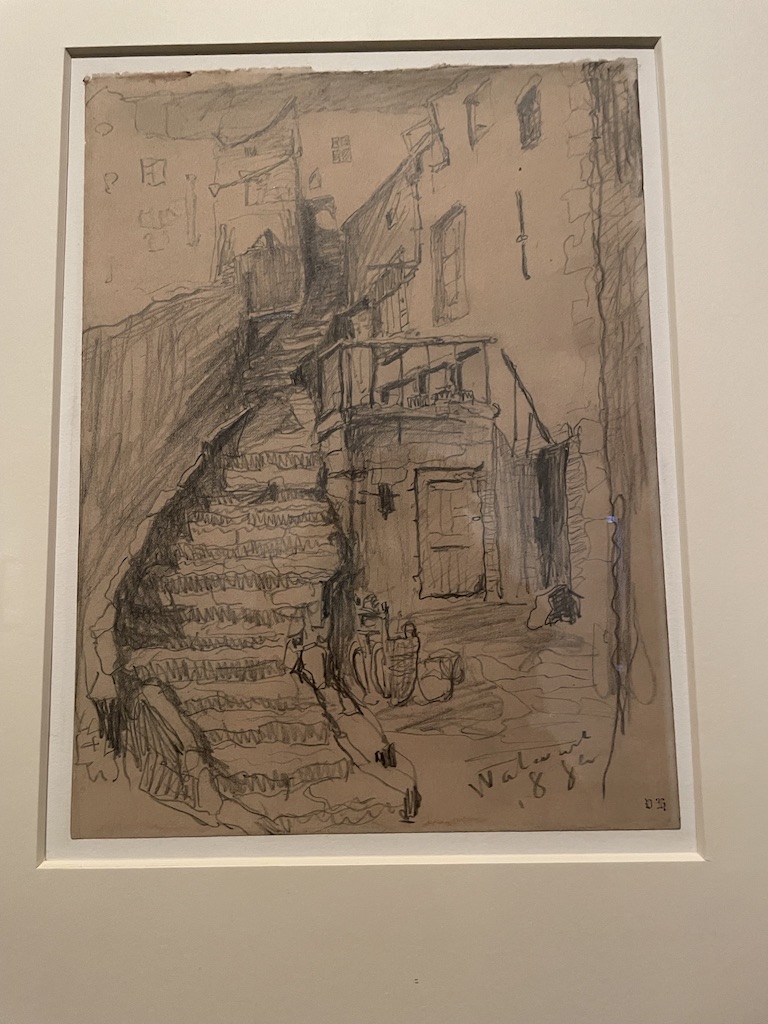
The drawings and ink sketches of French 19th century novelist, Victor Hugo, really are ‘Astonishing Things’ and it was fascinating to see a selection of the thousands he produced on show at the Royal Academy. They’re pretty dark, slightly creepy and give insight to a creative mind and a complex man.

There’s a feeling of vigorous movement to Hugo’s art. These landscapes were inspired by the coastline of his Channel Island homes – in Jersey and Guernsey. They are full of energy, foreboding and danger. I’d say they were created very swiftly using brushes loaded with ink, combined with the swishes of a feather. Very dramatic. I wonder if he had seen some of JMW Turner’s work – such as the very atmospheric impression of a storm?

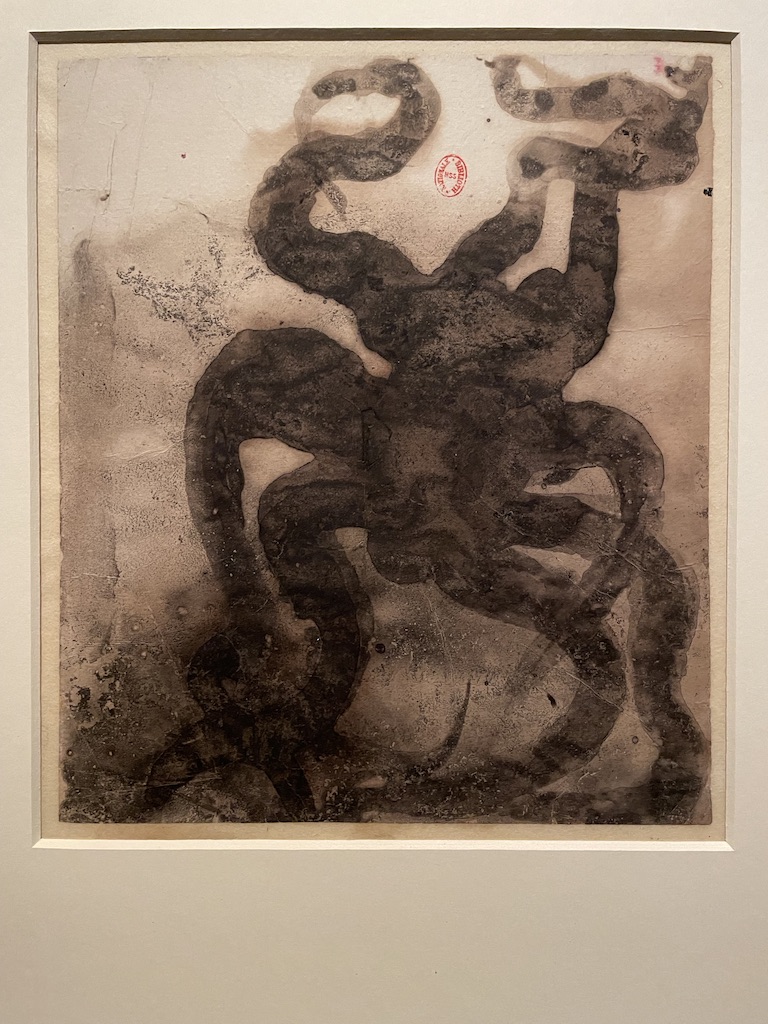
Victor Hugo is probably best known for his novel, Les Miserables. However, another bestseller in his lifetime was the Toilers of the Sea, (and also The Hunchback of Notre Dame). Toilers is a very compelling novel which involves a ship being attacked by a giant octopus. Judging from these drawings he clearly studied the forms of these sea creatures and, when the book was published in 1882, it included his own drawings.

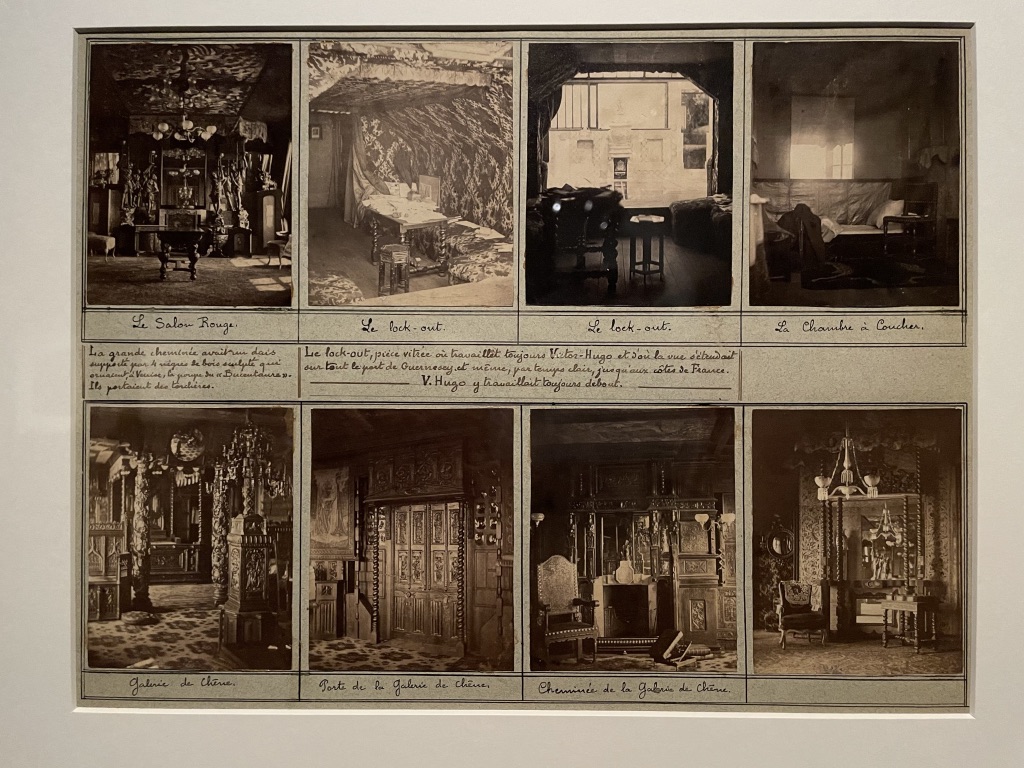
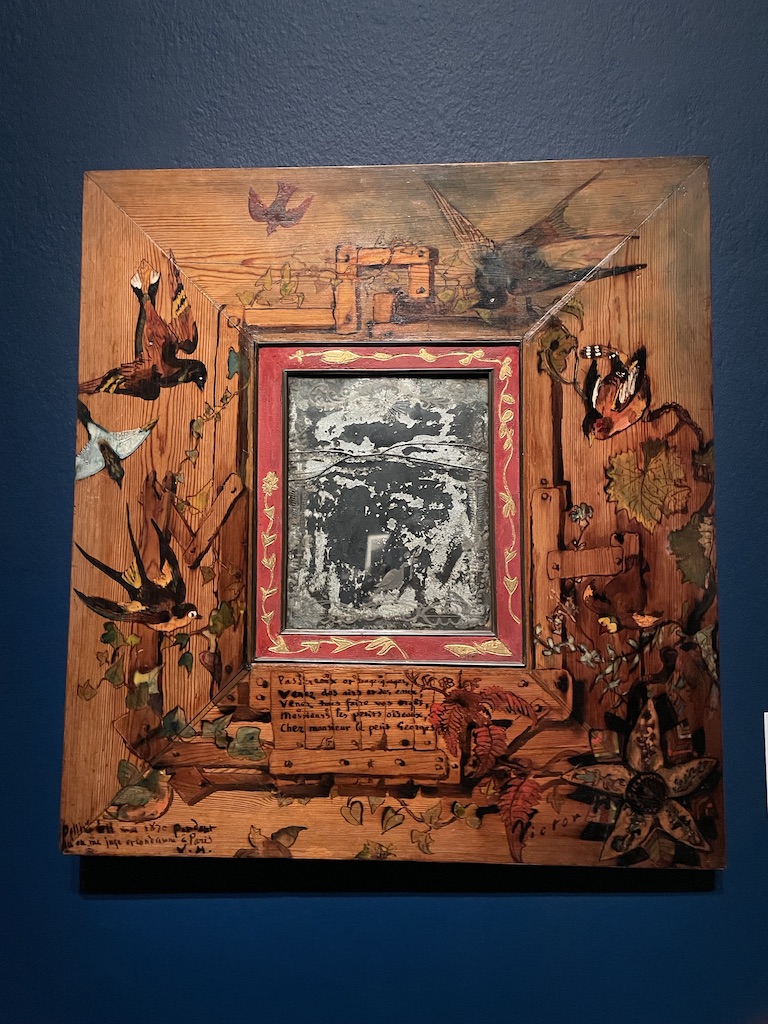
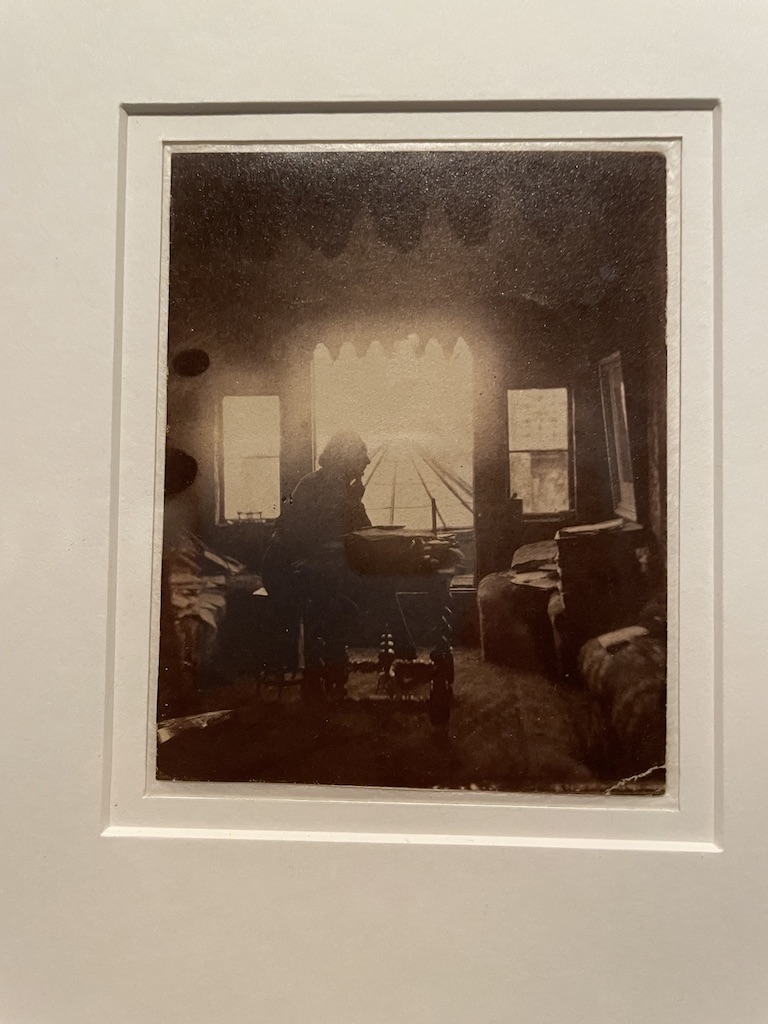
Above are photographs of his home in St Peter Port, Guernsey. Hautville House is a large town house and Hugo added ‘Le Lookout’ at the top of the building where he would stand at a high desk to write while looking out over the bobbing boats in the harbour. I visited Hautville House years ago and was struck by the very oppressive atmosphere of the place. I’m not sure I would like to have been a guest at the place. Apparently Victor Hugo rigged up gas burners in the spare rooms which he would make flare up at night and terrify the occupants. He also arranged mirrors strategically up the stairs so that he could see into all the room from his Lookout and know who was approaching.

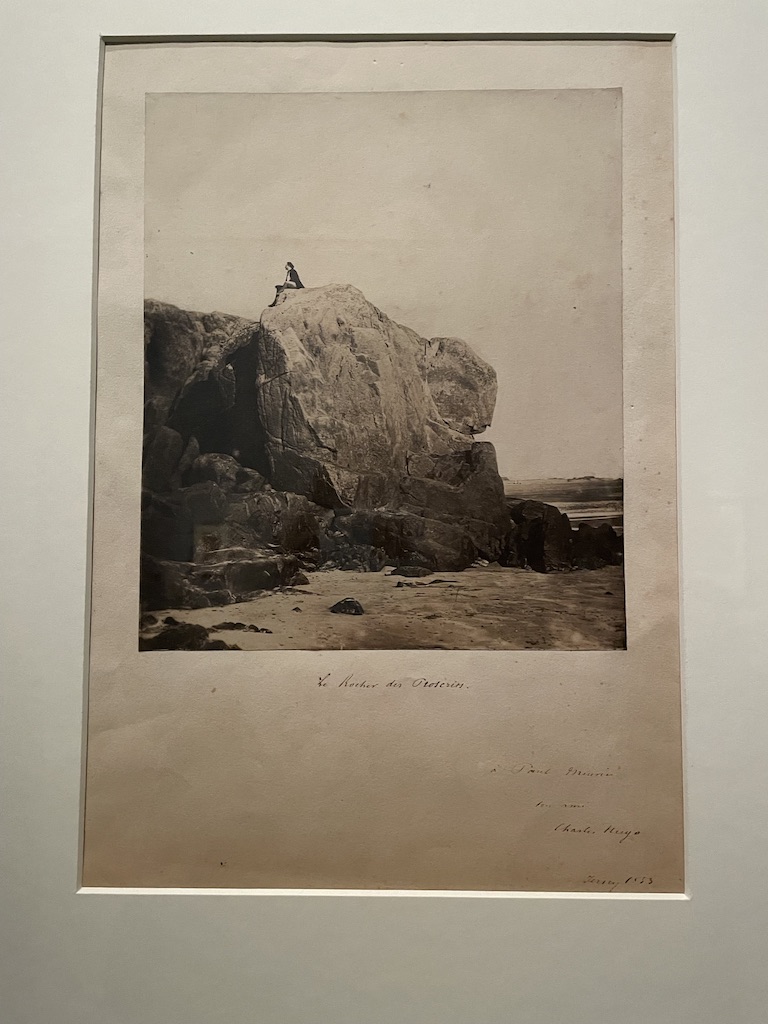
He took control of the decoration of his house (I think his wife must have been very long-suffering to put up with his heavy and rather ‘gothic’ taste.) He even created some of the furniture such as this mirror with a painted surround. Apparently he would walk up to ‘Exile’s Rock’ in Jersey and sit alone upon it thinking and writing before retiring to his study in the Lookout and write his books, poetry, plays and political treatise.

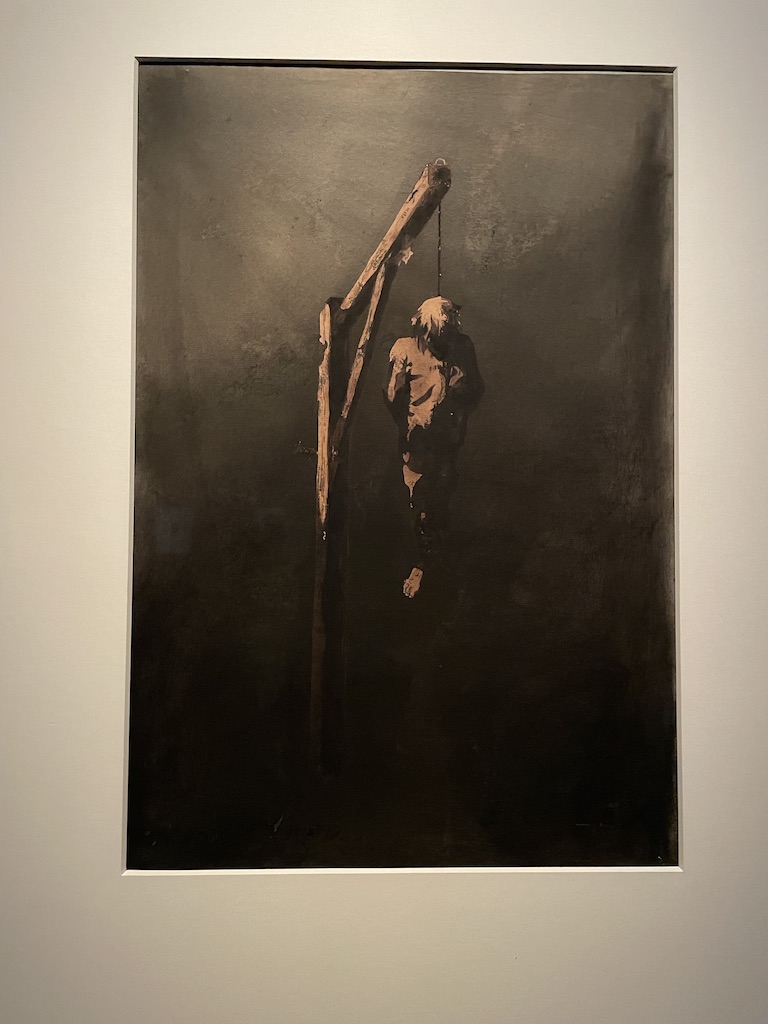
I was impressed to learn about his strongly-held political views. He was fiercely anti-slavery and appalled when John Brown, an American abolitionist was executed in Virgina after being accused of inciting a slave rebellion. Victor Hugo made this image in protest.

He spent a great deal of time travelling around Europe (avoiding France) with his sketchbook, noting scenes and recording landscapes and buildings. He didn’t seem to be so interested in drawing people.

It’s a very interesting show which provides a welcome view of this revered 19th century novelist whose books are still popular. And it’s treat to see his drawings which rarely leave France. The show is on at the Royal Academy until 29th June 2025.

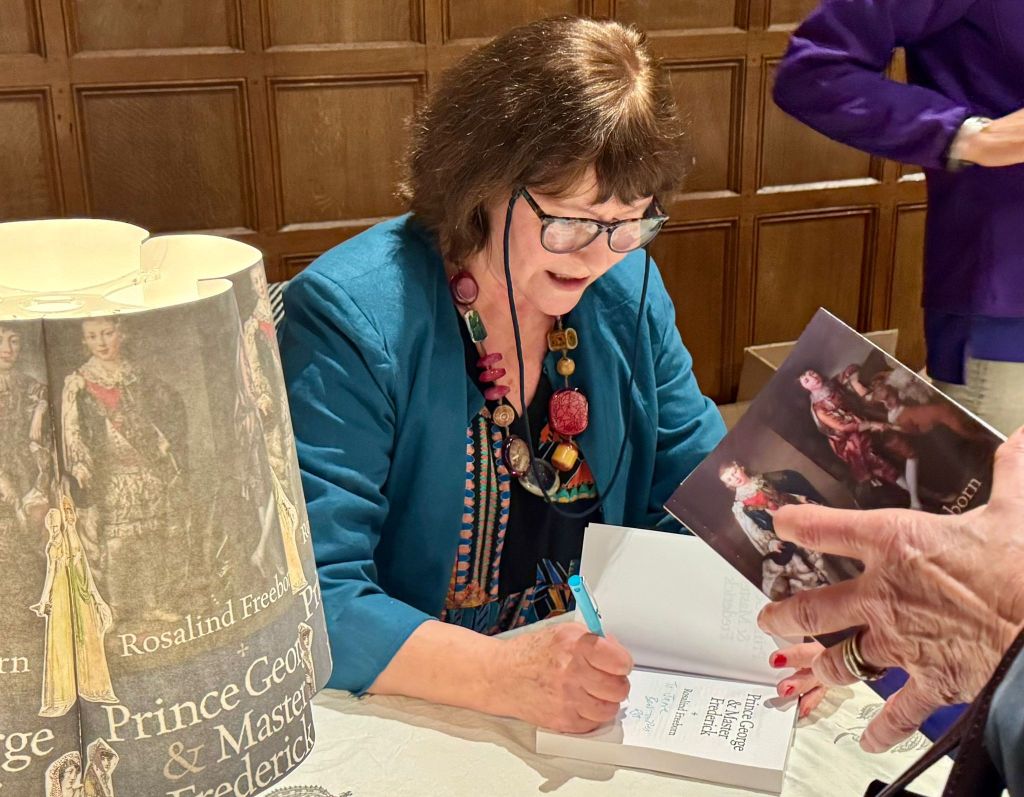
Prince George & Master Frederick has been published! Yes, my historical fiction novel was launched in style with an event at St Giles’ Church, Cripplegate. A huge crowd braved a chill January evening and gathered to buy signed copies and listen to speeches about the book

I’ve always loved book launches but this one was the best ever! It’s an amazing feeling to publish your debut novel. But quite daunting to stand up in front of a large audience and explain how researching a family story turned out to be so fascinating that I simply had to write the story of Frederick Blomberg, the secret son of King George III. Having been introduced to the gathered crowds by my publisher, Janet Weitz of Alliance Publishing Press, I stood up and gave a speech.

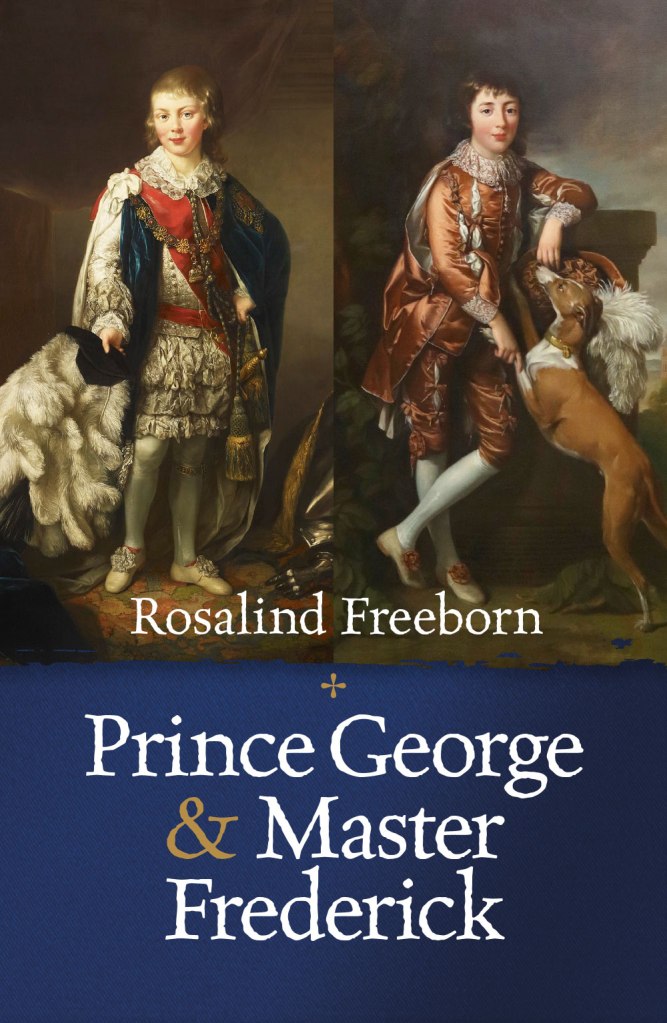
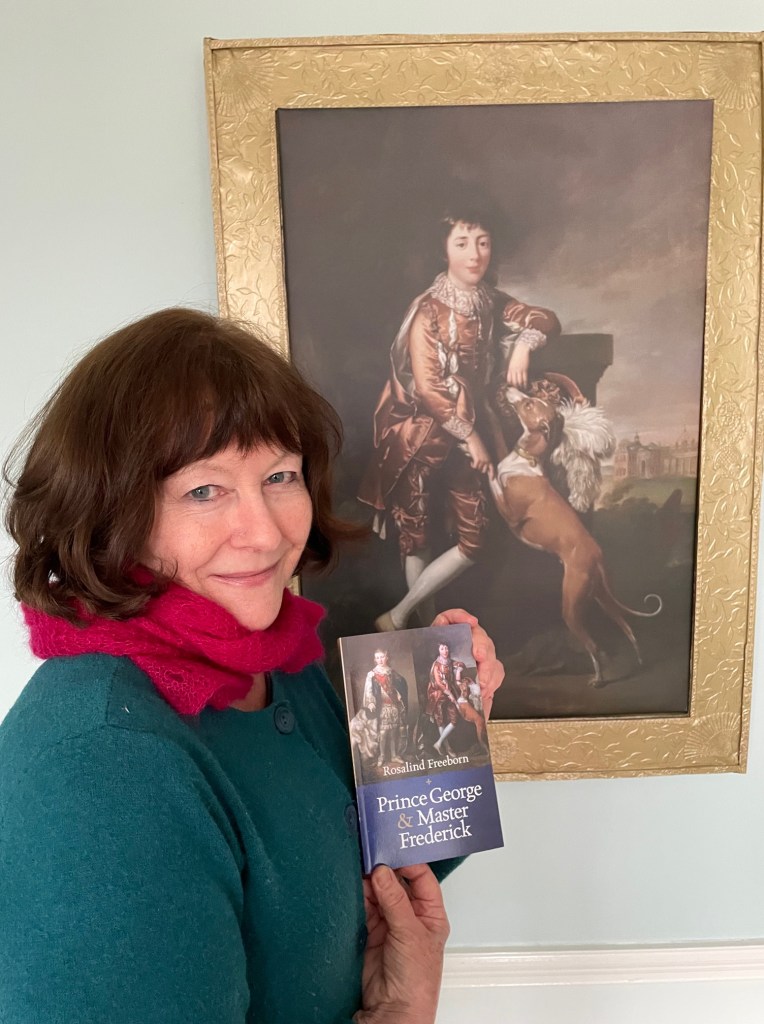
In this picture I’m standing in front of a print of a portrait of Master Frederick Blomberg, painted by court artist Richard Brompton in about 1770. The painting was commissioned by Queen Charlotte and it’s a companion piece to two other portraits of her royal sons: Prince George, Prince of Wales and Prince Frederick, Duke of York which now hang in the 1844 Room at Buckingham Palace. I was delighted to put this painting of Prince George in Garter robes next to his ‘adopted’ brother, Frederick Blomberg on the front cover of my book.

And what fun it was to welcome so many lovely friends to the book launch, sign books and chat. And for all those who could not be there, you can order a signed copy through my author website: http://www.rosalind-freeborn.com Otherwise, you can buy a copy through Amazon, (on Kindle, print or Audible) and through bookshops.

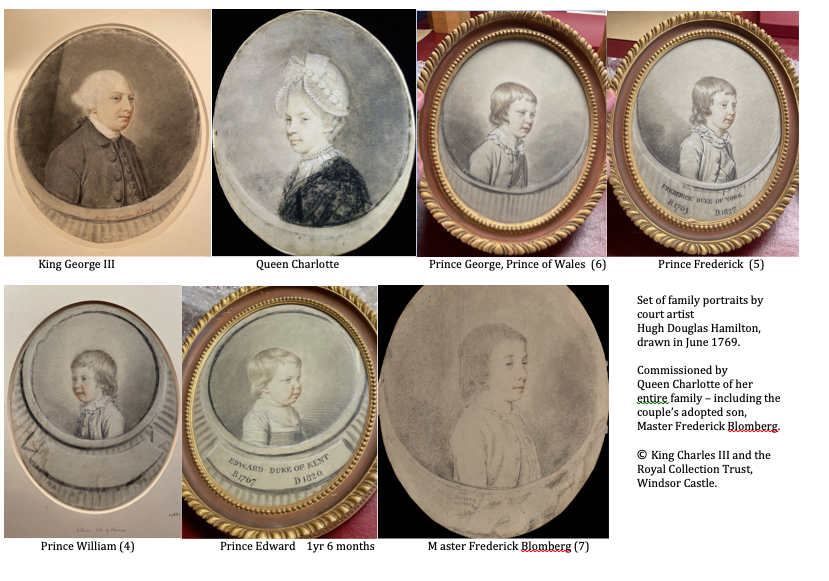
In my talk I showed a display of portraits commissioned by Queen Charlotte in 1769 of her family, drawn as a set by the artist Hugh Douglas Hamilton. The portrait of Frederick was probably given to Frederick Blomberg by Prince George and ended up at his home in Yorkshire, Kirby Misperton. After Blomberg died in 1847 the little portrait remained on the wall, through two subsequent owners, until my great-grandfather bought the estate and my grandmother grew up there. She used to look at the picture of Frederick on the wall of her home and told me that the boy was the son of King George III (wrong side of the blanket, as she put it). That piqued my interest but I did nothing about it for decades. Then, about five years ago, I thought I’d investigate this claim and find out more about Blomberg. Well, what I discovered was so fascinating that I was compelled to write this novel.

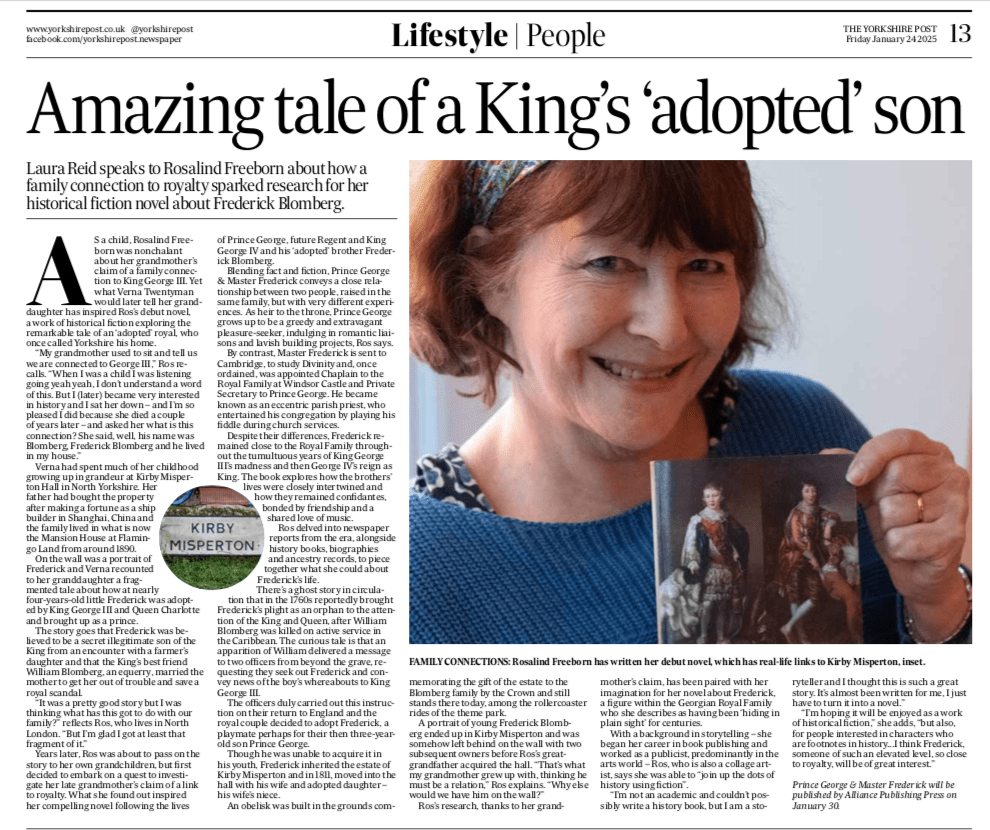
I’ve been so delighted with the quantity of publicity this book has attracted. Above is a feature which appeared in the Yorkshire Post. I’ve done radio and television interviews too. Yes, I feel very published!

Love for the elderly, sensitive family situations and tender images of relationships dominate this year’s selection of Taylor Wessing photo portraits on show at the National Portrait, and I approve the choice of prize winners for 2024.

Above is Celia and Shay, a very tender photograph taken by Megan Taylor which I found enchanting.

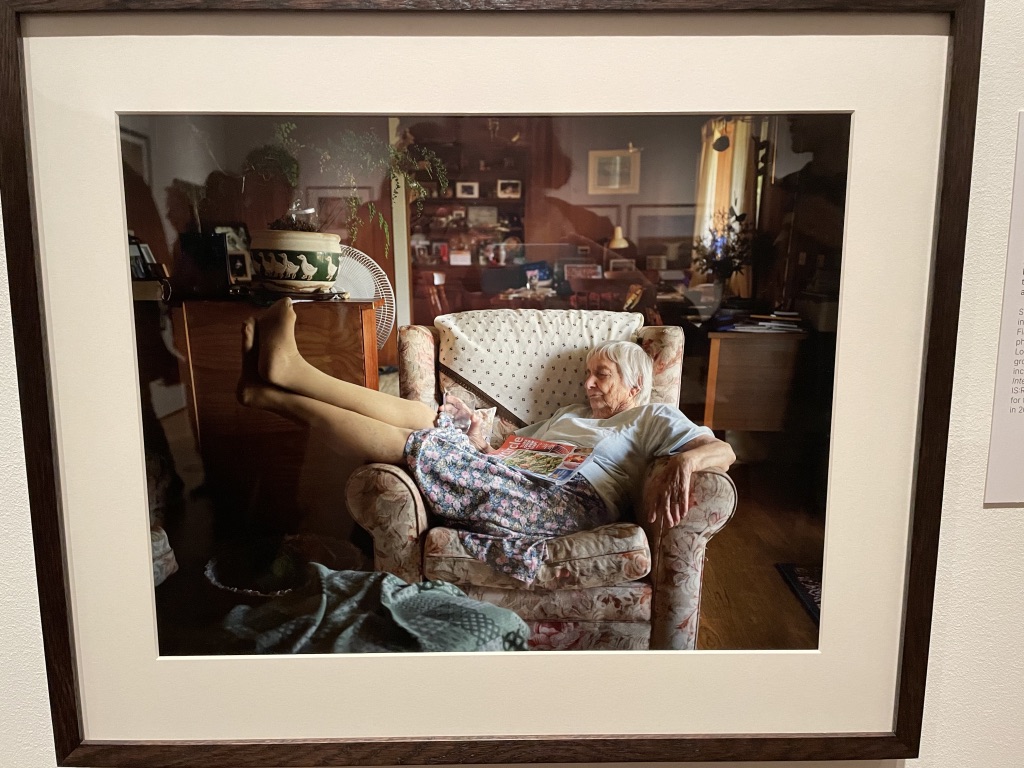
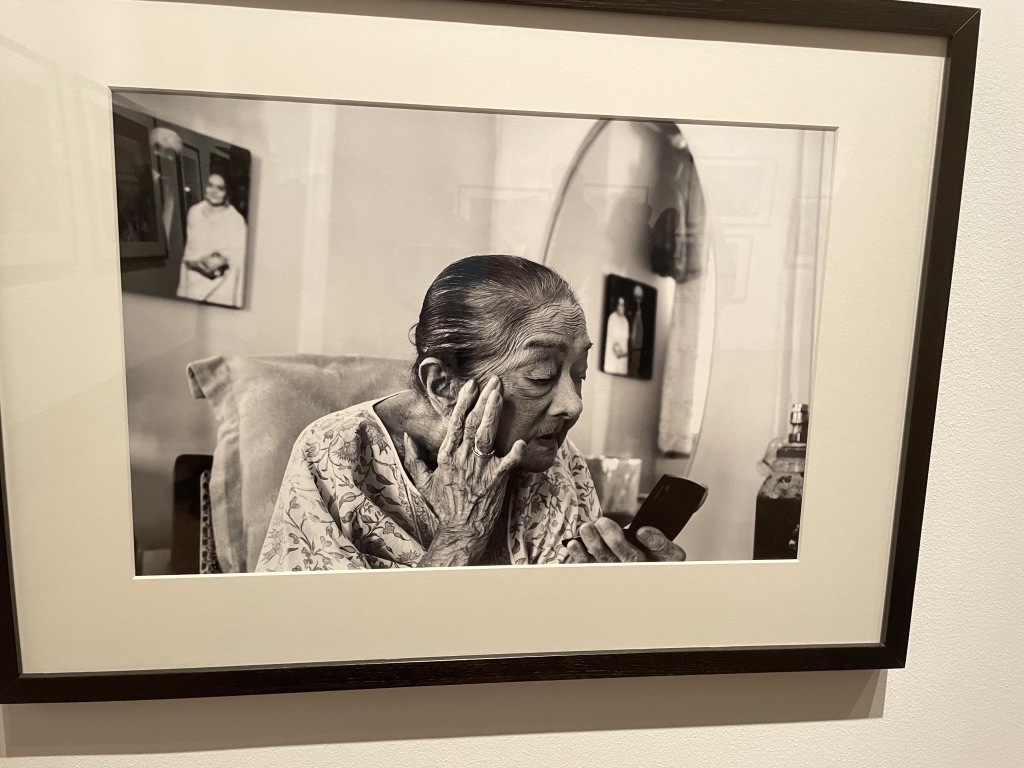
There was a great emphasis on images of much-loved elderly relatives in this year’s collection. These two caught my eye. On the left is Ageing Gracefully by Madeleine Waller of her mother at home in Australia. On the right is Inderjit Kaur by Jasmeen Patheja of her grandmother.

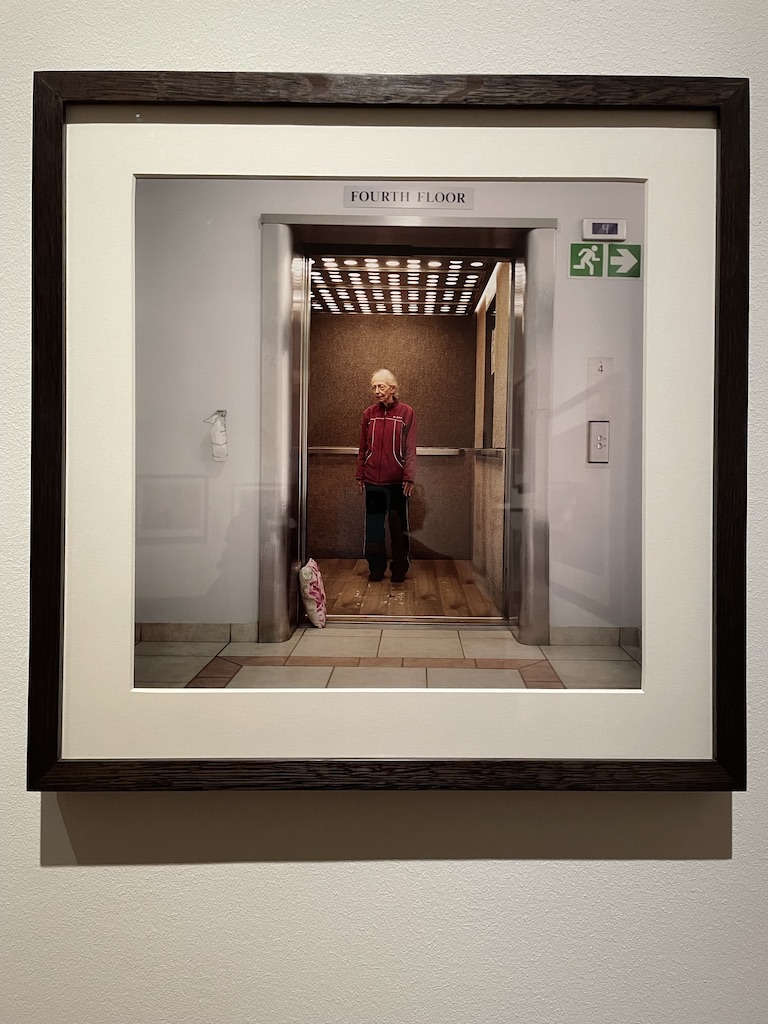
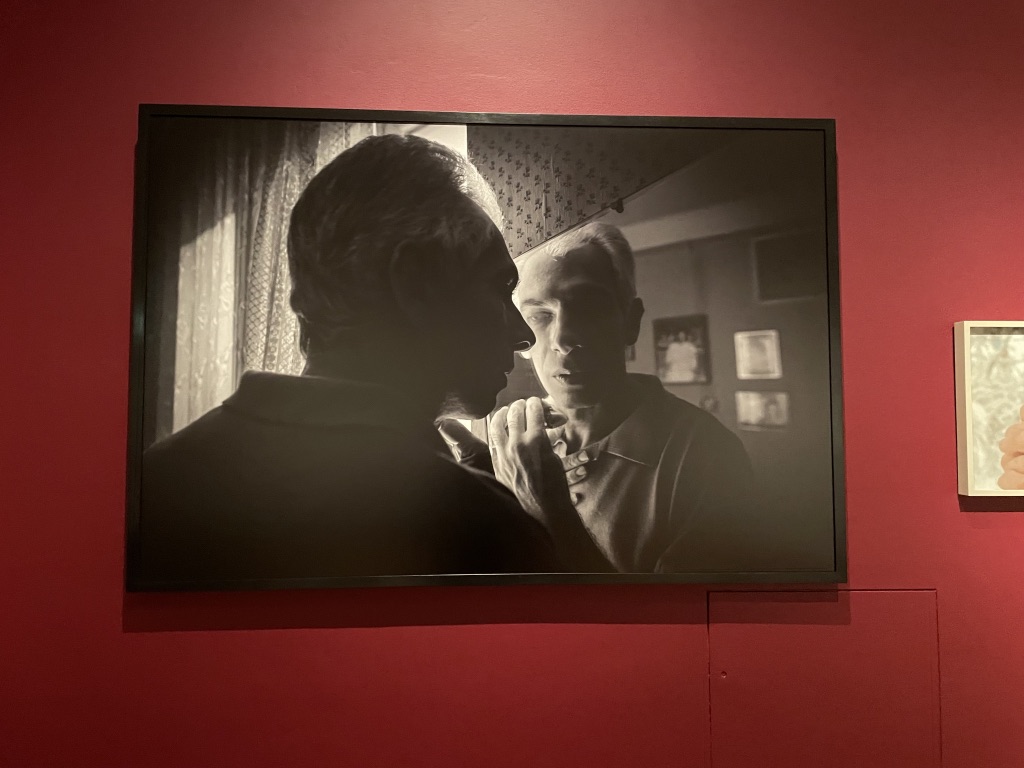
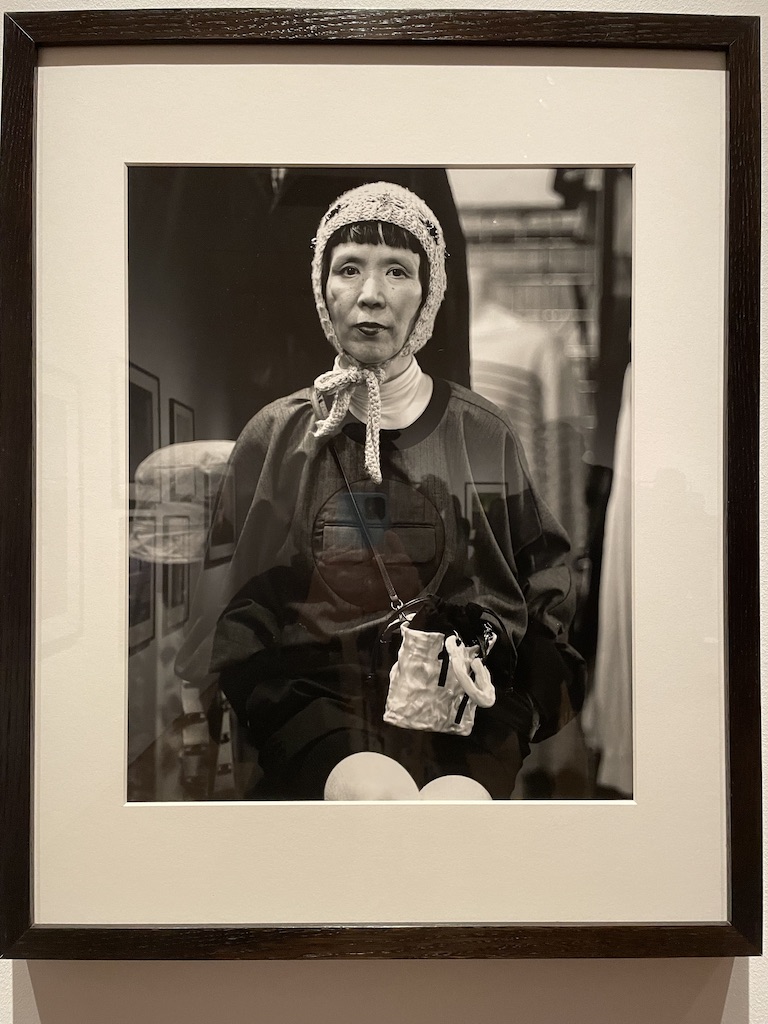
Here’s another trio of images of parents or images which capture older models. On the left is Mom, I’ll follow you still by Jesse Navarre Vos and shows his grandmother standing in the lift of the care home where she moved after they stopped living together. Vos wanted to capture the sense of separation and knowledge that he could no longer be with her into her new surroundings. In the centre is My Father’s Reflection by Diana Markosian and on the right is a portrait of Chicko, a clothes seller in London taken by Toks Majek using a 60 year old lens.

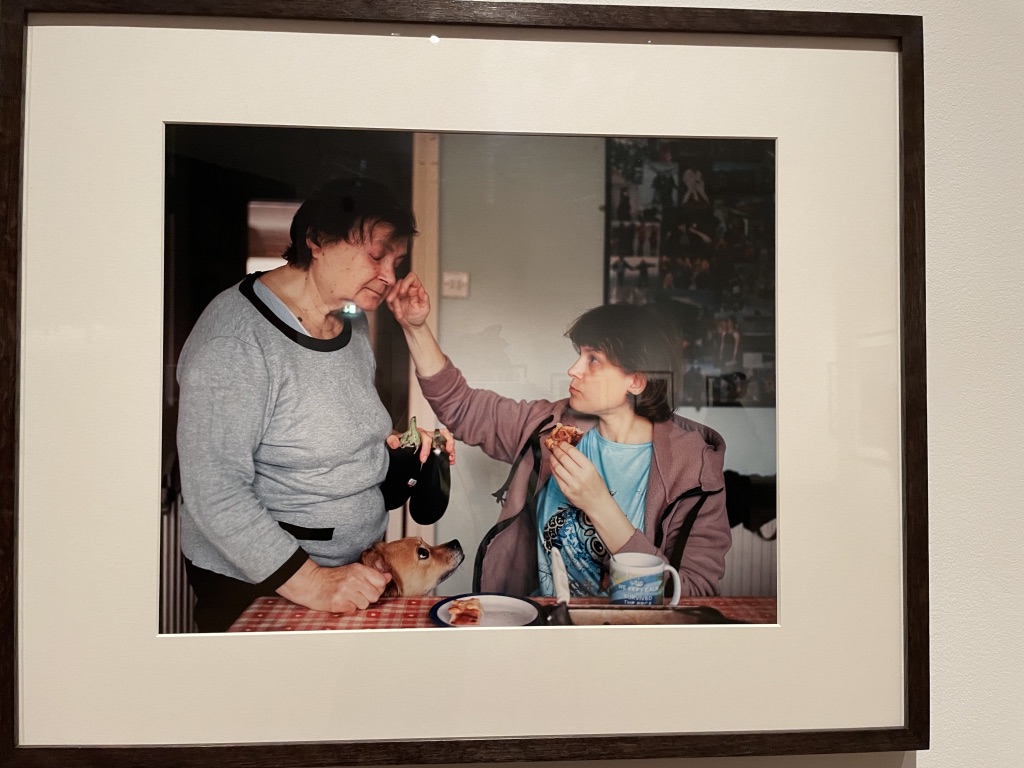
This photograph looked very spontaneous. Entitled Kitchen Embrace it shows the photographer’s daughter tenderly touching her grandmother’s cheek. The dog peeps up at the young girl and the two aubergines the woman is holding take centre stage.

And this, above, is the image which won first prize. It’s a very beguiling photograph taken by Steph Wilson of Sonam with her newborn baby. Sonam is a wigmaker and she is wearing a replica of her father’s moustache.

It’s a very interesting show this year and is situated on the upper floor of the gallery so you have the fun of walking through faces of the past to see these, the gallery’s most contemporary images. The Taylor Wessing Photo Portrait exhibition is on until 16th February 2025.

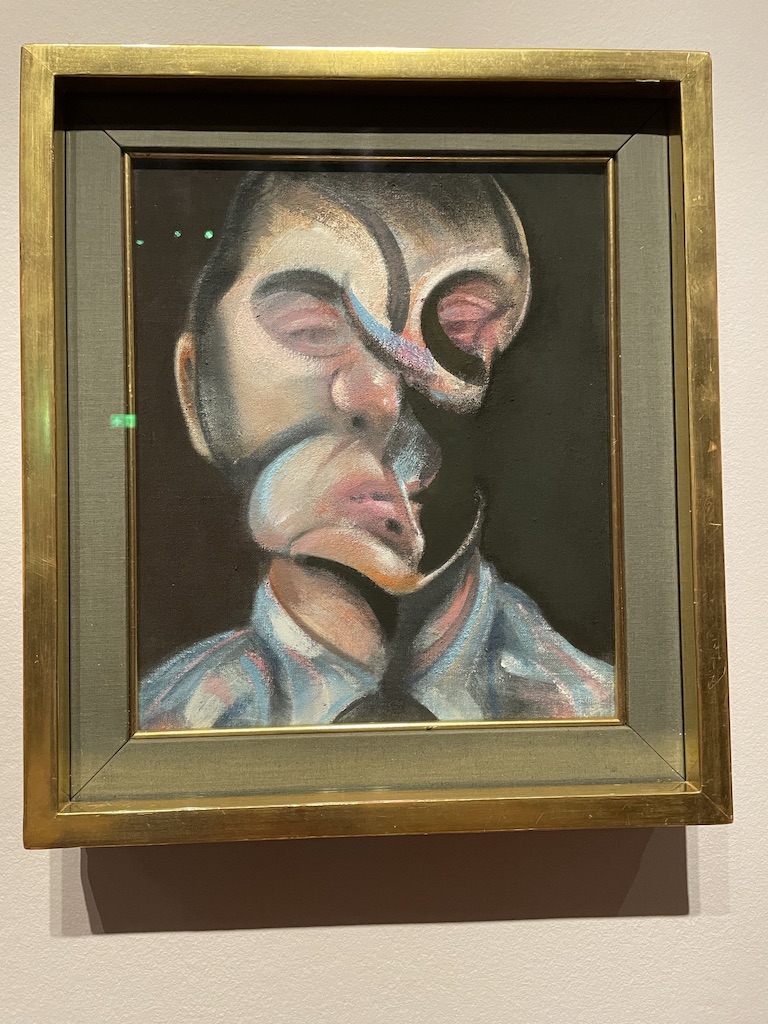
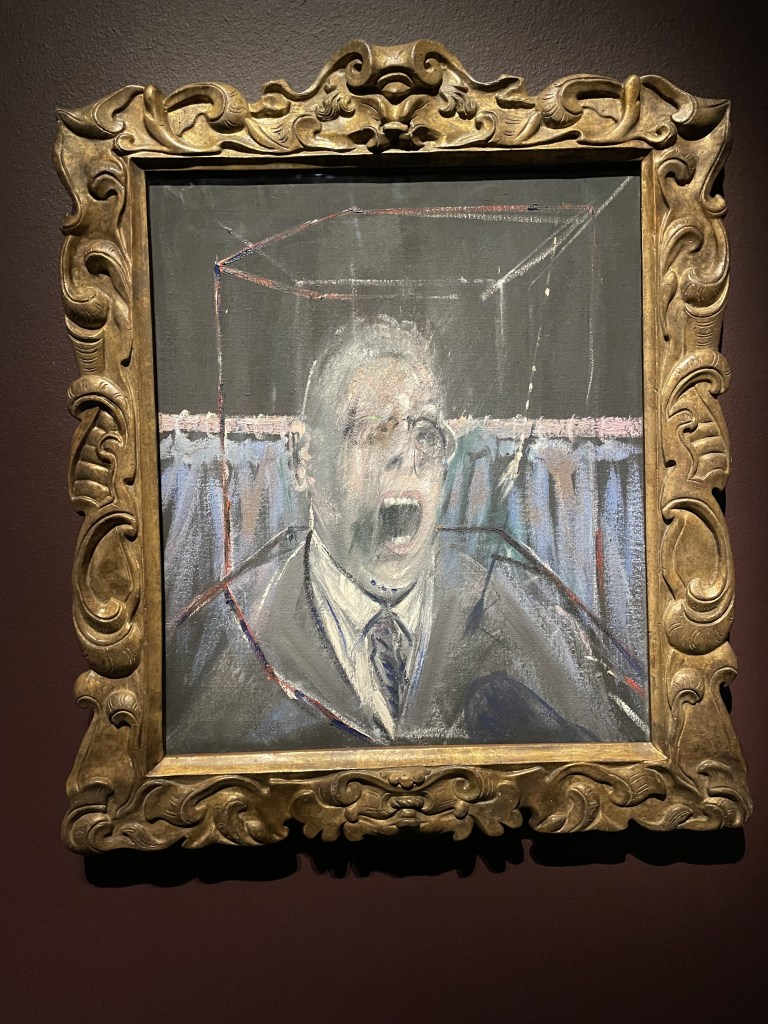
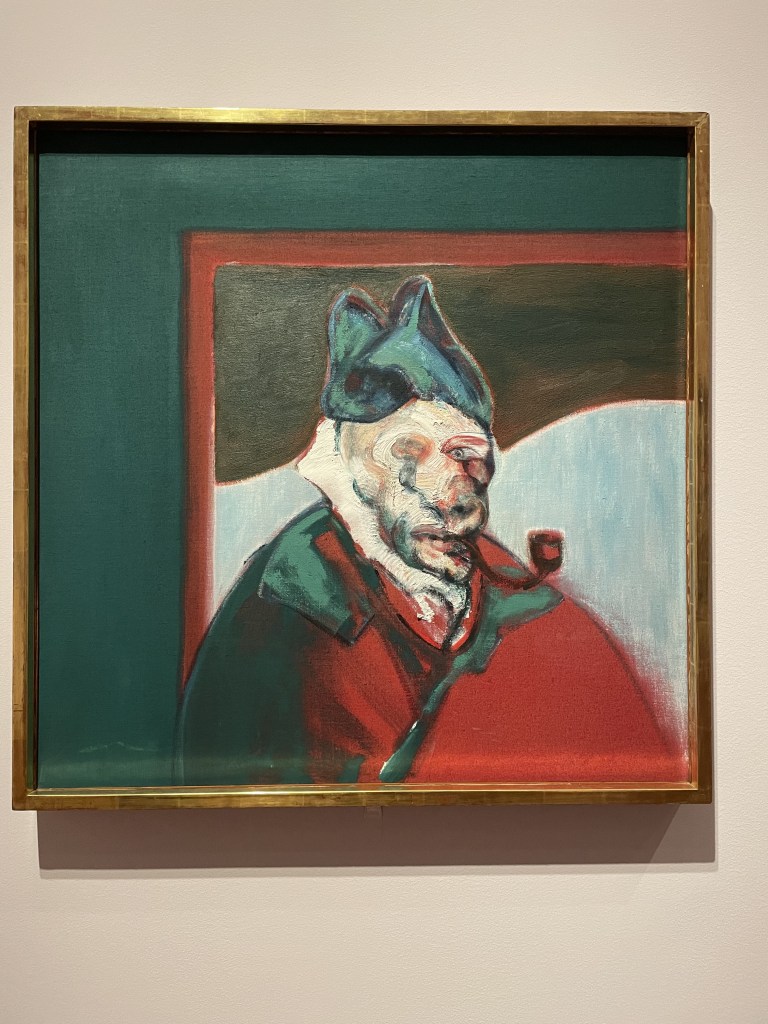
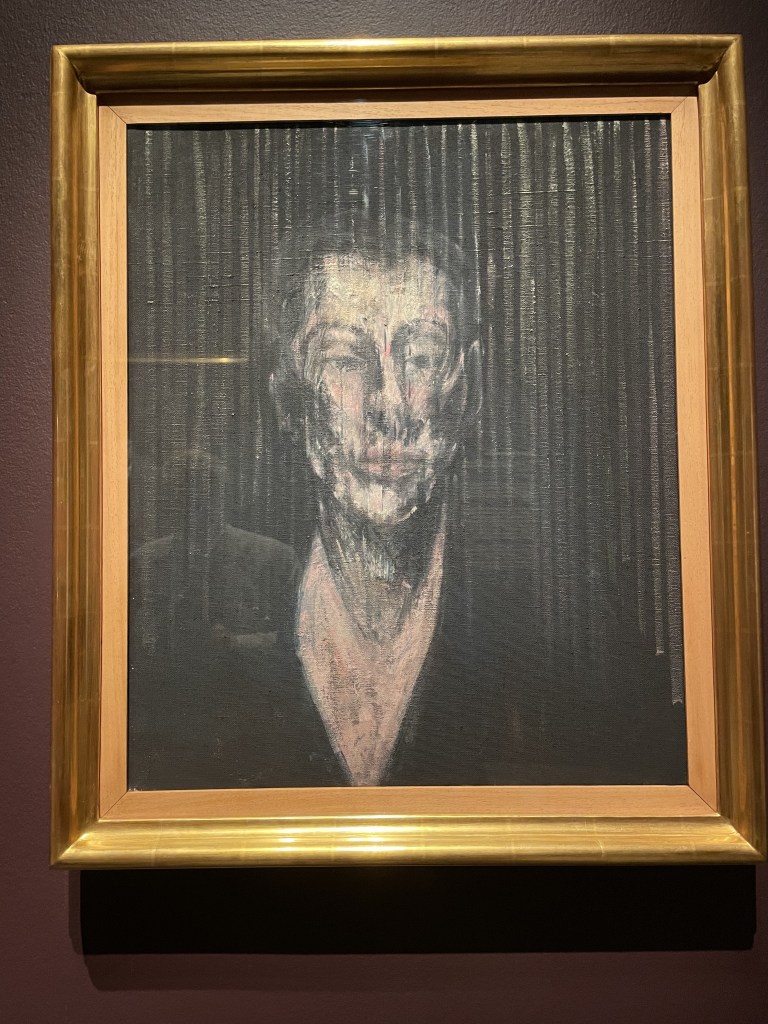
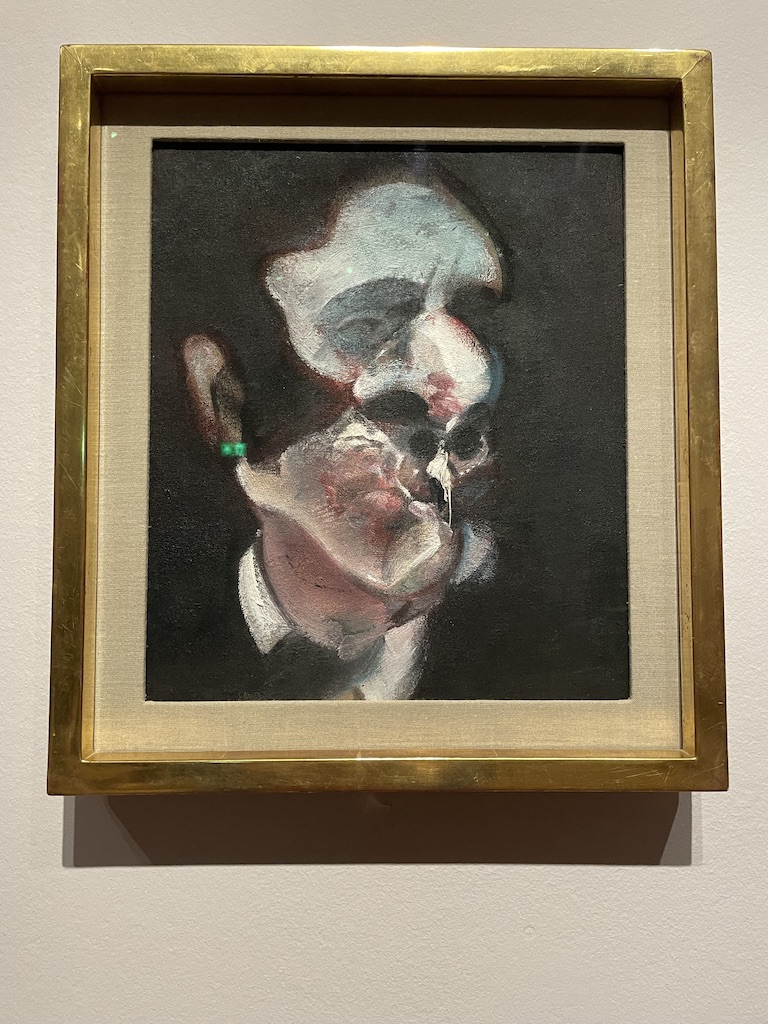
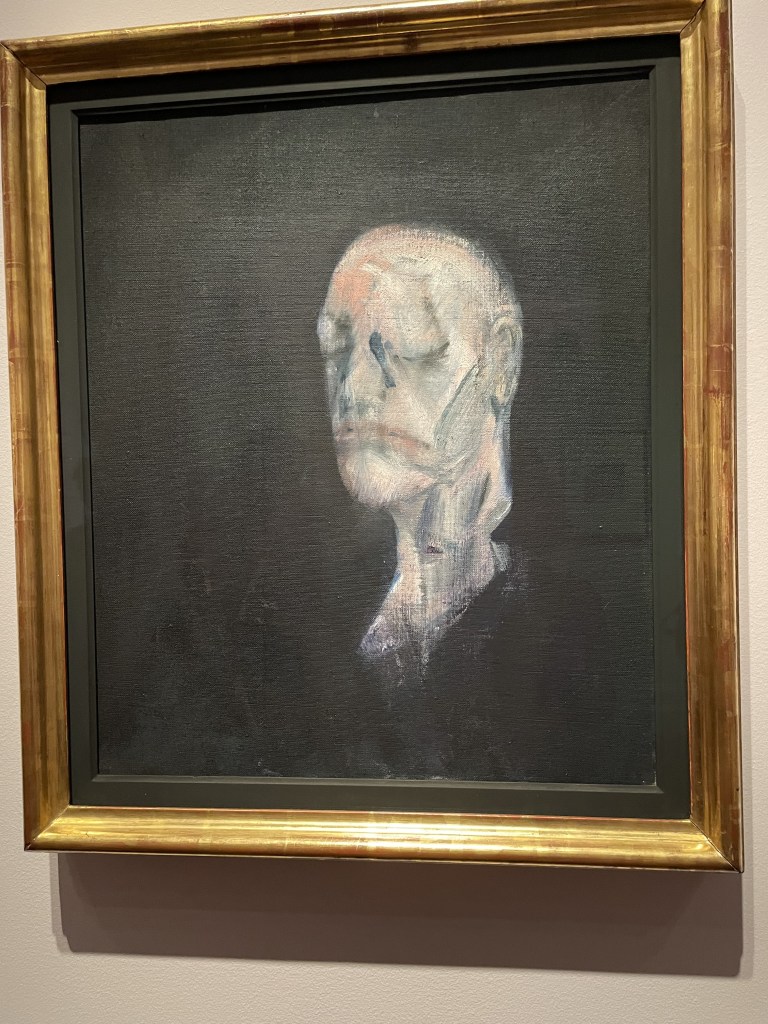
Francis Bacon: Human Presence. A very impressive new show at the National Portrait Gallery brings together over 50 of his paintings and includes fascinating photographs of him at work in his studio and fragments of the images and source material which inspired him. It is a visceral experience. Bacon aimed to captures the essence of his subject, not bothering with a direct likeness, but depicting what he feels about them.

Francis Bacon is one of those artists whose work divides opinion. Self-taught, ambitious, original and curious, he has created images of people which are arresting, memorable and honest. He was not interested in the conventions of likeness – for so long the measuring stick of portraiture – his aim was to capture and convey the ‘essence’ of a person and express their ‘presence’ within the painting rather than features which resembled them.

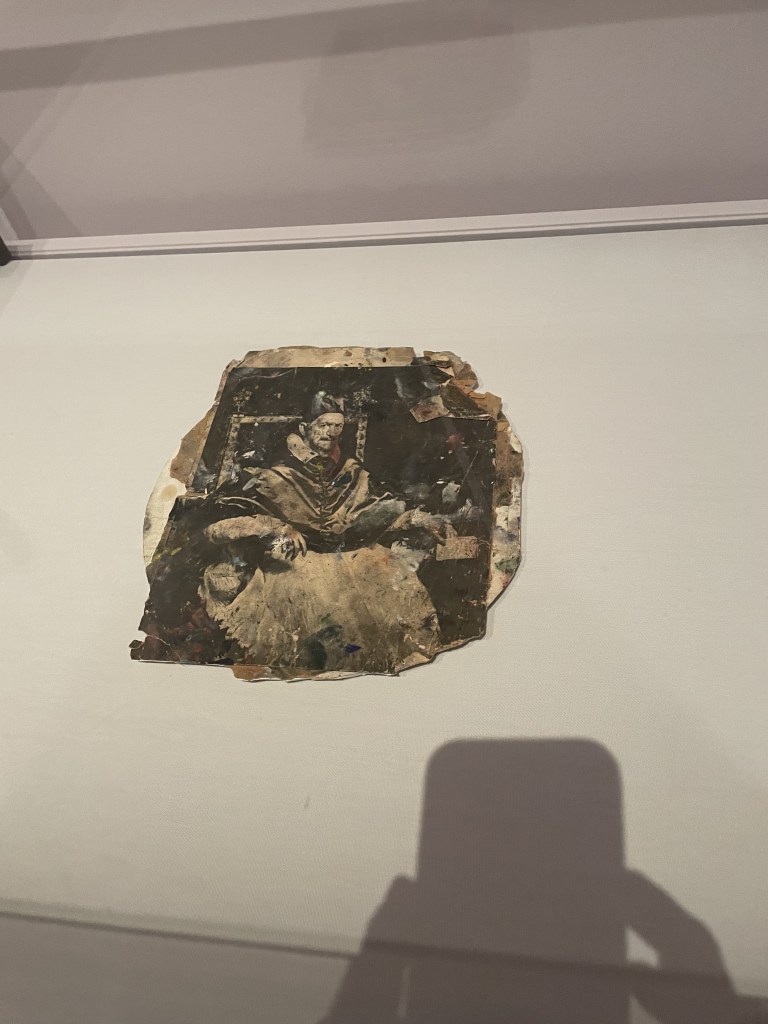
Having said that, there is a likeness to the subjects he depicts. Clearly, he scrutinised faces carefully. He started his career by painting from life but swiftly moved on to using photographs – taken specially for the work or gathered from magazines and scraps of paper. It’s great to see so many of these ‘scraps’ of images which inspired his work. Often they were scattered about on the floor of his studio, bespattered with paint and generally destroyed. But their very presence within this show only adds to the intensity of the portraits on show.

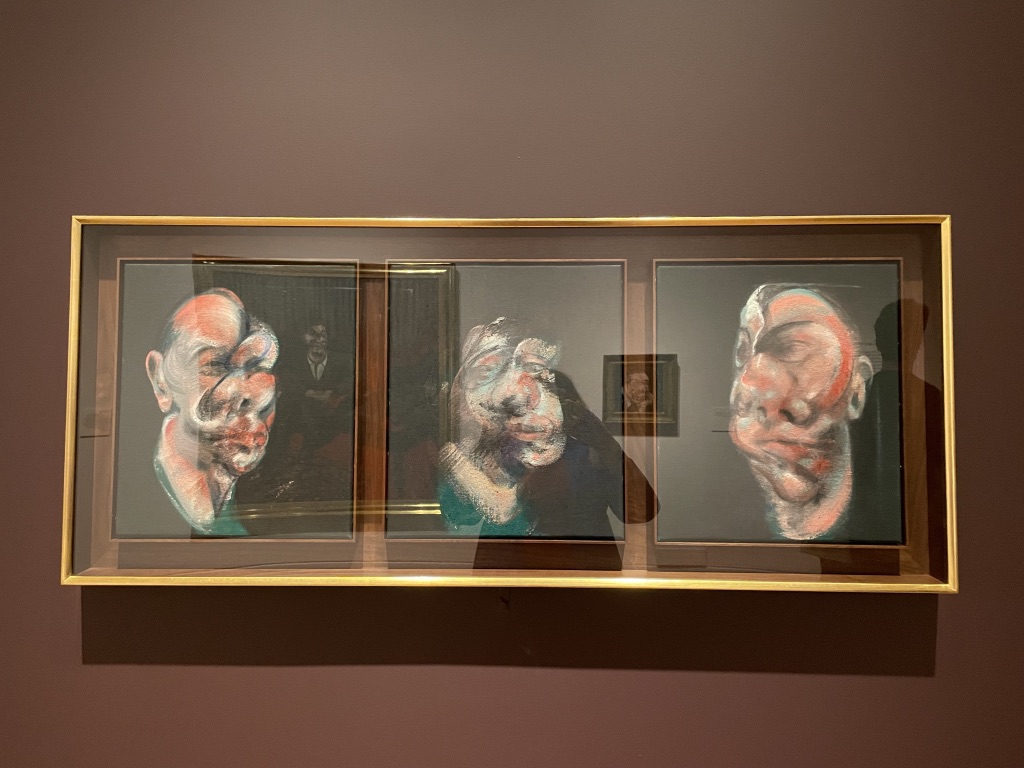
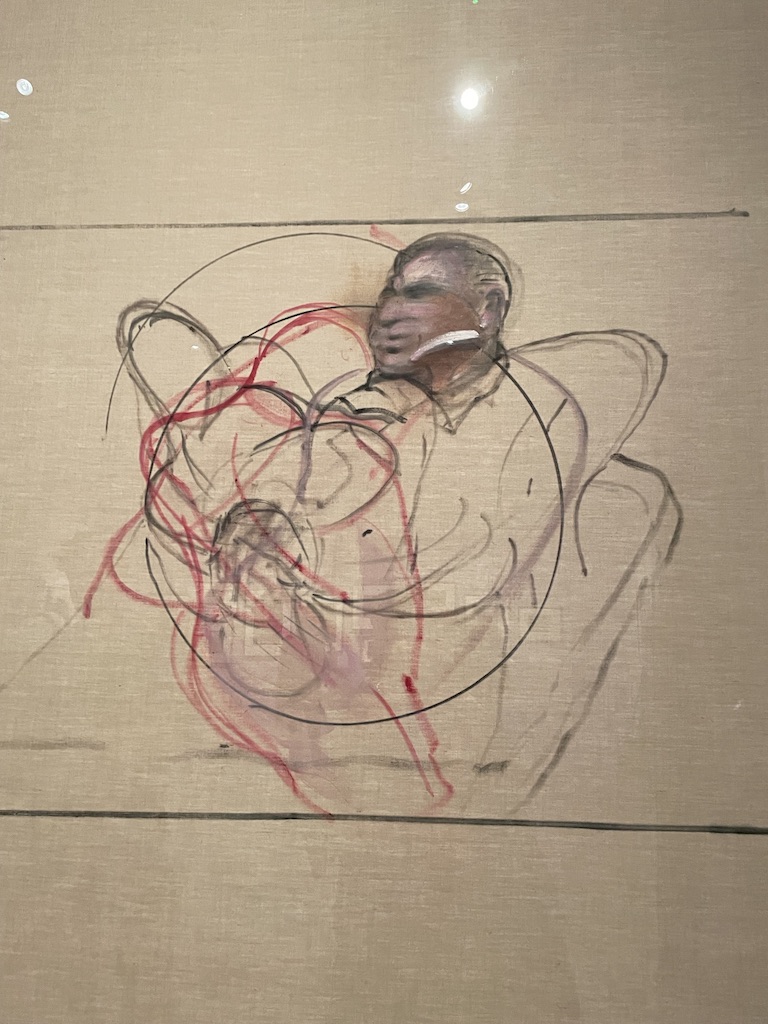
I enjoyed the triptych studies of head. Above are images of his friends Isabel Rawsthorne and Peter Lacy. Peter Lacy was Bacon’s lover in the early part of his career. There were several important gay relationships in his life but the last was with George Dyer. There is a very moving triptych of the last paintings of George Dyer shortly before he died. (below) The paintings are a tribute to an important man in his life and the atmosphere of depression and sickness which emanates from the canvases is overwhelming.

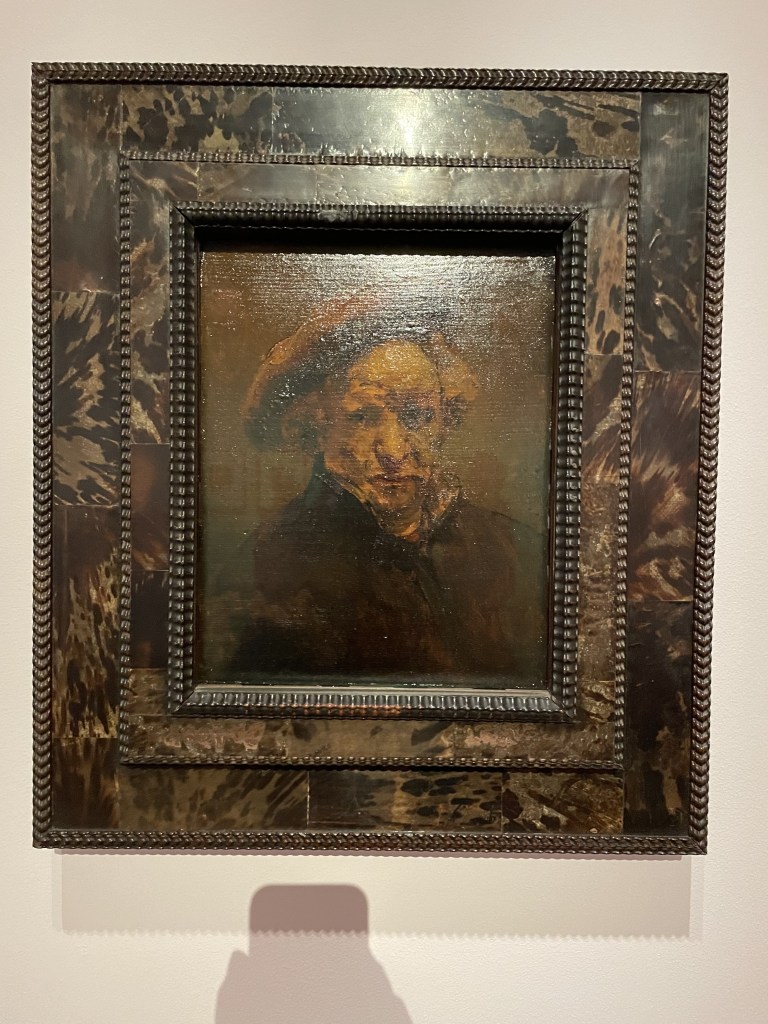
This impressive exhibition explores the influences and friendships which contributed to the evolution of his distinctive and challenging style. It was a joy to see a small self-portrait by Rembrandt which Bacon especially admired for its darkness and thickly applied paint.

Francis Bacon: Human Presence is on at the National Gallery until 19th January 2025