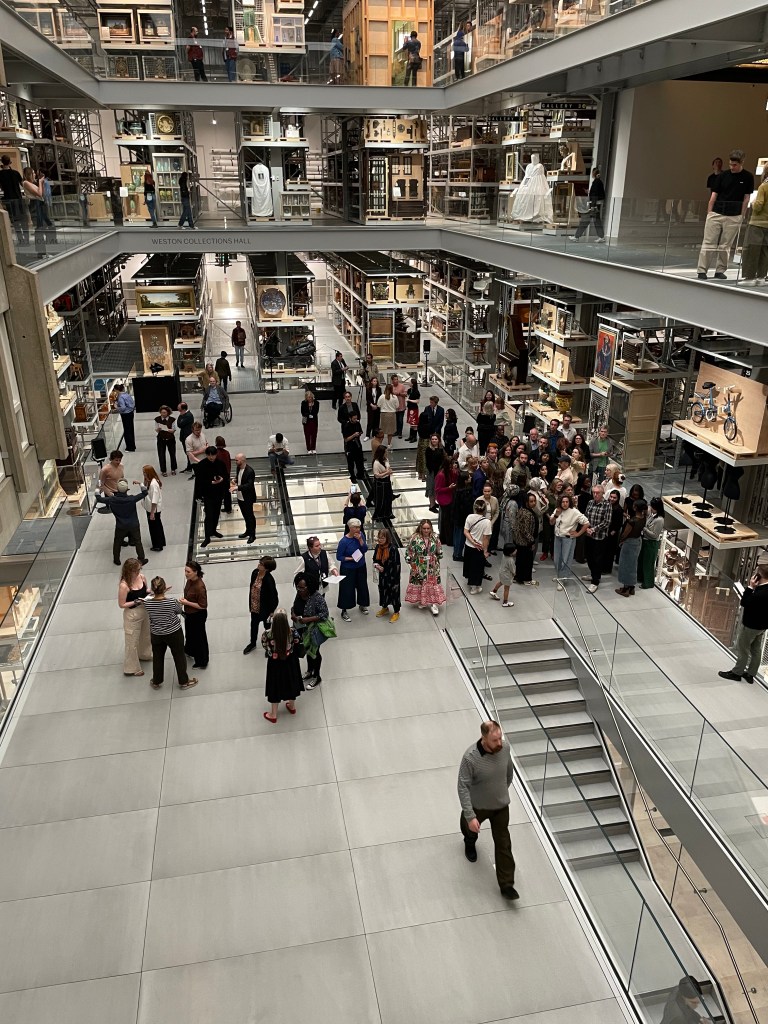
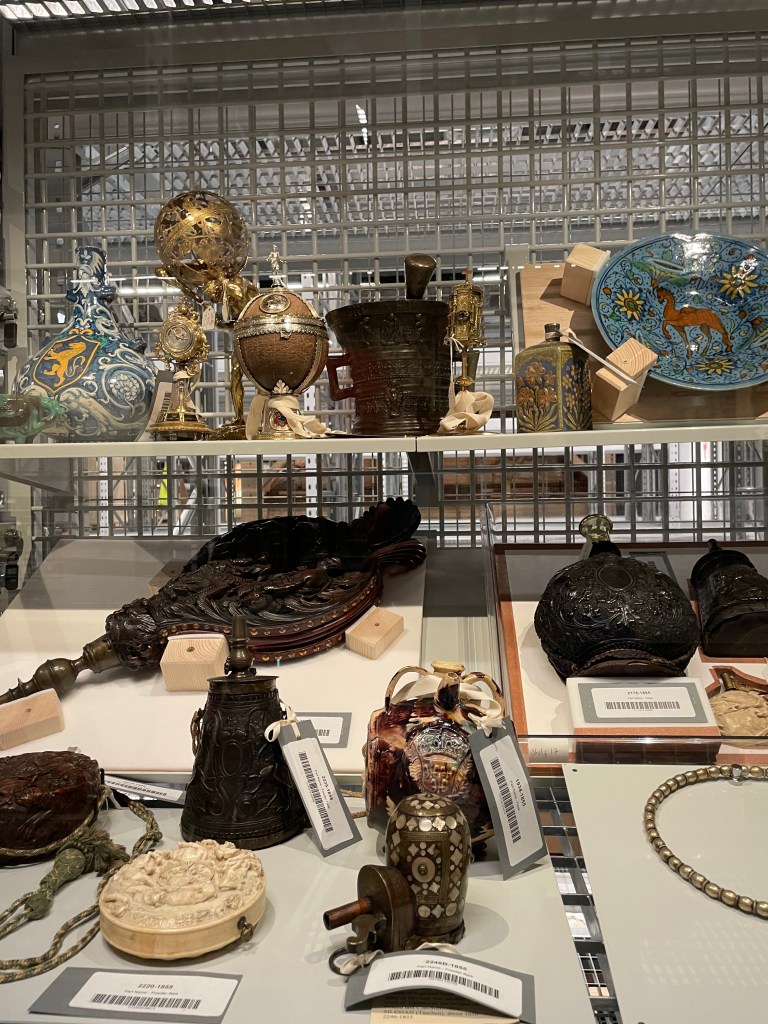
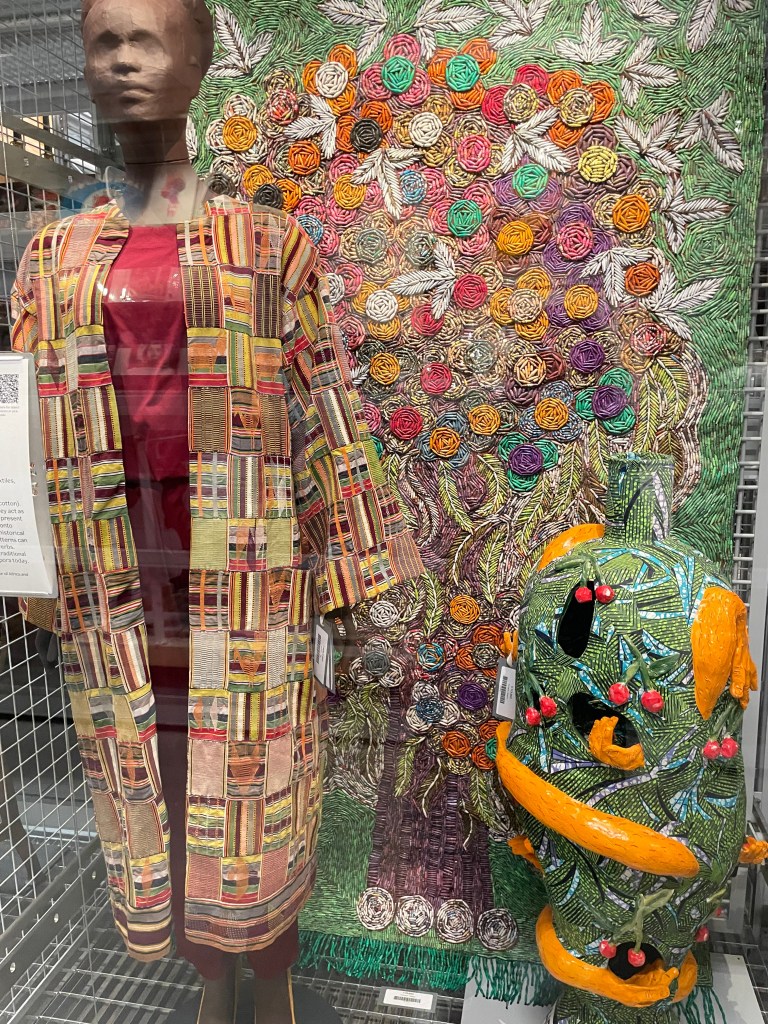
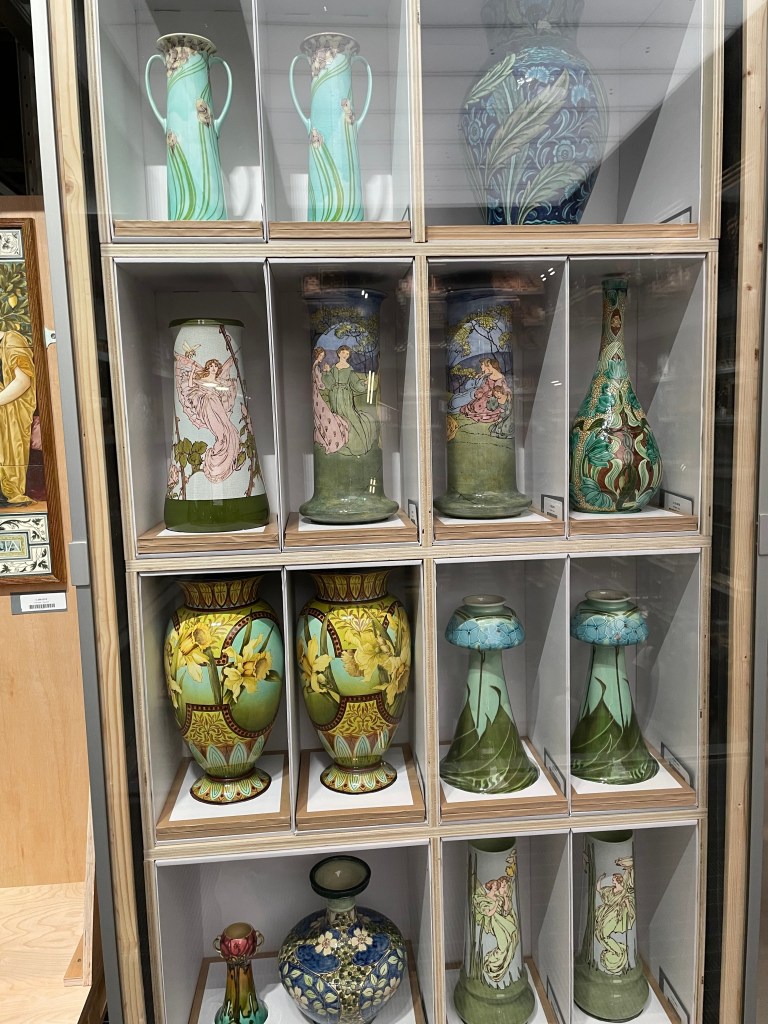
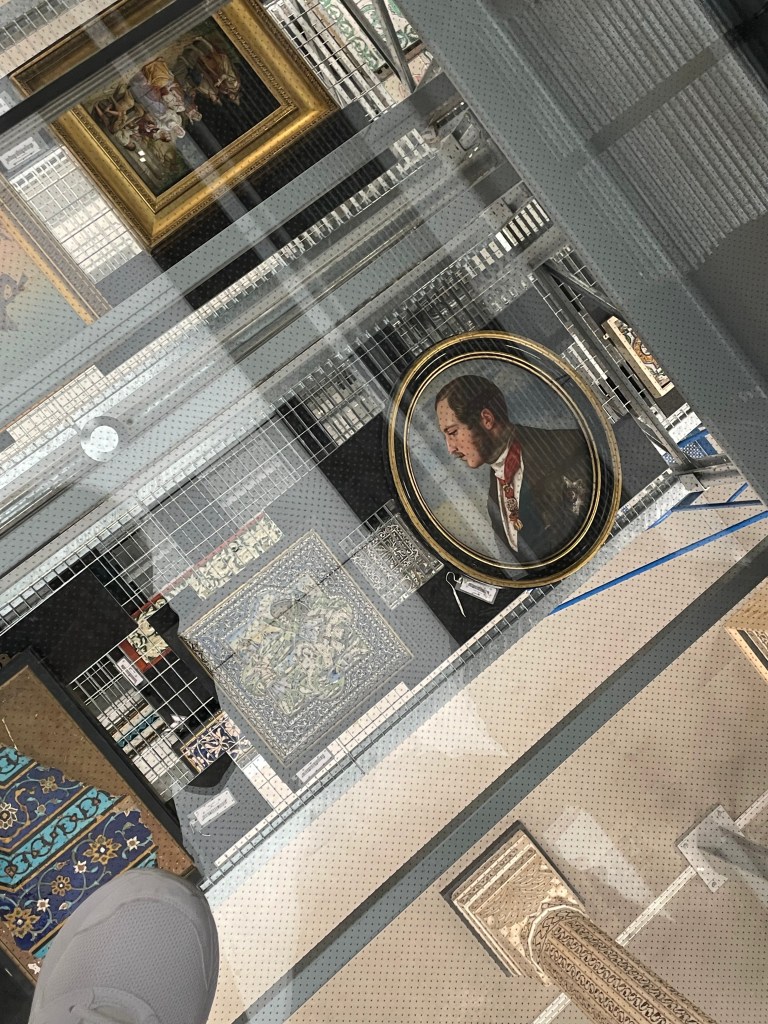
What a thrill to be part of the press preview at the opening of the new V&A East storage space in east London. It’s a most dynamic space – the most extraordinary storage unit ever imagined. There’s easy access to all the objects; they are not only on display, but if there’s something you are keen to see close up, you can make an appointment, come to the space and see it close up in the company of a curator.
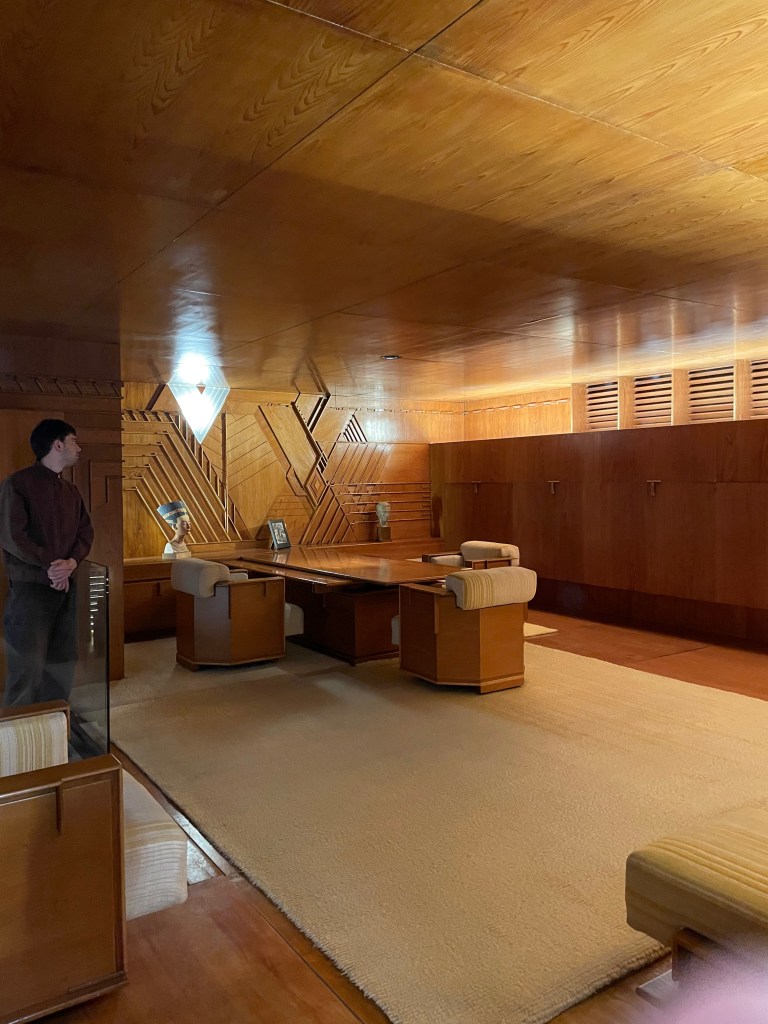
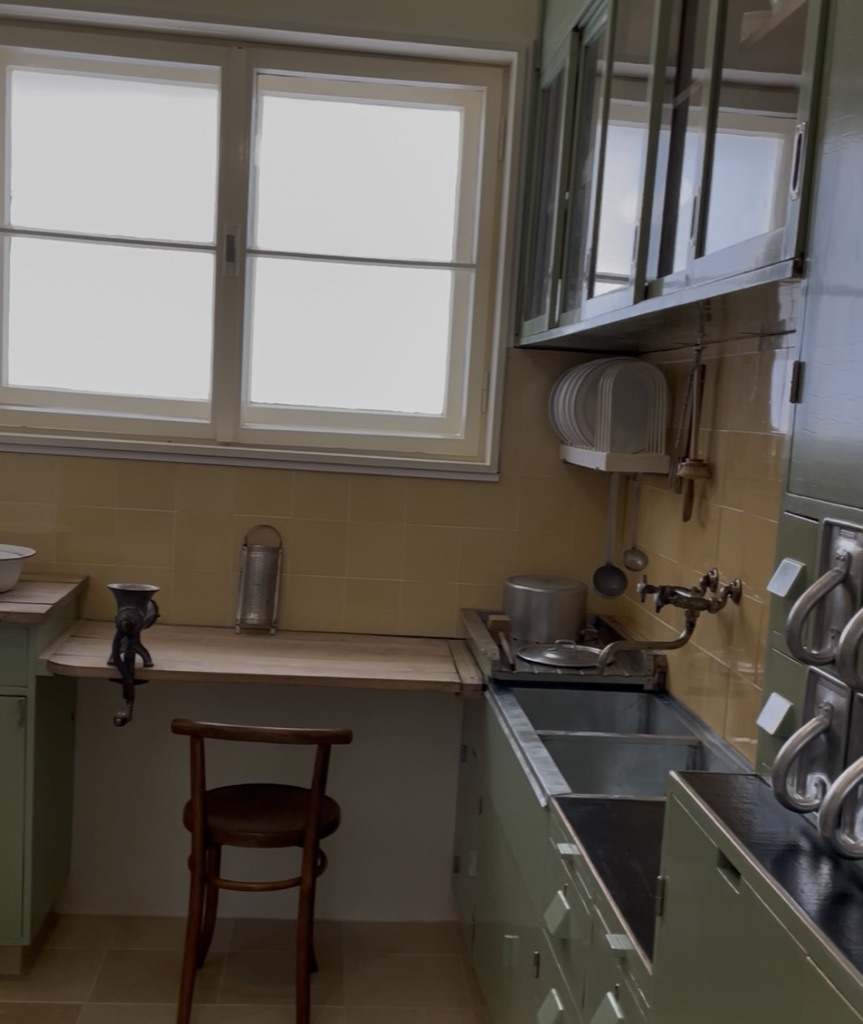
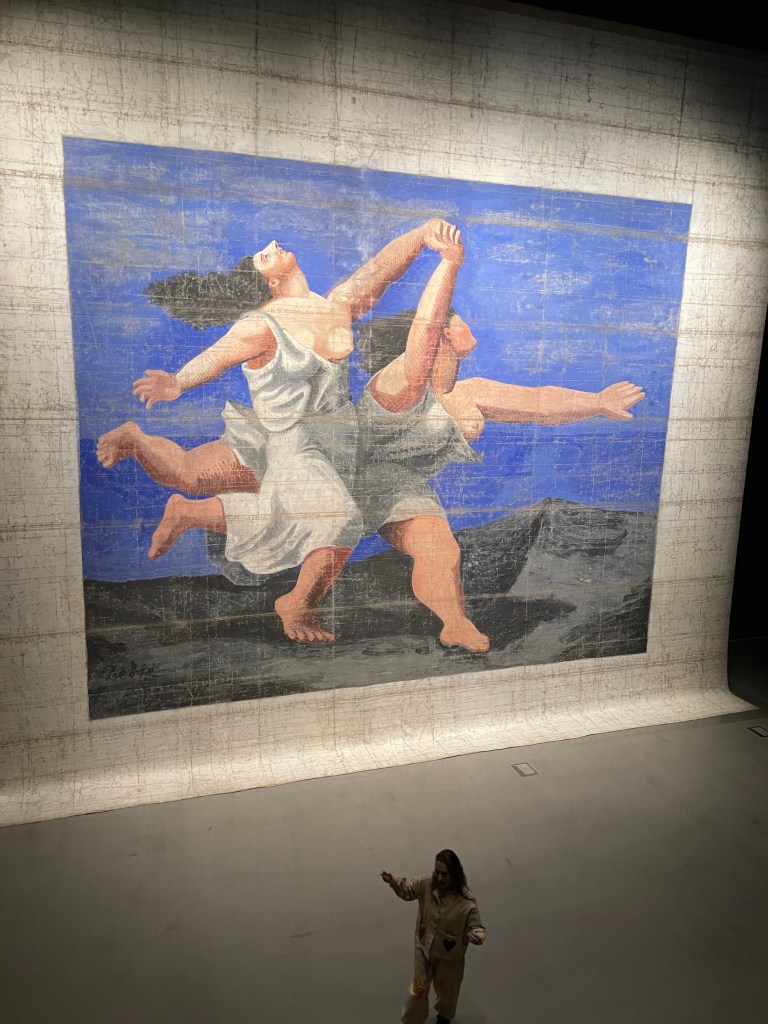
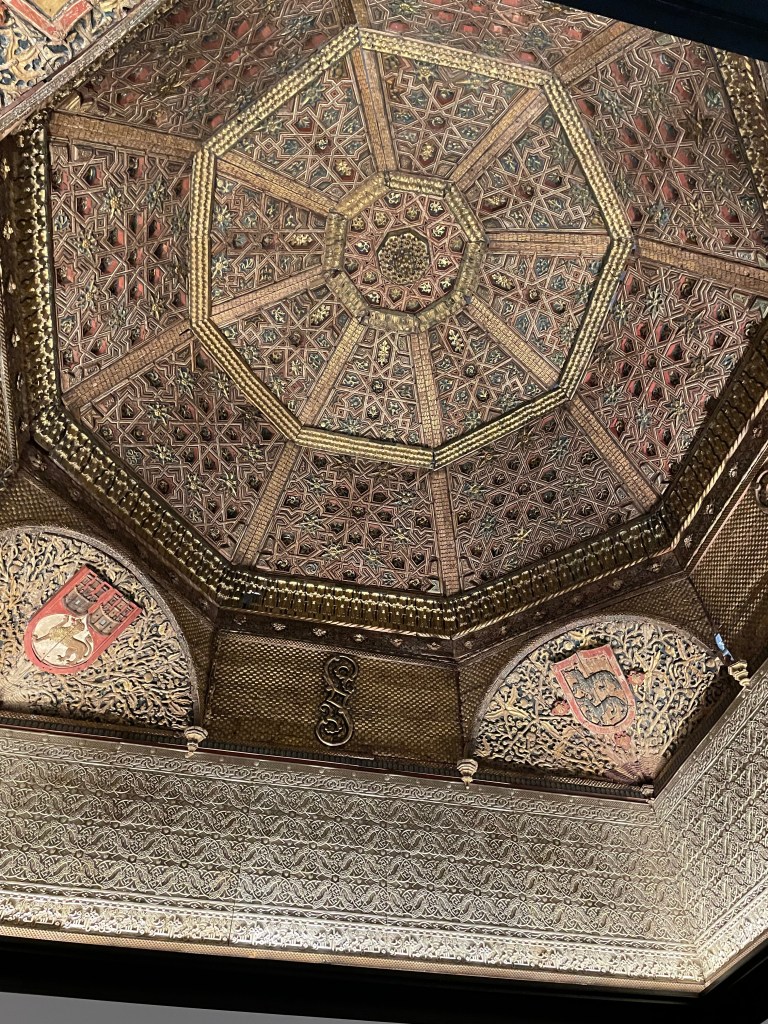
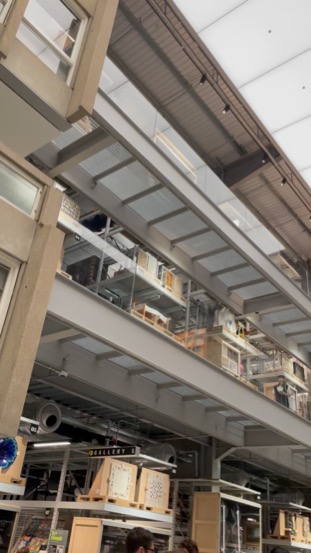
The objects are arranged on pallets, carefully lashed to their space and exude a wonderful confidence in their new environment. As well as objects from all eras, countries, cultures and faiths there are entire room sets. It was fascinating to see the complete kitchen from a Frankfurt apartment of the 1920s and the amazing Kaufmann Office designed by Frank Lloyd Wright. There’s a stunning Moorish ceiling and a giant theatre backcloth by Picasso.
Screenshot
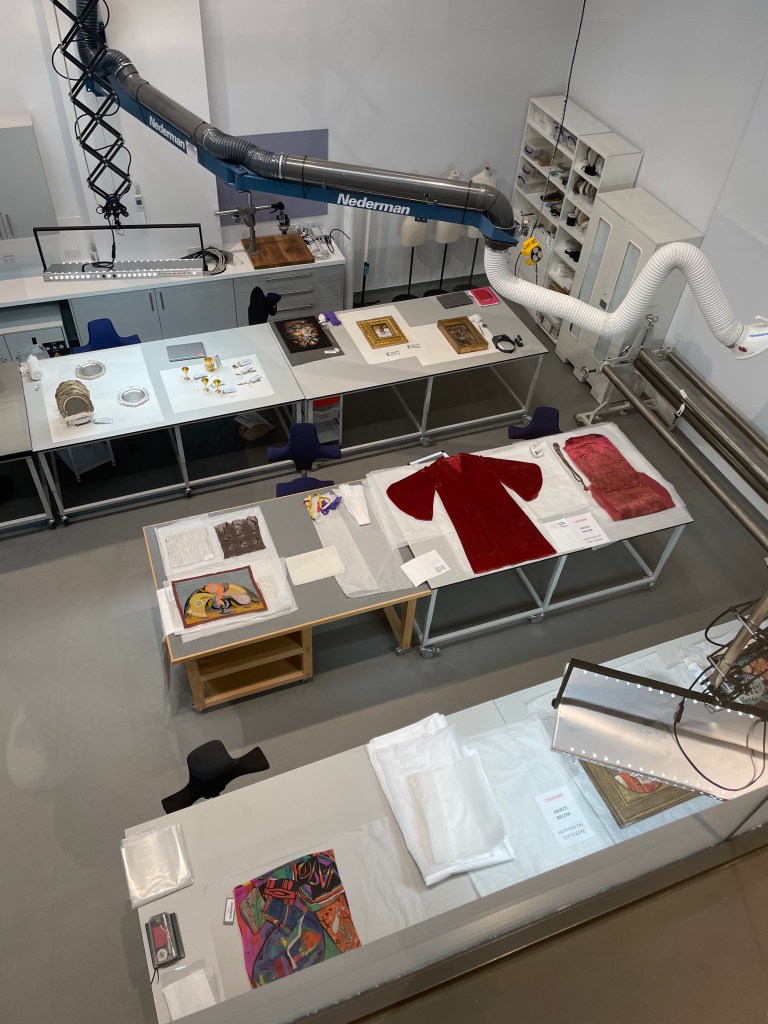
In architectural terms this new space is a joy. There is the luxury of a vast atrium in the centre of the storage unit which can be used for events, talks, concerts. The collection is displayed on five floors and seem to disappear down corridors into infinity. And the large space where the Picasso cloth was displayed provides much-needed opportunity for huge carpets and theatrical backcloths to be conserved, examined and displayed. You can also look into the conservation studios and see the work being done to restore all kinds of items, preparing them for display.
The V&A East is a short walk from Hackney Wick station and it’s exciting to see all the new buildings and attractive design which is pouring into this area. The whole Olympic Park repurposing is a shining example of legacy architecture, forward thinking and imaginative usage of the space. I’m impressed.
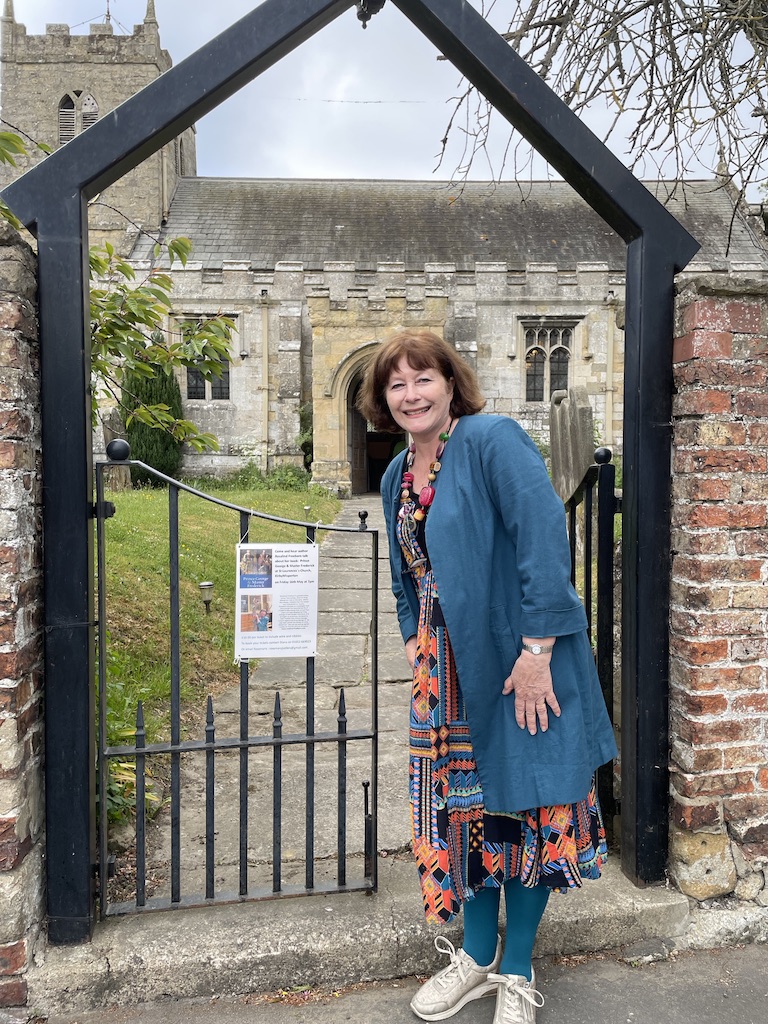
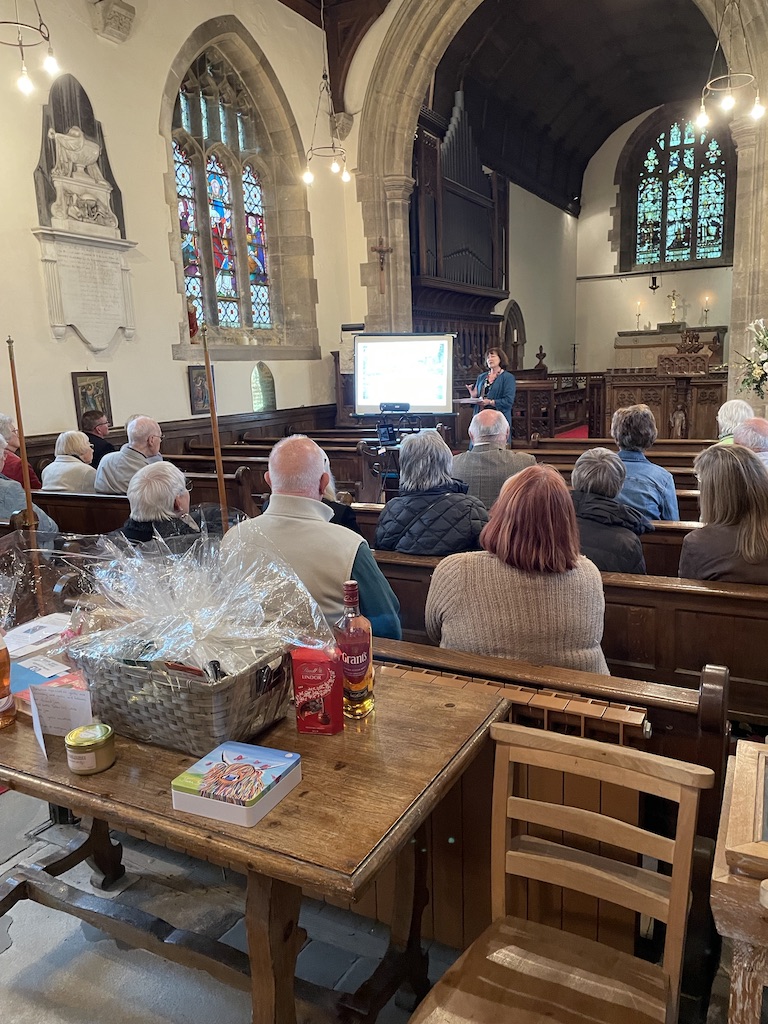
Having published my debut novel, Prince George & Master Frederick on 30th January with Alliance Publishing Press this year I’ve enjoyed a whirlwind of radio interviews, features in papers and magazines and history blogs. But, best of all, I’ve been invited to give talks to interested audiences. Possibly the most interested audience I could hope for, gathered in St Laurence’s Church in the village of Kirby Misperton, north Yorkshire on 16th May to hear my talk about the book.
Kirby Misperton is a particularly important location for me, personally, and in relation to the book. My grandmother, Verna Twentyman, grew up in the Hall at Kirby Misperton. As a child I listened to her story about our family’s supposed royal connection. She told me: “King George III loved the countryside, and when he was a young man he came upon a farm in Kent, fell in love with a beautiful farmer’s daughter and there was a baby. To prevent a scandal for the young monarch, the king’s best friend and equerry, Major William Blomberg, married the mother and gave the baby a name.”
It was a very slender story but enough to pique my interest and it stayed with me long after she had died. I was about to tell my own grandchildren her story when I paused and decided to research her claim. Well, it turns out it was all true. The ‘accidental’ child of King George III was indeed called Frederick Blomberg. His mother died and his father was killed in action. When word of his orphaned state reached King George III and Queen Charlotte they decided to adopt Frederick. They already had two small sons and a third on the way. So, from the age of four Frederick was brought up within the royal household at Richmond Lodge and became best friends with his half-brother, Prince George, the future regent and King George IV.
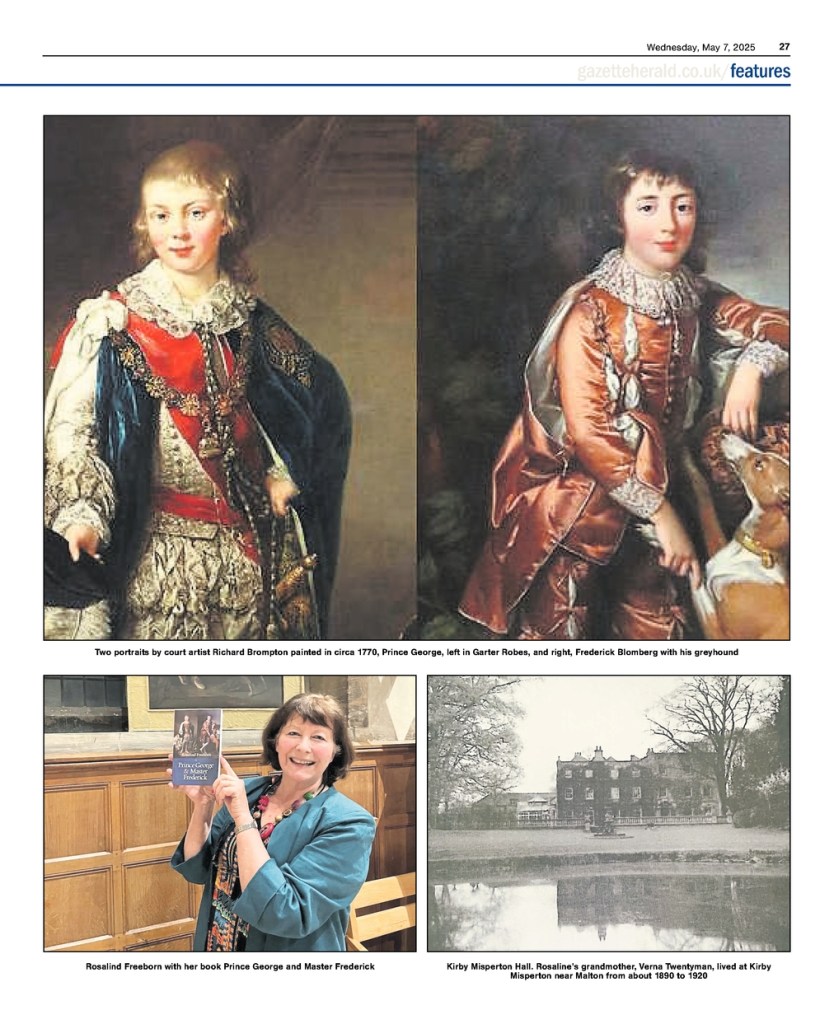
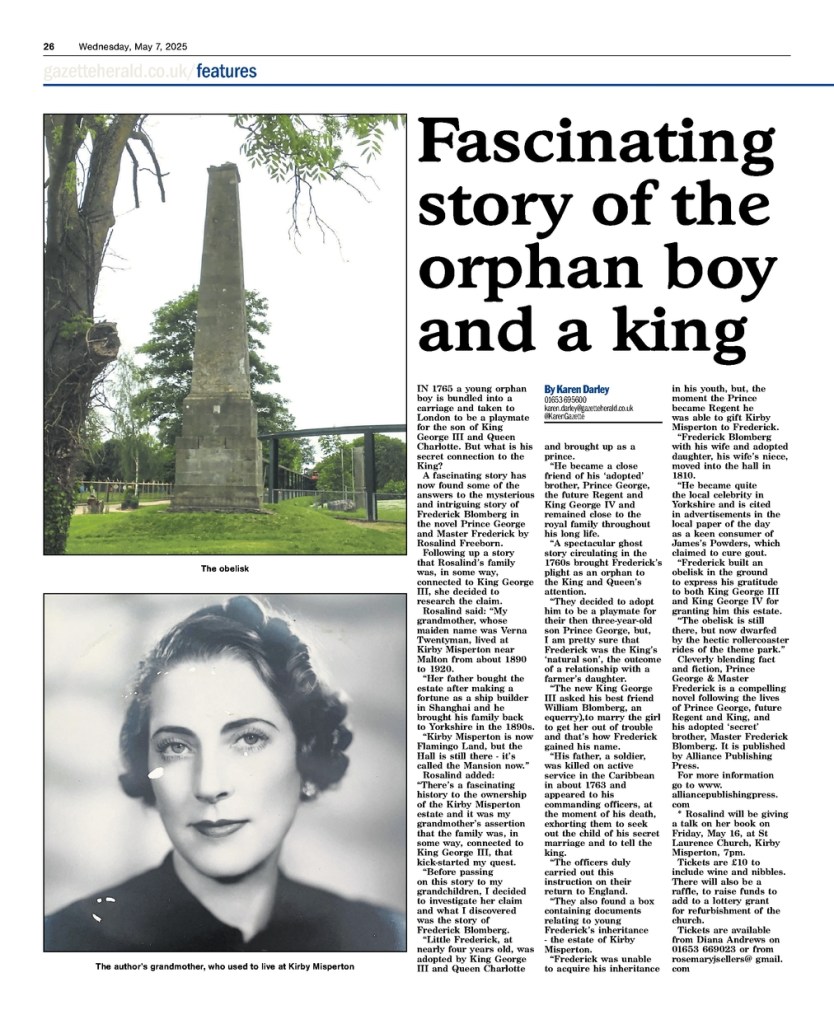
I was thrilled when the local paper, the Malton Gazette and Herald, gave it a front cover mention and double page spread in anticipation of my visit.
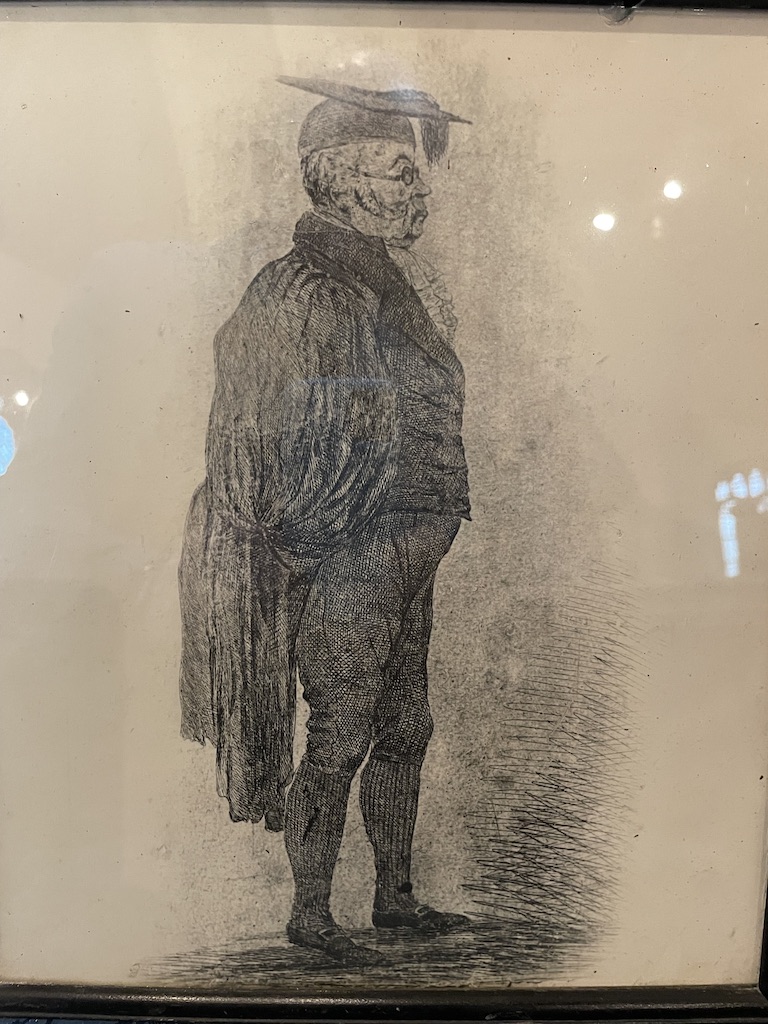
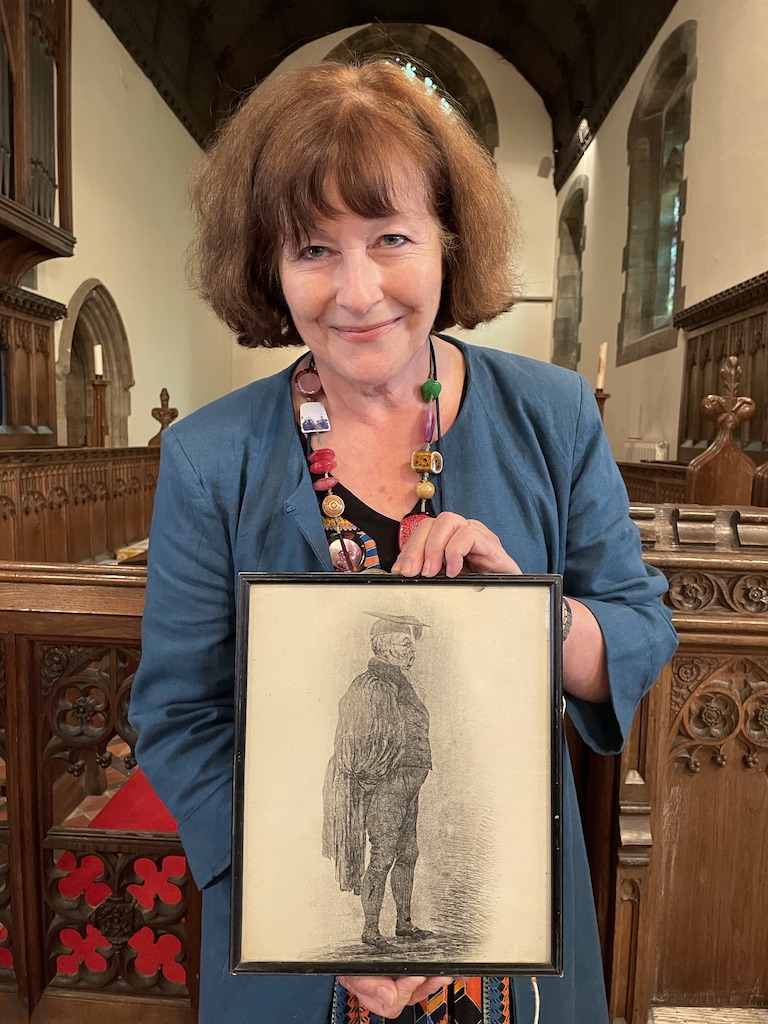
There was a great turnout for the talk on 16th May but, for me, the most exciting part of the evening was being shown a picture of Frederick Blomberg as an adult. Apparently this image had been hanging on the vestry wall for years and no body knew who it was or had taken it down to examine the back. On the reverse of the rather witty depiction of an academic in gown and mortarboard was an account of Frederick Blomberg’s life and a copy of his signature.
It’s quite a caricature image of the illustrious clergyman who had lived at Kirby Misperton. All through his youth Frederick had hoped to inherit this estate in Yorkshire but proving his claim was very hard for him.
As he grew up, it became clear that Frederick needed a profession. So King George III sent him to Cambridge University to study Divinity, he was ordained and became a clergyman. The king then granted him several lucrative livings (parishes where he could gain an income and have a rectory or vicarage to live in). However, he had to wait until his half-brother, Prince George, became Prince Regent in 1810 and was able to finally grant him the Kirby Misperton estate. So, in 1811, Frederick Blomberg became the owner of the estate and was known as Baron Blomberg. He also took services in St Laurence’s Church and became quite the local celebrity. He built an obelisk in the grounds with a plaque which says ‘Thank you’ to King George III and Prince George, the Prince Regent, for granting him this land, ‘long estranged’.
While researching the book I had seen images of Frederick as a child, but never as an adult. Imagine my excitement at finally seeing a sketch of him, albeit dressed in academic robes rather than depicted as a clergyman.
You can read more about Prince George & Master Frederick in my novel. It’s available in print form, via Amazon, on Kindle and on Audible. Or you can order it through your local bookshop. Please do let me know if you enjoy reading my book. Or order a signed copy directly from my author website And if, you are interested in inviting me to give a talk about my book please do get in touch. May 2025
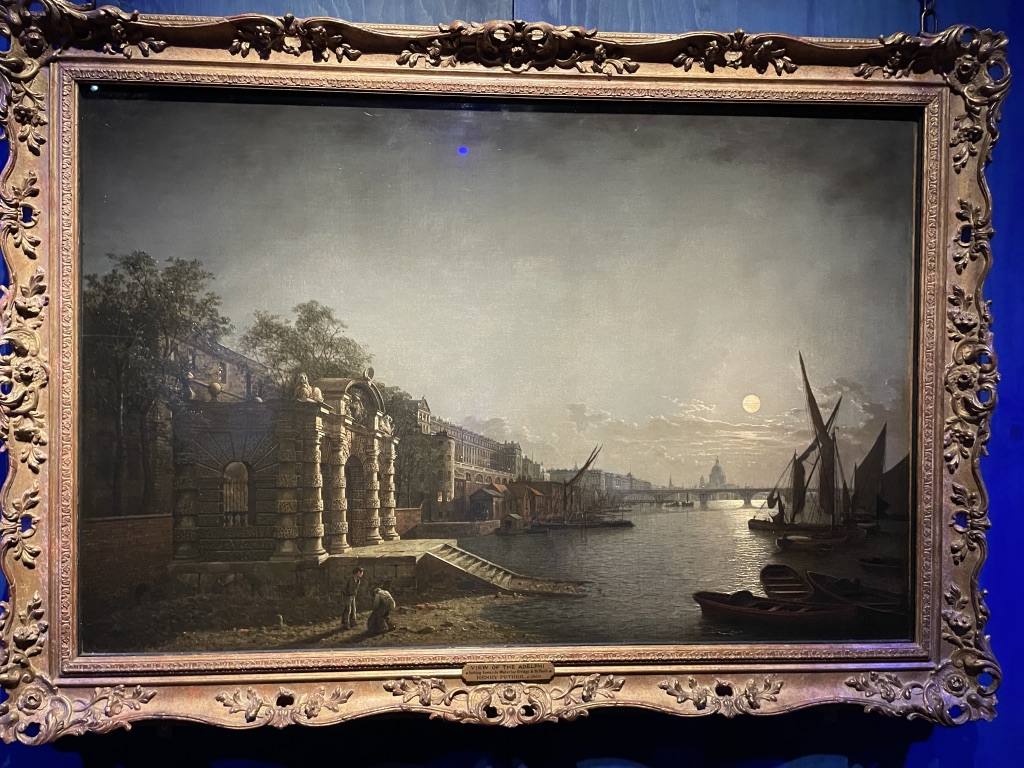
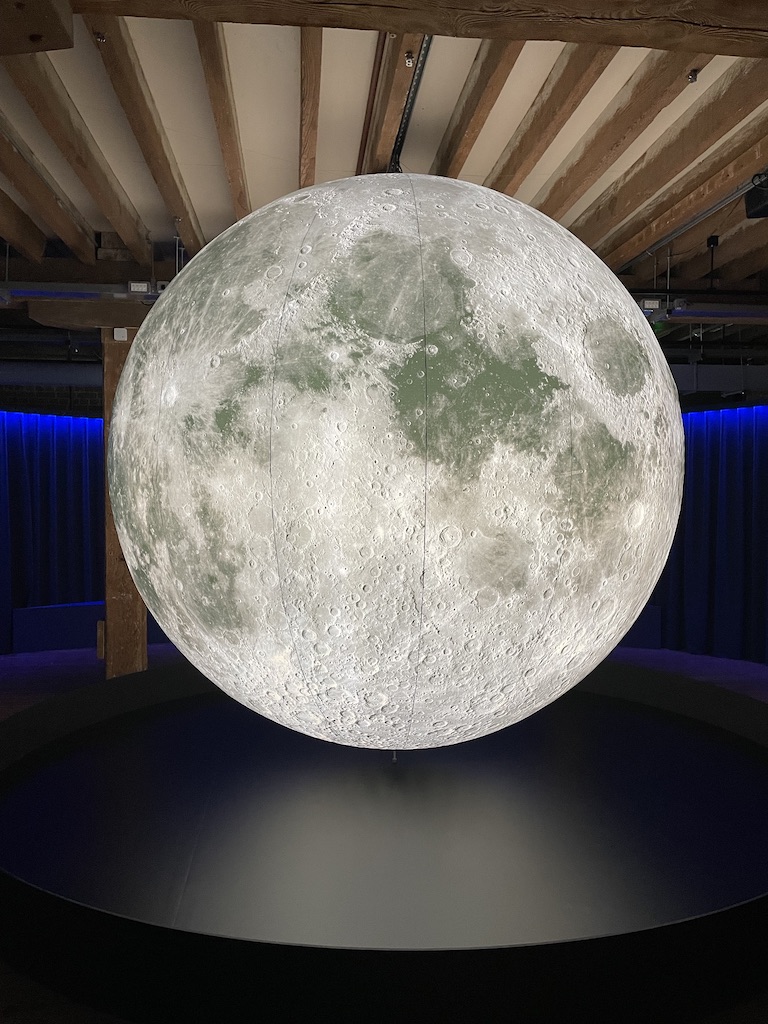
The exhibition opens with this spectacular painting by Henry Pether (around 1850) featuring mudlarkers searching the foreshore near York Water Gate, the Strand, by moonlight. Anyone living near the river will be aware of the constant rise and fall of the tide which is ordained by the moon. And there’s a fabulous sculpture of The Moon which you can circle, and peer at the extraordinary pitted surface.
You need a licence to be a mudlarker, along with sturdy shoes, waterproof clothes and a beady eye to spot potential treasure with in the mud of the river. It’s astonishing that every low tide will reveal items dropped, lost or hidden in the Thames. These pieces vary from the really ancient, pre-historic tools and items, jewels and coins, up to contemporary objects thought lost for ever.
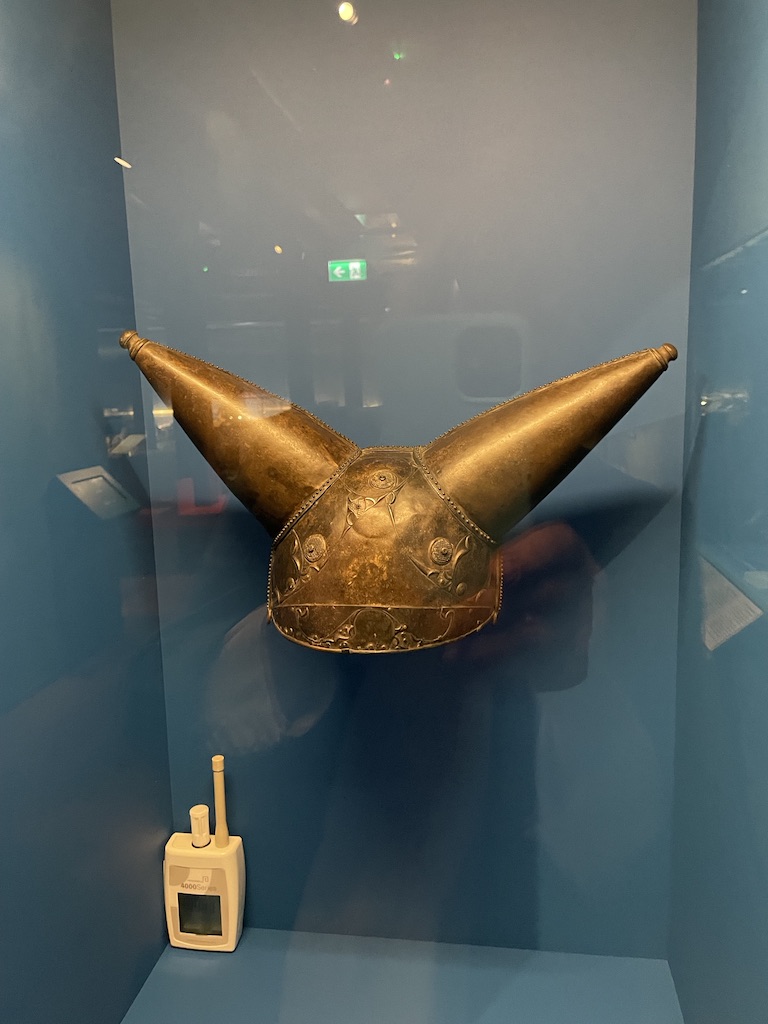
Above is a selection of figurines showing different gods and godesses from Roman times. They might have been offerings – the Romans revered water – or accidentally dropped into the river. And on the right is The Waterloo Helmet from 150 BCE. It’s the only Iron Age helmet found in southern England and the only one with horns ever found in Europe.
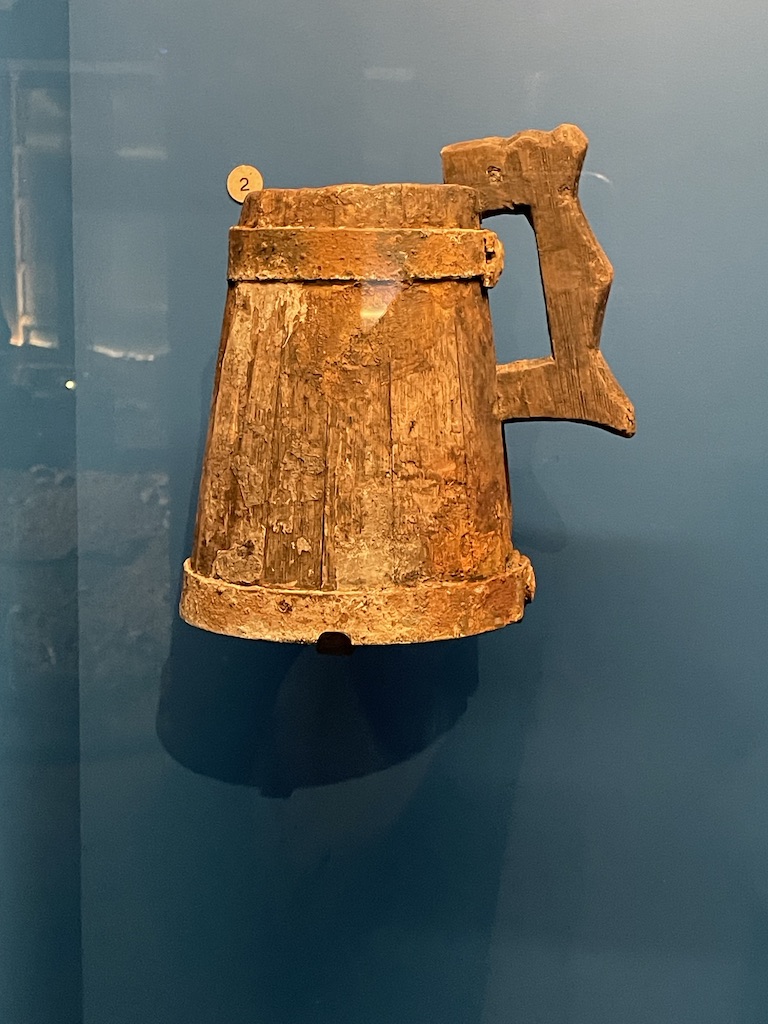
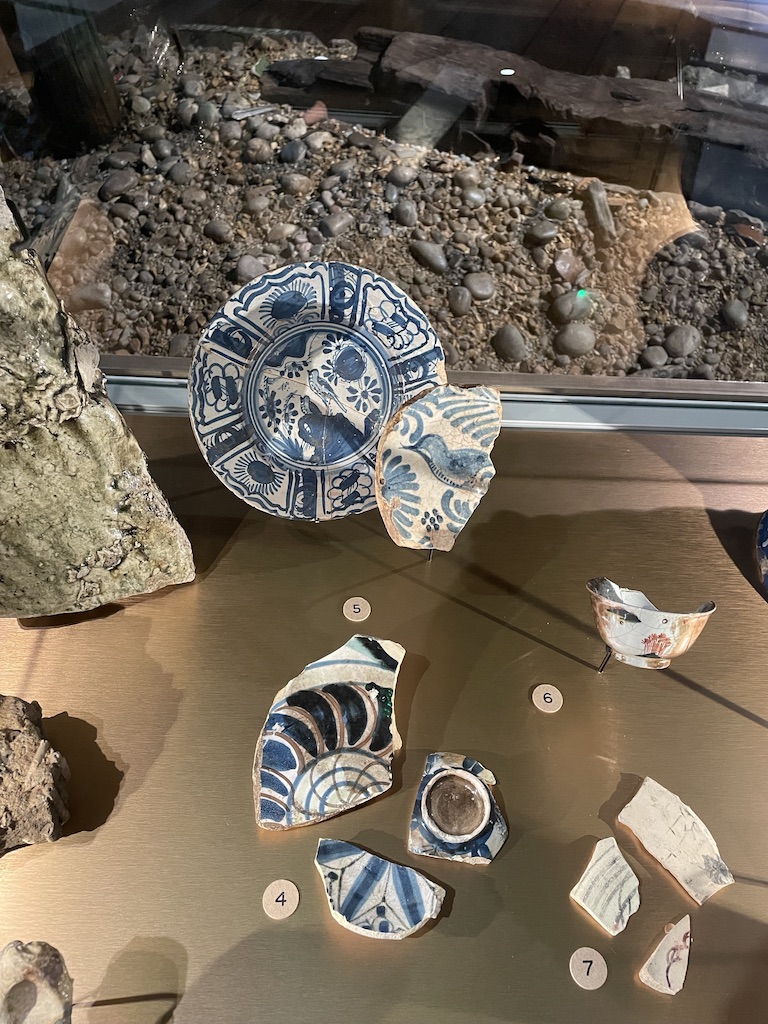
I do love seeing the everyday items which have been fished out. This wooden tankard must have been a thrilling find. It holds three pints – great for a very thirsty person, most likely a sailor. And it’s great to see these Delftware pots and dishes, even in fragments, giving you an idea of the household crockery in use from the mid 1500s to the 1800s.
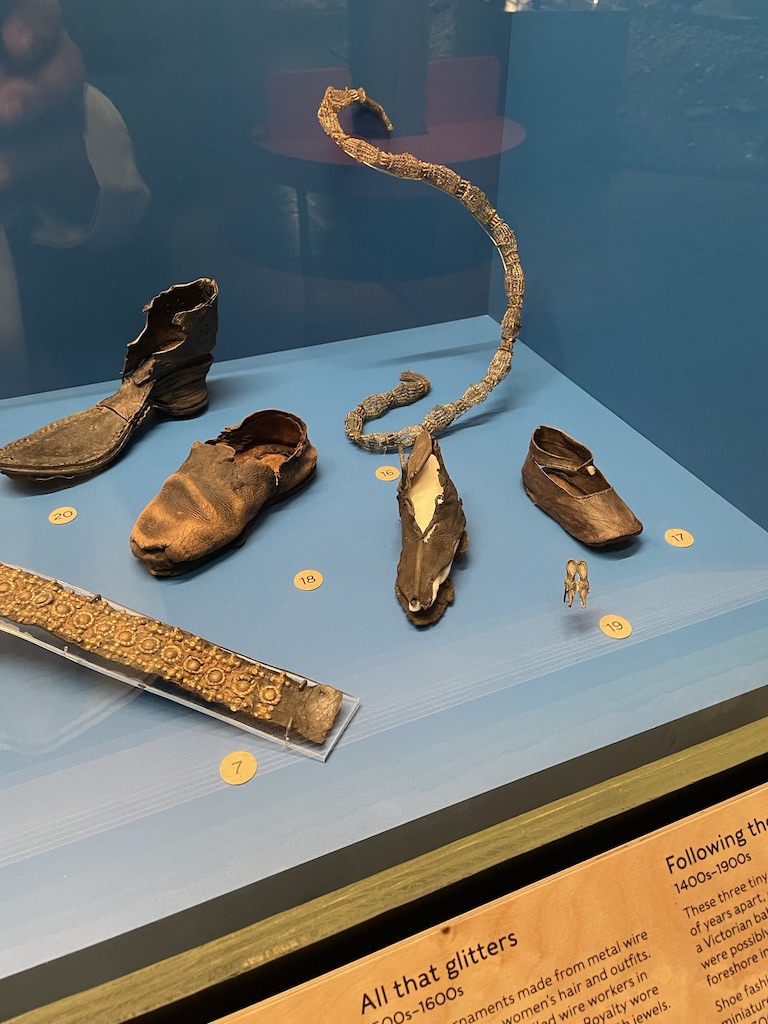
There’s something very touching about seeing children’s shoes. They have survived the centuries because the mud of the Thames is ‘anaerobic’ meaning it preserves the material from oxygen and it does not decay.
Mudlarking has been going on for centuries. For many early mudlarkers it was the coal and wood which they wanted, rather than the ‘treasure’.
The layout of the exhibition is fascinating. A very eye-catching recreation of the Thames foreshore has been recreated throughout, giving viewers an idea of how complicated it can be to sift through the detritus of the river and use just your eyes and experience to spot and uncover something exciting.
It’s a very stimulating and moving show. And impressive that so many of the items were discovered by dedicated mudlarkers and donated to the Museum of London so that they can be viewed and admired but visitors.
The exhibition at the London Museum Docklands is on until 1st March 2026. Well worth adding to your ‘must-see’ list!
Prince George & Master Frederick (by Rosalind Freeborn) will be published by Alliance Publishing Press on 30th January 2025. It will be available on Amazon and through bookshops. You can also buy it directly from me on my author website. The cost is £15 per copy (plus £5.00 postage in the UK) and I’ll send you a signed copy.
In 1765, Frederick Blomberg a four-year-old orphan, is bundled into a carriage with a woman he does not know and taken to the royal palace at Richmond to be a playmate for the three-year-old Prince George. But why have King George III and Queen Charlotte adopted this child and what is his secret connection to the king?
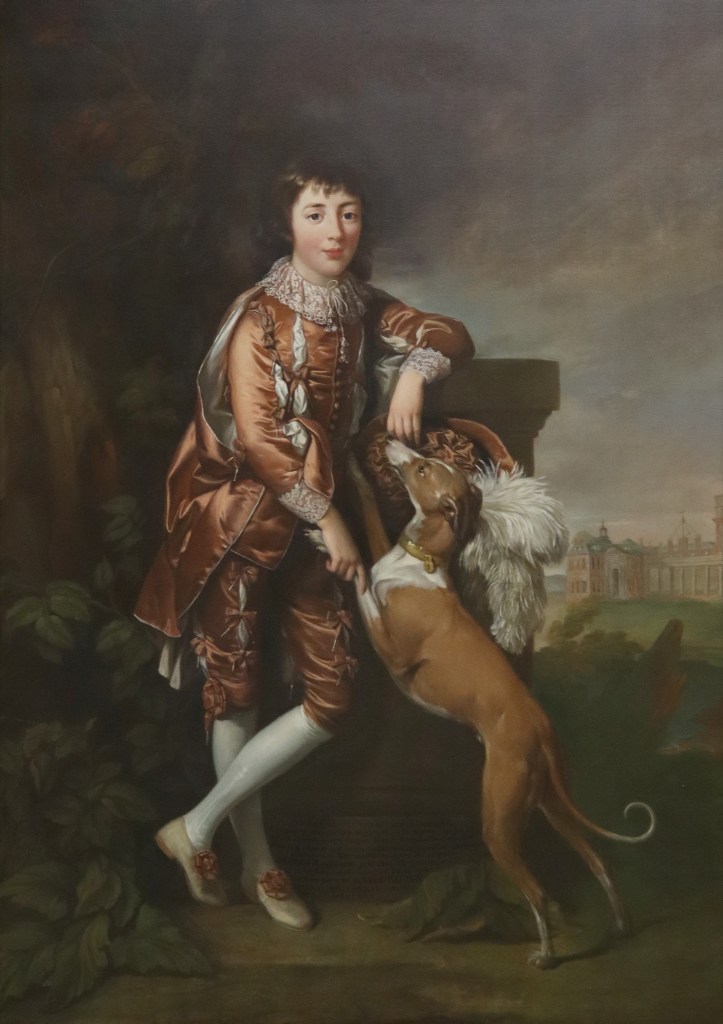
I was prompted to write this book after investigating a family story suggesting that there was a connection (on my mother’s side) with King George III. Researching this story opened up the most fascinating life-story of Frederick Blomberg. He’s a character who is occasionally referenced in history books and royal biographies but his story has never been told before. Yet, when you look at the portrait by court artist, Richard Brompton, which was commissioned by Queen Charlotte, it’s clear that he was an important child in the household.
Prince George & Master Frederick is a work of fiction but it is based on real events, charting the lives of real people with just a few characters added for dramatic impact.
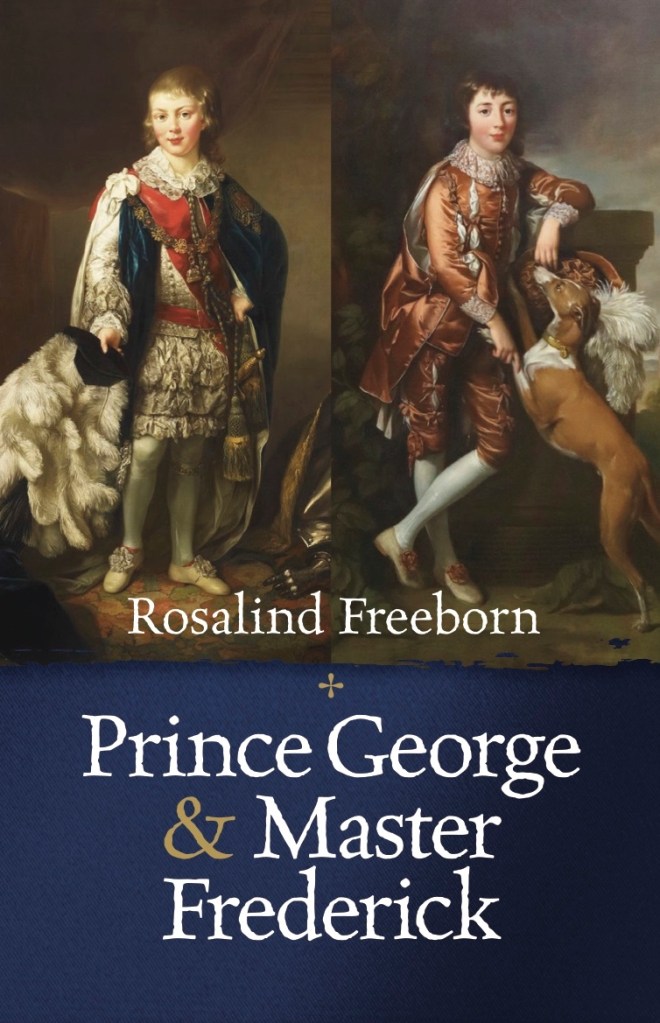
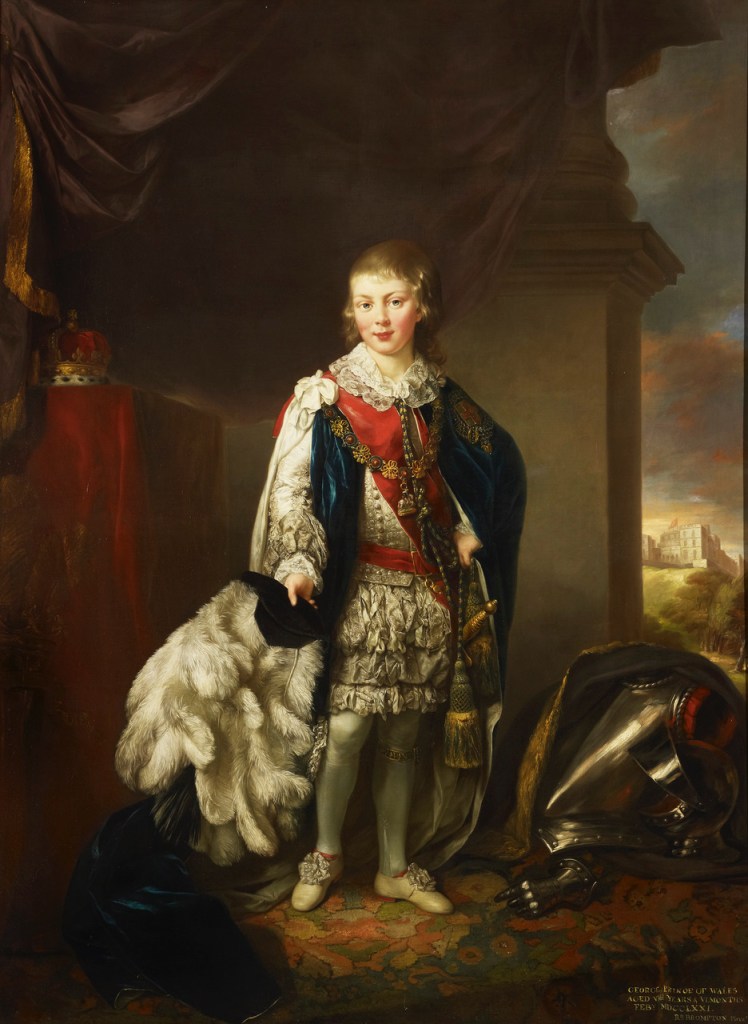
The two portraits which appear on the book jacket are by Richard Brompton. They feature the same plinth as prop and both boys are wearing the same pom-pom shoes. The portrait of Prince George, wearing garter robes, features Windsor Castle in the background (the painting now hangs in the 1844 Room at Buckingham Palace). Frederick Blomberg, in a fabulous rust-coloured suit, with greyhound, features Buckingham House in the background. Buckingham House was later remodelled and became Buckingham Palace.
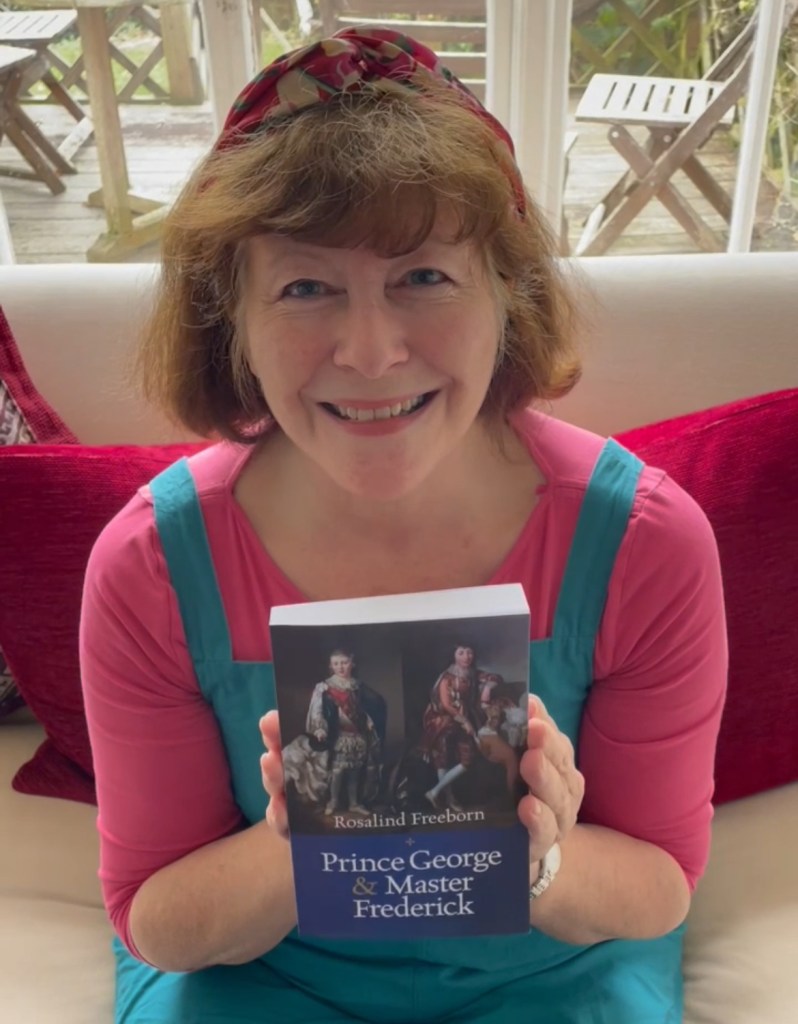
It’s very exciting to have some advance copies of the book. I look forward to the moment it is published on 30th January 2025.












 Paper Places