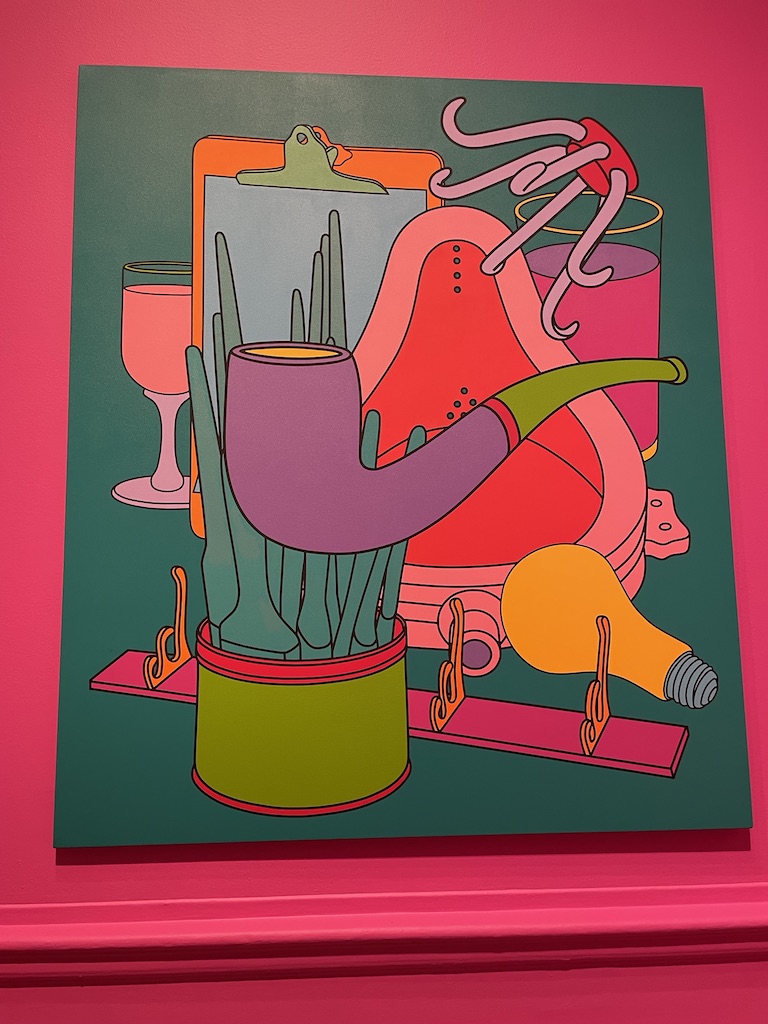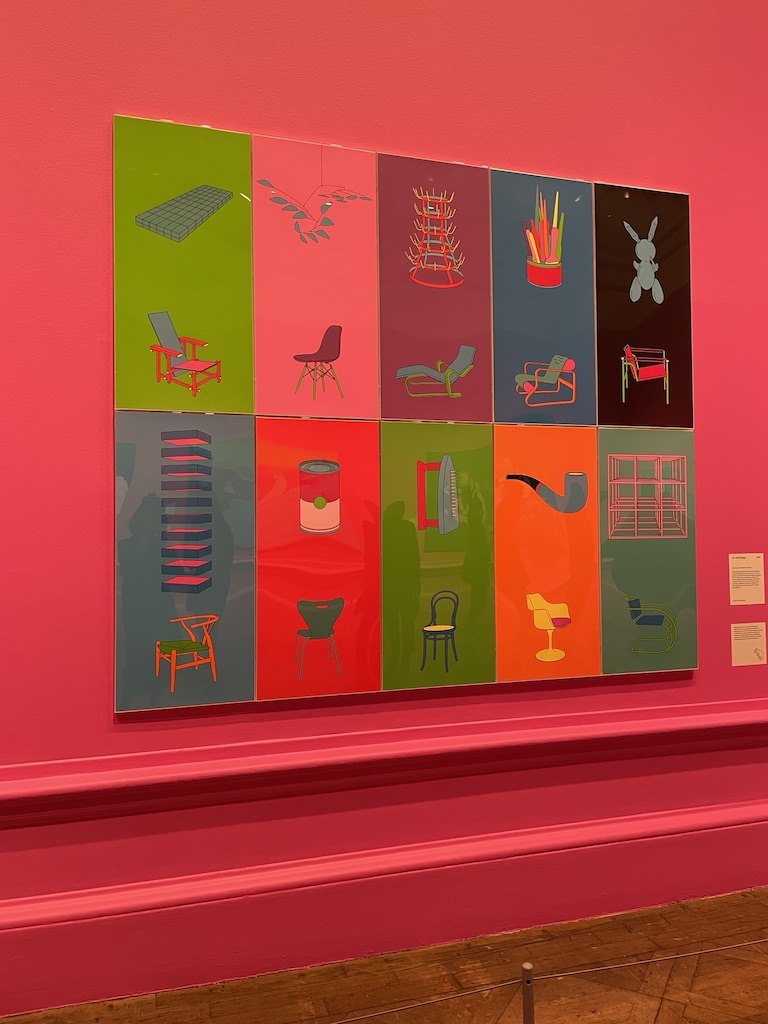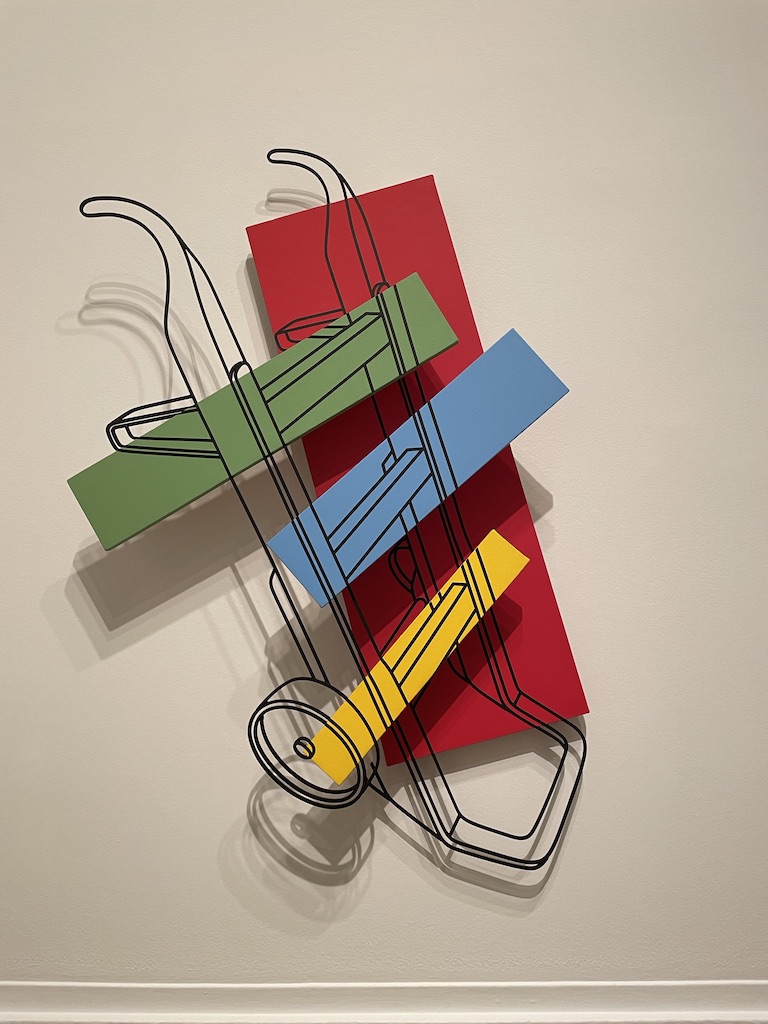
Michael Craig-Martin at the Royal Academy. There’s an ‘Alice in Wonderland’ feel to this exhibition where everyday objects, graphically outlined and painted with eye-popping colours are celebrated on canvas, as wall-sculpture, digital art and drawings. Astounding.

I wasn’t sure I was going to like this exhibition of work by Michael Craig-Martin but I’m happy to report that it was very enjoyable. I tend to be drawn to a painterly painting, with plentiful brushstrokes and evidence of the artist’s hand at work and I wasn’t sure that his very graphic, almost cartoon-like style might not appeal to me. But it just goes to show that you need to wander around an exhibition with an open mind and be prepared to reassess any preconceived ideas.

Loved the hot, bright colours the curators have chosen to set off these works. The celebration of ‘ordinary’ objects is great fun. Once you look beyond the intense colours and the strong outlines, the composition is thoughtful and the subjects are intriguing.

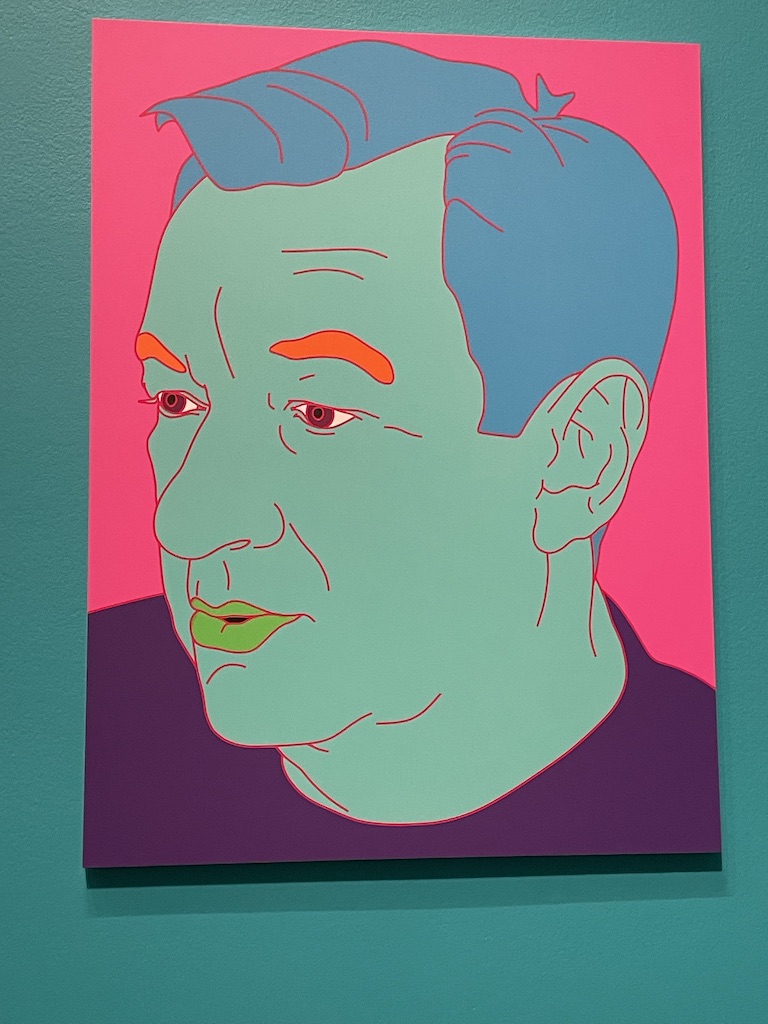
Above: an example of Craig-Martin’s interpretation of old masters, reducing themto strong graphic shapes with bold colours. On the right is a self-portrait.

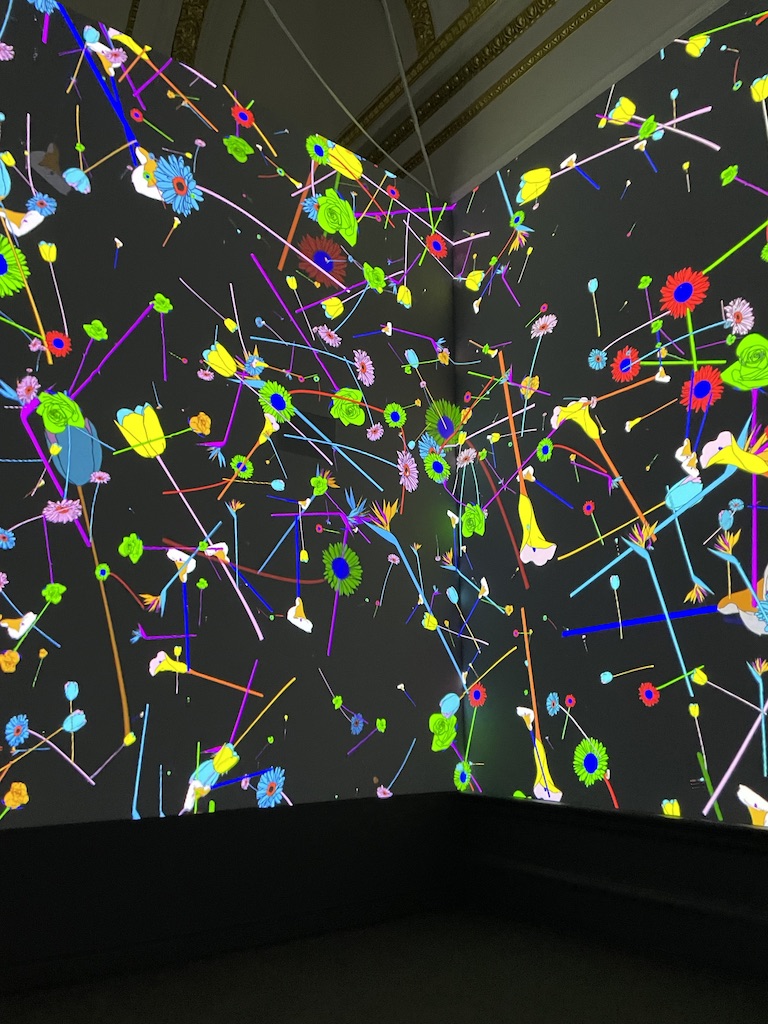
I really enjoyed the Digital creation entitled Cosmos – an immersive film with everyday objects flying across the walls, balls bouncing, musical instruments barrelling across the space in time to an interesting plinky plonky music track. It did make me feel like Alice tumbling down the fictional rabbit hole, passing shelves of familiar objects, seeing life cascading past her as she drifted further down to Wonderland.

The exhibition features some of Michael Craig-Martin’s early work too. Experiments with form, balance and conceptual ideas. I really liked the wonky shelf with the milk bottles.

And I was also impressed by the wall sculptures which are an interesting mix of his drawings combined with blocks of colour. Also, I was fascinated to learn that it was the discovery of a special black crepe tape, used in electronics, which he used to create the very uniform outline shapes.

Interesting seeing an artist’s world where there is no shading, no deliberate 3D expression yet somehow the objects just explode from their surfaces. A very interesting exhibition. It’s on at the Royal Academy in London until 10th December 2024.

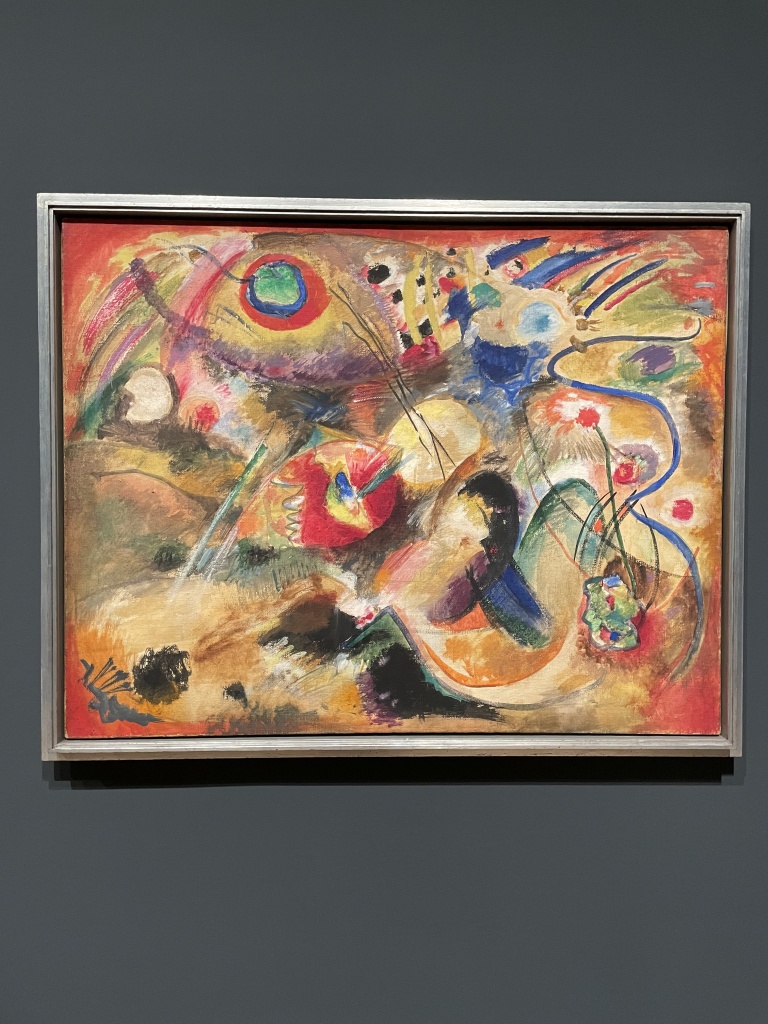
Expressionists and the artists who formed the Blue Rider movement in Germany in the early 1900s are having a moment at Tate Modern with a thrilling new exhibition of works by Kandinsky, Münter, Mark Klee and many others.

Above: Wassily Kandinsky, On the Theme of the Deluge 1913-14

If you like colour and bold ideas then this is a great exhibition to view. It’s amazing that each art movement seems to be built out a collection of artists who meet, encourage and feed off each other’s skills. In Munich in the early 1900s, a group of like-minded artists found each other and shared an interest in expressing their personal and spiritual ideas through bold, colourful painting. They called themselves The Blue Rider.

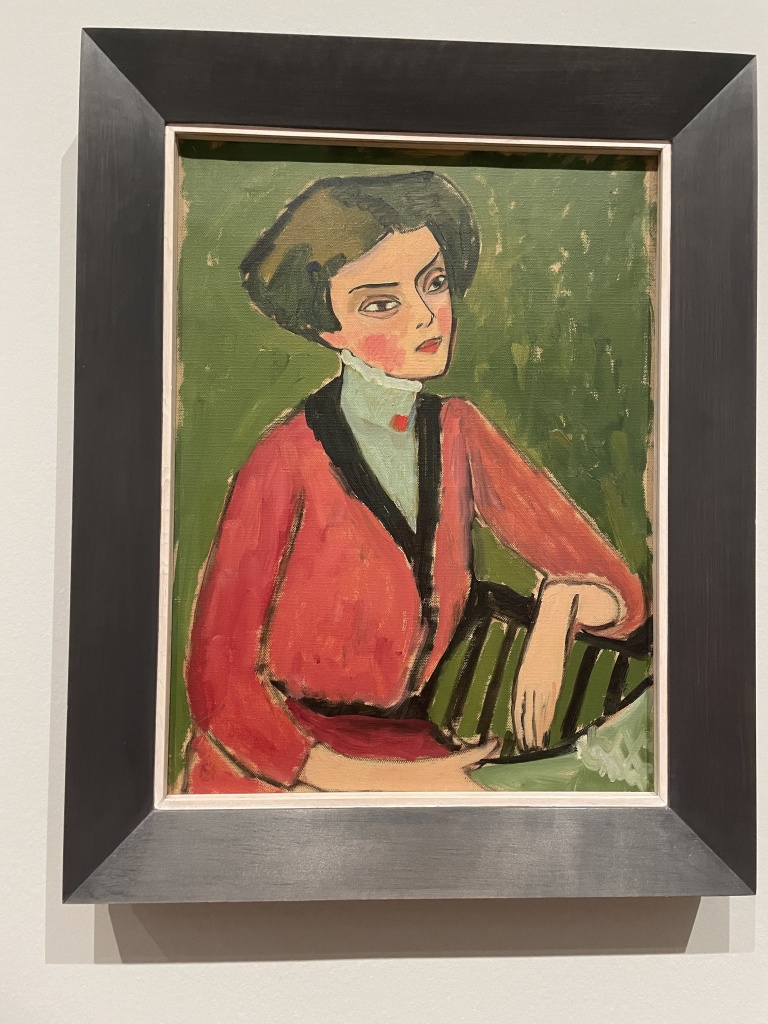
Above: top row: Gabriele Münter, portrait of Olga von Hartmann, Gabriele Munter, Portrait of Marianne von Werefkin, Elisabeth Epstein, self portrait, Bottom row: Marianne Werefkin, The Dancer, a portrait of Alexander Sacharoff (in drag!)

Just looking at these portraits, above, you get an idea of how radical and brave they were in the way they portrayed themselves and recorded each other. You could argue that the advent of photography had removed the need for accurate painted portraiture. What these images do is convey a sense of the person, the real personality and style, rather than bothering with an careful likeness. I love these pictures.

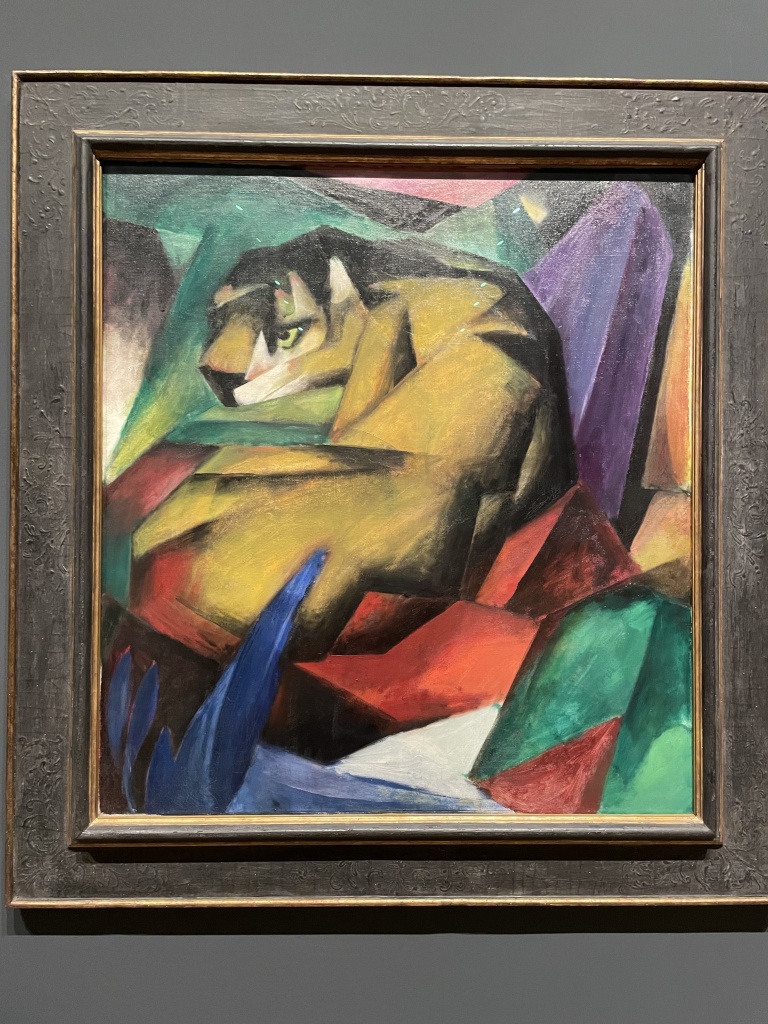
Above: a very fantastical Tiger by Franz Marc, 1912

This group, which formed members of the Blue Rider, were a mixture of married couples and free-thinking single men and women. It’s very satisfying to see that so many of the women in the group are given space for their works upon the walls and also celebrates their contribution to the collective.

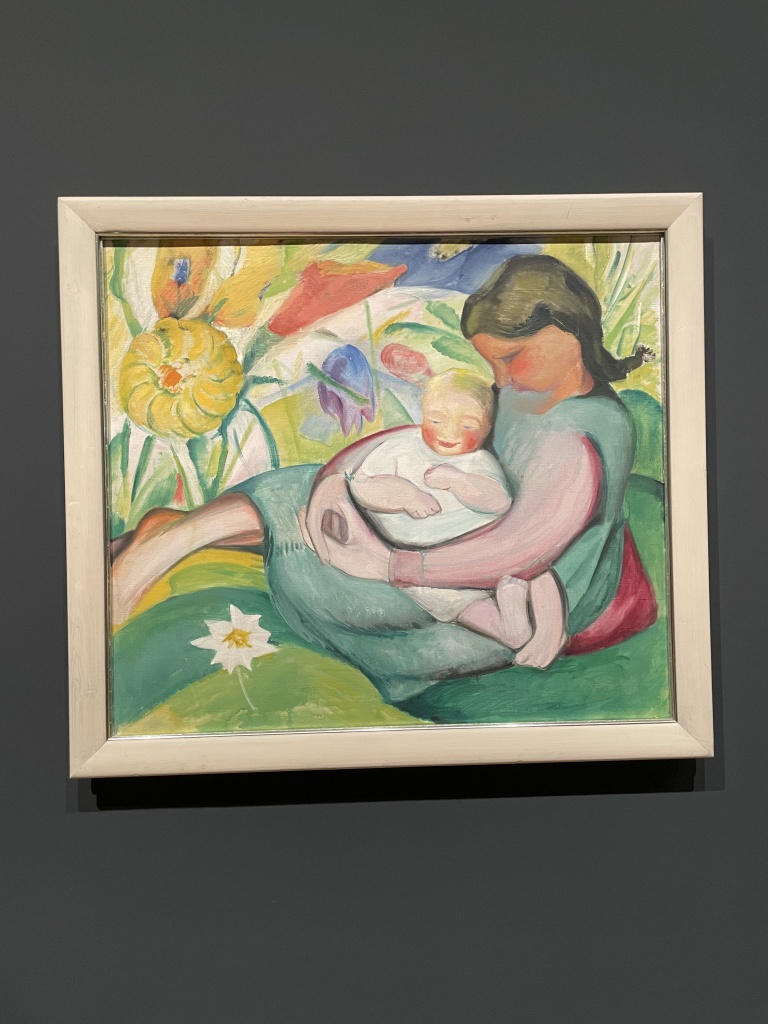
Above are three examples of women’s work. Left to right: Maria Frank-Mark, Girl with Toddler 1913, Gabriele Münter, Portrait of Marianne von Werefkin (also one of the female artists in the group) and Marianne von Werefkin’s Self-portrait from 1910

The colours are wonderful. I really liked this interior painting. My Dining Room, by Wassily Kandinsky, 1909. It looks as though it was done at high speed with black drawing with a brush and then flooded with bright colours. The atmosphere of the room is terrific.

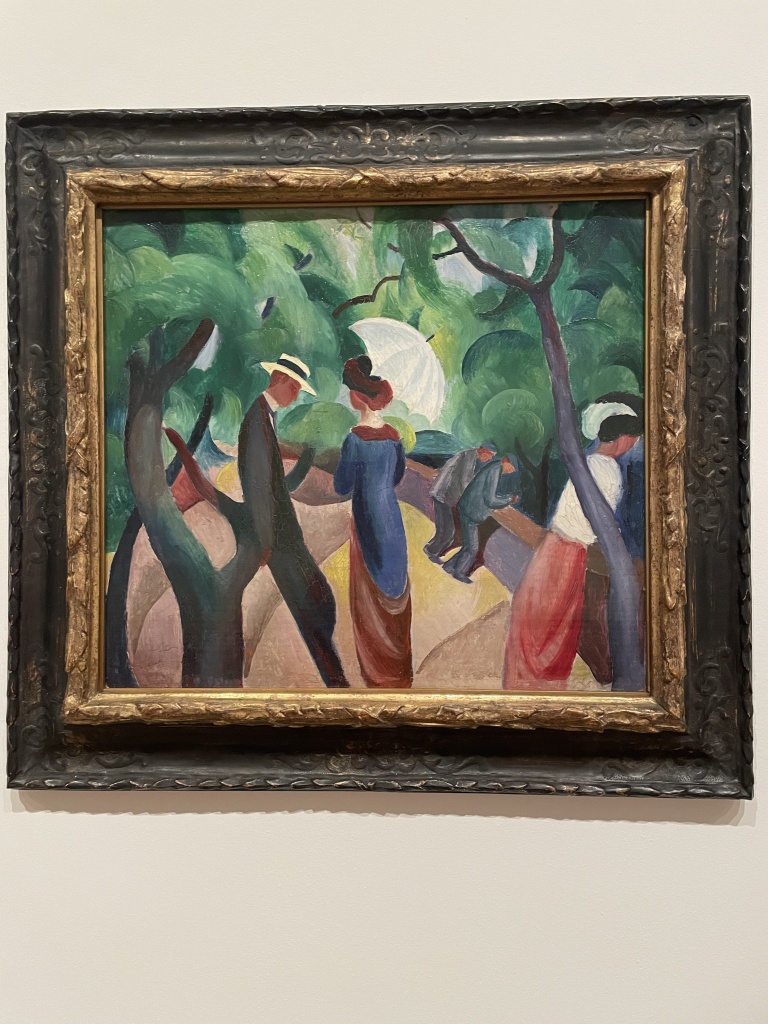
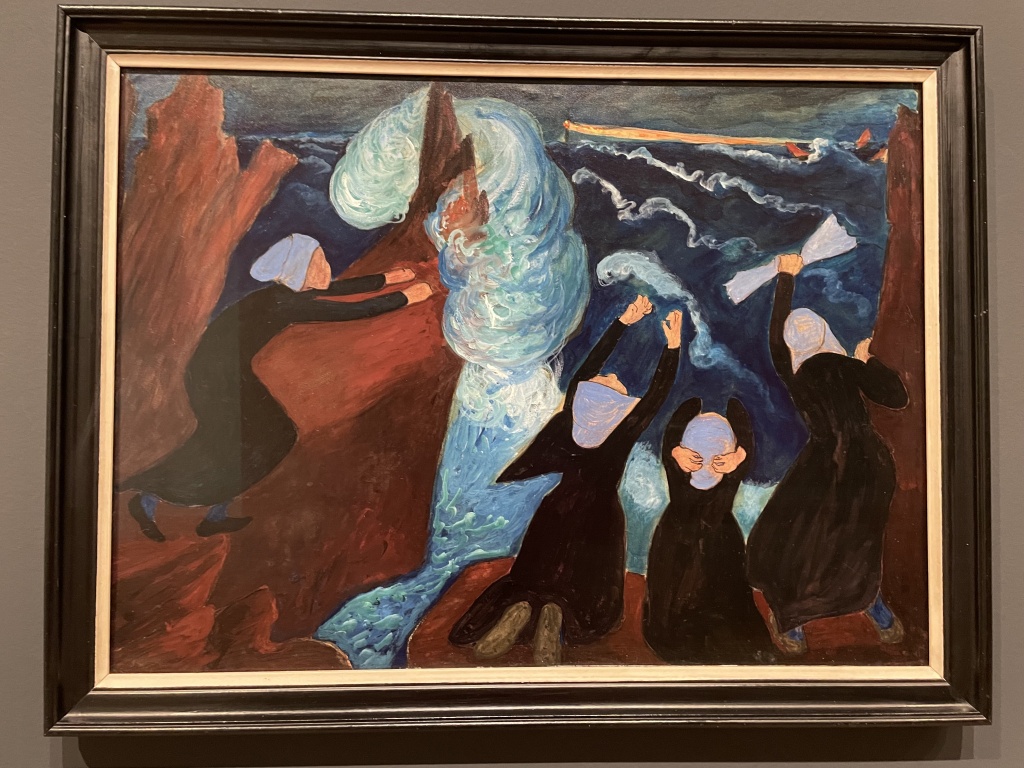
Above, the dark painting of The Skaters, is by Marianne Werefkin from 1911. Centre, Promenade by August Macke from 1913 and on the right is another by Marianne Werefking entitled The Storm. She was brilliant at conveying mysterious settings and threatening atmospheres.

And I’m going to give the last slot to Gabriele Münter and this portrait she painted of Marianne Werefkin. We have Münter to thank for the survival of so many of these works. During the Second World War, when so many of the artists were regarded as ‘degenerates’ and were also Jewish, Munter stored many of the paintings in her cellar and kept them safely hidden from Nazi threat until it was safe to reveal them and she donated them to the Städtische Galerie in the Lenbachhaus in Munich.

The exhibition is on until 20th October 2024.

The Time Is Always Now – a really enjoyable and thought-provoking exhibition at the National Portrait Gallery has opened. Curated by Ekow Eshun, this show gathers together the work of contemporary Black artists who depict the Black experience from their perspective. All the work was made in the last 20 years and captures the essence of the time we live in now yet mindful of the Black experience as it has been recorded in history, but from a White perspective.

Above is a painting by Titus Kaphar (2018) entitled Seeing Through Time which mingles the depiction of a Black page in an 18th century painting and a contemporary portrait.

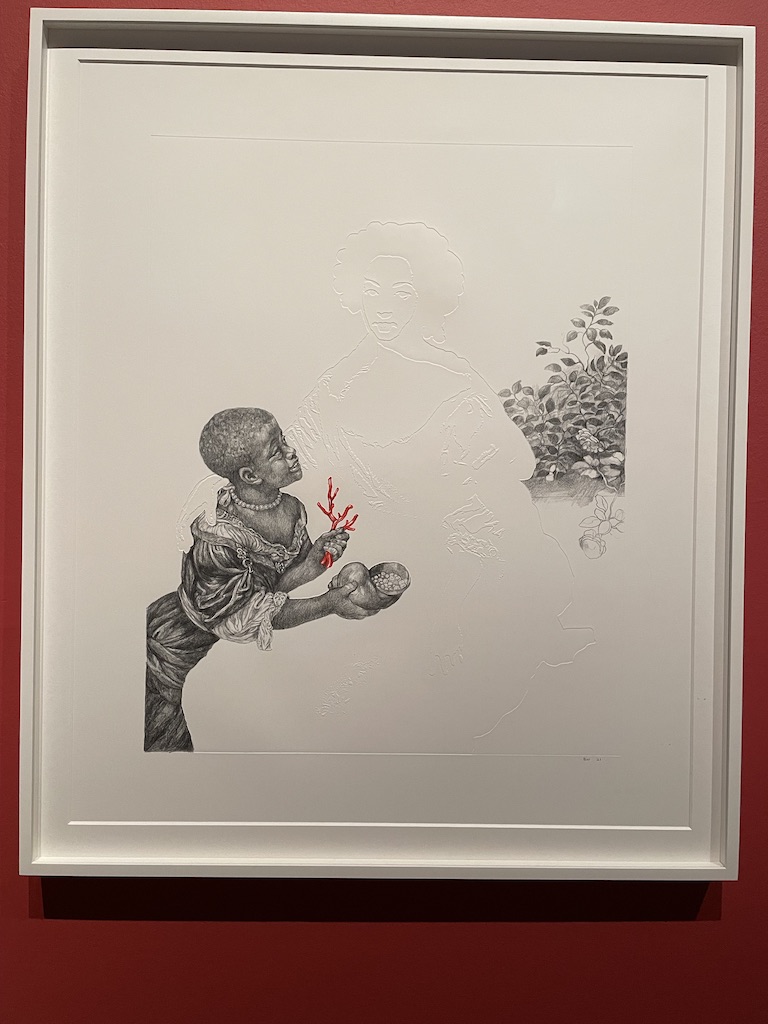
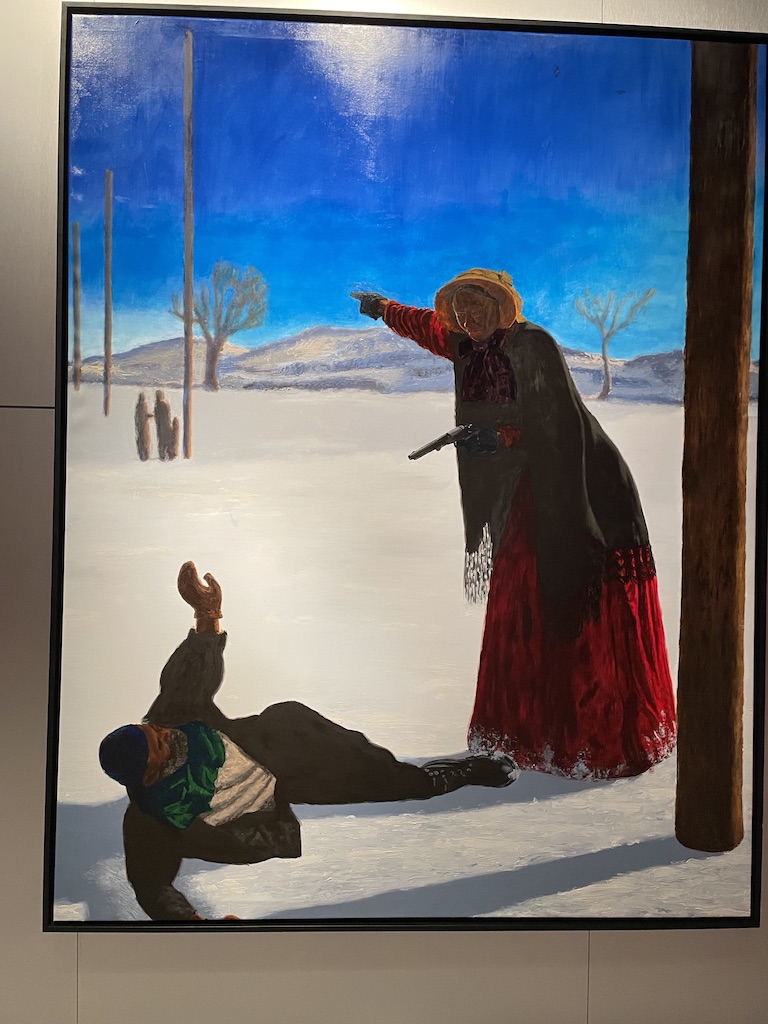
Above: Vanishing Point (Mignard) by Barbara Walker which depicts the black subject in an historical painting, done in graphite, while the rest of the picture is outlined in imprint. Middle: also by Barbara Walker called Marking the Moment, which highlights the presence of the black figure over the rest of the image in a period painting. And on the right is a dramatic painting by Kimathi Donkor who creates narrative paintings reimagining historical female characters from Africa and its diasporas. We see Harriet Tubman en route to Canada.

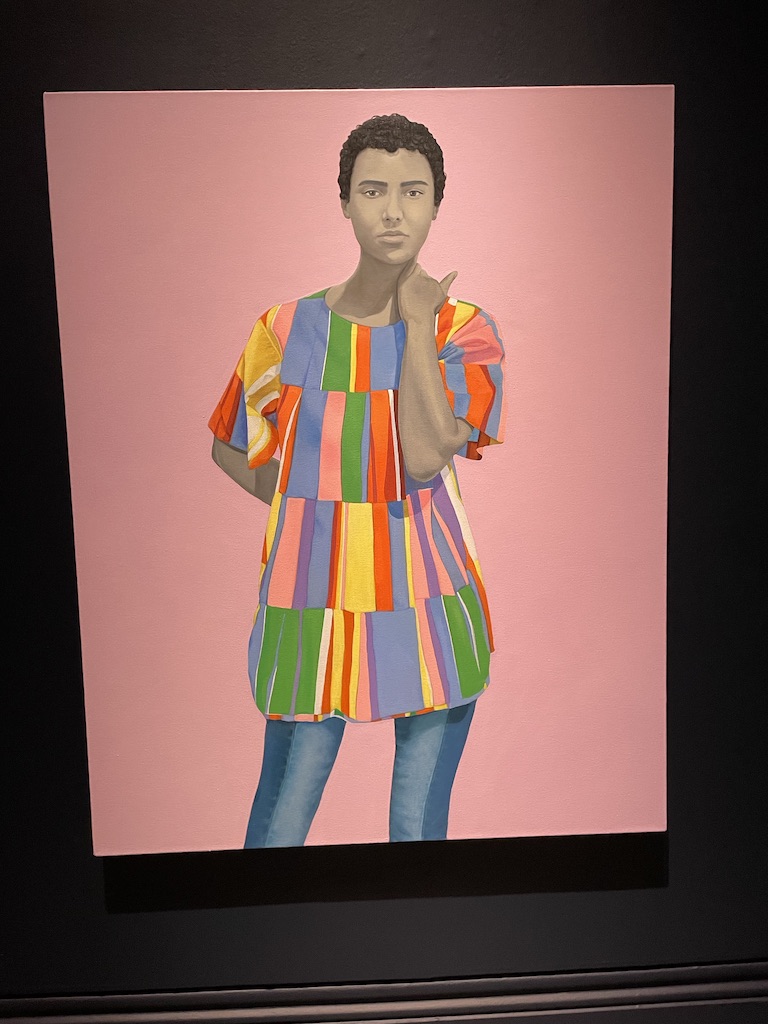
Above: The Captain and Mate by Lubaina Himid, The Adventuress Club Est. 1922 by Toyin Ojih Odutola and She was Learning to love moments, to love moments for themselves by Amy Sherald.

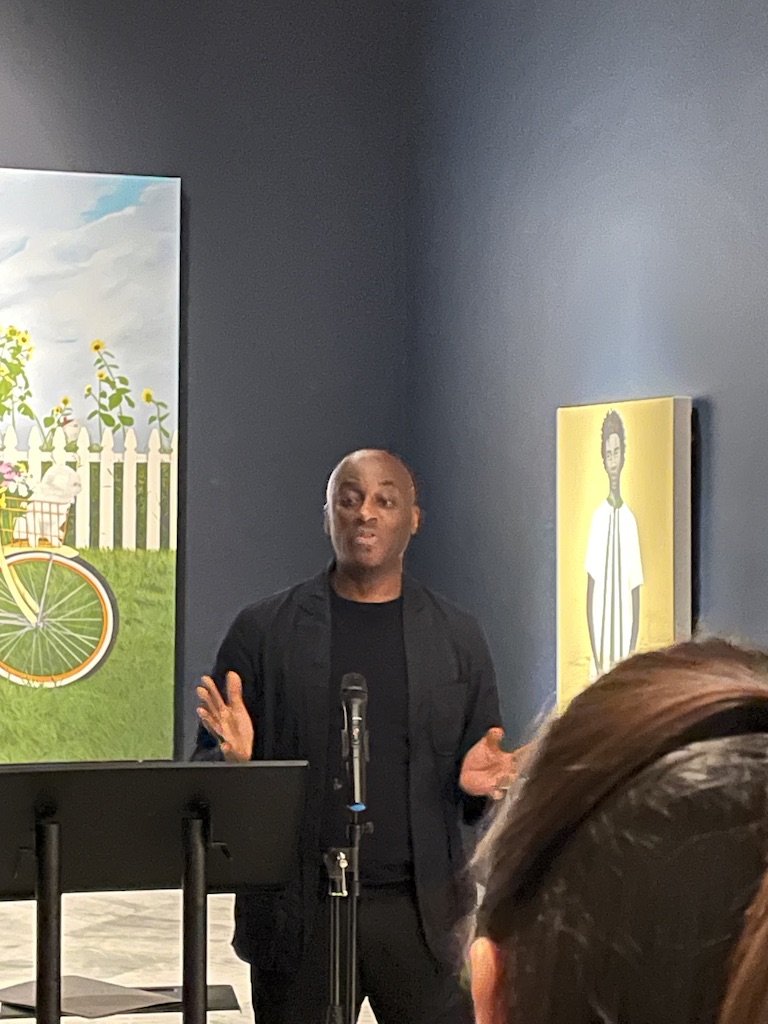
At the press preview it was very interesting to hear Ekow Eshun talk about the five years he has spent developing and curating this exhibition. He has assembled an impressive selection of leading African diasporic artists mainly working in the UK and USA. It’s high time that art depicting the Black experience is celebrated in a major gallery and the National Portrait Gallery has used its space in an imaginative and accessible way. They’re also making tickets available for just £5 to visitors under the age of 25.

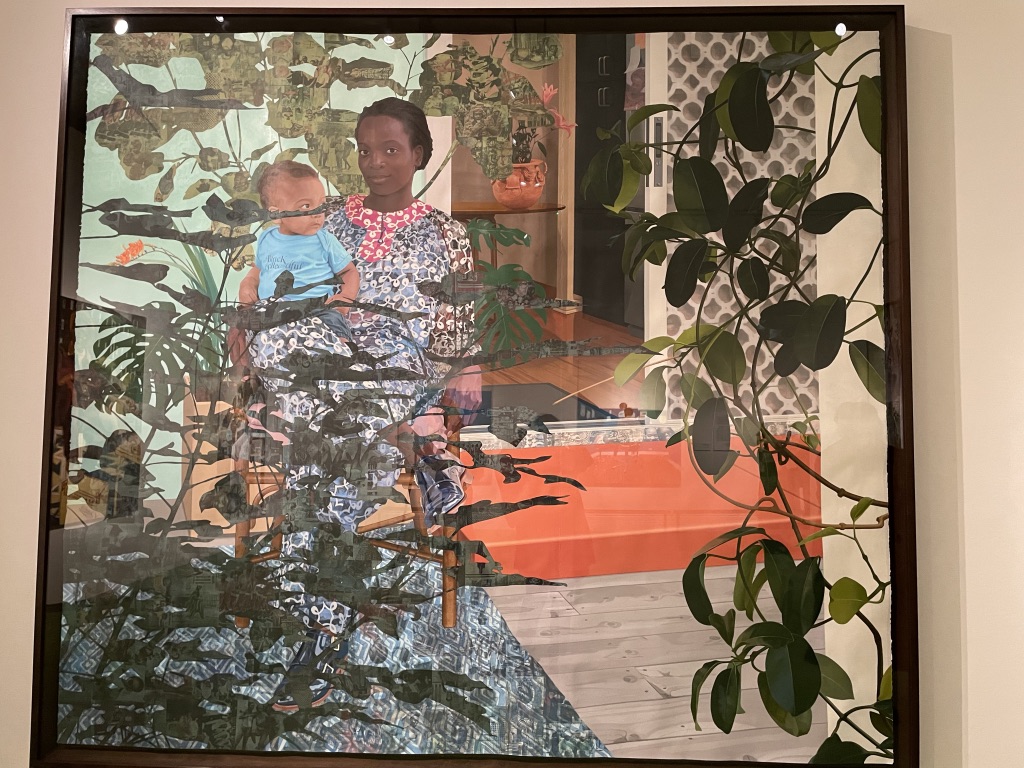
I was very drawn to this wonderfully layered painting by Njideka Akunyili Crosby which uses transfers, colour pencil, collage on paper and acrylic paint.

The Time Is Always Now will be at the National Portrait Gallery until 19th May 2024.