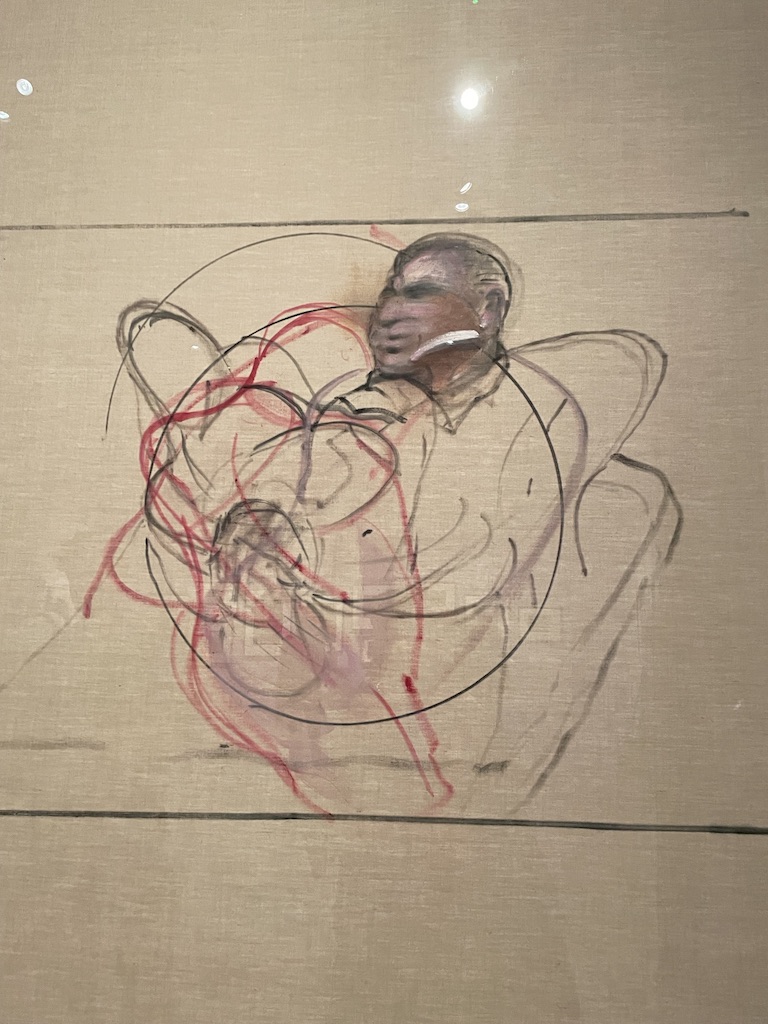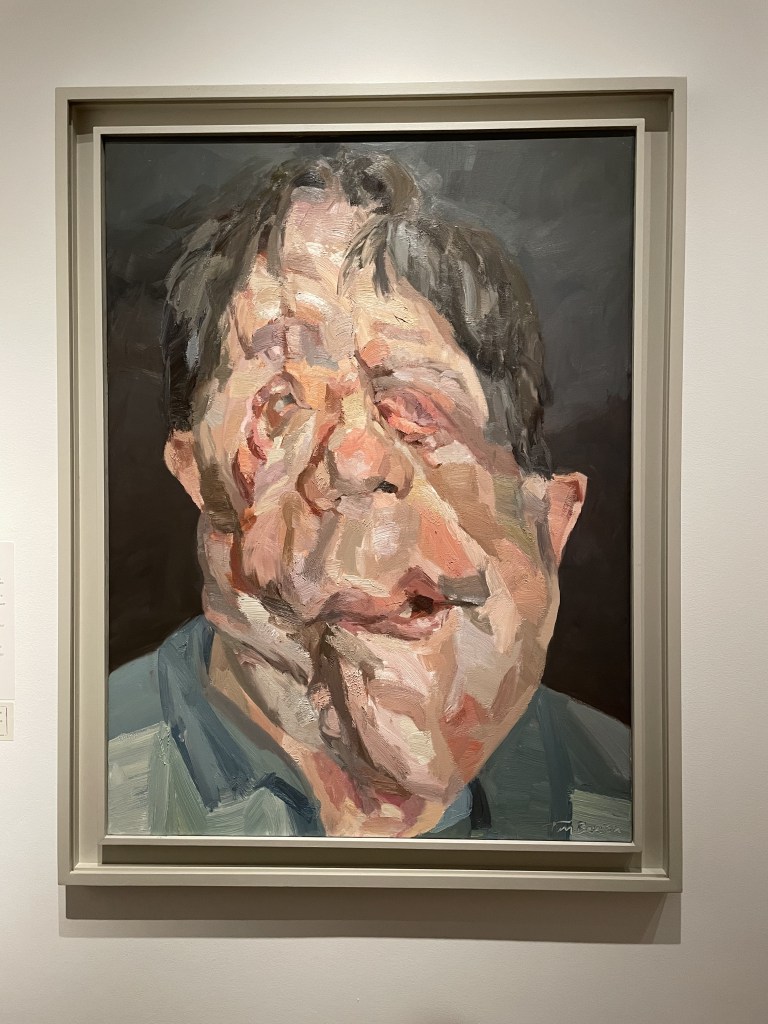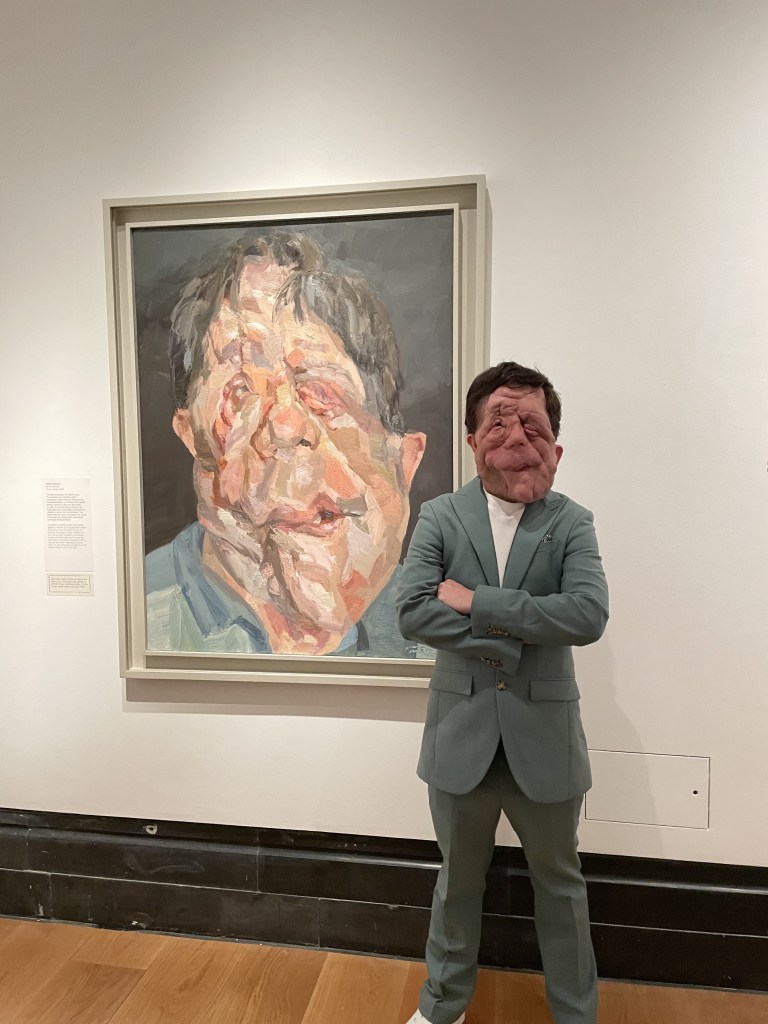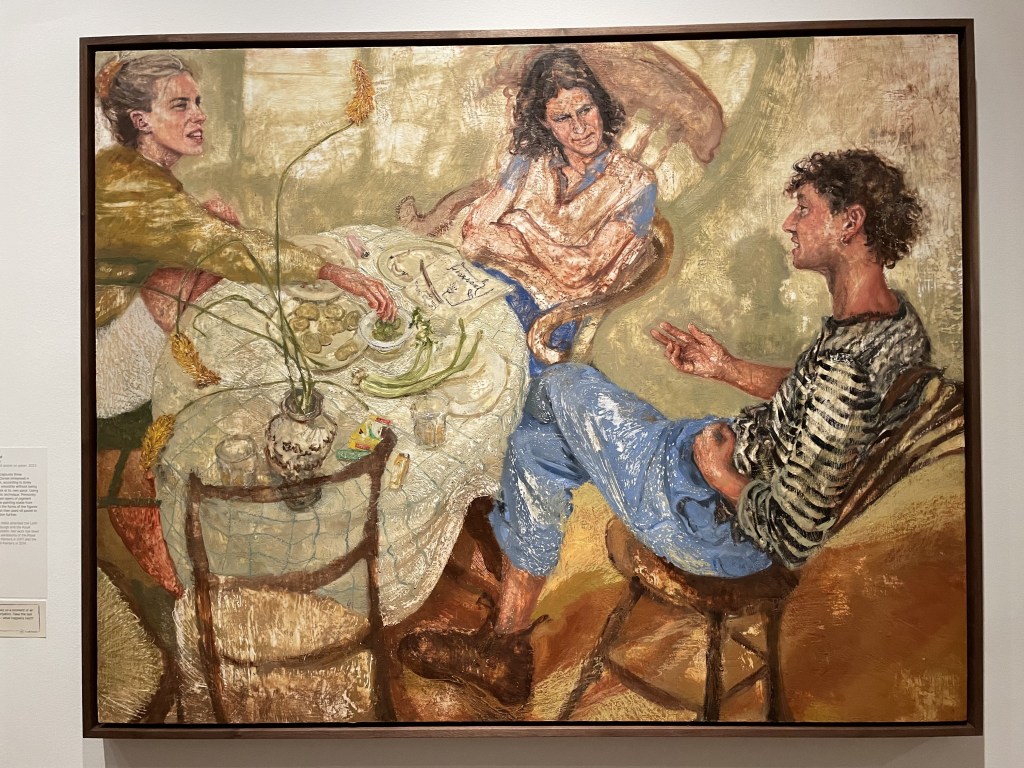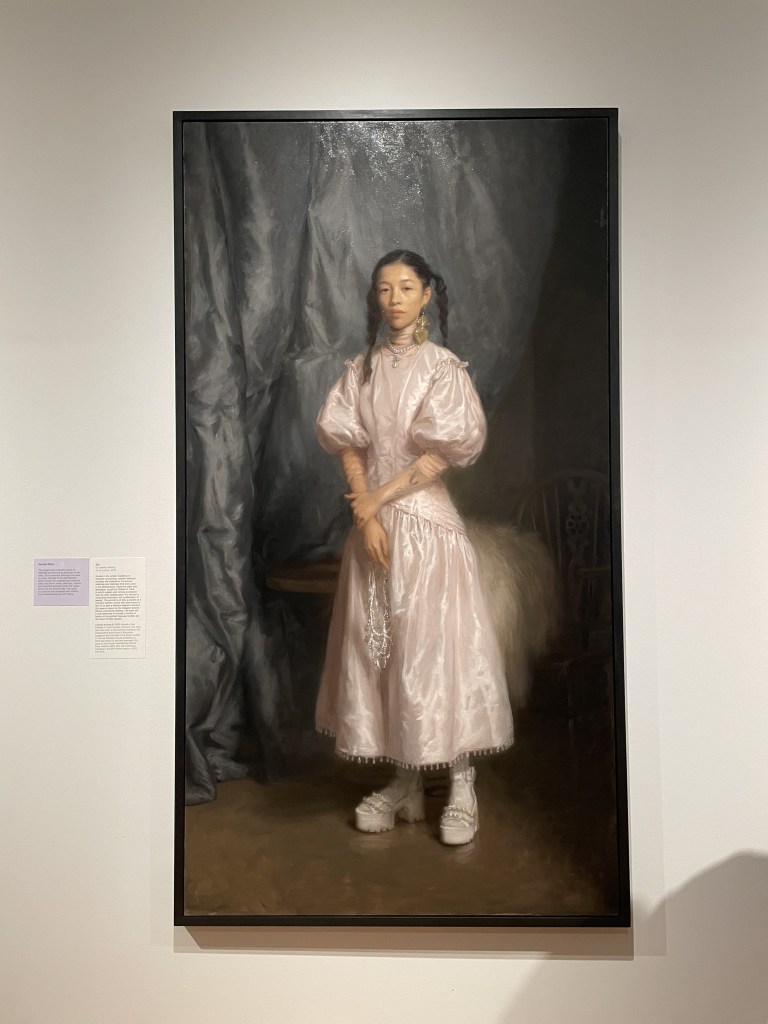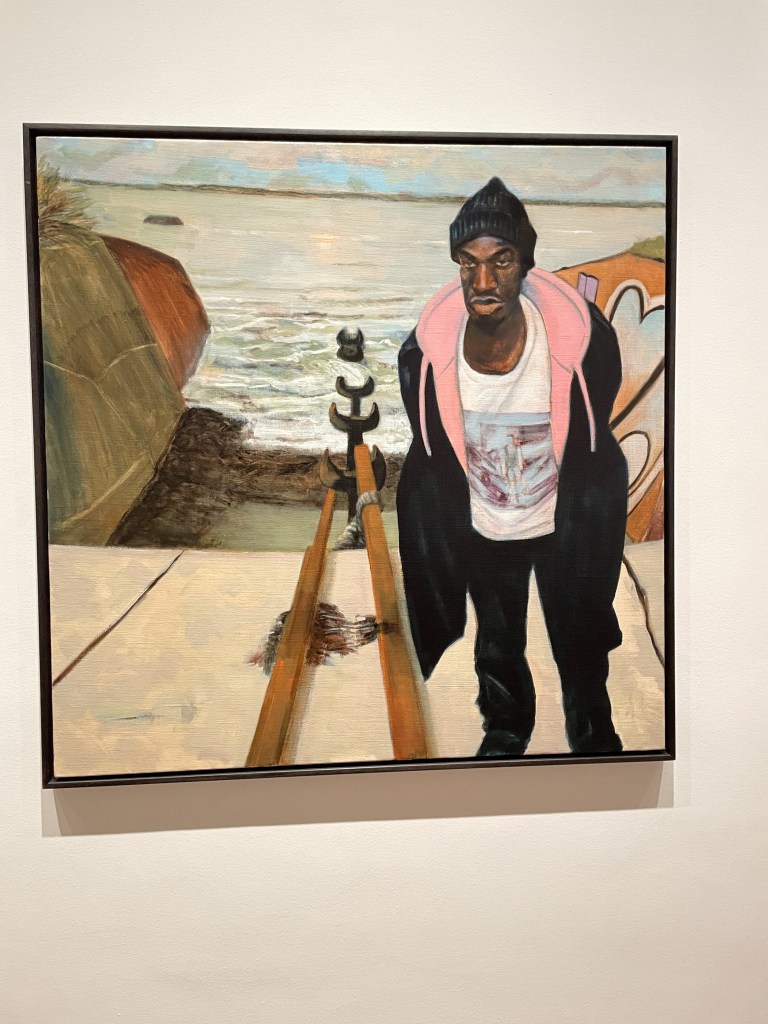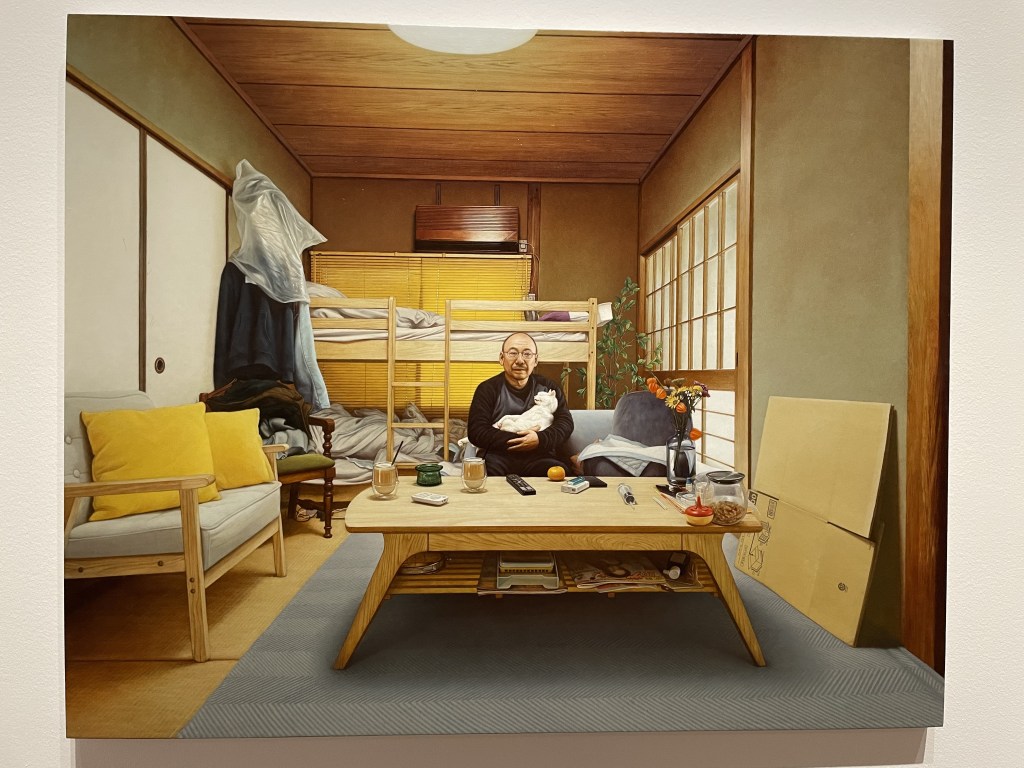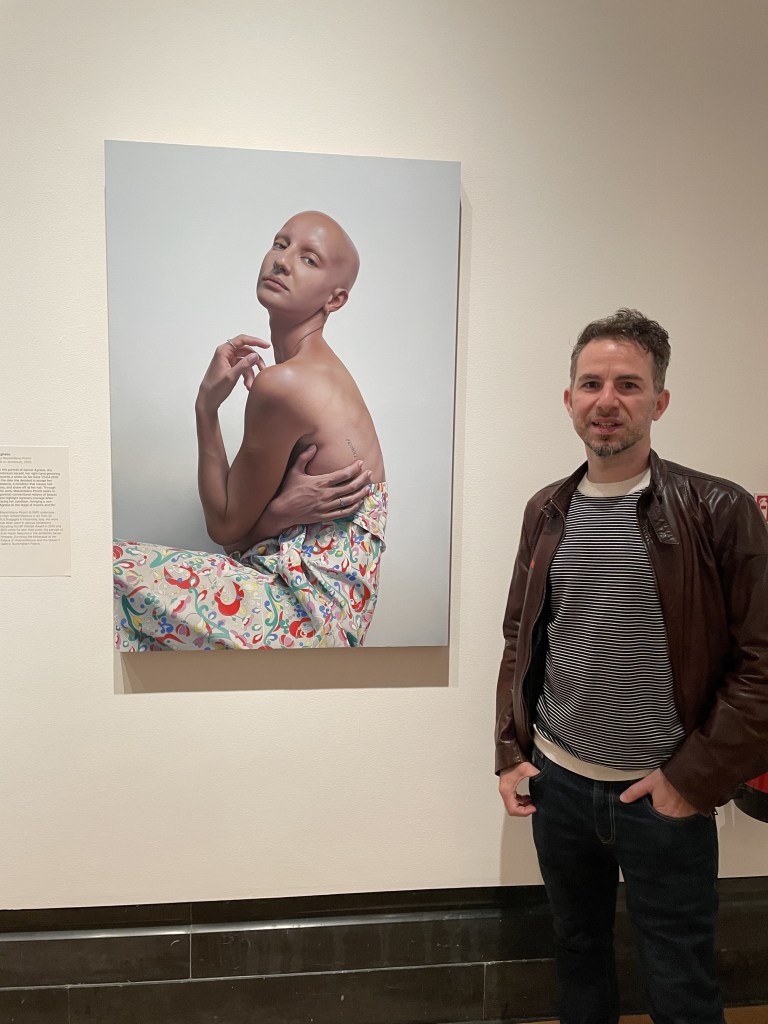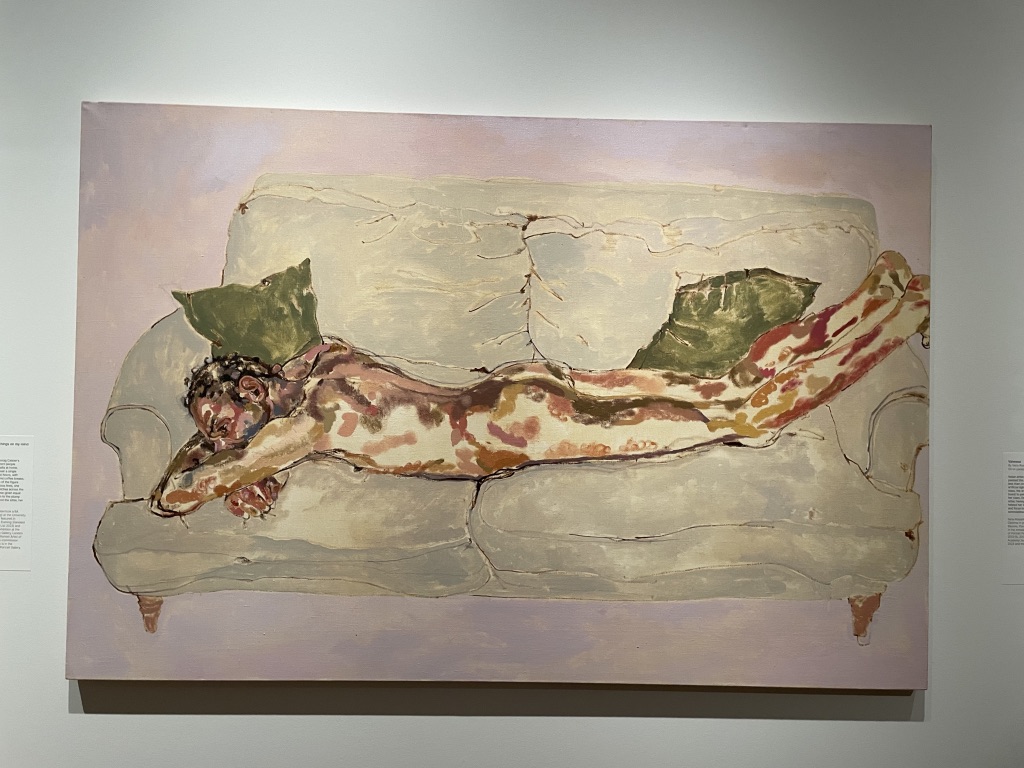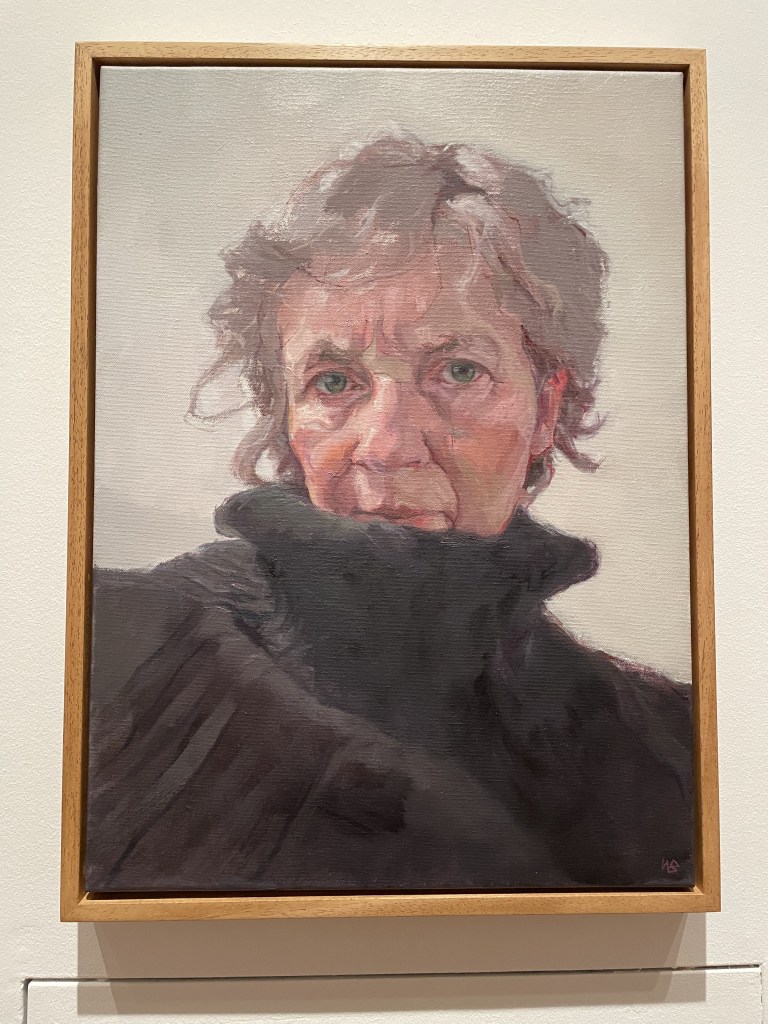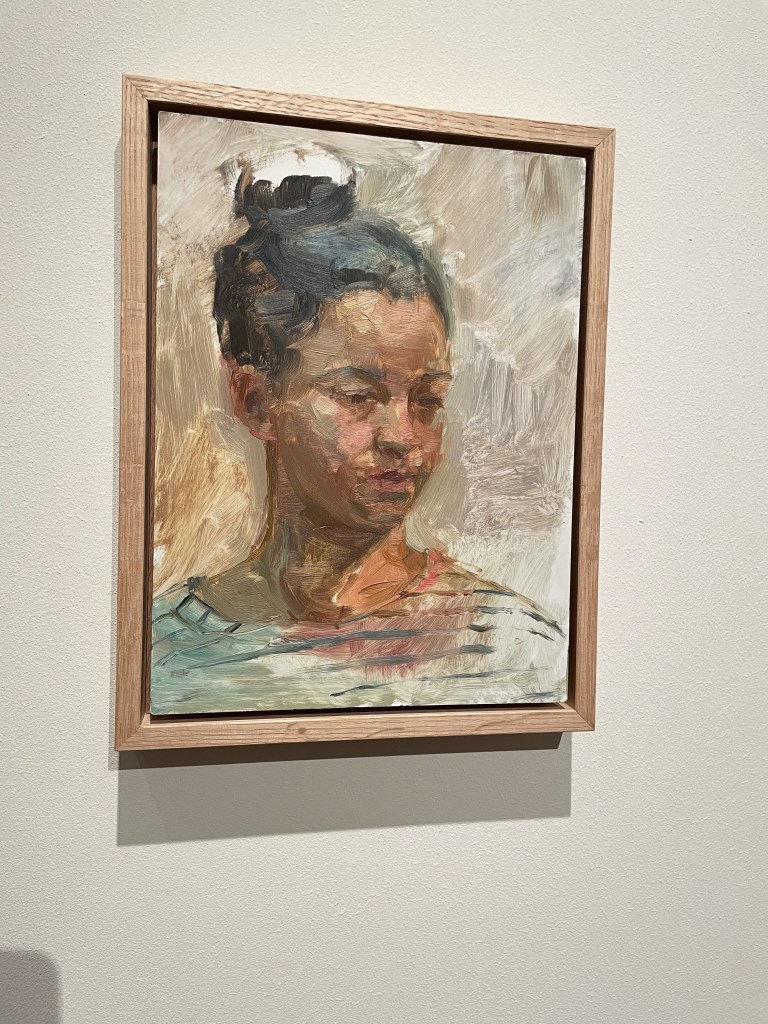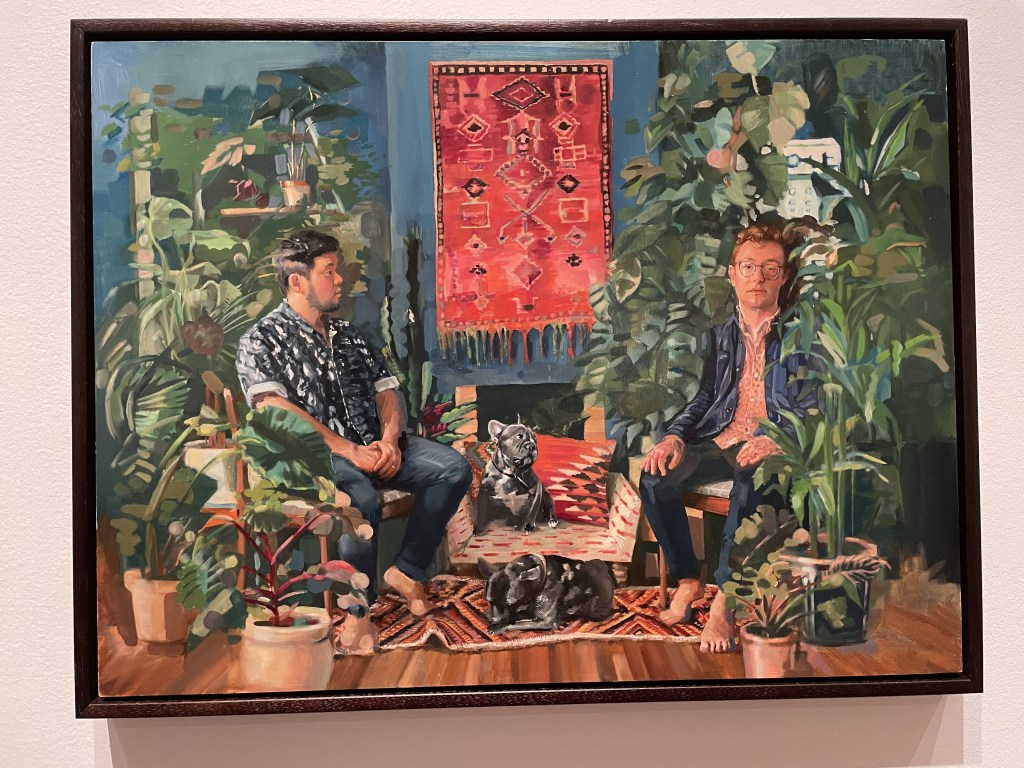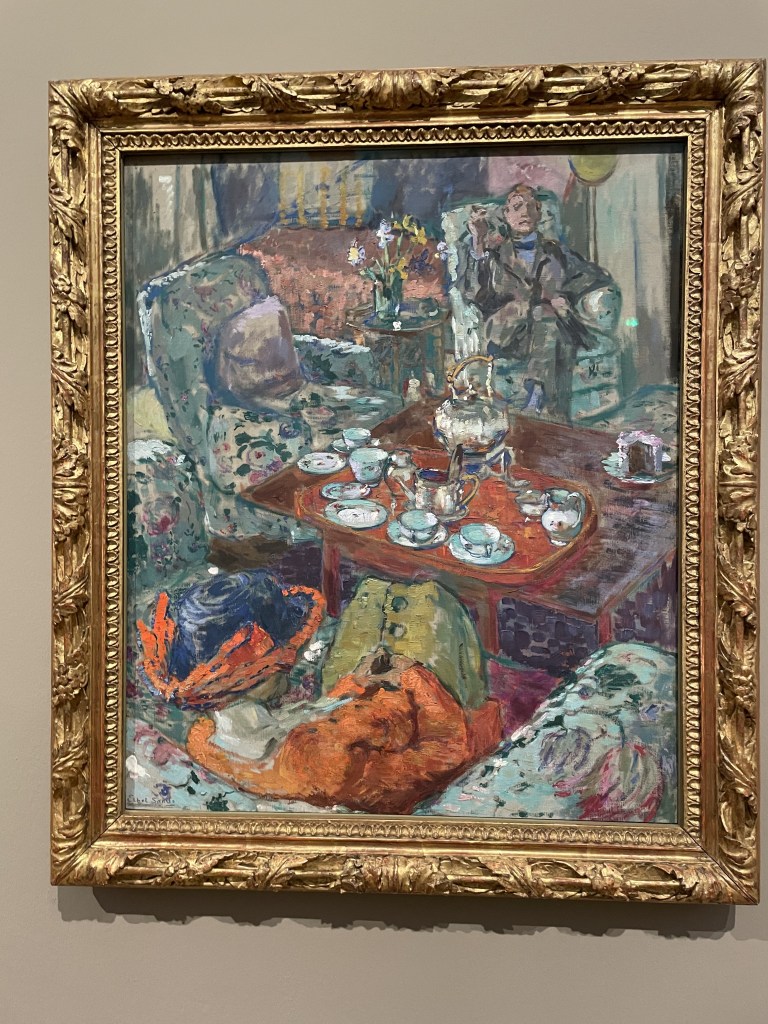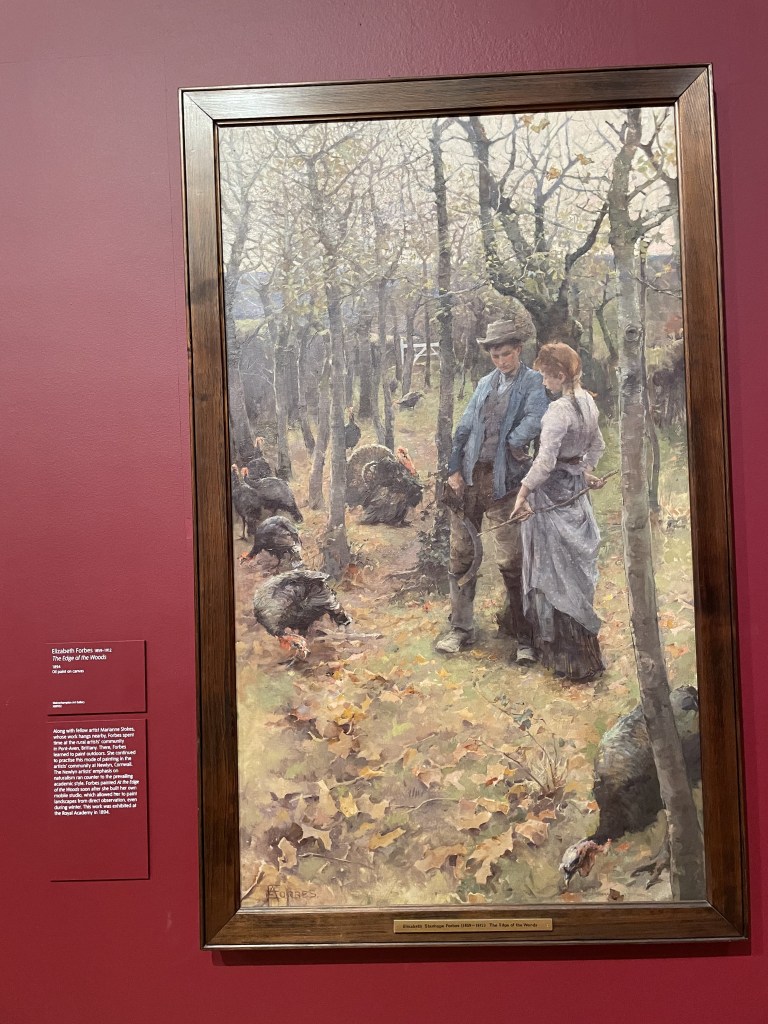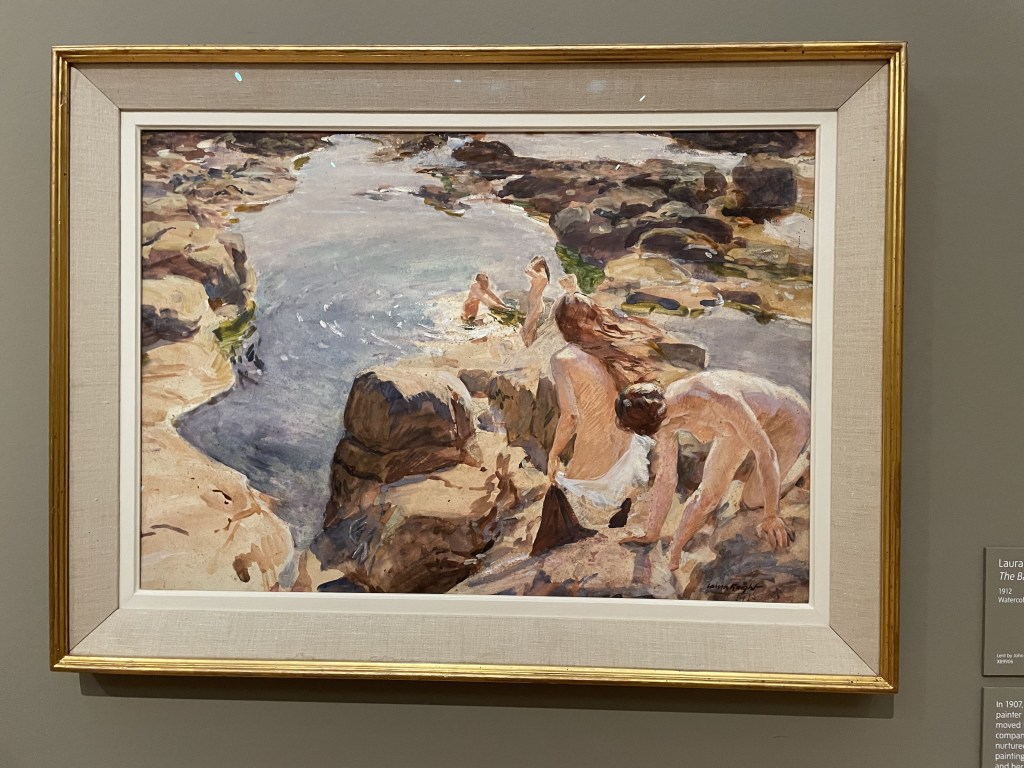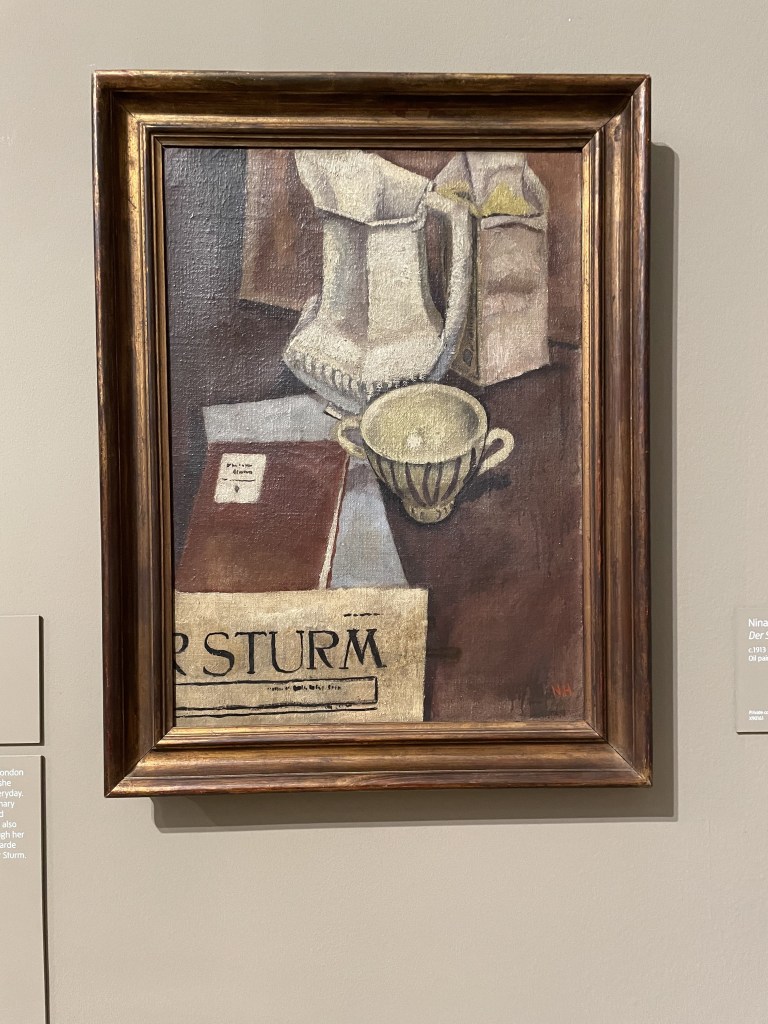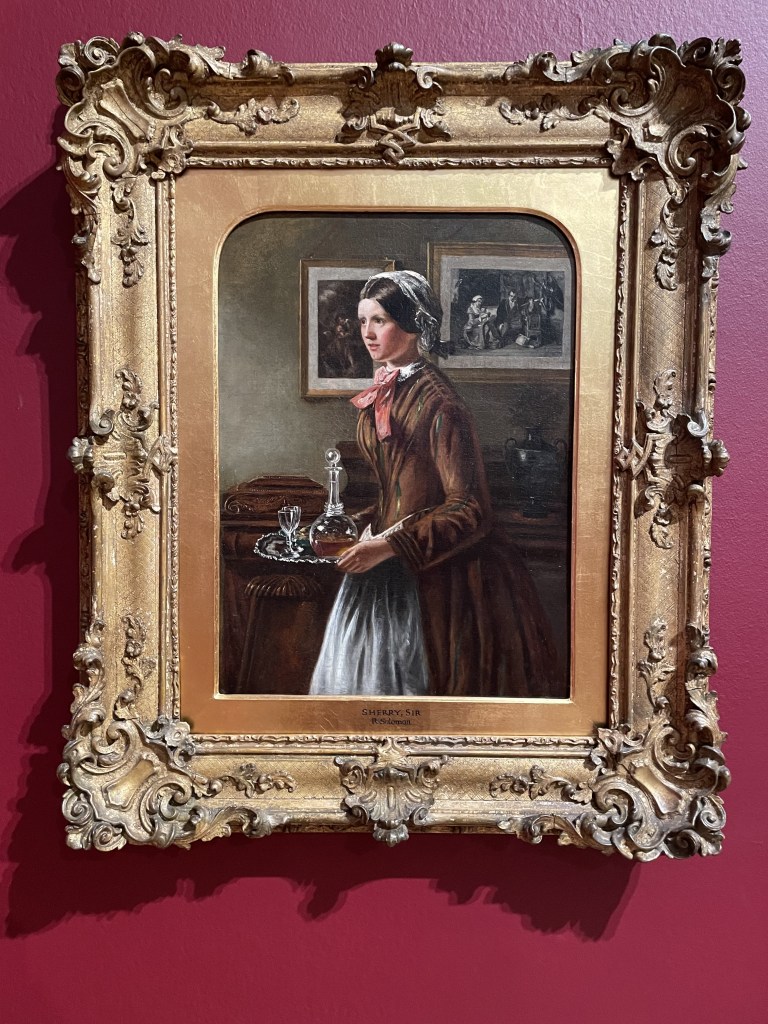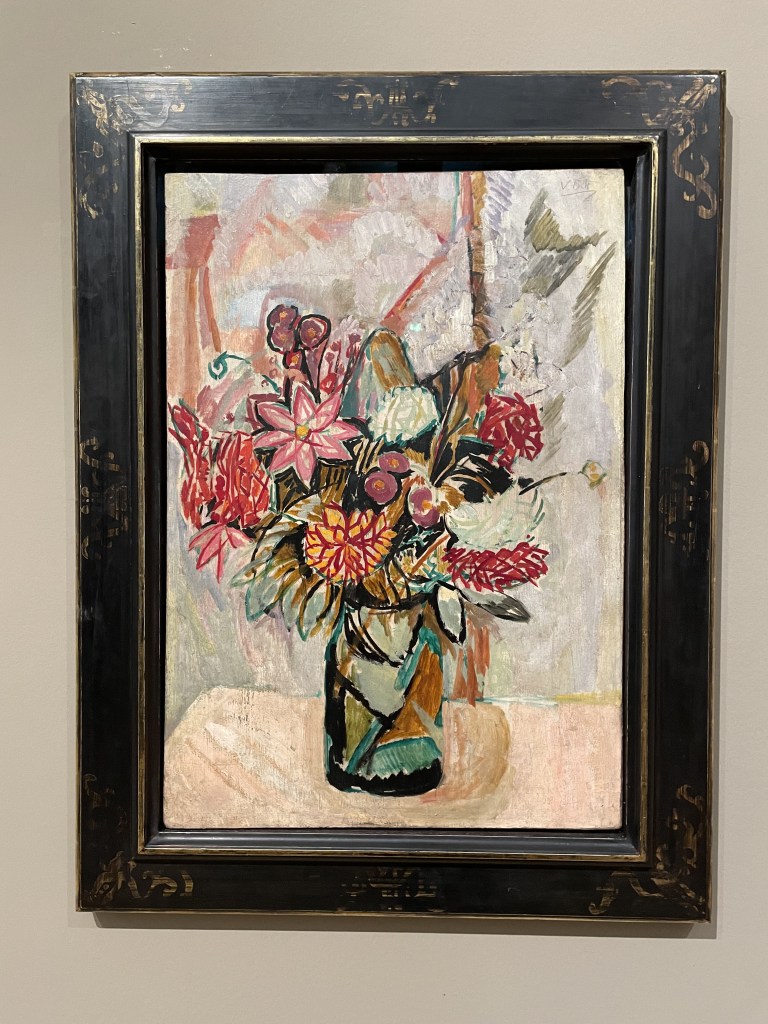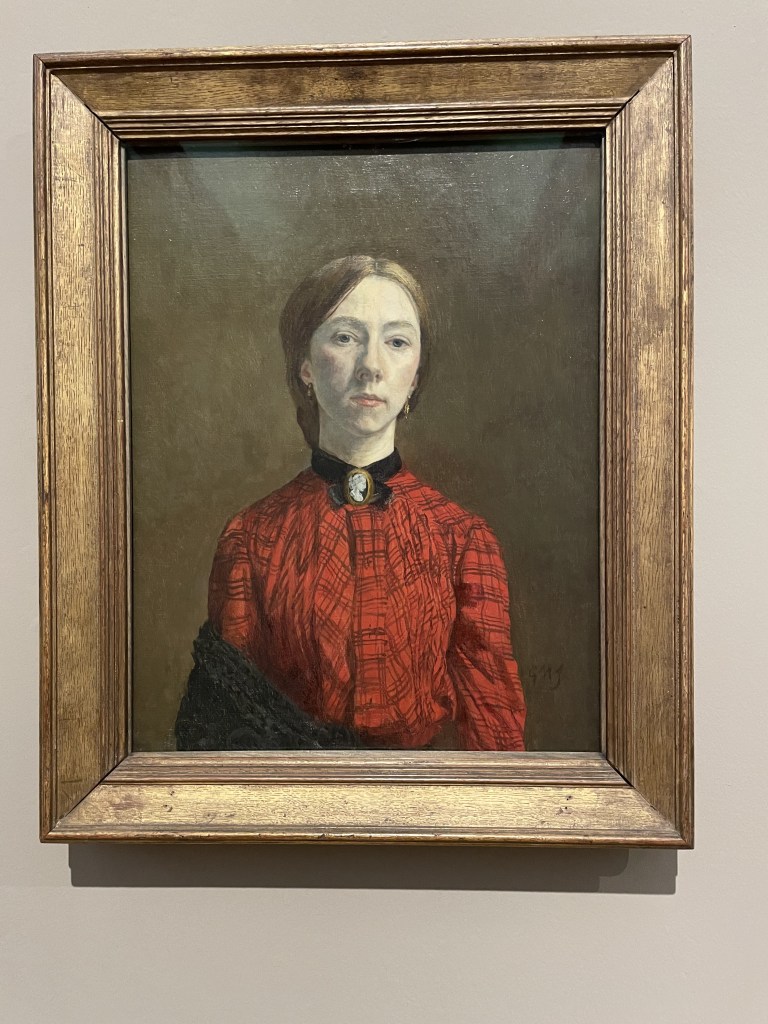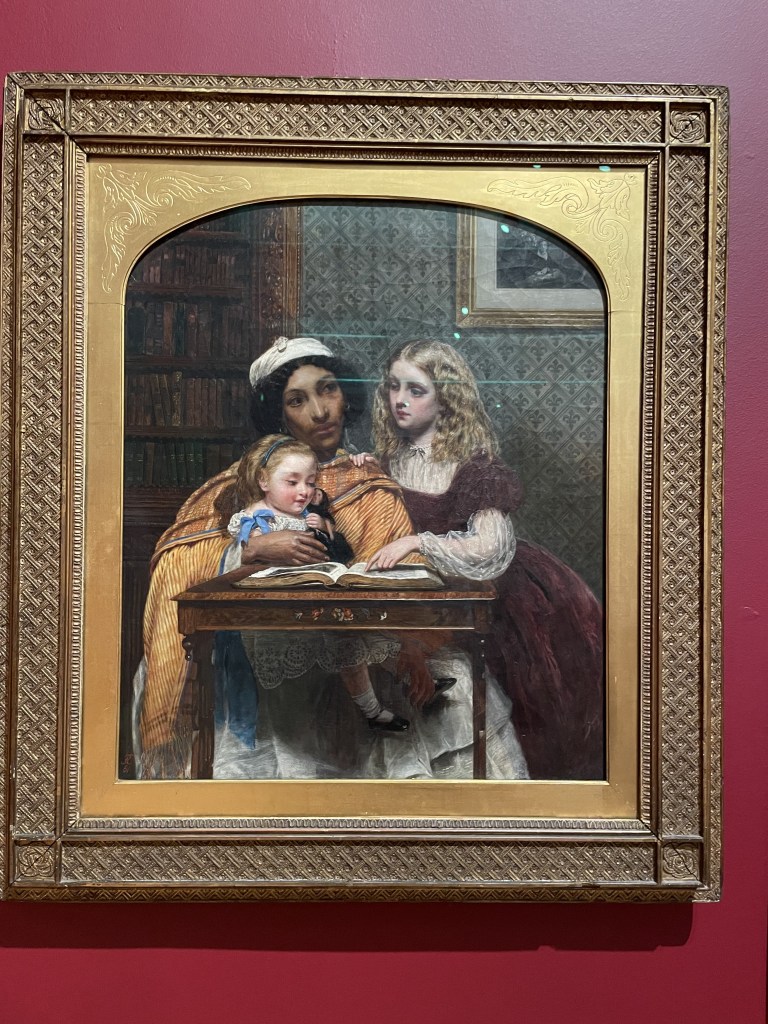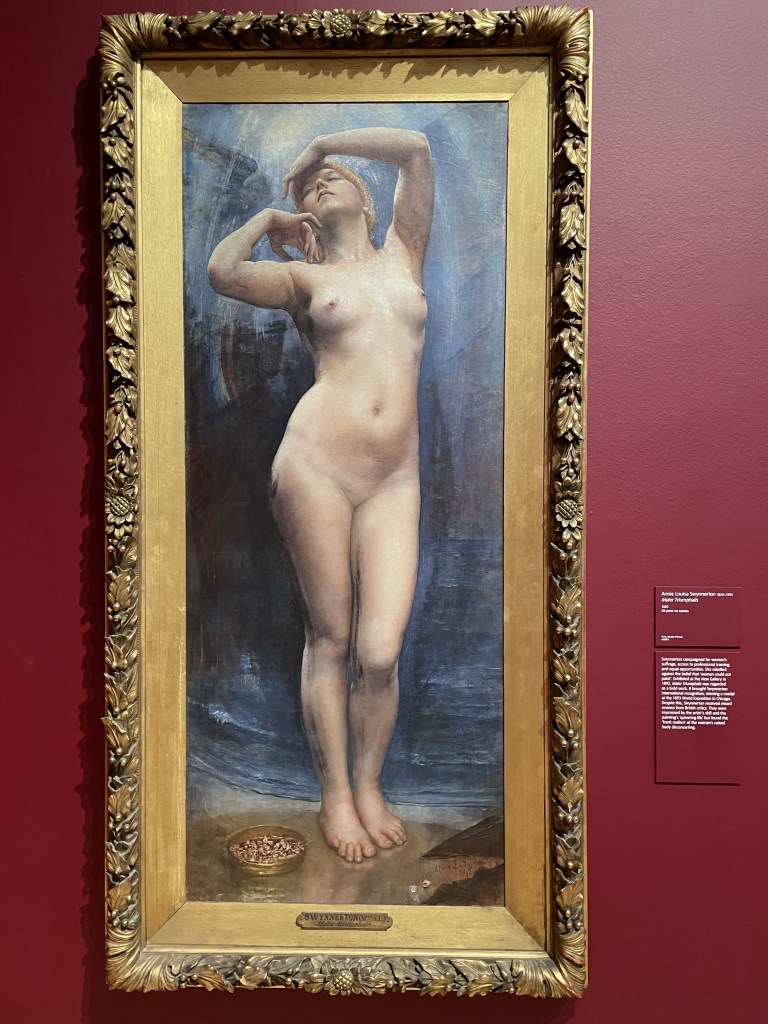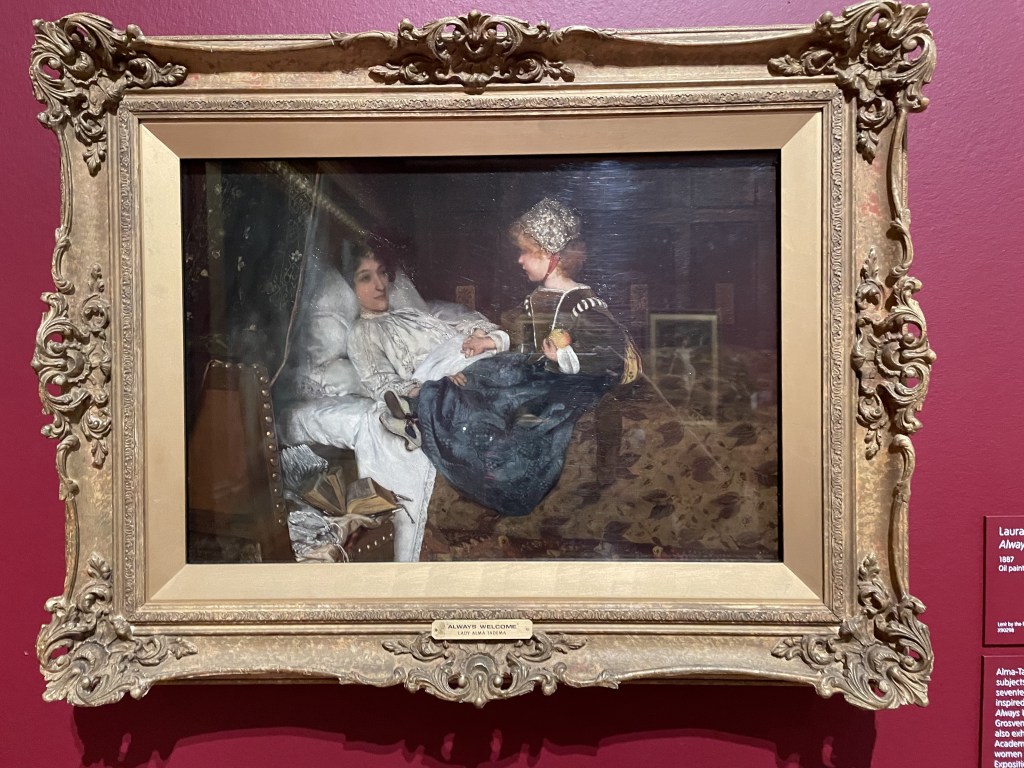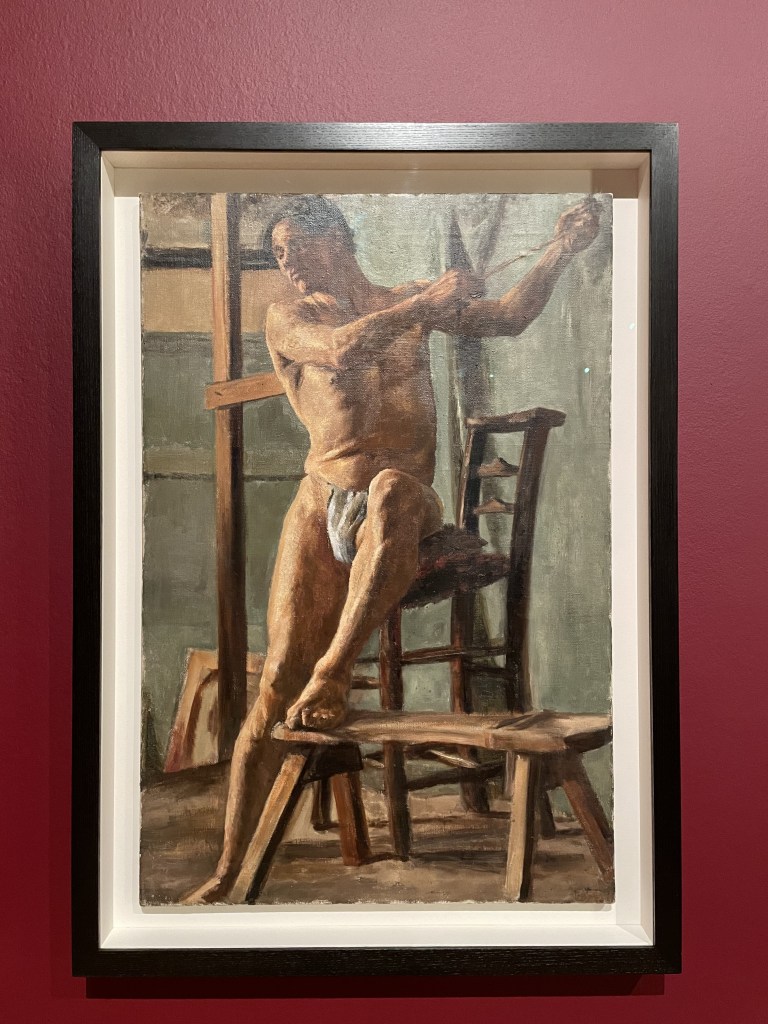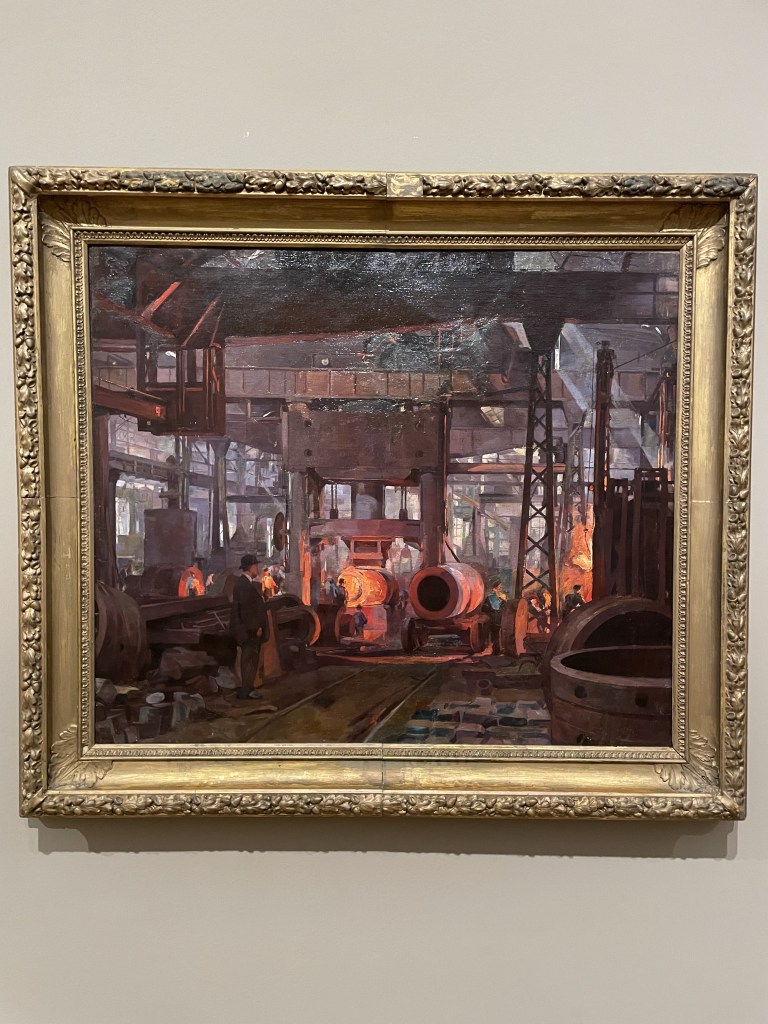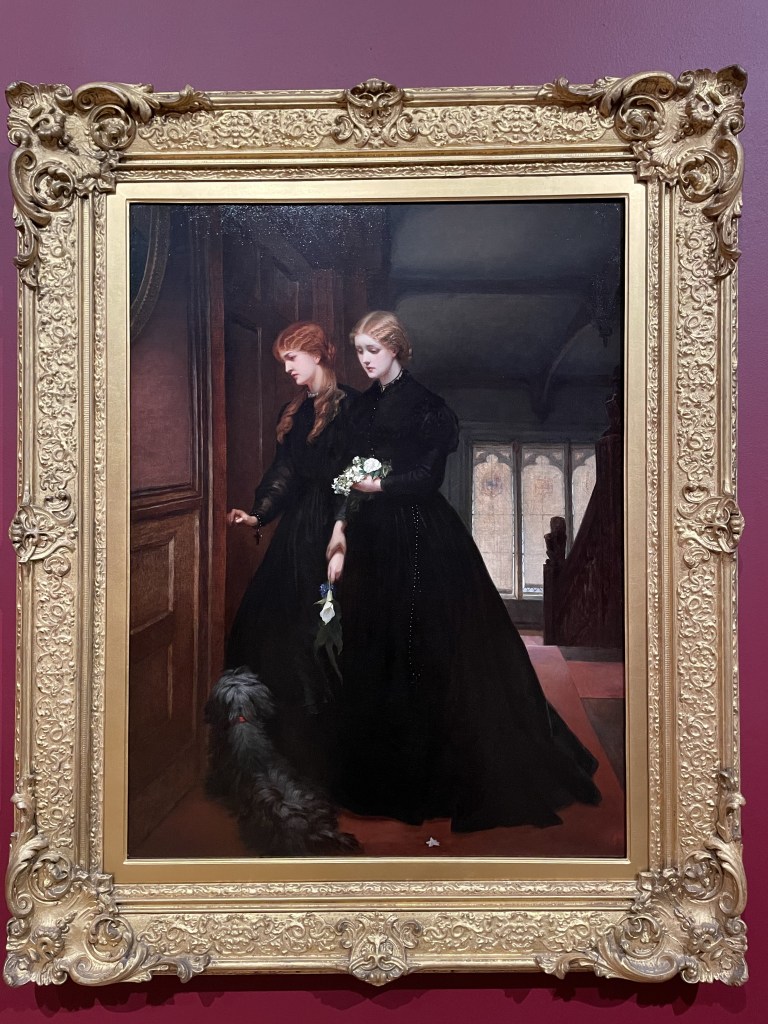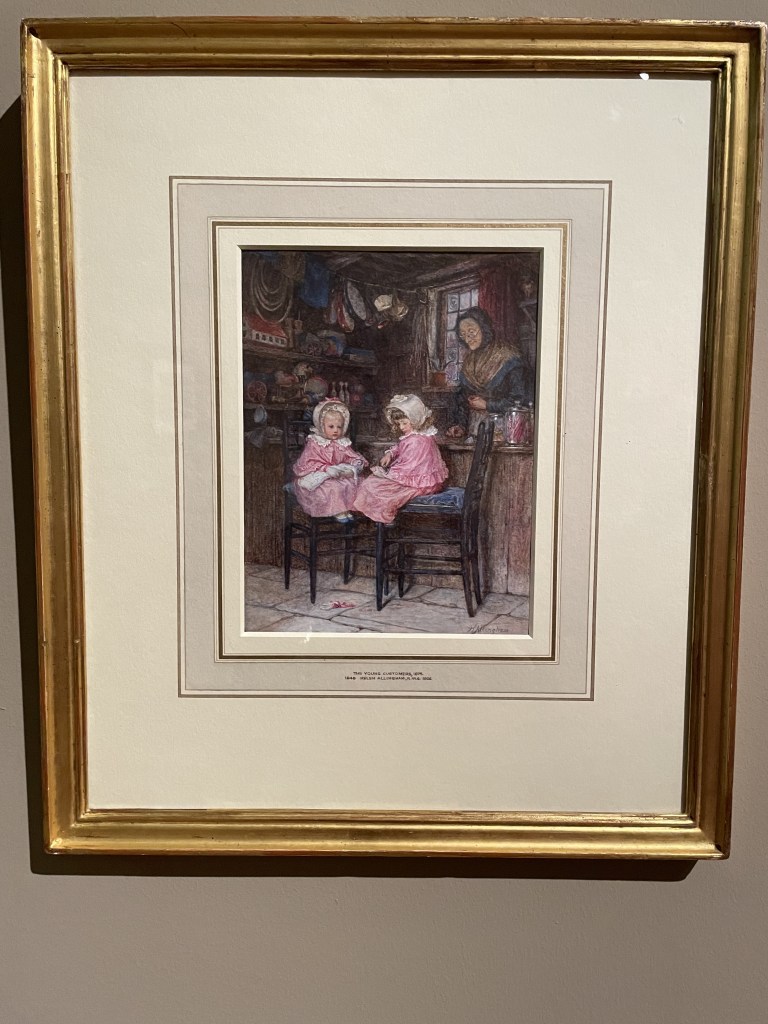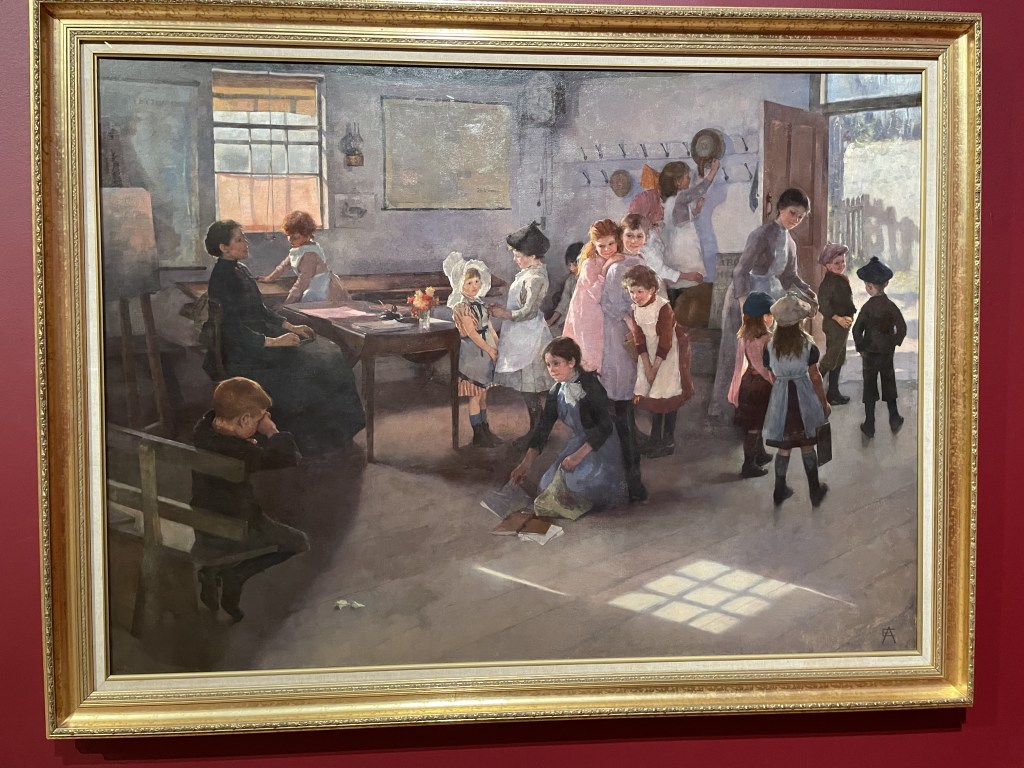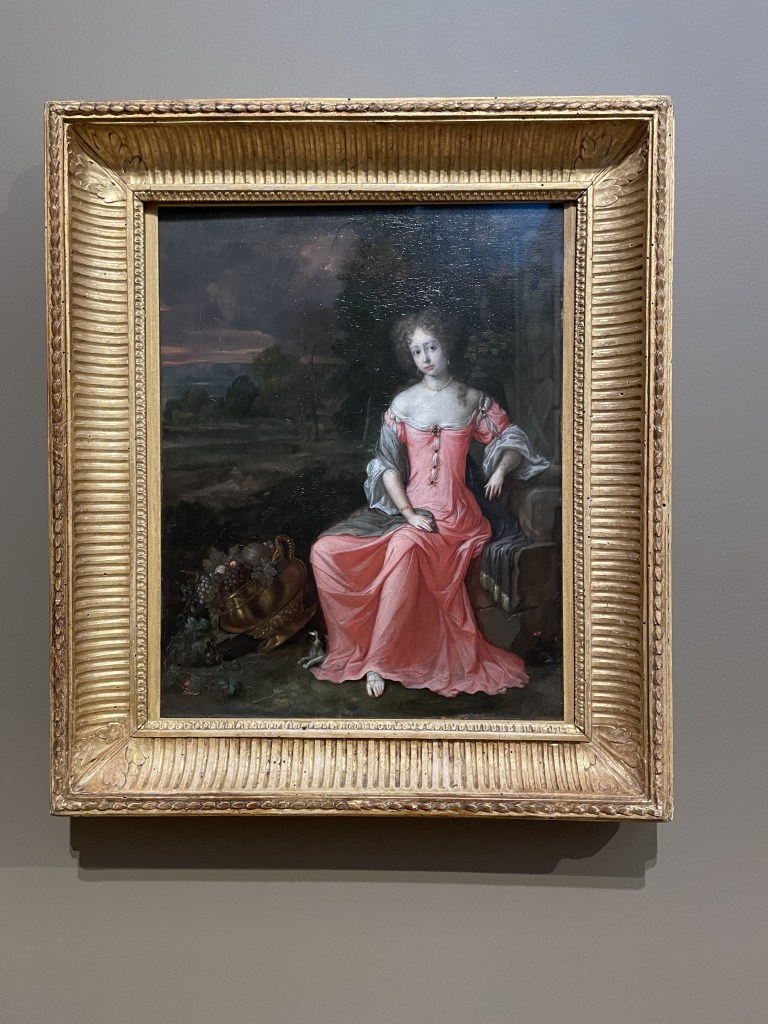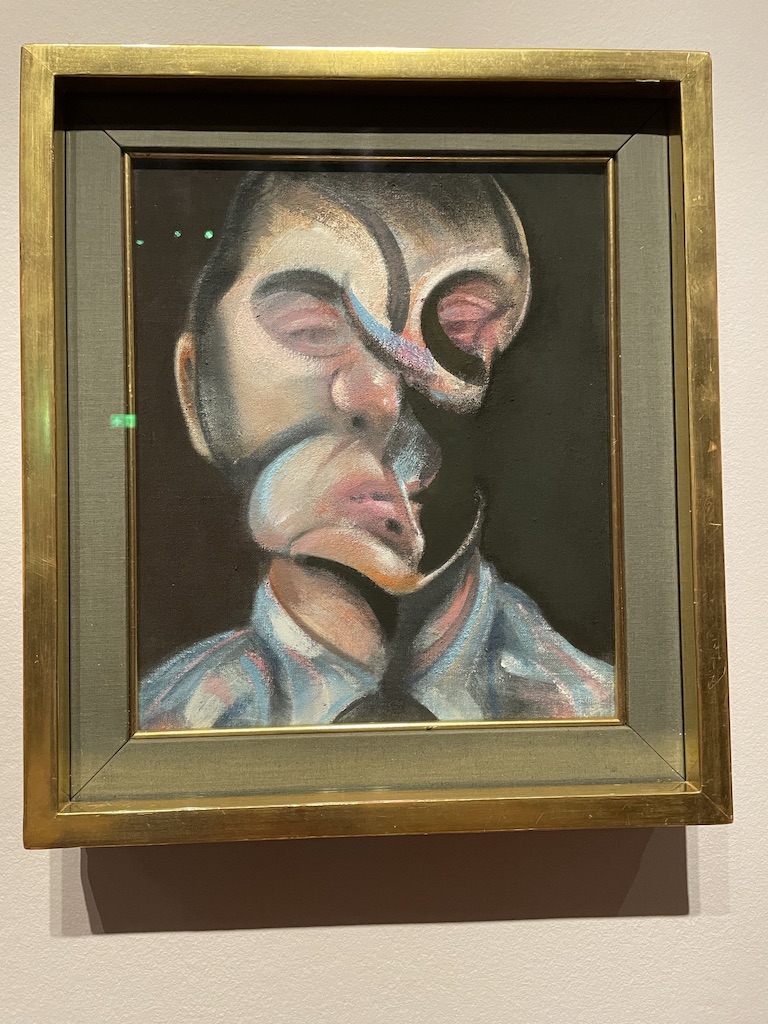
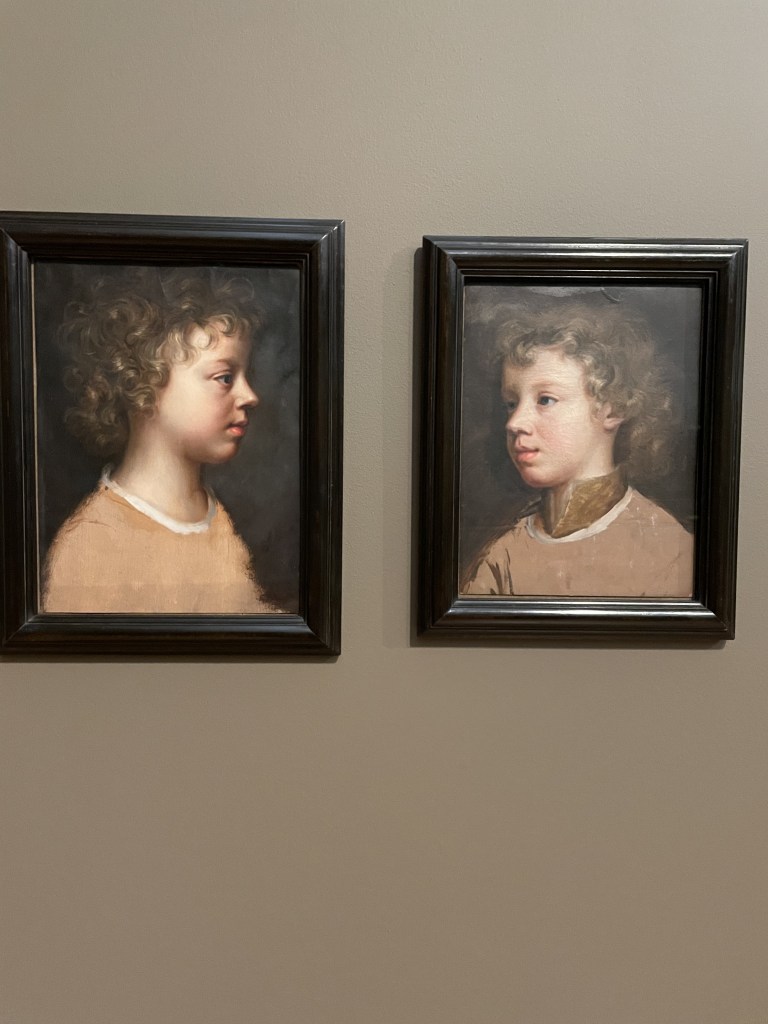
NOW YOU SEE US: Women artists in Britain 1520-1920. What a fabulous show this is at Tate Britain. We all know that, for centuries, women were not accepted as professional artists, but there were a few exceptions who earned their livings through art. It’s great to see the work of many unfamiliar female artists on show. The talent is breathtaking.

We take it for granted these days that men and women can forge equally successful careers in art. Four hundred years ago it was a different story. But women still studied art, became proficient at their skill and even earned a living. The curators of this excellent show have found examples of work by over 100 female artists working in Britain from 1520 – 1920 and it’s the most uplifting exhibition.

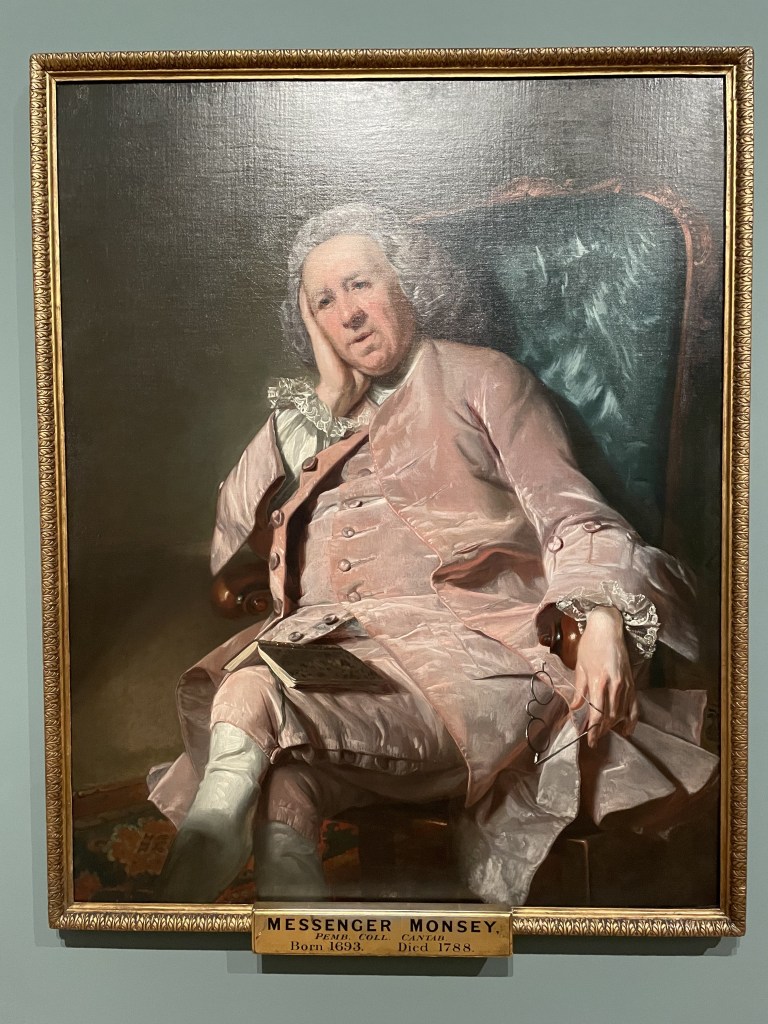
I really liked this portrait of Messenger Monsey by Mary Black,1737-1814. This is her only known oil painting and it’s so full of character and technical skill. Apparently, Black expected Monsey to pay her £25 for the portrait but her subject objected and suggested that she should not be paid at all for her work, claiming it would damage her reputation and that she might be regarded as a ‘slut’, if she sold her skills. Dear, dear.

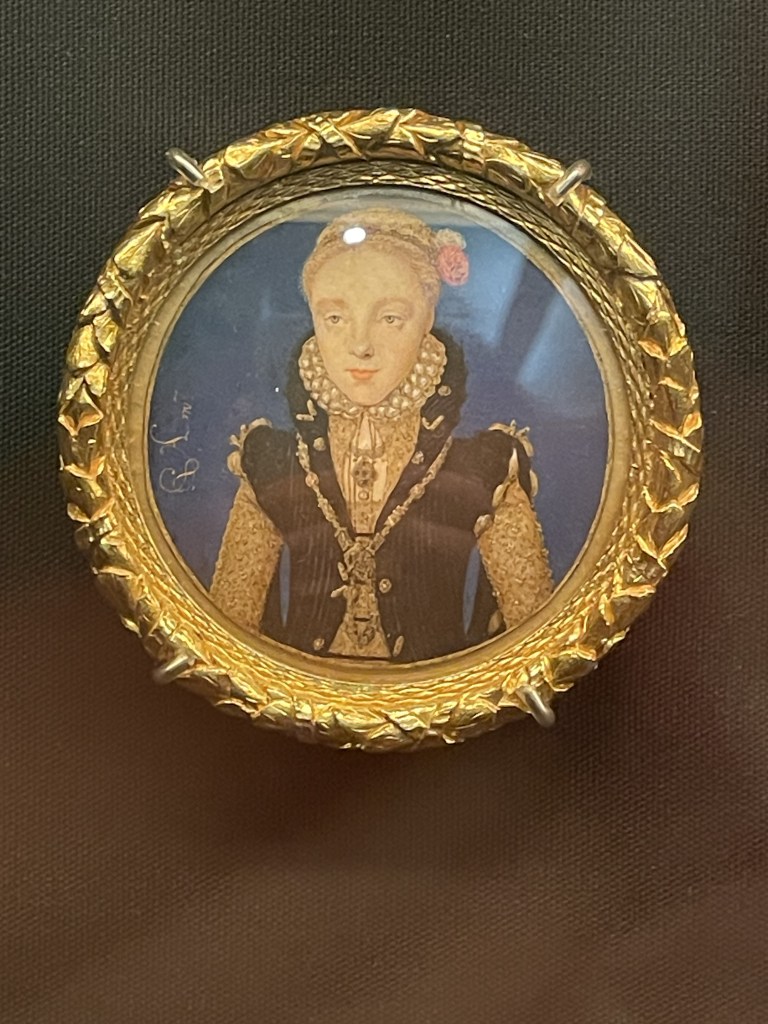
This is a tiny self-portrait by Sarah Biffin (1784-1850) who was born without arms or legs. Yet she taught herself to paint, sew and write using her mouth and shoulder. She specialised in portrait miniatures and often signed her work, ‘painted by Miss Biffin Without Hands’.

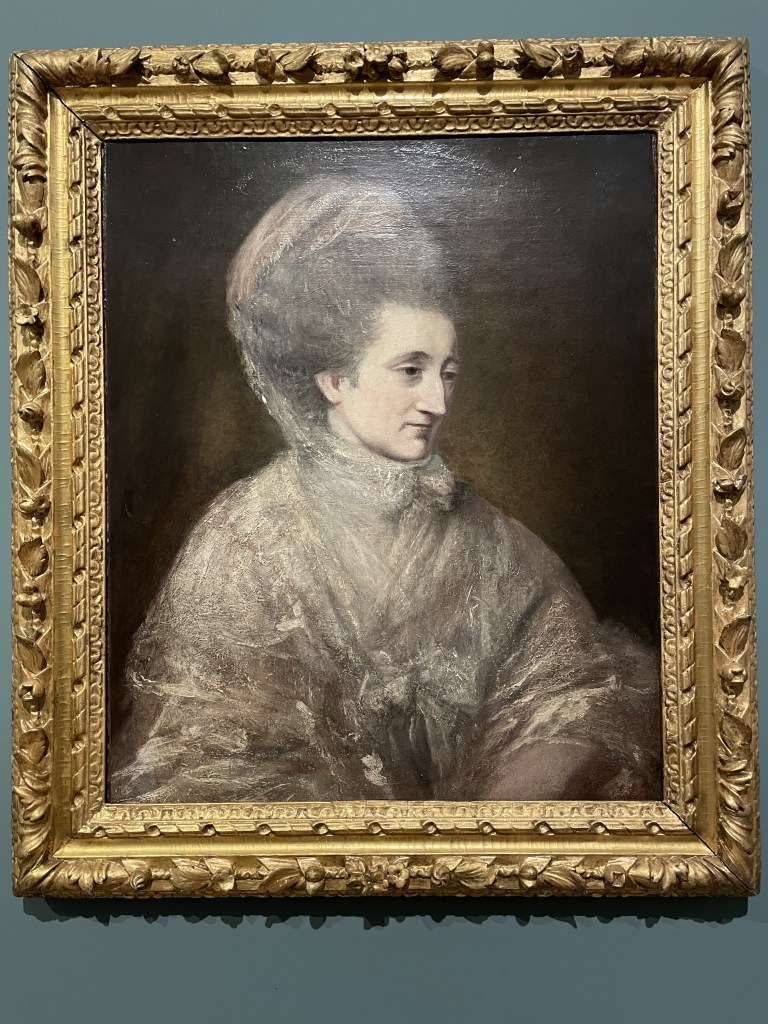
This is a portrait of Elizabeth Montagu by Frances Reynolds, sister of Joshua Reynolds, President of the Royal Academy. Frances was denied the opportunities of her brother and kept house for him in London and learned to paint by making copies of his work. She was a member of the Bluestocking Circle, a group of women writers, artists and intellectuals who met at the house of philanthropist Elizabeth Montagu, the subject of this wonderful painting.

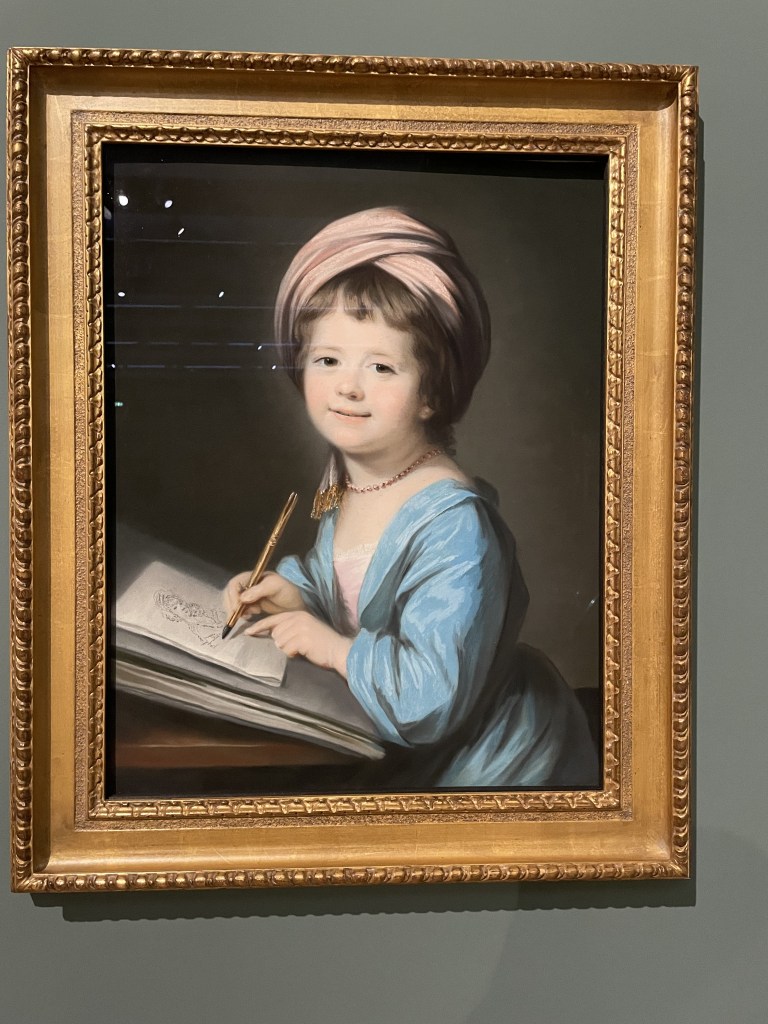
A charming portrait of Miss Helena Beatson made using pastel on paper by Katherine Read 1723-1778, her aunt. Pastels were not rated by the oil painting men of the period but they were easier to obtain and use by women. The young child in the portrait turned out to be a prodigy and was exhibiting at the Society of Artists at the age of eight.

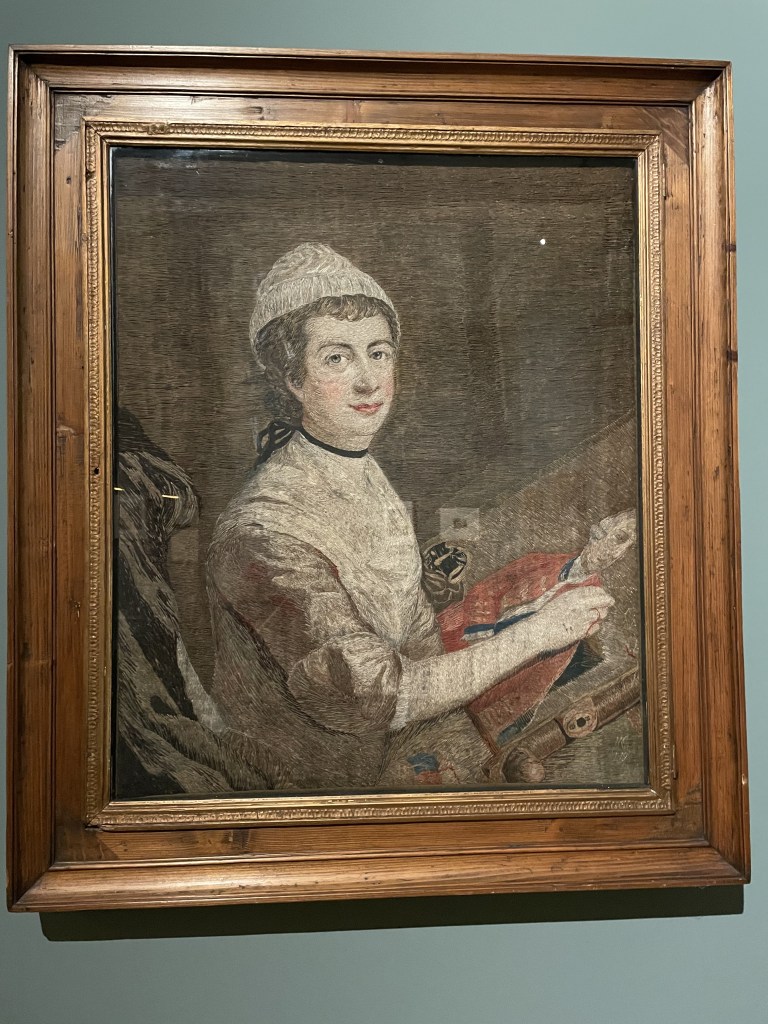
This fascinated me. It’s a self-portrait made entirely from embroidery by Mary Knowles 1733-1807. Queen Charlotte commissioned her to make a portrait of her husband, King George III, you can see she’s working on it. The clever way she uses silks to create the moulding and lively look of the picture is amazing.

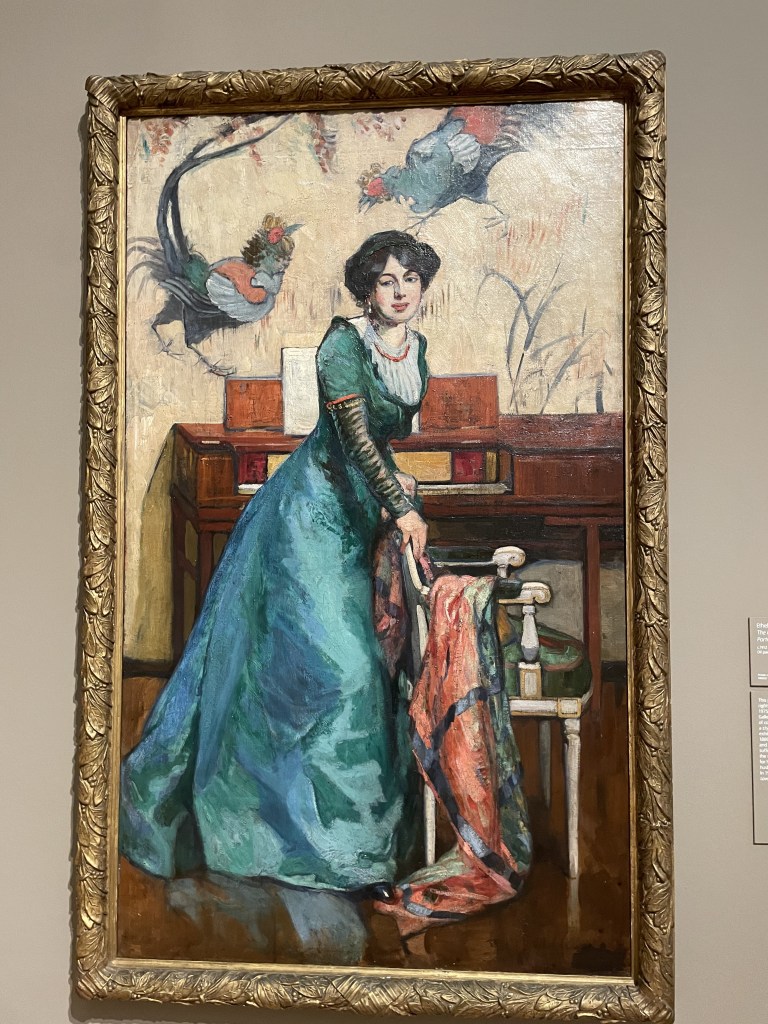
Loved the strength of this and the painterly confidence. It’s by Ethel Wright 1855-1939 and a portrait of Una Dugdale Duval who is famous for refusing to promise to obey her husband during their marriage vows in 1913.

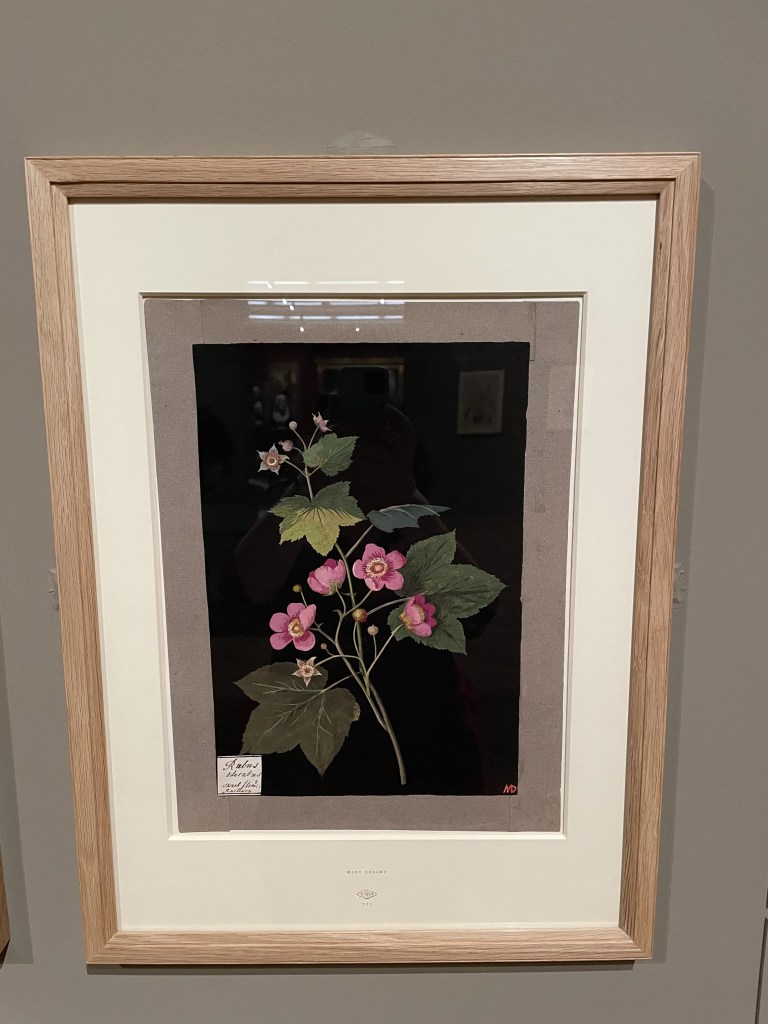
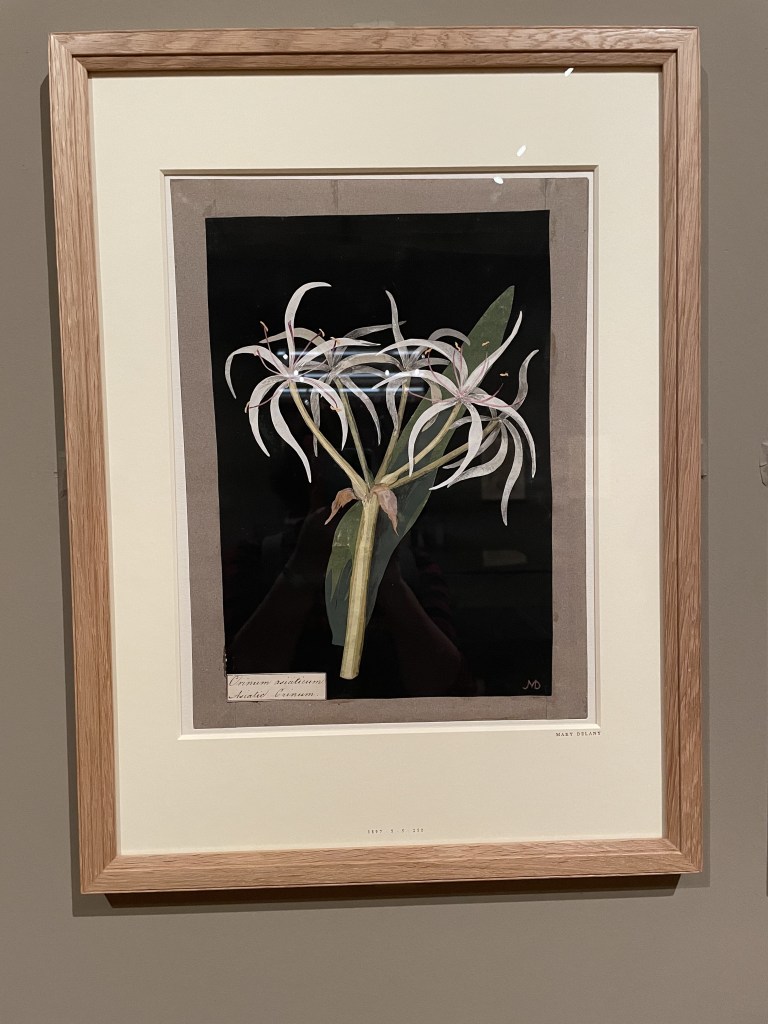
These are two paper cutouts, mosaics created by Mrs Delaney 1700-1782, who used collage, based on the Dutch art known as knipkunst, and used fragments of cut paper to depict, with amazing accuracy, examples of plants and flowers. Mrs Delaney was a favourite in the court of King George III and was given an apartment to live in at Windsor Castle.

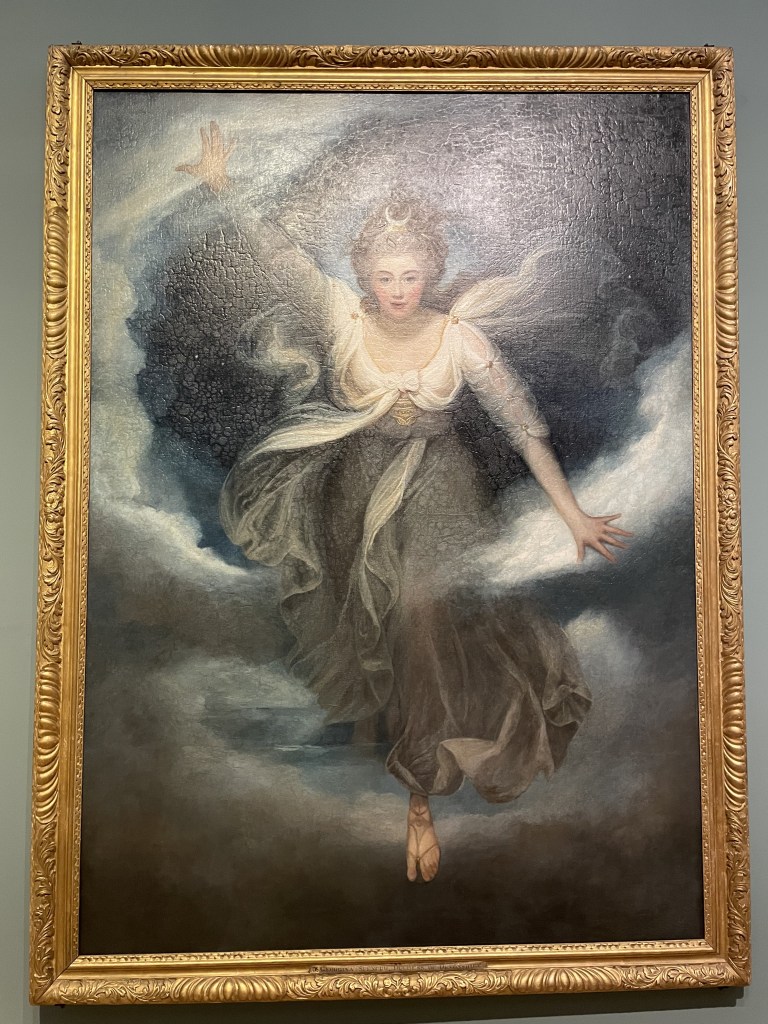
Here are just a few more of the pictures which caught my eye. A really, really great show. it’s on until 13th October 2024 at Tate Britain.

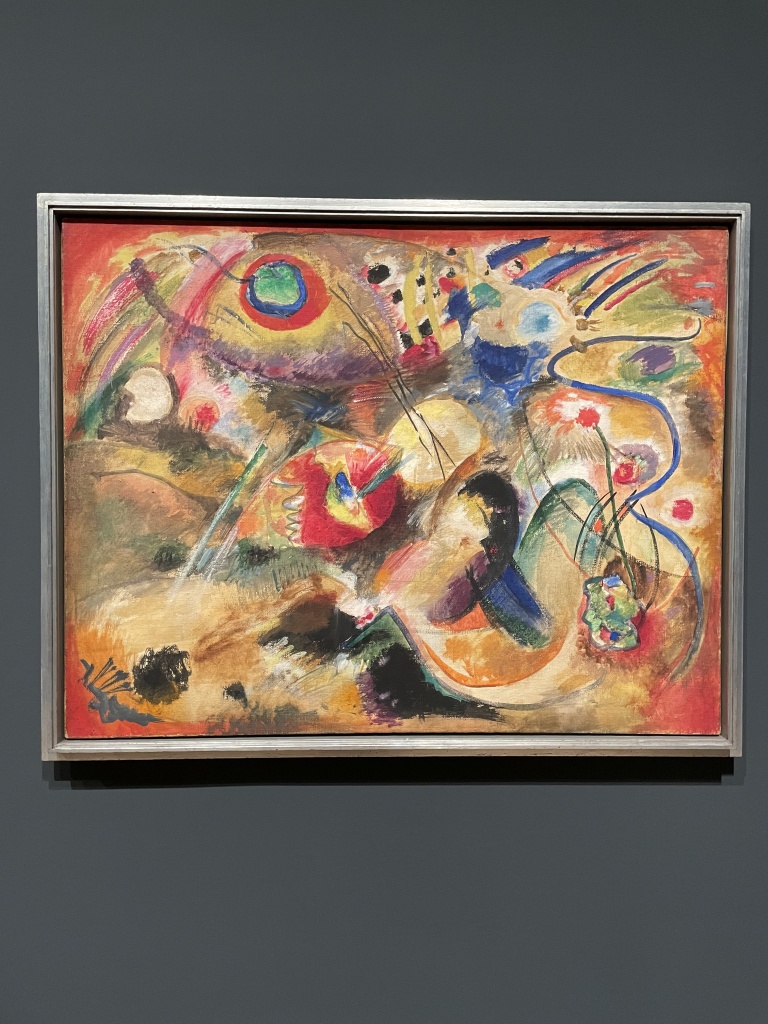
Expressionists and the artists who formed the Blue Rider movement in Germany in the early 1900s are having a moment at Tate Modern with a thrilling new exhibition of works by Kandinsky, Münter, Mark Klee and many others.

Above: Wassily Kandinsky, On the Theme of the Deluge 1913-14

If you like colour and bold ideas then this is a great exhibition to view. It’s amazing that each art movement seems to be built out a collection of artists who meet, encourage and feed off each other’s skills. In Munich in the early 1900s, a group of like-minded artists found each other and shared an interest in expressing their personal and spiritual ideas through bold, colourful painting. They called themselves The Blue Rider.

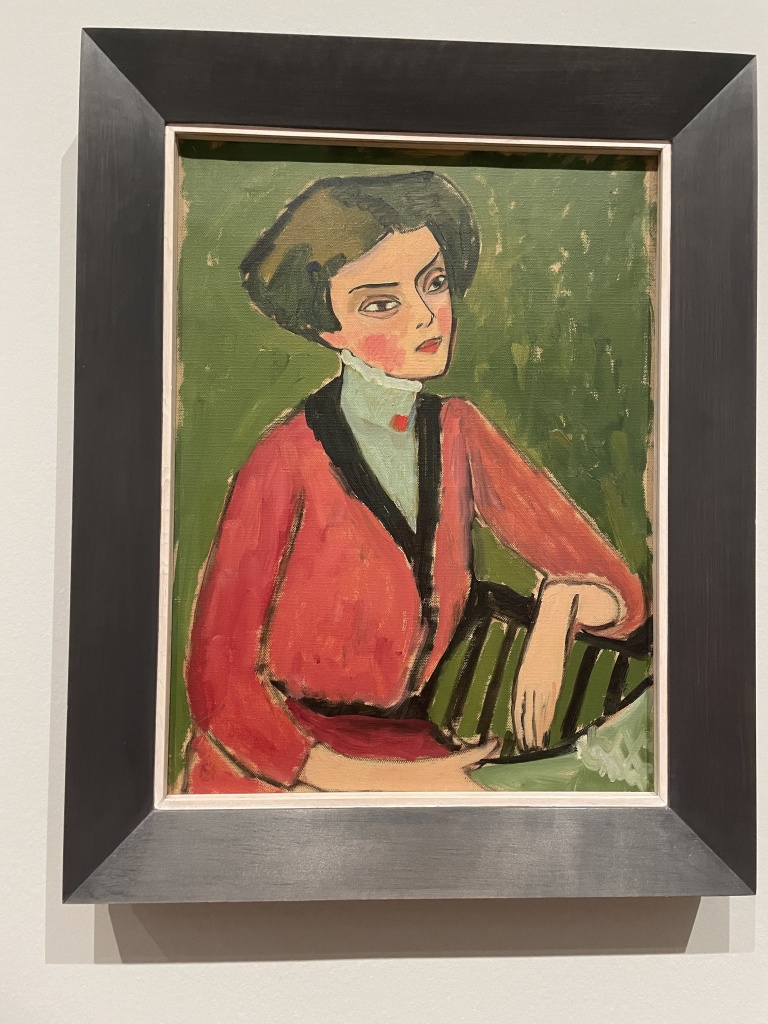
Above: top row: Gabriele Münter, portrait of Olga von Hartmann, Gabriele Munter, Portrait of Marianne von Werefkin, Elisabeth Epstein, self portrait, Bottom row: Marianne Werefkin, The Dancer, a portrait of Alexander Sacharoff (in drag!)

Just looking at these portraits, above, you get an idea of how radical and brave they were in the way they portrayed themselves and recorded each other. You could argue that the advent of photography had removed the need for accurate painted portraiture. What these images do is convey a sense of the person, the real personality and style, rather than bothering with an careful likeness. I love these pictures.

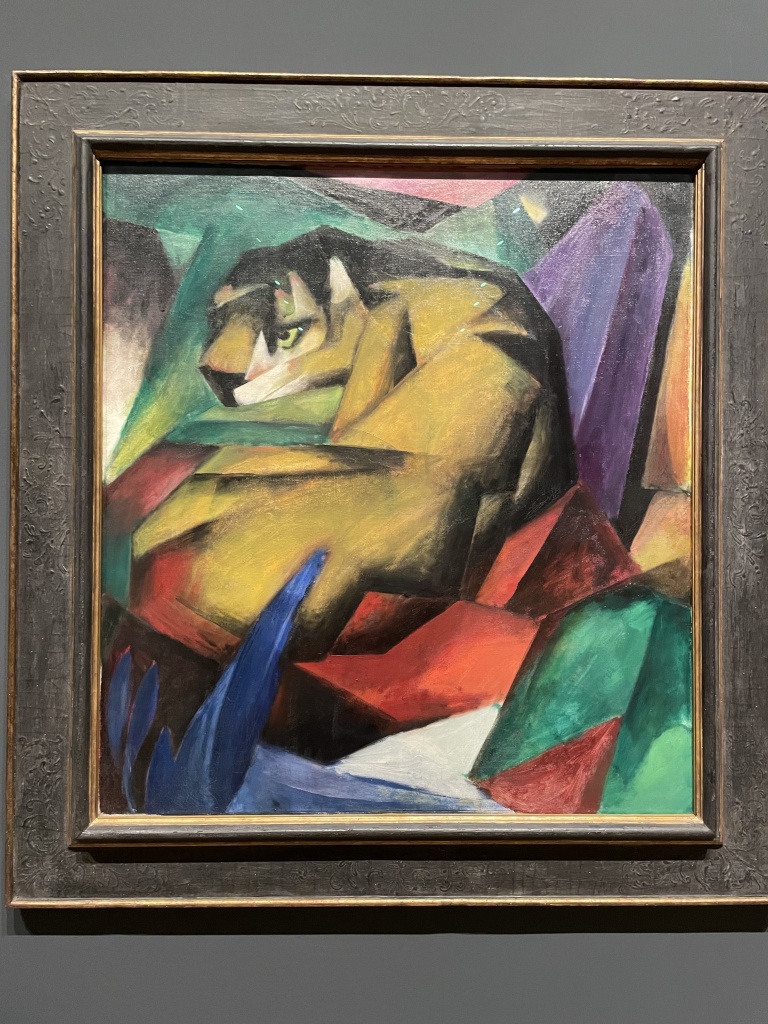
Above: a very fantastical Tiger by Franz Marc, 1912

This group, which formed members of the Blue Rider, were a mixture of married couples and free-thinking single men and women. It’s very satisfying to see that so many of the women in the group are given space for their works upon the walls and also celebrates their contribution to the collective.

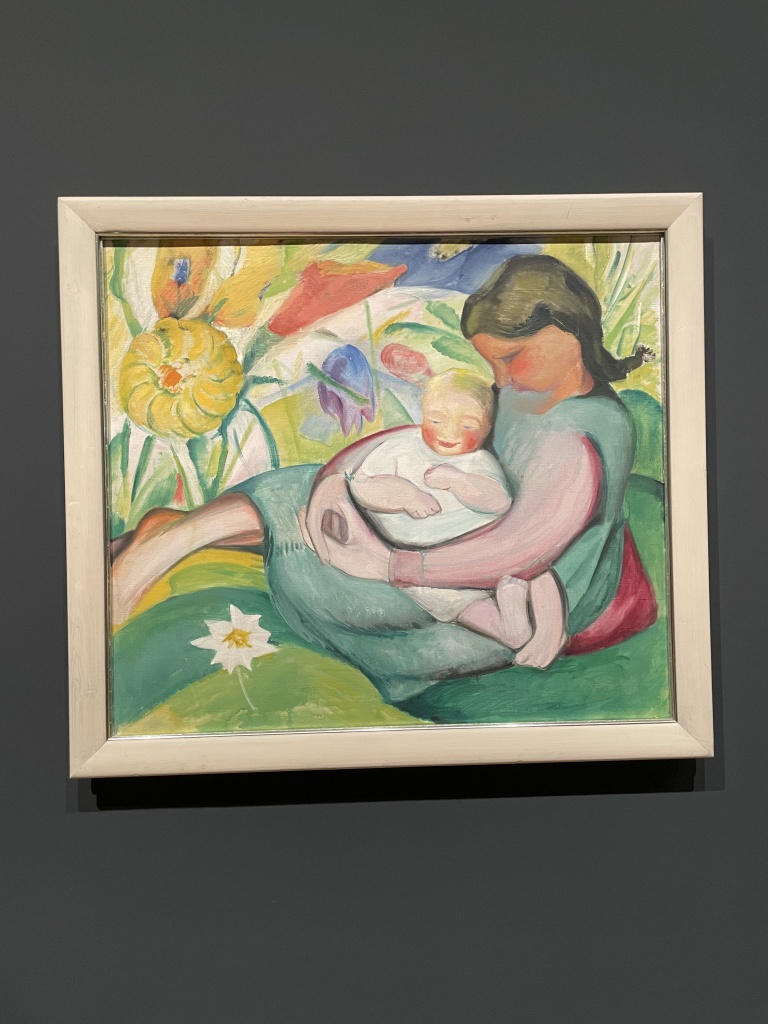
Above are three examples of women’s work. Left to right: Maria Frank-Mark, Girl with Toddler 1913, Gabriele Münter, Portrait of Marianne von Werefkin (also one of the female artists in the group) and Marianne von Werefkin’s Self-portrait from 1910

The colours are wonderful. I really liked this interior painting. My Dining Room, by Wassily Kandinsky, 1909. It looks as though it was done at high speed with black drawing with a brush and then flooded with bright colours. The atmosphere of the room is terrific.

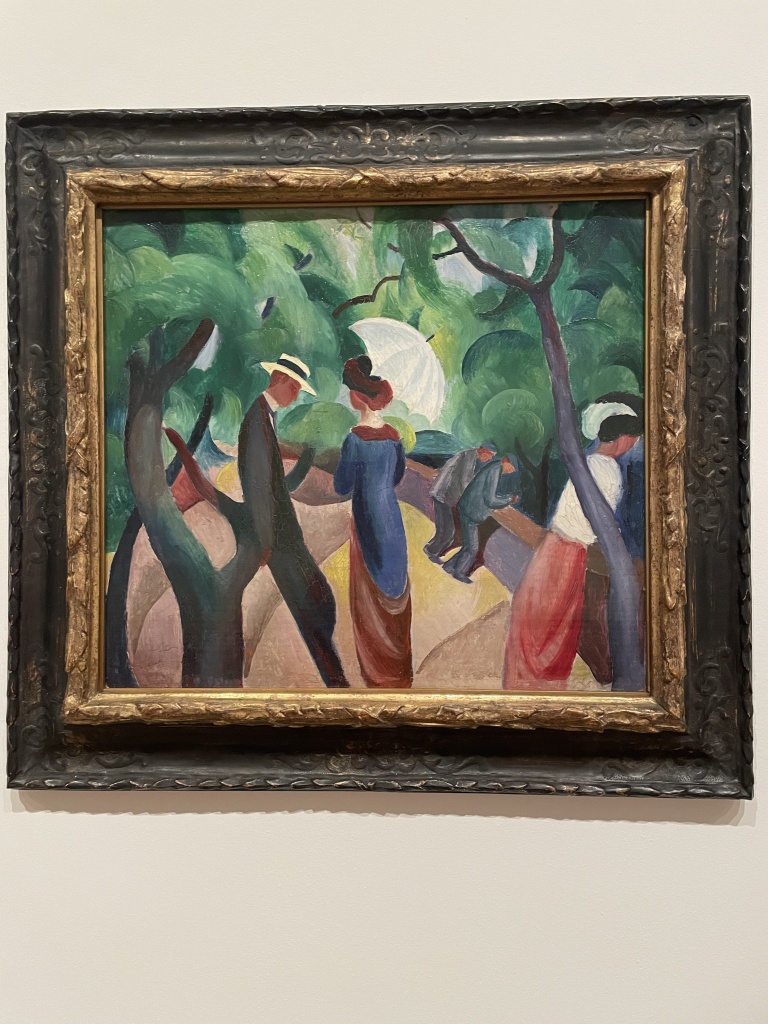
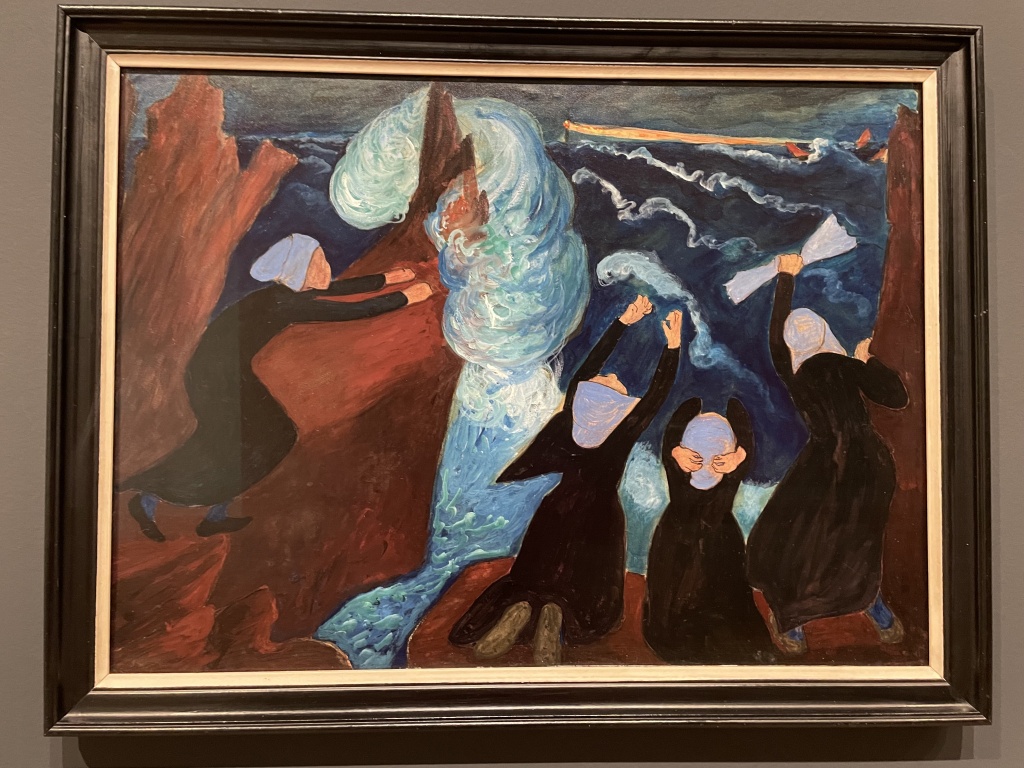
Above, the dark painting of The Skaters, is by Marianne Werefkin from 1911. Centre, Promenade by August Macke from 1913 and on the right is another by Marianne Werefking entitled The Storm. She was brilliant at conveying mysterious settings and threatening atmospheres.

And I’m going to give the last slot to Gabriele Münter and this portrait she painted of Marianne Werefkin. We have Münter to thank for the survival of so many of these works. During the Second World War, when so many of the artists were regarded as ‘degenerates’ and were also Jewish, Munter stored many of the paintings in her cellar and kept them safely hidden from Nazi threat until it was safe to reveal them and she donated them to the Städtische Galerie in the Lenbachhaus in Munich.

The exhibition is on until 20th October 2024.

It’s taken a couple of centuries but Angelica Kauffman has finally been given a solo show at the Royal Academy in London. She was an inaugural member of this illustrious group which was founded in 1768. She was renowned and admired across Europe as one of the most cultured, talented and influential artists of her generation. It’s wonderful to see so much of her work on these walls.

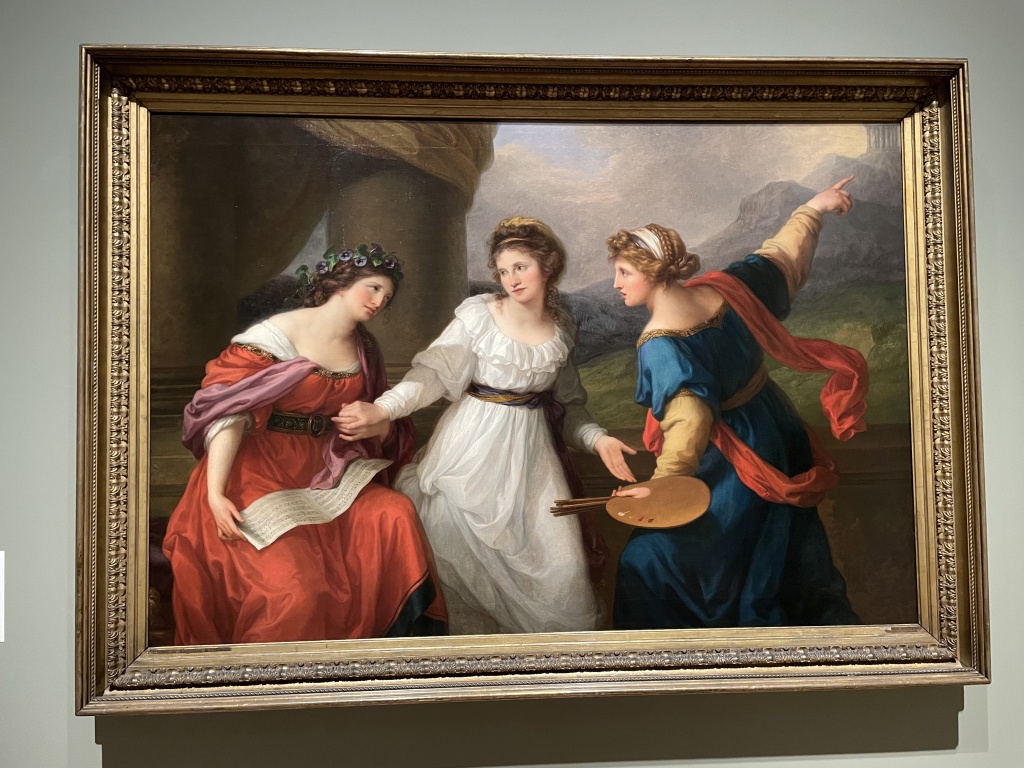
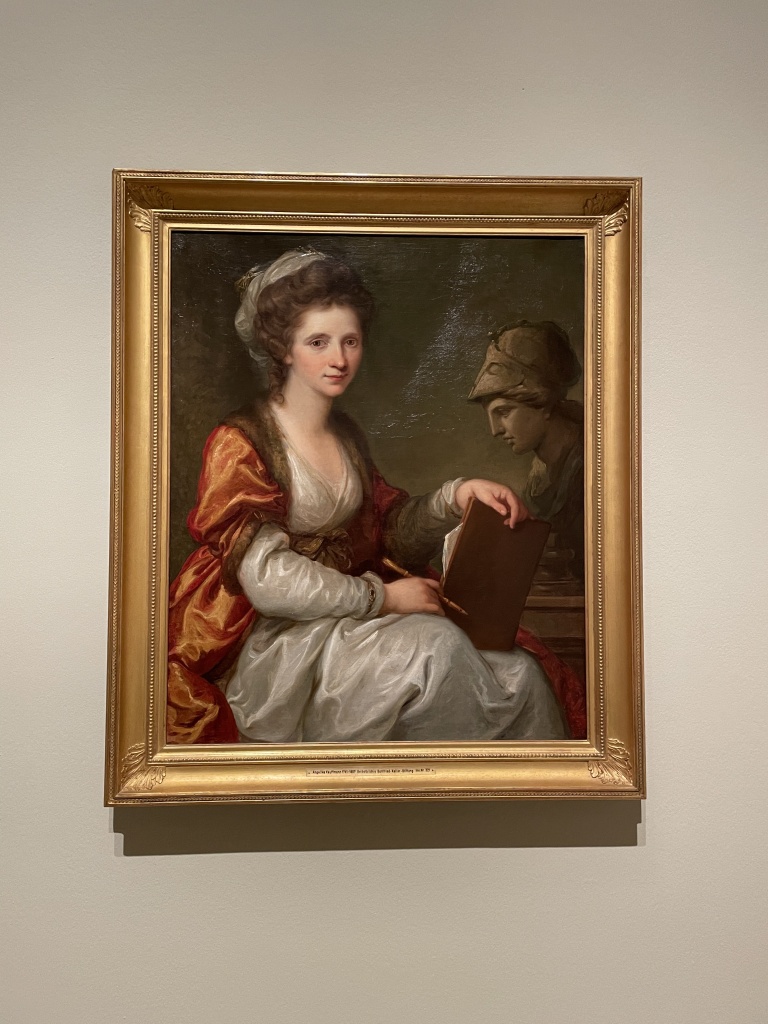
In this fabulous self-portrait, Angelica Kauffman represents herself ‘At the Crossroads between the Arts of Music and Painting’. She was a talented singer and musician and torn between the two art forms. But, thank goodness, she decided to dedicate her life to painting. For forty years of her working career (born 1741 and died November 1807) she produced hundreds of remarkable paintings. She was especially enjoyed creating historical, narrative paintings but putting the female character or heroine at the centre of the action. In fact, she was a consummate feminist and celebrated the achievements of women in her work.

Painted by Richard Samuel, here is Angelica, seated in front of the easel, in the company of illustrious women of the day who are all depicted as ‘Characters of the Muses in the Temple of Apollo’. A group portrait of some of the best-known, intellectual and creative women of late 18th century Britain. She is the only artist in the group.

She made several exquisite self-portraits. All of them show her direct, intelligent gaze and are painted with such poise and incorporate classical references in the pose.

According to the curator of the show, Bettina Bamgärtel who spoke at the press preview I attended, Kauffman regarded commissioned portraits as a necessary money-making aspect of her practice, and not her main focus. However, she was extremely good at them. I liked these two portraits. On the left is Joshua Reynolds, who became a close friend. Reynolds introduced her to his royal patron, Queen Charlotte and gave her an entree into London society. On the right is the actor David Garrick. He pose is very unstuffy and shows how very comfortable he felt engaging her gaze and, one imagines, having lively conversations while the painting was being made.

This beautiful portrait of is Emma Hamilton as Muse of Comedy. Emma (who was famously the lover of Lord Nelson) was well known for her ‘attitudes’ – recreating the poses of classical figures as an entertainment. She was invited to country houses and palaces on the promise that she would perform these stylised dances in diaphanous drapes.

This is a portrait of the first Royal Academicians painted by Johan Zoffany gathered in the life drawing room of new Academy. This was not deemed a suitable environment for women so Angelica Kauffman and and Mary Moser, the two female Academicians, are represented in portraits on wall. Kauffman is on the left, looking directly out of her portrait at us.

It’s a wonderful exhibition which is well worth a visit. It opens on 1st March and is on until 30th June 2024.

The Time Is Always Now – a really enjoyable and thought-provoking exhibition at the National Portrait Gallery has opened. Curated by Ekow Eshun, this show gathers together the work of contemporary Black artists who depict the Black experience from their perspective. All the work was made in the last 20 years and captures the essence of the time we live in now yet mindful of the Black experience as it has been recorded in history, but from a White perspective.

Above is a painting by Titus Kaphar (2018) entitled Seeing Through Time which mingles the depiction of a Black page in an 18th century painting and a contemporary portrait.

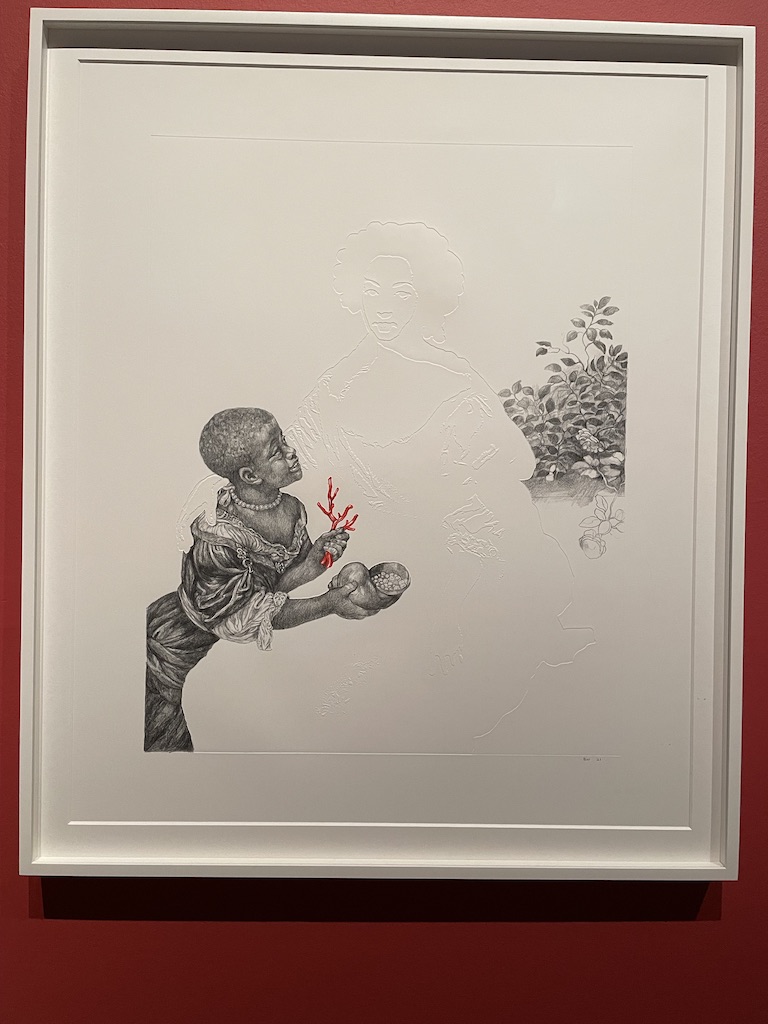
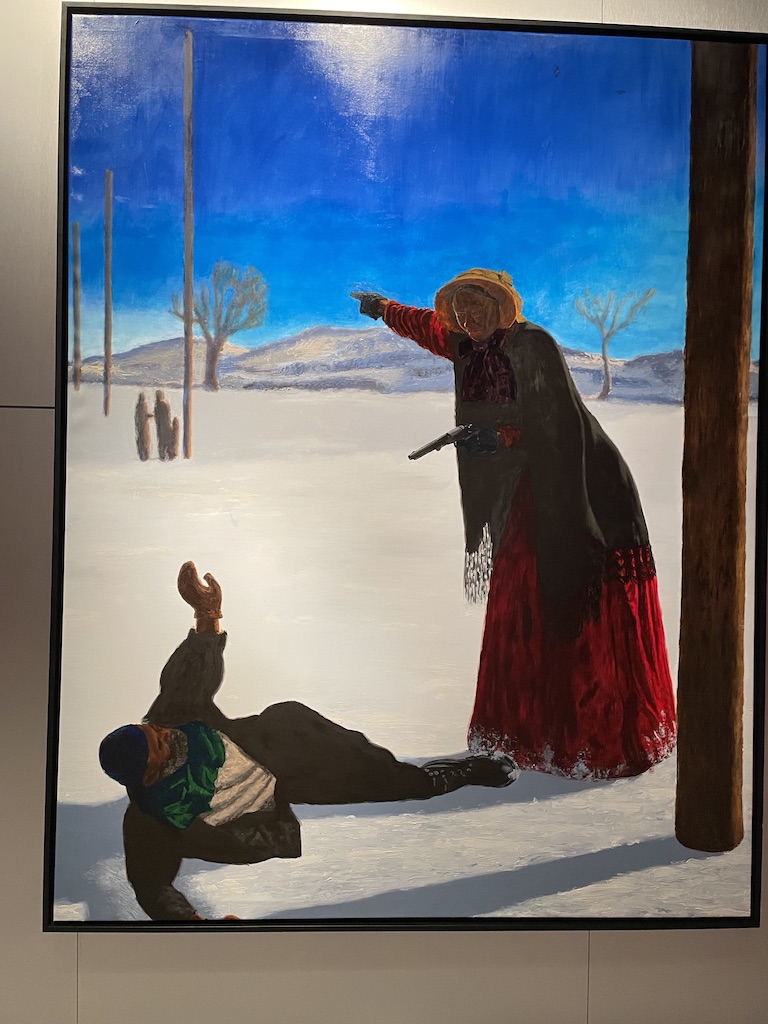
Above: Vanishing Point (Mignard) by Barbara Walker which depicts the black subject in an historical painting, done in graphite, while the rest of the picture is outlined in imprint. Middle: also by Barbara Walker called Marking the Moment, which highlights the presence of the black figure over the rest of the image in a period painting. And on the right is a dramatic painting by Kimathi Donkor who creates narrative paintings reimagining historical female characters from Africa and its diasporas. We see Harriet Tubman en route to Canada.

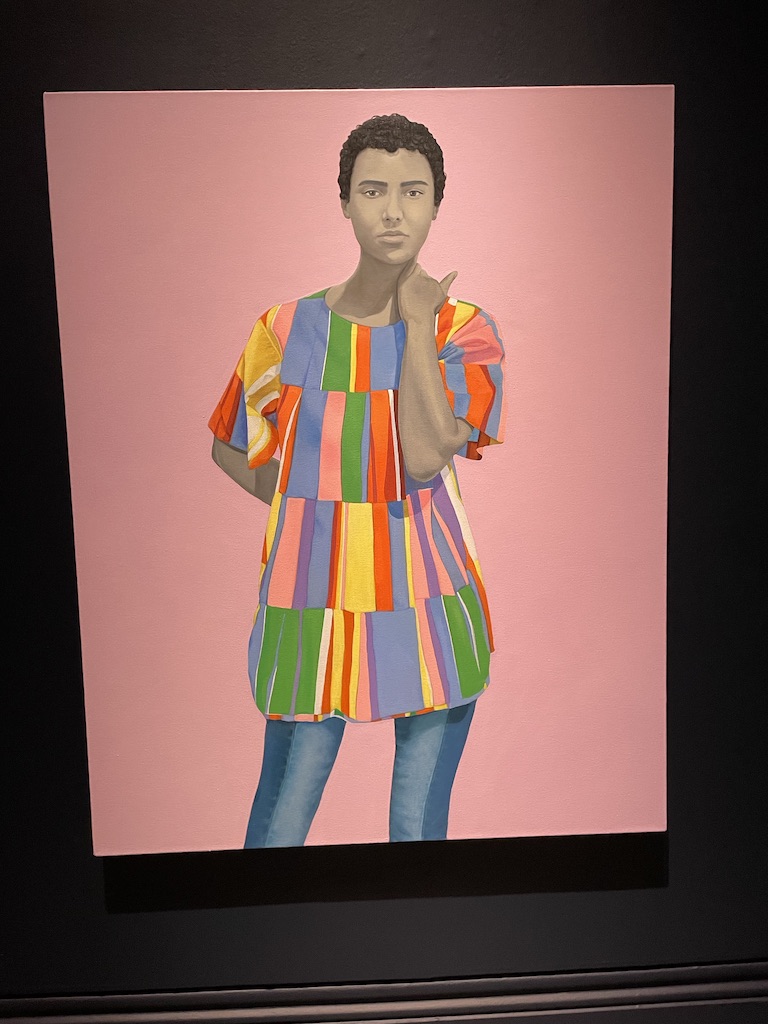
Above: The Captain and Mate by Lubaina Himid, The Adventuress Club Est. 1922 by Toyin Ojih Odutola and She was Learning to love moments, to love moments for themselves by Amy Sherald.

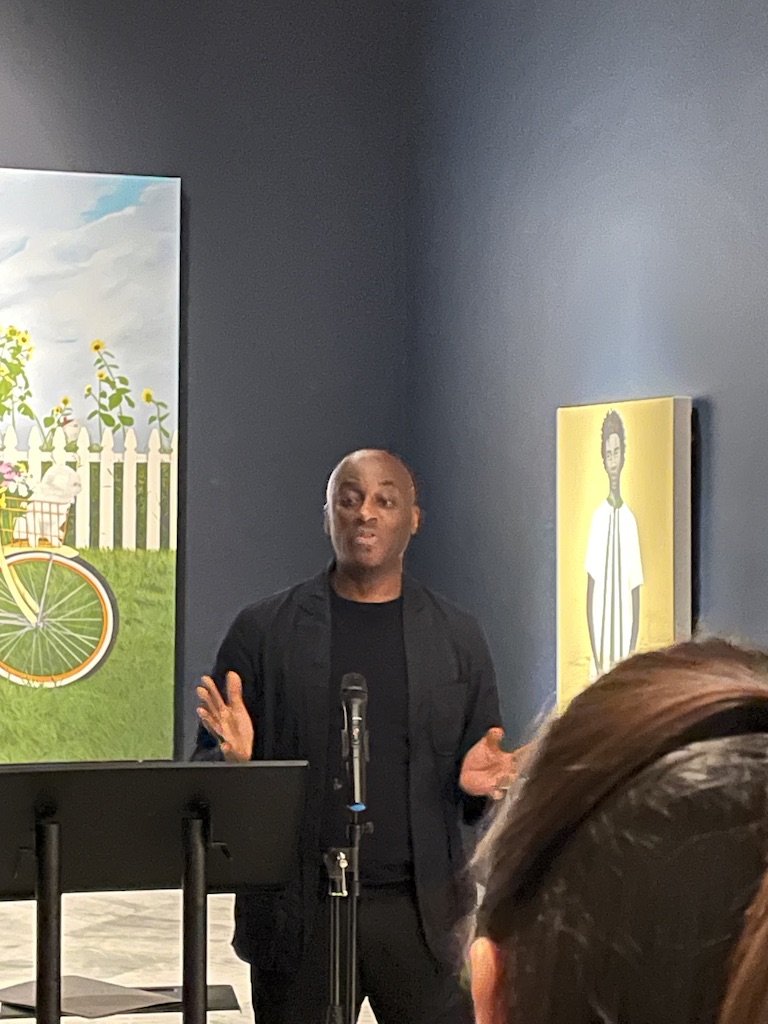
At the press preview it was very interesting to hear Ekow Eshun talk about the five years he has spent developing and curating this exhibition. He has assembled an impressive selection of leading African diasporic artists mainly working in the UK and USA. It’s high time that art depicting the Black experience is celebrated in a major gallery and the National Portrait Gallery has used its space in an imaginative and accessible way. They’re also making tickets available for just £5 to visitors under the age of 25.
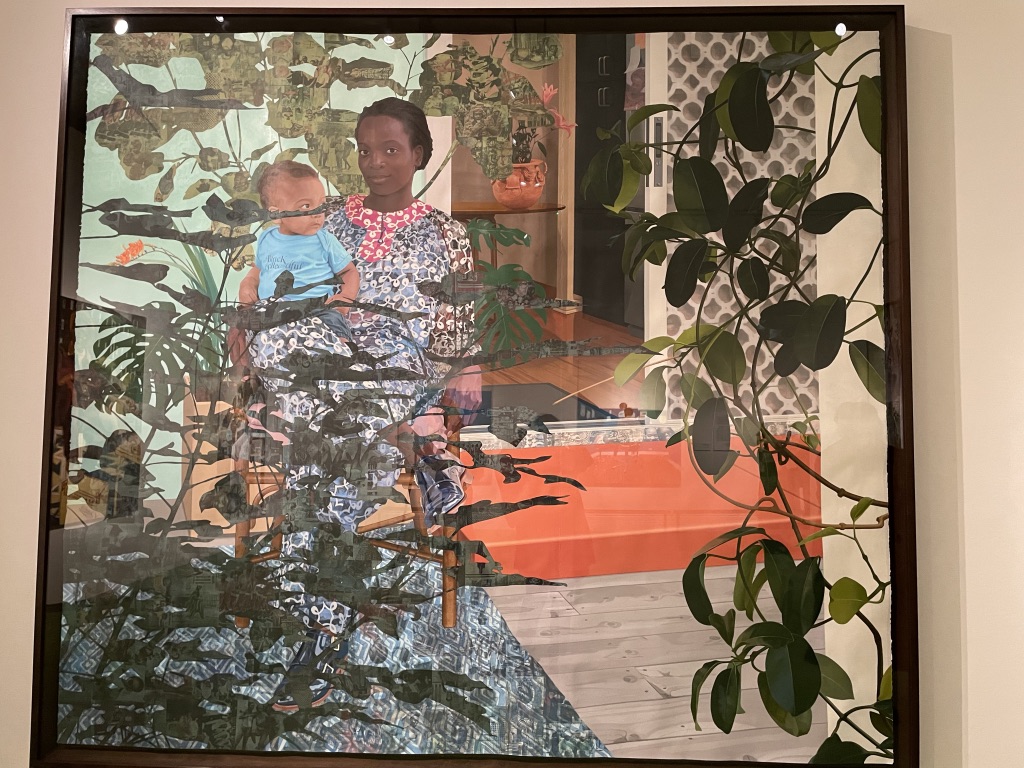
I was very drawn to this wonderfully layered painting by Njideka Akunyili Crosby which uses transfers, colour pencil, collage on paper and acrylic paint.

The Time Is Always Now will be at the National Portrait Gallery until 19th May 2024.

Entangled Pasts 1768 – Now is a very thought-provoking show at the Royal Academy in London. In the late late 18th century many of the leading artists, and members of the new Royal Academy of Art, were instrumental in helping to change attitudes towards indigenous people and the abolition of slavery. There’s a very imaginative mingling of works from the late 19th century to pieces by artists working today, many of them contemporary members of the Royal Academy.

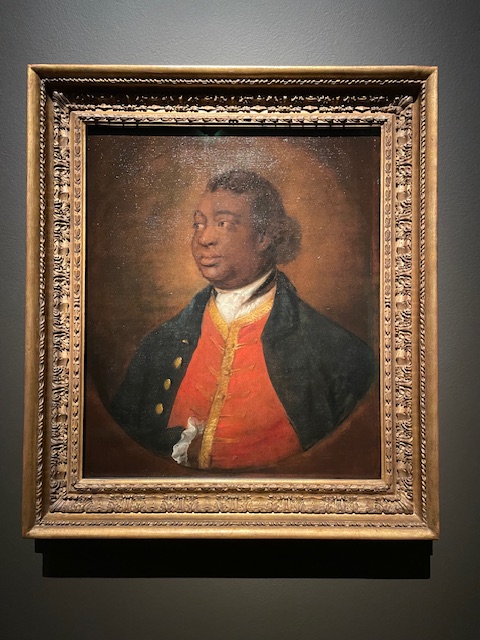
Starting with the late 1700s, the first gallery is filled with charming and sensitive portraits of black sitters. Above, I’ve selected a Portrait of a man in a Red Suit by an unknown artist and a wonderful portrait of Ignatius Sancho, the first man of African descent to vote in a British election. He was a musician, shopkeeper, man of letters and friend of artists. Apparently this portrait by Thomas Gainsborough was completed in one sitting in 1768.

This painting is quite familiar because the subjects, Dido Elizabeth Belle and Lady Elizabeth Murray were bought up together at Kenwood House in London and have been the subject of a film. Painted by David Martin in 1779 this painting is beguiling because Lady Elizabeth appears in a conventional pose, with her book, but she’s affectionately connected to her second cousin, Dido (the illegitimate child of an enslaved woman and a Royal Navy officer) who is depicted in a rather mischievous pose as if she’s about to dart away with her collection of fruit and flowers. Lord Mansfield, who owned Kenwood House was Lord Chief Justice in England and instrumental in the abolition of slavery.

This magnificent bust by Francis Harwood, made in 1758, is placed at the centre of the first gallery and gives a wonderful gravitas and graciousness which sets the tone of the the exhibition.

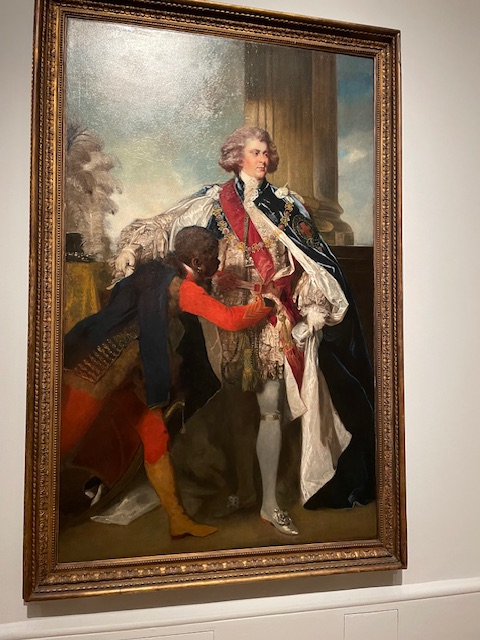
Inevitably we see the role of the black servant in aristocratic homes. And this painting by Joshua Reynolds shows George, Prince of Wales (later King George IV) by Joshua Reynolds. The pose of the attendant – who is intimately arranging the prince’s clothing, caused a stir amongst audiences who first saw it at the RA Annual exhibition in 1787. No identity is given to the attendant but he is described as ‘Black’ by Reynolds.

The shadow of slavery continues with Edwin Longsden Long’s The Balylonian Marriage Market. Young women are selected by male spectators for marriage. I get the feeling he used the same model for most of the young women but darkened their skin colour.

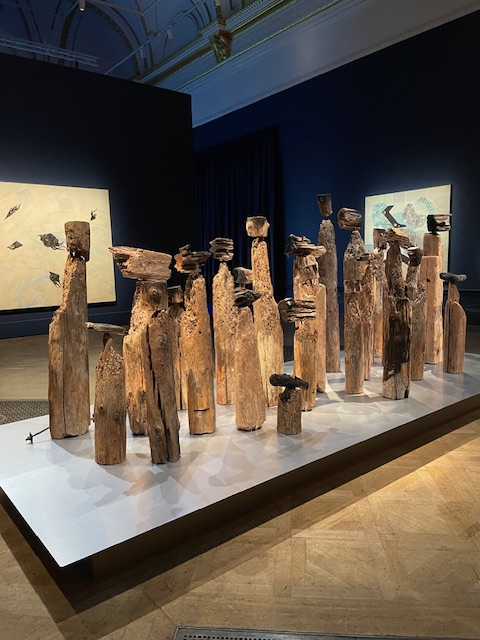
The later galleries leave the iniquities of slavery behind but still reference the engagement of the British Empire with indigenous peoples and leave us a bit troubled by the lack of respect which travelled with the expansive ideas of British Imperialists. For example, the found wood and metal sculpture by El Anatsui called Akua’s Surviving Children is very powerful. Primitive Matters: Huts (2010) depicts the plain, sparse slave huts which contrast with the dwellings enjoyed by Europeans in Trinidad.

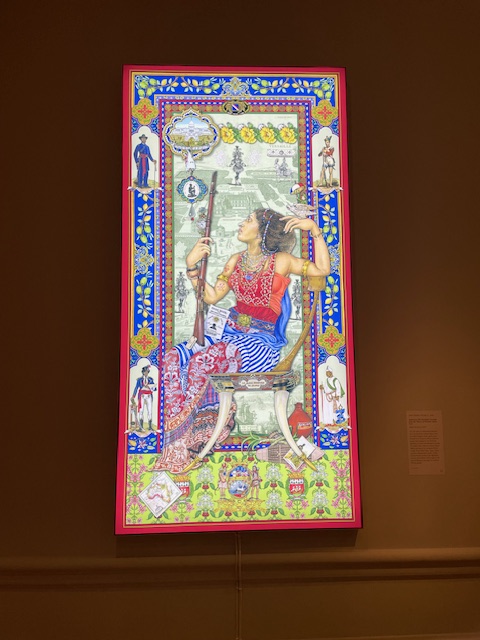
It’s good to see females well represented in the show. On the left you can see a work by The Singh Twins which references the ‘triangular trade’: goods were shipped from Europe to Africa, enslaved people were shipped to the Americas, plantation produce was shipped to Europe. The model featured is Fanny Eaton and you can see a sketch of her by Frederick Sandys on the right.

The show runs at the Royal Academy form 3rd February until 28th April 2024.

This fabulous sculpture placed in the courtyard of the Royal Academy is by Tavares Strachan. Made of bronze, black and gold leaf it’s called The First Supper (Galaxy Black) made in 2023.