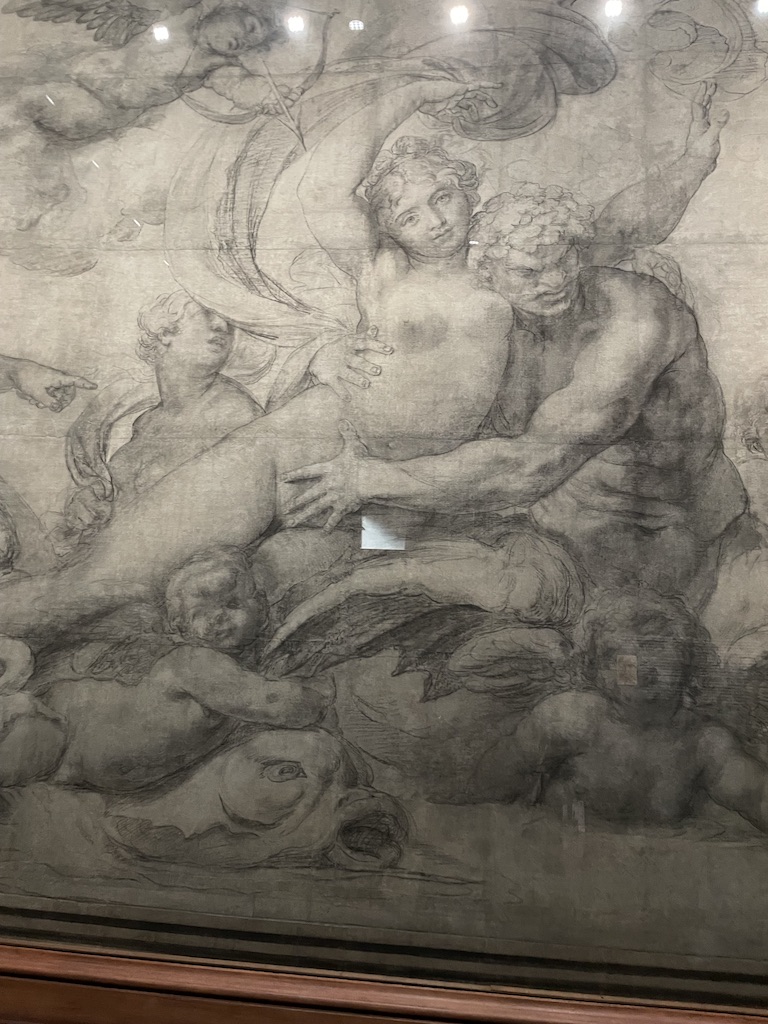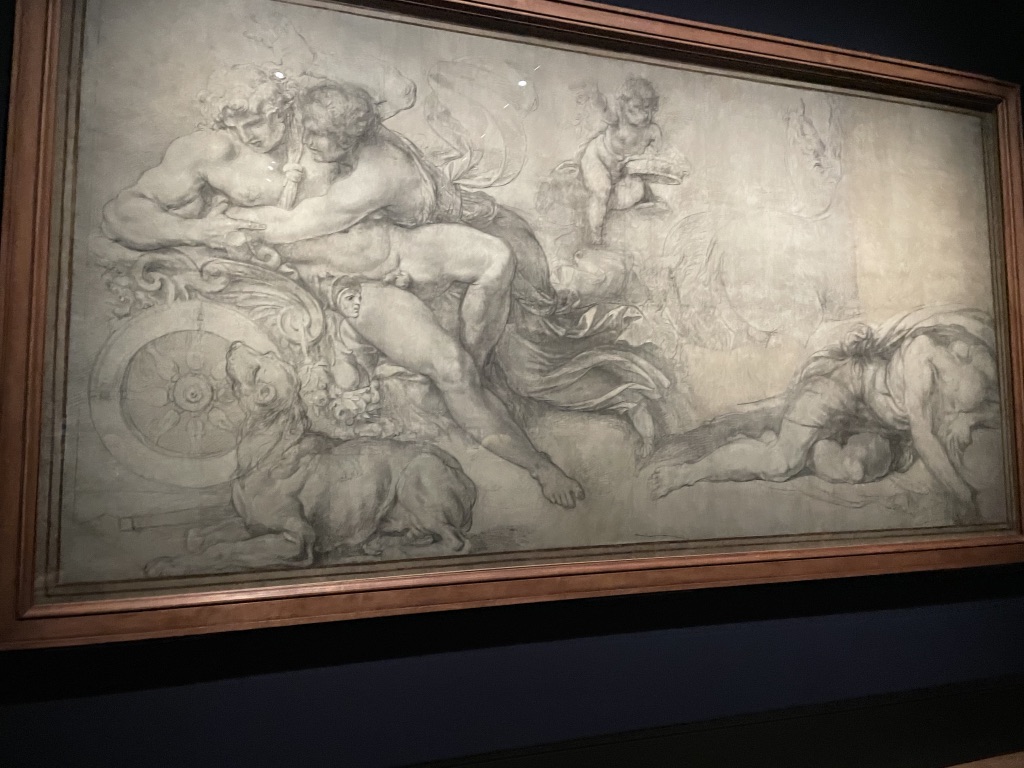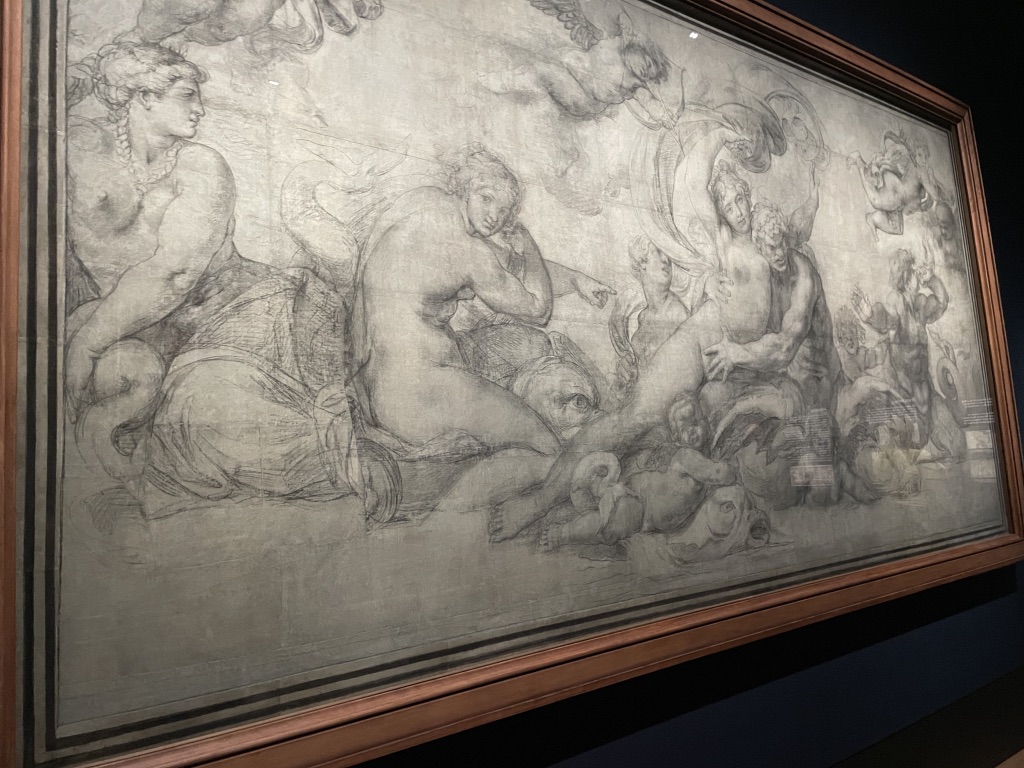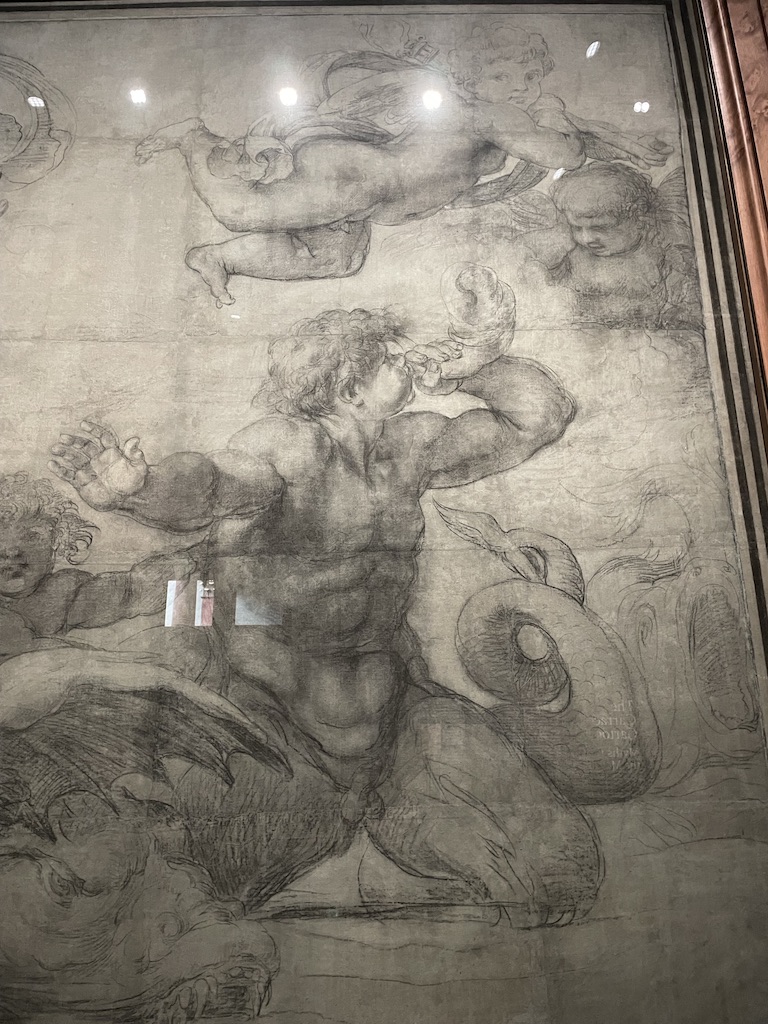
What a delight to see, close up, a remarkable survivor from the Renaissance – the two Carracci ‘cartoons’ created in the late 1590s in readiness for transfer to the ceiling of the Palazzo Farnese in Rome. You can see the joins, the cuts, the holes for the ‘pouncing’ and simply absorb the atmosphere of artists at work over four centuries ago. Stunning!

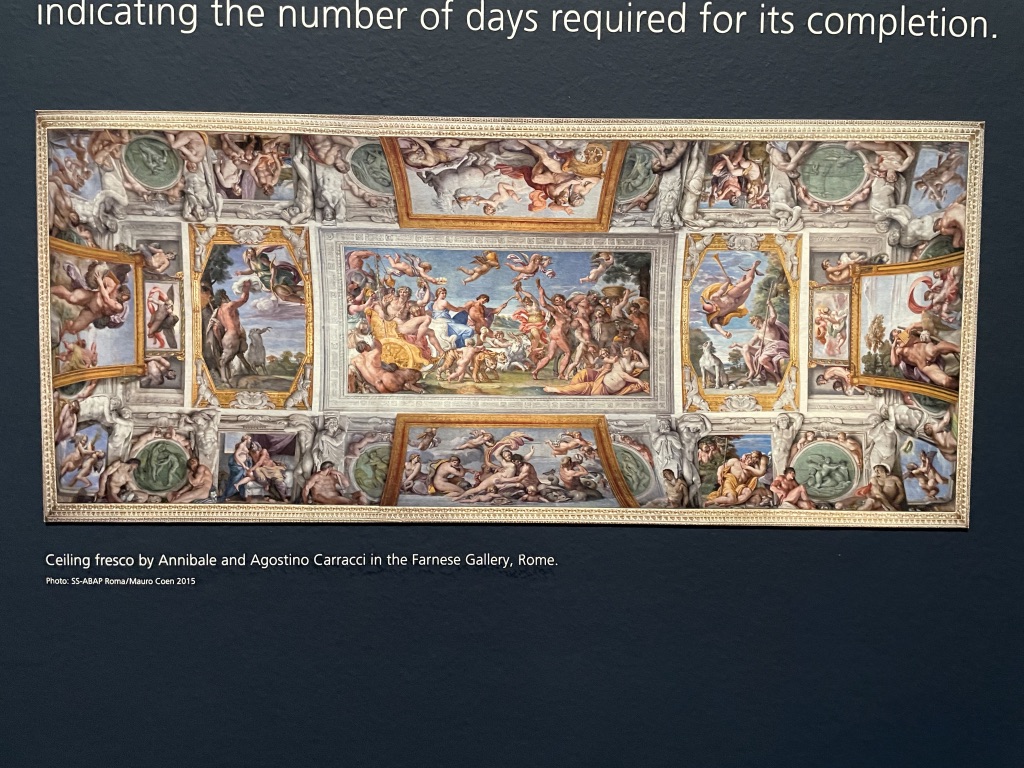
It was a thrill to enter the darkened space of Room 1 at the National Gallery and behold two massive, landscape-sized charcoal drawings by the artistic double act of the early 1600s, Annibale and Agostino Carracci. These huge cartoons were the preparatory works for two of the large paintings which adorned the spectacular gallery ceiling of the Palazzo Farnese in Rome. The work was commissioned by Alessandro Farnese who became Pope Paul III. The building is now the French Embassy so it’s not easy to see the amazing works.

The two cartoons on show are the centre top and bottom images in the gilded fame. It’s spectacular to see these works close up. You can see the cuts, tears, reps and pin marks in the fragile paper. These cartoons were working documents, used to lay out the design, develop the artwork and then placed against the damp plaster of the ceiling surface to have the image pricked (pounced) and and traced onto the surface. Then the artists would labour at ceiling height on a scaffold to complete the frescoes.

It’s impressive to see these works close up and follow the lines and scratches made by artists over four centuries ago. It’s rare for these working documents to survive but, apparently, they were carefully pieced together again after the transfer process and kept safely. Maybe the idea was to reuse elements of them on future commissions.

There’s such vitality to the drawing and the clever composition There’s humour too. On the right, you can see a putti blowing a shell in the face of another putti who is covering his ears!

Above is a view of the gallery made by Francesco Panini, who appears in the bottom left of the gallery sketching the view.

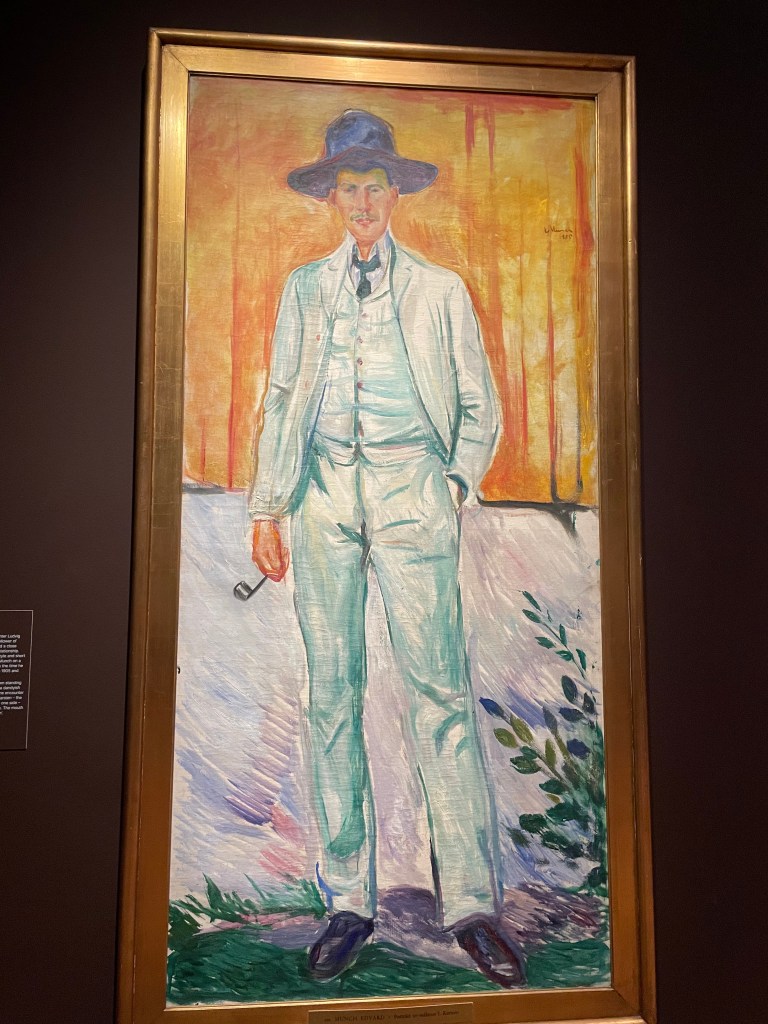
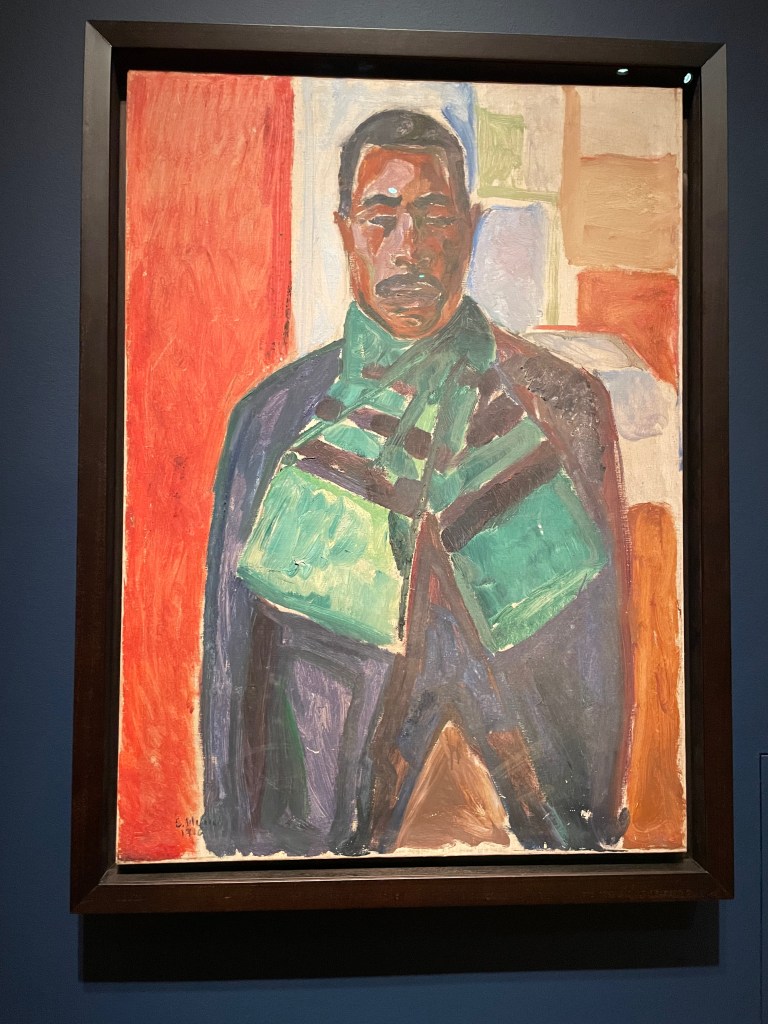
Who knew that the artist best known for that agonising work, The Scream, started out as a painter of colourful portraits? Well, now we know – thanks to a wonderful exhibition at the National Portrait Gallery of Edvard Munch’s early portraits, mainly of family and close friends. It’s a chance to re-evaluate this artist’s work and enjoy the sunshine and affectionate relationships in his life.

Colour! Yes, serious colour and, to my mind, a speediness of thought and hand in the creation of many of these portraits. I enjoyed the dribbles, splodges and daubs of hasty painting, as if he were in a great hurry to capture the subject in front of him and then get on with something else. Above: Torvald Stang, a friend, and self portrait of Munch.

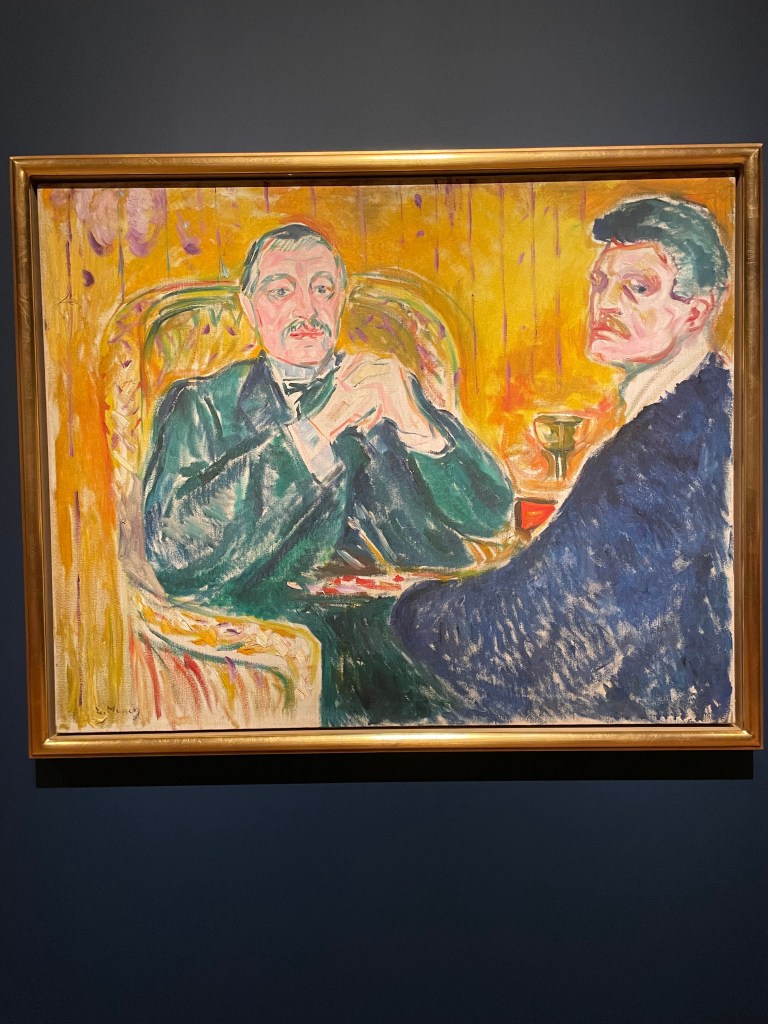
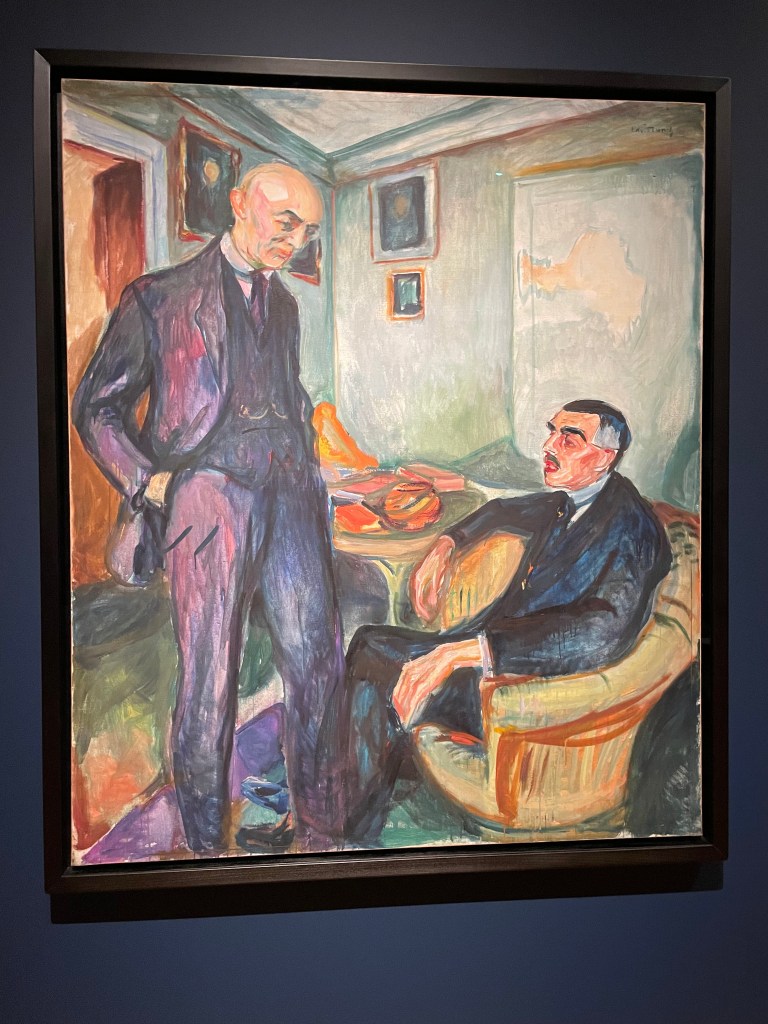
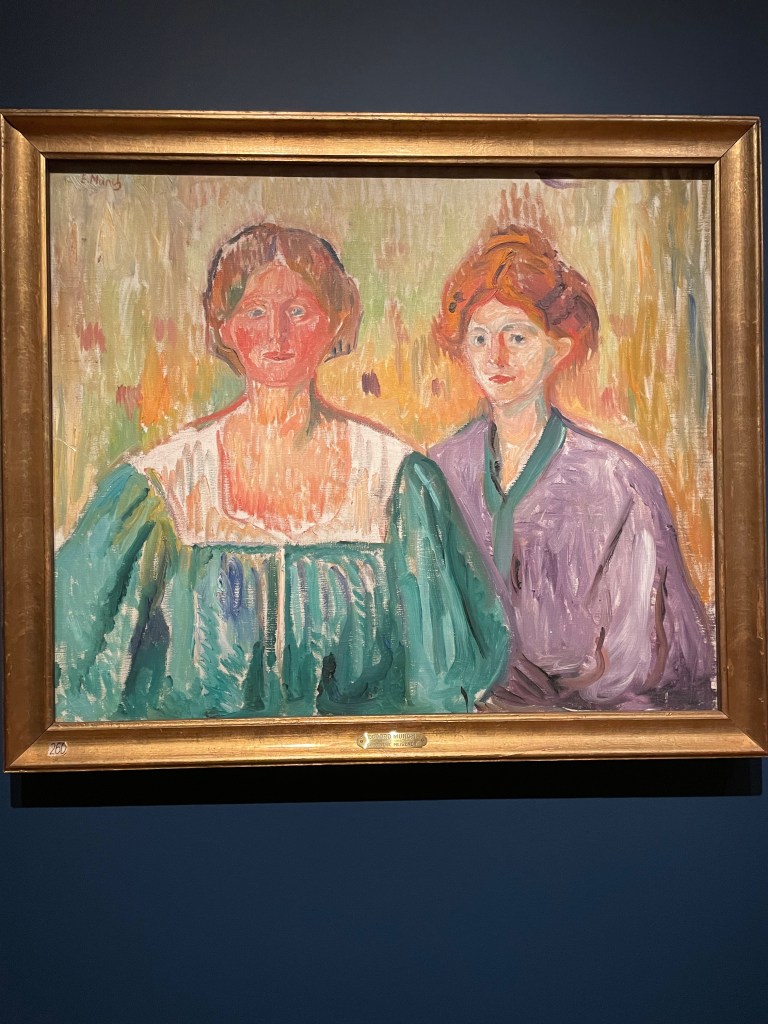
Munch was clearly very fond of his friends and family and painted them with obvious pleasure. And he liked depicting them in pairs. This is very much a theme. People with a connection occupy the same space and, again, were painted at much the same pace with an equal distribution of attention to detail. Above: Lucien Dedichen and Jappe Nilssen – friends from Munch’s student days. And on the right are sisters Olga and Rosa Meissner, professional models.

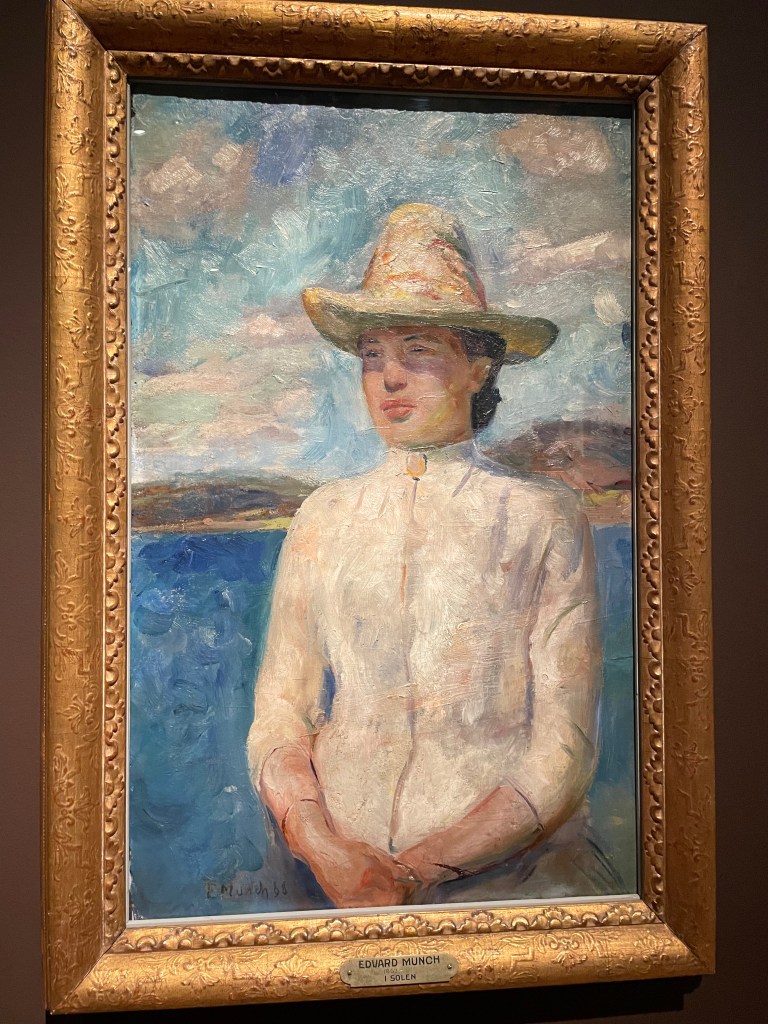
There’s an overwhelming tenderness to many of the paintings and, in some cases, they might not seem finished. But, to Munch, he had provided quite enough detail in the face and the rest of the figure can be filled in by the viewer’s eye. Above: Inger, Munch’s younger sister, looking charming in sunshine and Inger Barth, a friend. This work was confiscated in 1937 when it was among the works declared to be ‘degenerate’ by the National Socialist government.

What’s absolutlely apparent is the free-flowing style we recognise from his later, angst-riven work. I like the direct gaze of his subjects. It looks as though they must have been deep in conversation when the portrait was being made and the affection between sitter and artist is very apparent. Above: the Norwegian colourist painter Ludvig Karsten in a ‘dandyish’ pose, August Strindberg, the playwright, and Sultan Abdul Karem whom Munch employed.

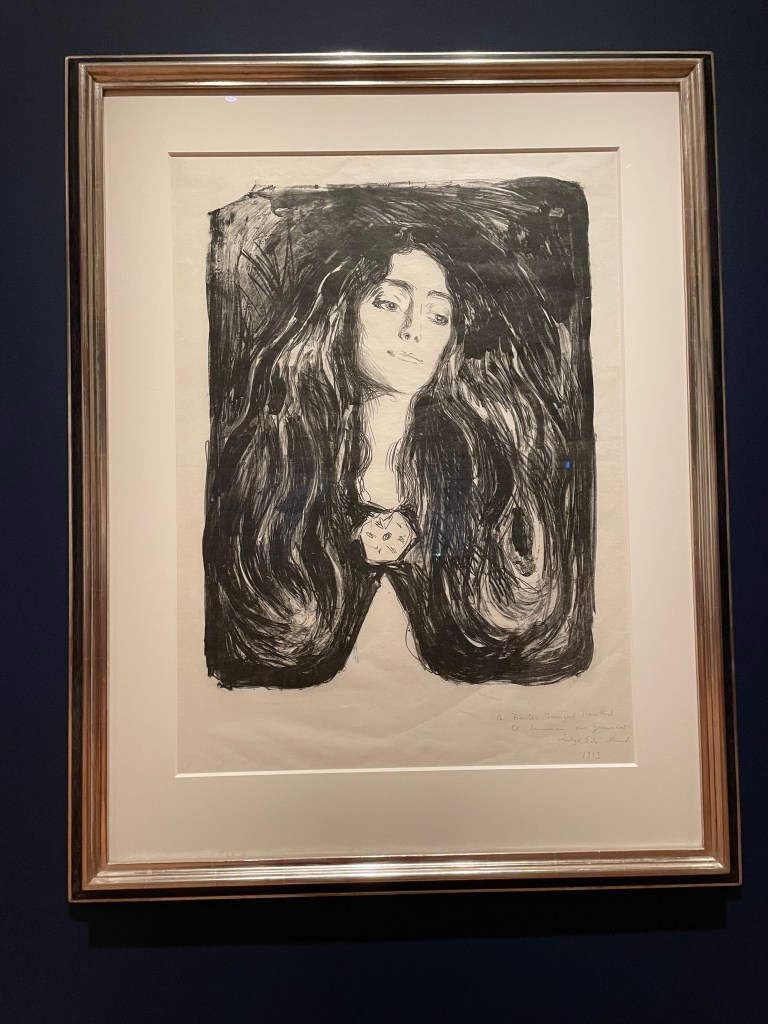
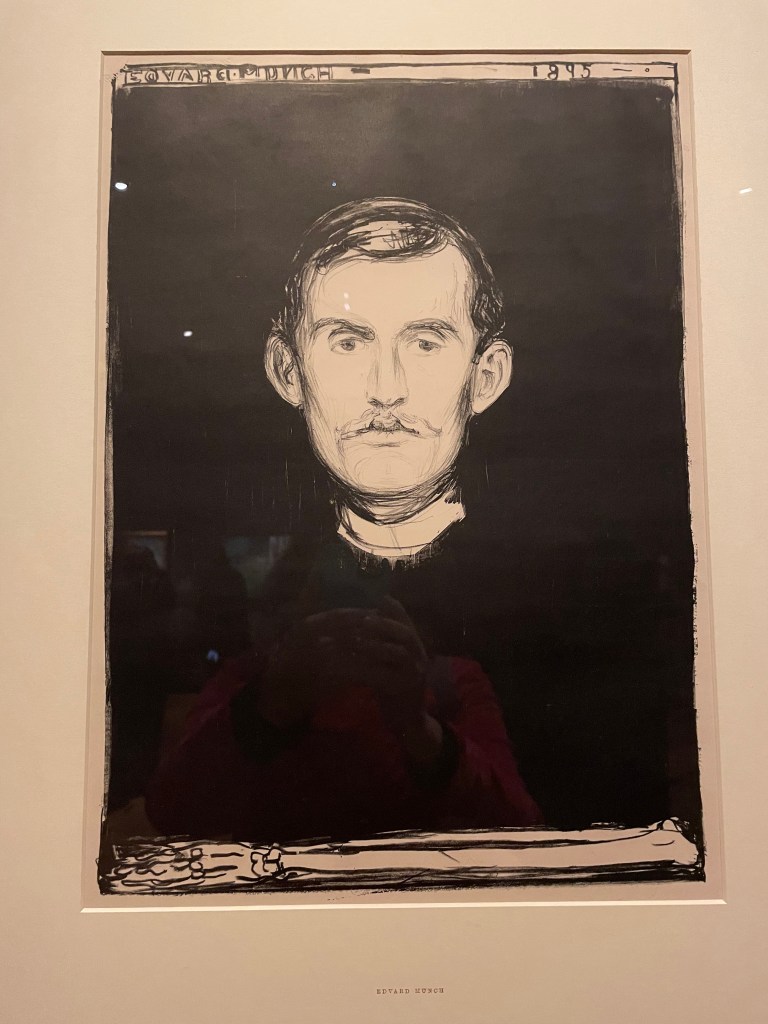
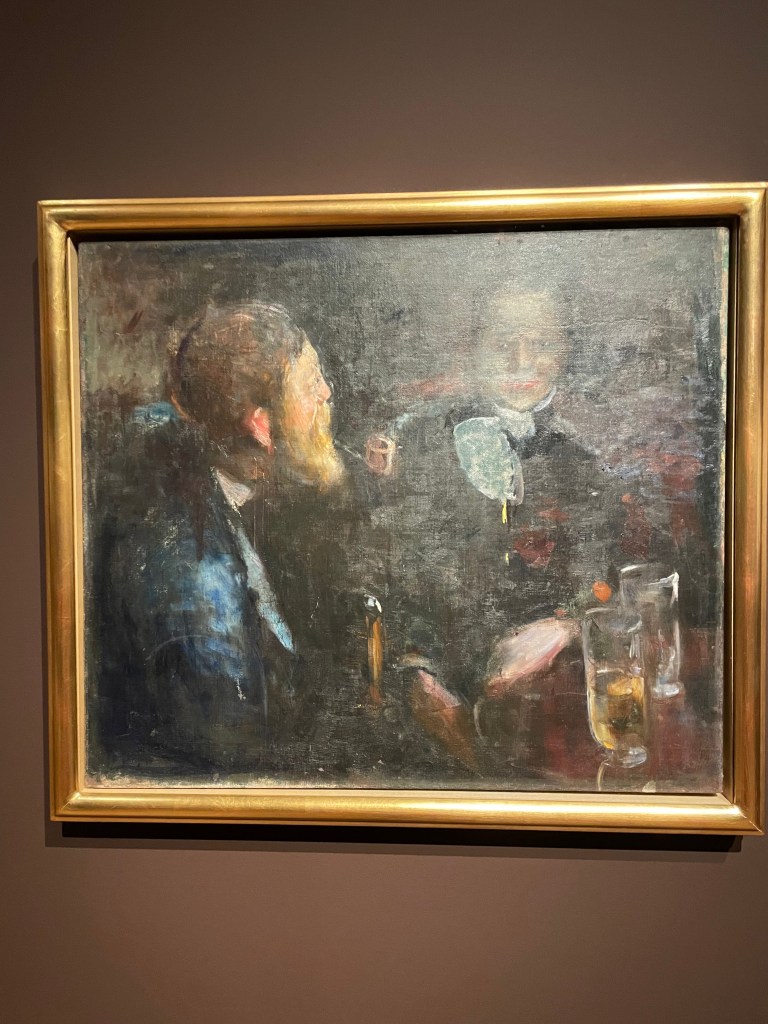
Just a few of the lithographs and black and white portraits (and the very dark one on the right) give a hint of the darkness within. But one comes away from this show in a very uplifted state, pleased to see such great portraiture by one of the 20th century’s finest artists. Above: lithograph portrait of Eva Mudocci, 1902, and self-portrait with skeleton arm, 1895 and on the right Tête à Tête, 1885, showing the painter Karl Jensen-Hjell drinking in the cafe in conversation with woman who might be Inger Munch. Very atmospheric.

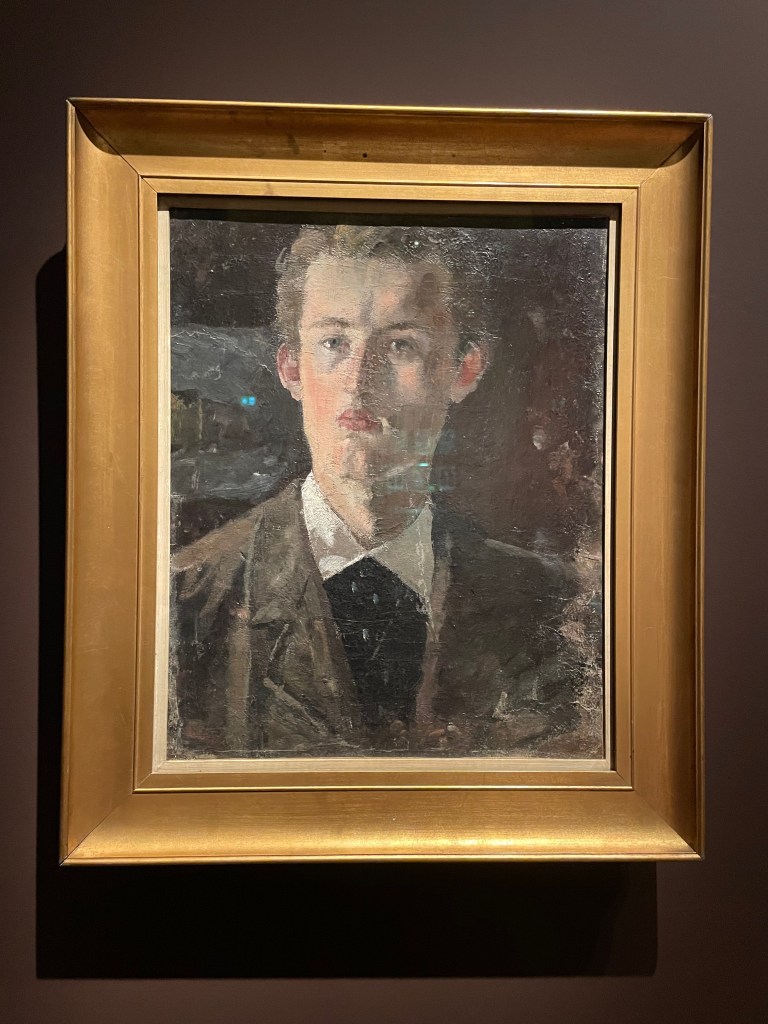
Above: a self-portrait and a very tender portrait of Munch’s father, Christian, a military doctor. The show is on at the National Portrait Gallery until 15th June 2025. Well worth it.

Brasil! Brasil! A glimpse of the artistic heritage of this lively country is on show at the Royal Academy and it’s fascinating to see how a mix of European and indigenous artists have combined to create a distinctive Brasilian aesthetic.

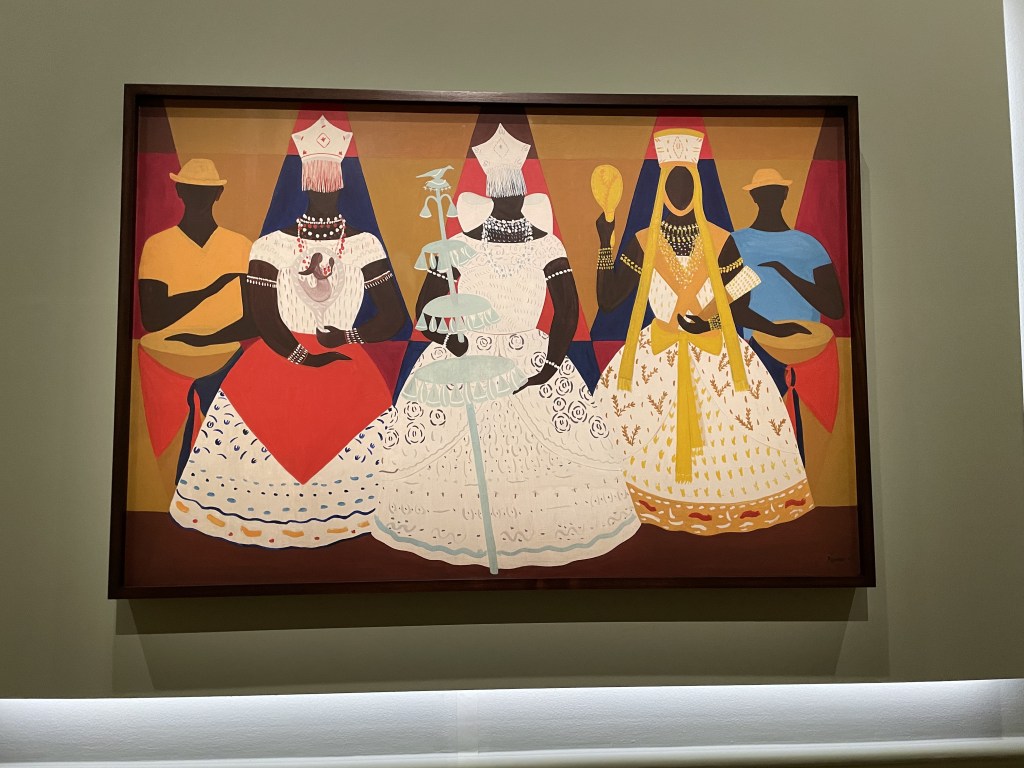
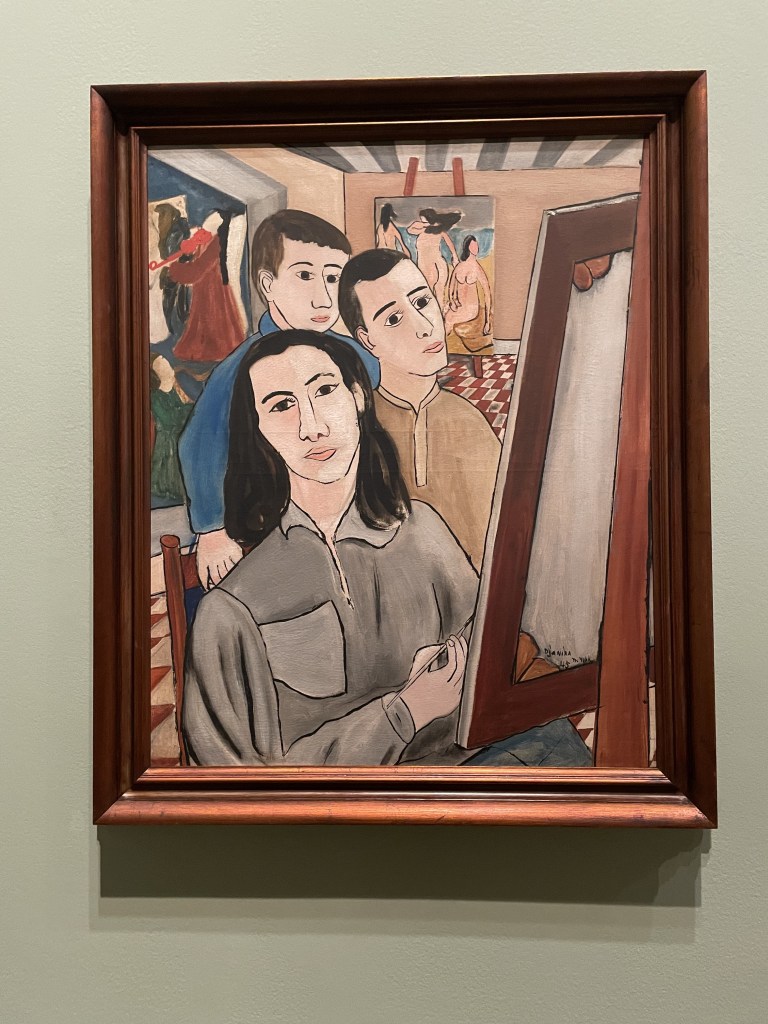
This image, entitled Three Orishas, was painted by Djanira da Motta e Silva in 1966. It’s an example of the ‘newer’ art in a show which exhibits the art of Brasil from the 1920-70s. The bright colours, stylised look and clear mingling of cultural languages captures, for me the true spirit of this young South American country.
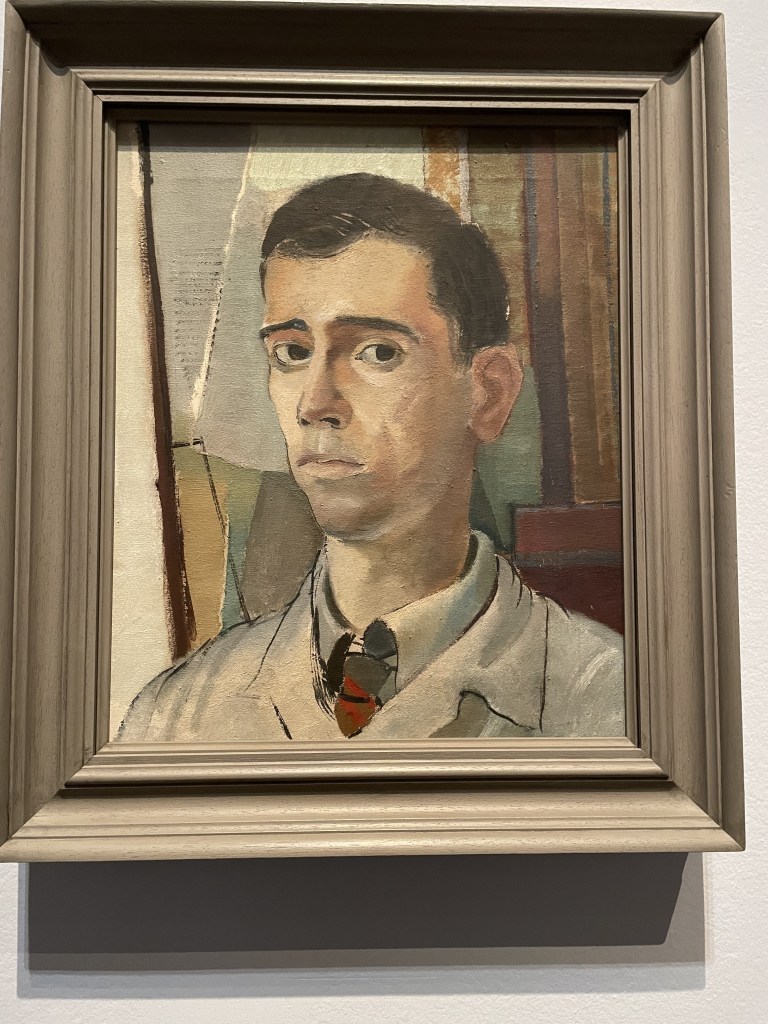
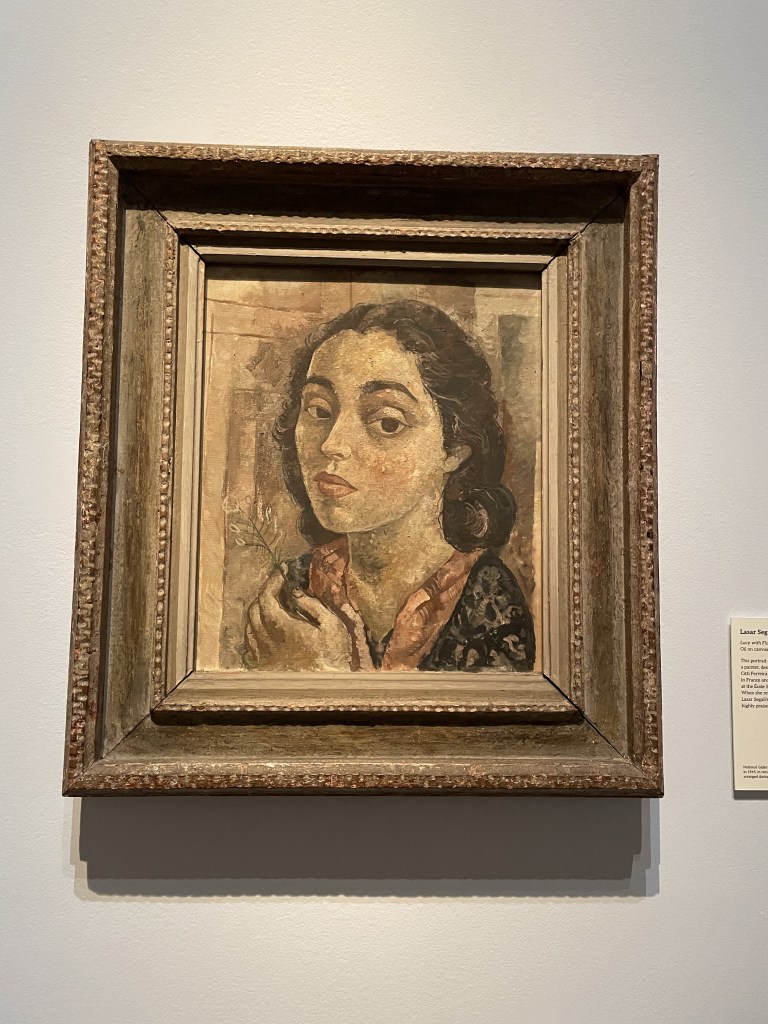
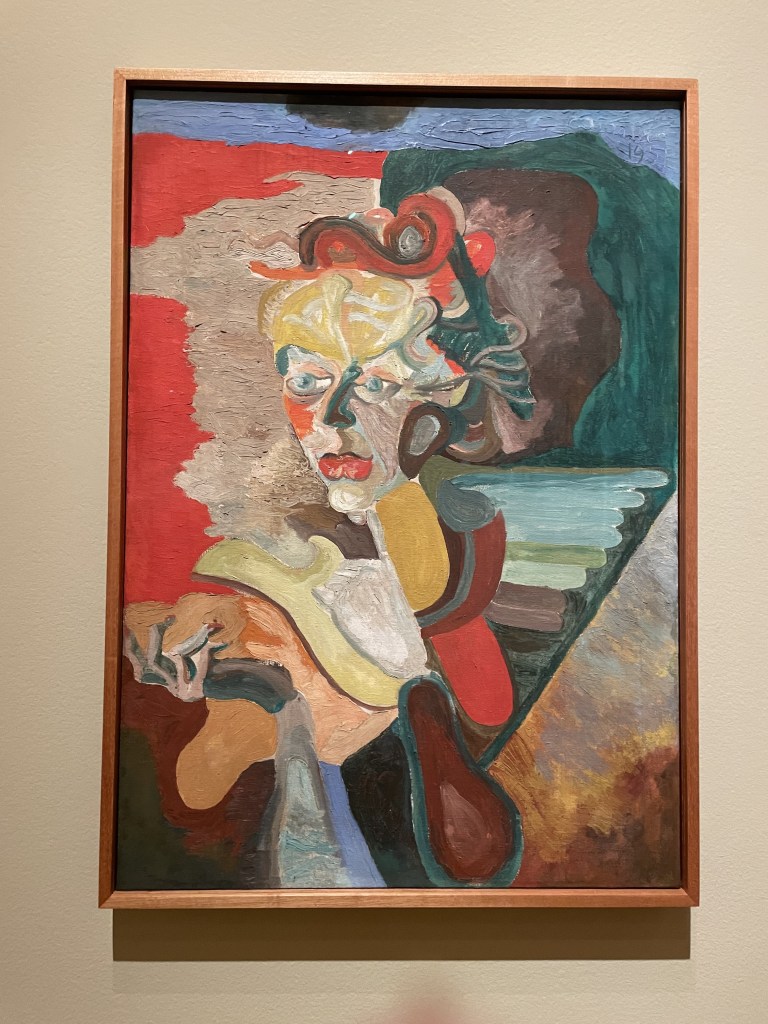
I’m always drawn to portraits and there are some very interesting examples. The muted colours betray the period of the painting and the inheritance of German expressionism. Left: Self-portrait with Orange Dress 1921 by Tarsila do Amaral, Portrait of a Young Man 1943 by Roberto Burle Marx and Lucy with Flower by Lasar Segall painted in 1939-42.

You can see the influence of expressionism and abstraction here with Djanira da Motta e Silva’s self-portrait from 1945, Flavio de Carvalho’s Portrait of Ivone Levi from 1951.

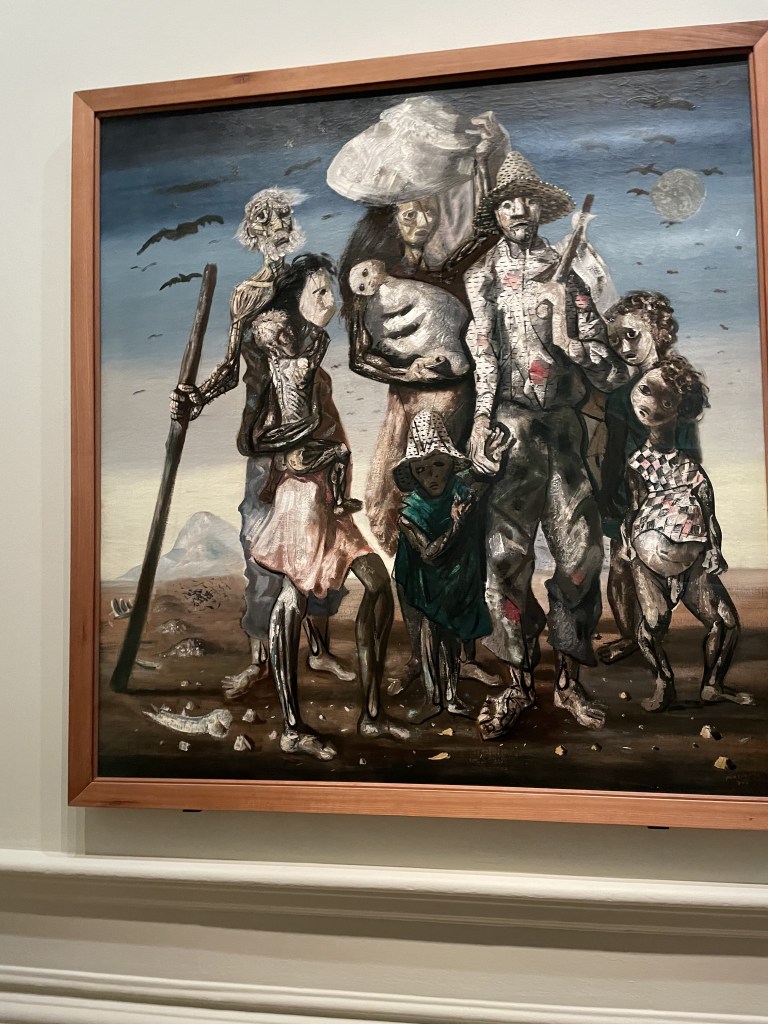
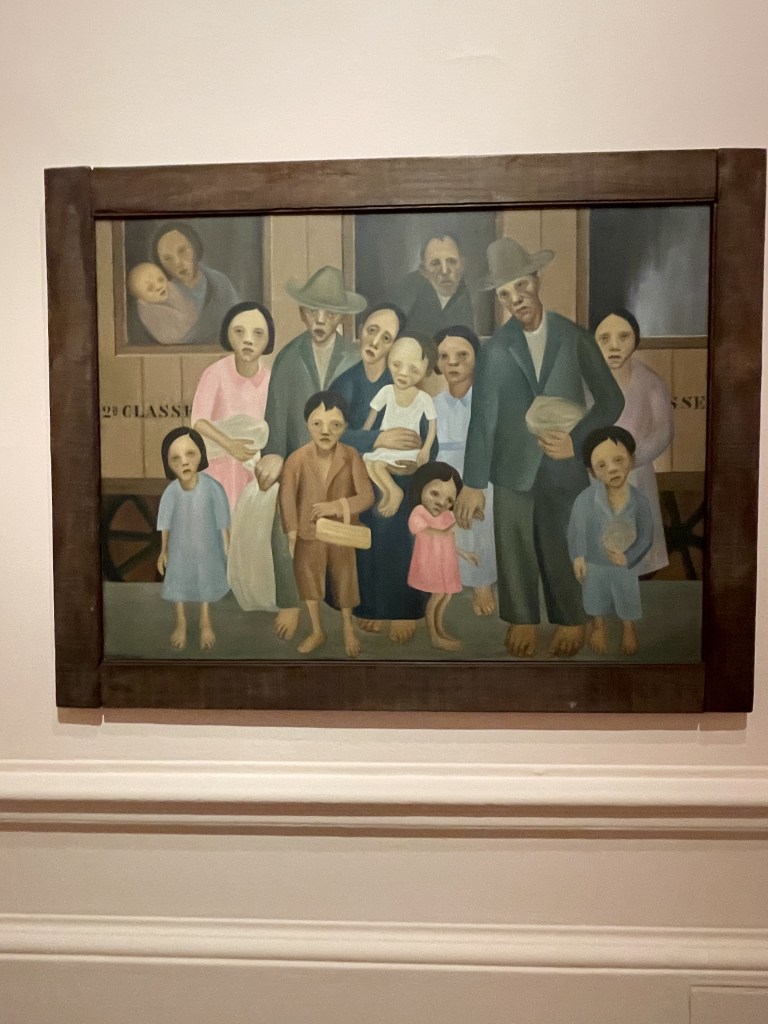
Interesting examples of social commentary with these two paintings. The rather sinister Migrants by Candido Portinari from 1944 represents the migration of northeastern rural communities who were forced to move to other part of the country in search of work. And Tarsila do Amaral’s ‘Second Class’ from 1933 illustrates the awful poverty resulting from the economic crash of 1929.

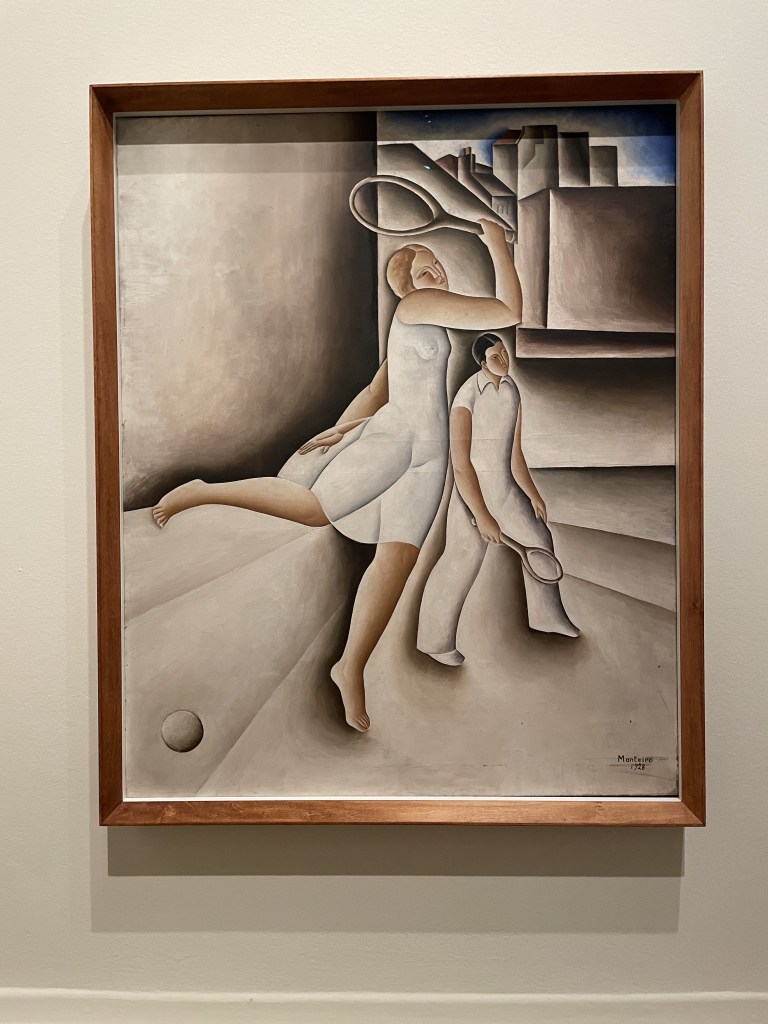
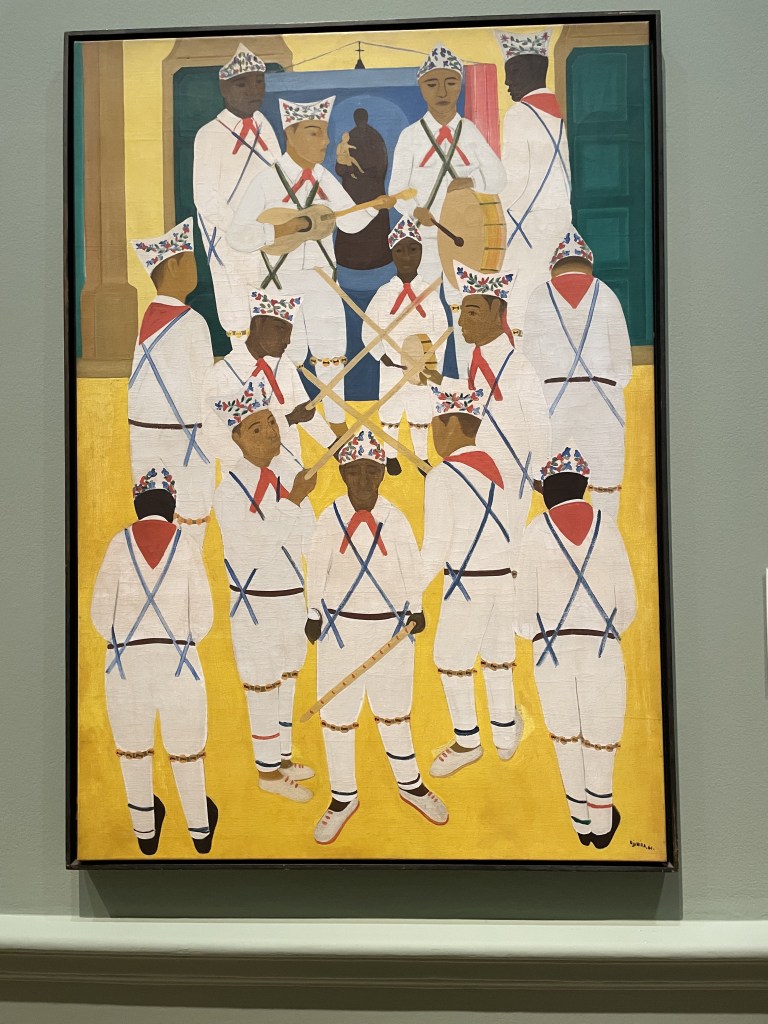
I liked the stylised tennis player in Vincente deo Rego Monteiro’s limited palette painting from 1928. And I really liked the Marrapaia Dance, Pariti painted by Djanira da Motta e Silva in 1961. Such a striking resemblance to the UK’s Morris dancers with strings of bells tied to the performers’ knees!

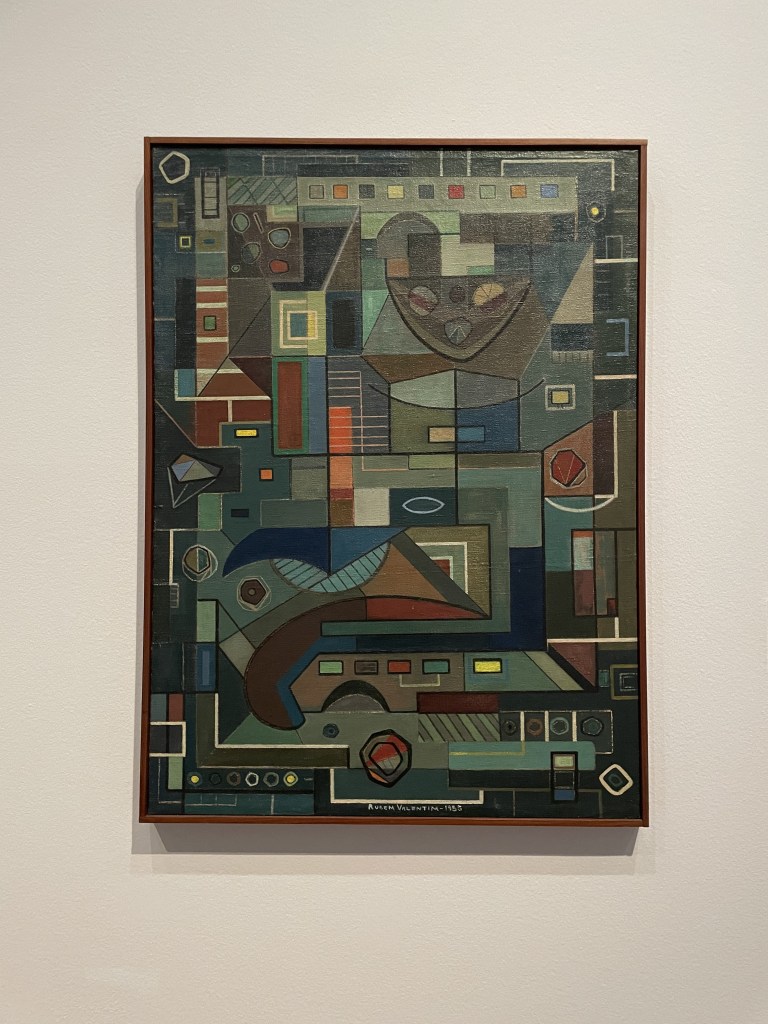
And here’s a pick and mix of abstracts and figurative work which show the evolution of Brasilian art.

The show is on at the Royal Academy until 21st April 2025

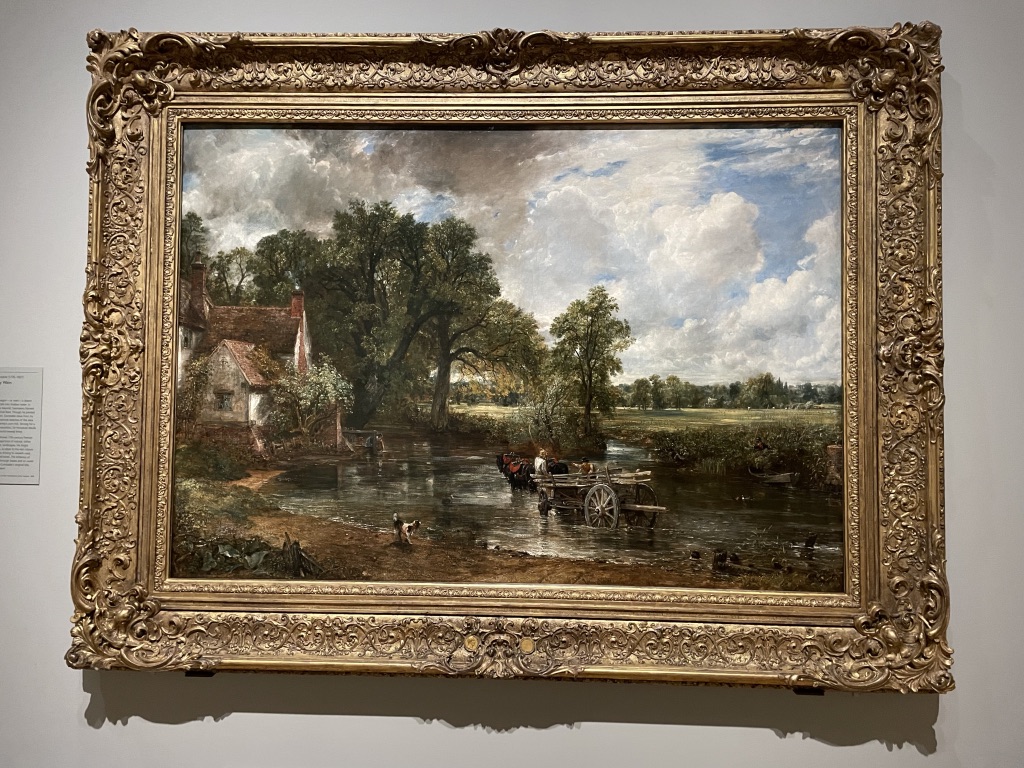
What an enchanting show! It’s a joy to visit the National Gallery and ‘Discover Constable and the Hay Wain’. This picture has graced millions of biscuit tins and chocolate boxes but there’s so much more to the image. Fascinating to see the painting in the context of a contemporary painter of the 1820s channelling the aesthetic of traditional landscape painting and establishing a British school of landscape. Fabulous

The Hay Wain is such a familiar image and conjures thoughts of ‘Merrie England’, the countryside fantasy of rural beauty, a simple life and the contented relationship between people who till the earth and the beauty of the fields where they work. At the press preview, listening to curator Christine Riding, it was fascinating to hear the context of the Hay Wain explained and then illustrated by a charming selection of complementary paintings, drawings, sketches and cartoons.

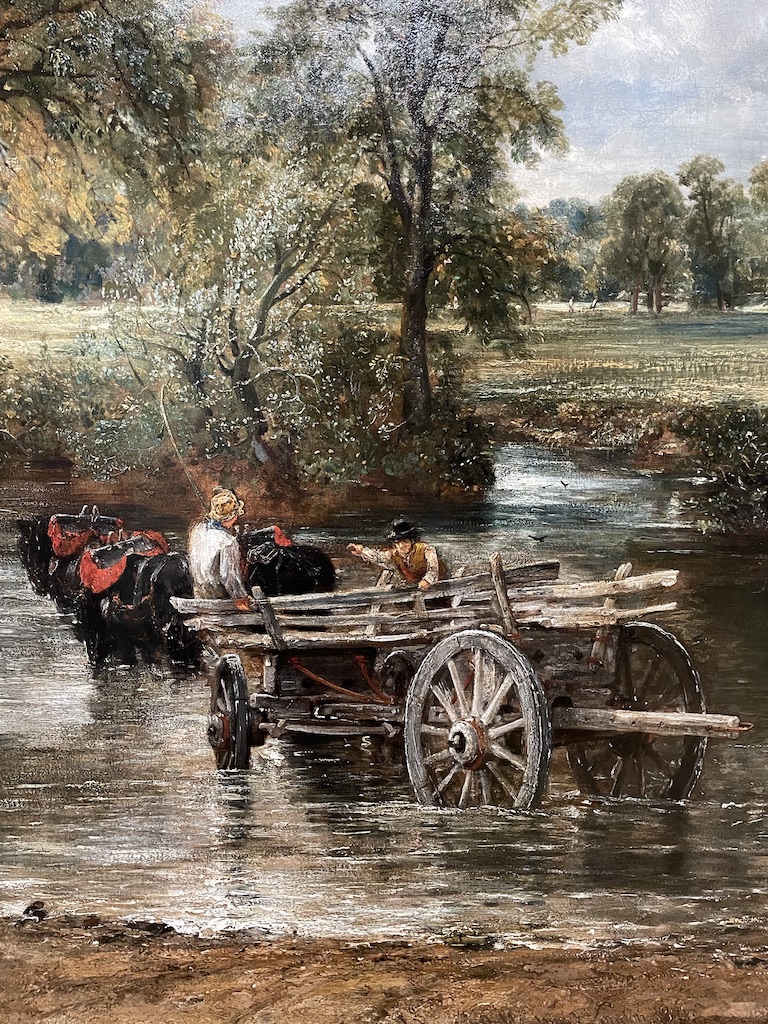
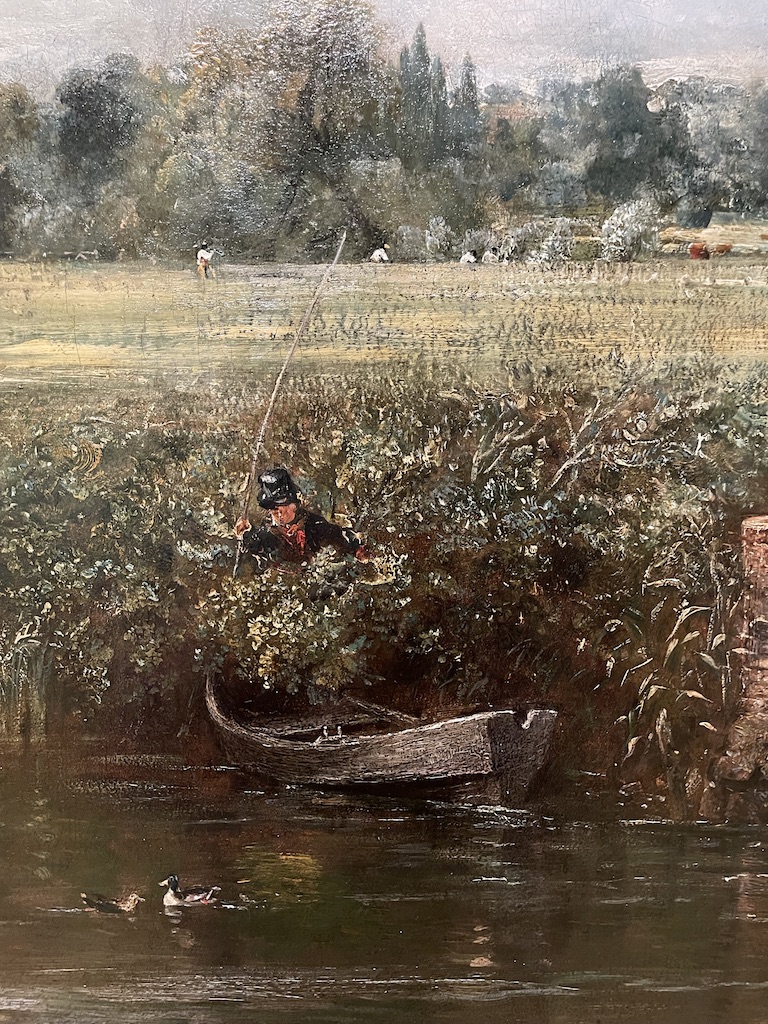
Took a couple of close-ups of the Hay Wain. It’s one of John Constable’s ‘six-footers’, a very large painting which was started in 1819 with the intention of grabbing the attention of collectors and fellow artists. Size does matter when you’re competing with other people to gain a reputation in the art work; this was an epic work, produced in his studio, but very much based on sketches and paintings made ‘en plein air’ in the Suffolk countryside Constable knew so well.

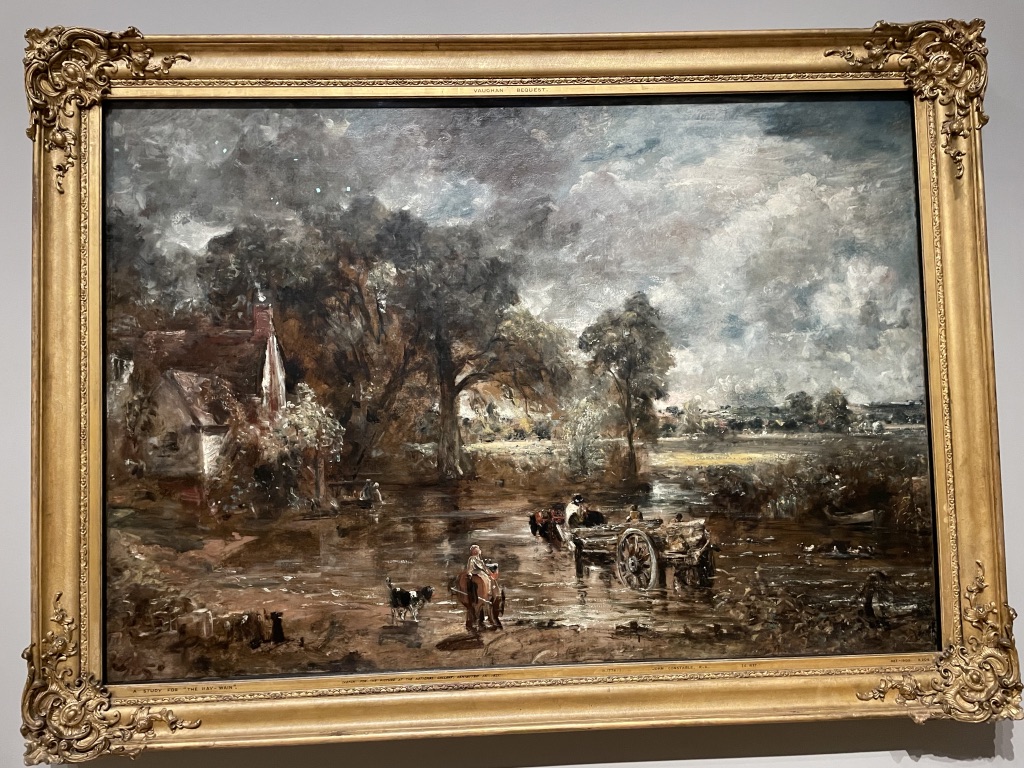
This is a large-scale (6ft) dry run which Constable painted. I love the liveliness and free painting. He does not become bogged down in detail yet all the elements of the composition are there.

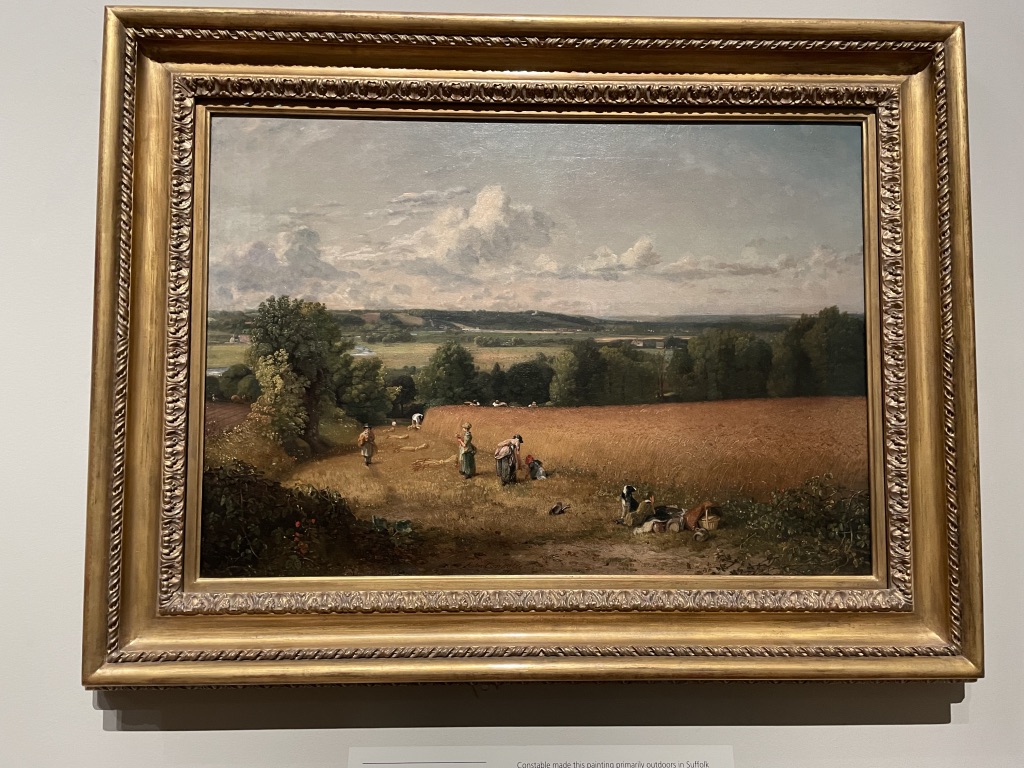
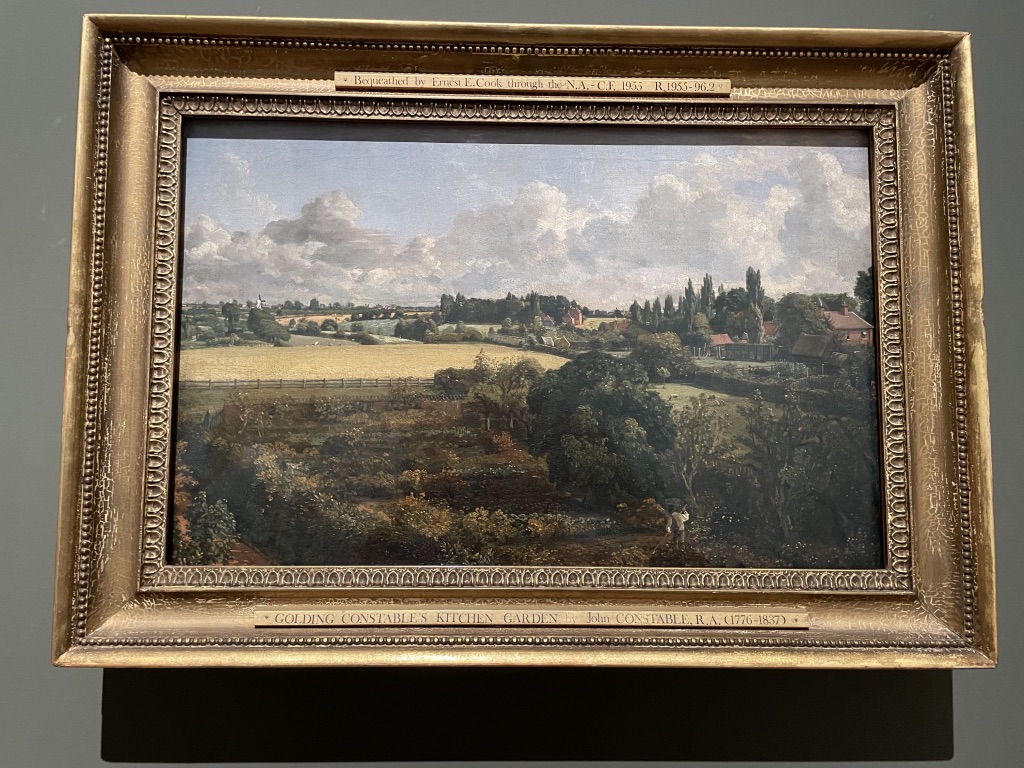
On the left is a work by Constable entitled The Wheat Field. It makes rural life look very clean, romantic and relaxed. On the right is Golding Constable’s Kitchen Garden (his father) which was very personal to Constable and he kept it for himself and it was never sold in his lifetime.

This painting is by Thomas Gainsborough (1748) Like Constable, he was born and brought up in Suffolk and was familiar with the same landscape. This work depicts Cornard Wood, common land at the time. The painting belonged to Constable’s uncle, David Pike Watts and would have been familiar to the young artist as he was developing his interest in landscape painting and admiring Gainsborough’s technique.

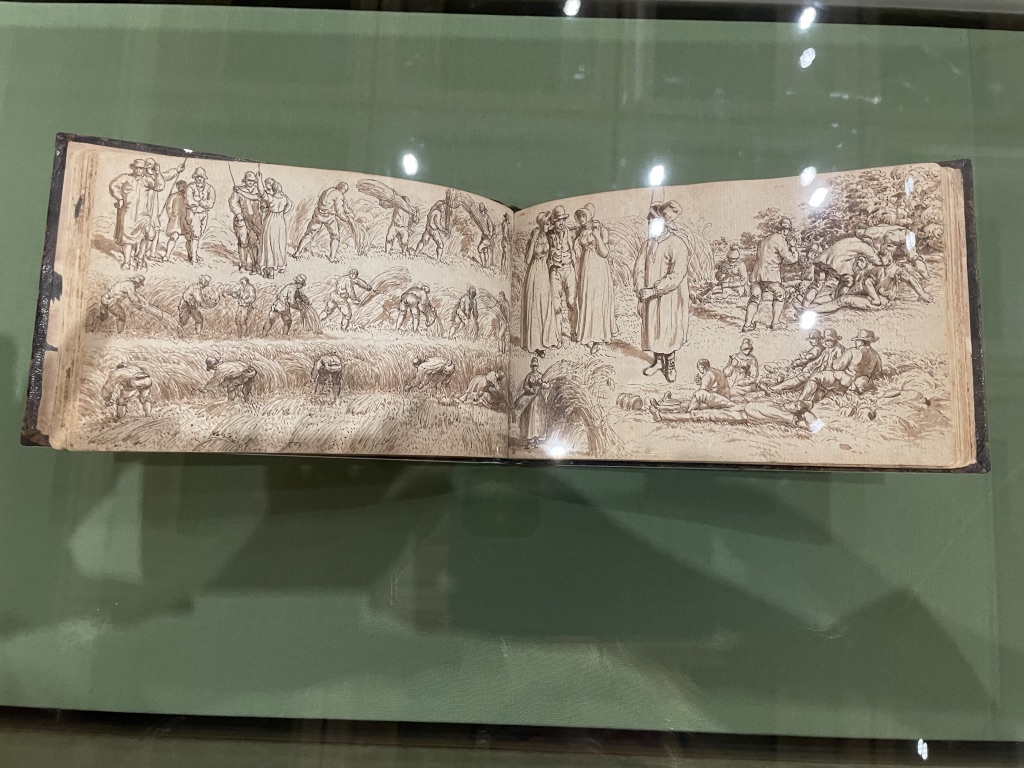
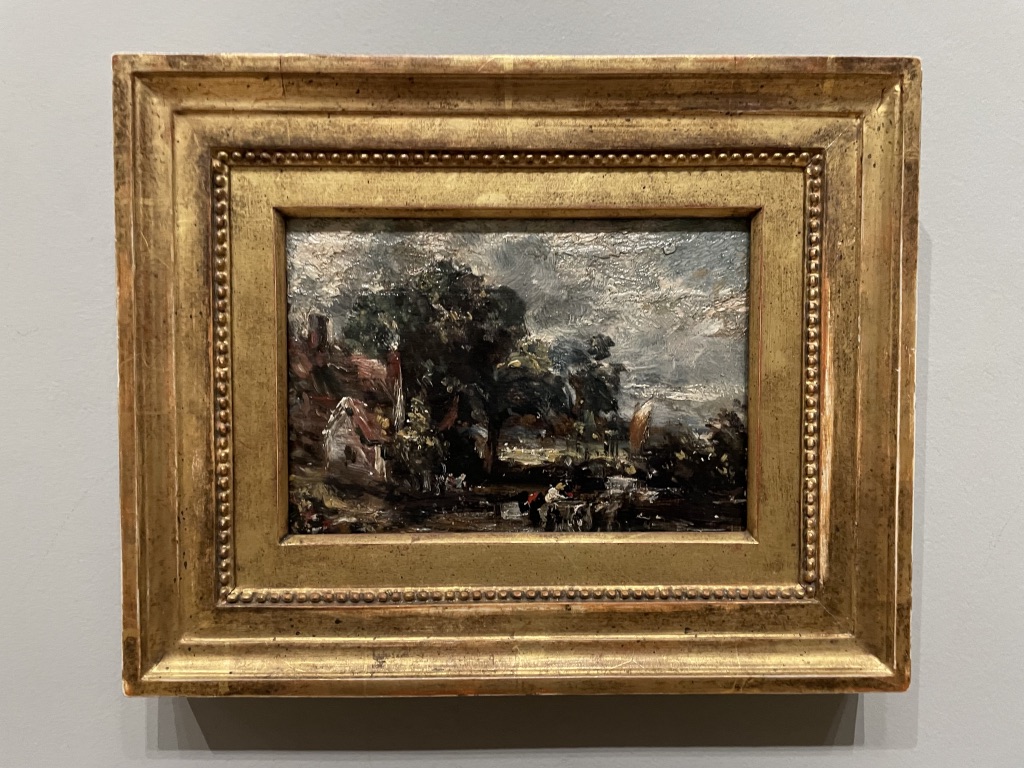
Always wonderful to see an artist’s sketch book and this shows how Constable studied field-workers and rural activity. On the right is a tiny oil sketch showing the composition of the Hay Wain. We learned that the house on the left, known as Willy Lott’s Cottage was, in fact, owned by Mr William Lott and it was a house, and a substantial dwelling. Perhaps Constable is guilty of loading his seminal work with a dose of sentimentality in order to appeal to the ideal of the rural idyll?

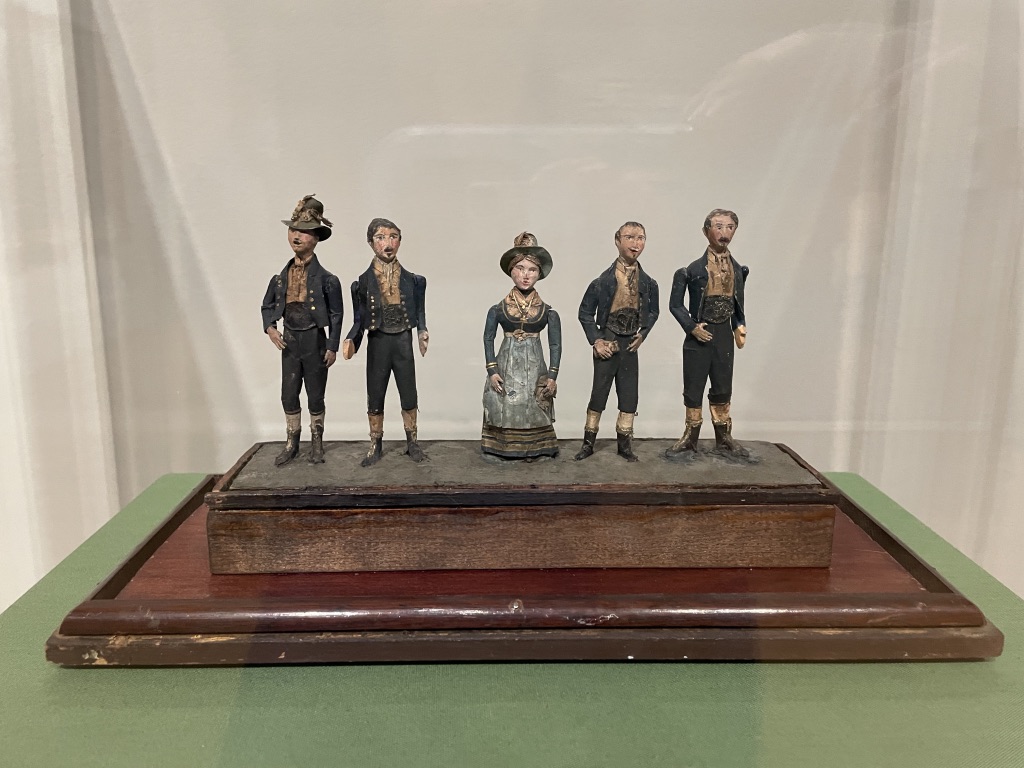
This is very charming set of tiny models depicting the best singers in the East Bergholt church choir. It has been attributed to the young John Constable as creator but we can’t be sure. They are very enchanting, tiny carved and painted wooden figures.

The show is just wonderful. It’s part of the National Gallery’s 200th year celebration and well worth a visit.

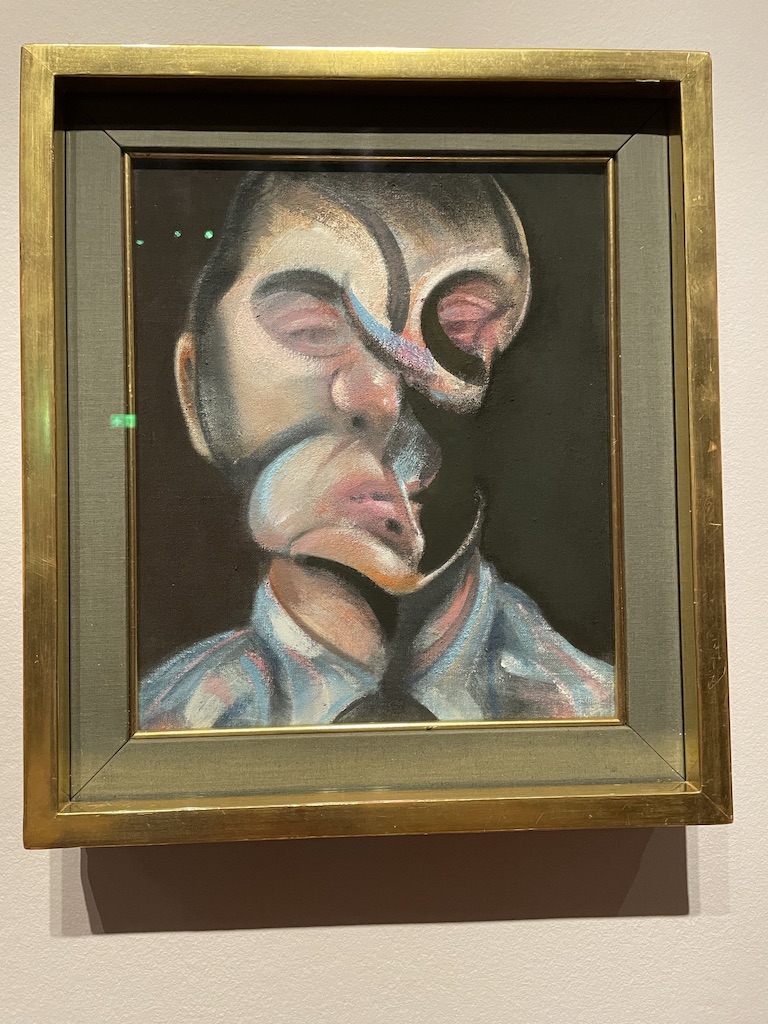
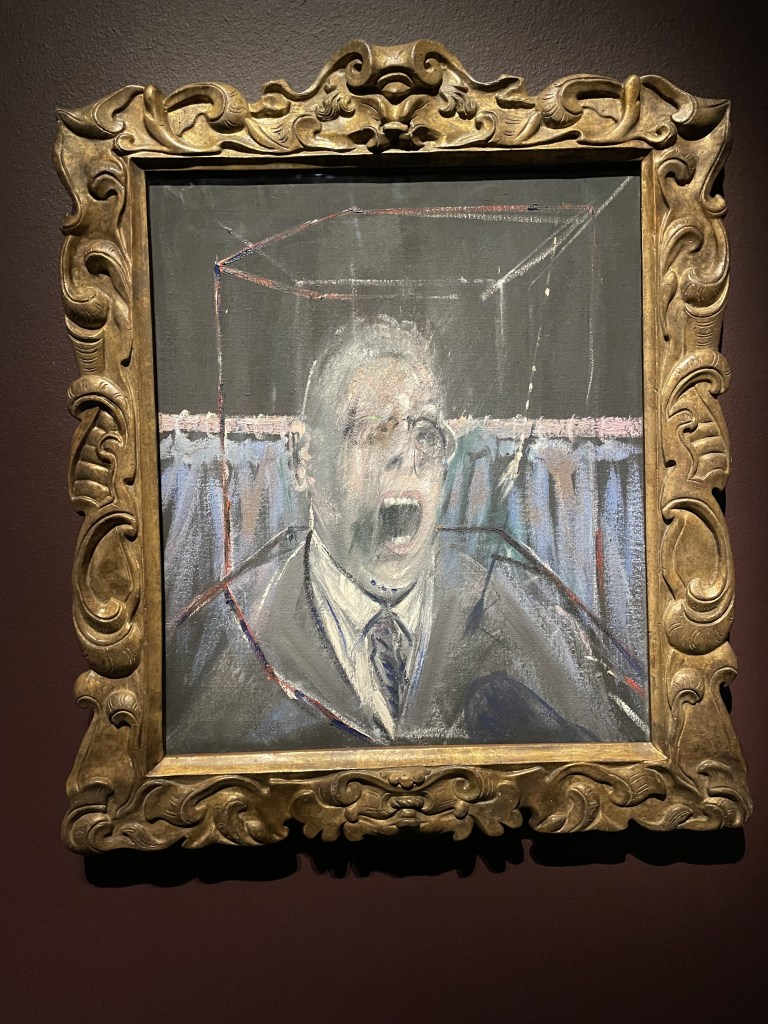
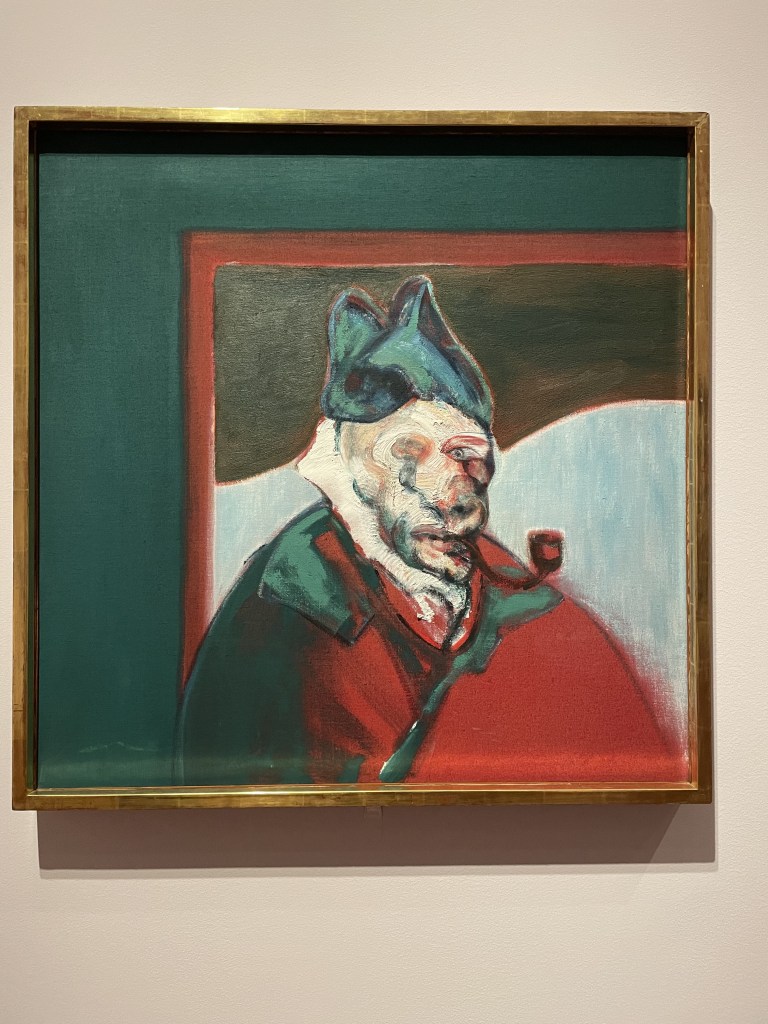
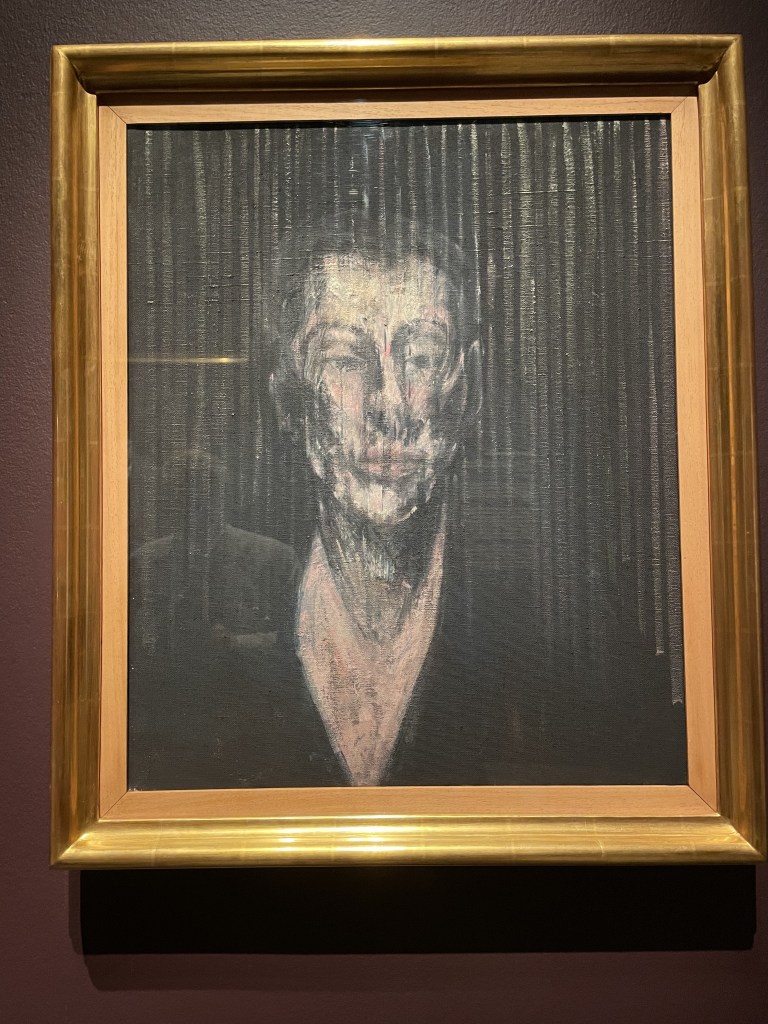
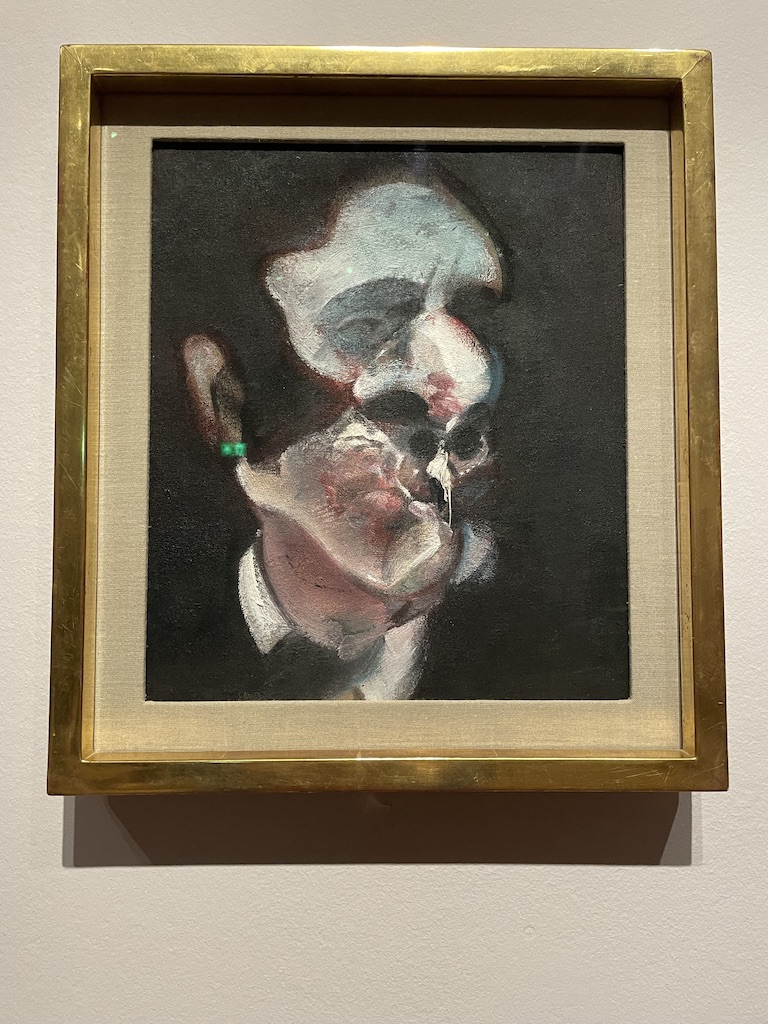
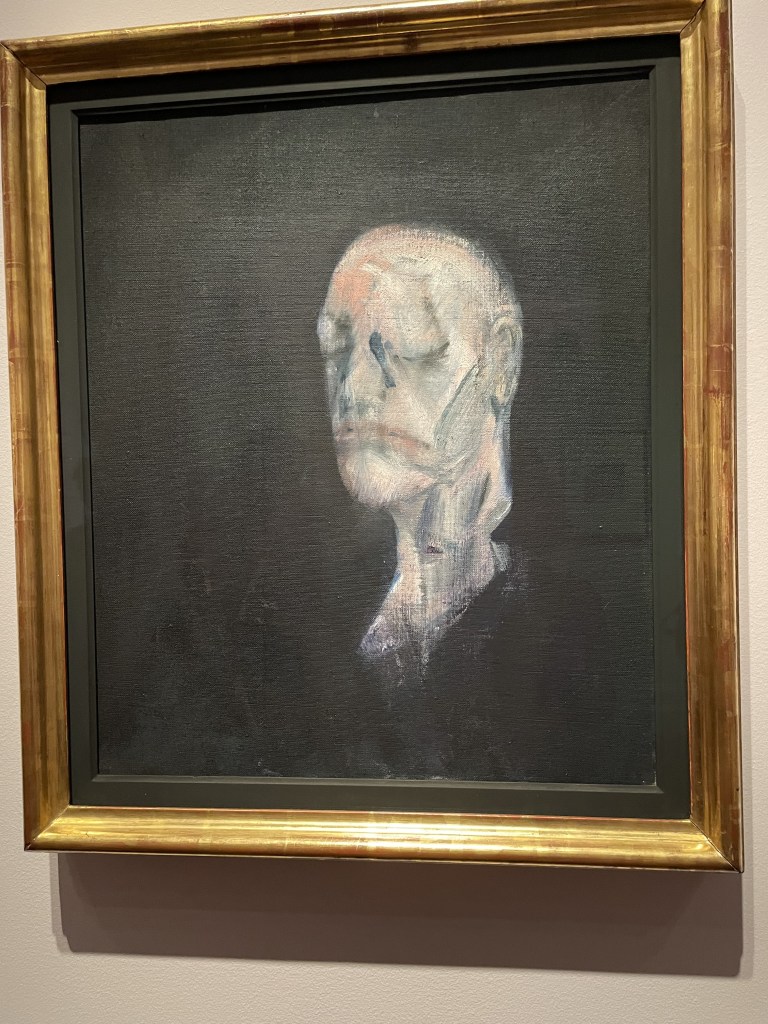
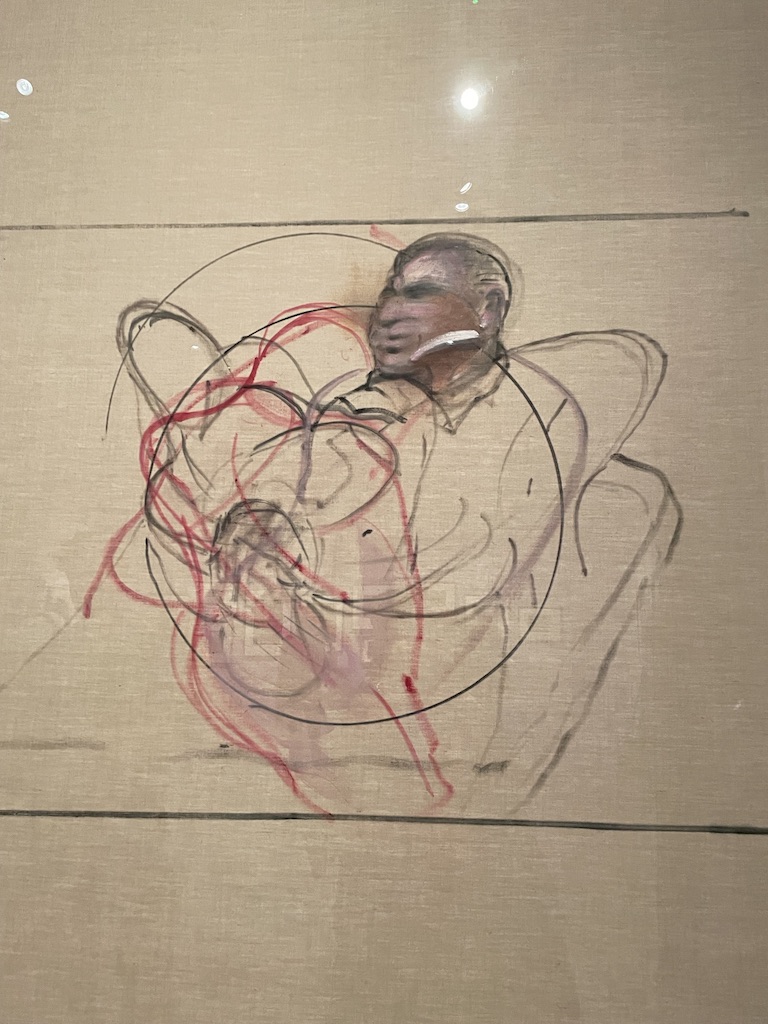
Francis Bacon: Human Presence. A very impressive new show at the National Portrait Gallery brings together over 50 of his paintings and includes fascinating photographs of him at work in his studio and fragments of the images and source material which inspired him. It is a visceral experience. Bacon aimed to captures the essence of his subject, not bothering with a direct likeness, but depicting what he feels about them.

Francis Bacon is one of those artists whose work divides opinion. Self-taught, ambitious, original and curious, he has created images of people which are arresting, memorable and honest. He was not interested in the conventions of likeness – for so long the measuring stick of portraiture – his aim was to capture and convey the ‘essence’ of a person and express their ‘presence’ within the painting rather than features which resembled them.

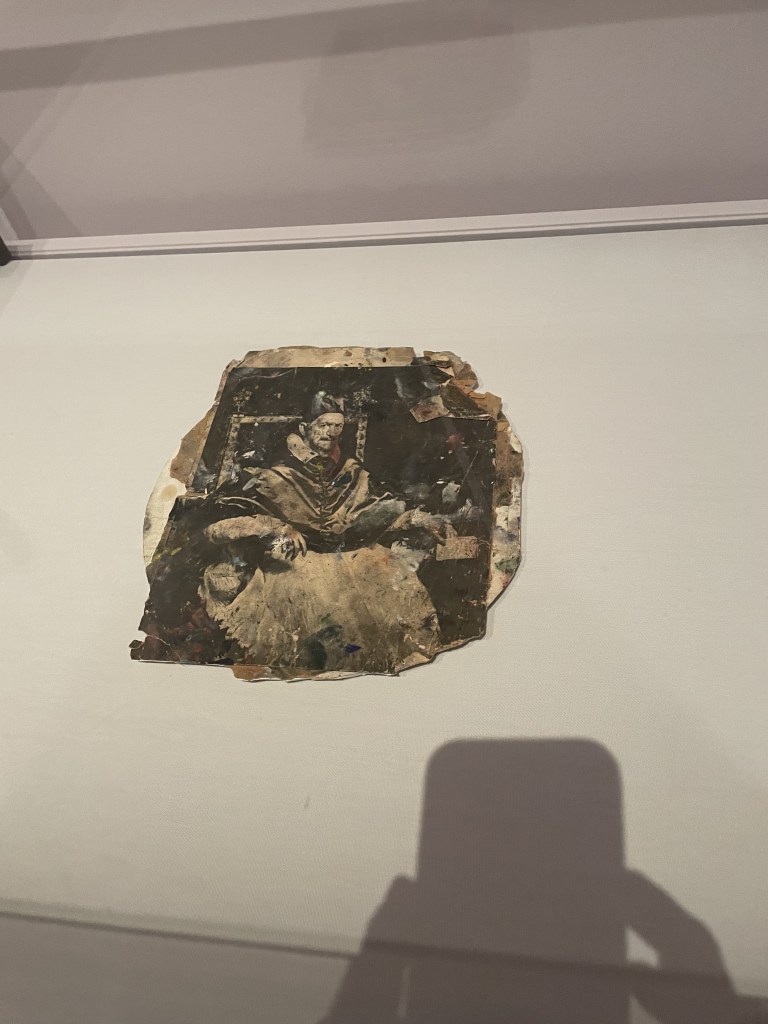
Having said that, there is a likeness to the subjects he depicts. Clearly, he scrutinised faces carefully. He started his career by painting from life but swiftly moved on to using photographs – taken specially for the work or gathered from magazines and scraps of paper. It’s great to see so many of these ‘scraps’ of images which inspired his work. Often they were scattered about on the floor of his studio, bespattered with paint and generally destroyed. But their very presence within this show only adds to the intensity of the portraits on show.

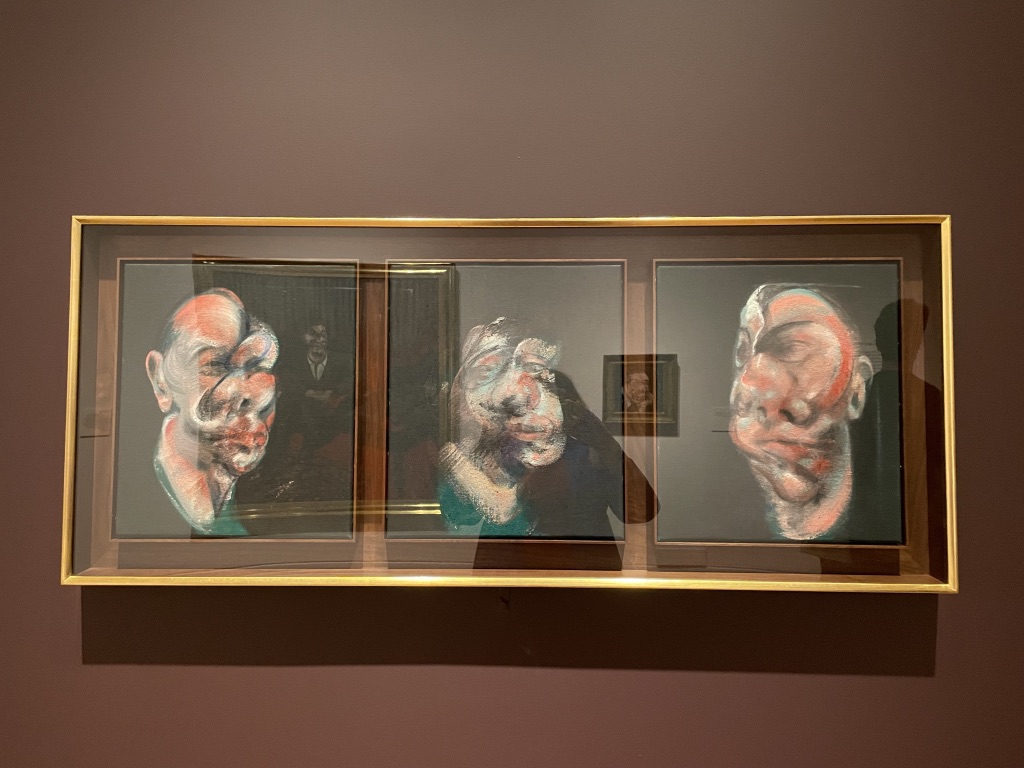
I enjoyed the triptych studies of head. Above are images of his friends Isabel Rawsthorne and Peter Lacy. Peter Lacy was Bacon’s lover in the early part of his career. There were several important gay relationships in his life but the last was with George Dyer. There is a very moving triptych of the last paintings of George Dyer shortly before he died. (below) The paintings are a tribute to an important man in his life and the atmosphere of depression and sickness which emanates from the canvases is overwhelming.

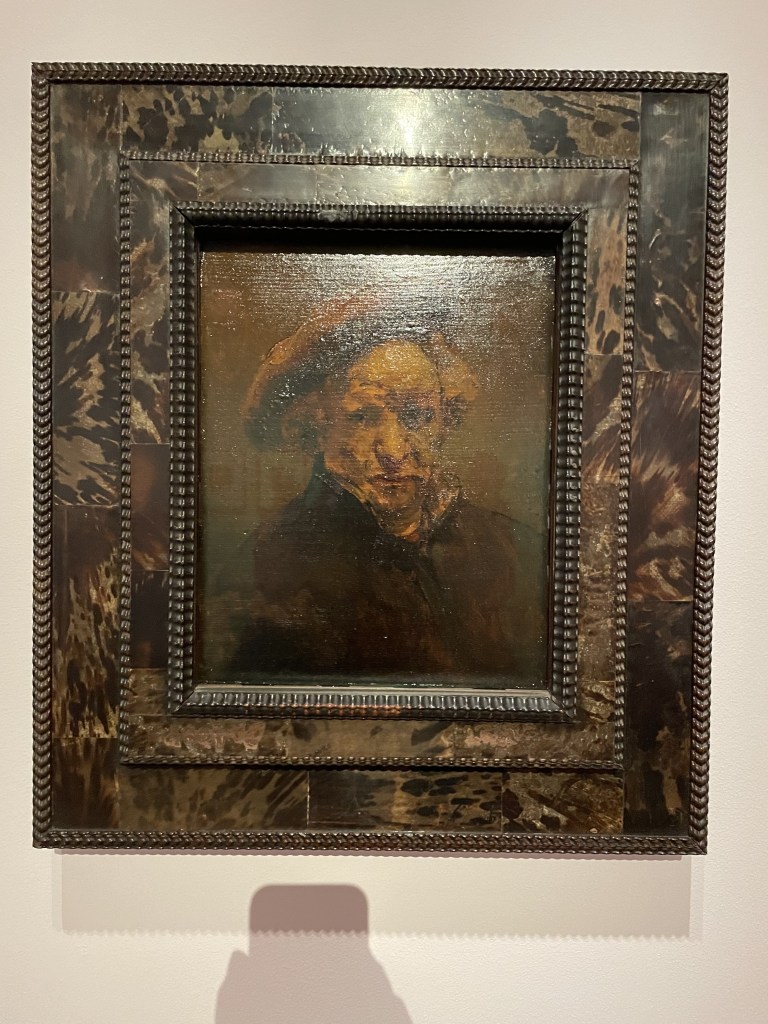
This impressive exhibition explores the influences and friendships which contributed to the evolution of his distinctive and challenging style. It was a joy to see a small self-portrait by Rembrandt which Bacon especially admired for its darkness and thickly applied paint.

Francis Bacon: Human Presence is on at the National Gallery until 19th January 2025

So good to be back at the National Portrait Gallery for the press launch of the Herbert Smith Freehills Portrait Award. Fifty portraits were selected from over 40,000 entries from all over the world. The results are fascinating, full of variety and made with many different media – but all involving traditional material such as oil, acrylic, tempera. And it’s always fun to meet the artists and some of the subjects too.

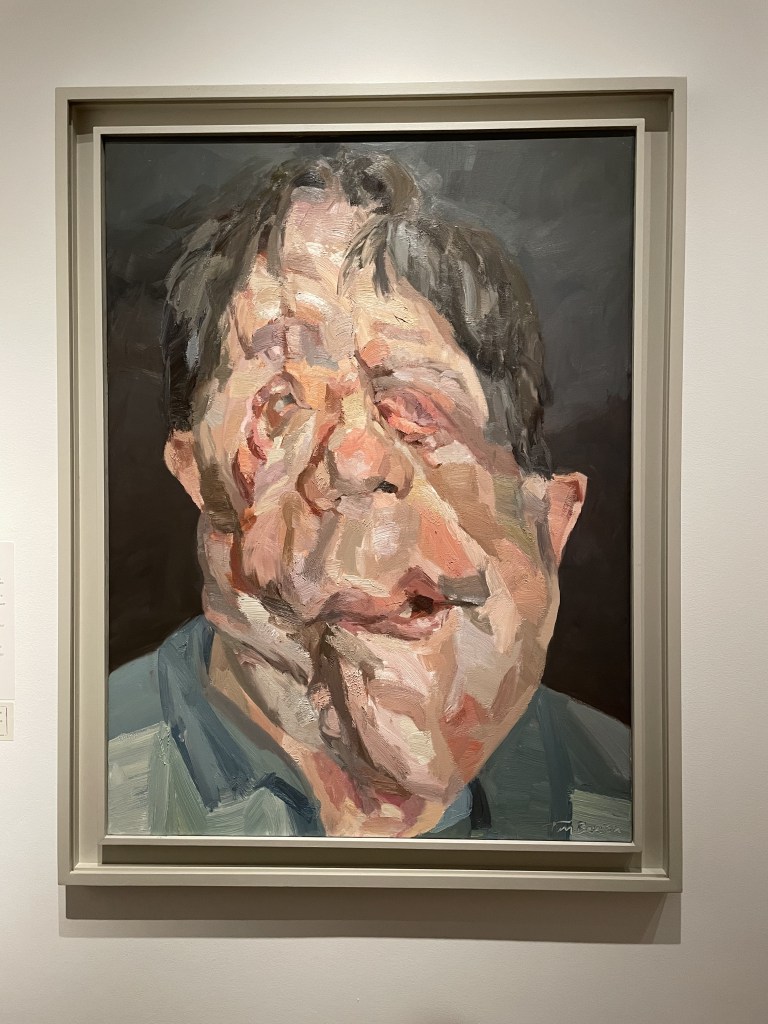
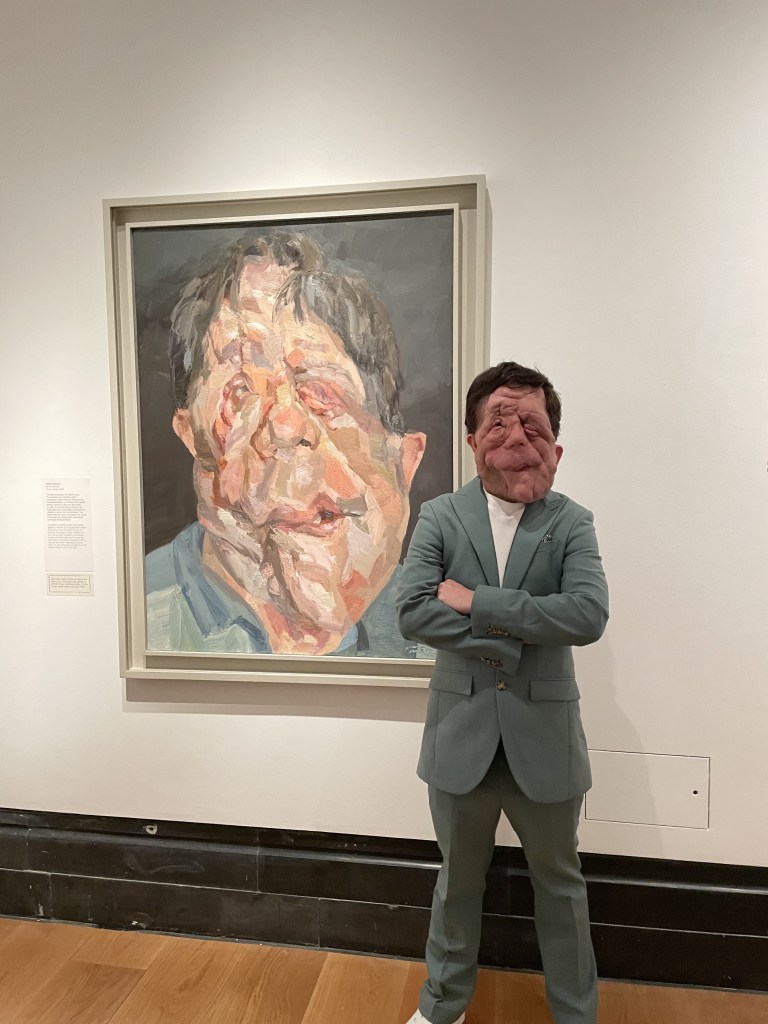
Above is a very compelling and painterly portrait of Adam Pearson, British TV presenter and disability rights campaigner, by Tim Benson. I chatted to Adam about the process and he told me that the portrait had been completed in under four hours in one sitting. It’s that immediacy of image and energy which really attracted me to it.

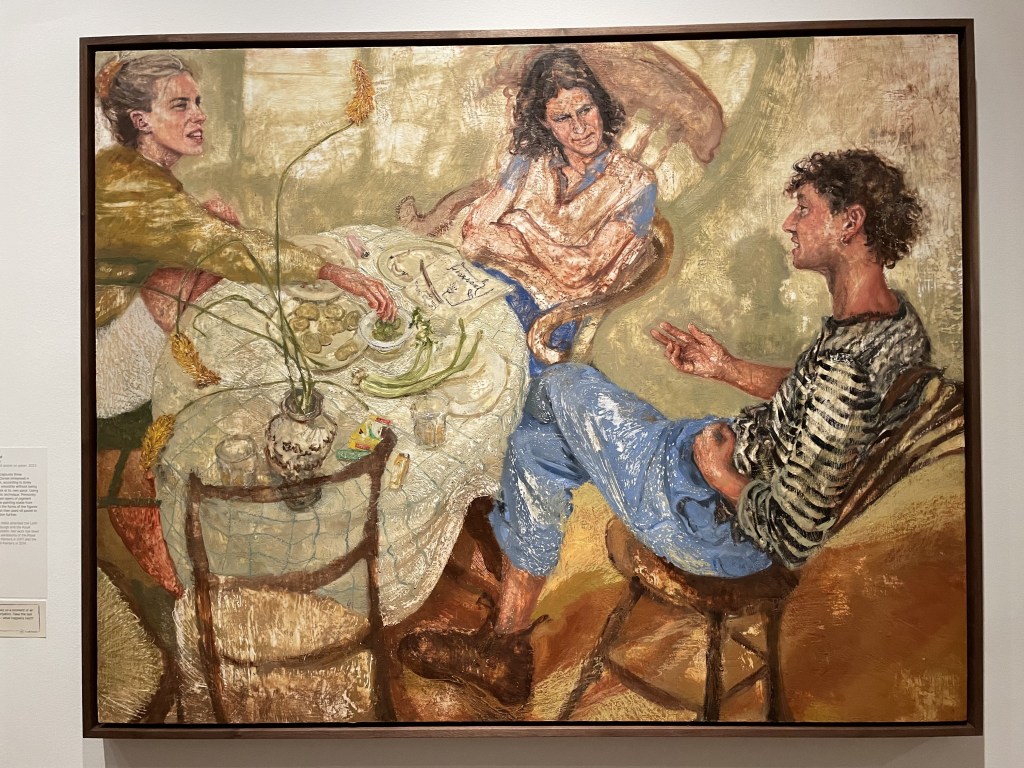
I was very taken by this portrait entitled Chewing the Cud by Emily Ponsonby. Using the ‘encaustic’ technique using honeyed wax, scraped and mixed with oil and oil pastel, I think it’s a very successful painting both technically and in terms of composition. The viewer is given a surprising ‘fly on the wall’ viewpoint and absolutely absorbed into the conversation in a Dorset kitchen.

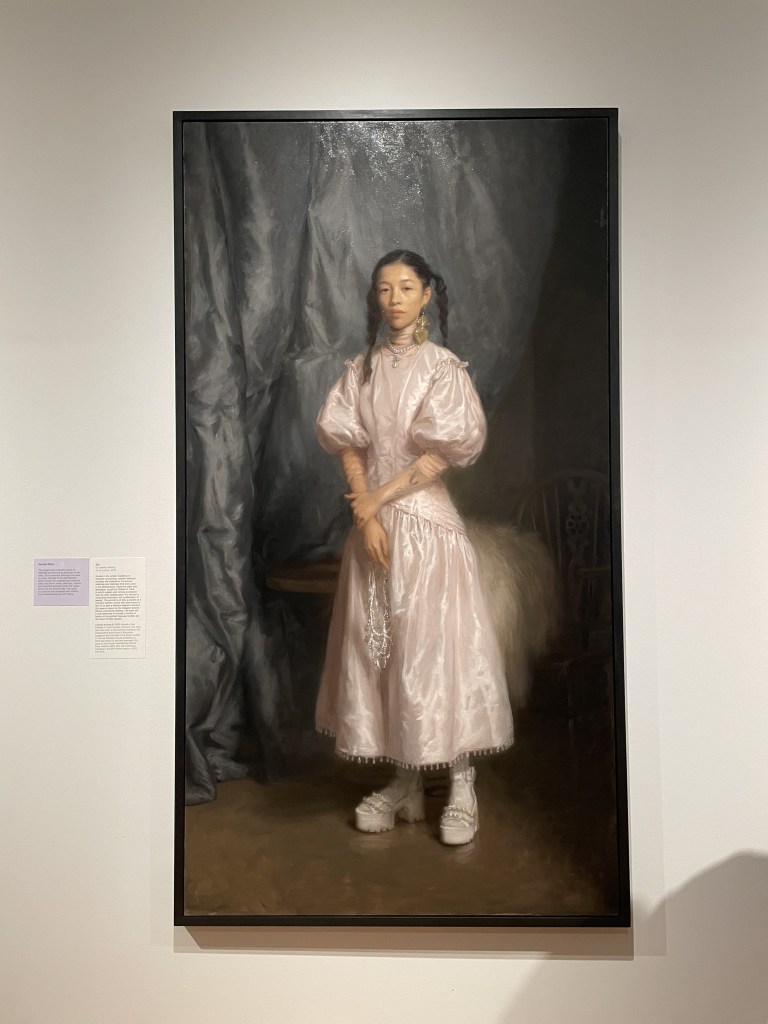
Above, a couple of winners. First prize went to Antony Williams‘ portrait: Jacqueline with Still Life. It’s been meticulously painted in tempera, which is a difficult medium (you mix egg yolk with pigment and it’s full of depth and interest. On the right is the Second Prize, Isabella Watling‘s portrait of Zizi which combines very traditional use of paint and pose but gives the subject and the whole atmosphere of the painting, a very contemporary feel.

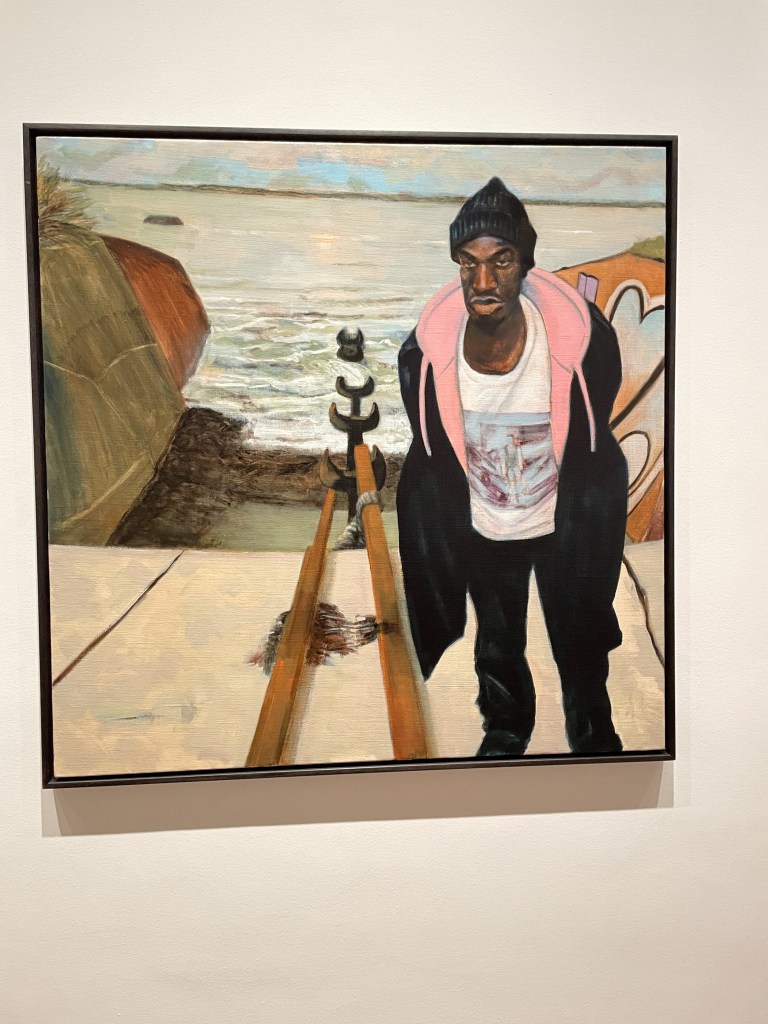
These two portraits, above, captivated me for their narrative quality. They are not just good paintings but they capture a moment and an emotion. On the left is Estuary English by Ray Richardson and the subject is Adé, a young actor. The two met by chance and became good friends. The title refers both to the body of water in the background of the painting and also the English accent associated with areas of London, along the River Thames, where both men live.

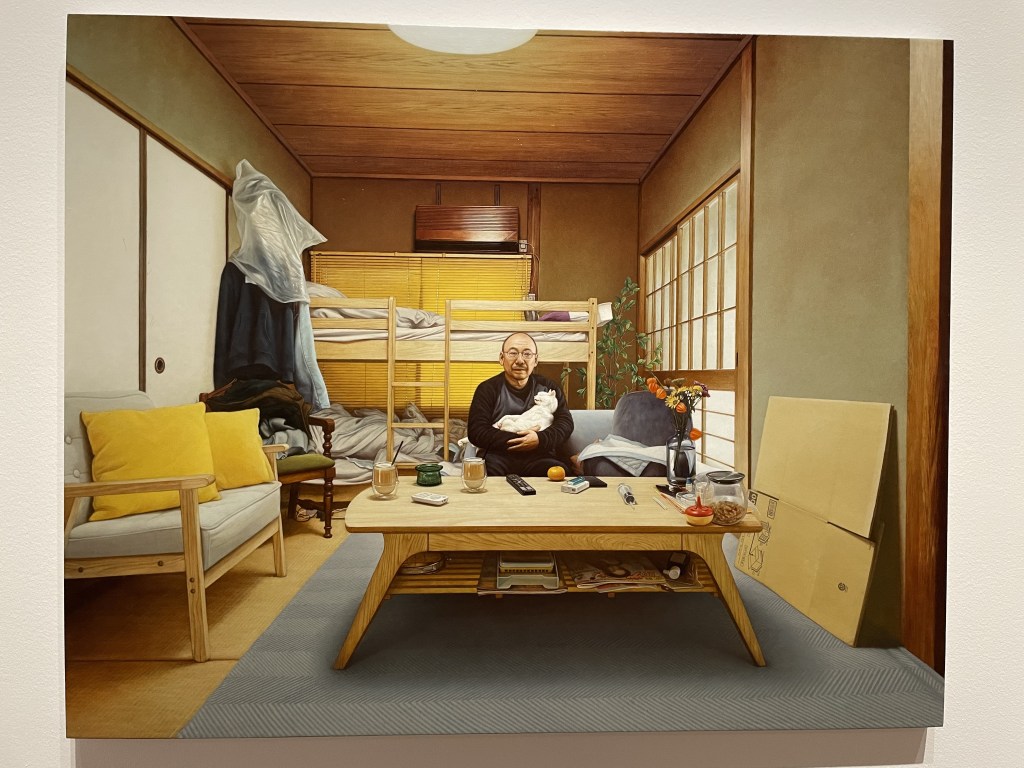
On the right is 1111, by Shinji Ihara. The artist records his partner on the day their beloved cat died. It took over a year and 90 sittings to complete.

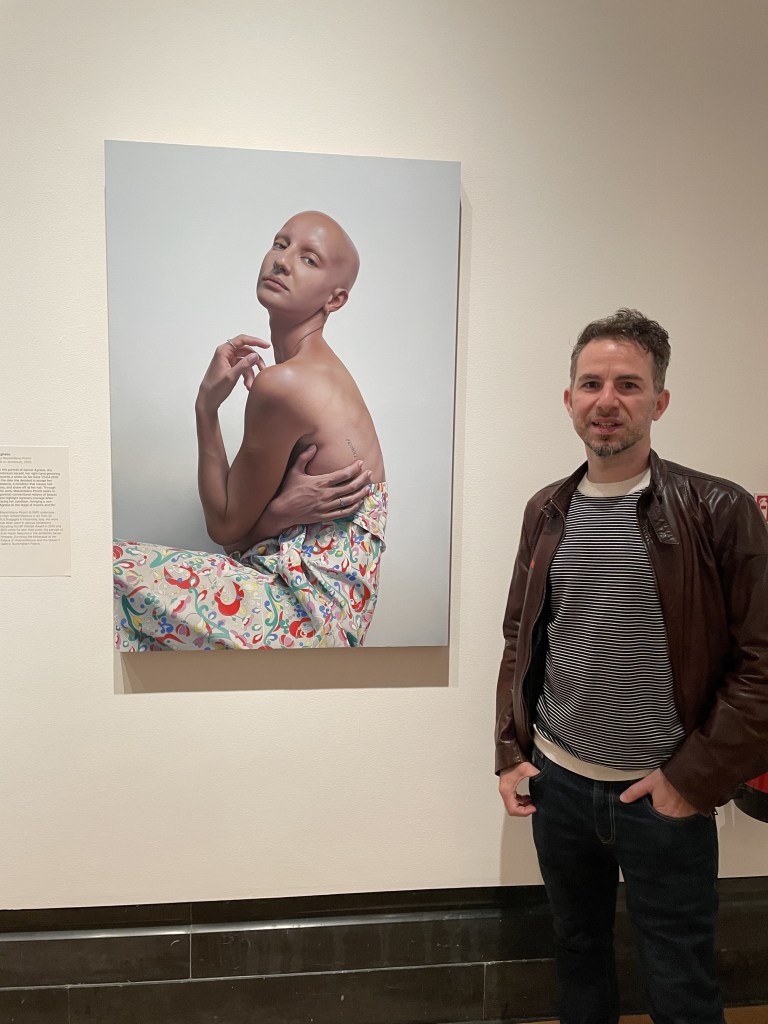
By contrast, I was very struck by the photo-realism of this painting on aluminium of Agnese by Massimiliano Poronti. I chatted to the artist who told me that it took a very long time to complete this one.

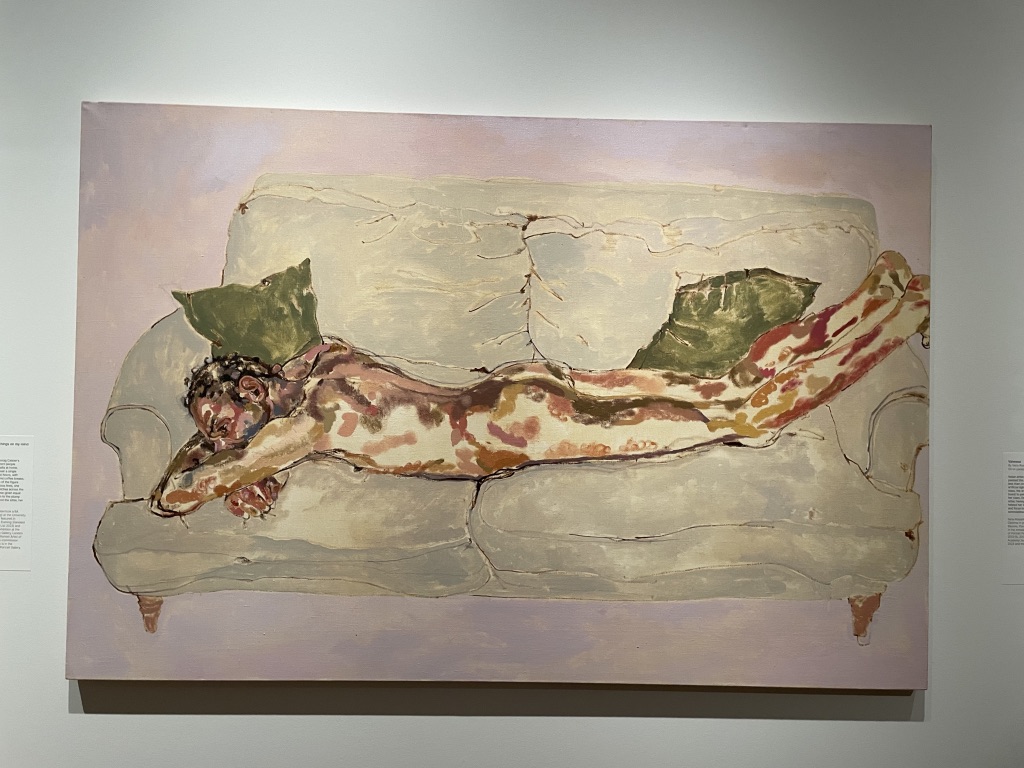
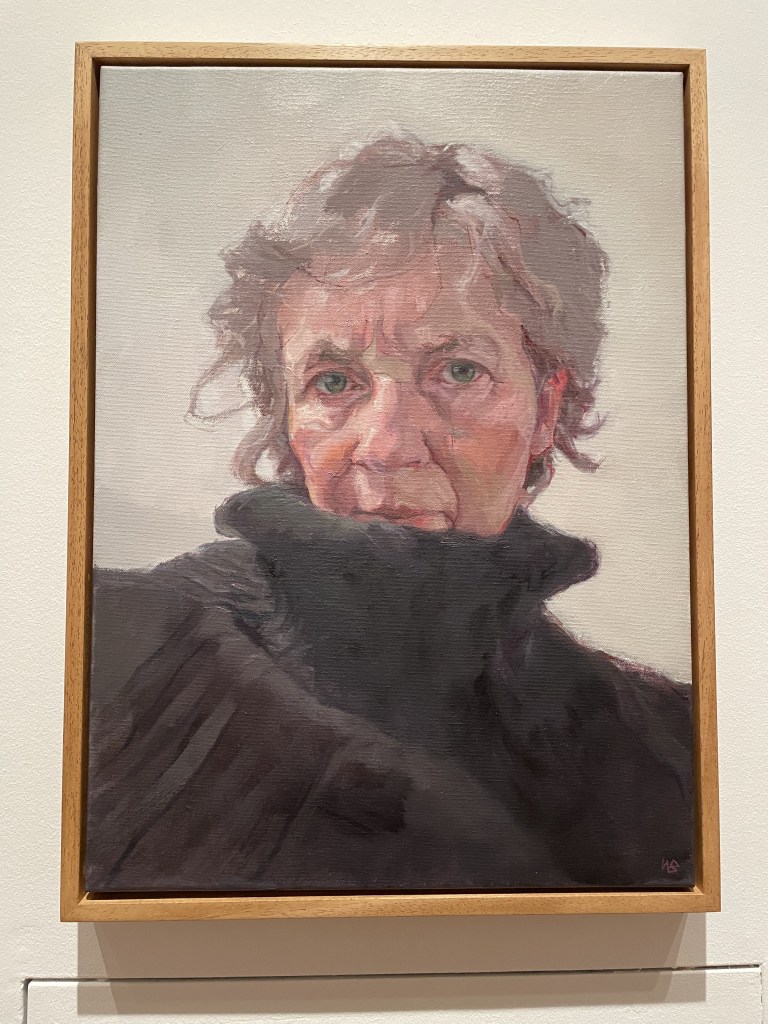
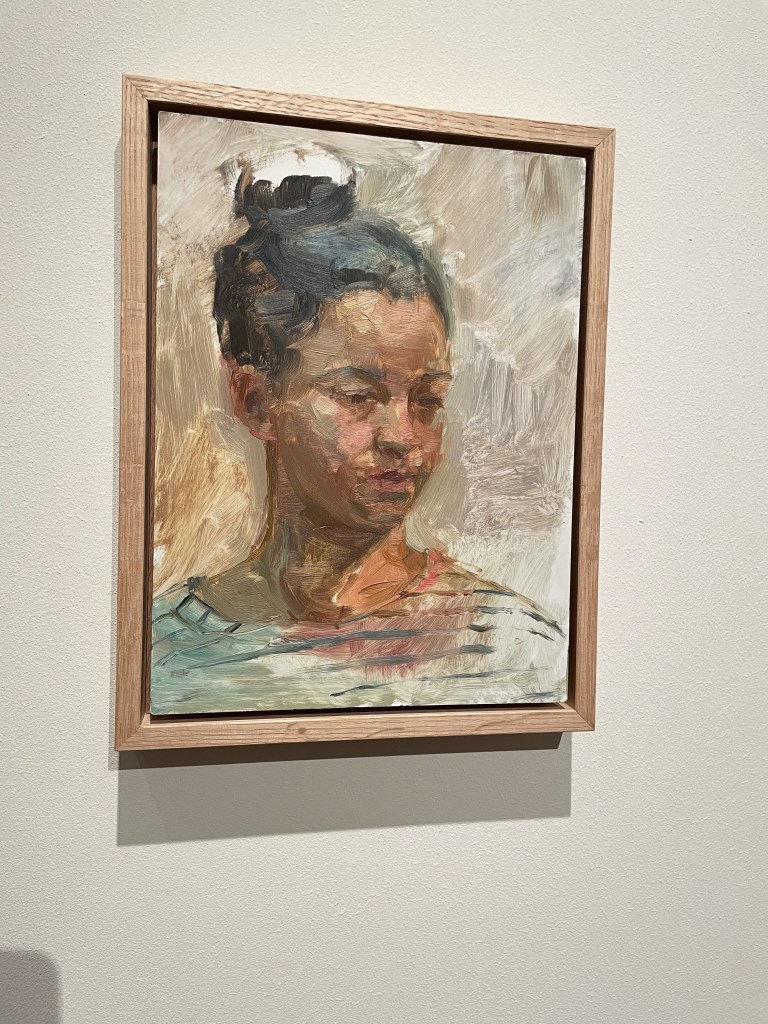
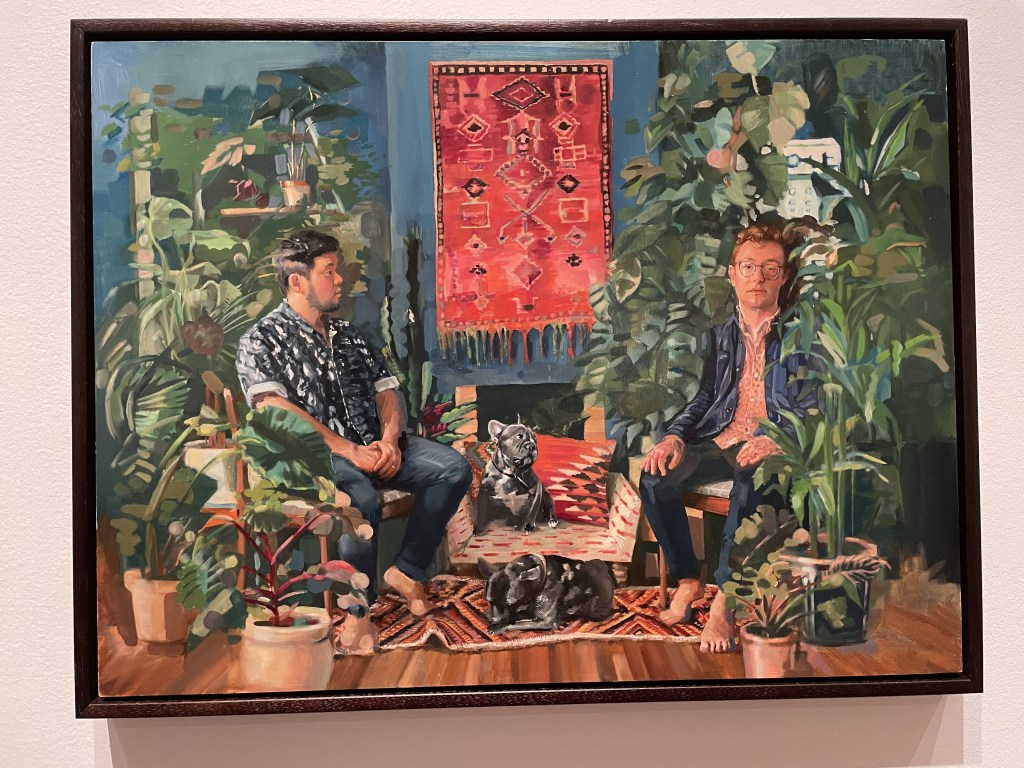
And above is just a selection of other portraits which caught my eye. I do like a brush stroke and these paintings delivered!

The Herbert Smith Freehills Portrait Award 2024 exhibition is free to visit at the National Portrait Gallery from 11th July until 27th October 2024. Good stuff.

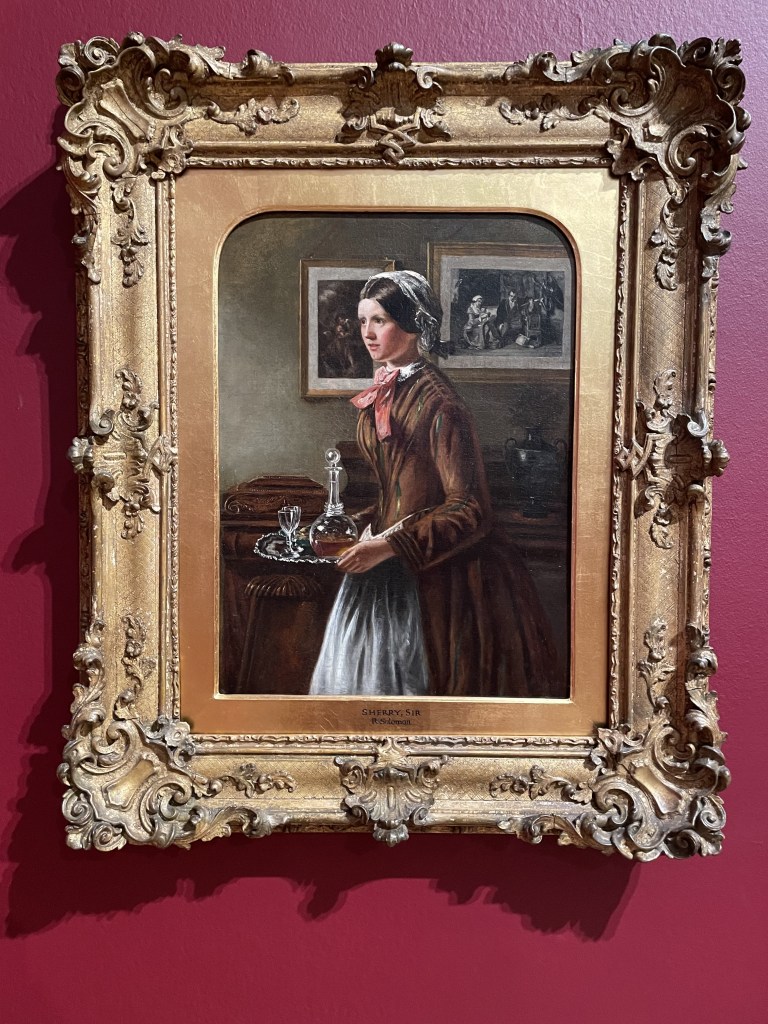
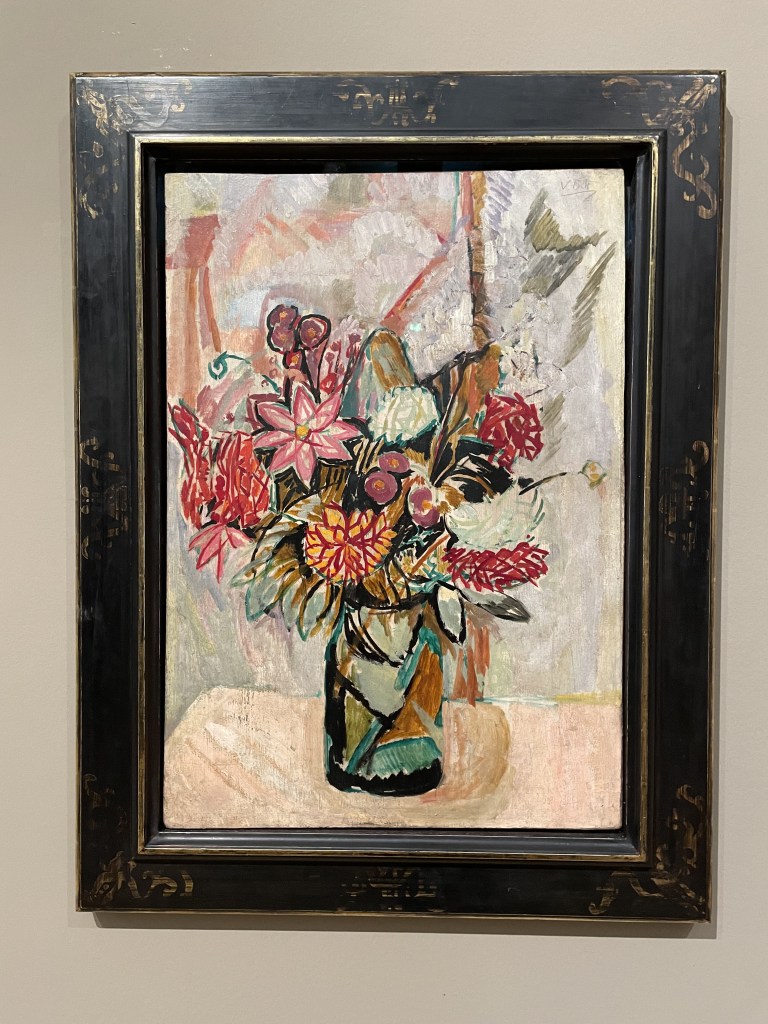
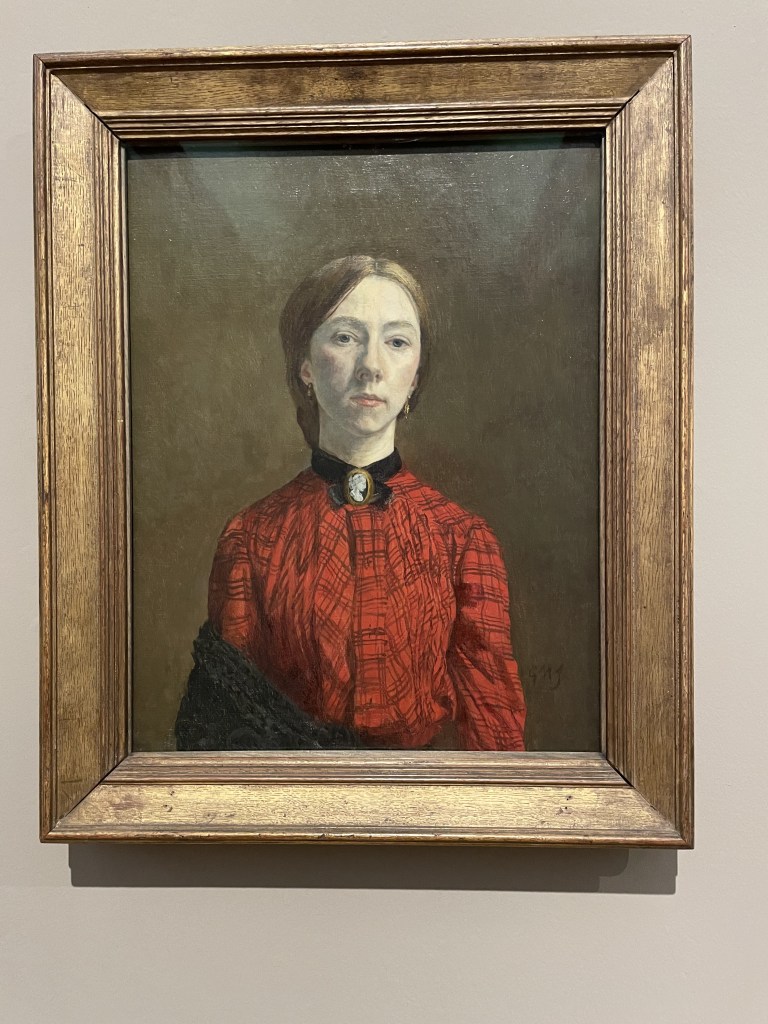
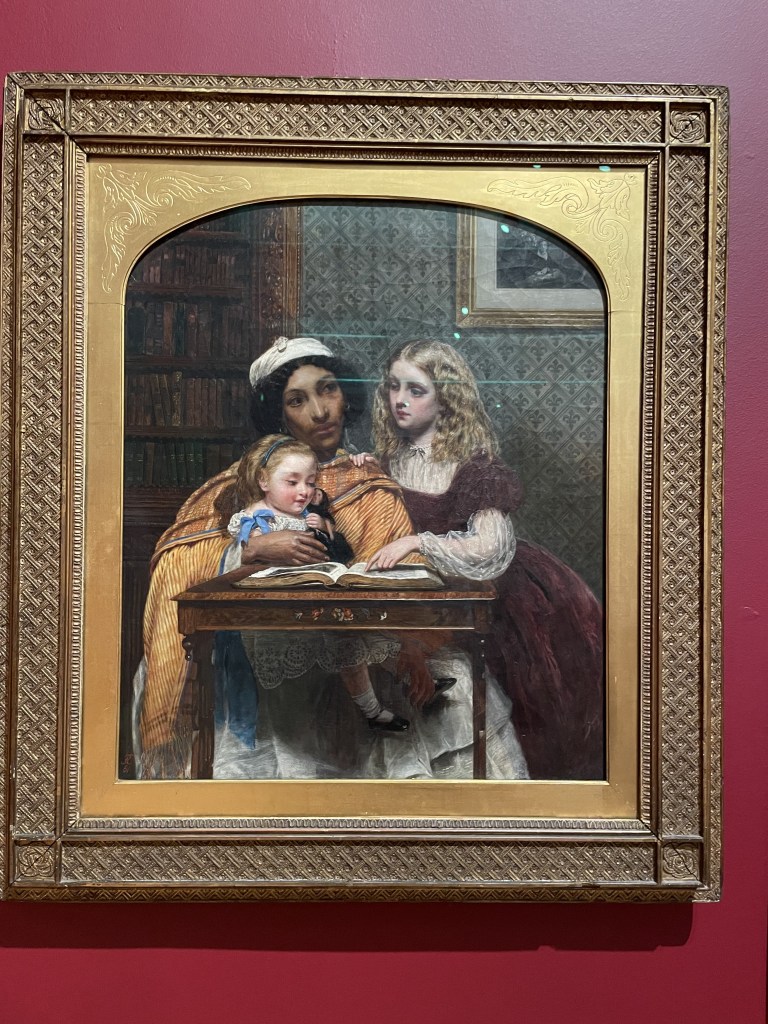
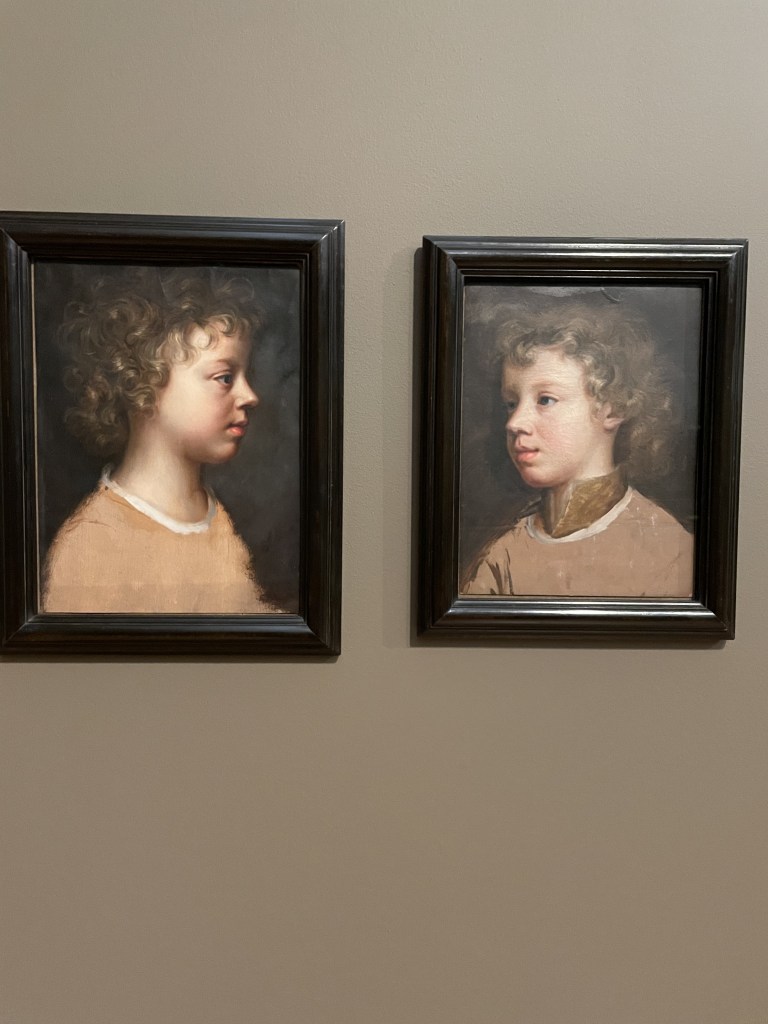
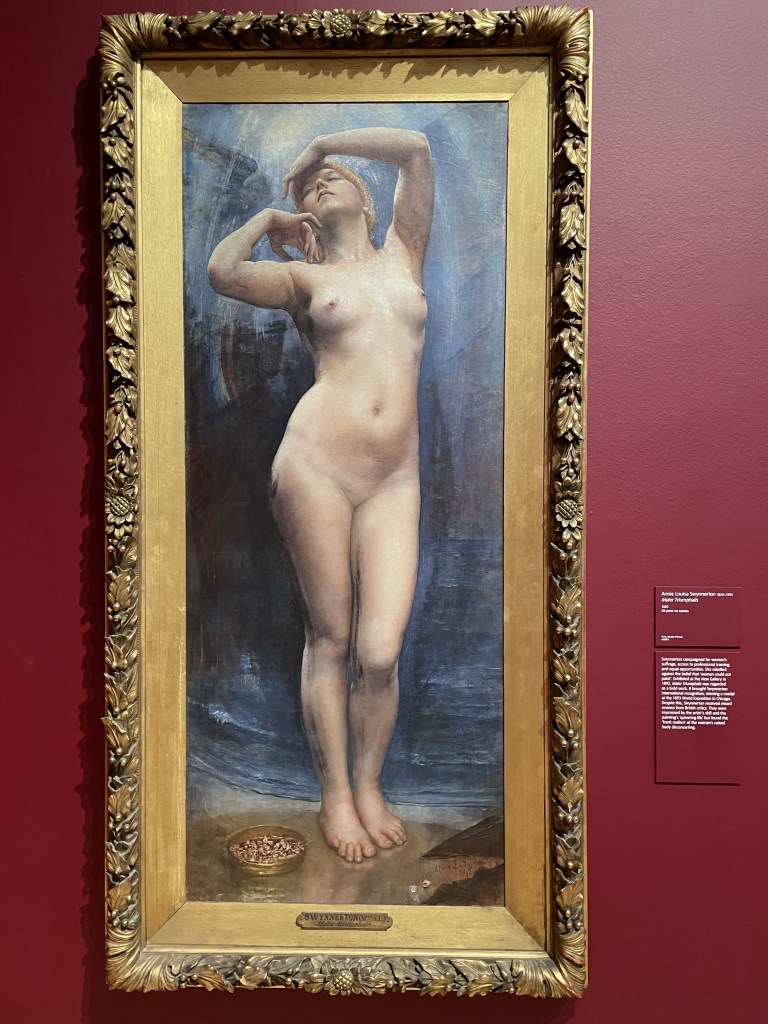
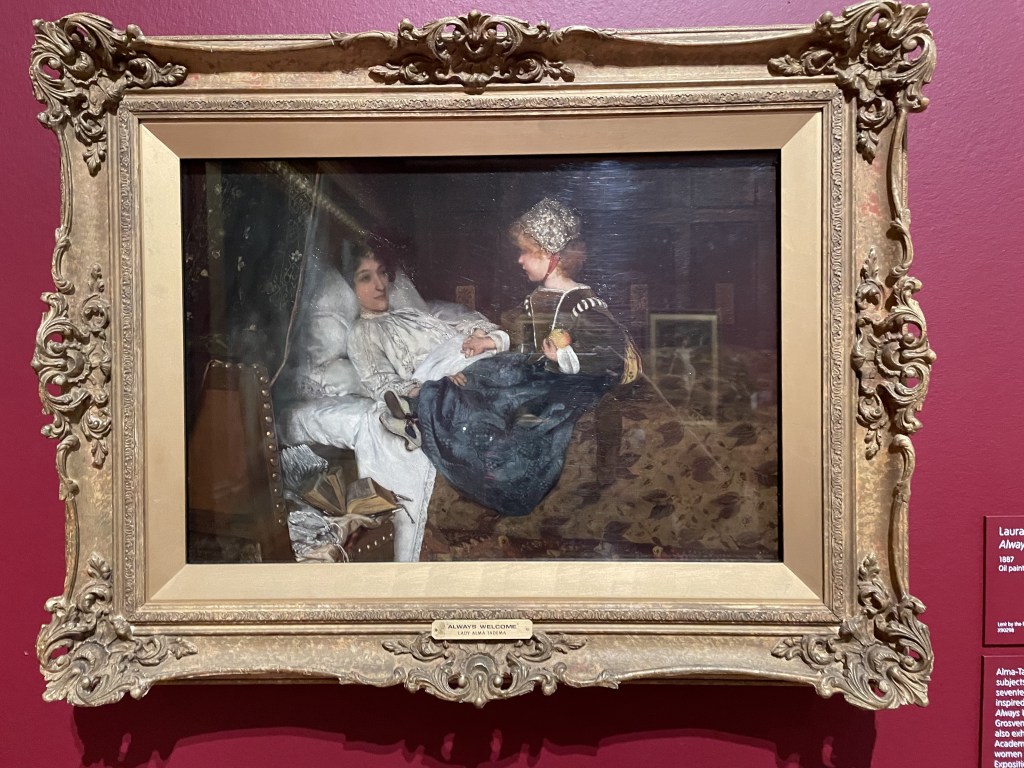
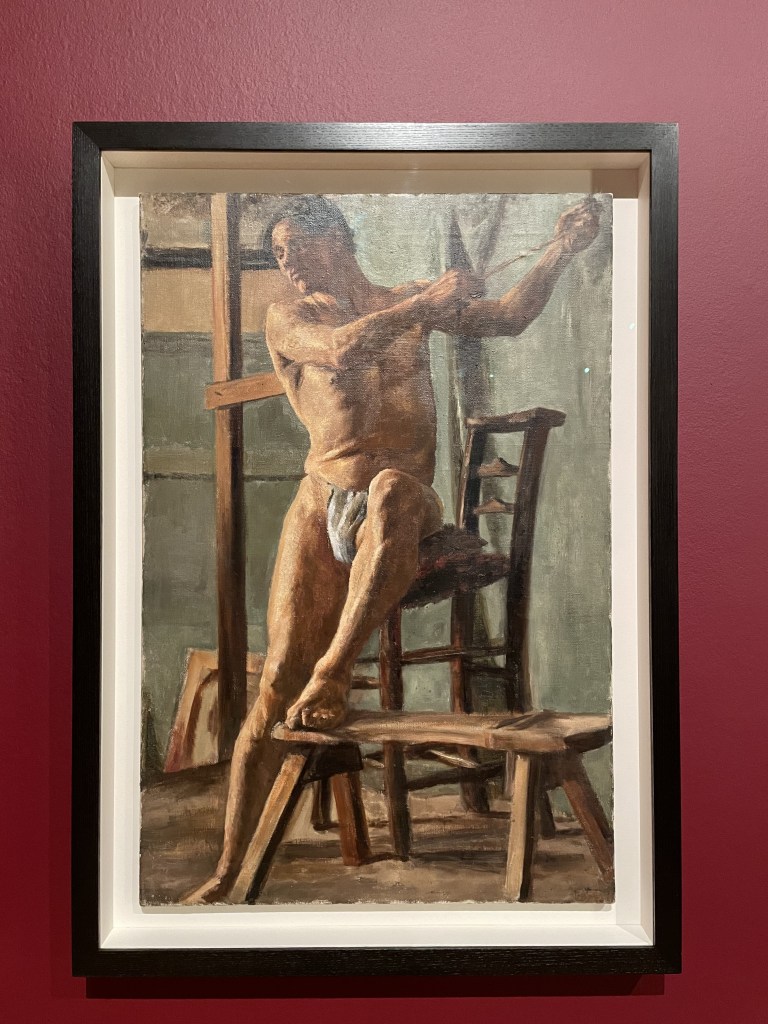
NOW YOU SEE US: Women artists in Britain 1520-1920. What a fabulous show this is at Tate Britain. We all know that, for centuries, women were not accepted as professional artists, but there were a few exceptions who earned their livings through art. It’s great to see the work of many unfamiliar female artists on show. The talent is breathtaking.

We take it for granted these days that men and women can forge equally successful careers in art. Four hundred years ago it was a different story. But women still studied art, became proficient at their skill and even earned a living. The curators of this excellent show have found examples of work by over 100 female artists working in Britain from 1520 – 1920 and it’s the most uplifting exhibition.

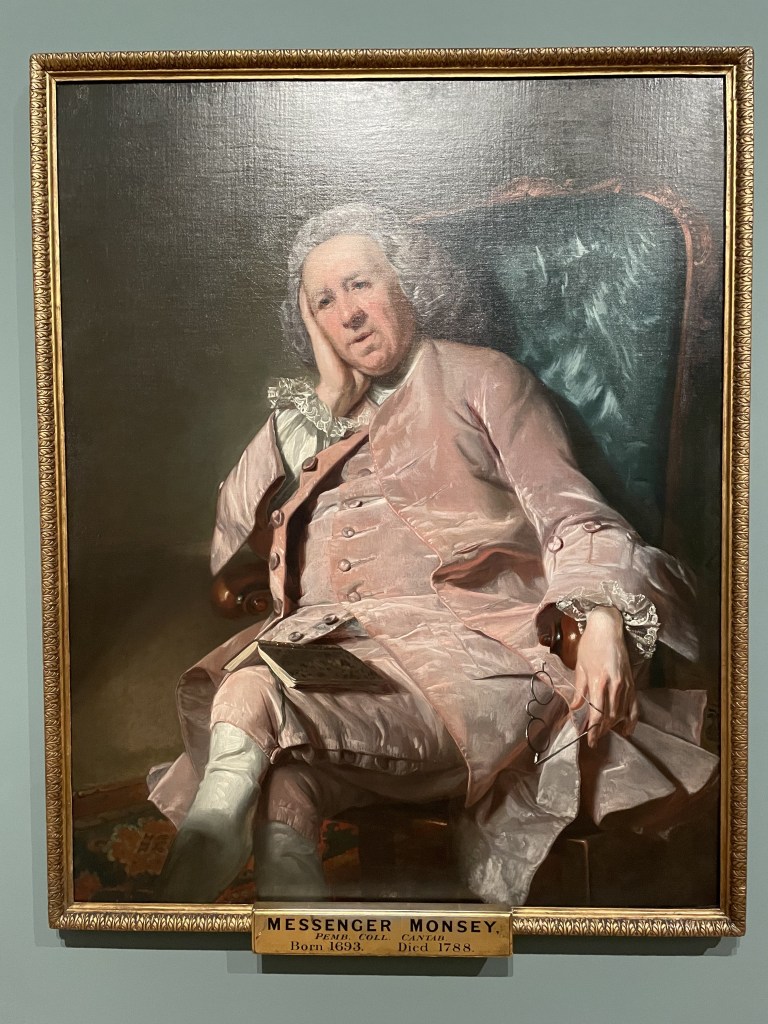
I really liked this portrait of Messenger Monsey by Mary Black,1737-1814. This is her only known oil painting and it’s so full of character and technical skill. Apparently, Black expected Monsey to pay her £25 for the portrait but her subject objected and suggested that she should not be paid at all for her work, claiming it would damage her reputation and that she might be regarded as a ‘slut’, if she sold her skills. Dear, dear.

This is a tiny self-portrait by Sarah Biffin (1784-1850) who was born without arms or legs. Yet she taught herself to paint, sew and write using her mouth and shoulder. She specialised in portrait miniatures and often signed her work, ‘painted by Miss Biffin Without Hands’.

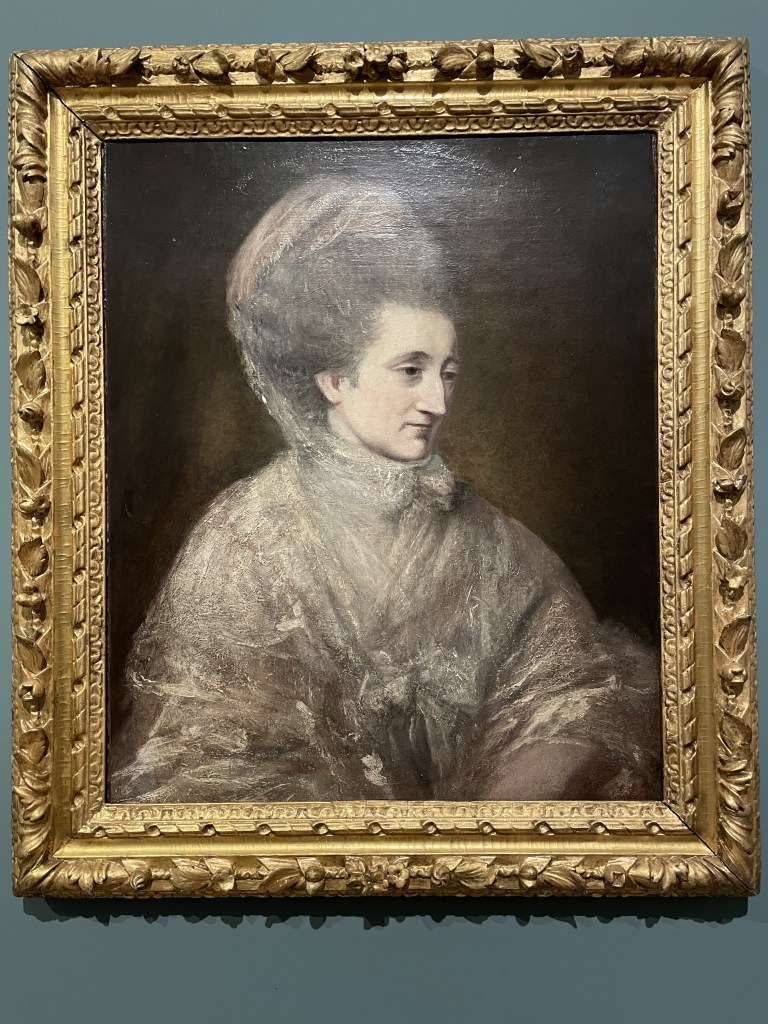
This is a portrait of Elizabeth Montagu by Frances Reynolds, sister of Joshua Reynolds, President of the Royal Academy. Frances was denied the opportunities of her brother and kept house for him in London and learned to paint by making copies of his work. She was a member of the Bluestocking Circle, a group of women writers, artists and intellectuals who met at the house of philanthropist Elizabeth Montagu, the subject of this wonderful painting.

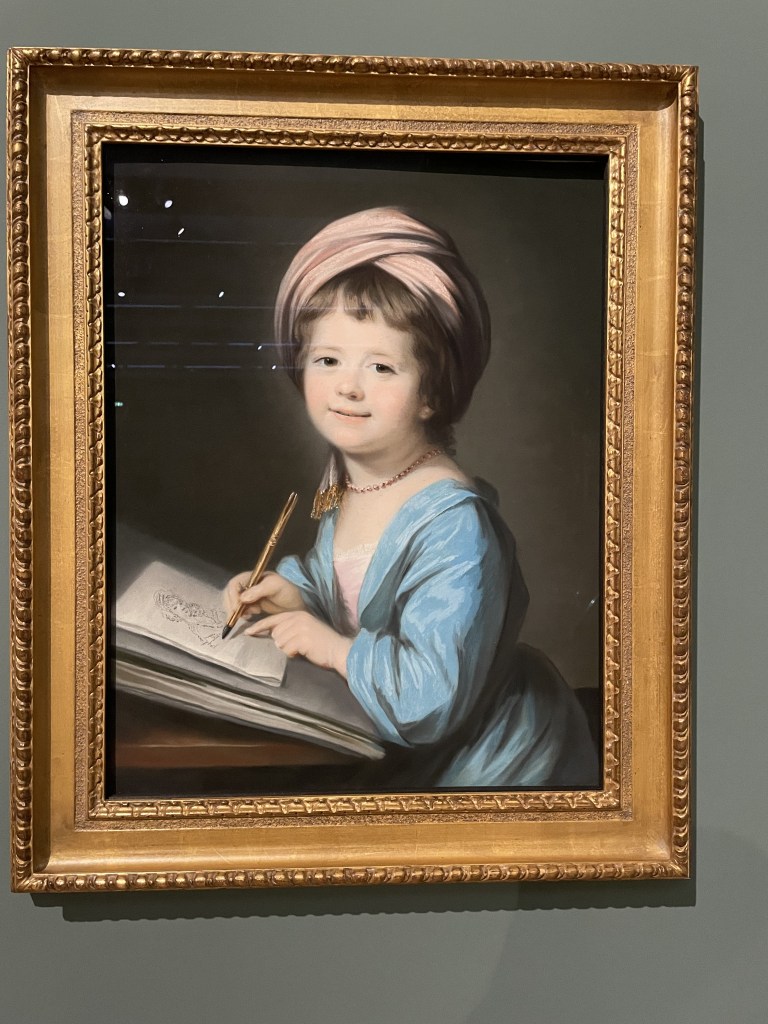
A charming portrait of Miss Helena Beatson made using pastel on paper by Katherine Read 1723-1778, her aunt. Pastels were not rated by the oil painting men of the period but they were easier to obtain and use by women. The young child in the portrait turned out to be a prodigy and was exhibiting at the Society of Artists at the age of eight.

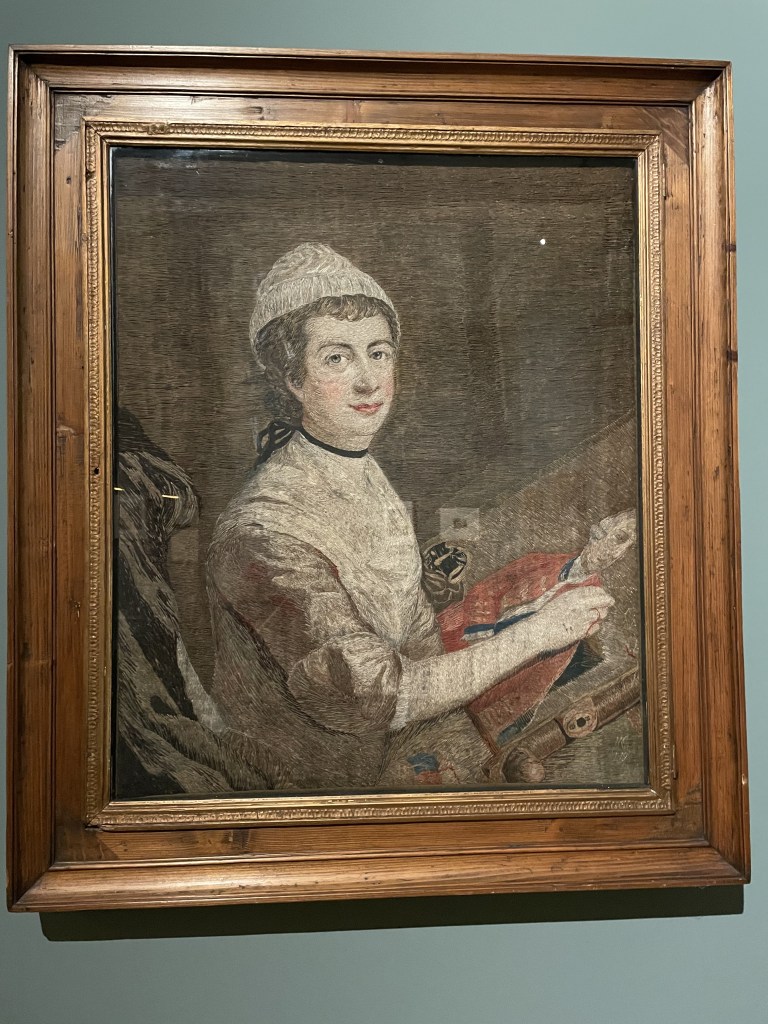
This fascinated me. It’s a self-portrait made entirely from embroidery by Mary Knowles 1733-1807. Queen Charlotte commissioned her to make a portrait of her husband, King George III, you can see she’s working on it. The clever way she uses silks to create the moulding and lively look of the picture is amazing.

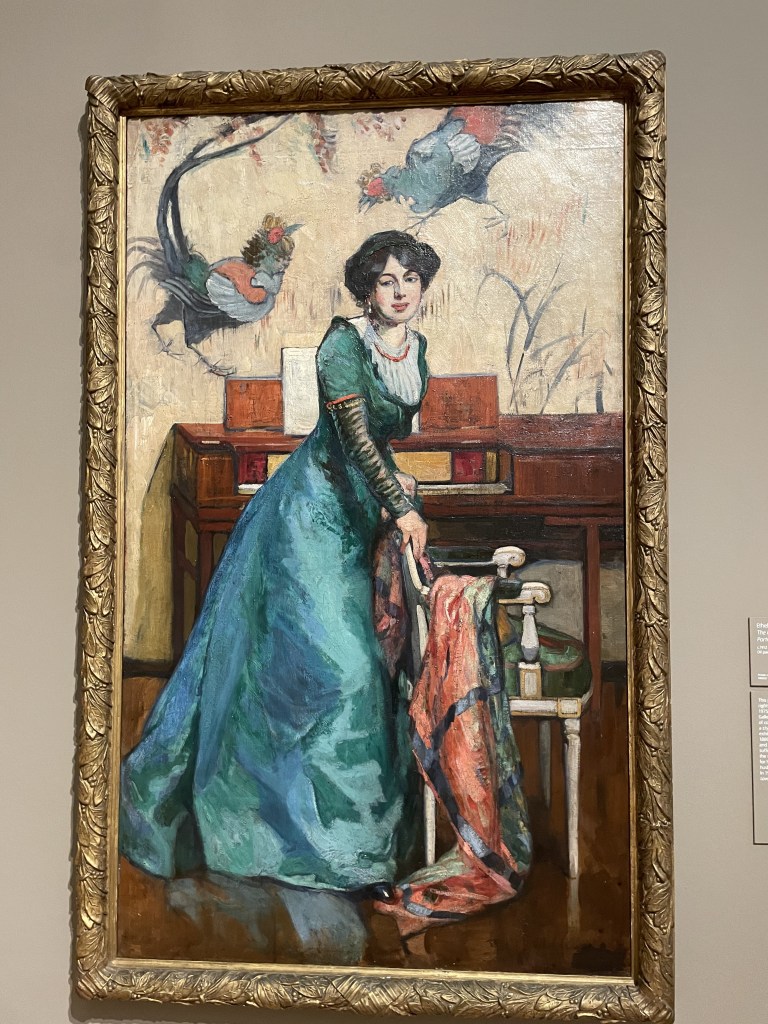
Loved the strength of this and the painterly confidence. It’s by Ethel Wright 1855-1939 and a portrait of Una Dugdale Duval who is famous for refusing to promise to obey her husband during their marriage vows in 1913.

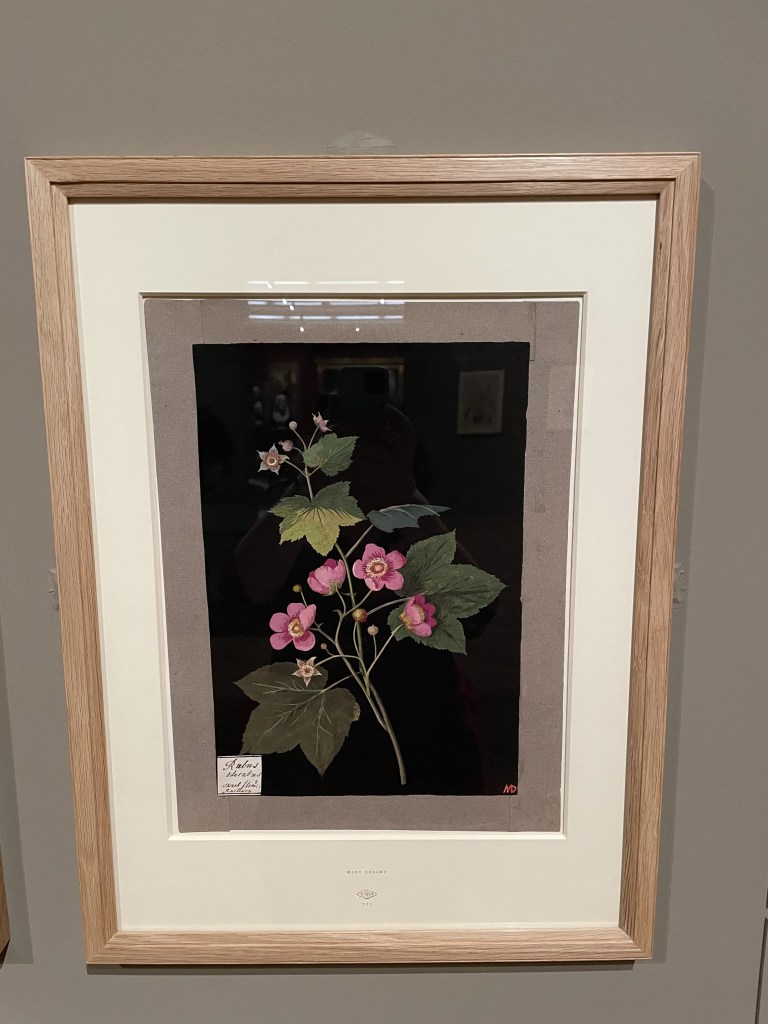
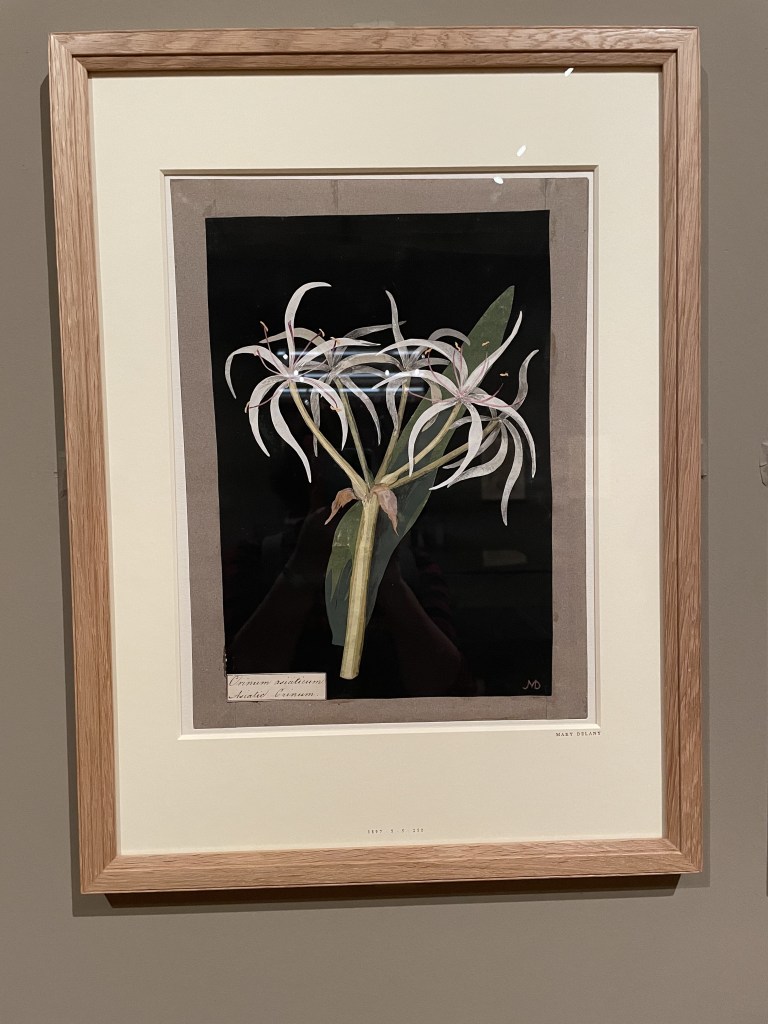
These are two paper cutouts, mosaics created by Mrs Delaney 1700-1782, who used collage, based on the Dutch art known as knipkunst, and used fragments of cut paper to depict, with amazing accuracy, examples of plants and flowers. Mrs Delaney was a favourite in the court of King George III and was given an apartment to live in at Windsor Castle.

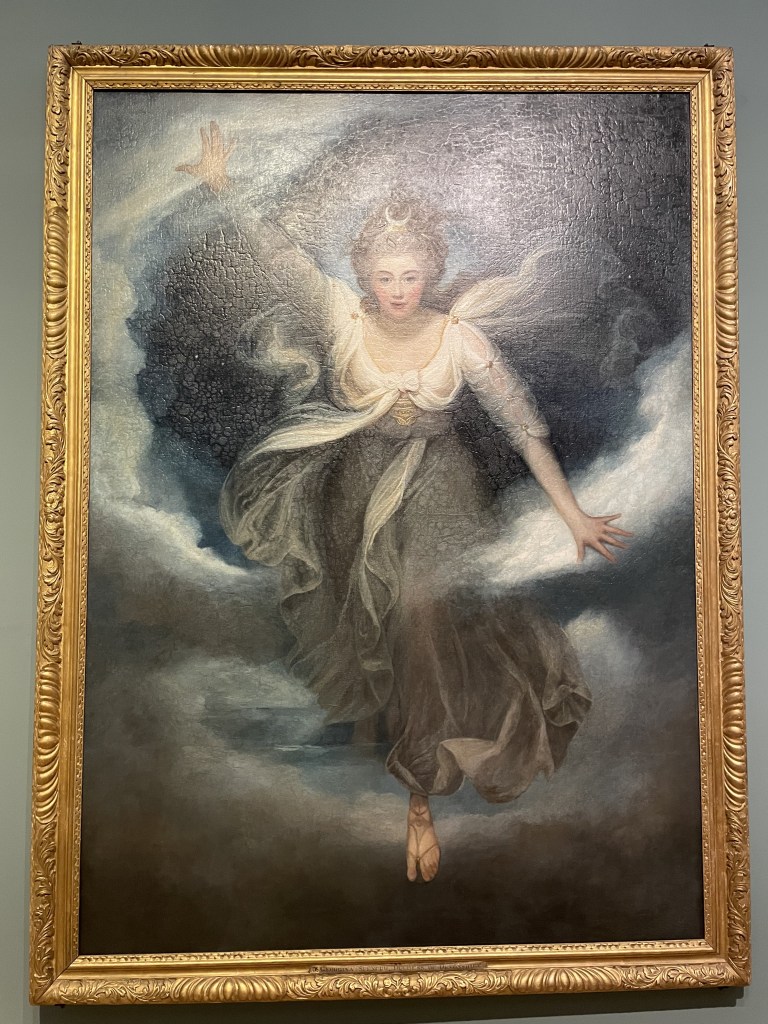
Here are just a few more of the pictures which caught my eye. A really, really great show. it’s on until 13th October 2024 at Tate Britain.

Expressionists and the artists who formed the Blue Rider movement in Germany in the early 1900s are having a moment at Tate Modern with a thrilling new exhibition of works by Kandinsky, Münter, Mark Klee and many others.

Above: Wassily Kandinsky, On the Theme of the Deluge 1913-14

If you like colour and bold ideas then this is a great exhibition to view. It’s amazing that each art movement seems to be built out a collection of artists who meet, encourage and feed off each other’s skills. In Munich in the early 1900s, a group of like-minded artists found each other and shared an interest in expressing their personal and spiritual ideas through bold, colourful painting. They called themselves The Blue Rider.

Above: top row: Gabriele Münter, portrait of Olga von Hartmann, Gabriele Munter, Portrait of Marianne von Werefkin, Elisabeth Epstein, self portrait, Bottom row: Marianne Werefkin, The Dancer, a portrait of Alexander Sacharoff (in drag!)

Just looking at these portraits, above, you get an idea of how radical and brave they were in the way they portrayed themselves and recorded each other. You could argue that the advent of photography had removed the need for accurate painted portraiture. What these images do is convey a sense of the person, the real personality and style, rather than bothering with an careful likeness. I love these pictures.

Above: a very fantastical Tiger by Franz Marc, 1912

This group, which formed members of the Blue Rider, were a mixture of married couples and free-thinking single men and women. It’s very satisfying to see that so many of the women in the group are given space for their works upon the walls and also celebrates their contribution to the collective.

Above are three examples of women’s work. Left to right: Maria Frank-Mark, Girl with Toddler 1913, Gabriele Münter, Portrait of Marianne von Werefkin (also one of the female artists in the group) and Marianne von Werefkin’s Self-portrait from 1910

The colours are wonderful. I really liked this interior painting. My Dining Room, by Wassily Kandinsky, 1909. It looks as though it was done at high speed with black drawing with a brush and then flooded with bright colours. The atmosphere of the room is terrific.

Above, the dark painting of The Skaters, is by Marianne Werefkin from 1911. Centre, Promenade by August Macke from 1913 and on the right is another by Marianne Werefking entitled The Storm. She was brilliant at conveying mysterious settings and threatening atmospheres.

And I’m going to give the last slot to Gabriele Münter and this portrait she painted of Marianne Werefkin. We have Münter to thank for the survival of so many of these works. During the Second World War, when so many of the artists were regarded as ‘degenerates’ and were also Jewish, Munter stored many of the paintings in her cellar and kept them safely hidden from Nazi threat until it was safe to reveal them and she donated them to the Städtische Galerie in the Lenbachhaus in Munich.

The exhibition is on until 20th October 2024.

It’s taken a couple of centuries but Angelica Kauffman has finally been given a solo show at the Royal Academy in London. She was an inaugural member of this illustrious group which was founded in 1768. She was renowned and admired across Europe as one of the most cultured, talented and influential artists of her generation. It’s wonderful to see so much of her work on these walls.

In this fabulous self-portrait, Angelica Kauffman represents herself ‘At the Crossroads between the Arts of Music and Painting’. She was a talented singer and musician and torn between the two art forms. But, thank goodness, she decided to dedicate her life to painting. For forty years of her working career (born 1741 and died November 1807) she produced hundreds of remarkable paintings. She was especially enjoyed creating historical, narrative paintings but putting the female character or heroine at the centre of the action. In fact, she was a consummate feminist and celebrated the achievements of women in her work.

Painted by Richard Samuel, here is Angelica, seated in front of the easel, in the company of illustrious women of the day who are all depicted as ‘Characters of the Muses in the Temple of Apollo’. A group portrait of some of the best-known, intellectual and creative women of late 18th century Britain. She is the only artist in the group.

She made several exquisite self-portraits. All of them show her direct, intelligent gaze and are painted with such poise and incorporate classical references in the pose.

According to the curator of the show, Bettina Bamgärtel who spoke at the press preview I attended, Kauffman regarded commissioned portraits as a necessary money-making aspect of her practice, and not her main focus. However, she was extremely good at them. I liked these two portraits. On the left is Joshua Reynolds, who became a close friend. Reynolds introduced her to his royal patron, Queen Charlotte and gave her an entree into London society. On the right is the actor David Garrick. He pose is very unstuffy and shows how very comfortable he felt engaging her gaze and, one imagines, having lively conversations while the painting was being made.

This beautiful portrait of is Emma Hamilton as Muse of Comedy. Emma (who was famously the lover of Lord Nelson) was well known for her ‘attitudes’ – recreating the poses of classical figures as an entertainment. She was invited to country houses and palaces on the promise that she would perform these stylised dances in diaphanous drapes.

This is a portrait of the first Royal Academicians painted by Johan Zoffany gathered in the life drawing room of new Academy. This was not deemed a suitable environment for women so Angelica Kauffman and and Mary Moser, the two female Academicians, are represented in portraits on wall. Kauffman is on the left, looking directly out of her portrait at us.

It’s a wonderful exhibition which is well worth a visit. It opens on 1st March and is on until 30th June 2024.

The Time Is Always Now – a really enjoyable and thought-provoking exhibition at the National Portrait Gallery has opened. Curated by Ekow Eshun, this show gathers together the work of contemporary Black artists who depict the Black experience from their perspective. All the work was made in the last 20 years and captures the essence of the time we live in now yet mindful of the Black experience as it has been recorded in history, but from a White perspective.

Above is a painting by Titus Kaphar (2018) entitled Seeing Through Time which mingles the depiction of a Black page in an 18th century painting and a contemporary portrait.

Above: Vanishing Point (Mignard) by Barbara Walker which depicts the black subject in an historical painting, done in graphite, while the rest of the picture is outlined in imprint. Middle: also by Barbara Walker called Marking the Moment, which highlights the presence of the black figure over the rest of the image in a period painting. And on the right is a dramatic painting by Kimathi Donkor who creates narrative paintings reimagining historical female characters from Africa and its diasporas. We see Harriet Tubman en route to Canada.

Above: The Captain and Mate by Lubaina Himid, The Adventuress Club Est. 1922 by Toyin Ojih Odutola and She was Learning to love moments, to love moments for themselves by Amy Sherald.

At the press preview it was very interesting to hear Ekow Eshun talk about the five years he has spent developing and curating this exhibition. He has assembled an impressive selection of leading African diasporic artists mainly working in the UK and USA. It’s high time that art depicting the Black experience is celebrated in a major gallery and the National Portrait Gallery has used its space in an imaginative and accessible way. They’re also making tickets available for just £5 to visitors under the age of 25.

I was very drawn to this wonderfully layered painting by Njideka Akunyili Crosby which uses transfers, colour pencil, collage on paper and acrylic paint.

The Time Is Always Now will be at the National Portrait Gallery until 19th May 2024.