
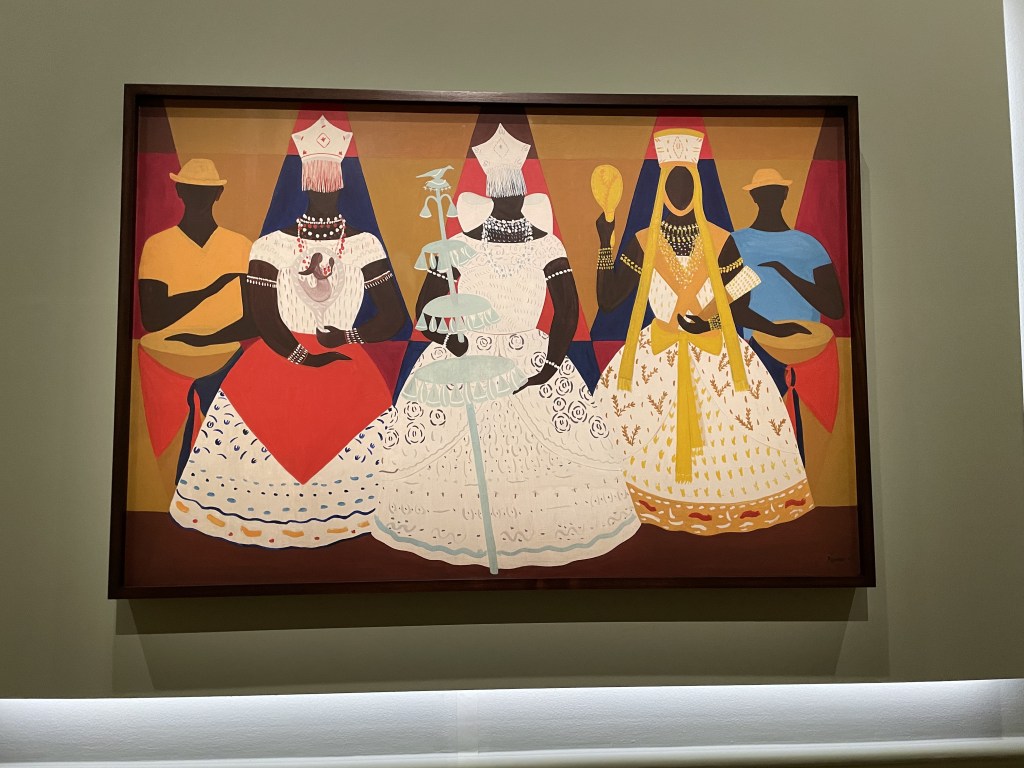
This image, entitled Three Orishas, was painted by Djanira da Motta e Silva in 1966. It’s an example of the ‘newer’ art in a show which exhibits the art of Brasil from the 1920-70s. The bright colours, stylised look and clear mingling of cultural languages captures, for me the true spirit of this young South American country.

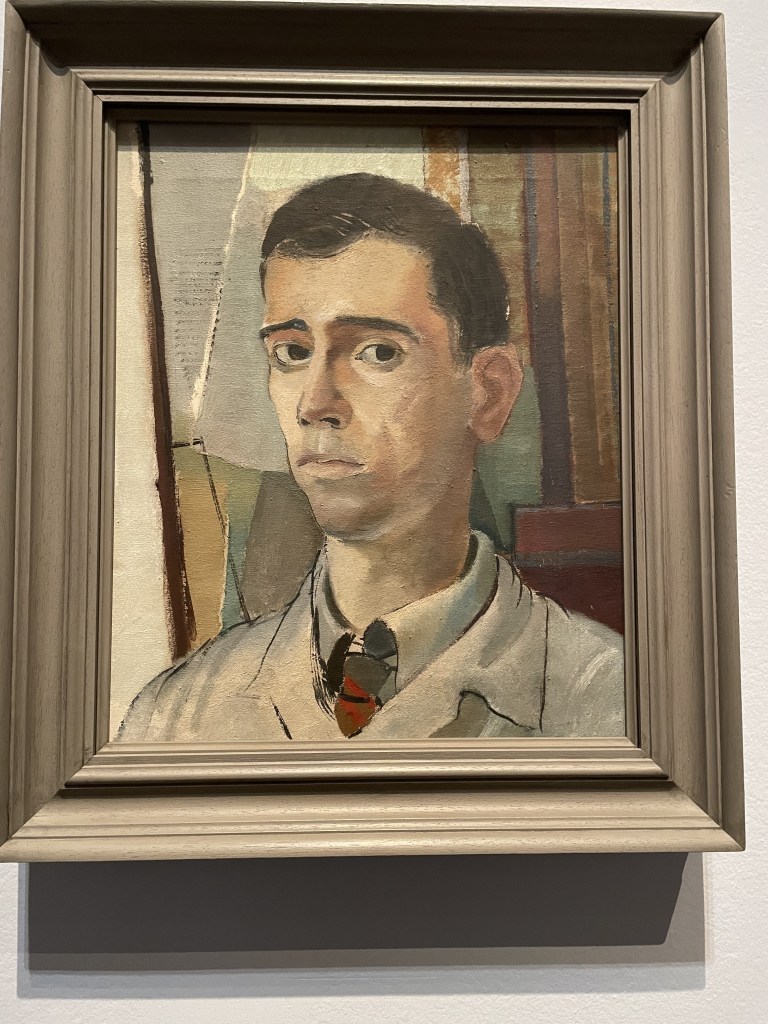
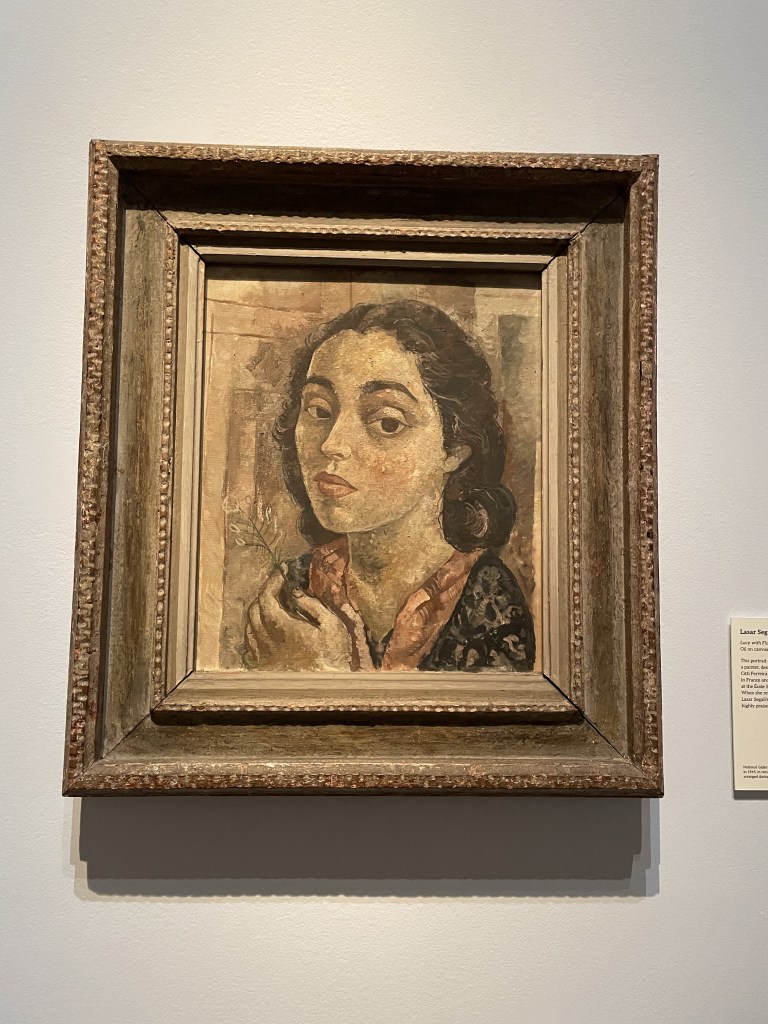
I’m always drawn to portraits and there are some very interesting examples. The muted colours betray the period of the painting and the inheritance of German expressionism. Left: Self-portrait with Orange Dress 1921 by Tarsila do Amaral, Portrait of a Young Man 1943 by Roberto Burle Marx and Lucy with Flower by Lasar Segall painted in 1939-42.
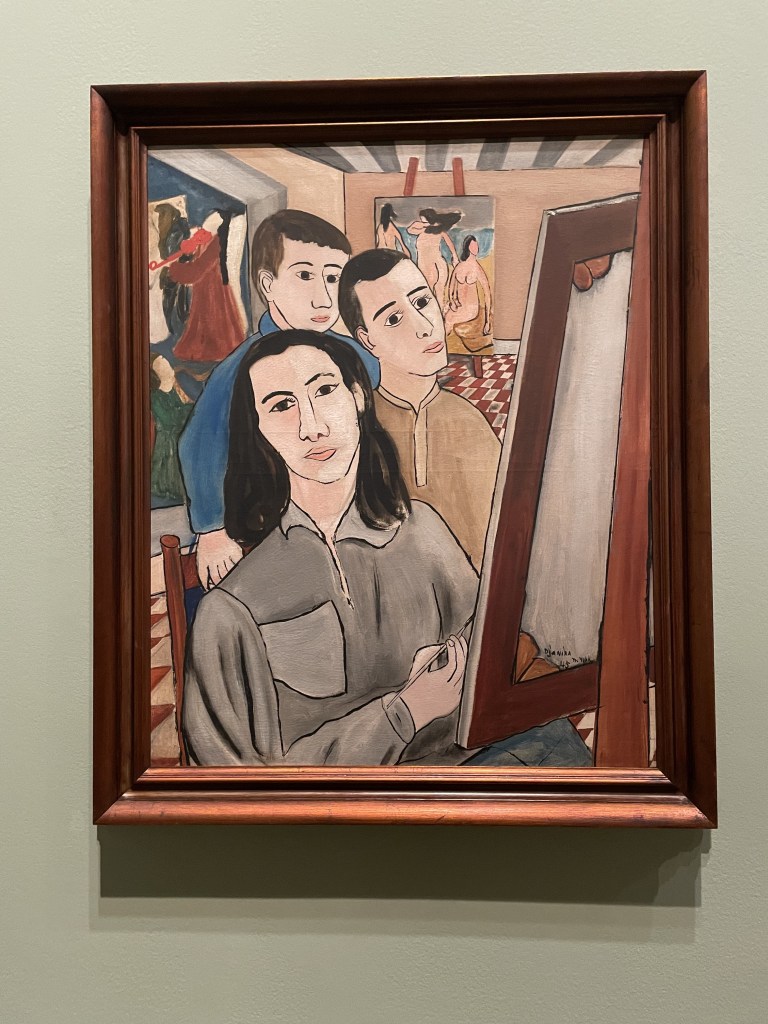
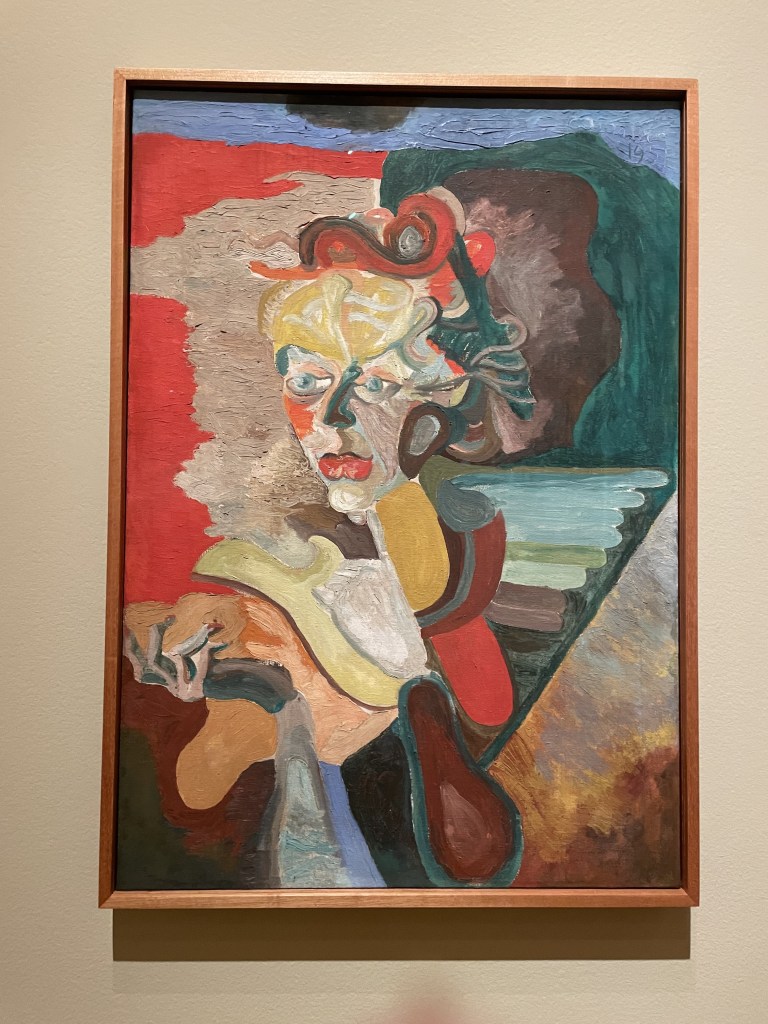
You can see the influence of expressionism and abstraction here with Djanira da Motta e Silva’s self-portrait from 1945, Flavio de Carvalho’s Portrait of Ivone Levi from 1951.
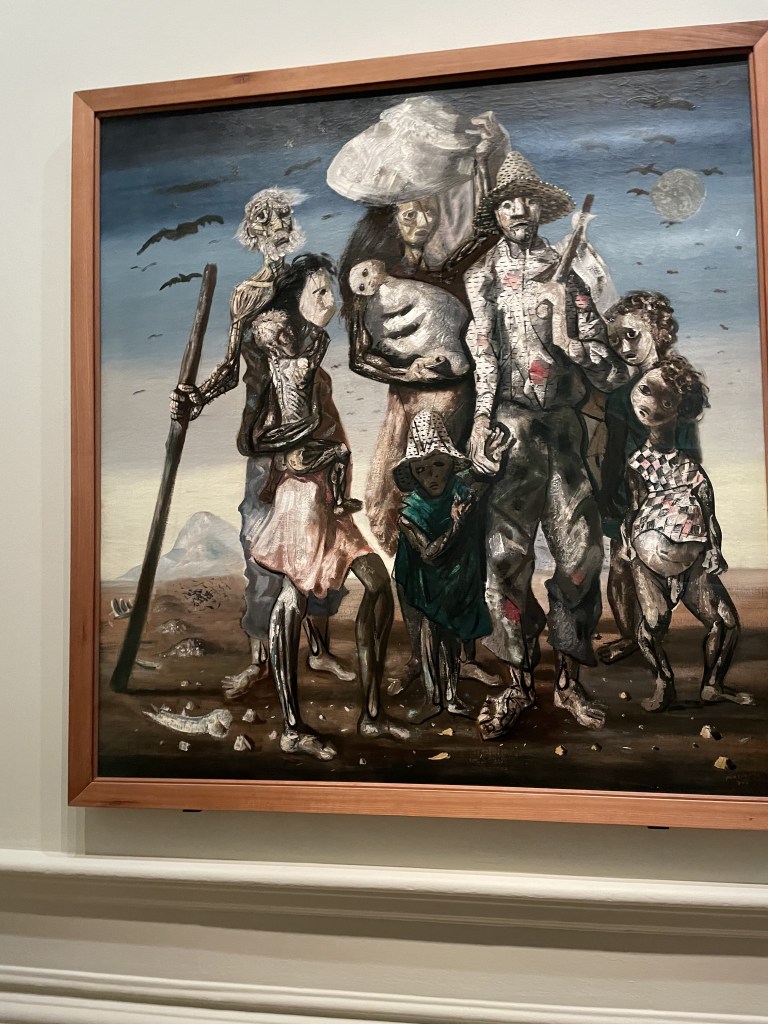
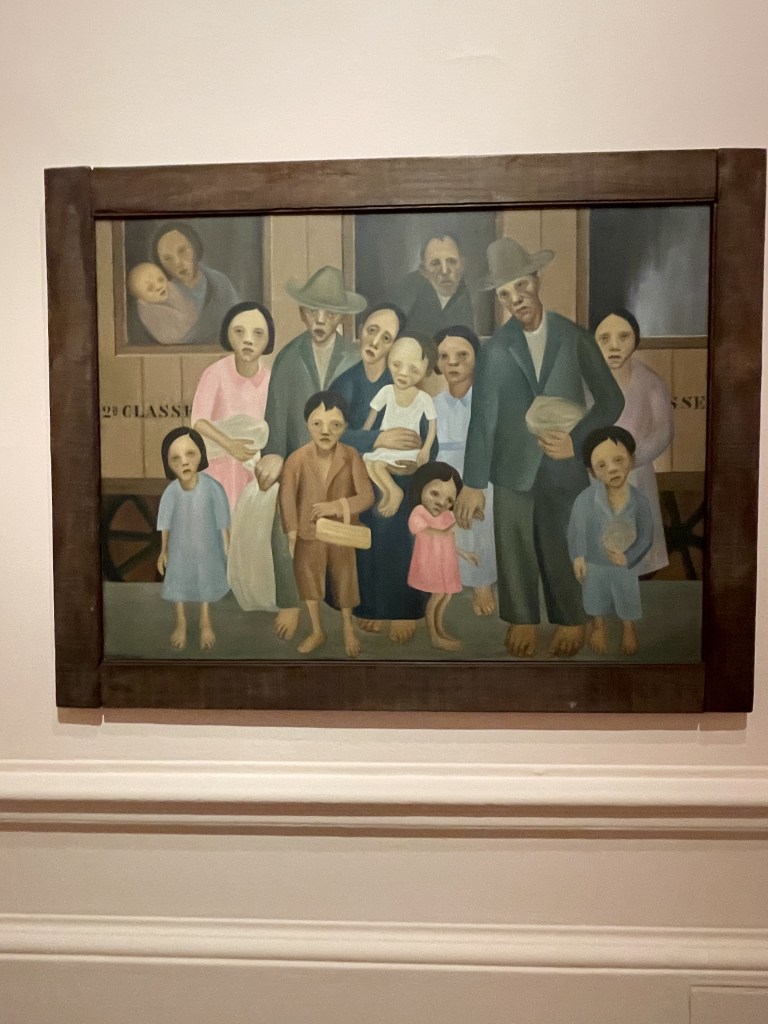
Interesting examples of social commentary with these two paintings. The rather sinister Migrants by Candido Portinari from 1944 represents the migration of northeastern rural communities who were forced to move to other part of the country in search of work. And Tarsila do Amaral’s ‘Second Class’ from 1933 illustrates the awful poverty resulting from the economic crash of 1929.
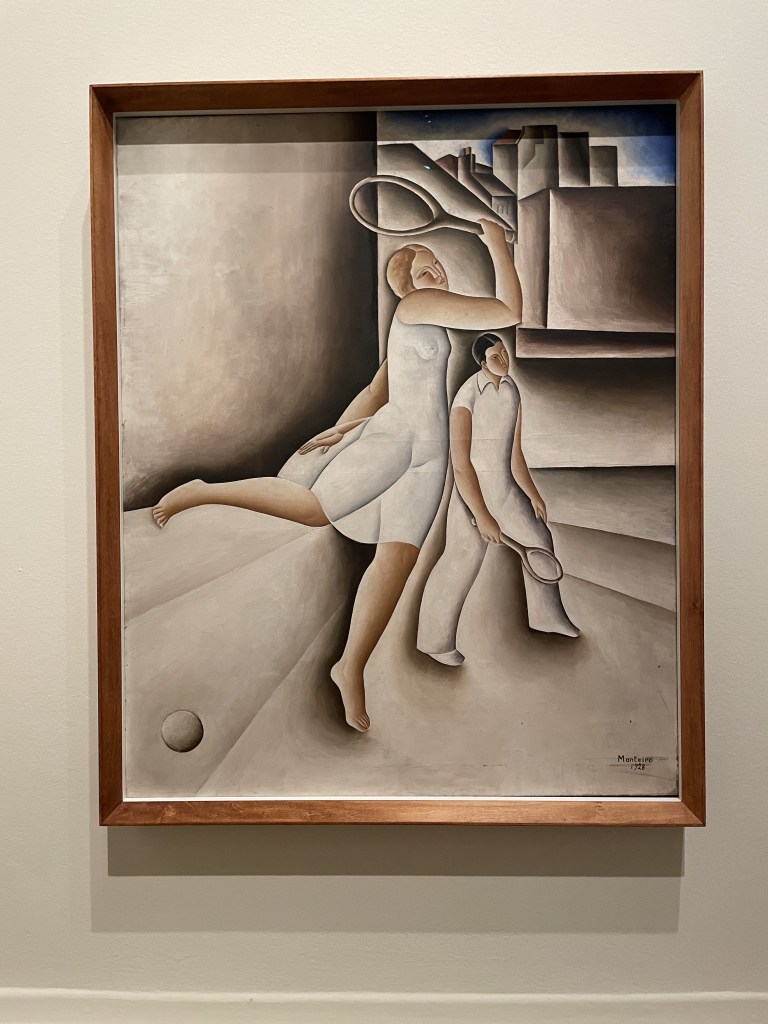
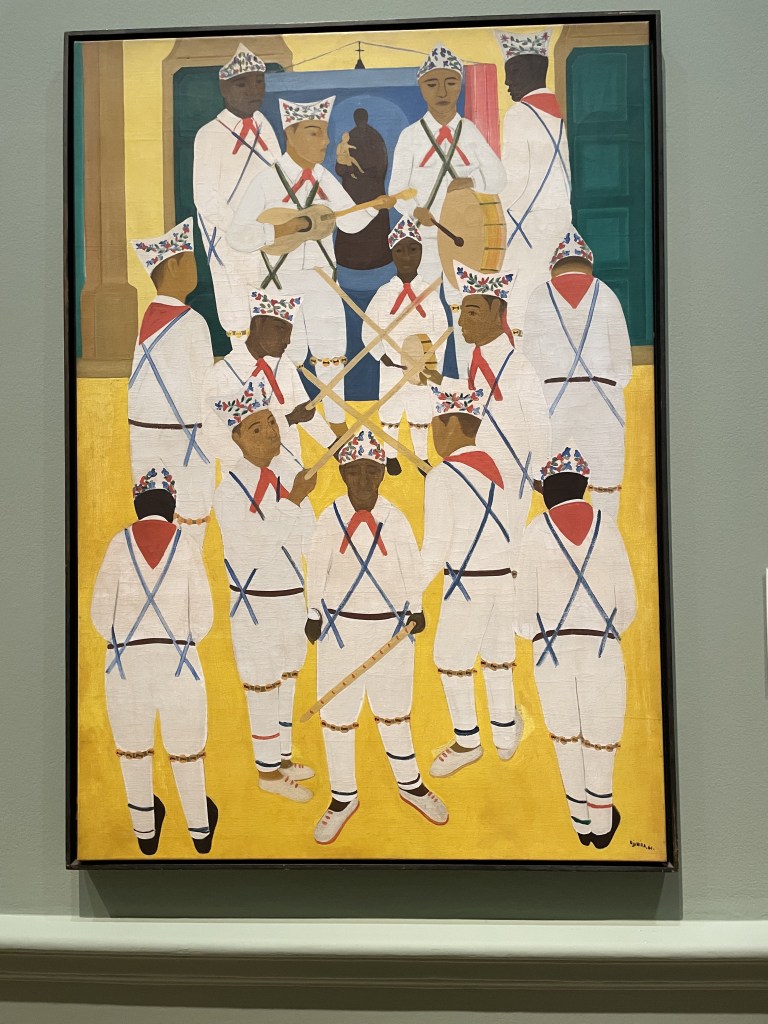
I liked the stylised tennis player in Vincente deo Rego Monteiro’s limited palette painting from 1928. And I really liked the Marrapaia Dance, Pariti painted by Djanira da Motta e Silva in 1961. Such a striking resemblance to the UK’s Morris dancers with strings of bells tied to the performers’ knees!
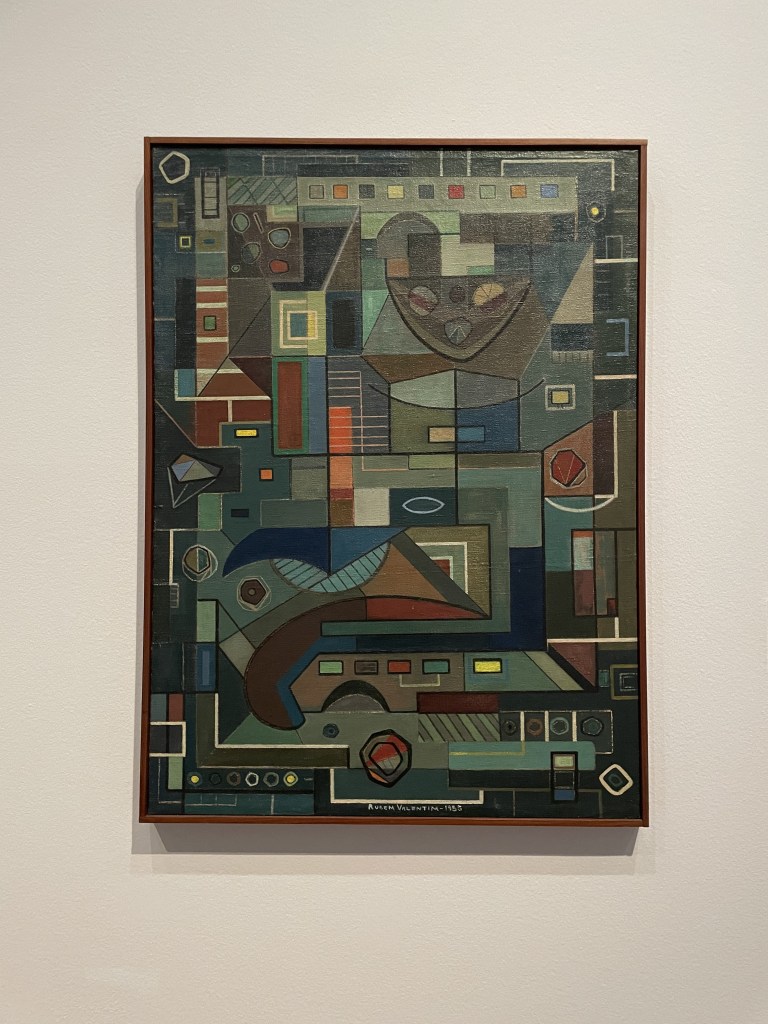
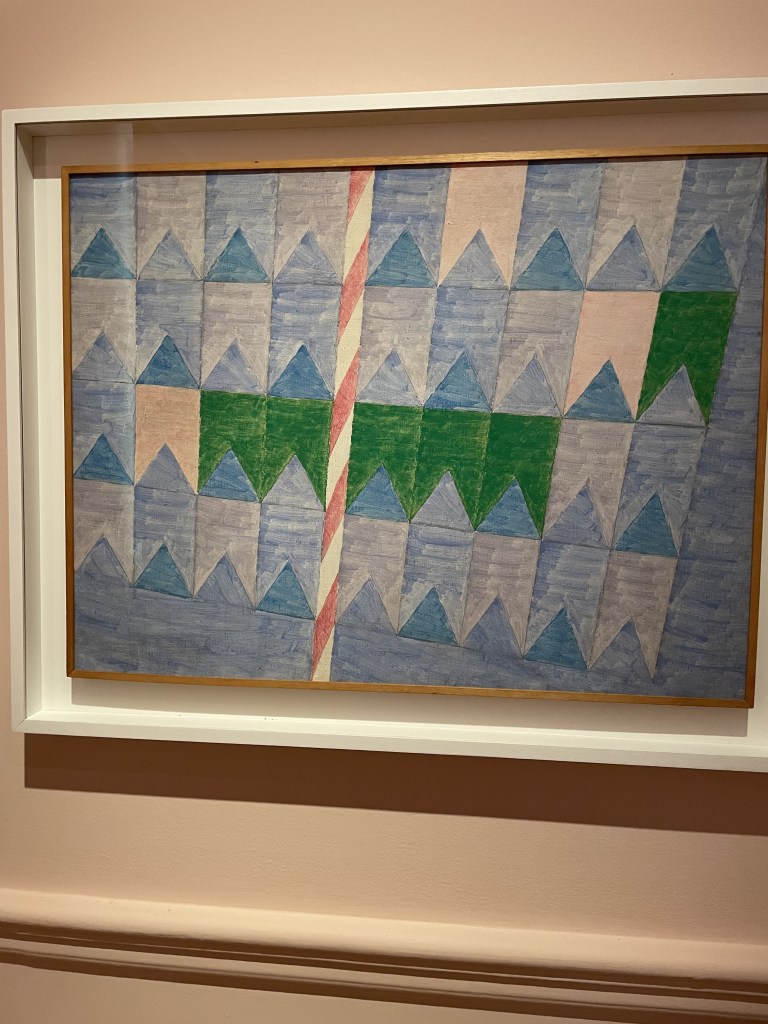

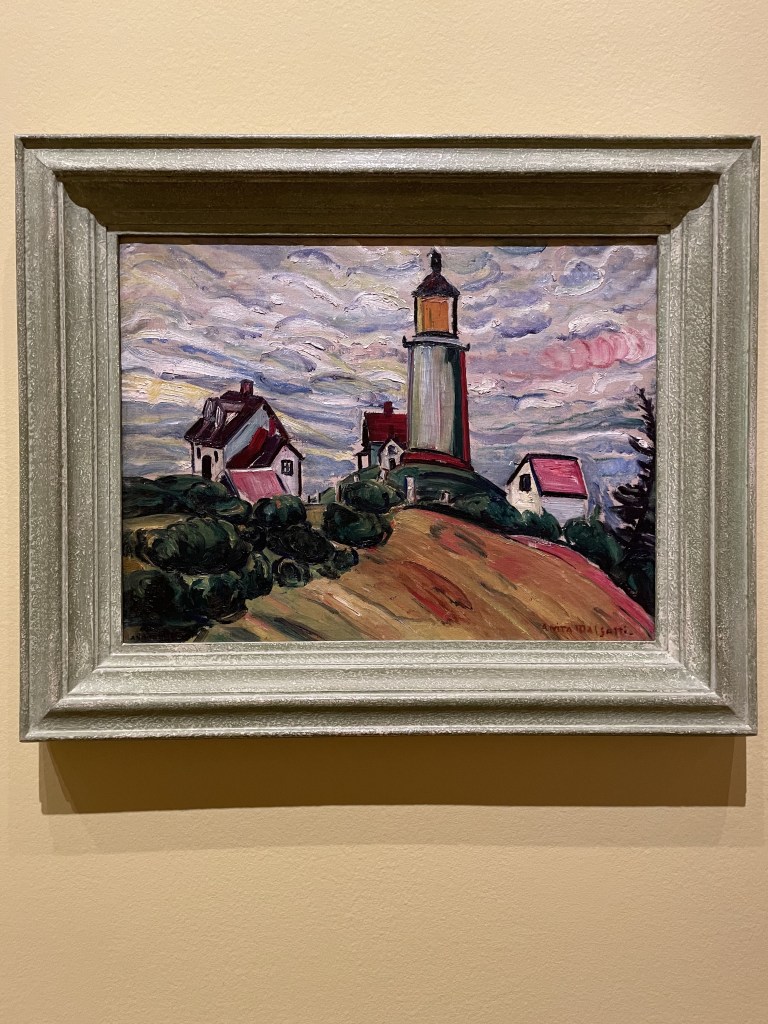
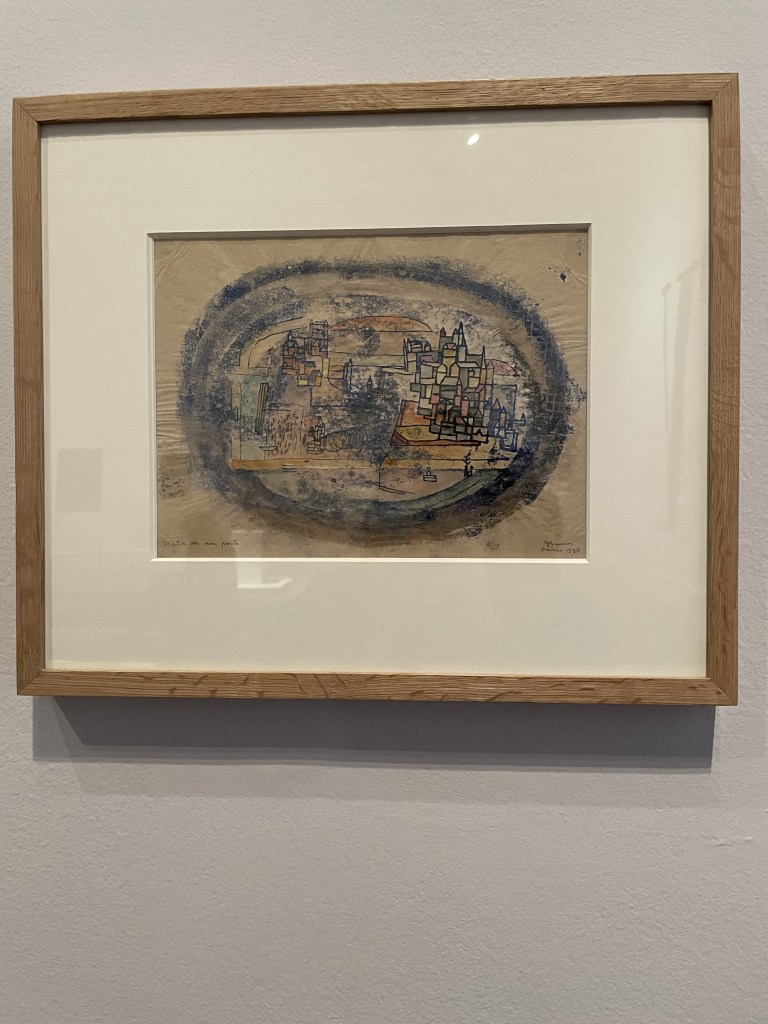
And here’s a pick and mix of abstracts and figurative work which show the evolution of Brasilian art.
The show is on at the Royal Academy until 21st April 2025

















 Paper Places