
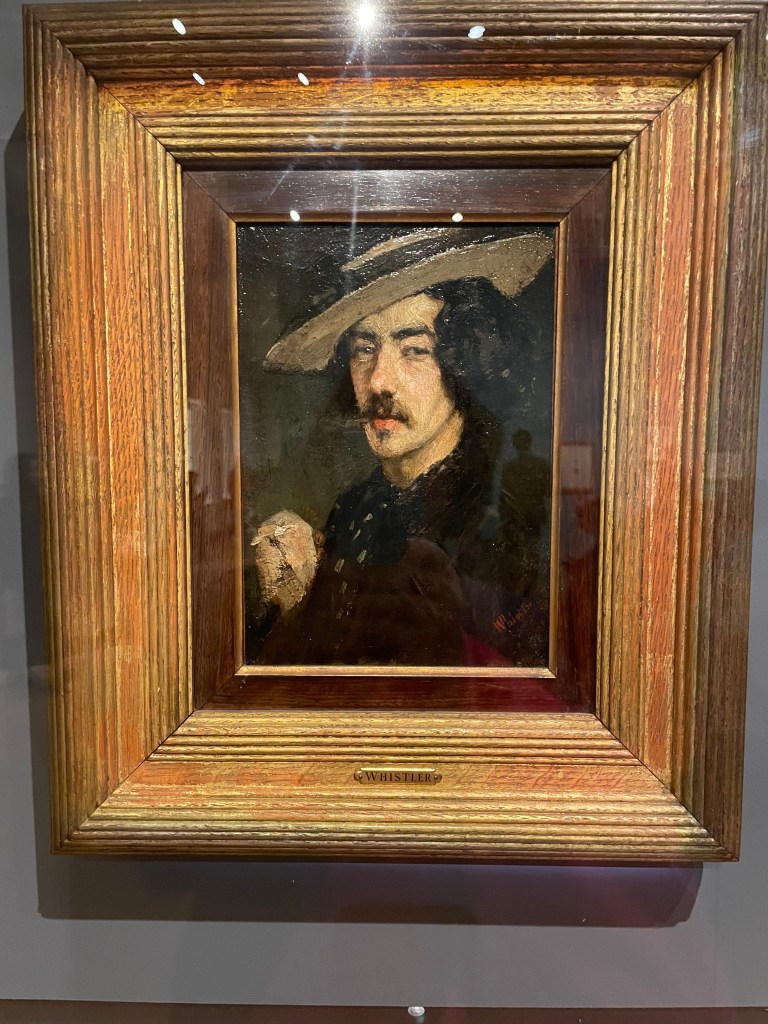
Loved this self-portrait of James McNeill Whistler. He’s looking quite louche and pleased with himself – blowing that little puff of cigarette smoke from his mouth and looking out at us with supreme confidence. And he was a confident painter. Interesting to learn that, having been born into a military family, he attended West Point and was expected to lead the life of a soldier but he was clearly far too free-thinking and disobedient for that world. And, as we see in the exhibition at Tate Britain, he spent every spare moment making drawings. He wanted to be an artist.
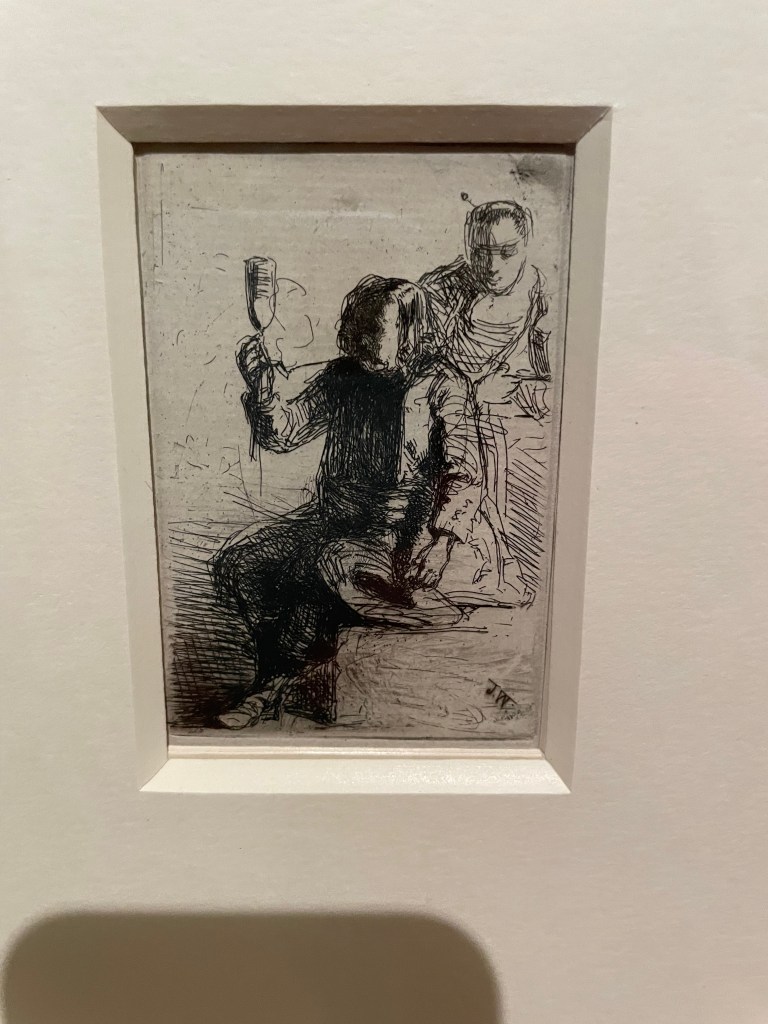
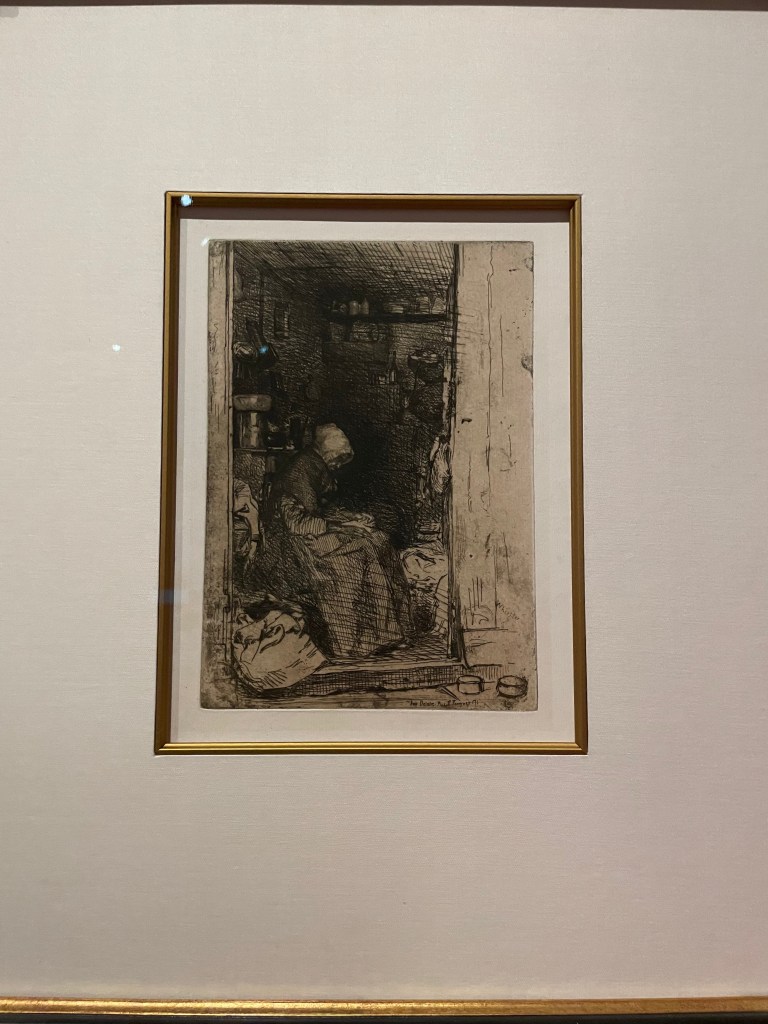
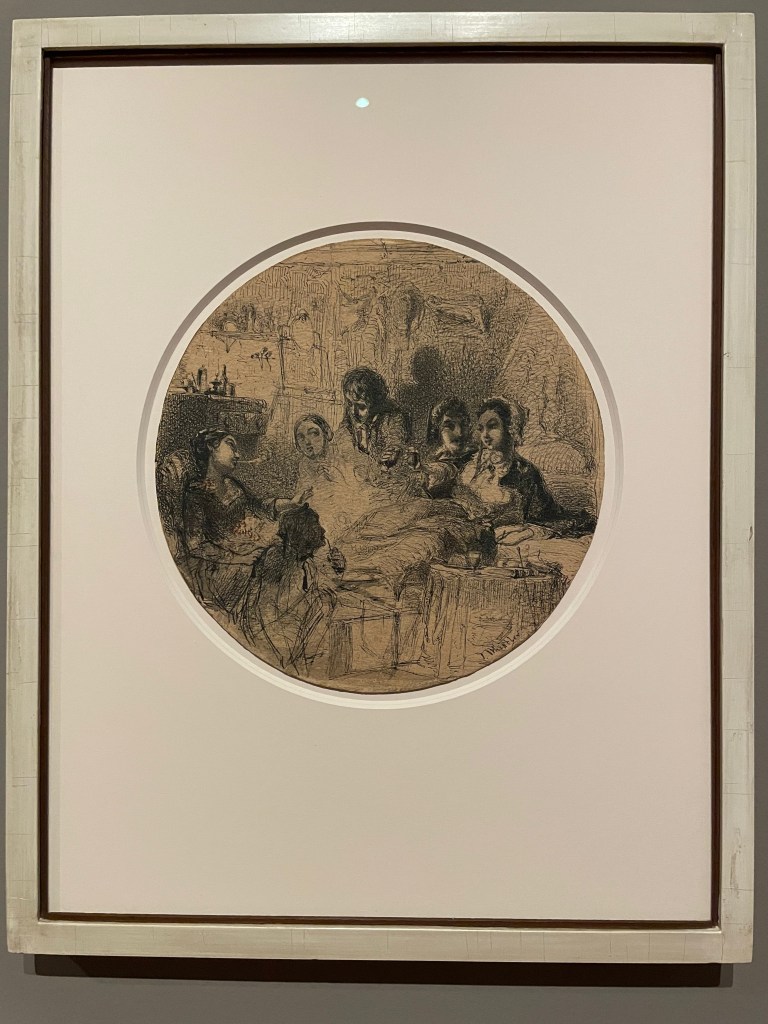
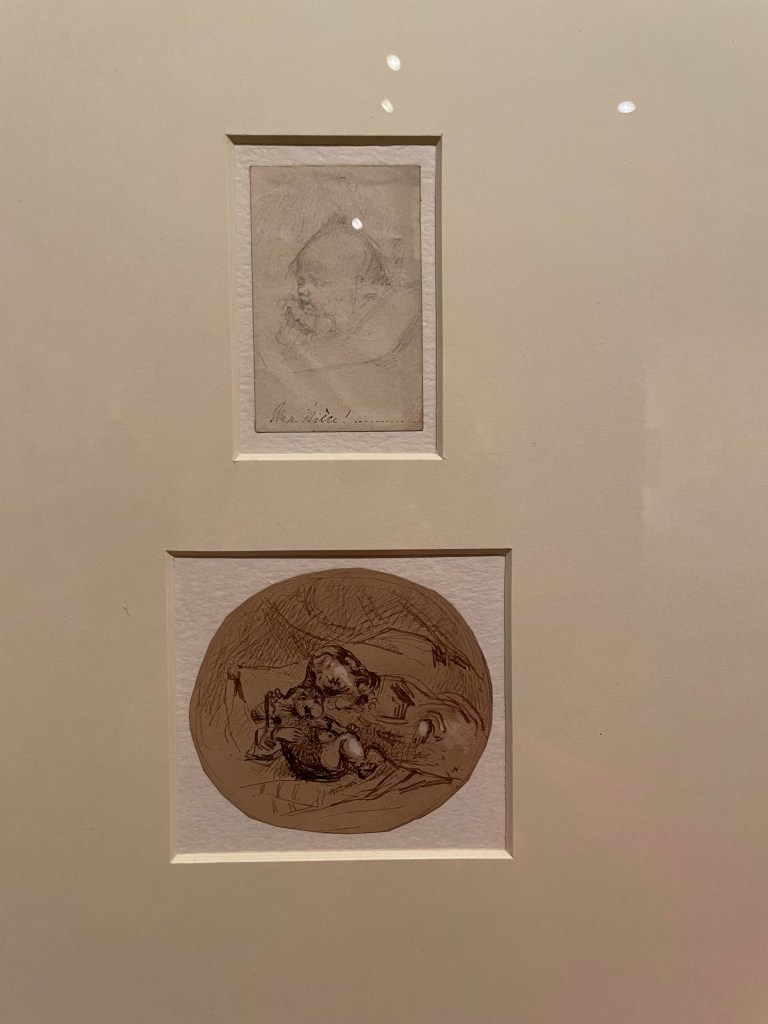
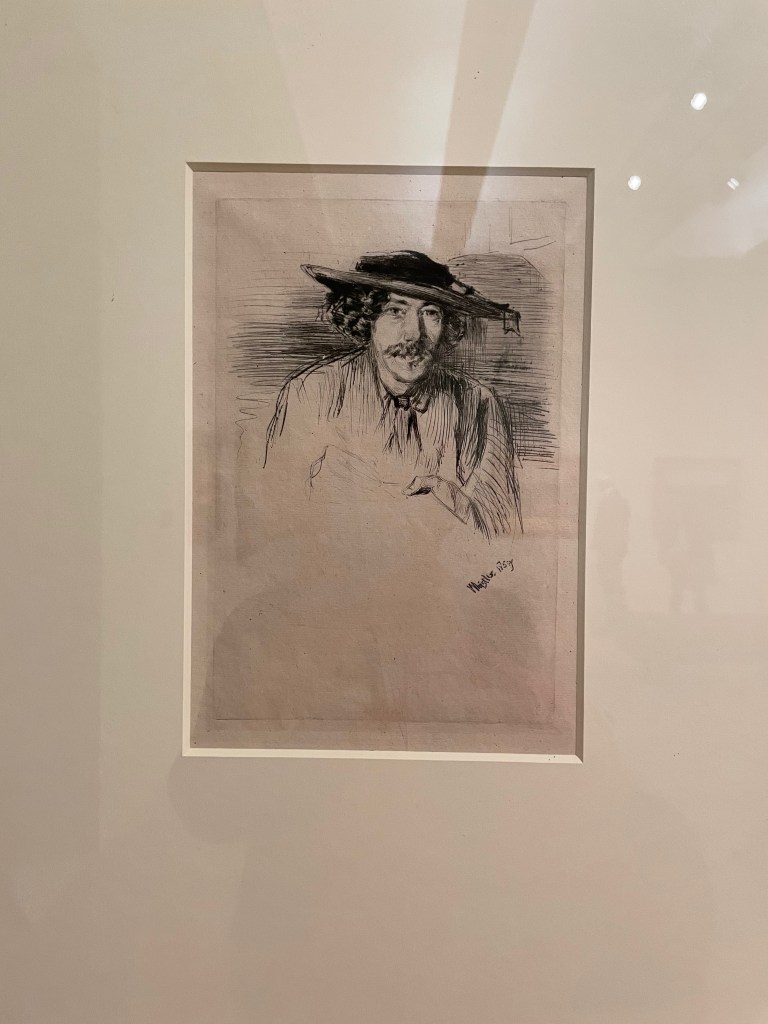
So, in his twenties he moved to Paris to live the Bohemian life as a painter, made friends with contemporary artists such as Degas and started drawing, painting and etching. Looking at his etchings it’s clear to see the influence of earlier artists such as Rembrandt. He also had a great sense of story-telling and obviously relished portrait painting.
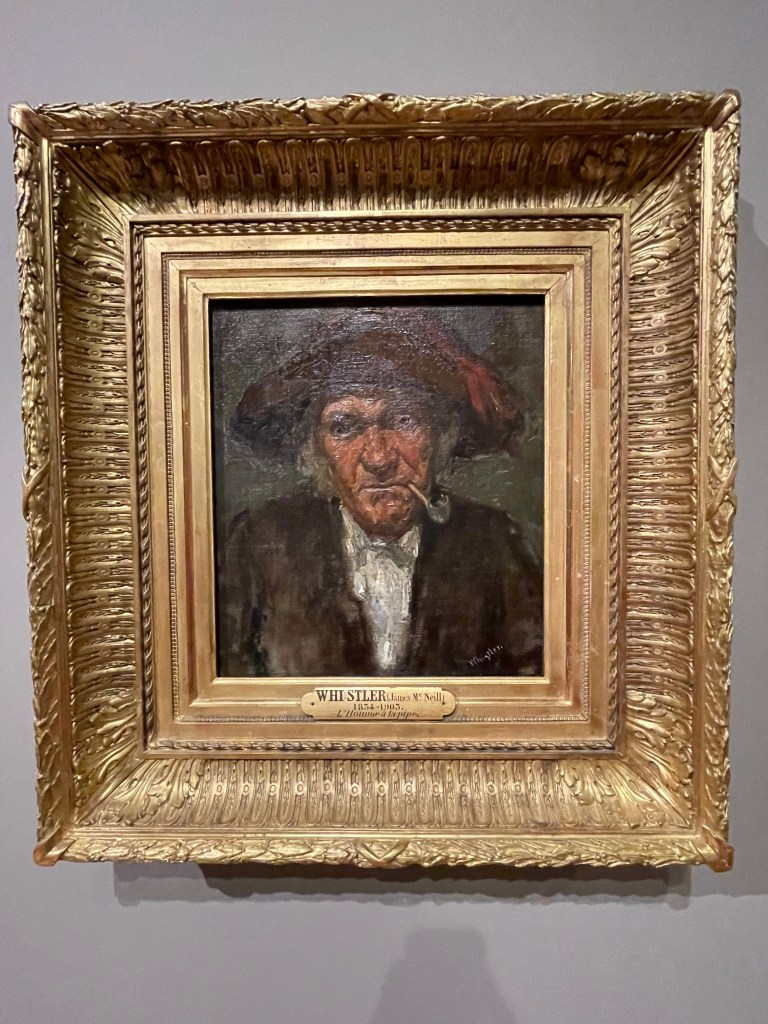
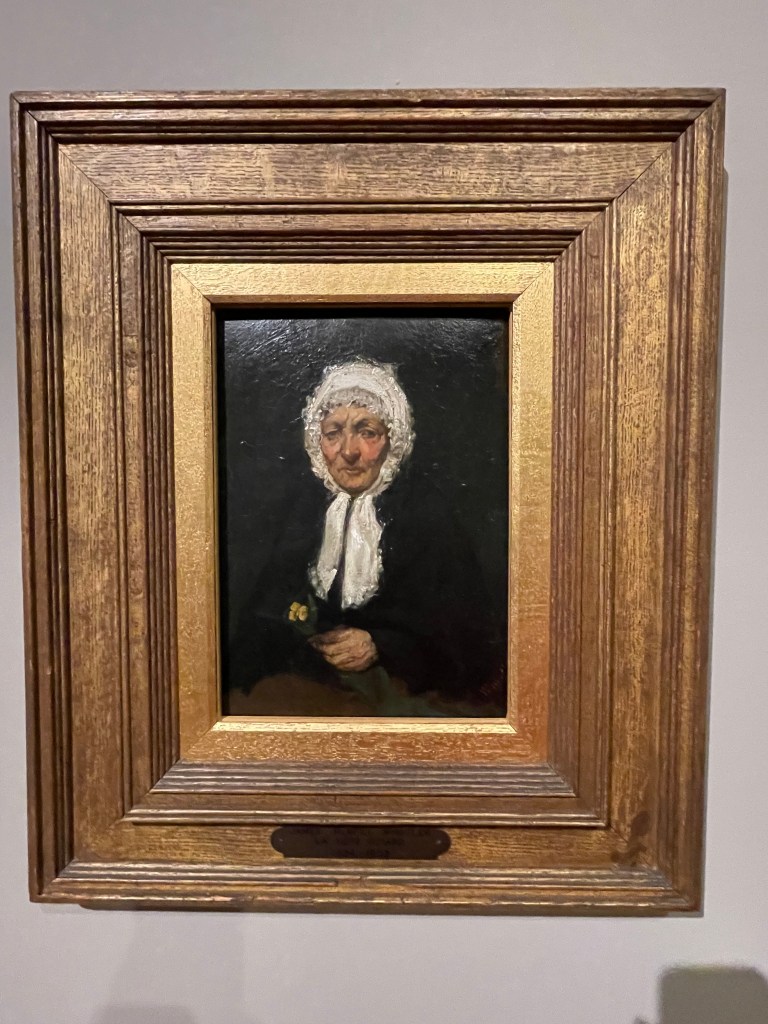
These two portraits made in France in1859 are great examples of how he managed to capture likeness, character and the interior world of his subjects. You can see the influence of Rembrandt too.
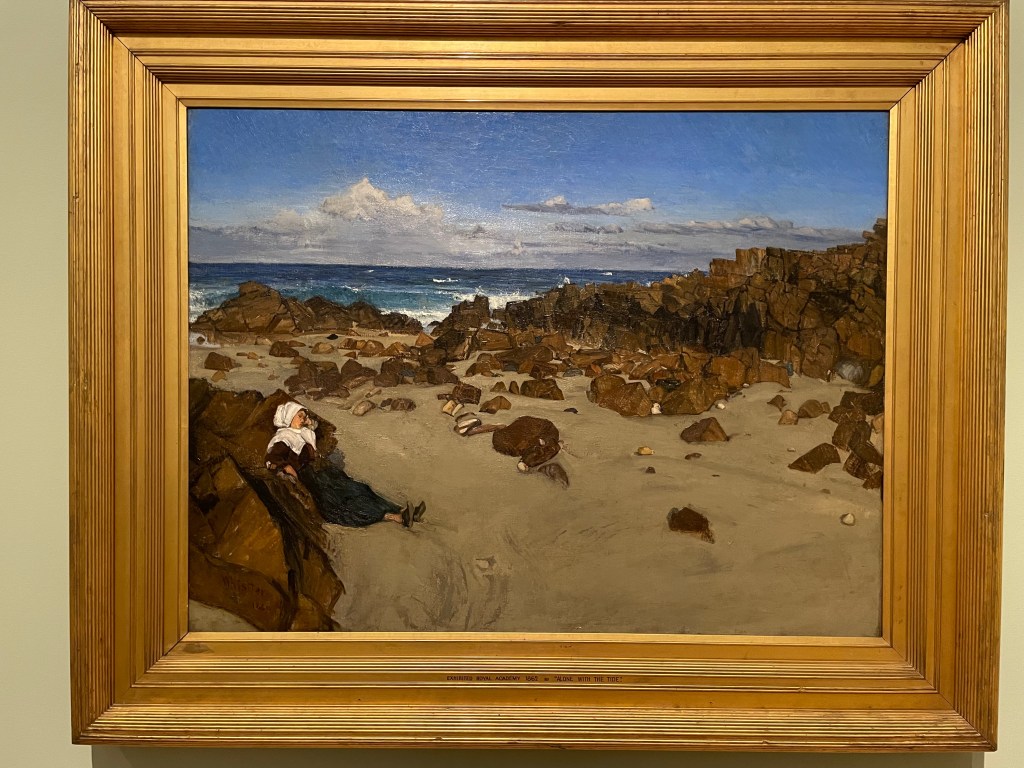
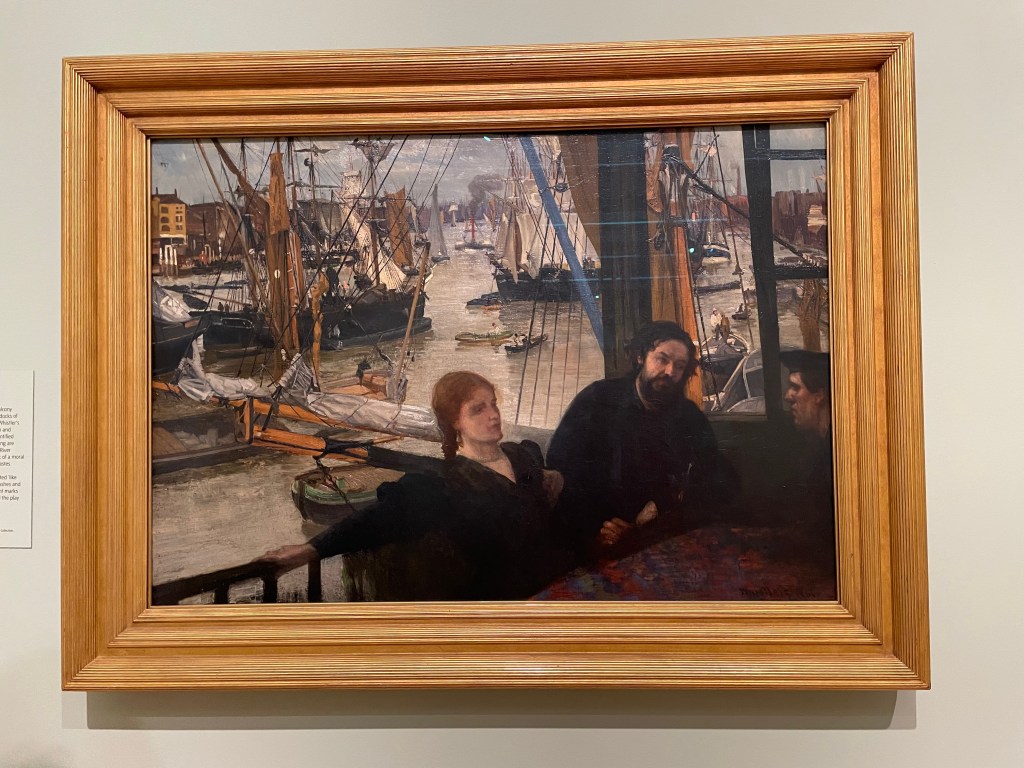
These are BIG oil paintings. On the left is a scene set on the Coast of Brittany (Alone with the Tide) from 1861painted in the open air and full of atmosphere. The texture of the paint is impressive and really worth getting up close to this one to see how he captures the approaching waves. And on the right is a painting I really love, Wapping, which was created from a series of drawings made in the busy port on the River Thames and very much a studio piece in its complexity. The viewer’s eye is so cleverly drawn from the foreground scene of drinkers (models) in a disreputable pub on the waterfront and the jumble of ships, boats, buildings and the great metropolis in the background. You just want to sit down at that table, smell the beer and the filthy river and dream of trade and travel to far flung places.
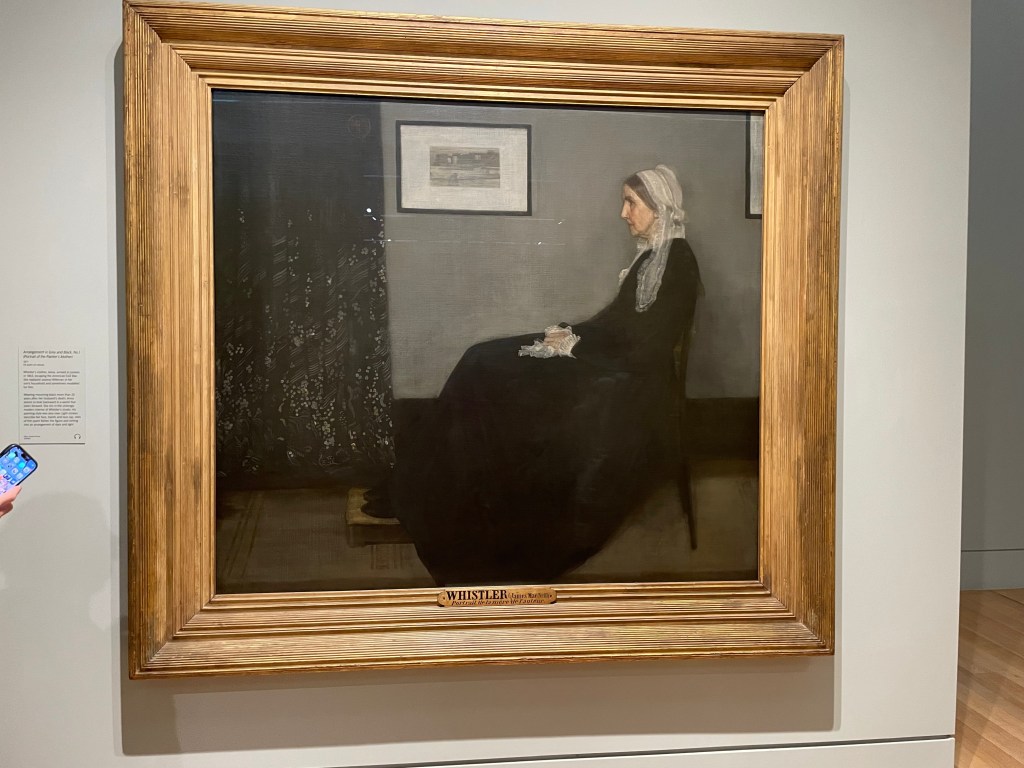
And here she is, Whistler’s mother. How still she looks in this austere setting with an oriental fabric drape to the side, a single print on the wall behind her (the print itself is also in the exhibition) and the woman seated, solemnly, staring at something. It’s unusual to see a portrait in such severe profile and the colours are very subdued. Having enjoyed colour in his earlier work, Whistler make a point of reducing the colour to subtle tones and allows the monochrome, or grey, of his palette to dominate. It’s a large painting with a tremendous draw to it.
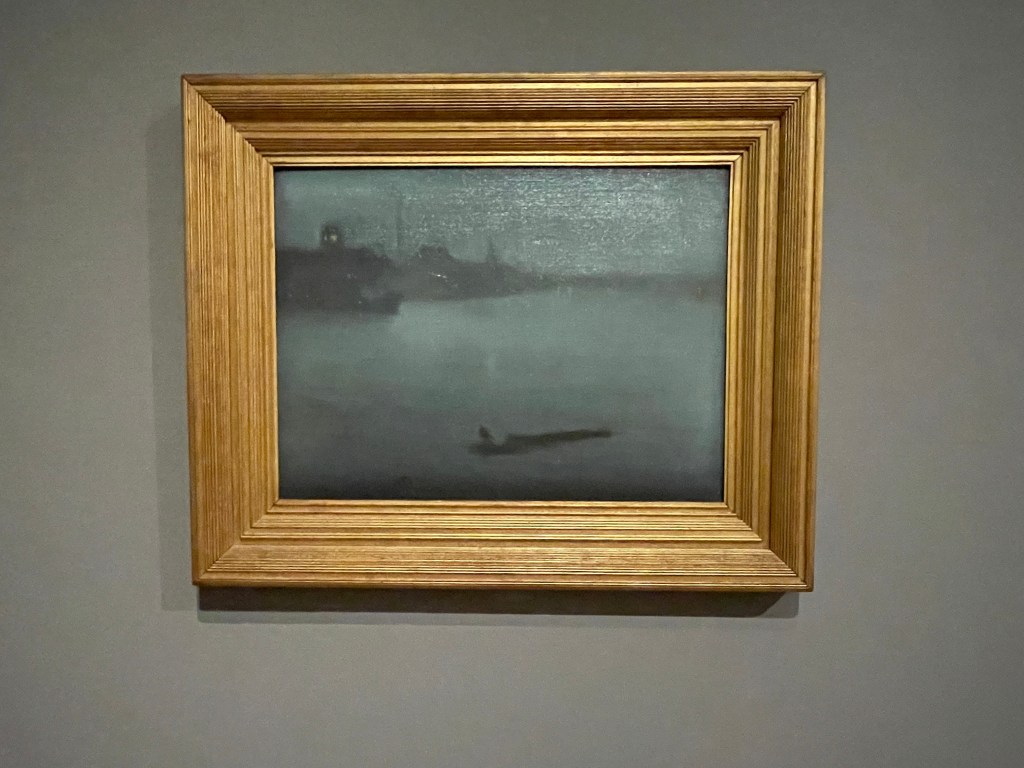
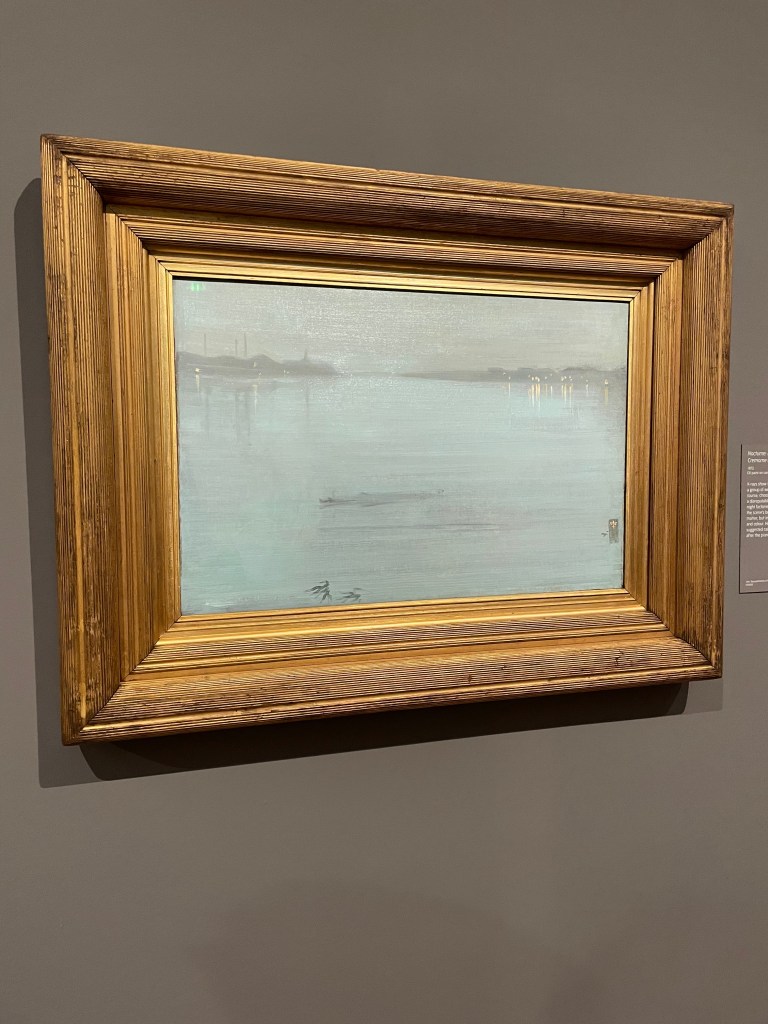
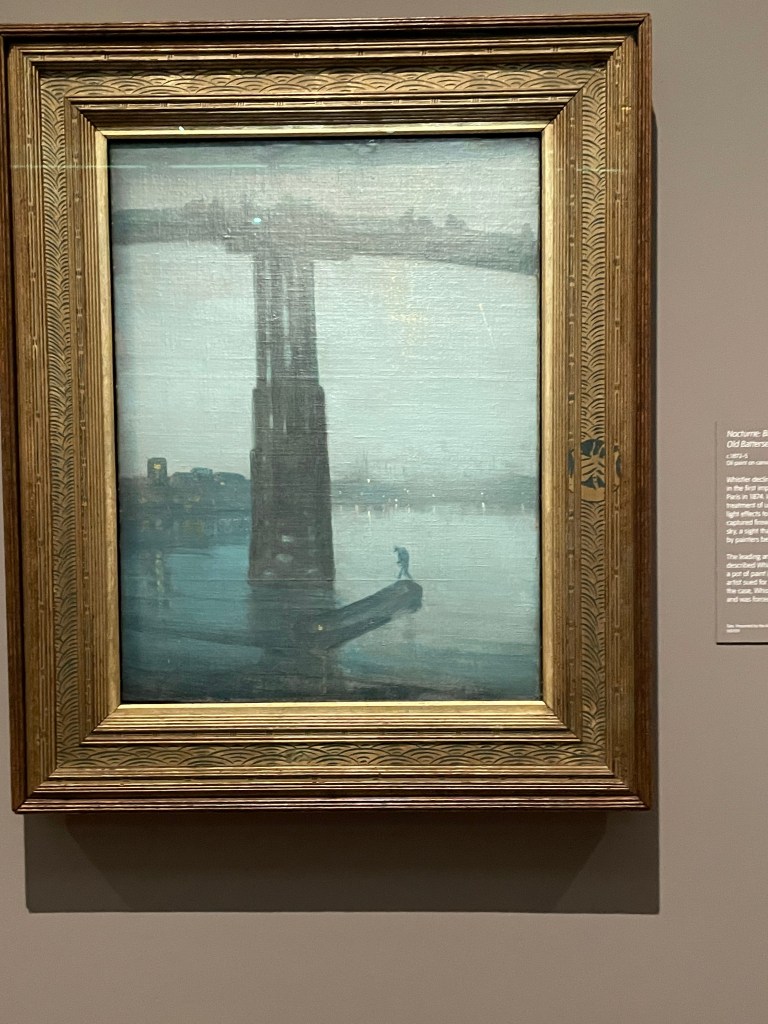
And here are some of the ‘Nocturnes’ the later paintings he made which capture watery scenes at dusk or by moonlight. I think there must be a warm, orangey ground underneath all those cool blues and greys because there’s a hidden warmth to the pictures. They are dreamy and compelling.
What a great show. It’s on at Tate Britain until 27th September. Well worth a visit.

