
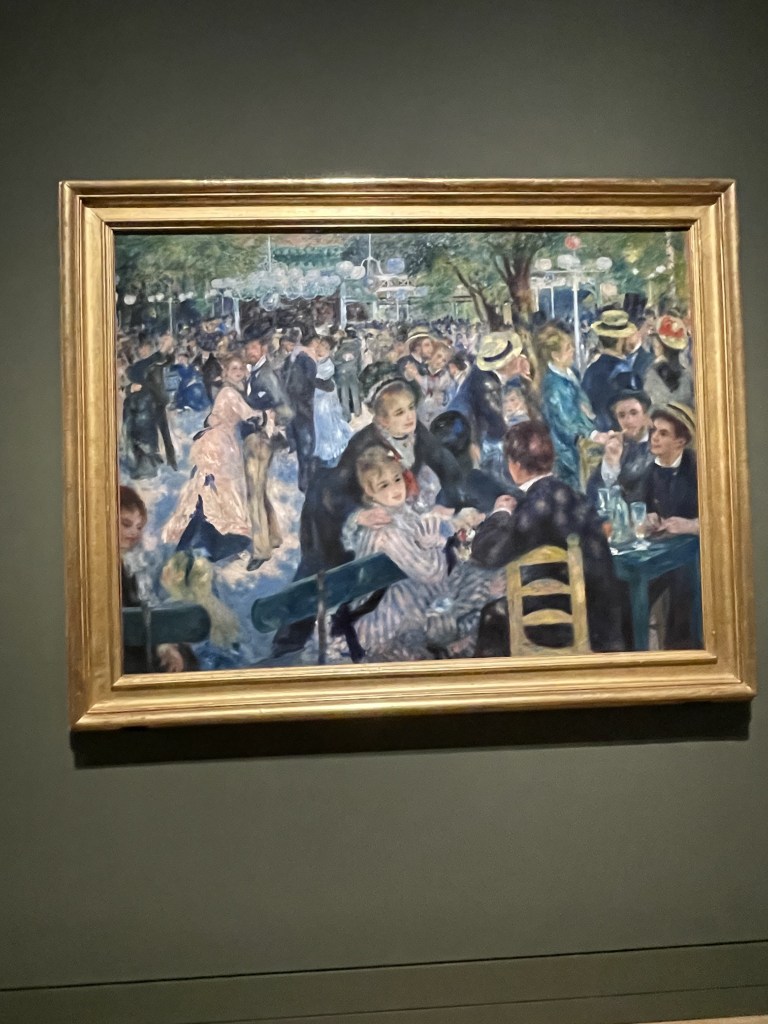
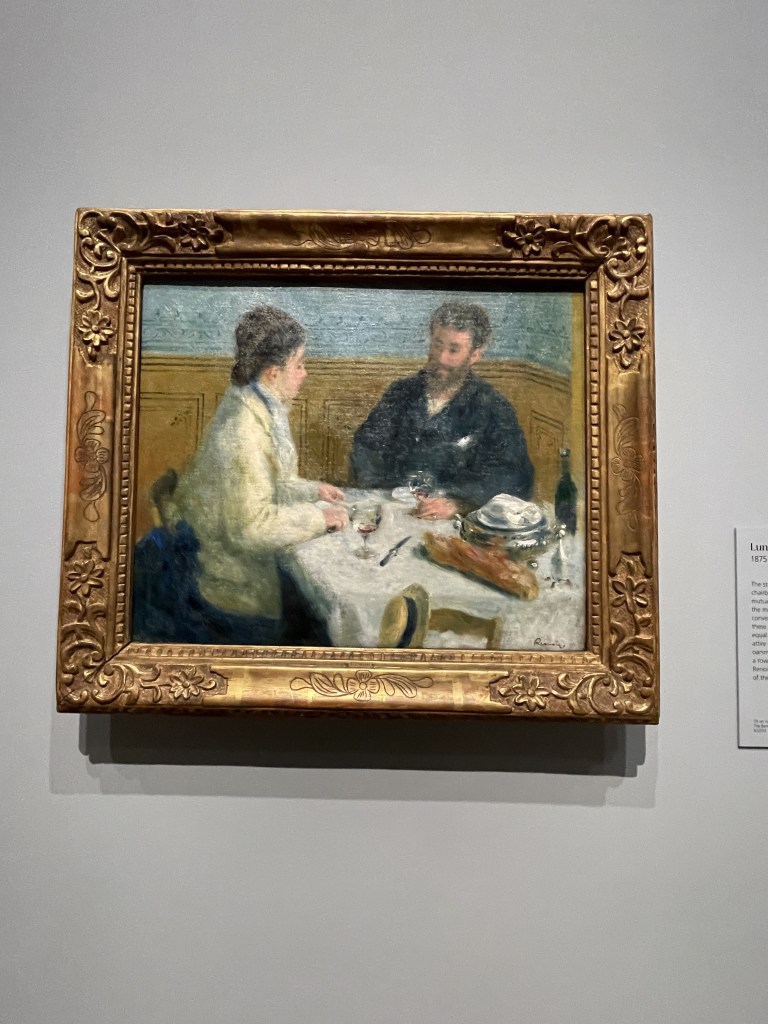
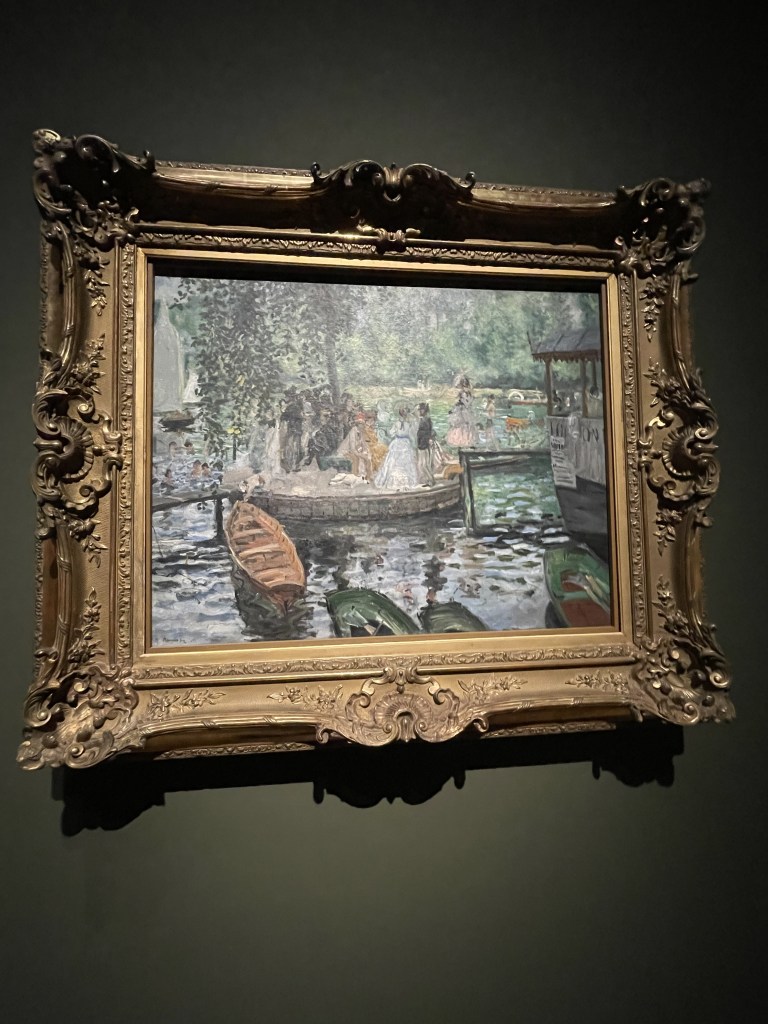
Such a joy to see familiar works such as Dance at the Moulin de la Galette (1876) which is here in London from Paris for the first time, alongside lesser known works which show people engaging with one another. These paintings invite the viewer to provide the likely conversation or situation. Middle shows: Luncheon, 1875, from the Barnes Foundation in Philadelphia. The couple have just finished their meal and are clearly discussing something fascinating. You long to join them at the table. And on the right is La Grenouillere, 1869 which depicts a popular bathing spot on the River Seine, known as the camembert, for its round shape, where people gathered to party. This painting came from the National Museum of Stockholm.
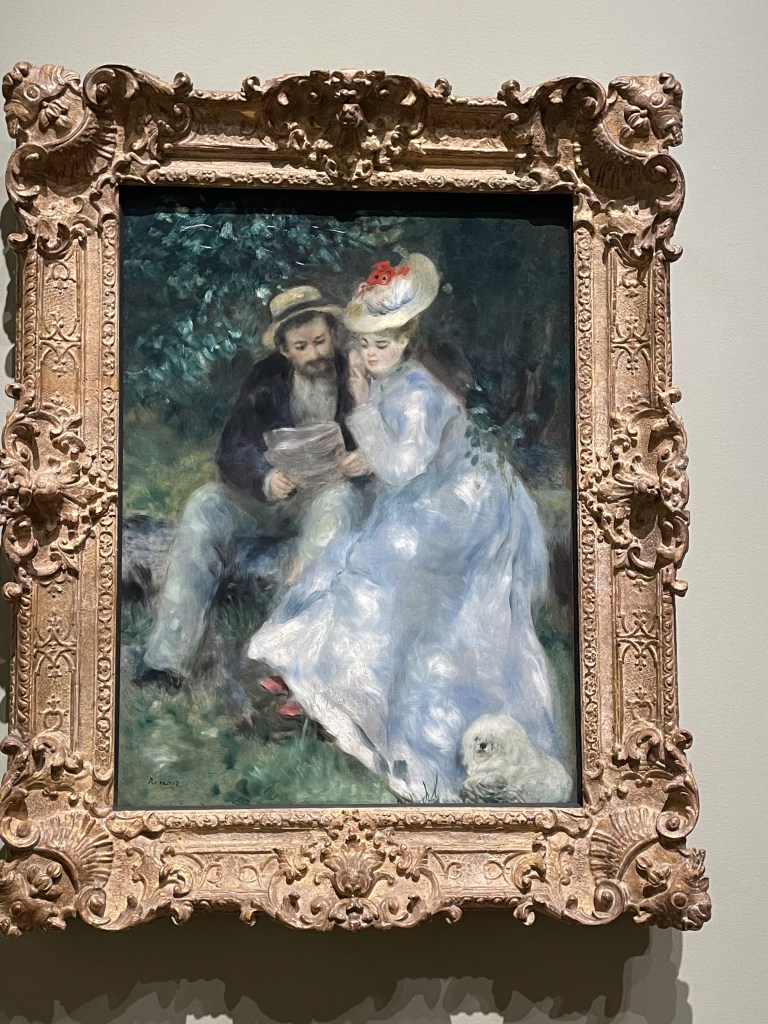
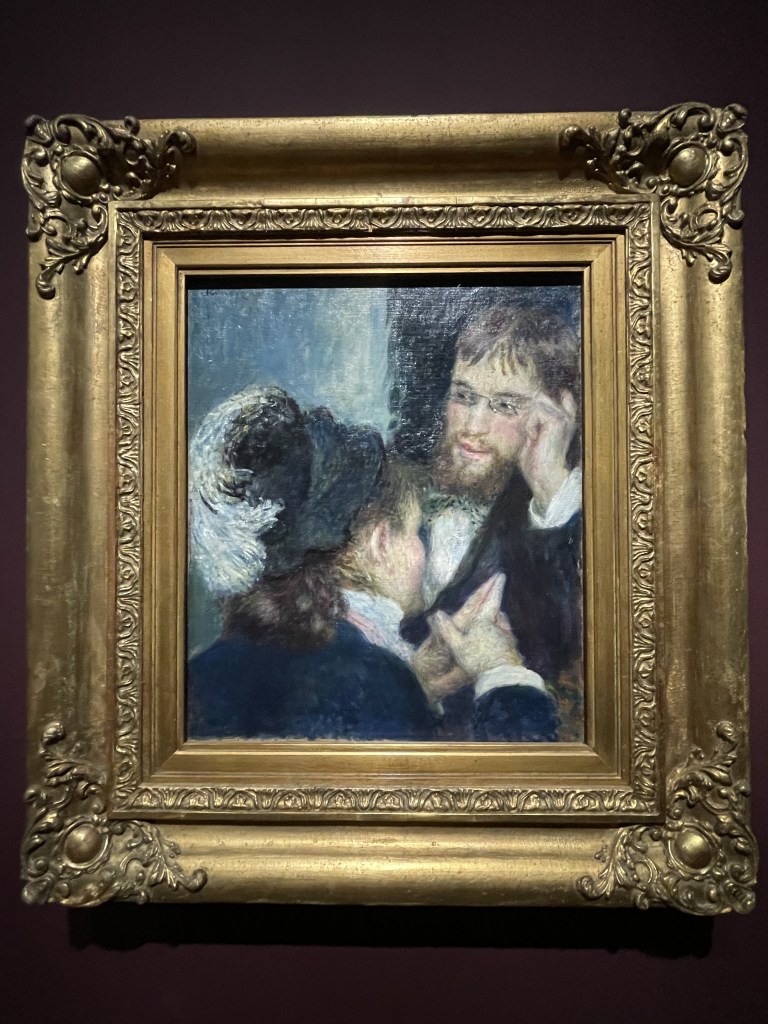
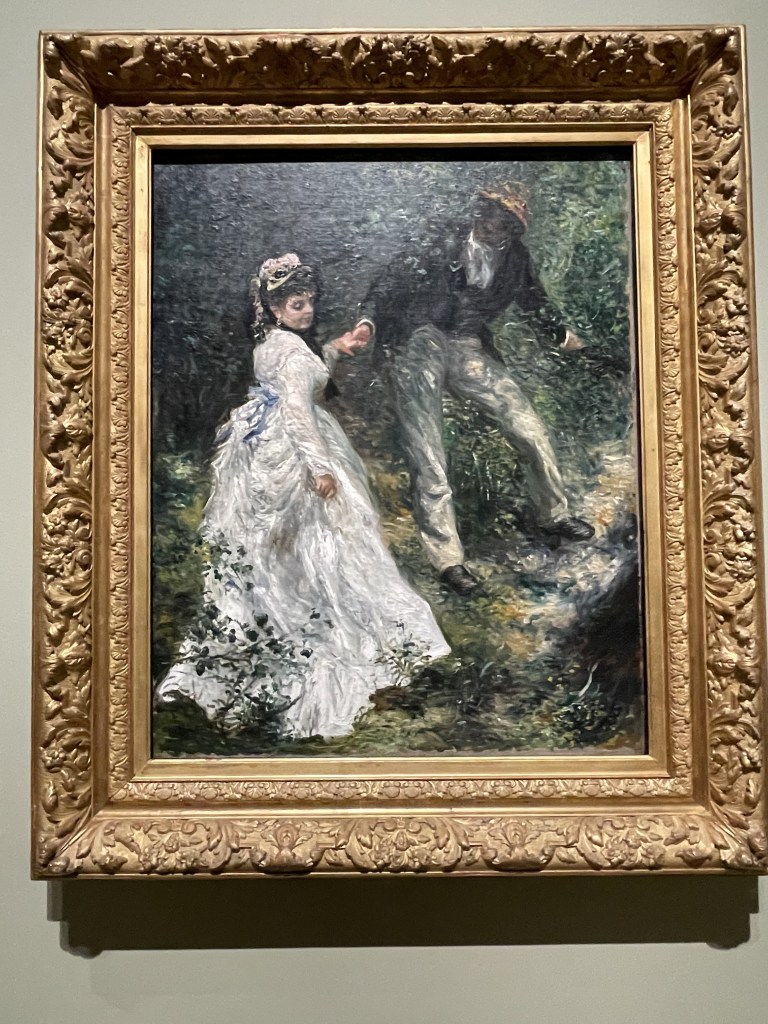
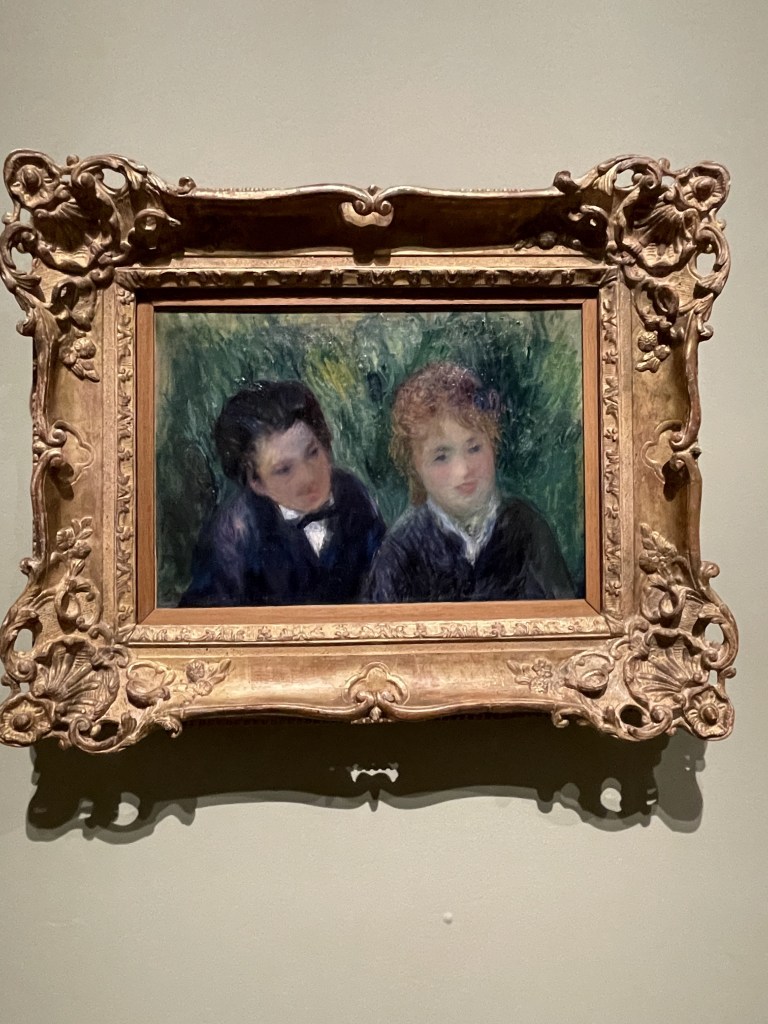
Encounters between men and women are a frequent subject. This is where Renoir is such a great narrative painter. We can fill the ‘gaps’ with our own contribution and wonder just where that relationship in the painting might be heading. On the left is Secrets (1875) a couple sit close together poring over a newspaper. I can’t help thinking the appearance of the dog by her skirt was something of an afterthought! Middle is Conversation(1876) again, we are dropping in on a couple who’ve reached a very important stage in their exchange. And on the right is The Promenade (1870) and the couple (not really suitably dressed for a riverbank excursion) are navigating a steep bank and about to disappear into the shady trees.
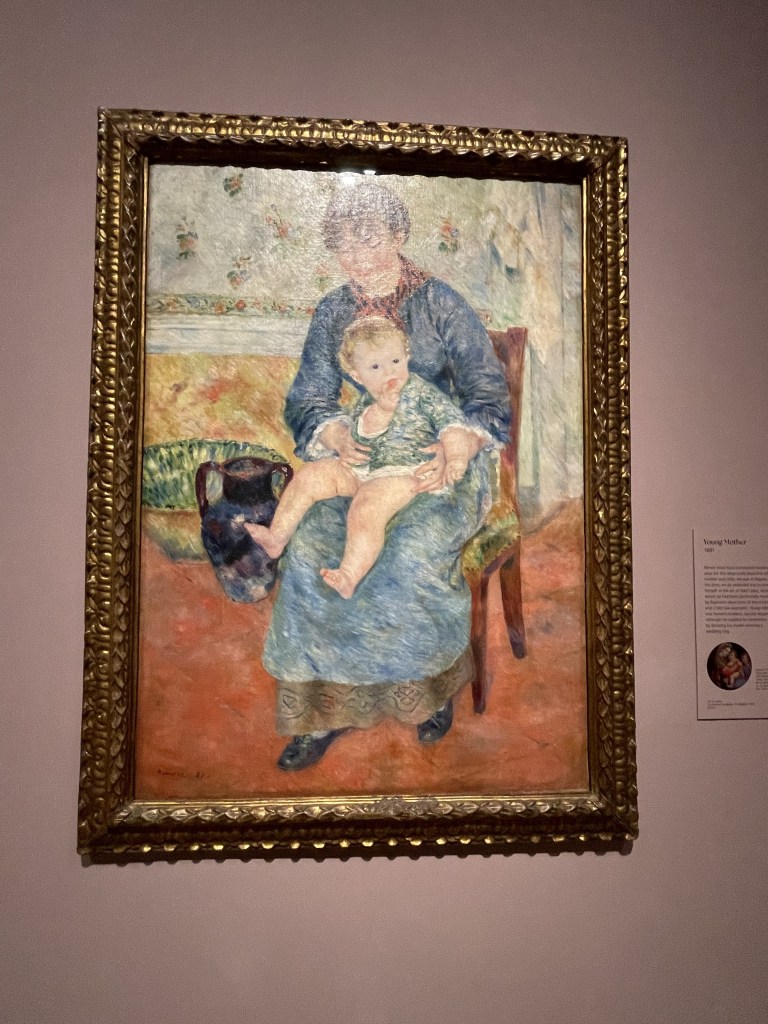
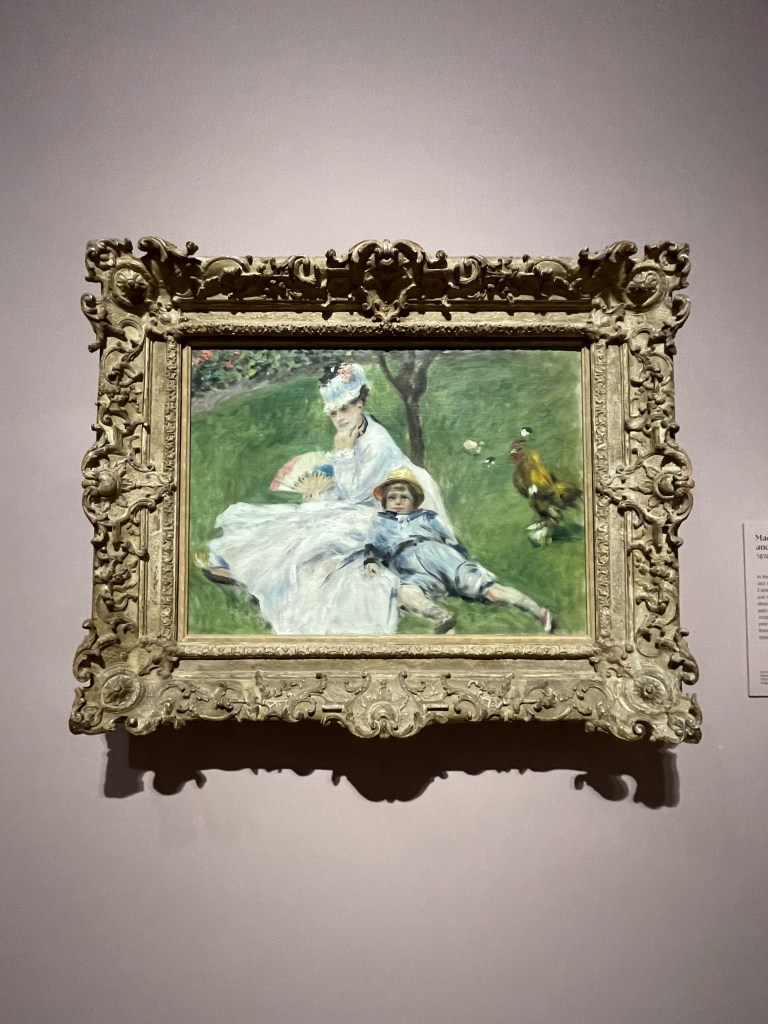
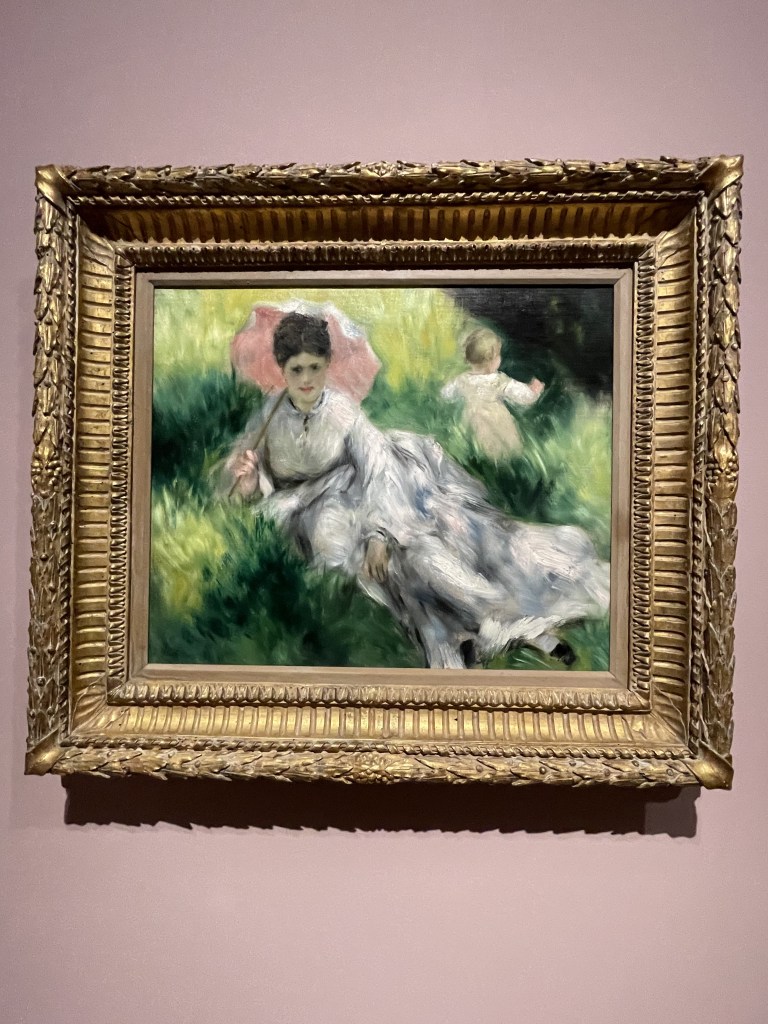
Family provided very touching subjects for Renoir too. The sketching must have been done on the spot but I’m assuming that the paintings were completed in his studio and, to some extent, posed. But they do capture that easy closeness between parent and child. Top left is Young Mother, (1881) which echoes traditional mother and child paintings of the 16th century, Middle top is Madame Monet and her son, (1874) showing the artist’s seven year old son in a comfortable sprawl with his mother, then Woman with a Parasol and small child on a sunlit hillside (1874-6) shows his wife with a toddler.
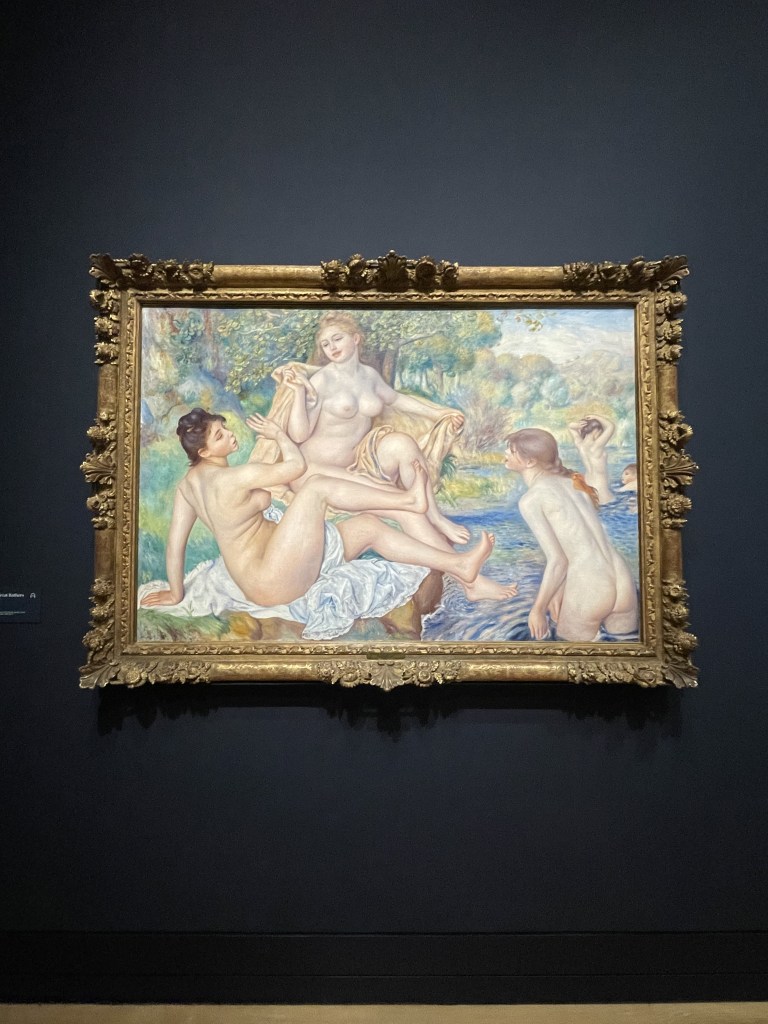
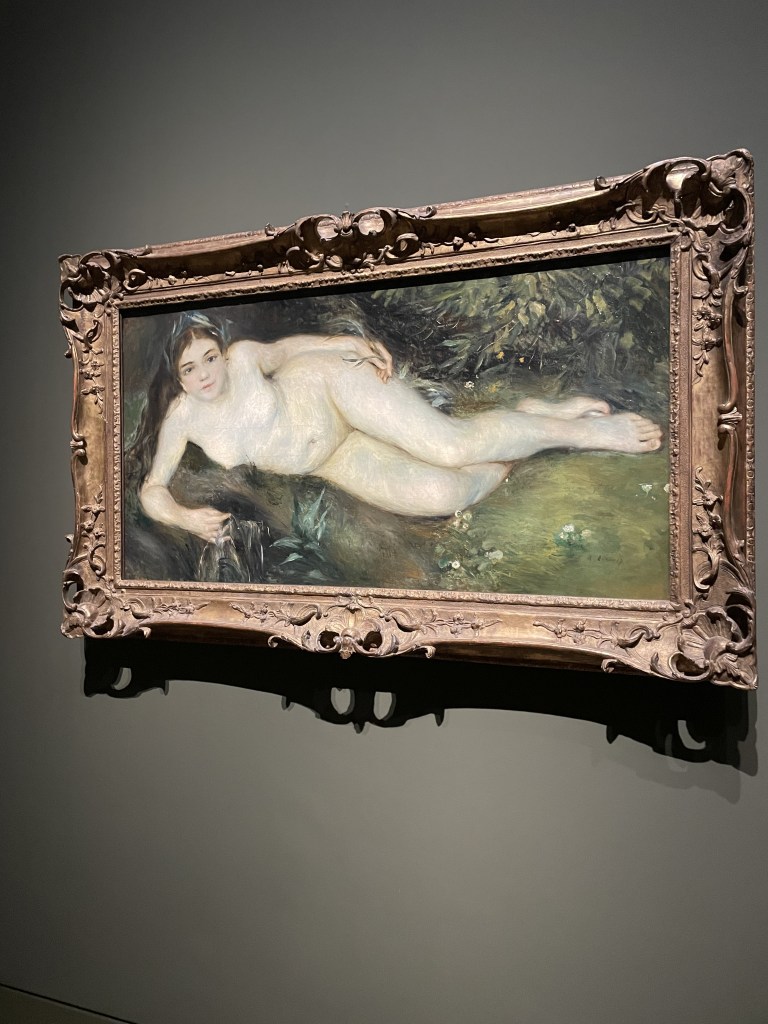
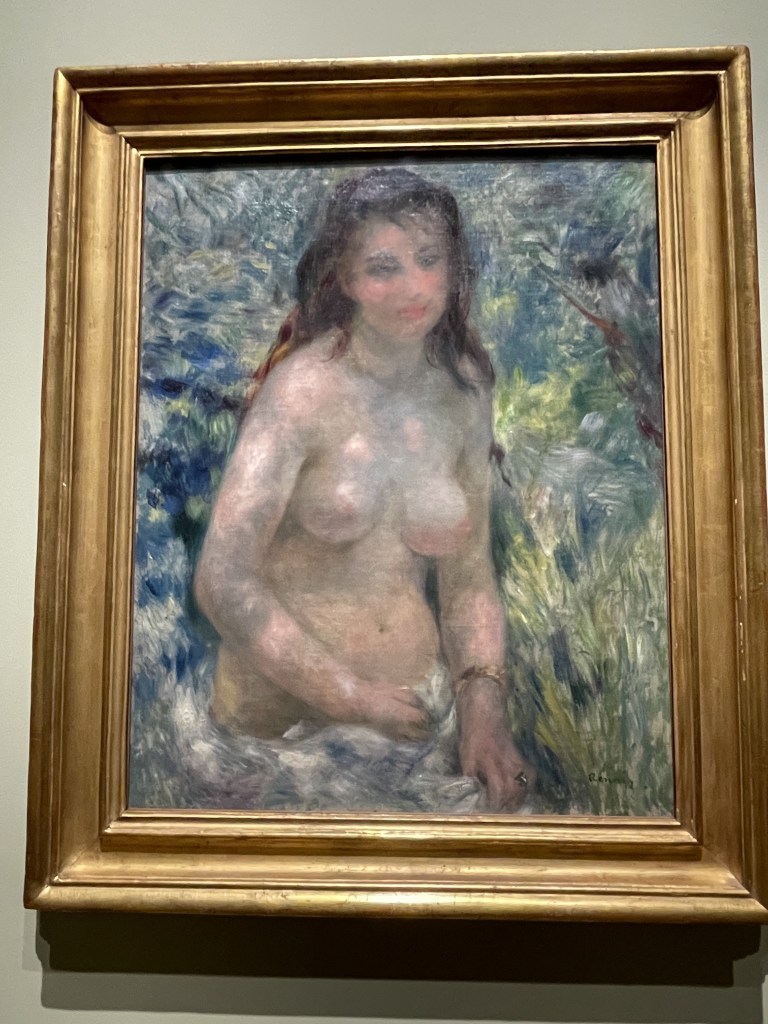
And Renoir was famous for his nudes too. This trio shows the differing styles he adopted. On the left the figures are smoothly painted in The Great Bathers: A New Arcadia (1880s), Renoir called this painting a ‘decorative’ work. Centre is A Nymph by a Stream (1869-70) it’s an interesting combination of the ‘smooth’ and blended brushwork he moved into combined with the much freer brushwork of the earlier paintings. And on the right is Study torso, sunlight effect (1875) which is a glorious celebration of brush strokes and daubs of paint to capture the dappled light on ample flesh.
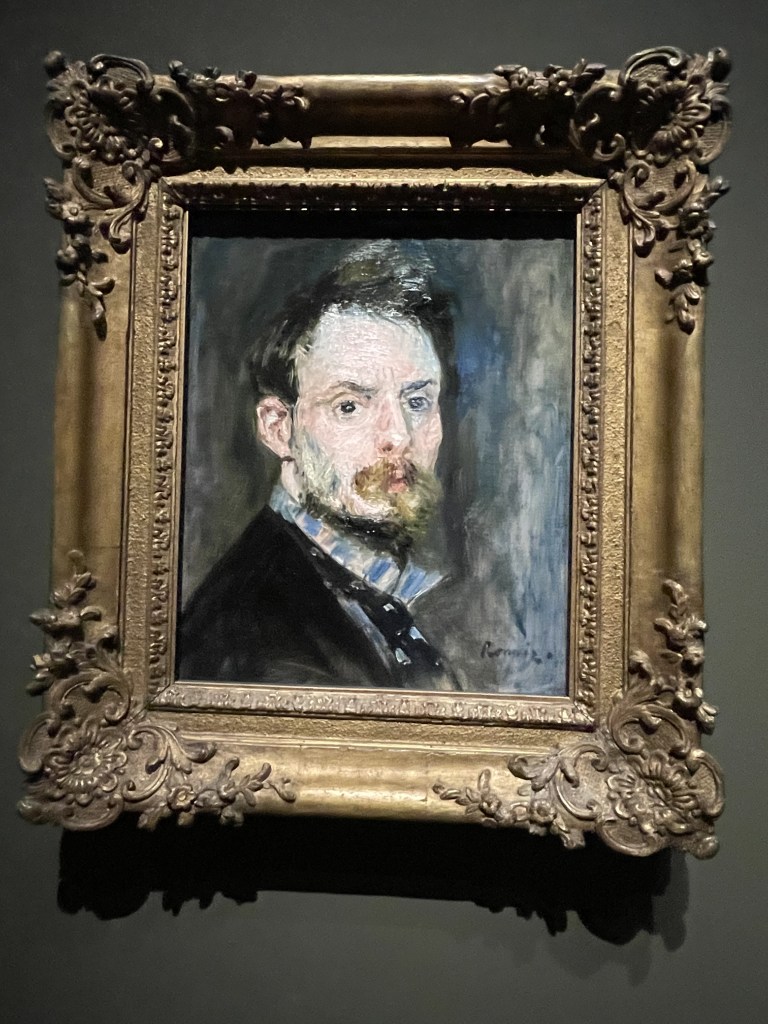
So, I’ll end with this dynamically strong self-portrait from 1875. It shows the energy which clearly pulsed within Renoir. He was described by friends as a ‘man with a hurried gait, a serious expression and distracted air’. And you can see from the vigorous brush strokes on this painting and many of his other works that he must have stabbed at the canvas, swished paint at high speed and was always eager to finish the piece he was working on and crack on with the next.
Renoir and Love is such a great show and will be hugely popular. It’s on at the National Gallery, the Sainsbury Wing, until 15th January 2027.

