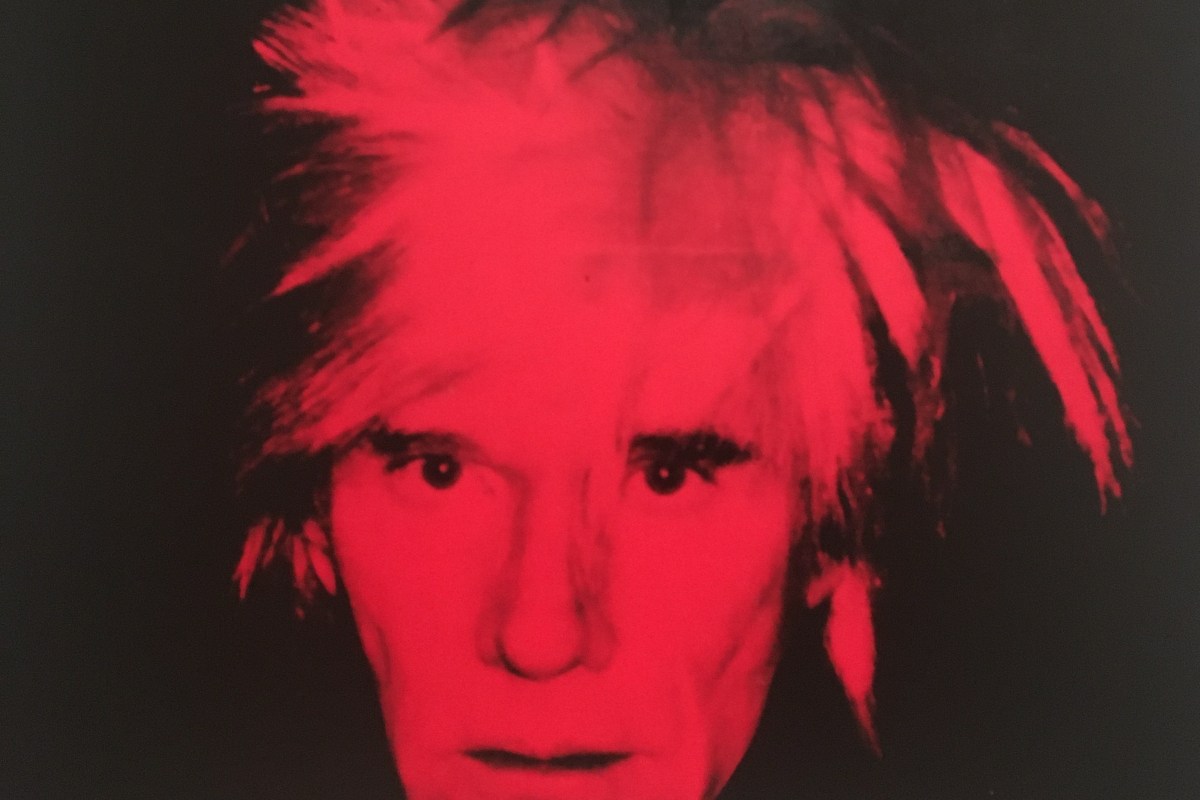
Instantly recognisable, audacious, witty, clever and prescient – Andy Warhol was a consummate artist who understood consumerism and celebrity. A major show at Tate Modern gives a glimpse of his impressive creative output.

IMG_0497

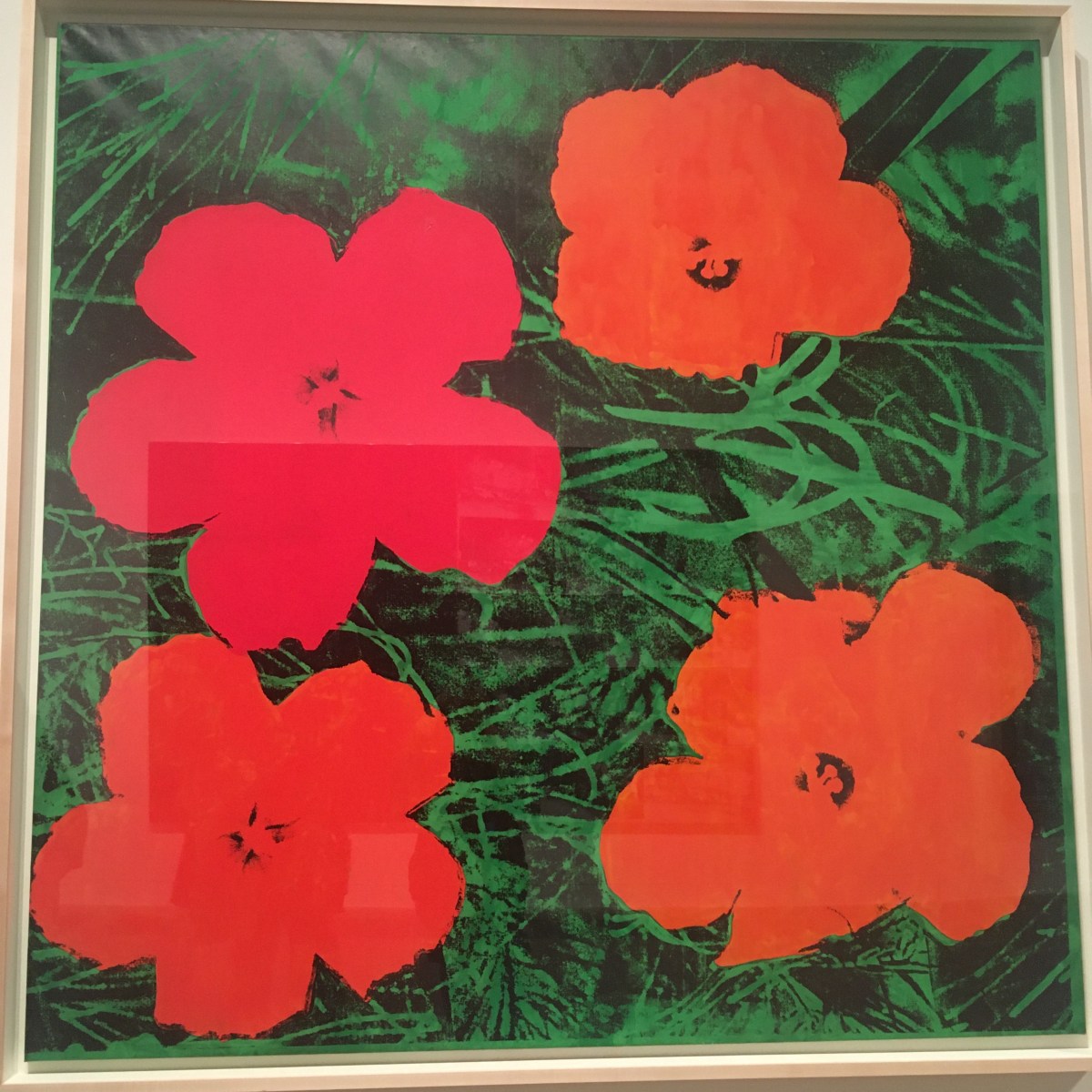
Dynamic repetition!  Those printed Coca Cola bottles and cans of soup are instantly recognisable. It’s great to see them, along with other works featuring multiples of every day items on show at Tate Modern.

IMG_0499

This show takes the viewer on a chronological odyssey through the artist’s life.  It’s fascinating to see how he invented his own persona and brand. His family emigrated from a mountain village in Slovakia to begin a new life in the USA.   The young Andy Warhol clearly had a very individual way of viewing and recording the world.   I love the way he took hold of any media, old or new, and reinvented it, creating playful and clever impressions of the world around him.
IMG_0503

I hadn’t seen the pencil portraits he’d made of boyfriends before, which open the show.  We then move into more familiar territory, the paintings, the prints, the pop art.  And there’s a room full of floating pillows – Silver Clouds –  plus a gallery full of photos and loud music to represent the heady days of the Factory and a life of creative excess in the mid 1960s.

In 1968 he was shot at close range by Valerie Solanas, a disgruntled writer who accused Warhol of ‘stealing her ideas’.  It’s a miracle that he survived the attack but was in pain for the remaining 19 years of ‘extra time’ which he used for a frenzy of new work, including a return to painting.

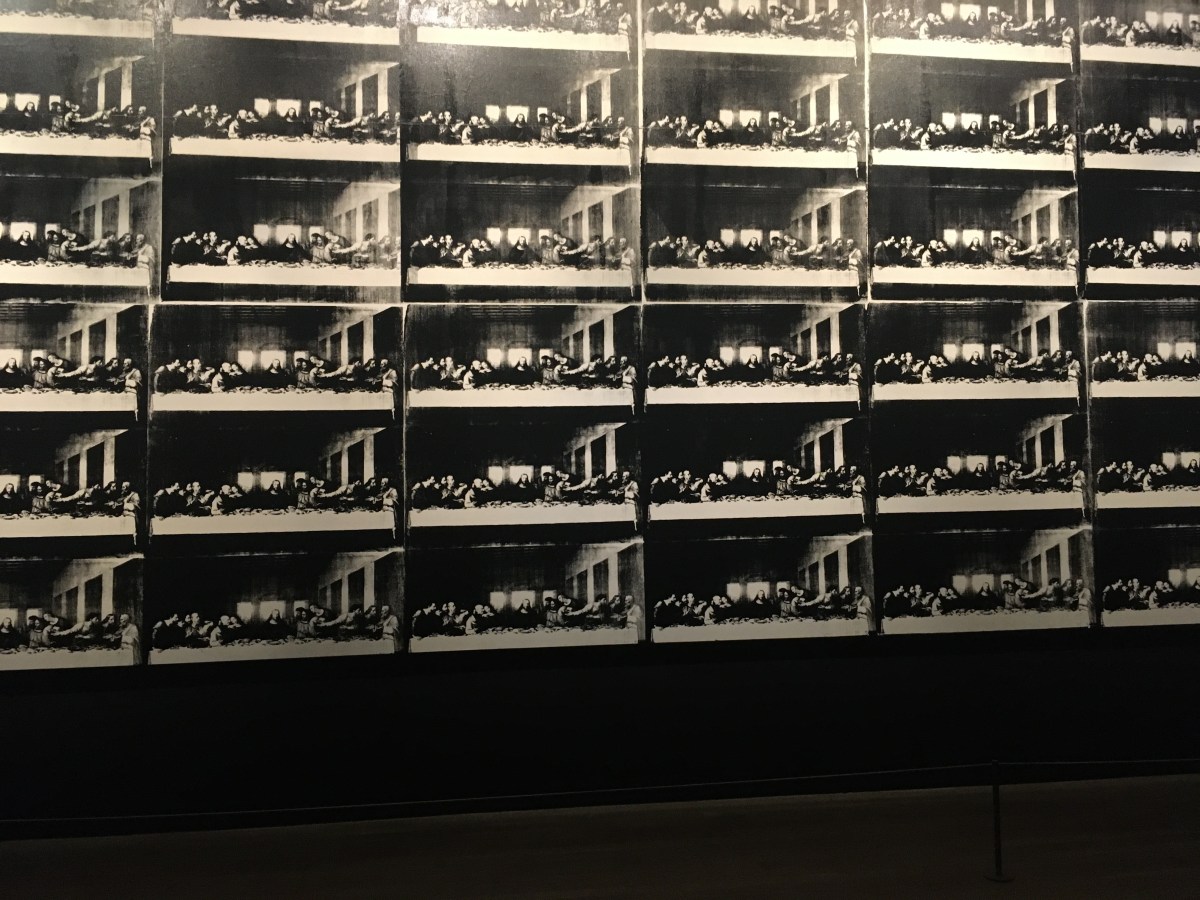
His final major work,  The Last Supper, seems to predict his death and references the painting, by Leonardo da Vinci, which had been on the wall in his family’s kitchen. Sixty Last Suppers was exhibited in Milan before the gallbladder operation which led to heart-failure and his death on 22nd February 1987 at the age of 58.
IMG_0541

The show, Andy Warhol, is on at Tate Modern until 6th September 2020.

IMG_0537

Tall, thin and tragic, the ultimate dandy of his day, Aubrey Beardsley produced a prodigious amount of distinctive artwork in his short working life and died of TB at 25. Yet his work continues to inspire and influence artists, as this dazzling show at Tate Britain shows.

What strikes you most effectively at this wonderful show, Aubrey Beardsley, at Tate Modern is the quantity of work on display.  Considering his career lasted a mere seven years – he died of tuberculosis in Menton in the south of France in 1898 at the age of 25 – and, knowing that his life was inevitably going to be short he devoted all his time to art.

And what an artist he was.  His prodigious talent was clear to see at an early age and, I would imagine, the moment he picked up a pencil or pen, he must have drawn with remarkable precision.  The thing about this exhibition is the chance to see the originals – and they are so remarkably clean and perfect. No ink splashes, no apparently rubbings out and starting again. The designs, for that is what the drawings really are, seem to have emerged, fully formed from his imagination and done with clarity and a very steady hand.

The Birthday of Madame Cigale

The exhibition takes us chronologically through his life.  From the moment you see his deftly drawn self-portrait, made when he as 18, it’s clear that he has established a style and will run with it.

IMG_0368

Beardsley was clearly influenced by the romanticism of the pre-Raphaelites – Burne-Jones was his hero – but he was also fascinated by Japanese prints and scrolls with their spare compositions, confident lines and playful detail.  Beardsley’s style evolved independently of these influences and he found work creating illustrations for publications, frontispieces and images for magazines.  It was interesting to see that the briefly unknown artist shot to fame when a feature was written about him (complete with images) in Studio magazine in 1893.  He became an overnight sensation. His work lent itself so perfectly to prints and became widely available.


IMG_0396

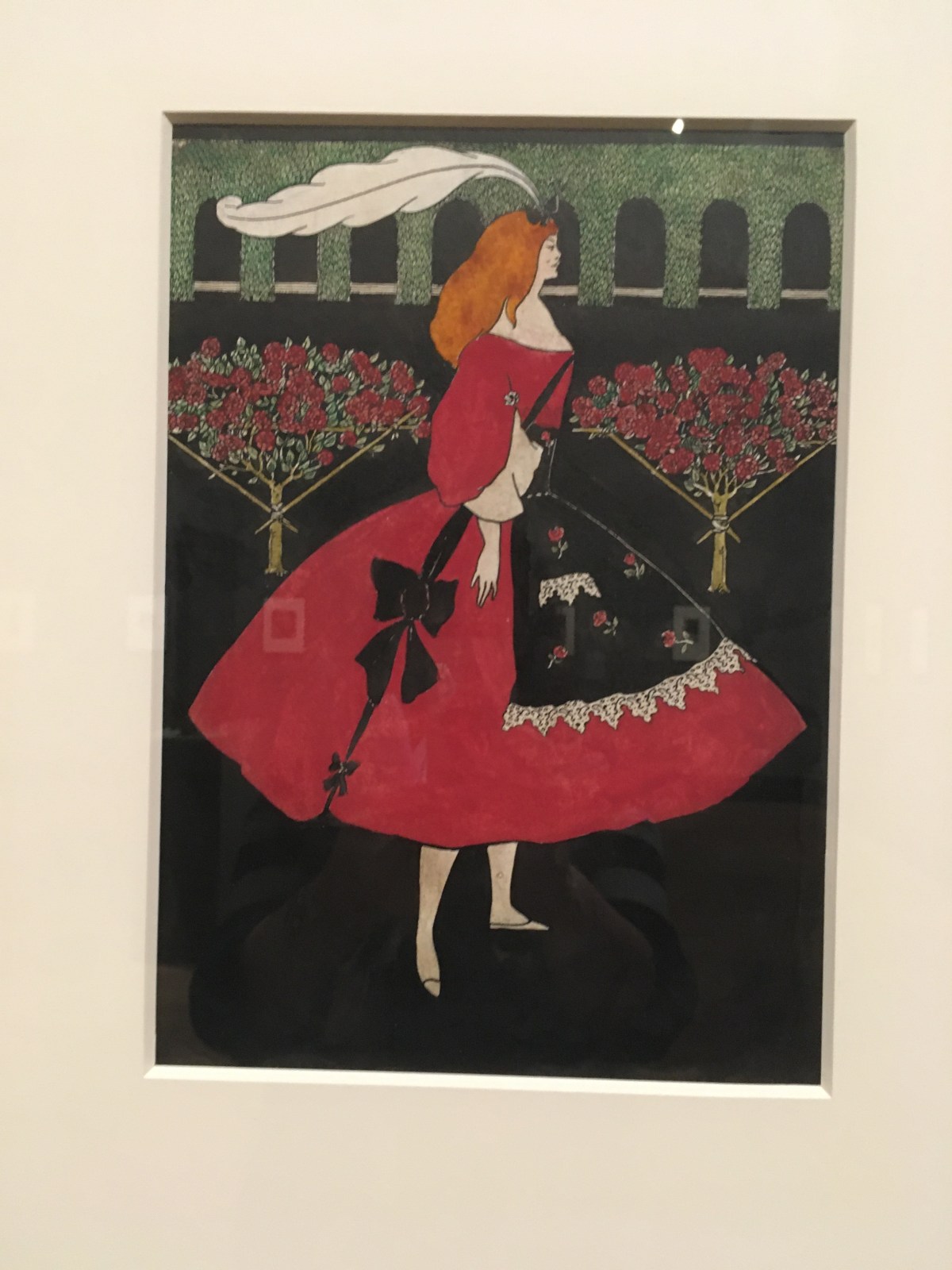
Above: The scarlet Pastorale – ink and graphite.  A rare work with colour.

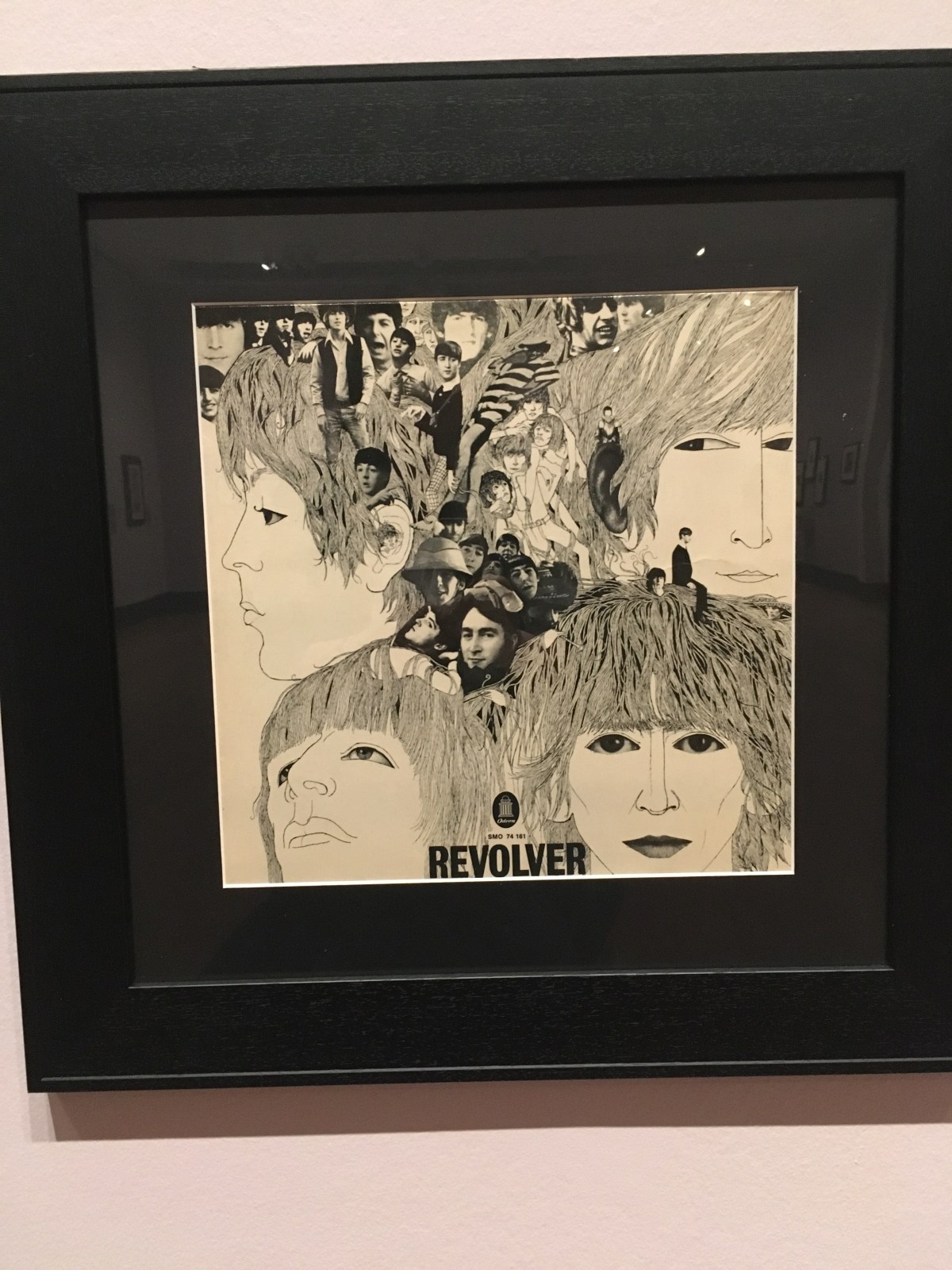
In the final room of the exhibition the curators have gathered together works by subsequent artists who make no apology for their interest or obsession with Beardsley’s work.  In 1966 the Victoria and Albert Museum held a huge exhibition of his work and interest in the black and white line drawings filtered into all kinds of household objects and images of the day.  I have a memory of these kinds of drawings, along with actual Beardsley prints, appearing in copies of Jackie which I read in the late 1960s.

Just think of the record sleeves which display his influence – most famously, the Beatles’ Revolver.

IMG_0402

The whole show is a testament to a supremely talented artist who also epitomised the style of the time. He fits with the aesthetics, the art deco designers and the romantic narratives of the pre-Raphaelites. His very appearance created his ‘brand’ – tall, skinny, pale, gaunt, beautifully dressed, dainty, elegant – the ultimate ‘dandy’ – images of him are instantly recognisable.   The joy of the show is to look at and then into the drawings, allowing the shapes and narratives to, literally, draw you in with the subject, the detail and the perfection of them. A joy.

Above:  Portrait by Sickert at a memorial for Keats in Hampstead and a portrait by Emile Blanche in 1895

The show is on at Tate Britian until 25th May 2020   www.tate.org.uk


A charming glimpse of the ‘Golden Age’ of Dutch art is there for all to see with the first major show of works by Nicolaes Maes (1634-1693) at the National Gallery.

IMG_0202

It’s like a peep behind the curtain – and curtains loom large in Maes’s paintings.  What a witty person Maes must have been.  A talented young artist from Dordrecht, he was lucky enough to become a student at Rembrandt’s studio in Amsterdam and there he honed his phenomenal skill under the tuition of the greatest master.

He clearly had a strong sense of narrative and, when it was most fashionable, came up with visual ideas for telling some of the more obscure bible stories – always a great excuse to show off his interest in expression, drama and an element of surprise.  Above is a detail from an early, large-scale painting entitled Christ Blessing the Children.  The nervous child clutching an apple is enchanting and feels very immediate.

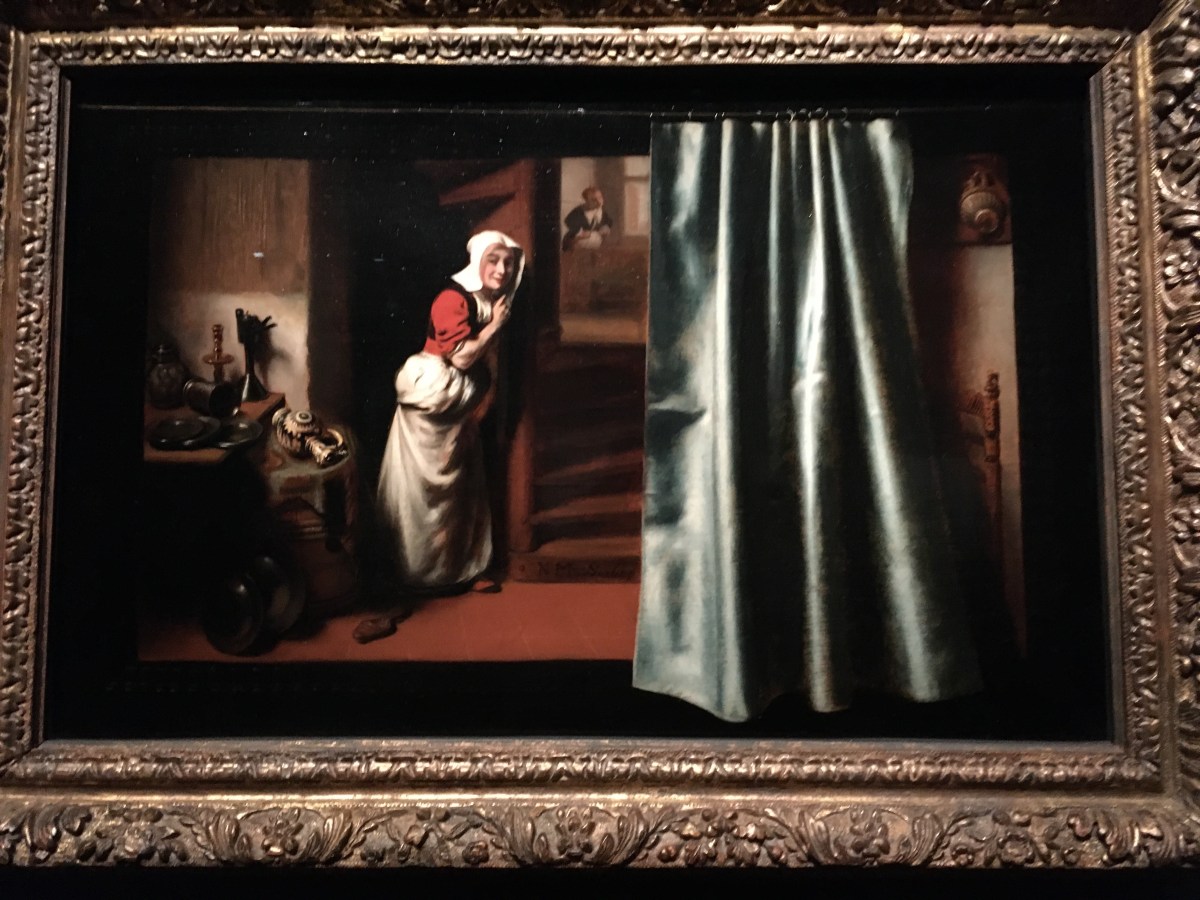
He moved on to genre paintings and it’s these works which really are the stars of the show.  This is where the ‘peep behind the curtain’ really gets going especially with his series of ‘Eavesdropper’ paintings conjuring moment of domestic intrigue which are like whole novels compressed into one enticing scene. Below is the maid listening to a conversation going on upstairs and clearly being very amused by what she’s learning.

IMG_0220

The incidental portraits he made of women working are miniature masterpieces. I absolutely loved the images of  girl threading a needle – such delicate fingers – the mother tending her baby or chastising her son for making a noise on the drum and waking the baby.


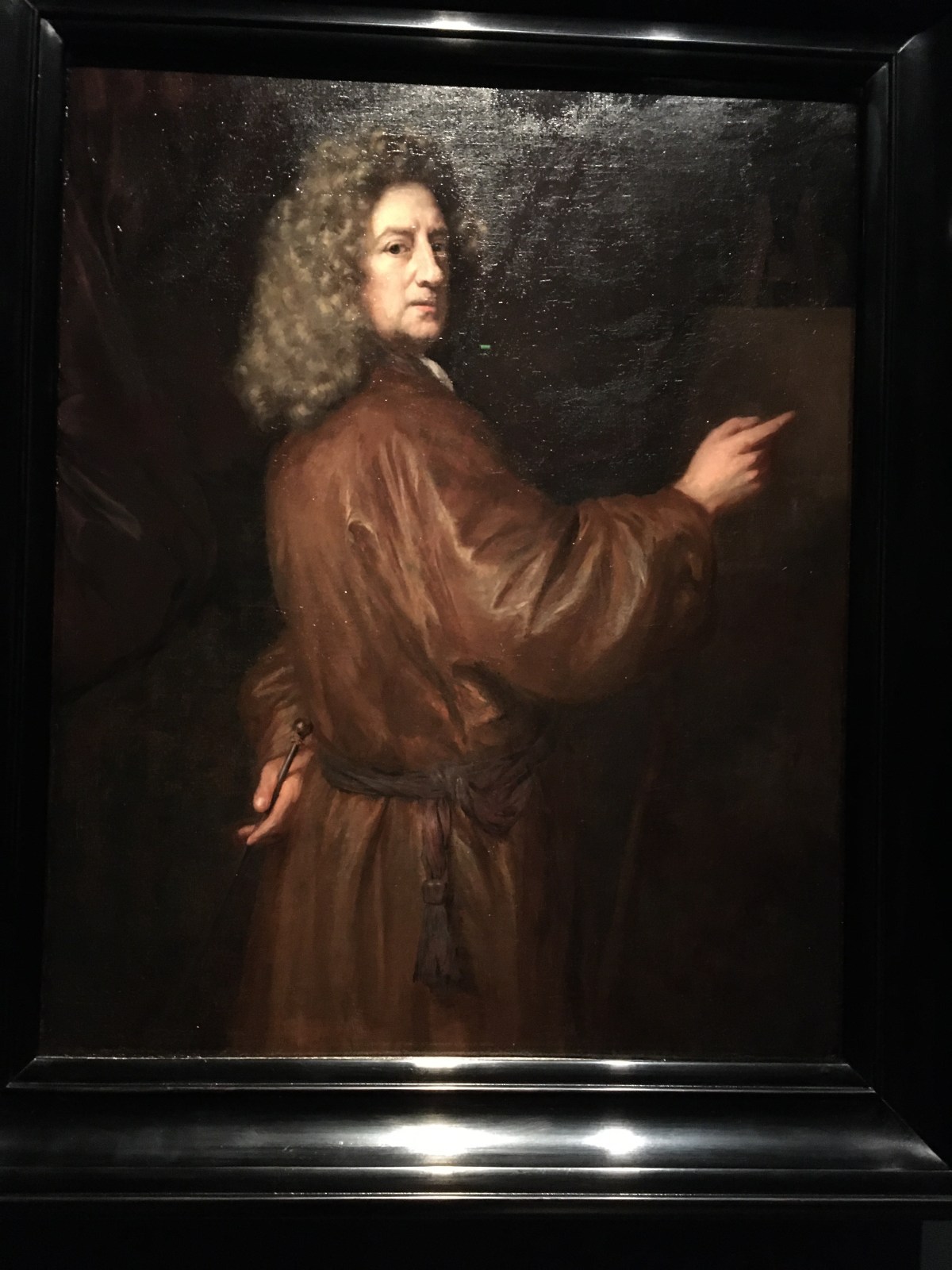
Maes only made these genre paintings for about five years and then, in the 1670s, he started painting portraits of illustrious and wealthy men and women. The style is very different from his early, Rembrandt-influenced work.

Below: a self-portrait made around 1680-85 when Maes was about 50 years old.

IMG_0224

The exhibition at the National Gallery is on until 31 May 2020. Admission Free
@thenationalgallery

UNBOUND:Visionary Women Collecting Textiles is a charming and enlightening show at Two Temple Place which shows highlights from the collections of seven pioneering women who recognised the importance and craft heritage of textiles, embroidery, clothing, costumes and fabric. It’s a great tour through the pieces which were painstakingly accumulated by collectors who understood how these handmade items could easily have been lost to world.

I’m starting with one of the most recently created textile artworks on show at Two Temple Place.  This triptych of panels byAlice Kettle is entitled Three Caryatids (1989-91) is machine embroidered with beautiful shimmering silks and yarns. It’s huge and very striking.

IMG_9985

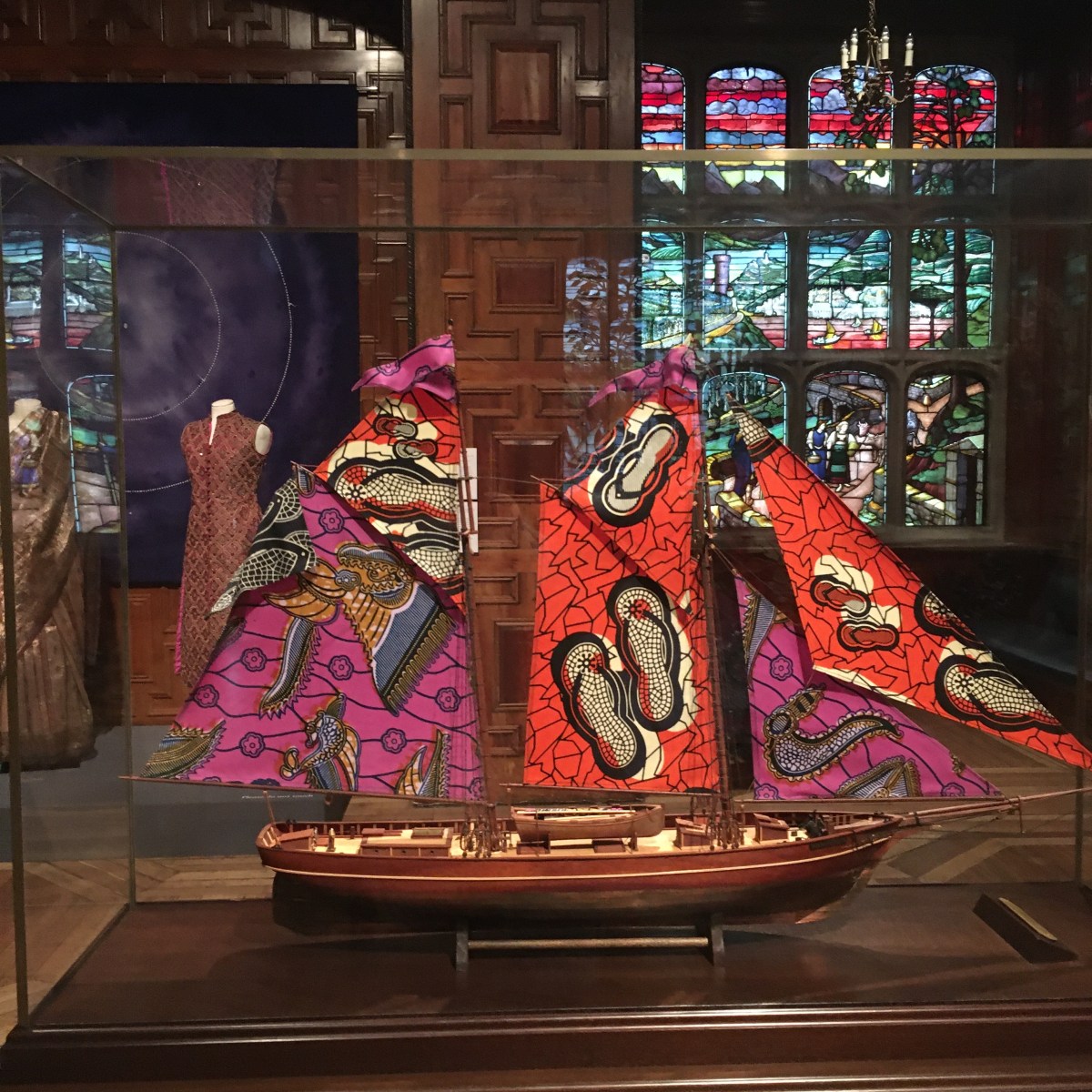
The main gallery on the first floor was particularly full of treasure.  Yinka Shonibare MBE has made a copy of the last slave ship, The Wanderer reimagined with African batik ‘wax’ printed fabric sails.

It’s always wonderful to see tapestries and fabrics which have been lovingly created for family members – often a daughter preparing for marriage – which are then handed down through the family.

The collectors of early pieces sound like formidable women who would make a point of gathering up examples of fabric on their travels or, in the case of Olive  Matthews who, from the ages of 12, used her pocket money to buy antique clothing and built up a sensational collection of museum-quality examples of clothing from ‘beyond living memory’.

It’s always a pleasure to have the chance to visit Two Temple Place. It’s only open to the public in the first quarter of the year when delightful exhibitions are in place.  Unbound will be there until 19th April, admission free.


The London Art Fair, held at the Business Design Centre in Islington, is always a joy to visit. Keeping an eye on the contemporary art market is good for artists who spend most of their time tucked away in studios. It’s great for collectors to find a manageable show to visit in search of new talent And it’s an opportunity to see what’s what, who’s who and check out the art of the moment.

IMG_9953

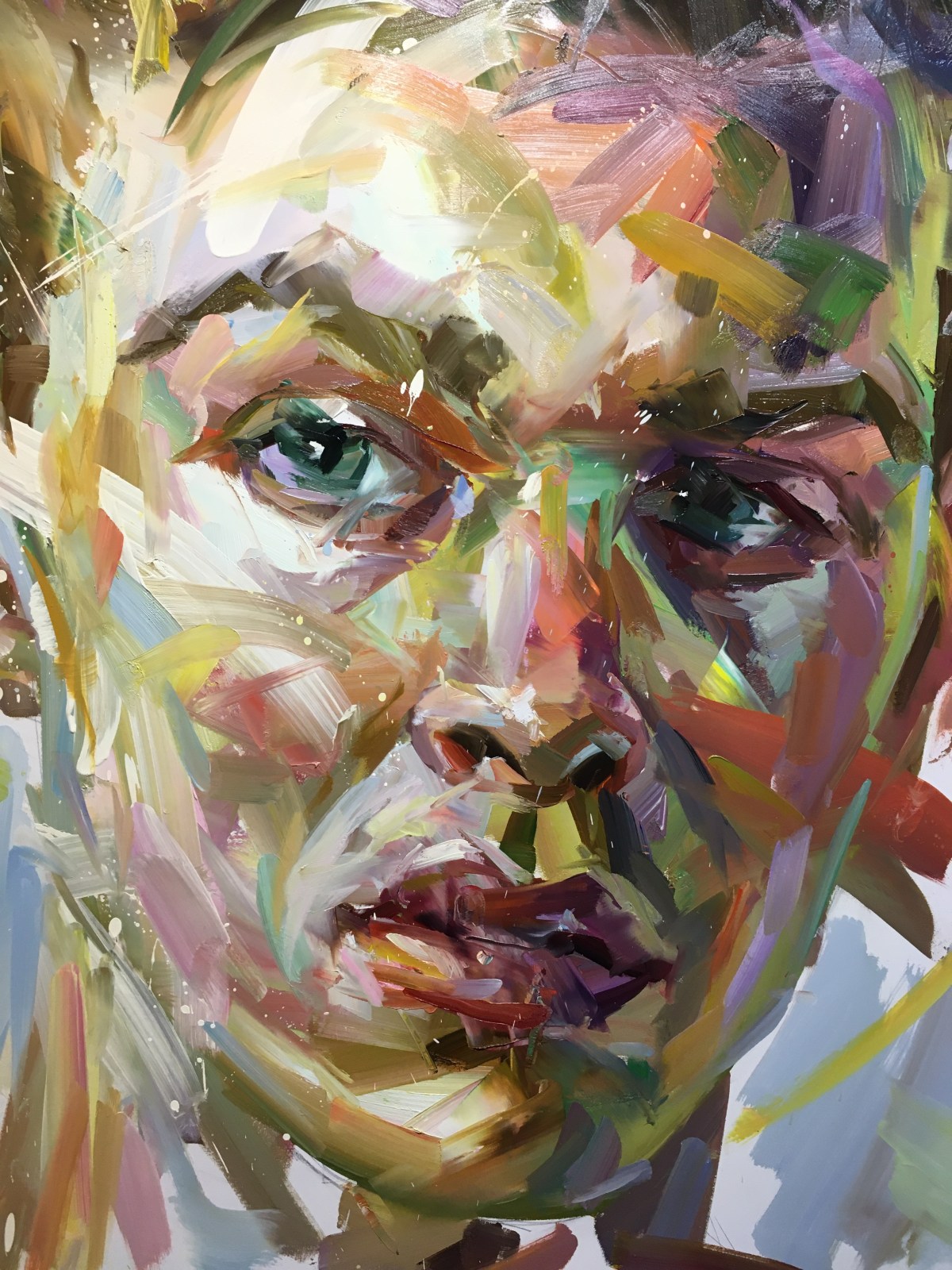
If it doesn’t involve paper then I do like a painting which really shows the painter’s hand at work and this portrait by Paul Wright of Caius, was on show at the Thompson’s Gallery at the London Art Fair.  This fair is a good size; you can get around the Business Design Centre in Islington in an hour and see a lot. Obviously, it’s better to spend more time and gaze more deeply at work but you become adept at pausing in front of works which cry out for closer examination.

IMG_9944

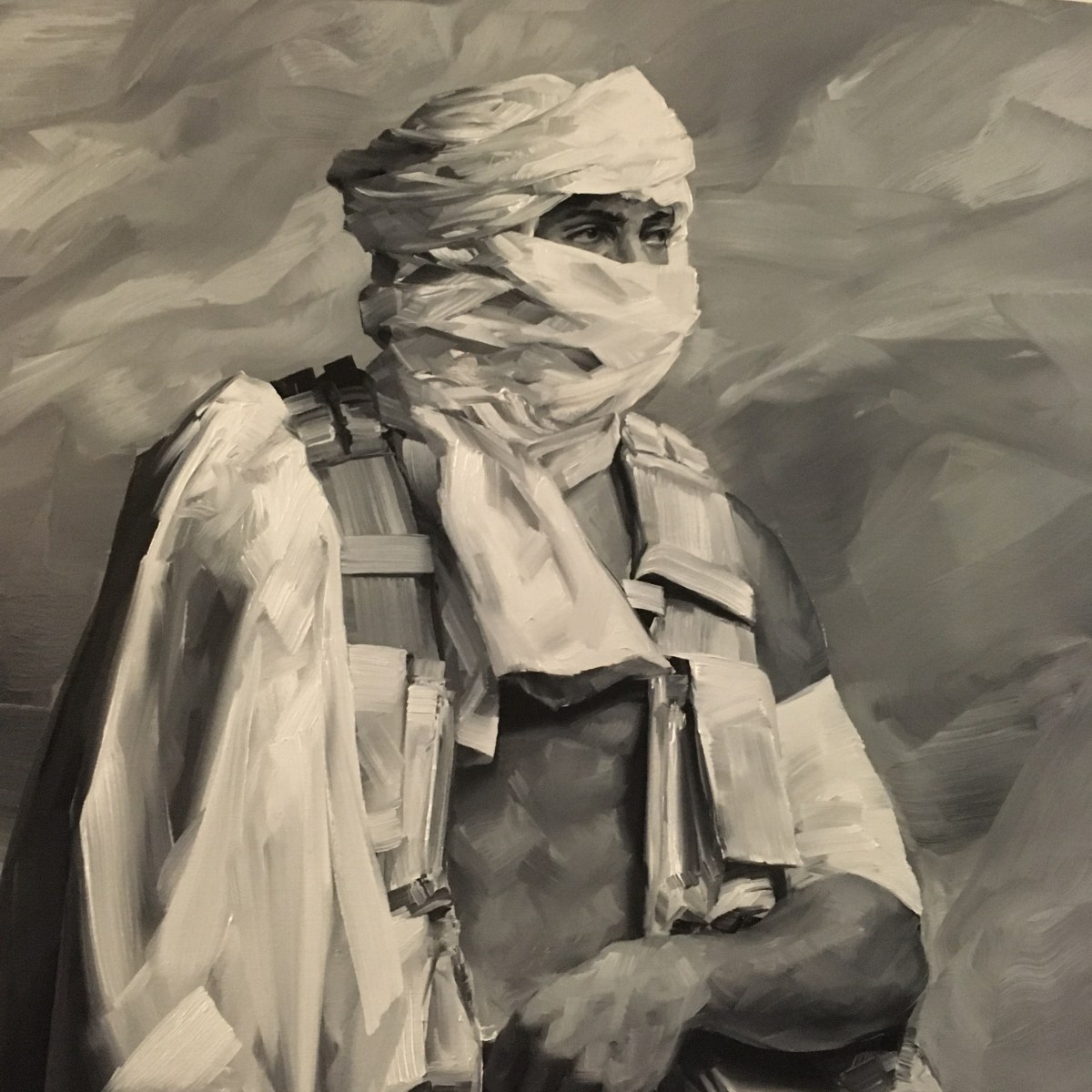
And if there’s not high colour, but monochrome, I still like to see the brush at work.  Very impressed by the work of Yoann Merienne at the Galerie Bayart stand.

IMG_9946


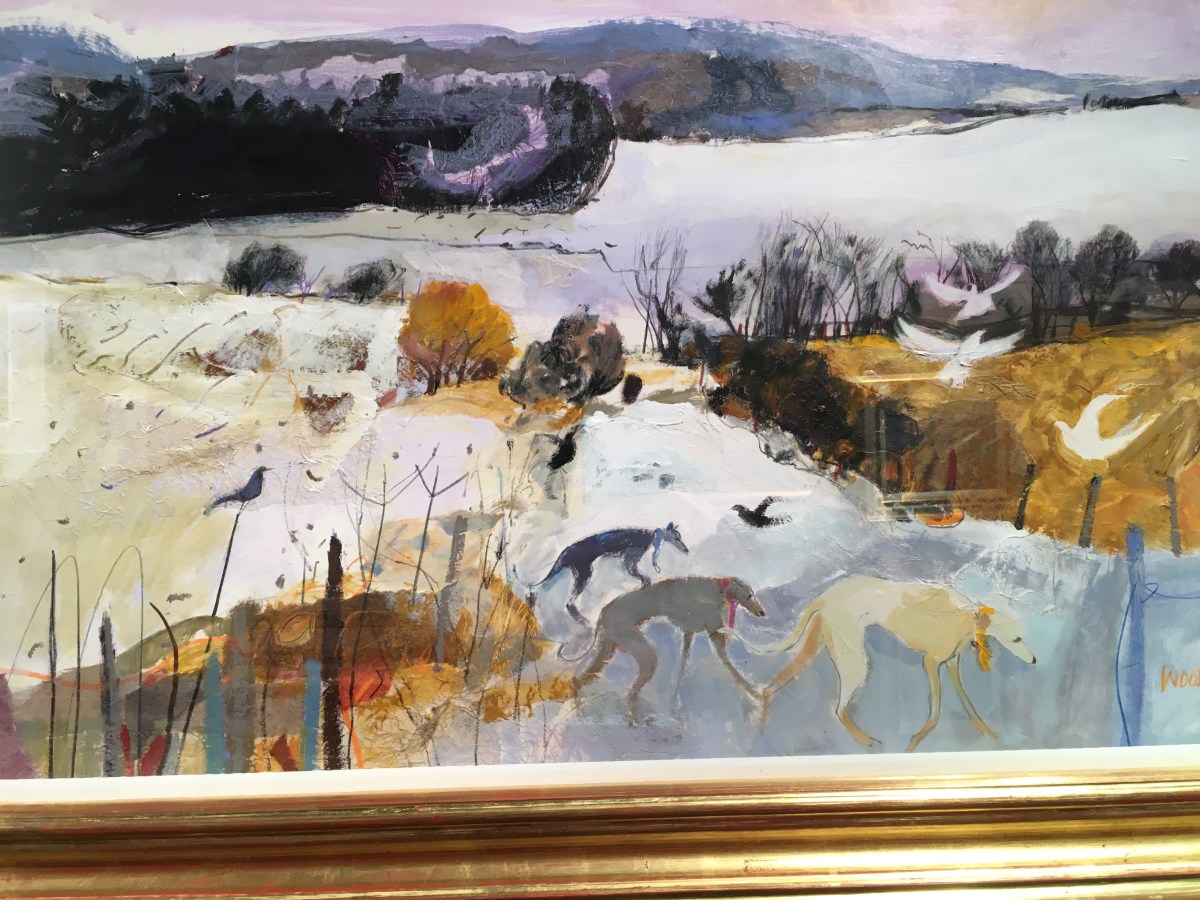
There was something very appealing about this work by Christine Woodside.  It really captures the atmosphere of a wintery landscape, full of textural variety, media and material and great sense of freedom.

IMG_9938

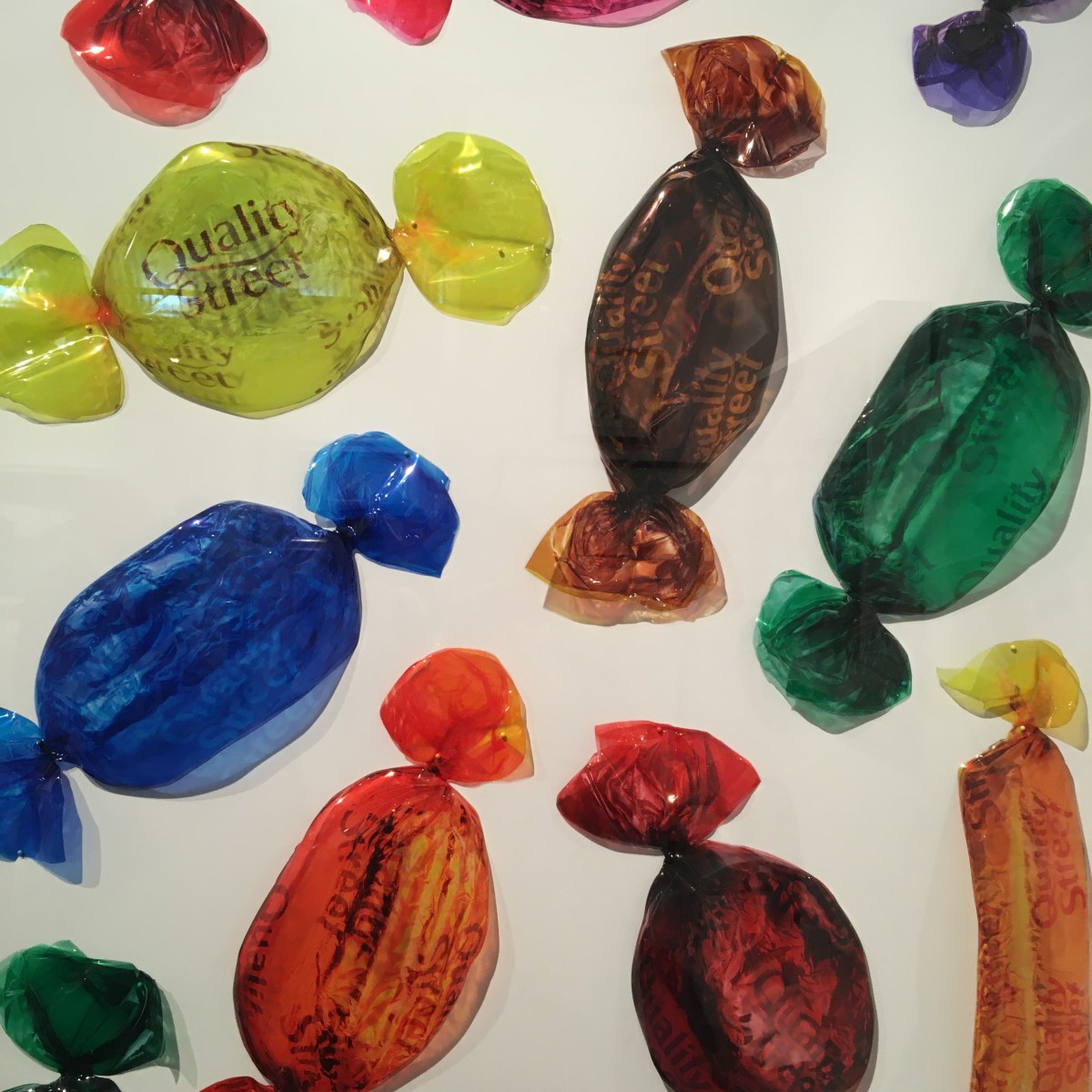
It’s just such fun to see these oversized Quality Street wrappers on show. They’re made by Perish the Thought from heat moulded and shaped clear film with coloured inks at TAG Fine Arts.

And finally, here are few others I really liked: Barbara Macfarlane at Rebecca Hossack, Joan Eardly (Houses, Paris) at Duncan R Miller Fine Artand a detail from a huge drawing by Olivia Kemp at James Freeman Gallery.

The London Art Fair is on until Sunday 26th January  www.londonartfair.co.uk 

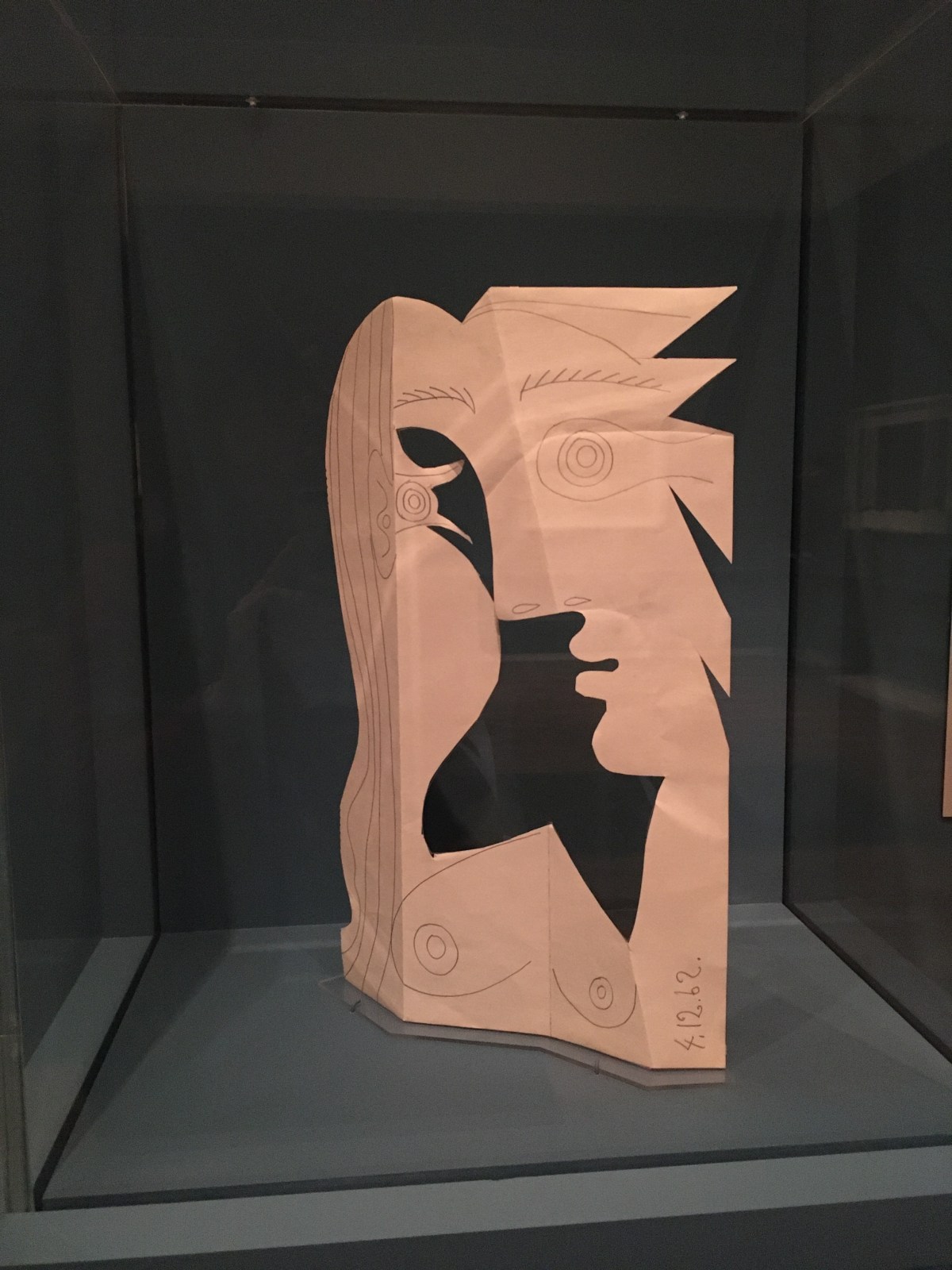
Picasso and Paper – a blockbuster show at the Royal Academy which celebrates his extensive use of paper in his art. For sketching, doodling, printing, collages and creating paper as form, this show provides a dazzling insight into Picasso’s work practice and prodigious use of the material in so many creative ways. Fabulous.

IMG_9858

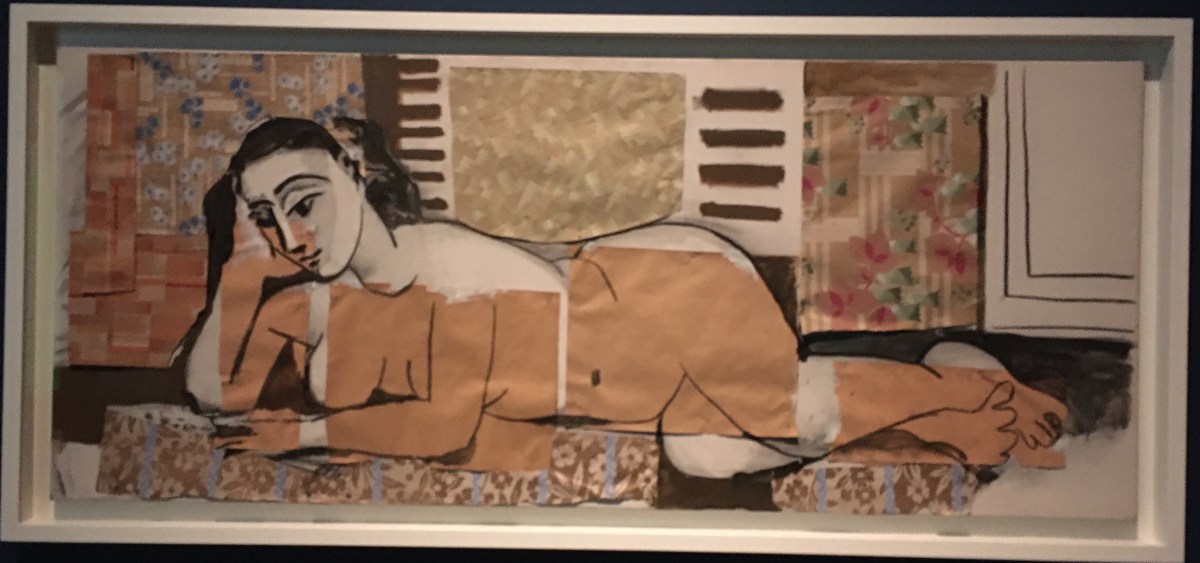
Reclining Nude Woman
Wallpaper, wove paper with oil and charcoal

What a fabulous work this is.  Made in 1955 is a a reclining female – the model is Picasso’s wife, Jacqueline Roque, whom he met in 1952 – and I just love what he’s done.  It’s a very large piece, on canvas, but he’s used all kinds of wallpaper, plain paper, oil and charcoal to create a work which is dazzling in its originality and beauty.

This piece is just one of over 300 works which have been assembled at the Royal Academy for a terrific show of Picasso’s work which is devoted to the many imaginative and inventive ways he used paper.  Of course he used all kinds of paper in his long career (1881 – 1973).  Yes, there are sketch books, and scraps of paper, wallpaper, newspaper and of course paper to print on.  With Picasso, there seems to be no medium he could not make artistic use of but paper was clearly a favourite. Versatile, strong, inexpensive, available … what’s not to like.  Apparently he would gather up old bits of wallpaper from suppliers and stash them in his studio until the moment was right.

There’s a chronology to the show which is very satisfying.  We are taken on a wonderful odyssey through Picasso’s life and, where there’s an opportunity and the paintings are available for loan, finished works accompany the studies, sketches and doodles on paper which lead up to the finished piece.

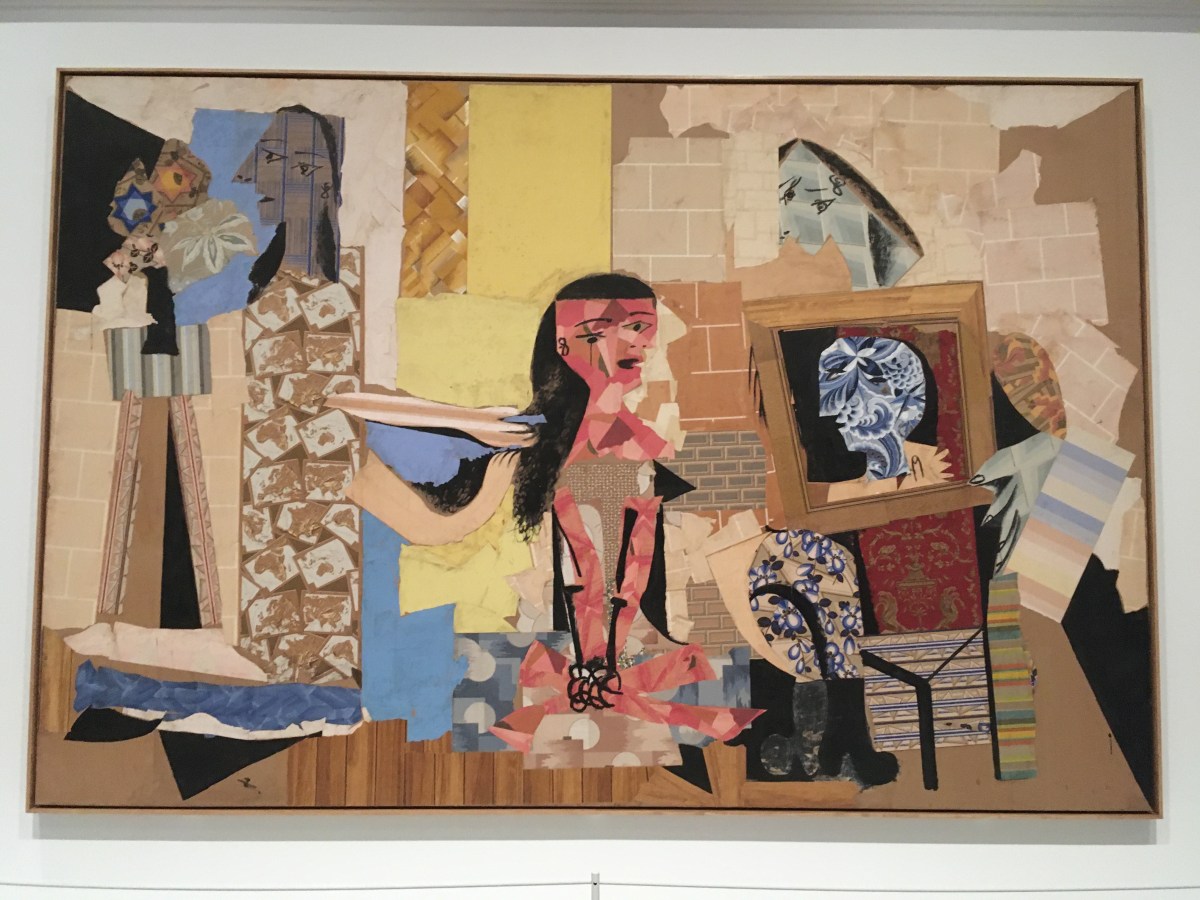
I loved this monumental collage using wallpaper and gouache paper pasted onto canvas. 1937-38. Called Femmes a leur toilette, it (possibly) depicts three of the women in his life, including Dora Maar as the central, weeping woman.

IMG_9892

Here’s the sketch book with watercolour preparations for The Harem, a precursor to the epic Les Demoiselles d’Avignon.

These are just three of the paper/card/cardboard and mixed media piece which emerged in 1912/13 with the adventures in cubism.  A block of paper made exactly the statement he wanted, easy to move around, available in any colour, ready printed or painted for the piece. It’s fabulous to see the evolution of his style and enthusiasm for paper.


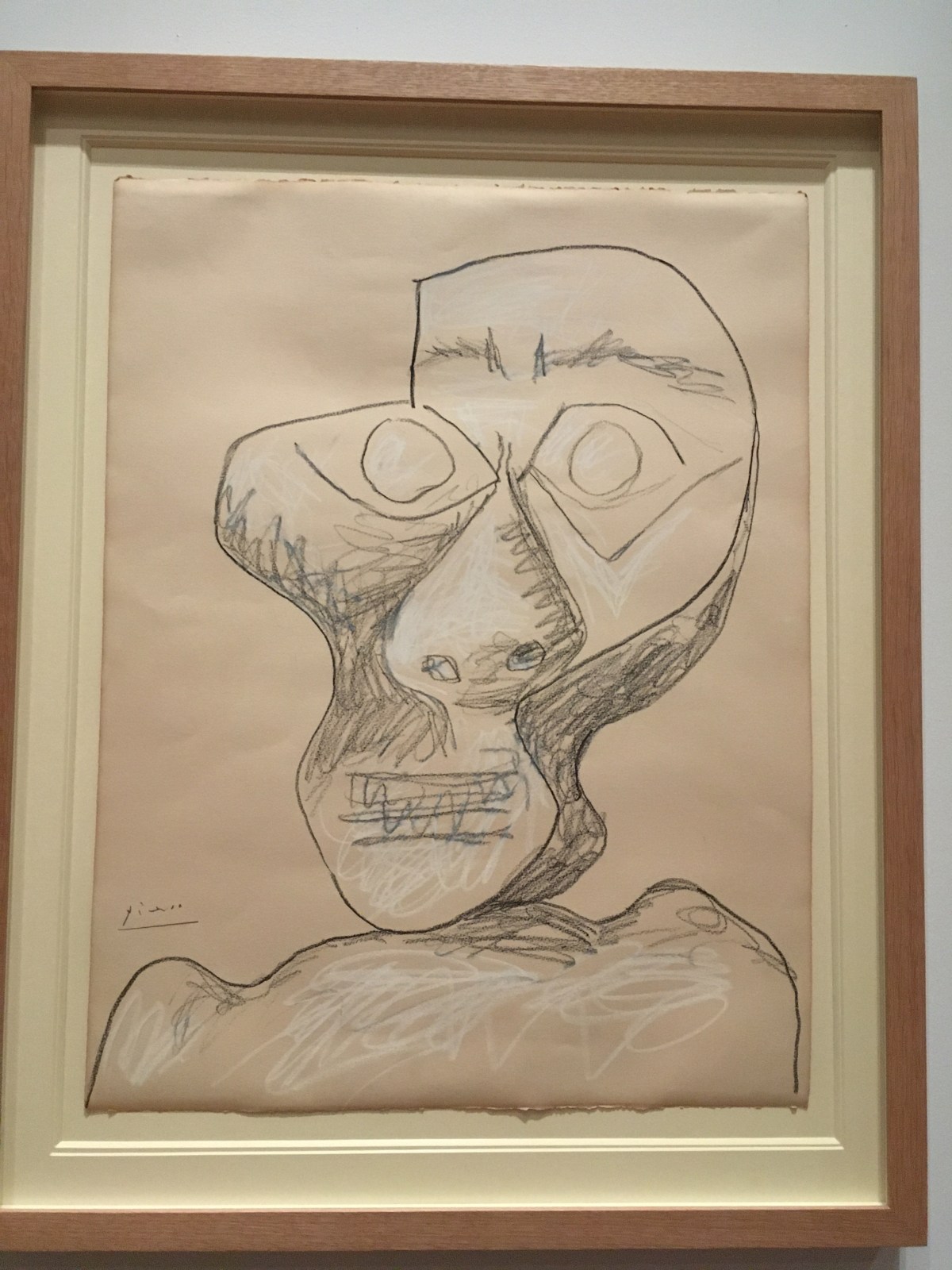
Couldn’t finish this post without adding in a few drawings on paper. A self portrait 1918, a portrait of Stravinsky 1920 and Bust of Woman, 1907.  What a fantastic show. I want to go back and see it all over again!

IMG_9900

IMG_9906

Self-portrait 1972, at the age of 90.

Picasso and Paper is on at the Royal Academy until 13th April 2020

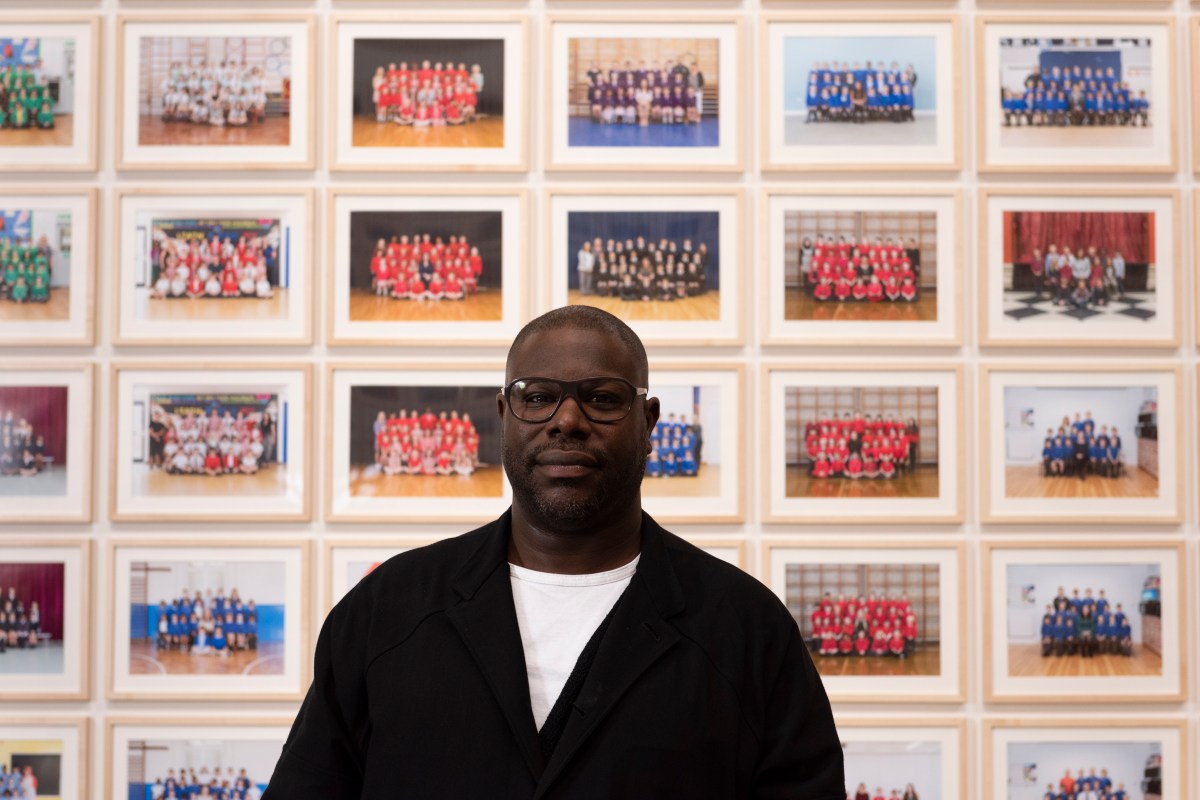
Thousands of little faces gaze out of group photos of Year 3 Classes and fill the main hall at Tate Britain with glorious smiles, pulled faces, quizzical expressions and the promise of all their futures. Artist Steve McQueen has initiated a wonderful project with Tate, Artangel and A New Direction to capture some 76,146 of London’s seven and eight year olds. It’s fabulous.

As a parent I have a bottom drawer filled with these kinds of photos – a class of children (one of them is mine, obviously) arranged on benches, chairs and sitting cross-legged on the floor, flanking their teacher and gazing at a photographer. Or not! The glory of these photographs is that how ever uniform you try to make them there’s always one, or several, who are looking the wrong way, scratching their nose, poking a fellow student or just not opening their eyes.


Steve McQueen has elevated these familiar groupings of seven year old children into the realms of art.  The very enormity of this project is breathtaking.  Walk into Tate Britain’s main hall way and you see thousands of small faces staring at you.

Error
This video doesn’t exist


He sent an army of photographers to two thirds of all the primary schools in London to capture these small portraits.  What’s not to like – there’s something so enchanting about children at this age. Their little characters are well developed, their features are all there and the adult is just waiting to emerge.  And you can work out relationships between the children by the closeness or the shared jokes or stifled giggles.

Portrait of Steve McQueen in Year 3 at Tate Britain (1) ©Tate. Photo Jessica McDermott


The show will be in place until 3 May 2020 so there’s plenty of time to see this show along with a visit to other art at the gallery.  And look out for the huge posters on billboards all around London. They’re just such fun.

IMG_9210

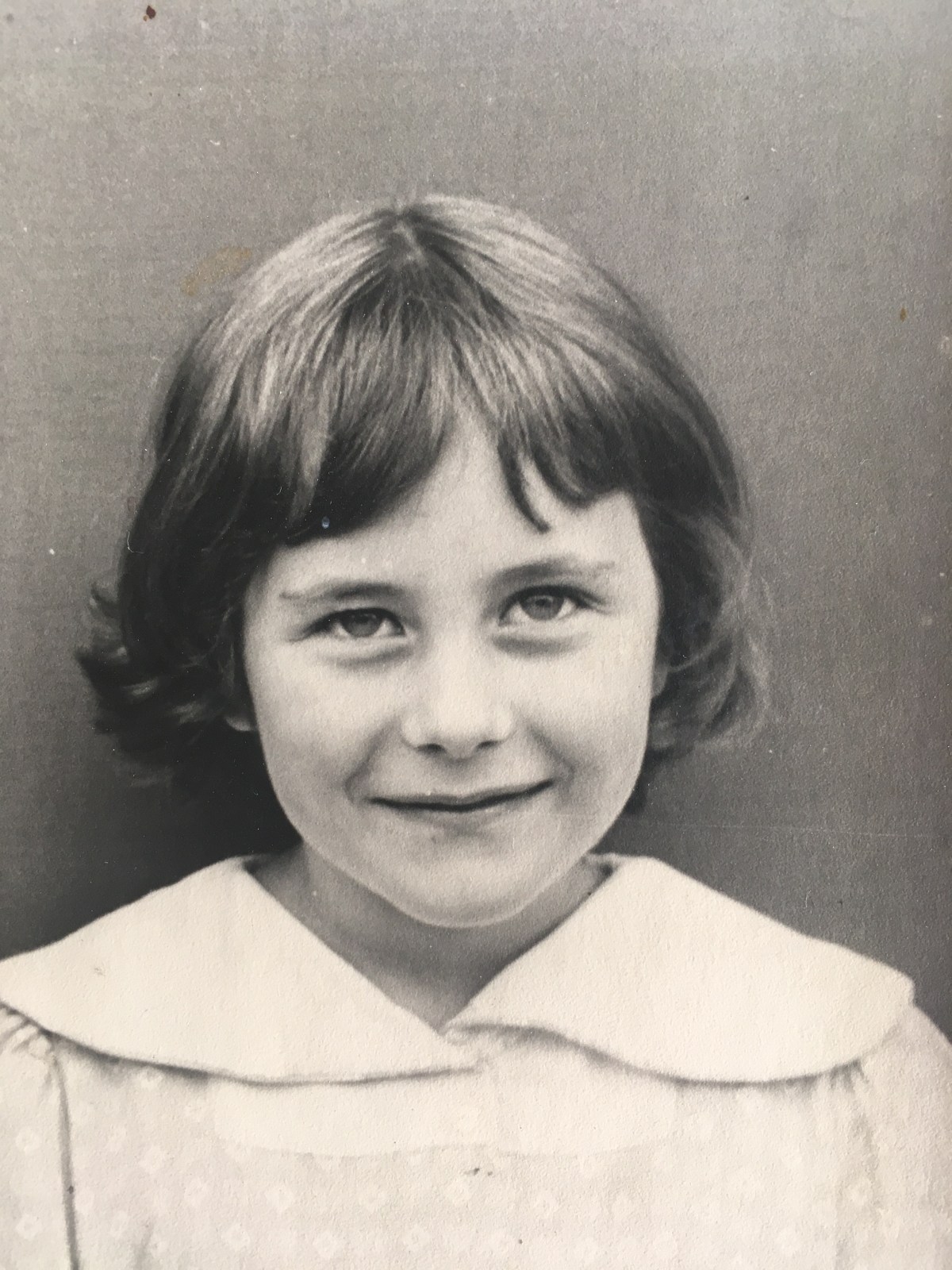
And finally. I thought I’d add a photo of me at the age of seven.  There was no class picture taken, that I remember, but just a solo picture against the blackboard in our class room at the old village school in North Hinksey, Oxford.  But I can see so much of myself in that young face and really don’t feel much older, despite the many decades which have passed since that photo was taken!

@Tate @ Artangel @A_New_Direction   Year3Project

LEONARDO – experience a masterpiece – is a very clever and beguiling guide to the creation of Leonardo da Vinci’s Virgin of the Rocks. The painting took 25 years to create and this ‘experience’ draws you into Leonardo’s studio, the light he might have used to illuminate models, the composition, materials, early use of oil paint and the fabulous atmosphere of this extraordinary painting which is on show at London’s National Gallery.

I think we’re all a bit nervous about the idea of an ‘immersive’ event. It could be like sitting in the front row at a comedy show and finding you’re the one being picked on for entertainment.  So, it was with some trepidation that I entered this unusual exhibition at the National Gallery to be faced with large images of mountainous Italian countryside and shiny metal reflective boxes filled with mirror writing. Ah, we all said out loud as the penny dropped, we have to look inside the box and see the reflection so you can read the words.  And then it becomes rather fun.

In a darkened room we are shown set piece, studio scenes – sketch books, pots of pigment and brushes, all the materials the artist might have used 500 years ago.  59 Productions, who’ve collaborated with the curators and historians on this project, have used digital imaging to recreate the imagined making of the Virgin of the Rocks.  And it’s fascinating to see that, using x-rays and clever forensic research, the original drawings are revealed and the way the work was rearranged, over painted, moulded, changed and gradually developed is made apparent.

In another room we are invited to see how Leonardo used directional light upon his models to create that astonishingly 3D effect which is apparent in the finished work.  Sketchbooks reveal that he worked hard on lighting his models, experimenting with the way shadows can be used to mould and form the figures and background. This short film is of a plaster head behind glass and there were small levers you could move to  manipulate the light and choose the shadows.

Error
This video doesn’t exist

And finally we get to the room with the actual painting.  This was where I almost didn’t want the add on of the digital artwork around the piece but it was great to see it for real.

This is a rich and strange experience but a very good way to celebrate the 500 years since Leonardo died in 5019 and a fascinating way to see how modern technology can enhance understanding and enjoyment of such an important and fabulous masterpiece which we are lucky to have on show in London.


Error
This video doesn’t exist
Error
This video doesn’t exist

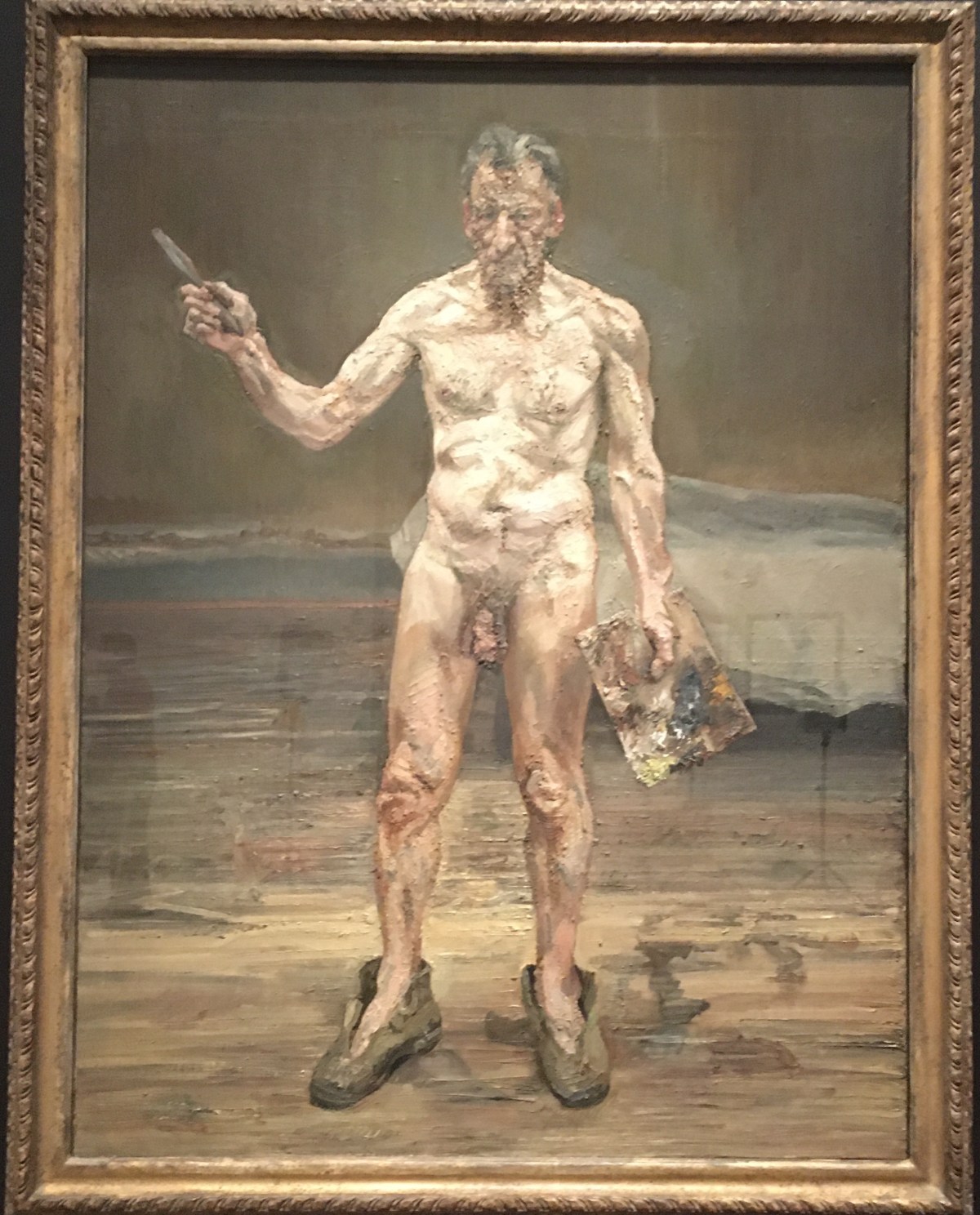
A focus on Freud. Lucian Freud recorded his own face and body throughout his artistic career. A fascinating show at the Royal Academy, London, collates some of the best – from early pencil sketches made in his confident youth to reflective soul-bearing and the impasto features of a very private artist, striving to understand what he sees, made right at the end of his life.

It’s always fascinating to see an artist’s self-portraits and this terrific new show, Lucian Freud: The Self-portraits, at the Royal Academy, is a huge treat.  It assembles 56 works including some very early self-portraits which I’ve never seen before. In the beginning the young Freud was keen to capture a sense of himself but was also in thrall to Expressionist styles and gave his appearance a rather mannered, illustrative appearance.

IMG_8964
Self portrait with Hyacinth Pot 1947-48

Over the years all of that changed and it’s fascinating to see the evolution of his art through the way he scrutinised his own face and also how the materials and style of painting changed.  The pencil, inks, fine lines and careful, flat paint gradually give way to watercolour and gouache before Freud alighted upon the big bristle brush which can be loaded with paint and used with abandon.  This became his signature style. You can almost pin point the moment when he ‘let go’ and began adapting his careful eye to provide a detailed impression which captures not only likeness but intellectual intensity and emotion.

With all of those later portraits you feel Freud’s gaze – his own as he scrutanised his own face and body – and, as a viewer, you can really sense all that he was seeing and experiencing while making the work.  No artist can resist a mirror and he used them so originally, creating strange angles as he peers down upon his foreshortened face reflected from the floor near his feet, or peers at one beneath his elbow.

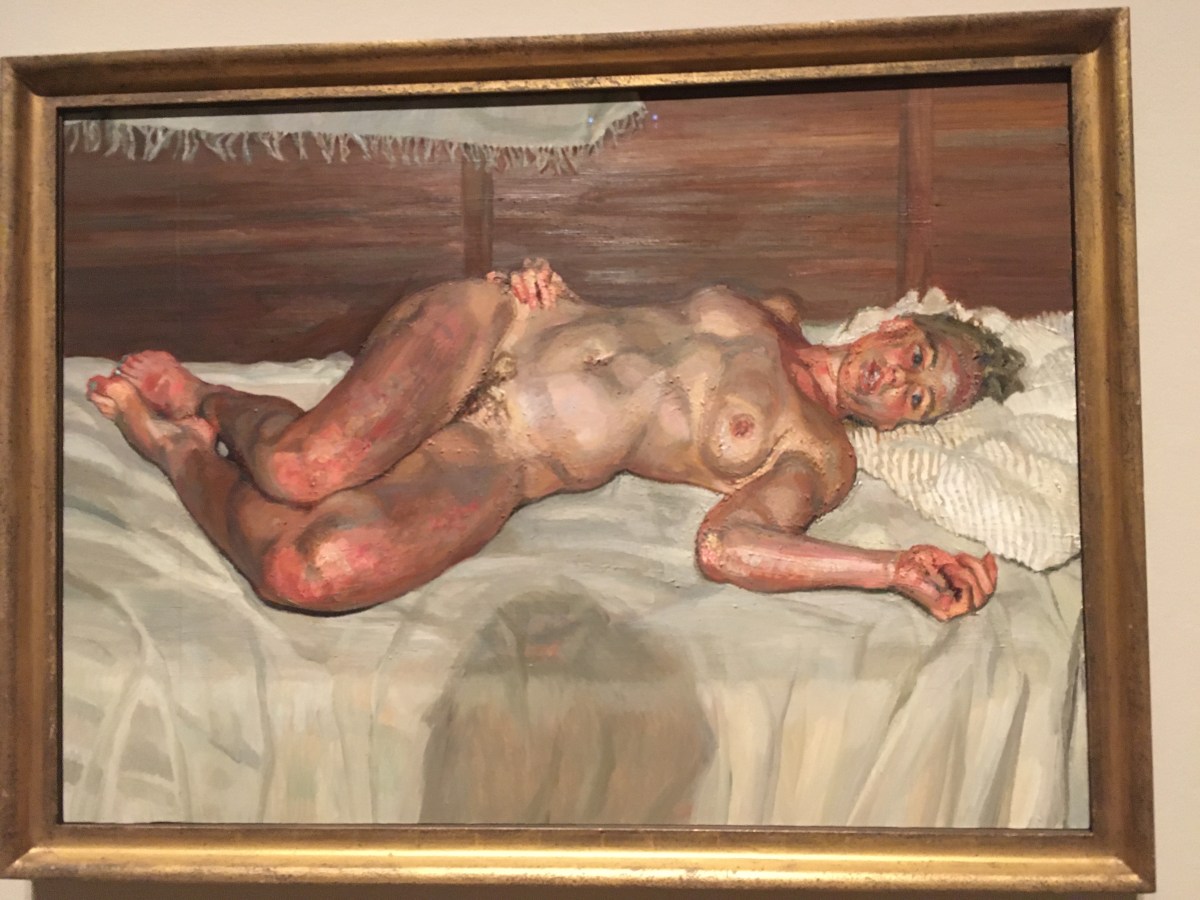
The incidental portraits were interesting to see too.  It’s quite possible to miss the miniature self-portraits inserted into larger paintings of subjects.  Most mysterious of all his his shadow which can be seen on the body of the nude – Floral with Blue toenails.

IMG_8978
Floral with blue toenails 2000-1
IMG_8976
My photo is not in focus but you can just about make out the two self portraits propped up on the floor below the window.

Six decades of life are recorded. Freud was famously private and remote and yet, in his portraits he lays himself bare, literally, and provides us viewers with a disarming glimpse of his inner light, his soul, his passion and his power.

IMG_8984


Freud: The Self-portraits is on show at the Royal Academy until 26th January 2020.
Gauguin portraits at the National Gallery – a fabulous show which assembles sensitive self-portraits and psychological impressions of sitters – offers a fascinating chronology of the artist’s work.

I really enjoyed this show of Gauguin‘s portraits at the National Gallery.  Self-obsessed, self-promoting, self-centred…. yes, Gauguin was all those things and, as we were told by the show’s excellent curators, Cornelia Homburg and Christopher Riopelle, once he accepted he was an artist everything and everyone else in his life took second place.

Gauguin started off conventionally enough – he was a great admirer of the Impressionist painters whom he got to know in Paris and, when he made money as a stockbroker, he was quite their patron.  But he ached to be an artist too and spent all his spare time making art and was tutored by Pissarro.  Some of the early paintings in the show demonstrate his absorption of Impressionism but it wasn’t long before he started pushing away from those conventions and entering a new arena of style which was entirely his own.

What strikes me about the majority of the paintings in the show is that he tended to use pure colour rather than mix pigment with white. He painted relatively thinly onto coarse canvas and used strong outlines to define features. He liked strong hues, untempered by much mixing.

For Gauguin, painting a self-portrait seems not just to have been an exercise or a form of ‘limbering up’. He uses his portraits to express his own feelings about art. It’s so interesting to look at a portrait, stare into the subject’s eyes and have the sense that you are really ‘seeing’ what the artist saw and how he or she has endeavoured to control what the viewer should see.

There are some utterly beautiful works on display.  His fascination with Canary Yellow is clear to see in so many of the portraits which zing with clear colour, heat and the sense of the sitter.

It’s wonderful to see so many other artworks which he created – wood carving, ceramics and stone.  Some of these objects have been placed next to paintings which feature them.

The bust of fellow artist Meijer de Haan is astonishing.

IMG_8769

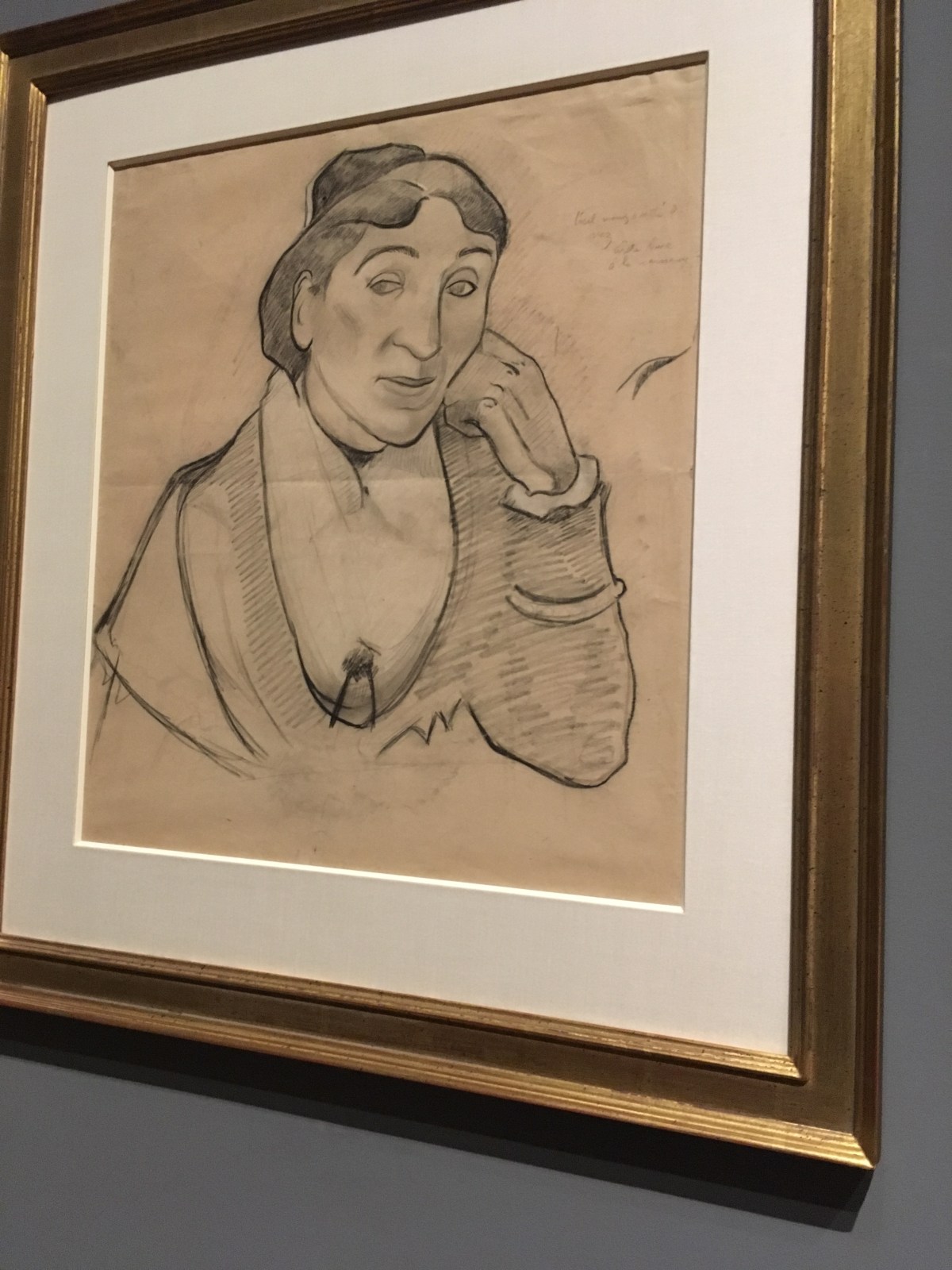
We also learned more about his relationships with fellow artists – famously his rift with Van Gogh.  I was intrigued to see a drawing which he made of Madame Ginoux (who ran the cafe the artists frequented in Arles) and gave it to Van Gogh who used it as reference for his own paintings. Quite a gift.

IMG_8770

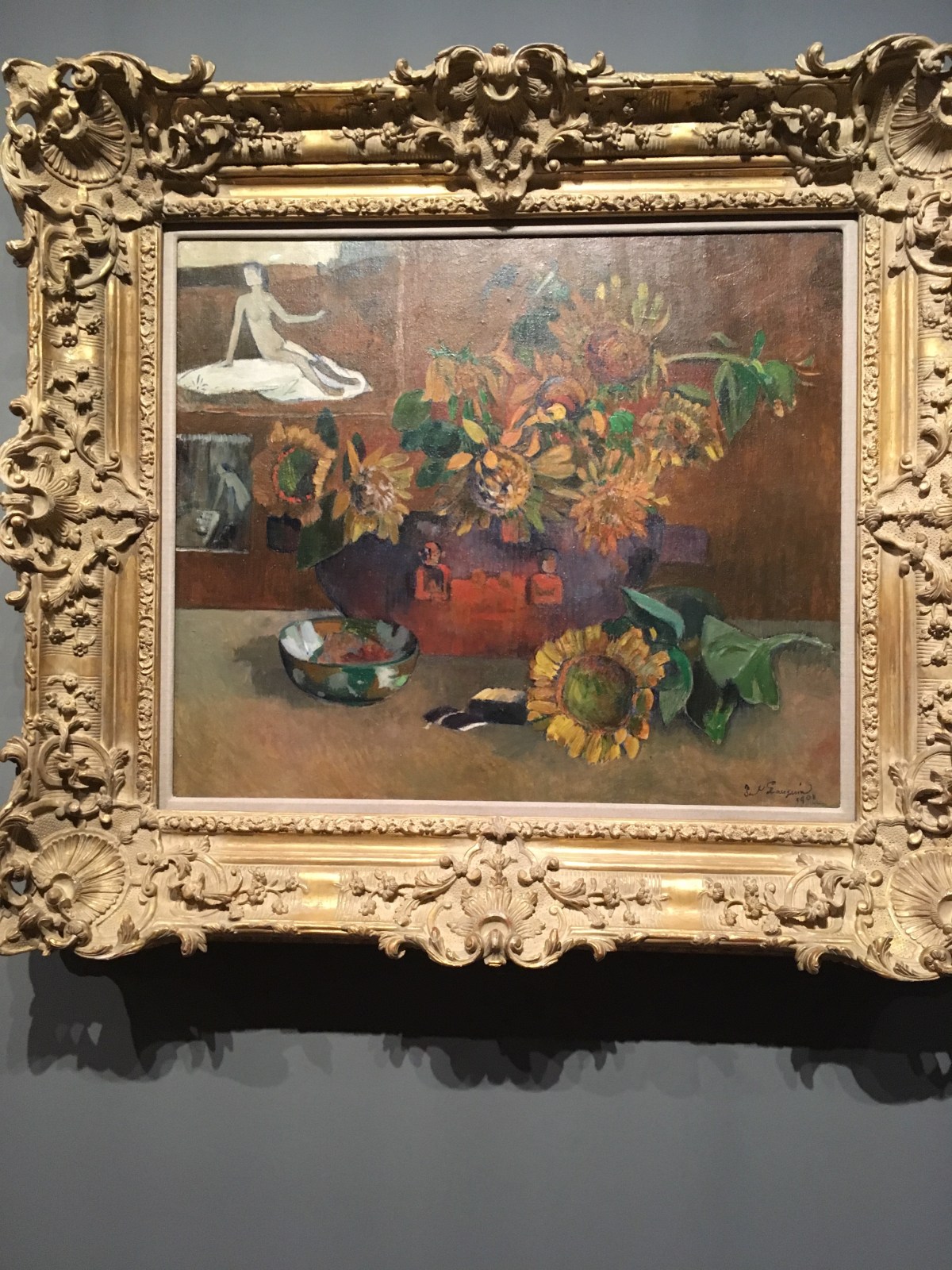
Later in life, when Gauguin was living in Tahiti, he became nostalgic for the time he spent with his Van Gogh in Arles and sent for sunflower seeds to plant. The flowers grew well and, according to the curators, this still life of sunflowers is a ‘surrogate’ portrait of his old confederate.

IMG_8772

There is much to enjoy in this show which has been really well thought through and beautifully curated.

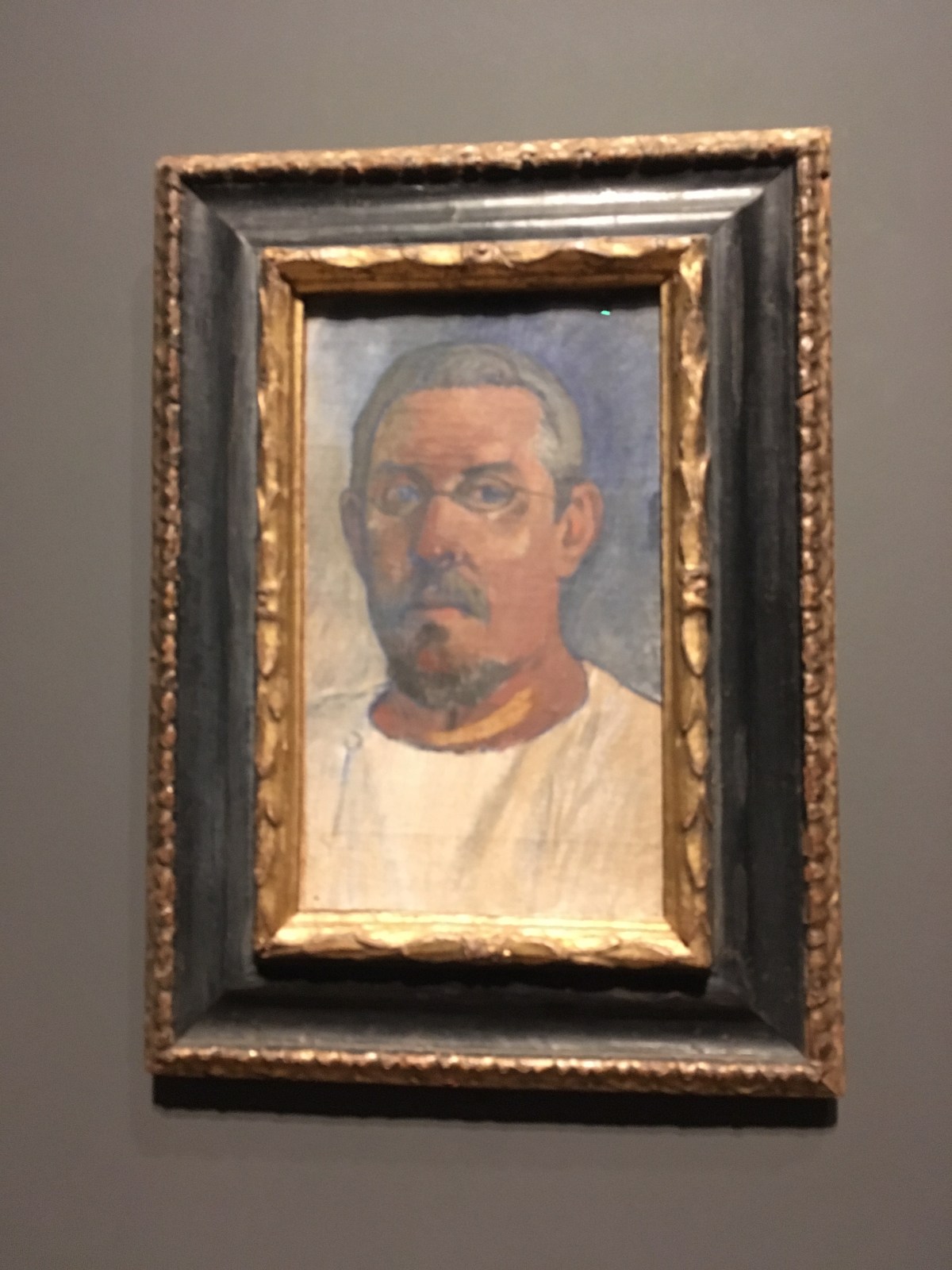
Gauguin died in 1903 at the age of 55. This is his last self-portrait.  I think it says it all.

IMG_8762


Gauguin portraits at The National Gallery, Sainsbury Wing. 7th October until 26th January 2020.