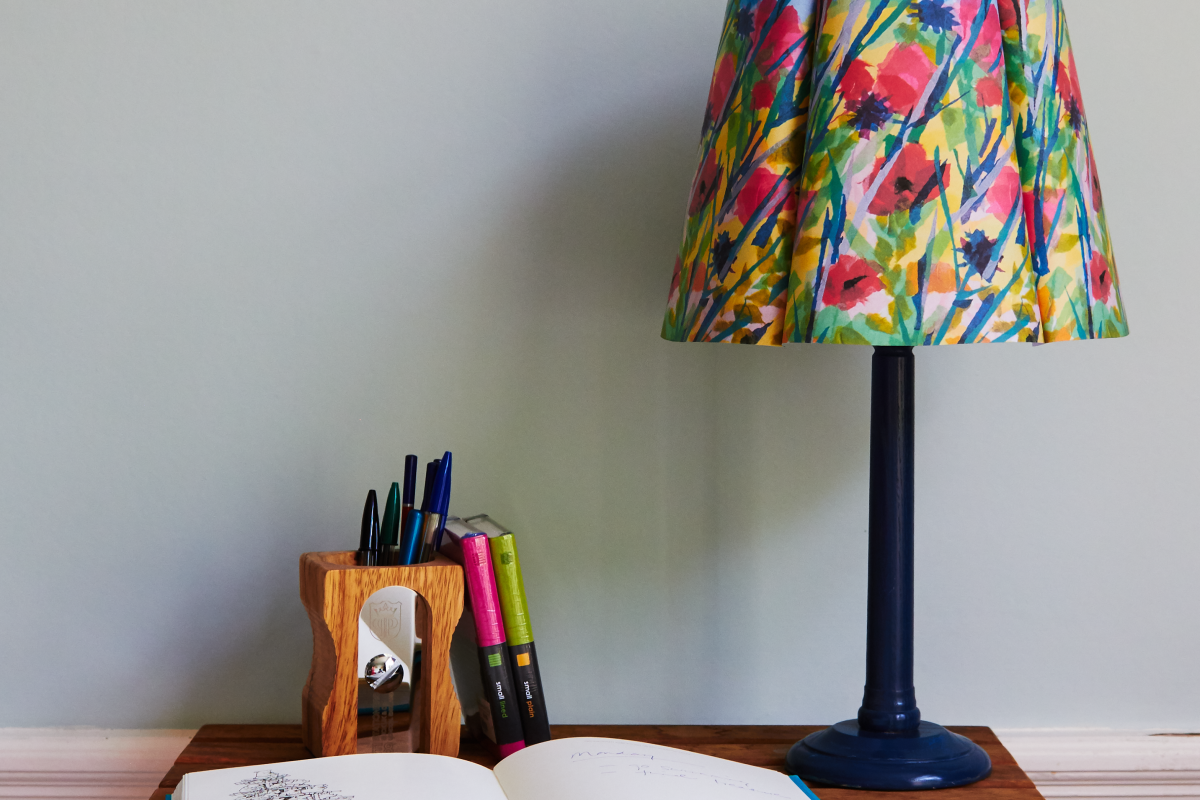
Papershades – paper lampshades designed by artist Ros Freeborn – are now on Notonthehighstreet.com. Very exciting news!

Big news for summer 2020. Papershades is now being sold on the terrific Notonthehighstreet  online shop for unusual and gorgeous things. It’s great affirmation of a brand I conceived about five years ago and poured a lot of energy and love into developing.

Papershades are paper lampshades based on my own paper collage art which you can buy from my website and assemble at home. There are five panels of printed paper and two ‘wheel’s with grips at the end of each spoke to hold the panels in place.

The idea for  Papershades came to me when I wanted to find a different way to use my large paper collage canvases. I’d had a show of big floral works which had sold well – especially since it was just after a really horrible and cold winter and everyone wanted cheerful images of sun-filled gardens and wild-flower meadows. I’d had a look around my own house and thought how boring all the lampshades looked. I wondered: why can’t lampshades be made of paper and why can’t they be art…. my art!?

IMG_1241

I spent a long time in my studio experimenting with paper.  Paper becomes incredibly strong when it’s on the bend and can hold itself up, and bear considerable weight, when it’s curled a bit. Just think how strong a scrolled up newspaper can be.

So, having reinvented the wheel, literally, I created an armature which is just the right size to hold panels of paper printed from A4 sized sheets. I designed one large wheel for the bottom and a smaller one for the top.  But the best part about Papershades is that it’s an opportunity for me to create artwork expressly for paper lampshades.

The first Papershades were launched in 2017. I began with a range of six paper lampshades based on large canvases of tissue paper art I’d created.

I followed up with the Nostalgia Range which presented a mix of vintage paper, old-school kitchen images, fancy teatimes and jolly girls on intrepid outings.


Then I started creating impressions of places for Papershades and have a large range of designs of counties, regions, cities and places. These are really fun to create though all the places do have a slightly ‘Venetian’ look!  I can’t resist a river and bridges and classical buildings.

Above are Papershades impressions of Bath, The Isle of Wight, Brighton and London.

Expansion onto a prestigious site like Notonthehighstreet feels like a huge vote of confidence for a concept which has used a lot of my creative thought and time but has provided me with a fabulous outlet for my passion for paper.
 

Make a Paper Portrait

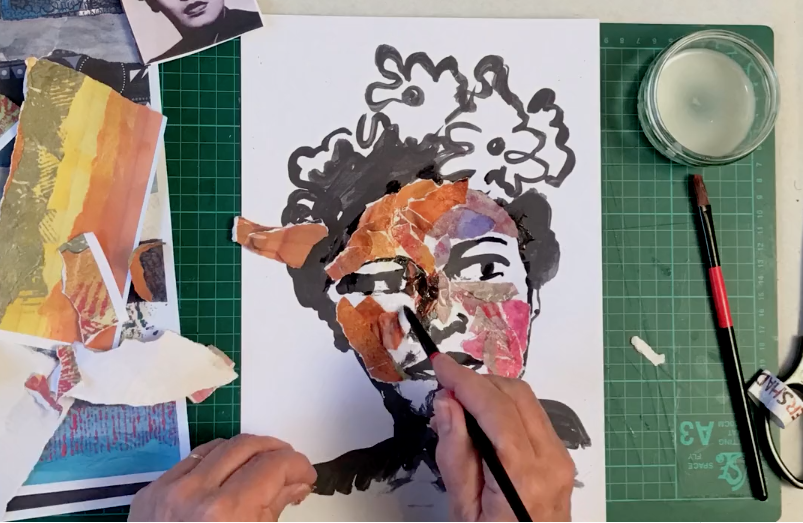
Now we’re in lockdown why not channel your creativity and make a paper portrait?  I’ve made a film about the paper collage art I love doing most.

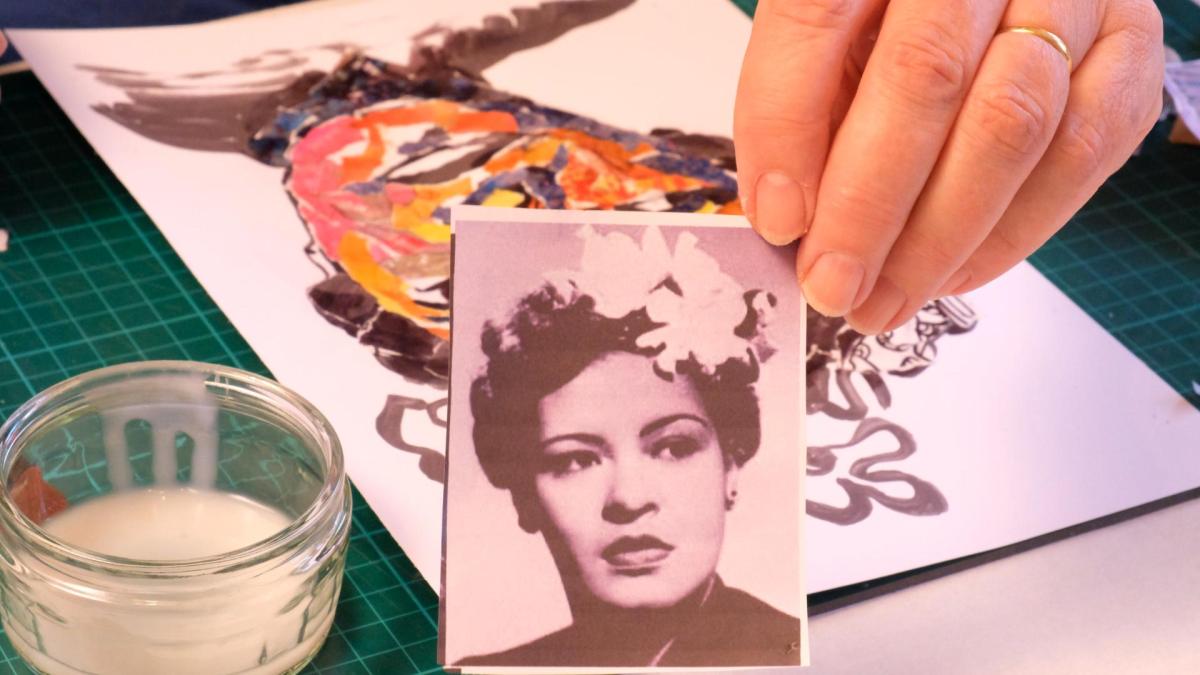
Ros working on paper portrait of Billie Holiday

And I although I usually post stories about all the fabulous exhibitions and events which I am lucky enough to see life at home and in my studio is still interesting.  With the help of my my super talented husband, this film will give you an idea of my technique for creating portraits made from paper.  I use the pages of magazines, tissue paper, wrapping paper, packaging…. anything which is available at  home.  And I’ve created a template of my subject, the singer Billie Holiday, which you can download from my website Paperface and print onto A4 card.  There’s also a palette of paper which you can print onto ordinary copier paper and then tear up.

So, I hope you enjoy my film and have a go at ripping and snipping paper. I’ll be setting up a gallery on the website of creations which are sent my way, so please do let me know how you get on with making a paper portrait.   Instagram: Rosalind Freeborn 

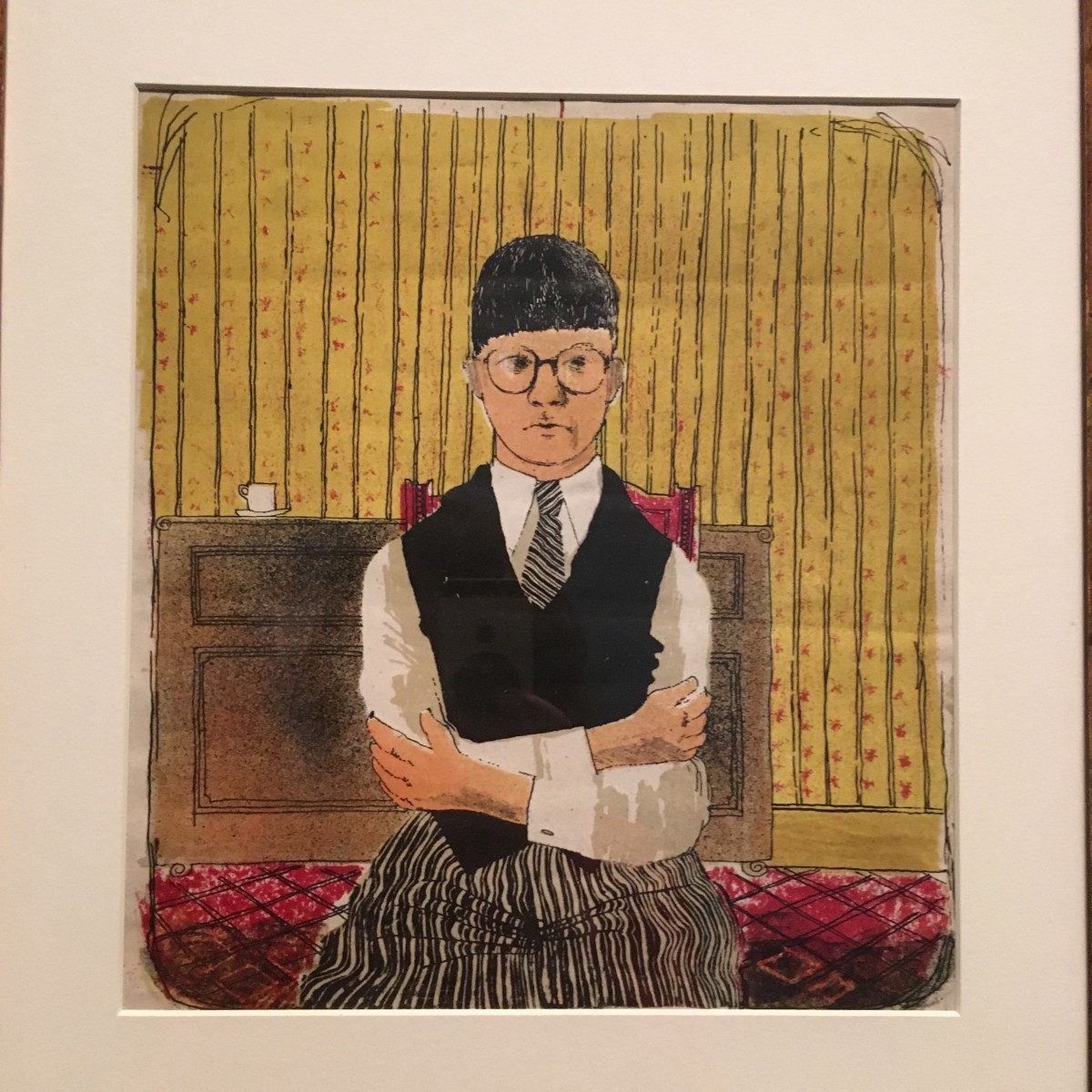
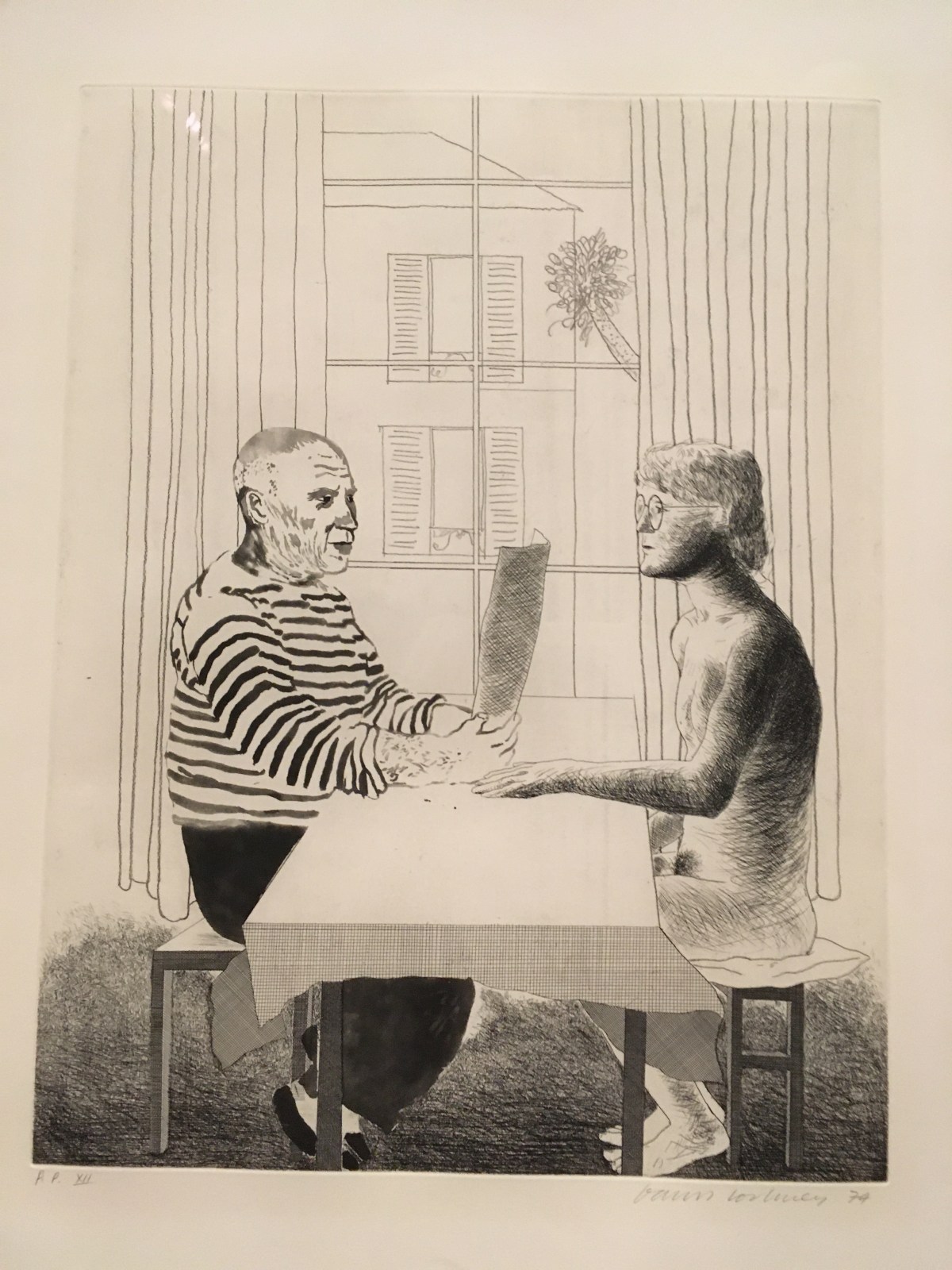
Paper collage, pens, paint, iPad, photography …. there is no medium that David Hockney has not experimented with and excelled at. The show of at the National Portrait Gallery in London shows the brilliance and versatility of the UK’s greatest (living) artist and shows the evolution of his style and fascination with all kinds of media, used with impressive effect.

Wow!  I absolutely loved this show.  Yes, portraits are my thing and Hockney is my hero so it’s not surprising that I was blown away by the scale of this show and the wonderful variety of work on show.

IMG_0556

The first image you encounter at the show is a charming self-portrait made from paper collage in 1954.  It’s done with such confidence, delight in the use of torn paper and captures the youthful David Hockney at the start of an illustrious career as an artist.

IMG_0554

What I admire about Hockney is that he’s never stopped pushing his art. OK, it won’t all work and some styles and media might have had variable results but the important thing is that he gives everything a go.  And I loved seeing that progression.


Portraits are so very personal and Hockney has consistently created portraits of a small group of friends.  As a result we have a delightful ‘album’ of images which show the ageing process with so much affection for the subjects.


There are many images of his mother which evoke the strength of their relationship and the tenderness of observation as this much loved woman ages.


We also have a chance to see the drawing process in action with recordings of portraits made on iPads. We had a glimpse of Picasso’s process at the major show over at the Royal Academy and it’s just as fascinating with this, seeing the way the hand shifts and flickers across the screen doodling, colouring, adapting and evolving the portrait.

Error
This video doesn’t exist

One visit was not enough. I must go back before the show ends and revisit all those portraits for a further, deeper view.

IMG_0560

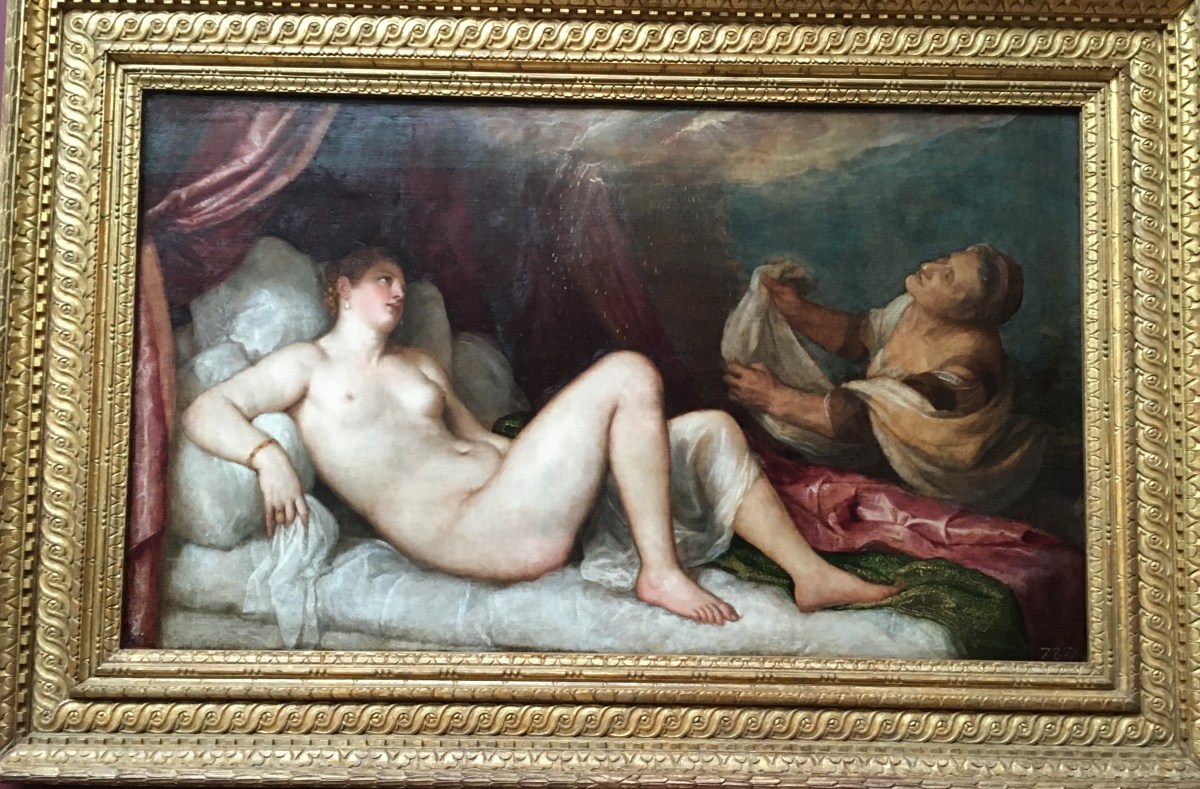
Titian: Love, Desire, Death – a rare chance to see Titian’s epic mythological paintings reunited for the first time in over 400 years. The six narrative paintings – referencing stories from classical mythology – were painted by Titian between 1551 and 1562. The artist had been given free rein to depict any subject he liked by his generous and sympathetic patron, King Philip II of Spain. It’s a joy to see them all in the same space, seen by daylight at the National Gallery in London.

Stepping into the exhibition of Titian’s mythological paintings, known as the poesie, is an immersive experience.   You are surrounded by the full series of paintings which Titian painted, as a mature and successful artist in his 60s, which depict dramatic moments drawn from Roman poet Ovid’s Metamorphoses.  Clearly Titian was inspired by big human emotions – love, loss, lust, distrust, betrayal, shock, angst and revenge.

IMG_0543
Danae (about 1551-3) Wellington Collection, Apsley House, London

He’d been given a the freedom to create the series based on any subject he chose by his generous and wealthy patron, King Philip II of Spain.  The six major works were supposed to be shown in one of the royal palaces but their time as a set was very brief. This is a rare opportunity to see them all in one place, as the artist and patron had intended.

IMG_0551
Venus and Adonis about 1553-4 Museo Nacional del Prado

The paintings have been specially reframed by the National Gallery’s workshop. They are are displayed only in daylight, as had been Titian’s intention.  It’s interesting to see the vivid colours on show – bright blues, and lively pinks – which have benefitted from restoration but some of the colours have faded over time. Apparently Titian used a pigment called smalt, a blue colour which was cheaper than ultramarine – and has degraded on some of the works.

IMG_0547
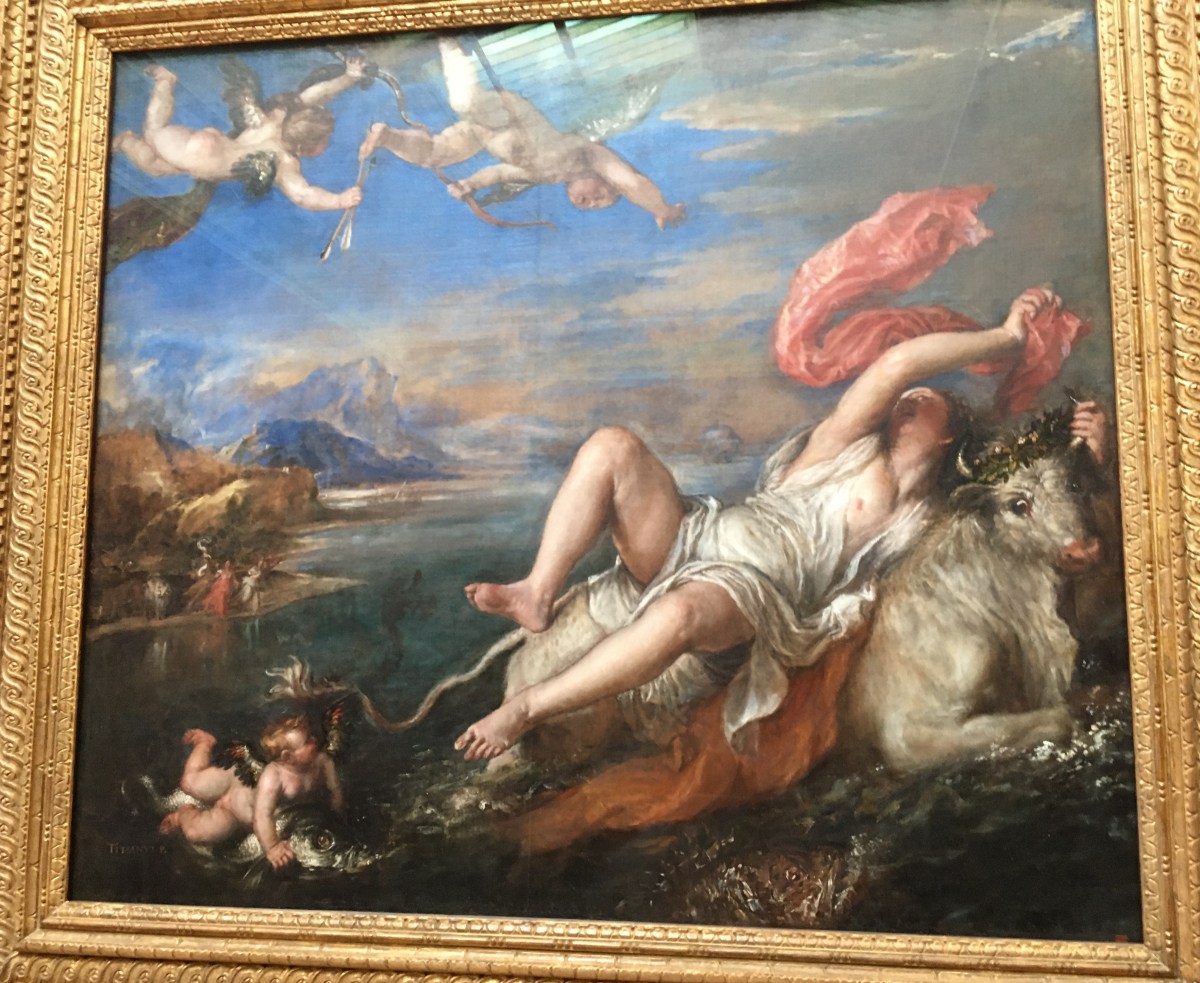
The Rape of Europa 1559-62 Isabella Stewart Gardner Museum, Boston

The show offers us a chance to review a magnificent collection which demonstrates the very assured work of a mature artist at the peak of his powers. You can stand and stare for a long time and see beyond the narrative and the composition into the psychology and expressive detail of each painting.

IMG_0553

I loved seeing the expressions of the secondary characters – nymphs and cherubs, hand-maidens and servants – and also the animals – eager hounds, fantastical sea monsters and that cool and brutal bull (Jupiter in disguise) who abducts Europa. It’s all riveting stuff and a rare chance to view which is not to be missed.

IMG_0549
Death of Actaeon 1556 – 9 National Gallery

The show is on at London’s National Gallery until 14th June before it moves to the Scottish National Gallery (11July – 27 September), the Prado, Madrid (20 October – 10 January 2021) and the Isabella Stewart Gardner Museum, Boston (11 February – 9 May 2021)

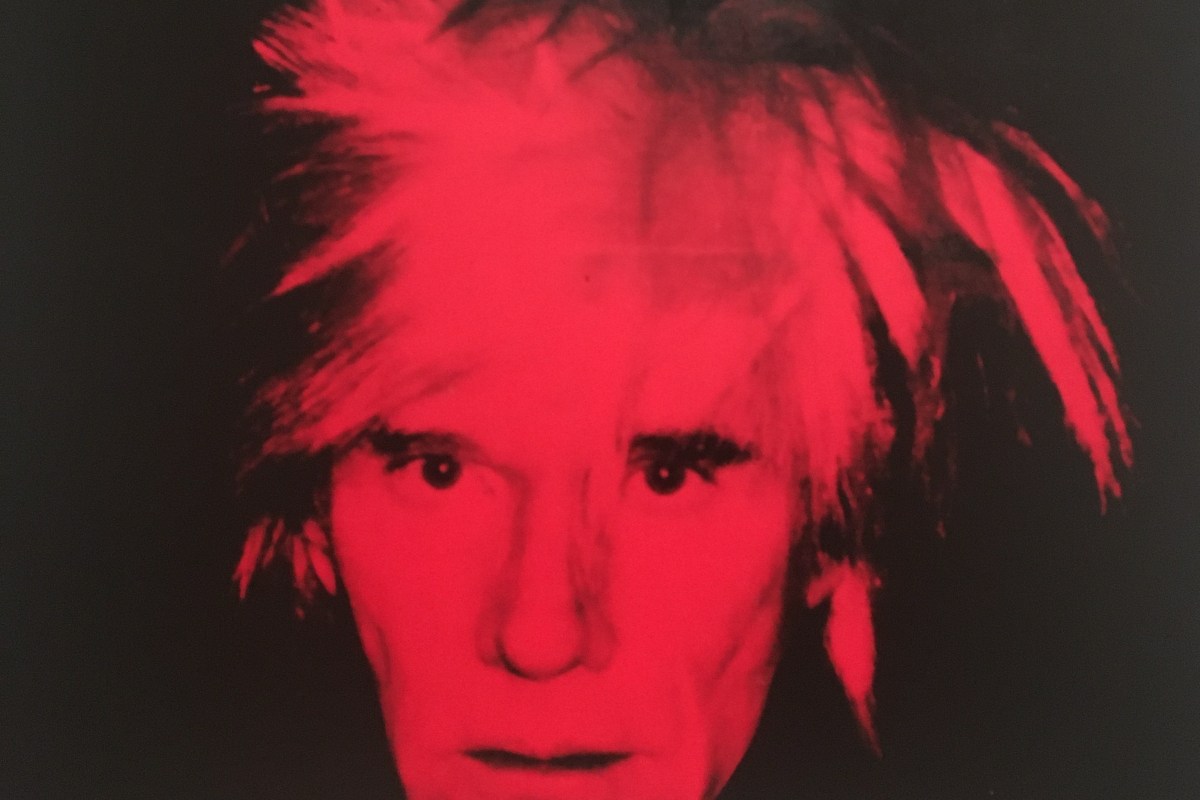
Instantly recognisable, audacious, witty, clever and prescient – Andy Warhol was a consummate artist who understood consumerism and celebrity. A major show at Tate Modern gives a glimpse of his impressive creative output.

IMG_0497

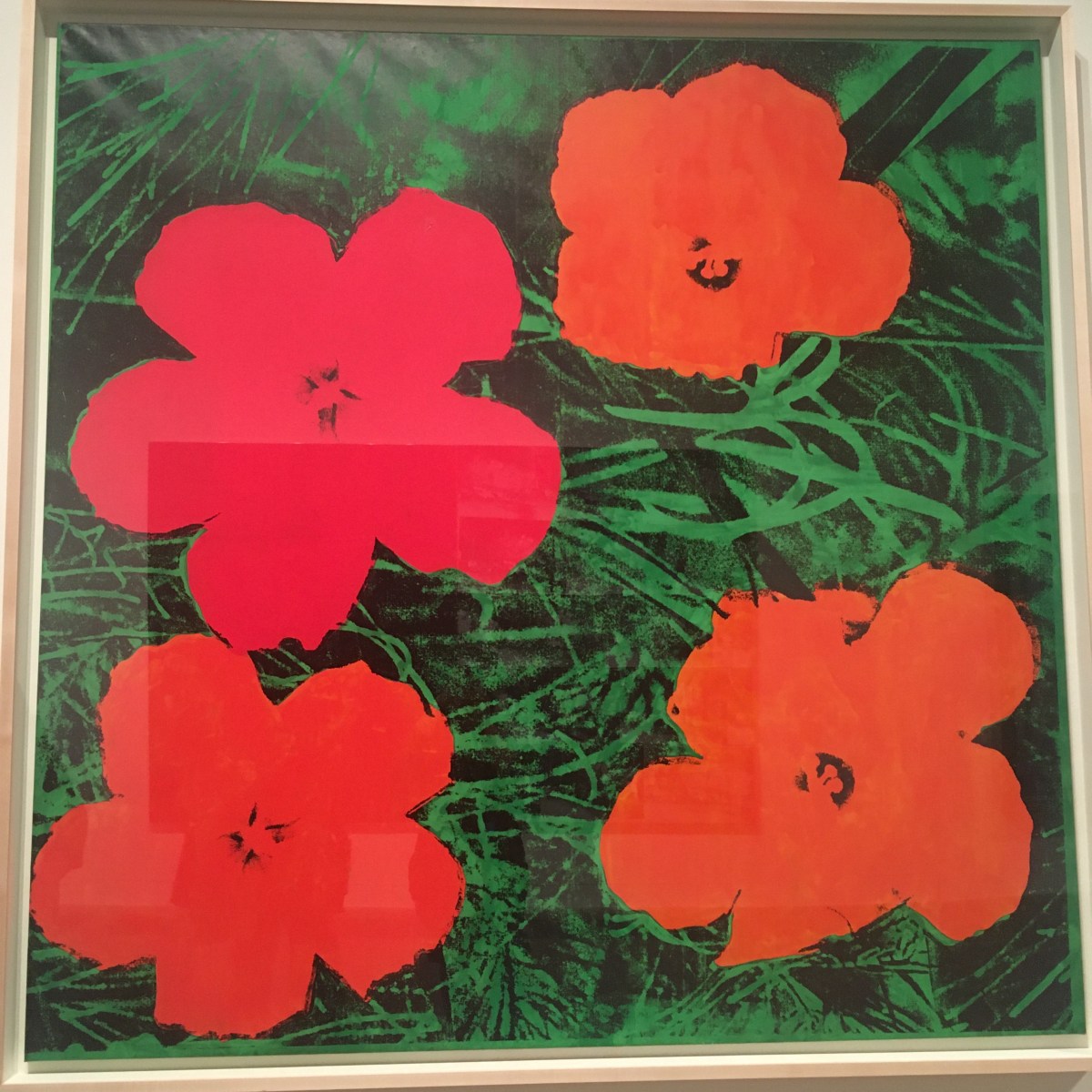
Dynamic repetition!  Those printed Coca Cola bottles and cans of soup are instantly recognisable. It’s great to see them, along with other works featuring multiples of every day items on show at Tate Modern.

IMG_0499

This show takes the viewer on a chronological odyssey through the artist’s life.  It’s fascinating to see how he invented his own persona and brand. His family emigrated from a mountain village in Slovakia to begin a new life in the USA.   The young Andy Warhol clearly had a very individual way of viewing and recording the world.   I love the way he took hold of any media, old or new, and reinvented it, creating playful and clever impressions of the world around him.

IMG_0503

I hadn’t seen the pencil portraits he’d made of boyfriends before, which open the show.  We then move into more familiar territory, the paintings, the prints, the pop art.  And there’s a room full of floating pillows – Silver Clouds –  plus a gallery full of photos and loud music to represent the heady days of the Factory and a life of creative excess in the mid 1960s.

In 1968 he was shot at close range by Valerie Solanas, a disgruntled writer who accused Warhol of ‘stealing her ideas’.  It’s a miracle that he survived the attack but was in pain for the remaining 19 years of ‘extra time’ which he used for a frenzy of new work, including a return to painting.

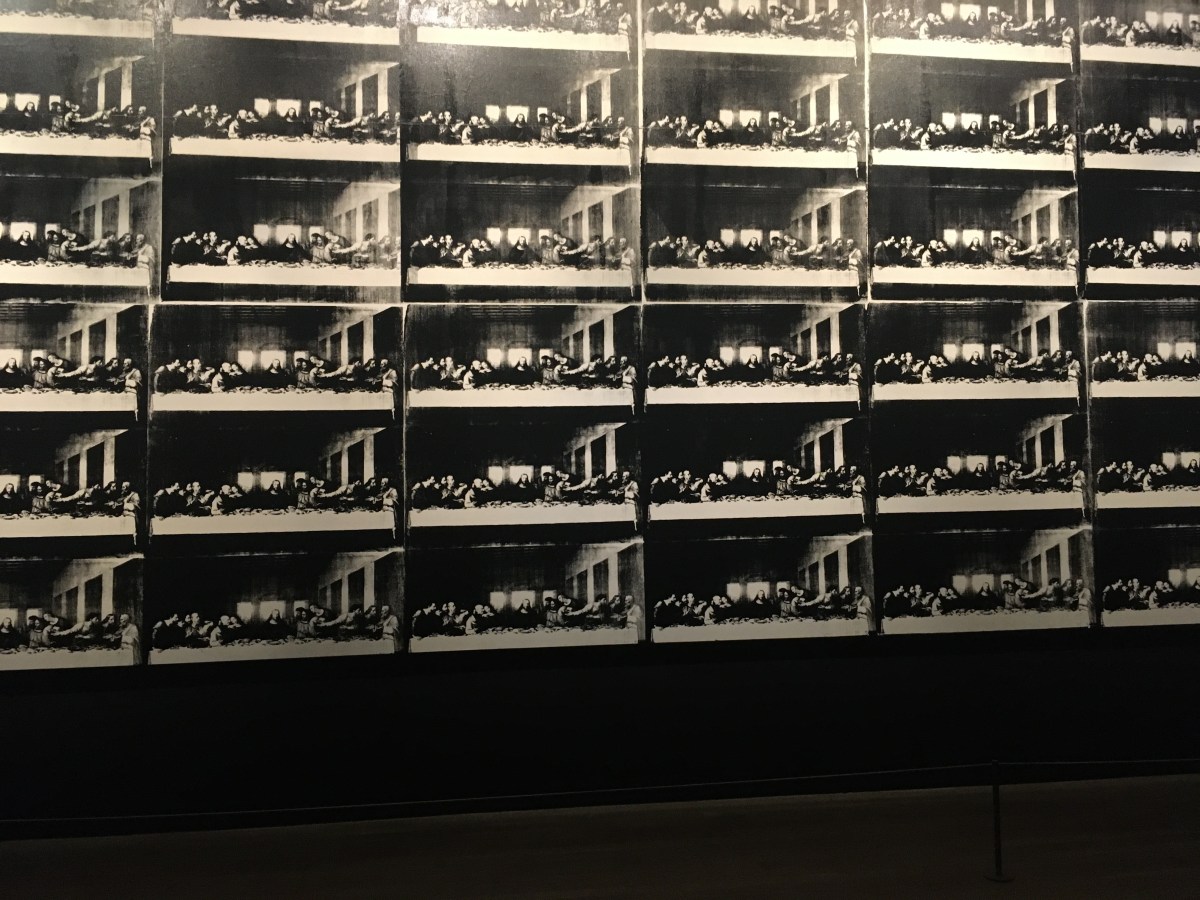
His final major work,  The Last Supper, seems to predict his death and references the painting, by Leonardo da Vinci, which had been on the wall in his family’s kitchen. Sixty Last Suppers was exhibited in Milan before the gallbladder operation which led to heart-failure and his death on 22nd February 1987 at the age of 58.

IMG_0541

The show, Andy Warhol, is on at Tate Modern until 6th September 2020.

IMG_0537

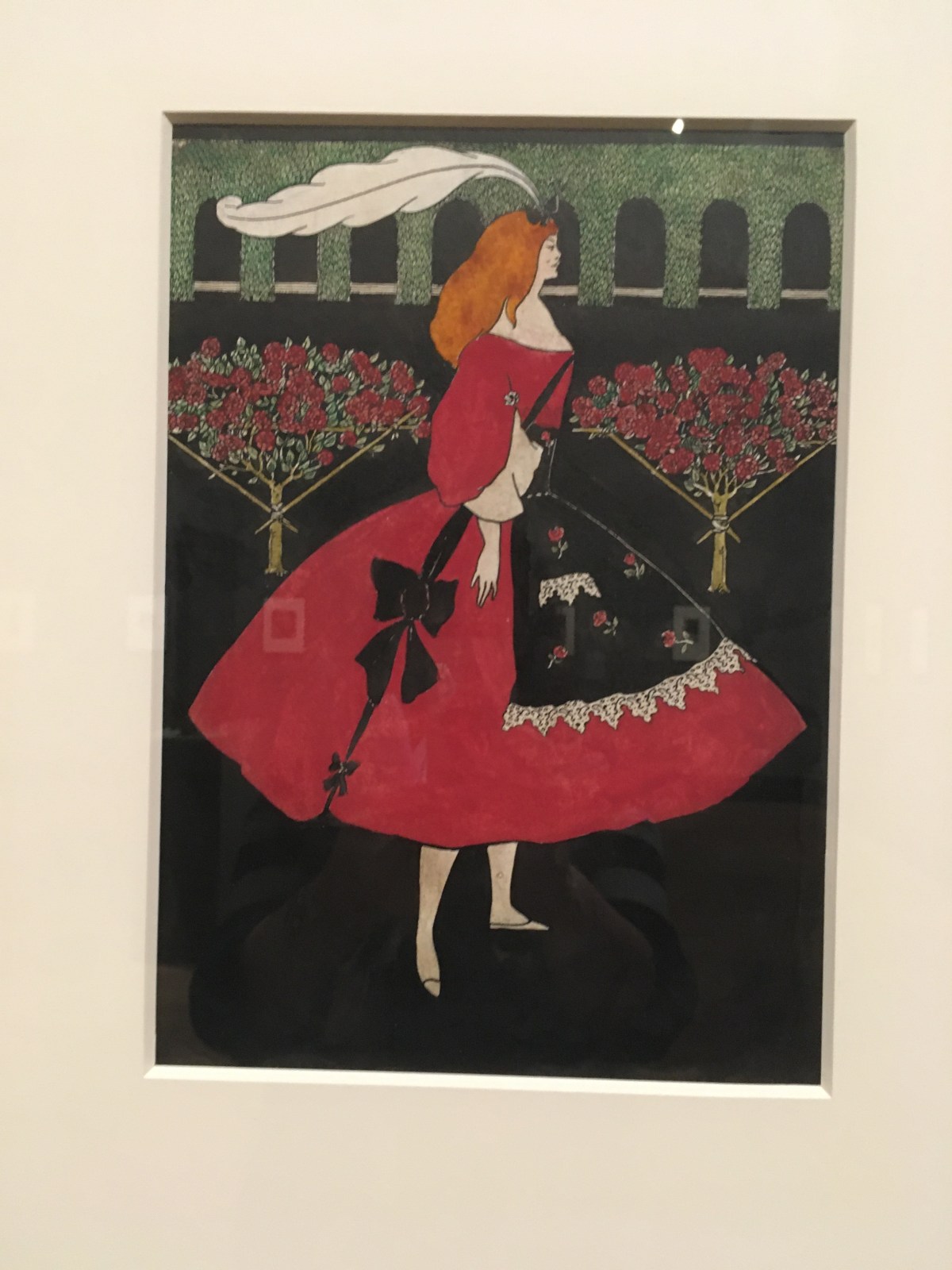
Tall, thin and tragic, the ultimate dandy of his day, Aubrey Beardsley produced a prodigious amount of distinctive artwork in his short working life and died of TB at 25. Yet his work continues to inspire and influence artists, as this dazzling show at Tate Britain shows.

What strikes you most effectively at this wonderful show, Aubrey Beardsley, at Tate Modern is the quantity of work on display.  Considering his career lasted a mere seven years – he died of tuberculosis in Menton in the south of France in 1898 at the age of 25 – and, knowing that his life was inevitably going to be short he devoted all his time to art.

And what an artist he was.  His prodigious talent was clear to see at an early age and, I would imagine, the moment he picked up a pencil or pen, he must have drawn with remarkable precision.  The thing about this exhibition is the chance to see the originals – and they are so remarkably clean and perfect. No ink splashes, no apparently rubbings out and starting again. The designs, for that is what the drawings really are, seem to have emerged, fully formed from his imagination and done with clarity and a very steady hand.

The Birthday of Madame Cigale

The exhibition takes us chronologically through his life.  From the moment you see his deftly drawn self-portrait, made when he as 18, it’s clear that he has established a style and will run with it.

IMG_0368

Beardsley was clearly influenced by the romanticism of the pre-Raphaelites – Burne-Jones was his hero – but he was also fascinated by Japanese prints and scrolls with their spare compositions, confident lines and playful detail.  Beardsley’s style evolved independently of these influences and he found work creating illustrations for publications, frontispieces and images for magazines.  It was interesting to see that the briefly unknown artist shot to fame when a feature was written about him (complete with images) in Studio magazine in 1893.  He became an overnight sensation. His work lent itself so perfectly to prints and became widely available.


IMG_0396

Above: The scarlet Pastorale – ink and graphite.  A rare work with colour.

In the final room of the exhibition the curators have gathered together works by subsequent artists who make no apology for their interest or obsession with Beardsley’s work.  In 1966 the Victoria and Albert Museum held a huge exhibition of his work and interest in the black and white line drawings filtered into all kinds of household objects and images of the day.  I have a memory of these kinds of drawings, along with actual Beardsley prints, appearing in copies of Jackie which I read in the late 1960s.

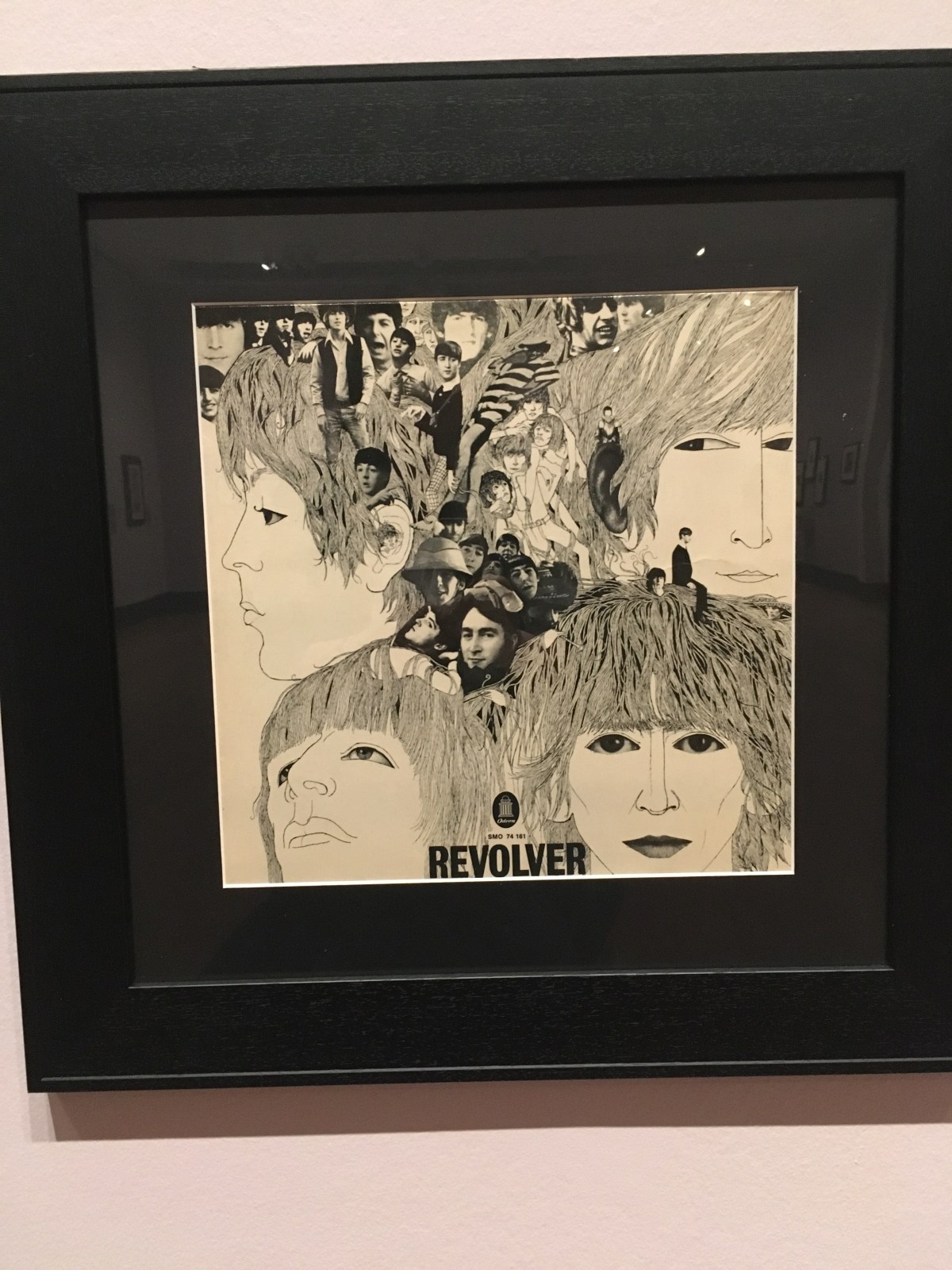
Just think of the record sleeves which display his influence – most famously, the Beatles’ Revolver.

IMG_0402

The whole show is a testament to a supremely talented artist who also epitomised the style of the time. He fits with the aesthetics, the art deco designers and the romantic narratives of the pre-Raphaelites. His very appearance created his ‘brand’ – tall, skinny, pale, gaunt, beautifully dressed, dainty, elegant – the ultimate ‘dandy’ – images of him are instantly recognisable.   The joy of the show is to look at and then into the drawings, allowing the shapes and narratives to, literally, draw you in with the subject, the detail and the perfection of them. A joy.

Above:  Portrait by Sickert at a memorial for Keats in Hampstead and a portrait by Emile Blanche in 1895

The show is on at Tate Britian until 25th May 2020   www.tate.org.uk


A charming glimpse of the ‘Golden Age’ of Dutch art is there for all to see with the first major show of works by Nicolaes Maes (1634-1693) at the National Gallery.

IMG_0202

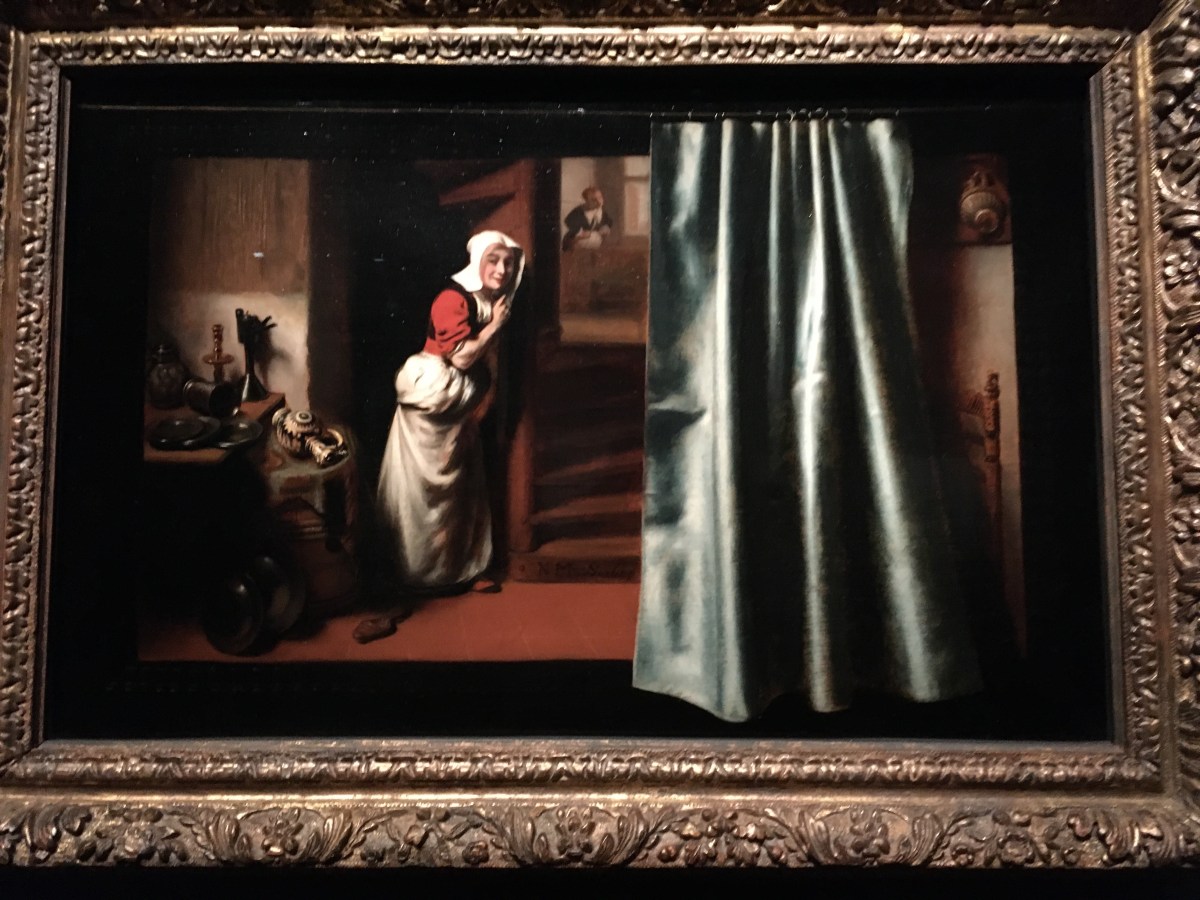
It’s like a peep behind the curtain – and curtains loom large in Maes’s paintings.  What a witty person Maes must have been.  A talented young artist from Dordrecht, he was lucky enough to become a student at Rembrandt’s studio in Amsterdam and there he honed his phenomenal skill under the tuition of the greatest master.

He clearly had a strong sense of narrative and, when it was most fashionable, came up with visual ideas for telling some of the more obscure bible stories – always a great excuse to show off his interest in expression, drama and an element of surprise.  Above is a detail from an early, large-scale painting entitled Christ Blessing the Children.  The nervous child clutching an apple is enchanting and feels very immediate.

He moved on to genre paintings and it’s these works which really are the stars of the show.  This is where the ‘peep behind the curtain’ really gets going especially with his series of ‘Eavesdropper’ paintings conjuring moment of domestic intrigue which are like whole novels compressed into one enticing scene. Below is the maid listening to a conversation going on upstairs and clearly being very amused by what she’s learning.

IMG_0220

The incidental portraits he made of women working are miniature masterpieces. I absolutely loved the images of  girl threading a needle – such delicate fingers – the mother tending her baby or chastising her son for making a noise on the drum and waking the baby.


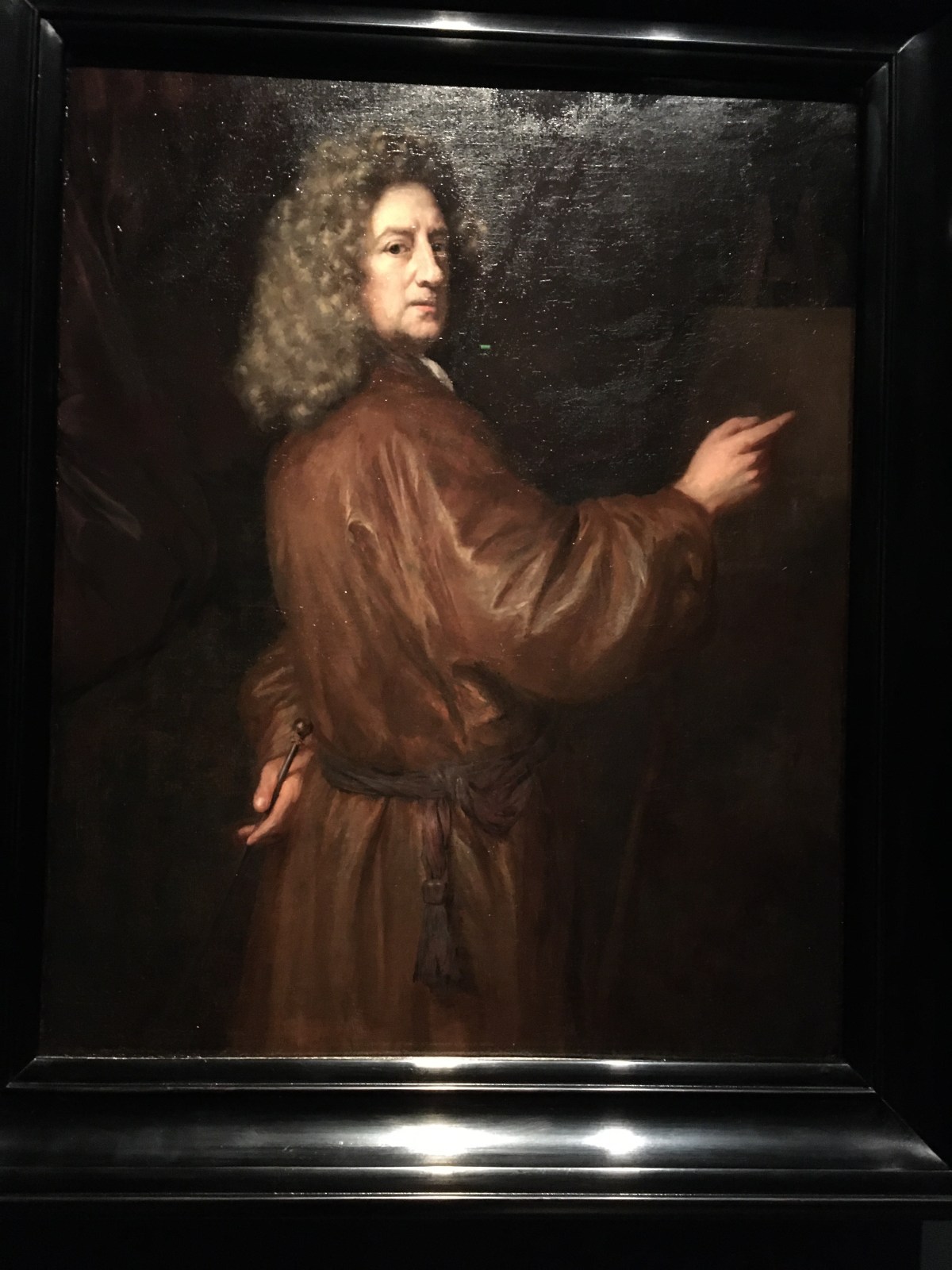
Maes only made these genre paintings for about five years and then, in the 1670s, he started painting portraits of illustrious and wealthy men and women. The style is very different from his early, Rembrandt-influenced work.

Below: a self-portrait made around 1680-85 when Maes was about 50 years old.

IMG_0224

The exhibition at the National Gallery is on until 31 May 2020. Admission Free

@thenationalgallery

UNBOUND:Visionary Women Collecting Textiles is a charming and enlightening show at Two Temple Place which shows highlights from the collections of seven pioneering women who recognised the importance and craft heritage of textiles, embroidery, clothing, costumes and fabric. It’s a great tour through the pieces which were painstakingly accumulated by collectors who understood how these handmade items could easily have been lost to world.

I’m starting with one of the most recently created textile artworks on show at Two Temple Place.  This triptych of panels byAlice Kettle is entitled Three Caryatids (1989-91) is machine embroidered with beautiful shimmering silks and yarns. It’s huge and very striking.

IMG_9985

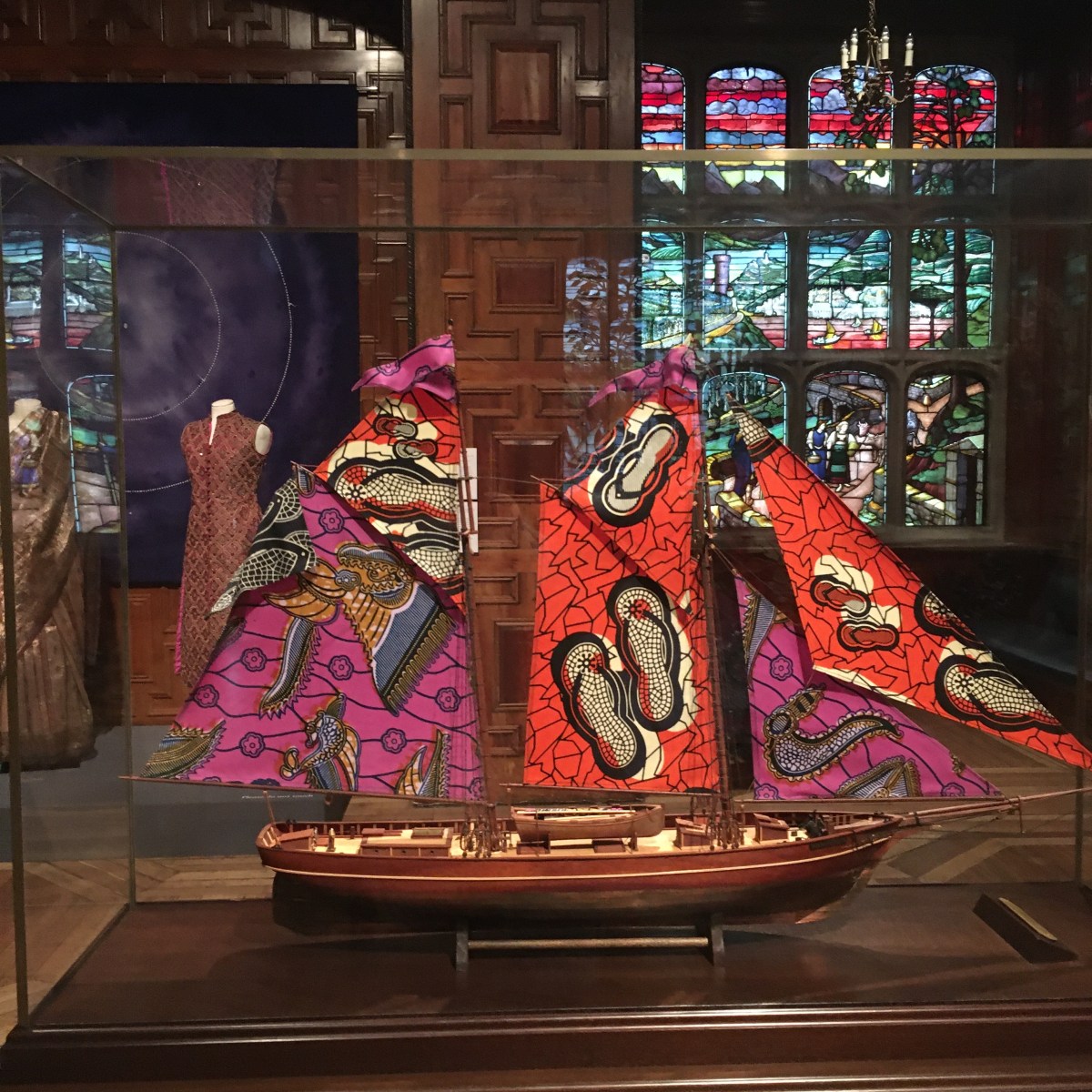
The main gallery on the first floor was particularly full of treasure.  Yinka Shonibare MBE has made a copy of the last slave ship, The Wanderer reimagined with African batik ‘wax’ printed fabric sails.

It’s always wonderful to see tapestries and fabrics which have been lovingly created for family members – often a daughter preparing for marriage – which are then handed down through the family.

The collectors of early pieces sound like formidable women who would make a point of gathering up examples of fabric on their travels or, in the case of Olive  Matthews who, from the ages of 12, used her pocket money to buy antique clothing and built up a sensational collection of museum-quality examples of clothing from ‘beyond living memory’.

It’s always a pleasure to have the chance to visit Two Temple Place. It’s only open to the public in the first quarter of the year when delightful exhibitions are in place.  Unbound will be there until 19th April, admission free.


The London Art Fair, held at the Business Design Centre in Islington, is always a joy to visit. Keeping an eye on the contemporary art market is good for artists who spend most of their time tucked away in studios. It’s great for collectors to find a manageable show to visit in search of new talent And it’s an opportunity to see what’s what, who’s who and check out the art of the moment.

IMG_9953

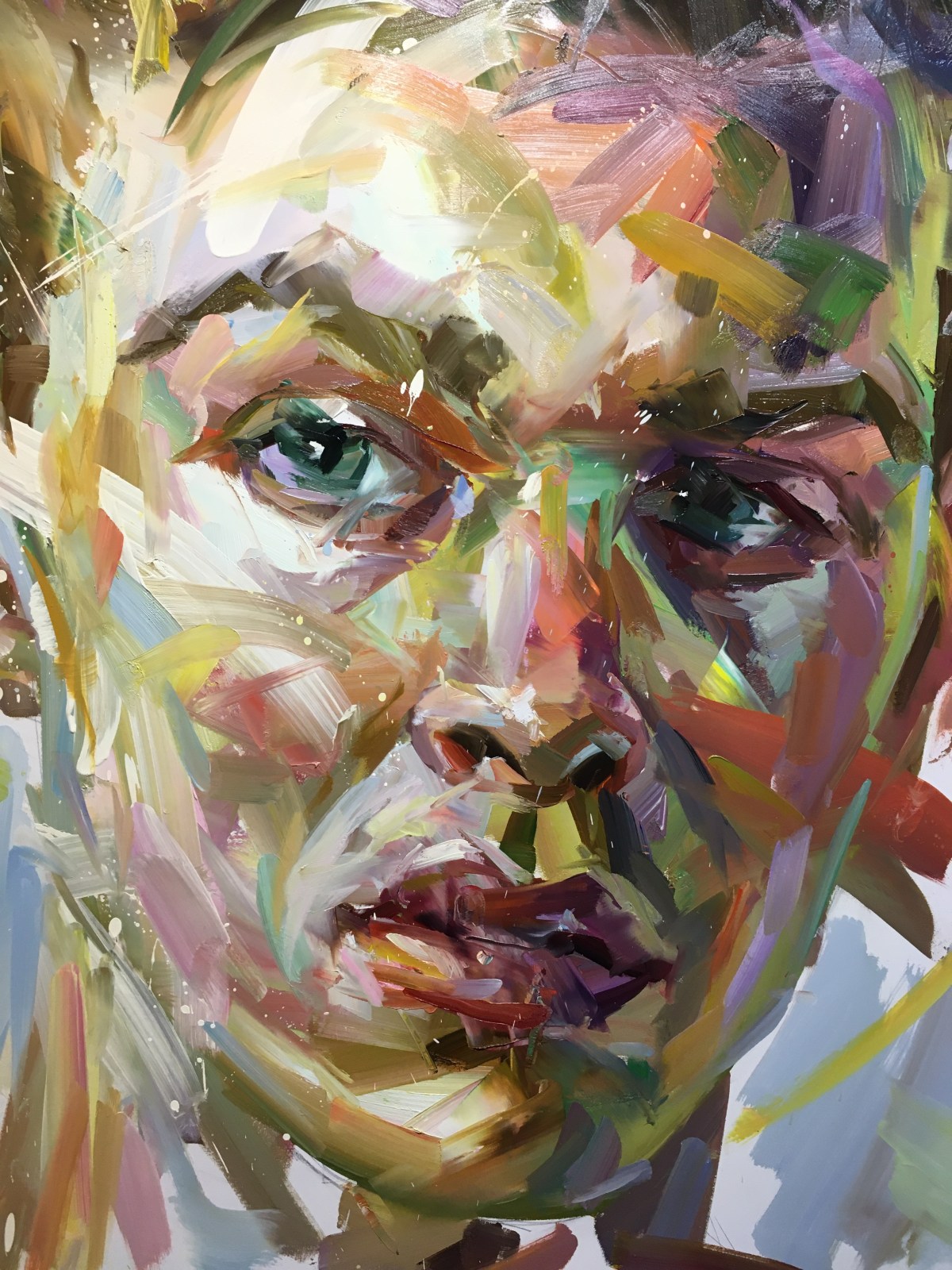
If it doesn’t involve paper then I do like a painting which really shows the painter’s hand at work and this portrait by Paul Wright of Caius, was on show at the Thompson’s Gallery at the London Art Fair.  This fair is a good size; you can get around the Business Design Centre in Islington in an hour and see a lot. Obviously, it’s better to spend more time and gaze more deeply at work but you become adept at pausing in front of works which cry out for closer examination.

IMG_9944

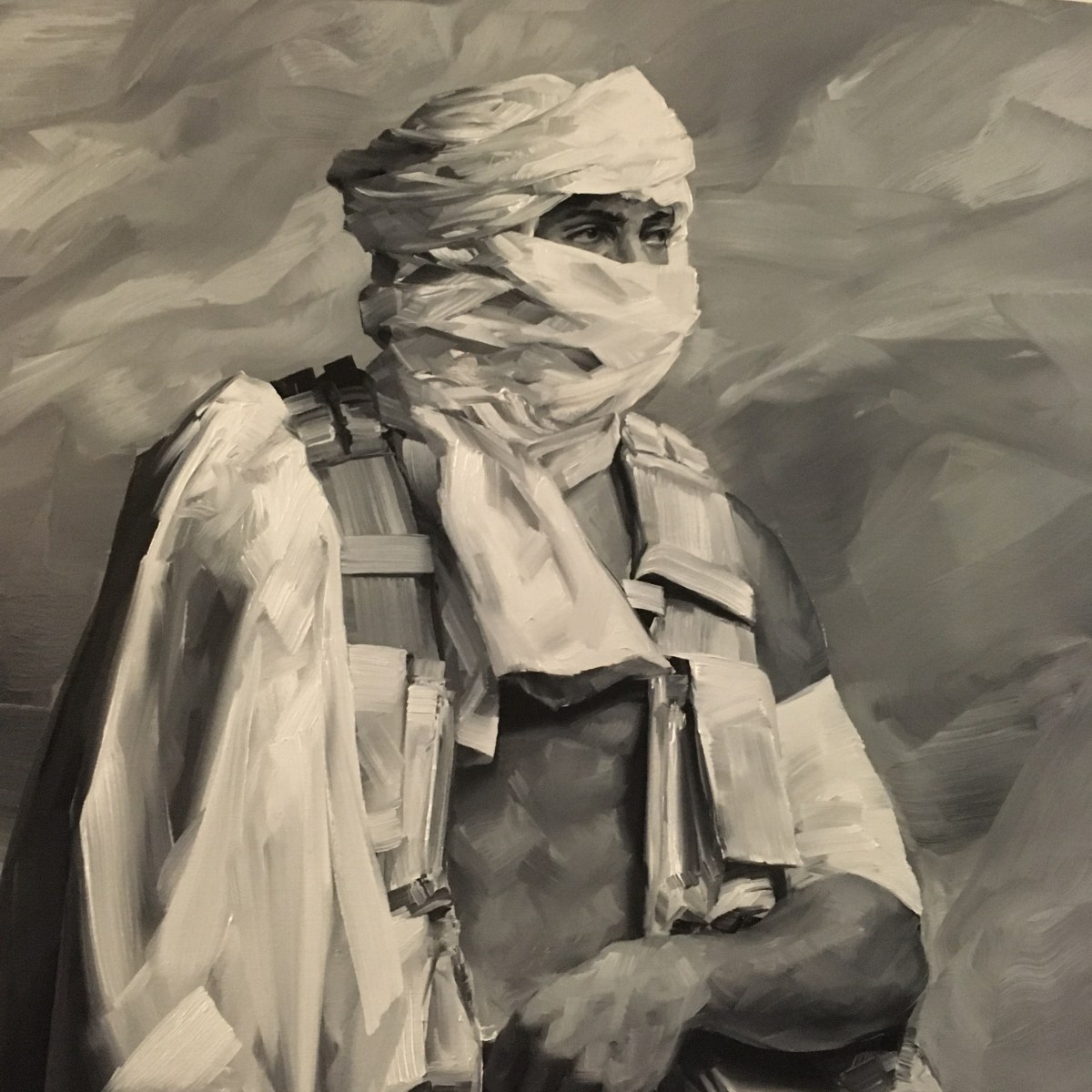
And if there’s not high colour, but monochrome, I still like to see the brush at work.  Very impressed by the work of Yoann Merienne at the Galerie Bayart stand.

IMG_9946


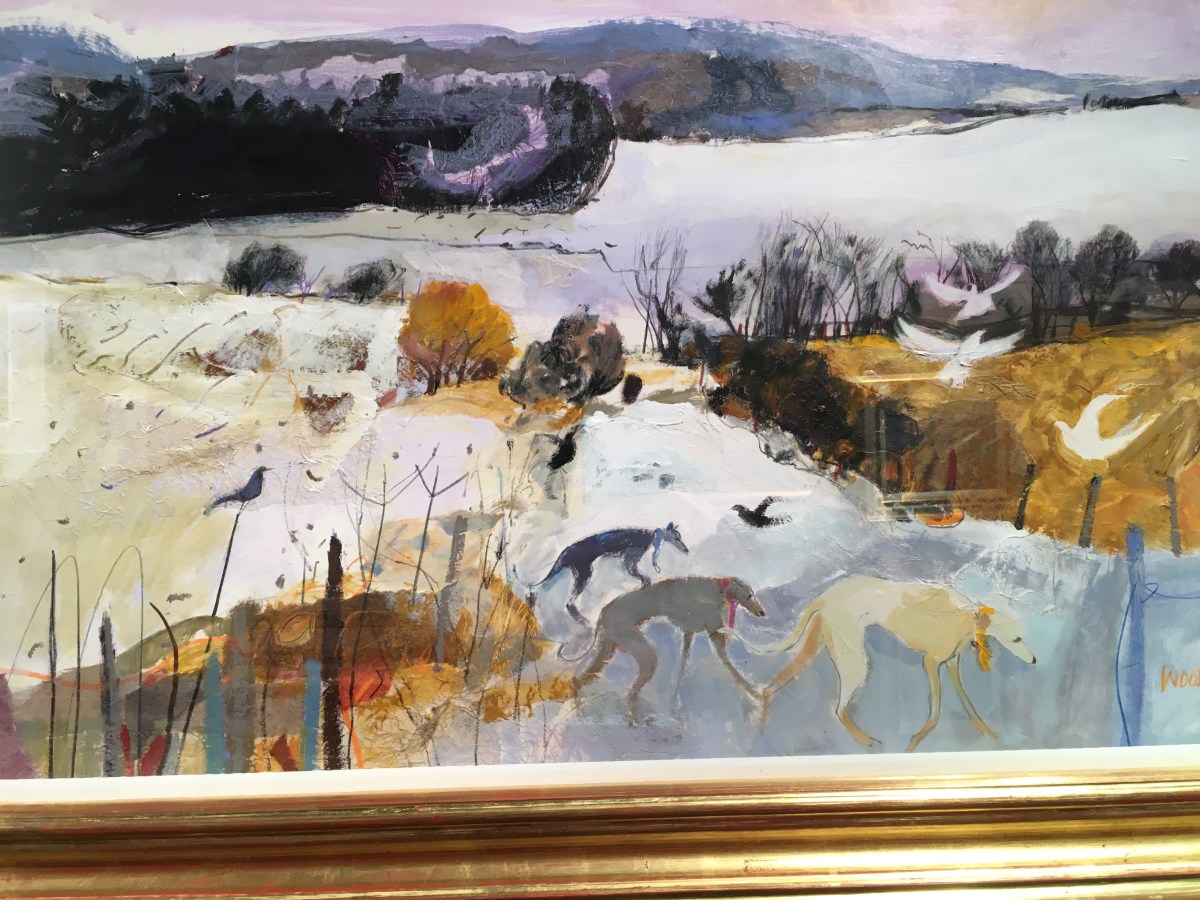
There was something very appealing about this work by Christine Woodside.  It really captures the atmosphere of a wintery landscape, full of textural variety, media and material and great sense of freedom.

IMG_9938

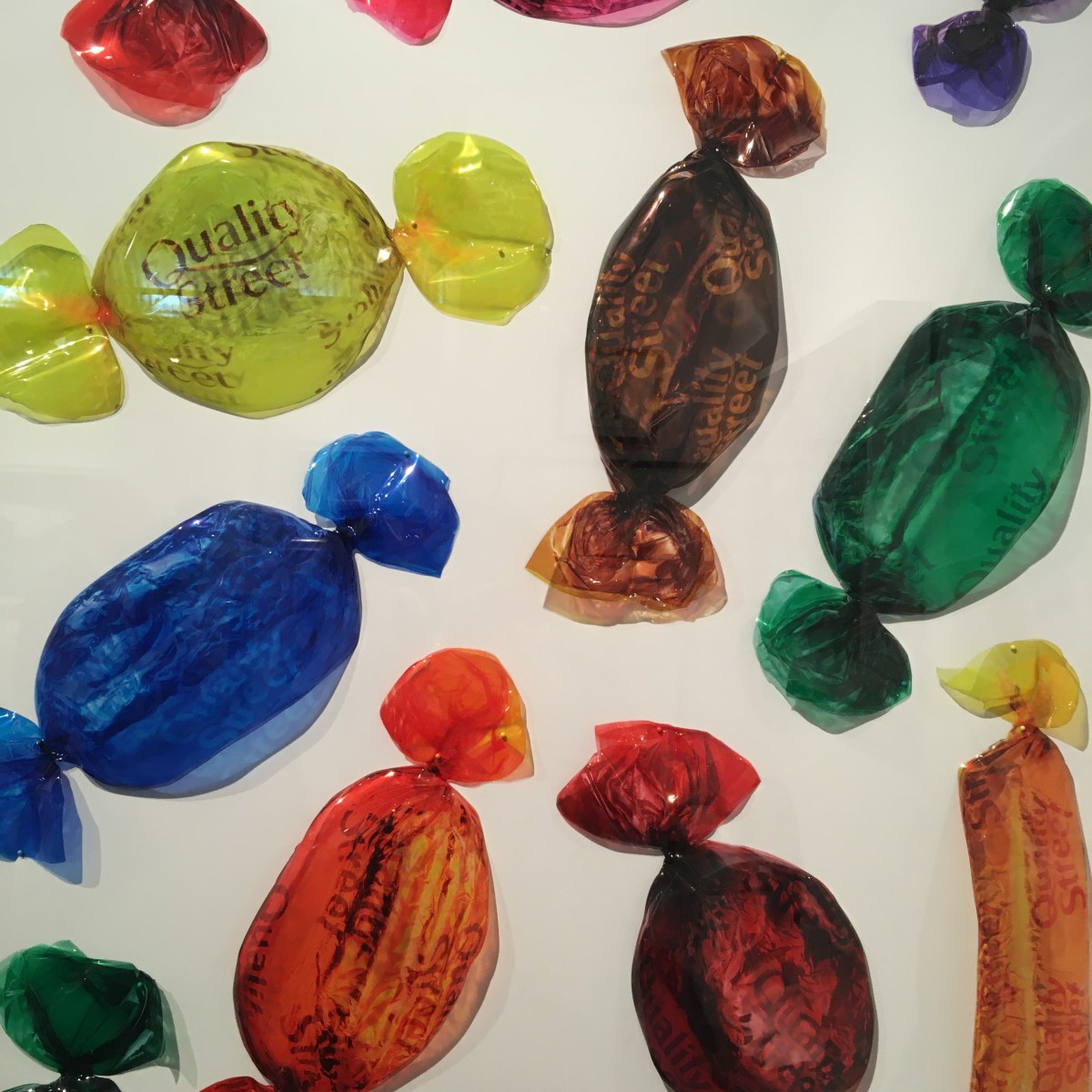
It’s just such fun to see these oversized Quality Street wrappers on show. They’re made by Perish the Thought from heat moulded and shaped clear film with coloured inks at TAG Fine Arts.

And finally, here are few others I really liked: Barbara Macfarlane at Rebecca Hossack, Joan Eardly (Houses, Paris) at Duncan R Miller Fine Artand a detail from a huge drawing by Olivia Kemp at James Freeman Gallery.

The London Art Fair is on until Sunday 26th January  www.londonartfair.co.uk 

Picasso and Paper – a blockbuster show at the Royal Academy which celebrates his extensive use of paper in his art. For sketching, doodling, printing, collages and creating paper as form, this show provides a dazzling insight into Picasso’s work practice and prodigious use of the material in so many creative ways. Fabulous.

IMG_9858

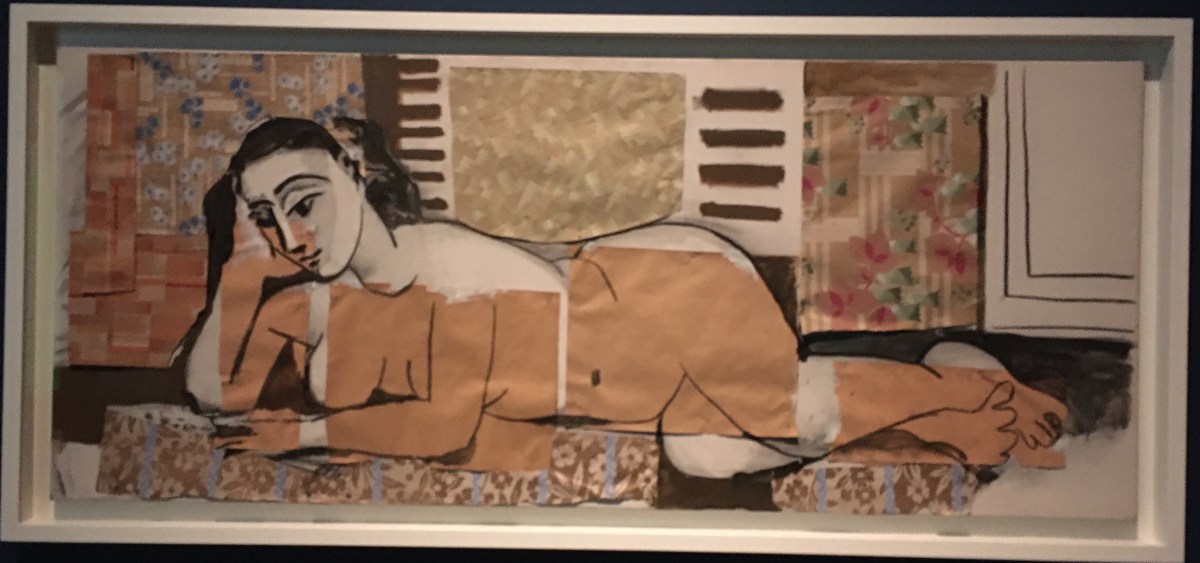
Reclining Nude Woman
Wallpaper, wove paper with oil and charcoal

What a fabulous work this is.  Made in 1955 is a a reclining female – the model is Picasso’s wife, Jacqueline Roque, whom he met in 1952 – and I just love what he’s done.  It’s a very large piece, on canvas, but he’s used all kinds of wallpaper, plain paper, oil and charcoal to create a work which is dazzling in its originality and beauty.

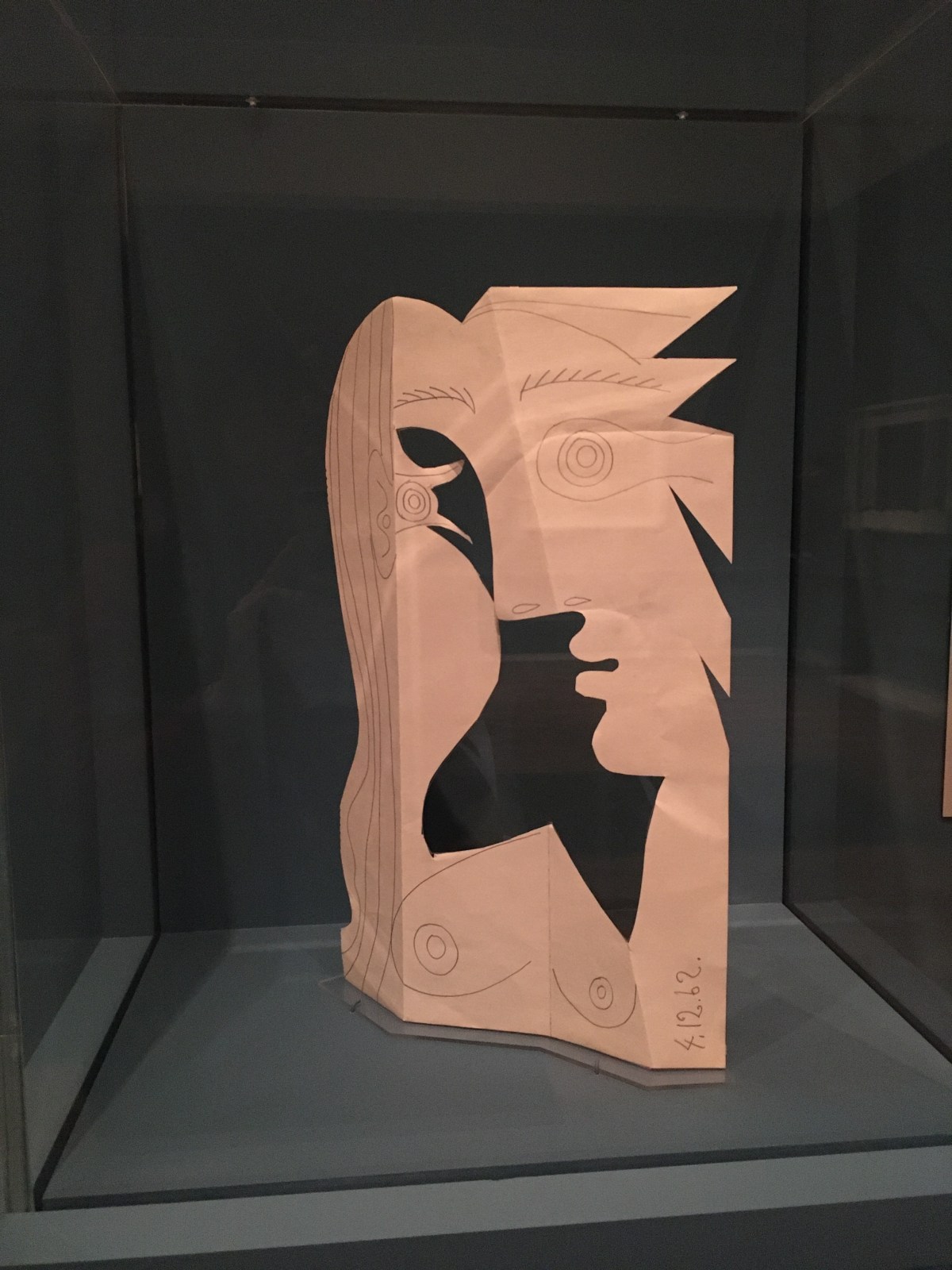
This piece is just one of over 300 works which have been assembled at the Royal Academy for a terrific show of Picasso’s work which is devoted to the many imaginative and inventive ways he used paper.  Of course he used all kinds of paper in his long career (1881 – 1973).  Yes, there are sketch books, and scraps of paper, wallpaper, newspaper and of course paper to print on.  With Picasso, there seems to be no medium he could not make artistic use of but paper was clearly a favourite. Versatile, strong, inexpensive, available … what’s not to like.  Apparently he would gather up old bits of wallpaper from suppliers and stash them in his studio until the moment was right.

There’s a chronology to the show which is very satisfying.  We are taken on a wonderful odyssey through Picasso’s life and, where there’s an opportunity and the paintings are available for loan, finished works accompany the studies, sketches and doodles on paper which lead up to the finished piece.

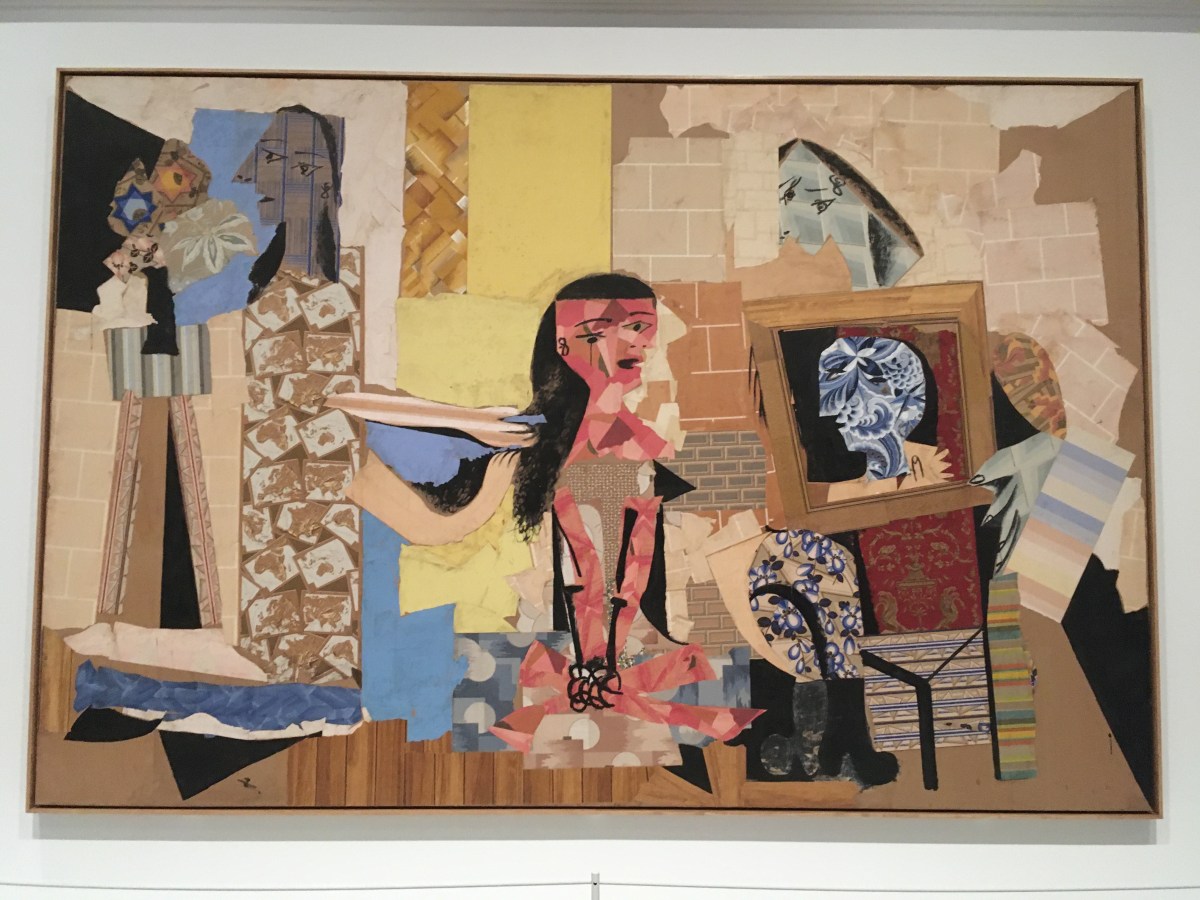
I loved this monumental collage using wallpaper and gouache paper pasted onto canvas. 1937-38. Called Femmes a leur toilette, it (possibly) depicts three of the women in his life, including Dora Maar as the central, weeping woman.

IMG_9892

Here’s the sketch book with watercolour preparations for The Harem, a precursor to the epic Les Demoiselles d’Avignon.

These are just three of the paper/card/cardboard and mixed media piece which emerged in 1912/13 with the adventures in cubism.  A block of paper made exactly the statement he wanted, easy to move around, available in any colour, ready printed or painted for the piece. It’s fabulous to see the evolution of his style and enthusiasm for paper.


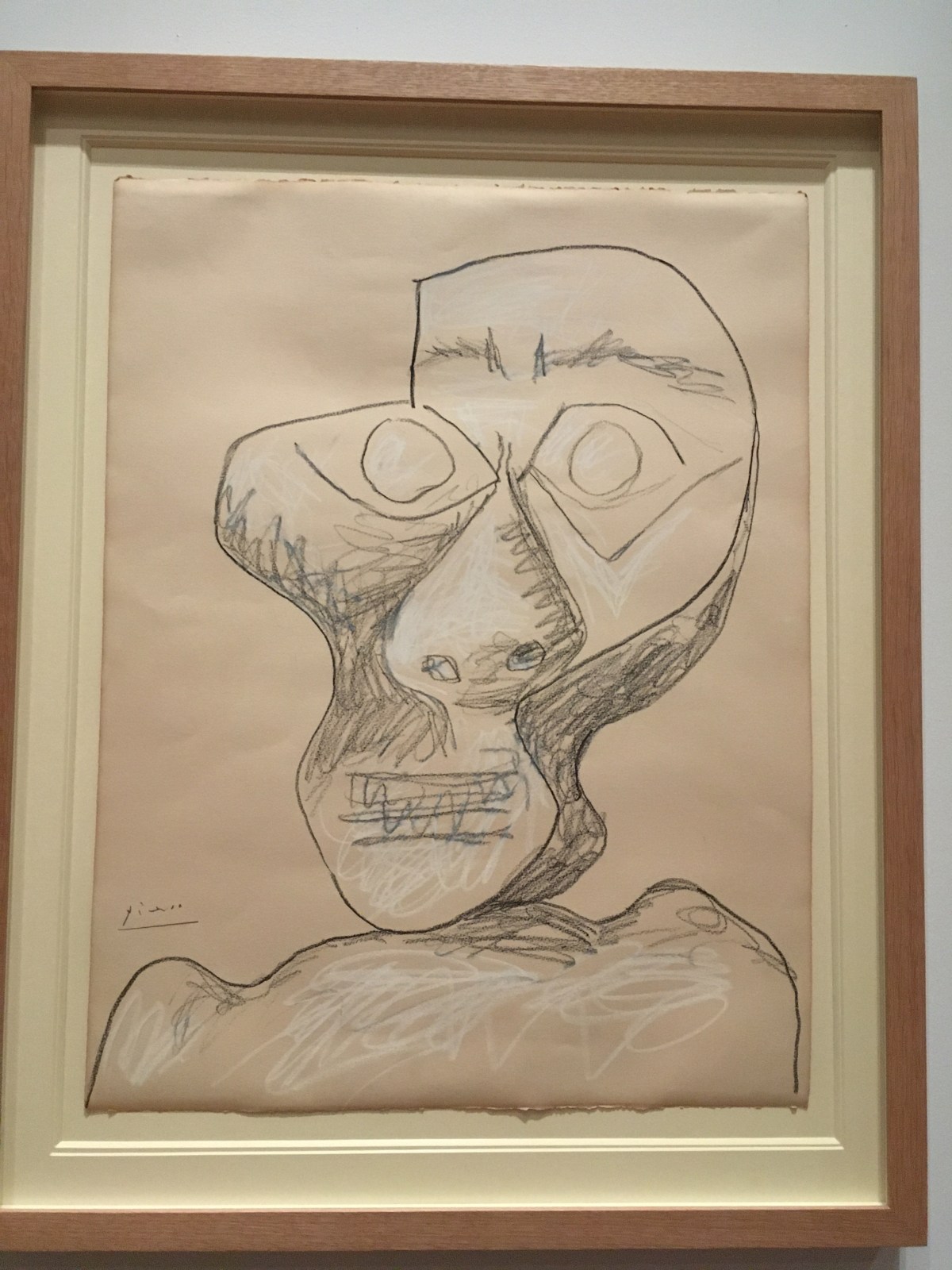
Couldn’t finish this post without adding in a few drawings on paper. A self portrait 1918, a portrait of Stravinsky 1920 and Bust of Woman, 1907.  What a fantastic show. I want to go back and see it all over again!

IMG_9900

IMG_9906

Self-portrait 1972, at the age of 90.

Picasso and Paper is on at the Royal Academy until 13th April 2020