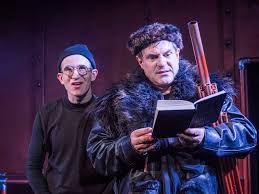
Paper Hearts, a charming new musical currently running at The Gatehouse Theatre in Highgate.

I saw this play on press night and reviewed it for Carn’s Theatre Passion.

An absolutely charming musical with characters you really care about

If you’ve ever wondered what goes on in an author’s mind when a story is being written, the delightful new musical, Paper Hearts, gives you a glimpse.

Young Atticus Smith is a writer who is easily distracted from his work as a shop assistant in a chaotic bookstore by the lure of his typewriter and the fictional world he has created. As Atticus types, the characters appear to us, playing out their drama set during the Bolshevik revolution in Russia where love, loss, trust and betrayal are the emotions which fuel the story.

Paper Hearts, devised and written by Liam O’Rafferty, wowed audiences in Edinburgh during the 2016 Festival and the musical has been expanded by producer Denise Koch for its transfer to the Gatehouse Theatre in Highgate. The story unfolds at a cracking pace. We soon understand that Atticus, excellently played by Adam Small, is in an unsuccessful relationship with Alex, a sparky Sinead Wall, who also plays the lead heroine in the book he is writing.
download-1

His amiable boss, Norman, an expressive Matthew Atkins, drops the bombshell that the bookshop is going broke and he’s selling it to Literally Books, an online retailer which also happens to be owned by Atticus’s estranged father, the mercurial Roger.

To complicate the story, Atticus meets the feisty and literary Lilly Sprockett, played with panache by Gabriella Margulies, and falls in love with her over a kind of ‘bookathon’ – who can show off their knowledge of the most authors, books or characters – only to find that she is the new manager of the bookshop and has been having an affair with his father.

Director Tania Azevedo cleverly flips the scenes seamlessly from the contemporary love story to the fictional story as the revolutionary characters come to terms with their circumstances and the bookshop rom com gallops towards a satisfying resolution. You can’t help rooting for each set of characters with equal passion and concern.

All of the action is ably supported by an on-stage band, held tightly together by Daniel Jarvis, Musical Director, as the highly talented ensemble bass, cello, violin percussion and guitar appear as characters from the story and provide pacey and entertaining support for the contemporary players. The singing is excellent and the final number, Paper Hearts, is particularly strong and has been imaginatively choreographed by Lindsay McAllister.

‘To write a story is to give away your heart’, says Norman to Atticus. The able cast and team of Paper Hearts have given their hearts to this production and it is a joy to watch.

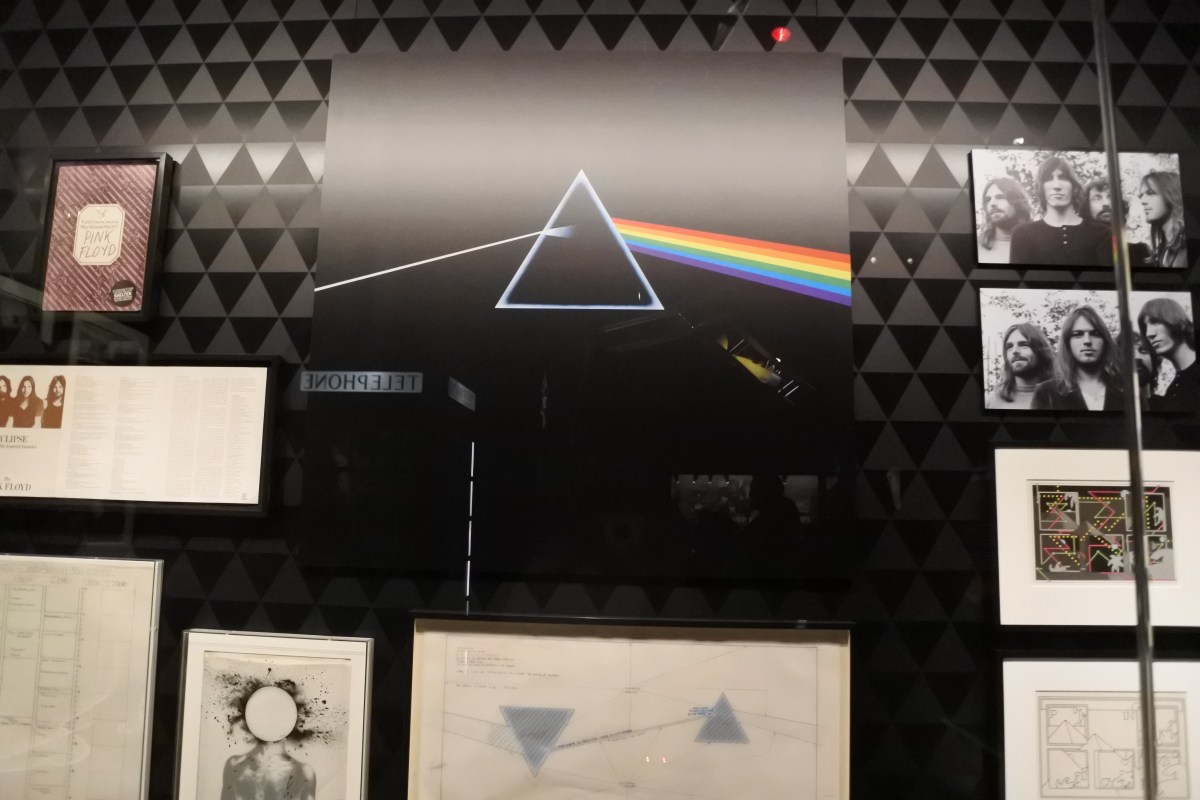


Fascinating exhibition celebrating 50 years of Pink Floyd, Their Mortal Remains, at the Victoria and Albert Museum – feeling comfortably numb, in a good way!

Immersive exhibitions seem to be all the rage but the V&A really do know how to put on a show and The Pink Floyd Exhibition: Their Mortal Remains is a cracker.  With the earphones on, you push through the heavy doors to this show and enter a world of psychedelia, alternative culture and amazing musical originality.

When I was young I didn’t really ‘get’ Pink Floyd. I think I was too distracted by the Beatles and Simon and Garfunkel and the lure of pop music on the radio.  But clearly I was missing the evolution of highly conceptual and adventurous contemporary composition.

DSC_1491

The new show at the V&A mingles exhibits of instruments with lyrics scrawled on paper, paintings, photographs, animation and artefacts from their sensational shows.  It’s 50 years since Pink Floyd gave their first ground-breaking concert at Queen Elizabeth Hall on the SouthBank.  As the show’s curator, Victoria Broackes, explained at the press preview, this band was not content with just standing on the stage and making music, they wanted to create an experience which combined music, theatre, design and performance.  I feel rather sorry I never got to experience any of these early shows.

The earphones know exactly where you are in the exhibition so it’s possible to listen to the constant soundtrack of their music and also the interviews.  I was fascinated to hear about the band’s ‘noodling’, the expression they used for their improvised music making.  This evolved through the imaginative and exploratory use of the new technology which was being developed at the time – synthesizers, filters, oscillators and using their instruments unconventionally, such as the  ‘backwards guitar’, to create futuristic sounds which came to define the 1970s.

I went into the show a curious spectator and emerged as a fully devoted Pink Floyd fan. The show is on until 1 October.


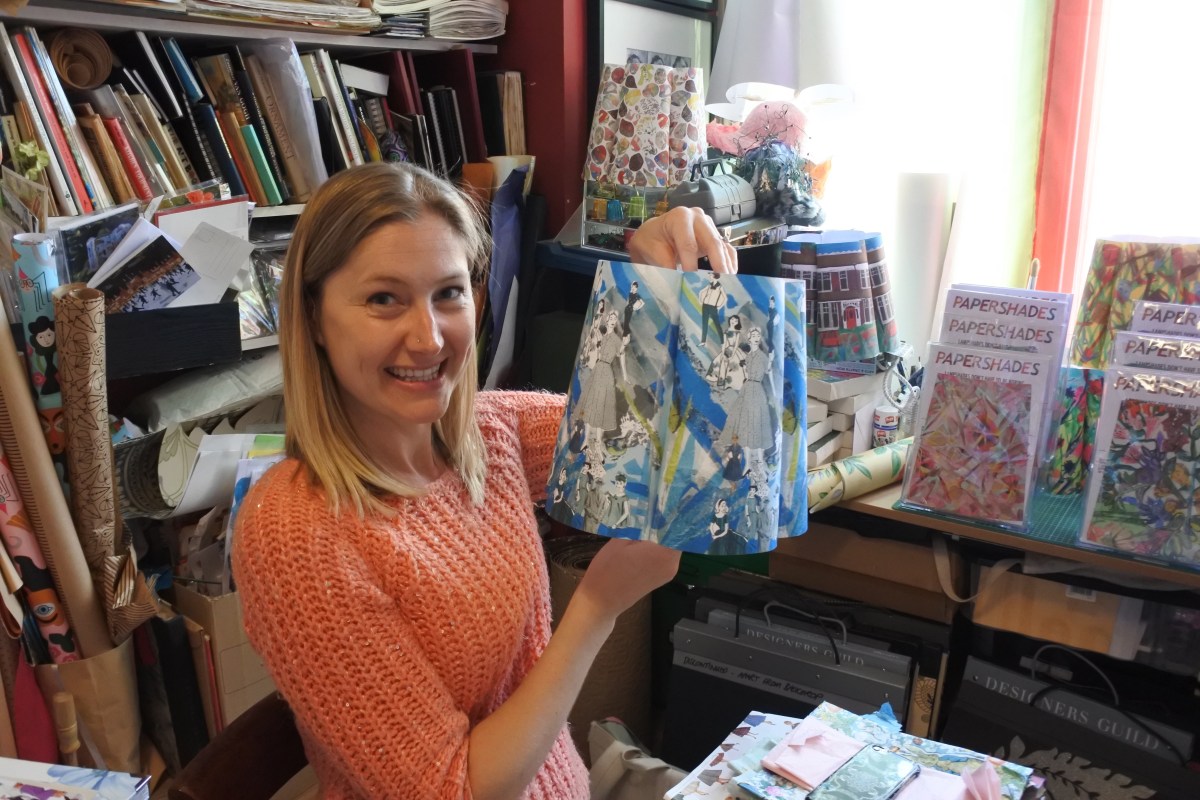
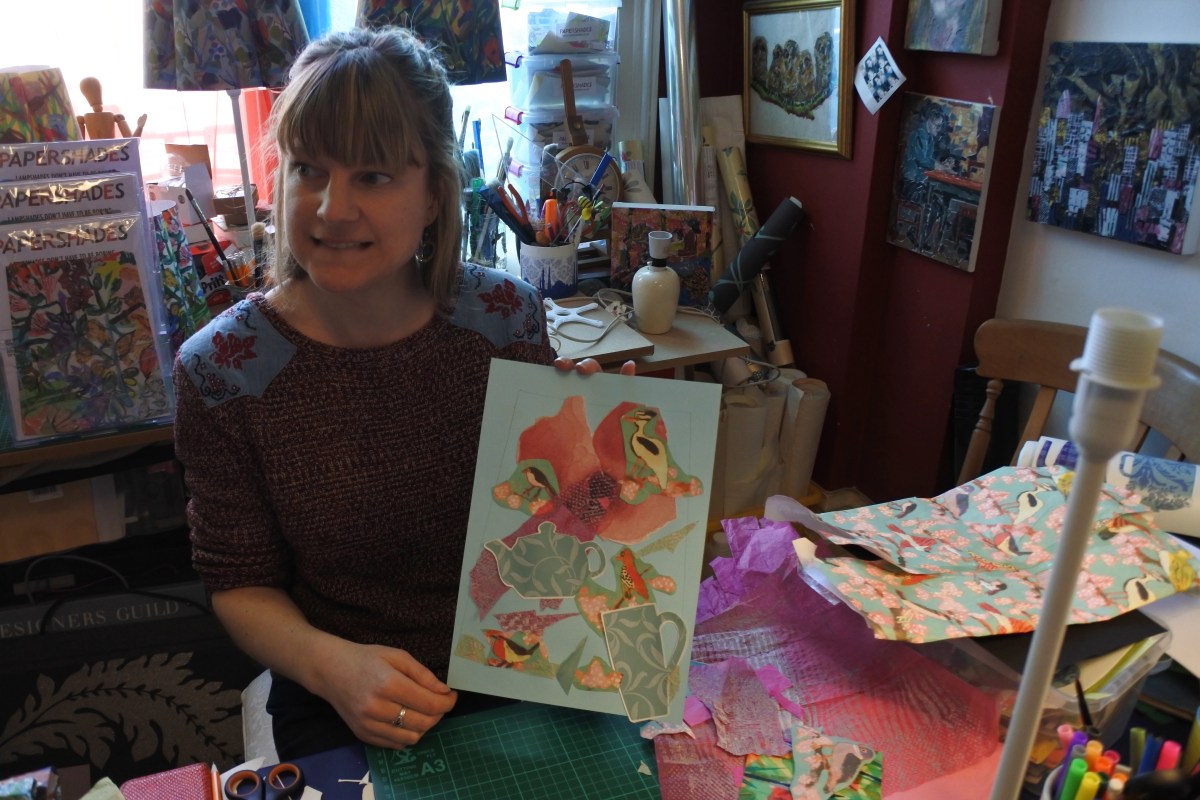
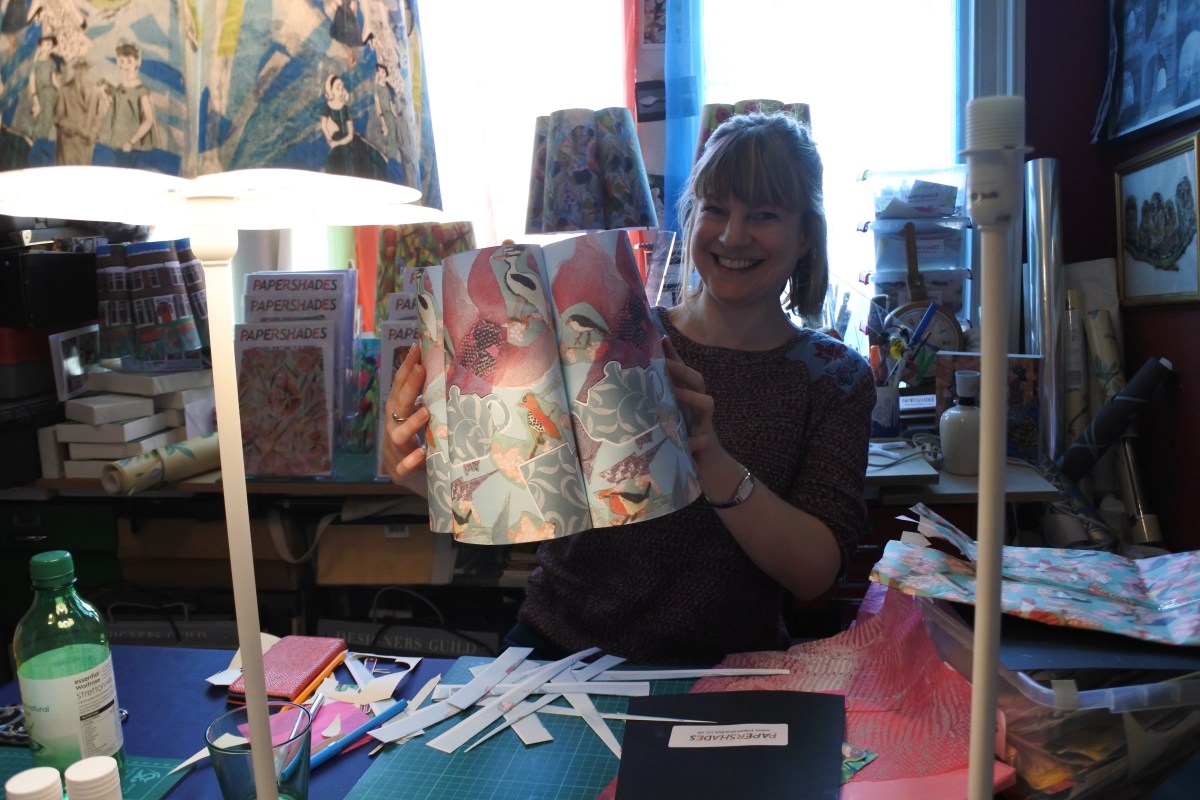
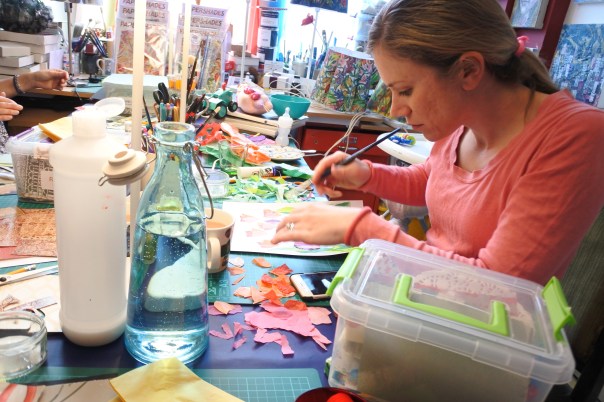
Intensive creativity on display at recent Papershades workshop!

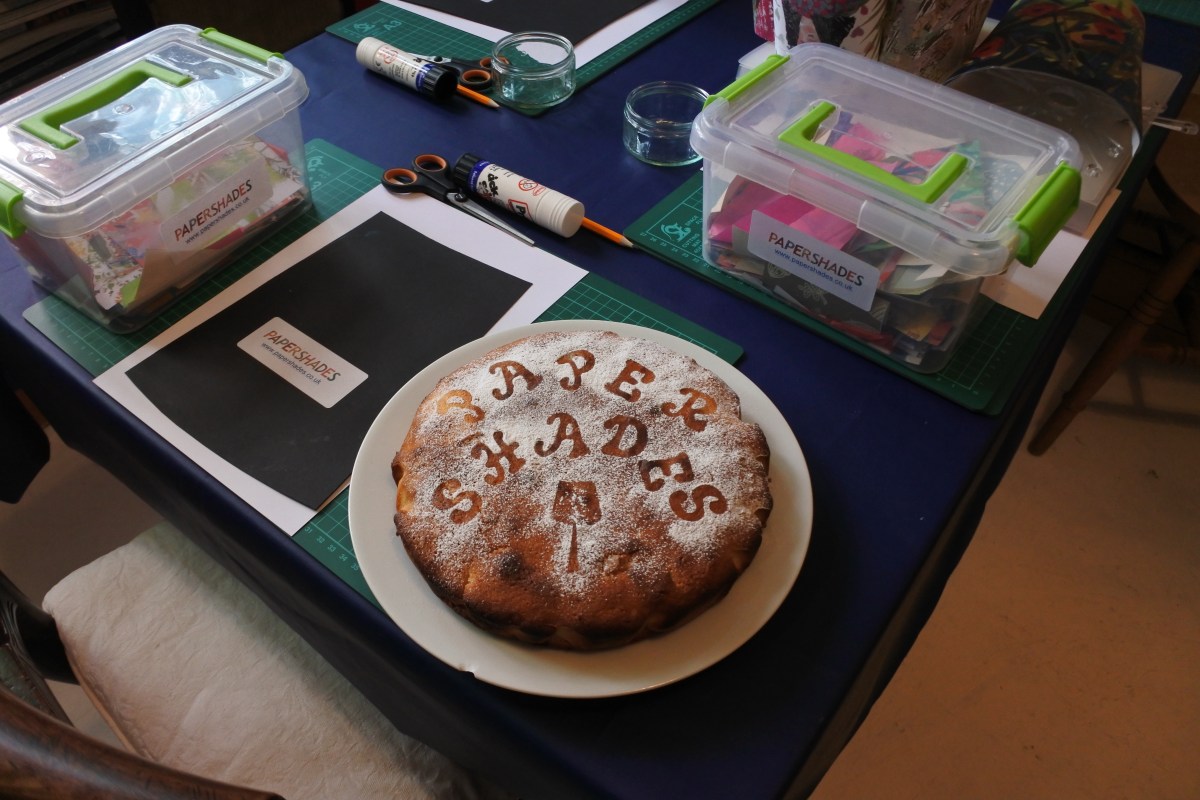
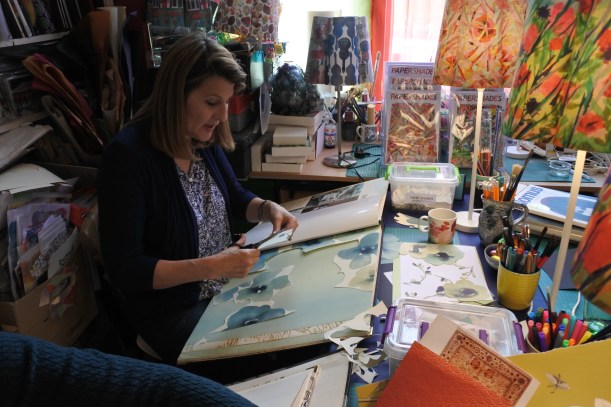
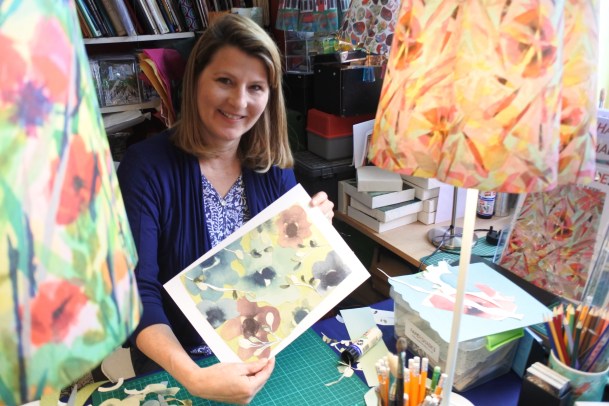
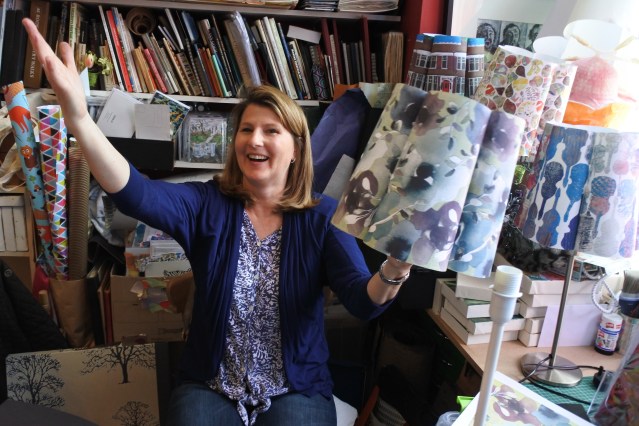
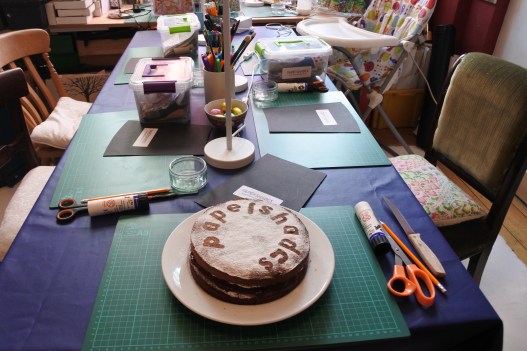
Last week’s Papershades workshop was both hugely enjoyable and very productive.  We had a mixture of intent and serendipity going on with the four designs of paper lampshade. Oh, and there was cake too, natch.

Imogen found geometric wallpaper to snip up and create a very pared down, cool design which works brilliantly as a lampshade – and matches her bedroom curtains.

Liz loves things to be accurate but, while channelling Matisse, sort of ‘let go’ and produced a very colourful and exciting design.

Lucy had no idea what she was going to make but combined all kinds of collage techniques in one template and produced a fabulous lampshade.

Lily wanted to make a lampshade which would go with a lamp stand she inherited from her grandmother. The lampshade needed to include pale green and cream but not be too literal. The result was a very original, decorative but cool lampshade design which works perfectly with the antique stand.

And we did indeed eat cake to fuel the three hour enterprise!

DSC_1425

Weaving water: Chris Ofili creates stunning tapestry for the Clothworkers Company. It’s on show at the National Gallery, Sunley Room until 28 August. Go see it and be immersed in the spirit of Trinidad, romance and mythology.

Chris Ofili has just unveiled his first tapestry – The Caged Bird’s Song – at the National Gallery. It’s on show in the Sunley Room until the end of August before it takes up the place it was commissioned for at the Clothworkers Company hall in the City of London.

It took nearly three years for the tapestry to be created by the expert weavers at Dovecot, the weaving studio in Edinburgh. They were challenged by Ofili to ‘weave water’.  And they have somehow, miraculously, conjured the effect of water in wool, translating a series of charming watercolour works into an entirely different medium but retaining the spirit of the original.  You can see where the pigment has puddled and darkened at the edges, there’s a glorious fluidity to the piece.

imagesimages-1

The tapestry is a triptych – one large piece flanked by two smaller ones. The central image conjures a feeling of luxurious romance as a couple relax by a pool with a waterfall tumbling down nearby and the horizon of the blue sea beyond.  A mysterious ‘cocktail waiter’ pours a green tincture into the woman’s glass and it bubbles up.

Error
This video doesn’t exist

The tapestry is complemented by an exhibition of watercolour sketches showing the evolution of the work.  Visitors to the Sunley Room will feel entirely immersed in the work because the room has been entirely painted in monochrome images of mythical and contemporary ‘demigods’.  It’s a charming show.

The blues and pinks of a pretty bedroom prevail at the latest Papershades workshop.

What a joy it was to have Lucy and Davina as my latest Papershades ‘students’.  Both came with pretty good ideas of what they’d like to produce, and both wanted lamp shades for their bedrooms. So we looked at examples of wallpaper and curtains and got going.

DSC_1411DSC_1416

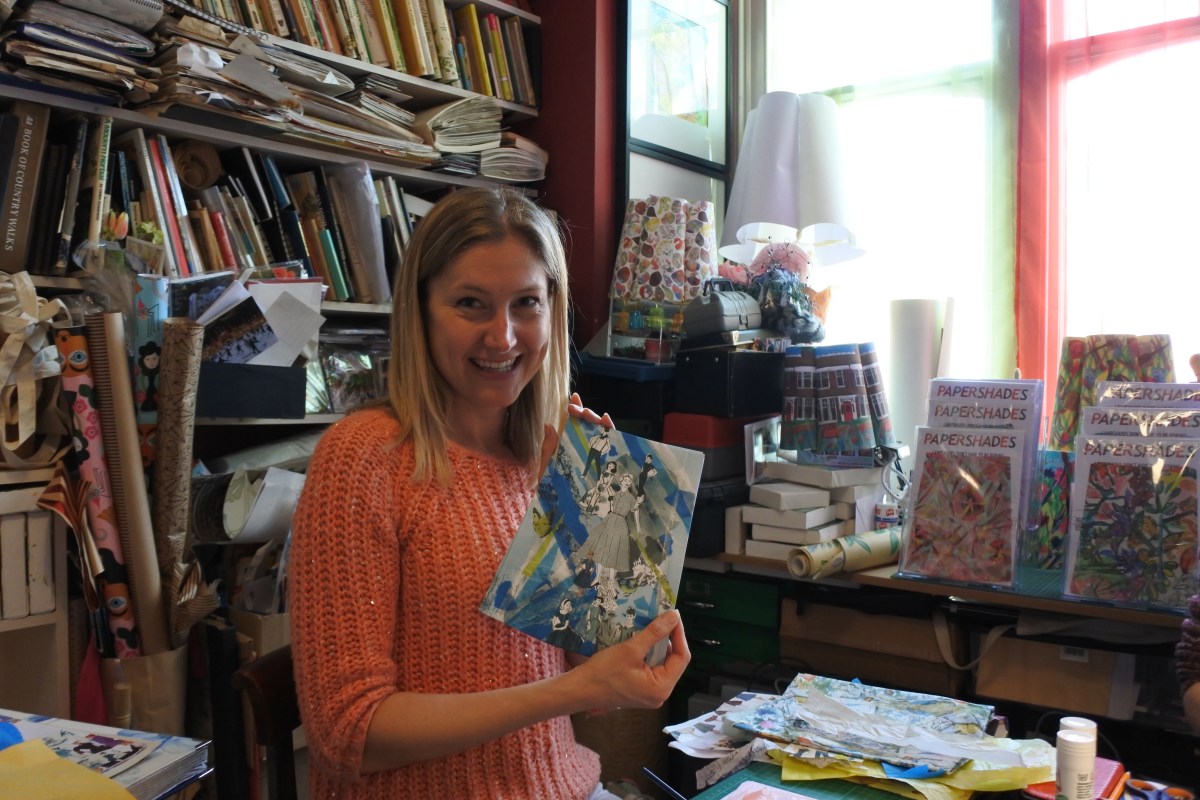
Of course, the wonderful thing about a Papershades workshop is the element of serendipity.  You can be heading in one direction and then something catches your eye…. and your off on another route.  Well, both Lucy and Davina created the most amazing lampshades which will work brilliantly with the existing decor.  It was fun to see some birds snipped from wrapping paper appear in Lucy’s and Davina could not resist the allure of the retro fashion drawings which were incorporated into a variety of blue tissue and old wallpaper.  Gorgeous. Well done you two!  And there was Papershades CAKE, of course!DSC_1414

DSC_1421

DSC_1407

Three strikingly different and highly original Papershade lampshades were made at the latest www.papershades.co.uk workshop.


Take one photograph of glorious fields of tulips taken during a recent holiday in Amsterdam, come to a Papershades workshop and… yes, the result is a fabulous paper lampshade which captures a very special experience.

It’s wonderful when my ‘students’ come with an idea in mind, and so rewarding to see the idea brought to life.  After a bit of background, some gentle instruction and a good rummage through my box of colourful tissue paper there was no stopping Liz. She snipped up greens, blues and yellows for the leaves and selected zingy reds, pinks and purples for the tulips.  Once the template was finished I printed the design onto five sheets of Papershades paper and – dee dah – an amazing lampshade was produced!

DSC_1381


Diana has a background in interior design and loved flipping through the old wallpaper sample books which Sally Bourne Interiors kindly save up for me.  She snipped her way through several designs, combining them very cleverly within the Papershades template.  The result was a symphony in blue!

DSC_1374

DSC_1383

DSC_1395

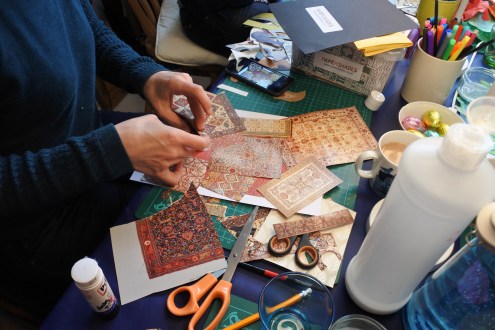
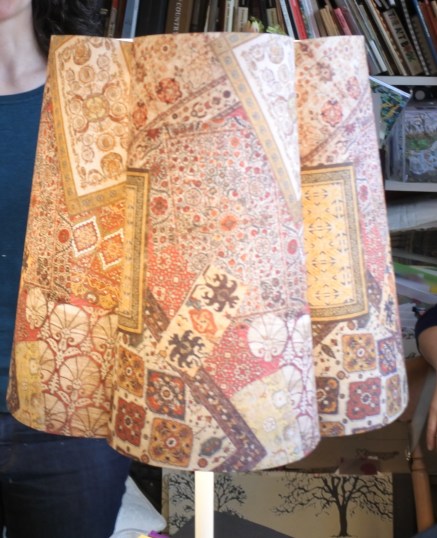
Catherine was very drawn to the geometric designs of Persian carpets and ancient wallhangings which she cut out from Hali magazine.  The template resembled the look of Moroccan bazaar with a wonderful blending of colours.

DSC_1385

DSC_1397

Three women produced three such different designs but they all reflected their personality in some way.  I find it so fascinating to watch the way ideas find form and the results, when they are printed and constructed into Papershades, are just so satisfying.  To come to a Papershades workshop please check out the website, get in touch and fix a date. I look forward to seeing you – there will be cake!

DSC_1370


Queer British Art 1861 – 1967 at Tate Britain – a new show of ambivalent art has just opened in London

This new show, Queer British Art 1861 – 1967 at Tate Britain contains artworks which convey a whole range of emotions – wistfulness, joy in the human form, humour and suffering.   It’s a fascinating compilation of works on canvas, paper, photography and sculpture.  The unifying element is the sensuality between same sex affection or simply a voyeuristic celebration of the human form with a strong dose of lust thrown in.

So many fascinating characters feature in this show. Quite rightly we have Oscar Wilde, Quentin Crisp, Radclyffe Hall, Cecil Beaton… well known names.  And of course so many of our greatest artists have been, and are, gay.  It’s good to have a show which celebrates their contribution and their sacrifice.

It’s always hard to pick out favourites from such a large and diverse show, and there are some ‘old friends’ too such as Dame Laura Knight‘s wonderful self portrait with the full length female nude which we can usually see at the National Portrait Gallery.

I was particularly struck by the playful and subversive collages made by Joe Orton, the playwright, and his boyfriend Kenneth Halliwell.  I rather like the story that the pair used to borrow and steal books from libraries around Islington and cut out some of the illustrations which they used to decorate the walls of their flat in collage form.  Then they started ‘adding’ to book covers, introducing collage elements from other sources and completely redefining the design.   They were eventually caught and jailed for six months for ‘malicious damage’.

The end of the story is not happy. The prison experience ruined Halliwell and contributed to his alcoholism and he murdered Joe Orton.

And I’ve already spotted a gratuitous link between a very fine bronze figure by Hamo Thornycroft, made between 1888-90 and that very famous photograph of Aidan Turner as the sun-bronzed Poldark in the TV series as he prepared to do a bit of scything!

The charming ladies of the Women’s Institute at their annual WI Fair at Alexandra Palace welcomed Papershades at today’s presentation

Unaccustomed as I am….. Yes, public speaking has not been my thing before so it felt pretty amazing to find myself on a stage in the Great Hall at Alexandra Palace, giving a talk about Papershades to an audience of 100 or so discerning ladies from the Women’s Institute.  This was the annual WI Fair and it’s a terrific event – there’s a wide range of talks and workshops and hundreds of stands selling clothes, toys, crafts, artworks, food and drink from enterprising entrepreneurs. It last four days; there’s Friday and Saturday to go.

And what an experience!  Of course it’s nerve wracking but I had a very strong feeling that the audience was on my side. They laughed at my little jokes, responded to my passionate story telling with encouraging nods of the head and pleasant smiles.  I was given the lunchtime slot which turned out to be rather special – time for a sit down and a sandwich and, well, let’s see what this paper lampshade business is all about.

I presented my range of six floral paper lampshades and then, with a metaphorical waft of the hand and imagined fade/dissolve I took my audience back in time to the moment when my passion for art took hold and the need to make collage found form.   It’s quite cathartic telling a life story in public and I probably sounded pretty impassioned when talking about my art school experience and the various stages of creative development which have culminated in the creation of Papershades.

So I thank the Women’s Institute for inviting me and feel very honoured that my first experience of speaking about my life and art was delivered to such a sympathetic and delightful audience.

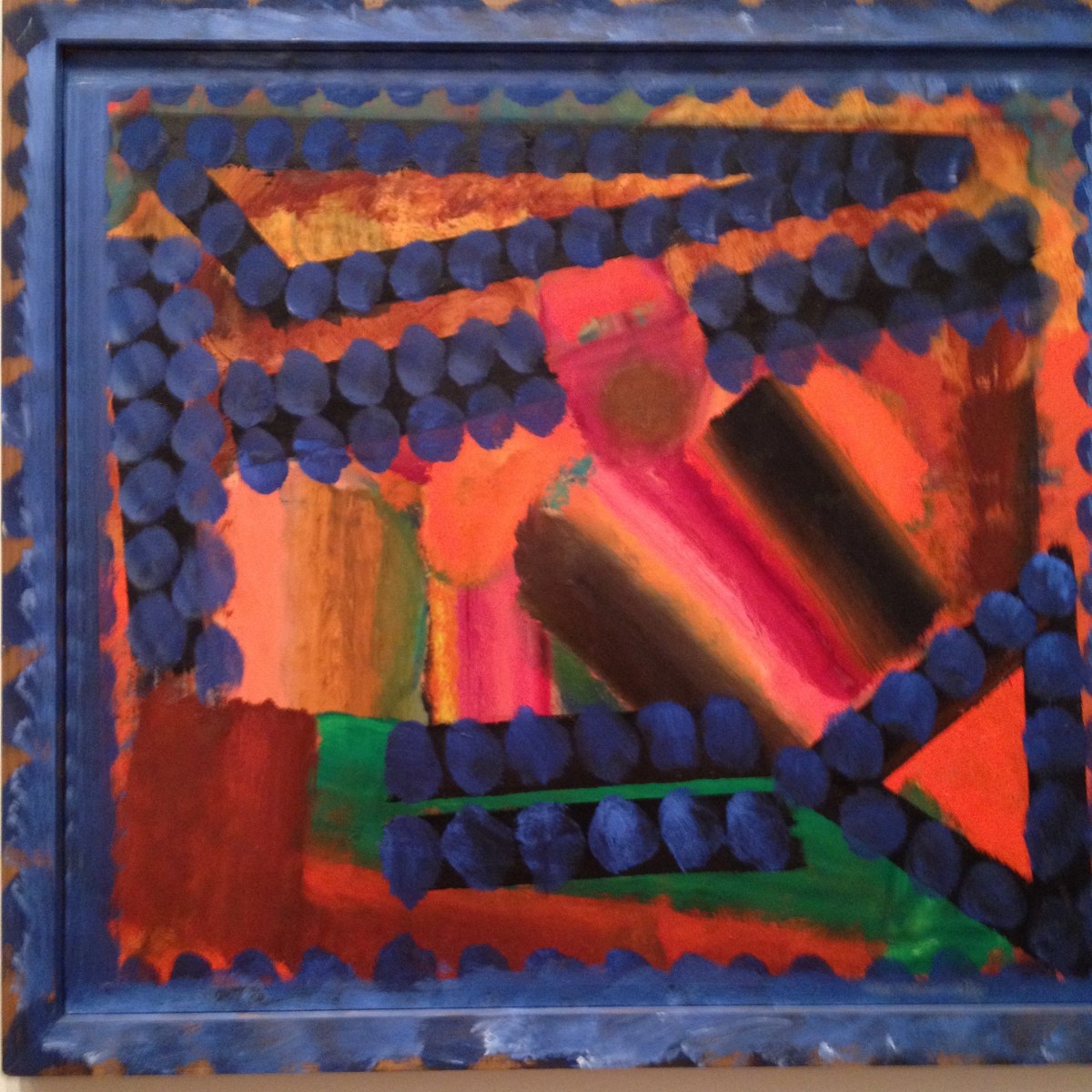
Howard Hodgin: Absent Friends. Very moving exhibition at the National Portrait Gallery.

Walking around this remarkable exhibition of work by Howard Hodgkin:Absent Friends at the National Portrait Gallery you can feel the presence of the artist very strongly.  Less than two weeks ago we heard that he had died, just as the first of 50 portraits were being put in place at the gallery, a sad irony. However, Curator, Paul Moorhouse, said that Hodgkin had been delighted to hear that his portraits were being assembled for a major retrospective, “at last”.

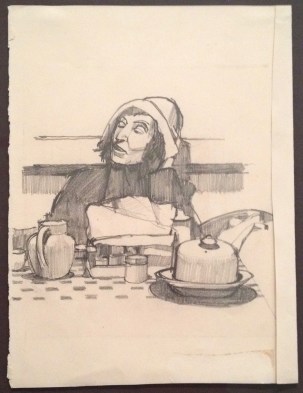
Hodgkin has been a central figure in contemporary art for some 60 years.  Clearly he was prodigiously talented as a child and his family encouraged his artistic interest.  Not much from his early years survives but some fascinating sketches have been included in this exhibition.  Looking at them you would think that they must have been done from life but no; apparently they were done from memory some time after the event.  What concerned Hodgkin was the idea of memory and how memory selects what feels important about a person, a scene or an experience.  As Hodgkin’s work evolved he developed a very individual ‘language’, a way of conveying emotion, memory and sensation through the bold and colourful use of oil paint.

IMG_6216IMG_6218


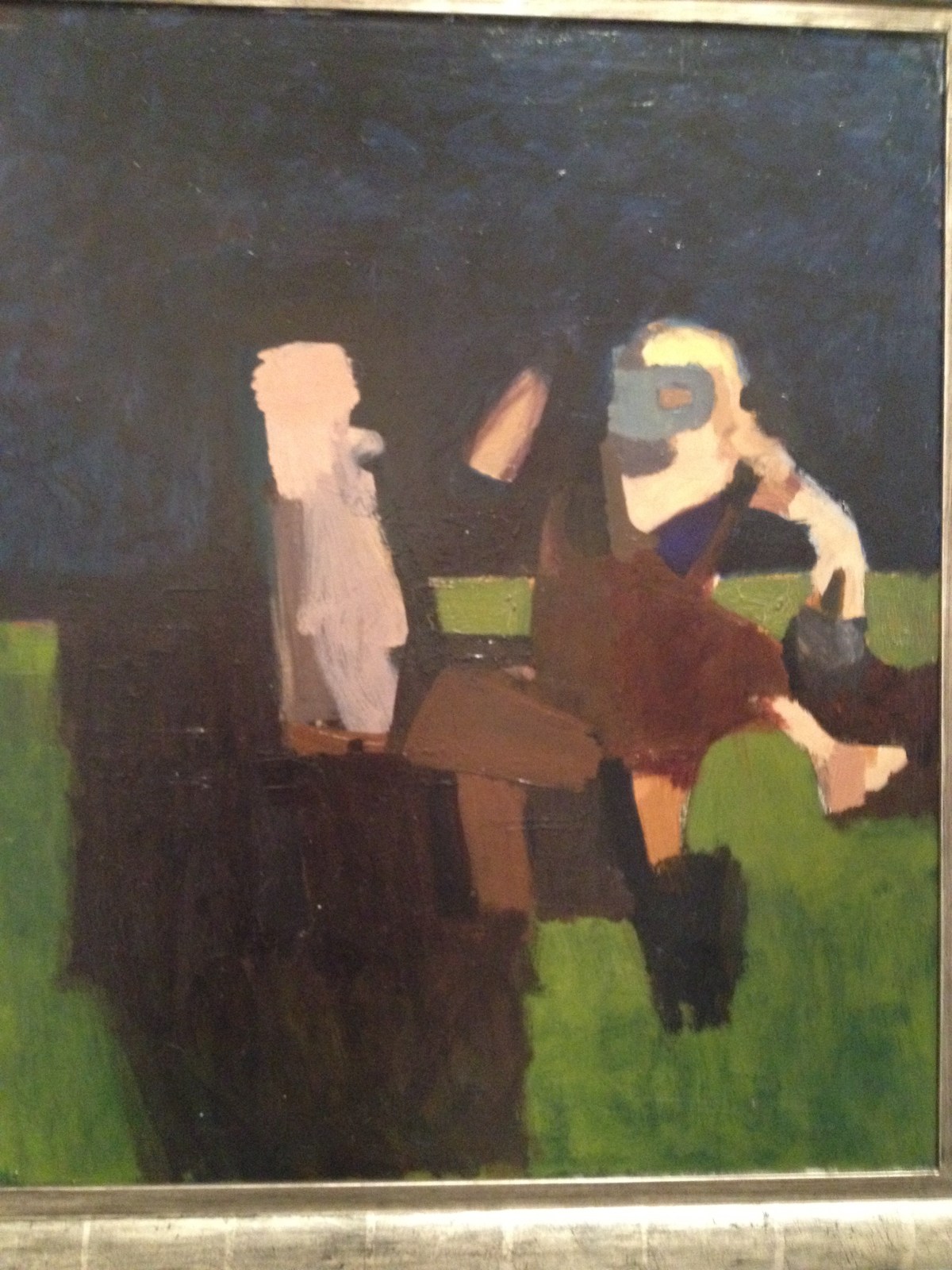
It was fascinating to learn that so many of Hodgkin’s portraits were made at a distance; not for him the studio ‘eye-balling’ of his contemporary, David Hockney.  Hodgkin’s aim was to conjure the personality, the feeling and the environment of the person or people in the portrait.  Although the gestural brush strokes and strong, clear colour give the impression that his portraits might have been done in a whoosh of energy over a short span of time, the opposite is true. He took his time over each picture, apparently putting them away to revisit it at a later date, building up the layers of paint to create texture and deepen colour. His use of colour opposites too, for instance combinations of red and green, make your eyes dance when gazing at the pictures.

The portraits are mainly of his friends, colleagues, confederates or people he loved or encountered in his life.  The idea of creating a literal likeness did not interest him.  He wanted to go deeper and create pictorial spaces which ooze personal resonance and capture private or shared experiences.

IMG_6220IMG_6227

The last room in the show contains his most recent work and is dominated by a very moving self-portrait.  Paul Moorhouse asked Hodgkin if he would like to contribute a new work to this important show.  The result was a vast canvas which Hodgkin had started work on some years ago but revisited towards the end of 2016. He was too frail to stand up and his gallery assistants supported him so that he could paint with a brush on a long stick and then smear the paint with his hands. The result feels visceral and immediate. And indeed it turns out to have been a fitting final piece from a remarkable artist.

(I apologise for my rather out of focus picture of this piece)

IMG_6225

Hop along to the Jermyn Street Theatre to see the UK premiere of The Frogs, a ‘freely adapted’ (says Nathan Lane) version of the musical by Burt Shevelove, some songs and lyrics by Stephen Sondheim

Review of The Frogs , a comedy by Aristophanes, freely adapted for today by Burt Shevelove, even more freely adapted by Nathan Lane  with music and lyrics by Stephen Sondheim

What a strange little piece of theatre this is. The programme notes for the UK premiere of The Frogs contains an amusing preface from Nathan Lane. He has been the driving force for the revival of a work which made an uneasy debut in 1974 (in the swimming pool of Yale University) and languished in a bottom drawer until he was moved to dust it down soon after 9/11 and review its ‘message’.

And what is the message? Well it’s a bit scrambled, I have to say. A bit of a ‘frogs dinner’. We are sort of in 405BC, Dionysos, entertainingly played by Michael Matus, in good voice, and his faithful slave Xanthias, a rather sweetly wet George Rae, decide that something must be done to counter the untrustworthy leaders on earth. “Do something more than just deplore.” He decides that we need a good writer to ‘tell the world the truth’. In a supposedly ‘post truth’ time this is nicely resonant.

imgres-2

The frogs of the title are referred to as the people in charge, the ones who hate change, do not want new ideas and will support only what is good for them. Yes, I’ll go with that….but this doesn’t really develop.

Anyway, our dynamic duo sets off on a trip to the Underworld and that’s where things get more interesting. To begin with we have a fantastic performance by Jonathan Wadey as Charon, the stoned skipper of the boat who navigates our travellers down the River Styx.   I think Mel Brooks would rather like him – he milked that part for every scrap of comedy and brought a strongly sinister air to this weird journey.

imgres-3

In Hades – hell, yes! – things really hotted up. We stumbled into a kind Berlin of the 1930s nightclub scene with much strutting, high kicking, eye-rolling entertainment. I was impressed by Emma Ralston who played Pluto in dominatrix style. Now she had a proper song to do which contained those ingredients you expect from a Sondheim musical – really good tune, cracking lyrics and the opportunity to bring some serious razzle dazzle to the proceedings. That scene really lifted the show.

The denouement – if that’s the right word – was Dionysos challenging George Bernard Shaw and Shakespeare to a literary duel in order to decide who to take back to earth. Who could out do the other in terms of spoken truths, epigrams and ‘isms? As it turned out, Shakespeare had the edge on Shaw (we saw some Shavian chagrin as a result) and agreed to get into the boat, sail back up to earth and give our world the poetry it needs at this emotionally stricken time.

As a play, I’d say it needs a bit of work but the evening is full of theatrical fun  – a bit panto, a bit cabaret and full of nice one-liners, some witty repartee and a couple of seriously good songs.

The absolute heroes of last night’s show were the band. Hats off to Tim Sutton for leading his tight little crew – Adam Bishop (woodwind), Oliver Carey (trumpet) and Sarah Bowler (cello) on the deck of the ship on the River Styx and creating a very strong sound.   Sondheim is not an easy composer to interpret. His music is complex with uncompromising rhythms and a demand for lyrics to fit absolutely. The cast really depended on this machine on their right to keep on the straight and narrow and they were brilliant.