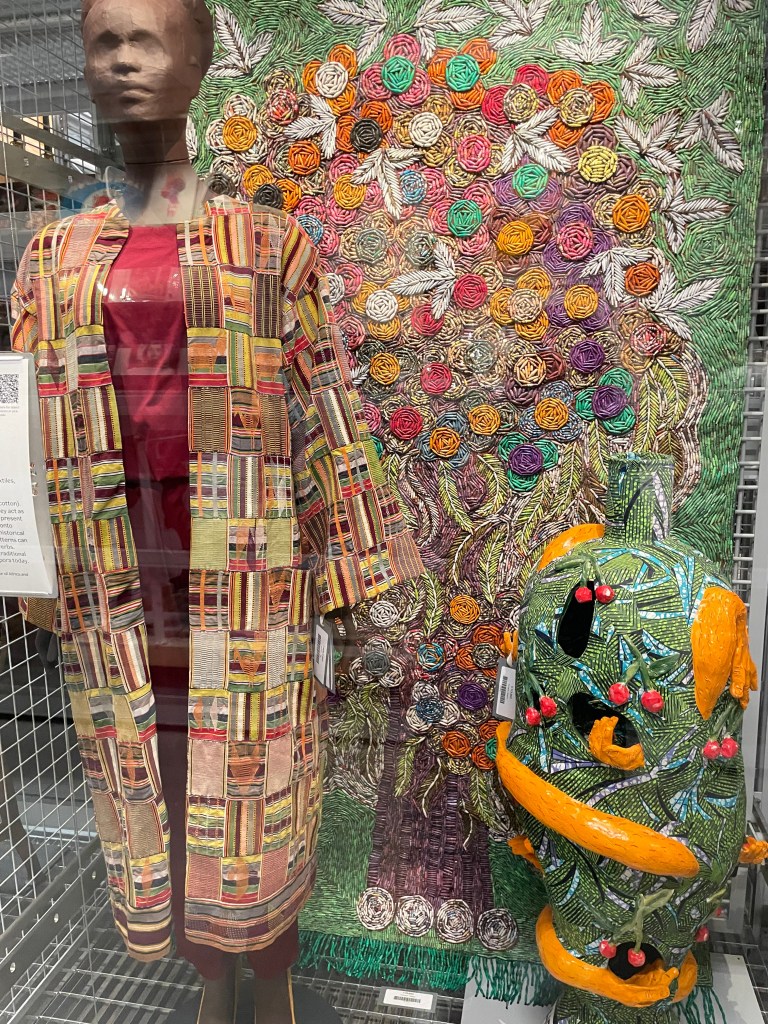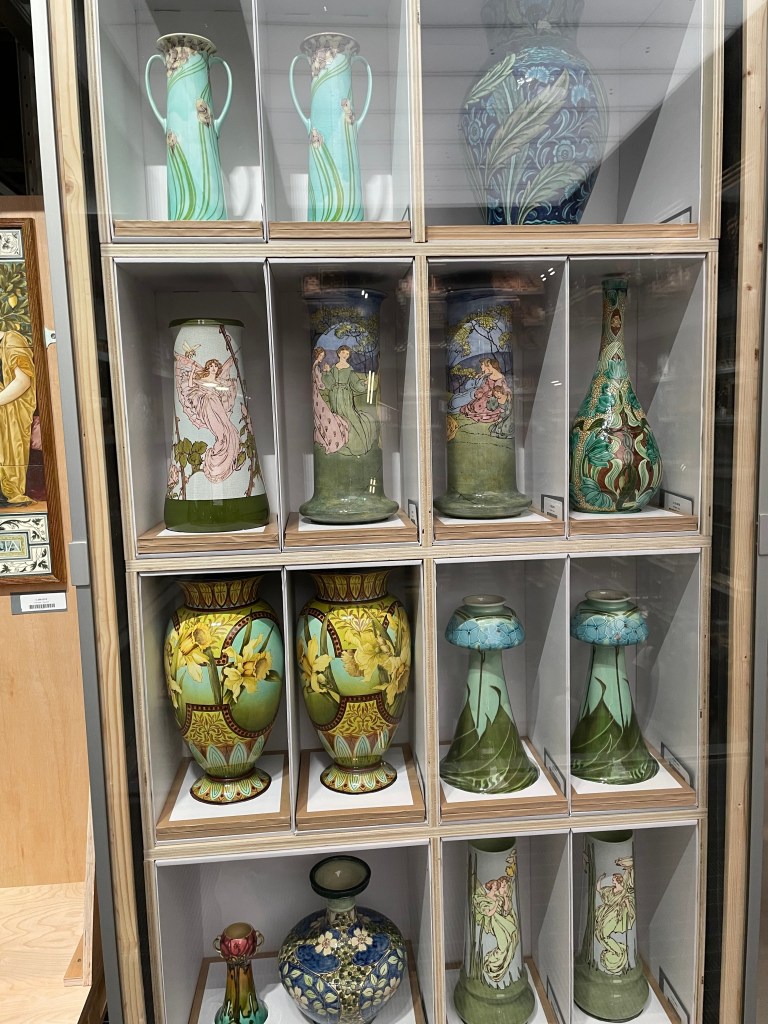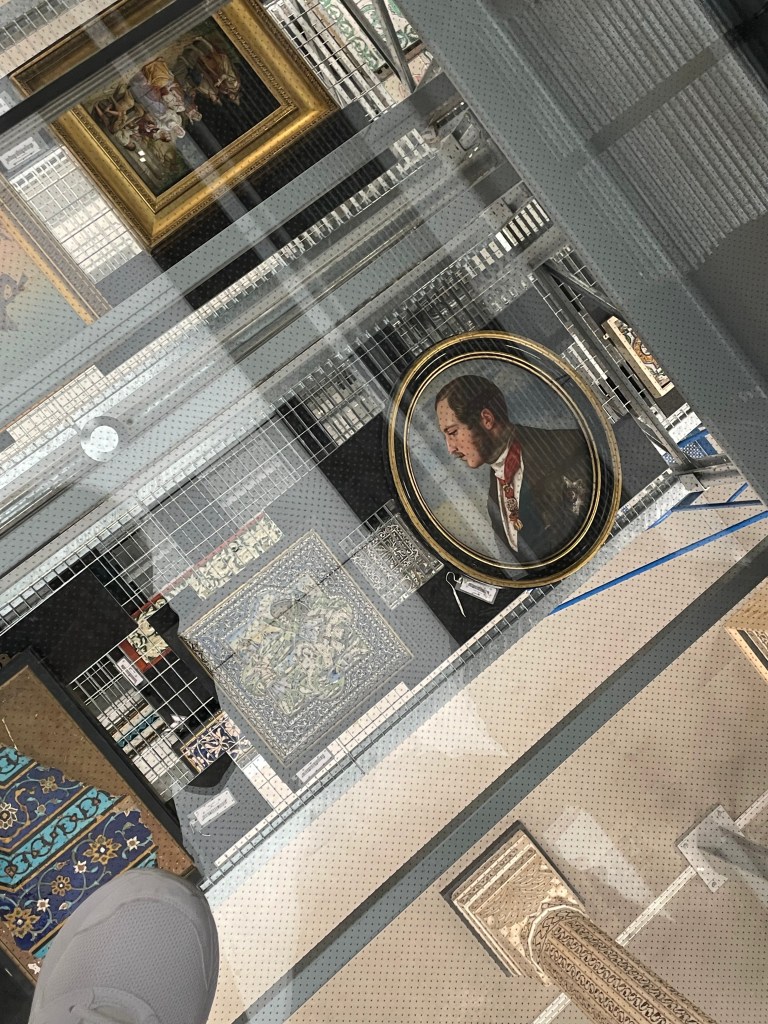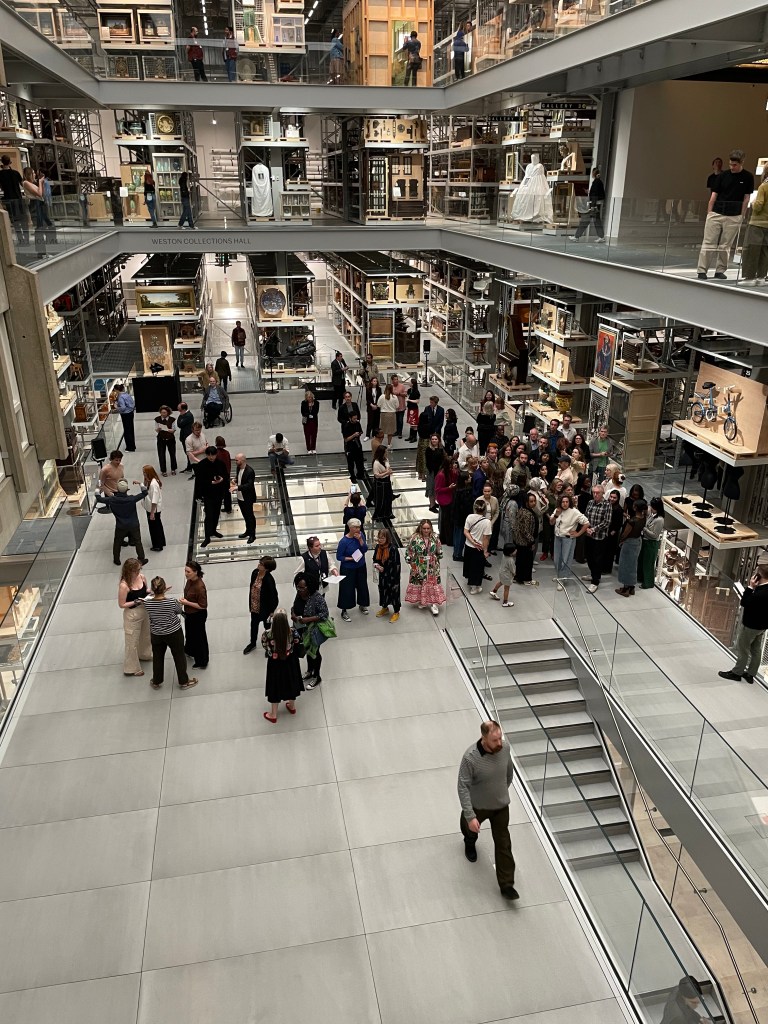
The fabulous new storage space for V&A East has opened in Stratford and it’s a ‘must see’ for any London visitor. Taking over the building created as a media centre during the 2012 Olympics, this space has been reimagined in the most original way as an exhibition/storage space for the Victoria and Albert Museum’s extensive collection. It’s like a giant cabinet of curiosities with so much to see.

What a thrill to be part of the press preview at the opening of the new V&A East storage space in east London. It’s a most dynamic space – the most extraordinary storage unit ever imagined. There’s easy access to all the objects; they are not only on display, but if there’s something you are keen to see close up, you can make an appointment, come to the space and see it close up in the company of a curator.
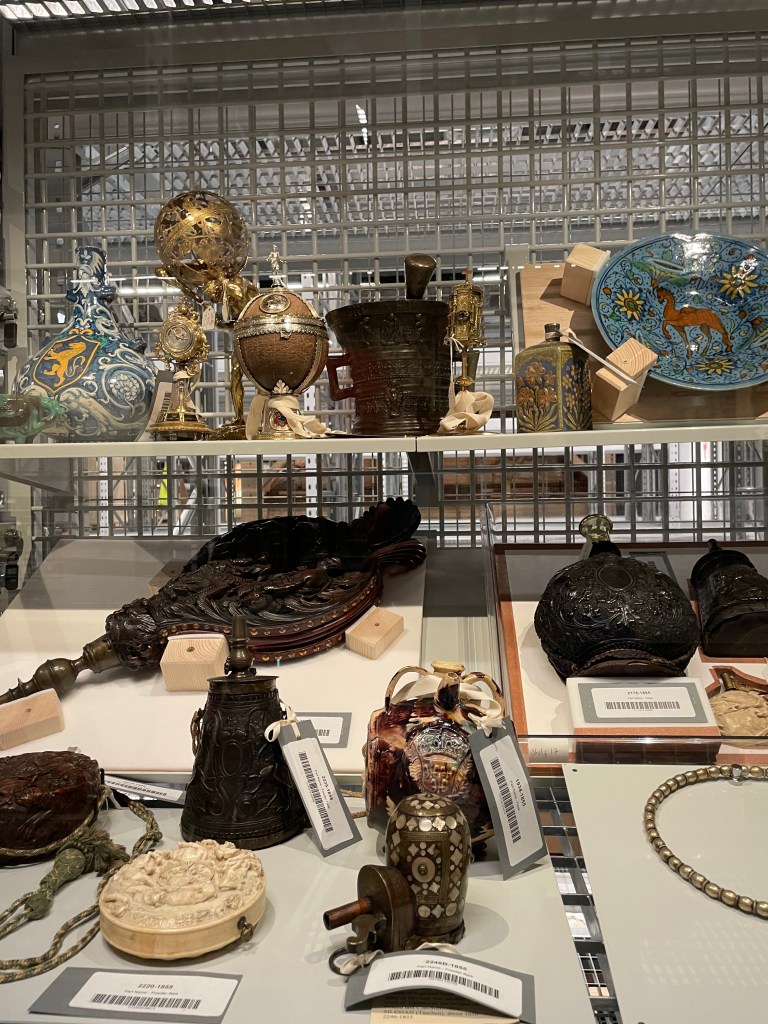
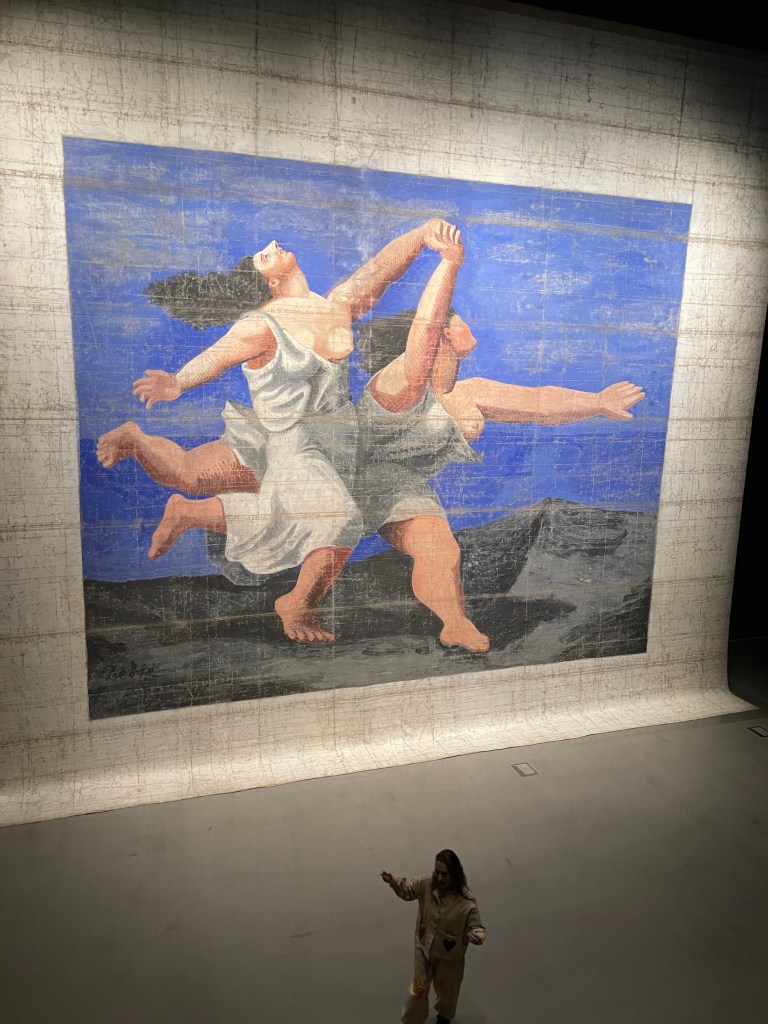
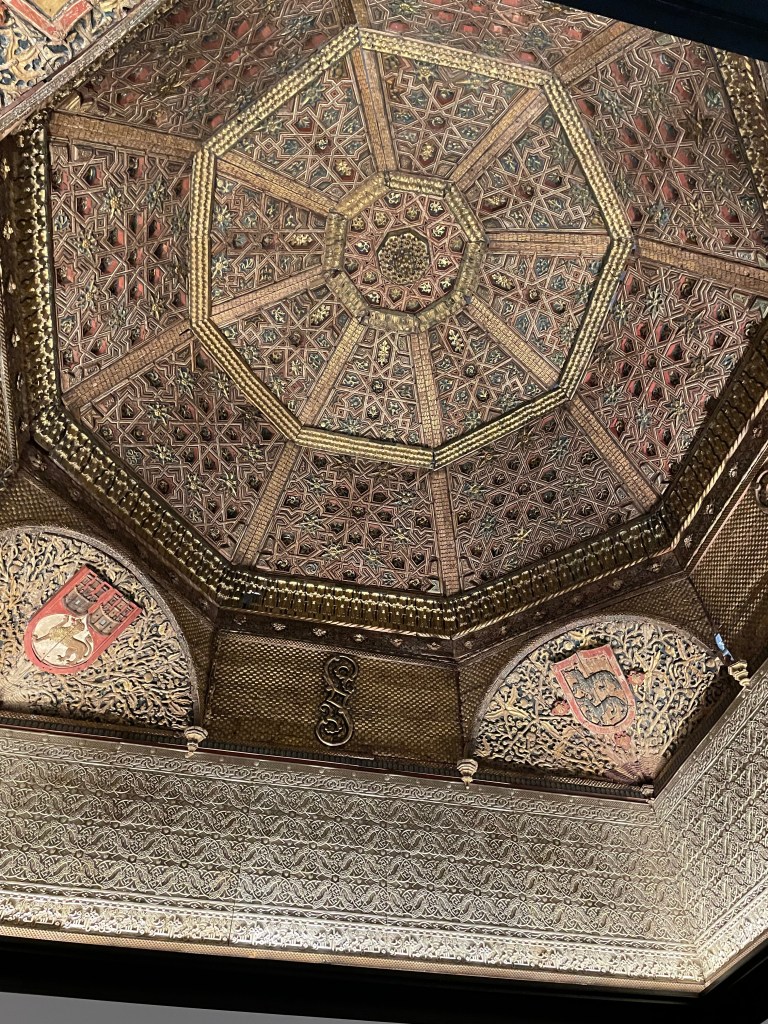
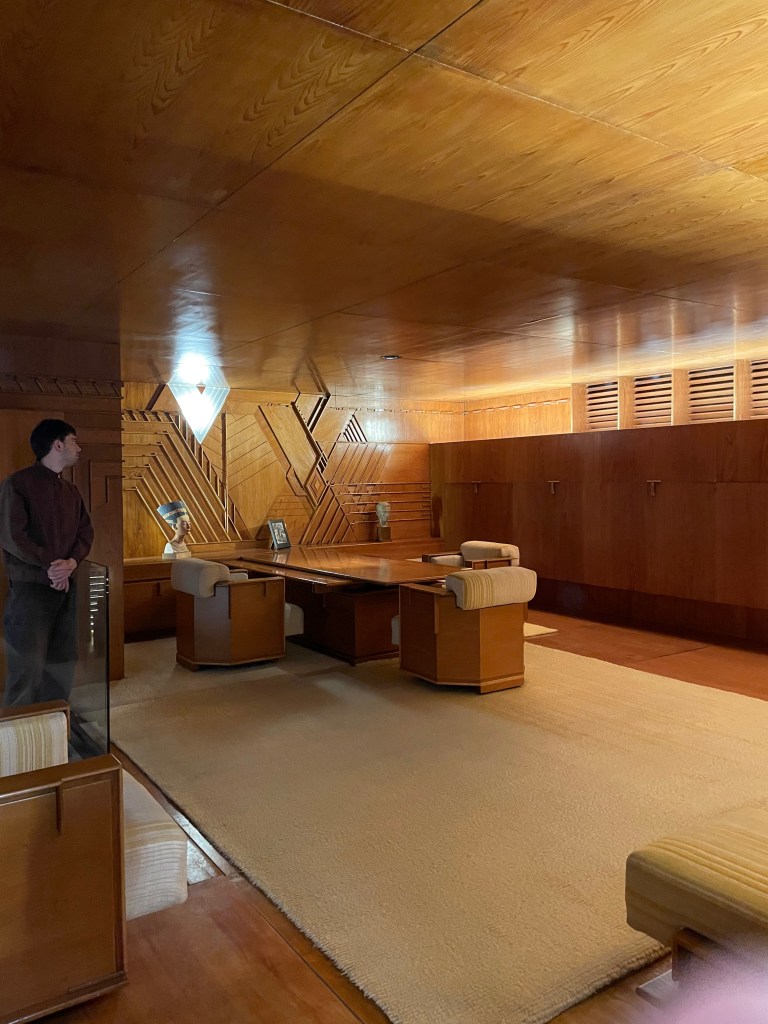
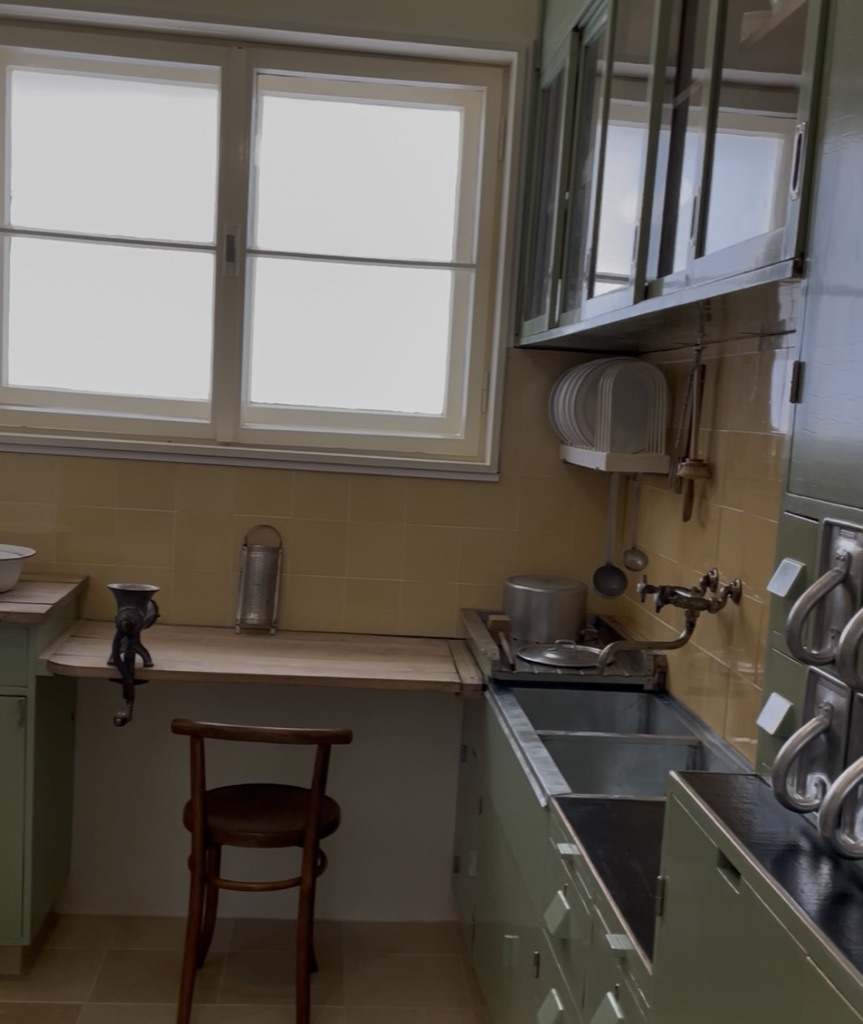
The objects are arranged on pallets, carefully lashed to their space and exude a wonderful confidence in their new environment. As well as objects from all eras, countries, cultures and faiths there are entire room sets. It was fascinating to see the complete kitchen from a Frankfurt apartment of the 1920s and the amazing Kaufmann Office designed by Frank Lloyd Wright. There’s a stunning Moorish ceiling and a giant theatre backcloth by Picasso.
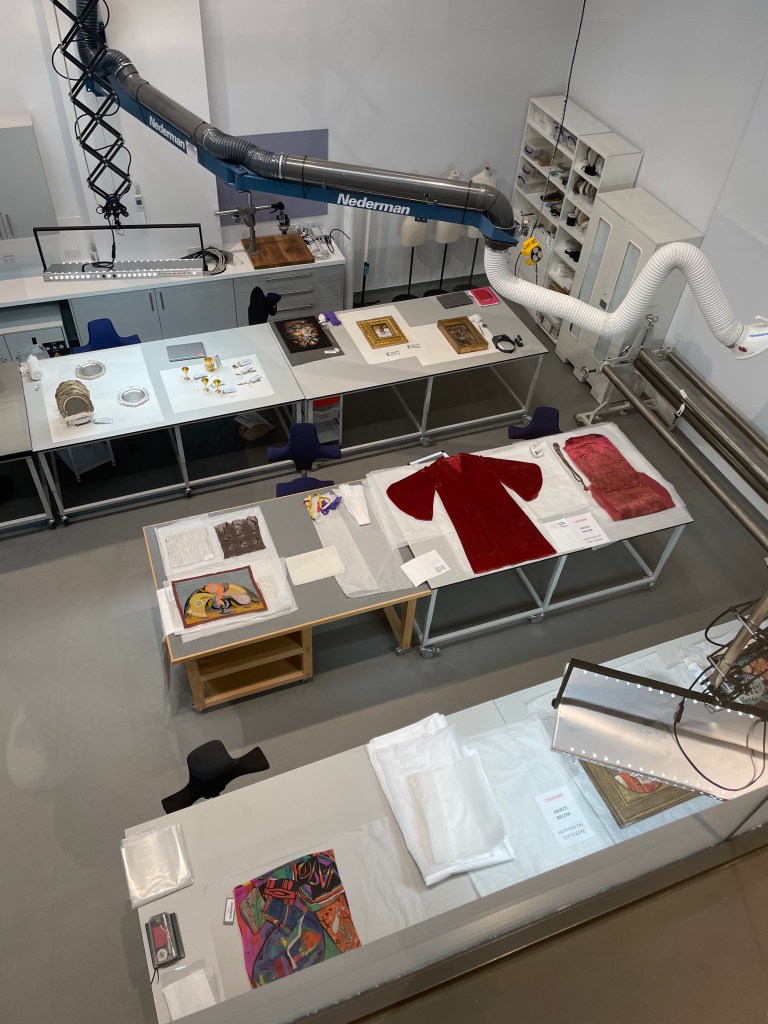
In architectural terms this new space is a joy. There is the luxury of a vast atrium in the centre of the storage unit which can be used for events, talks, concerts. The collection is displayed on five floors and seem to disappear down corridors into infinity. And the large space where the Picasso cloth was displayed provides much-needed opportunity for huge carpets and theatrical backcloths to be conserved, examined and displayed. You can also look into the conservation studios and see the work being done to restore all kinds of items, preparing them for display.
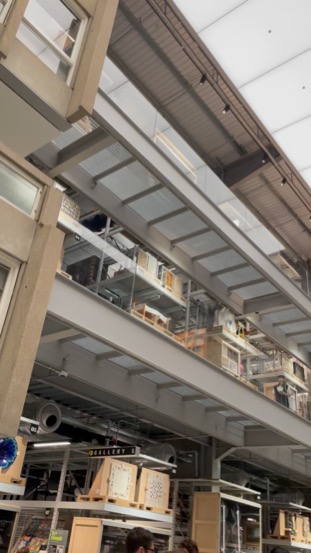
The V&A East is a short walk from Hackney Wick station and it’s exciting to see all the new buildings and attractive design which is pouring into this area. The whole Olympic Park repurposing is a shining example of legacy architecture, forward thinking and imaginative usage of the space. I’m impressed.

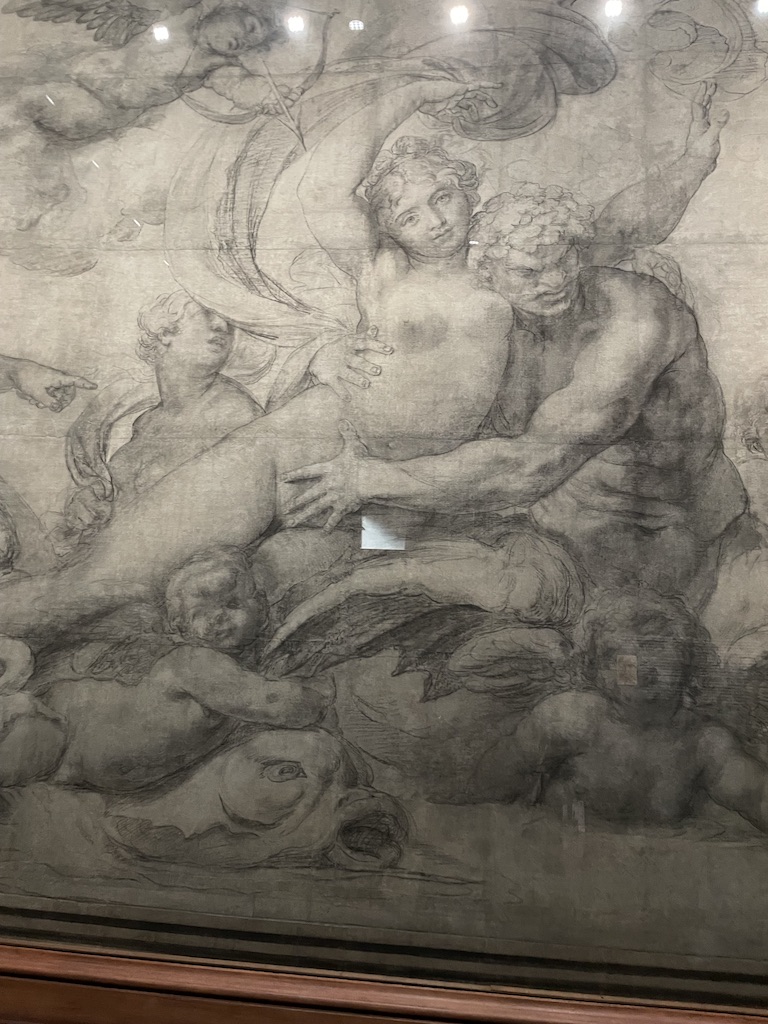
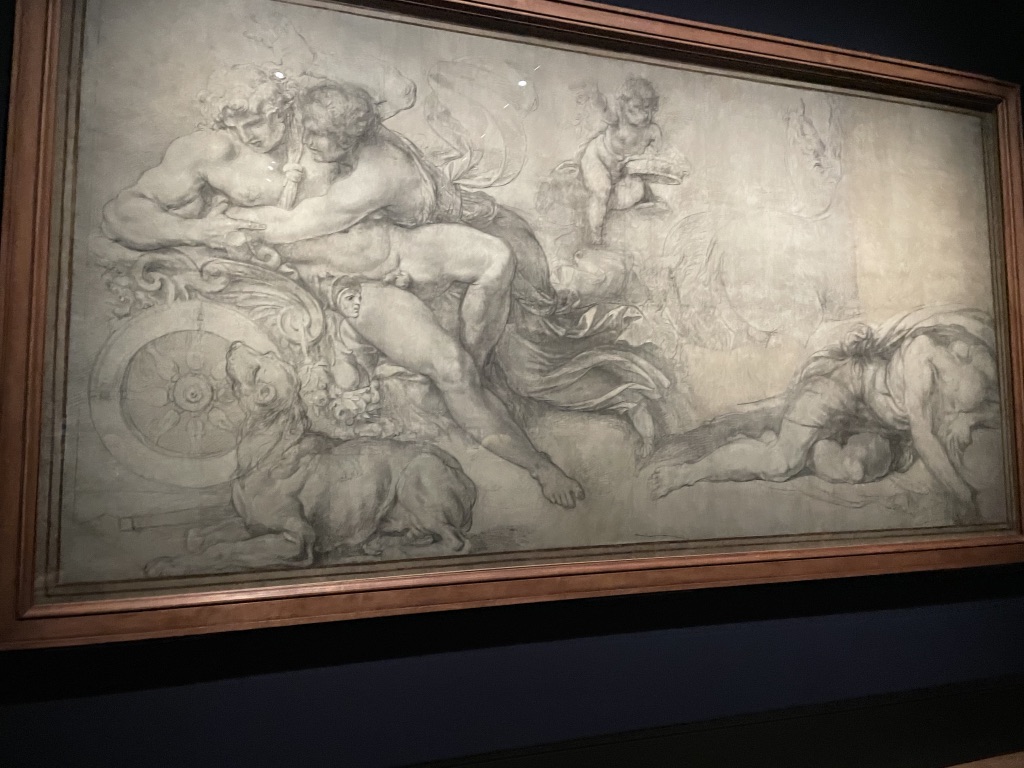
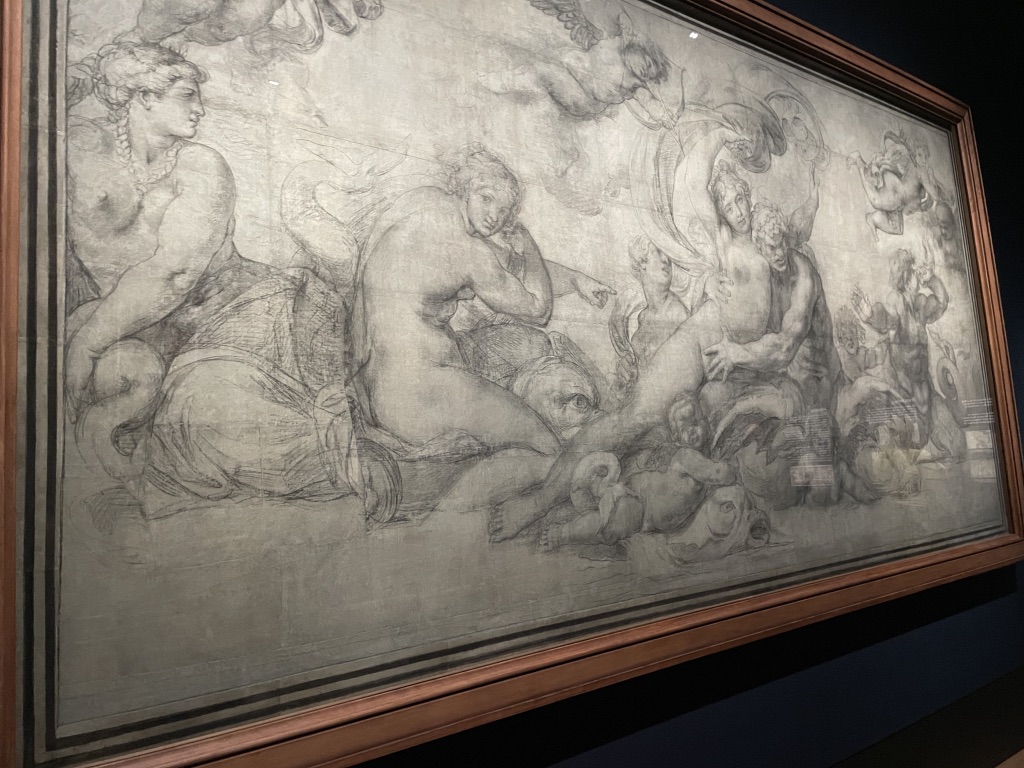
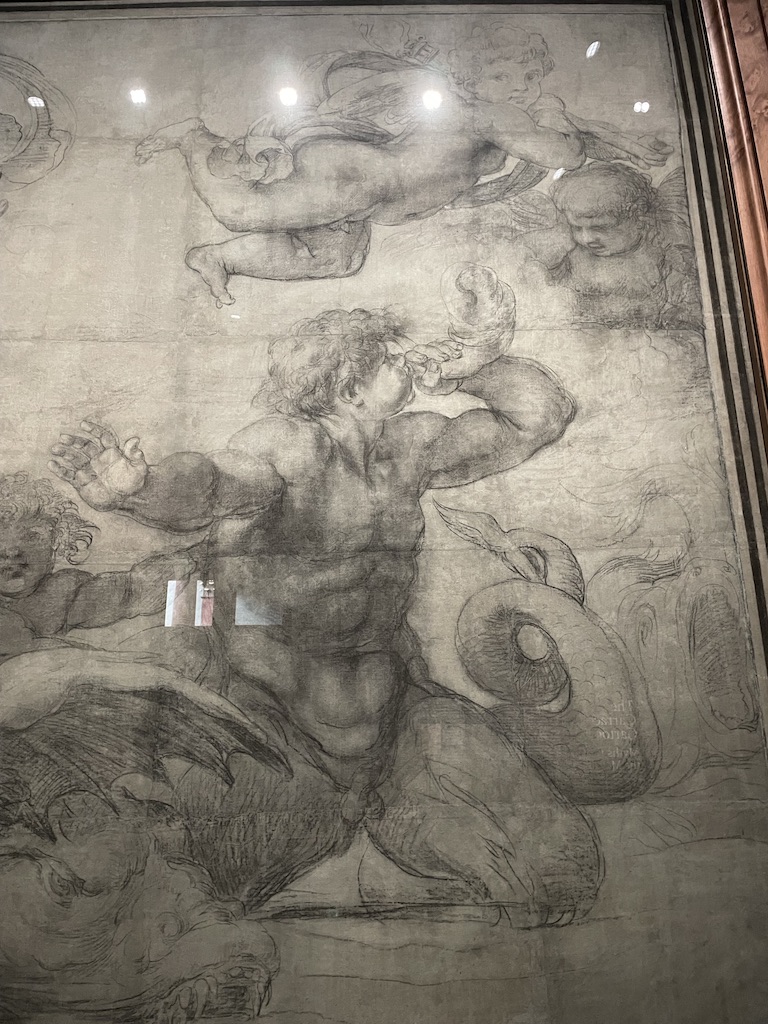
What a delight to see, close up, a remarkable survivor from the Renaissance – the two Carracci ‘cartoons’ created in the late 1590s in readiness for transfer to the ceiling of the Palazzo Farnese in Rome. You can see the joins, the cuts, the holes for the ‘pouncing’ and simply absorb the atmosphere of artists at work over four centuries ago. Stunning!

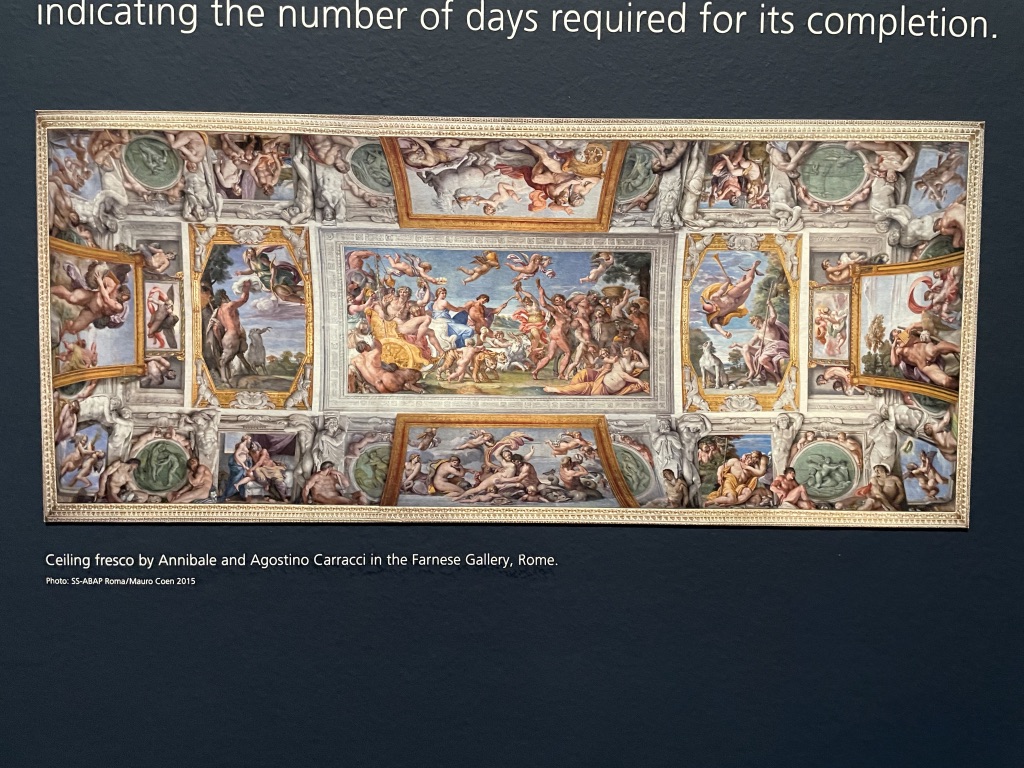
It was a thrill to enter the darkened space of Room 1 at the National Gallery and behold two massive, landscape-sized charcoal drawings by the artistic double act of the early 1600s, Annibale and Agostino Carracci. These huge cartoons were the preparatory works for two of the large paintings which adorned the spectacular gallery ceiling of the Palazzo Farnese in Rome. The work was commissioned by Alessandro Farnese who became Pope Paul III. The building is now the French Embassy so it’s not easy to see the amazing works.

The two cartoons on show are the centre top and bottom images in the gilded fame. It’s spectacular to see these works close up. You can see the cuts, tears, reps and pin marks in the fragile paper. These cartoons were working documents, used to lay out the design, develop the artwork and then placed against the damp plaster of the ceiling surface to have the image pricked (pounced) and and traced onto the surface. Then the artists would labour at ceiling height on a scaffold to complete the frescoes.

It’s impressive to see these works close up and follow the lines and scratches made by artists over four centuries ago. It’s rare for these working documents to survive but, apparently, they were carefully pieced together again after the transfer process and kept safely. Maybe the idea was to reuse elements of them on future commissions.

There’s such vitality to the drawing and the clever composition There’s humour too. On the right, you can see a putti blowing a shell in the face of another putti who is covering his ears!

Above is a view of the gallery made by Francesco Panini, who appears in the bottom left of the gallery sketching the view.

Secrets of the Thames. What a treat to visit the London Museum Docklands, to see their new exhibition which celebrates the determined curiosity of generations of mudlarkers. Swishing around the river’s foreshore at low tide is clearly an addictive activity and the results are wonderful.

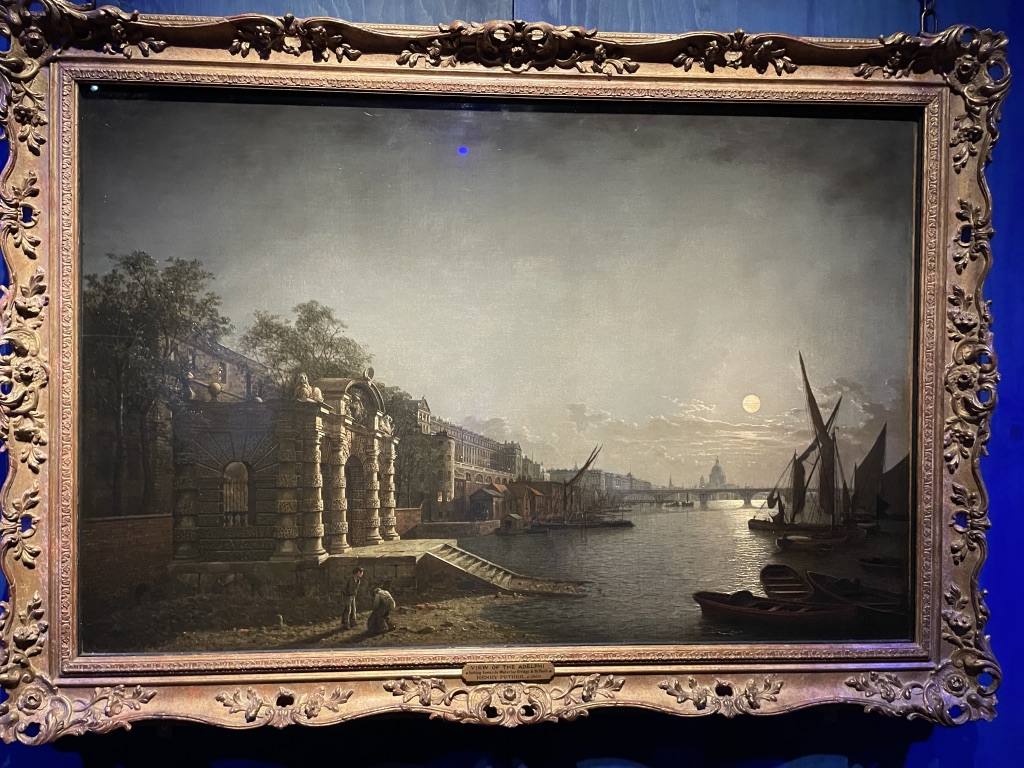
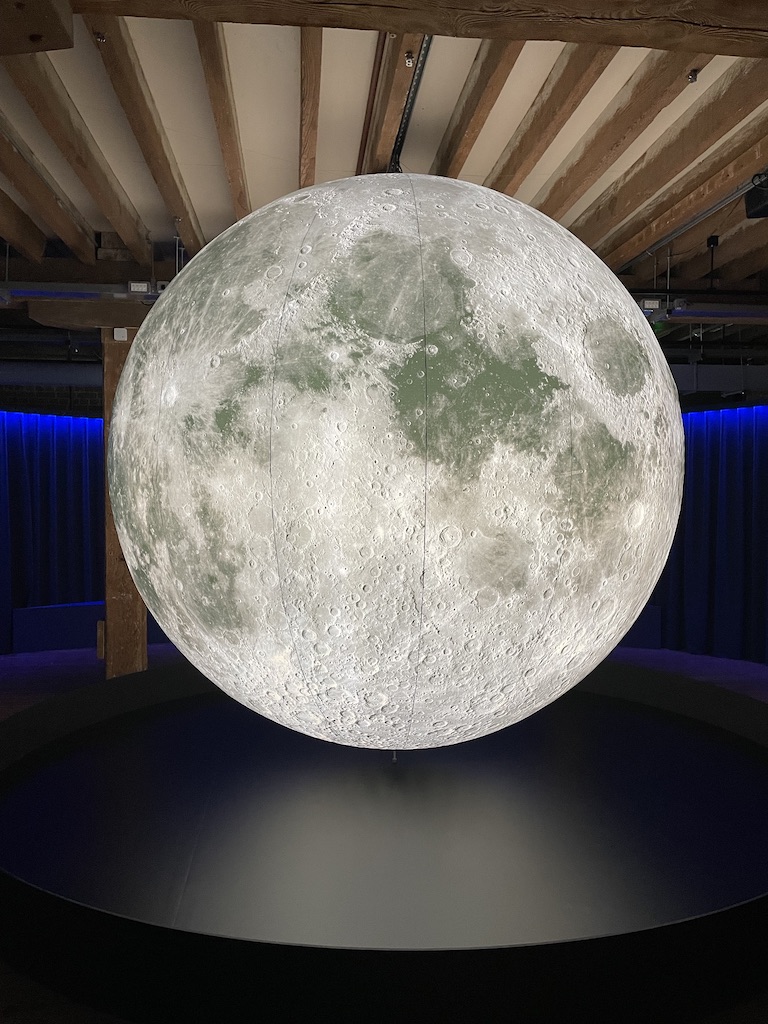
The exhibition opens with this spectacular painting by Henry Pether (around 1850) featuring mudlarkers searching the foreshore near York Water Gate, the Strand, by moonlight. Anyone living near the river will be aware of the constant rise and fall of the tide which is ordained by the moon. And there’s a fabulous sculpture of The Moon which you can circle, and peer at the extraordinary pitted surface.

You need a licence to be a mudlarker, along with sturdy shoes, waterproof clothes and a beady eye to spot potential treasure with in the mud of the river. It’s astonishing that every low tide will reveal items dropped, lost or hidden in the Thames. These pieces vary from the really ancient, pre-historic tools and items, jewels and coins, up to contemporary objects thought lost for ever.

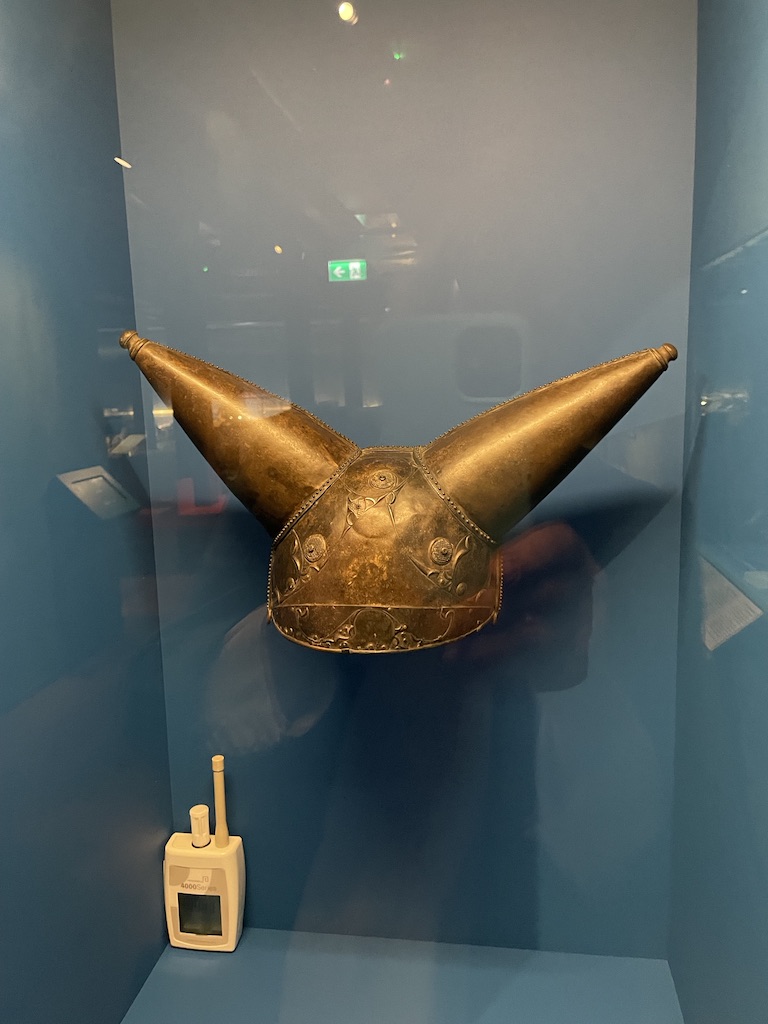
Above is a selection of figurines showing different gods and godesses from Roman times. They might have been offerings – the Romans revered water – or accidentally dropped into the river. And on the right is The Waterloo Helmet from 150 BCE. It’s the only Iron Age helmet found in southern England and the only one with horns ever found in Europe.

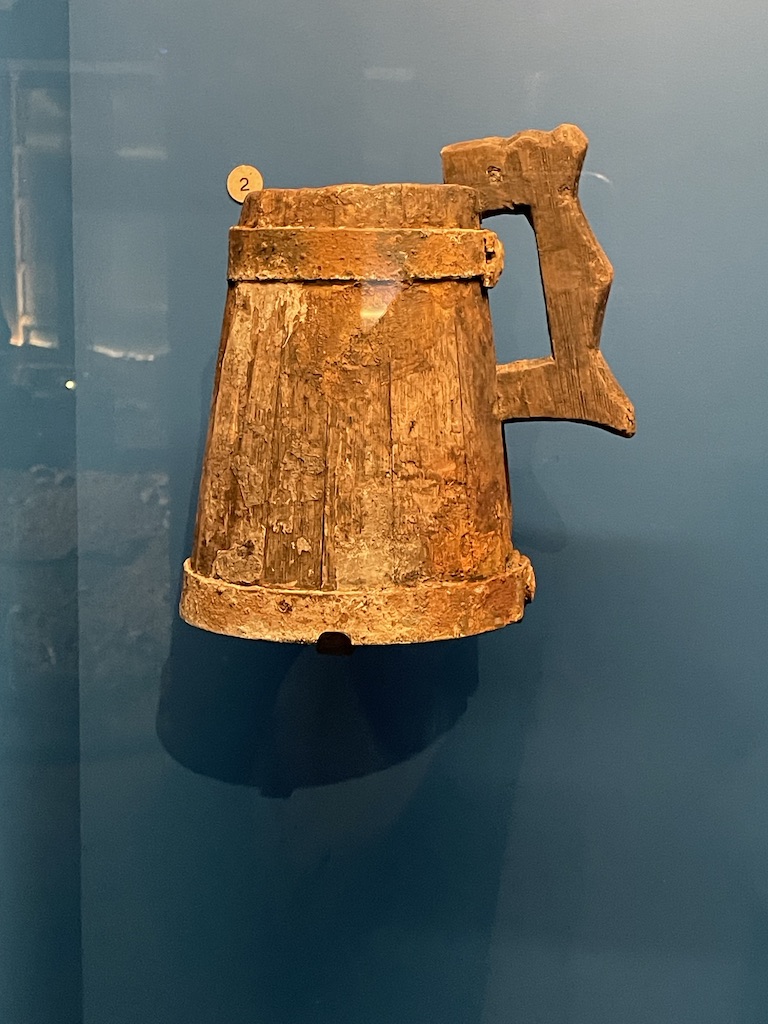
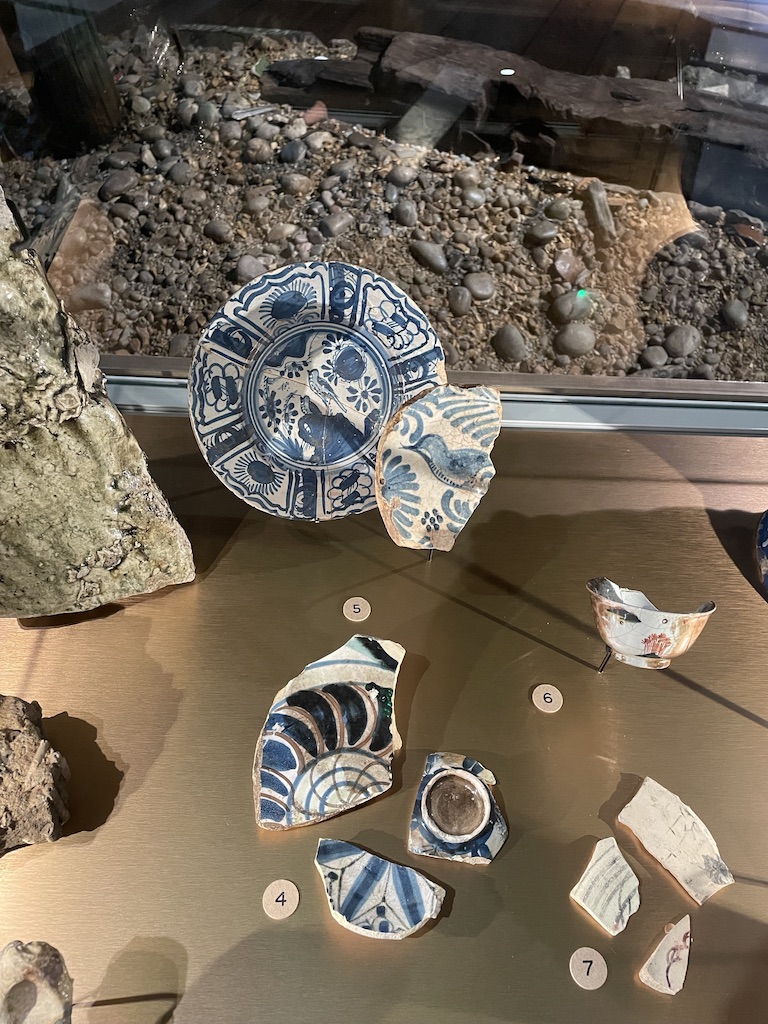
I do love seeing the everyday items which have been fished out. This wooden tankard must have been a thrilling find. It holds three pints – great for a very thirsty person, most likely a sailor. And it’s great to see these Delftware pots and dishes, even in fragments, giving you an idea of the household crockery in use from the mid 1500s to the 1800s.

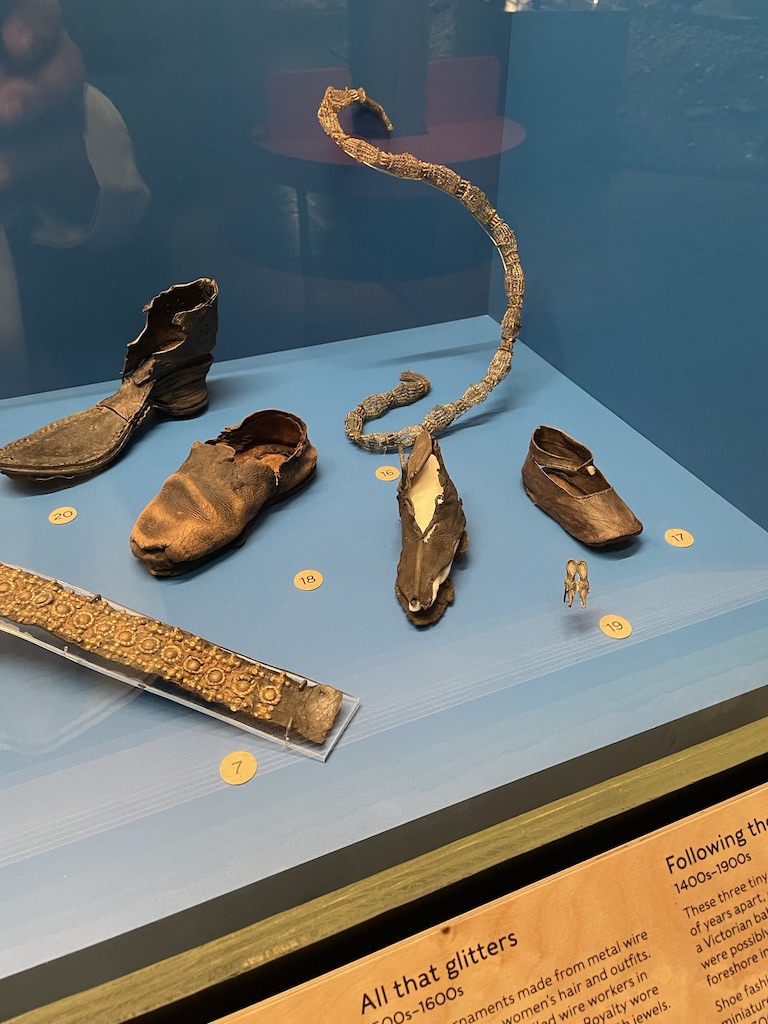
There’s something very touching about seeing children’s shoes. They have survived the centuries because the mud of the Thames is ‘anaerobic’ meaning it preserves the material from oxygen and it does not decay.

Mudlarking has been going on for centuries. For many early mudlarkers it was the coal and wood which they wanted, rather than the ‘treasure’.

The layout of the exhibition is fascinating. A very eye-catching recreation of the Thames foreshore has been recreated throughout, giving viewers an idea of how complicated it can be to sift through the detritus of the river and use just your eyes and experience to spot and uncover something exciting.

It’s a very stimulating and moving show. And impressive that so many of the items were discovered by dedicated mudlarkers and donated to the Museum of London so that they can be viewed and admired but visitors.

The exhibition at the London Museum Docklands is on until 1st March 2026. Well worth adding to your ‘must-see’ list!