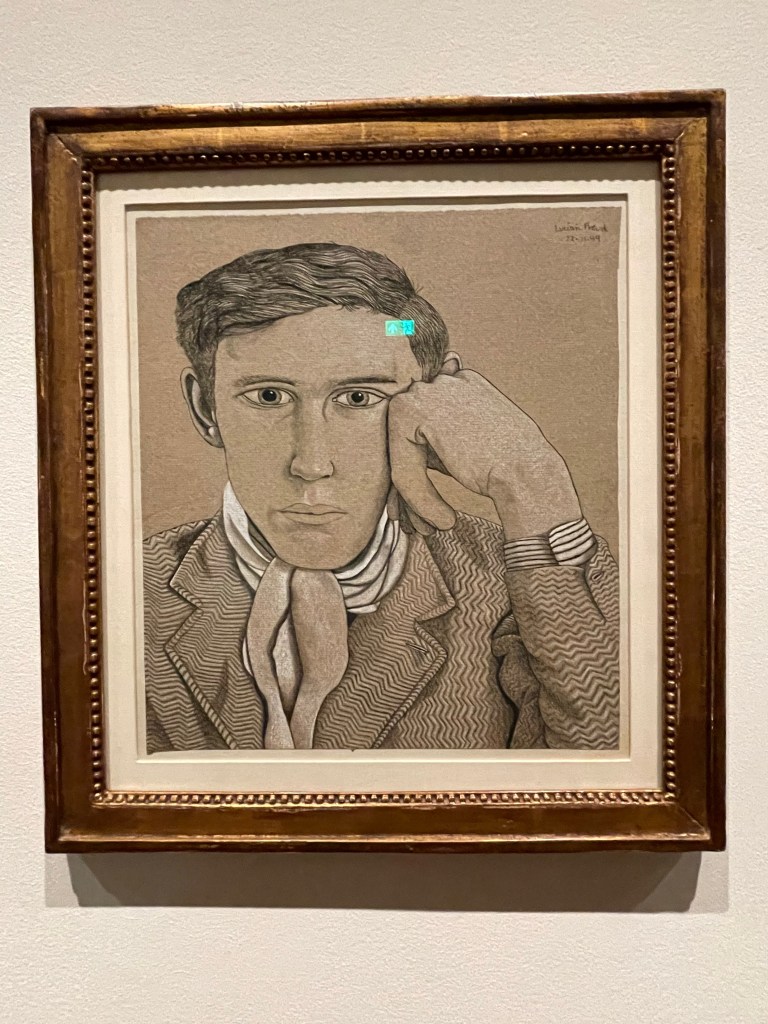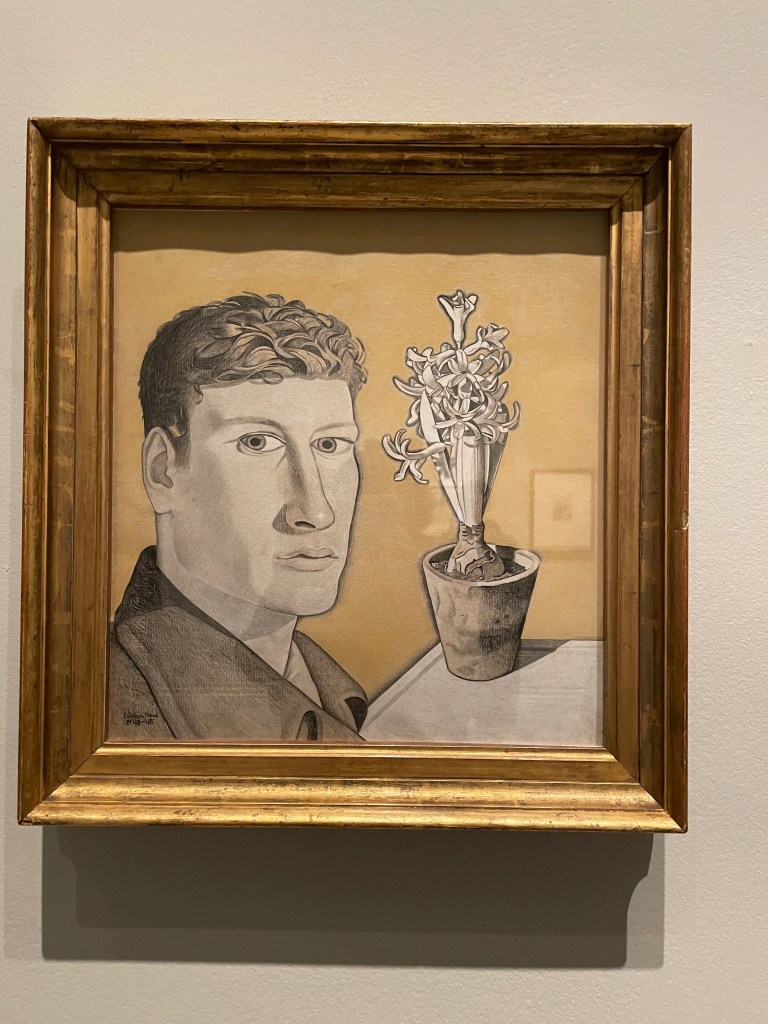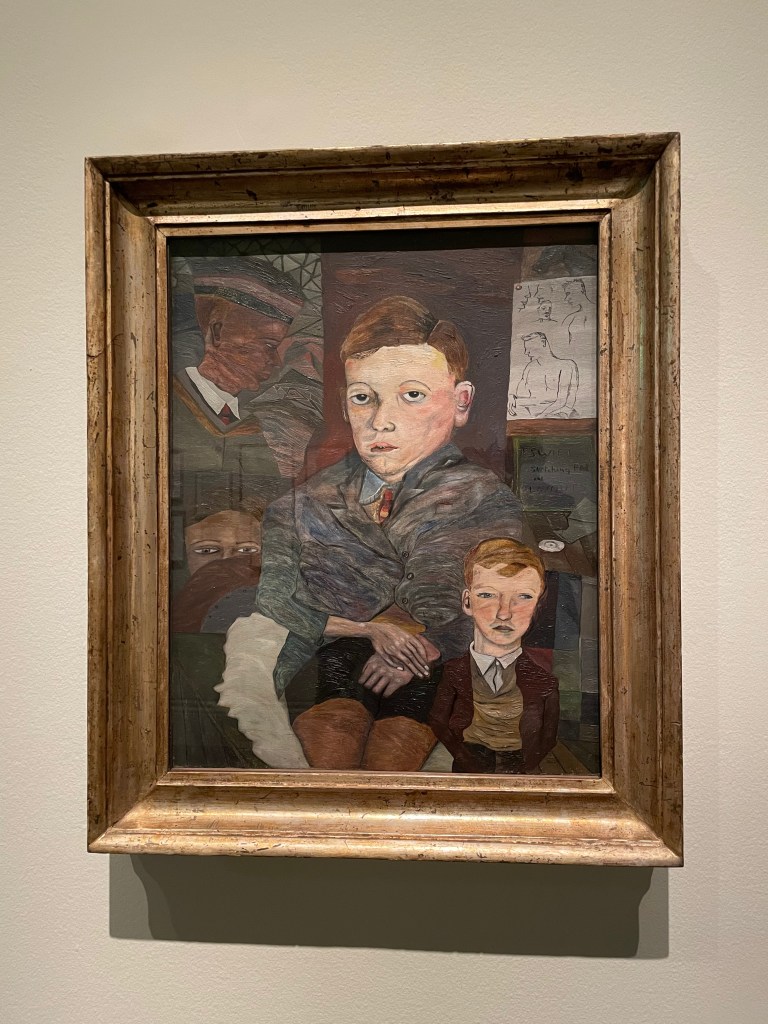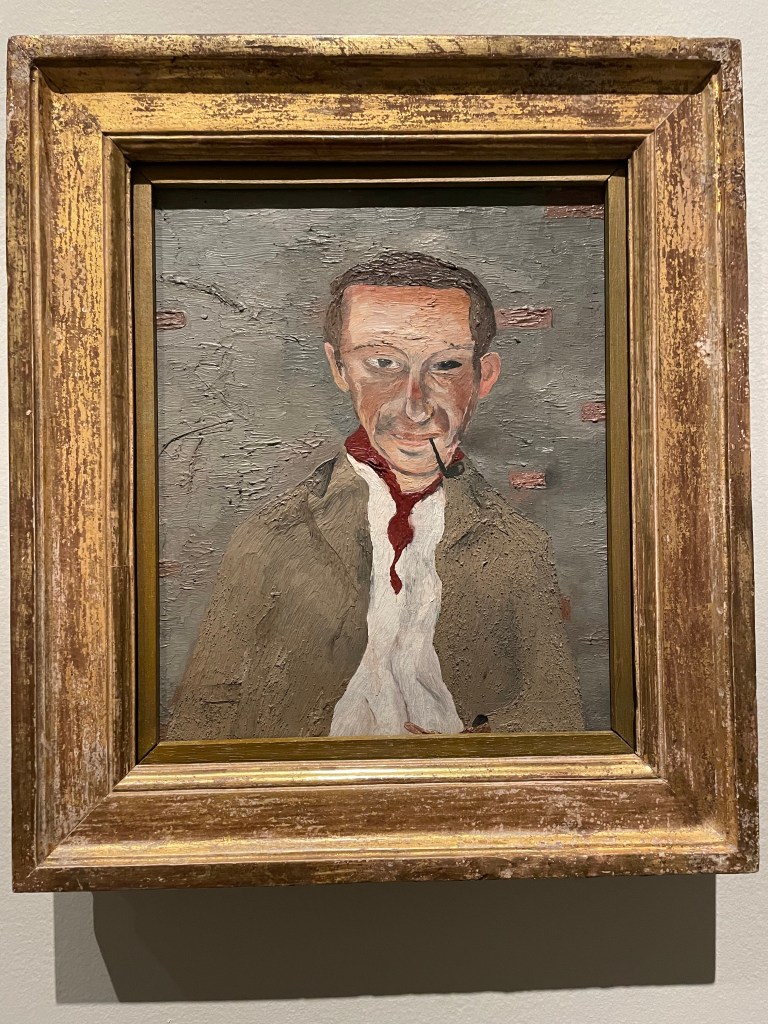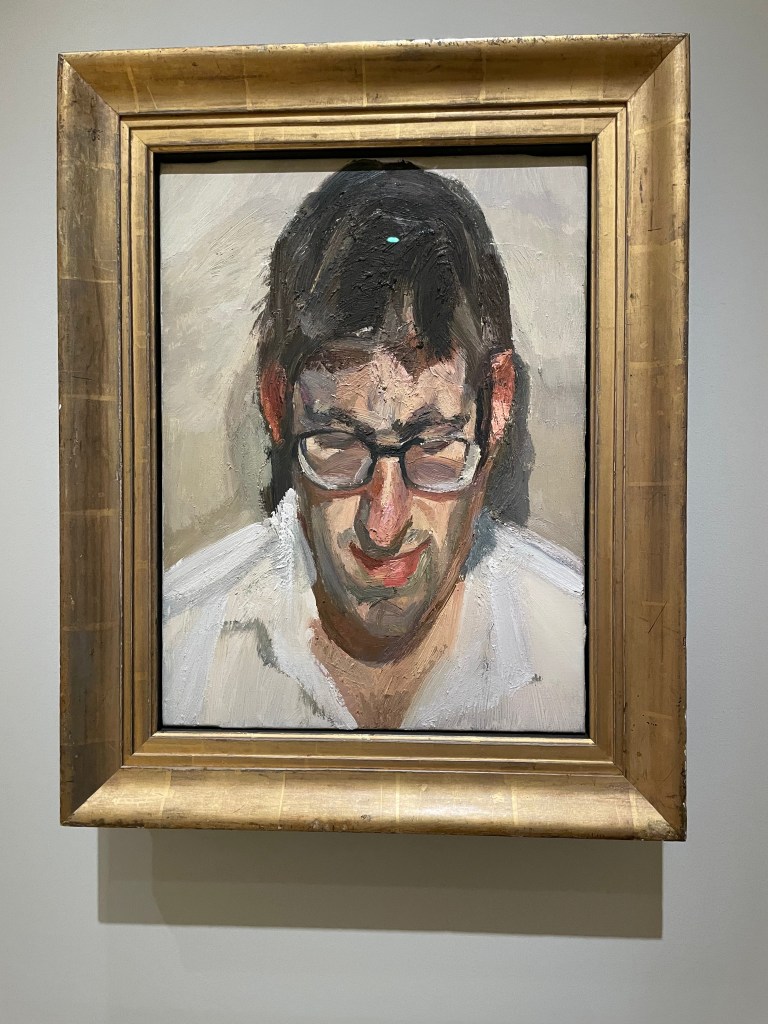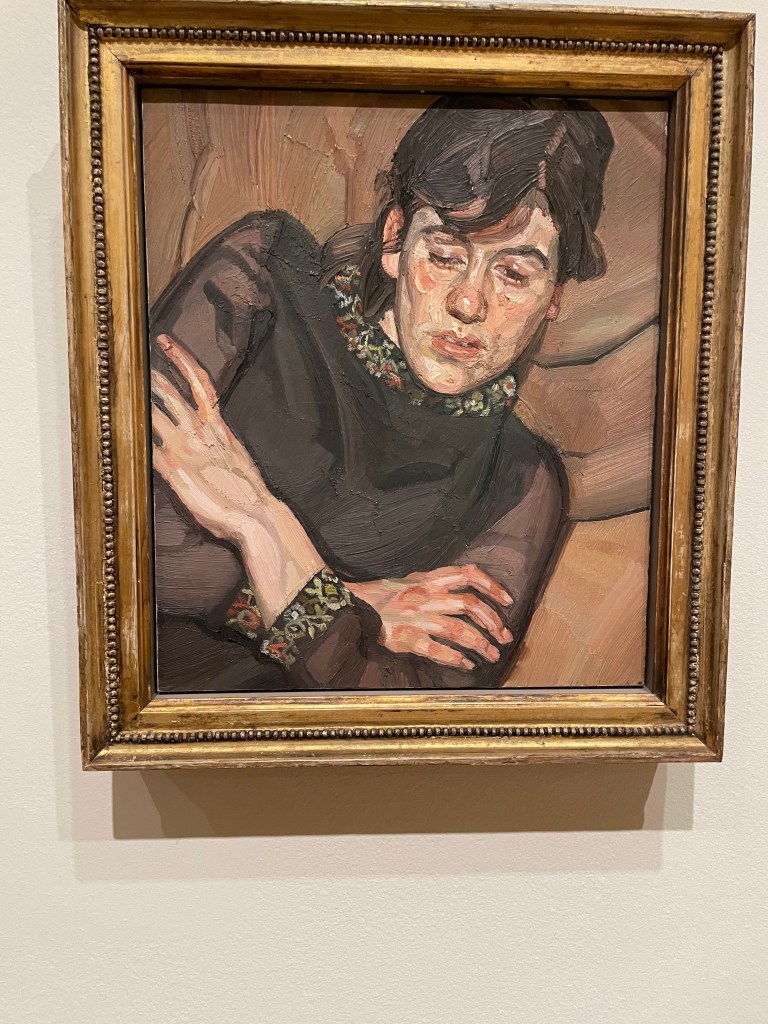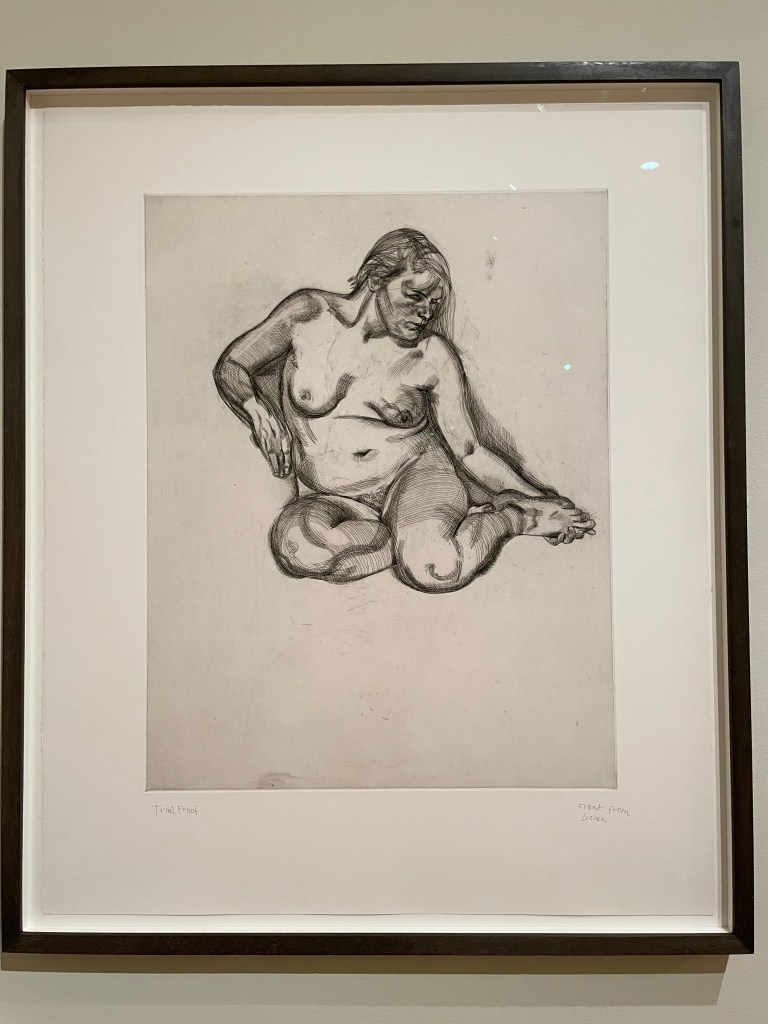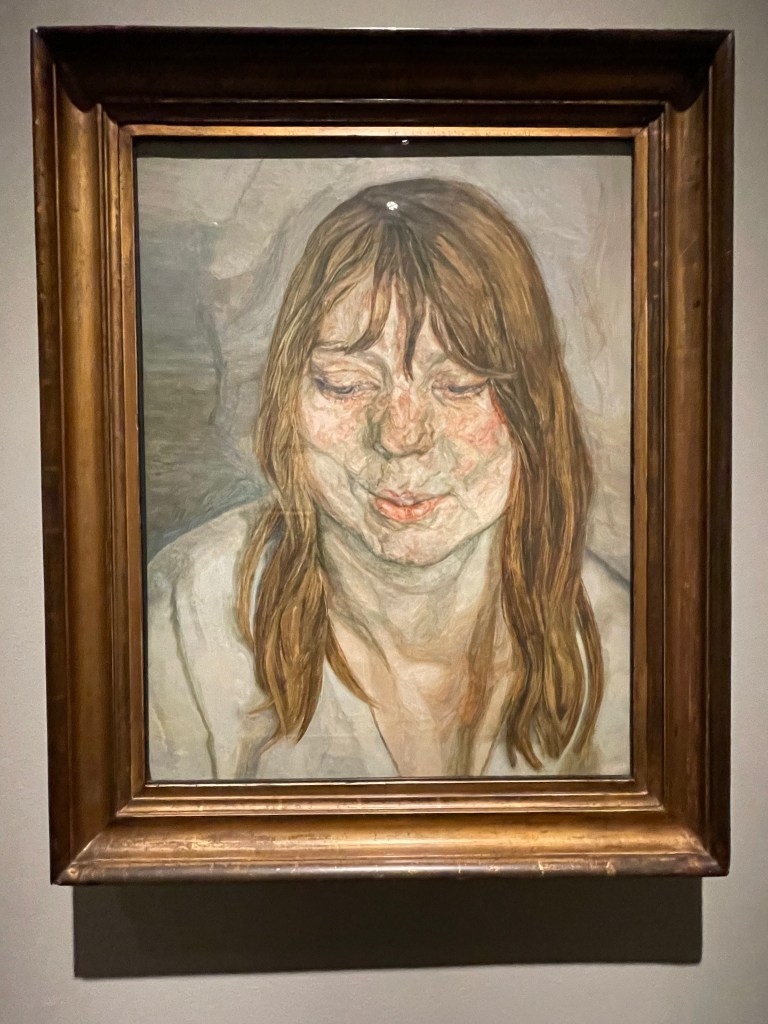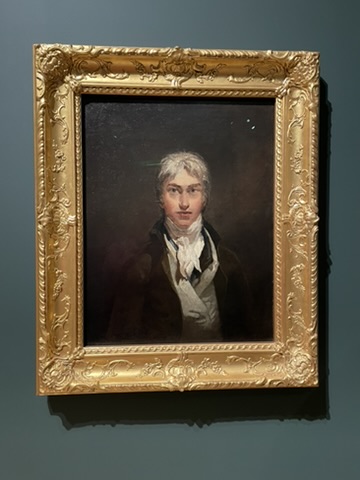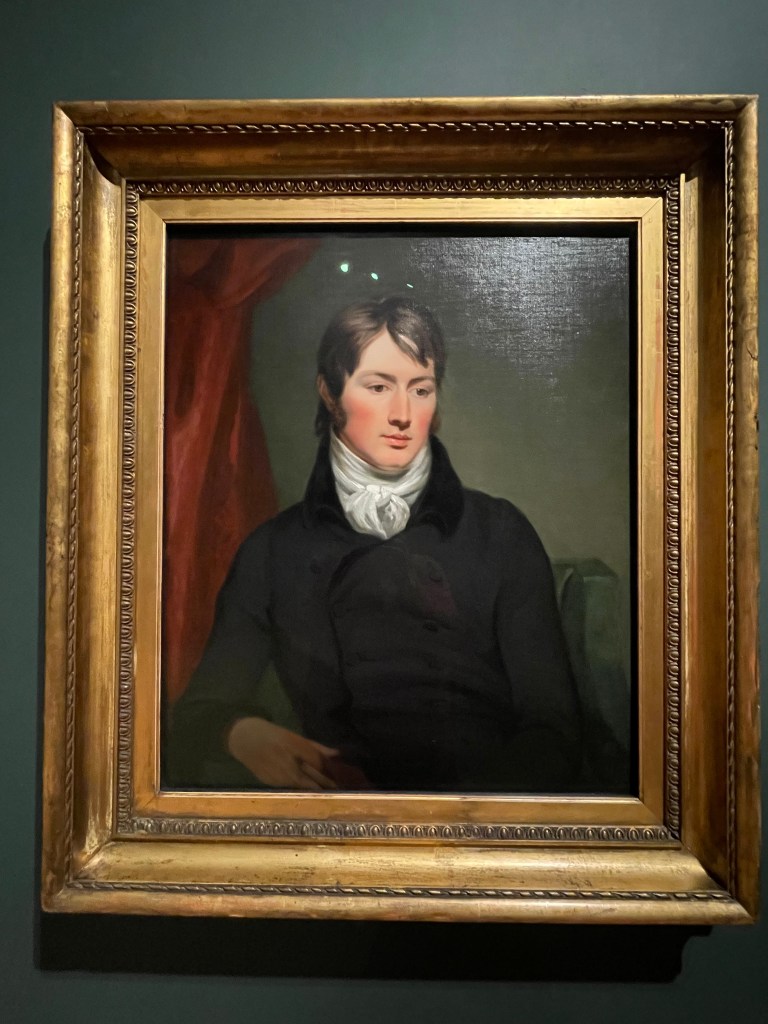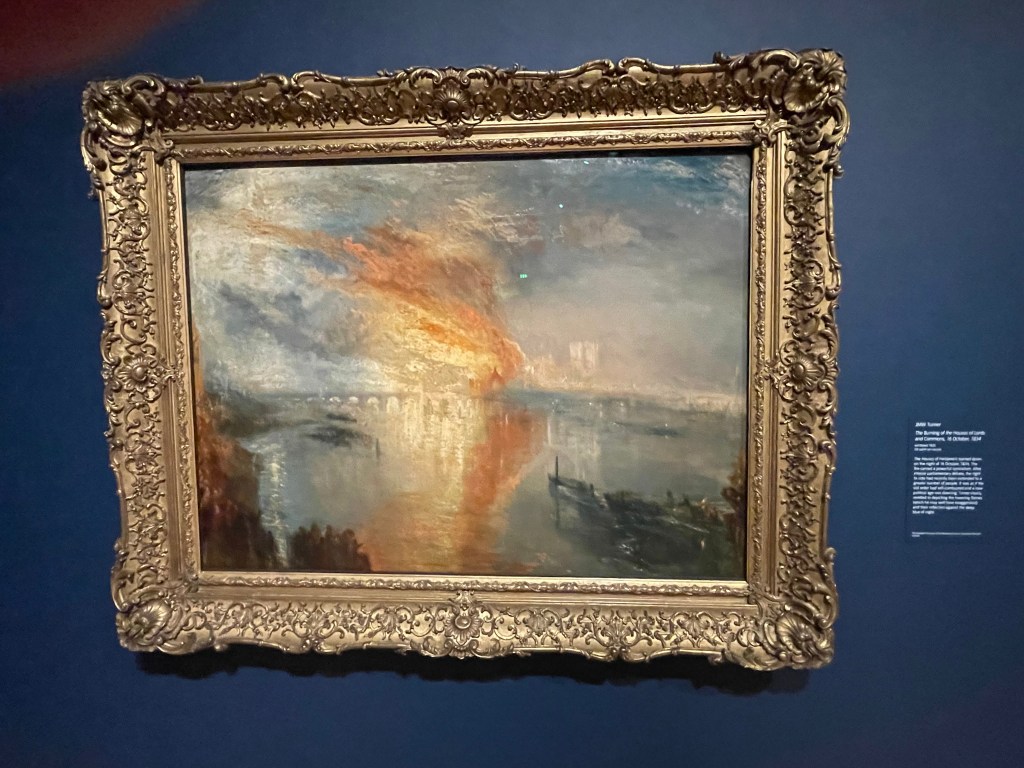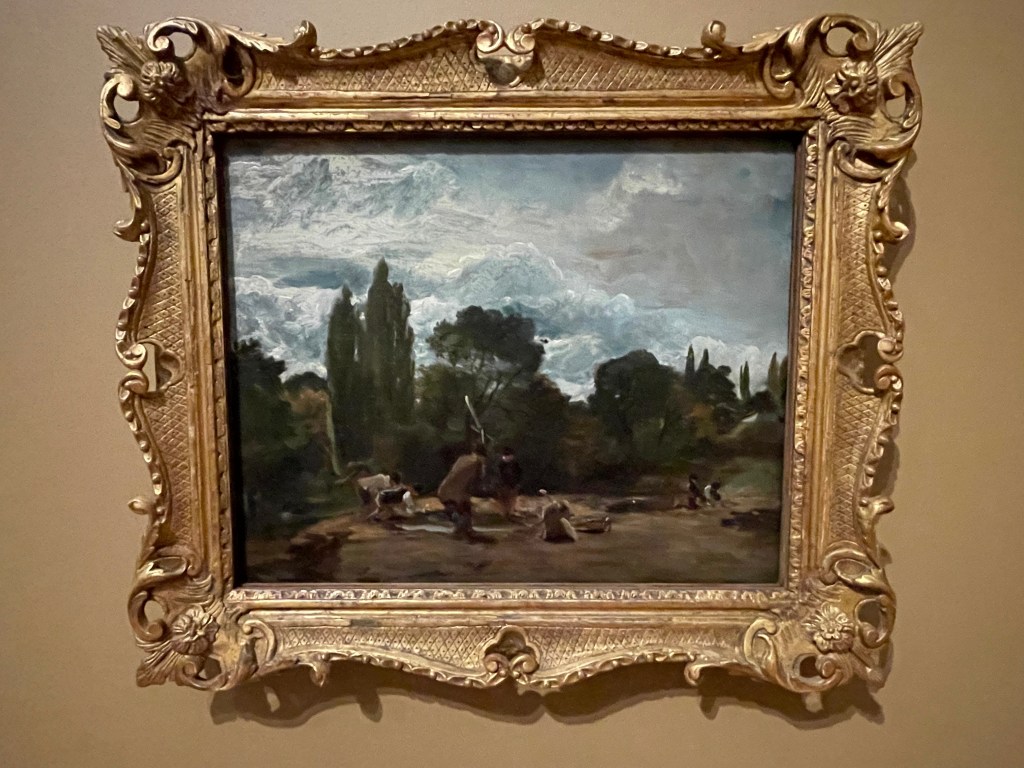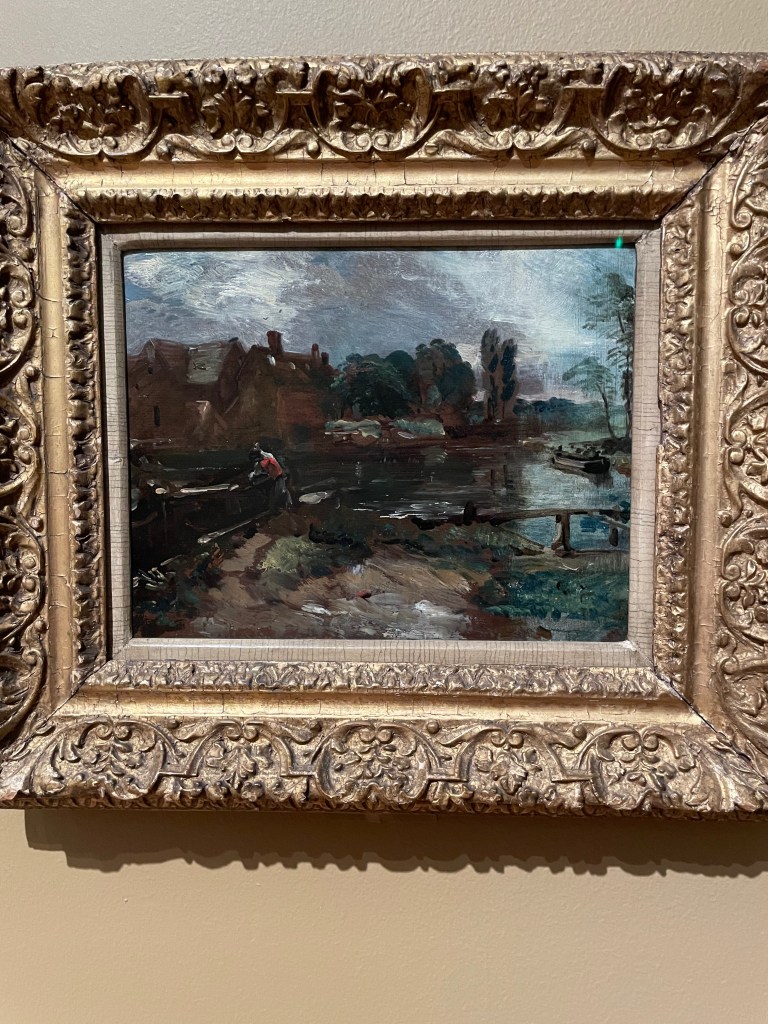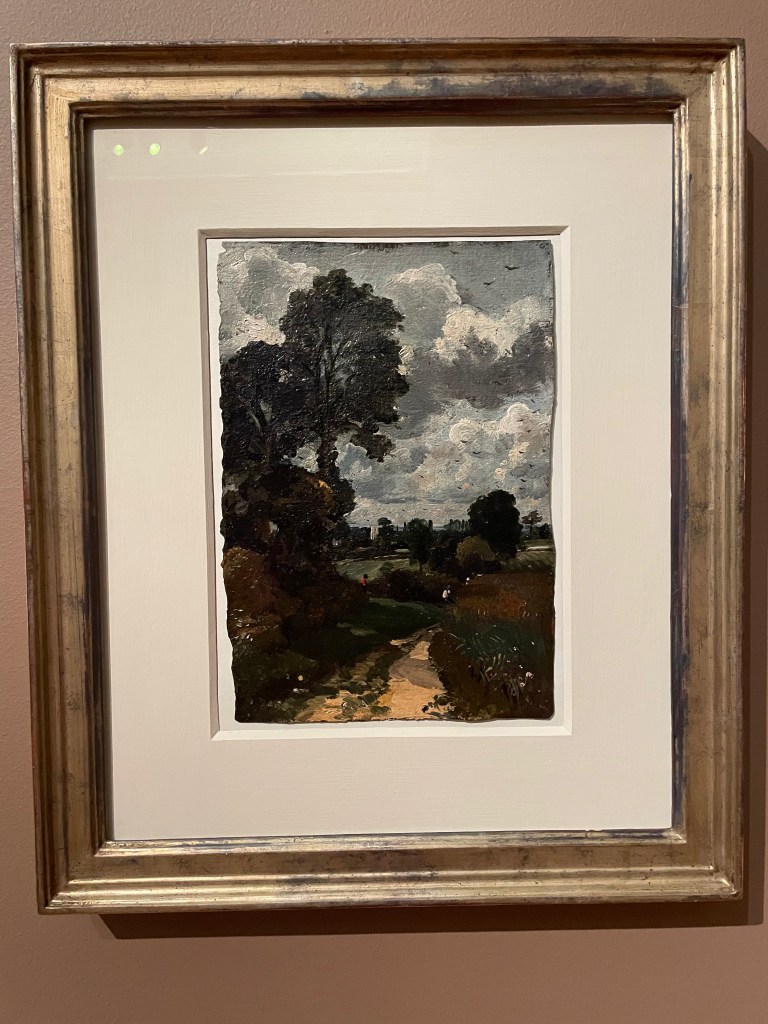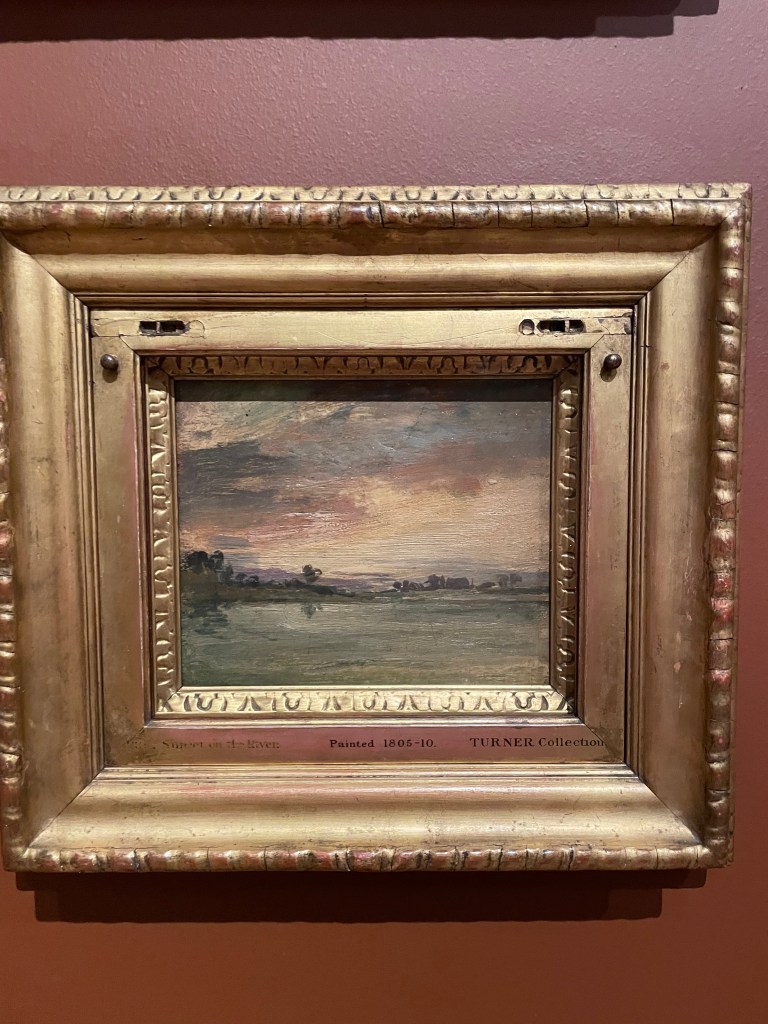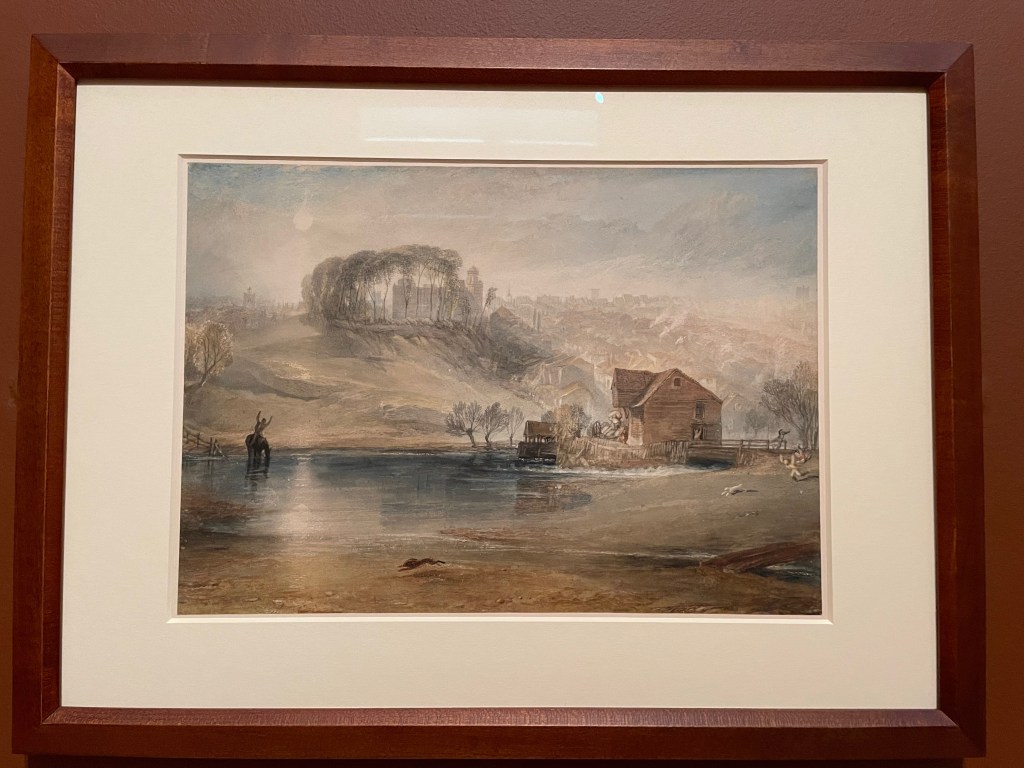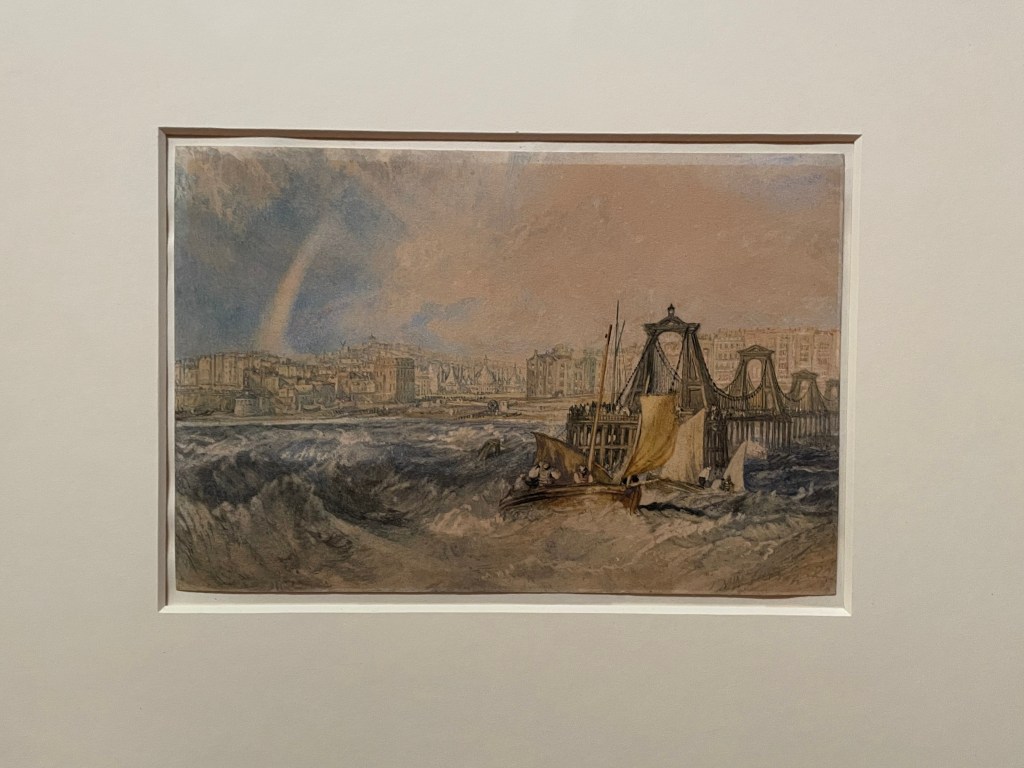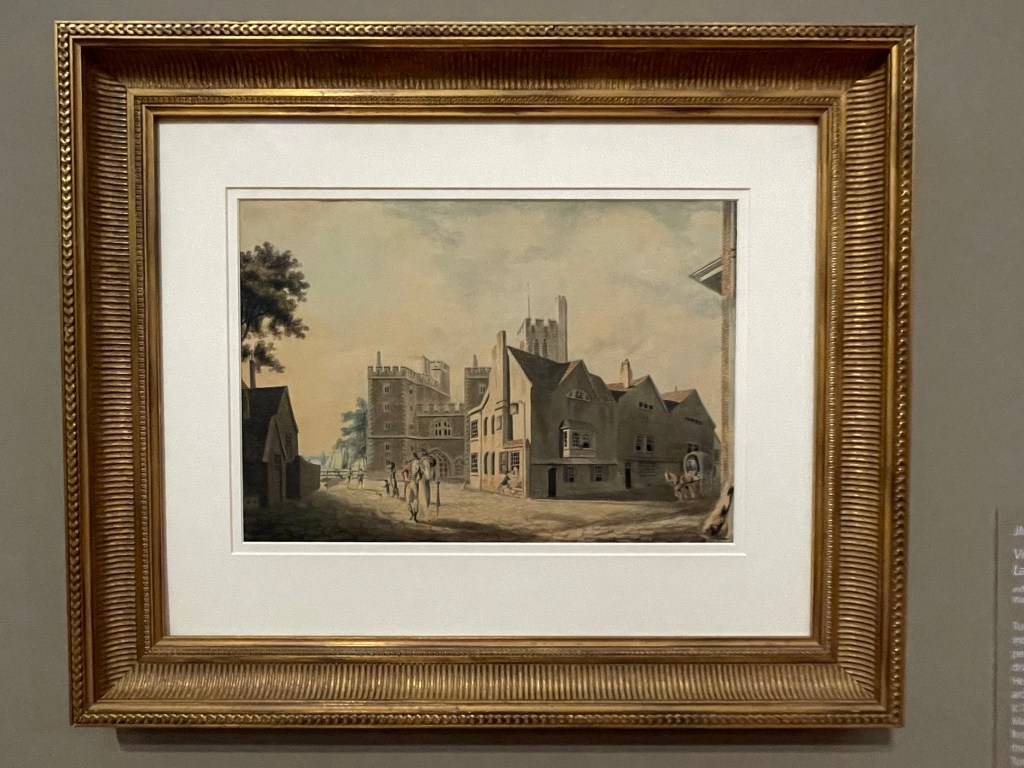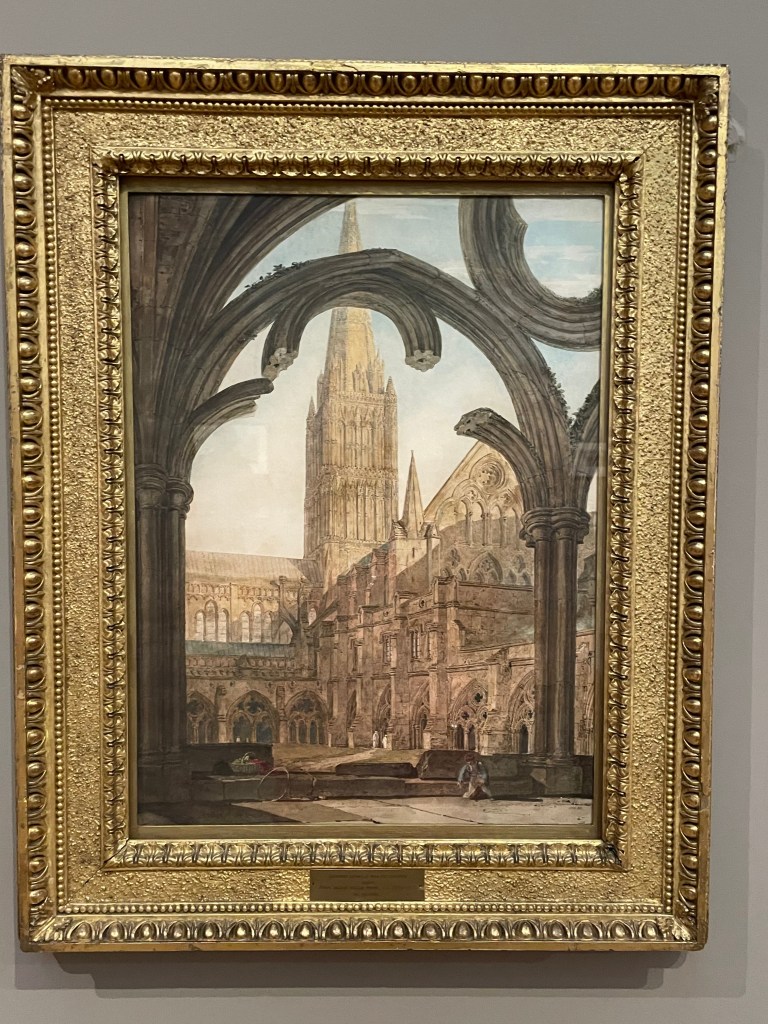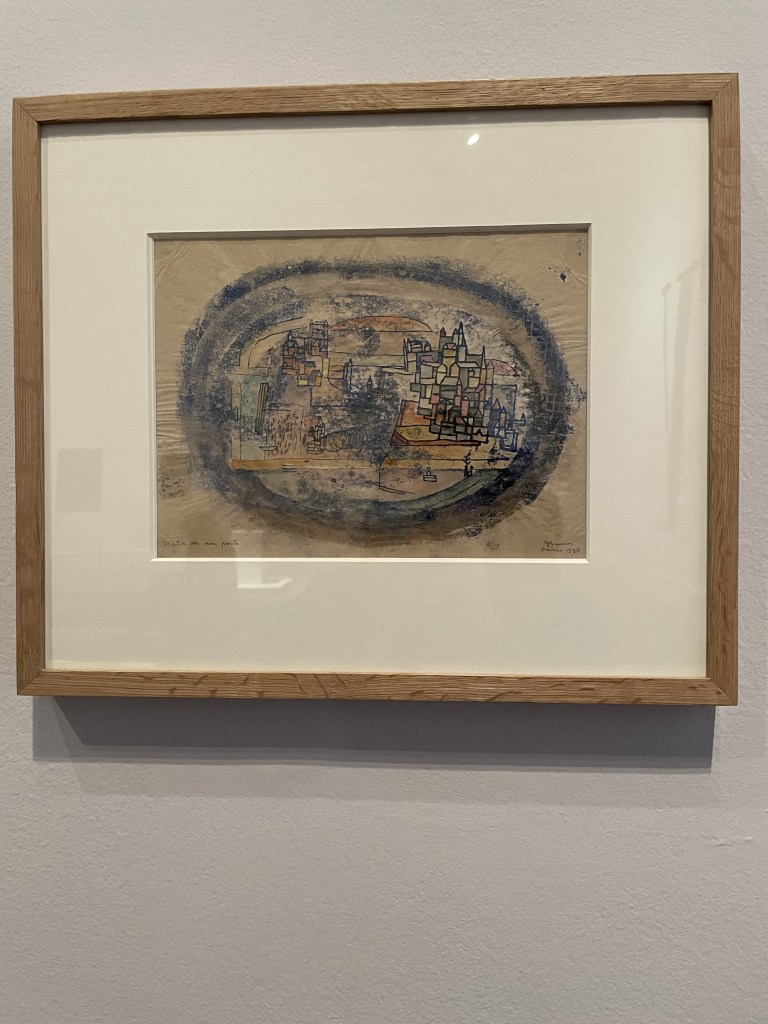
A blockbuster show at Tate Britain celebrates two of the the UK’s most acclaimed artists. Born a year apart, JMW Turner (1775-1851) and John Constable (1776-1837) both pushed their art into entirely new aesthetics and left a lasting legacy in the development of British art, paving the way for the Impressionist’s movement and everything that followed.

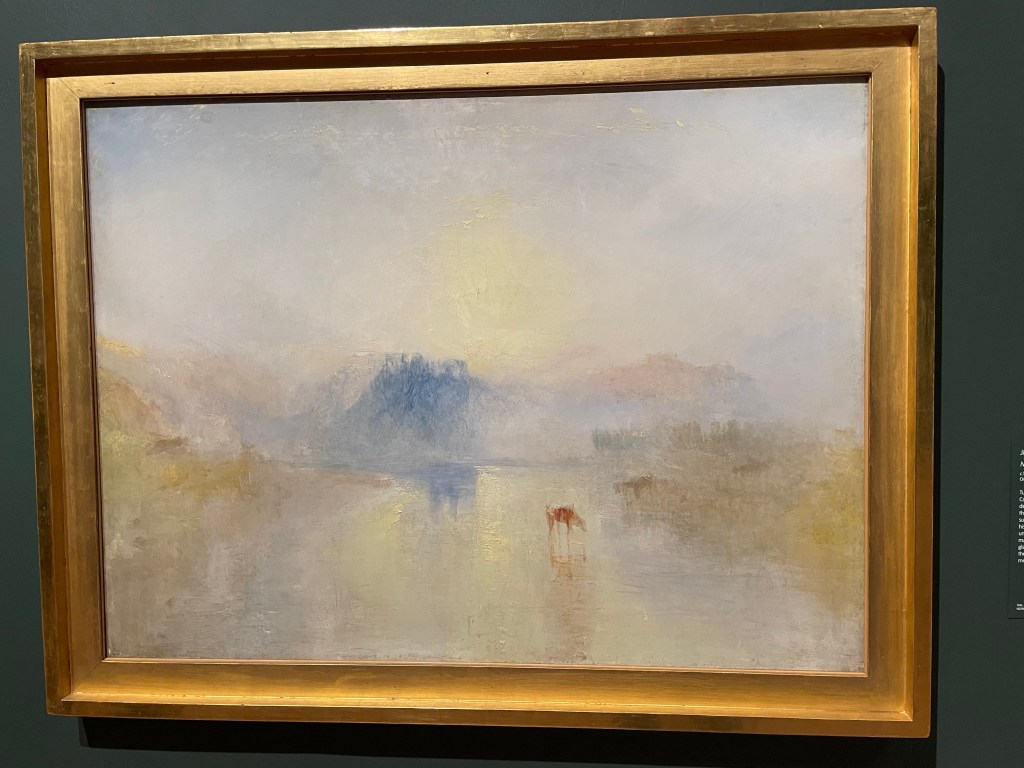
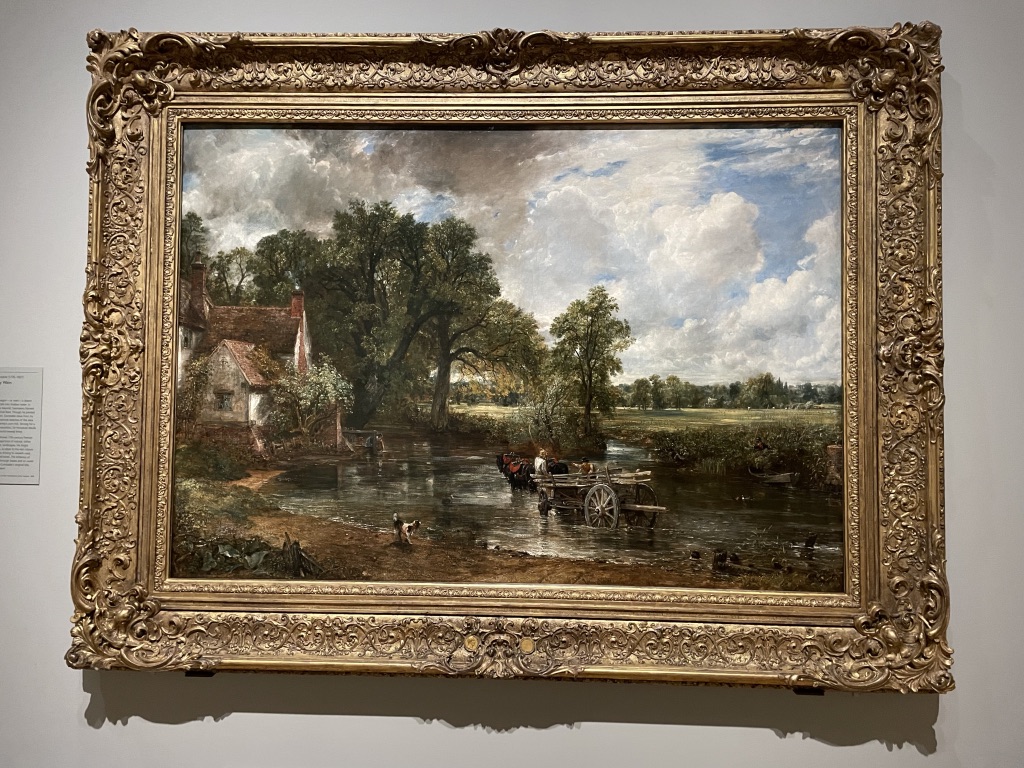
The works of Turner and Constable must be amongst some of the most recognised images in art history. Say the words Flatford Mill or A misty sunset in Venice and most of us will conjure the familiar bucolic image of a Suffolk Mill with a horse and cart or the beauty of Venice seen through a haze of cloud and watery sunshine. These works are amazing. But the history of these two artists is more entwined and their approach more similar than I had realised. This show, entitled Rivals and Originals, charts their artistic development as contemporaries and adversaries.

Both Turner and Constable were dedicated to art from an early age. Turner, you could argue, had the more difficult journey – the son of a barber based in Covent Garden, London, he demonstrated his skills at an early age and his father did his best to support his son’s desire to paint but he was not of the class expected to choose art as a career. Constable was born into middle class comfort in Suffolk and had to convince his family that he did not want to follow a conventional profession but devote his life to art. The pair developed their styles through study of Old Masters and a desire to push a narrative element into their art while recording contemporary life.

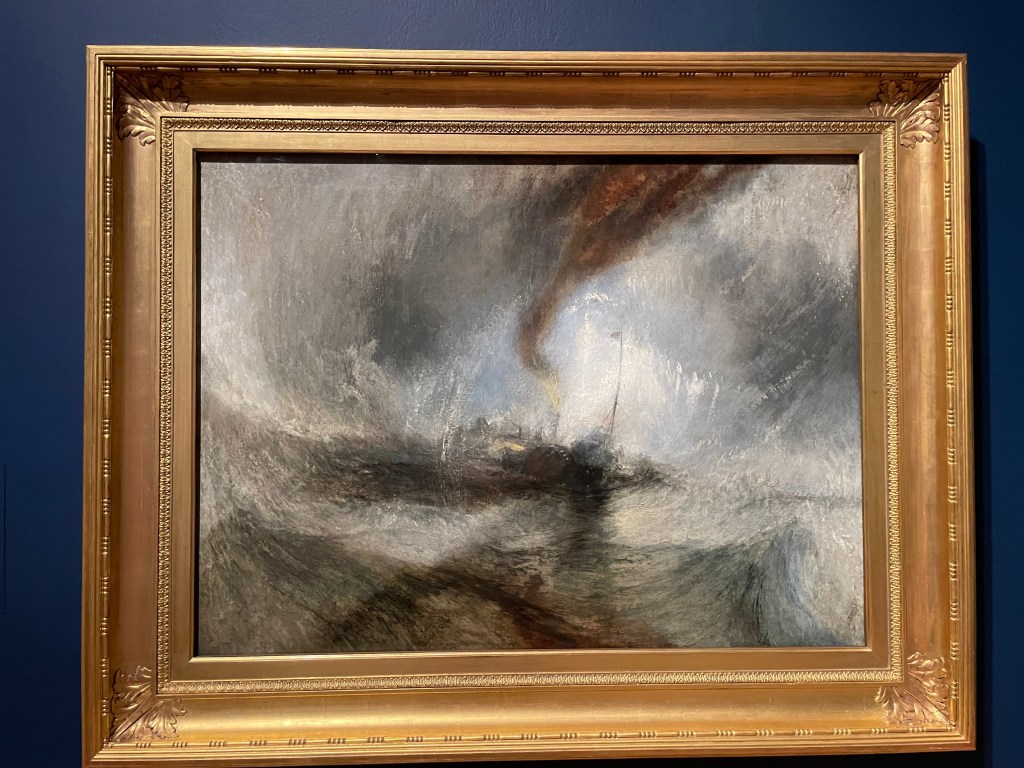
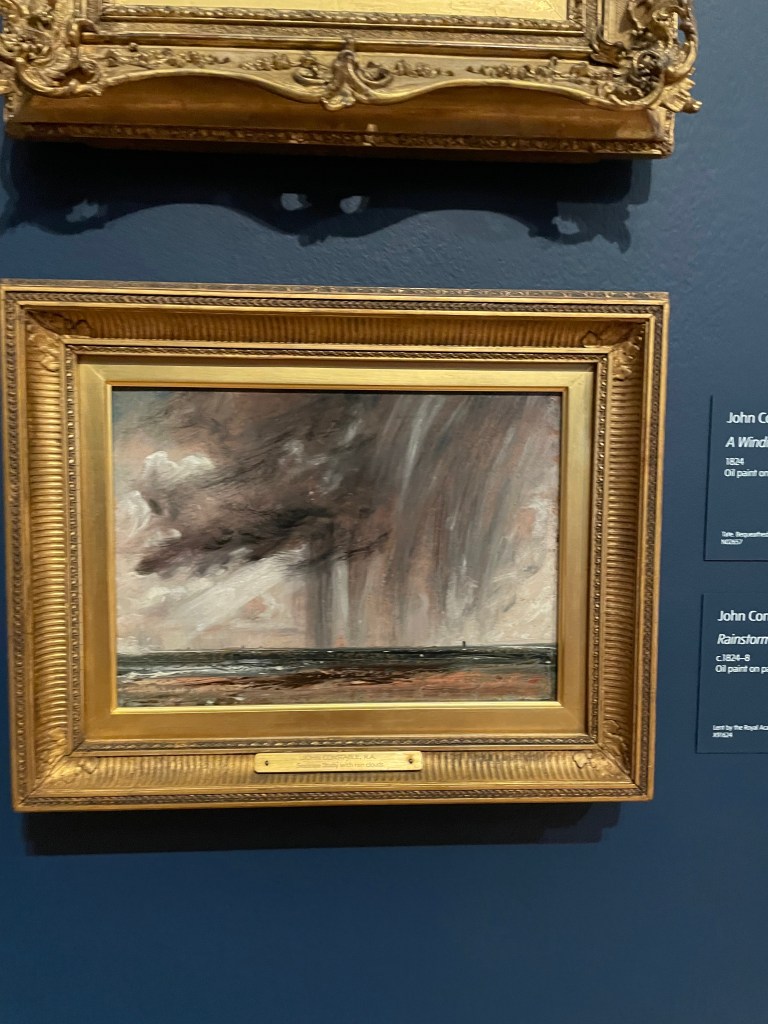
Sometimes it’s hard to differentiate between them – just look at these two, above. On the left is Turner’s Snow Storm – Steam-boat off a Harbour’s Mouth and on the right is Constable’s swift oil sketch called Rainstorm over the Sea. Both of them were fascinated by the power of nature and the constantly changing sky and weather conditions. They spent all their time sketching landscapes and painting the scene directly onto whatever surface they brought with them.

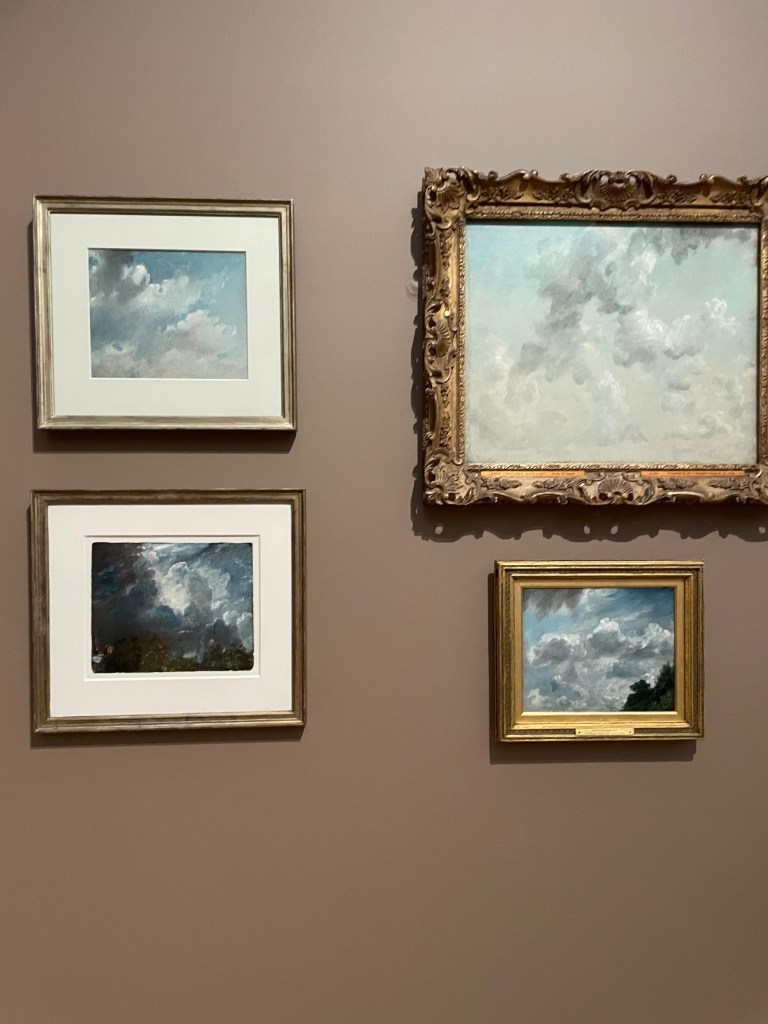
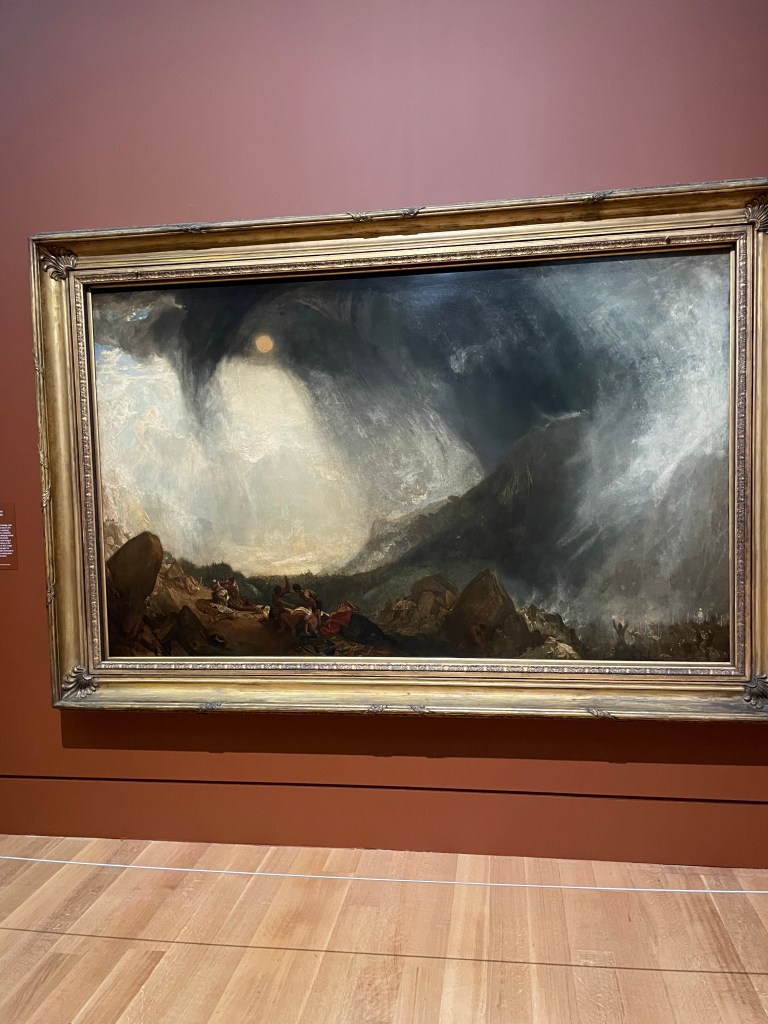
Both must have spent hours observing clouds in their infinite variety and using immediate sketches to dramatic effect. On the left is a selection of cloud studies by Constable and on the right is Turner’s massive painting Snow Storm: Hannibal and his Army Crossing the Alps.

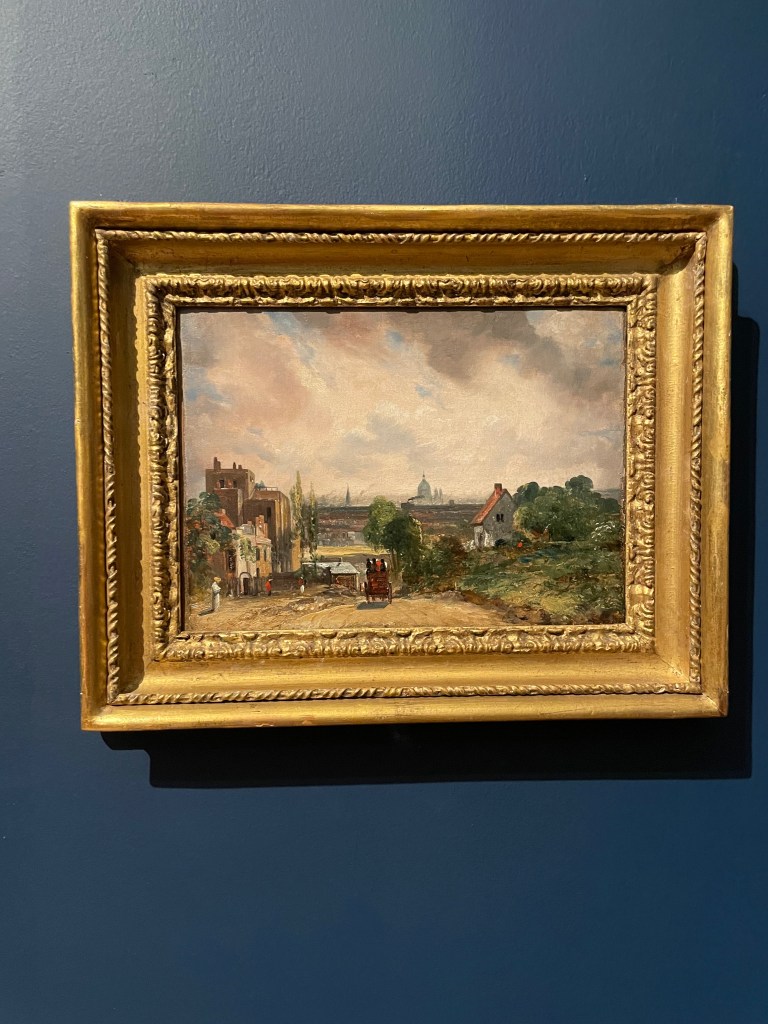
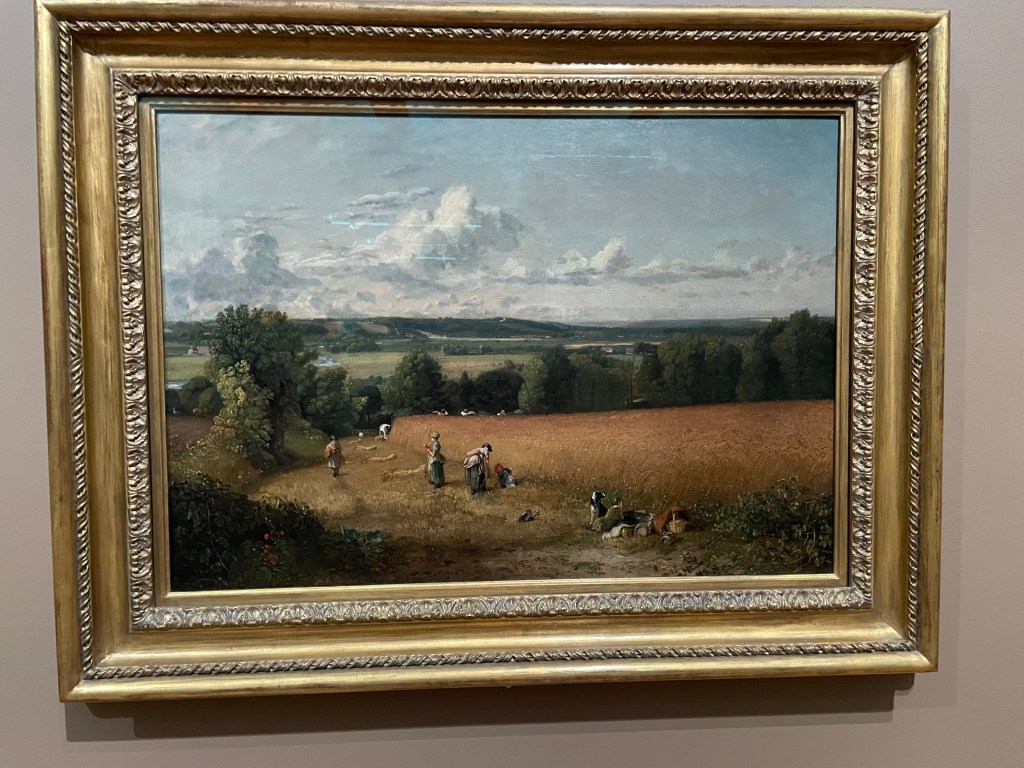
My takeaway from the show, apart from having thoroughly enjoyed it, was the chance to see the evolution of these two artists from detailed work, which might be as literal and accurate as possible, towards a much freer, expressive way of working. Both appear to have created their work at speed, using wonderful gestural swishes of paint or urgent daubs of white and black to denote drama and impact. They are both glorious. This is a wonderful show and well worth seeing.

It’s on at Tate Britain until 12 April 2026.

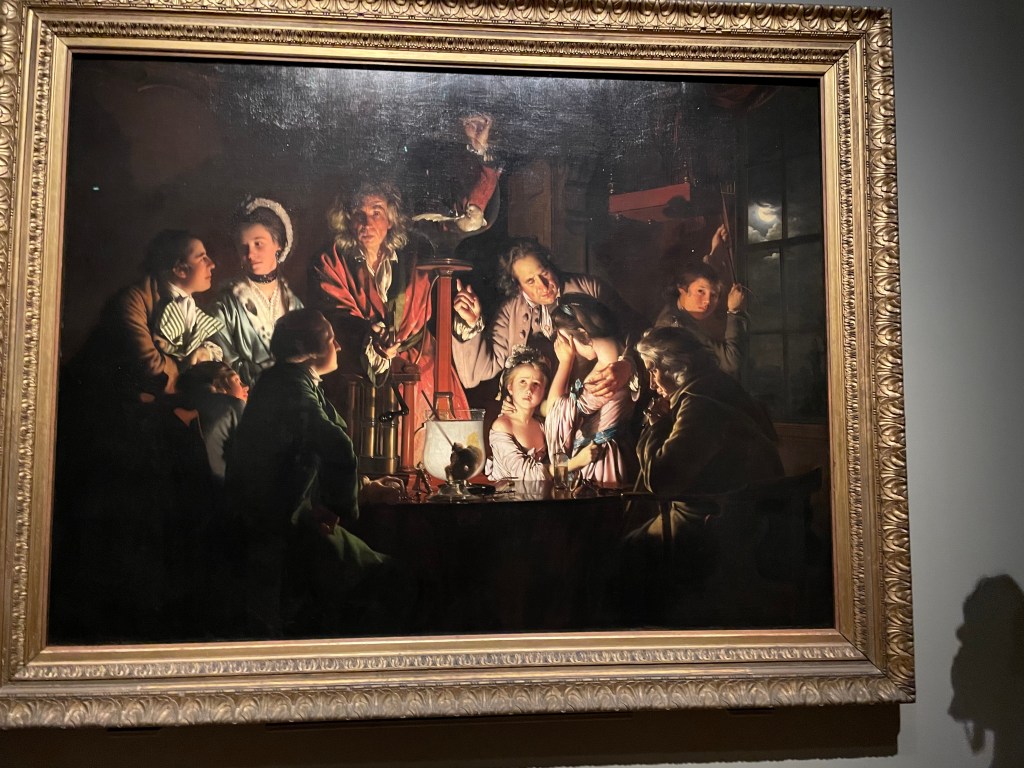
Wright of Derby: From the Shadows. What a terrific show at the National Gallery, London. I’ve long been an admirer of Joseph Wright’s ‘candlelight’ paintings which capture moments of interior drama, both literally and psychologically. Wonderful to see the artist’s work from 1765 – 1773 at the height of his powers.

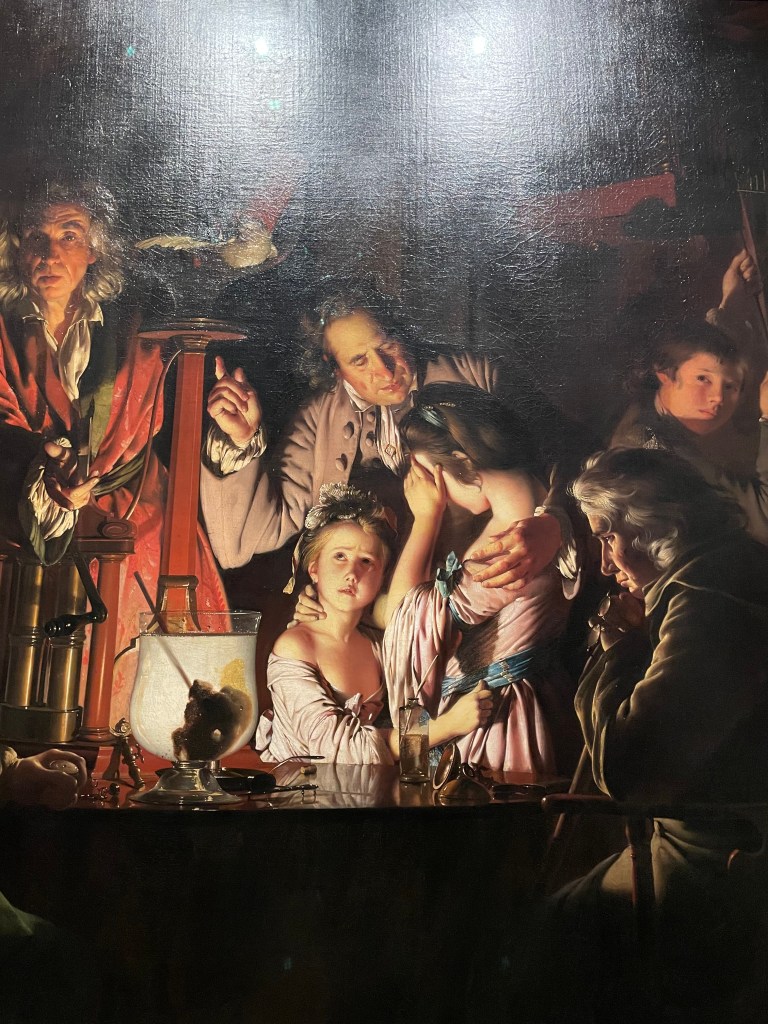
Above is a detail from probably the most famous painting by Joseph Wright, known as Wright of Derby – the town where he was born and worked. The Air Pump shows an audience watching a scientific demonstration. The air is being pumped out of a glass flask and the bird inside is about to suffocate. The girls are clearly distressed, the adults fascinated and the scientist resembles a wizard, in a loose gown, playing God over the life of the hapless bird. There is so much going on in this compelling picture which gives you so many perspectives. But the most striking element is Wright’s ability to capture the lighting of the scene. A single candle, hidden behind a large goblet containing a skull, illuminates the faces and highlights the reactions.

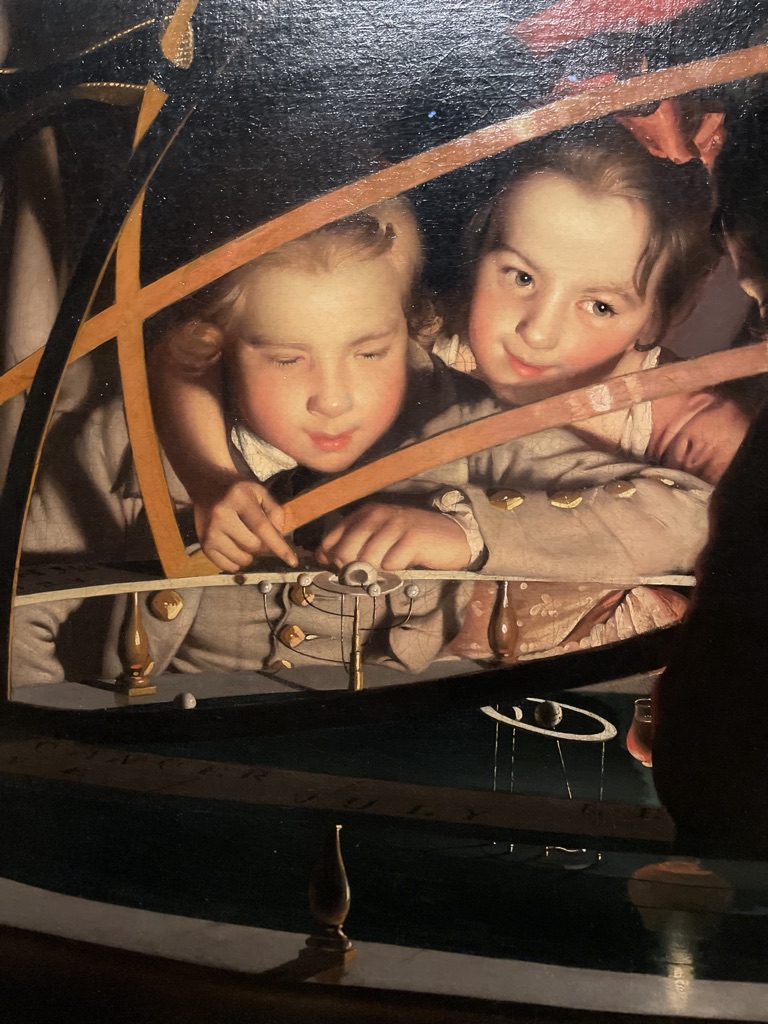
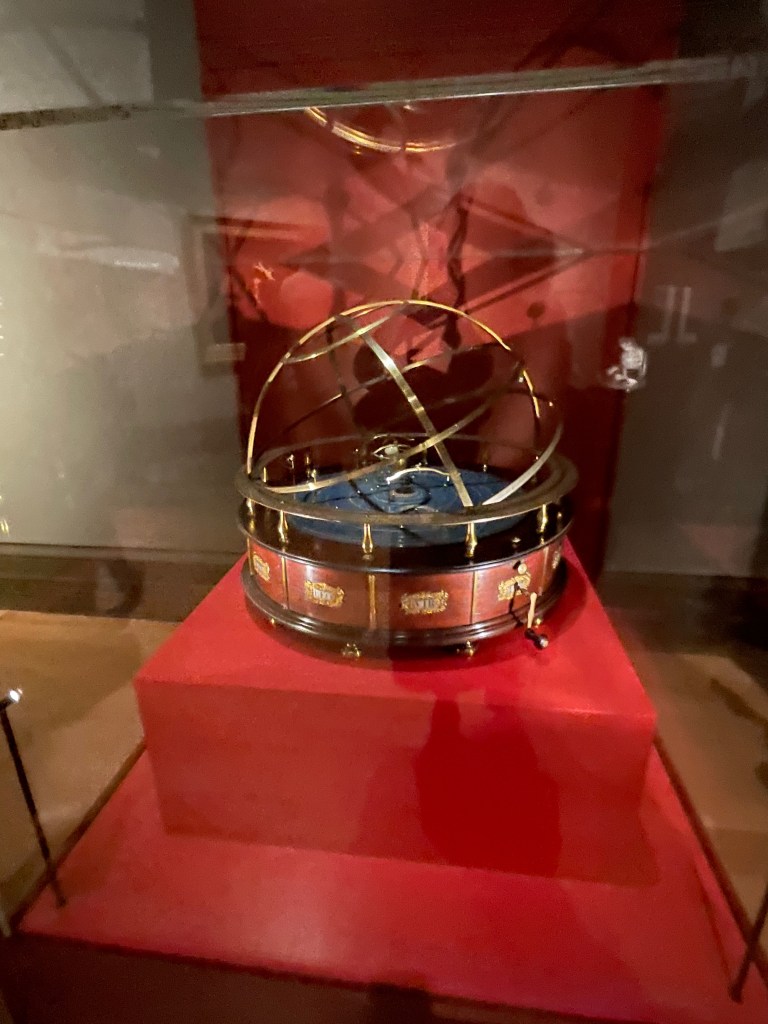
This wonderful exhibition not only brings the best of Joseph Wright’s paintings from the 1760s-70s but also assembles some of the instruments and props which feature in the pictures. For example, below, we see a painting entitled The Orrery which was an extraordinary teaching instrument for demonstrating the movement of the planets and the earth’s place in the heavens. The two boys are transfixed by the tiny orbs which are shown to move around each other.

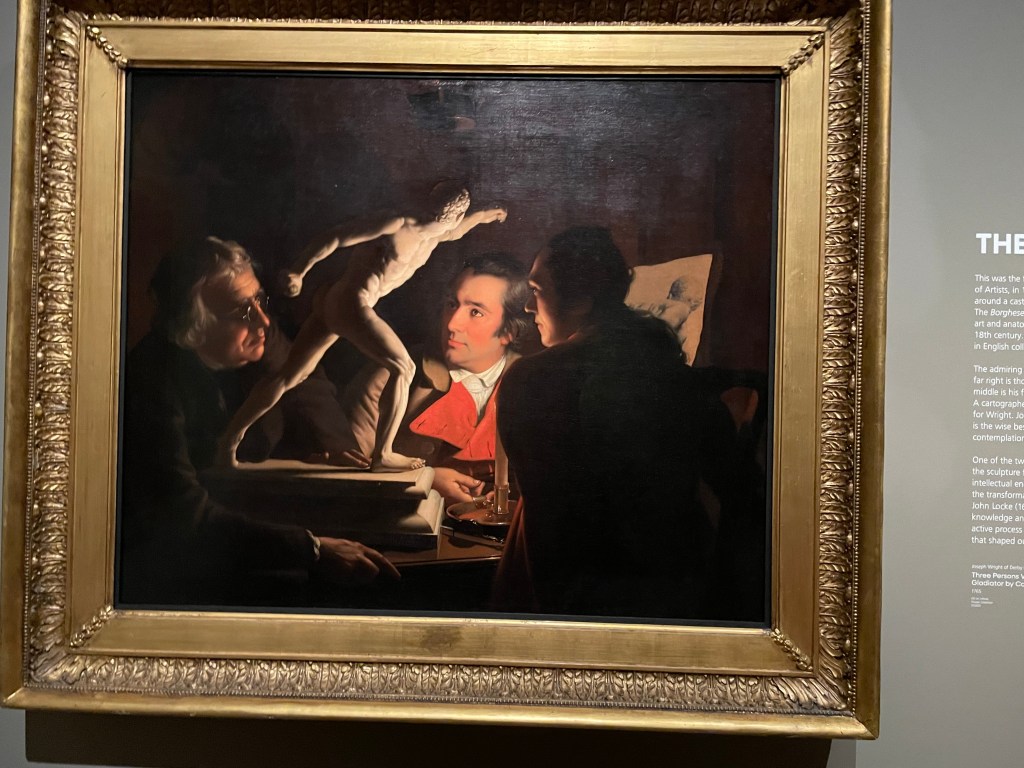
Tenebrism is the word given to the style of painting associated by Italian artist Caravaggio and describes the use of an extreme form of ‘chiaroscuro’ (meaning light and dark). The drama derived from seeing, and not seeing, objects is brilliantly conveyed in these picture. As a viewer you are drawn to the illuminated faces and the expressions responding to the action but then you wonder what is happening in the shadows? Each picture contains so many questions and invites you to puzzle over the subject as you scan the painting absorbing the story.

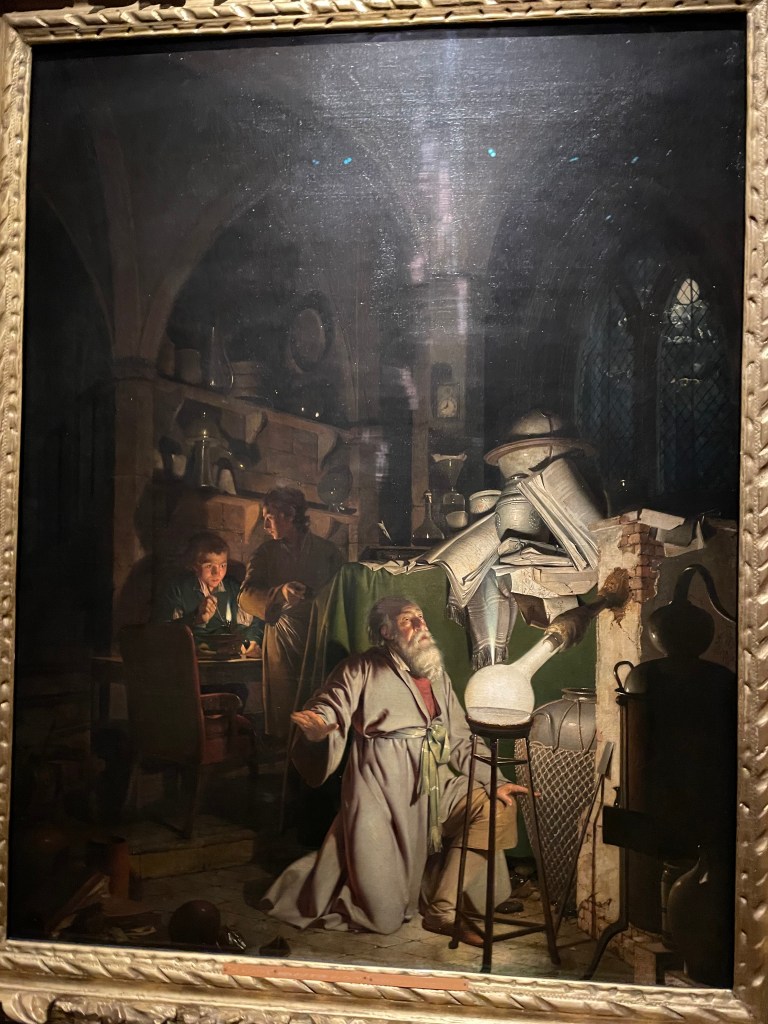
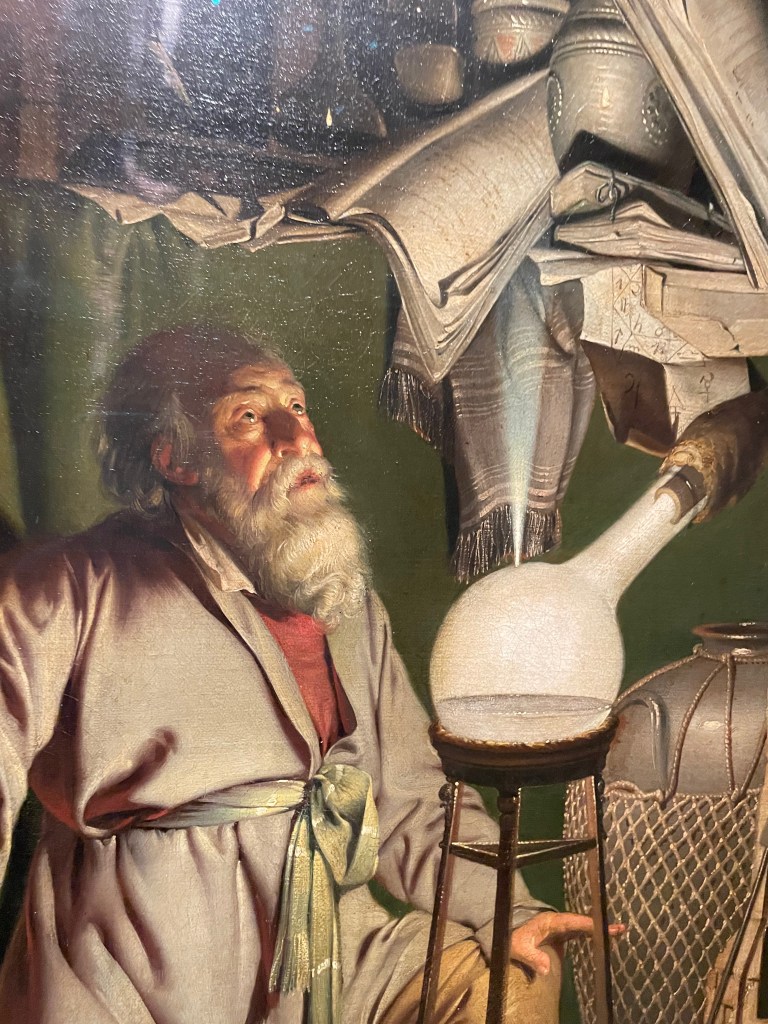
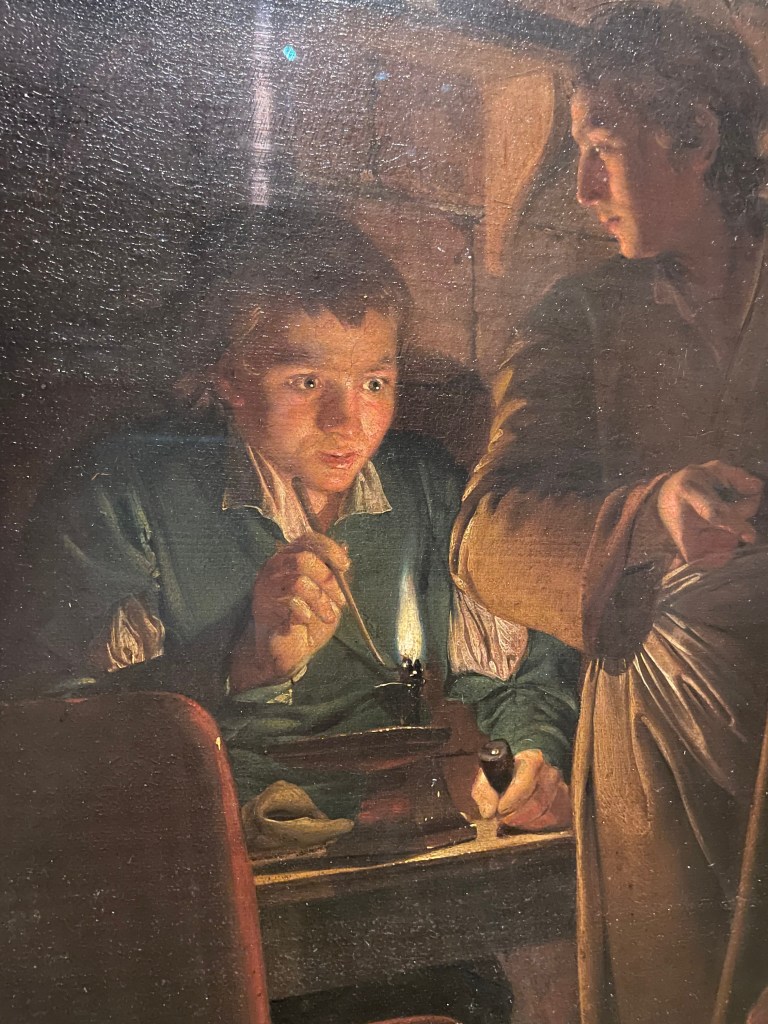
Above is The Alchymist in Search of the Philosopher’s Stone, Discovers Phosphorus, and Prays for the Successful Conclusion of his Operation, as was the Custom of the Ancient Chymical Astrologers. Wow! Quite a title, but what a picture, there’s so much going on. Amazement on the face of the alchemist and bewildered fascination by his helper making notes at the desk by candlelight. And capturing the bright light of phosphorus must have been a huge challenge.

I love this painting of the girl reading the letter. You can’t see the candle but it’s behind the paper, making it transparent, but for the shadowy fold. And is the man leaning over her shoulder about to grab the paper away? What was she reading? Oh, so many questions. This painting is up there with works by Vermeer but with a more rosey hue and earthy atmosphere.

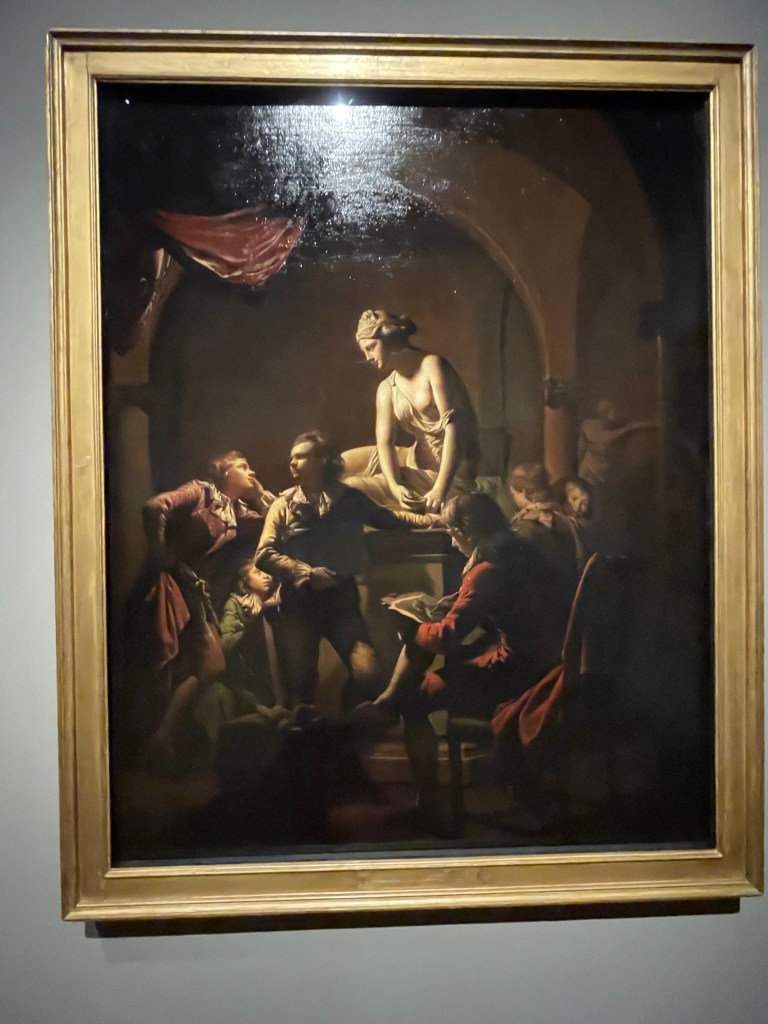
Above are a couple of great examples of ‘tenebrism’ showing not only Wright’s skill at capturing light but depicting the enduring artistic quest to capture form by using light and shadow in the context of the art class.

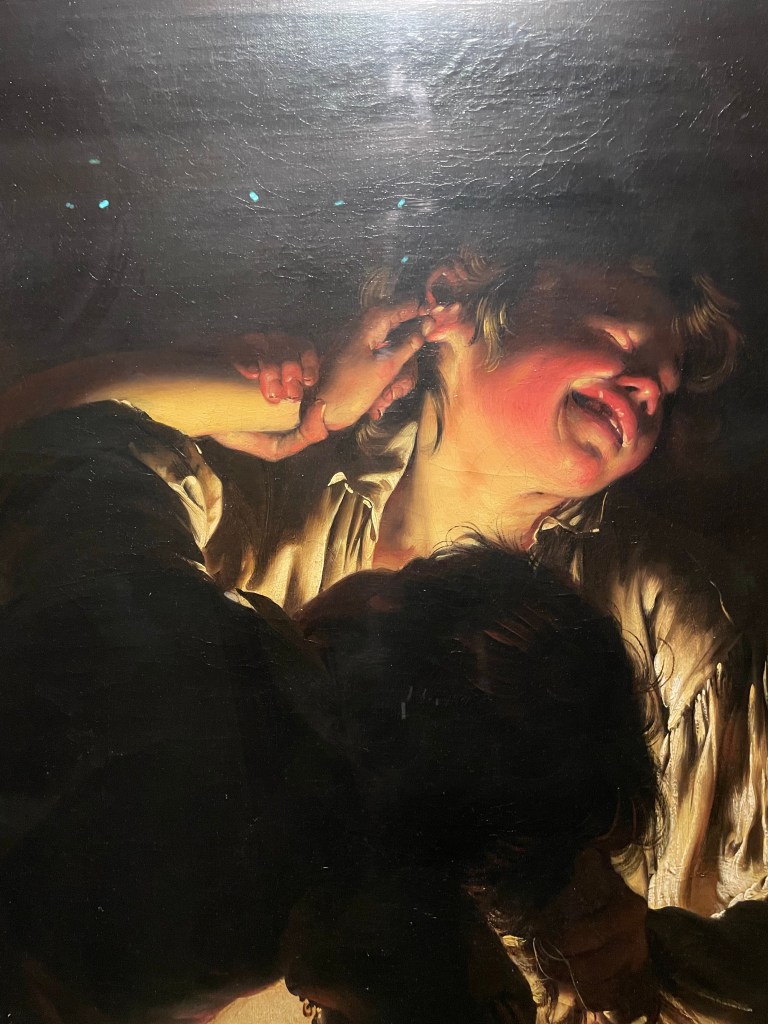
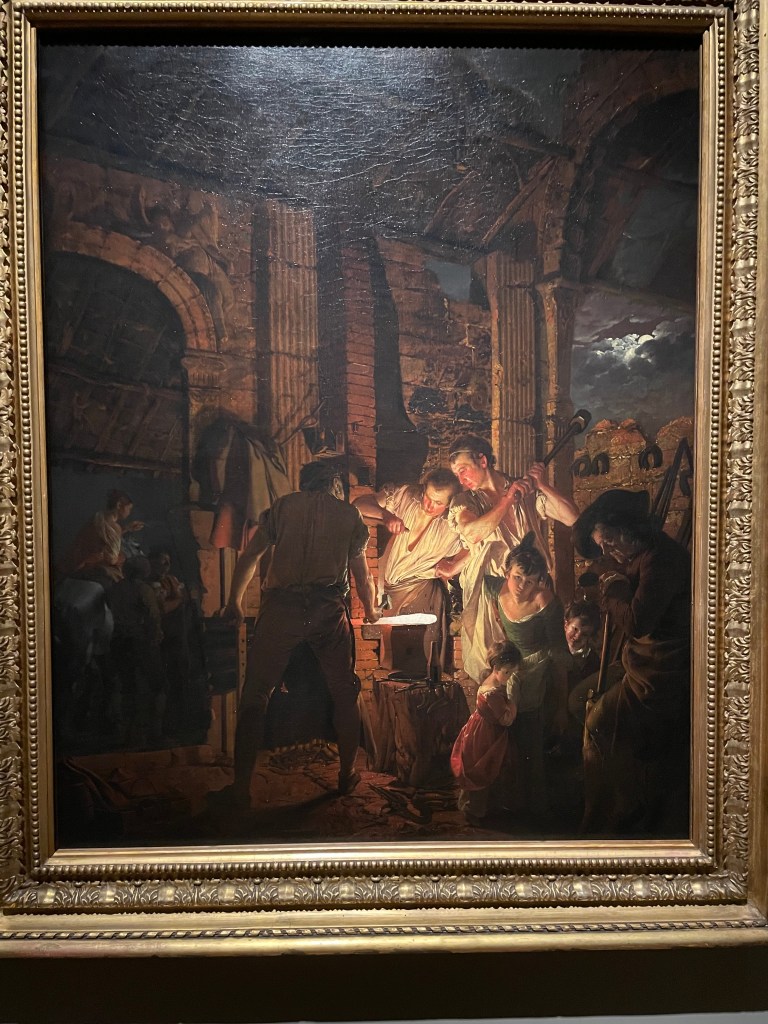
And above is a detail from a painting of two boys fighting. You can see that things are turning violent as one boy’s ear is grabbed and pinched with his assailant in the foreground represented in shadow. And I loved the picture on the right of A Blacksmith’s Shop. Nighttime work, with the moon beyond the clouds and all eyes focused on the action on the anvil. Wonderful.

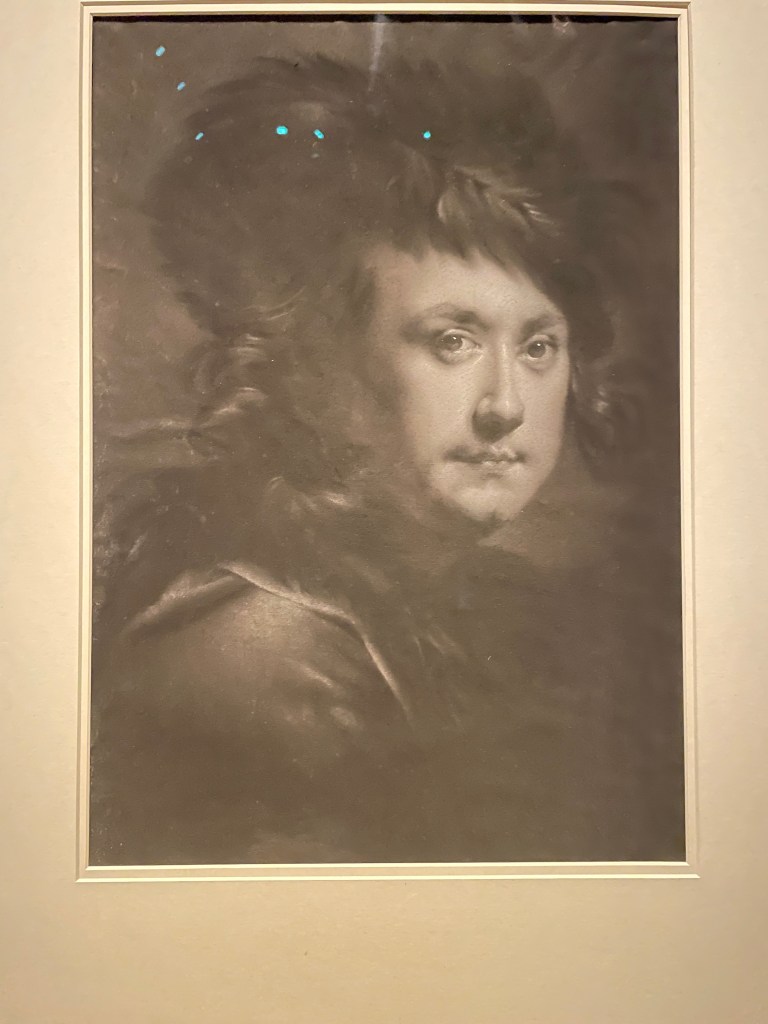
Above is a self-portrait by Joseph Wright of Derby done with pastels early on his career. Clearly he was perfecting his ‘tenebrist’ skills but, quite playfully, representing himself in the style of an ‘Old Master’. What a master of his craft he was. This is a great show. It’s on at the National Gallery until 10th May 2026.
The Story of South Asian Art at the Royal Academy shines a light on the artist Mrinalini Mucherjee, her family and fellow artists. Their work spans the the second half of the twentieth century and shows how Western art was stylistically absorbed into traditional Indian art.

I had no idea what to expect when I attended the press preview for this show. My knowledge of Indian history is scant. For this exhibition we were introduced to the work generated by Benode Behari Mukherjee, his wife, Leela, daughter Mirnalini and students who lived and work an an idyllic-sounding art school established in Santiniketan in 1919. This was a time when Indian artists might look to the West for influence but were determined that their work would be definitively Indian, and reflect their deep-rooted culture.

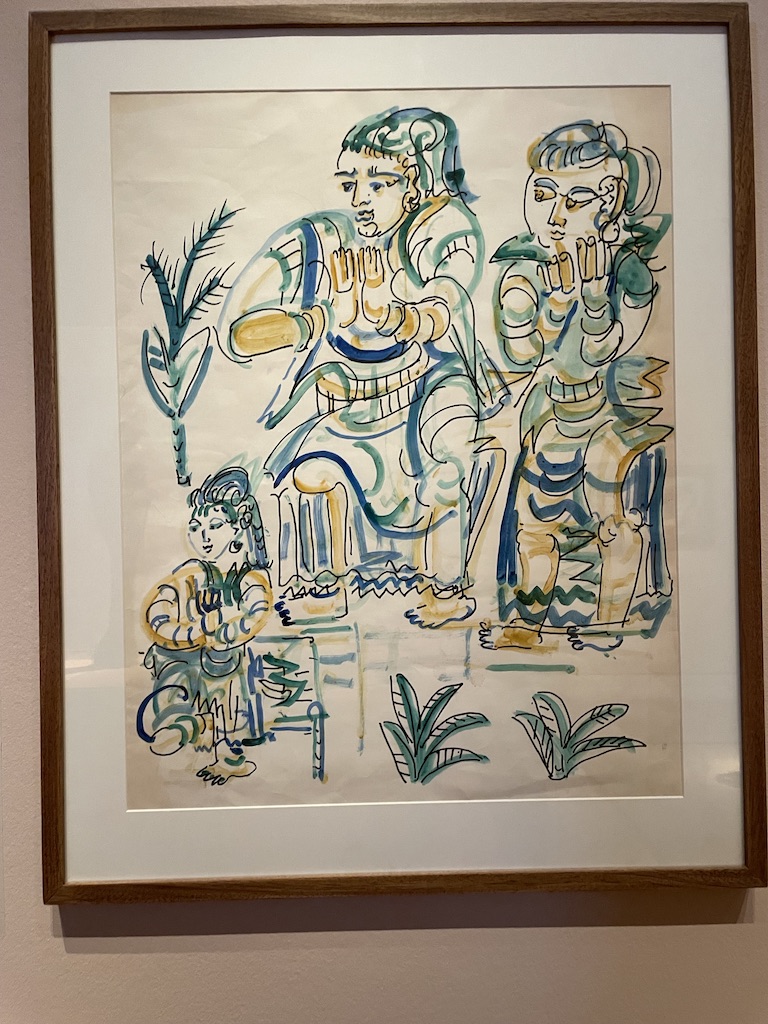
I was impressed by the variety of work and, at times the visceral nature of the imagery. Above is a water colour sketch on paper by Leela Mukherjee demonstrating the influence of Matisse through bold, vigorous brush strokes.

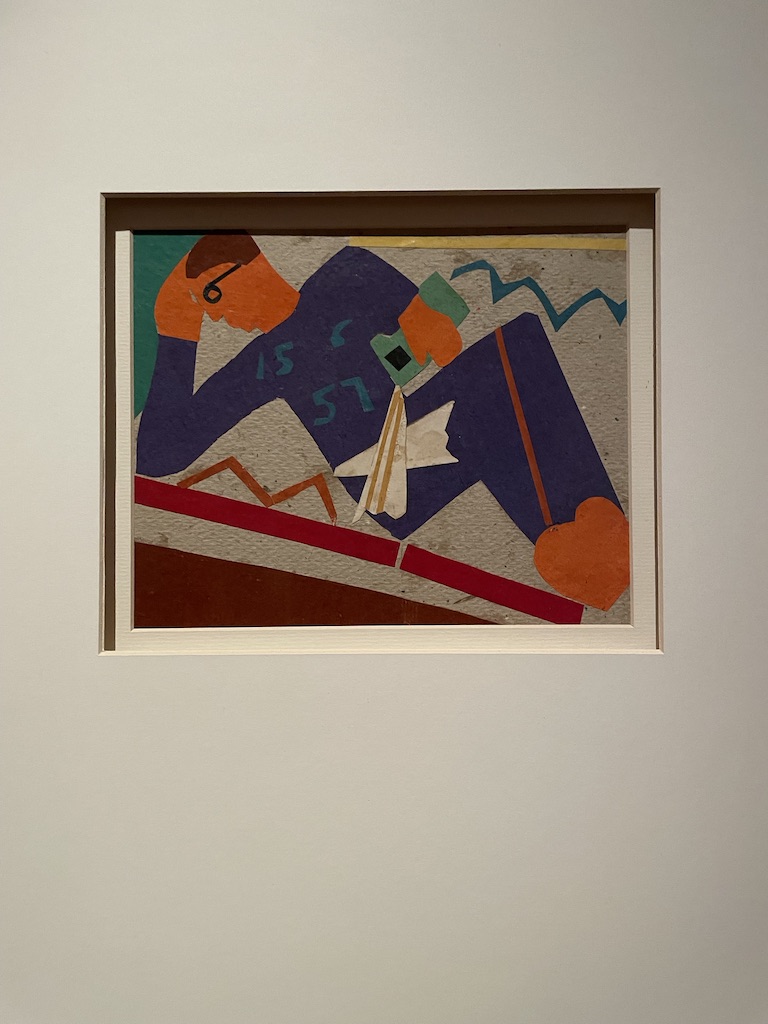
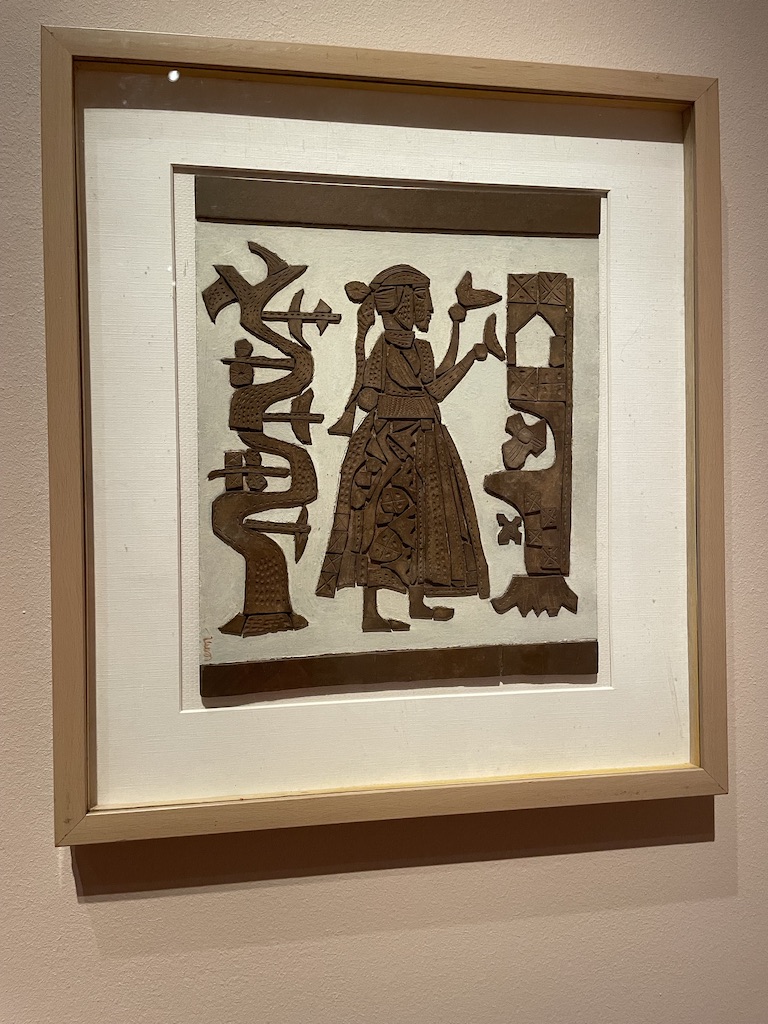
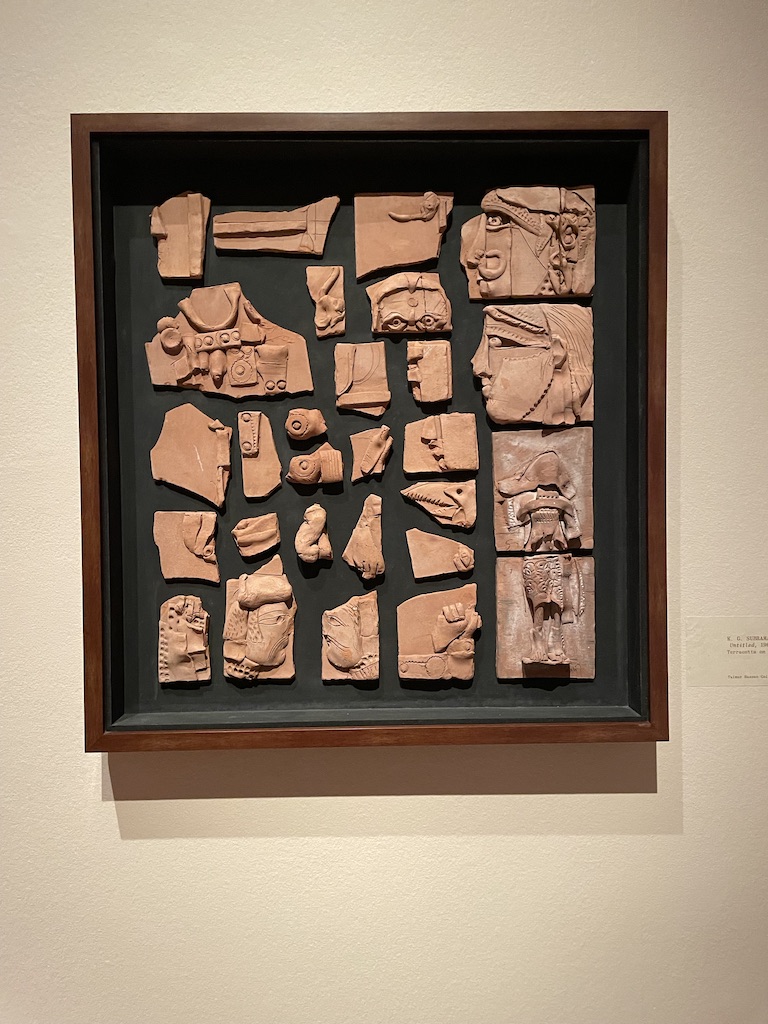
I really liked this trio of work. On the left is a paper collage made with cut outs by Benode Mukherjee. He became blind in his 50s but continued working and teaching. His daughter, Leela, worked closely with him, describing what she could see around them and helping him interpret his art by preparing and cutting up paper for him to collage. He would then, intuitively, ‘feet’ his way into these later works. In the centre is a carved wood mosaic by K G Buramanyan (a student) which relates to a monumental mural commissioned in 1962. The mural stretches some 25 metre and used 13,000 terracotta tiles – examples are shown on the right.

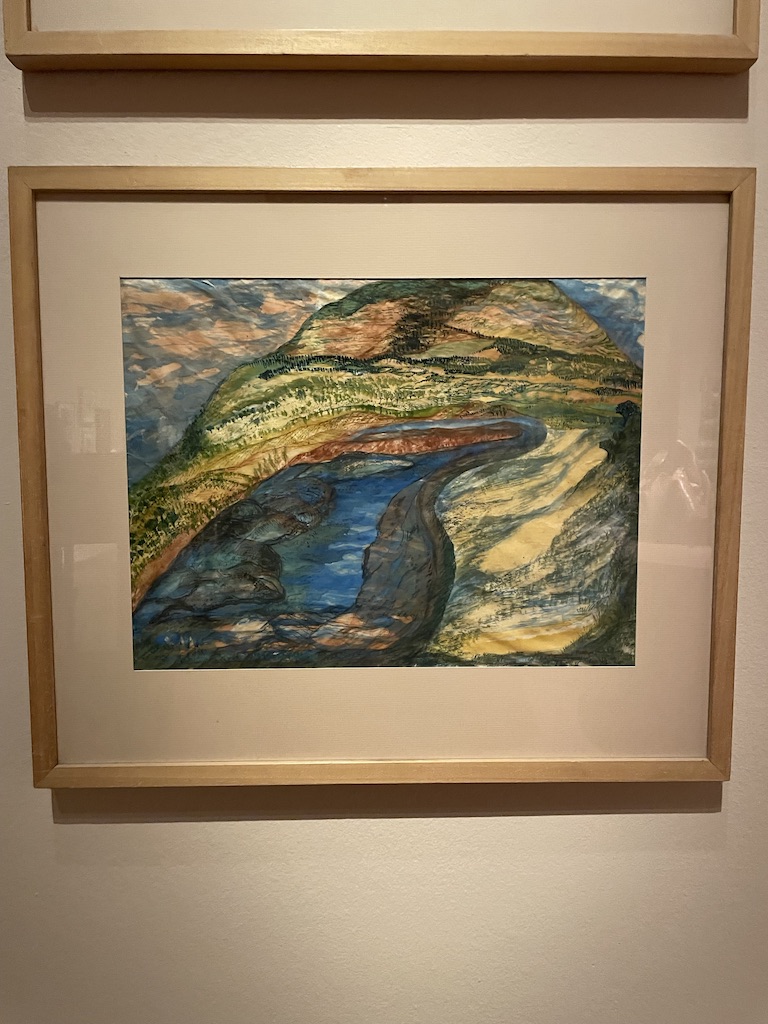
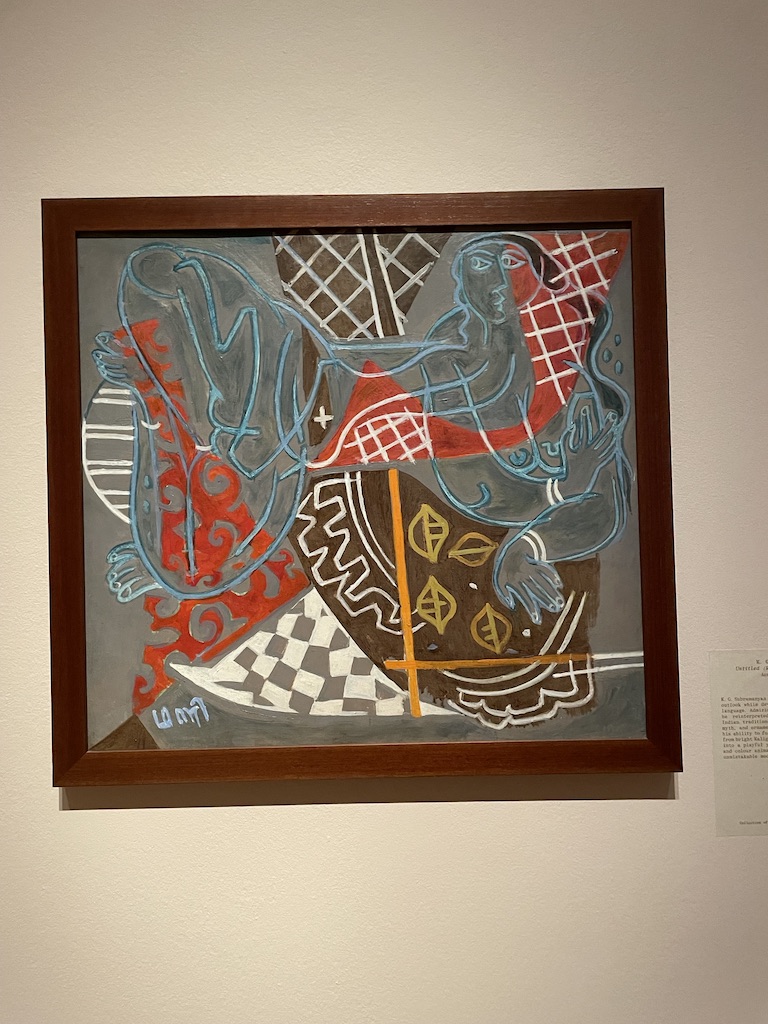
These two paintings caught my eye. On the left is a watercolour by Mrinalini Mukherjee which is like an abstract landscape using great colours. And on the right is a very Matisse and Picasso-inspired ‘Reclining Woman’ by K G Subramanyan.

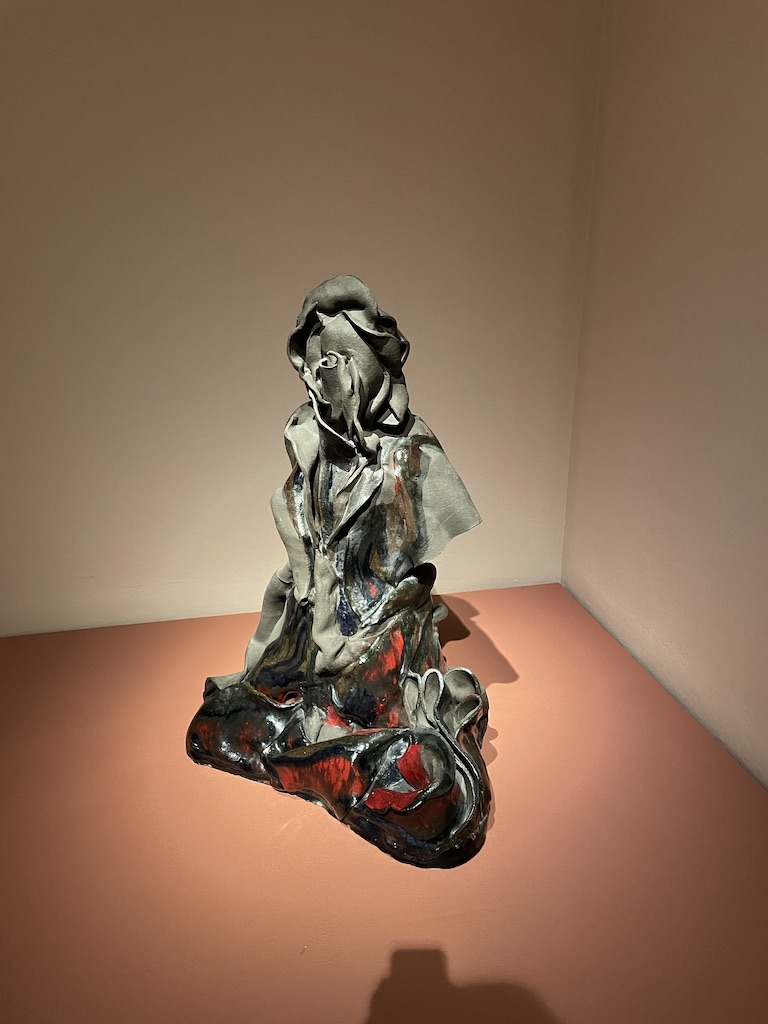
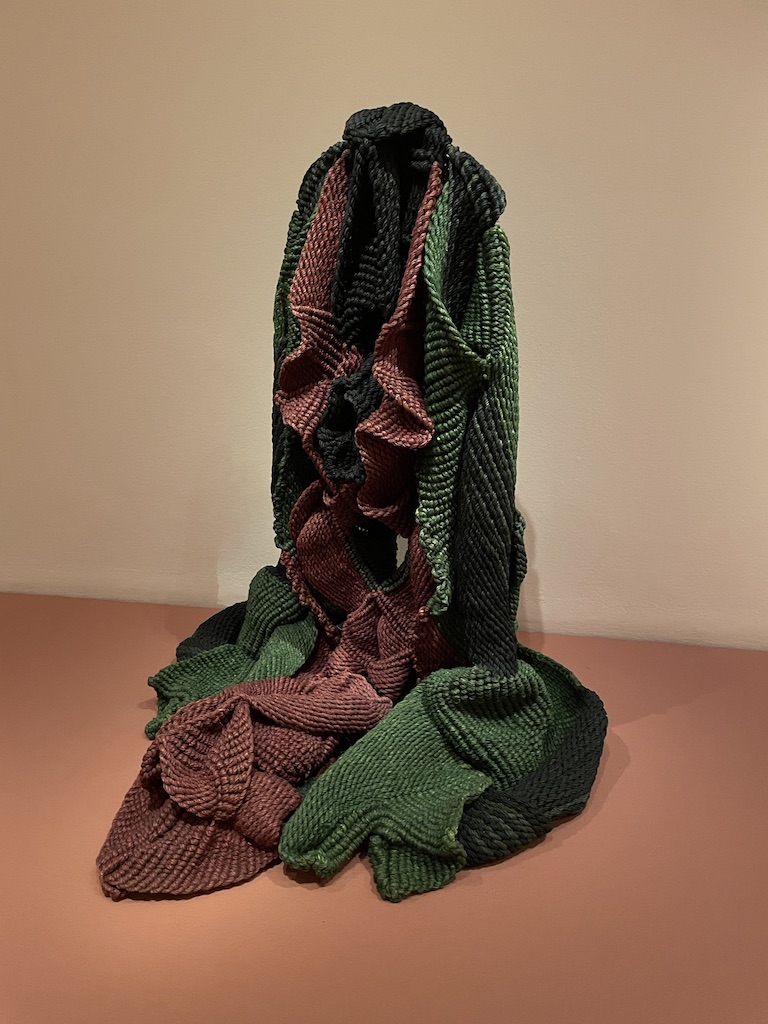
The sculptures are interesting. On the left is Night Bloom II by Mrinalini Mukherjee, a partly-glazed ceramic made with folds of clay which convey the idea of a woman seated in the lotus position. They clay bears impressions of textiles. And on the right is her intriguing sculpture named Jauba, from 2000 made with hemp and steel.

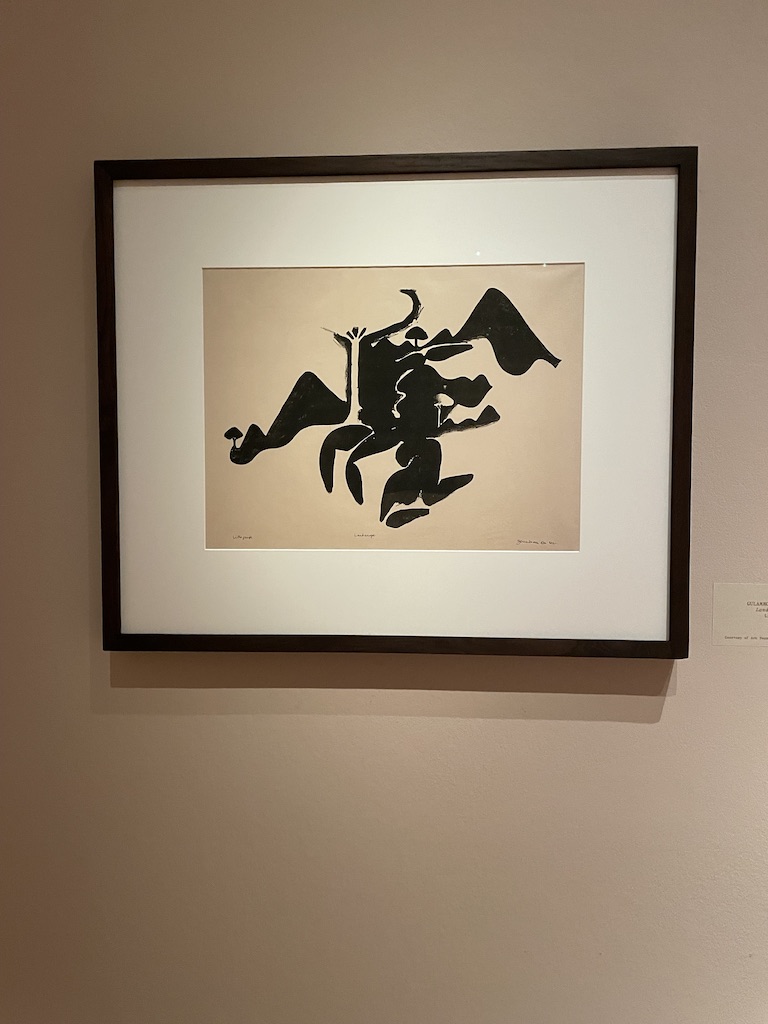
I found this lithograph, Landscape 1968, by Gulammohammed Sheikh quite threatening with intimations of unsettling goings on. And on the right is an etching entitled Riot from 1871 where the violence is evident.

A very intriguing show. It’s on at the Royal Academy until 24 February 2026.

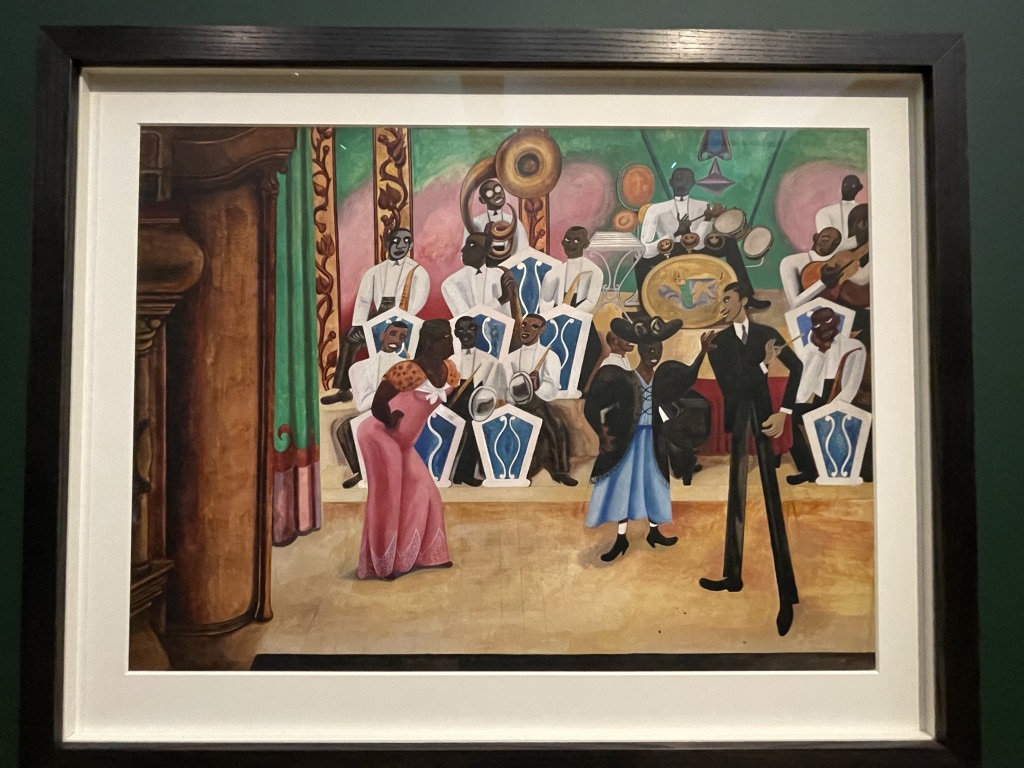
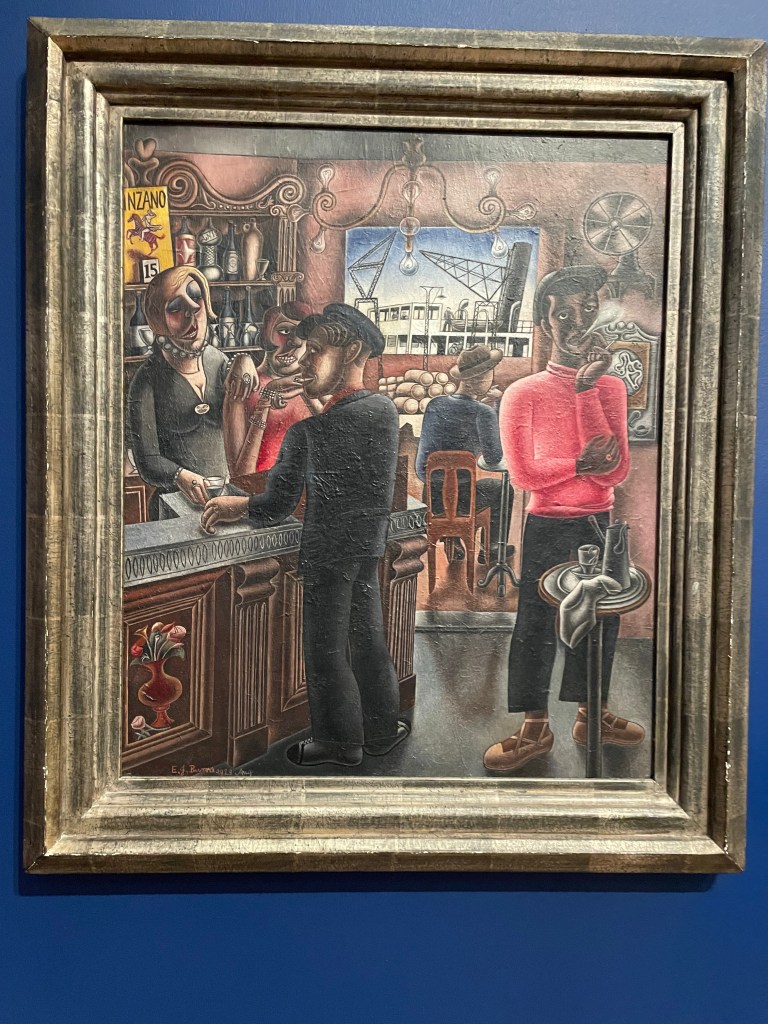
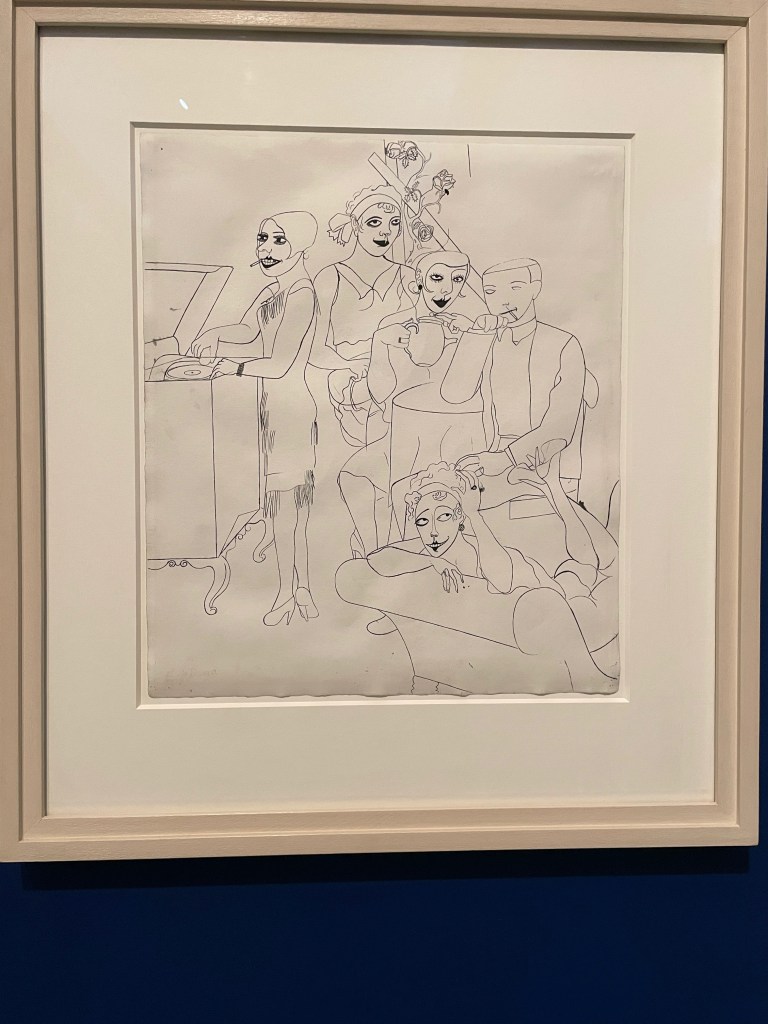
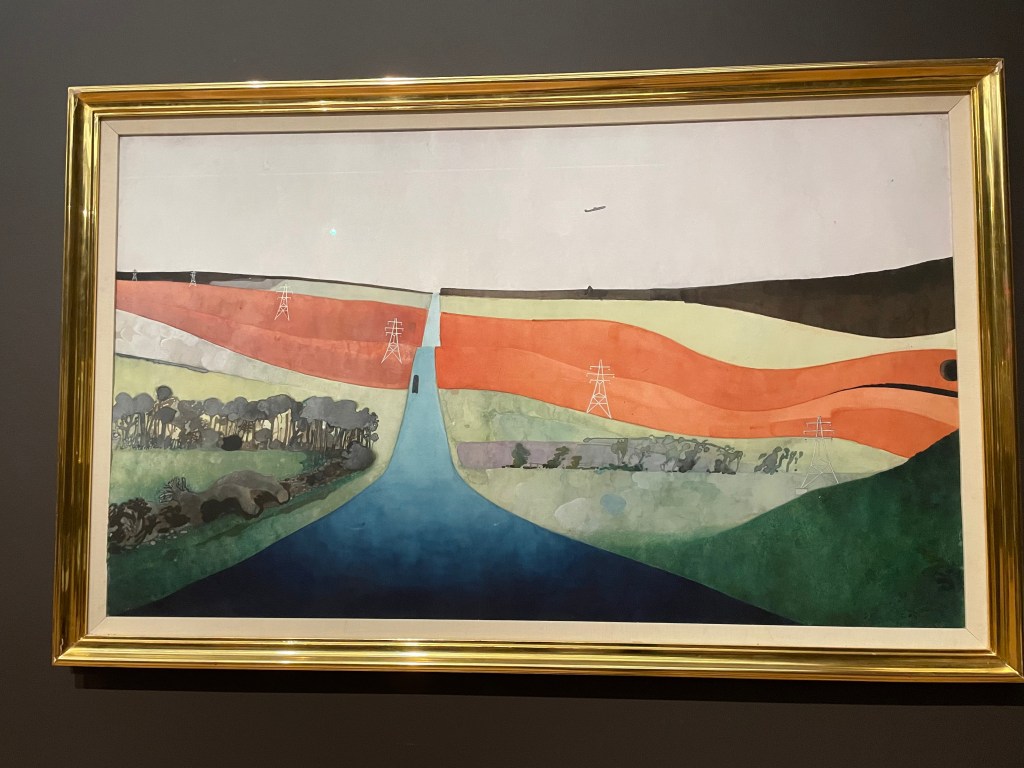
Oh, how I love Edward Burra’s work! And I’m so excited to recommend this wonderful retrospective at Tate Britain. Born in 1905 into an upper middle-class family in Rye, he was drawn to the flappers of the roaring 20’s in London, gay Paris, Harlem in New York, sailors in Toulon and Flamenco dancers in Spain. Depicting bars, gin joints, low life and high fashion. It’s all there, beautifully painted in watercolours with a strong narrative feel.

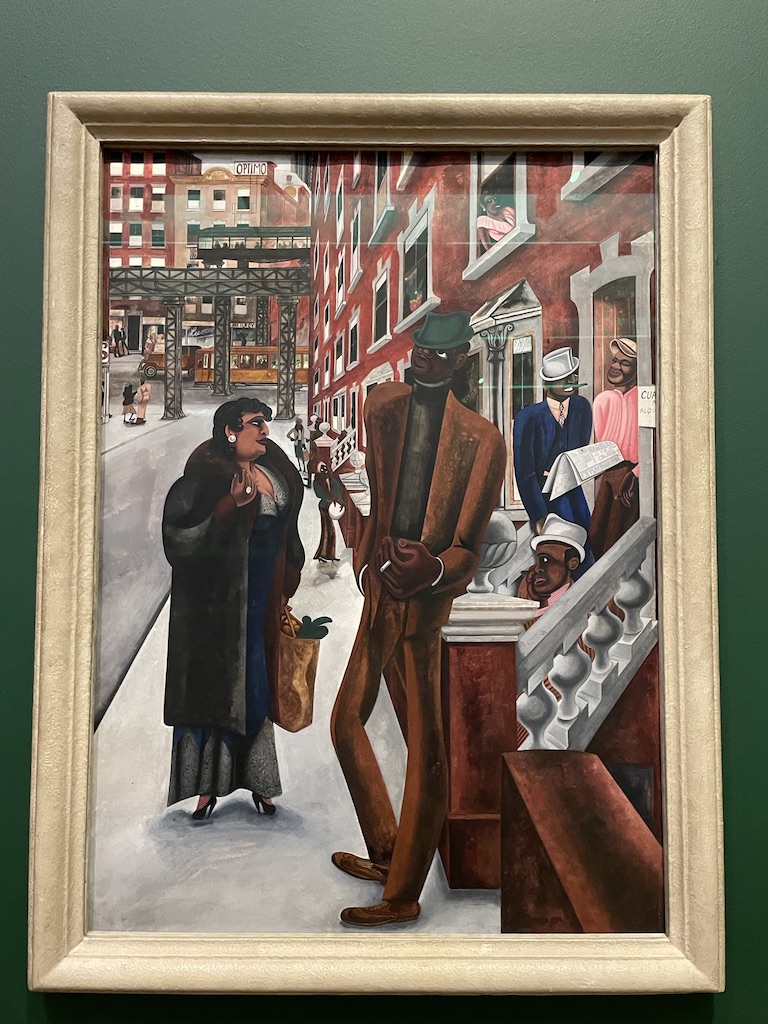
Oh, my delight at finally seeing Edward Burra’s amazing painting, Harlem, within the epic retrospective show which is on at Tate Britain.

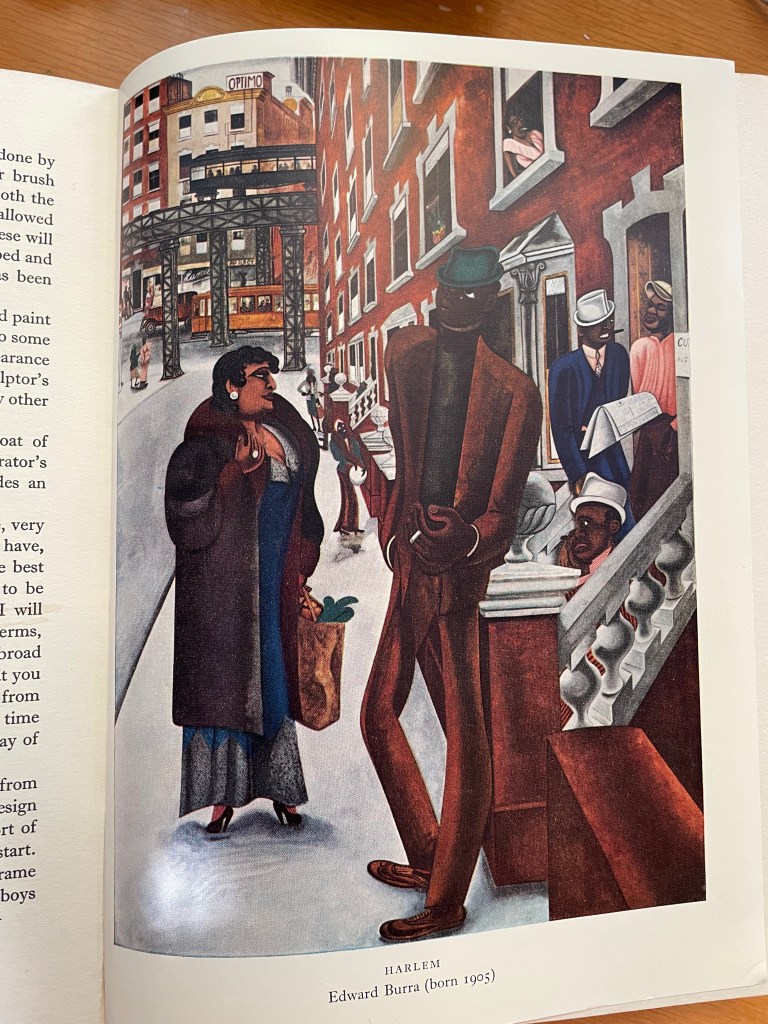
As a child I used to pore over my copy of Drawing & Painting for Young People by Mervyn Levy which contained this picture. I was very drawn to the narrative feel of the picture and puzzled by the environment of which I had no understanding. The figures looked alien but intriguing and I used to wonder how the painting was made. Well, what a joy it was to see the image for real and to marvel, like a child, at the astonishing use of watercolour, the detailed drawing and amazing atmosphere.

Edward Burra suffered from rheumatoid arthritis and was in constant pain. He became an artist, and rather than using oils to paint at an easel, he made his work on paper while seated at a table. Born in 1905, the young Burra was drawn to London during the hectic 1920s, loved jazz clubs, gin joints, nightclubs and seedy pubs. He recorded the bohemian life in Paris, the Black area of Harlem in New York where he adored the jazz clubs. He loved the sailors in Toulon and Marseille, flamenco dancers and toreadors in Spain.

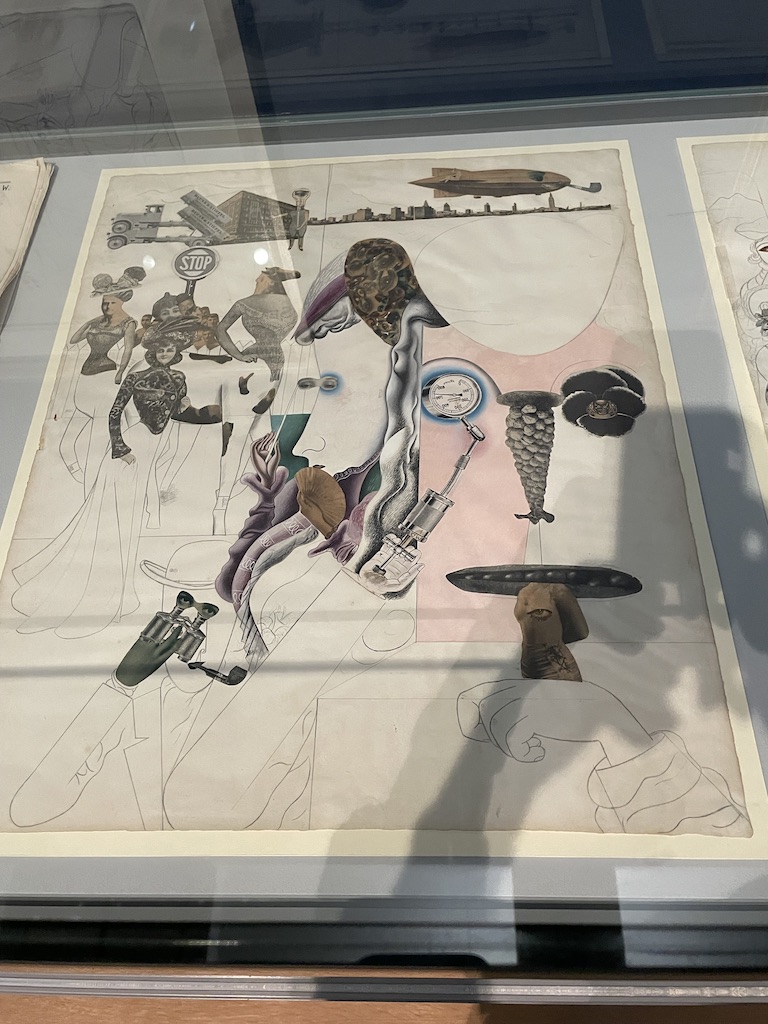
It’s fascinating to see his work close up and understand the detailed work that went into the creation of his pieces. Clearly he used magazines and photographs as reference and tended to collage images together to compose his paintings.

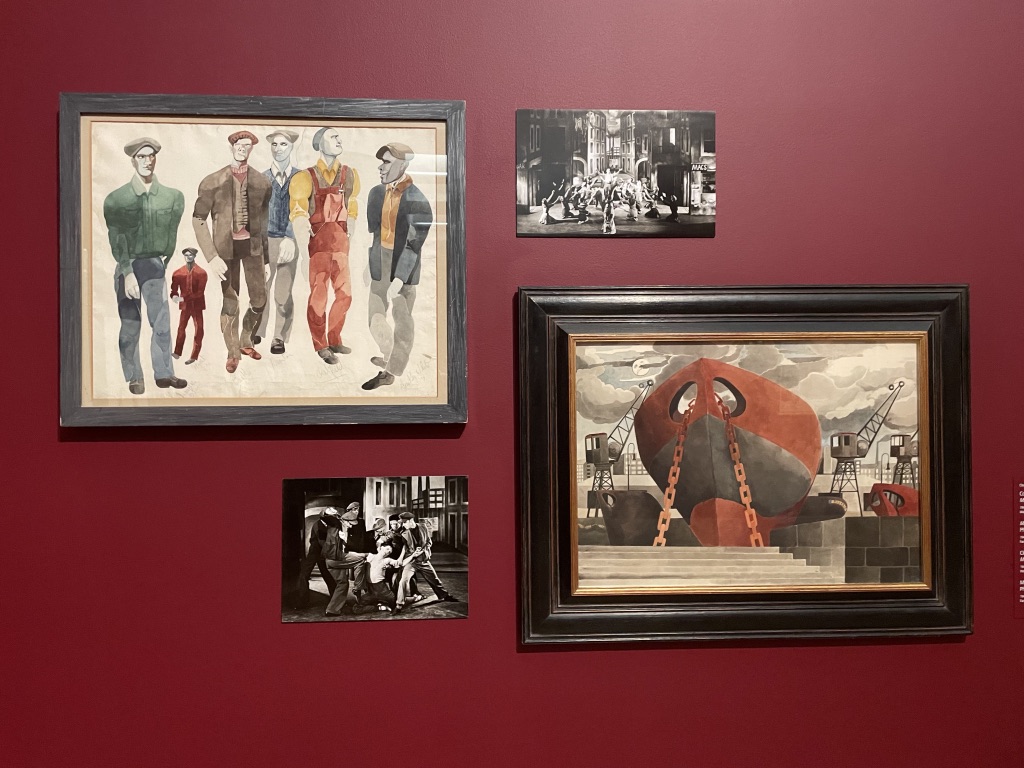
His enjoyment of ballet and theatre found form in commissions to create costumes.

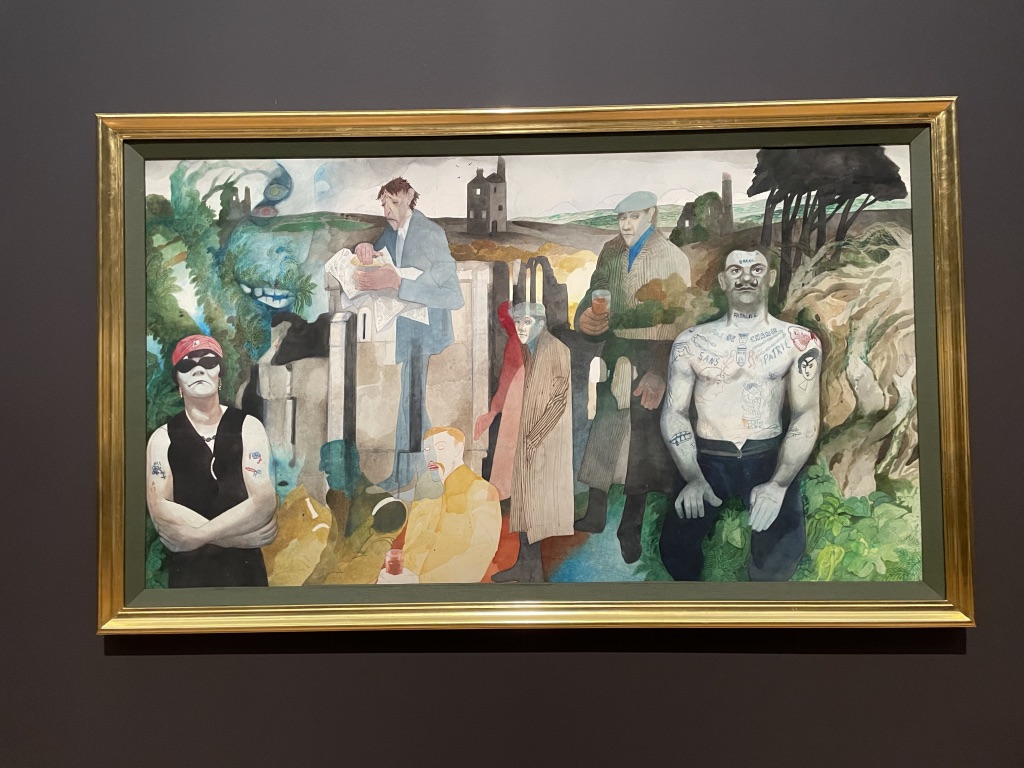
Towards the end of his life (he died in 1976 in Hastings) he concentrated more on impressions of the countryside and English life. His work became much larger, with pieces of A2 size paper pasted together.

In one of his final works he places himself in the centre of the picture, eating a pasty, surrounded by people from the now disused tin mines in Cornwall. There are ‘ghostly’ figures whose images seem to ‘bleed’ through the contemporary figures.

This show offers a rare chance to review the work of a highly original and clever artist. I guess you’ll be right in thinking I admire Edward Burra! It’s on at Tate Britain until 19th October.

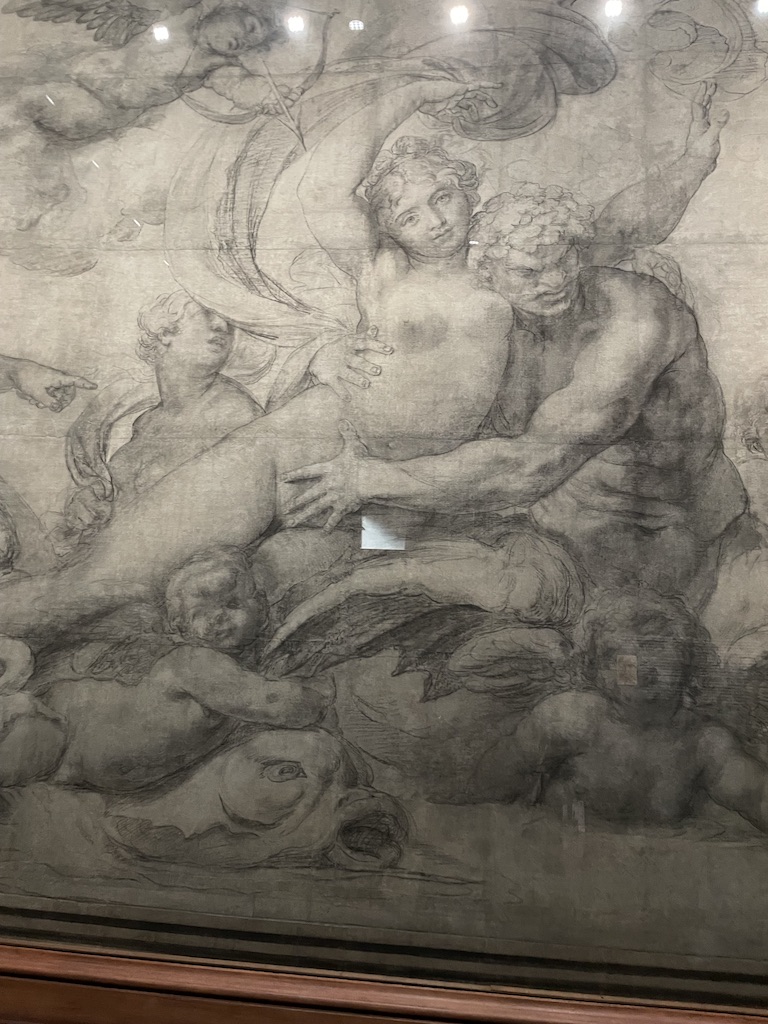
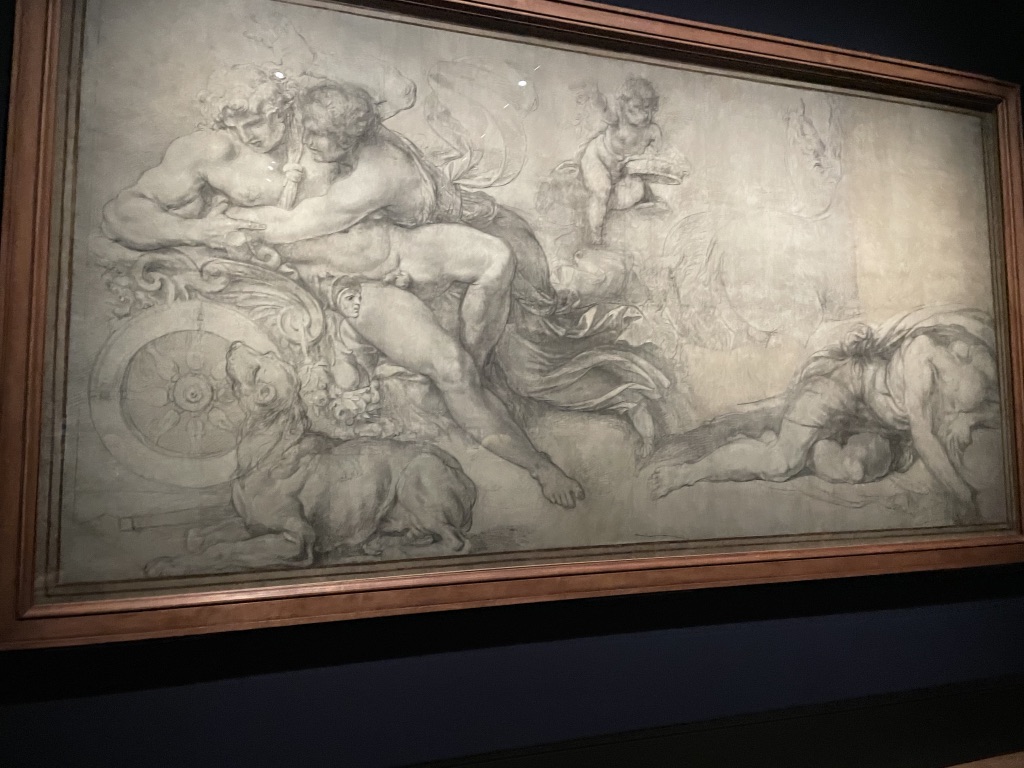
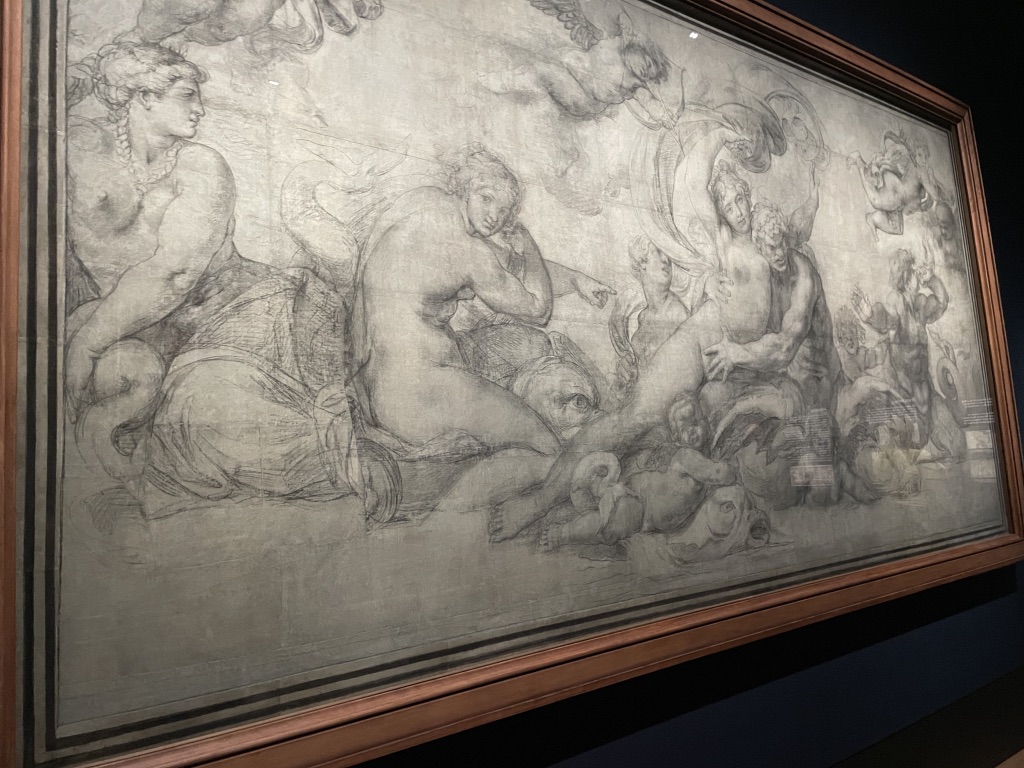
What a delight to see, close up, a remarkable survivor from the Renaissance – the two Carracci ‘cartoons’ created in the late 1590s in readiness for transfer to the ceiling of the Palazzo Farnese in Rome. You can see the joins, the cuts, the holes for the ‘pouncing’ and simply absorb the atmosphere of artists at work over four centuries ago. Stunning!

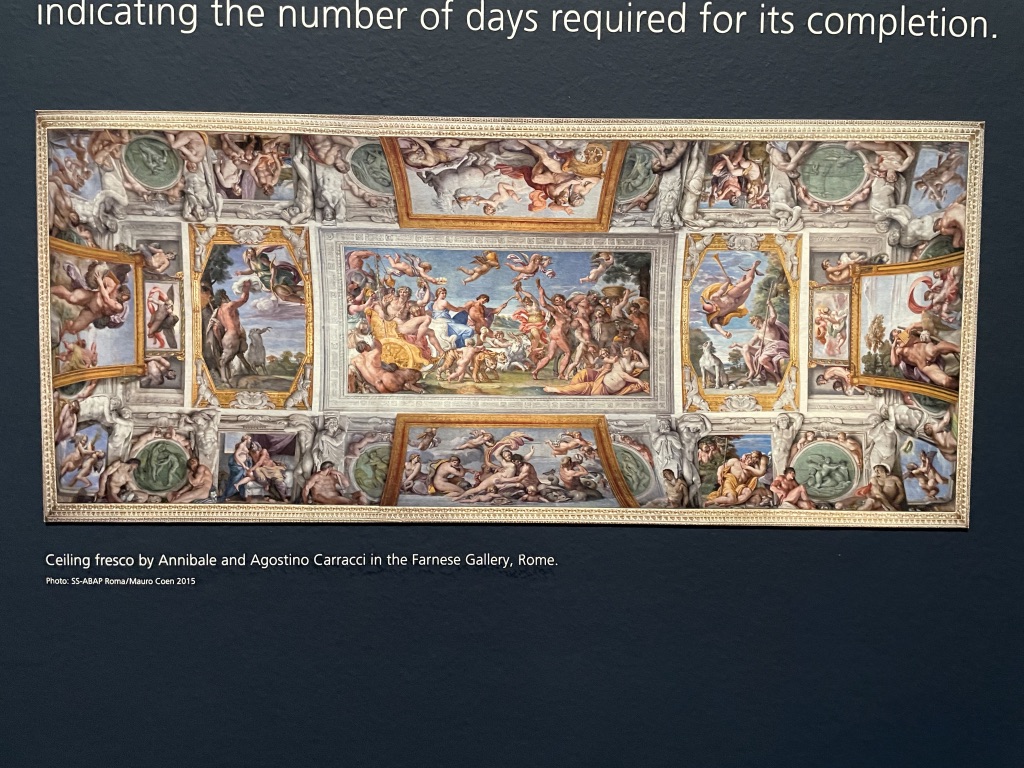
It was a thrill to enter the darkened space of Room 1 at the National Gallery and behold two massive, landscape-sized charcoal drawings by the artistic double act of the early 1600s, Annibale and Agostino Carracci. These huge cartoons were the preparatory works for two of the large paintings which adorned the spectacular gallery ceiling of the Palazzo Farnese in Rome. The work was commissioned by Alessandro Farnese who became Pope Paul III. The building is now the French Embassy so it’s not easy to see the amazing works.

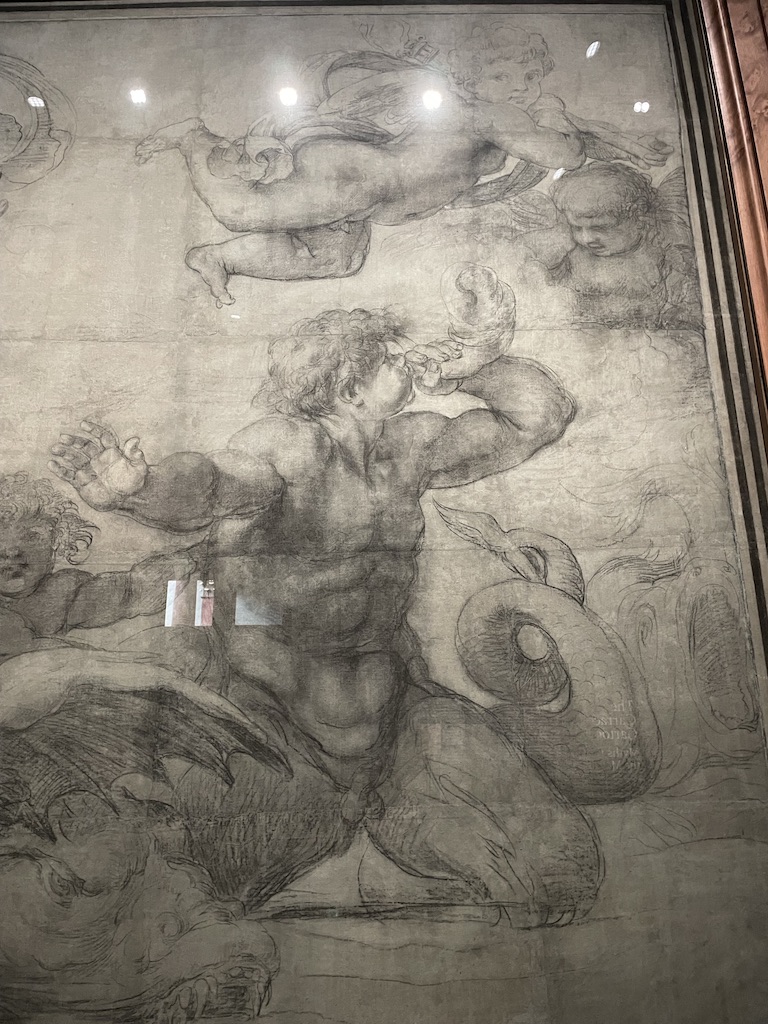
The two cartoons on show are the centre top and bottom images in the gilded fame. It’s spectacular to see these works close up. You can see the cuts, tears, reps and pin marks in the fragile paper. These cartoons were working documents, used to lay out the design, develop the artwork and then placed against the damp plaster of the ceiling surface to have the image pricked (pounced) and and traced onto the surface. Then the artists would labour at ceiling height on a scaffold to complete the frescoes.

It’s impressive to see these works close up and follow the lines and scratches made by artists over four centuries ago. It’s rare for these working documents to survive but, apparently, they were carefully pieced together again after the transfer process and kept safely. Maybe the idea was to reuse elements of them on future commissions.

There’s such vitality to the drawing and the clever composition There’s humour too. On the right, you can see a putti blowing a shell in the face of another putti who is covering his ears!

Above is a view of the gallery made by Francesco Panini, who appears in the bottom left of the gallery sketching the view.

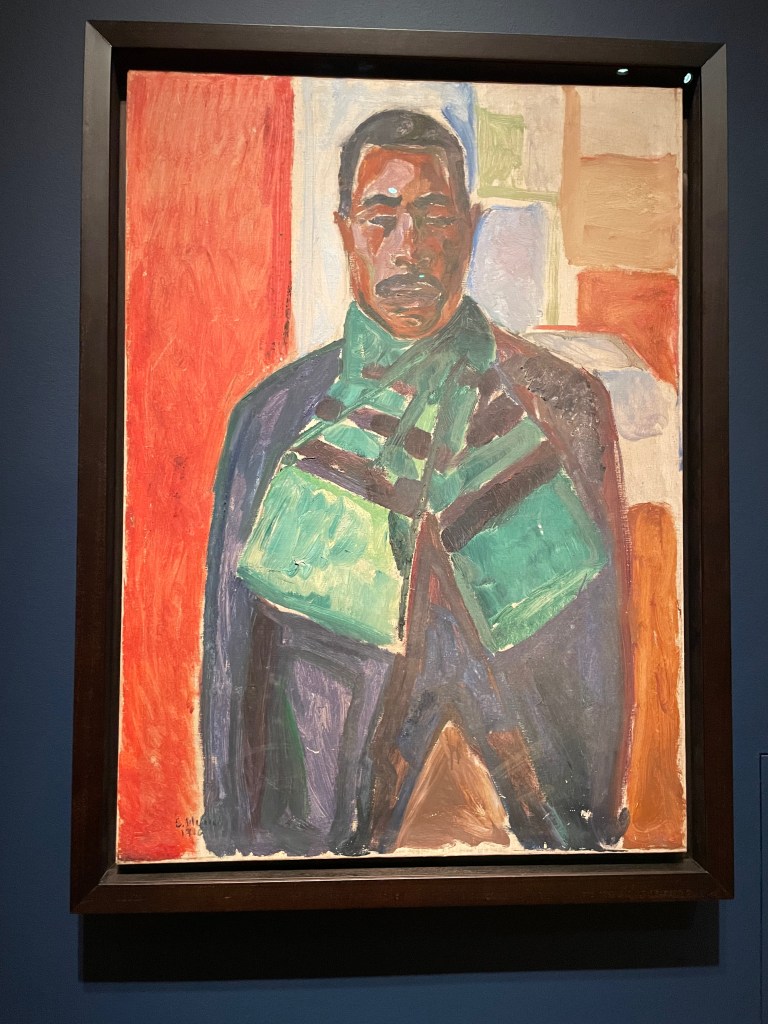
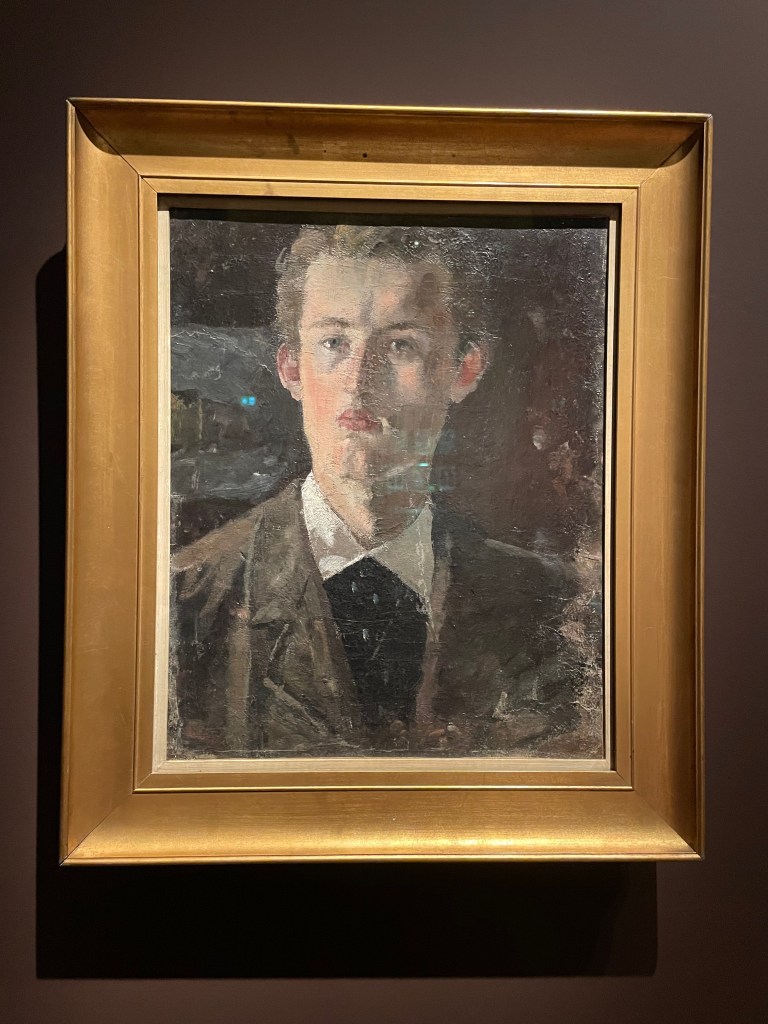
Who knew that the artist best known for that agonising work, The Scream, started out as a painter of colourful portraits? Well, now we know – thanks to a wonderful exhibition at the National Portrait Gallery of Edvard Munch’s early portraits, mainly of family and close friends. It’s a chance to re-evaluate this artist’s work and enjoy the sunshine and affectionate relationships in his life.

Colour! Yes, serious colour and, to my mind, a speediness of thought and hand in the creation of many of these portraits. I enjoyed the dribbles, splodges and daubs of hasty painting, as if he were in a great hurry to capture the subject in front of him and then get on with something else. Above: Torvald Stang, a friend, and self portrait of Munch.

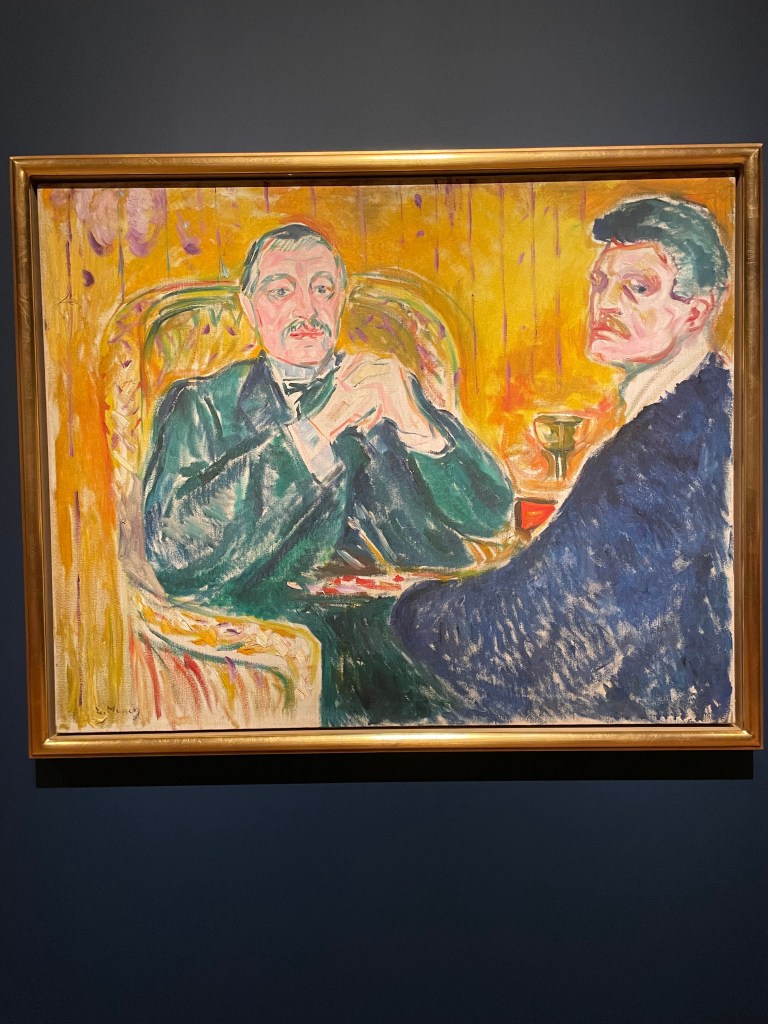
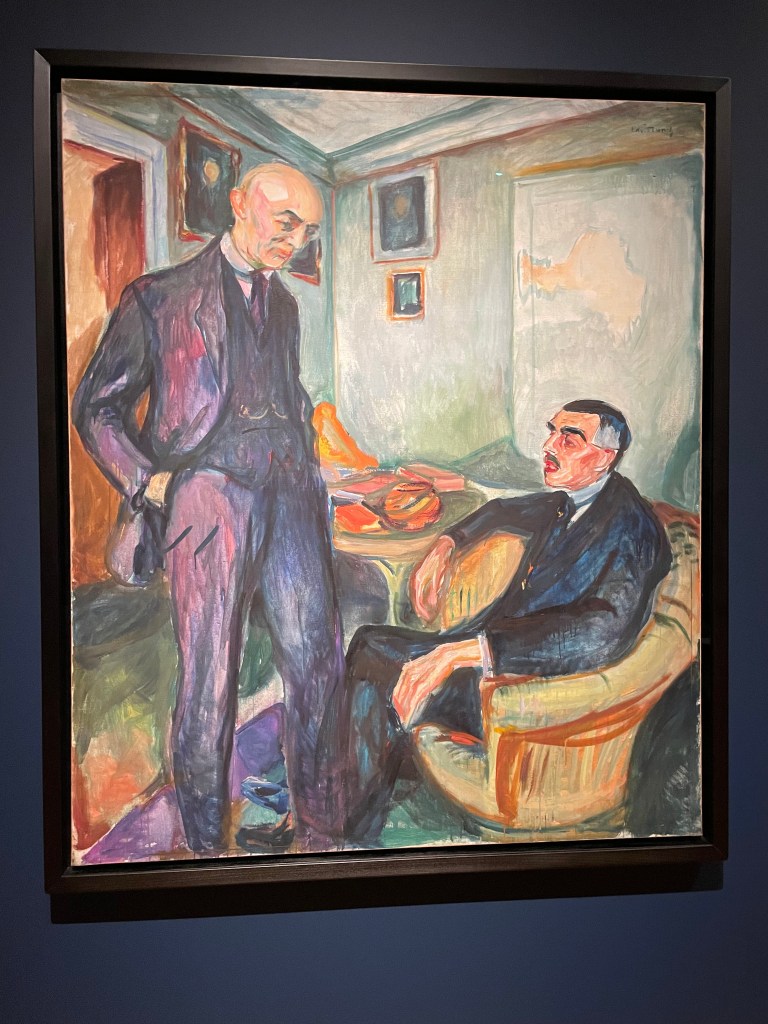
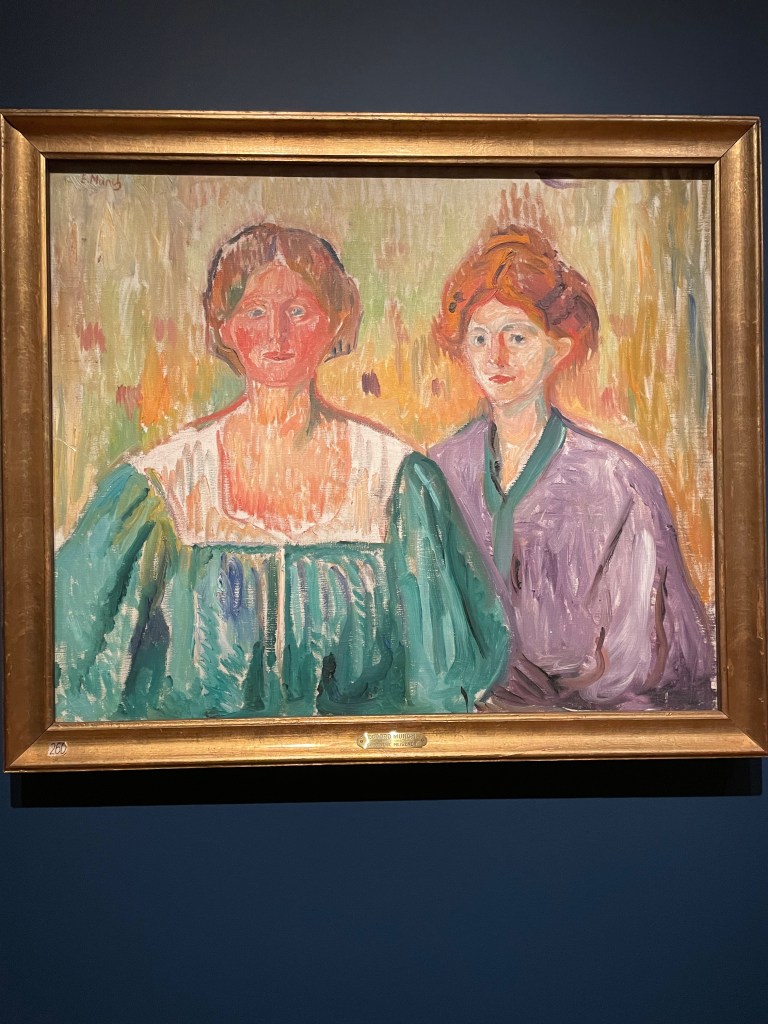
Munch was clearly very fond of his friends and family and painted them with obvious pleasure. And he liked depicting them in pairs. This is very much a theme. People with a connection occupy the same space and, again, were painted at much the same pace with an equal distribution of attention to detail. Above: Lucien Dedichen and Jappe Nilssen – friends from Munch’s student days. And on the right are sisters Olga and Rosa Meissner, professional models.

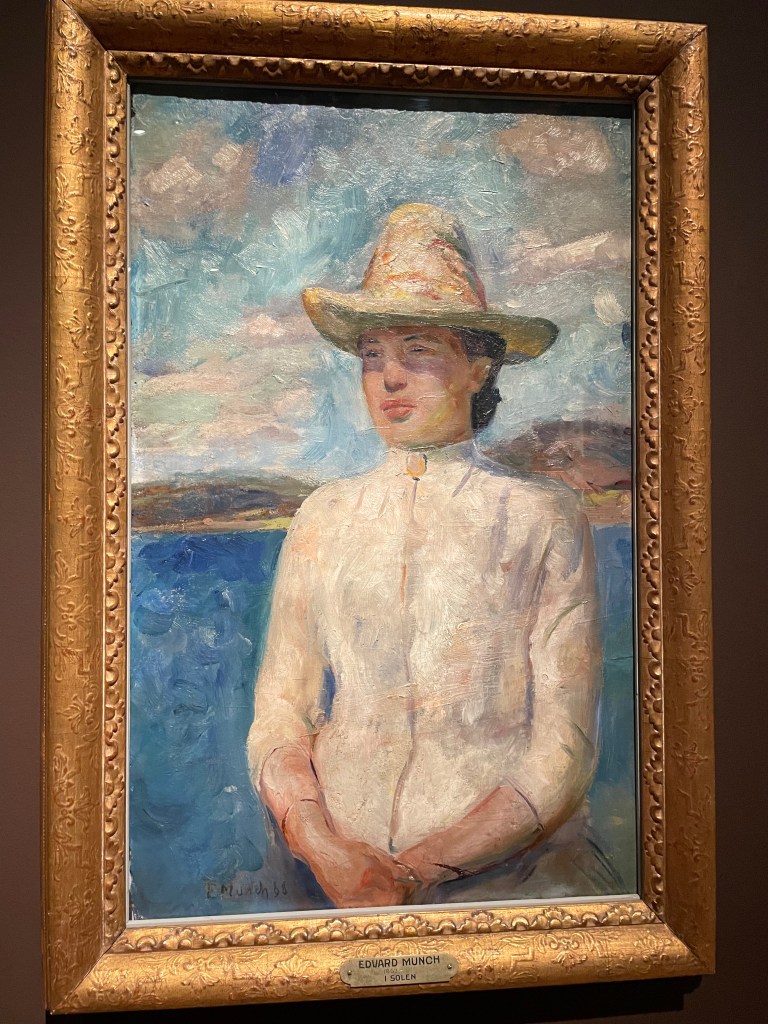
There’s an overwhelming tenderness to many of the paintings and, in some cases, they might not seem finished. But, to Munch, he had provided quite enough detail in the face and the rest of the figure can be filled in by the viewer’s eye. Above: Inger, Munch’s younger sister, looking charming in sunshine and Inger Barth, a friend. This work was confiscated in 1937 when it was among the works declared to be ‘degenerate’ by the National Socialist government.

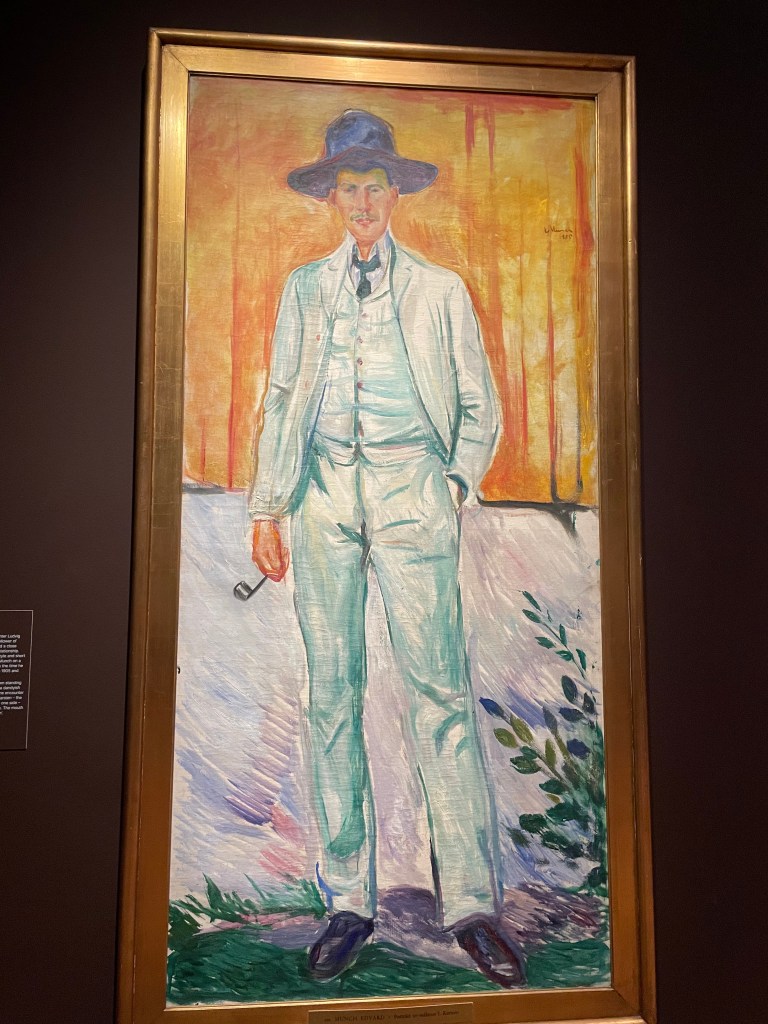
What’s absolutlely apparent is the free-flowing style we recognise from his later, angst-riven work. I like the direct gaze of his subjects. It looks as though they must have been deep in conversation when the portrait was being made and the affection between sitter and artist is very apparent. Above: the Norwegian colourist painter Ludvig Karsten in a ‘dandyish’ pose, August Strindberg, the playwright, and Sultan Abdul Karem whom Munch employed.

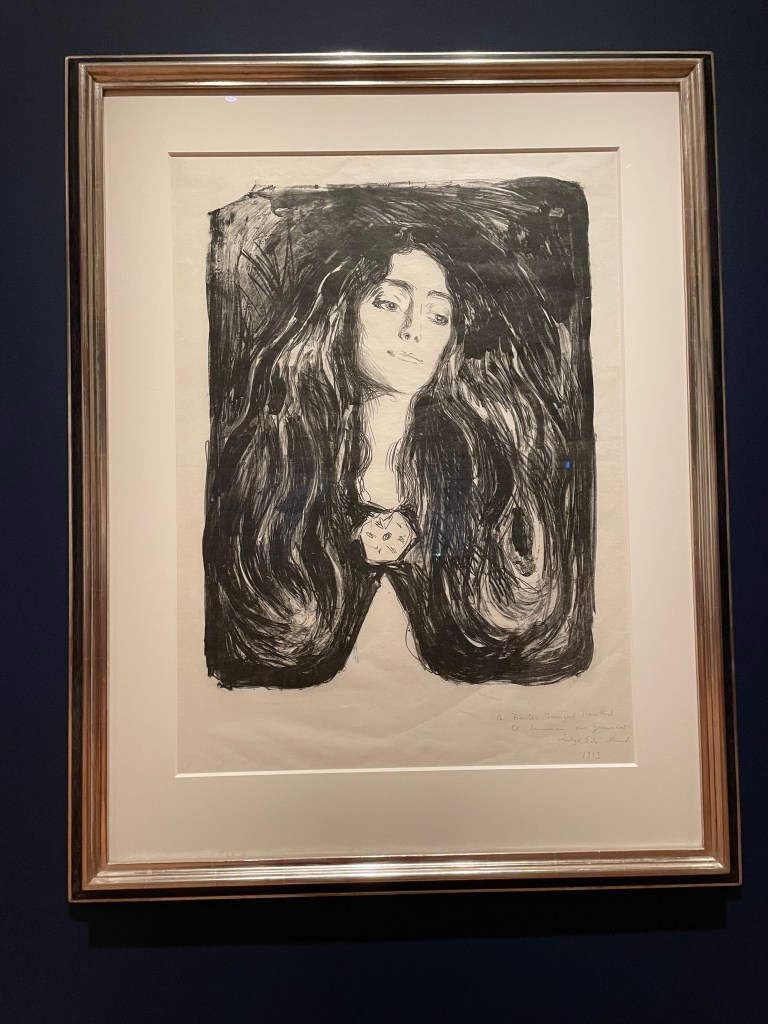
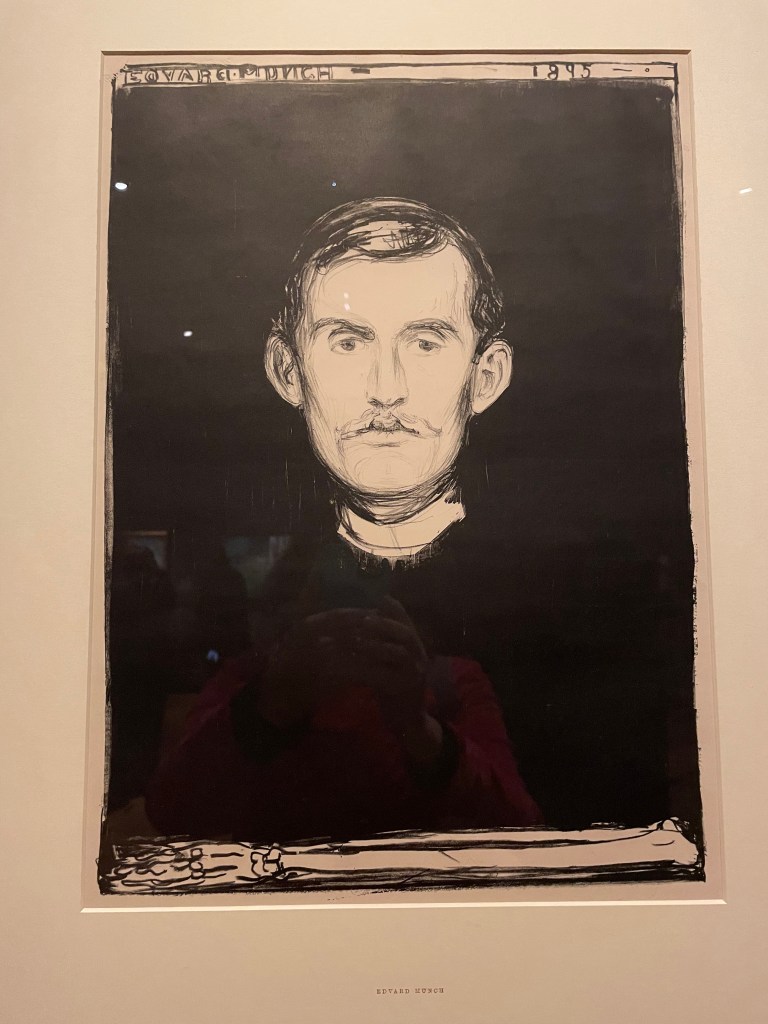
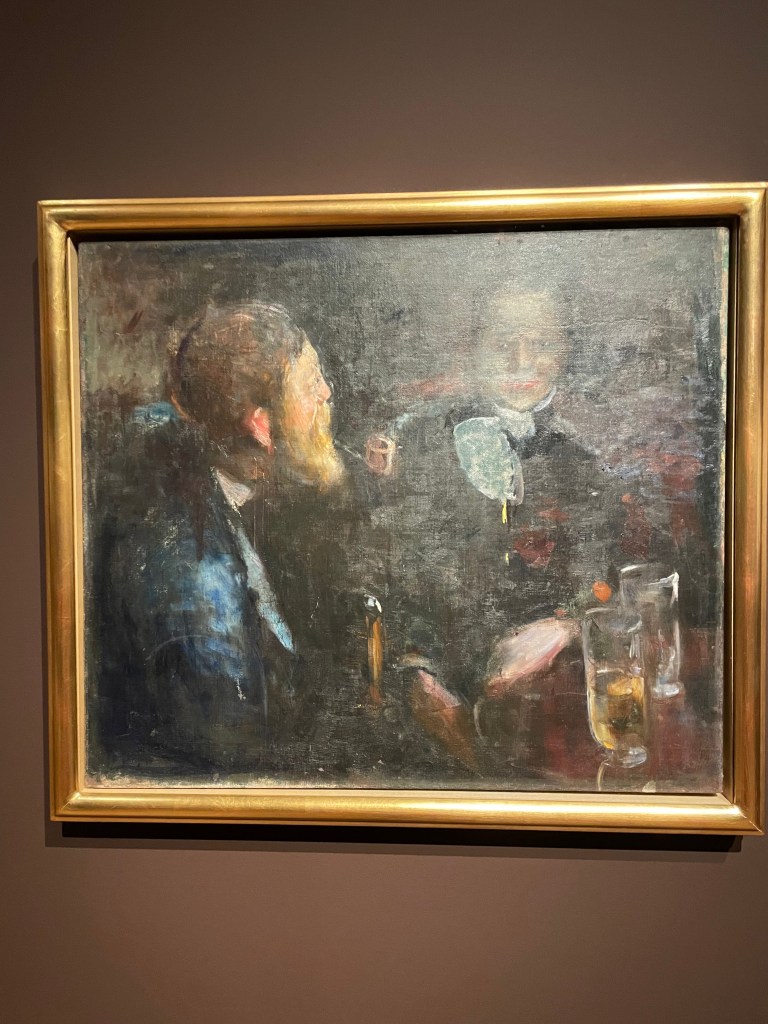
Just a few of the lithographs and black and white portraits (and the very dark one on the right) give a hint of the darkness within. But one comes away from this show in a very uplifted state, pleased to see such great portraiture by one of the 20th century’s finest artists. Above: lithograph portrait of Eva Mudocci, 1902, and self-portrait with skeleton arm, 1895 and on the right Tête à Tête, 1885, showing the painter Karl Jensen-Hjell drinking in the cafe in conversation with woman who might be Inger Munch. Very atmospheric.

Above: a self-portrait and a very tender portrait of Munch’s father, Christian, a military doctor. The show is on at the National Portrait Gallery until 15th June 2025. Well worth it.

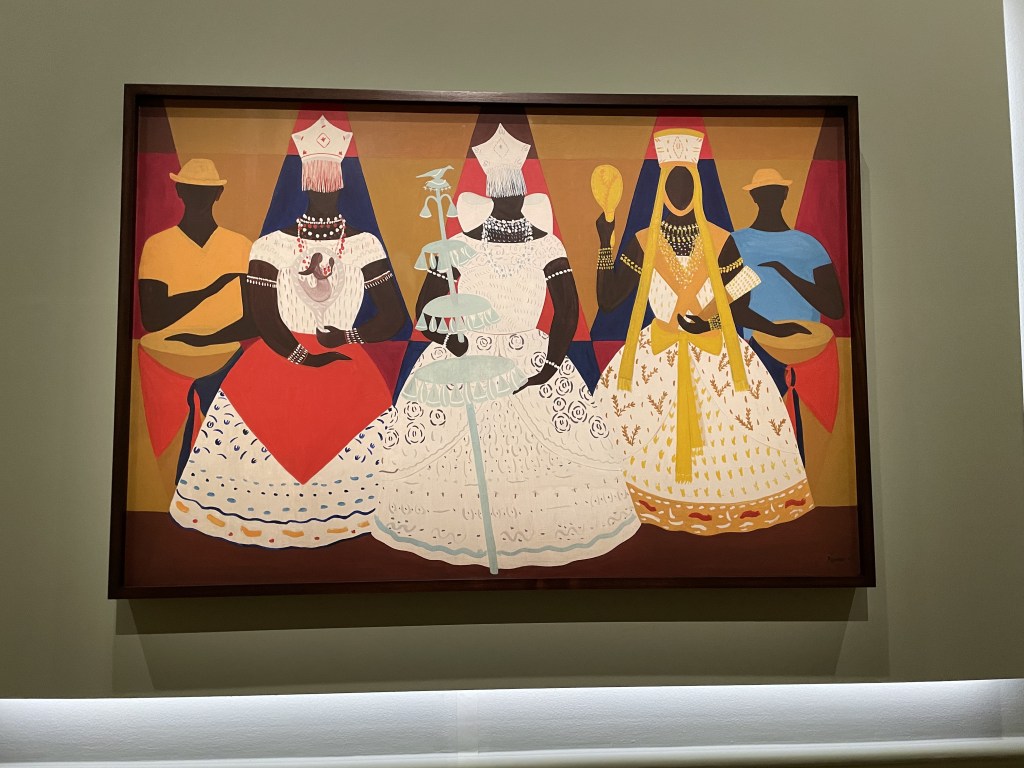
Brasil! Brasil! A glimpse of the artistic heritage of this lively country is on show at the Royal Academy and it’s fascinating to see how a mix of European and indigenous artists have combined to create a distinctive Brasilian aesthetic.

This image, entitled Three Orishas, was painted by Djanira da Motta e Silva in 1966. It’s an example of the ‘newer’ art in a show which exhibits the art of Brasil from the 1920-70s. The bright colours, stylised look and clear mingling of cultural languages captures, for me the true spirit of this young South American country.
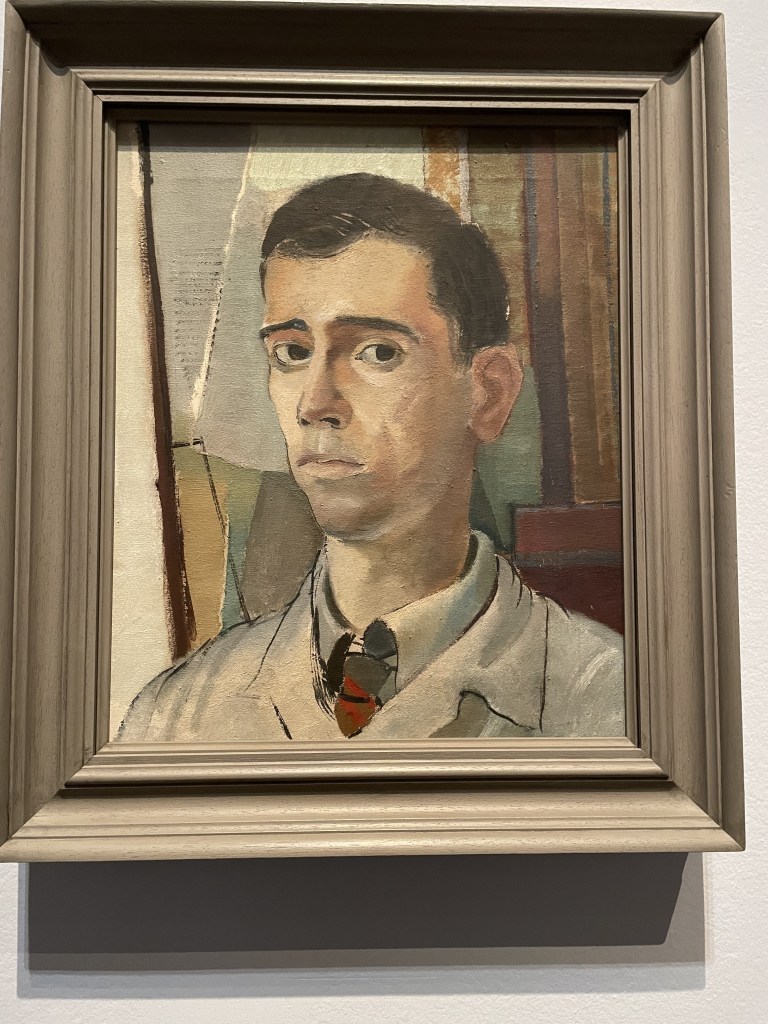
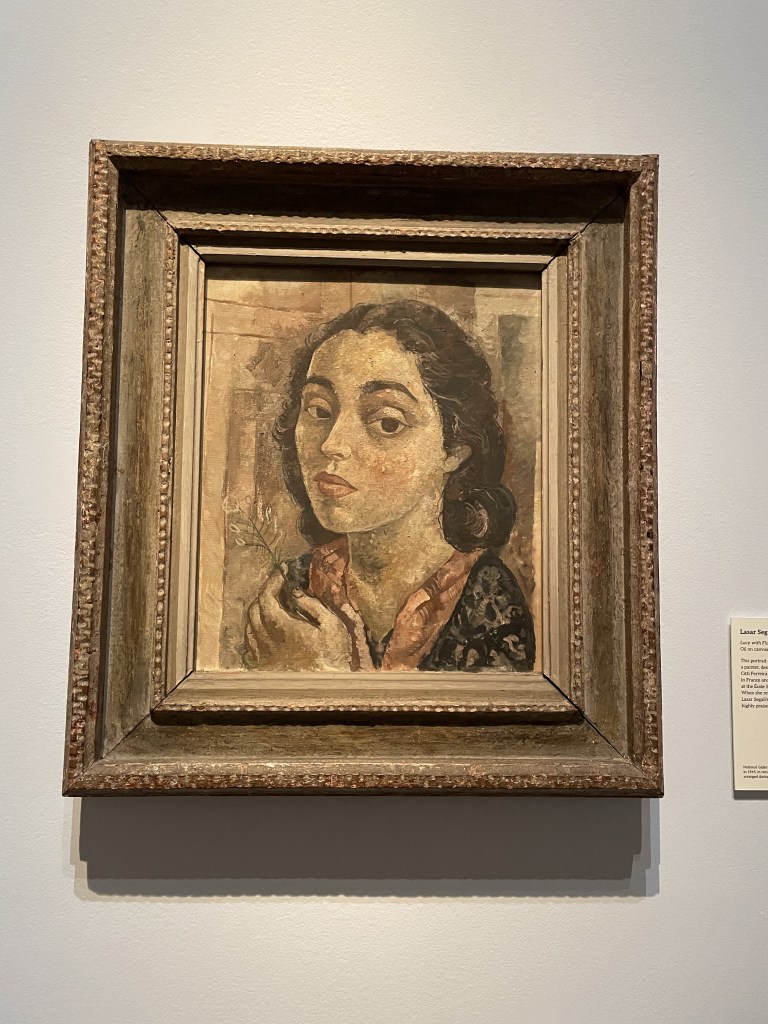
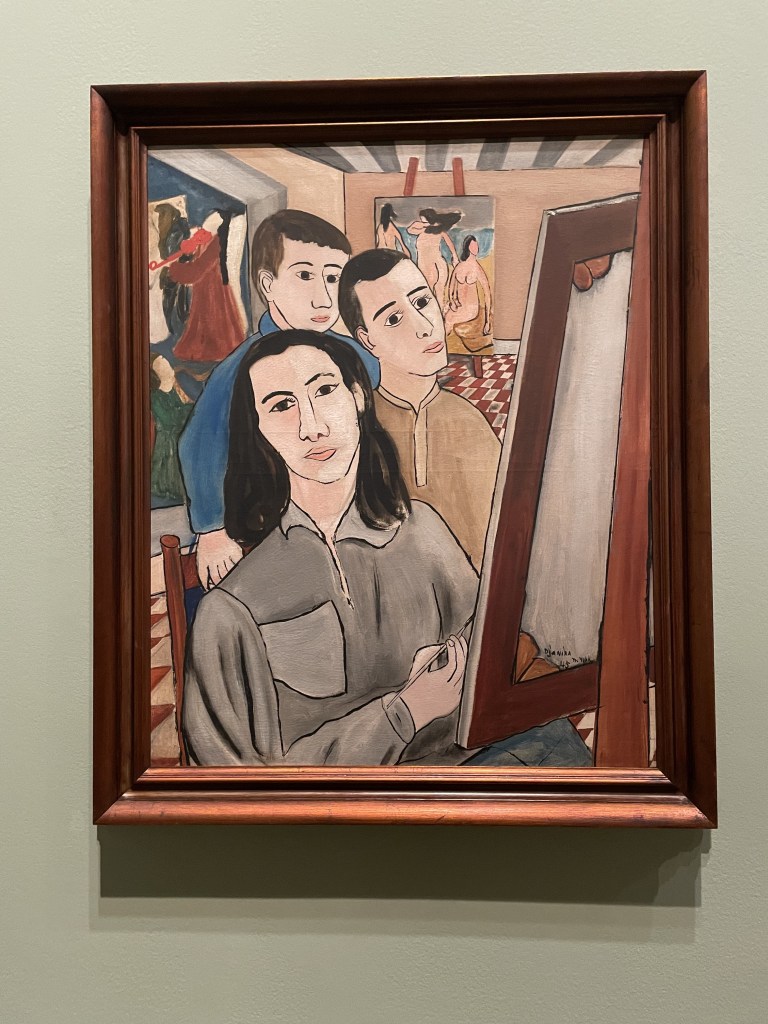
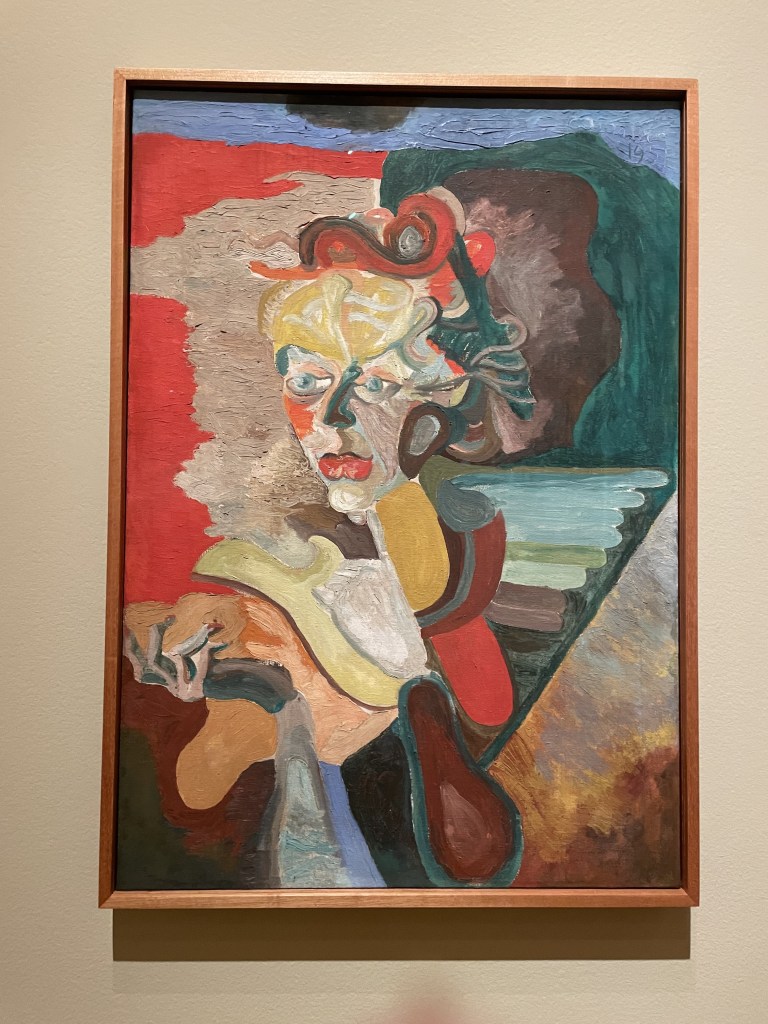
I’m always drawn to portraits and there are some very interesting examples. The muted colours betray the period of the painting and the inheritance of German expressionism. Left: Self-portrait with Orange Dress 1921 by Tarsila do Amaral, Portrait of a Young Man 1943 by Roberto Burle Marx and Lucy with Flower by Lasar Segall painted in 1939-42.

You can see the influence of expressionism and abstraction here with Djanira da Motta e Silva’s self-portrait from 1945, Flavio de Carvalho’s Portrait of Ivone Levi from 1951.

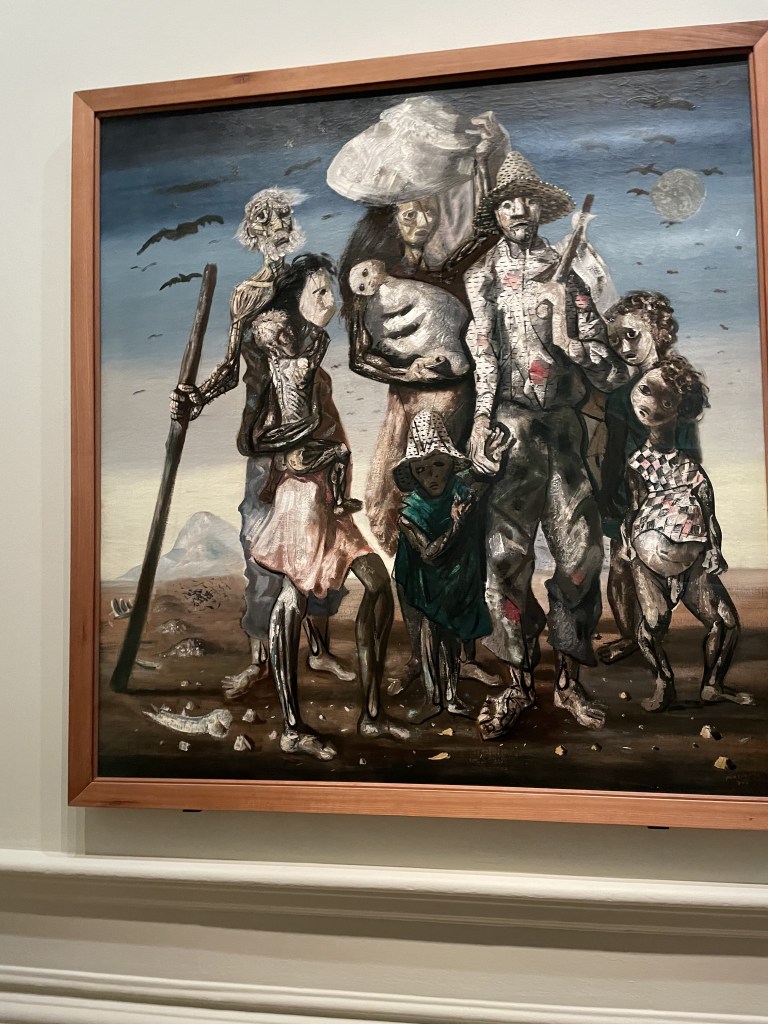
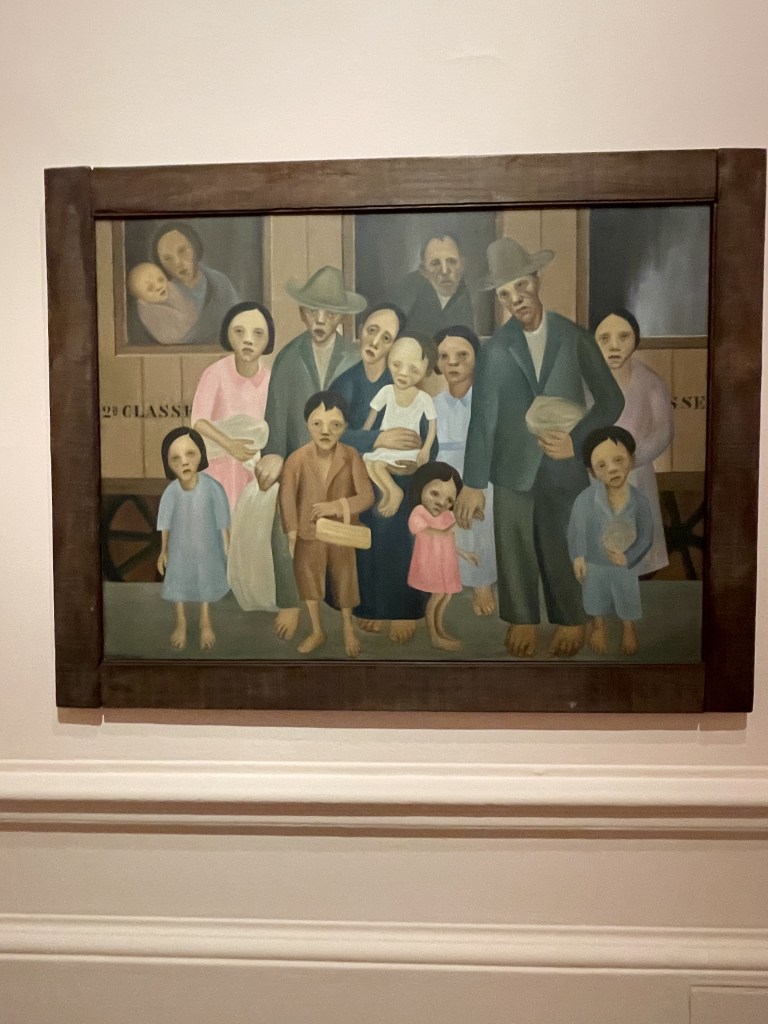
Interesting examples of social commentary with these two paintings. The rather sinister Migrants by Candido Portinari from 1944 represents the migration of northeastern rural communities who were forced to move to other part of the country in search of work. And Tarsila do Amaral’s ‘Second Class’ from 1933 illustrates the awful poverty resulting from the economic crash of 1929.

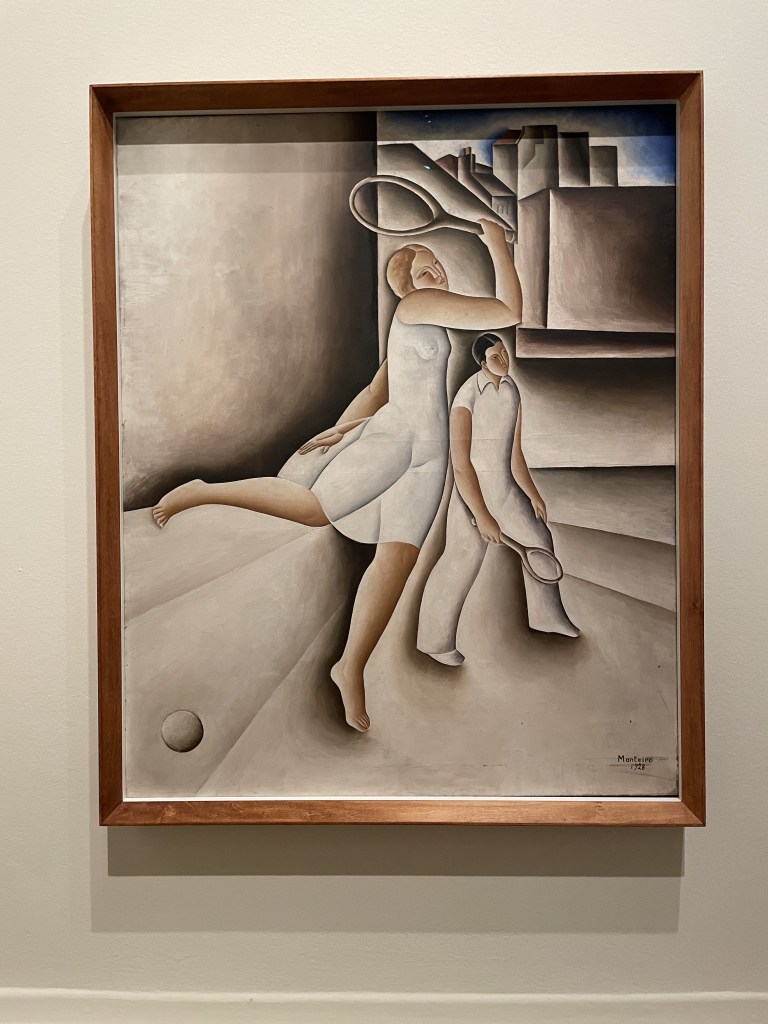
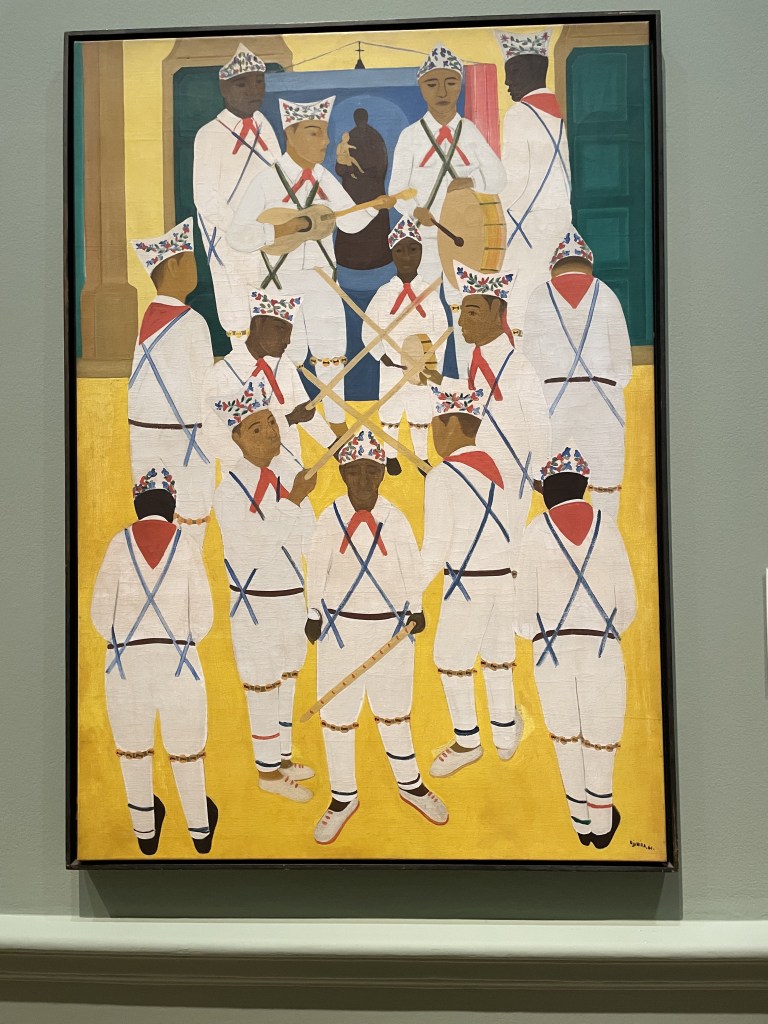
I liked the stylised tennis player in Vincente deo Rego Monteiro’s limited palette painting from 1928. And I really liked the Marrapaia Dance, Pariti painted by Djanira da Motta e Silva in 1961. Such a striking resemblance to the UK’s Morris dancers with strings of bells tied to the performers’ knees!

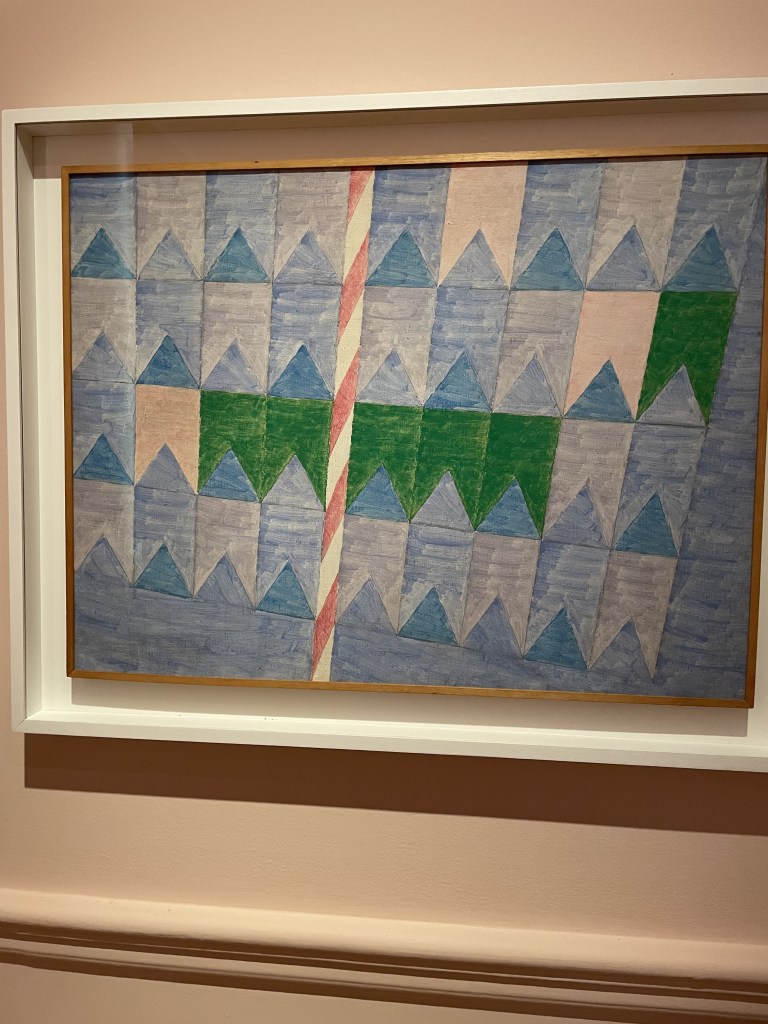
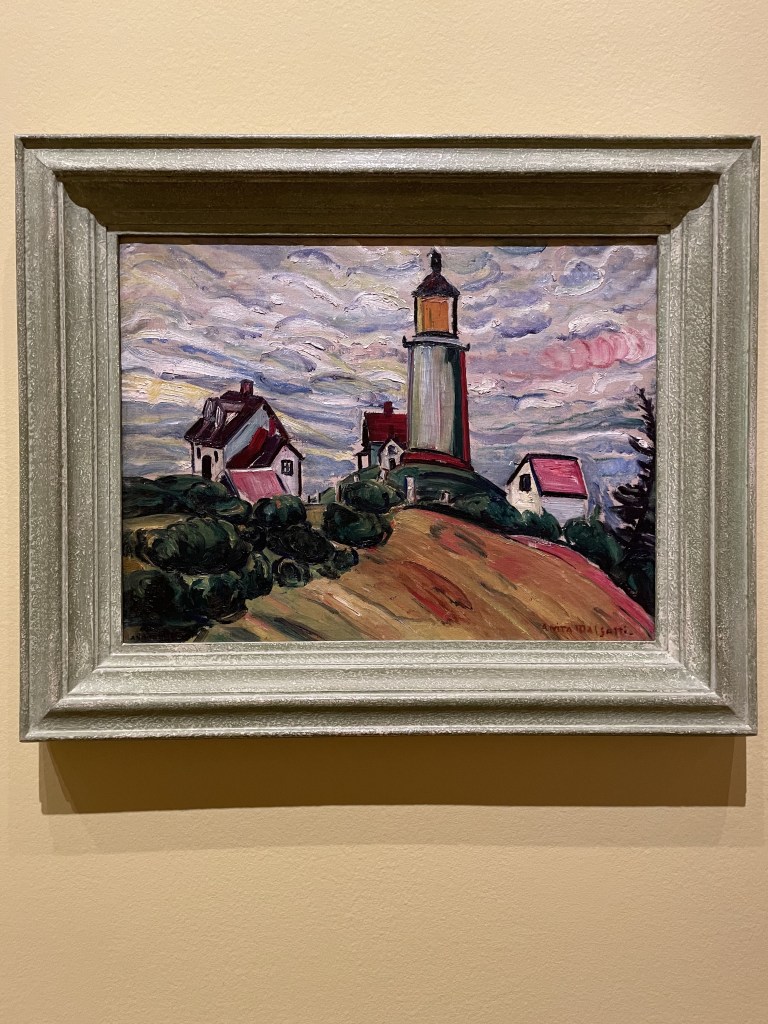
And here’s a pick and mix of abstracts and figurative work which show the evolution of Brasilian art.

The show is on at the Royal Academy until 21st April 2025

What an enchanting show! It’s a joy to visit the National Gallery and ‘Discover Constable and the Hay Wain’. This picture has graced millions of biscuit tins and chocolate boxes but there’s so much more to the image. Fascinating to see the painting in the context of a contemporary painter of the 1820s channelling the aesthetic of traditional landscape painting and establishing a British school of landscape. Fabulous

The Hay Wain is such a familiar image and conjures thoughts of ‘Merrie England’, the countryside fantasy of rural beauty, a simple life and the contented relationship between people who till the earth and the beauty of the fields where they work. At the press preview, listening to curator Christine Riding, it was fascinating to hear the context of the Hay Wain explained and then illustrated by a charming selection of complementary paintings, drawings, sketches and cartoons.

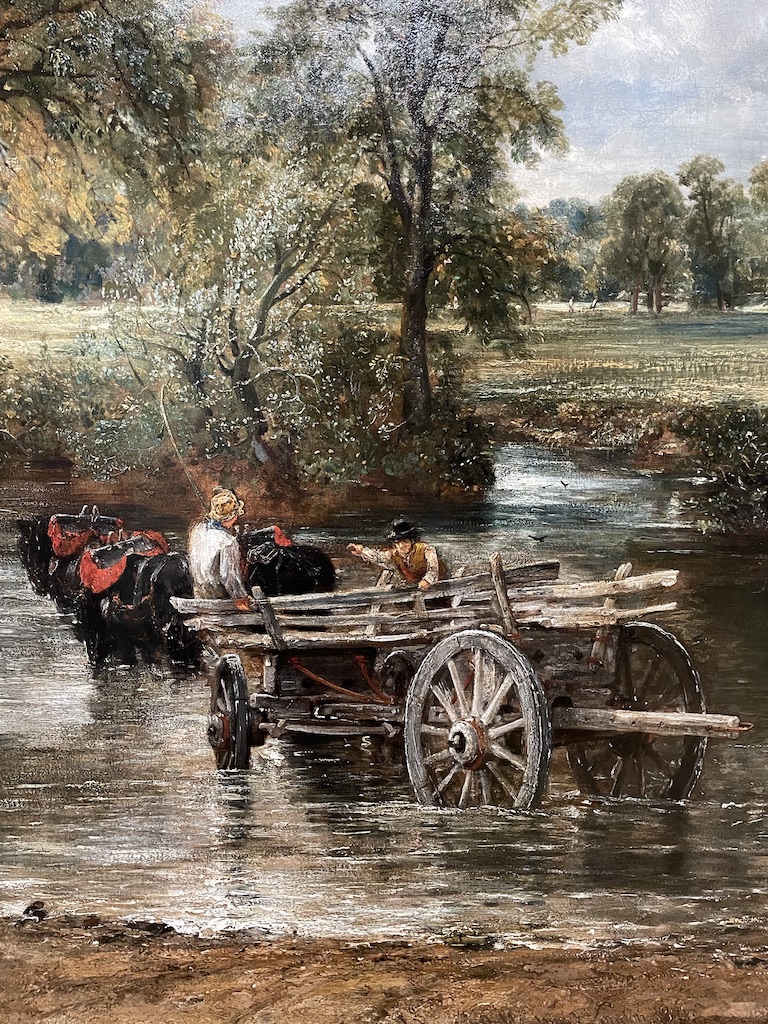
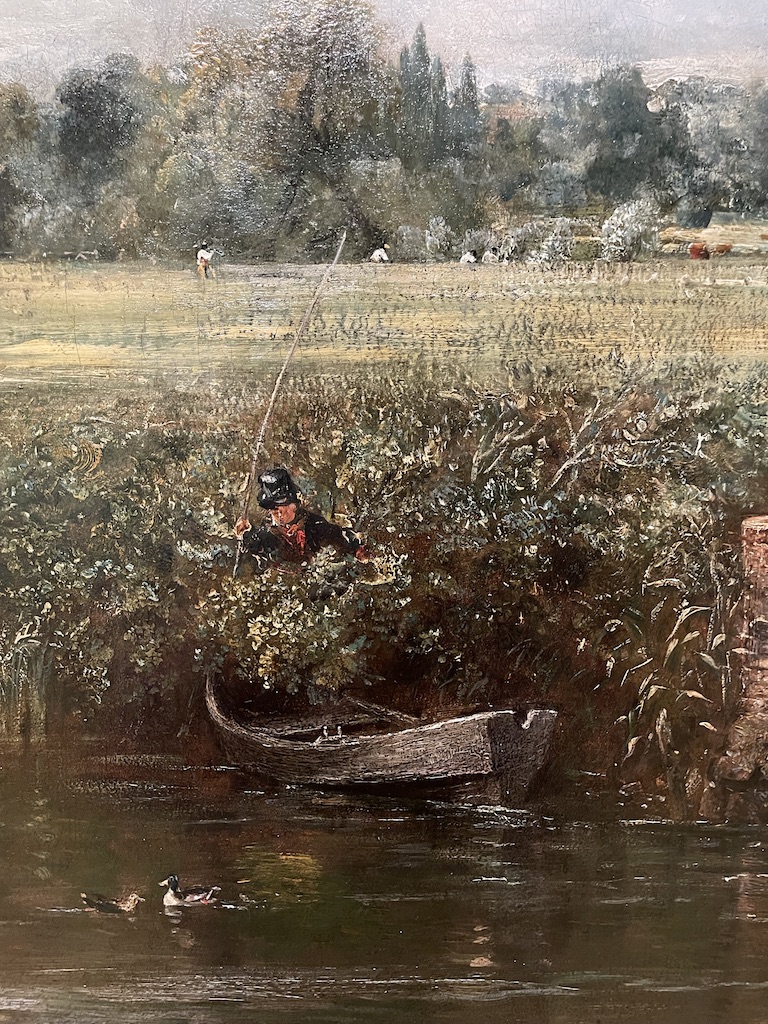
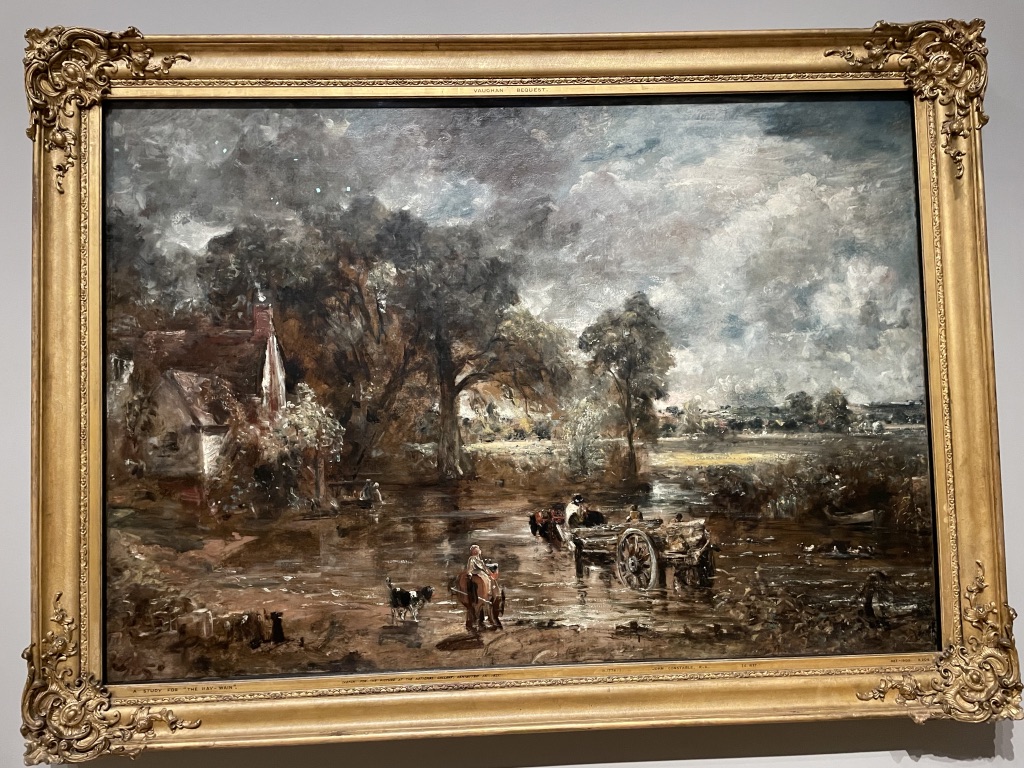
Took a couple of close-ups of the Hay Wain. It’s one of John Constable’s ‘six-footers’, a very large painting which was started in 1819 with the intention of grabbing the attention of collectors and fellow artists. Size does matter when you’re competing with other people to gain a reputation in the art work; this was an epic work, produced in his studio, but very much based on sketches and paintings made ‘en plein air’ in the Suffolk countryside Constable knew so well.

This is a large-scale (6ft) dry run which Constable painted. I love the liveliness and free painting. He does not become bogged down in detail yet all the elements of the composition are there.

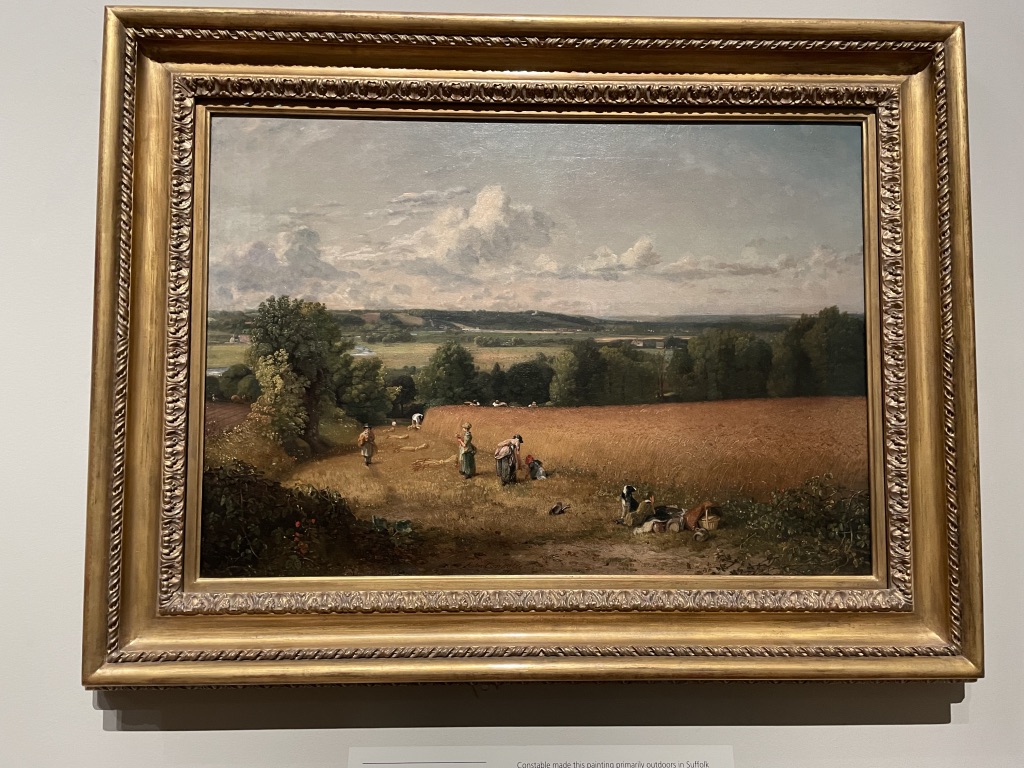
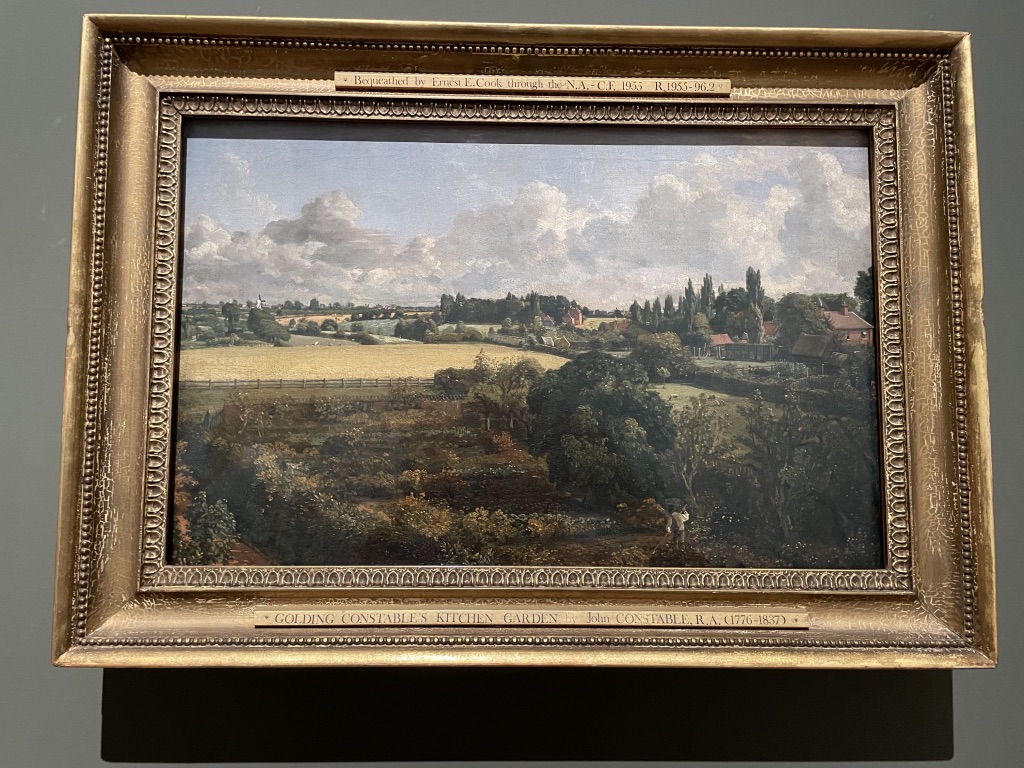
On the left is a work by Constable entitled The Wheat Field. It makes rural life look very clean, romantic and relaxed. On the right is Golding Constable’s Kitchen Garden (his father) which was very personal to Constable and he kept it for himself and it was never sold in his lifetime.

This painting is by Thomas Gainsborough (1748) Like Constable, he was born and brought up in Suffolk and was familiar with the same landscape. This work depicts Cornard Wood, common land at the time. The painting belonged to Constable’s uncle, David Pike Watts and would have been familiar to the young artist as he was developing his interest in landscape painting and admiring Gainsborough’s technique.

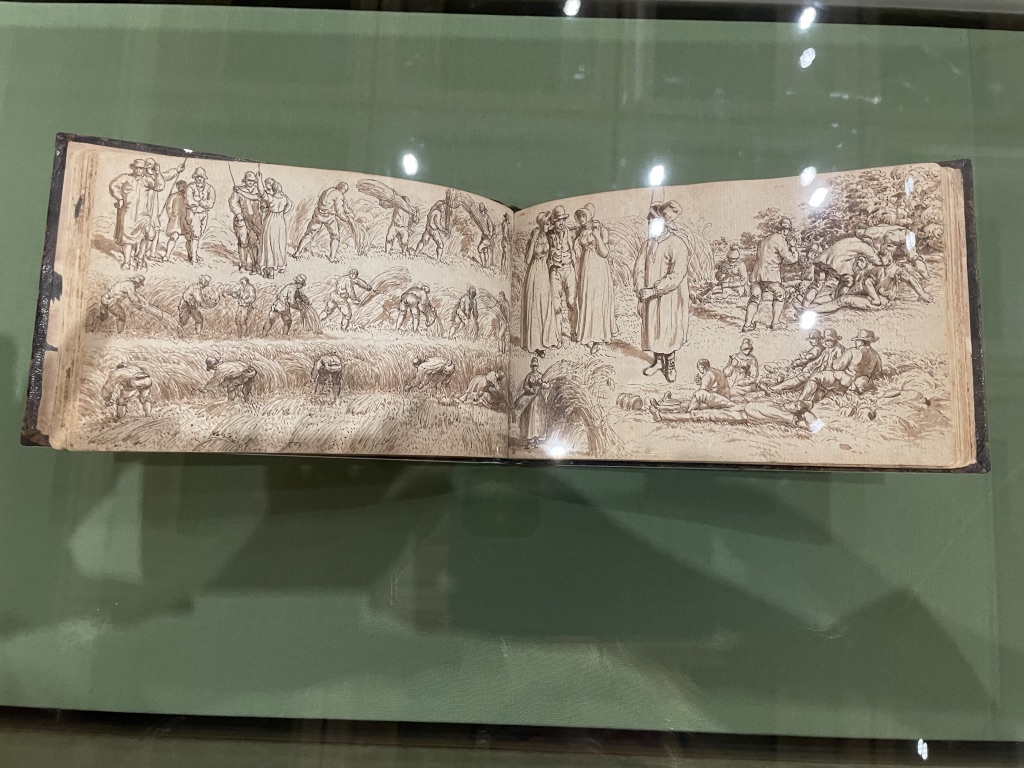
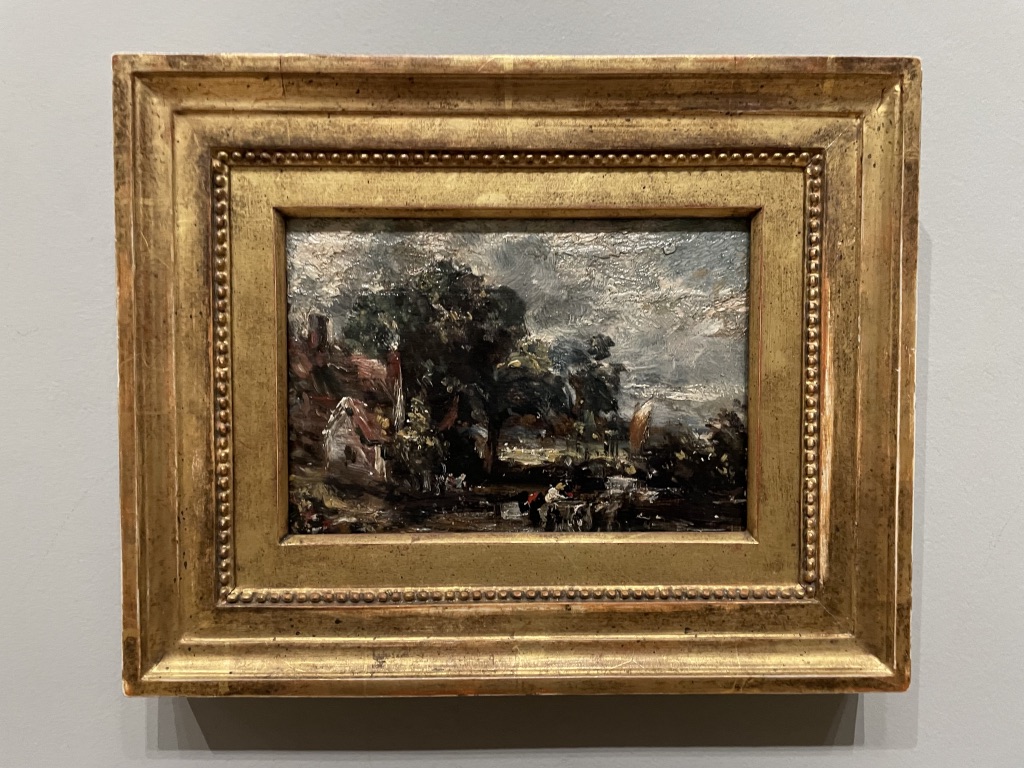
Always wonderful to see an artist’s sketch book and this shows how Constable studied field-workers and rural activity. On the right is a tiny oil sketch showing the composition of the Hay Wain. We learned that the house on the left, known as Willy Lott’s Cottage was, in fact, owned by Mr William Lott and it was a house, and a substantial dwelling. Perhaps Constable is guilty of loading his seminal work with a dose of sentimentality in order to appeal to the ideal of the rural idyll?

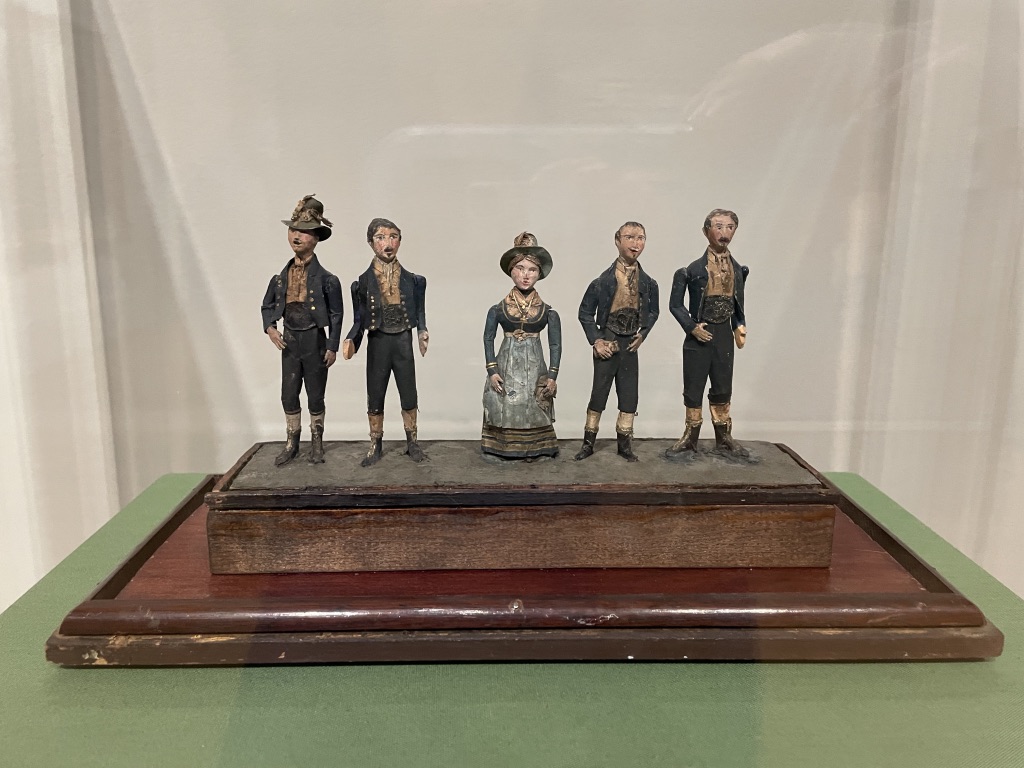
This is very charming set of tiny models depicting the best singers in the East Bergholt church choir. It has been attributed to the young John Constable as creator but we can’t be sure. They are very enchanting, tiny carved and painted wooden figures.

The show is just wonderful. It’s part of the National Gallery’s 200th year celebration and well worth a visit.

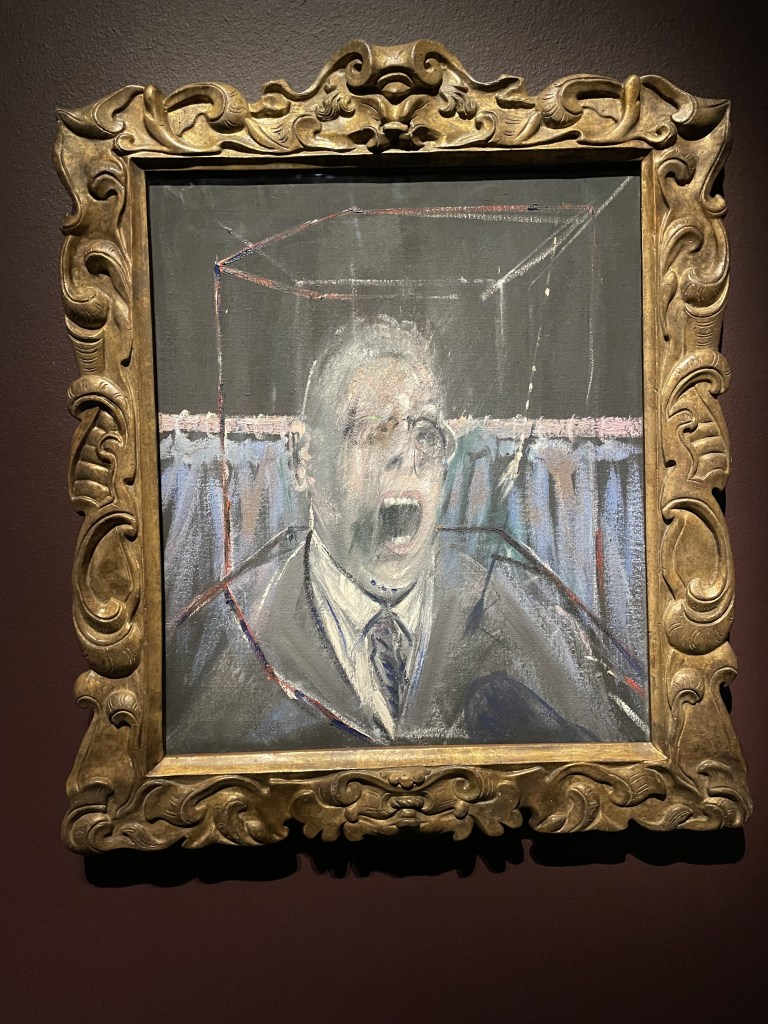
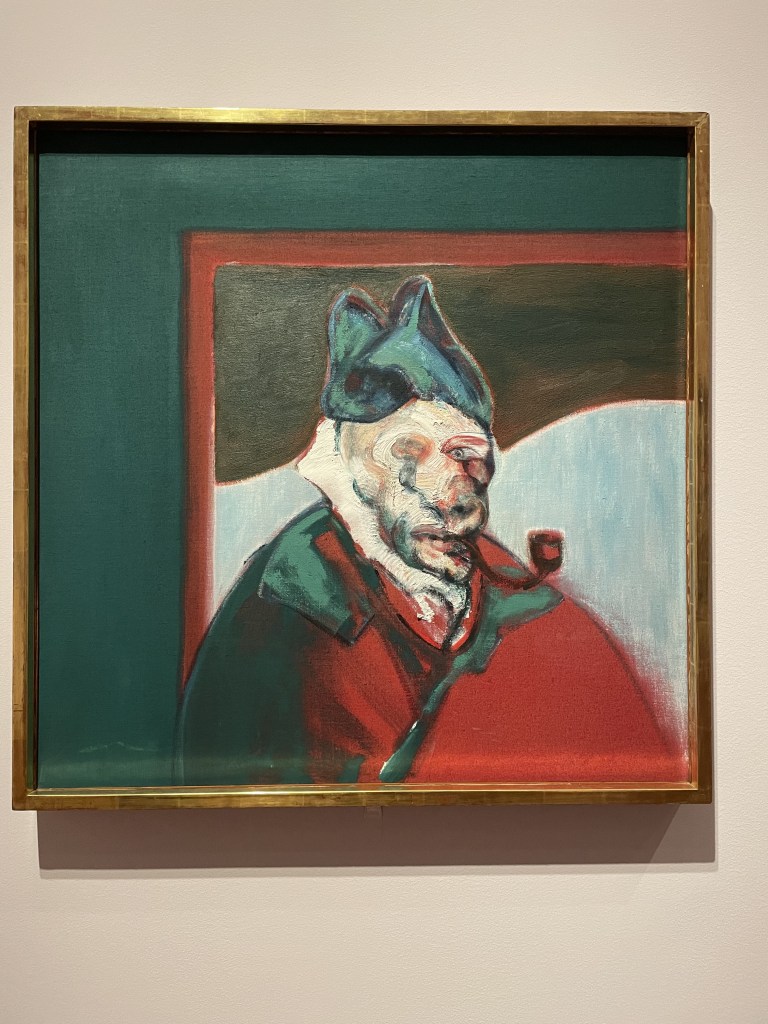
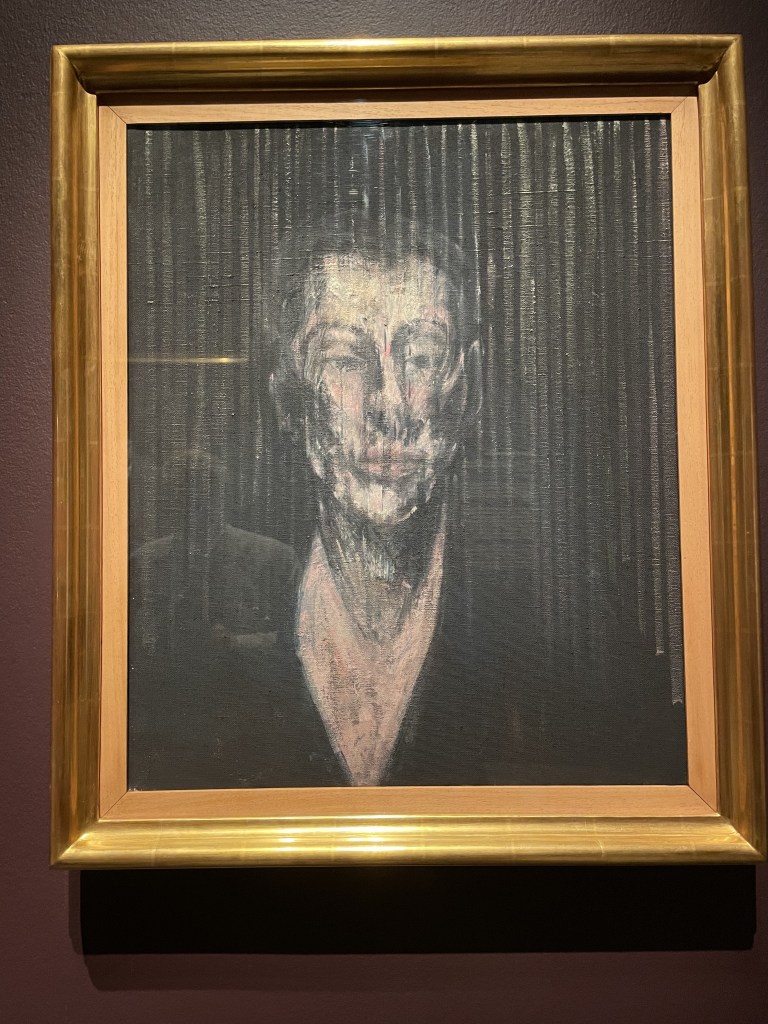
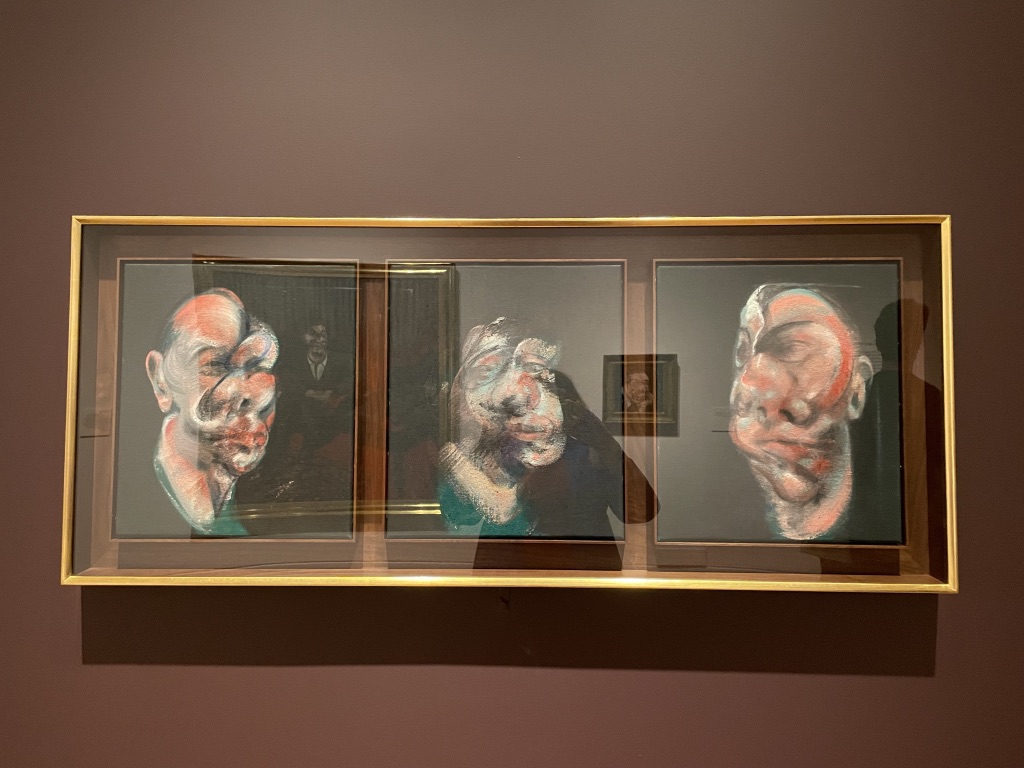
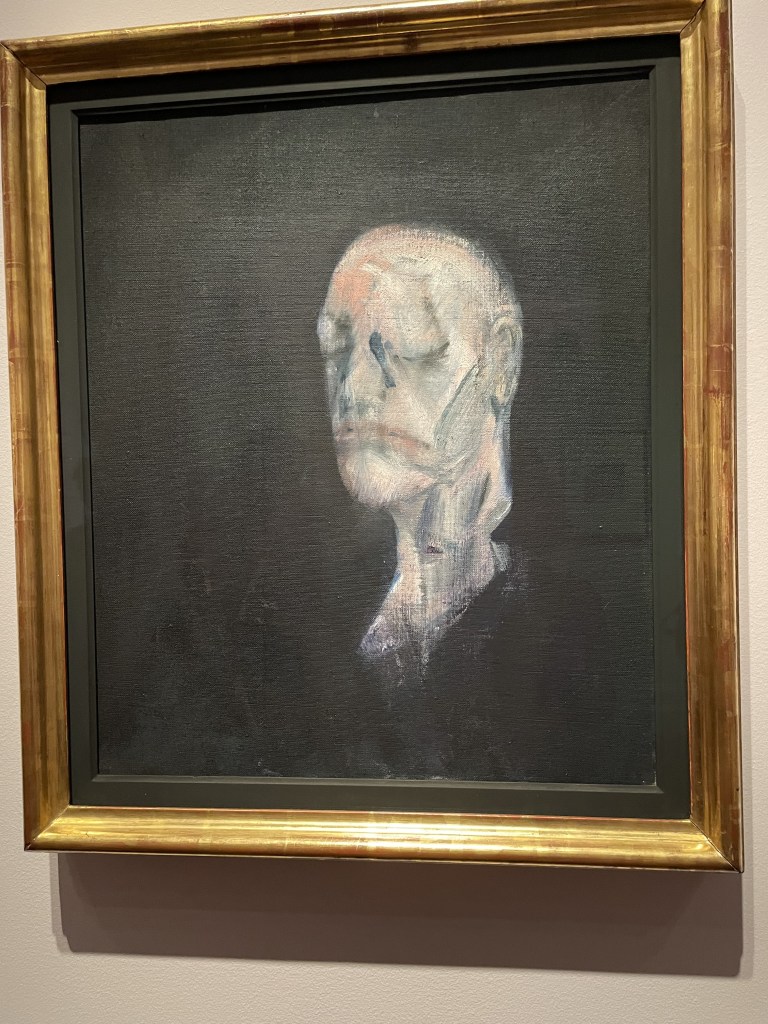
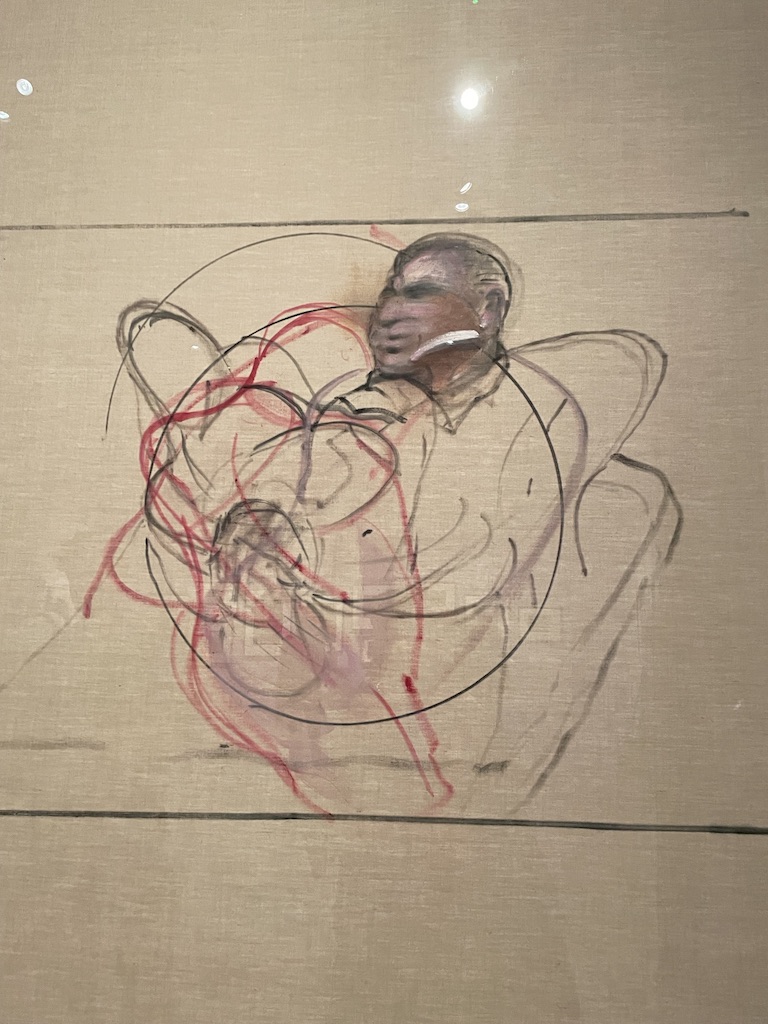
Francis Bacon: Human Presence. A very impressive new show at the National Portrait Gallery brings together over 50 of his paintings and includes fascinating photographs of him at work in his studio and fragments of the images and source material which inspired him. It is a visceral experience. Bacon aimed to captures the essence of his subject, not bothering with a direct likeness, but depicting what he feels about them.

Francis Bacon is one of those artists whose work divides opinion. Self-taught, ambitious, original and curious, he has created images of people which are arresting, memorable and honest. He was not interested in the conventions of likeness – for so long the measuring stick of portraiture – his aim was to capture and convey the ‘essence’ of a person and express their ‘presence’ within the painting rather than features which resembled them.

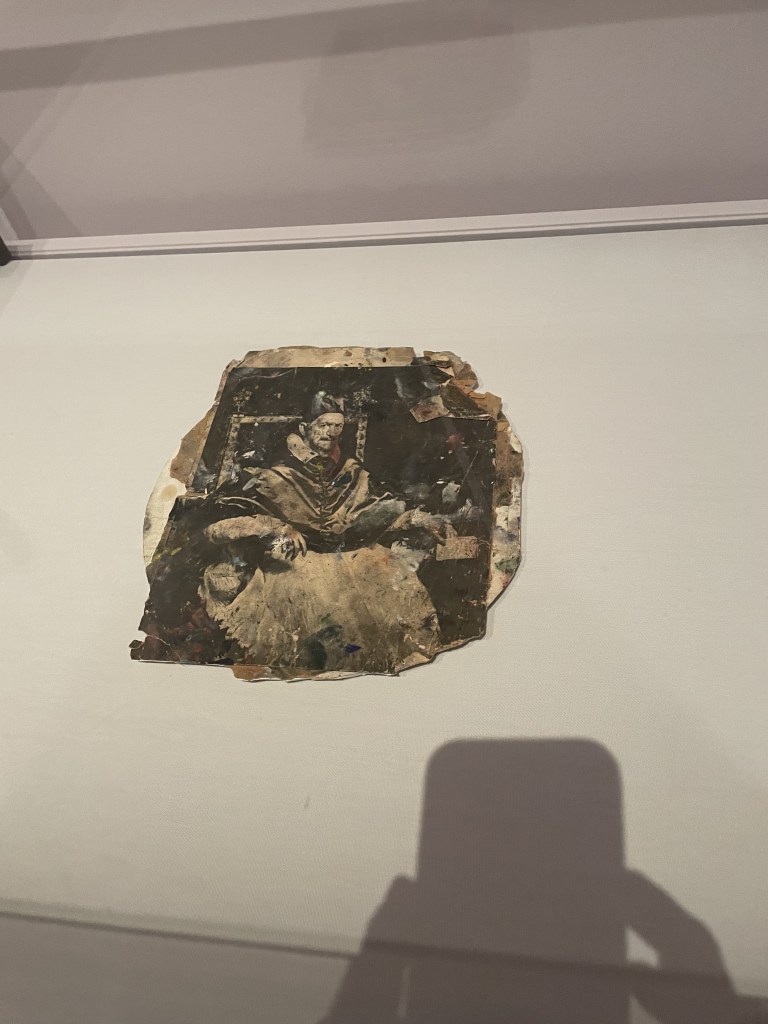
Having said that, there is a likeness to the subjects he depicts. Clearly, he scrutinised faces carefully. He started his career by painting from life but swiftly moved on to using photographs – taken specially for the work or gathered from magazines and scraps of paper. It’s great to see so many of these ‘scraps’ of images which inspired his work. Often they were scattered about on the floor of his studio, bespattered with paint and generally destroyed. But their very presence within this show only adds to the intensity of the portraits on show.

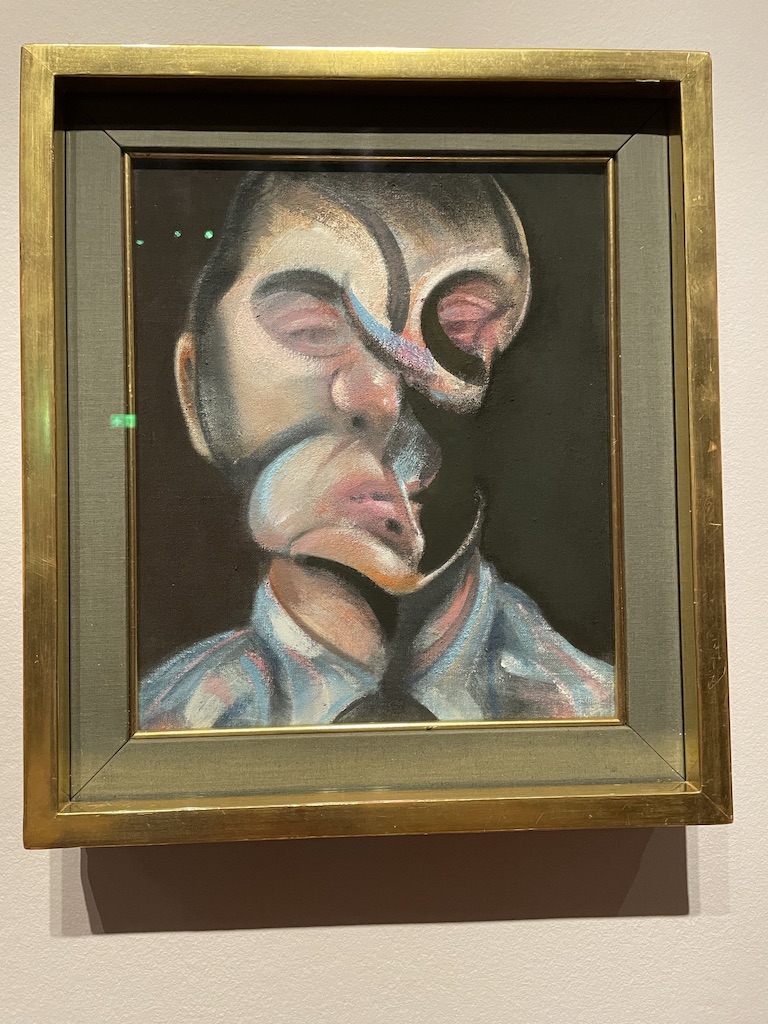
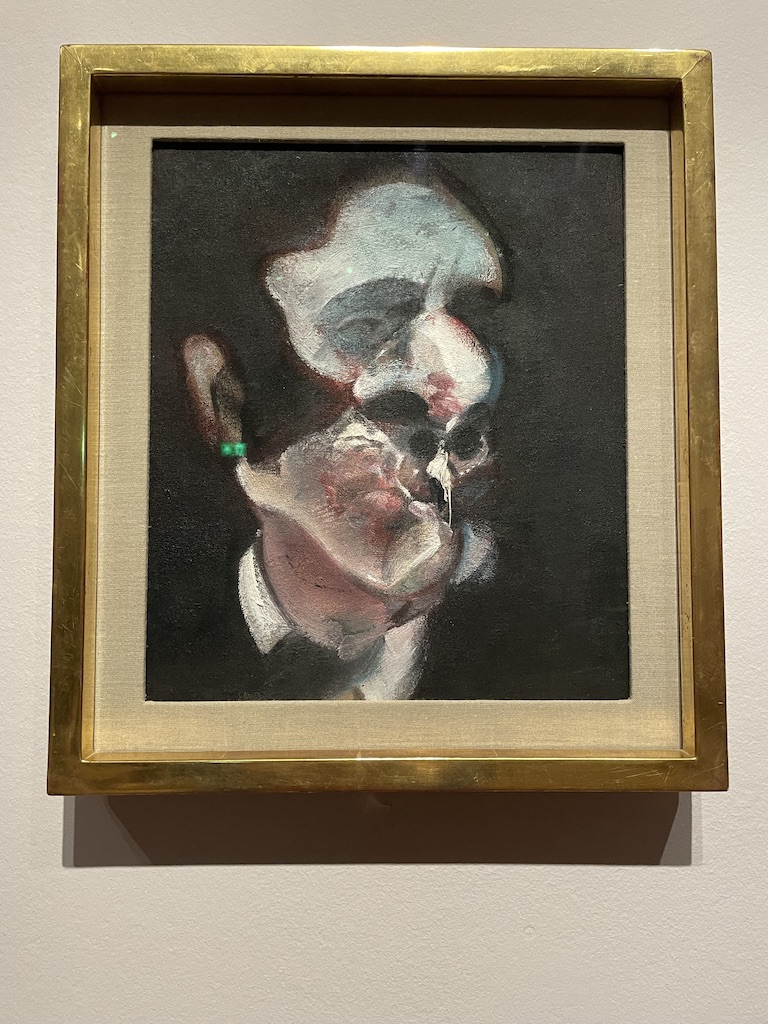
I enjoyed the triptych studies of head. Above are images of his friends Isabel Rawsthorne and Peter Lacy. Peter Lacy was Bacon’s lover in the early part of his career. There were several important gay relationships in his life but the last was with George Dyer. There is a very moving triptych of the last paintings of George Dyer shortly before he died. (below) The paintings are a tribute to an important man in his life and the atmosphere of depression and sickness which emanates from the canvases is overwhelming.

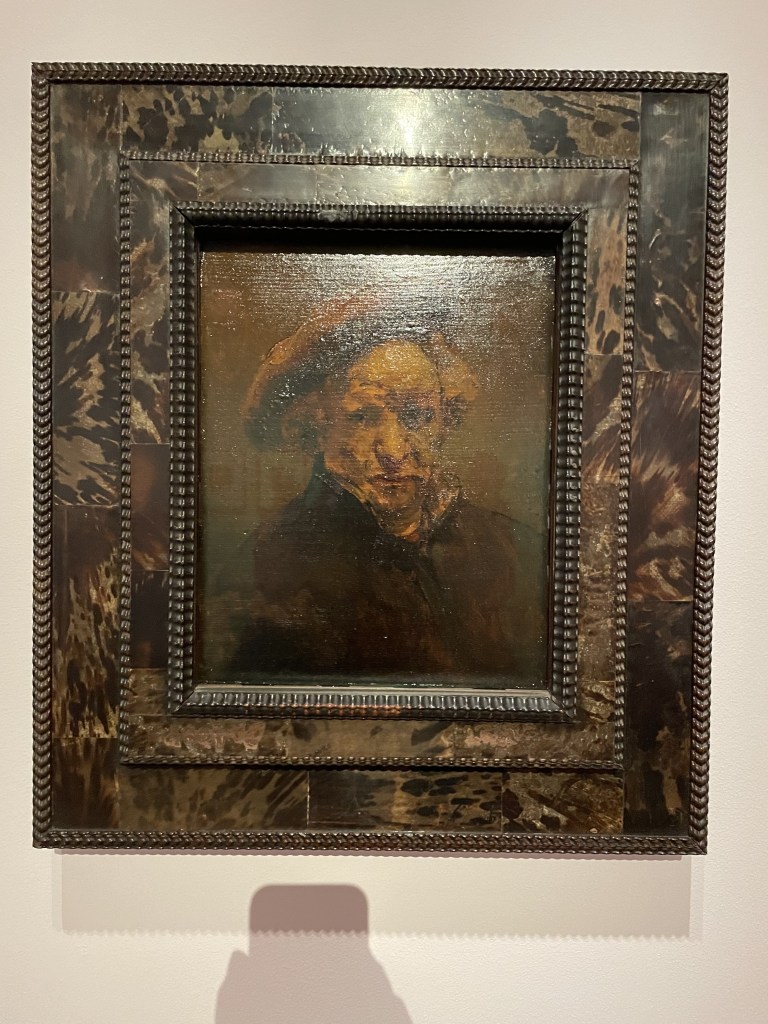
This impressive exhibition explores the influences and friendships which contributed to the evolution of his distinctive and challenging style. It was a joy to see a small self-portrait by Rembrandt which Bacon especially admired for its darkness and thickly applied paint.

Francis Bacon: Human Presence is on at the National Gallery until 19th January 2025

So good to be back at the National Portrait Gallery for the press launch of the Herbert Smith Freehills Portrait Award. Fifty portraits were selected from over 40,000 entries from all over the world. The results are fascinating, full of variety and made with many different media – but all involving traditional material such as oil, acrylic, tempera. And it’s always fun to meet the artists and some of the subjects too.

Above is a very compelling and painterly portrait of Adam Pearson, British TV presenter and disability rights campaigner, by Tim Benson. I chatted to Adam about the process and he told me that the portrait had been completed in under four hours in one sitting. It’s that immediacy of image and energy which really attracted me to it.

I was very taken by this portrait entitled Chewing the Cud by Emily Ponsonby. Using the ‘encaustic’ technique using honeyed wax, scraped and mixed with oil and oil pastel, I think it’s a very successful painting both technically and in terms of composition. The viewer is given a surprising ‘fly on the wall’ viewpoint and absolutely absorbed into the conversation in a Dorset kitchen.

Above, a couple of winners. First prize went to Antony Williams‘ portrait: Jacqueline with Still Life. It’s been meticulously painted in tempera, which is a difficult medium (you mix egg yolk with pigment and it’s full of depth and interest. On the right is the Second Prize, Isabella Watling‘s portrait of Zizi which combines very traditional use of paint and pose but gives the subject and the whole atmosphere of the painting, a very contemporary feel.

These two portraits, above, captivated me for their narrative quality. They are not just good paintings but they capture a moment and an emotion. On the left is Estuary English by Ray Richardson and the subject is Adé, a young actor. The two met by chance and became good friends. The title refers both to the body of water in the background of the painting and also the English accent associated with areas of London, along the River Thames, where both men live.

On the right is 1111, by Shinji Ihara. The artist records his partner on the day their beloved cat died. It took over a year and 90 sittings to complete.

By contrast, I was very struck by the photo-realism of this painting on aluminium of Agnese by Massimiliano Poronti. I chatted to the artist who told me that it took a very long time to complete this one.

And above is just a selection of other portraits which caught my eye. I do like a brush stroke and these paintings delivered!

The Herbert Smith Freehills Portrait Award 2024 exhibition is free to visit at the National Portrait Gallery from 11th July until 27th October 2024. Good stuff.