
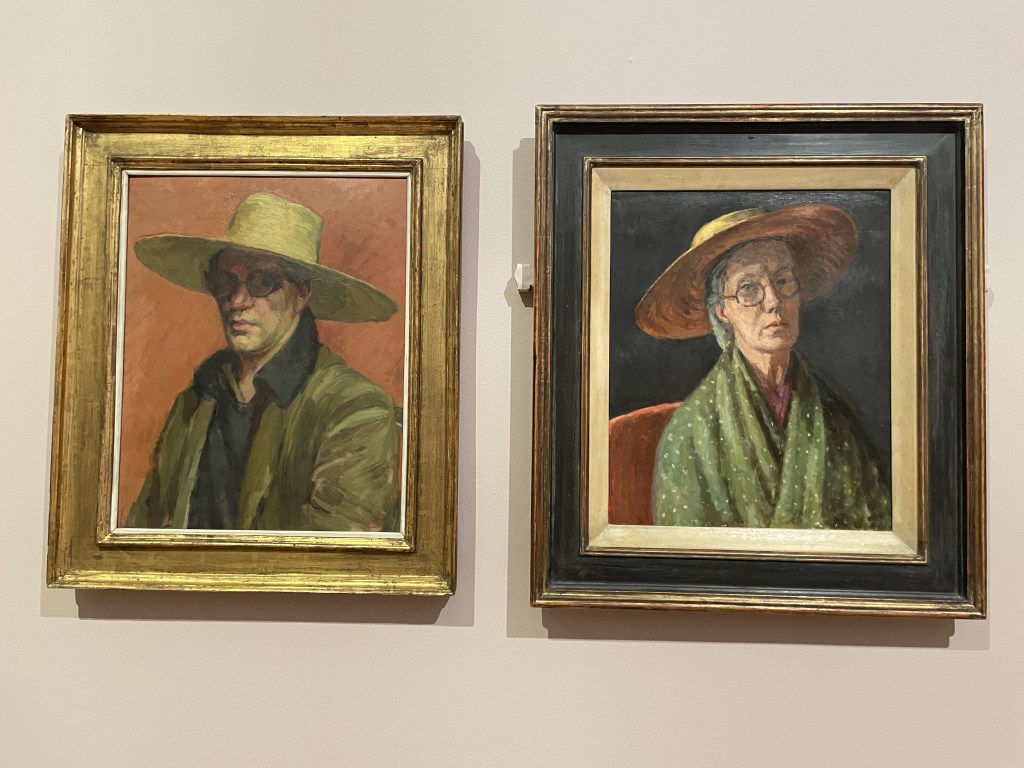
Above are quite late self-portraits by Duncan Grant and Vanessa Bell wearing matching straw hats and glasses. Painted in 1956 and 1958 these pictures show the satisfaction of having worked together since 1906 and shared in a fascinating symbiotic creative relationship.
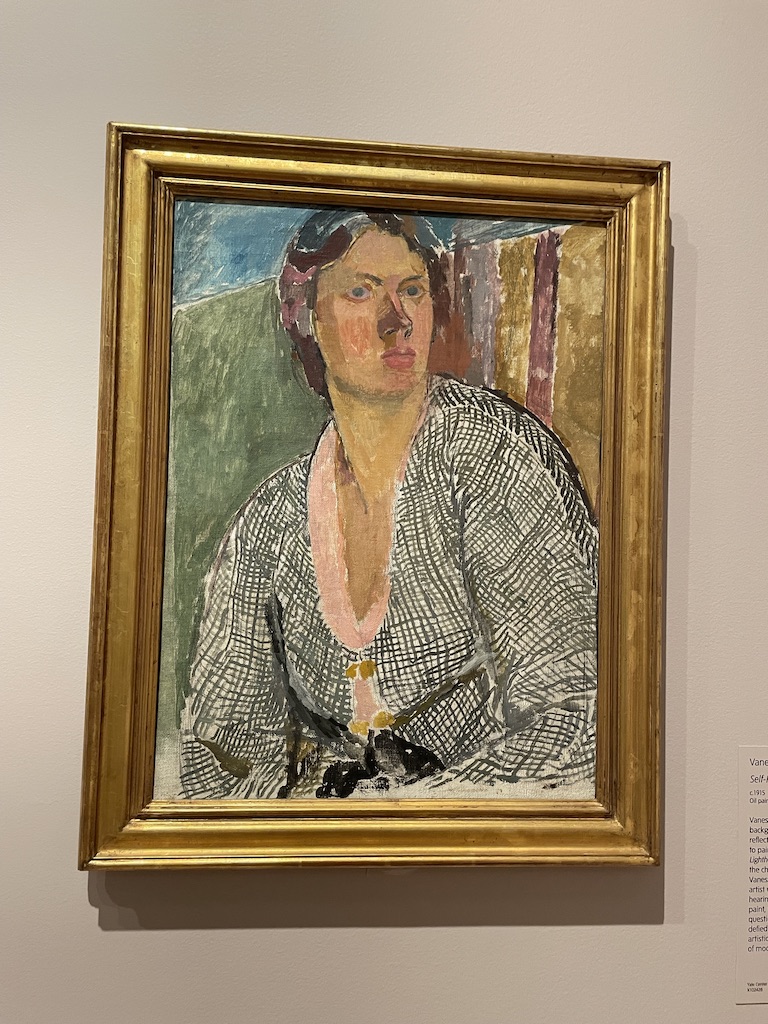
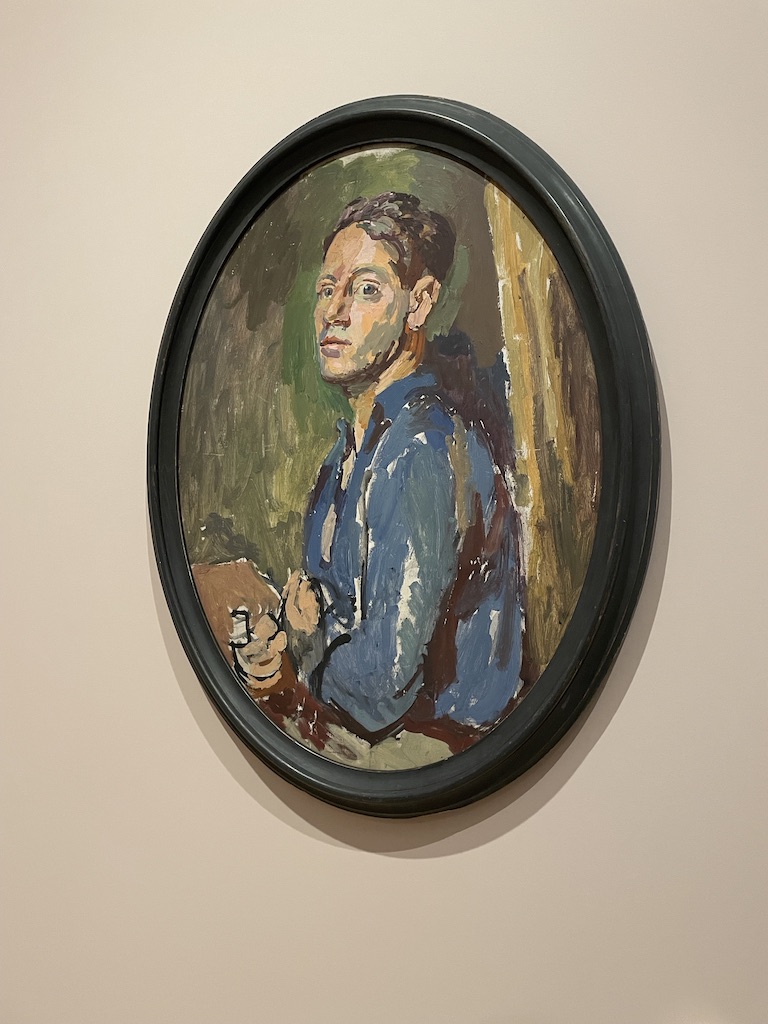
Two earlier self-portraits, (Vanessa Bell’s made in 1915 and Duncan Grant’s in 1920), early in their artistic careers, show how they were both terrific colourists, keen to capture the essence of the subject in minimal brush strokes, areas of block colour and strong expressions. I get the feeling these pictures were made at speed – you could almost argue that they are unfinished – but I like the urgency of them.
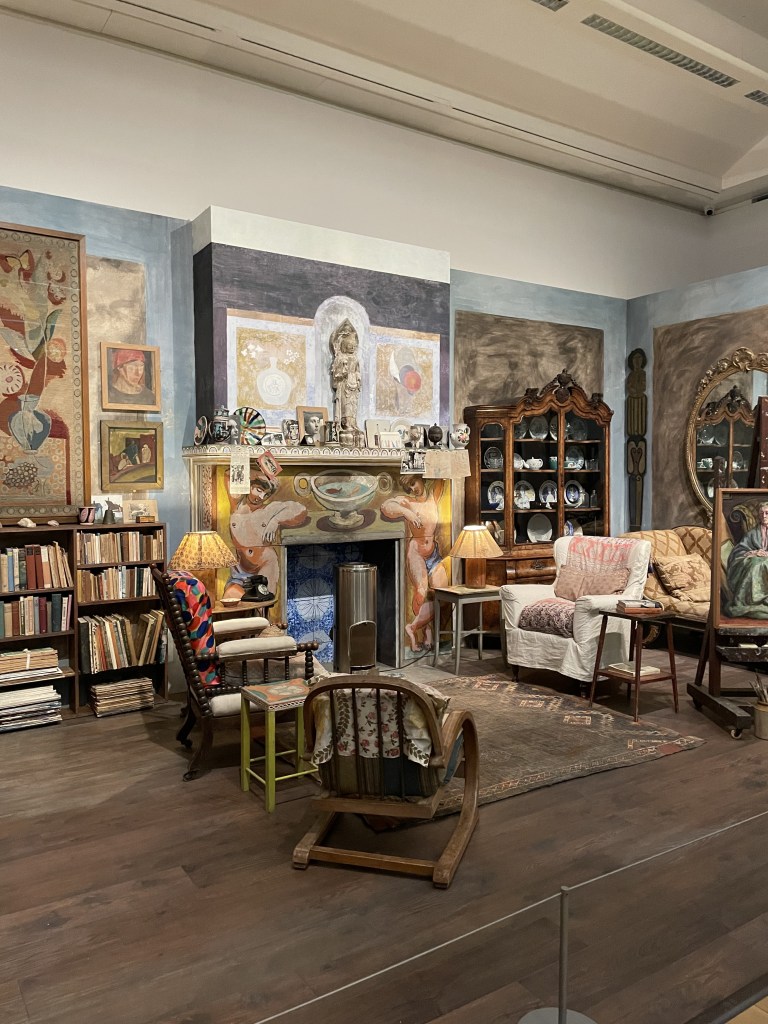
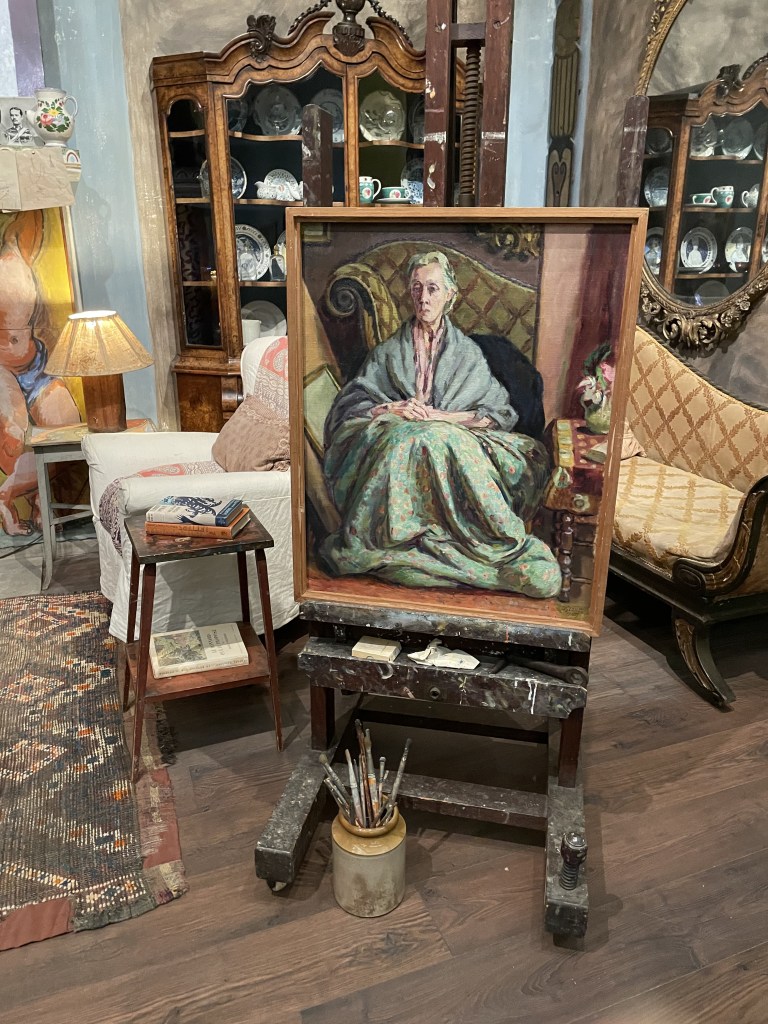
I have visited Charleston, the house in East Sussex where Bell and Grant set up home, along with their family (they had a daughter named Angelica) and seen the studio space where they worked and lived. It’s a fascinating place with great atmosphere. This room has been reproduced for the exhibition and it’s intriguing to see everything laid out for us, complete with paint-spattered easel and a portrait in place.
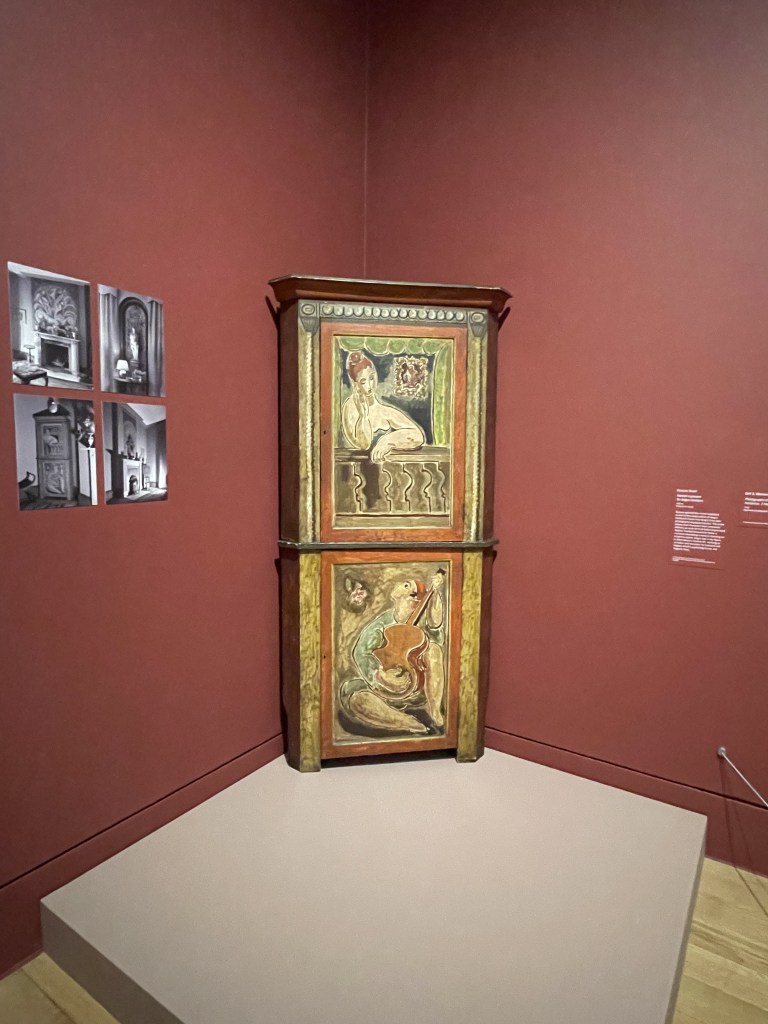
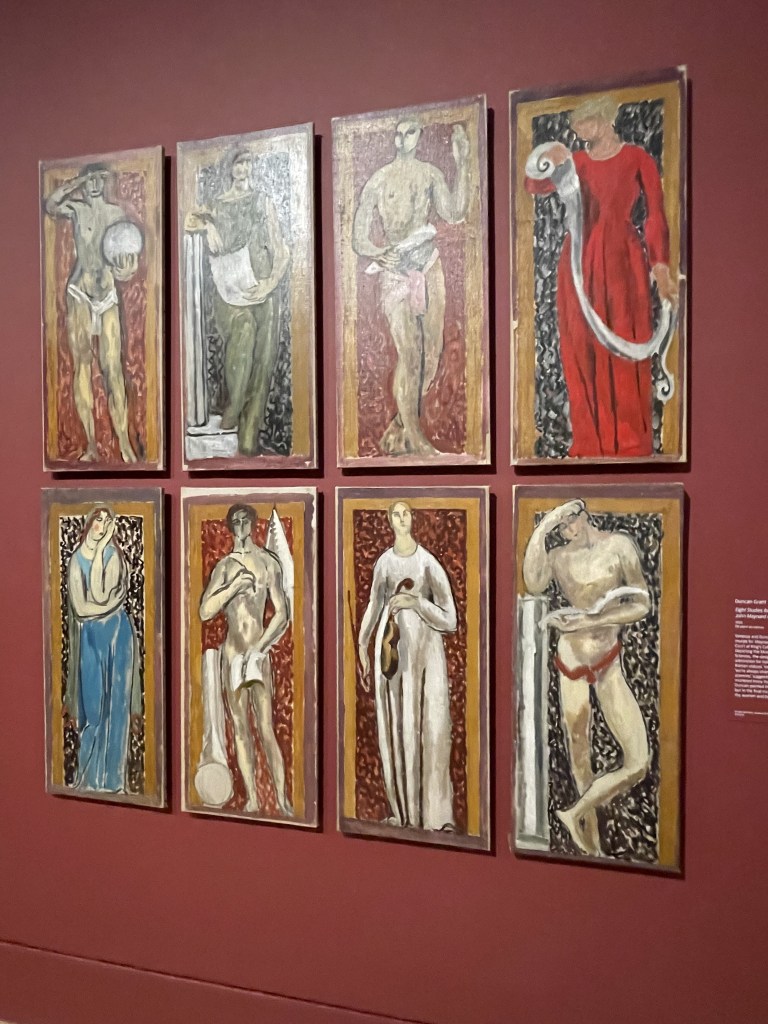
Painted panels and furniture became something the pair could collaborate on for commissions. I really liked the corner cabinet, pictured above, created for Angus Davidson. And on the right is a series of panels on canvas made for developed into murals at John Maynard Keynes’s rooms at King’s College, Cambridge.
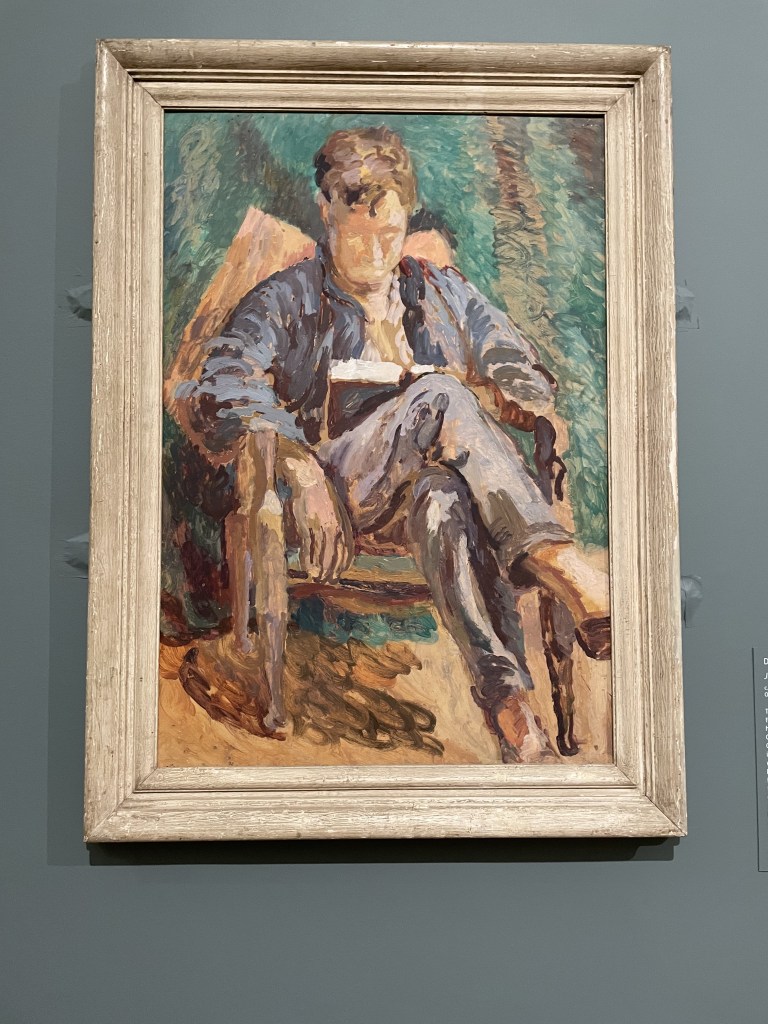
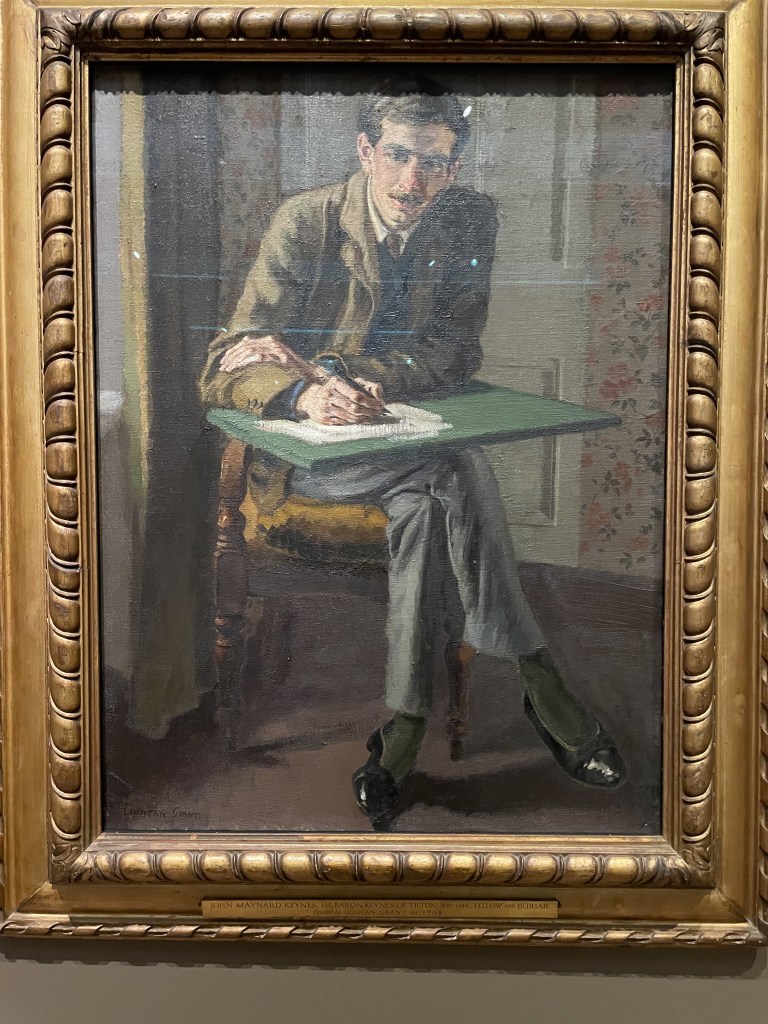
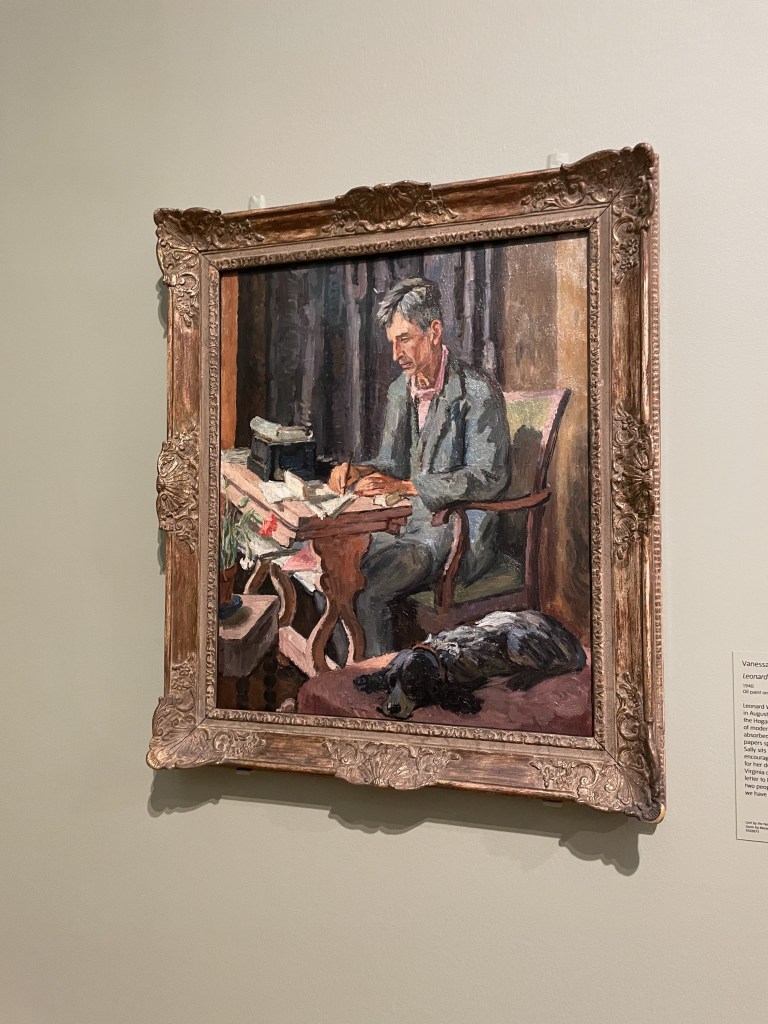
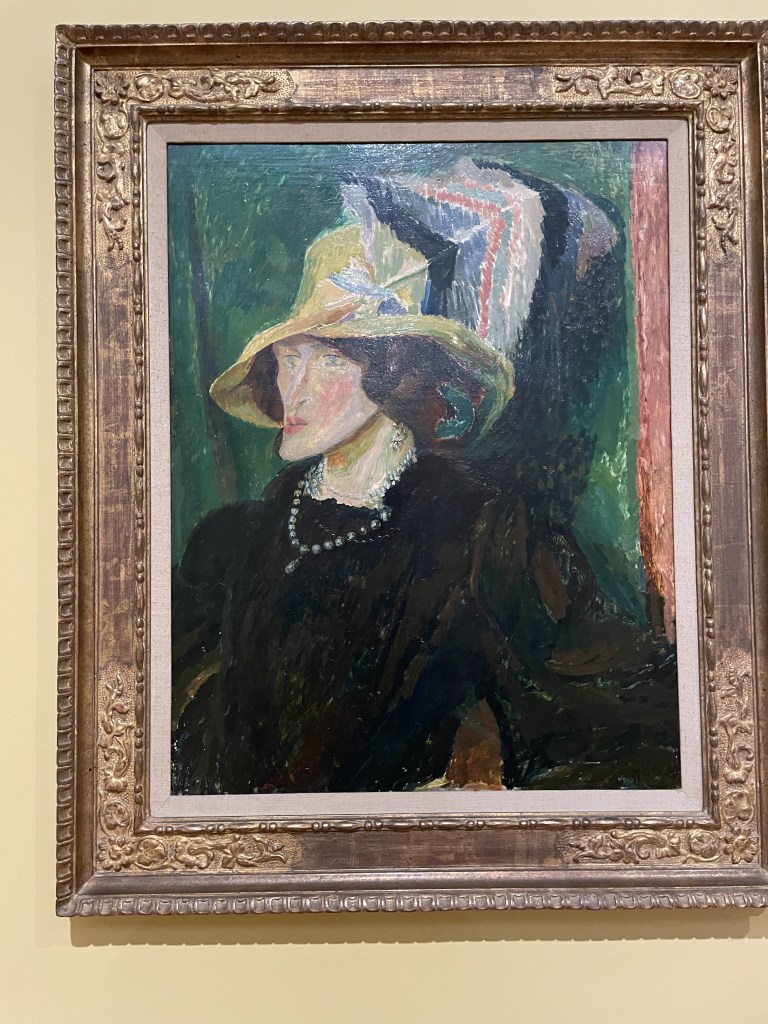
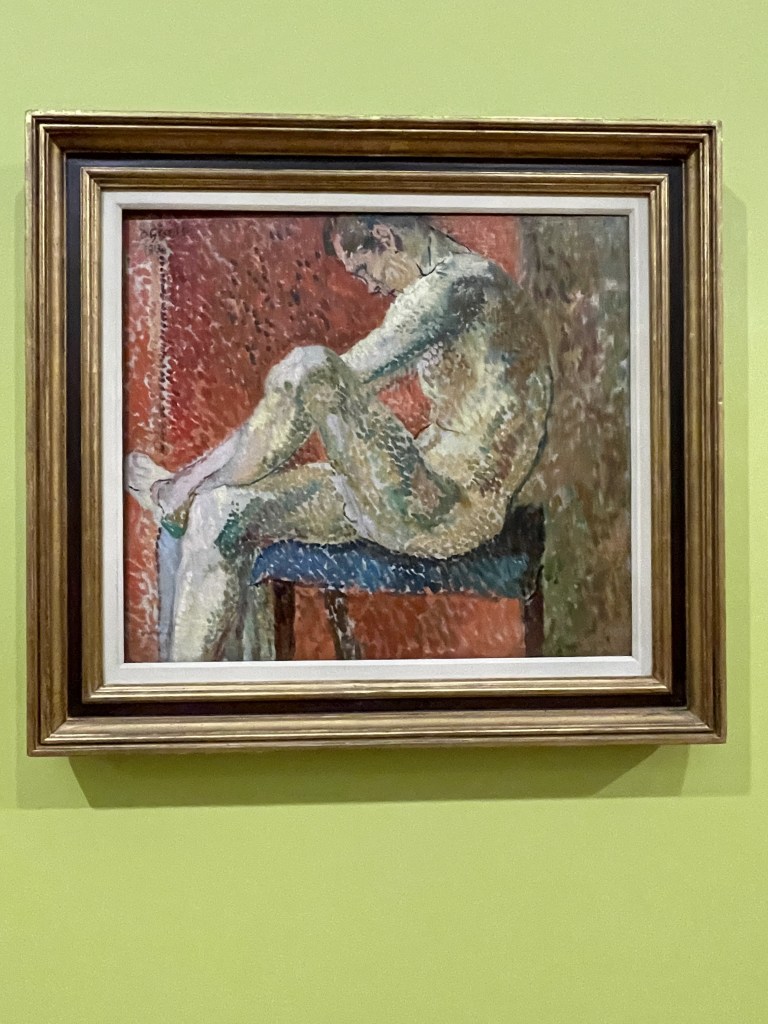
There’s a huge number of portraits made of friends and family. Again, I’d say they were made at speed, possibly in one sitting, but you can also see added detail and decoration which might have taken longer. Above are: Julian Bell, reading, seated in a chair, by Duncan Grant in 1930, centre is John Maynard Keynes by Duncan Grant in 1908 (the two became romantically involved) right, Leonard Sidney Woolf (husband of Virginia, Vanessa’s sister) painted by Vanessa Bell in 1940 and below is a portrait of Lady Ottoline Morrell by Duncan Grant from 1913.
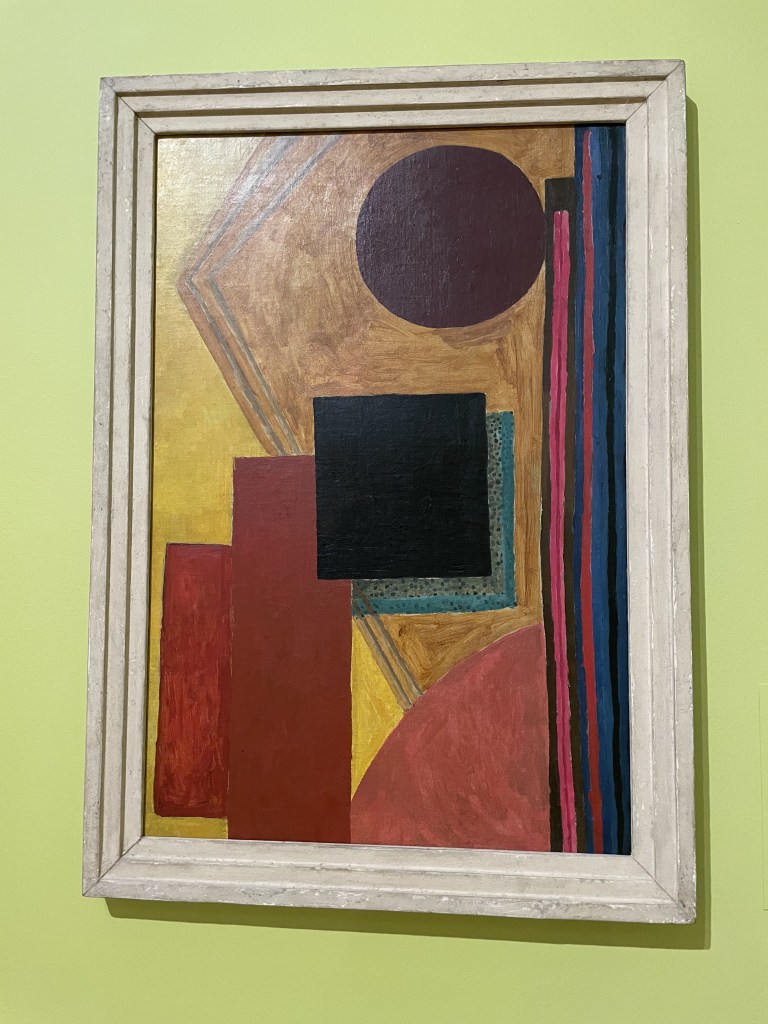
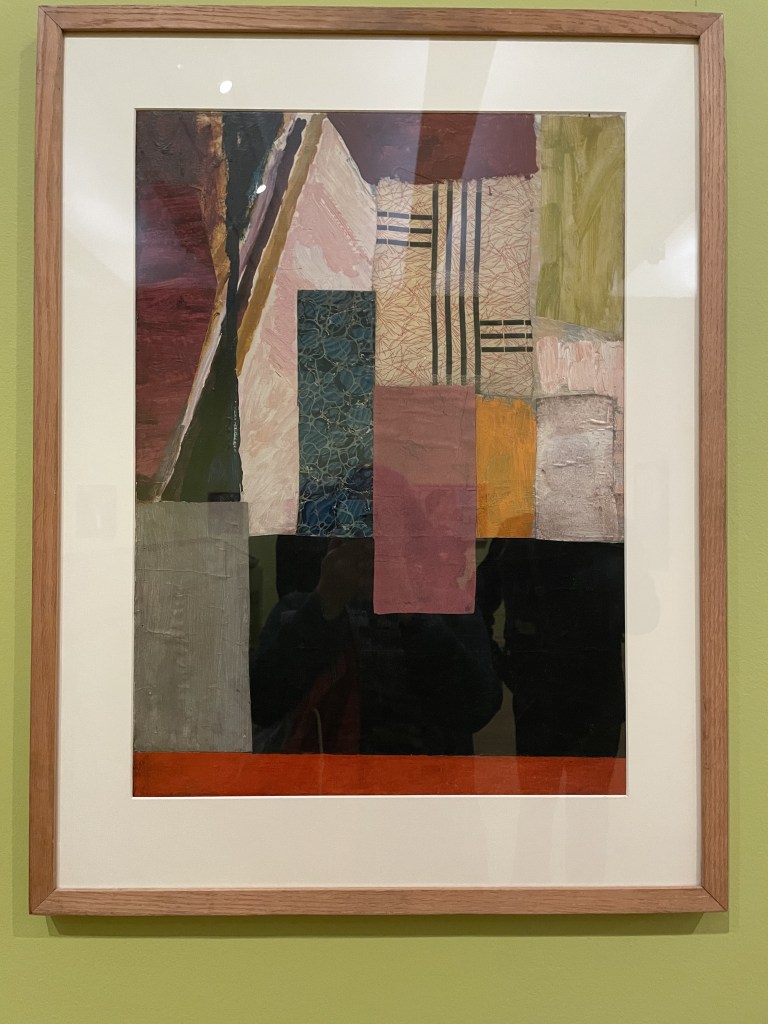
These two artists never stayed still. They were clearly influenced by the work of the abstract and experimental artists working in Paris at the time – Matisse, Picasso, Braque. It’s always a pleasure for me to see artists using collage and while Bell started producing abstract oil paintings, Grant took things further, using paper and fabric to create a collage abstract in 1914-15.
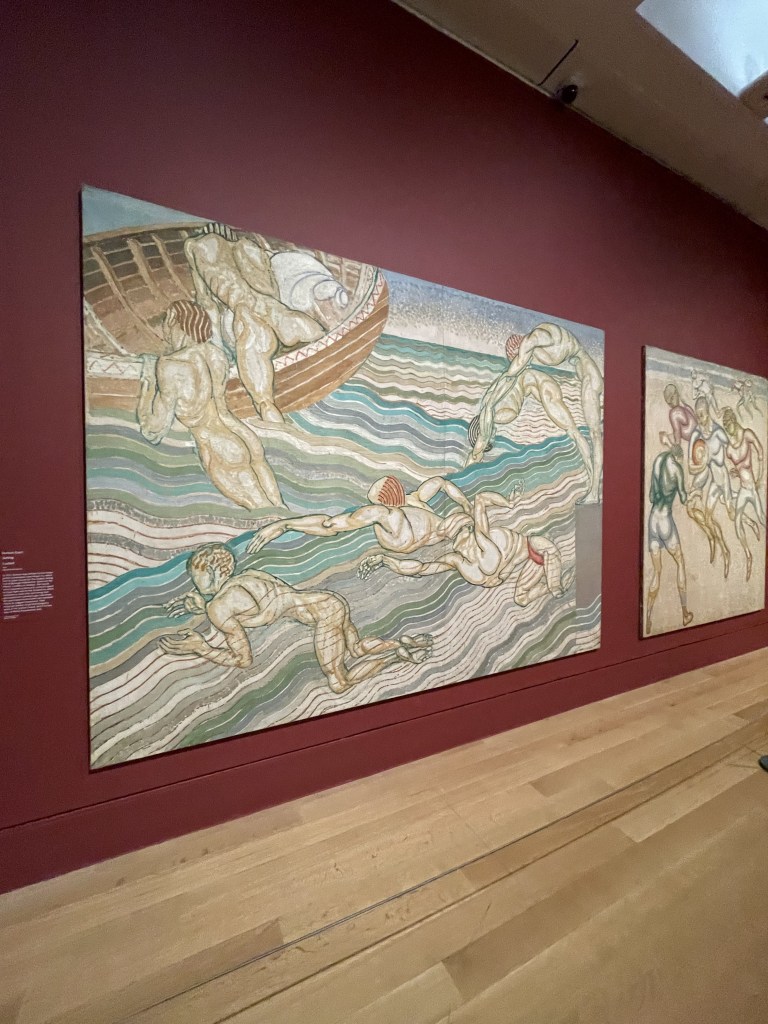
I’m familiar with this large canvas entitled Bathing, it’s in the Tate collection. Made in 1911, it was a mural commissioned by Roger Fry for the student dining hall at Borough Polytechnic. Inspired by Duncan’s summers swimming in the Serpentine in London’s Hyde Park. Despite his love for Vanessa Bell, and a relationship which produced their daughter, Angelica, Grant was gay. This was difficult at a time when homosexual relations were illegal. There’s an impressive area, to the side of the gallery, containing some very frank impressions of gay couplings.
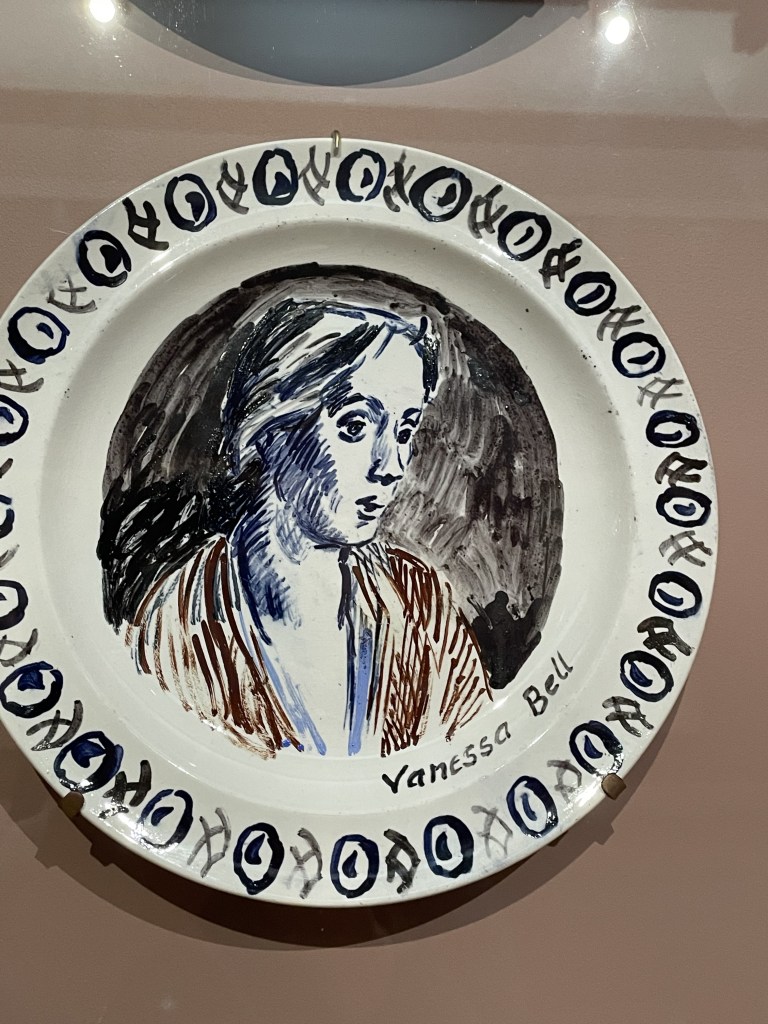
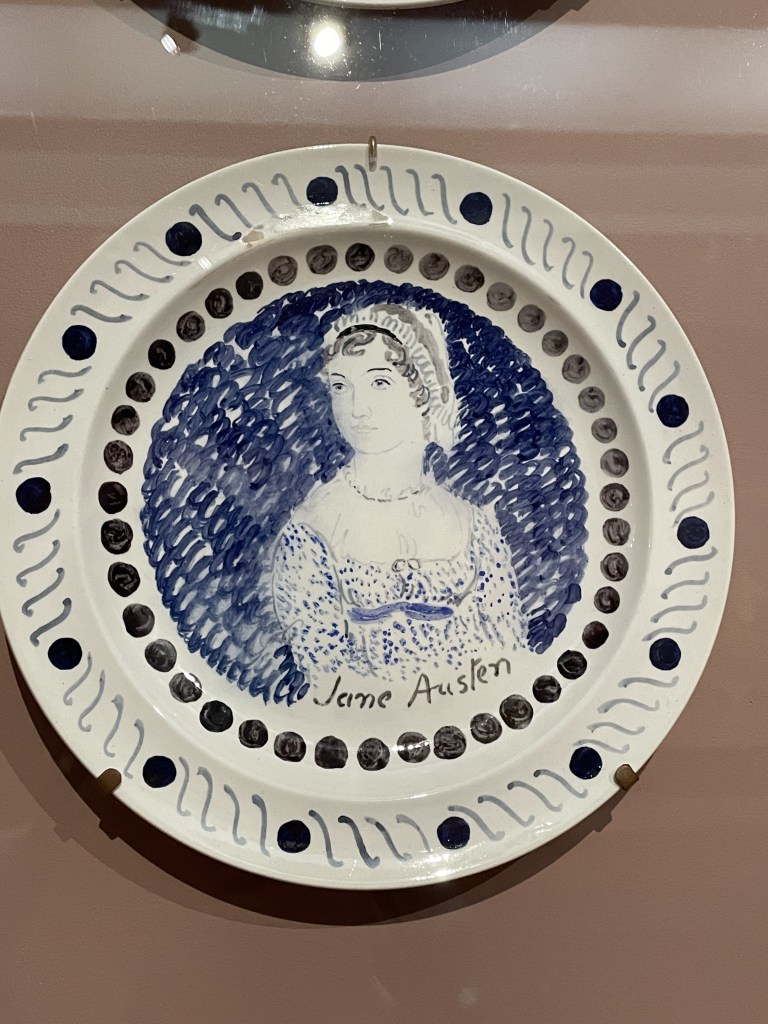
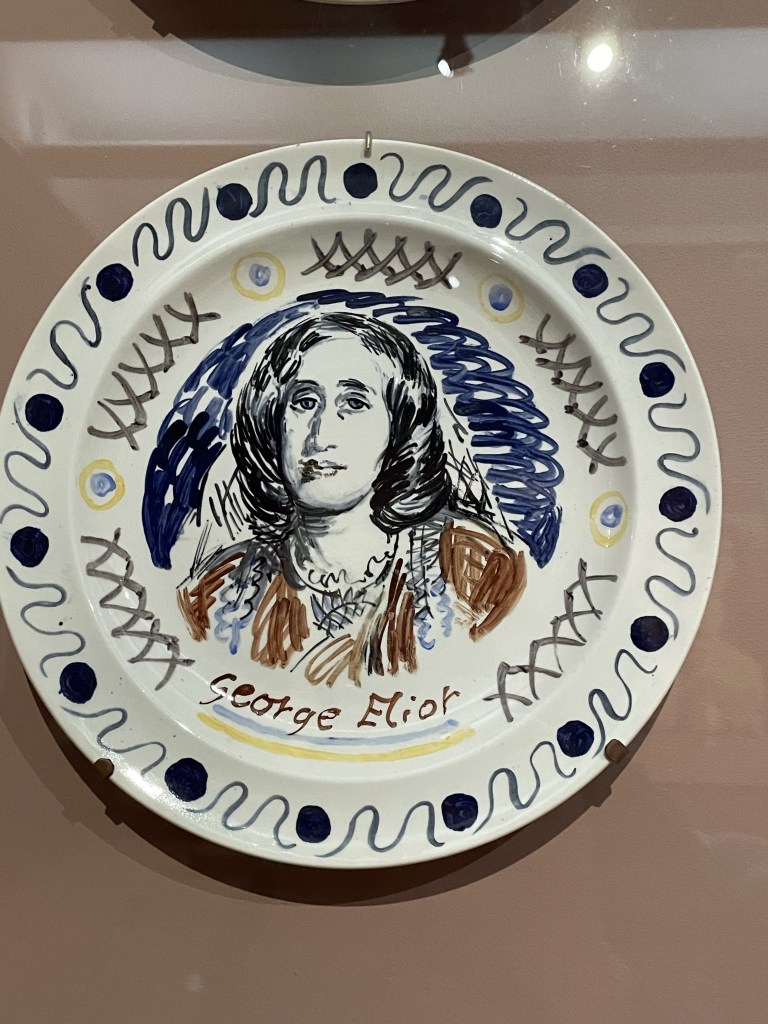
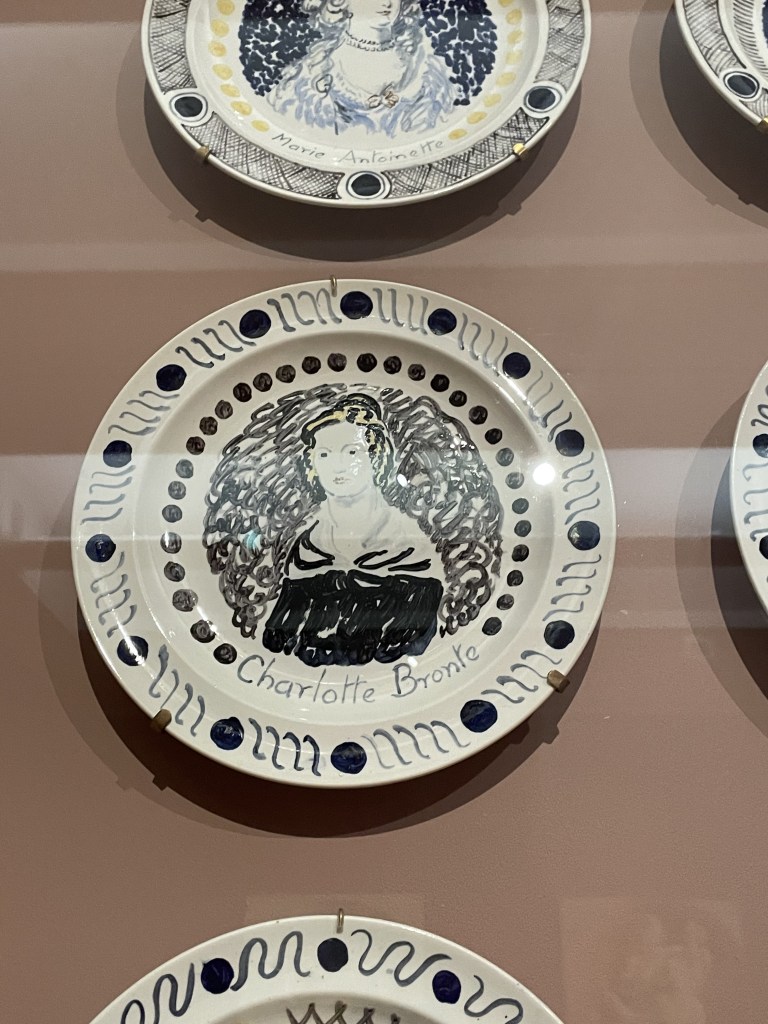
Great to see a full collection of Bell and Grant’s joint project producing 50 hand-painted Wedgwood plates celebrating ‘Famous Women’. 1932-34. I love the brevity of the painted portraits, clearly based on observation of photographs or paintings of the subjects.
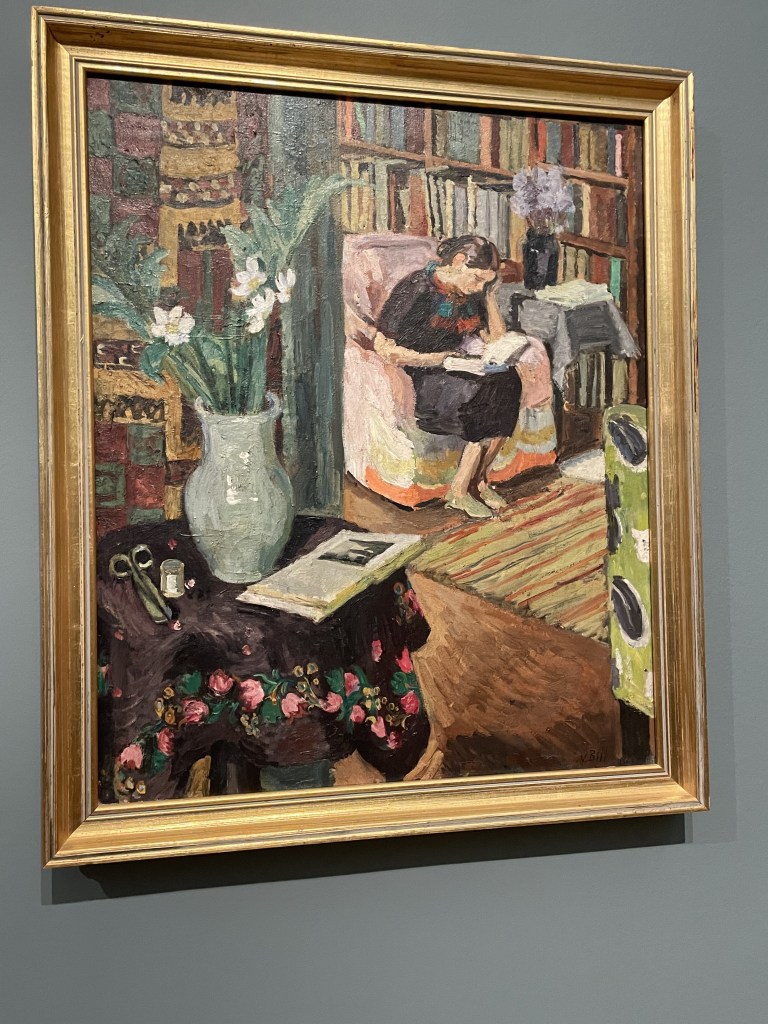
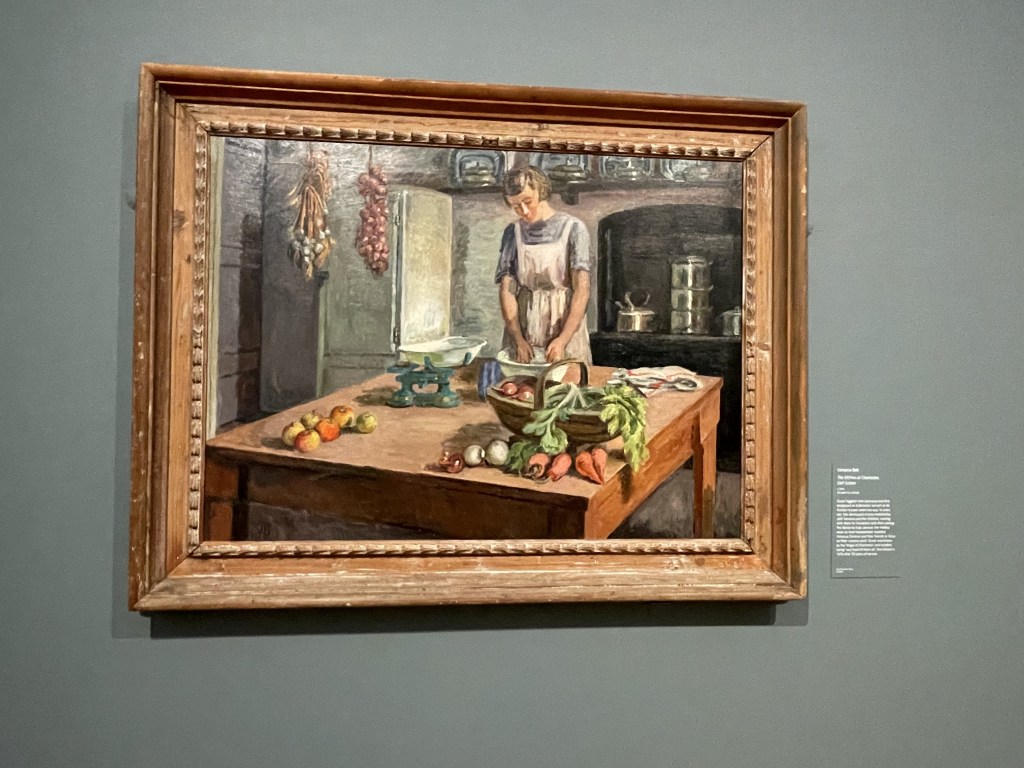
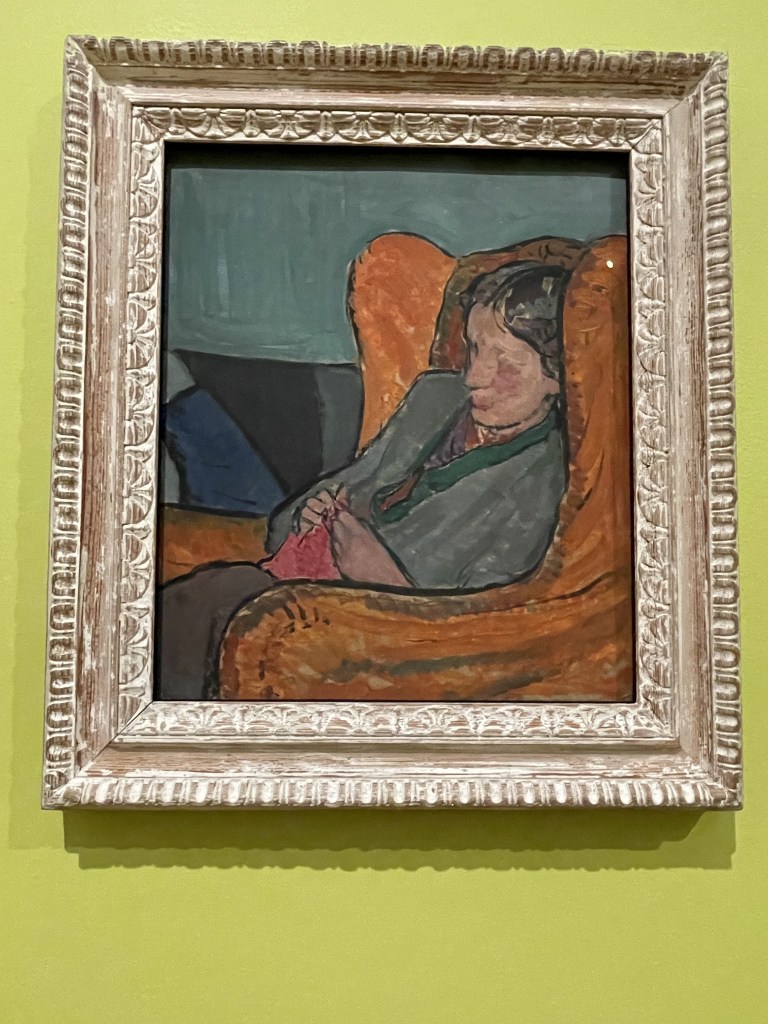
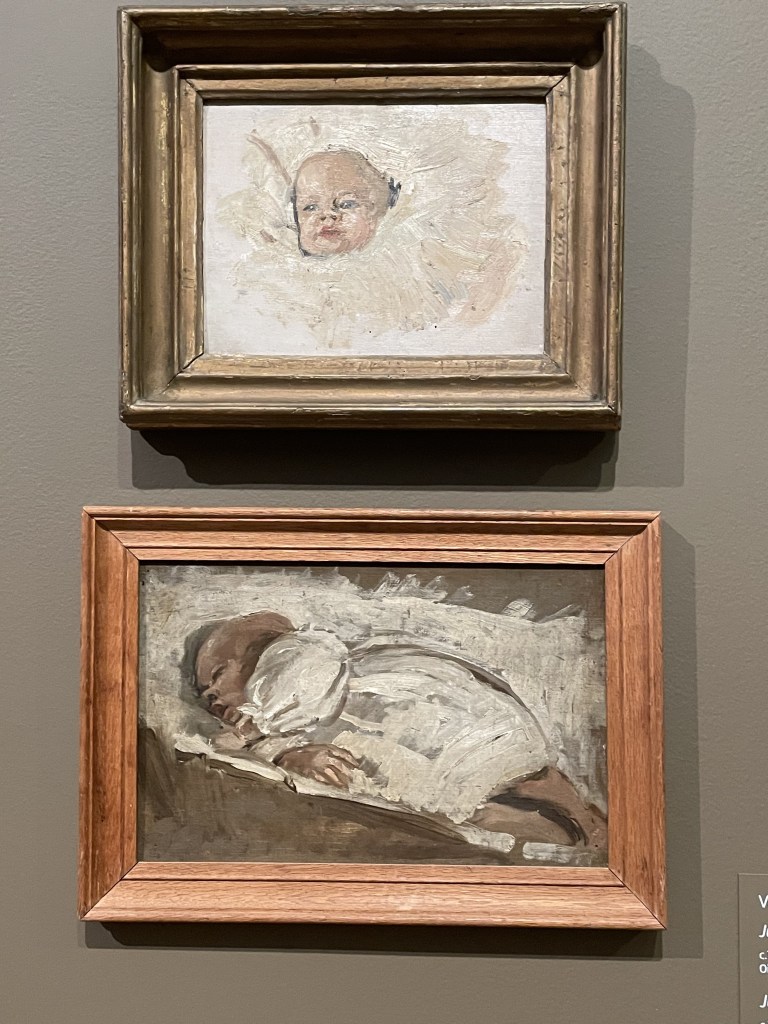
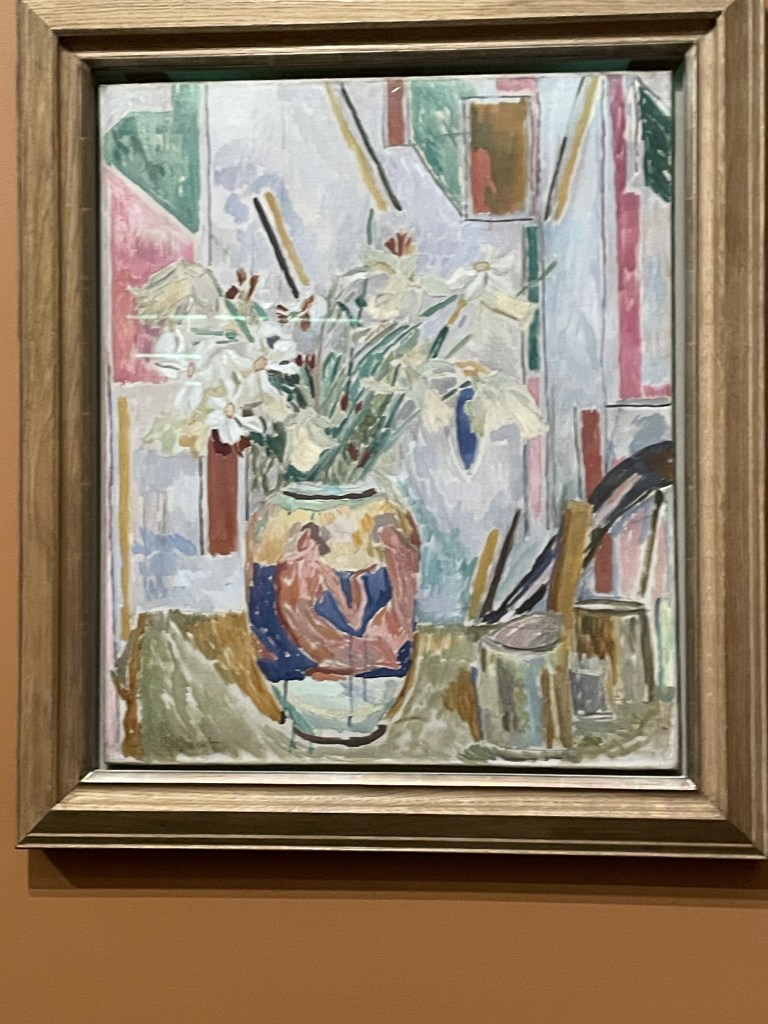
I’m going to end with a ‘pick and mix’ of images which caught my eye. There are many more pictures which I could include. But this will have to do. Suffice to say, I really enjoyed this show. It’s been cleverly curated, charting a remarkable artistic partnership but giving each artist space to shine and show the different directions they went in, whilst remaining close for over 50 years. Bell died in 1961 and Grant in 1978. Their shared home, Charleston, in East Sussex, is undergoing refurbishment, hence the chance to move the studio and so many of the artworks to this exhibition. However the curators have sourced many fascinating paintings from galleries abroad and private collections. It’s well worth a visit. The show is on until 11th April 2027.

