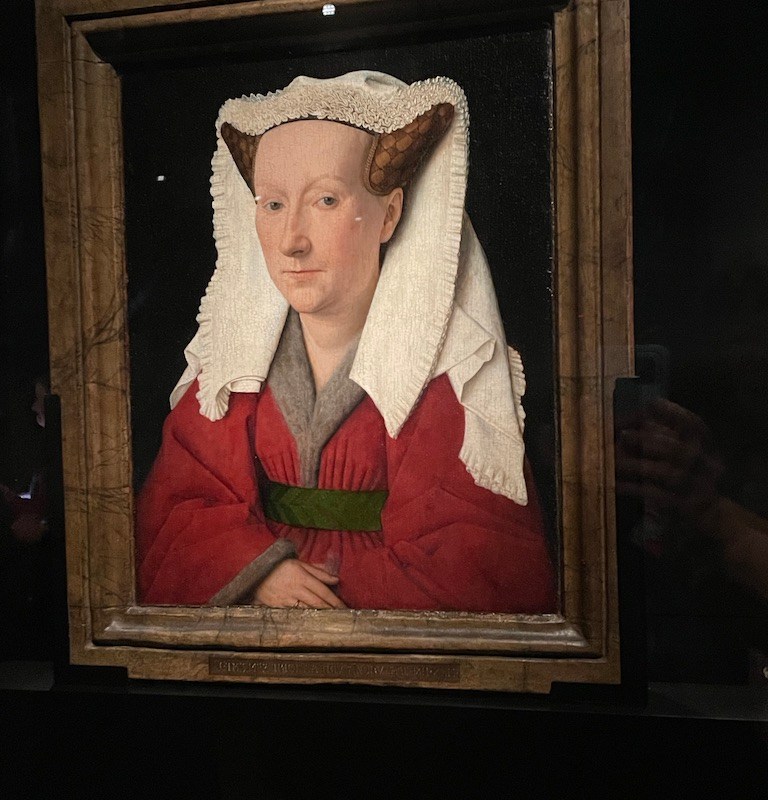
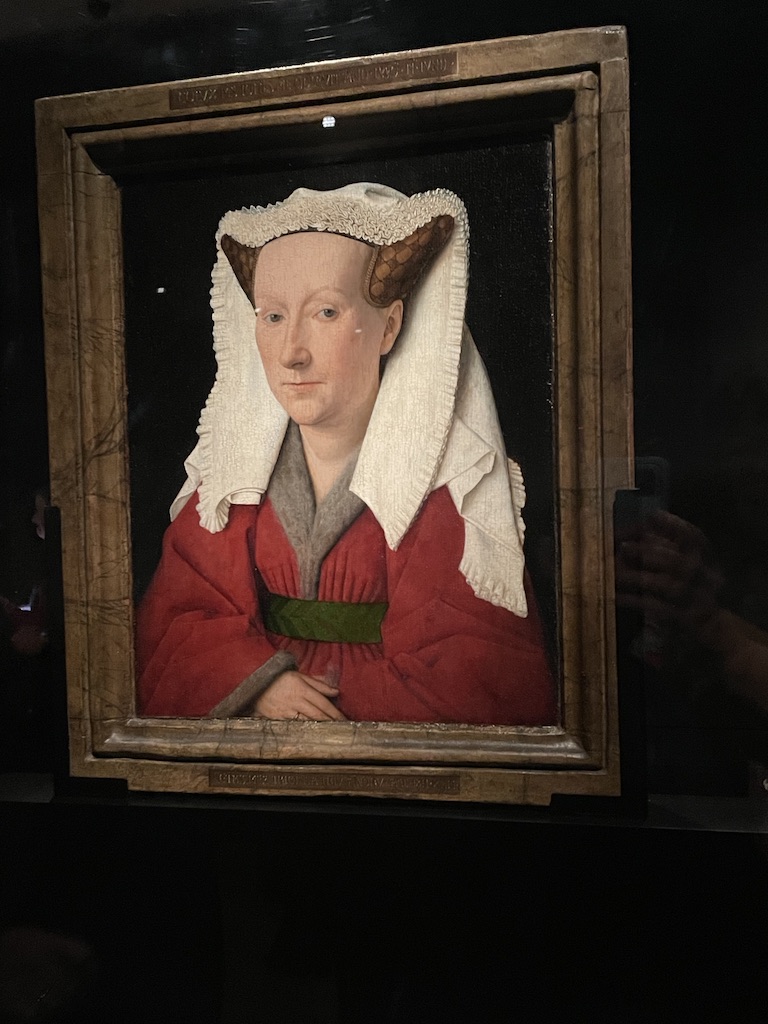
Above is a portrait of Van Eyck’s wife, Margaret. Her gaze is comfortable, confident and direct. You can imagine them having a conversation while the painting was being made in around 1439. The details of her clothing are fantastic and that headdress, with the ruching, what a lot of work for the artist to truthfully record and respect the way she wanted to look.
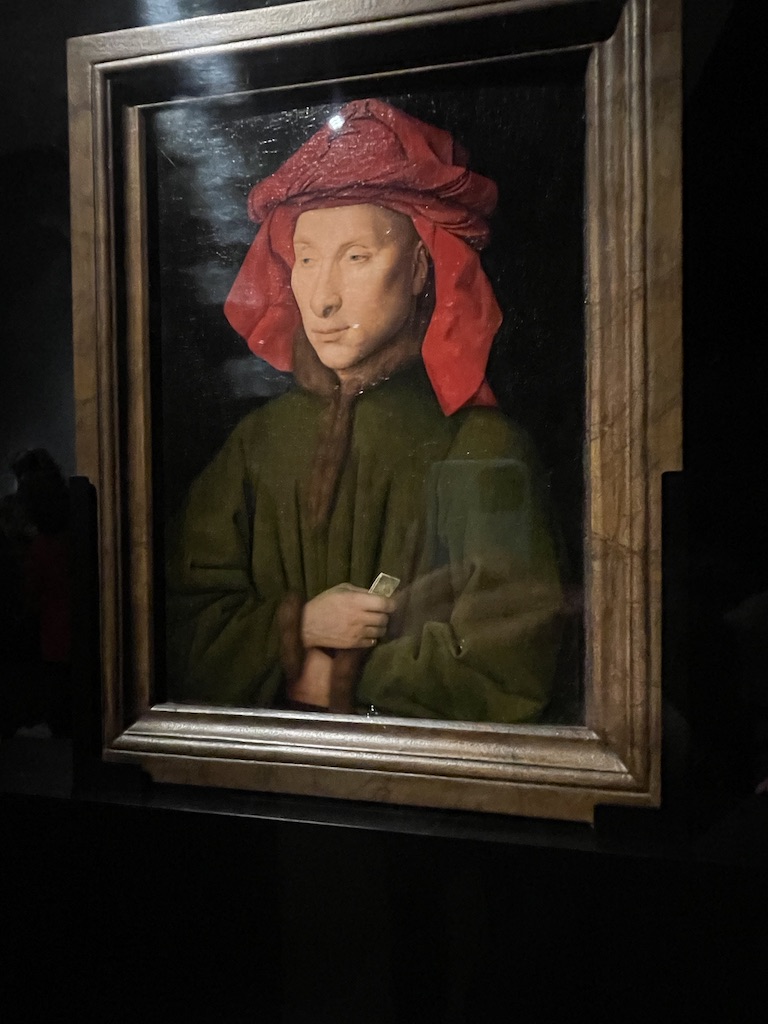
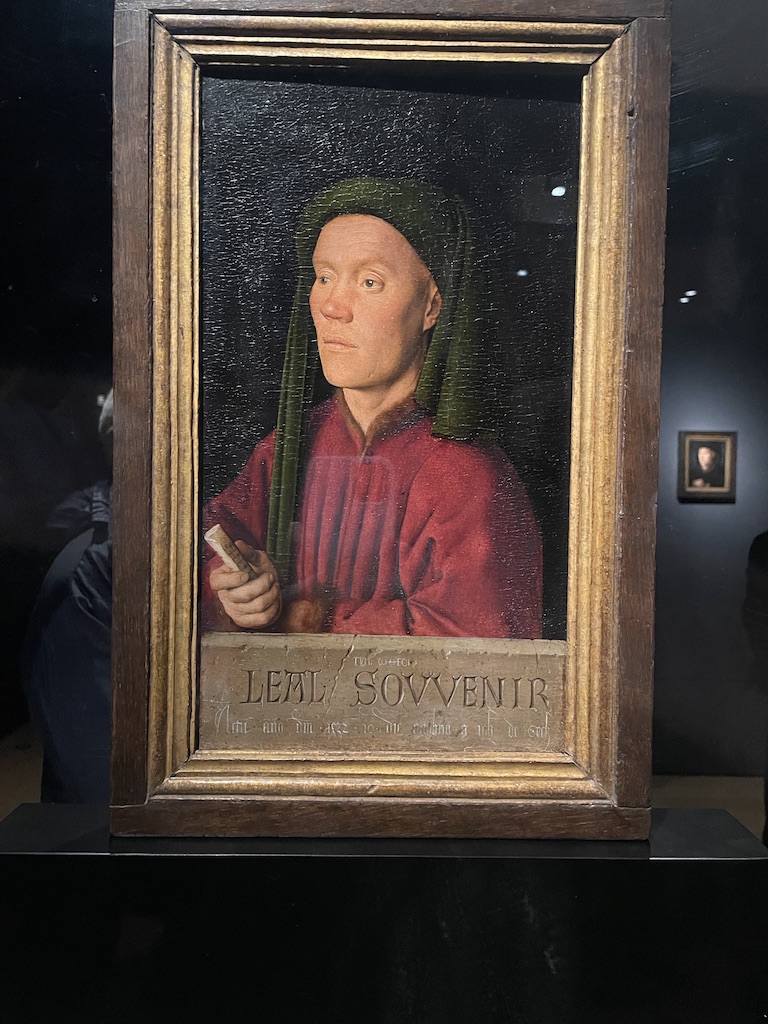
These two portraits of men are disarming in their truthfulness. The style of painting is almost photographic. Van Eyck was the earliest of the Renaissance painters of northern Europe (he was based in Bruges for most of his career) to really capture a likeness. These images are not of royal princes but of real people, represented in their everyday clothes and headgear, clutching clues as to their professions or trades, in their right hands.
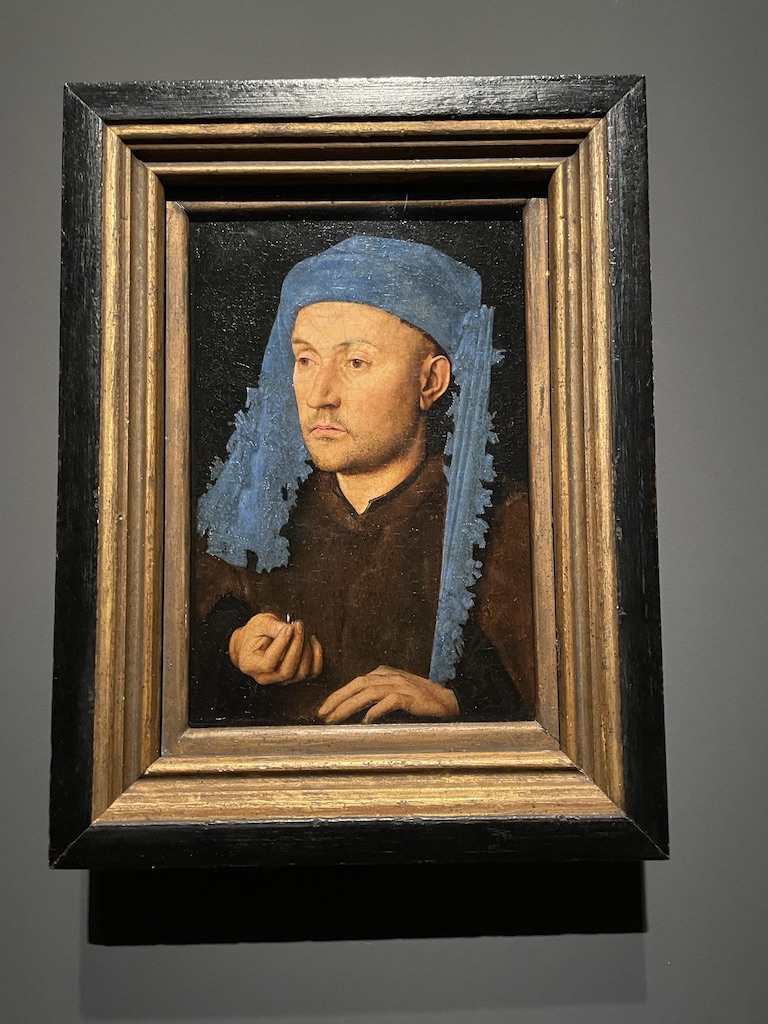
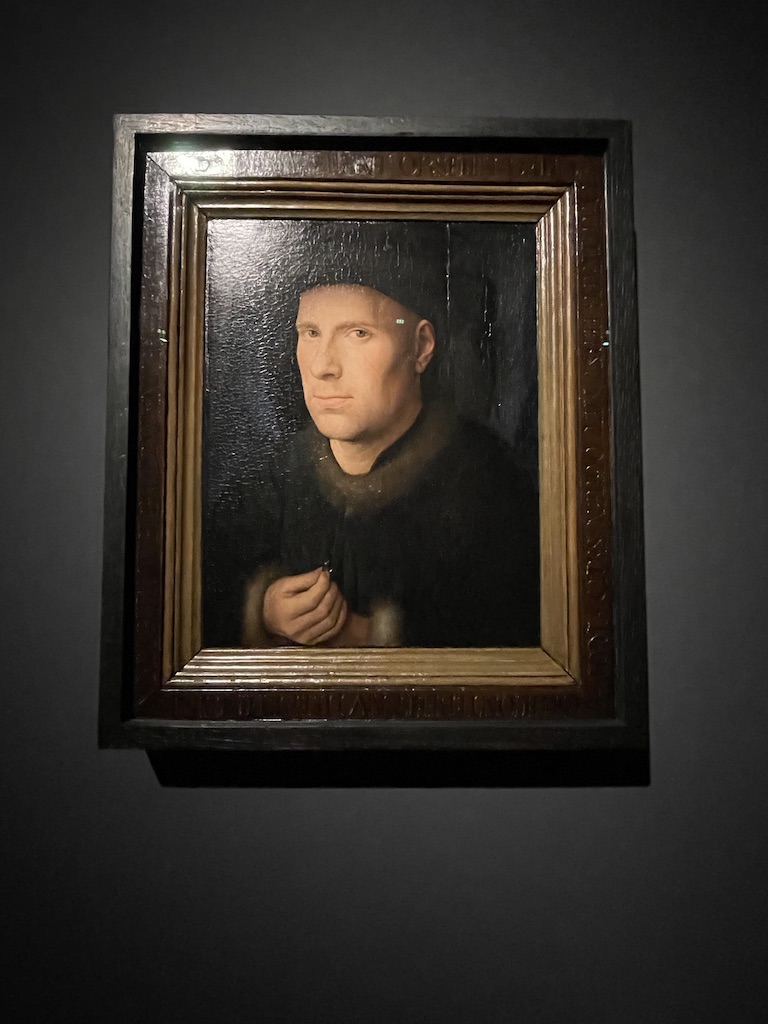
These two are just wonderful – their faces flooded with light against a pitch black background. Both are holding rings. On the right, the man in the black hat is looking directly out of the picture at us. He is Jan de Leeuw and it was painted in 1436. He’s a jeweller, apparently, and there are playful clues to his identity and life hidden in the lettering and numbers painted onto the frame.
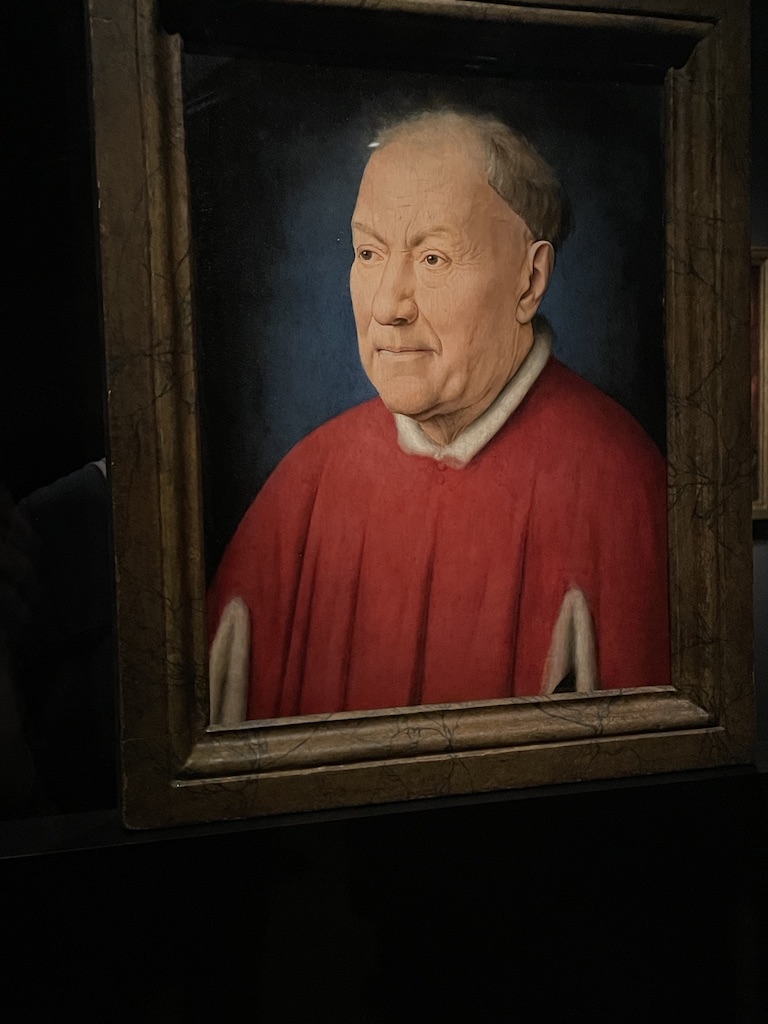
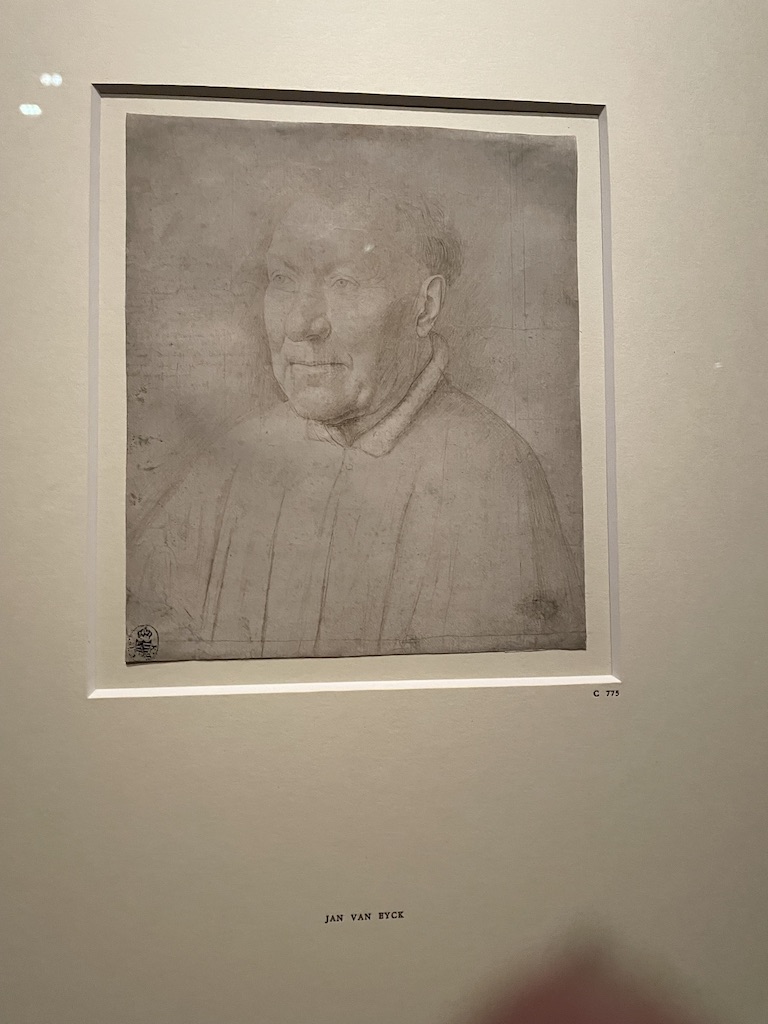
This older gentlemen seems so lifelike. His identity is not known but it’s great to see the finished work next to the drawing which must have been sketched from life and was accompanied by a written list of the colours of his skin and clothing.
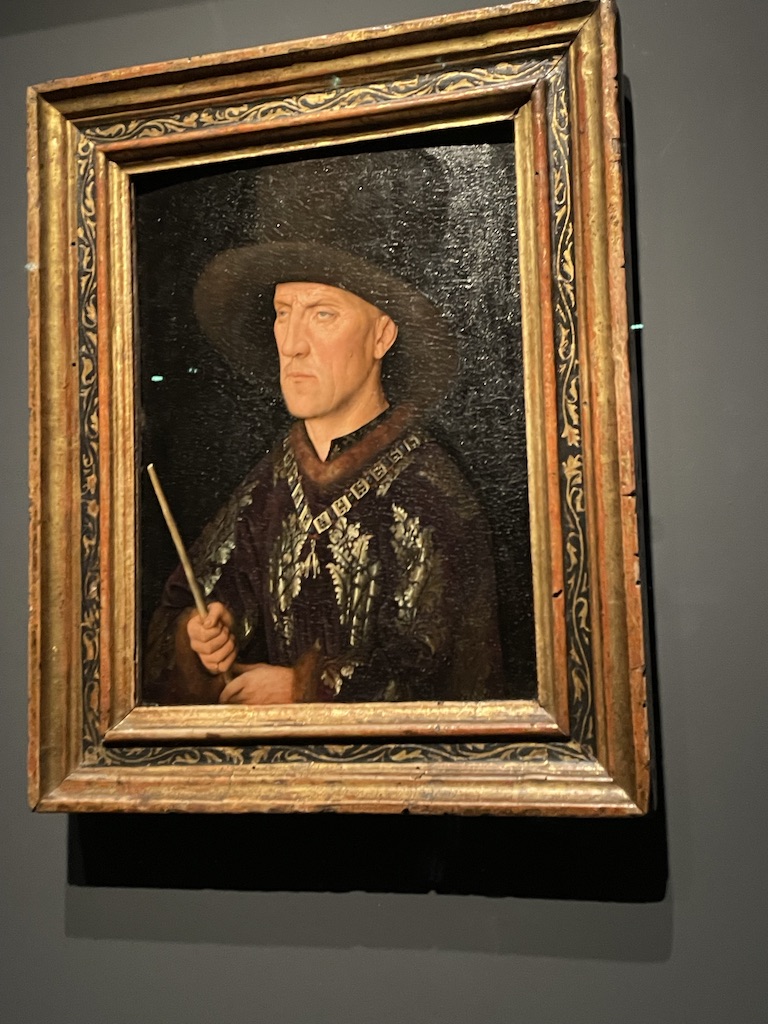
This rather grumpy looking chap is Baudouin de Lannoy painted in about 1435-40. You can see from the regalia and clothing that he’s a prominent nobleman. You would not want to mess with him.
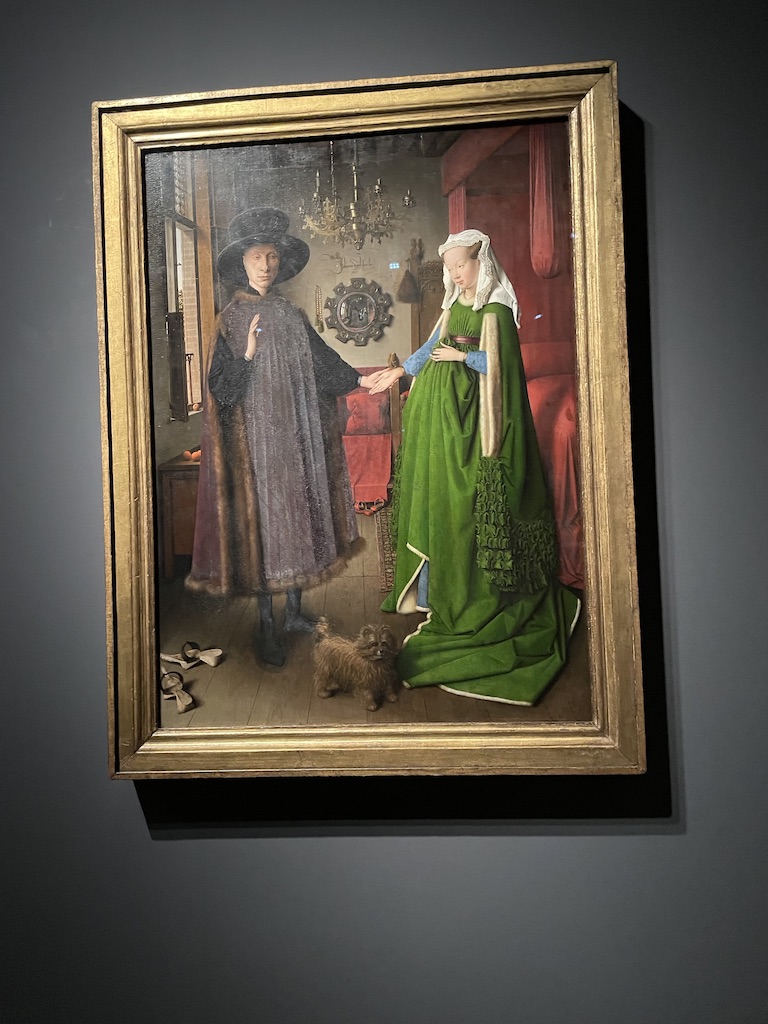
It’s always a treat to see Van Eyck’s masterpiece, the Arnolfini Portrait – it’s so famous and it lives at the National Gallery. Yet the setting and circumstances remain a mystery. Why are these people standing this way? They are believed to be members of the Arnolfini family who were prominent merchants living in Bruges in the 1430s. It’s a mix of playful and serious. While the couple look smart and rather severe, dressed in their best clothes, there are shoes scattered around, and oranges too. The dog clearly knows what’s going on and, reflected in the mirror are two visitors. Oh the mysteries and possibilities of this one! And it ‘s fascinating to see a portrait of the same gentleman in a single portrait too, wearing a red headdress. Such was the brilliance of Van Eyck’s likenesses that there can be no doubt it is the same subject.
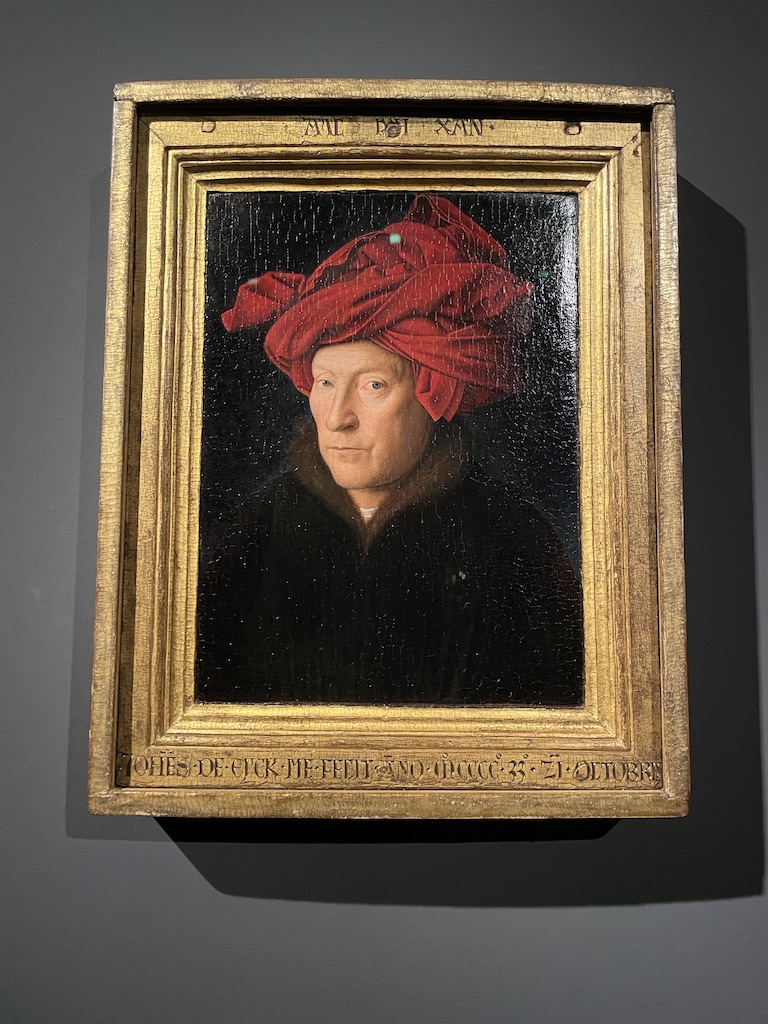
Oh, and finally, here is a portrait which starts off the exhibition. The subject is not identified but the curators believe that this is a self-portrait by Van Eyck. If it is, then it’s the first example of a self-portrait at that time. And oh, what detail can be seen – bloodshot eyes, wrinkles and stubble. And the inscription gives the actual date it was painted in 1733. That analytical gaze of the eyes does suggest it was made by the artist really scrutinising his face and leaving nothing out.
Wow, this is a truly great show. It’s on at the National Gallery until 11th April 2027.

