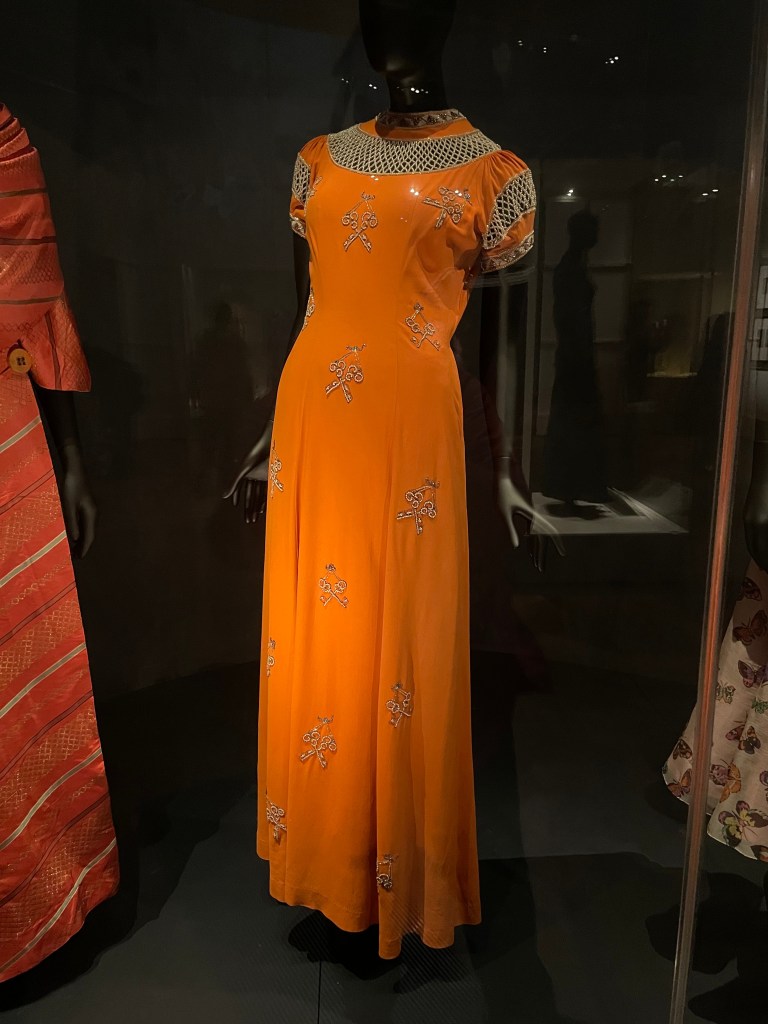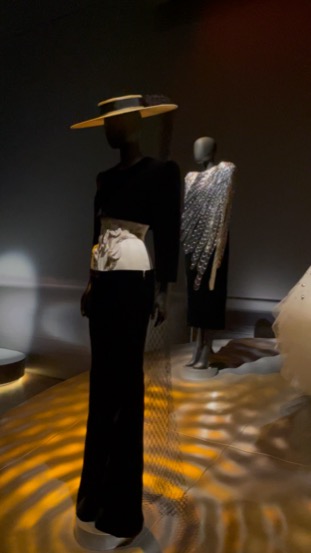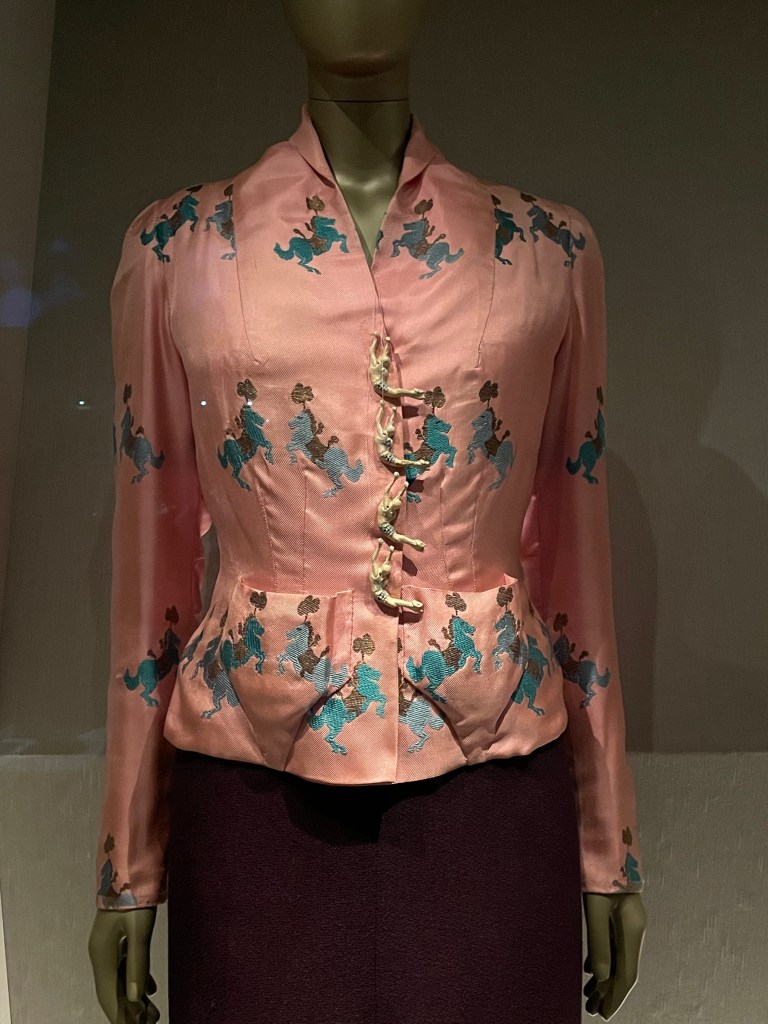
The magnificent Elsa Schiaparelli is having a well-deserved moment at the Victoria and Albert Museum. Working from the 1920s -50s, she was really an artist who found her way into clothes designing – and what a legacy that produced. This show, Fashion becomes Art is a fitting tribute to her astounding contribution to 20th century fashion.

Above is just one example of Schiaparelli’s imaginative and playful approach to clothing. This jacket from 1938 features prancing circus horses printed on silk twill and the ‘buttons’ are enchanting little acrobats. Just brilliant. And the sort of thing any of us would love to wear today.
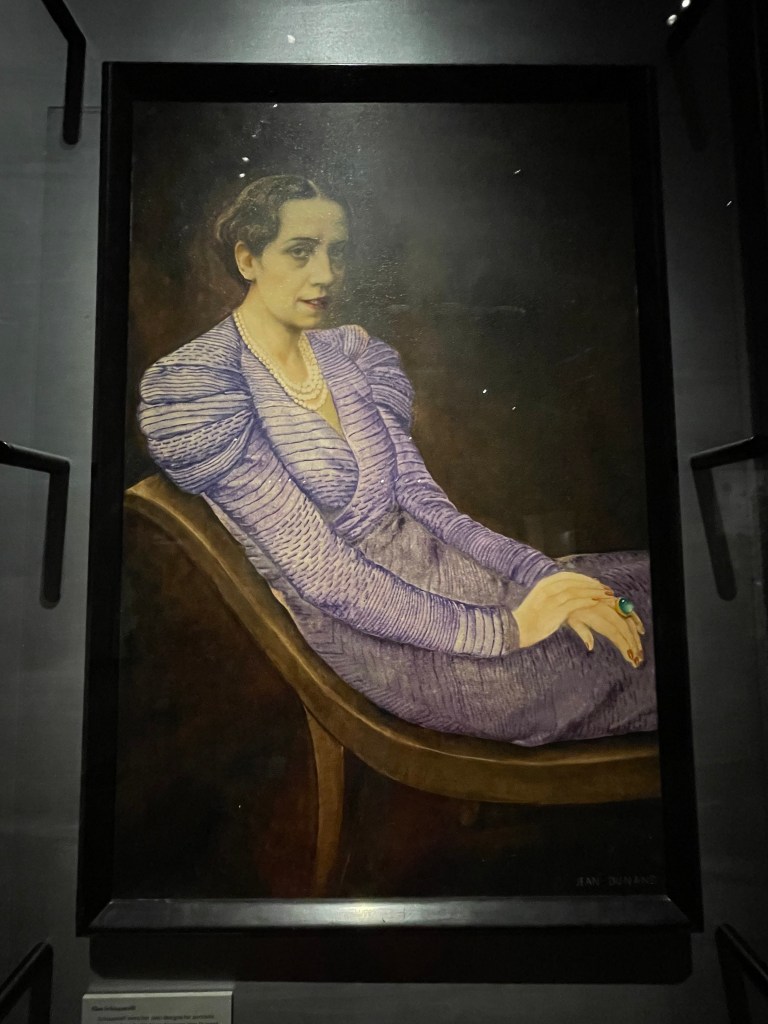
Here’s a portrait of Elsa wearing one of her own designs and looking so very elegant in 1930s chic. She was primarily an artist and knew many of the important artists of the day – Dali, Picasso and Jean Cocteau, Man Ray and Cecil Beaton.
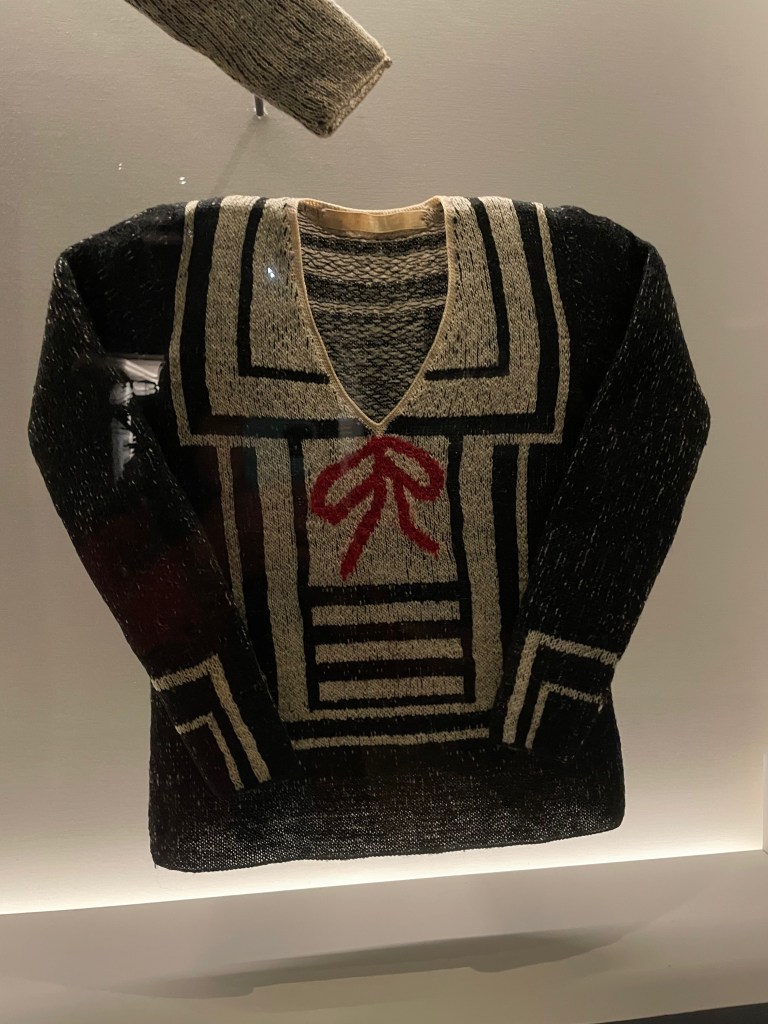
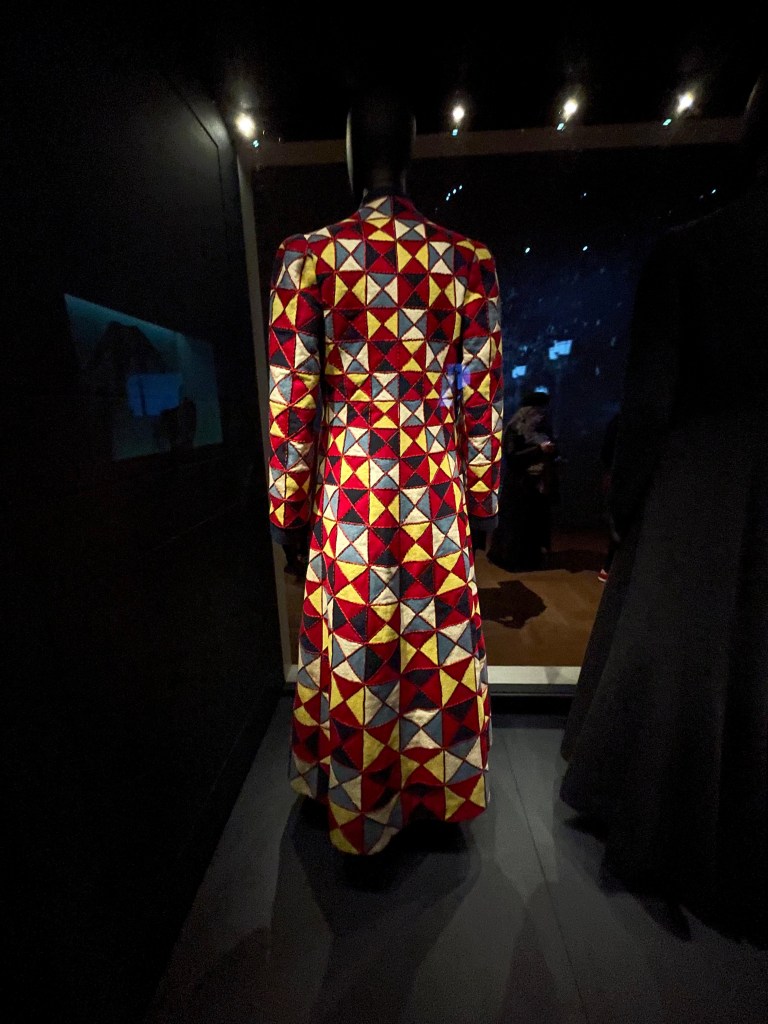
Above is an early foray into clothing where Schiaparelli created a knitted sweater with the design incorporated into the knit – revolutionary at the time. And on the right is an extraordinary coat made in patchwork style with so much hand-stitching. Must have been glorious to wear.
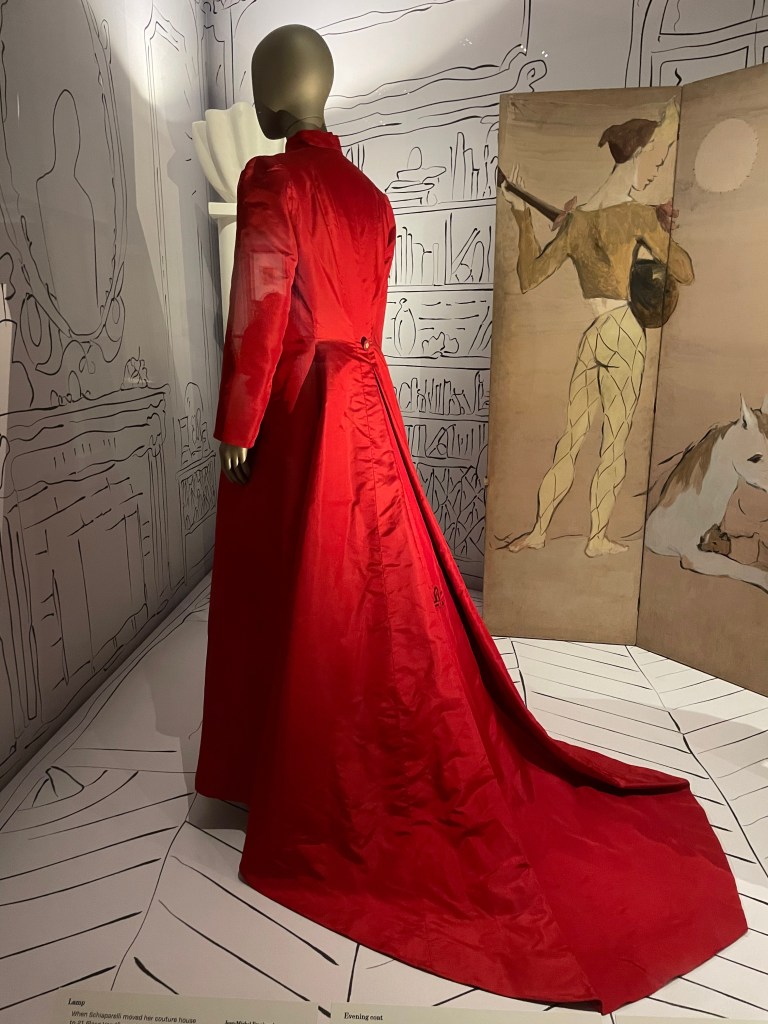
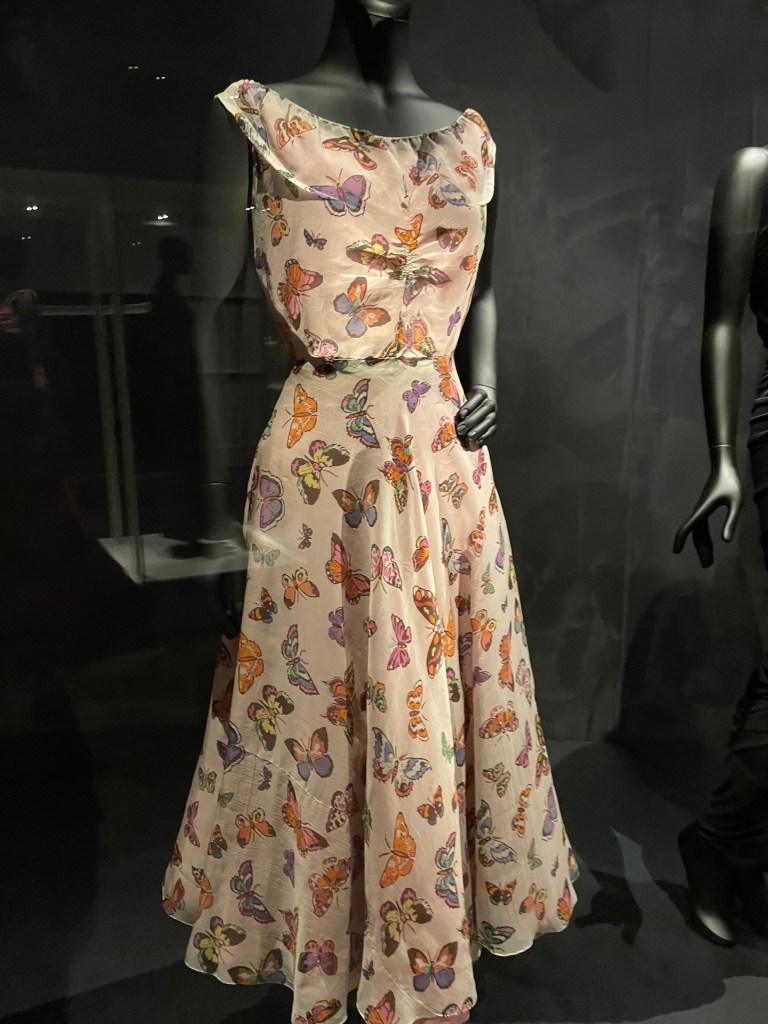
Lovely dresses and a very glamorous evening coat. I first encountered the name of Schiaparelli when I read The Girls of Slender Means by Muriel Spark when I was a teenager. I really related to the giddy girls in their London boarding house who had little money but plenty of ambition. And, for important dates, they took turns to wear the precious Schiaparelli dress to impress their would-be boyfriends.
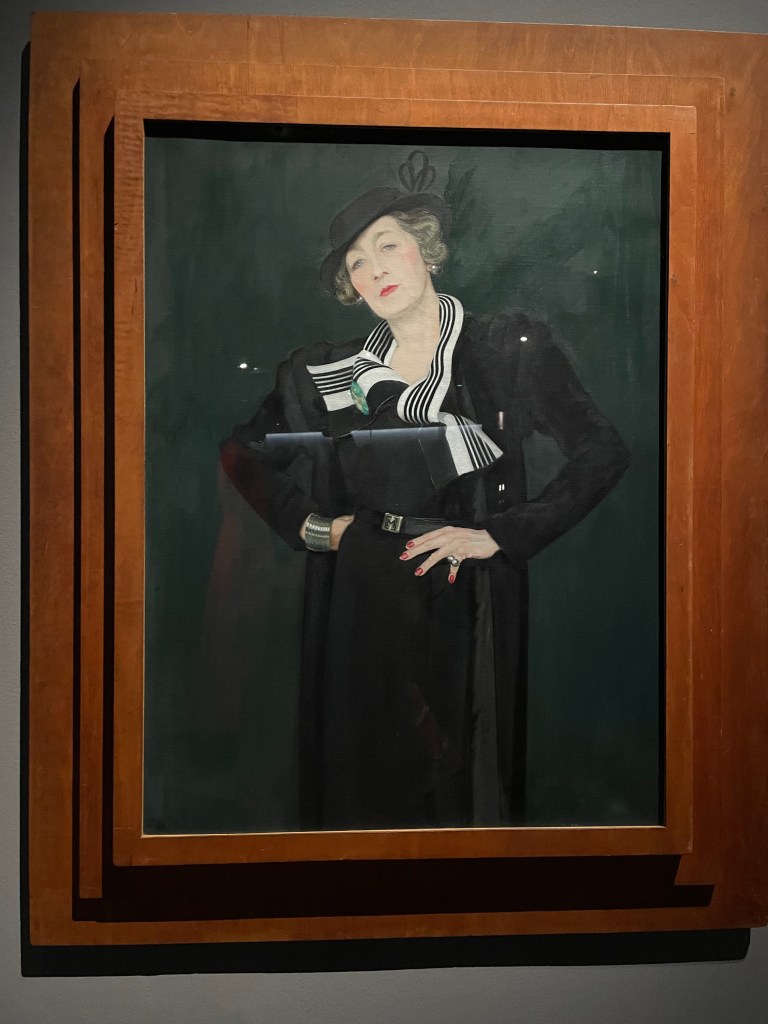
I love this portrait of Lady Mount Temple painted by Gluck. You would not mess with her when she’s wearing that suit.
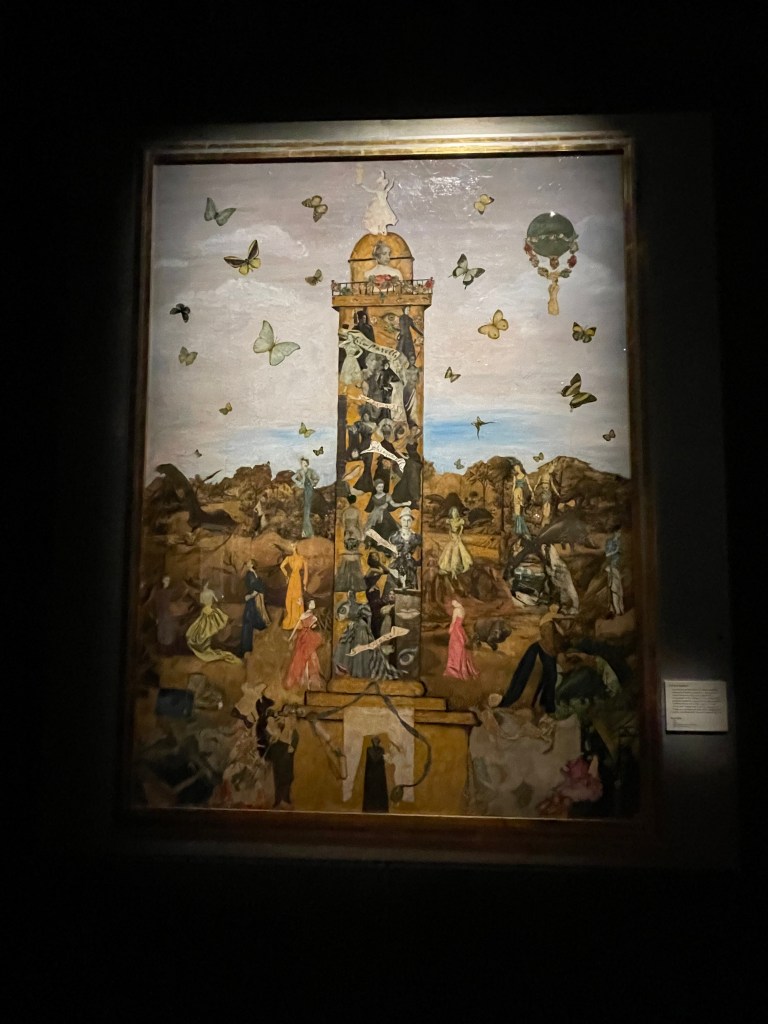
This picture is quite hard to read because the lighting is very dark in this exhibition but it’s a huge collage of images of the dresses created in a gloriously playful way. And of course it always interests me to see an artwork involving paper in a show!
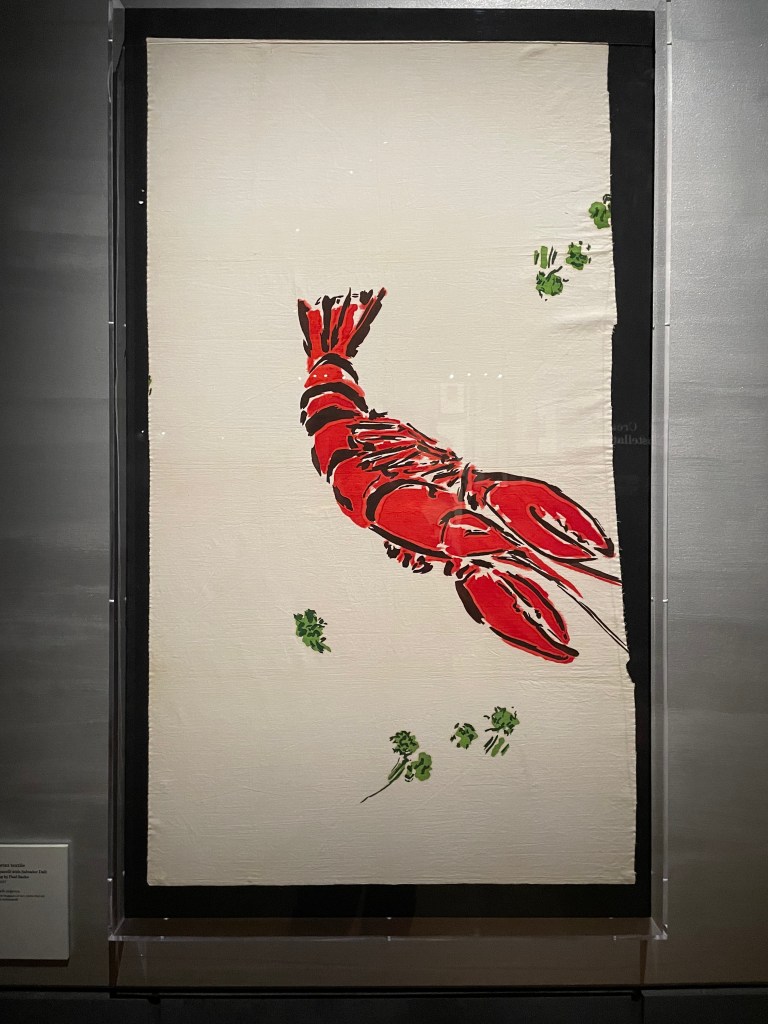
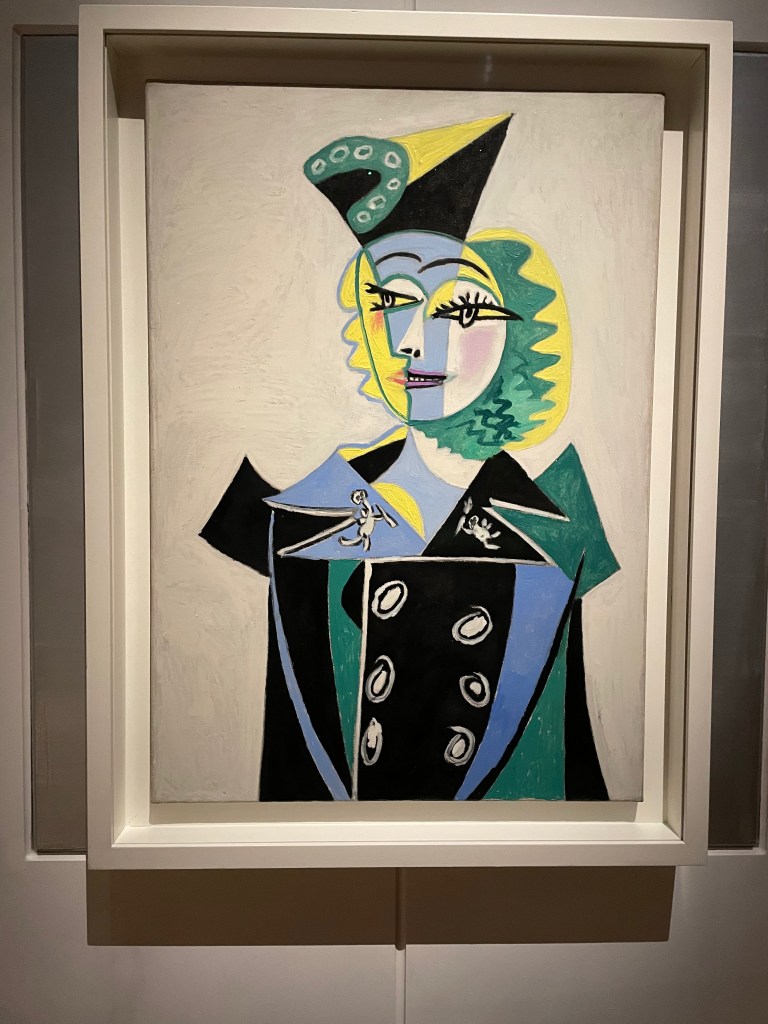
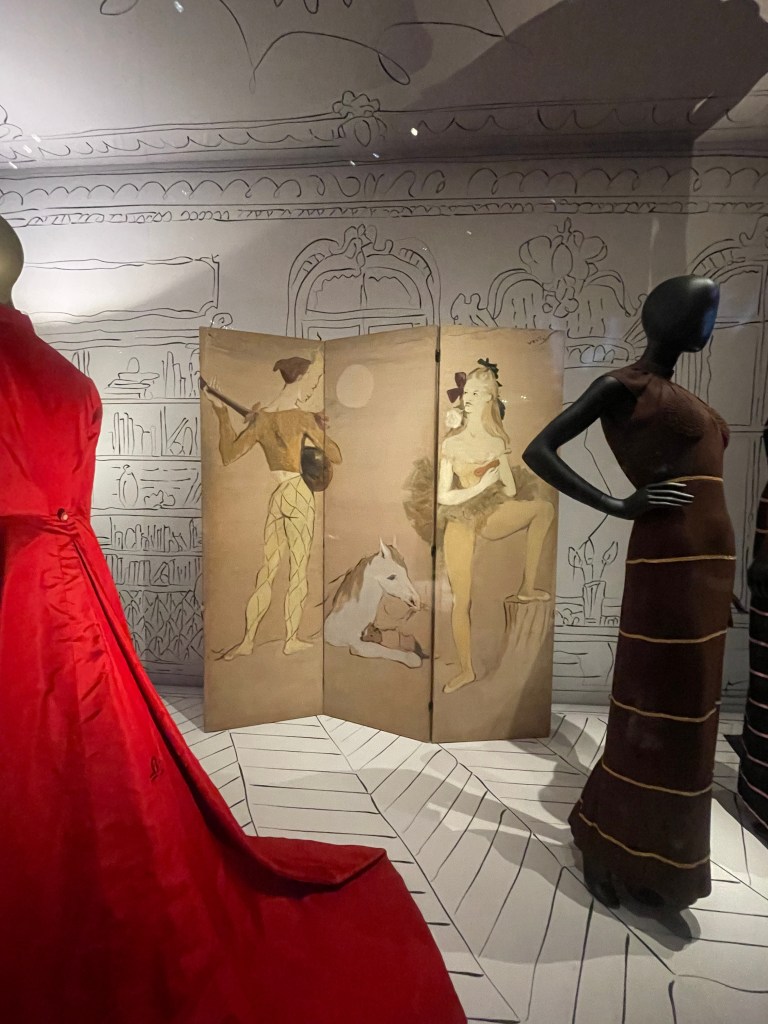
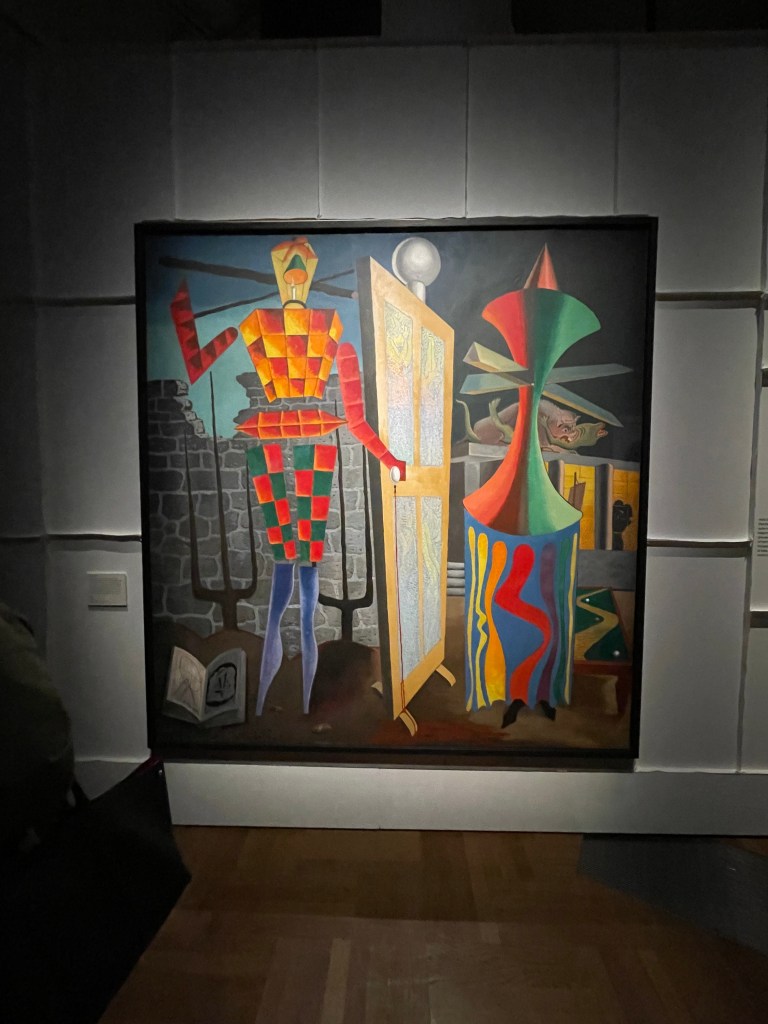
There’s a lot of art in the show too. At the top is a lobster print textile created with Salvador Dali from 1937, there’s a Picasso portrait and I loved the painted screen created with artist Marcel Vertès which depicts Commedia dell’arte characters. And below is painting by Man Ray called Fair Weather featuring a mannequin with a colourful diamond pattern, painted in 1939, just as war was approaching.
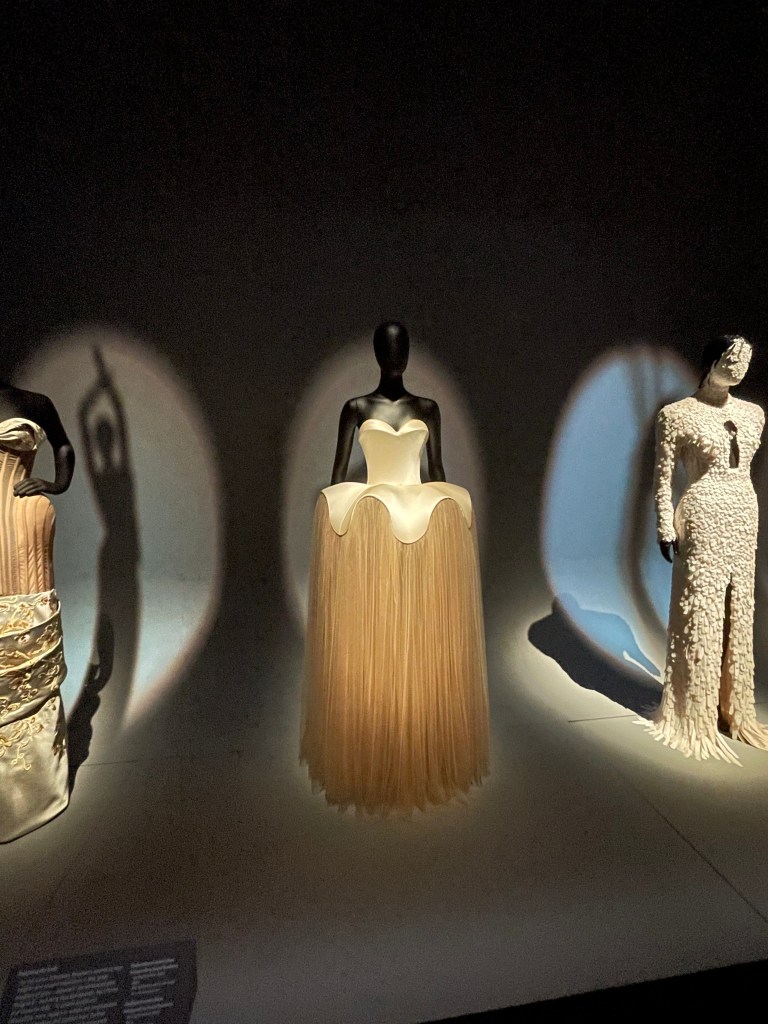
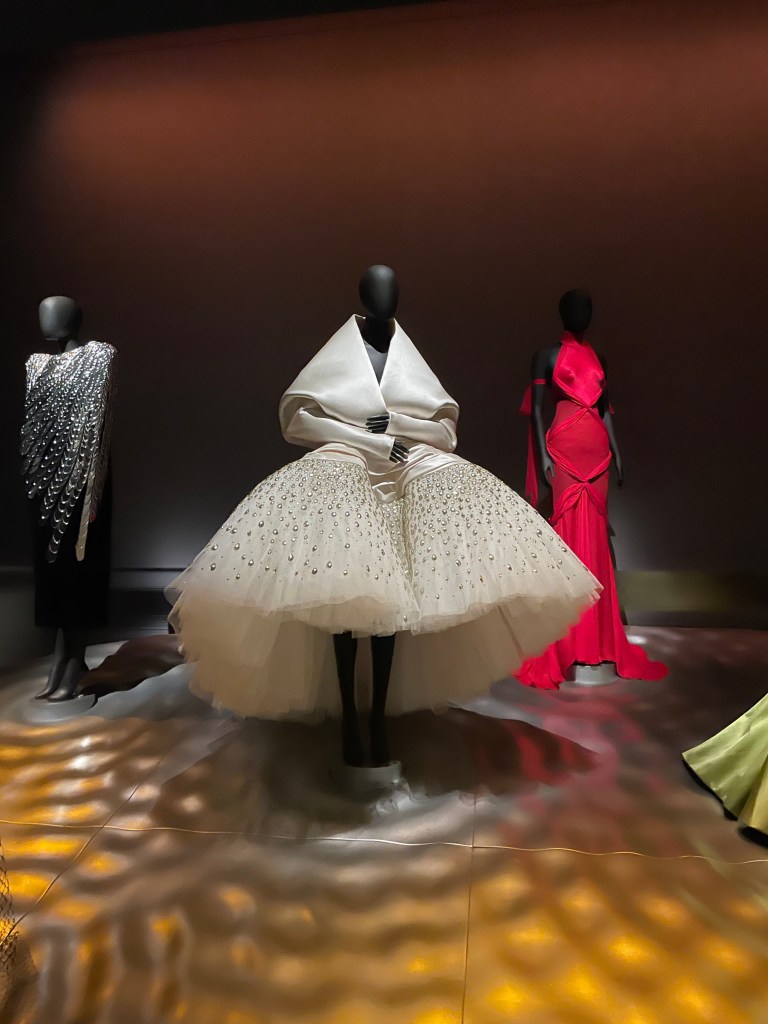
And although Elsa Schiaparelli died in 1973 her name and design house lives on under the direction of Daniel Roseberry who has been creative director Maison Schiaparelli since 2019. If you want to cut a dash on the red carpet or at a spectacular ball then this is the place to go for your outfit!

The show is on until 8th November 2026.

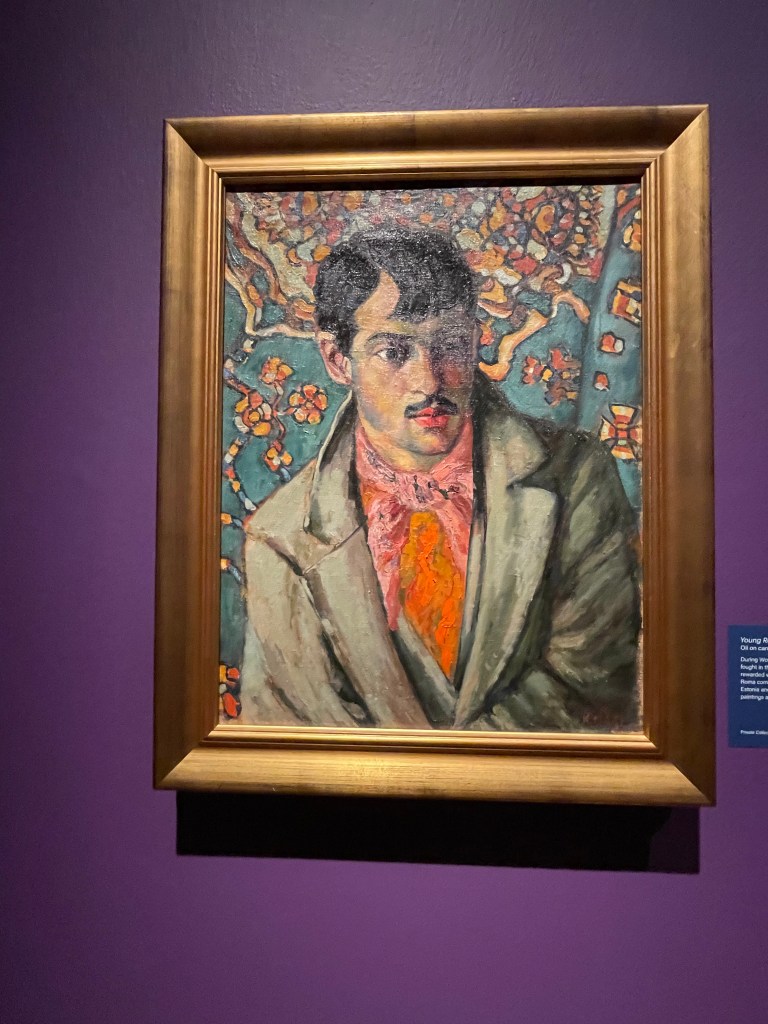
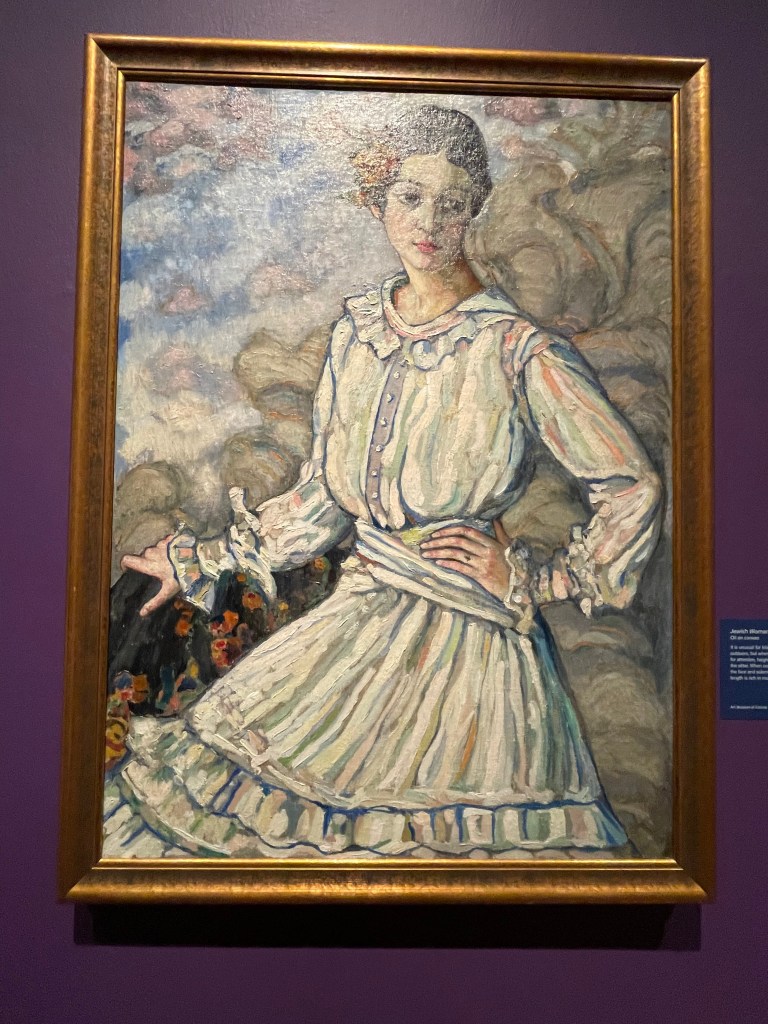
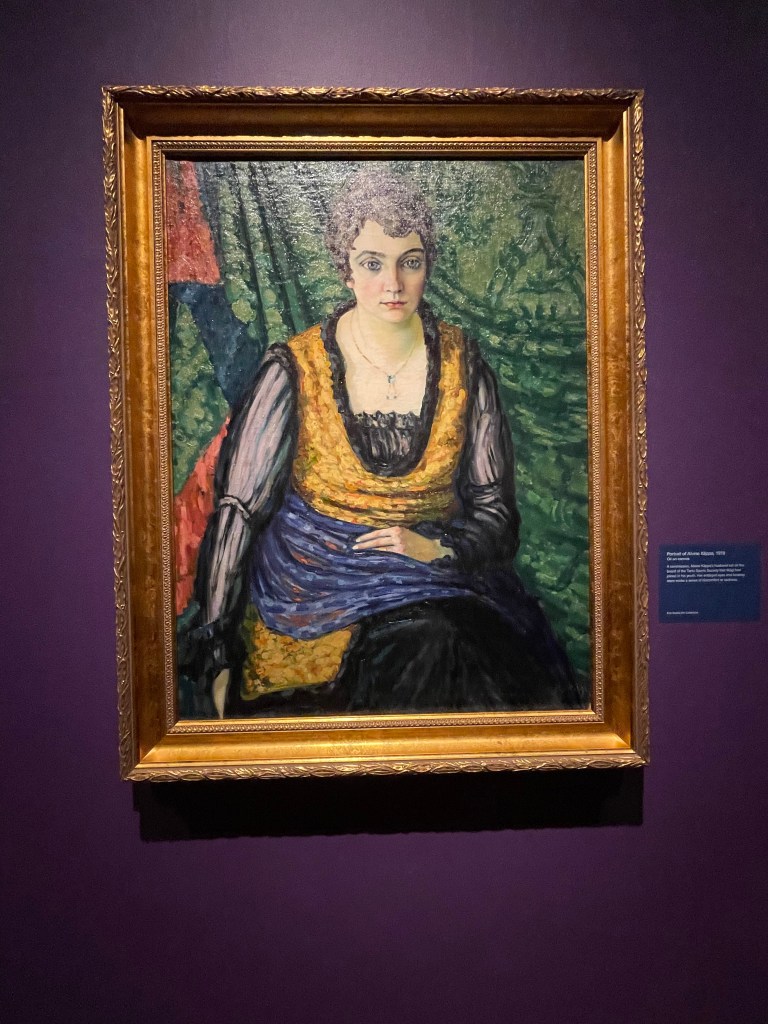
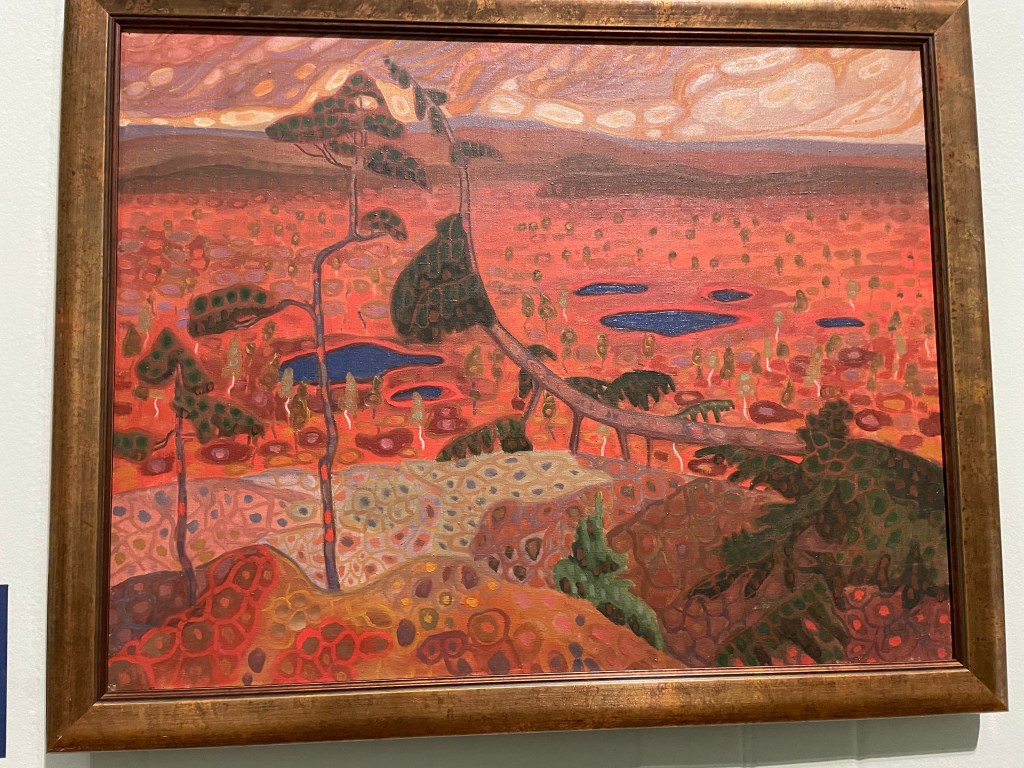
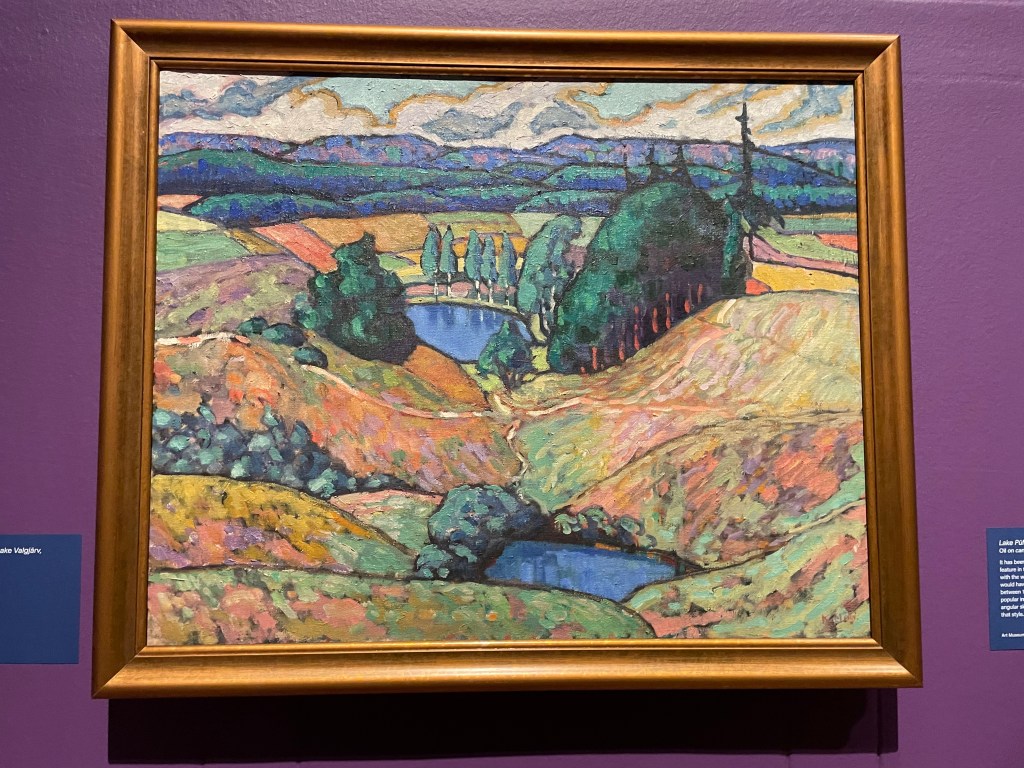
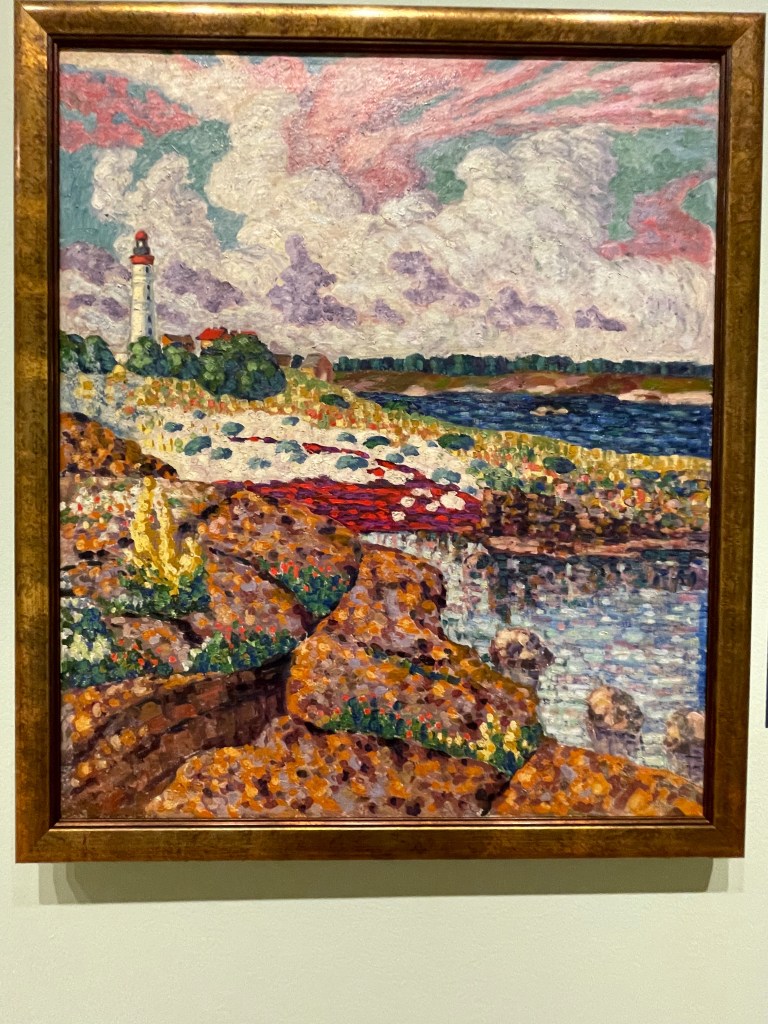
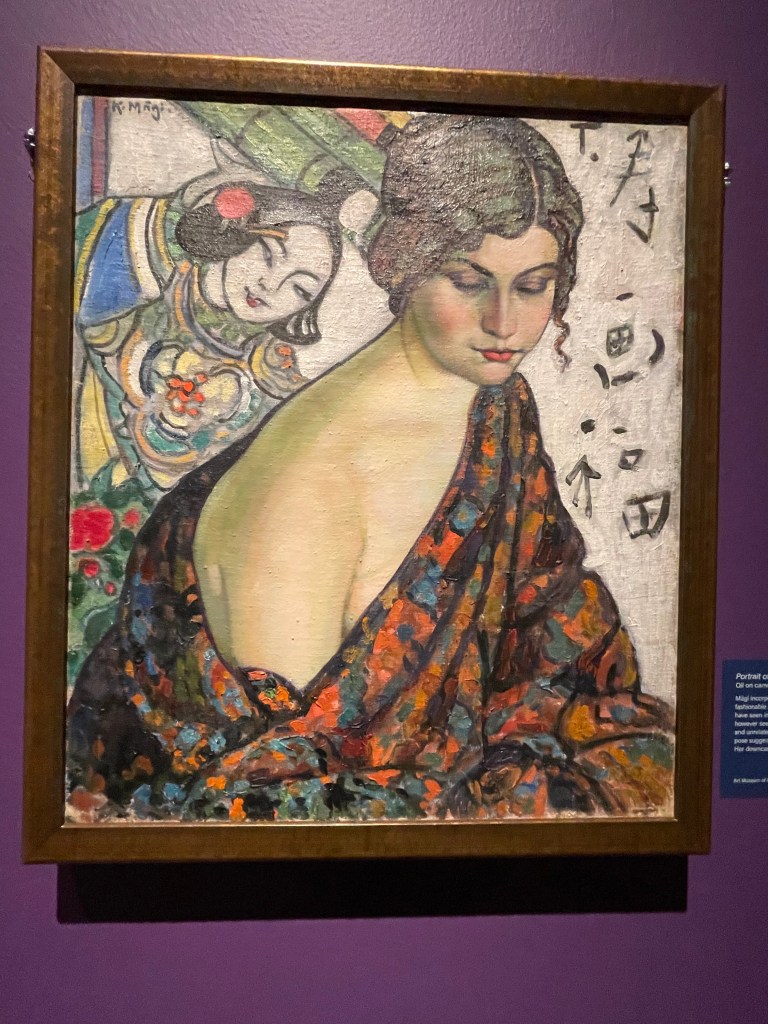
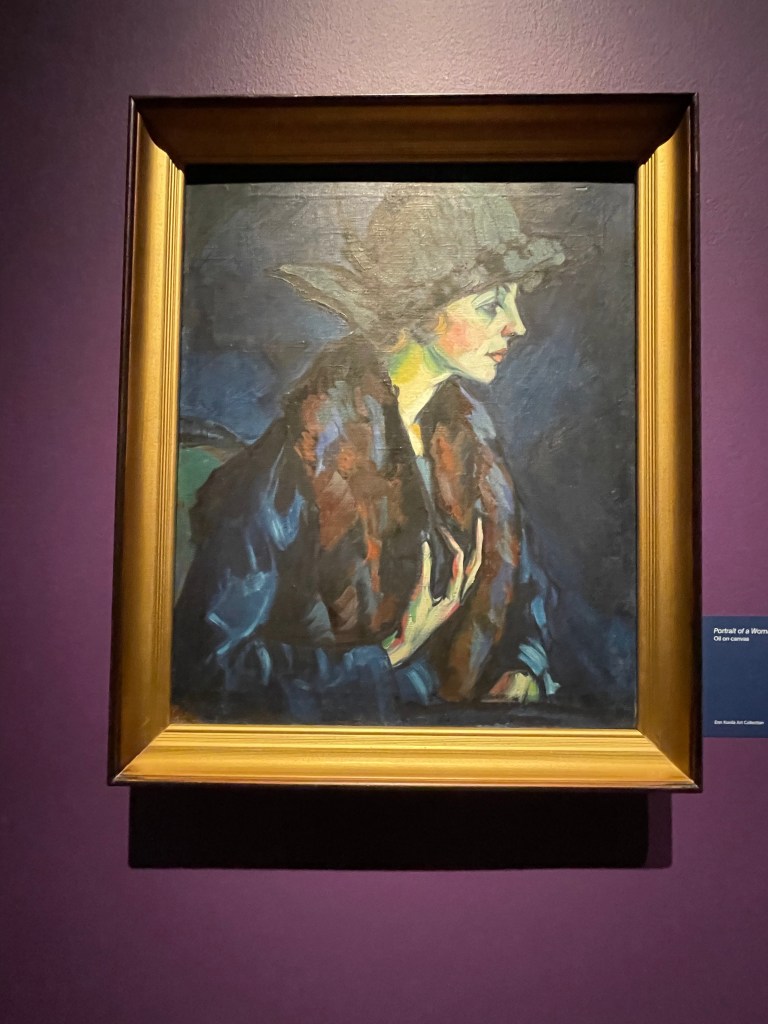
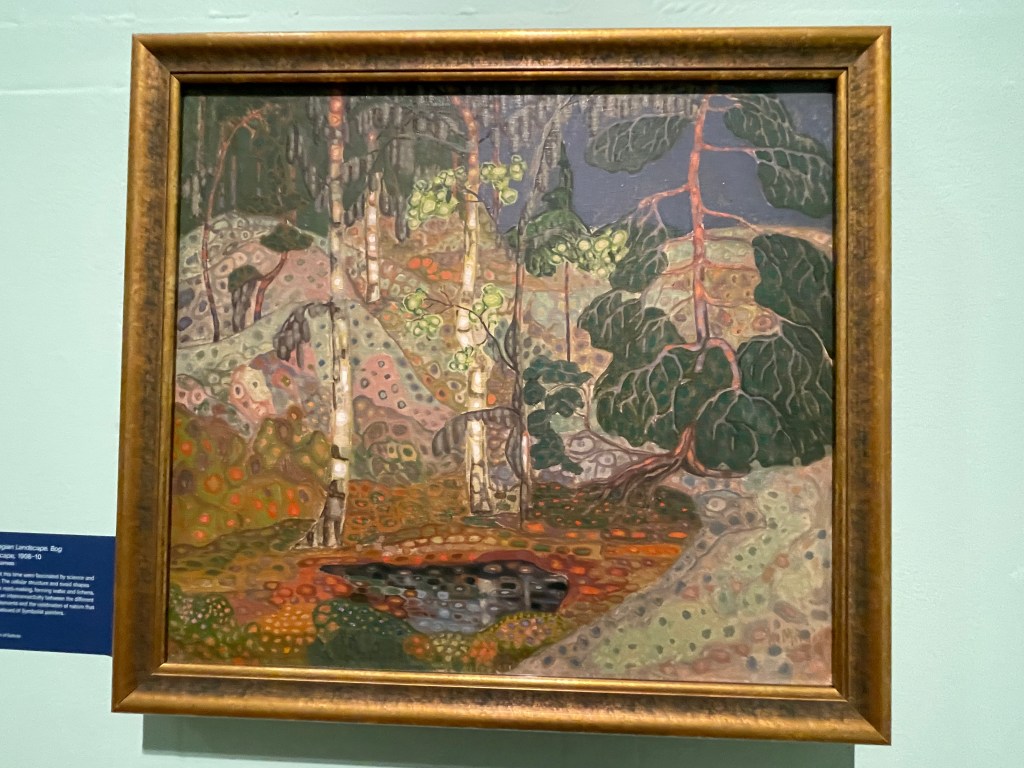
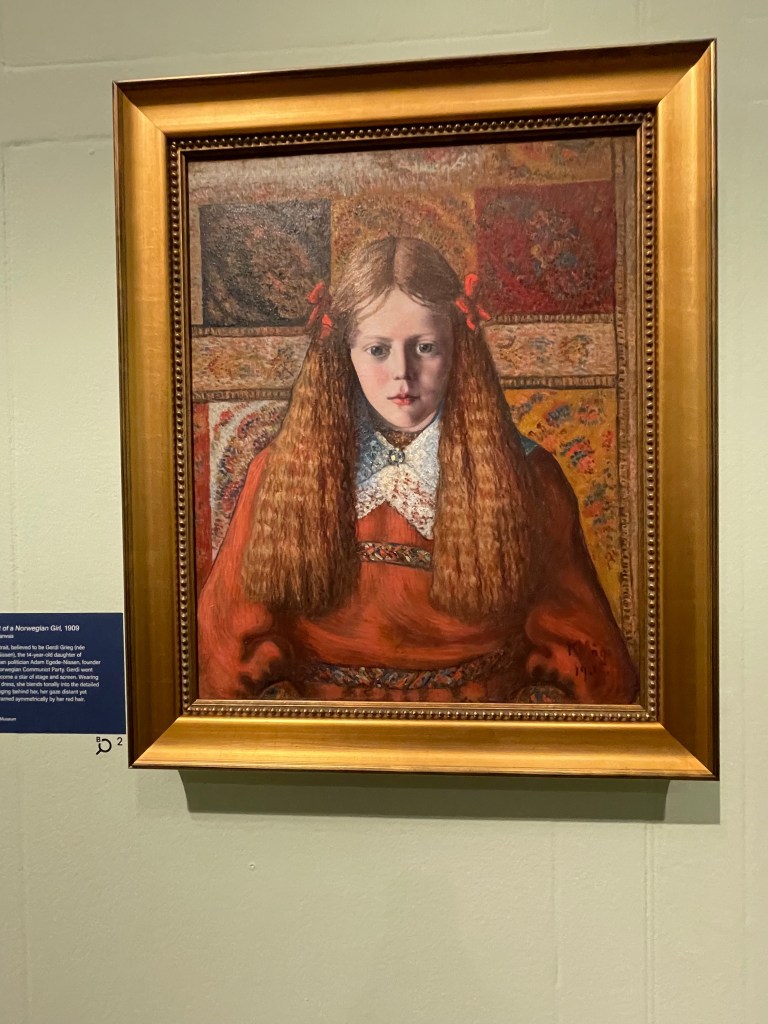
Very interesting to see the work of Konrad Mägi, a ‘master of European modernism’ at the charming Dulwich Picture Gallery. An Estonian artist who embraced bold colour, striking compositions and a very different kind of expressionism in his lively landscapes and portraits.

I liked the portraits. They were all painted with strong blocks of colour and daubs of paint. The subjects all have a rather faraway look, not quite gazing at us but at some imagined object or deep in thought.

Likewise, the visionary landscapes are filled with colours jostling in a large-scale pointillist style and strong outlines done with broad brushstrokes. His paintings project a very individual form of surrealism and an evolution of the ‘fauvists’ which preceded him. There’s more calculation involved with these works. Most of the scenes are views of Norwegian countryside, where Mägi lived between 1908 -10.

Mägi was a very successful artist in his lifetime 1878-1925. He died at just 46 and, given he was only working for sixteen years, this exhibition presents an impressive impression of his output. You certainly get the idea that you are seeing a modernist style taking its place just as European art was evolving into something much more abstract.

The show is on at the Dulwich Picture Gallery until 12th July 2026.
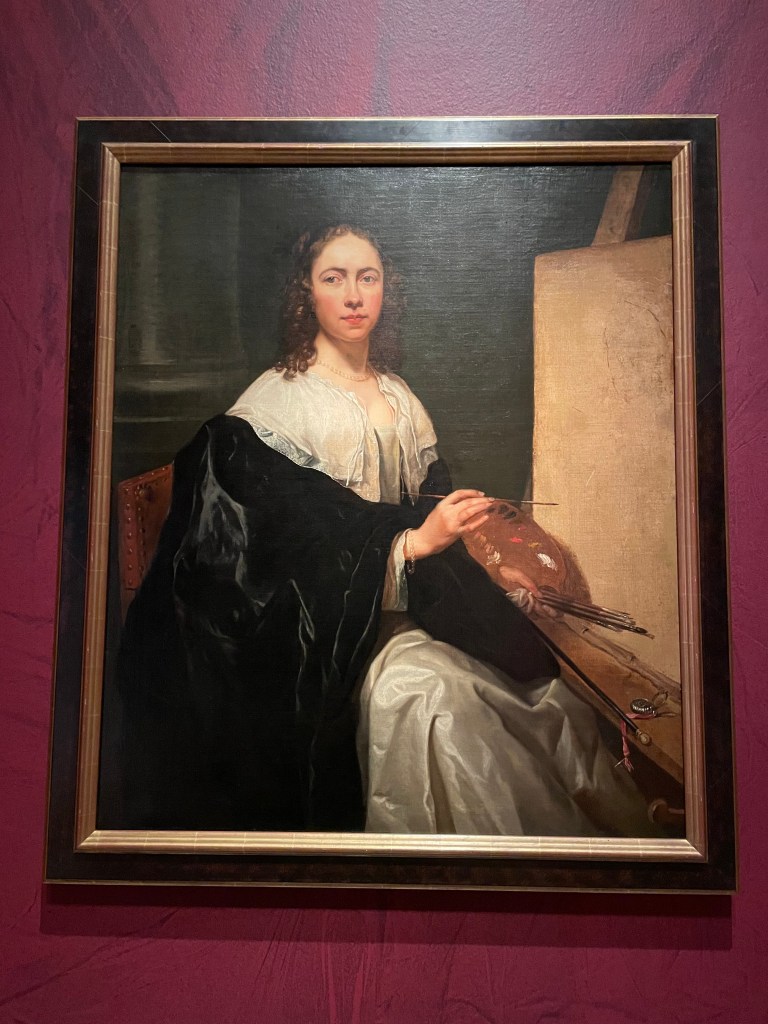
I confess I’d never heard of Michaelina Wautier before visiting the new exhibition at the Royal Academy in London. She was a remarkably accomplished painter in the early 17th century and thoroughly deserving of this retrospective.

This exhibition at the Royal Academy opens with a spectacular self-portrait which shows how very confident she was as a portrait painter. A contemporary with Artemisia Gentileschi, Wautier must have been a strong character. Forging a career as a female artist was a bold thing to do. But it’s clear that she was very talented and especially interested in creating portraits, and narrative paintings which convey great character. She was based in Brussels, never married, and appears to have devoted her life to her art.

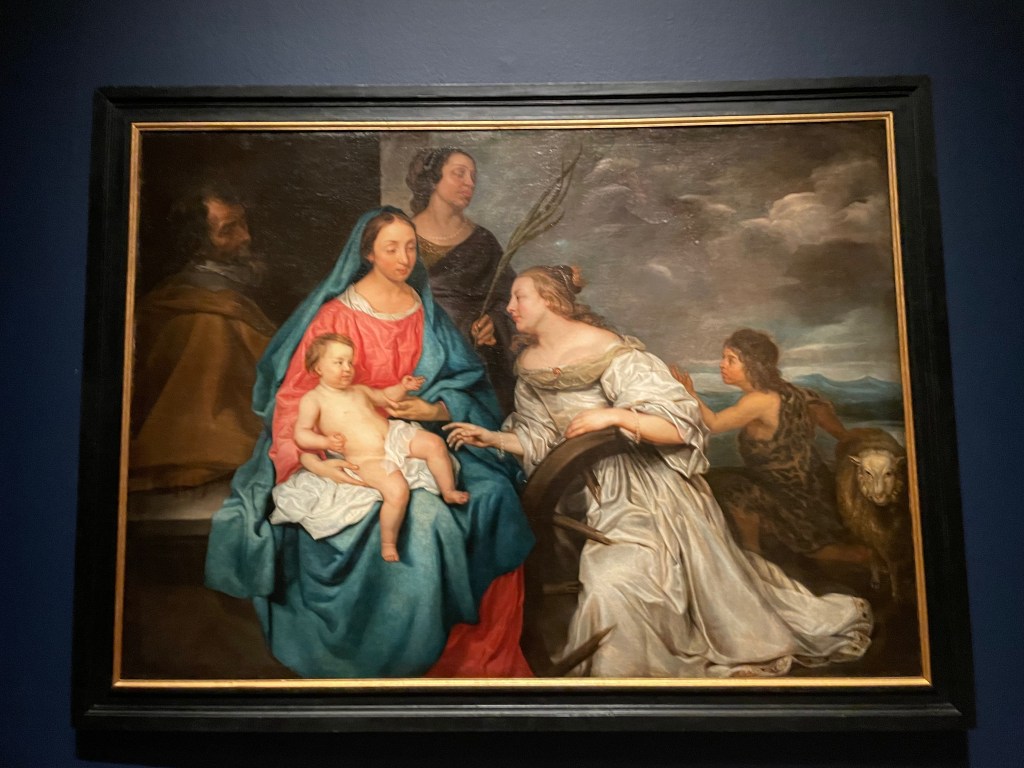
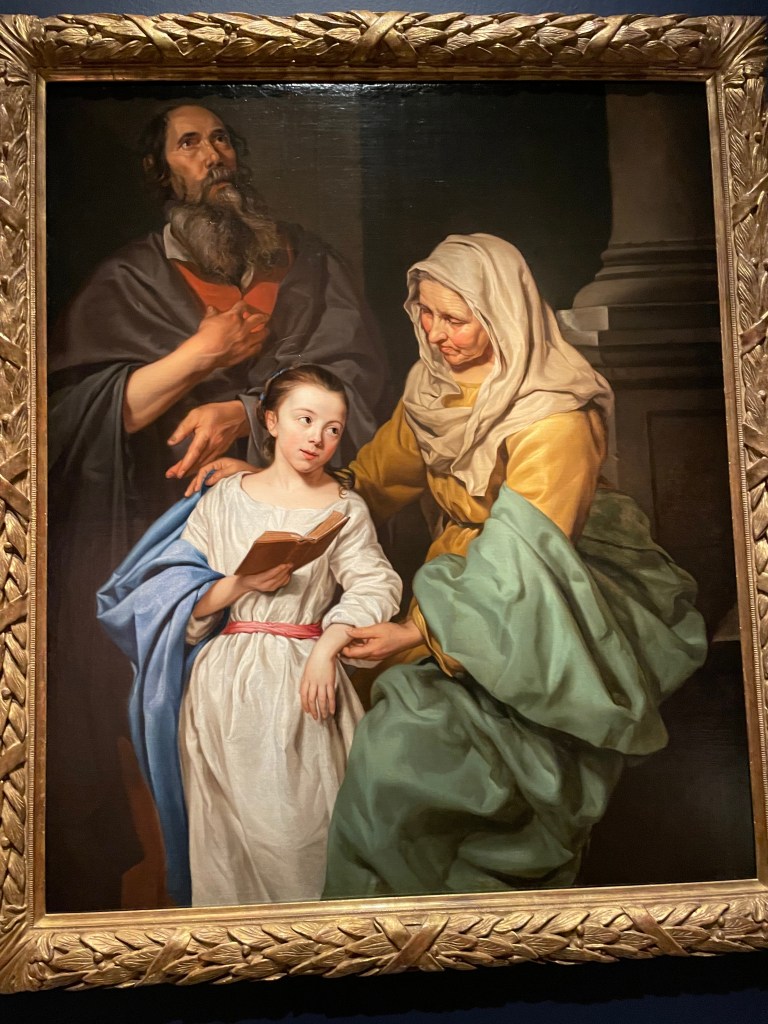
These two pictures, above, show great story-telling skills. On the left is the Mystic Marriage of St Catherine. On the right is The Education of the Virgin, a very sensitive picture of a young girl learning to read – a normal parent activity – yet it is clear that this child is destined for a special role

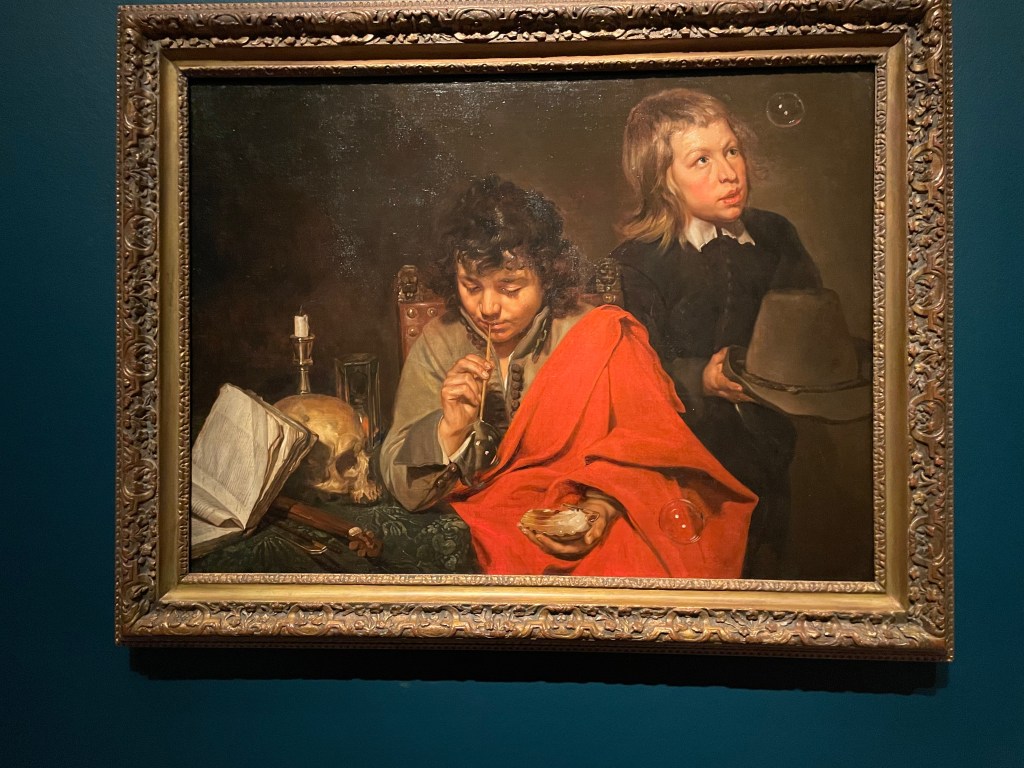
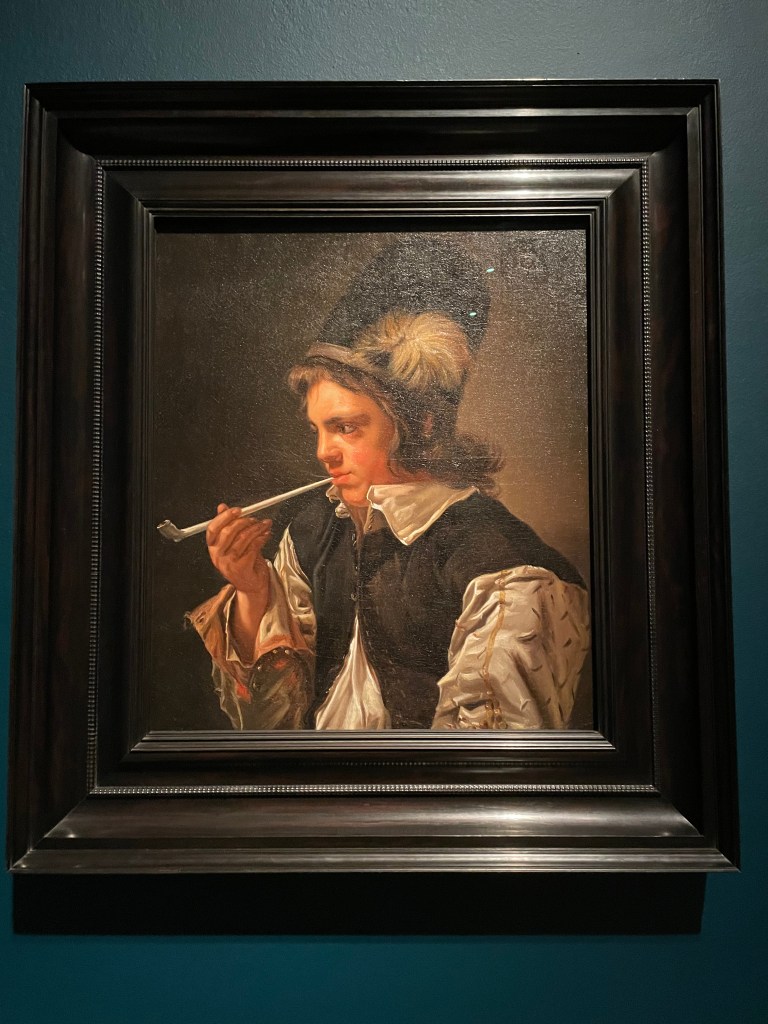
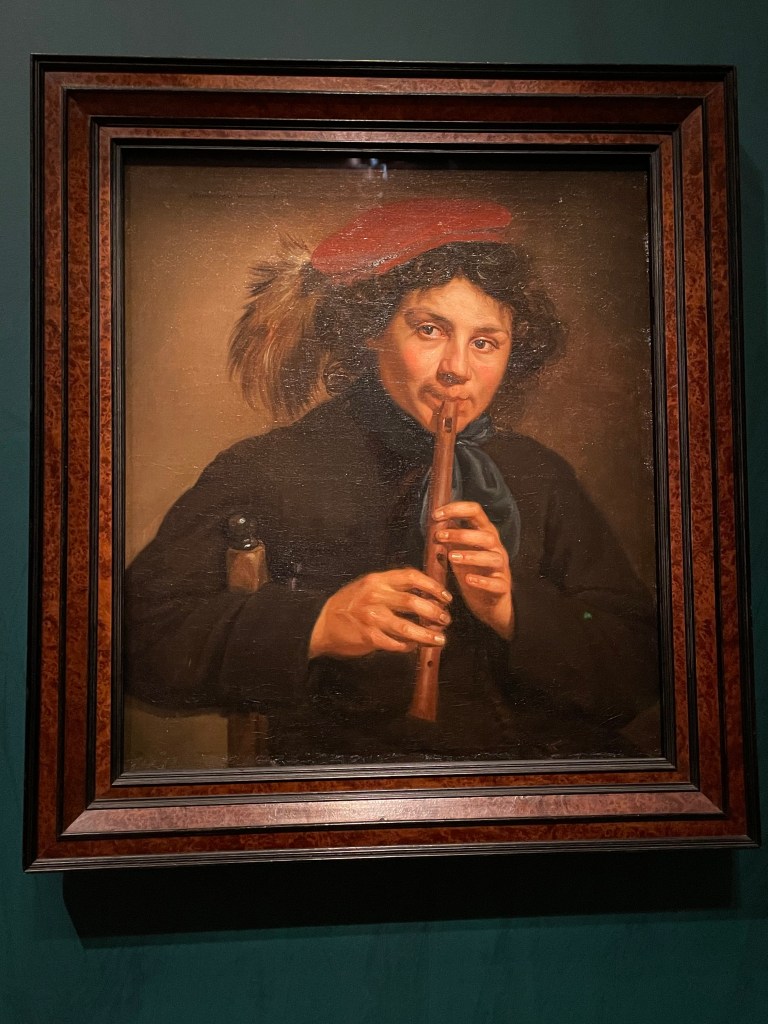
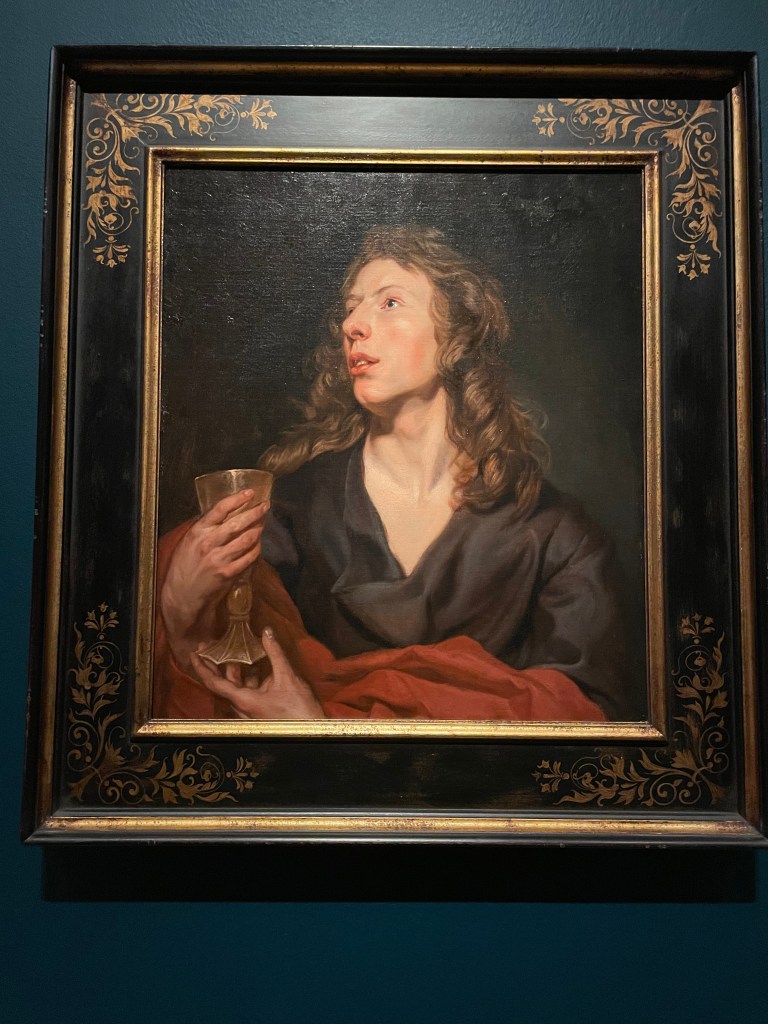
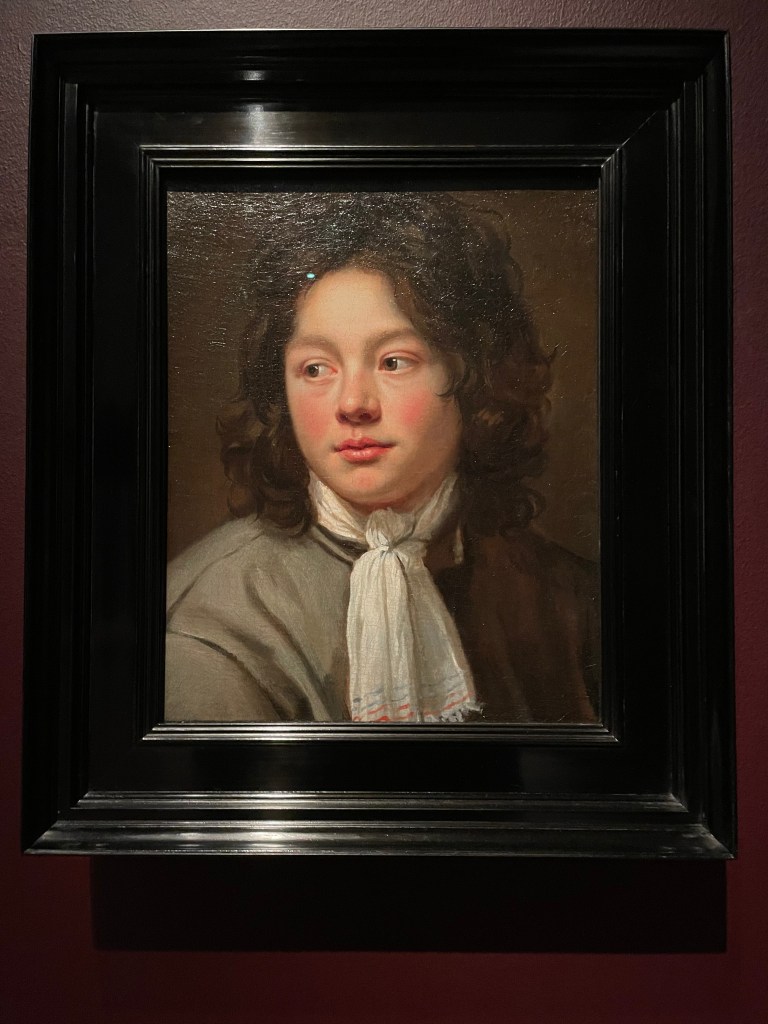
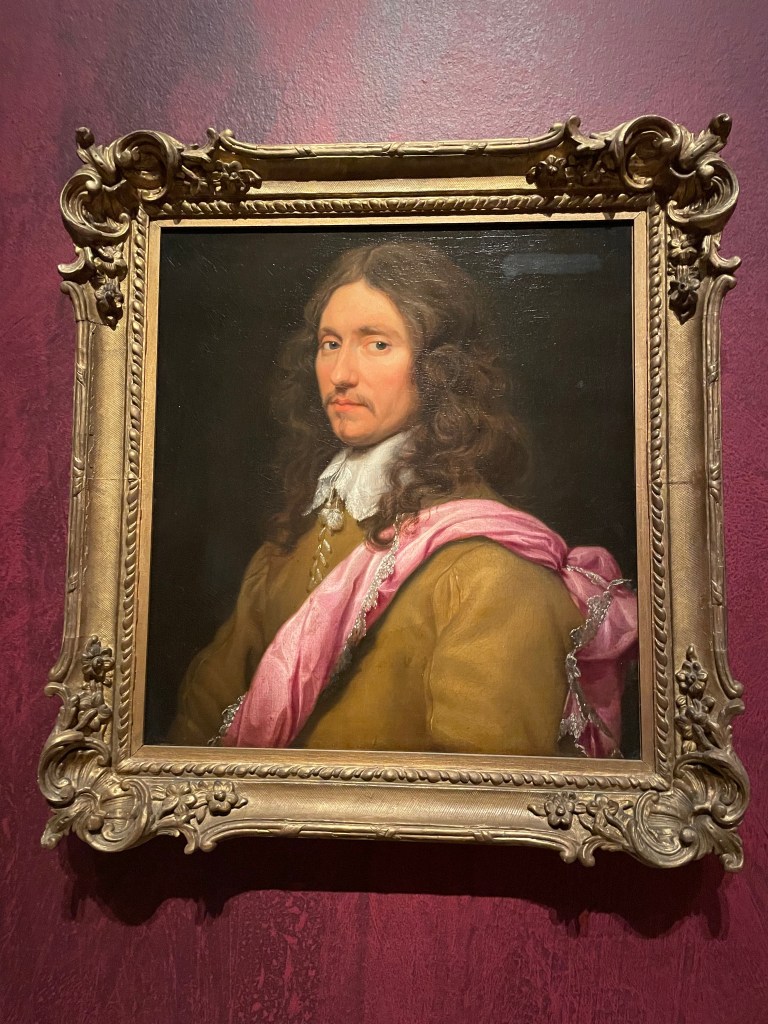
Where Wautier really succeeds is her very sensitively painted and characterful portraits. Clearly she had some favourite models for these paintings but the results are spectacular.

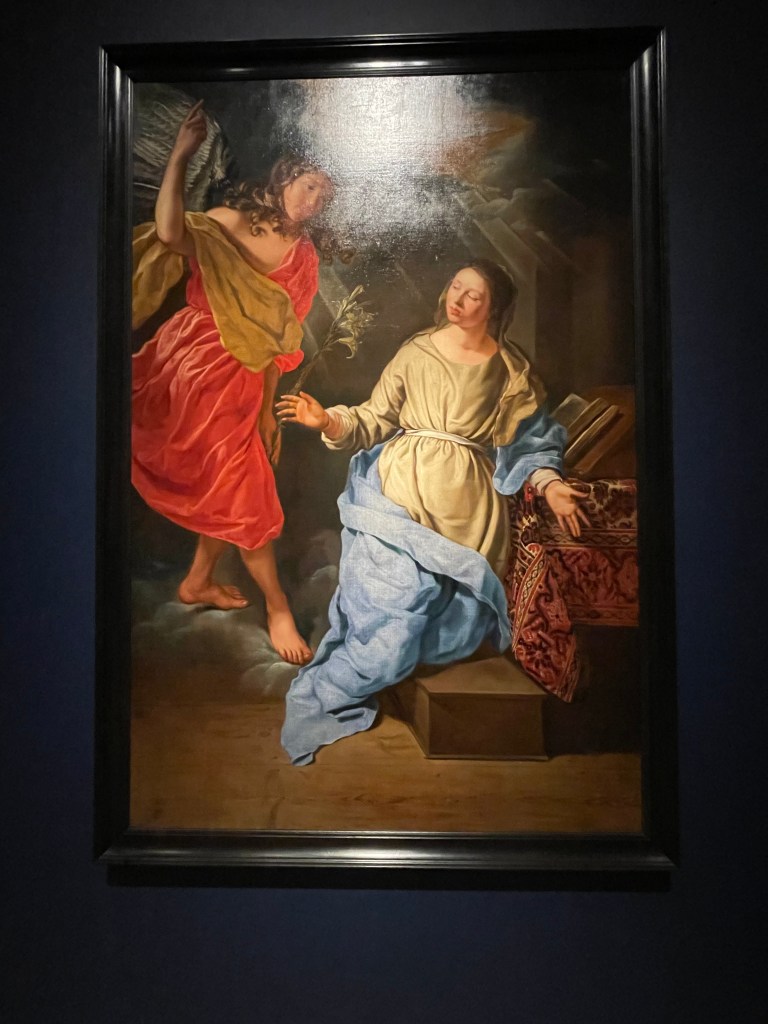
You can see the ‘Netherlandish’ influence in this painting of the annunciation. I love the rug on the table. Makes one think of those remarkable paintings by Vermeer. The show is on at the Royal Academy until 21st June 2026.
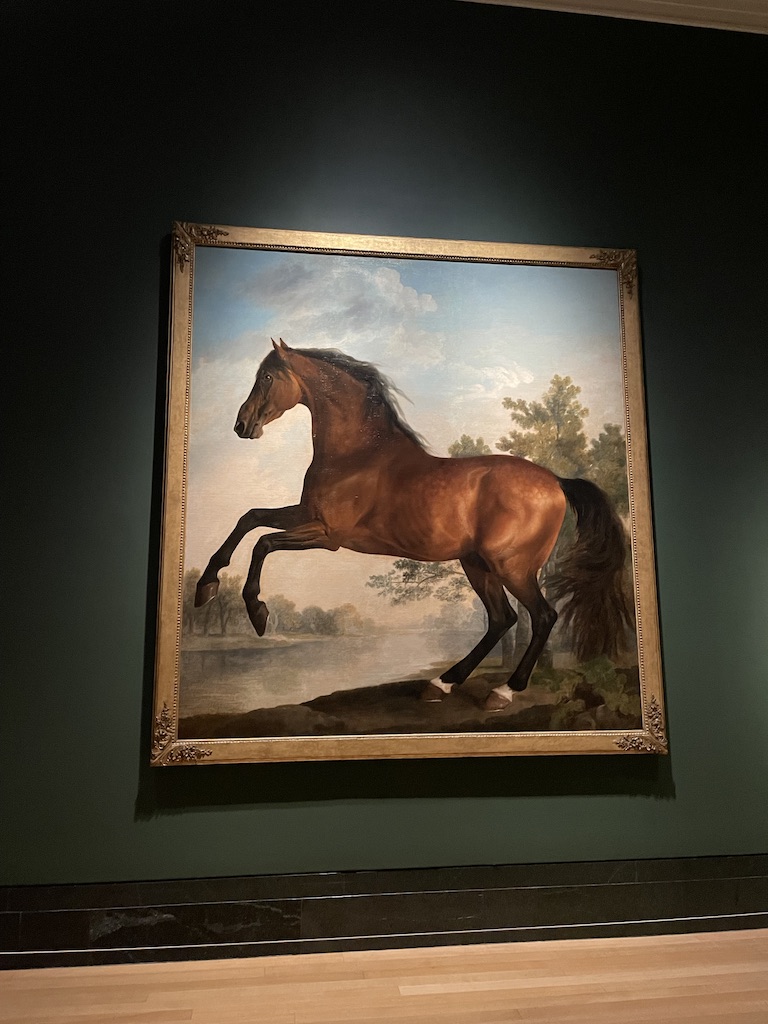
Artist George Stubbs’s work is synonymous with horses. And this charming show at the National Gallery shows how dedicated he was to really understanding equine physiognomy and capturing the spirit of wonderful racehorses of the late 1700s.

This spectacular painting is life-sized and it dominates a small but perfectly formed show at the National Gallery. This is a portrait of Scrub, a bay horse belonging to the Marquess of Rockingham and was painted in about 1762. I’m no horse expert but you can tell that Stubbs has really spent time sketching the horse from life and also understands the skeleton and musculature of the beast so that it looks entirely plausible.

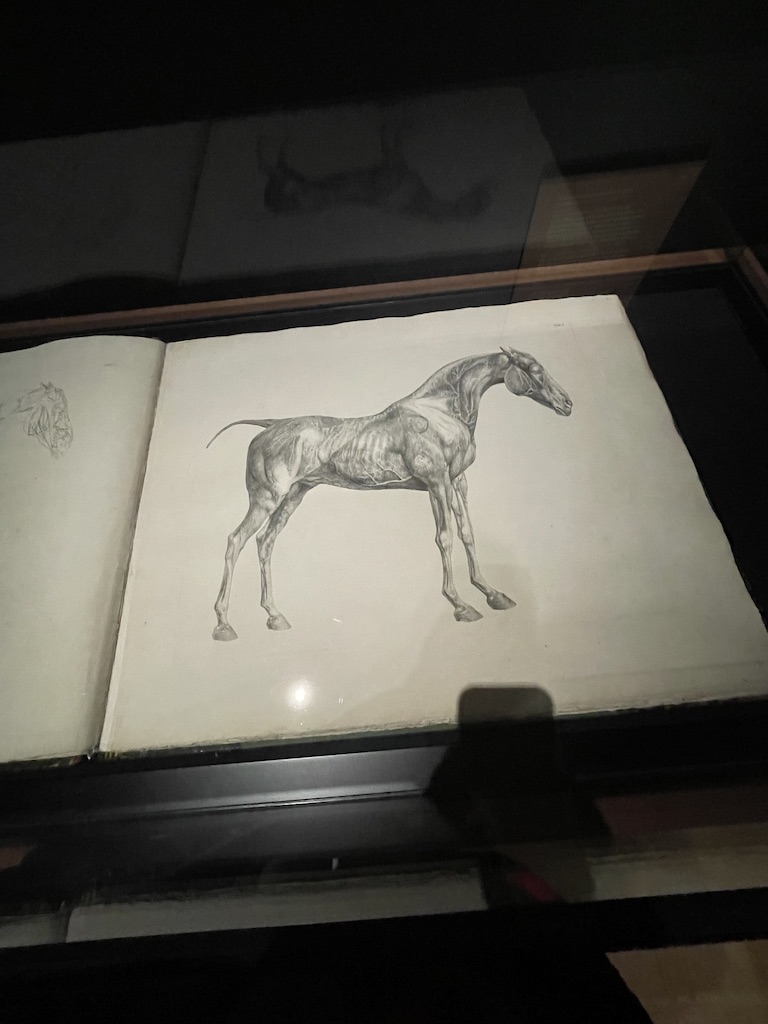
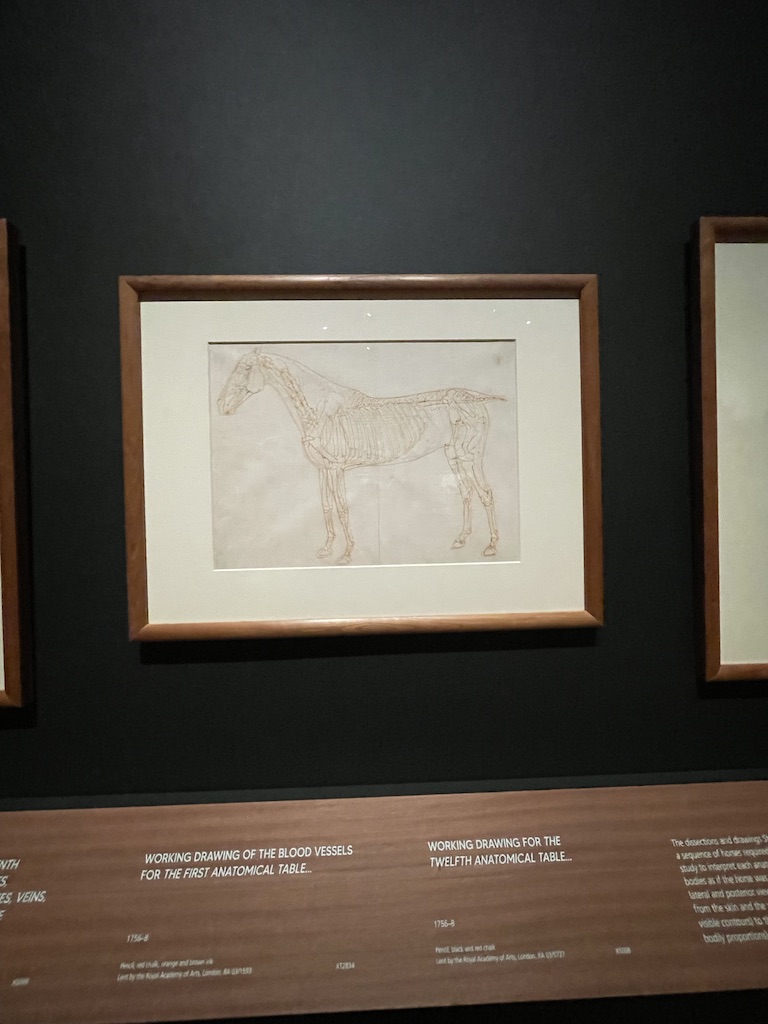
It’s really interesting to see the detailed sketches made in preparation for horse portraits. Apparently Stubbs was anxious to capture the physique of each horse and their nature too. Working from dissections he was able to work out the proportions, contours and skeletons of horses before, later, find a way to capture character and personality in the finished portrait.

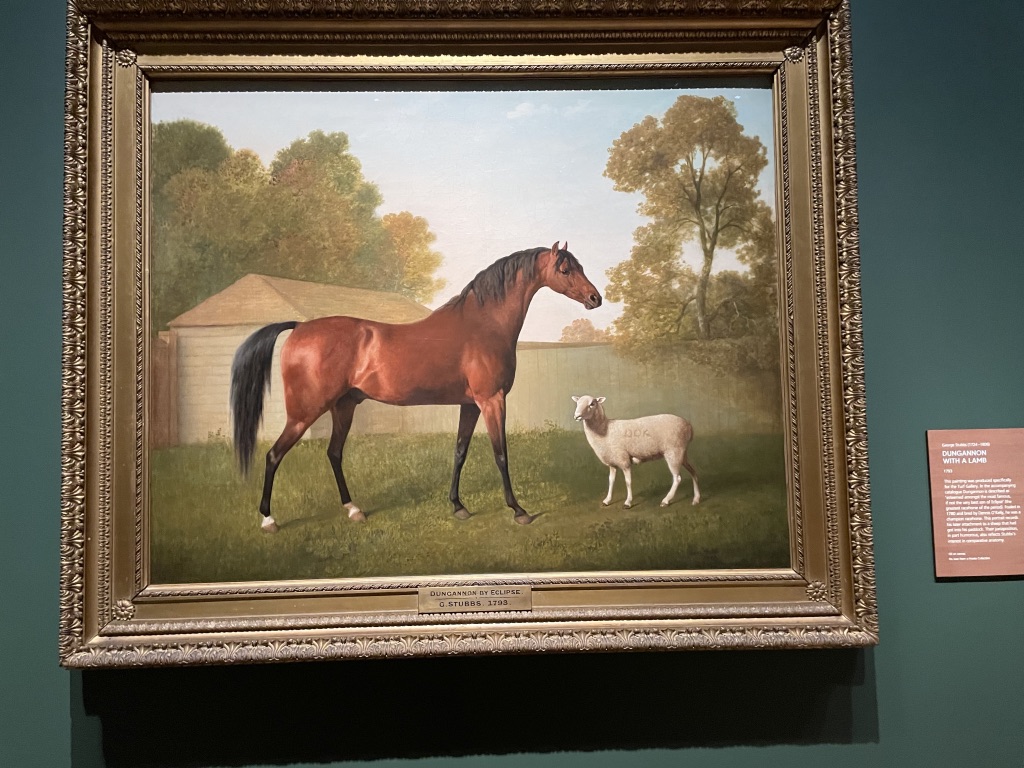
I was very enchanted by this portrait of Dungannon with a lamb. Apparently the horse developed a close friendship with the sheep who wandered into his paddock and they became inseparable.

Stubbs produced much of his work for the Turf Gallery, specialising in equine art, and clearly it was a very popular and lucrative specialism for an artist. A great treat to see, close up, such spectacular paintings and the research which went into their creation.

George Stubbs (1724-1806) The show is on in Room 1 at the National Gallery until 31st May 2026.
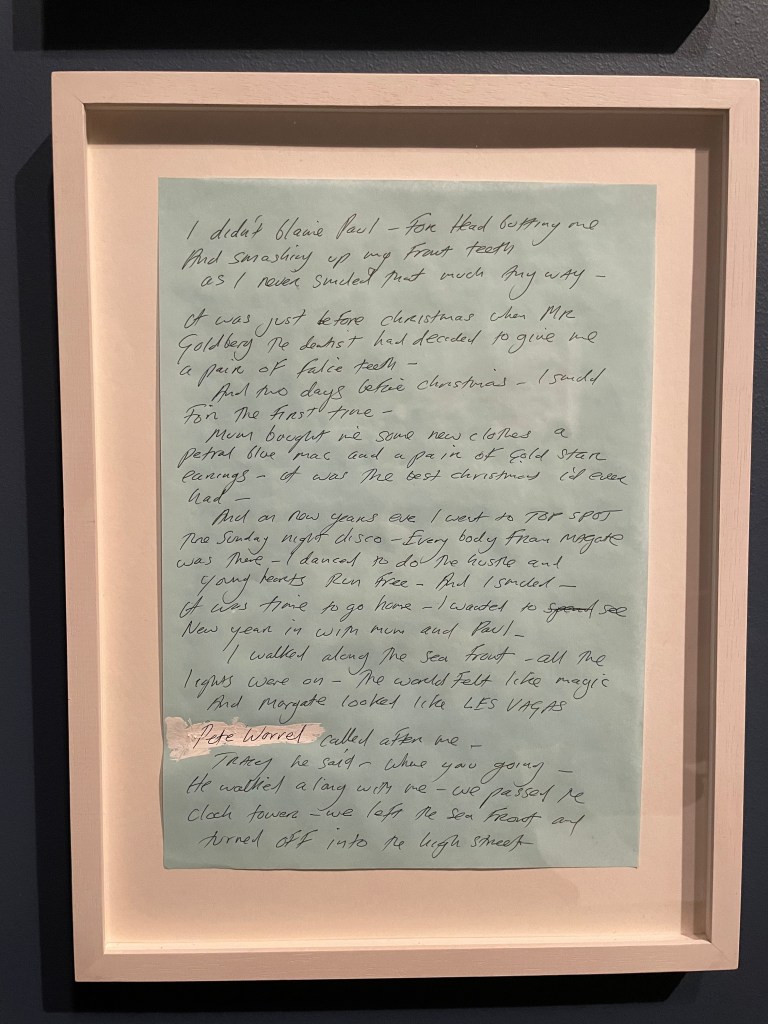
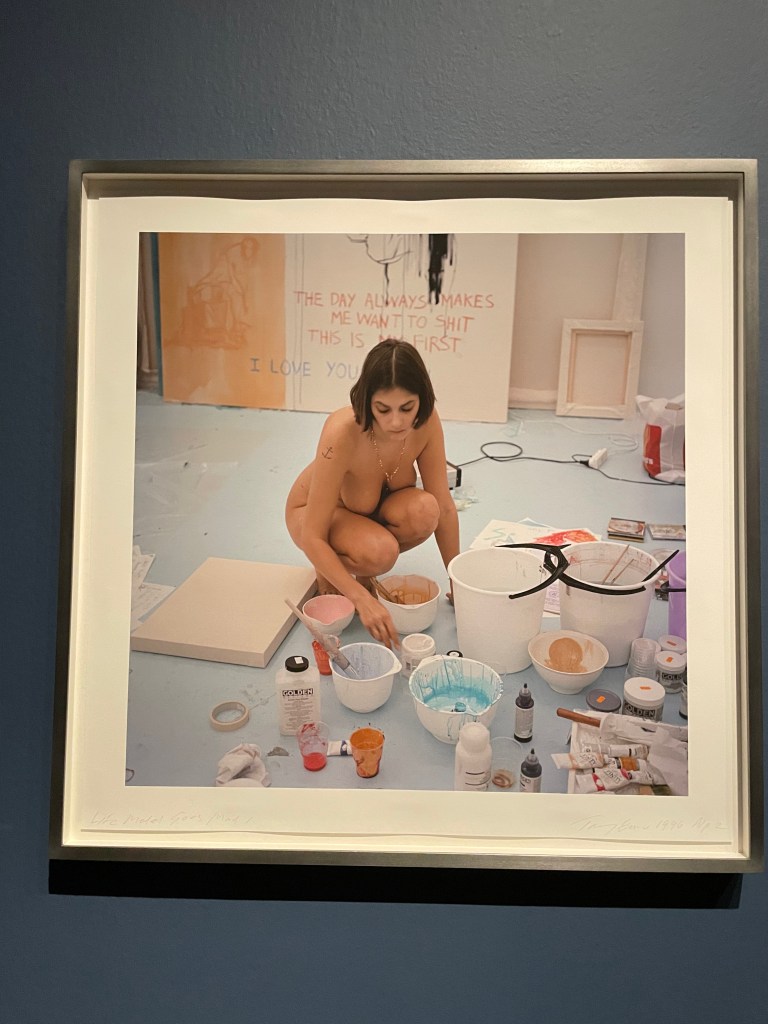
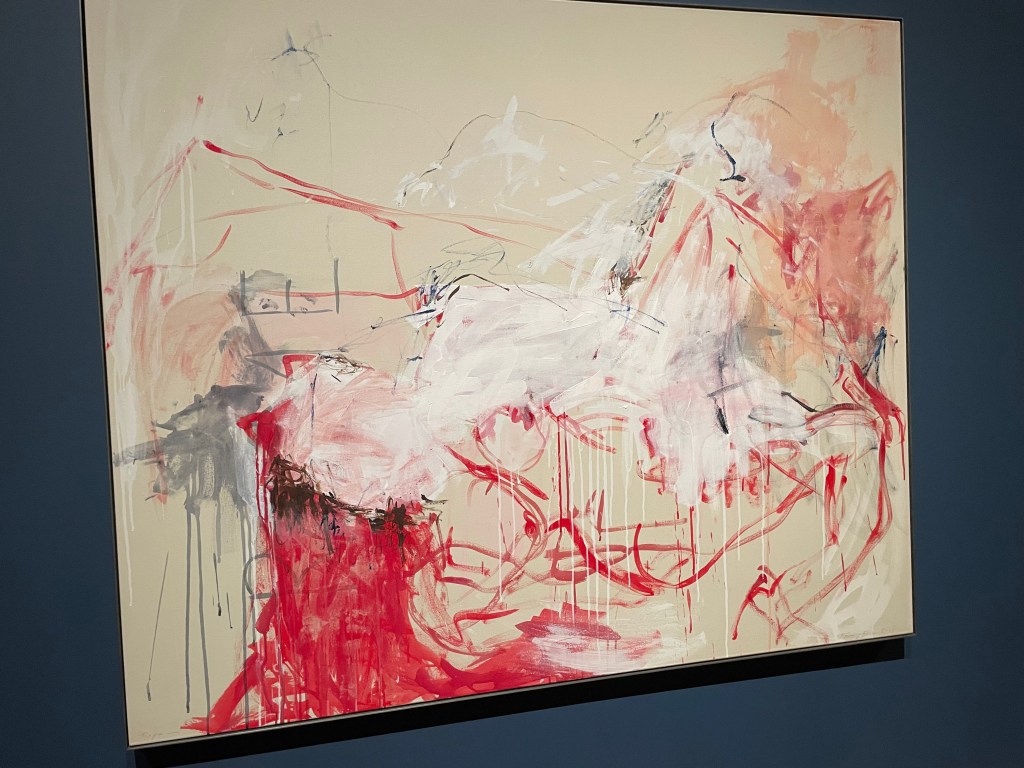
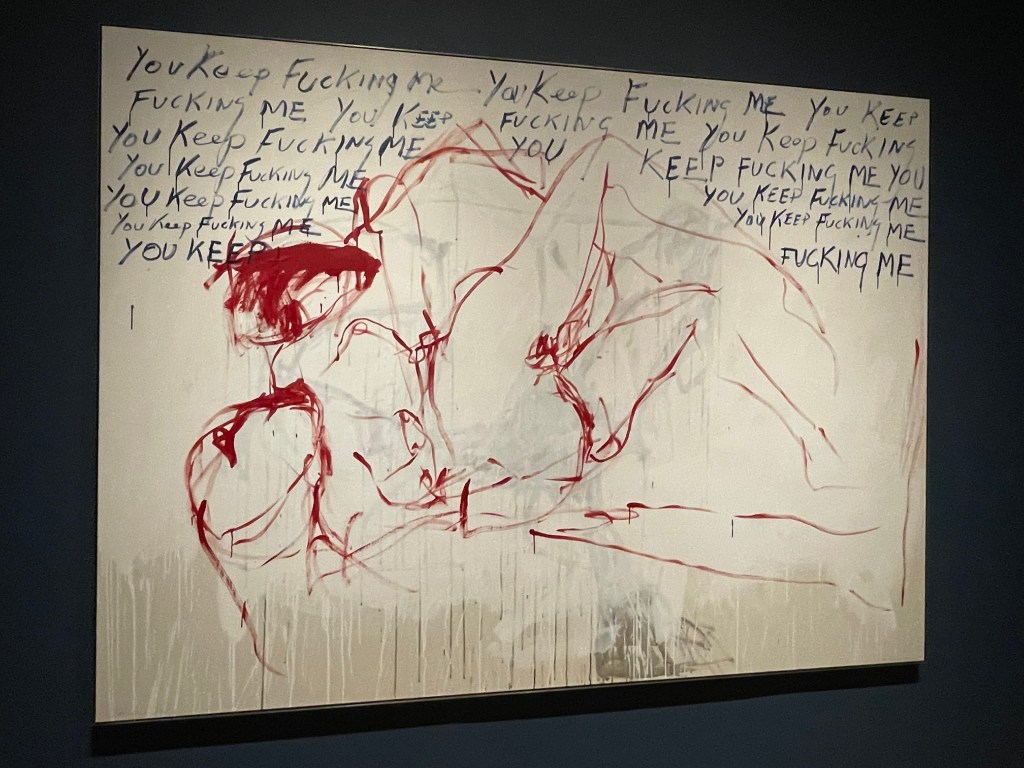
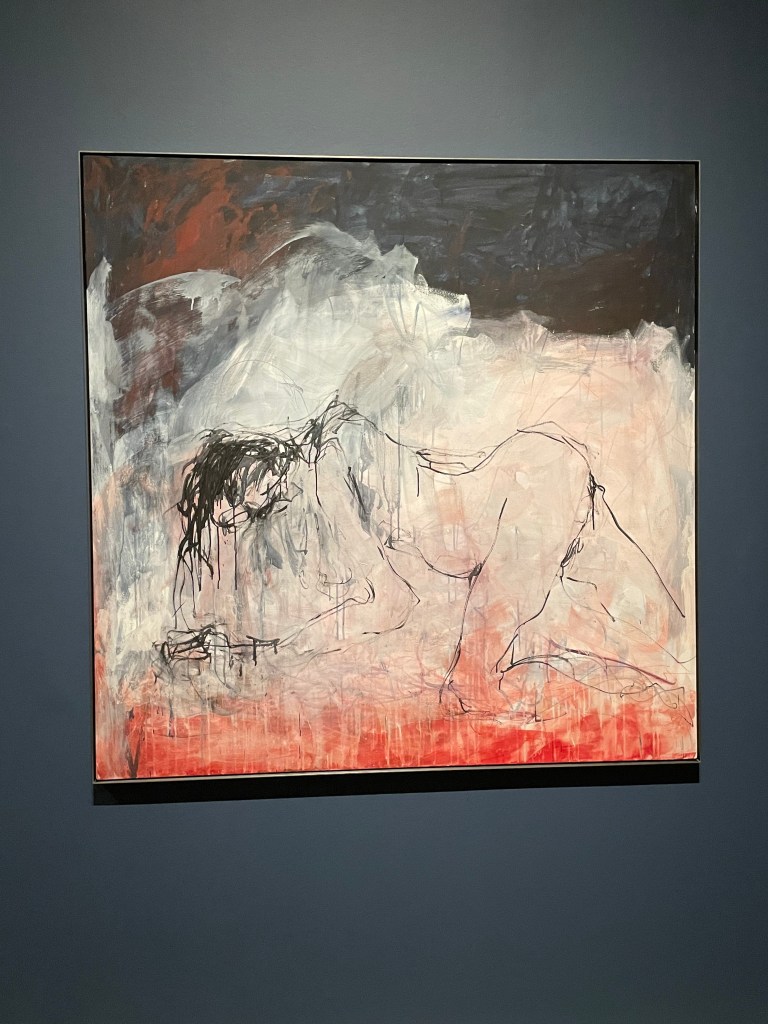
Tracy Emin: A second life. What a visceral, heart-rending exhibition at Tate Modern. We’ve been getting know her art for the past 40 years but there is a searing honesty to her personal presentation of her own life history, as depicted through art in this extraordinary show. There’s also a feeling of triumph and survival.

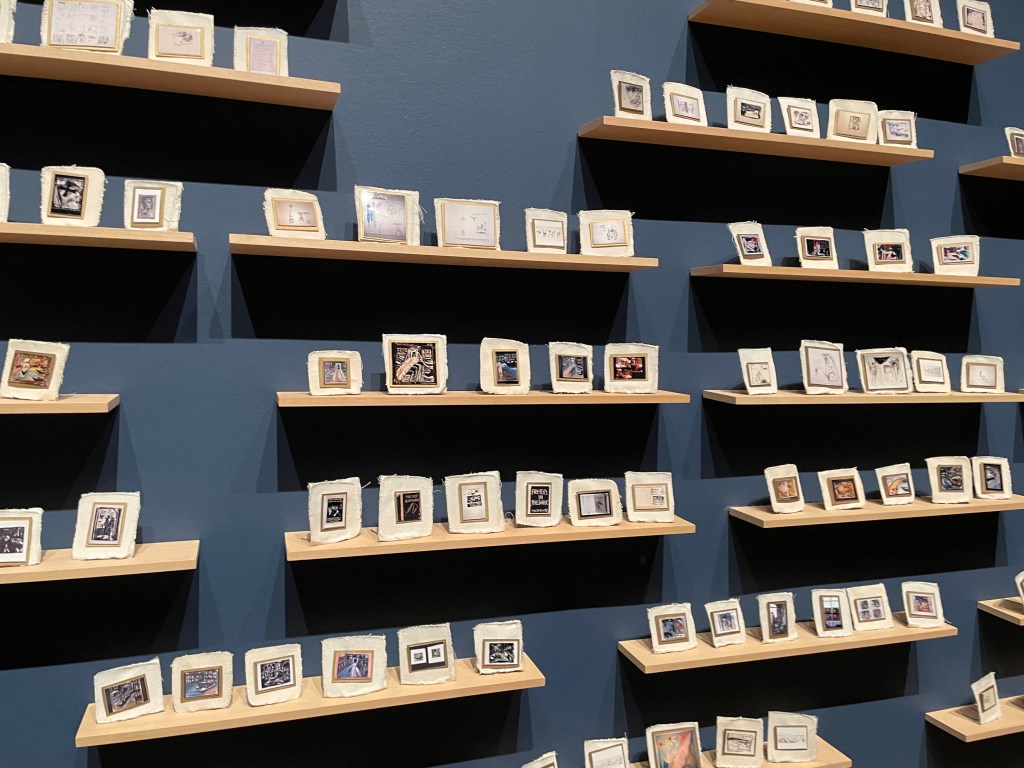
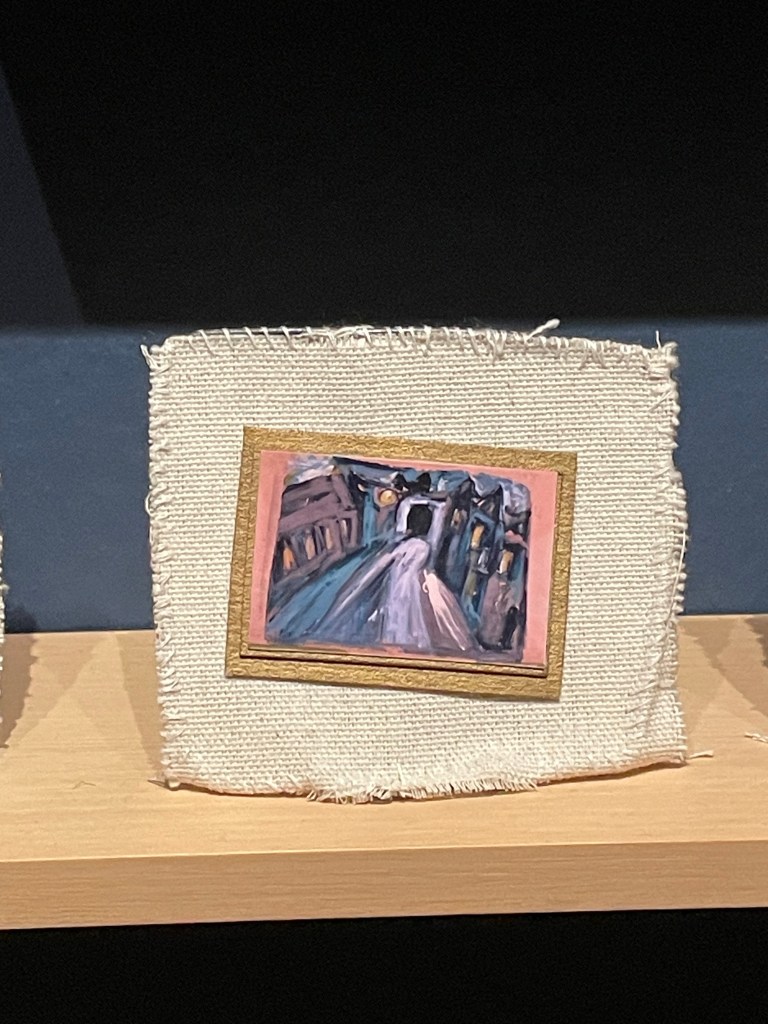
We start this very comprehensive exhibition of Tracy Emin’s work with what remains of her early work at art school. She destroyed her work in a fit of self-doubt but at least these tiny photographs survive. Seeing them mounted on fragments of canvas they provide a very informative and fascinating collection of images which presage the work that was to come.

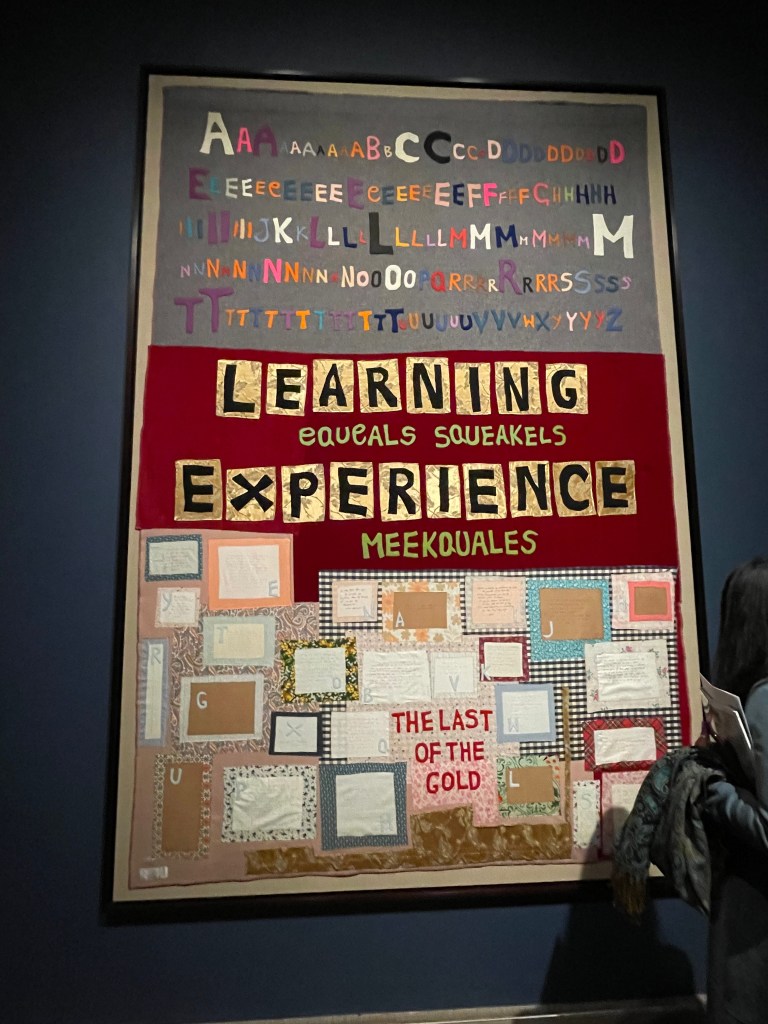
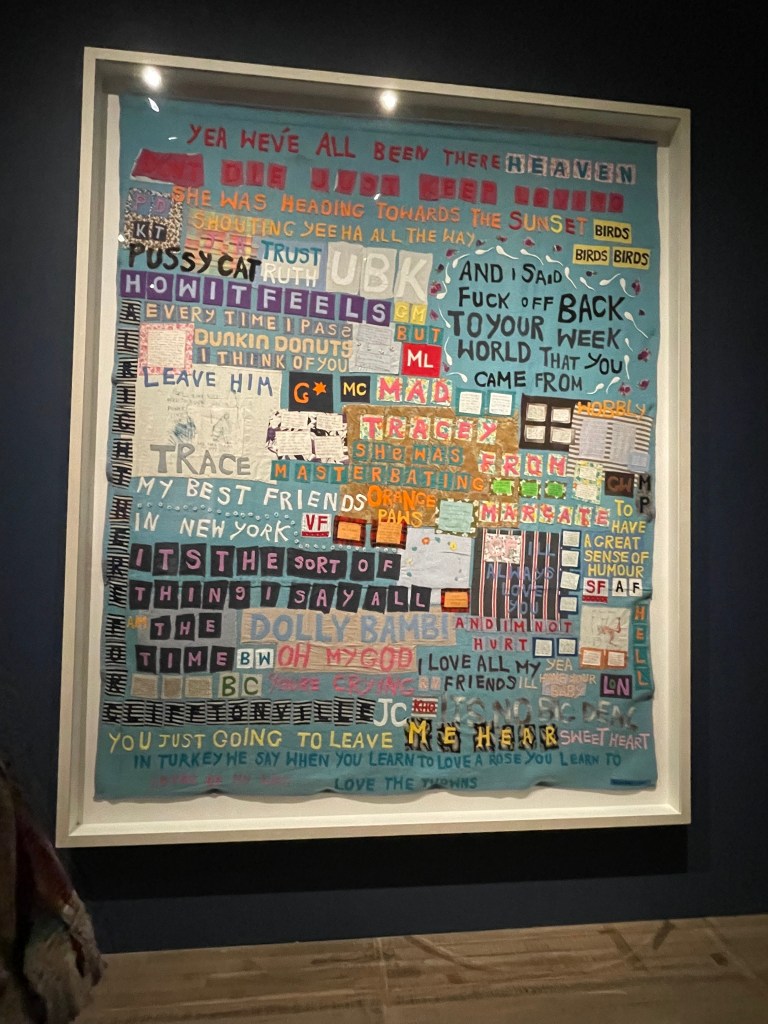
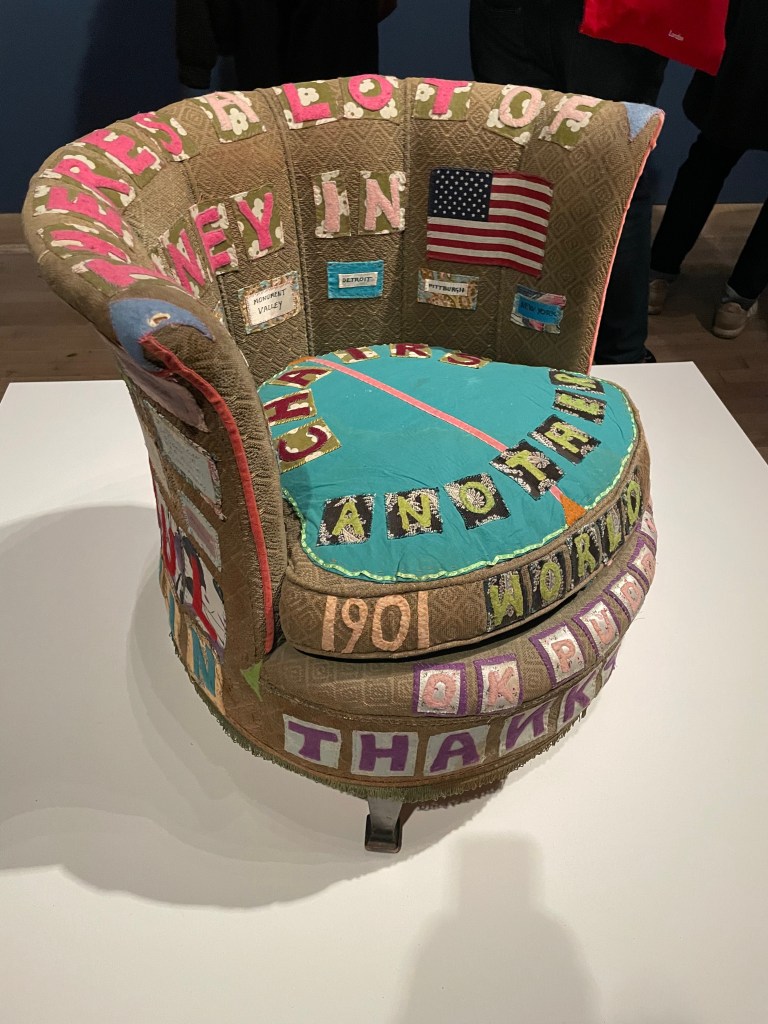
It’s great to see some of Emin’s works with fabrics and her own idiosyncratic form of tapestry and embroidery. It’s a form of collage and the effect of these combined images is very bold and moving. You can see she’s channelling those old-school samplers girls might have made at school 150 years ago but has developed the skills into remarkable pieces of art.

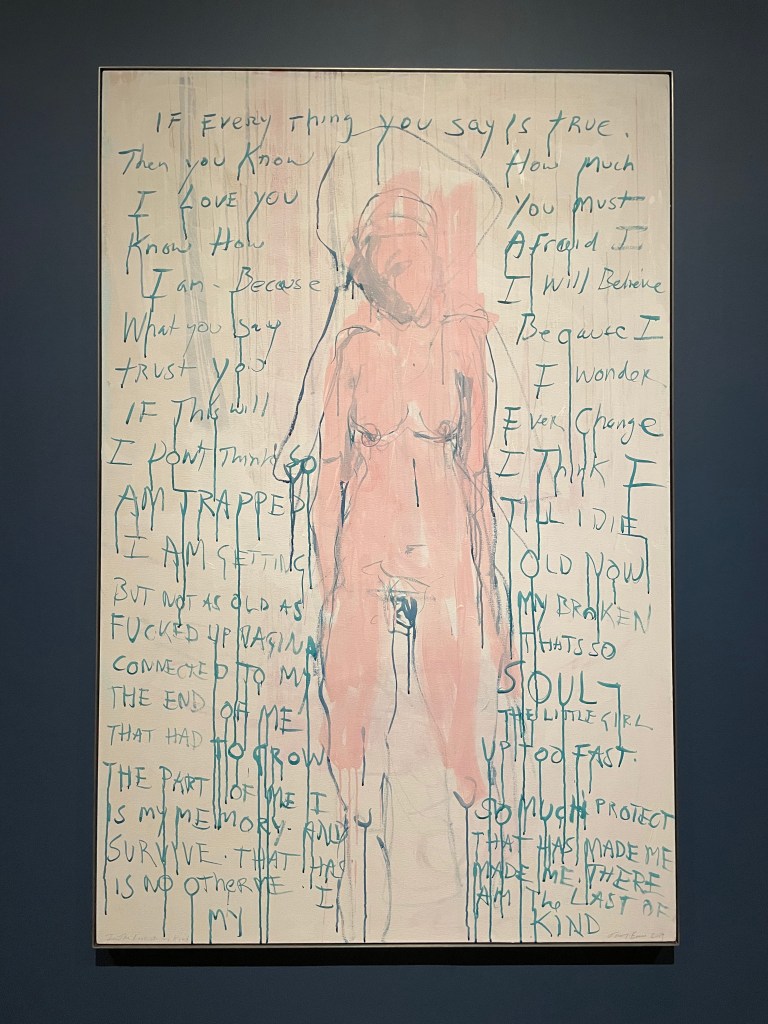
Two films, made directly to camera by Emin, express her fury at the way she was treated as a young teenager growing up in Margate. In retrospect it was abuse by local boys and men but she wanted to experience everything that life had to offer. And sometimes her experiences were very unpleasant. These bold self-portraits, depicting moment of huge emotional trauma are very hard to view. They evoke such depths of pain and disappointment in a very immediate way. Looking closely to the works there’s the sense of a palimpsest – of images behind the one we are looking at – which have been erased or corrupted in some way and replaced with the powerful top layer. She also includes very honest assessments in writing of her mental state, views and desires.

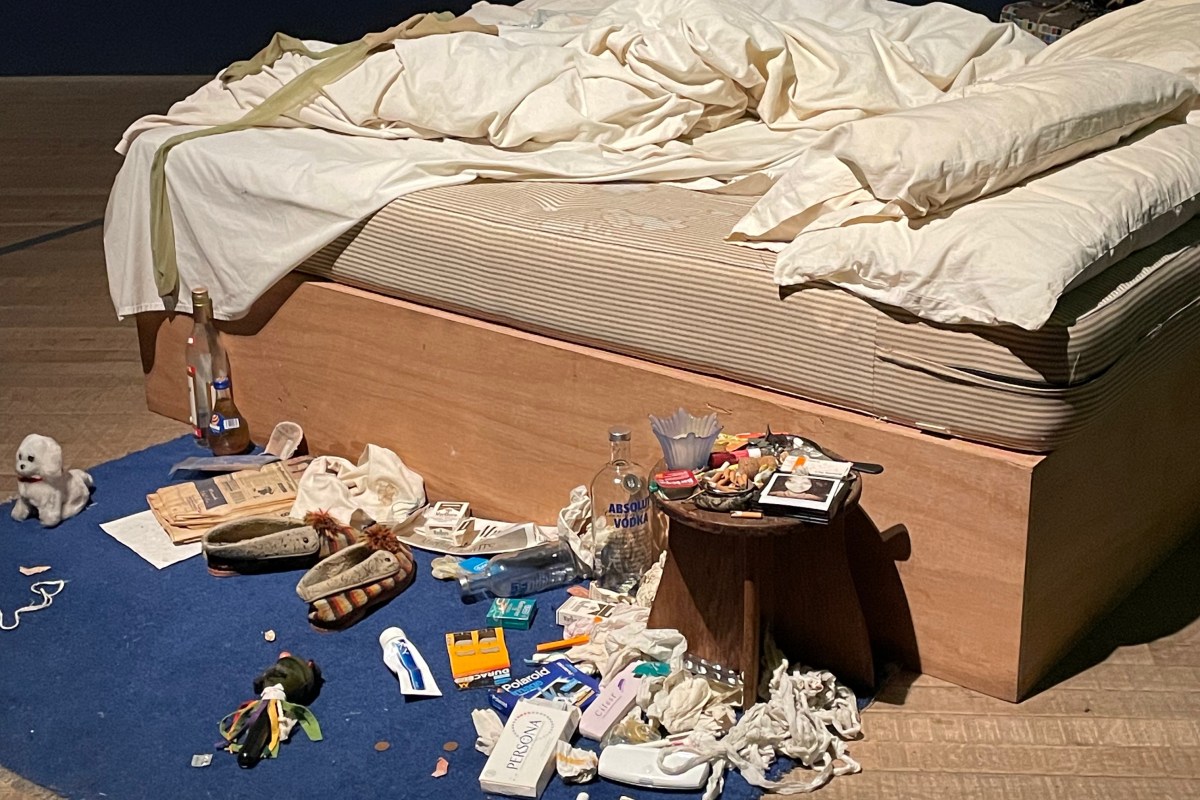
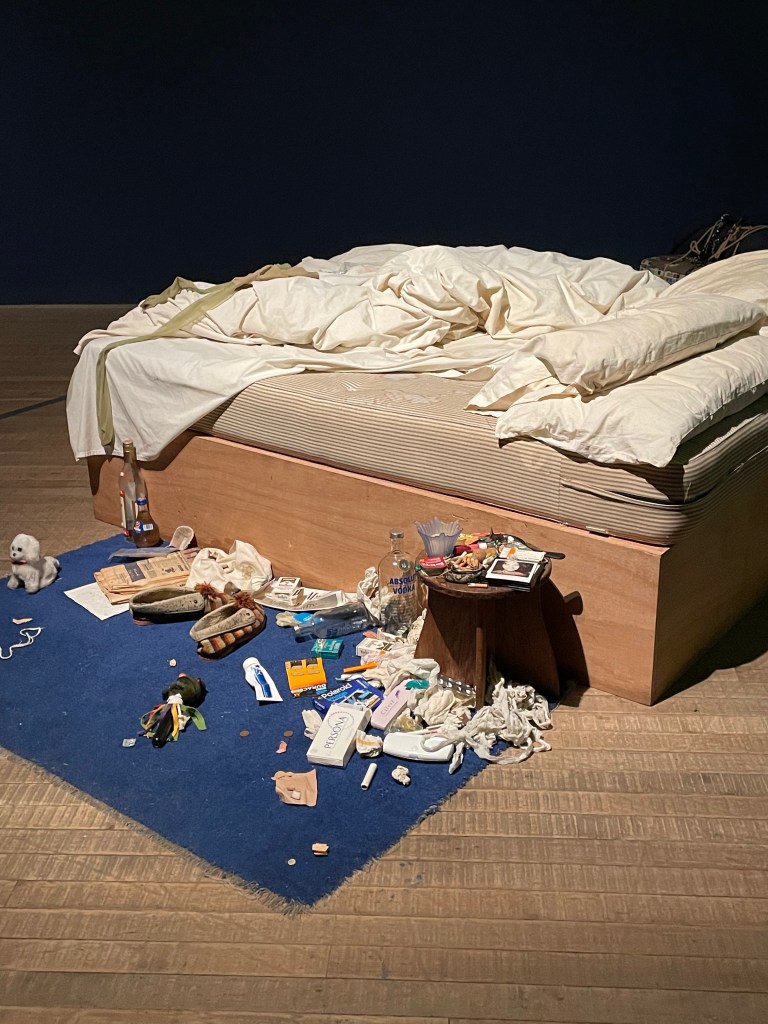
And there is the bed. This famous piece from 1998 which bewildered viewers. Now it is understood as the ultimate self-portrait of a time in Emin’s life when she was in a state of breakdown after an abortion, relationship breakdown and lack of self-worth. It has the most amazing atmosphere and you really do pick up on the experience which these items convey.

The exhibition is very much an expression of Emin’s life post the life she lived in her youth. For a while she stopped painting entirely and then, when she picked up a brush again, the work emerged with a whoosh of energy, fury and a need to express her own opinion of all the wrongs that had been done to her and a snub to all the people who never believed she would achieve all that has done.

The show is on at Tate Modern until 31st August 2026.
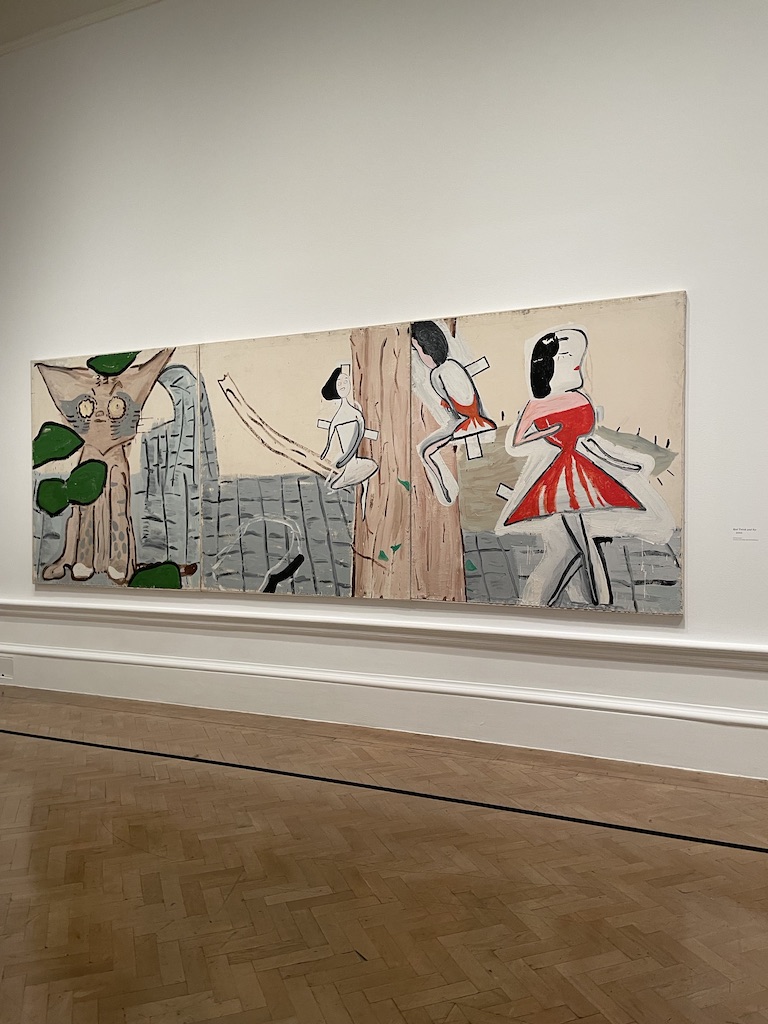
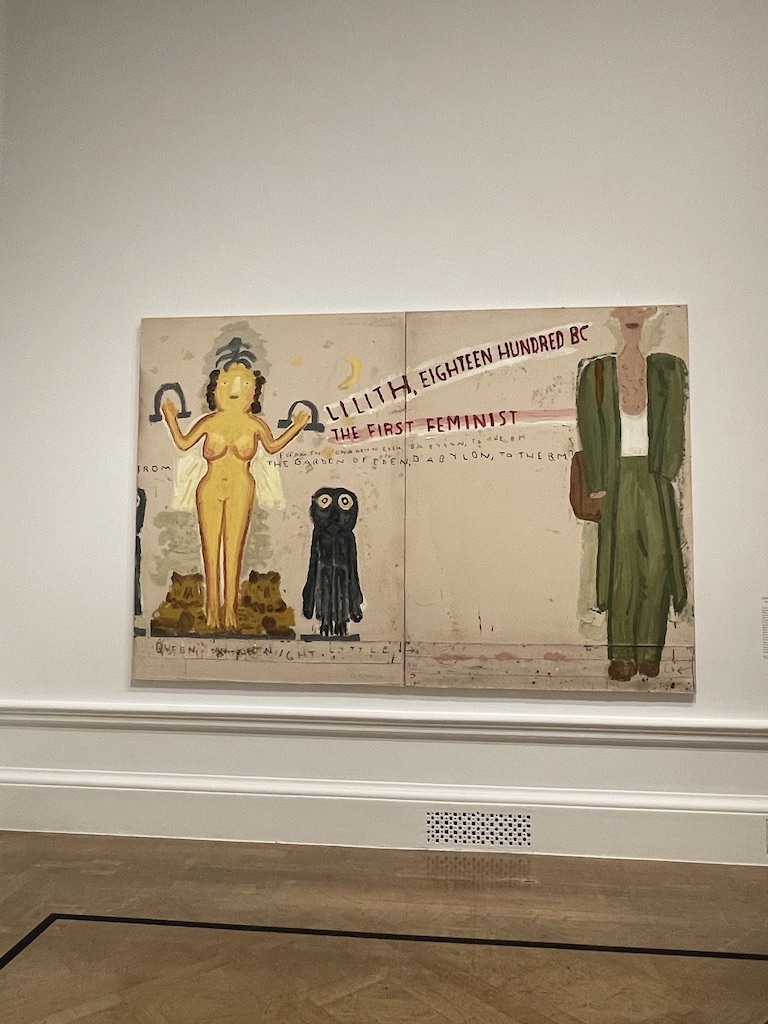
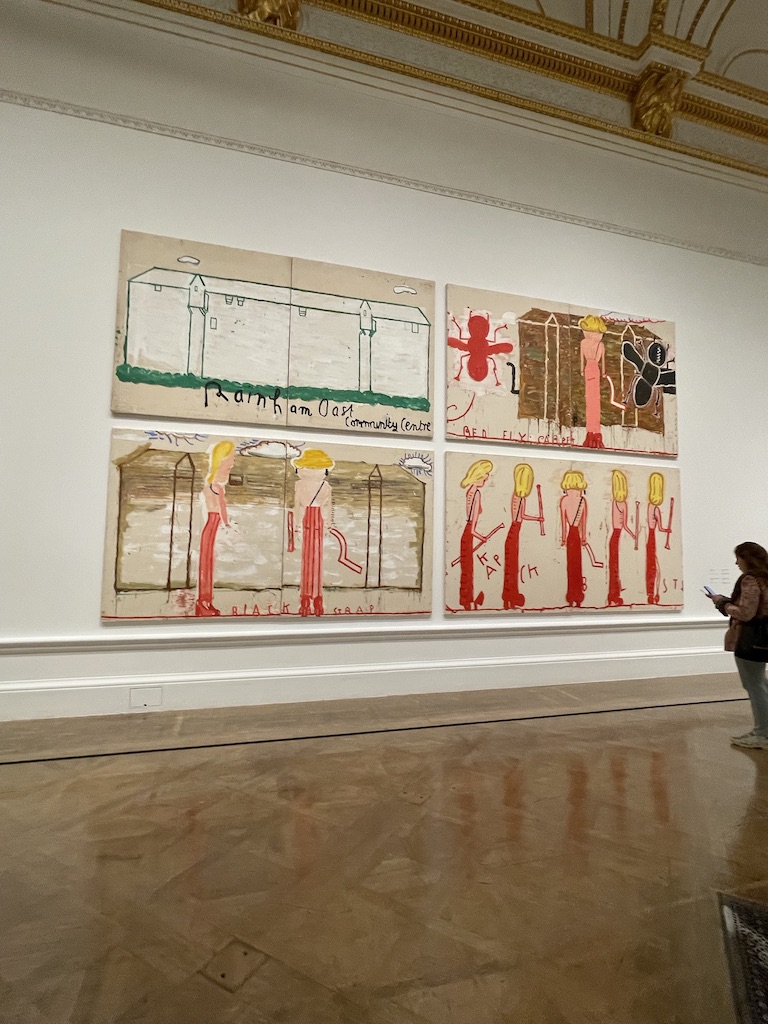
That Rose Wylie is an extremely productive artist becomes immediately apparent at the huge retrospective which has opened at the Royal Academy of Art. Now in her nineties, she shows no sign of slowing down and regularly creates huge canvases with bold, freely painted images of things, places, ideas and references which reflect her life.

Very exhilarating to see this huge exhibition of work by Rose Wylie. She’s 91 and still busy working, having started making art in earnest in her seventies. And what a body of work she has created – it fills all the galleries of the Royal Academy. And, amazingly, she’s the first female artist to have been given a retrospective at this august gallery.

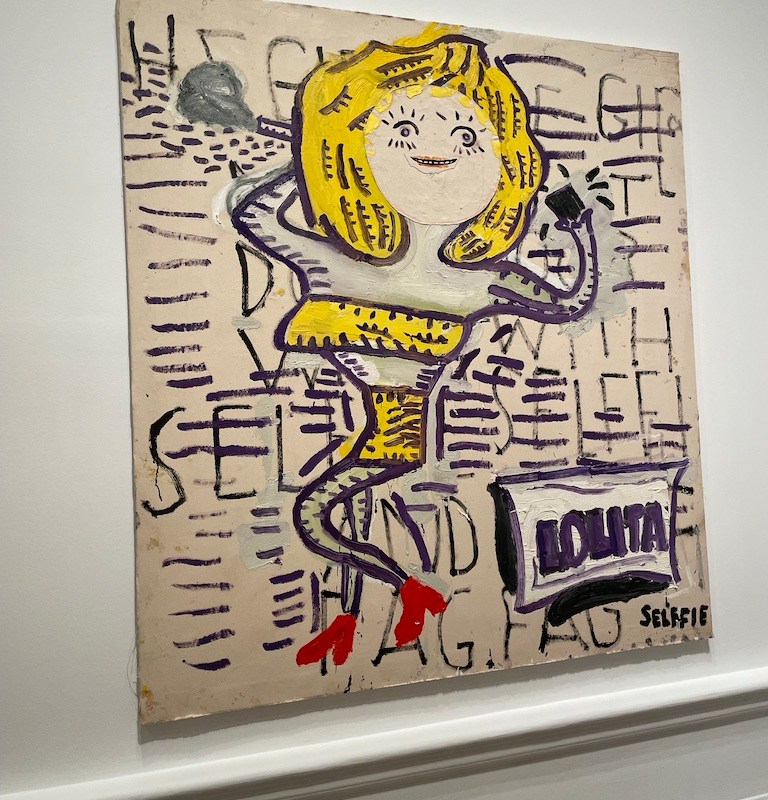
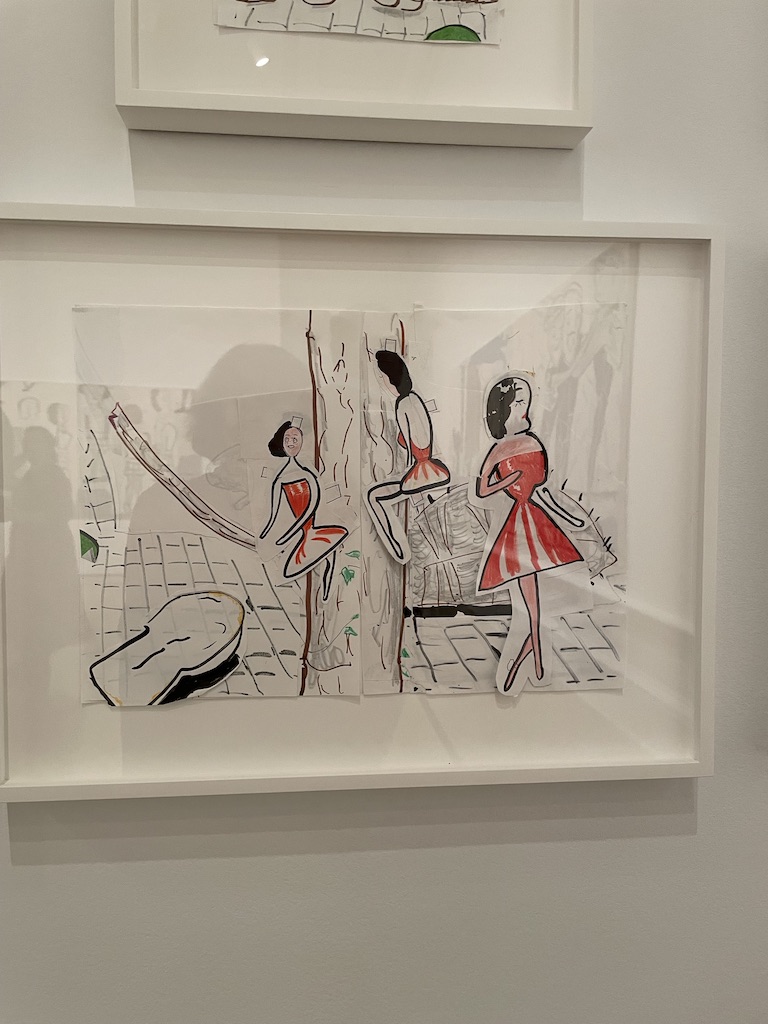
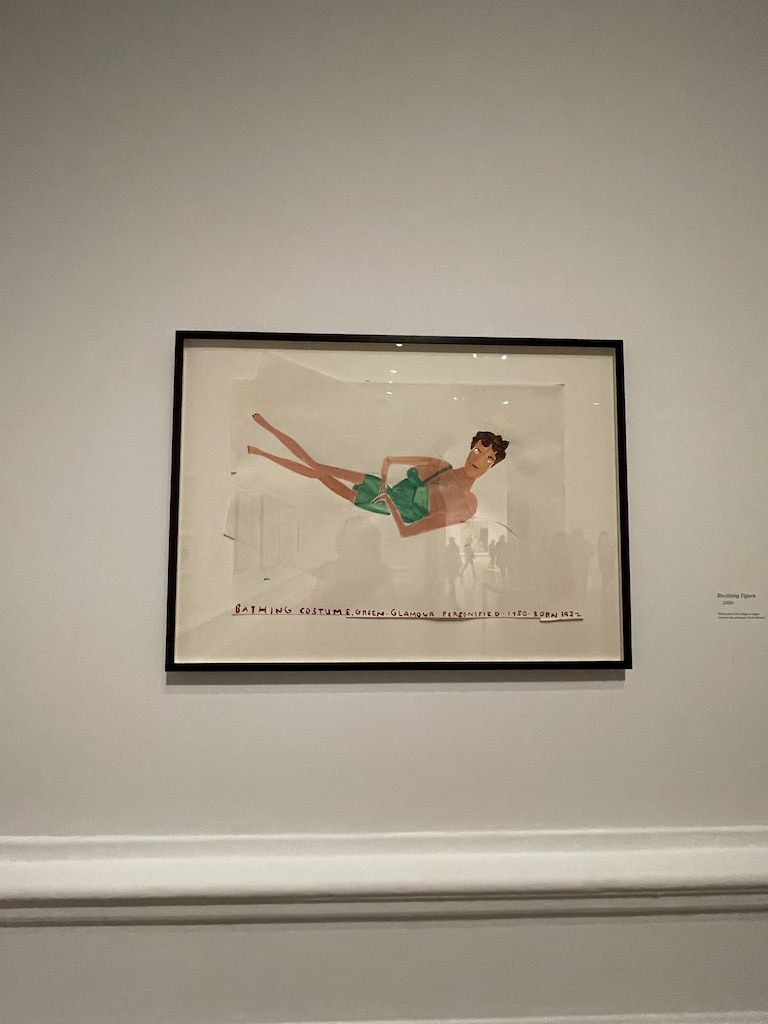
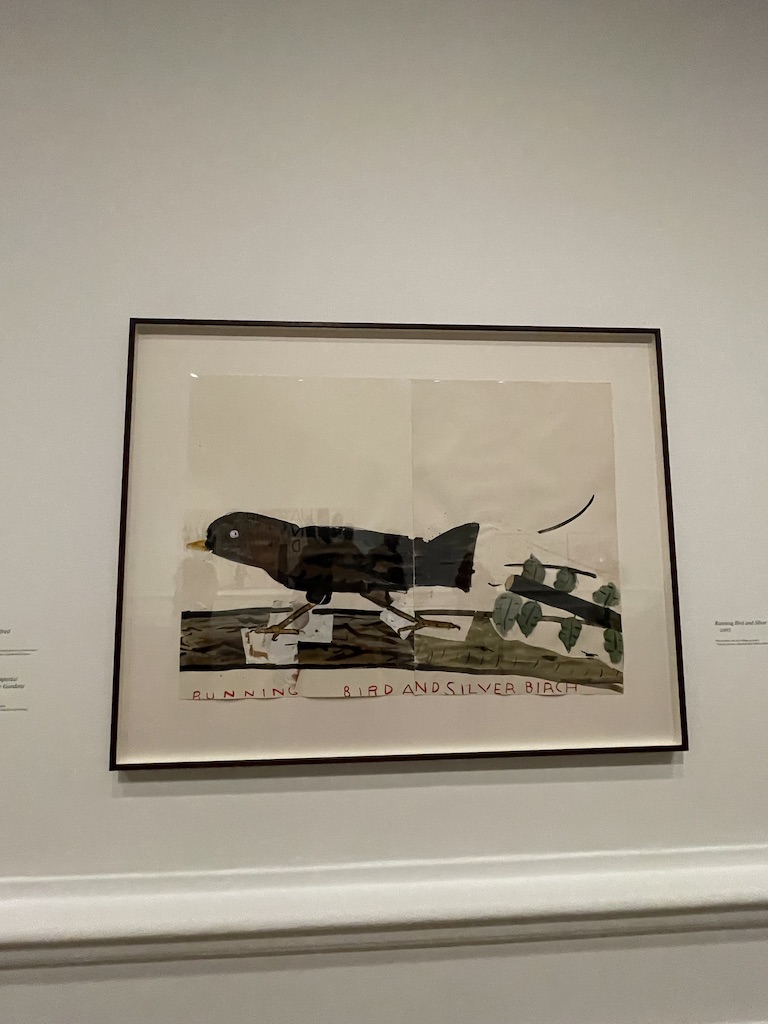
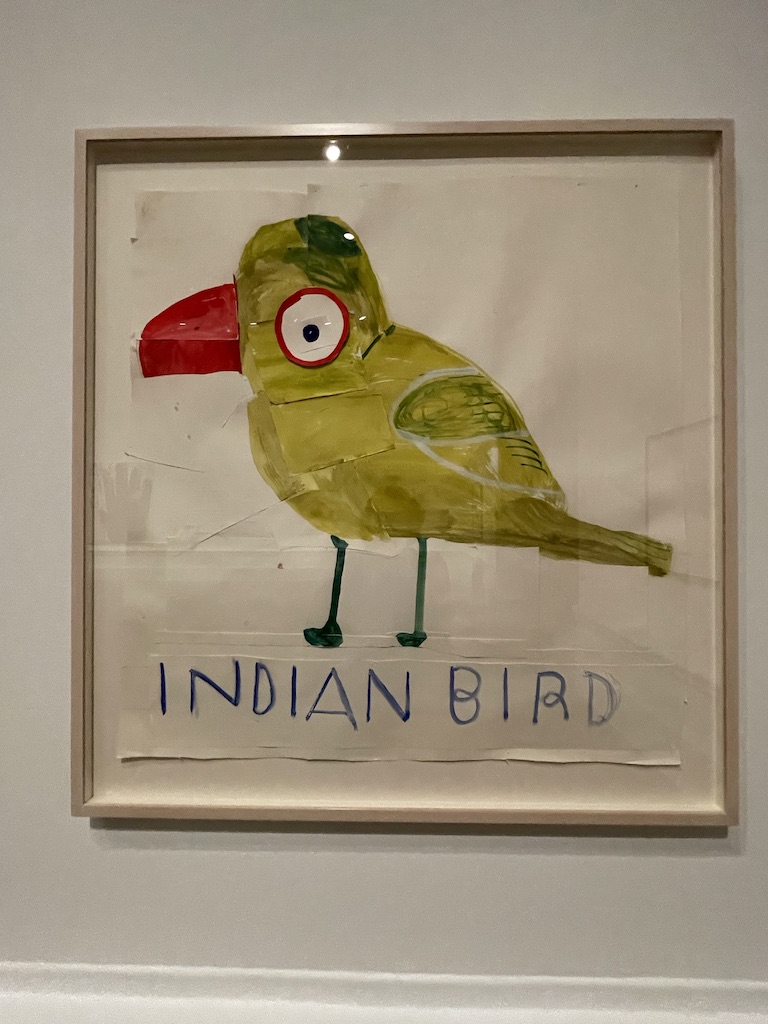
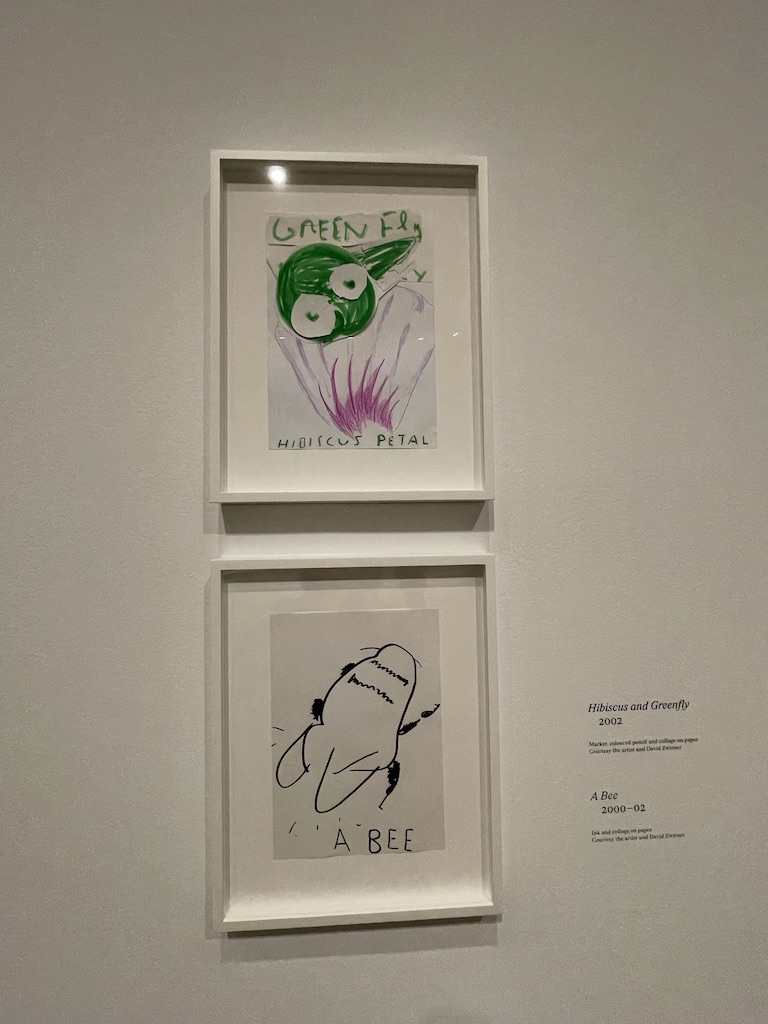
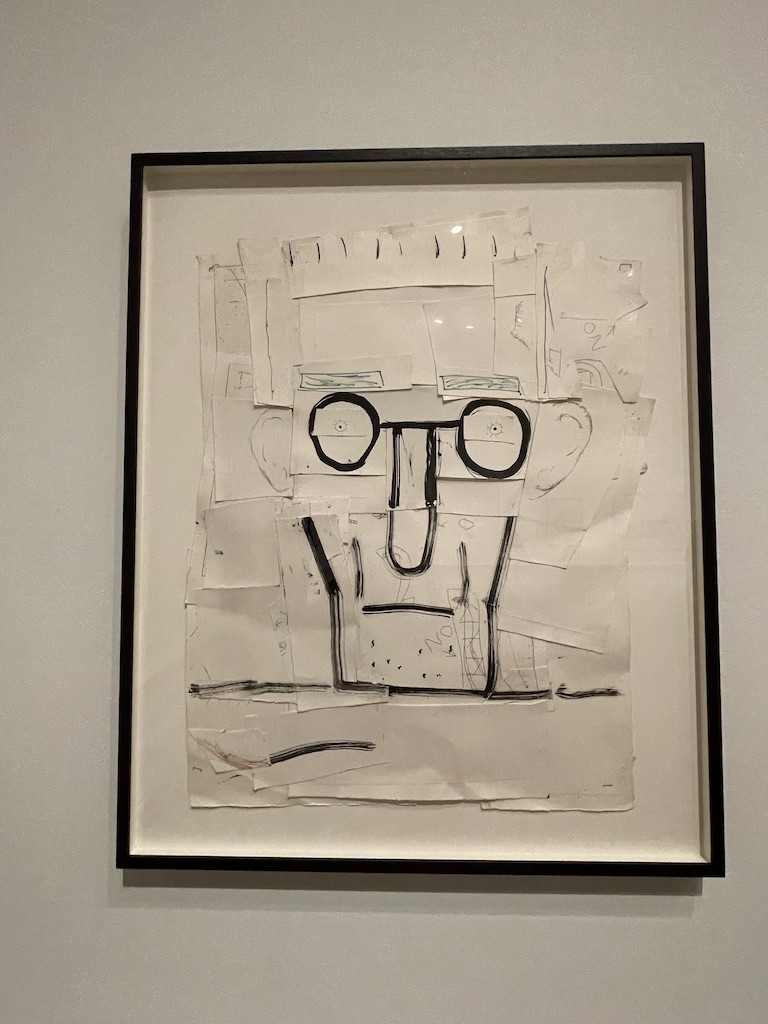
I was impressed to see that she uses paper collage to create her initial designs before scaling them up for the huge, baggy canvases that fill the walls. At first you might think that the work has a child-like quality but they are more structured than the careless daubings of a child. She is inspired by stuff – images on the telly, film, in magazines, memory.

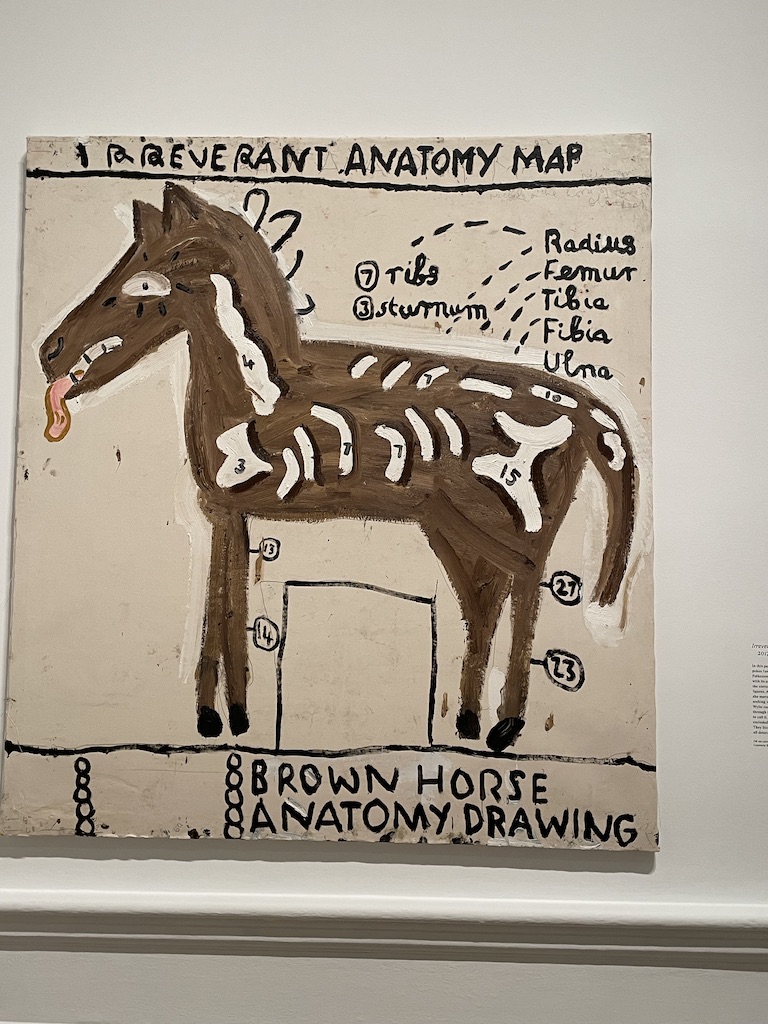
There’s also terrific humour to her work. I did like the daft painting of the horse with an attempt to depict the anatomy of the beast. Her faces, whether human or animal have a charming innocence to them and a lot of eyelashes!

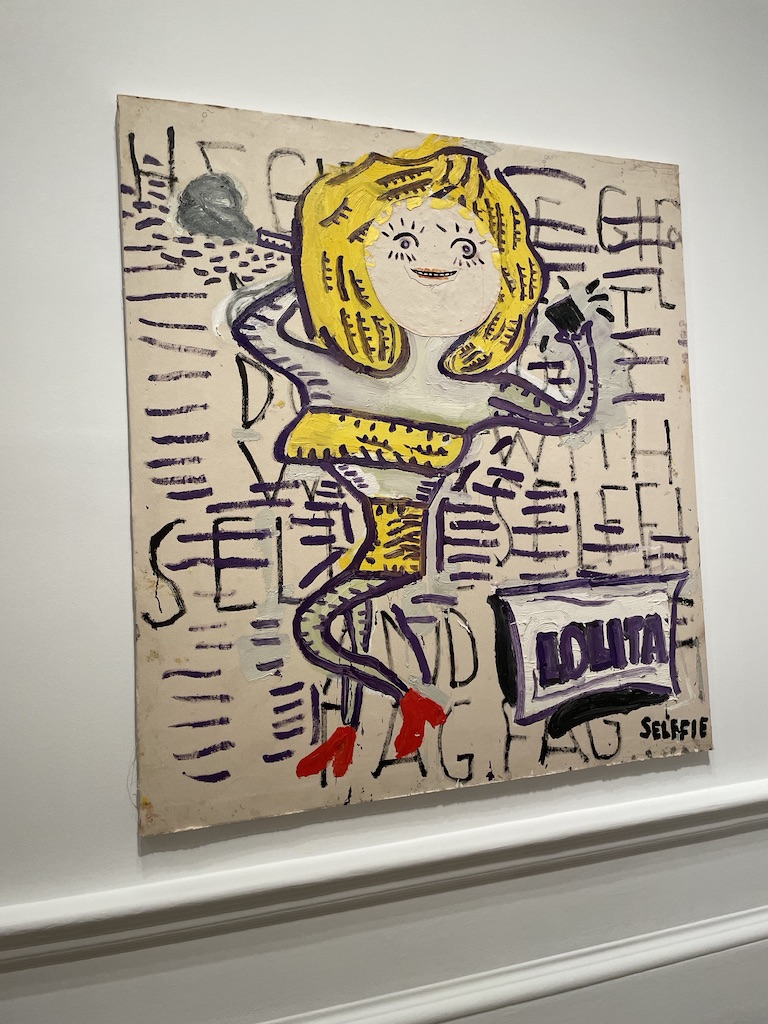
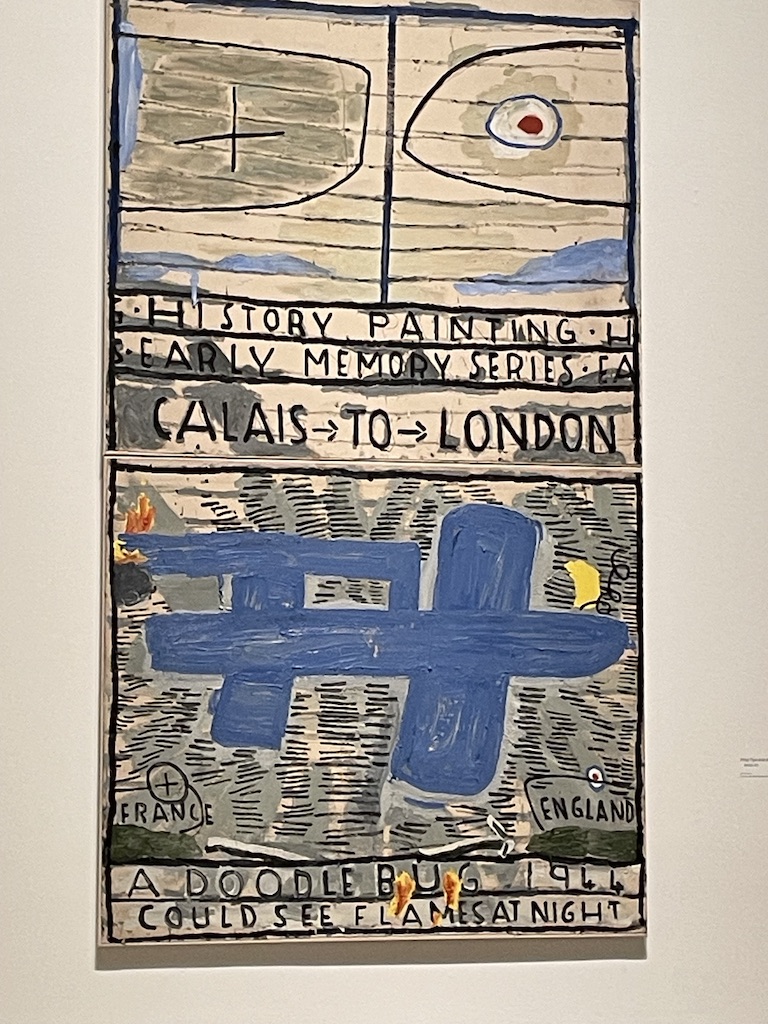
You can see that when she has hit upon an idea she really develops it in a witty, very playful way and, just to avoid any doubt as to her intension, there is text to tease and beguile the viewer.

Born in Kent during the war she recalls attacks by Doodle bugs and the destruction caused.

I liked this very playful collage of her husband.

The show is on at the Royal Academy of Art until 19th April 2026

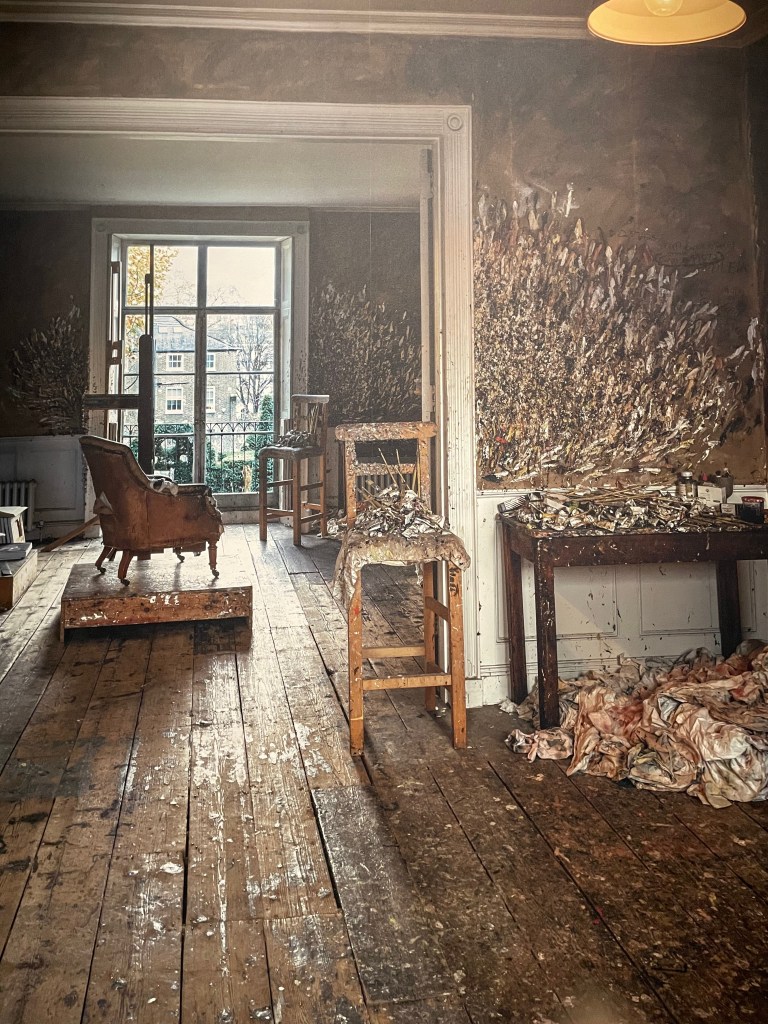
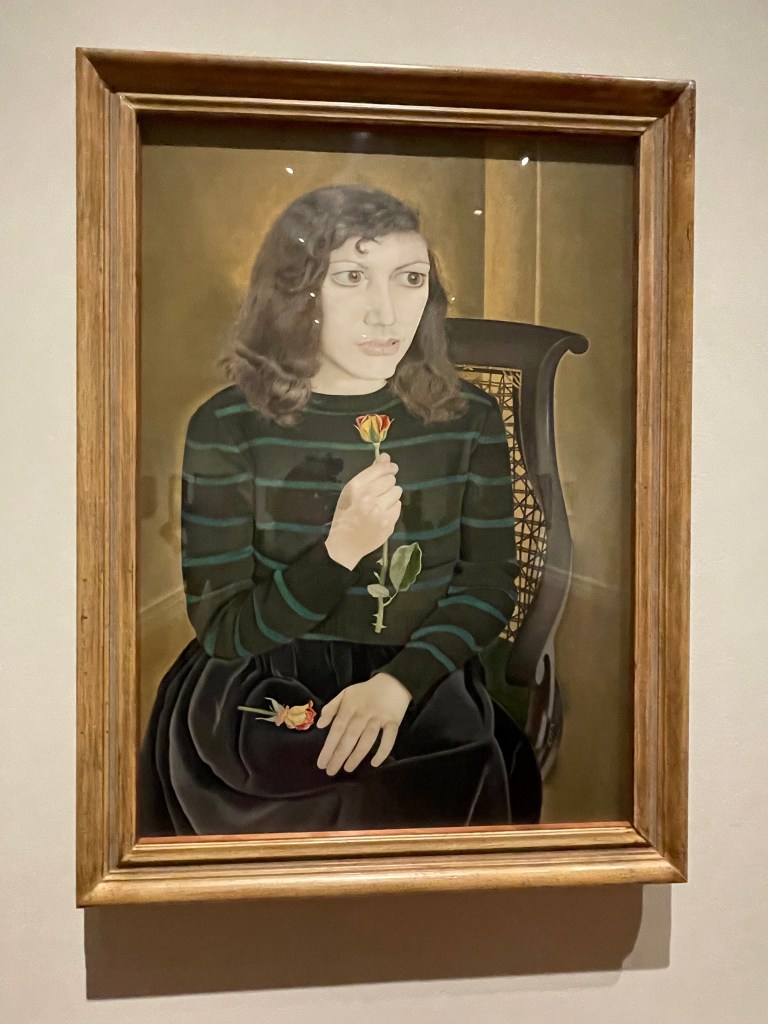
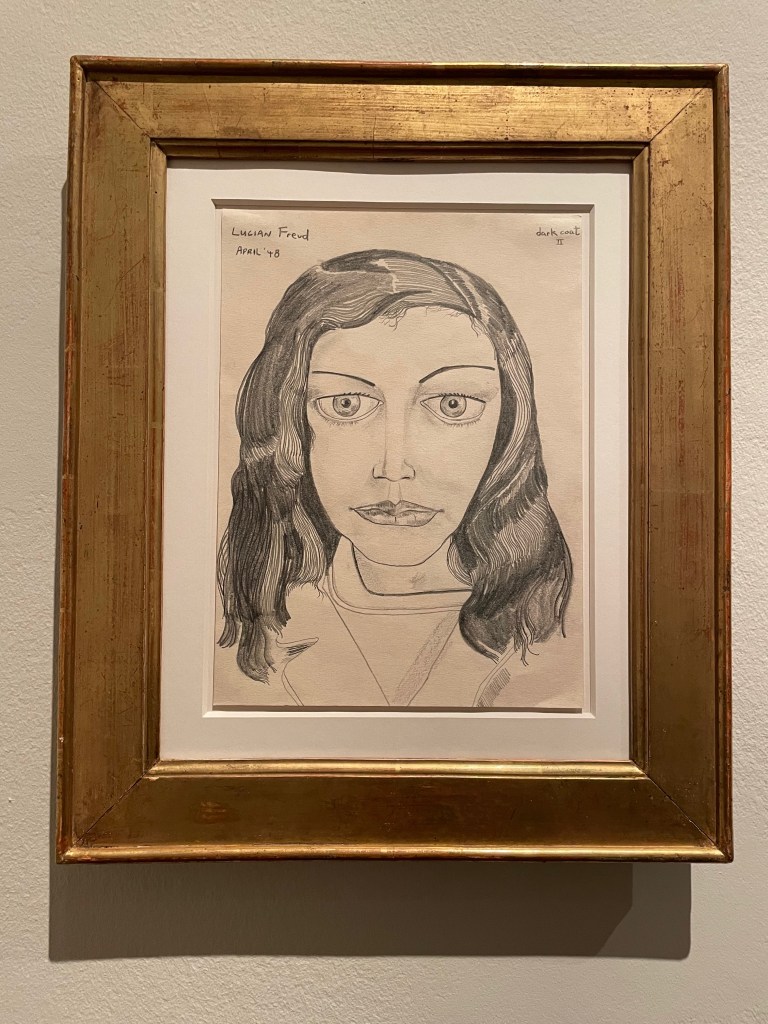
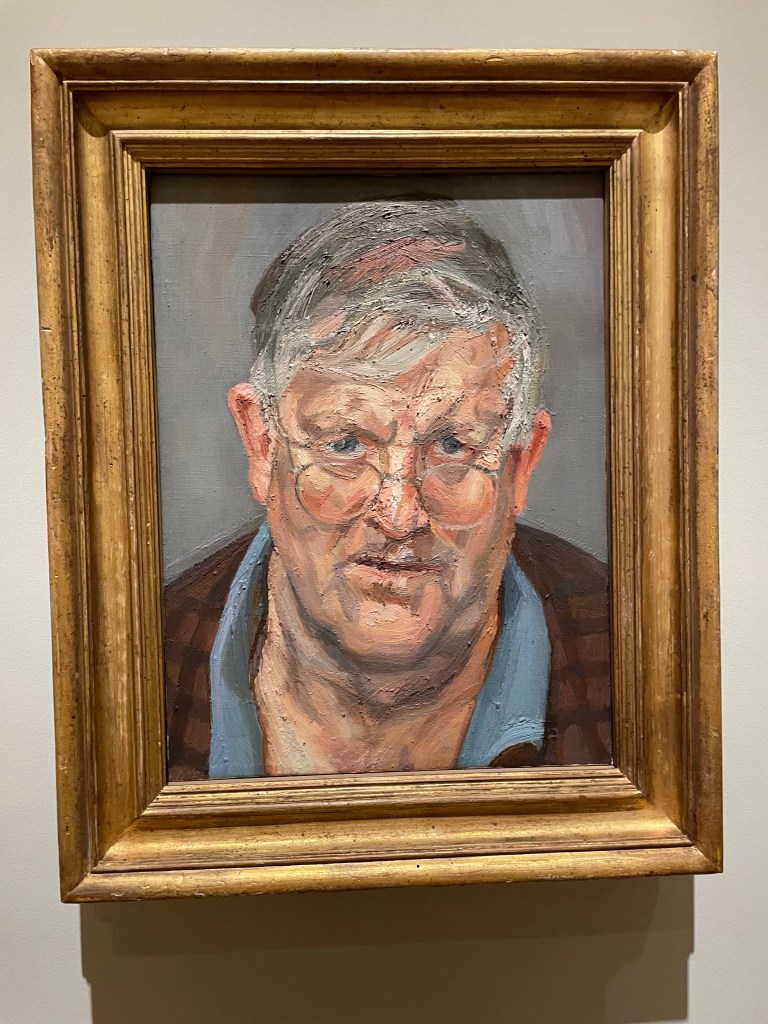
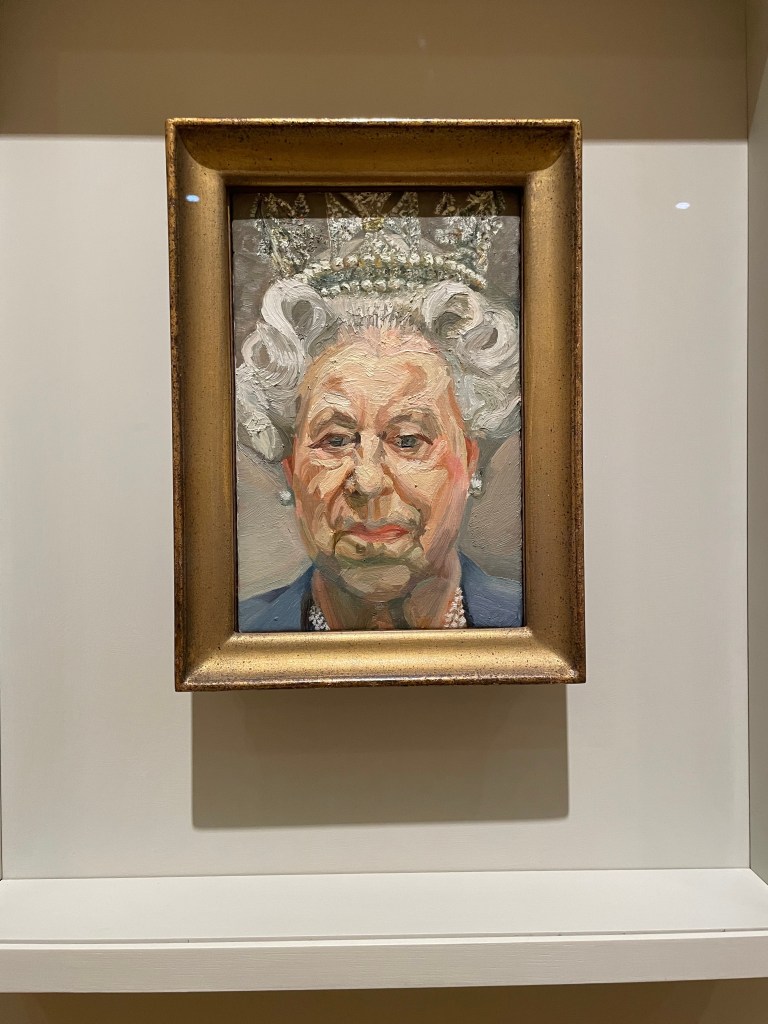
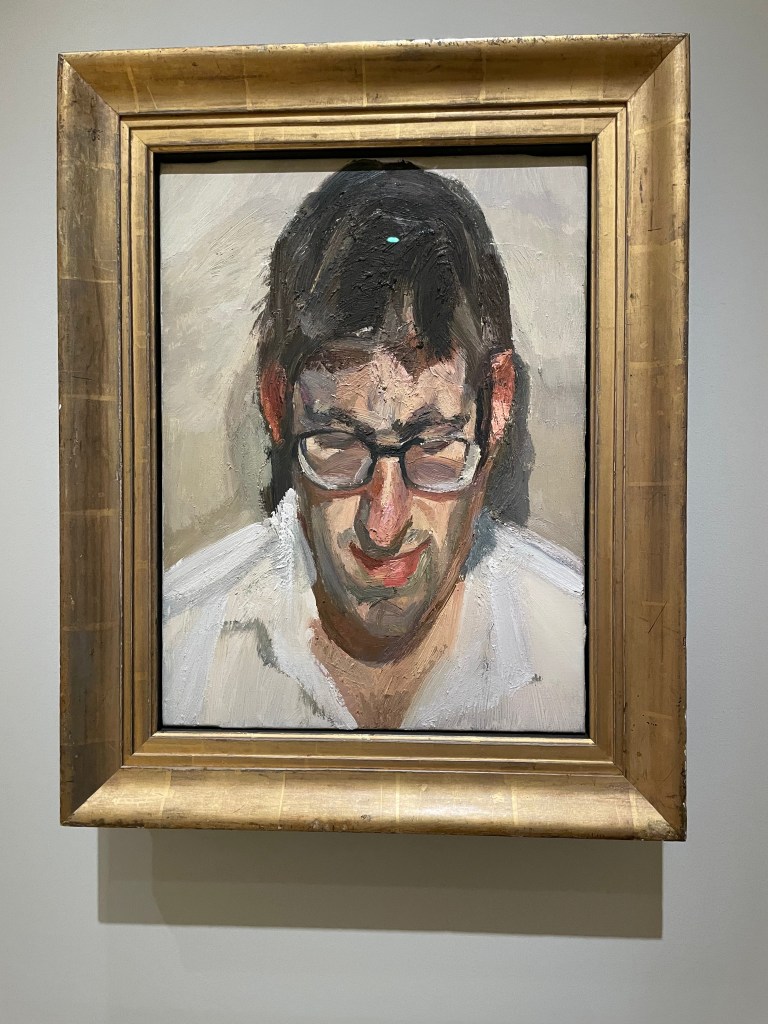
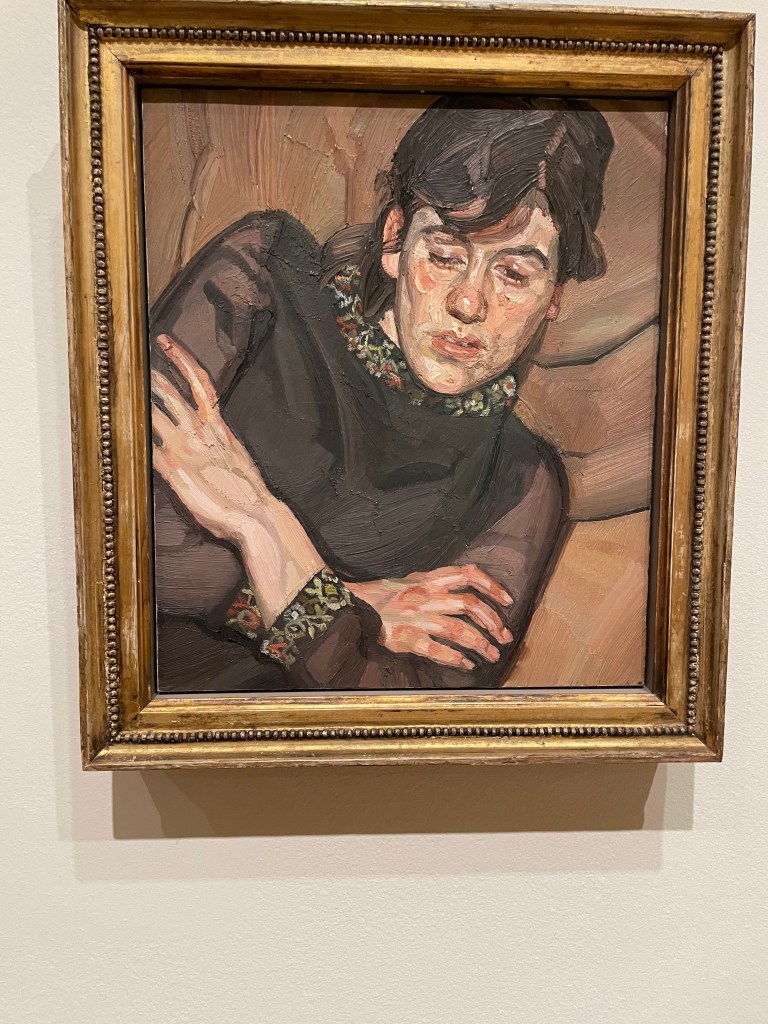
Lucien Freud: Drawing into Painting is a very enjoyable show at the National Portrait Gallery. I’m pretty familiar with Freud’s work but it was very special see works which are rarely exhibited and to see the relationship between his drawing (which was so fundamental to his work) and the painted pieces which followed.

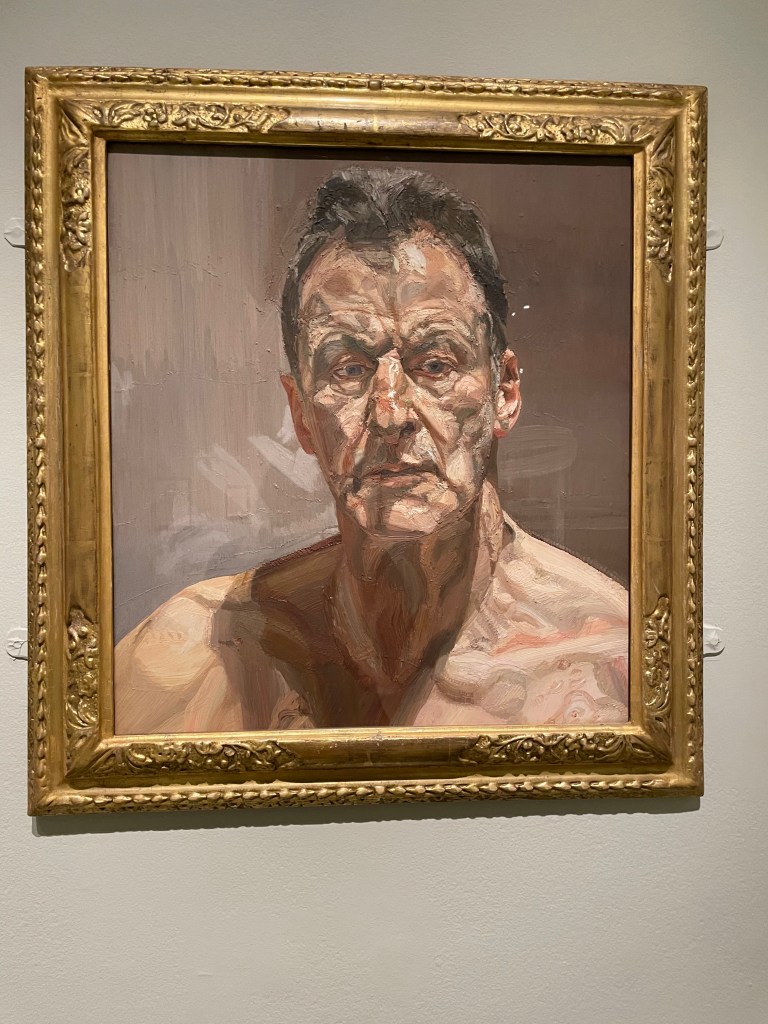
Right at the start of this show we are treated to a huge photograph of Freud’s studio in West London. It has the look and feel of one of his paintings and it’s quite moving to see the way he daubed the walls, furniture and floor with paint. Above is the picture and one of his later self-portraits.

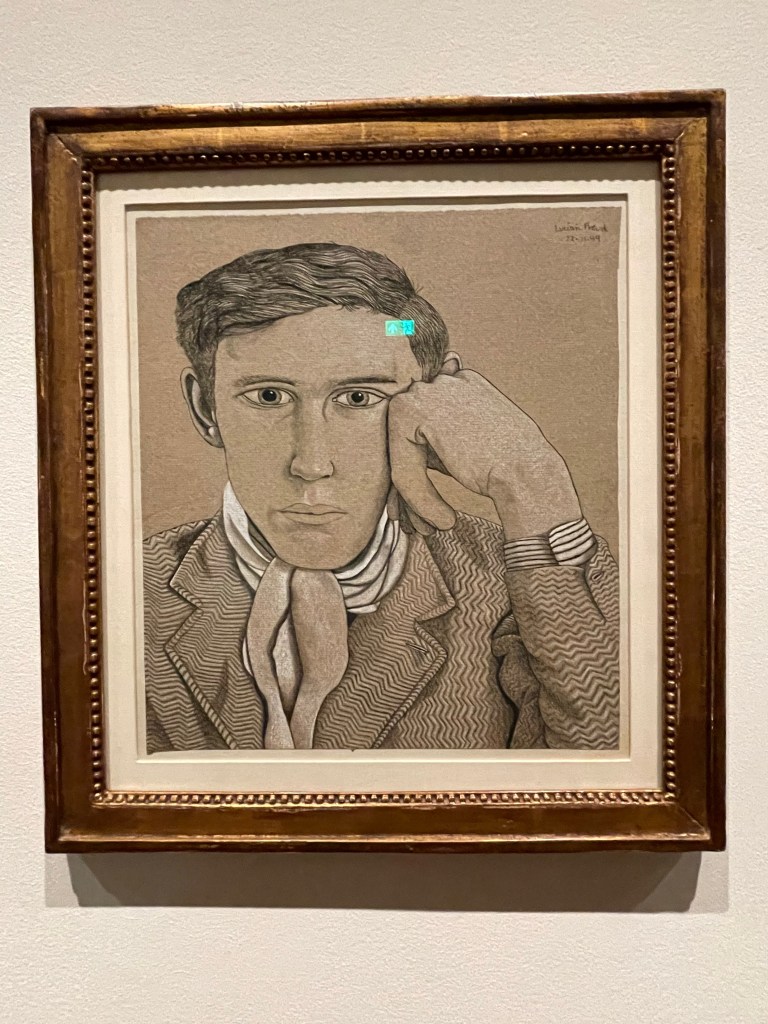
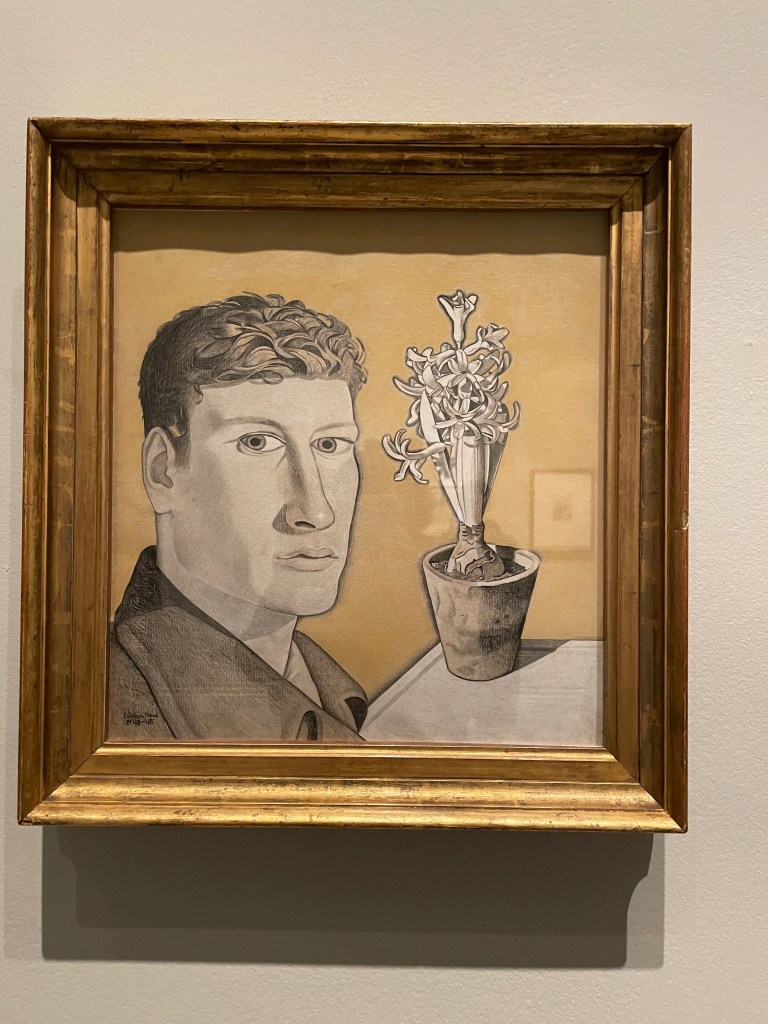
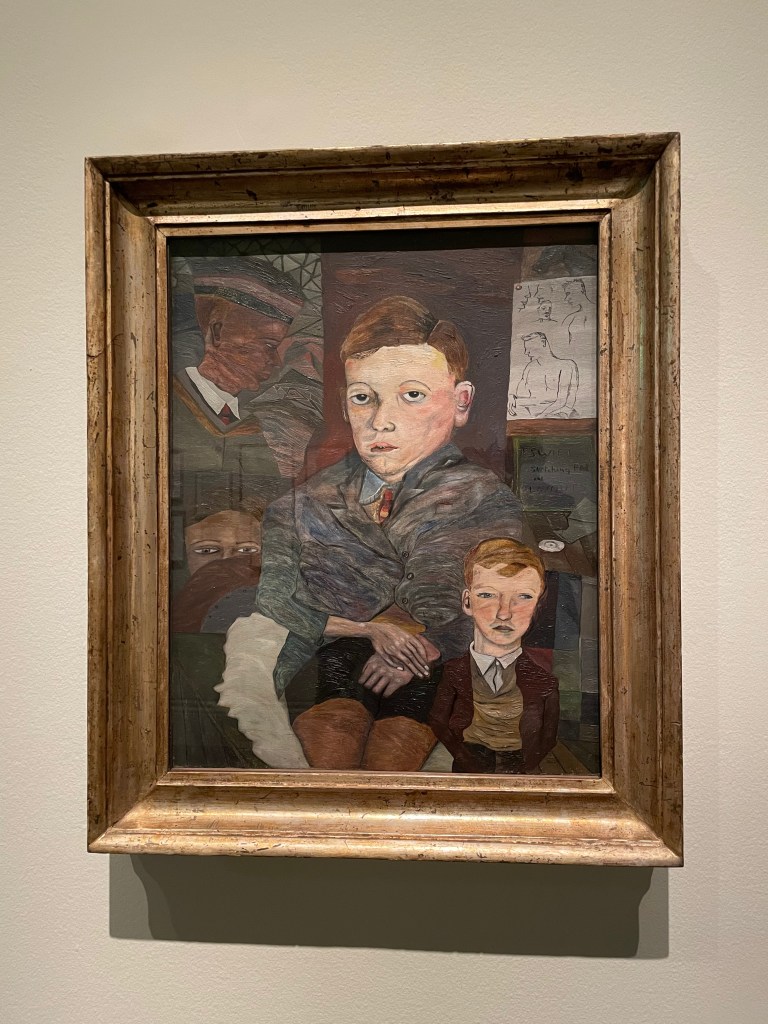
Anyone familiar with Freud’s work will know how he evolved from an artist fascinated by detail and fine lines into a painter who used large, bristle brushes and created his work from bold, expressive brush strokes. I was very intrigued by the early drawings on show. The middle one, above, is a self-portrait with hyacinth drawn with conte crayon on paper. On the left is Portrait of a Young Man and on the right is The Village Boys, which is oil on canvas from 1941 and probably painted when Freud was studying at the East Anglia School.

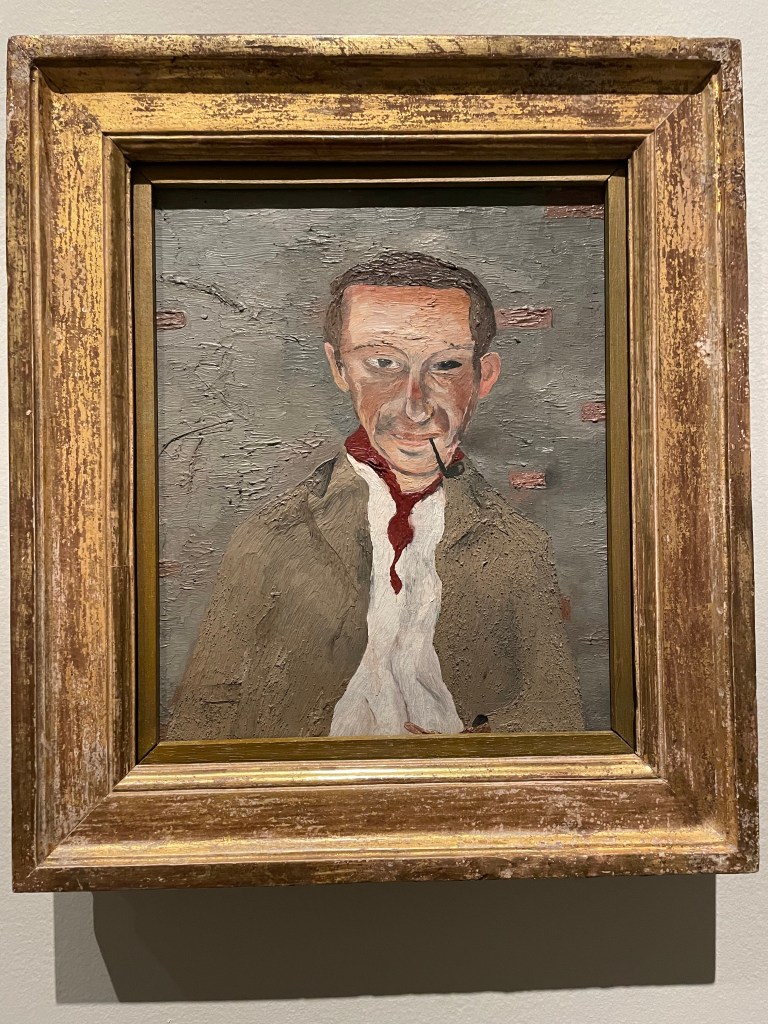
I really liked this portrait of Cedric Morris, Freud’s tutor at the East Anglian School of Painting and Drawing. Made in the summer of 1940 when Freud was only 18. It captures Morris’s character beautifully.

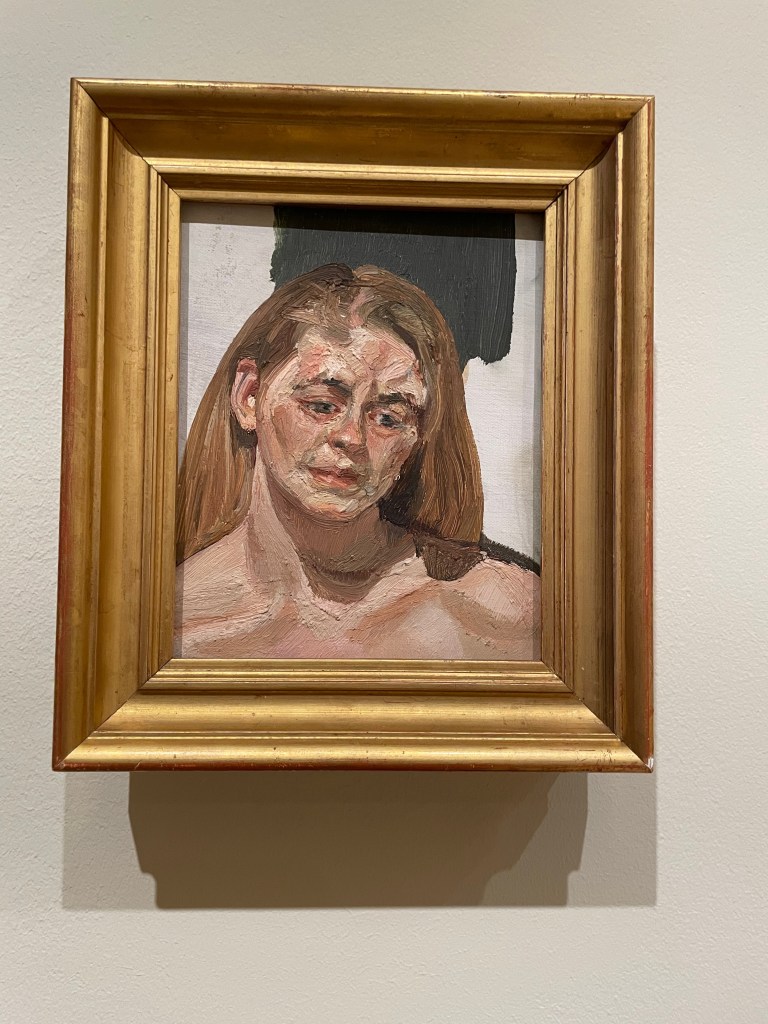
There were a lot of women in Freud’s life. Some were lovers, wives, models or simply friends. Above is a selection of the ones he loved. Above left is Suzy Boyt and centre Caroline Blackwood. One the right and above are two portraits of Kitty Garman. Quite a mixture of drawing and painting – detail and broad brush strokes.

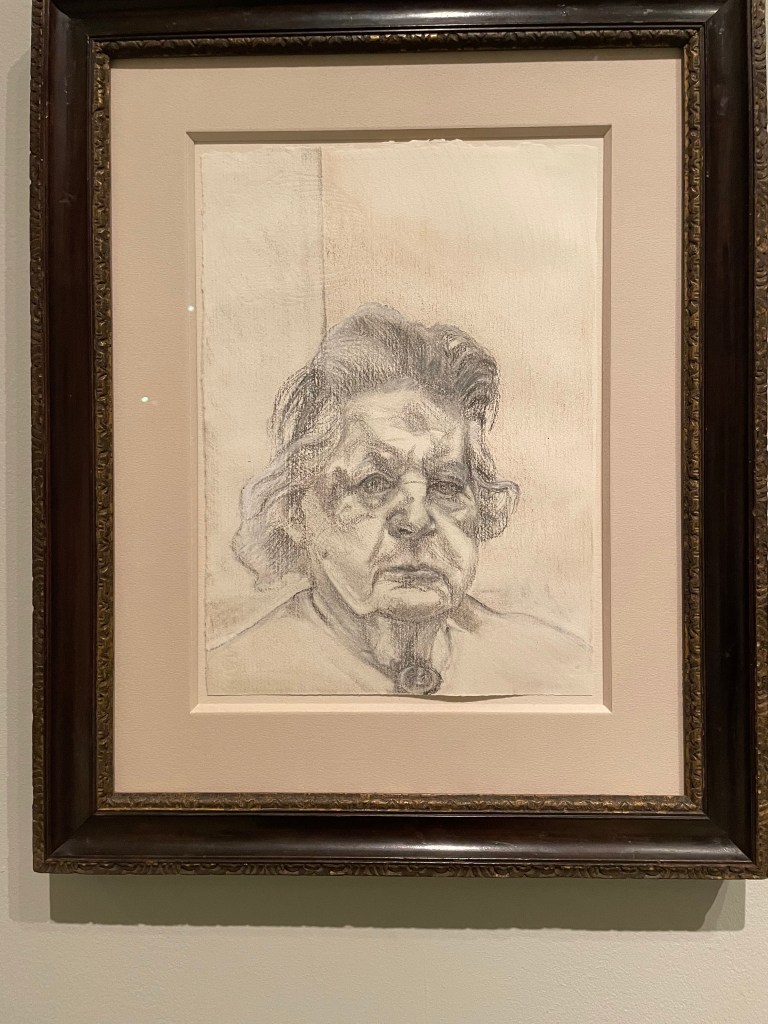
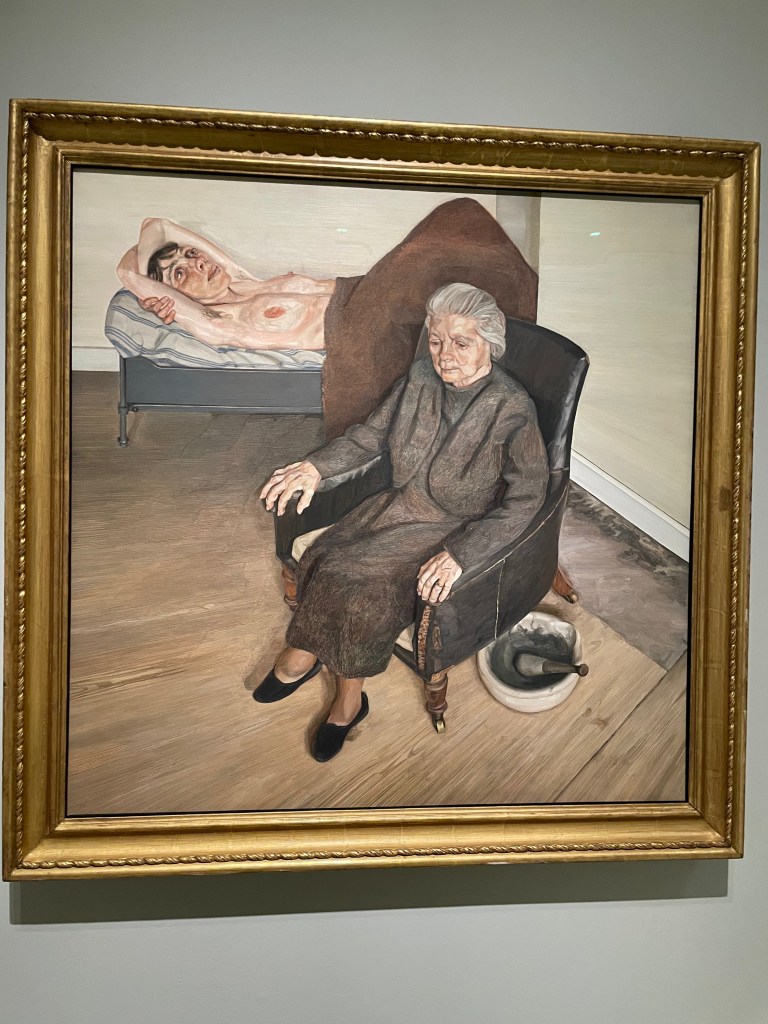
Freud’s mother, Lucie Freud, was also an important model. On the left is a very direct charcoal drawing of her from life and on the right a painting combined with a nude of Jacquetta Eliot.

Two faces you may recognise? On the left is David Hockney, centre, the late Queen Elizabeth II and on the right is Frank Paul.

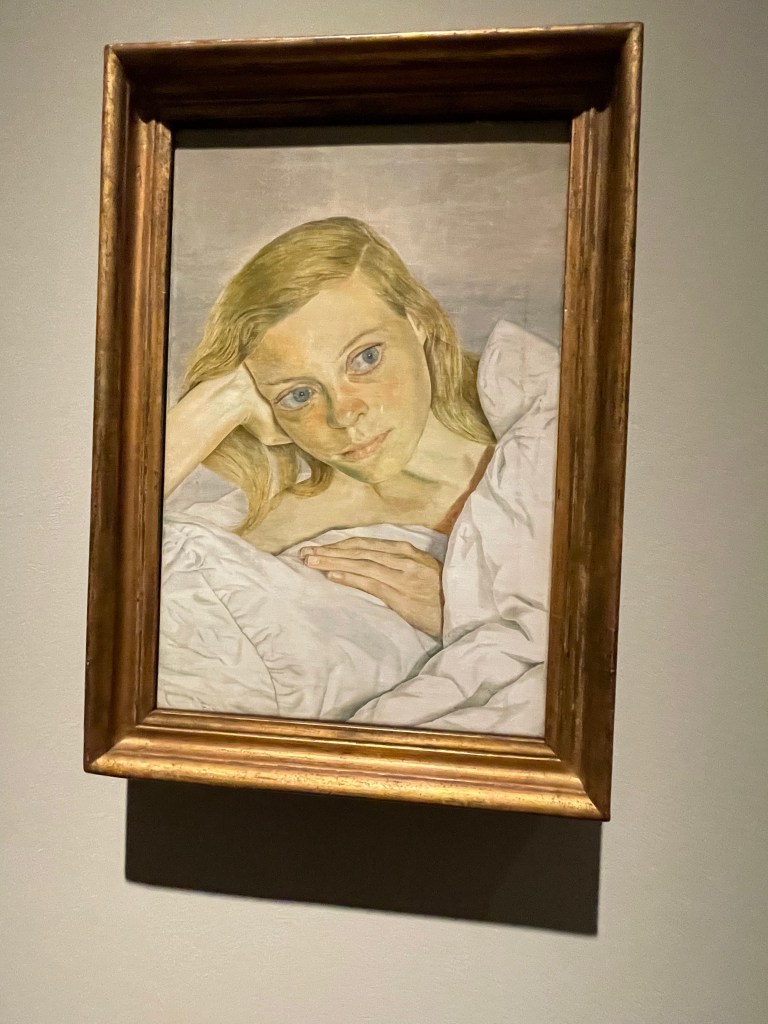
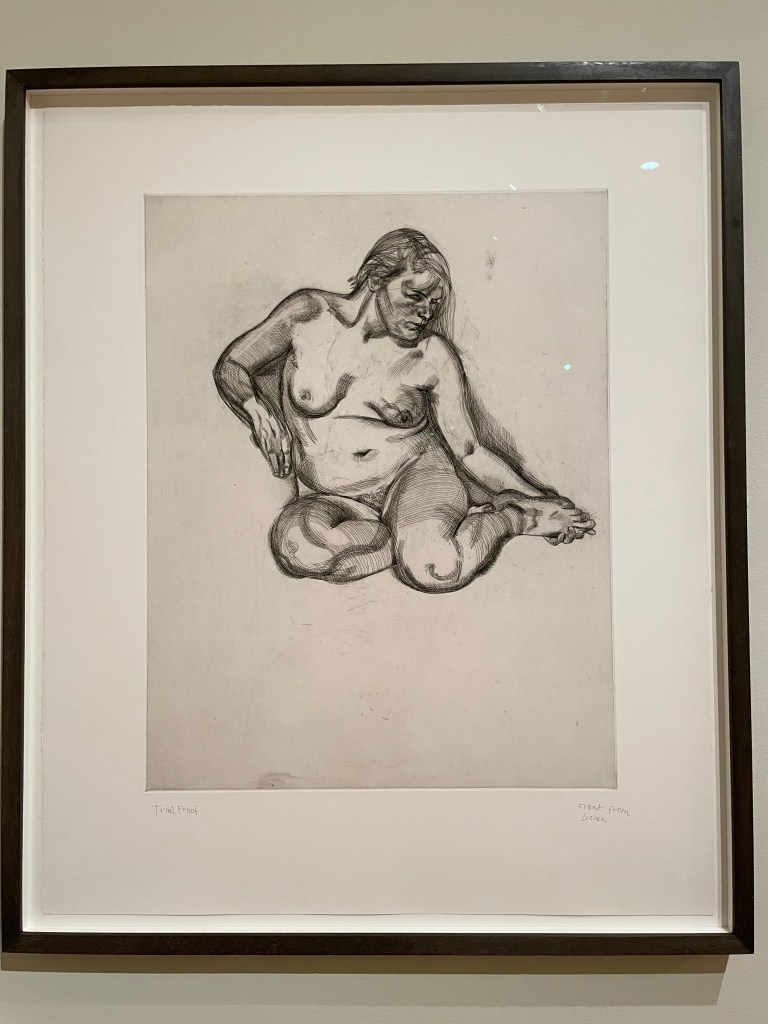
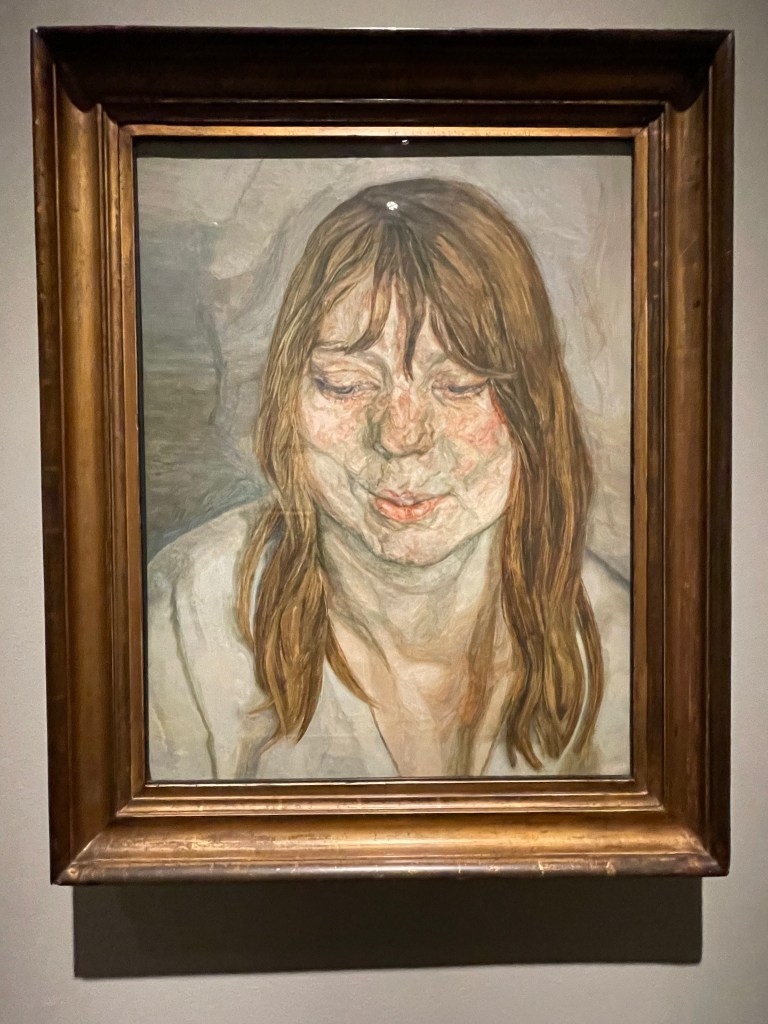
His portraits always seem to capture the sitter’s thoughts. There’s a really contemplative feel to these to portraits. On the left is his daughter Bella Freud, in the centre is a nude etching and on the right is Suzy Boyt – the painting is entitled Girl Smiling.

The show is on at the National Portrait Gallery until 4th May 2026.
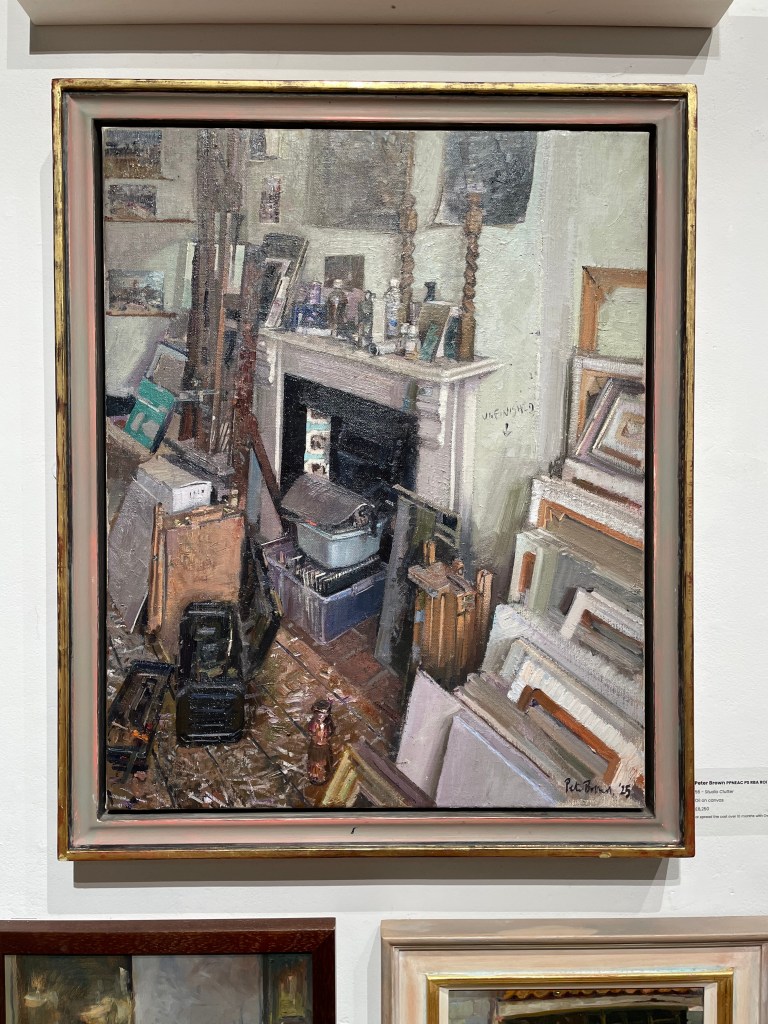
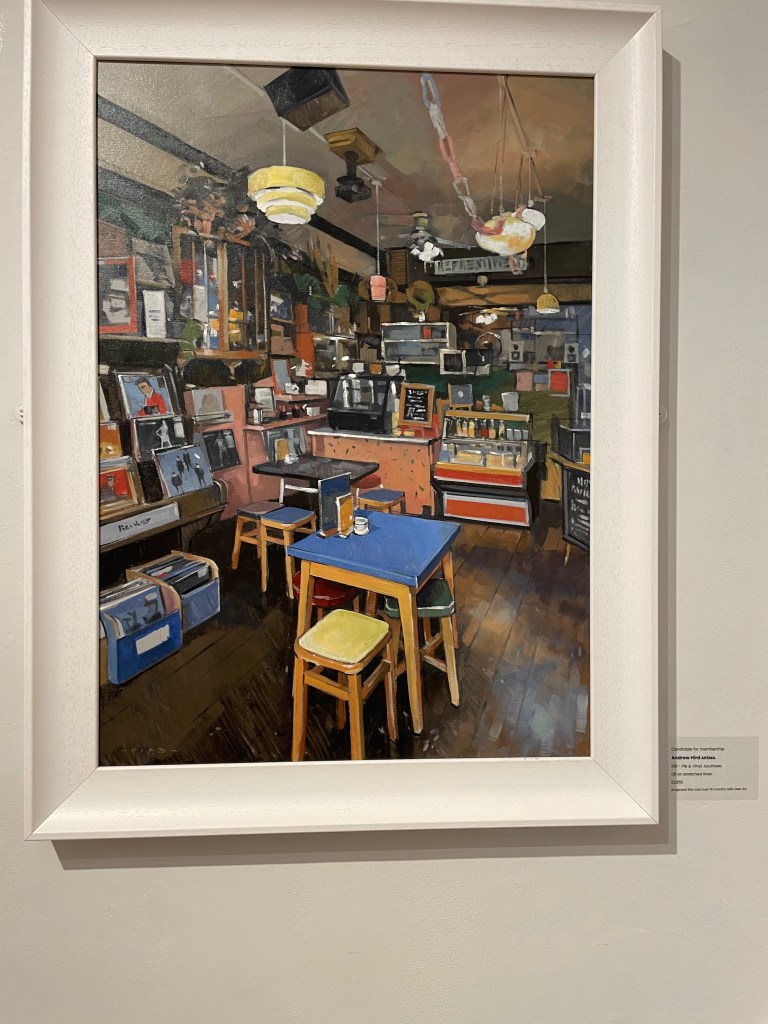
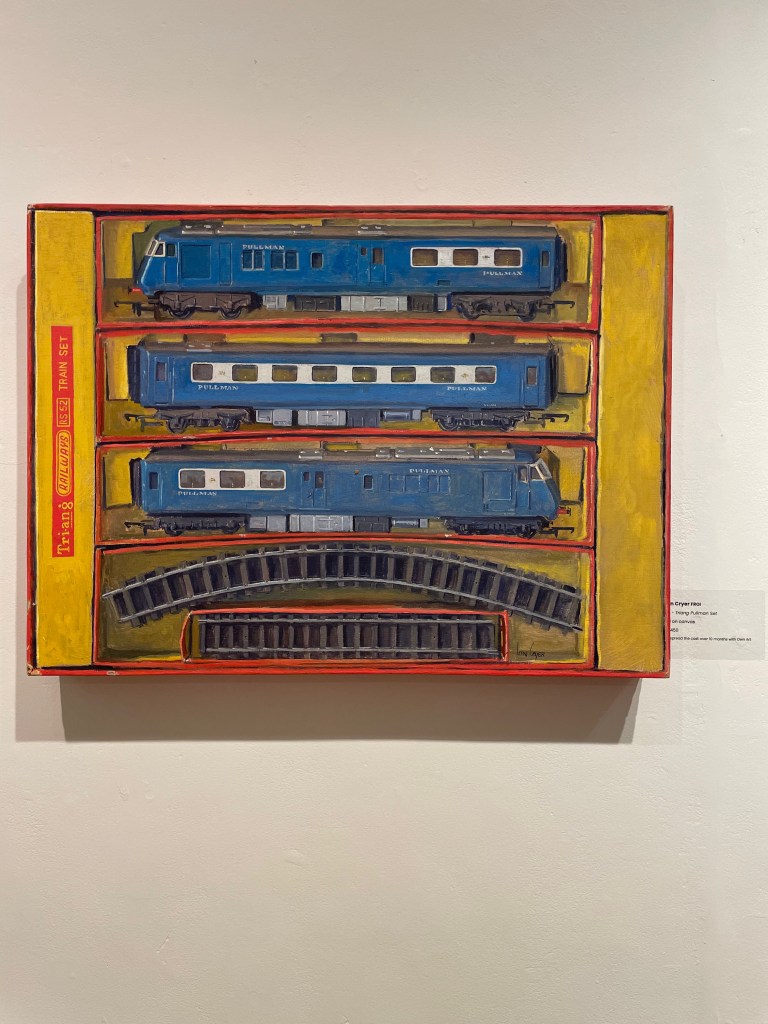
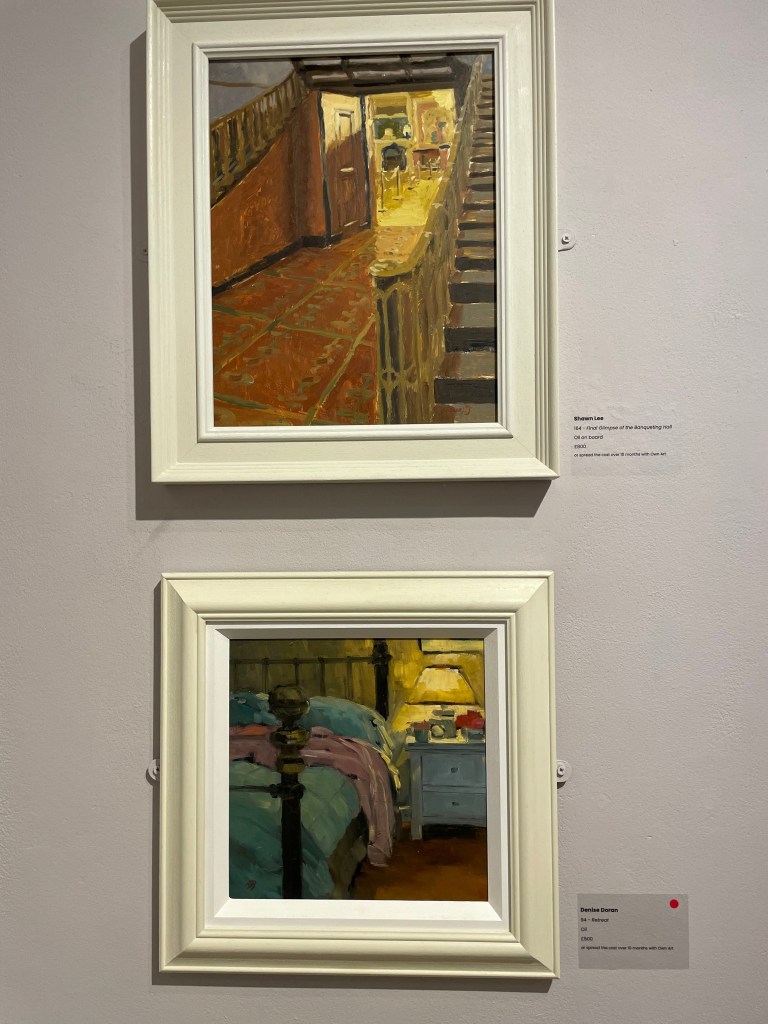
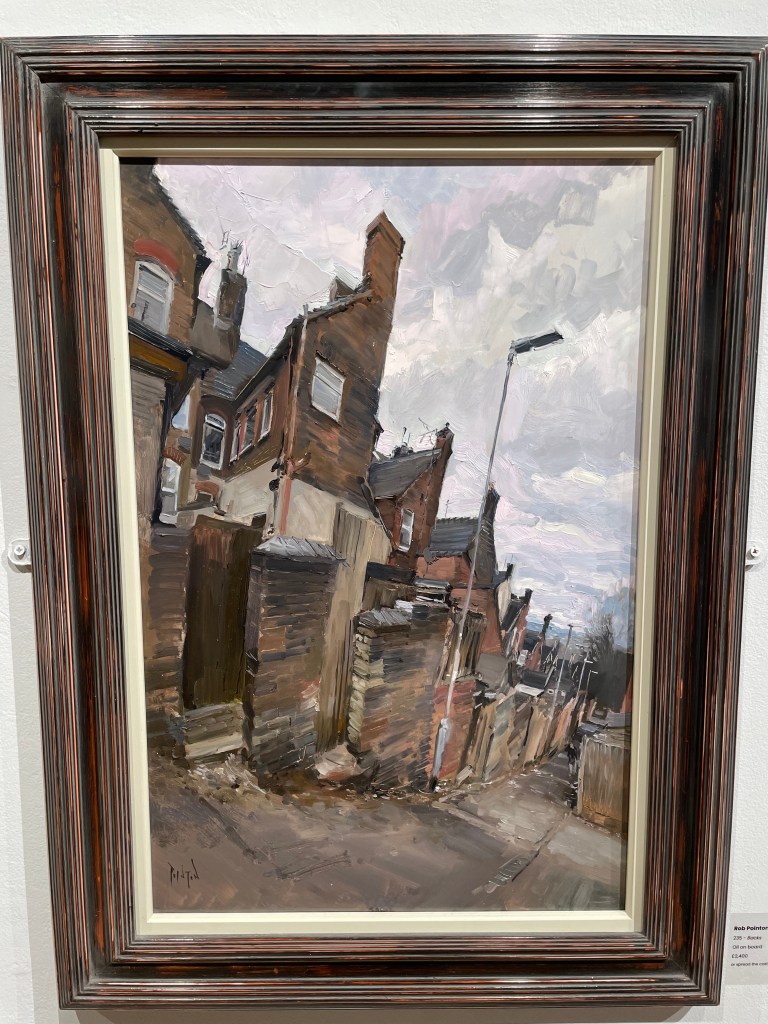
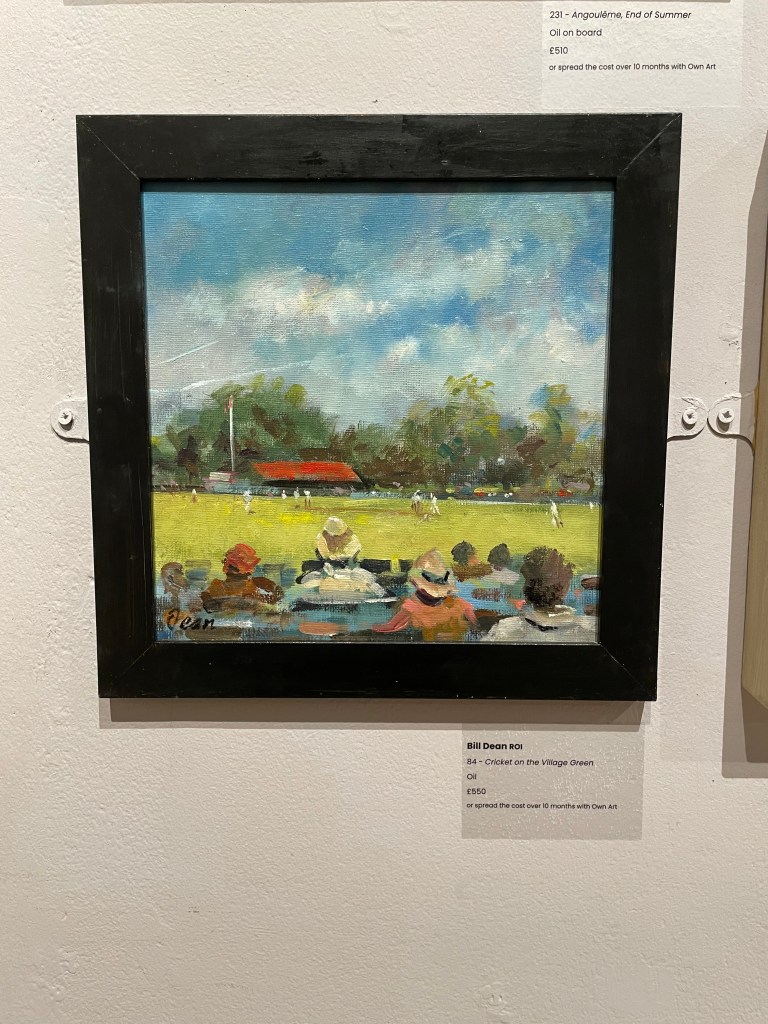
Home: that’s the theme to the annual show at the Mall Galleries of work by members of the Royal Institute of Oil Painters which is on until 13th December. There’s a variety of works on show – some loosely interpreting the theme – but all interesting and very competent. Such talent!
Above is The Copycats by Adebanji Alade showing the comforting chaos of children at home. I liked the very honest picture of the home studio too by Peter Brown.

Andrew Hird made the above picture of a cafe and record store, I really liked the train set in a box by Ian Cryer and the cheery picture of Home by Andrew Farmer.

I rather liked this tender picture of maternity by Kayoon Anderson and a couple of portraits by Tim Benson.

Very interesting viewpoints in this trio of paintings. On the left are works by Shawn Lee and Denise Doran and on the right are two tipsy street views by Rob Pointon.

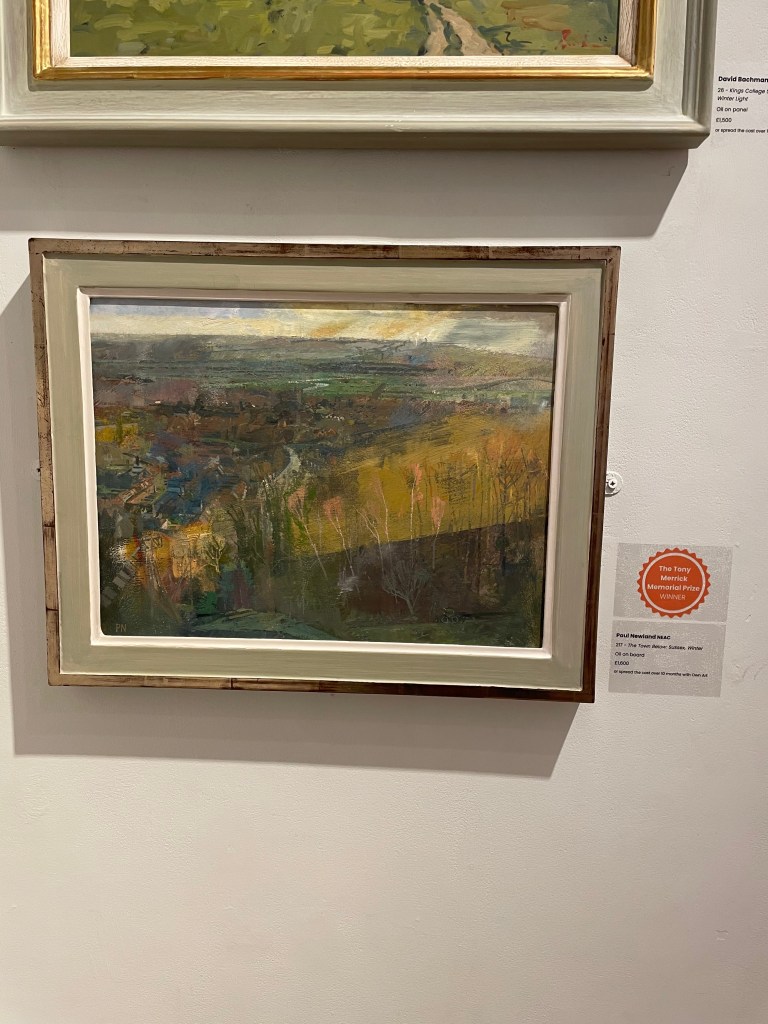
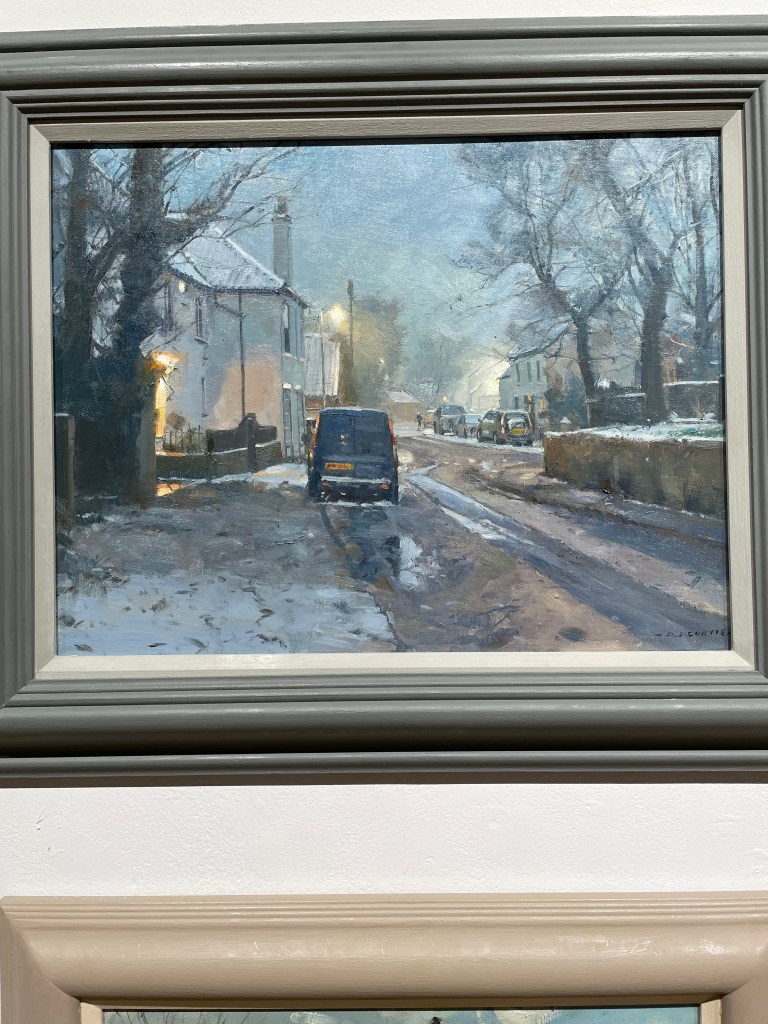
And this trio conjure a few seasons for me. I liked the look of the country cricket match by Bill Dean, the autumn countryside by Paul Newland and the winter street by David Curtis.

All the works are for sale and there was a satisfying scattering of red dots which much please the artists. The world is enhanced by art!

The show is on at the Mall Galleries until 13th December 2025.

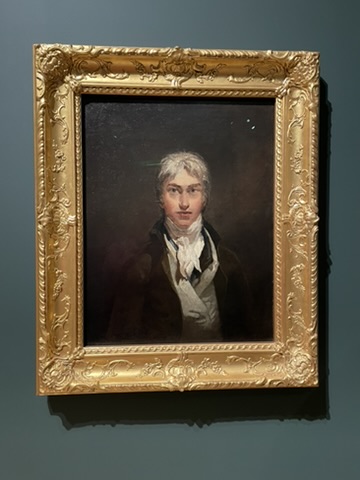
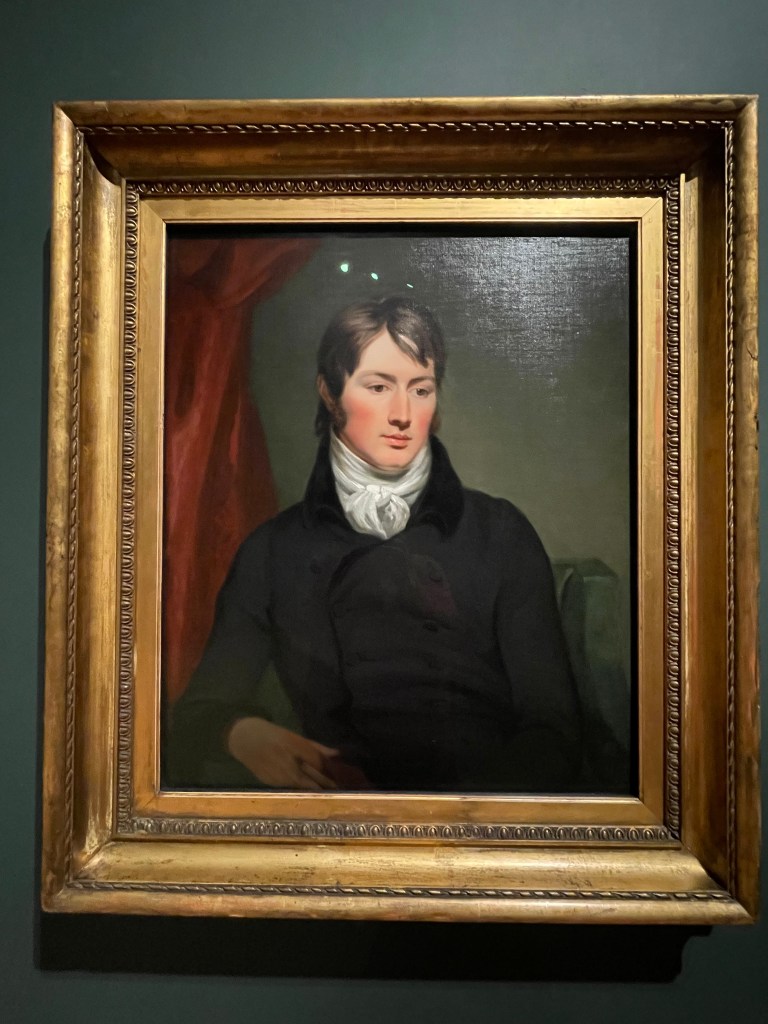
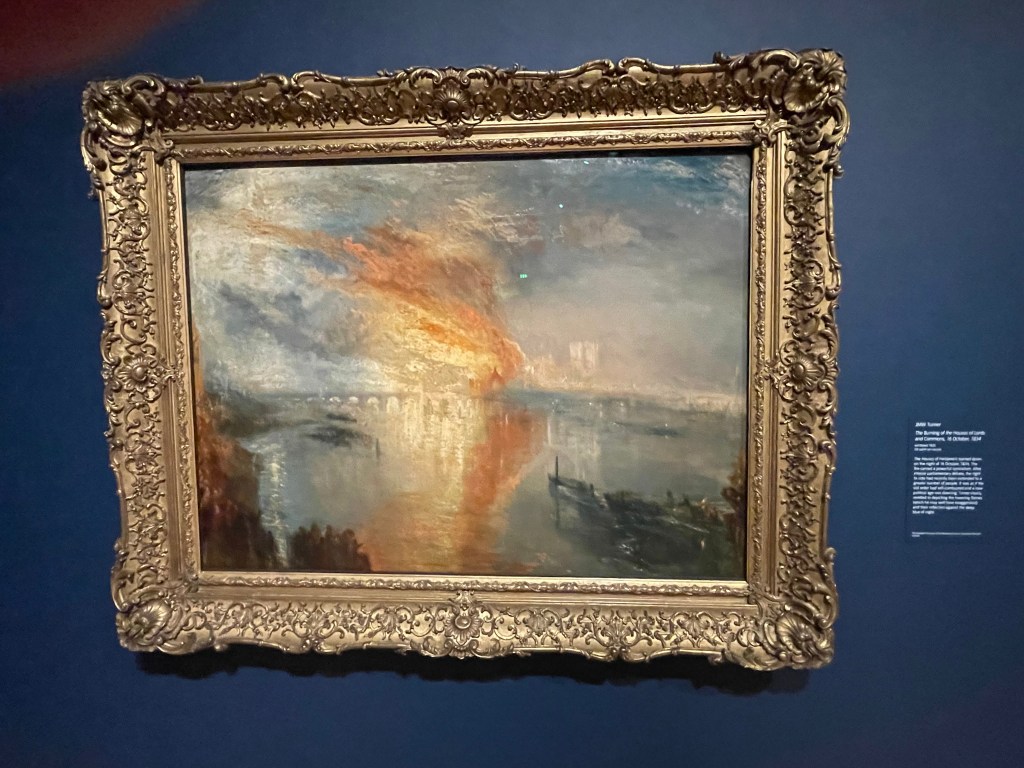
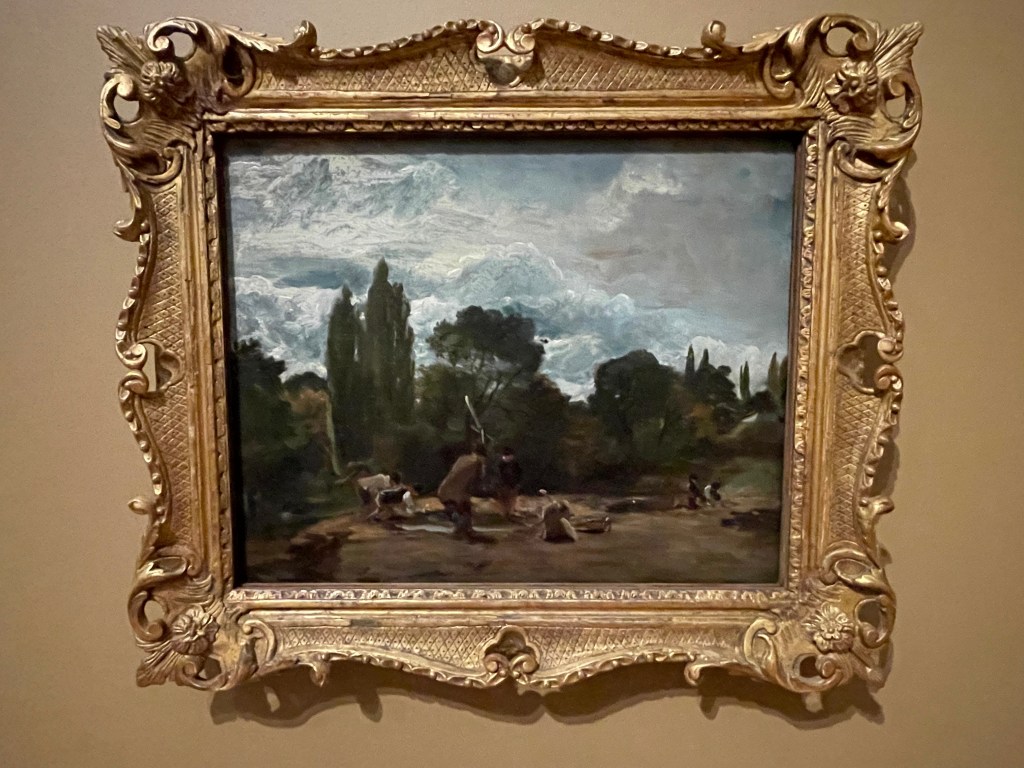
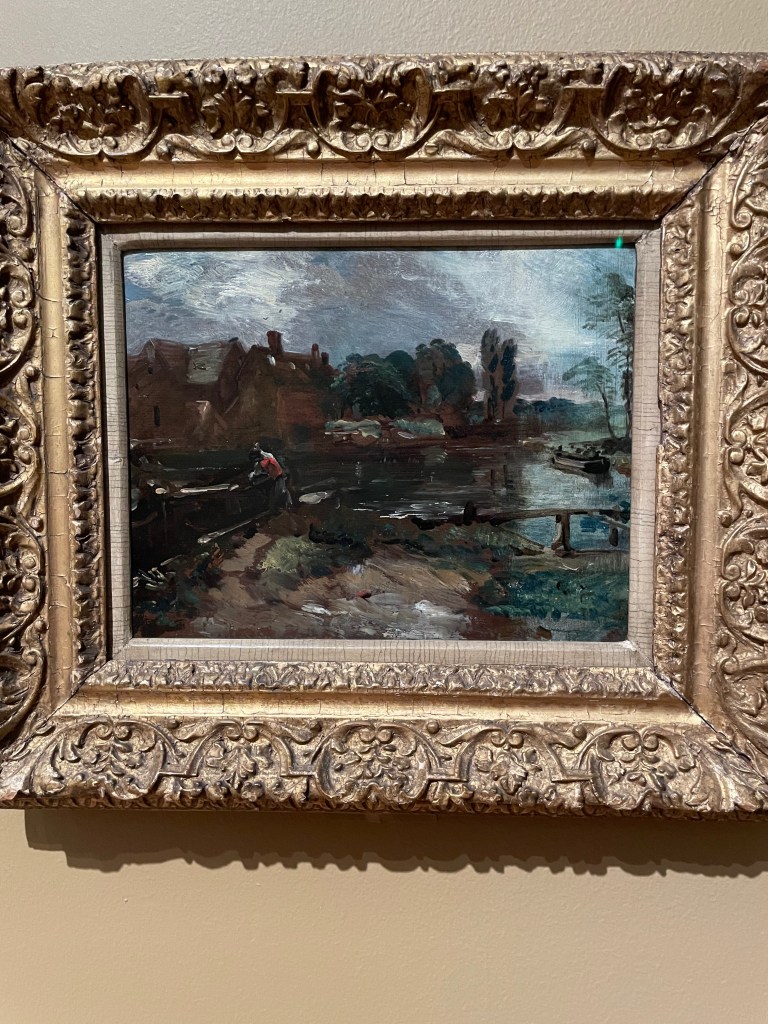
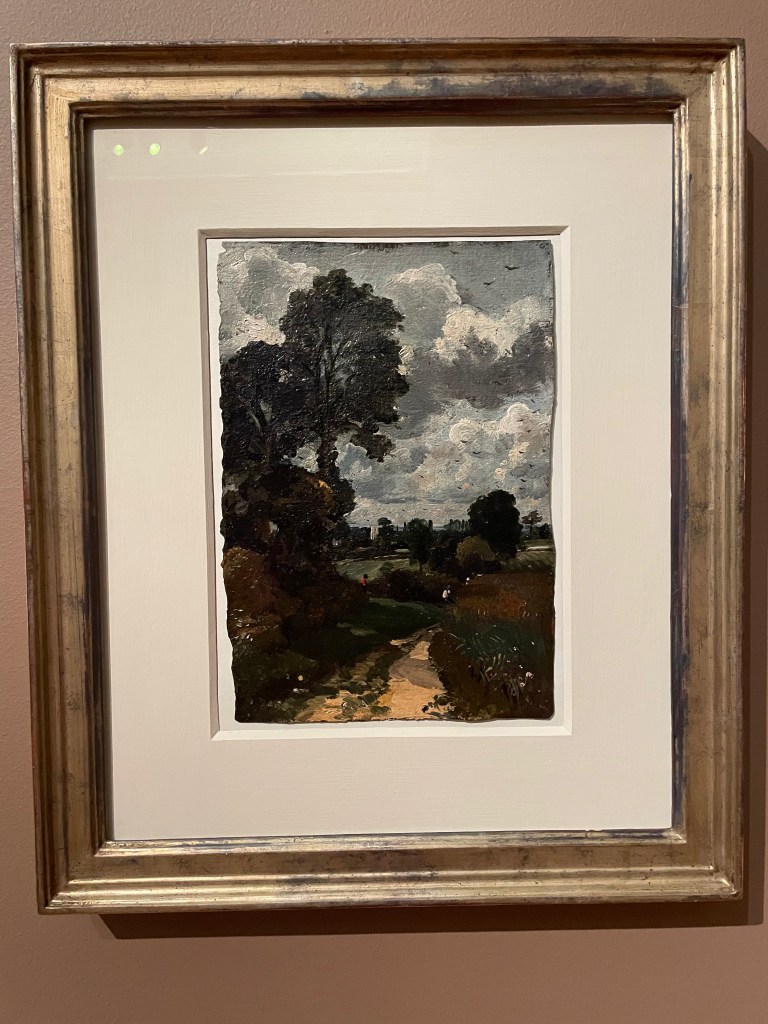
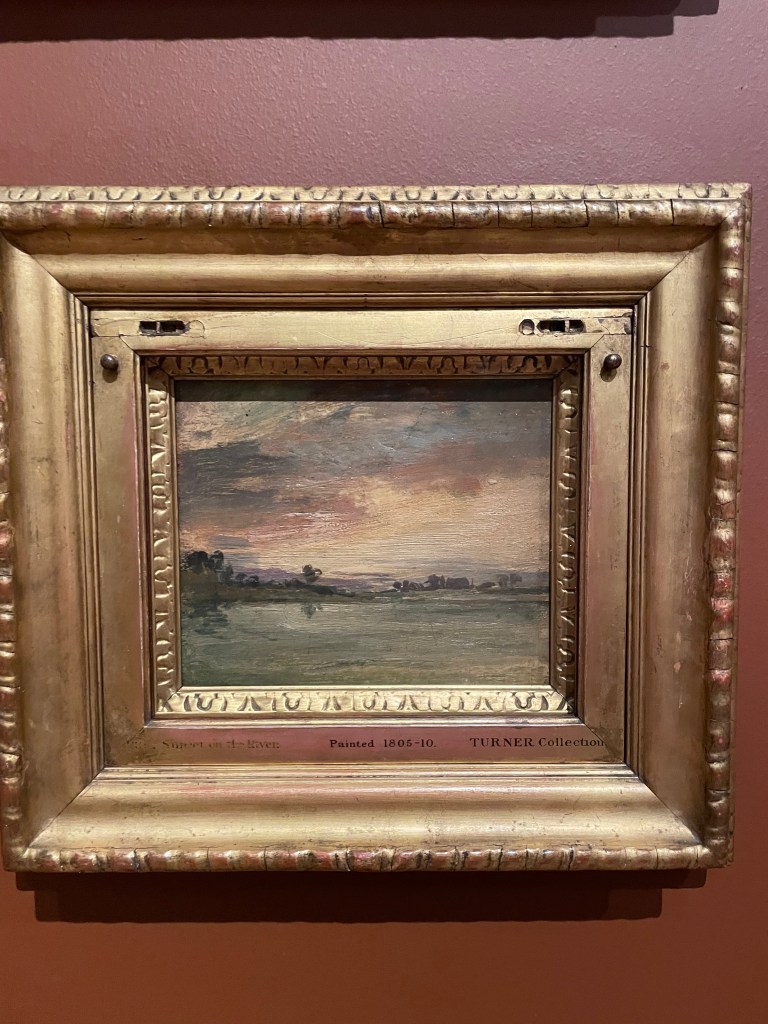
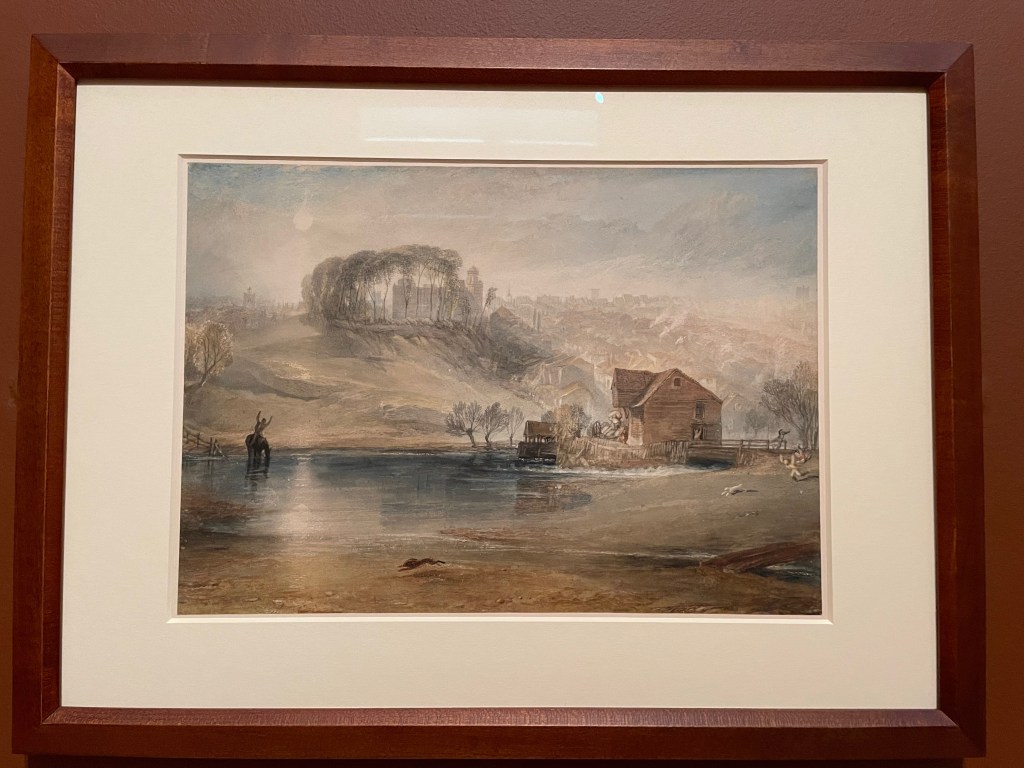
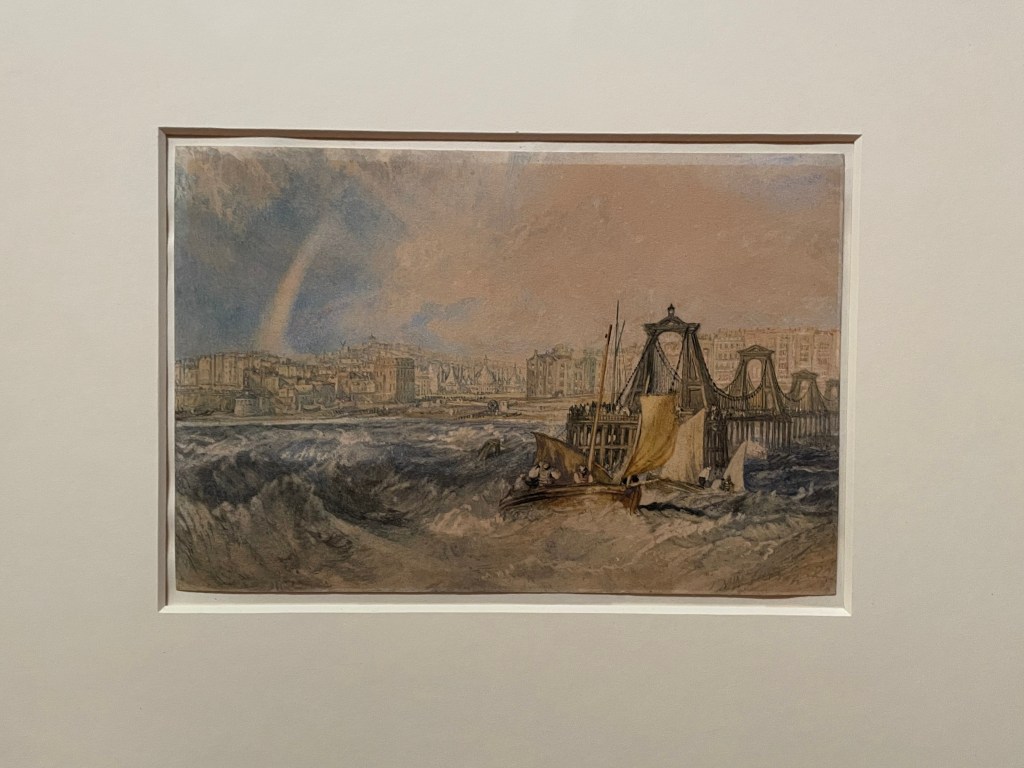
A blockbuster show at Tate Britain celebrates two of the the UK’s most acclaimed artists. Born a year apart, JMW Turner (1775-1851) and John Constable (1776-1837) both pushed their art into entirely new aesthetics and left a lasting legacy in the development of British art, paving the way for the Impressionist’s movement and everything that followed.

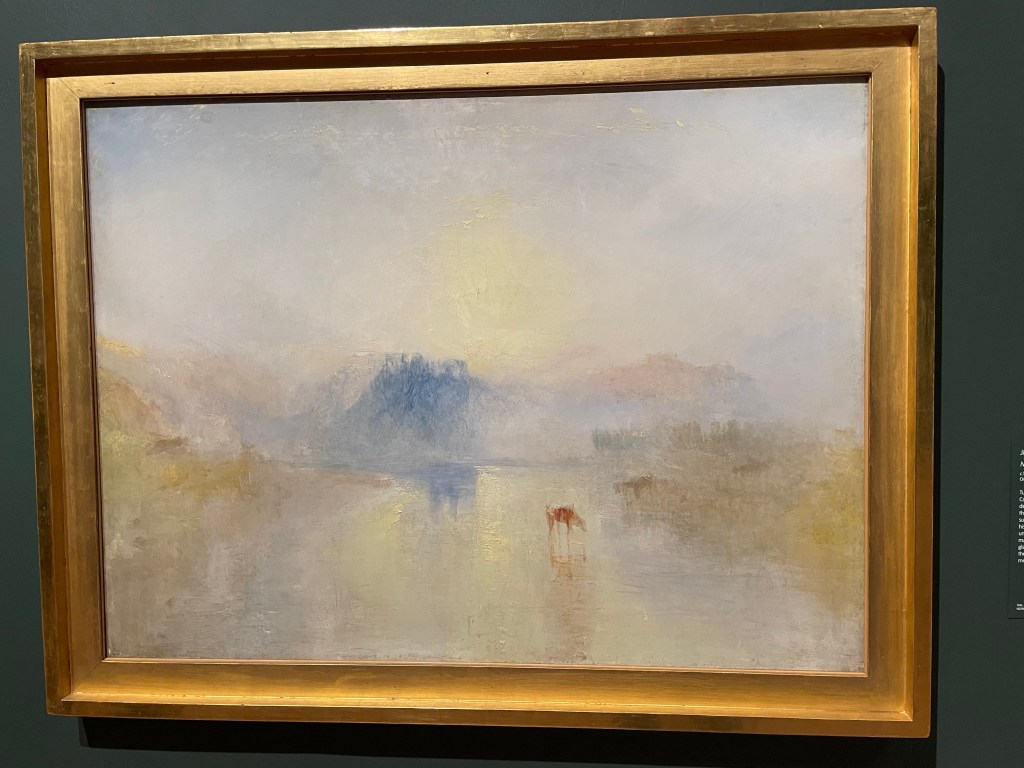
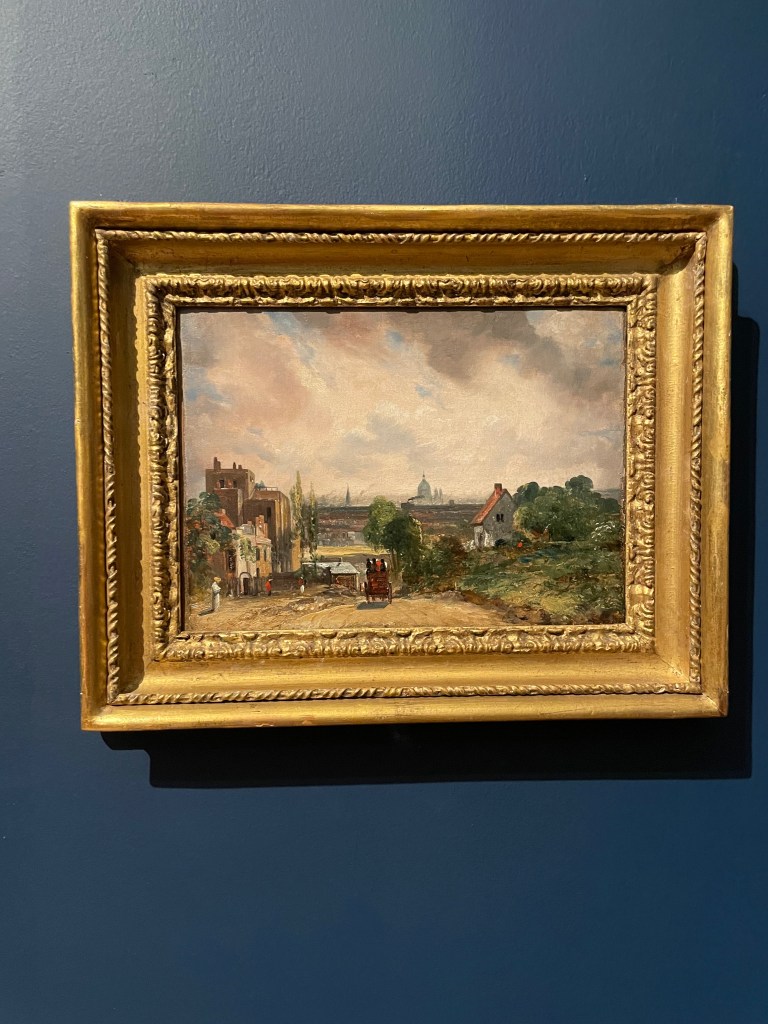
The works of Turner and Constable must be amongst some of the most recognised images in art history. Say the words Flatford Mill or A misty sunset in Venice and most of us will conjure the familiar bucolic image of a Suffolk Mill with a horse and cart or the beauty of Venice seen through a haze of cloud and watery sunshine. These works are amazing. But the history of these two artists is more entwined and their approach more similar than I had realised. This show, entitled Rivals and Originals, charts their artistic development as contemporaries and adversaries.

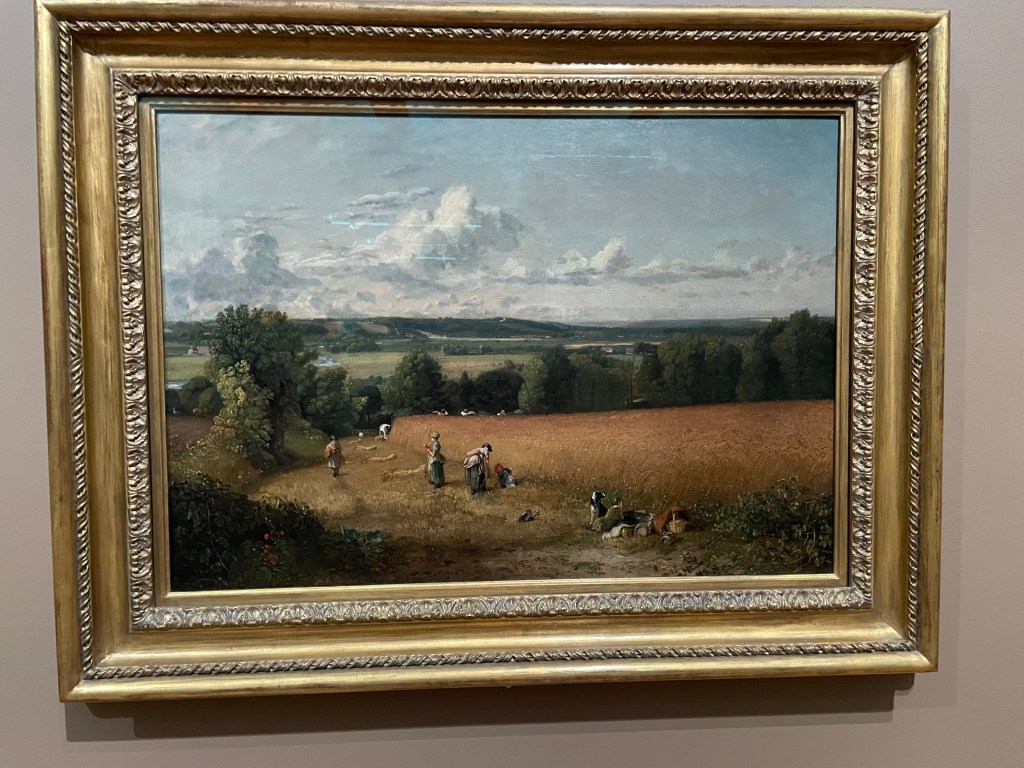
Both Turner and Constable were dedicated to art from an early age. Turner, you could argue, had the more difficult journey – the son of a barber based in Covent Garden, London, he demonstrated his skills at an early age and his father did his best to support his son’s desire to paint but he was not of the class expected to choose art as a career. Constable was born into middle class comfort in Suffolk and had to convince his family that he did not want to follow a conventional profession but devote his life to art. The pair developed their styles through study of Old Masters and a desire to push a narrative element into their art while recording contemporary life.

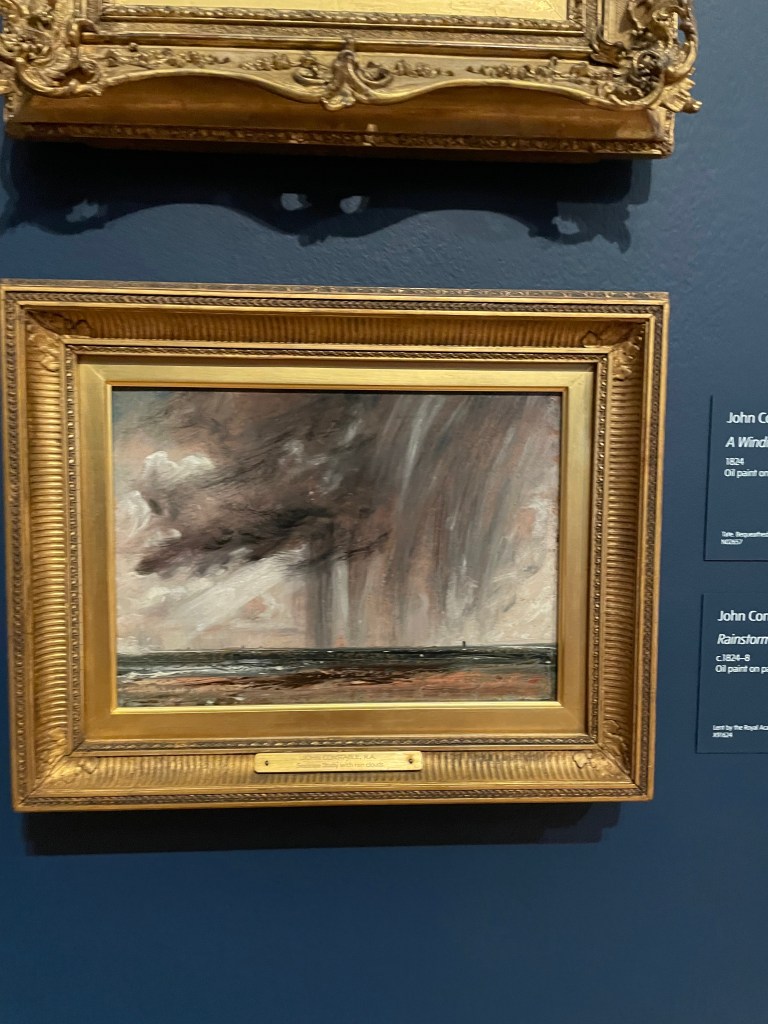
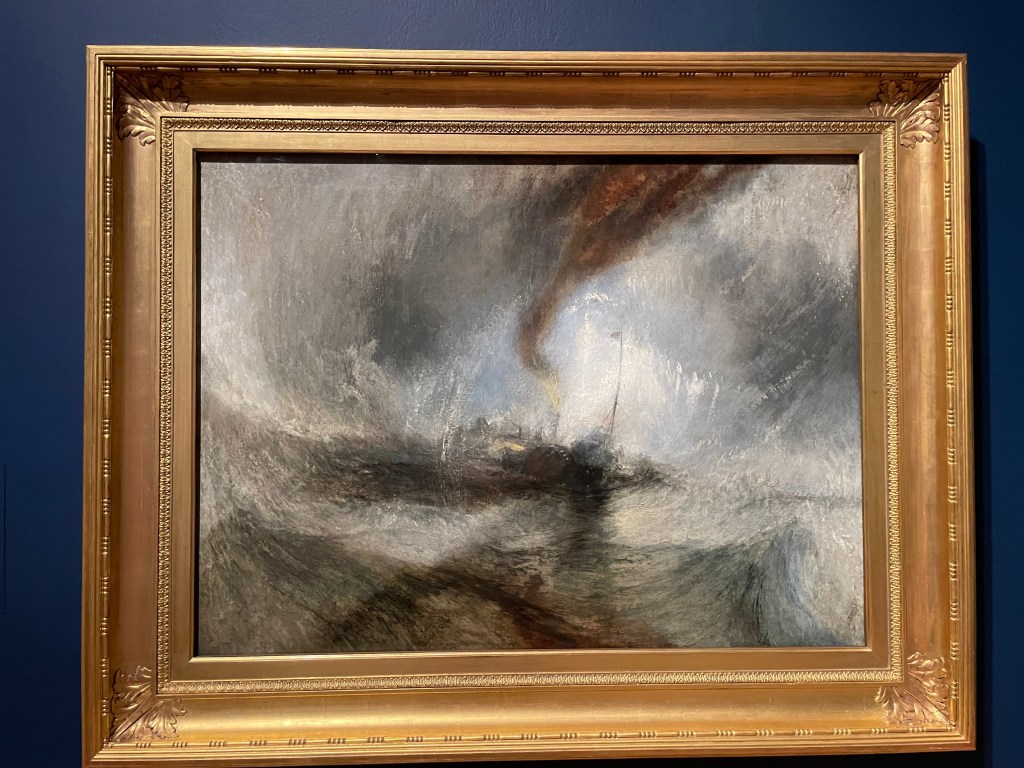
Sometimes it’s hard to differentiate between them – just look at these two, above. On the left is Turner’s Snow Storm – Steam-boat off a Harbour’s Mouth and on the right is Constable’s swift oil sketch called Rainstorm over the Sea. Both of them were fascinated by the power of nature and the constantly changing sky and weather conditions. They spent all their time sketching landscapes and painting the scene directly onto whatever surface they brought with them.

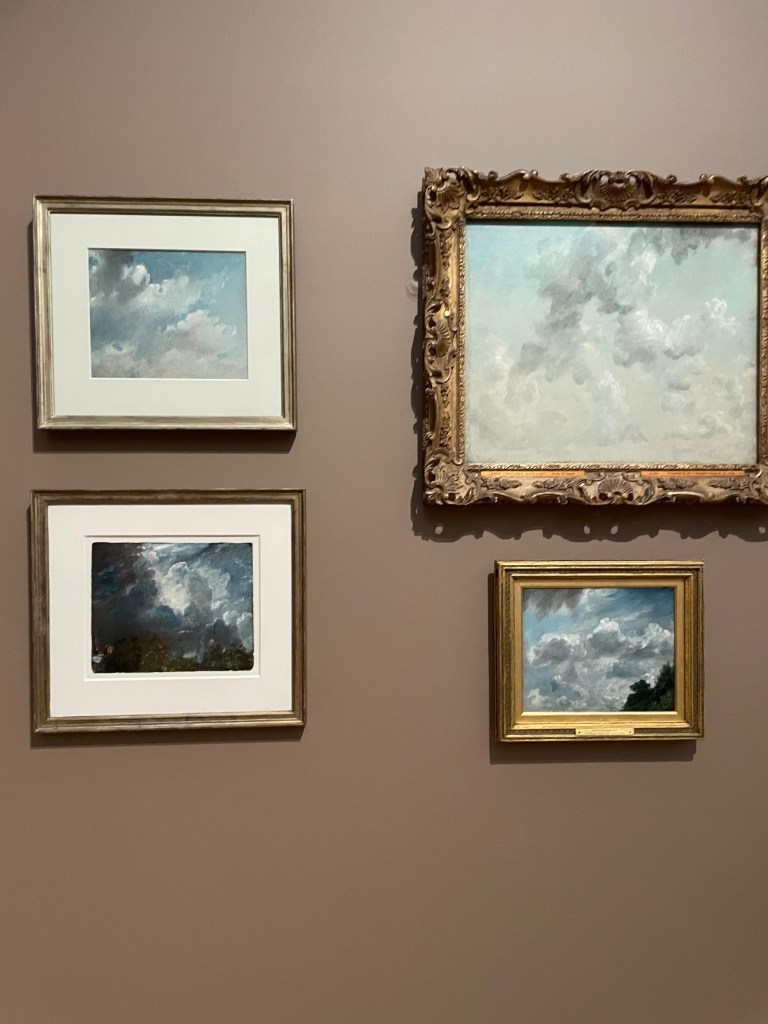
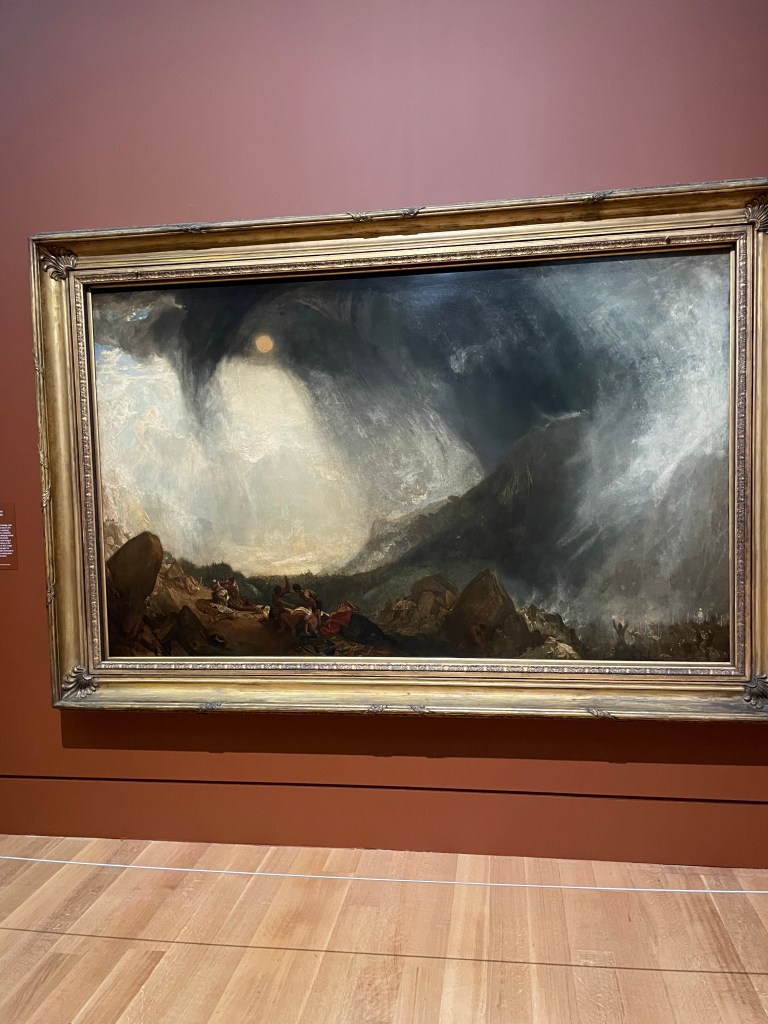
Both must have spent hours observing clouds in their infinite variety and using immediate sketches to dramatic effect. On the left is a selection of cloud studies by Constable and on the right is Turner’s massive painting Snow Storm: Hannibal and his Army Crossing the Alps.

My takeaway from the show, apart from having thoroughly enjoyed it, was the chance to see the evolution of these two artists from detailed work, which might be as literal and accurate as possible, towards a much freer, expressive way of working. Both appear to have created their work at speed, using wonderful gestural swishes of paint or urgent daubs of white and black to denote drama and impact. They are both glorious. This is a wonderful show and well worth seeing.

It’s on at Tate Britain until 12 April 2026.
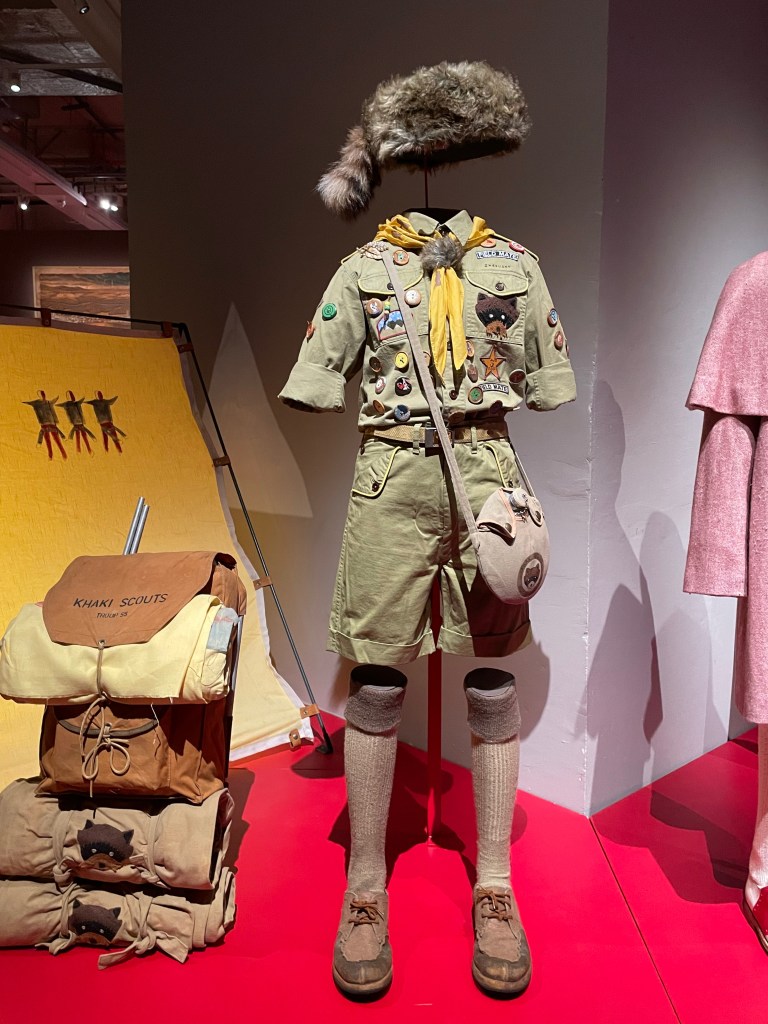
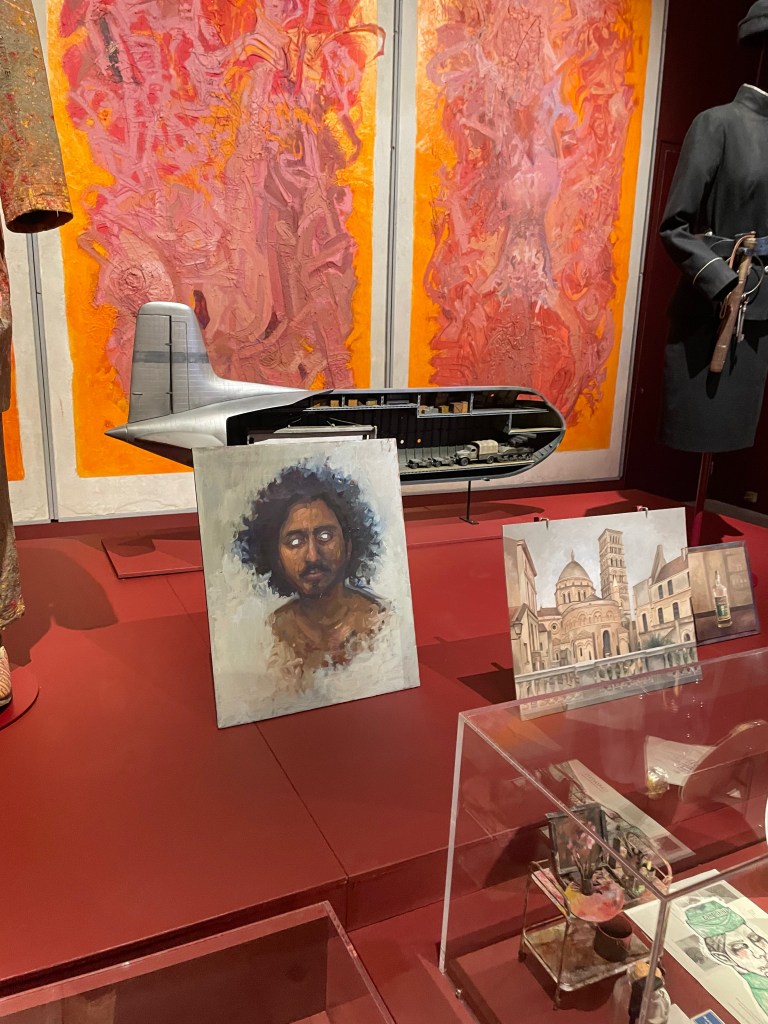
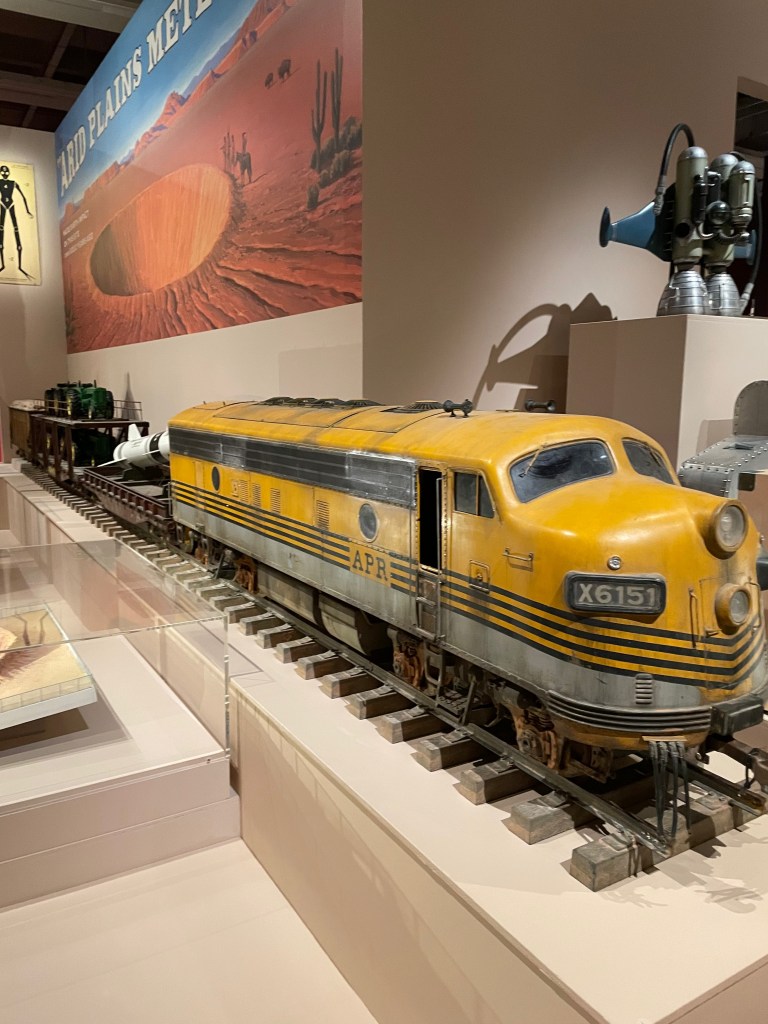
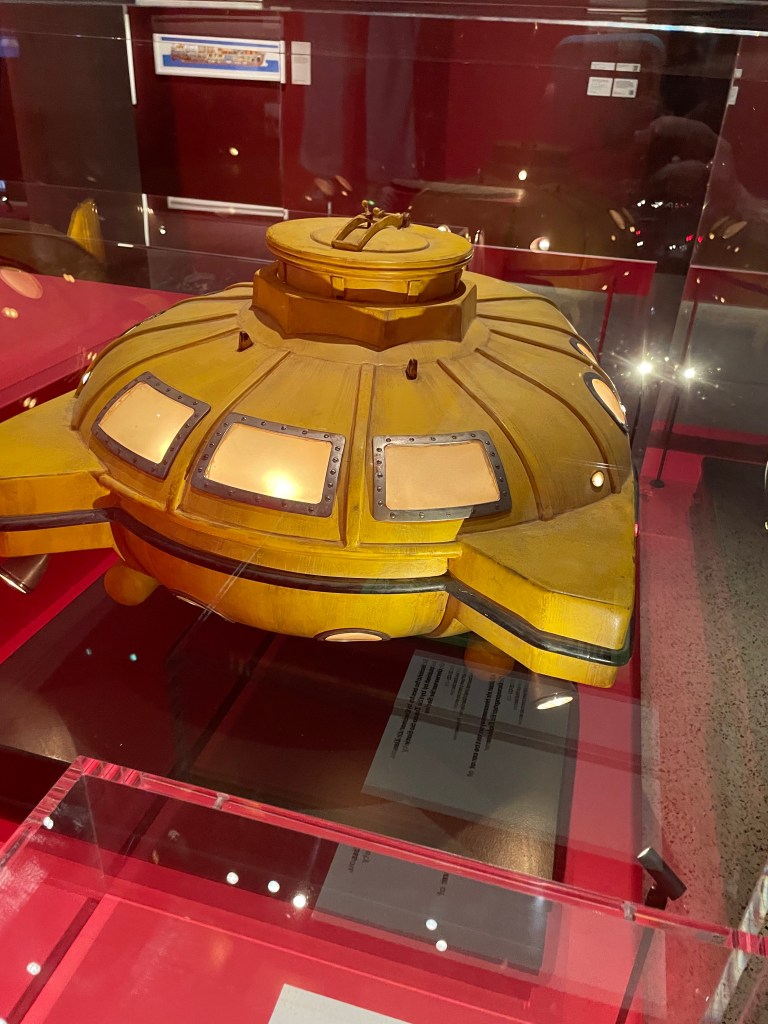
If you’re a fan of Wes Anderson’s films then a trip to the Design Museum in Kensington is a ‘must do’ as a festive treat or a New Year resolution. This retrospective is a cracker of a show – filled with props, costumes, photographs, scripts and fragments of creativity which have gone into his 30-year career making memorable films.
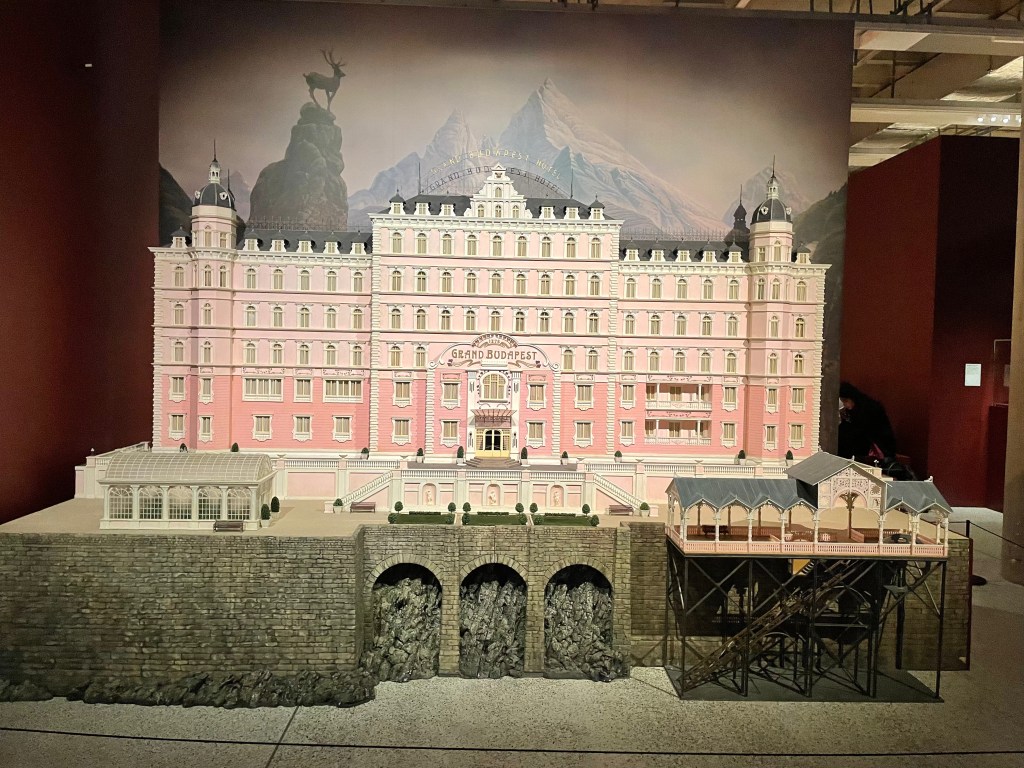
I confess I’ve not seen ALL of Wes Anderson’s films but can attest that the ones I have seen were filled with amazing images and situations which linger in the memory long after the credits have rolled and it’s time to leave the cinema. Above is the spectacular model for the Grand Budapest Hotel which was a gloriously witty, stylised (and Oscar-winning) film.

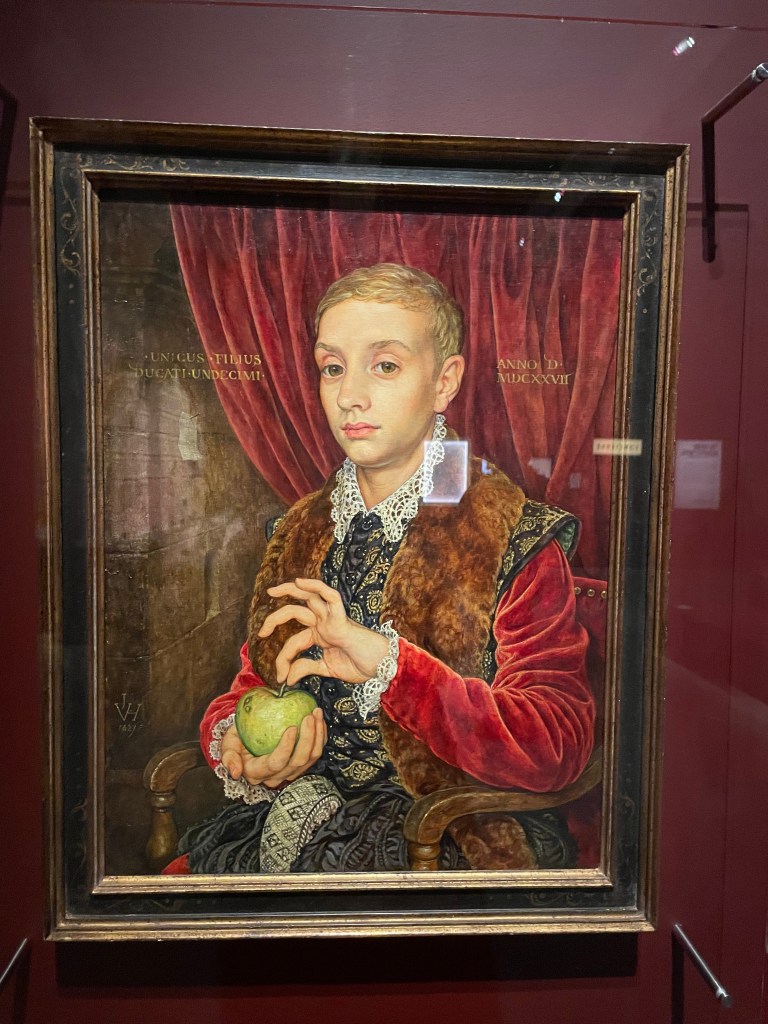
Wes Anderson has hung onto everything. Above is the spectacular painting ‘Boy with Apple’ which channels the best renaissance painting but was created by British artist Michael Taylor specially for the Grand Budapest Hotel.

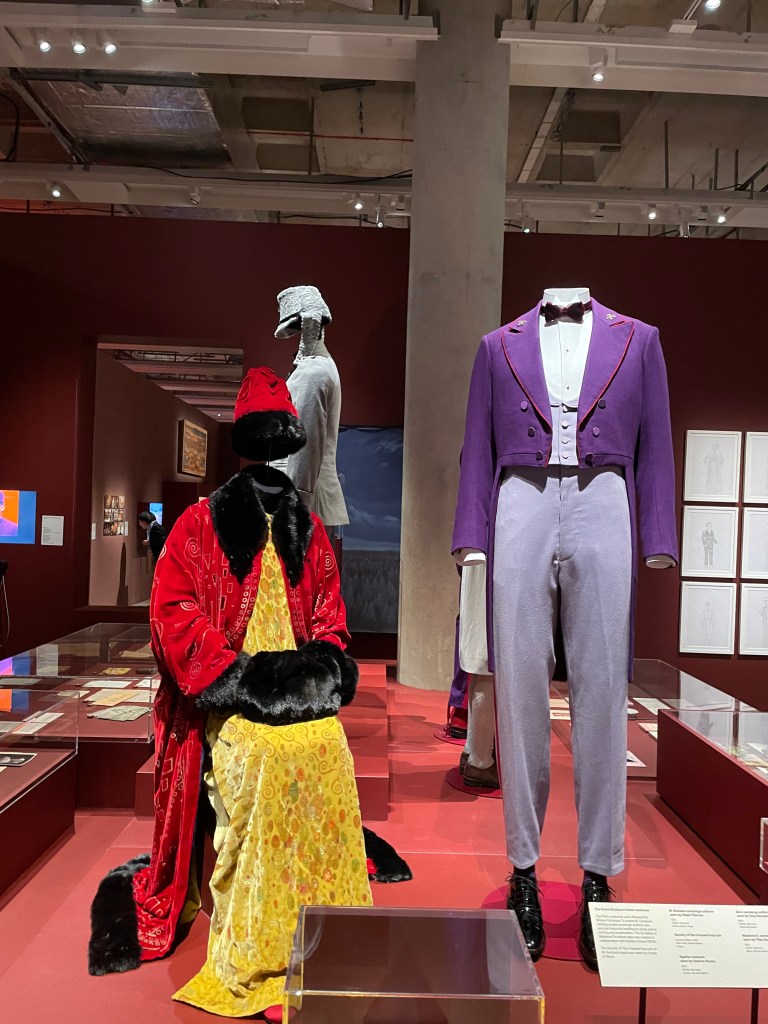
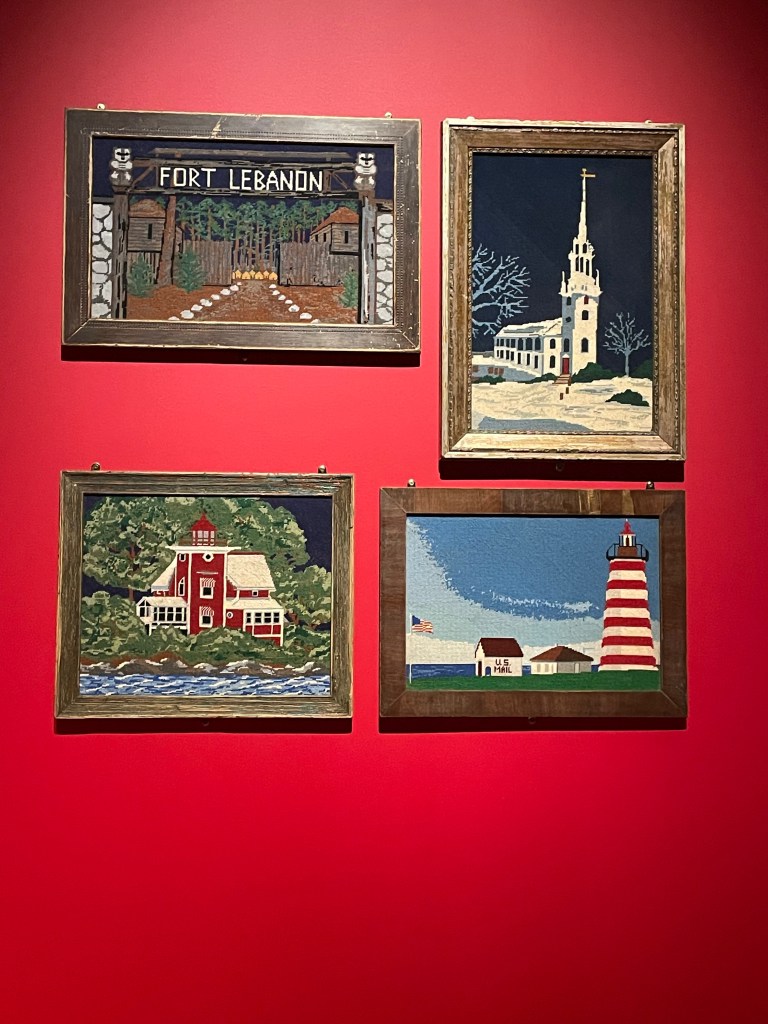
From his very first short film, The Bottle Rocket, (when he discovered that the production company has rights over all the props and costumes) he understood the importance of keeping control over items created for films; and ever since he has kept storyboards, costumes, props and memorabilia from his films. Nearly thirty years’ worth of items have been stored in a vast space in Kent and now they have been removed from boxes and displayed for all to see. The curators of the show have done a great job in presenting everything and clips from films are shown on screens too, giving context to the objects.

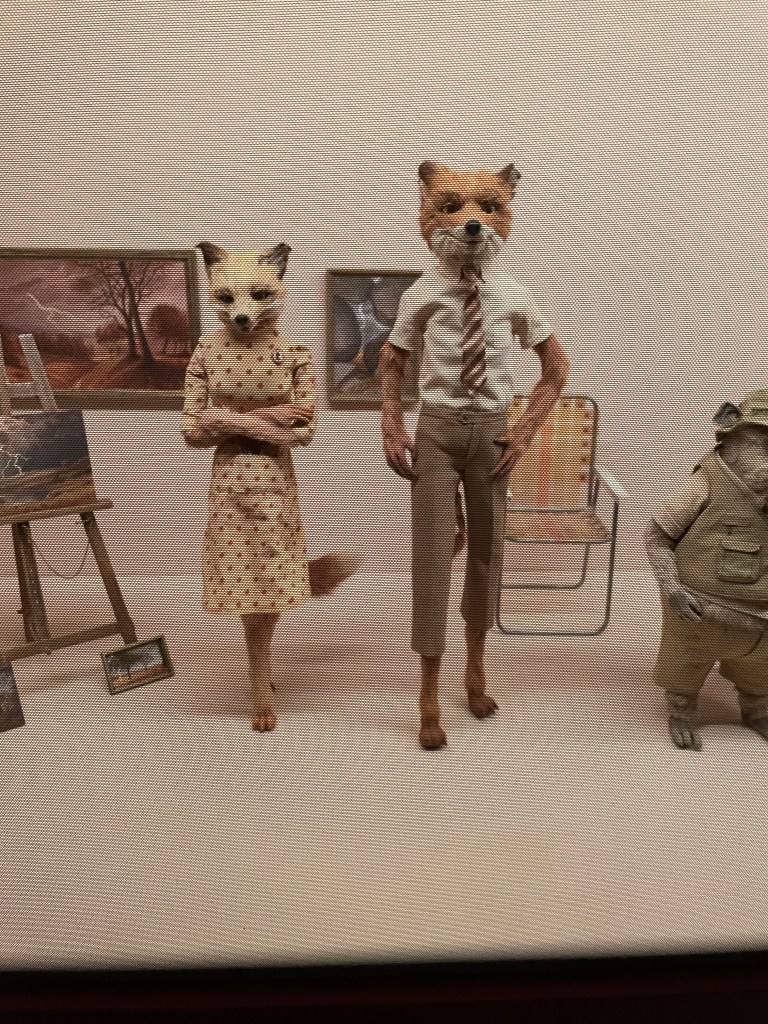
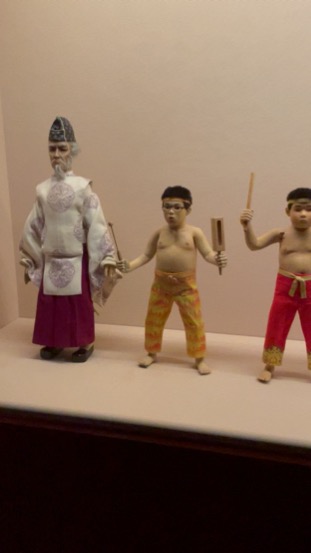
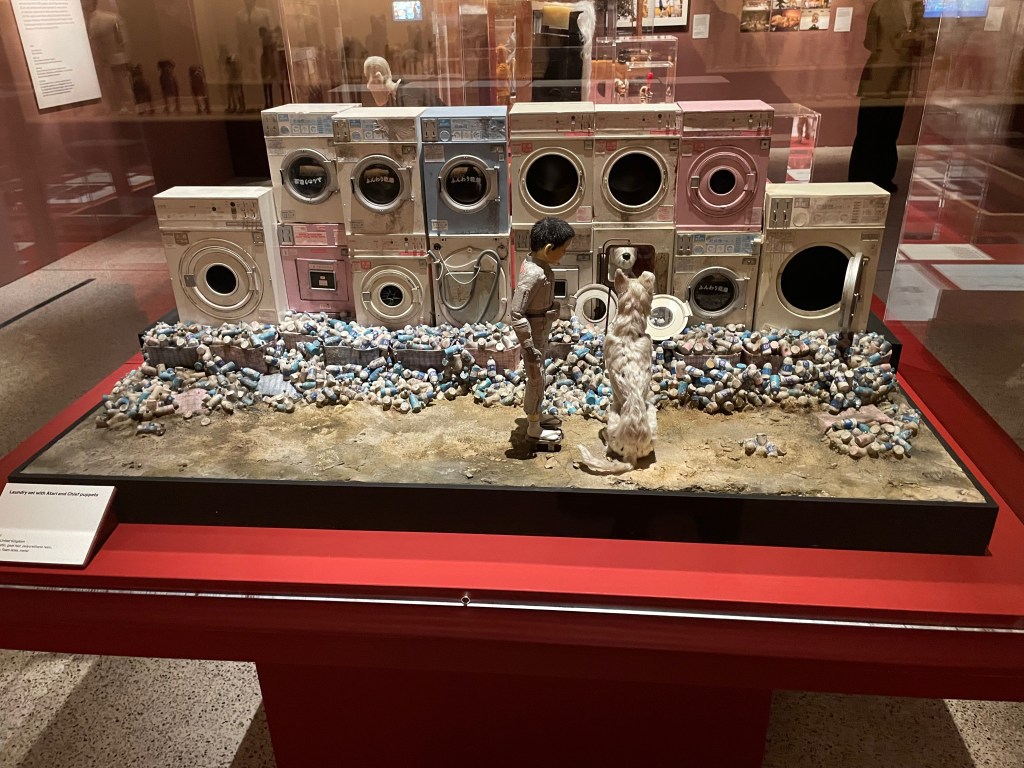
The little puppets and models for his epic stop-motion films, Fantastic Mr Fox (2009) and Isle of Dogs (2018) are glorious to view. Apparently it was the talented puppet makers and craftsmen of the UK which drew Wes to the UK to make these films.

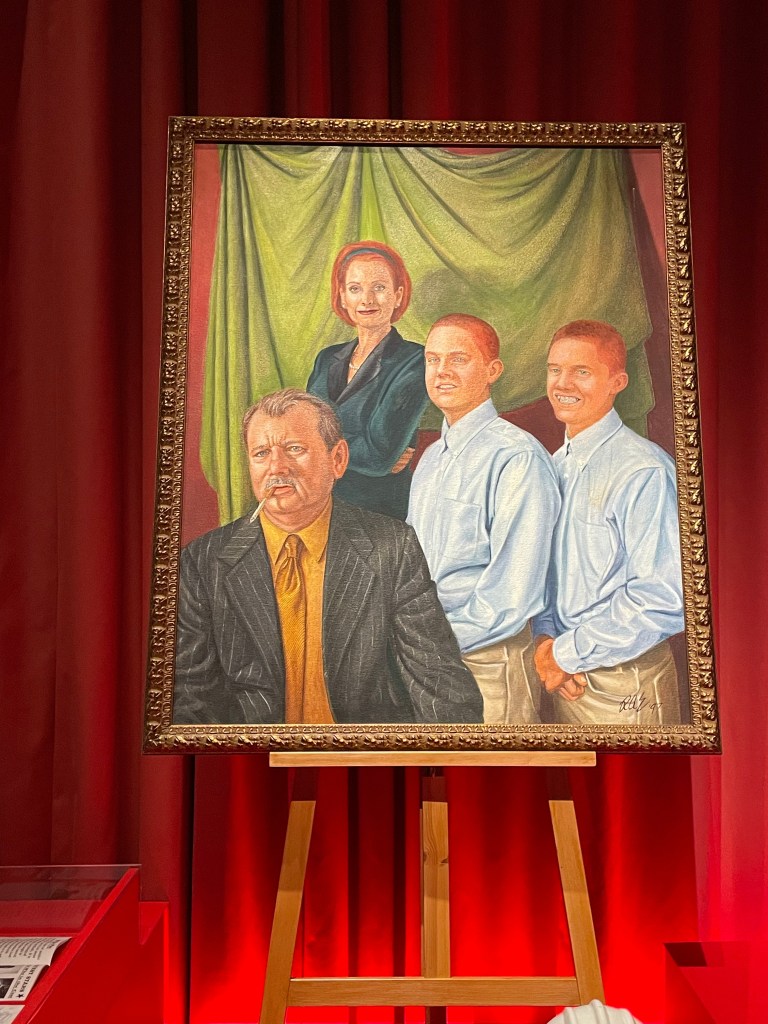
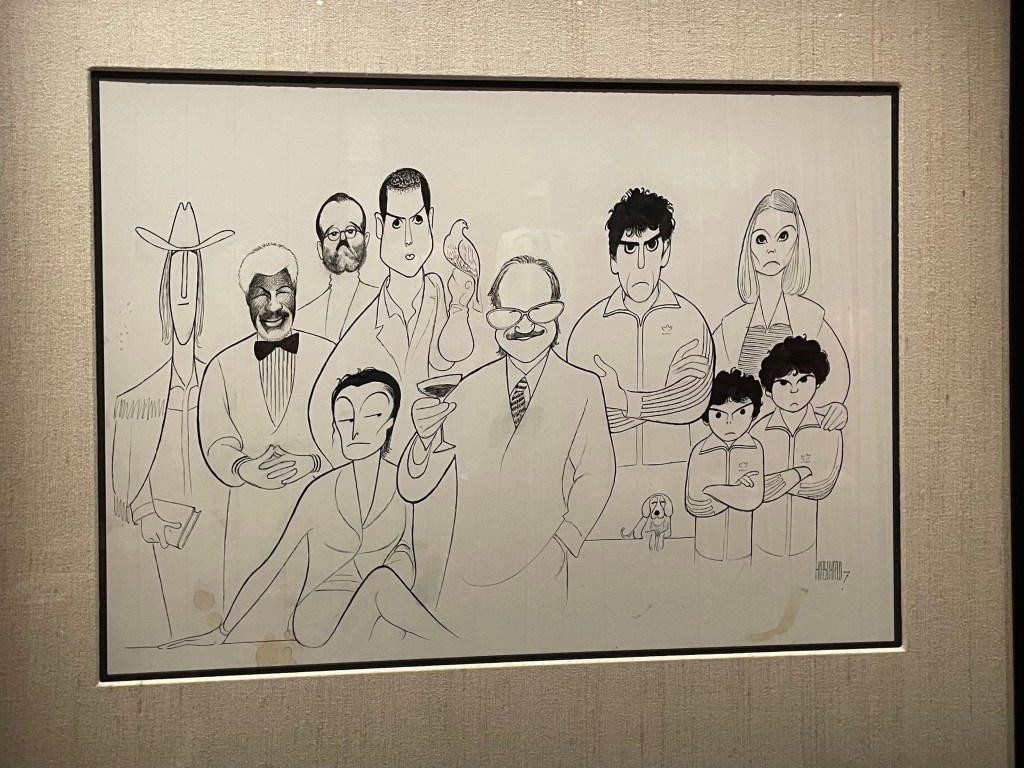
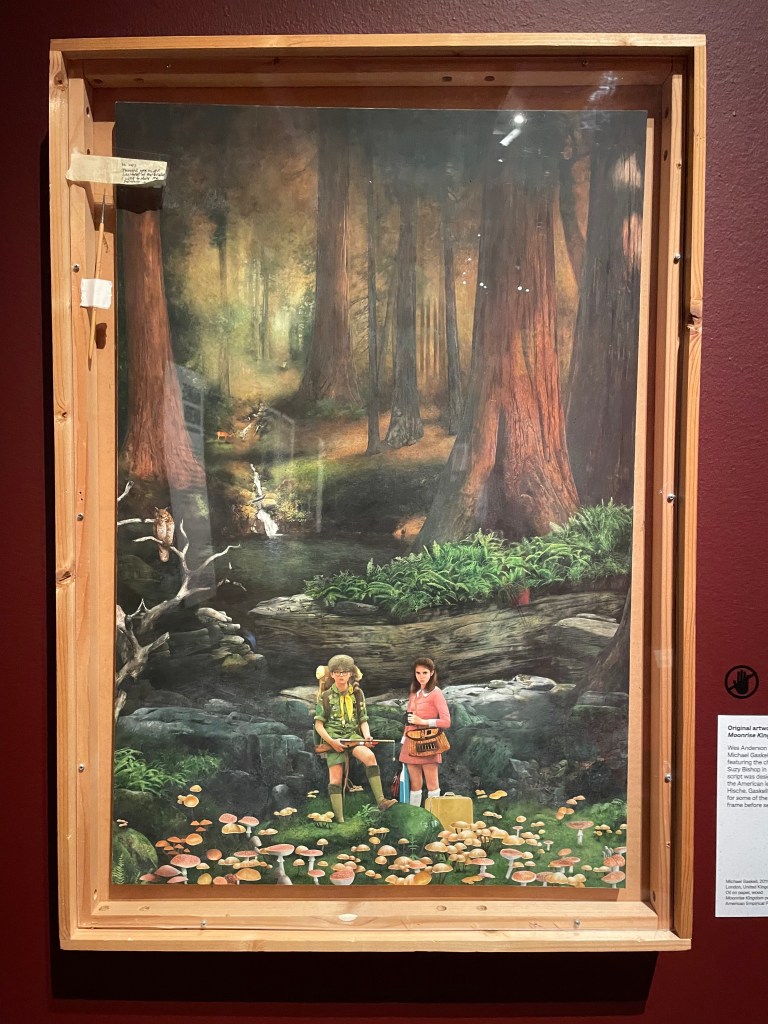
You might recognise, above, the Royal Tenenbaum props and costumes, or artwork from Moonrise Kingdom.

So, my resolution for 2026 is to watch all the Wes Anderson films I’ve not seen and revisit the ones I have. I think, having seen this show, my experience of the films will be all the richer.

The show is on at the Design Museum until 26th July 2026.