The drawings and ink sketches of French 19th century novelist, Victor Hugo, really are ‘Astonishing Things’ and it was fascinating to see a selection of the thousands he produced on show at the Royal Academy. They’re pretty dark, slightly creepy and give insight to a creative mind and a complex man.

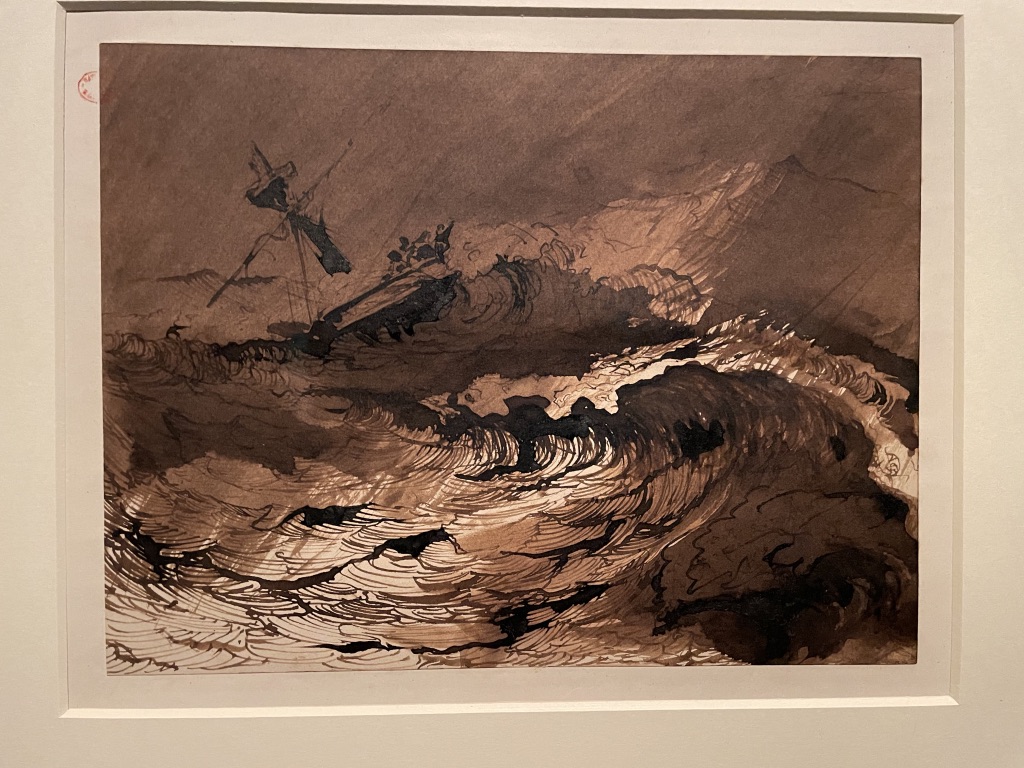
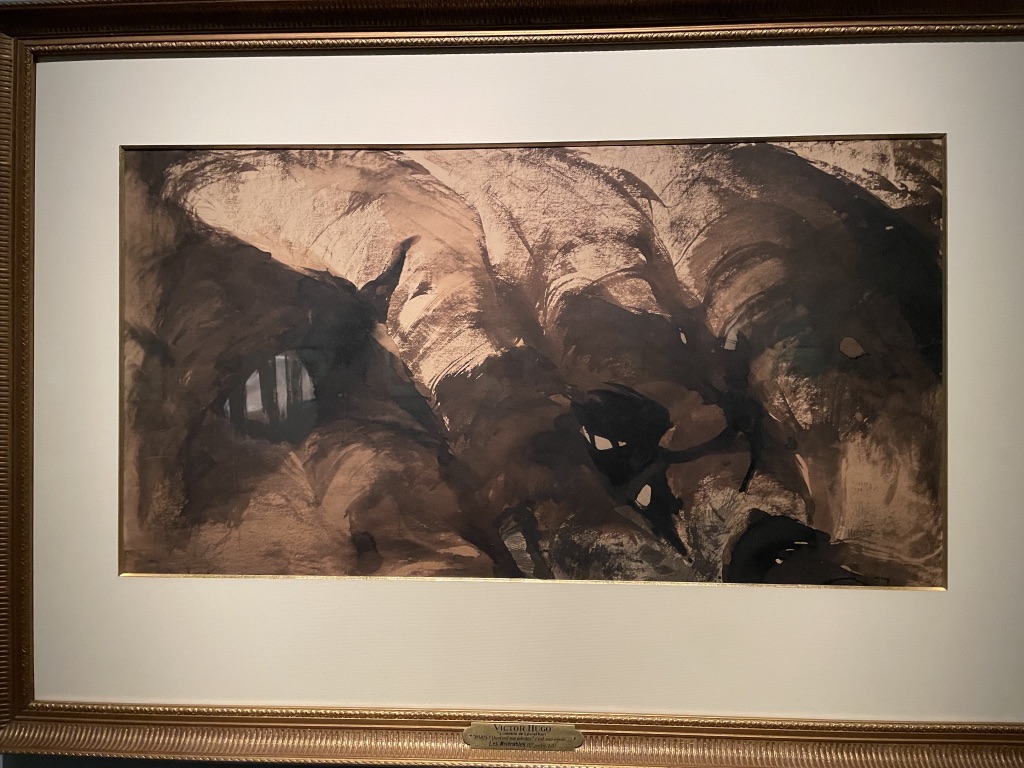
There’s a feeling of vigorous movement to Hugo’s art. These landscapes were inspired by the coastline of his Channel Island homes – in Jersey and Guernsey. They are full of energy, foreboding and danger. I’d say they were created very swiftly using brushes loaded with ink, combined with the swishes of a feather. Very dramatic. I wonder if he had seen some of JMW Turner’s work – such as the very atmospheric impression of a storm?
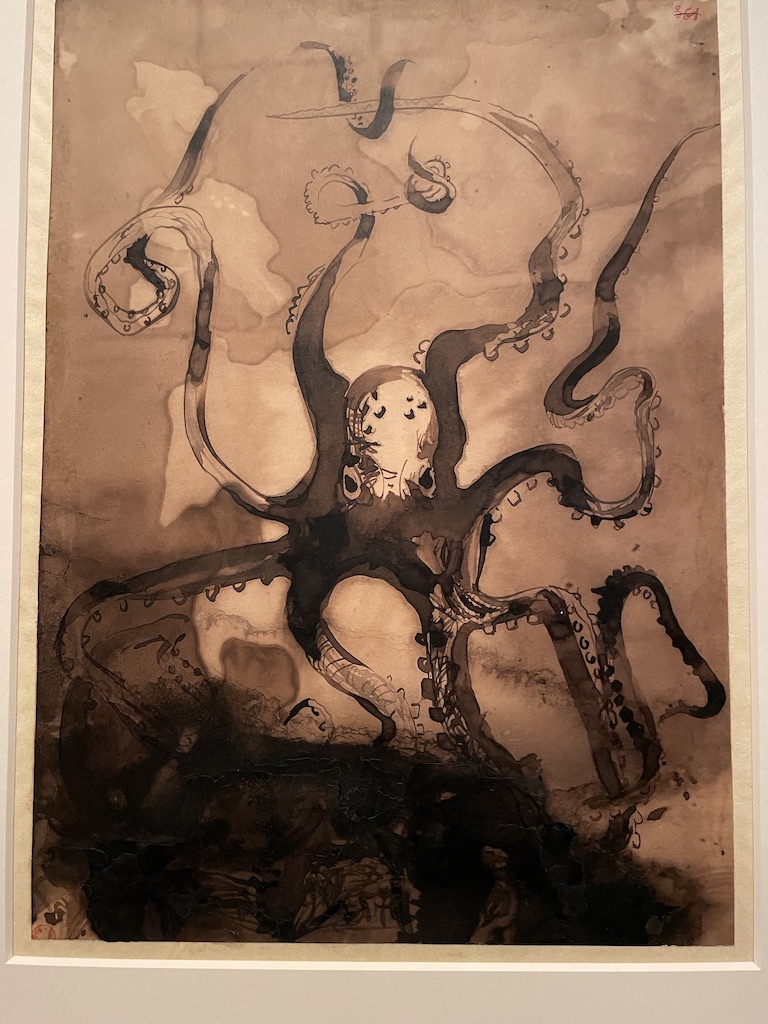
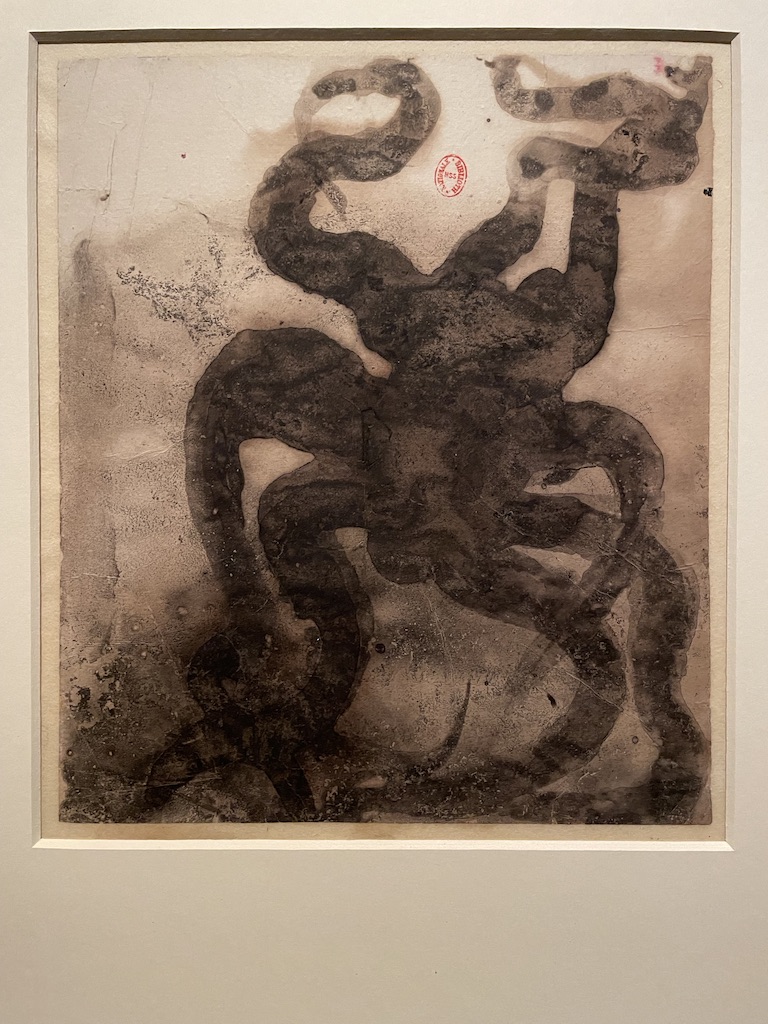
Victor Hugo is probably best known for his novel, Les Miserables. However, another bestseller in his lifetime was the Toilers of the Sea, (and also The Hunchback of Notre Dame). Toilers is a very compelling novel which involves a ship being attacked by a giant octopus. Judging from these drawings he clearly studied the forms of these sea creatures and, when the book was published in 1882, it included his own drawings.
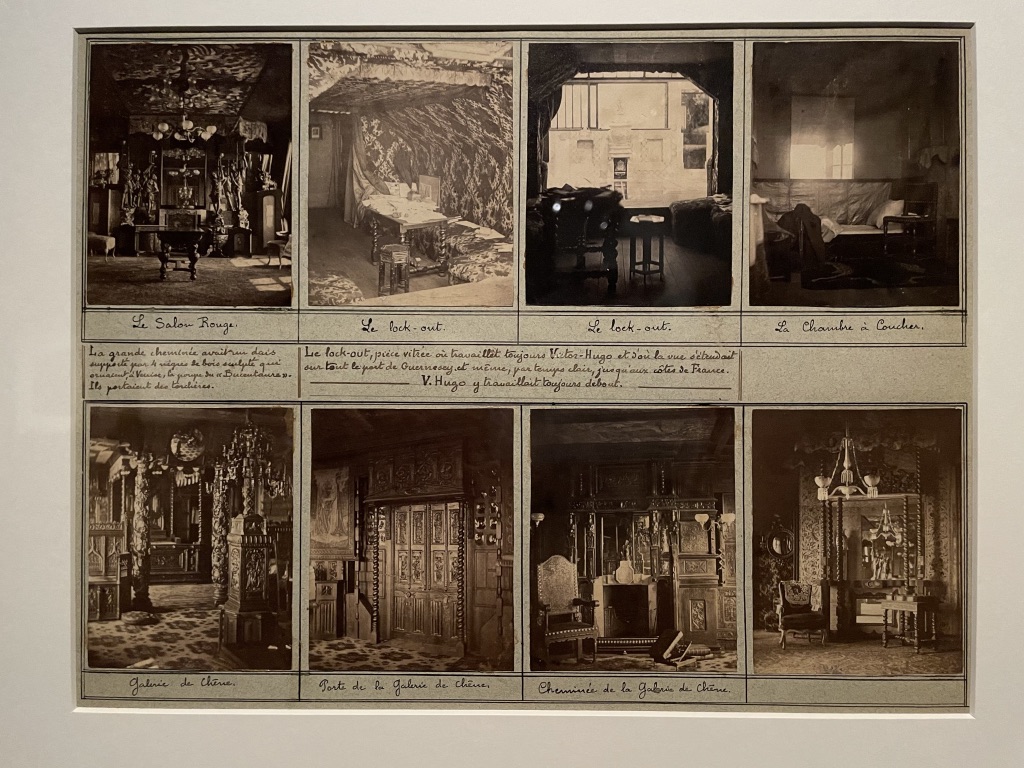
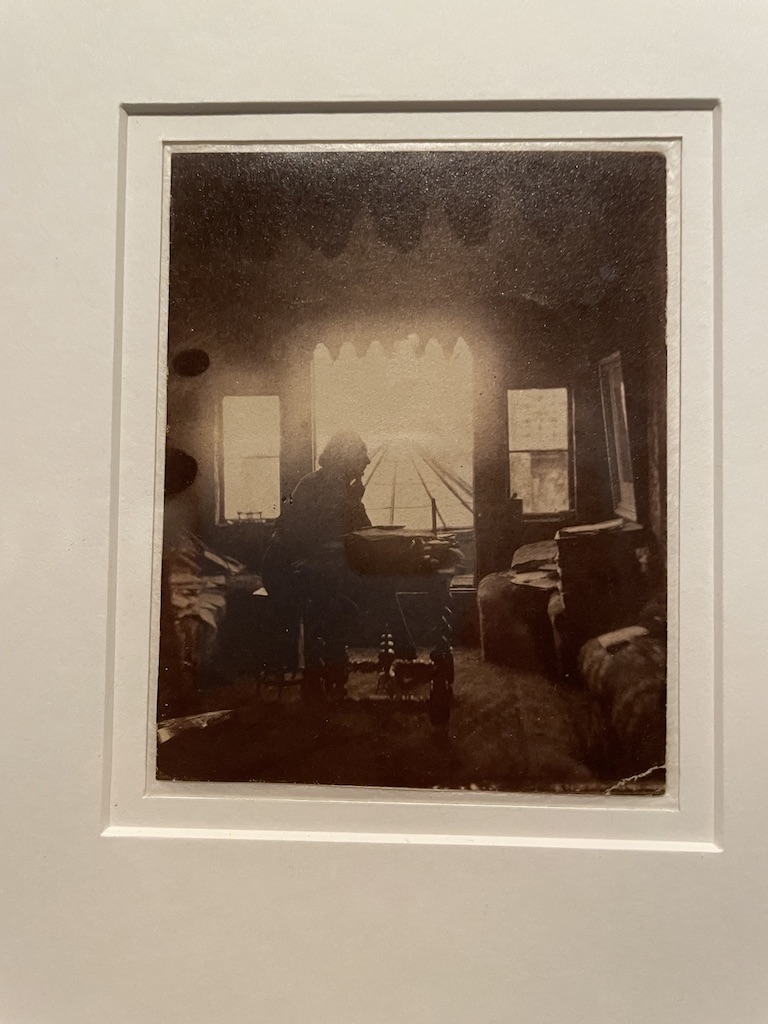
Above are photographs of his home in St Peter Port, Guernsey. Hautville House is a large town house and Hugo added ‘Le Lookout’ at the top of the building where he would stand at a high desk to write while looking out over the bobbing boats in the harbour. I visited Hautville House years ago and was struck by the very oppressive atmosphere of the place. I’m not sure I would like to have been a guest at the place. Apparently Victor Hugo rigged up gas burners in the spare rooms which he would make flare up at night and terrify the occupants. He also arranged mirrors strategically up the stairs so that he could see into all the room from his Lookout and know who was approaching.
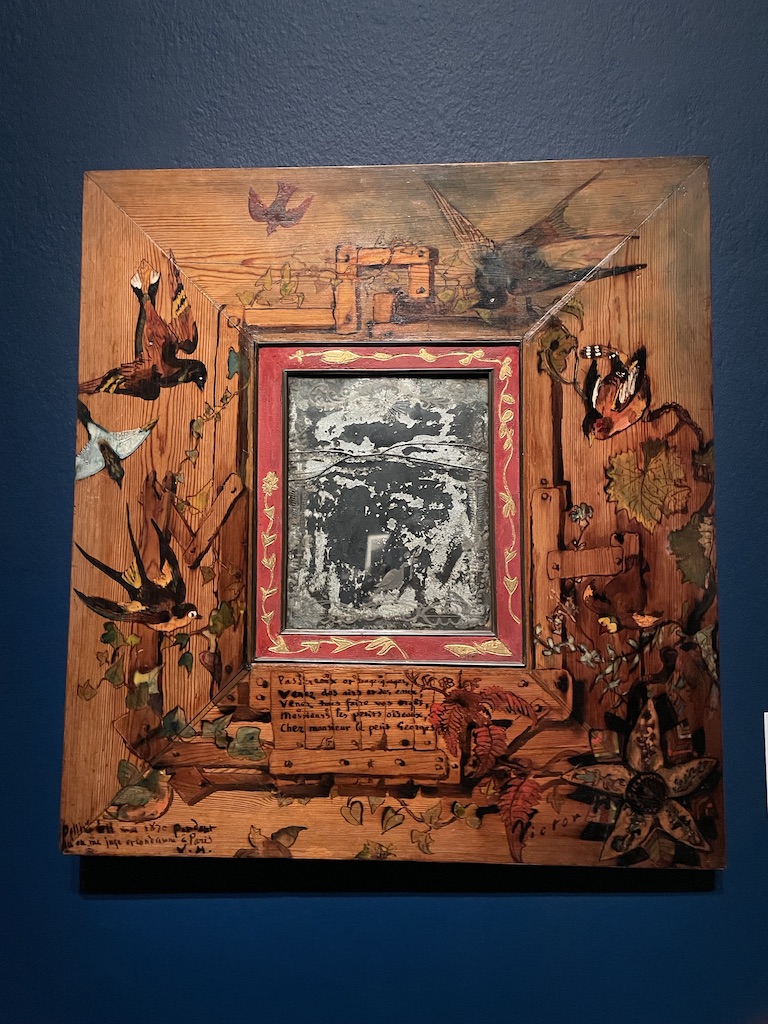
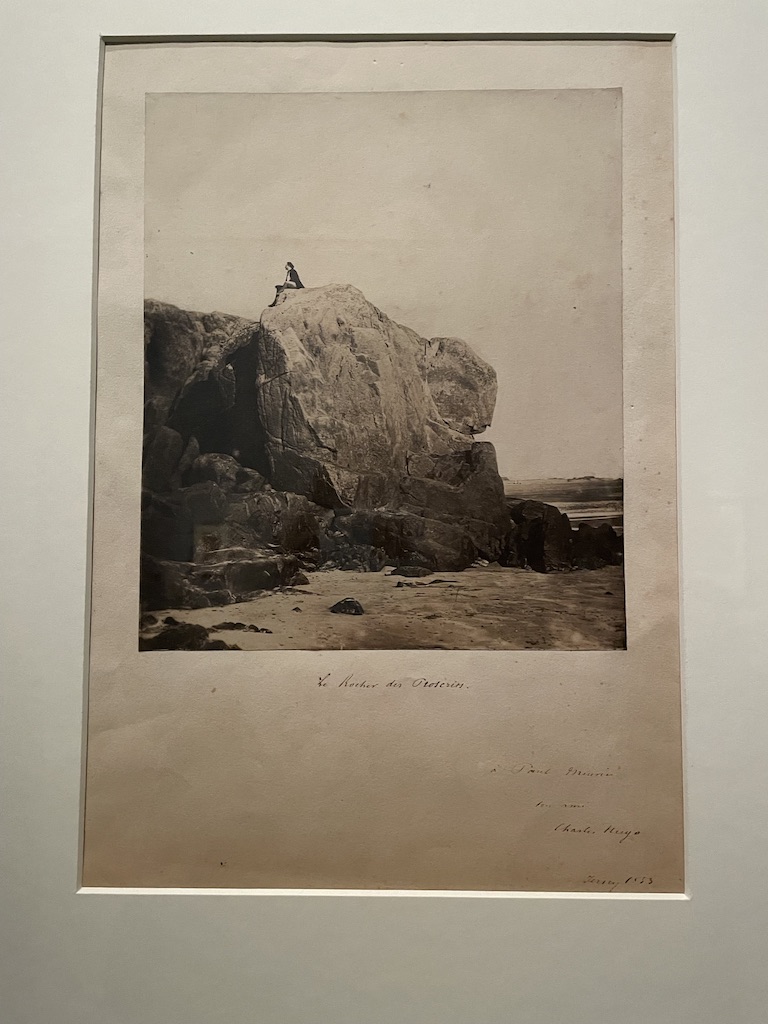
He took control of the decoration of his house (I think his wife must have been very long-suffering to put up with his heavy and rather ‘gothic’ taste.) He even created some of the furniture such as this mirror with a painted surround. Apparently he would walk up to ‘Exile’s Rock’ in Jersey and sit alone upon it thinking and writing before retiring to his study in the Lookout and write his books, poetry, plays and political treatise.
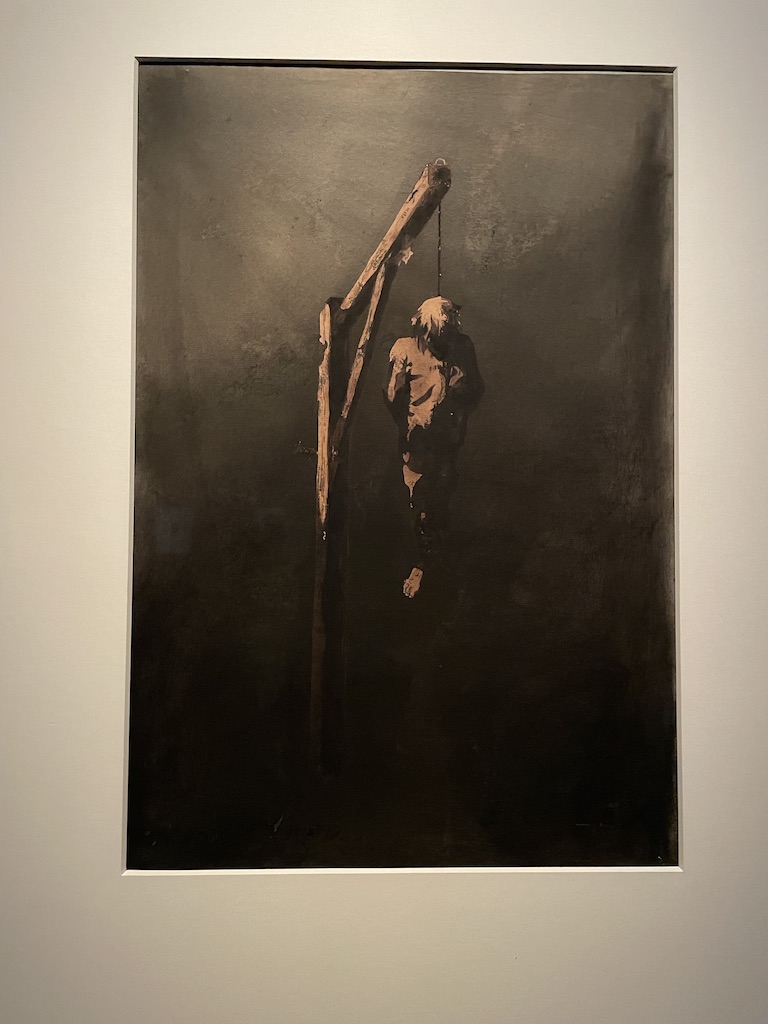
I was impressed to learn about his strongly-held political views. He was fiercely anti-slavery and appalled when John Brown, an American abolitionist was executed in Virgina after being accused of inciting a slave rebellion. Victor Hugo made this image in protest.
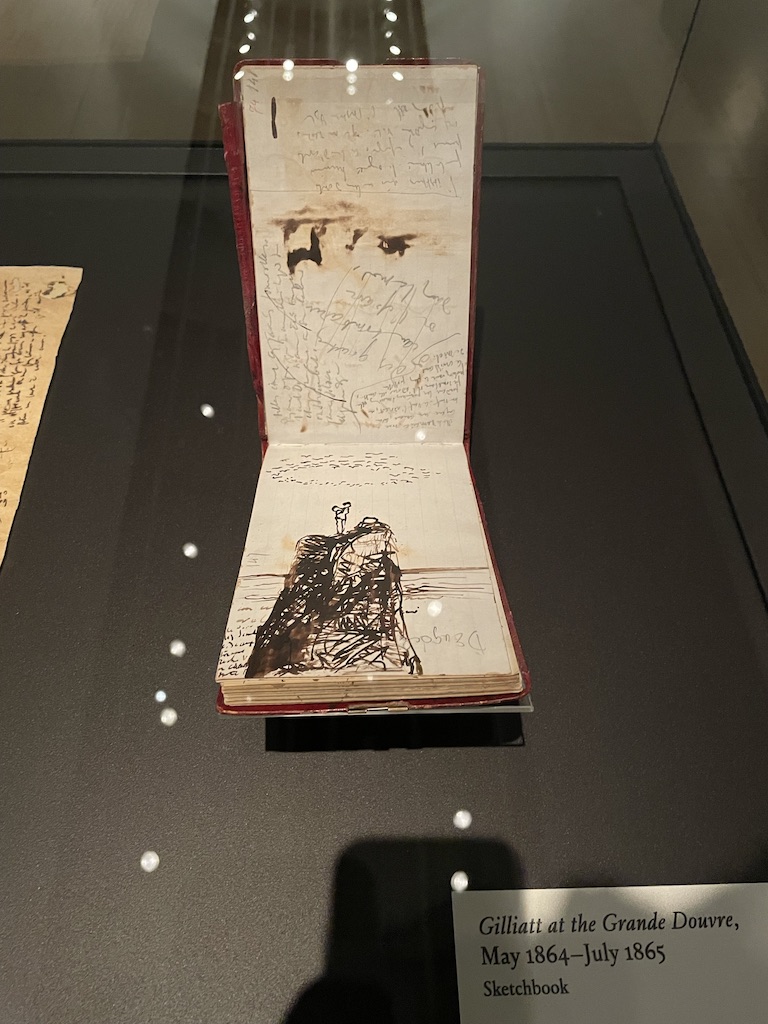
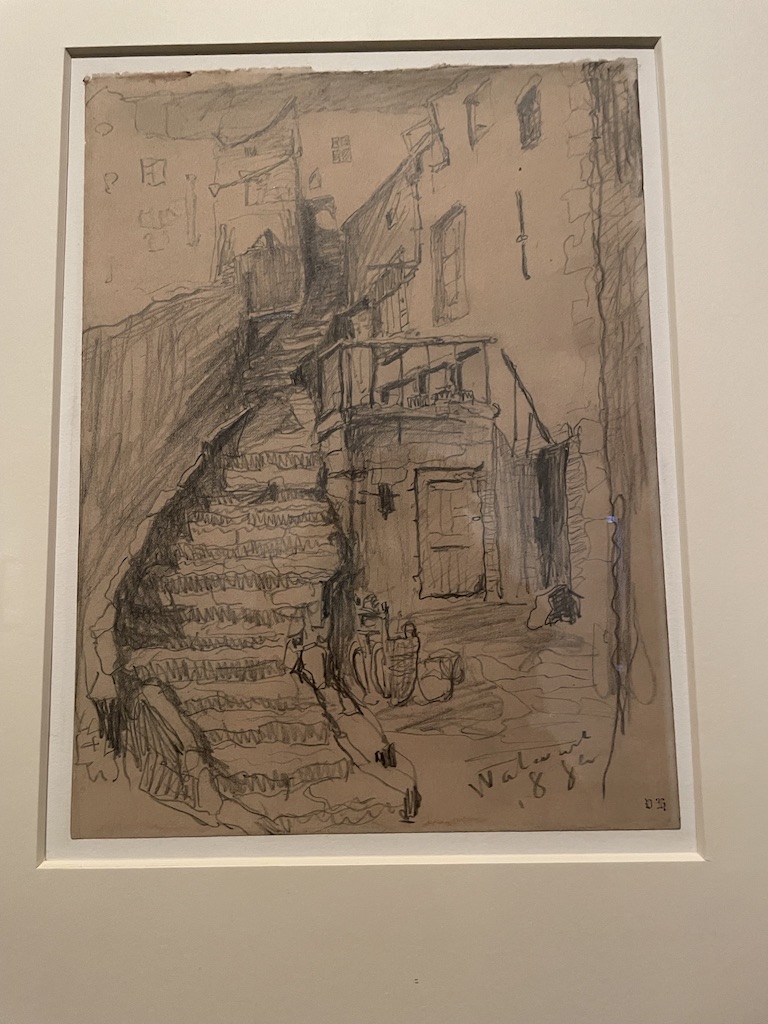
He spent a great deal of time travelling around Europe (avoiding France) with his sketchbook, noting scenes and recording landscapes and buildings. He didn’t seem to be so interested in drawing people.

It’s a very interesting show which provides a welcome view of this revered 19th century novelist whose books are still popular. And it’s treat to see his drawings which rarely leave France. The show is on at the Royal Academy until 29th June 2025.

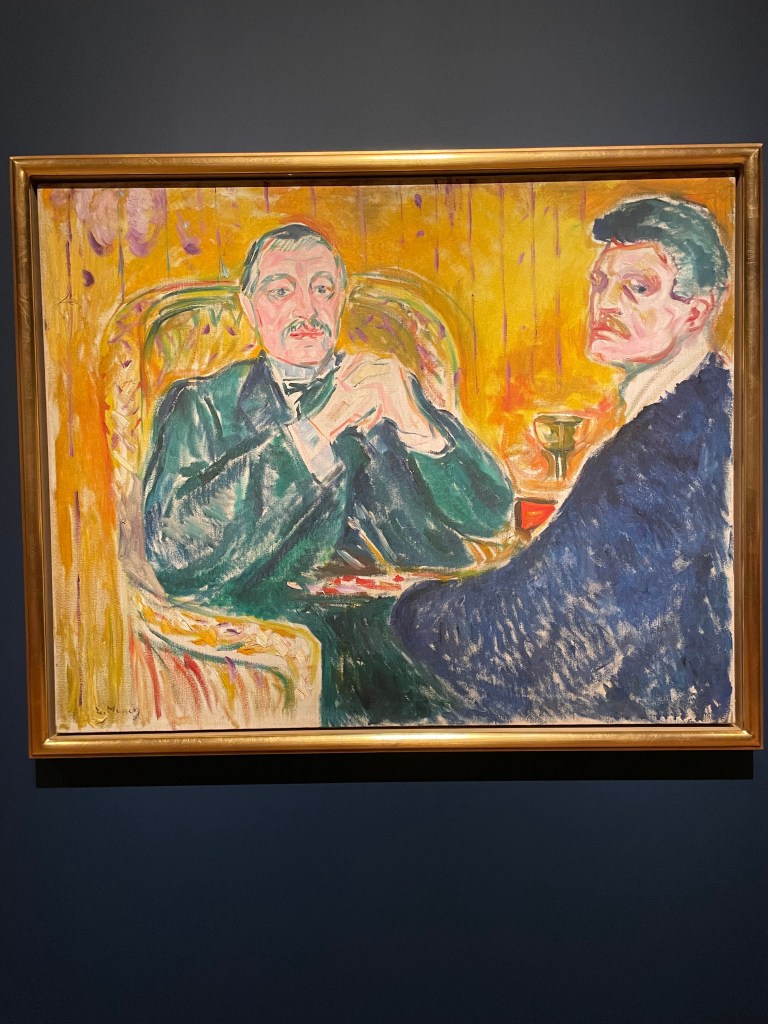
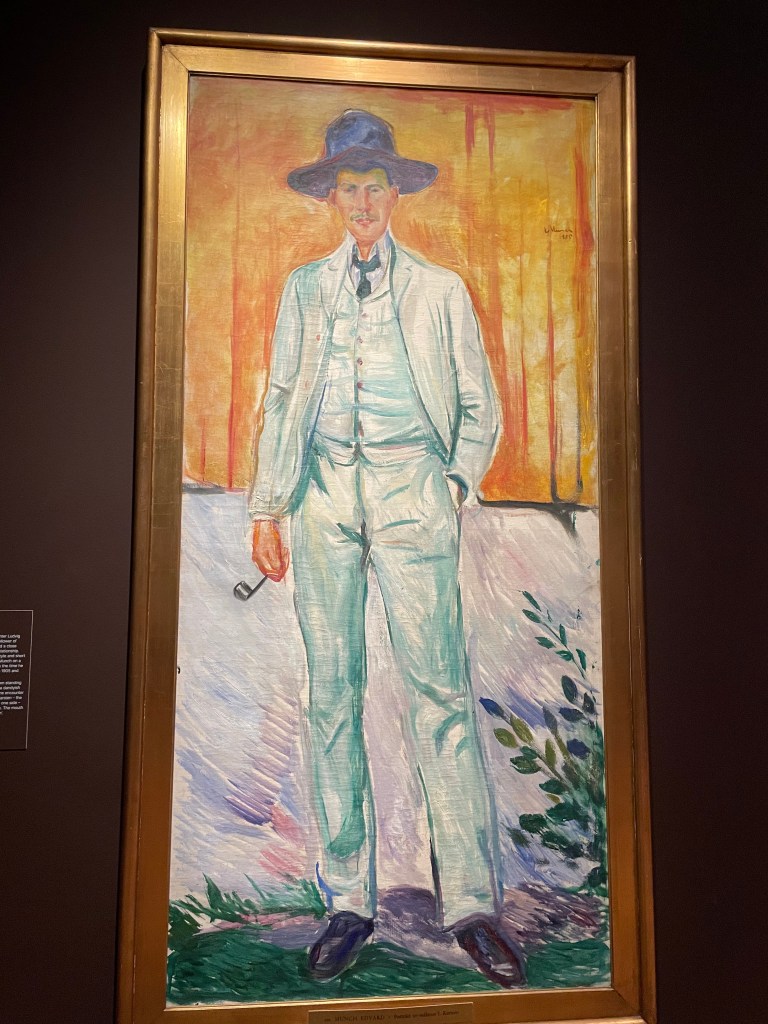
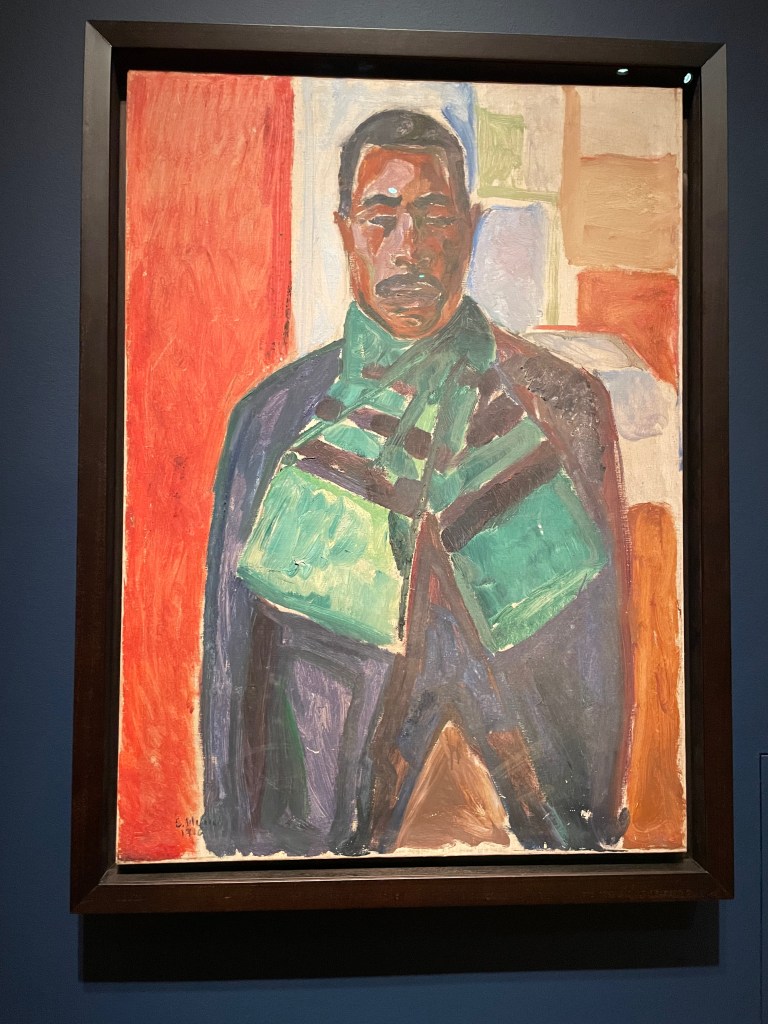
Who knew that the artist best known for that agonising work, The Scream, started out as a painter of colourful portraits? Well, now we know – thanks to a wonderful exhibition at the National Portrait Gallery of Edvard Munch’s early portraits, mainly of family and close friends. It’s a chance to re-evaluate this artist’s work and enjoy the sunshine and affectionate relationships in his life.

Colour! Yes, serious colour and, to my mind, a speediness of thought and hand in the creation of many of these portraits. I enjoyed the dribbles, splodges and daubs of hasty painting, as if he were in a great hurry to capture the subject in front of him and then get on with something else. Above: Torvald Stang, a friend, and self portrait of Munch.

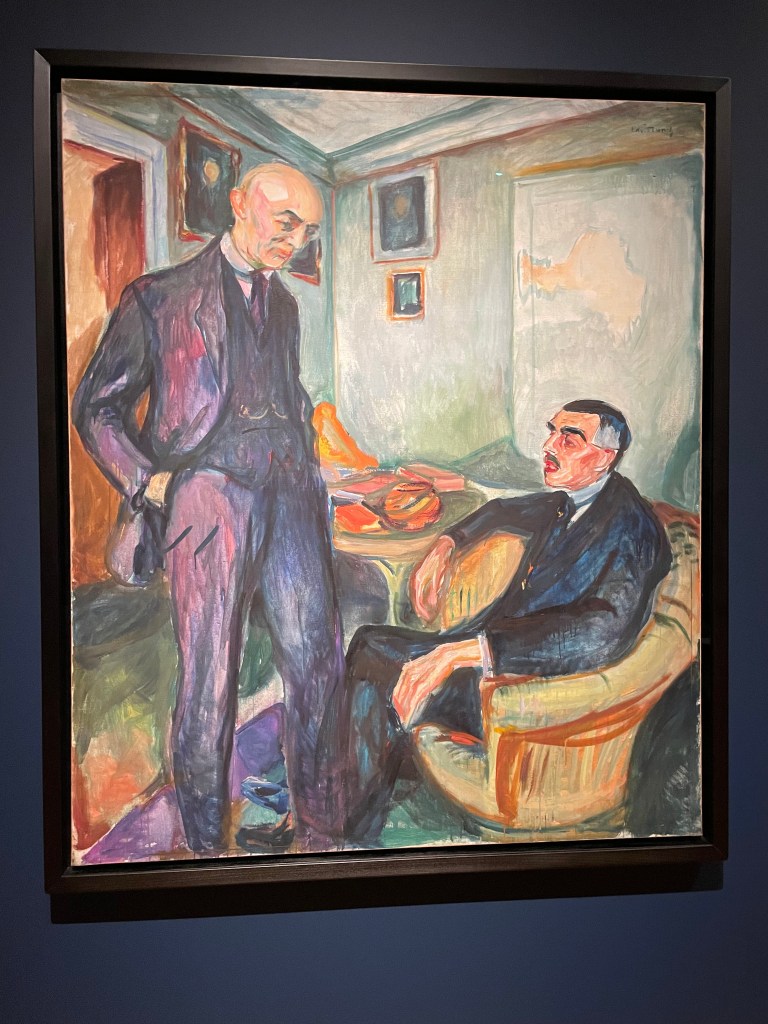
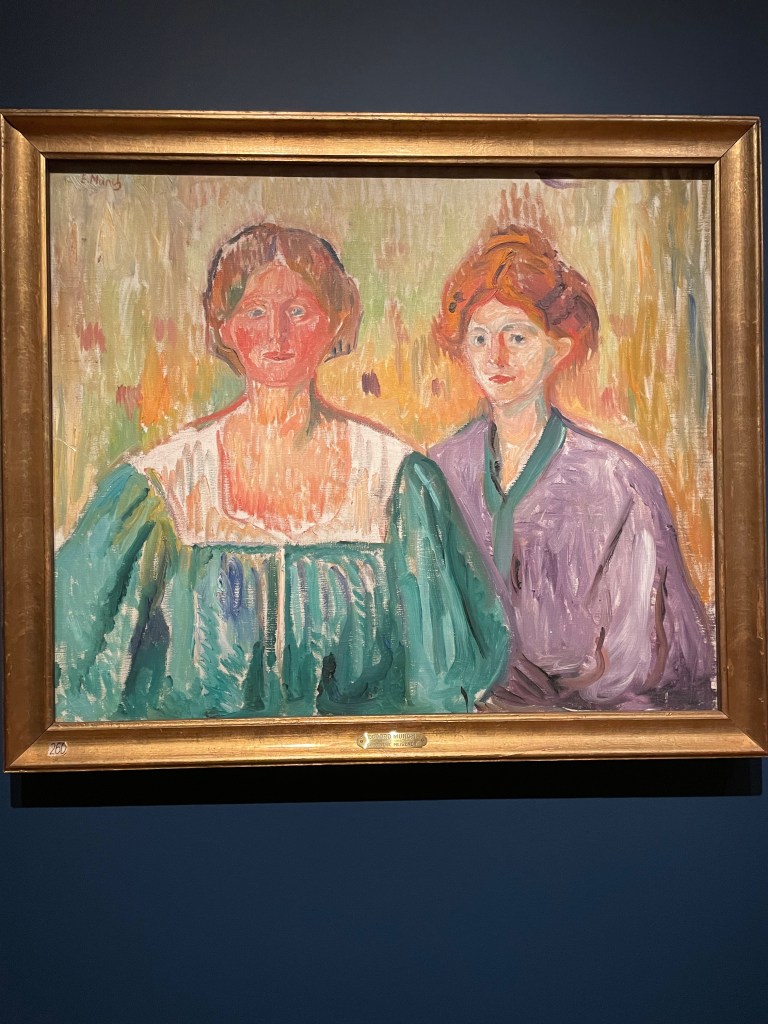
Munch was clearly very fond of his friends and family and painted them with obvious pleasure. And he liked depicting them in pairs. This is very much a theme. People with a connection occupy the same space and, again, were painted at much the same pace with an equal distribution of attention to detail. Above: Lucien Dedichen and Jappe Nilssen – friends from Munch’s student days. And on the right are sisters Olga and Rosa Meissner, professional models.

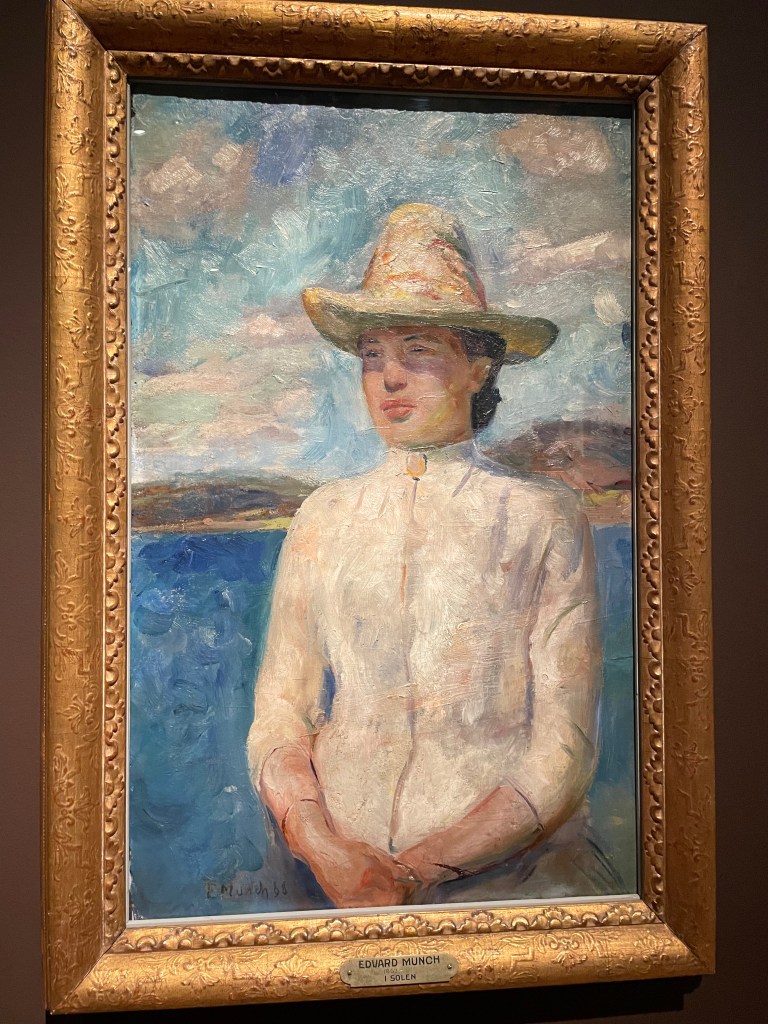
There’s an overwhelming tenderness to many of the paintings and, in some cases, they might not seem finished. But, to Munch, he had provided quite enough detail in the face and the rest of the figure can be filled in by the viewer’s eye. Above: Inger, Munch’s younger sister, looking charming in sunshine and Inger Barth, a friend. This work was confiscated in 1937 when it was among the works declared to be ‘degenerate’ by the National Socialist government.

What’s absolutlely apparent is the free-flowing style we recognise from his later, angst-riven work. I like the direct gaze of his subjects. It looks as though they must have been deep in conversation when the portrait was being made and the affection between sitter and artist is very apparent. Above: the Norwegian colourist painter Ludvig Karsten in a ‘dandyish’ pose, August Strindberg, the playwright, and Sultan Abdul Karem whom Munch employed.

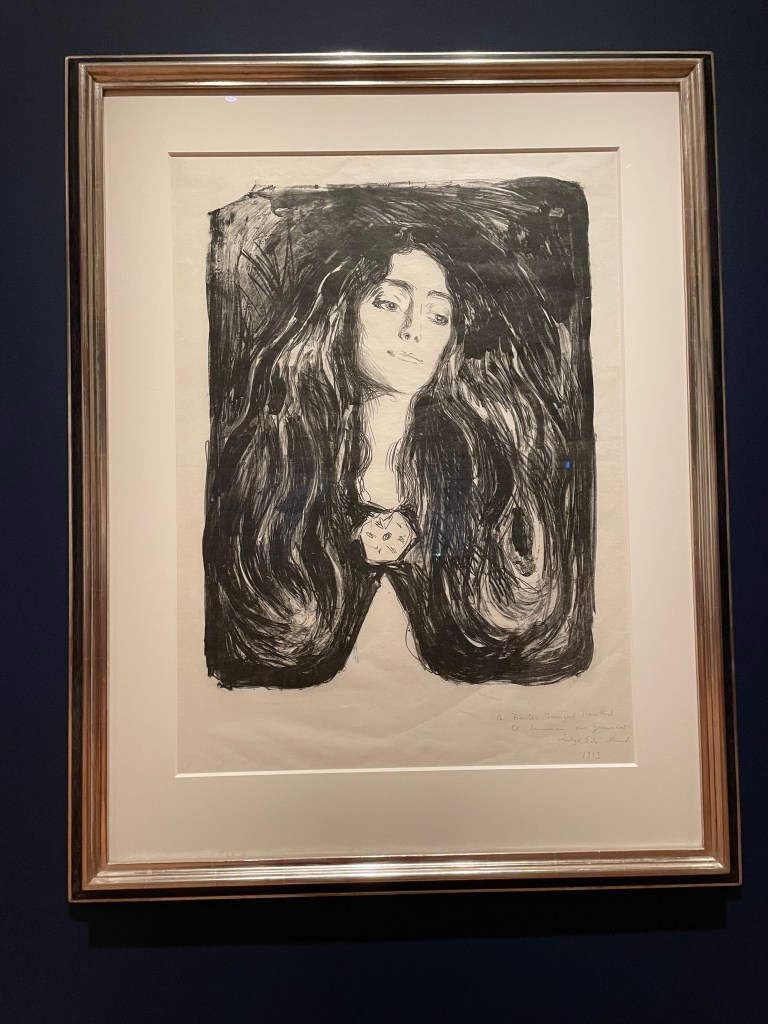
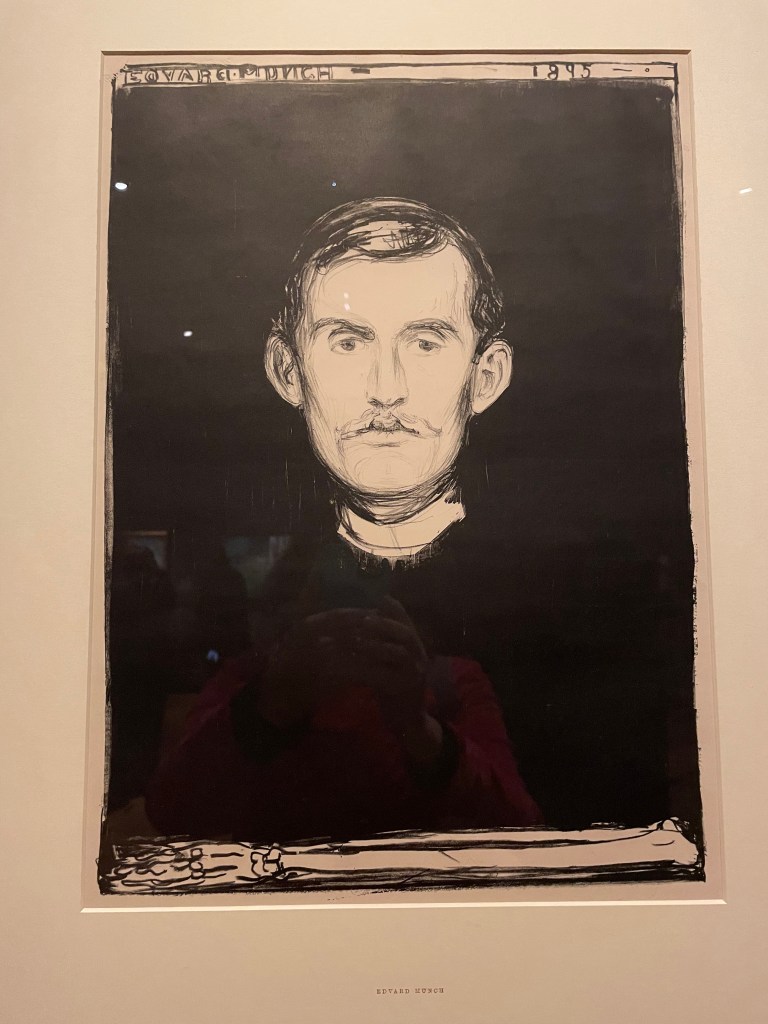
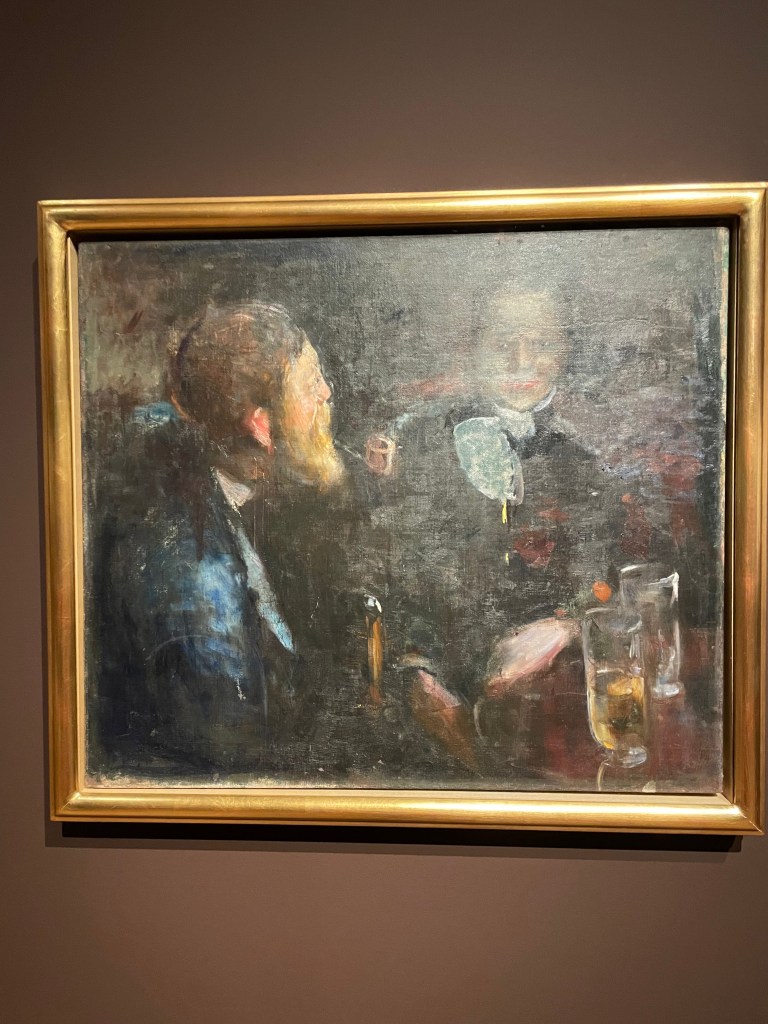
Just a few of the lithographs and black and white portraits (and the very dark one on the right) give a hint of the darkness within. But one comes away from this show in a very uplifted state, pleased to see such great portraiture by one of the 20th century’s finest artists. Above: lithograph portrait of Eva Mudocci, 1902, and self-portrait with skeleton arm, 1895 and on the right Tête à Tête, 1885, showing the painter Karl Jensen-Hjell drinking in the cafe in conversation with woman who might be Inger Munch. Very atmospheric.

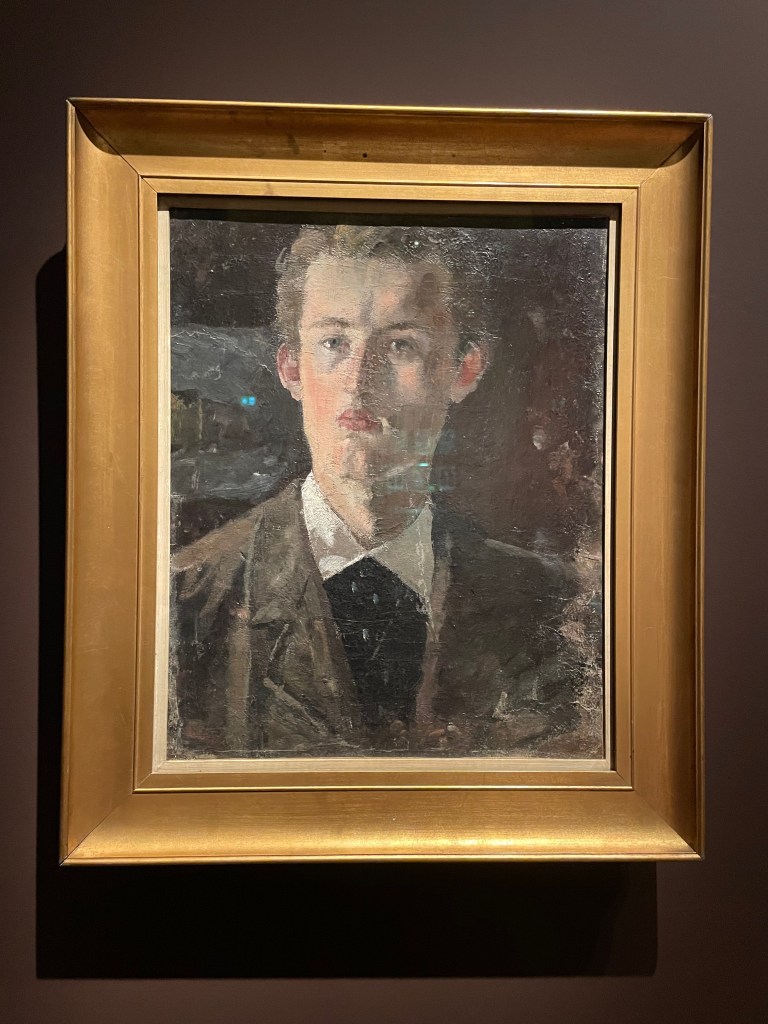
Above: a self-portrait and a very tender portrait of Munch’s father, Christian, a military doctor. The show is on at the National Portrait Gallery until 15th June 2025. Well worth it.

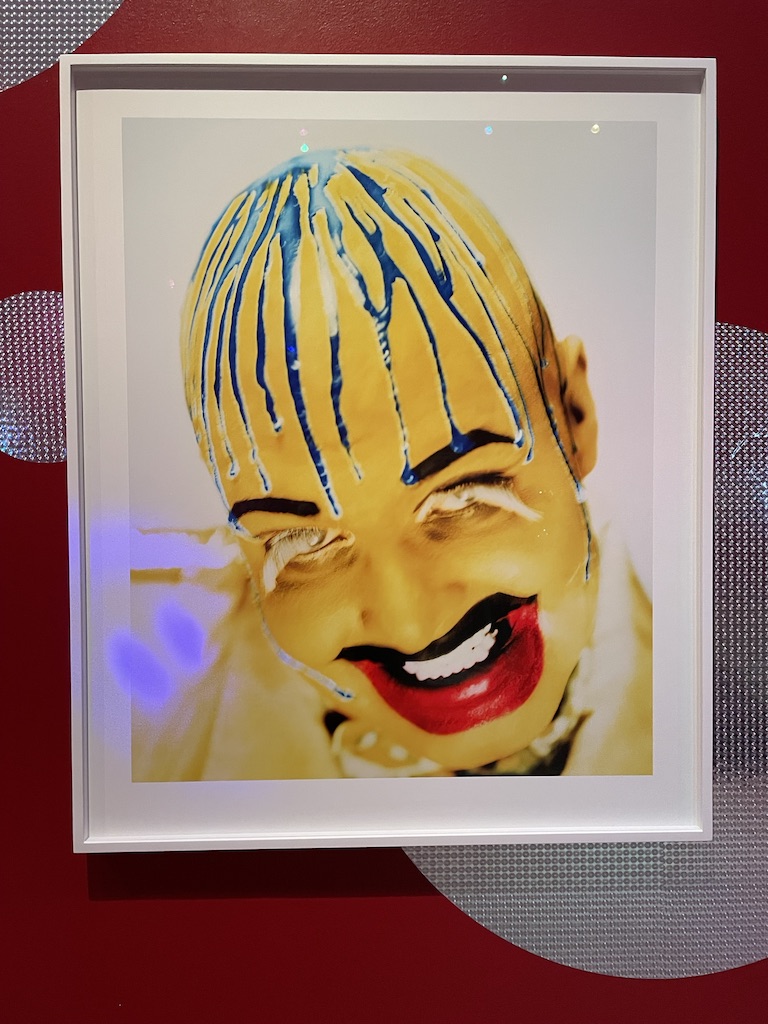
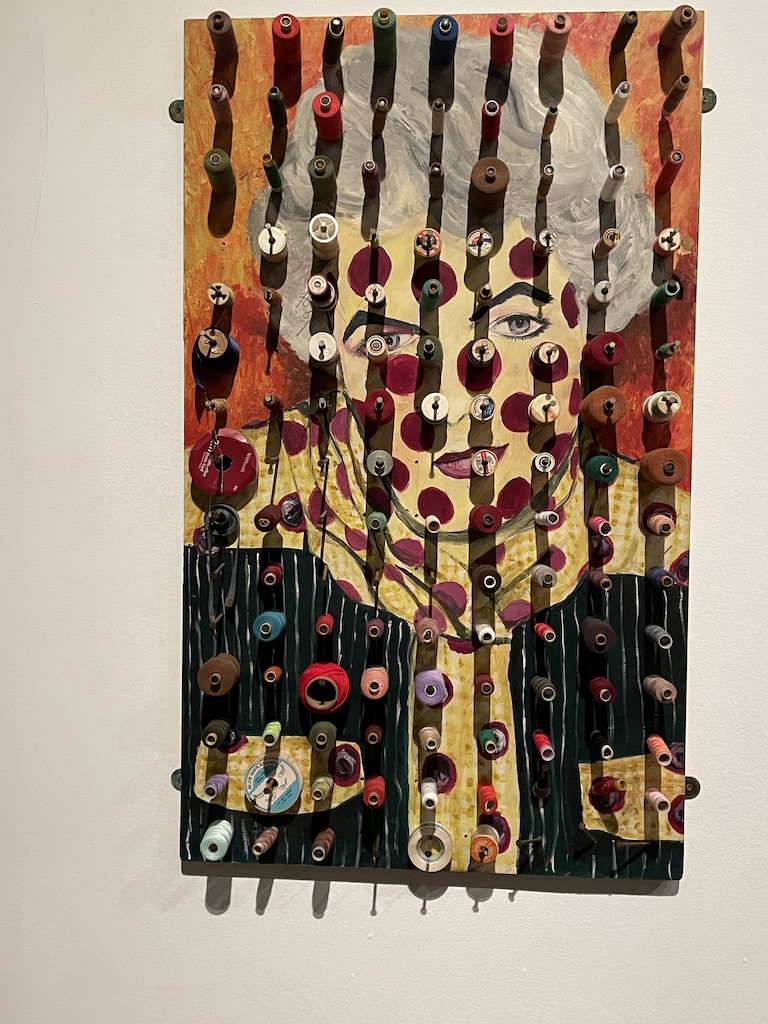
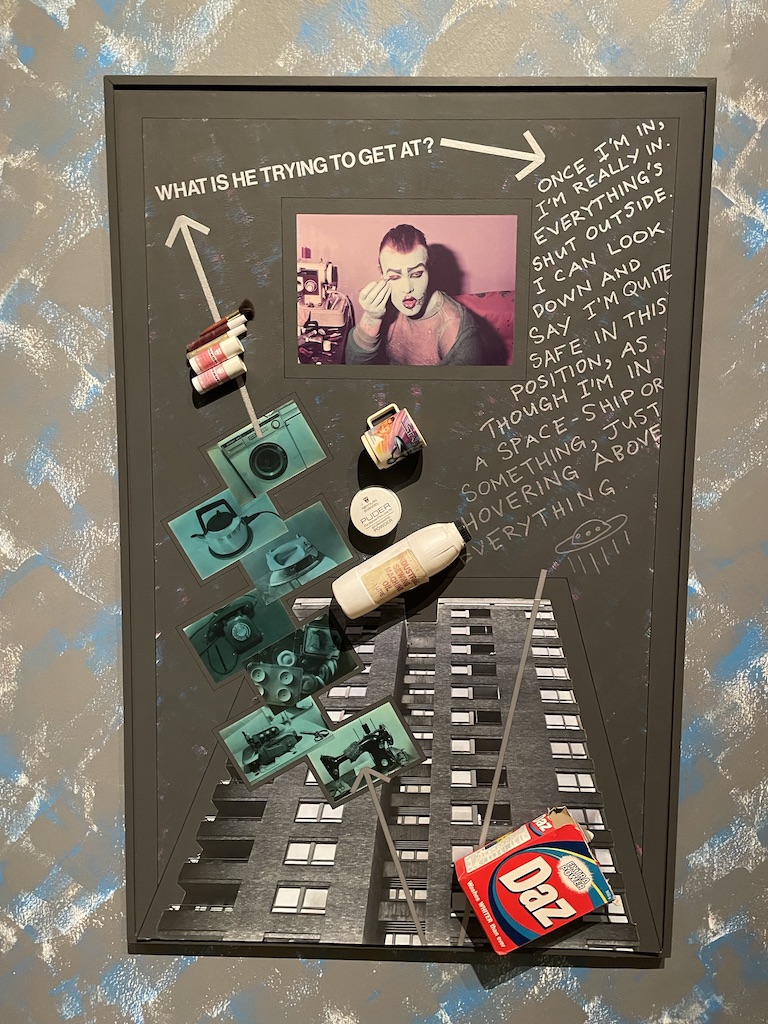
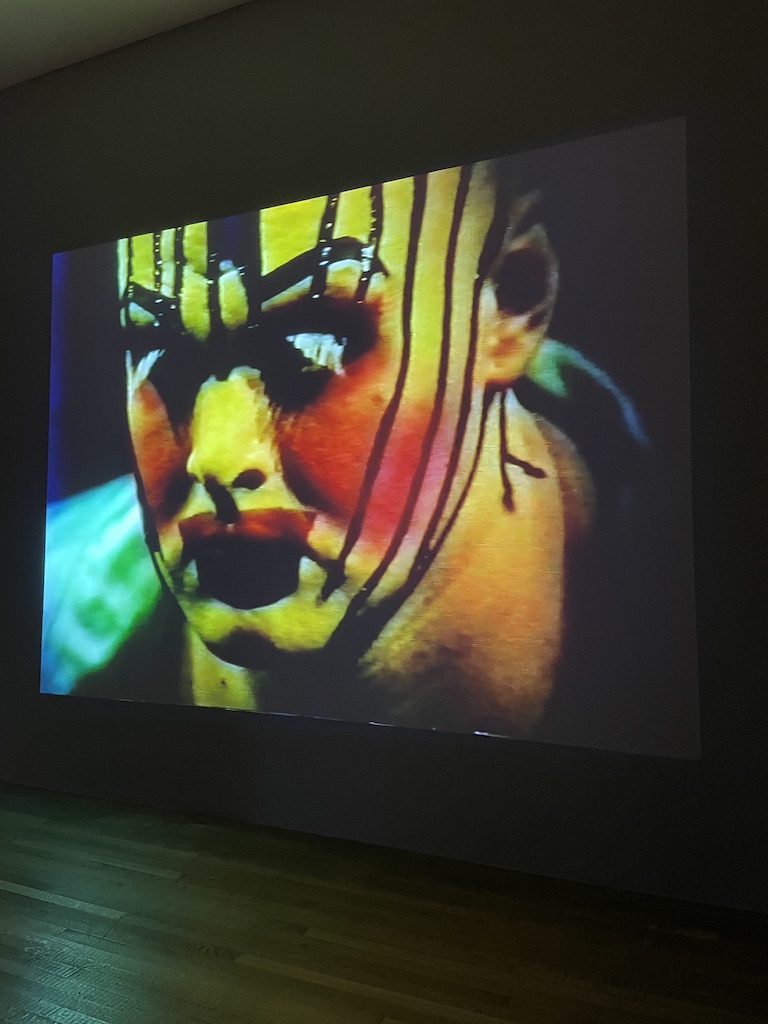
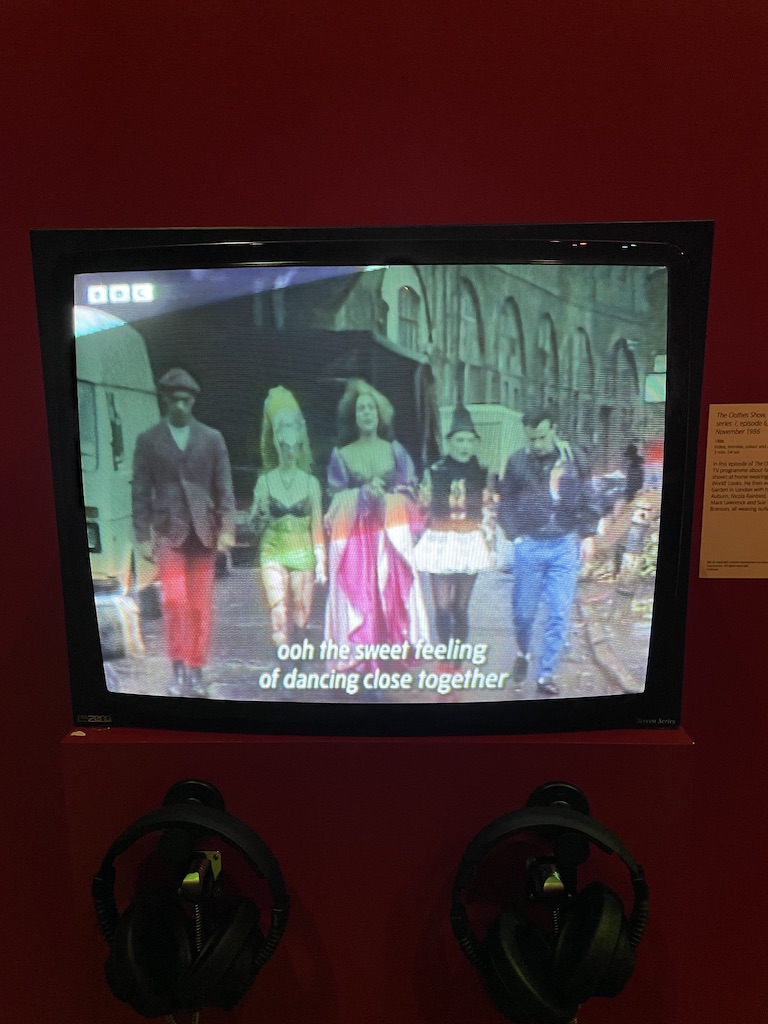
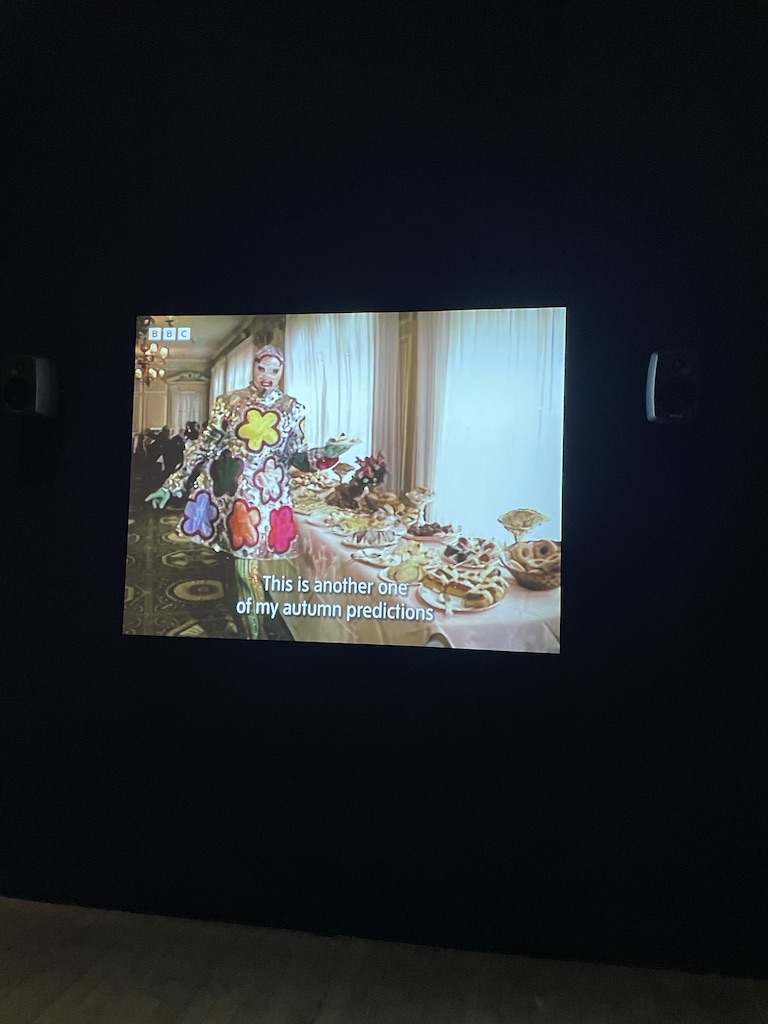
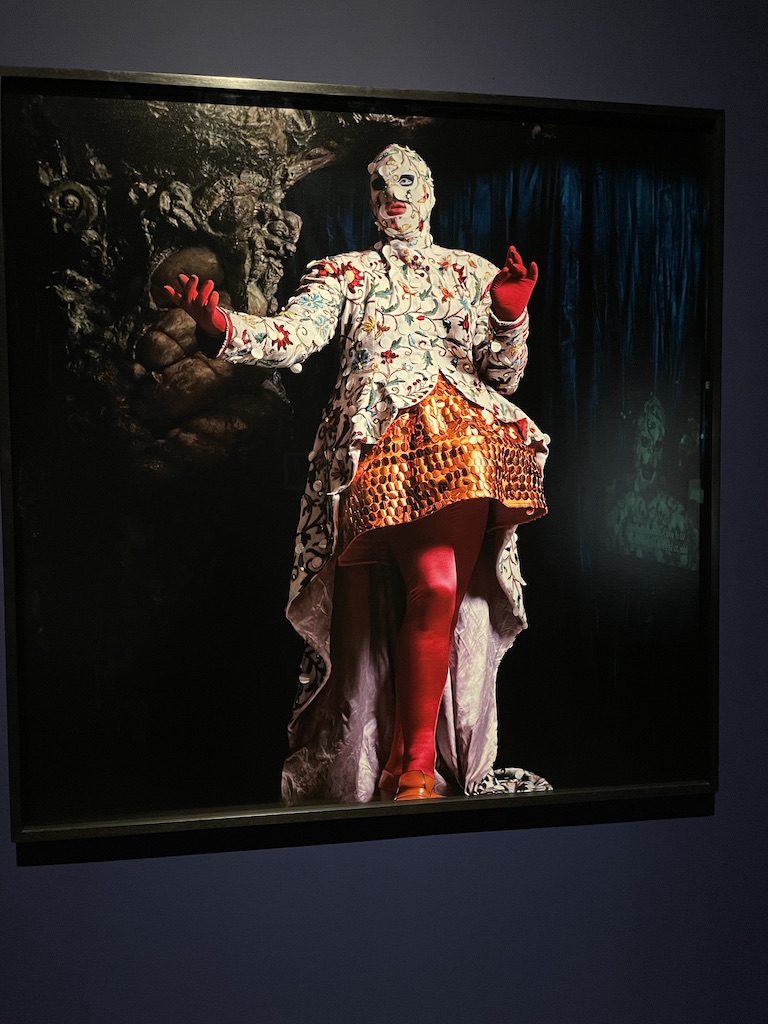
I remember watching a documentary about Leigh Bowery on television ages ago. I was busy feeding a small baby and he was pouring coloured PVA glue onto his head and letting the drips find their way down his face. He was preparing his costume in readiness for a night at his club, Taboo. It’s so interesting to see his artistic expression presented so imaginatively at Tate Modern, along with many of the spectacular costumes he used to wear. This is a well-deserved celebration of a truly original artist.

And here’s a photograph of Leigh Bowery with the PVA decoration. It was only last century – the halcyon years of club culture of the 1980s , but what a time! He was perfectly placed with confidence and creativity to provide the world with a canvas, platform and stage for young people finding their way in the club scene. Bowery made all his own costumes, headdresses, decorations and astonishing makeup – all guaranteed to make him the focus of attention wherever he went.

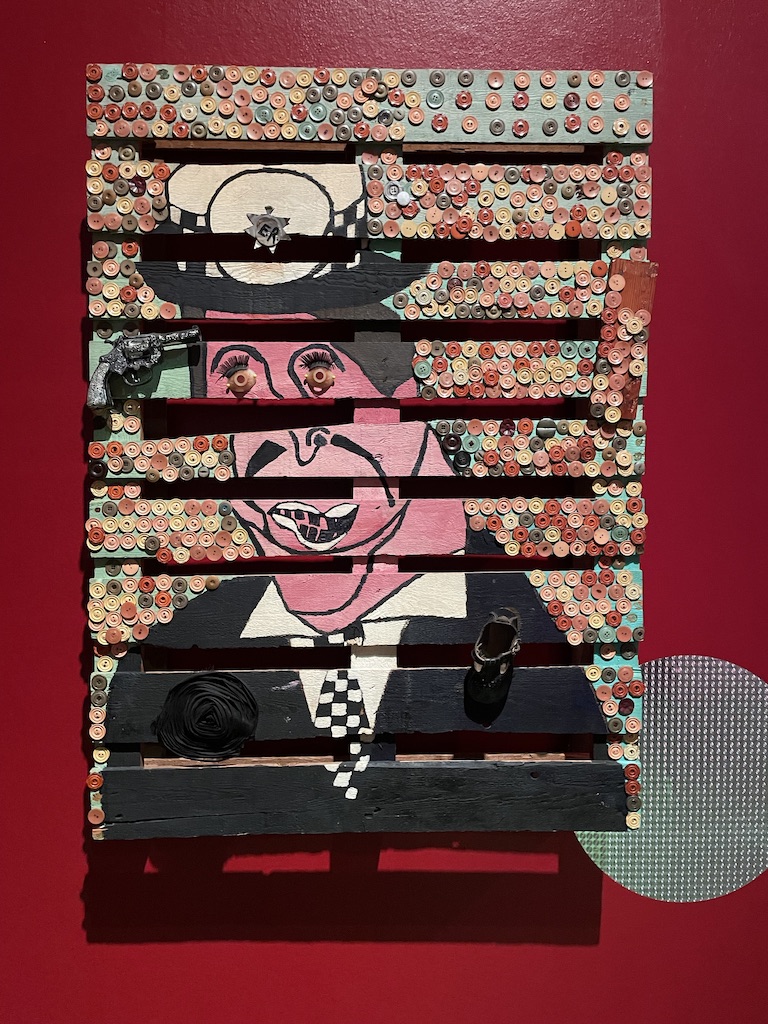
Leigh Bowery left the sunny, suburbs of Melbourne, Australia in 1980 to move to London and invade the artistic scene of the capital with a captivating whoosh of energy and self-expression. His arrival into the ‘alternative culture’ was timed perfectly. He emerged at the same time as Trojan, Scarlett Cannon, Boy George and Princess Julia. Through sheer force of personality and ambition he established his own night club, Taboo, in 1985. Wearing outrageous and wonderful clothing was de-rigour for everyone frequenting the club. But Bowery was the King, and Queen, of outrageous.

The pressure must have been on for him to lead the way in reimagining his look every night and pushing the boundaries of entertainment and spectacle.

Bowery was also a muse for contemporary artist Lucian Freud who strips away all the artifice, literally, and captures the man beneath the mask in his impressive portraits.

Leigh Bowery died in 1994 at the age of 33 from an AIDS-related illness. But he certainly packed a great deal into his short life and has left an impressive legacy. If any artist wants to know what being creatively brave looks like, they should see this show.

It’s on at Tate Modern until 31st August 2025.

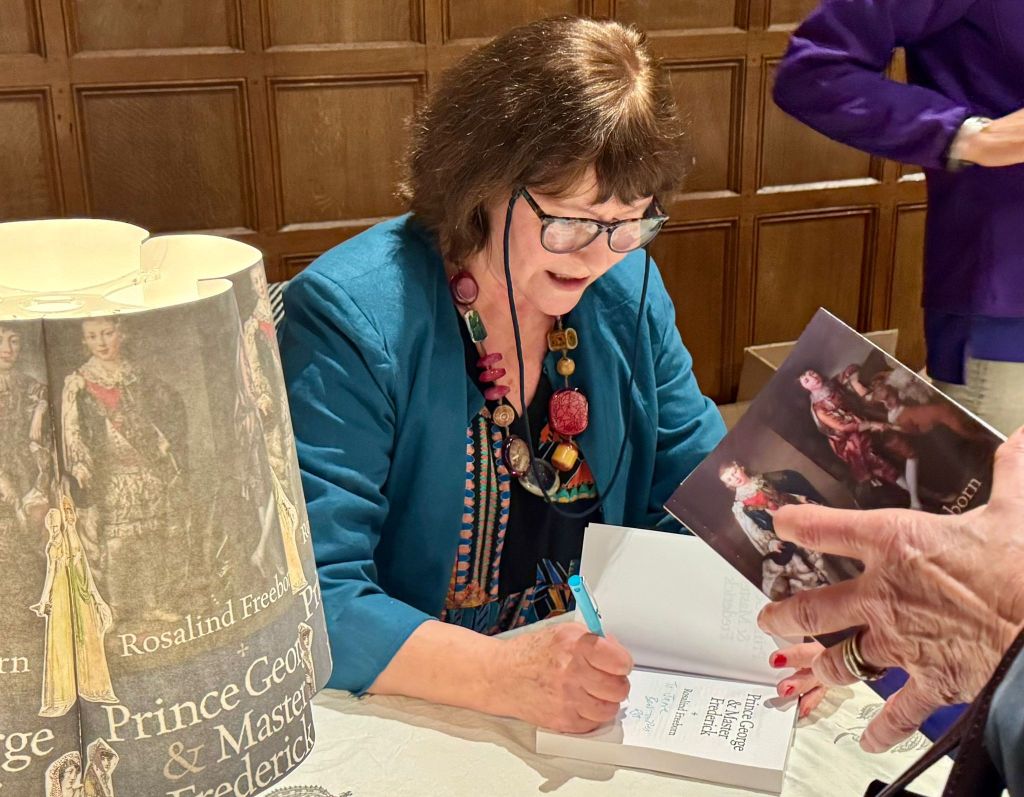
Prince George & Master Frederick has been published! Yes, my historical fiction novel was launched in style with an event at St Giles’ Church, Cripplegate. A huge crowd braved a chill January evening and gathered to buy signed copies and listen to speeches about the book

I’ve always loved book launches but this one was the best ever! It’s an amazing feeling to publish your debut novel. But quite daunting to stand up in front of a large audience and explain how researching a family story turned out to be so fascinating that I simply had to write the story of Frederick Blomberg, the secret son of King George III. Having been introduced to the gathered crowds by my publisher, Janet Weitz of Alliance Publishing Press, I stood up and gave a speech.

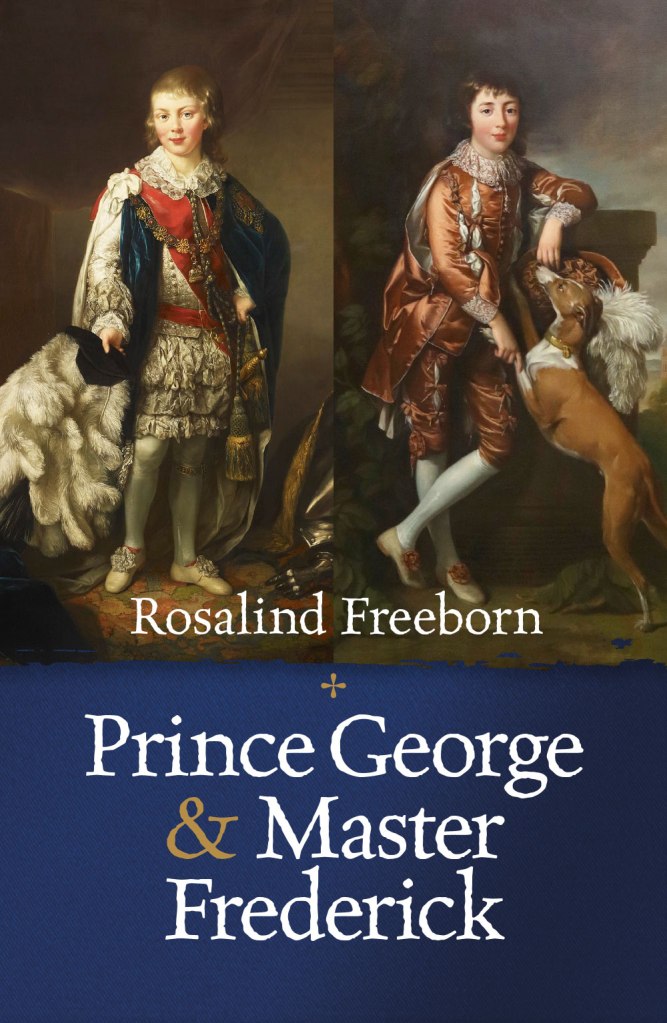
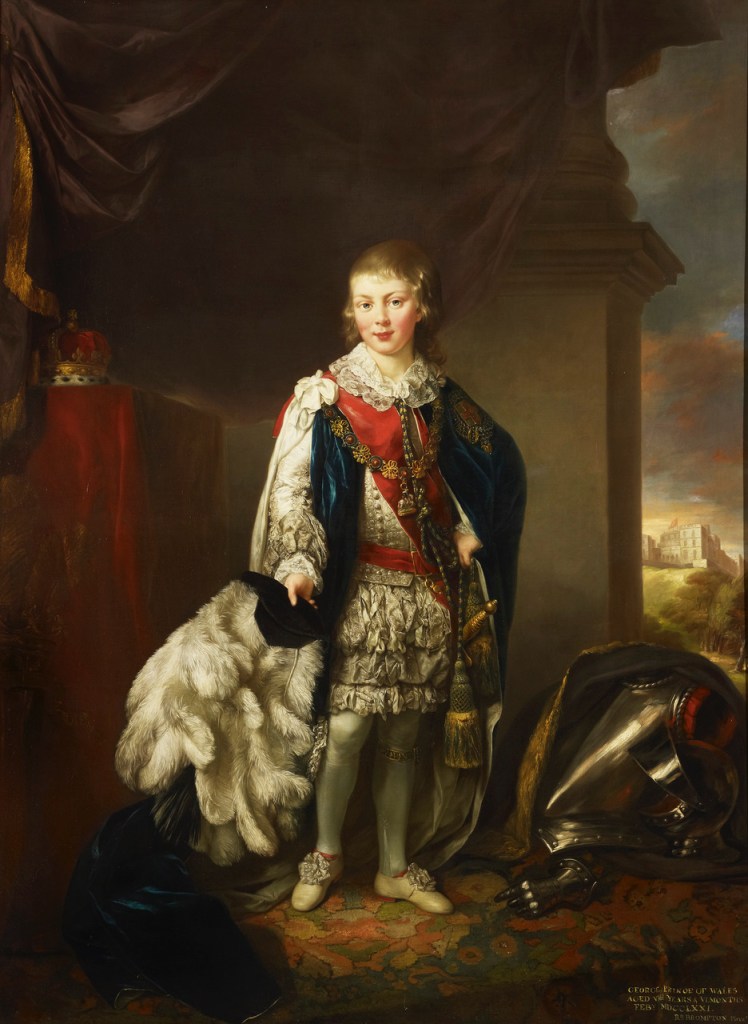
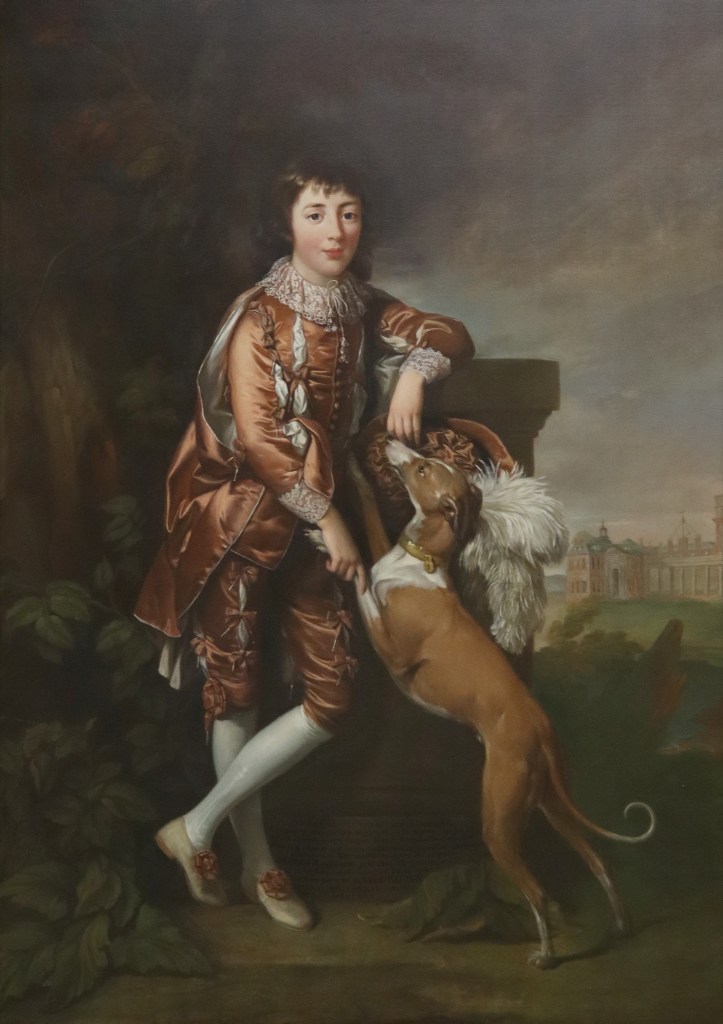
In this picture I’m standing in front of a print of a portrait of Master Frederick Blomberg, painted by court artist Richard Brompton in about 1770. The painting was commissioned by Queen Charlotte and it’s a companion piece to two other portraits of her royal sons: Prince George, Prince of Wales and Prince Frederick, Duke of York which now hang in the 1844 Room at Buckingham Palace. I was delighted to put this painting of Prince George in Garter robes next to his ‘adopted’ brother, Frederick Blomberg on the front cover of my book.

And what fun it was to welcome so many lovely friends to the book launch, sign books and chat. And for all those who could not be there, you can order a signed copy through my author website: http://www.rosalind-freeborn.com Otherwise, you can buy a copy through Amazon, (on Kindle, print or Audible) and through bookshops.

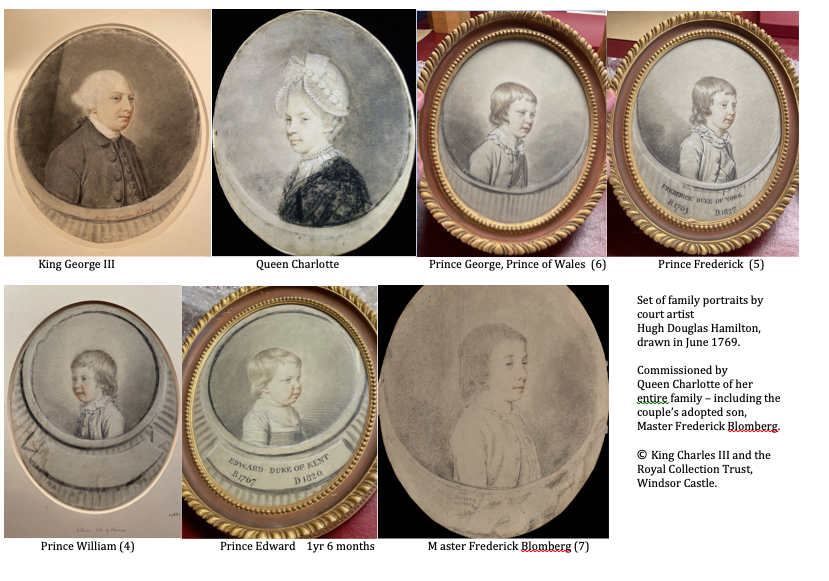
In my talk I showed a display of portraits commissioned by Queen Charlotte in 1769 of her family, drawn as a set by the artist Hugh Douglas Hamilton. The portrait of Frederick was probably given to Frederick Blomberg by Prince George and ended up at his home in Yorkshire, Kirby Misperton. After Blomberg died in 1847 the little portrait remained on the wall, through two subsequent owners, until my great-grandfather bought the estate and my grandmother grew up there. She used to look at the picture of Frederick on the wall of her home and told me that the boy was the son of King George III (wrong side of the blanket, as she put it). That piqued my interest but I did nothing about it for decades. Then, about five years ago, I thought I’d investigate this claim and find out more about Blomberg. Well, what I discovered was so fascinating that I was compelled to write this novel.

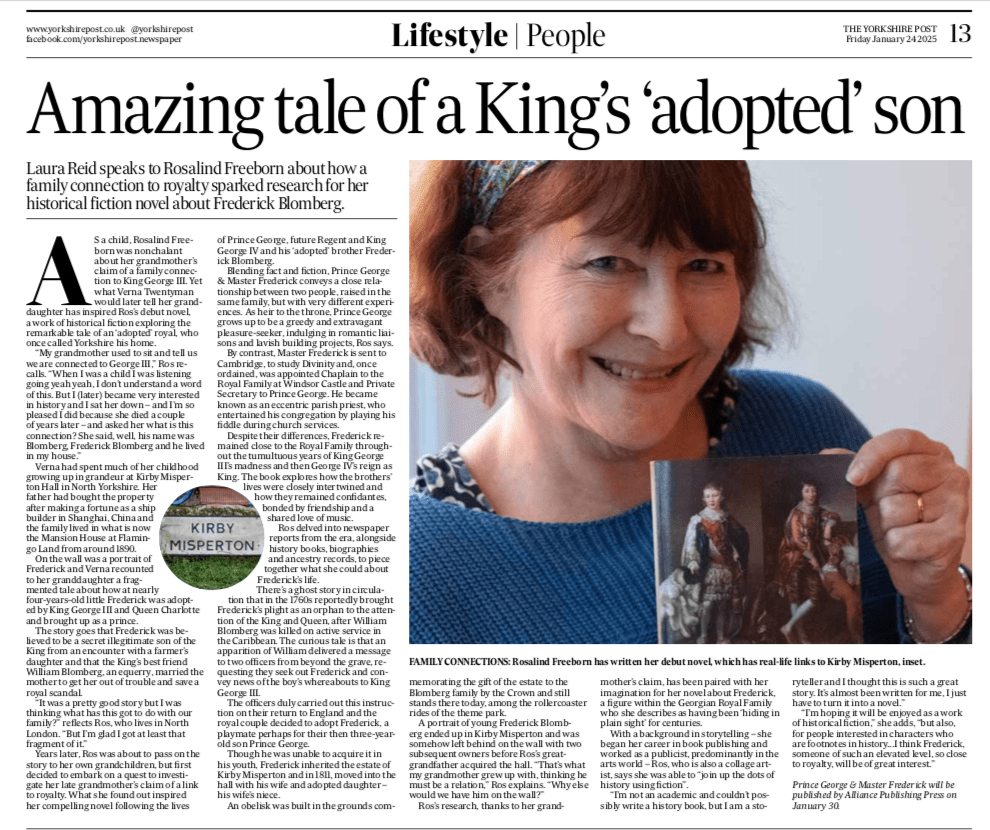
I’ve been so delighted with the quantity of publicity this book has attracted. Above is a feature which appeared in the Yorkshire Post. I’ve done radio and television interviews too. Yes, I feel very published!

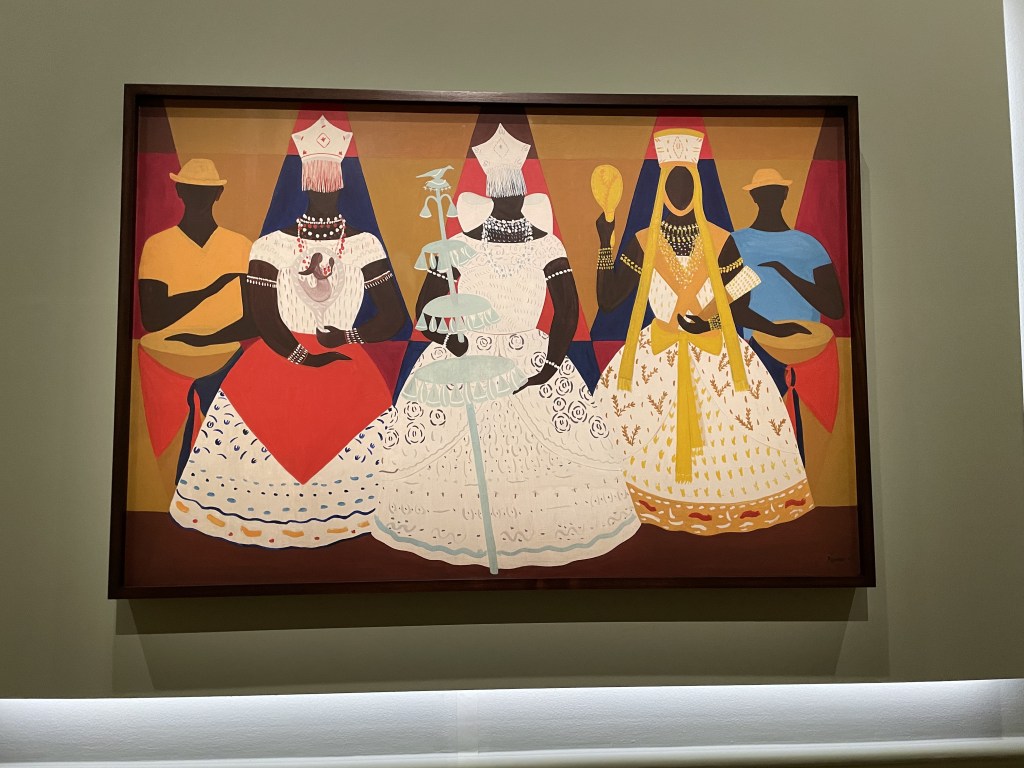
Brasil! Brasil! A glimpse of the artistic heritage of this lively country is on show at the Royal Academy and it’s fascinating to see how a mix of European and indigenous artists have combined to create a distinctive Brasilian aesthetic.

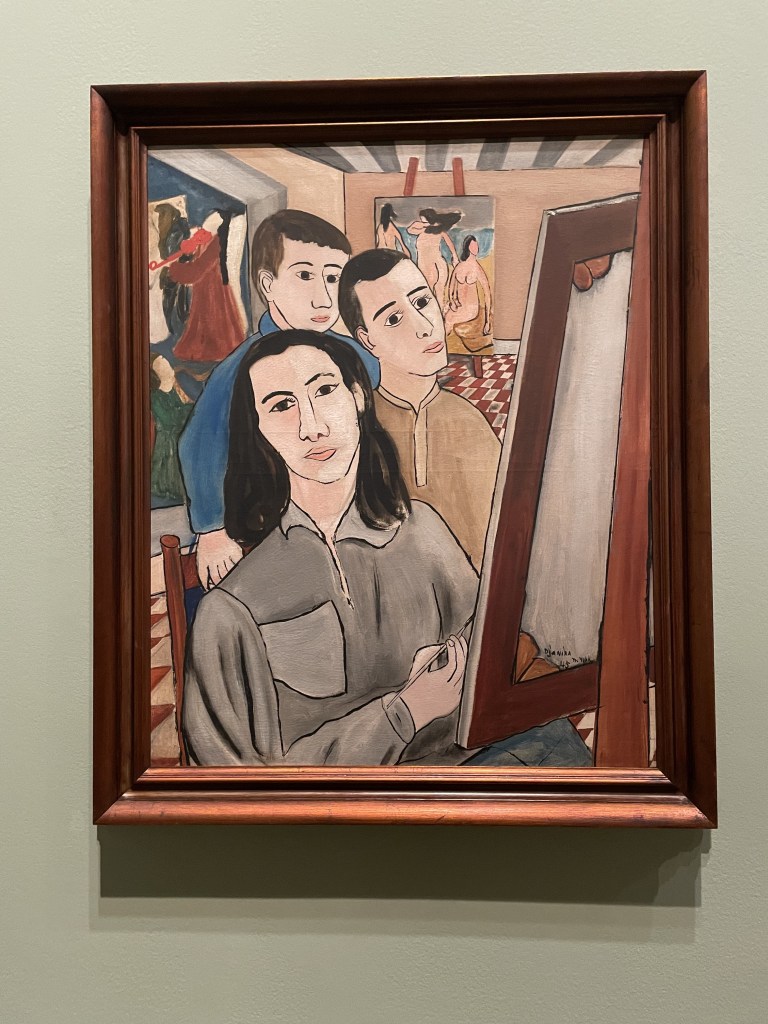
This image, entitled Three Orishas, was painted by Djanira da Motta e Silva in 1966. It’s an example of the ‘newer’ art in a show which exhibits the art of Brasil from the 1920-70s. The bright colours, stylised look and clear mingling of cultural languages captures, for me the true spirit of this young South American country.

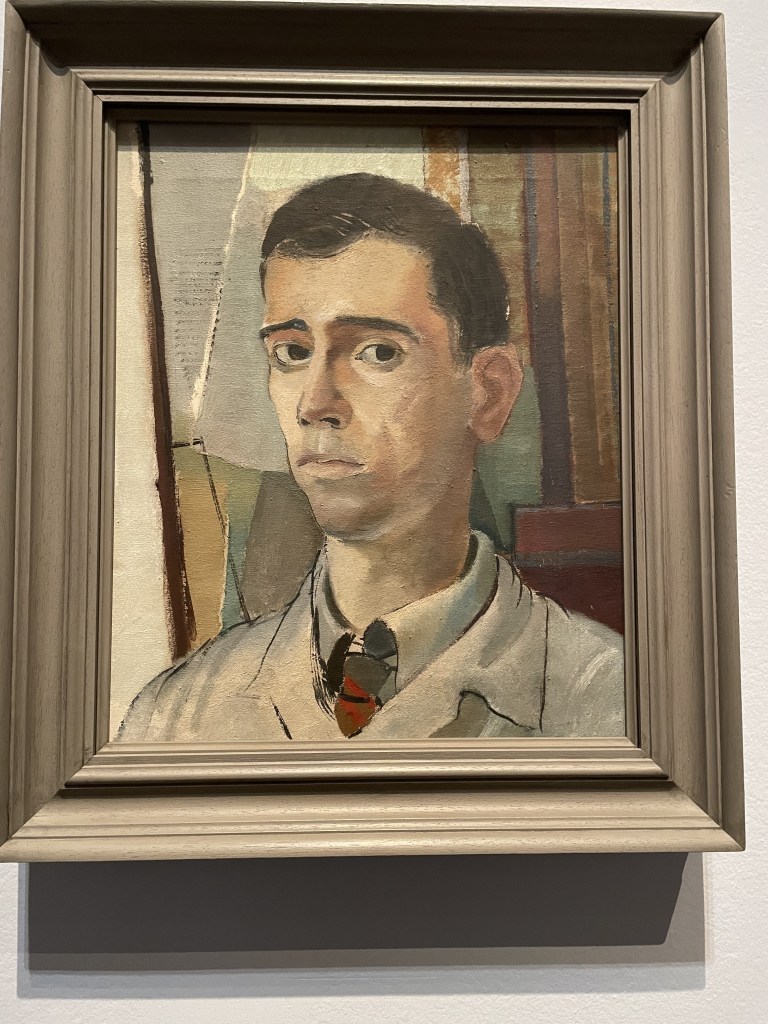
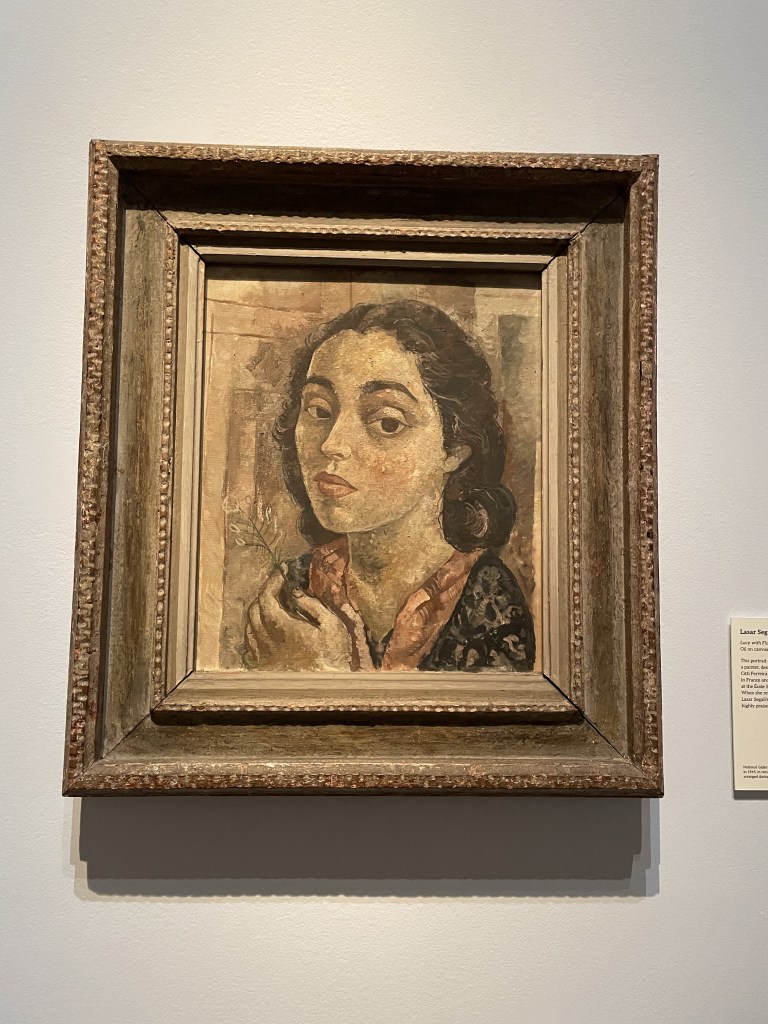
I’m always drawn to portraits and there are some very interesting examples. The muted colours betray the period of the painting and the inheritance of German expressionism. Left: Self-portrait with Orange Dress 1921 by Tarsila do Amaral, Portrait of a Young Man 1943 by Roberto Burle Marx and Lucy with Flower by Lasar Segall painted in 1939-42.

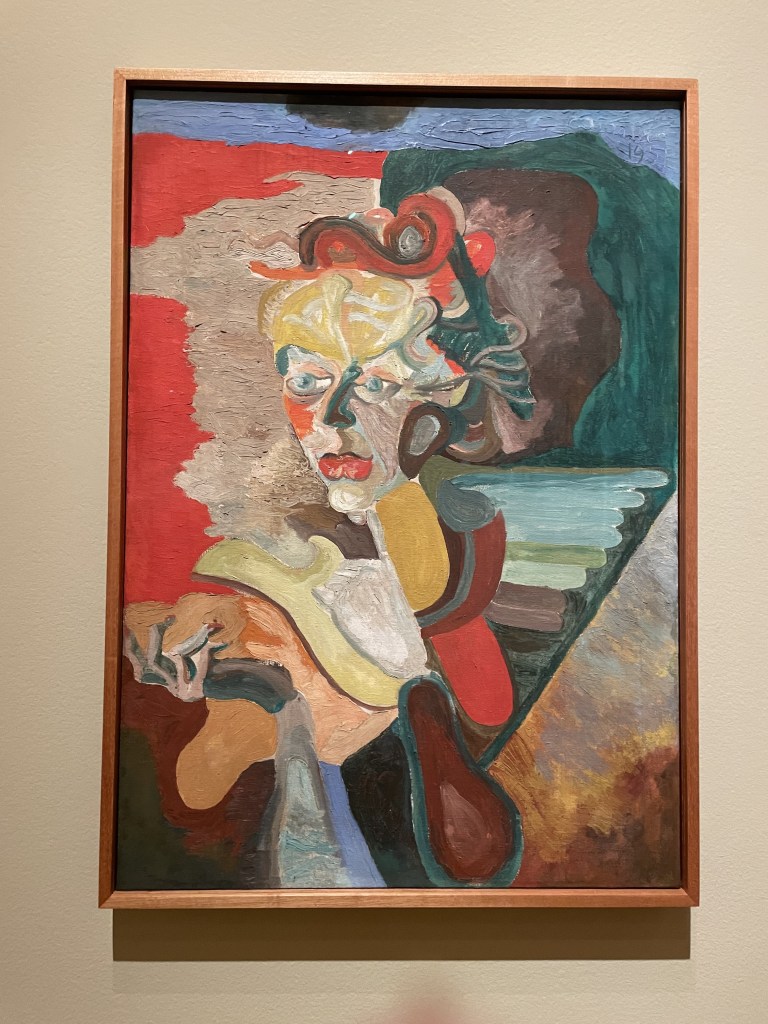
You can see the influence of expressionism and abstraction here with Djanira da Motta e Silva’s self-portrait from 1945, Flavio de Carvalho’s Portrait of Ivone Levi from 1951.

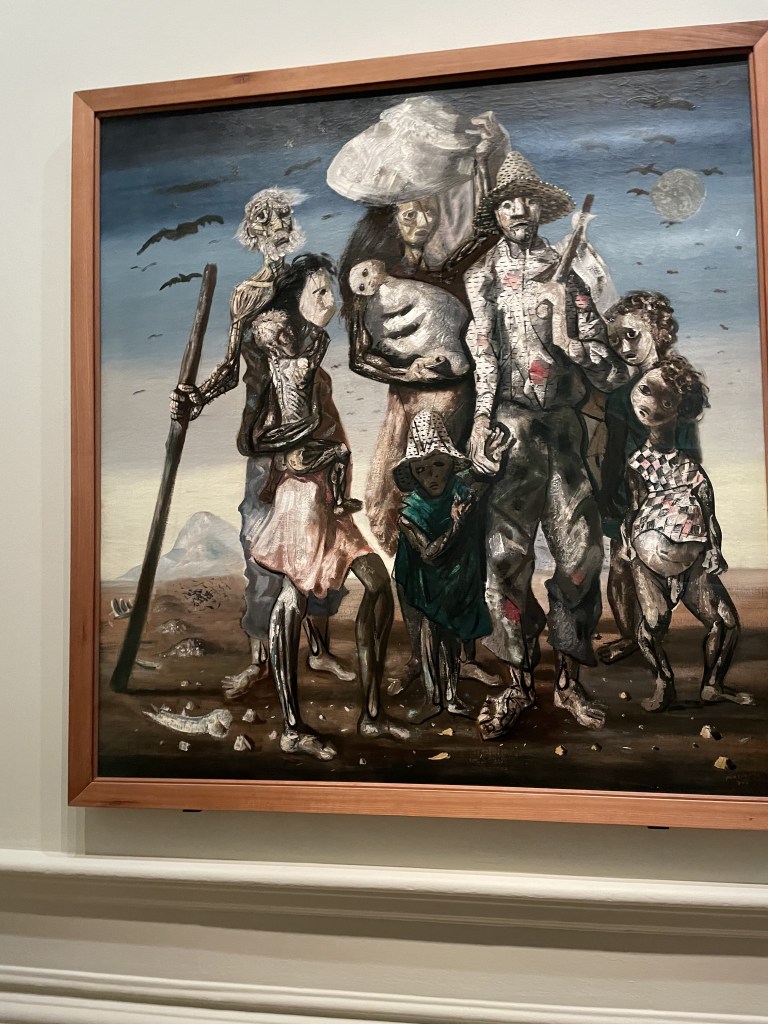
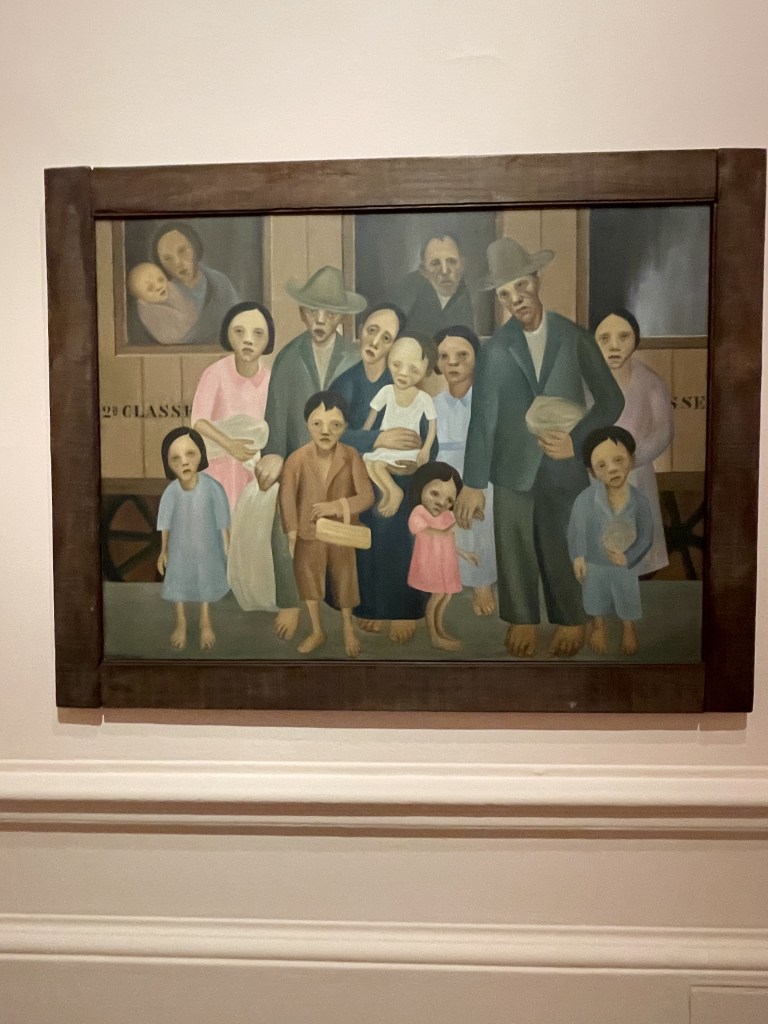
Interesting examples of social commentary with these two paintings. The rather sinister Migrants by Candido Portinari from 1944 represents the migration of northeastern rural communities who were forced to move to other part of the country in search of work. And Tarsila do Amaral’s ‘Second Class’ from 1933 illustrates the awful poverty resulting from the economic crash of 1929.

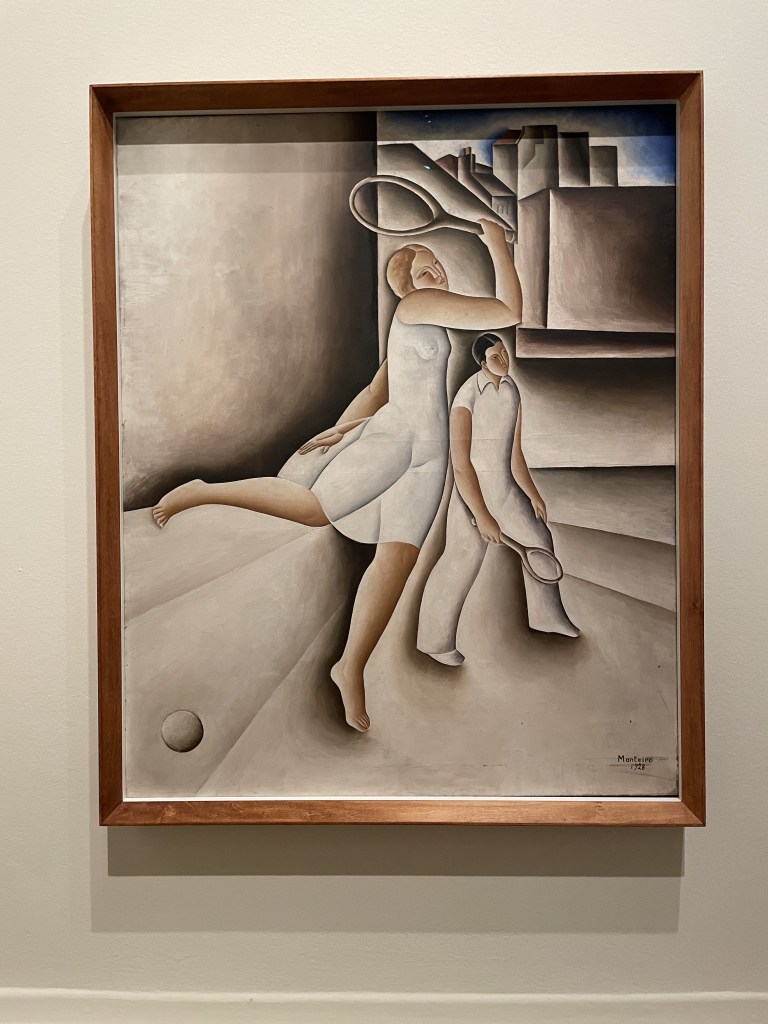
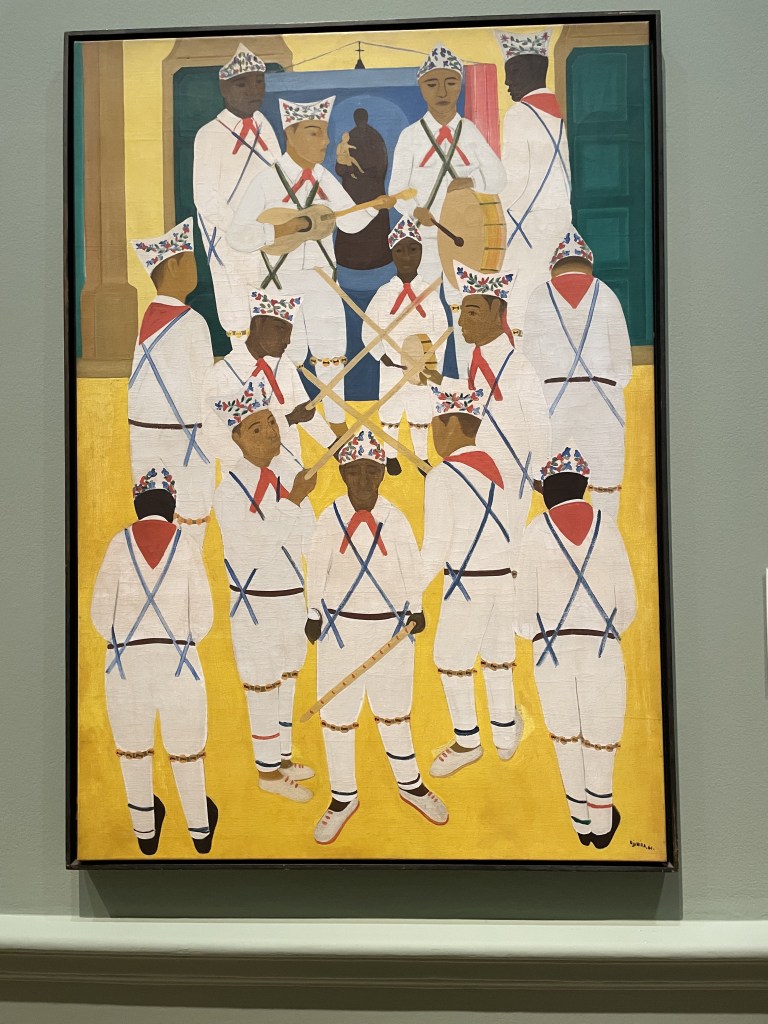
I liked the stylised tennis player in Vincente deo Rego Monteiro’s limited palette painting from 1928. And I really liked the Marrapaia Dance, Pariti painted by Djanira da Motta e Silva in 1961. Such a striking resemblance to the UK’s Morris dancers with strings of bells tied to the performers’ knees!

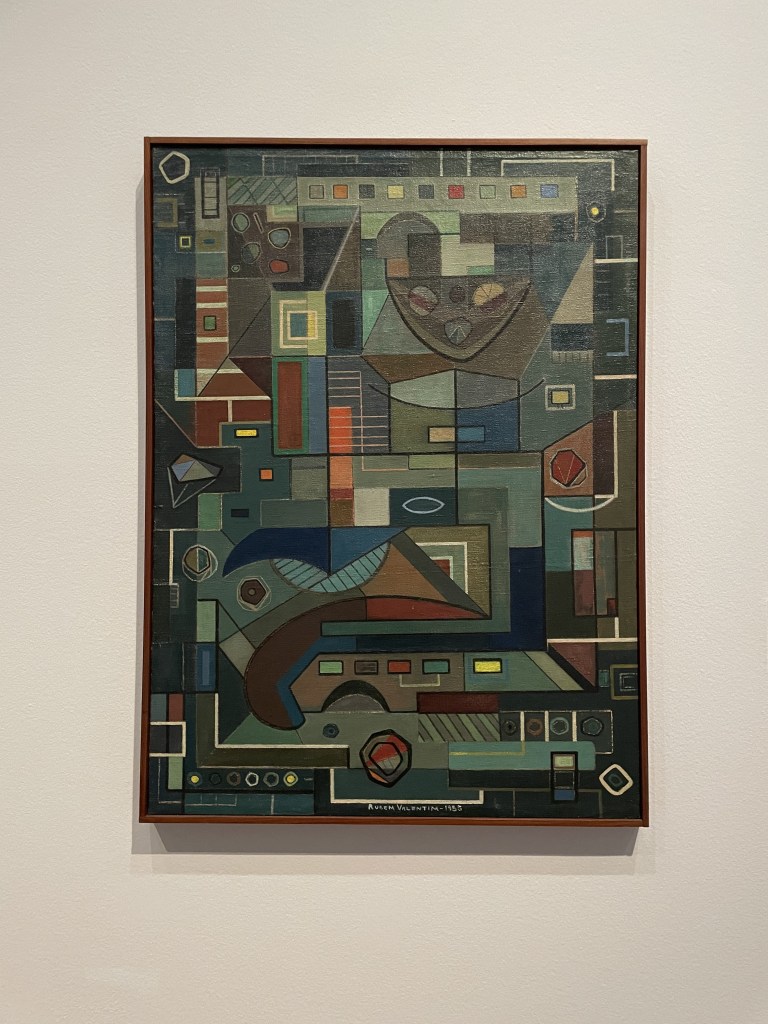
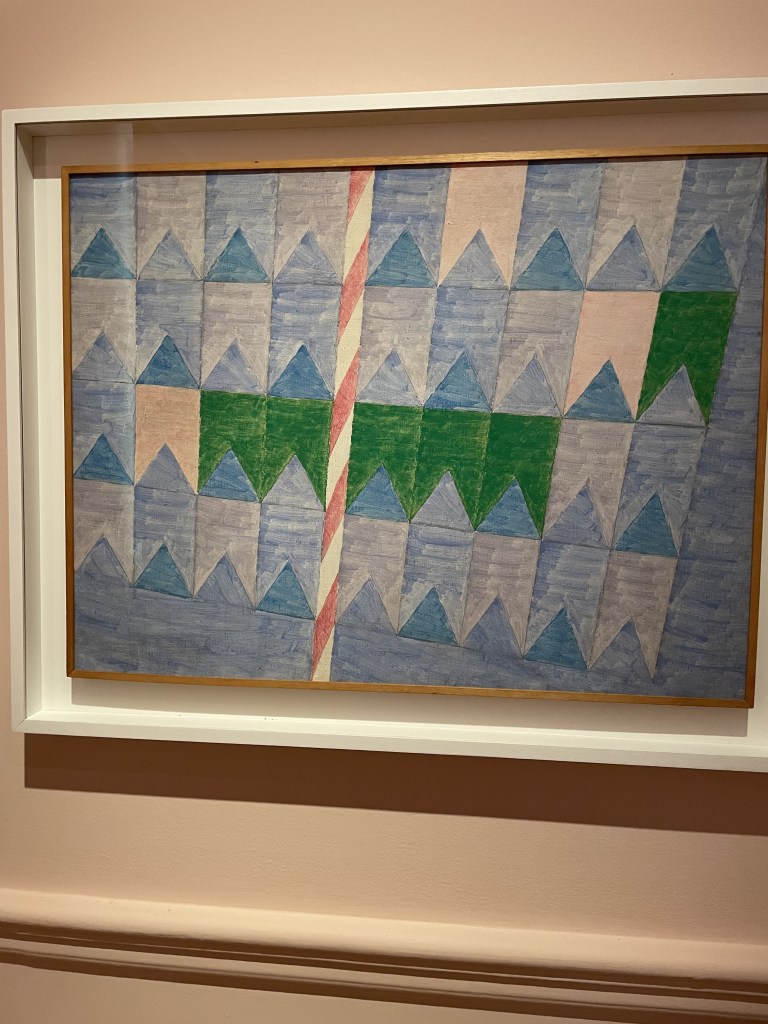
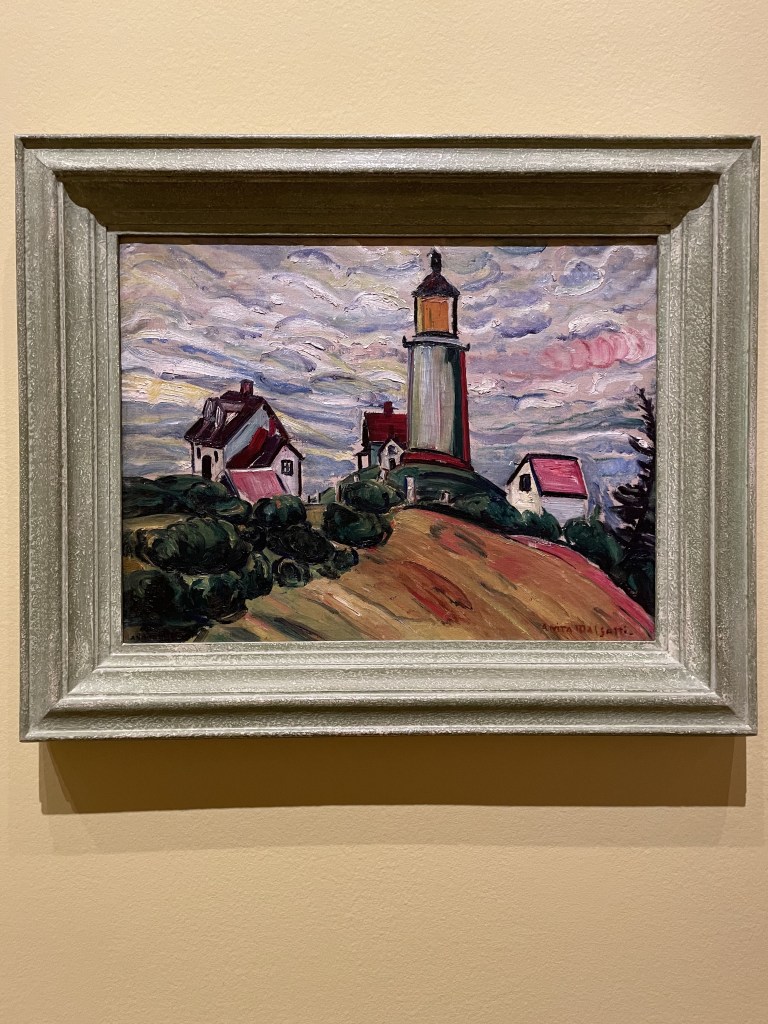
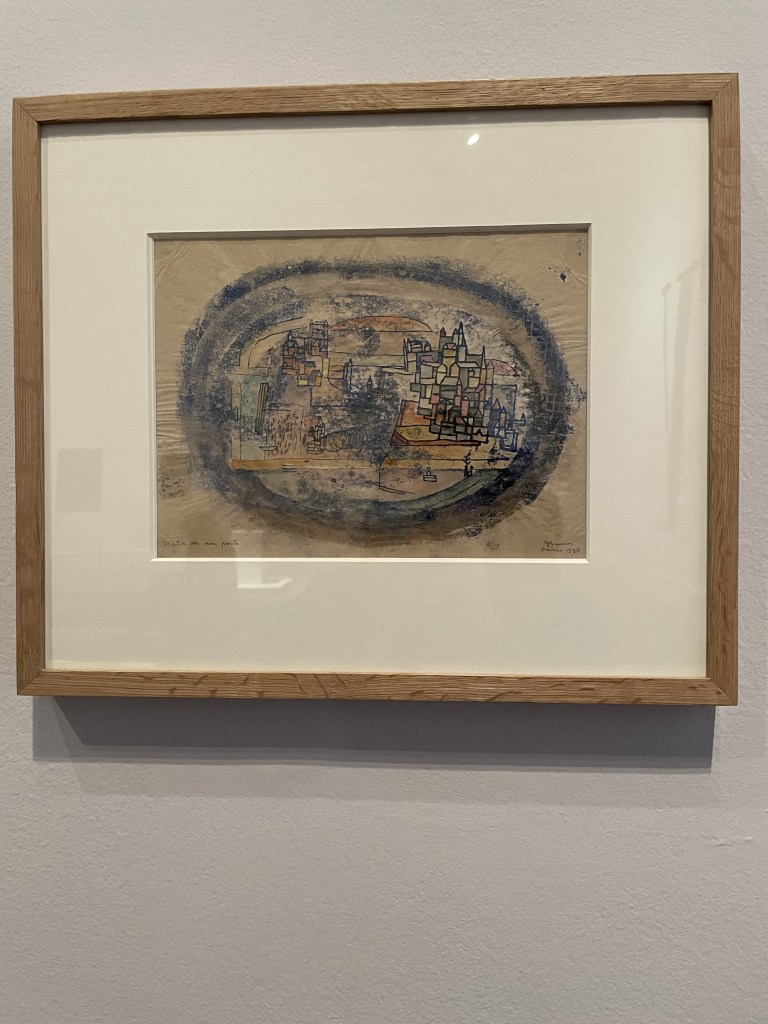
And here’s a pick and mix of abstracts and figurative work which show the evolution of Brasilian art.

The show is on at the Royal Academy until 21st April 2025

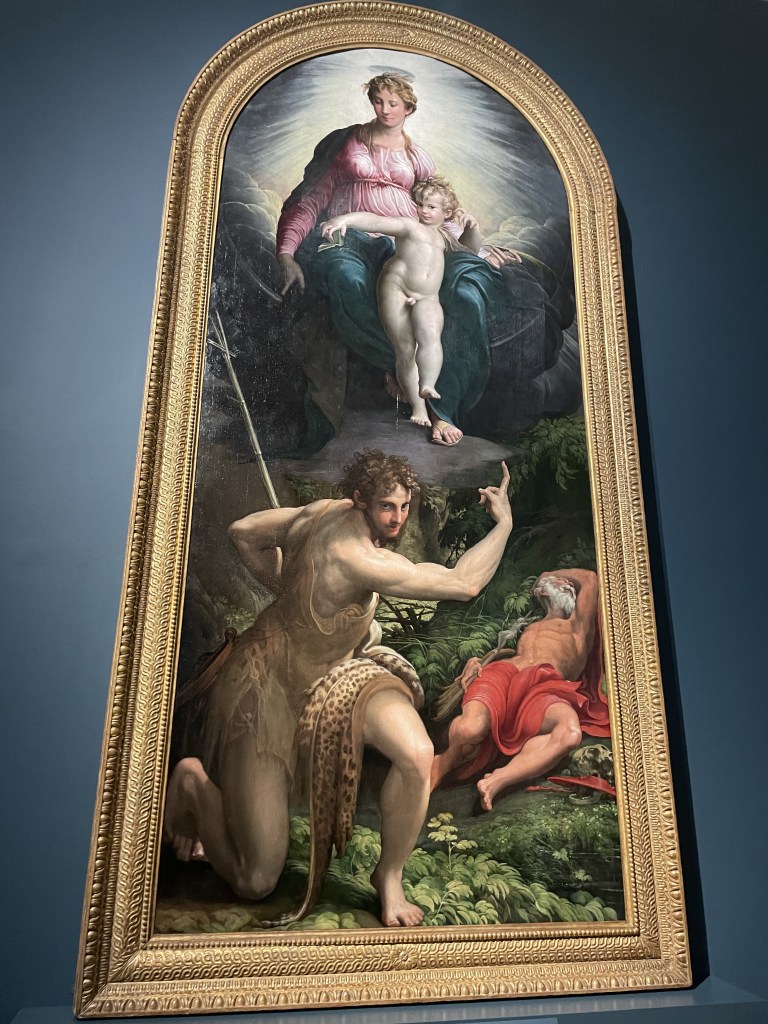
What a treat to see the spectacular ‘Vision of Saint Jerome’ by Parmigianino at the National Gallery. The painting was acquired 200 years ago when the gallery first opened and it’s great to see it displayed in its own space surrounded by fascinating sketches and outline plans.

Wow! You enter room 46 of the National Gallery and see this enormous, elongated painting in front of you. It was painted by the precociously talented young Renaissance painter, Parmigianino in around 1527. He was only 23 years old when he complete this astonishing commission for noblewoman Maria Bufalini as an altarpiece.

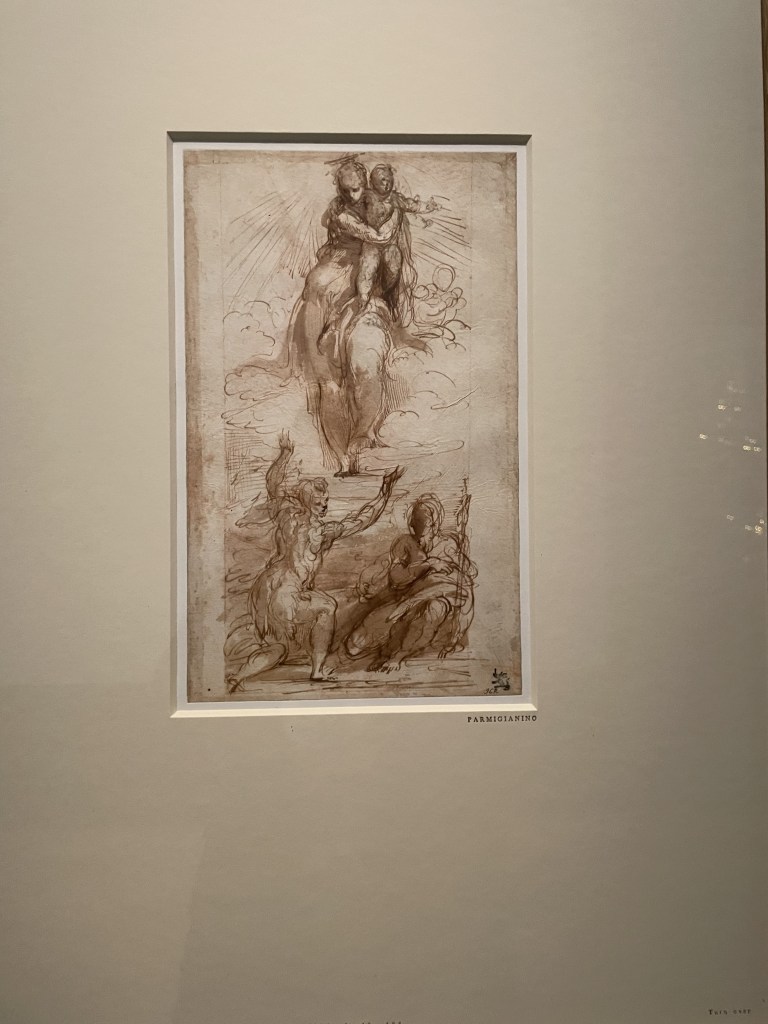
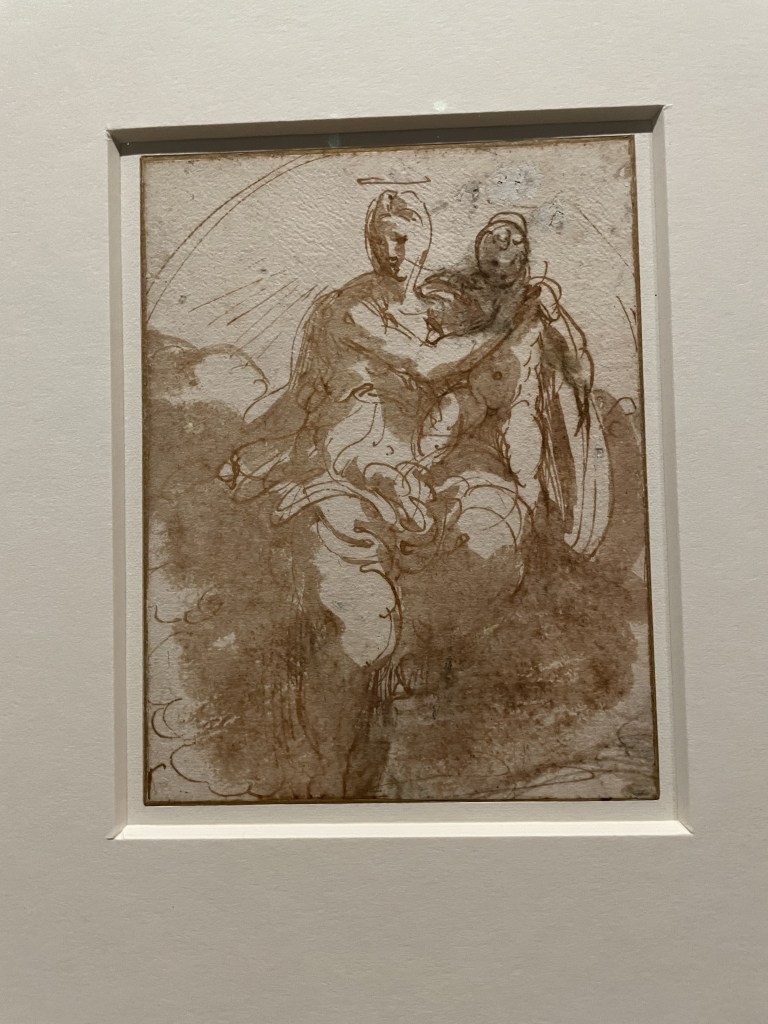
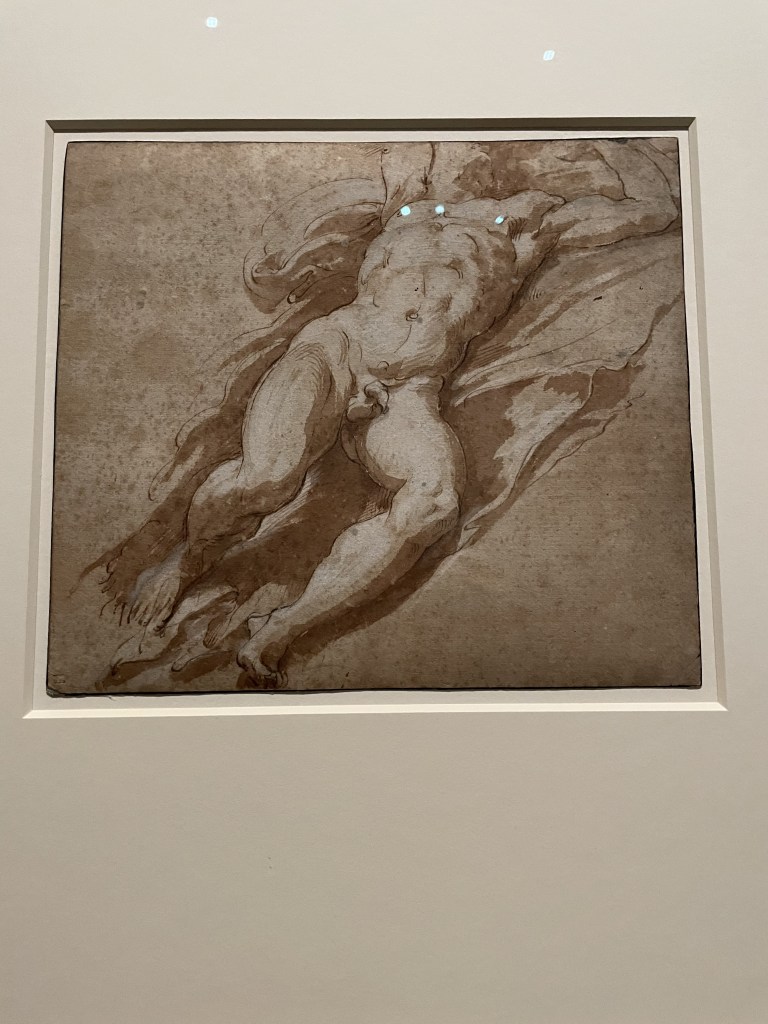
This one-man, one-room show is accompanied by drawings which illuminate the artist’s thinking and planning for this painting. With such a tall and thin space to fill, the composition had to be carefully worked out. The brief stipulated that the image must feature the Madonna and child, St Jerome and St John the Baptist. St Jerome is pictured reclining in a sylvan space and experiencing this fabulous vision. It’s such a robust and lively image, so well arranged with a real ‘line of beauty’ sinuously snaking through the figures giving the impression of circles and swirls within the picture space.

The accompanying drawings are fascinating too and so excellently done. You can see how the young artist sketched from life at speed to work out the poses of his figures. He was as brilliant with red chalk as he was with pen and ink and watercolour.

The exhibition is free and well worth a visit to the gallery. It’s on until 9th March 2025.

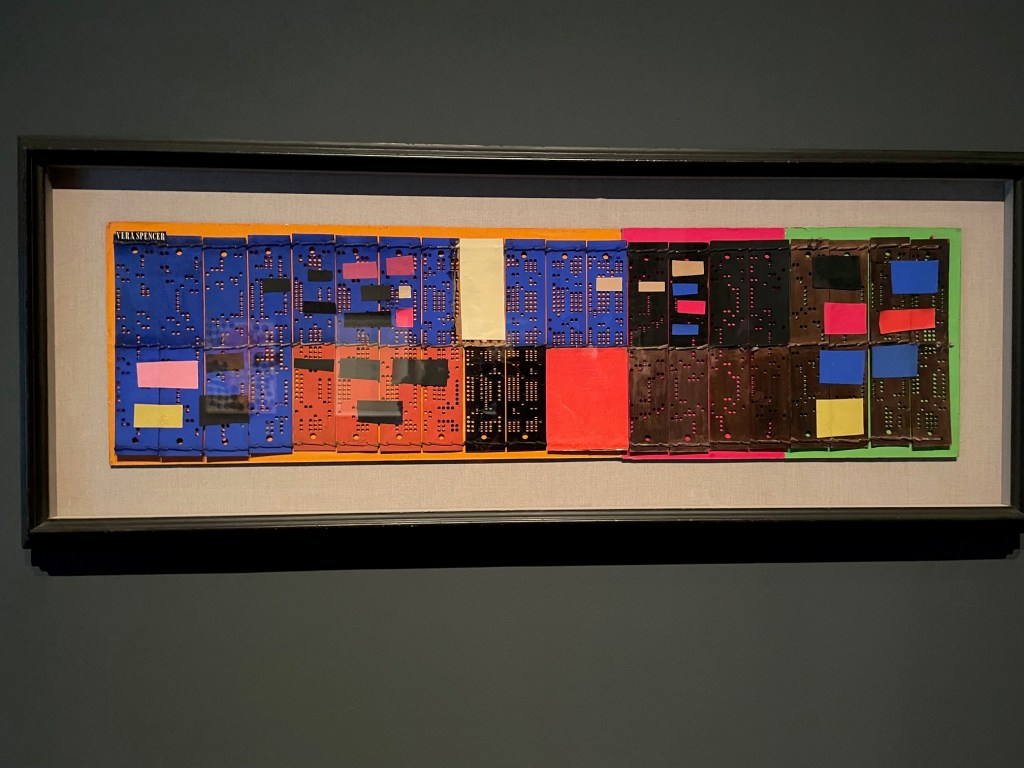
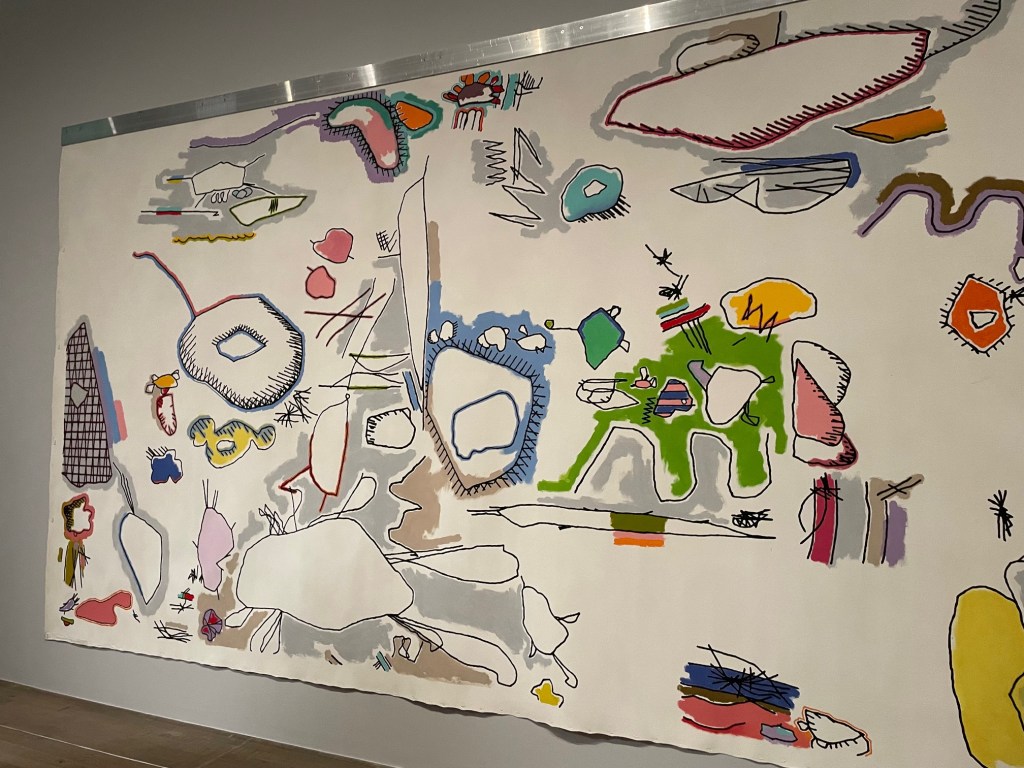
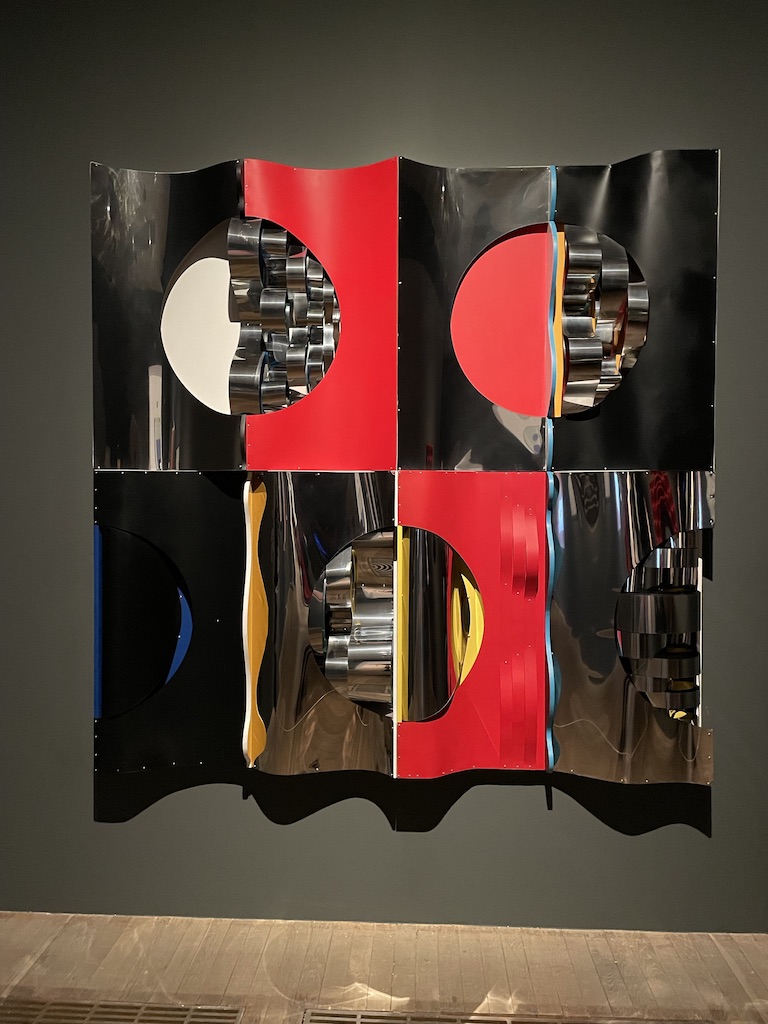
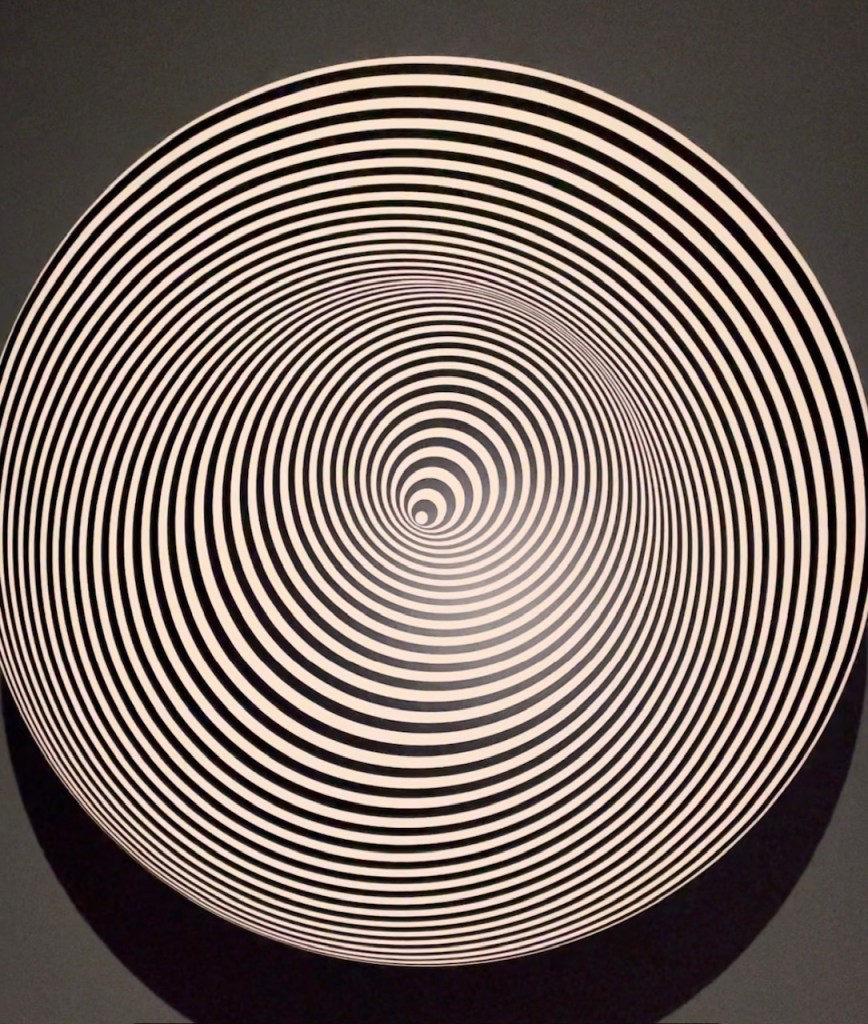
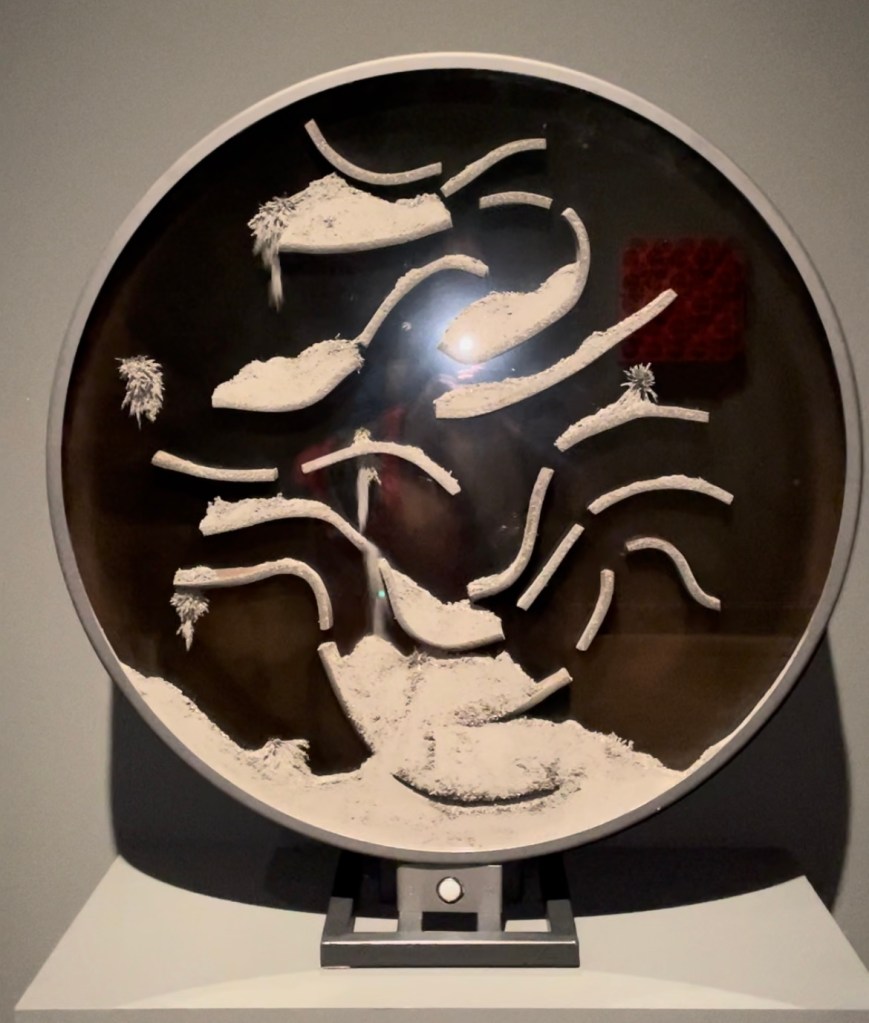
Electric Dreams: Art and Technology before the Internet. What a beguiling exhibition this is at Tate Modern. I find it a comfort that, whenever scientists and inventors come up with useful technology and innovations the artists follow in their wake and use them in a playful and creative way. Fascinating to see what artists achieved between the 1950s – 90s using motors, screens, broadcast, photography and computers to herald the dawning of digital.

The above image is ‘old school’ in comparison to the screens, flashing and kinetic works which follow but I really liked it. It is made of paper/card, so that helps. It’s by Vera Spencer and entitled Artist versus Machine from 1954. The punched cards are patterns followed by automated looms, early binary storage and the forerunner of computer coding.

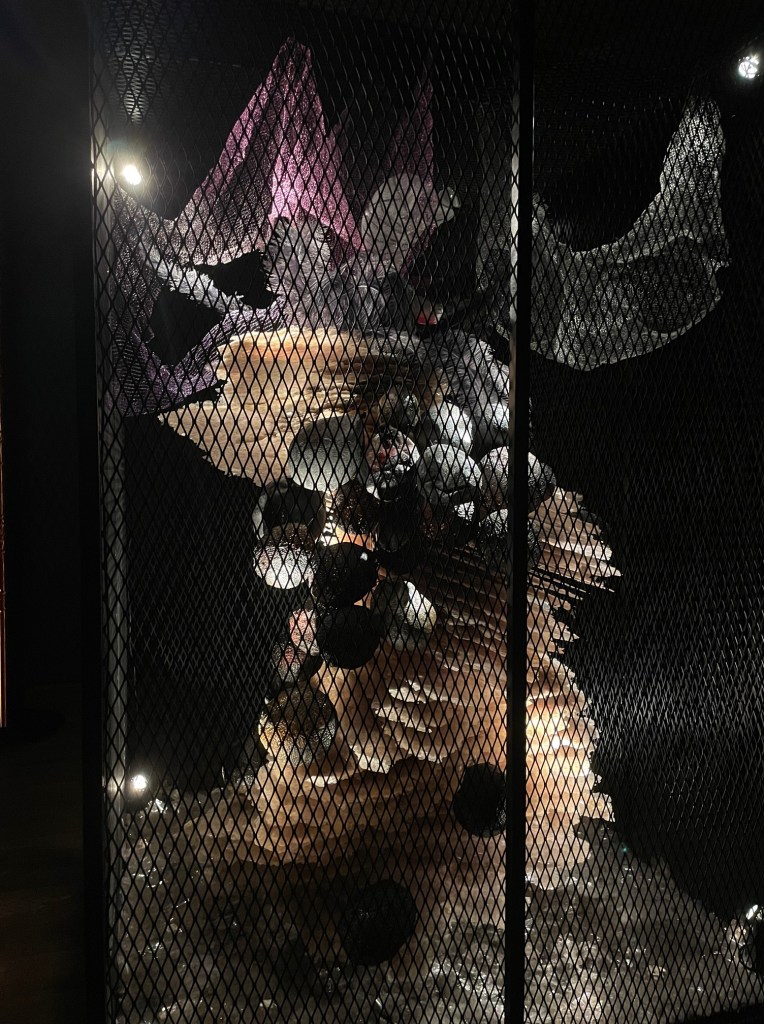
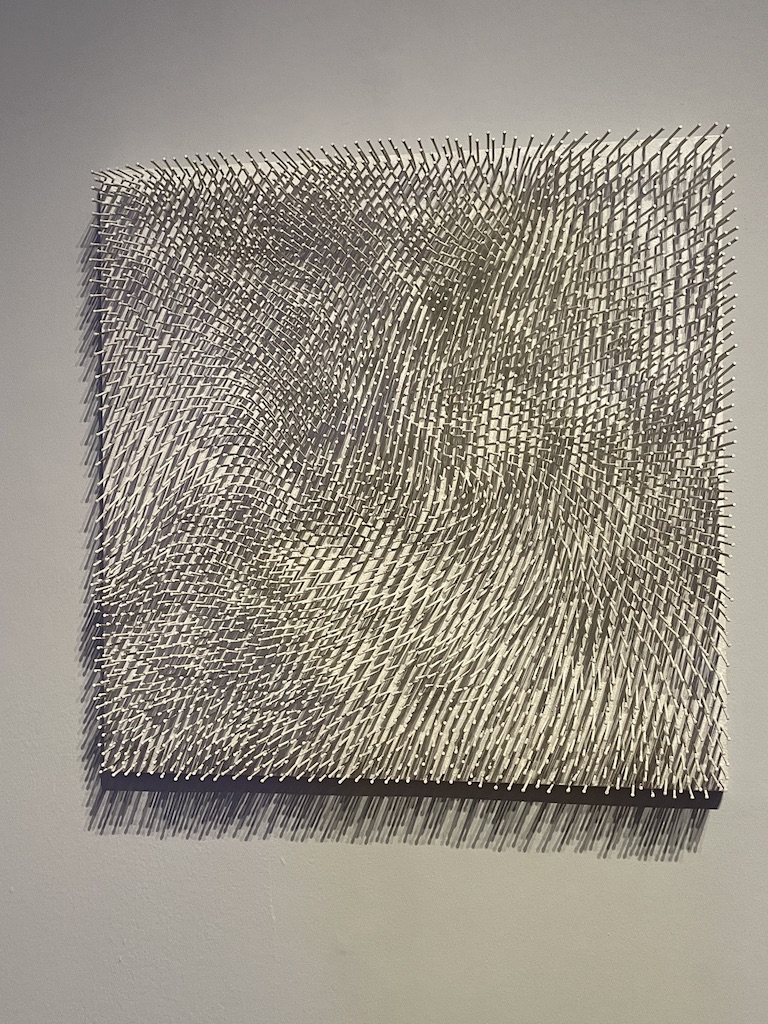
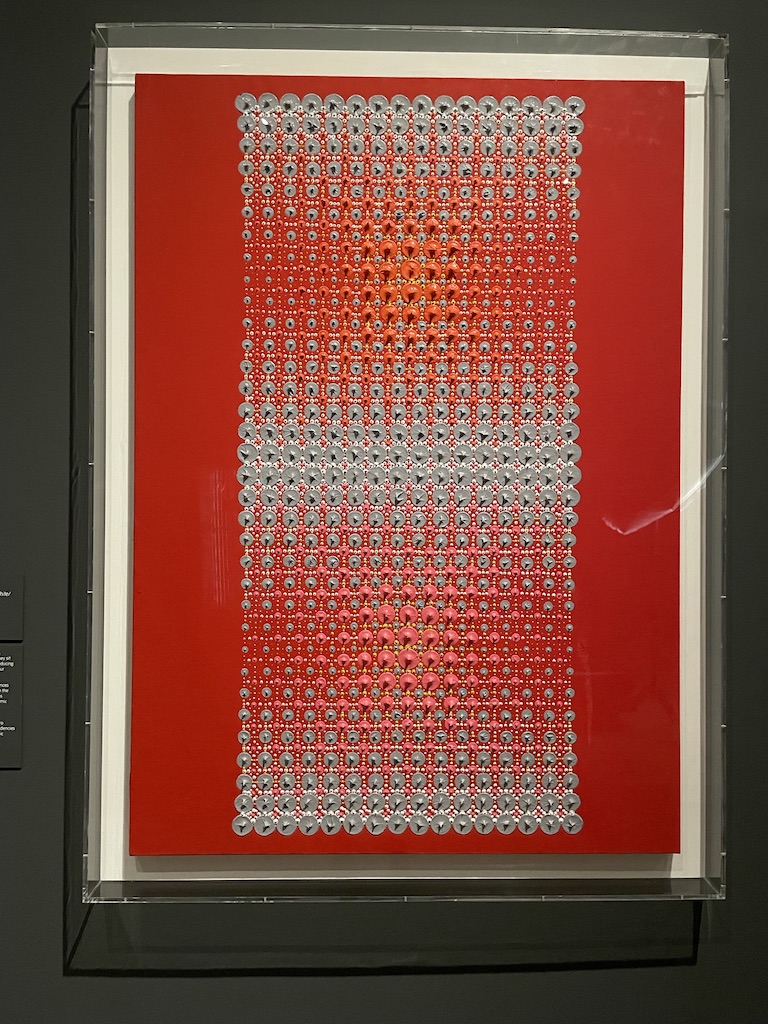
Still clinging to the notion that art is physical, I was drawn to these works which celebrate the use of strange materials, the artist’s capacity for playing with a viewer’s perception and looking at a ‘flat’ artwork and seeing it appear to move. On the left is The Bride by Liliane Ljin using blown glass, ostrich feathers and croched stainless steel. In the middle is White Field by Guner Uecker, painted nails on canvas and on the right is a work from 1964 by Almir Mavignier.

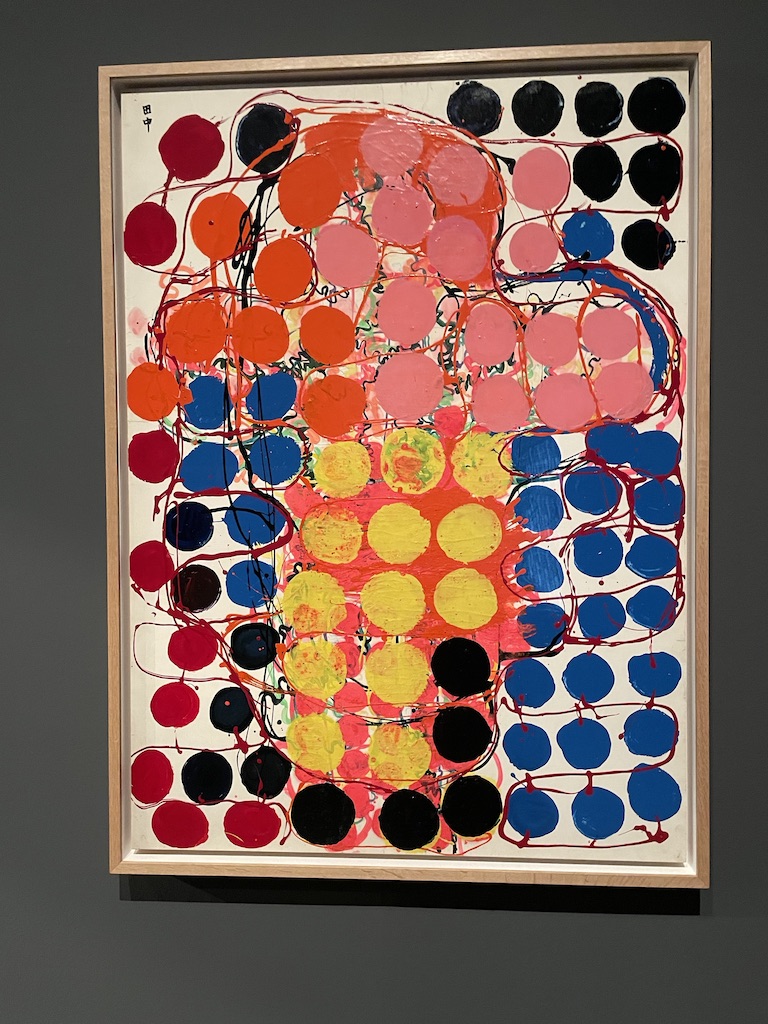
And just a few more examples of the more ‘accessible’ art on surfaces which are mounted on the wall. But you can see how the artists are channelling abstract ideas and using unusual materials to create art. In the centre is a bright work by Atsuko Tanaka from 1957.

And these are some of the kinetic pieces which I can only show as stills. They twirl, flash, twiddle and mesmerise. Really fun room.

So, in conclusion, I really don’t understand the thinking behind much of this art but I can appreciate the playful, creative minds which created it. And now, in our digital age, we have these pioneers of playfulness to thank for the astonishing, surreal and fantastic images we tend to take for granted in our entertainment and media.

The show is at Tate Modern until 1st June 2025.
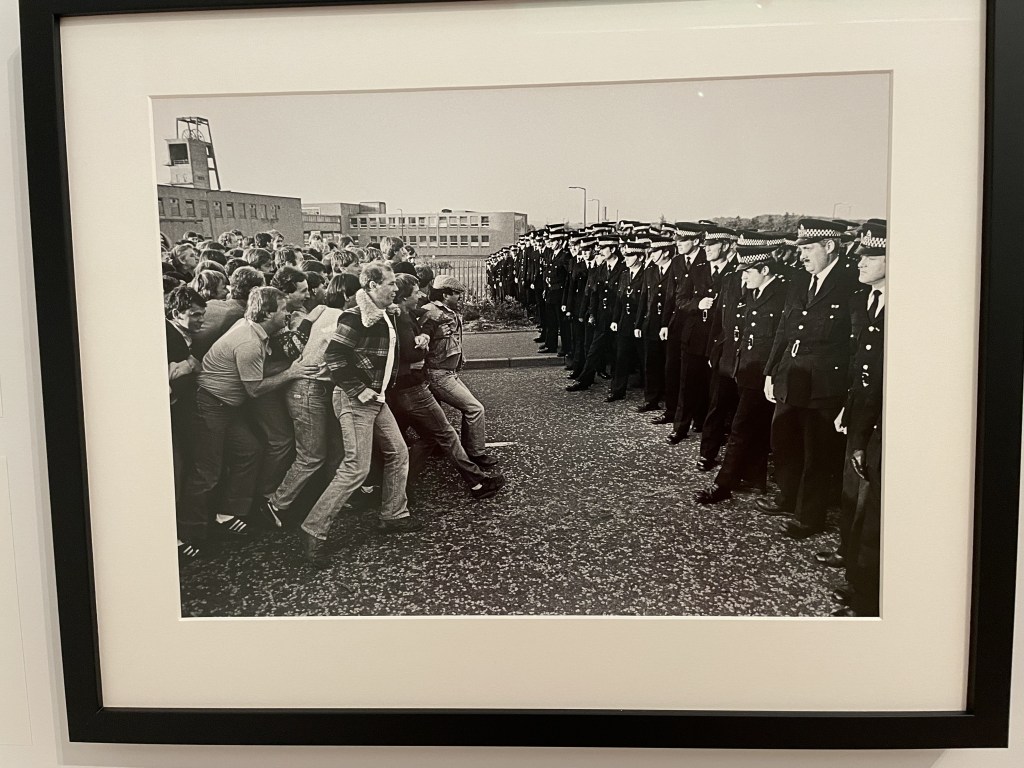
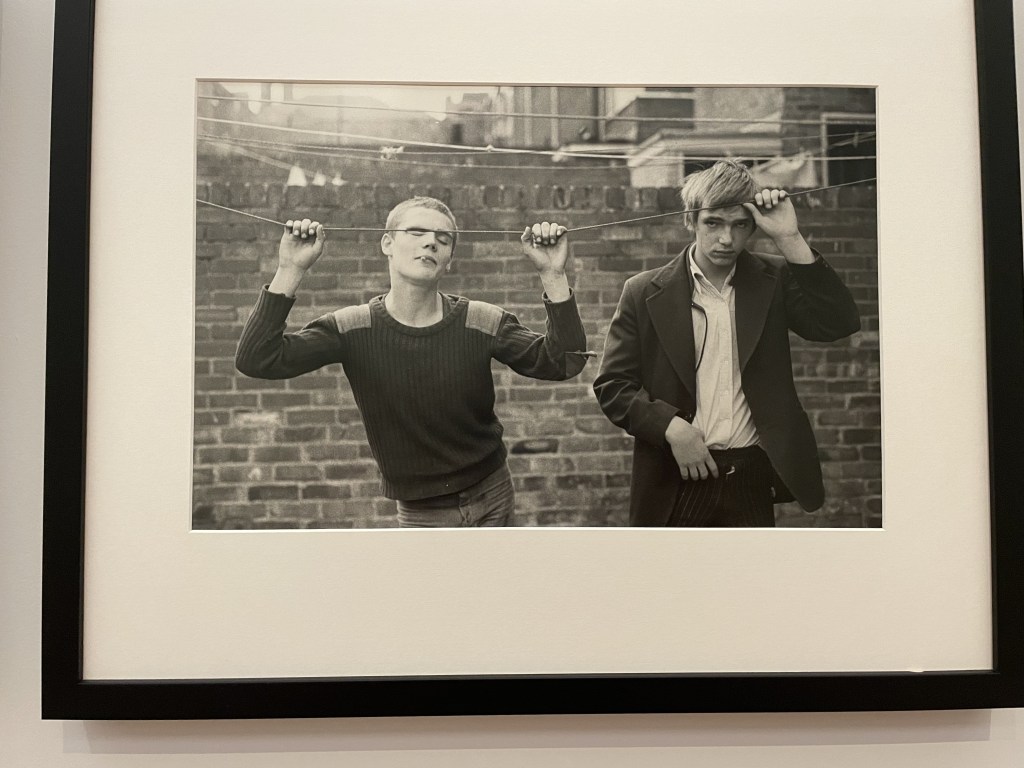
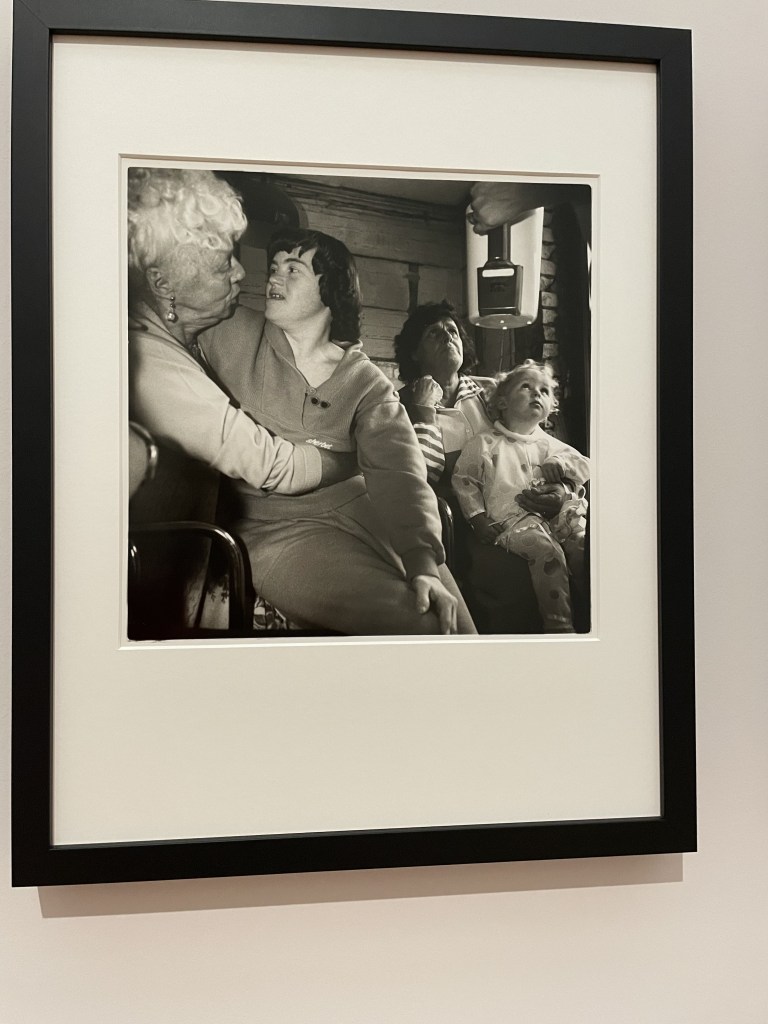
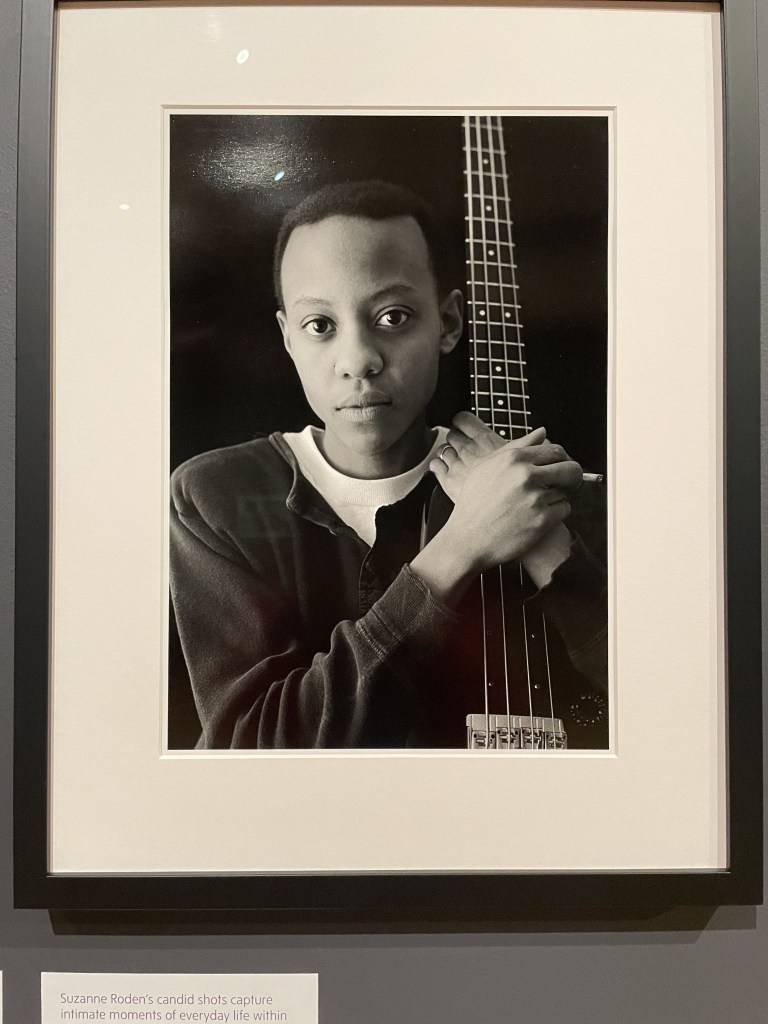
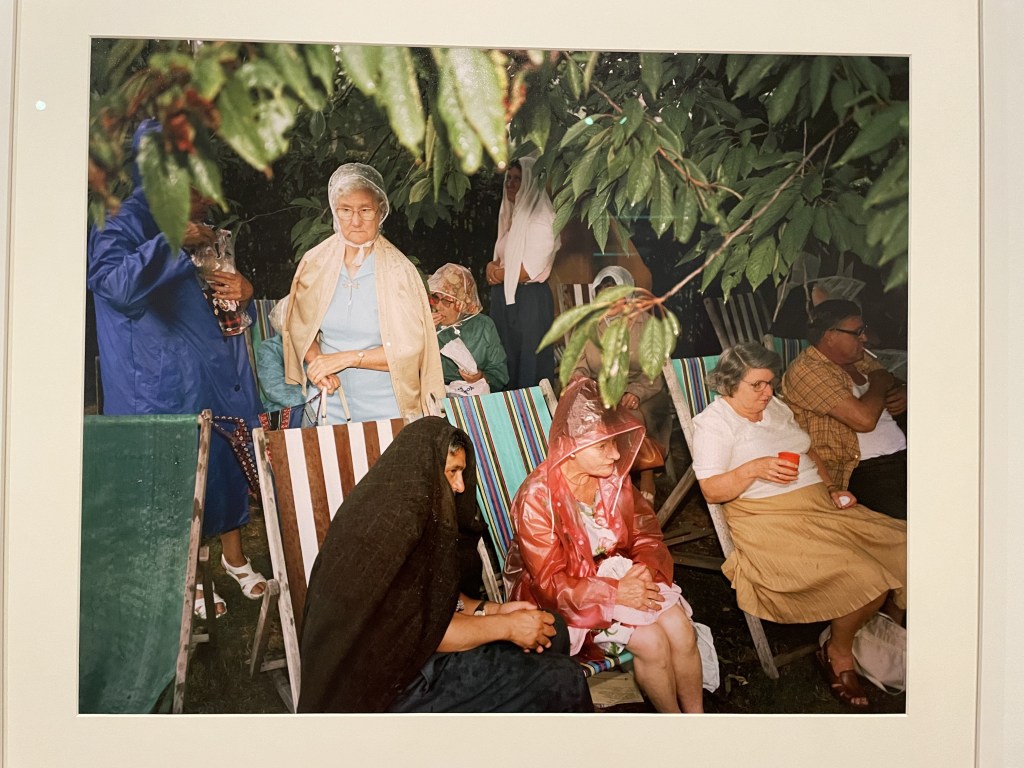
The 80s: Photographing Britain This is a new photography exhibition at Tate Britain which captures aspects of that decade and seems to suggest that everyone back then was in a state of angst, dissatisfaction and dispute. I remember it rather fondly but now it’s all history for a younger generation to view. An interesting show with 350 images to tell the story of Britain during those years.

We had the miners’ strike, race riots, poll tax riots, sky-high interest rates, poverty and loud fashion. Looking at the images from the eighties there are times when you wonder if the photograph might have been taken decades earlier, especially when the subject is poverty or inequality.

I guess, the eighties were the last decade when photography was done the ‘old-school’ way, before the digital revolution really took hold and we all started recording life on our phones. Still, I’m impressed to see how many photographers found a way to enter the most personal of moments in people’s lives and record important or incidental events – and all in black and white too. There were some excellent portraits too.

The galleries and walls with photographs in colour have a completely different atmosphere. There’s a richness, thanks to the colour, but sometimes there’s a feeling that the image is contrived even though you know that it’s the moment when the photographer saw a small event and captured it.

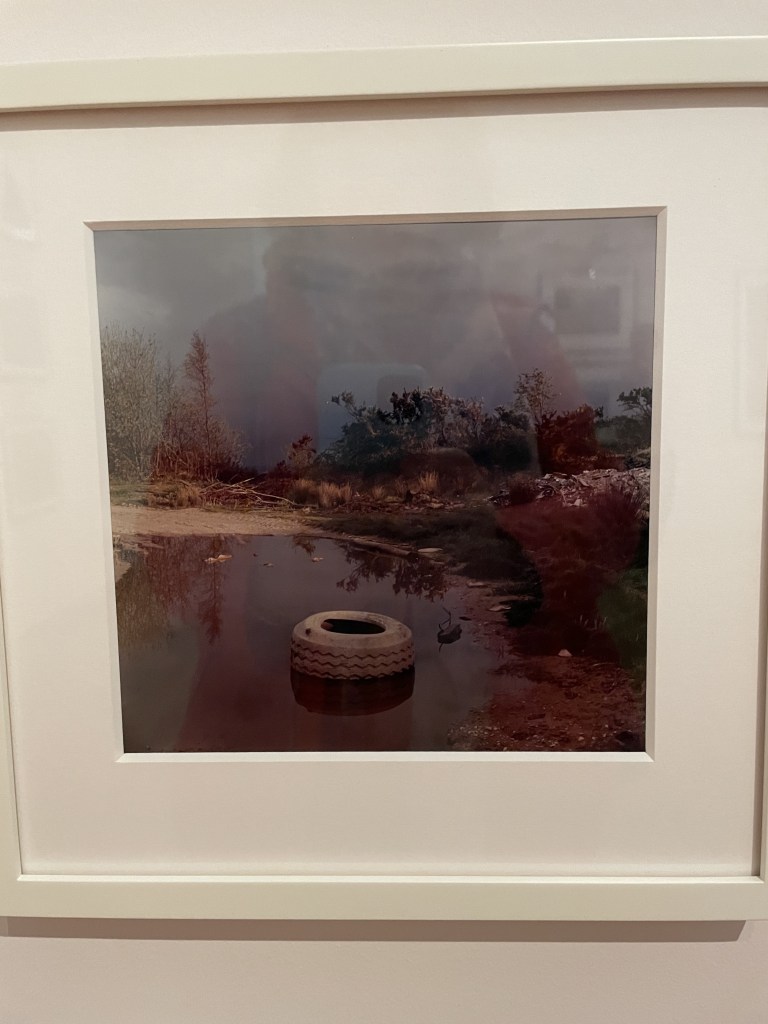
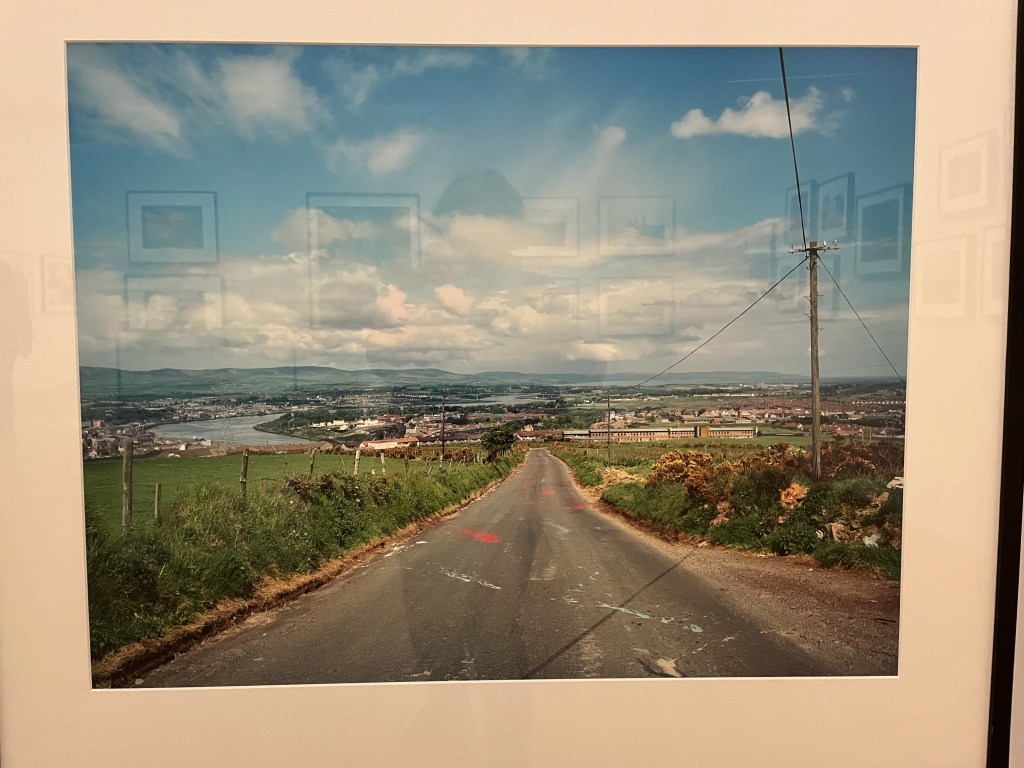
I was mainly drawn to the photographs of people but there were some striking images of landscapes too. I liked the sad collection of still-life images of beauty spots which have been ruined by pollution or fly tipping. And there was something about that photograph of the road with red paint taken in Ulster which captivated me.

The show is on at Tate Britain until 5th May 2025. Take yourself back to the eighties and enjoy!
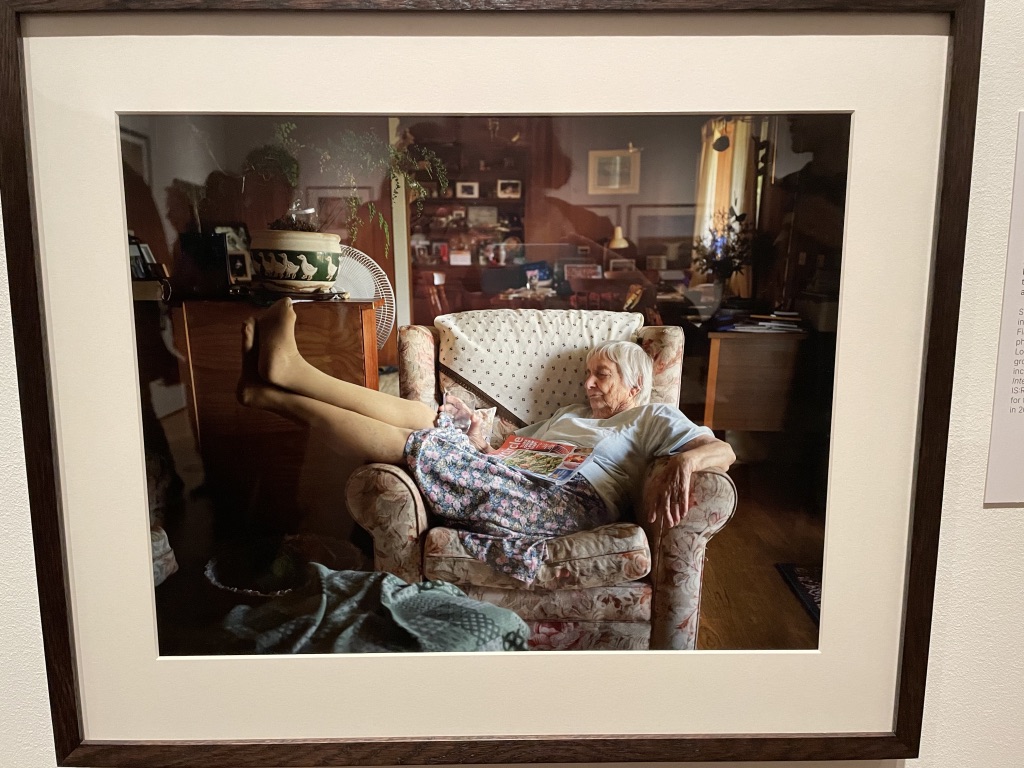
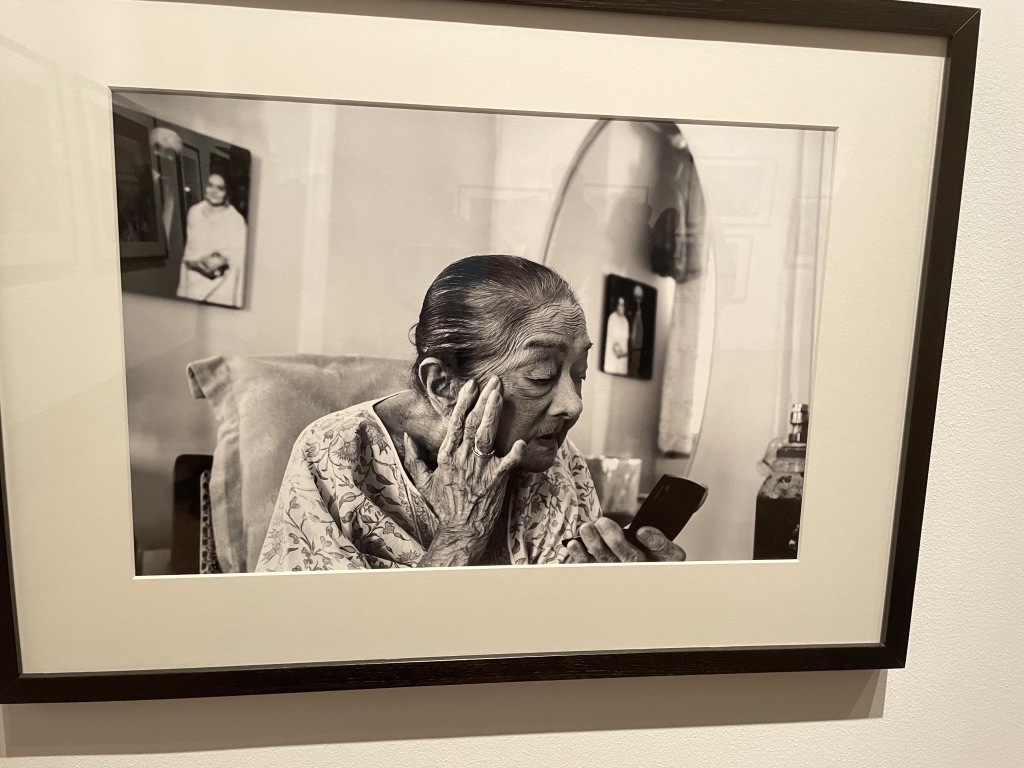
Love for the elderly, sensitive family situations and tender images of relationships dominate this year’s selection of Taylor Wessing photo portraits on show at the National Portrait, and I approve the choice of prize winners for 2024.

Above is Celia and Shay, a very tender photograph taken by Megan Taylor which I found enchanting.

There was a great emphasis on images of much-loved elderly relatives in this year’s collection. These two caught my eye. On the left is Ageing Gracefully by Madeleine Waller of her mother at home in Australia. On the right is Inderjit Kaur by Jasmeen Patheja of her grandmother.

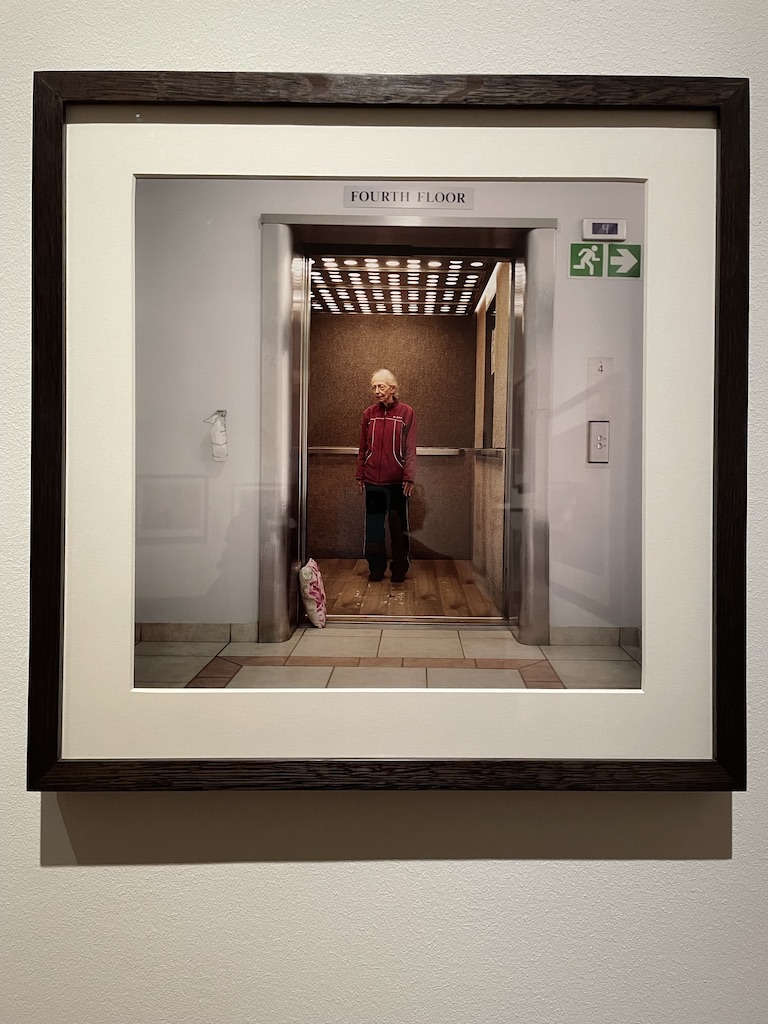
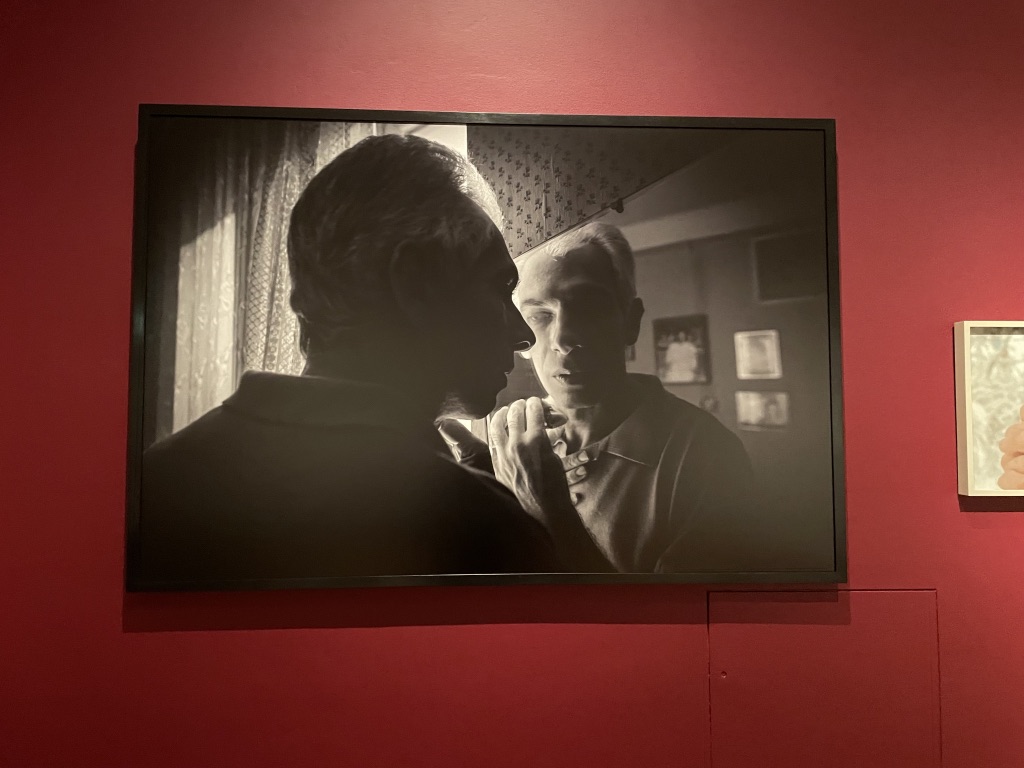
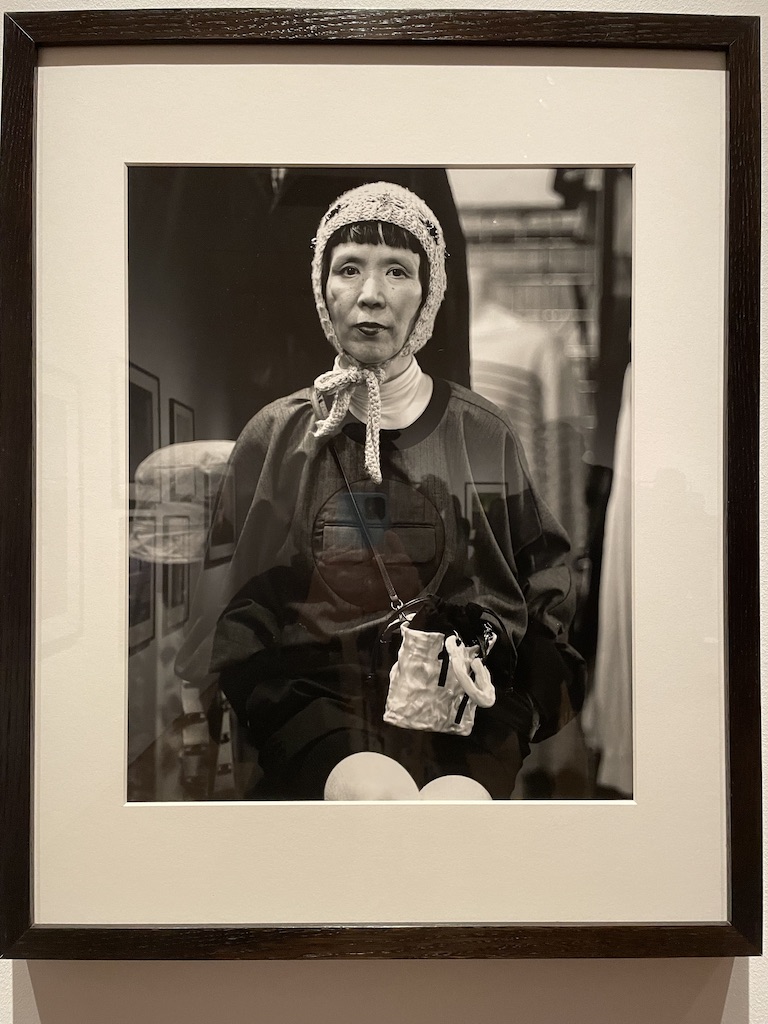
Here’s another trio of images of parents or images which capture older models. On the left is Mom, I’ll follow you still by Jesse Navarre Vos and shows his grandmother standing in the lift of the care home where she moved after they stopped living together. Vos wanted to capture the sense of separation and knowledge that he could no longer be with her into her new surroundings. In the centre is My Father’s Reflection by Diana Markosian and on the right is a portrait of Chicko, a clothes seller in London taken by Toks Majek using a 60 year old lens.

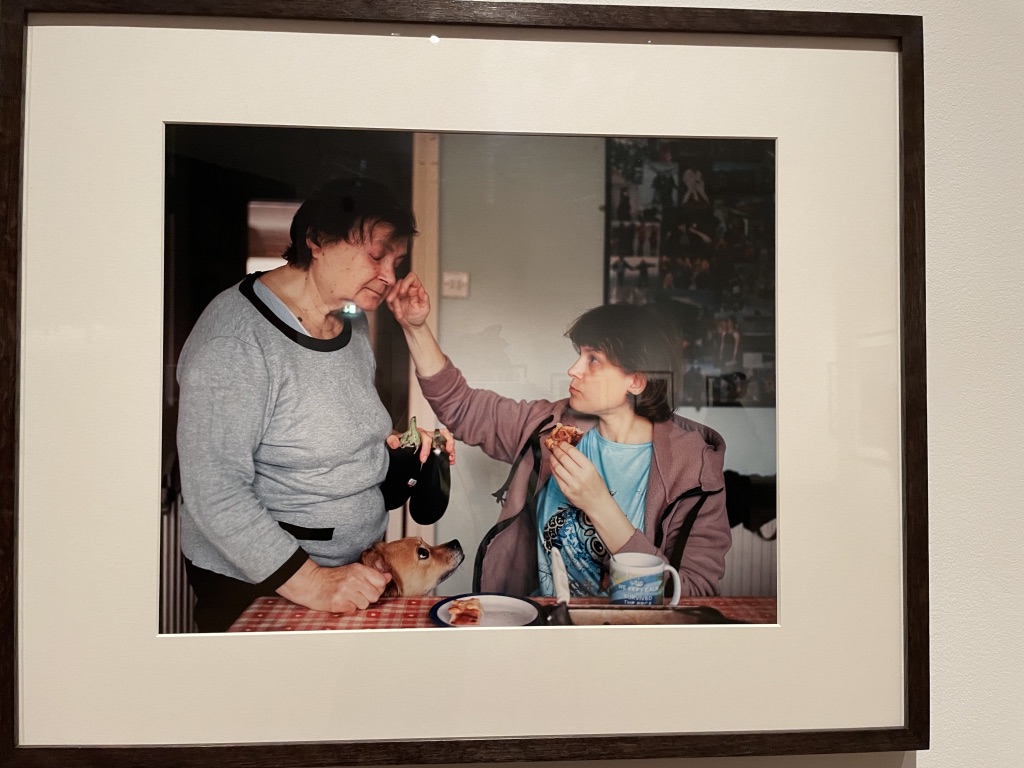
This photograph looked very spontaneous. Entitled Kitchen Embrace it shows the photographer’s daughter tenderly touching her grandmother’s cheek. The dog peeps up at the young girl and the two aubergines the woman is holding take centre stage.

And this, above, is the image which won first prize. It’s a very beguiling photograph taken by Steph Wilson of Sonam with her newborn baby. Sonam is a wigmaker and she is wearing a replica of her father’s moustache.

It’s a very interesting show this year and is situated on the upper floor of the gallery so you have the fun of walking through faces of the past to see these, the gallery’s most contemporary images. The Taylor Wessing Photo Portrait exhibition is on until 16th February 2025.
Prince George & Master Frederick is my debut novel. It’s a work of historical fiction but is based on the true story of Frederick Blomberg, the little orphan boy who was adopted by King George III and Queen Charlotte in 1765 and brought up like a prince within the royal household. Was he really the King’s secret son?

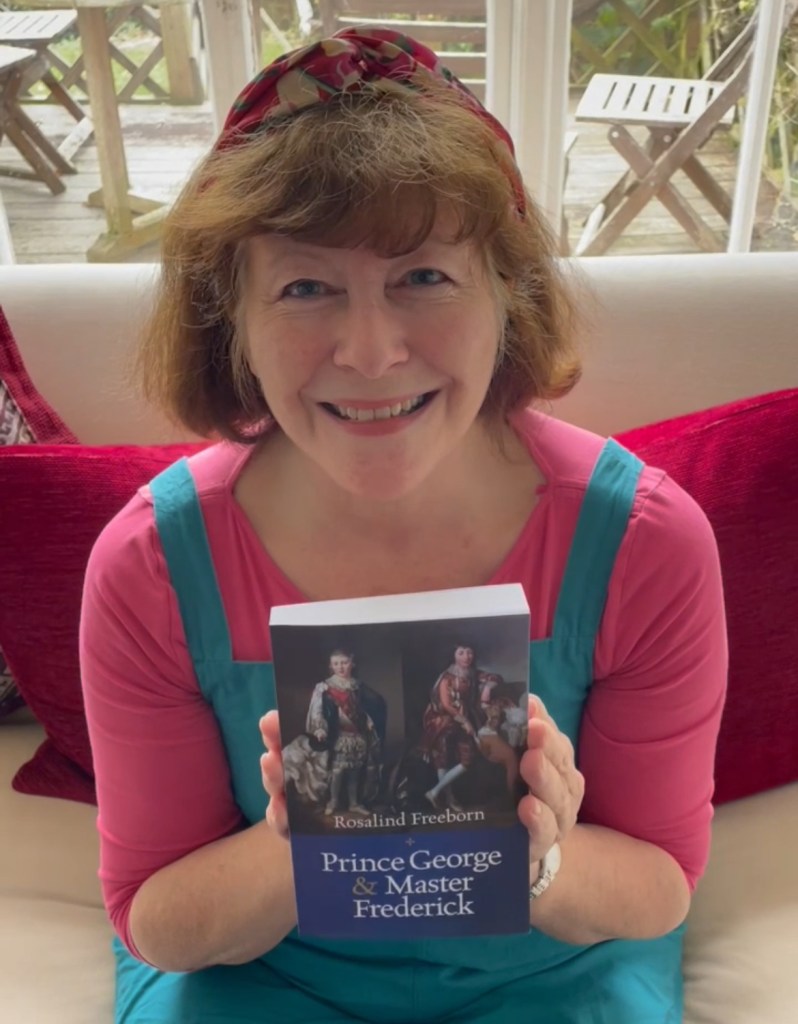
Prince George & Master Frederick (by Rosalind Freeborn) will be published by Alliance Publishing Press on 30th January 2025. It will be available on Amazon and through bookshops. You can also buy it directly from me on my author website. The cost is £15 per copy (plus £5.00 postage in the UK) and I’ll send you a signed copy.

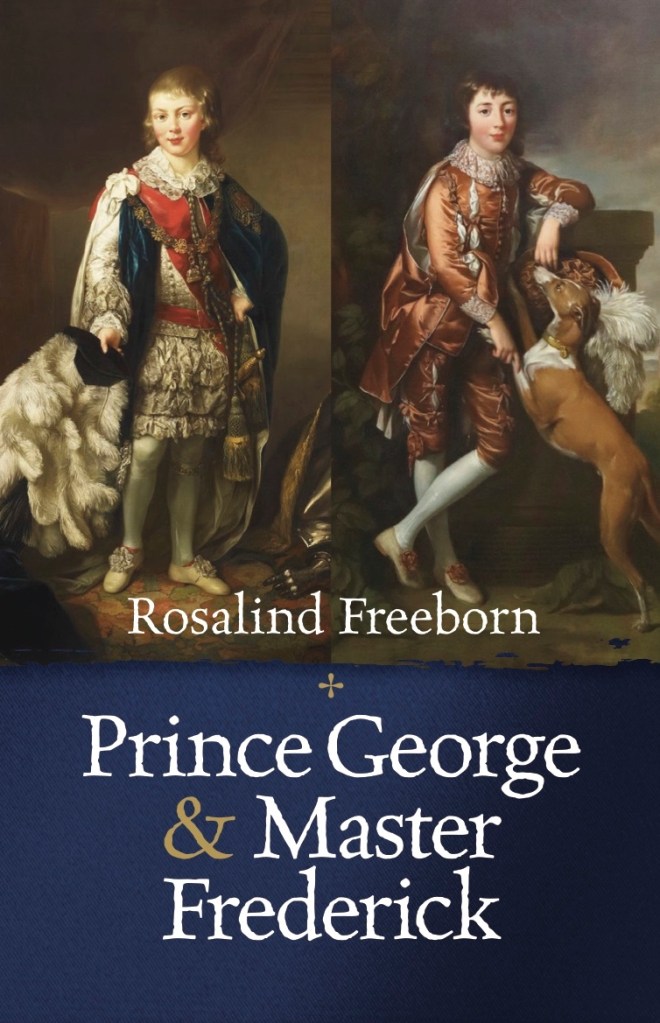
Prince George & Master Frederick by Rosalind Freeborn, book jacket, portraits of Prince George - future regent and King George IV - and Frederick Blomberg, adopted son of King George III.  The paintings are by Richard Brompton and commissioned by Queen Charlotte.

In 1765, Frederick Blomberg a four-year-old orphan, is bundled into a carriage with a woman he does not know and taken to the royal palace at Richmond to be a playmate for the three-year-old Prince George. But why have King George III and Queen Charlotte adopted this child and what is his secret connection to the king?

I was prompted to write this book after investigating a family story suggesting that there was a connection (on my mother’s side) with King George III. Researching this story opened up the most fascinating life-story of Frederick Blomberg. He’s a character who is occasionally referenced in history books and royal biographies but his story has never been told before. Yet, when you look at the portrait by court artist, Richard Brompton, which was commissioned by Queen Charlotte, it’s clear that he was an important child in the household.

Prince George & Master Frederick is a work of fiction but it is based on real events, charting the lives of real people with just a few characters added for dramatic impact.

Prince George & Master Frederick by Rosalind Freeborn, historical novel about the secret son of King George III. Published by Alliance Publishing Press on 30th January 2025.
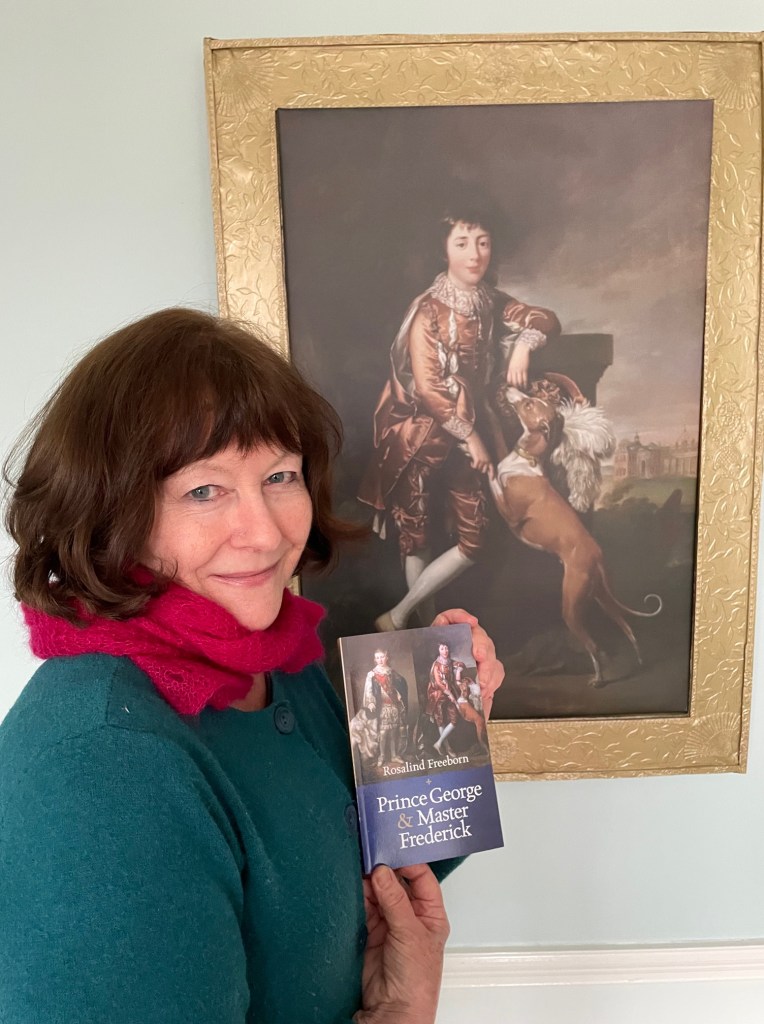
The two portraits which appear on the book jacket are by Richard Brompton. They feature the same plinth as prop and both boys are wearing the same pom-pom shoes. The portrait of Prince George, wearing garter robes, features Windsor Castle in the background (the painting now hangs in the 1844 Room at Buckingham Palace). Frederick Blomberg, in a fabulous rust-coloured suit, with greyhound, features Buckingham House in the background. Buckingham House was later remodelled and became Buckingham Palace.

It’s very exciting to have some advance copies of the book. I look forward to the moment it is published on 30th January 2025.

Photo of Rosalind Freeborn, author of Prince George & Master Frederick with a copy of her historical novel due to be published on 30th January 2025.