I’m going to post just a few of the pieces which caught my eye this week at City & Guilds of London Arts School. The show is on until 28th June 2024 and it’s a joy to tour the studios where all the magic happens and see the results of some seriously hard work on show.
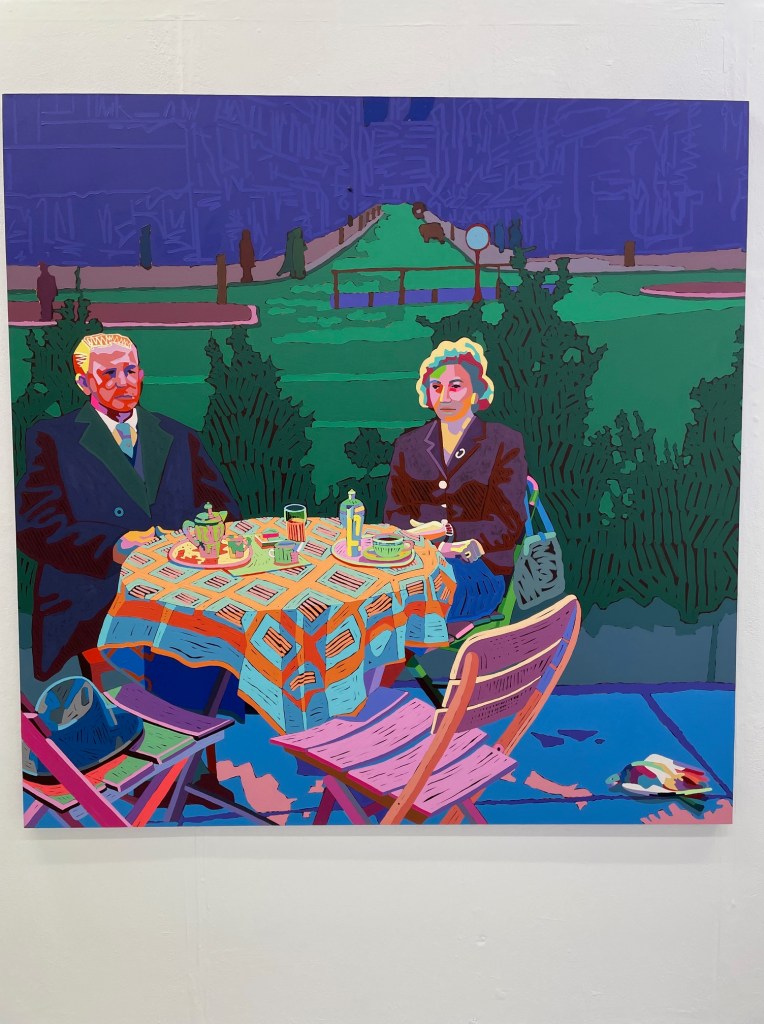
Above: Here is Bunny Hennessey with her terrific, and very large, canvas which channels a Philip Guston feel. And on the right is a very intriguing, and also large canvas by Zoe Klink. Great to see pictures with serious bombast and confidence.
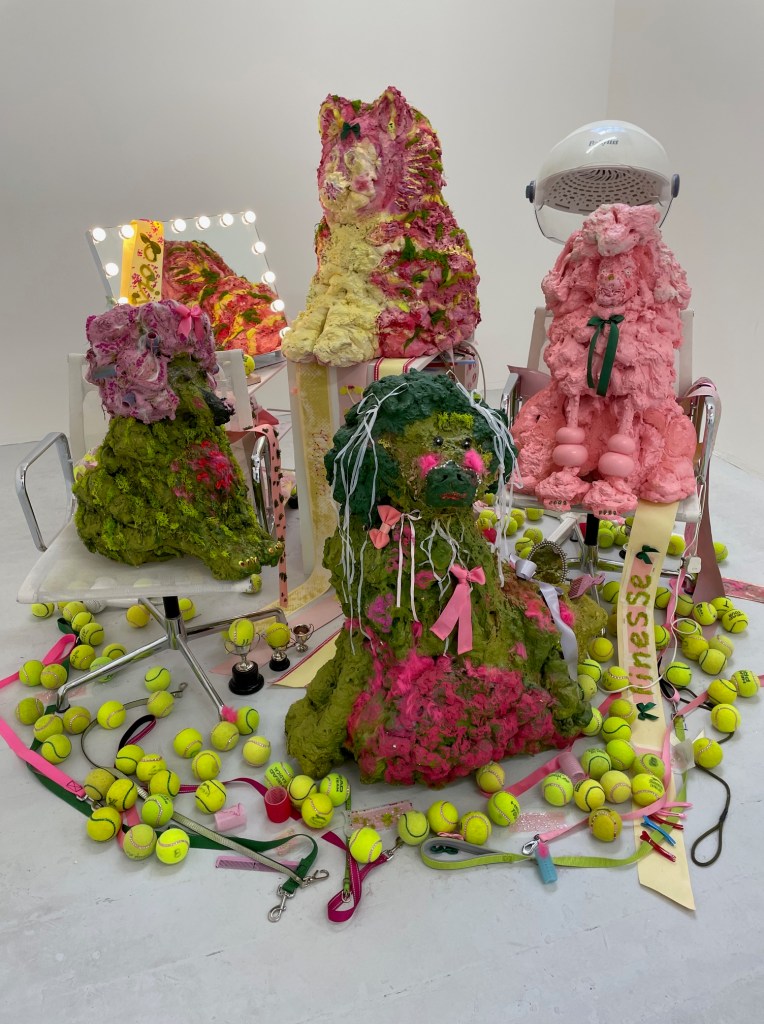
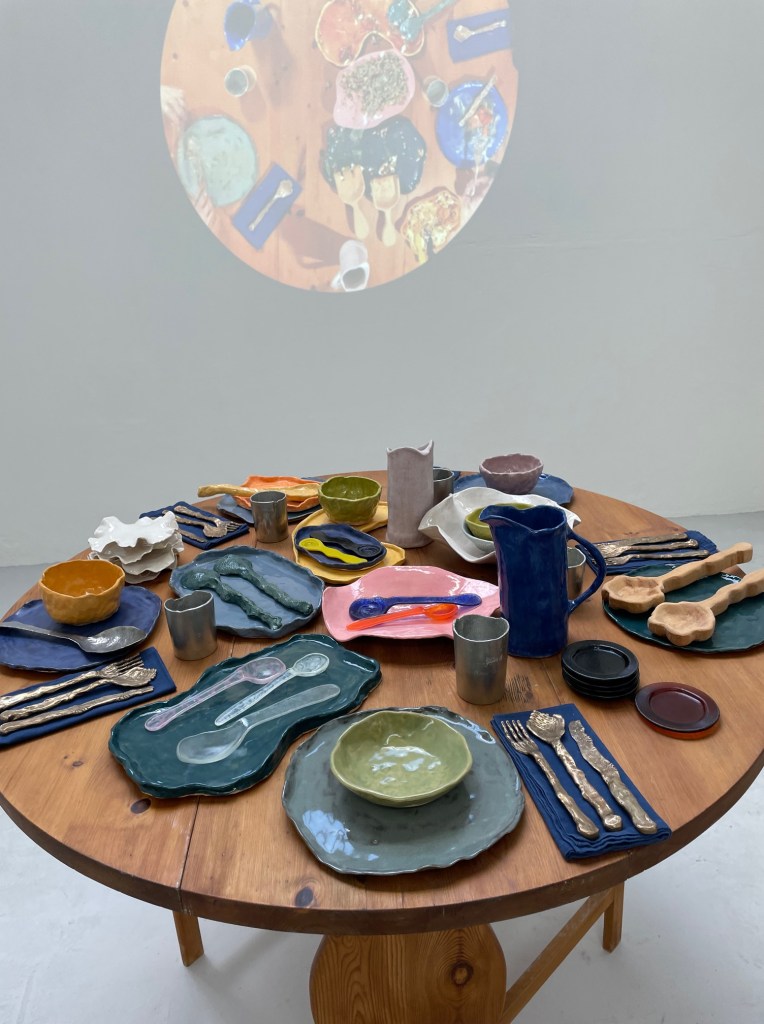
Above is work by Iris MCConnell who has used expandable foam to create some very playful sculptures of fantastical hounds. It makes you smile when you enter the studio. And on the right is a really intriguing piece by Gwen Brown entitled Making Dinner. She’s hand made all the plates for her dinner party using a variety of materials. And there’s a film above the installation with images of the plates, knives and forks being used for a very lively looking feast.
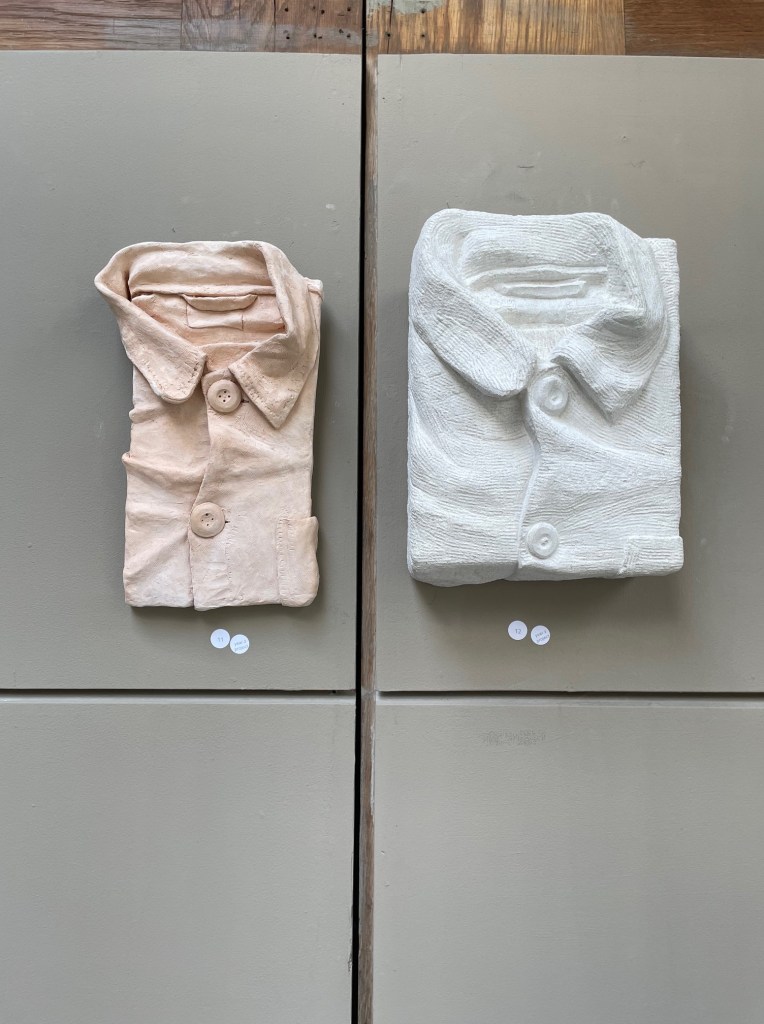
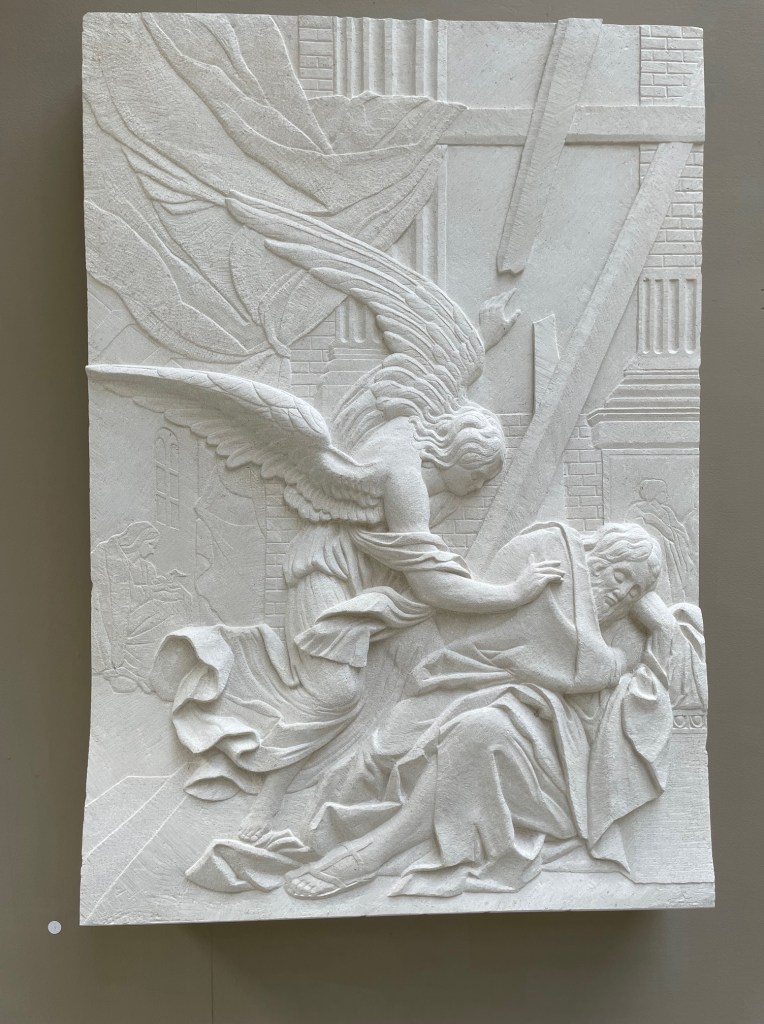
And in the stone carving space outside I loved these two pieces:
The carved shirts are by Paul Farmiloe and the relief carving is by Alex Wheeldon. So great to see such important and historic skills alive and well and being carried on by such expert graduates.
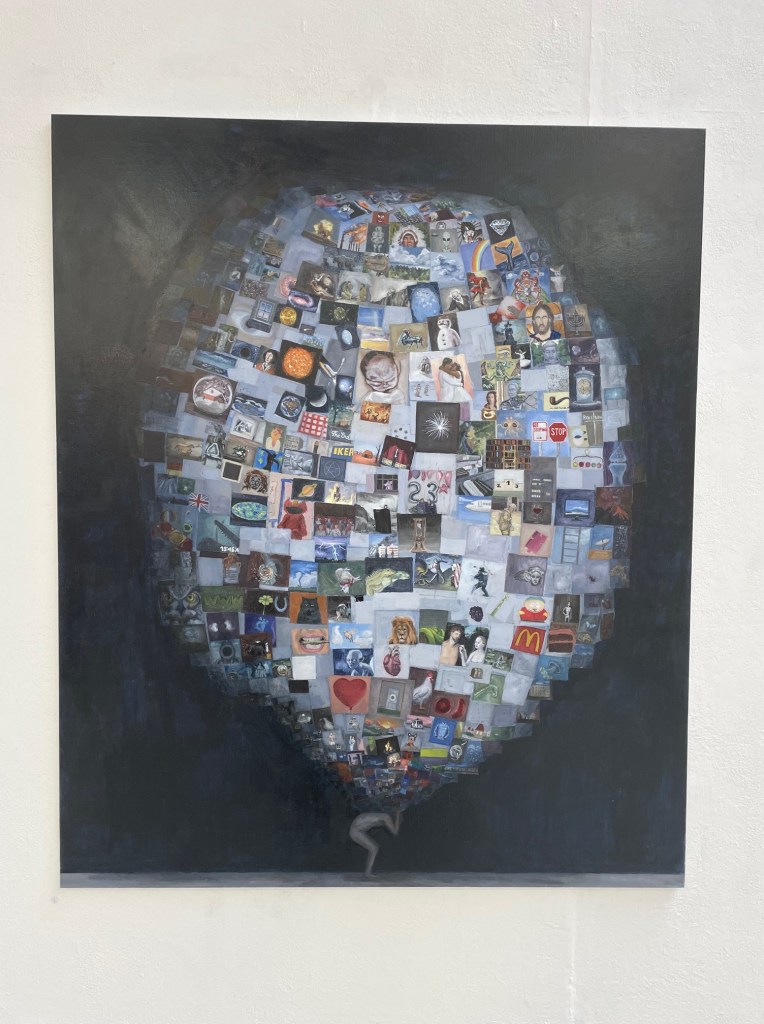
And finally, I liked Elmo Spethmann‘s ‘world view’ and a huge amount of work which went into his final piece.
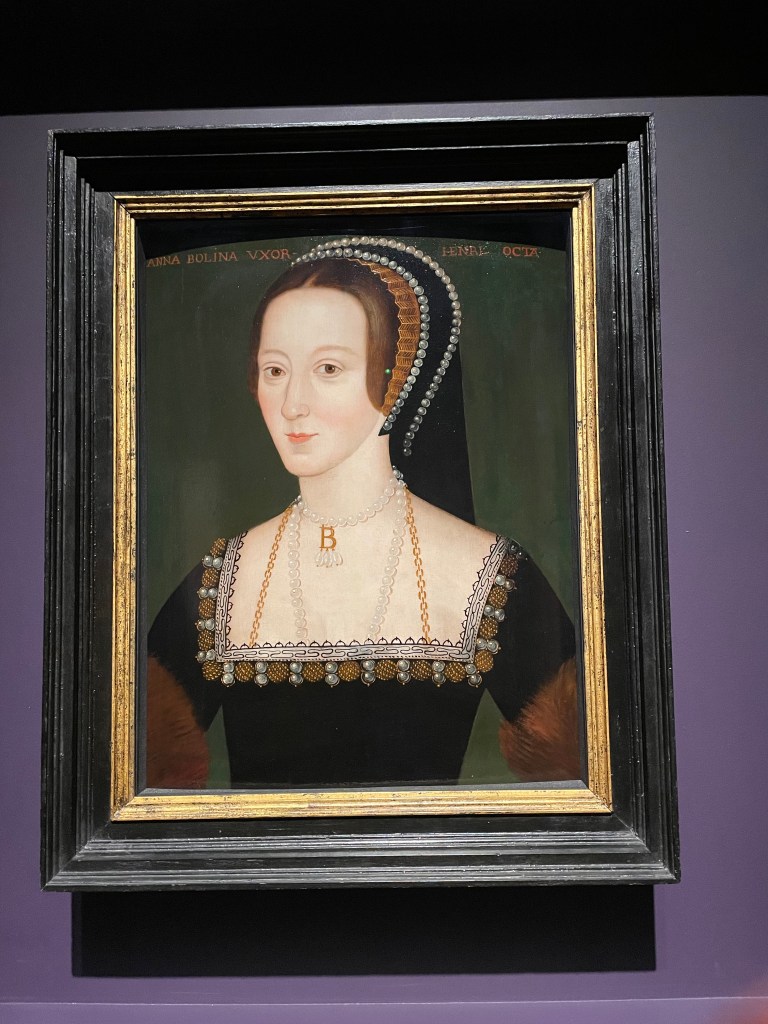
Probably the most famous of the Six Wives was Anne Boleyn. Not only was it a love match but she was a clever woman and a diplomat. And, most importantly, her daughter Elizabeth turned out to be a spectacular queen. However, it’s hard to find trustworthy images of Anne Boleyn because she was ‘written out’ of Tudor history.
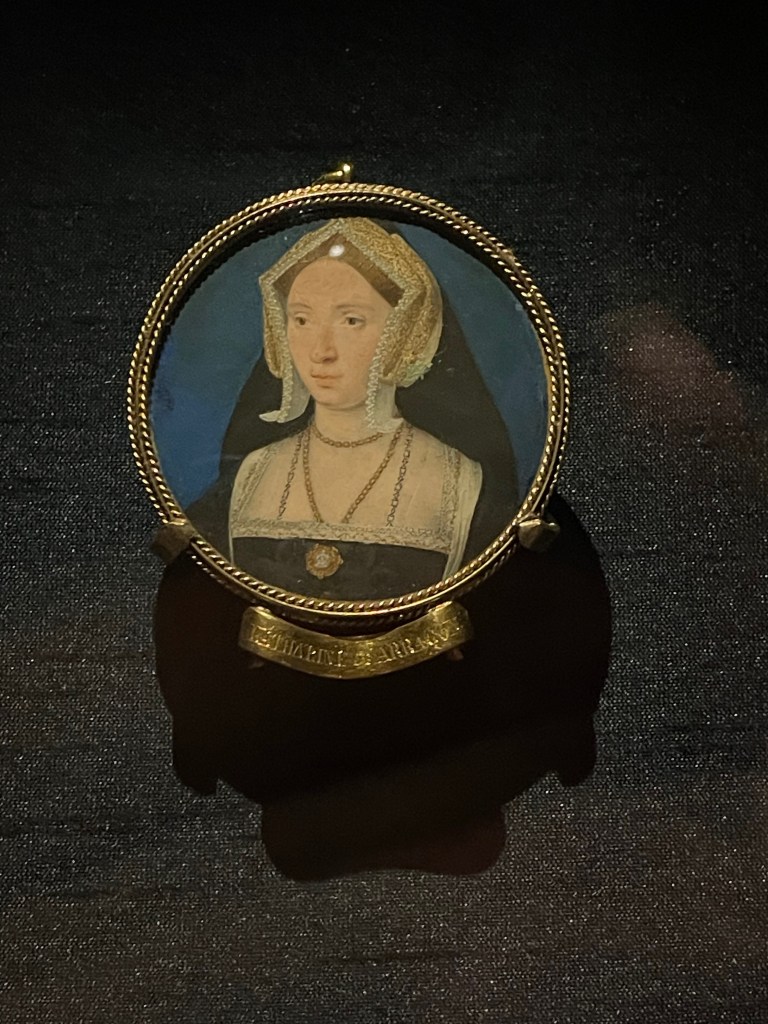
Above, is the posthumous portrait, probably commissioned by Queen Elizabeth I but the miniature is thought to be a surviving image of her painted from life.
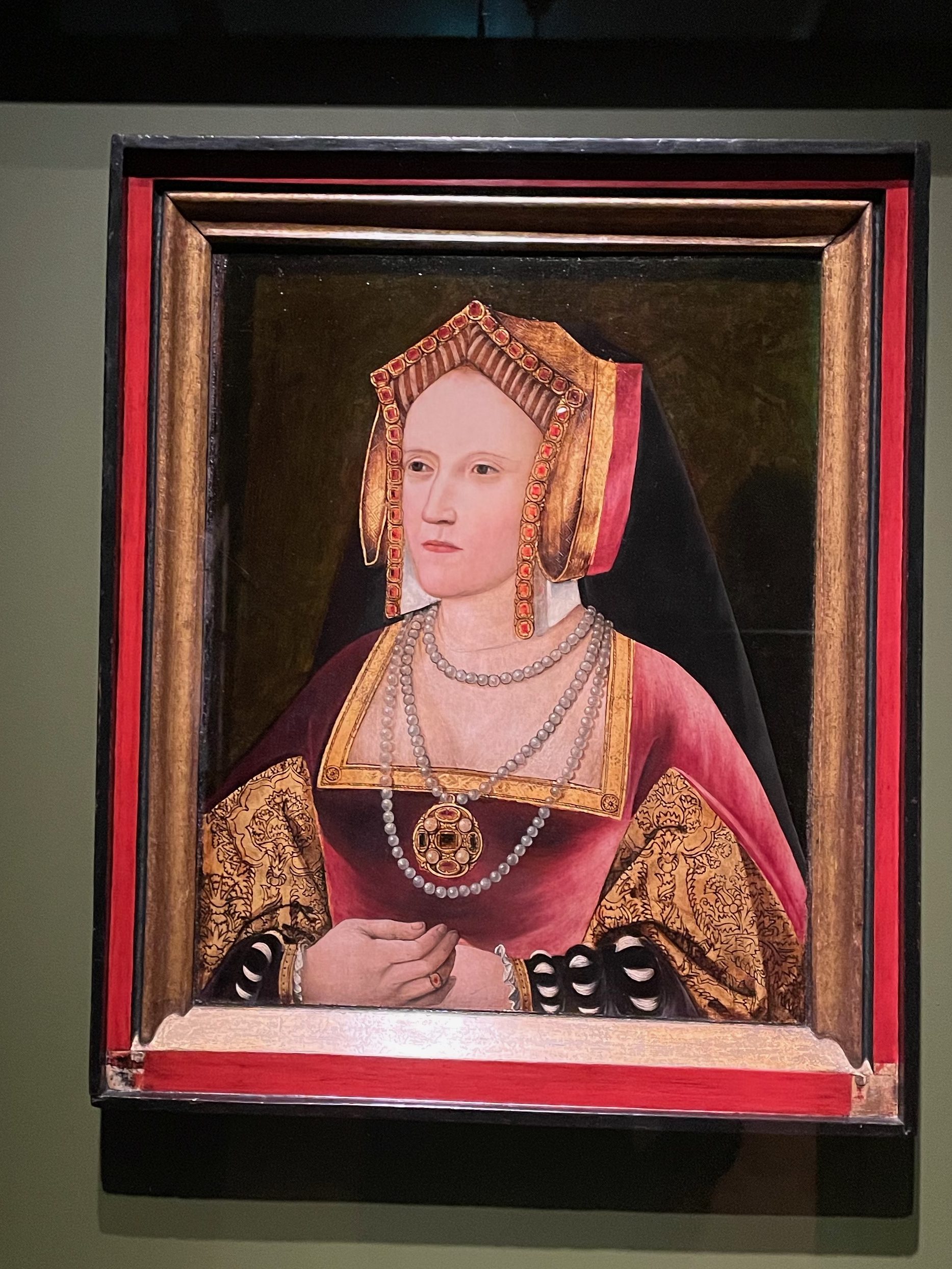
Anne Boleyn had attracted the king’s eye after he tired of his first wife, Katherine of Aragon. He argued that the woman, who had been married to his older brother Arthur, who died, should not have been foisted upon him as a wife. They were married for 24 years but only one daughter was born, Princess Mary and future queen. Hence, the king’s break with Rome and the establishment of the Church of England with the King at its head. Below is an image of Katherine of Aragon.
After Henry tired Anne Boleyn and her inability to produce a son. His eye turned to Jane Seymour.
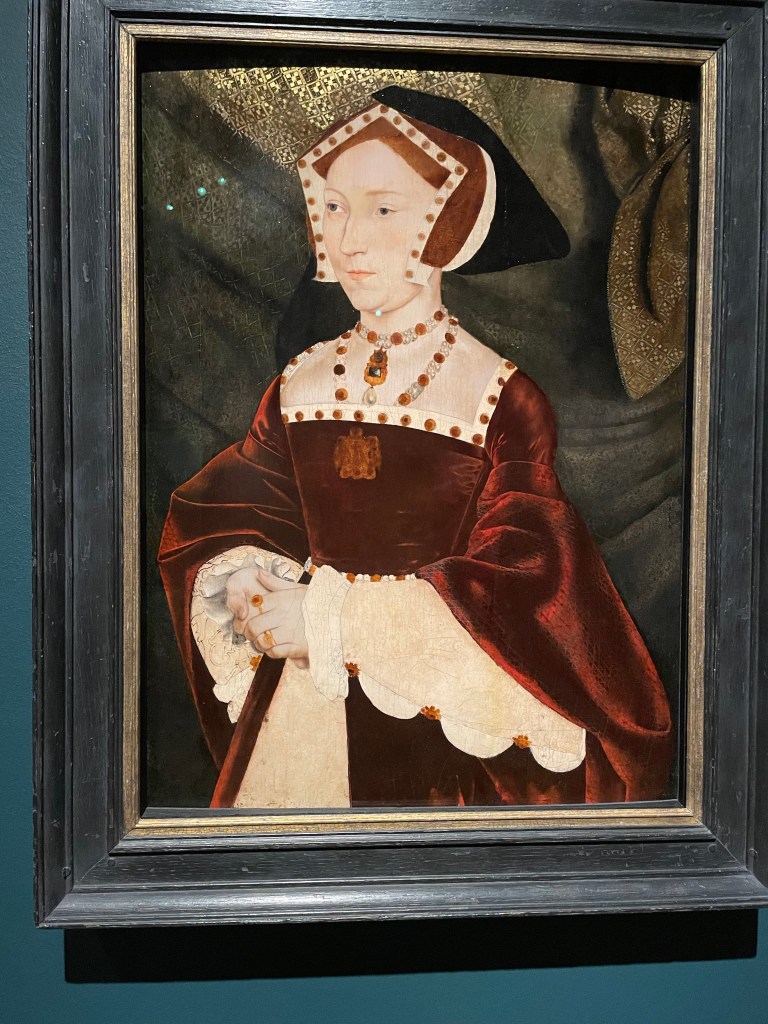
Jane Seymour was a favourite wife, and she produced an heir, the future King Edward VI who sadly died aged 15. And Jane died soon after his birth causing the King genuine grief and creating a vacancy.
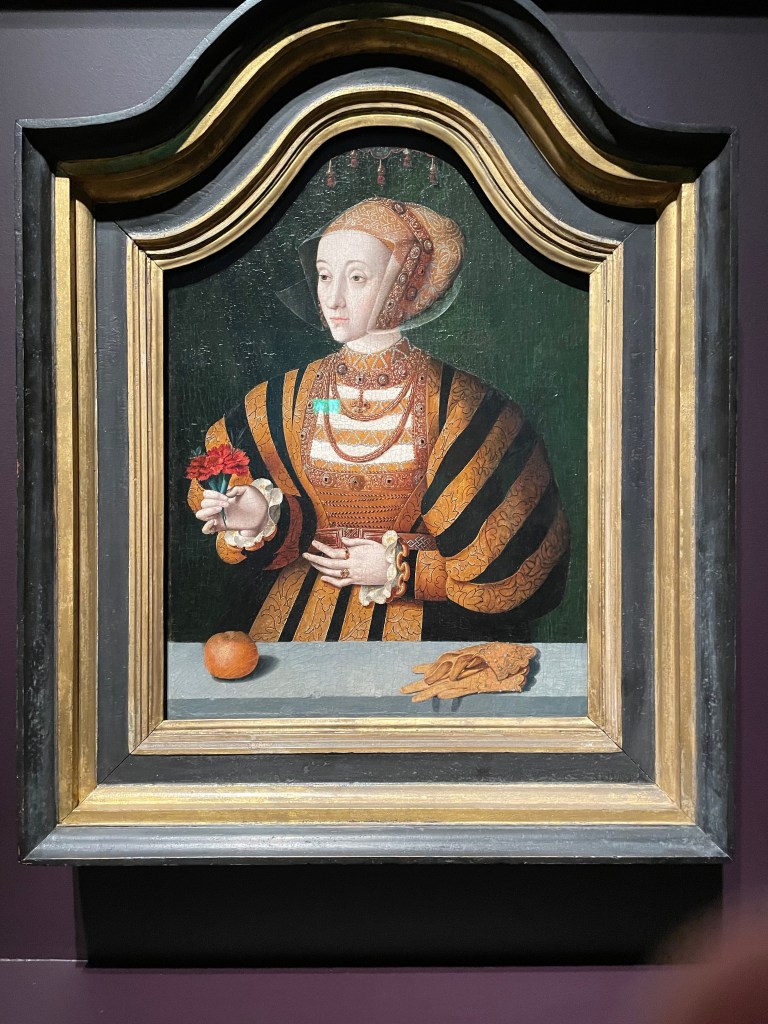
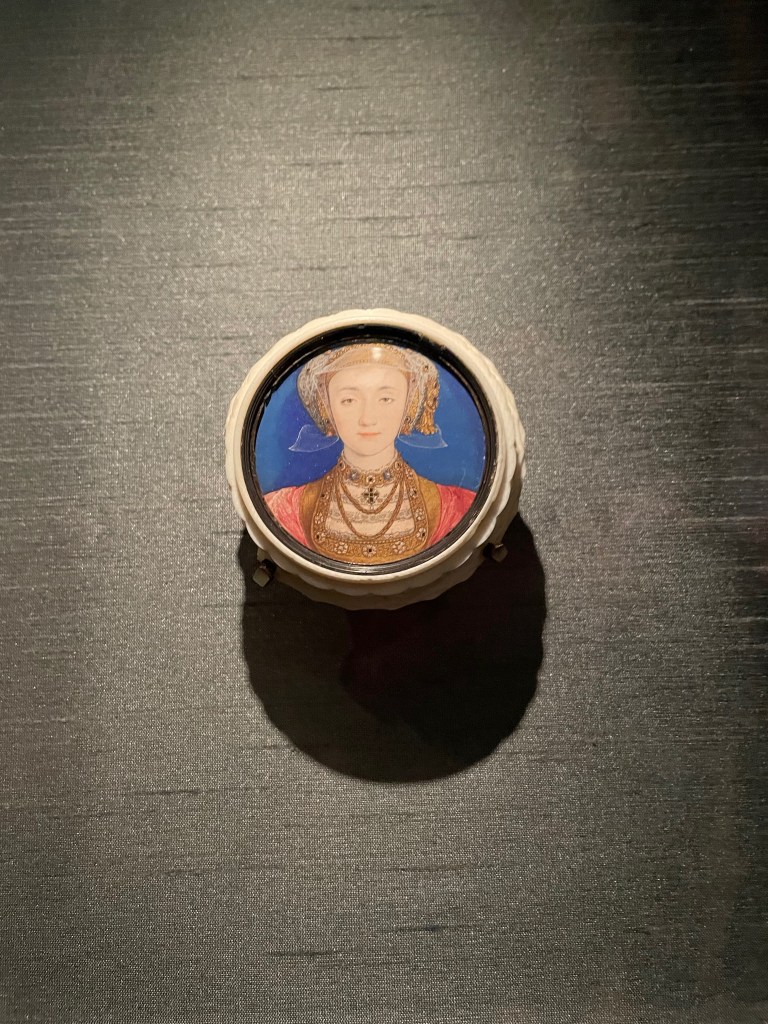
So the next wife was Anne of Cleves. Her initial portrait didn’t attract the king but a second version, a miniature, convinced him that she should make a good wife. Below are the two images of her. The one of her looking directly at the viewer did the trick.
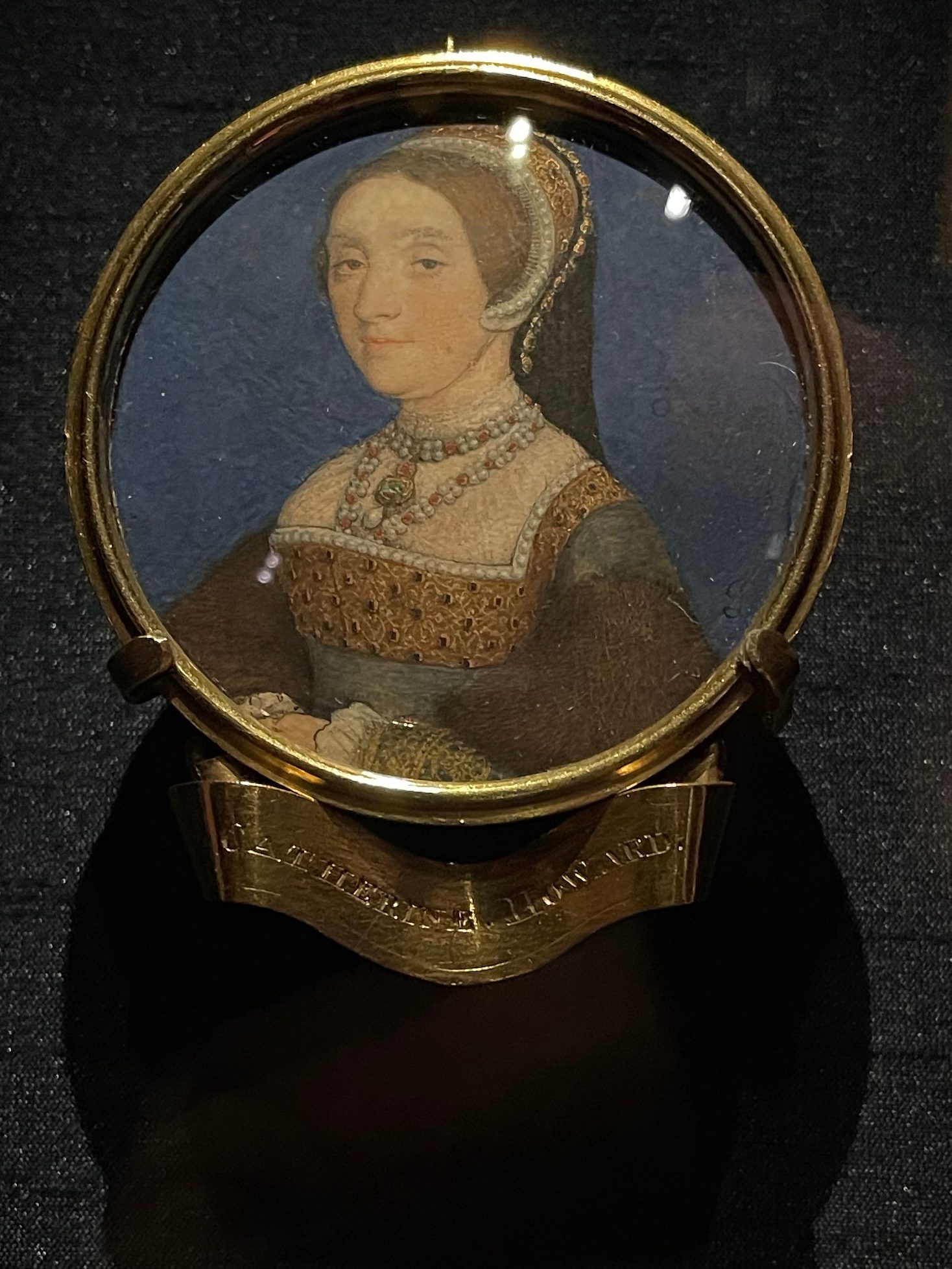
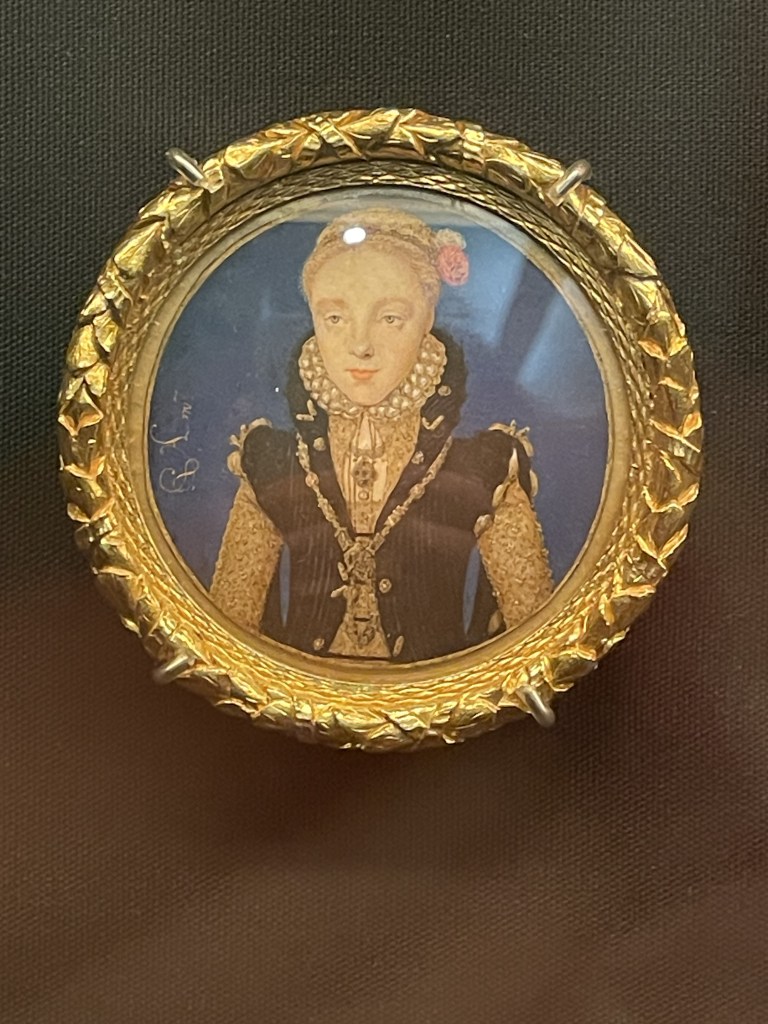
However, the marriage was quickly annulled. The King did not like the look of his ‘Flanders Mare’. And he looked around the court again and spied young Katherine Howard. Her scheming family were delighted at the prospect of a daughter of the family marrying into the royal family. Below is a miniature thought to be of her. Because she was accused of adultery and executed, her images were generally erased. Poor girl. She was only queen for two years.
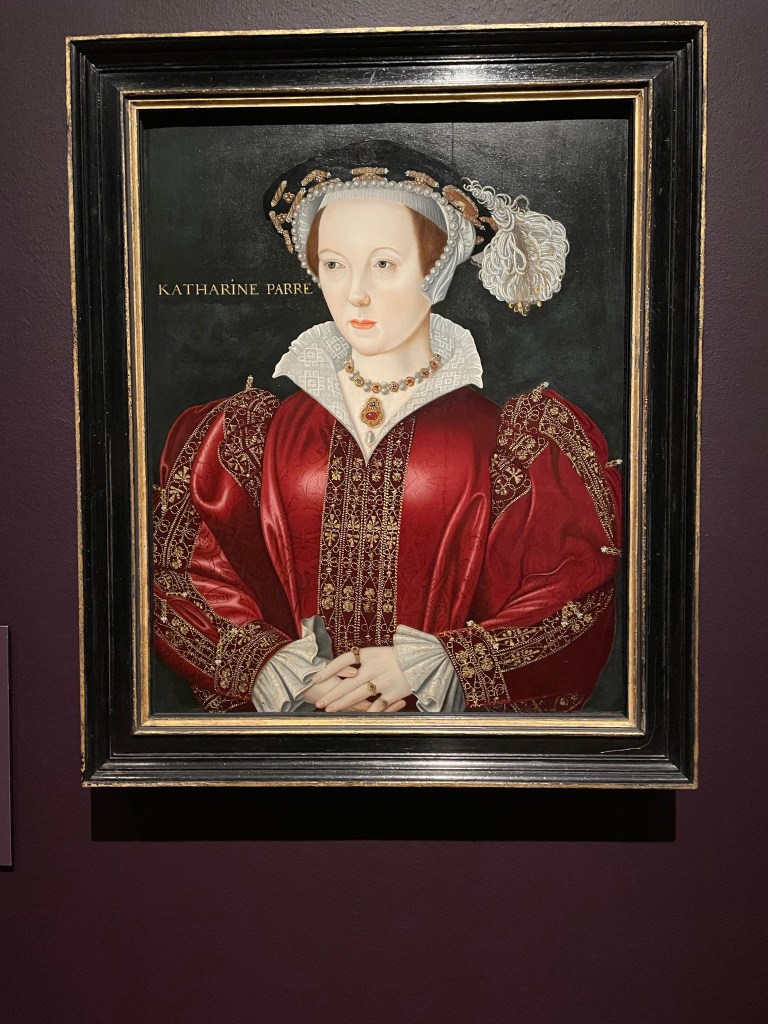
The final queen was Catherine Parr. She was a good mother to the step-siblings and created a semblance of family life for them. By the time of their marriage, the king was in poor health.
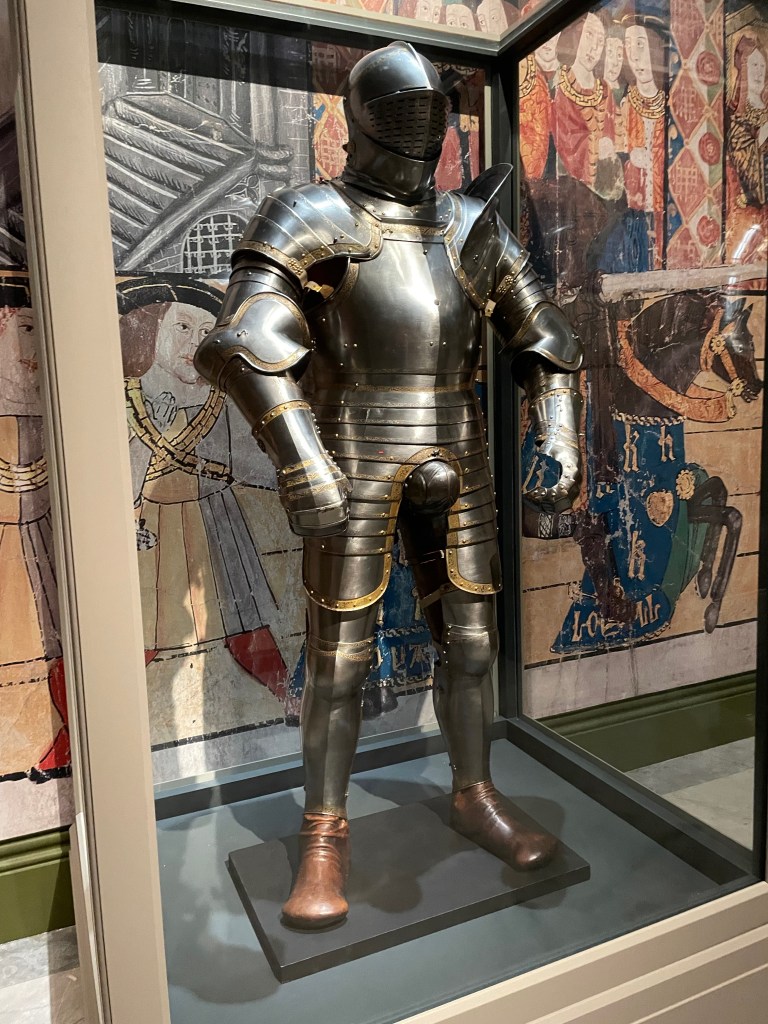
King Henry VIII died in 1547 at the age of 55. He was enormously fat, as his portrait by Holbein and his suit of armour attest. But what a memorable monarch.
This exhibition gives each of the women in Henry VIII’s life equal status and the curators have assembled a wonderful collection of letters, books with inscriptions, jewels and other artefacts relating to them which have survived their histories. It’s a truly fascinating show and I do recommend it.
Six Lives: the stories of Henry VIII wives is at the National Portrait Gallery until 8th September 2024.
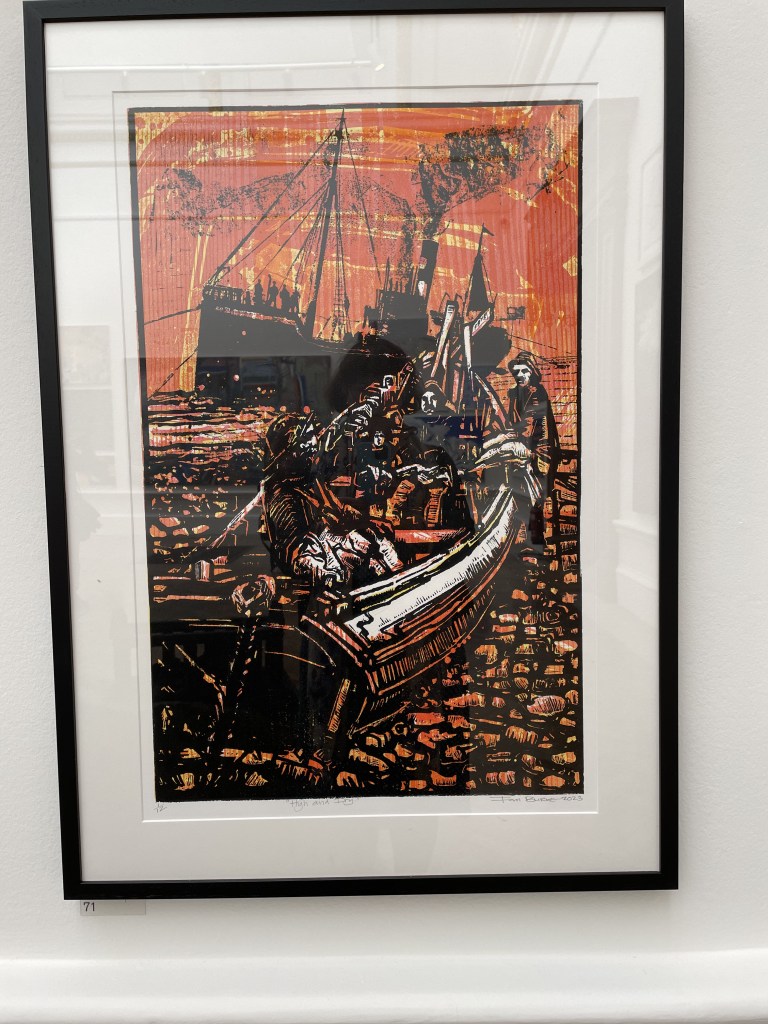
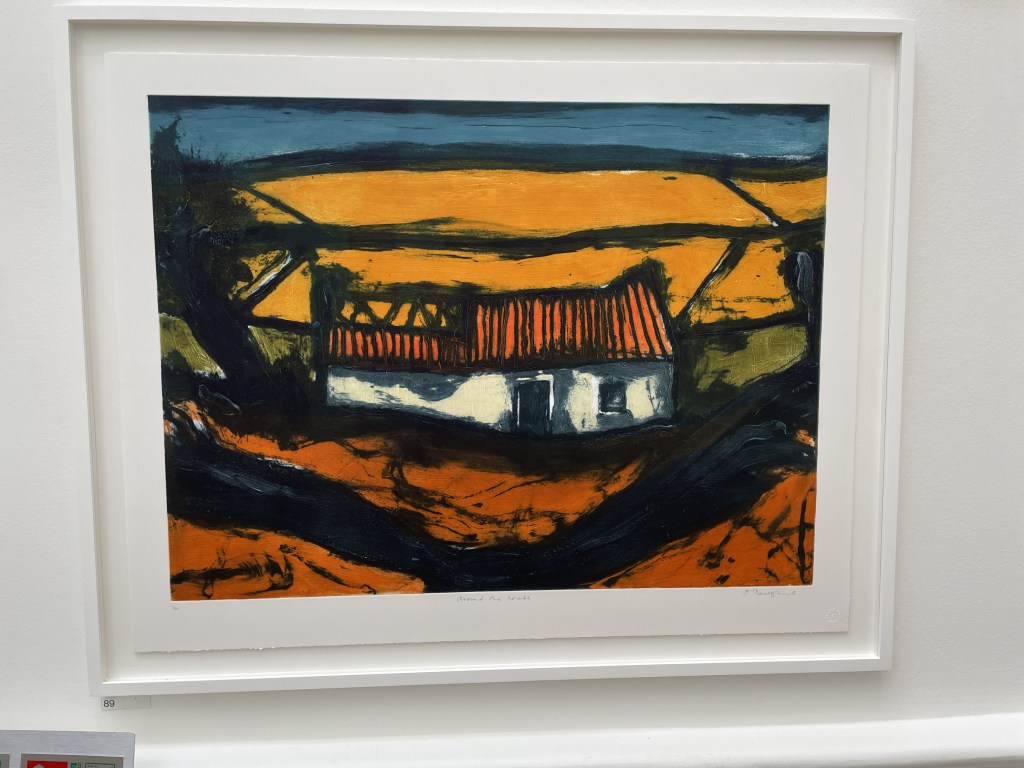
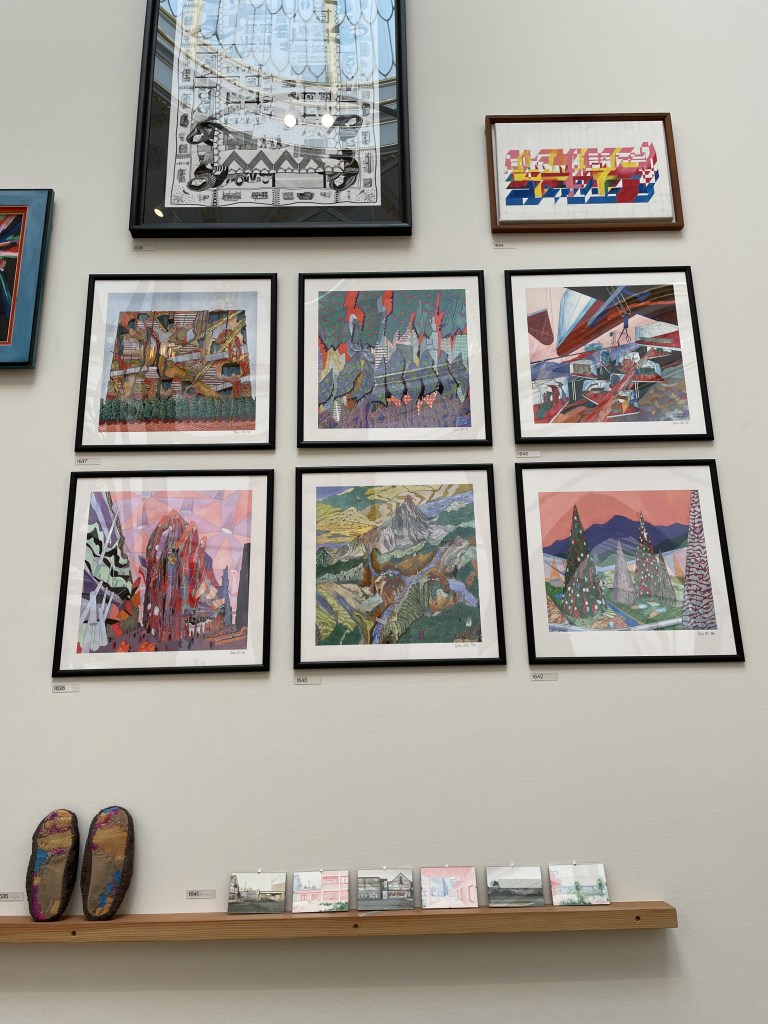
It’s always fun to see the work chosen by the RA judges and almost impossible to identify a theme. However, I did notice that many unusual materials had been employed by artists and I was heartened to see that several works on or of paper were included. And quite a few examples of collage, which always pleases me. So that’s the focus of my short review this year.
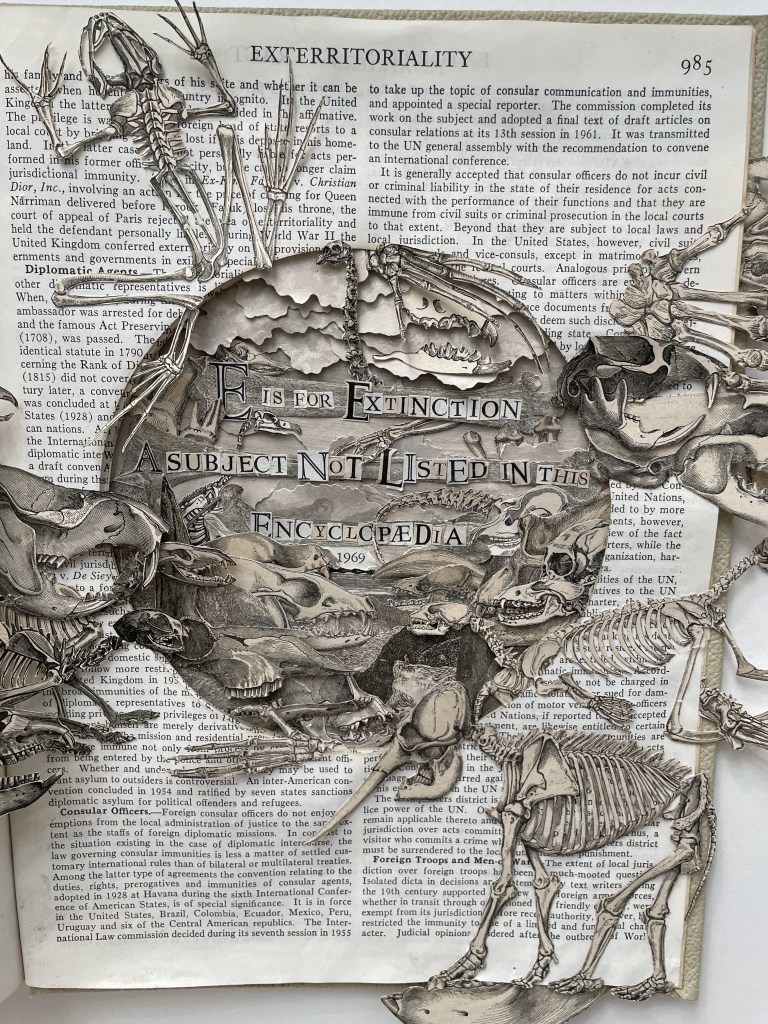
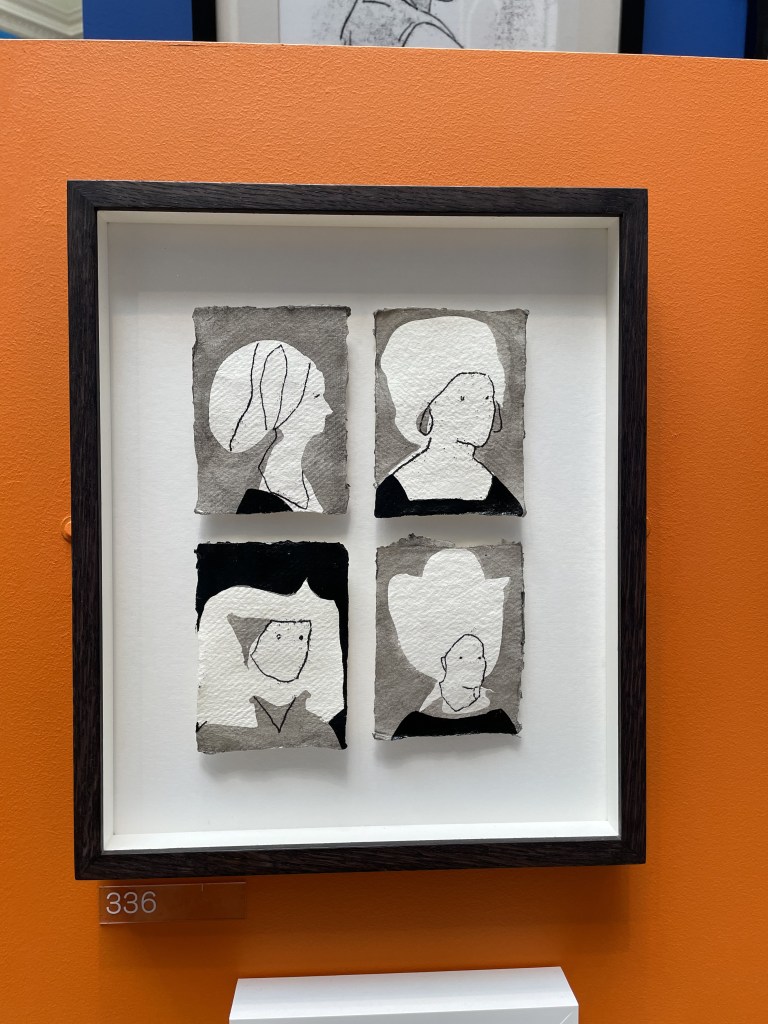
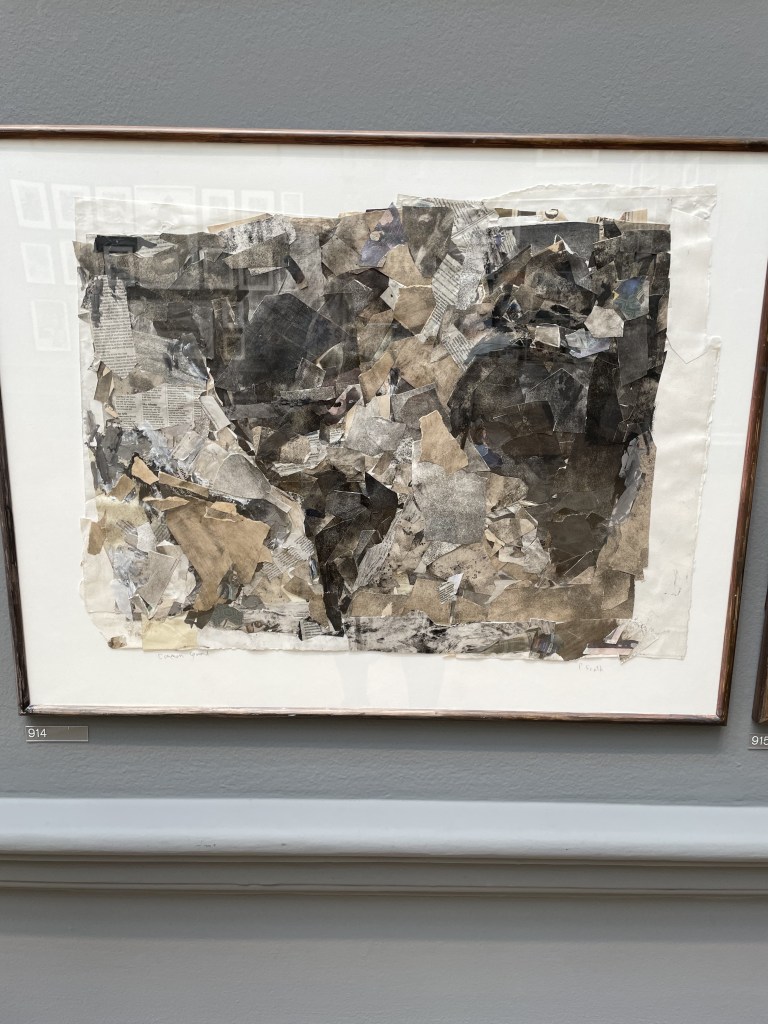
Above are some of my selected paper pieces. I was very taken by the collaged encyclopaedia made by Alison Stockman who cut out prints in the pages and made a very original artowrk. On the right is a very charming, beguilingly simple piece by Holly Frean called Four Nuns. I like the witty simplicity of them. And below is a very strong paper collage by Peter Freeth RA entitled Common Ground.
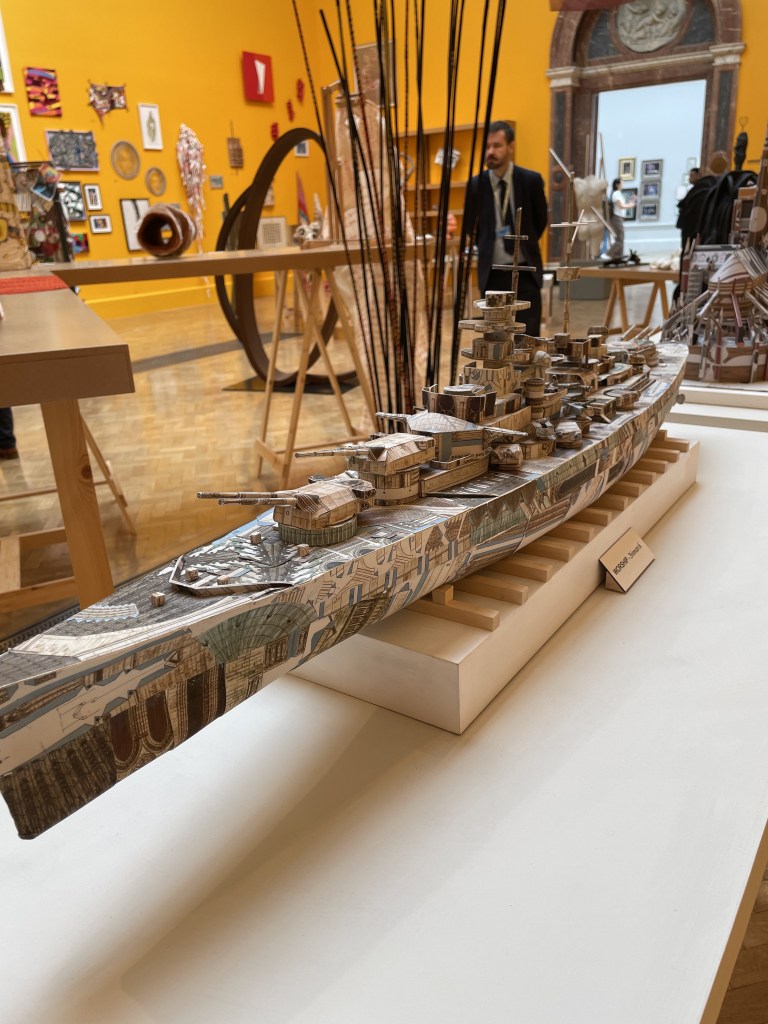
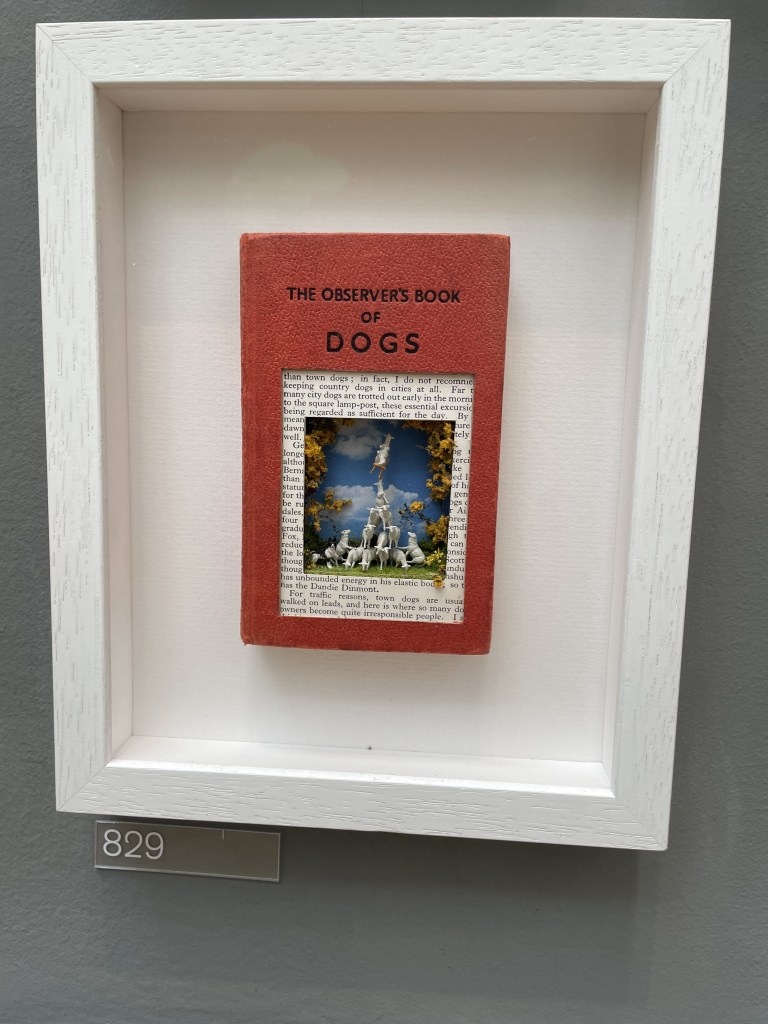
Above are another three paper-based pieces. The ship is a spectacular model created by Richard Wilson RA, The Observer book of dogs, deconstructed by Laura Beaumont and some very delicate vessel, Teacup Murmuration, made from sticky brown paper by Joanna Kori.
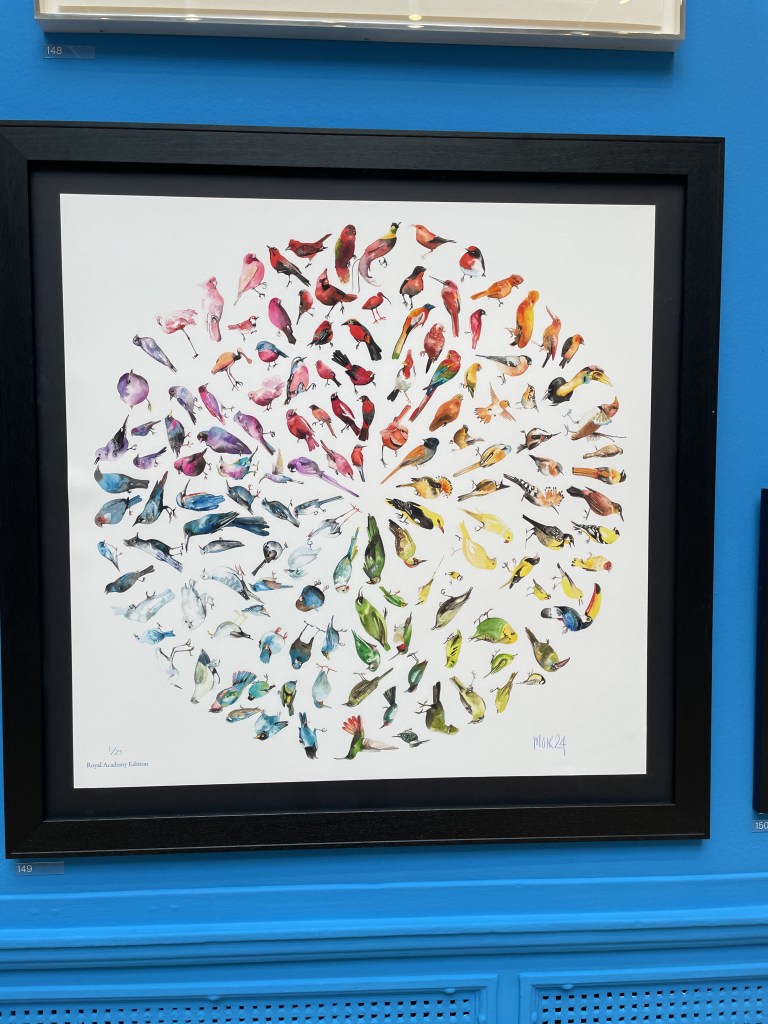
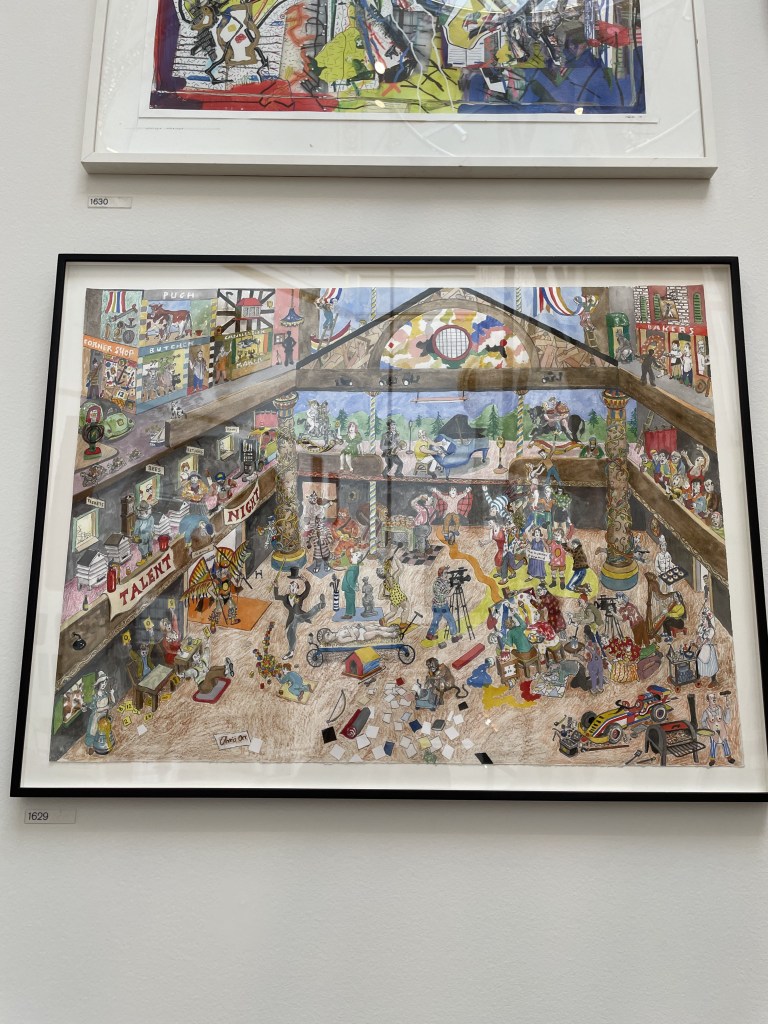
Just a selection of the pieces which caught my eye. Too many to name individually though I liked Jim Moir’s birds design and Chris Orr’s hectic Talent Night painting. Just go along to the Royal Academy and enjoy the show. It’s on until 18th August 2024.
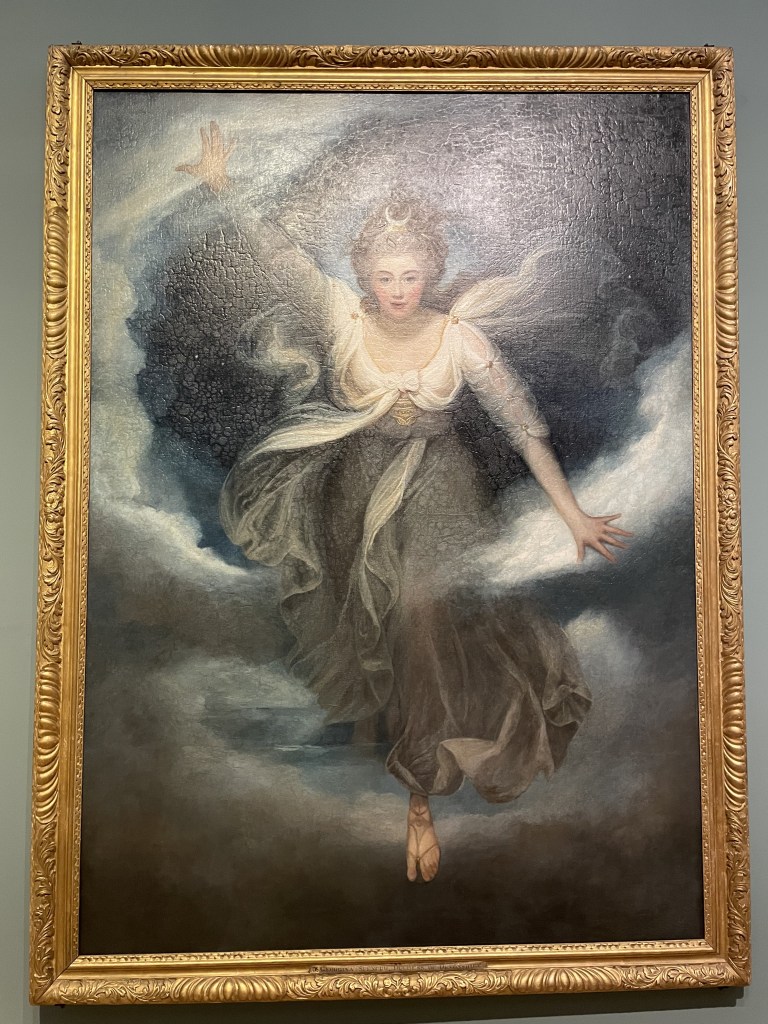
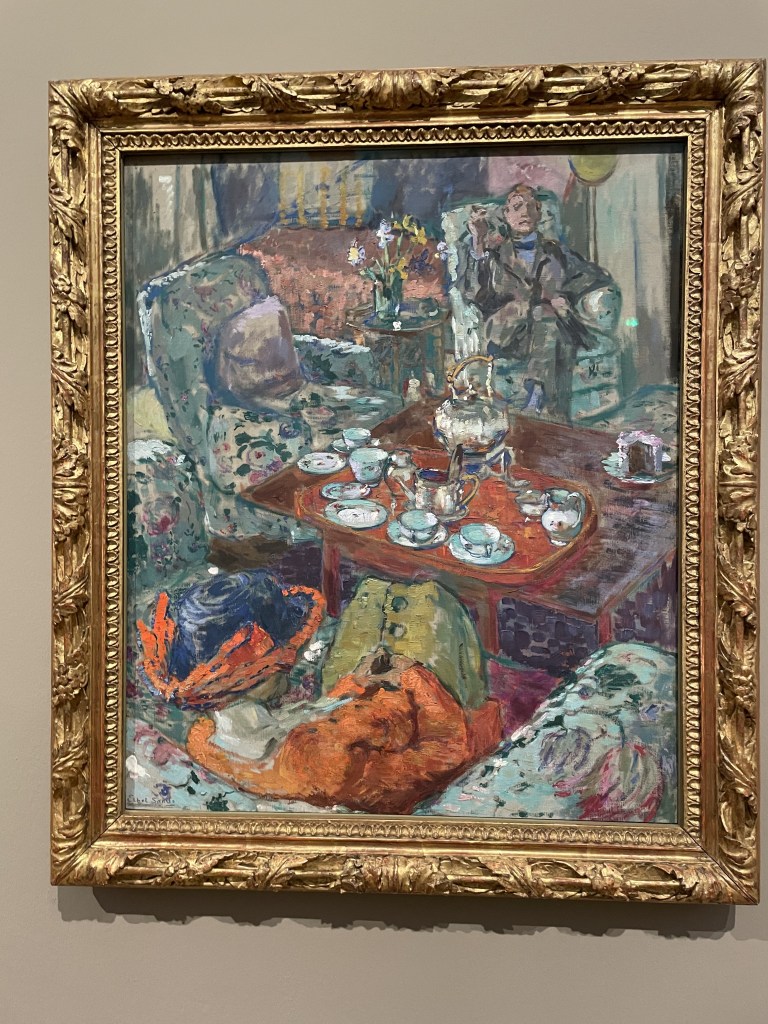
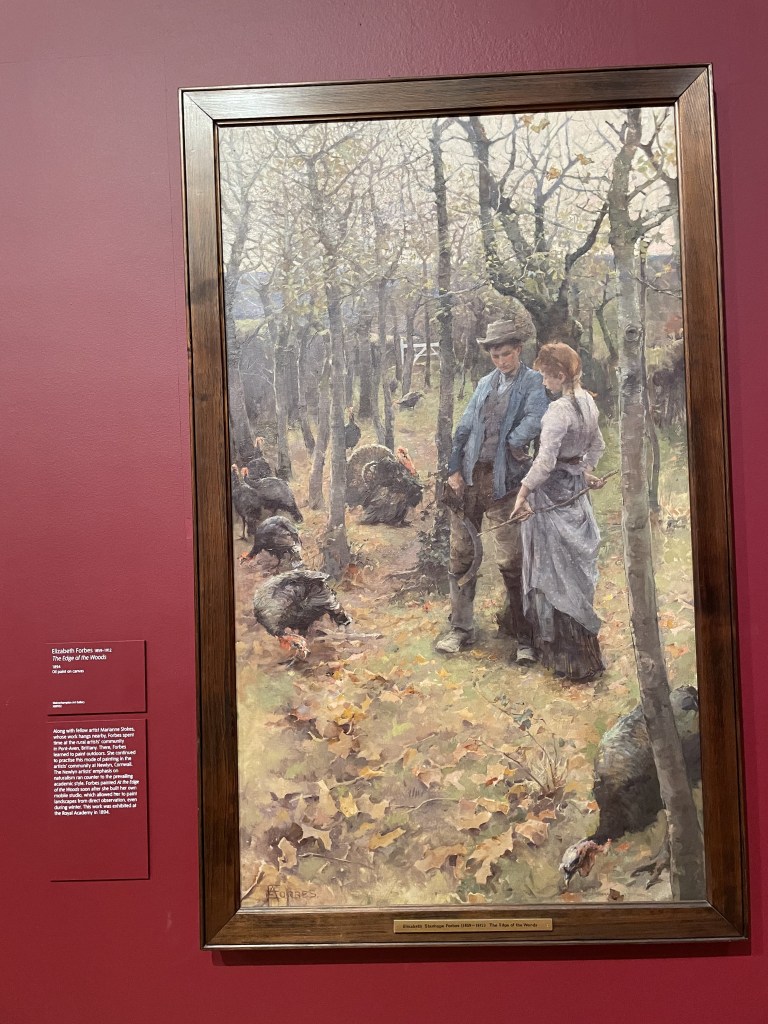
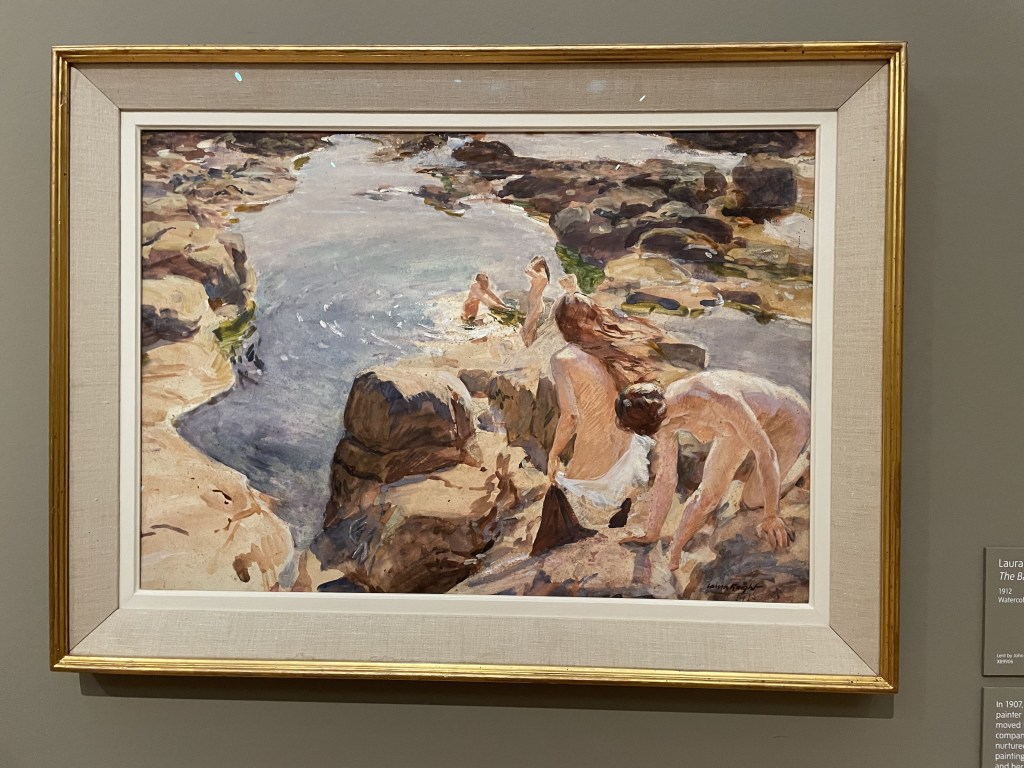
We take it for granted these days that men and women can forge equally successful careers in art. Four hundred years ago it was a different story. But women still studied art, became proficient at their skill and even earned a living. The curators of this excellent show have found examples of work by over 100 female artists working in Britain from 1520 – 1920 and it’s the most uplifting exhibition.
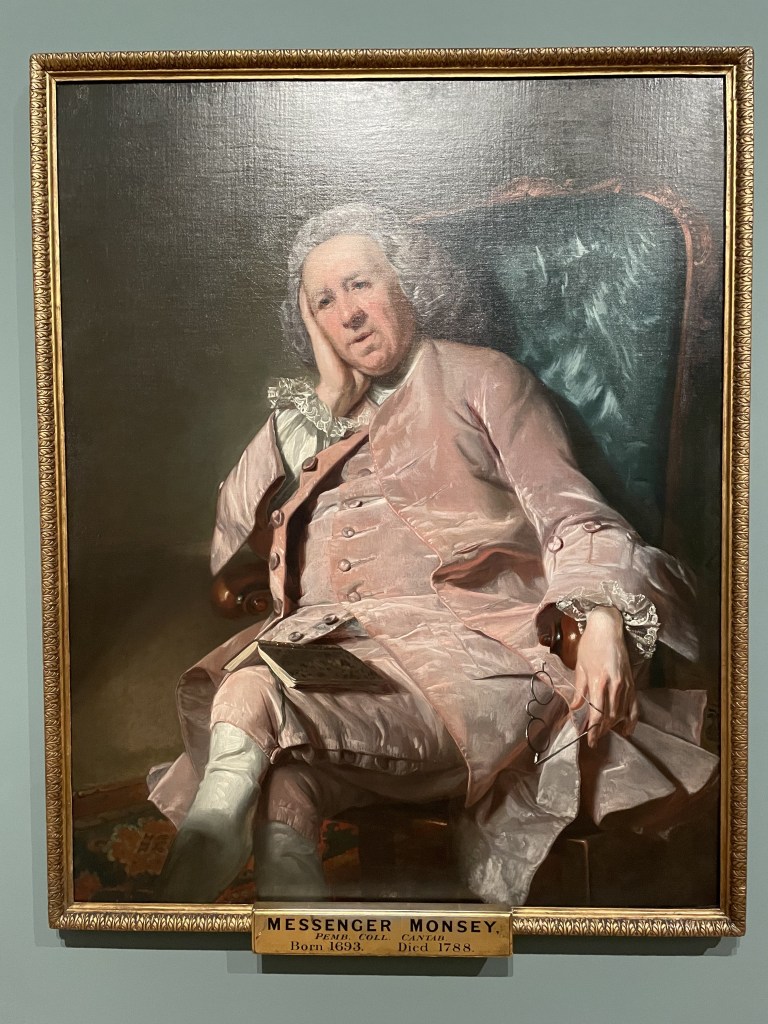
I really liked this portrait of Messenger Monsey by Mary Black,1737-1814. This is her only known oil painting and it’s so full of character and technical skill. Apparently, Black expected Monsey to pay her £25 for the portrait but her subject objected and suggested that she should not be paid at all for her work, claiming it would damage her reputation and that she might be regarded as a ‘slut’, if she sold her skills. Dear, dear.
This is a tiny self-portrait by Sarah Biffin (1784-1850) who was born without arms or legs. Yet she taught herself to paint, sew and write using her mouth and shoulder. She specialised in portrait miniatures and often signed her work, ‘painted by Miss Biffin Without Hands’.
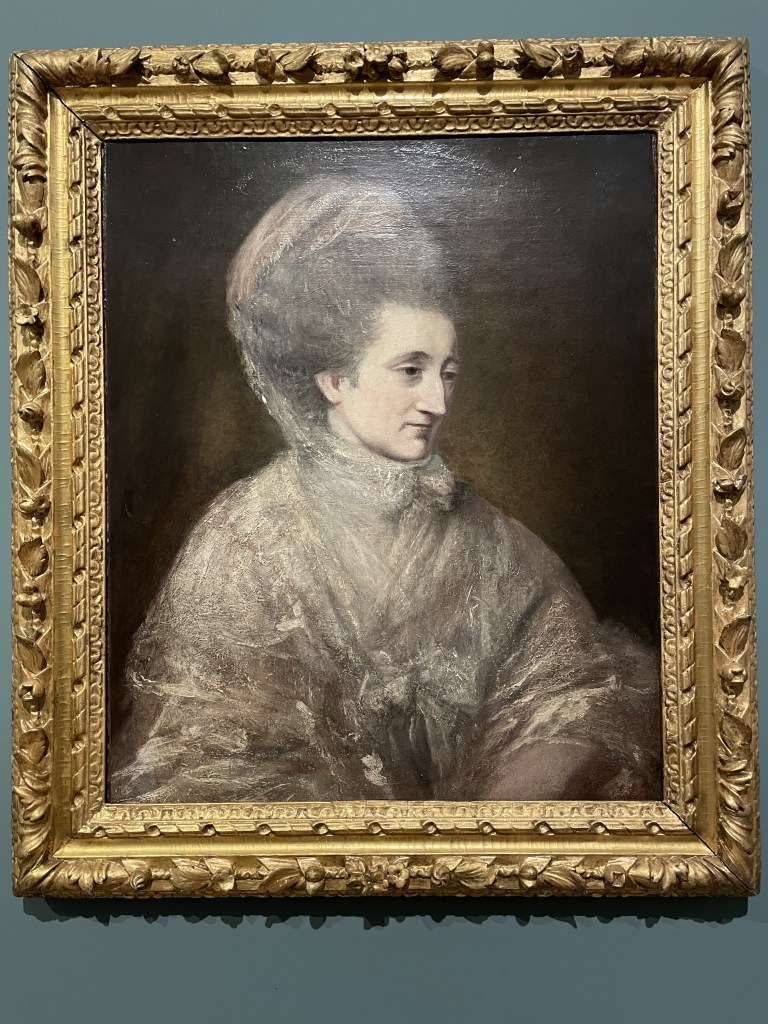
This is a portrait of Elizabeth Montagu by Frances Reynolds, sister of Joshua Reynolds, President of the Royal Academy. Frances was denied the opportunities of her brother and kept house for him in London and learned to paint by making copies of his work. She was a member of the Bluestocking Circle, a group of women writers, artists and intellectuals who met at the house of philanthropist Elizabeth Montagu, the subject of this wonderful painting.
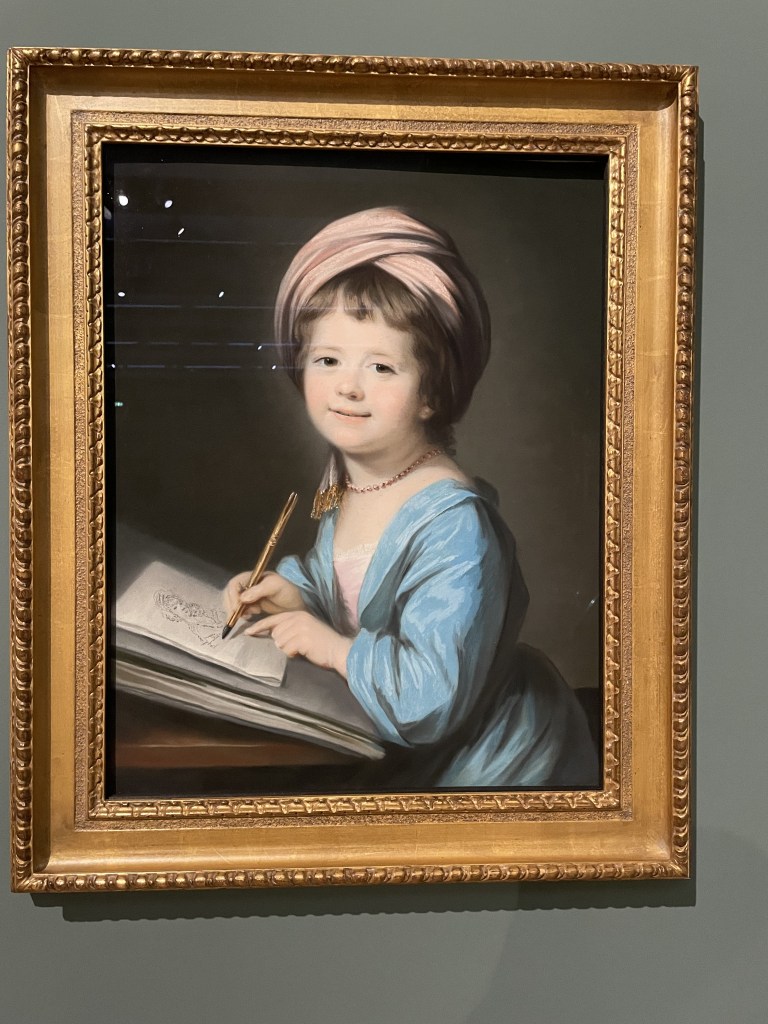
A charming portrait of Miss Helena Beatson made using pastel on paper by Katherine Read 1723-1778, her aunt. Pastels were not rated by the oil painting men of the period but they were easier to obtain and use by women. The young child in the portrait turned out to be a prodigy and was exhibiting at the Society of Artists at the age of eight.
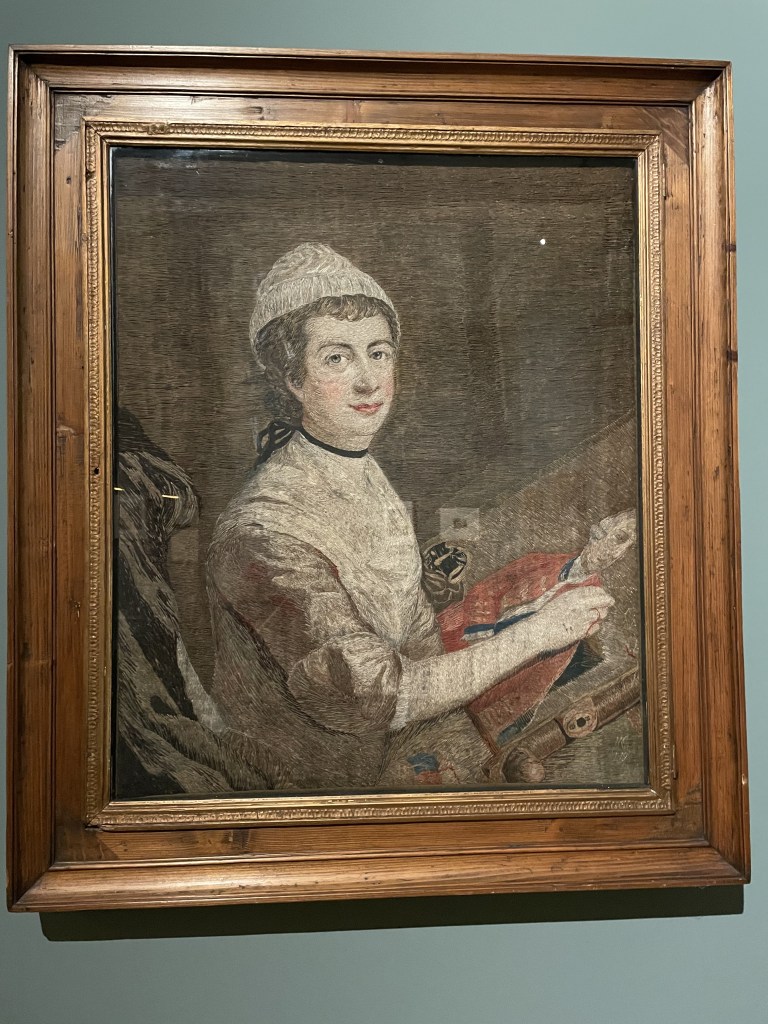
This fascinated me. It’s a self-portrait made entirely from embroidery by Mary Knowles 1733-1807. Queen Charlotte commissioned her to make a portrait of her husband, King George III, you can see she’s working on it. The clever way she uses silks to create the moulding and lively look of the picture is amazing.
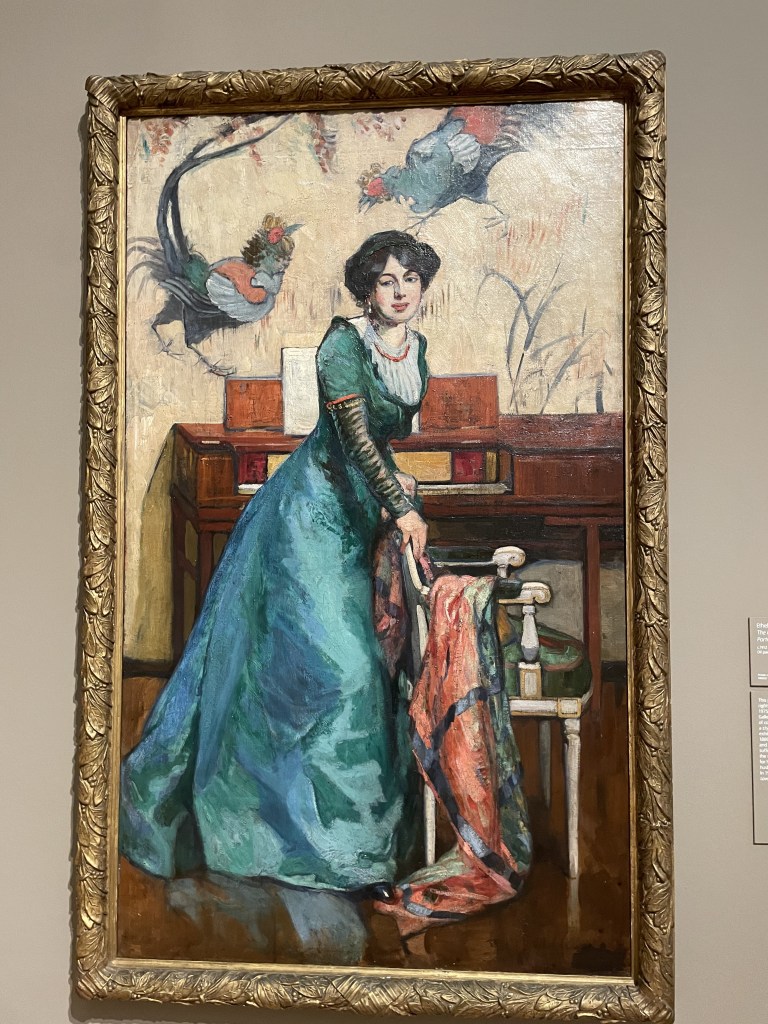
Loved the strength of this and the painterly confidence. It’s by Ethel Wright 1855-1939 and a portrait of Una Dugdale Duval who is famous for refusing to promise to obey her husband during their marriage vows in 1913.
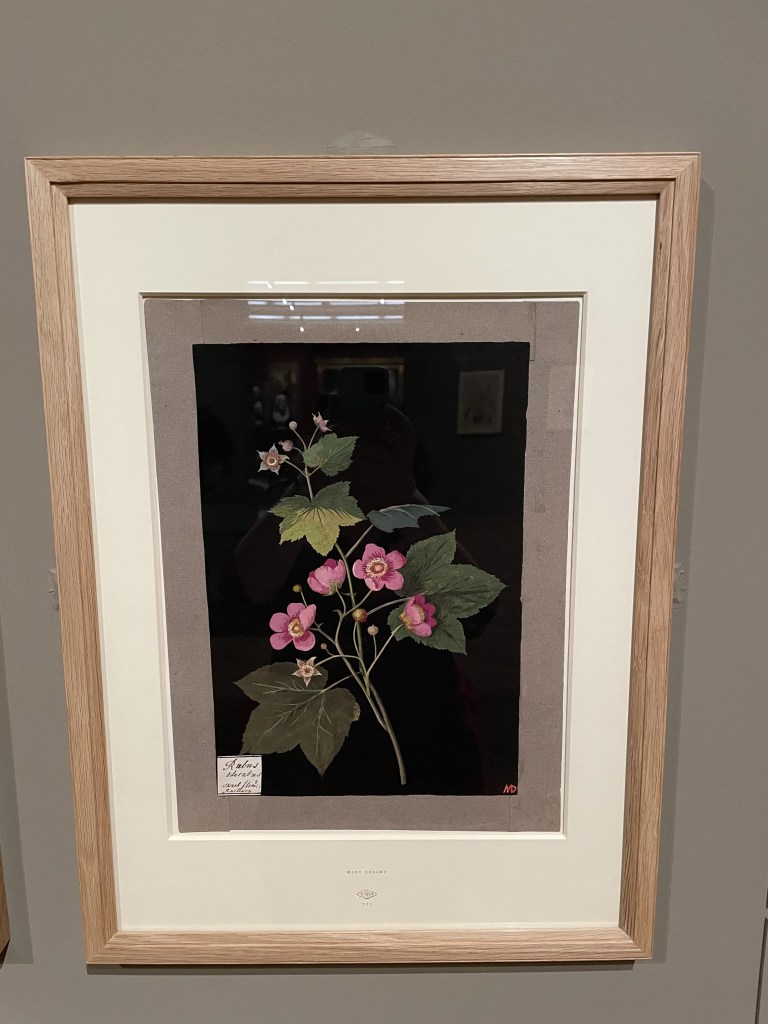
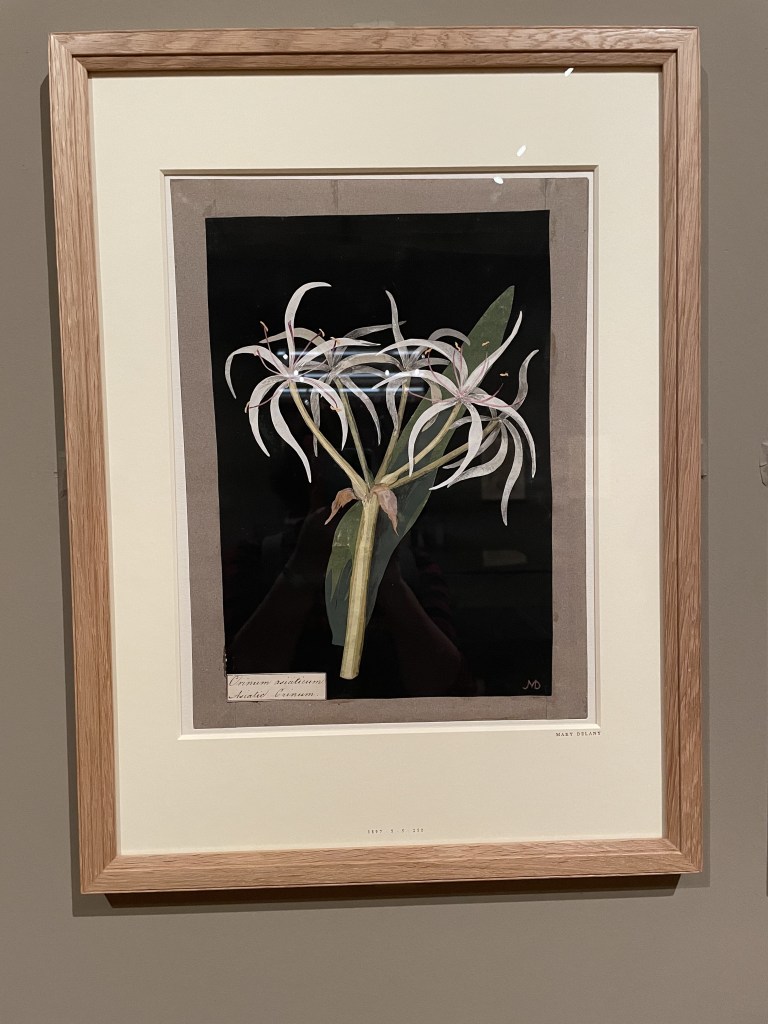
These are two paper cutouts, mosaics created by Mrs Delaney 1700-1782, who used collage, based on the Dutch art known as knipkunst, and used fragments of cut paper to depict, with amazing accuracy, examples of plants and flowers. Mrs Delaney was a favourite in the court of King George III and was given an apartment to live in at Windsor Castle.
Here are just a few more of the pictures which caught my eye. A really, really great show. it’s on until 13th October 2024 at Tate Britain.
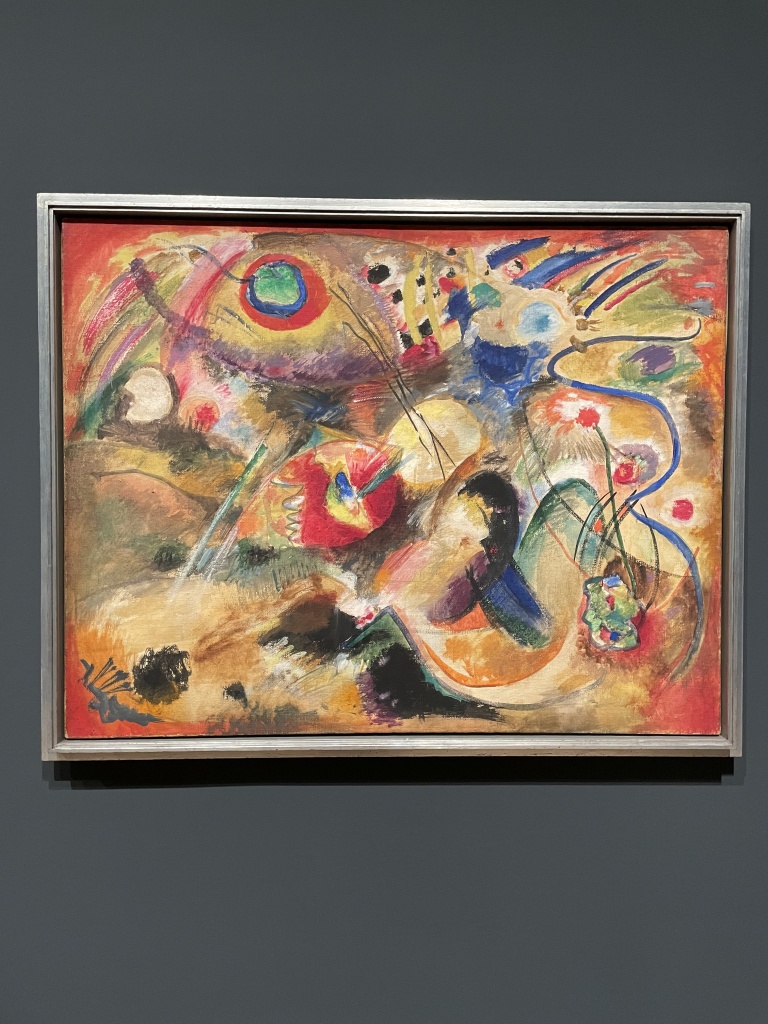
If you like colour and bold ideas then this is a great exhibition to view. It’s amazing that each art movement seems to be built out a collection of artists who meet, encourage and feed off each other’s skills. In Munich in the early 1900s, a group of like-minded artists found each other and shared an interest in expressing their personal and spiritual ideas through bold, colourful painting. They called themselves The Blue Rider.
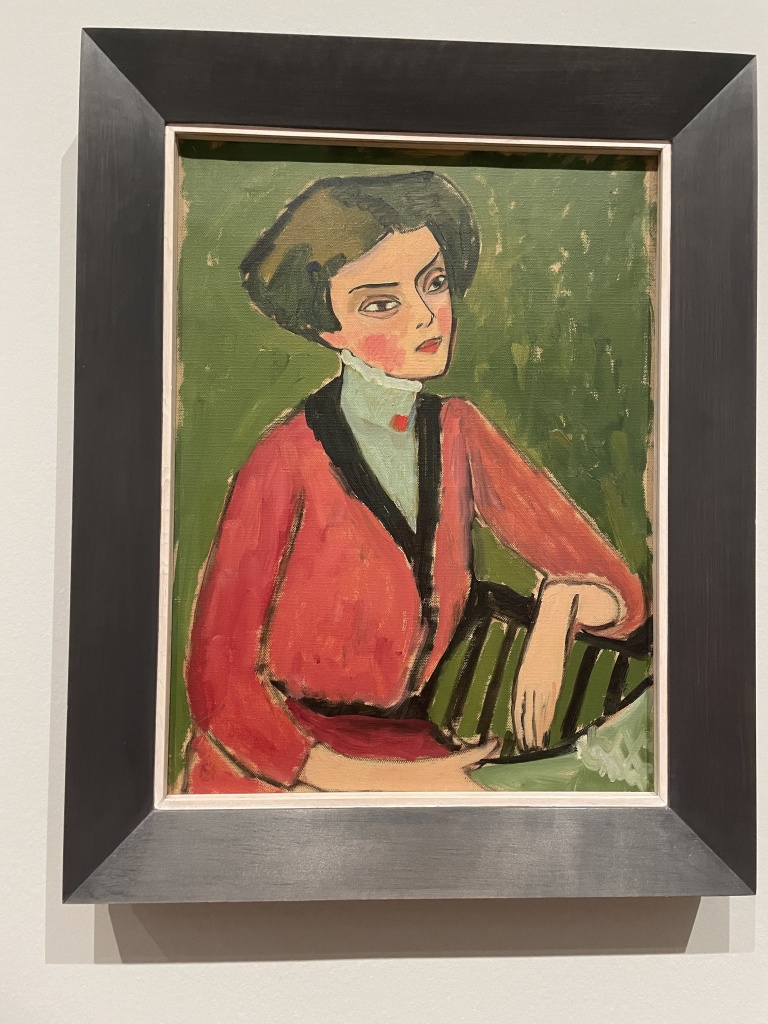
Above: top row: Gabriele Münter, portrait of Olga von Hartmann, Gabriele Munter, Portrait of Marianne von Werefkin, Elisabeth Epstein, self portrait, Bottom row: Marianne Werefkin, The Dancer, a portrait of Alexander Sacharoff (in drag!)
Just looking at these portraits, above, you get an idea of how radical and brave they were in the way they portrayed themselves and recorded each other. You could argue that the advent of photography had removed the need for accurate painted portraiture. What these images do is convey a sense of the person, the real personality and style, rather than bothering with an careful likeness. I love these pictures.
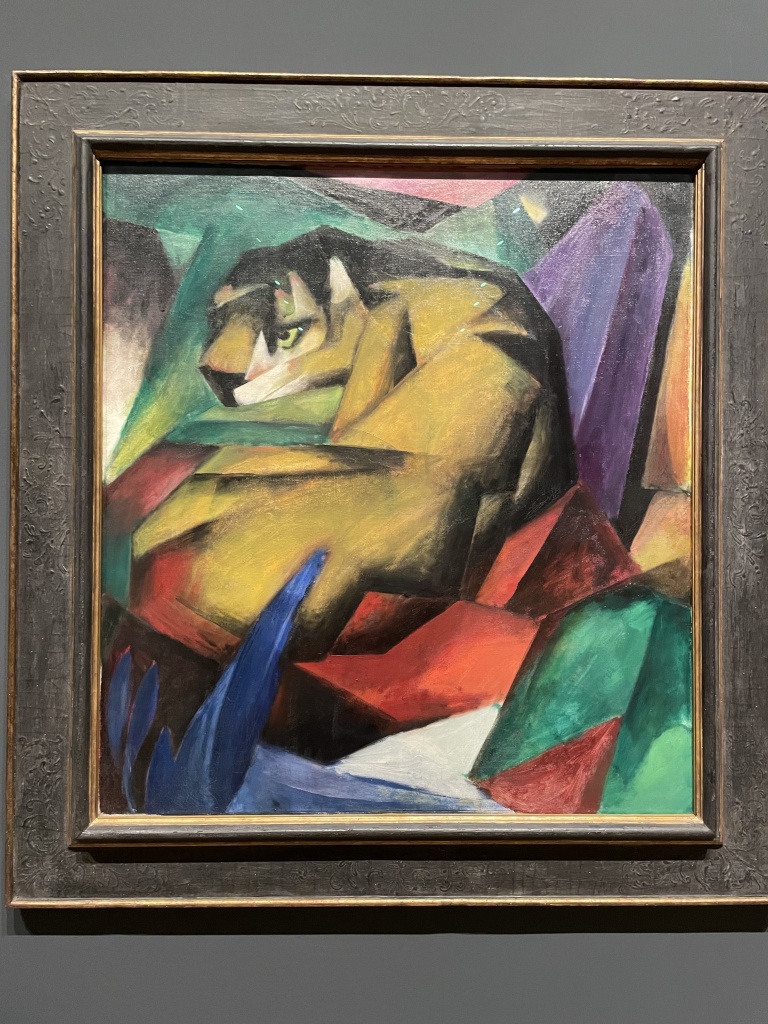
Above: a very fantastical Tiger by Franz Marc, 1912
This group, which formed members of the Blue Rider, were a mixture of married couples and free-thinking single men and women. It’s very satisfying to see that so many of the women in the group are given space for their works upon the walls and also celebrates their contribution to the collective.
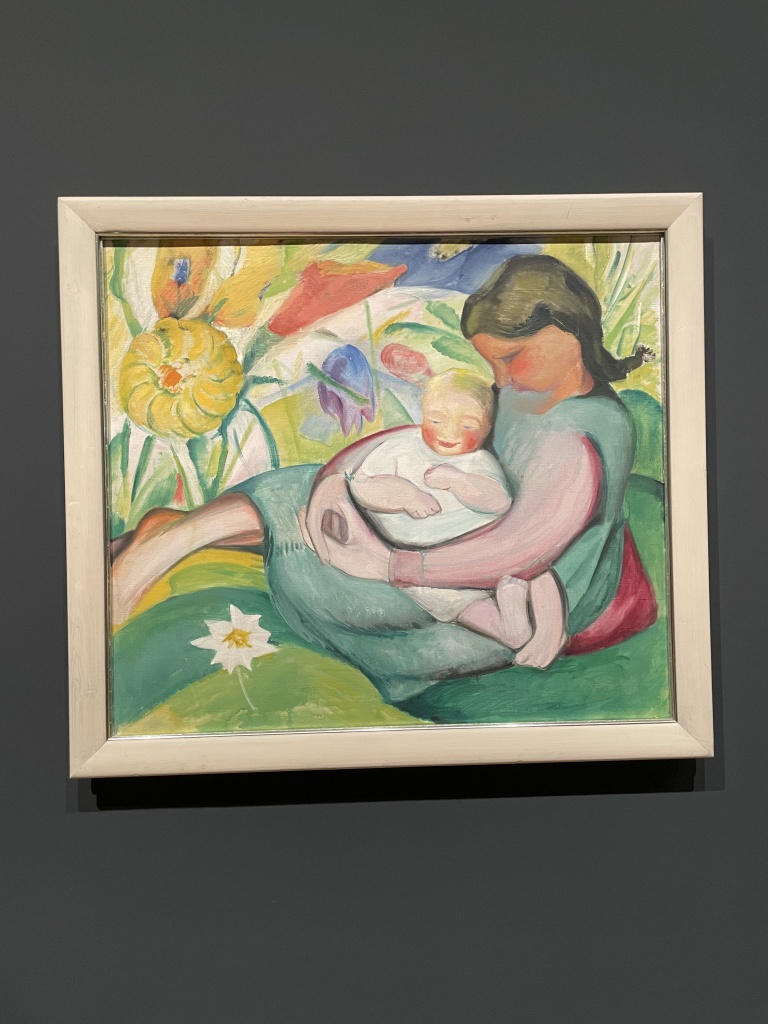
Above are three examples of women’s work. Left to right: Maria Frank-Mark, Girl with Toddler 1913, Gabriele Münter, Portrait of Marianne von Werefkin (also one of the female artists in the group) and Marianne von Werefkin’s Self-portrait from 1910
The colours are wonderful. I really liked this interior painting. My Dining Room, by Wassily Kandinsky, 1909. It looks as though it was done at high speed with black drawing with a brush and then flooded with bright colours. The atmosphere of the room is terrific.
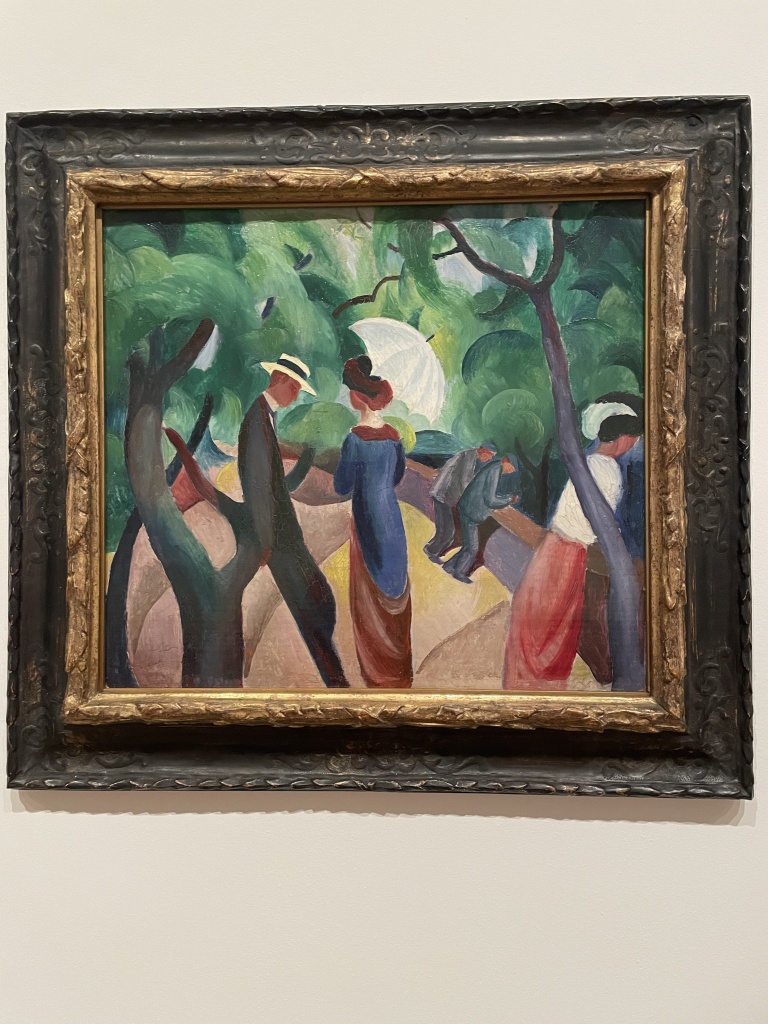
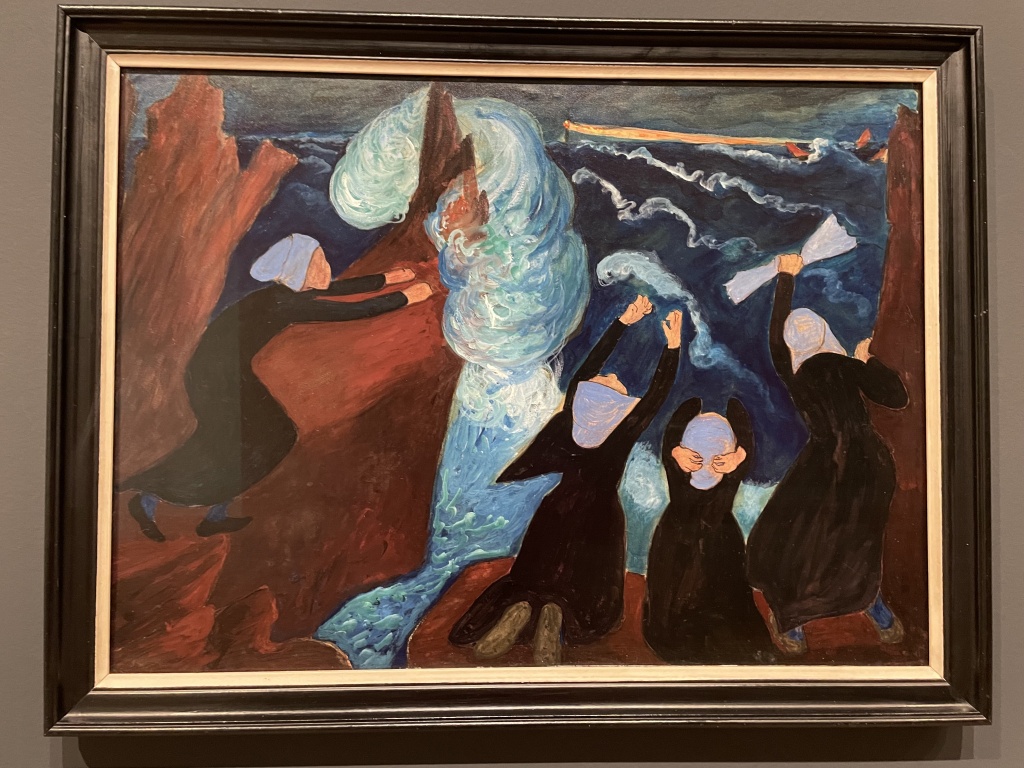
Above, the dark painting of The Skaters, is by Marianne Werefkin from 1911. Centre, Promenade by August Macke from 1913 and on the right is another by Marianne Werefking entitled The Storm. She was brilliant at conveying mysterious settings and threatening atmospheres.
And I’m going to give the last slot to Gabriele Münter and this portrait she painted of Marianne Werefkin. We have Münter to thank for the survival of so many of these works. During the Second World War, when so many of the artists were regarded as ‘degenerates’ and were also Jewish, Munter stored many of the paintings in her cellar and kept them safely hidden from Nazi threat until it was safe to reveal them and she donated them to the Städtische Galerie in the Lenbachhaus in Munich.
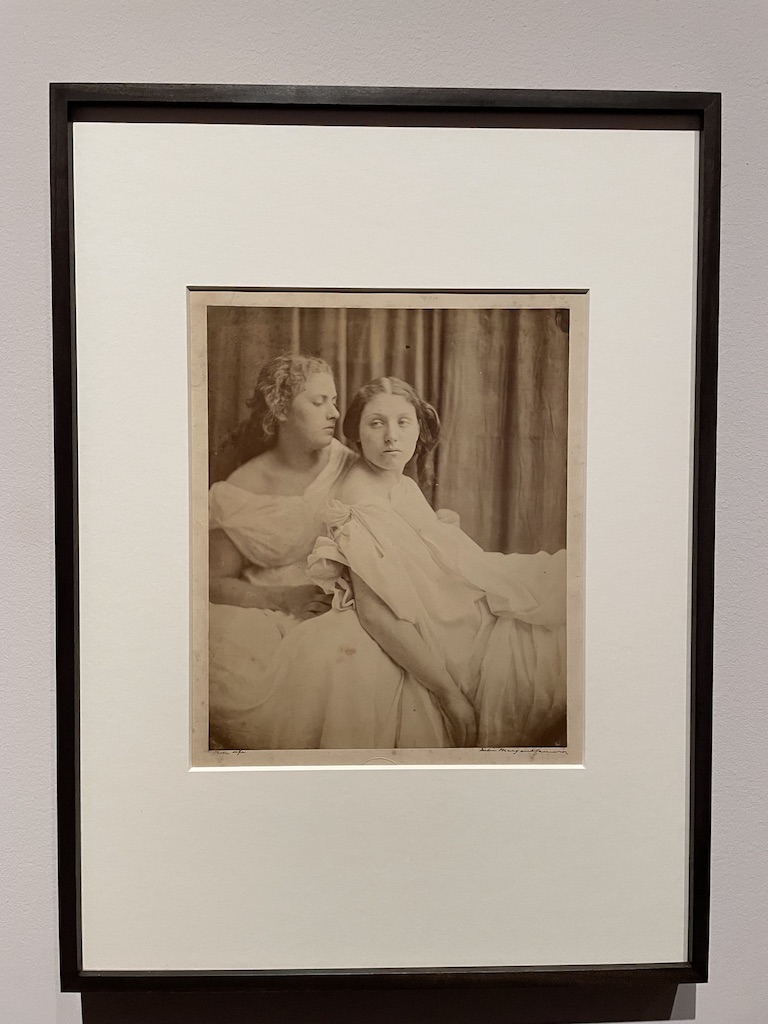
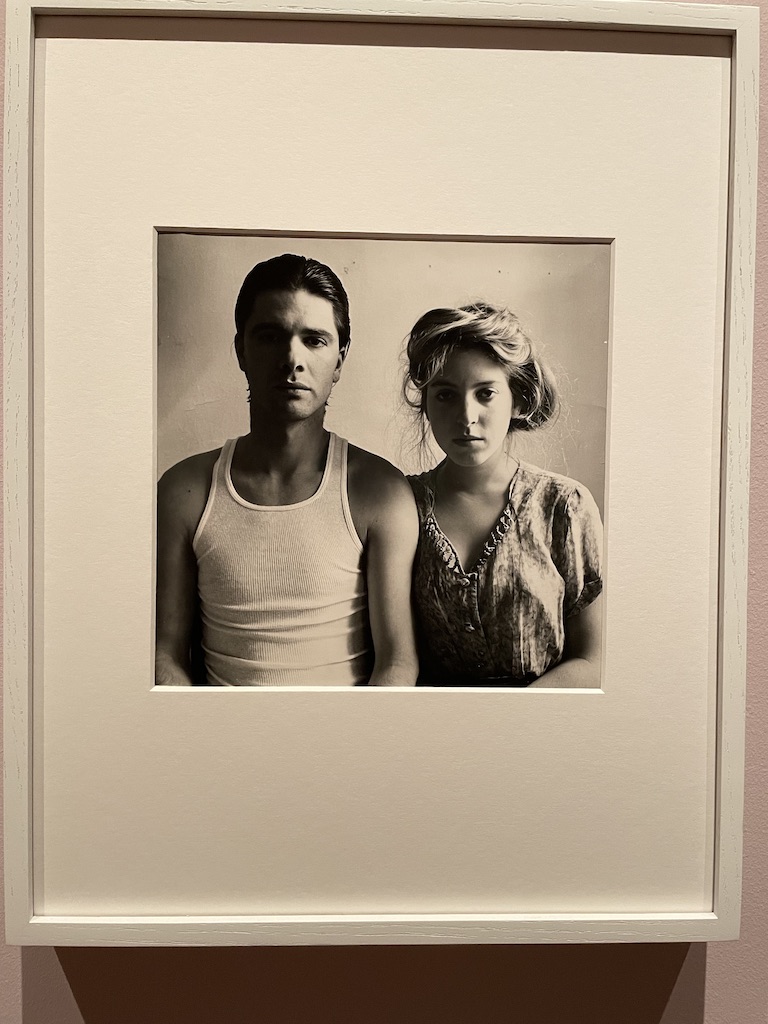
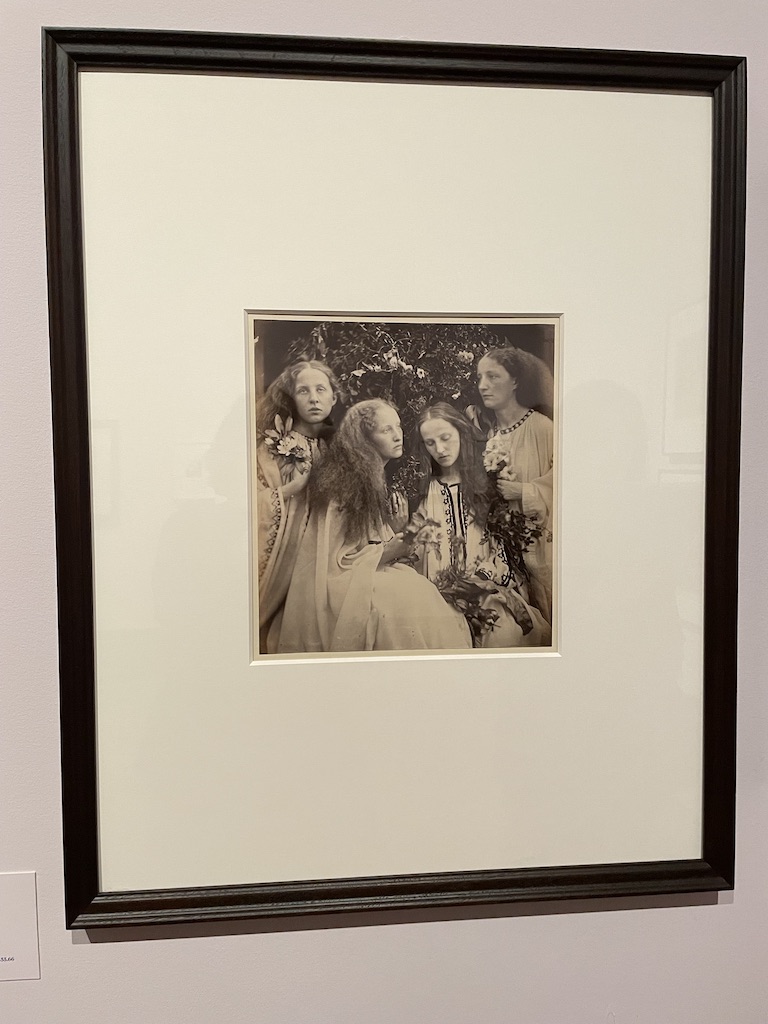
I’ve been familiar with the photography of Julia Margaret Cameron for some time but the work of Francesca Woodman was new to me. I can see why the curators of this new show at the National Portrait Gallery decided to set up a joint exhibition because there’s a lot of symmetry and synergy between the two. Both have a very dreamy, other-worldly approach to photography but, as curator Magdalene Keaney told us at the press preview, all the works on show were produced by the photographer’s hand. And seeing the process, and understanding that the creator of the image decided on the nature of the print, does add a more satisfying edge to the viewing of the photographs.
There’s something very compelling about black and white too. I remember discussing dreams of a morning and quite often the question was: did you dream that in colour or black and white? Maybe that comes from a time before everything was in colour, but there’s a mystery to a black and white image, a greater opportunity for depth of field and use of strong shadows. Photos taken by both women were often staged and quite self-conscious. You can see why Julia Margaret Cameron in the 1870s battled to keep her subjects to stay still because of the newness of the medium when the slightest move would cause the image to blur. But Woodman (most of whose work comes from the 1970s) appears to deliberately use the shutter speed of her camera to create blurs and double exposure.
Above is a trio of fascinating photographs of Alice Liddell posing as the goddess Pomona. She was famously the inspiration for Lewis Carroll’s Alice in Wonderland and a family friend of Julia Margaret Cameron. It’s hard to know whether her fixed expression comes from boredom, concentration or indifference. But they are very compelling.
Portraits to Dream In is on show at the National Portrait Gallery until 16th June 2024. It’s part of the Pay What You Wish campaign which enables you to see a show for as little as £1 on Saturday evenings and Sunday mornings. Great for the strapped students of photography or anyone on a serious budget to enjoy this fascinating show.
I was vaguely familiar with colourful, graphic artwork of Jason Wilsher-Mills but knew nothing of his story. At the press preview at the Wellcome Collection Jason greeted visitors to his show and explained the origins of this very personal show. When planning this show he noticed that the gallery was similar in size to the ward at Pinderfields Hospital, Wakefield, where, at the age of 11, he was diagnosed with a rare autoimmune condition (triggered by chicken-pox) which paralysed him from the neck down.
The sculpture of the figure in the bed is autobiographical. The youngest of eight children he had been an active child and keen rugby player. After the illness took hold he became a child with limited mobility, compelled to a life in hospital. But he was encouraged to develop his creativity. As he said at the press preview, in a strange way this awful condition provided a portal into a very different life from the one he might have anticipated. His father was a miner and, had things followed a ‘conventional’ path, he might have gone down the mines. Spending such formative years in a hospital environment being immersed in education and the freedom to think creatively, he realised that he was, in fact, an artist.
The title of the show reflects the strange serendipity of his life. On the day he was diagnosed – 1 August 1980 at 2.54pm – he was more interested in watching the Moscow Olympics on television than listening to what the medical specialists were telling his parents. He had become obsessed with the rivalry between Sebastian Coe and Steve Ovett. The number on Coe’s shirt was 254.
Life in hospital for the young Jason was filled with Beano comics, action heroes, tv programmes, films and music which all fed his imagination. He began to draw and was fascinated by the work of artists such as Philip Guston and George Baselitz. His work combines a mix of personal memories, impressions of current events, and the influence of people who supported him. His lively, decorative and cartoon style of art is infectious in its joyfulness. Surrounding the main features in the room is a series of nine light-box dioramas which illustrate childhood memories. You press a button and the scene lights up. The one on the left, with the blue background, depicts Jason’s mother as a mermaid in a sea filled with luminescent jellyfish. It’s based on an early childhood memory of a holiday on the north east coast when she liked to swim at night, rather than be seen by other people on the beach at day. One night all the family went to the sea to watch her swim in a north sea filled with jellyfish.
This show is full of visual fun and very lively footnotes on the walls which give you a snapshot of the year 1980, the year everything changed for young Jason. It’s entertaining and thought-provoking. And it’s free. On at the Wellcome Collection, 183 Euston Road, NW1 2BE @wellcomecollection
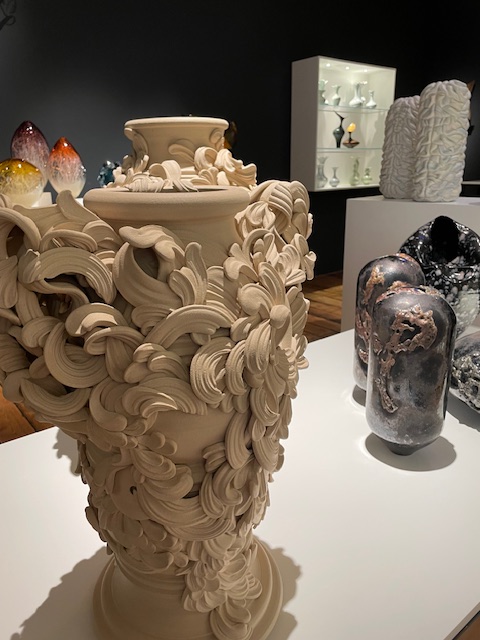
I’ve unashamedly posted lots of images here of objects which caught my eye and apologies for not noting every maker or gallery. What’s so interesting about Collect is the variety of materials used to create unusual things. Below are some images of a fascinating collection of sculptures made by Jo Fairfax. I chatted to Jo who told me that the pieces were made through 3D printing of his designs which were then smoothed out with addition of a special putty and then painted. The sculptures represent the 12 human archetypes as defined by Jung.
I was also very taken by the work of Alison Rees who has created a range of porcelain ‘pages’ which reference the properties of paper. Just my thing!
I was intrigued by the work of Simone Pheulpin, below, a textile sculptor, who creates astonishing works out of closely folded and pinned cotton.
Collect is organised by the Crafts Council at Somerset House and open to the public from tomorrow until end of Sunday. Tickets are £27 with some concessions.
If you’re going to build a new nation following freedom from colonialism then you want to commission buildings which are symbolic of new independence. The Indian prime minister Jawaharlal Nehru and Ghanaian prime minister Kwame Nkrumah both commissioned the British architects Drew and Fry to come up with ground-breaking buildings which would define their countrys’ post-colonial status and celebrate new freedom.
In Chandigarh, India an audacious plan was conceived to create the first Modernist city in the world to be built from scratch. Nehru wanted the city to be ‘unfettered by the traditions of the past … an expression of the nation’s faith in the future”. The city was created on a strict grid with a river running through it and the city plan was based on a design by Le Corbusier.
What’s so interesting is that where architects aim to enforce order, artists create interventions and counter that order. In 1957 Nek Chand was a road inspector in Chandigarh. He began collecting discarded material from the construction and turned it into a secret kingdom of over 2000 sculptures hidden in a forest near the Capitol Complex. This very personal creation countered the order of Le Corbusier’s vision in a wonderfully subversive way. It remained hidden from view until 1973. Now his ‘vast ruin’ intrigues visitors to the city.
Edward Lutyens designed the new colonial capital in India as if he were rebuilding ancient Rome, enforcing an expression of Britain’s power in the country. This playful bust of Lutyens, below, has a mocking feel about it.
There are blueprints, sketches, photographs and a really interesting film about the movement which lasts about half an hour and is well worth watching. Very intriguing and thought-provoking exhibition which brings to life the history of a fascinating architectural movement. It’s on at the V&A until 22 September 2024
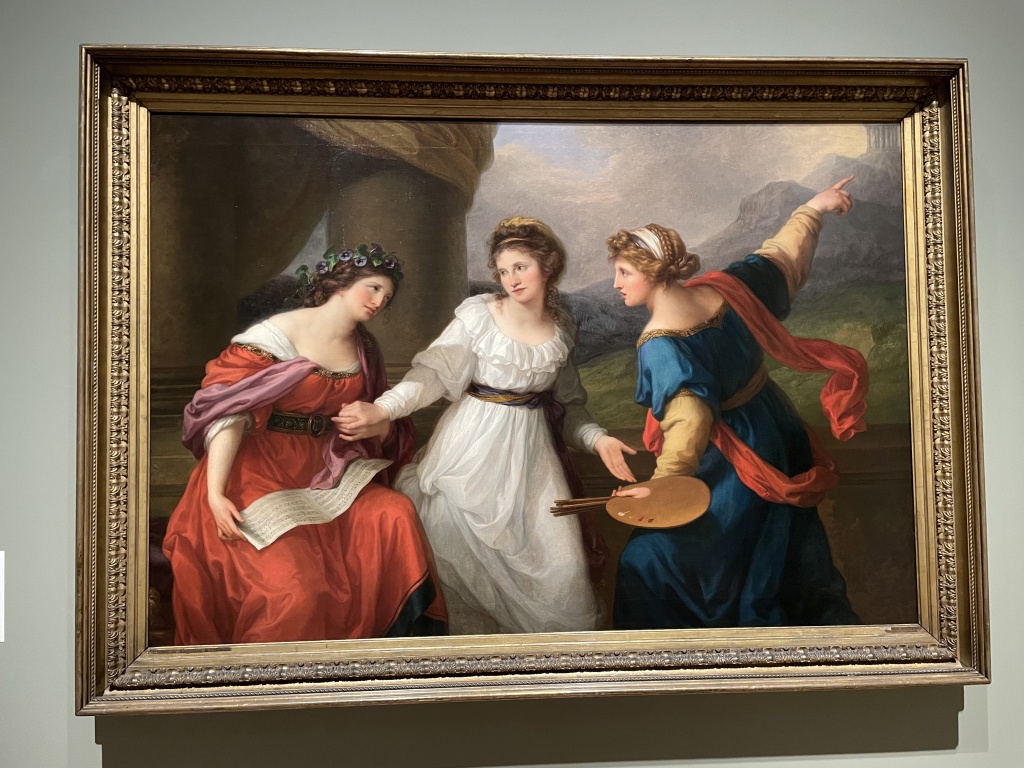
In this fabulous self-portrait, Angelica Kauffman represents herself ‘At the Crossroads between the Arts of Music and Painting’. She was a talented singer and musician and torn between the two art forms. But, thank goodness, she decided to dedicate her life to painting. For forty years of her working career (born 1741 and died November 1807) she produced hundreds of remarkable paintings. She was especially enjoyed creating historical, narrative paintings but putting the female character or heroine at the centre of the action. In fact, she was a consummate feminist and celebrated the achievements of women in her work.
Painted by Richard Samuel, here is Angelica, seated in front of the easel, in the company of illustrious women of the day who are all depicted as ‘Characters of the Muses in the Temple of Apollo’. A group portrait of some of the best-known, intellectual and creative women of late 18th century Britain. She is the only artist in the group.
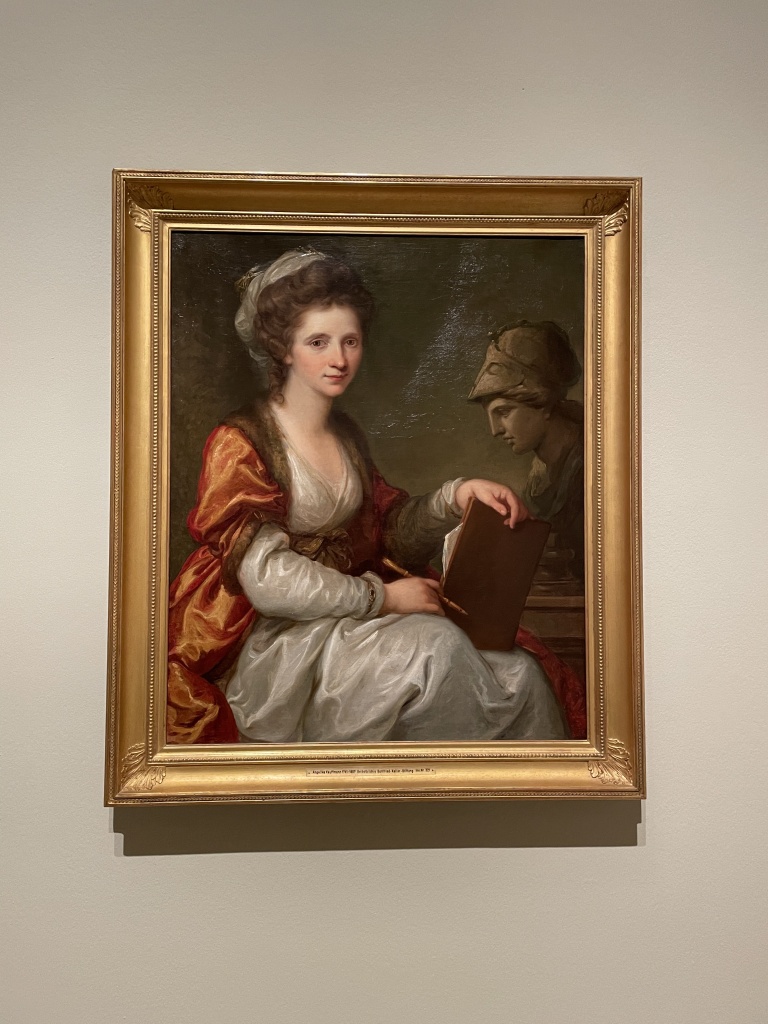
She made several exquisite self-portraits. All of them show her direct, intelligent gaze and are painted with such poise and incorporate classical references in the pose.
According to the curator of the show, Bettina Bamgärtel who spoke at the press preview I attended, Kauffman regarded commissioned portraits as a necessary money-making aspect of her practice, and not her main focus. However, she was extremely good at them. I liked these two portraits. On the left is Joshua Reynolds, who became a close friend. Reynolds introduced her to his royal patron, Queen Charlotte and gave her an entree into London society. On the right is the actor David Garrick. He pose is very unstuffy and shows how very comfortable he felt engaging her gaze and, one imagines, having lively conversations while the painting was being made.
This beautiful portrait of is Emma Hamilton as Muse of Comedy. Emma (who was famously the lover of Lord Nelson) was well known for her ‘attitudes’ – recreating the poses of classical figures as an entertainment. She was invited to country houses and palaces on the promise that she would perform these stylised dances in diaphanous drapes.
This is a portrait of the first Royal Academicians painted by Johan Zoffany gathered in the life drawing room of new Academy. This was not deemed a suitable environment for women so Angelica Kauffman and and Mary Moser, the two female Academicians, are represented in portraits on wall. Kauffman is on the left, looking directly out of her portrait at us.
It’s a wonderful exhibition which is well worth a visit. It opens on 1st March and is on until 30th June 2024.







































 Paper Places