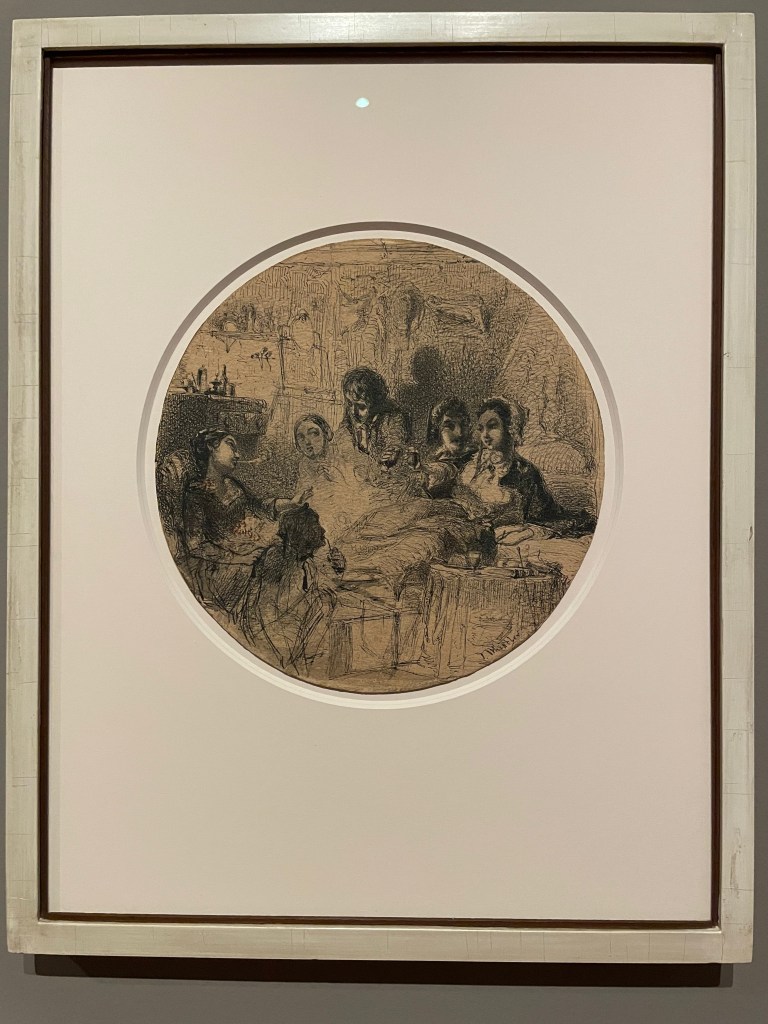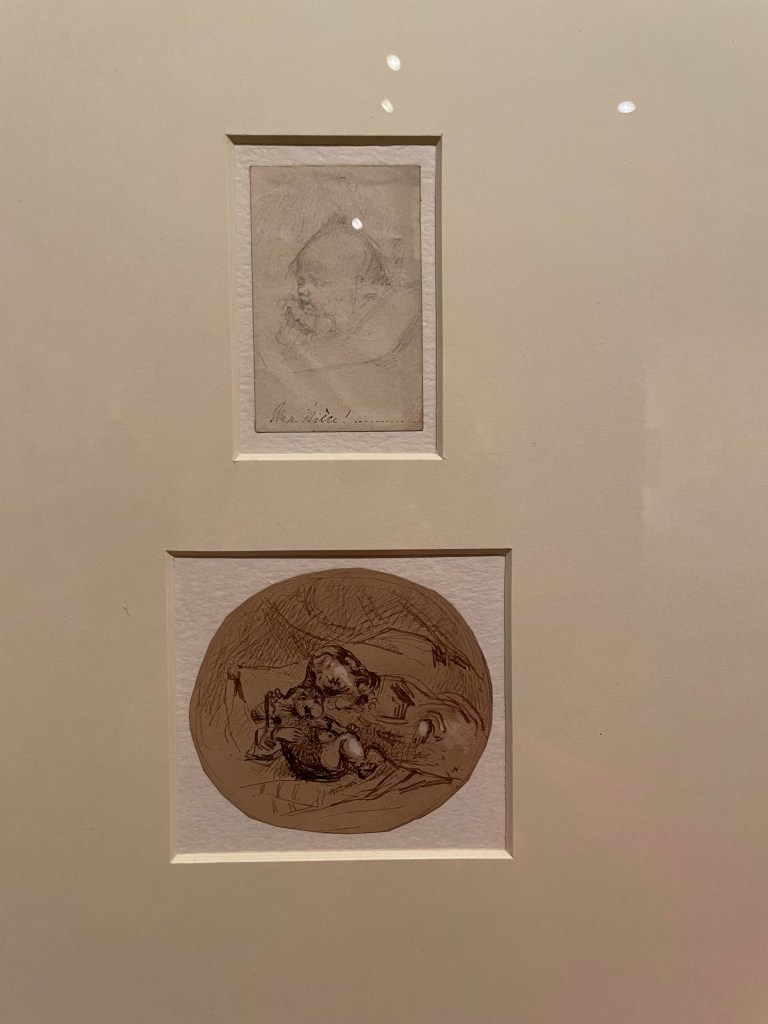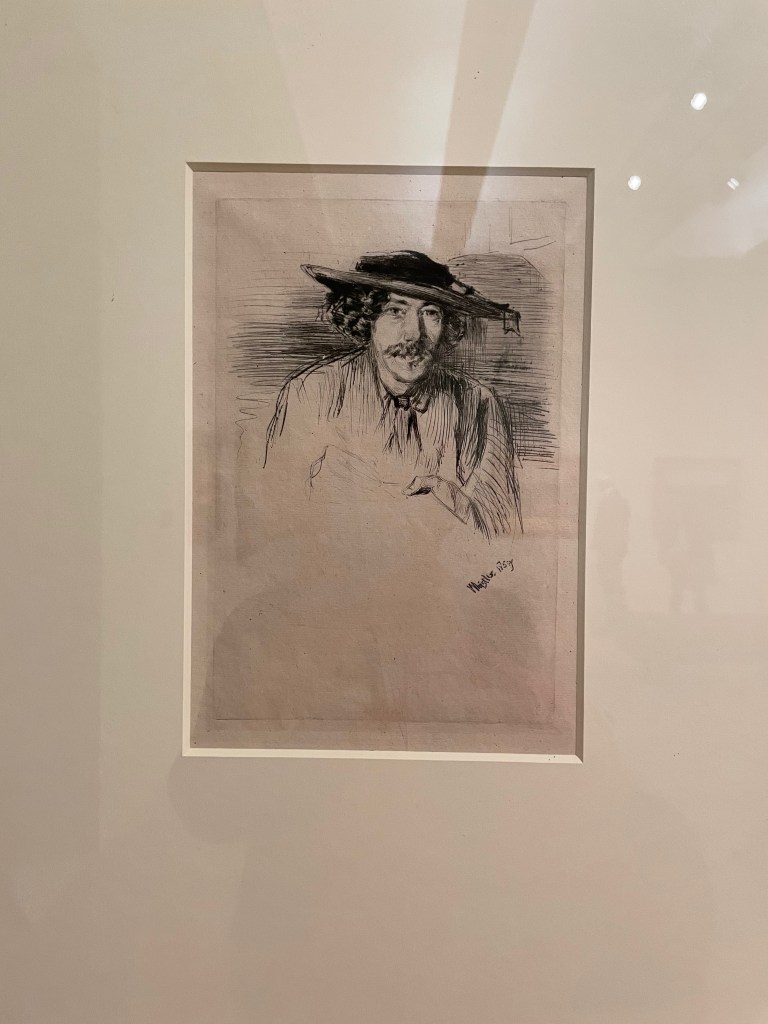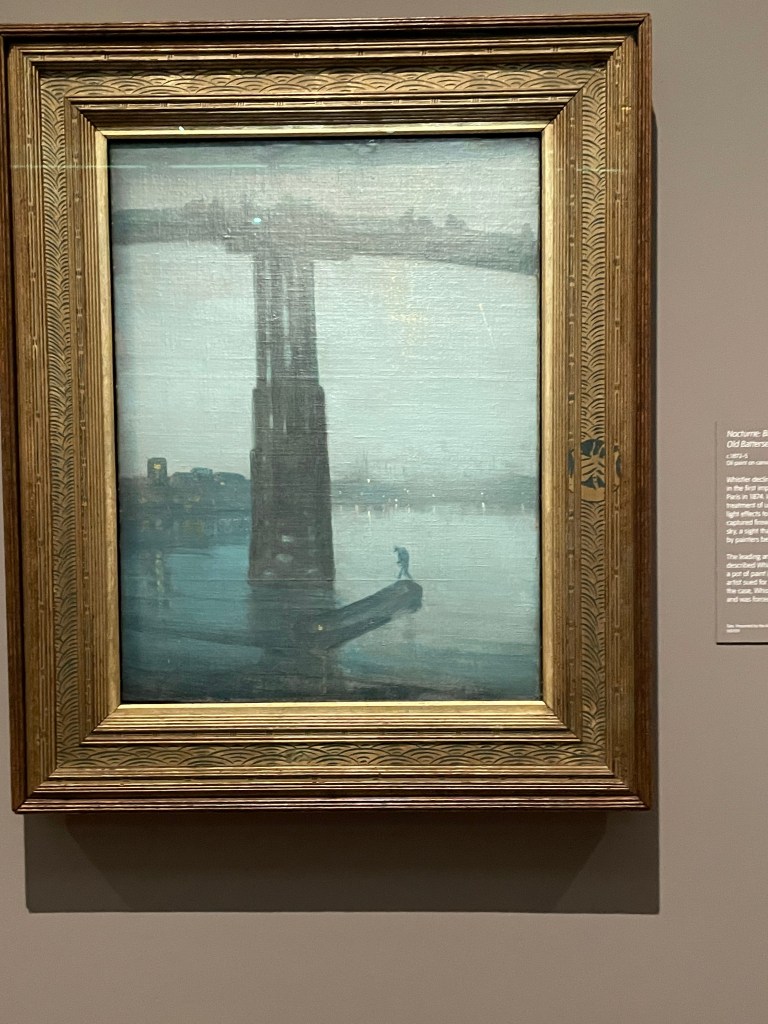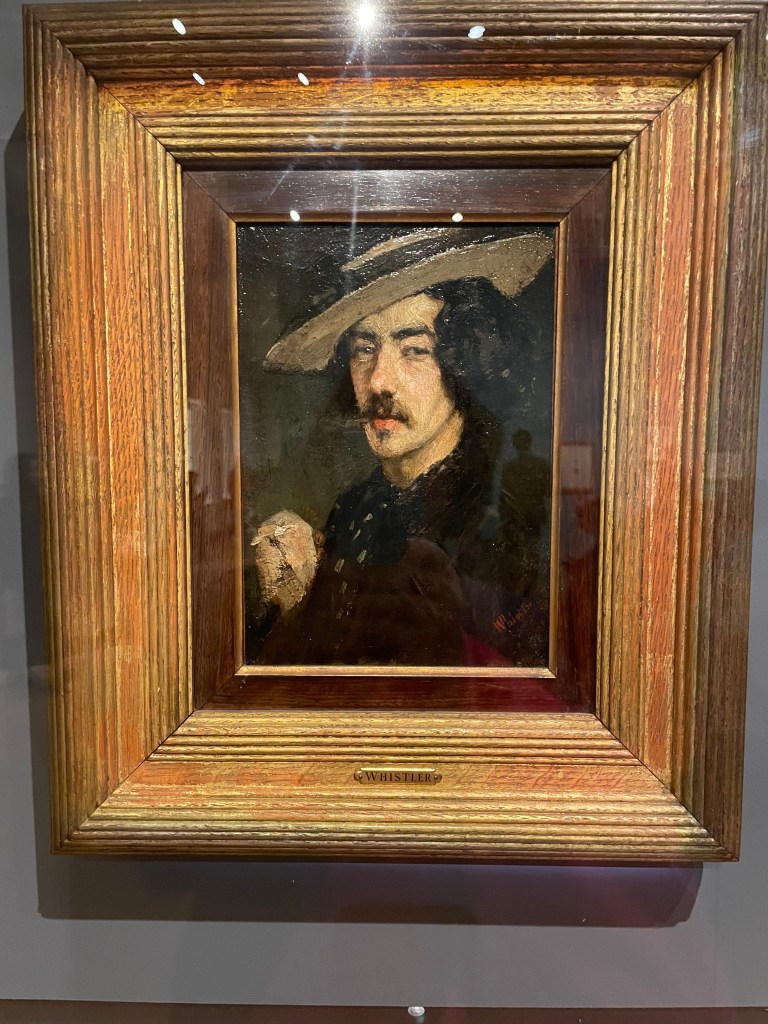
James McNeill Whistler at Tate Britain – what a treat! So great to see so many works – portraits, self-portraits, narrative paintings, landscapes and the mesmerising ‘Nocturnes’ depicting stretches of water at dusk.

Loved this self-portrait of James McNeill Whistler. He’s looking quite louche and pleased with himself – blowing that little puff of cigarette smoke from his mouth and looking out at us with supreme confidence. And he was a confident painter. Interesting to learn that, having been born into a military family, he attended West Point and was expected to lead the life of a soldier but he was clearly far too free-thinking and disobedient for that world. And, as we see in the exhibition at Tate Britain, he spent every spare moment making drawings. He wanted to be an artist.
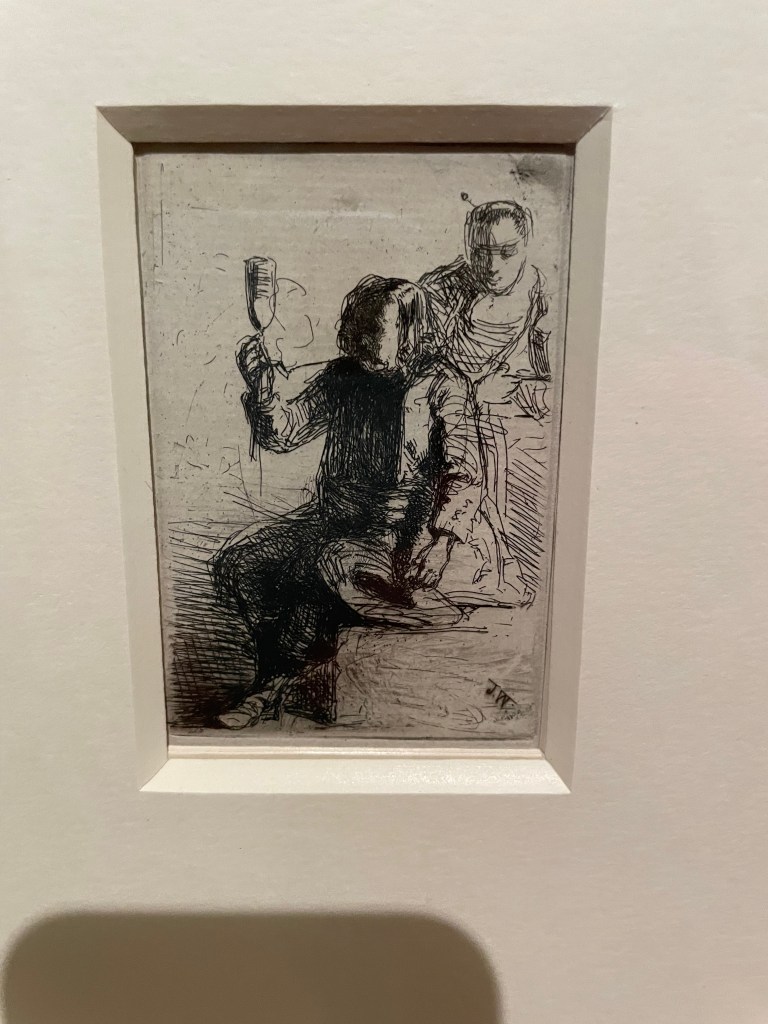
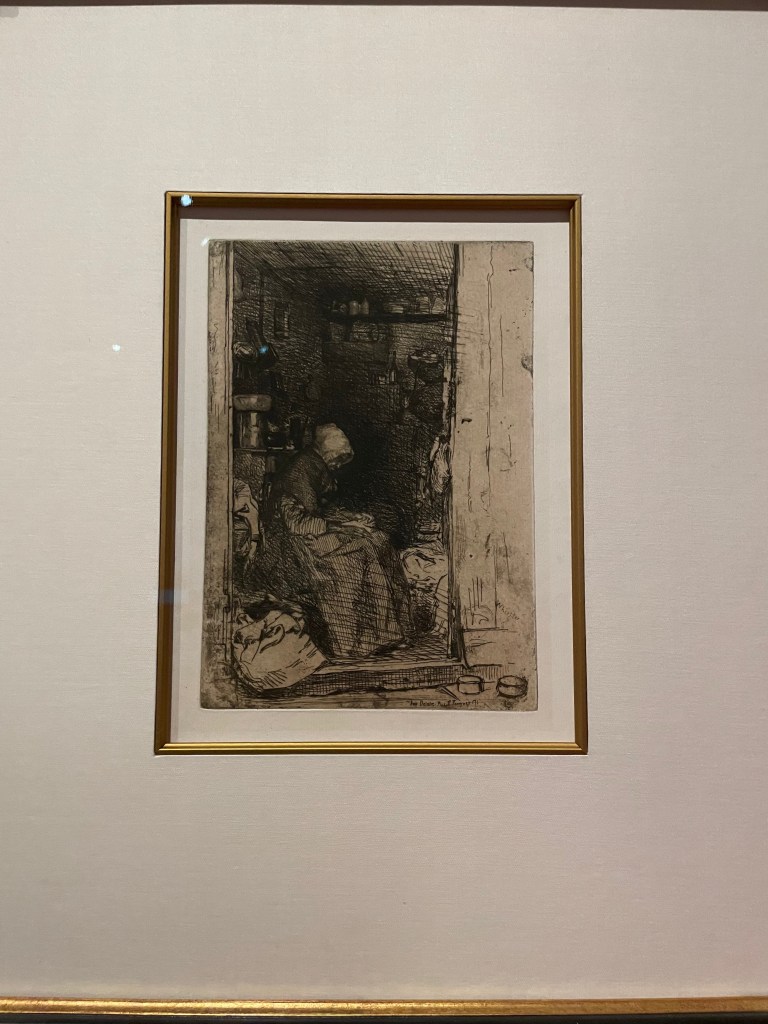
So, in his twenties he moved to Paris to live the Bohemian life as a painter, made friends with contemporary artists such as Degas and started drawing, painting and etching. Looking at his etchings it’s clear to see the influence of earlier artists such as Rembrandt. He also had a great sense of story-telling and obviously relished portrait painting.
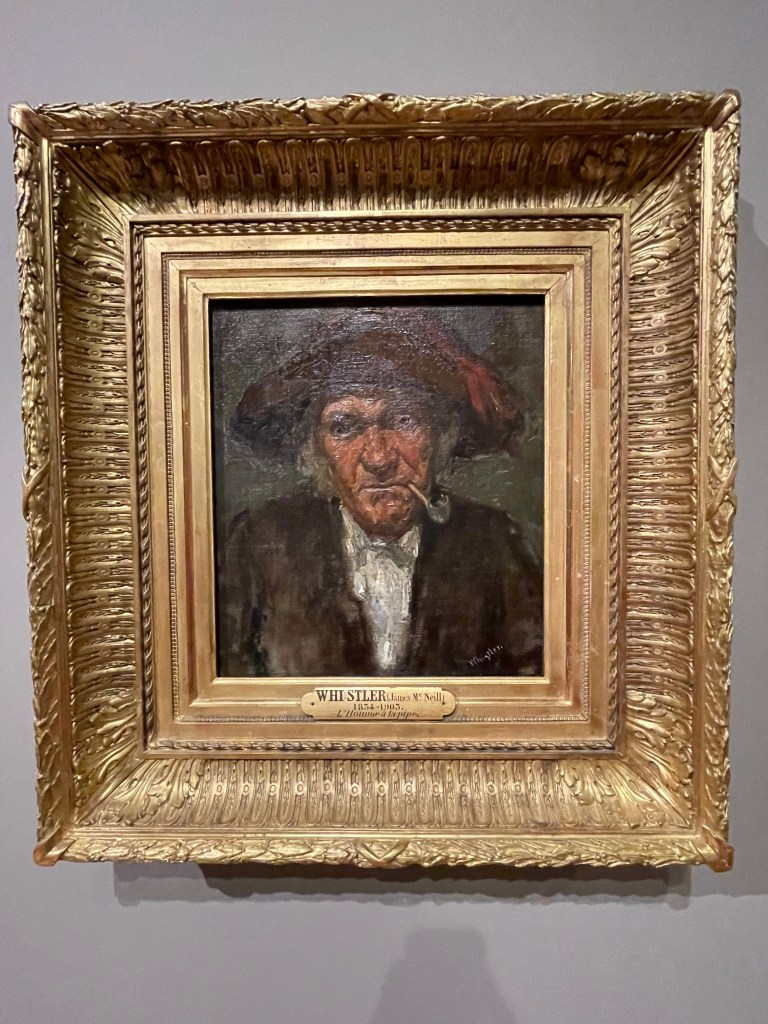
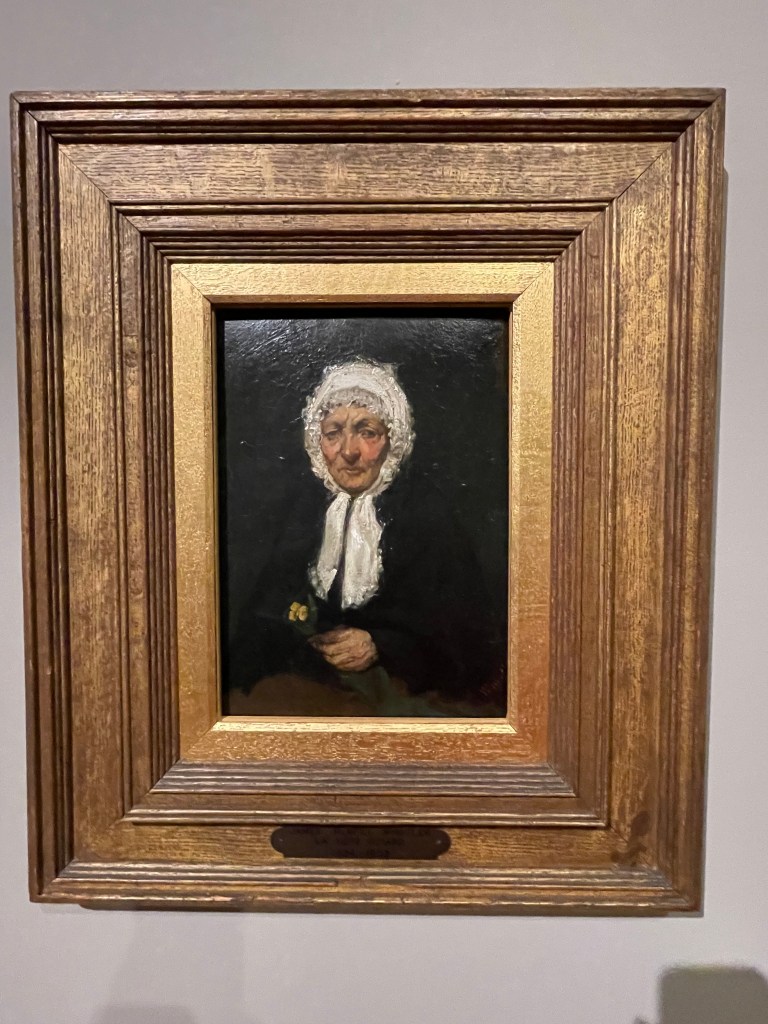
These two portraits made in France in1859 are great examples of how he managed to capture likeness, character and the interior world of his subjects. You can see the influence of Rembrandt too.
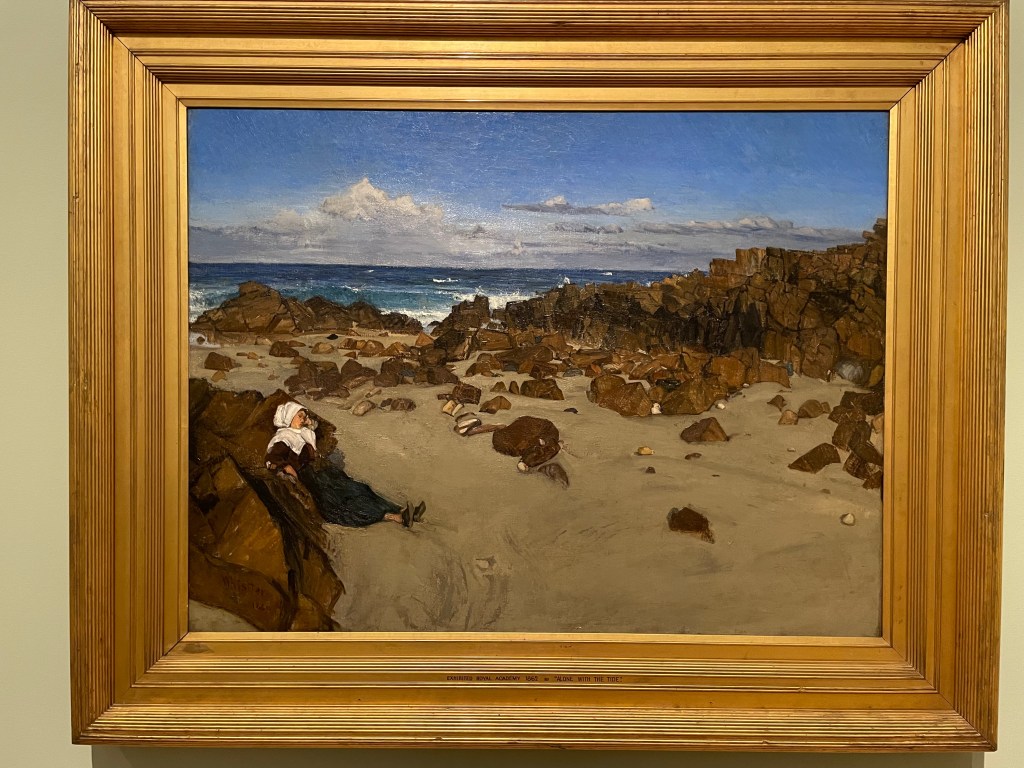
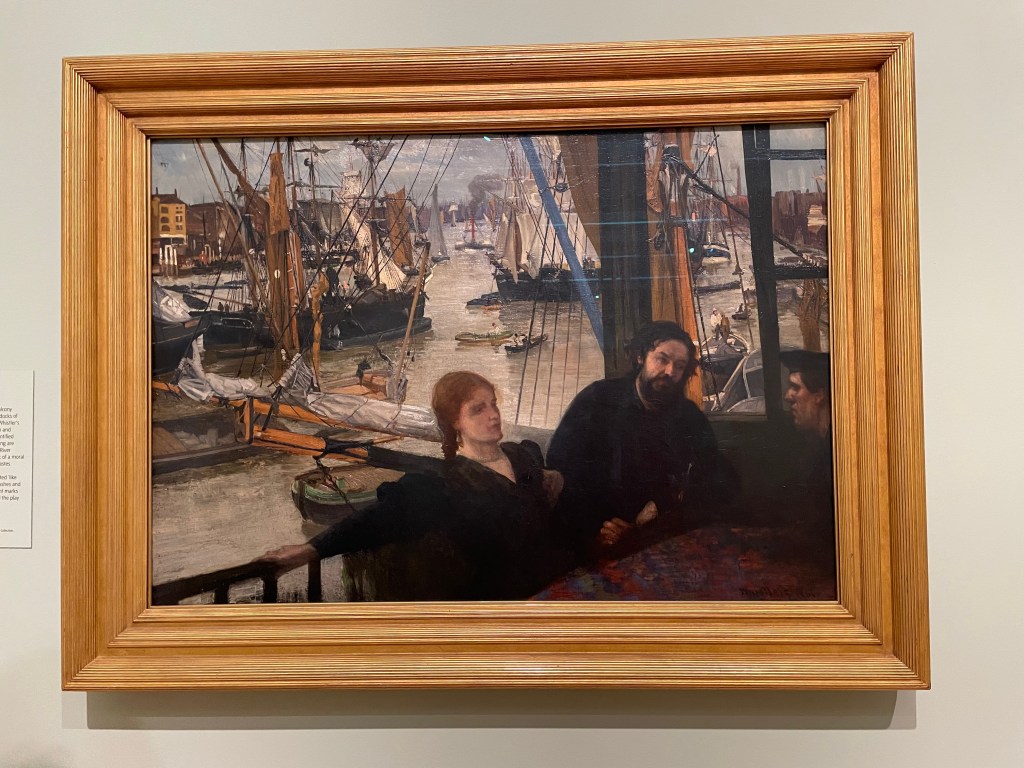
These are BIG oil paintings. On the left is a scene set on the Coast of Brittany (Alone with the Tide) from 1861painted in the open air and full of atmosphere. The texture of the paint is impressive and really worth getting up close to this one to see how he captures the approaching waves. And on the right is a painting I really love, Wapping, which was created from a series of drawings made in the busy port on the River Thames and very much a studio piece in its complexity. The viewer’s eye is so cleverly drawn from the foreground scene of drinkers (models) in a disreputable pub on the waterfront and the jumble of ships, boats, buildings and the great metropolis in the background. You just want to sit down at that table, smell the beer and the filthy river and dream of trade and travel to far flung places.
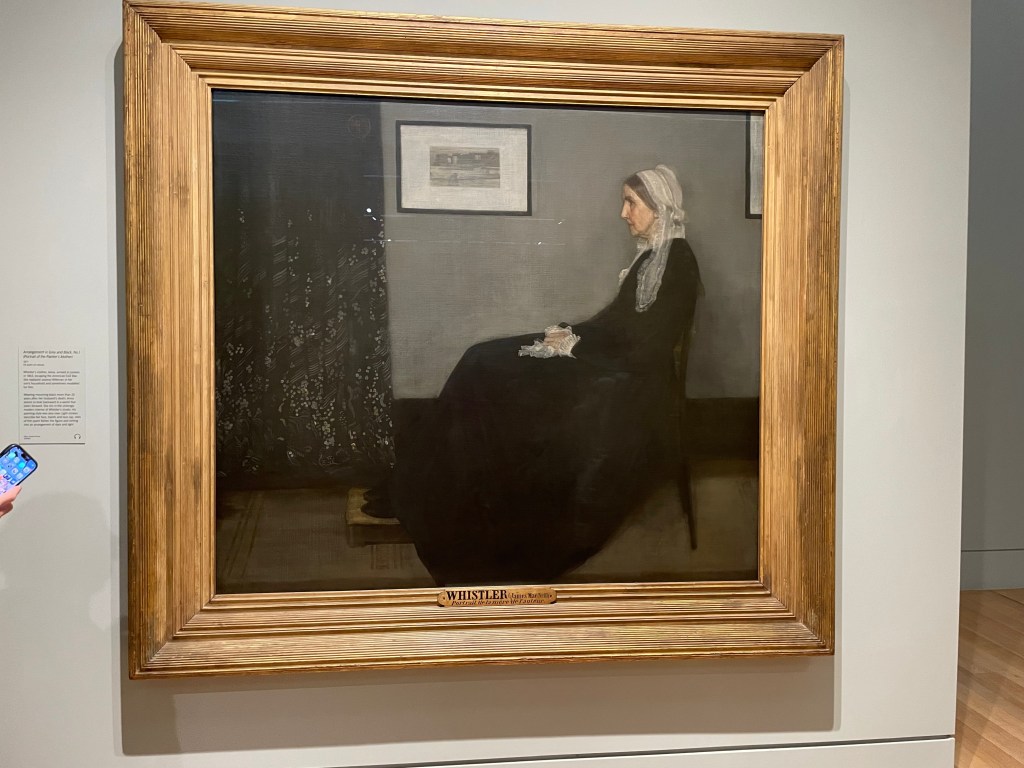
And here she is, Whistler’s mother. How still she looks in this austere setting with an oriental fabric drape to the side, a single print on the wall behind her (the print itself is also in the exhibition) and the woman seated, solemnly, staring at something. It’s unusual to see a portrait in such severe profile and the colours are very subdued. Having enjoyed colour in his earlier work, Whistler make a point of reducing the colour to subtle tones and allows the monochrome, or grey, of his palette to dominate. It’s a large painting with a tremendous draw to it.
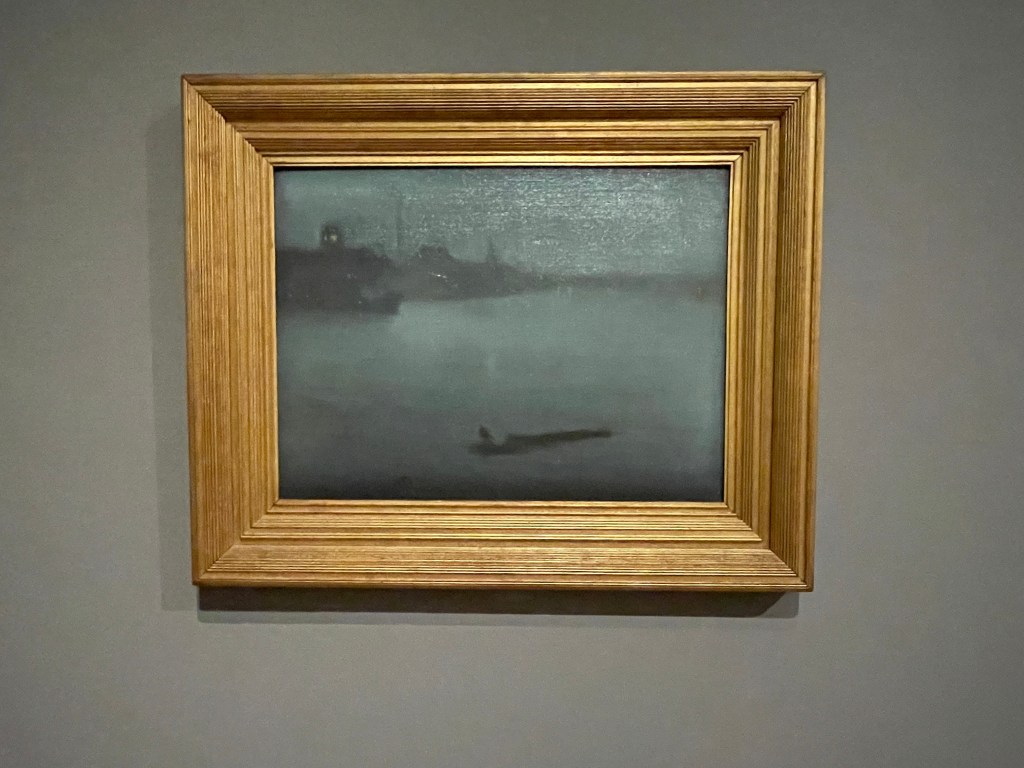
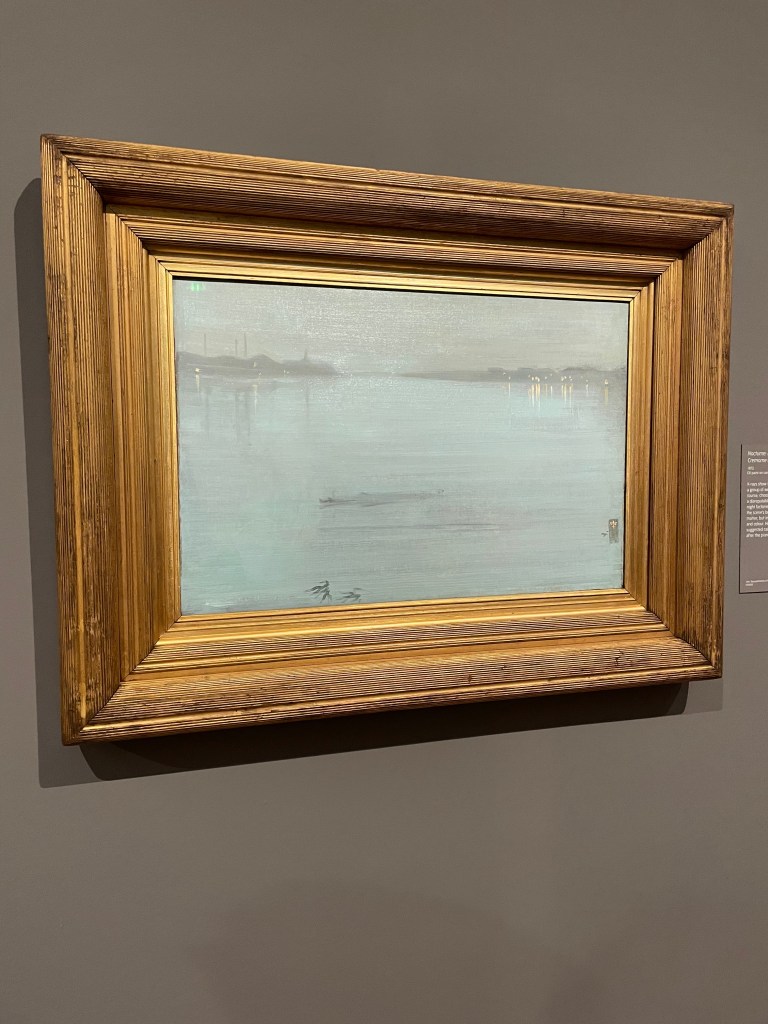
And here are some of the ‘Nocturnes’ the later paintings he made which capture watery scenes at dusk or by moonlight. I think there must be a warm, orangey ground underneath all those cool blues and greys because there’s a hidden warmth to the pictures. They are dreamy and compelling.

What a great show. It’s on at Tate Britain until 27th September. Well worth a visit.

We don’t get to see much contemporary art from the Asia Pacific region so it’s great that the V&A has devoted a gallery space to a show called Rising Voices: Contemporary art from Asia, Australia and the Pacific – a broad scoop of the planet featuring works from Indigenous peoples from remote islands to huge, densely populated countries.

It’s quite hard to describe what, exactly, you are seeing at this show, but it was interesting and engaging to see the work of so many contemporary artists from places as diverse as Hawaii, Cambodia, India, Australia, New Zealand, the Philippines… what a great sweep of the world to try and represent!

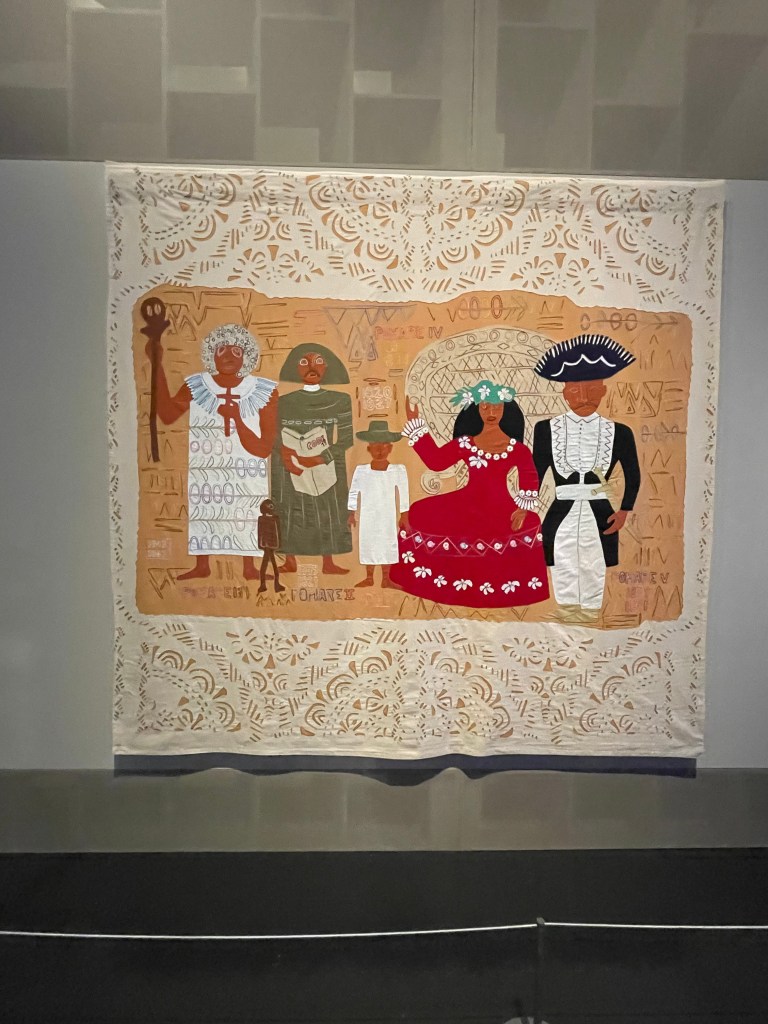
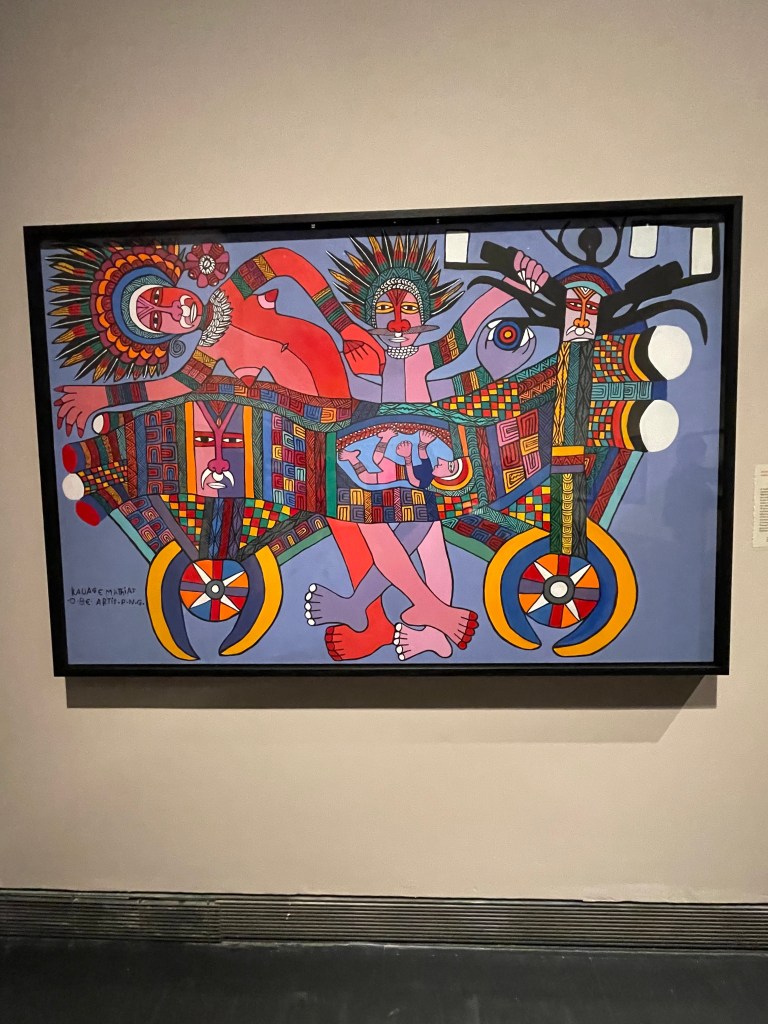
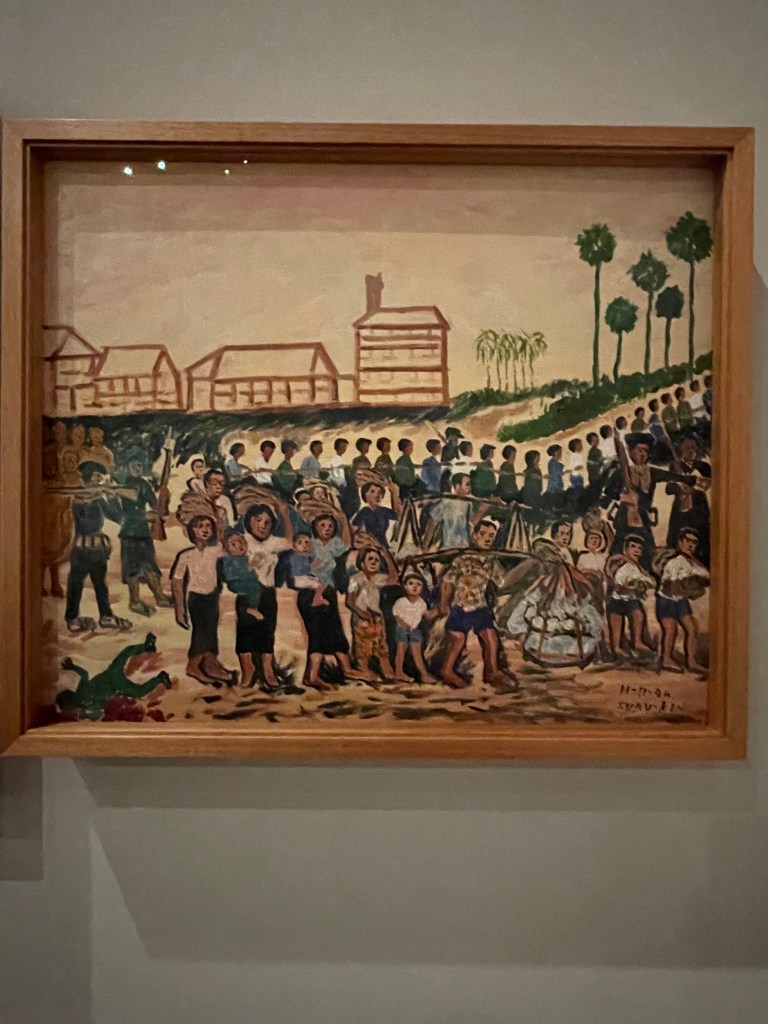
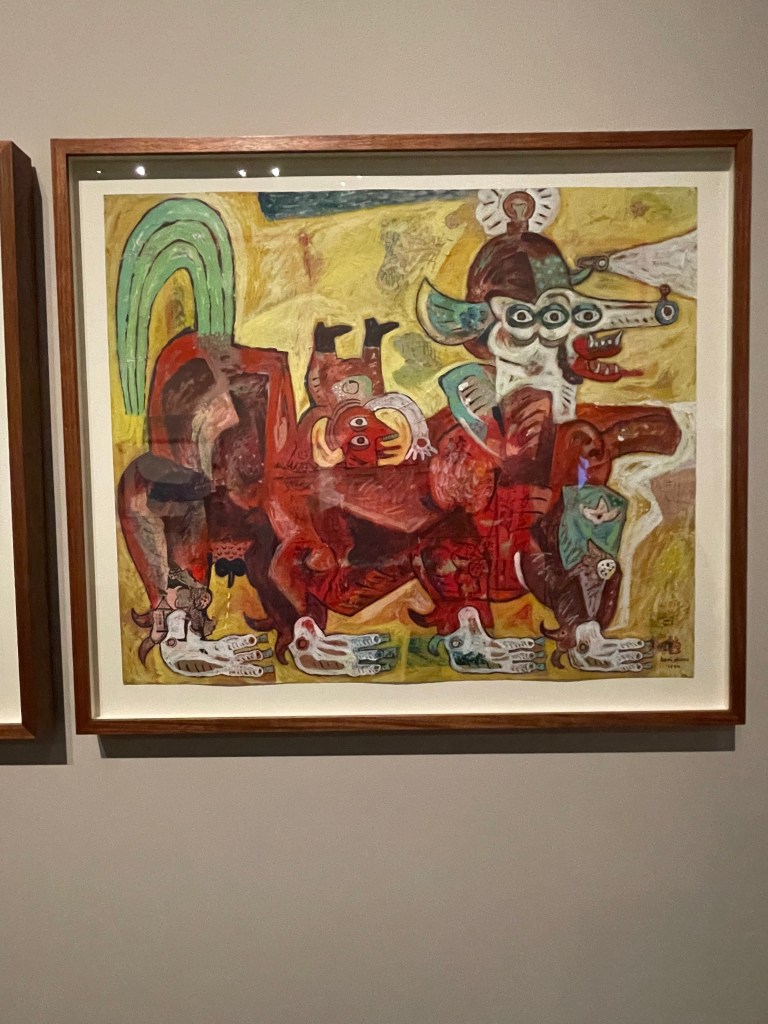
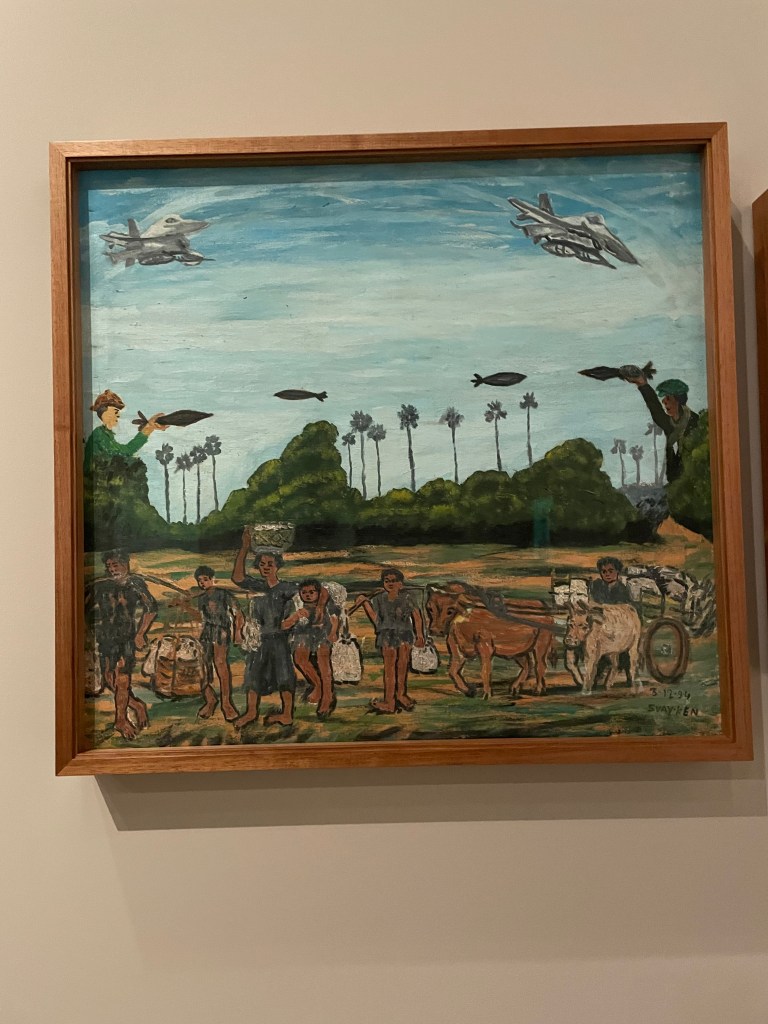
The works, above, caught my eye because they represented people and events: La Famillle Pomare by Aline Amaru from Tahiti, Independence Celebration by Mathias Kauge from Papua New Guinea and Svay Ken’s depiction of People on 18th April 1975 when the Khmer Rouge took power in Cambodia

What’s striking is that so many of the images referenced violence, domination and occupation. These regions have been buffeted by so many of the greedy countries of the West for whom faraway lands represented an opportunity to take by force, own and exploit. So there’s a lot of that on show.
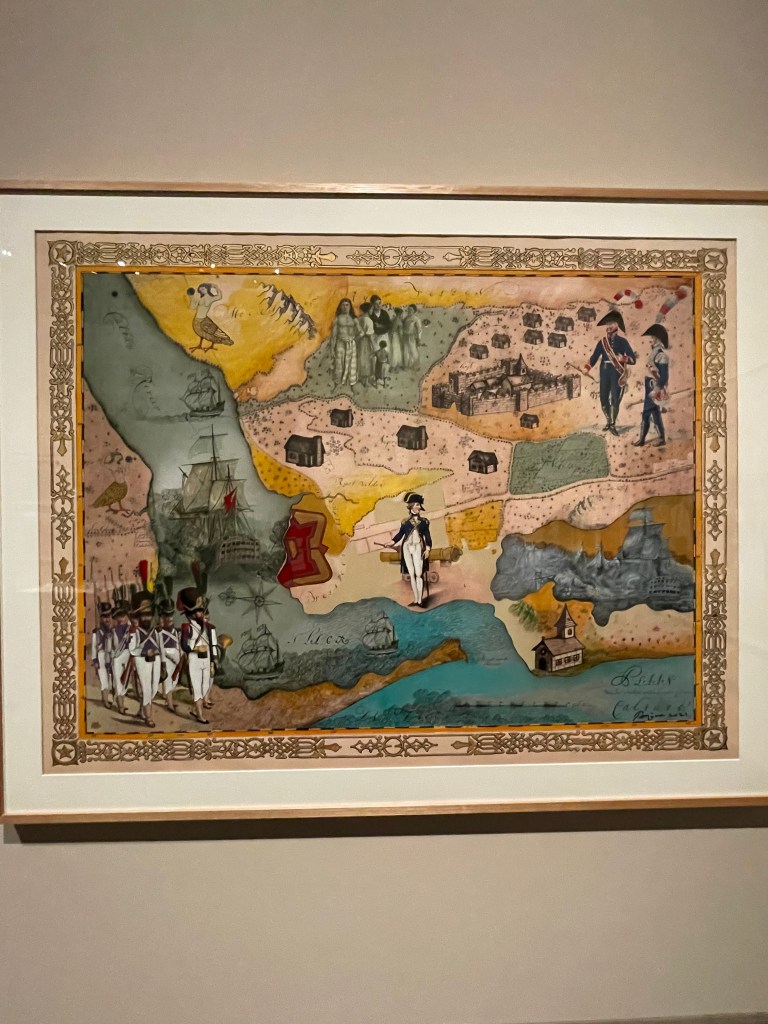
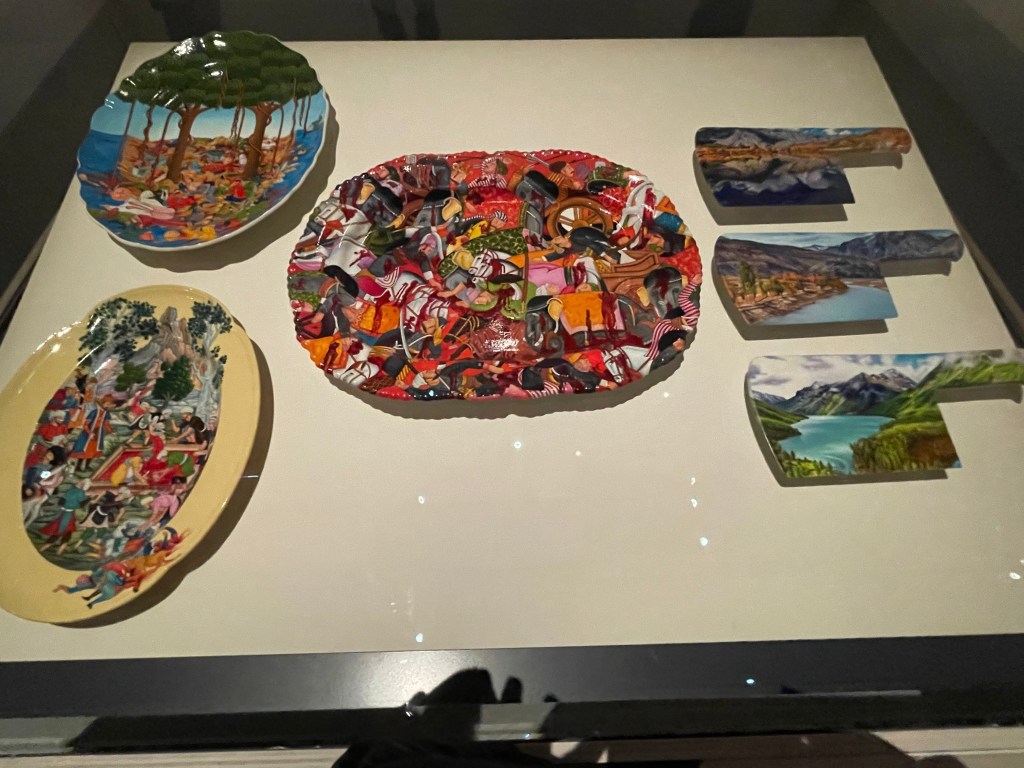
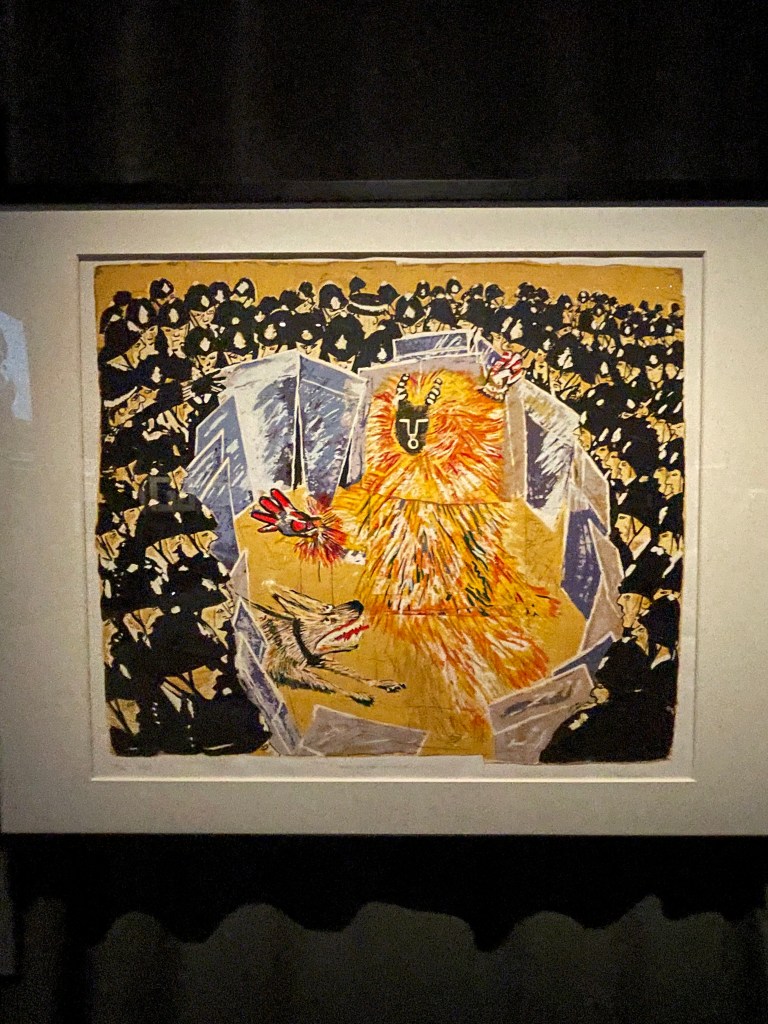
Above you can see: Pala Pothupitiye’s Kaulara Fort which gives an impression of the colonial experience in Sri Lanka, showing a fort first built by the Portuguese, captured by the Dutch and then taken over by the British. Middle is Heri Dini’s Eating Bullets, a rather ‘Guernica-like’ expression of invasion and fury and on the right is a depiction of Vietnamese planes and Pol Pot Soldiers in battle.

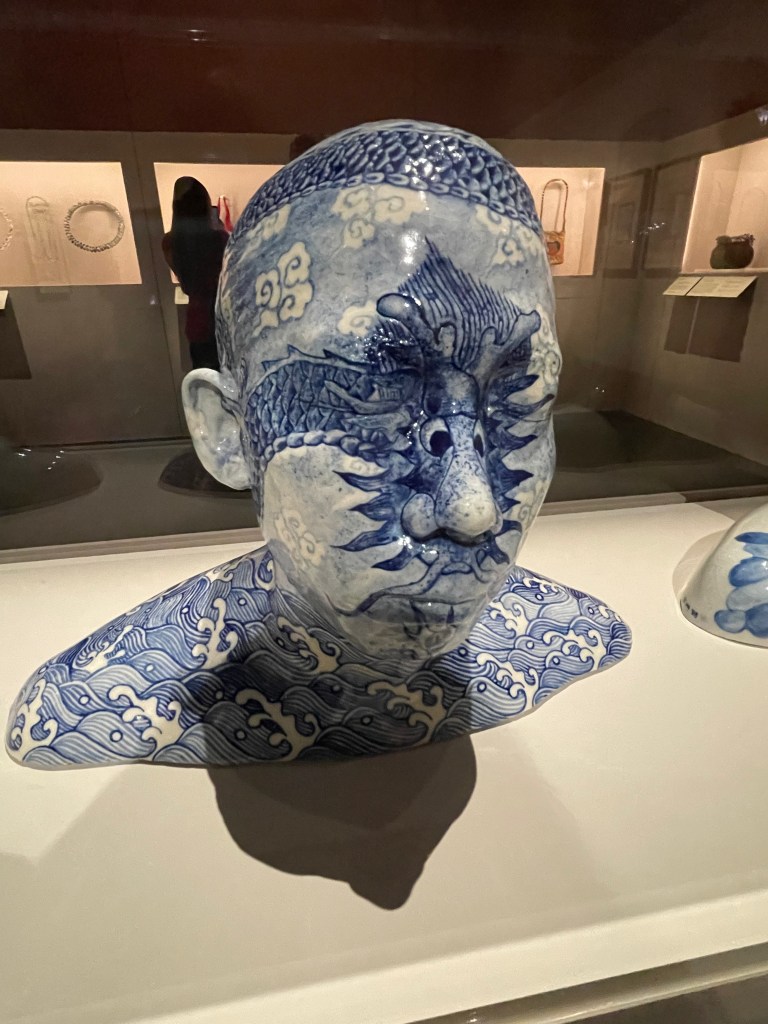
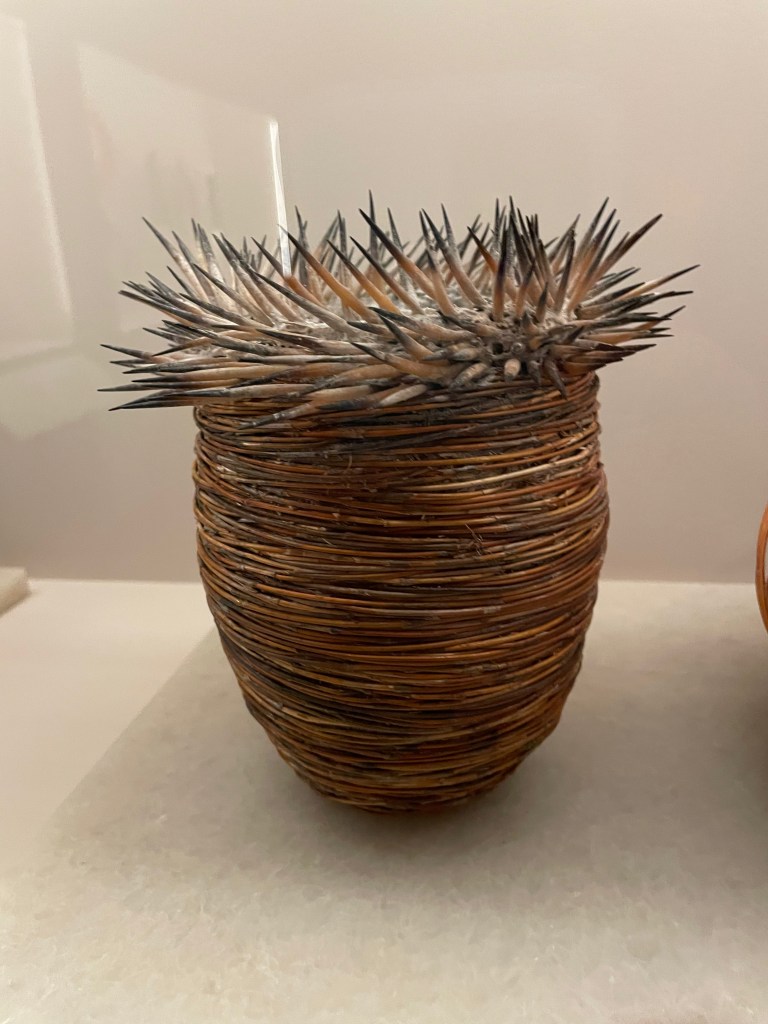
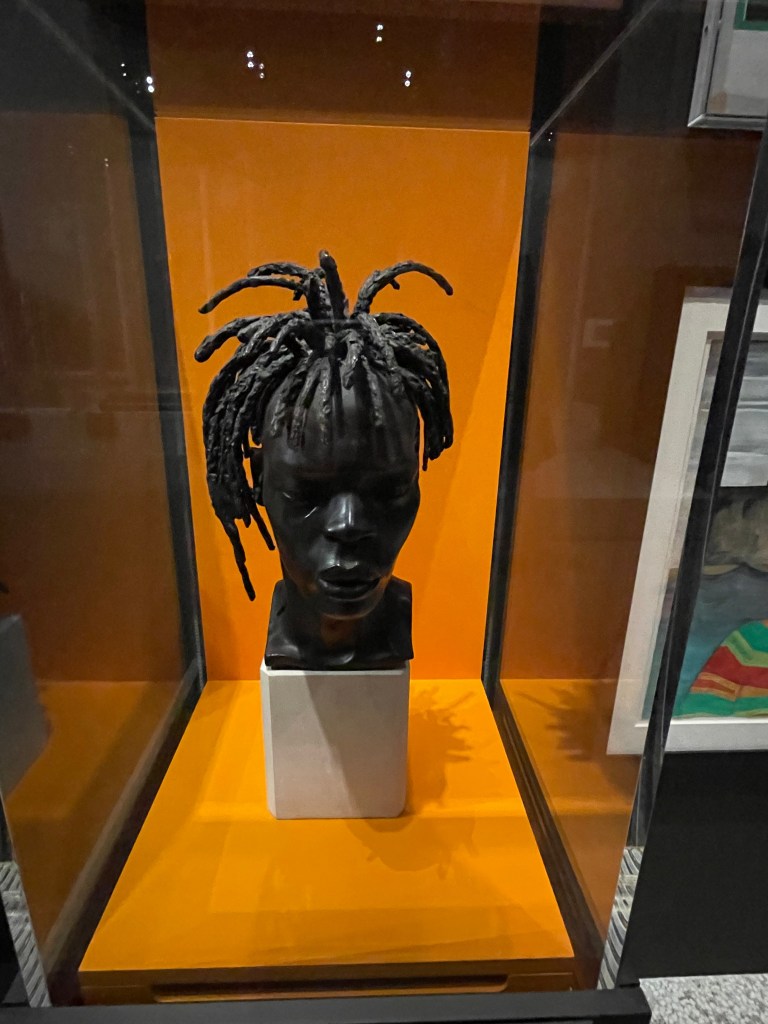
Good to see a variety of sculptures and crafts too. I was impressed by these three, painted dishes and everyday objects, a ceramic bust by Ah Xian from China who works in Australia, and Spikey One by Shirley Macnamara from Queensland, Australia who uses spinifex, emu features, ashes, porcupine quills and polymer.

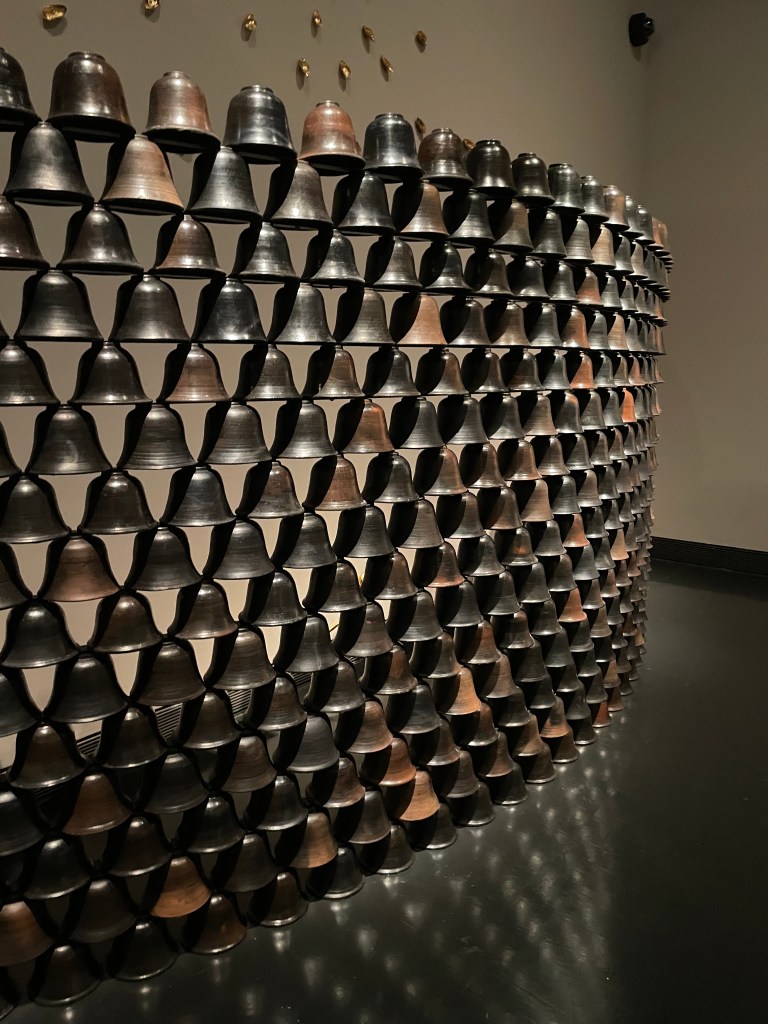
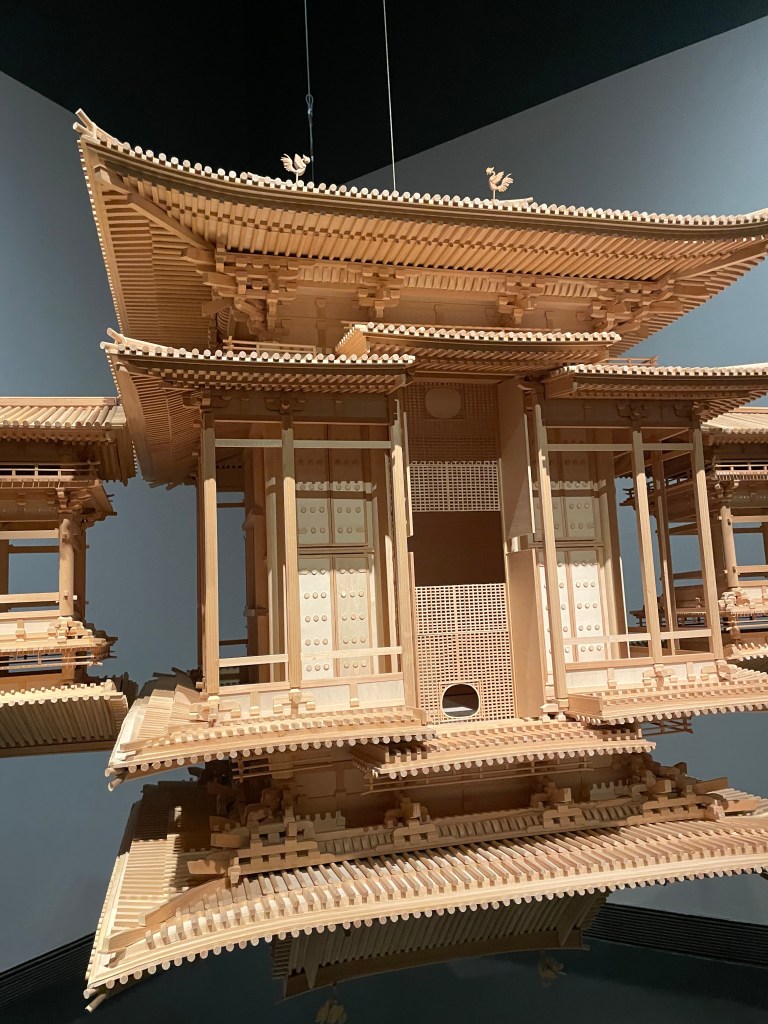
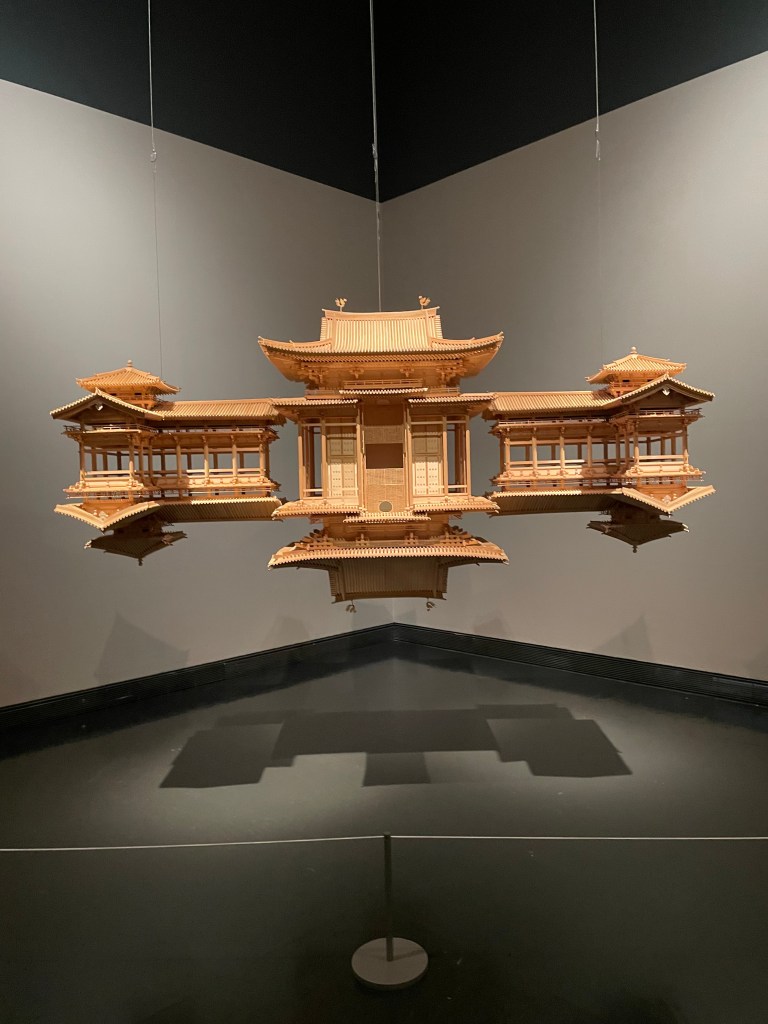
The exhibition ends with a spectacular sculpture depicting the Phoenix Pavilion which is part of Kyoto’s Byodo-in temple complex. Made from Japanese cypress he building appears to float on water with a reflection created to mirror the building. And Montein Boonma from Thailand has created Lotus Sound, made from terracotta ‘bells’ which is very beguiling.

The exhibition is on show near the main entrance to the Victoria and Albert Museum until 10th January 2027

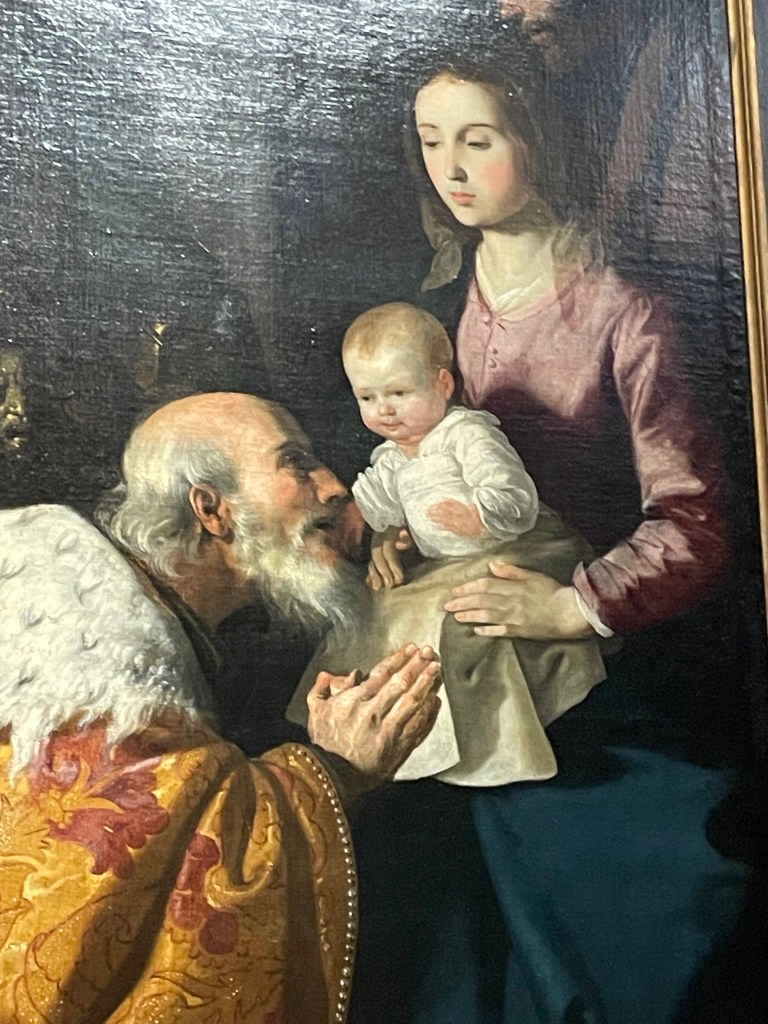
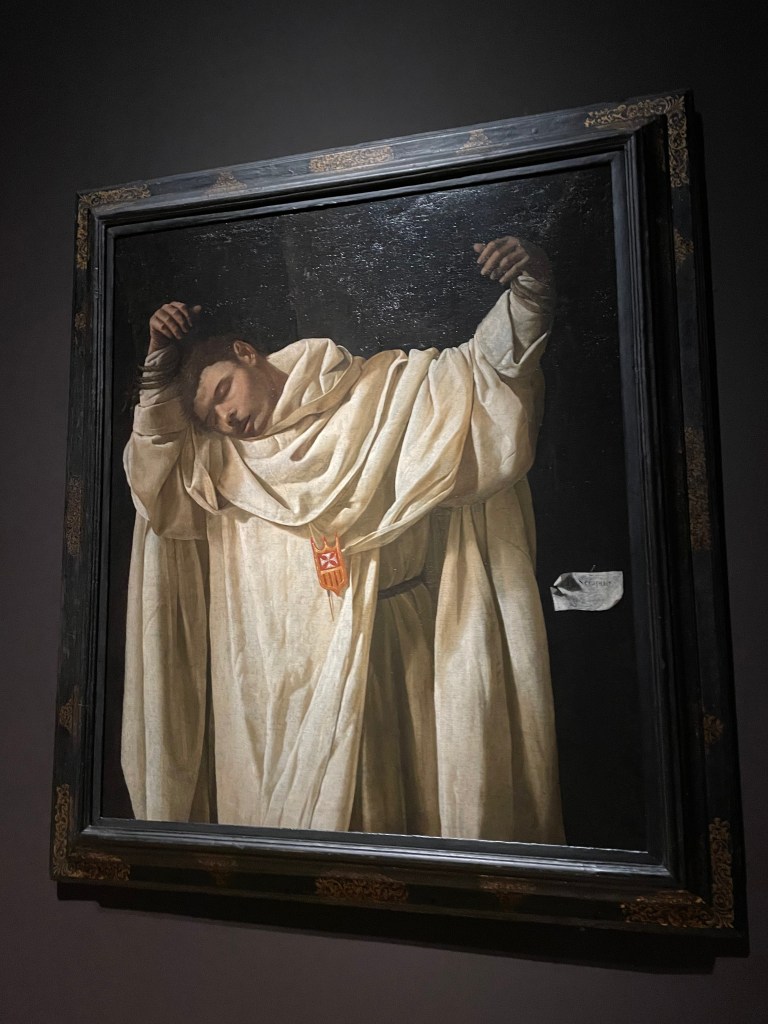
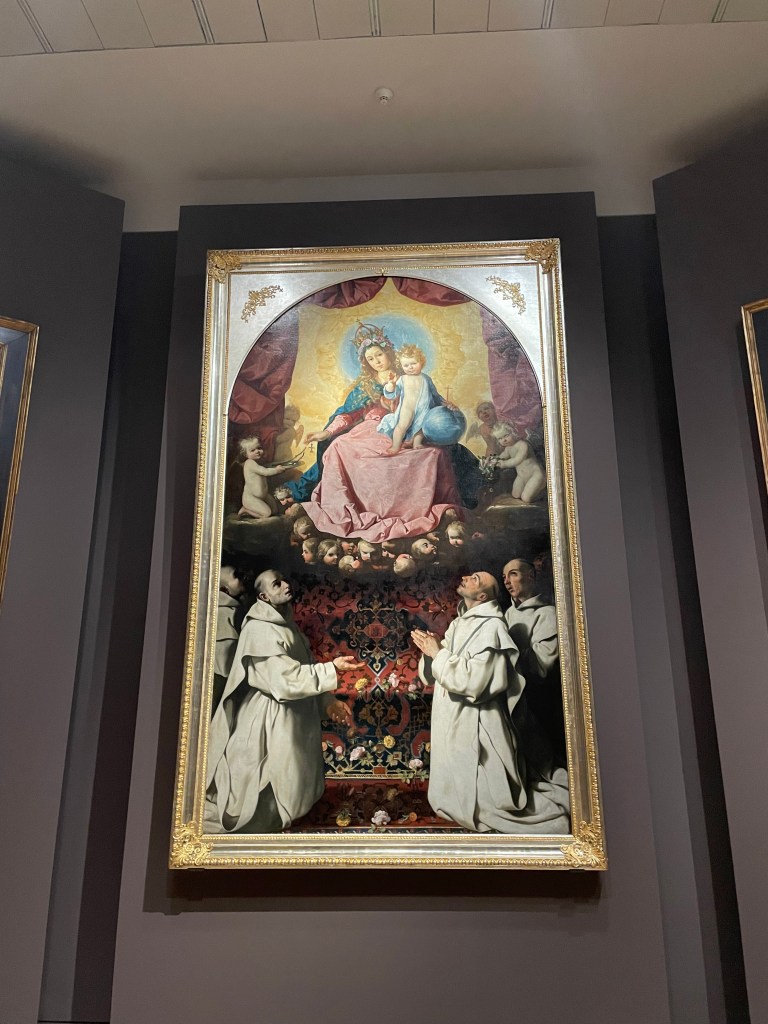
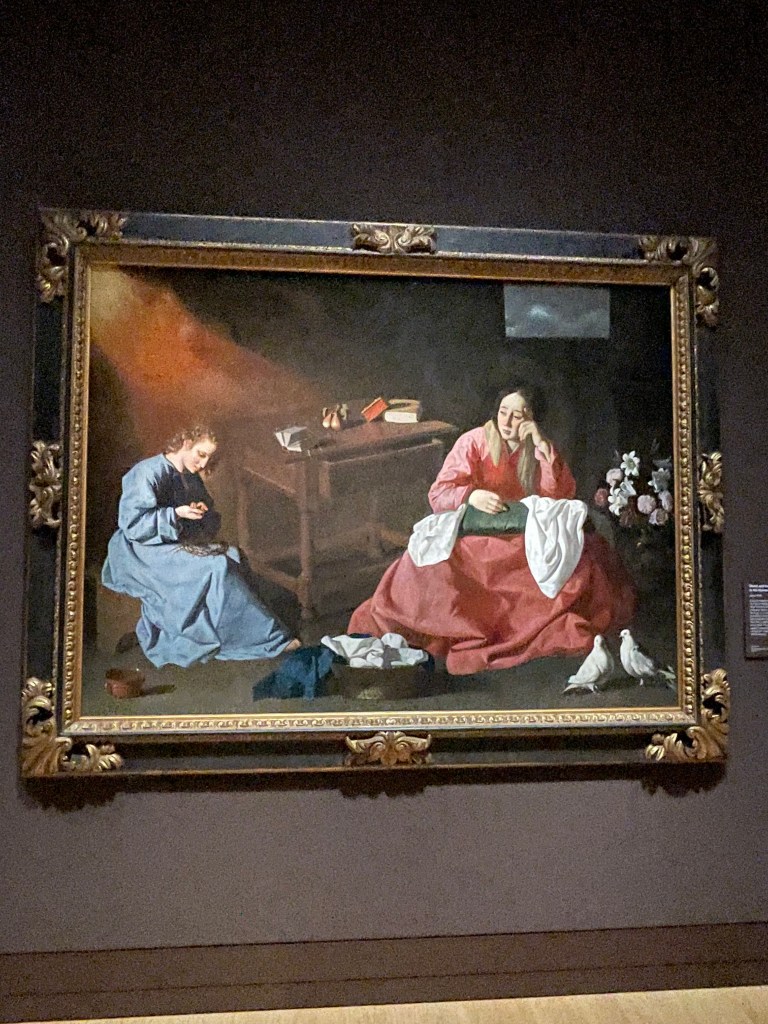
What a glorious surprise to be introduced to the world of Zubarán at the National Gallery. A huge monograph of his work is on show at the Sainsbury Wing and it’s a real treat. His ability to capture sculptural figures in paint against dark blackground is breathtaking.
I confess I was unaware of Francisco de Zubarán (1598-1664) but now I can see why he’s regarded as one of Spain’s most accomplished renaissance artists. His prodigious talent was apparent in his youth and he trained within Seville’s exacting standards of painting, sculpture and gilding before moving to Madrid for royal commissions. And he went on to demonstrate his remarkable skills and vivid imagination in wonderful paintings for religious houses, churches and wealthy patrons.

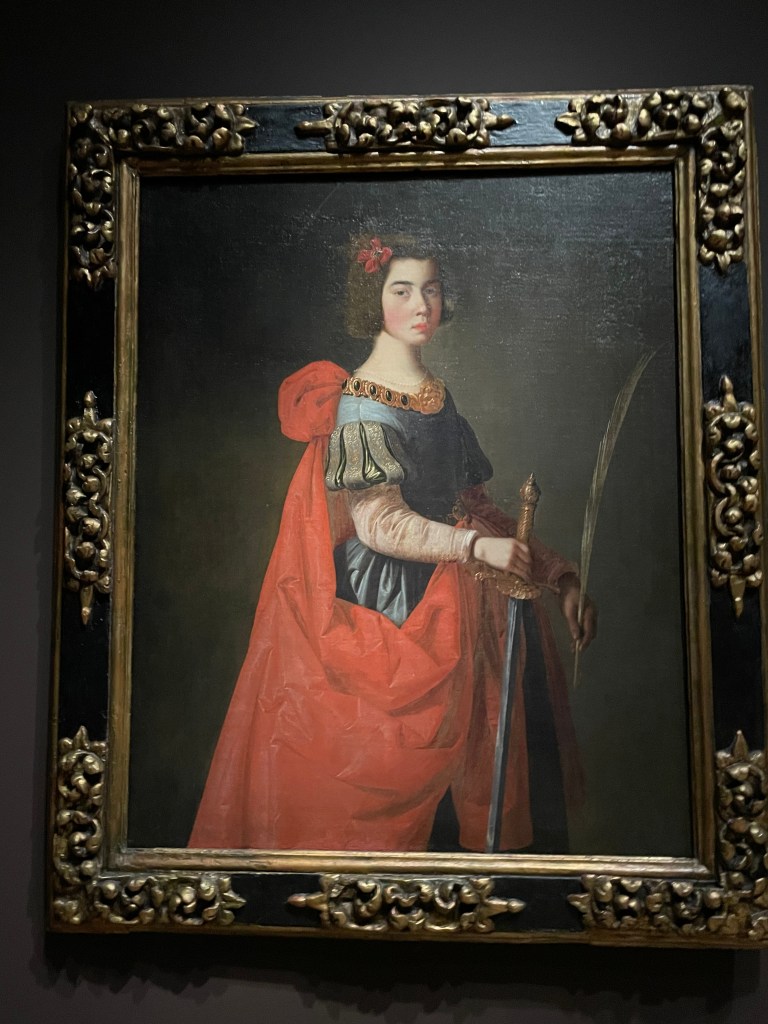
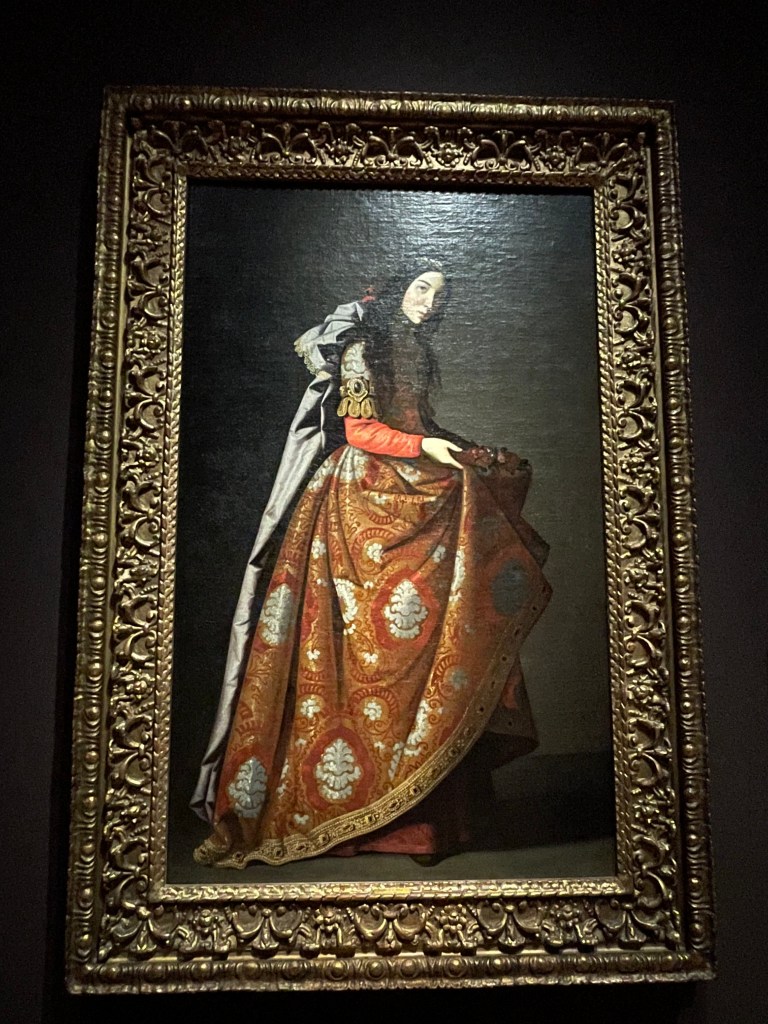
He’s clearly an artist with a remarkable understanding of fabric and depicts the richest of cloths with great elan. I really liked the room with portraits of saints – presumably using real people as models – but they capture the story behind the saint depicted as well as a great record of the women who modelled the costumes. Above left is Saint Catherine of Alexandria – who was martyred by the Romans and on the rights is Saint Casilda who was a Muslim princess who smuggled bread to Christian prisoners. When confronted, the bread she was carrying turned to roses. You can just about see her carrying them. But the cloth of her dress is amazing.

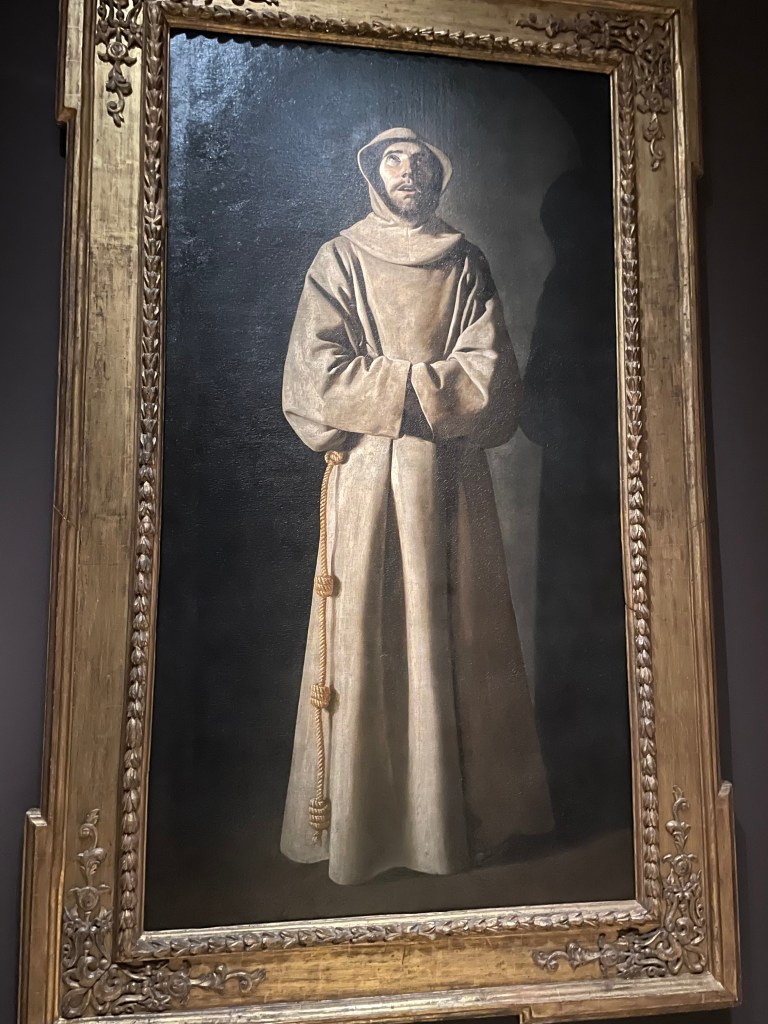
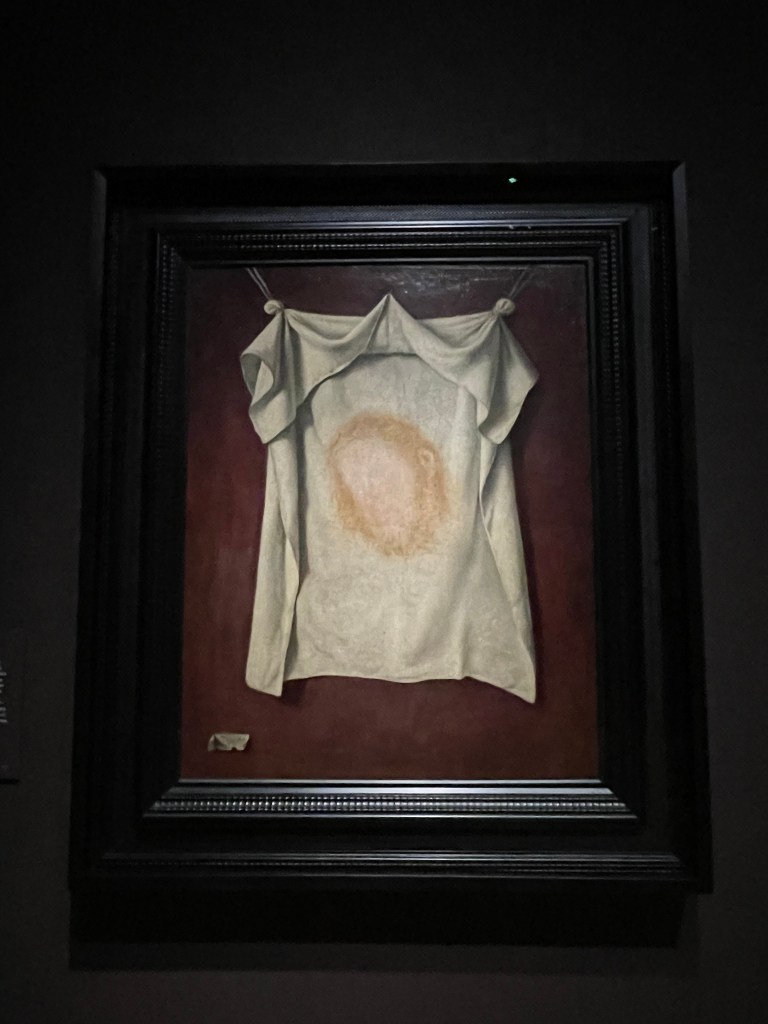
He has a very confident way of depicting pale fabric, brightly lit against very dark backgrounds. On the left is St Francis of Assisi, in the centre is Saint Serapion, a 13th century British friar who freed Christian captives in Algiers before being horribly tortured and beaten to death. On the right is a strange painting, quite a work of photo-realism, of a veil which Saint Veronica used to wipe Christ’s head as he carried the cross and subsequently revealed an impression of his face.

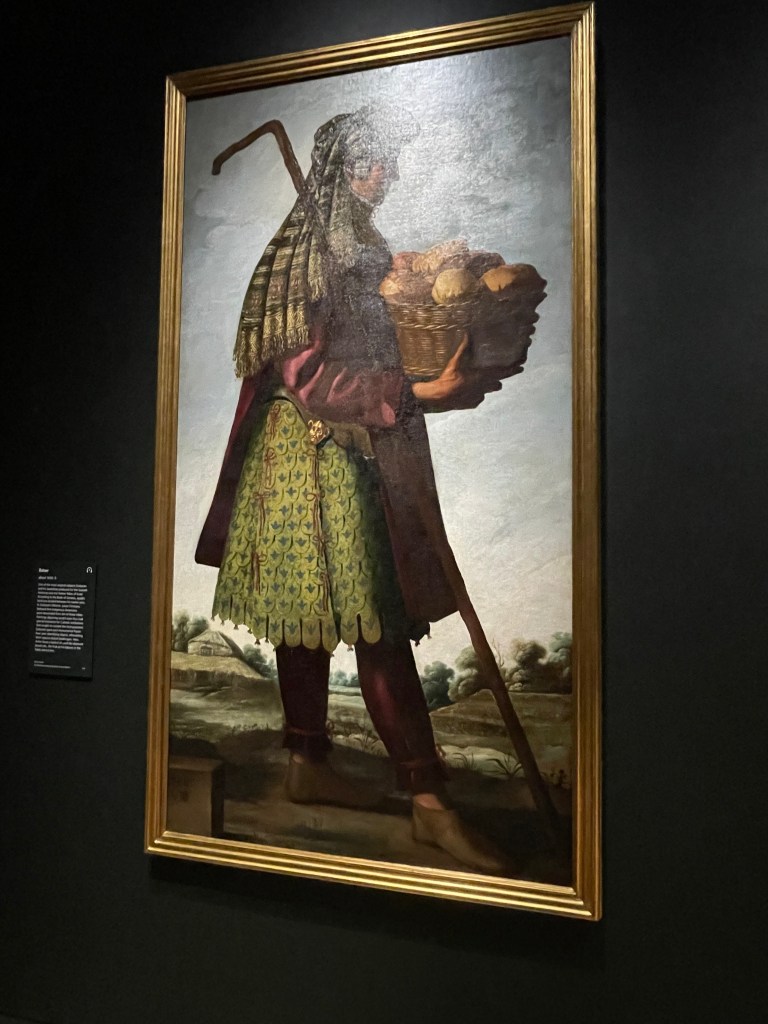
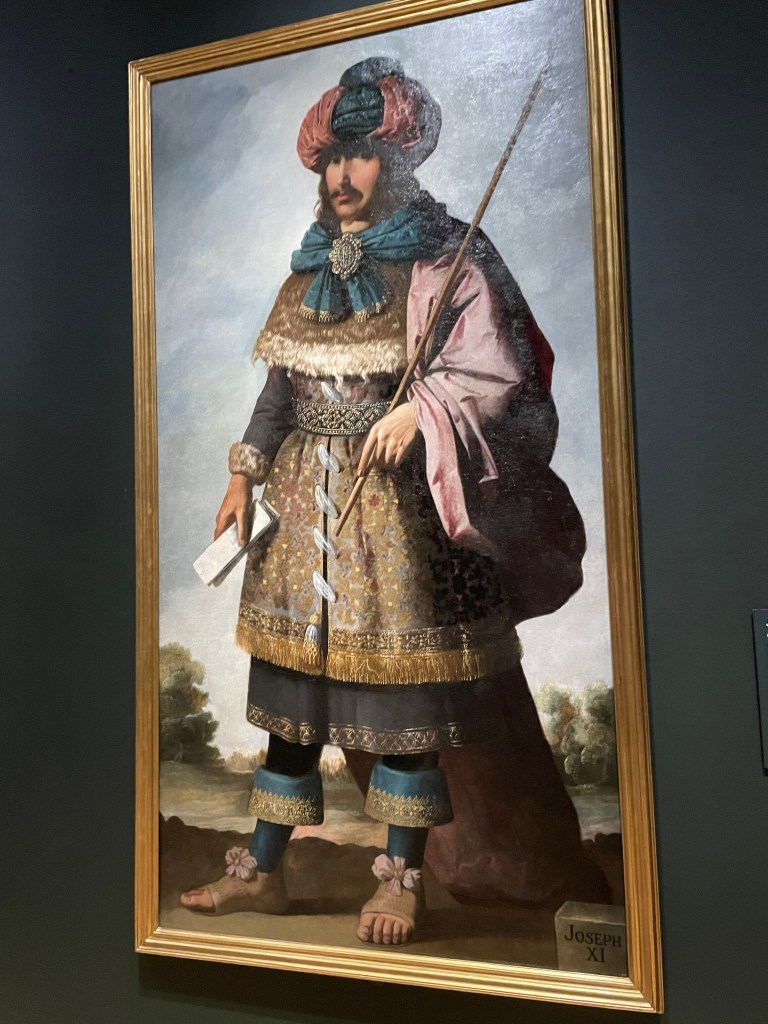
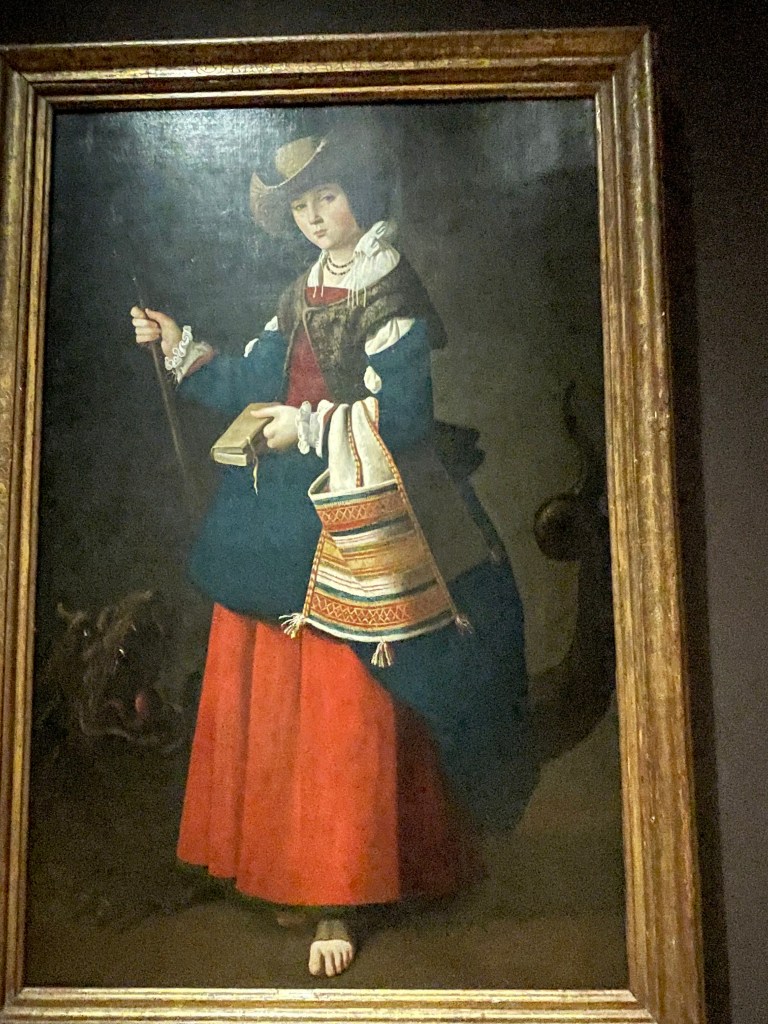
I loved these paintings of figures and you can spend ages studying the fabric and unusual clothing. On the left, holding the bread basket, is Asher, representing one of the Twelve Tribes of Israel, and centre is Joseph from the same series. And on the right is St Margaret of Antioch who, apparently, emerged unscathed after being swallowed by a dragon. I love the woven bag she’s holding.

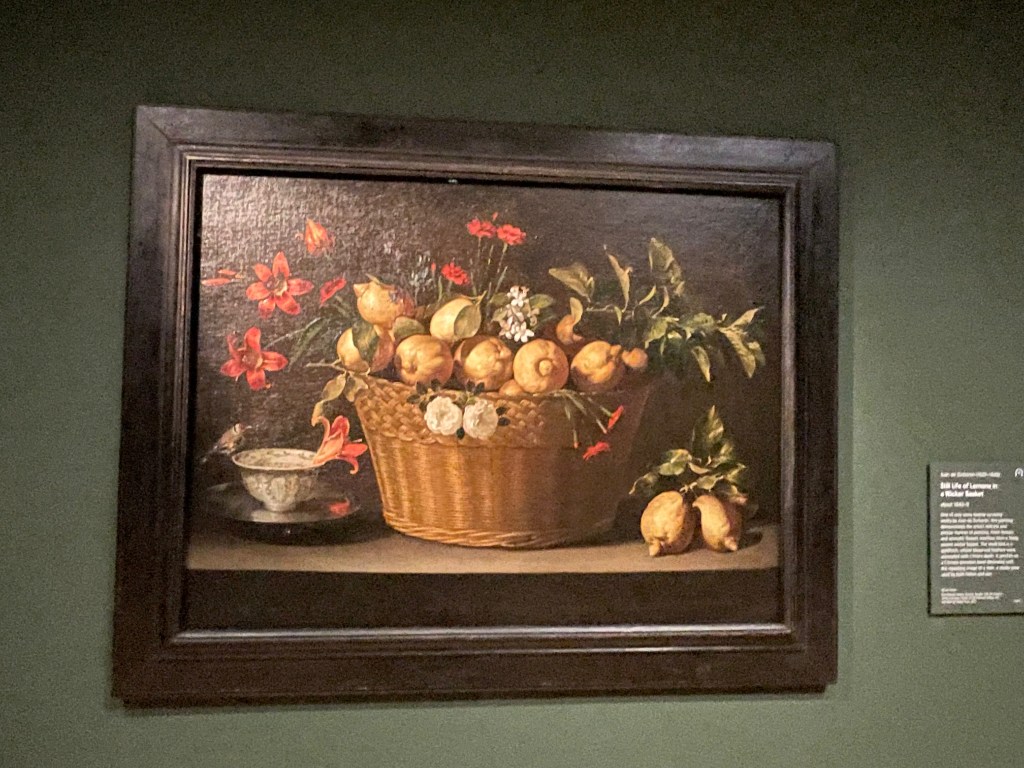
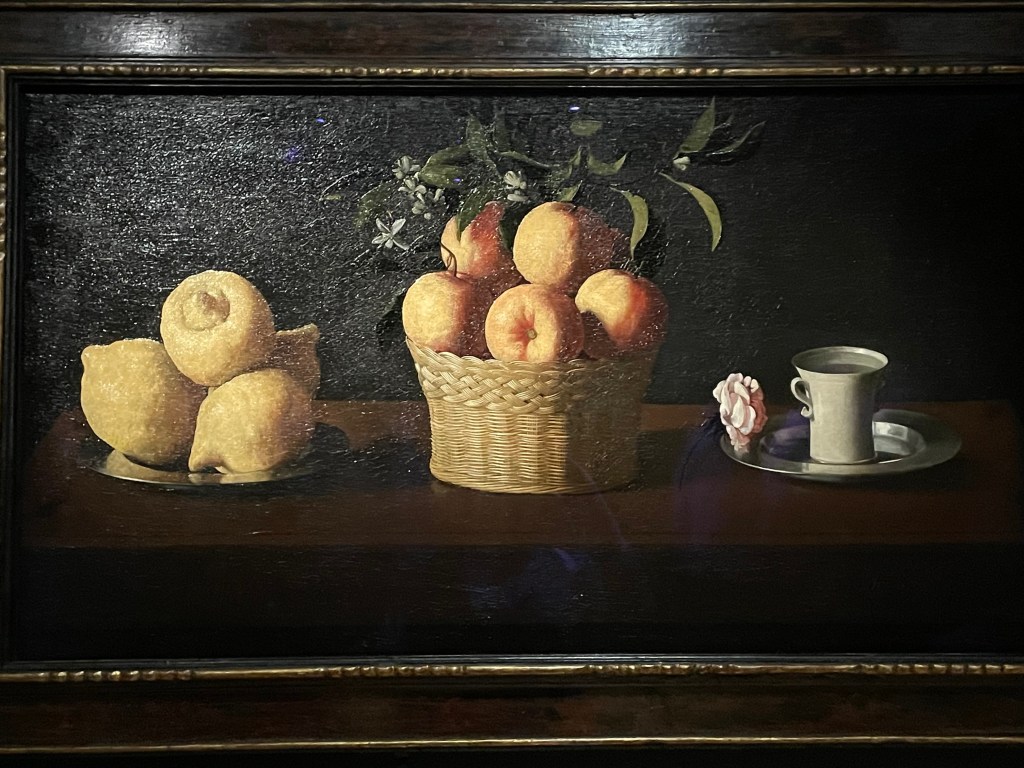
It wasn’t just people that he could paint. One room is filled with very expertly done still life works which are breathtaking in their perfection. Actually, the still life on the left was painted by Zurbarán’s son, Juan de Zurbarán, who died when he was just 29, having shown the same talent as his father. And the still life with the lemons the peaches and the cup on a silver salver shows how clever he was at creating texture.

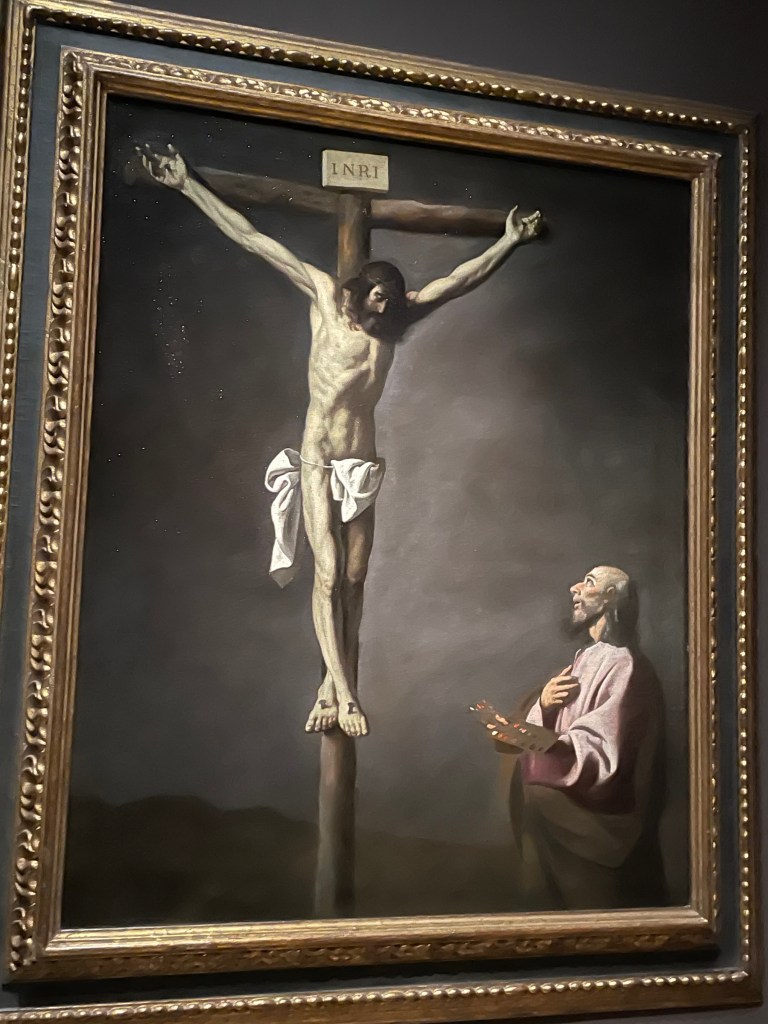
But it’s the spectacular religious works that Zurbarán made which stay with you for a long time. This is a show well worth making time to see.

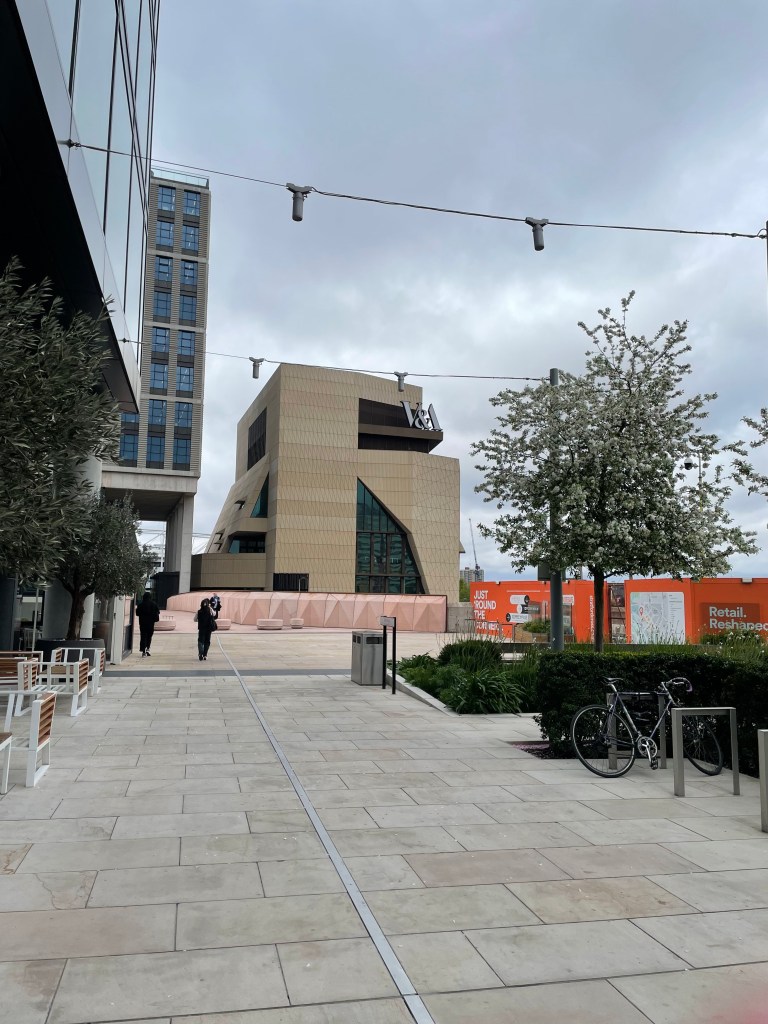
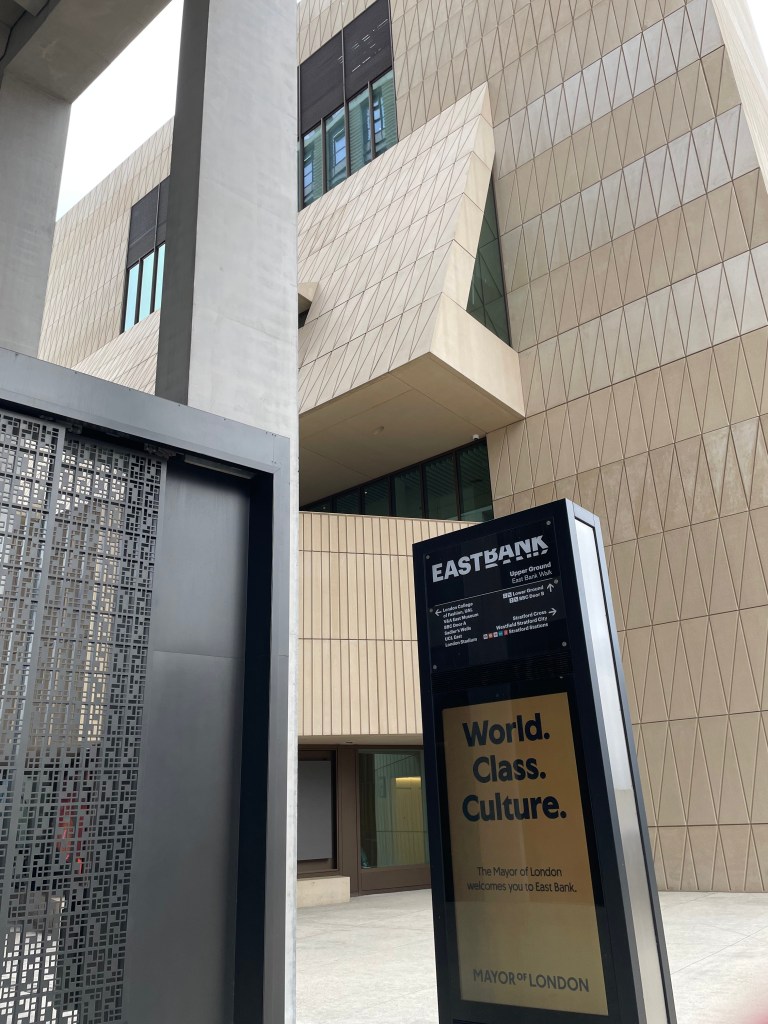
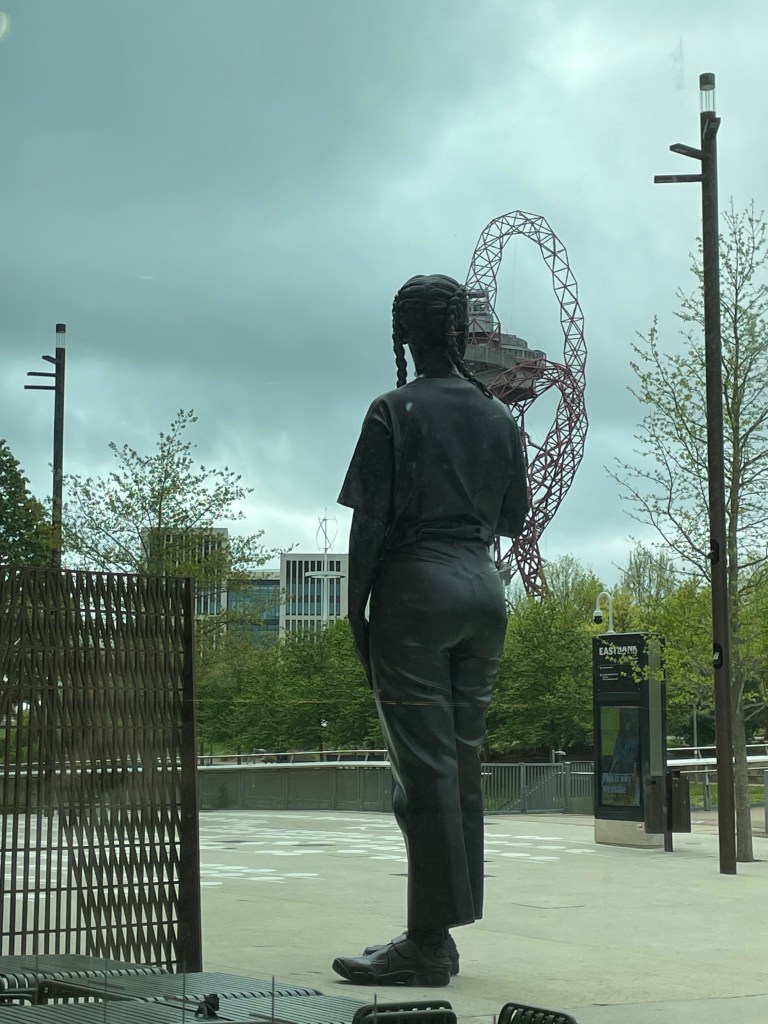
It was so exciting to finally visit the brand new V&A East Museum. This dynamic building now grace sthe East Bank in Queen Elizabeth Park next to UAL, the BBC and Sadlers Wells. And inside is a treasure trove of objects and space for fascinating exhibitions.

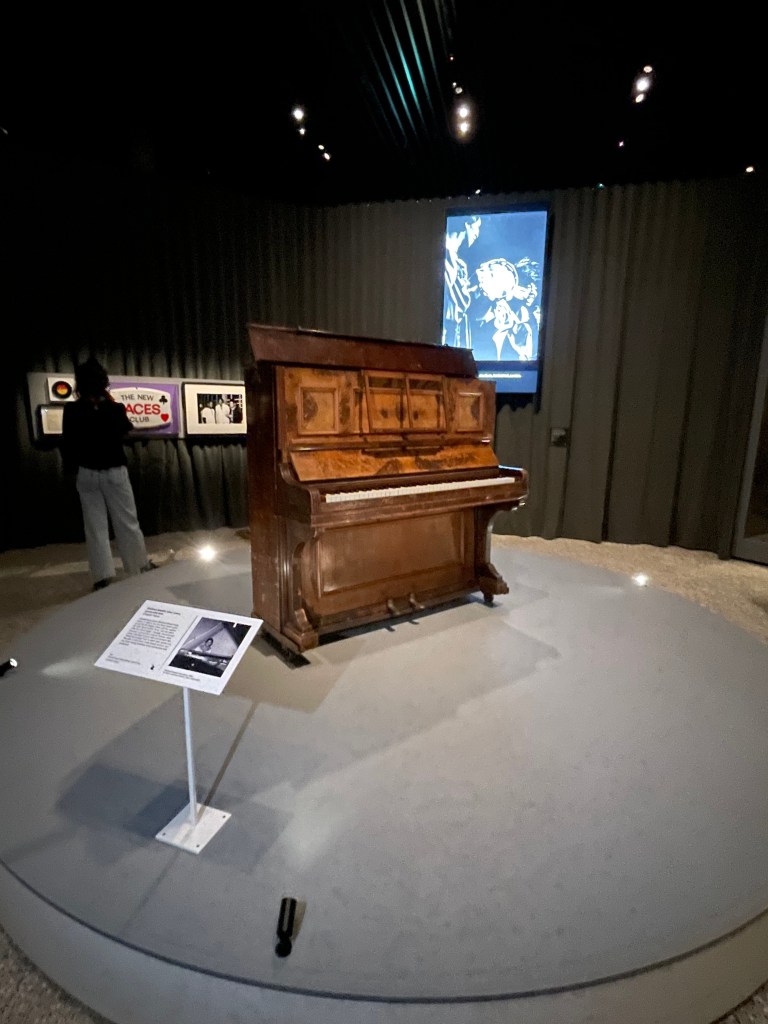
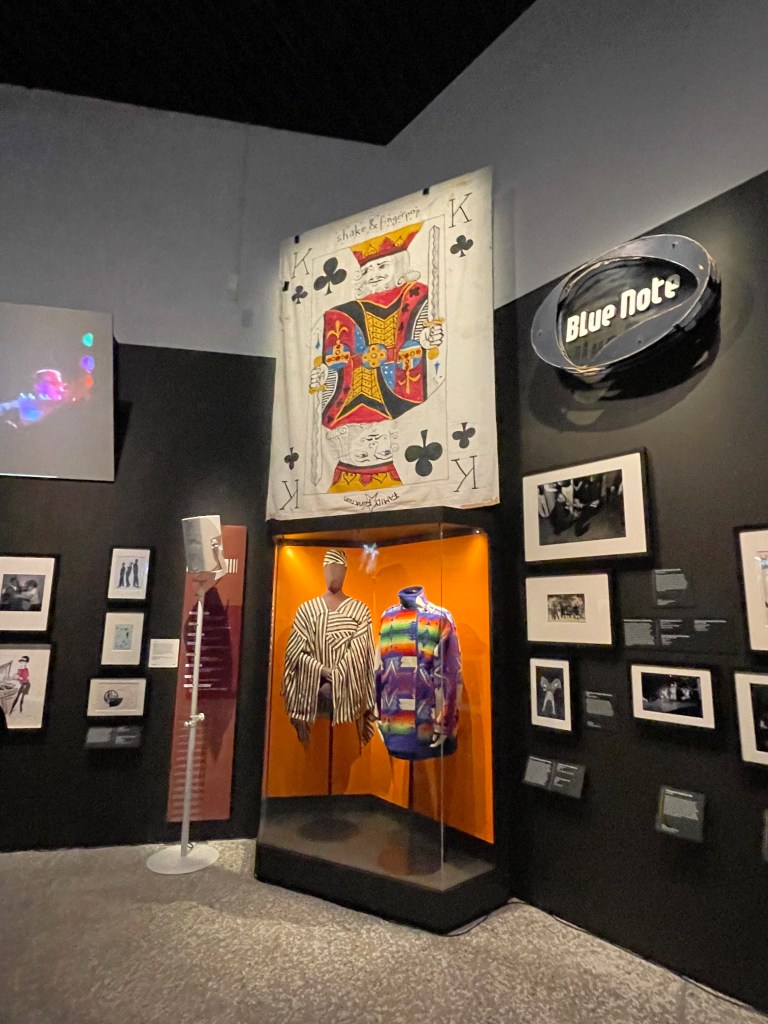
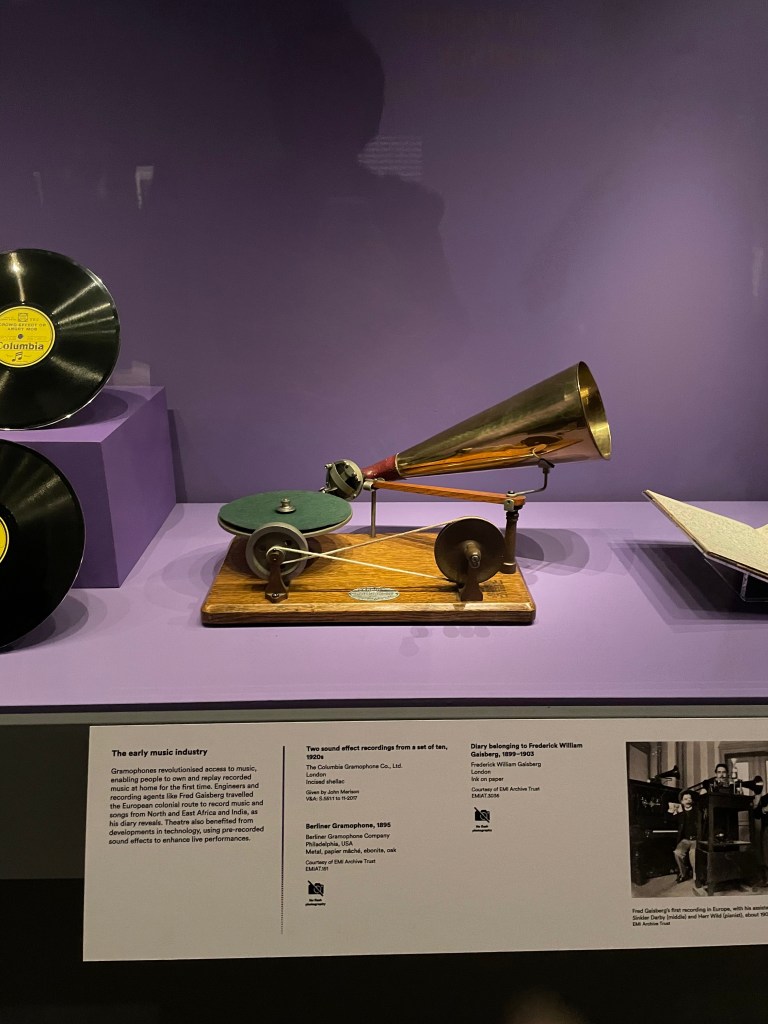
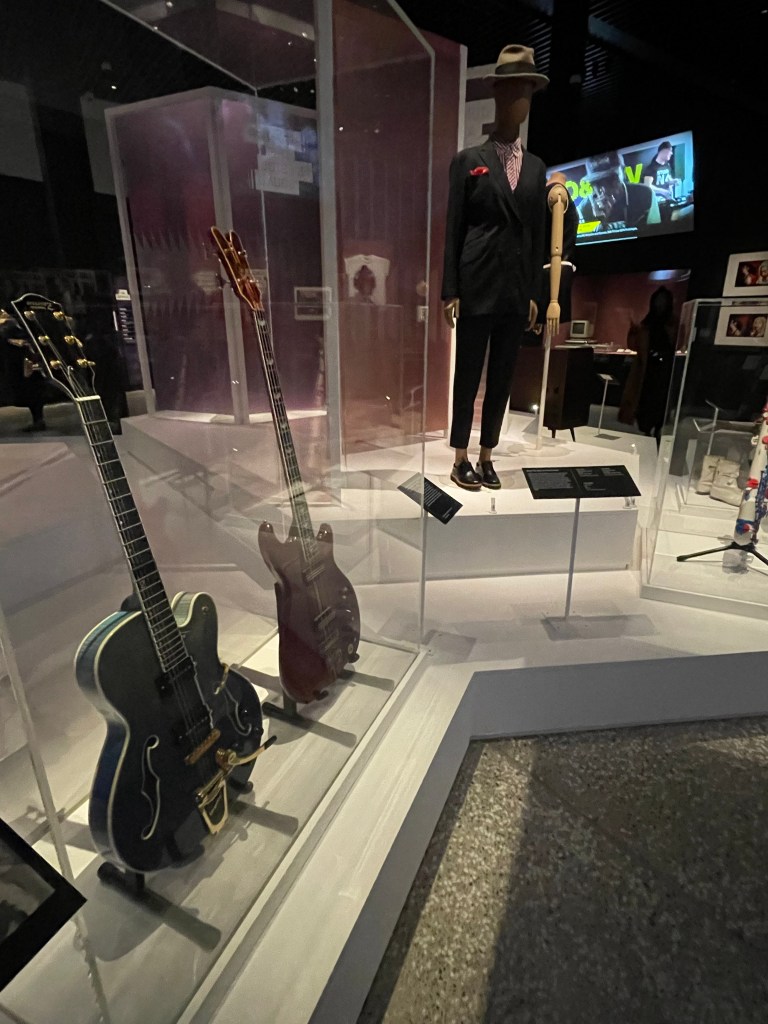
This new museum opens with a major exhibition exploring how Black music has shaped British culture over the last 125 years. The Music is Black: A British Story enhances the display of images, instruments, costumes and technology by giving each visitor a headset. As you move around the rooms and gaze at the exhibits the music changes, reflecting the pieces, people or events you are viewing.

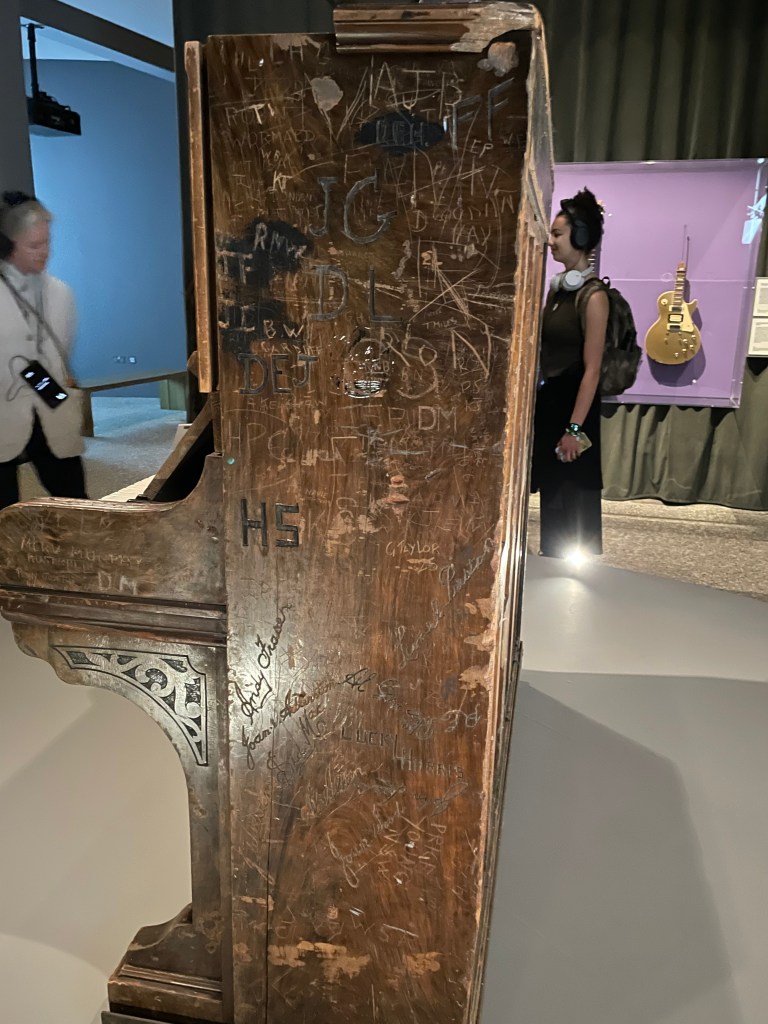
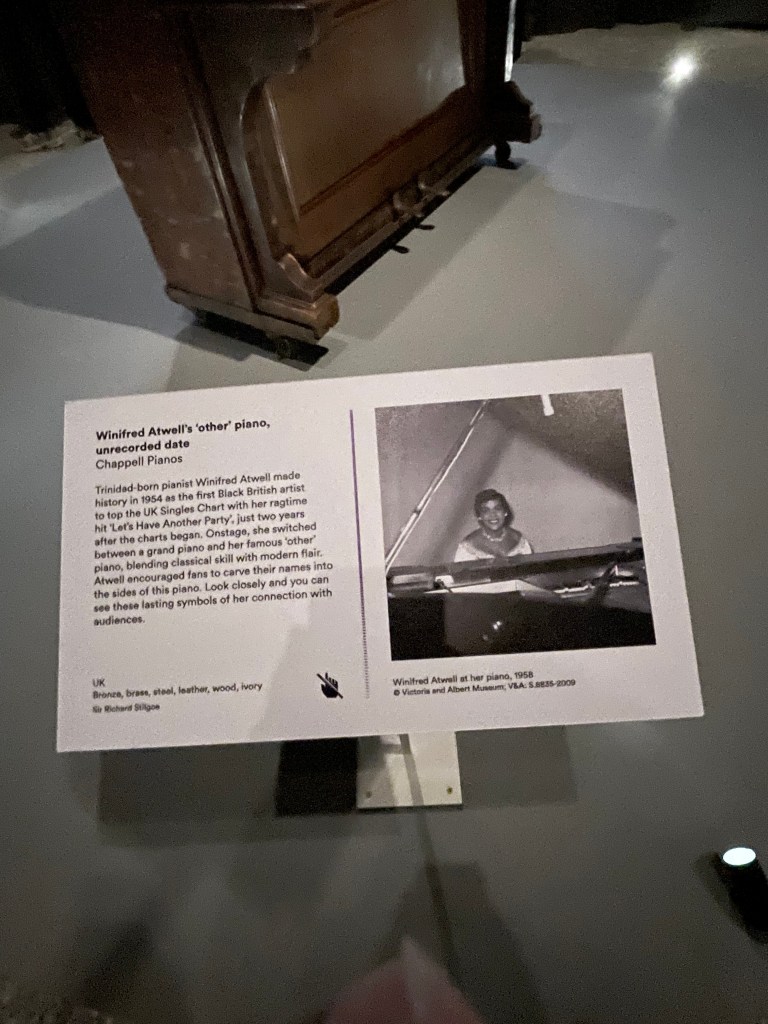
When viewing the battered old piano played with such gusto by Winifred Atwell in that jazzy, honkytonk way, the sound came through the headset.

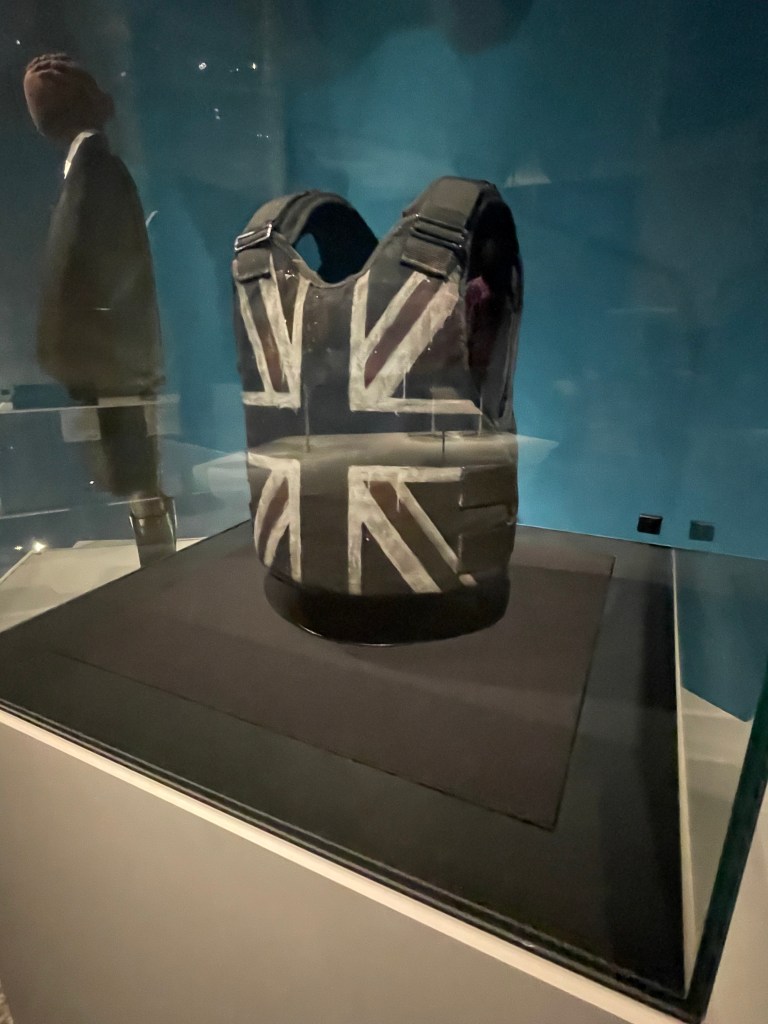
Amazing costumes, iconic outfits, challenging clothing – the style of Black artists is so distinctive. Fun to see the Stormzy stab vest and a clip of his performance at Glastonbury in 2019.

From the origins of Jazz to more recent genres such as garage and grime, the look and sound is celebrated. The exhibition doesn’t shy away from the issues Black artists have experienced with race and and the battles they have endured to convey their message and sound within the UK.

The new museum opens on Saturday 18th April. I do recommend you combine a trip there with a visit to the V&A warehouse which is just a few minutes’ walk away across the Olympic Park. The Stratford destination is very easy to reach with so many transport systems to take you there. Definitely a place to check out.

The magnificent Elsa Schiaparelli is having a well-deserved moment at the Victoria and Albert Museum. Working from the 1920s -50s, she was really an artist who found her way into clothes designing – and what a legacy that produced. This show, Fashion becomes Art is a fitting tribute to her astounding contribution to 20th century fashion.

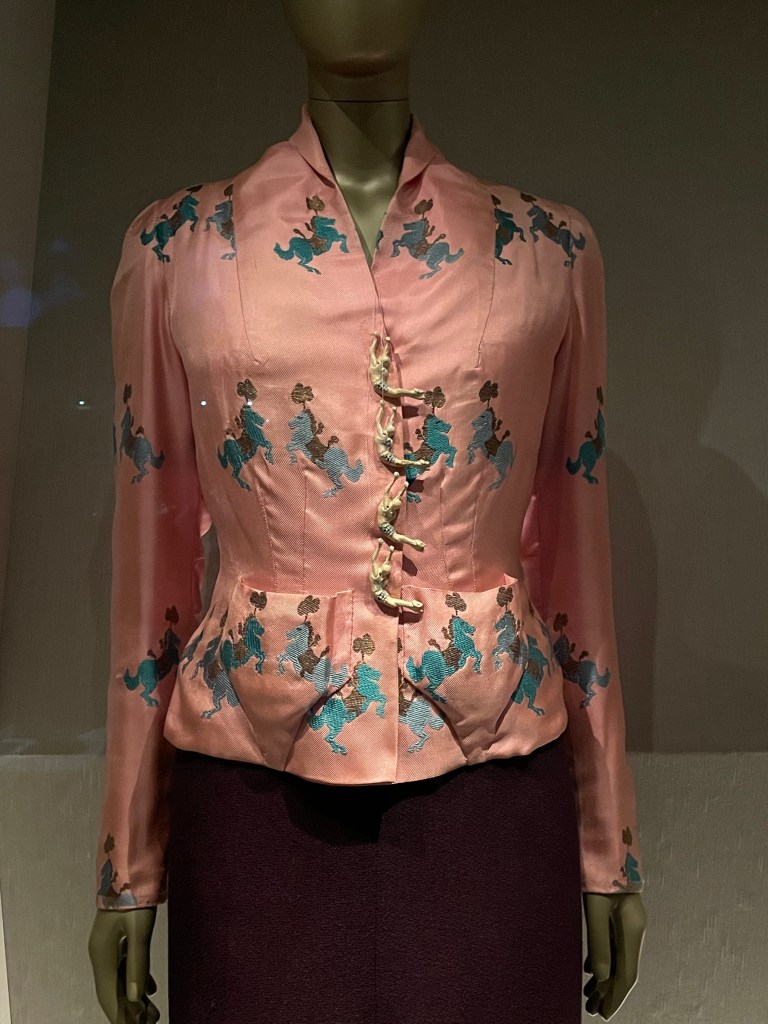
Above is just one example of Schiaparelli’s imaginative and playful approach to clothing. This jacket from 1938 features prancing circus horses printed on silk twill and the ‘buttons’ are enchanting little acrobats. Just brilliant. And the sort of thing any of us would love to wear today.

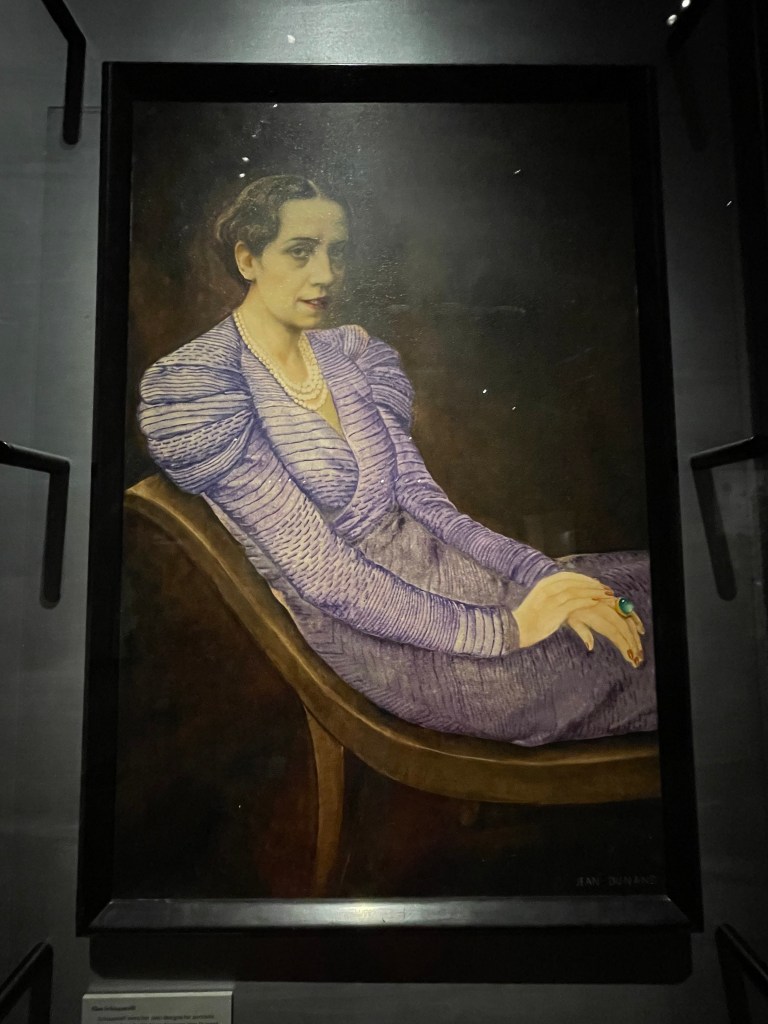
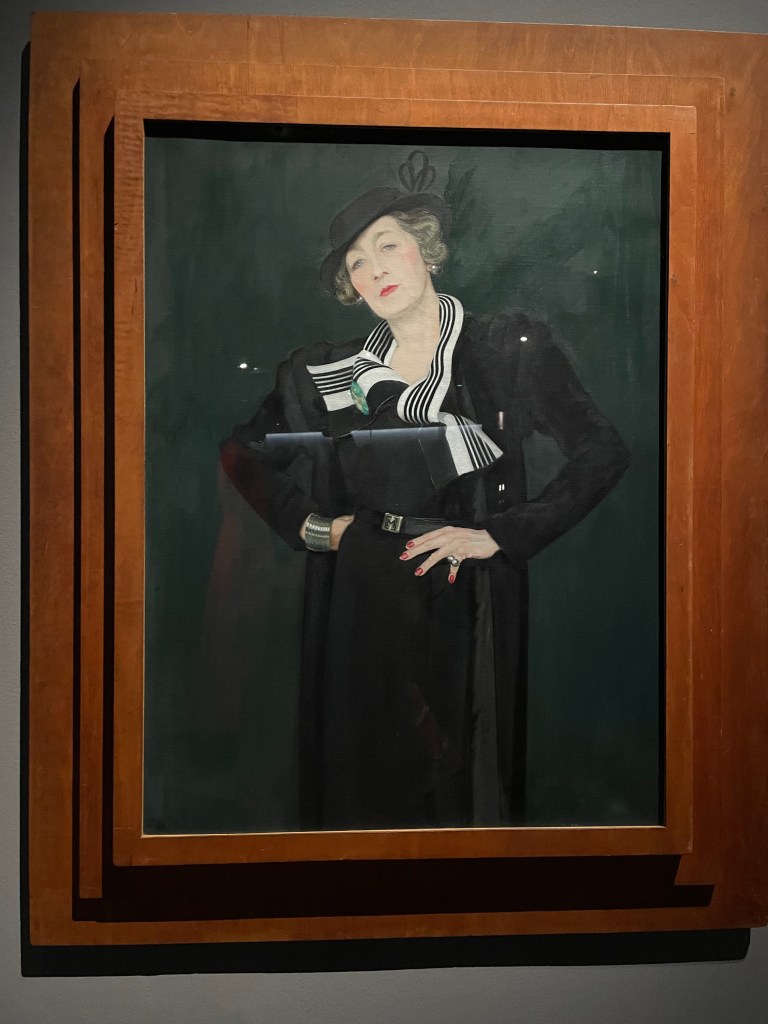
Here’s a portrait of Elsa wearing one of her own designs and looking so very elegant in 1930s chic. She was primarily an artist and knew many of the important artists of the day – Dali, Picasso and Jean Cocteau, Man Ray and Cecil Beaton.

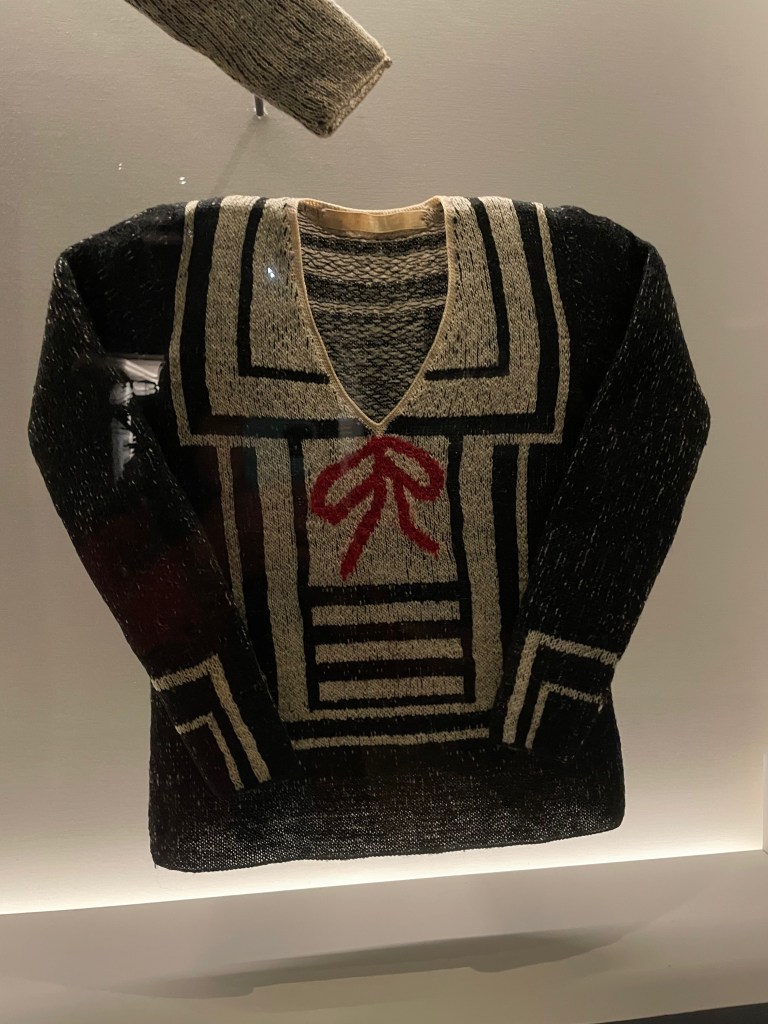
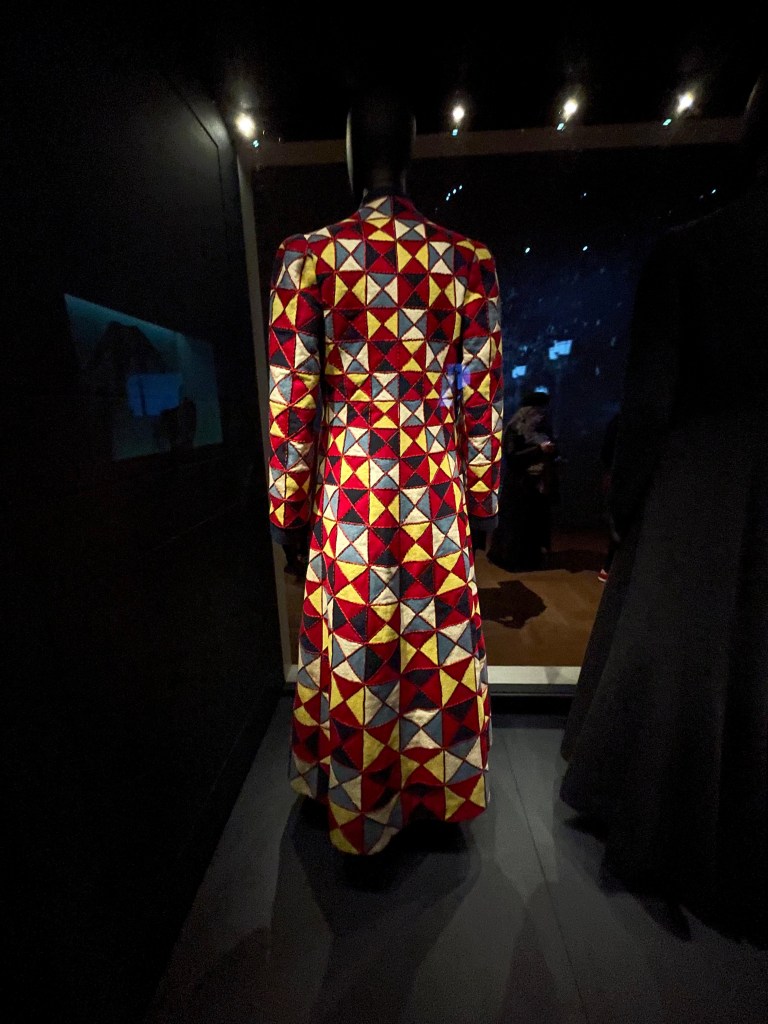
Above is an early foray into clothing where Schiaparelli created a knitted sweater with the design incorporated into the knit – revolutionary at the time. And on the right is an extraordinary coat made in patchwork style with so much hand-stitching. Must have been glorious to wear.

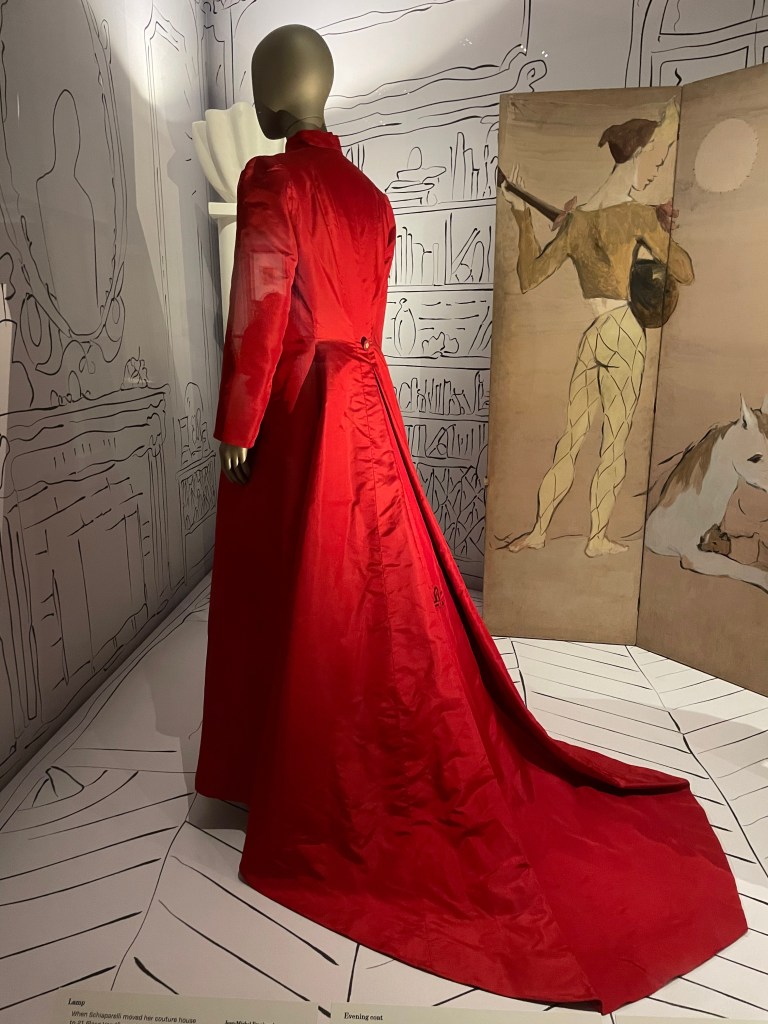
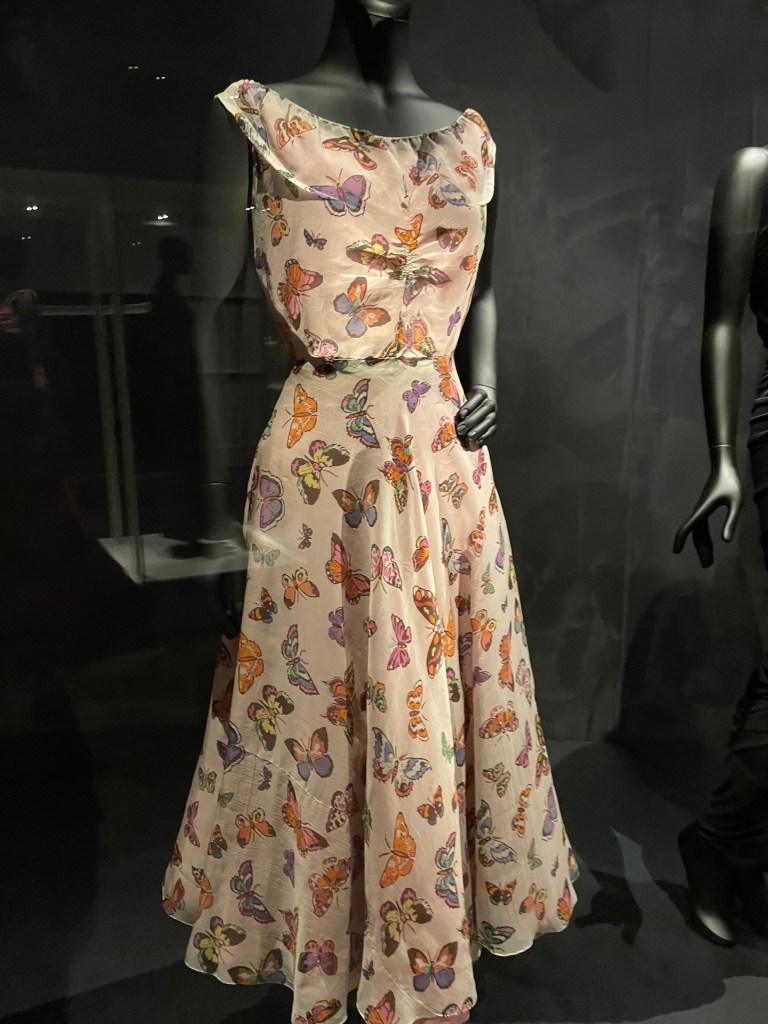
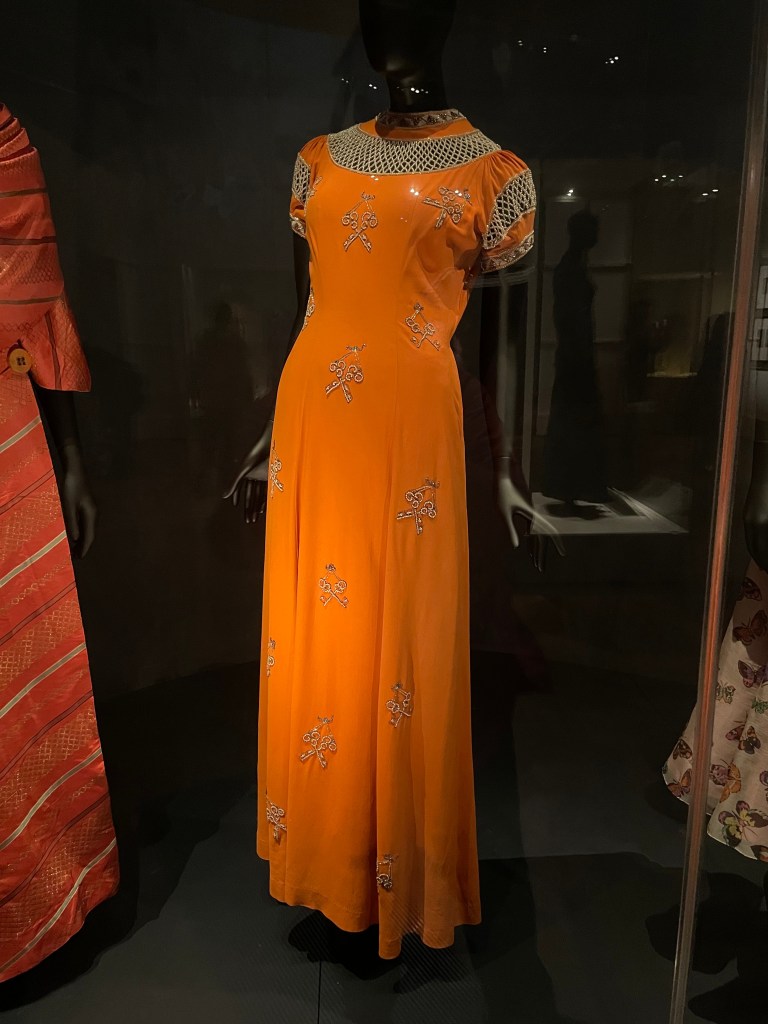
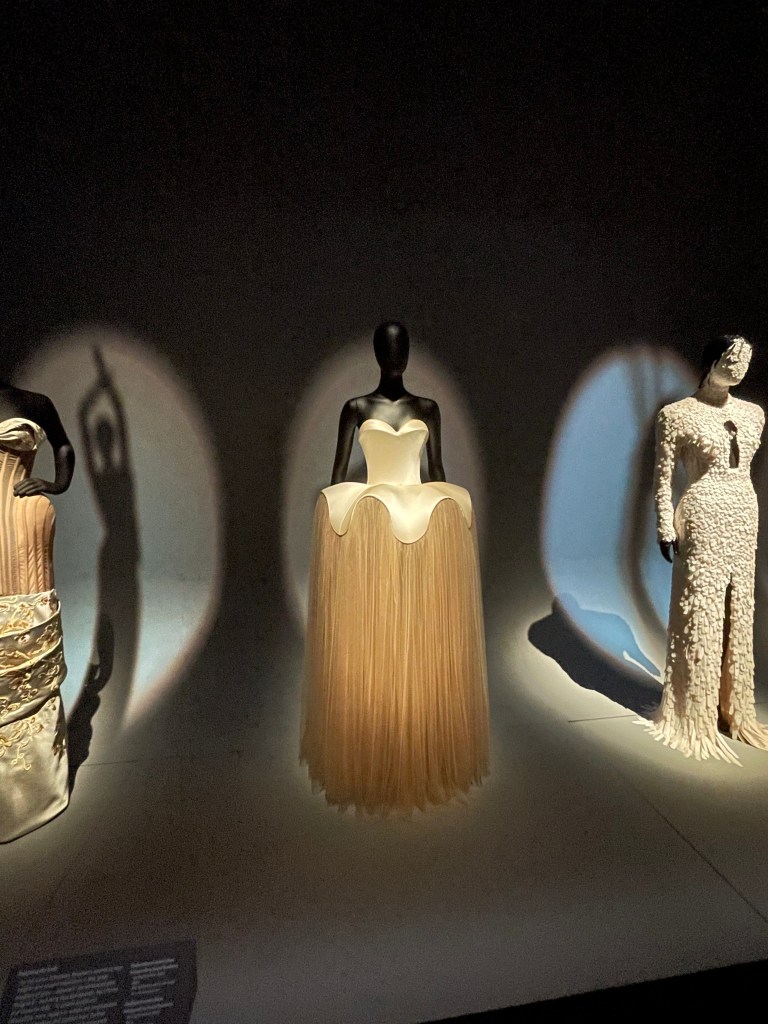
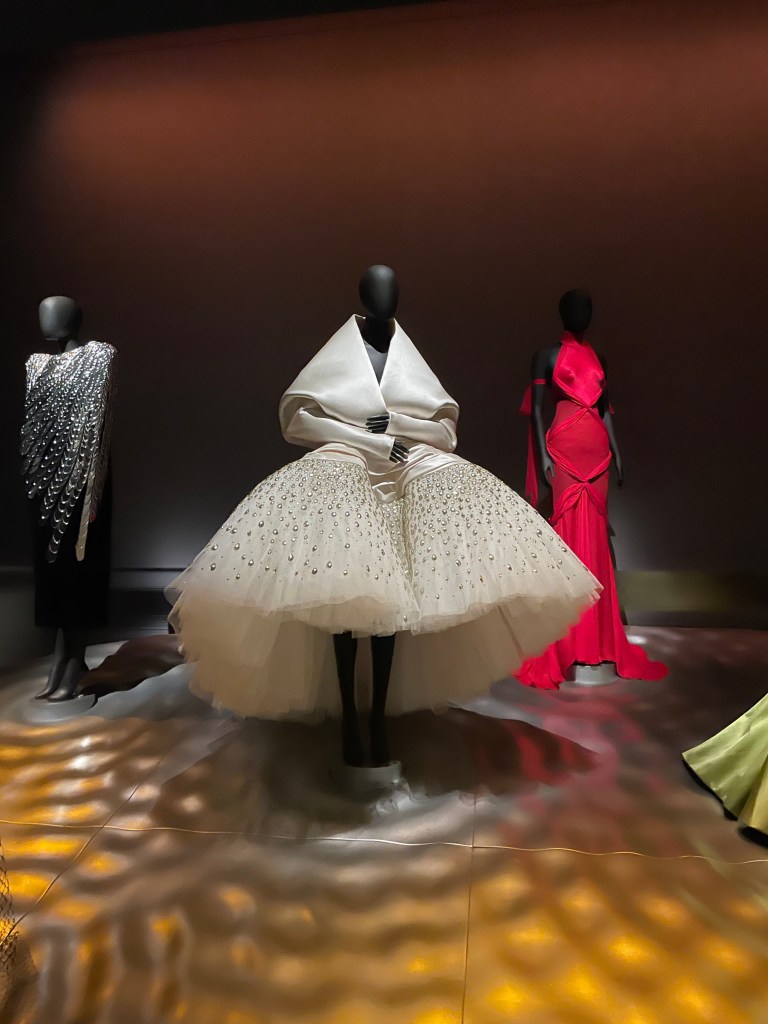
Lovely dresses and a very glamorous evening coat. I first encountered the name of Schiaparelli when I read The Girls of Slender Means by Muriel Spark when I was a teenager. I really related to the giddy girls in their London boarding house who had little money but plenty of ambition. And, for important dates, they took turns to wear the precious Schiaparelli dress to impress their would-be boyfriends.

I love this portrait of Lady Mount Temple painted by Gluck. You would not mess with her when she’s wearing that suit.
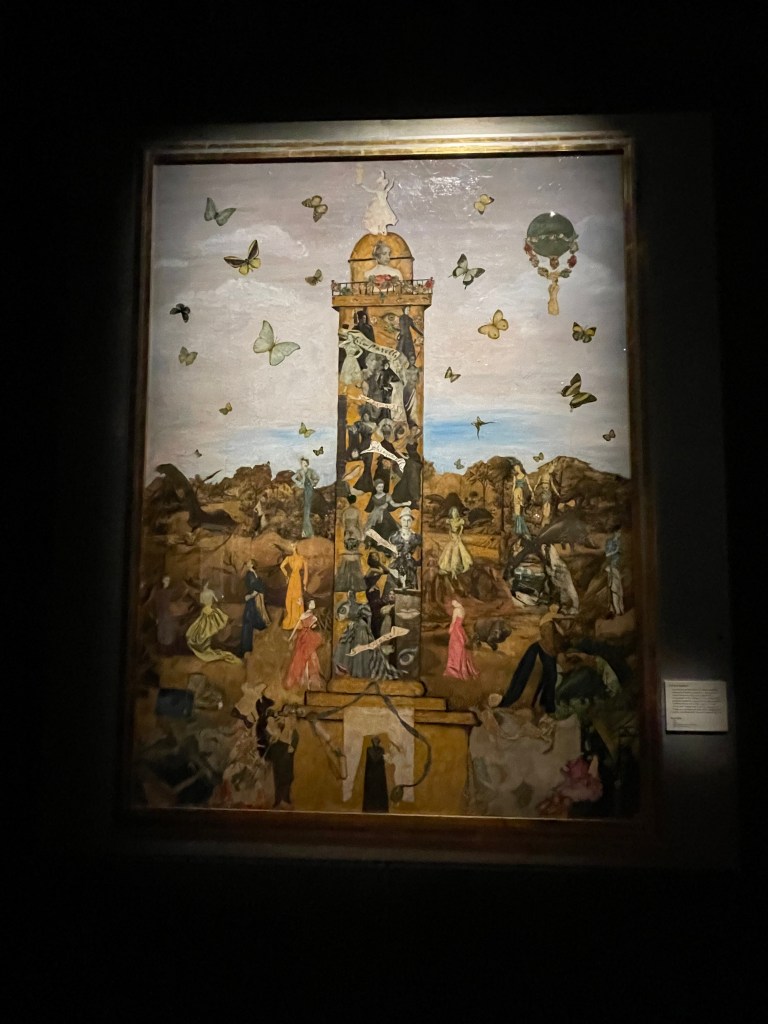
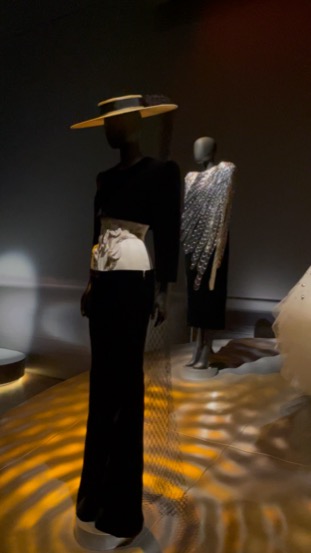
This picture is quite hard to read because the lighting is very dark in this exhibition but it’s a huge collage of images of the dresses created in a gloriously playful way. And of course it always interests me to see an artwork involving paper in a show!

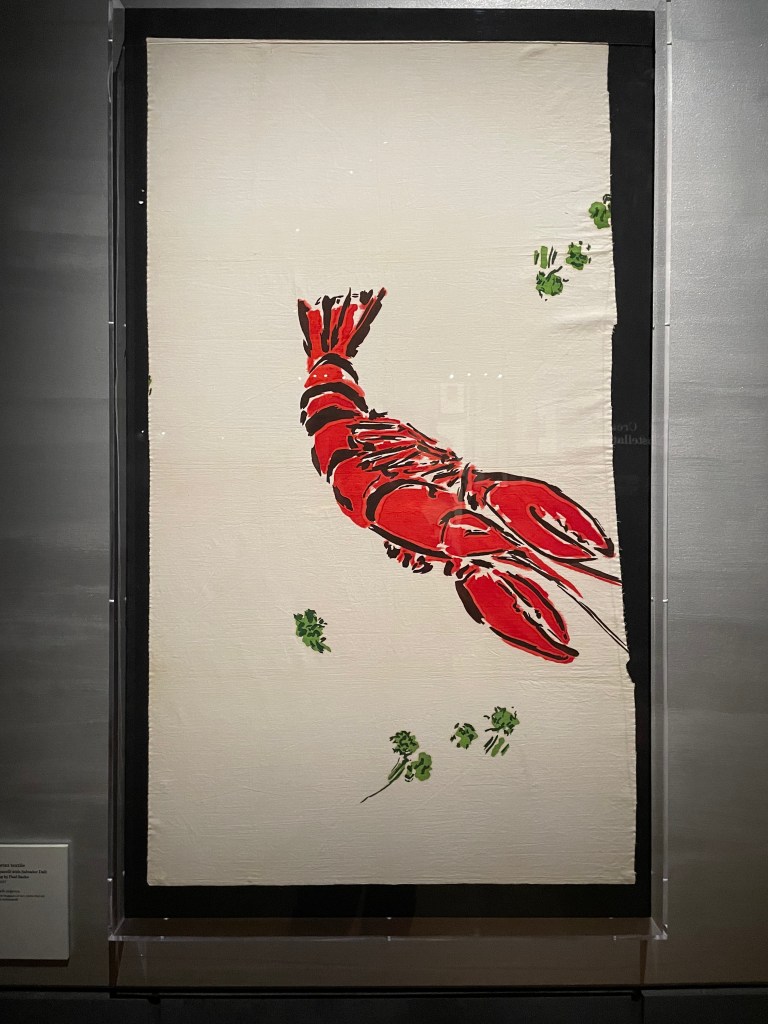
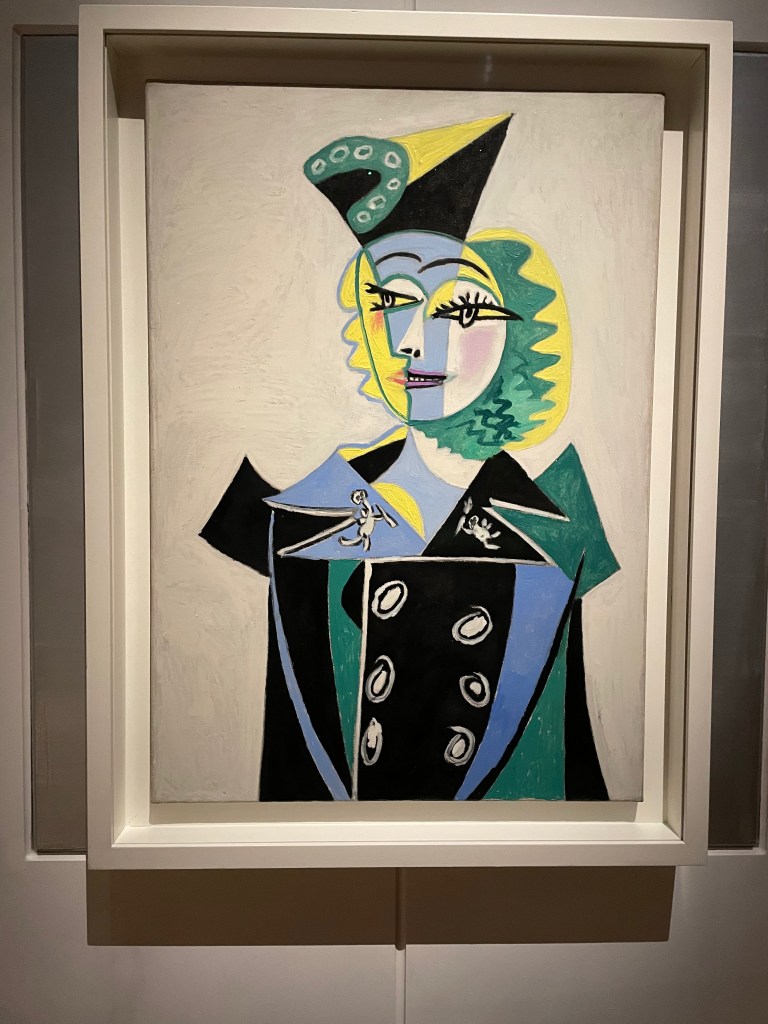
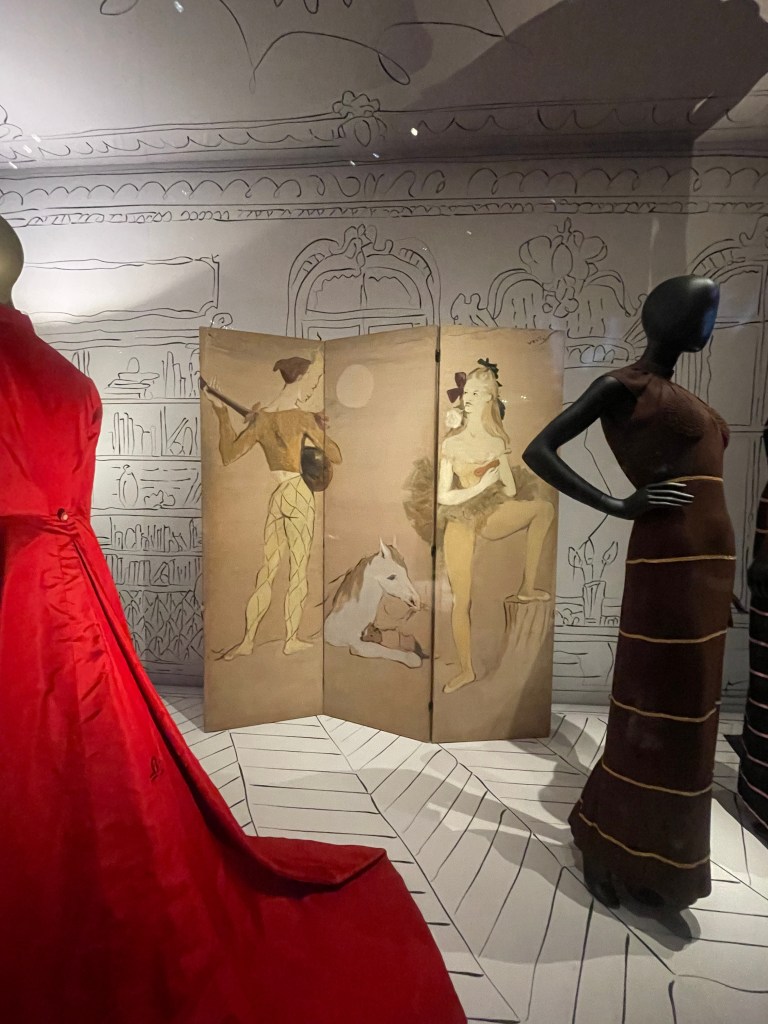
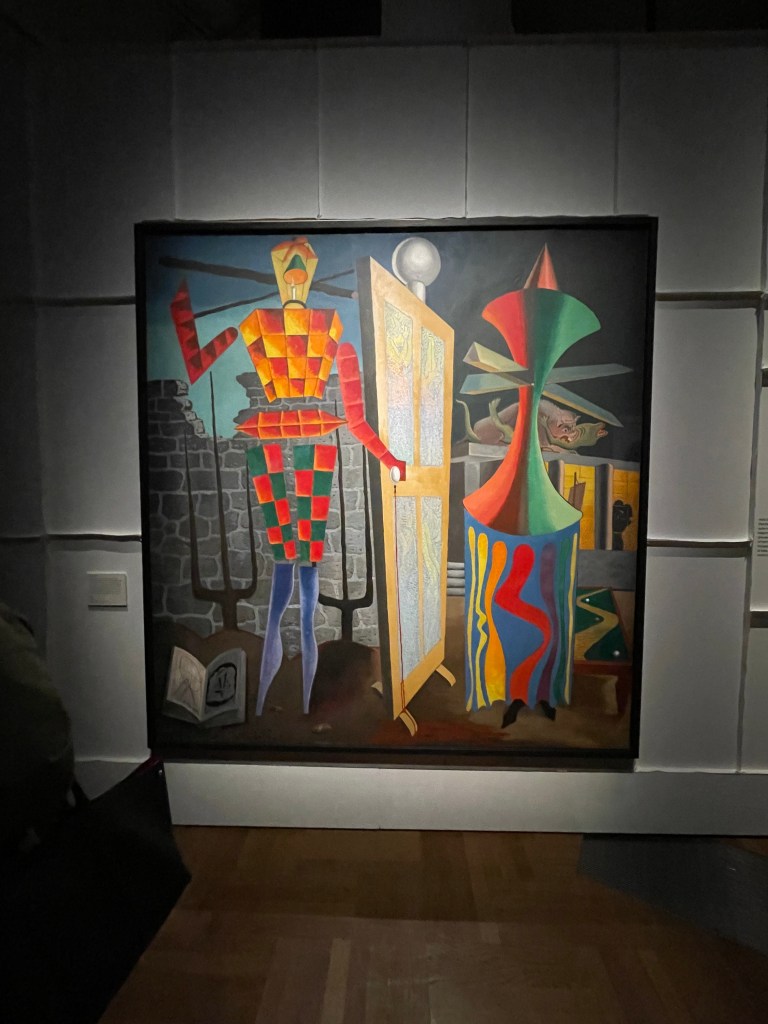
There’s a lot of art in the show too. At the top is a lobster print textile created with Salvador Dali from 1937, there’s a Picasso portrait and I loved the painted screen created with artist Marcel Vertès which depicts Commedia dell’arte characters. And below is painting by Man Ray called Fair Weather featuring a mannequin with a colourful diamond pattern, painted in 1939, just as war was approaching.

And although Elsa Schiaparelli died in 1973 her name and design house lives on under the direction of Daniel Roseberry who has been creative director Maison Schiaparelli since 2019. If you want to cut a dash on the red carpet or at a spectacular ball then this is the place to go for your outfit!

The show is on until 8th November 2026.

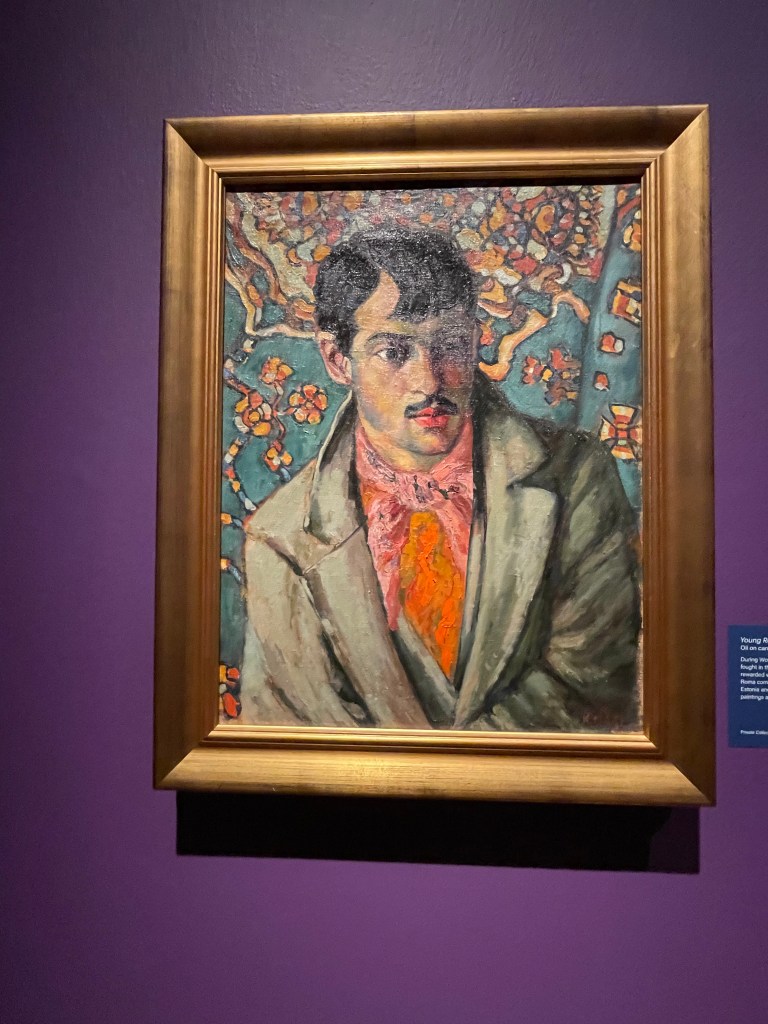
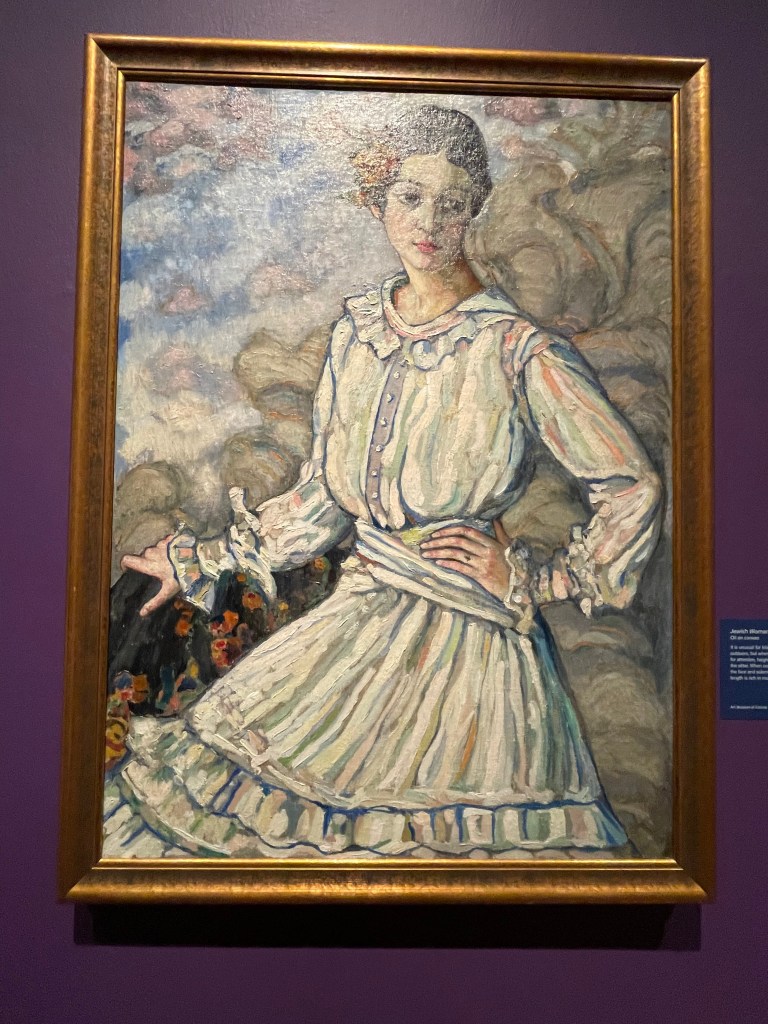
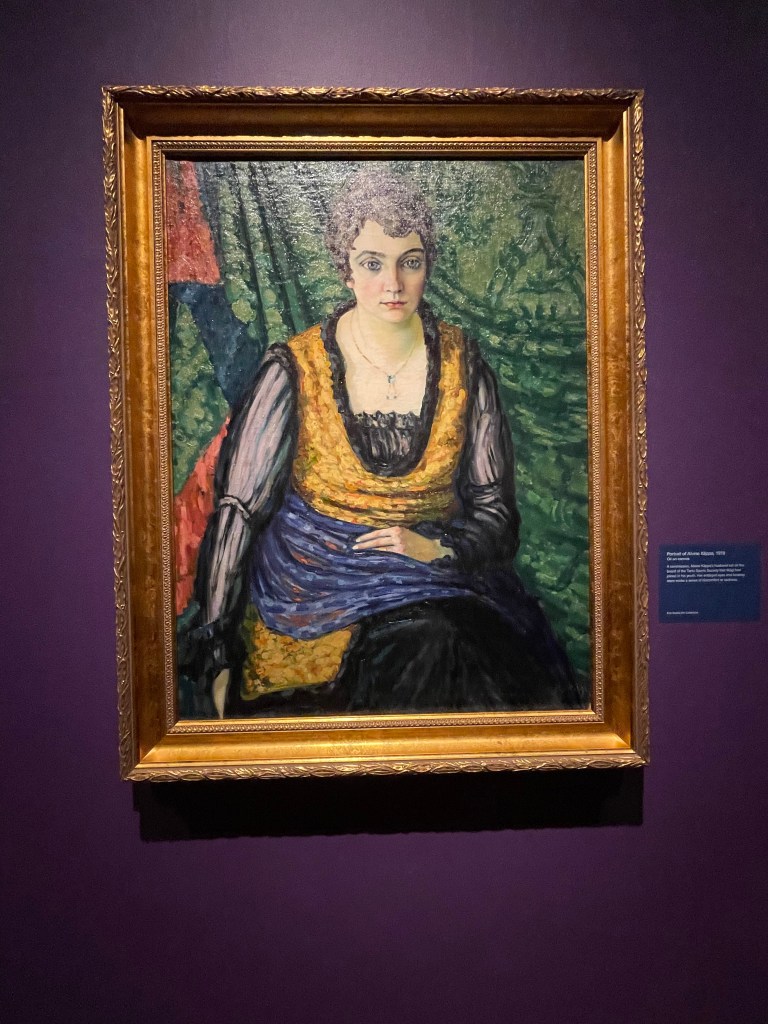
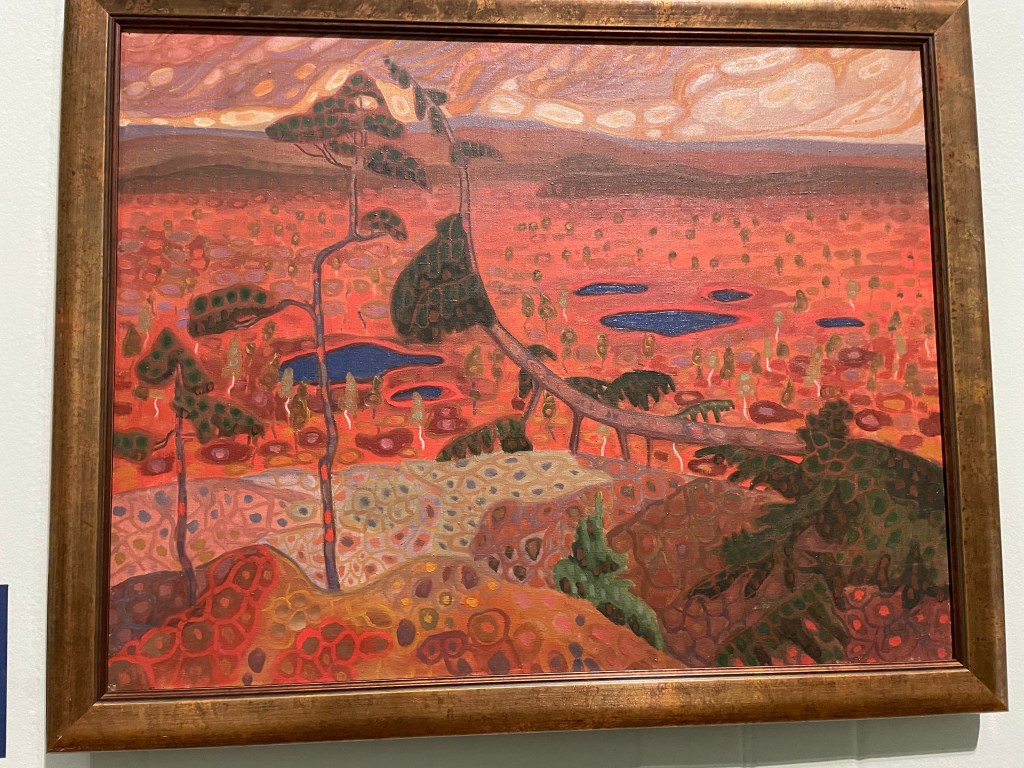
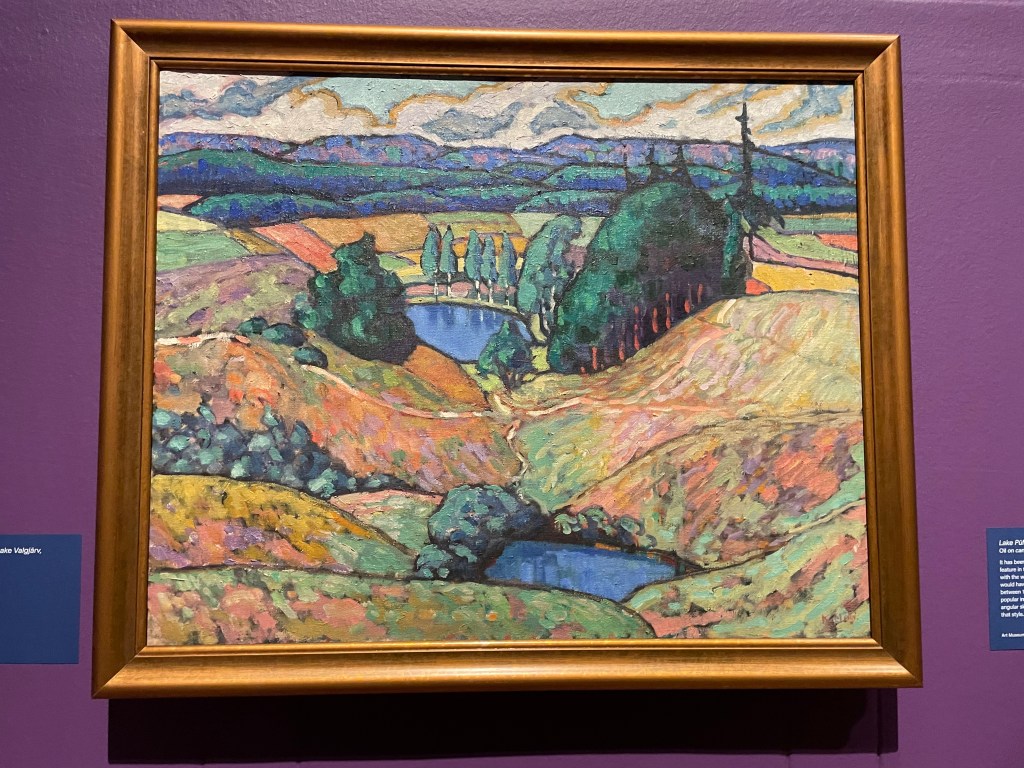
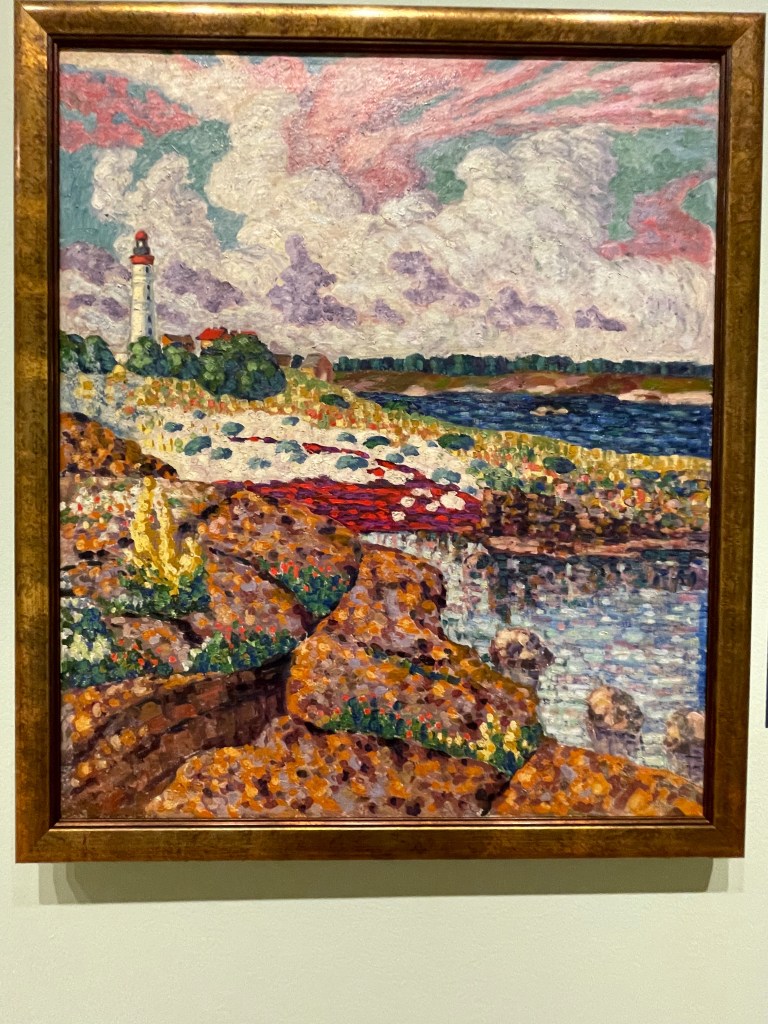
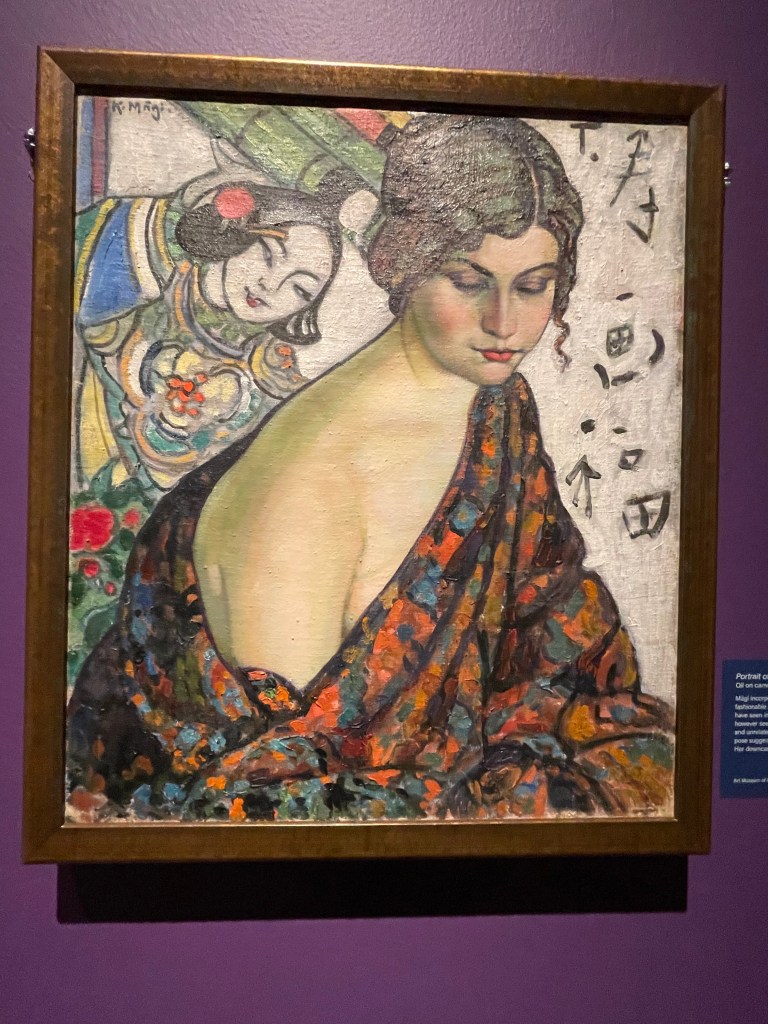
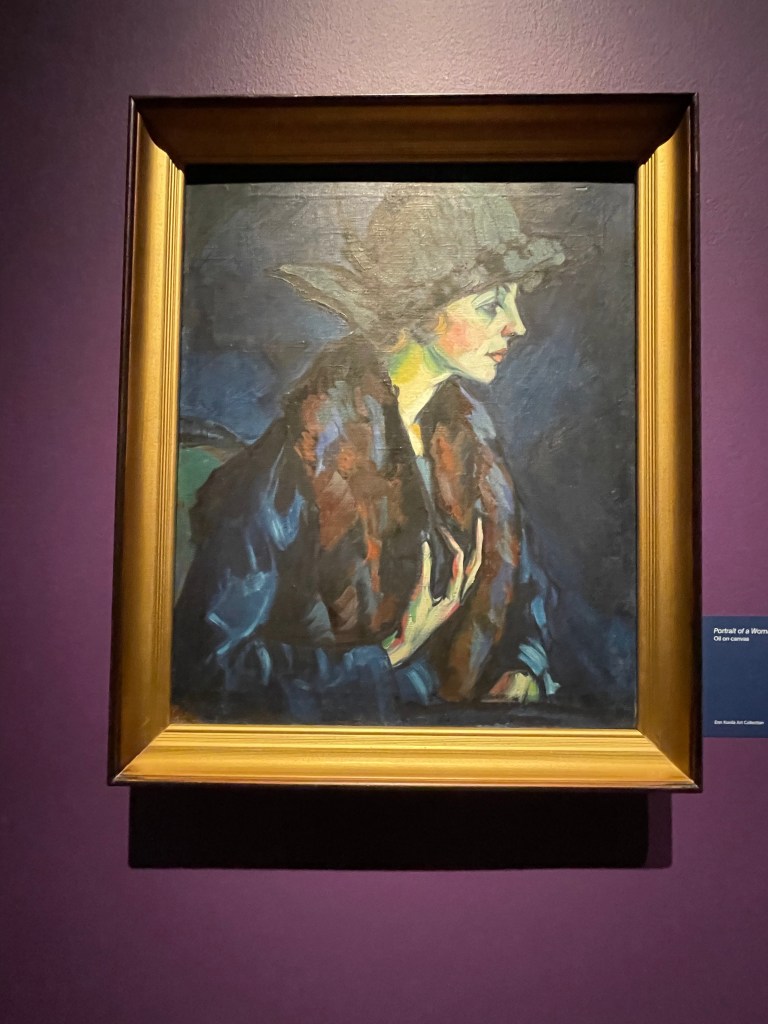
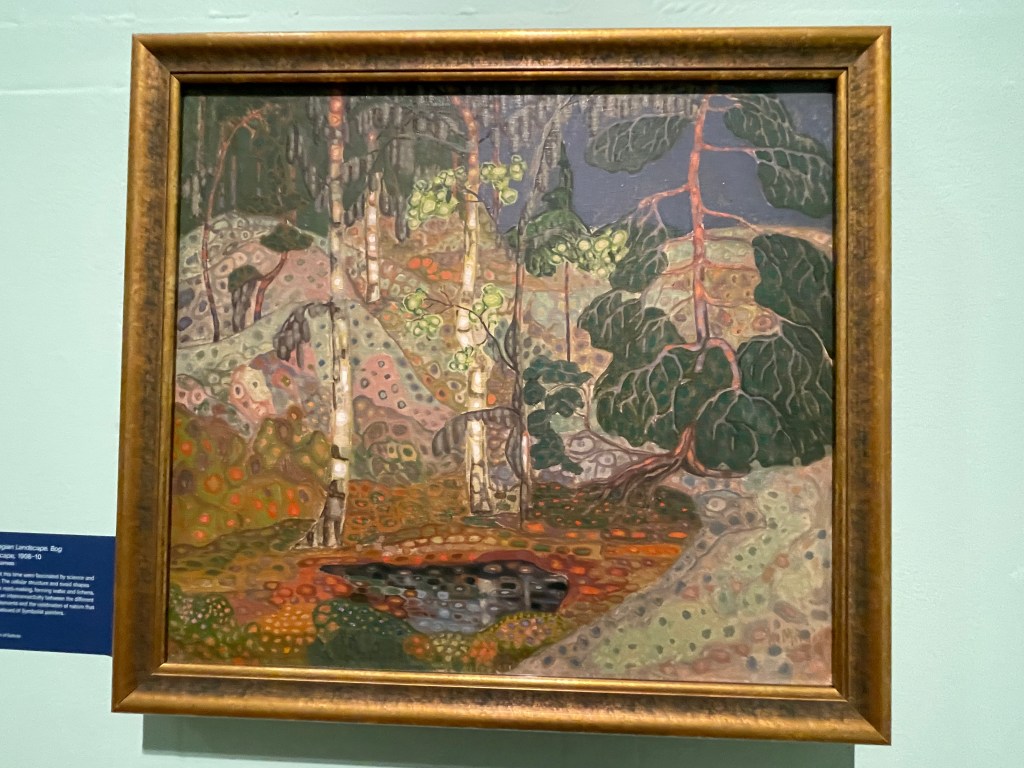
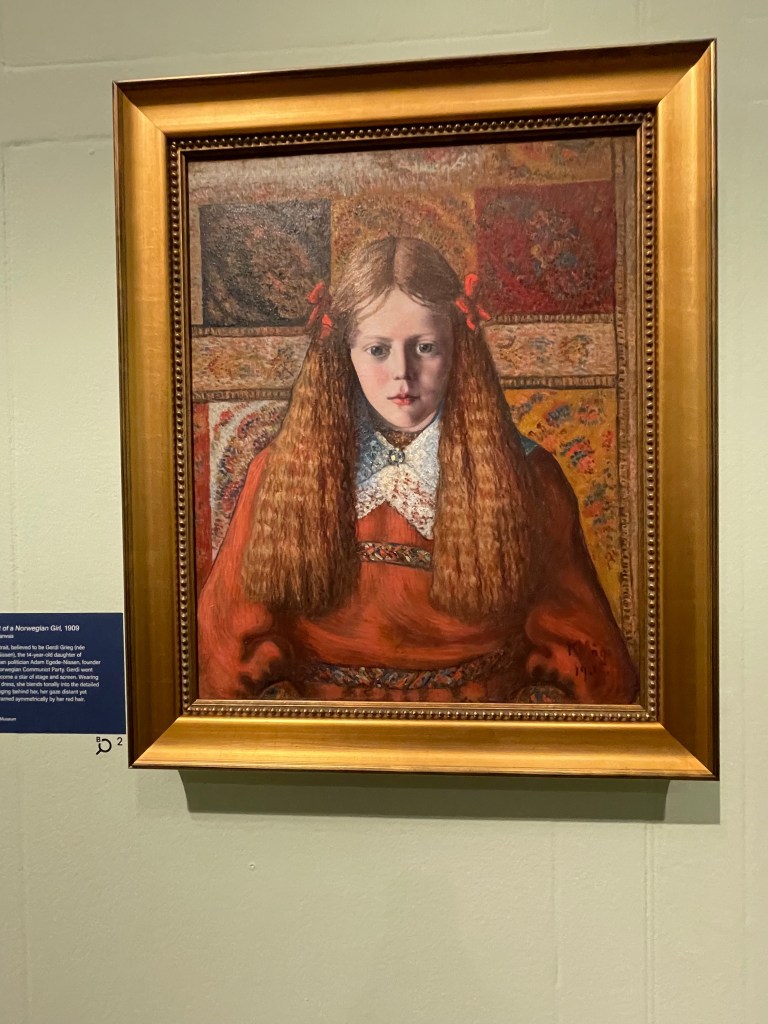
Very interesting to see the work of Konrad Mägi, a ‘master of European modernism’ at the charming Dulwich Picture Gallery. An Estonian artist who embraced bold colour, striking compositions and a very different kind of expressionism in his lively landscapes and portraits.

I liked the portraits. They were all painted with strong blocks of colour and daubs of paint. The subjects all have a rather faraway look, not quite gazing at us but at some imagined object or deep in thought.
Likewise, the visionary landscapes are filled with colours jostling in a large-scale pointillist style and strong outlines done with broad brushstrokes. His paintings project a very individual form of surrealism and an evolution of the ‘fauvists’ which preceded him. There’s more calculation involved with these works. Most of the scenes are views of Norwegian countryside, where Mägi lived between 1908 -10.

Mägi was a very successful artist in his lifetime 1878-1925. He died at just 46 and, given he was only working for sixteen years, this exhibition presents an impressive impression of his output. You certainly get the idea that you are seeing a modernist style taking its place just as European art was evolving into something much more abstract.

The show is on at the Dulwich Picture Gallery until 12th July 2026.

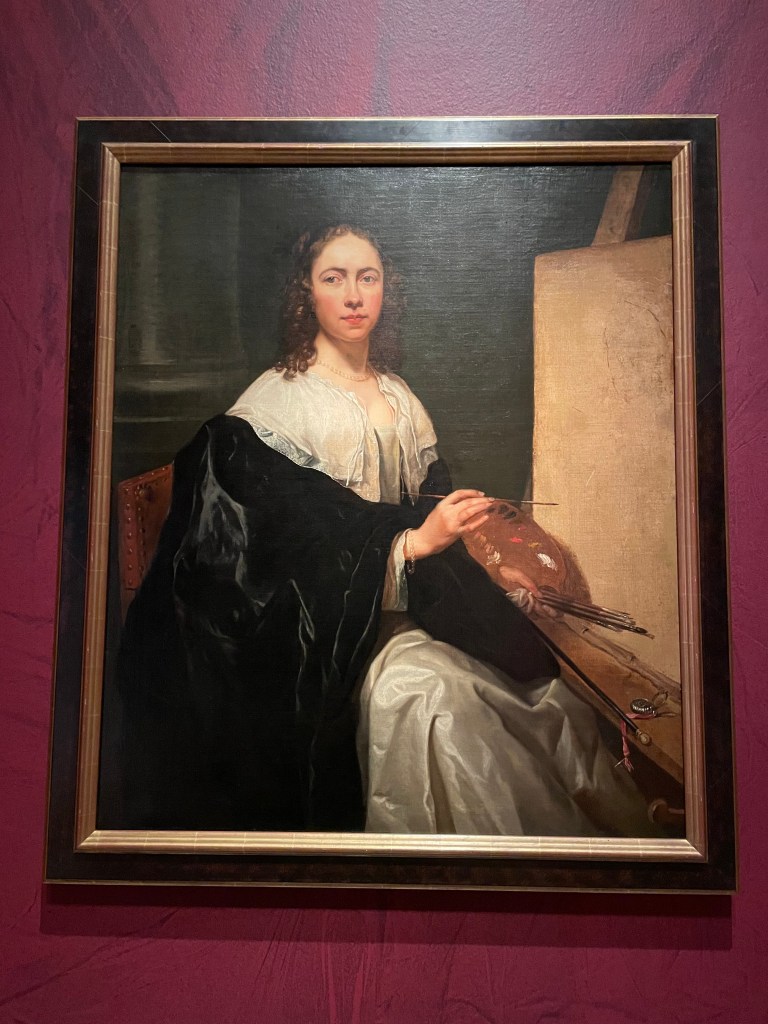
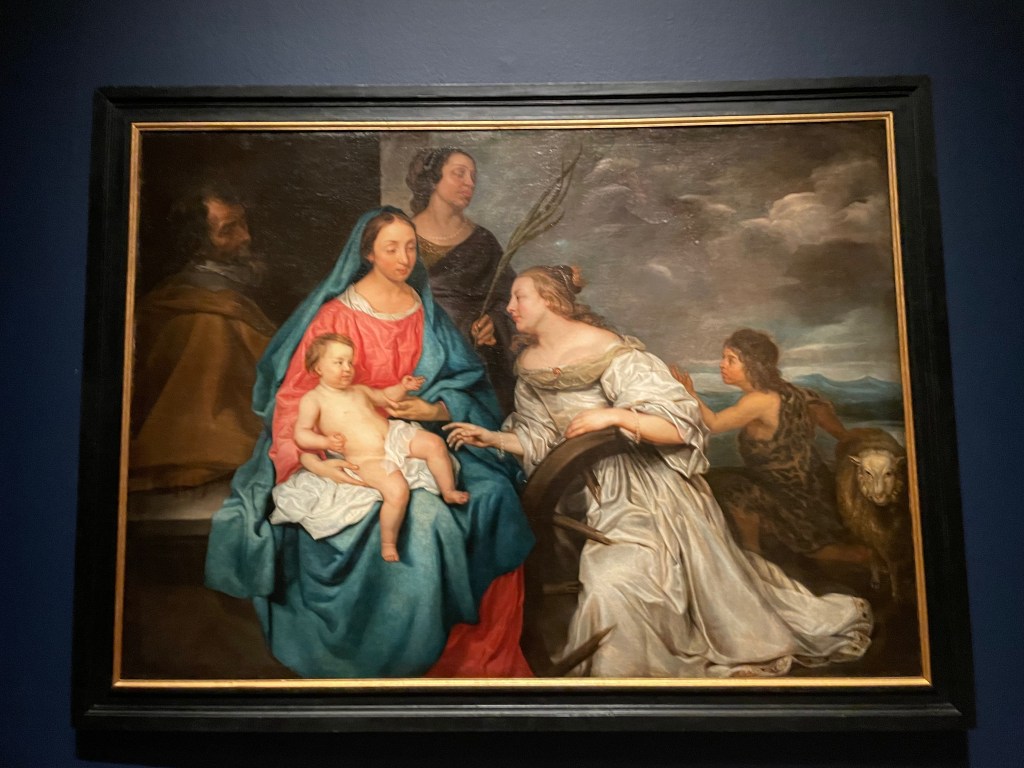
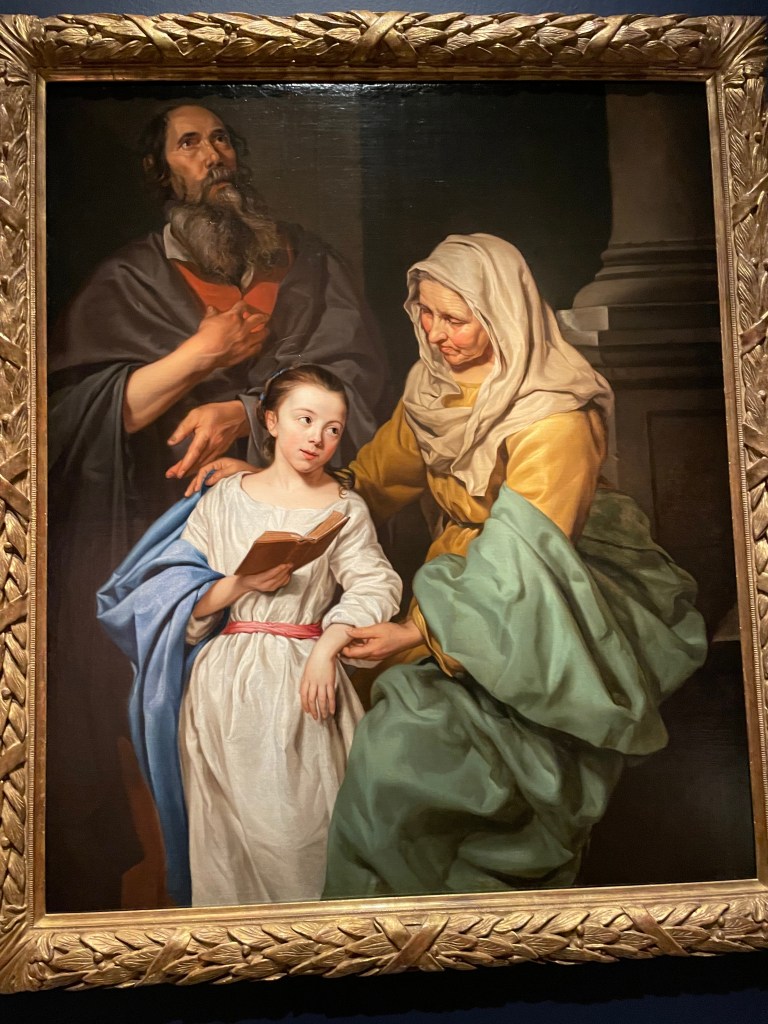
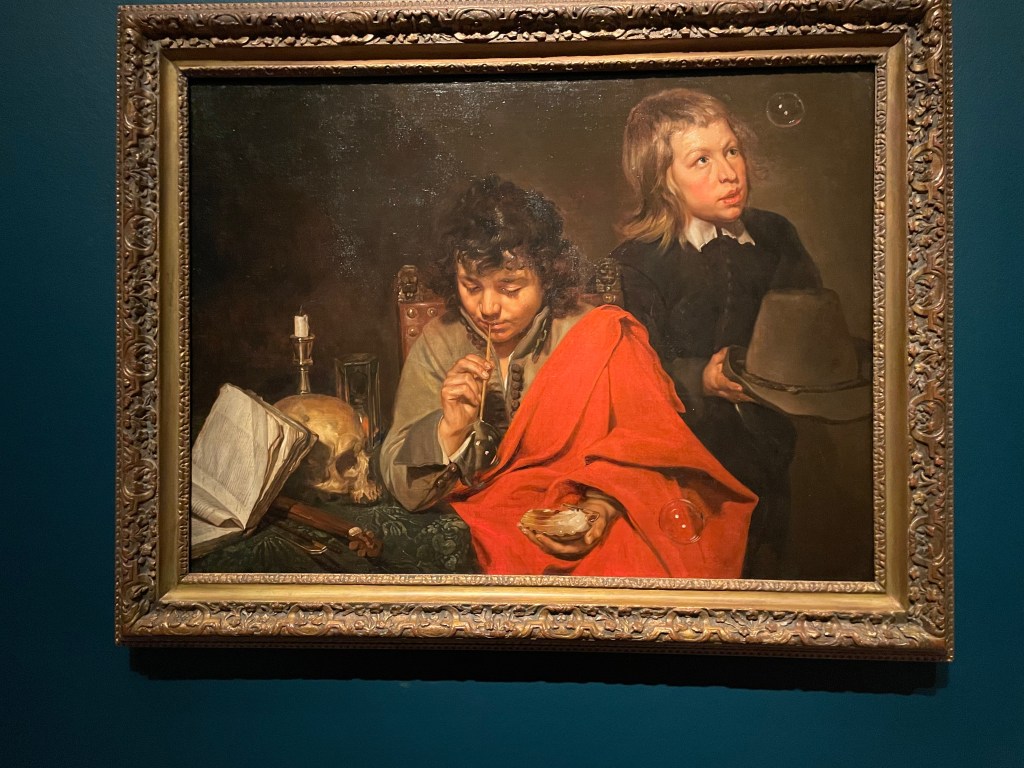
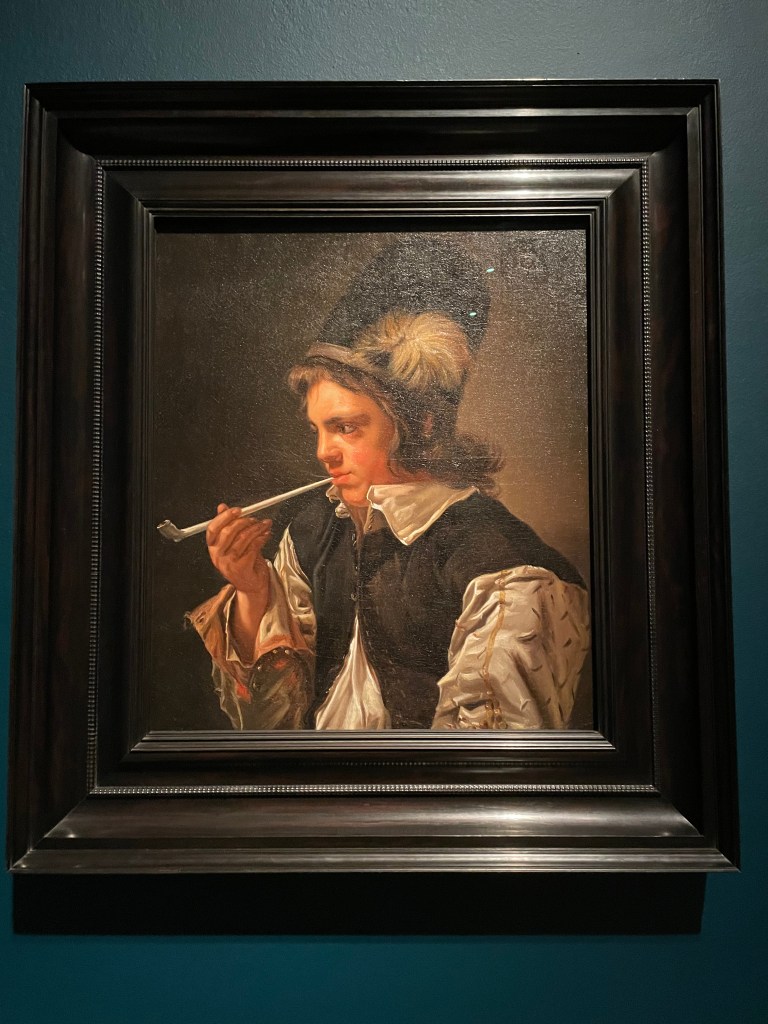
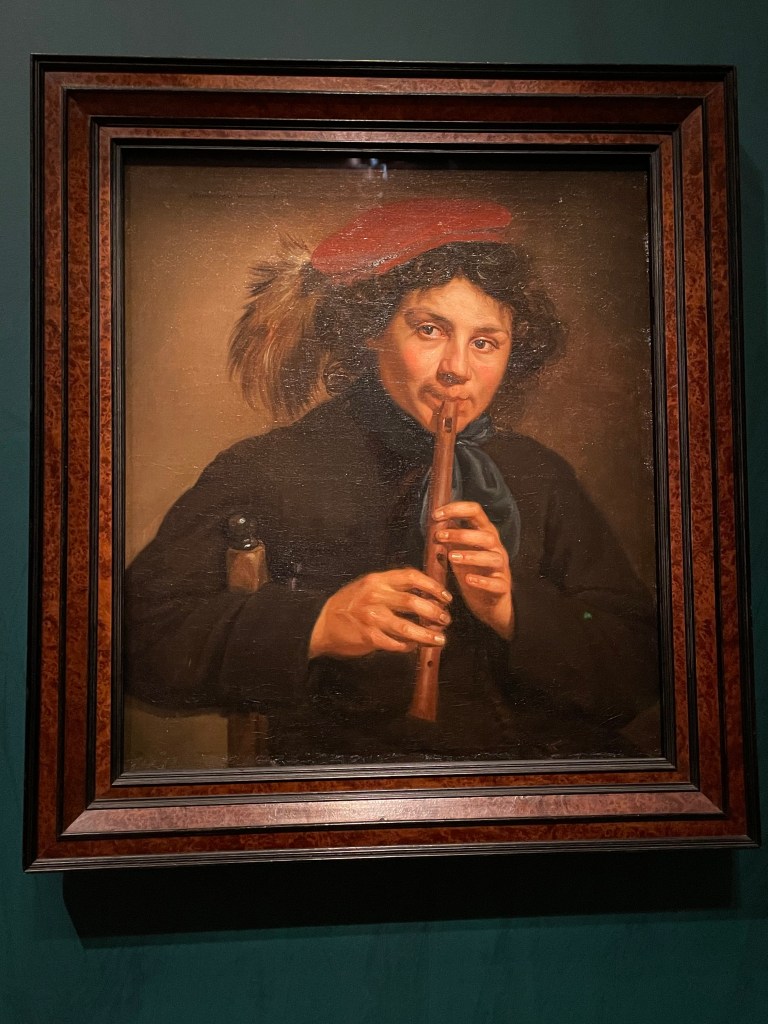
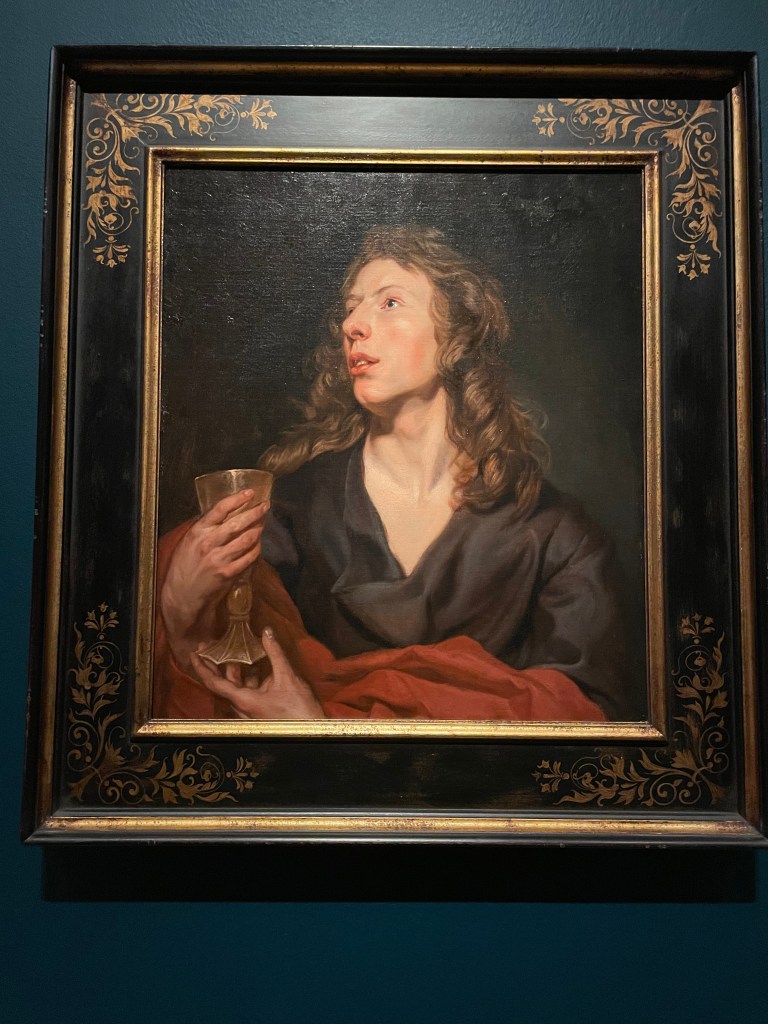
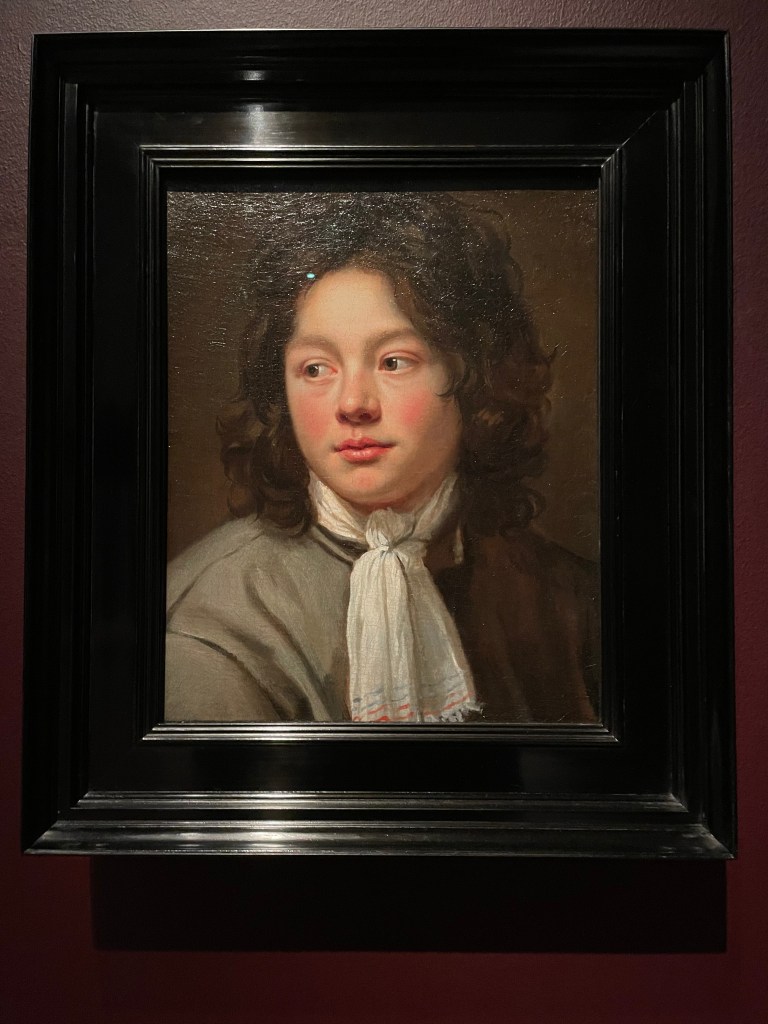
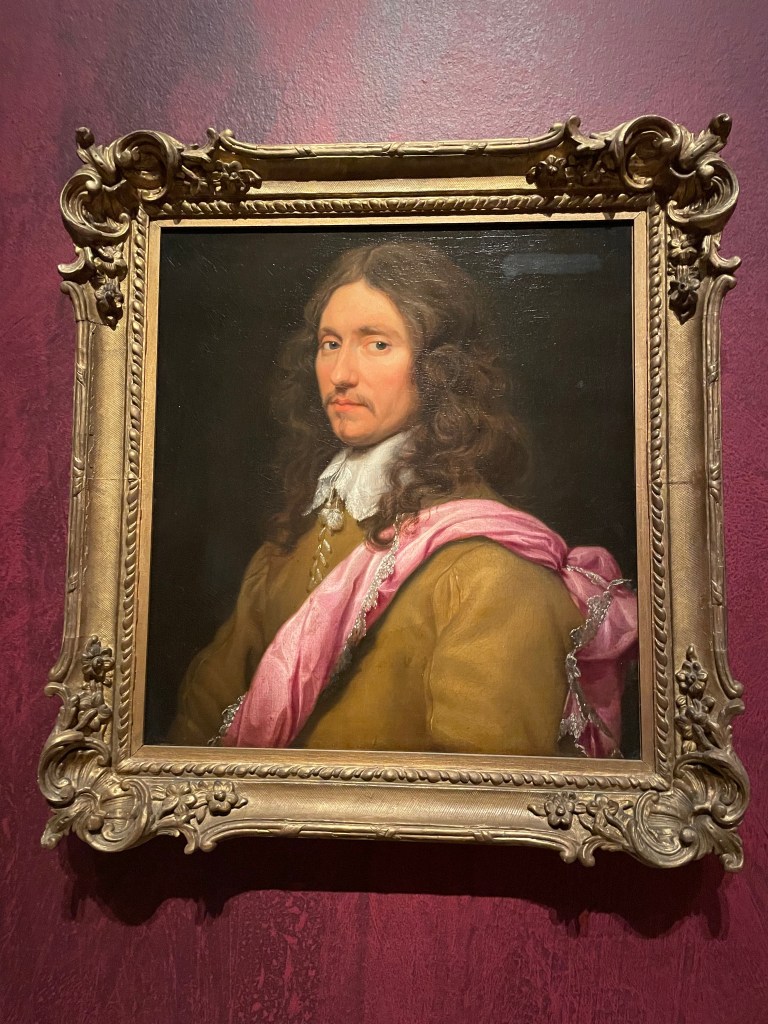
I confess I’d never heard of Michaelina Wautier before visiting the new exhibition at the Royal Academy in London. She was a remarkably accomplished painter in the early 17th century and thoroughly deserving of this retrospective.

This exhibition at the Royal Academy opens with a spectacular self-portrait which shows how very confident she was as a portrait painter. A contemporary with Artemisia Gentileschi, Wautier must have been a strong character. Forging a career as a female artist was a bold thing to do. But it’s clear that she was very talented and especially interested in creating portraits, and narrative paintings which convey great character. She was based in Brussels, never married, and appears to have devoted her life to her art.

These two pictures, above, show great story-telling skills. On the left is the Mystic Marriage of St Catherine. On the right is The Education of the Virgin, a very sensitive picture of a young girl learning to read – a normal parent activity – yet it is clear that this child is destined for a special role

Where Wautier really succeeds is her very sensitively painted and characterful portraits. Clearly she had some favourite models for these paintings but the results are spectacular.

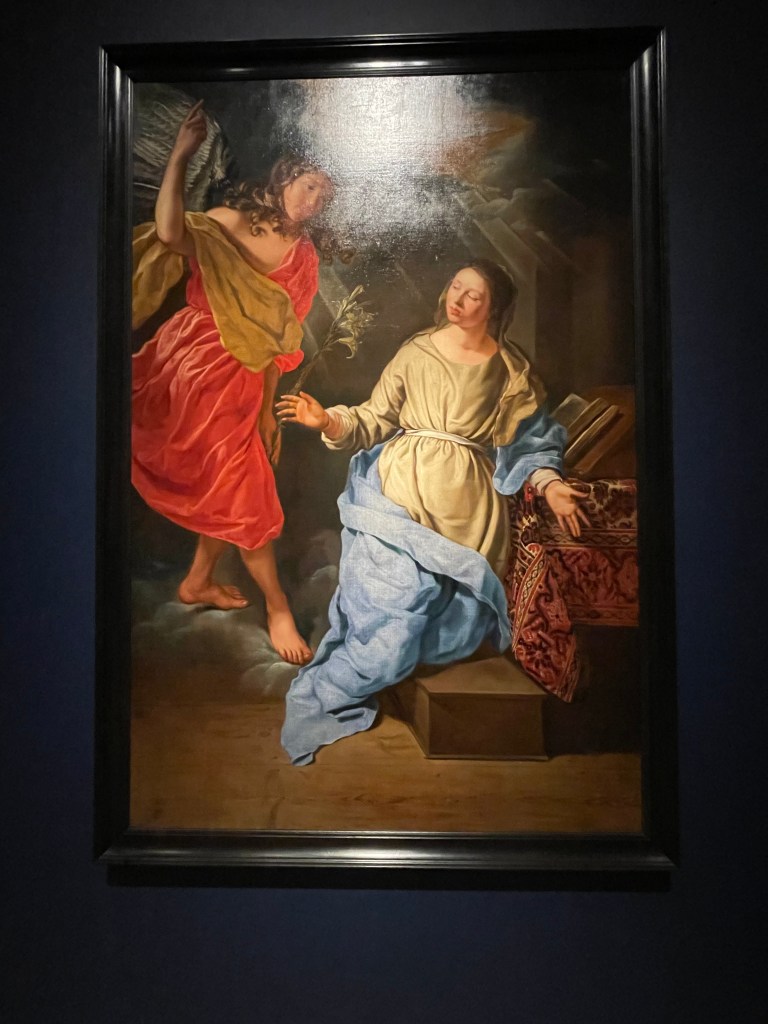
You can see the ‘Netherlandish’ influence in this painting of the annunciation. I love the rug on the table. Makes one think of those remarkable paintings by Vermeer. The show is on at the Royal Academy until 21st June 2026.

Artist George Stubbs’s work is synonymous with horses. And this charming show at the National Gallery shows how dedicated he was to really understanding equine physiognomy and capturing the spirit of wonderful racehorses of the late 1700s.

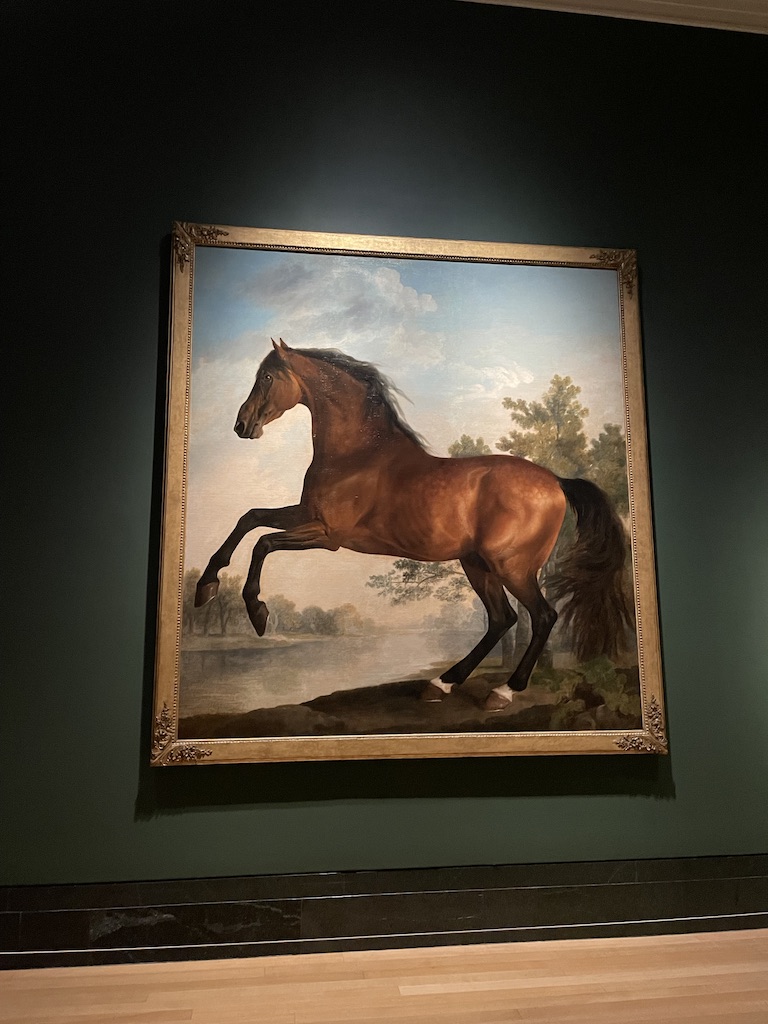
This spectacular painting is life-sized and it dominates a small but perfectly formed show at the National Gallery. This is a portrait of Scrub, a bay horse belonging to the Marquess of Rockingham and was painted in about 1762. I’m no horse expert but you can tell that Stubbs has really spent time sketching the horse from life and also understands the skeleton and musculature of the beast so that it looks entirely plausible.

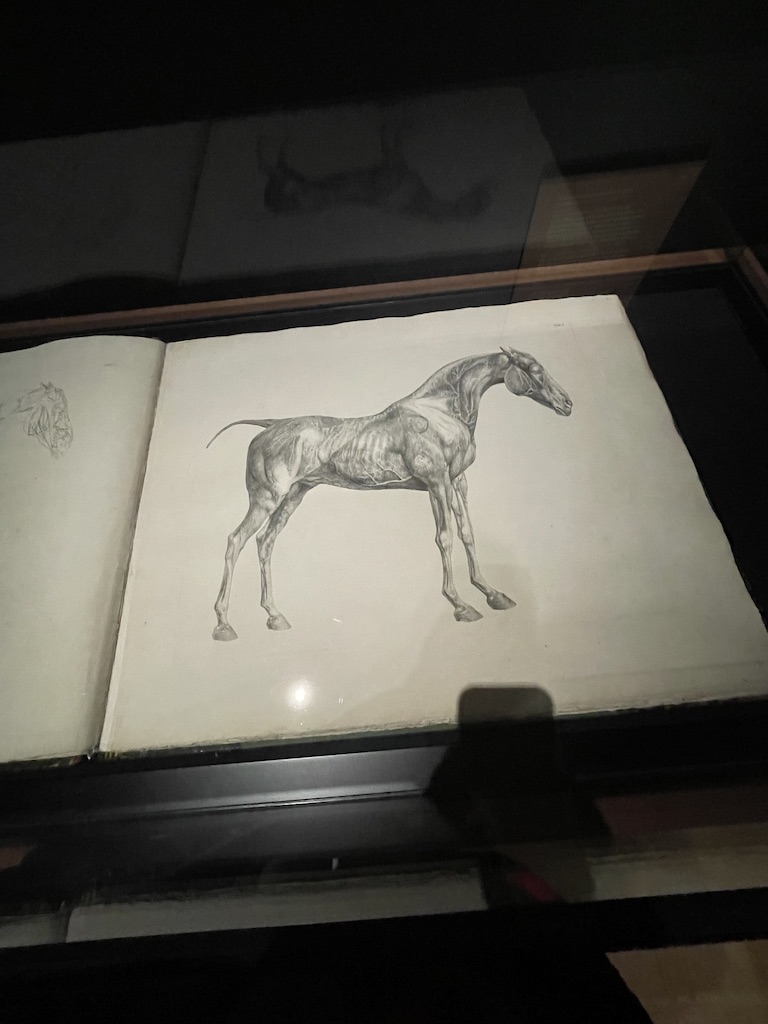
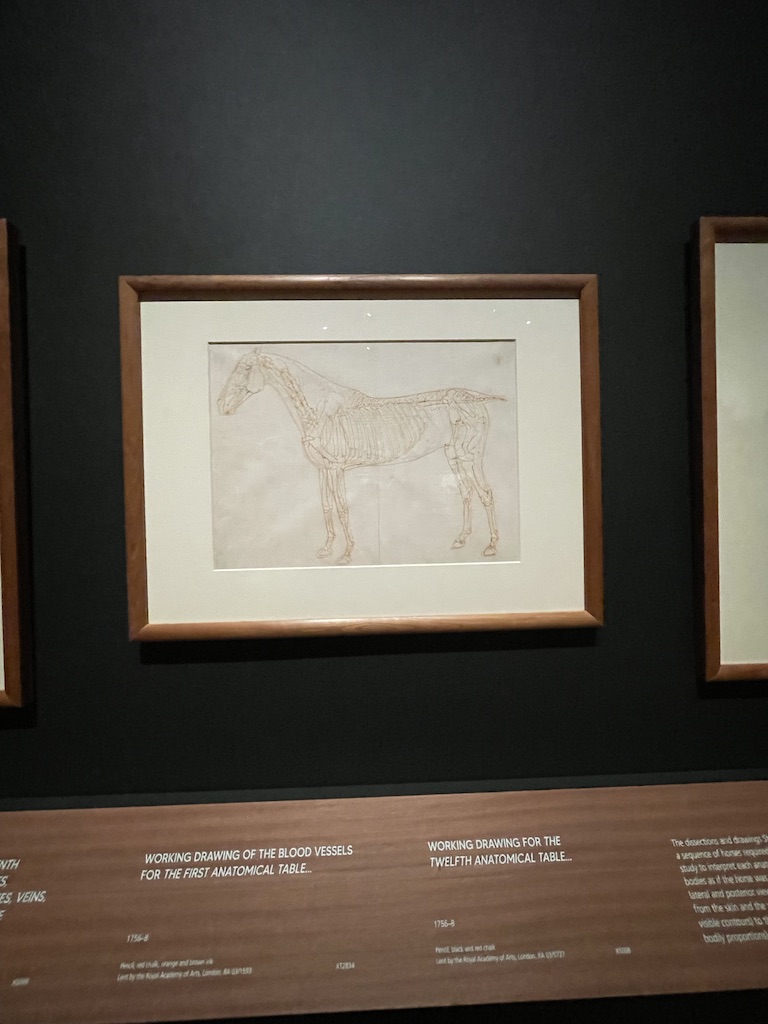
It’s really interesting to see the detailed sketches made in preparation for horse portraits. Apparently Stubbs was anxious to capture the physique of each horse and their nature too. Working from dissections he was able to work out the proportions, contours and skeletons of horses before, later, find a way to capture character and personality in the finished portrait.

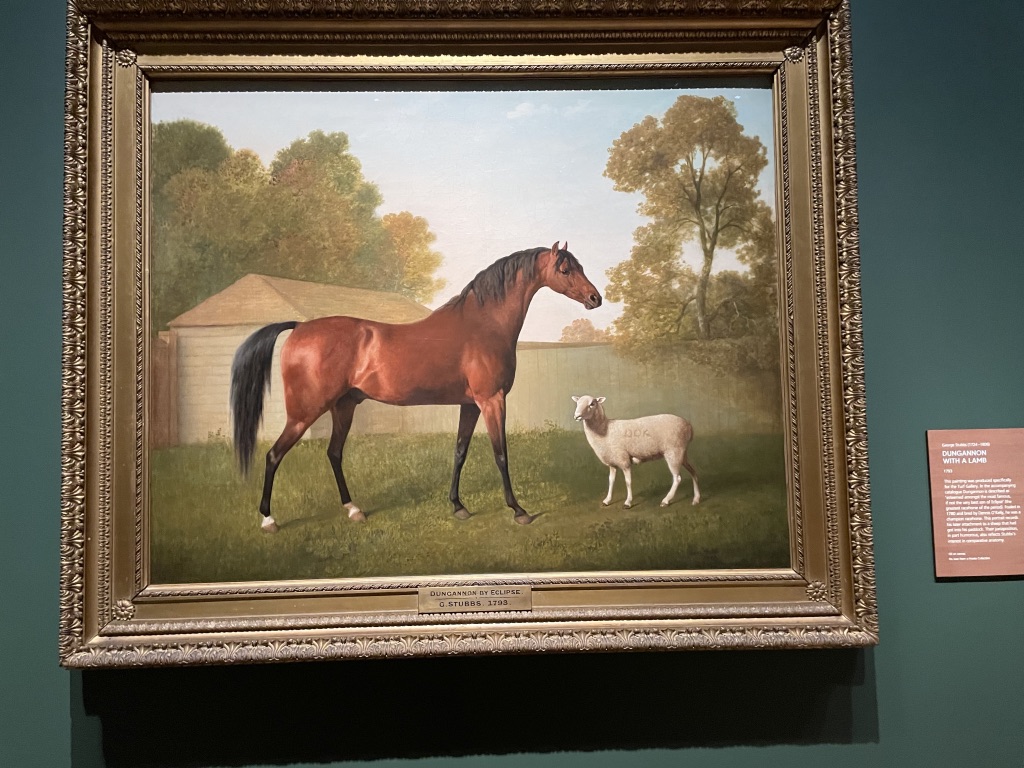
I was very enchanted by this portrait of Dungannon with a lamb. Apparently the horse developed a close friendship with the sheep who wandered into his paddock and they became inseparable.

Stubbs produced much of his work for the Turf Gallery, specialising in equine art, and clearly it was a very popular and lucrative specialism for an artist. A great treat to see, close up, such spectacular paintings and the research which went into their creation.

George Stubbs (1724-1806) The show is on in Room 1 at the National Gallery until 31st May 2026.

Tracy Emin: A second life. What a visceral, heart-rending exhibition at Tate Modern. We’ve been getting know her art for the past 40 years but there is a searing honesty to her personal presentation of her own life history, as depicted through art in this extraordinary show. There’s also a feeling of triumph and survival.

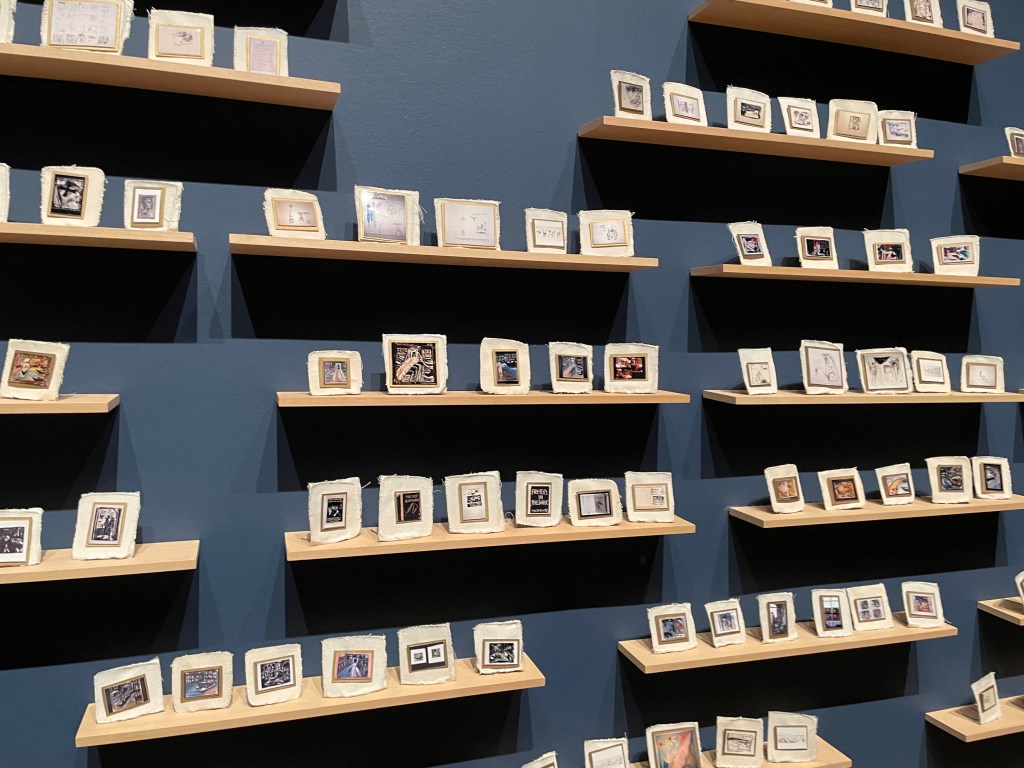
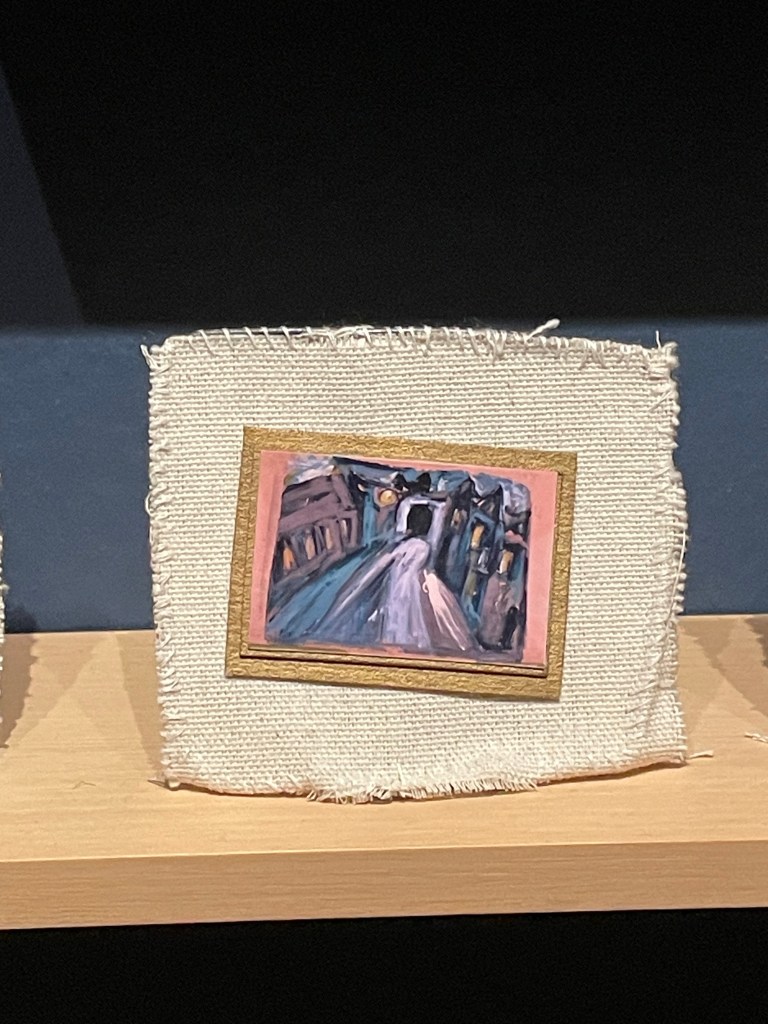
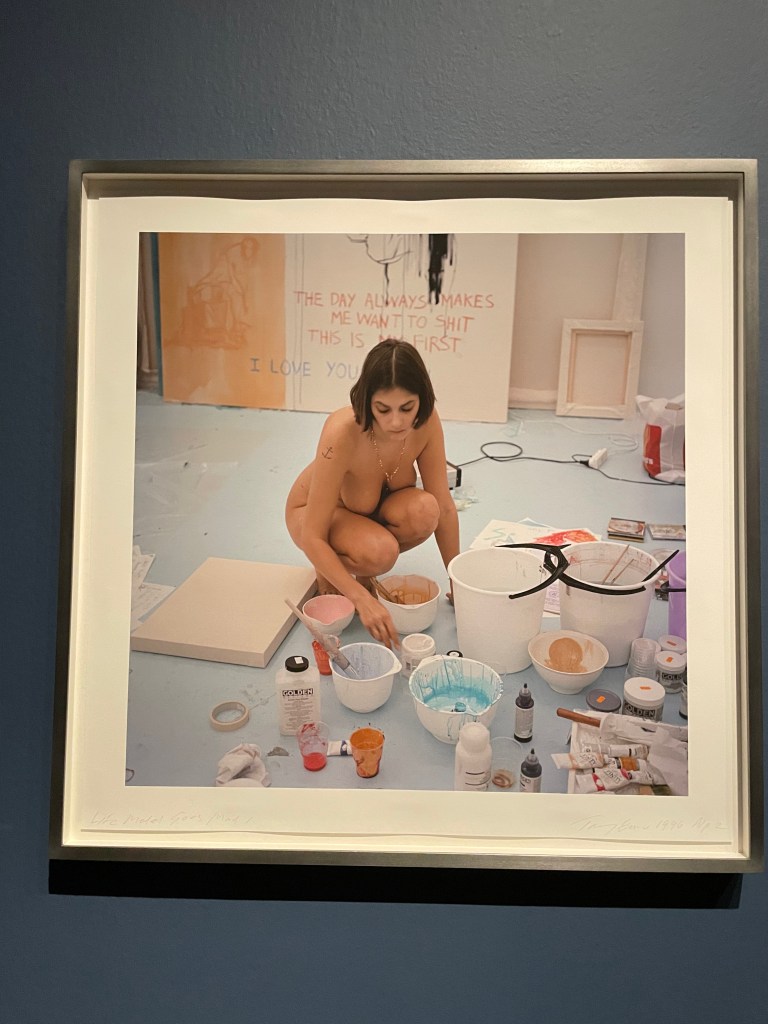
We start this very comprehensive exhibition of Tracy Emin’s work with what remains of her early work at art school. She destroyed her work in a fit of self-doubt but at least these tiny photographs survive. Seeing them mounted on fragments of canvas they provide a very informative and fascinating collection of images which presage the work that was to come.

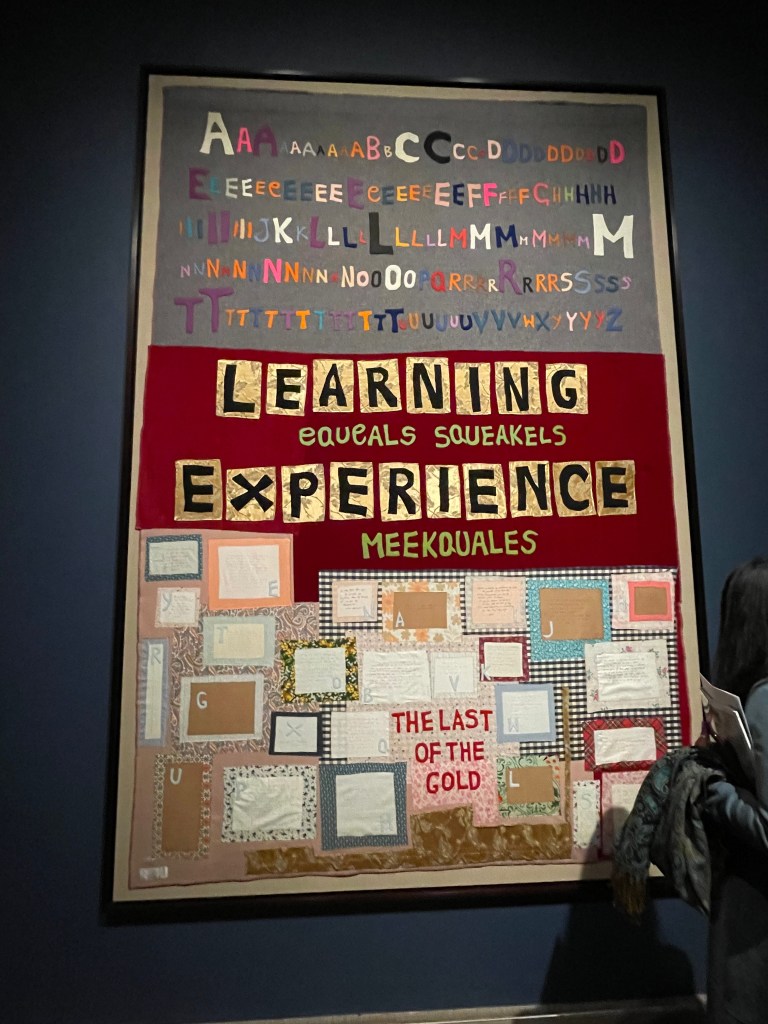
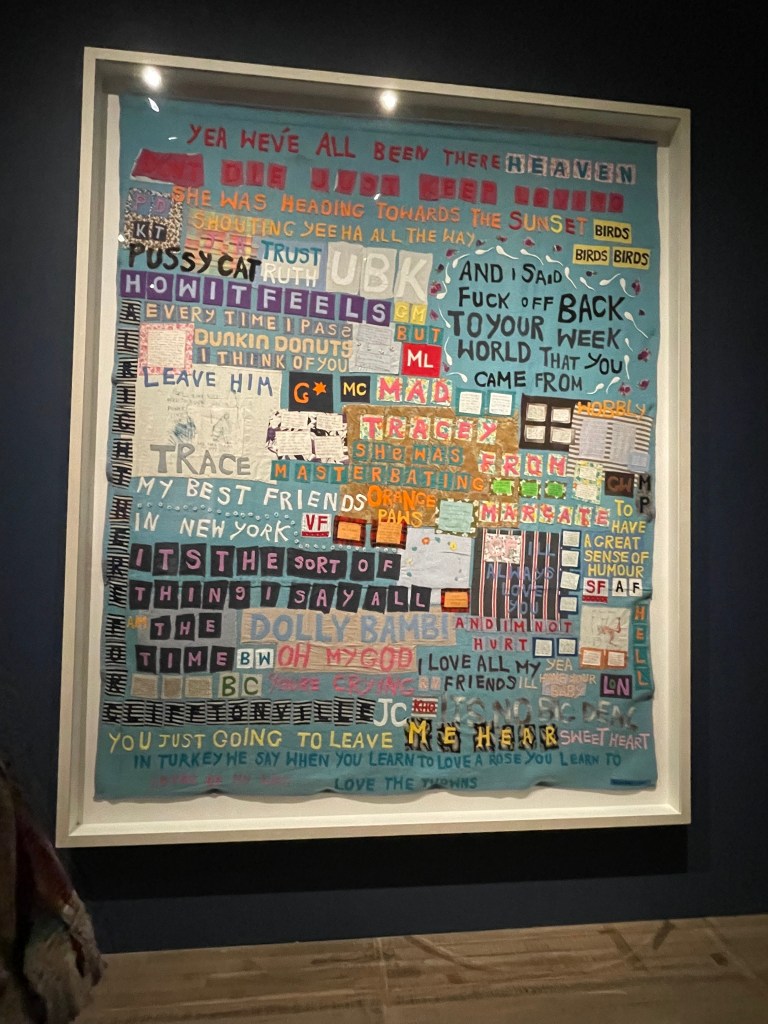
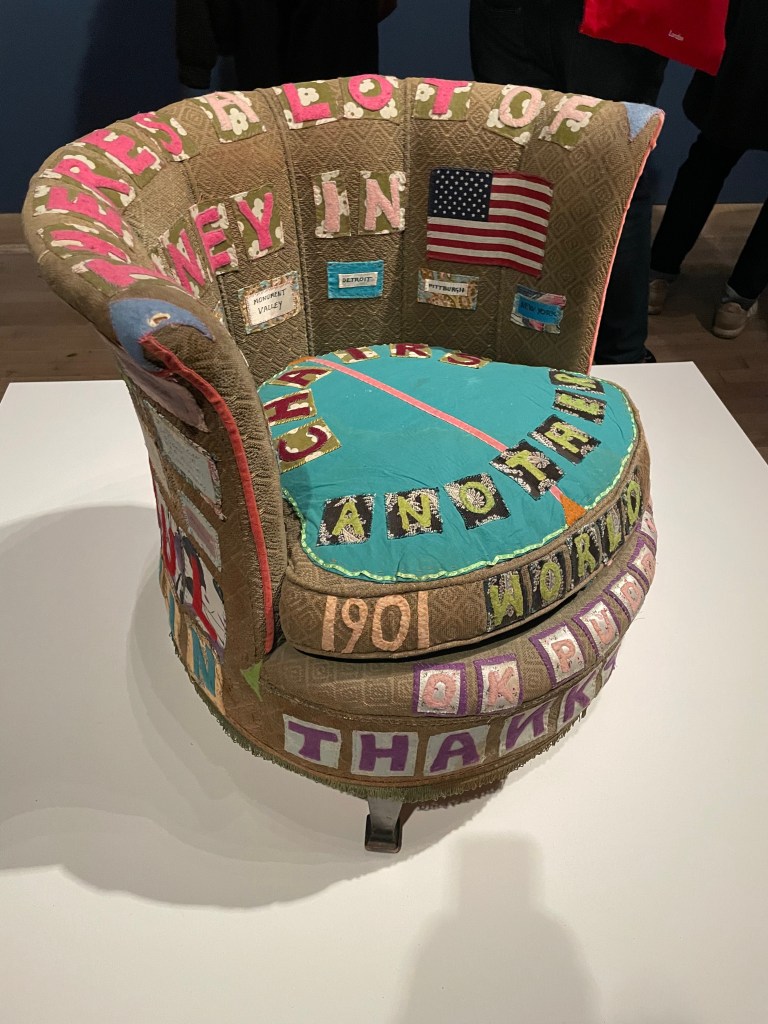
It’s great to see some of Emin’s works with fabrics and her own idiosyncratic form of tapestry and embroidery. It’s a form of collage and the effect of these combined images is very bold and moving. You can see she’s channelling those old-school samplers girls might have made at school 150 years ago but has developed the skills into remarkable pieces of art.

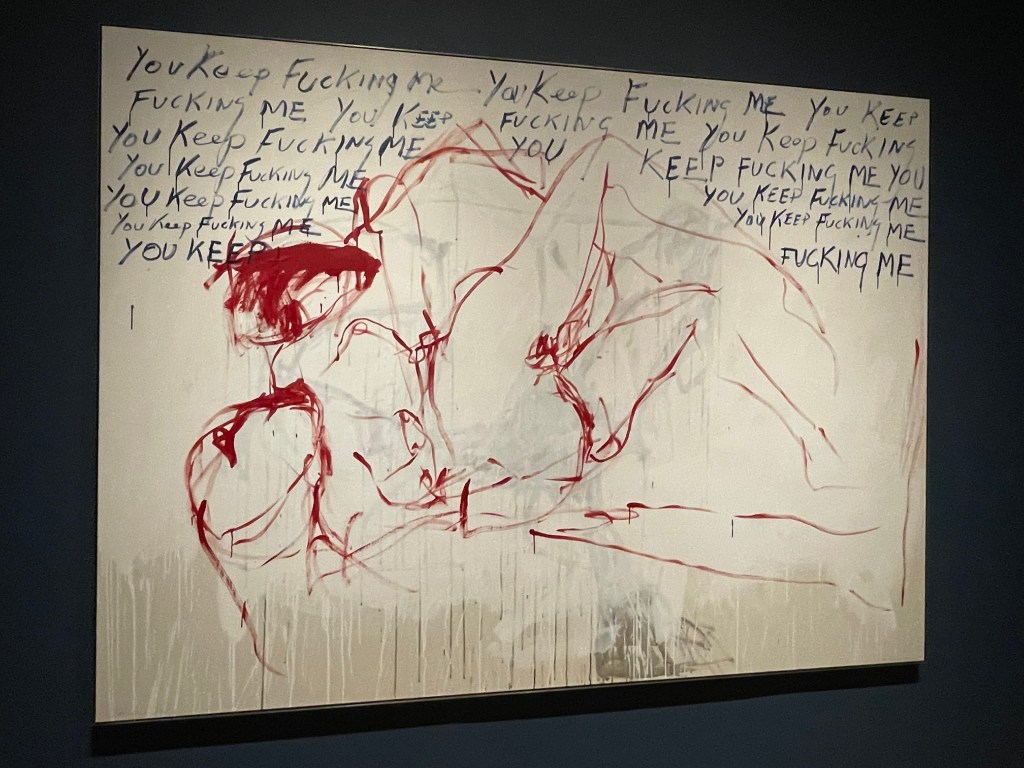
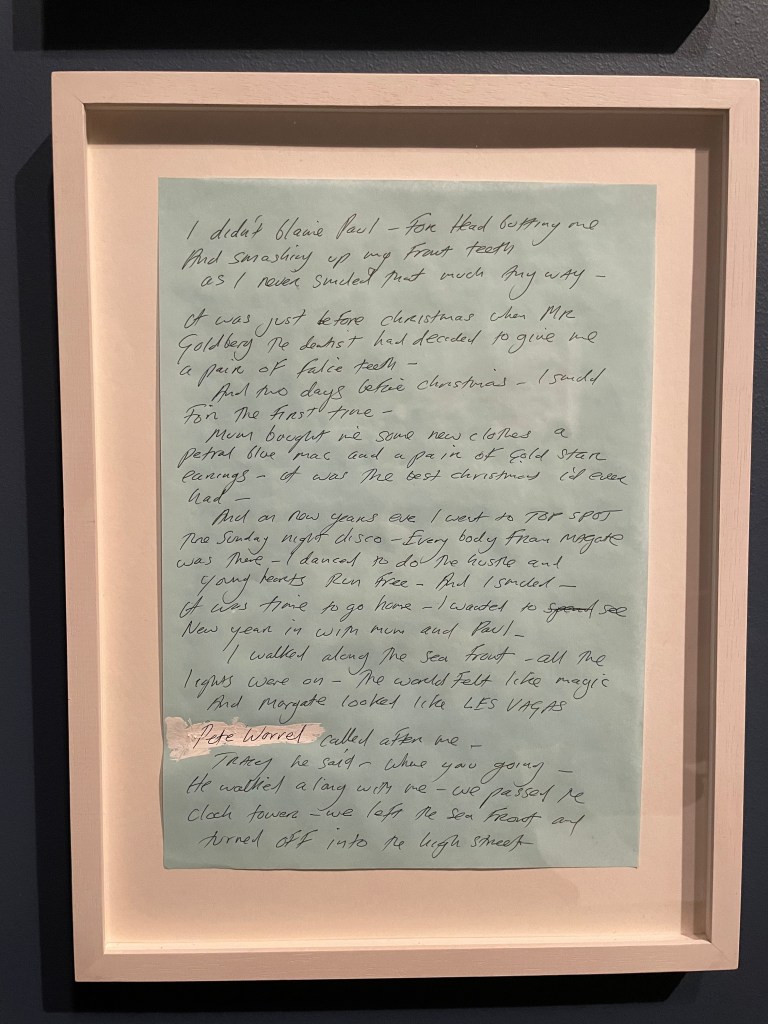
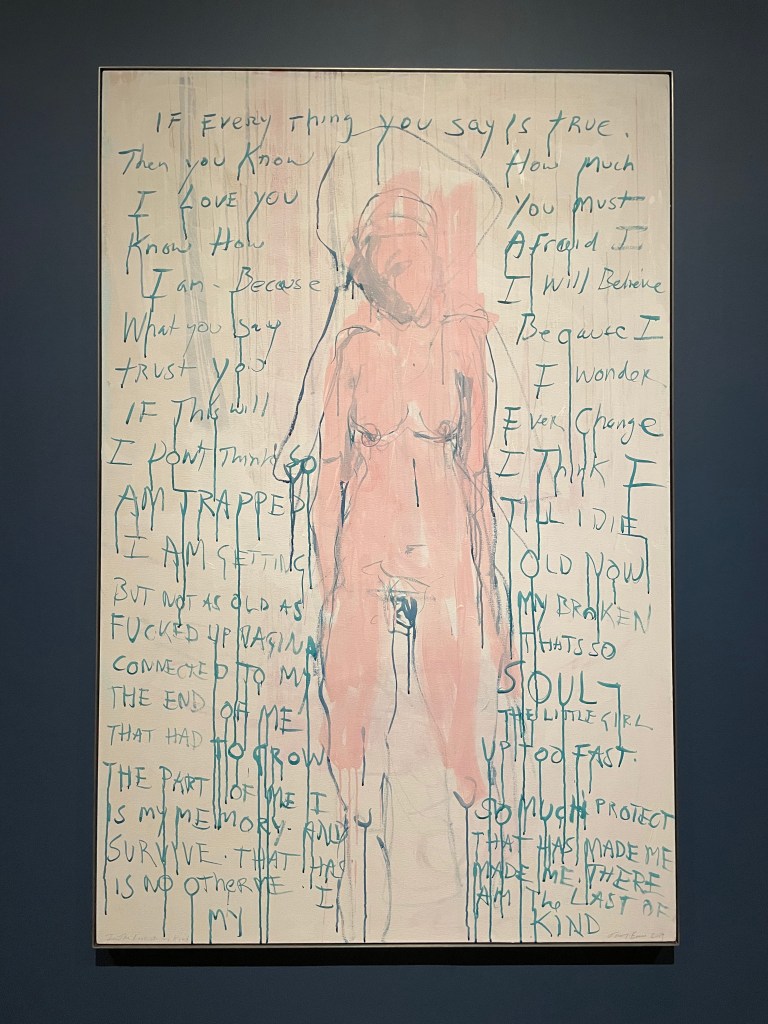
Two films, made directly to camera by Emin, express her fury at the way she was treated as a young teenager growing up in Margate. In retrospect it was abuse by local boys and men but she wanted to experience everything that life had to offer. And sometimes her experiences were very unpleasant. These bold self-portraits, depicting moment of huge emotional trauma are very hard to view. They evoke such depths of pain and disappointment in a very immediate way. Looking closely to the works there’s the sense of a palimpsest – of images behind the one we are looking at – which have been erased or corrupted in some way and replaced with the powerful top layer. She also includes very honest assessments in writing of her mental state, views and desires.

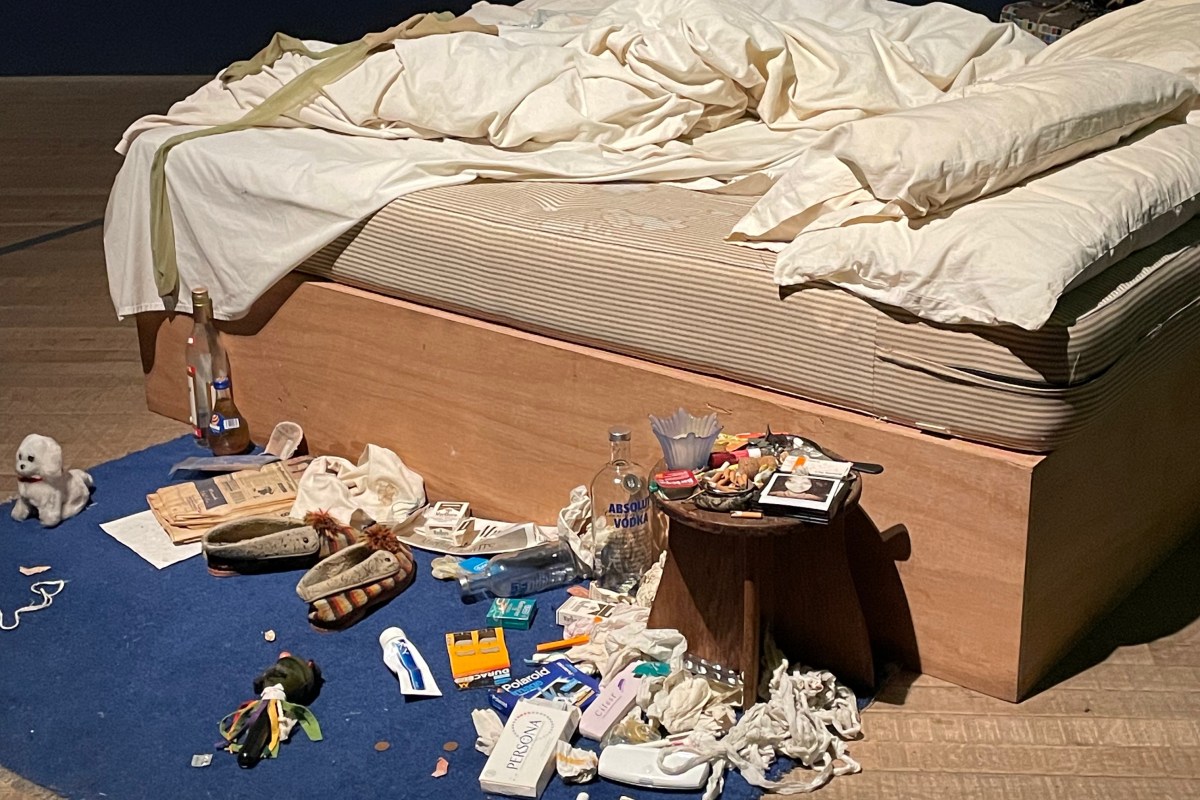
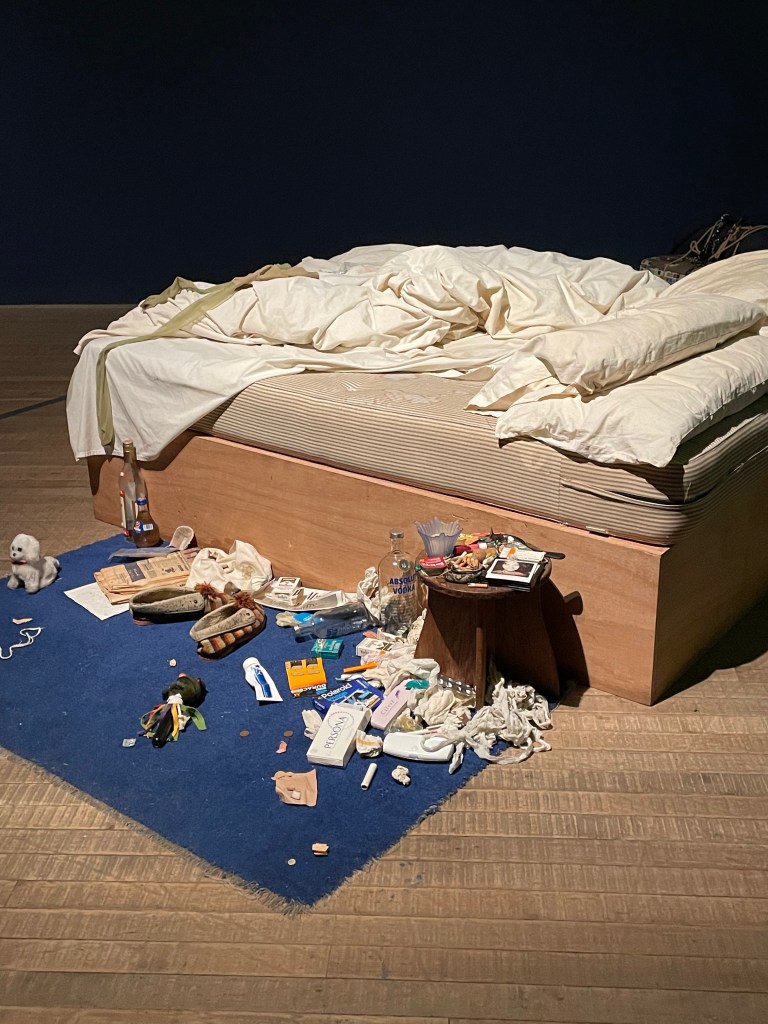
And there is the bed. This famous piece from 1998 which bewildered viewers. Now it is understood as the ultimate self-portrait of a time in Emin’s life when she was in a state of breakdown after an abortion, relationship breakdown and lack of self-worth. It has the most amazing atmosphere and you really do pick up on the experience which these items convey.

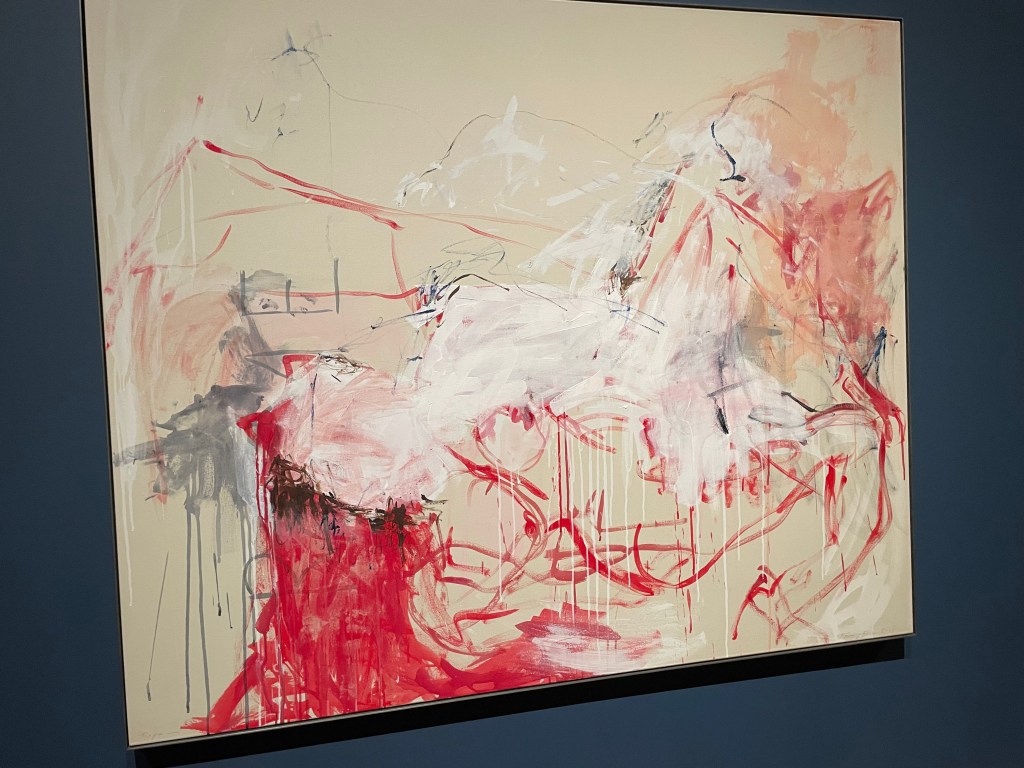
The exhibition is very much an expression of Emin’s life post the life she lived in her youth. For a while she stopped painting entirely and then, when she picked up a brush again, the work emerged with a whoosh of energy, fury and a need to express her own opinion of all the wrongs that had been done to her and a snub to all the people who never believed she would achieve all that has done.

The show is on at Tate Modern until 31st August 2026.

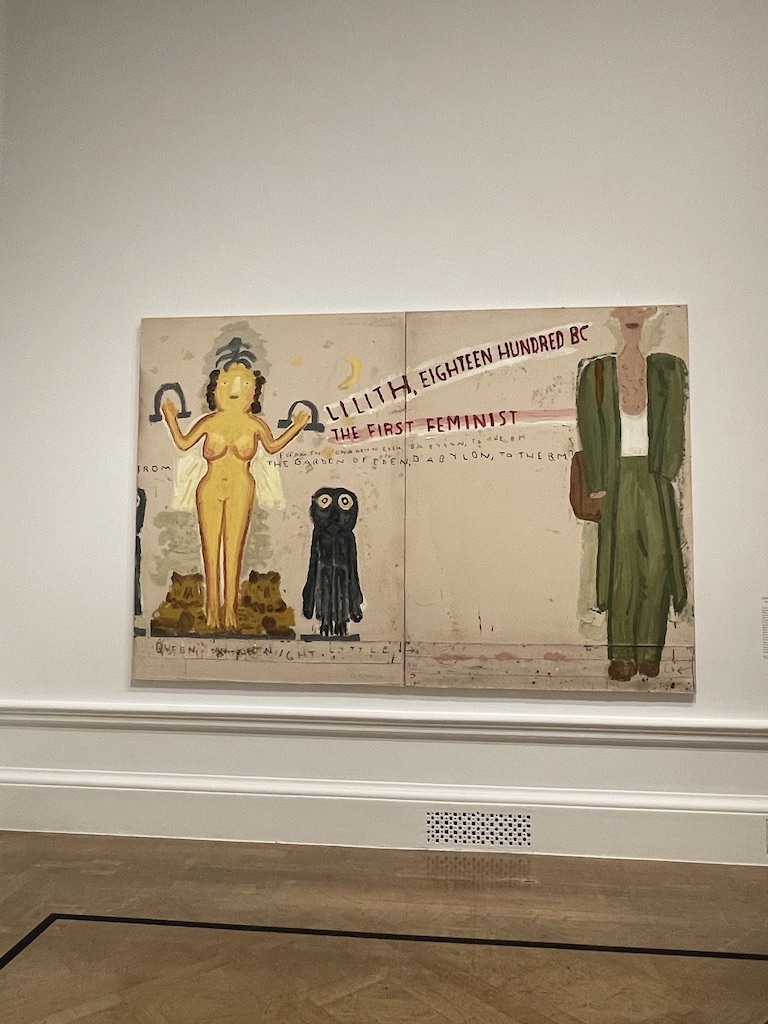
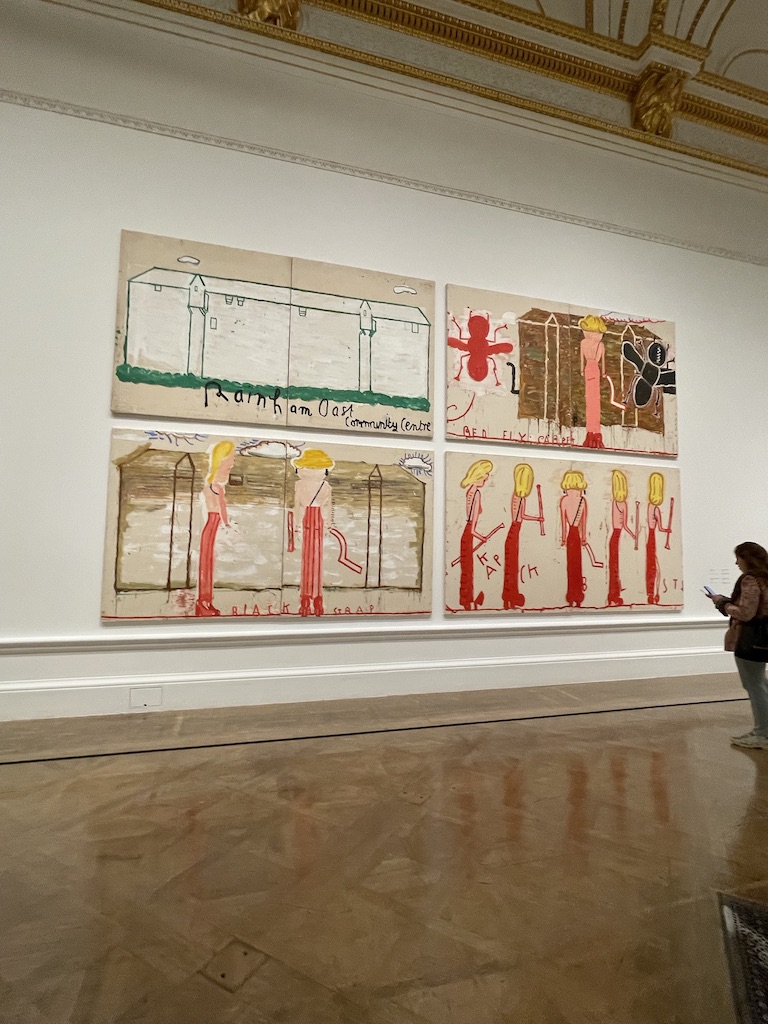
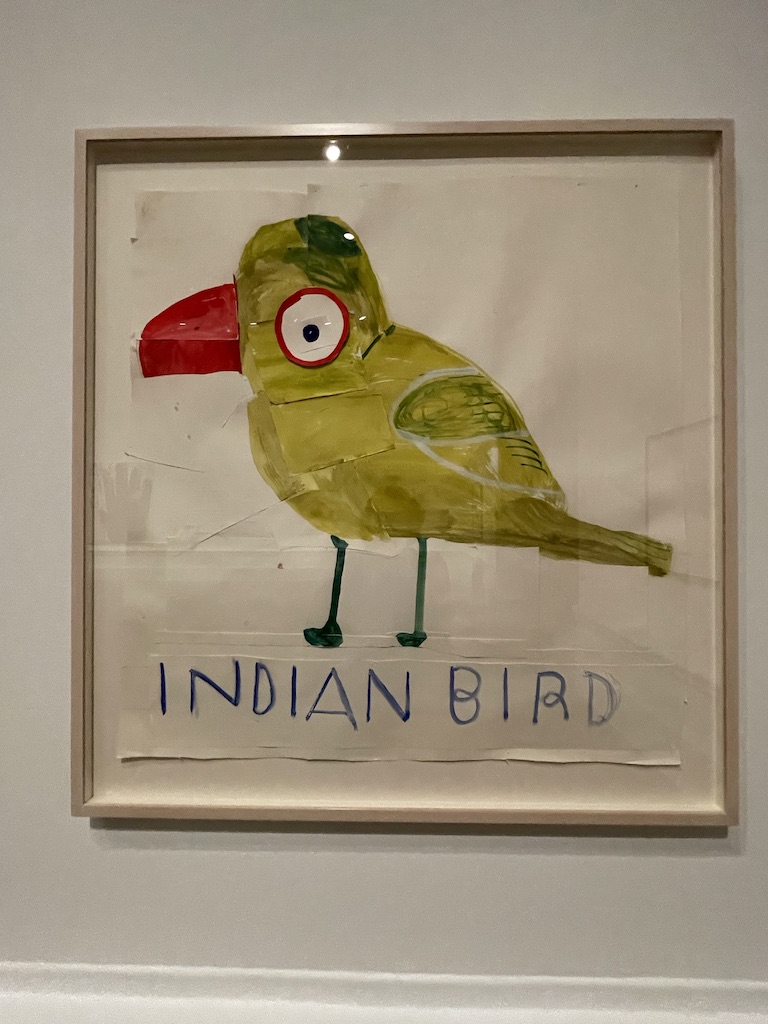
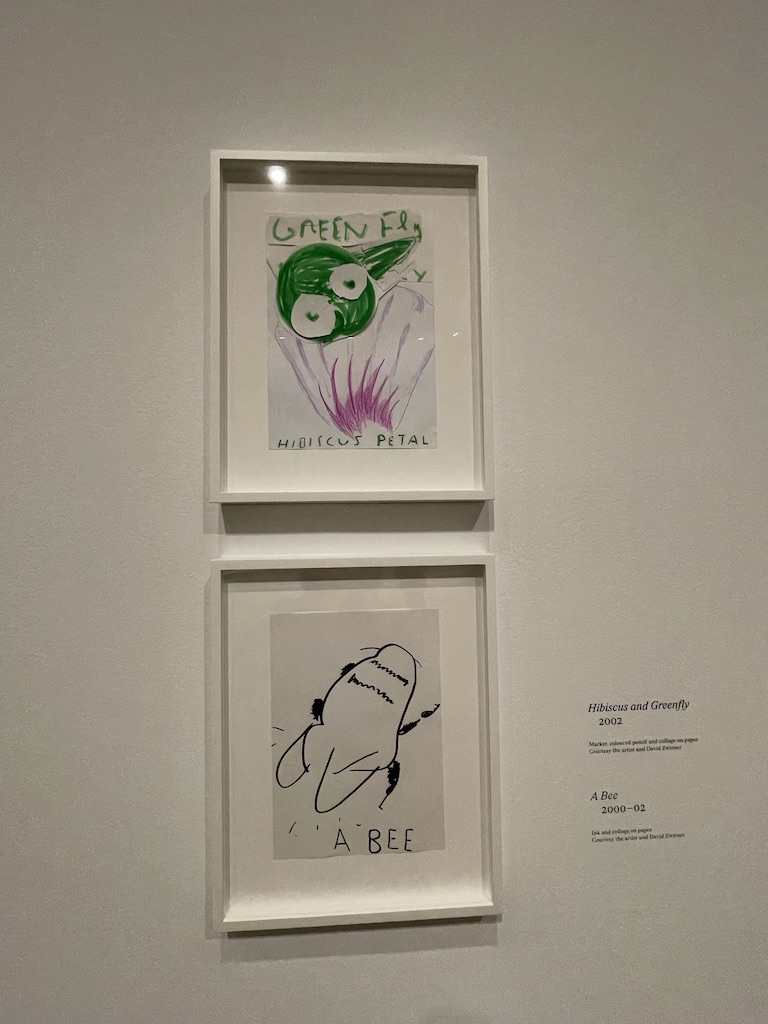
That Rose Wylie is an extremely productive artist becomes immediately apparent at the huge retrospective which has opened at the Royal Academy of Art. Now in her nineties, she shows no sign of slowing down and regularly creates huge canvases with bold, freely painted images of things, places, ideas and references which reflect her life.

Very exhilarating to see this huge exhibition of work by Rose Wylie. She’s 91 and still busy working, having started making art in earnest in her seventies. And what a body of work she has created – it fills all the galleries of the Royal Academy. And, amazingly, she’s the first female artist to have been given a retrospective at this august gallery.

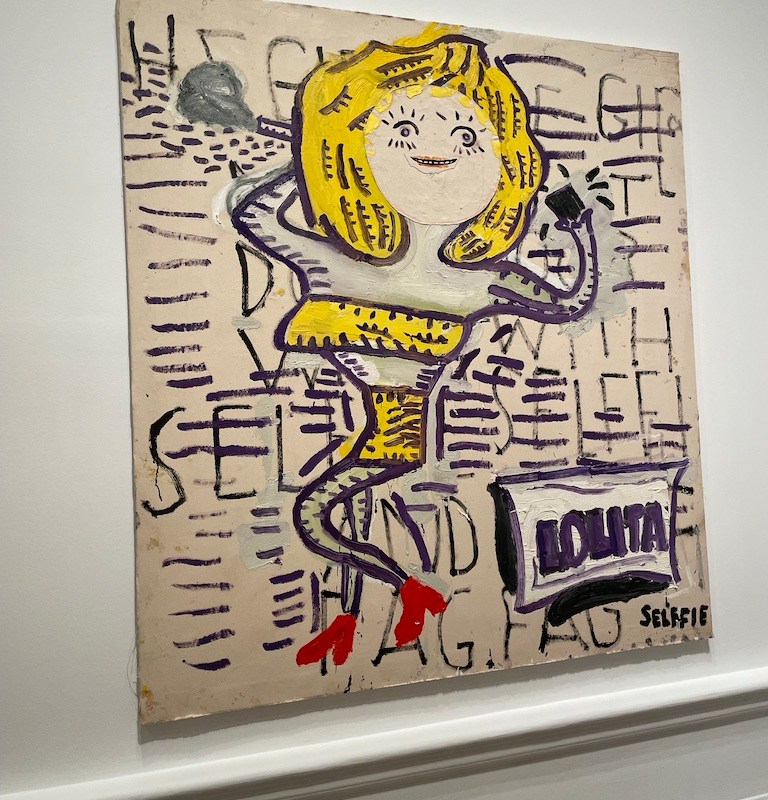
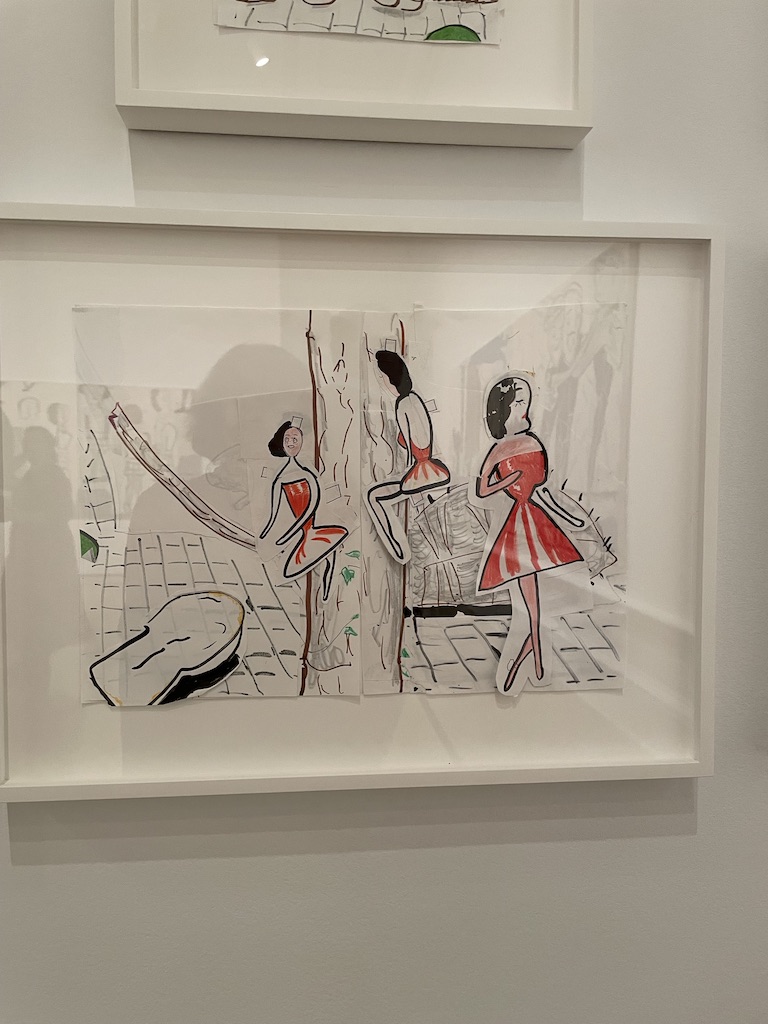
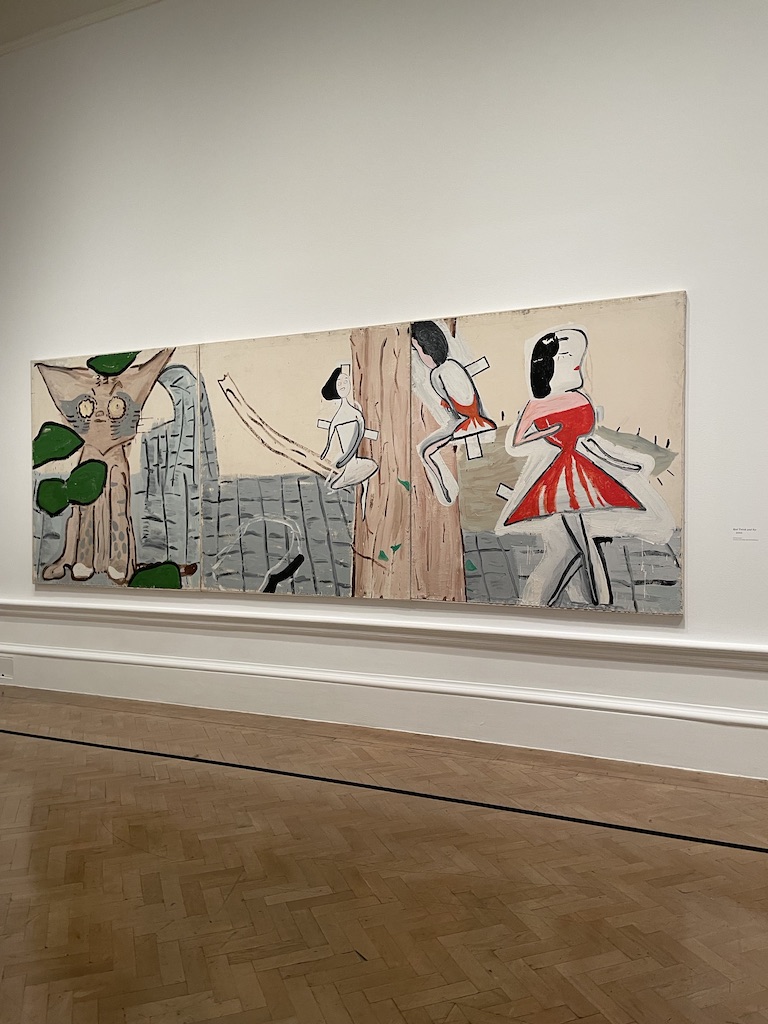
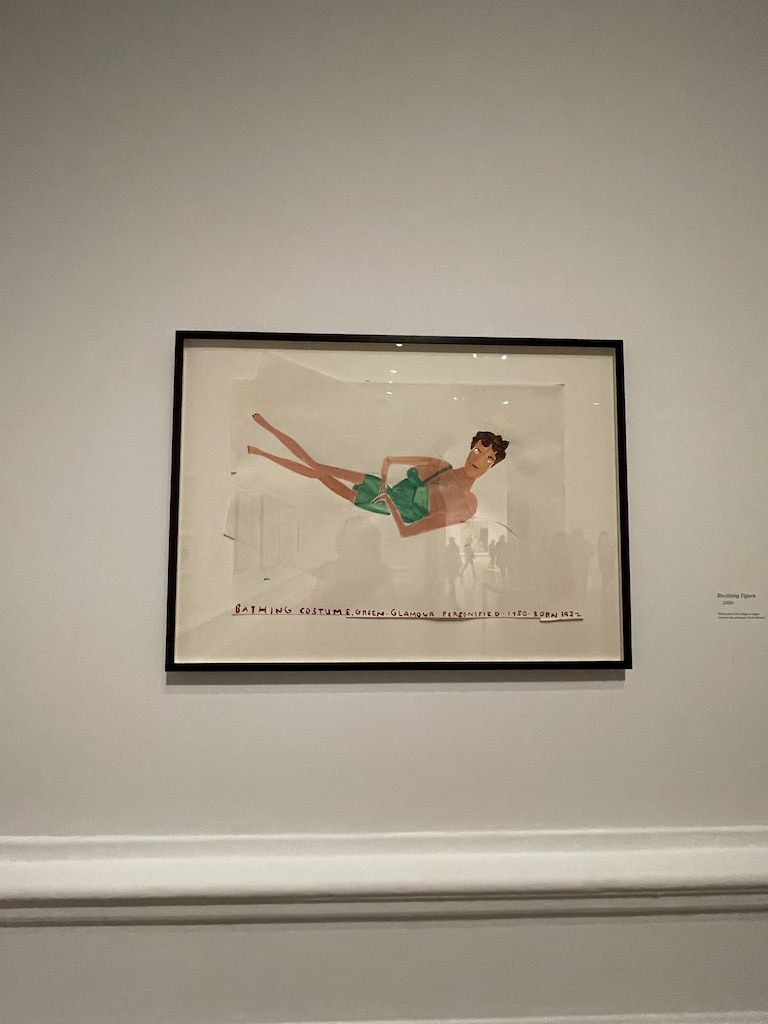
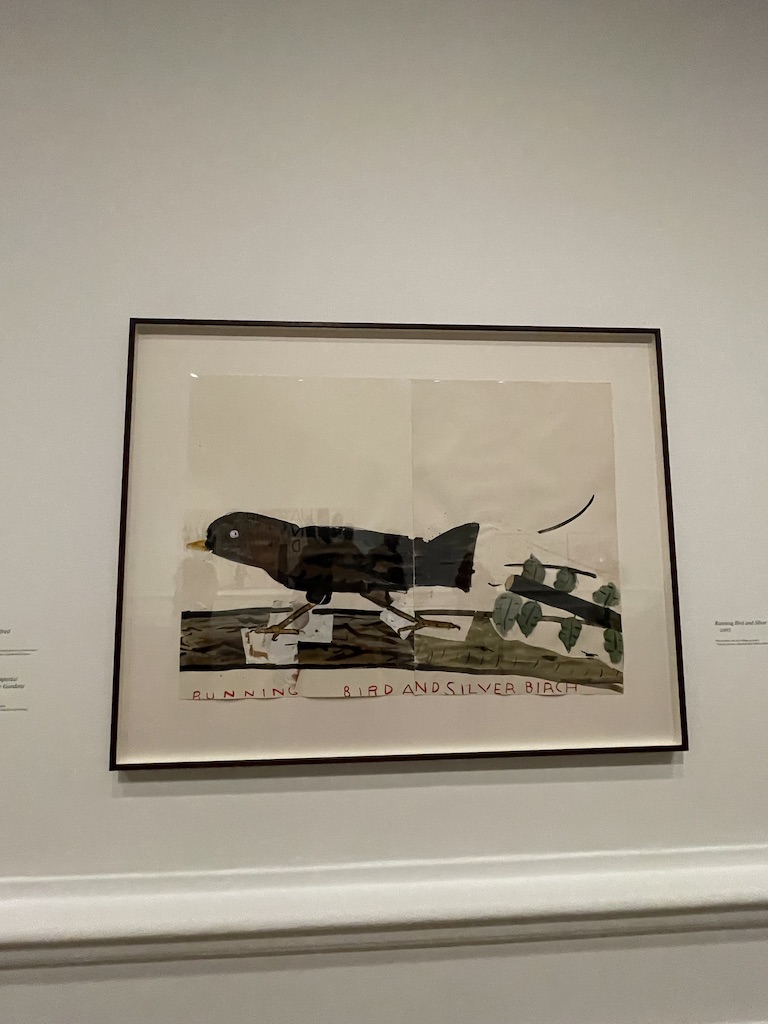
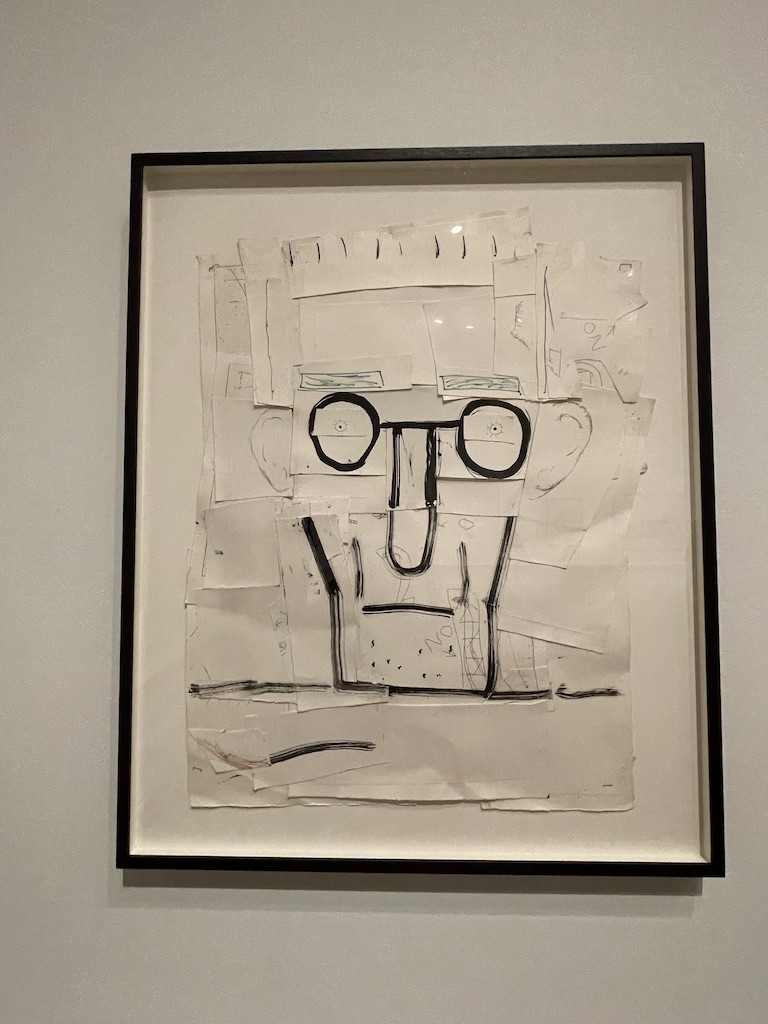
I was impressed to see that she uses paper collage to create her initial designs before scaling them up for the huge, baggy canvases that fill the walls. At first you might think that the work has a child-like quality but they are more structured than the careless daubings of a child. She is inspired by stuff – images on the telly, film, in magazines, memory.

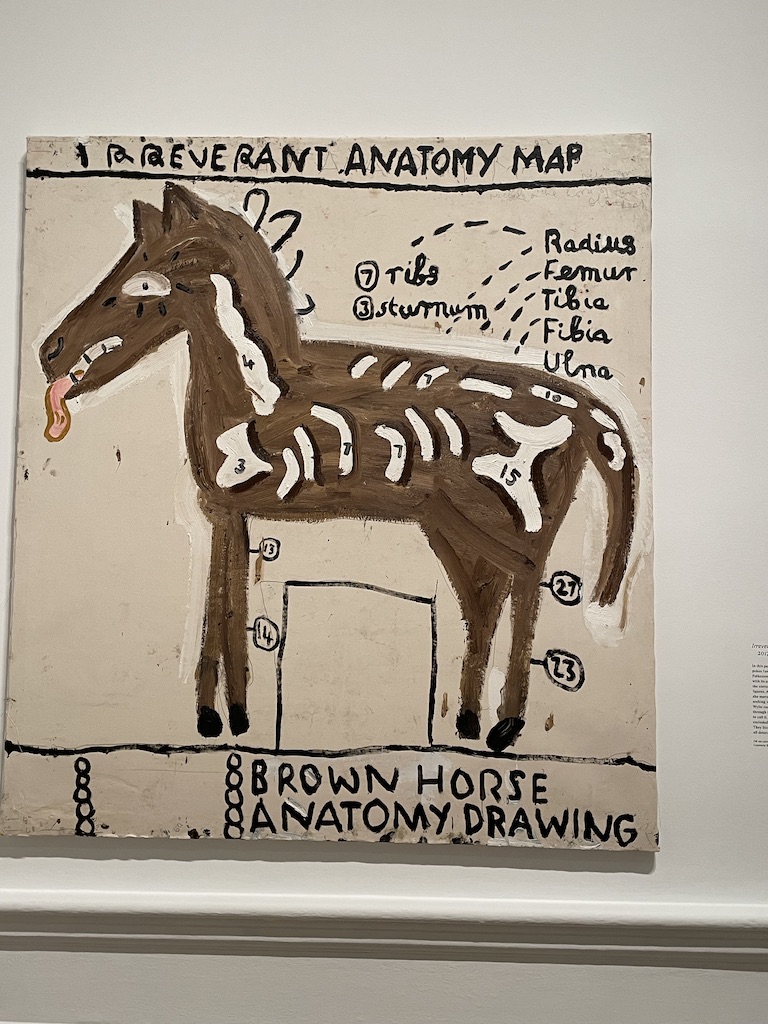
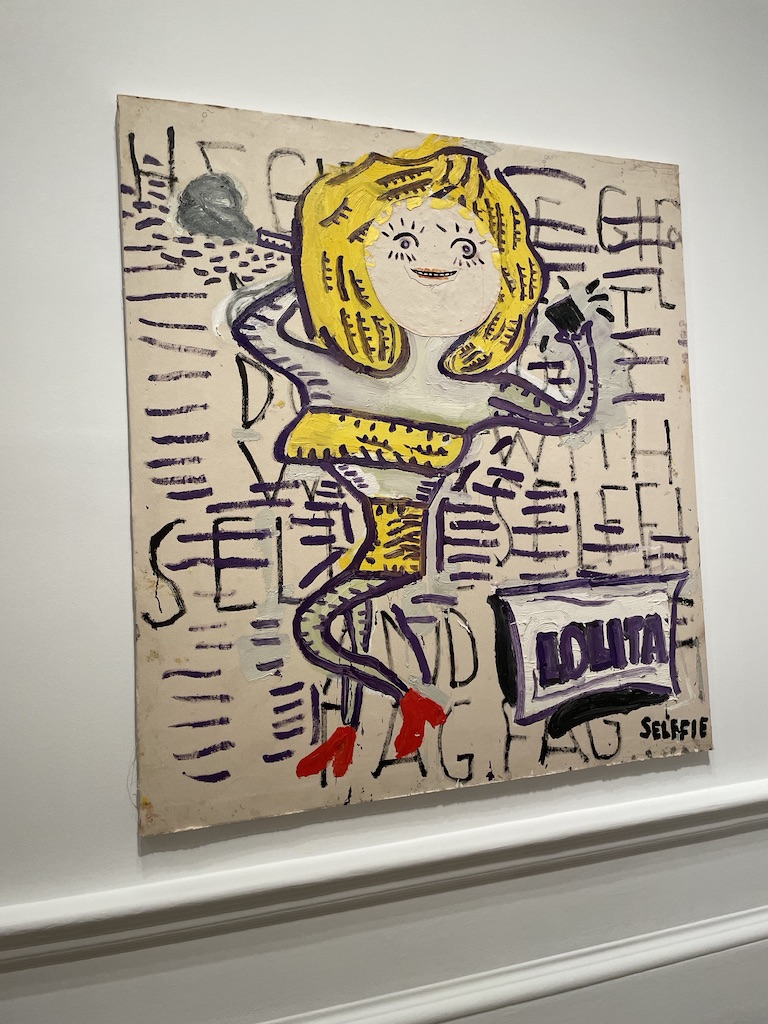
There’s also terrific humour to her work. I did like the daft painting of the horse with an attempt to depict the anatomy of the beast. Her faces, whether human or animal have a charming innocence to them and a lot of eyelashes!

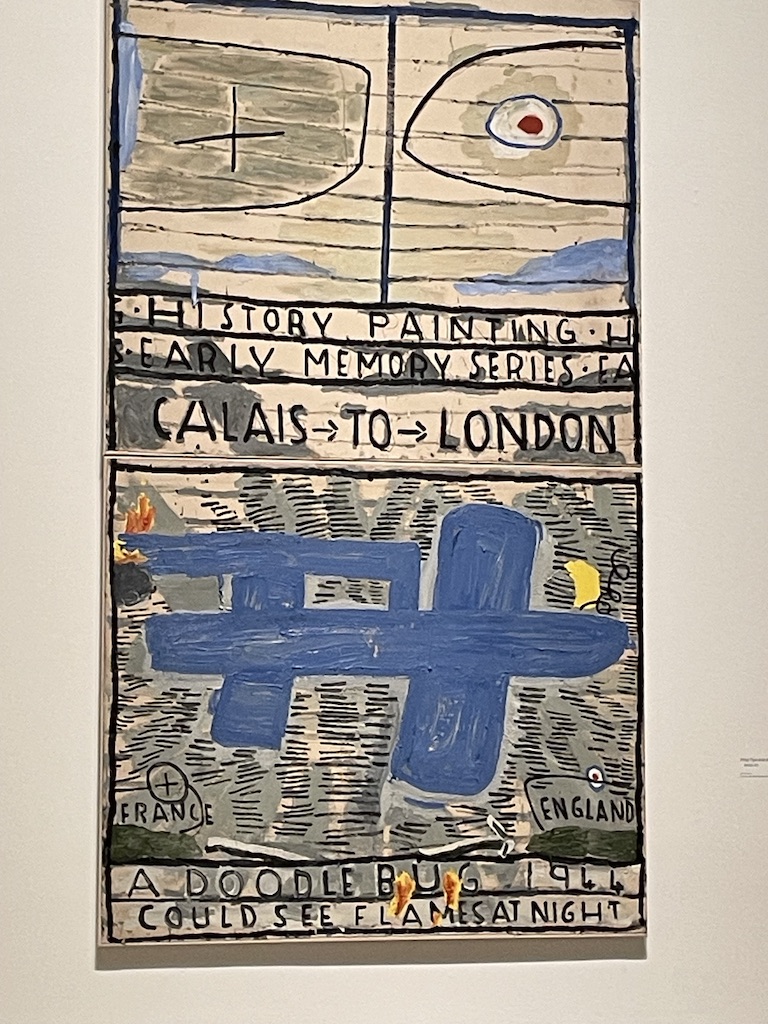
You can see that when she has hit upon an idea she really develops it in a witty, very playful way and, just to avoid any doubt as to her intension, there is text to tease and beguile the viewer.

Born in Kent during the war she recalls attacks by Doodle bugs and the destruction caused.

I liked this very playful collage of her husband.

The show is on at the Royal Academy of Art until 19th April 2026