The Taylor Wessing Photographic Portrait Prize 2017 assembles a fascinating collection of photographic portraits from around the world; some shedding light on unsettling realities of our time.

The featured image is a photo of President Trump taken as he left a room in the White House.  The photographer, Benjamin Rasmussen was with Time magazine reporters invited to the White House for a tour with the President.  Apparently Trump refused to take direction and walked away. Rasmussen captured this image of him as he walked away into his private living room.  His face is reflected in the glossy wood to the right, while on the left there’s a silhouette of his features cast by the evening light.

The annual Taylor Wessing Portrait Prize exhibition at the National Portrait Gallery showcases new work which has been submitted by contemporary photographers from around the world.  There’s always a very varied selection of in this show (which has been going for 10 years) – from studio portraits to reportage to images captured on the hoof or in a split second or maybe just incidental scenes of human life which have been cleverly shot to present intriguing narratives.

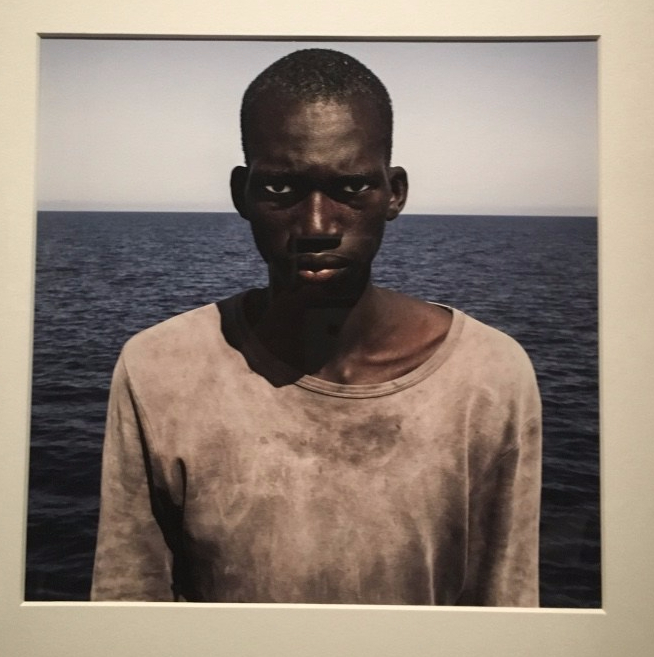
The winning portrait was of Amadou Sumaila taken by Cesar Dezfuli.  Sumaila is a sixteen-year-old from Mali who travelled across the Mediterranean from Libya and was was rescued by an Italian NGO vessel.  The portrait captures his hopes, fears, difficulties and concern about his future in a new country.
thumb_IMG_8091_1024

It was the more incidental portraits which I particularly liked.  On the day of the press preview several photographers had brought their subjects. I enjoyed meeting the gang of little boys who’d been captured playing Minecraft on a computer while a woman in the kitchen beyond is busy creating food.  Taken by Hania Farrell, the photo was taken on holiday in Mykonos, Greece and captures both sets of characters unawares, absorbed with their activities.


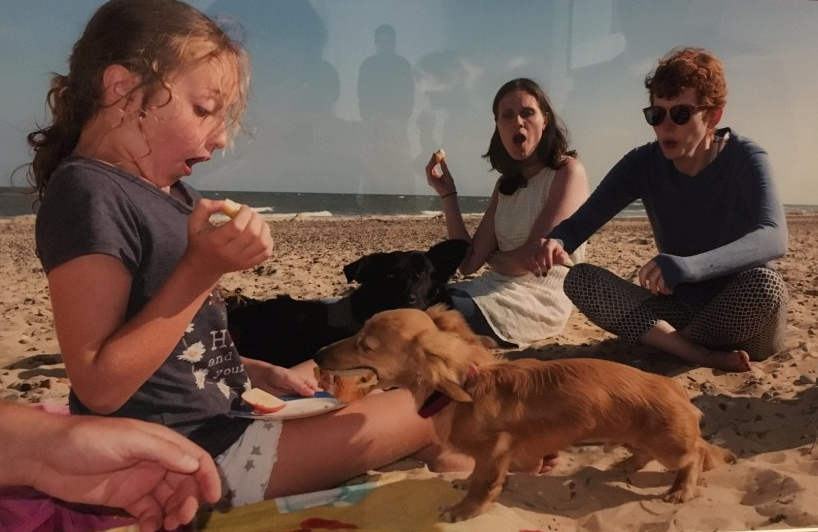
Also loved the snap of a family having a picnic on a beach when Laurence Cartwright captures the moment the dog steals a sandwich.  Apparently the scene is Southwold in Suffolk and the cheeky dachshund called Bingo stole his niece’s sandwich from her picnic plate.  Note the shock and alarm on the faces of the group and jealous eye of the black dog behind.
thumb_IMG_8084_1024I was also impressed by a portrait of the painter Jack Vettriano by Ian McIlgorm.  Both photographer and subject were at the event and I managed to snap them both. Not a good photo by me, I’m afraid.

The EY Exhibition: Impressionists in London, French Artists in Exile (1870-1904) at Tate Britain – a fabulous collection of works by artists who found refuge in the capital and became captivated by both the city and British culture.

The London fog – it never looked more beautiful or provided greater inspiration than for Claude Monet when he decamped to London to escape the political violence of his home city, Paris in the 1970s.  The most famous of the collection – and there are six of them together in this show – were painted over three consecutive winters at the turn of the 20th century and were completed in his studio in 1904.  For Monet, the swirling mists which rose from the Thames and engulfed the riverside buildings and bridges provided the perfect subject for his fascination with the effects of light and atmosphere.

But Monet was just one of many artists who decamped to London during the final quarter of the 19th century.  For illustration of why they left, the first gallery in this excellent show provides grisly and graphic evidence. James Tissot gives us some very strong and visceral clues to the murderous days following the Prussian invasion of Paris in 1870 and the Siege of Paris which caused appalling famine. This was followed by a popular uprising by the ‘communards’ – Parisians who felt furious with the behaviour of the Government – who were cruelly rounded up and executed.  There’s a very graphic watercolour by Tissot of crumpled bodies at the bottom of a high wall while further victims rain down upon them.

London provided a safe haven and the ex-pat community of painters appear to have become close friends and looked out for one another.  The sights of the city became a focus for their artwork. Some, like  Alfred Sisley and Camille Pissarro enjoyed the look and feel of the suburbs where they lived. I’ve always adored the picture of Fox Hill in Upper Norwood and the railway station at Lordship Lane. It was a surprise and delight to see paintings by Pissarro of Kew Gardens, a cricket match on Kew Green as well as impressions of the centre such as the bright lights of Leicester Square by Monet and a chilly winter scene in Piccadilly by Guiseppe de Nittis

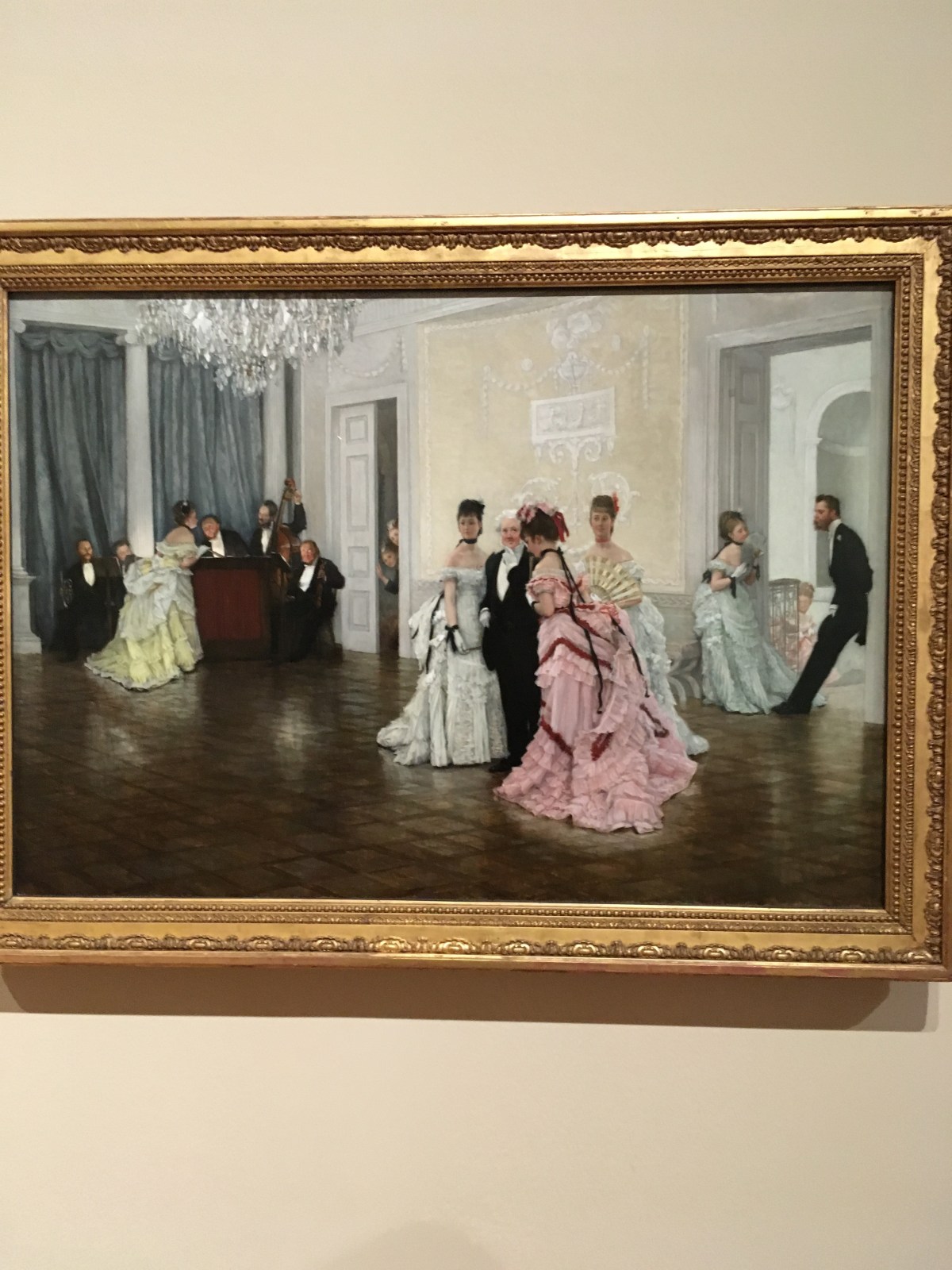
Tissot seems to have swiftly recreated his successful lifestyle in London establishing himself as a society portrait painter but also a recorder of aristocratic soirees and depicting wealthy people enjoying the finer things of life. But I was amused by a painting he made called Too Early, showing the blushes of the enthusiastic guests who have arrived FAR too early for a posh ball at a smart town house.

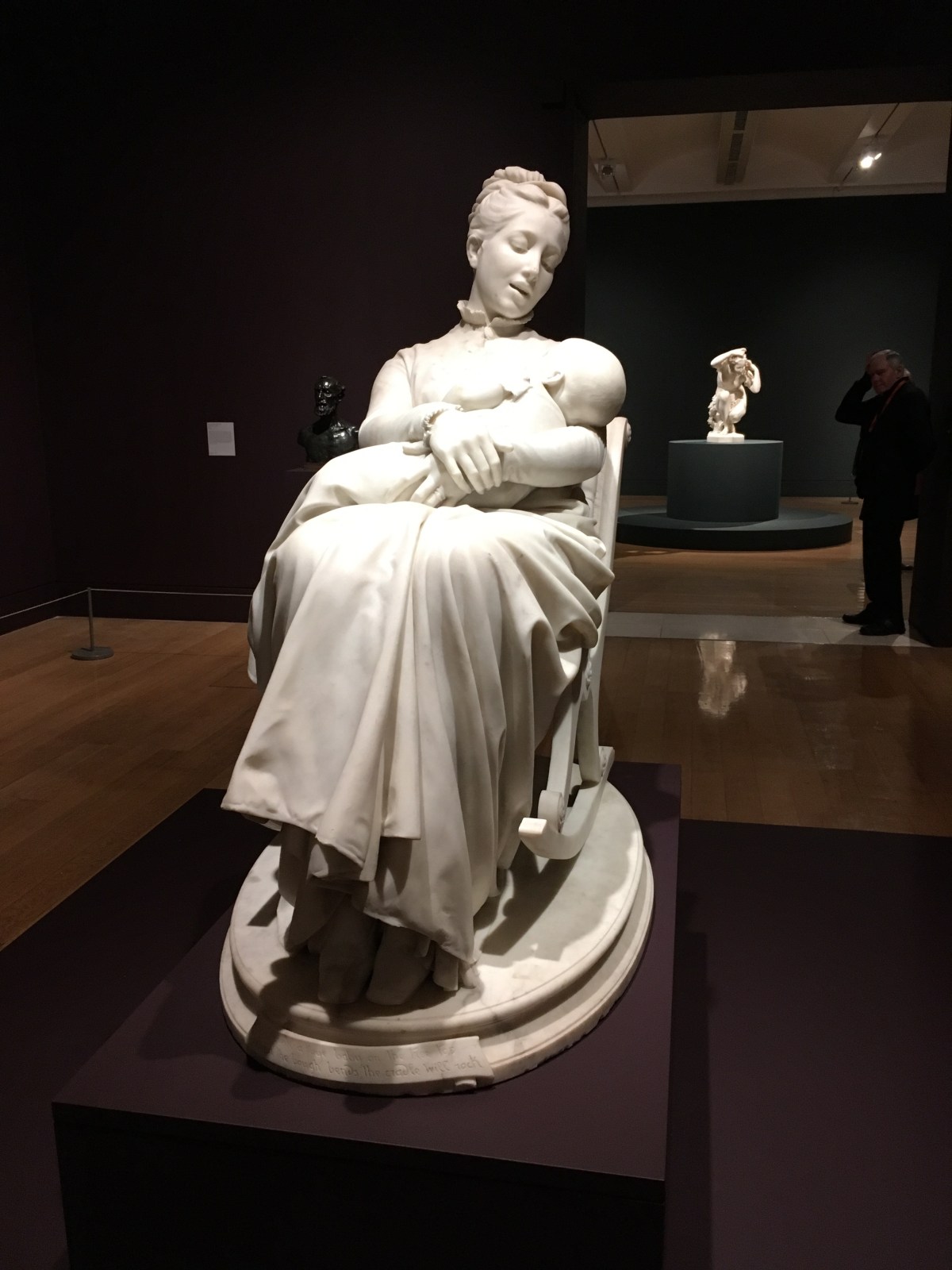
IMG_7916The exhibition introduced me to artists I confess I was unfamiliar with too: Alphonse Legros, Jean-Baptiste Carpeaux and Jules Dalou are all spectacular sculptors.  This marble sculpture of a mother with her baby, entitled La Berceuse (the Rocking Chair) by Dalou is intensely moving and a joy to walk round.
IMG_7922 (2)The exhibition concludes with three works by Andre Derain.  Much younger than the established Impressionists, and arriving more for professional advancement than apparent flight from persecution, he brings a refreshing sense of colour and abandonment to his depictions of London. I really love the brightly coloured riverscapes which fill the final room. It’s a splendid send off from a show which is not only a visual joy but thought-provoking and historically fascinating.

The EY Exhibition: Impressionists in London runs from 2 November 2017 to 22 April 2018.  http://www.tate.org.uk

Cézanne Portraits – a magnificent exhibition of portraits and self-portraits at the National Portrait Gallery

It’s always a pleasure to see exhibitions of work by Cézanne and the exhibition of portraits which has opened at the National Portrait Gallery delivers on many counts.  When a show includes several portraits we’re familiar with from permanent collections in London galleries it’s a bit like encountering an old friend at a party:  “Oh, good morning M. Cézanne, good to see you again, I recognise you from your portrait at the Courtauld Gallery, but, goodness me, there’s a similar one right next to it which has quite a different feel and atmosphere.”

He produced 25 self-portraits and a good selection are on show here. It’s always fascinating seeing the progression of face, the ageing process and the gradual setting of features.  The notes on the wall claim that Cézanne was only interested in representation – enough of a likeness to make a person recognisable but that he wasn’t bothered with the psychological side of painting or in demonstrating a subject’s work or interests.  I think there definitely several exceptions to that claim.   The most frequently painted subject was Hortense, his wife.  We see her change from modest young woman to weary wife to rather vacant-looking older lady.  He was clearly fascinated by her face and captured her innate stillness very well.

There’s a chronology to the show – we shift from his early days in Aix-en-Provence to Paris and the world of the post-impressionists, of which he was a leading light, and then back to Aix and portraits of the ‘peasants’, the country folk he lived amongst.  I have to say, I really like those pictures. I could stare at his quick oil sketch of The Gardener Vallier for hours, revelling in the beguilingly simple strokes which capture the man’s figure and the sensation of dappled sunlight as he poses for the artist.  Then there’s the portrait of the farm worker with the pipe and the hat – who worked on the estate of Jas de Bouffan – and he features in the glorious card players pictures.

It’s fascinating to have the chance to look close up at the techniques he used.  The early whoosh of brush strokes gives way to the palette knife and thick smears of paint on canvas before he moves onto the development of smaller, more urgent brush strokes in a downward or diagonal direction which build up layers of colour and tone.

This show is an absolute joy for anyone interested in Cézanne, in portraiture, post-impressionism or simply the evolution of one of the most influential painters of the late 19th century.

It’s on at the National Portrait Gallery until 11 February 2018.


“Something Resembling Truth” – a retrospective of Jasper Johns at London’s Royal Academy of Art. At 87, he is regarded as America’s leading contemporary artist and one of the most influential artists of the twentieth century.

The flag, the flag…  It’s such a familiar symbol to all Americans, seen fluttering outside homes and hanging at the front of every school classroom for children to ‘pledge allegiance’.  And how clever of Jasper Johns to take the stars and the stripes and turn the symbol into a piece of abstract art which also celebrates the surface texture of encaustic (a mix of molten wax with pigment) and mingles it with bits of newspaper collage to create a beguiling and mesmerising artwork.  His aim was to jolt the viewer out of the stupor of familiarity and make the image into a piece which must be really looked at.

He did the same with numbers and letters, creating hundreds of canvases which took the familiar symbols and layered and subverted them into further abstract shapes.  I really enjoyed seeing examples of this early work. Most of these pictures were made in the 1950s and 60s when he was living and working in New York.  He continued to revisit the motif of the flag throughout his career.

His longevity is demonstrated by the vast amount of work from every decade which fills the Main Galleries at the Royal Academy of Art. Always interested in texture and gesture the canvases convey an artist of great energy eager to explore just how far he can manipulate and test the medium of oil, encaustic, charcoal, print and, rather later, introduce objects into his works. Once he finds a style he seems to run with it until it is quite exhausted. Throughout the exhibition there is a feeling of recycling, repetition and revisiting of early ideas. He absorbs and interprets the work of other artists, too. The later works don’t carry the ‘kick’ of the early paintings but it’s still fascinating to see the evolution of an innovative artist who has been one of the great artistic influences of the twentieth century.


Anyone with a passion for paper should check out the House of Wallpaper in Soho which is part of the London Design Festival

If you’ve ever wondered how wallpaper is designed and made, how the colours are mixed and the patterns matched….. well, you can find out if you pop down to 19 Greek Street in London’s Soho and explore the many floors of the ‘House of Wallpaper’. This beautifully papered dwelling has been taken over by Graham & Brown, the UK’s leading wallpaper manufacturer. They’re based in Blackburn and have made a special journey south to be part of this year’s London Design Festival.

From the decoration of the walls to the narrow staircase, wallpaper has been creatively used to show how much fun papering a parlour can be and how cool the result can look.

I loved watching a wallpaper designer in action and having the chance to see some of the vintage designs which brightened up the country’s homes after the Second World War when paper was hard to come by but the stalwart paper makers, Mr Graham and Mr Brown, were not deterred and invested in an eight-colour surface print and an embossing machine.

The rest is history.  Graham & Brown have become the country’s wallpaper design gurus, creating a ‘cool brand’ and collaborating with some of the world’s leading designers.

IMG_7329


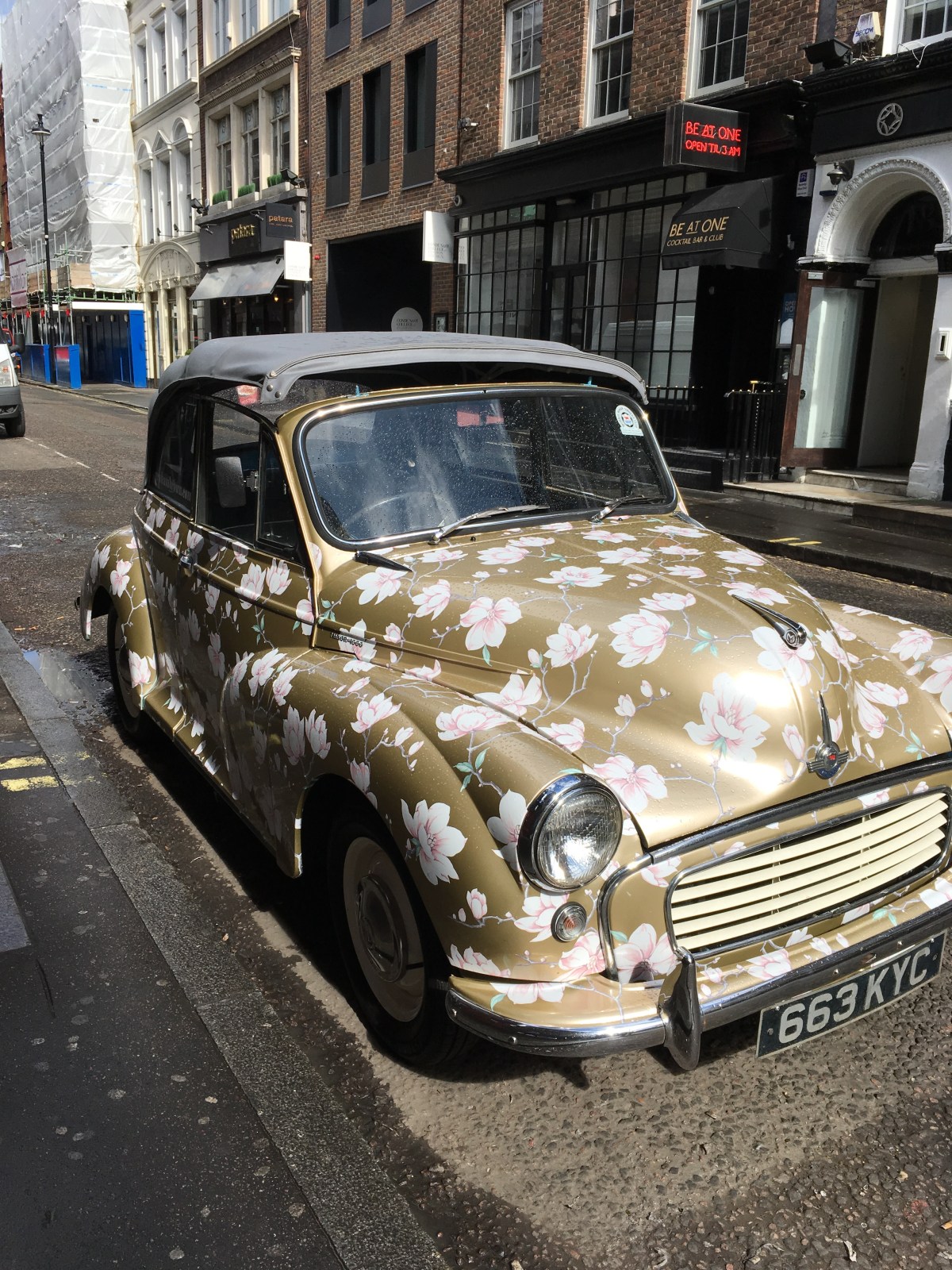
To tempt visitors to this excellent show a natty little car, perfectly papered in the trendy ‘Pierre’ wallpaper of the year, is parked outside 19 Greek Street.

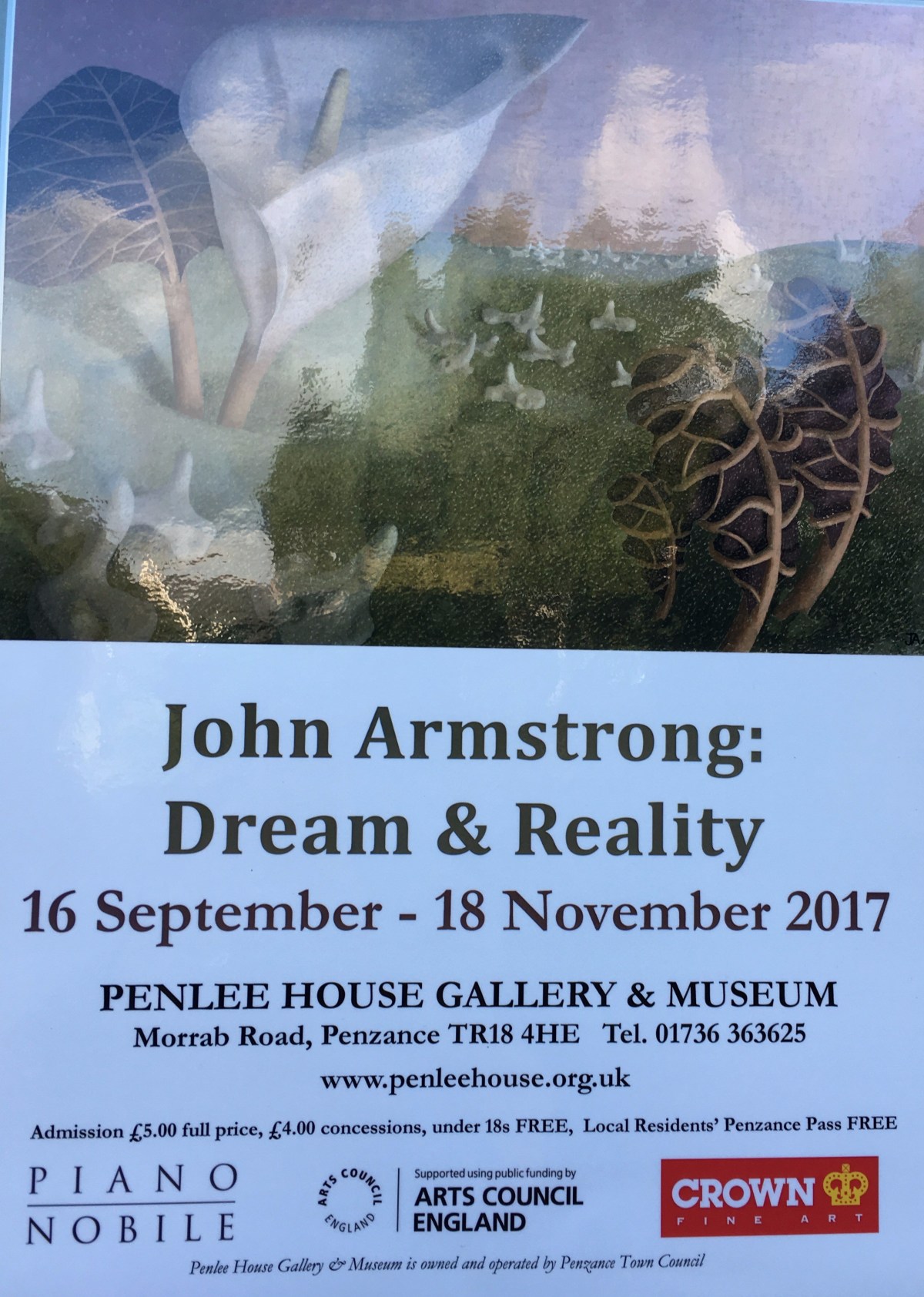
John Armstrong: Dream and Reality – a fabulous retrospective of this enigmatic artist on show at the Penlee House Gallery in Penzance until 18 November.

The Penlee Gallery in Penzance feels like a long way away if you don’t live in Cornwall but it’s well worth the visit to the tip of England to see a rare and wonderful show of works by the remarkable artist, John Armstrong.   A contemporary of Paul Nash and Eileen Agar, his artistic career embraces  range of styles and he was clearly a painter who never ‘stood still’. Always pushing, always enquiring, his work represents the fragility of the human condition and contains a palpable sense of yearning for a world where violence and threat does not define us.

IMG_7269

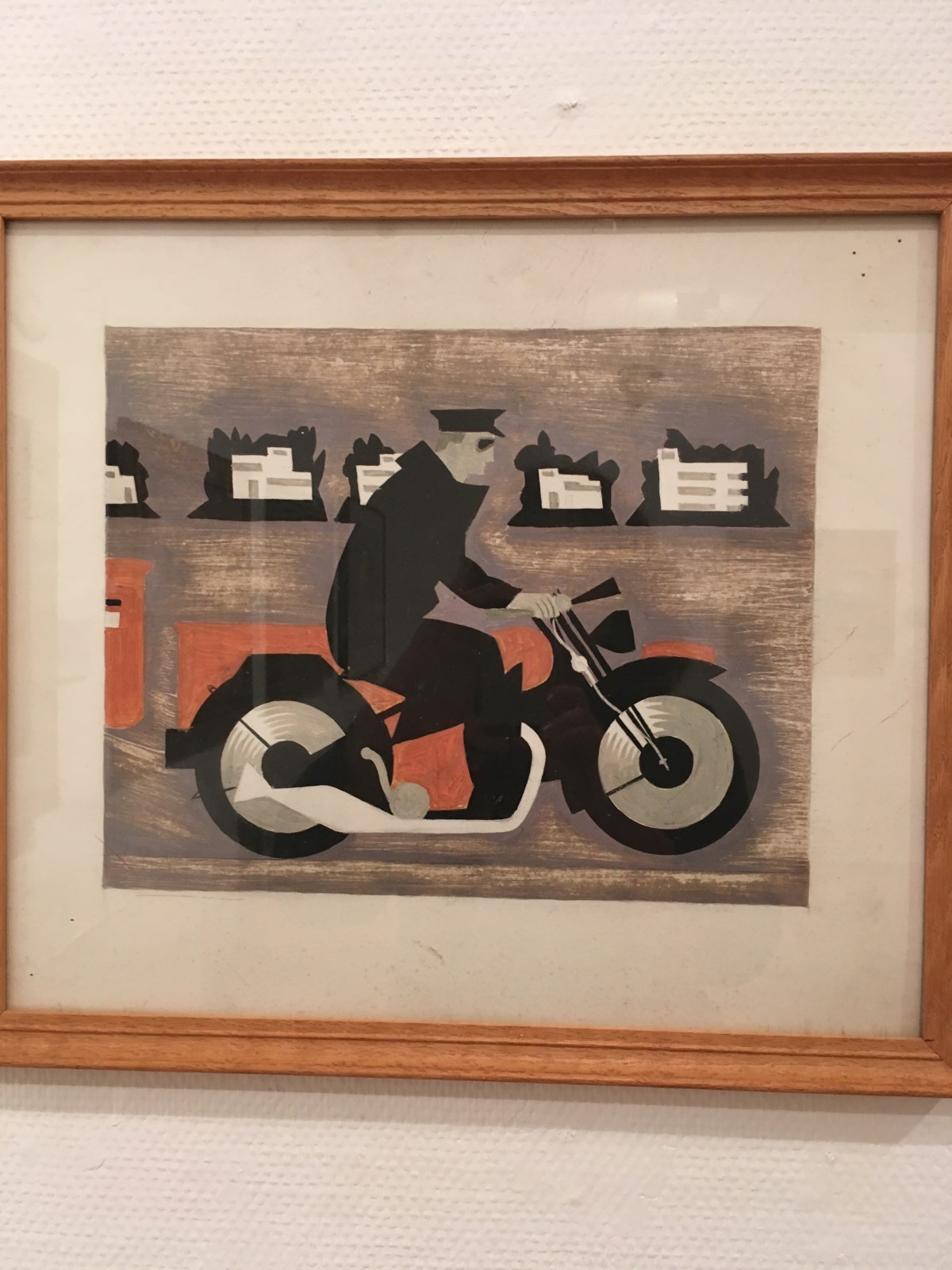
Armstrong was an intellectual painter, anxious to express his ideas, fears and beliefs in pictures but he was also a successful commercial artist.  He was one of several artists of the first quarter of the 20th Century to be commissioned by Shell to create posters representing forms of travel, before and after petrol revolutionised the way we get around.  He was also a favourite designer of film maker Alexander Korda with whom he worked on costume and set design for films with Charles Laughton such as Rembrandt, The Private Life of Henry VIII and I, Claudius.

IMG_7268

This exhibition gives a very comprehensive view of his artistic career as it moved from clever, stylised and figurative work to thoughtful surrealist works, notably the Icarus pictures which depict the ambitious young man who created wings yet flew too close to the sun and crashed to the ground.  A metaphor for human ambition. He was also keenly moved by the destruction of the First and Second World Wars.

downloadIMG_7267

Coggeshall Church, Essex 1940 by John Armstrong 1893-1973


I particularly liked the picture of the daffodil farmer, the featured image, which captures a location in Cornwall where Armstrong lived for 10 years. There’s a Breugel-like feel to this vertiginous picture showing the farmer labouring on the steep hills below dramatic rock formations and the churning sea below.

As I said, it’s a long way to go but well worth the journey.  The show is on until 18 November 2017 at Penlee House Gallery & Museum, Morrab Road, Penzance TR 18 4HE   http://www.penleehouse.org.uk

img_7260.jpg

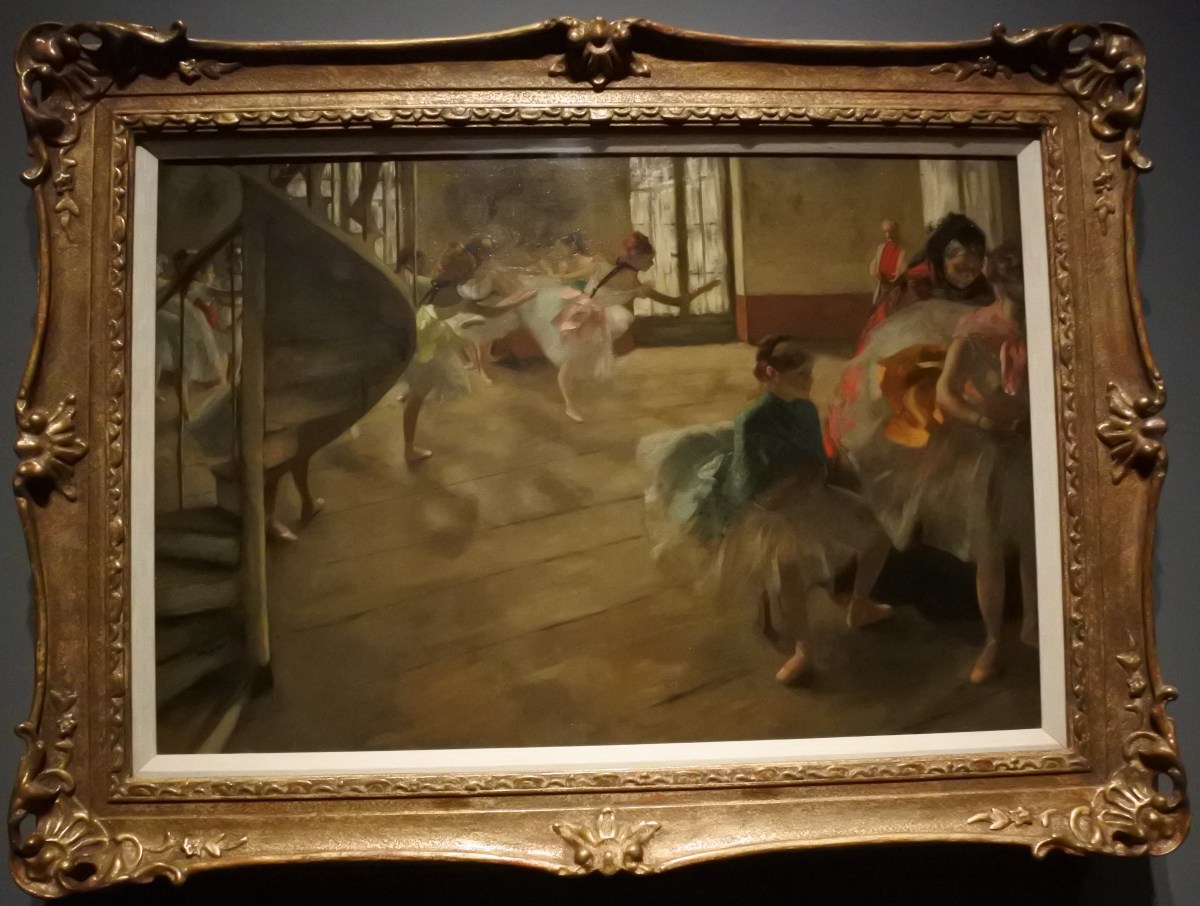
Drawn in Colour – Degas from The Burrell. A glorious glimpse of the great artist’s pastels, drawings and oil paintings at the National Gallery

DSC_1923

Hear the name Degas and it’s pretty likely that you’ll conjure up images of  ballet dancers in your mind’s eye.   And it’s true, the world of dancers must have been an obsession for him. What he saw in the rehearsal rooms and cramped backstage areas and theatre wings was an authentic form of life-drawing.  When posing for artists, models will find a position which is comfortable and sustainable for a long time.  Clearly, what Degas liked was natural movement (the kind which photographers were later able to capture) and he must have melted into the backstage world, in the way a ‘fly on the wall’ film crew would these days, to observe movement and capture it in sketches.

What I didn’t know was that Degas often used to reproduce his drawings directly from his sketchbooks onto tracing paper. Now, tracing paper is not a great surface for pastel, his preferred medium, but he found a clever way to get over that issue.  He created layers of pastel and found a way to fix the dusty pigment with fixative (made to a secret recipe) and just kept building up the layers.  The results are very painterly and, from a distance, it’s quite hard to tell the difference between the oil paintings and the pastels.  But he uses the lines of pastel in a strong and gestural way.The collection at the National Gallery for this show, Drawn in Colour, makes fulsome use of pictures from the magnificent Burrell Collection.  Mingled with existing National Gallery pictures it’s possible to read the progress and passions of this tremendous artist. As well as the dancers there are the enigmatic and quite beguiling images of women bathing – again, the question arises, did these women pose, were they happy for the artist to observe them in their baths (great saucer like dishes) in intimate activity.

It’s great to see some of the horse racing pictures and sketches too.  The challenge of capturing subjects which never stay still must be really something but he manages to create a sense of strength, anticipation and harnessed speed within the figures champing on the grass, being maintained by their jockeys.   The show is also a tribute to the extraordinary eye of Sir William Burrell (1861 – 1958) who had the foresight and funds to amass one of the UK’s greatest private art collections.

The show is on at the National Gallery in the Ground Floor Galleries until 7th May 2018. Admission Free.


Check out these adorable papier-mâché figures wearing the National Costumes of Russia and the former Soviet Union.

I wonder how many people have seen little papier-mâché dolls like this? They are ‘family heirlooms’ to me.  I have adored them all my life.  They were bought by my parents when they lived in Moscow and have been a feature of family dinner party tables, Christmas festivities and random decorations for years.  There are sixteen little dolls, just 4inches/10cm in height, which spend most of their time lying in a cardboard box still wrapped in their original tissue which has been furled and unfurled so many times that it’s become exhausted and fragile to the touch.  Each little figure is dressed in the national costume of their country. In the picture above we have: Ukraine, Uzbekistan, Moldavia and Kazakstan.

Turkmenistan, Estonia, Tadzhikistan and Belorussia

Left to right: Turkmenistan, Estonia, Tadzhikistan and Belorussia

Latvia, Azerbaidzhan, Russia and Georgia

Left to right Latvia, Azerbaidzhan, Russia and Georgia

Lithuania, Kirgizstan, Armenia and Karlo-Finnish

Left to right: Lithuania, Kyrgyzstan, Armenia and Karelo-Finnish

These little dolls are robust and feisty; their colours are so vibrant and pure (probably thanks to spending so much time in their box).  Clearly they’ve all been hand-painted and and delicious little details such as flowers in their the hair, long plaits, little feathers, veils, hats and headdresses have been painstakingly added.

Of course, as a child, I had no idea that my passion for paper would propel me into a business of my own, Papershades and Paperface and that my art would be made largely from paper later on.  At the age of 12 I created portraits all of the ladies in watercolour and crayon on paper and stuck them onto a map of the Soviet Union I’d created. It was lovingly framed up and given to my father, Richard Freeborn, Professor of Russian Literature at London University, as a present. He hung it in his room at the Senate House in Bloomsbury. When the room was repainted the picture was taken down and propped against a corridor wall. It was stolen and never seen again.  I sometimes wonder whether the picture is out there somewhere, hanging on a wall.  I hope whoever now owns the ‘Russian Ladies’ enjoys it as much as he did.

However, I still have the originals and now feel moved to create some new paper art which incorporate impressions of these glorious little figures.

Matisse and the inspiration of ‘actor-objects’ – at the Royal Academy of Art

I knew that Matisse was a prolific and eclectic collector of objects but it’s still fascinating to see how his beloved objects found their way into his paintings. It’s a tribute to the Matisse family that so many of these studio props and family heirlooms have survived, been cared for and have been allowed to travel to London for us to view, along with some of the artworks they feature in.

I think we’ve all felt that powerful jolt of recognition when you look at an old photo of a place, people, clothes and objects which meant so much when they were new. It doesn’t take long for an object to become a cherished item and become fixed in memory. Matisse clearly had an eye for unusual design, for curiosities, objects with a built-in narrative or simply made from wonderful materials with striking shapes, textures and style. He would write to family and friends of his delight at finding weird and wonderful things in antique shops and markets.

This exhibition places objects from Matisse’s studio with works which feature them and although it’s interesting to see the things for real, it’s what the artist does with them which is the most interesting aspect of the show.

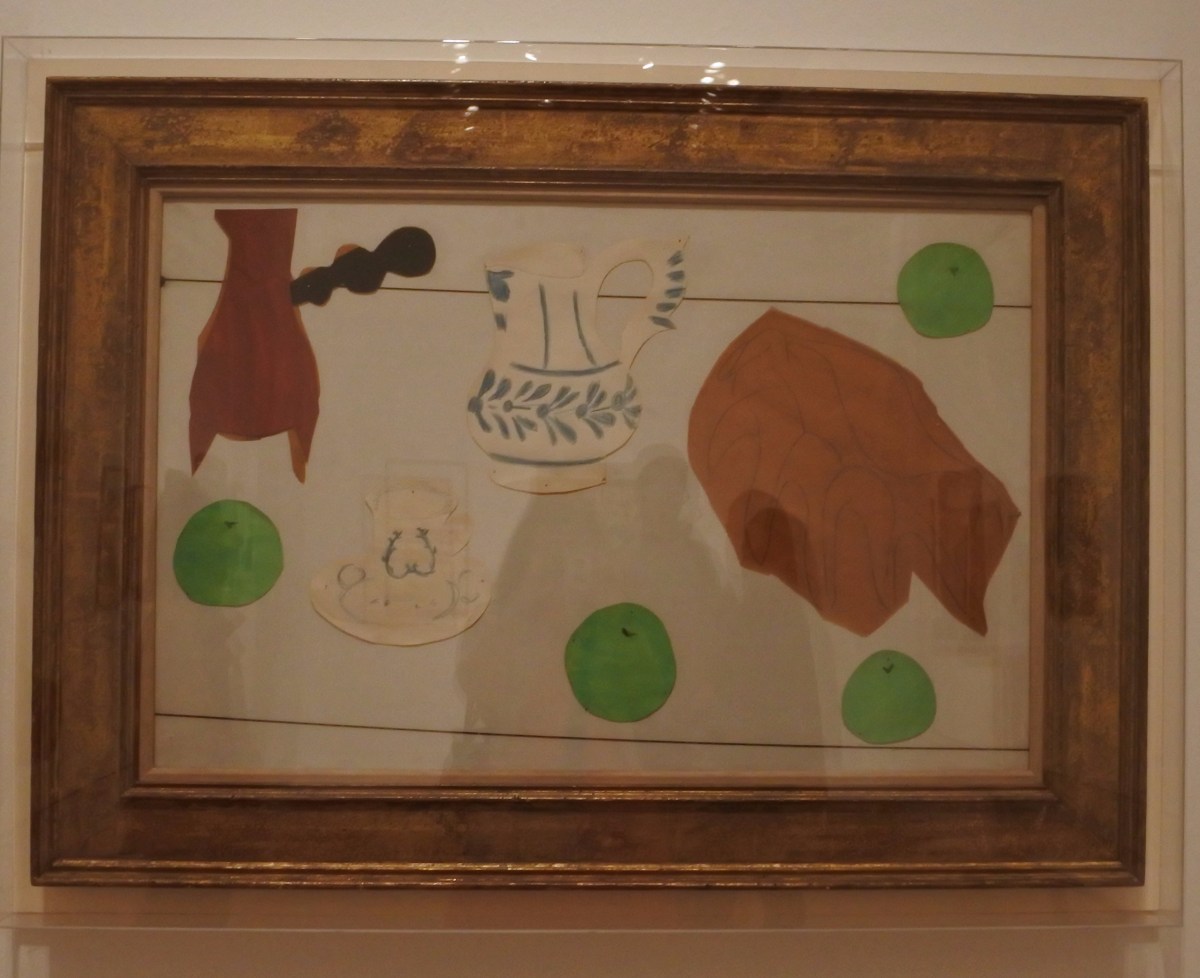
For example, a chubby little silver chocolate pot, which appears in several still life paintings, was included (painted in brown) in a collaged ‘dry run’ where Matisse moved the objects around on paper before pinning them into the chosen composition for later painting in oil, when it become red – much more interesting!

dsc_1841.jpg

dsc_1842.jpg

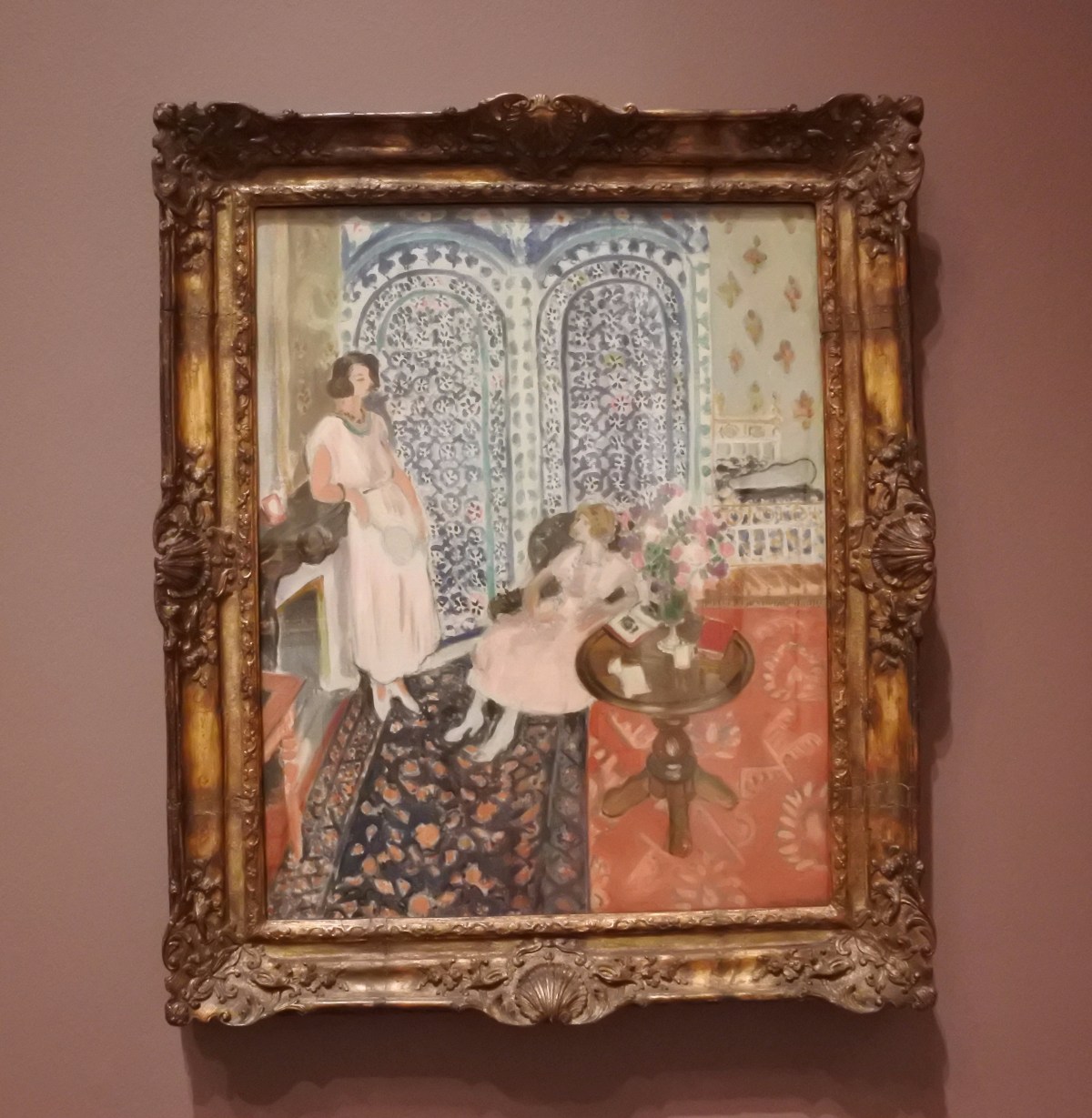
There’s a nice selection of those famous odalisques lolling amongst an arrangement of assorted north African and Turkish furniture plus Moorish fabrics and ornaments which surround and adorn the female figure.  With such a crowded set piece to paint you might imagine there could be a danger of overcomplicating the scene but Matisse is very skilled at introducing just enough detail to indicate what is going on and uses paint freely and with gusto to indicate colour, texture and form.

DSC_1852

Of course I was particularly drawn to the paper cut outs, his later works where he experimented with colour, shape and abstraction.  It takes amazing confidence to lay down strong colours, snipped out designs with a representation of a mask in one called The Eskimo; gouache on paper, cut and pasted.

What this show illuminates is the way an artist’s mind can find creative newness from the comfort of familiarity fuelled with the desire to push his work into a new dimension. The show is at the Royal Academy in Piccadilly until 12th November 2017.

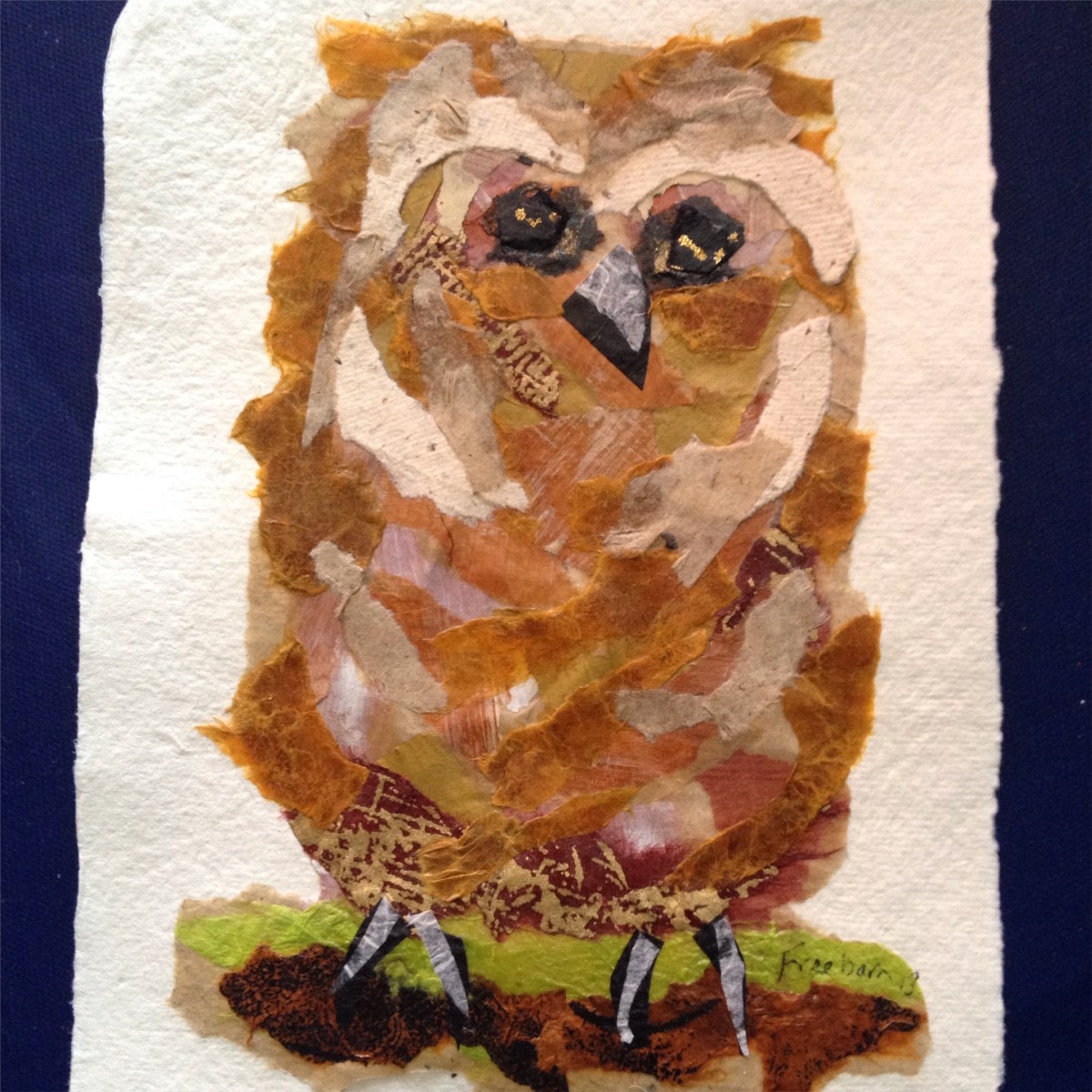
Whoo Hoo! Can owls be made from paper collage? Of course they can.

There’s something utterly addictive and attractive about owls.  You don’t mess with owls – they possess wisdom, camouflage, cleverness and those huge eyes are totally adorable. And baby owls are just charming bundles of fluffy feathers.

IMG_7349

So, what could be nicer than making an artwork of an owl made from paper?  When I was invited by the Stroud Green WI to run a collage workshops I wondered what would be the best thing to do. There wasn’t enough time during the Women’s Institute evening to make a Papershade, but everyone wanted to try their hand at snipping or tearing paper to create something.

I looked around the walls of my studio and noticed an owl I’d made a few years ago staring back at me. It almost looked smug with that ‘how long did it take you to think of me’ sort of expression.  How could I resist; so owls it would be.

The first stage in this process was having a joyful excuse to go to the wonderful paper shop, Shepherds in Pimlico, to find some excellent paper.  I bore home my loot and in my studio I created piles of paper including, tissue paper, wrapping paper, brown paper, thick hand-made paper and wallpaper.

I took everything down to Stroud Green where the wonderful ladies of the WI have their meetings.  After a bit of chat, a view of some examples and exploration of some ideas everyone got straight down to it.  The sound of silent concentration was deafening! I was dazzled and delighted by the variety of owls produced.  Yes, I prepared a template and the paper but the rest was up to the individual ….and individual is the word!

What a fun evening spent with some lovely and creative ladies.  Anyone can make a collage owl – oh yes!