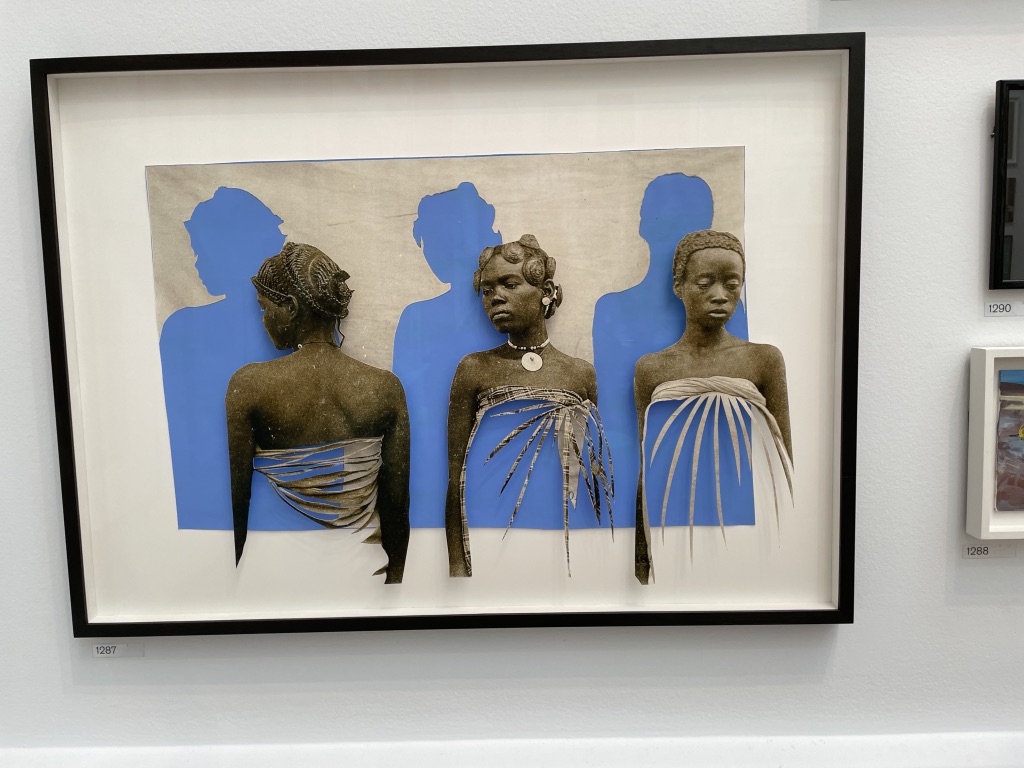
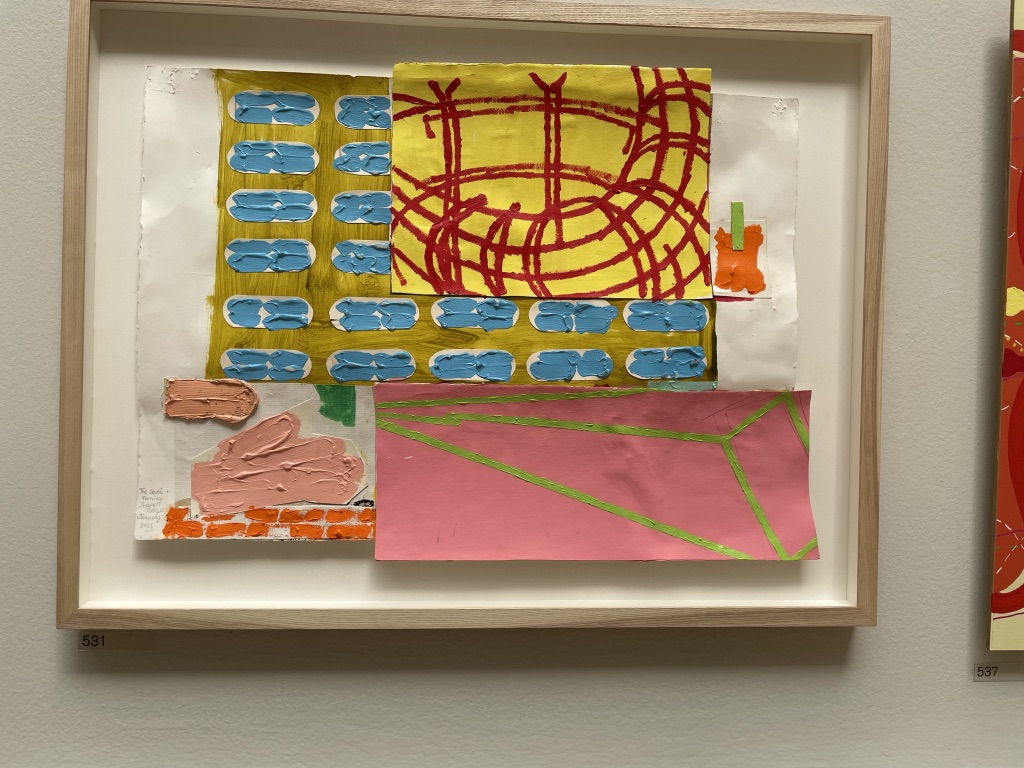
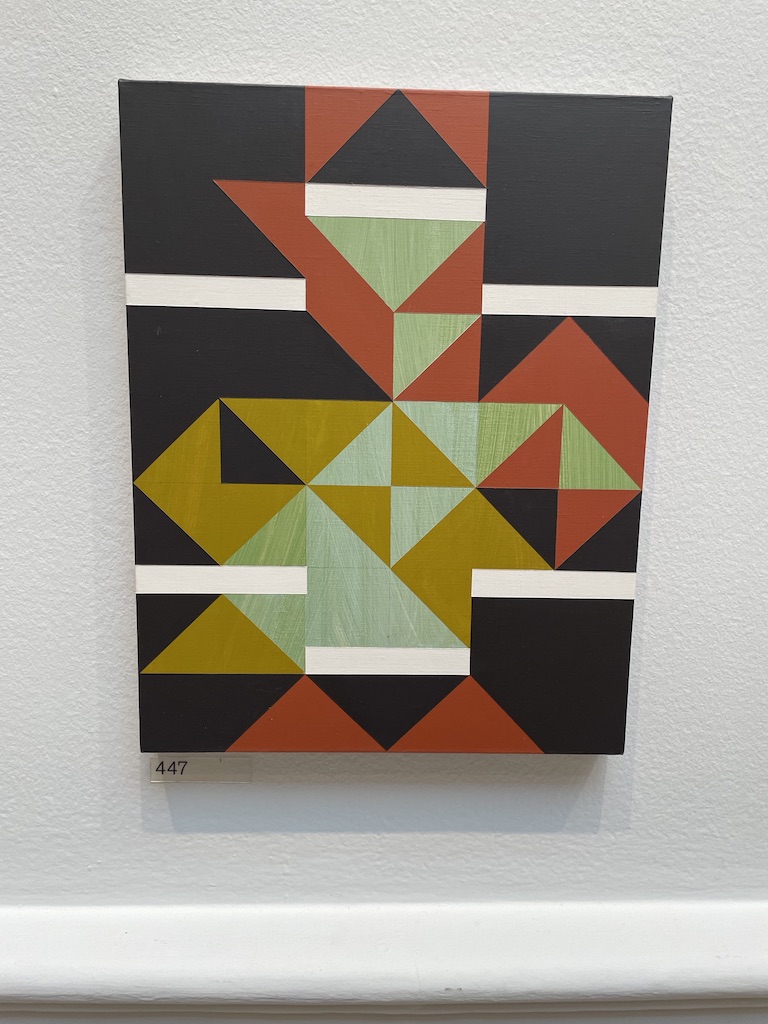
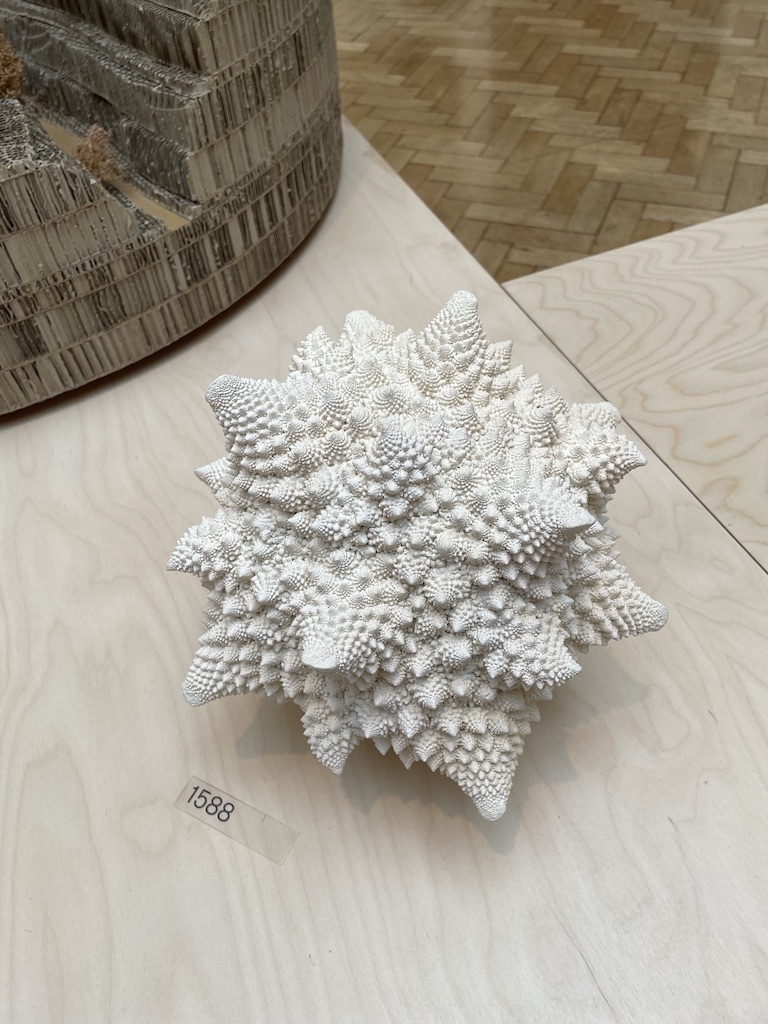
Above: Turning and Static by Stephen Cooper, Before the Rally, Jim Dine HON RA and Japanese Records and Responses No. I by Susan Marston.
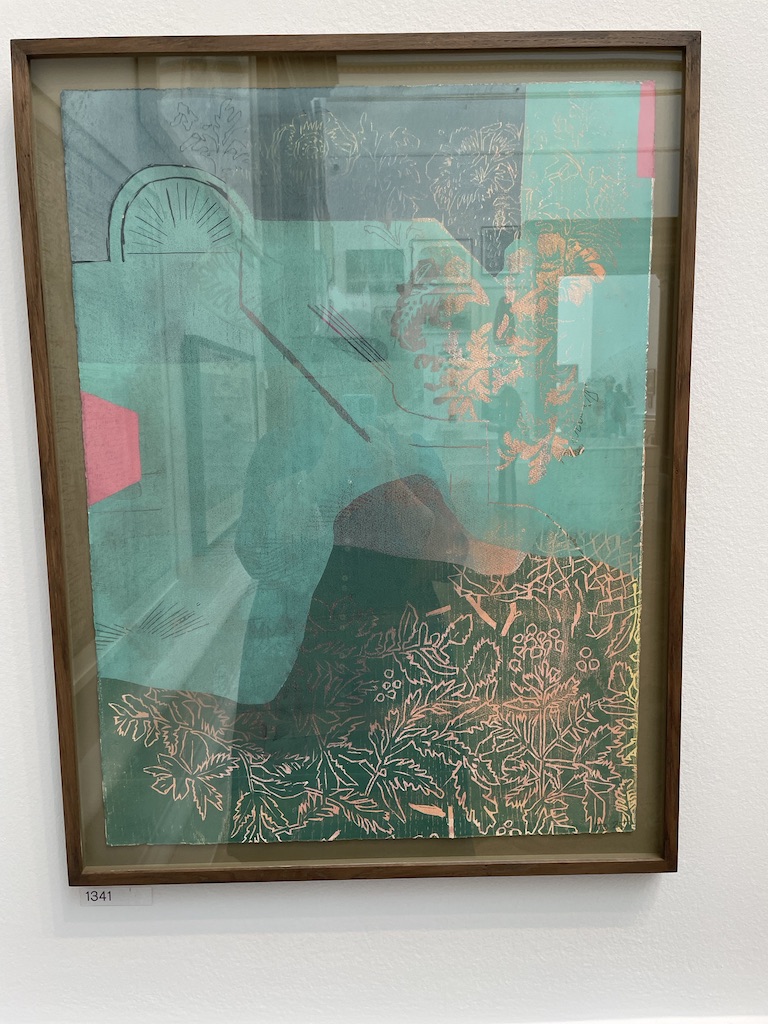
I’m always keen to spot works on paper, using paper or mixed media. I didn’t see as many examples this year but it’s a pleasure to come across imaginative use of paper and print.
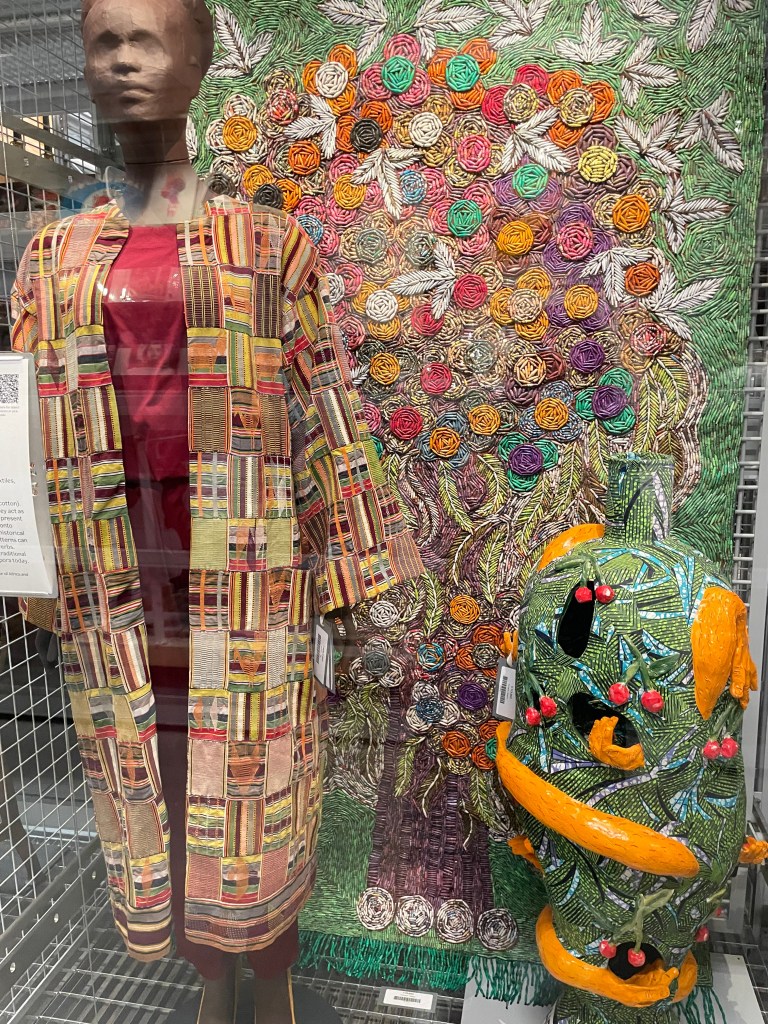
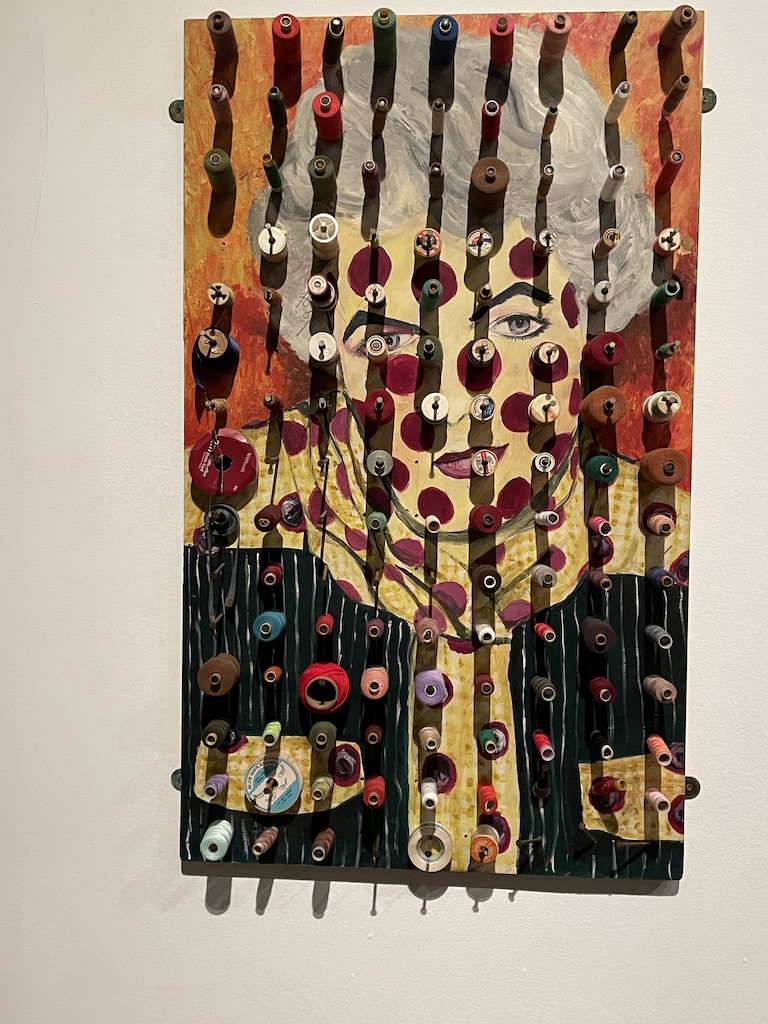
Fun to see work made by friends. On the left is Francesca Simon’s abstract: Goaf Transition and on the right is We Can be Heroes by Helen David made with felt and beads.
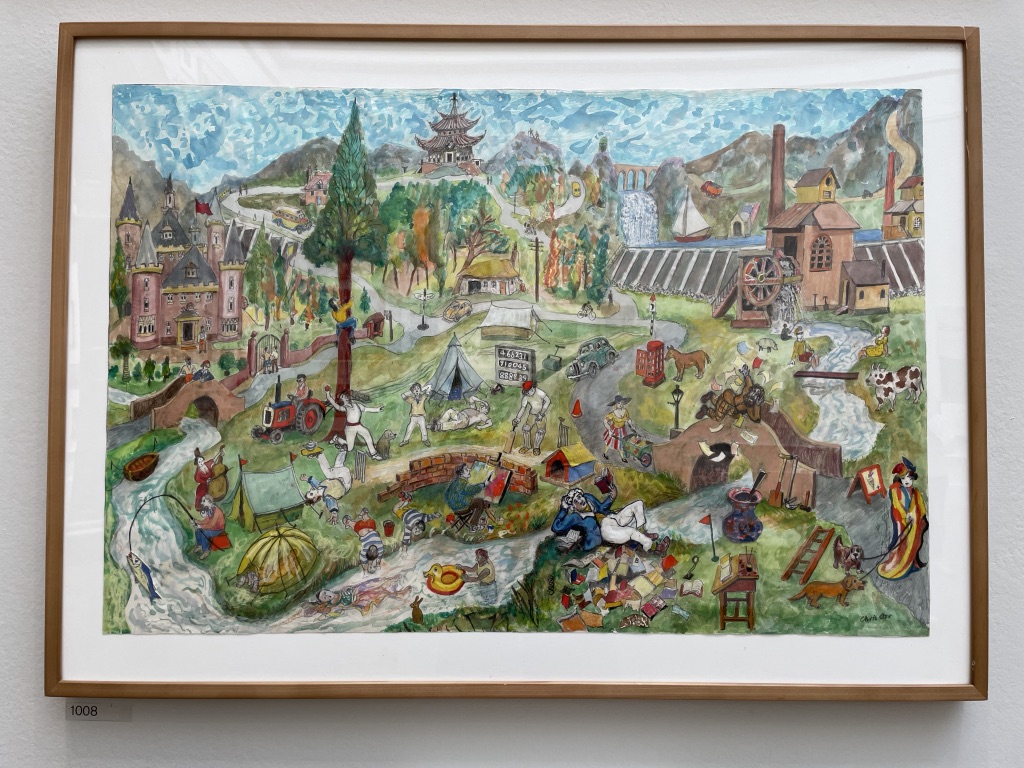
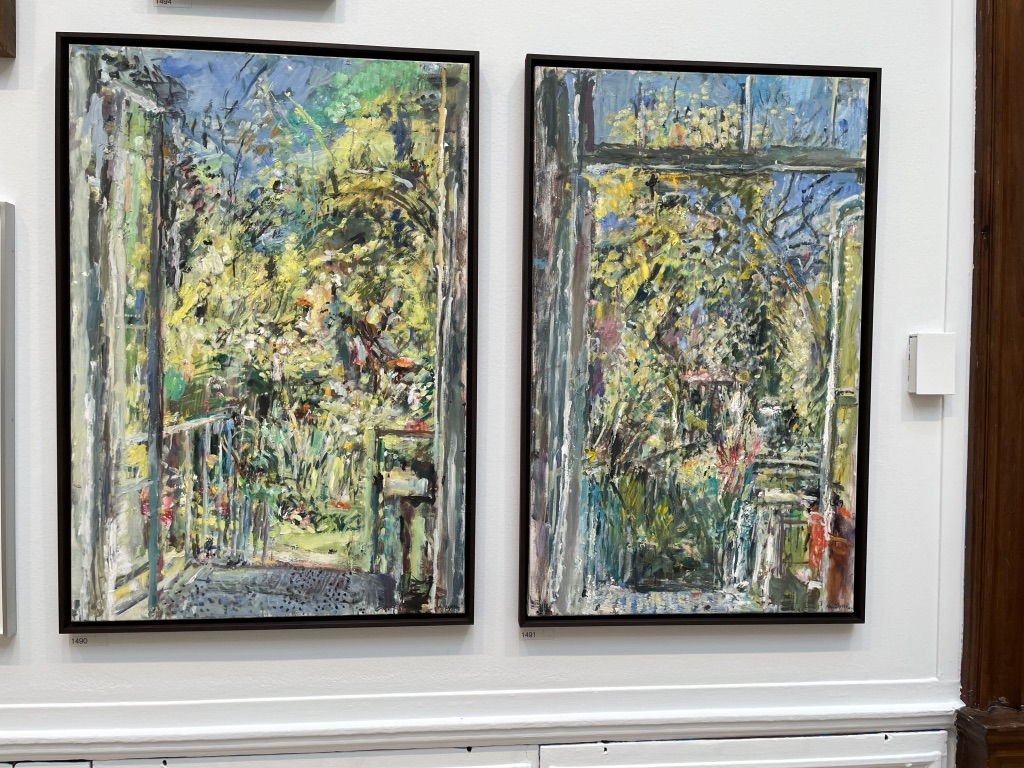
I enjoyed the lively narrative landscape by Chris or, the crazy cat map by Adam Dant and two cheerful pictures of the back door by Anthony Eyton RA.
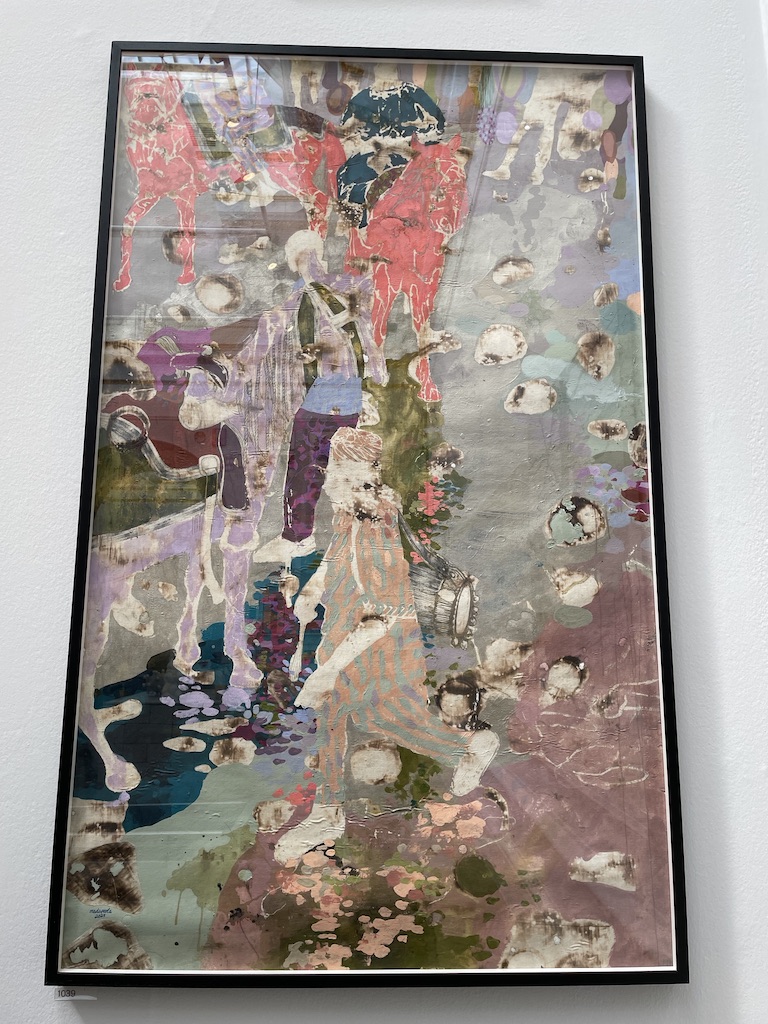
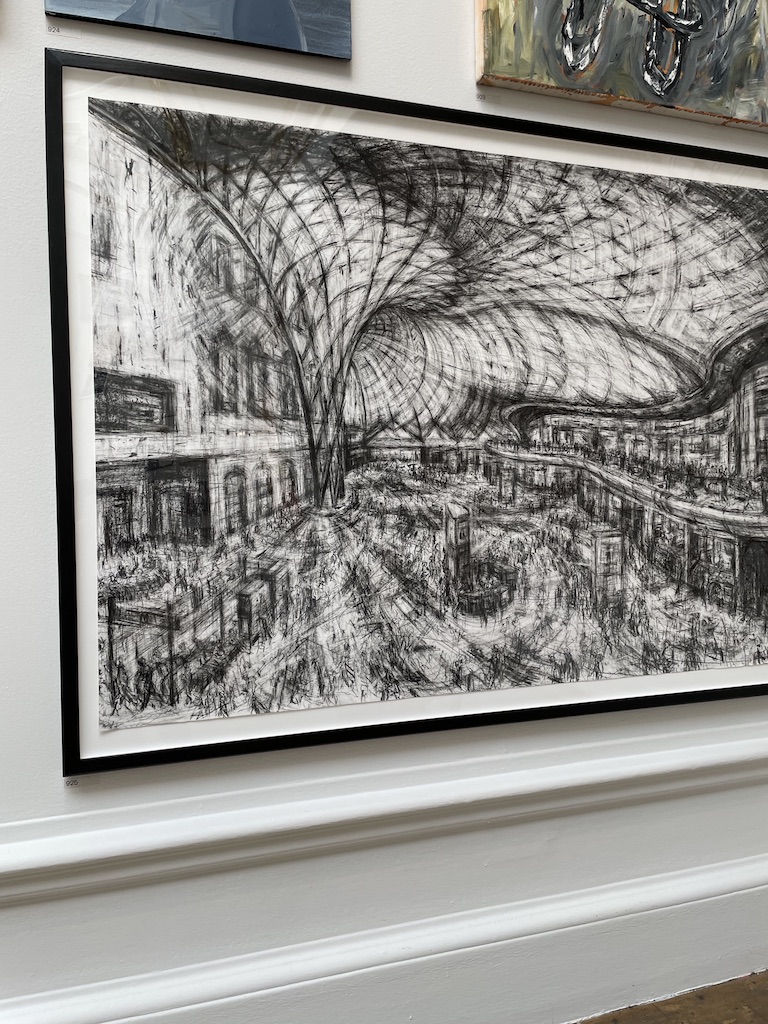
Above: Top left The Drummer Boy Modupeola Fadugba, Song Thrush by Humphrey Ocean, Curio XI by Alison Atkins Bottom left: Kings Cross Interior II Jeanette Barnes, Trace by Holly Schofield and a very bright landscape by Andreas Ruethi called La La Landscape (Coullioure)
And finally, a very entertaining paper sculpture by Jane Hewitt named Dialogue with God, made of a recycled hymnal.
As ever, there is much to see, much to ponder and also entertain. Let’s hope all the artists find new homes for their pieces.
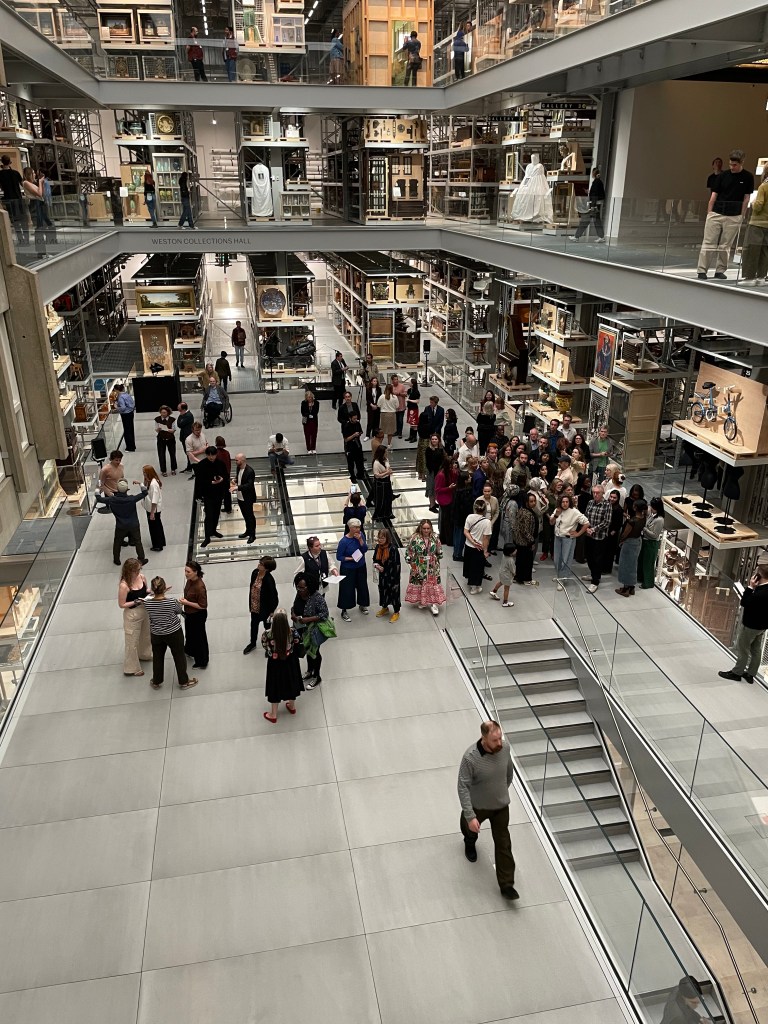
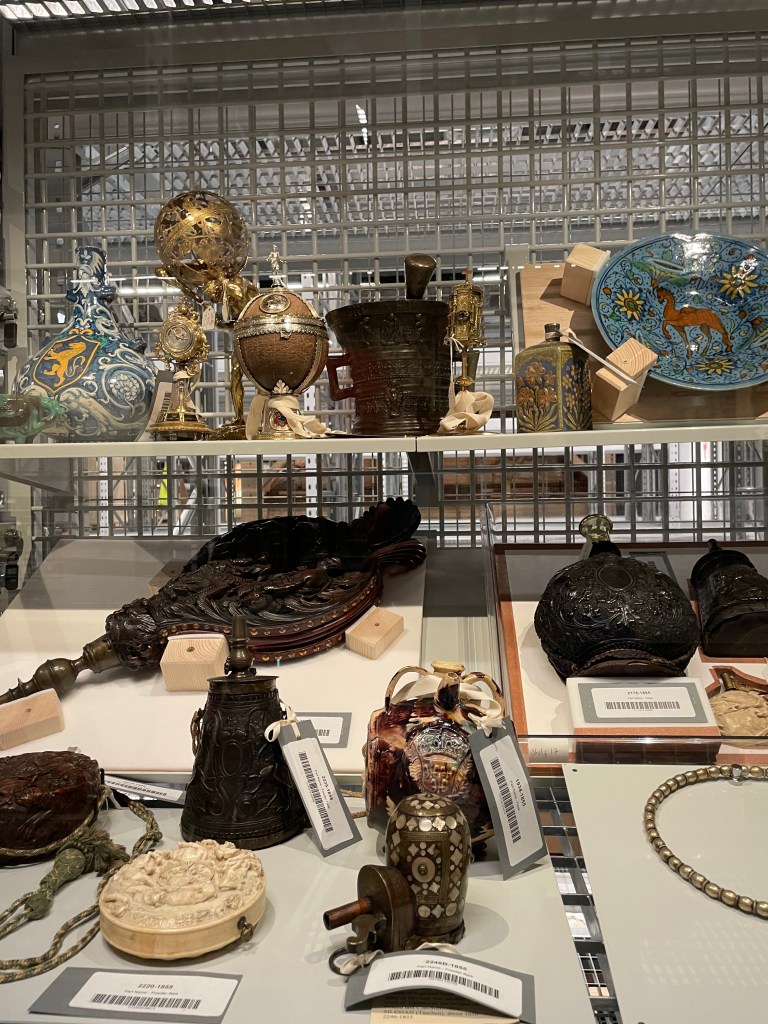
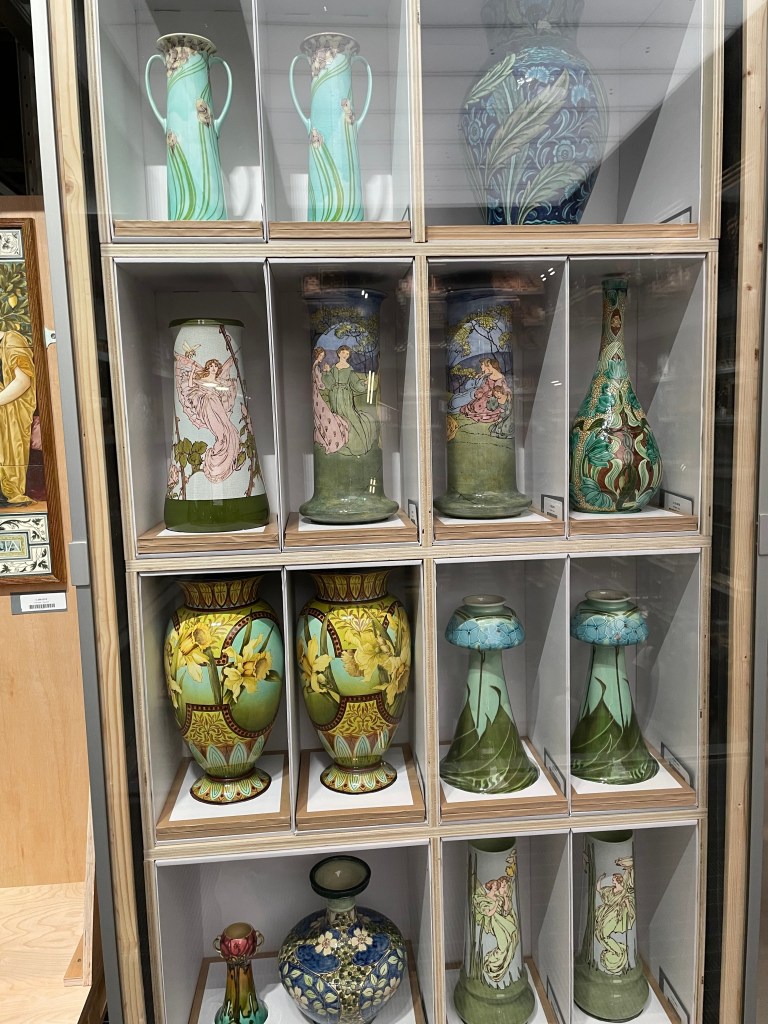
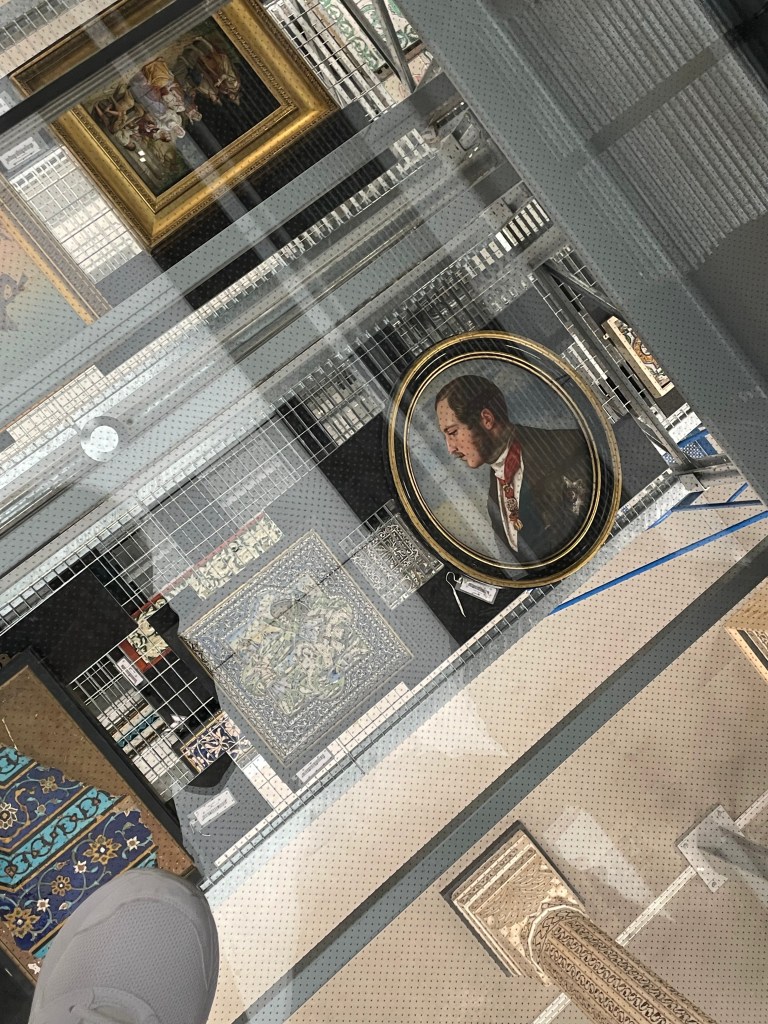
What a thrill to be part of the press preview at the opening of the new V&A East storage space in east London. It’s a most dynamic space – the most extraordinary storage unit ever imagined. There’s easy access to all the objects; they are not only on display, but if there’s something you are keen to see close up, you can make an appointment, come to the space and see it close up in the company of a curator.
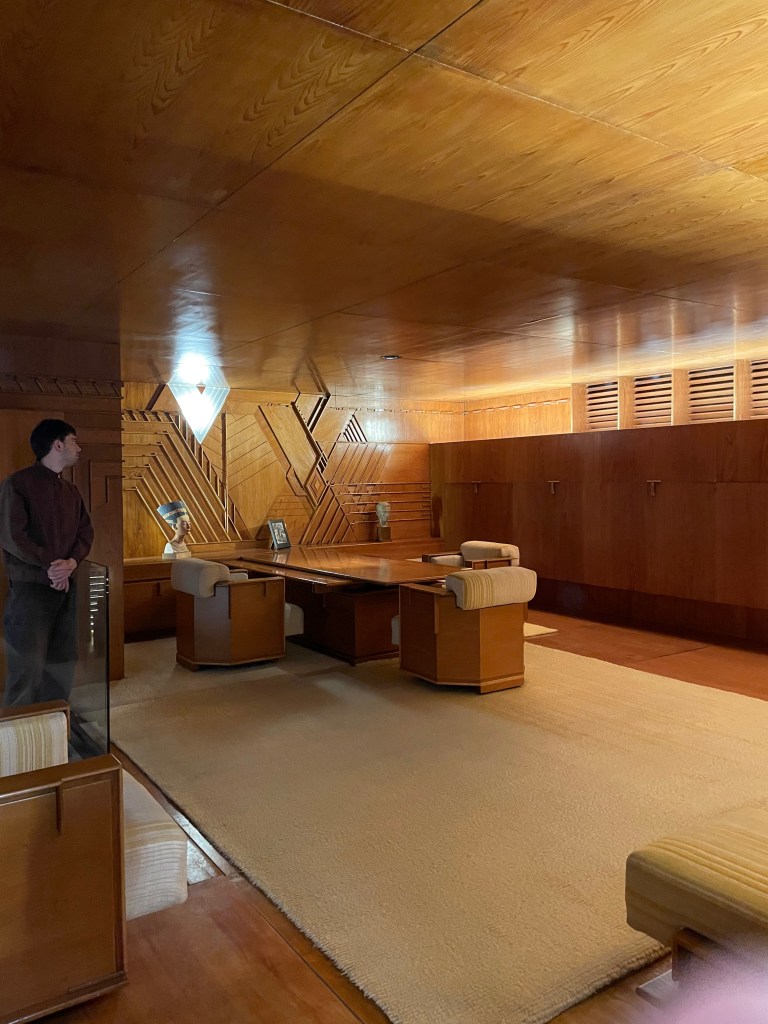
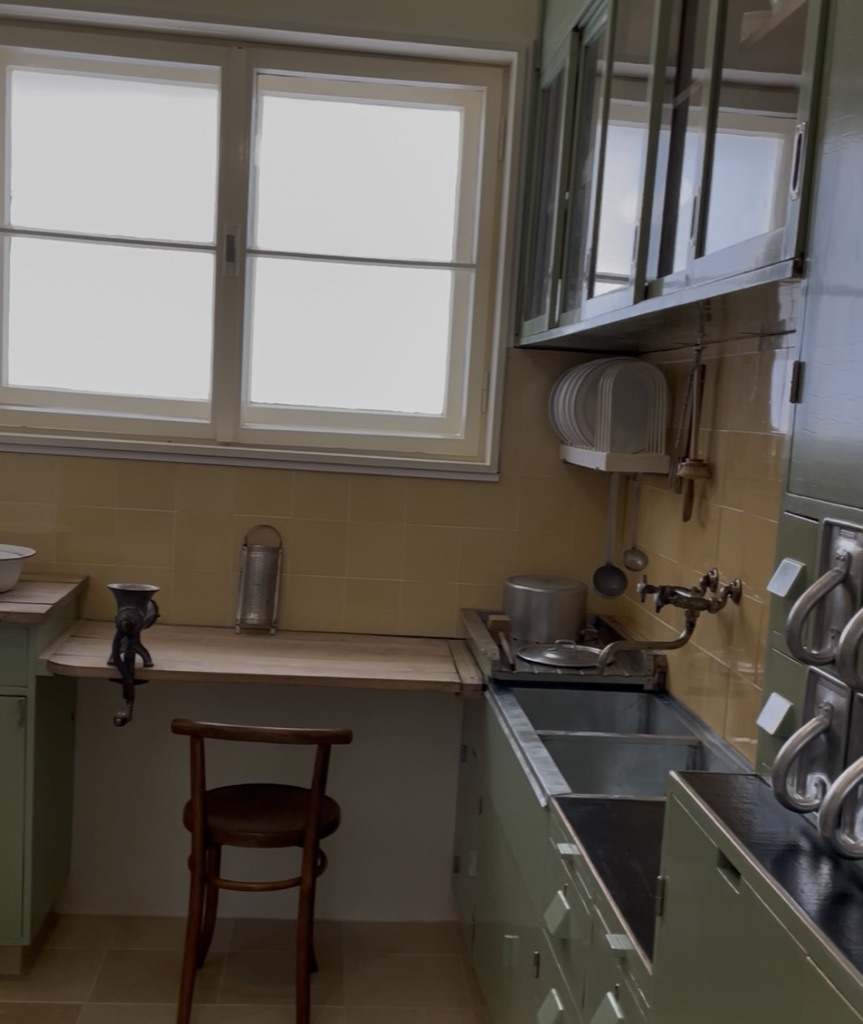
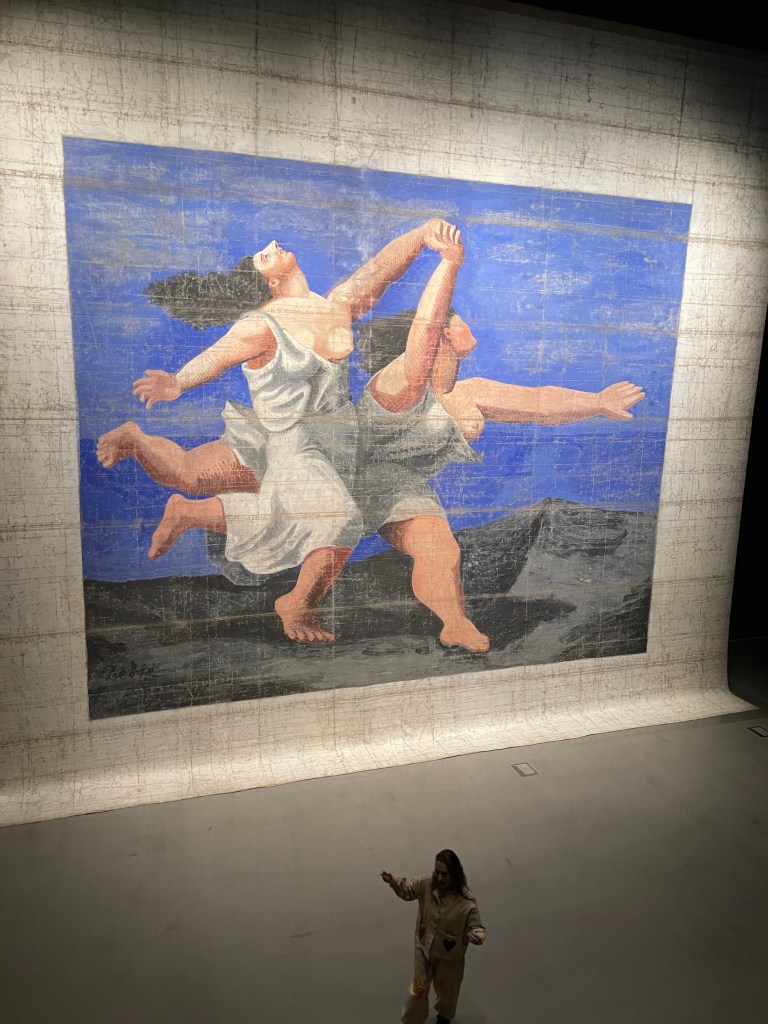
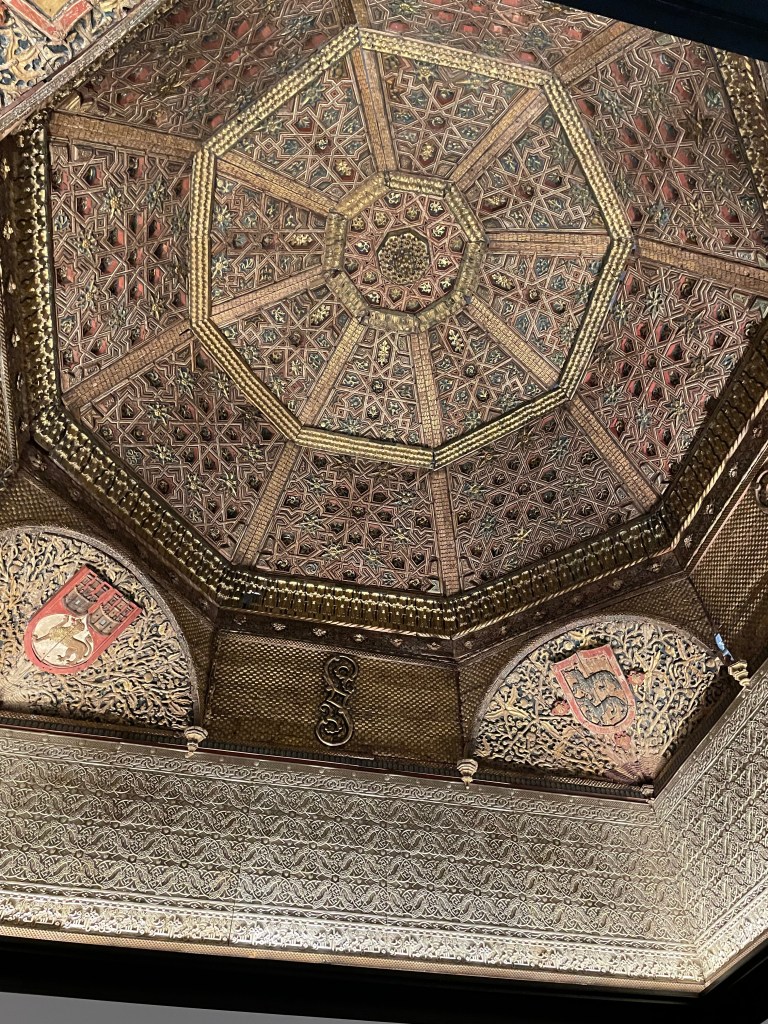
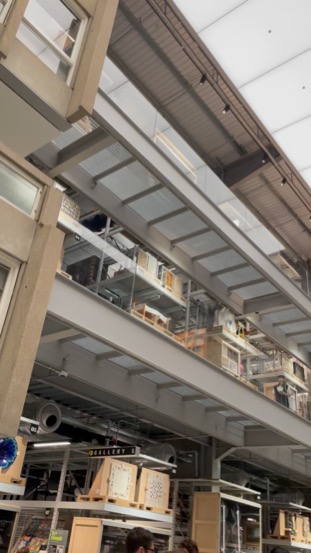
The objects are arranged on pallets, carefully lashed to their space and exude a wonderful confidence in their new environment. As well as objects from all eras, countries, cultures and faiths there are entire room sets. It was fascinating to see the complete kitchen from a Frankfurt apartment of the 1920s and the amazing Kaufmann Office designed by Frank Lloyd Wright. There’s a stunning Moorish ceiling and a giant theatre backcloth by Picasso.
Screenshot
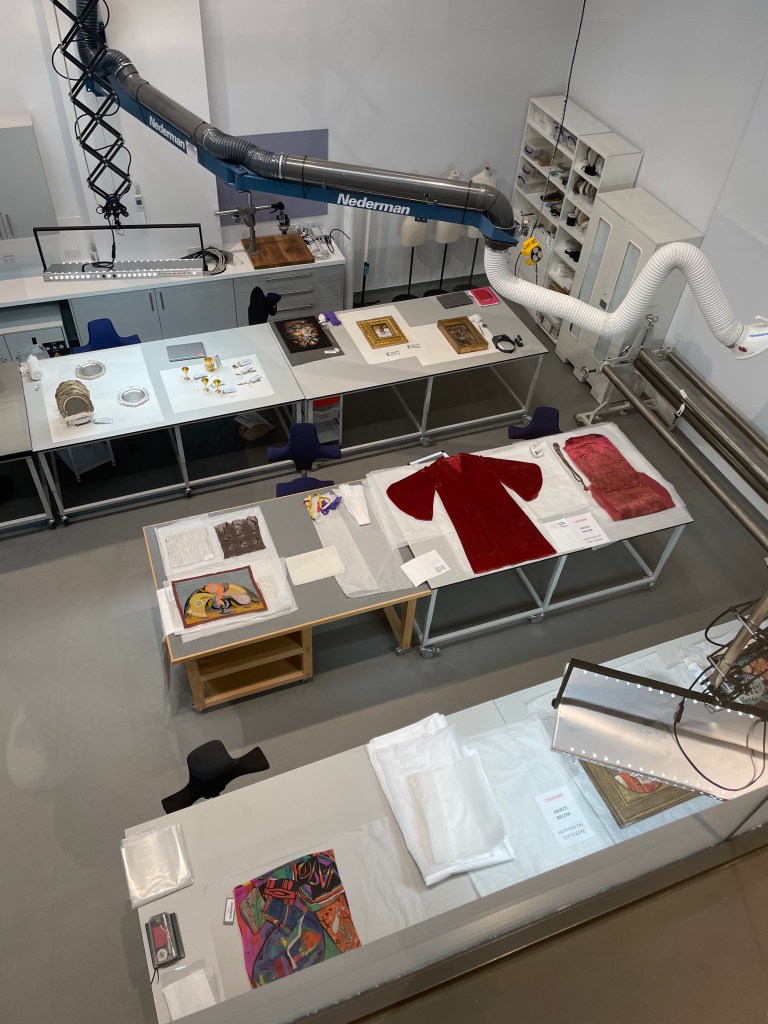
In architectural terms this new space is a joy. There is the luxury of a vast atrium in the centre of the storage unit which can be used for events, talks, concerts. The collection is displayed on five floors and seem to disappear down corridors into infinity. And the large space where the Picasso cloth was displayed provides much-needed opportunity for huge carpets and theatrical backcloths to be conserved, examined and displayed. You can also look into the conservation studios and see the work being done to restore all kinds of items, preparing them for display.
The V&A East is a short walk from Hackney Wick station and it’s exciting to see all the new buildings and attractive design which is pouring into this area. The whole Olympic Park repurposing is a shining example of legacy architecture, forward thinking and imaginative usage of the space. I’m impressed.
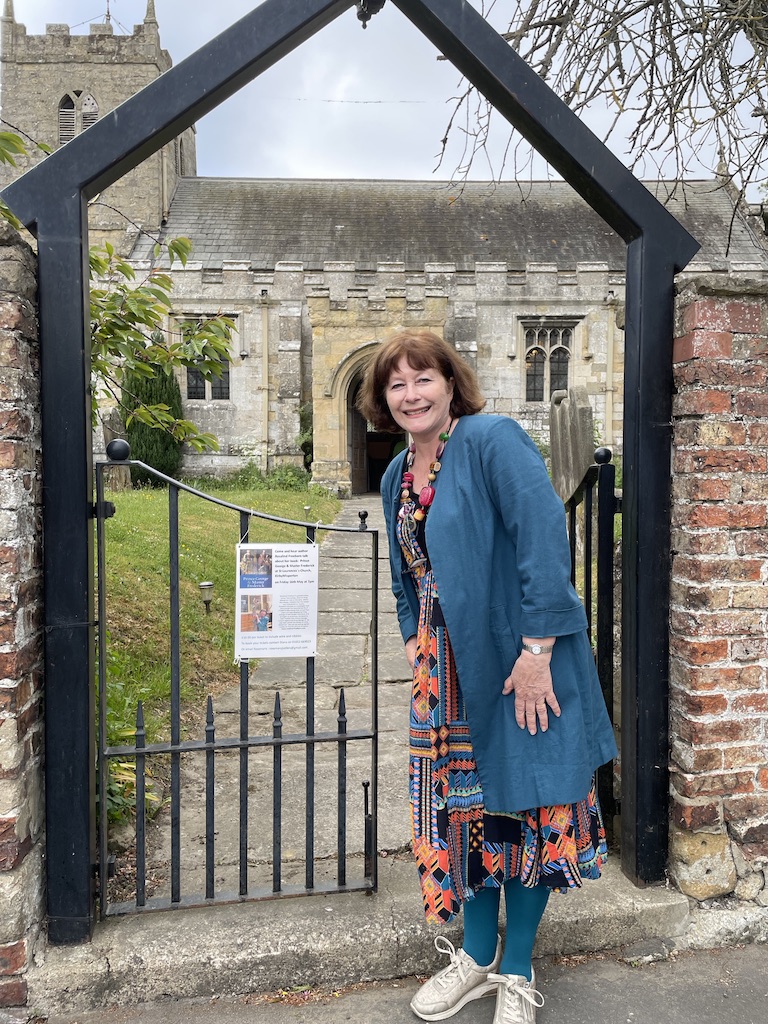
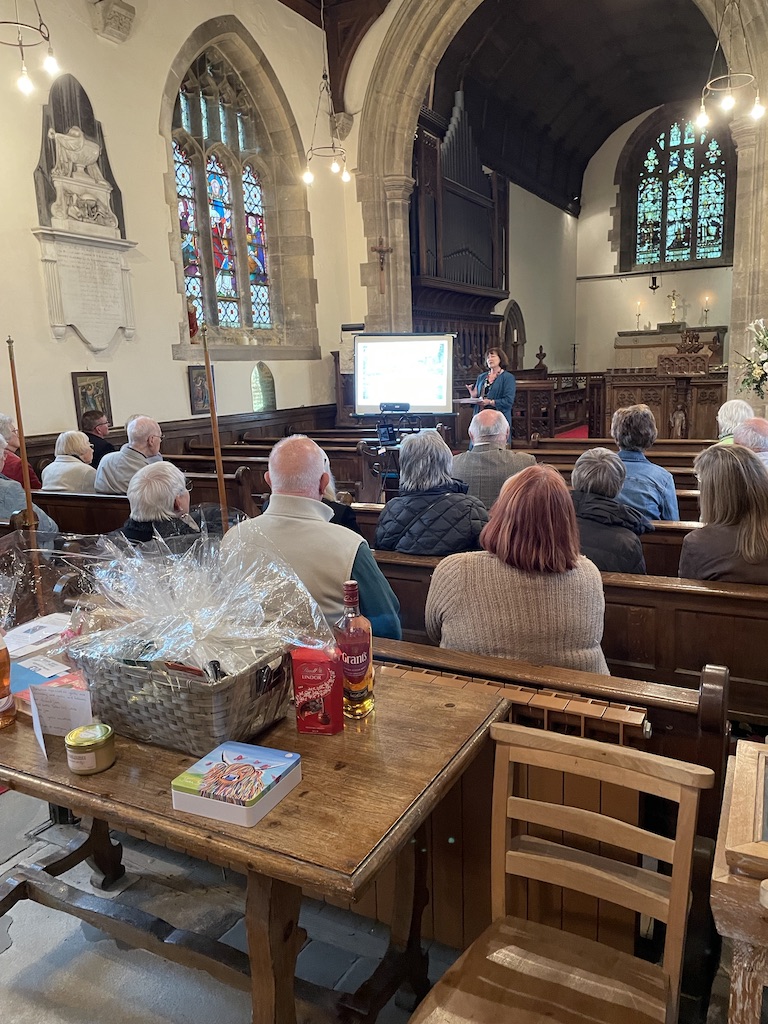
Having published my debut novel, Prince George & Master Frederick on 30th January with Alliance Publishing Press this year I’ve enjoyed a whirlwind of radio interviews, features in papers and magazines and history blogs. But, best of all, I’ve been invited to give talks to interested audiences. Possibly the most interested audience I could hope for, gathered in St Laurence’s Church in the village of Kirby Misperton, north Yorkshire on 16th May to hear my talk about the book.
Kirby Misperton is a particularly important location for me, personally, and in relation to the book. My grandmother, Verna Twentyman, grew up in the Hall at Kirby Misperton. As a child I listened to her story about our family’s supposed royal connection. She told me: “King George III loved the countryside, and when he was a young man he came upon a farm in Kent, fell in love with a beautiful farmer’s daughter and there was a baby. To prevent a scandal for the young monarch, the king’s best friend and equerry, Major William Blomberg, married the mother and gave the baby a name.”
It was a very slender story but enough to pique my interest and it stayed with me long after she had died. I was about to tell my own grandchildren her story when I paused and decided to research her claim. Well, it turns out it was all true. The ‘accidental’ child of King George III was indeed called Frederick Blomberg. His mother died and his father was killed in action. When word of his orphaned state reached King George III and Queen Charlotte they decided to adopt Frederick. They already had two small sons and a third on the way. So, from the age of four Frederick was brought up within the royal household at Richmond Lodge and became best friends with his half-brother, Prince George, the future regent and King George IV.
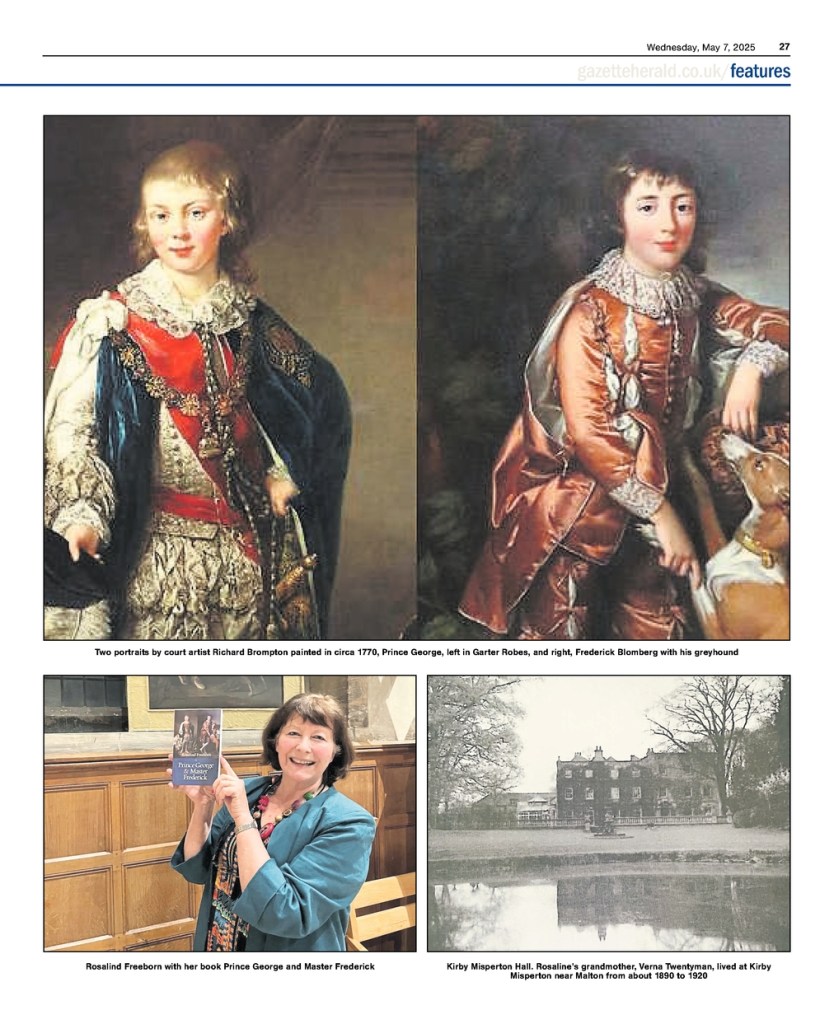
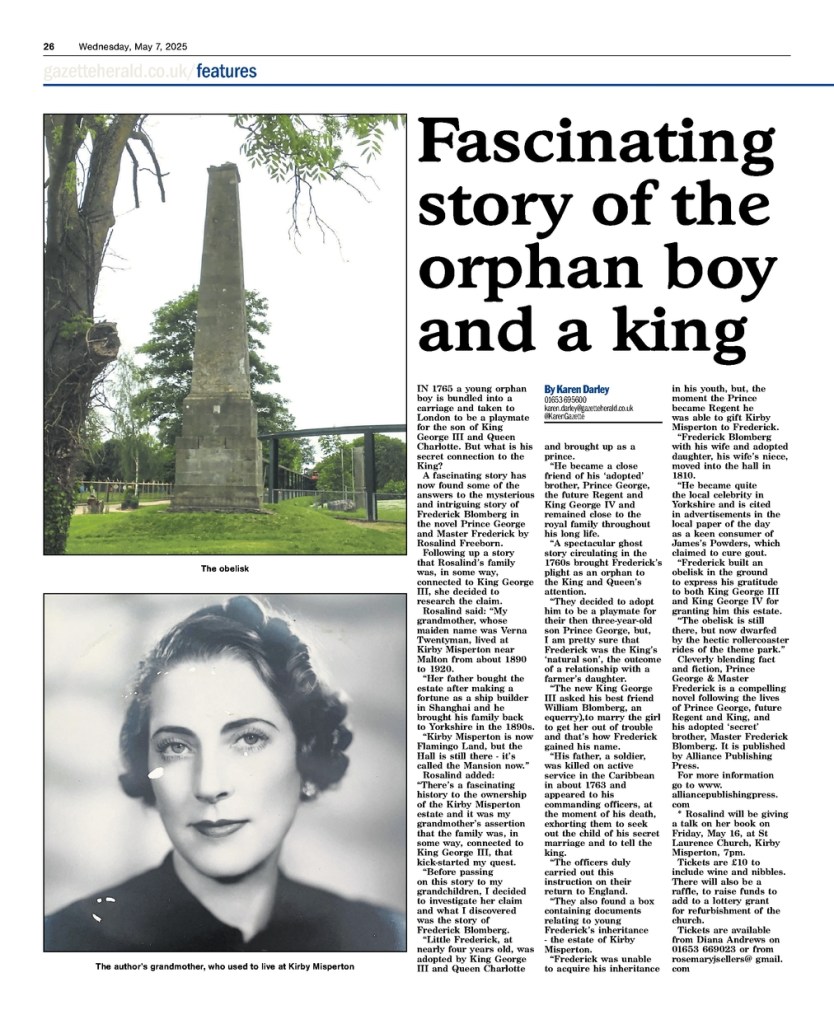
I was thrilled when the local paper, the Malton Gazette and Herald, gave it a front cover mention and double page spread in anticipation of my visit.
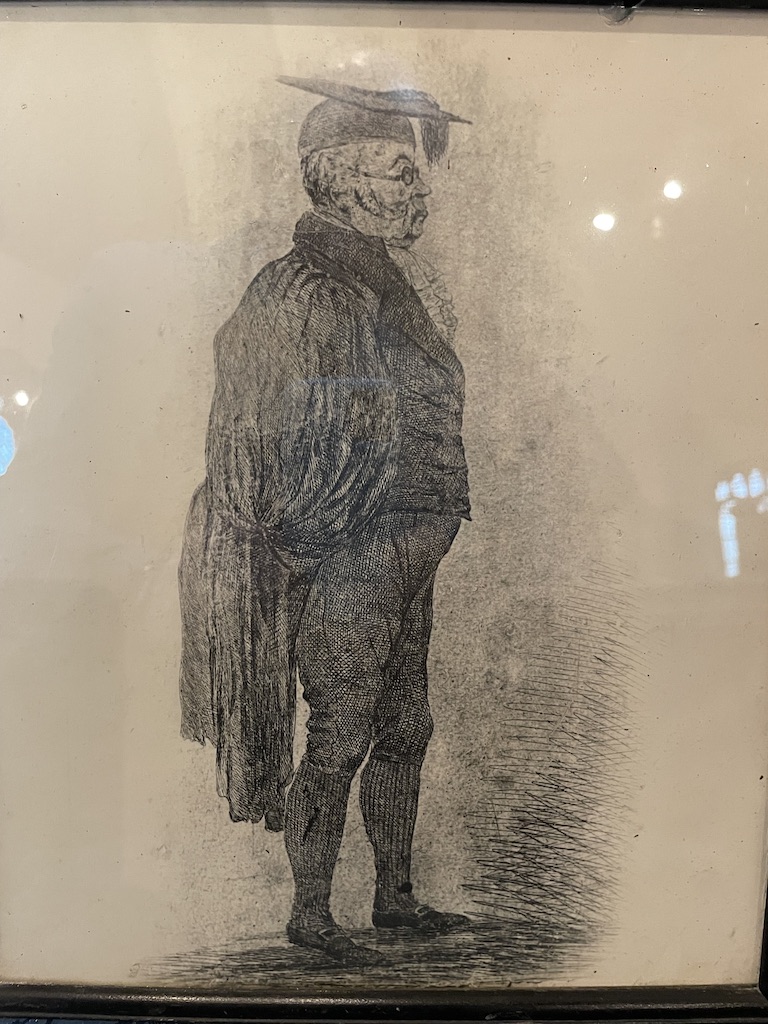
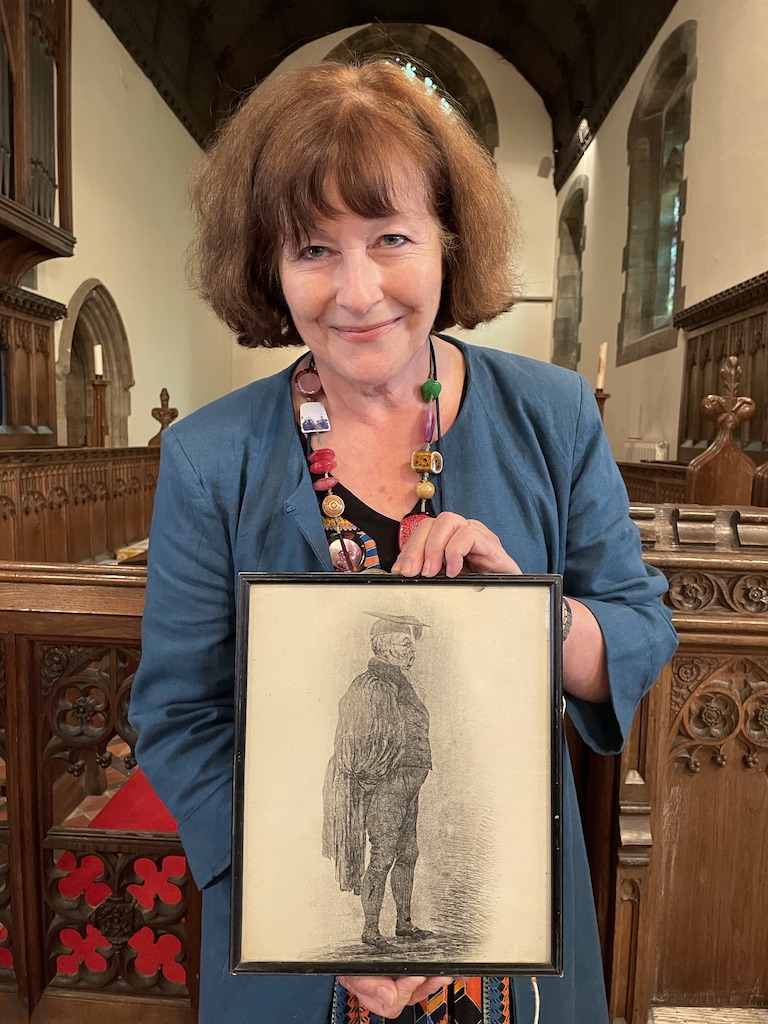
There was a great turnout for the talk on 16th May but, for me, the most exciting part of the evening was being shown a picture of Frederick Blomberg as an adult. Apparently this image had been hanging on the vestry wall for years and no body knew who it was or had taken it down to examine the back. On the reverse of the rather witty depiction of an academic in gown and mortarboard was an account of Frederick Blomberg’s life and a copy of his signature.
It’s quite a caricature image of the illustrious clergyman who had lived at Kirby Misperton. All through his youth Frederick had hoped to inherit this estate in Yorkshire but proving his claim was very hard for him.
As he grew up, it became clear that Frederick needed a profession. So King George III sent him to Cambridge University to study Divinity, he was ordained and became a clergyman. The king then granted him several lucrative livings (parishes where he could gain an income and have a rectory or vicarage to live in). However, he had to wait until his half-brother, Prince George, became Prince Regent in 1810 and was able to finally grant him the Kirby Misperton estate. So, in 1811, Frederick Blomberg became the owner of the estate and was known as Baron Blomberg. He also took services in St Laurence’s Church and became quite the local celebrity. He built an obelisk in the grounds with a plaque which says ‘Thank you’ to King George III and Prince George, the Prince Regent, for granting him this land, ‘long estranged’.
While researching the book I had seen images of Frederick as a child, but never as an adult. Imagine my excitement at finally seeing a sketch of him, albeit dressed in academic robes rather than depicted as a clergyman.
You can read more about Prince George & Master Frederick in my novel. It’s available in print form, via Amazon, on Kindle and on Audible. Or you can order it through your local bookshop. Please do let me know if you enjoy reading my book. Or order a signed copy directly from my author website And if, you are interested in inviting me to give a talk about my book please do get in touch. May 2025
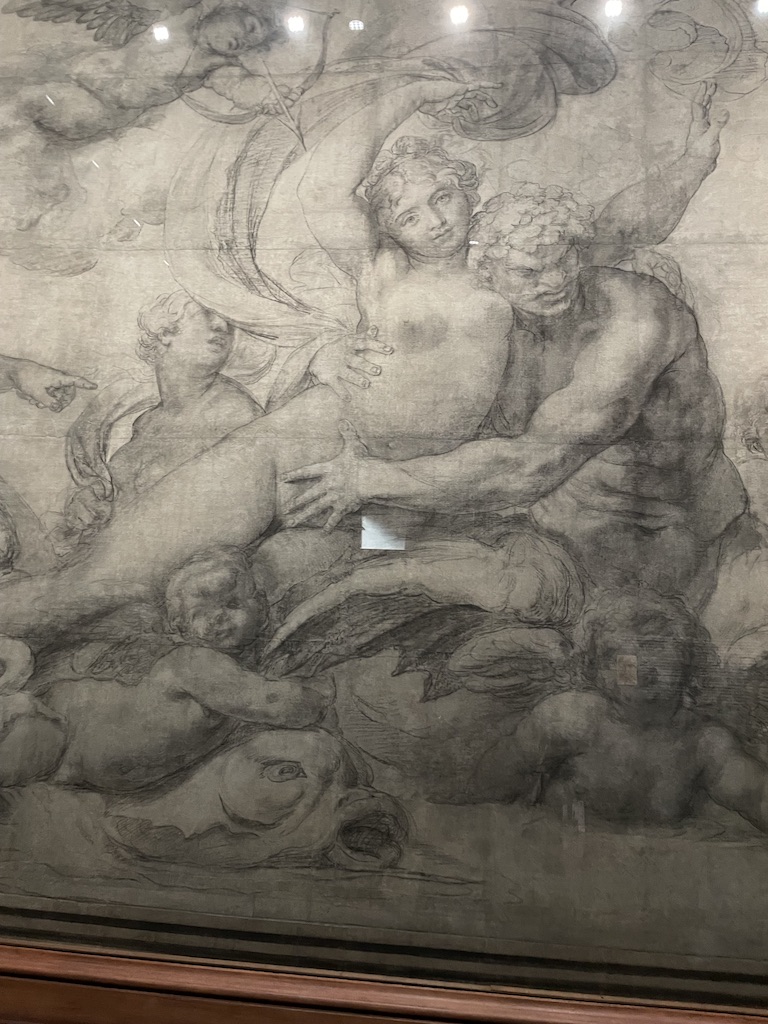
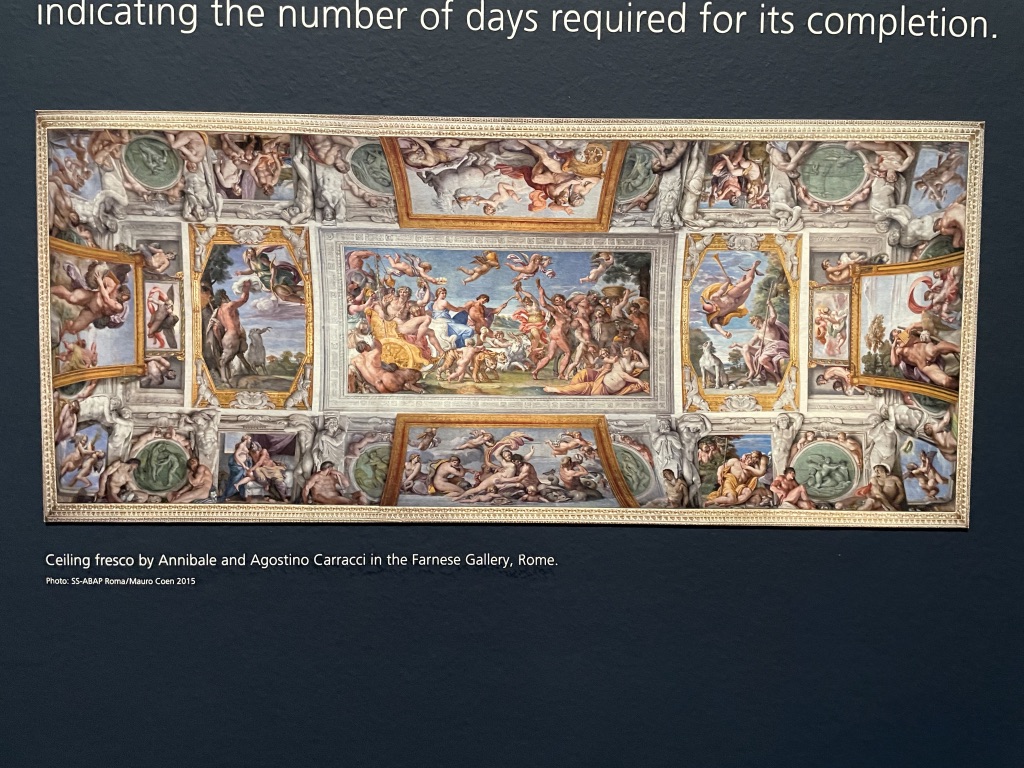
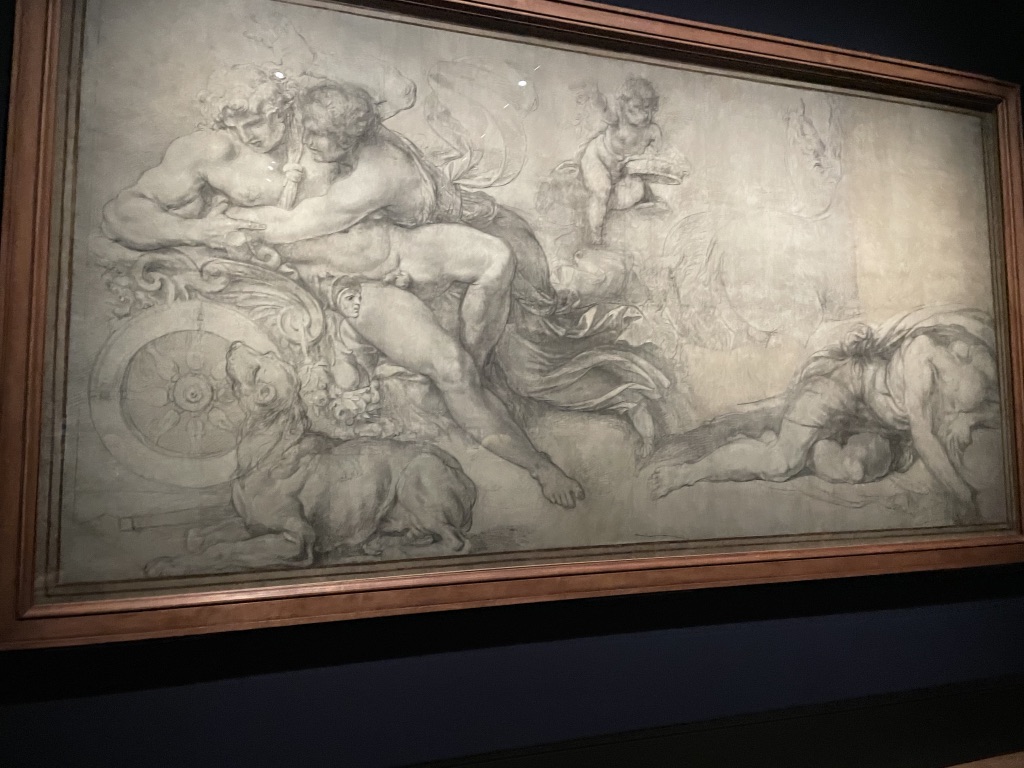
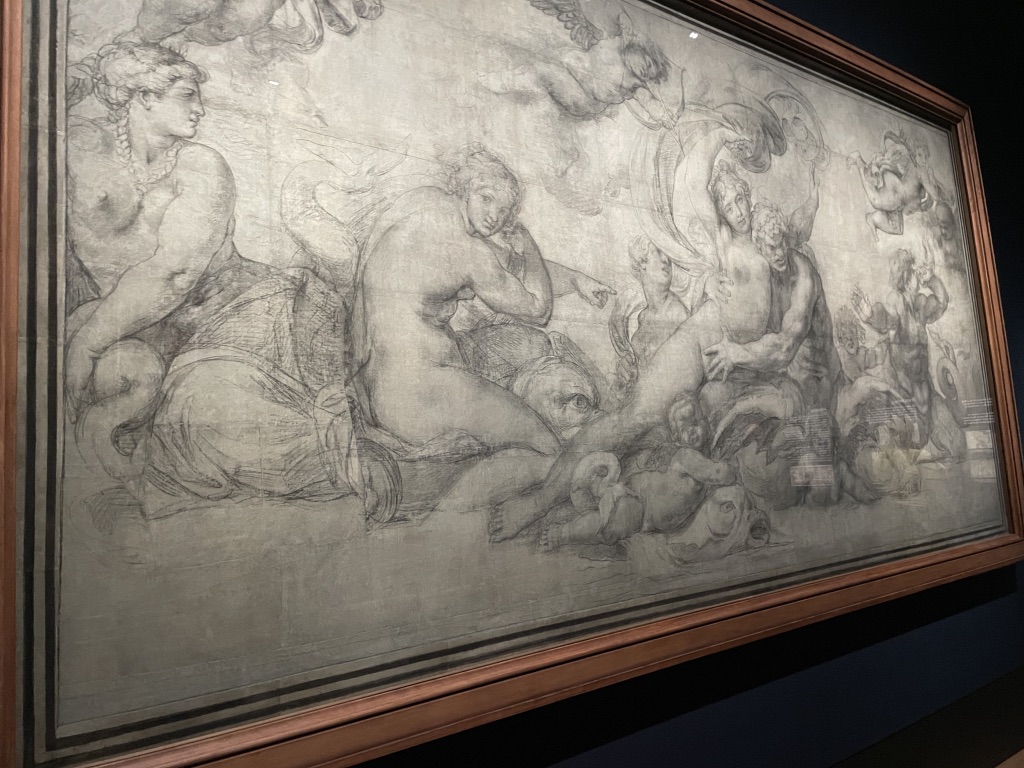
It was a thrill to enter the darkened space of Room 1 at the National Gallery and behold two massive, landscape-sized charcoal drawings by the artistic double act of the early 1600s, Annibale and Agostino Carracci. These huge cartoons were the preparatory works for two of the large paintings which adorned the spectacular gallery ceiling of the Palazzo Farnese in Rome. The work was commissioned by Alessandro Farnese who became Pope Paul III. The building is now the French Embassy so it’s not easy to see the amazing works.
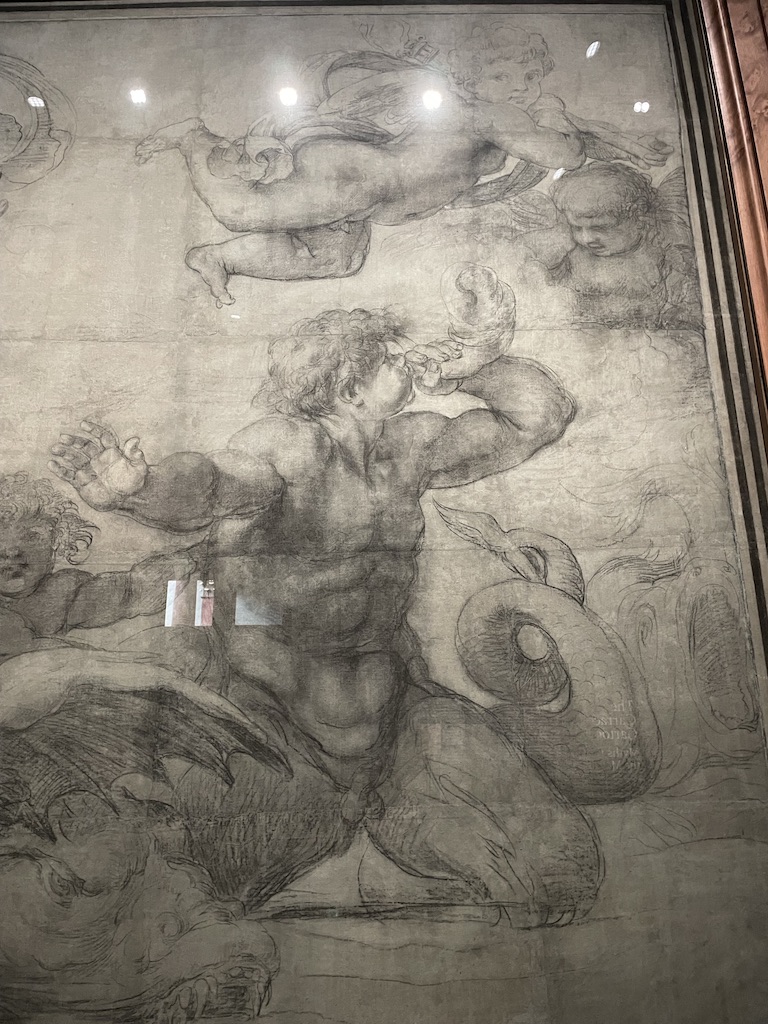
The two cartoons on show are the centre top and bottom images in the gilded fame. It’s spectacular to see these works close up. You can see the cuts, tears, reps and pin marks in the fragile paper. These cartoons were working documents, used to lay out the design, develop the artwork and then placed against the damp plaster of the ceiling surface to have the image pricked (pounced) and and traced onto the surface. Then the artists would labour at ceiling height on a scaffold to complete the frescoes.
It’s impressive to see these works close up and follow the lines and scratches made by artists over four centuries ago. It’s rare for these working documents to survive but, apparently, they were carefully pieced together again after the transfer process and kept safely. Maybe the idea was to reuse elements of them on future commissions.
There’s such vitality to the drawing and the clever composition There’s humour too. On the right, you can see a putti blowing a shell in the face of another putti who is covering his ears!
Above is a view of the gallery made by Francesco Panini, who appears in the bottom left of the gallery sketching the view.
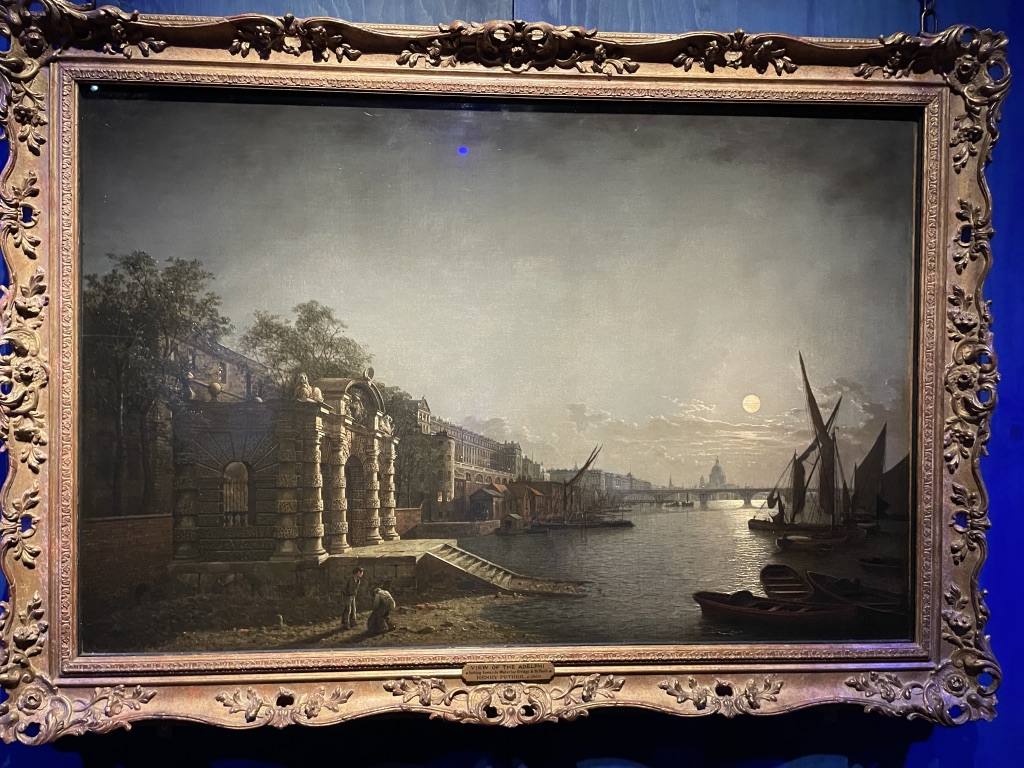
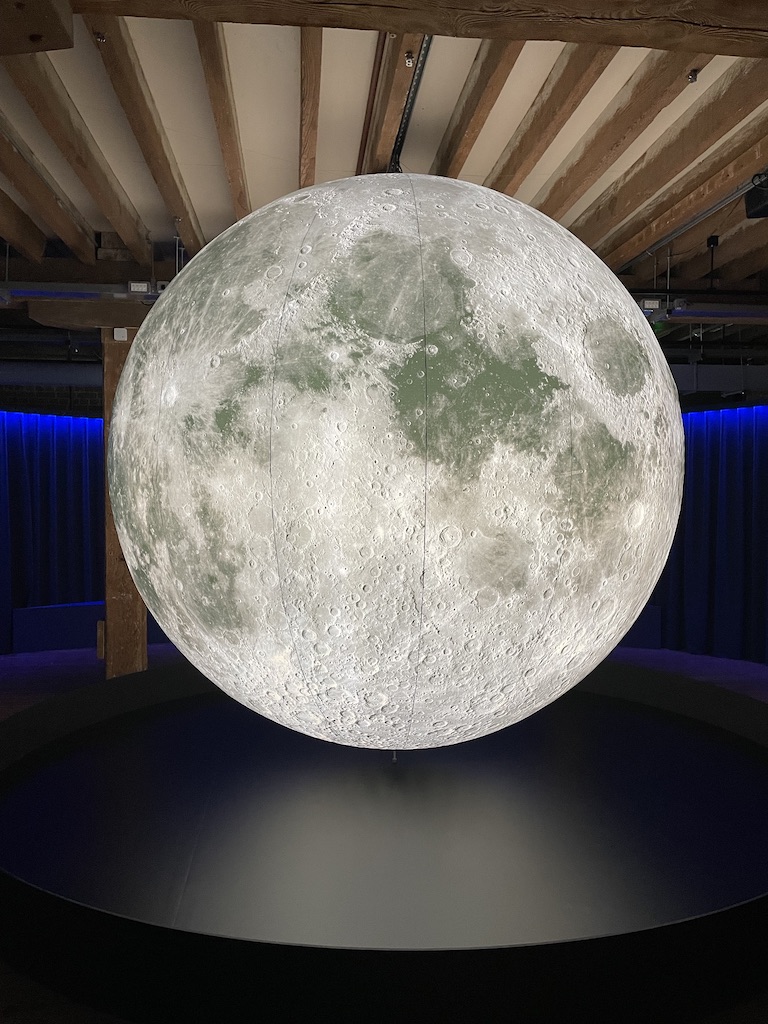
The exhibition opens with this spectacular painting by Henry Pether (around 1850) featuring mudlarkers searching the foreshore near York Water Gate, the Strand, by moonlight. Anyone living near the river will be aware of the constant rise and fall of the tide which is ordained by the moon. And there’s a fabulous sculpture of The Moon which you can circle, and peer at the extraordinary pitted surface.
You need a licence to be a mudlarker, along with sturdy shoes, waterproof clothes and a beady eye to spot potential treasure with in the mud of the river. It’s astonishing that every low tide will reveal items dropped, lost or hidden in the Thames. These pieces vary from the really ancient, pre-historic tools and items, jewels and coins, up to contemporary objects thought lost for ever.
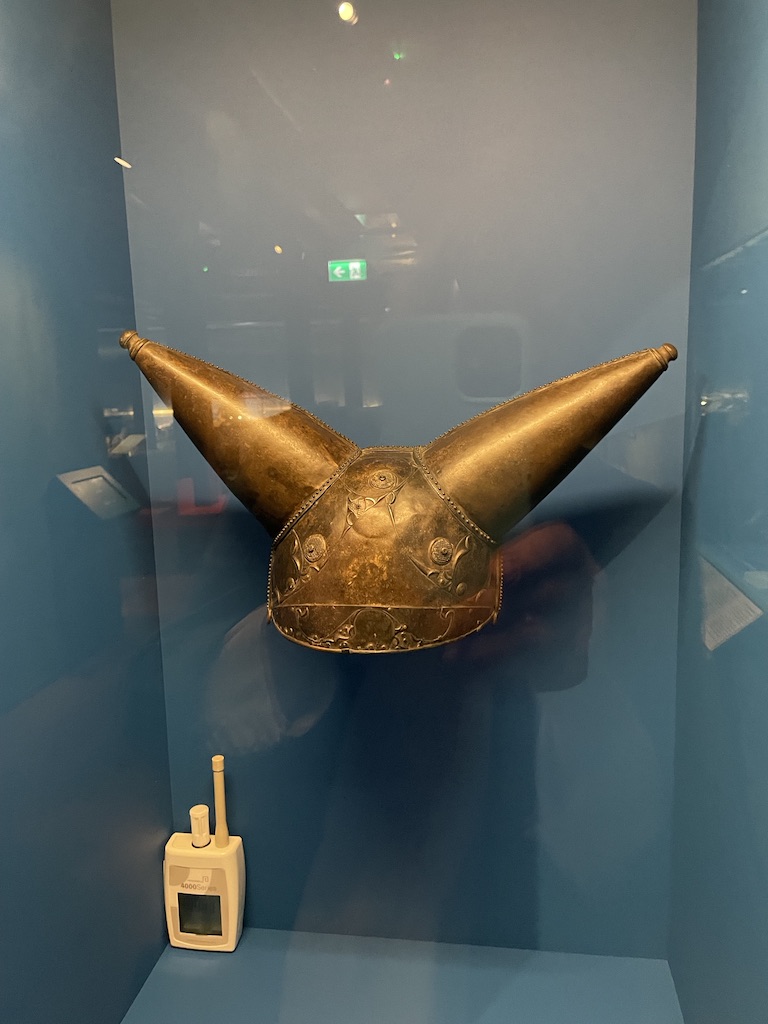
Above is a selection of figurines showing different gods and godesses from Roman times. They might have been offerings – the Romans revered water – or accidentally dropped into the river. And on the right is The Waterloo Helmet from 150 BCE. It’s the only Iron Age helmet found in southern England and the only one with horns ever found in Europe.
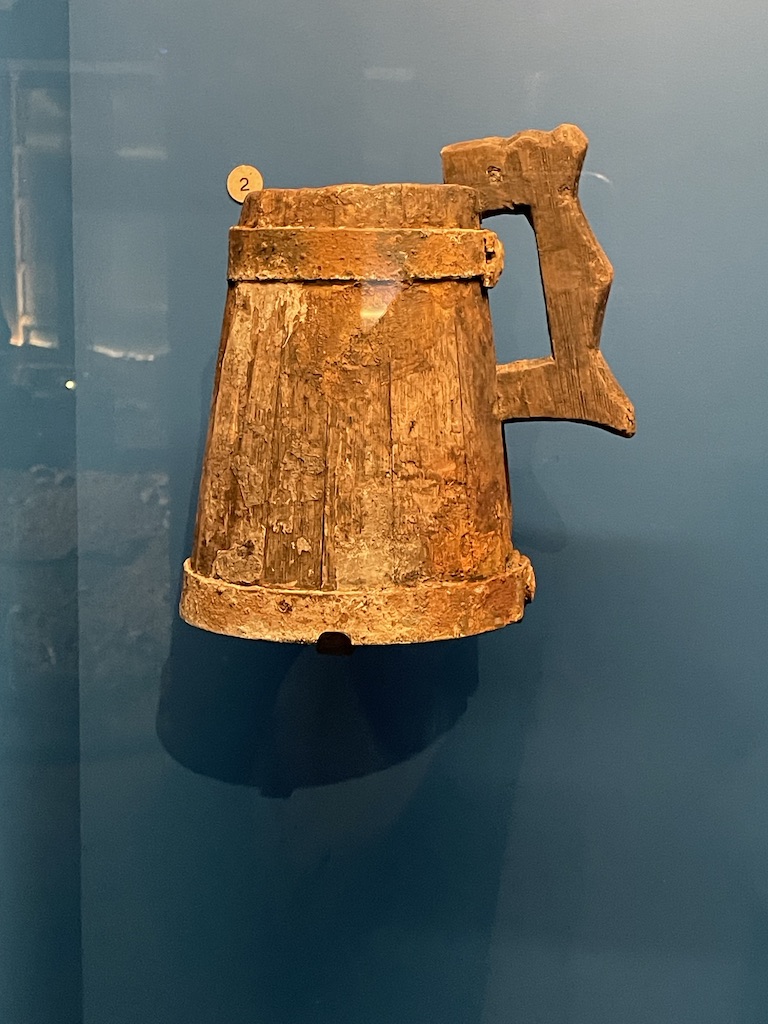
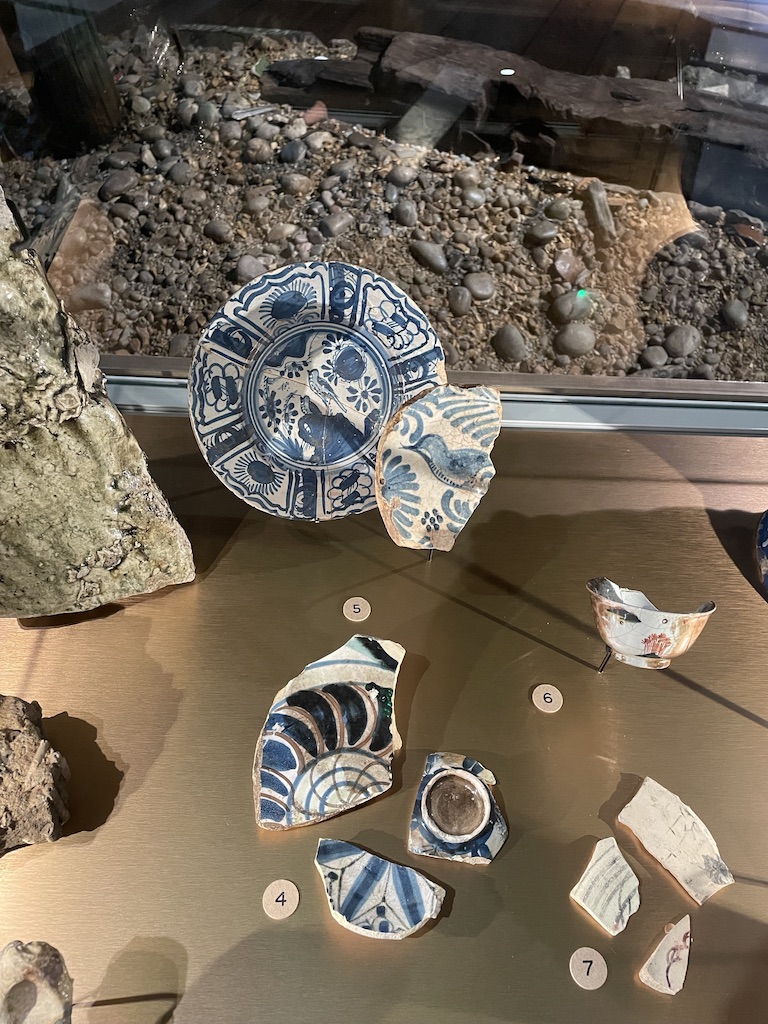
I do love seeing the everyday items which have been fished out. This wooden tankard must have been a thrilling find. It holds three pints – great for a very thirsty person, most likely a sailor. And it’s great to see these Delftware pots and dishes, even in fragments, giving you an idea of the household crockery in use from the mid 1500s to the 1800s.
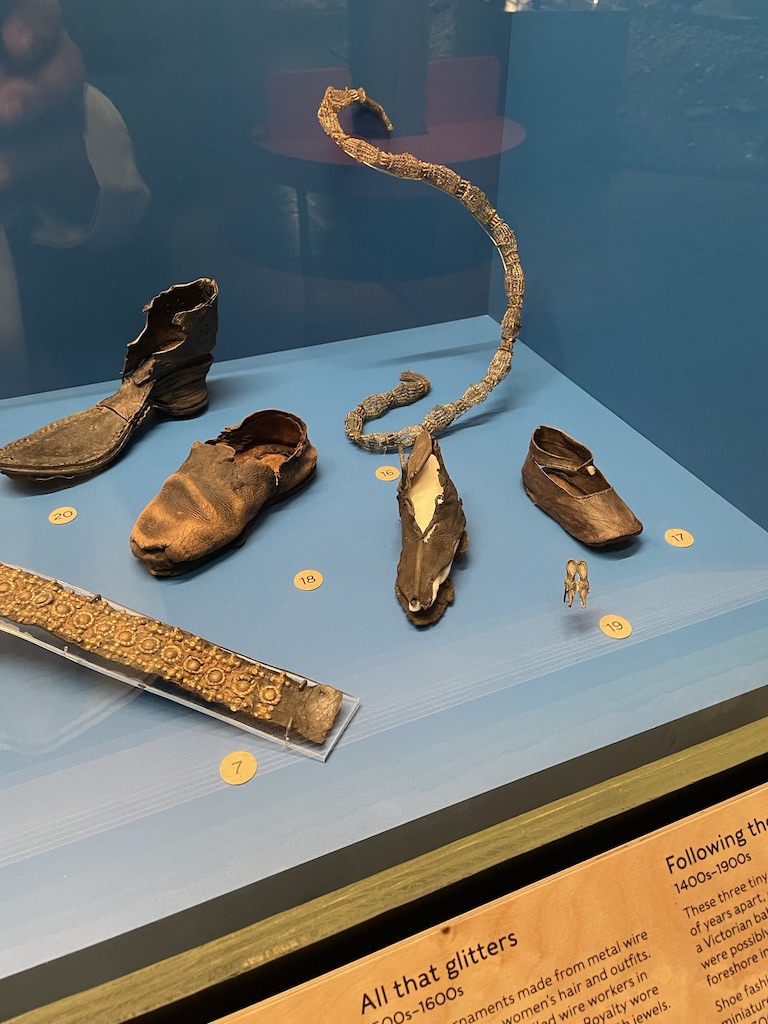
There’s something very touching about seeing children’s shoes. They have survived the centuries because the mud of the Thames is ‘anaerobic’ meaning it preserves the material from oxygen and it does not decay.
Mudlarking has been going on for centuries. For many early mudlarkers it was the coal and wood which they wanted, rather than the ‘treasure’.
The layout of the exhibition is fascinating. A very eye-catching recreation of the Thames foreshore has been recreated throughout, giving viewers an idea of how complicated it can be to sift through the detritus of the river and use just your eyes and experience to spot and uncover something exciting.
It’s a very stimulating and moving show. And impressive that so many of the items were discovered by dedicated mudlarkers and donated to the Museum of London so that they can be viewed and admired but visitors.
The exhibition at the London Museum Docklands is on until 1st March 2026. Well worth adding to your ‘must-see’ list!
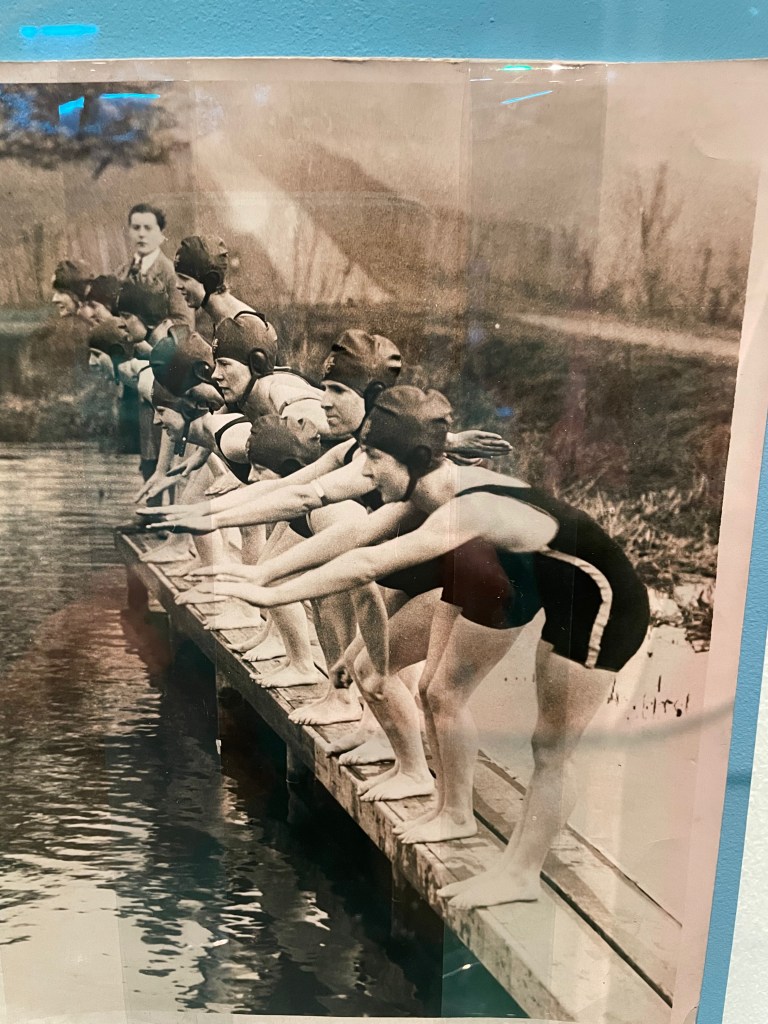
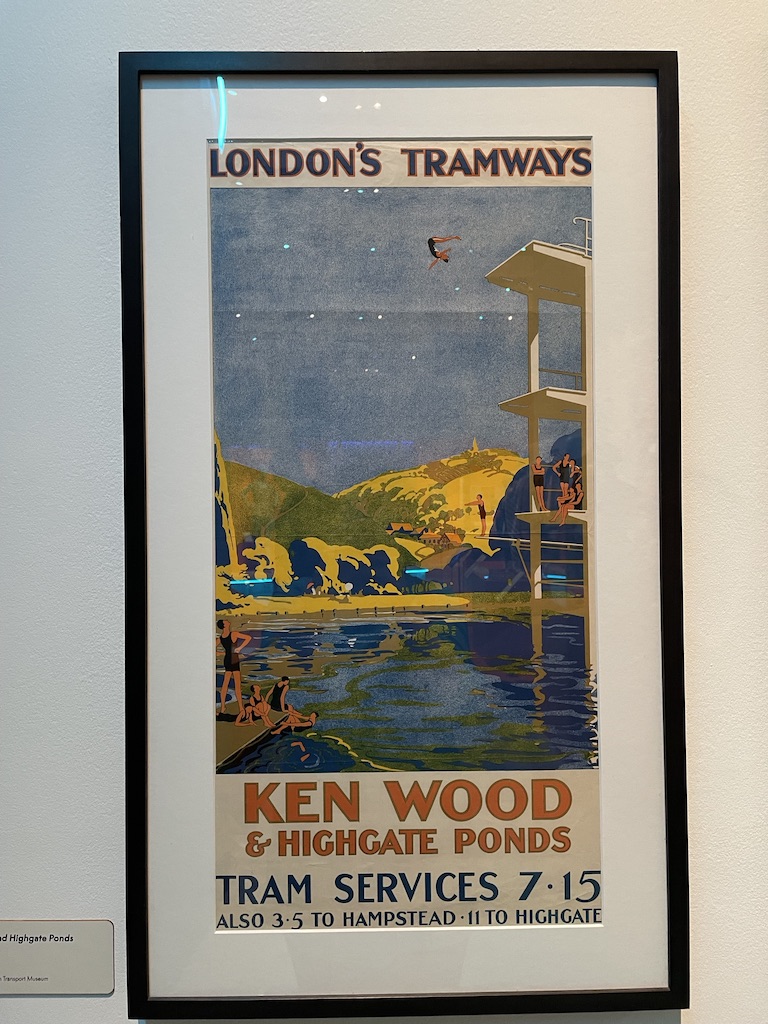
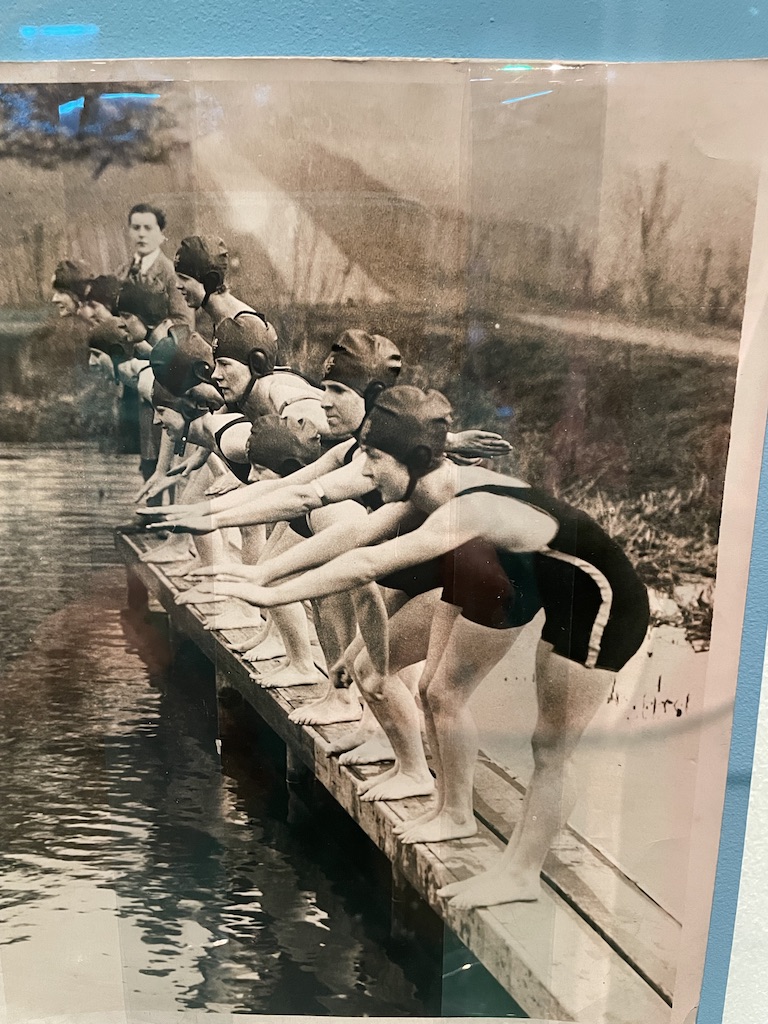
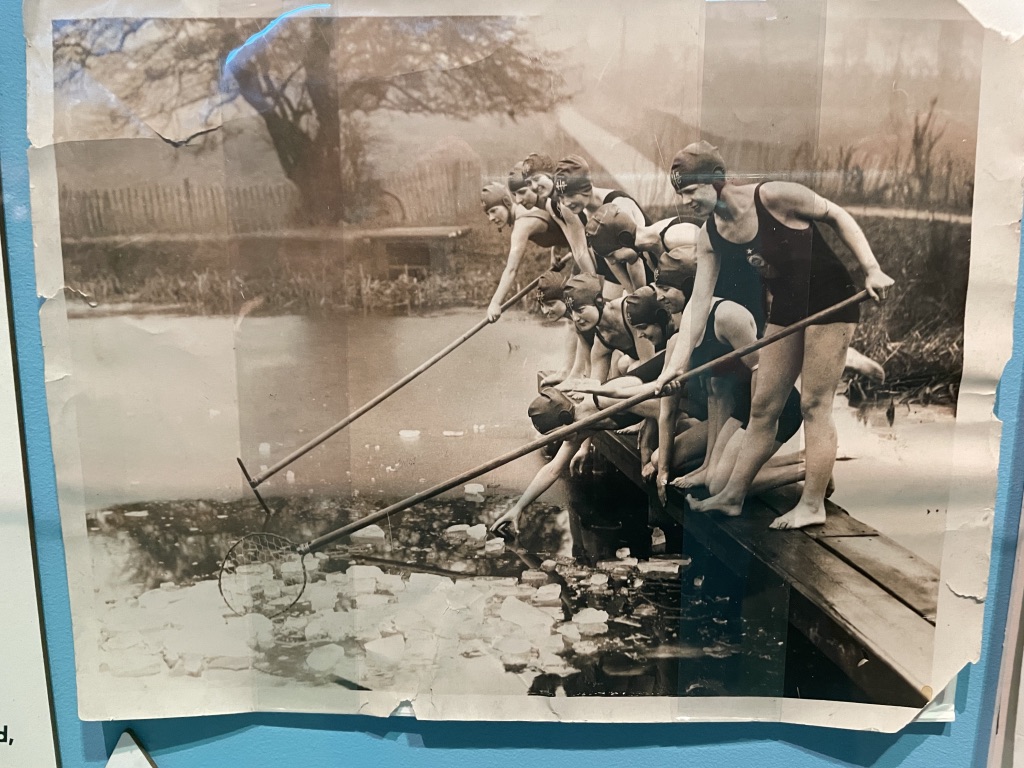
As a keen ‘pond dipper’ I was intrigued by this show and very pleased to see a reference to the Women’s Pond at Kenwood, a place I find very addictive during the summer months, but only once the water has inched its way towards at least 15 degrees and even better when it reaches a balmy 20 degrees. The poster showing Ken Wood suggests the pond nestles beneath high mountains. Hampstead Heath is not that high but I did like romance of the image.
There are a great many swimming costumes on show. I remember my mother describing the indignity of wearing a woollen swimsuit when she was a child in the 1930s. The thing just spread out in the water before slapping back against her body, dragging down to her knees when she emerged from the water covered in embarassment.
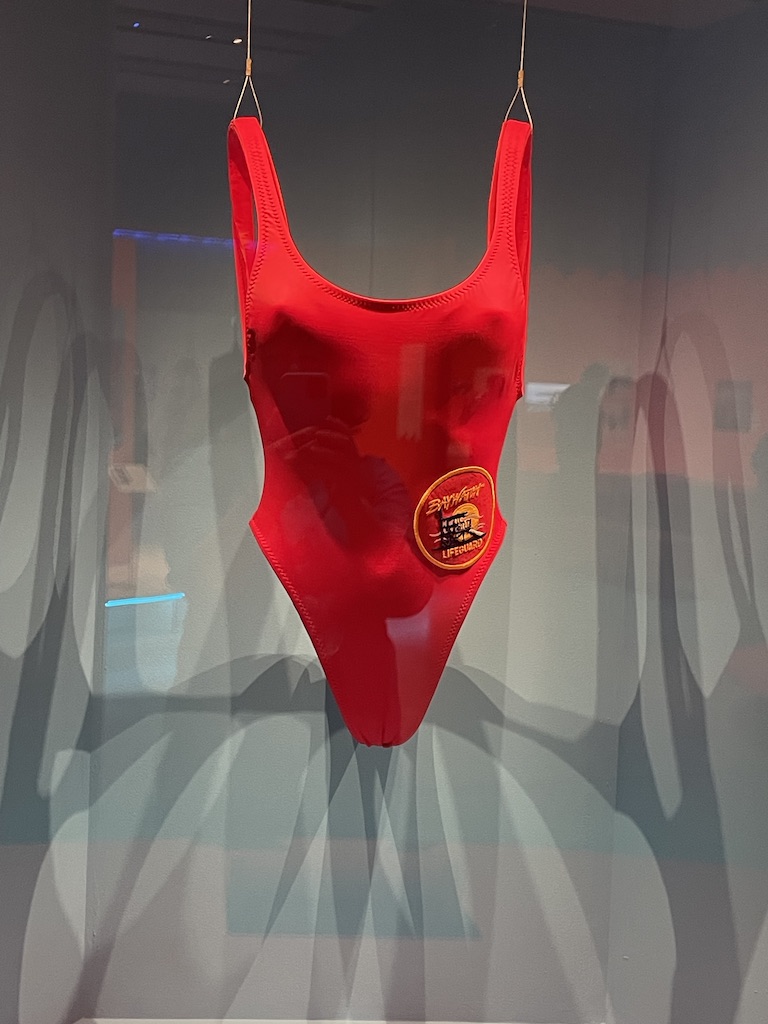
But what I’d really hoped to see was the type of swimming costume I wore as a child – blue nylon, ruched by criss-crossed elastic. I have such a strong memory of my swimsuit and the way the little triangles of fabric would fill with water, swell and then gradually empty on emerging from water. Alas, this curious garment was not represented. Instead the star of the show was the red swimsuit worn by Pamela Anderson in Baywatch.
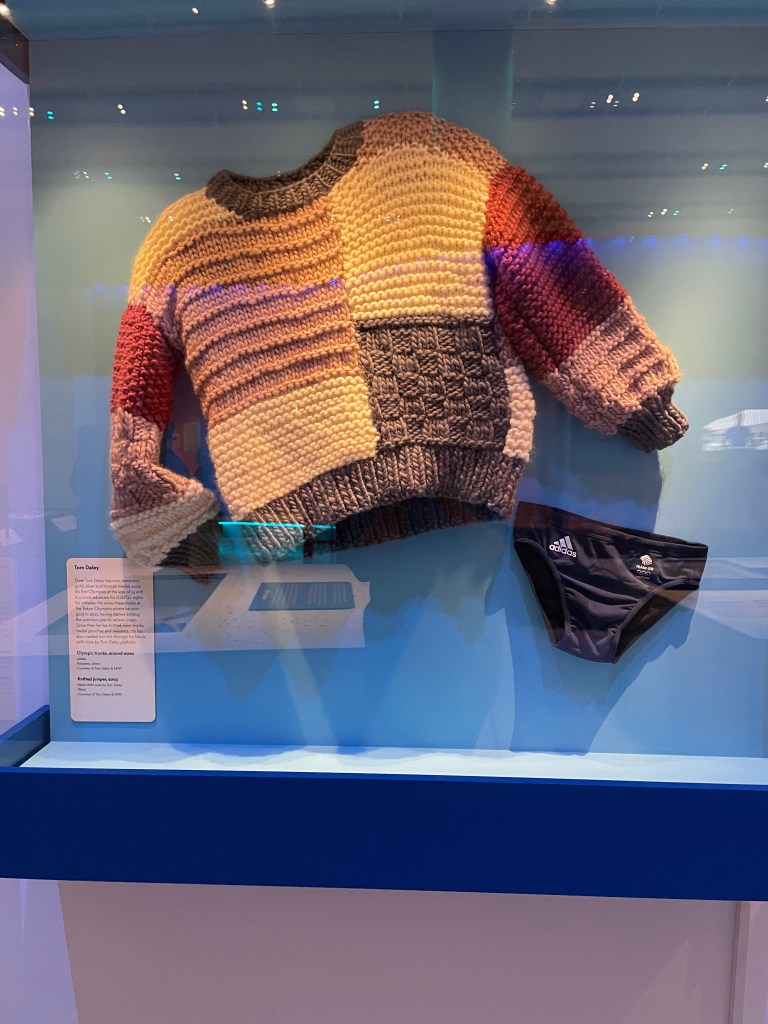
Fun to see the Gold Medal winning diver, Tom Daely’s scanty trunks and also the chunky sweater he knitted to occupy himself waiting for his moment at the Olympics.
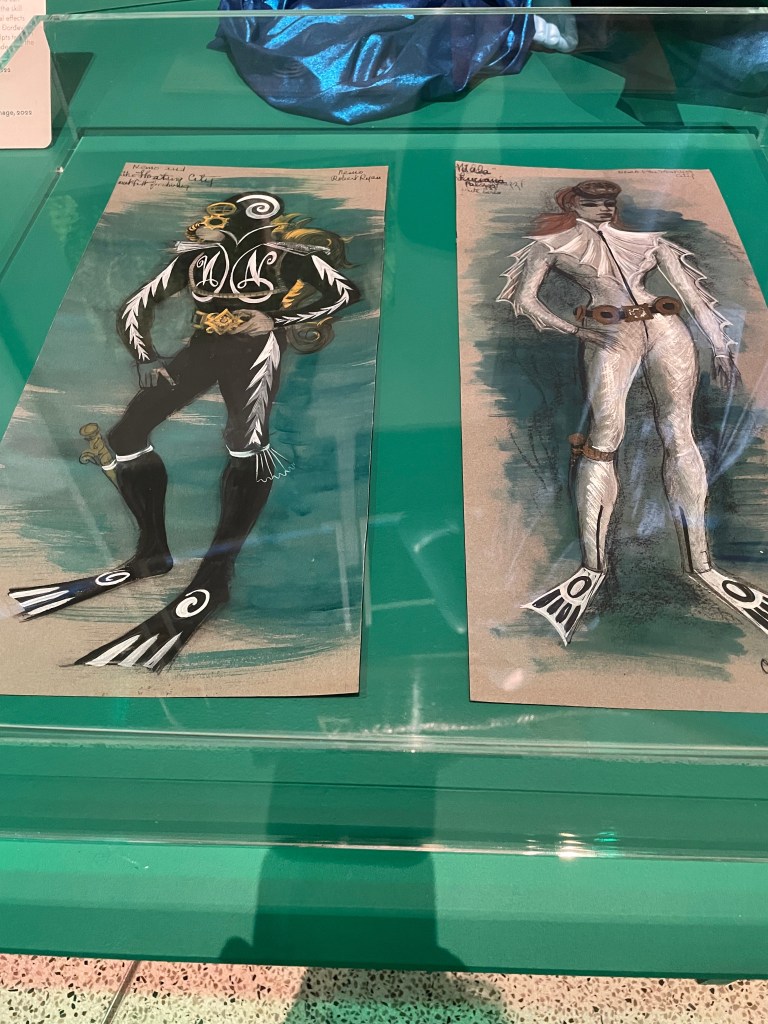
Good to see the costume designs for Captain Nemo and the Underwater City. They wouldn’t look out of place in a ballet.
My takeaway from the exhibition was that something had been missed. Because it was so much about the design of objects used in or near water we didn’t get a feel for the spiritual nature of water and the very human, primal desire to be close to the sea, rivers, ponds or expanses of water. We both fear and revere water. There’s a desire to be near it but not for it to come too close, univited and offend us by flooding our homes or disturbing our travel with dangerous high tides or inundated roads. Perhaps that’s something for a different show.
Splash! is on at the Design Museum until 17th August.
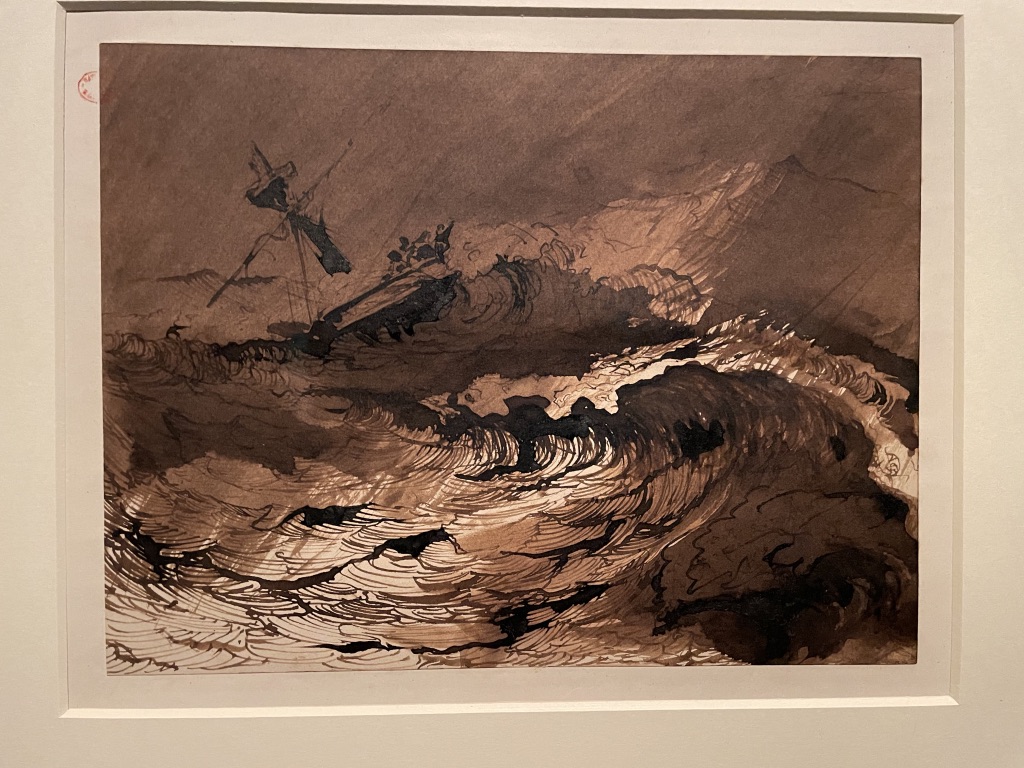
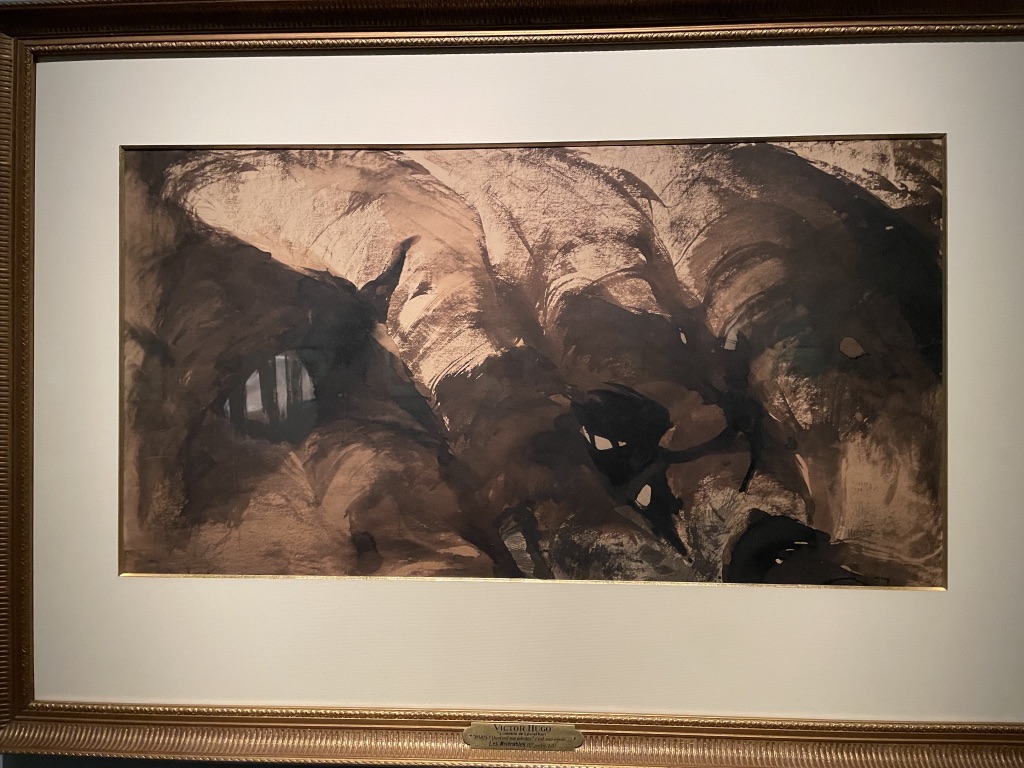
There’s a feeling of vigorous movement to Hugo’s art. These landscapes were inspired by the coastline of his Channel Island homes – in Jersey and Guernsey. They are full of energy, foreboding and danger. I’d say they were created very swiftly using brushes loaded with ink, combined with the swishes of a feather. Very dramatic. I wonder if he had seen some of JMW Turner’s work – such as the very atmospheric impression of a storm?
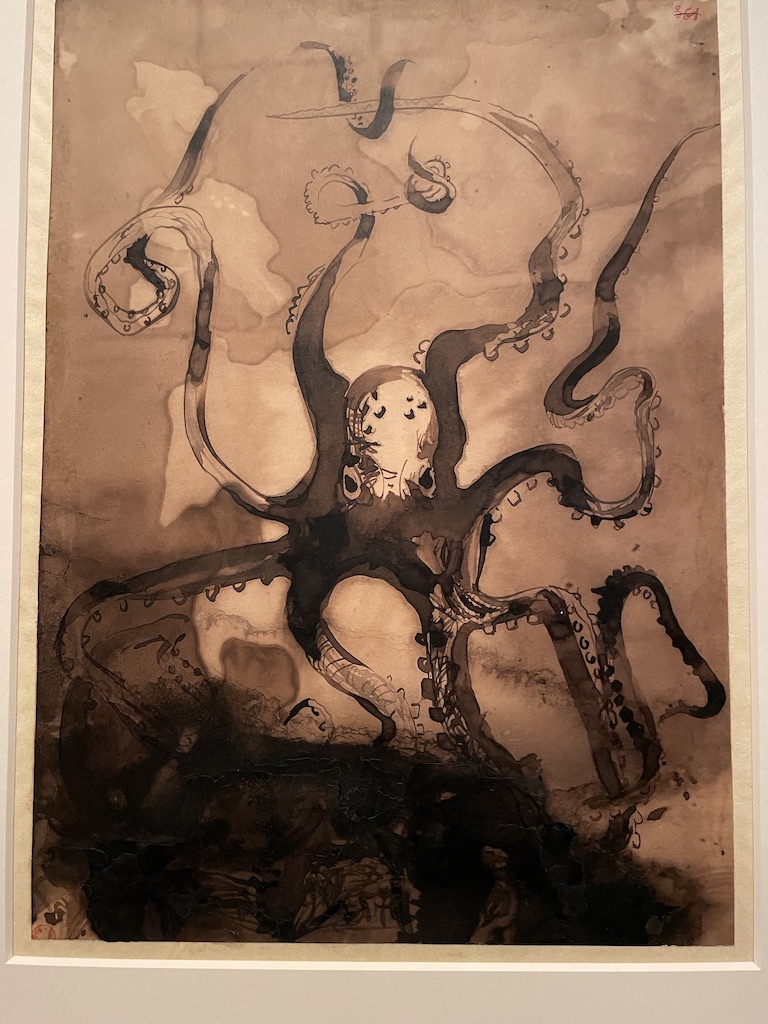
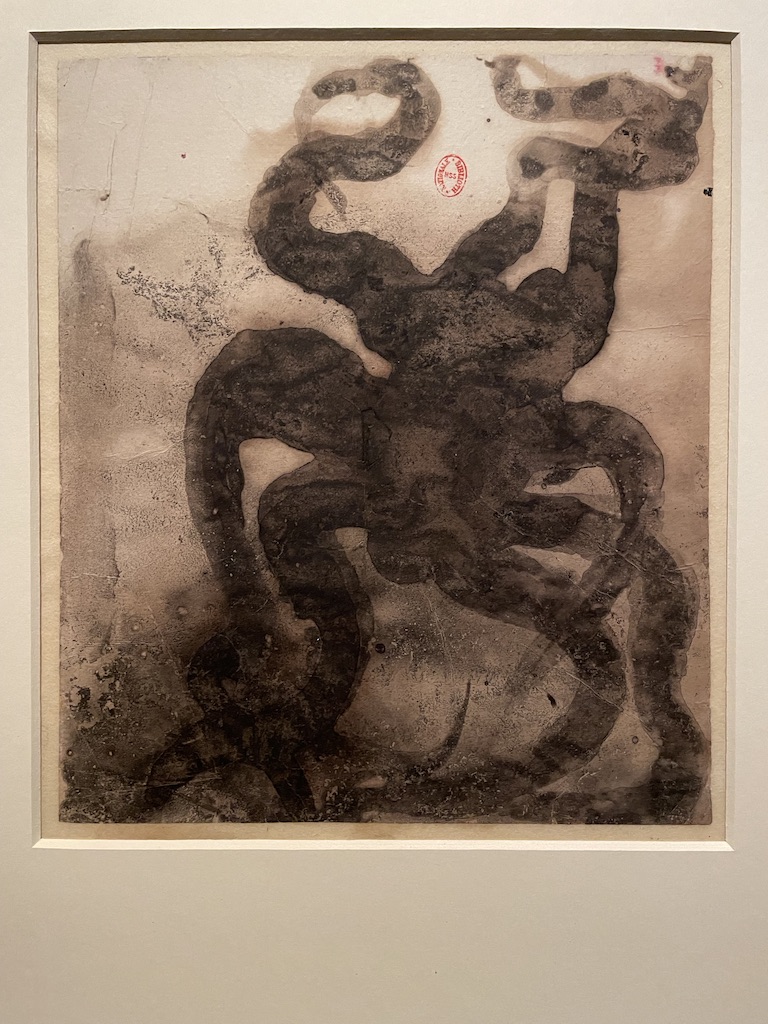
Victor Hugo is probably best known for his novel, Les Miserables. However, another bestseller in his lifetime was the Toilers of the Sea, (and also The Hunchback of Notre Dame). Toilers is a very compelling novel which involves a ship being attacked by a giant octopus. Judging from these drawings he clearly studied the forms of these sea creatures and, when the book was published in 1882, it included his own drawings.
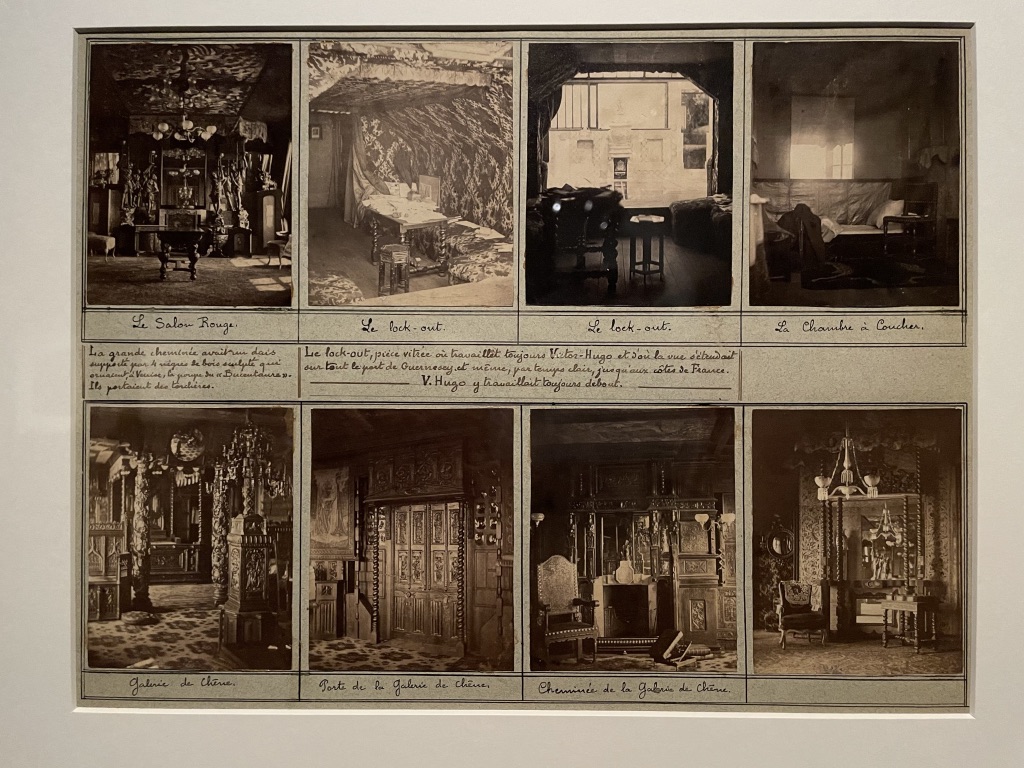
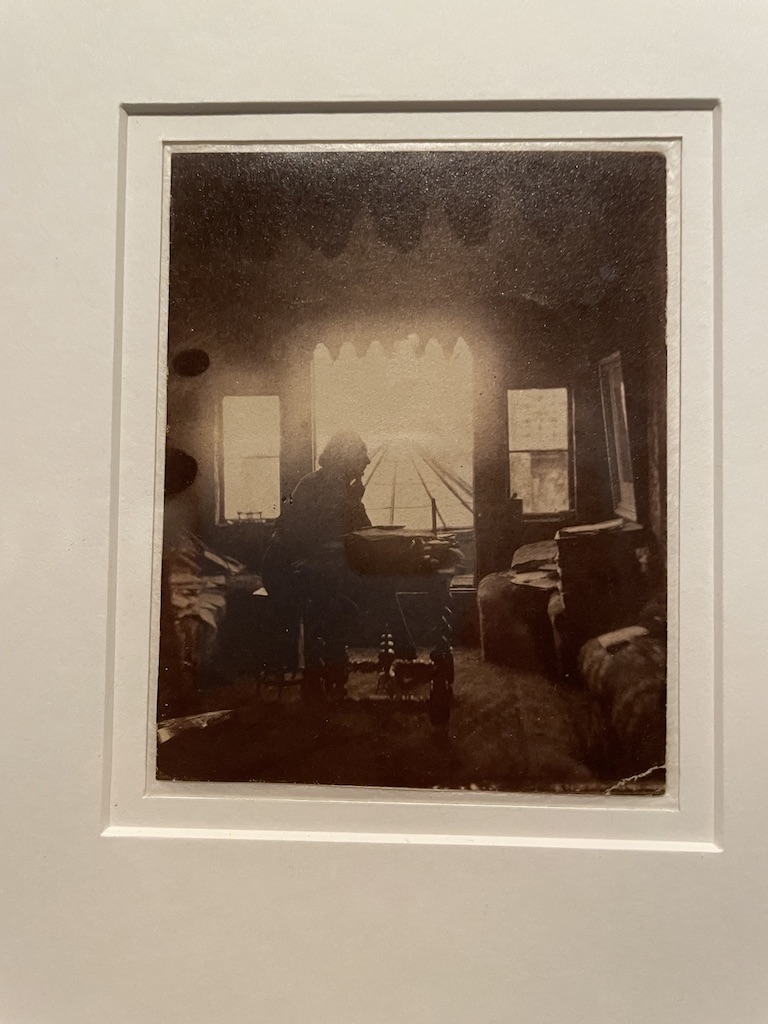
Above are photographs of his home in St Peter Port, Guernsey. Hautville House is a large town house and Hugo added ‘Le Lookout’ at the top of the building where he would stand at a high desk to write while looking out over the bobbing boats in the harbour. I visited Hautville House years ago and was struck by the very oppressive atmosphere of the place. I’m not sure I would like to have been a guest at the place. Apparently Victor Hugo rigged up gas burners in the spare rooms which he would make flare up at night and terrify the occupants. He also arranged mirrors strategically up the stairs so that he could see into all the room from his Lookout and know who was approaching.
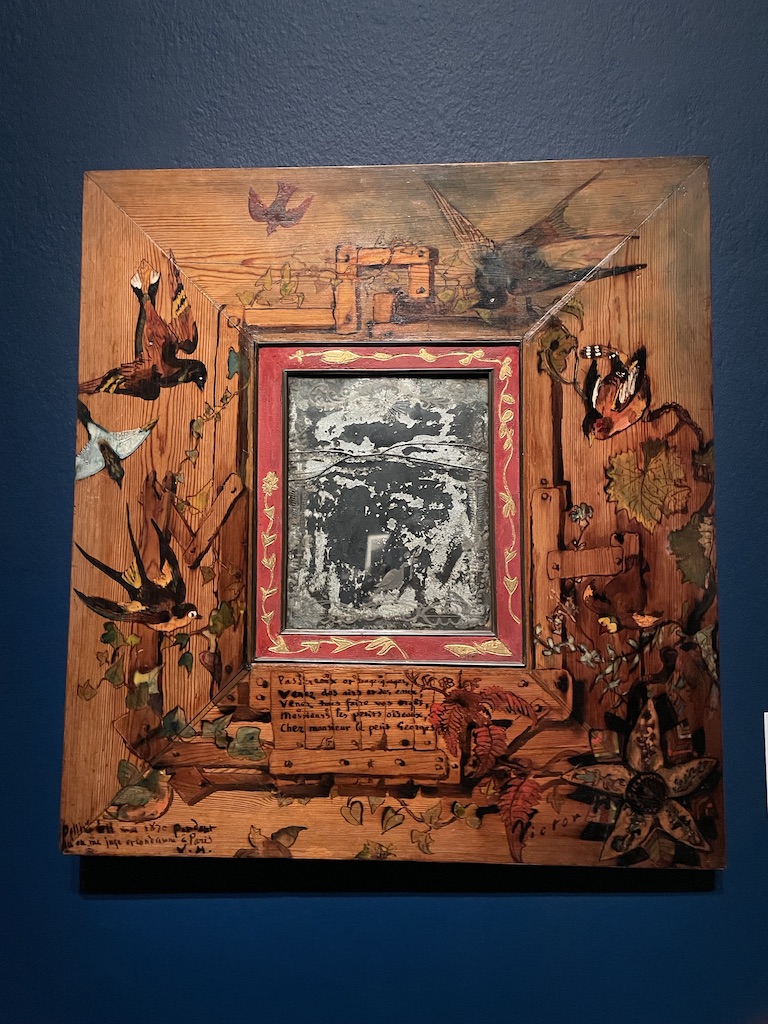
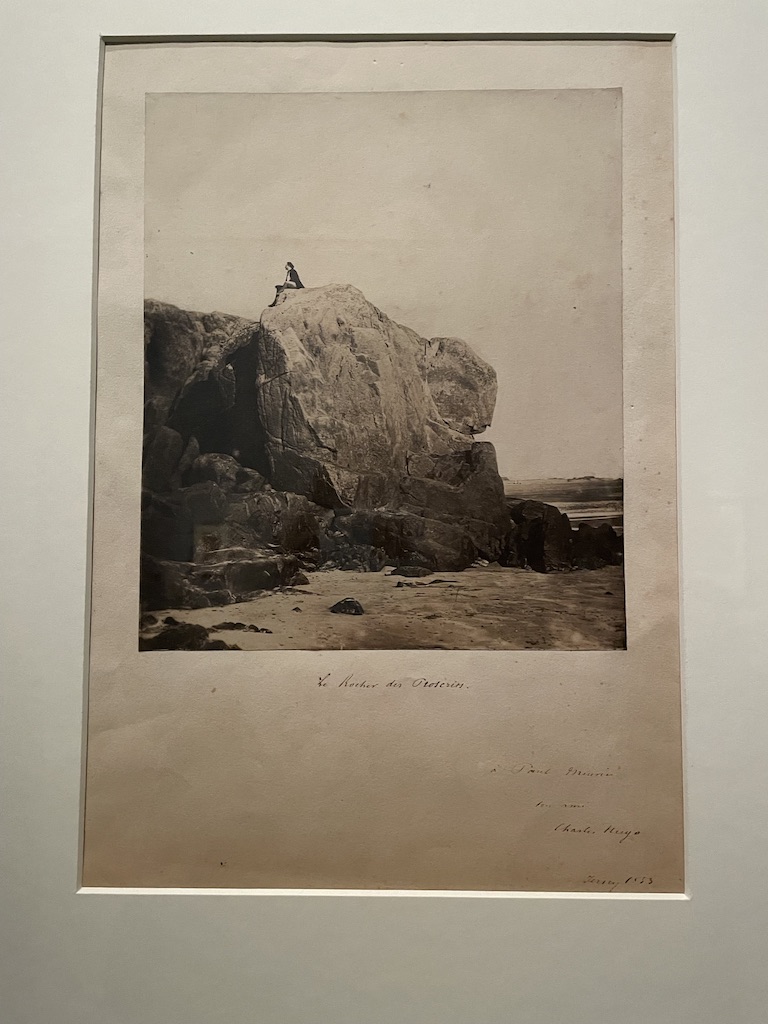
He took control of the decoration of his house (I think his wife must have been very long-suffering to put up with his heavy and rather ‘gothic’ taste.) He even created some of the furniture such as this mirror with a painted surround. Apparently he would walk up to ‘Exile’s Rock’ in Jersey and sit alone upon it thinking and writing before retiring to his study in the Lookout and write his books, poetry, plays and political treatise.
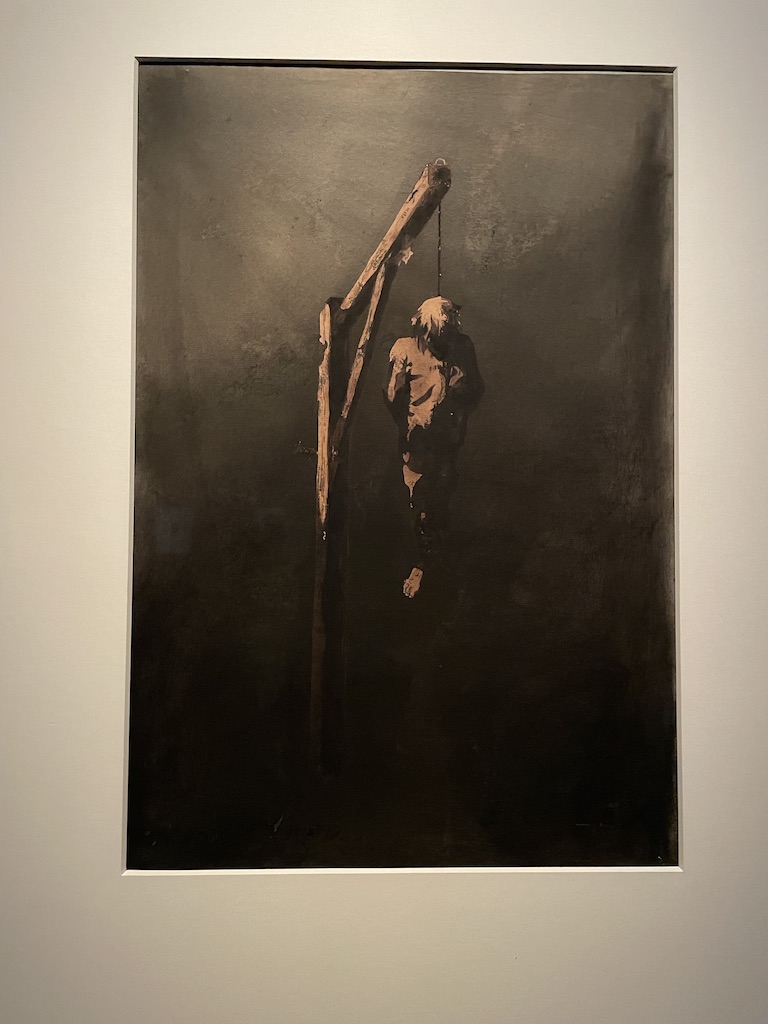
I was impressed to learn about his strongly-held political views. He was fiercely anti-slavery and appalled when John Brown, an American abolitionist was executed in Virgina after being accused of inciting a slave rebellion. Victor Hugo made this image in protest.
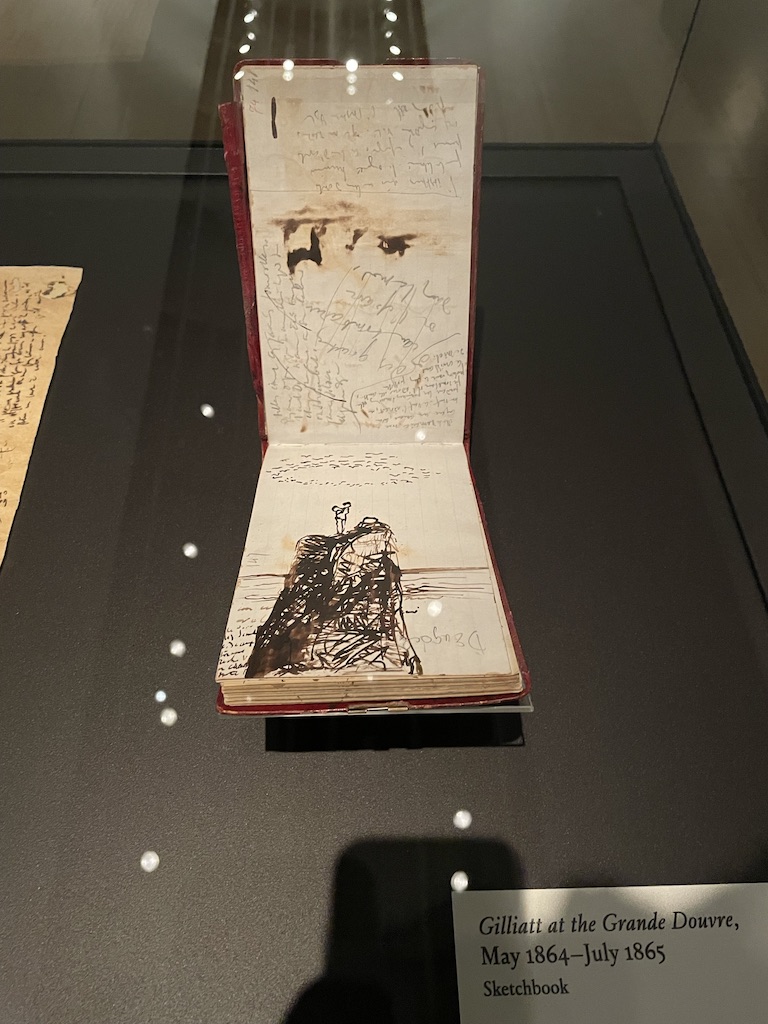
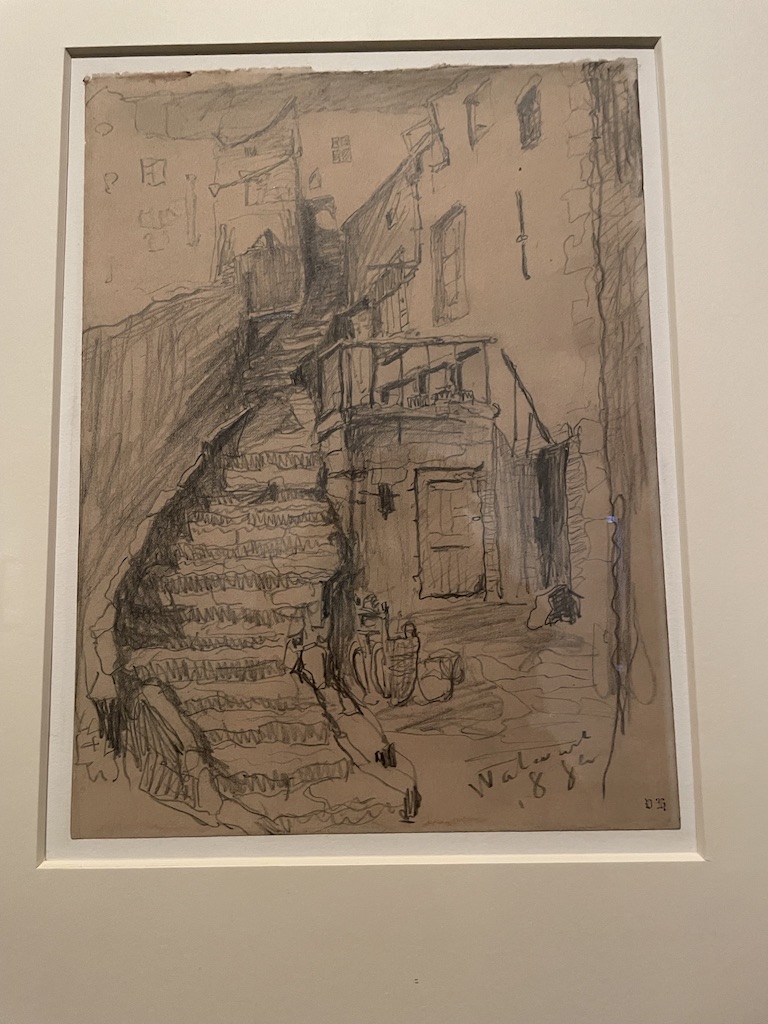
He spent a great deal of time travelling around Europe (avoiding France) with his sketchbook, noting scenes and recording landscapes and buildings. He didn’t seem to be so interested in drawing people.
It’s a very interesting show which provides a welcome view of this revered 19th century novelist whose books are still popular. And it’s treat to see his drawings which rarely leave France. The show is on at the Royal Academy until 29th June 2025.
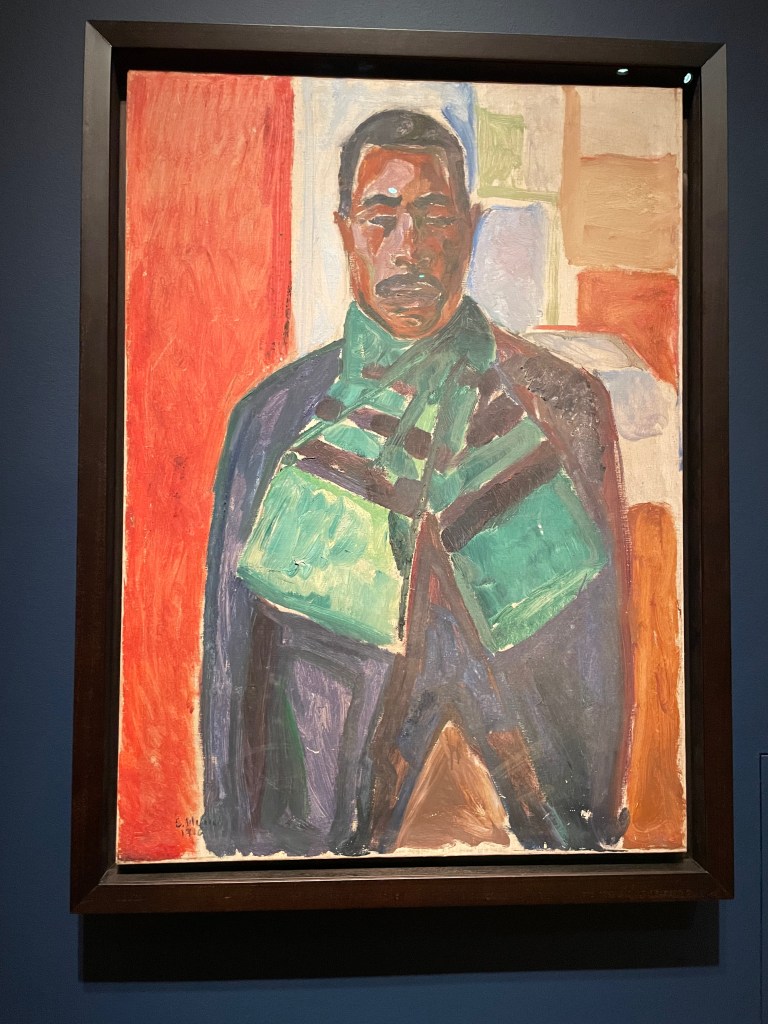
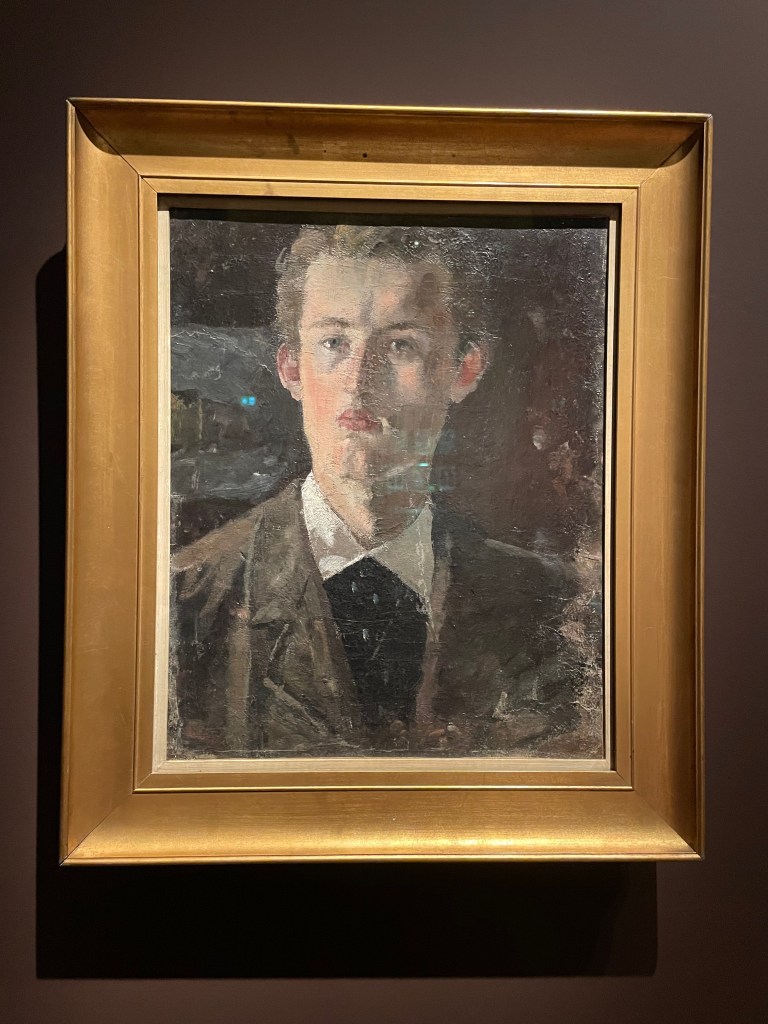
Colour! Yes, serious colour and, to my mind, a speediness of thought and hand in the creation of many of these portraits. I enjoyed the dribbles, splodges and daubs of hasty painting, as if he were in a great hurry to capture the subject in front of him and then get on with something else. Above: Torvald Stang, a friend, and self portrait of Munch.
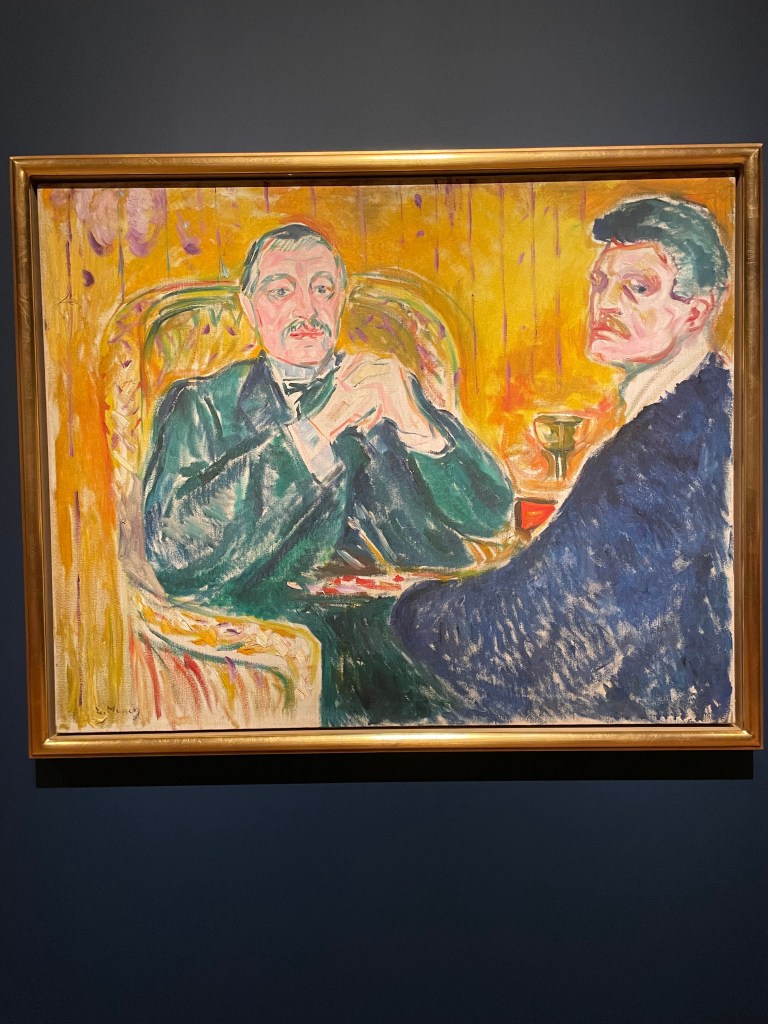
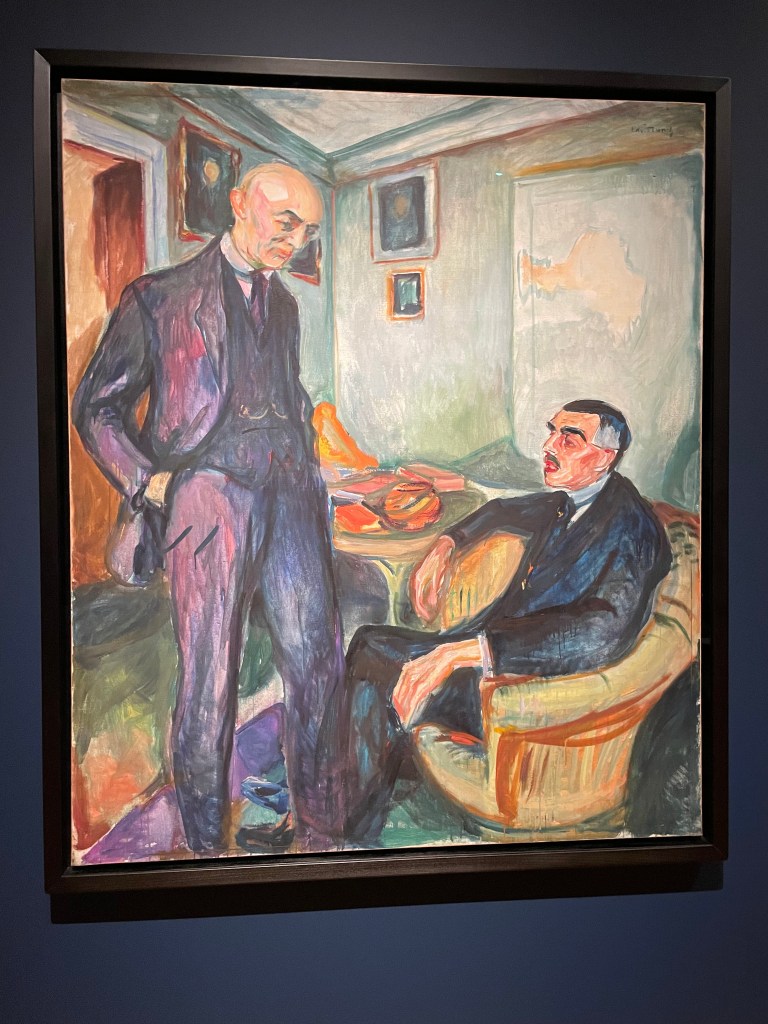
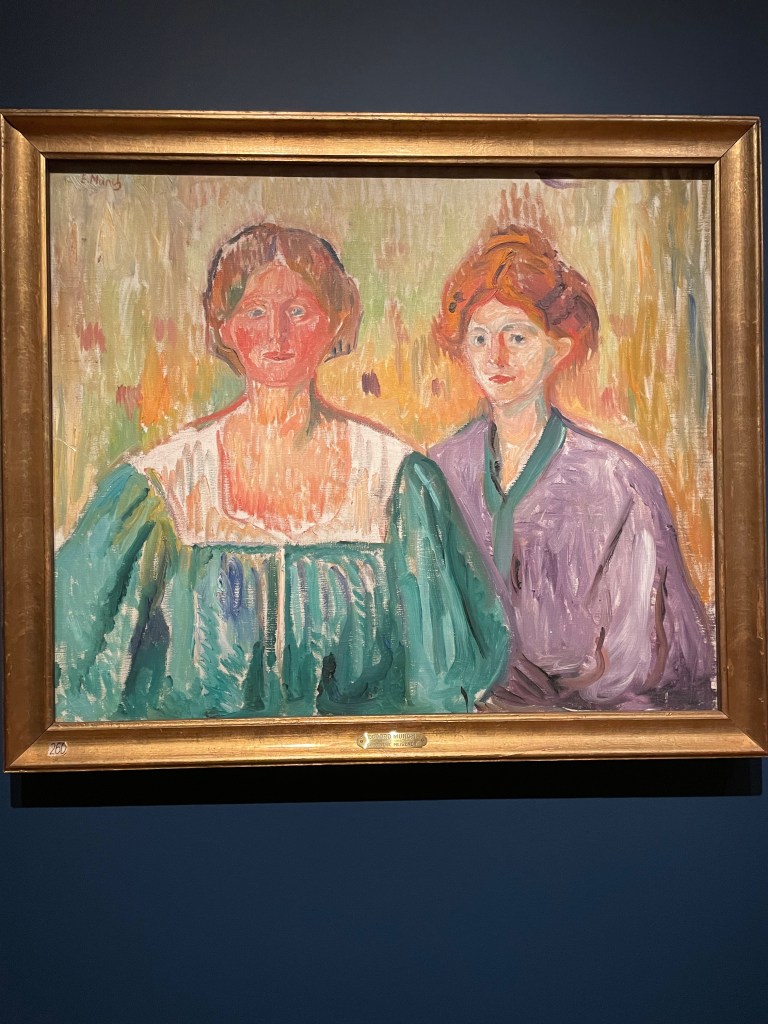
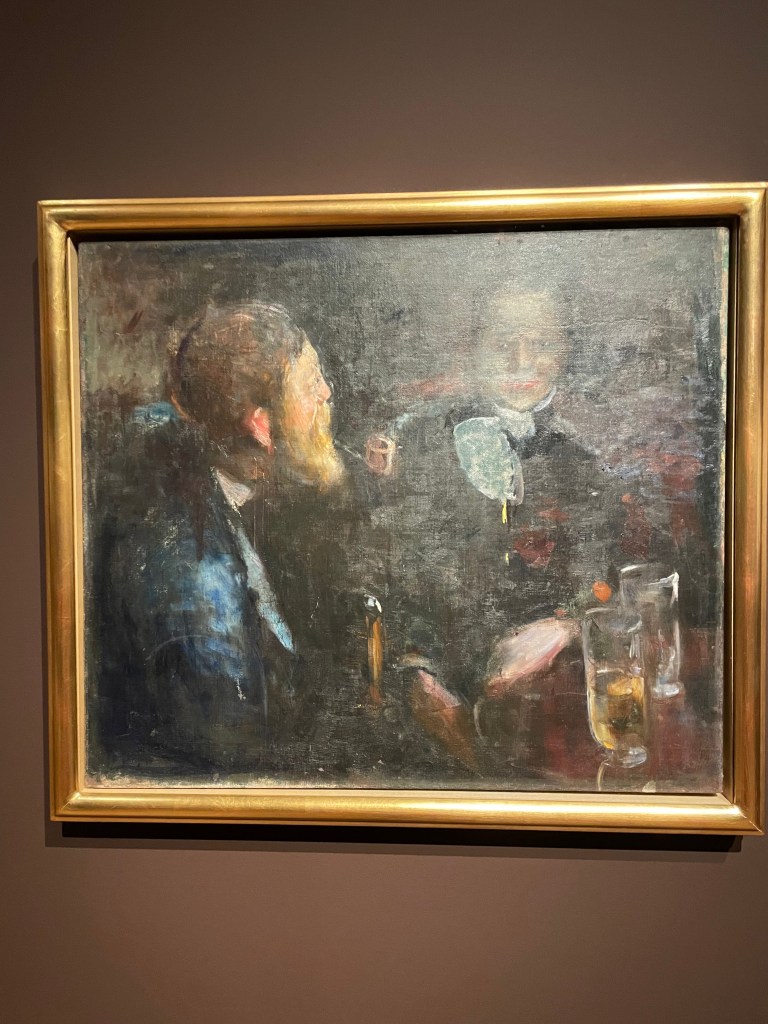
Munch was clearly very fond of his friends and family and painted them with obvious pleasure. And he liked depicting them in pairs. This is very much a theme. People with a connection occupy the same space and, again, were painted at much the same pace with an equal distribution of attention to detail. Above: Lucien Dedichen and Jappe Nilssen – friends from Munch’s student days. And on the right are sisters Olga and Rosa Meissner, professional models.
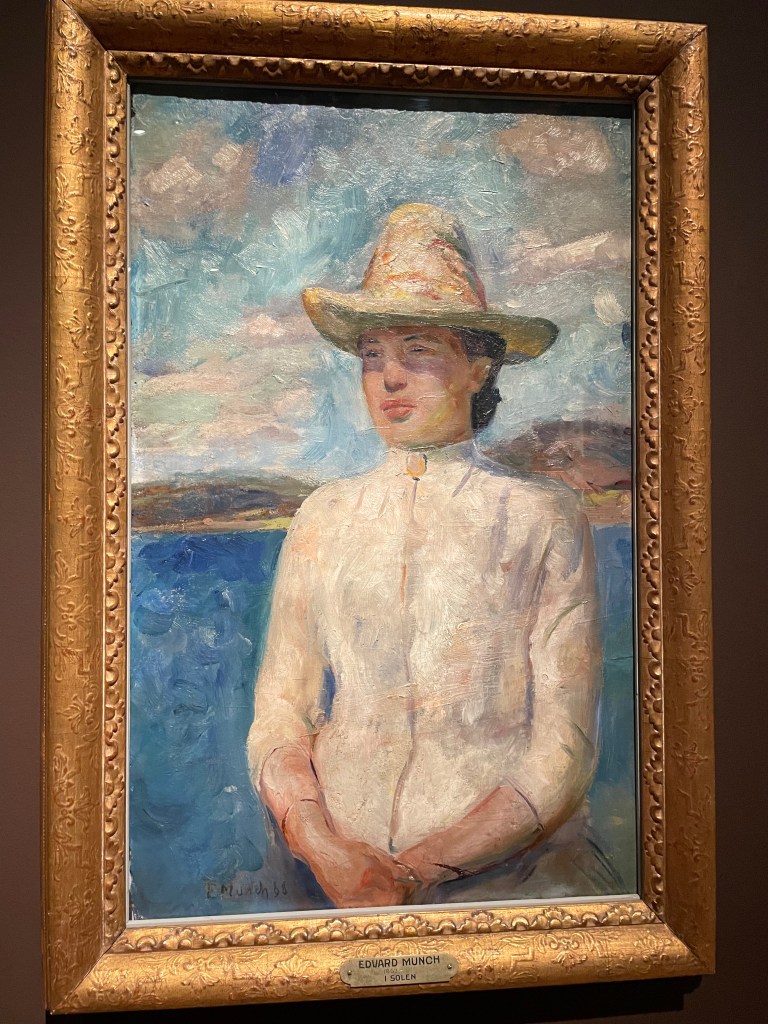
There’s an overwhelming tenderness to many of the paintings and, in some cases, they might not seem finished. But, to Munch, he had provided quite enough detail in the face and the rest of the figure can be filled in by the viewer’s eye. Above: Inger, Munch’s younger sister, looking charming in sunshine and Inger Barth, a friend. This work was confiscated in 1937 when it was among the works declared to be ‘degenerate’ by the National Socialist government.
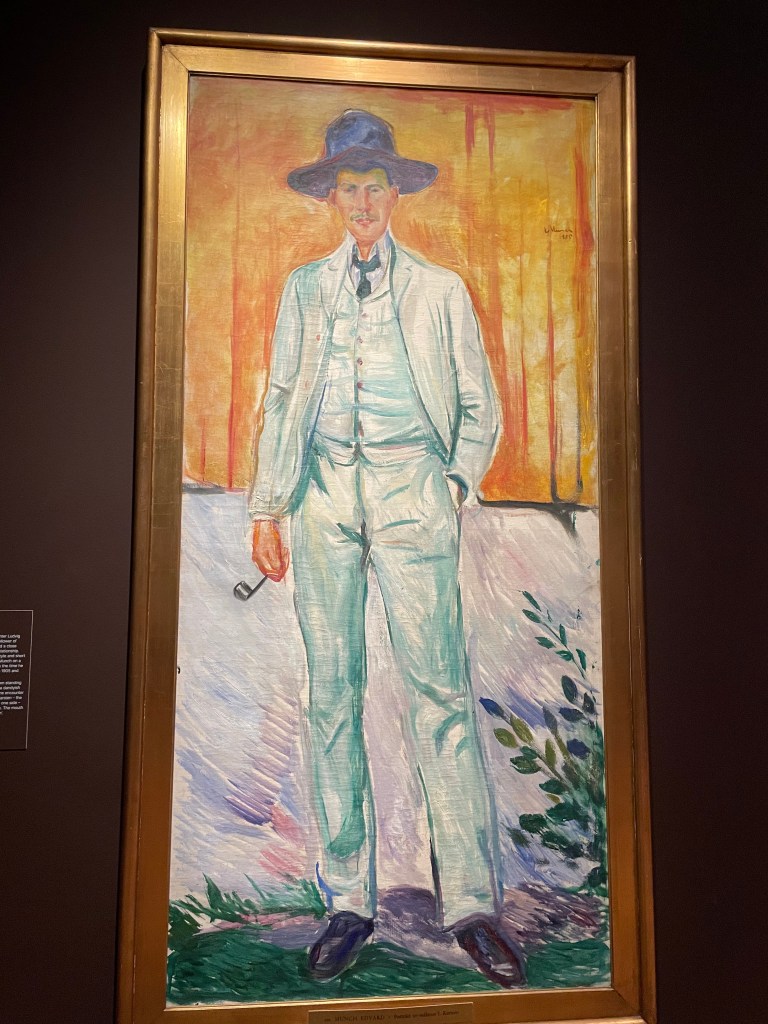
What’s absolutlely apparent is the free-flowing style we recognise from his later, angst-riven work. I like the direct gaze of his subjects. It looks as though they must have been deep in conversation when the portrait was being made and the affection between sitter and artist is very apparent. Above: the Norwegian colourist painter Ludvig Karsten in a ‘dandyish’ pose, August Strindberg, the playwright, and Sultan Abdul Karem whom Munch employed.
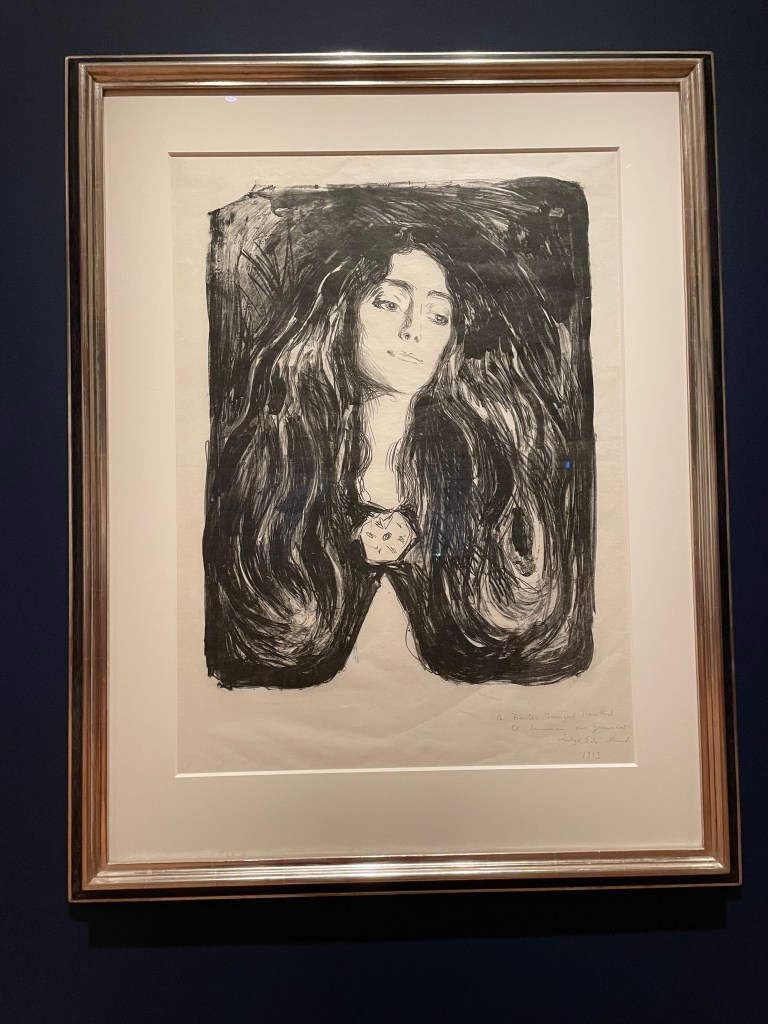
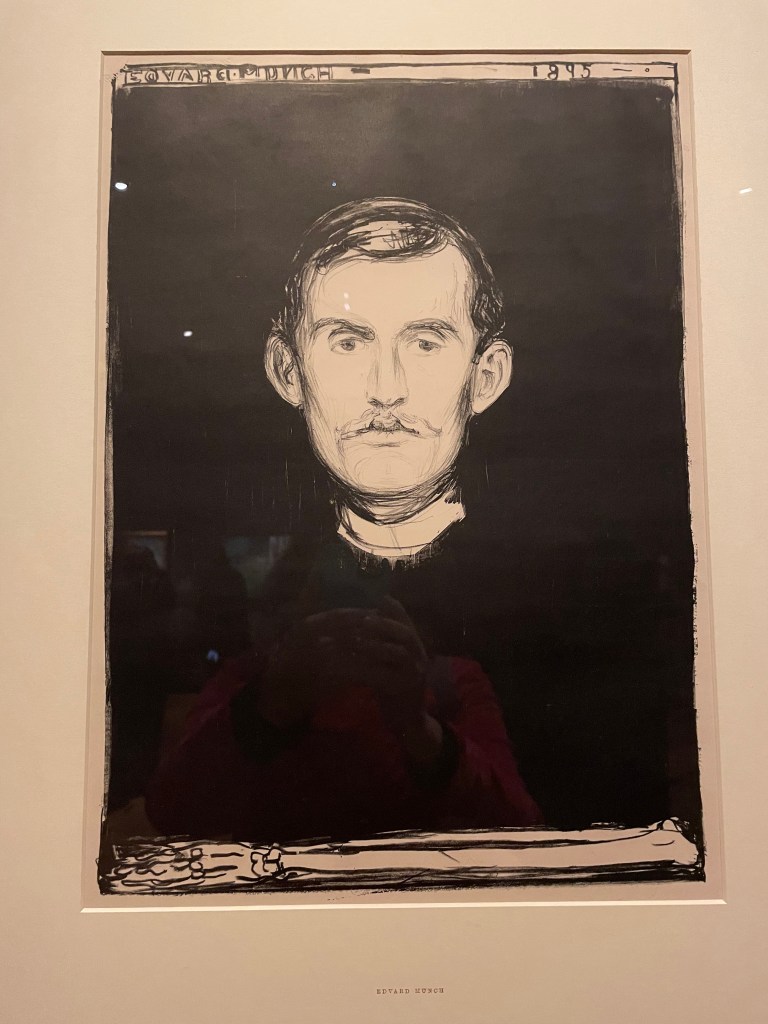
Just a few of the lithographs and black and white portraits (and the very dark one on the right) give a hint of the darkness within. But one comes away from this show in a very uplifted state, pleased to see such great portraiture by one of the 20th century’s finest artists. Above: lithograph portrait of Eva Mudocci, 1902, and self-portrait with skeleton arm, 1895 and on the right Tête à Tête, 1885, showing the painter Karl Jensen-Hjell drinking in the cafe in conversation with woman who might be Inger Munch. Very atmospheric.
Above: a self-portrait and a very tender portrait of Munch’s father, Christian, a military doctor. The show is on at the National Portrait Gallery until 15th June 2025. Well worth it.
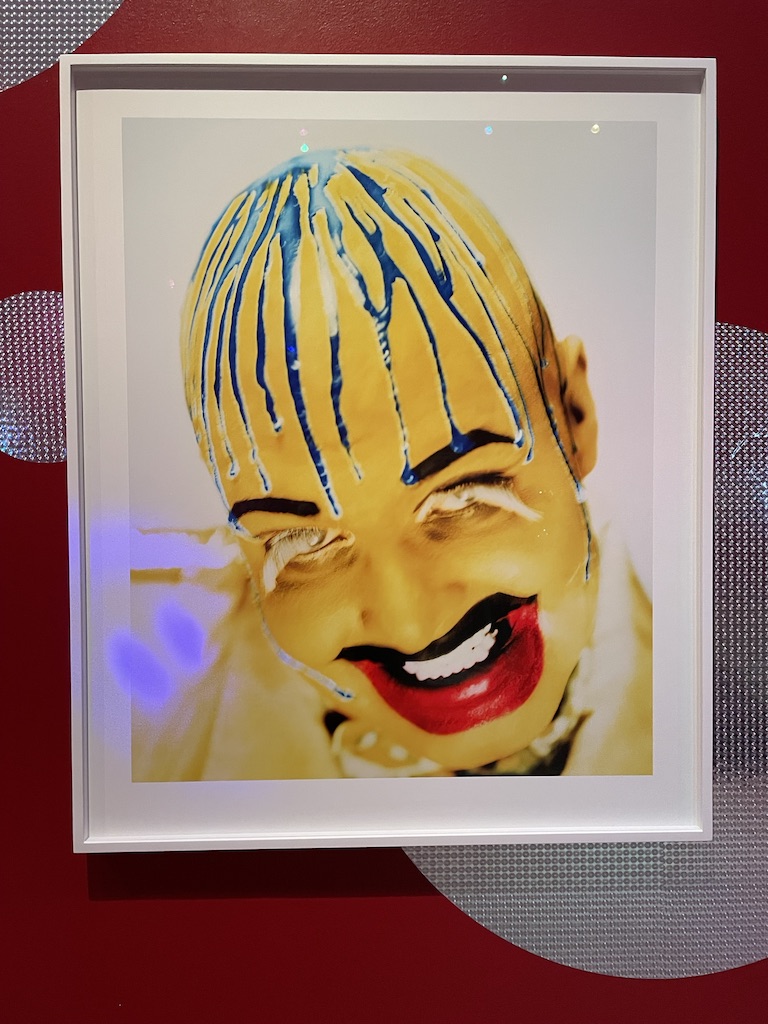
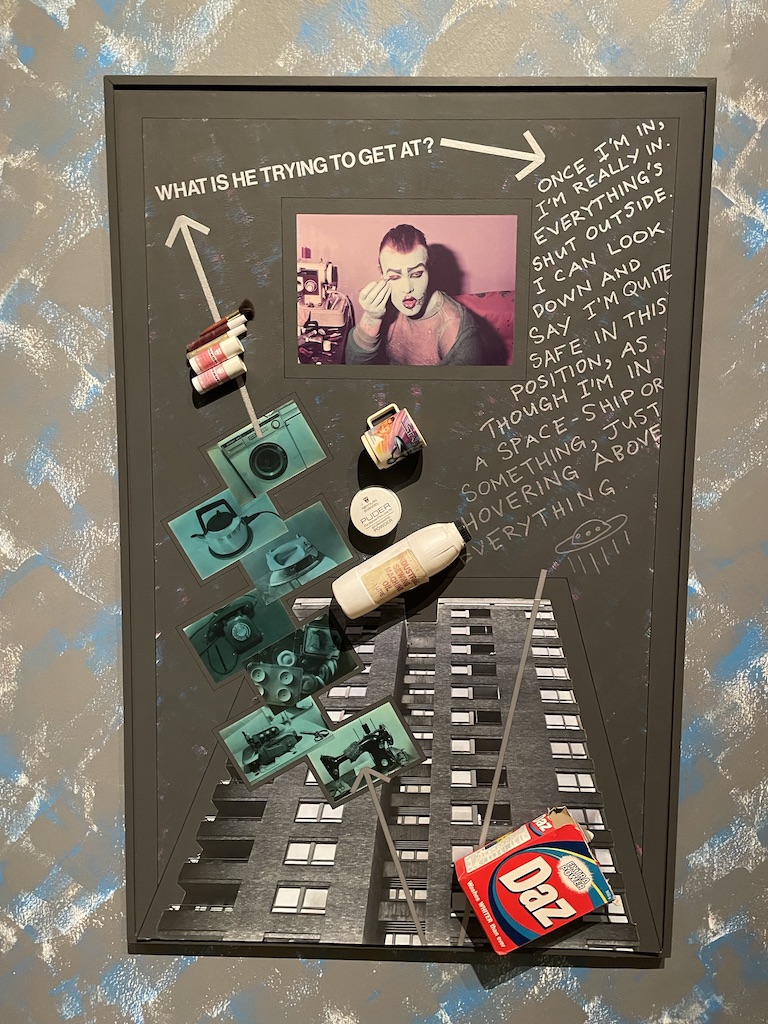
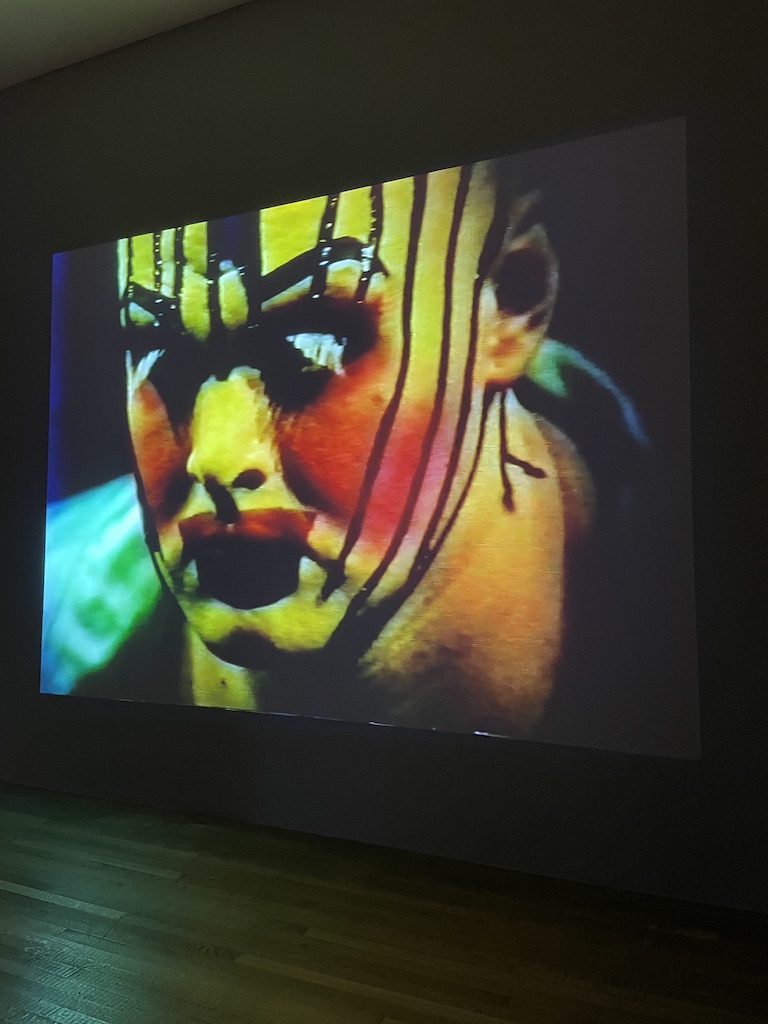
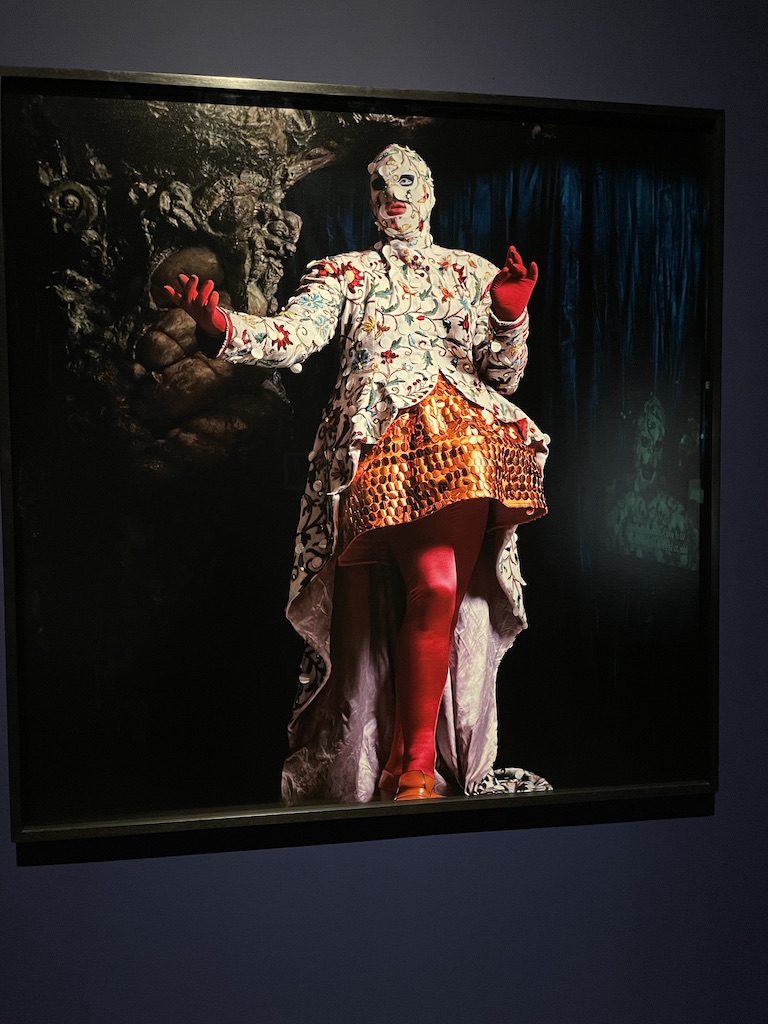
And here’s a photograph of Leigh Bowery with the PVA decoration. It was only last century – the halcyon years of club culture of the 1980s , but what a time! He was perfectly placed with confidence and creativity to provide the world with a canvas, platform and stage for young people finding their way in the club scene. Bowery made all his own costumes, headdresses, decorations and astonishing makeup – all guaranteed to make him the focus of attention wherever he went.
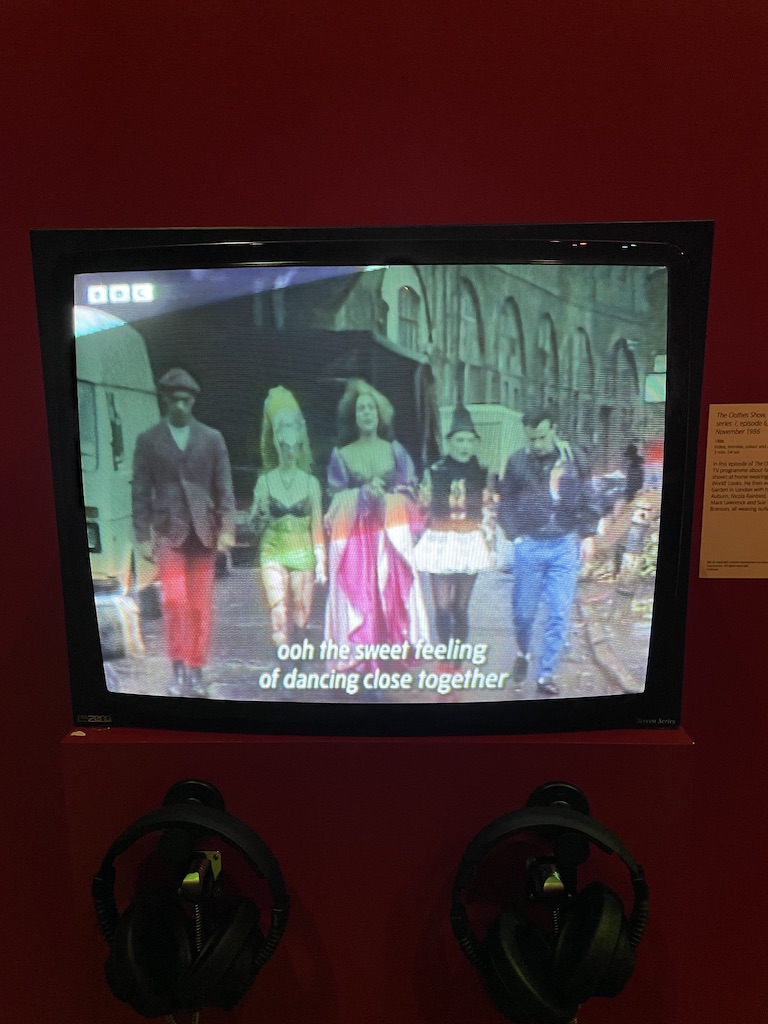
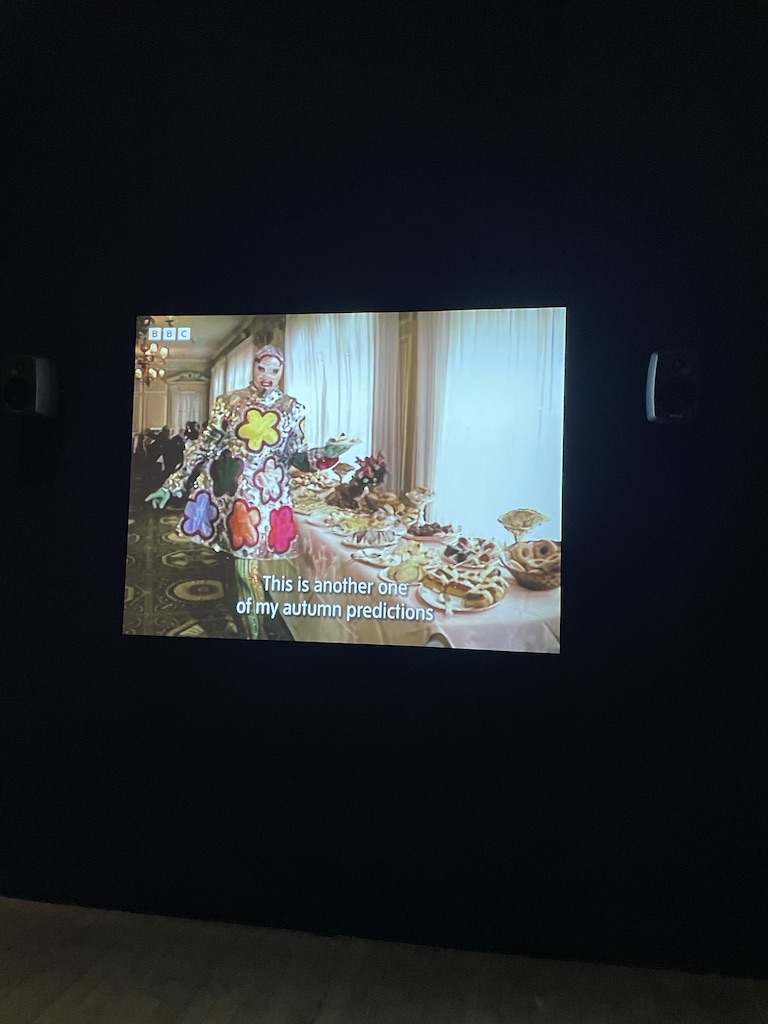
Leigh Bowery left the sunny, suburbs of Melbourne, Australia in 1980 to move to London and invade the artistic scene of the capital with a captivating whoosh of energy and self-expression. His arrival into the ‘alternative culture’ was timed perfectly. He emerged at the same time as Trojan, Scarlett Cannon, Boy George and Princess Julia. Through sheer force of personality and ambition he established his own night club, Taboo, in 1985. Wearing outrageous and wonderful clothing was de-rigour for everyone frequenting the club. But Bowery was the King, and Queen, of outrageous.
The pressure must have been on for him to lead the way in reimagining his look every night and pushing the boundaries of entertainment and spectacle.
Bowery was also a muse for contemporary artist Lucian Freud who strips away all the artifice, literally, and captures the man beneath the mask in his impressive portraits.
Leigh Bowery died in 1994 at the age of 33 from an AIDS-related illness. But he certainly packed a great deal into his short life and has left an impressive legacy. If any artist wants to know what being creatively brave looks like, they should see this show.
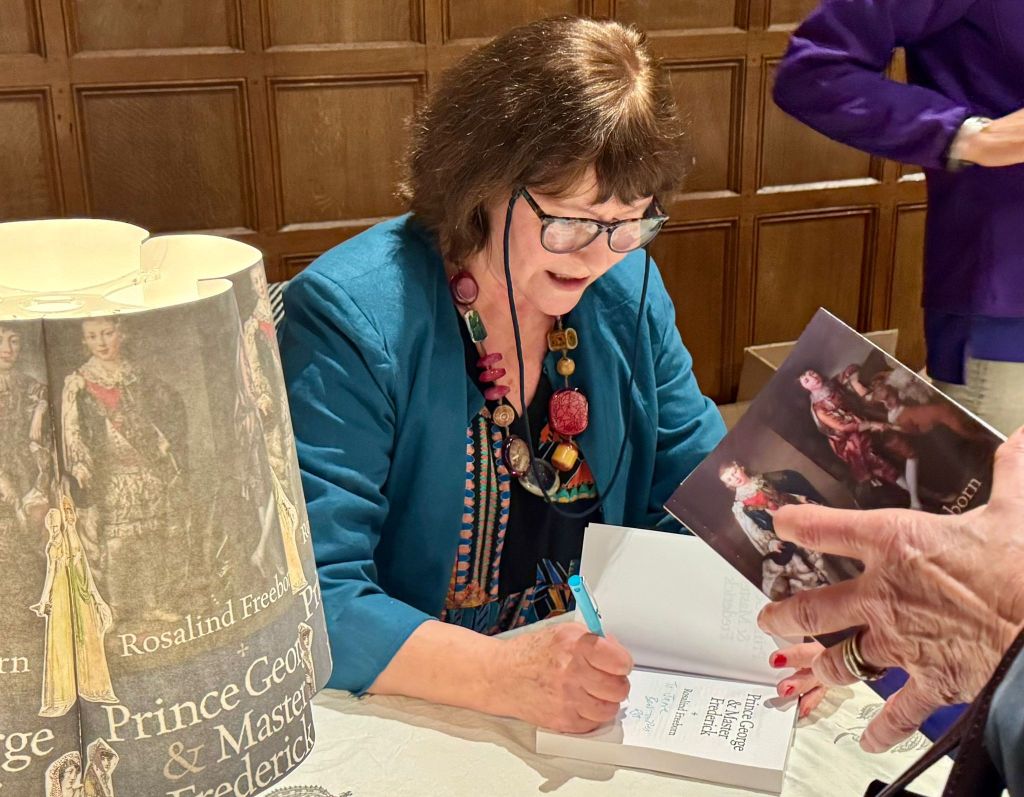
I’ve always loved book launches but this one was the best ever! It’s an amazing feeling to publish your debut novel. But quite daunting to stand up in front of a large audience and explain how researching a family story turned out to be so fascinating that I simply had to write the story of Frederick Blomberg, the secret son of King George III. Having been introduced to the gathered crowds by my publisher, Janet Weitz of Alliance Publishing Press, I stood up and gave a speech.
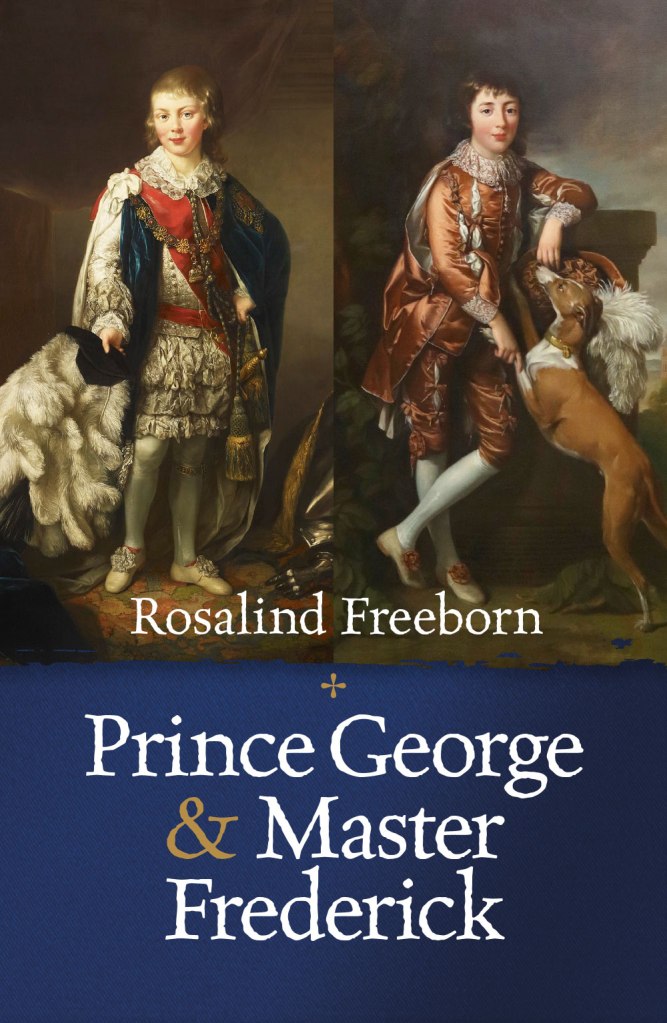
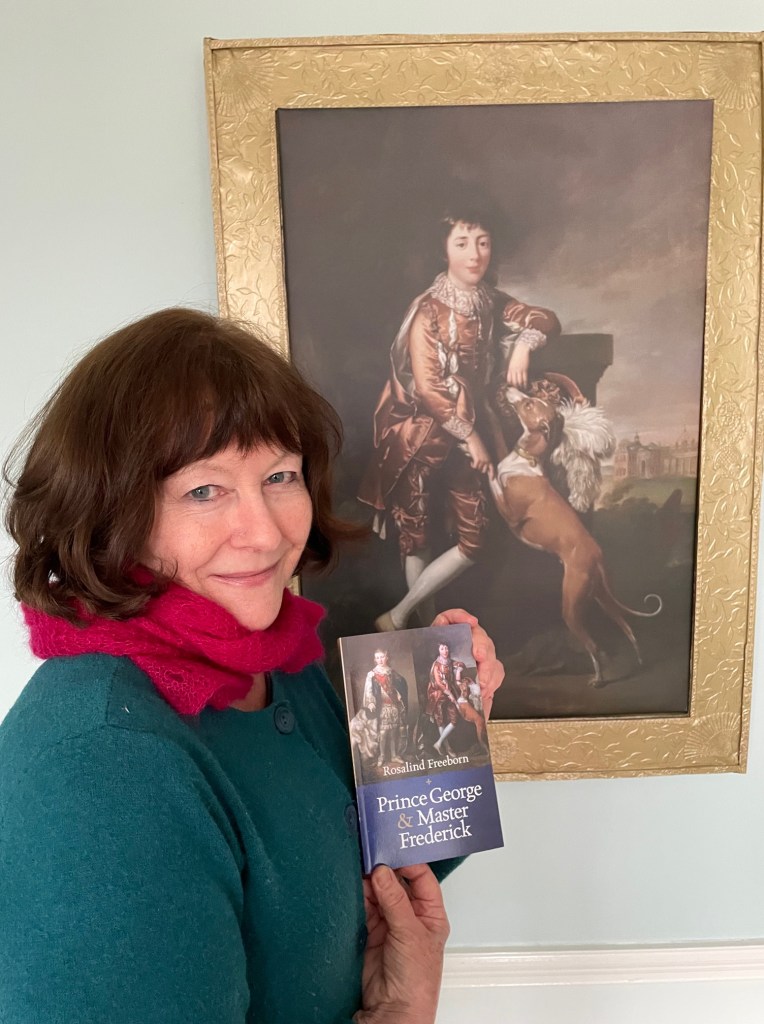
In this picture I’m standing in front of a print of a portrait of Master Frederick Blomberg, painted by court artist Richard Brompton in about 1770. The painting was commissioned by Queen Charlotte and it’s a companion piece to two other portraits of her royal sons: Prince George, Prince of Wales and Prince Frederick, Duke of York which now hang in the 1844 Room at Buckingham Palace. I was delighted to put this painting of Prince George in Garter robes next to his ‘adopted’ brother, Frederick Blomberg on the front cover of my book.
And what fun it was to welcome so many lovely friends to the book launch, sign books and chat. And for all those who could not be there, you can order a signed copy through my author website: http://www.rosalind-freeborn.com Otherwise, you can buy a copy through Amazon, (on Kindle, print or Audible) and through bookshops.
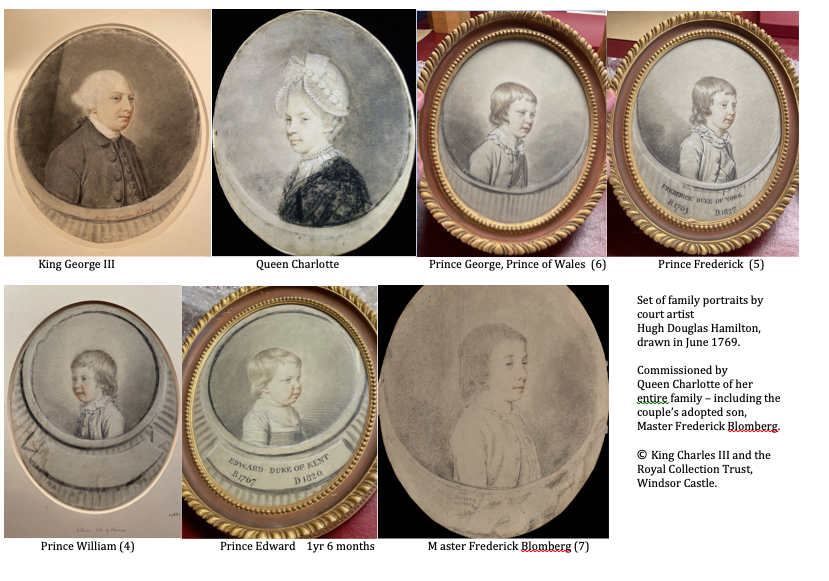
In my talk I showed a display of portraits commissioned by Queen Charlotte in 1769 of her family, drawn as a set by the artist Hugh Douglas Hamilton. The portrait of Frederick was probably given to Frederick Blomberg by Prince George and ended up at his home in Yorkshire, Kirby Misperton. After Blomberg died in 1847 the little portrait remained on the wall, through two subsequent owners, until my great-grandfather bought the estate and my grandmother grew up there. She used to look at the picture of Frederick on the wall of her home and told me that the boy was the son of King George III (wrong side of the blanket, as she put it). That piqued my interest but I did nothing about it for decades. Then, about five years ago, I thought I’d investigate this claim and find out more about Blomberg. Well, what I discovered was so fascinating that I was compelled to write this novel.
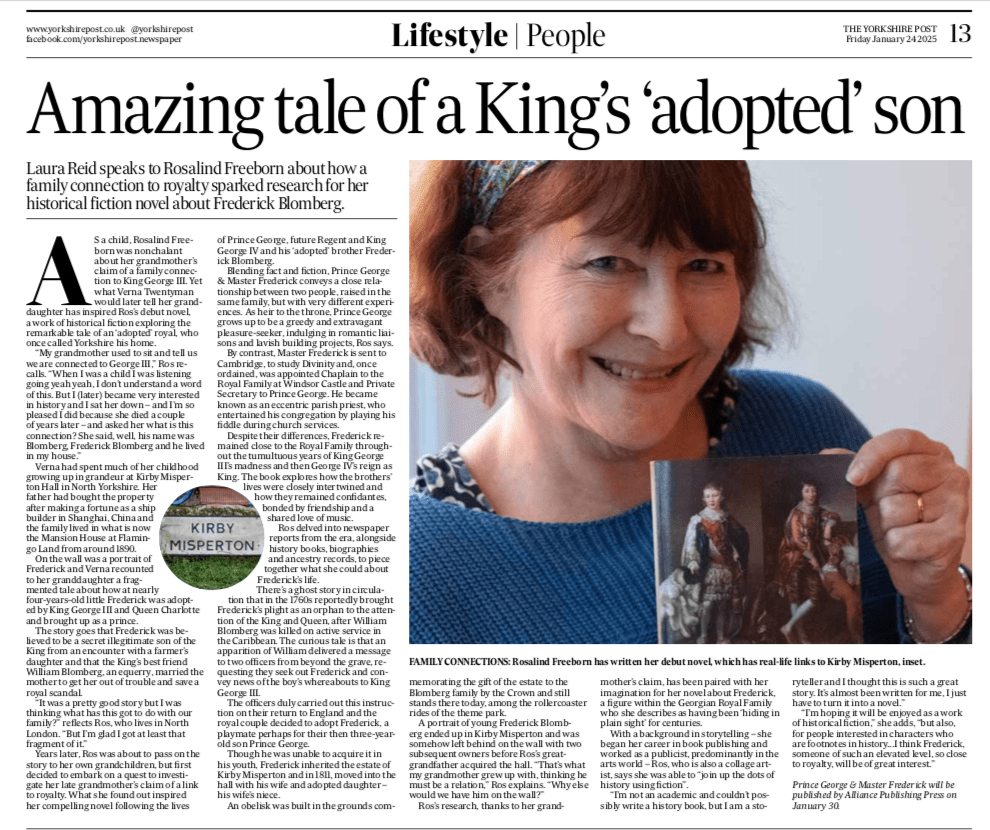
I’ve been so delighted with the quantity of publicity this book has attracted. Above is a feature which appeared in the Yorkshire Post. I’ve done radio and television interviews too. Yes, I feel very published!


































 Paper Places